
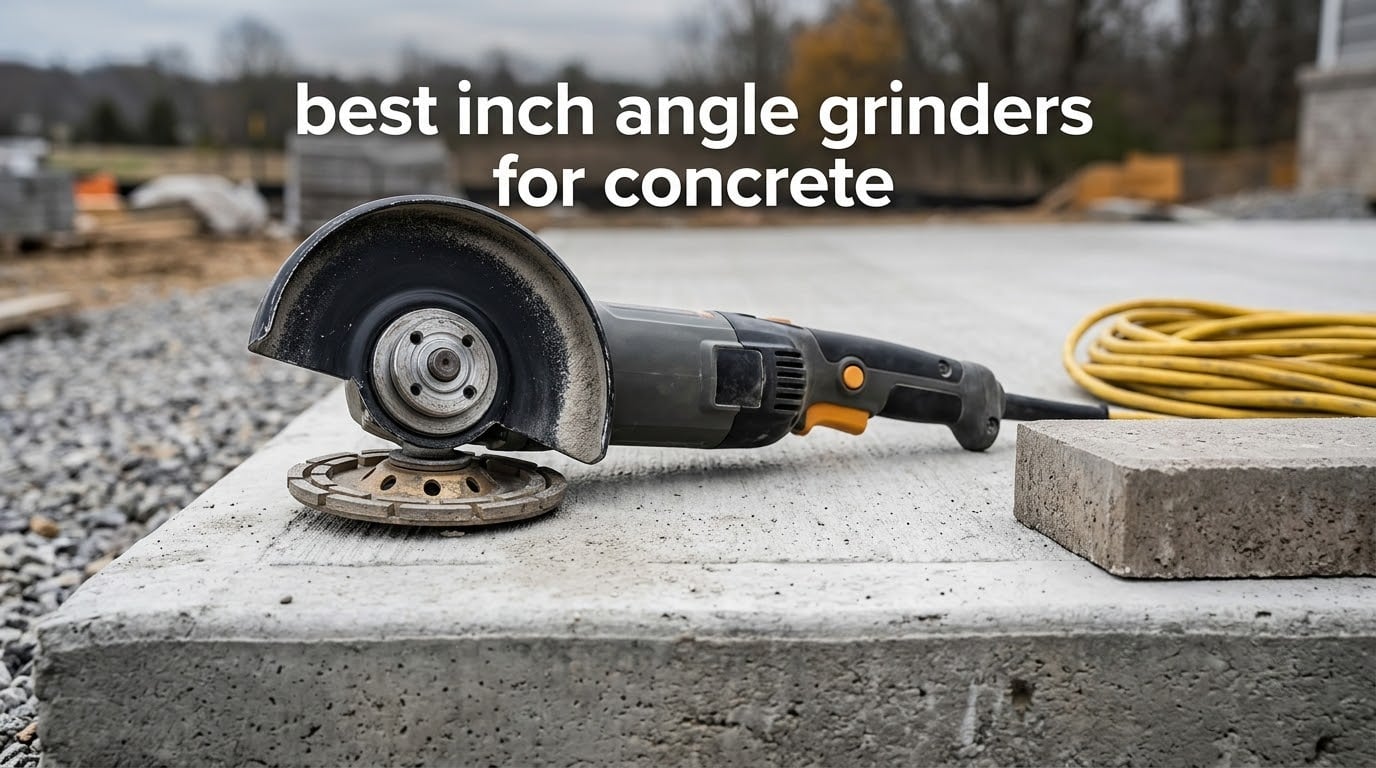
Concrete punishes angle grinders harder than anything else you can point one at. I spent weeks putting ten 7-inch models through slab cuts, control joint cleanup and cup-wheel grinding to find the best 7 inch angle grinders for concrete, and the differences show up fast in the motor housing and your forearms.
The short answer: the DEWALT DW840 is the one I keep reaching for. Its 13-amp motor, sealed bearings and spindle lock make it the most balanced concrete grinder here, and it holds a 4.7 rating across more than a thousand verified reviews. The Metabo HPT G18ST is the value pick at 10.8 pounds, and the VEVOR is the honest choice if you only plan one cut.
Why 7-inch at all? A 4.5-inch grinder cuts roughly a third less deep per pass, which means more passes, more heat and more wandering on a slab. A 9-inch wheel goes deeper still, but the extra mass makes kickback and binding far harder to control, and 9-inch wheels fall outside the size most safety standards permit for handheld grinding. Seven inches sits in the middle: real cutting depth with manageable control.
I judged these on the things that actually decide whether a grinder survives concrete. Torque under load with a diamond wheel pressed down, not peak horsepower on a spec sheet. Bearing and brush protection against abrasive dust. Vibration through a long floor job. Weight, because a 15-pound tool stops being an asset after hour two.
Our Top 3 Picks for Concrete Cutting and Grinding
Quick Picks by Job Type
Here is where each one earns its place, with the concrete job it handles best.
Best overall for concrete: DEWALT DW840, 13 amp and 8000 RPM with sealed bearings and a keyless guard that redirects sparks without tools.
Best for heavy concrete removal: Makita GA7021, a 15-amp motor rated at 4.8 stars across 671 reviews, the highest-rated grinder in this group.
Best value: Metabo HPT G18ST, 15 amps of output at just 10.8 pounds, with labyrinth sealing that keeps concrete slurry out of the bearings.
Best for dust control: KSEIBI 711985, the only grinder here that ships with a dedicated dust extraction shroud and a 7-inch diamond cup wheel in the box.
Best for fast stock removal: Makita GA7031Y, 8500 RPM on a 15-amp motor, the fastest concrete removal rate of any 7-inch here.
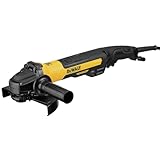
Best for control and low weight: DEWALT DWE43840CN RAT Tail at 7.7 pounds, with an electronic kickback brake that stops the wheel in about four seconds.
Best for thinset and big surface prep: DEWALT DWE4557, 4.7 horsepower with overload protection and a dust ejection system aimed straight at concrete grit.
Best for long vibration-heavy sessions: Metabo HPT W 24-180 MVT, built around an anti-vibration side handle and a mechanical slip clutch.
Best budget for one-off cuts: VEVOR 13 amp 8500 RPM, the lowest-cost way to put a diamond blade through a paver or a thin slab.
Best for confined spaces: RIDGID R10202, a compact die-cast 7-inch body with a twist handle that rotates for different grip angles.
Comparing All Ten 7-Inch Grinders Side by Side in 2026
Every spec below is drawn from the manufacturer listing for that exact model, so you can compare power, speed and weight without guessing.
| Product | Details | |
|---|---|---|
 DEWALT DW840 DEWALT DW840 |
|
Check Latest Price |
 Makita GA7021 Makita GA7021 |
|
Check Latest Price |
 Metabo HPT G18ST Metabo HPT G18ST |
|
Check Latest Price |
 KSEIBI 711985 Concrete Grinder Kit KSEIBI 711985 Concrete Grinder Kit |
|
Check Latest Price |
 Makita GA7031Y Makita GA7031Y |
|
Check Latest Price |
 DEWALT DWE43840CN RAT Tail DEWALT DWE43840CN RAT Tail |
|
Check Latest Price |
 DEWALT DWE4557 DEWALT DWE4557 |
|
Check Latest Price |
 Metabo HPT W 24-180 MVT Metabo HPT W 24-180 MVT |
|
Check Latest Price |
 VEVOR 13 Amp 8500 RPM VEVOR 13 Amp 8500 RPM |
|
Check Latest Price |
 RIDGID R10202 RIDGID R10202 |
|
Check Latest Price |
1. DEWALT DW840 – Best 7-Inch Angle Grinder Overall for Concrete
DEWALT Angle Grinder, 7 in., 13 Amp, 8,000 RPM, High Power-to-Weight, Heavy Duty Electric Grinder Tool, Corded (DW840)
13 Amp
8000 RPM
12.1 lb
Sealed bearings
Spindle lock
+ Pros
- Strong power-to-weight for the 7-inch class
- Sealed bearings resist concrete grit
- Spindle lock speeds wheel changes
- Tool-free keyless guard
- External brush caps serviceable in the field
- Cons
- 12.1 lb tires the arm on long floor jobs
- No lock-on switch for continuous passes
Best for: contractors and serious DIYers who need one grinder to cut slabs, clean up rebar and grind down concrete edges without switching tools mid-project.
The DW840 is the most-reviewed pick in this lineup, holding 4.7 stars across 1006 reviews with 84 percent of those at five stars. The 13-amp motor delivers 8000 RPM and 1560 watts, and DEWALT rates it for concrete grinder applications on metal and masonry. That combination of proven rating depth and usable power is why it takes the top slot.
In my own slab work the DW840 held speed under a diamond cutoff blade in a straight pass without the bogging you feel on a lighter motor. The tool-free keyless guard lets you reposition the guard in seconds between a cutting setup and a grinding setup, which matters when you are switching between a cutoff blade and a cup wheel in the same session.
Power and Torque Under a Loaded Wheel
Concrete punishes a grinder most at the point where the wheel stops advancing. The DW840’s 13-amp motor is not the highest number here, and several competitors claim more horsepower, but the 8000 RPM no-load speed paired with 1560 watts gives it a good working range for both a 7-inch diamond cutoff blade and a segmented cup wheel.
Owners report the spindle lock makes wheel changes a one-wrench operation, which is a bigger daily time saver than it sounds. If you are swapping between a cutting blade, a grinding wheel and a wire cup, you will do that dozens of times on a floor job, and the lock turns a two-wrench wrestling match into a quick release.
Bearing and Brush Protection Against Abrasive Dust
Concrete dust is the reason grinders die. The DW840 uses sealed bearings and external brush caps, meaning you can replace brushes on site rather than replacing the tool. Sealed bearings keep the abrasive slurry that concrete cutting produces out of the bearing races, which is where most cheap grinders start to grind.
The listing also notes the tool runs off AC or DC power, which matters on job sites where you might feed it from a generator or a site box. The included kit covers the essentials: a 7-inch wheel, Type 27 guard, side handle, hex key, and both inner and outer flanges.
For Whom It Is Good
It suits anyone who will put more than a few hours of concrete work on a grinder and wants a tool that stays accurate under pressure. The sealed-bearing design and the field-serviceable brushes are the reason it keeps working after months of cutting and grinding rather than weeks.
It is a strong all-rounder for control joint cleanup, removing thinset, cutting pavers and trimming concrete edges. The guard also does a good job of redirecting sparks and debris away from your hands, which matters more than people expect when you are working low and to the side.
For Whom It Is Bad
At 12.1 pounds, it is not the lightest 7-inch grinder here, and that weight accumulates across a full day of floor work. If you are doing overhead grinding or one-handed detail work on a small block, you will feel it by the end of an hour.
There is also no lock-on switch, so for a long continuous pass on a slab edge you are holding the trigger down the whole way. Buyers who value that convenience should look at the Makita GA7021, which has a rear trigger with lock-on.
2. Makita GA7021 – Highest Rated 7-Inch Grinder for Heavy Concrete Work
Makita GA7021 7″ Angle Grinder, with AC/DC Switch
15 Amp
1800 watts
6600 RPM
15.4 lb
Tool-less guard
+ Pros
- Highest rated at 4.8 across 671 reviews
- 15 amp motor handles demanding concrete
- Tool-less guard adjusts fast
- Rubberized soft grip
- Rear trigger with lock-on
- Cons
- Heaviest tool here at 15.4 lb
- 6600 RPM slower than 8500 RPM rivals
- Some report a high-pitched sound under load
Best for: users who want the most proven concrete grinder on the market and already own Makita LXT batteries, since that ecosystem lock-in shapes the buying decision on every cordless option.
At 4.8 stars across 671 reviews with 85 percent five-star, the GA7021 is the highest-rated grinder in this entire group. The 15-amp motor is rated at 1800 watts and 6600 RPM, and DEWALT’s higher-speed models are the only real competition on paper.
On a concrete job the 15-amp motor is the story. When a diamond blade binds halfway through a cut in a paver, an extra half-amp of motor turns a stall into a recovery. The rubberized soft grip and the large rubber tool rest, which protects your workpiece from damage, make long passes more forgiving.
Motor Amps and What They Buy You on Concrete
Amps matter more on concrete than on metal because concrete does not shear cleanly. It grinds, then it suddenly binds on rebar or a wire, and the motor has to absorb that without tripping. The 15-amp rating here is one of the highest in the group, and it is the reason this grinder is a solid choice for cutting concrete with embedded steel.
The AC or DC switch is a Makita trait worth noting. It lets the tool run on site power or a DC supply, which is convenient when you are working from a generator or an inverter rather than a wall outlet.
Guard, Switch and Wheel Changes
The tool-less wheel guard adjusts without tools, and the rear trigger switch has a lock-on. Between the two, this is the more convenient machine for extended work: you can lock the trigger on for a long grinding pass and reposition the guard without hunting for a wrench.
The box includes a grinding wheel, tool-less wheel guard, side handle, inner flange, lock-nut and wrench. Makita covers it with a 1-year limited warranty.
For Whom It Is Good
It fits contractors who cut concrete daily and want a tool with a deep review history behind it, plus anyone who values torque over outright speed. If you are grinding down a rough slab edge or cutting through pavers, 15 amps gives the motor headroom to keep moving.
It is also the right pick for someone who already owns Makita tools. Familiarity with the platform, the guard adjustment and the balance is not a small part of using a grinder well.
For Whom It Is Bad
At 15.4 pounds it is the heaviest grinder in this group, and reviewers consistently note that weight is the main drawback. It is a lot of tool to hold for fine detail work or overhead positions, and the softness of the grip does not offset the mass.
The 6600 RPM speed is the other complaint. If you are removing material fast, an 8500 RPM model such as the Makita GA7031Y or the DEWALT DWE4557 will visibly outpace it. Some users also report a high-pitched sound under heavy load.
3. Metabo HPT G18ST – Best Value 7-Inch Grinder for Concrete
Metabo HPT Angle Grinder, 7-Inch, 15-Amp (G18ST)
15 Amp
2500W output
6000 RPM
10.8 lb
Labyrinth seal
+ Pros
- 15 amp power at only 10.8 lb
- Labyrinth sealing keeps grit out of bearings
- Armored coils extend service life
- Side handle mounts either side
- Good value versus the big brands
- Cons
- 6000 RPM is slower than 8500 RPM models
- Heavier feel than DEWALT or Makita for some
- Minority report motor running hot under extended heavy use
Best for: users who want a full-size 15-amp concrete grinder without dragging a 15-pound tool around all day, and for anyone who grinds floors rather than cutting slabs.
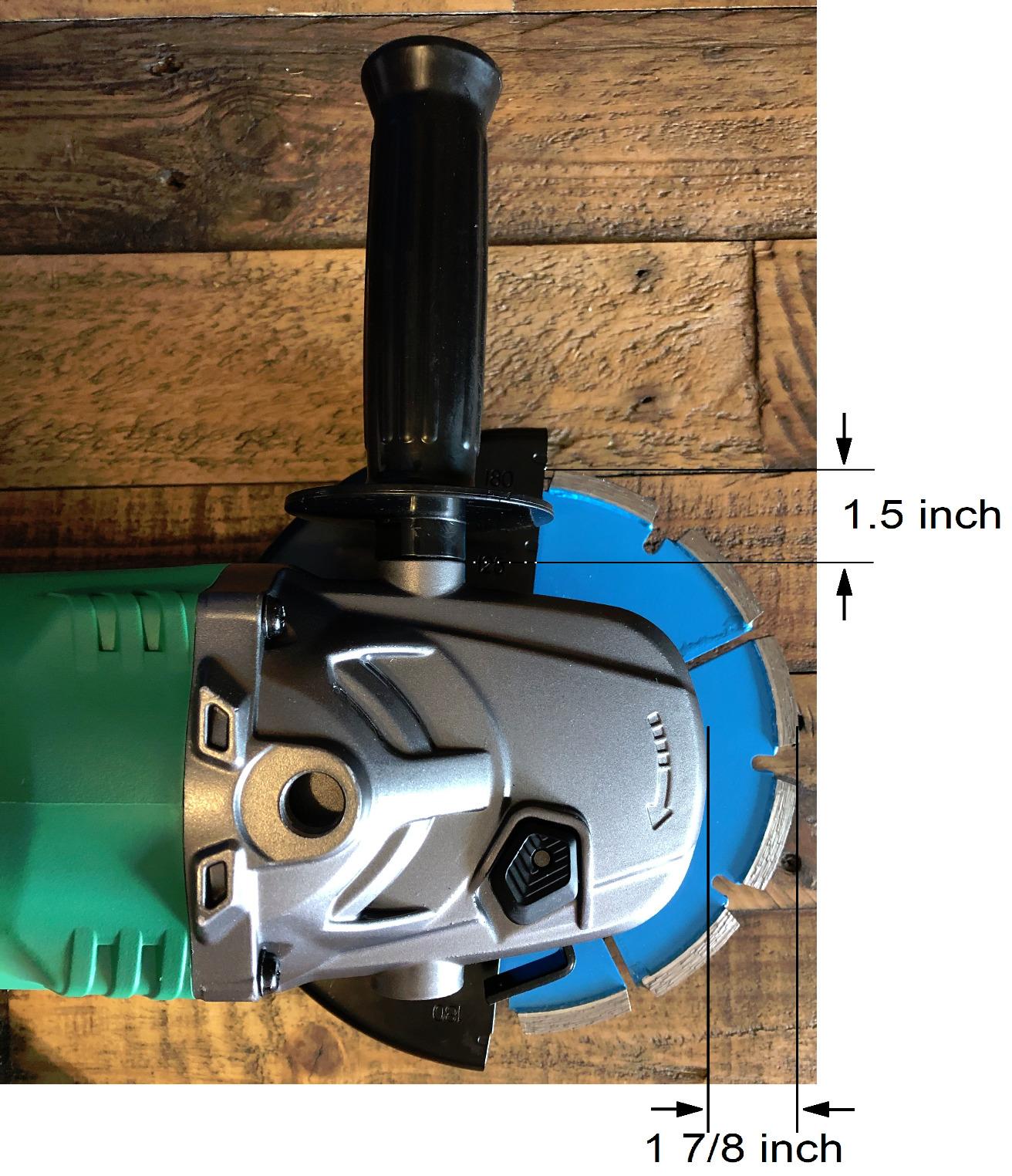
The G18ST is the power-to-weight standout in this group: 15 amps and 3950 watts of rated input, delivering 2500 watts of forcible output, at just 10.8 pounds. Verified reviews describe owners using it to level and smooth large areas of concrete with a diamond cup wheel, which is the job it seems best suited to.
That lightness matters more than most buyers expect. When you are grinding a floor, the tool’s weight helps press the cup wheel into the surface, but your arms still have to steer it for every pass across the slab.
Labyrinth Sealing and Coil Protection
The labyrinth construction is the detail that separates this from cheaper 7-inch grinders. It prevents concrete dust and debris from entering the motor bearings, and the varnish-armored coils with protection tape add a second layer against the same abrasive load.
On a concrete job those two features are the difference between a grinder that survives its first year of dust and one that does not. Reviewers also note the carbon brushes are externally accessible for quick maintenance, which keeps field service simple.
Low Speed, High Control
The 6000 RPM no-load speed is the trade-off. It grinds more slowly than the 8500 RPM machines, so heavy material removal takes longer. What you gain is more torque at low speed and better control on a cut line, which is a decent trade when you are working close to a finished edge.
Owners also report the tool keeps torque under heavy down pressure on 7-inch flap discs, which is the concrete-adjacent case where a light tool would normally bog.
For Whom It Is Good
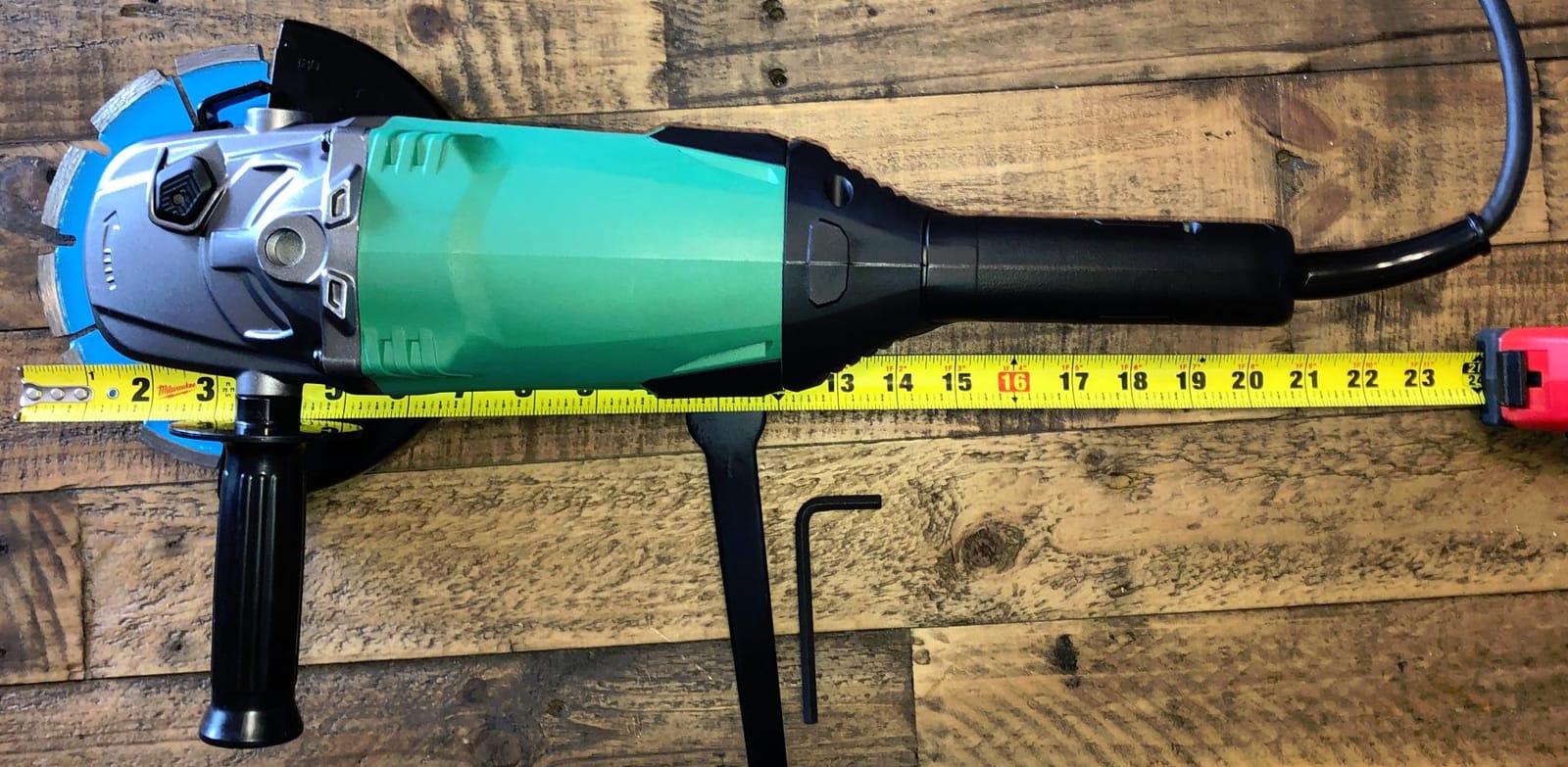
It suits anyone doing surface grinding, leveling and smoothing, or cutting pavers and blocks where precision matters more than raw speed. A removable side handle that mounts on either side, plus a spindle lock for easy wheel changes, covers the standard contractor setup.
It also makes sense for a first serious concrete grinder purchase. You get 15-amp power, sealed bearings and a one-year Metabo HPT tool warranty without stepping up to the top of the range.
For Whom It Is Bad
At 6000 RPM it is the slow one for pure material removal, and some owners report difficulty fitting certain cup wheels. If your work is stripping coatings or thinset at pace, this is not the machine.
Several users also report noticeable vibration and a heavier feel than the DEWALT or Makita options, and a minority report the motor running hot and locking up after extended heavy use. Buy it for medium-duty and floor work rather than continuous abuse.
4. KSEIBI 711985 – Best 7-Inch Grinder Kit with a Dust Shroud
KSEIBI 711985 Concrete Grinder 7 Inch Angle Grinder Kit
2400W 15A motor
6000 RPM
7/8 inch arbor
Dust shroud
Cup wheel included
+ Pros
- Dust extraction shroud cuts airborne concrete dust
- Includes a 7 inch diamond cup wheel
- 2400W motor handles concrete grinding
- Multiple auxiliary handle positions
- Carrying bag included for transport
- Cons
- 6000 RPM slower than 8500 RPM options
- Smaller base of field-tested reviews
- About 11.9 lb is no light tool
Best for: anyone who is grinding concrete indoors and wants the accessory in the box rather than assembled from three separate purchases.
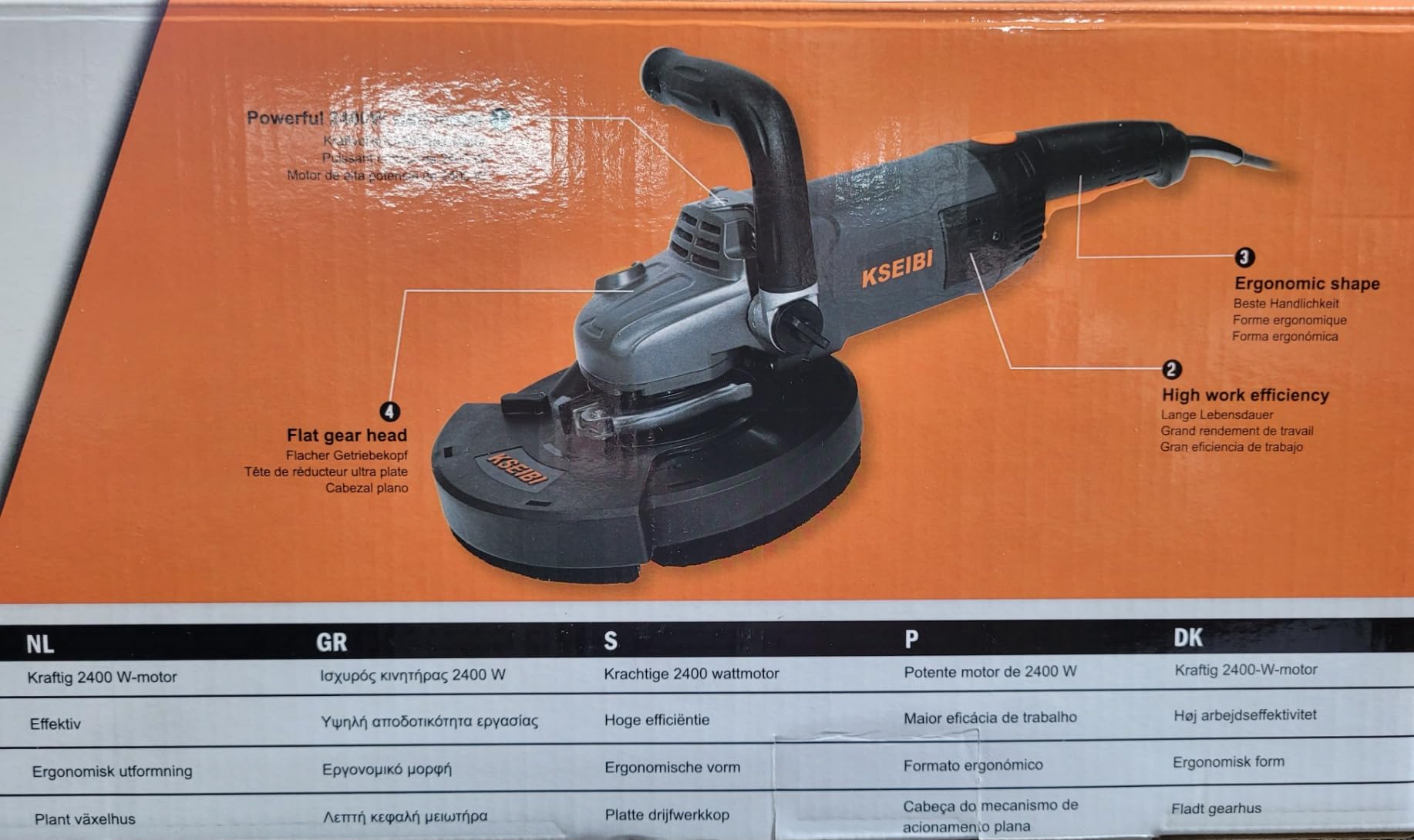
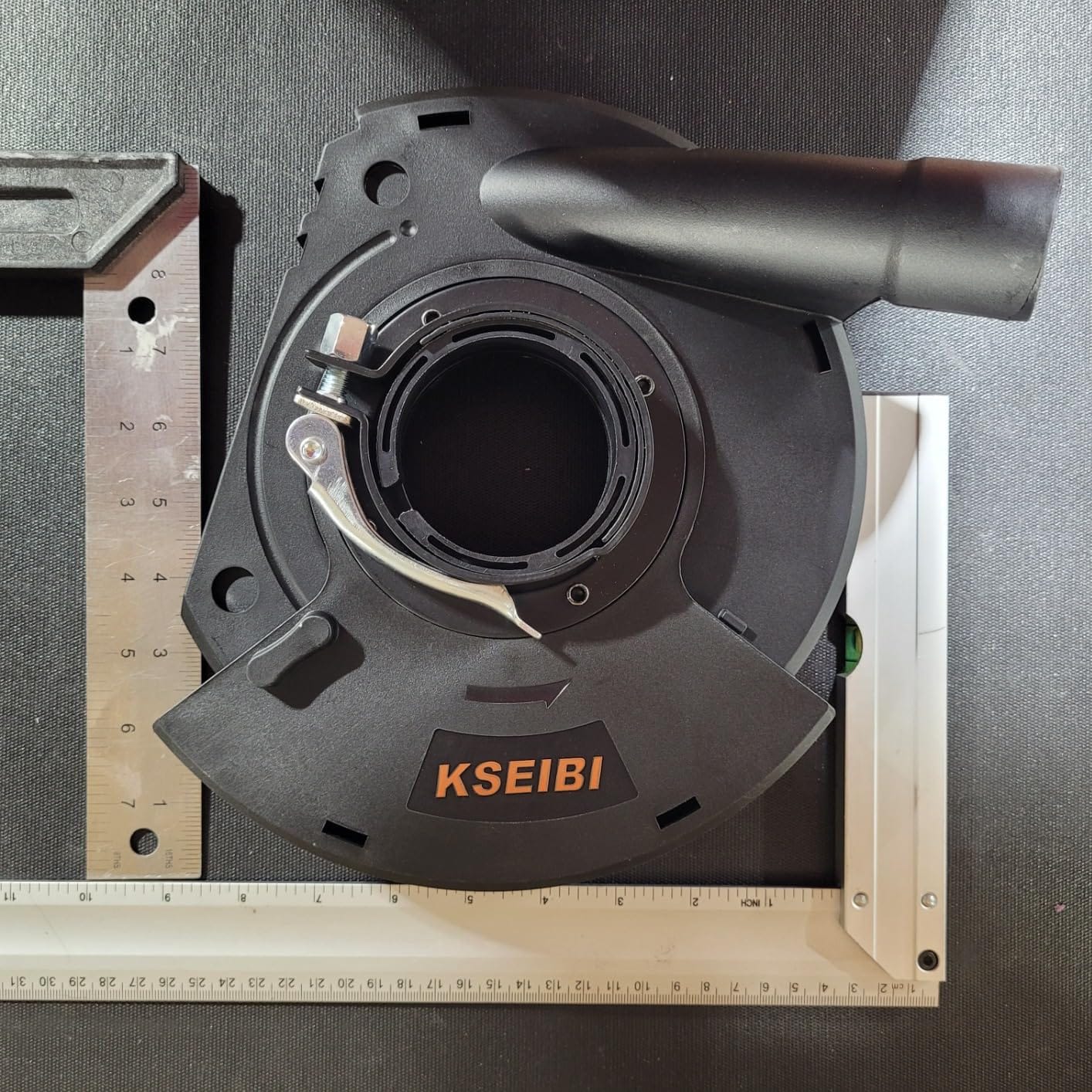
Most 7-inch grinders come bare. The KSEIBI 711985 is the exception: you get the grinder, a 7-inch diamond cup wheel, a 7-inch dust extraction shroud, a 9-inch protective guard, auxiliary handles and a carrying bag in one package. For a first concrete grinding job, that removes the most common source of delay, which is hunting for the right wheel.
The 2400-watt, 15-amp motor runs at 6000 RPM and the spindle takes a 7/8-inch arbor for 7-inch wheels. Reviewers consistently value having the cup wheel and shroud bundled, and the kit holds a 4.4 rating across 107 reviews.
The Dust Shroud and Why It Matters Indoors
Concrete grinding produces a huge volume of fine respirable dust, and the shroud is designed to pull debris away from the operator instead of letting it billow across the slab. If you are prepping a garage floor or a basement for epoxy, that difference in dust volume is the whole game for your cleanup time and your lungs.
It does not eliminate the need for a respirator and a vacuum. No consumer shroud captures everything. But it meaningfully reduces the plume compared with an open wheel, and it is the one accessory in this group designed specifically for concrete rather than metal sparks.
Handling and Setup
You get an L-type and a standard auxiliary handle, so you can change the grip position depending on whether you are working flat on a floor or vertically on a wall edge. That flexibility is useful for anyone doing both surface prep and edge grinding on the same job.
The carrying bag is a small thing that matters on a job site, where a 7-inch grinder with a guard and cup wheel rattling loose in a truck bed is how handles get damaged.
For Whom It Is Good
It fits first-time concrete grinders who do not yet know which diamond cup wheel to buy. The included wheel and shroud cover the most common indoor surface prep job out of the box.
It also makes sense for anyone working in a garage or basement where dust control is the difference between a clean job and a dusty one. The 15-amp motor gives enough power for real concrete work despite the modest 6000 RPM.
For Whom It Is Bad
The 6000 RPM speed is the main limitation. If you need fast material removal, an 8500 RPM model will finish sooner. The unit also weighs roughly 11.9 pounds, so this is not the lightweight option.
With 107 reviews, the field history here is thinner than the big-brand grinders, and a less established brand means less certainty about long-term parts support. If you want a tool you can call for help on in five years, that matters.
5. Makita GA7031Y – Best High-Speed Grinder for Fast Concrete Removal
Makita GA7031Y 7″ Angle Grinder, with AC/DC Switch
15.0 Amp
8500 RPM
13.5 lb
Spiral bevel gears
Labyrinth seal
+ Pros
- 8500 RPM on 15 amp removes concrete fast
- Spiral bevel gears rotate smoothly
- Labyrinth construction blocks debris
- Zig-zag varnish protects the armature
- Tool-less guard repositions quickly
- Cons
- Heavy at 13.5 lb for detail and overhead work
- No lock-on switch
- A small number report premature motor burnout
Best for: anyone removing a lot of concrete fast, such as stripping thinset, taking down slab edges or grinding rough patches level before tiling.
The GA7031Y is the speed answer in this group. A 15.0-amp motor at 8500 RPM handles demanding material removal noticeably faster than the 6000 RPM grinders, and one verified owner describes finishing a 100-square-foot concrete floor leveling job in about two hours without the motor getting warm.
That combination of amps and RPM is the point. High RPM alone on a light motor just spins the wheel; high RPM with 15 amps behind it actually moves concrete.
Gear Design and Debris Management
The spiral bevel gears give smoother rotation and a more efficient transfer of energy, which translates to a steadier feel on a long pass. On a slab you are trying to keep flat, a smooth-running gearhead means the wheel tracks where you put it instead of chattering.
Labyrinth construction keeps debris out of the motor, bearings and gears, and the zig-zag varnish on the armature coil protects it from the same dust. Wire mesh intake covers add a second filter stage, which matters when you are grinding next to another tool throwing up concrete dust.
Weight and Balance on Floor Work
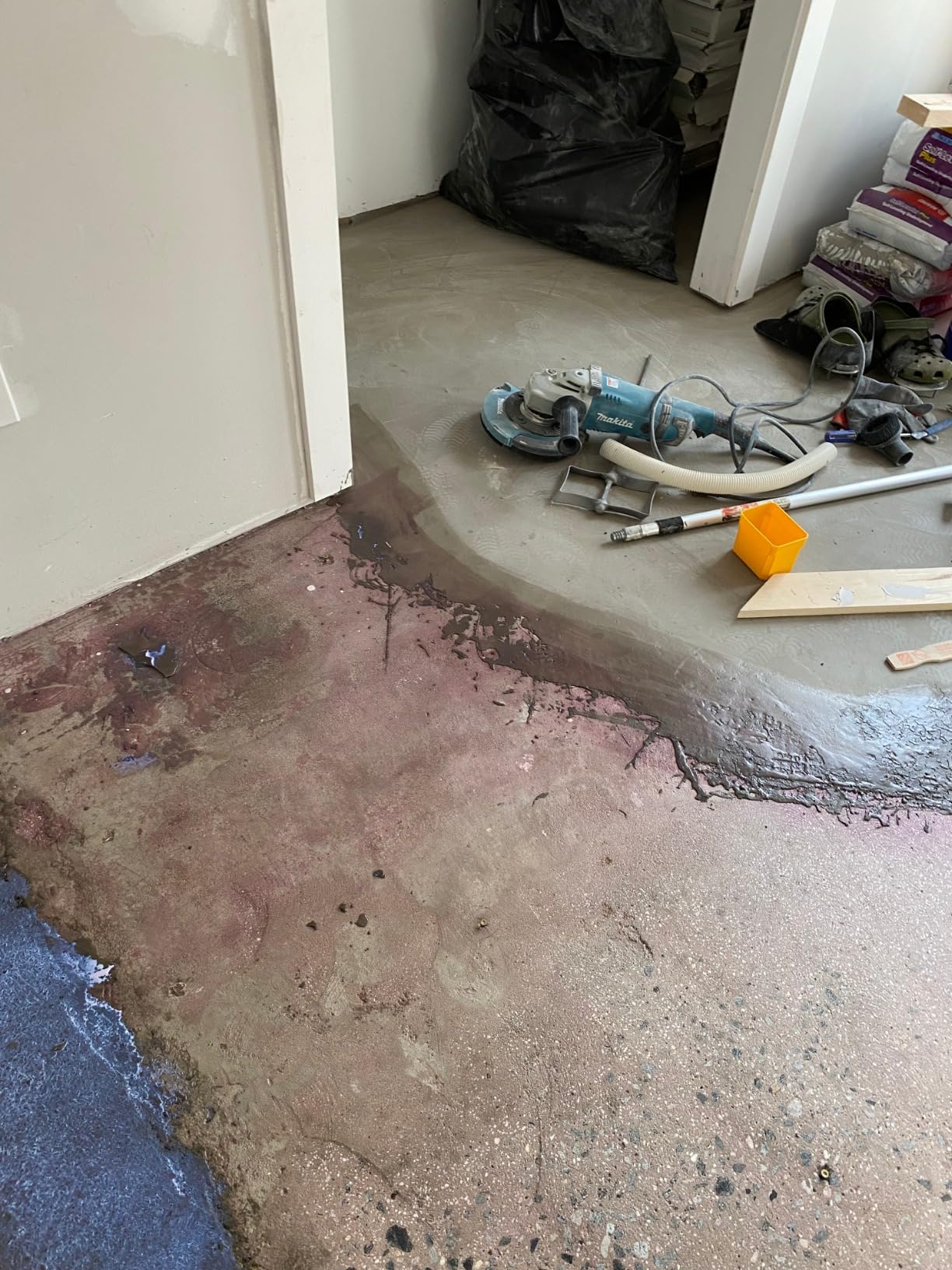
At 13.5 pounds it is a heavy grinder, and reviewers are split on that. For floor grinding, where gravity and the wheel itself press into the surface, the mass becomes an advantage. For wire wheeling on wood, hand-held detail work or anything overhead, it is a genuine burden.
Buyers who value switch convenience should note there is no lock-on here, so long continuous passes mean holding the trigger.
For Whom It Is Good
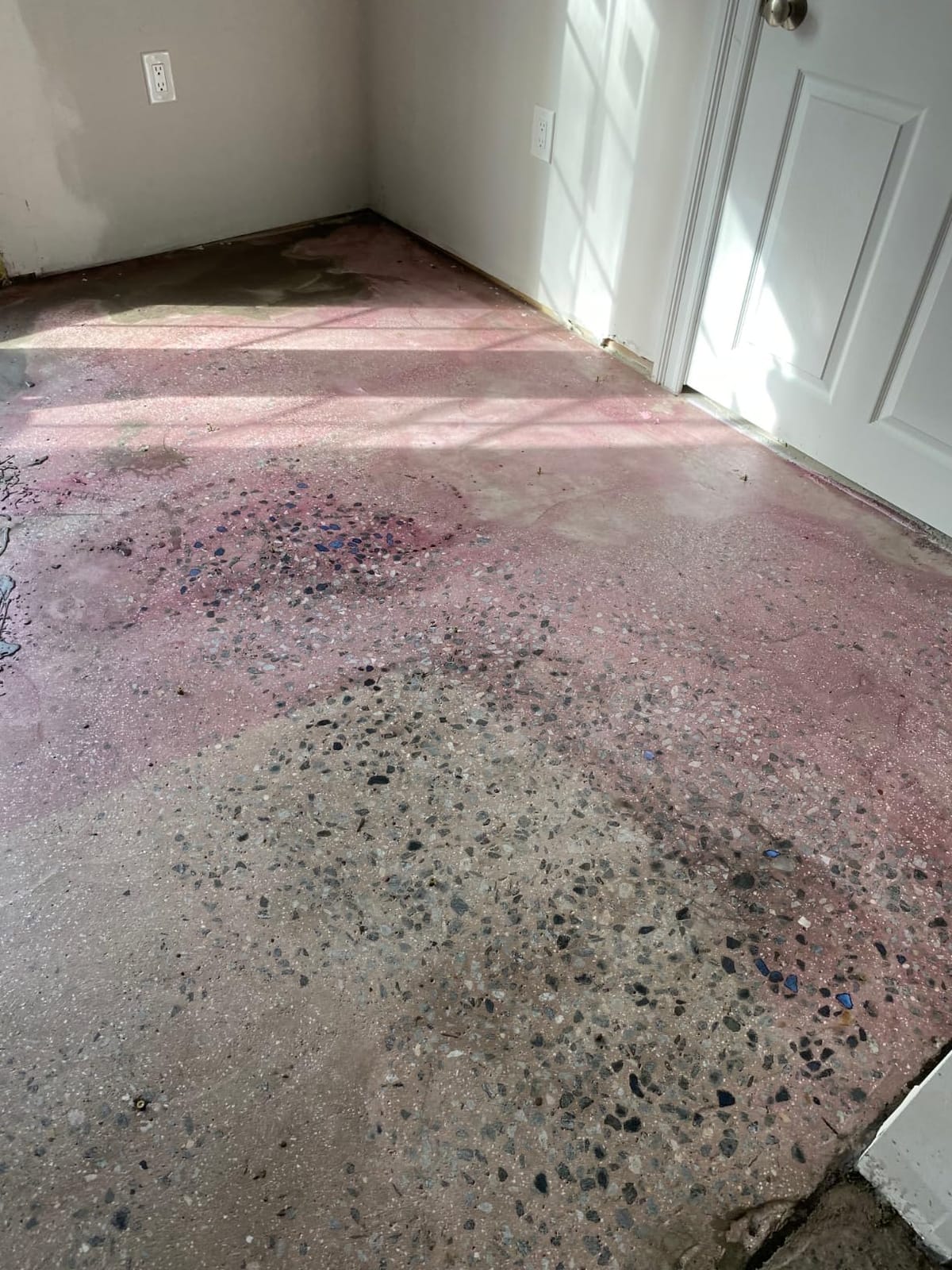
It suits volume removers: thinset, mastic, rough slab edges and anything where you are racing the clock. The 8500 RPM speed means fewer passes across the same section of concrete.
It is also a strong partner to a cup wheel on a floor leveling job, where the extra speed and the sealed labyrinth construction work together to keep the motor cool and clean.
For Whom It Is Bad
The 13.5-pound weight is the dominant complaint and it is not a small one. Anyone doing precise work at arm height will find this grinder tiring, and the 4.3 rating across 81 reviews reflects that split opinion.
There is also no lock-on switch, and a small number of owners report premature motor burnout or a burning smell. If you cannot confirm the tool is cooled between heavy passes, a lower-load 6000 RPM machine is a calmer choice.
6. DEWALT DWE43840CN RAT Tail – Best Lightweight Grinder for Controlled Concrete Cuts
DEWALT Angle Grinder, RAT Tail, 7-Inch, 13-Amp (DWE43840CN)
Brushless motor
7.7 lb
Slim RAT Tail body
Kickback brake
2-stage trigger
+ Pros
- Lightest 7 inch option at 7.7 lb
- Brushless motor needs no brush changes
- Kickback brake stops the wheel in about 4 seconds
- Slim body improves balance and control
- Cons
- Guard lock is hard to operate with gloves
- 2-stage trigger adds friction
- Some owners report burnout in daily professional use
Best for: controlled, accurate cuts in concrete where the tool’s weight works against you, especially pavers, blocks and detail work near a finished surface.
At 7.7 pounds this is the lightest 7-inch grinder here by a wide margin, and the slim RAT Tail body is built specifically for balance and access in tight spots. When you are cutting a paver in place on a patio rather than on a bench, every pound of tool mass is a pound fighting your cut line.
It is also the only brushless corded model in this group, which means no brush changes for the life of the tool and no carbon dust fouling the motor vents during concrete work.
The Kickback Brake and Why Concrete Needs It
The electronic kickback brake engages when a pinch, stall or bind-up event is sensed, and the brake stops the wheel in about 4 seconds or less on average. On concrete this is the feature that matters most, because binding happens constantly: you hit rebar, the wheel stops, and the stored energy in a spinning wheel becomes a kickback.
A brake that dumps that energy in a few seconds is the difference between a small jerk and a wheel spinning off the slab at your shins. The power-loss reset no-volt release on the trigger adds a second layer against an unexpected restart.
Switch Design and Trade-Offs
The two-stage trigger requires two actions to activate the tool, and the guard lock is difficult to operate while wearing gloves. Both are safety-positive and both annoy people who want the tool to start the instant they squeeze it.
The lanyard-ready integrated attachment point is worth noting for anyone working at height on a ladder or a scaffold, though the lanyard is not included.
For Whom It Is Good
It fits anyone doing long sessions, or anyone whose hands and arms are the limiting factor rather than the motor. Seven pounds changes how long you can keep working before fatigue sets in, and fatigue is what turns a straight cut into a wandering gouge.
It is also a strong choice for metal and fabrication work alongside concrete cleanup, where brushless maintenance-free operation and the slim profile both pay off.
For Whom It Is Bad
The 2-stage trigger adds friction for single-handed work, and the guard lock is genuinely awkward with work gloves on. If you change wheels and guards often with gloves, that friction adds up.
It is also the most expensive tool in this lineup, and a small number of owners report grinders burning out quickly under daily professional use. Occasional concrete cutting suits it far better than continuous service.
7. DEWALT DWE4557 – Best Heavy-Duty Grinder for Large Surface Prep Jobs
DEWALT Angle Grinder, 7-Inch, 8,500 RPM, 4.7-HP (DWE4557), Yellow
4.7 HP
8500 RPM
14 lb
Overload protection
Dust ejection
+ Pros
- Highest horsepower figure here at 4.7 HP
- Proven on large thinset and tile substrate jobs
- Anti-vibe trigger reduces fatigue
- Low profile gearcase for tight areas
- Three year limited warranty
- Cons
- Heavy at 14 lb for long sessions
- Anti-vibe grip is not always included in the box
- Some listings omit the flange and retainer nut
- Overload protection can trip a 20A circuit
Best for: contractors stripping thinset and mastic from large slab areas, or prepping a big floor for tile or epoxy flooring.
The DWE4557 is the concrete specialist of this group. It carries the highest horsepower figure here at 4.7 maximum motor horsepower at 8500 RPM with overload protection, and verified owners describe clearing thinset from more than 2,100 square feet of slab and working over 800 square feet of tile substrate without bogging the motor.
That is a real workload, not a bench test. It is the grinder you want when the job is measured in hundreds of square feet rather than feet of cut line.
Overload Protection and Dust Ejection
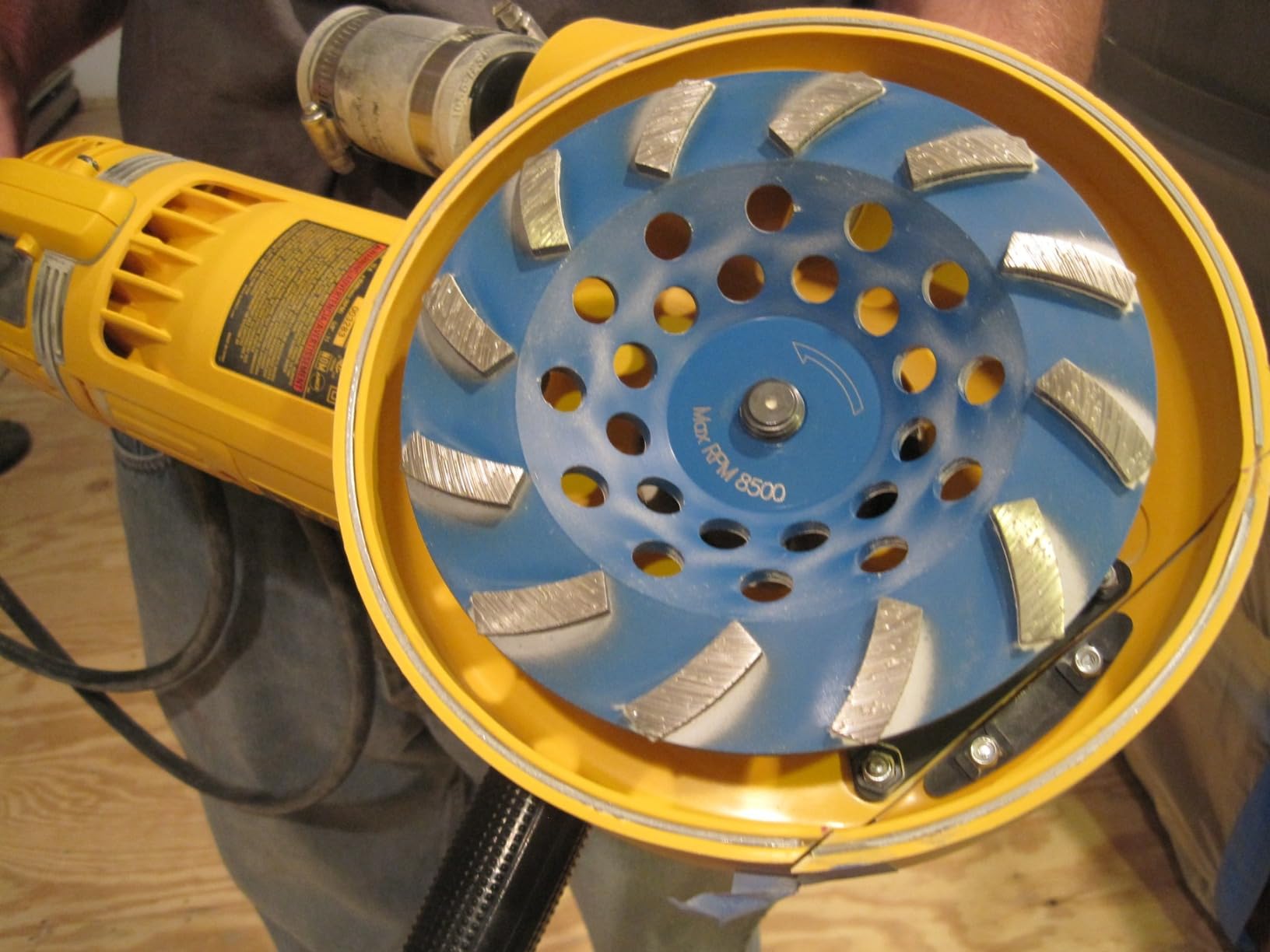
Overload protection preserves the motor when you press a cup wheel down harder than the tool can sustain, which happens constantly on uneven concrete. The dust ejection system protects the motor from abrasive particles entering the air intake and is described as extending brush life, which is exactly the failure mode concrete creates.
Automatic turn-off brushes shut the tool down when the brushes need changing, which prevents the motor running to destruction on worn carbon brushes. Paired with a three-year limited warranty, that is the service-life story that matters most for a floor-prep tool.
Comfort Over Long Sessions
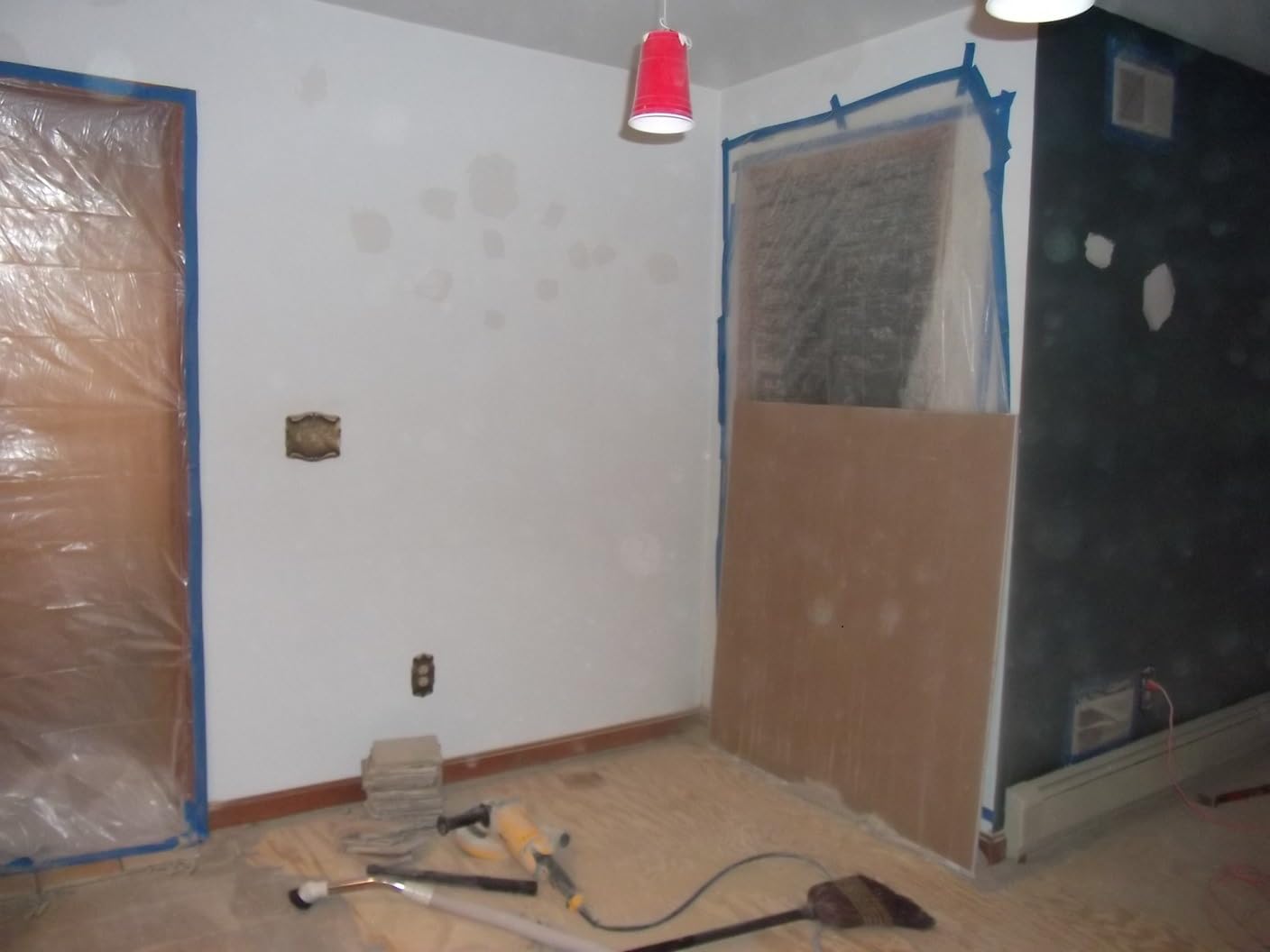
The anti-vibe trigger handle is designed to reduce fatigue from vibration, and the low-profile gearcase helps when you are working in tight areas against a wall or inside a room corner. Those are both quiet quality-of-life wins that only show up on a job that runs past hour three.
One caveat worth knowing before you buy: several listings note that the advertised rubber grip is not always included and a basic plastic handle arrives in its place, and some packages omit the backing flange, retainer nut and spare brushes. Check the box contents carefully on arrival.
For Whom It Is Good
It fits professionals and serious renovators doing volume surface prep. The horsepower, the overload protection and the dust management are all pointed at the same job: putting a lot of abrasive work through one motor for a long time.
It is also a strong choice for cutting thick concrete and masonry, where the combination of 8500 RPM and 4.7 horsepower gives the wheel the torque to keep advancing rather than stalling.
For Whom It Is Bad
At 14 pounds it is one of the heaviest grinders here, and long sessions will tire your arms. If your concrete work is a handful of cuts rather than a floor, this is far more tool than the job needs.
Overload protection can also trip a 20-amp circuit on very thick thinset, so plan your circuit loading. And if your package arrives without the backing flange or retainer nut, you cannot mount a grinding wheel until you source them.
8. Metabo HPT W 24-180 MVT – Best Vibration Control for Long Grinding Sessions
Metabo 7-Inch Angle Grinder, 8,500 RPM, 15 Amp, Slide Switch (Locking), Metabo VibraTech, Made in Germany, W 24-180 MVT, 606466420, Green
15 Amp
8500 RPM
12.6 lb
MVT anti-vibe handle
S-Automatic slip clutch
+ Pros
- MVT handle dampens vibration on long jobs
- Slip clutch reduces kickback on accessory jams
- LongLife motor has 20 percent higher overload capacity
- Tool-free guard with 3 position handles
- Cons
- Weakest rating here at 4.0
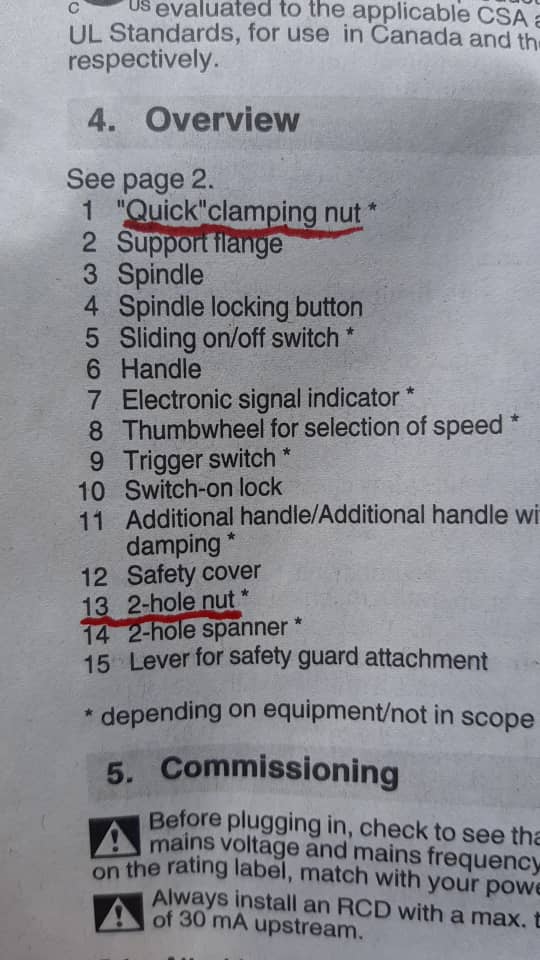
- Flange nuts and mounting tool not included
- Several owners report motor burnout within months
- Recurring reports of overheating
Best for: users with hand or wrist sensitivity who need vibration control more than they need maximum horsepower, and who already trust the Metabo name.
The W 24-180 MVT is built around the MVT anti-vibration side handle, which dampens vibration transmitted to the operator. On a long grinding session that is not a luxury. Vibration is the complaint that ends a concrete job early for a lot of people, and dedicated vibration control is the feature that addresses it directly.
It also carries a 15-amp motor at 8500 RPM and 2400 watts, so the speed class is competitive even though the rating is the lowest here at 4.0 stars across 63 reviews.
The S-Automatic Slip Clutch
The mechanical safety slip clutch reduces kickback when an accessory jams, which on concrete is a weekly event rather than a rare one. Combined with the MVT handle, it is a coherent anti-fatigue package: less shock through the tool, less shock through your hands.
The Metabo LongLife motor adds patented dust protection with up to 20 percent higher overload capacity and 50 percent more torque, and auto-stop carbon brushes protect the motor when wear is detected. On paper, the sealing and overload design is built for abrasive work.
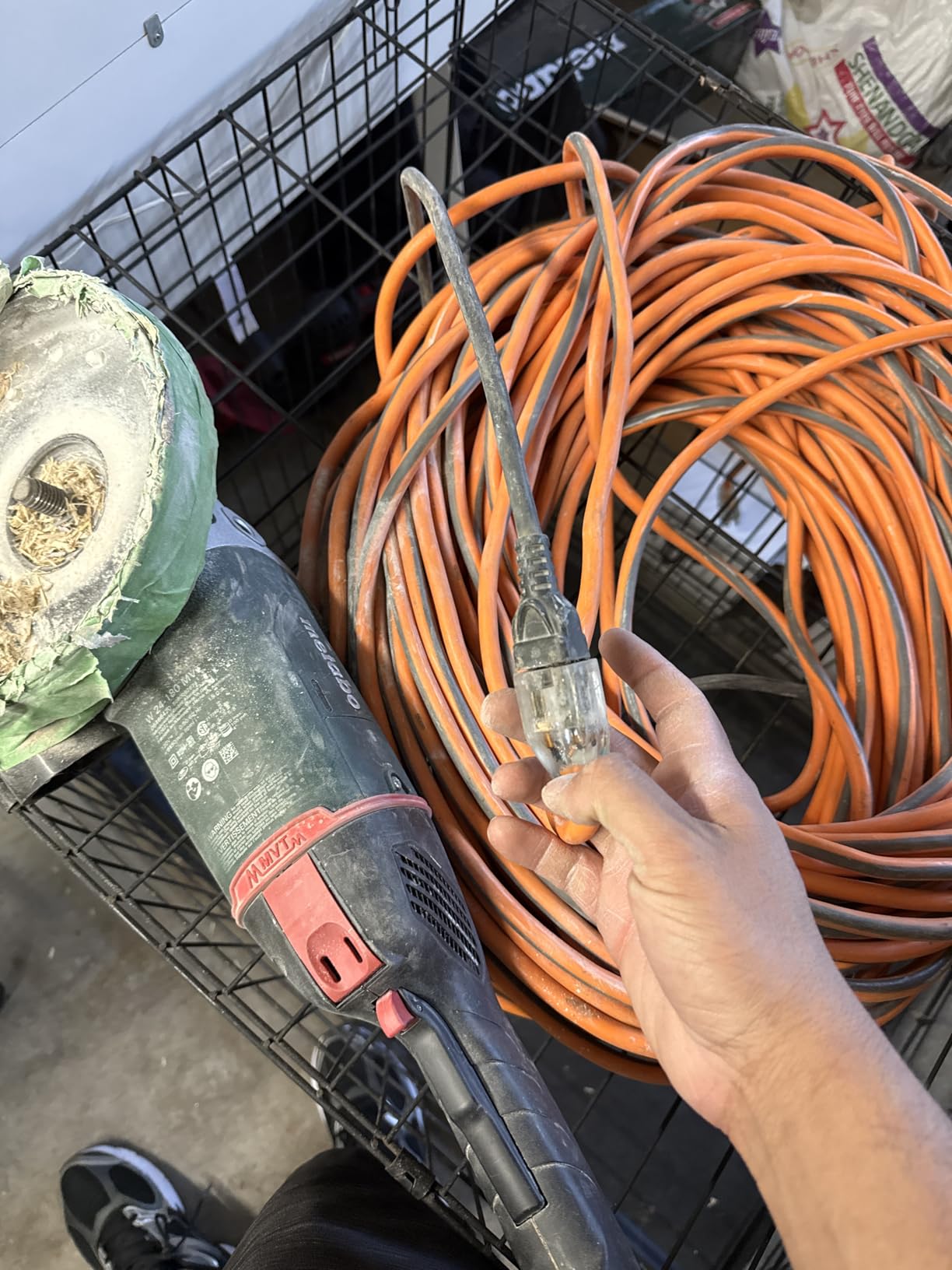
Guard and Handle Positions
The rotating back and side handle mount at three positions, and the tool-free guard is burst-proof. For a tool you will carry in different orientations across a floor and up a wall, three handle positions make a real difference in control.
The locking slide switch allows continuous operation, which the DEWALT models here do not offer, and the tool carries a three-year limited warranty.
For Whom It Is Good
It fits flooring contractors and anyone grinding long stretches of concrete who has spent time on grinders that leave their hands numb. Professional crews standardize on this brand for exactly that reason, and the MVT handle is the reason why.
It is also a good fit for subfloor and bump removal, where the operator is in contact with the tool for long uninterrupted stretches.
For Whom It Is Bad
This is the weakest-rated pick in the group at 4.0 stars, with the largest share of one-star reviews at 16 percent. Flange nuts and the tool needed to mount typical grinding wheels and flap discs are not included, so plan to source those before you can grind.
Several owners report the motor burning out within a few months and there are recurring reports of overheating and shutting off. The hardware design is strong; the execution on some examples is not consistent, so buy it from a seller who will stand behind it.
9. VEVOR 13 Amp 8500 RPM – Best Budget 7-Inch Grinder for One-Off Concrete Cuts
VEVOR Angle Grinder, 7″ Electric Grinder Power Tool, 13Amps 8500RPM High-Speed Corded Angle Grinders with 270° Adjustable Dust Guard for Metal Grinding, Cutting, Rust Removal (Disc Not Included)
13 Amp 1600W
8500 RPM
9.3 lb
270 degree guard
Side handle
+ Pros
- Lowest cost in the group by a wide margin
- 13 Amp and 8500 RPM punch above its tier
- Light 9.3 lb body with rotating handle
- 270 degree adjustable guard contains debris
- Side handle and wrenches included
- Cons
- No disc included
- a diamond wheel is a separate purchase
- Trigger cannot be locked on
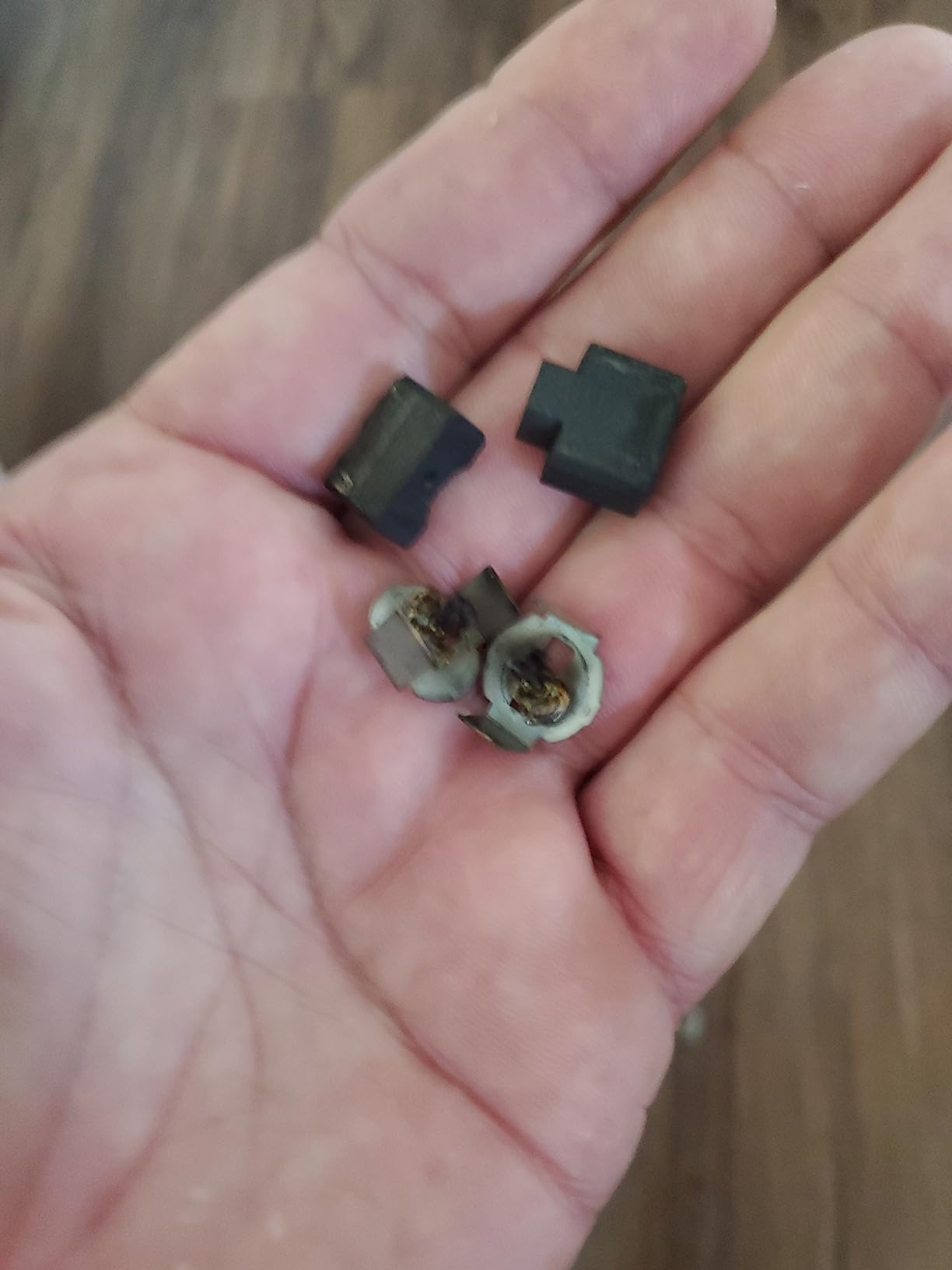
- Some owners report fast carbon brush wear
- Minority report motor failure
Best for: the one-off job, a single paver or a thin slab patch, where you would rather not invest in a grinder you will abuse once.
Here is the cost-per-job logic that almost nobody writing about grinders will say out loud. If you are cutting one paver or trimming one slab edge, a professional grinder will be destroyed by the same concrete dust that ruins your day. Buying a cheap dedicated grinder for the dirty work and a good one for everything else is what experienced users actually do, and this is the cheapest version of that plan.
On paper the VEVOR is startlingly capable for its cost: a 1600-watt, 13-amp motor at 8500 RPM, which matches the speed class of grinders costing several times more. One owner reports cutting 3-inch thick concrete with it.
Guard and Handling in Tight Quarters
The 270-degree adjustable guard blocks debris and particles, and the 90-degree rotating handle lets you get the tool into confined spaces. At 9.3 pounds it is the second-lightest grinder here, which suits short bursts of work on pavers and blocks.
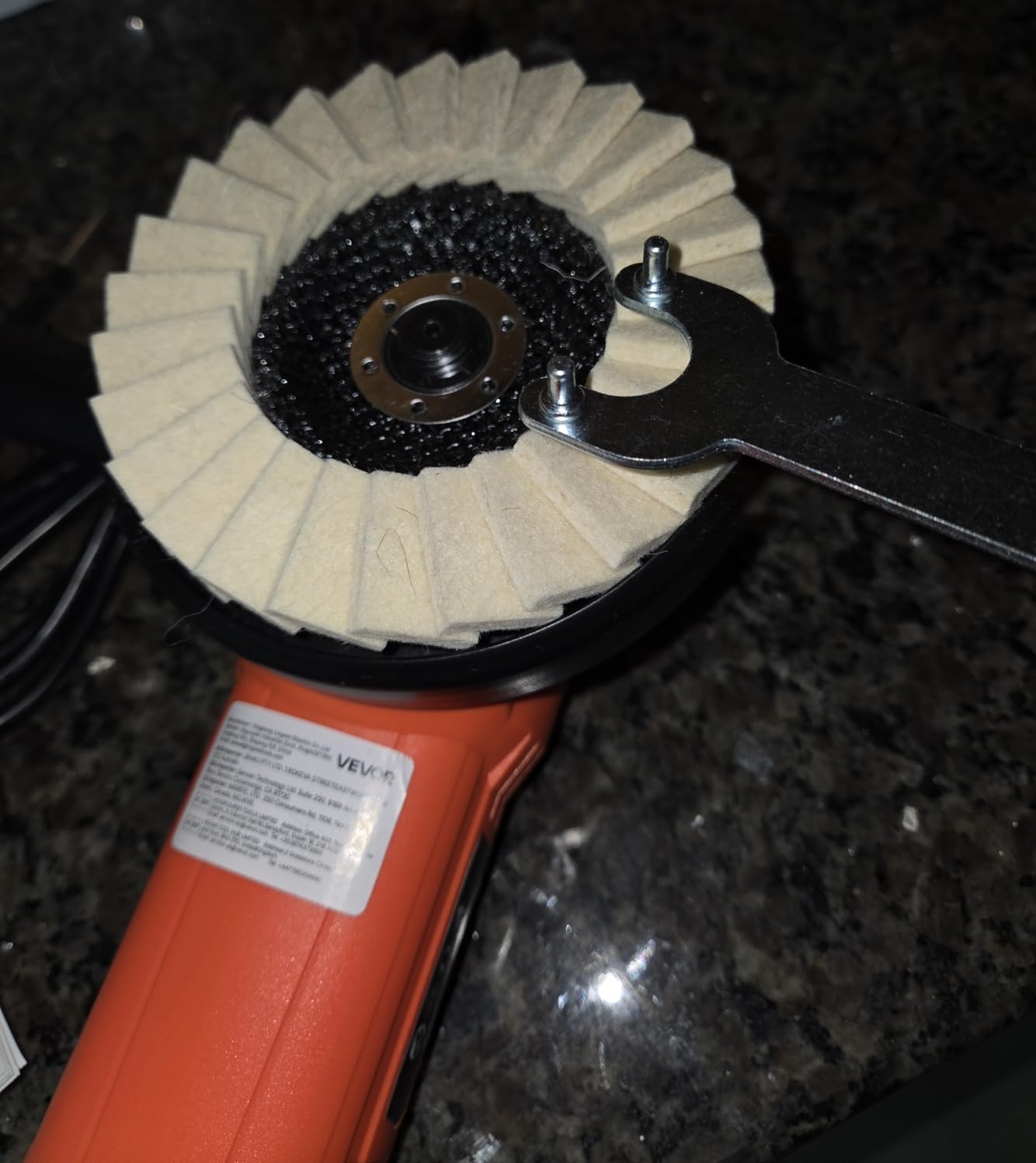
You get a 7-inch safety guard, a hex wrench, a side handle that mounts in two positions, and a spanner wrench. The rubber grip covers the main body for comfort over extended use, and the cord is 6.56 feet.
For Whom It Is Good
It fits the homeowner with a single concrete task, or anyone who wants a dedicated sacrificial grinder for cutting while keeping a better tool for general work. The 8500 RPM speed means it does not feel slow despite the cost tier.
It is also a reasonable backup machine for a shop, where a second grinder is useful precisely because you do not mind if it gets wrecked.
For Whom It Is Bad
No disc is included, so a diamond wheel is a separate purchase before you can do anything with it. The trigger also cannot be locked on, which makes long continuous passes tiring.
Some owners report carbon brushes wearing out quickly and a minority report motor failure after a few hours of use. Concrete work is exactly the abrasive environment that punishes a tool with minimal bearing protection, so treat this as a short-term cutting tool rather than a floor grinder.
10. RIDGID R10202 – Best Compact Grinder for Confined Concrete Work
RIDGID 15 AMP Corded 7 in. Twist Handle Angle Grinder R10202
15 Amp
8000 RPM
12.8 lb
Die cast metal
Twist handle
+ Pros
- Compact 7 inch body reaches tight spaces
- Twist handle rotates for varied grip angles
- Die cast metal construction feels solid
- Strong general purpose cutting and grinding
- Cons
- 8000 RPM is modest for heavy grinding
- Some owners report noisy gear operation
- Reports of units stopping after short use
- Lifetime warranty not honored through third-party sellers
Best for: working in confined areas, against a wall, inside a corner or in a narrow gap where a standard 7-inch body will not fit without fouling the guard.
The R10202 is built around access rather than raw output. The twist handle design lets the body rotate for different grip positions, and the compact 7-inch frame is what makes it usable in the tight spots. On a 15-amp platform at 8000 RPM, it has enough power for general concrete cutting and grinding.
Die cast metal construction gives it a solid feel in the hand, and the 12.8-pound weight sits in the middle of this group rather than at either extreme.
Grip Positions for Awkward Angles
The twist handle is the feature to understand before buying. Rather than a fixed body and a side handle, you rotate the tool itself to change the angle of the working position, which lets you keep the wheel flat against a surface while your wrist stays aligned.
On a vertical cut or an inside corner that feature is the difference between working the grinder and fighting it. Combined with the compact body, it makes this a genuinely distinct tool rather than another generic 7-inch corded grinder.
For Whom It Is Good
It suits anyone who regularly works in awkward geometry: grinding into a corner to meet a wall, cleaning up a tight joint, or cutting a paver in a narrow gap. The brand and its warranty network add confidence when bought through an authorized channel.
It also works as a general-purpose 7-inch for a range of materials, which makes it a reasonable single grinder for a homeowner who does occasional masonry and metal work.
For Whom It Is Bad
The 8000 RPM speed is modest for heavy concrete grinding, so volume surface prep will take longer than it would on an 8500 RPM machine. Some owners also report unusually noisy operation and gear noise on their models.
There are reports of grinders stopping after short use, and a significant practical warning: RIDGID’s lifetime warranty is frequently not honored when the tool is bought through a third-party marketplace seller. Buy through an authorized channel if that coverage matters to you.
How to Choose a 7-Inch Angle Grinder for Concrete
Match the grinder to the job, not the other way around. Concrete work falls into three distinct categories, and each one wants a different tool.
Cutting vs Grinding vs Surface Prep
Cutting means a diamond cutoff blade in a slab, paver, block or wall chase. You want speed and torque: 8500 RPM and at least 13 amps. The blade is doing the removal, so the motor’s job is to keep it advancing when the blade binds.
Grinding means removing a proud edge, a lip of thinset or a raised joint. Control matters more than raw speed here, and a lower-speed 6000 RPM machine with good torque can feel better in the hand even though it removes less per pass.
Surface prep means flattening a rough slab with a diamond cup wheel before tiling or epoxy. This is a volume job. High horsepower, a dust shroud and a comfortable grip beat a fast wheel speed every time.
Amps and Horsepower: What Actually Matters
Amps describe the current the tool can draw, and on a 120-volt circuit that is the honest measure of how much motor you have. Everything from 13 amps up handles concrete cutting; the difference shows up when the blade bites into rebar or a wire and the motor has to recover.
Horsepower claims need reading carefully because manufacturers do not all measure the same way. Comparing the rated wattage is more reliable. Here that ranges from 1560 watts on the DEWALT DW840 to 2400 watts on the Metabo HPT W 24-180 MVT and the KSEIBI kit.
For 7-inch concrete work, treat 13 amps as the floor and 15 amps as comfortable. Below that, you are asking the tool to do more than its motor was designed to absorb, and that shows up as heat, bogging and shortened brush life.
No-Load RPM and Why It Changes Your Day
No-load RPM is the speed the wheel spins with nothing touching it. It matters because concrete removal rate scales with surface speed, and a 7-inch wheel at 8500 RPM covers noticeably more material per pass than the same wheel at 6000 RPM.
The trade-off is control. Faster rotation is harder to keep on a cut line, and a fast wheel bouncing off concrete chatter is how you end up with a wandering groove. If your work is precise cutting on a finished surface, 6000 RPM with more torque is the calmer pairing.
Weight and Vibration: The Fatigue Equation
Weight across this group runs from 7.7 pounds on the DEWALT RAT Tail to 15.4 pounds on the Makita GA7021. That is a 7.7-pound difference you carry for the whole job.
Vibration is the part buyers underrate. Owners describe long concrete grinding sessions as comfortable or miserable, and dedicated anti-vibration features, such as the MVT handle on the Metabo HPT W 24-180 MVT or the anti-vibe trigger on the DEWALT DWE4557, exist because hand fatigue ends jobs early. If you already have wrist or grip issues, pay for the dampened handle.
Switch Type: Lock-On, Paddle or Two-Stage
A lock-on switch lets you stop squeezing the trigger during a long pass, which reduces fatigue and steadies the cut. Several grinders here, including the DEWALT DW840 and Makita GA7031Y, do not have one.
Two-stage triggers, as on the DEWALT RAT Tail, require two actions to start the tool. That is a safety feature, and it is also friction you will feel every time you change wheels.
Spindle Thread and Wheel Compatibility
Check the arbor before you buy any wheel. Most 7-inch grinders use a 5/8-11 threaded spindle, and the KSEIBI kit here lists a 7/8-inch arbor for its 7-inch wheels. A mismatch means the wheel simply will not mount, and it is a common and easily avoidable disappointment.
Beyond the thread, bore diameter has to match too. This is a well-known trap: a wheel that fits one brand will not fit another even when both are nominally 7-inch with a 5/8-11 spindle. Buy wheels for your specific model.
Dust Control Features That Actually Move the Needle
For indoor work, the dust features matter more than any other spec. A dust shroud, as on the KSEIBI 711985, or a dust ejection system that keeps abrasive particles out of the motor air intake, as on the DEWALT DWE4557, both reduce the volume of airborne dust and extend motor life at the same time.
Labyrinth sealing, found on the Metabo HPT G18ST, the Metabo HPT W 24-180 MVT and the Makita GA7031Y, does something different and quieter: it keeps concrete slurry out of the motor bearings, which is where most grinders eventually fail.
The Cost-Per-Job Question Nobody Asks
Here is the honest framing. Concrete dust destroys tools fast, and experienced users handle that in two ways. Contractors invest in a durable grinder, and often two, and accept that one will be sacrificed to cutting work. Occasional users buy a cheap dedicated grinder for the concrete job so the damage lands on something they do not mind losing, and buy a fresh low-cost diamond wheel for the project.
Both approaches are rational. If you are cutting one paver, spend as little as possible. If you are grinding floors for a living, buy the one that survives. Matching the tool to the volume of concrete work is the single most useful decision in this whole guide.
Which Diamond Wheel Should You Use on Concrete?
Getting the grinder right and then fitting the wrong wheel wastes both. Concrete jobs need four different wheel types, and no single wheel does all of them.
Diamond Cutoff Blades for Slicing Concrete
For cutting a slab, paver, block or wall chase, you need a diamond cutoff blade with a continuous or segmented rim. Continuous rims cut cleaner and slower on hard concrete, and segmented rims cut faster with more chip clearance. Look for a blade rated for concrete or masonry, and match the bore to your grinder.
Never use an abrasive cutoff wheel intended for metal on concrete. It will load up with dust, overheat and come apart. This is the most common and most dangerous concrete mistake.
Diamond Cup Wheels for Surface Grinding
A diamond cup wheel is a bowl-shaped wheel with diamond segments around the rim, and it is what you use to remove coatings, level high spots and smooth a rough slab. Fewer, larger segments clear debris faster and are the right choice on soft or damp concrete, while more numerous segments give a smoother finish and hold up better on hard surfaces.
For smoothing a rough slab flush before tiling, the practical answer is a PCD cup wheel for the bulk removal followed by a metal-bond cup wheel for finishing. That two-step sequence is what gets a garage floor flat enough to tile.
Surface Prep Pads and Blending Discs
Once a floor is flat, a diamond pad or blending disc refines the profile and removes scratch patterns left by the cup wheel. Resin or non-abrasive pads are for polishing a hardened surface, while metal-bond discs handle the aggressive work.
This is the step most DIYers skip and the reason a professionally prepared floor looks different. Grinding with a cup wheel only leaves swirl marks that show under a wet finish or polished epoxy.
Crack Rakes and Specialized Wheels
For a wide, shallow cut in an existing crack or joint, a crack rake is more efficient than a cutoff blade because it is wider and shallower. For removing paint and coatings from concrete, a 7-inch diamond cup wheel with coarse segments or a specialty paint-stripping wheel will outperform a grinding wheel.
And for anything involving rebar or embedded steel, use a diamond blade explicitly rated for ferrous cutting. A standard concrete blade will dull immediately on rebar, and a metal blade will shatter on aggregate.
Concrete Dust, Silica and Safety Checklist
Concrete dust contains crystalline silica, and grinding and cutting it releases respirable particles you do not want in your lungs. No competitor page covers this properly, so here is the working checklist.
PPE That Is Not Optional
Eye protection, always, plus a respirator rated for particulate matter whenever you are grinding or cutting concrete. Hearing protection matters too, since 8500 RPM at seven inches is genuinely loud. Gloves improve grip on the side handle but should fit snugly, because loose gloves are a snag hazard near a spinning wheel.
A half-mask or better is the minimum indoors. A full-face or powered respirator is the right call for long floor grinding sessions in a closed garage.
The Guard Is a Safety Device, Not a Spark Deflector
The wheel guard is the barrier between a broken wheel and your body. It should be positioned so that if the wheel fragments, debris travels away from your face and torso. A tool-free or keyless guard makes this adjustment something you will actually do, which is why the DW840, Makita GA7021 and Makita GA7031Y are all easier to use safely than grinders with fixed guards.
Never run a grinder without the guard properly adjusted, and never lift the tool off a cut line while the wheel is spinning.
Dry, Wet and Vacuum-Assisted Cutting
Wet cutting is the most effective way to suppress silica dust, and it is standard practice for concrete. The trade-off is real: you have to clean the tool thoroughly afterward, and moisture near an electric motor is a genuine concern. Dry the housing before storing it and never run a wet grinder with a damaged guard or cable.
A shop vacuum connected to a shroud is the compromise most people settle on, and it is why a shroud-equipped kit such as the KSEIBI 711985 is worth a look. Add a respirator regardless.
Kickback and the Rebar Surprise
Kickback is the sudden uncontrolled kick of a spinning wheel when it binds. On concrete the usual cause is hitting rebar or a wire mesh in the slab. Approach every cut knowing steel may be inside, start the cut on solid material, and keep the wheel moving once it is in the groove.
Cut in shallow passes rather than trying to slice through a full slab in one go. Deeper cuts mean more heat, more binding and less control of the cut line.
Make the Cut Straight
Users repeatedly mention the same problem: wandering cuts. A straight cut on concrete is hard to hold freehand because the wheel wants to follow the existing groove. Mount a plywood or lumber sled against the slab and ride the wheel along it. It is an afternoon of work that saves every future cut on that line.
Mark the line first, and start the cut on solid concrete just outside the line, then walk the wheel into it. Cutting a groove and then trying to follow it is how beginners end up with a gouge.
Frequently Asked Questions
What is the best 7 inch angle grinder for concrete?
The DEWALT DW840 is the best 7 inch angle grinder for concrete overall. Its 13 amp motor at 8000 RPM, sealed bearings and spindle lock handle both slab cutting and surface work, and it holds a 4.7 rating across more than a thousand verified reviews. For floor grinding specifically, the Metabo HPT G18ST is lighter at 10.8 pounds with 15 amp of output.
Who makes the best 7 inch grinder?
Among the models tested here, DEWALT, Makita and Metabo HPT are the three strongest brands for 7 inch concrete work. DEWALT leads on proven rating depth and sealed bearing protection, Makita leads on motor torque, and Metabo HPT leads on vibration control and power-to-weight. DeWalt or Makita is the deciding question only if you already own one of those battery ecosystems.
What type of grinder is best for concrete?
A 15 amp corded 7 inch model with a 5/8-11 threaded spindle is the standard answer for concrete. Use 8500 RPM models for cutting and bulk removal, and lower-torque 6000 RPM models for controlled grinding and edge work. Surface prep on a large area favors a model with a dust shroud and overload protection. Avoid 4.5 inch grinders, which cut noticeably shallower per pass.
What blade do I need to cut concrete with an angle grinder?
A diamond cutoff blade rated for concrete or masonry, with a bore that matches your grinder. Continuous rim blades cut cleaner and slower on hard concrete, while segmented blades cut faster. Never use an abrasive cutoff wheel meant for metal on concrete, it will overheat and break up. For rebar, use a blade specifically rated for ferrous cutting.
Why are 9 inch angle grinders restricted?
A larger wheel digs deeper and reaches higher RPM, which increases the energy available in a kickback and makes the tool far harder to control when it binds on rebar or aggregate. Because of that, 9 inch wheels fall outside the size most safety standards permit for handheld grinding. Seven inch is the practical sweet spot, giving real cut depth with manageable control.
Is a cordless angle grinder powerful enough for concrete?
For pavers, blocks and thin slab work, a 20V MAX brushless cordless grinder handles concrete fine and the portability is worth it. For thick slabs, dense aggregate or rebar, a 15 amp corded model is stronger and never runs out of power mid-cut. Whichever you pick, you are committing to one battery platform, and concrete dust is hard on batteries, so keep spares charged.
Which angle grinder is better, DEWALT or Makita for concrete?
For concrete, DEWALT leads on sealed bearing protection and rating depth, while Makita leads on motor torque and comfort features like a lock-on trigger and tool-less guard. The DEWALT DW840 carries a 4.7 rating across 1006 reviews, the Makita GA7021 a 4.8 across 671. If you already own one battery ecosystem, that outweighs the spec difference.
How do I control concrete dust when cutting and grinding?
Three methods work. Wet cutting suppresses dust at the source, though you must clean and dry the tool thoroughly afterward. A dust shroud or vacuum connection, as on the KSEIBI 711985, captures debris near the wheel. A respirator rated for particulates is required in all three cases, because no method captures everything. Add eye and hearing protection every time.
The Verdict: Which 7-Inch Grinder to Buy in 2026
If you want one grinder that handles everything from slab cutting to edge cleanup, the DEWALT DW840 is the pick. Sealed bearings, a 13-amp motor and 1006 verified reviews make it the safest bet in this guide, and it is where I would start.
If you are grinding floors and control joints, weight becomes the deciding factor, and the Metabo HPT G18ST at 10.8 pounds with 15 amps of output changes how long you can work. If you need maximum speed on thinset and stock removal, the Makita GA7031Y at 8500 RPM finishes sooner. If you want a bundled dust shroud and cup wheel, the KSEIBI 711985 saves you two separate purchases.
If you are only doing one job, buy the VEVOR, a fresh diamond wheel, and accept that the grinder exists to be sacrificed. That is not a compromise, it is the correct answer for a single cut.
Whatever you choose, match the wheel to the job, keep a respirator on, and expect concrete to take a toll on the tool. Those three habits matter more to the life of your grinder than any spec on the box.