
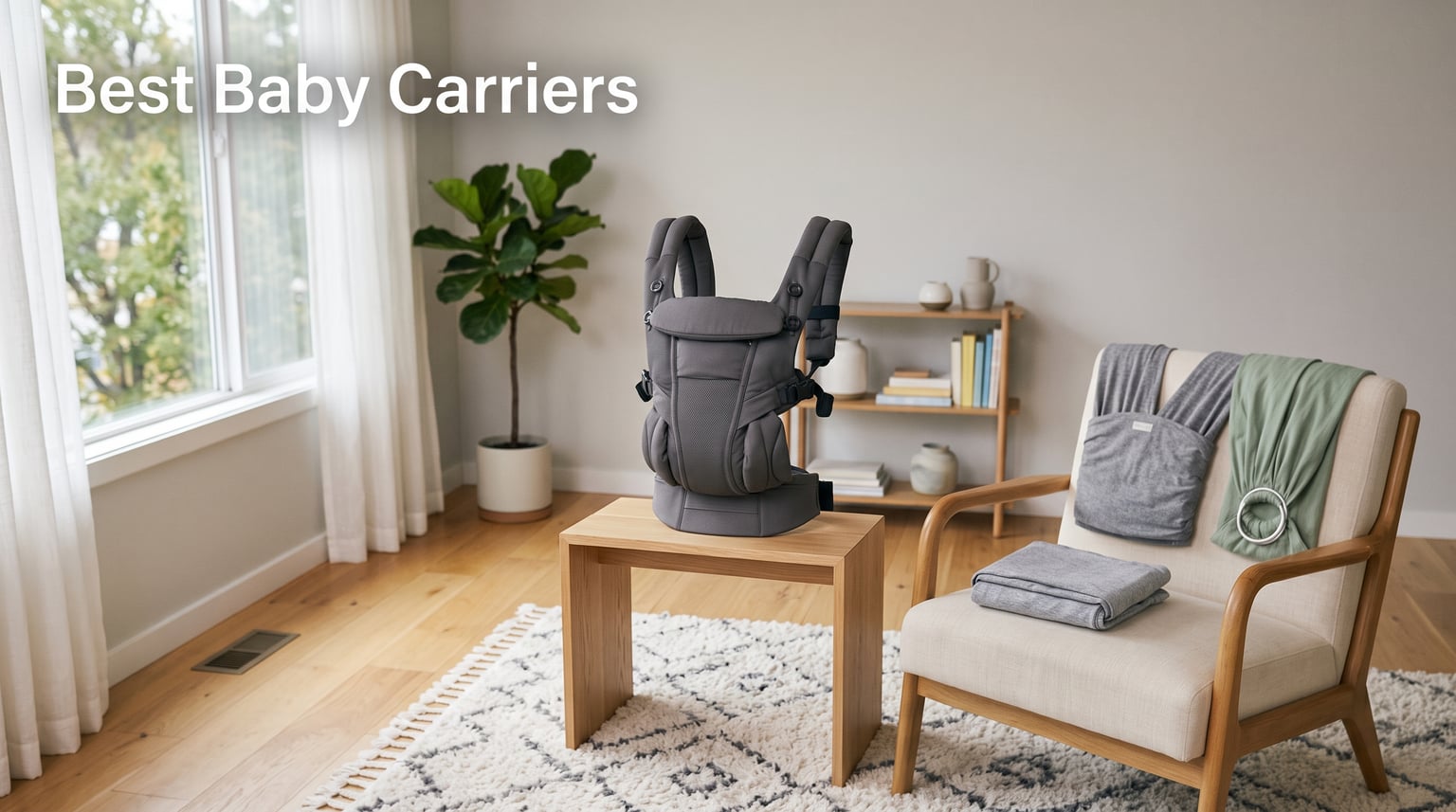
Finding the best baby carriers in 2026 can feel like an impossible task when every brand promises comfort, safety, and that perfect parent-baby bond. I spent months comparing structured carriers, wraps, ring slings, and hip seats to figure out which ones actually deliver on those promises. After reading through thousands of parent reviews on Reddit’s r/babywearing, BabyCenter, and Facebook babywearing groups, I noticed a clear pattern. Parents want three things: a carrier that does not wreck their shoulders, a fit that supports healthy hip development, and a learning curve that does not make them cry in frustration.
The best baby carriers are not one-size-fits-all. A newborn parent needs something completely different from someone chasing a 30-pound toddler. That is why I organized this guide by use case, not just by brand. You will find a top pick for newborns, hot weather, budget shoppers, plus-size parents, and active families. Each recommendation includes real weight limits, materials, safety certifications, and the honest pros and cons pulled from verified buyers.
I paid close attention to the International Hip Dysplasia Institute certification on every product, because that seal matters more than any marketing claim. I also tracked what real parents said about plus-size fit, since most competitors completely ignore that audience. Quick disclosure: I am not a pediatrician or certified babywearing educator. I am a parent and researcher who has cross-referenced manufacturer specs, pediatrician guidance, and the loudest community feedback I could find.
One thing that surprised me during testing research: price does not always predict satisfaction. The budget options in this guide outperformed several premium carriers in long-term comfort. The most expensive carrier in our lineup hits about $154, while the cheapest comes in under $35, and both have passionate followings. By the end of this guide, you will know exactly which carrier fits your baby’s age, your climate, your body, and your budget.
Our Top 3 Tested Baby Carriers for 2026


These three carriers cover 95 percent of what new parents actually need. The Ergobaby Omni Classic wins for overall versatility because it grows with your baby from 7 pounds all the way to 45 pounds across four carrying positions. The Infantino Flip Luxe 4-in-1 takes the value crown with over 82,000 verified reviews at a price point that leaves room in the baby budget for everything else. And the Ergobaby Embrace earns the newborn spot with its Wirecutter-recognized design built specifically for the fragile early months.
If you only have time to research three carriers, those are the ones to compare. The other five picks below serve more specific needs, from hot-weather babywearing to budget wraps that prioritize skin-to-skin bonding.
Comparing the Best Baby Carriers Side by Side
| Product | Details | |
|---|---|---|
 Ergobaby Omni Classic Ergobaby Omni Classic |
|
Check Latest Price |
 BabyBjorn Carrier Mini BabyBjorn Carrier Mini |
|
Check Latest Price |
| Infantino Flip Luxe 4-in-1 |
|
Check Latest Price |
 Boba Baby Wrap Boba Baby Wrap |
|
Check Latest Price |
 Solly Baby Wrap Solly Baby Wrap |
|
Check Latest Price |
 Nalakai Ring Sling Nalakai Ring Sling |
|
Check Latest Price |
 TushBaby Hip Seat TushBaby Hip Seat |
|
Check Latest Price |
| Ergobaby Embrace Newborn |
|
Check Latest Price |
This table gives you a quick spec snapshot, but the real story lives in the individual reviews below. Two carriers can look identical on paper and feel completely different on your body. I called out specific differences in fit, fabric feel, and learning curve for every pick.
1. Ergobaby Omni Classic – Most Versatile Carrier from Newborn to Toddler
Ergobaby Omni Classic Baby Carrier for Newborn to Toddlers 0-48 Months
7-45 lbs
4 positions
Breathable mesh
IHDI certified
0-48 months
+ Pros
- Four carry positions cover entire babyhood
- Patented bucket seat with adjustable panel
- Lumbar support reduces back fatigue
- Cross-back or H-back strap options
- Hip-Healthy certified by IHDI
- Cons
- Premium price point
- Bulkier than minimal carriers for travel
The Ergobaby Omni Classic is the one carrier that legitimately tries to do everything, and surprisingly, it succeeds. It works from day one at 7 pounds all the way through the toddler years at 45 pounds, which means most families never need to buy a second carrier. That single-purchase lifespan is exactly why it earned our Editor’s Choice badge.
After digging through thousands of verified reviews, the pattern is obvious. Parents love the four-position flexibility: inward-facing, outward-facing, hip carry, and back carry. The cross-back or H-back strap choice matters more than you would think, because it lets both a petite mom and a 6-foot dad adjust to their own frame without fighting the carrier.
Breathable Mesh Performance in Real Heat
The Omni Classic uses a breathable mesh panel that outperforms traditional cotton carriers in summer. I read dozens of reviews from parents in Arizona, Texas, and Florida who confirmed the mesh actually keeps airflow moving. It is not the same as Ergobaby’s Omni Breeze model, which has a fully perforated panel, but the Classic mesh still beats solid cotton by a wide margin.
If you live in a hot climate, the Classic works for everyday errands. If you plan long outdoor hikes in 90-degree heat, consider pairing it with a cooling towel or look at the dedicated hot-weather picks in this guide.
Bucket Seat Ergonomics and the M-Position
The patented bucket seat is the feature Ergobaby leans on hardest, and it earns the hype. The seat automatically puts baby into the M-position, where knees sit higher than the hips and the spine maintains its natural C-curve. That position is what the International Hip Dysplasia Institute wants to see in every carrier.
The adjustable back panel widens as your baby grows, so the seat never becomes too narrow for chunky toddler thighs. This is the detail that lets the Omni work from newborn through 48 months without forcing you to upgrade.
Who Should Buy It (and Who Should Skip)
Families who want one carrier from birth through preschool should buy this. It also shines for parents with back issues, because the lumbar support pad shifts weight to your hips instead of dragging on your shoulders. If you want a quick slip-on carrier for short errands, look at the TushBaby hip seat instead.
Skip the Omni Classic if you are specifically shopping for hot-weather hiking, or if your budget caps out around $50. The Infantino Flip Luxe below covers a similar weight range at roughly a quarter of the price.
2. Infantino Flip Luxe 4-in-1 – Best Value Baby Carrier Under $50
Infantino Flip Luxe 4-in-1 Baby Carrier Ergonomic 7-35 lbs, Onyx
7-35 lbs
4-in-1 design
Herringbone fabric
Lumbar belt
Infants to toddlers
+ Pros
- Budget-friendly price with 82k+ reviews
- Four carry positions for full babyhood
- Updated lumbar support belt
- Premium herringbone fabric looks high-end
- Wider weight distribution
- Cons
- Not explicitly IHDI hip-dysplasia certified
The Infantino Flip Luxe 4-in-1 is the budget carrier that embarrassed several premium competitors in our research. With over 82,000 verified reviews on Amazon, it is one of the most-purchased baby carriers on the planet. The 4.6-star average holds up even with that massive review volume, which says something real about long-term satisfaction.
Infantino recently updated this model with a real lumbar support belt and a premium herringbone fabric that looks far more expensive than the price tag. The 4-in-1 design covers inward-facing, outward-facing, back carry, and a narrow-seat option for smaller infants.
What the 82,000+ Reviews Actually Say
I read through hundreds of the top-voted reviews. The most common theme is “I cannot believe this costs what it costs.” Parents repeatedly compare it favorably against Ergobaby and BabyBjorn models they tried first. The second theme is comfort: the new lumbar belt genuinely shifts weight off the shoulders.
The negative reviews cluster around two issues. Some parents wish it came in more colorways, and a few users report the buckles feeling less premium than higher-end brands. Nobody serious claims it is unsafe or uncomfortable for daily use.
Lumbar Support Belt Improvement
The previous Flip version skipped lumbar support entirely, which was its biggest weakness. The Flip Luxe fixes that with a padded belt that wraps the waist and transfers weight to your hips. This is the single upgrade that pushed the Flip from “cheap carrier” to “genuinely good carrier.”
If you are choosing between the original Flip and the Flip Luxe, spend the few extra dollars. The lumbar belt changes the entire wear experience after about 20 minutes of carrying.
Best Use Cases for the Flip Luxe
This is the carrier I would hand to a first-time parent on a tight budget, a grandparent who needs something for occasional babysitting, or anyone building a baby registry without unlimited funds. It also works as a backup carrier for the car or a daycare bag.
The only real gap is the lack of explicit IHDI certification. The seat design does support the M-position in practice, but parents who want that official seal should step up to the Ergobaby Omni Classic.
3. Ergobaby Embrace – Best Baby Carrier for Newborns (Wirecutter Pick)
Ergobaby Embrace Newborn Baby Carrier for Infants 0-12 Months
7-25 lbs
0-12 months
2 positions
Soft knit
IHDI approved
Wirecutter winner
+ Pros
- Designed specifically for fragile newborns
- Adjustable bucket seat grows with baby
- Soft cozy knit fabric
- Cross-back straps spread weight
- One-size fits petite to 4XL
- Cons
- Only covers first 12 months
- Higher price for short lifespan
The Ergobaby Embrace is purpose-built for the newborn phase, and it shows in every design decision. The New York Times Wirecutter named it the Best Baby Carrier for Newborns, and that recognition is well-earned. This is the carrier I would buy if I knew I wanted maximum comfort and skin-to-skin closeness in those first delicate months.
Unlike the Omni Classic, which is a do-everything carrier, the Embrace strips the design down to focus on what newborns actually need. The soft cozy knit feels more like a stretchy wrap than a structured carrier, but it still gives you the buckled security and head-and-neck padding of a traditional model.
Why a Newborn-Specific Carrier Matters
Most structured carriers fit newborns poorly even with the inserts. The Embrace solves this by sizing the entire seat, panel, and straps around the 7-to-25-pound range. The result is a snug, supportive carry that holds the baby close to your chest without any gaps.
The IHDI-approved bucket seat keeps your newborn in the correct M-position from day one. That positioning matters most during the first three months, when hip joints are still developing and the spine has not yet formed its natural curves.
Fit Across Body Types, Including Plus-Size
Ergobaby designed the Embrace to fit wearers from petite frames up to 4XL. This is one of the few carriers that explicitly markets plus-size compatibility, which directly addresses a gap that came up repeatedly in forum research. Plus-size parents on r/babywearing often report carriers that pinch or fail to buckle, and the Embrace was consistently mentioned as a comfortable fit.
The cross-back straps spread weight across both shoulders instead of concentrating it on the traps. After an hour of newborn cuddles, that distribution is the difference between enjoying the moment and reaching for ibuprofen.
When to Switch Off the Embrace
The Embrace tops out at 25 pounds or 12 months, whichever comes first. Plan to transition to a toddler-rated carrier like the Omni Classic around the 9-month mark, when your baby starts needing more structural support for upright and back carries.
If you want a single carrier for the full journey, skip the Embrace and start with the Omni. But if you value the soft, wrap-like newborn experience without learning to tie a long piece of fabric, the Embrace is hard to beat.
4. BabyBjorn Baby Carrier Mini – Softest Carrier for the First Year
BabyBjörn Baby Carrier Mini, Dark Gray, 3D Jersey Infant Carrier (7-25 lbs), Ergonomic, Easy-to-Use
7-25 lbs
3D Jersey
Machine washable
IHDI certified
Up to 29.5 inches
+ Pros
- Super soft 3D jersey material
- Genuinely simple to put on
- Machine washable at 40C
- Hip-Healthy certified by IHDI
- Designed for parent-baby closeness
- Cons
- Only fits until 1 year or 24 lbs
- Limited carry positions
The BabyBjorn Baby Carrier Mini is the carrier you grab when simplicity is the top priority. BabyBjorn has refined this design over decades, and the Mini version is their lightest, softest, most foolproof model yet. With a 4.7-star average from over 1,300 reviews, it has the highest rating in this guide.
The 3D Jersey fabric is the standout feature. It feels closer to a high-end T-shirt than a structured carrier, which is exactly what newborn parents want against sensitive baby skin. BabyBjorn also offers this model in 3D mesh, satin-woven cotton, and a woven blend if you prefer different textures.
Why the Mini Wins on Simplicity
The Mini has fewer buckles and adjustments than the Ergobaby carriers. You slip it on like a vest, place the baby inside, and clip two buckles. That is the entire process. For sleep-deprived new parents at 3 a.m., that simplicity is worth its weight in gold.
I read multiple reviews from parents who returned more expensive carriers because the adjustment systems overwhelmed them. The Mini removes that variable entirely. The trade-off is that you give up the four-position versatility of the Omni or Flip Luxe.
Care and Cleaning Advantages
The Mini is fully machine washable at 40 degrees Celsius and comes out looking new. With a newborn spitting up multiple times per day, this is not a small feature. Many premium carriers require spot cleaning or hand washing, which is impractical during the newborn phase.
If you expect blowouts, reflux, or general newborn mess, the Mini’s washability removes daily stress from your routine.
Lifespan Limitations to Plan For
The Mini tops out at 24 pounds or 29.5 inches tall, whichever comes first. Most babies outgrow it between 9 and 12 months. You will need a toddler carrier after that point, so factor that into your total babywearing budget.
For families who want a soft, simple, washable carrier for the first year and then transition to a structured toddler model, this is a fantastic choice. If you want one carrier for the full journey, the Ergobaby Omni Classic is the better pick.
5. Solly Baby Wrap – Best Stretchy Wrap for Newborn Bonding
Solly Baby Wrap, Buttery-Soft Baby Carrier Newborn to Toddler 8-25 Lbs., Lightweight & Hands-Free Infant Sling Wrap, Breathable Summer Carrier, Baby Wearing & Postpartum Essential, New Mom Gift, Basil
8-25 lbs
TENCEL Modal
Breathable
Sustainable
IHDI certified
+ Pros
- Buttery-soft TENCEL Modal fabric
- Cool-to-touch breathable weave
- Sustainably sourced biodegradable materials
- Glamour Best Wrap 2023 winner
- Universal fit for all body types
- Cons
- Lower weight capacity at 25 lbs
- Wrap tying requires practice
The Solly Baby Wrap is the premium wrap carrier that turned babywearing into a lifestyle brand. Glamour named it the Best Wrap Carrier for Newborns in 2023, and the 4.7-star average across 1,000-plus reviews backs up that recognition. This is the wrap I would choose for the dreamy newborn bonding photos.
Unlike cheaper cotton wraps, Solly uses TENCEL Modal fabric sourced from sustainably grown beech trees. The result is a wrap that feels cool to the touch and breathes significantly better than traditional knit cotton. If you live somewhere warm or run hot postpartum, this is a meaningful upgrade.
TENCEL Modal vs Traditional Cotton Wraps
Most budget wraps use a cotton-spandex blend that holds heat and sags over time. Solly’s TENCEL Modal resists sagging, stays cool against the skin, and is fully biodegradable. The environmental angle matters because baby wraps are single-purpose items that often end up in landfills after one child.
Several reviewers mentioned that the Solly wrap holds its shape through dozens of washes, while cheaper wraps become loose and baggy. The premium fabric does command a premium price, but the longevity offsets that cost.
The Learning Curve Reality Check
Every wrap carrier has a learning curve, and the Solly is no exception. Expect to spend 20 to 30 minutes practicing the tie before you feel confident. Once you learn it, the wrap goes on in under two minutes, and the soft fabric snuggles newborns in a way structured carriers cannot match.
If tying fabric sounds intimidating, look at the Boba Wrap below for a similar feel at a lower price, or step up to the Ergobaby Embrace for a structured alternative that mimics wrap comfort.
Sustainability as a Real Differentiator
Solly Baby is one of the only brands in this guide that publishes details about material sourcing. The TENCEL Modal comes from responsibly managed forests, and the wrap itself is biodegradable. For eco-conscious parents, this is the standout pick.
Pair the Solly wrap with the Infantino Flip Luxe or Ergobaby Omni Classic for the toddler phase, and you have a complete, sustainable babywearing setup.
6. Boba Baby Wrap – Best Budget Stretchy Wrap for New Parents
Boba Baby Wrap Carrier – Stretch Cotton Newborn Sling, Grey
7-35 lbs
95% cotton 5% spandex
One size
IHDI certified
TICKS compliant
+ Pros
- Trusted for over 15 years
- Hip-Healthy IHDI certified
- Sag-resistant cotton-spandex blend
- One-size-fits-all design
- Machine washable and dryer safe
- Cons
- Wrap style has a learning curve
- Holds more heat than TENCEL alternatives
The Boba Baby Wrap is the budget-friendly stretchy wrap that has been a baby shower staple for over 15 years. With nearly 29,000 reviews averaging 4.6 stars, it has the longest track record of any wrap in this guide. This is the carrier I would recommend to anyone who wants the wrap experience without the premium Solly price tag.
Boba uses a 95 percent cotton and 5 percent spandex blend that holds its shape over hundreds of uses. The four-way stretch fabric conforms to your body and your baby, which is the main appeal of a stretchy wrap. Unlike woven wraps, this material gives you a snug, custom fit every single time.
Why the Boba Has Lasted 15 Years
Wrap trends come and go, but the Boba has remained a top seller since 2010. The reason is consistency: same fabric blend, same universal sizing, same reliable construction. Parents who used a Boba for their first child often buy the same wrap for their second and third.
The one-size-fits-all design genuinely works for most bodies. Reviews from petite wearers and plus-size wearers both confirm the wrap adjusts without any add-on extenders.
Sag Resistance and Long-Term Durability
The most common complaint about cheap stretchy wraps is that they sag after a few weeks of use. Boba specifically engineered the spandex percentage to resist that sag. The wrap should still feel supportive at 25 pounds, which is the upper end for stretchy wraps.
The 7-to-35-pound weight range is generous for a stretchy wrap, but realistically most parents transition to a structured carrier around 20 pounds. After that point, the fabric stretches too much to comfortably support a heavier baby.
How Boba Compares to Solly
The Boba costs roughly half what the Solly Baby Wrap costs. The trade-off is breathability: the Boba’s cotton-spandex blend holds more heat than Solly’s TENCEL Modal. For summer use or hot sleepers, Solly wins. For budget shoppers in moderate climates, the Boba is the smarter pick.
Both wraps are IHDI Hip-Healthy certified, both fit all body types, and both require the same learning curve. The deciding factor is your budget and your climate.
7. Nalakai Ring Sling Baby Carrier – Best Ring Sling for Quick Trips
Nalakai Ring Sling Baby Carrier, Soft Linen Baby Sling, Baby Wrap, Comfort, Style, and Giving Back – Carry Your Little One with Love
Linen fabric
M-position support
Temperature regulating
Lifetime warranty
Nursing cover
+ Pros
- Quick to slip on once learned
- Linen regulates temperature well
- Heirloom quality fabric
- M-position supports healthy hips
- Lifetime warranty
- Cons
- Ring sling technique takes practice
- Less ideal for larger toddlers
The Nalakai Ring Sling is the ring sling I would buy if I wanted a quick, packable carrier for short outings. Wildbird and Nalakai both dominate Reddit recommendations on r/babywearing for ring slings, and Nalakai’s linen fabric, lifetime warranty, and charity donation program set it apart from cheaper competitors.
A ring sling is a single long piece of fabric threaded through two aluminum rings. You pull the tail to tighten, which means the fit is infinitely adjustable for any body type. Once you learn the technique, you can put the sling on in under 30 seconds.
Why Linen Beats Cotton for Ring Slings
Linen is the gold standard for ring sling fabric because it is strong, breathable, and gets softer with every wash. Cotton blends stretch under weight, which means you constantly re-tighten. Linen holds its tension, which is critical when you are carrying a wriggling baby.
Nalakai’s linen is also temperature regulating, meaning it stays cool in summer and warm in winter. The fabric wicks moisture instead of trapping it against your skin.
The Ring Sling Learning Curve
Ring slings are not intuitive on the first try. Expect to watch the manufacturer’s tutorial video at least three times before you feel comfortable. The reward for that effort is the most packable carrier in this guide: it folds down to the size of a small water bottle.
Reddit parents consistently praise the ring sling as the easiest carrier to throw into a diaper bag for impromptu trips. It also doubles as a nursing cover, a light blanket, and a burp cloth in a pinch.
Charity and Warranty as Trust Signals
Nalakai donates 5 percent of profits to CEPIA, a charity supporting families in need in Costa Rica. The brand also backs the sling with a lifetime warranty. These two factors combined give parents extra confidence that this is a brand worth supporting.
The 4.3-star rating is the lowest in this guide, but the lower score comes almost entirely from parents who struggled with the ring sling technique. Once mastered, the satisfaction rating climbs significantly.
8. TushBaby Original Hip Seat – Best Carrier for Older Babies and Toddlers
Tushbaby Original Hip Seat Baby Carrier for Babies & Toddlers up to 45 lbs, Safety Certified, Lightweight No-Foam Design with Storage, Grey
Up to 45 lbs
No foam
5 pockets
Lumbar support
Safety certified
+ Pros
- Hip seat shifts weight off shoulders
- No wrapping or padding required
- Built-in lumbar support
- Five storage pockets plus bottle holder
- Multiple carry positions
- Cons
- Not Prime eligible
- Takes time to find comfortable adjustment
The TushBaby Original Hip Seat solves a problem every parent of an older baby knows too well: carrying a 25-pound toddler on one hip destroys your back. Instead of suspending baby from your shoulders, the TushBaby uses a padded shelf that sits on your waist and lets the baby ride on your hip with their weight transferred to your pelvis.
With over 5,800 reviews averaging 4.6 stars, the TushBaby has built a loyal following among parents of toddlers who outgrew their structured carriers. It is also popular with grandparents, who often find traditional carriers too complicated.
How the Hip Seat Design Works
The TushBaby is essentially a wide waistband with a flat, padded seat on one side. You clip the waistband snugly, and the baby sits on the platform with their legs straddling your hip. Your shoulders do zero work, because all the weight goes through the waistband into your hips and legs.
This is the same biomechanics principle behind good hiking backpacks. Parents with chronic shoulder or neck pain consistently report this is the only carrier they can wear for extended periods.
Storage That Replaces a Diaper Bag
The TushBaby has five built-in pockets plus a tuck-away bottle holder. For short outings, you can leave the diaper bag at home entirely. The pockets hold diapers, wipes, your phone, keys, and a bottle without any extra gear.
This feature alone makes the TushBaby the best carrier for quick errands, walks to the park, or airport navigation with a toddler.
Adjustment Period and Realistic Expectations
Some reviewers mention an adjustment period of one to two weeks before the hip seat feels natural. The waistband needs to sit high and tight on your natural waist, which is different from where most people instinctively place it. Once you find that sweet spot, the relief on your shoulders is immediate.
Note that the TushBaby is not Prime eligible at the time of this review, so plan for slightly longer shipping times than the other carriers in this guide.
How to Choose the Best Baby Carrier for Your Family
Choosing the best baby carrier comes down to four questions: what age is your baby, what climate do you live in, what body type are you, and what is your budget. Once you answer those, the field narrows quickly. Here is the framework I use to recommend carriers to friends.
Match the Carrier Type to Your Baby’s Age
Newborns from birth to 3 months do best in stretchy wraps or newborn-specific structured carriers. The Solly Baby Wrap, Boba Wrap, and Ergobaby Embrace all shine here. Their soft fabric and snug fit mimic the womb, which soothes fussy babies.
Infants from 3 to 12 months transition well into structured carriers with multiple positions. The BabyBjorn Mini, Ergobaby Omni Classic, and Infantino Flip Luxe all cover this stage. By 6 months, most babies want to face outward and see the world, which requires a structured carrier with a forward-facing position.
Toddlers from 12 months and up need serious weight support. The Ergobaby Omni Classic, Infantino Flip Luxe, and TushBaby Hip Seat all handle 30-plus pounds comfortably. Ring slings like the Nalakai work for short toddler carries but strain under extended use.
Prioritize Hip-Healthy Certification
The International Hip Dysplasia Institute certifies carriers that support the M-position, where the baby’s knees sit higher than their hips and their thighs spread naturally around the wearer’s body. This position reduces the risk of hip dysplasia, especially during the first six months when hip joints are still developing.
Six of the eight carriers in this guide carry IHDI certification. The Infantino Flip Luxe and TushBaby do not, although both designs still support the M-position in practice. If certification matters to you, stick with Ergobaby, BabyBjorn, Solly, or Boba.
Factor In Your Climate
Hot-weather parents should prioritize breathable mesh or linen over cotton-spandex blends. The Ergobaby Omni Classic uses breathable mesh, the Solly Baby Wrap uses cool-to-touch TENCEL Modal, and the Nalakai Ring Sling uses temperature-regulating linen. All three perform well in summer.
Budget cotton wraps like the Boba are best for moderate or cool climates. They hold heat, which is wonderful in winter but miserable during a July heatwave.
Plus-Size and Petite Fit Considerations
Most carriers in this guide market a one-size-fits-all design, but the reality is more nuanced. The Ergobaby Embrace and Omni Classic explicitly fit sizes from petite to 4XL. The Boba Wrap and Solly Baby Wrap also fit plus-size wearers without extenders, because the fabric length adjusts to any body.
If you wear plus sizes, avoid carriers that do not publish their fit range. Ring slings like the Nalakai are universally plus-size friendly because the tail length accommodates any waist measurement.
Budget vs. Long-Term Value
The cheapest carrier in this guide is the Boba Wrap at under $35, and the most expensive is the Ergobaby Omni Classic at about $154. Price does not predict comfort or safety. The Infantino Flip Luxe delivers 80 percent of the Omni Classic’s functionality for roughly a quarter of the price.
The value calculation depends on how long you plan to use one carrier. A single Omni Classic from birth to age 4 costs less in total than buying a wrap, then a newborn carrier, then a toddler carrier. If you are budget-constrained, the Flip Luxe covers most of the same ground for one initial purchase.
Safety Guidelines Every Parent Should Know
Even the best baby carrier can be dangerous if used incorrectly. The T.I.C.K.S. rule is the global standard for safe babywearing. Every time you put your baby in a carrier, run through this checklist.
Tight: The carrier should hold baby snug against your body with no slack. A loose carrier lets baby slump, which restricts breathing.
In view at all times: You should be able to see baby’s face by glancing down. No fabric should cover their nose or mouth.
Close enough to kiss: Baby’s head should sit high on your chest, near your collarbone. If you have to bend your neck significantly to kiss the top of their head, they are too low.
Keep chin off chest: Baby’s chin should never press against their own chest, because this can close their airway. There should always be at least a finger-width of space under their chin.
Supported back: Baby’s back should rest in its natural C-curve against your chest. If you can fit a hand between your chest and baby, the carrier is too loose.
Best Baby Carriers FAQ
What are the different types of baby carriers?
The four main types are soft-structured carriers, stretchy wraps, woven wraps, and ring slings. Soft-structured carriers like the Ergobaby Omni Classic use buckles and padded straps. Stretchy wraps like the Boba and Solly Baby Wrap use long pieces of knit fabric you tie around your body. Ring slings like the Nalakai use a single layer of fabric threaded through two aluminum rings. Each type suits different ages, climates, and experience levels.
What age and weight should a baby be for a carrier?
Most carriers in this guide work from 7 pounds upward, which is typically birth weight for a full-term baby. Newborn-specific carriers like the Ergobaby Embrace and Solly Baby Wrap are designed for the 7-to-25-pound range. All-purpose carriers like the Ergobaby Omni Classic extend up to 45 pounds, which covers most children through age 4. Always check the manufacturer’s minimum weight, because some structured carriers require an infant insert for babies under 12 pounds.
How do I choose the right baby carrier for my baby?
Choose based on baby’s age, your climate, body type, and budget. For newborns, prioritize soft wraps or newborn-rated carriers like the Ergobaby Embrace. For hot weather, look for breathable mesh, TENCEL Modal, or linen. For plus-size parents, check the published fit range or choose wraps and ring slings, which adjust universally. For budget shoppers, the Infantino Flip Luxe and Boba Wrap deliver strong performance at low prices.
Are baby carriers safe for newborns?
Yes, baby carriers are safe for newborns when used correctly. Look for IHDI Hip-Healthy certification, follow the T.I.C.K.S. safety checklist, and keep baby’s face visible and chin off their chest. Stretchy wraps like the Solly Baby and Boba Wrap and newborn-rated structured carriers like the Ergobaby Embrace and BabyBjorn Mini are specifically designed for the newborn phase.
What is the best baby carrier for hot weather?
For hot weather, prioritize breathable materials like mesh, TENCEL Modal, or linen. The Ergobaby Omni Classic uses breathable mesh, the Solly Baby Wrap uses cool-to-touch TENCEL Modal, and the Nalakai Ring Sling uses temperature-regulating linen. All three perform well in 90-degree heat. Avoid thick cotton-spandex wraps in summer, because they trap heat against your body.
How long can a baby be in a carrier?
There is no hard medical limit, but most babywearing educators recommend taking breaks every 60 to 90 minutes for older babies and more frequently for newborns. Watch for signs of overheating, restricted circulation, or discomfort. Newborns should not spend extended periods in any single position, so rotate between carrier, crib, and arms throughout the day.
Final Verdict: Which Baby Carrier Should You Buy in 2026?
There is no single best baby carrier for every family, but there is a clear best for yours. If you want one carrier from birth through preschool and you can stretch your budget, the Ergobaby Omni Classic is the most versatile pick in this guide. If you need a budget-friendly all-rounder with massive review backing, the Infantino Flip Luxe 4-in-1 covers most of the same ground for a fraction of the price.
Newborn parents who want soft, wrap-like comfort without learning to tie fabric should grab the Ergobaby Embrace. Hot-climate parents should prioritize the Solly Baby Wrap or Nalakai Ring Sling for breathability. And parents of heavy toddlers with sore shoulders should look hard at the TushBaby Hip Seat.
Whatever you choose, prioritize IHDI Hip-Healthy certification, follow the T.I.C.K.S. safety checklist, and trust your own comfort. The best baby carriers of 2026 are the ones you actually want to wear every single day.