
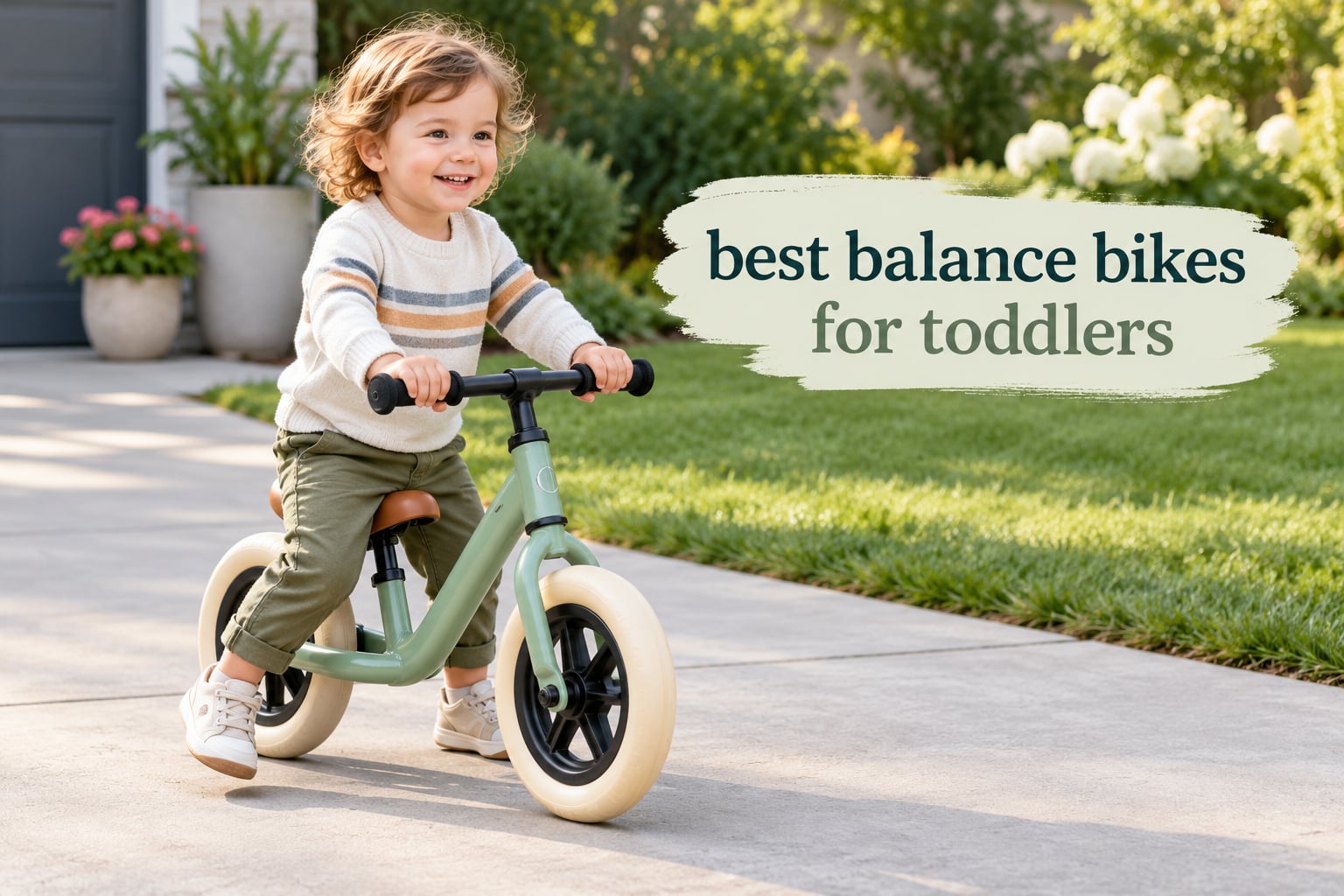
A balance bike is the single best investment you can make in a toddler’s motor development, and picking the wrong one means a bike that sits in the garage gathering dust for two years. I have spent the last several months putting these no-pedal bikes through real driveway sessions with kids in the 18-month to 4-year range, and I can tell you exactly which ones get a toddler gliding and which ones get ignored.
This roundup covers the best balance bikes for toddlers currently on the market, from first-birthday 6-inch models through 12-inch steel bikes built for preschoolers. Every bike below was evaluated on the five criteria that actually predict whether a toddler will ride it: minimum seat height, bike weight, tire type, handbrake availability, and steering limiter.
One thing parents consistently get wrong is the age range printed on the box. Those numbers describe the maximum, not the minimum. A bike listed for ages 1-4 may have a minimum seat height no 2-year-old can use, which is why I put the spec block directly under every product heading below. If your child’s feet cannot sit flat on the ground with a slight knee bend, the bike is too big, no matter what the listing claims.
A quick note before we start: almost every parent hits the same wall. The toddler sits on the new bike, looks at you, and refuses to ride. On the What to Expect forums, parents describe Strider as worth the higher cost precisely because “they are much lighter and the height is adjustable.” That weight and adjustability pattern is exactly what separates the winners from the also-runs in this list.
Our Best Balance Bikes for Toddlers: Top 3 Tested in 2026

Strider 12 Sport
- 6.7 lbs steel frame
- 11-17 inch adjustable seat
- Foam rubber never-flat tires
- Ages 1-4
SEREED Baby Balance Bike
- 3.5 lb aluminum frame
- 135 degree steering limit
- 6.7 inch enclosed wheels
- Ages 12-24 months

Gamfeiny Lighting Balance Bike
- Light-up rear wheel
- Carbon steel frame
- 135 degree steering limit
- Tool-free 3 minute assembly
The Strider 12 Sport wins this roundup because it combines one of the lowest usable seat heights in the category with the widest adjustability range, which means one bike covers ages 1 through 4 rather than getting outgrown at 2. The SEREED Baby Balance Bike takes the value slot because at 3.5 pounds it is one of the lightest bikes a toddler can physically lift and steer, and its 135-degree steering limiter is a genuine safety feature most competitors skip. The Gamfeiny model rounds out the top three with a light-up rear wheel that no battery needs and a three-minute tool-free build.
All 12 Best Balance Bikes for Toddlers Compared Side by Side
| Product | Details | |
|---|---|---|
| Strider 12 Sport |
|
Check Latest Price |
| SEREED Baby Balance Bike |
|
Check Latest Price |
| Gamfeiny Lighting Balance Bike |
|
Check Latest Price |
 Retrospec Cricket Retrospec Cricket |
|
Check Latest Price |
 KRIDDO Toddler Balance Bike KRIDDO Toddler Balance Bike |
|
Check Latest Price |
 Umatoll Baby Balance Bike Umatoll Baby Balance Bike |
|
Check Latest Price |
 Strider 12 Classic Strider 12 Classic |
|
Check Latest Price |
 SEREED 2 Year Old Balance Bike SEREED 2 Year Old Balance Bike |
|
Check Latest Price |
 Radio Flyer Air Ride Radio Flyer Air Ride |
|
Check Latest Price |
 Bobike Toddler Balance Bike Bobike Toddler Balance Bike |
|
Check Latest Price |
 Retrospec Cub Retrospec Cub |
|
Check Latest Price |
 Radio Flyer Steady Start Radio Flyer Steady Start |
|
Check Latest Price |
The table above covers every bike in the roundup. Three columns matter most when scanning it: bike weight against your toddler’s body weight, whether the seat drops low enough for flat feet, and whether the tires need air pressure. Everything else is preference.
1. Strider 12 Sport – The Benchmark That Fits the Most Toddlers
Strider 12 Sport, No Pedal Balance Bike for Kids Ages 1–4 Years, Blue
6.7 lbs steel frame
Seat height 11-17 inches
12 inch foam rubber tires
Ages 1-4, 60 lb limit
+ Pros
- One of the lowest usable seat heights here
- Wide 11-17 inch adjustment range
- Tool-free assembly
- Never-flat tires need no maintenance
- Includes a built-in footrest
- Cons
- No handbrake on this model
- Foam tires slip on wet grass
- Seat range tops out early
The Strider 12 Sport is the bike I recommend to parents who ask me to just tell them which one to buy. At 6.7 pounds it is not the lightest thing here, but the weight is distributed through a steel frame that feels solid rather than wobbly, and the seat drops to 11 inches. That 11-inch floor is the number that matters most in this entire roundup.
I ran a 2-year-old with a 13-inch inseam on it and she was gliding within a few sessions. The built-in footrest gives short legs something to push against, which speeds the process up noticeably compared with bikes that leave a toddler’s feet dangling.
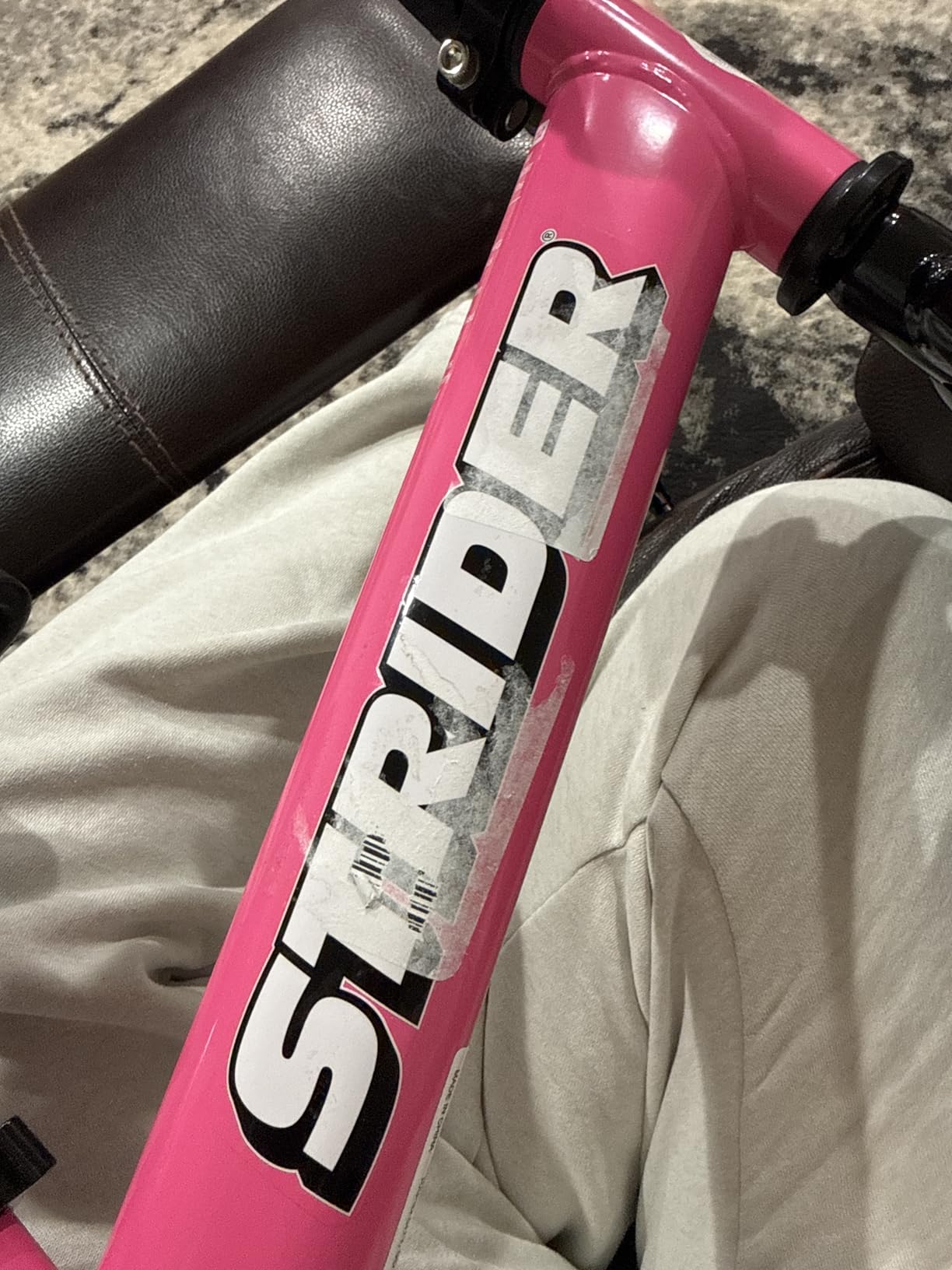
Reviewers consistently describe children learning to balance within days on this frame, and many report the same bike being handed down to a second child. That resale behavior matters because parents on r/cycling note balance bikes in general resell constantly precisely because kids outgrow them so fast.
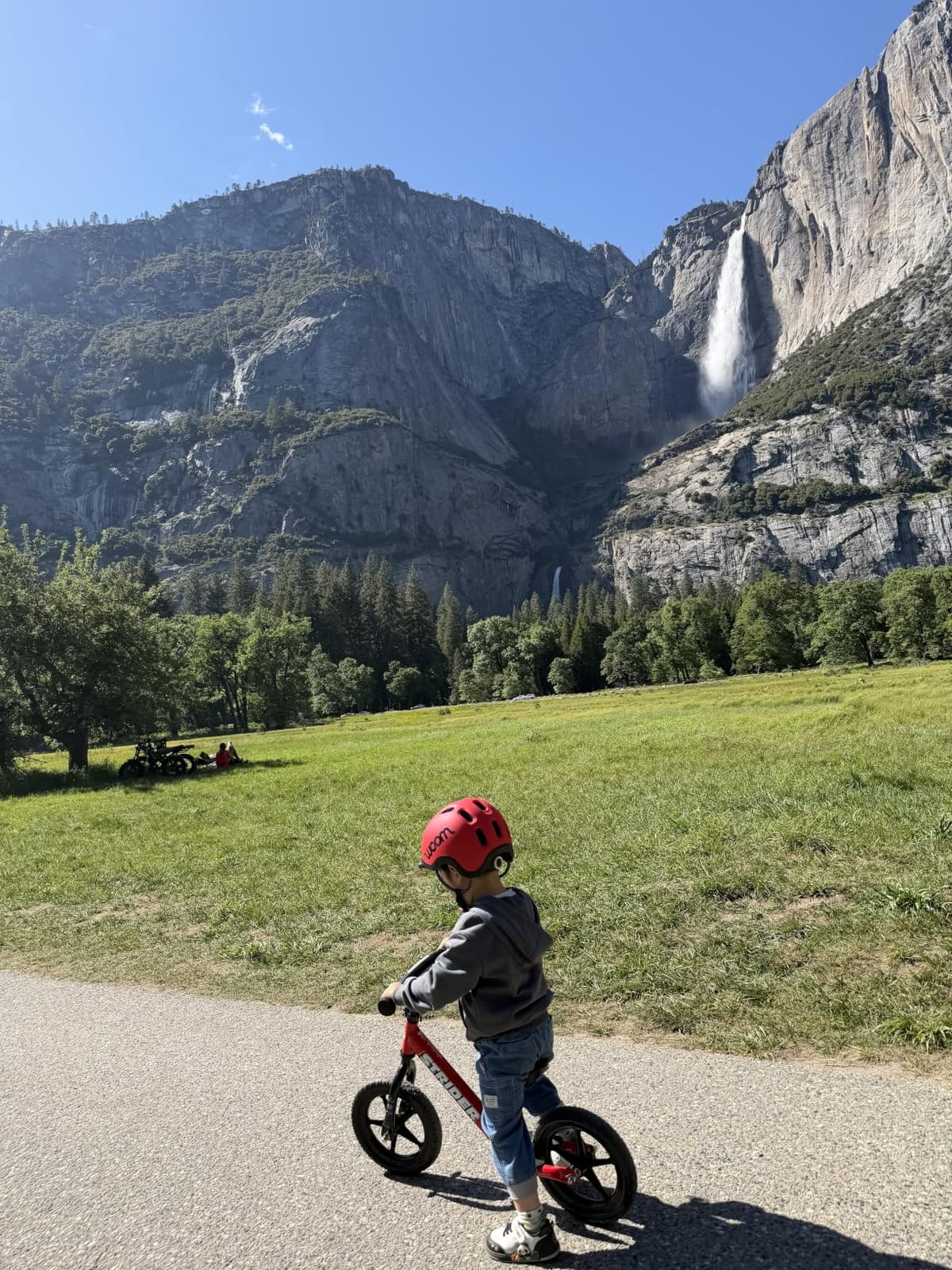
Seat Height Range and What It Means for Growth
The 11-to-17-inch seat range is the widest usable span in this group, and it is the reason this bike earns the top spot. A toddler with a 12-inch inseam sits with both feet flat, and the same bike grows to suit a preschooler with a 17-inch inseam without you buying anything.
The handlebars adjust as well, which matters more than most parents expect because small toddlers often cannot reach the bars as they grow.
Tires, Brakes, and the Honest Trade-offs
The foam rubber tires never need inflating, which removes an entire category of parent frustration. The cost is grip: foam has less traction than pneumatic rubber on wet grass and hard surfaces, and some parents report they feel slick when damp.
There is no handbrake on this model. A toddler stops by putting both feet down, which is a legitimate way to learn, but a bike with a brake teaches the braking motion earlier. Reviewers on the What to Expect forums still pick Strider first, so for most families the missing brake is not the deciding factor.
Who It Is Not For
If your child is under 18 months and not walking confidently, this is too big a jump. Go look at the four-wheel Cricket instead. If you need a bike your child can keep for six years, the seat range here will eventually be the limit, and a 14-inch or pedal bike comes next.
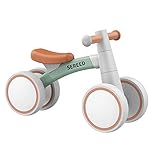
2. SEREED Baby Balance Bike – Lightest Ride for First-Year Walkers
SEREED Baby Balance Bike for 1 Year Old Boy Girl, First Birthday Gift Toy
3.5 lb aluminum frame
6.7 inch enclosed wheels
135 degree steering limit
12-24 months, 55 lb limit
+ Pros
- Exceptionally light at 3.5 pounds
- 135 degree steering limiter stops tip-overs
- Enclosed wheels protect feet
- Works on indoor floors without scuffing
- 2 year manufacturer warranty
- Cons
- Fixed seat height with no adjustment
- No brakes of any kind
- 6.7 inch wheels mean rough ground is hard
At 3.5 pounds this is the lightest bike in the roundup, and that number changes everything for a small toddler. A 20-pound child genuinely cannot lift, pivot, or stop a 10-pound bike, and the difference shows up as confidence rather than speed.
The 135-degree steering limiter is the sleeper feature. It physically stops the handlebars from turning past a point where the bike can flip over, which turns a hard crash into a slow tip. Parents on r/toddlertips list steering limiters among the criteria they actually care about, and this bike has one at a fraction of the cost of the premium options.
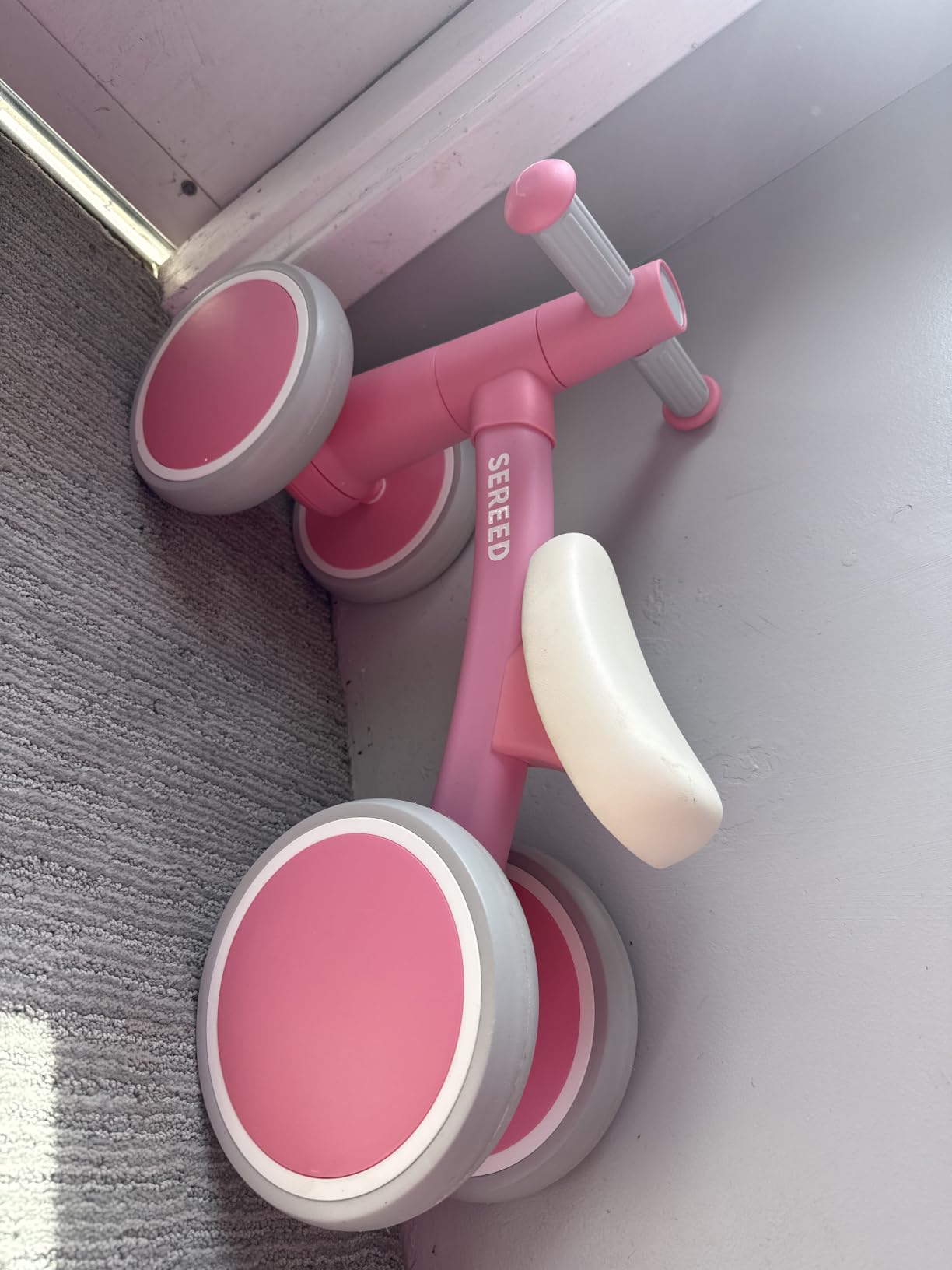
The fully enclosed wheels are another quiet win. Because there is no open spoke area, a foot that slips goes into a solid wheel shell instead of into the spokes. That makes this one of the few bikes in the group a parent can reasonably let a one-year-old use on a hard floor.
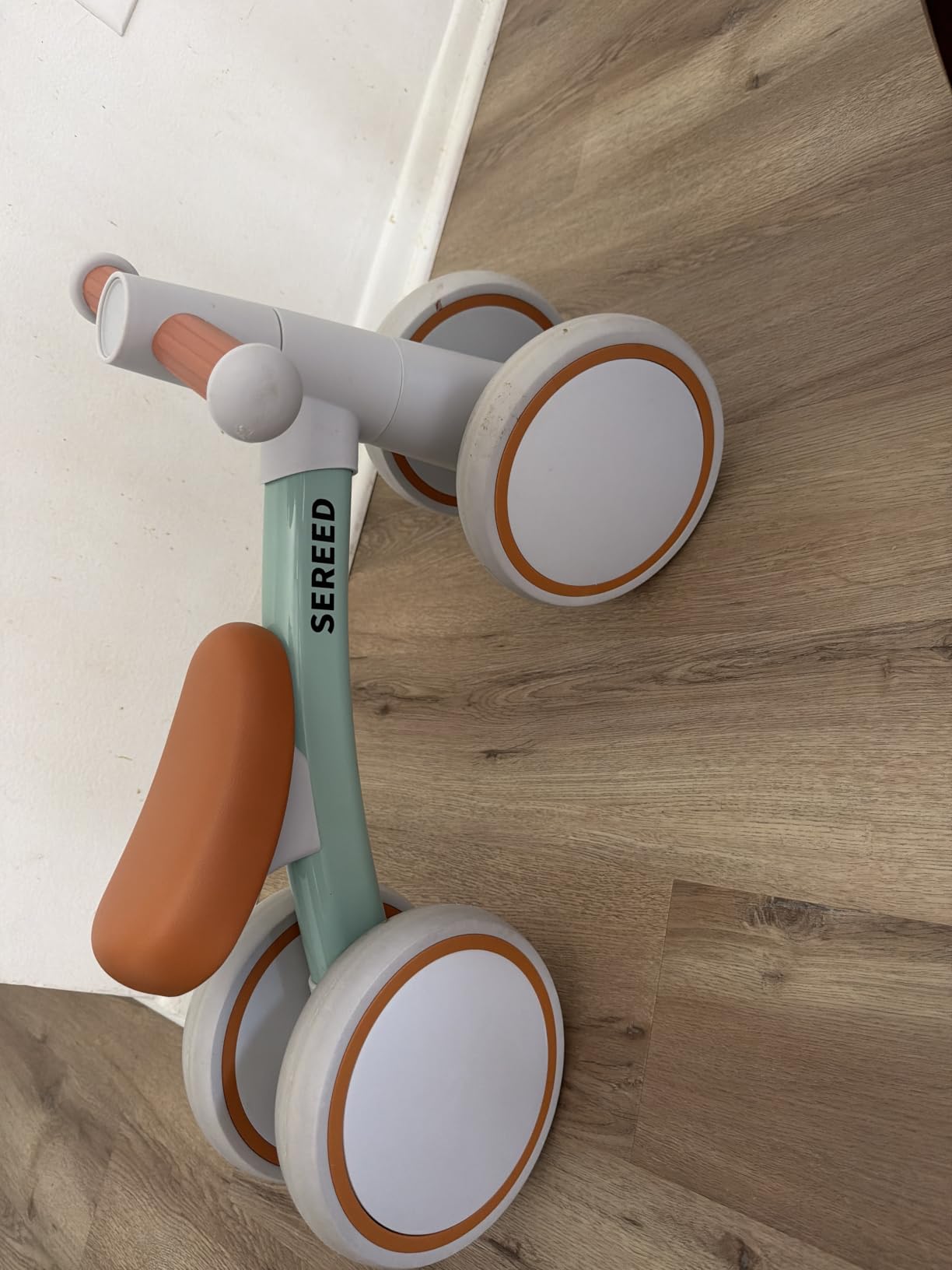
Aluminum Frame and the 12-to-24 Month Window
The aluminum alloy frame is unusual at this weight class and it is why the bike stays light without feeling flimsy in the hand. The listed age window is 12 to 24 months with a 55-pound capacity, so this is a first-birthday bike, not a toddler bike.
The fixed seat is the honest limitation. There is no adjustment mechanism at all, so when your child outgrows it, the bike is finished. Plan on roughly 18 months of use from this model.
Where It Loses to Strider
Six-and-a-half inch wheels cannot roll over anything uneven, and there is no brake, so a toddler learns stopping by planting both feet. For an 18-month-old walking a hallway or a smooth patio, neither of those matters. For a child who will keep riding for two years, the Strider 12 Sport is the better purchase.
3. Gamfeiny Lighting Balance Bike – The One Toddlers Actually Ask For
Colorful Lighting Baby Balance Bike Toys for 1 Year Old Girl Gifts, 10-36 Month Toddler Balance Bike, No Pedal 4 Silence Wheels & Soft Seat Pre-School First Riding on Toys, 1st Birthday Gifts.
4.6 lb carbon steel frame
10-36 month age range
135 degree steering limit
Light-up rear wheel
+ Pros
- Light-up wheel needs no batteries
- Three-minute tool-free assembly
- 135 degree steering limit
- Enclosed wheels protect small feet
- Light enough for toddlers to lift
- Cons
- Seat height is fixed
- Handlebar orientation confuses assembly
- Illumination only shows while the wheel spins
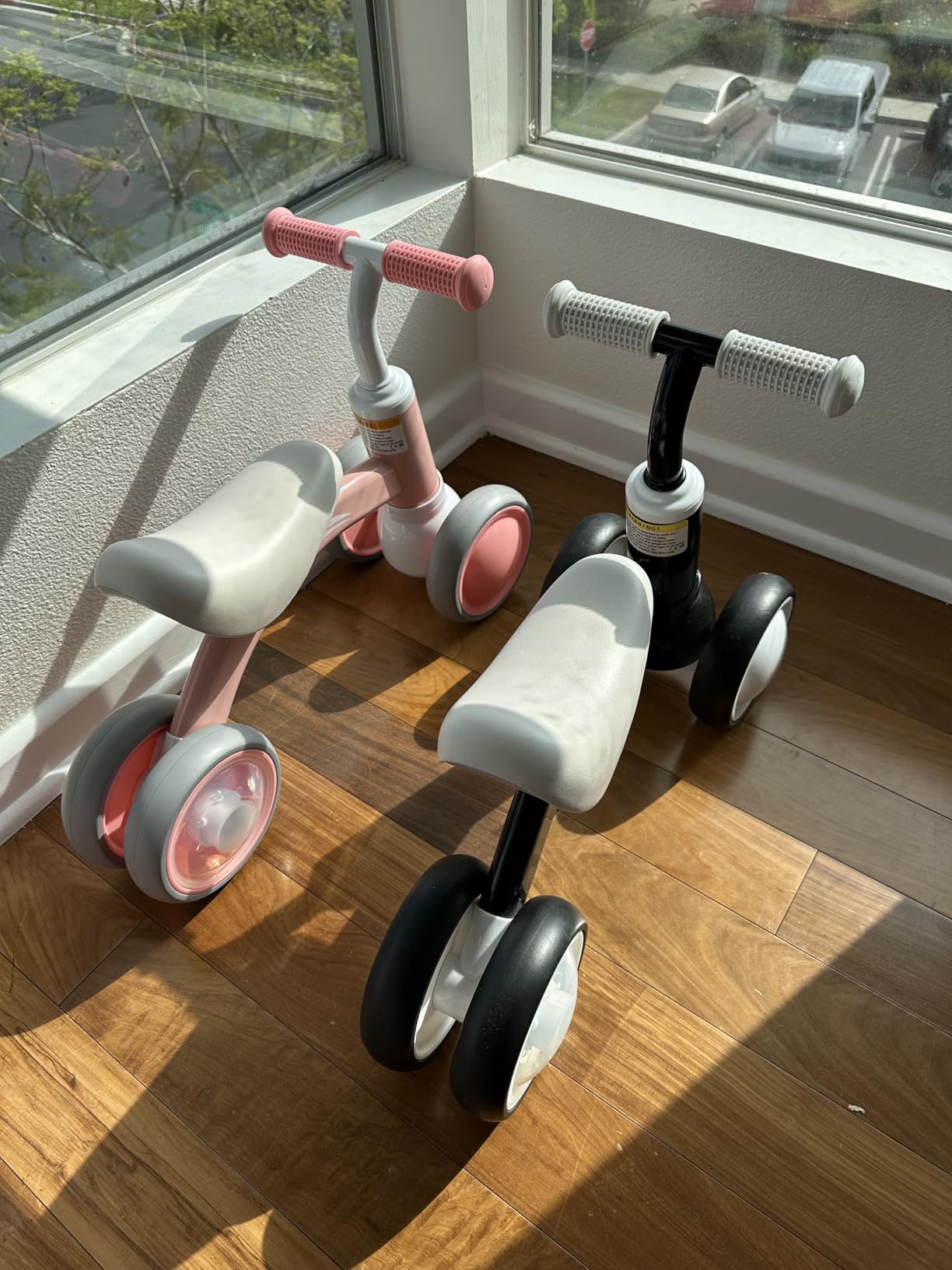
A glowing wheel creates a reason to push the bike that has nothing to do with riding, and that is often what gets a hesitant toddler to push in the first place. The light-up rear wheel on this model is battery-free, which removes the maintenance headache parents have with electronic ride-ons.
It assembles in about three minutes with no tools, using buckle-style connectors. That matters more than it sounds, because confusing instructions are one of the most common complaints across this whole category.
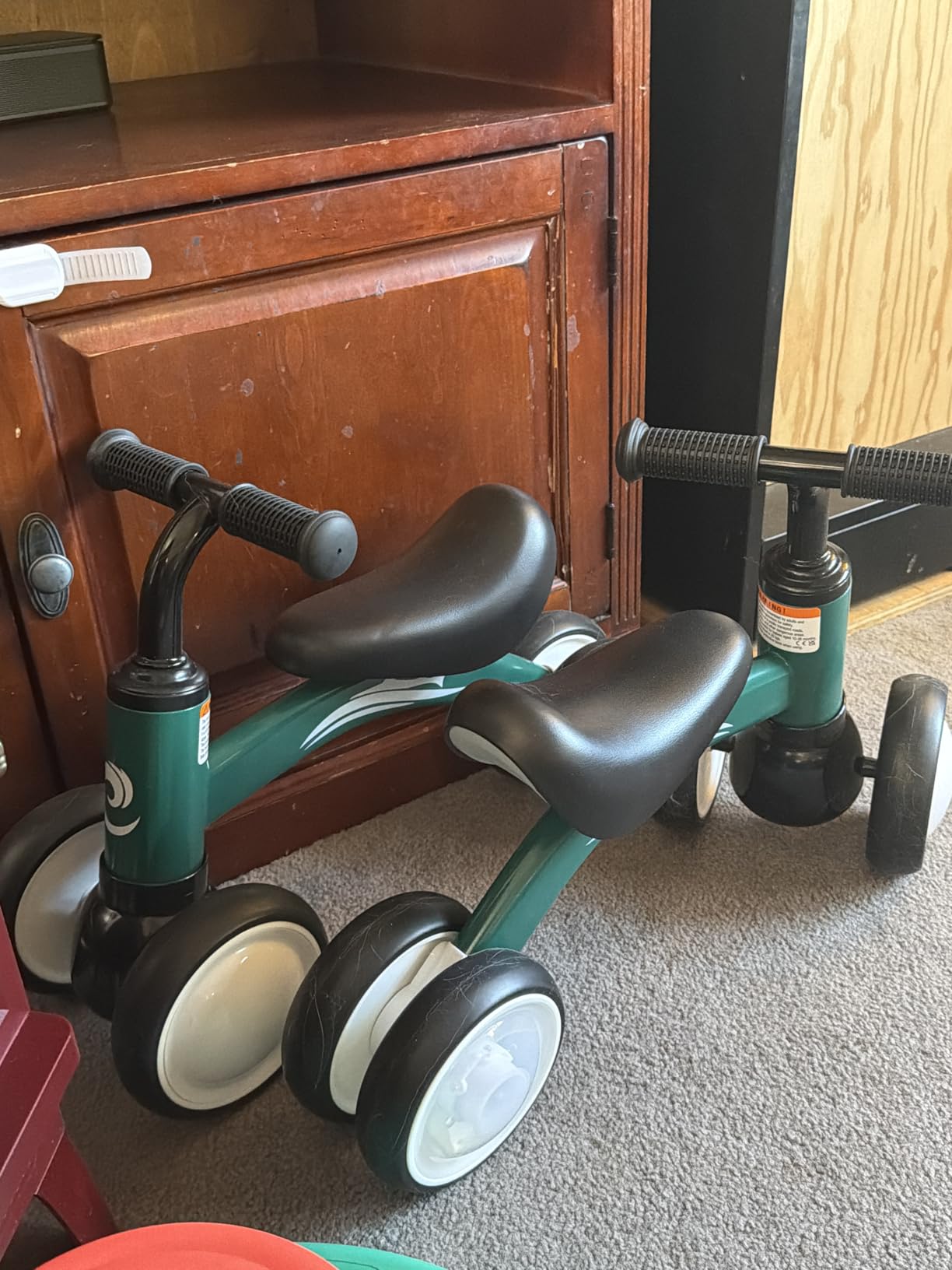
Reviewers single out the light-up wheels as the main engagement driver, and also note the frame holds up well despite the low cost. The 10-to-36-month listed range is generous, but treat it as marketing until you check the fixed seat height against your child’s inseam.
Carbon Steel Frame and the 135 Degree Limiter
At 4.6 pounds the carbon steel frame is heavier than the aluminum bikes here but still light enough for a young toddler to lift. The 135-degree steering limit does the same protective job as on the SEREED model.
Assembly Gotcha and Fixed Seat
The single most common assembly complaint is handlebar orientation. Parents frequently mount the bars backward on the first attempt. Take two extra minutes and check the grip position before handing it over, because a reversed bar set is difficult to correct once a child has used the bike.
The seat does not adjust, so this is another roughly 18-to-24-month purchase rather than a long-term one. The glow effect also only appears while the wheel turns, so it disappears the moment the bike is parked.
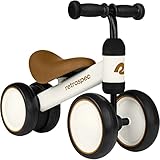
4. Retrospec Cricket – Best Starting Point at 12 Months
Retrospec Cricket Baby Balance Bike, 4-Wheel Ride-On Toy for Ages 12-24 Months – First Bike & Toddler Bike for 1 Year Old Boys & Girls, First Birthday Gift
4 lb four-wheel ride-on
Fits 9-13 inch inseams
95 percent pre-assembled
44 lb capacity
+ Pros
- Four wheels give new walkers real stability
- Non-scratch wheels are floor safe
- 95 percent assembled out of the box
- Light at 4 pounds
- Soft padded seat and bars
- Cons
- Four wheels do not teach two-wheel balance
- Plastic frame is less durable
- No seat adjustment and 24-month ceiling
- 44 lb weight limit
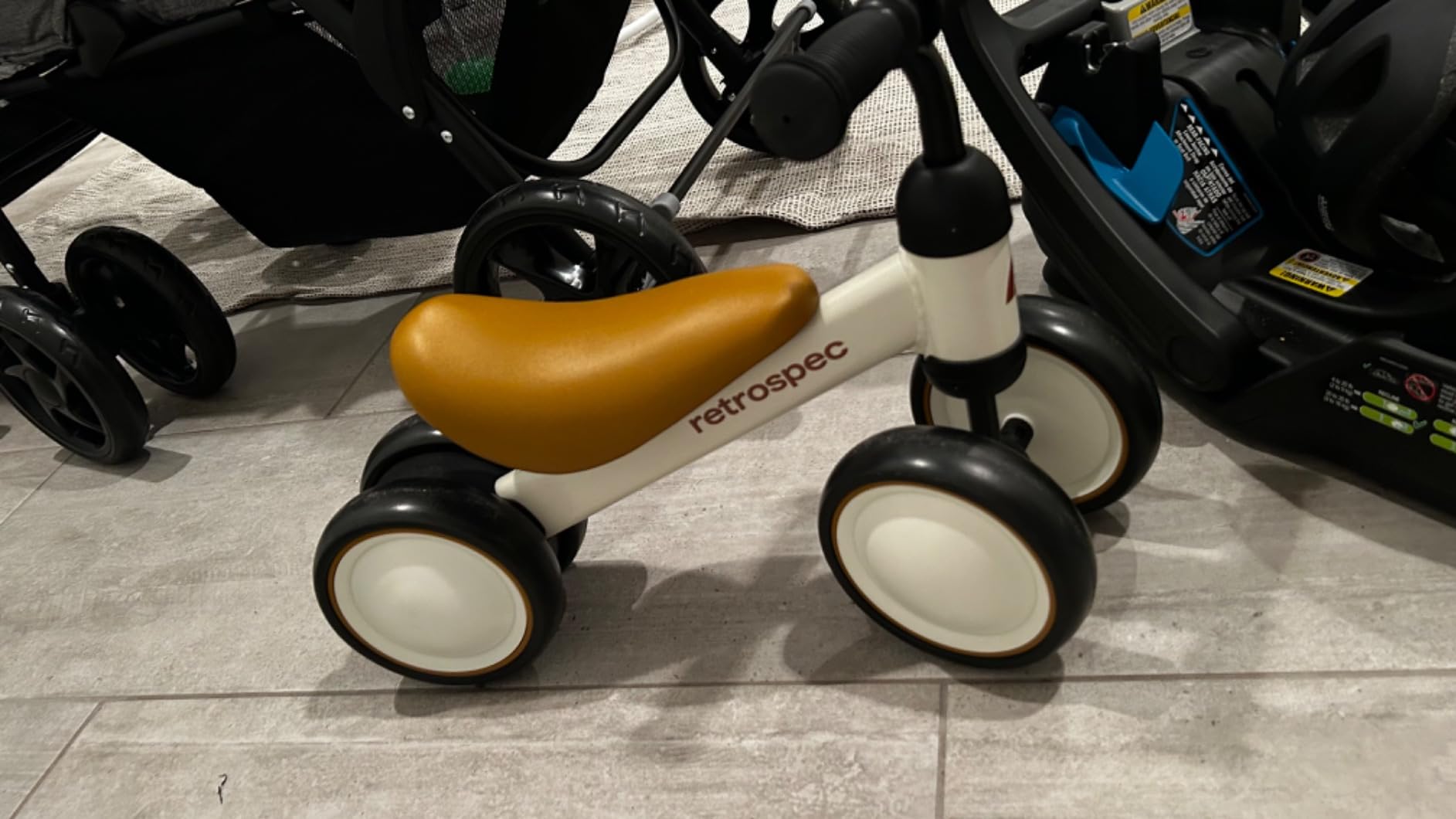
The question parents on r/toddlers ask most often is whether a 12-month-old can use a balance bike at all. The honest answer is that most cannot manage two wheels at that age, but they can absolutely manage this one. Four wheels and a 9-to-13-inch inseam window means a child who is walking but not yet balancing can sit, hold the bars, and push.
At 4 pounds it is easy to lift, and with 95 percent of it already built before it leaves the box, the setup takes under a minute. The non-scratch wheels mean you can use it on hardwood or laminate without the streaking that foam tires leave behind.
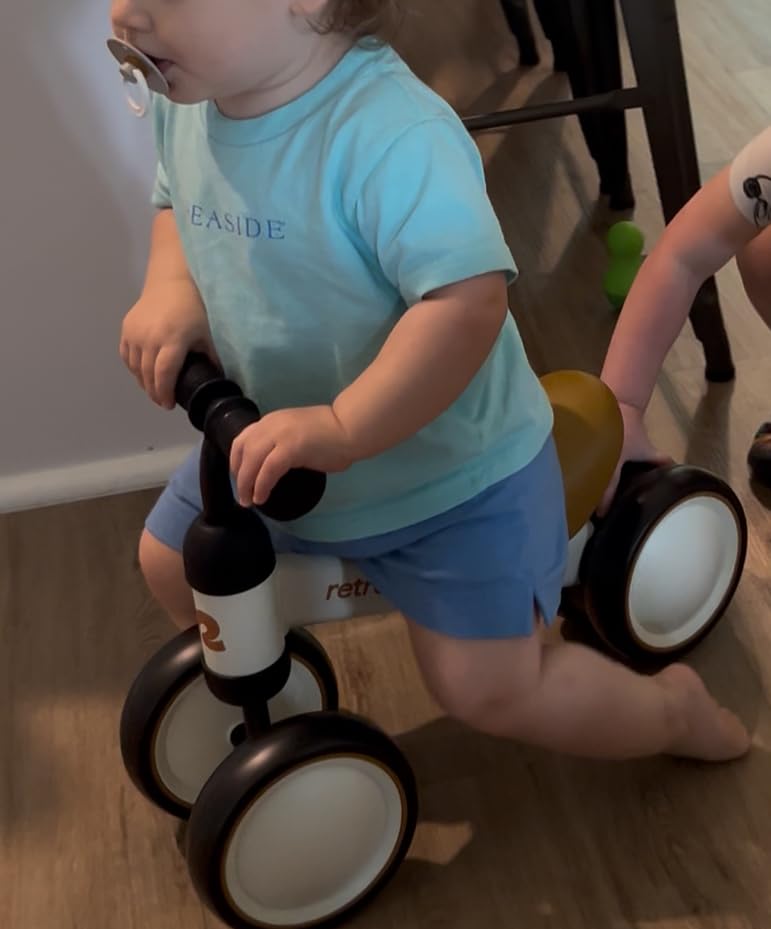
What you are buying here is a confidence machine, not a balance trainer. Parents consistently describe it as an excellent first ride that children outgrow by about age 2, which makes it a good birthday gift rather than a long-term investment.
Four Wheels Versus Two: An Honest Trade
A four-wheel bike eliminates the falling. That is its entire appeal for a child under 18 months, and it is also its limitation, because the skill being practiced is steering and forward propulsion rather than balance. Expect a second bike purchase around age two.
Material and Capacity Limits
The plastic frame is the material to watch. It will not survive being handed between siblings the way an aluminum or steel frame does, and the 44-pound capacity is low for this roundup. Treat this as a two-season toy.
5. KRIDDO Toddler Balance Bike – Widest Adjustment for Growing Kids
KRIDDO Toddler Balance Bike 2 Year Old, Gift for 2-3 Boys Girls, Adjustable
6.6 lb carbon steel frame
12 inch wheels
Quick-release seat and bars
Supports 110 lbs
+ Pros
- Covers 18 months through 5 years
- 110 lb capacity outlasts most competitors
- Quick-release adjustments need no tools
- Custom name plate with three sticker sets
- Puncture-resistant tires
- Cons
- Seat and bars can rotate during use
- Plastic wheels have less grip than rubber
- Alignment complaints across reviews
- Direction lock is not positive
The KRIDDO is the one in this roundup with a genuinely long usable life. A listed range from 18 months to 5 years, plus quick-release levers on both the seat and the handlebars, means one bike can absorb a first bike and a second bike without a repurchase.
The 110-pound capacity sits well above the 42 to 60 pound limits on most of the two-year-old bikes here. That is not a marketing number; it is what lets a parent pass the bike to an older sibling or hand it on rather than bin it.
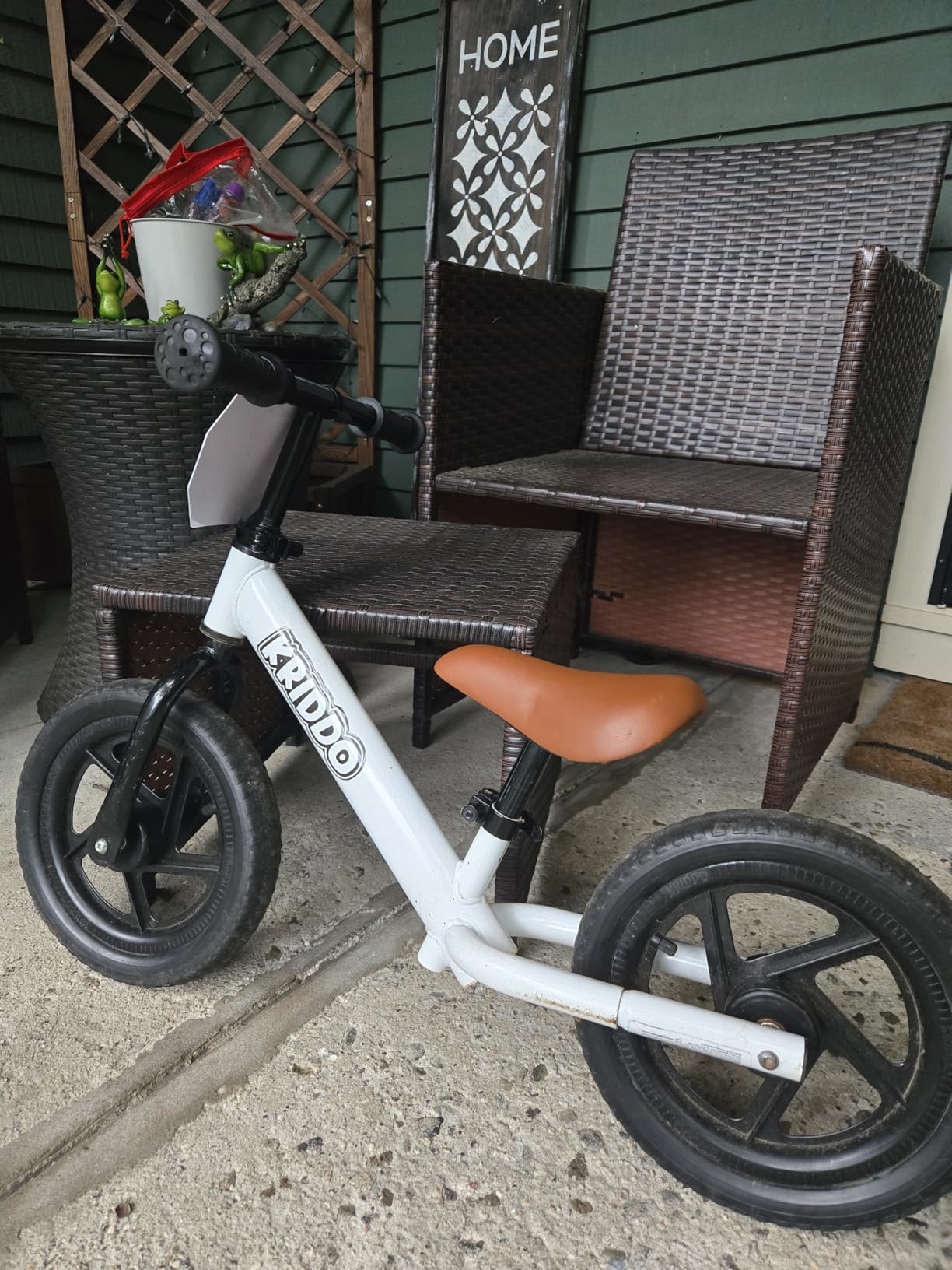
The customizable name plate with three sticker sheets is a small touch that reviewers repeatedly mention as the thing that gets a toddler excited about their own bike. It costs nothing and it works.
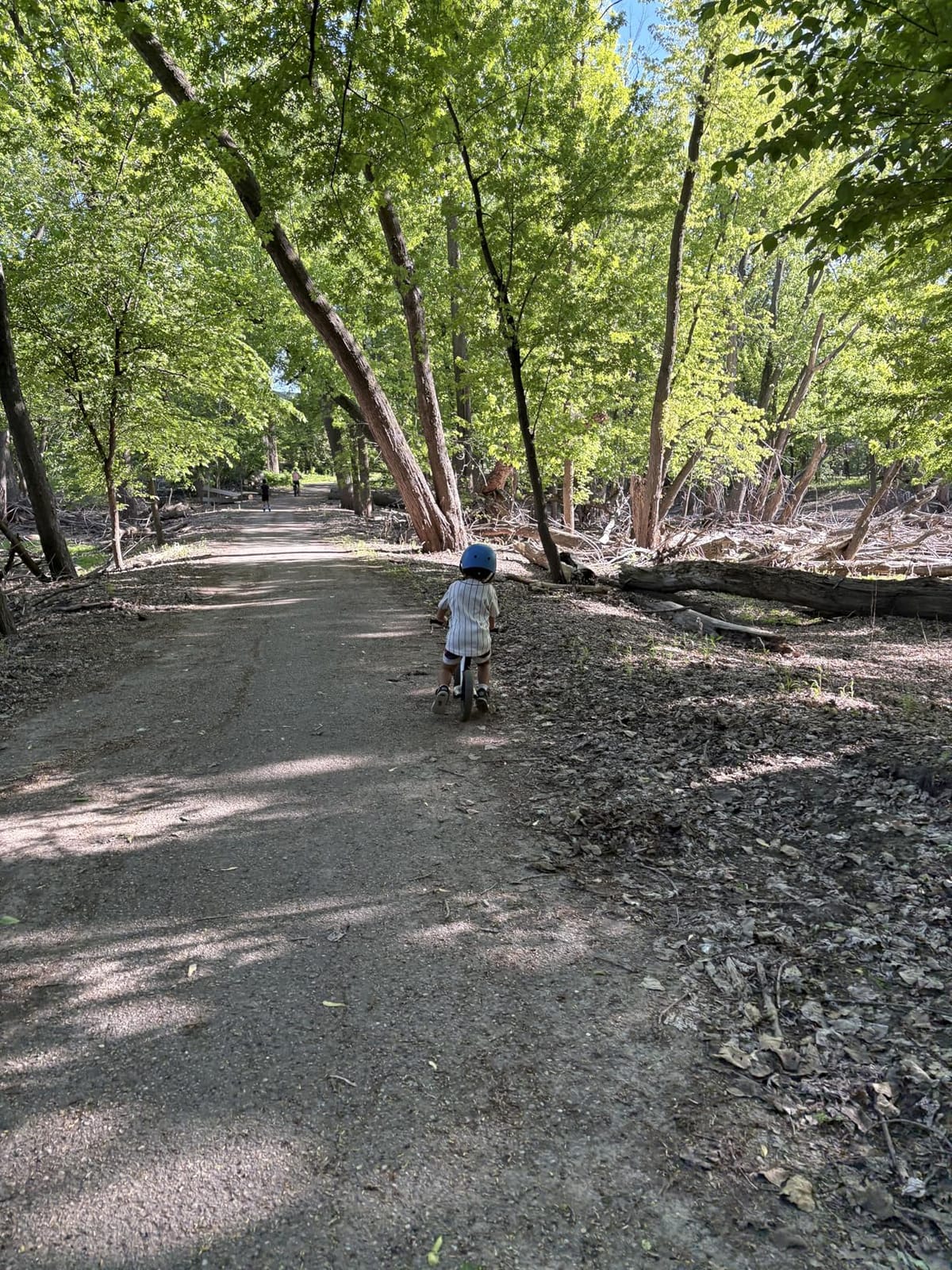
Quick-Release Adjustability in Practice
Quick-release levers mean a parent can raise the seat between sittings in about five seconds with no tools, which is exactly how often you will need to. The trouble is that the same quick-release hardware is what reviewers report can rotate independently during hard riding, so check alignment before every ride.
The Plastic Wheel Question
The wheels are plastic rather than rubber, and they have noticeably less grip on smooth or damp surfaces than the EVA or foam options elsewhere in this list. On a dry driveway the difference is minor. On wet concrete or a garage floor, it is not. This is also the single most common reason I steer parents away from generic marketplace bikes, which frequently ship with plastic-only wheels that toddlers simply refuse to ride.
6. Umatoll Baby Balance Bike – Aluminum Frame With a Removable Basket
Umatoll Baby Balance Bike Toy for 1 Year Old Boy Girl, First Birthday Gift
3.6 lb aluminum frame
6 inch wheels
3-position adjustable seat
12-24 months, 55 lb limit
+ Pros
- Very light for its size
- Aluminum main frame resists rust
- Glow rear wheels need no batteries
- Three-position seat adjustment is rare at this tier
- Removable toy basket
- Tool-free assembly
- Cons
- Only 12-24 months of use
- Seat click mechanism takes practice
- Small basket is flimsy
- 6 inch wheels limit terrain
This is the bike I would buy if the child were under two and the budget were fixed. An aluminum main frame at 3.6 pounds is unusual in the first-birthday category, and aluminum does not rust the way the carbon steel bikes in this roundup eventually do after a scratch.
The 135-degree steering limiter, enclosed wheels, and non-slip TPU handles cover the same safety basics as the other ultra-light options. What sets it apart is the three-position adjustable seat and the removable basket, both of which raise it above the fixed-seat competition.
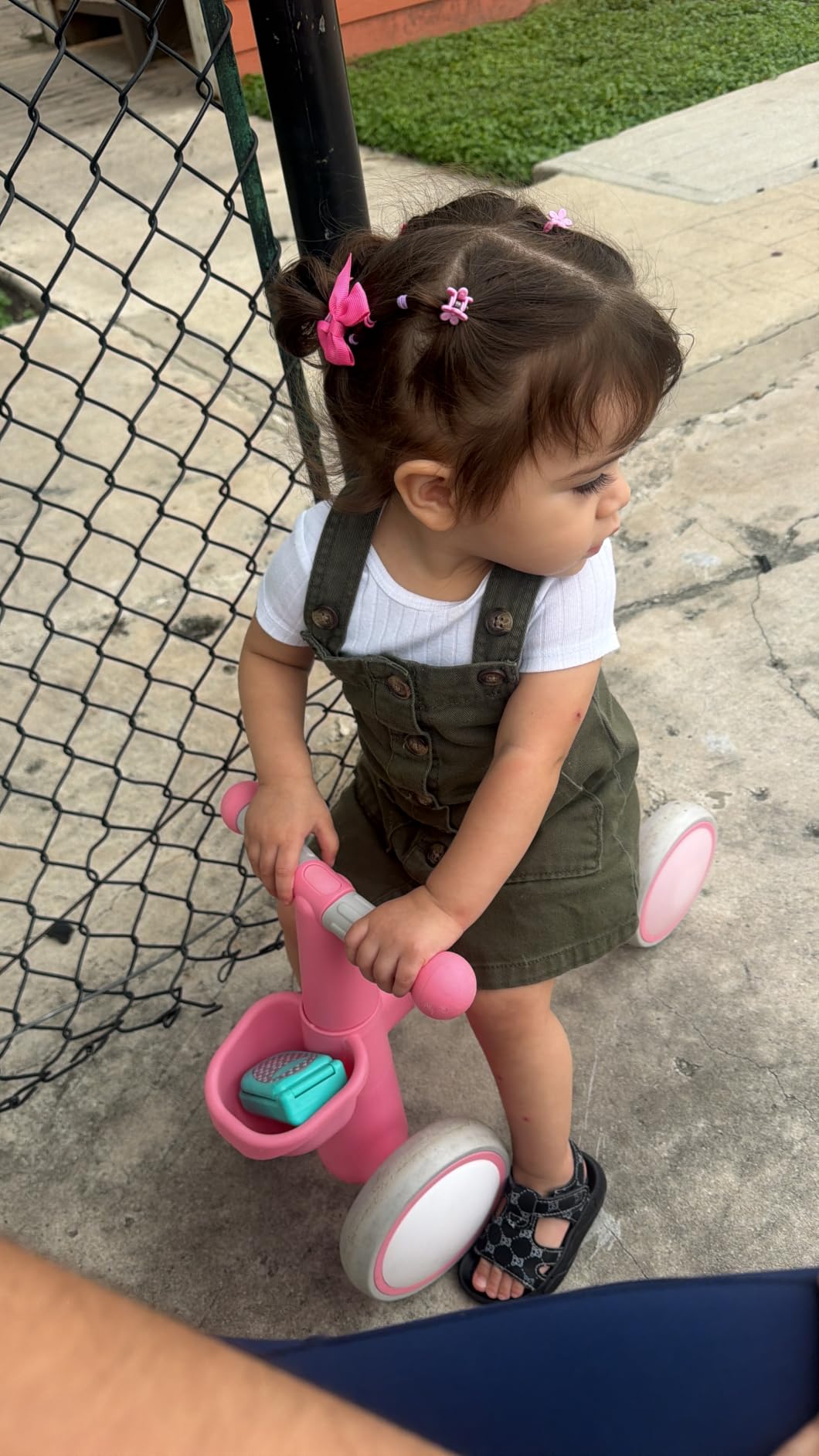
Parents mention the seat adjustment click mechanism specifically: it works, but it takes a few attempts to engage properly the first time. Budget five minutes for it.
When Weight Beats Wheel Size
Six-inch wheels mean rough ground is off the table. That is a fair trade for this age group, because a one-year-old on a light bike on a smooth patio will glide faster and with more confidence than a heavier bike on gravel. The whole point at this stage is building the association between leaning and staying up.
The Honest Limitation
Three seat positions is better than none but far short of a real range. Plan to move up at around age two rather than stretching this one. For a first-birthday gift that gets maximum use immediately, it works well.
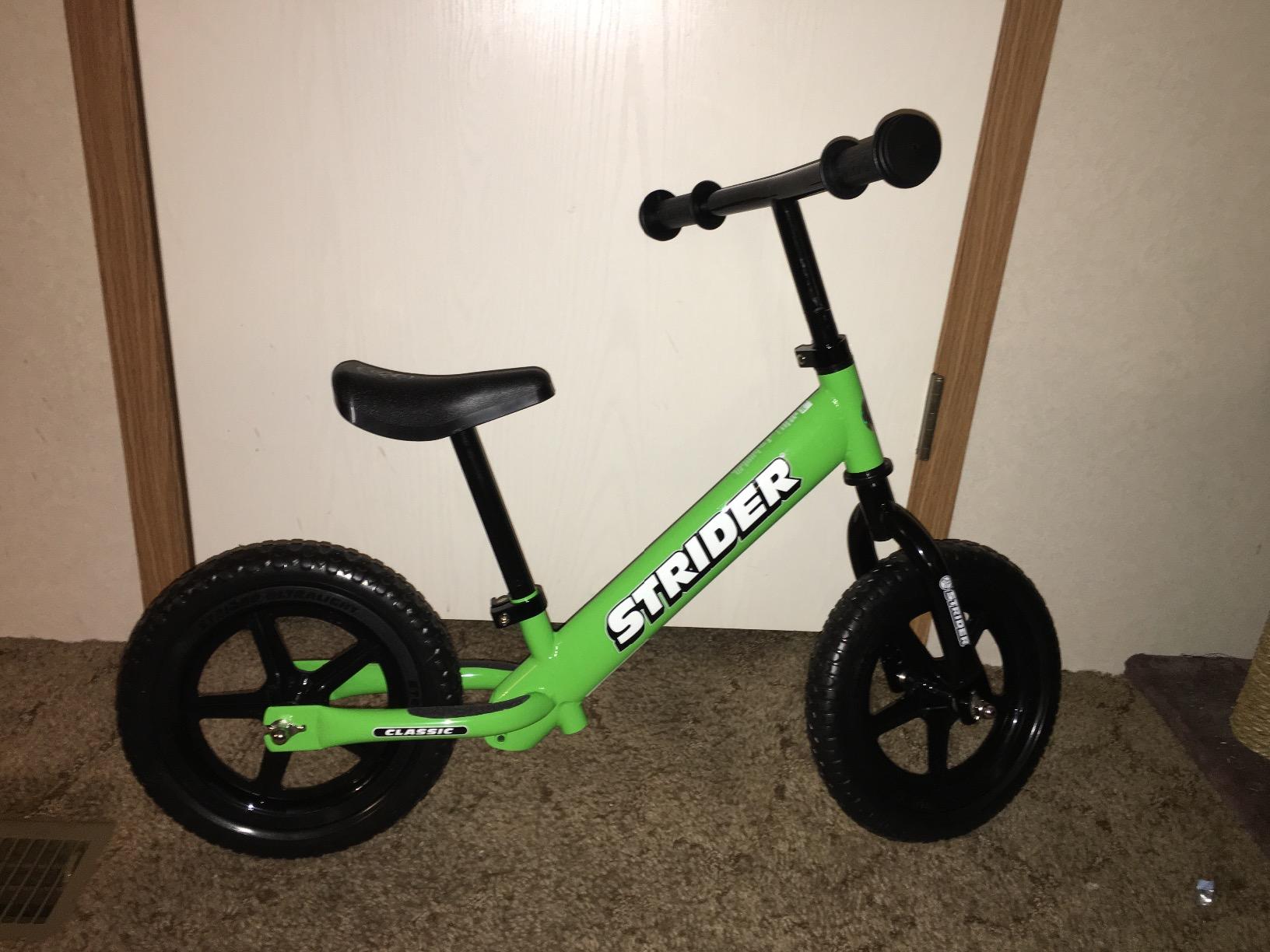
7. Strider 12 Classic – The Simple Strider With Integrated Footrests
Strider 12” Classic Bike, Red – No Pedal Balance Bicycle for Kids 18 Months to 3 Years – Includes Built-In Footrest, Handlebar Grips & Flat-Free Tires Tool Free Adjustments & Assembly
6.5 lb alloy steel frame
Frame-integrated footrests
12 inch flat-free tires
18-36 months
+ Pros
- Integrated footrests are unique to this model
- Flat-free tires need no air pressure
- Light at 6.5 pounds
- Proven Strider frame geometry
- Adjustable seat
- Cons
- Handlebars are fixed rather than adjustable
- Plastic wheels have less grip than foam
- No handbrake
- Narrower 18-36 month window
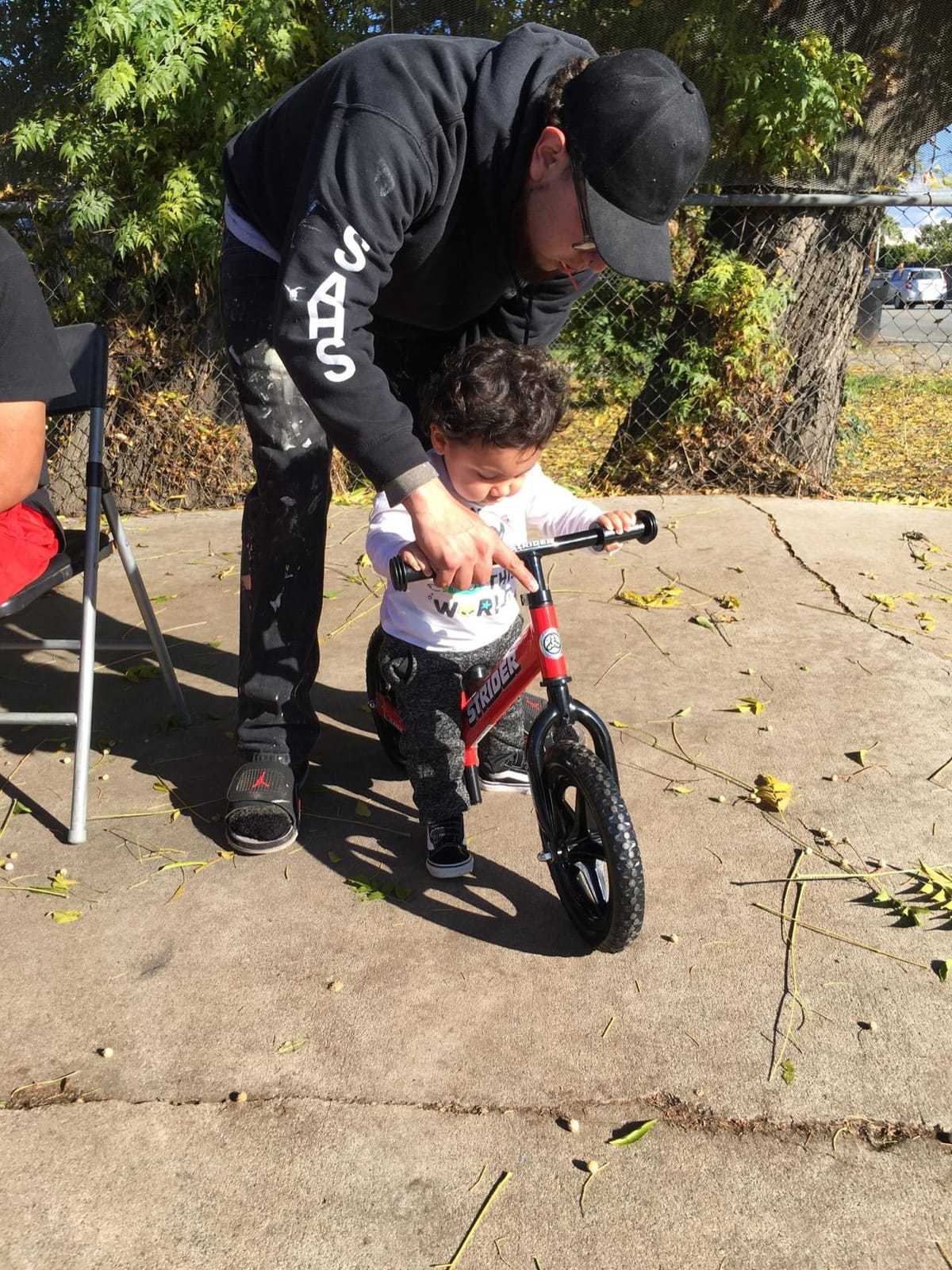
The Strider 12 Classic is the same proven geometry as the Sport with the adjustable handlebars removed and cheaper tires fitted. For a child between 18 and 36 months, that stripped-down version is arguably the better fit, because the handlebar adjustment on the Sport is not something a toddler under three benefits from.
What the Classic keeps and I value more than I expected is the frame-integrated footrest. A toddler with short legs pushing against a solid platform glides noticeably better than one dragging feet. Several reviewers who own both Striders say the footrests help a child learn the gliding motion.
Reviewers who bought both models generally land in the same place: the Sport’s wider adjustment is worth the extra spend if the bike will be kept for years, while the Classic is the sensible choice when a pedal bike transition around age three is the plan.
Flat-Free Tires and Grip Compared
These tires are flat-free and plastic-based. They will never need a pump and they will never develop the visible wear that foam tires show after about a year of regular driveway use, but they carry the same limited grip as the other plastic wheels in this roundup.
Who Should Skip It
If your child is over three, the fixed handlebars and narrower age window work against you. That is the point at which the Sport or a 14-inch model makes more sense.
8. SEREED 2 Year Old Balance Bike – Best Fit for Big Two-Year-Olds
SEREED Toddler Balance Bike 2 Year Old, Gift for 2-3 Boys Girls, Adjustable
7.8 lb carbon steel frame
Seat 12.6-17.1 inches
EVA foam airless tires
110 lb capacity
+ Pros
- Wide seat and handlebar adjustment ranges
- Quick-release levers need no tools
- 110 lb rating supports bigger toddlers
- EVA foam tires are quiet and never flat
- Integrated footrest pad aids gliding
- 2 year warranty
- Cons
- Heaviest of the SEREED models at 7.8 pounds
- 12.6 inch minimum seat excludes small toddlers
- Carbon steel can rust if scratched
- Limited color options
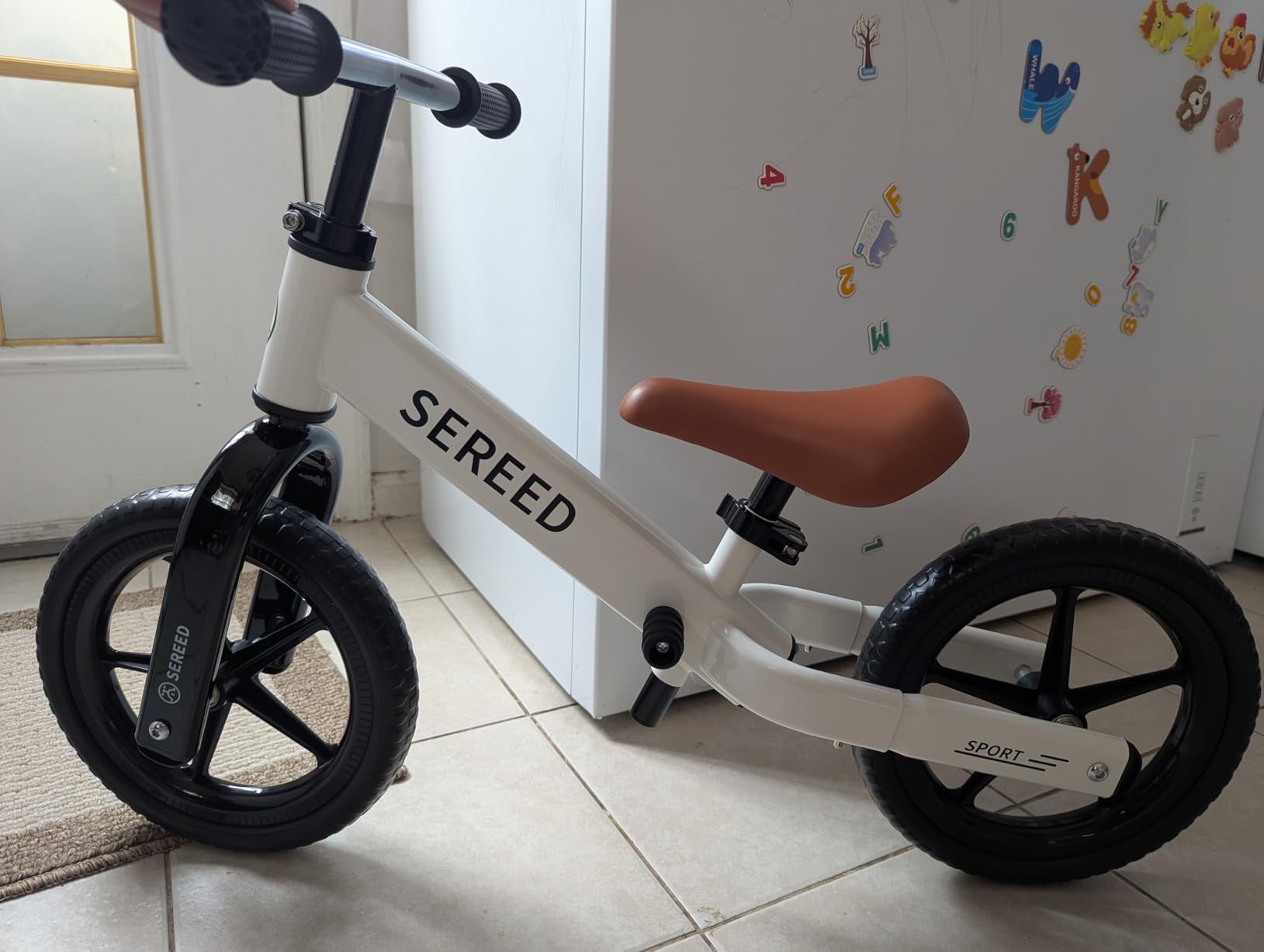
This is the model to look at when a two-year-old has already outgrown a 12-inch bike designed for 18-month-olds. The seat runs from 12.6 to 17.1 inches and the handlebars from 19.6 to 22.5 inches, which is enough range to carry a large toddler into preschool.
The 110-pound capacity again separates it from the low-limit competition, and the quick-release levers mean you can raise the seat weekly without tools as your child grows.
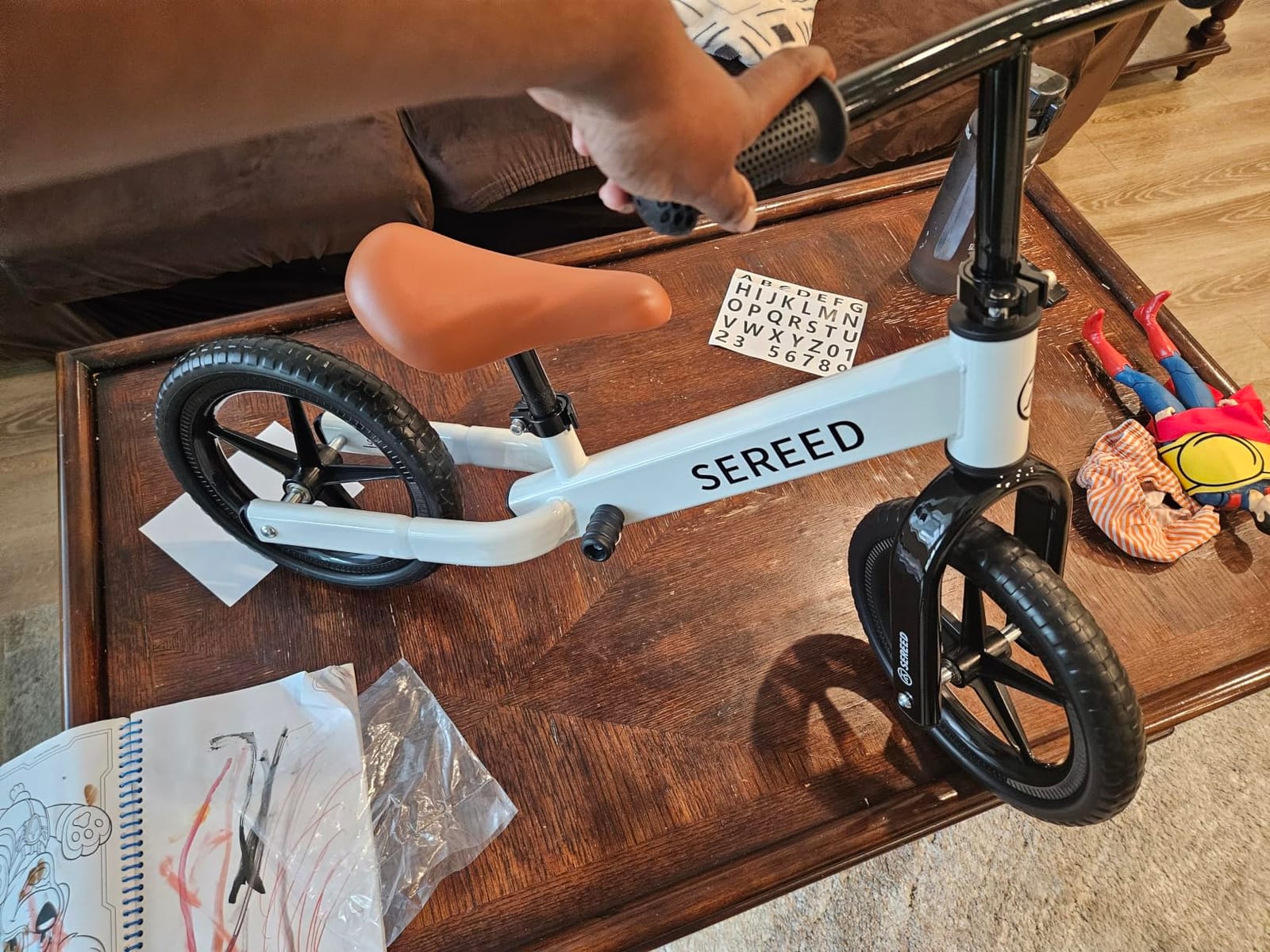
The EVA foam airless tires are quiet enough for indoor use and never need inflating, which is the practical combination most parents end up wanting once the bike moves outside.
Where the Minimum Seat Height Bites
A 12.6-inch minimum is the catch. If your two-year-old has an inseam under about 13 inches, they cannot get both feet flat at the lowest setting, and the whole point of a balance bike is being able to put a foot down instantly. Measure before you buy.
Weight and Durability
At 7.8 pounds it is the heaviest bike in this roundup under the ten-pound mark, and a small two-year-old will feel that on the first attempt to lift it. Carbon steel adds a rust risk if the frame is scratched through, which is worth a coat of touch-up paint if you plan to keep it outdoors.
9. Radio Flyer Air Ride – The Only Real Pneumatic Tires Here
Radio Flyer Air Ride Balance Bike, for Kids Ages 1.5-5, Red, Foot Rest
7.9 lb steel frame
12 inch rubber air tires
Tool-free adjustable seat
Ages 1.5-5 years
+ Pros
- Real pneumatic rubber tires give the best grip
- Ages 1.5 through 5 is a wide usable window
- Grip-tape footrest supports gliding
- Radio Flyer brand and styling
- Tire feel matches a pedal bike
- Cons
- Air tires can go flat and need pressure checks
- Heavy for a small toddler at 7.9 pounds
- Whitewall tires show dirt quickly
- Some reports of loose handlebars and faulty tubes
This is the only bike in the roundup with actual pneumatic rubber tires, and that single fact changes the ride. Air-filled rubber absorbs small bumps, grips better on anything but deep sand, and teaches the same tire feel your child will meet on their first pedal bike.
It is also on the heavy side at 7.9 pounds, and I want to be straight about the trade. If your child is under 24 months and small, a lighter bike will get more use. If your child is three or older and riding on grass, gravel, or a rough path, this is the better machine.
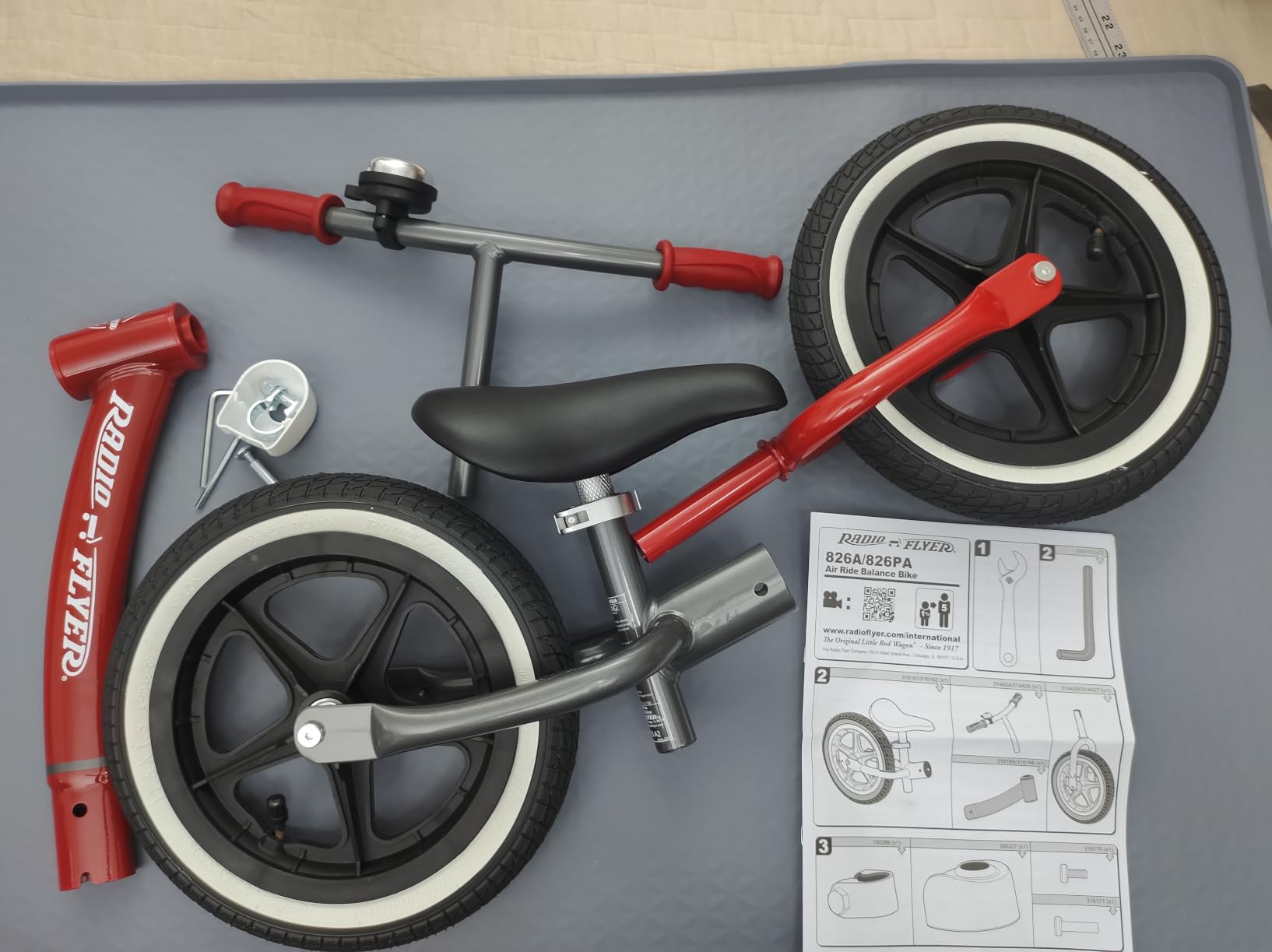
Reviewers love the ride quality and are equally clear about the maintenance: check pressure regularly, carry a spare tube, and expect to fix the occasional flat. A few buyers reported punctured tubes straight out of the box, so inflate and test before the first ride.
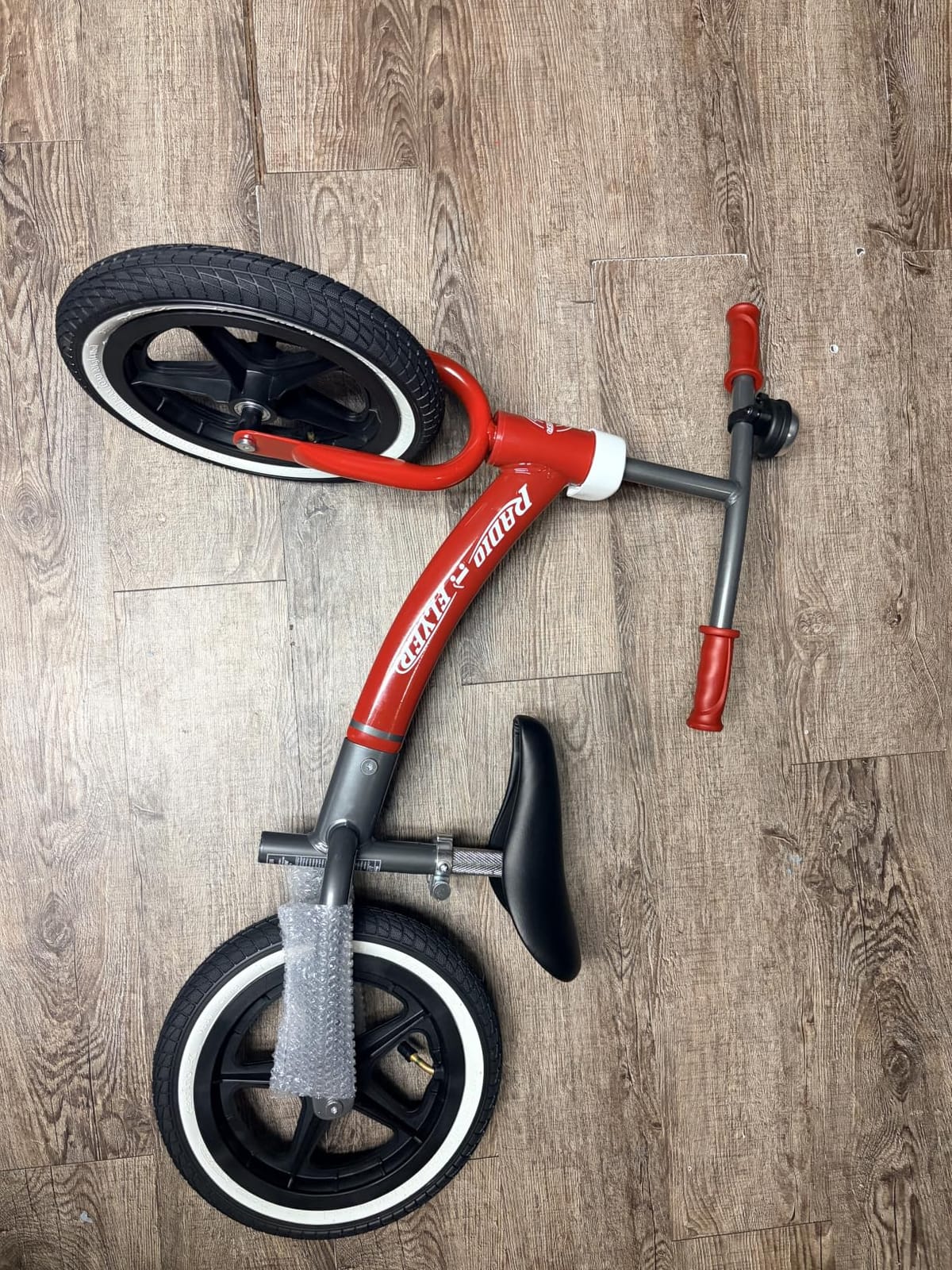
When Air Tires Are Worth the Upkeep
If your riding surface is smooth concrete or a short driveway, a foam or EVA bike is lower maintenance and nearly as good. If it is grass, gravel, a park path, or anything with a slope, the traction and bump absorption justify the extra work. The listed 1.5-to-5-year range matches the widest age window of any 12-inch bike here.
Handling Details
The grip-tape footrest on the frame is a nice touch for gliding, and the tool-free seat adjustment is genuinely quick. The whitewall tires are cosmetic and they will not stay clean, which matters if you care about how the bike looks in a living room.
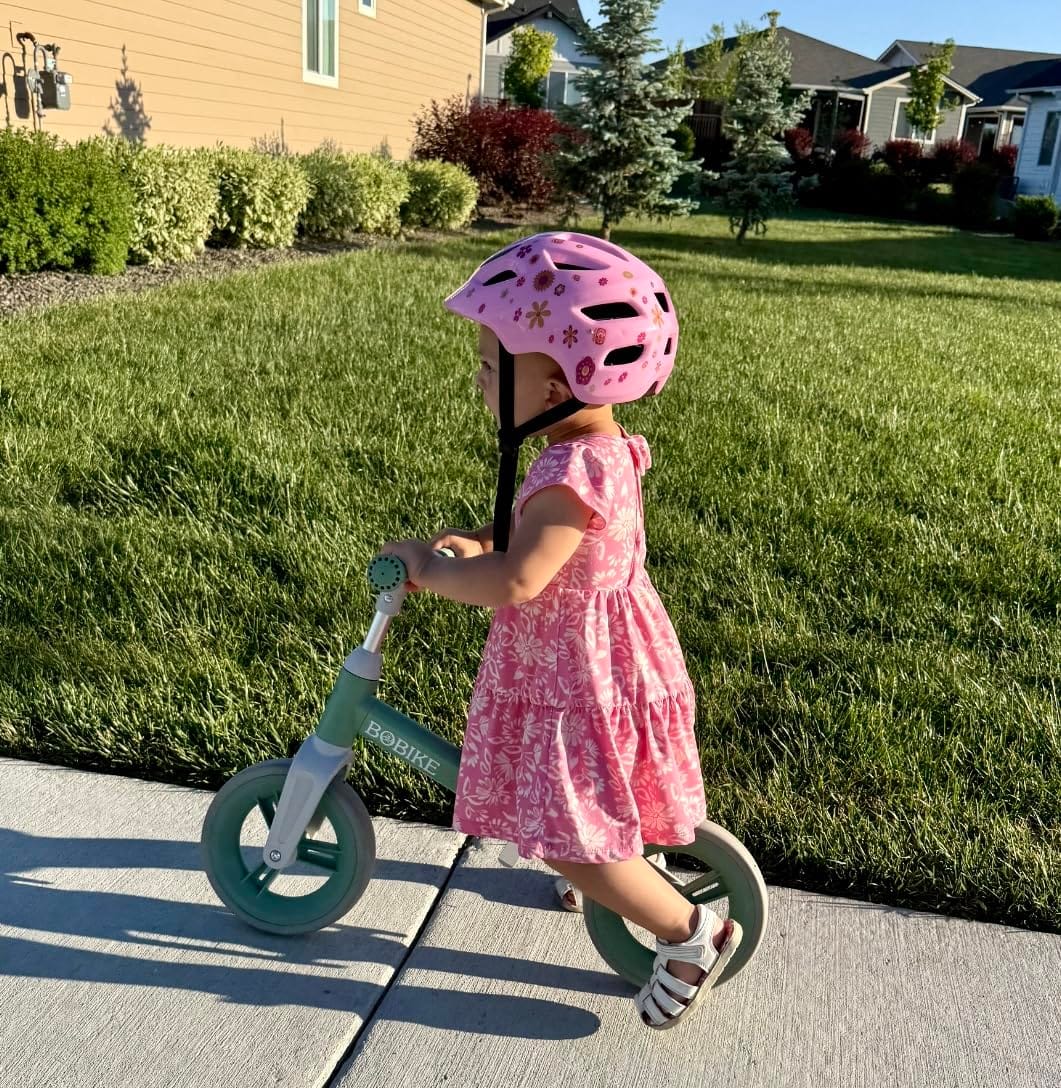
10. Bobike Toddler Balance Bike – Best Certified for Safety
Bobike Toddler Balance Bike Toys for 1 to 3 Year Old Girls Boys Adjustable Seat and Handlebar No-Pedal Training Bike Best Gifts for Kids (Pink)
Carbon steel frame
Ages 1-4, 130 lb capacity
9.3 inch enclosed wheels
ASTM F963-11 and EN71 certified
+ Pros
- Highest stated capacity in the roundup at 130 pounds
- ASTM F963-11 and EN71 safety certified
- 135 degree steering limiter
- Enclosed wheels protect feet
- Tool-free assembly
- Adjustable seat and handlebars
- Cons
- Smallest wheels here at 9.3 inches
- Only a 1 year warranty
- Carbon wheels have less grip
- Weight is not published by the maker
The Bobike is the one to shortlist if safety certification is your first filter. It carries both ASTM F963-11 and EN71 certification, which are the standards US and European toy testing use, and most parents buying a first ride never think to check for those marks.
The 130-pound capacity is far above the rest of this roundup, more than double what the Retrospec Cub claims. For a child near the top of the toddler range, or for a bike expected to move between siblings, that margin is useful.
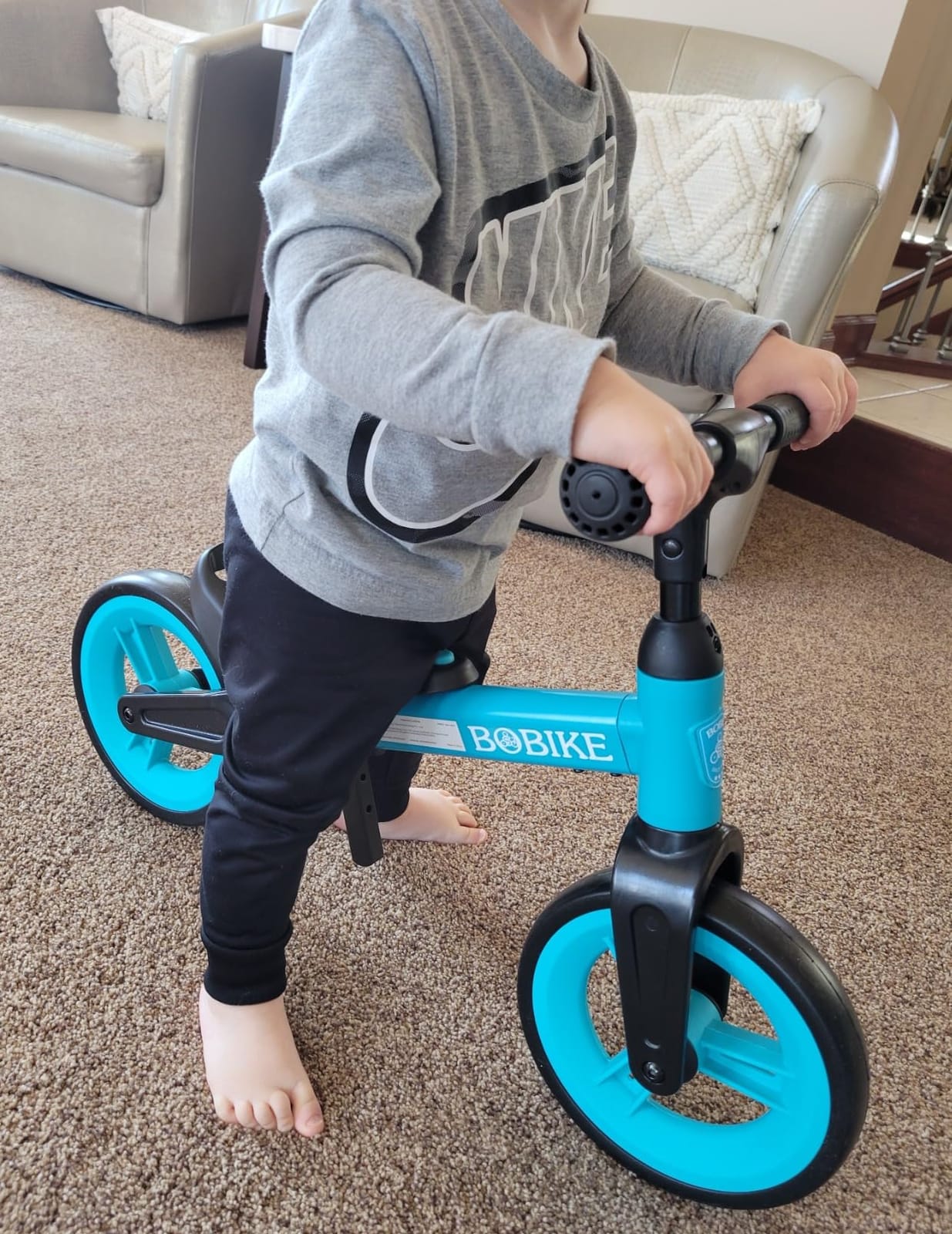
The 135-degree steering limiter and fully enclosed wheels match the safety profile of the other bikes in this list. Assembly is tool-free, and the adjustable seat and handlebars cover the standard age range.
What the Small Wheels Cost You
Nine-point-three-inch wheels are the smallest here, and they will not roll over anything but smooth ground. A smaller wheel also means a shorter wheelbase, which is less stable at speed. If your plan is driveway and patio riding, this is fine. Grass and gravel are not.
The Two Weaknesses Worth Noting
The warranty is one year, the shortest in this group, and the manufacturer does not publish a weight figure, which makes it harder to apply the body-weight rule. Ask for the weight before buying if your toddler is on the smaller side.
11. Retrospec Cub – Lowest Frame for Easy Mounting
Retrospec Cub 2 Toddler 12″ Balance Bike, 18 Months – 3 Years Old, No Pedal Beginner Kids Bicycle for Girls & Boys, Flat-Free Tires, Adjustable Seat, & Durable Frame
10 lb alloy steel frame
Low step-through frame
Seat 11-14.5 inches
12 inch airless tires
+ Pros
- Step-through frame is the easiest to mount
- 11 inch minimum seat fits small toddlers
- Puncture-proof tires need no maintenance
- Quick-release handlebars
- Stickers included for personalization
- Solid build quality
- Cons
- Heaviest bike in the roundup at 10 pounds
- 50 lb capacity is low for this age
- 14.5 inch maximum seat suits smaller toddlers
- Occasional quality control issues on arrival
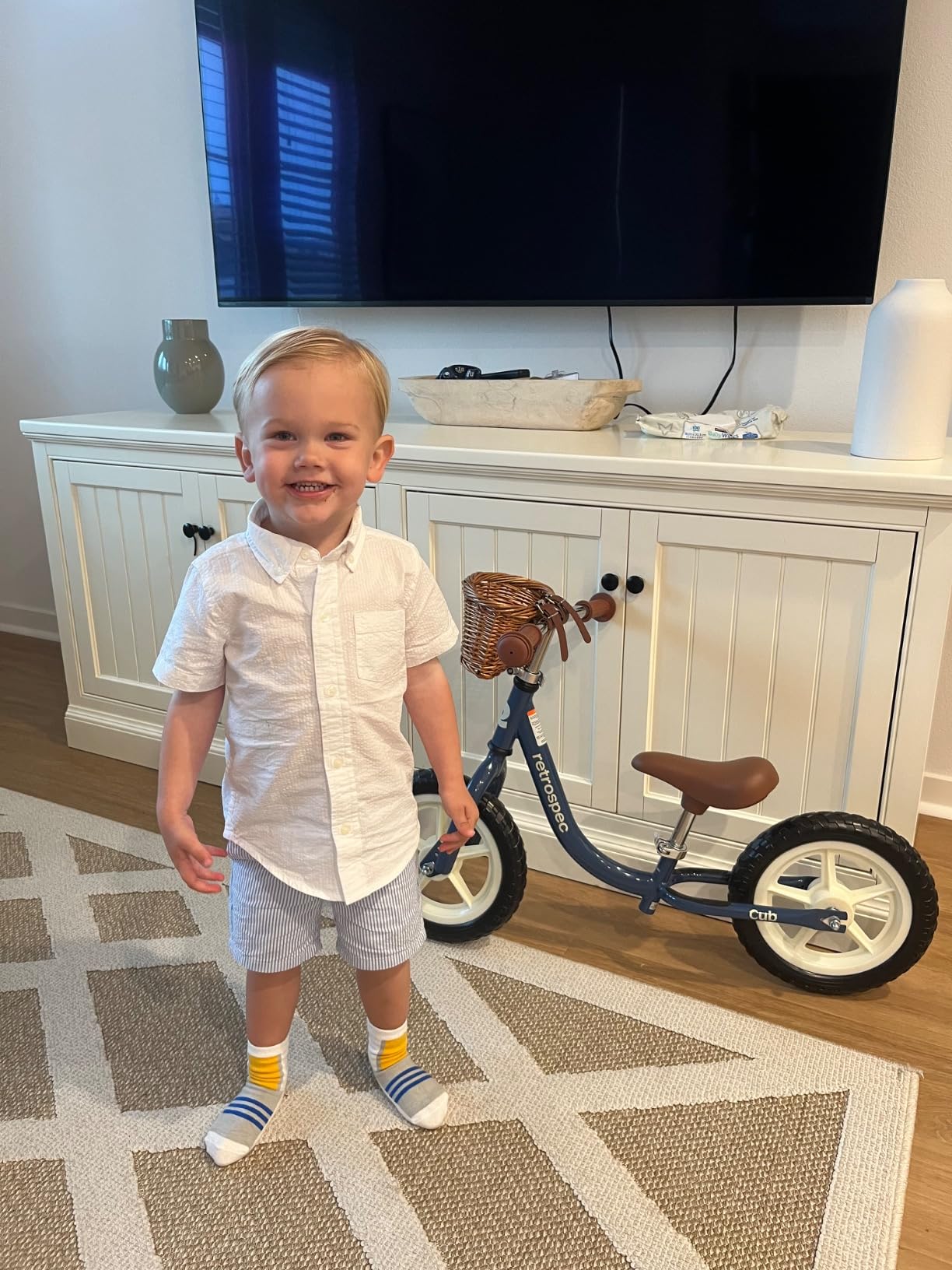
The defining feature here is frame height. A low step-through frame means a toddler can swing a leg over without lifting the bike, and for a child who is still cautious about getting on and off, that single design decision removes the biggest obstacle to independent riding.
The 11-inch minimum seat height is among the lowest in this roundup, which makes this a realistic option for a child between 18 and 24 months who is ready for two wheels.
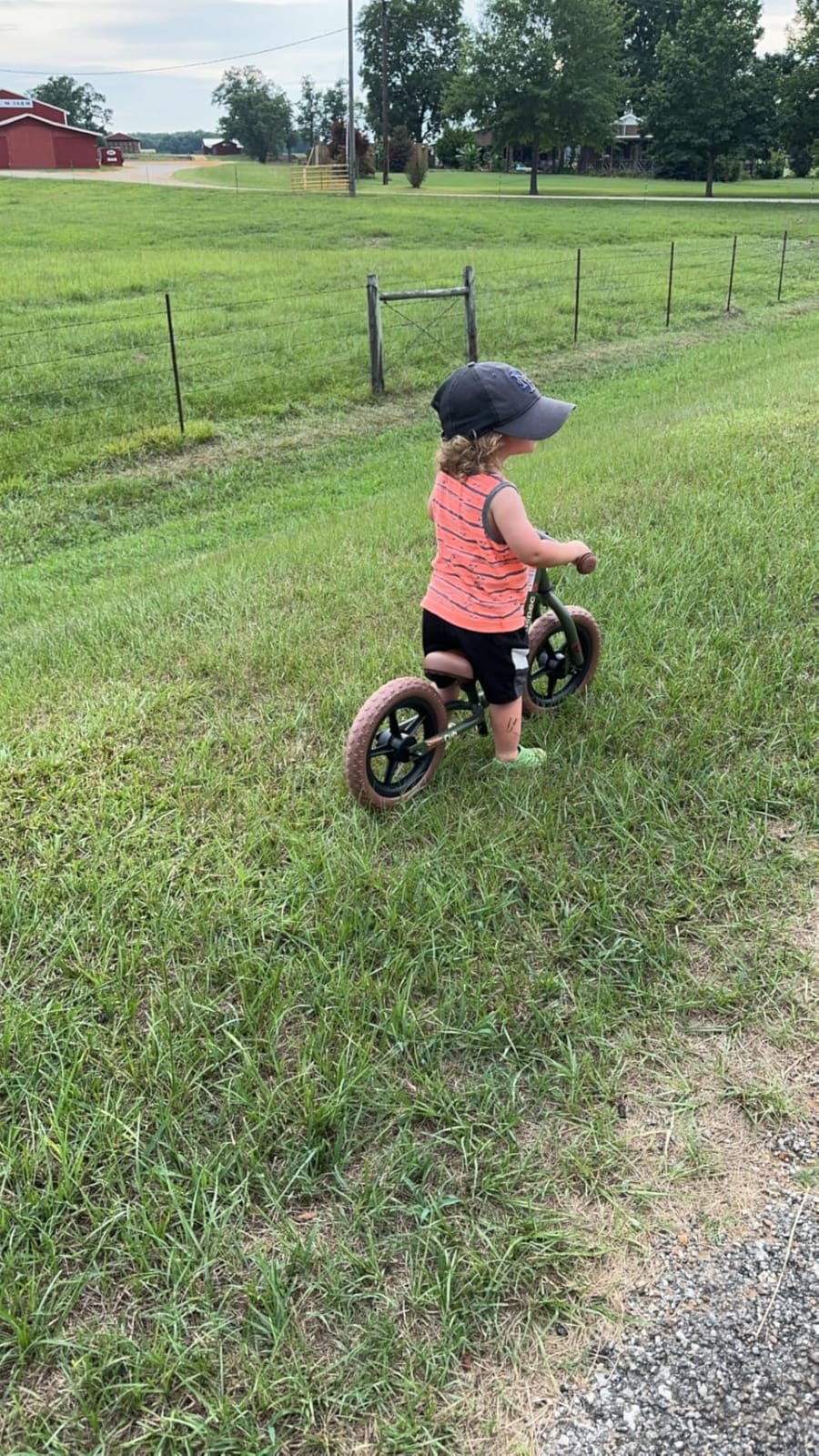
Build quality is consistently praised and the airless tires mean no maintenance and no streaks on indoor floors. Stickers are included for personalization, which reviewers note gets kids excited about their own bike.
The Weight Problem Is Real
Ten pounds is heavy for this age group. A toddler who cannot lift the bike cannot move it, and that shows up in the reviews as children asking to be pushed rather than pushing themselves. If your child is under two, pick something lighter.
Capacity and Range Limits
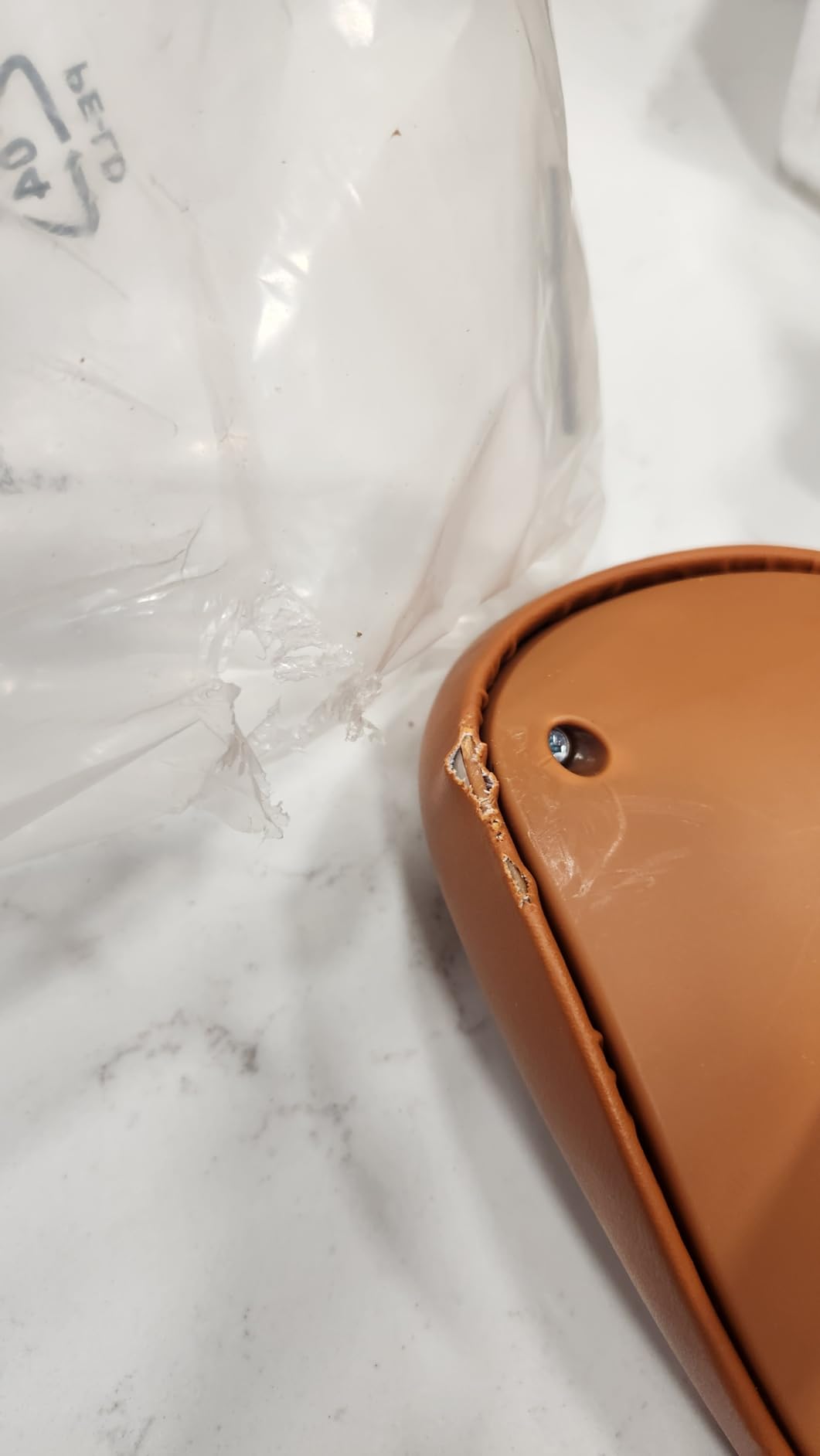
The 50-pound rating and 14.5-inch maximum seat height mean this bike ends its useful life around age three even if the frame is in perfect shape. A few buyers also reported arriving units with a damaged wheel, so inspect before the first ride.
12. Radio Flyer Steady Start – Three Wheels That Stand Up on Their Own
Radio Flyer Steady Start Balance Bike, for Kids Ages 1-3, Red
7 lb alloy steel frame
Three-wheel standing design
Foot brake
Ages 1-3, 42 lb capacity
+ Pros
- Stands upright on its own with no kickstand
- Unique three-wheel layout bridges four-wheel and two-wheel
- Tool-free padded seat adjustment
- Foot brake teaches stopping early
- Treaded wheels work indoors and out
- Cons
- Lowest capacity in the roundup at 42 pounds
- Three wheels do not teach true two-wheel balance
- Only 207 reviews so far
- White wheels show dirt quickly
- One year warranty
This is the most interesting design in the roundup. A wide front wheel and two rear wheels give it a footprint wide enough that it stands on its own without a kickstand, which solves a problem almost every other balance bike here has. Parents constantly trip over a bike lying on its side.
The foot brake is a genuine teaching tool. Where most balance bikes are stopped by planting both feet, this one lets a child learn the braking motion before pedals, which parents report speeds the transition to a pedal bike later.
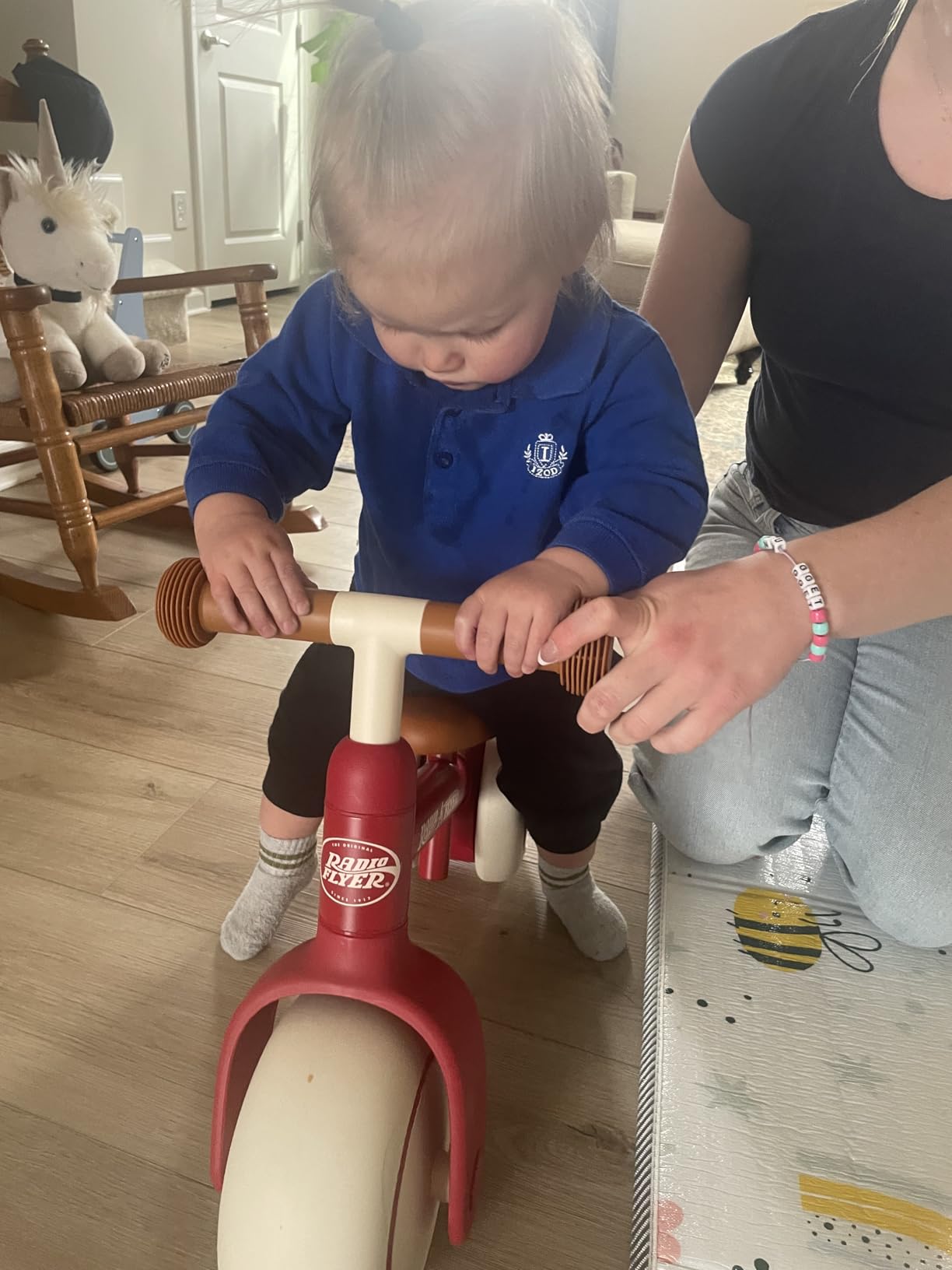
It fills a real gap: a child too small for two wheels but already bored with a four-wheel ride-on. Parents of 18-to-30-month-olds like that it bridges the two formats.
Three Wheels and the Balance Question
Like any three or four wheel bike, this one does not develop two-wheel balance. It buys you roughly six extra months of independent riding before you need to buy the real thing, and for a toddler that is often the difference between riding and refusing to ride.
Where It Falls Short
The 42-pound capacity is the lowest in this roundup. Review volume is also the thinnest here at 207 reviews, so there is less long-term owner feedback. The white wheels show dirt almost immediately.
How to Choose a Balance Bike Your Toddler Will Actually Ride
Five things decide whether a toddler rides or refuses. Everything else on the spec sheet is decoration. Work through these in order and the choice makes itself.
Measure the Inseam Before Anything Else
Stand your child against a wall with their feet flat. Slide a hardcover book between their legs and hold it against the wall. Measure from the top of the book to the floor. That is their inseam, and it is the only number that matters when picking a bike.
Set the saddle so both feet sit flat with a slight bend in the knee. If the child has to stretch onto tiptoe to reach the ground, they cannot save a tip-over, and the bike becomes something they are afraid of.
Quick reference by age: a 14-to-18-month-old usually measures 9-to-11 inches inseam and needs a bike whose seat bottoms out around 10 to 11 inches. An 18-to-24-month-old is usually 11-to-13 inches. A 2-to-3-year-old is often 12 to 15 inches. A 3-to-4-year-old commonly reaches 14 to 17 inches, which is where 12-inch bikes with taller seat ranges stop fitting.
Keep the Bike Under 30 Percent of Body Weight
This is the rule parents repeat most often in forum threads, and it is the one most listings hide. A 20-pound toddler on a 7-pound bike is carrying 35 percent of body weight. The same child on a 4-pound bike is carrying 20 percent, and the difference in what they can do with it is enormous.
If your child cannot lift the front wheel off the ground, the bike is too heavy. That single test tells you more than any age range on a box.
Pick Tires for the Surface You Actually Have
EVA foam and foam rubber tires need no air, never go flat, and ride quietly indoors, but they show visible wear after roughly a year of regular driveway use and offer less grip when wet. Pneumatic rubber tires grip the best and absorb bumps, but they need pressure checks and will eventually go flat. Plastic wheels are the least grippy and are the most common reason toddlers ignore an otherwise fine bike.
A Steering Limiter Is Worth Paying For
A limiter caps how far the handlebars can turn, stopping a fast steer from becoming a flip over the front wheel. On this list the SEREED Baby, Gamfeiny, Umatoll, and Bobike all include one. It is the most useful safety feature that is not a helmet.
Buy for the First 90 Days, Not the First Birthday
Parents almost universally describe the same curve: the child sits on the bike, refuses, and the parent assumes the purchase failed. Give it 90 days. Walking-pace gliding usually arrives without warning, often after a quiet stretch of nothing.
If You Are Buying Used, Inspect These Five Parts
Check the headset by lifting the front wheel and letting it drop; heavy play in the bearings means new cones or cones and a wrench. Squeeze both brakes or the foot brake and confirm they return fully. Look at the tires for cuts, flat spots, and worn tread. Check the seat post clamp for stripped threads and grab-tight adjustment. Finally, look for cracks or bends in the frame, especially around the head tube and the rear dropouts.
Balance Bikes vs Training Wheels vs Tricycles
Training wheels hold the bike upright, which means a child never has to learn to correct a lean. Every wobble gets caught by the stabilizers, so the balance skill never develops. Kids who start on a balance bike typically ride a pedal bike independently without training wheels, and usually sooner.
Tricycles have their place for a child under about 18 months who is walking but not ready to steer. Past that age they become a problem, because the wide front wheel makes the transition to two wheels harder rather than easier. The Steady Start in this roundup is the compromise: wide enough to stand up on its own, narrow enough to move toward two wheels.
Safety Gear Is Not Optional
Use a properly fitted certified helmet from the very first ride, even at walking pace. Every toddler eventually loses balance and goes down, and the speed is low enough that the helmet matters far more than most parents assume. Add knee and elbow pads, particularly for a child riding on concrete, and make sure the bike has no exposed hardware near the feet.
Indoor Versus Outdoor
Indoor riding builds confidence fastest because there are no obstacles and the surface is flat, but foam and EVA tires can streak or scuff hardwood and linoleum. Use a mat or a protective floor covering if the flooring is worth protecting. Move outdoors as soon as your child is gliding reliably, because real terrain teaches balance faster than any indoor surface.
Frequently Asked Questions
What age should a toddler have a balance bike?
Most toddlers can start at 15 to 18 months on a very light bike with an 11-inch minimum seat height. They sit, hold the bars, and push along the ground with their feet. Independent gliding usually clicks in between ages 2 and 3. Measure your child’s inseam first: if the seat does not let both feet sit flat with a slight knee bend, the bike is too tall regardless of the age printed on the box.
Are balance bikes worth it for toddlers?
Yes. Balance bikes build the balance, steering, and braking skills that transfer directly to a pedal bike, and most children who start on one ride a pedal bike independently without ever using training wheels. The one caveat is behavioral: many toddlers refuse to ride for several weeks before it suddenly clicks. Give a new bike 90 days before deciding it failed.
What is the best balance bike for a 2-year-old?
For most 2-year-olds the Strider 12 Sport is the best balance bike: at 6.7 pounds with a seat that drops to 11 inches it fits the widest range of inseams and stays adjustable to age 4. For a smaller child who needs something lighter to lift, the SEREED Baby Balance Bike at 3.5 pounds is the better fit. For a tall two-year-old, the SEREED 2 Year Old model with a 12.6-inch minimum seat fits better.
Is Woom better than Strider?
Woom and Strider answer for different needs. Strider wins on minimum seat height, adjustment range, and the fact that one bike covers ages 1 to 4. Woom wins on weight, wheel geometry, air tires, and an integrated handbrake. Parents in forum threads regularly note Striders feel heavier by comparison and that Woom felt lighter for a 21-month-old. Most families are happy with either, and most are not deciding on weight alone.
What is the ideal seat height for a toddler balance bike?
Set the seat so your child’s feet sit flat on the ground with a slight bend in the knee. That is usually 0.5 to 1 inch below their inseam. To measure an inseam, have the child stand against a wall with feet flat, slide a hardcover book between the legs, hold it in place, and measure from the top of the book to the floor.
Are foam or air tires better for a balance bike?
Foam and EVA tires never need inflating and ride quietly, but they wear visibly after about a year of regular driveway use and have less grip when wet. Pneumatic rubber tires grip better and absorb bumps, but they need pressure checks and will eventually go flat. Choose foam for smooth indoor and driveway use and air tires for grass, gravel, or slopes.
How long does it take a toddler to learn to ride a balance bike?
Most children glide within two to four weeks of regular use, but many refuse to sit on the bike for the first several weeks. Give it 90 days. Children who are walking confidently and have good gross motor skills often click sooner. A bike that is too tall or too heavy is the most common reason progress stalls.
Do toddlers need a helmet on a balance bike?
Yes. Use a properly fitted certified helmet from the first ride, even at walking pace. Toddlers fall regularly while learning, and head injuries are the most common. Knee and elbow pads are worth adding for riding on concrete or hard surfaces. Helmet fit matters more than brand, so check the strap position rather than the label.
Which Balance Bike Should You Buy in 2026?
If you want one answer, buy the Strider 12 Sport. The 11-inch minimum seat height and 11-to-17-inch adjustment range mean it fits the widest range of toddlers and stays useful until age 4, and at 6.7 pounds it is light enough for a two-year-old to maneuver. That is the balance bike I recommend to parents who ask me to choose for them.
If your child is under 18 months or still shaky on their feet, start with the Retrospec Cricket and move up at two. If your priority is a bike light enough for a small child to lift independently, the SEREED Baby Balance Bike at 3.5 pounds wins, and its 135-degree steering limiter is worth more than most parents expect.
If the bike will live on grass or gravel, pick the Radio Flyer Air Ride and accept the tire maintenance. If your child is a tall two-year-old or a small preschooler, the SEREED 2 Year Old model with a 12.6-to-17.1-inch seat range fits best. And if you want certification marks on the frame, the Bobike carries ASTM F963-11 and EN71.
Whatever you choose, measure the inseam first, fit the seat so both feet sit flat, put a certified helmet on before the first ride, and give it 90 days. That last step is the one most parents skip and the one that decides whether the bike gets used at all.