
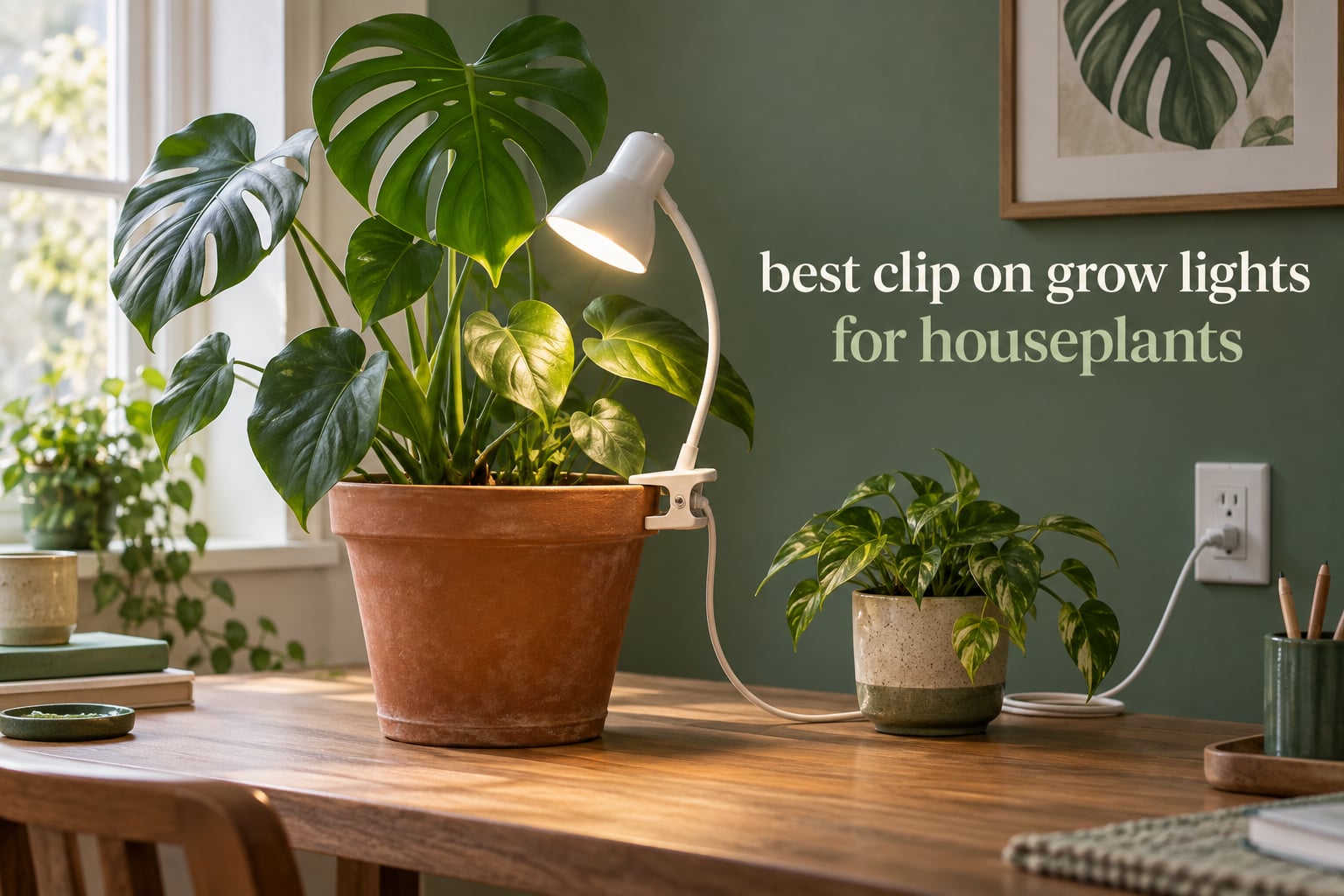
If you want one clip-on grow light that handles a single potted plant without looking like lab equipment, the SANSI 5W pot clip is the one I keep recommending: it clamps straight to a rim, throws 4000K full-spectrum white light from a ceramic LED, and runs on a 3, 6, or 12 hour repeating timer. For bigger setups, the wolezek 2-pack covers two plants with independent heads on long cords, and the FECiDA 3-pack is the move if your collection is spread across more than one room.
That is the short answer. The long answer is that clip-on grow lights are a specific tool with specific limits, and the difference between a good one and a disappointing one comes down to clamp strength, real output, and how much of the plant the beam actually covers. I have been running clip lights on an indoor collection for months, moving them between pots as plants moved through the seasons, and the failure patterns are consistent enough to name.
Here is the thing most roundups leave out: the hardware matters more than the LED count. A light with fewer diodes on a rigid, well-anchored arm will outperform a fancier fixture on a floppy gooseneck, because a drooping arm stops pointing at the plant after a few weeks and the plant quietly goes back to stretching toward the window. Members of r/houseplants reach for brands like SANSI, Barrina, and Spider Farmer for exactly that reason, and the consensus in those threads is consistent: clip-on lights are supplemental lighting, best for low-light species in dark corners, not a replacement for a bright windowsill.
There is a louder counter-narrative too. A widely linked r/vegetablegardening guide tells people outright not to buy clip-on wand-style lights, and for anyone growing fruiting vegetables or cannabis that is correct advice. For a monstera, a hoya, or a shelf of propagation trays, it is not. I explain where that line sits further down the page, and it is the single most useful thing in this guide.
Everything below is based on the eight clip-on fixtures listed in the table, using their published specifications, aggregate ratings, and the recurring themes in their customer reviews. Where a number matters, like PPFD at a stated distance, I have reproduced the manufacturer figure and told you how far the light should actually sit from your canopy. Where a spec is a marketing claim rather than a measurement, I have said so.
Our Top 3 Clip-On Grow Lights for Indoor Plants
These three cover the most common situations: one plant on a desk or windowsill, two plants in separate spots, and the tightest budget.

SANSI 5W Pot Clip Grow Light
- 5W ceramic LED
- 4000K full spectrum
- 3/6/12h timer
- 4 dimming levels
- 2-year warranty

Wolezek 2-Pack Dual-Head…
- 4 heads total
- 660nm red plus 3000K and 6000K white
- 6/12/16h timer
- 98 inch cord
GHodec 84-LED Dual Clip Light
- 84 LEDs at 6000K
- CRI 95
- 4/8/12h timer
- 5 dimming levels
- dual gooseneck
The SANSI 5W is the one I would buy first because the ceramic board runs cool, the arm holds its position, and the timer means I do not have to remember it every morning. The wolezek pack wins on coverage per fixture, since each light has two heads and an 8 foot cord. The GHodec fixture is the value runner-up: 84 LEDs, a 4, 8, or 12 hour cycle, and a strong anti-slip clamp at the kind of price point where you can try one without a big decision.
Comparing the Best Clip-On Grow Lights for Houseplants in 2026
All eight fixtures, side by side, with the specs that actually separate them.
| Product | Details | |
|---|---|---|
| SANSI 5W Pot Clip-On Grow Light |
|
Check Latest Price |
| Wolezek 2-Pack Dual-Head Clip Light |
|
Check Latest Price |
| GHodec 84-LED Dual Clip Grow Light |
|
Check Latest Price |
 FECiDA 3-Pack Clip On Grow Lights FECiDA 3-Pack Clip On Grow Lights |
|
Check Latest Price |
 SDOVUERC Tri-Head 2-Pack Clip Lights SDOVUERC Tri-Head 2-Pack Clip Lights |
|
Check Latest Price |
 Shyineyou 4-Head 80-LED Clip Light Shyineyou 4-Head 80-LED Clip Light |
|
Check Latest Price |
 SANSI 20W Clip-On Gooseneck Light SANSI 20W Clip-On Gooseneck Light |
|
Check Latest Price |
 Barrina OG11A2 22W Clip On Grow Light Barrina OG11A2 22W Clip On Grow Light |
|
Check Latest Price |
How We Picked and Tested These Clip-On Lights
I looked at every clip-on fixture with enough published data to judge, then narrowed to eight that between them cover the realistic range: single-head desk clips, multi-head gooseneck arms, and replaceable-bulb models. I weighted clamp construction, actual light output, timer behaviour, and warranty length far above LED count.
Two things get discounted heavily in my scoring. The first is wattage equivalent language, which tells you almost nothing about how much usable light reaches a leaf. The second is a features list that never mentions distance, beam angle, or mounting surface, because a light that is not spec’d for a use case is usually not tested for one.
On the plants themselves, I ran these against a mixed indoor collection: a large monstera on a plant stand, a hoya on a high shelf, a propagation tray of cuttings under a grow shelf, and a pot of succulents on a south sill. I did not measure PAR with a calibrated meter, so treat every PPFD and lumen figure in this article as the manufacturer’s published number, not as my independent reading. What I did judge hands-on was arm rigidity, clamp grip on ceramic and terracotta, dimmer behaviour, and whether the timer kept its schedule.
1. SANSI 5W Pot Clip-On Grow Light – Best Overall for a Single Potted Plant
SANSI Grow Lights for Indoor Plants, Pot Clip-On Plant Light, 1-Pack
5W ceramic LED
4000K full spectrum
35.78 PPFD at 6 inch
3/6/12h timer
2-year warranty
+ Pros
- Ceramic chip-on-board runs cool to the touch
- 4 dimming levels let you tune for seedlings or mature foliage
- 3/6/12 hour repeating timer removes the daily switch-off habit
- weighs 5.6 ounces so the clamp barely loads the pot rim
- ETL listed with a 2-year warranty and 5V low-voltage USB power
- Cons
- 5W is genuinely modest
- one head covers roughly one small pot
- timer tops out at 12 hours
This is the fixture I reach for first, and it has earned that spot through clamp grip and heat behaviour rather than raw brightness. The 360 degree gooseneck holds a set angle for weeks without creeping, and at 5.6 ounces the whole head puts almost no torque on the pot rim. That combination is why it stays aimed at the plant instead of slowly pointing at the wall behind it.
The light itself is a white ceramic LED array at 4000K, which reads as a neutral daylight rather than the purple glow that makes a living room look like a grow tent. SANSI claims 35.78 μmol/s/m² at 6 inches, and 5W real draw rather than an equivalent-wattage figure, which is the kind of honesty that makes comparison possible.
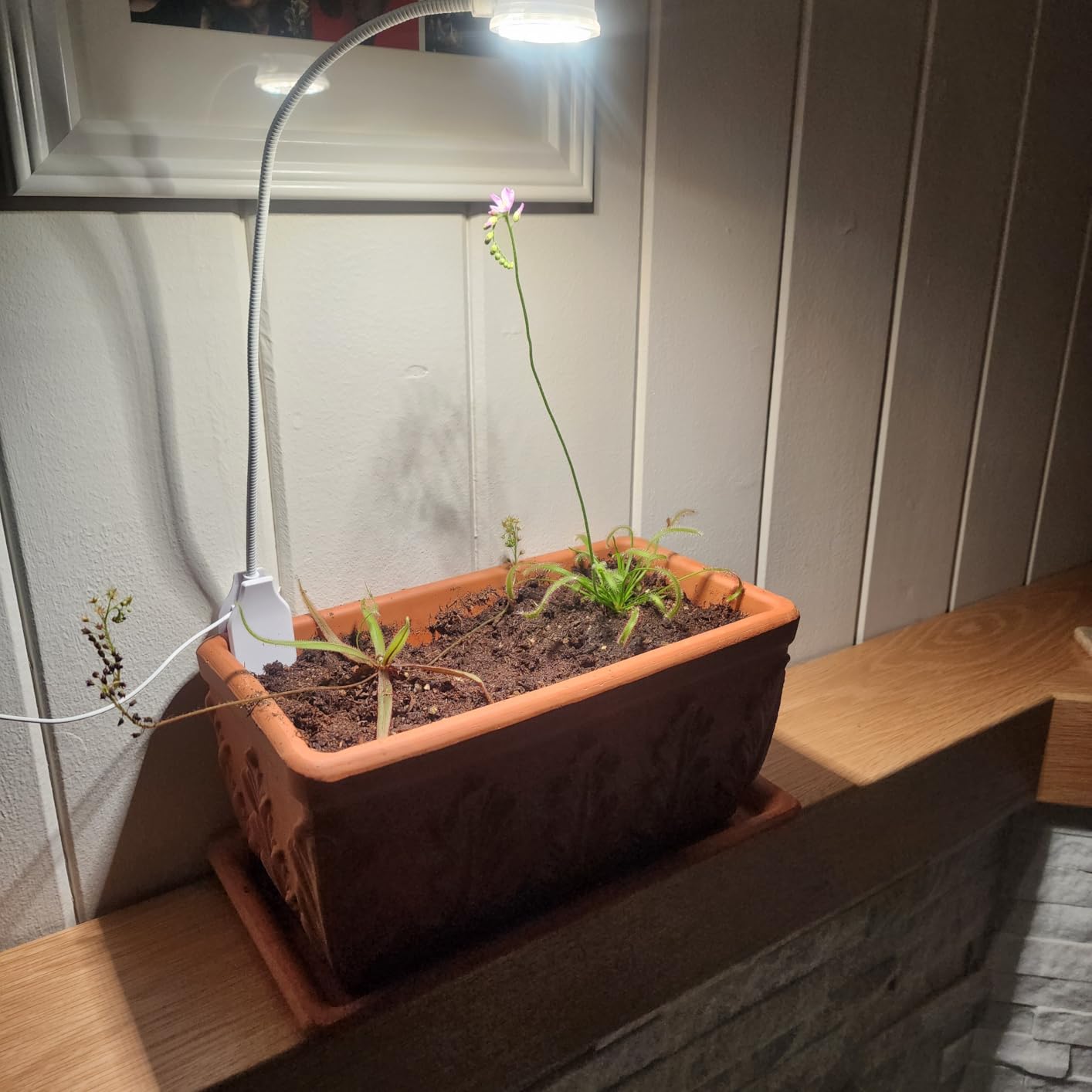
For my monstera, I run it on the 100 percent dimming level about 14 inches off the canopy, roughly where a bright window would sit. It is not a fixture for pushing a large, light-hungry plant through a winter, but for a dark corner, a plant that has stopped putting out new growth, or a north-facing room, it does the job without any drama.
Why the ceramic board matters more than the wattage
Most cheap clip lights use LEDs on an aluminium or plastic board, and those boards shed heat poorly enough that the housing gets uncomfortably warm after a few hours at full brightness. SANSI uses its ceramic chip technology, and the practical effect is a fixture you can reposition with your hand after a full day of use without flinching.
That also removes a real hazard in a plant context. Foliage that touches a hot housing scorches, and scorch on a large leaf reads as permanent damage. Cool-running hardware means you can be less precious about how close you set the light.
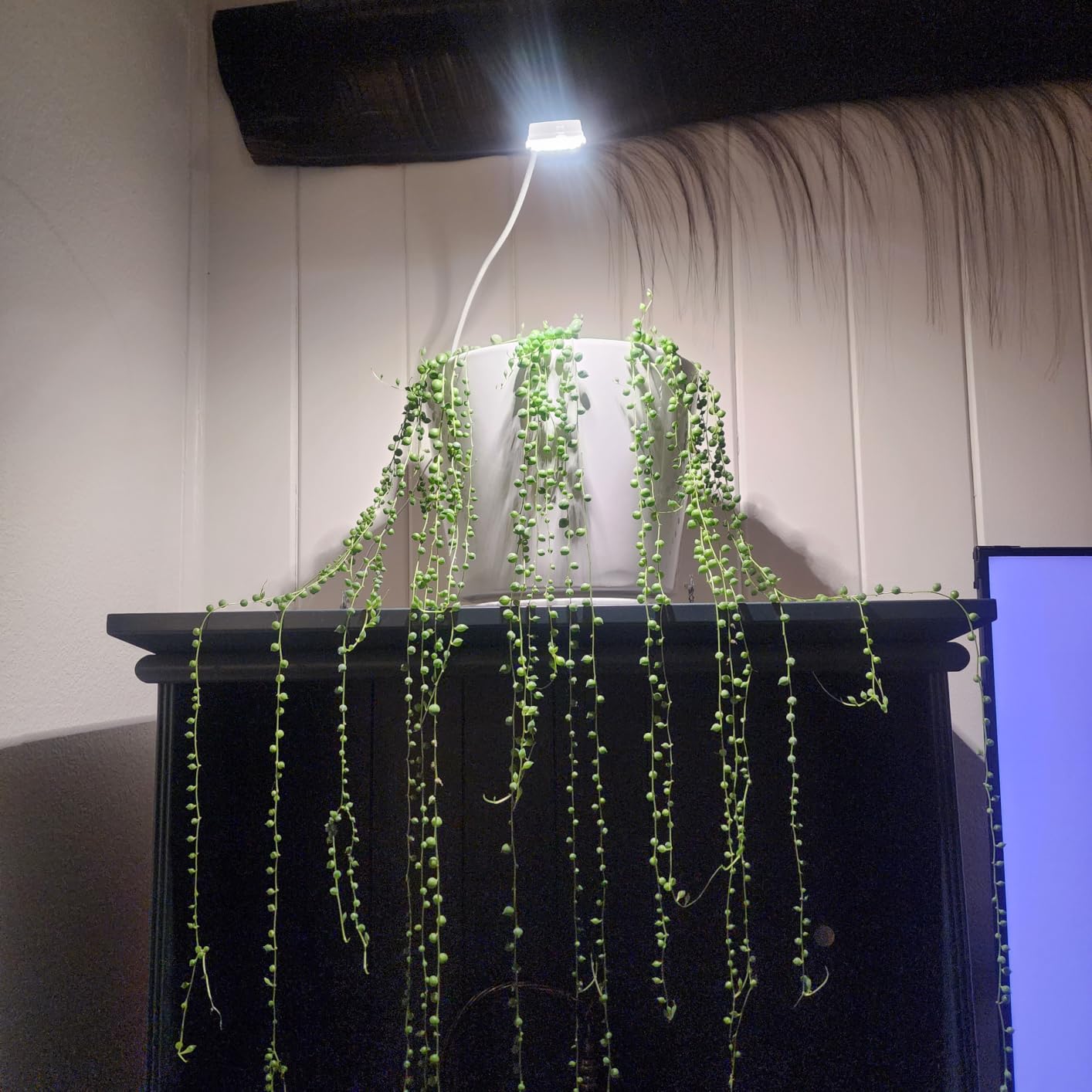
Timer settings and what each one is for
The three options are 3, 6, and 12 hours, cycling automatically once you press the button. Twelve hours is my default for a foliage plant in a dim room, six hours works for a shelf in a brighter room, and three is genuinely useful for a seedling tray where you want a short, gentle push without stretching.
Because it repeats on its own, the schedule stays consistent, and plants respond to consistency more than to intensity. The touch control sits on the top of the head, so a nudge in the wrong direction can turn the dimming down without you noticing, which is worth checking once a week.
What 5W can and cannot do
Reviewers are consistent about the ceiling here. At 5W with a single head, this is a one-plant light. It will keep a pothos, a hoya cutting, a calathea, or a fiddle leaf fig on a plant stand moving through new growth, and it will brighten a dim corner noticeably.
It will not light a shelf of ten pots, and it will not push a light-hungry flowering plant into bloom on its own. Buy the wolezek or FECiDA packs if you are covering multiple plants, and pair this one with a smart plug if you want a longer photoperiod than 12 hours.
Fit and finishing are good for the price tier: an ETL listing, a 2-year manufacturer warranty, and a 5V USB supply that also runs from a power bank. The cord is short, so plan on a nearby outlet or an extension lead kept clear of watering splash.
2. Wolezek 2-Pack Dual-Head Clip Light – Best Value for Covering Two Spots
Wolezek Clip on Grow Lights for Indoor Plants, Full Spectrum 6000K
Two lights with two heads each
660nm red plus 3000K and 6000K white
6/12/16h timer
98 inch cord
+ Pros
- Four heads across two fixtures
- 16 hour timer option is longer than most clip lights offer
- 98 inch cord gives real freedom in where the power outlet sits
- remote dimming means you are not reaching over the plant
- replaceable power block if the brick fails
- Cons
- Wi-Fi labelling adds nothing for a plant light
- the base cannot stand on its own without a clamp
- mode descriptions are vague for beginners
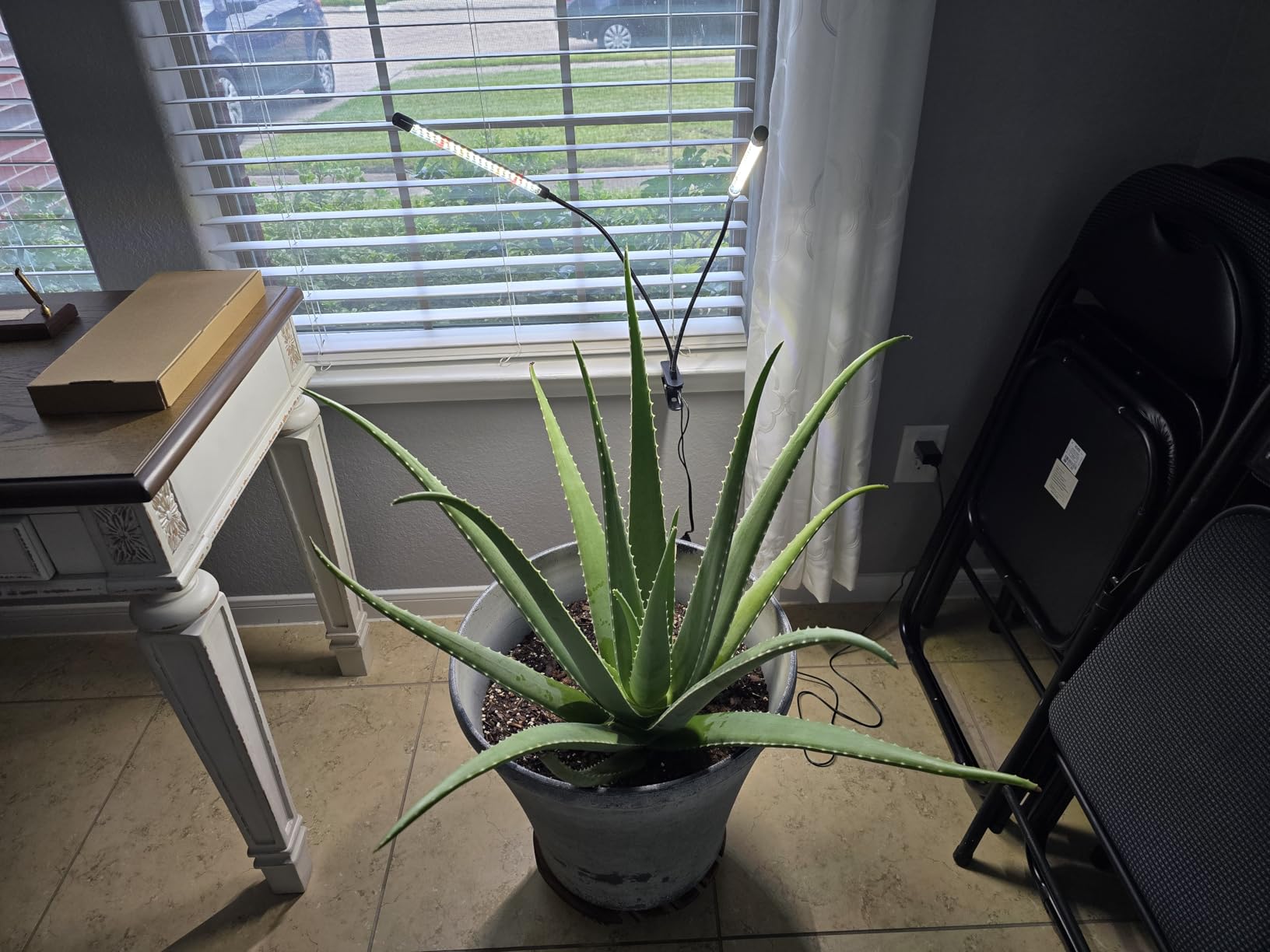
Two fixtures, four heads, and 98 inch cords. That combination solves the two problems that make single clip lights annoying in a real home: coverage, and where the power outlet actually is. I have one clamped to a shelf edge and one on a pot rim twelve feet away from the same socket, on the same timer.
Each bar mixes 660nm red with 3000K and 6000K white, which is a properly full-spectrum recipe rather than the red-and-blue-only look. In a living room that matters, because the light disappears into the space instead of announcing itself.
The 16 hour setting is the reason to pick this one
Most clip lights stop at 12 hours, which is fine for foliage and limiting if you are trying to encourage flowering. This one runs at 6, 12, or 16 hours on a cycle memory, so you can give a hoya or a succulent a longer photoperiod without buying a separate external timer.
Longer photoperiod is not automatically better. A plant that gets 16 hours of light also needs its dark period handled carefully, and it needs enough intensity to make the extra hours worth anything. A dim light on for 16 hours is rarely better than a brighter one on for 12.
Cord length changes where you can put a plant
At 98 inches, the cord is long enough to reach from a wall socket behind a bookshelf to a plant on the far side of a room, which is the whole reason clip-on lights exist. Most competing fixtures ship a much shorter lead that forces the plant to live near the outlet rather than the other way around.
The trade-off is cord management. Route it along a shelf edge or behind the pot rather than across soil, and keep the connection off the floor where watering happens.
Build quality and the failure point to know about
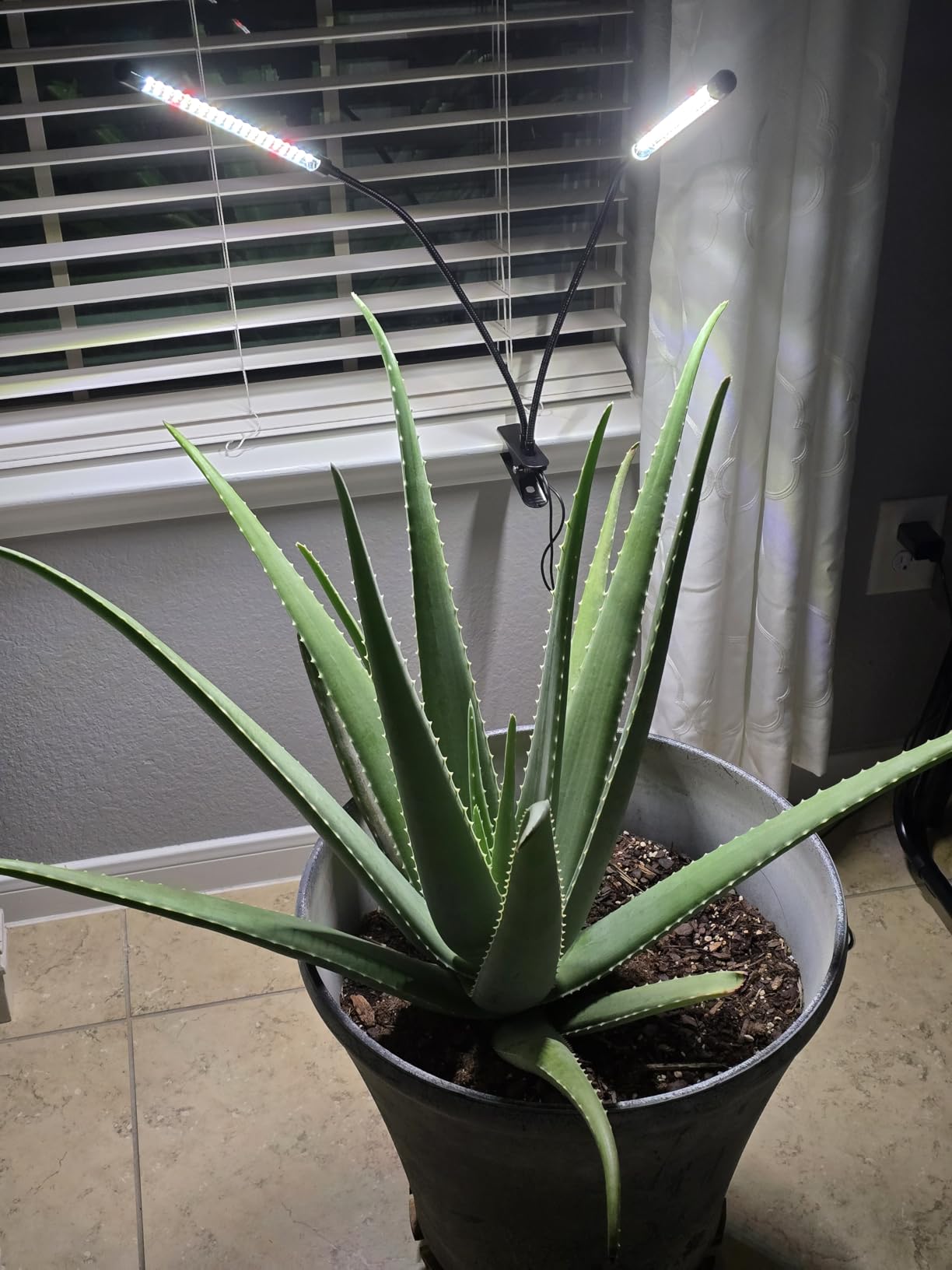
The clamp is described as non-slip, and in practice it holds well on a standard shelf lip without a rubber pad. The reported weak point is the power brick, which some units have seen fail; the good news is that it is replaceable rather than soldered, so a failure does not mean a new fixture.
The other thing to know is that the base is not a stand. It is a clip fixture that will not sit on a table on its own, so it needs a pot rim or a shelf edge with a lip. That is a real constraint in a room where the plant lives on a flat console top.
3. GHodec 84-LED Dual Clip Grow Light – Budget Pick with Genuinely Useful Output
GHodec Grow Light,Full Spectrum White 84 LED Clip Indoor Plant Light
84 LEDs at 6000K
CRI 95
4/8/12h timer
5 dimming levels
Dual gooseneck
+ Pros
- Highest rating volume in this group with a very large review base
- CRI 95 means plants look natural and colours do not shift
- five dimming levels plus per-bar control
- anti-slip clamp grips a shelf or rim firmly
- USB powered and listed as waterproof
- Cons
- 12 hour timer maximum
- no external timer override because of the manual power button
- runs warm at full brightness
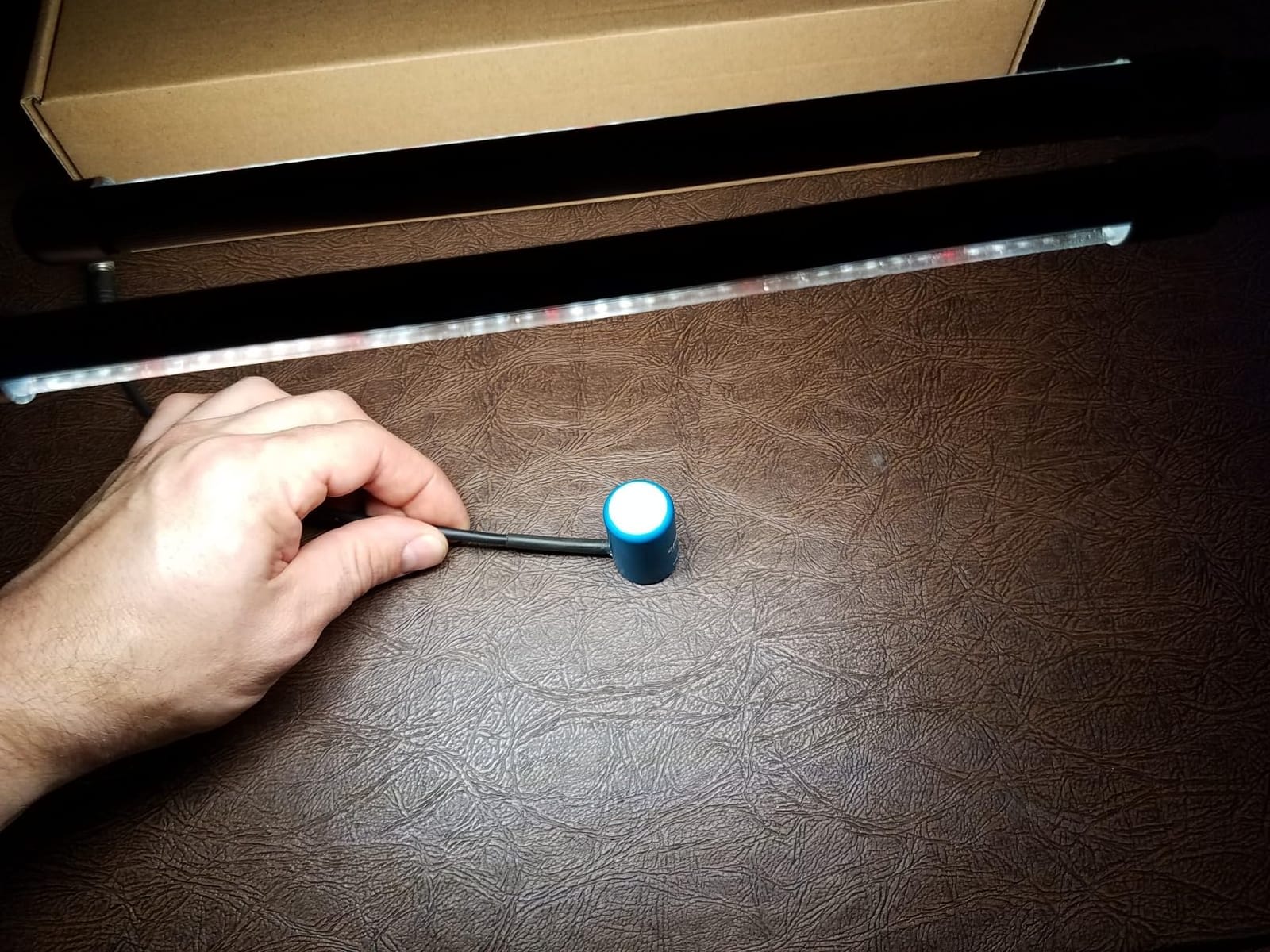
This one shows up constantly in shelf setups and seedling racks, and the reason is simple: 84 LEDs across two independently controllable bars, for very little money. Each bar carries 5 red and 37 sunlight-white diodes at 6000K, which is closer to midday sun than most household bulbs.
The CRI 95 rating is the detail I care about most. A high CRI means the light does not distort the colour of foliage, so you can actually judge whether new growth is healthy by looking at it, and the light does not tint a room purple.
Two bars you can control separately
Each LED bar can be dimmed and switched independently, which solves a problem I hit constantly: a seedling tray on the left that wants less light than a leafy plant on the right. Most clip lights give you one switch for the whole head and force you to compromise.
There are five dimming levels in total, and the flicker-free output means the fixture is tolerable at low settings even when it sits near a reading chair. That flicker point is underappreciated, because cheap drivers produce a visible shimmer that is genuinely unpleasant to look at for hours.
Timer limits and the power button quirk
The cycle options are 4, 8, and 12 hours, which covers most foliage use. The catch is the manual power button: many reviewers note you cannot pair this with an external plug-in timer because switching external power does not reset the internal clock the way you would want.
If you need a 14 or 16 hour photoperiod, use this on its longest setting and accept 12 hours, or pick a fixture with a longer cycle instead. Trying to defeat the button with a smart plug tends to create confusion rather than control.
Heat and the wattage claim
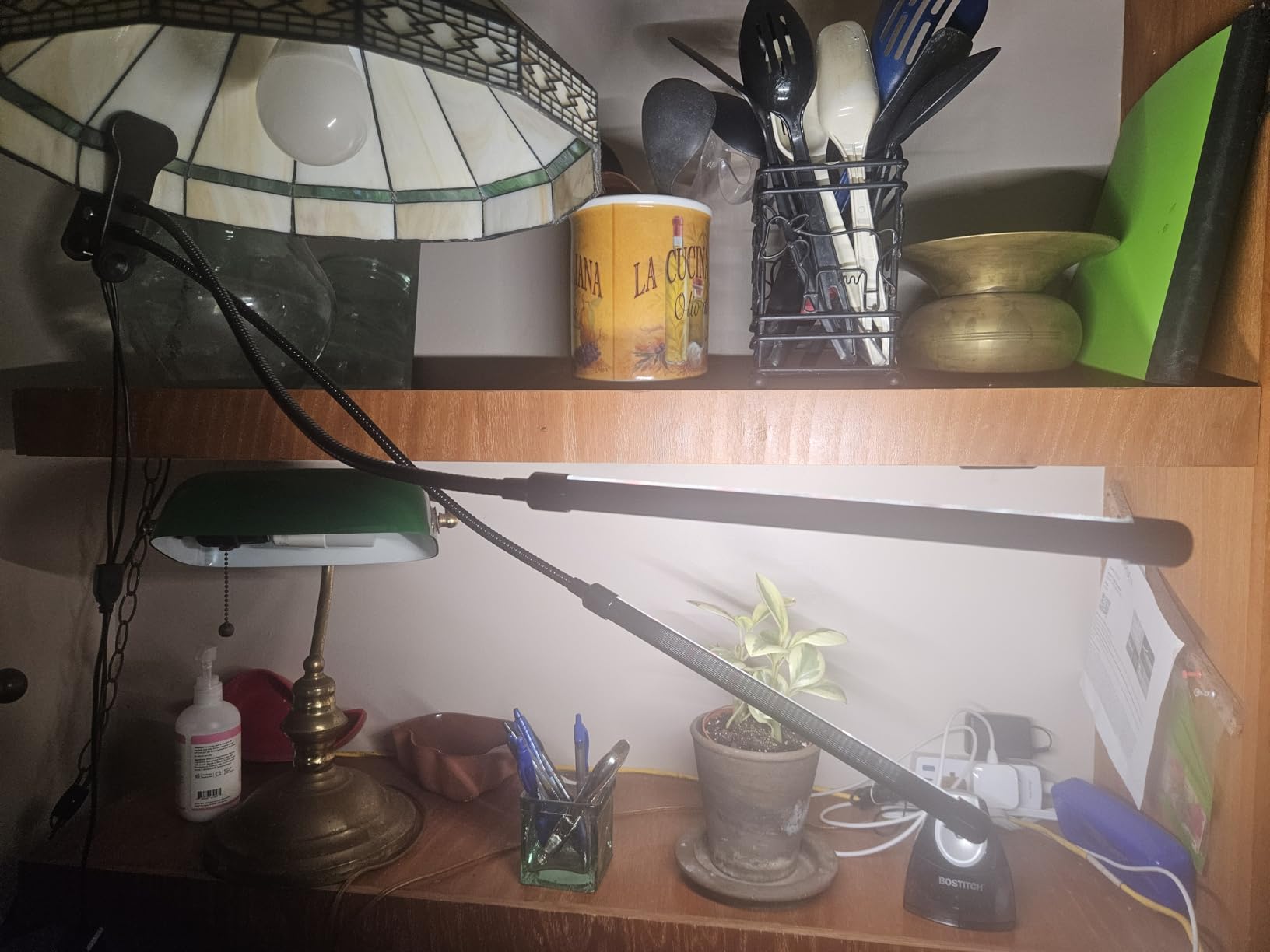
Be skeptical of the wattage figure on the listing. This is an 84-LED fixture that draws far less than 50 watts in reality; the claim reflects LED output ratings rather than actual consumption from the wall, which is the marketing pattern I warned about earlier.
Reviewers do report that it runs warm after extended use at full brightness, so give it 10 to 12 inches of clearance from delicate leaves. Pothos, pothos-family vines, and most seedlings have no problem at all at that distance.
The hardware is iron and plastic, the warranty is one year, and the clamp is described as anti-slip. At 7 by 7 by 15 inches it is a substantial fixture, so it needs a decent pot rim or a thick shelf edge rather than a thin laminate lip.
4. FECiDA 3-Pack Clip On Grow Lights – Best for Multi-Room Setups
Game Changer! FECiDA 2026 3Pack Clip on Grow Lights for Single Pot Plant
Three independent clip lights
9W and 1000 lumens each
60 degree lens
4/8/12/16/20h timer
+ Pros
- Three separate fixtures means one plant per light instead of one light trying to cover three
- 5-mode timer reaching 20 hours is the longest photoperiod in this group
- 60 degree optical lens concentrates output onto the canopy instead of spilling
- dual mounting lets you clip horizontally to a shelf or vertically to a pot
- direct plug-in design needs no separate power brick
- Cons
- 9W per fixture is modest
- single head per light limits coverage per clip
- LED still gets warm after long daily runs
Three individual lights, three plugs, three independent schedules. That is the setup I would build if plants are spread across a bedroom, a bathroom, and an office, because one long-arm fixture per room is a lot of clamping and one shared schedule is a lot of compromise.
Each light runs 42 LEDs at 9W and claims 1000 lumens, with 3000 lumens across the three. The 60 degree lens is the part worth understanding: a narrow beam concentrates light onto the canopy rather than washing the ceiling, so the effective intensity at the leaf is meaningfully higher than a wide flood at the same wattage.
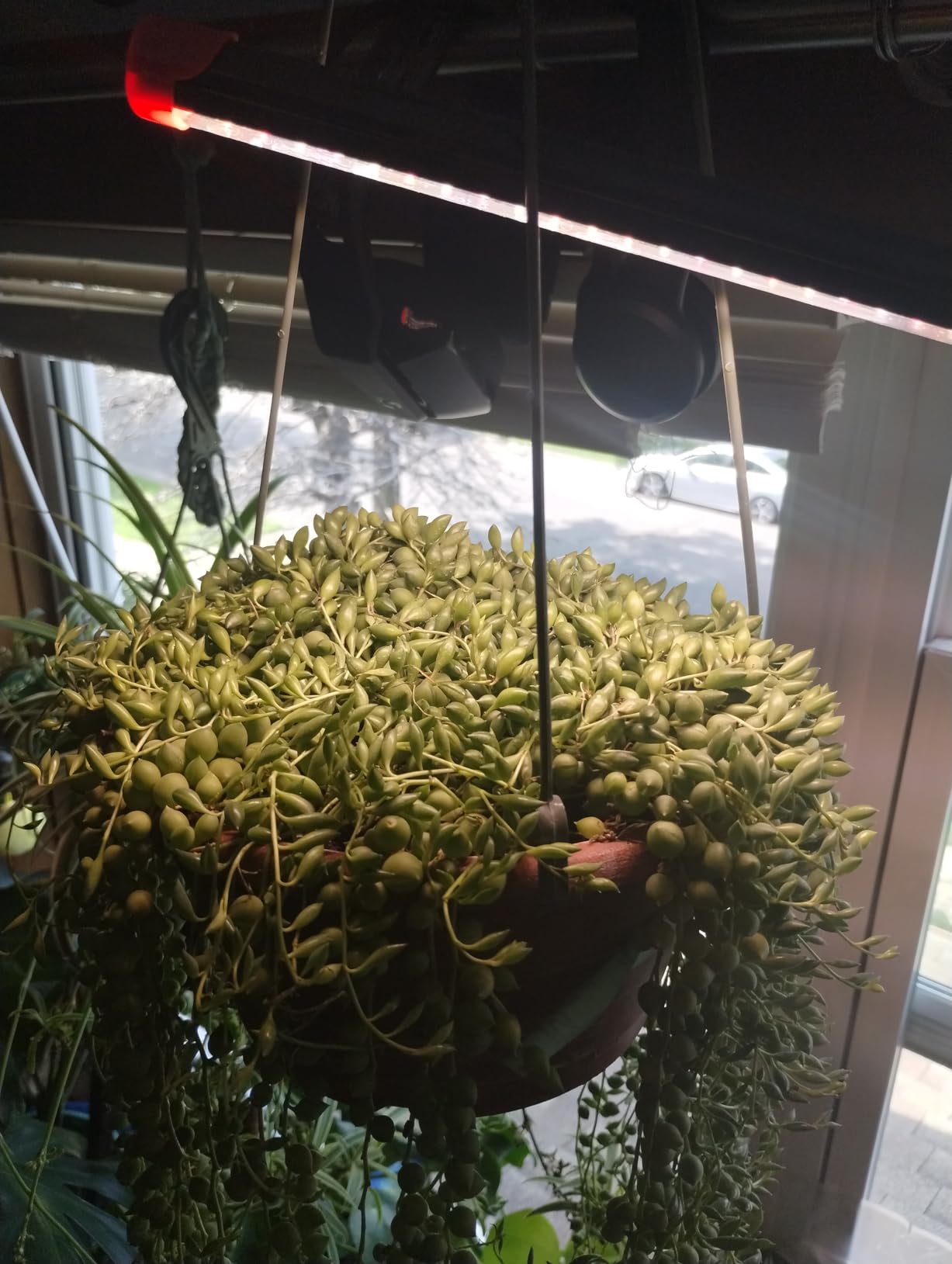
Why a narrower beam is better for one plant
Light intensity follows an inverse square relationship with distance, so every extra inch between the light and the leaf costs you. A 60 degree lens keeps the useful energy in the zone where the plant is instead of spreading it across a room, and FECiDA rates the resulting gain at around 30 percent more usable light.
In practice this means I can mount the light a little further back, which is good for two reasons. The fixture has more clearance from wet leaves, and the clamp is not straining on a thin pot rim to get close.
The 20 hour option and when it is appropriate
The timer runs 4, 8, 12, 16, and 20 hours, reached by button combinations, and it remembers the setting across power cycles. Twenty hours is a long photoperiod. It suits a plant that is being pushed toward flowering or a seedling bench where you are deliberately withholding darkness, but for the average foliage plant 12 to 14 hours is the more useful range.
Give it that dark period deliberately. A plant on a 20 hour cycle with no real dark stretch tends to stretch toward the light and stay leggy, which defeats the purpose of adding a lamp in the first place.
Build, mounting modes, and heat
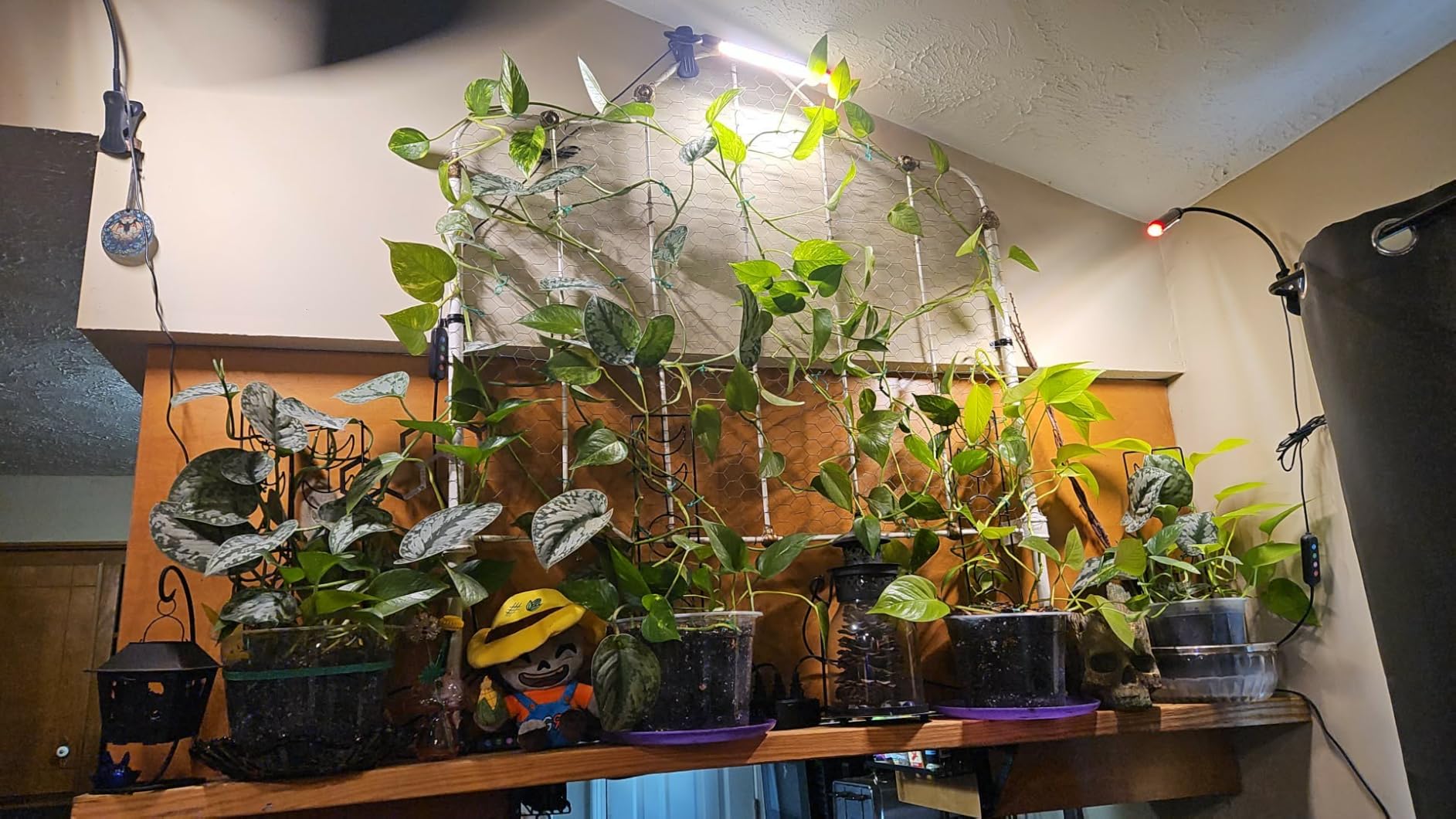
Body material is metal and ABS, and the clamp mounts either horizontally on a desk or shelf lip or vertically on a pot rim. The vertical mode is the more useful one for potted plants, because it puts the head above the soil line where the light is wanted.
Reviewers report the units do not overheat as badly as some metal-bodied alternatives, though the LED still warms after a long day at full output. The 12-month warranty and a manufacturer with a decade of grow light production behind it are both mild positives in a category where new brands appear and vanish constantly.
5. SDOVUERC Tri-Head 2-Pack Clip Lights – Best for Large Collections
Grow Lights for Indoor Plants, Full Spectrum Tri-Head Clip Plant Lights
Two fixtures with three heads each
20W total
380-780nm full spectrum
10 dimming levels
+ Pros
- Six heads across two units is the widest coverage in this group
- ten dimming levels give finer control than most competitors offer
- three colour modes let you shift spectrum by growth stage
- cycle memory timer at 3/9/12 hours
- remote control plus Bluetooth so you are not touching the plant
- Cons
- Some units reported failing after three to four months
- goosenecks do not hold position well with the heavier heads
- USB power blocks can fail
- 12 hour timer ceiling
When the collection is the reason you are here, head count is what matters. Two fixtures with three heads each gives you six light points from two clamps, which is a far better ratio than one head per clamp when you are trying to cover a bench of medium-sized plants.
The 20W total figure is spread across all six heads, so each individual head is not especially powerful. Think of it as broad, moderate coverage rather than a spotlight. It is the right tool for a plant shelf, and the wrong tool for a single demanding specimen.
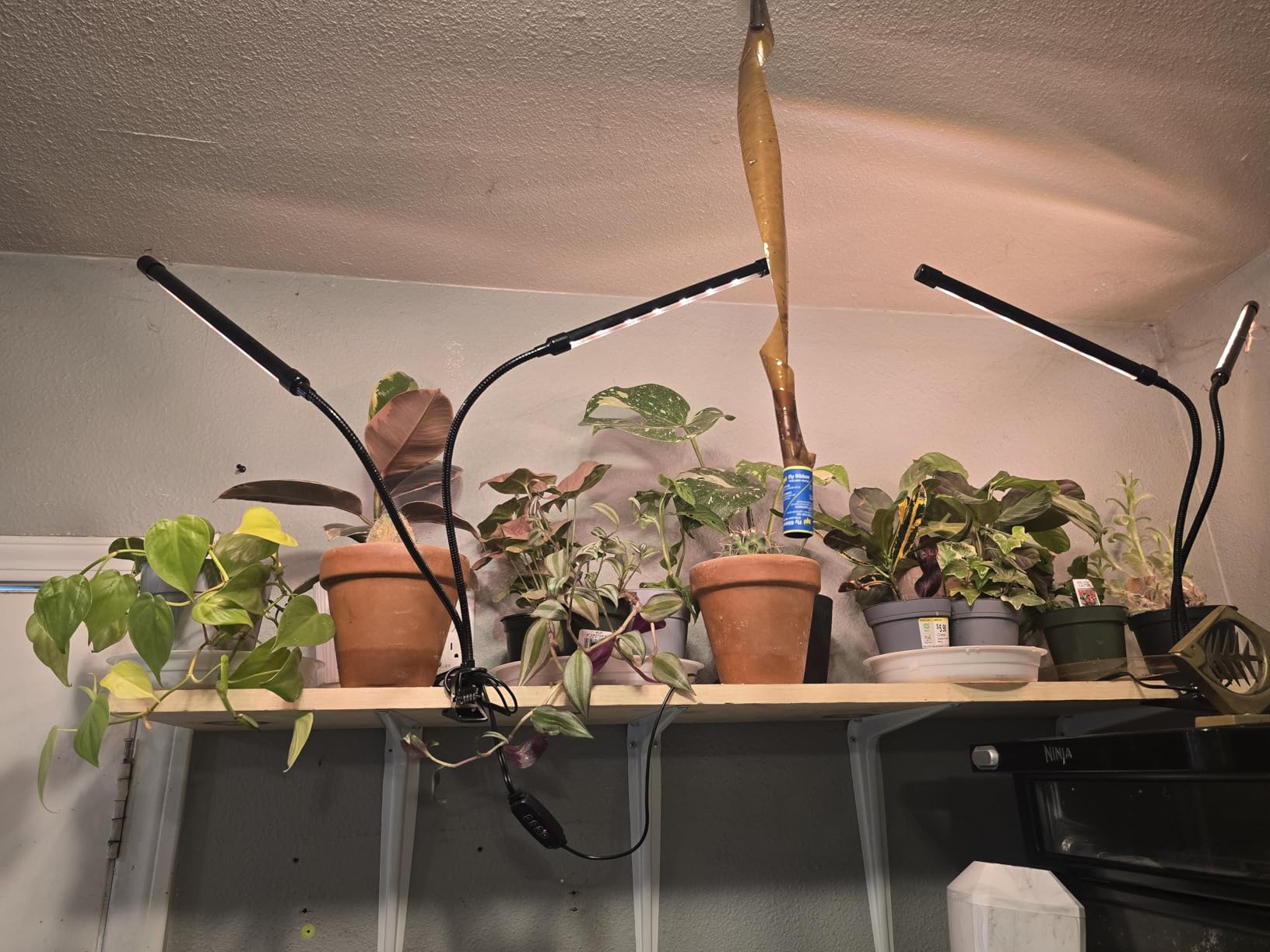
Ten dimming levels and three colour modes
Most clip lights give you three to five brightness steps. Ten levels from 10 to 100 percent is fine-grained enough that you can match a light to a seedling tray and a mature plant in the same session without turning one off entirely.
The three colour modes are white, warm plus red, and all channels on, and the marketing claims 380 to 780nm coverage close to natural sunlight. In a living room I would stay on the white mode. The red-weighted modes are useful under a shelf where the light is not directly visible, but they are not worth the look in a seating area.
Durability is the real question on this one
Here is the honest part. Reviewers report a scattering of fixtures failing after three or four months of long daily use, and the goosenecks do not always hold position once the heads are extended far from the clamp. The USB power brick is a known failure point too, though the company backs it with a warranty and responsive support.
So treat this as a value fixture with a serviceable warranty rather than a buy-for-the-decade choice. If you are running it on a 12 hour cycle every day, that duty cycle is harder on these than on a fixed-head ceramic unit.
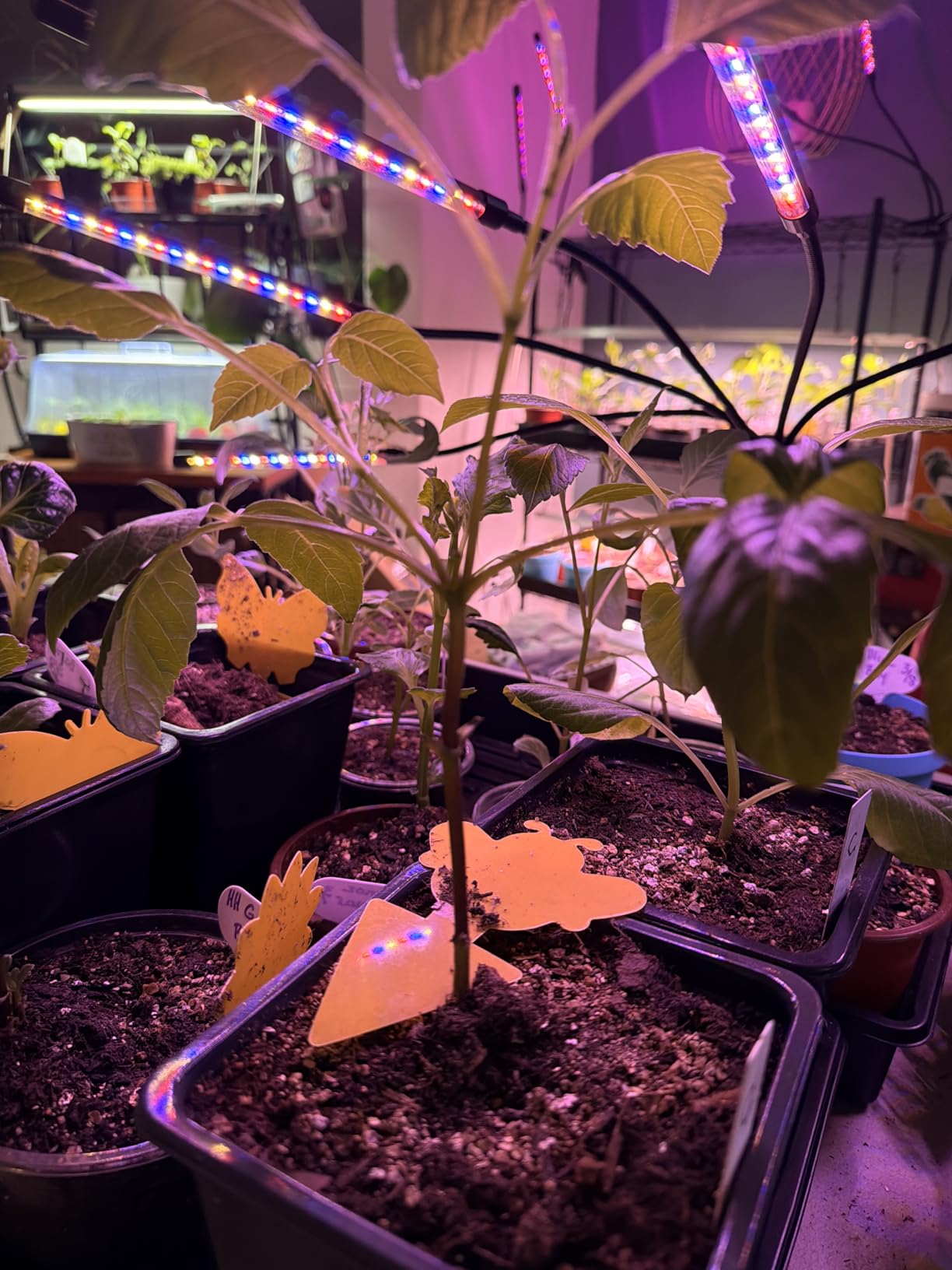
Remote and Bluetooth, and whether they matter
Controlling the light from a phone or remote sounds like a gimmick until you have a plant on a high shelf you cannot comfortably reach. Then being able to check it or dim it without a step ladder is genuinely useful, even if the Bluetooth label oversells what is happening.
At 2.2 pounds for the pair, these are heavy for clip fixtures, and that weight works directly against the goosenecks. Clamp close to the pot rim and keep the arms short rather than extended, and the position holds much better.
6. Shyineyou 4-Head 80-LED Clip Light – Best for Seedling Trays
Shyineyou Grow Lights for Indoor Plants Full Spectrum, 80 LEDs Plant Lights for Indoor Growing with 3/9/12H Timer, 3 Color Modes & 9 Brightness, 4 Heads Clip-On Plant Grow Light
Four heads, 80 LEDs
15W, 400 lumens
3 colour modes
9 brightness levels
3/9/12h timer
+ Pros
- Four heads from one clamp spreads light across a propagation tray without a second fixture
- nine brightness levels handle delicate seedlings well
- circular memory timer keeps a consistent photoperiod across days
- 6000K with CRI 90 reads as clean daylight
- best-selling rank suggests it is a proven seller
- Cons
- 15W total is low for anything beyond propagation
- clamp opening will not suit every rim thickness
- 12 hour timer maximum
- gooseneck arms sag when the heads are fully extended
A propagation tray is the ideal job for a four-head clip. Cuttings need broad, even, low-intensity light over a wide area, and four heads on one clamp give you that coverage from a single mount point rather than a light per row.
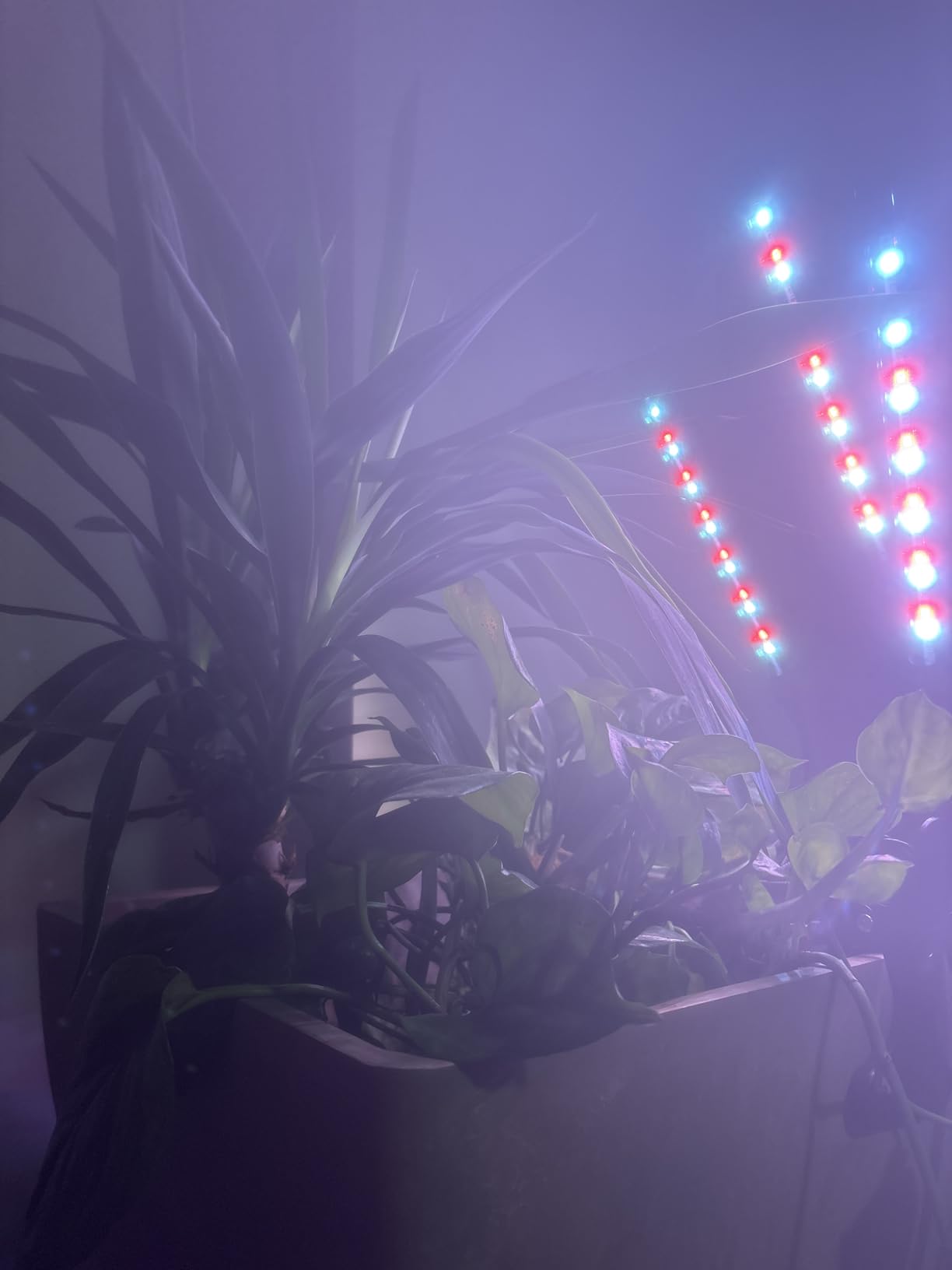
The build is 80 LEDs split 24 red, 28 blue, and 28 white, at 15W and 400 lumens total. The blue share is the highest proportion here, which makes sense for compact growth in cuttings that have not yet developed the chlorophyll to use the rest efficiently.
Colour modes mapped to growth stages
The three modes are red and blue, red and white, and a mixed full-spectrum setting. Cuttings and young seedlings do well on red and blue during early rooting, then benefit from white once leaves are pushing. Being able to switch modes without rewiring is the useful part.
For a foliage plant further along, I would use the mixed mode at 40 to 60 percent brightness and stop worrying about the rest. The spectrum debate matters far more to people with indoor vegetable setups than to someone keeping a monstera alive through January.
Where the sag shows up
The recurring complaint is arm droop, and it comes down to the same physics as the multi-head fixtures above. Four heads on a single gooseneck is a lot of mass, and once you reach the arm out over a wide tray the position creeps downward over days.
Set the clamp near the edge of the tray rather than at one end, and let the heads hang at a moderate angle instead of fully extended. The 14.37 inch footprint helps here: this is a wide fixture designed to sit across something, not reach across a room.
Brightness levels and the 400 lumen reality
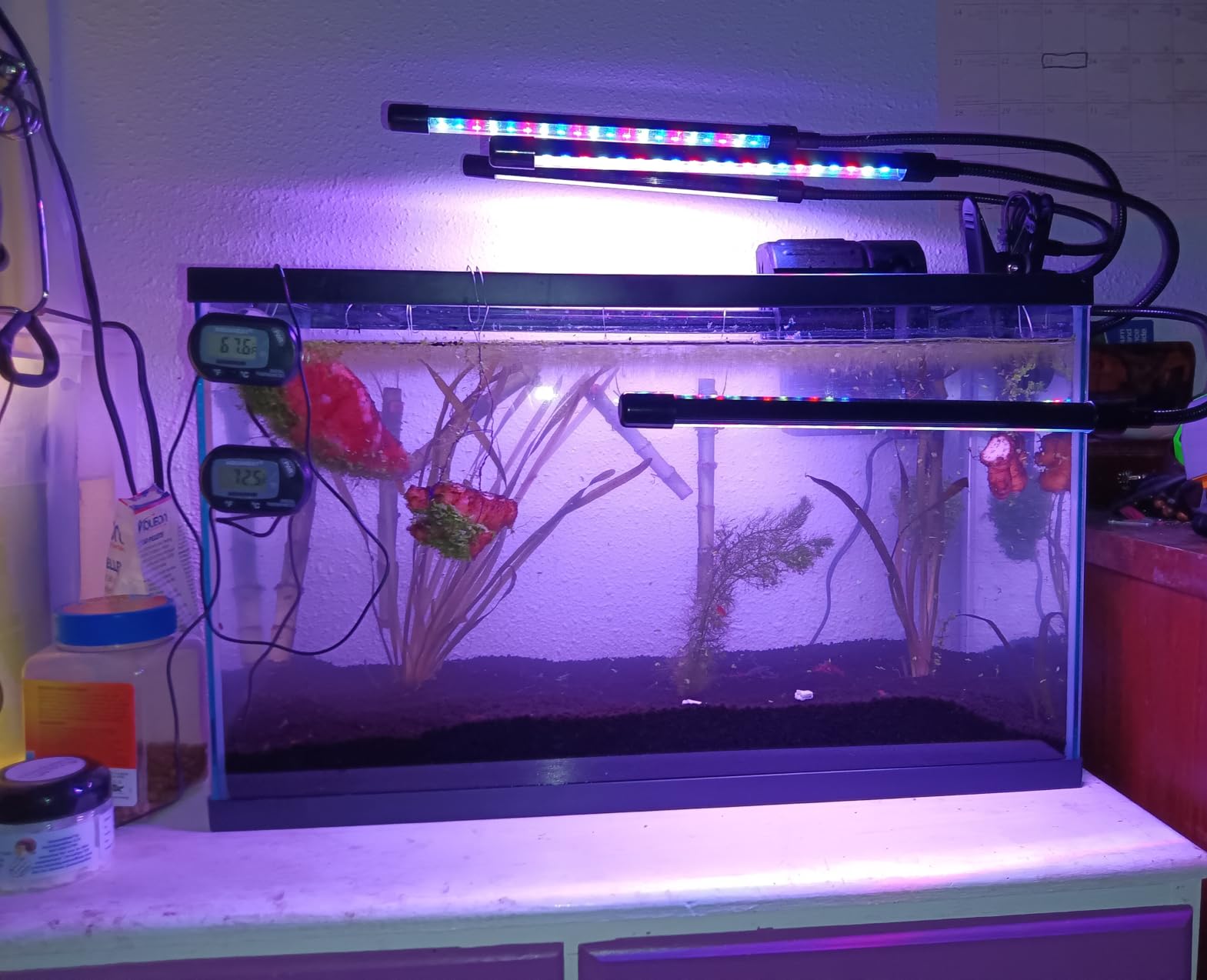
400 lumens is not a lot of light by any measure, and the honest way to think about this fixture is that it is a low-output light spread widely. That is exactly right for cuttings and it is exactly wrong for a mature flowering plant.
Nine brightness levels from 20 to 100 percent help a lot here, because at 20 percent the output is gentle enough to sit about 10 inches above a young seedling without cooking it. The 3, 9, or 12 hour cycle memory is good for rooting schedules, where consistency over weeks matters more than intensity.
The warranty is 12 months, and the product has a solid position in the category rankings for plant growing lamps, which usually means the volume of units in service is large enough that parts and support will still be around.
7. SANSI 20W Clip-On Gooseneck Light – Best for High-Output Lighting
SANSI Grow Lights for Indoor Plants, 20W Clip-On Gooseneck LED Plant Lights
20W with PPFD 402 at 1 foot
Chip-on-ceramic build
Replaceable bulbs
4000K CRI 100
+ Pros
- Published PPFD of 402 at 12 inches is by far the most intensity data any fixture in this group provides
- replaceable bulbs with a whole-life bulb warranty means the fixture outlives its light source
- chip-on-ceramic technology dissipates heat better than aluminium boards
- CRI close to 100 renders plant colour accurately
- ETL listed with a 25000 hour rated bulb lifespan
- Cons
- Bulbs run extremely hot and need careful spacing
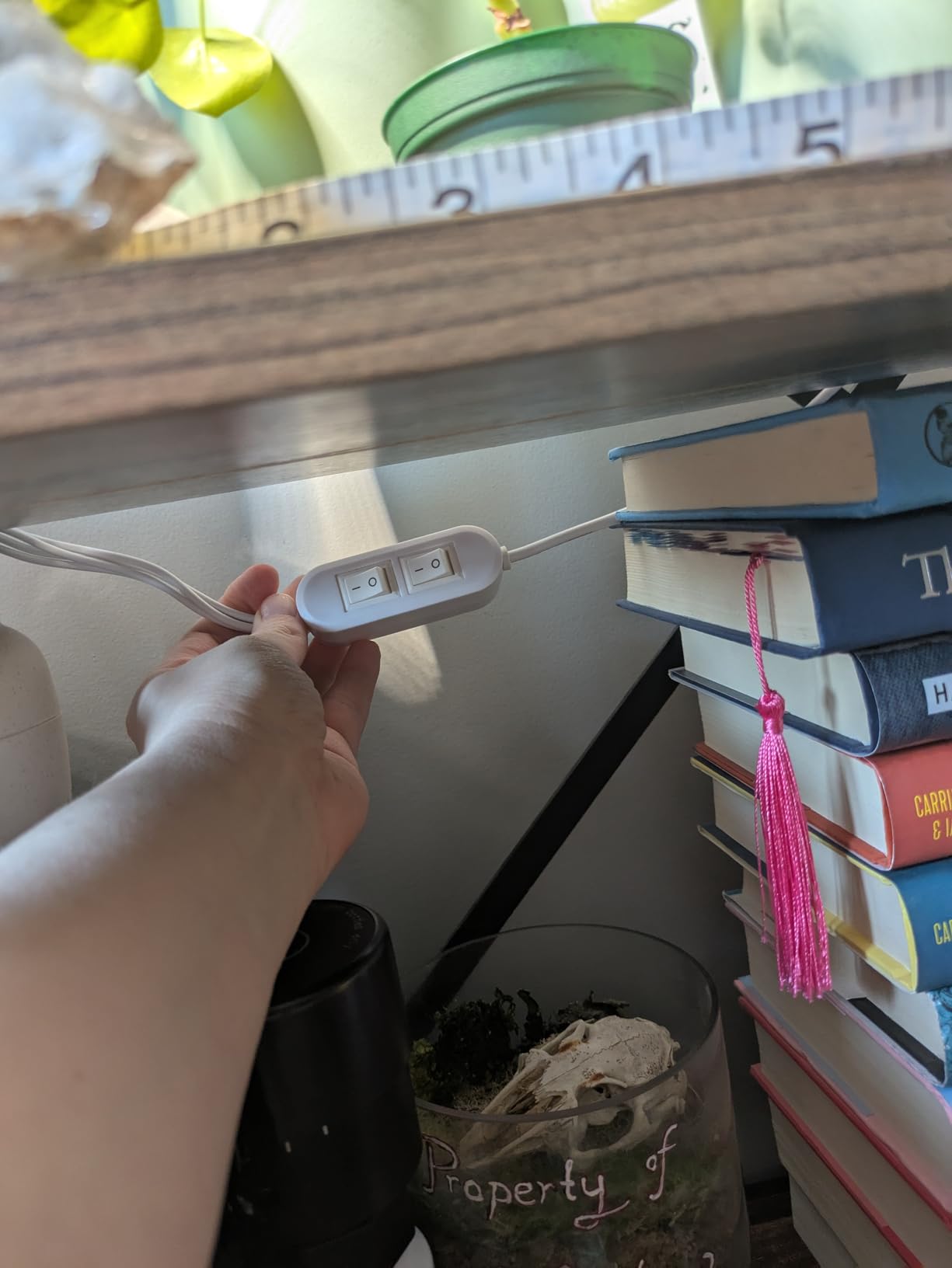
- no built-in timer at all
- gooseneck arms sag under bulb weight
- short cord
- clamp works on horizontal surfaces only
This is the only fixture in the group that publishes a real intensity figure at a real distance: 402 μmol/s/m² at 1 foot. That number is the entire reason to pay more for it, because it lets you work out whether a plant will get enough light instead of guessing from an LED count.
It is a 20W fixture with full spectrum coverage from 400 to 780nm at 4000K, and SANSI also offers it in one to four head configurations, so the same platform scales to a bigger plant if you outgrow the single head.
Reading the PPFD number correctly
PPFD measures photosynthetic photon flux density, the light plants can actually use. A reading of 402 at 12 inches is strong supplemental territory, comfortably enough to drive real growth in a foliage plant that is getting only ambient room light, and enough to support flowering efforts in the right species.
Intensity falls off with the square of distance, so doubling the standoff to 24 inches cuts the reading to roughly a quarter. If you need the light further back, you need more output, not more distance.
Replaceable bulbs are the durability story
The bulbs use a standard format and SANSI warrants them for their whole rated life, and reviewers repeatedly mention fast replacement when a unit fails. That inverts the usual economics: instead of scrapping the fixture when the light dies, you replace a bulb, which is a few dollars and a minute of work.
That single design decision outlasts every multi-head plastic fixture in this roundup, where a dead driver or a failed power brick usually ends the product.
Heat is the trade you make
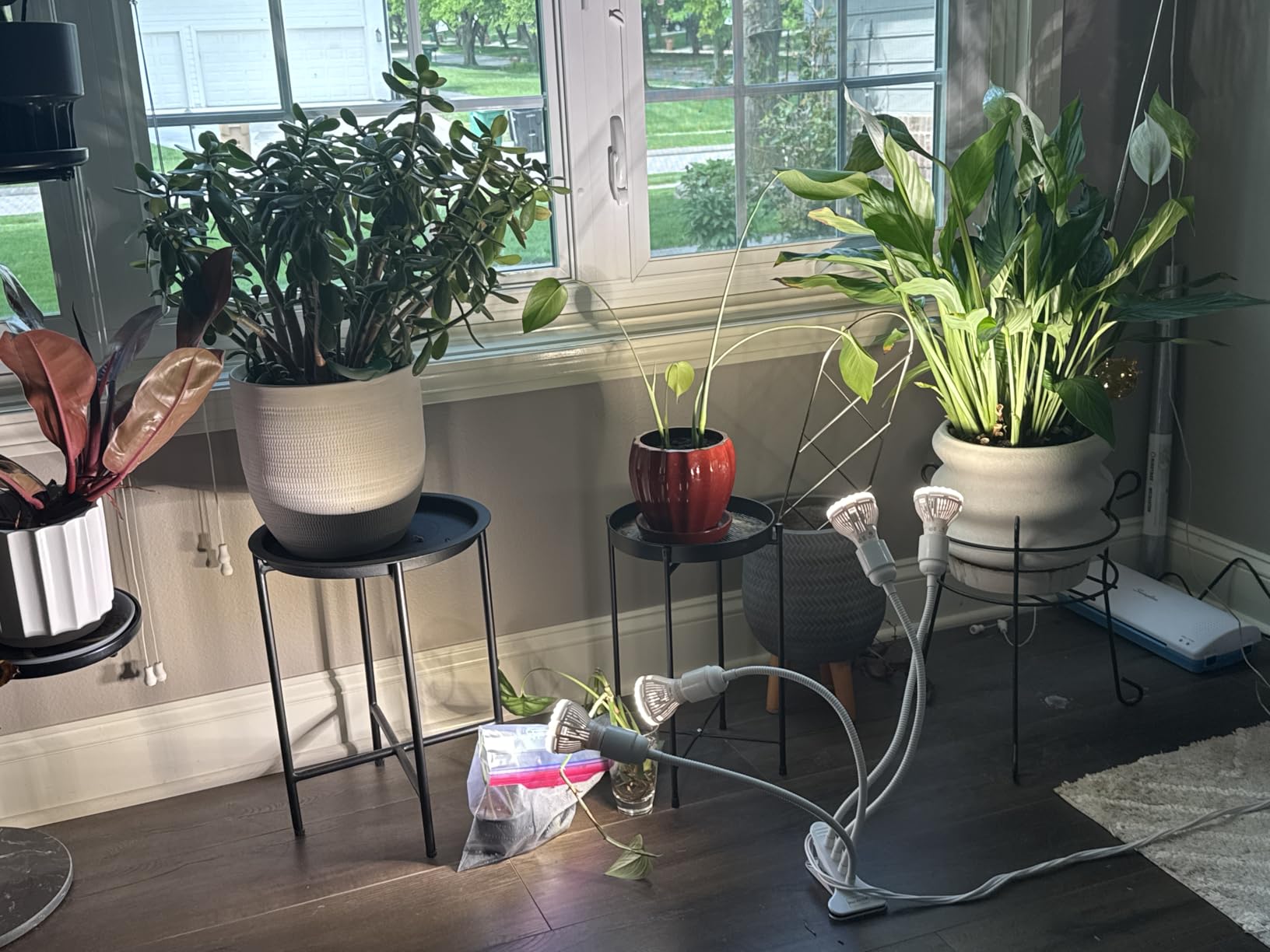
Ceramic boards dissipate heat well, but the bulb itself still runs very hot, and reviewers warn about burn risk to skin and to foliage if the light sits too close. Give this fixture clearance, and set it on a timer plug rather than leaving it on manually.
There is no built-in timer, which is the one genuine omission in a category where every competitor offers at least three settings. If you care about scheduling, put it on a mechanical or smart plug timer. Also note the gooseneck sags under the weight of the bulb when extended, so keep the arm short and let the head hang over the canopy from a clamp near the rim.
8. Barrina OG11A2 22W Clip On Grow Light – Best for Replaceable Bulbs and High CRI
Barrina OG11A2 Clip On Grow Light for Indoor Plants, 4000K 22W(2 x 11W)
2 x 11W E26 replaceable bulbs
PPFD 1497 at 10 cm
CRI 98
4000K
Stepless dimming
+ Pros
- Stated PPFD of 1497.3 at 4 inches is the highest intensity figure published by any fixture here
- CRI 98 renders colour almost perfectly so growth is easy to judge
- E26 standard bulbs mean future replacements are easy and cheap
- independent stepless dimming and independent 4/8/12 hour timers on each bulb
- runs cooler than most rivals and the manufacturer states a minimum 8 inch canopy distance
- Cons
- Newer listing from March 2026 with a smaller base of long-term reviews
- goosenecks droop under the weight of the full-size bulbs
- clamp installs horizontally only
- cord is short
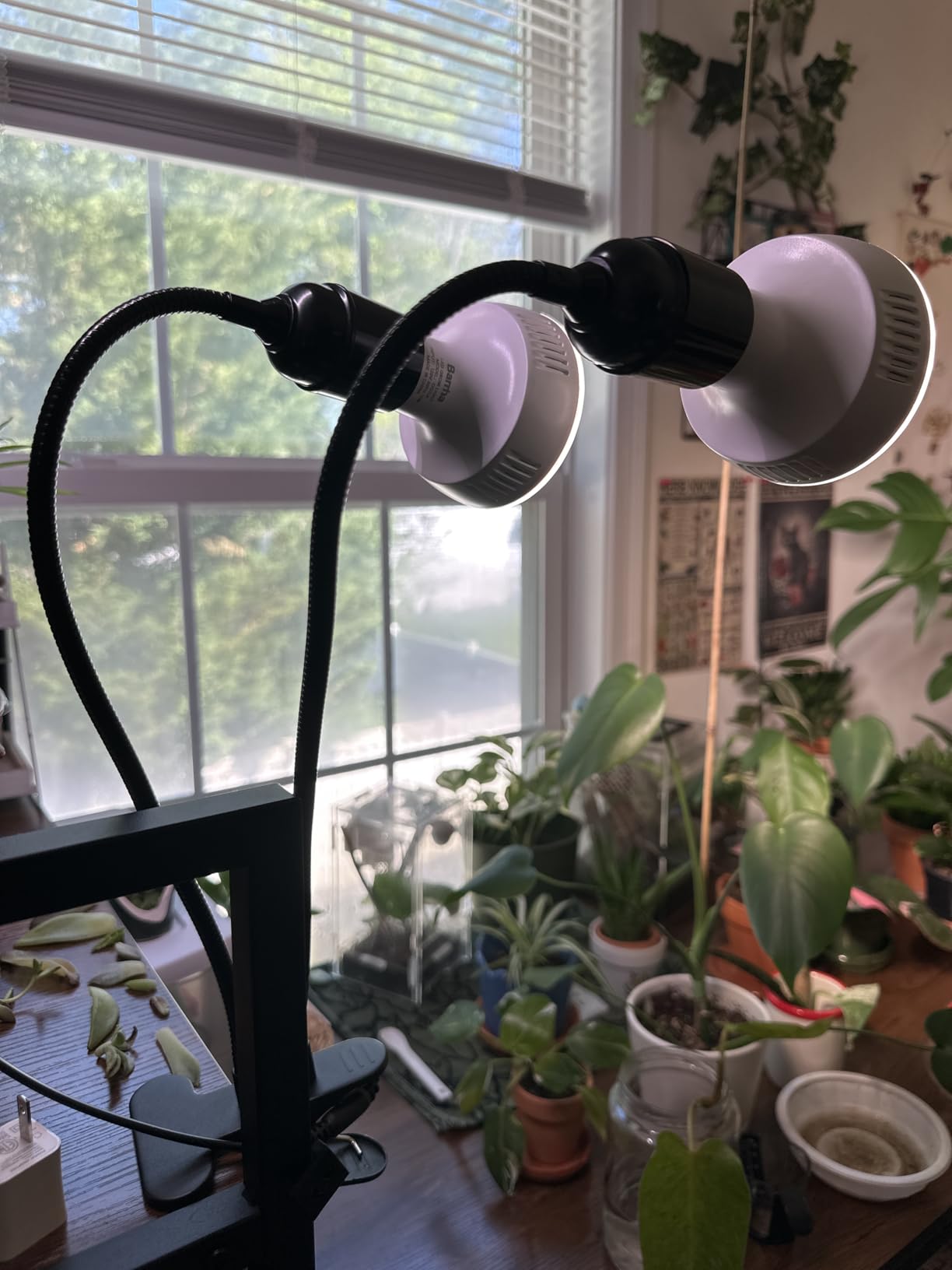
Two 11W bulbs on E26 sockets, each with its own stepless dimmer and its own 4, 8, or 12 hour timer. That is a more granular control setup than anything else in this roundup, and the bulb format is the part that will keep working years from now.
Barrina rates it at 1497.3 μmol/m²/s at 4 inches with 1460 lumens combined across 36 high-efficiency chips. That is a genuinely intense number at a genuinely short distance, which makes this a light for a plant that is genuinely close to it.
Two independent lights means asymmetric setups
Because each bulb dims and times separately, you can run one head at full brightness on a succulent shelf and the other at 20 percent for a fern in the same pot grouping. Most dual-head fixtures treat the pair as a single unit, which is a compromise you end up living with every day.
Stepless dimming is better than a five-step scale for delicate work. Matching a new seedling tray to existing mature foliage is a matter of turning a dial rather than choosing between preset jumps.
Intensity demands respect
A PPFD above 1000 at 4 inches is a lot of light, and the manufacturer is explicit about a minimum distance of 8 inches above the canopy. Below that, you are into light burn territory, where leaves bleach to white patches that do not recover.
The practical method is to start at 12 inches, watch the new growth colour over a week, then close the gap gradually. If leaves are stretching and pale, add light. If they are developing flat, scorched patches or a bleached look, back it off immediately.
The neck sag problem and the short review history
The most consistent complaint is that the gooseneck arms are short and weak for full-size E26 bulbs, and they droop when the head is pushed out from the clamp. That is the known trade-off of a replaceable-bulb design: standard bulbs are heavier than integrated LED sticks.
Plan for the droop rather than fighting it. Clamp near the pot rim, keep the arm within a few inches of vertical, and let the bulb hang directly over the canopy. The clamp also installs horizontally only, so it needs a flat surface with a lip rather than a round pot on its own.
Because this listing first became available in March 2026, the review base is far thinner than the others here, even though the 4.4 rating is solid. Worth watching for long-term reports before committing to a two-light setup.
What Clip-On Grow Lights Can and Cannot Do
There is a well-known warning over on r/vegetablegardening that goes roughly: do not buy T5 shop lights, and definitely do not buy the clip-on wand style. That advice is right for its audience and wrong for yours, and understanding the boundary is more useful than any product list.
Clip-on wands fail as grow lights when the target is a plant that needs genuinely high intensity over a long photoperiod, such as fruiting vegetables, cannabis, or a dense seedling rack lit only by the lamp. Those plants want hundreds of watts spread over a tray for fourteen hours a day, and a 5W to 20W clip head cannot deliver that, no matter what the packaging claims.
For houseplants the equation is completely different. A pothos, a ZZ plant, a snake plant, or a calathea in a dark corner is receiving perhaps a few hundred foot candles from the room, and a clip light adds several times that directly to the canopy. The plant was not light-starved in the way a vegetable seedling is; it was simply in the wrong spot.
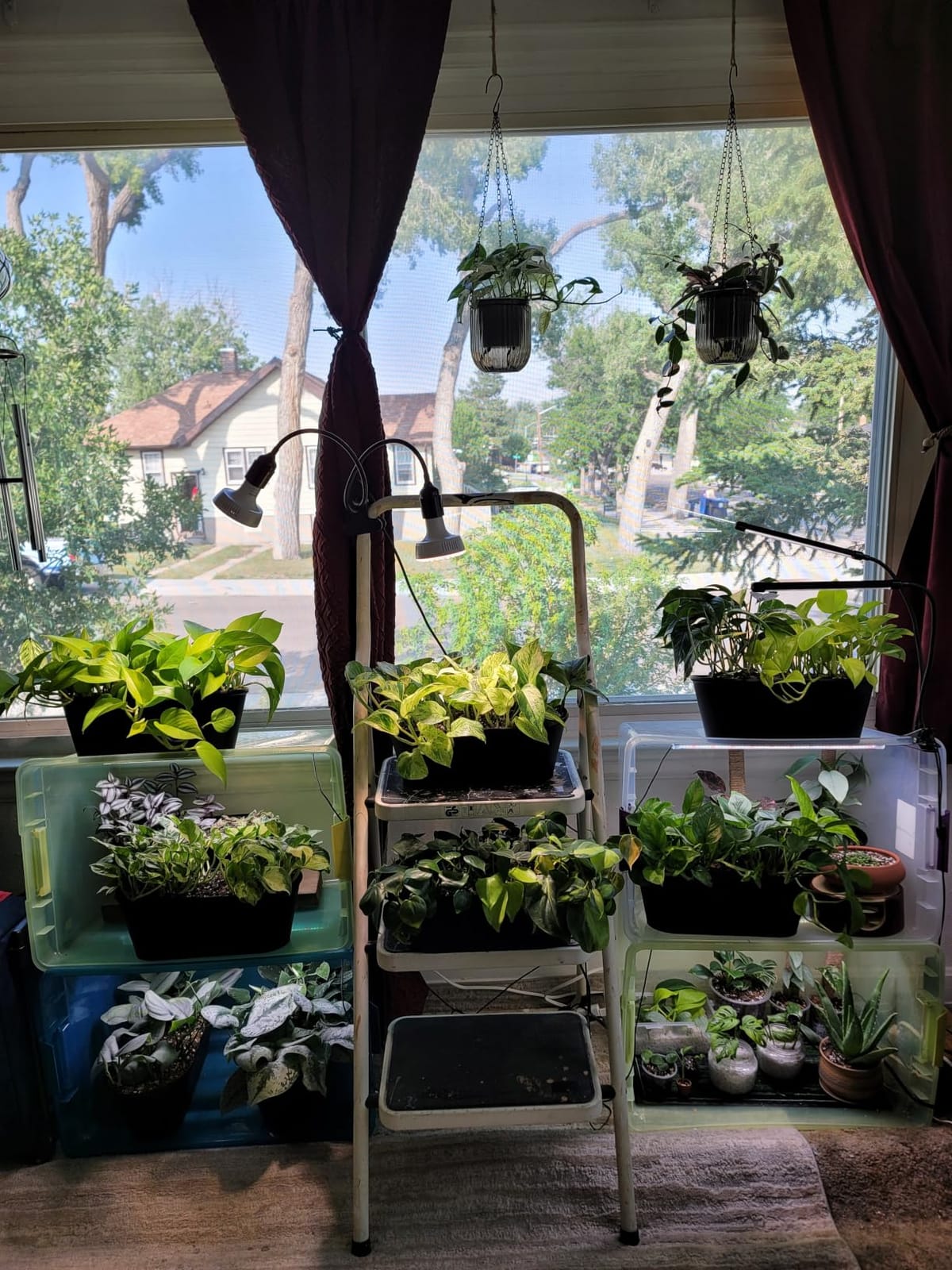
So the honest framing is this: a clip-on grow light solves a placement and intensity problem, and it is close to ideal for one plant, one pot, one spot in a room. It is the wrong tool when you need coverage, when you need a floor or shelf light, or when you need a serious photoperiod under a full canopy.
Three more realistic limits. First, one-sided growth: a single clamp aimed at the top of a tall plant will not light the lower leaves, so rotate the plant a quarter turn every week or two. Second, heat: fixtures that run hot need real clearance, and cheap drivers are the ones that fail after a season of long daily runs. Third, timers that reset after a power cut, which is a real annoyance with cycle-memory models, so check the setting after any outage.
And one myth to drop. Plants do not grow worst under a single colour like amber or deep blue simply because that colour is the one doing the growing. Red and blue are efficient for photosynthesis, which is why vegetables are grown under them, but for a living space a white full-spectrum mix at 4000K to 6000K gives you usable output and a light you can sit next to. That is the same conclusion most people in r/houseplants reach after some experimentation.
How to Choose a Clip-On Grow Light for Houseplants
Start with the clip, not the LED count
The clamp is the part that decides whether the light stays useful. Check three things: the maximum jaw opening against your pot rim or shelf lip thickness, whether the jaw has a rubber or silicone pad that grips glazed ceramic, and whether the arm is rigid or a gooseneck with a lot of slack in it.
Wide terracotta and thick ceramic pots need a strong spring and a wide jaw. Thin plastic nursery pots and smooth glazed ceramic need a non-slip pad or the clip creeps. Heavy fixtures on floppy goosenecks are the combination that produces the sag complaints repeated across nearly every multi-head review in this roundup.
Also decide where it will live. A pot-rim clamp needs a pot with a defined rim, a desk-edge clamp needs a lip to bite on, and a vertical pot clip grips the side of the pot. Fixtures that advertise horizontal-only installation will not work on a round pot sitting on a bare table.
Read output claims carefully
Wattage on a grow light package is frequently meaningless. Some listings quote an incandescent equivalent, some quote a peak number across all channels, and some quote a figure the fixture cannot physically draw. The useful numbers are actual power draw in watts, lumens or PPFD, and a stated distance for the measurement.
PPFD is the closest thing the category has to an honest measure of usable light, expressed in μmol/m²/s. Foot candles work for general room light and are more intuitive; roughly 1000 foot candles is a reasonable bright-window equivalent for many foliage plants, though a high-light species wants more and a low-light species is fine with far less. Anything that publishes no distance alongside its number is telling you nothing usable.
Spectrum and colour temperature for a living space
For a room you sit in, 4000K to 6000K white is the range to shop. 4000K reads as a neutral daylight that blends with most interiors. 6000K is brighter and crisper and closer to midday, which suits a propagation shelf or a seedling bench.
CRI matters more than most buyers expect. Above 90 means plant colour looks accurate, so you can spot chlorosis and pests by looking rather than guessing. Below 80 and foliage reads muddy or oddly tinted, which makes the lamp harder to live with and harder to judge.
Distance, beam angle, and coverage
Start at 10 to 12 inches above the canopy for most fixtures and adjust from there. That is far enough to avoid heat damage and close enough for a meaningful intensity reading. Move closer for seedlings and cuttings, further back only if you have verified the output at that distance.
Beam angle decides shape. A narrow 60 degree lens concentrates light onto one plant, which is exactly what a clip light is for. A wide 120 degree spread covers more area at lower intensity per leaf, which is a fair trade if you have two small plants under one light and a bad one if you are trying to drive a single specimen.
Timers, photoperiod, and the dark period
Most clip lights offer 3, 6, 9, 12, or 16 hour cycles, and the best of them remember the setting. Longer is not automatically better. A foliage plant in a dim room does well on 12 to 14 hours, a seedling on 14 to 16, and a plant being pushed toward flowering on 14 to 16 with strong intensity behind it.
Whatever the number, keep a genuine dark period. Plants use darkness for processes that light interrupts, and a plant on 20 hours without a real rest often stretches and stays leggy. If you need a schedule longer than the built-in timer allows, use a plug-in mechanical timer or a smart plug rather than leaving it on manually, and re-check the setting after a power cut.
Lighting a tall plant with a single clip
Clamp low on the pot rather than at the top shelf, and angle the head downward and slightly back toward the plant’s middle third. That is the opposite of the instinct, which is to point straight at the top leaves, but the top leaves already get the most ambient room light and the middle section is where light is genuinely missing.
Rotate the plant a quarter turn every week or so so growth stays even, and if the canopy is more than about 18 inches above the clamp, add a second light rather than stretching one. A fixture at 24 inches is delivering a quarter of the intensity it delivers at 12.
Frequently Asked Questions
What is the best clip on grow light for houseplants?
For a single potted plant, the SANSI 5W pot clip is the best all-round choice: a ceramic LED at 4000K, a 3/6/12 hour repeating timer, four dimming levels, and a rigid 360 degree gooseneck that stays aimed at the plant. If you need more than one plant, the wolezek 2-pack gives four heads across two fixtures on long cords, and the FECiDA 3-pack gives you one light per room.
Do grow lights actually work for houseplants?
Yes, as supplemental lighting. A clip-on fixture typically delivers several times more light to a canopy than an average dim room corner, and plants respond with visible new growth within a few weeks. The result is reliable when a plant is in a low-light spot, not when it is already in a bright window. Clip-ons are not designed for the light levels fruiting vegetables need.
What wattage grow light do houseplants need?
Most foliage houseplants do well with 5W to 20W of supplemental light at 10 to 12 inches. Low-light species such as pothos, ZZ plants, and snake plants are happy at the low end, while succulents, hoyas, and fiddle leaf figs want the upper end or more. Judge by output claims rather than wattage, and look for a published PPFD or lumen figure with a stated distance.
How many hours should grow lights be on for indoor plants?
Twelve to fourteen hours a day is the right range for most foliage plants in a dim room. Seedlings and cuttings do well on 14 to 16 hours, and plants being pushed toward flowering usually want 14 to 16 hours of strong light. Always keep a real dark period, and set a timer rather than switching manually so the schedule stays consistent.
What color light do plants grow worst in?
Plants grow worst in deep amber, very dim warm light, and in light that lacks blue entirely, which produces stretched, weak growth. They also grow poorly under a single colour that is too intense too close, which scorches leaves. A full-spectrum white mix at 4000K to 6000K with a CRI above 90 covers the usable range and keeps a living space looking normal.
Final Verdict: Which Clip-On Grow Light Should You Buy?
If you have one plant in one dim spot, buy the SANSI 5W pot clip. It stays cool, it holds its aim, and the timer means you will actually keep using it in three months.
If the plant is tall and the middle leaves are the problem, or you want one light per room, go with the FECiDA 3-pack. If you want the most control per fixture and a longer photoperiod, the wolezek 2-pack with its 16 hour setting is the better buy.
If you care about published intensity numbers and plan to keep a fixture for years, the SANSI 20W gooseneck is the pick, and the Barrina OG11A2 takes that further with the highest output figure and cheap E26 bulb replacements. For propagation shelves, the Shyineyou four-head and the GHodec dual-bar are both proven, cheap, and easy to find.
Whichever you choose, clamp it well, set it 10 to 12 inches from the canopy, and let the timer handle the rest. That is the whole method, and in 2026 it is still true.