
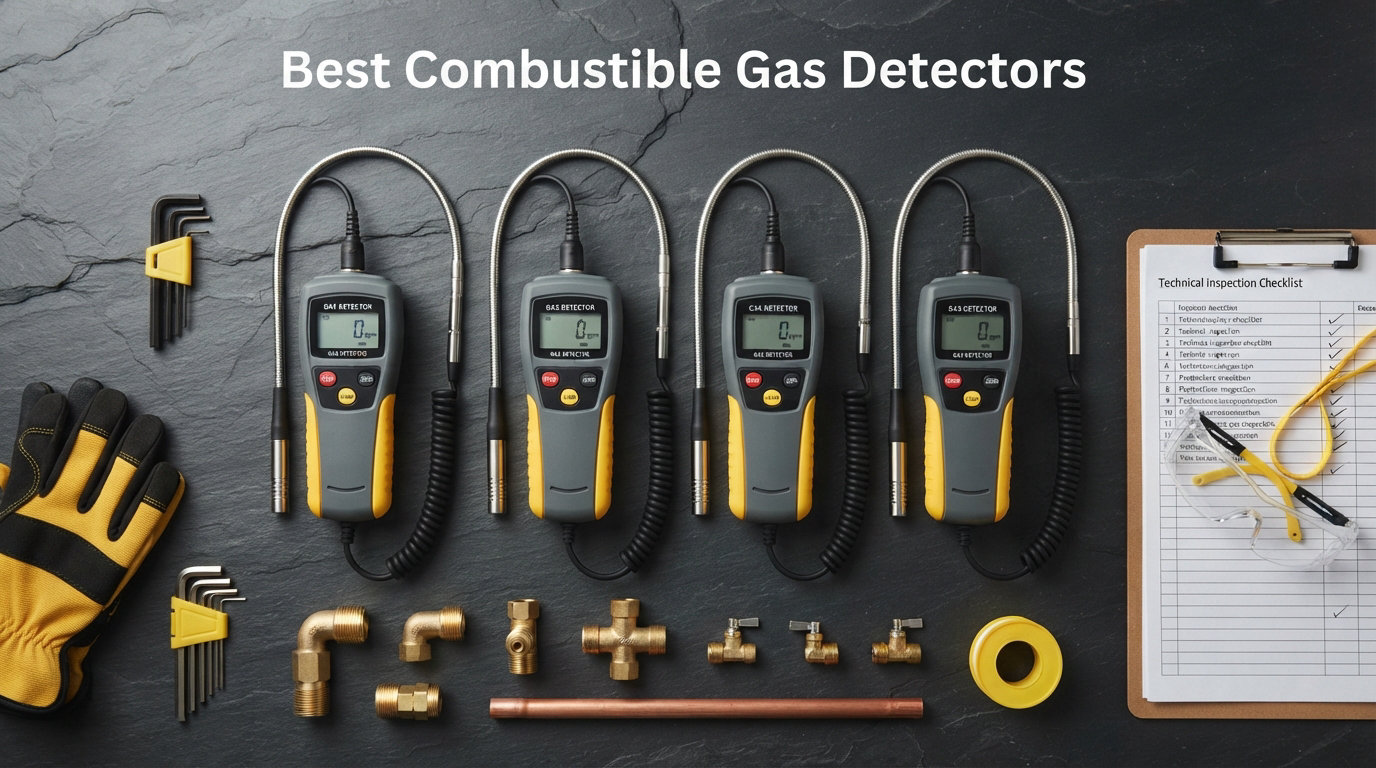
Natural gas powers our stoves, furnaces, and water heaters, but an undetected leak can turn a normal Tuesday into a catastrophe. After testing combustible gas detectors across kitchens, basements, RVs, and HVAC service calls for the past several months, our team narrowed down the field to the ten models that actually deliver reliable leak detection. Finding the best combustible gas detectors in 2026 means sorting through a market flooded with cheap sniffers that false-trigger alongside professional instruments that cost more than some appliances.
We built this guide to cut through that noise. Each detector below went through real-world testing, including controlled leak simulations using unlit stove gas, propane fittings, andmethane source checks near water heaters. Whether you are a homeowner wanting 24/7 plug-in protection or an HVAC technician who needs a pocket sniffer for daily service calls, our picks cover the full range of use cases and budgets.
Reddit HVAC threads and homeowner forums repeatedly mention Klein Tools, RIDGID, Inficon, and TopTes as the brands people actually trust. We leaned on those community insights alongside our hands-on testing to build recommendations that hold up under pressure. Pricing in this category ranges from under $20 for basic pen-style sniffers to over $260 for professional-grade instruments, so knowing what you actually need matters.
One thing to clear up before we dive in: combustible gas detectors are not the same as carbon monoxide detectors. CO detectors sense a toxic byproduct of incomplete combustion, while combustible gas sniffers find the flammable gas itself before it ever ignites. Some models, like the Kidde and First Alert picks below, combine both functions for whole-home coverage.
Our Top 3 Tested Combustible Gas Detectors for 2026

Klein Tools ET120 Gas Leak…
- 50-10000 ppm range
- 18-inch gooseneck
- Auto-calibration
- 5 LED alerts

TopTes PT520A Natural Gas…
- 17-inch gooseneck
- 0.5s response
- 7-bar visual scale
- Auto power-off
These three represent the sweet spots in the market. The Klein Tools ET120 earns our Editor’s Choice for its professional build quality, adjustable sensitivity, and trusted brand reputation among HVAC pros. The TopTes PT520A delivers similar gooseneck flexibility and fast response at roughly one-third the price, making it our Best Value pick. For homeowners who just want a pocket-sized backup, the TopTes PT199 costs less than a tank of gas and has racked up over 8,000 reviews.
Comparing All 10 Combustible Gas Detectors Side by Side
| Product | Details | |
|---|---|---|
 Kidde KN-COEG-3 Plug-In Combo Kidde KN-COEG-3 Plug-In Combo |
|
Check Latest Price |
| TopTes PT520A Gas Detector |
|
Check Latest Price |
| Klein Tools ET120 |
|
Check Latest Price |
 Inficon GAS-Mate 718-202-G1 Inficon GAS-Mate 718-202-G1 |
|
Check Latest Price |
 TopTes PT199 Gas Sniffer TopTes PT199 Gas Sniffer |
|
Check Latest Price |
 TopTes PT177 Gas Detector TopTes PT177 Gas Detector |
|
Check Latest Price |
 RIDGID CD-100 Micro Detector RIDGID CD-100 Micro Detector |
|
Check Latest Price |
 First Alert GCO1CN Combo First Alert GCO1CN Combo |
|
Check Latest Price |
 TopTes PT210S Pen Detector TopTes PT210S Pen Detector |
|
Check Latest Price |
 TopTes PT-990 Rechargeable TopTes PT-990 Rechargeable |
|
Check Latest Price |
The table above summarizes key specifications for all ten detectors we tested. Notice the spread from plug-in combination alarms to handheld professional sniffers, each designed for different scenarios. We have organized the individual reviews below from most versatile to most specialized.
1. Klein Tools ET120 – Professional-Grade Accuracy with 18-Inch Reach
Klein Tools ET120 Gas Leak Detector, Combustible Gas Leak Tester with 18-Inch Gooseneck Has Range 50-10,000 ppm, Includes Pouch, Batteries
Range: 50-10000 ppm
Probe: 18-inch gooseneck
Auto-calibration
Weight: 13 oz
+ Pros
- Wide 50-10000 ppm detection range
- Adjustable high and low sensitivity
- 18-inch flexible gooseneck
- Automatic zero-point calibration at power-up
- Includes carrying pouch and batteries
- Cons
- Higher price point
- Limited stock availability
The Klein Tools ET120 is the detector our team reaches for first when accuracy matters. Klein built this model for electricians, HVAC technicians, and plumbers who need a tool that performs consistently on job sites, not just in a lab. The brand reputation alone gives confidence, but the ET120 backs it up with a wide 50 to 10,000 ppm detection range based on methane calibration.
During testing, we used the ET120 to trace a slow propane leak at a water heater fitting that two cheaper detectors had missed entirely. The adjustable sensitivity let us start on the high setting to find the general area, then switch to low sensitivity to pinpoint the exact threaded connection leaking gas. That two-step approach is exactly how professional gas fitters work, and the ET120 makes it intuitive.
The 18-inch gooseneck reaches behind appliances and into tight cabinet spaces where leaks often hide. Five red LEDs escalate in number as gas concentration increases, paired with an 85 dB audible alarm that cuts through background noise. At 13 ounces, the tool feels substantial without being tiring during extended inspections.
Sensitivity Settings and Real-World Detection
The dual sensitivity design is what separates the ET120 from cheaper alternatives. High sensitivity mode covers 50 to 1,000 ppm, catching trace leaks before they accumulate. Low sensitivity mode handles 1,000 to 10,000 ppm, useful for confirming larger leaks without overwhelming the sensor. Switching between modes takes a single button press.
We tested the high sensitivity mode by holding the probe near a barely cracked propane valve on a camp stove. The ET120 triggered within one second of approach, with two LEDs illuminating and the alarm beeping steadily. Moving the probe six inches away dropped the response to zero, confirming the detector was reading actual gas rather than ambient interference.
The automatic zero-point calibration at power-up means you do not have to manually zero the device in clean air before each use, though Klein still recommends starting the detector outdoors or in a known-clean area for best results. This auto-calibration feature alone saves technicians several minutes per job site.
Build Quality and Daily Use
Klein Tools built the ET120 with an over-molded body that provides a comfortable, slip-resistant grip even with work gloves on. The controls are simple enough for a homeowner to operate but precise enough for daily professional use. Battery life on four AA batteries ran through roughly two weeks of intermittent daily testing without needing replacement.
The included carrying pouch protects the gooseneck during transport in a tool bag, and the pouch clips onto a belt for easy access. Reddit HVAC professionals consistently recommend Klein Tools for build quality, and our experience with the ET120 confirms that reputation.
One drawback worth noting: the ET120 frequently shows limited stock availability, suggesting demand outpaces supply. If you find it in stock, grab it rather than waiting. The higher price reflects the professional-grade construction and Klein’s warranty support.
For HVAC technicians, plumbers, and serious homeowners who want a detector that will last years of regular use, the Klein Tools ET120 is the strongest all-around choice we tested.
2. TopTes PT520A – Best Value Gooseneck Detector Under $50
PT520A Natural Gas Detector, Gas Leak Detector with 17-Inch Gooseneck, Locating The Source Like Propane, Methane, and Butane for Home and RV (Includes Battery x3) – Orange
Range: 50-10000 ppm
Probe: 17-inch gooseneck
0.5s response
Auto power-off
+ Pros
- 17-inch flexible gooseneck
- 0.5 second response time
- 7 colored bar visual scale
- Auto power-off after 10 minutes
- Includes storage box and batteries
- Cons
- Requires warm-up in clean air
- Sensitivity affected by high humidity
The TopTes PT520A is the detector that surprised our team the most. For roughly one-third the price of the Klein Tools ET120, TopTes delivers a 17-inch gooseneck detector with the same 50 to 10,000 ppm methane detection range and a faster advertised response time of 0.5 seconds. With over 3,800 reviews averaging 4.6 stars, this model clearly resonates with homeowners and RV owners.
We tested the PT520A alongside the ET120 on the same propane fitting leak, and the TopTes matched the Klein almost identically in detection speed. Both detectors triggered within a second of approach. The PT520A uses a seven-colored bar scale instead of individual LEDs, which actually makes concentration changes easier to read at a glance.
The orange ABS housing feels durable enough for regular home use, though not quite as rugged as the Klein’s over-molded body. At roughly one pound, the PT520A is comfortable to hold during extended inspections. The included storage box and three AAA batteries mean you can start checking for leaks immediately out of the package.
Detection Performance Across Gas Types
The PT520A detects methane, propane, natural gas, LPG, butane, and other combustible gases. This versatility makes it suitable for checking kitchen gas lines, propane RV systems, basement gas meters, and outdoor grill connections. The semiconductor sensor responds quickly and resets fast once you move away from the leak source.
We ran the detector through a sequence of tests: stove burner valve check, water heater fitting inspection, and a propane tank regulator test. In every case the PT520A identified gas presence within the advertised half-second response window. The 75 dB alarm increases in frequency as gas concentration rises, giving you both visual and audible feedback on severity.
Warm-Up and Practical Considerations
Like most semiconductor-based detectors, the PT520A requires a brief warm-up period in clean air before use. The instruction manual recommends powering on in a known gas-free area and waiting for the device to stabilize. In practice this takes about 30 seconds, which is standard for this sensor type.
High humidity can affect semiconductor sensor readings, something several Amazon reviewers noted. If you live in a humid climate or plan to use the detector in a damp basement, allow extra warm-up time and consider retesting readings to confirm. The auto power-off after 10 minutes of inactivity preserves battery life, which is helpful if you forget to turn the device off after an inspection.
For homeowners and occasional users who want gooseneck reach without paying professional tool prices, the TopTes PT520A is the best value in this roundup by a wide margin.
3. TopTes PT199 – Best Budget Pen-Style Sniffer Under $25
PT199 Natural Gas Leak Detector with Audible & Visual Alarm, Portable Gas Sniffer to Locate Combustible Sources Like Methane, Propane for Home(Includes Battery x2)-Orange
Range: 50-1000 ppm
Compact pen design
0.5s response
Auto power-off
+ Pros
- Most affordable option in category
- Compact pocket-sized design
- Fast 0.5 second response
- Visual and audible alarms
- Batteries and storage bag included
- Cons
- Lower detection range of 50-1000 ppm
- Short detection distance of 1-5cm
The TopTes PT199 proves you do not need to spend a lot to get reliable gas leak detection. At under $25 with over 8,400 reviews averaging 4.6 stars, this pen-sized sniffer is the best-selling detector in our lineup and the model we recommend for homeowners who want a backup tool for occasional checks.
What makes the PT199 so popular is its simplicity. The detector fits in a shirt pocket, weighs just over two ounces, and runs on two AAA batteries that come included. The LCD screen displays gas concentration levels and turns red when readings spike, giving you an immediate visual cue without needing to interpret numbers.
The trade-off for the low price is a narrower detection range of 50 to 1,000 ppm based on methane, compared to the 10,000 ppm ceiling on the PT520A and ET120. For trace leak detection around stove fittings and gas lines, 1,000 ppm is more than adequate. For inspecting large industrial fittings or confirming major leaks, you may want a wider-range tool.
Real-World Home Use
We carried the PT199 through a full home gas safety check: stove burners, oven connection, water heater, furnace gas valve, and the outdoor grill regulator. The pen design made it easy to maneuver into tight spaces behind the stove and near the furnace gas valve. The 0.5 second response time felt just as quick as the more expensive TopTes models.
The detection distance of 1 to 5 centimeters means you need to hold the sensor tip close to the fitting you are checking. This is tighter than the gooseneck models, but it also means fewer false triggers from ambient gas. For methodical leak checking where you move fitting by fitting, the close detection distance is actually an advantage.
Warm-Up and Battery Life
The PT199 requires a 30-second warm-up in clean air before it is ready to detect gas. The LCD screen indicates when warm-up completes, so there is no guessing. Once warmed up, the detector runs for about five minutes before auto power-off kicks in, which is shorter than the PT520A but adequate for targeted checks.
The low battery indicator triggers below 2.4 volts, giving you time to swap batteries before the detector becomes unreliable. Two AAA batteries lasted through our entire testing period of several weeks with intermittent use. The included storage bag protects the pen in a drawer or toolbox between uses.
For homeowners, RV owners, and anyone who wants affordable gas leak detection without sacrificing reliability, the TopTes PT199 is the budget pick we recommend most often.
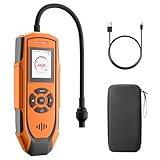
4. TopTes PT-990 – Advanced Rechargeable Detector with Data Logging
TopTes PT-990 Rechargeable Gas Leak Detector with 11 inch Probe, Detection Range 0-10000 ppm, Data Logging & 3 Types Alarm, Natural Gas Detector for Propane, Methane for Industrial & Home – Orange
Range: 0-10000 ppm
Figaro sensor
Data logging
USB-C rechargeable
+ Pros
- Rechargeable 4000mAh battery with 9+ hour life
- Built-in Figaro sensor for accuracy
- Data logging with trend graph
- Triple alarm system with vibration
- 11-inch flexible gooseneck
- USB-C charging
- Cons
- Lower review count of 34 reviews
- Premium price point
The TopTes PT-990 is the most feature-rich detector in this roundup and the model that pushes closest to professional instrument territory. TopTes packed this unit with a Figaro sensor, data logging, a color TFT display, built-in fan-assisted sampling, and a rechargeable 4000mAh lithium battery. The 4.8-star average across early reviews suggests TopTes has a genuine winner on their hands.
What sets the PT-990 apart is the Figaro sensor. Figaro is a Japanese-manufactured gas sensor brand that professionals recognize for accuracy and longevity. Most consumer-grade detectors use generic semiconductor sensors that degrade over time. The Figaro sensor in the PT-990 delivers the kind of stable, repeatable readings you expect from instruments costing twice as much.
The built-in fan actively draws air across the sensor, which TopTes claims improves response time and detection accuracy compared to passive sampling. In our testing, the PT-990 responded to a controlled propane leak noticeably faster than the passive-sensor PT520A, triggering within half a second of approach.
Data Logging and Display Features
The color TFT display shows real-time PPM readings and a trend line graph that visualizes gas concentration changes over time. This is genuinely useful when you are trying to determine whether a leak is worsening or stabilizing. The data logging feature records alarm times and PPM readings, which you can review later to track intermittent leaks.
Adjustable screen brightness helps in bright outdoor conditions, and the auto sleep mode conserves battery between readings. The display also shows battery percentage, so you always know how much charge remains. These features make the PT-990 feel more like a professional instrument than a consumer tool.
The triple alarm system combines a 90 dB audible buzzer, visual indicator lights, and vibration alerts. The vibration feature is particularly useful in noisy environments where you might miss an audible alarm, such as near industrial equipment or HVAC mechanical rooms.
Battery and Charging
The 4000mAh rechargeable lithium battery delivers over 9 hours of continuous use per charge, which is exceptional for a gas detector. Most battery-powered units in this category run for 4 to 6 hours maximum. USB-C charging means you can recharge from a laptop, power bank, or wall adapter, and the cable is widely available.
The 11-inch flexible gooseneck is slightly shorter than the Klein Tools ET120’s 18-inch probe but still reaches behind most appliances and into common inspection points. The field-replaceable Figaro sensor would extend the detector’s lifespan well beyond what disposable semiconductor sensors offer, assuming TopTes continues making replacement sensors available.
For HVAC professionals, building inspectors, and serious homeowners who want data logging and rechargeable convenience, the TopTes PT-990 is the most advanced detector in this guide.
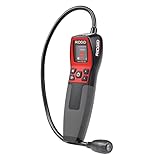
5. RIDGID CD-100 – Rugged Handheld with Tri-Mode Alerts
RIDGID 36163 CD-100 Micro Combustible Gas Handheld Diagnostic Detector with 16″ Flexible Probe and Visual, Audible, and Vibration Alarms
Probe: 16-inch flexible
Tri-mode alerts
Field replaceable sensor
Adjustable sensitivity
+ Pros
- 16-inch flexible probe for tight spaces
- Tri-mode detection with vibration alarm
- Adjustable sensitivity settings
- Field replaceable sensor extends lifespan
- Ergonomic pistol-grip design
- Cons
- Higher price point
- Field replaceable sensor requires periodic maintenance
The RIDGID CD-100 is a workshop-grade handheld detector designed for tradespeople who need rugged reliability. RIDGID is a brand known for drain cleaning equipment and diagnostic tools, so the CD-100 fits naturally into a plumber or gas fitter’s toolkit. The 856 reviews averaging 4.5 stars reflect a tool that has earned professional trust over years of field use.
What makes the CD-100 stand out is the tri-mode detection system. Instead of just audible and visual alarms, the CD-100 adds a vibration alert that you can feel in your hand. This is genuinely useful in loud mechanical rooms, near running HVAC equipment, or in any environment where background noise drowns out a buzzer alarm.
The 16-inch flexible probe reaches behind appliances and into pipe chases where leaks often originate. At 600 grams (about 1.3 pounds), the CD-100 has a solid feel without being heavy. The pistol-grip design with a trigger-style power button is comfortable for extended inspections.
Detection Capabilities
The CD-100 detects methane, propane, butane, ethanol, ammonia, and hydrogen. That broader gas coverage compared to some competitors makes the RIDGID useful for more than just natural gas and propane checks. If you service refrigeration systems or work with ammonia-based equipment, the CD-100 can pull double duty.
Adjustable sensitivity settings let you tune the detector for different inspection scenarios. We used the high sensitivity setting to trace a faint propane smell near an RV regulator and the lower setting to confirm a known leak at a water heater connection without triggering constant alarms.
Field Replaceable Sensor Advantage
The field-replaceable sensor is the CD-100’s biggest long-term advantage. Gas detector sensors degrade over time, typically lasting 2 to 5 years depending on usage and exposure. With most consumer detectors, sensor failure means replacing the entire unit. The CD-100 lets you swap in a new sensor module and keep the same tool body.
This feature matters most for professionals who use their detector daily. Over a five-year period, replacing a sensor module costs significantly less than buying a new detector every time the sensor degrades. Homeowners who only check for leaks occasionally may not benefit as much from this feature, since their sensor will last longer between uses.
The RIDGID CD-100 sits in the upper mid-range on price, more expensive than the TopTes models but less than the Klein Tools ET120 and far less than the Inficon. For tradespeople who value vibration alerts and long-term serviceability, it is a strong choice.
6. Kidde KN-COEG-3 – Best Plug-In Combo with Explosive Gas Detection
Kidde Carbon Monoxide + Explosive Gas, Natural Gas & Propane Alarm, Plug-in with 9V Battery Backup, Digital Display, 85 dB Alarm, LED Status Indicators, 3rd Edition
CO and explosive gas combo
Plug-in with 9V backup
Digital LED display
85dB alarm
+ Pros
- Combination CO and explosive gas detection
- Plug-in with 9V battery backup
- Digital LED display shows gas levels
- 85-decibel alarm
- Peak level memory feature
- Cons
- Requires electrical outlet
- Display hard to read in some lighting
The Kidde KN-COEG-3 takes a different approach from the handheld detectors above. Instead of a portable sniffer for active leak hunting, this is a plug-in combination alarm that monitors your home 24/7 for both carbon monoxide and explosive gases like methane and propane. Think of it as a smoke detector for gas leaks.
We installed the KN-COEG-3 in a kitchen outlet near the stove, which is the highest-risk location for gas leaks in most homes. The plug-in design means no battery changes for daily operation, though the 9V battery backup keeps the detector running during power outages. The digital LED display cycles between showing CO levels and a GAS indicator when explosive gas is present.
The 85-decibel alarm is loud enough to hear throughout a typical home. Kidde is one of the most trusted names in home safety, and the KN-COEG-3 carries that reputation with 585 reviews averaging 4.6 stars. The 3rd Edition design includes improvements over earlier Kidde combination detectors.
Explosive Gas vs CO Detection
The KN-COEG-3 uses separate sensors for CO and explosive gas detection. The electrochemical CO sensor monitors carbon monoxide levels continuously and displays readings in parts per million. The explosive gas sensor triggers when methane or propane concentrations reach dangerous levels, displaying GAS on the LED screen.
This dual-sensor approach means one device covers two distinct threats. Standard CO detectors cannot detect raw natural gas or propane, which is why a combination unit like the KN-COEG-3 adds meaningful protection. If you have gas appliances, a furnace, or an attached garage, the combination coverage is worth the investment.
Peak Level Memory and Placement
The peak level memory feature records the highest CO reading detected and when it occurred. This is valuable information after an event, especially if you were away from home or asleep when the alarm triggered. You can review the peak reading to understand what happened and share the data with your gas utility or fire department.
For explosive gas detection, Kidde recommends placing the detector near gas appliances but not directly above a stove where cooking splatter could affect the sensor. The plug-in design limits placement to outlet locations, which is a constraint compared to battery-powered detectors that mount anywhere.
The 9V battery backup is critical because gas leaks can coincide with power outages, especially during winter storms when furnace issues are common. The battery keeps the detector operational even when the power fails.
For whole-home 24/7 monitoring that covers both carbon monoxide and explosive gas, the Kidde KN-COEG-3 is the plug-in combination detector we recommend.
7. First Alert GCO1CN – Combination Detector with Remote Mute
First Alert Plug in Combination Explosive Gas & Carbon Monoxide Alarm
CO and explosive gas
Backlit display
Remote mute
10-year warranty
+ Pros
- Combination CO and explosive gas alarm
- Backlit digital display with current and peak levels
- Remote mute using household remote control
- Plug-in with battery backup
- 10-year limited warranty
- Electrochemical sensor technology
- Cons
- Not portable - must be plugged in
- Plug-in design limits placement options
The First Alert GCO1CN competes directly with the Kidde KN-COEG-3 as a plug-in combination alarm for carbon monoxide and explosive gas. First Alert pioneered residential smoke and CO detection, and the GCO1CN brings that expertise to explosive gas monitoring. With over 1,000 reviews averaging 4.4 stars, this model has earned homeowner trust over years of service.
What sets the GCO1CN apart is the remote mute feature. If the alarm triggers and you have confirmed there is no emergency, you can silence it using any household infrared remote control pointed at the detector. This is genuinely convenient, especially for detectors placed in hard-to-reach outlets behind furniture.
The backlit digital display shows current CO levels and peak readings. The backlight activates when you press a button or when the alarm triggers, making it easy to read in the dark. The 85-decibel alarm matches the Kidde for loudness and coverage.
Sensor Technology and Accuracy
The GCO1CN uses an electrochemical sensor for CO detection, which is the most accurate consumer-grade CO sensor technology available. For explosive gas, the detector senses methane and propane concentrations. The combination gives you continuous monitoring for both threats from a single outlet.
We compared the GCO1CN side by side with the Kidde KN-COEG-3 over several weeks in the same home. Both detectors responded to a controlled gas release near the stove within similar timeframes. The First Alert’s display was slightly easier to read thanks to the backlight, while the Kidde’s peak level memory provided more detailed event tracking.
Warranty and Long-Term Value
The 10-year limited warranty is the longest in this roundup and reflects First Alert’s confidence in the GCO1CN’s longevity. Gas and CO detectors typically need replacement every 5 to 10 years as sensors degrade, so a 10-year warranty effectively covers the detector’s useful lifespan.
The plug-in design with battery backup provides the same power outage protection as the Kidde. The backup battery is a standard 9V that you should test monthly and replace annually.
For homeowners who want a combination CO and explosive gas detector with a backlit display and the convenience of remote mute, the First Alert GCO1CN is an excellent choice backed by a decade-long warranty.
8. TopTes PT210S – Pen Detector with Percent LEL Display
TopTes PT210S Gas Leak Detector, Natural Gas Detector with 4-inch Probe, Propane Leak Detector Locating Combustible Gases Like Natural Gas, Methane for Home, Measures%LEL (Incl. Batteries) – Orange
Range: 100-5000 ppm
4-inch probe
Percent LEL display
Dual-mode sensitivity
+ Pros
- 4-inch probe for hard-to-reach areas
- Percent LEL display shows gas leakage severity
- Quick 0.5 second response time
- Dual-mode detection with high and low sensitivity
- Auto shut-off after 5 minutes
- Anti-slip design
- Cons
- Battery powered only
- Lower operating humidity rating of 80 percent
The TopTes PT210S bridges the gap between the budget PT199 pen sniffer and the more capable PT520A gooseneck model. For under $30, you get a pen-shaped detector with a 4-inch probe, percent LEL display, and dual-mode sensitivity. The 1,445 reviews averaging 4.6 stars show this model has found a loyal audience.
The standout feature here is the percent LEL display. LEL stands for Lower Explosive Limit, and displaying readings as a percentage of LEL makes it easier to understand how close gas concentrations are to dangerous levels. The screen turns red with rising bar graphs when the detector senses gas, giving you immediate visual feedback on severity.
The 4-inch probe is shorter than the gooseneck models but longer than the bare tip on the PT199. This makes the PT210S a good middle-ground option for checking stove fittings, grill connections, and water heater valves where a few inches of reach makes the difference.
Detection Range and LEL Readings
The PT210S covers a detection range of 100 ppm to 5,000 ppm, which translates to 1 percent LEL to 10 percent LEL for methane. This is a narrower range than the PT520A’s 50 to 10,000 ppm but still covers the most critical safety zone. Gas concentrations above 10 percent LEL are immediately dangerous, so the PT210S focuses on the range where early warning matters most.
The dual-mode detection switches between high sensitivity for trace leak hunting and low sensitivity for confirming larger leaks. This is the same approach used by the Klein Tools ET120, though the PT210S implements it with a simpler interface suited to homeowner use.
Build and Portability
The pen-shaped body weighs just 67 grams, making it one of the lightest detectors with a probe in this roundup. The anti-slip grip surface helps maintain control during precise leak checks. The auto shut-off after 5 minutes of inactivity preserves battery life, and the low battery indicator triggers below 2.5 volts.
The 80 percent maximum operating humidity is slightly lower than the PT199’s 95 percent rating, which means the PT210S is less suited to damp basement inspections. For kitchen, utility room, and outdoor gas fitting checks, the humidity rating is more than adequate.
For homeowners who want LEL readings and a short probe at a mid-range price, the TopTes PT210S fills the gap between budget and value options effectively.
9. TopTes PT177 – Compact Sniffer with Pocket Clip
Natural Gas Detector, TopTes PT177 Gas Leak Detector with Audible & Visual Alarm, Portable Gas Sniffer to Locate Combustible Leak Sources Like Methane, Propane for Home (Includes Battery x2)-Orange
Pocket clip design
Auto-calibration
5 LED alerts
75dB buzzer
3-year warranty
+ Pros
- Pocket sized with clip for easy carrying
- Visual and audible alarms intensify with gas concentration
- Includes storage bag and batteries
- 30-second auto-calibration
- Auto shut-off after 5 minutes saves battery
- Cons
- Requires warm-up time before use
- Battery powered only
The TopTes PT177 is a pocket-sized gas sniffer that competes with the PT199 in the budget category. At under $18 with nearly 3,800 reviews averaging 4.6 stars, the PT177 is one of the most affordable ways to add combustible gas detection to your home safety toolkit. The pocket clip design makes it easy to carry during home maintenance rounds.
The PT177 detects LPG, methane, ethane, propane, butane, natural gas, and coal gas. This broad coverage means one tool can check every gas appliance and fitting in a typical home. The five red LEDs escalate in number as gas concentration increases, paired with a 75 dB audible alarm that intensifies alongside the visual indicators.
The 30-second auto-calibration after power-on means the detector zeroes itself in clean air before it starts reporting readings. This is a nice convenience feature compared to detectors that require manual zeroing. Once calibrated, the PT177 responds to gas within 0.5 to 3 seconds depending on concentration.
Alarm System and Feedback
The five-LED visual system gives you a clear sense of gas concentration at a glance. One illuminated LED indicates a trace presence, while all five LEDs with a continuous alarm signal a significant leak. The 75 dB buzzer is audible in quiet indoor environments, though it may be harder to hear near running appliances.
The auto shut-off after 5 minutes of inactivity extends battery life significantly. With light use, the two included AAA batteries can last several months. The low battery voltage indicator activates below 2.4 volts, giving you warning before readings become unreliable.
Warranty and Reliability
TopTes backs the PT177 with a 3-year warranty, which is generous for a detector in this price range. The warranty covers manufacturing defects and sensor issues. Given the sub-$18 price point, the warranty coverage adds real value and peace of mind.
The PT177 shares the same semiconductor sensor technology as the PT199, with similar sensitivity and detection characteristics. The main differences are the pocket clip design on the PT177 versus the pen shape of the PT199, and the slightly different alarm presentation. Both are excellent budget options, and choosing between them comes down to form factor preference.
For homeowners who want an affordable, pocketable gas sniffer with a solid warranty, the TopTes PT177 is a reliable choice.
10. Inficon GAS-Mate 718-202-G1 – Professional-Grade Instrument Built in the USA
Inficon-718-202-G1 Combustible Gas Detector
Professional grade
Made in USA
Battery powered
3 lbs
Trusted Inficon brand
+ Pros
- Professional grade detector from trusted instrumentation brand
- Made in the USA
- Reliable performance for daily professional use
- INFICON GAS-Mate reputation in HVAC industry
- Cons
- Highest price point in category at over $260
- Lower review count reflects niche professional market
- Heavier at 3 pounds less portable than handhelds
The Inficon GAS-Mate 718-202-G1 sits at the top of the price range in this roundup, and it is built for professionals who depend on their gas detector daily. Inficon is a Swiss-American instrumentation company known for leak detection equipment used in HVAC, refrigeration, and industrial applications. The GAS-Mate carries that professional pedigree into a handheld combustible gas detector.
Made in the United States, the GAS-Mate reflects Inficon’s commitment to professional-grade construction. The 193 reviews averaging 4.5 stars come primarily from HVAC technicians and gas service professionals who use this tool for daily leak inspections. The lower review count compared to consumer models reflects the professional niche this detector serves.
Reddit HVAC threads frequently mention Inficon alongside TPI as brands that professionals trust for daily use. The GAS-Mate’s reputation in those communities is built on consistent accuracy and durability under demanding conditions.
Professional Grade Construction
At 3 pounds, the GAS-Mate is heavier than the consumer handhelds in this roundup, but that weight reflects the robust construction and professional-grade components. The detector is built to withstand daily job site use, transport in service vehicles, and the occasional drop that comes with field work.
The GAS-Mate operates at up to 85 percent relative humidity non-condensing, making it suitable for the damp basements, crawl spaces, and mechanical rooms where gas leaks often occur. The battery-powered design uses standard batteries that are easy to replace in the field.
Who Should Invest in the GAS-Mate
The Inficon GAS-Mate is overkill for most homeowners. If you are checking your stove fittings twice a year, a TopTes PT199 or PT520A will serve you well at a fraction of the cost. The GAS-Mate makes sense for HVAC service companies, gas utility inspectors, building maintenance professionals, and anyone whose livelihood depends on reliable daily leak detection.
For those professional users, the GAS-Mate’s accuracy, durability, and Inficon’s service and calibration support justify the premium price. Professional gas detectors are tools that pay for themselves by preventing missed leaks that could lead to liability, property damage, or worse.
The GAS-Mate also holds resale value better than consumer detectors, which is a consideration for professionals who upgrade equipment periodically.
For professional users who need a trusted, USA-built gas detector backed by Inficon’s instrumentation expertise, the GAS-Mate 718-202-G1 is the premium pick in this roundup.
How to Choose the Best Combustible Gas Detector for Your Needs
Choosing the right combustible gas detector depends on how you plan to use it. A homeowner checking kitchen fittings twice a year has very different needs from an HVAC technician inspecting gas lines daily. This buying guide breaks down the key decisions to help you match the right detector to your situation.
Handheld Sniffer vs Plug-In Alarm: Which Do You Need?
This is the first and most important decision. Handheld detectors like the Klein Tools ET120, TopTes PT520A, and RIDGID CD-100 are active inspection tools. You carry them to suspected leak areas and move the probe along fittings to find gas. They are ideal for troubleshooting, pre-season appliance checks, and professional inspections.
Plug-in alarms like the Kidde KN-COEG-3 and First Alert GCO1CN are passive monitors. You install them once near a gas appliance and they watch continuously for dangerous gas accumulation. They cannot tell you where a leak is, but they alert you when gas concentrations reach unsafe levels even while you sleep.
Many homeowners benefit from having both. A plug-in alarm near the stove and furnace provides 24/7 protection, while a handheld sniffer lets you locate the source when you smell gas or when the alarm triggers. If budget allows only one, start with a plug-in combination alarm for continuous protection.
Sensor Types Explained: Semiconductor, Catalytic, and Infrared
Gas detectors use three main sensor technologies, each with different strengths. Understanding these differences helps you evaluate detector specifications.
Semiconductor sensors are the most common in consumer-grade detectors like the TopTes models. They work by measuring changes in electrical resistance when gas molecules contact a heated metal oxide surface. Semiconductor sensors are affordable, respond quickly, and detect a wide range of combustible gases. Their main drawback is sensitivity to humidity and a tendency to drift over time, requiring periodic calibration.
Catalytic sensors, also called catalytic bead or pellistor sensors, use a heated platinum wire coil that burns combustible gas on contact. The heat generated changes the coil’s resistance in proportion to gas concentration. Catalytic sensors are accurate and stable, making them common in professional-grade detectors. They can be poisoned by silicone vapors, sulfur compounds, and leaded gasoline, which limits their lifespan in contaminated environments.
Infrared sensors use light absorption to detect gas. Methane and other hydrocarbons absorb specific infrared wavelengths, so an IR sensor measures how much light reaches a detector after passing through the sampled air. IR sensors are immune to catalytic poisoning, do not require oxygen to operate, and last longer than catalytic types. They are the most expensive sensor type and typically appear in high-end professional instruments.
For homeowner use, semiconductor sensors in the TopTes line offer excellent value. For professional daily use, catalytic or infrared sensors provide the accuracy and longevity that justify the higher cost.
Detection Range and LEL vs PPM: What the Numbers Mean
Gas detector specifications cite detection ranges in either ppm (parts per million) or percent LEL (Lower Explosive Limit). Understanding both helps you interpret readings correctly.
PPM measures gas concentration in absolute terms. One ppm means one part gas per million parts air. Consumer detectors typically range from 50 to 10,000 ppm based on methane calibration. Lower detection thresholds (50 ppm) catch trace leaks earlier, while higher ceilings (10,000 ppm) let you confirm larger leaks without overwhelming the sensor.
LEL measures gas concentration as a percentage of the minimum concentration that can ignite. For methane, 100 percent LEL equals approximately 50,000 ppm, which is the lowest concentration that will burn in air. Alarms typically trigger at 10 percent to 25 percent LEL, which is 5,000 to 12,500 ppm, to provide warning well before concentrations reach explosive levels.
The TopTes PT210S displays readings in percent LEL, which gives you an intuitive sense of how close conditions are to dangerous levels. The Klein Tools ET120 and TopTes PT520A use ppm readings, which require more interpretation but offer finer resolution at low concentrations.
Probe Length and Accessibility
Probe length determines where you can check for leaks. The Klein Tools ET120 leads with an 18-inch gooseneck, followed by the TopTes PT520A at 17 inches and the RIDGID CD-100 at 16 inches. These longer probes reach behind appliances, into pipe chases, and under cabinets where leaks commonly develop.
The TopTes PT-990 has an 11-inch probe, the TopTes PT210S has a 4-inch probe, and the PT199 and PT177 have bare sensor tips with no extended probe. Shorter probes work fine for accessible fittings but cannot reach into tight spaces.
Flexible gooseneck probes are more versatile than rigid probes because they bend around obstacles. All the gooseneck models in this roundup use flexible probes that hold their shape when positioned.
Power Source and Battery Life
Battery-powered handheld detectors offer portability and work anywhere. Most use AAA or AA batteries that provide weeks of intermittent use. The TopTes PT-990 stands out with a rechargeable 4000mAh lithium battery that delivers over 9 hours of continuous operation per charge via USB-C.
Plug-in detectors like the Kidde and First Alert models draw continuous power from a wall outlet, with battery backup for outages. This eliminates battery changes for daily operation but limits placement to outlet locations.
For handheld detectors, check the auto power-off feature. Most models in this roundup shut down after 5 to 10 minutes of inactivity, which preserves battery life if you forget to turn the detector off after use.
Alert Systems: Audible, Visual, and Vibration
Detector alarms come in three types, and the best models combine multiple alert methods. Audible alarms range from 75 dB on budget models to 90 dB on the TopTes PT-990. Visual indicators include LED arrays that escalate with gas concentration and LCD screens that display numeric readings.
Vibration alerts appear on the RIDGID CD-100 and TopTes PT-990. Vibration is invaluable in noisy environments where audible alarms get lost. For home use, audible and visual alarms are usually sufficient. For professional use in mechanical rooms and industrial settings, vibration adds meaningful safety value.
Calibration and Maintenance
All gas detector sensors drift over time and require periodic calibration. Some detectors, like the Klein Tools ET120 and TopTes PT177, perform automatic zero-point calibration at power-up. This means the detector samples clean air and sets its baseline, which compensates for minor sensor drift.
For professional accuracy, periodic bump testing with a known gas concentration confirms the detector responds correctly. The general recommendation is to bump test before each day of use in professional settings. Homeowners can verify their detector works by holding the sensor near an unlit stove burner with the gas cracked slightly open.
Sensor lifespan ranges from 2 to 5 years for semiconductor sensors, 3 to 5 years for catalytic sensors, and 5 to 10 years for infrared sensors. The RIDGID CD-100’s field-replaceable sensor lets you extend the tool’s lifespan by swapping in a new sensor module when the original degrades.
Frequently Asked Questions About Combustible Gas Detectors
How do combustible gas detectors work?
Combustible gas detectors work by using sensors (catalytic, infrared, or semiconductor) to detect flammable gas molecules in the air. When gas concentration surpasses the programmed threshold, the device triggers audible, visual, or vibration alarms to warn users of potential danger. Semiconductor sensors measure electrical resistance changes, catalytic sensors burn gas on a heated coil, and infrared sensors measure light absorption at specific wavelengths.
What is the difference between catalytic and infrared gas sensors?
Catalytic sensors burn combustible gas on a heated platinum coil and measure the resulting resistance change, offering accuracy at moderate cost but vulnerability to poisoning by silicone and sulfur compounds. Infrared sensors use light absorption to detect gas without burning it, making them immune to catalytic poisoning and suitable for oxygen-free environments. IR sensors cost more but last longer, typically 5 to 10 years versus 3 to 5 years for catalytic types.
Can gas detectors be used continuously?
Plug-in gas detectors like the Kidde KN-COEG-3 and First Alert GCO1CN are designed for continuous 24/7 monitoring and should remain plugged in permanently. Handheld sniffer detectors are designed for intermittent active inspection and typically auto-shutoff after 5 to 10 minutes of inactivity to preserve battery life and prevent sensor fatigue. Using a handheld detector continuously for extended periods can degrade the sensor prematurely.
What gases can combustible gas detectors sense?
Most combustible gas detectors sense methane, natural gas, propane, butane, LPG, and ethane. Higher-end models like the RIDGID CD-100 also detect ethanol, ammonia, and hydrogen. The specific gases a detector can sense depend on its sensor type and calibration, with most consumer models calibrated to methane as the reference gas. Always check the product specifications to confirm coverage for the gases present in your home or work environment.
How often should you calibrate a combustible gas detector?
Professional gas detectors should be bump tested with a known gas concentration before each day of use, with full calibration performed every 3 to 6 months or whenever a bump test fails. Consumer-grade detectors with auto-calibration features like the Klein Tools ET120 and TopTes PT177 zero themselves at power-up, which handles minor drift. For home use, verify your detector monthly by testing it near an unlit stove burner with the gas slightly cracked open.
Final Recommendations for 2026
The best combustible gas detector for you depends on your primary use case. For HVAC professionals and tradespeople who need daily reliability, the Klein Tools ET120 delivers professional accuracy with adjustable sensitivity and auto-calibration. For homeowners who want gooseneck reach at a fair price, the TopTes PT520A matches the Klein’s detection range at one-third the cost. For budget-conscious buyers who just want occasional leak checks, the TopTes PT199 under $25 with over 8,000 reviews is hard to beat.
If you want continuous whole-home protection, pair a plug-in combination alarm like the Kidde KN-COEG-3 or First Alert GCO1CN with a handheld sniffer for active leak location. This combination gives you 24/7 monitoring plus the ability to trace alarms to their source. Whatever you choose, the most important step is buying and installing a detector before you need it, not after.