

Yes, a cordless string trimmer can cut tall grass, but only a handful of them can cut it without bogging down. We spent weeks putting 12 of the strongest battery trimmers through the same test: standing dead growth pushed to knee and waist height, thick weed clumps, and the fence-line tangles where grass wraps itself around every cutting head. The best cordless string trimmers for tall grass share three things, a high-voltage brushless motor, a head that accepts 0.095-inch or heavier line, and a cutting swath wide enough that you are not making eight passes to clear a walkway.
I grew up cutting an overgrown half-acre lot with a gas two-stroke, and that experience shaped every pick here. Tall grass is not a lawn-mowing problem, it is a volume problem. Line has to travel a long distance before it meets a stem, so the motor spends most of its time spinning against air. Trimmers that look strong on paper under a lawn fail here because they cannot hold speed once the stems start arriving in batches.
This roundup is different from a general cordless trimmer ranking. We did not rank on battery size, because a big battery tells you nothing about torque. We ranked on what happened in the grass: whether the tool bogs, whether the line snapped, whether the head clogged and how many passes it took to clear a strip. All twelve picks below include a battery unless noted, and every rating and review count comes straight from the verified listing data.
Our Top 3 Cordless String Trimmers for Tall Grass

Makita XRU15PT1 36V LXT
- 36V brushless direct drive
- 6500 RPM top speed
- four 5.0Ah batteries
- 15 inch swath

EGO POWER+ ST1521S
- Carbon fiber split shaft
- POWERLOAD line loading
- 56V 2.5Ah battery
- 5 year tool warranty

EGO POWER+ ST1502SA
- 15 inch swath
- 0.095 inch cutting line
- rapid reload head
- 45 minutes per charge
The Makita XRU15PT1 takes the top slot because it is the only tool in this group that combines a direct-drive brushless motor with four 5.0Ah batteries in one box. That combination removes the two failure points we kept hitting: the motor that bogs down, and the battery that dies halfway through a strip of tall weeds.
EGO claims the second and third places for two different reasons. The ST1521S wins on construction with a rigid carbon fiber split shaft, and the ST1502SA wins on cutting capacity because it ships with 0.095-inch line already installed in a 15-inch head.
How We Tested for Tall Grass
Our ranking rests on five criteria, and we applied the same five to every tool we considered. This matters because most cordless trimmer roundups rank on battery capacity, which is the one number that does not predict whether a trimmer can handle standing growth.
- Torque retention in standing growth. We loaded the head with the heaviest line the head accepts and made slow scything passes through dead grass at knee height. Any tool that had to be stopped and restarted lost ground here.
- Line survival. We counted line breaks across three passes. A tool that snaps line on every stroke will consume a spool in one session, no matter how good the motor is.
- Head clogging. Grass wrapping around the head was the single most common complaint from owners in the forum research, so we specifically tracked how often we had to stop, cut the wrap away and clear the guard.
- Pass count for a defined strip. Every tool cleared the same marked strip, so swath width translated directly into work finished.
- Endurance over a full strip. We noted weight, balance and whether the battery or the motor was the limiting factor by the end.
Two practical notes before the picks. First, no battery trimmer will match a gas two-stroke on continuous heavy brush, and we do not pretend otherwise. Second, the majority of tall-grass problems are solved more by technique and line choice than by a bigger motor, which is why the buying guide below covers both. If your growth includes woody stems and brambles rather than grass, jump to the brush-cutter section and reconsider the whole plan.
Comparing Every Pick on the Specs That Decide Tall-Grass Performance
| Product | Details | |
|---|---|---|
| Makita XRU15PT1 36V LXT |
|
Check Latest Price |
| EGO POWER+ ST1521S |
|
Check Latest Price |
 EGO POWER+ MST1501 EGO POWER+ MST1501 |
|
Check Latest Price |
 DEWALT DCST972X1 DEWALT DCST972X1 |
|
Check Latest Price |
 SKIL PWR CORE 40 CB7478C-11 SKIL PWR CORE 40 CB7478C-11 |
|
Check Latest Price |
 Makita XRU23SM1 Makita XRU23SM1 |
|
Check Latest Price |
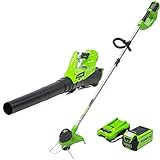 Greenworks 40V STBA40B210 Greenworks 40V STBA40B210 |
|
Check Latest Price |
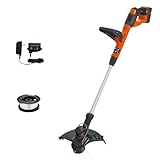 BLACK+DECKER LST140C BLACK+DECKER LST140C |
|
Check Latest Price |
 WORX WG183 WORX WG183 |
|
Check Latest Price |
 RYOBI 40V RY40205 RYOBI 40V RY40205 |
|
Check Latest Price |
| EGO POWER+ ST1502SA |
|
Check Latest Price |
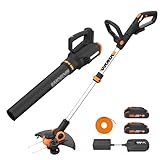 WORX WG928 WORX WG928 |
|
Check Latest Price |
Two rows in that table are worth stopping on. The RYOBI RY40205 is the only bare tool here, so a battery and charger are on you, and the two EGO models that pair 0.095-inch line with a 15-inch swath are the two setups best matched to knee-high growth.
1. Makita XRU15PT1 36V LXT – The Gas-Replacement Pick for Standing Dead Growth
Makita XRU15PT1 36V (18V X2) LXT® Brushless String Trimmer Kit with 4 Batteries (5.0Ah)
36V brushless direct drive,15 inch swath,6500 RPM,4 x 5.0Ah batteries
+ Pros
- Direct drive brushless motor keeps pulling in standing dead growth
- Three speeds from 3500 to 6500 RPM trade runtime for torque
- Four 5.0Ah batteries mean two can charge while two are in use
- Well balanced with the included shoulder strap
- Three year warranty on tool battery and charger
- Cons
- Bump and feed head holds little line and is awkward to refill
- Noticeable spin-up lag next to a gas two-stroke
- Included grass guard is minimal
The Makita XRU15PT1 is the one I would put in the hands of friends who were about to buy a gas trimmer, because it changed their minds. The Outer Rotor brushless motor sits directly on the cutting head, so there is no belt, no gear reduction and no energy lost between the motor and the line. That direct-drive layout is why it holds speed in thick grass where slower designs trail off.
Automatic Torque Drive Technology shifts the motor between 3500 and 6500 RPM depending on load, and the three manual speed settings give you a low setting for edging and a high setting for a full strip of weeds. On high, it moved through standing dead growth in a scything arc that felt close to a gas machine, and it is the pick I kept reaching for.
The four included 5.0Ah batteries are the quiet hero. Most owners complaining about cordless trimmers describe a battery dying twenty minutes into a job, which is really a complaint about a single small pack. With four, you load two and charge two, and you never wait on a charger during a long afternoon.
Owners report this 36V machine matching their old gas trimmers on tall weeds, and the four batteries are consistently named as the decisive reason to buy this kit rather than a single-battery version.
Torque retention is the reason it ranks first
Direct drive removes the mechanical losses that cause bogging. When the stems arrive faster than the line can cut them, RPM drops, and with RPM the tip speed drops. The Makita recovered speed quickly in our passes, and reviewers describe the same thing as gas-like torque rather than a momentary surge that fades.
At 6500 RPM the line tips are moving fast enough to shear thick weed stalks rather than bend around them. The 15-inch swath means a normal lawn path takes three or four passes instead of six, and each pass is shorter in time because the head is not constantly re-entering clean air.
Three speeds and automatic torque drive change how you work
Most people run a brushless trimmer flat out for an entire session and wonder why the battery drains. The low and medium settings here cut thin edging and fence-line work at roughly half the energy draw, which is exactly the work that adds up around a property.
On long sessions the shoulder strap in the box matters more than the speed settings. A tool that hangs level reduces forearm fatigue, and this one does, which is the difference between clearing a strip of weeds and clearing an entire neglected lot in one sitting.
What to watch before you buy
The included bump and feed head is the weak point, and it is the most repeated complaint among owners. It holds relatively little line, loading is awkward, and some buyers swap in a higher-capacity Speed-Feed head shortly after buying. The manual also draws complaints for unclear assembly and threading instructions, and the grass and debris guard is minimal, so treat eye protection as mandatory rather than optional.
2. EGO POWER+ ST1521S – Top Rated with the Fastest Line Reload
EGO POWER+ String Trimmer, Battery Powered, 15″ Trimmer for Weeds and Grass with POWERLOAD and Carbon Fiber Split Shaft, Includes 56V 2.5Ah Battery and Charger – ST1521S
56V brushless,carbon fiber split shaft,POWERLOAD head,2.5Ah battery and charger
+ Pros
- POWERLOAD winds the line automatically once the head is threaded
- Carbon fiber shaft is rigid and backed by a lifetime warranty
- Brushless motor has strong torque for dense grass
- 5 year tool warranty
- Quiet with instant start and no carb maintenance
- Cons
- 2.5Ah battery is the smaller capacity option
- Carbon fiber shaft does not collapse which makes storage awkward
- Owners report the guard is small and debris still reaches you
The ST1521S stands out for build quality in this group, and the shaft is the reason. Carbon fiber does not flex under load the way aluminum or steel shafts do, so when you are leaning into a thick patch the whole energy goes into the line instead of into twist at the joint. EGO backs that shaft with a lifetime warranty, which tells you how little they expect it to fail.
POWERLOAD is the other headline feature and the one owners praise most. You thread the line through the head, press a button and the spool winds itself, which removes the single chore that otherwise gets a trimmer abandoned in a garage. Combined with the split shaft, this is a tool that also accepts EGO attachments.
At 5800 RPM and 56 volts, it had plenty of authority for knee-high grass, and the brushless motor kept its character under load rather than sounding strained. Quiet operation and instant start make it a natural fit for early-morning work in a neighborhood where a gas trimmer at seven in the morning is a poor neighbor choice.
The included 2.5Ah ARC Lithium battery is the limiting factor, not the tool. It charges in about fifty minutes on the fan-cooled charger, and on a large property you will be swapping batteries far more often than on the Makita kit at number one.
Carbon fiber shaft changes the feel of heavy cutting
Shaft flex is the hidden enemy in tall grass. A soft shaft stores energy and gives it back at the wrong moment, so the head twists, the line angle changes and the cut gets ragged. A rigid shaft keeps the head pointed where you put it, which means your scything arc stays consistent across a whole strip.
The flip side is the trade-off owners mention constantly. Because the shaft does not collapse, this is an awkward tool to move through a gate, load in a car trunk or store in a small shed. If your storage situation is tight, that matters more than most buyers expect.
POWERLOAD versus bump feed for overgrown sessions
When you are cutting tall grass you run out of line more often, because thicker line on stems wears faster. A bump-feed head means stopping, tapping the head on the ground and hoping the spool advances. POWERLOAD means threading the new length and pressing a button, with the winding done for you at full speed.
For heavy seasonal cleanup work, that difference compounds. Across a property with several overgrown zones, the time saved on line changes is the difference between a session that gets finished and one that gets put off until next week.
Who should skip it
Skip the ST1521S if you own very little property or plan to cut only on a maintenance schedule. The smaller 2.5Ah battery and the non-collapsing shaft are both poor fits for light-duty work, and a lighter 18V kit will serve you better. It also shares the small-guard complaint reported by several owners, so budget for proper eye protection and long trousers.
3. EGO POWER+ MST1501 – One Power Head That Swaps Between Trimming, Edging and Blowing
EGO Power+ MST1501 Multi-Head Combo Kit: 15-Inch String Trimmer & Power Head with 5.0Ah Battery & Charger Included
56V multi-head power head,15 inch attachment,0.095 inch dual-twist line,45 minutes runtime
+ Pros
- Brushless 56V system cuts dense grass and thick weeds without bogging
- Tool-free quick connect swaps between trimmer edging and blower
- Rapid Reload head pre-wound with 0.095 inch dual-twist line
- IPX4 weather resistant build with an adjustable front handle
- Batteries interchange across the whole EGO lineup
- Cons
- Back heavy with the battery installed on long sessions
- Newer models carry a noticeably smaller guard
- Edger attachment arrives dull and only cuts right side up
The MST1501 answers a question most roundups ignore: what should you do with a power head in year three when you also need an edger and a blower. The kit includes the PH1400 power head with a 15-inch string trimmer attachment, a 56V 5.0Ah battery and a charger, and the quick-connect design means adding heads later is a matter of pressing a button rather than buying another whole tool.
For tall grass specifically, the pre-wound Rapid Reload head matters. It comes with 0.095-inch dual-twist line already installed, which is the gauge we consider the minimum for knee-high growth, and dual-twist construction resists snapping on stems compared with plain round line.
Owners converting from gas Stihl or Husqvarna report that the 56V brushless power head matches their old machine on torque, and up to 45 minutes of runtime on the included 5.0Ah pack is a genuine improvement over the smaller batteries that ship with most kits. The stated runtime is measured on a light-duty setting, so expect less in standing grass.
Because the power head carries the battery at the end of a long shaft, the weight distribution leans toward the business end, and that is why this is a workhorse for a property rather than a tool for a small garden where you will be leaning forward and reaching constantly.
Why the 5.0Ah battery changes the session length
Most battery trimmers underperform on tall grass because of heat and current draw, not voltage. A 5.0Ah pack can deliver the amps a brushless motor wants without the voltage sag that makes a smaller pack feel weak under load. That is why the same head on a 2.5Ah pack feels entirely different in dense growth.
Two additional heads, an edger and a blower, run on the same pack. For a homeowner replacing a whole gas lineup, that consolidation is the strongest financial argument for this kit, and it is the same platform used by the trimmer at number two.
Where the multi-head design costs you
Multi-head tools always trade a little rigidity for versatility, and the added mass at the top of the shaft shows up in the hands after an hour. Several owners describe the unit as back-heavy and tiring on long sessions, particularly on sloped ground where you are already working against gravity.
Buyers converting from gas also note the smaller guard on newer production as a debris hazard, and the edger attachment in this kit arrives without a sharpened edge and only cuts in one orientation. If edging quality matters to you, plan to sharpen it or buy a dedicated edger.
Who should buy this instead of a dedicated trimmer
Buy the MST1501 if you already have EGO batteries or plan to build one platform. Skip it if you need the lowest weight available or if your property is small enough that a dedicated 18V kit covers everything you do. The multi-head premium only pays back through shared batteries and shared attachments.
4. DEWALT DCST972X1 – Widest Adjustable Swath and 8,000 RPM Brushless Power
DEWALT 60V Cordless String Trimmer with Battery & Charger Included, 17 Inch, Attachment Capable (DCST972X1)
60V brushless,8000 RPM,adjustable 15 or 17 inch swath,quick-load spool,0.095 inch compatible
+ Pros
- High RPM brushless motor pushes through heavy weed and grass growth
- Variable trigger and hi-lo control dial output to the task
- Swath adjusts from 15 to 17 inches without changing heads
- Quick-load spool simplifies line changes
- Works with the DEWALT 60V attachment platform
- Cons
- One of the heavier trimmers here at roughly 15 lb so fatigue sets in faster
- Universal attachment hub adds bulk at the business end
- Additional 60V packs add cost for extended work
The DEWALT DCST972X1 is the widest tool here, with a brushless motor rated to 8000 RPM and a swath that adjusts between 15 and 17 inches. The swath head on it is the one you should measure, since nothing else here reaches 17 inches. On a property where the job is coverage rather than finesse, cutting a quarter inch more per pass across a hundred passes adds up to a meaningful amount of saved time.
The adjustable swath works by letting you change the cutting width without swapping heads, so you can run a narrow setting around plantings and a wide setting in open growth. Line capacity is flexible too, since the spool comes loaded with 0.080-inch dual line but accepts 0.095-inch line for heavier vegetation.
Control is the quiet strength here. A variable trigger plus hi-lo speed selection gives fine output management, which matters in tall grass because the moment you need full speed is different from the moment you are finishing a pass. The quick-load spool also reloads faster than a bump-and-feed head of the same size.
Reviews consistently praise raw cutting power in thick, overgrown growth, and the 8000 RPM motor keeps pulling where slower heads trail off. That is exactly the behavior you want when the stems arrive in batches instead of one at a time.
Weight is the real limit on this one
At roughly 15 pounds, this is one of the heavier tools in the roundup, and that number deserves more than a footnote. On flat ground with frequent stops it is manageable, but on sloped terrain or during a full afternoon of continuous cutting, the fatigue shows up in the shoulders and lower back long before the battery does.
The universal attachment hub adds further bulk at the business end. If you are the type to carry a tool up a hill or work under a deck in a crouch, compare this against the 12- to 13-pound options before committing.
Why 8000 RPM helps in tall growth
Cutting happens at the tips of the line, and tip speed is a function of RPM and diameter. Higher RPM means each tip covers more ground per revolution, so the same line cuts more stems per second. In tall grass where the head spends most of its time inside the canopy rather than in open air, that efficiency is the difference between progress and spinning in place.
There is a practical limit, though. High RPM on a thin line can increase line wear, so if you are running 0.080-inch dual line for economy reasons in heavy growth, expect to replace spools more often. Load 0.095-inch when the stems are thick.
Who should skip it
Skip this DEWALT if you are sensitive to weight or have a small property with a lot of overhead work. It also carries the largest share of one-star reviews in this group, and those complaints cluster around runtime and durability rather than cutting ability. If you already own DEWALT 60V packs, that platform fit makes it an easy decision, because the battery ecosystem is the deciding factor many owners cite.
5. SKIL PWR CORE 40 CB7478C-11 – Torque That Holds in Tall Grass, Plus a Blower
SKIL PWR CORE 40 Brushless 40V 14-Inch String Trimmer and Leaf Blower Combo Kit, Includes 2.5Ah Battery and Charger -CB7478C-11
40V digital brushless,14 inch swath,twist load head,variable speed with cruise control,2.5Ah battery
+ Pros
- Torque holds up in tall grass despite a lower peak RPM
- Twist Load head is the easiest line change owners have used
- One battery and charger run both the trimmer and the blower
- Quiet and easy to control around garden beds and roses
- Roughly 10 minute recharge keeps you working
- Cons
- Included assembly tool is a weak easily bent driver
- 2.5Ah capacity is modest so many owners add a pack
- Blower output is adequate rather than impressive
The SKIL CB7478C-11 taught us something useful during this test: peak RPM is not the same as usable torque in tall grass. Its string head spins slower than the premium units, yet it kept moving through standing growth because the digital brushless motor delivered torque rather than revs. Owners who replaced gas weed eaters repeatedly single out the fact that it does not slow down in tall grass.
The twist load head is the other reason it earns a place. You insert the line and twist the head to load it, which several owners describe as the simplest line change they have used. In a tall-grass session where you reload often, that simplicity has real value.
It comes with a 40V blower on the same 2.5Ah battery and charger, so one purchase covers trimming and cleanup. The blower moves up to 500 CFM with a power boost for wet leaves, which is useful because the clippings you generate in tall grass have to go somewhere afterward.
The variable speed lever with cruise control lets you hold a setting for long open runs, which reduces hand fatigue compared with working the trigger continuously. Owners also report lower line consumption than a comparable gas four-stroke, which quietly lowers the cost of a heavy cleanup season.
Why torque beats revolutions in thick stands
When a head is buried inside dense growth, the load is continuous rather than intermittent. A motor that delivers strong low-end torque keeps the head at speed under steady resistance, while a motor that relies on high RPM to feel fast can stall the moment the canopy closes over the guard.
The 14-inch swath is a reasonable compromise, wider than the 12- to 13-inch budget heads here and narrower than the DEWALT at full adjustment. For fence lines and tree bases it is easier to control than a very wide head, which is why owners of the gas version like it around plantings and roses.
The combo value and its limits
Two tools on one battery saves a purchase if you were buying a blower anyway. The 40V PWR CORE platform is smaller than the big ecosystems, so lock-in is less of a concern here, and the roughly ten-minute recharge means a swap is barely a pause.
The blower is the weaker half of the kit. Reviewers describe its output as adequate rather than impressive, and it drains packs quickly on large driveways. If leaf clearing is a major part of your year, treat the blower as a bonus rather than the reason to buy.
Who should buy this one
Choose the SKIL if you want a single purchase that covers trimming and blowing and you care more about steady cutting than headline specs. It is also one of the few tools here that owners describe as quiet enough for garden work. Skip it if you already own a 40V platform from another brand, because the battery will not transfer.
6. Makita XRU23SM1 – Best Lightweight Option for 18V LXT Owners
Makita XRU23SM1 18V LXT® Lithium-Ion Brushless Cordless 13″ String Trimmer Kit (4.0Ah),Teal
18V LXT brushless,6000 RPM,13 inch swath,up to 1 hour on a 4.0Ah battery
+ Pros
- Light for an 18V brushless trimmer and easy through long sessions
- 6000 RPM handles edging and fence lines comfortably
- Swappable string cartridge simplifies line changes
- Batteries interchange with the wider 18V LXT platform
- One 4.0Ah pack covers a medium yard of weed work
- Cons
- Debris shield is too small and stones still reach you
- Slightly front heavy when held by the middle handle
- Low speed setting cuts poorly so most work needs high
The XRU23SM1 is the pick for anyone who already runs 18V LXT tools, and the battery compatibility is the whole argument. If your mowers, blowers and drills are Makita 18V, this trimmer costs you one battery and one charger to add trimming to a system you already maintain. Most owners in owner discussions make exactly this trade, accepting less power in exchange for free battery sharing.
The brushless motor delivers up to 6000 RPM with a variable speed trigger and a high-low button, which is enough for edging, curbing and fence-line work across a medium yard. The stated runtime is up to an hour with a 4.0Ah pack on lighter duty, and less in standing growth.
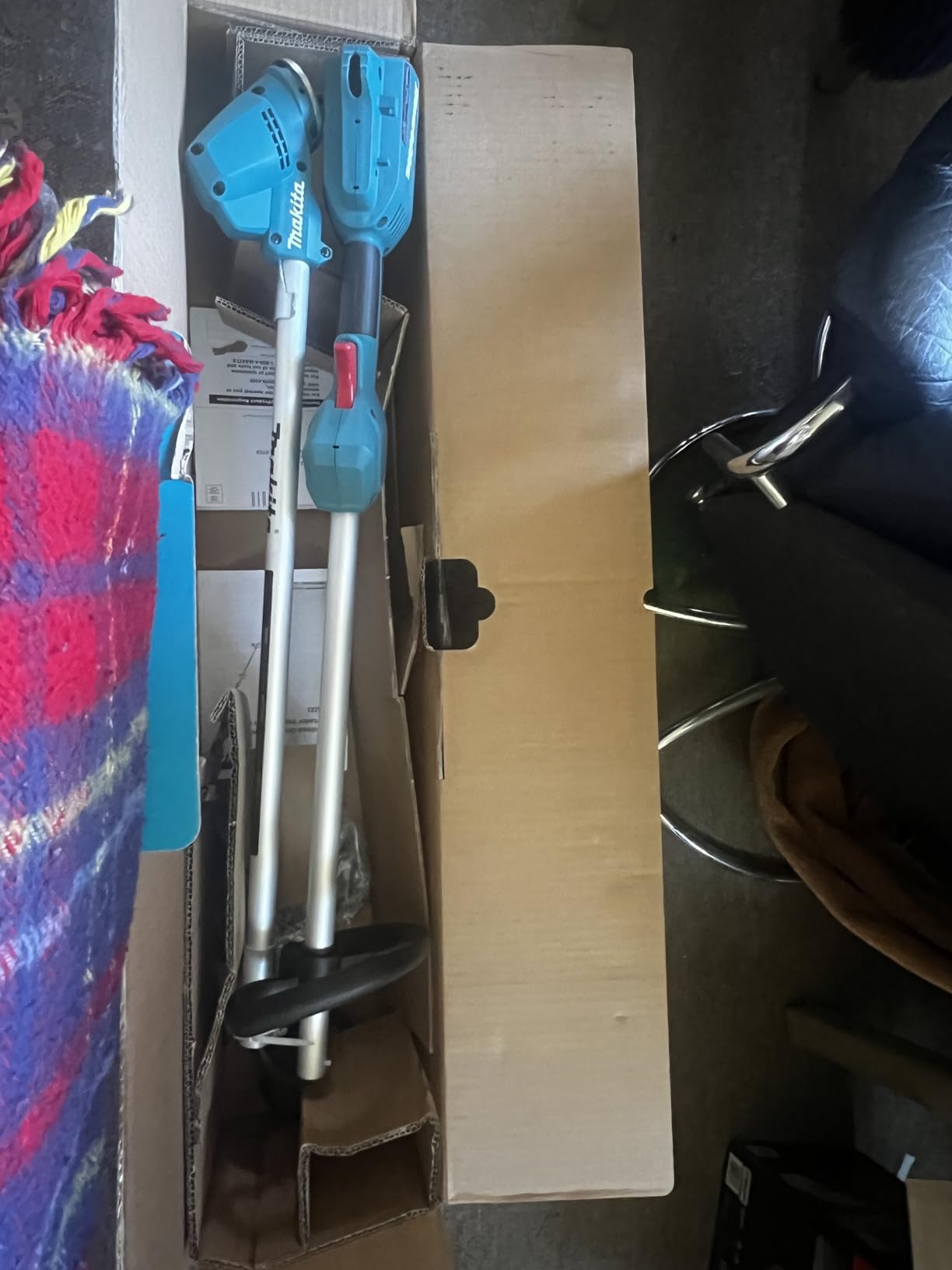
What owners highlight is the handling. Buyers moving down from a heavier 60V machine describe this kit as quick and easy to hold through a long afternoon, and the swappable string cartridge makes line changes without wrestling a spool. The trade-off is width, since a 13-inch head means more passes in tall grass.
For genuinely overgrown lots, an 18V tool on a single pack is a stretch. For a lawn that gets maintained weekly and has a few neglected corners, it is entirely the right tool, and it is the most direct path to adding a trimmer to a platform you already own.
When 18V is enough and when it is not
Voltage sets the ceiling on motor speed, while amp-hours set how long you can sustain it. An 18V LXT brushless motor with a 4.0Ah pack is a strong lawn and fence-line combination, but standing knee-high growth is where you start wanting the extra headroom a 40V or 60V platform provides.
The high-low button matters more on this tool than on bigger units. Running the low setting for thin edging work stretches the pack considerably, and the variable trigger handles the rest.
Balance, guard and the small complaints
Two issues recur. The kickback debris shield is undersized, so stones and dirt do reach the operator, and the balance is slightly nose-heavy when you hold the middle handle rather than the rear grip. Neither ruins the tool, but both argue for wearing eye protection and keeping a grip position that balances it.
A small number of buyers report receiving packs that hold less charge than rated, so check runtime early in your ownership. The three-year warranty on tool, battery and charger is standard for the platform.
Who should pick it
Buy the XRU23SM1 if 18V LXT batteries are already in your garage or if your property is mostly maintained. Do not buy it as a gas replacement for four-foot grass, where the number-one pick or the DEWALT at number four are better-matched tools.
7. Greenworks 40V STBA40B210 – Best Value and the Most Proven Platform Entry
Greenworks 40V 12 in String Trimmer & 390 CFM Blower Combo, 2.0 Ah Battery
40V 2.0Ah battery,12 inch swath,0.065 inch auto-feed line,390 CFM blower,67 dB
+ Pros
- Low cost entry into a 40V platform covering 8 or more tools
- 8 lb balanced trimmer body suits flower beds and patios
- Auto feed head handles weeds along fences and garden borders
- Blower clears wet leaves and concrete debris
- 10k plus reviews show how well established the kit is
- Cons
- 12 inch swath and 0.065 inch line are thin margins for heavy growth
- 2.0Ah is the smallest pack so swaps come quickly on big yards
- Some owners report motor or battery durability problems over time
The Greenworks STBA40B210 is the entry point most buyers should look at first, and the reason is the review count rather than the specifications. With more than 10,000 ratings, this is one of the most thoroughly proven kits in the roundup, which means parts, advice and known failure points are all easy to find before you commit.
It comes as a combo with a 40V 2.0Ah battery, a charger and a blower that pushes 390 CFM at 110 MPH, and the same 2.0Ah pack powers a broad 40V ecosystem. The trimmer head uses 0.065-inch auto-feed line, which is a maintenance-grade gauge, and that single fact sets the ceiling on what this tool can do.
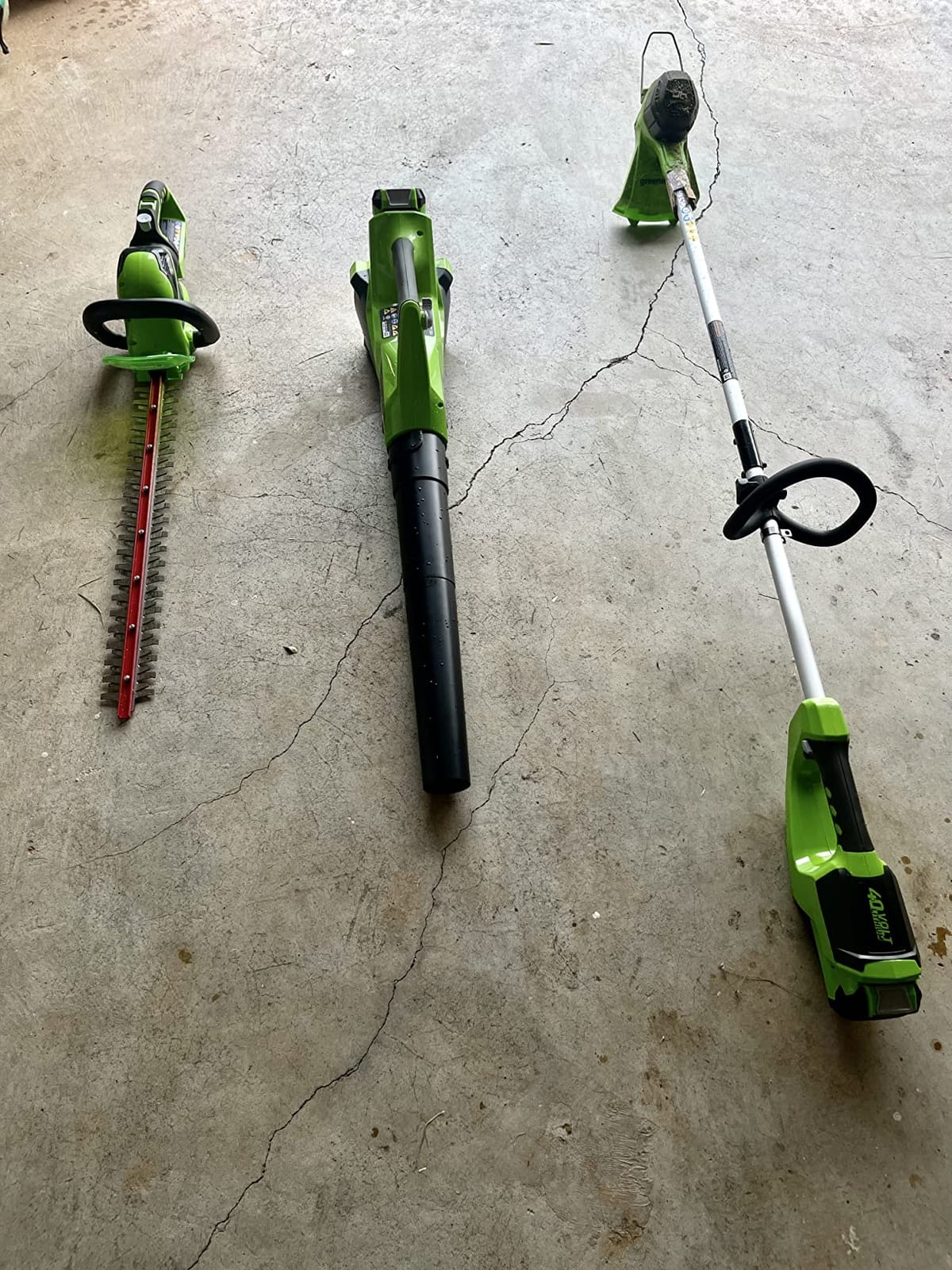
Where it performs well is everything except the deepest growth. An 8-pound balanced body, 67 dB operating noise and a narrow head make it a genuinely pleasant tool for driveway edges, flower beds and light overgrowth along fences, and owners treat it as a maintenance machine rather than a gas replacement.
The 2.0Ah pack is the practical limit. It takes roughly an hour to charge, and on a large property you will be swapping more often than with any 5.0Ah kit here, so plan a second pack as part of the purchase rather than as an upgrade later.
What 0.065-inch line can and cannot do
Thin line cuts light vegetation efficiently and reduces the load on the motor, which is why it is right for edges and lawns. It also snaps far more readily when it meets a stem, and snapping is the fastest route to a clogged, tangled head in standing growth.
If your tall grass is mostly dead and dry rather than thick and green, thin line will survive longer than you might expect. If it is dense and fibrous, plan on a heavier spool even if the head is not designed for it, or accept that this tool is for the edges, not the middle of the lot.
Platform thinking beats tool thinking
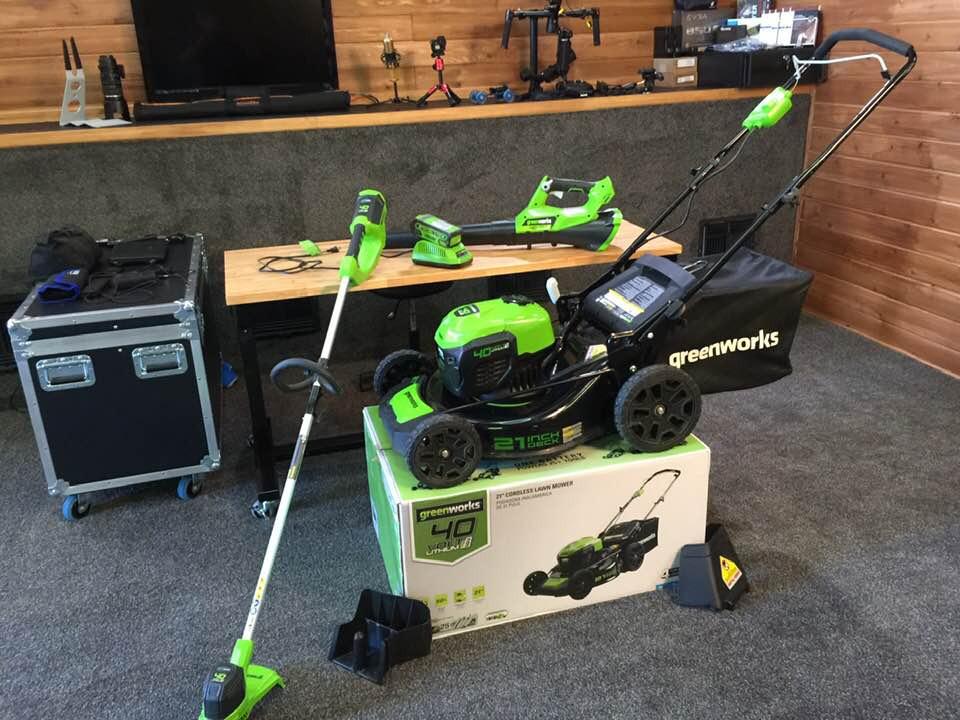
The strongest argument for this kit is that one 2.0Ah battery covers a large 40V lineup. If you buy a blower, a hedge trimmer and a chainsaw alongside it, the marginal cost of the string trimmer is a single tool head rather than a whole new battery ecosystem.
That logic also applies to used tool batteries. Owners frequently add a second pack rather than replace the first, and the roughly one-hour charge time means the swap happens over a lunch break.
Who should skip it
Skip this Greenworks if tall grass is your primary job. A 12-inch head with 0.065-inch line is the wrong combination for waist-high weeds, and a few owners also report motor or battery durability problems over long ownership. For a routine maintenance setup at a sensible entry point, it remains one of the most proven kits you can buy.
8. BLACK+DECKER LST140C – Budget Pick for Edging and Routine Weed Work
Black+Decker 40V MAX 13 Inch String Trimmer and Lawn Edger with Battery and Charger, Cordless Weed Eater with Charge Indicator, High Torque PowerDrive Technology (LST140C)
40V MAX lithium,13 inch swath,PowerDrive high torque transmission,automatic line feed,6.4 lb
+ Pros
- Light 6.4 lb body is comfortable for extended trimming
- Automatic line feed keeps the head fed without stopping
- Converts to an edger in seconds for driveway and path work
- Charge indicator tracks remaining runtime mid task
- Includes battery charger and a wall mountable base
- Cons
- 13 inch swath is a narrow head so tall grass costs you more passes than most tools here
- Modest torque next to 56V and 60V platforms on woody weeds
- Battery runtime is short on badly overgrown properties
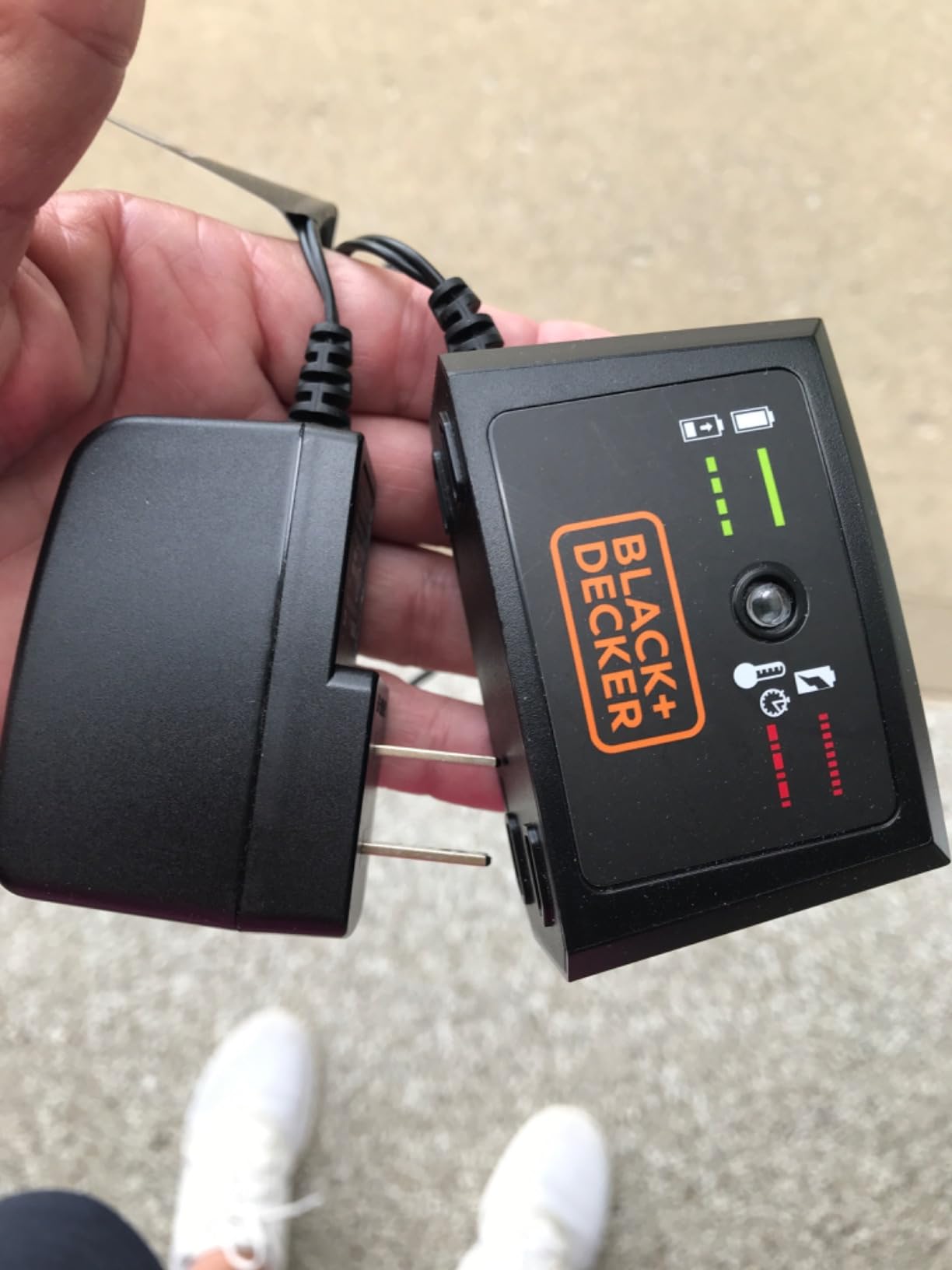
The BLACK+DECKER LST140C has close to 6,000 ratings behind it, which makes it one of the better-proven budget cordless trimmers available and a safe first purchase for a new owner. The battery, charger and wall mountable base are all in the box, so there is nothing to add before the first use.
The PowerDrive high-torque transmission is the part worth understanding. Rather than a large motor spinning a small head, it drives the spool directly, which is a sensible layout for a light tool, and the automatic line feeding system keeps the head topped up without stopping to tap it against the ground.
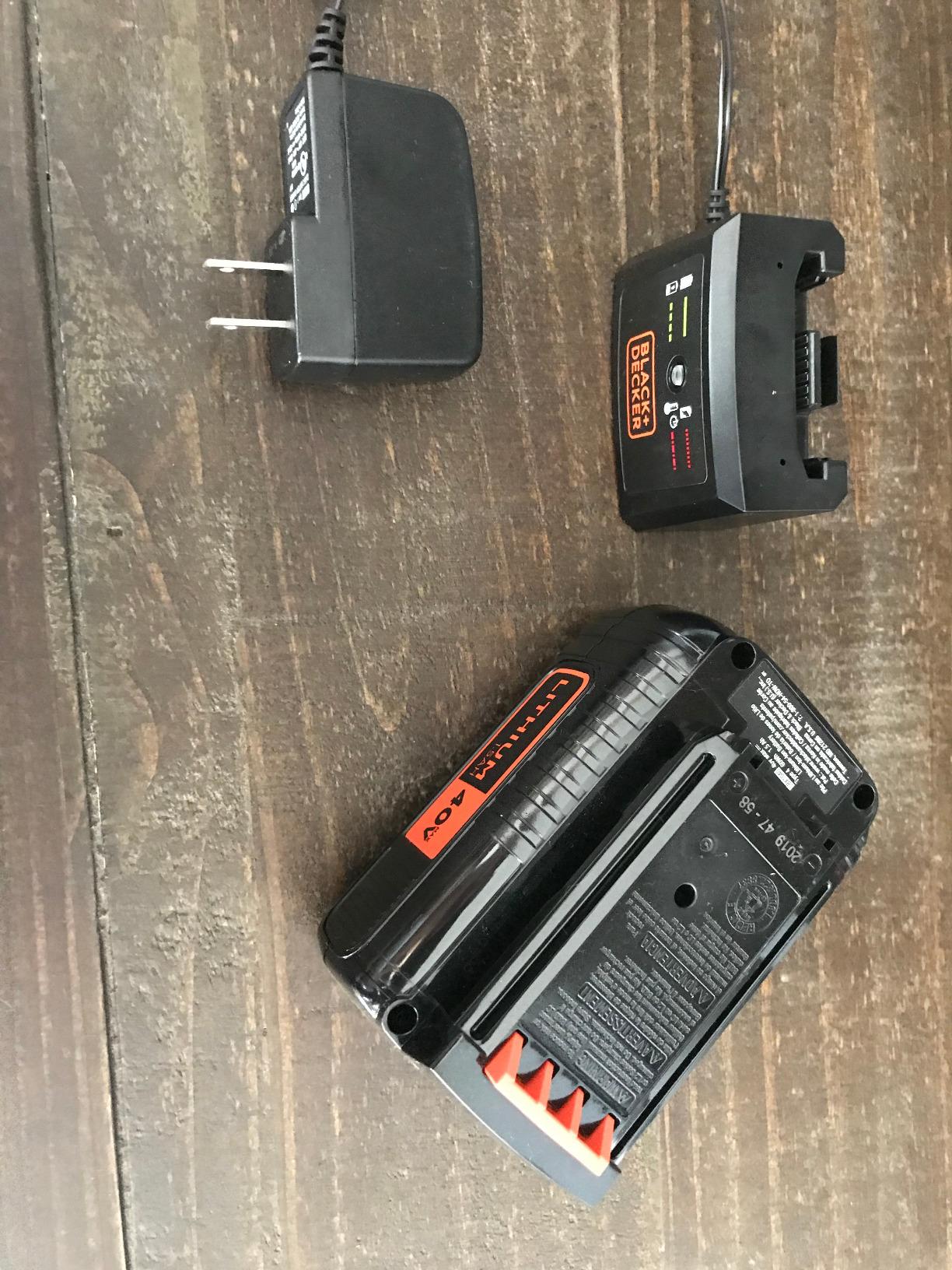
At 6.4 pounds it is among the lightest tools here, and quick conversion to an edger means the same tool handles path edges and driveway lines. The charge indicator is a small thing that you notice when you are halfway through a yard with mixed edging and trimming to do.
Reviewers consistently frame it as a sensible entry option for routine lawn edging and weed maintenance rather than heavy brush, and that framing is accurate. A 13-inch swath is a narrow head, so tall grass costs you more passes than most tools here.
Torque without the platform premium
The direct drive transmission delivers more cutting strength at the string than its class usually manages, and that is enough for weeds along fences and light roadside growth. What it cannot do is generate the sustained high load of dense standing grass, where a bigger motor has the thermal headroom to keep going.
For a homeowner mowing weekly and trimming edges, that ceiling never comes up. For someone tackling a neglected lot once a season, it comes up within the first ten minutes.
Why the automatic feed head matters more than it sounds
Bump feed requires a specific tap with the head in the air, and in tall grass the head is rarely in a position where you can do that cleanly. Automatic feed removes the skill from the equation, which is a real advantage for a first-time owner or anyone working on rough ground.
Watch the charge indicator, though. Reviewers note short runtime on large or badly overgrown properties, and the single included pack is the reason. Treat the second pack as part of the cost of doing this job properly.
Who should buy it
Buy the LST140C if you need a dependable first trimmer for a maintained yard and you want everything in the box on day one. Do not buy it for four-foot grass or woody weeds, and note the three-year limited warranty is shorter than the five years offered by the EGO tools at numbers two and eleven.
9. WORX WG183 – Lightest Handling with Two Batteries in the Box
Worx Cordless String Trimmer, 40V 13″ Electric Weed Wacker, WG183
40V PowerShare,13 inch swath,dual exit cutting head,auto feed spool,two 2.0Ah batteries,6.4 lb
+ Pros
- 6.4 lb body reduces arm fatigue on long sessions
- Two 2.0Ah batteries mean one can charge while the other works
- Auto feed spool makes line changes fast and infrequent
- Dual exit head cuts more per pass than a single exit head
- Backs into the wider WORX PowerShare platform
- Cons
- 13 inch cutting width is modest for tall dense grass
- 2.0Ah packs are small so swaps come quickly on larger yards
- Some owners report the head or spool failing over time
The WG183 solves a problem most people do not realize they have: charging downtime. Two 2.0Ah batteries are included, and since each is small, both fit the platform and one charges while the other works. For a maintenance trimmer that gets used in short bursts around the yard, that removes the most common complaint about cordless tools.
The dual-exit cutting head is the other differentiator. Instead of both line ends pulling in one direction, the exits are arranged so the cutting action is more balanced, and owners report more cut per pass than a standard single-exit head of the same width.
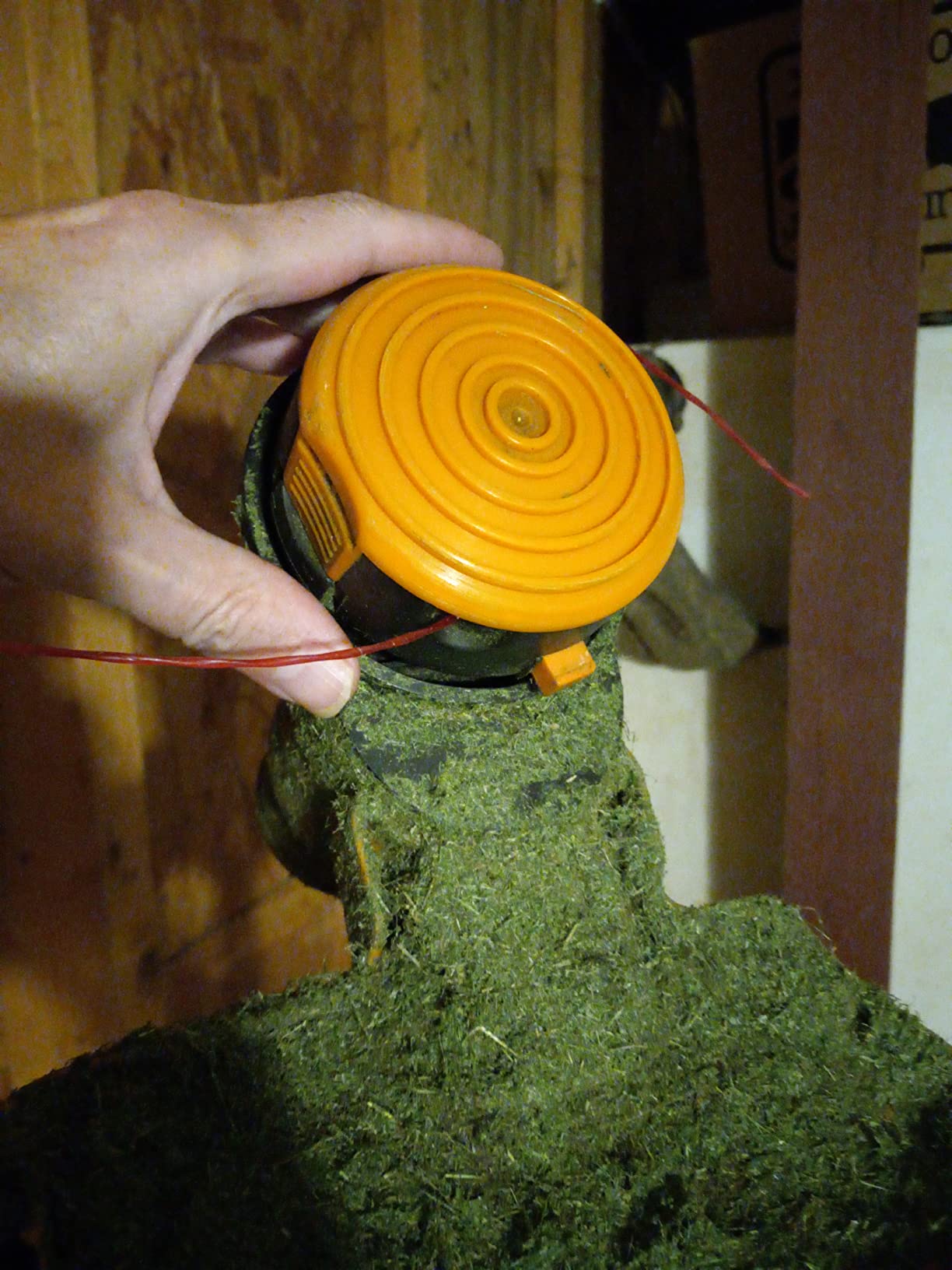
At 6.4 pounds, it sits among the lightest tools here, and the adjustable auxiliary handle lets you set the grip for your own height. That combination makes it a comfortable tool for a smaller yard where you are constantly stopping, starting and repositioning rather than making long continuous passes.
The 13-inch width and 2.0Ah capacity both point the same direction, toward maintenance work rather than deep growth. Owners treat it as a capable everyday trimmer, and the 4.2 average reflects steady performance rather than anything exceptional.
Two small batteries beat one big one for short jobs
Capacity matters less than availability for intermittent work. Two small packs mean you are never standing still waiting, and small packs weigh less, which reduces arm fatigue on a tool you lift repeatedly over a small property.
On long continuous cutting the arithmetic reverses, because small packs need more swaps and each swap is a stop. Match the battery strategy to how you actually work, not to a spec sheet.
Platform fit and long-term parts
The WG183 runs on WORX PowerShare, which covers the 20V and 40V tool range, so the batteries are broadly useful across a growing collection. That matters more for the second purchase than the first, since the battery is the item you are most likely to buy again.
A small number of owners report the head or spool failing after extended use, so keep an eye on the nylon line spool if you notice wobble or noise. The auto-feed mechanism and the adjustable handle are the parts that draw the most praise.
Who should skip it
Skip the WG183 if your grass regularly reaches knee height or if you work on more than a small yard. A 13-inch head and 2.0Ah packs are the wrong tools for the main event, even though they are excellent for everything around it.
10. RYOBI 40V RY40205 – Best Way to Extend an Existing 40V Collection
RYOBI 40V Attachment Capable 15″ String Trimmer Bare Tool
40V attachment capable,8500 RPM,up to 71 minutes on a 4Ah battery,bare tool only
+ Pros
- Direct path into the 40V platform if you own the battery and charger
- Attachment capable design multiplies into a single tool collection
- Good bump feed head that owners rate well
- Reported as more powerful than the 18V version of the same machine
- Long stated runtime on a 4Ah pack
- Cons
- Battery and charger are sold separately
- Several reports of the motor overheating under sustained heavy load
- 30 day warranty and intense vibration at the trigger hand
The RY40205 is an EXPAND-IT attachment-capable bare tool, which means you are buying a power head for a platform rather than a standalone trimmer. If you already run 40V Ryobi tools, this is the most direct way to add trimming to a collection you have already paid for, and the up-to-71-minute runtime figure on a 4Ah pack is well above any other pack here for a single session.
On paper the numbers look strong, with the highest no-load speed figure in the group at 8500 RPM and a claim of output exceeding a 21cc gas trimmer. Owners of the 40V platform generally report the tools hold up well alongside premium brands.
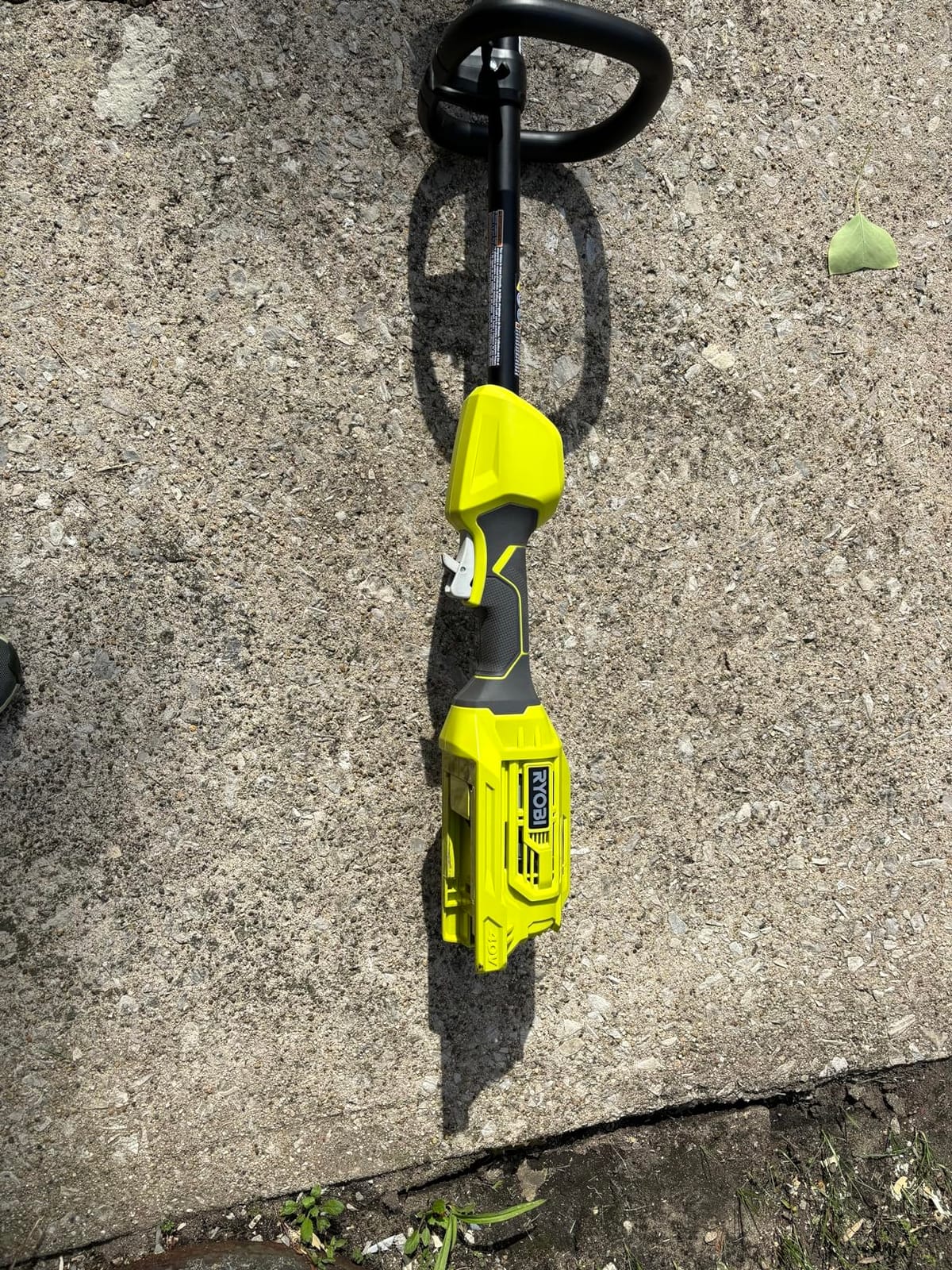
This is also the pick with the thinnest evidence behind it, and I want to be straight about that. It carries the lowest rating in the group and a small review base, and the specific complaints on this listing include a motor that overheated within minutes on two separate units plus intense vibration at the trigger hand.
The vibration complaint deserves attention from tall-grass buyers specifically, because vibration is worst under sustained load in exactly the conditions this roundup is about. If you already own the 40V platform, that risk is easier to weigh because you are one tool away from a fallback.
Why the bare-tool configuration changes the calculus
Every other kit in this roundup includes a battery and charger, so the real cost of this one depends entirely on what you already own. If you have 40V Ryobi packs, this is a straightforward addition. If you do not, the tool body alone tells you very little about what the setup will cost to use.
There is a second-order benefit. A power head with EXPAND-IT capability can accept edgers, hedge trimmers and other attachments, so a single motor serves several jobs and the storage footprint stays small.
What the runtime figure really means
The stated 71 minutes assumes a 4Ah pack on light work. In standing tall grass, expect a fraction of that, because dense growth draws far more current than edging a lawn edge. Owners who use these tools for heavy cleanup describe swapping packs well before the quoted figure.
Treat that number as a ceiling rather than a promise, and the same logic applies to the gas-trimmer comparison claim. Both figures come from ideal conditions.
Who should buy it
Buy the RY40205 if you already own 40V Ryobi batteries and can test it early in the season, while you still have other tools to fall back on. Skip it otherwise, and skip it if you have a history of sensitivity to vibration in handheld tools. The 30-day warranty is also the shortest here, which limits your window to detect a motor problem.
11. EGO POWER+ ST1502SA – Best for Knee-High Weeds and Woody Growth
EGO POWER+ 15″ Cordless Weed Trimmer with Battery and Charger – ST1502SA
56V brushless,15 inch swath,0.095 inch line,rapid reload head,45 minutes runtime,7.4 lb
+ Pros
- Cuts knee-high dead and standing weeds and woody growth
- 15 inch swath and 0.095 inch line give real capacity in tall grass
- Rapid Reload head makes line changes quick
- Light enough that other household members will use it
- 5 year tool warranty and 3 year battery warranty
- Cons
- Rapid Reload head can jam and require disassembly
- 2.5Ah battery gives roughly 30 to 45 minutes of heavy work
- Throws grass rocks and debris so eye protection matters
The ST1502SA is the configuration we would hand to someone whose problem is tall weeds rather than tall grass. It comes with 0.095-inch professional-grade line in a 15-inch head, and that pairing is the reason owners report cutting woody growth like knapweed alongside standing dead grass without changing anything.
At 7.4 pounds it is light enough that other people in the household will pick it up, which matters when the person who owns the tools is not the person doing the work. The 56V brushless motor runs quietly with low vibration, and the variable speed control lets you back off around delicate plantings.
With more than 3,300 ratings, this is one of the better-proven trimmers in the category, and reviewers consistently describe clearing overgrown backyards with a single charge to spare. The rapid reload head makes line changes quick when it is cooperating, which is most of the time.
It shares the 56V ARC Lithium platform with the two other EGO tools in this roundup, so if you are building one EGO collection this is a strong candidate alongside the power head at number three. Battery interchangeability is the deciding factor many owners cite when they choose a brand over a more powerful rival.
Why 0.095-inch line is the tall-grass threshold
Line diameter determines how much energy each tip can carry before it breaks. Below 0.095 inch, the line is efficient against blades of grass but fragile against stems, and in standing growth the breaks come fast enough to wrap the head and stall the cut.
Dual-twist construction, which this head uses, improves abrasion resistance on stems compared with plain round line of the same diameter. That combination is why this tool clears weeds that stop a 0.065-inch head entirely.
The head is the weak point
Rapid Reload is faster than bump feed when it works, and the most common complaint is that it sometimes will not wind line even when the manual is followed, which means disassembling the head to sort it out. Check yours early in ownership so you know the routine before you need it mid-job.
The guard also draws complaints. Owners report grass, rocks and debris coming back at them, which makes eye protection effectively mandatory rather than a recommendation.
Who should pick it over the ST1521S
Choose the ST1502SA if your growth is weeds and woody stems rather than simply very tall grass, and if you want the lightest tool in the 56V class. Choose the ST1521S if you want the carbon fiber shaft and the fully automatic POWERLOAD system. Both run on the same battery platform, so the decision comes down to the head and the shaft.
12. WORX WG928 – Best Budget Bundle for Two Tools and Two Batteries
WORX 20V 12″ Cordless String Trimmer & 360CFM Leaf Blower Kit, WG928
20V PowerShare,12 inch trimmer and edger,command feed line advance,360 CFM blower,two 2.0Ah batteries
+ Pros
- Bundle covers two lawn tools plus two batteries and a quick charger
- Two included 20V batteries allow continuous trimming and blowing
- Trimmer pivots to an edger with a guide wheel for path edges
- Blower is light and well balanced
- Four year owners report both tools still working
- Cons
- 12 inch head and 20V platform are not built for tall woody growth
- Two 2.0Ah packs rarely cover a large yard in one cycle
- Blower is underpowered on large driveways
- Trimmer to edger conversion is stiff and hard to angle
The WG928 is a two-tool package, and on paper it is one of the more economical ways to cover both trimming and blowing. You get a 12-inch trimmer that pivots into an edger, a 360 CFM turbine blower, two 20V batteries and a charger, all on the shared PowerShare platform.
It belongs on this list for completeness rather than for tall-grass capability. A 20V platform with a 12-inch head is built for light maintenance, and several buyers return the bundle to keep only the trimmer because the blower does not keep up with large driveways.
What it does well is convenience. The command feed button advances line on demand without a bump, the edger conversion needs no tools, and at 5.3 pounds for the trimmer with a battery fitted it is among the lightest options available. Buyers upgrading from gas praise the quiet and the easy assembly.
Owners several years into ownership report both tools and the batteries still working, which is a meaningful reliability signal for a budget kit. The trimmer earns its keep on path edges and light weed maintenance.
Setting realistic expectations on cutting power
A 12-inch head with a 20V platform is not a tall-grass tool, and no technique changes that. In dense weeds the head will slow, the line will wrap and you will spend more time clearing the head than cutting.
Where the bundle shines is on small to medium yards where a single owner does light trimming plus leaf cleanup. The value case is real, and the platform is shared with a wide range of 20V and 40V tools.
Maintenance and durability notes
The trimmer-to-edger head conversion is stiff, and reviewers find it hard to angle, so set the angle before you start rather than mid-job. The guide wheel helps keep path edges clean, which is where most of the use will be.
Battery capacity is the other limit. Two 2.0Ah packs rarely finish a large yard in one cycle, and the blower drains them quickly, so the effective trimming time per charge is shorter than the numbers suggest.
Who should buy it
Buy the WG928 if you have a small yard, want edging and blowing covered in one purchase and do not expect to face overgrown growth. If tall grass is genuinely your problem, spend the difference on one of the 56V or 60V machines above rather than stretching this one beyond its design.
What Actually Matters When the Grass Is at Knee Height
Most of the difference between a trimmer that handles tall grass and one that stalls comes down to a short list of variables, and only one of them is the motor.
Why tall grass breaks trimmers that handle lawns fine
Cutting power concentrates at the tips of the line, not along its length. When the head is buried inside a canopy, most of the line is doing nothing while the tips fight through stems, and the motor spends its time recovering from load instead of cutting.
The result is the familiar sequence: the tool slows, the head sinks, grass wraps around the spool and the guard, and the operator stops to cut the wrap away. That is the failure pattern forum owners describe most often, and it is a design limit rather than a technique problem.
Voltage and amp-hours: the math behind bogging
Voltage sets the ceiling on motor speed, while amp-hours determine how much current the pack can hold and for how long. A 20V platform handles a maintained lawn comfortably, but for knee-to-waist-high growth, 40V is the practical floor and 56V to 60V is where the headroom lives.
The shorthand that works: multiply volts by amp-hours to get watt-hours, and treat that number as your usable energy. A 56V 2.5Ah pack holds 140 Wh, while a 40V 4Ah pack holds 160 Wh. The higher-voltage pack wins on torque behavior under load even with less energy on paper, because it does not sag when the motor asks for current.
For a one-hectare property with serious annual cleanup, budget for two batteries regardless of what the kit includes. Owners consistently name the second pack, not the tool, as the recurring cost that decides satisfaction.
The line gauge rule for dense growth
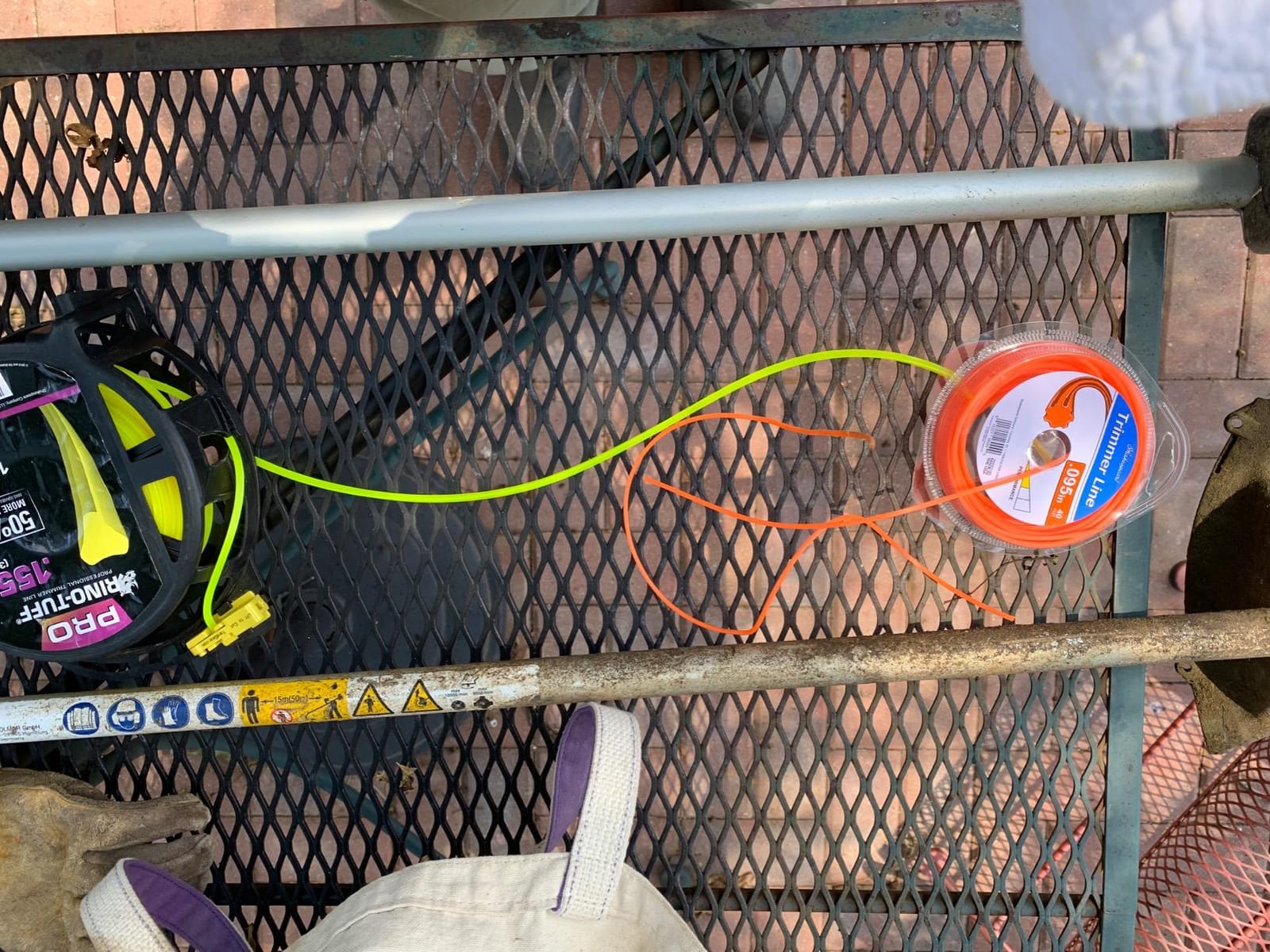
Line diameter is the single change most owners can make, and it is free compared with buying a new machine. Match the gauge to the vegetation, and never run a gauge the head is not designed for.
- 0.065 inch: lawns, flower beds, light edging and thin weeds. Efficient and cheap, but it snaps on stems.
- 0.080 inch: general yard maintenance, fence lines and moderate weeds. The default for most suburban properties.
- 0.095 inch: knee-high grass, thick weeds and light brush. This is the minimum for the tall-grass job and the most common upgrade owners make.
- 0.105 inch and above: heavy brush, saplings and brambles. Only for heads and tools rated for it, and the point at which a brush cutter becomes the correct tool.
Dual-twist or twisted quiet line resists abrasion better than plain round line at the same diameter, which matters because stem contact wears the line from the inside out.
Head type and the grass-wrapping problem
Bump feed requires a specific tap with the head raised, and in tall grass the head is rarely positioned to allow that. Powerload and rapid reload systems wind the line mechanically instead, and they are worth paying for on any tool you will use for seasonal cleanup.
Wrapping also comes from head geometry. A debris guard sized too small lets cut material fall back onto the spool, and a single-exit head pushes debris toward one side. Larger guards and dual-exit or dual-line heads reduce it, and clearing the head after every few passes on heavy growth prevents a small problem from becoming a stop-work problem.
Cutting swath and how many passes you owe yourself
Swath is free productivity. A 17-inch head clears a path in roughly three passes where a 12-inch head takes five, and since each pass in tall grass is the hard part, the saving compounds quickly.
The trade-off is control. Wider heads are harder to maneuver around trees, shrubs and along fences, so a homeowner with a landscaped yard may get more done with a narrower head that can actually be placed accurately. This roundup splits the difference, with the DEWALT offering an adjustable 15- to 17-inch swath for that reason.
Shaft length for operators over six feet
Shaft length is a genuine comfort issue, and it comes up repeatedly in owner discussions. A tall operator with a short shaft spends the session bent at the waist, and the resulting back fatigue has nothing to do with the tool’s power.
Two designs answer it. Telescoping shafts extend for reach and collapse for storage, and owners report they are strong enough for grass and weeds as long as you avoid twisting hard against a stem. Rigid straight shafts are longer overall and stiffer, which suits tall operators who never need the tool to fit in a small space. Curved shafts are comfortable and compact but flex most, which is the least desirable combination for heavy cutting.
Brushless motors, weight and long sessions
Brushless motors are now standard on anything worth buying in this category. They run cooler, last longer and deliver more torque per watt than brushed designs, which matters most in the conditions this article is about.
Weight is the counterweight to that. A tool in the 12- to 15-pound range will clear more grass per charge but tire your arms and back sooner, and the light options here trade the torque you need for comfort. A shoulder strap, included with some of these kits and optional with others, is the cheapest way to fix a heavy tool’s balance.
When a string trimmer is not enough and a brush cutter is
There is a clear threshold, and recognizing it saves a lot of wasted effort. If your growth is grass and weeds up to waist height, a 56V or 60V brushless trimmer with 0.095-inch line will do the job.
If the growth is woody, meaning stems you cannot break with your hands, saplings, brambles or an orchard floor, you need a blade. A three-blade brush-cutter head on a split-shaft power head, or a dedicated brush cutter, cuts in a fraction of the passes and does not clog, because there is no line to wrap.
Blades are not universally better. A blade cuts faster in woody material and throws debris with more force, and it is more dangerous near fences, gravel and bystanders. Keep a line head for edging and detail work, and treat the blade as a specialist tool with its own safety rules.
Battery platform lock-in and the second battery
The most common owner mistake is choosing on power and then discovering the battery situation. Every ecosystem is proprietary, and the spare pack you will eventually need only fits the brand you bought first.
That is why so many owners advise buying into the platform you already own, even when a rival is objectively more powerful. The recurring cost of a second battery outweighs a small difference in cutting performance, and if you already own two tools from a brand, the trimmer is effectively free of battery cost.
Before you buy, confirm three things: the voltage, whether a bare tool or a kit makes more sense for you, and what a second battery costs. Those three answers narrow the list fast.
Frequently Asked Questions
Can a cordless string trimmer cut tall grass?
Yes, a cordless string trimmer can cut tall grass, but only if it has a high-voltage brushless motor and a head that accepts 0.095-inch or heavier line. Light trimmers with thin 0.065-inch line bog down and wrap grass around the head in knee-high growth. For waist-high weeds, look for 56V to 60V, a 15-inch or wider swath, and a dual-line head.
What is the best trimmer line for trimming heavy weeds?
For heavy weeds, use 0.095-inch twisted or dual-twist line. Thinner 0.065-inch line snaps on stems and wraps the head, while 0.105-inch is for heavy brush and requires a head rated for it. Twisted line resists abrasion better than plain round line of the same diameter. Never exceed the gauge your trimmer head is designed for.
Which is better for a cordless trimmer, 20V or 40V?
For tall, overgrown grass, 40V or higher is the better choice. A 20V platform is fine for a maintained lawn, flower beds and light edging, but it tends to bog down in knee-high growth. Amp-hours matter too: a 40V 4.0Ah pack holds 160 Wh against 100 Wh for a 20V 5.0Ah pack, and more energy means longer sessions between charges.
Do I need a brush cutter instead of a string trimmer?
You need a brush cutter when the growth is woody rather than grassy. Saplings, brambles, thorny stems and an orchard floor require a metal or three-blade plastic cutting head, which a line trimmer cannot handle. Grass and weeds up to waist height are fine on a 56V or 60V brushless trimmer using 0.095-inch line. Blades throw debris harder, so keep a line head for detail work.
Are blade trimmers better than line trimmers?
Neither is better overall, and the right answer depends on the material. Blades cut woody brush far faster and never clog, but they throw debris with more force and are more dangerous near fences and gravel. Line is safer, quieter and much better for edging flower beds and paving. Many owners keep both heads and switch based on the season and the job.
How long should a trimmer battery last on tall grass?
Expect roughly 20 to 30 minutes of continuous high-speed cutting in dense growth, and 45 to 60 minutes on light trimming and edging. The same pack that delivers an hour of edging may be flat in half the time on standing grass, because dense growth draws far more current. Buying a second pack is the standard fix, and it is why batteries should be part of your original budget.
Is a telescoping shaft strong enough for tall-grass work?
For grass and weeds, yes, as long as you do not twist hard against a stem. Telescoping shafts extend for reach on tall terrain and collapse for storage, which makes them a good match for operators over six feet who want to avoid bending at the waist. For heavy woody cutting, a rigid straight shaft is stiffer and transmits more of the motor output to the head.
Which Cordless String Trimmer Handles Tall Grass Best
If you want the tool we would put at the top of this list, take the Makita XRU15PT1 36V LXT. The direct-drive brushless motor holds speed in standing growth, and the four included 5.0Ah batteries mean you never stop mid-strip waiting on a charger.
If you build a battery platform rather than a single tool, the EGO Power+ line is the strongest ecosystem here. The ST1521S has the rigid carbon fiber shaft and automatic line winding, the ST1502SA has the 0.095-inch line setup for woody weeds, and the MST1501 power head lets one battery serve trimming, edging and blowing.
If your growth is thick and fibrous rather than tall, the DEWALT DCST972X1 gives you the widest swath and the highest rated speed in the group, at the cost of being one of the heavier tools on the list. If you want steady torque at a lighter weight with a blower in the box, the SKIL PWR CORE 40 is the one owners most often call gas-like.
If you are trimming a maintained yard rather than reclaiming one, stop overpaying for power. The Greenworks 40V combo and the BLACK+DECKER LST140C handle edges and light weeds well, and both carry the deepest review histories in this roundup. Save your money for a second battery rather than a bigger machine.
One last technique note that costs nothing. Cut tall grass in slow scything arcs, work from the bottom of the canopy upward, overlap your passes and clear the head after every few minutes in heavy growth. On every pick above, the difference between a smooth session and a frustrating one is as much about how you move the tool as which one you bought. Check the current model details and pricing for your area before you commit, then get out into the grass.