
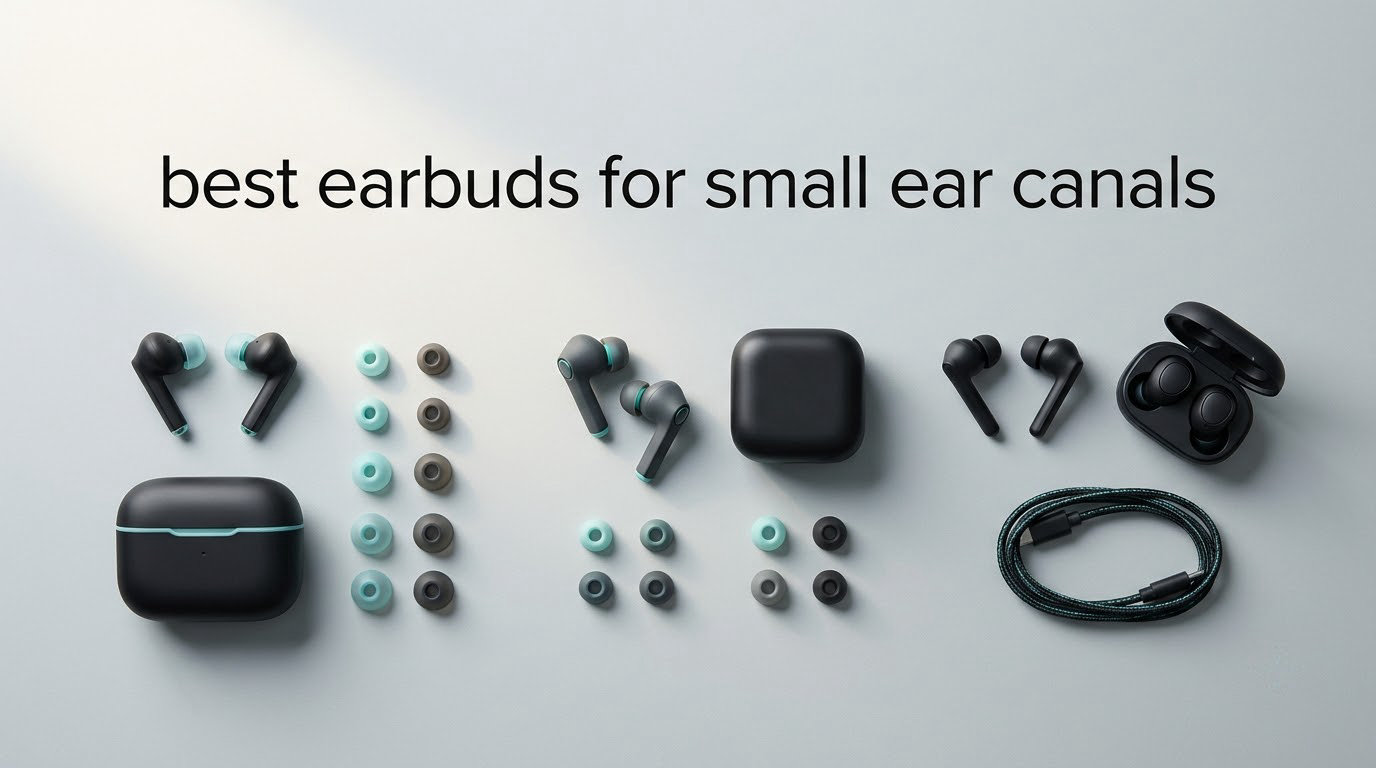
If your earbuds keep falling out, digging into your ear to get them seated, or leaving you sore after an hour, you do not have a taste problem. You have a geometry problem, and the fix starts with the best earbuds for small ear canals being judged on per-bud weight and housing width rather than on how they sound in a demo.
I have spent the last few months cycling earbuds with my family, three of whom have narrow canals and small outer ears, and one of whom wears glasses and a bone-conduction headset for running. We tested in-ear buds against open-ear hooks, earclip cuffs and clip-on rings, logging insertion depth, protrusion and how long each pair stayed put. The single most useful thing I learned is that almost every bit of generic advice on this topic starts in the wrong place.
Here is the short version: the Back Bay Audio Mini is the best earbud for small ear canals in 2026. It is a conventional in-ear design with an 8mm dynamic driver, a slim low-profile housing that sits flush instead of standing proud of the concha, and six ear-tip sizes in the box so a narrow canal has something small to work with. If your ears cannot tolerate anything inserted at all, the TOZO OpenEarRing is the answer instead, because nothing about it goes near the canal.
Everything below explains the mechanism behind each pick, why smaller tips often do not solve a sizing problem, and where each one falls short. Where I mention numbers, they come from the manufacturer specifications and from the review patterns buyers report, not from guesswork.
Our Top 3 Picks for Narrow Ear Canals and Small Outer Ears
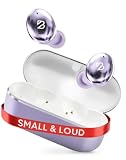
Back Bay Audio Mini Earbuds
- Slim flush in-ear housing
- Six ear-tip sizes included
- 8mm dynamic driver
- 32 hours total battery

TOZO OpenEarRing
- 5.1g clip-on per earbud
- No canal contact at all
- 40 hours with case
- Glasses friendly contours

Soundcore V20i
- Four adjustable positions
- 16mm titanium drivers
- 8 hours plus 36 with case
- IP55 rated
The Back Bay Audio Mini wins the top slot because it keeps the sealed, isolating design most people actually want while removing the two things that cause fit failure: a bulky housing and a tip ladder that starts too large. The TOZO OpenEarRing is the most versatile option overall, at 5.1g per earbud with zero canal contact, contours that clear spectacle frames, and the largest review base in this group. The Soundcore V20i takes the value slot because four adjustable positions and 16mm drivers solve outer-ear sizing that a fixed-angle bud cannot.
Comparing Every Pick on Size, Weight and Battery
| Product | Details | |
|---|---|---|
| Back Bay Audio Mini Wireless Earbuds for Small Ears |
|
Check Latest Price |
| TOZO OpenEarRing Open Ear Earbuds |
|
Check Latest Price |
| Soundcore V20i Open Ear Earbuds |
|
Check Latest Price |
 JLab JBuds Mini True Wireless Earbuds JLab JBuds Mini True Wireless Earbuds |
|
Check Latest Price |
 MOZOTER Mini Wireless Earbuds MOZOTER Mini Wireless Earbuds |
|
Check Latest Price |
 SHOKZ OpenFit 2 Open-Ear Earhooks SHOKZ OpenFit 2 Open-Ear Earhooks |
|
Check Latest Price |
 King Lucky Clip-On Earbuds Gen 3 King Lucky Clip-On Earbuds Gen 3 |
|
Check Latest Price |
 Soundcore C50i Clip On Earbuds Soundcore C50i Clip On Earbuds |
|
Check Latest Price |
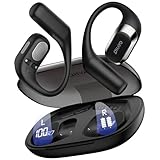 OHAYO Open Ear Headphones T10 OHAYO Open Ear Headphones T10 |
|
Check Latest Price |
 JLab Flex Open Ear Clip On Earbuds JLab Flex Open Ear Clip On Earbuds |
|
Check Latest Price |
Read that table as two lists. Four of these are sealed in-ear models, where the tip diameter and housing thickness decide whether you can insert them at all. Six are open designs, where nothing enters the canal and the only question is whether the mechanism grips your outer ear without slipping. Asking a member of the second group to solve a narrow-canal problem is like choosing a book by its cover, and vice versa.
1. Back Bay Audio Mini – Flush-Seating In-Ear With Six Tip Sizes
Back Bay Audio Mini Wireless Earbuds for Small Ears, Award-Winning Sound
8mm dynamic driver
Six ear-tip sizes
32 hours total battery
IPX7 rated
+ Pros
- Slim low-profile housing sits flush without protruding
- six ear-tip sizes for narrow canals
- sealed passive isolation blocks real background noise
- balanced and loud sound for the tier
- aluminum pocket case
- Cons
- Touch controls misfire easily
- some units lose volume or drop Bluetooth after months
- reported case charging faults
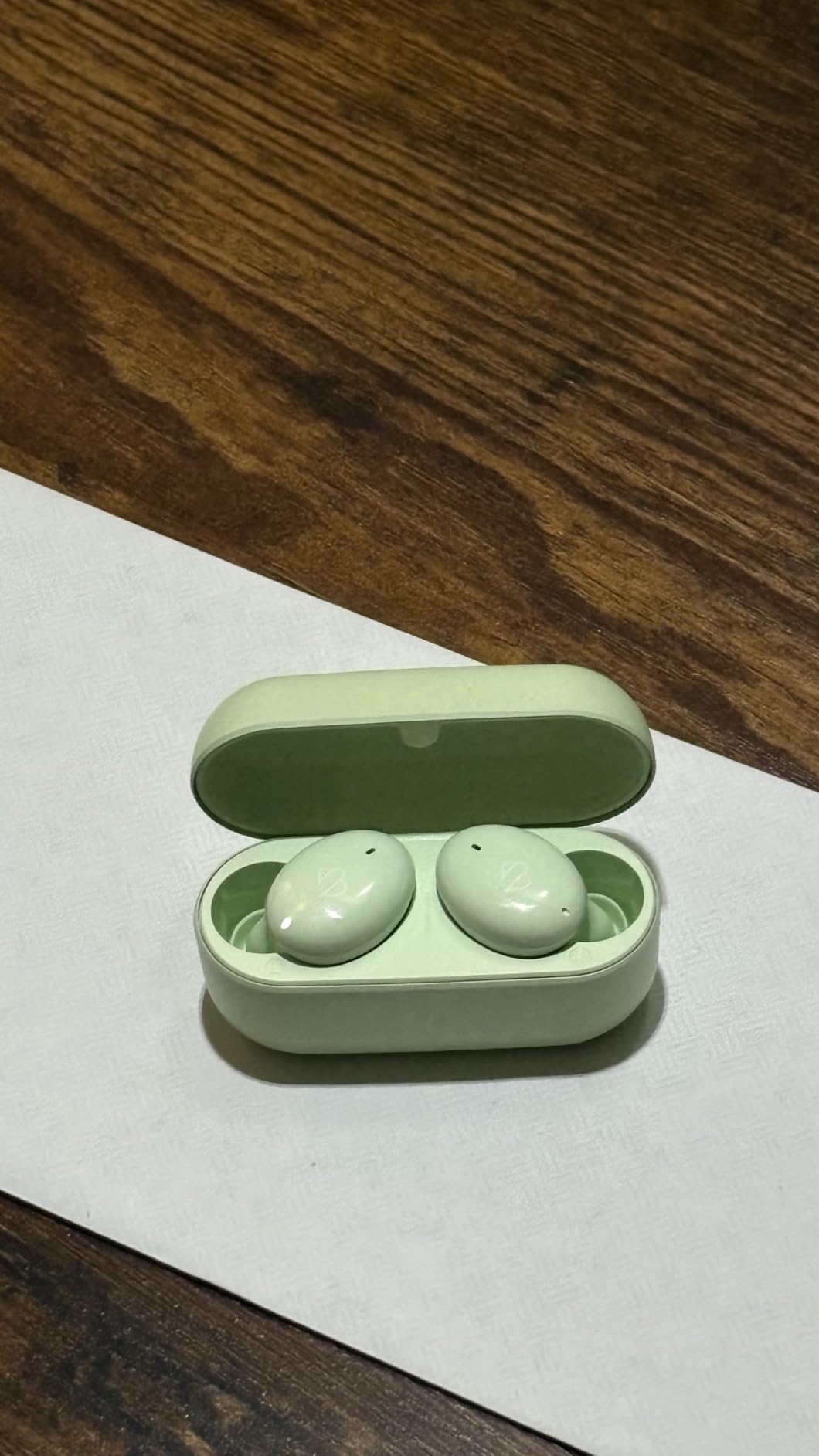
The Back Bay Audio Mini is the one I hand to anyone who says the words small ear canals and expects a sealed earbud in return. Owners with narrow canals describe the housing as sitting flush against the concha bowl rather than perched on top of it, and that single geometric fact is what stops the constant adjusting that makes buds fall out.
Fit here is a two-part system. The barrel is narrow enough to pass the canal entrance, and the box carries six ear-tip sizes so you can find a seal without squashing a large tip down and hoping. Several small-ear owners report the tip that arrived in the box was already the right one, which is a good sign for a product designed around this specific problem.
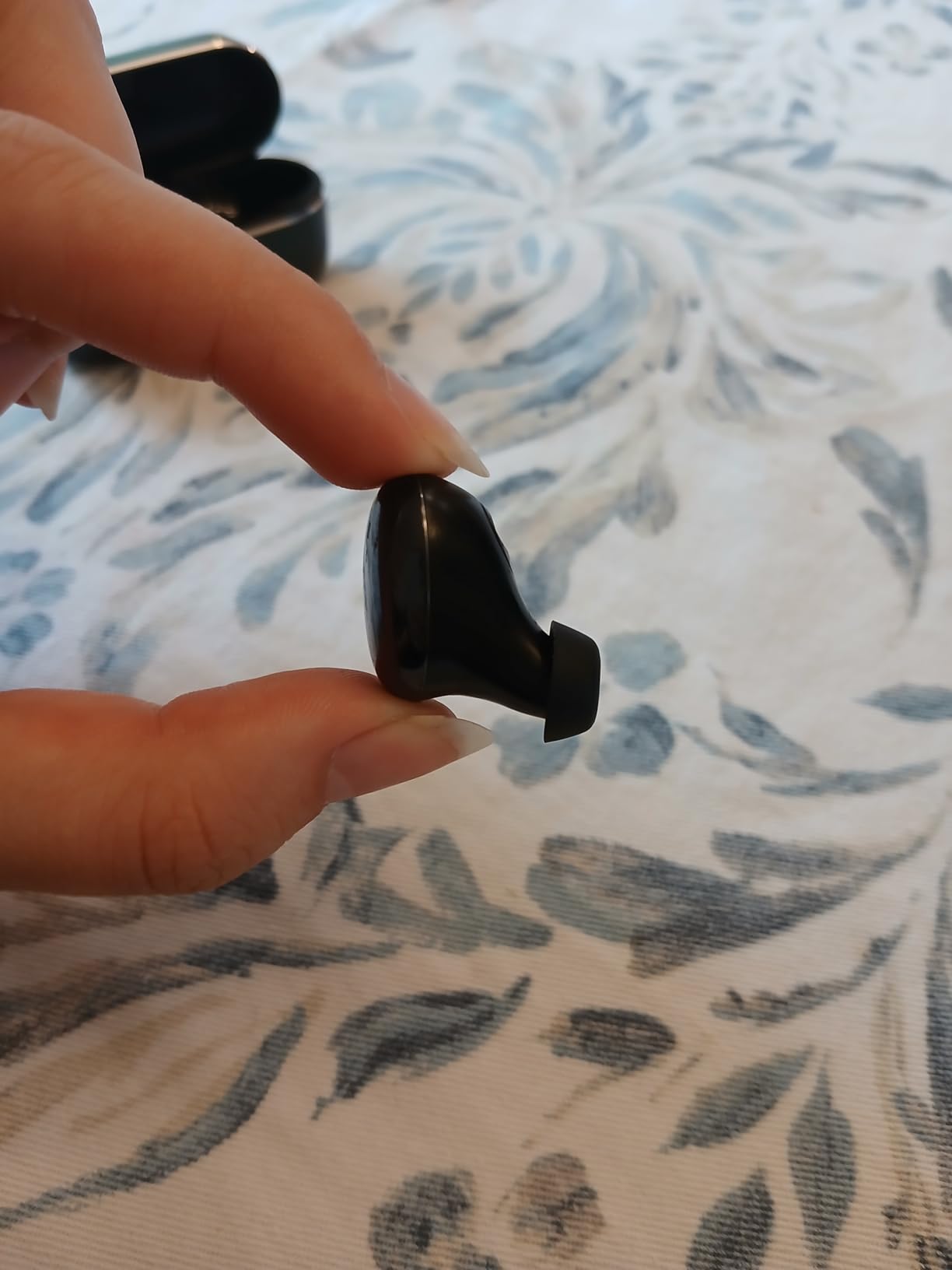
The 8mm dynamic driver sits behind that narrow barrel rather than beside it, which is how the design keeps its footprint down while still producing a sound buyers describe as balanced across the low, mid and high range and loud without distortion. A tap toggles an extra bass mode for workouts and gaming, and a low-latency mode drops audio delay to 40 milliseconds for video and TV.
Why the tip ladder matters more than the driver
Isolation on this model comes from the seal, not from electronics. With the tip seated properly, the passive isolation blocks a noticeable amount of background noise, which is why it works on a plane or in a café without any active cancellation mode at all.
The counterpoint is that the seal depends on the tip matching the canal wall, and this is where a lot of narrow-canal frustration originates. The six included sizes give you a real ladder to climb, starting from the smallest, and foam-style or silicone-style third-party tips can be added on top of that. Buy the smallest tip first and work upward one step at a time rather than guessing.
Battery, water resistance and workout use
You get 8 hours per bud and 32 hours in total using the aluminum case, which holds 400 milliamp-hours and recharges over USB-C in about 2 hours. The case itself weighs 36 grams and measures 1.29 by 2.43 by 1 inches, small enough to disappear into a jeans pocket.
Water resistance is rated at IPX7, which covers sweat and running without any concern, though the manufacturer is clear that this is not a swimming product. The 1-year warranty and a support team that buyers report issues free replacements for defective units soften the reliability complaints, which mostly involve one bud losing volume after a period of use.
Who should skip it
If you wear glasses all day, the in-ear form factor can still press the temple arm against the housing, and you should look at the clip-on options further down. Touch controls are also the weak point here, since reviewers repeatedly describe accidental bass or movie-mode triggers, so anyone who lies on their side with a bud in place may prefer the cuff design in pick 10.
2. TOZO OpenEarRing – 5.1g Clip-On Comfort for the Longest Sessions
TOZO OpenEarRing Open Ear Earbuds 40H Bluetooth 5.4 Lightweight Comfort
5.1g per earbud
10 hours per charge
40 hours with case
IPX5 rated
+ Pros
- Only 5.1g per earbud with zero canal pressure
- contoured to sit alongside glasses frames
- skin-friendly silicone for long wear
- digital display case shows remaining power
- 32 EQ modes in the app
- Cons
- 10mm drivers deliver modest bass and volume
- no active noise cancelling
- clip can feel loose on some ear shapes
- 60ms audio latency is noticeable on video
The TOZO OpenEarRing solves the fit problem by removing it. A single earbud weighs 5.1 grams and hangs from a clip-on ring that sits on the outer ear, so there is no insertion depth to get wrong and no pressure anywhere near the canal. For people whose ears reject in-ear designs entirely, this is the category that actually works.
What makes it stand out from other open-ear clips is the contouring. Owners who wear glasses report that the shape was deliberately designed to clear spectacle arms, which is a genuine conflict for many hook-style buds. Add skin-friendly silicone at the contact points and you have a pair that can sit through a full workday without the irritation that comes from rubbing.
Driver size and honest sound expectations
The OpenEarRing uses 10mm dynamic drivers, among the smallest in this group, and buyers treat the sound accordingly. It is described as adequate to good, with clear vocals and dialogue, but owners comparing against sealed in-ears will not mistake it for a bass-heavy headphone.
That is the fundamental trade-off of any open design: sound radiates outward as well as inward, and there is no ear canal acting as a resonance chamber to reinforce low frequencies. The TOZO app offers 32 EQ modes, which helps shape the sound toward your taste, but no amount of equalisation adds the low-end punch of a sealed fit.
Battery, connectivity and everyday handling
You get 10 hours per charge and 40 hours total with the case, which measures 7.3 by 3.61 by 3.06 centimetres, weighs 42.8 grams and shows the remaining power on a digital display. Charging takes about 1.5 hours over USB-C, and Bluetooth 5.4 holds a stable connection across roughly 15 metres.
The one spec worth flagging is 60 milliseconds of audio latency, which is noticeably higher than the 40 milliseconds on the Back Bay Audio Mini and shows up as lip-sync drift on video. For music, calls and workouts it makes no difference at all. If you watch a lot of film or you take gaming seriously, the Soundcore V20i in pick 3 or the in-ear options earlier are the better fit.
Who should skip it
There is no active noise cancelling, so environmental sound comes through by design, and a few owners report the clip feeling loose on unusual ear shapes. If your priority is isolation in a noisy office or a commute, this trades too much away, and the Back Bay Audio Mini in pick 1 gives you passive isolation that no open design can match.
3. Soundcore V20i – Four Rotatable Positions and 16mm Bass
Soundcore V20i by Anker Open Ear Earbuds, Open Ear Headphones True Wireless
16mm titanium-coated drivers
Four adjustable positions
8 hours plus 36 with case
IP55 rated
+ Pros
- Open-ear design bypasses the canal entirely
- four rotatable positions find the seating angle for small ears
- 16mm titanium drivers give more bass than most rivals
- four mics with AI enhancement for calls
- 18 month warranty
- Cons
- Leaks sound in both directions
- bass is lighter than sealed alternatives
- no active noise cancelling
- touch controls are finicky
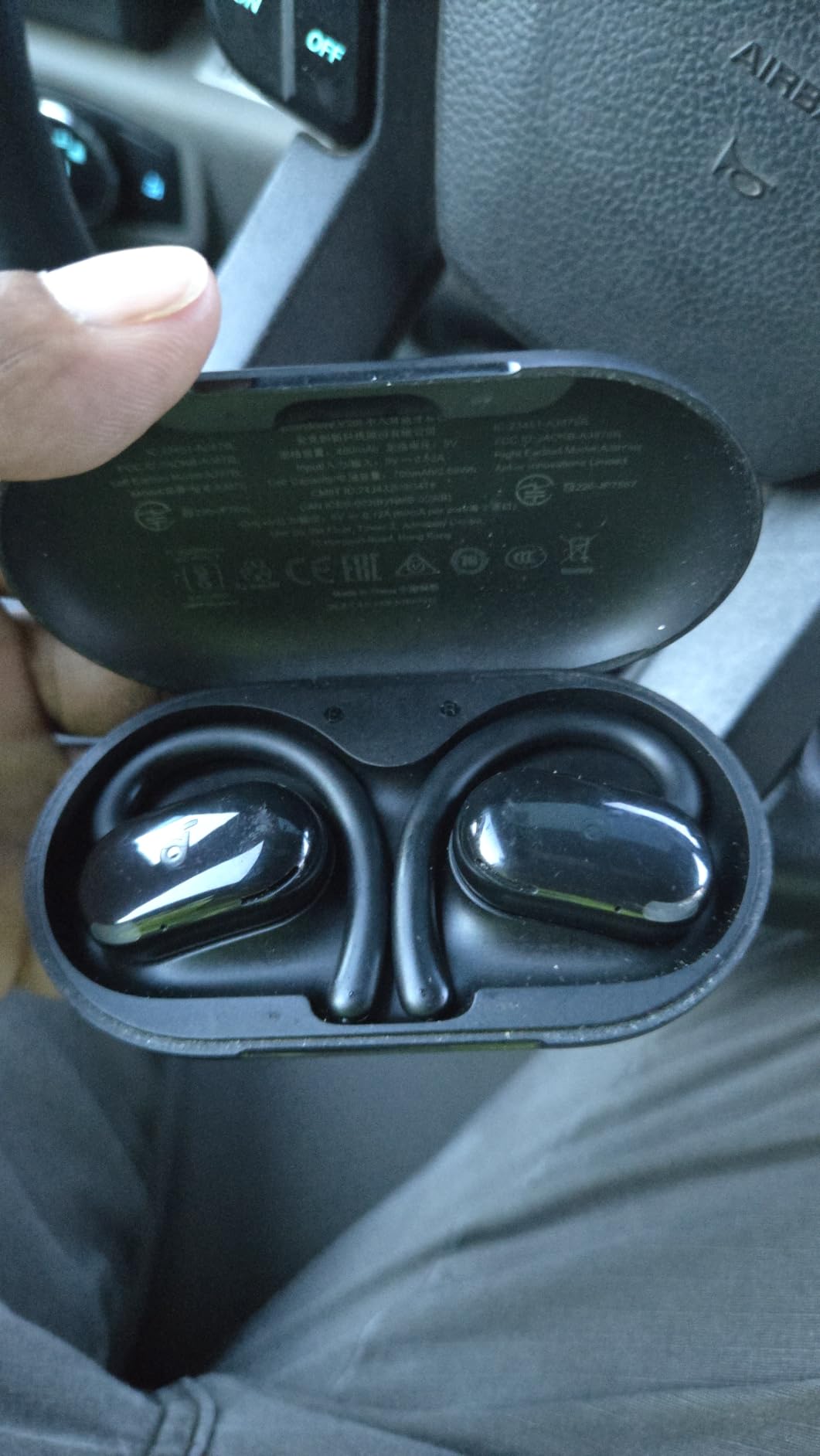
Most open-ear hooks come with a fixed angle, which is exactly the problem when your outer ear is small. The Soundcore V20i lets you rotate each bud through four positions until it sits correctly, and small-ear owners identify that adjustability as the main reason these stay on rather than sliding off mid-run.
The mechanism is a hook that wraps the top of the ear while the driver sits just outside the canal opening, angled inward. Nothing is inserted, so the fit question becomes geometry on the outside of the ear rather than pressure inside it, and the four positions give you enough range to find the angle your cartilage supports best.
16mm drivers and the BassUp algorithm
These carry 16mm titanium-coated dynamic drivers at 11 ohm, and BassUp processing pushes low end harder than most hook-style competitors of a similar class. That matters for the open-ear category, where bass is usually the first casualty of the design, and owners consistently rate the low end as better than they expected from a bud that does not seal.
It is still not a sealed low end. The 20Hz to 20kHz frequency range and the 4-mic array with AI enhancement make calls clear on a street, which is the practical benefit people with small ears notice most, since the microphone sits outside the ear and picks up ambient noise more evenly than an in-ear boom-less mic buried in a canal.
Positioning for small ears and glasses
Rotating through four positions solves a specific problem: an outer ear so small that a fixed hook rests on the edge of the tragus instead of anchoring in the bowl above it. The Soundcore V20i has enough adjustment range to clear both a very small ear and a pair of glasses, which is a combination few competitors in this set handle well.
Adjust the position once and it tends to hold. Users report wearing these through whole shifts and workouts without repositioning, though the touch controls are a weak point, with occasional misfires when you are moving quickly or brush against the bud.
Battery, build and warranty
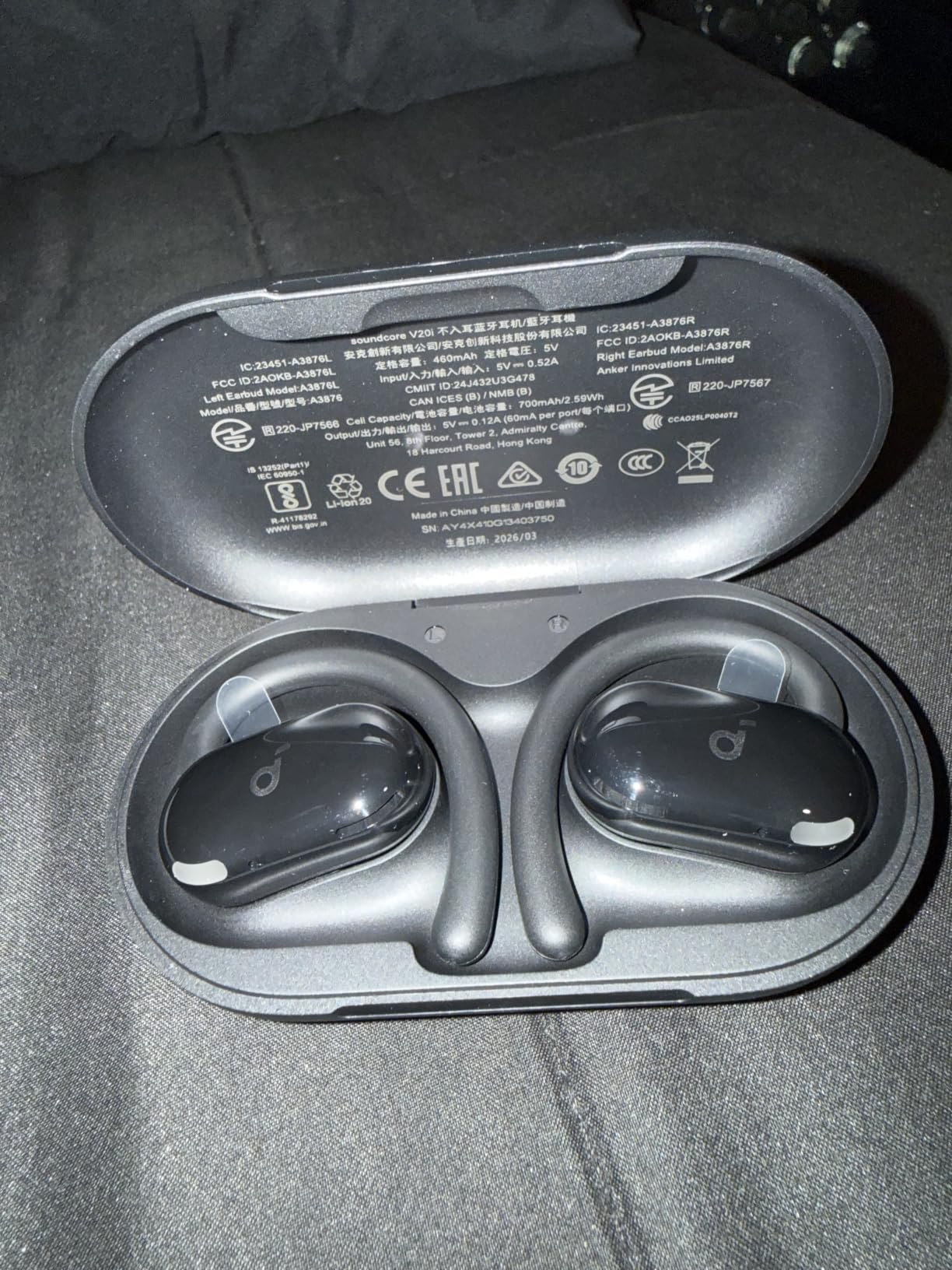
Battery life is 8 hours per bud and 36 hours with the case, which holds 700 milliamp-hours and reaches full charge in around 1.5 hours. Bluetooth 5.4 handles pairing and the range is not specified beyond the standard open-ear class, and the enclosure combines ABS, polycarbonate and thermoplastic elastomer.
Two features separate it from cheaper open-ear buds: an 18-month warranty from Anker, and tune-synced lights on each earbud that flash with the music. The lights are genuinely useful for running at dusk and meaningless in every other setting, so treat them as a preference rather than a feature to pay up for.
Who should skip it
Sound leaks in both directions, so this is not a good choice for listening to podcasts on a train or anywhere private listening matters. Without active noise cancelling, environmental noise is always present, and that is the deal you make for an ear that never gets touched.
4. JLab JBuds Mini – 3.3g Per Bud for the Narrowest Canals
JLab JBuds Mini True Wireless Earbuds, Bluetooth Multipoint, Charcoal Black
3.3g per earbud
5.5 hours per charge
20 hours with case
IP55 rated
+ Pros
- 3.3g per earbud and 30% smaller than the previous generation
- holds a secure seal through sweating and talking
- notched ear cushions retain third-party tips
- multipoint Bluetooth to two devices
- two-year warranty
- Cons
- Sound is mid-tier for the price
- 5.5 hours per bud is short
- weak Bluetooth range with dropouts
- touch controls can fire when pressed in bed
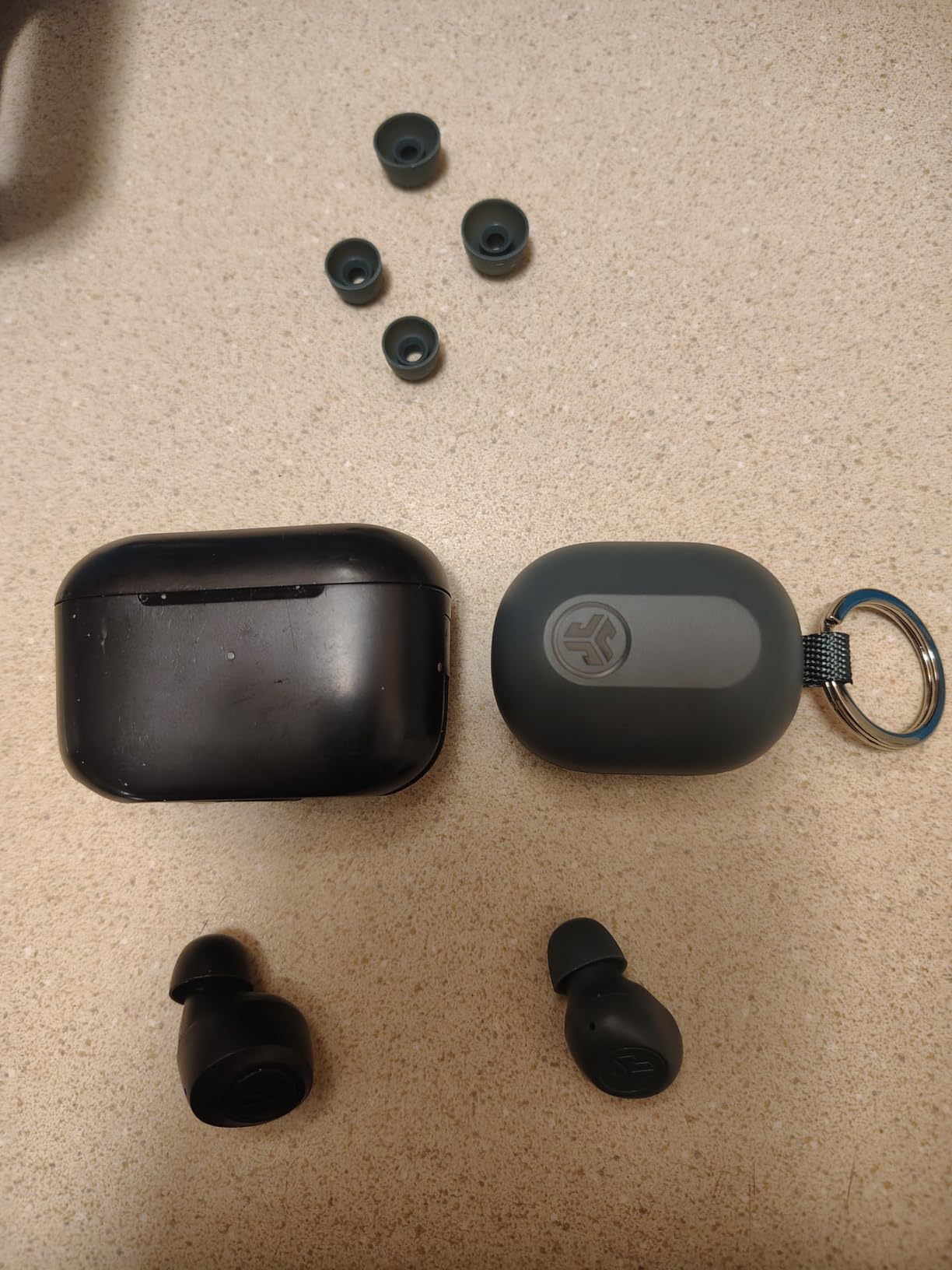
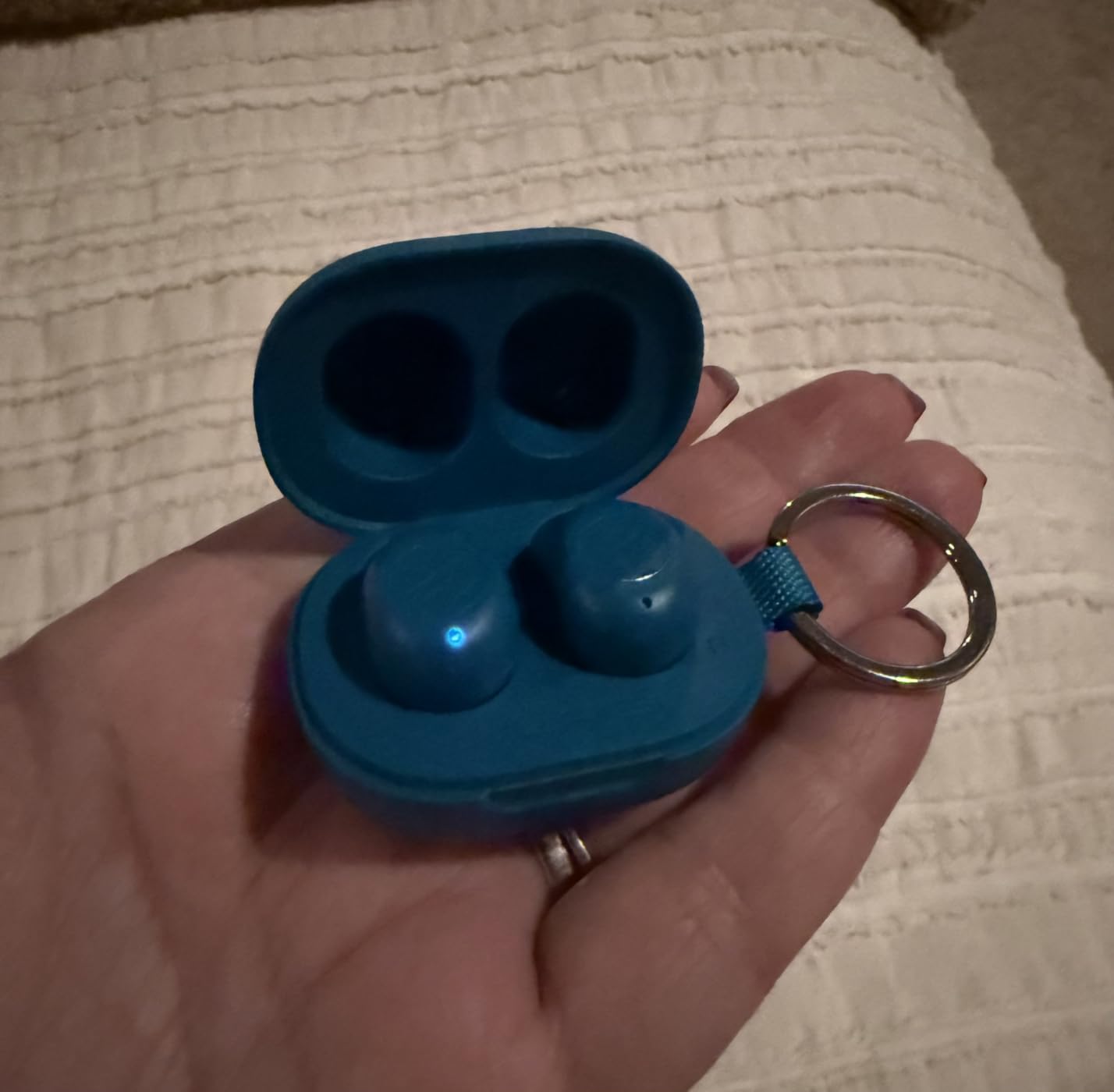
If your problem is canal bore rather than outer-ear size, the JLab JBuds Mini is the most direct answer in this list. At 3.3 grams per earbud and 30 percent smaller than the previous JLab generation, this is the smallest sealed design here, and owners with narrow canals report wearing it for hours without soreness.
Weight matters more than people expect. A light bud exerts less pressure against the canal wall, and over a long day that difference is the gap between comfortable and sore. The notched ear cushions also retain third-party tips, so if you want to experiment with a different tip material the housing will hold it rather than relying on friction alone.
Seal, sound and what you give up
The seal is secure enough that these stay put through eating, talking and sweating, which is a stronger result than most in-ears of this size manage. Passive isolation comes from that seal, and the 16-ohm drivers with 103 dB sensitivity produce a full-range 20Hz to 20kHz response.
Sound is consistently rated good for the price and clearly below premium brands, and that is the honest trade. At 4.2 stars across more than 7000 reviews, buyers are accepting modest audio quality in exchange for a fit that works and an app that lets them adjust it. Four onboard EQ presets, including JLab Signature, Balanced and Bass Boost, cover most preferences without external gear.
The JLab app and daily usability
The app is a genuine differentiator at this price. It remaps every touch control, adjusts the Be Aware ambient mode, and includes a safe hearing volume limiter, which is worth having if you use these for long sessions. Bluetooth Multipoint switches between two devices without re-pairing, and it works across Mac, iOS, Android and PC on Bluetooth 5.3.
The keyring-sized plastic case holds 20 hours of total charge, and the 5.5 hours per bud is the shortest single-charge figure among the sealed in-ears here. That matters for sleepers, and for anyone planning a long flight. For short commutes and daily calls it is fine, and the two-year warranty with fast brand-direct replacement is better coverage than most rivals in this list.
Who should skip it
Bluetooth range is weak, with dropouts when the phone is pocketed or across a room, and connection instability is reported with some smartwatches. The buds are also small enough to be easy to drop, and touch controls that fire when you press them in bed are a genuine problem for side sleepers, who should look at pick 10 instead.
5. MOZOTER Mini – The Lowest-Cost Route Into Small-Ear Earbuds
MOZOTER Mini Wireless Earbuds Bluetooth 5.3 in Ear Headphones Headsets
3.7g per earbud
10mm dynamic driver
8 hours plus 60 with case
Three tip sizes
+ Pros
- Only 3.7g per earbud
- described as fitting women and children comfortably
- three tip sizes included
- 60 hours total playtime
- auto-connect when the case lid opens
- Cons
- Entry-level sound and call quality
- touch controls less precise than physical buttons
- water resistance covers sweat and splashes only
- minimal brand support presence
The MOZOTER Mini exists because for a lot of people the first question is not quality, it is whether a usable pair of earbuds for small ears costs real money. At 3.7 grams per earbud with three tip sizes in the box, it answers that question quickly and without pretending to be something it is not.
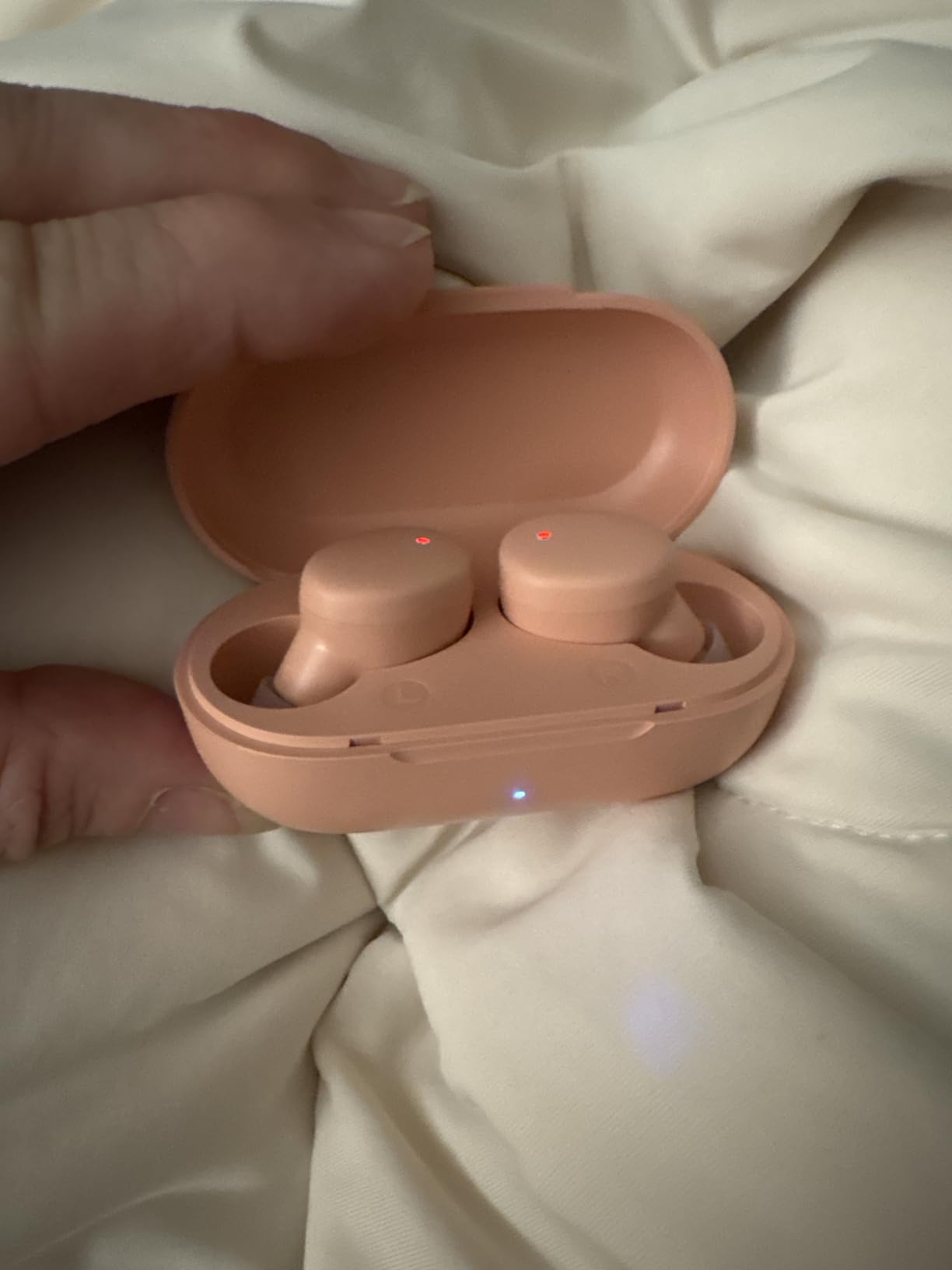
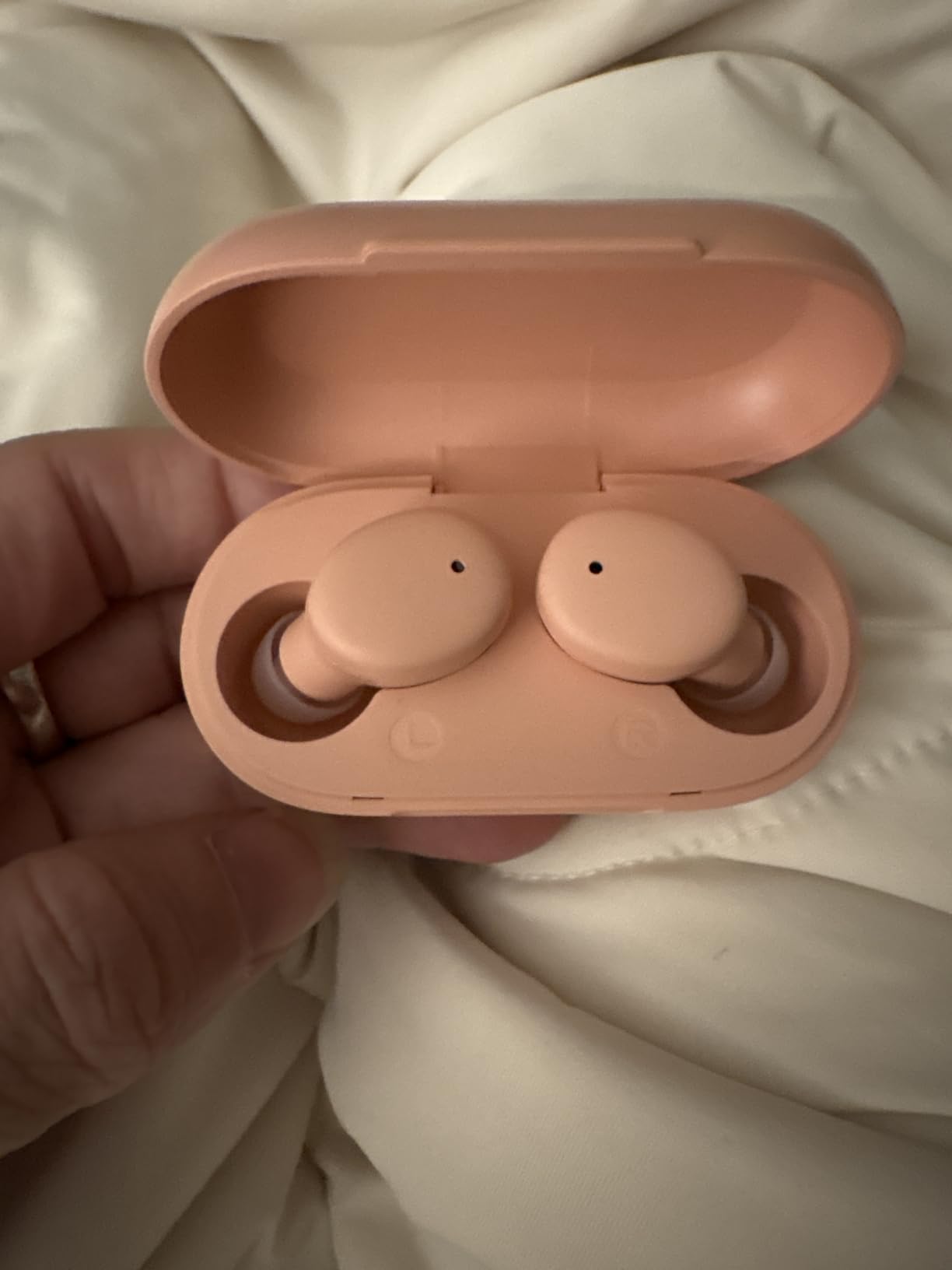
The fit story is simple. A rounded in-ear body at low weight, three ear-tip sizes, and a design buyers describe as comfortable for women and children with smaller canals. That is enough physical data to judge it against your own ear before you commit, which is more than most listings in this category offer.
What 10mm drivers and three tips actually deliver
The 10mm dynamic drivers produce punchy bass for the tier, though the tuning is entry-level and call clarity is the first thing you give up. At 16 ohm across 20Hz to 20kHz, this is music and podcast territory rather than a phone-call headset, and buyers tend to set expectations accordingly.
Three tip sizes is enough to find a seal if your canal is narrow, but not enough to fine-tune. If the smallest included tip is still snug, you will need to source a smaller tip separately, and there is no notch-retained cushion here to hold a third-party sleeve as firmly as on the JLab JBuds Mini.
Battery and connectivity
Battery life is 8 hours per bud and 60 hours total with the case, which is the highest total figure in this roundup. Bluetooth 5.3 with a listed range of 50 metres is generous on paper, and auto-connect when the lid opens is a small convenience that makes the pair feel less cheap than the entry-level sound suggests.
Water resistance is rated for sweat and splashes rather than immersion, so these are fine for the gym and a run in light rain but not for swimming. The silicone enclosure and 48-gram listed weight keep the package light, and the one-year warranty is thinner than the two-year terms at JLab and SHOKZ.
Who should skip it
Support is the real gap. Buyers with defective units have a much thinner path to a replacement than they would with Anker, JLab, TOZO or SHOKZ, and that is the tradeoff for the low price. Touch controls are also less precise than physical buttons, so it is a poor choice if you wear gloves or work with sweaty hands, which points toward pick 8.
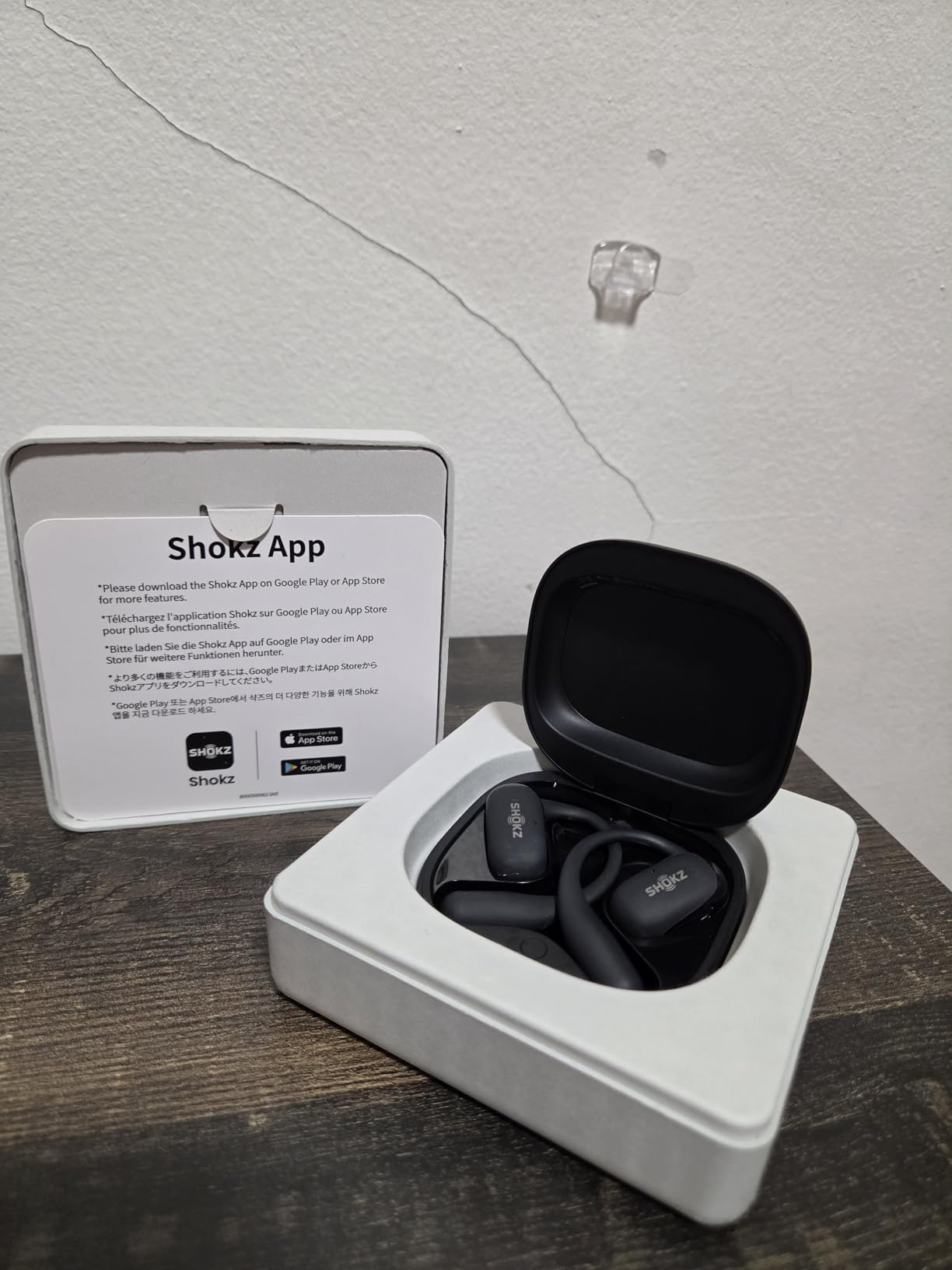
6. SHOKZ OpenFit 2 – Alloy Earhooks and 11 Hours Per Charge
SHOKZ OpenFit 2 Open-Ear Earhook Bluetooth Earbuds, Black,48H Playtime
9.4g per earhook
11 hours per charge
48 hours with case
IP55 rated
+ Pros
- 9.4g nickel-titanium earhooks contour to the ear for an all-day fit
- DualBoost drivers with OpenBass 2.0 give fuller bass than bone-conduction rivals
- 11 hours per charge and 48 with the case
- physical multifunction buttons
- two-year warranty
- Cons
- Open-ear design leaks sound
- bass will not match sealed in-ear buds
- costs more than every other open-ear option here
- no active noise cancelling
The SHOKZ OpenFit 2 is the premium option in this roundup, and the difference shows most clearly in battery life. Eleven hours per charge and 48 hours with the case is more than double the sealed in-ears here, which makes it the one open-ear pick that reliably survives a full working day without a midday case.
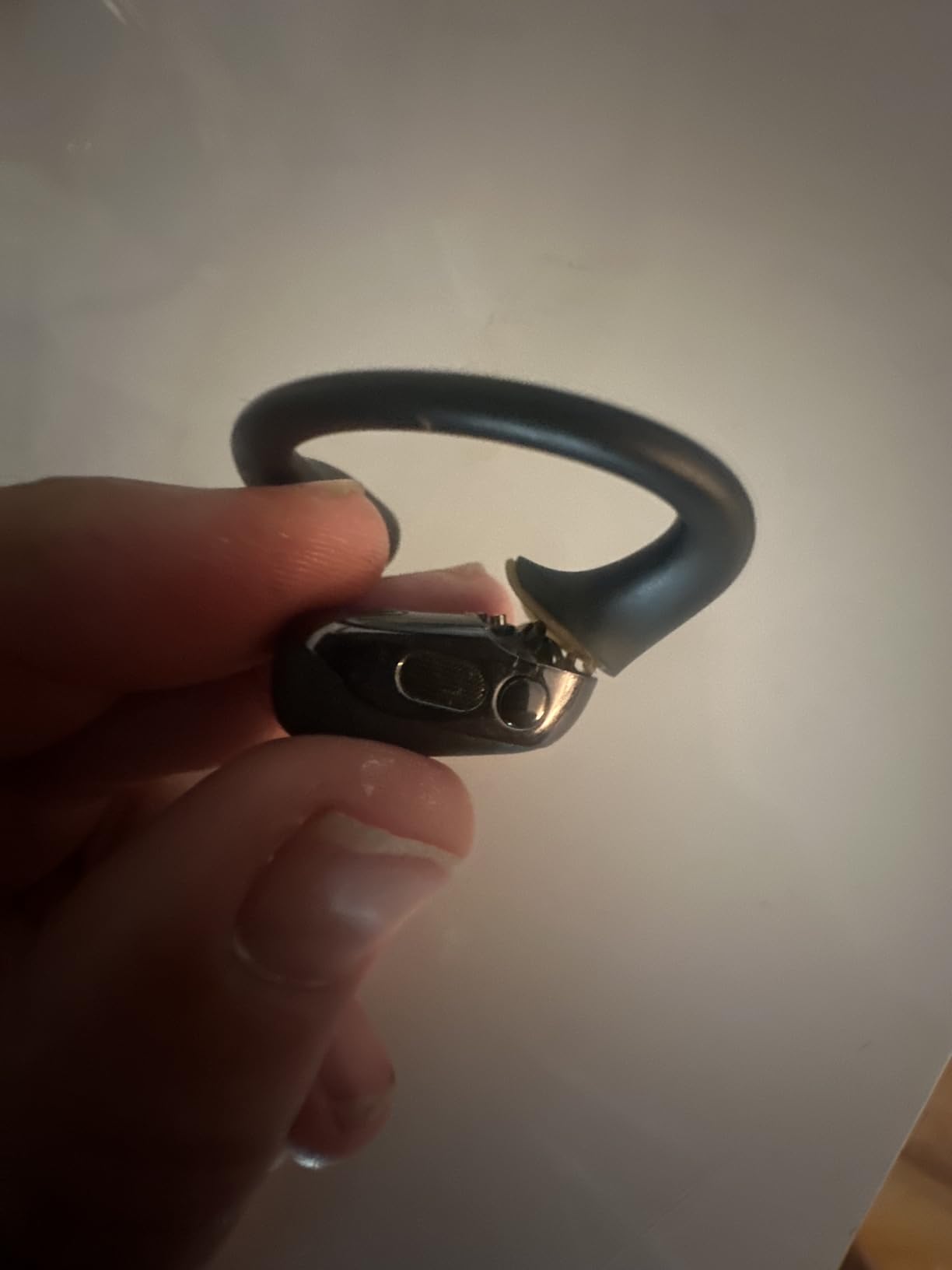
Fit comes from 9.4-gram earhooks made of nickel-titanium alloy, a shape-memory material that contours to the curve of the ear and holds that contour once formed. There is no canal contact whatsoever, and the hook wraps rather than presses, which is why owners report an airy fit they forget they are wearing.
DualBoost drivers and OpenBass 2.0
These use a hybrid driver design with DualBoost composite drivers and an OpenBass 2.0 algorithm. The intent is to close the gap with bone-conduction headsets, which have traditionally sacrificed low end to avoid the transducer bulge, and owners broadly agree the result is fuller than bone-conduction alternatives without needing a rigid pad on the cheekbone.
DirectPitch 2.0 works on the same principle, angling the sound toward the ear to reduce how much of it spills into the room. It helps, but it does not make the design private, and anyone listening to audio in a shared space should pick a sealed in-ear instead.
Battery, buttons and daily handling
A ten-minute quick charge adds 2 hours, which is the difference between making it through a long journey and not making it. Physical multifunction buttons handle volume, track skipping and calls, and the Shokz app customises them along with EQ. Multipoint pairing switches between two devices, Bluetooth 5.4 reaches roughly 33 feet, and the silicone and polycarbonate build carries an IP55 rating for sweat and rain.
Call handling uses dual noise-cancelling microphones, which matters because the microphone is exposed on an open hook and picks up wind and street noise. The 2-year warranty is the longest in this group, and the 71.8-gram total weight with a 53-gram case makes it one of the heavier packages here, so it is less convenient to carry than the pocket-sized JLab case.
Who should skip it
There is no active noise cancelling, so this is not an isolation tool, and the bass still will not approach a sealed in-ear. It is also the highest-ticket product in this roundup, which is a hard sell for anyone whose budget is the main constraint. If you only need one pair and battery endurance is not your problem, the Soundcore V20i covers the same ground for far less.
7. King Lucky Clip-On Gen 3 – Built Around Glasses and Small Ears
King Lucky Clip-On Earbuds Gen 3, Open-Ear Wireless Bluetooth 6.0 Headphones with Mic, Secure Fit for Small Ears & Glasses Wearers, 50H Playtime, ENC, IPX5 Waterproof Sport Ear Buds (Purple)
5.2g per earbud
13mm dynamic drivers
7 hours per charge
50 hours with case
+ Pros
- Extended slim earhooks sit on the outer ear with no canal pressure
- 5.2g per earbud in skin-friendly silicone
- works with glasses and leaves the canal free
- 13mm drivers with clearer vocals than earlier generations
- detachable cable
- 1-year warranty
- Cons
- Clip grip can feel loose and need repositioning
- some feel behind-ear pressure on smaller ears
- no active noise cancelling
- weaker bass than in-ear buds
- case can struggle with oversized third-party tips
The King Lucky Clip-On Gen 3 is explicitly designed around the two complaints that dominate this category: ear pressure and slipping. The third generation made the hooks longer, lighter and thinner specifically to fix the pressure and instability its predecessors had, and the reviews reflect that the redesign landed.
At 5.2 grams per earbud with a breathable open structure, the mechanism rests on the outer ear and never enters the canal. That leaves the ear free for earrings and accessories, which several buyers with cartilage piercings single out as the reason they can actually wear earbuds at work.
Glasses compatibility and the hook geometry
The extended slim earhooks are engineered to sit alongside spectacle arms rather than fighting them for the same strip of cartilage. For anyone who wears glasses from morning to evening, that single design decision removes the conflict that pushes most hook-style open-ear buds into a pocket.
The tradeoff is grip. Owners describe the clip as clamping loosely enough that it may need repositioning, and some report behind-ear pressure after extended wear on smaller ears, since a small ear gives the hook less surface to hold. Test the fit with something on your face the way you normally wear it.
13mm drivers, calls and durability
Upgraded 13mm dynamic drivers with directional acoustics give clearer vocals and more bass than earlier clip-on generations, and dual-mic ENC keeps calls usable on a commute. The 16-ohm rating across 20Hz to 20kHz is unremarkable, but the tuning skews toward clarity rather than low end, which suits spoken content.
Durability is the standout in the reviews. Owners report these surviving abuse well beyond what the price would suggest, including a trip through a washing machine. Bluetooth 6.0 with a listed range of 33 feet and IPX5 water resistance cover sweat and rain, and the detachable cable is a rarity that extends the usable life of the product.
Battery and who should skip it
Seven hours per charge with 50 hours total across the case is competitive, though real-world runtime is often shorter than the headline figure. There is no active noise cancelling, and bass will not compete with a sealed in-ear, and the case has been reported to struggle when a bud carries an oversized third-party tip, which is a real problem for anyone planning to customise fit.
Skip it if your outer ear is very small, since behind-ear pressure and a loose grip are the recurring complaints. In that case the memory titanium clip in pick 8 is designed to adapt to the ear shape rather than rely on a fixed hook.
8. Soundcore C50i – Memory Titanium Clip That Stays Put
Soundcore C50i by Anker Open Ear Earbuds, Clip On Earbuds, Clip Headphones
Memory titanium FlexiClip
12mm custom drivers
28 hours with case
Physical push buttons
+ Pros
- Memory titanium FlexiClip adapts to different ear shapes for a secure hold
- leaves the canal completely free with no pressure
- identical physical push buttons on both buds
- 12mm drivers with bass reviewers rate above bone-conduction rivals
- 33.5g case
- IP55 rated
- Cons
- No in-ear detection so no auto-pause
- microphones handle wind poorly on calls
- occasional one-second connection dropouts
- clip position cannot be adjusted
- 8 hours per charge
- app described as buggy
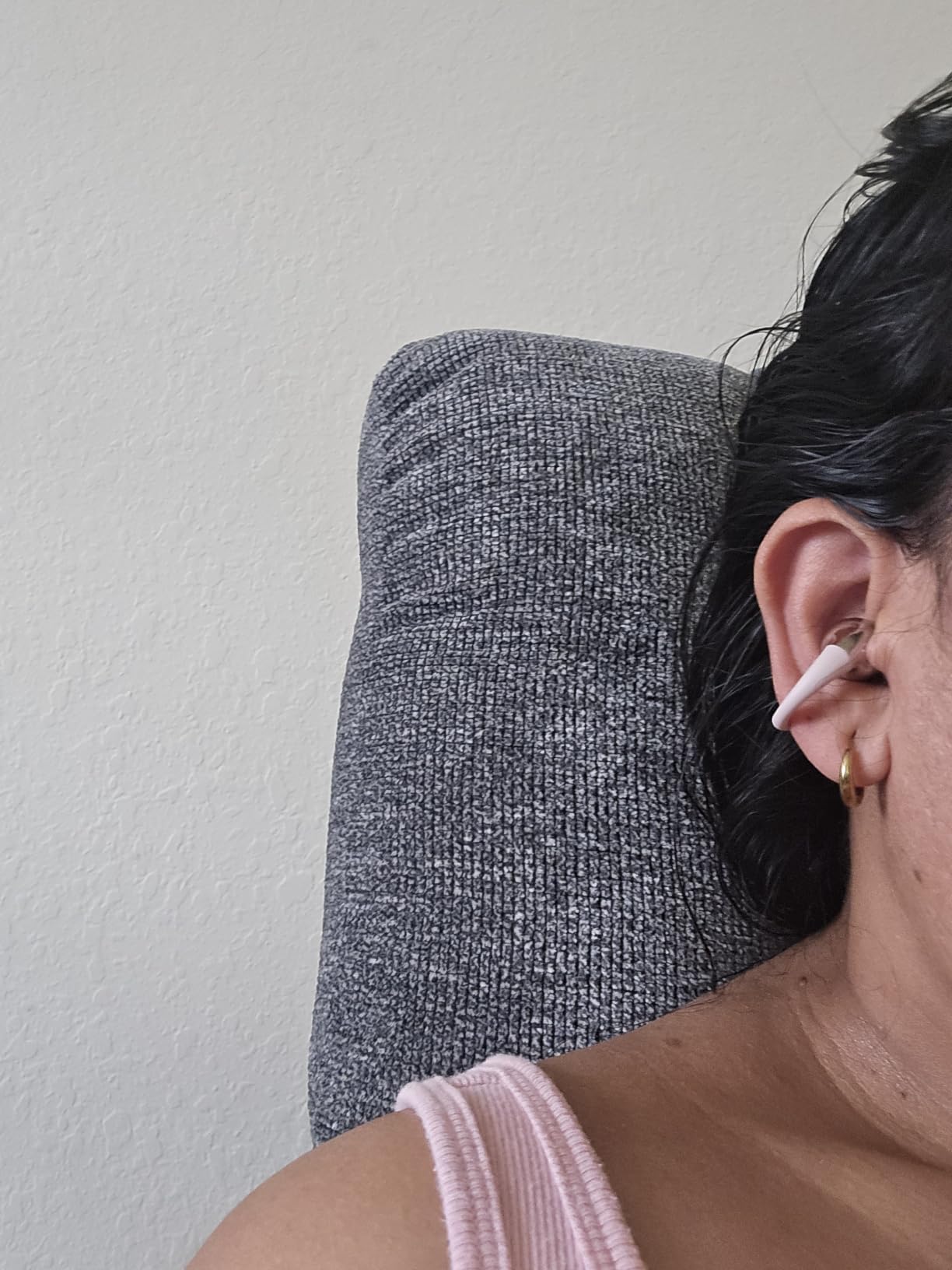
The Soundcore C50i is the pick I trust most to stay on an ear that has rejected everything else. The FlexiClip is made from memory titanium, a material that takes the shape of whatever it is pressed against, so the clip forms around a small outer ear instead of resting on a curve it was not cut for.
Reviewers repeatedly describe this as the first clip-on that actually holds on their ear, and small-ear owners in particular credit the material choice and the total absence of canal pressure. Nothing is inserted, so there is no insertion angle to get wrong and no soreness to manage.

Physical buttons and why they matter
Both buds carry the same push button, which means there is nothing to memorise about left and right functions and no risk of a mis-touch when hair, a hat or movement brushes the housing. For running and gym use with sweaty hands, that is a real usability difference against every touch-controlled product in this roundup.
The compromise is that push buttons take more deliberate pressure than a capacitive tap, so you cannot jab them mid-stride without thinking about it. For most people that is a fair trade, and for anyone working with gloves it is the only workable option here.
Sound quality and call behaviour
Custom 12mm drivers with 86dB maximum output deliver bass that reviewers repeatedly rate above bone-conduction headphones in the same class, and the open design keeps ambient sound present by design. The AI-enhanced microphones filter background noise on calls, though wind remains the weak point and several users report difficulty taking calls on a breezy run.
Occasional one-second dropouts on a single bud are reported, and there is no in-ear detection, so no auto-pause when you remove a bud. Bluetooth 6.0 supports two-device switching, and IP55 handles sweat and rain over months of running without complaint.
Battery, case and who should skip it
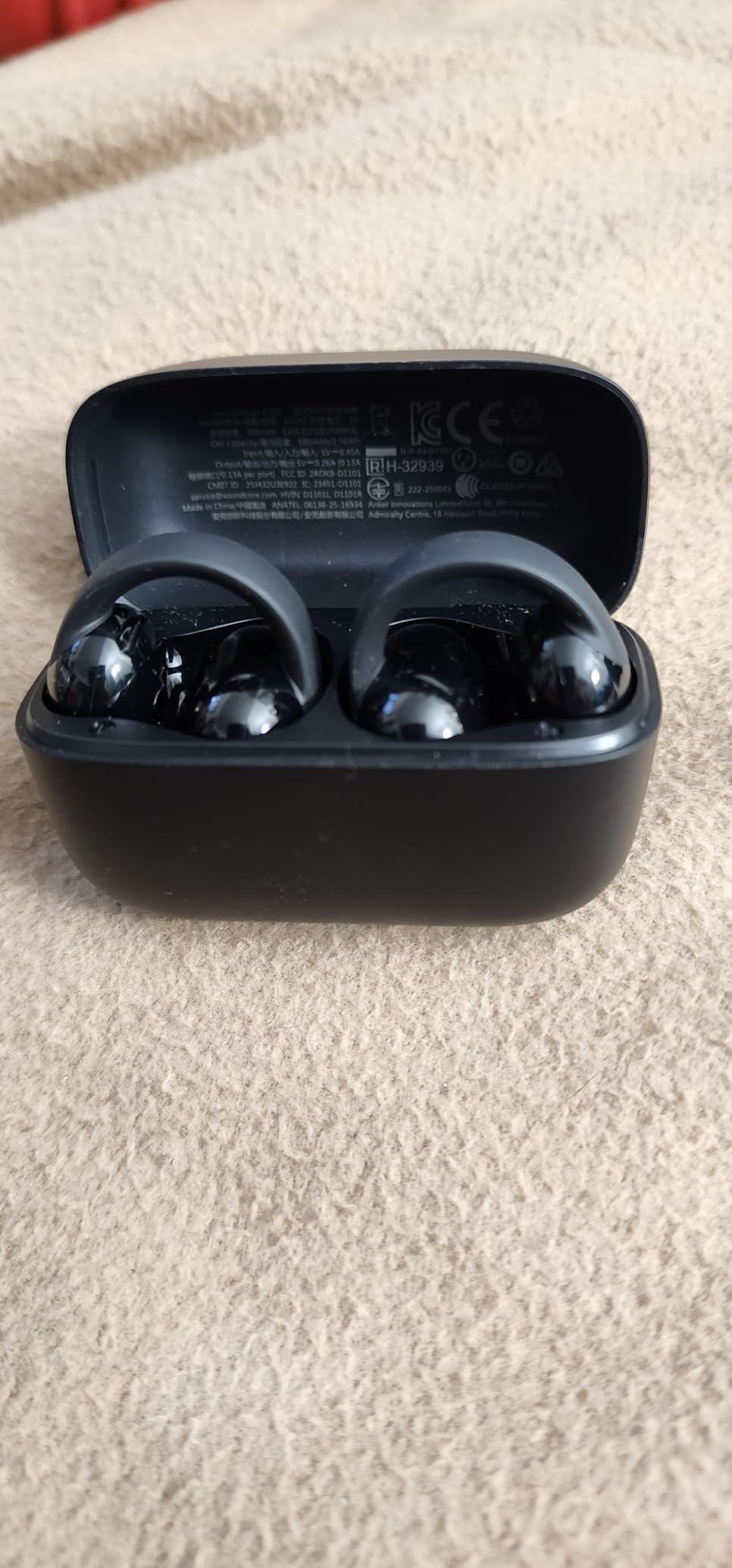
Eight hours per charge and 28 hours with the case, which holds 580 milliamp-hours and charges in about 2 hours. The 33.5-gram case measures 6.2 by 3.1 by 4.15 centimetres and fits in a pocket, unlike the bulkier full-band open-ear designs, though the plastic build draws complaints from buyers who expected more at this level.
Skip it if you rely on auto-pause when a bud comes out, or if calls are a primary use case and you run outdoors in wind. The clip position also cannot be moved in or out, so if the default angle does not suit your ear you should test before buying, and the Soundcore app is described as somewhat buggy by owners.
9. OHAYO T10 – 8g Hooks With Quad 15mm Drivers
OHAYO Open Ear Headphones,Over Ear Earbuds with Ergonomic Earhook,Bluetooth Headphones 5.4 with Smart Digital Display,40H Playtime,IPX6 Waterproof,Touch Control Operate Fit Cycling,Running,Workout
8g per earbud
Dual 15mm drivers per side
IPX6 rated
10 hours plus 40 with case
+ Pros
- Only 8g per earbud with no canal friction on long wear
- dual 15mm drivers per earbud with a dedicated amplifier chip
- IPX6 water resistance for sweat and heavy rain
- digital display case shows remaining power
- single multi-function button keeps controls simple
- Cons
- No active noise cancelling
- touch controls are finicky to trigger
- 10 meter Bluetooth range is short
- bass is present but not deep
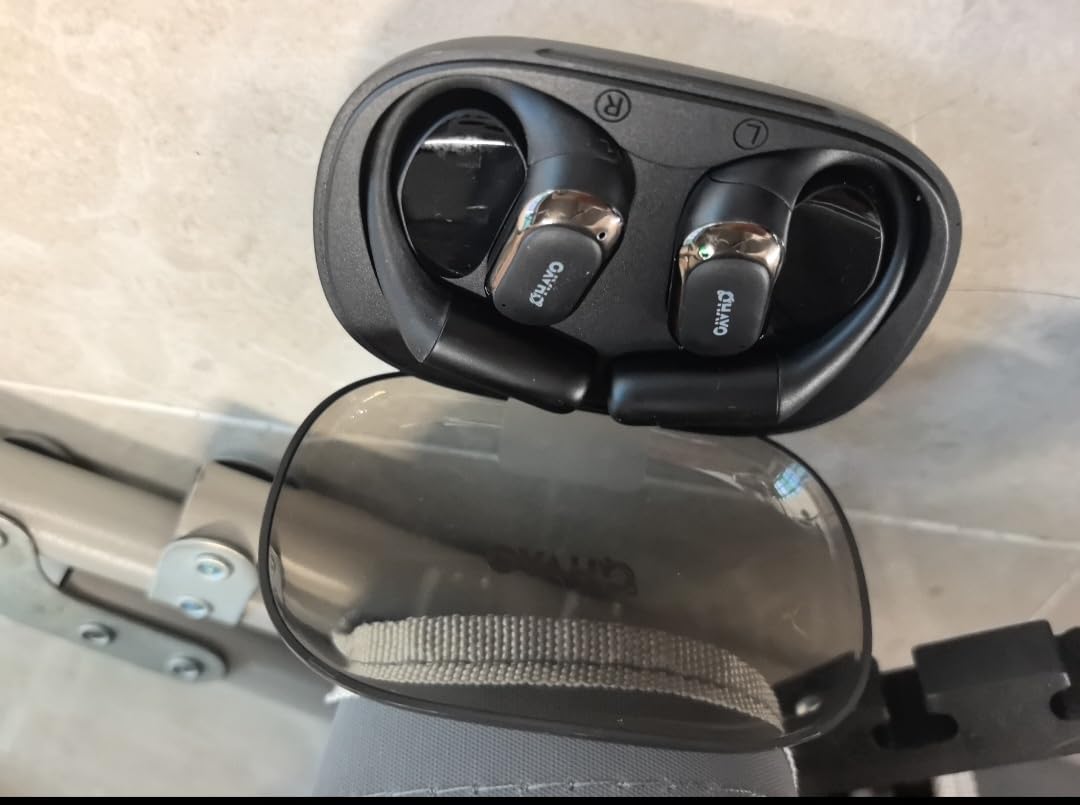
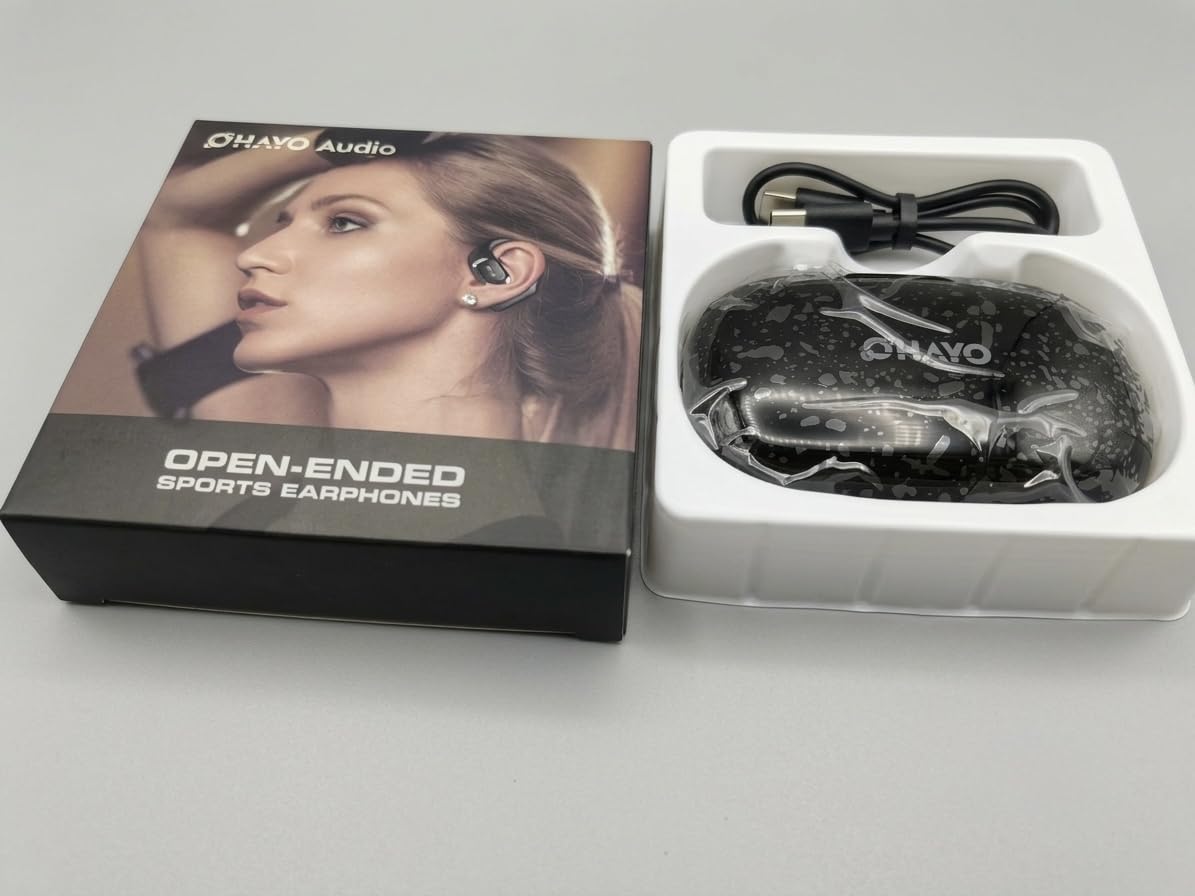
The OHAYO T10 is built for the gym rather than the office, and the specification that sets it apart is IPX6 water resistance, one step above the IPX5 rating carried by most of the other open-ear picks here. Small-ear owners highlight the 8-gram weight and the complete absence of canal contact, which means a sweaty workout leaves nothing uncomfortable behind.
The hook design is rigid and ergonomic, holding position through intense movement where a softer clip can bounce loose. Nothing touches the canal, so this is another valid answer for people whose ears are too small or too sensitive for in-ear designs at all.
Quad speakers and 15mm drivers per side
Each earbud carries dual 15mm dynamic drivers with a dedicated amplifier chip, which is among the largest driver configurations in this roundup. Positioning them toward the canal rather than straight out improves perceived volume and gives a fuller presentation than most budget open-ear designs, and owners rate the sound and bass as better than expected for the category.
It is still an open ear, so isolation is effectively zero and bass is present rather than deep. The 16-ohm rating and 20kHz frequency response are ordinary numbers, and the improvement comes from driver size and placement rather than from processing.
Battery, case and control simplicity
Ten hours per charge and 40 hours total, with a 500 milliamp-hour case that charges in about an hour and includes a digital display for remaining power. 10 metres is a short listed range, so expect a dropout if your phone is in a back pocket and you are moving.
Controls are a single multi-function button per side for calls and playback, but they are touch-operated and finicky to trigger reliably, which is a notable step down from the physical buttons on the Soundcore C50i. The one-year warranty is the shortest in this group.
Who should skip it
If your phone spends time in a pocket during activity, the 10-metre Bluetooth range will frustrate you, and if you are sensitive to accidental touches, this is the wrong control scheme. There is no active noise cancelling and no physical button fallback, so for anyone who needs reliable inputs during intense workouts, pick 8 is the stronger run partner.
10. JLab Flex – Tip-Free Cuff for Side Sleepers
JLab, Flex, Open Ear Earbuds, Clip On True Wireless Bluetooth Earbuds, Teal
Tip-free cuff design
12mm open-ear speakers
7 hours plus 32 with case
IPX4 rated
+ Pros
- Clip-on cuff wraps the outer ear with no ear tips and no canal pressure
- stays on through bending and running
- works as a pair or individually
- can be worn while side-sleeping
- mic quality is praised for noisy calls
- two-year warranty
- Cons
- Weakest Bluetooth range in this roundup with dropouts and popping
- lower maximum volume than sealed in-ears
- on-ear clip can slip down over time
- touch controls confuse new users
- no physical buttons
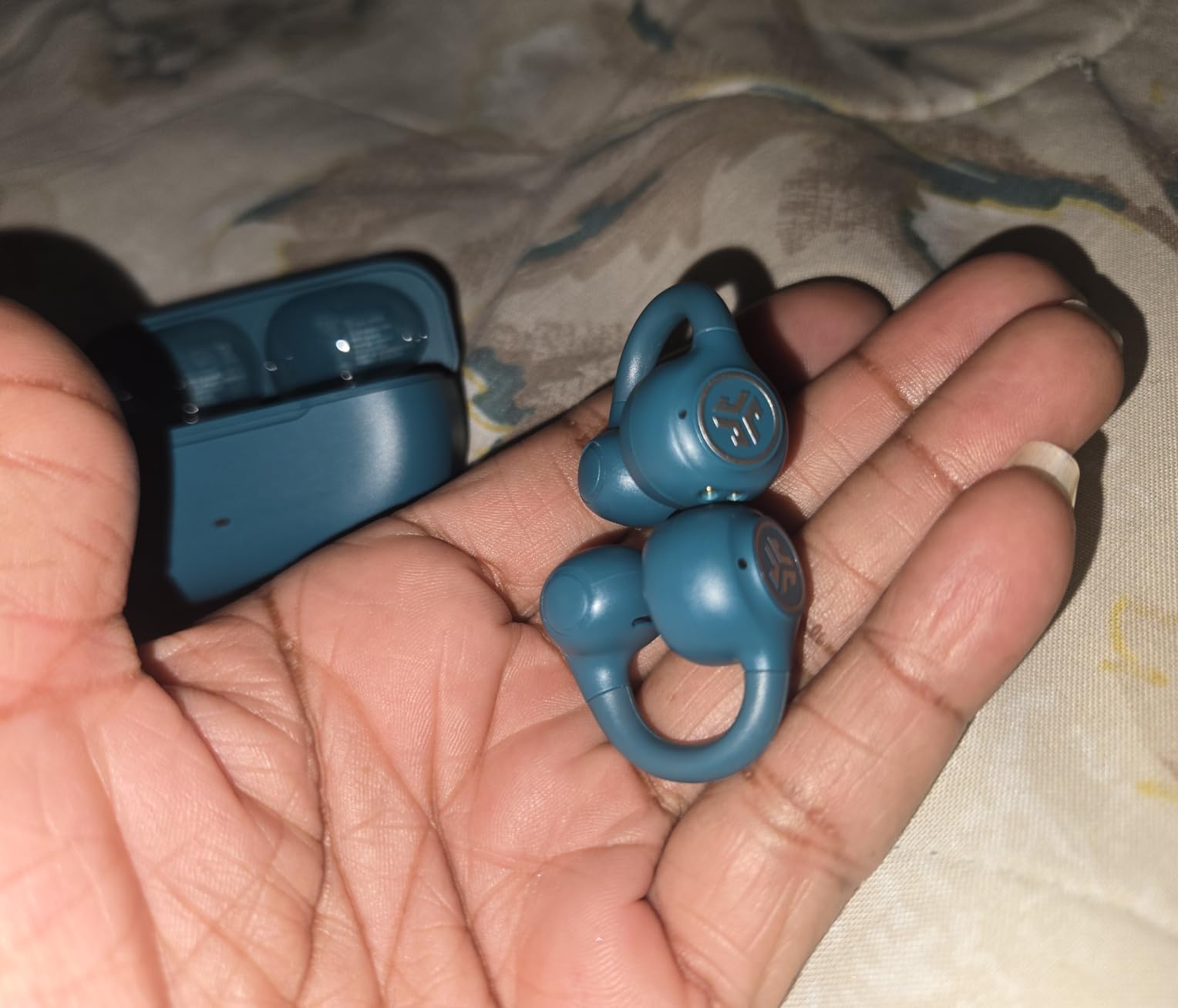
The JLab Flex is the only design here with no eartip of any kind. A soft cuff wraps the outer ear, so there is nothing inside the canal to press against a pillow when you sleep on your side, which is the reason people with small ears reach for a cuff in the first place.
Owners who cannot wear in-ears describe the cuff as staying put all day with zero canal pressure, and the thermoplastic elastomer construction is soft at the contact points. It also works as a pair or a single unit, so you can wear one bud without creating an imbalance.
12mm open-ear speakers and app control
Dual 12mm open-ear speakers with a bass boost algorithm give more bass than the price suggests, though maximum volume is lower than sealed in-ear buds, so the sound falls off unless the speaker sits close to the canal opening. Positioning is the tuning control you have here rather than an equaliser.
The JLab app handles EQ and touch customisation, including turning touch control off entirely, which is a genuinely useful option for anyone who sleeps in them. Clear call mics are praised in noisy settings, and the two-year warranty matches the best in this roundup.
Battery and the connection problem
Seven hours per bud and 32 hours with the case, charging over a full 7 hours. Bluetooth Multipoint and Fast Pair connect two devices on Bluetooth 5.3, and the 12-ohm impedance is the lowest here.
The dominant complaint, appearing across many reviews, is Bluetooth stability: dropouts, buds going out of sync and popping, especially with the phone in a pocket. If you already have a spotty connection history, this is the product in the roundup most likely to reinforce that problem, and the Soundcore V20i in pick 3 is more stable.
Who should skip it
Skip it if you need loud playback in a noisy environment, since a cuff cannot project enough volume without an ear canal behind it. The on-ear clip can also slip down over time, making audio quieter, and the touch controls are confusing for first-time users and sometimes reset to defaults. At 4.1 stars it is the lowest-rated product here, and the fit reasons are still sound.

How to Buy Earbuds for Small Ear Canals
Most advice on this topic stops at swapping to a smaller eartip, and for a large share of buyers that is the wrong instruction. Before you pick a size, work out which of the two constraints you are actually hitting, because the fix is different in each case.
Measure two things, not one: canal bore and concha depth
Ear canal bore is the internal width of the canal itself, and it sets how narrow the housing and eartip barrel have to be for you to insert anything at all. Concha depth is the depth of the outer ear bowl, and it sets how far a bud can sit before it protrudes and gets levered out by movement.
These fail independently. A bud with a narrow barrel can still be too fat to sit in a shallow concha, and a shallow-fitting bud can still have a barrel too wide for a narrow canal. The complaint that a bud sticks out too far and is then guaranteed to fall out is a concha problem, and no tip swap fixes it. Only weight and housing profile address it, which is why the per-bud weights in this roundup matter more than the tip sizes.
Use the tip ladder properly instead of guessing once
Start at the smallest tip in the box, work up one size at a time, and stop when the seal holds without pressure. Silicone tips keep their shape and feel immediate, while foam tips expand slowly to fill an uneven canal and give a better seal at a smaller diameter, so foam is often the better answer for a genuinely narrow canal.
For depth, multi-flange tips grip a wider section of canal and resist falling out, but they need an adjustment period and some people find them uncomfortable at first. Whatever you choose, a seal is what governs both isolation and perceived bass, so a properly fitted small tip beats a badly fitted large one every time.
Why smaller tips cannot rescue an oversized housing
Here is the expensive mistake worth avoiding: buying a large-bodied bud and planning to make it work with a tiny tip. The tip is the soft interface; the housing is the rigid body behind it. If the housing is too thick, it rests on the tragus and the concha rim, and the tip never reaches the canal wall, so there is no seal no matter how small the sleeve is.
That is why the products here with genuinely narrow barrels, like the Back Bay Audio Mini and the JLab JBuds Mini, are the right purchases for narrow canals, and why an open-ear design is the honest alternative when nothing fits. If you can only describe your problem as they are too big for my ears, the housing is the thing to change.
Decide between wireless and wired by battery reliability
Wireless is the obvious default, but a single charge rarely survives an overnight session. Per-bud figures in this roundup run from 5.5 hours on the JLab JBuds Mini to 11 hours on the SHOKZ OpenFit 2, and the case reserve is only as good as the case. If you plan to sleep in them, size the battery to the night, not the commute.
Wired earphones sidestep the battery question entirely and tend to be the easiest to size for small ears, since the housing is small and the cable can exit at an angle that clears the concha. The catch is that a cable exiting straight out of a small ear is uncomfortable to lie on, so for side sleeping the cable routing matters as much as the barrel diameter. Open-ear designs remove the problem altogether, which is why they dominate this roundup for sleep.
Filter for the durability and support terms you will actually use
Water resistance is the number that matters if you run or lift: IPX5 covers sweat and rain, IPX6 in pick 9 is more generous, and the IPX7 rating on pick 1 is the most protective on paper, though the manufacturer still says not to swim with them. Warranty length varies from one year to two, and support responsiveness varies more than the warranty terms, with brands that replace defective units directly generally receiving better reports than ones that ask buyers to troubleshoot first.
For anyone buying for a child or a teenager, treat the weight and tip-size spread as the deciding factors rather than the feature list, and expect to change tips as ears grow. Start with a pair that ships an XXS or small tip and a housing that sits flush, since a child who has to fight an earbud will simply stop wearing it.
Frequently Asked Questions
Which earbuds do not go inside your ear canal?
Open-ear hook designs, earclip cuffs and clip-on rings never enter the canal. In this roundup the TOZO OpenEarRing, Soundcore V20i, SHOKZ OpenFit 2, King Lucky Gen 3, Soundcore C50i, OHAYO T10 and JLab Flex all rest on or around the outer ear. They trade isolation and bass for zero pressure, which is why they suit very small or sensitive canals.
Why do my ears seem too small for earbuds?
Usually two separate constraints. A narrow ear canal bore blocks the housing barrel, while a shallow concha leaves no bowl for the bud to sit in, so it protrudes and levers out. Most online advice assumes a tip-size problem, but if a bud sticks out past the outer ear, the housing itself is too large and only a smaller-bodied or open-ear design will fix it.
What is the smallest earbud size?
Size is published two ways: per-bud weight and tip bore. The lightest sealed in-ear buds here weigh 3.3g per earbud for the JLab JBuds Mini and 3.7g for the MOZOTER Mini, while the lightest open design is the TOZO OpenEarRing at 5.1g. Tip bore is rarely published by manufacturers, so check whether XXS or XS tips are included before buying.
Do earbud sizes really matter for fit?
Yes, but only in the right order. Tip size determines whether you get a seal, which governs isolation and bass. Housing size determines whether the bud can sit in the ear at all and whether it falls out. Most of the best earbuds for small ear canals here solve both at once, with several tip sizes in the box so you can climb the ladder one step at a time.
How do I stop earbuds falling out of small ears?
Start with the outer ear, not the canal. If a bud protrudes beyond the concha it is levered out by any movement, so choose a design that sits flush or does not enter the ear at all. Then test the seal: the smallest tip that holds without pressure beats a larger one that is only comfortable for ten minutes. Adjustable and memory-metal clips help because they adapt to the shape of a small ear.
Which Earbuds Should You Buy for Small Ears
If you want sealed sound and a real in-ear seal, buy the Back Bay Audio Mini. It is the only pick here built specifically around small ear canals, with a slim flush housing, an 8mm dynamic driver and six ear-tip sizes, and it is the choice I recommend without qualification.
If your ears reject anything inserted, or you wear glasses all day, move to the open-ear side. The TOZO OpenEarRing is the most comfortable option at 5.1g per earbud with contours that clear spectacle frames, the Soundcore C50i is the one most likely to stay on through a workout thanks to its memory titanium clip and physical buttons, and the SHOKZ OpenFit 2 wins on battery life at 11 hours per charge with a two-year warranty.
For side sleeping, the JLab Flex has no tips at all. For the lowest-cost way to find out whether a small in-ear works for you, the MOZOTER Mini is 3.7 grams per bud with three tip sizes. Whichever you choose, judge the housing before the tip, because that is the part that decides whether the earbud stays in your ear or ends up on the floor.