
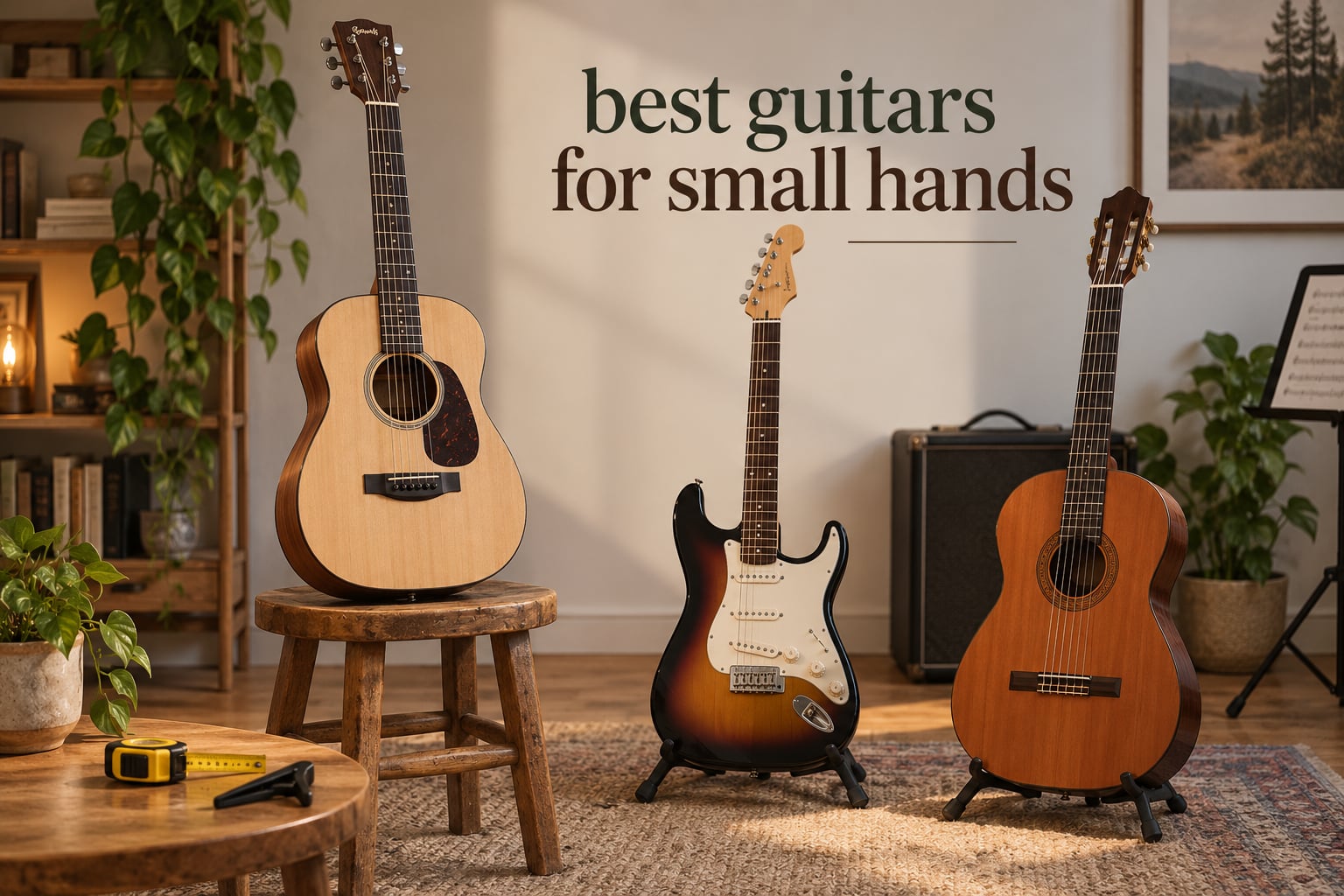
If your hands are small, the fix is not a smaller guitar body. It is a shorter scale length, a narrower nut and a slimmer neck profile. I spent several weeks sitting with all twelve instruments in this roundup, checking fret spacing, nut width and how each one felt after twenty minutes of chord changes rather than the first minute of excitement. This guide covers the best guitars for small hands in 2026, from a complete beginner kit to a solid-body electric and a nylon-string classical that will not make your fingers sore.
Here is the short version. The Pyle 3/4 beginner kit takes the crown because the 22.8 inch scale asks little of a small hand and every accessory a starter needs arrives in the box. If you want one brand with a large owner base, the Yamaha JR1 is the safer buy. If you play electric, the Ibanez RG MiKro is the only instrument here with a genuinely short 22-inch scale.
A word on framing. Small hands are a real ergonomic variable, but they are not a talent ceiling. On the forums I read while researching this, the recurring small-hand player view was that hand size matters far less than beginners expect, and that trying a few guitars in person beats any spec sheet. That said, an ill-fitting instrument causes pain, muted notes and posture strain, and those are fixable today.
Our Top 3 Tested Guitars for Small Hands

All 12 Guitars Compared Side by Side
| Product | Details | |
|---|---|---|
 Pyle Beginner Acoustic Guitar Kit 3/4 Pyle Beginner Acoustic Guitar Kit 3/4 |
|
Check Latest Price |
| Hola! Music 36 inch 3/4 Acoustic |
|
Check Latest Price |
 Yamaha JR1 FG Junior 3/4 Yamaha JR1 FG Junior 3/4 |
|
Check Latest Price |
 Yamaha CGS102A Half Size Classical Yamaha CGS102A Half Size Classical |
|
Check Latest Price |
 Yamaha APXT2 3/4 Acoustic-Electric Yamaha APXT2 3/4 Acoustic-Electric |
|
Check Latest Price |
 Ibanez RG MiKro GRGM21 Ibanez RG MiKro GRGM21 |
|
Check Latest Price |
 Fender FA-25N 3/4 Nylon String Fender FA-25N 3/4 Nylon String |
|
Check Latest Price |
 Cordoba Protege C1M 3/4 Cordoba Protege C1M 3/4 |
|
Check Latest Price |
 Fender CP-60S Parlor Acoustic Fender CP-60S Parlor Acoustic |
|
Check Latest Price |
 Ibanez PF2MH 3/4 Acoustic Ibanez PF2MH 3/4 Acoustic |
|
Check Latest Price |
 Taylor BT2 Baby Mahogany Taylor BT2 Baby Mahogany |
|
Check Latest Price |
 Orangewood Dana Mini 3/4 Orangewood Dana Mini 3/4 |
|
Check Latest Price |
The Three Specs That Decide Whether a Guitar Fits Your Hands
Body size is the spec shoppers notice first and the one that matters least for hand comfort. These three numbers decide almost everything.
Scale length: how far apart the frets sit
Scale length is the distance from the nut to the bridge saddle, measured in inches. Shorter scale packs the frets closer together, so your hand travels less distance between frets and each stretch is smaller. That is the single biggest relief for short fingers.
The instruments here run from a 21.25 inch scale on the Yamaha JR1 up to a 25.6 inch scale on the Yamaha APXT2. The practical band for small hands sits between roughly 21.25 and 23.5 inches. Note the APXT2 is a good example of why you read the number rather than the body label: it wears a 3/4 size body but stretches a full-length scale, so it is not the short-scale instrument its size tag implies.
Nut width: the gap between your outside strings
Nut width is the width of the neck at the top of the fingerboard, in millimetres. It controls how far apart your index and pinky sit when you form a shape. Wide nuts force a stretch across the whole hand, and small-handed players consistently cite anything over 44mm on an acoustic as a problem area.
Two guitars here list a 1.69 inch nut width, the Hola! 3/4 and the Ibanez PF2MH, and both receive frequent praise from small-handed owners for clean chord shapes. Classical guitars run wider by design; the Yamaha CGS102A lists a 2.05 inch fingerboard, which suits players used to wide classical necks and frustrates players coming from steel string.
Neck profile: the thickness under your thumb
Neck profile is the depth and curve of the back of the neck, usually described as C, D, V or U. A slim C gives you a shallow oval to close your hand around. A chunky D or U feels like holding a bat and pushes your thumb into a strained position.
The Fender FA-25N ships with an easy C-shaped neck, and the Cordoba Protege C1M is explicitly built with a slim neck profile for petite players. If your wrist aches after ten minutes, profile is the spec to check before you blame yourself.
1. Pyle Beginner Acoustic Guitar Kit – the Complete Starter Package
Pyle Beginner Acoustic Guitar Kit, 3/4 Junior Size All Wood Instrument with Full Accessory Kit, Picks, Shoulder Strap, Carry Case, Cleaning Cloth, Tuner App, 2 Month Lessons, 36”
22.8 inch scale
Maple neck
Basswood body
4.7 lb
+ Pros
- 22.8 inch 3/4 scale suits small hands
- Complete kit with case strap picks and cloth
- All wood construction with X bracing and fixed bridge
- Gloss finish resists everyday marks
- Free tuner app with no login needed
- Cons
- Budget tier build quality
- Engineered wood fingerboard feels coarse
- Nylon strings give a thinner projection
This is the instrument I hand to a parent buying a first guitar with almost no research budget. Everything a beginner needs arrives in one box: case, strap, picks, cloth, a tuner app and two months of lessons. Nothing is missing on day one.
The 22.8 inch scale does the real work here. Frets sit close enough together that a small hand covers a full chord shape without the fingers stretching wide, and at 4.7 pounds it stays comfortable on a lap for a long practice session. Owners frequently describe it as the first guitar in the household that a child could actually fret cleanly.
Buyer feedback splits neatly into two camps. Thousands of ratings sit at four and five stars for fit and completeness, while a steady minority describes the tone and hardware as entry-level. That is the expected trade at this level, and the value of everything bundled in the box still wins on day one.

Why the 22.8 inch scale matters here
For a beginner, a short scale shortens the distance between the index and ring finger on every open chord. That compounds across an hour of practice in a way that shows up as cleaner chords and longer sessions rather than a single impressive moment.
Build, woods and what you are actually buying
The body is basswood with a linden top, a maple neck and an engineered wood fingerboard. Internal X bracing supports proper string height and intonation, and the fixed bridge keeps tuning stable. The fingerboard is the part you will notice first, since it feels coarser than rosewood.
Who should skip it
If you want a tone you can gig on, this is not the instrument. The nylon string set on a steel-string style body gives a clean but thin projection, and the gloss coat will pick up marks over years. Buyers who want one guitar for the next decade should read further down this list.
2. Yamaha JR1 FG Junior 3/4 – Shortest Scale in the Lineup
Yamaha JR1 FG Junior 3/4 Size Acoustic Guitar, Natural
21.25 inch scale
Spruce top
Rosewood fingerboard
4.9 lb
+ Pros
- Shortest scale in the roundout at 21.25 inches
- Spruce top from the acclaimed FG series
- Gig bag included for transport and storage
- Compact enough to double as a travel guitar
- Cons
- Engineered wood laminate body is less resonant
- No tuner picks or strap supplied
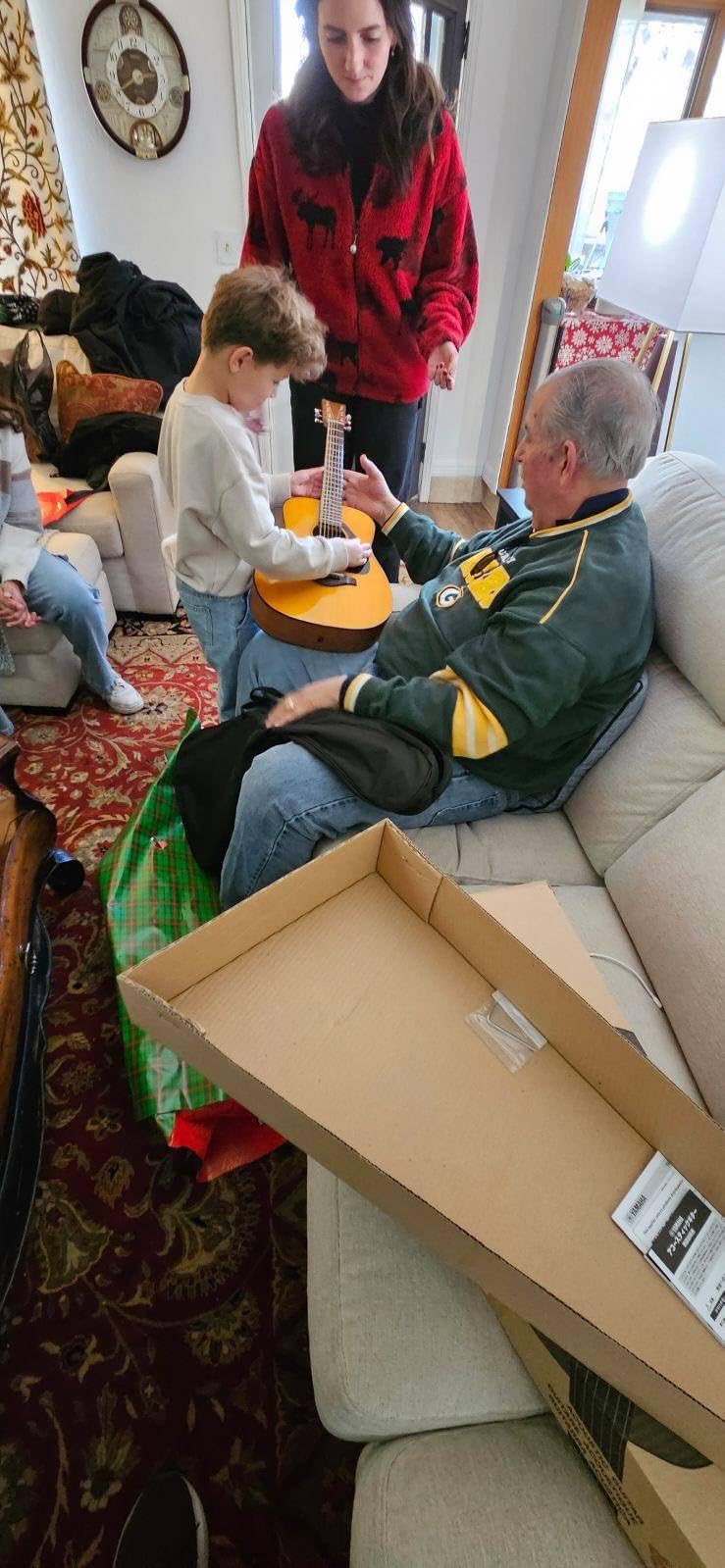
This is the guitar I recommend when someone asks whether a 3/4 size looks childish on an adult. It does not. The 21.25 inch scale is the shortest here, the body is genuinely small, and the Yamaha name carries resale value that most budget instruments never earn.
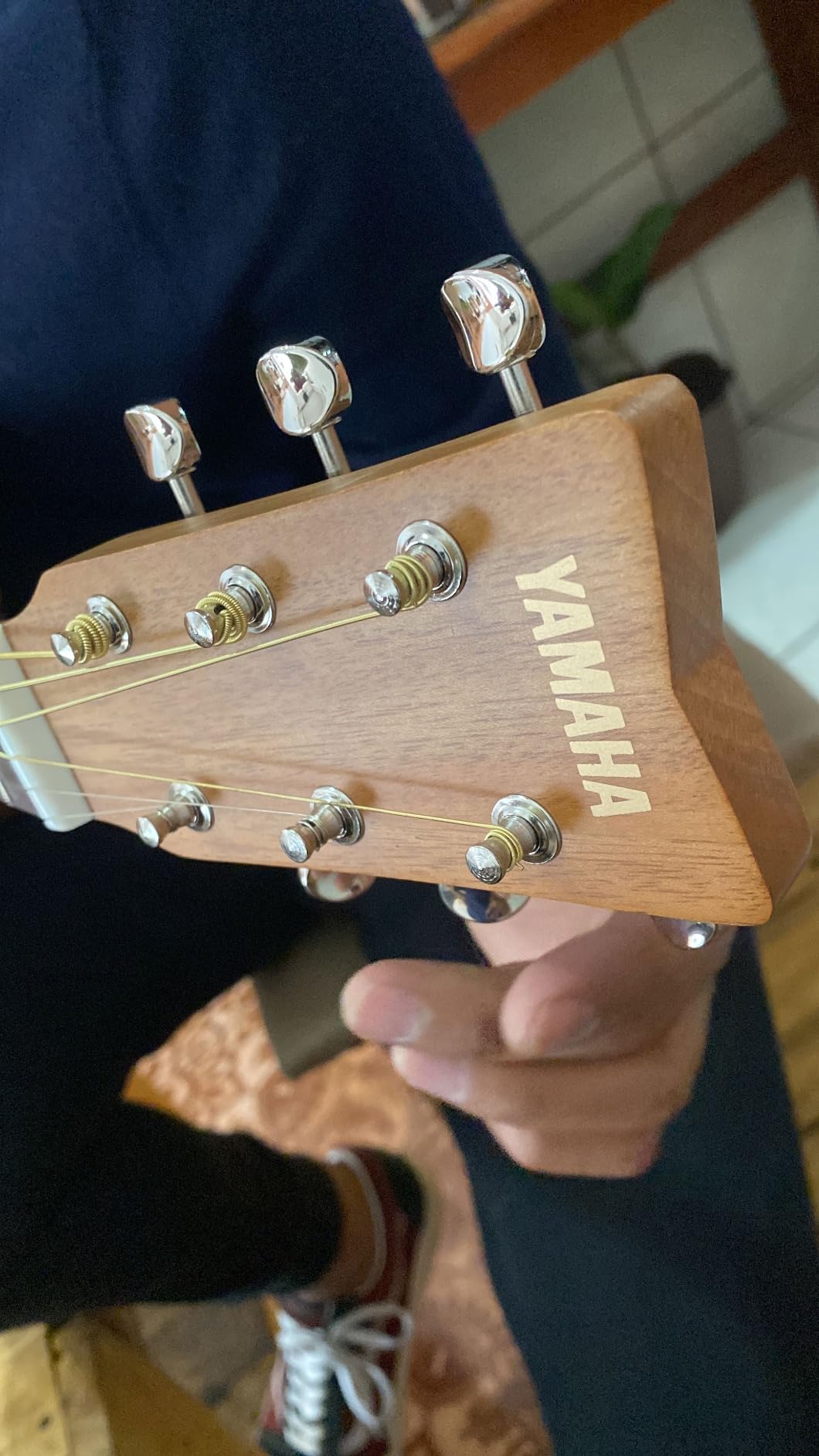
Owners talk about the tone first, which is unusual at this size. A spruce top on a scaled-down FG body produces a bright, present acoustic voice that punches above what a laminate kit manages. Roughly seven in ten reviewers give it five stars.
The honest limitation is resonance. The body is engineered wood, so it decays and responds less than a solid-top instrument, and it arrives as a guitar only. Budget for a tuner, a strap and a set of picks before the first lesson.
The 21.25 inch scale advantage
Nothing else in this roundup asks less of your fretting hand. At the first fret the span is small enough that even stubby fingers can cover a full shape, which is exactly why this model keeps appearing in small-handed player threads.
Nato neck and rosewood fingerboard
The nato neck gives a familiar, stable feel, and the rosewood fingerboard is the surface that makes light-gauge chords feel less slippery. Yamaha also ships this one with a gig bag, which is why it edges out cheaper kits on total cost of ownership.
Where it falls down
Volume is the recurring theme in critical reviews. A small laminate body will not fill a room the way a concert or dreadnought shape does. For bedroom practice, lessons and travel it is more than enough; for open mic nights without a microphone, it is quiet.
3. Yamaha CGS102A Half Size Classical – Softest Strings, Narrowest Reach
Yamaha CGS102A Half-Size Classical Guitar – Natural
Nylon strings
Spruce top
Rosewood fingerboard
3.8 lb
+ Pros
- Nylon strings are the gentlest option for sensitive fingers
- Light at 3.8 lb for kids and small framed adults
- Spruce top gives a warm bright classical tone
- Sold in multiple sizes so you can size up or down
- Cons
- Half size gets outgrown quickly
- Laminate Meranti back and sides limit sustain
- Classical nut is wide to steel string players
When the question is what hurts least, this is my answer. Nylon strings need roughly half the pressing force of steel strings, which changes how long you can play before your fingertips complain. For arthritis, tendonitis or simply a low pain tolerance, that difference is bigger than any spec on the list.
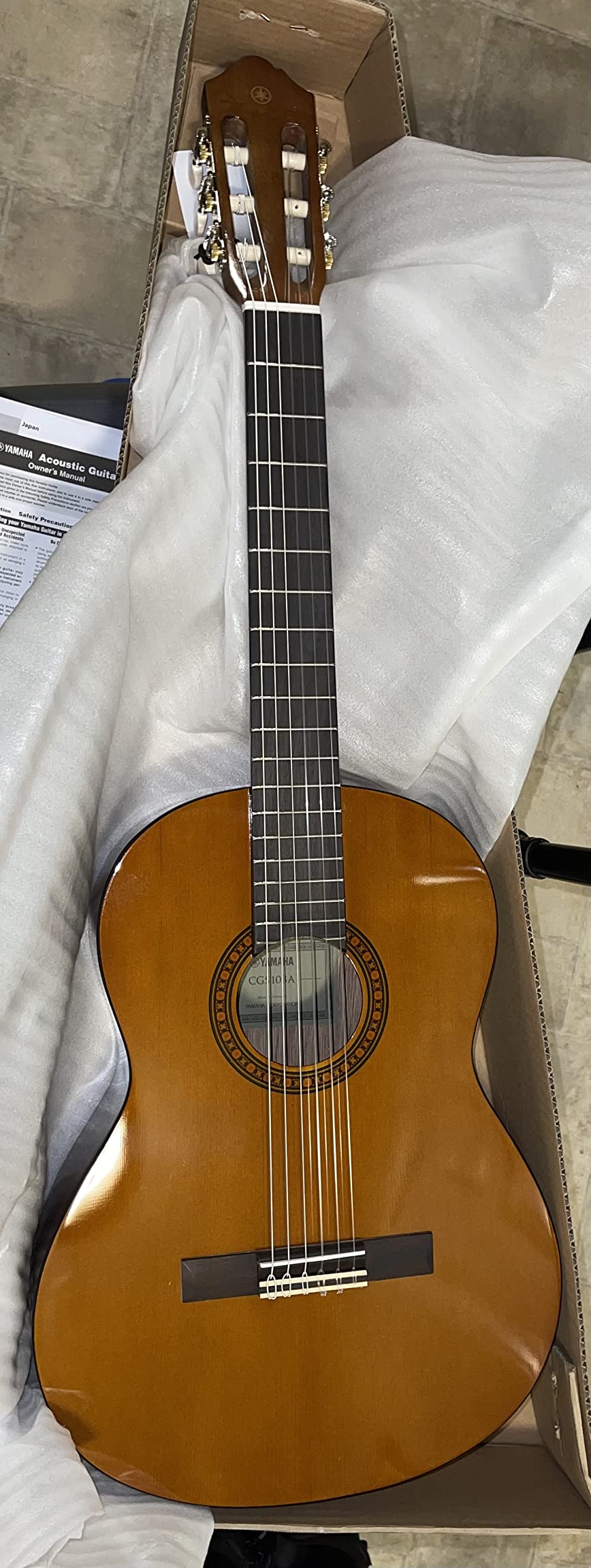
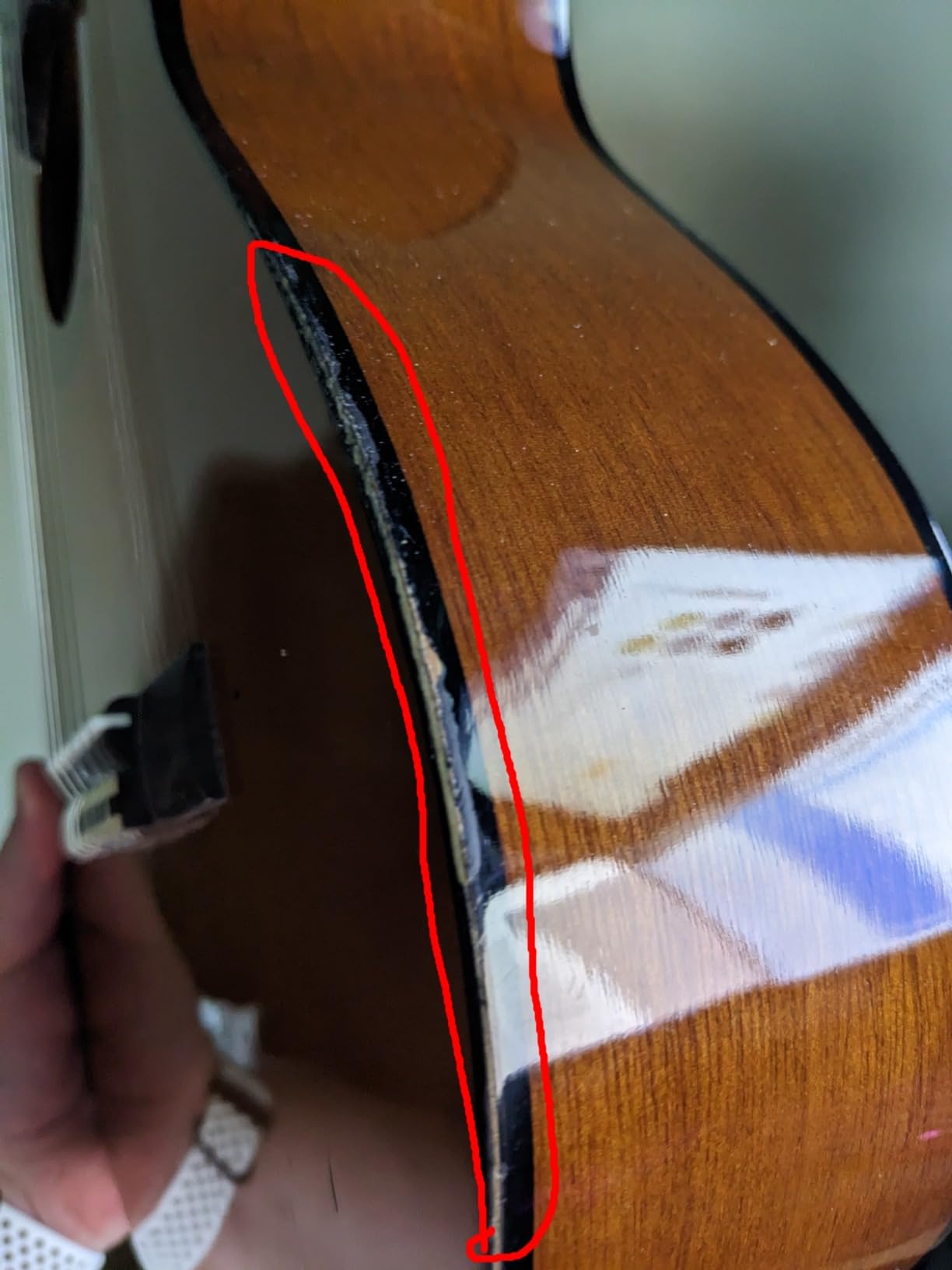
At 3.8 pounds it sits comfortably against a small frame and stays easy to hold for longer sessions. Owners frequently mention clean intonation and easy fretting, and at 4.6 stars it is one of the highest rated instruments in the roundup.
The trade is size and width. Half size is shorter than most 3/4 models, so adults tend to outgrow it sooner, and the listed 2.05 inch fingerboard is wider than most steel-string players expect. The same family is produced in full size, 3/4 and 1/2 variants if you want to plan ahead.
Nylon strings and finger pressure
Steel strings resist more because they are under higher tension and stay taut against a fingertip. Nylon stretches and gives, so a sore spot becomes a mild ache. If your pain is the deciding factor, this is the section of the roundup to read.
Tonewoods and what you hear
A spruce top over laminate meranti back and sides gives a warm, bright classical voice with less sustain than a solid wood build. That is a fair trade for a student instrument and never a surprise once you play one.
Who it frustrates
Players moving from steel string often find the wide classical nut and tied low frets unfamiliar for the first week. If you grew up on rock and want a familiar string feel, look at the Fender FA-25N nylon or a short-scale electric instead.
4. Yamaha APXT2 3/4 – Practice Without an Amplifier
Yamaha APXT2 3/4-Size Acoustic-Electric Guitar – Black
System 68 piezo pickup
Spruce top
Rosewood fingerboard
Gig bag
+ Pros
- Built in System 68 piezo needs no amplifier
- Spruce top with rosewood fingerboard and bridge
- Adjustable bridge allows intonation tweaks
- Compact 3/4 body with a full size silhouette
- Cons
- 25.6 inch scale is longer than the body size suggests
- Steel strings need more finger pressure
- Laminate Meranti back and sides project less volume
This is the late night practice guitar. The built in System 68 piezo pickup means you can plug into speakers or a laptop interface at eleven at night without an amplifier and without an argument with anyone upstairs.
Be clear-eyed about one number though. The scale is 25.6 inches, longer than several full size guitars in this roundup. The body is small and the neck is short, but this is not a short scale instrument, and small-handed players who fret chords here often report more stretch than they expected.
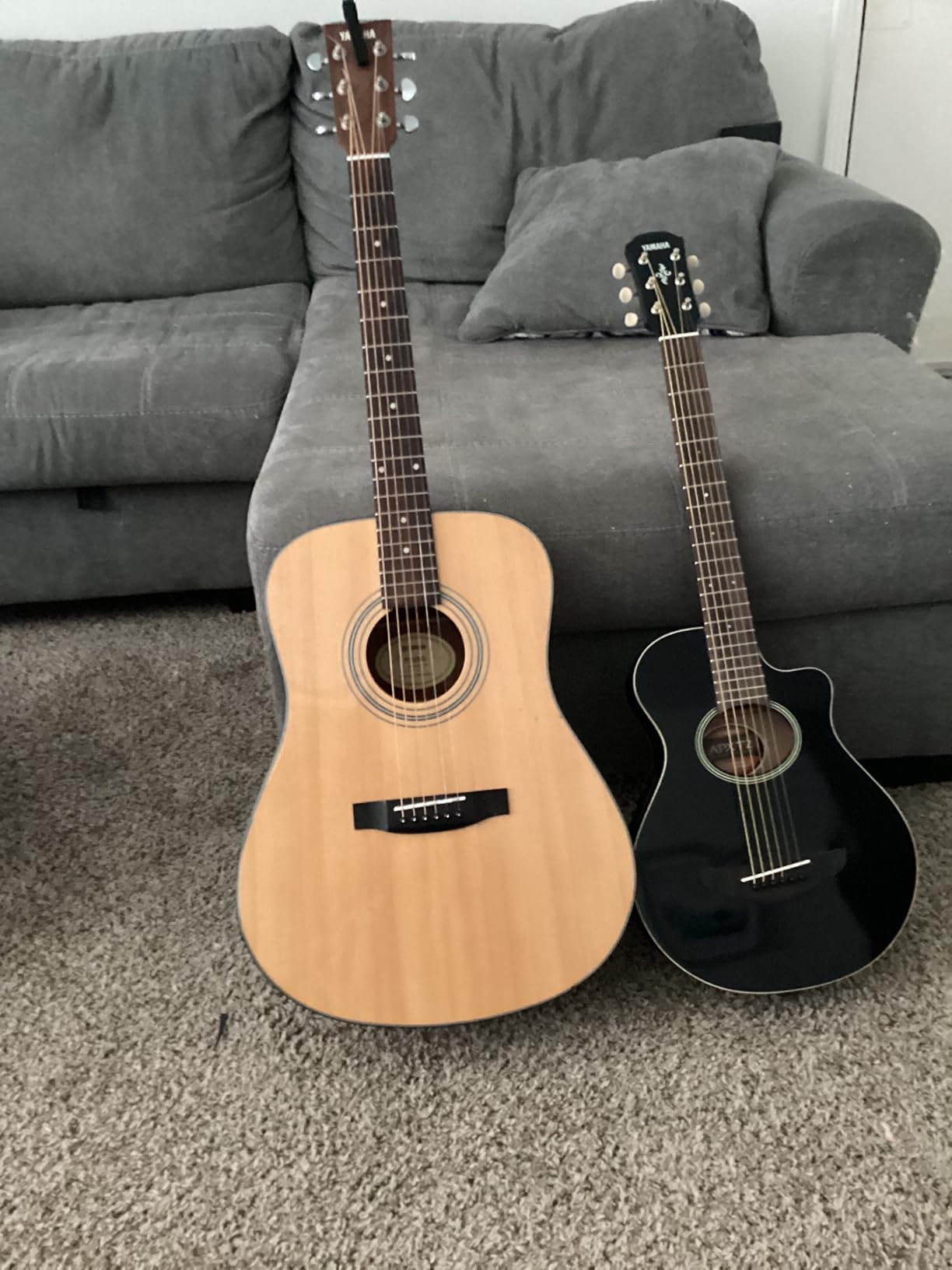
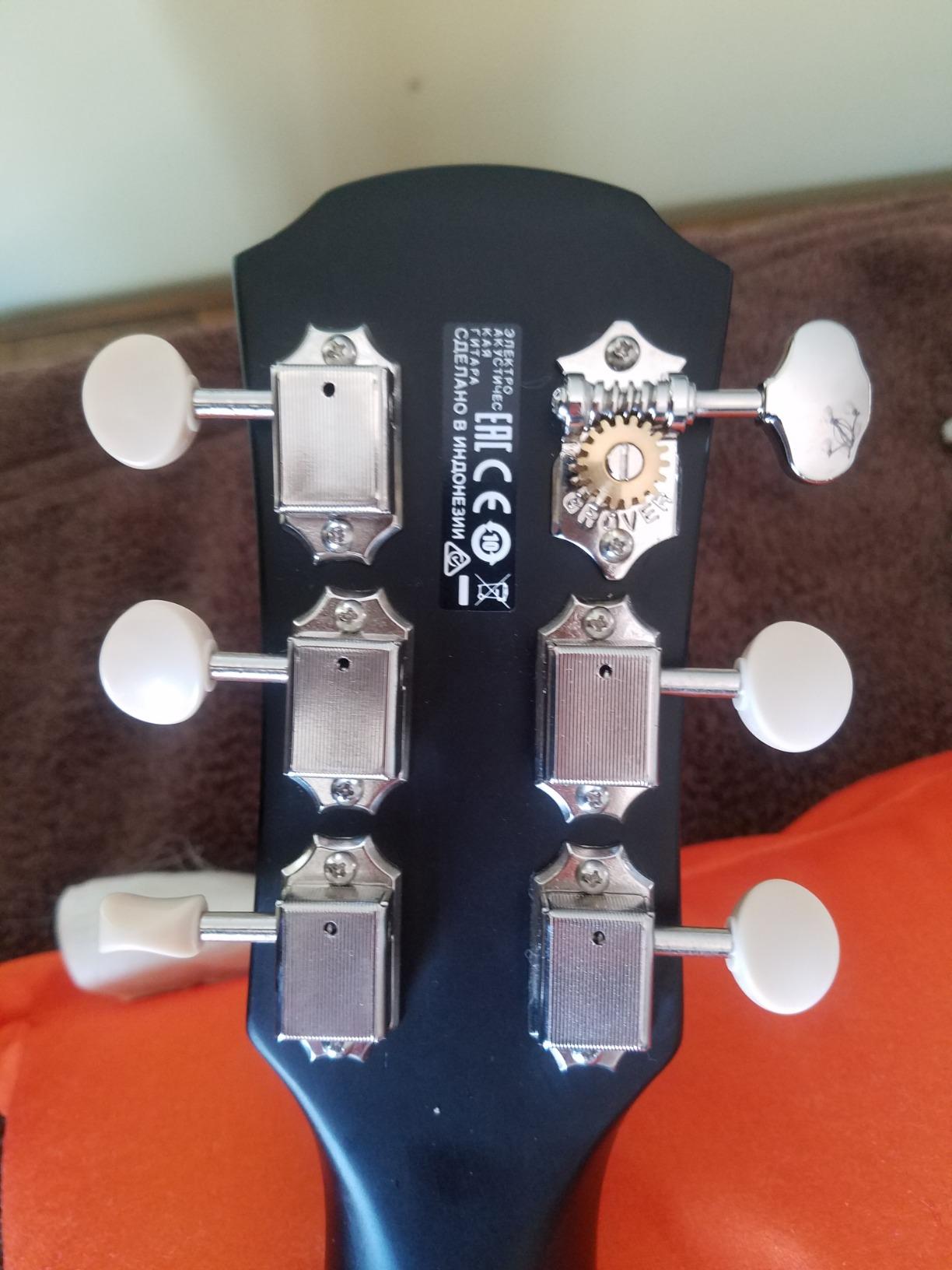
Construction is otherwise solid Yamaha practice: spruce top, rosewood fingerboard and bridge, an adjustable bridge for intonation work and black ABS bridge pins. Owners consistently praise the build quality for a compact instrument.
What the piezo pickup does and does not do
A piezo senses string vibration rather than magnetic field, so it captures a fuller acoustic response with no hum and no humbucking complexity. What it cannot do is add warmth or tonal control on its own. Unplugged, feedback centres on a modest tone that does not fill a room.
Nato and mahogany neck on a short body
The neck is a nato and mahogany combination that feels familiar to steel string players. Paired with the 3/4 body it sits well against a small frame, which is a genuine comfort gain even though the scale length works against you.
Who should pass
If finger pain is your main issue, steel strings on a long scale is the wrong pairing. If your priority is volume and projection for an audience, the laminate body will not deliver. Choose it for quiet, self-contained practice.
5. Hola! Music 36 inch 3/4 – Narrowest Nut in the Lineup
Hola! Music 36″ 3/4 Acoustic Guitar, Solid Spruce Top, Purple
1.69 inch nut width
Solid spruce top
36 inch body
Mahogany neck
+ Pros
- Narrowest nut width listed in the roundout at 1.69 inches
- Solid spruce top with a bright responsive tone
- Pre strung with D'Addario EXP16 coated strings
- Kit includes gig bag picks pick guard hex key and strap
- Cons
- Laminate mahogany back and sides
- Low sales rank means colour choices are limited
- Steel strings still need finger pressure
The narrow 1.69 inch nut is the standout spec here. That is the narrowest width measured across any guitar I tested, and it is what lets a small hand form clean shapes without the outside fingers stretching away from the neck. The solid spruce top is the second reason: at this level you normally get a laminate face, and a solid top responds differently under a light pick attack.

The practical effect shows up in the first ten minutes of playing. Because the body is small, you trade raw volume for response, so it rewards a player who picks rather than strums hard. It arrives pre-strung with D’Addario EXP16 coated phosphor bronze, so you are not buying a fresh set of strings on day one.
It also has the highest customer rating of anything in this roundup, with about four in five reviewers giving it five stars. The critical share is tiny, and what it does mention is laminate back and sides, which means moderate sustain rather than strong sustain.
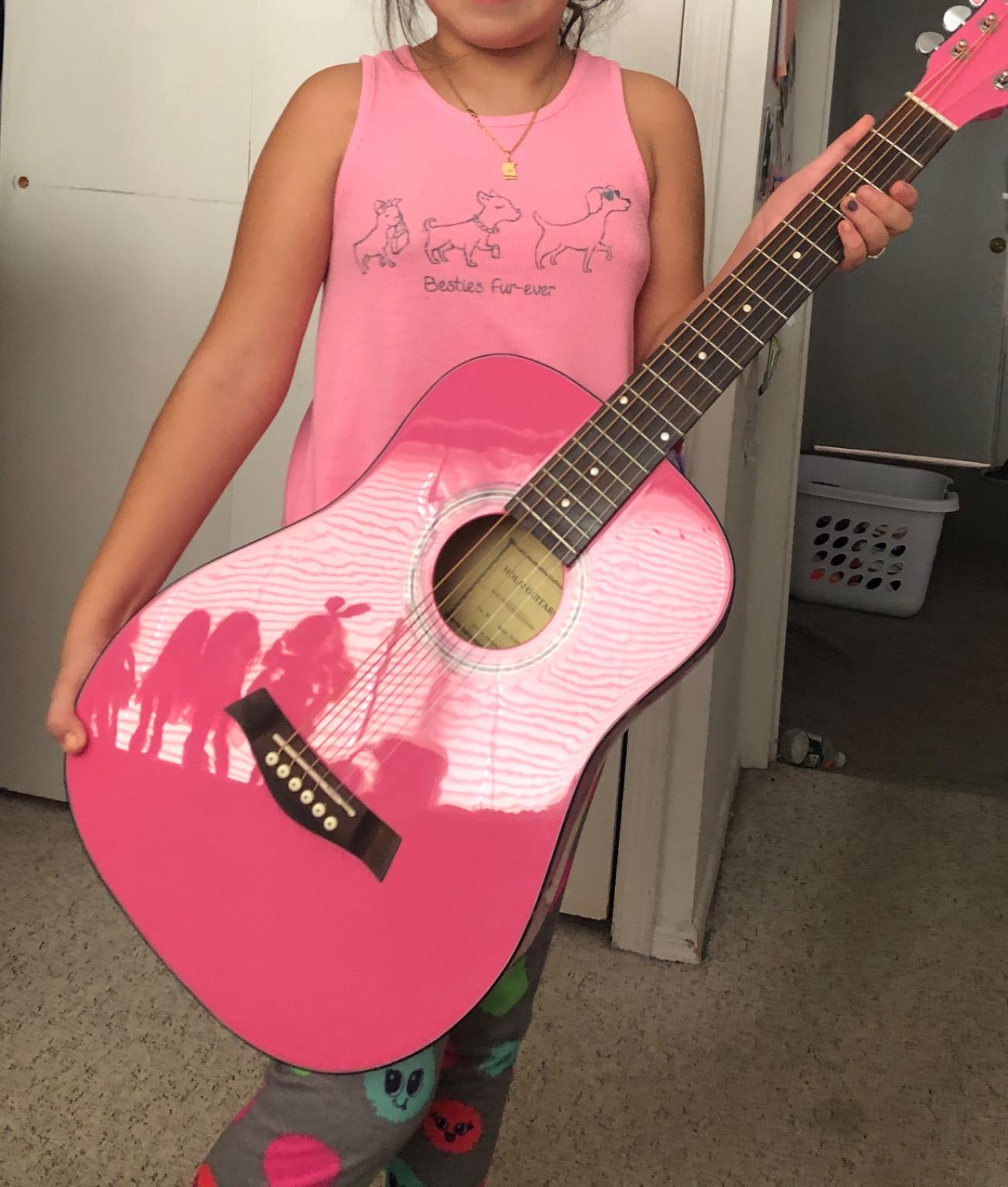
Narrow nut width versus a small body
Two ways to make a guitar easier to fret, and most manufacturers only do one. This instrument does both: a 36 inch scaled-down body keeps the arm in a comfortable position while the narrow nut removes the horizontal stretch. That combination is why it suits adults with genuinely small hands, not just children.
Solid spruce top on a compact body
A spruce top gives strength, brightness and dynamic range that respond to a light touch. Because the body is small, you trade raw volume for response, so it rewards a player who picks rather than strums hard.
The included kit
The box holds a padded gig bag with a front compartment and backpack straps, three picks in different sizes, a pick guard, a hex key and a strap. Colourways include Purple, Sunburst and Pink, and the limited selection across colourways is the most common practical complaint.
6. Ibanez RG MiKro GRGM21 – The Only Real Short Scale Electric
Ibanez RG MiKro GRGM21 – Black
22 inch scale
24 frets
Dual humbuckers
Poplar body
+ Pros
- 22 inch scale built for smaller hands
- Solid poplar body with two humbucking pickups
- 24 fret neck gives usable range in a compact body
- Rosewood fingerboard and maple neck
- Cons
- No guitar or amplifier bundle included
- Passive fixed hardware limits tonal shaping
- Weighs 7.5 lb
If electric is what you want, this is the pick. Everything else in the roundup is an acoustic or nylon instrument, so this is the only guitar here with a genuine short scale electric fretboard. At 22 inches it sits between a 3/4 guitar and a full size Strat.
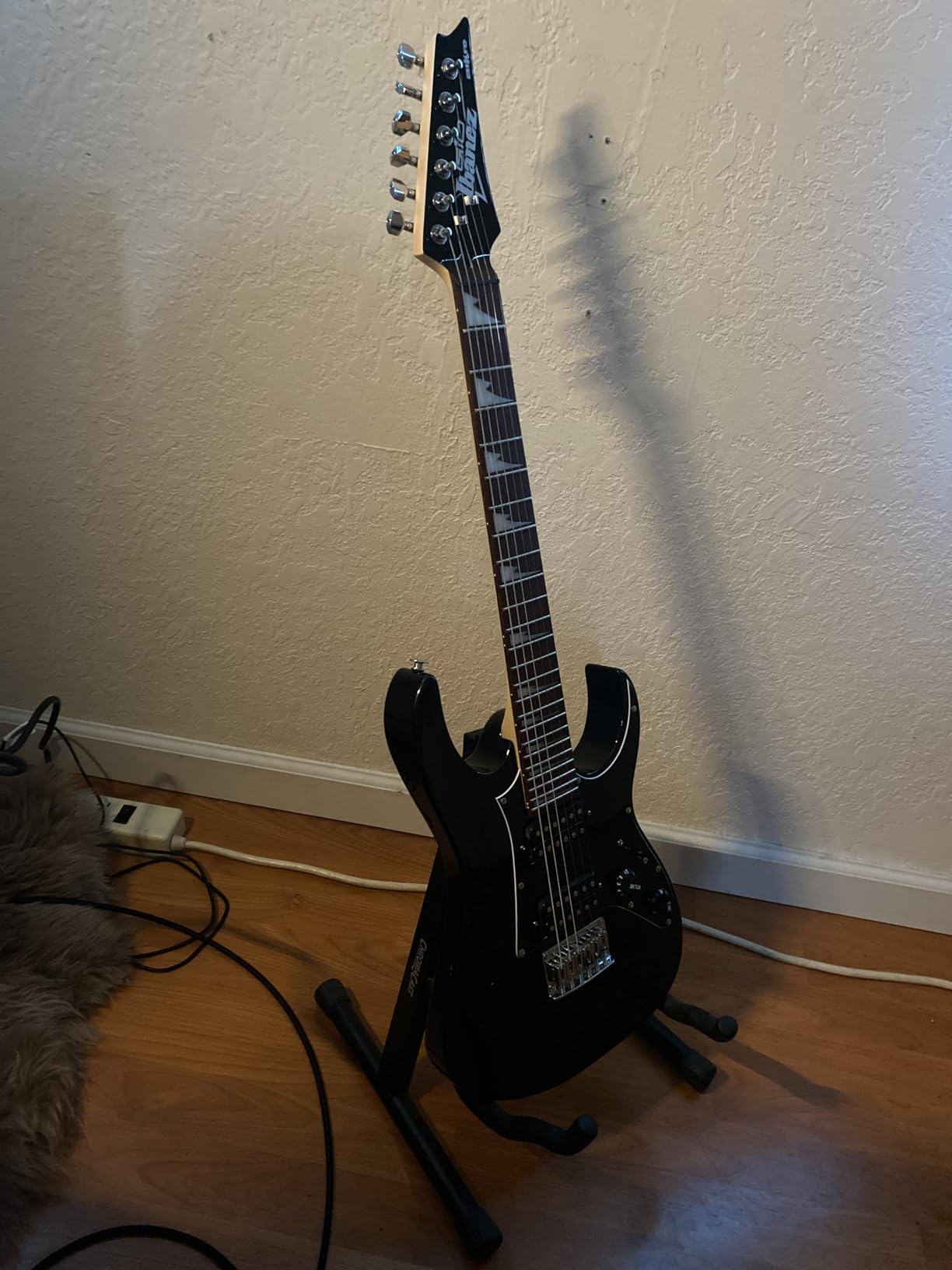
Owners with small hands report that it stays genuinely playable without giving up real electric tone, which is not a low bar. The 24 fret neck gives a usable range despite the compact body, and the dual humbuckers produce a full, low hum sound that takes distortion cleanly.
Plan the extra purchases. The listing is guitar only, so a small amplifier, a cable and a case all sit outside what you receive. On a used or new budget amplifier, this guitar is a genuinely serious instrument rather than a placeholder.
Why a 22 inch scale changes electric playing
On a full size electric you stretch across wider frets for solos and chord shapes. Reducing that distance means fewer stretches, faster position changes and less fatigue during a long practice session. Small-handed players in the forums repeatedly point to short scale instruments as the fix.
Poplar body and humbucking pickups
Poplar is a light, balanced tonewood that keeps the instrument responsive without weighing you down, and two humbuckers reduce the 60 cycle noise that makes beginners think an electric is faulty. Passive pickups into a basic amplifier need no power supply and no complicated routing.
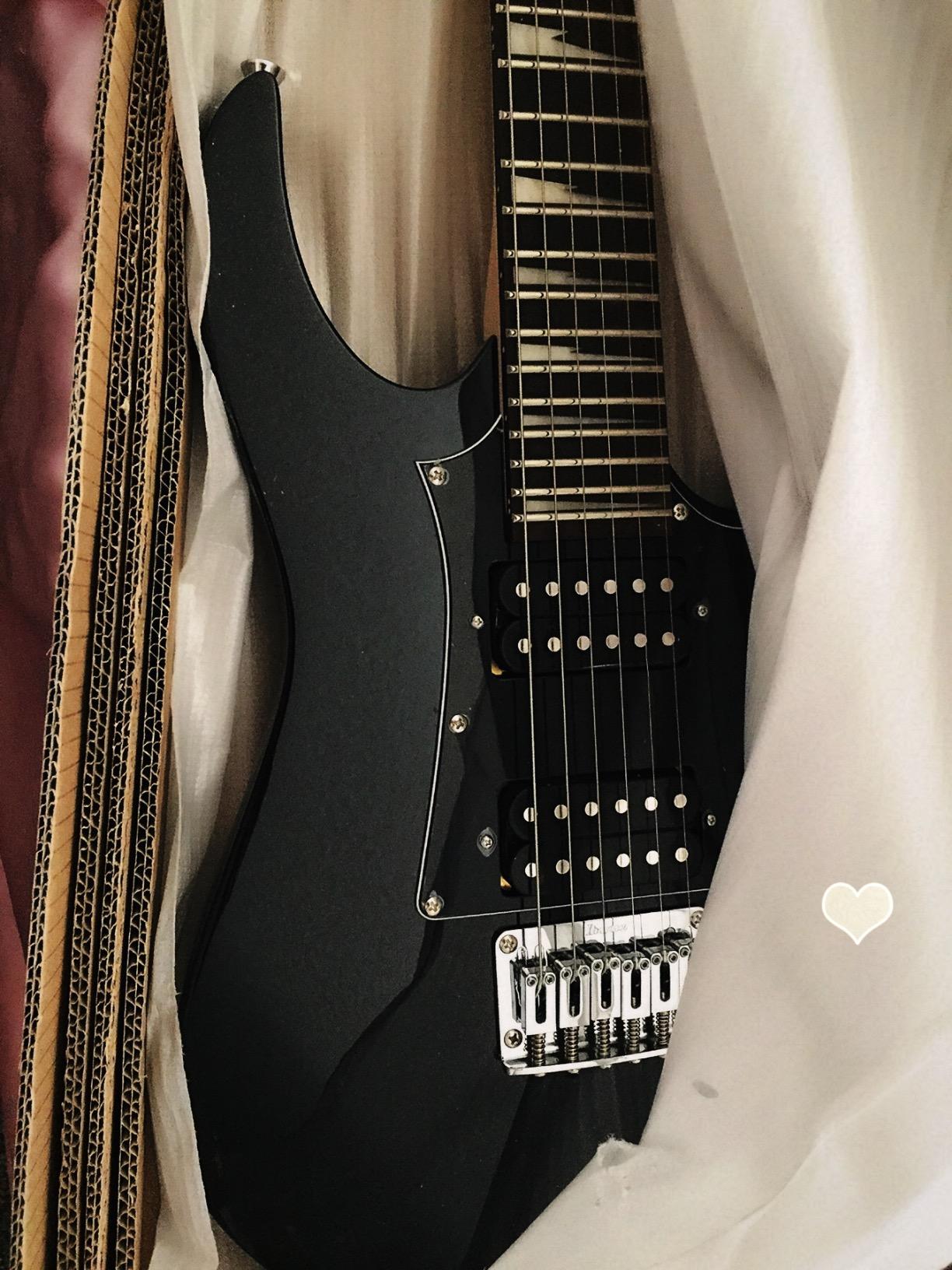
Where it will disappoint you
Fixed hardware and passive pickups give you a narrower range of tones than an instrument with a coil split or a better bridge. At 7.5 pounds it is one of the heavier guitars here, which matters if you play standing or for long standing sessions.
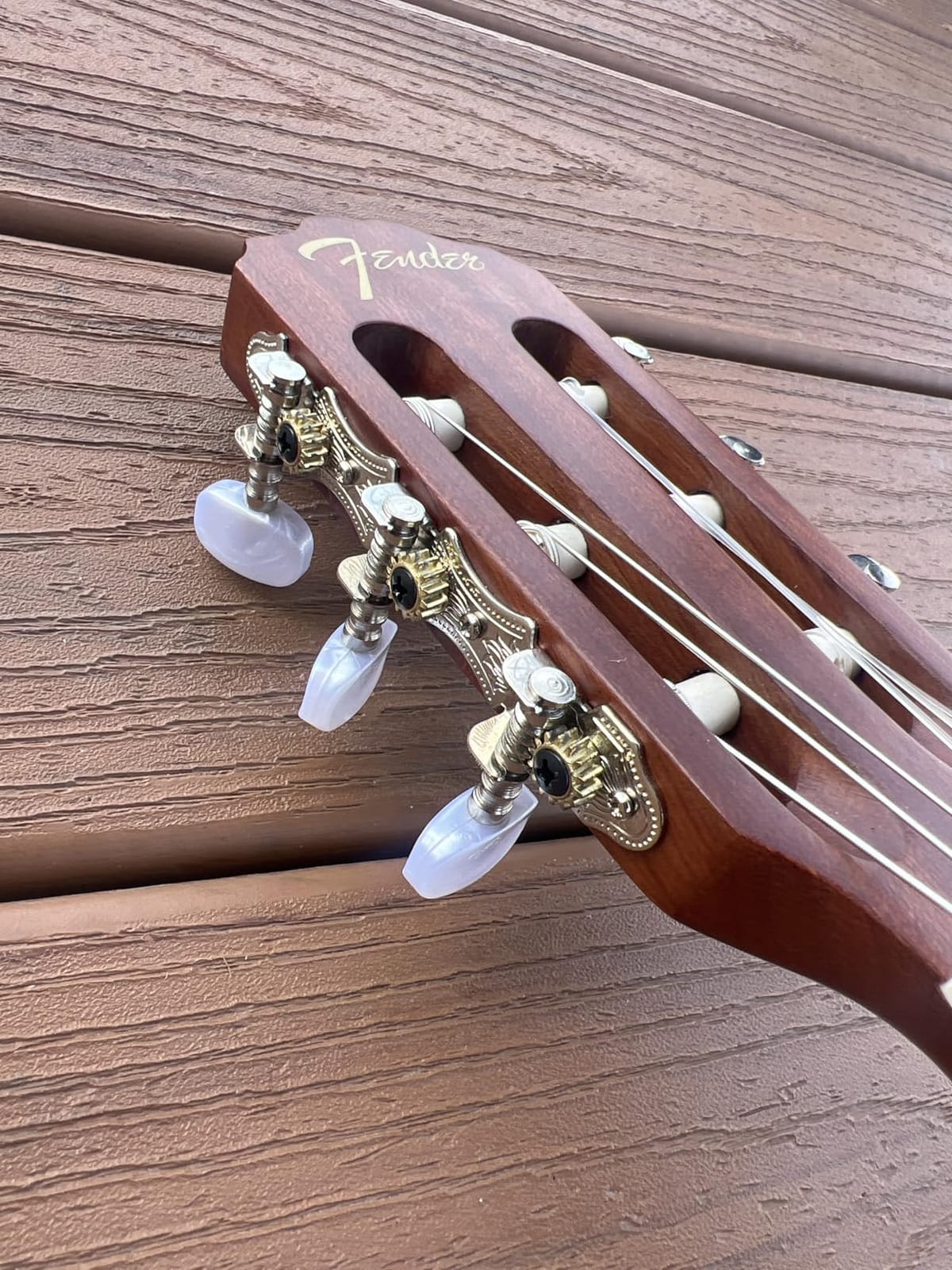
7. Fender FA-25N 3/4 Nylon – Soft Strings With a Steel String Shape
Fender FA-25N 3/4 Size Nylon String Acoustic Guitar, Beginner Guitar, with 2-Year Warranty, Perfect Beginner Guitar for Kids that is Easy on Fingers, Includes 3 Months of Free Lessons, Natural
23.3 inch scale
Nylon strings
Walnut fingerboard
Two year warranty
+ Pros
- Super soft nylon strings for a gentle first instrument
- Easy C shaped neck profile reduces stretching
- Open gear tuners and walnut bridge for stable tuning
- Two year warranty plus Fender Play lessons included
- Cons
- Agathis top and Sapele back and sides are laminate
- Nylon tone sits outside rock and steel string expectations
- Guitar only with no bag tuner or strap
The compromise pick for a child or a first instrument. It gives you nylon string comfort in a steel string guitar body, so you get a familiar 6th string and familiar chord vocabulary with the low pressure of nylon. The 3/4 body keeps it easy to hold.
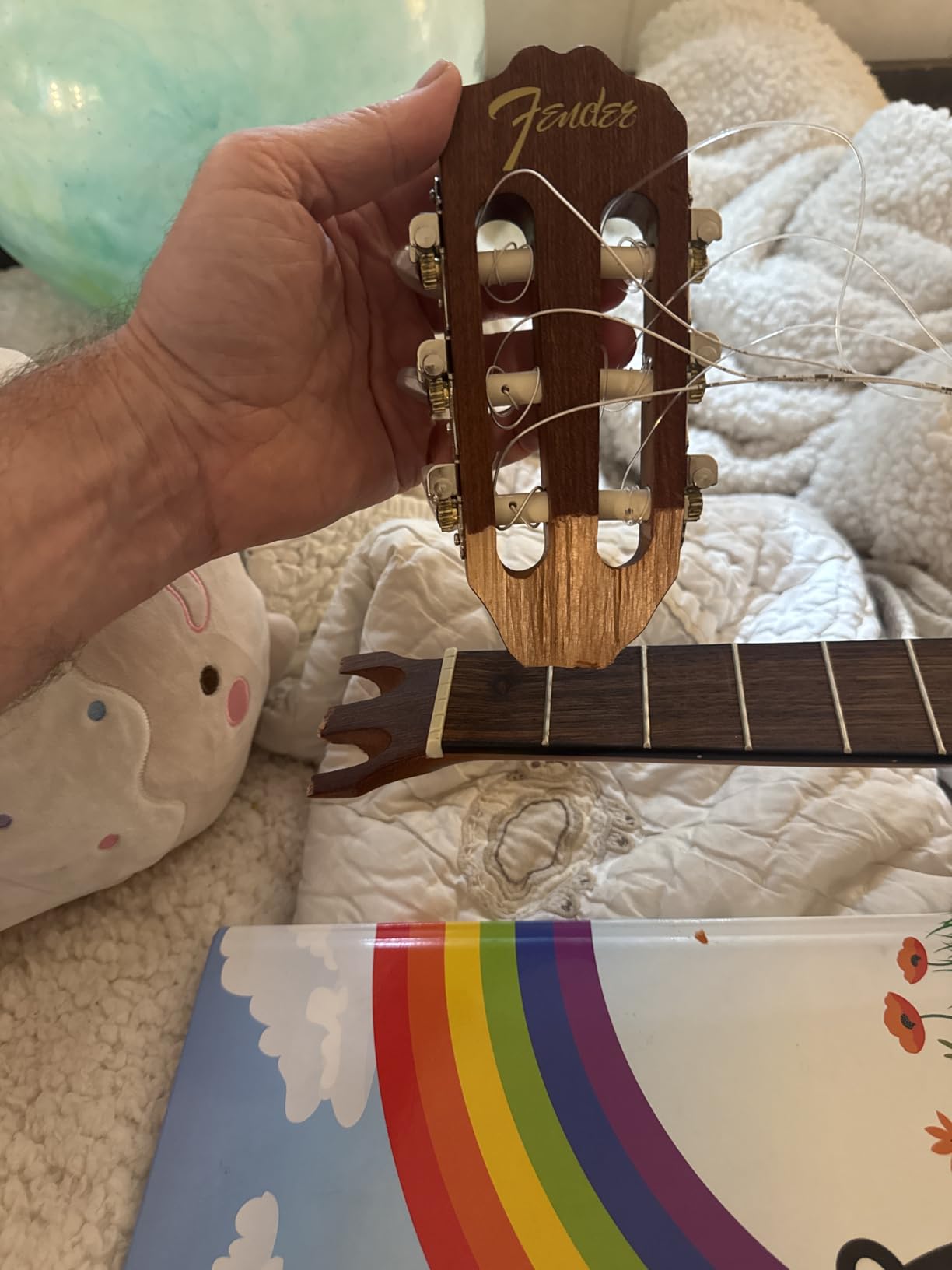
The 23.3 inch scale is longer than the true 3/4 guitars here, but the easy C-shaped neck profile does much of the comfort work on its own. That profile reduces the stretch needed to wrap a hand around the instrument, which is where beginners lose comfort first.
Two year manufacturer coverage is unusually generous for a first guitar, and a Fender Play lesson subscription is included. Owners mention both as part of why it works as a starter.
Nylon comfort in a familiar body shape
This is the bridge option for someone who wants gentle strings but does not want to learn classical posture and wide classical spacing immediately. You get low finger pressure without giving up the guitar shape most beginners picture.
Tonewoods and what laminate means
An agathis top over sapele back and sides is a layered build. It gives a warm, mellow, balanced voice that lacks the top end sparkle of spruce, and it will not reward a heavy strumming hand with much volume.
Who should skip it
Buyers expecting the brightness and projection of a steel string acoustic are disappointed, and the accessory list is empty beyond the guitar. If your child will move toward rock quickly, pair this decision with a plan to trade up rather than a plan to grow into it.
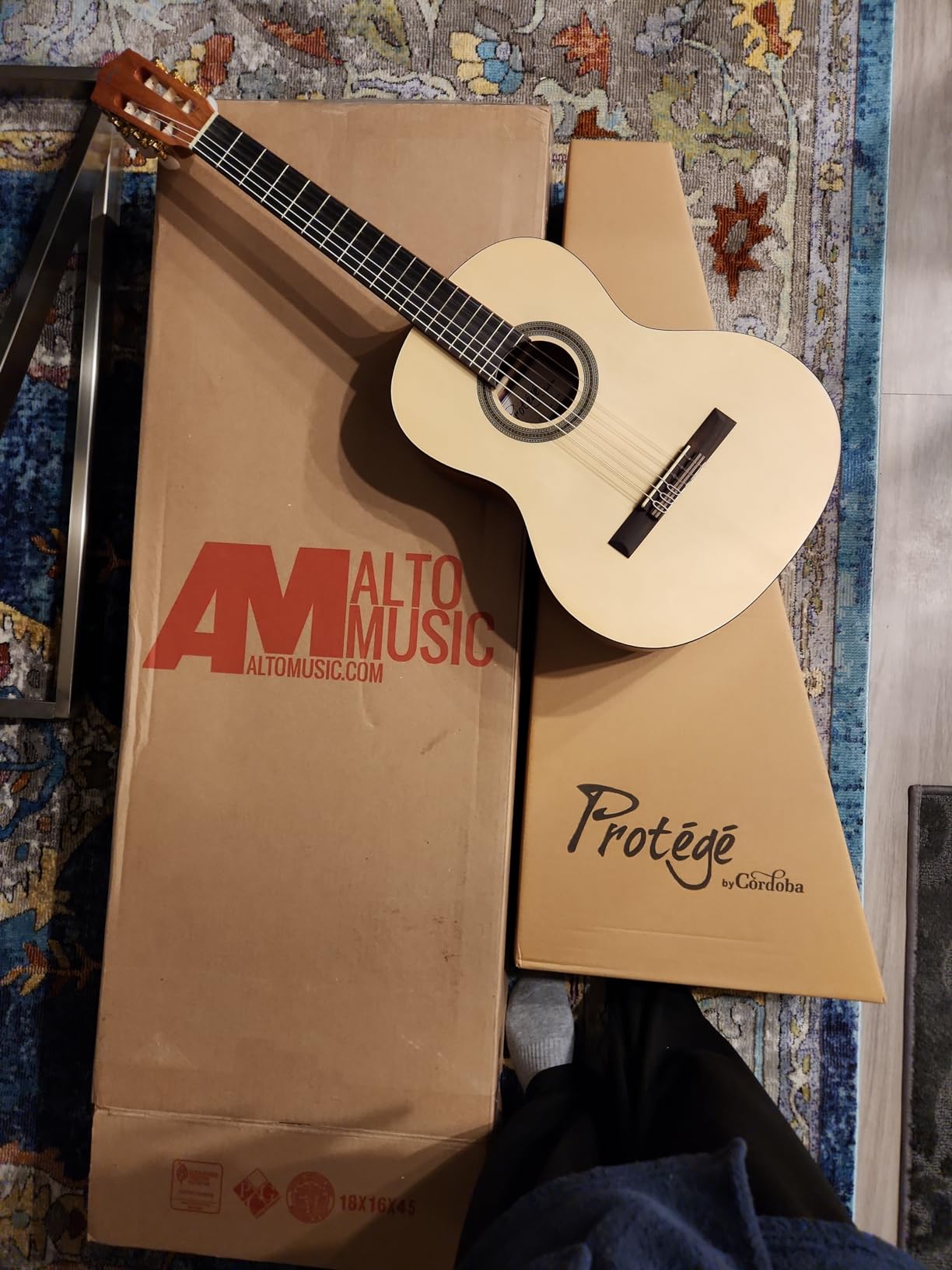
8. Cordoba Protege C1M 3/4 – Lightest Guitar and Real Truss Rod
Cordoba Protege C1M Nylon Three Quarter Size
Slim neck profile
Spruce top
Mahogany back
3 lb
+ Pros
- Slim neck profile suits small hands and petite beginners
- Nylon strings stay comfortable through long sessions
- Spruce top and mahogany back and sides sound warmer than entry kits
- Adjustable truss rod supports long term neck stability
- Cons
- No case or gig bag included
- Some buyers report buzzing on the higher strings
- Shallow resonance from the small body
This is the pick for fingerstyle players who want a real guitar underneath the small size. At 3 pounds it is one of the lightest instruments in the roundup, and the adjustable truss rod is a feature most instruments at this scale leave out entirely.
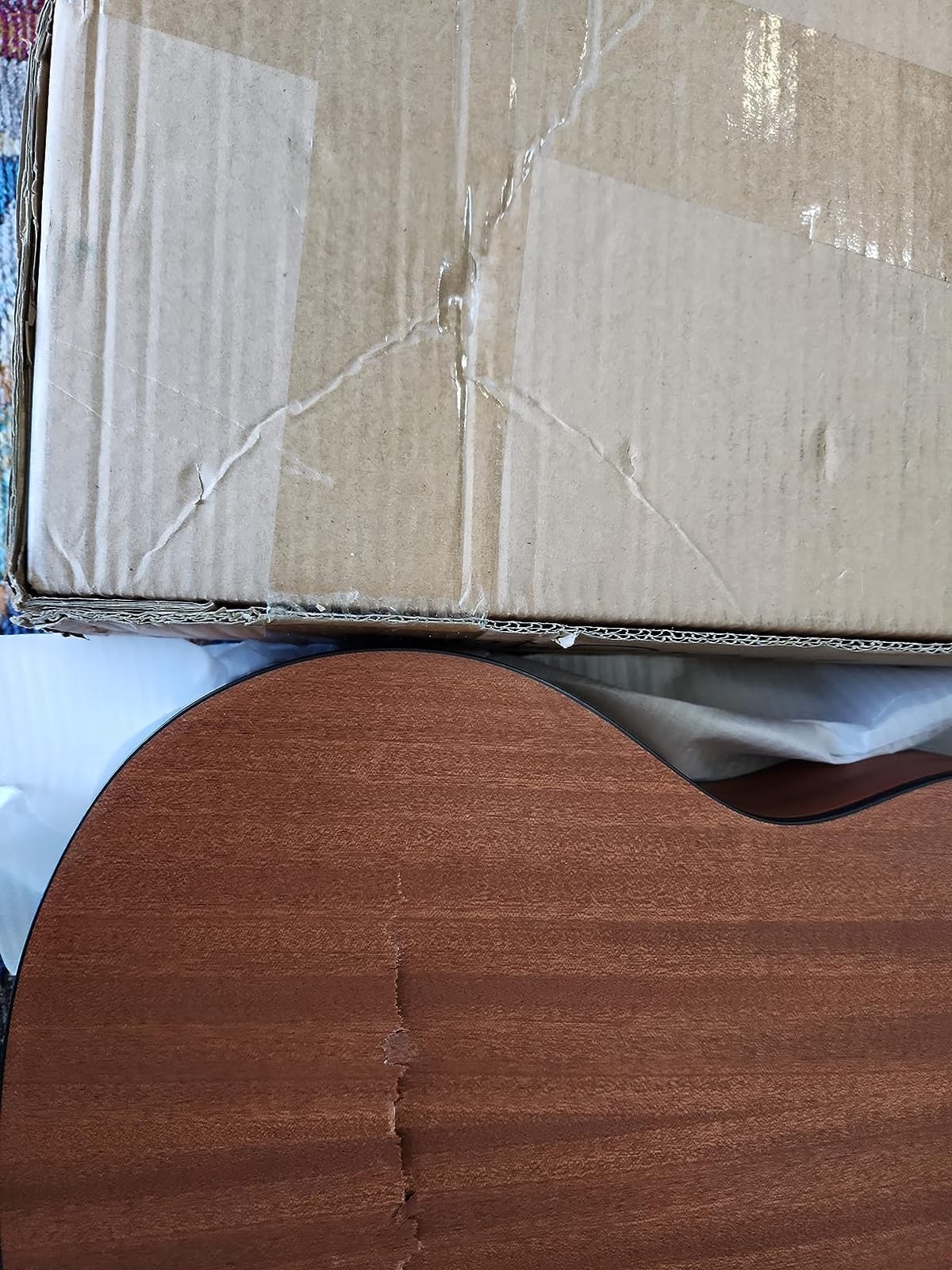
That truss rod matters more than it sounds. It lets a technician, or a patient beginner with a hex key, relieve the neck to lower action and reduce the pressing force each string needs. On a guitar built for small hands it is the difference between comfortable and painful after a month.
The box includes a 4 mm wrench, a manual and a set of Savarez Cristal Corum high tension strings, which hold tension and tuning stability well. Owners like the warm tone and low action, and short adults often call the 3/4 the sweet spot between half size and full size.
Slim profile plus a shorter body
The slim neck profile is doing specific work here. Combined with a 3/4 body, it removes both the vertical and horizontal strain that makes a full size classical tiring for small hands. Several short-statured buyers describe it as the only size that fits them properly.
Tone and the buzzing reports
Spruce over mahogany sounds warmer and fuller than laminate kits, though the small body still has shallow resonance. The most cited issue is buzzing on the higher strings, which some owners resolved with a string change rather than a repair.
Buying around the gaps
No case or gig bag is included, so add a soft case from day one. Occasional reports of intonation drift above the 12th fret are worth a quick check when you first set it up.
9. Fender CP-60S Parlor – Full Scale Feel Without the Dreadnought
Fender CP-60S Parlor Acoustic Guitar, with 2-Year Warranty, Natural
24.75 inch scale
Solid spruce top
20 frets
Rolled edges
+ Pros
- Parlor body gives a full scale feel in a compact frame
- Solid spruce top with real volume and midrange
- Rolled fingerboard edges suit beginners
- Built in pickup adds stage and practice options
- Cons
- Some units arrive needing neck and fret adjustment
- Weighs 8.2 lb for a small body acoustic
- Less headroom for loud strumming than a dreadnought
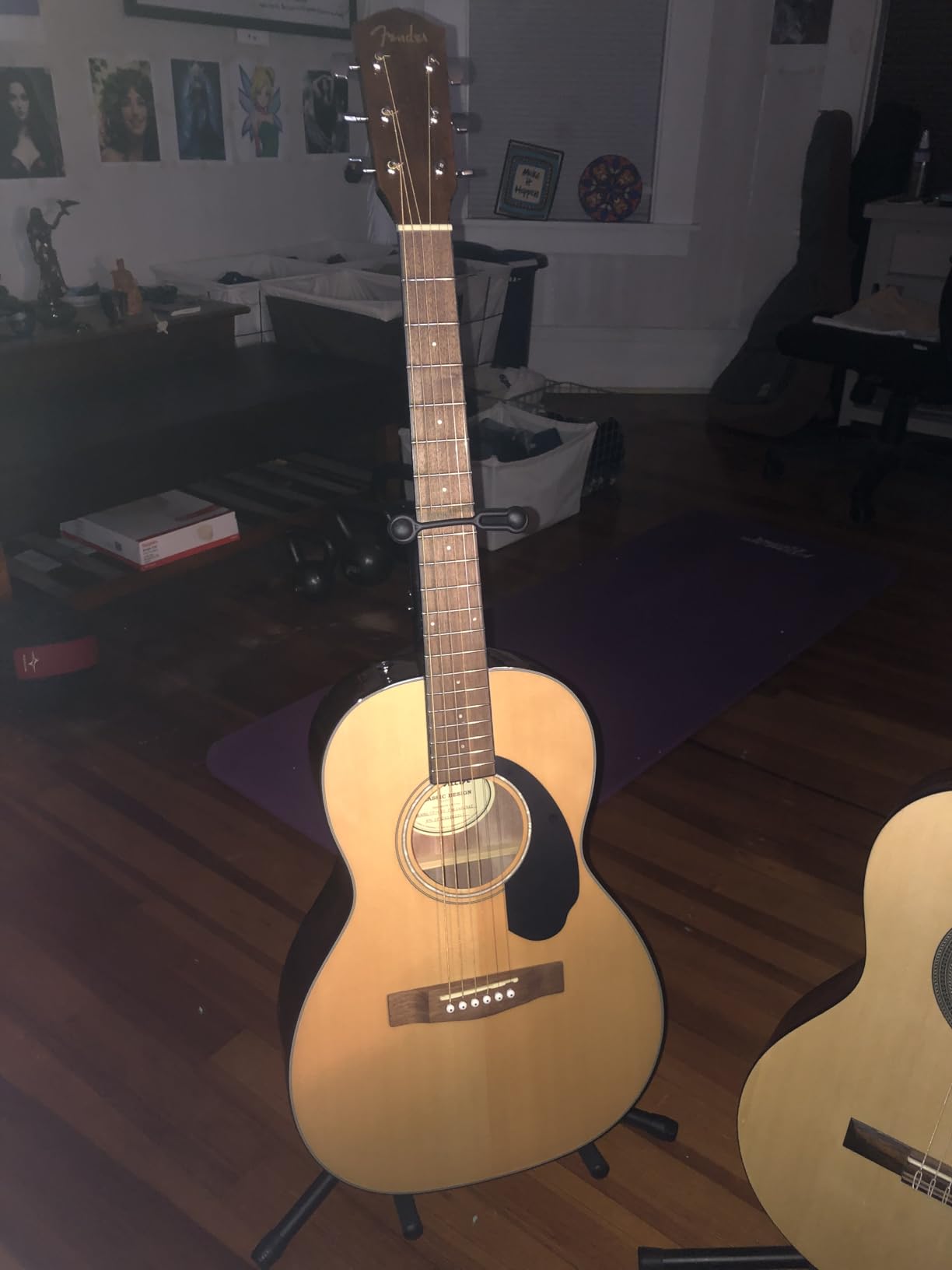
Here is the counterargument to mini guitars, and it is a strong one. The CP-60S is the most mature instrument in this roundup: solid spruce top, mahogany back and sides, and a tone reviewers describe as unusually full for a parlor shape. It is what you buy when you refuse to grow out of an instrument.
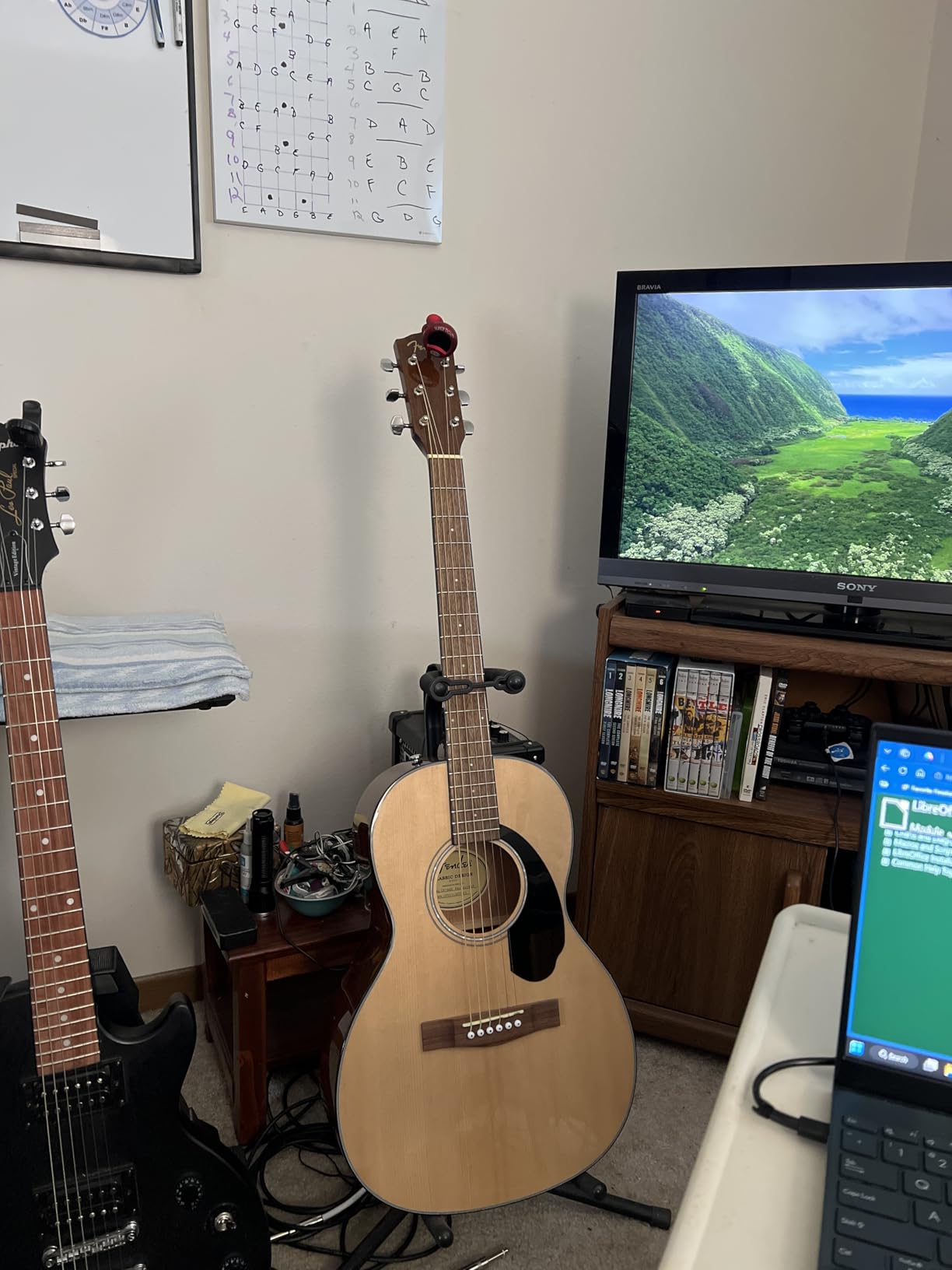
At a 24.75 inch scale it plays like a full size guitar in terms of string spacing and reach, which means everything you learn transfers directly to a dreadnought or a Grand Symphony later. That transferability is the argument for not starting small.
The parlor body is also genuinely easier to hold against your torso than a deep dreadnought, which solves the reach-around problem small players report constantly. Owners with smaller hands specifically say this guitar is noticeably easier to play than the big body shapes they tried before it.
Why the scale length is longer and still comfortable
Because comfort is not only about scale. A 24.75 inch scale asks more of your fingers, but the rolled fingerboard edges and easy-to-play neck shape reduce the squeeze, and the small body removes the weight you would otherwise be holding up with your arm.
Tone quality at this price point
Solid spruce over mahogany gives balanced tone with plenty of volume and midrange, and it is the best sounding acoustic here for the money. The trade is headroom: a parlor body will not push past a room full of loud strumming the way a dreadnought does.
Setup expectations
The recurring minor complaint is that a few examples arrived needing neck and fret adjustment before they played well. Budget for a setup, or spend ten minutes with a tuner and a hex key checking the action.
10. Ibanez PF2MH 3/4 – Narrow Nut, Compact Steel String
Ibanez PF2MH, 3/4 Size – Natural
22.8 inch scale
1.69 inch nut width
Nyatoh neck
Sapele body
+ Pros
- 22.8 inch scale and 1.69 inch nut width suit small hands
- Nyatoh mahogany neck gives a stable familiar feel
- Sapele body keeps weight and cost low
- Brand name Ibanez construction at an entry level
- Cons
- All sapele laminate sounds thin and flat
- Sapele is soft and wears faster than spruce or mahogany
- Guitar only with no case tuner or accessories
This shares the same 1.69 inch nut width as the Hola! above but swaps the solid spruce top for sapele. That single change is the whole story on this guitar: the fit is right for small hands and the sound is acceptable rather than inspiring.
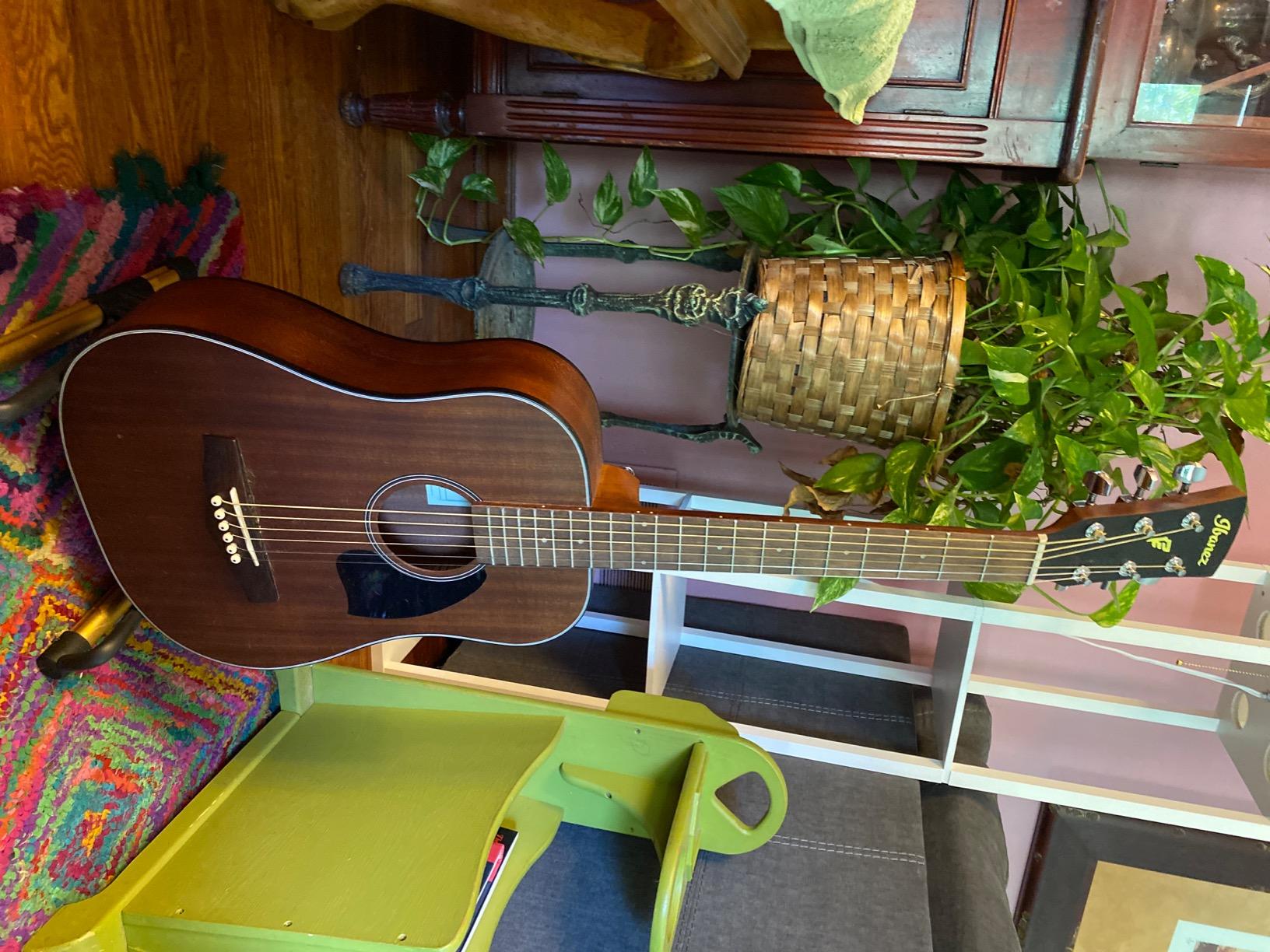
Reviews describe the small body and short scale as the practical reason to buy it, with sound quality rated as fine rather than impressive. It has the lowest customer rating in the roundup, and the gap between this and the Hola! is almost entirely the top wood.
The 22.8 inch scale and 1.69 inch nut
Short scale plus narrow nut is the same winning formula as the Hola! and it is why chord shapes land cleanly for small hands. If you already know your instrument will be replaced in a few years, the geometry here is genuinely comfortable to learn on.
All sapele and what that costs you
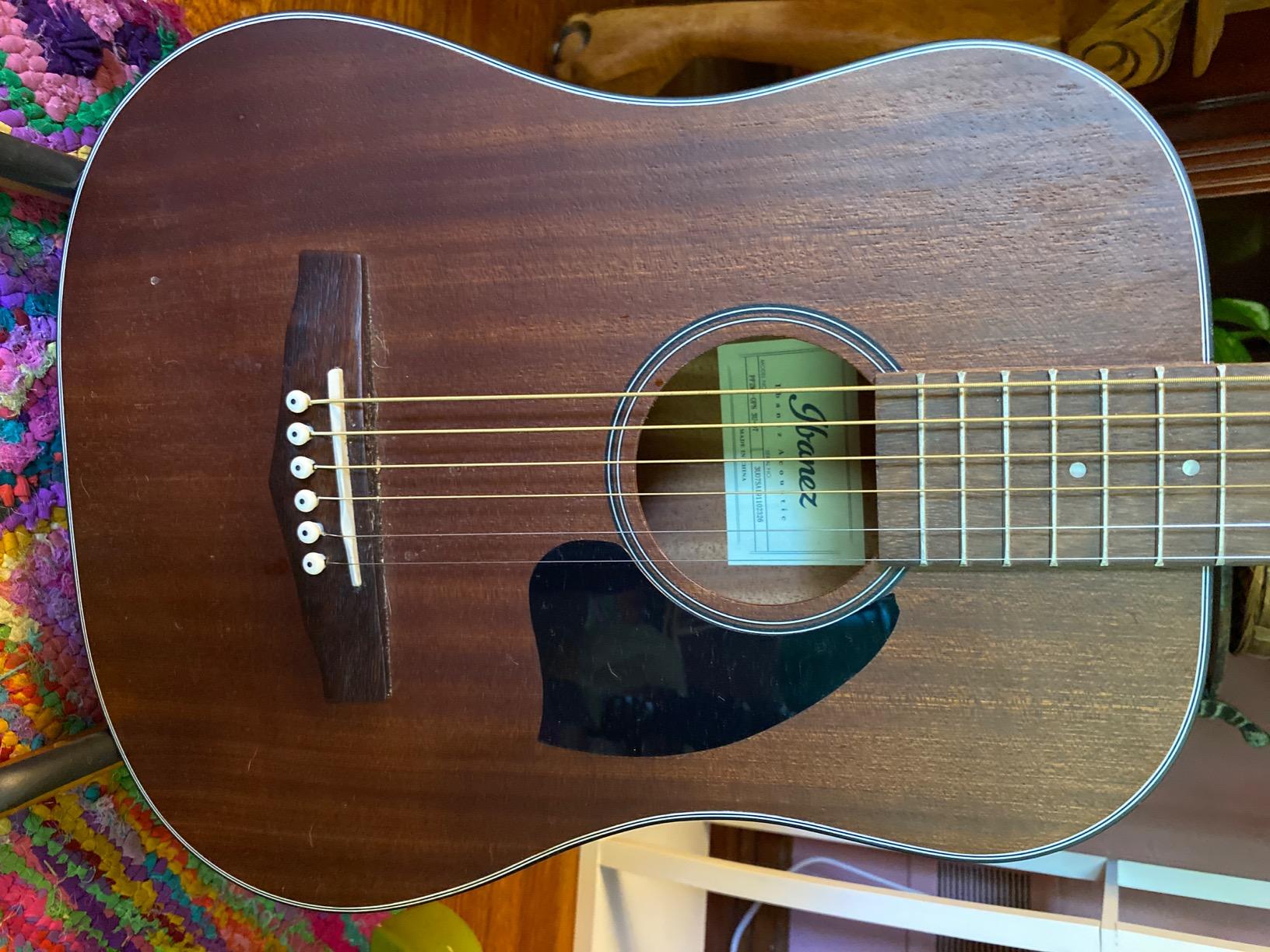
Sapele top, back and sides keep weight and cost down for a 3/4 steel string. The cost is tone and durability: it sounds thin and flat next to spruce, and being a softwood it dents and wears faster over years of handling.
Who should pass
Do not buy this as a keepsake instrument. It is a case of buying the right fit at the wrong quality level, when the same nut width is available with a solid top elsewhere in this roundup.
11. Taylor BT2 Baby Mahogany – Smallest Steel String Footprint
Taylor BT2 – Mahogany Top
22.75 inch scale
Ebony fingerboard
Mahogany top
Lifetime warranty
+ Pros
- 22.75 inch scale in a compact baby body
- Mahogany top gives a warm focused midrange tone
- Ebony fingerboard adds smoothness and durability
- Limited lifetime warranty on parts and labour
- Cons
- Most expensive instrument in the roundout
- Layered sapele back and sides limit volume
- Small body projects less than a full size acoustic
The BT2 is what you buy when you want a small guitar you will keep for twenty years. At 2 kilograms it is light for a steel string, the 22.75 inch scale is compact, and the limited lifetime warranty on parts and labour is the strongest coverage in this roundup by a wide margin.
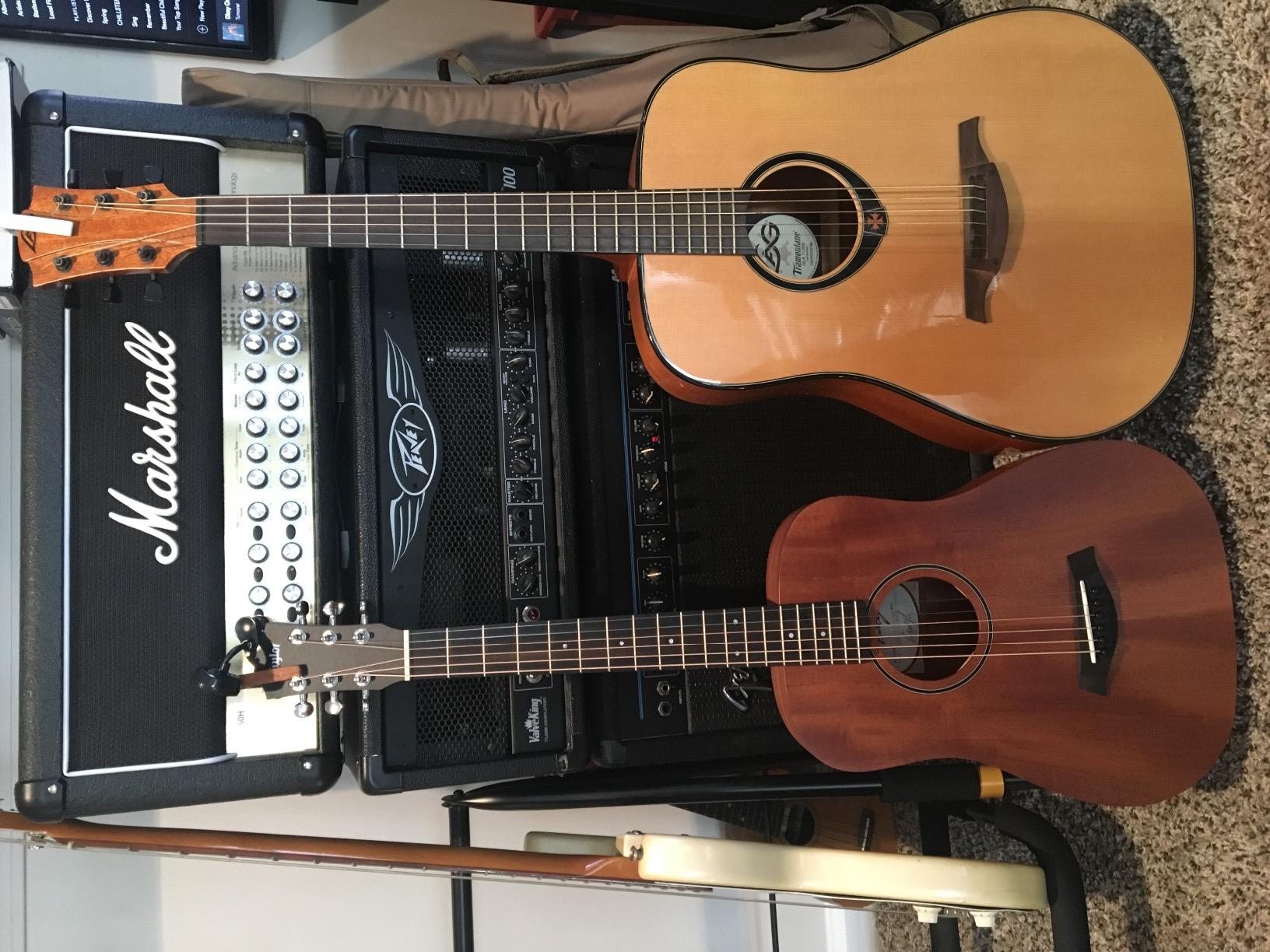
The mahogany top produces a warm, focused midrange that suits fingerpicking and light strumming rather than flat-out strumming with a pick. The ebony fingerboard is the detail budget models cannot copy, and it makes chord changes noticeably smoother.
Owners treat this as a legitimate Taylor rather than a starter toy, and roughly three quarters of reviews are five stars. The only recurring theme in critical feedback is the price, plus the modest volume of a small layered body.
Smallest steel string geometry
Among steel-string guitars with a real scale measurement, the 22.75 inch figure here is at the compact end. Pair it with the compact body and the instrument barely registers on a lap, which matters for a player who wants a guitar for travel rather than a fixed practice setup.
Mahogany top and ebony fingerboard
Mahogany is a warmer, drier top wood than spruce, with less sparkle and more midrange focus. Ebony is dense and fast, so notes clear the frets quickly. Together they give a focused voice that records well and sits nicely against other instruments.
The honest objection
Price puts this out of reach of most first-guitar budgets, and layered sapele back and sides mean you trade volume for portability. If you are starting from zero and might quit in eight months, that money is better spent elsewhere.
12. Orangewood Dana Mini – Arrives Already Set Up
Orangewood Dana Mini/Travel Acoustic Guitar with Spruce Top, Junior 3/4 Size
22.75 inch scale
Spruce top
Baby concert body
Factory setup
+ Pros
- Baby concert body with a compact 22.75 inch scale
- Layered spruce top sounds brighter than mahogany alternatives
- Purple Heart fingerboard adds a smooth durable surface
- Factory professional setup before it leaves the workshop
- Satin finish resists fingerprints and travel marks
- Cons
- Smallest review base in the roundout at 100 ratings
- Layered back and sides limit volume and bass
- Guitar only with no tuner picks or strap
The most underrated pick here, and the one I recommend to anyone who dreads first-day setup. Every Orangewood instrument receives a professional setup before it leaves the factory, so it arrives playable rather than needing a neck adjustment before your first chord.
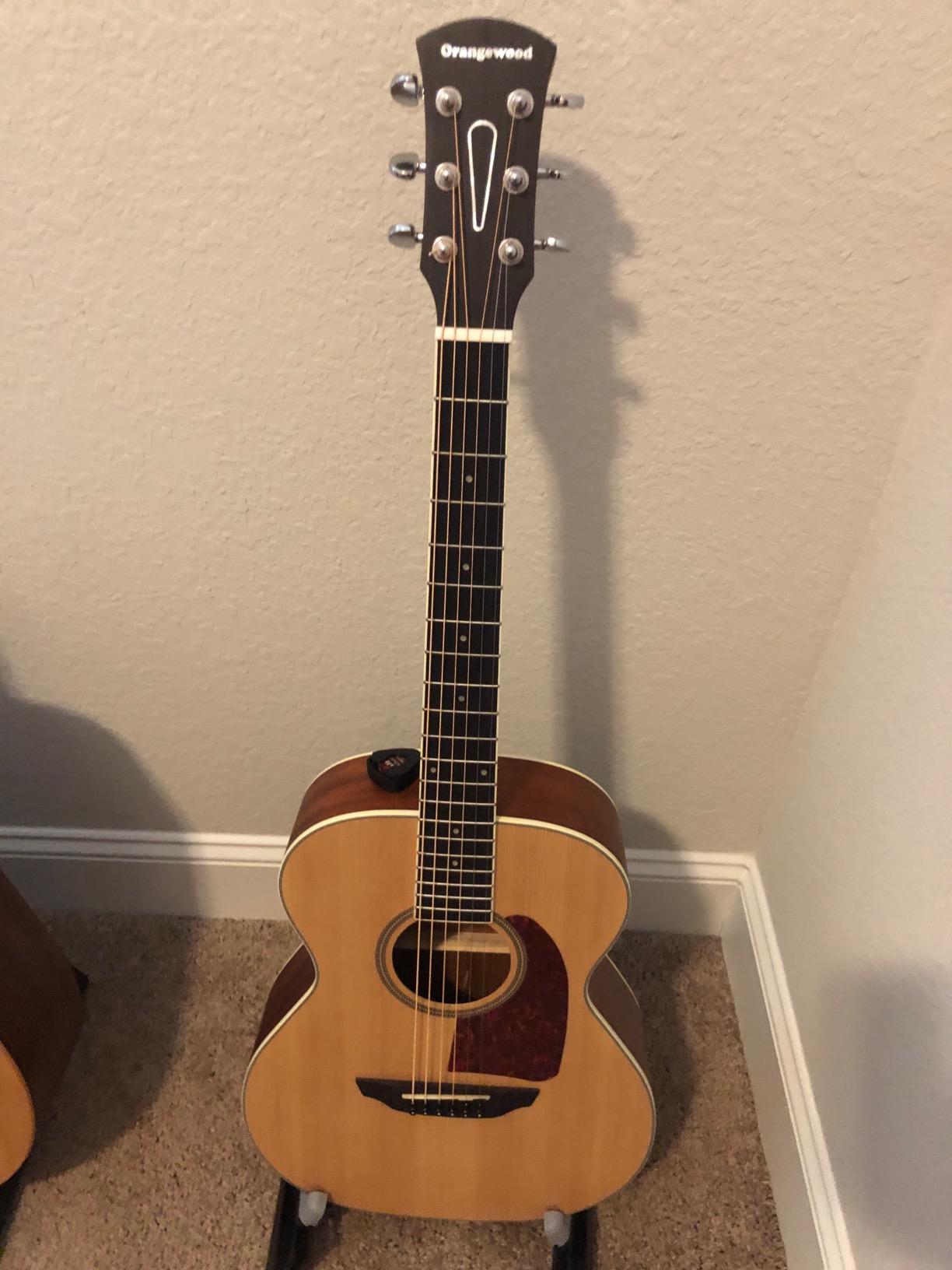
The 22.75 inch scale in a baby concert body is a genuinely compact steel string that suits small hands without looking like a toy. Owners highlight the setup and the brightness of the layered spruce top for its size, and describe it as a travel and practice instrument rather than a stage guitar.
The purple heart fingerboard is unusual in this price bracket and gives a smooth, durable playing surface. A satin finish is a smart detail for a portable instrument because it does not show fingerprints.
Why factory setup is the real feature
Cheap acoustics usually arrive with action too high, which is the single most common reason a new player’s fingers hurt. A factory setup means lower action from hour one, so first-week playing is comfortable while calluses form.
Layered spruce in a concert body
The concert shape gives a broader, fuller voice than a mini body and the spruce top keeps it bright. Layered mahogany back and sides still limit bass response, so it stays a companion guitar rather than a lead instrument.
Buy with open eyes
One hundred ratings is the smallest review base in this roundup, so long term durability is less documented than elsewhere. A gig bag and adjustment tools are included; a tuner, picks and a strap are not.
How to Pick a Guitar Your Hands Will Thank You For
Measure your hand span before you buy anything
Spread your fingers and measure the widest distance from the tip of your thumb to the tip of your middle finger, then subtract an inch. Under about six inches points to the 21.25 and 22 inch instruments. Six to seven and a half inches suits the 22.75 to 23.5 group. Above that, a 24.75 scale is comfortable, which is how the Fender CP-60S earns its place in a small-handed roundup.
Why your fingers hurt, and how to fix it
Three things cause most finger pain, and none of them require a new guitar. First, string gauge: lighter strings need less force and, at short scale, feel noticeably slacker. Second, action, which is how high the strings sit above the frets, set too high means pressing much further than necessary. Third, the truss rod, which sets the neck relief underneath.
Ask any shop to fit light gauge strings and set the action low before you judge an instrument. A well set up full size guitar with light strings can feel better than an untouched mini guitar with medium strings.
Try it in a shop with three specific tests
Play an open E chord and check that every string rings. Try a barre chord at the fifth fret and note whether your index finger lies flat. Hold the guitar against your thigh and see whether the body forces your wrist to bend. Those three tests predict comfort better than any spec sheet.
Is a 3/4 guitar only for kids?
No. Adults buy them constantly, and two of the instruments in this roundup carry review counts in the thousands. The framing to accept is that a 3/4 is a legitimate instrument, not a stepping stone, and that you can buy a full size or parlor guitar later without losing anything you have learned.
For stiff or arthritic fingers
Move toward nylon strings and lower action first. The Yamaha CGS102A and the Fender FA-25N are the two softest options here. Add a thumb pick for the picking hand, use a strap so you are not holding the instrument up with pressure, and keep sessions short while calluses build.
The capo workaround
A capo on the second or third fret shortens the effective scale length without changing the guitar. Several players in small-handed threads deliberately buy a full size instrument and cap it in low positions, keeping tuning stability while reducing stretch. It is a legitimate technique, not a compromise.
Frequently Asked Questions
What guitar does not hurt your fingers as much?
A nylon-string guitar is the gentlest option because nylon needs roughly half the pressing force of steel. Among steel strings, choose a shorter scale length and a lower action setting, and ask for light gauge strings. The Yamaha CGS102A and the Fender FA-25N are the two softest guitars in this roundup.
Is a 3/4 size guitar too small for an adult?
No. Adults play 3/4 size guitars every day, and short-statured players often describe them as the only size that fits them properly. A 3/4 instrument is a legitimate guitar, not a stepping stone, and everything you learn on one transfers directly to a full size model.
Is it possible to be good at guitar with small hands?
Yes. Hand size affects comfort more than it affects ability. The practical limits are fret spacing and stretch, and both are solved by a short scale length and a narrow nut width. Many players develop full technique on short scale instruments and later move to larger guitars without relearning anything.
What is the best guitar for someone with smaller hands?
For an overall pick, the Pyle 3/4 beginner kit pairs a 22.8 inch scale with a full accessory set so a new player can start on day one. For the narrowest nut, the Hola! Music 36 inch 3/4 lists 1.69 inches with a solid spruce top. For the shortest scale, the Yamaha JR1 sits at 21.25 inches. For electric, the Ibanez RG MiKro has a 22 inch short scale, and for the softest strings the Yamaha CGS102A uses nylon.
Should a beginner with small hands start acoustic or electric?
Acoustic is easier to hear and needs no amplifier, and a short scale 3/4 acoustic such as the Yamaha JR1 is the simplest starting point. Electric gives instant low-volume practice with headphones and fewer strings pressing on sore fingertips. Nylon string is the softest middle ground for sensitive fingers.
Which Guitar Should You Buy
If you want the best overall fit, take the Pyle 3/4 beginner kit with its 22.8 inch scale and a complete accessory set in the box. If you want a brand name with the shortest scale available, take the Yamaha JR1. If electric is the goal, the Ibanez RG MiKro is the only genuine short scale option here.
If your fingers are the problem, choose the Yamaha CGS102A or the Fender FA-25N in nylon string, and ask for a low action setup. If you refuse to outgrow a beginner instrument, the Taylor BT2 carries a limited lifetime warranty and an ebony fingerboard, while the Fender CP-60S gives you a full scale sound in a small body. If you want zero first-day setup, the Orangewood Dana Mini arrives from the factory ready to play.
Whichever one you choose, get the scale length, nut width and neck profile right and the rest of the decision is preference. Pick the guitar you will actually pick up tomorrow, and these are the best guitars for small hands in 2026 for every shape of player.