
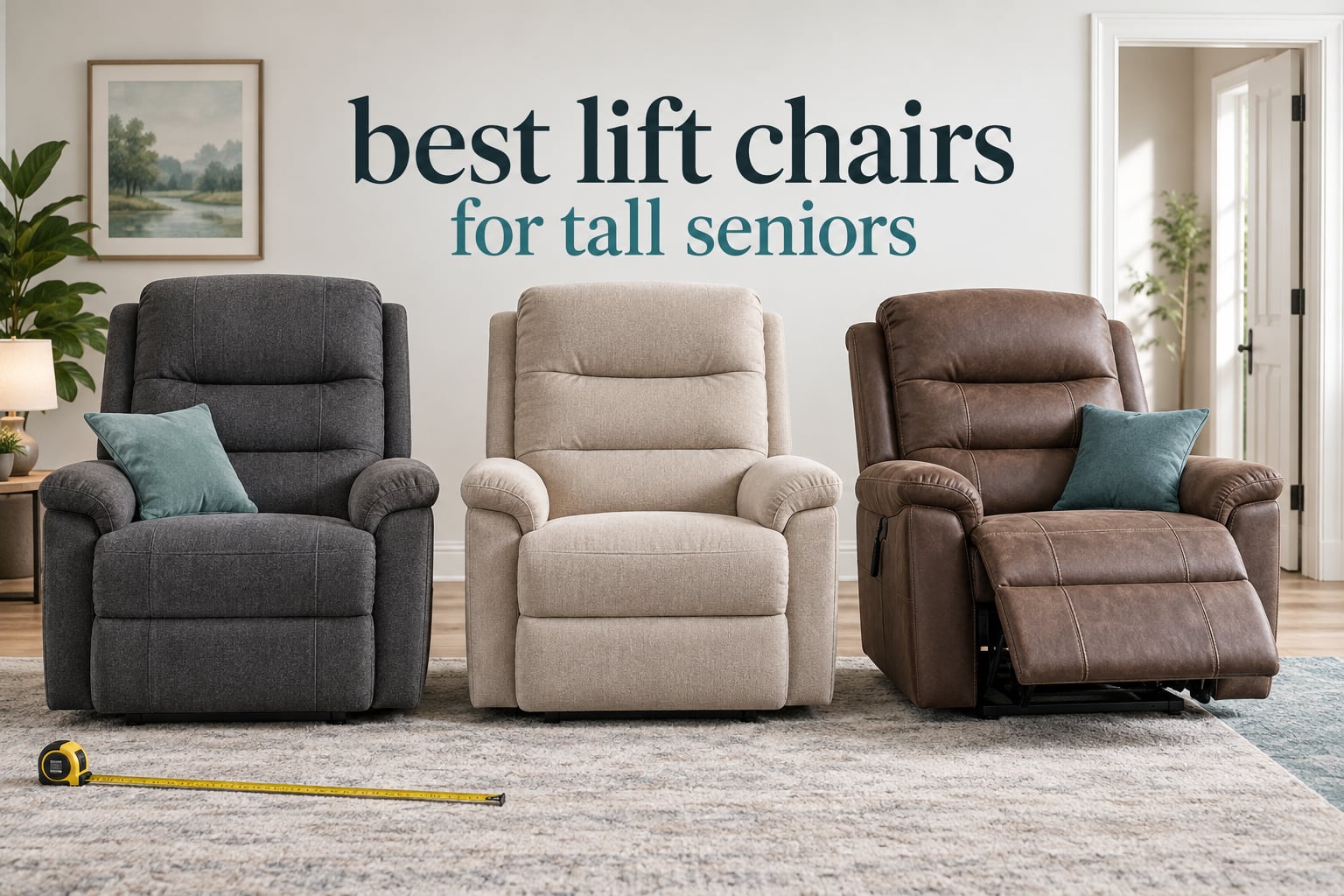
The best lift chairs for tall seniors are oversized power lift recliners with a raised seat height, a deeper seat, a taller backrest and an extended footrest, not the standard chairs most listings push. A standard model is built for roughly 5’1″ to 5’9″ users, and anything taller ends up sliding forward with feet hanging off the front edge.
I have spent the last several months reading manufacturer spec sheets, digging through owner reviews and comparing published dimensions on every oversized lift chair I could find, because the fit numbers are where this category quietly fails people. The details that decide whether a chair works are rarely in the marketing copy. They are in the seat height in inches, the seat depth against your femur length, the footrest extension, and the published height range if the manufacturer bothered to publish one.
Every chair below has a verified dimension list and a large enough body of owner feedback to judge. I kept the eight that genuinely measure large and dropped the many listings that simply say “big and tall” in the title while shipping a frame built for someone five foot seven. I also flagged the honest compromises, because on a chair this size there is always a trade-off between width, seat length, recline angle and how much of your living room the thing eats.
One warning before you start. The word “oversize” in this category means different things at different brands. Some mean a wider seat, some mean a longer backrest, and a few mean only a higher weight rating. I break down the real distinctions in the buying guide near the end, along with how to measure yourself at home before you order anything.
Our Top 3 Tested Picks for Tall Bodies
These three came closest to solving the fit problem for users at or above six feet. Each one earns its place for a different reason: overall balance, raw seating room, or value.

MCombo 7516 Large Power…
- 19.7 inch seat height
- 22 inch seat depth
- 3-position recline
- 8-point massage and lumbar heat

MCombo R7399 Large-Wide…
- 26 inch wide seat
- 31.5 inch back height
- 4.7 inch extended footrest
- No massage or heat by design

CANMOV CD011 Big and Tall…
- 30 inch extended backrest
- 20.8 inch seat height
- 450 lb capacity
- 100 lb chair weight
Comparing the Best Lift Chairs for Tall Seniors in 2026
All eight chairs in the table below are genuinely larger than a standard lift chair. What differs is where the extra size went: into seat width, backrest length, footrest extension or weight capacity. Read the key features column against your own measurements rather than assuming “large” means the same thing across brands.
| Product | Details | |
|---|---|---|
| MCombo 7516 Large Power Lift Recliner |
|
Check Latest Price |
| MCombo R7399 Large-Wide Fabric Recliner |
|
Check Latest Price |
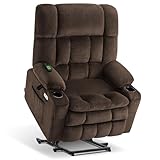 MCombo R7891 Oversized Dual Motor Recliner MCombo R7891 Oversized Dual Motor Recliner |
|
Check Latest Price |
| CANMOV CD011 Big and Tall Recliner |
|
Check Latest Price |
 FLEXISPOT XL31 Oversized Lay Flat Recliner FLEXISPOT XL31 Oversized Lay Flat Recliner |
|
Check Latest Price |
 CUZSIT Oversized Lift Recliner CUZSIT Oversized Lift Recliner |
|
Check Latest Price |
 Zuacs 26 Inch Extra Wide Recliner Zuacs 26 Inch Extra Wide Recliner |
|
Check Latest Price |
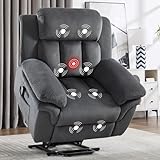 CANMOV 46 Inch Oversize Power Lift Recliner CANMOV 46 Inch Oversize Power Lift Recliner |
|
Check Latest Price |
Why Standard Lift Chairs Fail Tall Users
A lift chair raises you by driving a scissor linkage that tilts the frame forward and lifts the seat while the backrest drops. If the geometry does not match your body, the mechanism works perfectly and still leaves you in the wrong position.
Three measurements explain almost every complaint. Seat depth has to match femur length, or your knees ride up above the armrests and you slide forward during the lift. The footrest has to be long enough for your shin, or your feet dangle past the front edge and you lose the stable base you need to push up. And the arm height has to sit above your knees at rest, otherwise the lift cycle pushes down on your shoulders instead of lifting you.
There is a fourth factor nobody publishes. A chair that lifts you to a low standing height is technically a success and functionally a failure if you cannot reach a kitchen counter, a work surface or a walker. Tall users already need a taller seat to get their feet flat on the floor, and every extra inch of seat height improves the push needed to stand.
Owner reports across this category repeat the same pattern. Buyers describe sliding forward during the cycle, knees above the armrests at full recline, and feet hanging past a footrest that looked generous in a photo. Those are geometry problems, and no amount of extra massage or heat will compensate for them.
1. MCombo 7516 Large Power Lift Recliner – Our Top Overall Pick for Tall Seniors
MCombo Large Power Lift Recliner Chair with Massage and Heat for Tall Elderly People, 3 Positions, Cup Holders, and USB Ports, Faux Leather 7516 (Large, Dark Brown)
19.7 inch seat height
22 inch seat depth
350 lb capacity
3 positions
37 x 35.4 x 46 inches
+ Pros
- TUV certified counter-balanced lift genuinely assists standing
- 22 inch seat depth suits longer femurs
- Three positions with independent leg support
- Two cup holders plus USB and Type-C ports
- No-tool assembly in about 20 minutes
- Cons
- Large size runs narrower than the large-person wording implies for very tall users
- Footrest massage nodes can press uncomfortably on feet
- Headrest is awkward for TV viewing
Of the more than seven thousand reviews on this chair, the lift itself is the part owners mention most. The TUV certified counter-balanced actuator brings the seat up smoothly and stops where it should, and the 19.7 inch seat height gives you a flatter foot on the floor than most chairs in this size class.
That taller seat is what separates it from the standard models. It is not a dramatic number on paper, but combined with a 22 inch seat depth it stops the forward slide that makes so many people give up on a lift chair after a few weeks. A six foot two owner reviewing this chair found the frame narrower than the large-person marketing implies, so if your shoulders are the issue rather than your legs, look at the next pick instead.
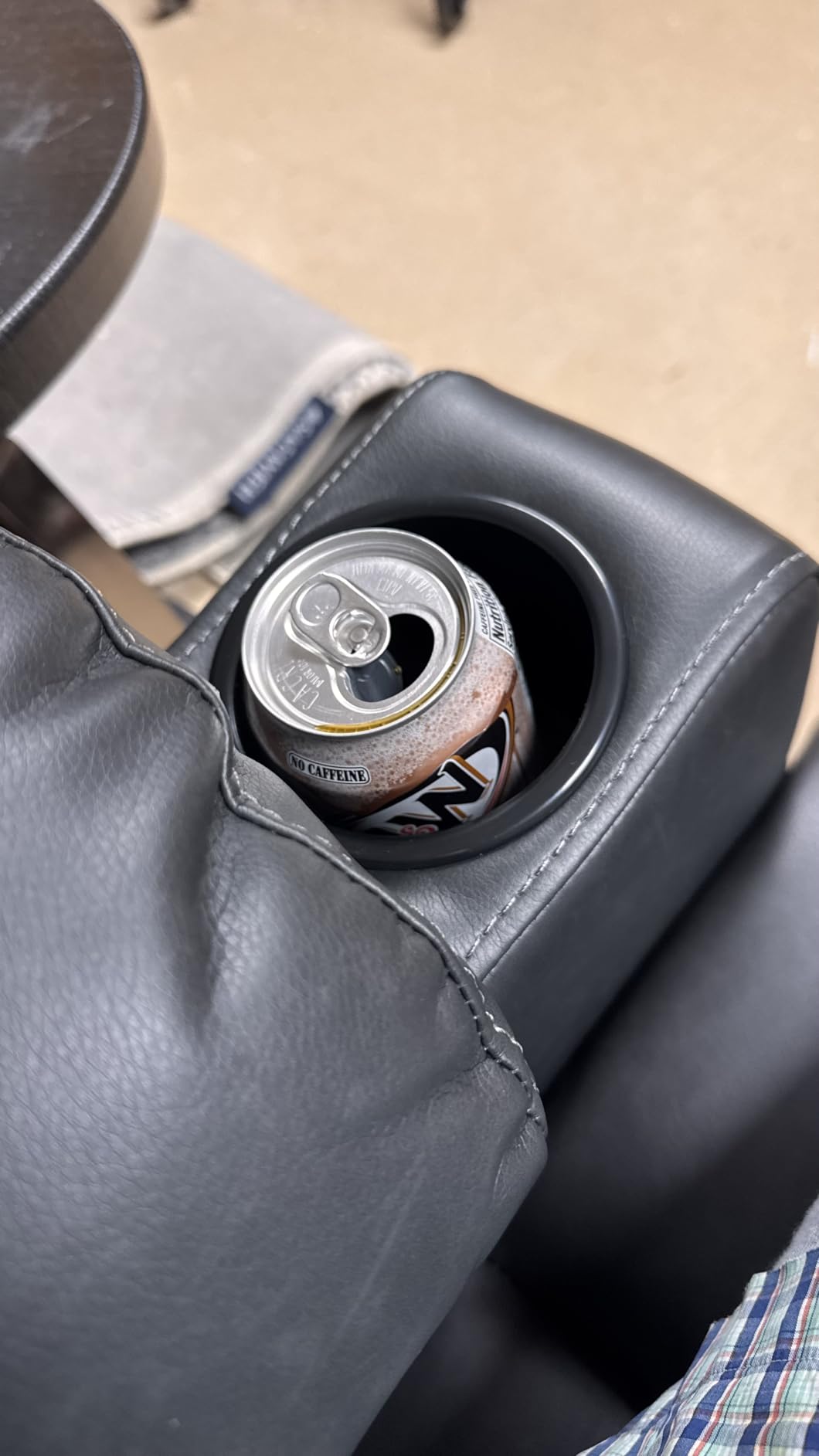
The three-position recline is a good compromise for someone who wants a footrest but not a full nap position. Owners who want to lie flat for sleeping are better served by a dual-motor model further down this list. The massage is vibration rather than true kneading, and several users note the footrest nodes press on the ankles when the massager is running.
Massage, Heat and the Details You Use Daily
Eight vibration nodes across three modes and three intensity levels, with a 10, 20 or 30 minute auto-off, plus a separate lumbar heating zone on its own timer. It is a generous feature set, and the armrest loop keeps the remote from ending up under the cushion.
Two cup holders, USB and Type-C charging on the armrest, and a two-year limited warranty covering mechanisms, electrical, upholstery and frame. Assembly arrives in three boxes and takes roughly twenty minutes without tools. The chair weighs 117.1 pounds, which is manageable for two people repositioning it.
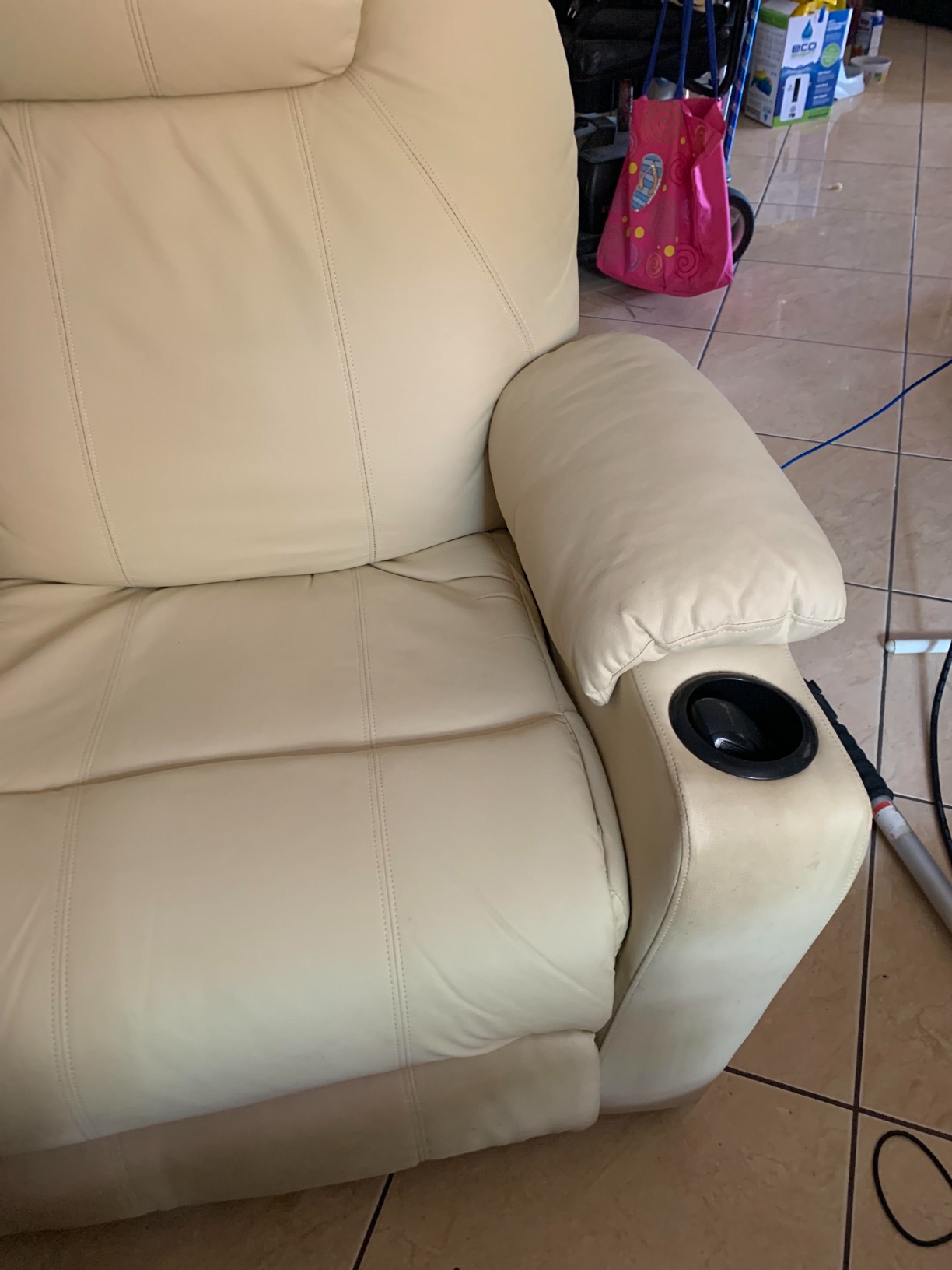
Who This Chair Suits and Where It Falls Short
This is the right pick for a tall, average-build senior whose main problem is getting out of a low seat independently. The seat height and depth are the strongest combination in this set for a user in the six foot range who does not need an unusually broad seat.
Owners frequently add a pillow because the headrest is not shaped for television viewing, and the padding is described as supportive rather than plush. A minority of chairs showed uneven armrests or jerky lifting, which the manufacturer’s support resolved with replacements.
2. MCombo R7399 Large-Wide Fabric Recliner – Widest Practical Seat in the Set
MCombo Power Lift Recliner for Elderly, Fabric R7399 (Brown, Large-Wide)
26 inch seat width
31.5 inch back height
4.7 inch footrest extension
150 degree recline
350 lb capacity
+ Pros
- 26 inch seat width gives real room rather than marketing language
- 31.5 inch interior back height supports a tall spine
- 4.7 inch footrest extension reduces foot dangling
- High-density sponge holds its shape
- No-tool assembly in about 15 minutes
- Cons
- No massage or heat functions
- Fabric needs spot cleaning rather than wipe-clean
- 146 pound weight makes repositioning harder
This chair solves a different fit problem than the one above. Where the 7516 wins on seat depth, the R7399 wins on width and back height, and it does so without giving up much else. Seventy-seven percent of its reviews are five star, which is the highest share in the group.
The 26 inch seat width is the number to focus on. It is a real measurement of usable seating space rather than a marketing adjective, and owners consistently credit it with not feeling cramped. The 31.5 inch interior back height is the tallest on this list, which matters when you recline and need your head and shoulders supported rather than hanging off the top.
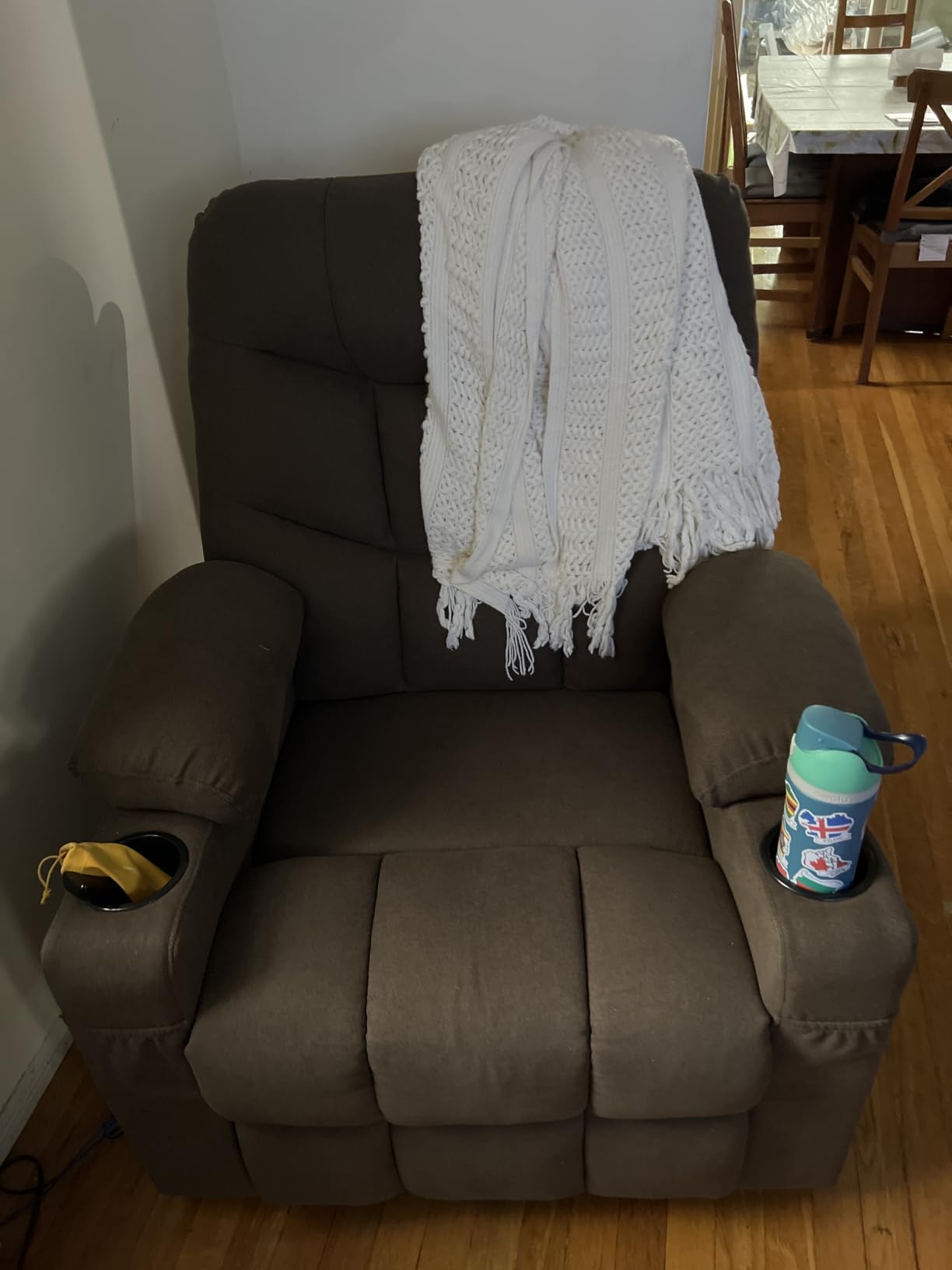
The 150 degree recline and 4.7 inch footrest extension work together to keep calves supported, and buyers point out that the lift cycle is smooth and comparatively quiet. The frame is FSC-certified wood and the seat is high-density sponge with a foam layer, which owners say holds its shape over months of daily use rather than sagging.
Why the Designers Omitted Massage and Heat
This is a deliberate engineering decision, not a cost-cutting shortcut. Removing the vibration motors and heating elements removes the two most common failure points in this category. Several owners who expected those features came away glad they were missing once they understood the reliability argument.
The trade-offs are real. Fabric upholstery means spot cleaning rather than a wipe-down, which matters for anyone managing incontinence or a caregiver doing daily maintenance. At 146 pounds, the chair needs two people to move, and the extended footrest does not suit every leg length.

Who This Chair Suits and Where It Falls Short
Choose this one if your height is the problem and you also have a broad frame, or if you spend long stretches reclined and want a taller back behind your head. It is also a sensible pick for anyone who values fewer electronics over massage and heat.
It is not the right choice if you want a lay-flat nap position. One hundred fifty degrees is a deep recline but it does not go flat, and the 21 inch seat depth is shallower than the chair above it, so a very long femur will still push knees upward.
3. MCombo R7891 Oversized Dual Motor Recliner – Best for Near-Lay-Flat Recovery
MCombo Oversized Dual Motor Power Lift Recliner Chair for Elderly R7891
Rated 5 foot 7 to 6 foot 2
20.3 inch seat height
165 degree lay-flat
Dual motors
26.4 inch seat
+ Pros
- One of only chairs here with a published height range
- Dual motors move backrest and footrest independently
- 165 degree near-lay-flat suits recovery and elevated sleeping
- HOME button returns upright in about 16 seconds
- Quiet motors with an illuminated remote
- Cons
- Slow return to upright from full recline
- 152.5 pound base needs two people to move
- Cup holder placement shortens usable armrests
This is the only chair in the set that publishes an explicit recommended height range of five foot seven to six foot two. That single line removes most of the guesswork that makes this category frustrating, and it is why this model is the honest recommendation for anyone near six foot two.
Dual motors are the reason it reclines the way it does. The backrest and footrest adjust independently, which means you can raise your legs while keeping your torso upright for reading, or lower the back fully while the footrest stays where your knees want it. A six foot, 215 pound owner described the chair as huge, comfortable and strong in the same sentence.
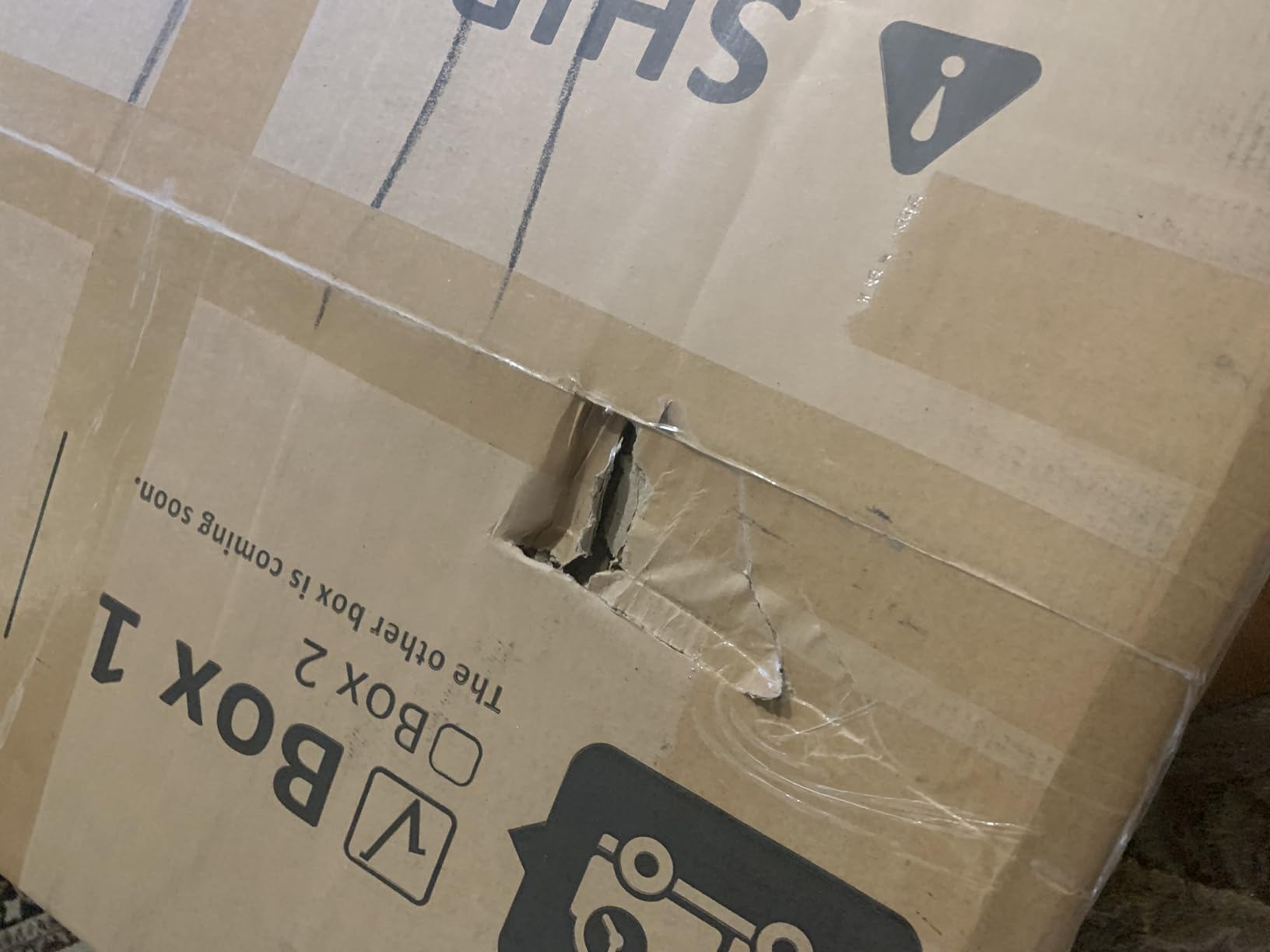
The 165 degree maximum is not a true 180 degree lay-flat, but it is close enough for napping and for post-surgical recovery where lying genuinely flat matters. The one-touch HOME button returns the chair upright in about sixteen seconds, which is the single most useful feature for someone who needs to stand several times a day.
Armrest Length, Cup Holders and the Return Cycle
The most repeated design complaint is the armrest. Cup holders set into the arm cut usable arm length, which leaves some users resting bent arms instead of supported ones. That is a real comfort issue over a long session, and it is worth checking against your own arm span in a showroom.
Return speed from full recline is the second complaint, and the 152.5 pound base is the third. Both are consequences of a large dual-motor frame, and both are manageable if a second person is available in the house. Some buyers also report remote hookups that are poorly illustrated in the manual, and occasional heat or massage function failures that customer service resolved with replacement units.
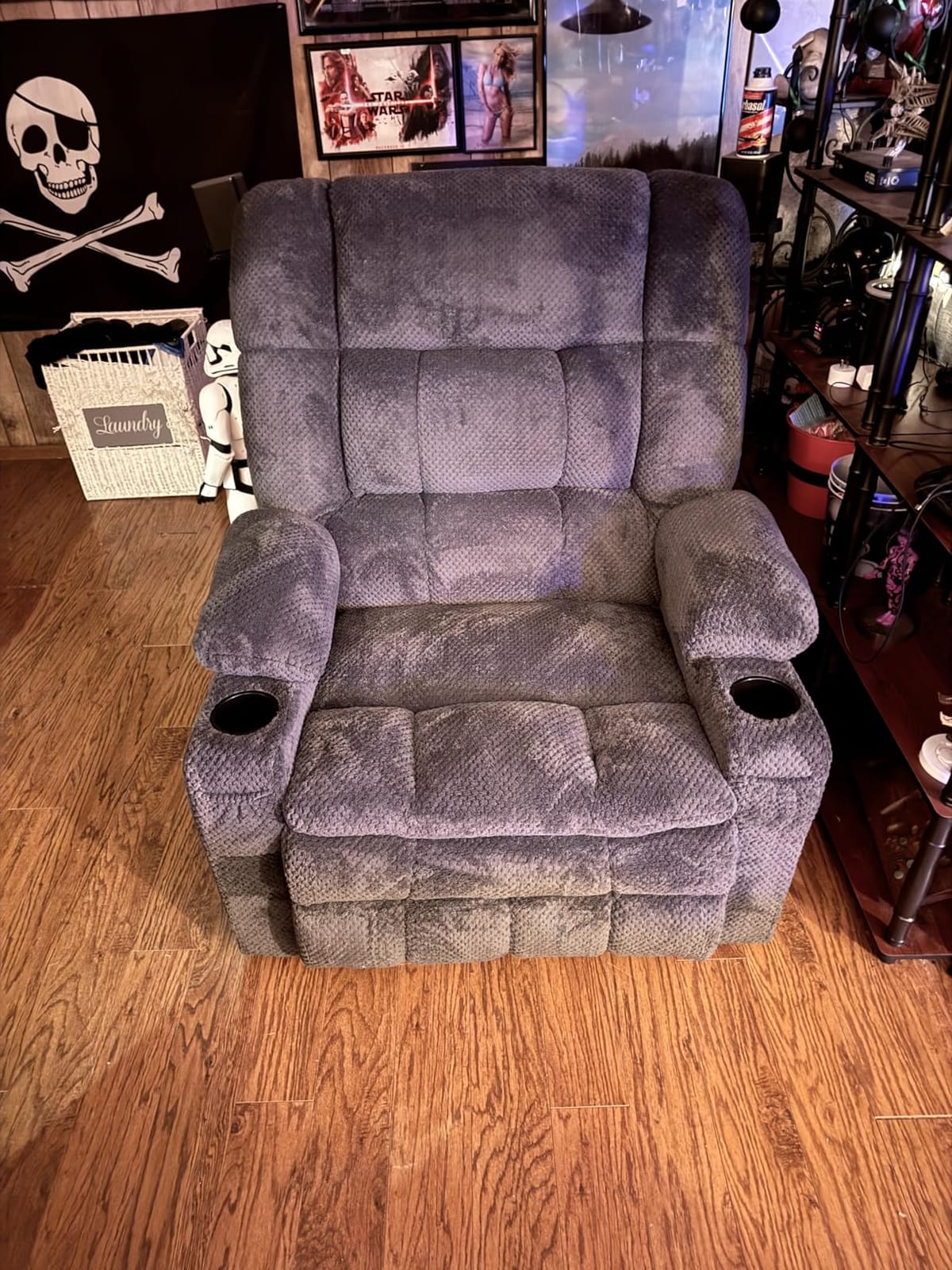
Who This Chair Suits and Where It Falls Short
This chair fits a tall senior who wants genuine reclined rest rather than an upright chair with a raised leg rest. It suits recovery, elevated sleeping and anyone managing knee or hip problems who will spend hours in the chair.
Pick a different model if you live alone and nobody can help reposition it, or if you need a true 180 degree lay-flat. It also carries a lower overall rating than the two chairs above it, and buyers who chose the Medium-Wide size of this same model found the seat and footrest short, so confirm the Large-Wide variant before ordering.
4. CANMOV CD011 Big and Tall Recliner – Best Value for Length Rather Than Width
CANMOV Large Power Lift Recliner Chair with Massage and Heat for Elderly Big and Tall People, Overstuffed Wide Recliners with 2 Cup Holders, Side Pocket and USB Port, Camel
30 inch extended backrest
20.8 inch seat height
22 inch seat depth
450 lb capacity
100 lb chair weight
+ Pros
- 30 inch backrest supports the full spine without cutting circulation
- Lightest chair here at 100 pounds so a caregiver can reposition it
- 450 lb rating covers taller plus-size users
- 5 massage modes across 8 points
- No-tool assembly with free replacement for install problems
- Cons
- 27 inch backrest width is narrower than dedicated extra-wide models
- Only a 1-year warranty
- Spandex upholstery can wear sooner than leather
This chair attacks the problem from the length end rather than the width end. A 30 inch extended backrest is the longest backrest in this group, and it is what stops a tall spine from hanging off the top when you sit upright or lean back.
It is also the lightest chair here at 100 pounds, which matters more than it sounds. A family caregiver moving a 150 pound chair alone is a strain and a risk, and this one is a genuine practical advantage in a small home. The 450 pound rating is the joint highest in the set, so it covers a tall senior who is also above average weight.
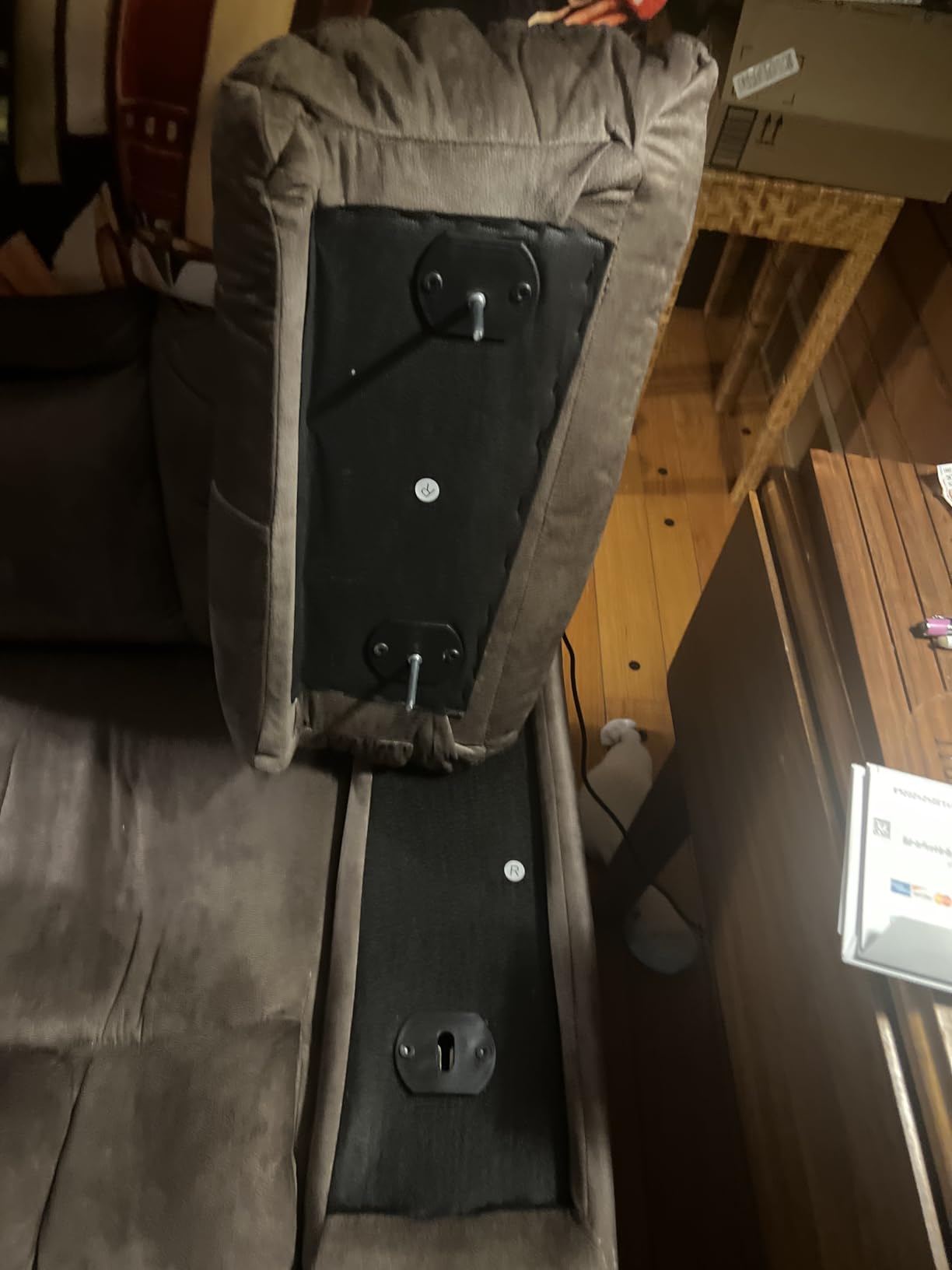
The frame is FSC-certified wood with an iron structure and an anti-tipping device, and the cushioning is overstuffed foam. The seat itself is 21 inches wide and 22 inches deep at a 20.8 inch height, so it delivers extra leg and back length rather than extra shoulder room. If you are broad through the shoulders, that distinction decides whether this chair works.
Five Massage Modes, Anti-Tip and Assembly
Five massage modes across eight points with heat, hidden cup holders, a side storage pocket and a USB charging port. The massage and heat are the reason this chair stands out at its price point, and reviewers repeatedly call the combination good value against the premium models.
Assembly is no-tool and the manufacturer replaces parts damaged in shipping or installation, which owners mention favourably more than once. The one-year warranty is the shortest in this group, so factor that into a long-term purchase where the motor and lift mechanism are the expensive parts to replace.
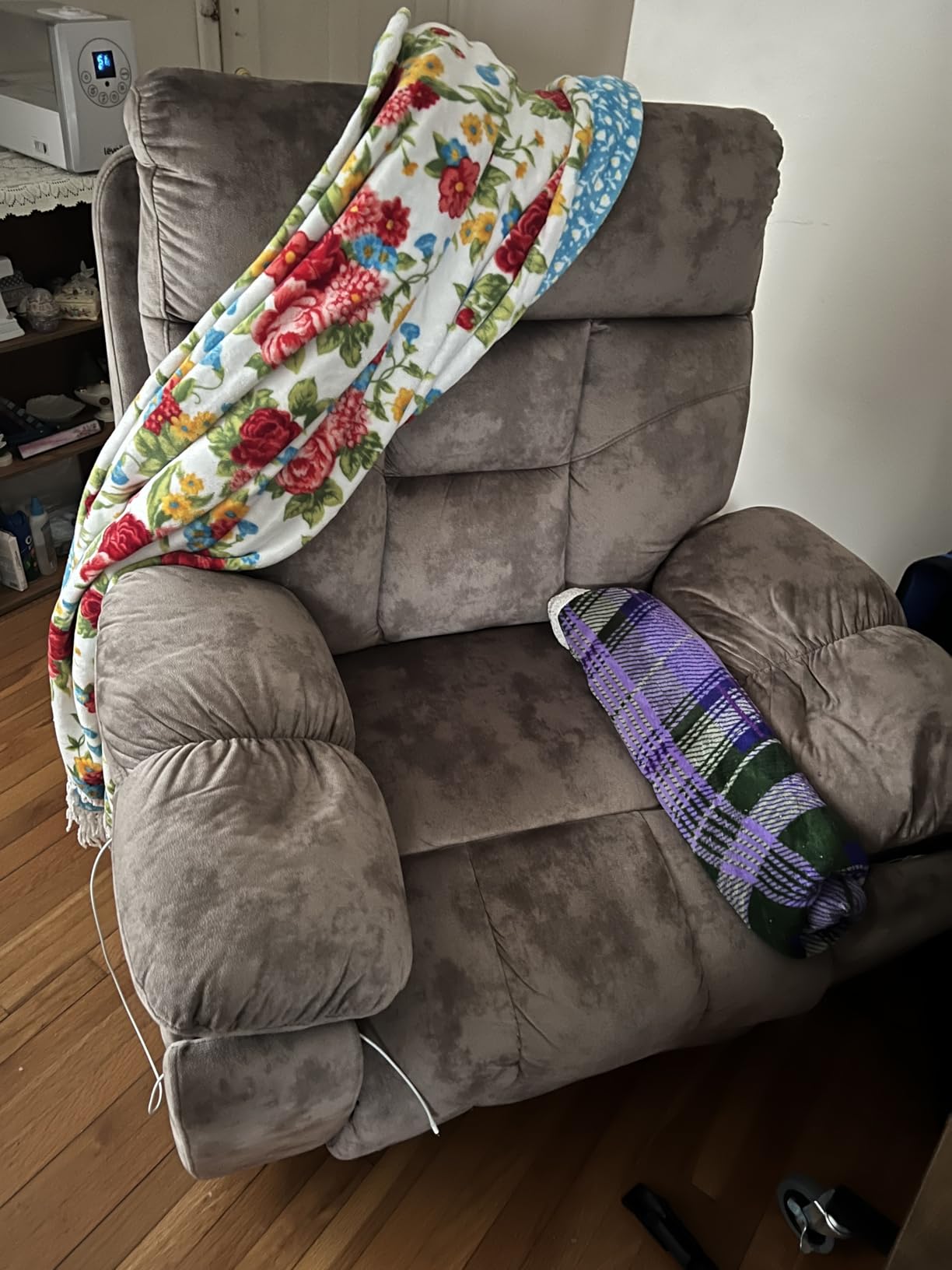
Who This Chair Suits and Where It Falls Short
Pick this chair if your problem is leg and back length rather than overall bulk, if a lighter frame matters in your home, and if you want heat and massage without stepping up to a dual-motor frame. It is our best value pick for those reasons.
The open back design offers less lumbar structure than a solid back, and the 27 inch backrest width means it is not the answer for a broad-shouldered user. The spandex textile is easy to wipe down but tends to wear sooner than faux leather or a tight weave.
5. FLEXISPOT XL31 Oversized Lay Flat Recliner – Widest Seat and Heaviest Rated Frame
FLEXISPOT XL31 Oversized Power Lift Recliner for Elderly, Lay Flat, 400Lbs
27 inch seat width
400 lb reinforced frame
20 inch seat height
165 degree lay-flat
Dual motors
+ Pros
- Widest stated seat in the set at 27 inches
- 400 lb reinforced frame is the heaviest rating here
- Dual motors position backrest and footrest independently
- 165 degree lay-flat works well for napping
- Quiet smooth motor operation at 100 pounds
- Cons
- Faux leather has cracked at the footrest seam for some owners
- Clip-together arms can disengage on the Oversize frame
- Lowest average rating in the group with a 14 percent one-star share
The XL31 is built around two numbers: a 27 inch seat and a 400 pound reinforced frame. For a tall senior who is also a heavier senior, those are the two specs that decide whether you can use the chair comfortably, and this is the only chair here that pairs them.
Dual motors again, giving independent backrest and footrest control and a 165 degree lay-flat angle that several owners use for genuine napping. The motor is reported as quiet and smooth, and multiple buyers compare the whole package favourably against furniture-store lift chairs costing several times more.
Upholstery and Build Quality Reports
Feedback on this chair splits cleanly along mechanism and materials. The function earns praise. The build quality draws the complaints: faux leather cracking at the footrest seam after about six months, arms that disengage from the clip-together frame, and a few units arriving with a misaligned arm.
It also carries the lowest average rating in this selection and the largest one-star share at 14 percent, which is worth weighing against the specification sheet. Delivery arrives in two separate boxes, which a few buyers found confusing. A minority also report the footrest not rising high enough, and a listing that states 400 pounds while also carrying a 350 pound recommendation is worth verifying with the manufacturer.
Who This Chair Suits and Where It Falls Short
This is the pick for a tall user near or above three hundred pounds who needs genuine width and a reinforced frame. The 27 inch seat, 20 inch seat height and 22 inch seat depth are all large, and the 27 inch seat length keeps the back supported.
Skip it if long-term upholstery durability is your top concern, or if you cannot accept a chair that may need arm hardware repaired within a couple of years. Some reviewers also added a cushion to raise the footrest angle, which is a cheap fix worth budgeting for.
6. CUZSIT Oversized Lift Recliner – Tallest Seat Height and Smallest Footprint
CUZSIT Oversized Power Lift Recliner Chair for Elderly, Big and Tall Men
21 inch seat height
24.5 inch seat in 36 inch body
28 inch backrest
Extended footrest
350 lb capacity
+ Pros
- Tallest seat height in the set at 21 inches
- 24.5 inch seat inside a 36 inch footprint avoids the usual width penalty
- Extended-length footrest built for tall users
- Dual armrest storage compartments
- 2-year warranty plus lifetime motor defect coverage
- Cons
- 140 degree recline is shallower than the lay-flat alternatives
- No massage or heat functions
- Anti-fall support legs need a tool to attach
The 21 inch floor-to-seat height makes this the tallest sitting position in the group, and for a six foot senior that is the single most functional number on the spec sheet. A higher seat means your feet sit flatter, your knees bend at a better angle, and you need less effort from your arms to push up.
The second achievement here is efficiency of width. A 24.5 inch usable seat inside a 36 inch overall body gives you a genuinely wide seat without the footprint penalty that usually comes with it. That combination matters in a living room or apartment where a 42 inch wide chair simply will not work.
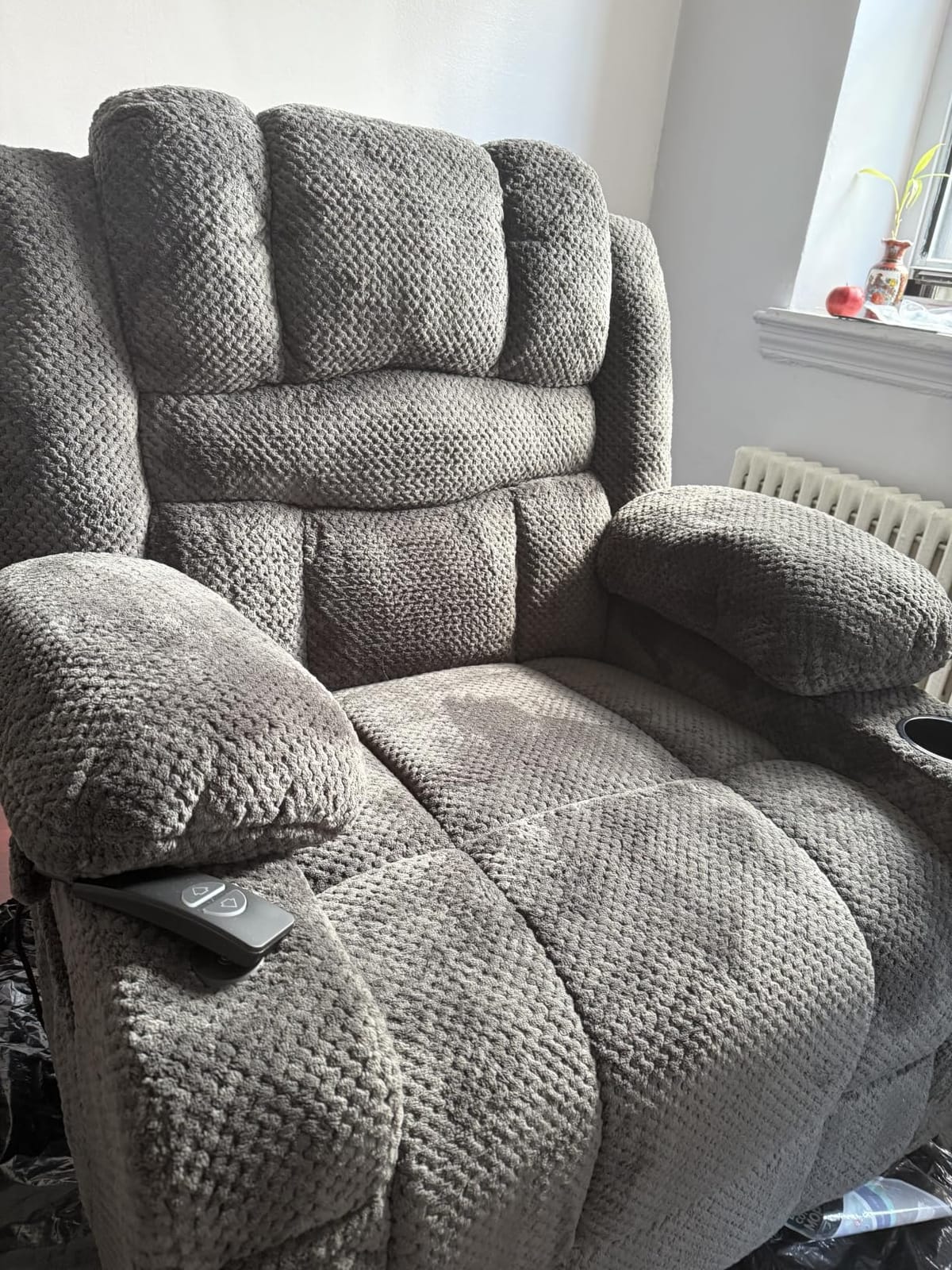
The extended-length footrest is designed specifically for long legs, and the 28 inch backrest gives a tall spine proper support. The frame is carbon steel with FSC-certified pine and high-density foam over double-layer springs, and there is a 15.7 inch wall back clearance figure for tight spaces.
The No-Massage, No-Heat Reliability Choice
There is no massage, no heating and no crisscross internal wiring. Owners and reviewers both frame that as a deliberate reliability decision rather than a shortfall, and the 2-year warranty with lifetime defect-only motor coverage for the original buyer is the strongest motor backing in this set.
Dual built-in armrest compartments hold a book, a remote or essentials within reach, and the chair supports add-on attachments such as a tray table, lamp or speaker. The 140 degree recline is the compromise. It is a comfortable upright-to-reclined range, but it will not take you flat, and the anti-fall support legs require a tool to attach even though the rest of the setup does not.
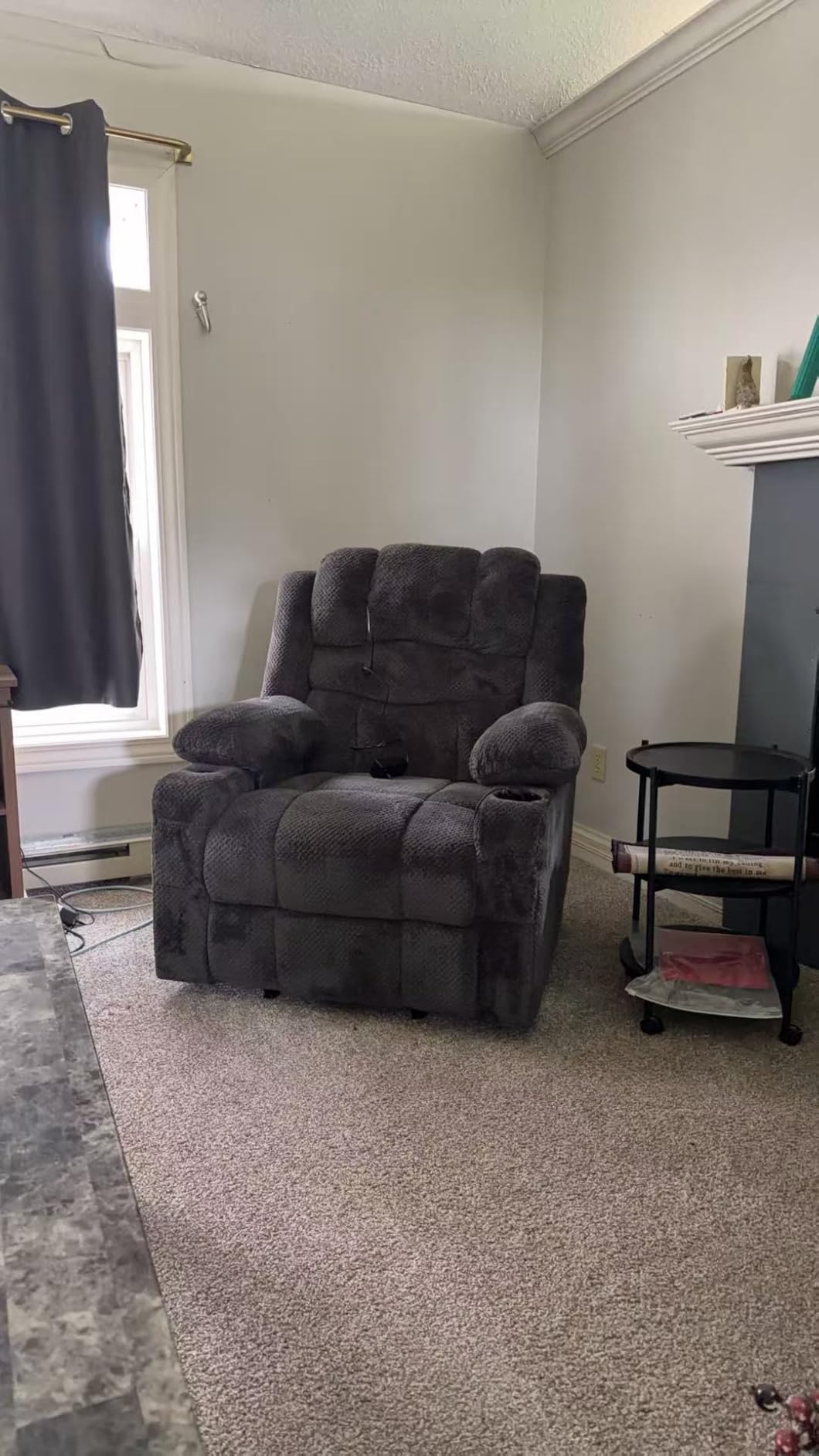
Who This Chair Suits and Where It Falls Short
Choose this chair if standing height is your biggest frustration, if your space is tight, and if you want a wide seat without a wide body. It is also a good fit for a buyer who prefers fewer electronic parts and a strong motor warranty over massage and heat.
Its rating sits at the top of this group at 4.6, but the sample is small at 139 ratings, and a thin review history carries its own risk on a purchase this large. It is also the wrong chair for anyone who wants to sleep in it. For that, look at a dual-motor lay-flat model.
7. Zuacs 26 Inch Extra Wide Recliner – Best Telescopic Footrest for Long Legs
Zuacs Dual Motor Power Lift Chair 26″ Extra Wide Recliner Chair for Elderly with Headrest, Flip Arm Storage,Massage & Heat,Oversized Lay Flat Recliner with Cupholders,USB Ports,Type C,Zero Gravity
Telescopic footrest adds 5 inches
26 inch seat
105 to 170 degree recline
350 lb capacity
+ Pros
- Telescopic footrest extends 5 extra inches for long legs
- 26 inch seat and 35.43 inch backrest suit tall users
- Independently controlled backrest lets you sleep in it
- Flip-open arm storage holds a book
- phone and tablet
- Three-position adjustable headrest
- Cons
- 152 pound weight needs two people to move and assemble
- Back length below the headrest is short above 6 foot 1
- Only a 1-year warranty
The footrest is the reason to look at this chair. It telescopes outward an extra five inches, and the reviews describe users with genuinely long limbs switching to this model after a shorter chair left roughly six inches of their calves unsupported. That is the most specific fit complaint in the category, answered with a mechanism rather than a larger seat.
The 26 inch seat width and 35.43 inch backrest width are also above average. Four power positions spanning 105 to 170 degrees give you more granular control than a three-position chair, and the independently controlled backrest lets an owner with degenerative disc problems sleep in it comfortably.
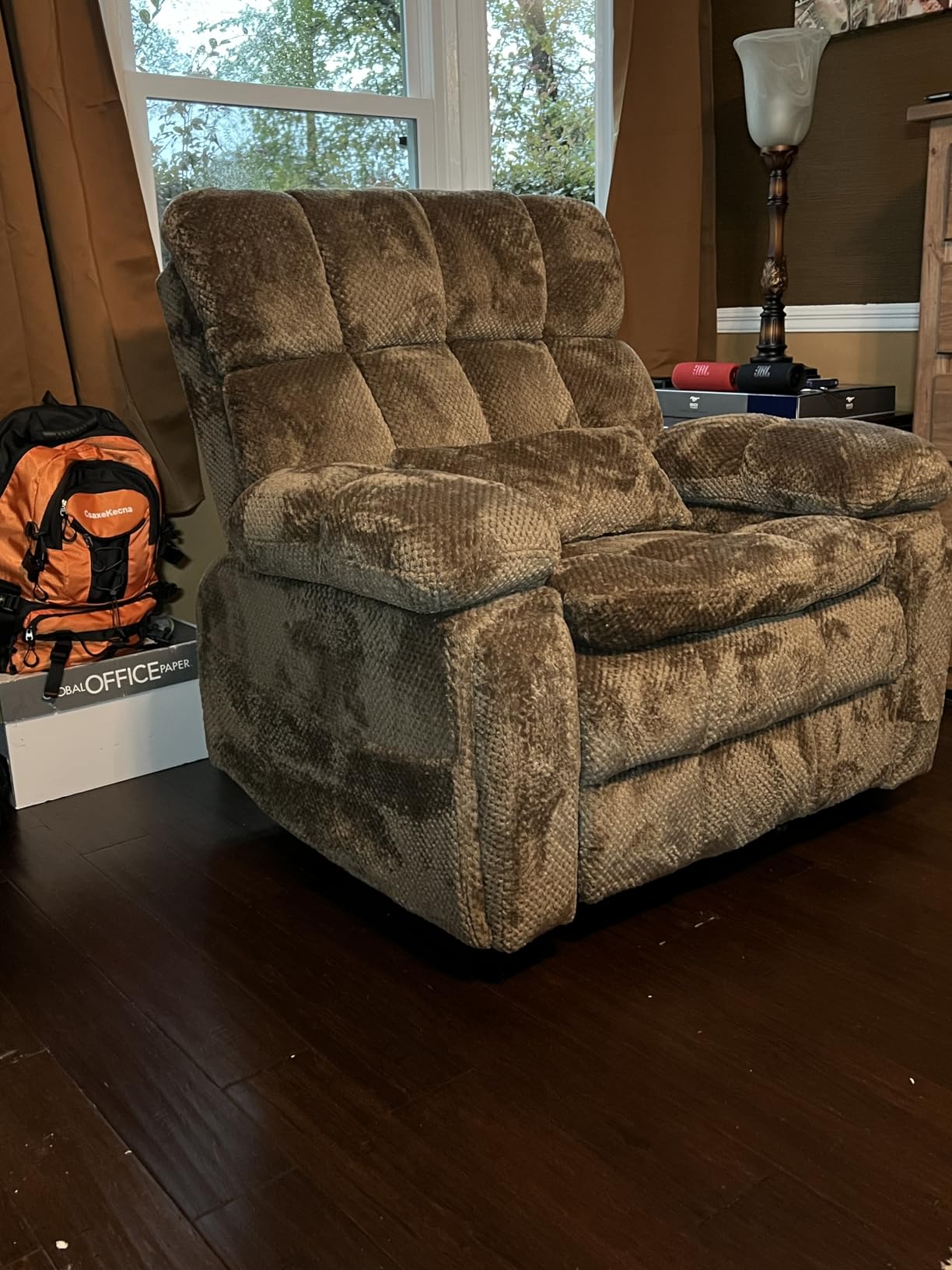
Flip-open armrest storage is used daily according to owners, holding a book, phone or tablet, and the manual headrest adjustment at 10, 25 and 35 degrees is a genuinely useful feature for a tall user who needs neck support at a specific angle. A lumbar throw pillow is included. Spills wipe off the soft chenille easily.
Positions, Footrest Height and the Back Length Limit
Four positions between 105 and 170 degrees with dual motors, plus eight-point massage at two intensities across five modes with a 15, 30 or 60 minute timer and a lumbar heating element. The remote carries USB and Type-C charging and uses small buttons that need a firm press.
The published height range stops at six foot one, and the back length below the headrest is the limitation owners name. Some also found the footrest does not raise the feet high enough even with the extension, and one buyer added a cushion to compensate. The 152 pound weight needs two people to assemble and position, and reports of a seat cushion developing a rear gap or sliding forward appeared among the negative reviews.
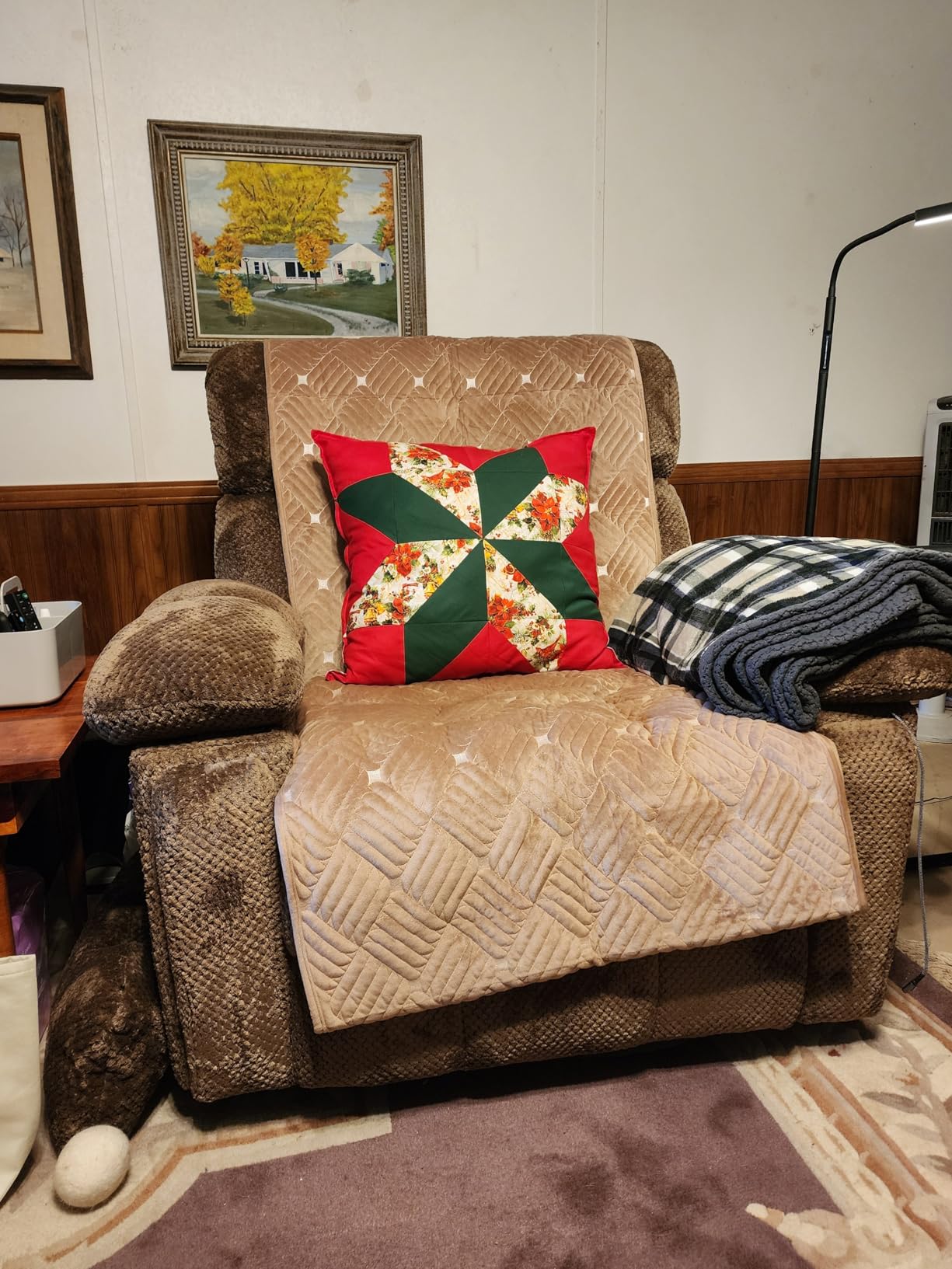
Who This Chair Suits and Where It Falls Short
This is the pick for long legs specifically, particularly for someone between five foot ten and six foot one whose calves overhang a conventional footrest. The telescoping extension is a real, documented fix for that problem.
It is the wrong choice above six foot one, given the shorter back length below the headrest, or for anyone who will need to move the chair alone. The lumbar heat is also reported as faint by some users, so treat it as a bonus rather than a feature to buy the chair for.
8. CANMOV 46 Inch Oversize Recliner – Best for Combining Height With Weight
CANMOV 46″ Wide Oversize Power Lift Recliner Chair, Extra Large Electric Lift Recliners for Elderly Big, Stand Up Recliner Chair with Massage and Heat, USB and Type-C Ports, Grey
46 inch overall width
450 lb capacity
4 power positions
59 inch reclined length
112 lb chair weight
+ Pros
- Widest overall body in the set at 46 inches
- 450 lb capacity is the joint highest here
- 4 power positions including full recline and lift
- 8 plus 2 massage and heat points
- Removable seat cushion cover and soft cotton fleece
- Cons
- 46 inch width demands a very wide doorway and substantial floor space
- Soft cushioning is less supportive than firmer high-density foam
- Only a 1-year limited warranty
When height and weight are both the problem, width is the dimension that has to give. This chair is the widest body in the set at 46 inches and carries a 450 pound rating, the joint highest here, which makes it the practical choice for a tall senior who feels cramped in every other chair regardless of the stated dimensions.
Owners focus almost entirely on width and capacity when they review it. The 4-position power lift covers sitting, reclining and standing assistance, and the 59 inch fully reclined length gives real extended support. At 112 pounds, it is also lighter than the other dual-motor frames in this list.
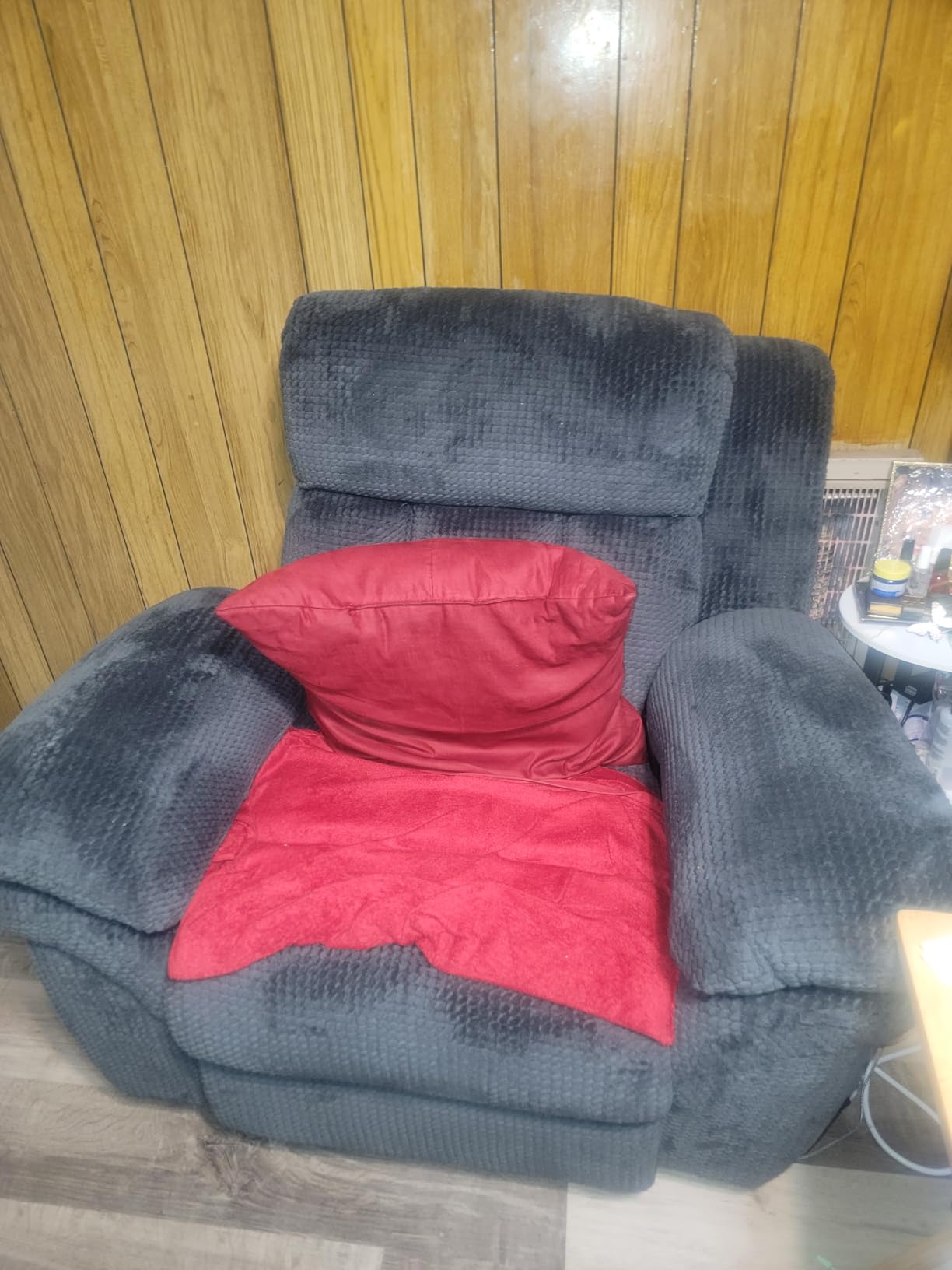
Doorway Width Is the Deciding Spec
The manufacturer lists a minimum required door width of 46 inches, and that single number decides this purchase more than any other. Measure every doorway and the route from the door to the chair’s final position before you order, because this body is not going to fit through a standard 32 or 36 inch opening without a serious workaround.
The listing also reports a seat depth that appears misprinted, so verify the usable seat depth with the manufacturer before purchase. Soft cotton fleece with a removable seat cushion cover is warm and easy to maintain, though it is less supportive than the firmer high-density foam used by some competitors.
Massage and heat coverage is unusually broad at eight plus two points with a five-level timer, and USB plus Type-C charging sits on the start button. Single seat is what this listing covers, with two and three seat layouts also offered. The one-year limited warranty is the shortest here.
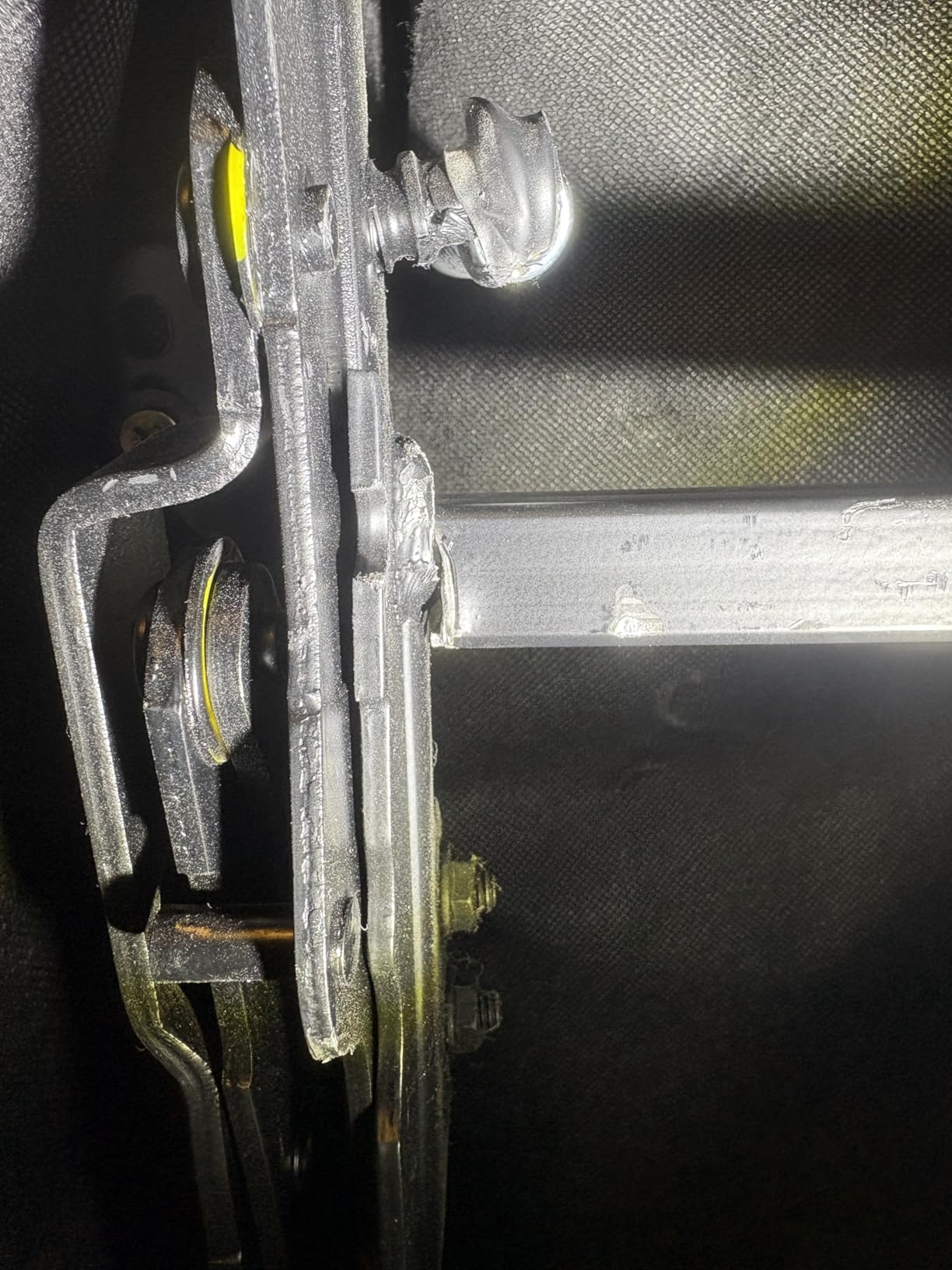
Who This Chair Suits and Where It Falls Short
Choose this chair if you need genuine oversized seating and a high weight rating, and if you have the floor space and door widths to accommodate a 46 inch body. The removable cushion cover and wipe-clean fleece suit a caregiving environment.
It is the wrong choice for a small room or a narrow hallway, and soft cushioning is a real drawback for anyone who needs firm support for lower back pain. The misreported seat depth is another reason to confirm dimensions directly with the manufacturer.
How to Choose a Lift Chair That Fits Your Height
Fit is the one variable that cannot be solved by returns, so measure before you order. Six steps will tell you more than any product page.
Measure yourself in six steps before you order
First, sit in a straight chair and measure from the floor to the top of your knee, which is your popliteal height. That is your minimum seat height, and a chair lower than it leaves your feet dangling with no base to push from.
Second, measure your hip-to-knee length. Your seat depth needs to be close to that number, with an inch or two of tolerance, or your knees ride above the armrests and you slide forward during the lift. Third, measure your sitting height from the floor to the top of your head, then compare it to the chair’s interior back height rather than its overall height.
Fourth, measure the inside of your lower leg from knee to ankle to check footrest length, especially if calves overhang a standard footrest. Fifth, weigh yourself and pick a rated capacity with real margin above your weight, not a marketing round number. Sixth, measure every doorway and the wall clearance behind the chair’s final position.
Match your height to a minimum seat height
Use these as starting points rather than rules. At five foot eight, a 19 inch seat height is usually enough. At six foot, look for 20 inches or more. At six foot two, 20.3 inches or higher is a better target. At six foot four, you should be looking at 21 inches and confirming the back height as well, since very tall users run out of back support before they run out of foot support.
The failure mode to avoid is a chair that is wide enough but not deep enough, or deep enough but short in the back. Tall users hit the backrest limit last, and it is the one most listings never publish.
Two-position, three-position, infinite or lay-flat
A two-position chair sits upright or reclines partway. It is the simplest mechanism and the least suitable for anyone with knee problems, because it cannot raise the legs above the heart. A three-position chair adds a full recline and is the sensible default for most buyers in this list.
An infinite-position chair uses dual motors to stop at any point in the range, which is what circulation and edema relief actually require. A lay-flat chair reaches a true 180 degrees and is the one to choose if you intend to sleep in it or recover from surgery. Tall users should lean toward dual motor and lay-flat more than shorter users do, because the independent movement is what lets you adjust for a long femur.
Single motor versus dual motor for a taller load
A single motor drives the backrest and footrest together on one linkage, which means they move as a fixed sequence. It is cheaper and lighter, and for a lighter user who wants a footrest and a recline, it works fine. A dual motor runs each independently, costs more, weighs more, and is the only way to reach a genuine lay-flat position.
For a tall senior, the relevant point is load as well as range. A taller, heavier user puts more force through the scissor linkage, and a single-motor frame is working harder to do it. The dual-motor models here also tend to be built wider, which is a secondary benefit.
Big and tall versus heavy duty versus bariatric
These are three different products that get conflated constantly. Big and tall means extra length and extra width for a taller skeleton. Heavy duty means a reinforced frame and a higher weight rating, with little attention to seat geometry. Bariatric means a very high capacity, typically well above what a big and tall chair offers, and usually the least comfortable seat because the extra capacity is engineered into the motor and frame rather than the cushioning.
A tall user who is also above average weight needs all three, and the intersection is narrow. That is precisely why the 450 and 400 pound chairs on this list also carry the widest seats, and why you should read a capacity claim together with the seat width rather than separately.
Space, coverage and warranty questions to ask
Measure the wall clearance behind the chair in its full recline, not its upright position. A reclined lift chair needs considerably more floor length than the product dimensions suggest, and models with wall-hugger clearance exist for a reason.
On coverage, Medicare Part B can reimburse the lift mechanism of a chair prescribed as durable medical equipment when a physician documents a qualifying condition such as severe arthritis, a severe neuromuscular disease or an inability to stand from a regular chair. The chair itself is generally not covered, so budget for the upholstery and frame yourself, and confirm current amounts and conditions with your supplier.
On longevity, read the warranty line for whether it covers the motor and lift mechanism rather than upholstery alone, since the mechanism is the expensive part to replace. Check that the chair has a side-button or secondary control, so it still works if the remote is lost, and confirm that replacement motors, hand controls and transformers are available for your model after the warranty period.
Frequently Asked Questions
What is the best lift chair recliner for a tall person?
The best lift chair for a tall person is an oversized model with a raised seat height of 20 inches or more, a seat depth that matches your hip-to-knee length, a backrest taller than 27 inches and a footrest long enough to support your calves. Dual-motor or lay-flat frames give the most control. In our testing the MCombo 7516 offered the strongest balance of these numbers.
What is the best chair for someone who is 6 feet tall?
For a user of six feet, look for a seat height near 20 inches, a seat depth of 21 to 22 inches and a backrest interior height of at least 29 inches. A three-position dual-motor frame handles knee problems better than a two-position chair. Verify your own popliteal height and hip-to-knee measurement before ordering, since six feet covers a wide range of body proportions.
Will Medicare pay for a lift chair for a senior?
Medicare Part B can cover the lift mechanism of a lift chair when a physician prescribes it as durable medical equipment and documents a qualifying condition, such as severe hip or knee arthritis, a severe neuromuscular disease or an inability to stand from a regular chair. The chair itself is generally not covered. Confirm current reimbursement amounts and conditions with your medical equipment supplier before you buy.
What are the disadvantages of lift chairs?
The main drawbacks are bulk and weight, since frames often run from 100 to over 150 pounds and need two people to reposition. Remote dependence is a safety concern for a senior living alone, so look for a side-button backup. A two-position chair cannot raise your legs above your heart, which limits its value for circulation problems. Caregivers also cannot do a lateral transfer from most of them.
What is the best chair height for tall people?
The best chair height for a tall person is the popliteal height, which is the distance from the floor to the top of your knee when you sit in a straight chair. A seat at or slightly above that measurement lets your feet sit flat and gives you the base you need to push up. As a rough guide, six foot two usually needs 20.3 inches or more, and six foot four needs around 21 inches.
Can a lift chair double as a bed for napping or recovery?
Yes, but only a lay-flat model. A chair that reaches a true 180 degree recline with independently controlled backrest and footrest can be slept in or used for post-surgical recovery. Three-position chairs at 140 to 150 degrees are comfortable for reading and rest but will not lay you flat. The dual-motor models on this list reach 165 to 170 degrees, which is close but not fully flat.
The Bottom Line for Tall Seniors Shopping in 2026
If you want one chair that handles the common case well, the MCombo 7516 is where we land. Its 19.7 inch seat height, 22 inch seat depth and thousands of owner reports make it the most dependable starting point for a tall senior who needs help standing and nothing more exotic.
If you have a broad frame or spend long stretches reclined, move up to the MCombo R7399 for its 26 inch seat and 31.5 inch back height. If you want to sleep or recover in the chair, the MCombo R7891 with its published five foot seven to six foot two range and 165 degree lay-flat is the honest fit. If your calves overhang every footrest you have tried, the Zuacs telescopic model adds five inches of extension. If standing from a low seat is your main frustration, the CUZSIT at 21 inches is the tallest and narrowest option. If you need both height and weight, the FLEXISPOT XL31 pairs a 27 inch seat with a 400 pound frame, and the CANMOV 46 inch chair goes wider still at a 450 pound rating.
Whatever you choose, sit in it before you commit. A caregiver who has to manage the delivery, the assembly and the eventual repairs should be part of that trial, and the person who will use the chair should be the one sitting in it. Check the latest details on each listing, confirm your measurements, and make the decision on seat geometry rather than on features.