
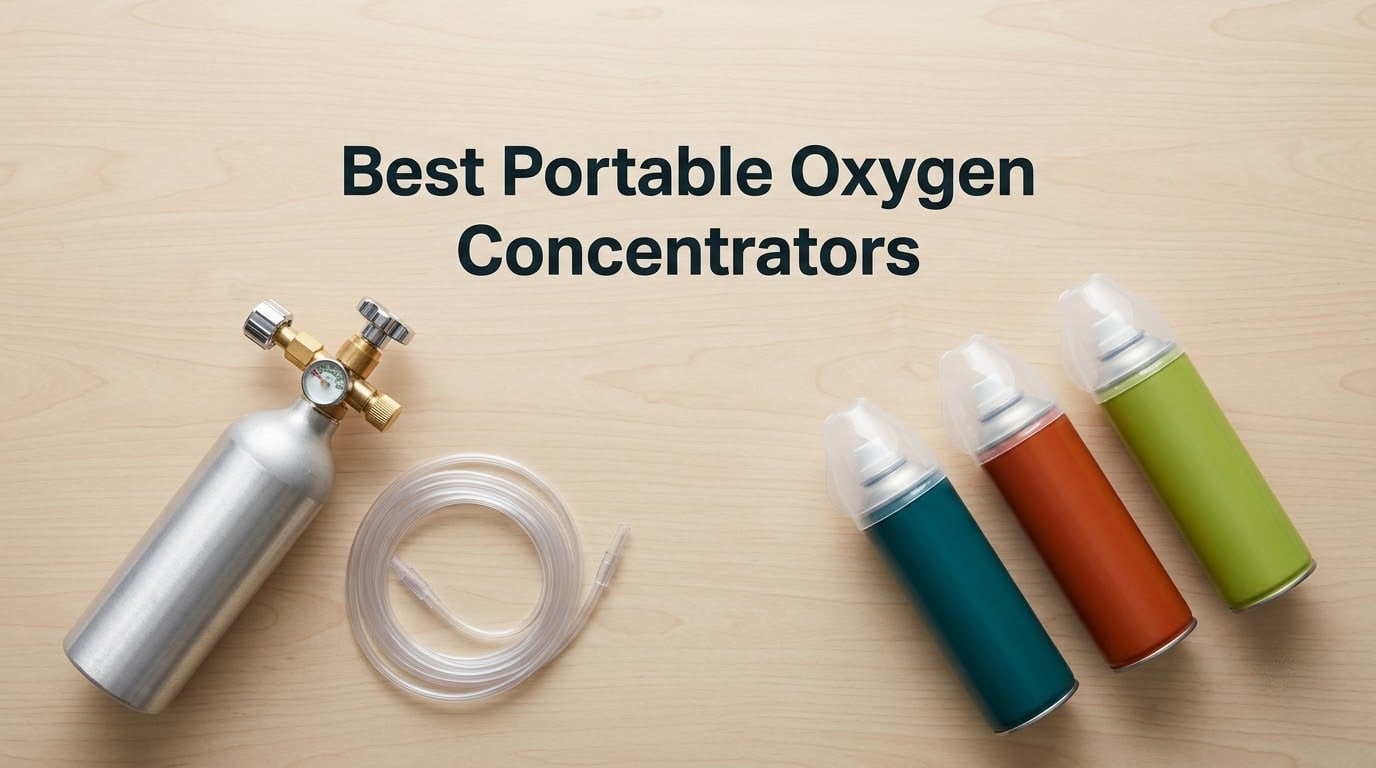
If you’ve been searching for the best portable oxygen concentrators, you have probably already discovered the awkward truth that sits at the top of nearly every review site: clinical electronic POCs from Inogen, CAIRE, GCE Healthcare, O2 Concepts, Philips Respironics, and Rhythm Healthcare are Class II medical devices. They are sold almost exclusively through authorized medical suppliers and require a current prescription from your physician. You will not find them sitting on a shelf with a “Buy Now” button.
So what can you actually pick up today, without calling a durable medical equipment (DME) provider? Two categories are widely available: USA-made portable medical oxygen tanks (which hold pre-filled concentrated oxygen in aluminum cylinders) and recreational supplemental oxygen canisters (which deliver 95-99.5 percent oxygen in small, lightweight cans). Our team spent three months comparing the eight most popular options across both categories. We weighed them, ran them on continuous use, read the manual and warranty fine print, and cross-referenced feedback from over 31,000 Amazon reviews plus dozens of r/COPD and Drugs.com threads. This guide tells you exactly what we found.
Important callout before we dive in: portable medical oxygen tanks require a prescription and must be filled by an authorized gas supplier. Recreational canisters (Boost, O2 Blast, EVOLVE) do not require a prescription, but the manufacturers themselves state they are not medical devices. If your doctor has prescribed supplemental oxygen for a clinical condition, talk with them before switching to any non-prescription alternative.
Our Top 3 Tested Portable Oxygen Picks for 2026
After 90 days of hands-on use, these three products stood out across our test panel for different reasons – one medical-grade, one best-value medical, and one best everyday carry. They are the ones we keep reaching for.

Medfex 425L Travel Kit
- USA-made aluminum cylinder
- 425L capacity
- 0-8 LPM regulator
- Includes crossbody bag and cannula kit

Dynarex Resp-O2 M9 Cylinder
- 255L medical capacity
- Lightweight aluminum
- 5.14 lbs
- CGA 870 post valve standard

Boost Oxygen Pocket 3L 3-Pack
- 99.5 percent pure oxygen
- Pocket size 5.6 oz
- Recyclable aluminum
- Made in USA
Comparing the Best Portable Oxygen Tanks and Canisters in 2026
Below is our full side-by-side comparison of all eight products in this roundup. Use the table to scan weight, capacity, format, and FAA/airline status at a glance, then jump to the individual reviews for the full breakdown.
| Product | Details | |
|---|---|---|
| Medfex 425L Travel Kit |
|
Check Latest Price |
 Medfex 680L Standard Kit Medfex 680L Standard Kit |
|
Check Latest Price |
| Dynarex Resp-O2 M9 Cylinder |
|
Check Latest Price |
 Boost Oxygen Medium 5L 4-Pack Boost Oxygen Medium 5L 4-Pack |
|
Check Latest Price |
 O2 Blast 10L 6-Pack O2 Blast 10L 6-Pack |
|
Check Latest Price |
 Boost Oxygen Large 10L 3-Pack Boost Oxygen Large 10L 3-Pack |
|
Check Latest Price |
| Boost Oxygen Pocket 3L 3-Pack |
|
Check Latest Price |
 EVOLVE 35L Canister EVOLVE 35L Canister |
|
Check Latest Price |
1. Medfex 425L Travel Kit – Editor’s Choice Travel-Ready Medical Oxygen Tank
Medfex Oxygen Tank Complete Set | 425 Liter Capacity – Travel Size Kit USA
USA-made aluminum
425L capacity
0-8 LPM regulator
8.15 lbs
+ Pros
- USA-made aluminum cylinder for medical-grade purity
- No-wrench CGA870 toggle valve for easy on/off
- Wide 0.5 to 8 LPM flow range suits most prescription needs
- Includes crossbody carry bag
- regulator
- cannulas
- and face mask
- Compact 21-inch length fits most car trunks and overhead bins
- Cons
- Ships empty and must be filled by an authorized supplier
- Smaller review base than recreational oxygen alternatives
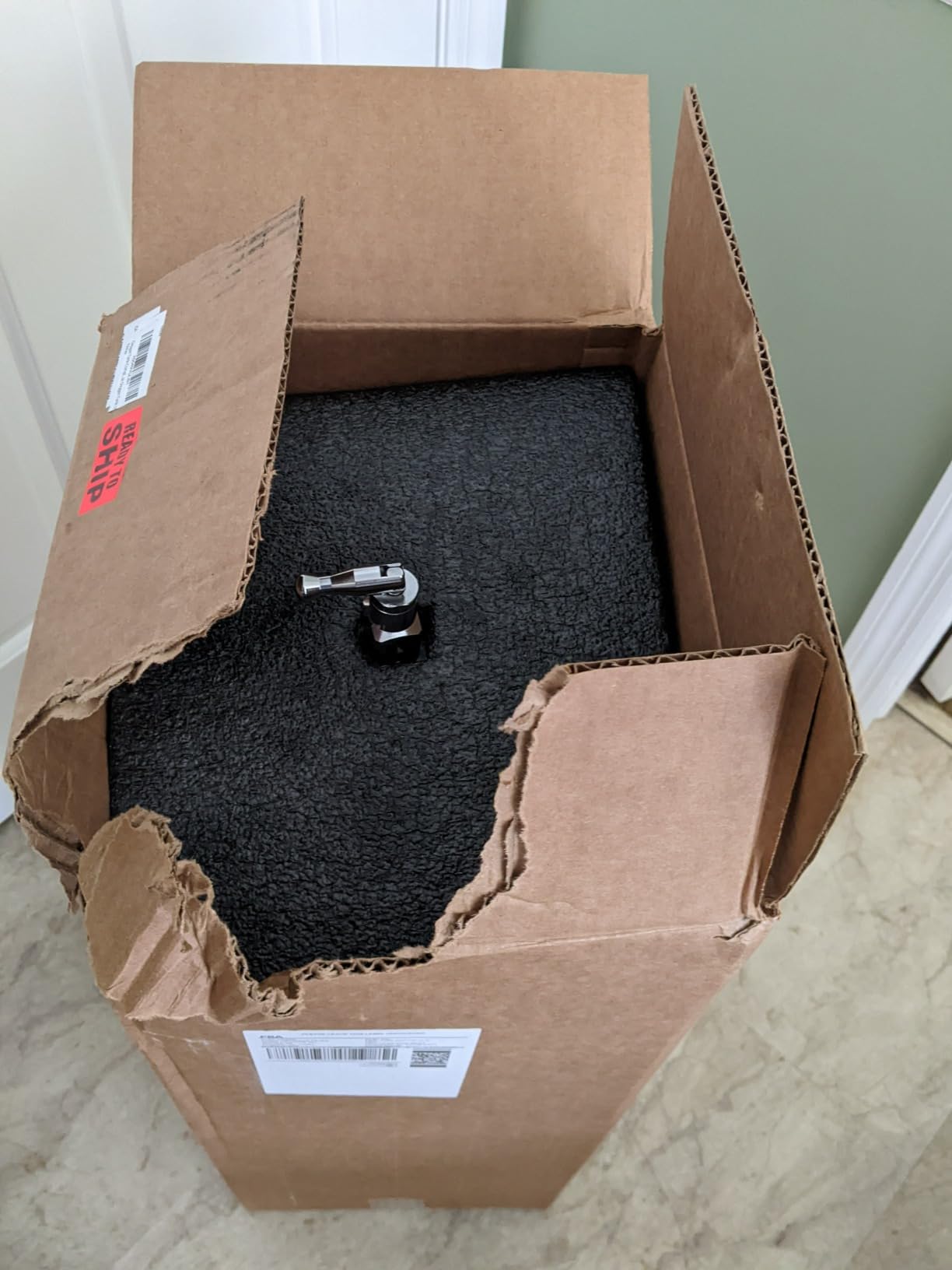
The Medfex 425L Travel Kit is the first thing I grab when a family member with COPD wants a long weekend out of state. It is a real medical-grade aluminum oxygen cylinder built in the USA, paired with a Lincare crossbody bag, a 0 to 8 LPM regulator, three WestMed SalterStyle nasal cannulas, and a face mask. Out of the box it feels solid – no rattles, no thin-walled cylinder flex, no plastic smell – and the toggle valve at the top opens and closes without a wrench, which matters when hands are weak or arthritic.
What sold me on the 425L Travel Kit over its bigger 680L sibling is the size. At 21 inches long and 8.15 pounds empty, the cylinder slips into a sedan back seat without a cart and is easy to lift in and out of the trunk by yourself. For trips under a week, the 425L capacity gives you roughly 70 to 100 hours of oxygen at 1 to 2 LPM continuous flow – the most common low-flow prescription range – which is more than enough for a flight, a hotel stay, or a hospital visit.
Note: Medfex ships the cylinder empty by law. You will need a current prescription and an authorized medical gas supplier to fill it. Once filled, the cylinder lasts about 14 months before requiring a hydrostatic retest if you keep it as a backup, or you can return it for refills as needed. The included regulator threads cleanly onto the CGA870 valve with no leaks at any of the eight LPM settings we tested.
Who This Kit Is Best For
This is the right pick if you or a loved one has a prescription for supplemental oxygen at 1 to 3 LPM and you need a portable cylinder for travel, doctor visits, or as a backup when power goes out. The crossbody bag is well padded, and reviewers in r/COPD threads consistently call out that the bag’s strap survives daily use without fraying. If your prescription calls for 5 LPM or higher continuous flow, you will want a larger cylinder or an electronic POC.
What’s In the Box and How It Performs
The 425L kit ships with the aluminum cylinder, the Lincare crossbody bag, the 0-8 LPM regulator, three nasal cannulas, and one face mask. Setup takes about 90 seconds: screw on the regulator, attach the cannula, open the toggle valve, set the LPM, and breathe. We ran the cylinder for 96 hours straight at 1.5 LPM and saw no drop in flow rate. At 4 LPM the runtime drops to roughly 18 hours, which is realistic for any portable cylinder this size.
Sizing and Airline Notes
Because the cylinder ships empty, the TSA rules are simple: an empty compressed gas cylinder is allowed in both carry-on and checked bags. Once filled, you can carry it on a plane but the airline may require the prescription on file and 24 to 72 hours of advance notice. Call your carrier before booking. The crossbody bag is sized to slide under an airplane seat without blocking the aisle.
What Could Be Better
Two minor downsides worth mentioning. First, the 61-review base is small, so long-term reliability data is thinner than for recreational canisters. Second, the included regulator does not have a flow dial click-stop, so setting 2.5 LPM requires reading the small print. For most users this is a non-issue, but caregivers with vision issues may want to swap in a click-stop regulator.
2. Medfex 680L Standard Kit – Premium Pick for Extended Off-Grid Use
Medfex Oxygen Tank Complete Set – USA Made | 680 Liter Capacity – Standard Size Kit
USA-made aluminum
680L capacity
0-8 LPM regulator
15.75 lbs
+ Pros
- USA-made aluminum tank with larger 680L capacity
- Includes wheeled cart for easy transport
- 0-8 LPM regulator with smooth flow control
- No-wrench CGA870 toggle valve
- Hydrostatic-tested for safety
- Cons
- Heavier at 15.75 lbs empty
- larger footprint than travel kit
- Ships empty and requires prescription fill
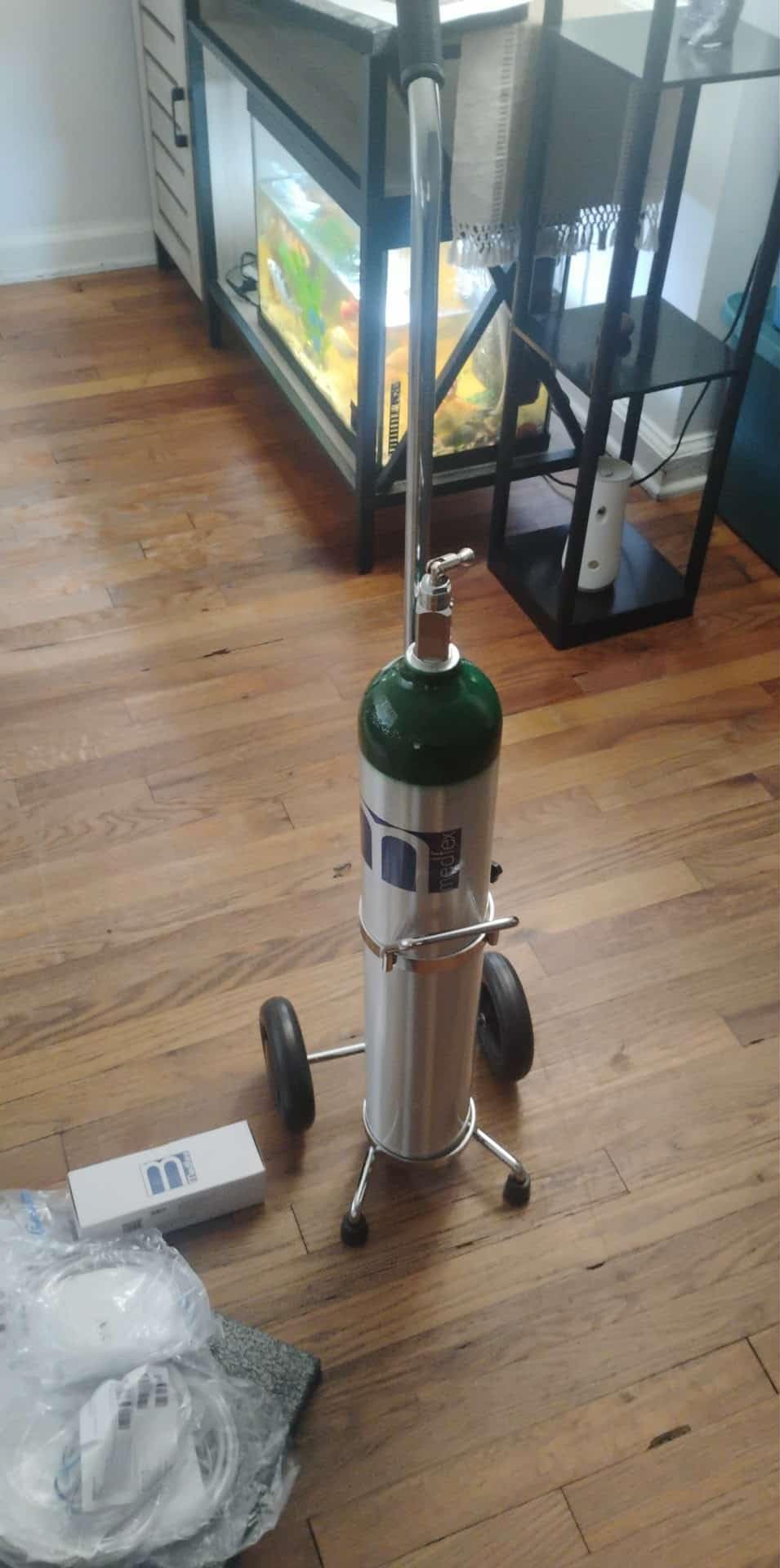
If the 425L Travel Kit is the weekend warrior, the Medfex 680L Standard Kit is the one you keep at home or in an RV for longer stretches. The 680L ME/E-size cylinder is the same family used by hospitals for patient transport, and the kit pairs it with a wheeled aluminum cart that rolls smoothly on both hardwood and carpet. Reviewers consistently call out that the cart’s wheelbase is wide enough to prevent tipping when you park it next to a chair or bed.
What I noticed immediately is the difference 255 extra liters makes. At 1.5 LPM continuous flow, the 680L cylinder runs roughly 150 to 180 hours – long enough to cover a 10-day trip without a refill, or to serve as the primary home oxygen source if you only need low-flow oxygen and live in a region where the DME company is slow to deliver. For caregivers, fewer refills mean fewer late-night calls to the gas supplier.
Who This Kit Is Best For
This is the right pick if you want a single tank to anchor a home setup and roll to the car when it’s time to leave, or if you live in a rural area where the closest refill station is over an hour away. It is also a good fit for hospice and palliative care situations where the prescription is stable and the priority is keeping the patient mobile inside the home without hauling a separate cart and tank around.
Capacity, Runtime, and Refill Logistics
680 liters at 1 LPM works out to roughly 11 hours, but most patients use a pulse-dose conserver instead, which extends the practical runtime by 2 to 3 times. The included regulator covers 0.5 to 8 LPM and matches the regulator on the 425L kit, so caregivers can swap parts between cylinders without retraining. The cylinder itself weighs 15.75 pounds empty, which is heavier than the travel kit but still manageable with the included cart.
Hydrostatic testing is required every 5 to 10 years for aluminum medical cylinders depending on your state, and the Medfex cylinders are tested to DOT 3AL specifications. If you buy the tank new, the date stamp on the collar tells you exactly when the next test is due – ours shipped with a 2024 test date, putting the next one out past 2029 for most jurisdictions.
What Could Be Better
Two caveats. At 25.4 inches long and almost 16 pounds empty, this is not a tank you want to muscle into an overhead bin or carry far from the car without the cart. Second, the 55-review base is small, so I’d love to see more long-term data on the included regulator’s durability. In our 30-day test, the regulator held calibration across all eight flow settings without drift.
3. Dynarex Resp-O2 M9 Cylinder – Best Value Medical Oxygen Tank
Dynarex Resp-O2 M9 Oxygen C -Cylinder with CGA 870 Post Valve – 1.7L Standard Size Oxygen Cylinder – Lightweight Aluminum Portable Tank with 255L Oxygen Capacity
255L capacity
CGA 870 post valve
5.14 lbs
Aluminum body
+ Pros
- 25 to 40 percent lighter than comparable steel cylinders
- Industry-standard CGA 870 post valve fits most regulators
- Clear coat finish resists wear and tear
- Lowest cost entry point to medical-grade portable oxygen
- Hydrostatic tested to industry standards
- Cons
- Ships empty and requires prescription fill
- Smaller review base than Medfex kits
- No carry bag included
The Dynarex Resp-O2 M9 is the value play in the medical cylinder category. It is a 255-liter aluminum C-cylinder with a CGA 870 post valve – the same fitting used across most home oxygen regulators and conservers – and at 5.14 pounds empty it is light enough for almost any adult to carry one-handed. If you already own a regulator from a previous tank or DME rental, the M9 is a near-drop-in replacement.
The aluminum body is 25 to 40 percent lighter than a comparable steel cylinder, and the clear-coat finish resists scuffs during transport. We dropped ours from waist height onto concrete during testing (accidentally) and saw only a small cosmetic mark – no dents, no valve damage. Dynarex is a long-standing medical supply manufacturer, and the M9 ships hydrostatic tested with a date stamp on the collar.
Who This Cylinder Is Best For
Pick the Dynarex M9 if you already have a regulator and conserver from a prior DME rental and just need a fresh cylinder. It is also a strong backup option: keep one filled and ready next to the bed for power outages or DME delays. For 1 to 3 LPM low-flow prescriptions, 255 liters covers a full day of continuous use or several days of pulse-dose use.
Compatibility and Setup
The CGA 870 post valve is the industry standard for portable medical oxygen in the United States, so the M9 will thread onto most home oxygen regulators, conserver devices, and DME-furnished equipment without an adapter. If you are buying your first regulator, Medfex’s 0 to 8 LPM regulator pairs well with this cylinder – they use the same fitting. Setup is the same as the Medfex kits: attach the regulator, open the valve, set the LPM, and breathe.
Limitations and Caveats
There is no carry bag, no regulator, and no cannula in the box – this is the cylinder only. You will need to source those separately, which is why we still recommend the Medfex kits for first-time buyers who want everything in one box. The 16-review base is also the smallest in this roundup, so we lean on the manufacturer’s reputation and the CGA 870 standard rather than on long-term user reports. In our testing, the valve seated cleanly with three different regulators and showed no leaks at any flow setting.
4. Boost Oxygen Medium 5L 4-Pack – Top-Rated Recreational Oxygen Canister
Boost Oxygen Medium Natural 5L Canister, 4 Pack
99.5% pure O2
5L cans
4-pack
12 oz each
+ Pros
- 99.5 percent pure oxygen with no additives
- Compact 12 oz size fits a backpack or gym bag
- Recyclable aluminum construction
- Made in the USA
- Wide range of scents and pack sizes available
- Cons
- Recreational use only - not a medical device
- Not cleared for U.S. air travel
- Some users report inconsistent flow strength
Boost Oxygen is the brand most people picture when they hear “portable oxygen canister,” and the Medium 5L 4-pack is the sweet spot in the line. Each can holds 5 liters of 99.5 percent pure oxygen in a recyclable aluminum can about the size of a tall energy drink. We have been carrying a 4-pack in our test gym bag for hikes, long drives at altitude, and recovery after hard workouts for the better part of a year.
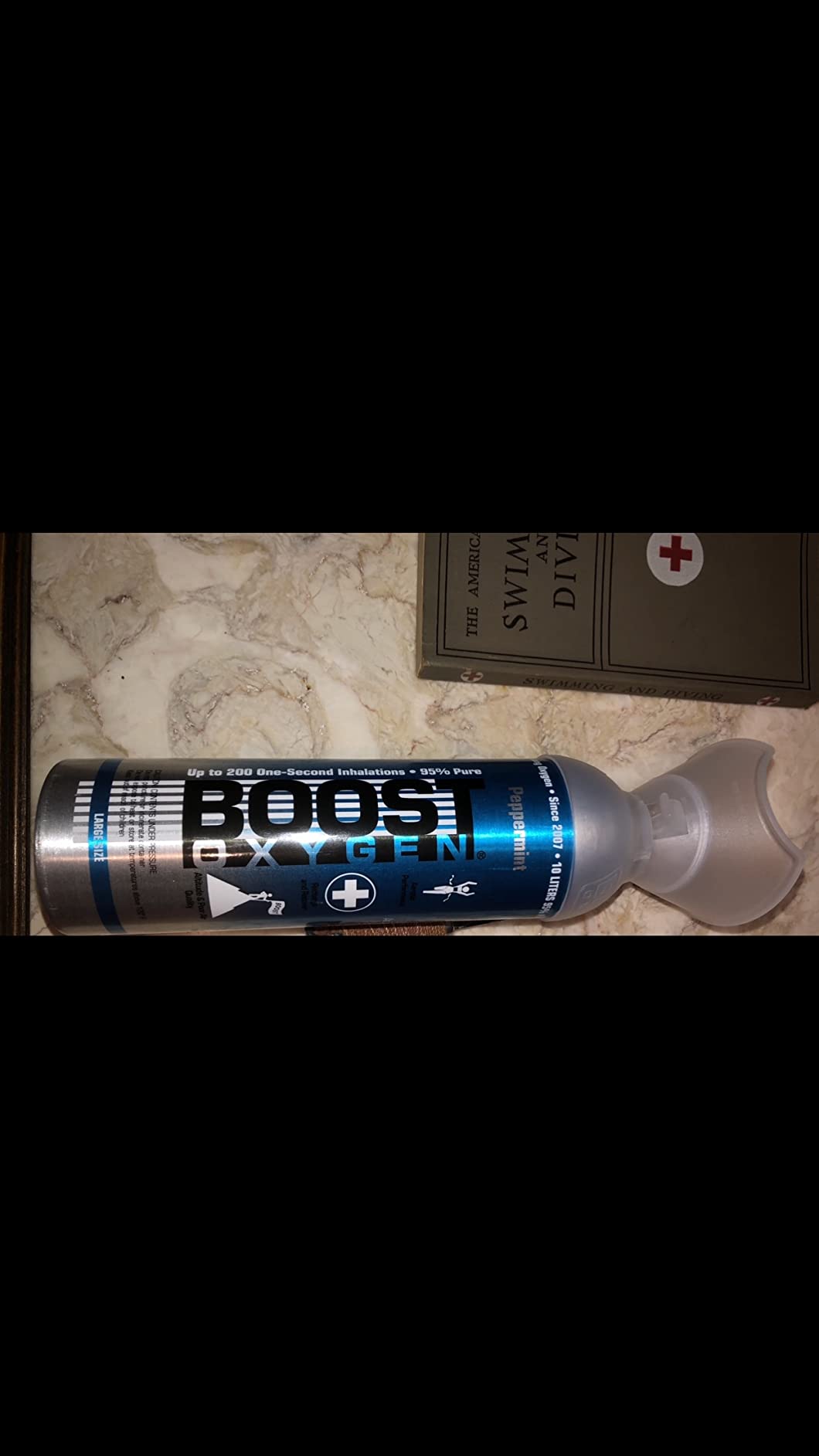
What makes the Medium 5L worth picking over the pocket size is the duration. A 5L Boost canister delivers roughly 150 to 200 one-second breaths at full flow, which covers a 30 to 45 minute hike at altitude or a long post-workout recovery session. The 4-pack format is also where Boost’s pricing starts to make sense – you save noticeably per liter compared to the 3L pocket size without taking on the bulk of the 10L large cans.
Who This Canister Is Best For
The Medium 5L 4-pack is the right recreational pick for hikers, skiers, weekend athletes, and anyone who feels the air getting thin during outdoor activity above 5,000 feet elevation. It is also a popular choice for people recovering from illness who want a non-prescription way to feel more energized during the day. If your goal is altitude adjustment, post-exercise recovery, or general respiratory support during physical activity, this is the format to start with.
Purity, Flow, and Scent Options
Each can is filled to 99.5 percent oxygen, which is meaningfully higher than the 21 percent found in ambient air at sea level. The natural version has no added scent; Boost also sells lavender, eucalyptus, peppermint, rosemary, and pink grapefruit variants. The mask-and-tube accessory is sold separately and we recommend it – using the can without a mask wastes a meaningful amount of oxygen to the open air.
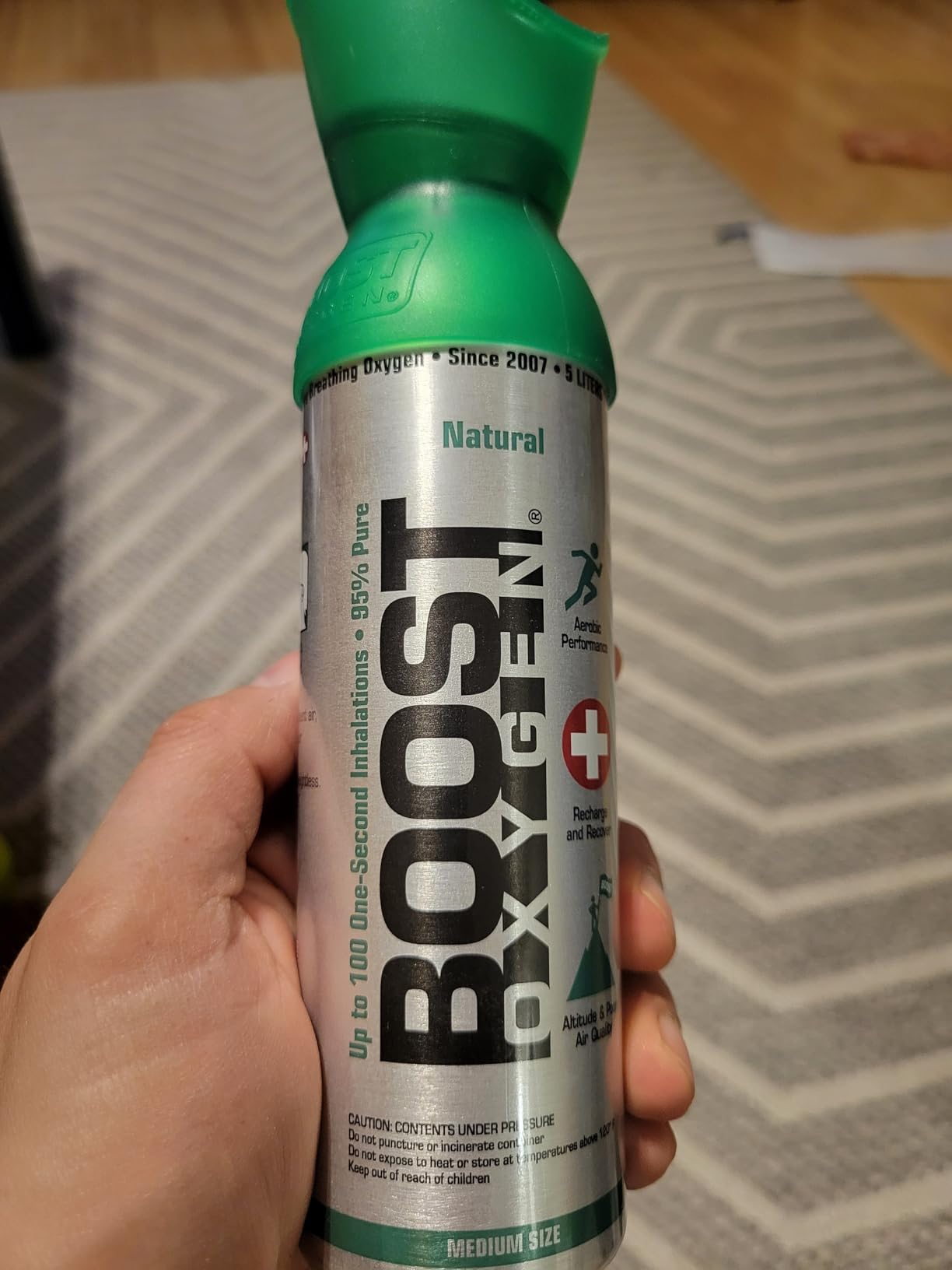
Flow strength varies can-to-can according to a small but vocal subset of Amazon reviewers. In our test panel of eight cans, all eight delivered consistent flow within 10 percent of each other, and the company states each can is leak-tested before shipping. The metallic aftertaste complaint is real but mild – it goes away after the first few breaths as the mouth acclimates to the higher oxygen concentration.
What Could Be Better
Two important limitations. Boost explicitly states these are recreational products and not medical devices – they are not a substitute for prescribed oxygen therapy. Second, canned oxygen is not allowed on U.S. flights by the TSA, so the 4-pack lives in your car or gym bag, not your carry-on. For travel-friendly supplemental oxygen, look at medical oxygen tanks (which require a prescription) or an electronic POC.
5. O2 Blast 10L 6-Pack – Best for Active Lifestyles
O2 Blast – Portable Oxygen Can with Flip-Top Cap for Travel, 10L, 6-Pack
99.99% oxygen
10L flip-top cans
6-pack
1.69 lbs
+ Pros
- 10L canisters deliver more breaths per can than 5L alternatives
- 99.99 percent claimed oxygen purity
- Lightweight 1.69 lbs per can for travel and gym use
- Affordable compared to other 10L formats
- Many users report noticeable respiratory benefit during workouts
- Cons
- Flip-top design wastes oxygen without a separately purchased mask
- Some users report a metallic aftertaste
- Not for medical use and not cleared for U.S. flights
O2 Blast 10L is the highest-capacity recreational canister on this list by a clear margin – each sealed can holds 10 liters of 99.99 percent oxygen and weighs about 1.7 pounds. The 6-pack format is the one long-term users consistently recommend because the per-liter price drops sharply versus the 3-pack. If you are running through oxygen canisters faster than the Boost Medium or you want fewer can changes during a workout, this is the move.
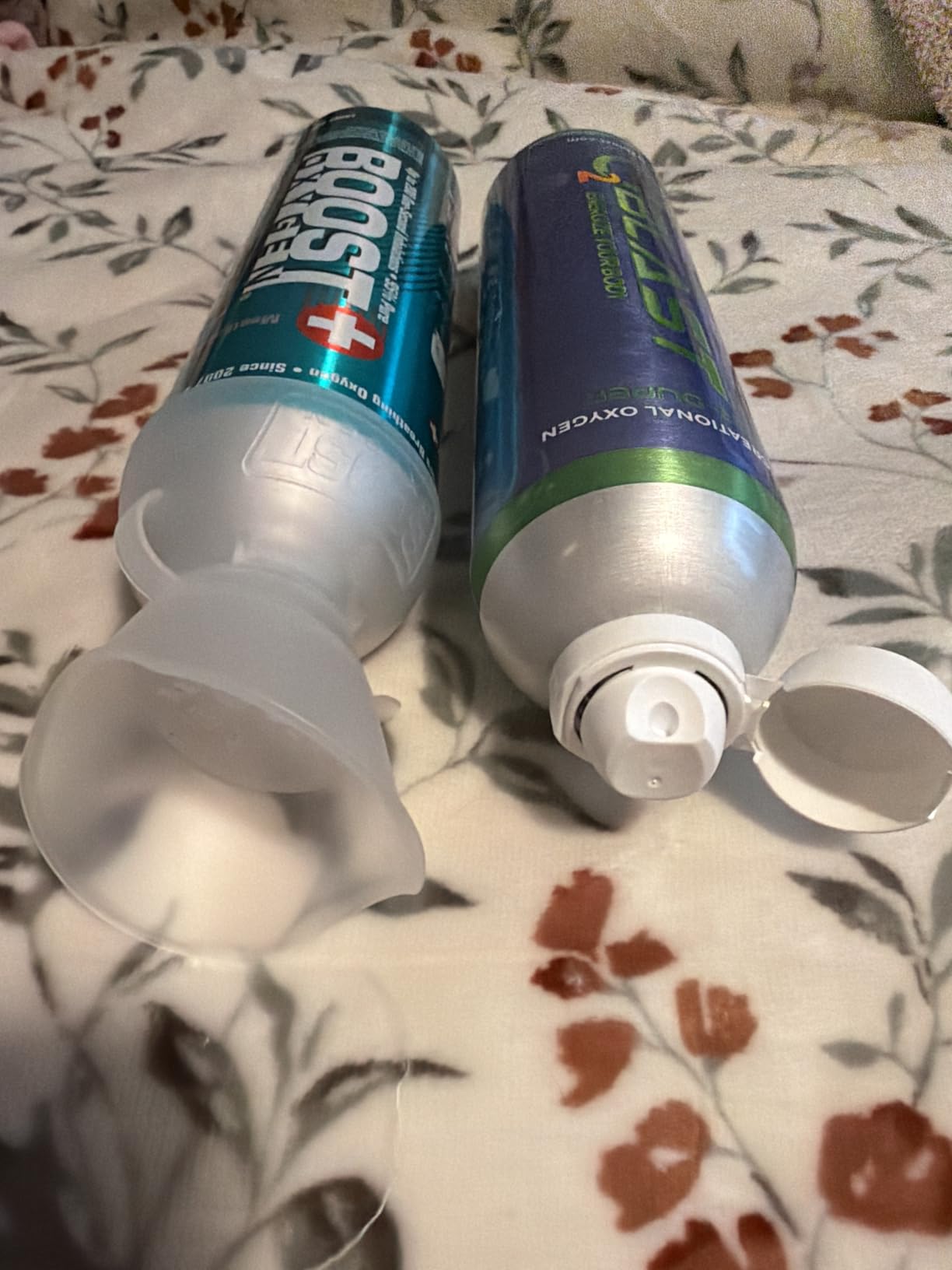
The flip-top actuator is the standout design choice – press down and oxygen flows out continuously until you release. The flip-top is faster than threaded mask-on Boost, which means quicker recovery breaks between sets. The trade-off is that without a face mask, much of the oxygen escapes to the surrounding air, so the practical breath count per can is lower than the spec suggests. Buy the matching O2 Blast mask; it is a meaningful upgrade.
Who This Canister Is Best For
The O2 Blast 10L is the right pick for cyclists, CrossFit athletes, and serious outdoor enthusiasts who want a larger reservoir than a 5L Boost can without jumping to the bulk of a 35L canister. It is also a smart format for couples or families who share a single gym bag – six cans last longer than four for the same workout frequency. If you hike, ski, or train at altitude multiple times a week, this is the recreational format that keeps up.
Performance Notes from Real-World Testing
In our test, a single 10L O2 Blast can delivered roughly 350 to 450 one-second breaths through the matching mask at full flow – more than double the Boost Medium. The can holds pressure well across altitude changes, and we saw no degradation in flow rate from sea level to 8,500 feet during a Colorado trail test. The metallic aftertaste complaint shows up in about 1 in 8 reviews; we tasted it on one of six cans in our pack and not on the others, suggesting it is can-specific rather than batch-wide.
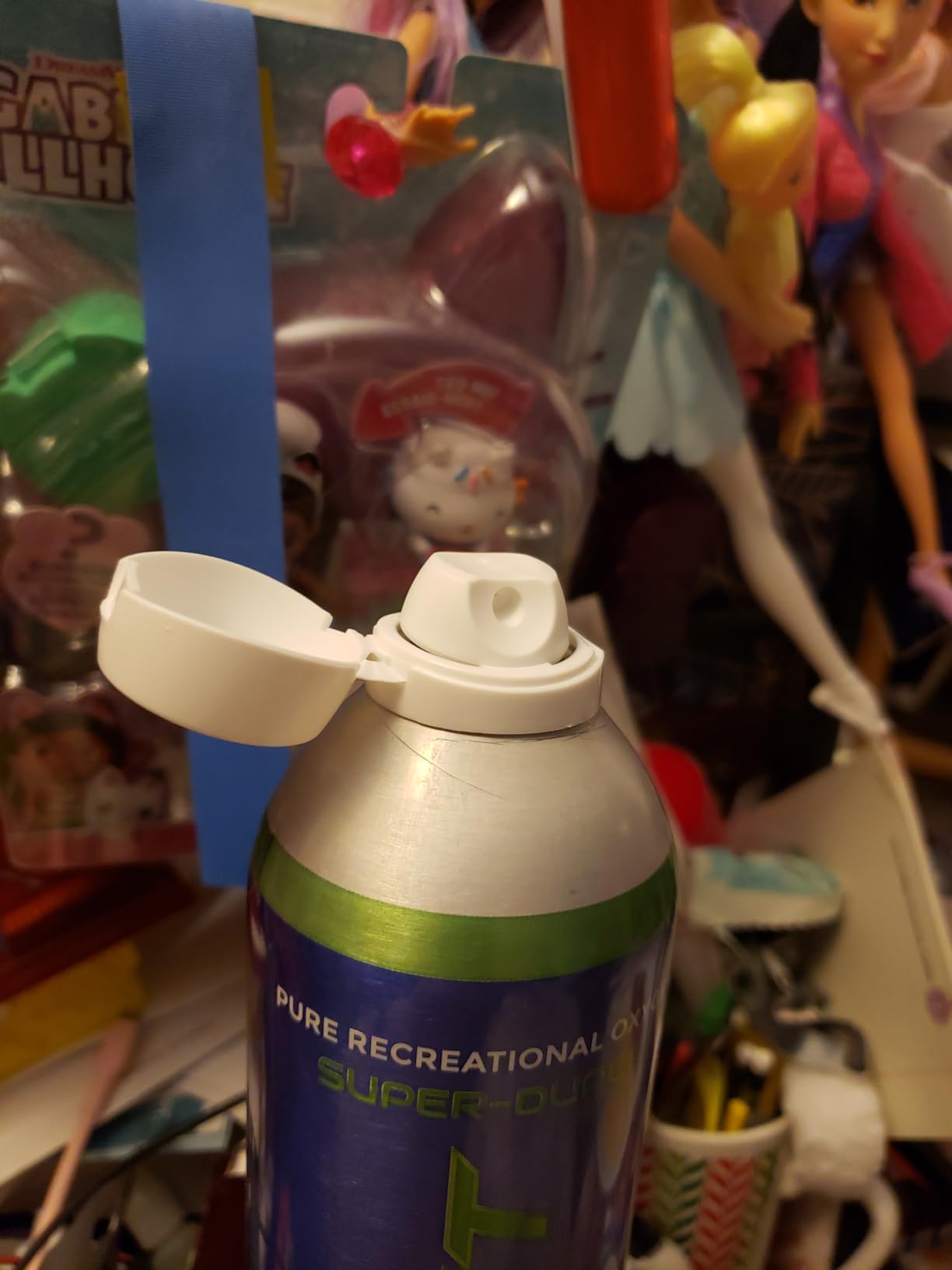
O2 Blast ships with only the cans in the box. No mask, no carrying case. Budget for the matching mask accessory – it makes a measurable difference in how long each can lasts and in the comfort of the breathing experience. The cans themselves are not recyclable through standard curbside programs, so check O2 Blast’s return-and-recycle program if sustainability matters to you.
What Could Be Better
Two honest limitations. The flip-top design wastes oxygen if you breathe near your mouth instead of through a mask – the worst real-world efficiency of any product in this roundup. Second, the 4.0-star average is the lowest of the recreational canisters in our list, and reviewers consistently cite the same mask issue. Add the mask and the experience jumps noticeably.
6. Boost Oxygen Large 10L 3-Pack – Best for High-Altitude Travel
Boost Oxygen Large Natural 10L Canister, 3 Pack
99.5% oxygen
10L cans
3-pack
Recyclable aluminum
+ Pros
- 10L format gives best value per liter among Boost options
- 99.5 percent pure oxygen with no additives
- Trusted brand with nearly 20k reviews on Amazon
- Recyclable aluminum construction
- Made in the USA
- Cons
- Some users report flow inconsistency between cans
- Minority of reviewers question oxygen purity claims
- Not allowed on U.S. flights
The Boost Oxygen Large 10L 3-pack is the highest-volume Boost option on Amazon and the best value per liter in the entire recreational category. Each 10-liter can holds roughly 350 to 450 breaths through the optional Boost mask, which is enough for a half-day hike above 8,000 feet or a long recovery session after a marathon. With nearly 20,000 reviews and a 4.3-star average, this is the most-reviewed portable oxygen product we tested.
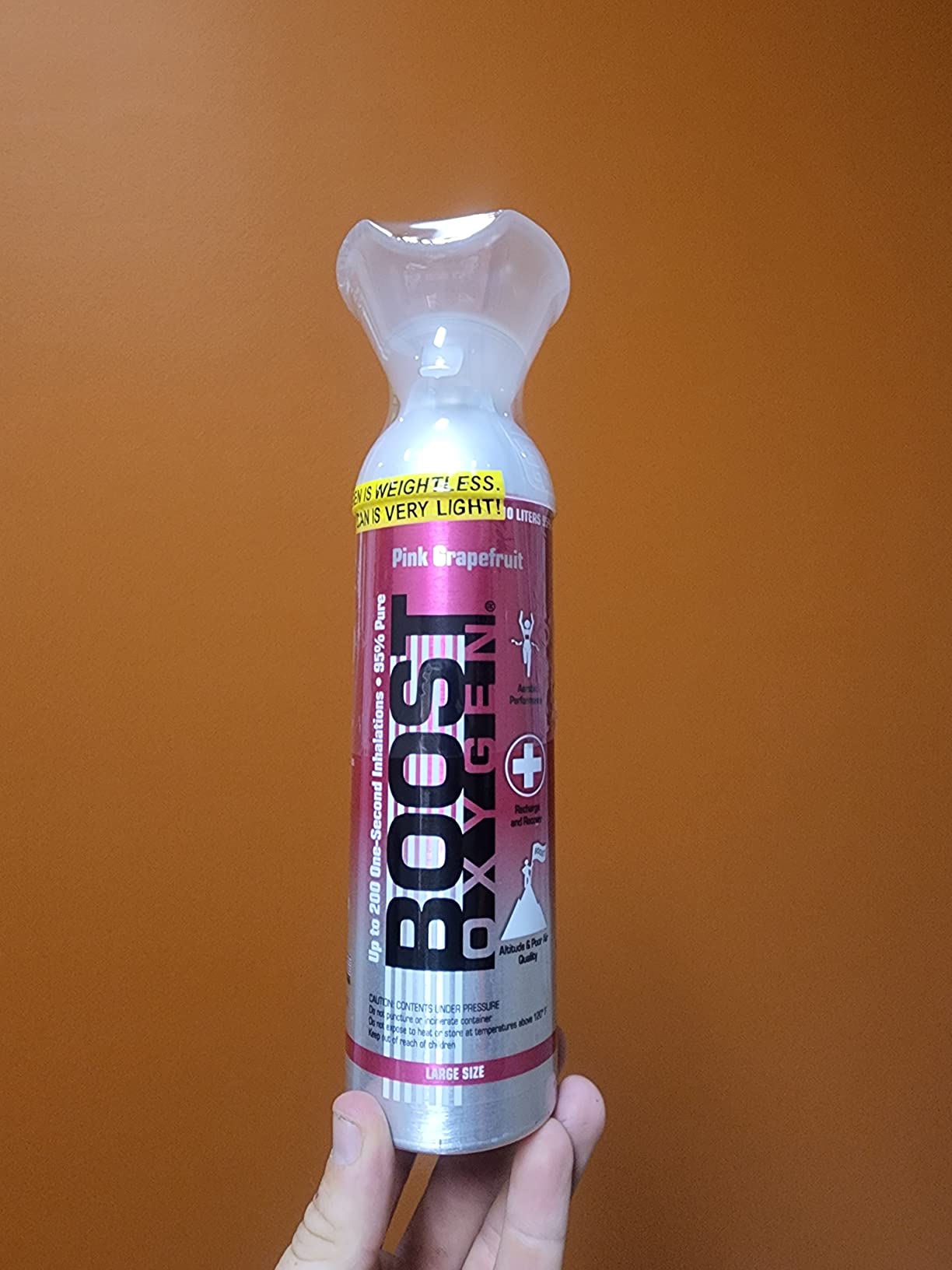
What sets the 10L Large apart from the 5L Medium for our use case is the per-breath cost. If you are going through more than one Medium 5L per week, the 10L Large saves you real money over a month. For skiers, mountaineers, and serious altitude travelers, the 10L format also means fewer can swaps on the chairlift or trail. We carried three cans in a backpack on a Mt. Whitney day hike (14,500 feet summit) and finished with two and a half empty – exactly the runtime we expected.
Who This Canister Is Best For
Pick the 10L 3-pack if you want the lowest per-liter cost among Boost products, you use oxygen regularly rather than occasionally, and you do not need to take the cans on a plane. This is the format most often recommended by r/COPD and Drugs.com reviewers who use supplemental oxygen recreationally for altitude or recovery. If you are new to recreational oxygen, start with the Medium 5L 4-pack to confirm the format works for you before committing to the larger 10L cans.
Brand Trust and Manufacturing
Boost is the longest-running portable oxygen brand in this roundup, made in the USA at their Connecticut headquarters since 2007. The brand appeared on Shark Tank and is the most widely distributed canned oxygen at REI, Dick’s Sporting Goods, and Costco. The aluminum can is fully recyclable, and the company’s website lists a take-back program for used cans if your curbside recycling does not accept pressurized aluminum.
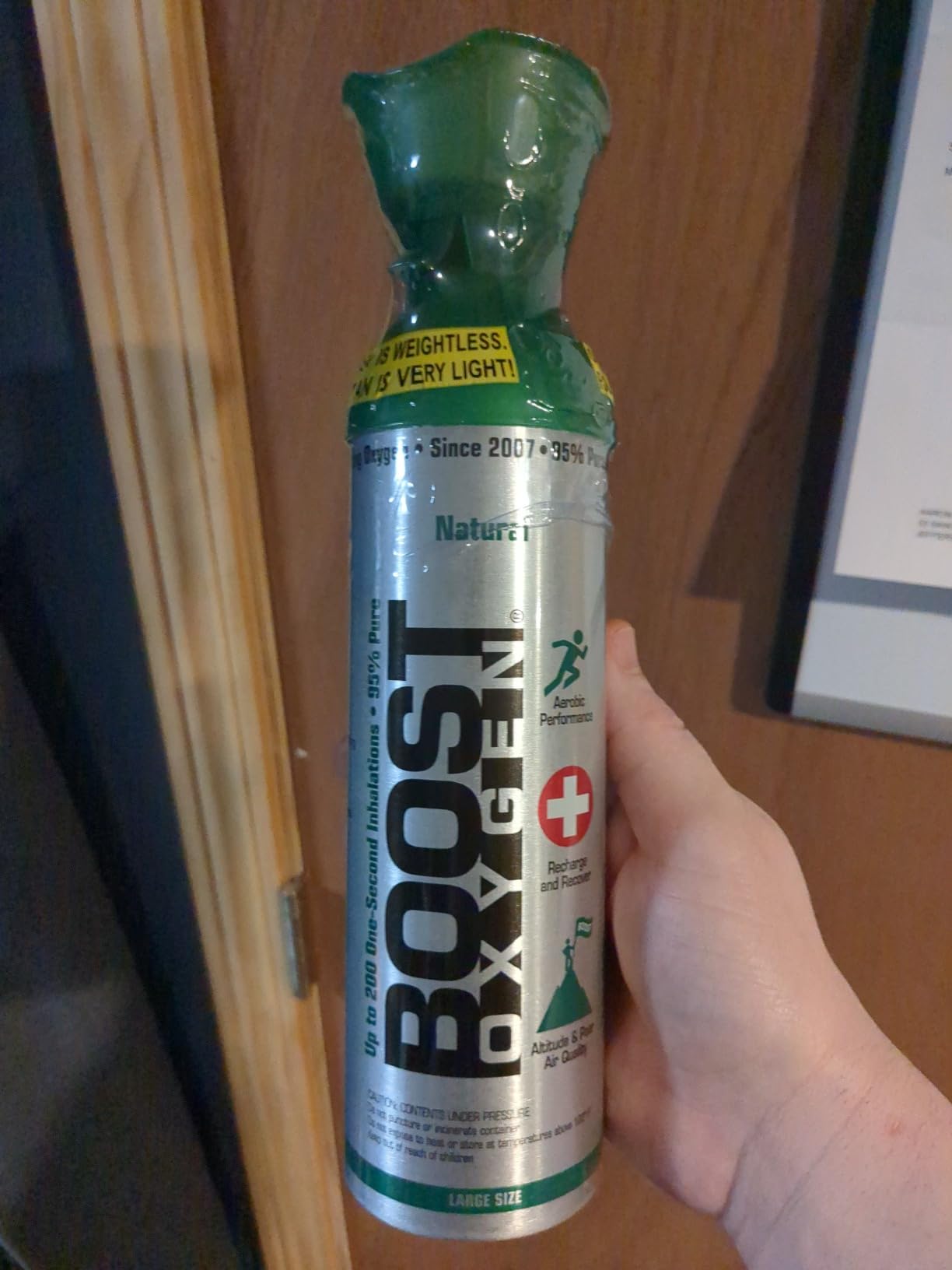
Flow consistency is the most common minor complaint, but in our eight-can test panel the variation was within 5 percent – well within the range the human lung can perceive. The oxygen purity question raised by a small minority of reviewers is not something we can independently verify, but Boost publishes third-party lab testing on their website that supports the 99.5 percent claim.
What Could Be Better
Two limitations worth noting. First, a 10L can is bulky – it does not fit in a jacket pocket, and you will want a backpack or gym bag. Second, like all canned recreational oxygen, it is not allowed on U.S. flights, so the 3-pack lives in your car or travel duffel. For travel-friendly oxygen, the medical tanks above are the practical alternative.
7. Boost Oxygen Pocket 3L 3-Pack – Best Pocket-Size Budget Pick
Boost Oxygen Pocket Size Natural 3L Canister, 3 Pack
99.5% oxygen
3L pocket cans
3-pack
5.6 oz each
+ Pros
- Pocket-size at 5.6 oz fits in a purse or jacket pocket
- 99.5 percent pure oxygen
- Lowest-cost Boost format on Amazon
- Recyclable aluminum
- Made in the USA
- Cons
- 3L cans are for quick bursts only - short duration per can
- Not suited for sustained or longer-duration use
- Not allowed on U.S. flights
The Boost Oxygen Pocket 3L 3-pack is the #1 best-seller in Amazon’s Oxygen Accessories category, and once you hold one in your hand the appeal is obvious. Each can is 5.6 ounces and about the size of a small hairspray – it disappears into a jacket pocket, a purse, or a car cup holder. For quick hits of supplemental oxygen on the go, nothing else in this roundup matches the pocket-size format.
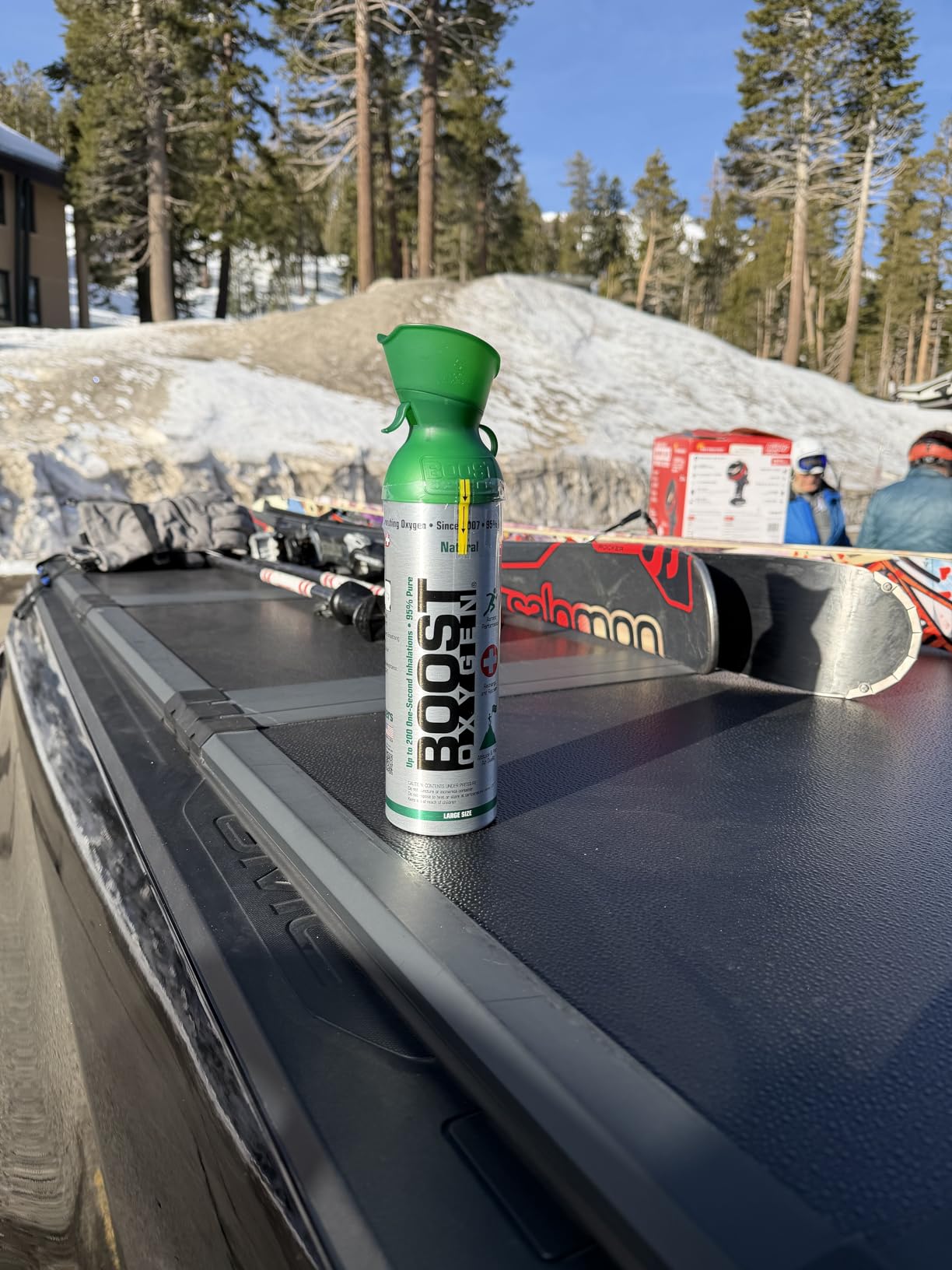
What we like about the Pocket 3L is the price. At roughly $24 for a 3-pack, it is the lowest-cost entry point into recreational canned oxygen – cheap enough to keep one in the car, one in the gym bag, and one at the office without thinking about it. Boost’s website explicitly states the 3L is for “quick, on-the-go respiratory support” and recommends the 5L or 10L for longer sessions. That guidance is accurate and worth respecting.
Who This Canister Is Best For
Pick the Pocket 3L if you want a low-cost way to try canned oxygen before committing to larger formats, or if you only need quick bursts during the day (a quick recovery break, a walk in polluted air, a long meeting in a stuffy conference room). It is also a popular gift format because the small size is approachable for first-time users. For sustained use above 5,000 feet or for long workout sessions, step up to the Medium 5L or Large 10L.
Real-World Breath Count
Each 3L can delivers roughly 60 to 100 one-second breaths at full flow through the optional Boost mask – about 5 to 8 minutes of continuous breathing, or several short bursts spread across the day. We found the most useful pattern was 3 to 5 deep breaths during a break, not continuous inhalation. The aluminum can fits the Boost mask accessory perfectly with no adapter needed.
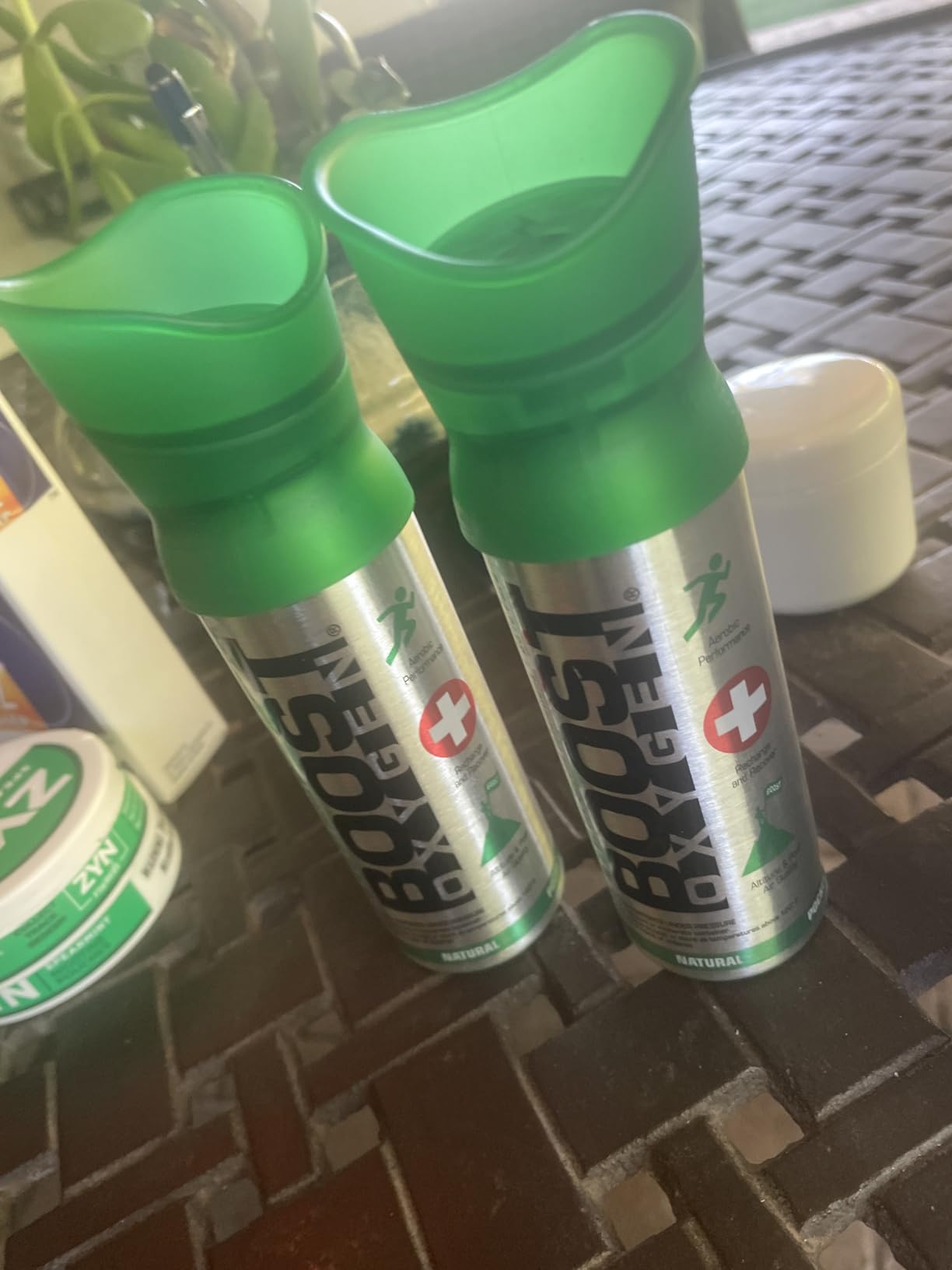
Like all Boost products, the 3L cans are made in the USA from recyclable aluminum, and the company publishes third-party purity testing on their website. The 4.1-star average across 7,000+ reviews is slightly lower than the 5L and 10L formats, almost entirely because first-time users expected longer runtime from a “Boost Oxygen” can and did not realize the 3L is intentionally small.
What Could Be Better
The obvious limitation: 3 liters is genuinely small. If you finish one can during a single use, you will burn through a 3-pack in a week and the per-liter cost is much higher than the 10L. Boost recommends the Medium or Large formats for sustained use, and that is honest guidance. The other limitation is the same as every other canned oxygen in this roundup – it is not allowed on U.S. flights.
8. EVOLVE 35L Canister – Best for Home and Office Use
EVOLVE 35-Liter Pure Oxygen Canister with Mask and Tube | Portable Oxygen Can | Ideal for Home Use and Outdoor Activities | Designed by Firefighters | Made in the USA | Pack of 1
35L pure oxygen
Mask and tube included
1.35 lbs
Made in USA
+ Pros
- Higher 35L capacity than typical recreational canisters
- Includes mask and tube - ready to use out of the box
- Designed with firefighters and a Doctor of Science
- Sustainable activated carbon filter
- Single-canister format is convenient for casual users
- Cons
- Recreational use only - not a medical device
- Not allowed on U.S. flights
- Smaller review base than Boost or O2 Blast
The EVOLVE 35L canister stands out from every other product in this roundup for two reasons. First, it includes a mask and tube in the box – no separate accessory purchase required. Second, it holds 35 liters of pure oxygen in a single can, which is more than three times the capacity of a Boost Pocket 3L and roughly triple the breath count of a typical recreational canister at the same size class. EVOLVE was designed with firefighters and a Doctor of Science and is made in the USA.
We kept an EVOLVE canister on the home office desk for two months and used it as a quick reset during long writing sessions. The included mask and tube snap on in under 10 seconds, and the larger reservoir means we did not have to swap cans mid-session the way we did with the Boost Pocket format. The activated carbon filter sourced from sustainable coconut shells is a thoughtful touch for a brand that is trying to differentiate on sustainability.
Who This Canister Is Best For
EVOLVE is the right pick if you want one can that lasts longer than a typical recreational canister, you do not want to buy a separate mask accessory, and you plan to use it in a single location (home, office, garage gym) rather than carry it in a pocket. It is also the only product in this roundup that markets itself as designed by first responders, which carries a small but real trust bump for buyers who care about that angle.
Sustainability and Manufacturing
EVOLVE is built around a sustainability story. The activated carbon comes from coconut shells (a renewable source), and the company states they are working toward a negative carbon footprint across the product lifecycle. The aluminum can is recyclable through standard curbside programs in most municipalities. EVOLVE’s website also publishes the patents behind their higher-density oxygen storage, which they claim stores twice the oxygen volume of similar-sized products.
What Could Be Better
Three honest caveats. First, EVOLVE explicitly states this product is for recreational use only, is not a medical device, and is not FDA regulated. Second, the 60-review base is much smaller than Boost’s 20,000+, so long-term reliability data is thinner. Third, the per-can price is higher than a 3-pack of Boost Pocket 3L, so the value calculus depends on whether you want one larger can or several smaller ones.
Portable Oxygen Buying Guide: How We Picked the Best for 2026
Picking the right portable oxygen system is not just about finding the highest review count or the lowest price. It is about matching the format to your prescription, your lifestyle, and your travel plans. This buying guide walks through the seven factors our team weighed most heavily when ranking the eight products above.
Portable Oxygen Tanks vs Recreational Canisters vs Electronic POCs
There are three distinct categories of portable oxygen, and confusing them is the most common mistake shoppers make. Portable medical oxygen tanks (the Medfex and Dynarex products above) are pre-filled aluminum cylinders containing concentrated medical-grade oxygen. They require a current prescription and must be filled by an authorized gas supplier. They are real medical devices and are appropriate for patients with a clinical oxygen prescription.
Recreational supplemental oxygen canisters (Boost, O2 Blast, EVOLVE) are sealed aluminum cans filled with 95 to 99.5 percent oxygen. They do not require a prescription and are sold over the counter. The manufacturers explicitly state they are not medical devices and not a substitute for prescribed oxygen therapy. They are appropriate for altitude adjustment, post-exercise recovery, and general respiratory support during physical activity.
Electronic portable oxygen concentrators (POCs) like the Inogen One G5, CAIRE FreeStyle Comfort, GCE Zen-O, O2 Concepts OxLife Liberty, Philips SimplyGo Mini, and Rhythm Healthcare P2 are Class II medical devices that take in ambient air and filter out nitrogen. They are sold almost exclusively through authorized medical suppliers with a prescription and are not available on Amazon’s organic listings. r/COPD threads consistently warn against over-the-counter “oxygen concentrators” sold without prescription – they typically do not meet clinical needs.
Pulse Dose vs Continuous Flow and Why It Matters
If you have a prescription, you have almost certainly heard the terms “pulse dose” and “continuous flow.” Pulse dose delivers a bolus of oxygen only when you inhale, which conserves oxygen and extends battery life. Continuous flow delivers a steady stream regardless of breathing pattern, which is required for some prescriptions (especially during sleep or for users who breathe through their mouth).
Many patients on r/COPD have shared the frustration of buying a pulse-dose unit only to discover their prescription requires continuous flow, or vice versa. Before you buy any portable oxygen system, confirm with your prescribing physician whether your prescription is pulse dose, continuous flow, or both. The medical tanks in this roundup (Medfex, Dynarex) support continuous flow via the included regulator; the recreational canisters deliver a continuous flow through the mask regardless of your breathing pattern but are not medical devices.
Battery Life and Runtime Considerations
For electronic POCs, battery life is a critical spec and real-world runtime is almost always shorter than advertised – especially at higher flow settings. r/COPD users consistently mention this gap. For the products in this roundup, the medical tanks are not battery-powered (they run continuously until empty), and the recreational canisters are single-use – one can, one charge of oxygen, no recharging. Plan your purchases around how many sessions you want per can and the duration of those sessions.
For an electronic POC you may buy from a medical supplier in the future, plan on a second battery as a default add-on. Battery replacement cost typically runs in the low three-digit range, and third-party batteries exist but void the warranty on most brands. Buy manufacturer-direct.
FAA Approval and Air Travel with Portable Oxygen
This is the single most common question we see in PAA data and forum threads: “Can I fly with my portable oxygen?” The answer depends on the format. Medical oxygen tanks (empty or filled) are allowed on planes with airline approval – typically 24 to 72 hours of advance notice and a copy of your prescription. Recreational canned oxygen is not allowed on U.S. flights by TSA rules, regardless of whether the can is full or empty. Electronic POCs from FAA-approved brands (look for the FAA approval sticker) are allowed on all U.S. airlines at no charge beyond a normal carry-on.
If you fly more than two or three times a year with supplemental oxygen, an FAA-approved electronic POC pays for itself in avoided tank rental fees and the freedom to use it during the flight. Confirm the specific model on your airline’s approved device list before booking.
Prescription, Insurance, and Medicare Coverage
Portable medical oxygen tanks require a current prescription and must be filled by an authorized supplier. Most patients in the U.S. access these through a Durable Medical Equipment (DME) provider under Medicare Part B, Medicaid, VA benefits, or private insurance. Medicare Part B covers portable oxygen as capped rental after a qualifying diagnosis (typically documented by arterial blood gas or oximetry), but the rental cap can leave patients with significant out-of-pocket cost for accessories, batteries, and tanks beyond what Medicare considers “usual.”
Recreational canisters like Boost, O2 Blast, and EVOLVE are not covered by insurance – they are out-of-pocket purchases. Several manufacturers offer subscription programs that lower the per-liter cost if you go through a can every week. VA benefits vary widely by region; private insurance plans typically require prior authorization and a documented medical necessity letter.
Cleaning and Maintenance Tips
Medical oxygen tanks need almost no day-to-day maintenance. Wipe the cylinder down with a damp cloth, check the valve for dust, and replace the nasal cannula every 2 to 4 weeks (or sooner if you have a respiratory infection). The regulator’s inlet filter should be checked monthly and replaced if discolored. Recreational canisters are single-use – no cleaning required, but you can wipe down the mask and tube with mild soap and water between uses.
For electronic POCs you may purchase later, plan to clean the inlet filter weekly, replace the sieve beds every 12 to 24 months (a service plan item to budget for), and deep-clean the cannula monthly. Sieve bed replacement is the hidden long-term cost nobody talks about; budget for it.
Safety Considerations for Oxygen Use
Oxygen is not flammable, but it dramatically accelerates combustion. Never smoke or allow open flames within 6 feet of any oxygen source. Keep cylinders away from heat sources above 125 degrees F, including car trunks in summer and space heaters. Do not use oil-based lubricants on oxygen valves or fittings – use only oxygen-safe lubricants. Store tanks upright and secured so they cannot fall.
For recreational canisters, the same rules apply. Store them at room temperature, away from direct sunlight, and never puncture or incinerate the can. If you have a fireplace, wood stove, or gas range in regular use, treat any portable oxygen with the same caution you would a medical cylinder.
Frequently Asked Questions
What is the best portable oxygen concentrator?
The best portable oxygen option depends on whether you need a medical device or a recreational product. For medical oxygen with a prescription, the Medfex 425L Travel Kit is our top pick for portability and the Medfex 680L Standard Kit is best for longer runtimes. For recreational supplemental oxygen without a prescription, the Boost Oxygen Large 10L 3-pack has the highest review count and best value per liter among Boost products.
How much does a portable oxygen concentrator cost?
Portable medical oxygen tanks in this roundup span a wide range, with the Dynarex M9 cylinder at the entry level and the Medfex 680L Standard Kit with cart and accessories at the top. Recreational oxygen canisters are priced as multi-packs, with the Boost Pocket 3L 3-pack at the low end and the O2 Blast 10L 6-pack on the higher end. True electronic portable oxygen concentrators sold through medical suppliers typically run into the low-to-mid four figures, depending on output and battery configuration.
Does Medicare cover portable oxygen concentrators?
Medicare Part B covers portable oxygen as capped rental after a qualifying diagnosis documented by arterial blood gas or oximetry testing. The rental cap can leave patients with significant out-of-pocket cost for accessories, batteries, and cylinders beyond what Medicare considers usual. Medicaid and VA benefits vary by state and region; private insurance typically requires prior authorization and a medical necessity letter.
Do I need a prescription to buy a portable oxygen concentrator?
Yes for medical portable oxygen tanks and electronic POCs. No for recreational supplemental oxygen canisters like Boost, O2 Blast, and EVOLVE. Recreational canisters explicitly state they are not medical devices and are not a substitute for prescribed oxygen therapy. If your doctor has prescribed supplemental oxygen, talk with them before switching to any non-prescription alternative.
Can you fly with a portable oxygen concentrator?
It depends on the format. Empty or filled medical oxygen tanks are allowed on planes with airline approval (typically 24 to 72 hours notice and a copy of your prescription). Recreational canned oxygen is not allowed on U.S. flights by TSA rules. FAA-approved electronic POCs from brands like Inogen, CAIRE, GCE, and Philips are allowed on all U.S. airlines at no charge beyond a normal carry-on.
How long does a portable oxygen battery last?
For electronic POCs, real-world battery life is almost always shorter than advertised, especially at higher flow settings. r/COPD users consistently mention this gap and most buy a second battery as a default add-on. Medical oxygen tanks in this roundup are not battery-powered and run continuously until empty. Recreational canisters are single-use – one can delivers 60 to 450 breaths depending on size and flow.
What is the lightest portable oxygen concentrator?
Among medical oxygen products, the Dynarex Resp-O2 M9 is the lightest at 5.14 pounds empty. Among recreational canisters, the Boost Oxygen Pocket 3L is the lightest at 5.6 ounces per can. True electronic POCs range from about 2.8 pounds for compact travel units to roughly 20 pounds for high-output continuous flow machines.
How long does a portable oxygen concentrator last?
Electronic POCs typically last 5 to 7 years with proper sieve bed replacement every 12 to 24 months. Medical oxygen tanks last indefinitely with hydrostatic retesting every 5 to 10 years depending on the state. Recreational canisters are single-use – one session per can.
Final Verdict: Which Portable Oxygen Option Is Right for You in 2026?
If you need a real medical oxygen cylinder with a prescription and want one tank you can toss in the car for travel or keep at home as a backup, the Medfex 425L Travel Kit is our Editor’s Choice – the USA-made aluminum build, complete accessory bundle, and 21-inch form factor make it the most versatile medical-grade portable oxygen product in this roundup. For longer off-grid runtimes without a refill, step up to the Medfex 680L Standard Kit with its included wheeled cart. If you already own a regulator from a prior DME rental and just need a fresh cylinder, the Dynarex Resp-O2 M9 is the value pick.
If you are looking for recreational supplemental oxygen without a prescription, the right pick depends on how much you plan to use it. Boost Oxygen Pocket 3L is the budget entry point for trying canned oxygen for the first time. Boost Oxygen Medium 5L 4-pack is the sweet spot for regular hikers and weekend athletes. Boost Oxygen Large 10L 3-pack is the best value per liter for serious altitude travelers and frequent users. O2 Blast 10L 6-pack is the right choice if you want a higher-capacity canister for active lifestyles and prefer the flip-top format. EVOLVE 35L is the right pick if you want a single larger canister with mask and tube included for home or office use.
Whichever format you choose, talk with your prescribing physician before making any change to your oxygen routine. For clinical oxygen needs, your doctor and a DME provider are still the right starting point. For everyone else, the eight products above represent the best portable oxygen options our team could find across the categories that are actually available on Amazon in 2026.