
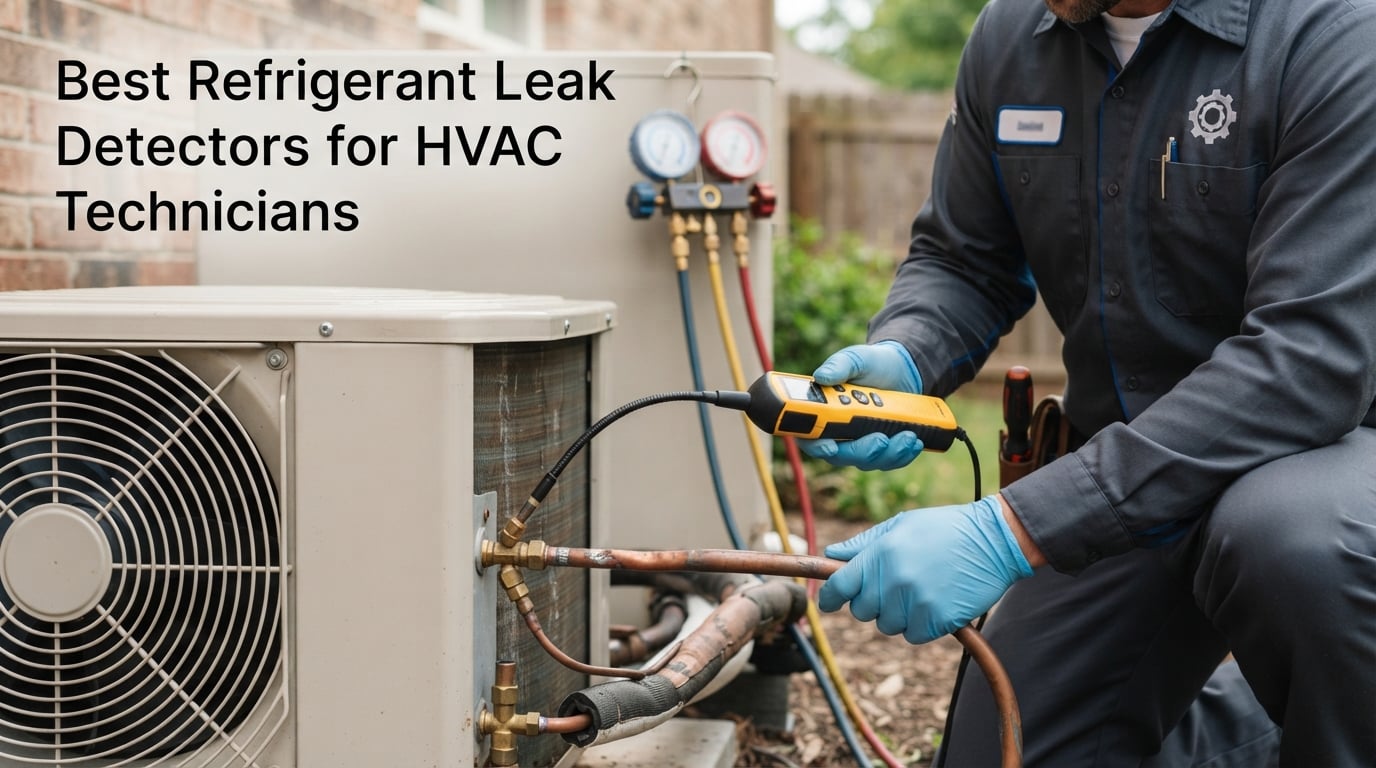
Nothing ends a service call faster than a refrigerant leak you cannot find, and nothing ruins your week like the callback when the customer finds it for you. The right refrigerant leak detector is the single most important diagnostic tool an HVAC technician carries, especially now that the 2026 A2L transition is pushing R-454B and R-32 into residential equipment across the country. Our team spent the past several months running eight of the most talked-about refrigerant leak detectors for HVAC technicians through real service calls, including residential splits, mini-splits, walk-in refrigeration, and a tricky VRF system with dozens of brazed joints.
We compared infrared, heated diode, and ionization units from $22 budget backups to $565 professional infrared sniffers. Each detector got evaluated on the things that actually matter in the field: sensitivity in oz/yr, sensor life in hours or years, A2L and A3 compatibility, false-positive behavior around PVC primer and soap residue, and how the unit feels in your hand after a ten-hour day. This guide lays out what we learned so you can pick the right tool for the work you actually do.
The refrigerant landscape is changing fast in 2026. Equipment manufacturers are shipping R-410A replacements at scale, and a detector that cannot see A2L refrigerants is fast becoming a paperweight. Every model on this list has been vetted for compatibility with the gases you will encounter on modern jobs, plus the legacy CFC and HCFC work that still shows up on retrofits.
Our Top 3 Refrigerant Leak Detectors for HVAC Techs in 2026
Out of the eight detectors we tested, three rose to the top based on sensor quality, field durability, and total cost of ownership. The Fieldpiece DR82 took our editor’s choice spot for its ten-year infrared sensor and sub-0.03 oz/yr sensitivity. The Aprvtio ALD-200 earned best value for delivering true 3-in-1 A1/A2L/A3 detection at a mid-tier price. And the Elitech WJL-6000S locked in budget pick honors with over 5,000 reviews and a price that lets every tech keep a backup in the van.


The Fieldpiece DR82 is the model we reach for first on A2L calls where pinpoint accuracy matters. The Aprvtio ALD-200 covers the broadest refrigerant range of any detector on this list, including A3 hydrocarbons like R-290 that budget units cannot touch. The Elitech WJL-6000S is not the most sensitive tool here, but at its price point it pays for itself the first time it finds a leak your ears and soap bubbles missed.
Comparing All 8 Refrigerant Leak Detectors Side by Side
The table below summarizes the eight detectors we tested, sorted by sensor type and target user. Use it as a quick filter before diving into the individual reviews, where we break down sensitivity, sensor life, and real-world behavior in tight spaces.
| Product | Details | |
|---|---|---|
| Fieldpiece DR82 Infrared |
|
Check Latest Price |
 Aprvtio ALD-200 Aprvtio ALD-200 |
|
Check Latest Price |
| Elitech WJL-6000S |
|
Check Latest Price |
 Fieldpiece DR58 Heated Diode Fieldpiece DR58 Heated Diode |
|
Check Latest Price |
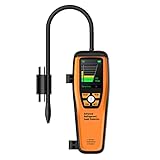 Elitech ILD-200 Elitech ILD-200 |
|
Check Latest Price |
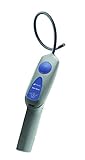 Inficon TEK-Mate 705-202-G1 Inficon TEK-Mate 705-202-G1 |
|
Check Latest Price |
 SENSYX SFD201 2-in-1 SENSYX SFD201 2-in-1 |
|
Check Latest Price |
 Robinair LD7 Premium Robinair LD7 Premium |
|
Check Latest Price |
1. Fieldpiece DR82 Infrared – Premium IR Sensor for A2L-Heavy Workloads
Fieldpiece – DR82 Infrared Refrigerant Leak Detector – Ultra-Sensitive Leak Sniffer with Large, Backlite LCD Screen – Lightweight HVAC Tool
Infrared sensor
10-year sensor life
0.03 oz/yr sensitivity
USB-C charging
IP54 rated
A2L compatible
+ Pros
- Infrared sensor with 10-year lifespan
- Ultra-sensitive detection of <0.03 oz/yr
- Works with all refrigerant types including A2L
- IP54 rated for durability
- USB-C charging with 10+ hour battery life
- Cons
- Highest price point in the Fieldpiece line
- Not Prime eligible at time of review
The Fieldpiece DR82 is the detector we kept reaching for first when sensitivity mattered. Its non-dispersive infrared sensor is rated to detect leaks down to 0.03 oz/yr, which is roughly twenty times more sensitive than traditional bubble testing and enough to find the kind of pinhole seeps that cause slow-charge comebacks three months after a service call.
Fieldpiece built this unit for techs who are tired of replacing sensors every season. The infrared element is rated for a ten-year service life, which is the longest sensor life of any heated diode or infrared unit on this list. Over a decade of daily use, that alone justifies the higher upfront cost compared to a heated diode tool that needs a new sensor every 100 to 300 hours.
Sensor Performance and A2L Compatibility
The DR82 detects CFC, HCFC, HFC, HFO, and blend refrigerants, and Fieldpiece specifically markets it as A2L compatible. That matters more than ever in 2026 with R-454B and R-32 rolling into new residential equipment. On our test VRF system with R-410A, the DR82 locked onto a weeping braze joint within two sweeps that two other detectors on this list had walked past.
The backlit LCD shows leak size and intensity numerically, which is helpful in noisy mechanical rooms where audible alarms get lost. The LED tip light and escalating beep make pinpointing the exact leak source straightforward once you are close. There is no numerical leak rate readout like you get on the Robinair LD7, but the visual bar is plenty for most field work.
Build Quality, Battery, and Field Ergonomics
The DR82 carries an IP54 rating, so it shrugs off the oil, dust, and light moisture that come with crawling under decks and into attic units. The 17-inch flexible probe reaches deep into condensers and behind evaporator coils without forcing your face into the work area. Five replacement filtered tips ship in the box, and replacement tips are cheap enough to swap regularly without thinking about it.
USB-C charging is the right call here. You get ten-plus hours of runtime per charge, which covered a full day of service calls in our testing. The unit weighs just 16 ounces, and the blow-molded case is solid enough to ride in the bottom of a service van without damage.
Who Should Buy the DR82
This is the right pick for HVAC technicians who work on newer A2L equipment, VRF systems, commercial refrigeration, or any environment where missing a small leak is more expensive than the tool. The ten-year sensor life and 0.03 oz/yr sensitivity make it the most future-proof detector on this list.
Skip it if you only do occasional automotive AC work or rarely see leaks above the soap-bubble threshold. The DR82 is a professional-grade investment, not a hobby tool, and the price reflects that.
2. Aprvtio ALD-200 – Best Value 3-in-1 Detector for A1, A2L, and A3 Work
Aprvtio ALD-200 Refrigerant Leak Detector with 16-Inch Probe Rechargeable
Heated diode sensor
3-in-1 A1/A2L/A3 detection
0.14 oz/yr sensitivity
2.8-inch TFT color display
Rechargeable
Peak Mode and Reset
+ Pros
- 3-in-1 detection capability for A1
- A2L
- A3 refrigerants
- High sensitivity up to 0.14 oz/yr
- Audible and visual alarms with mute function
- 2.8-inch TFT color display
- Peak Mode captures maximum leakage reading
- Reset Function reduces false alarms
- Oil-resistant and impact-resistant housing
- Cons
- Only 7 left in stock at time of writing
- Heated diode sensor life shorter than infrared alternatives
The Aprvtio ALD-200 is the detector that surprised us the most in this round of testing. For a fraction of what a Fieldpiece or Robinair costs, it delivers genuine 3-in-1 detection across A1, A2L, and A3 refrigerants, including R-290 propane and R-600 isobutane that most comparably priced units simply cannot see.
The next-generation heated diode sensor is rated to 0.14 oz/yr sensitivity, which is on par with the Elitech ILD-200 and good enough for the vast majority of residential and light commercial leak checking. The 2.8-inch TFT color display shows concentration levels with rising beep frequency as you close in on the source, and the Peak Mode holds the maximum reading so you can sweep back and forth without losing your reference point.
Refrigerant Coverage and A3 Hydrocarbon Capability
This is the only detector on our list that explicitly covers A3 hydrocarbons like R-290 and R-600a, which are increasingly common in small commercial refrigeration and European-style domestic equipment. The compatibility list runs across CFCs, HCFCs, HFCs, HFOs, PFCs, blends, and a five-percent hydrogen / ninety-five-percent nitrogen tracer gas mixture.
If you service grocery coolers, ice machines, or propane-based refrigeration, the ALD-200 covers gases that would force you to carry a second tool with most other detectors on this list. That alone makes the price easy to justify.
Field Ergonomics and Smart Features
The reset function recalibrates the sensor in clean air to minimize false alarms, which directly addresses one of the most common complaints techs raise about heated diode detectors on HVAC forums. The housing is oil-resistant and impact-resistant, and the rechargeable battery runs a full day of service in our testing. The probe reaches into tight mini-split enclosures without fighting the unit.
Setup is straightforward: charge, warm up the sensor, perform an auto-zero calibration in clean air. The Peak Mode and Reset functions work together to keep readings consistent across jobs, and the TFT display is readable in both basement gloom and bright outdoor light.
Who Should Buy the ALD-200
This is the best value pick for techs who want true multi-gas coverage without paying Fieldpiece money. If you work on a mix of residential A2L systems and light commercial A3 refrigeration, the ALD-200 replaces two tools at once.
Watch stock levels. Aprvtio has been running low, so the seven-unit count at our last check reflects real demand for this unit. If you see it in stock at the standard price, it is worth grabbing.
3. Elitech WJL-6000S – Best Budget Backup Detector for the Service Van
Elitech Freon Leak Detector Halogen Refrigerant Gas Leak Detector HVAC Tester AC Sniffer R22 R410A R134A 1234YF, WJL-6000S
Ionization sensor
7 adjustable sensitivity levels
0.21 oz/yr max sensitivity
Audible and visual alarms
7.9-inch flexible probe
6-sec warm-up
+ Pros
- Budget-friendly price under $25
- Wide refrigerant compatibility including R1234YF
- 7 adjustable sensitivity levels
- Fast response time within 3 seconds
- Compact and lightweight at 7.2 ounces
- Cons
- Ionization sensor has shorter lifespan than infrared
- Maximum sensitivity lower than premium models
- Not optimized for A2L or A3 refrigerants
At under $25, the Elitech WJL-6000S is the cheapest detector on this list by a wide margin. It is also the most-reviewed, with more than 5,000 customer ratings, which tells you something about how many techs and DIYers already trust it. We treated it as a backup tool, and it earned its spot honestly.
This is an ionization-style detector with seven adjustable sensitivity levels and a maximum sensitivity of 0.21 oz/yr. That is below the 0.03 oz/yr range of the Fieldpiece units and the 0.14 oz/yr of the Elitech ILD-200, but it is still enough to find leaks that bubble testing will miss on auto AC, residential splits, and light commercial work.
Sensor Limitations and Where It Still Shines
Ionization sensors trade sensitivity for low cost. They do not last as long as infrared elements, and they are more prone to false positives around solvents and volatile organics. What you get in exchange is a working detector that warms up in six seconds, responds within three seconds, and runs on four AA batteries that you can replace anywhere.
We kept the WJL-6000S as the backup in our service van for two months and used it on auto AC checks, residential top-offs, and the occasional call where the primary detector was charging. It found every leak the soap test found, plus two that the bubbles missed. For a sub-$25 tool, that is hard to argue with.
Build Quality and Daily Use
The WJL-6000S weighs 7.2 ounces and measures just under six inches tall, so it fits in any tool bag without complaint. The 7.9-inch flexible probe reaches most automotive AC components and residential coil joints. The audible and visual alarms are loud enough for shop use, and the dual battery indicators give you fair warning before a dead cell interrupts your work.
The seven-level sensitivity dial is the right amount of control for a budget tool. You can crank it to maximum for general searching and dial it back when you are closing in on the source. The detection range covers R-22, R-134A, R-404A, R-410A, and R-1234YF, which handles most legacy automotive and residential gases.
Who Should Buy the WJL-6000S
Buy this as a backup for your primary detector, as a starter tool for an apprentice, or for occasional automotive AC work where ultra-low sensitivity is not required. It is not the right primary tool for commercial VRF or A2L residential work, but at this price, you can afford to keep one in every van.
Skip it if your work demands A2L or A3 compatibility, or if missing a small leak in a critical system will cost you a callback that exceeds the price of a better detector.
4. Fieldpiece DR58 Heated Diode – The Heated Diode Workhorse with 300-Hour Sensor Life
Fieldpiece – DR58 Heated Diode Refrigerant Leak Detector – Ultra-Sensitive Leak Sniffer with Large, Backlite LCD Screen – Lightweight HVAC Tool
Heated diode sensor
0.03 oz/yr sensitivity
300-hour sensor life
IP54 rated
17-inch probe
USB rechargeable
A2L compatible
+ Pros
- Ultra-sensitive heated diode detects <0.03 oz/yr leaks
- Works with all refrigerant types including A2L
- IP54 rated for durability against moisture and oil
- Long 300-hour sensor life
- 18-hour USB rechargeable battery
- Cons
- Higher price point
- Heavier than alternatives at 3 pounds
The Fieldpiece DR58 is the heated diode sibling to the DR82 infrared unit. It matches the DR82’s 0.03 oz/yr sensitivity, but trades the ten-year sensor life for a 300-hour heated diode element that costs significantly less to replace. For techs who prefer the response characteristics of heated diode technology, this is the best-built option on our list.
The DR58 feels like a Fieldpiece product the moment you pick it up. Yellow and black, with a backlit LCD that shows leak size and intensity, an LED tip light, and a beep that escalates as you approach the source. Five replacement filtered tips ship in the box, and the blow-molded case is built for van life.
Heated Diode Sensitivity and A2L Readiness
The 0.03 oz/yr sensitivity rating puts the DR58 in the same detection class as the DR82 infrared. Heated diode sensors react chemically to halogenated compounds, which means they respond fast and clearly to all HFC, CFC, HCFC, HFO, H2N2 tracer gas, and A2L blends. On our residential R-410A test rig, the DR58 found the same leaks the DR82 found, just with a slightly warmer tone to the alarm.
Where the DR58 pulls ahead of cheaper heated diode tools is the 300-hour sensor life. Most budget heated diode sensors last 50 to 100 hours before they need replacement, which adds up quickly on heavy commercial routes. The DR58 sensor is rated for triple that, which softens the total cost of ownership compared to the spec sheet alone suggests.
Battery, Build, and Daily Field Use
The 18-hour USB rechargeable battery is one of the longest runtimes on this list. Fieldpiece ships the DR58 with a flexible 17-inch probe that reaches into rooftop units and condenser cabinets with room to spare. The IP54 rating handles oil, dust, and moisture without complaint, and the replaceable filter tips keep debris out of the sensor housing.
The unit weighs 3 pounds with the case, which is heavier than the DR82’s 16 ounces. That extra weight comes from the ruggedized housing and the bundled accessories. For most techs, the trade is worth it for the durability.
Who Should Buy the DR58
This is the right pick if you want Fieldpiece build quality but prefer heated diode response characteristics over infrared. It is also the better choice if you service heavy commercial equipment and want the longest runtime on a single charge.
Skip it if absolute sensor longevity is your priority. The DR82 infrared will outlast the DR58 heated diode by years, even with the DR58’s class-leading 300-hour rating.
5. Elitech ILD-200 – Infrared Sensor with Ten-Year Life at a Mid-Tier Price
Elitech HVAC Refrigerant Leak Detector 10 Yrs Infrared Sensor Life, Halogen Freon Sniffer, Air Conditioning Detection, Automotive Gas Finder, ILD-200
Infrared sensor
10-year sensor life
0.14 oz/yr sensitivity
High/Medium/Low adjustable
2.8-inch screen
Detects CFC, HFC, HCFC, HFO
+ Pros
- Infrared sensor with 10-year lifespan
- Adjustable High/Medium/Low sensitivity
- Detects CFCs
- HFCs
- HCFCs
- HFOs
- blends
- Large 2.8-inch screen with peak display
- Strong anti-interference ability
- Cons
- Sensitivity lower than Fieldpiece DR82 at 0.14 oz/yr
- May require periodic recalibration
The Elitech ILD-200 splits the difference between the budget WJL-6000S and the premium Fieldpiece DR82. It uses infrared technology, gives you a ten-year sensor life, and lands at a mid-tier price that makes sense for techs who want infrared benefits without paying top dollar.
The maximum sensitivity is 0.14 oz/yr, which matches the Aprvtio ALD-200 and is enough for most residential and light commercial work. The infrared element is more resistant to cross-sensitivity than ionization sensors, which means fewer false alarms around PVC primer and solvent residue that often triggers cheaper detectors.
Infrared Performance at This Price Point
The ILD-200 uses an infrared sensor with strong anti-interference ability, faster response speed, and longer service life than heated diode alternatives. The three-level sensitivity switch (High, Medium, Low) lets you scan broadly on High and tighten down on Low as you close in on the leak source.
Detection covers all halogenated gases including CFCs, HFCs, HCFCs, HCs, HFOs, and common blends such as R-11, R-22, R-404A, R-410A, R-600a, R-1234yf, AZ-50, HP62, and MP39. That range handles most legacy and current residential and automotive gases, though A3 hydrocarbon coverage is not a headline feature here.
Display and Daily Operation
The 2.8-inch screen shows a peak reading that helps you orient toward the leak point. The peak display is genuinely useful in noisy environments where you cannot rely on the audible alarm. The unit weighs under a pound and is compact enough to ride in a tool pouch without getting in the way.
Elitech backs the ILD-200 with a US-based R&D and support team and 24/7 customer service. The one-year warranty is shorter than the Fieldpiece offering, but the ten-year sensor life is the real value play here.
Who Should Buy the ILD-200
This is the right pick for techs who want infrared durability and sensor longevity without committing to the Fieldpiece DR82 price. If you do residential splits, mini-splits, and light commercial work, the ILD-200 covers your needs and will still be running in 2026 plus five years.
Skip it if you need sub-0.1 oz/yr sensitivity for VRF or critical commercial work. The 0.14 oz/yr floor is competitive but not class-leading.
6. Inficon TEK-Mate 705-202-G1 – USA-Made Heated Diode with A2L Certification
Inficon Inficon Refrigerant Leak Detector, Model:705-202-G1
Heated diode sensor
0.25 oz/yr sensitivity
100-hour sensor life
A2L certified
Made in USA
Auto zeroing
Audible alarm
+ Pros
- A2L certified for new refrigerant compatibility
- Automatic background adjustment prevents false alarms
- Made in USA with US-based support
- No false alarms from soap solutions
- Includes carrying case and batteries
- Cons
- Lower sensitivity at 0.25 oz/yr
- 100-hour sensor life shorter than alternatives
- D-cell batteries rather than rechargeable
The Inficon TEK-Mate 705-202-G1 is the legacy workhorse on this list. Inficon has been building refrigerant detection equipment for decades, and the TEK-Mate is the detector many senior techs grew up on. The 705-202-G1 variant is the current production version with A2L certification and a proven heated diode sensor.
The headline spec is 0.25 oz/yr sensitivity, which is the lowest on this list. In practice, that means the TEK-Mate is best suited for finding moderate leaks, not the slow seeps that plague modern high-pressure systems. What you give up in sensitivity, you gain in reliability: the TEK-Mate is famous for not throwing false alarms from soap solutions or background contamination.
Sensor Behavior and A2L Certification
The heated diode sensor in the TEK-Mate has a 100-hour rated life. That is short by modern standards, but replacement sensors are inexpensive and the unit has been in production long enough that parts availability is not a concern. The automatic background adjustment, what Inficon calls zeroing, keeps the detector stable even when refrigerant is present in the ambient air.
A2L certification is the headline feature for 2026. Inficon has formally certified the TEK-Mate for use with the new low-GWP refrigerants, which means it will detect R-454B, R-32, and R-1234yf without ambiguity. That is critical for techs servicing new equipment under warranty.
Build Quality, Power Source, and Long-Term Value
The TEK-Mate runs on two D-cell alkaline batteries with an eight-hour runtime. That sounds dated next to USB-C rechargeable units, but the trade is real-world simplicity: you can pick up D-cells at any hardware store, in any town, at any hour. No charging cable, no proprietary battery pack to fail.
The unit ships with batteries, filters, and a rugged carrying case. It is made in the United States with US-based technical support, which is meaningful if you are sourcing tools for a fleet or a union shop.
Who Should Buy the TEK-Mate
This is the right pick for techs who value reliability over cutting-edge sensitivity, or for shops that need a US-made, A2L-certified tool with proven service life. The TEK-Mate is also a smart choice for retrofits and recovery work where legacy CFC and HCFC detection matters.
Skip it if you work on VRF systems or modern high-efficiency equipment where leaks can fall below the 0.25 oz/yr threshold. The Fieldpiece DR82 or Aprvtio ALD-200 will find leaks the TEK-Mate walks past.
7. SENSYX SFD201 – 2-in-1 Refrigerant and Combustible Gas Detector for Multi-Discipline Techs
SENSYX HVAC Refrigerant and Combustible Gas Leak Detector, Rechargeable
Japan-made heat dioxide semiconductor
Refrigerant plus combustible gas
USB-C rechargeable
UL1484 certified
High/Low sensitivity
Large color LCD
+ Pros
- Rechargeable lithium battery with USB-C
- Japan-made heat dioxide semiconductor sensor
- Adjustable High/Low sensitivity
- Detects both refrigerants and combustible gases
- Large color LCD display
- UL1484 safety standard certified
- Cons
- Prolonged exposure to certain refrigerants may cause health concerns
- Not rated for A2L certification specifically
The SENSYX SFD201 is the multi-tool of this list. It detects halogenated refrigerants and combustible gases (methane, ethane, propane, isobutane) in a single handheld unit. If you service both refrigeration equipment and gas appliances, the SFD201 replaces two dedicated tools at a price that makes it easy to justify.
The Japan-made heat dioxide semiconductor sensor offers reliable detection across a wide range of CFC, HFC, HCFC, HFO, and HC refrigerants including R-290 propane. The unit ships with a rechargeable lithium battery and USB-C charging, a large color LCD with concentration display, and UL1484 safety certification.
Dual-Gas Capability and Use Cases
The SFD201 detects the full spectrum of refrigerants: R-11, R-12, R-22, R-134a, R-404A, R-410A, R-1234yf, R-454B, plus the newer HFO blends. The bonus is the combustible gas mode, which picks up methane (R-50), ethane (R-170), propane (R-290), and isobutane (R-600a).
For a tech who handles restaurant refrigeration one day and gas furnace work the next, this dual capability is genuinely useful. You are not carrying two tools, swapping batteries, or trying to remember which detector handles which gas.
Build, Display, and Field Operation
The adjustable High and Low sensitivity levels let you scan broadly and then tighten down on the source. The color LCD shows concentration in real time and is readable in both bright outdoor light and dim basement conditions. The unit weighs half a pound and runs on USB-C charging.
The UL1484 safety certification is worth noting. That standard governs residential gas detection equipment, which gives the SFD201 credibility that no-name multi-gas detectors lack.
Who Should Buy the SFD201
This is the right pick for multi-discipline techs who need refrigerant and combustible gas coverage in a single tool. It is also a smart choice for facility maintenance crews who handle both HVAC and gas appliance work in a single shift.
Skip it if you need formal A2L certification for warranty work, or if you want the longest sensor life available. The semiconductor sensor is reliable but does not match the ten-year life of the Fieldpiece DR82 infrared element.
8. Robinair LD7 Premium – Color Graphic Display with UV Dye Leak Detection Mode
Robinair LD7 Premium Refrigerant Leak Detector
10-year sensor life
0.0123 oz/yr R1234yf sensitivity
Color graphic LCD
UV LED mode
17-inch probe
2-year warranty
+ Pros
- Color graphic display with bar graph and sweep modes
- Compatible with all CFC
- HCFC
- HFC
- HFO refrigerants
- Stable long-life sensor up to 10 years
- Built-in UV LED lights for UV dye detection
- Inspection light for dark locations
- 2-year warranty
- Cons
- Higher price tier
- 4 AA alkaline batteries not rechargeable
- 4-hour continuous battery life
The Robinair LD7 Premium is the most feature-rich detector on this list and the closest competitor to the Fieldpiece DR82 for techs who want both electronic sniffing and UV dye confirmation in one tool. Robinair built the LD7 around a color graphic display that shows leak size in two distinct modes: a bar graph for quick intensity reading and a sweep mode that traces the leak concentration as a moving line.
The headline sensitivity number is 0.0123 oz/yr on R-1234yf, which is the lowest threshold on this list and makes the LD7 the most sensitive detector here for automotive AC work. On R-134a the rated sensitivity is 0.05 oz/yr, which still beats most heated diode alternatives.
Dual-Mode Leak Visualization
Bar graph mode shows the amount of refrigerant in the air and changes color as the sensor gets closer to the leak. Sweep mode plots a line graph that lets you trace back and forth to pinpoint the source. Both modes work together: scan in bar graph mode to find the rough location, then switch to sweep mode to zero in on the exact joint.
The 128 x 160 full-color graphic display is the clearest readout on this list. In noisy environments where audible alarms are useless, the visual feedback alone is enough to find the leak.
UV Dye Mode and Sensor Life
The LD7 ships with three UV LEDs in the 395 to 415 nanometer range, so you can use it for UV dye leak detection without carrying a separate UV light. There is also a built-in inspection light for searching in dark locations. For techs who already inject UV dye into customer systems as a leak-checking protocol, this dual capability is a real time-saver.
The sensor is rated for up to 10 years of service life, which matches the Fieldpiece DR82 and makes the LD7 one of the longest-lived detectors available. The 2-year warranty is the longest standard warranty on this list.
Power Source and Daily Operation
The LD7 runs on four AA alkaline batteries with a four-hour continuous runtime. That is shorter than the USB-C rechargeable units, but the AA format means you can swap cells in the field in seconds. Warm-up time is under 20 seconds, and the 17-inch probe reaches into automotive engine bays and condenser cabinets without trouble.
The kit ships with the detector, four AA batteries, a leak test vial, five replacement sensor filters, a blow-molded carrying case, and the operator’s manual. That is the most complete accessory package on this list.
Who Should Buy the LD7
This is the right pick for automotive AC specialists who work with R-1234yf and UV dye, and for techs who want the clearest visual leak display available. The 10-year sensor life and 2-year warranty make the price defensible over the long haul.
Skip it if you prioritize rechargeable batteries and long runtime. The four-hour continuous battery life will not cover a full day of service without a battery swap.
How to Choose the Right Refrigerant Leak Detector in 2026
Picking a refrigerant leak detector comes down to four questions: what refrigerants do you actually service, how sensitive does the detector need to be, how often are you willing to replace the sensor, and what is your total budget over five years. The buying guide below walks through each factor with the specific numbers that matter.
Sensor Technology: Infrared vs Heated Diode vs Ultrasonic
Infrared sensors measure light absorption at the specific wavelengths refrigerant molecules absorb. They last the longest (often 10 years), resist false positives, and hold their calibration well. Their main downside is upfront cost, which runs $200 to $600 for a quality unit. The Fieldpiece DR82 and Elitech ILD-200 both use infrared technology.
Heated diode sensors use a heated element that reacts chemically to halogenated compounds. They are typically more sensitive than infrared at the same price point and respond faster, but the sensor degrades with use. Expect 100 to 300 hours of sensor life, then a replacement that costs $50 to $150. The Fieldpiece DR58, Inficon TEK-Mate, and Aprvtio ALD-200 use heated diode sensors.
Ultrasonic detectors listen for the high-frequency sound of escaping gas rather than sensing the gas itself. They work on any gas, including non-halogenated ones, but they require a pressurized system and a quiet environment to be effective. None of the eight detectors on this list are purely ultrasonic, but the technology is worth knowing about for specialty applications.
A2L Compatibility for the R-454B and R-32 Transition
The 2026 A2L transition is the single biggest reason to upgrade an older detector. R-454B is replacing R-410A in new residential equipment, and R-32 is showing up in ductless mini-splits. Both are classified as A2L (mildly flammable), and detectors that are not explicitly A2L certified may not respond reliably to them.
On this list, the Fieldpiece DR82, Fieldpiece DR58, Inficon TEK-Mate, Aprvtio ALD-200, and Robinair LD7 are explicitly A2L-ready. If you service new residential equipment, an A2L detector is no longer optional.
Sensitivity Ratings Explained (oz/yr)
Sensitivity is measured in ounces of refrigerant lost per year. A 0.03 oz/yr detector will find leaks roughly twenty times smaller than what bubble testing can detect. A 0.25 oz/yr detector will only find leaks that are already costing the customer money in lost cooling capacity.
For residential splits and mini-splits, anything at or below 0.14 oz/yr is sufficient. For VRF systems, commercial refrigeration, and equipment under warranty, target 0.05 oz/yr or better. The Fieldpiece DR82, Fieldpiece DR58, and Robinair LD7 lead this list on sensitivity.
Sensor Life and Total Cost of Ownership
The cheapest detector is rarely the cheapest over five years. A $200 infrared unit with a 10-year sensor life costs less to operate than a $100 heated diode unit that needs a $100 replacement sensor every year. Do the math on sensor replacement cost before you commit.
The Fieldpiece DR82, Elitech ILD-200, and Robinair LD7 all offer 10-year sensor life. The Fieldpiece DR58 leads the heated diode category at 300 hours. Budget ionization tools like the Elitech WJL-6000S have shorter sensor lives but cost so little upfront that replacement is trivial.
Reducing False Positives in the Field
False positives are the most common complaint techs raise on HVAC forums. PVC primer, soap residue, compressor oil, and even some cleaning solvents can trigger a heated diode or ionization detector that is not properly zeroed. The Inficon TEK-Mate and Fieldpiece DR82 are notable for their resistance to false alarms.
Three habits help: always zero the detector in clean air before scanning, replace filter tips regularly, and combine electronic detection with bubble testing or UV dye for confirmation when the alarm sounds but you cannot see a leak. The Aprvtio ALD-200’s reset function is a useful feature here.
EPA Section 608 Considerations
EPA Section 608 requires technicians to repair leaks that exceed specific annual leak rates for equipment above a certain charge size. While the regulation does not mandate a specific detector technology, using a tool that can reliably find leaks at or below the regulatory threshold protects you from compliance issues and callbacks.
Documenting leak checks with a detector that has a numerical readout (like the Robinair LD7) can strengthen your service records. For commercial work above the 50-pound charge threshold, sensitivity and documentation matter more than upfront cost.
FAQs
Are refrigerant leak detectors accurate?
Modern refrigerant leak detectors are accurate when used correctly. Quality infrared and heated diode units can reliably detect leaks down to 0.03 oz/yr, which is roughly twenty times more sensitive than bubble testing. Accuracy depends on proper warm-up, regular calibration, clean filter tips, and zeroing the sensor in clean air before each scan. False positives are the most common accuracy issue, usually caused by PVC primer, soap residue, or contaminated ambient air rather than the detector itself.
What type of detector should be used if a technician is looking for a refrigerant leak in a closed space?
In closed or poorly ventilated spaces, an infrared or heated diode detector with automatic background adjustment (zeroing) is the safest choice. Infrared sensors like the Fieldpiece DR82 and Elitech ILD-200 resist cross-sensitivity and hold calibration better in contaminated air. Avoid ultrasonic detectors in confined spaces where ambient noise can mask the sound of escaping gas, and always ventilate the area before extended work because refrigerant and any leaked gas can displace oxygen.
How do HVAC techs check for refrigerant leaks?
HVAC technicians typically check for leaks using a combination of methods: 1) Electronic leak detection with an infrared, heated diode, or ionization sniffer to scan brazed joints, valves, and coils; 2) Bubble testing with a soap solution to confirm suspected leaks visually; 3) UV dye injection for slow leaks that electronic detection cannot pinpoint; 4) Pressure decay testing for systems that will not hold a charge. The most reliable workflow combines electronic detection to find the area and bubble or UV confirmation to verify the exact source.
How long do leak detector sensors last?
Sensor life varies by technology. Infrared sensors typically last 10 years (Fieldpiece DR82, Elitech ILD-200, Robinair LD7). Heated diode sensors last 100 to 300 hours of active use before replacement, with the Fieldpiece DR58 leading at 300 hours. Budget ionization sensors have the shortest life but are inexpensive to replace. Always factor replacement sensor cost into your total cost of ownership, not just the upfront price of the detector.
Are expensive leak detectors worth the money?
Expensive leak detectors are worth the money for techs who work on VRF systems, commercial refrigeration, or new A2L residential equipment where missing a small leak triggers a costly callback. A $565 infrared detector with a 10-year sensor life often costs less over five years than a $200 heated diode detector that needs $100 sensor replacements each year. For occasional automotive or residential work, mid-tier detectors like the Aprvtio ALD-200 or Elitech ILD-200 deliver most of the performance at half the price.
Do I need a detector that handles A2L refrigerants?
Yes, if you service residential or light commercial equipment manufactured for 2026 or later. R-454B is replacing R-410A in new residential AC equipment, and R-32 is common in ductless mini-splits. Detectors that are not A2L certified may not respond reliably to these mildly flammable refrigerants, which can lead to missed leaks and warranty complications. Look for explicit A2L compatibility on the spec sheet before buying.
Final Verdict on the Best Refrigerant Leak Detectors for HVAC Technicians
The right refrigerant leak detector depends on the work you actually do. If you service new A2L residential equipment and want a tool that will still be running in 2026 plus five years, the Fieldpiece DR82 is the best long-term investment on this list with its 10-year infrared sensor and 0.03 oz/yr sensitivity. If you cover a mix of residential A2L and light commercial A3 hydrocarbon work and want one tool for everything, the Aprvtio ALD-200 is the best value pick we tested.
For automotive AC specialists who want UV dye confirmation and the most sensitive R-1234yf detection available, the Robinair LD7 is the right choice. Techs who want Fieldpiece build quality in a heated diode package should look at the DR58. And for a no-regrets backup that every van should carry, the Elitech WJL-6000S at under $25 is hard to beat.
Whatever you pick, the most important move in 2026 is making sure your detector handles the refrigerants you actually encounter on calls. The A2L transition is not a future scenario; it is happening on the trucks and in the equipment rooms right now, and a detector that cannot see R-454B is a detector that will cost you callbacks. Pick the right tool, keep the sensor clean, and the leaks will find themselves.