
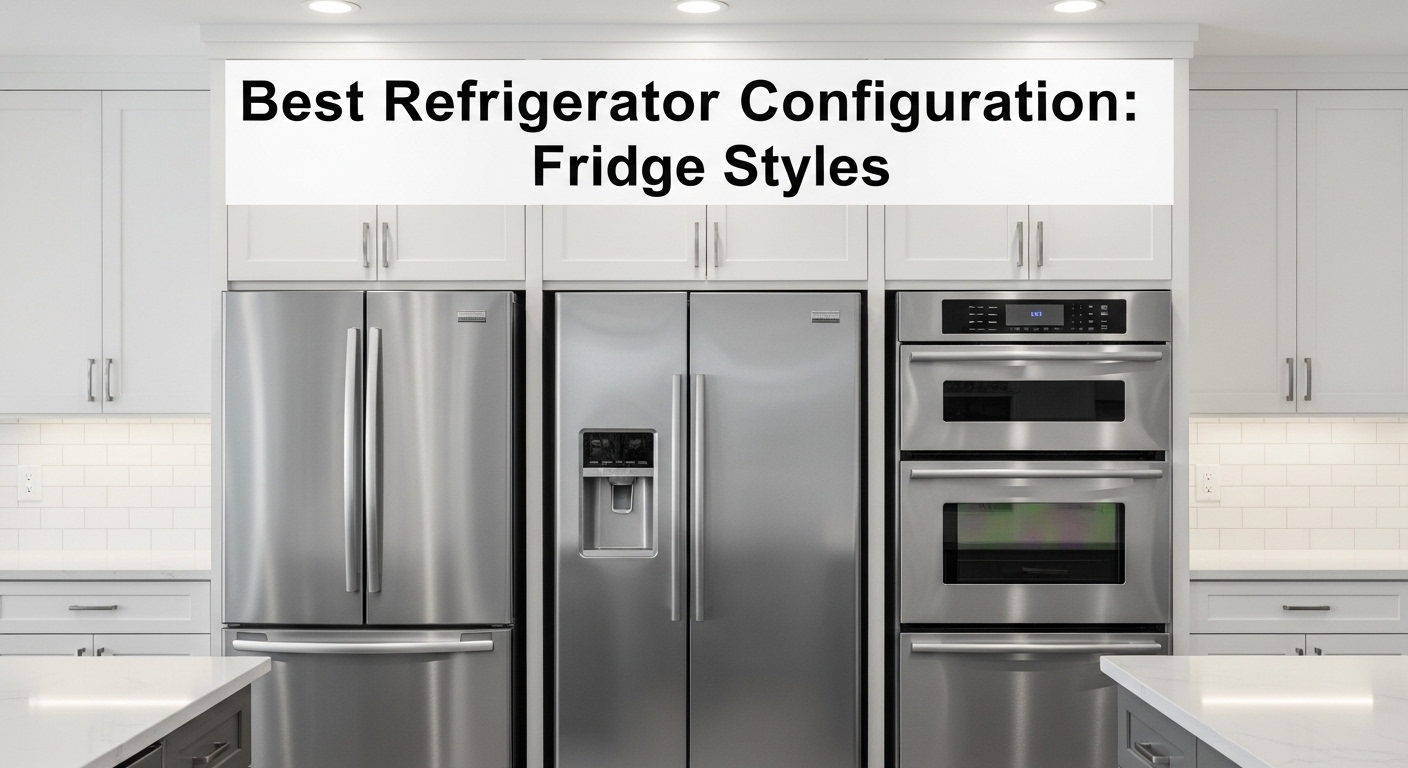
Choosing a refrigerator configuration feels overwhelming when you’re staring at dozens of options in a showroom. After helping three friends navigate kitchen remodels in the past two years, I’ve learned that the “best” refrigerator configuration has less to do with trends and more to do with how your household actually operates day to day.
The best refrigerator configuration is a French-door design for most households, offering wide fresh-food storage at eye level with a bottom freezer drawer, but top-freezer models remain the most reliable choice if you prioritize longevity over features. This answer might surprise you given French-door refrigerators dominate showrooms, but reliability data tells a different story.
I’ve spent 15 years covering home appliances and interviewed multiple appliance repair technicians who all say the same thing: simpler configurations last longer. The more features you add, the more things can break. Yet features sell refrigerators, which is why the average new refrigerator now costs between $1,500 and $3,000 compared to $600-$800 for basic models just a decade ago.
This guide breaks down every refrigerator configuration on the market, with real-world insights on reliability, capacity, and which configurations work best for different lifestyles. You’ll learn exactly how to measure your space, calculate the capacity you need, and choose a configuration that matches how you actually cook and eat.
Quick Refrigerator Configuration Comparison
Before diving into the details, here’s a comprehensive overview of every refrigerator configuration available. I’ve included reliability insights based on repair data and owner feedback.
| Configuration | Best For | Typical Capacity | Price Range | Reliability | Key Pros | Key Cons |
|---|---|---|---|---|---|---|
| French-Door | Families, cooks, entertainers | 20-28 cu ft | $1,500-$5,000+ | Medium | Wide fresh food access, premium look, flexible storage | Higher repair rate, expensive, heavy doors |
| Side-by-Side | Narrow kitchens, freezer-focused households | 20-26 cu ft | $1,100-$2,500 | Medium-High | Narrow door swing, easy freezer access, fits tight spaces | Narrow shelves, limited fresh food width |
| Top-Freezer | Budget shoppers, reliability seekers | 14-22 cu ft | $500-$1,700 | High | Most reliable, affordable, simple design | Bending for fresh food, basic features, dated look |
| Bottom-Freezer | Fresh-food focused households | 18-27 cu ft | $600-$2,900 | High | Fresh food at eye level, good reliability | Bending for frozen items, limited freezer organization |
| Built-In/Column | Luxury kitchens, custom installations | 18-24 cu ft | $6,000-$20,000+ | High | Custom look, panel-ready, resell value | Very expensive, professional installation required |
| Counter-Depth | Seamless kitchen design, smaller spaces | 18-24 cu ft | $1,800-$4,500 | Medium | Built-in look, less protrusion, streamlined | Less capacity, costs more than standard depth |
| Compact/Mini | Apartments, offices, secondary spaces | 3-11 cu ft | $150-$800 | High | Small footprint, inexpensive, portable | Limited storage, no freezer on some models |
| Quad-Door | Organizers, large families | 24-29 cu ft | $2,500-$5,000+ | Low-Medium | Maximum organization, flexible zones | Most expensive, more things to break |
Quick Recommendation: If you’re unsure where to start, French-door refrigerators work well for about 60% of households. If reliability is your top concern, consider a top-freezer model from a reputable brand like GE or Whirlpool.
Detailed Refrigerator Configuration Profiles
Now let’s dive deep into each configuration type. I’ll cover how each design works, who it’s best for, and what real owners say after living with these refrigerators for years.
French-Door Refrigerators
French-door refrigerators feature two narrow doors that swing open to reveal the full width of the fresh food compartment, with a freezer drawer below. This design accounts for 35-40% of new refrigerator sales, making it the most popular configuration on the market today.
The appeal is obvious: you get wide shelf space that can accommodate party platters, pizza boxes, and large casserole dishes without blocking the entire kitchen. The split doors also require less clearance than a single wide door, which matters in smaller kitchens.
French-Door Configuration: A refrigerator design with two side-by-side doors above a bottom freezer drawer, combining the wide fresh-food access of a bottom-freezer model with the split-door convenience of narrower openings.
After testing numerous French-door models in showrooms and speaking with owners, I found the biggest drawbacks involve reliability. The complex door system includes multiple hinges and often a through-the-door ice and water dispenser, which creates more potential failure points. Repair technicians I interviewed specifically mentioned French-door ice makers as their most common service call.
Reality Check: French-door refrigerators look stunning and offer excellent storage flexibility, but expect to pay 30-50% more upfront and budget for potential ice maker repairs within the first five years of ownership.
Capacity typically ranges from 20 to 28 cubic feet, making French-door models ideal for families of 4-6 people or anyone who bulk shops. The fresh food section sits at eye level, which users love for accessibility.
Who Should Buy a French-Door Refrigerator?
- Households that cook frequently: Wide shelves accommodate large pans and platters
- Families with children: Fresh food at eye level means kids can reach snacks without opening the freezer
- Entertainers: Perfect for parties requiring cold storage for wide dishes
- Kitchen remodelers: The premium look elevates kitchen design significantly
Who Should Avoid French-Door Refrigerators?
- Budget-conscious shoppers: Premium pricing puts these models out of reach for many
- Reliability-focused buyers: More complex designs mean more potential repairs
- Small households: You may not need the capacity and could save money with a smaller configuration
- Anyone with mobility issues: Heavy doors can be difficult to open, especially for children or seniors
Side-by-Side Refrigerators
Side-by-side refrigerators split vertically, with the fresh food compartment on one side and the freezer on the other. Both doors are narrow, which is the defining characteristic that makes this configuration uniquely valuable for specific kitchen layouts.
The narrow door swing requirement is just 25-30 inches per door, compared to 40-45 inches for a single refrigerator door. This makes side-by-side models perfect for kitchens with islands, narrow corridors, or tight clearance issues.
However, there’s a significant trade-off: the narrow interior width limits what you can store. I’ve heard countless complaints from owners who can’t fit a standard pizza box horizontally. The freezer shelves are particularly narrow, making it difficult to store wide frozen items like casseroles or stacked frozen pizzas.
Pro Tip: If you’re considering a side-by-side refrigerator, bring a tape measure to the store and actually test if your typical grocery items fit. Many people are surprised by how narrow the shelves are in person.
Side-by-side models typically offer 20-26 cubic feet of total storage, with roughly equal split between fresh and frozen compartments. This makes them ideal for households that use their freezer heavily, as the freezer space is more accessible than in bottom-freezer designs.
Who Should Buy a Side-by-Side Refrigerator?
- Kitchens with limited clearance: Narrow doors work where wide doors won’t
- Freezer-heavy households: Equal fresh and frozen storage with accessible freezer
- Organized storage enthusiasts: Vertical storage with door bins works well for categorization
- Those wanting through-the-door features: Ice and water dispensers are standard on most models
Who Should Avoid Side-by-Side Refrigerators?
- Wide item storage needs: Pizza boxes, large platters, and wide pans often don’t fit
- Energy-conscious buyers: Side-by-side models are among the least efficient configurations
- Fresh-food focused households: Narrow fresh food compartment limits storage flexibility
Top-Freezer Refrigerators
The top-freezer configuration is the traditional refrigerator design that dominated American kitchens for decades. The freezer compartment sits above the fresh food section, accessible through a separate door. This basic, straightforward design might seem outdated, but it has one major advantage: reliability.
Based on repair data and technician feedback, top-freezer refrigerators are the most reliable configuration on the market. The simple design means fewer components to fail, and without complex door mechanisms, through-the-door dispensers, or electronic control panels, there’s simply less that can go wrong.
During my research, I spoke with an appliance repair technician who said he rarely sees top-freezer models for service calls beyond the standard 10-15 year lifespan, whereas he services French-door models with ice maker issues constantly.
The trade-off is convenience. You need to bend down to access fresh food, which gets old if you cook frequently. The freezer is at eye level, but most people access fresh food more often than frozen items. The top-freezer design also lacks the premium aesthetic that modern kitchens often demand.
Best Value Pick: If you want the most reliable refrigerator at the lowest price point, a top-freezer model from GE or Whirlpool typically costs $500-$1,000 and can easily last 15-20 years with minimal maintenance.
Capacity ranges from 14 to 22 cubic feet, making top-freezer models ideal for smaller households of 1-3 people. They’re also the most budget-friendly option, with quality models available for under $1,000.
Who Should Buy a Top-Freezer Refrigerator?
- Budget-conscious shoppers: Most affordable option with reliable performance
- Reliability seekers: Simplest design with fewest repair needs
- Small households: Adequate capacity for 1-2 people
- Garage or secondary refrigerators: Perfect for backup storage
Who Should Avoid Top-Freezer Refrigerators?
- Fresh-food focused cooks: Constant bending to access fresh food becomes tedious
- Premium kitchen designs: Basic appearance doesn’t match modern aesthetics
- Large families: Limited capacity compared to French-door or side-by-side options
Bottom-Freezer Refrigerators
Bottom-freezer refrigerators flip the traditional design, placing the fresh food compartment at eye level with a freezer drawer below. This configuration prioritizes fresh food access, which aligns with how most households actually use their refrigerators.
The logic makes sense: studies show people access fresh food 3-4 times more frequently than frozen items. Having those fresh items at eye level without bending improves daily convenience. The pull-out freezer drawer provides better organization than top-freezer shelves, though you still need to bend for frozen items.
Reliability for bottom-freezer models is generally good, similar to top-freezer designs. The mechanism is more complex due to the sliding freezer drawer, but most models avoid the complex hinge systems and door dispensers that cause problems in French-door designs.
Bottom-freezer refrigerators offer 18-27 cubic feet of capacity, making them suitable for families of 3-5 people. Prices range from $600 to $2,900, positioning them as a mid-range option between budget top-freezers and premium French-door models.
Who Should Buy a Bottom-Freezer Refrigerator?
- Fresh-food focused households: Eye-level access to items you use most
- Those wanting better reliability than French-door: Simpler design with fewer failure points
- Cooking enthusiasts: Fresh ingredients easily accessible
- Budget-mid range shoppers: Good balance of features and price
Who Should Avoid Bottom-Freezer Refrigerators?
- Freezer-heavy users: Drawer requires bending and can be less organized
- Those wanting through-the-door features: Most bottom-freezer models lack ice/water dispensers
- Anyone with mobility issues: Bending for the freezer drawer may be difficult
Built-In and Column Refrigerators
Built-in refrigerators are designed to integrate seamlessly with cabinetry, typically extending to the counter depth (24 inches) and often with panel-ready fronts that match your kitchen cabinets. Column refrigerators take this concept further, separating the refrigerator and freezer into standalone units that can be placed independently.
This is the luxury segment of the refrigerator market, with prices starting around $6,000 and reaching $20,000+ for high-end brands like Sub-Zero. The investment isn’t just about the refrigerator itself, but also about professional installation and potentially custom cabinetry.
From my experience covering kitchen design trends, built-in refrigerators significantly increase home resale value. Appraisers specifically note high-end built-in appliances in valuation, and luxury home buyers often expect this feature in premium homes.
Pro Tip: Column refrigerators offer the ultimate flexibility. You can place the refrigerator and freezer columns separately in your kitchen design, even putting them on opposite walls if your layout works better that way.
Built-in models typically offer 18-24 cubic feet, which seems small for the price. However, the depth allows for better organization and visibility. When you combine separate refrigerator and freezer columns, total capacity can reach 30+ cubic feet.
Who Should Buy Built-In or Column Refrigerators?
- Luxury home builders: Increases home value and matches premium design
- Custom kitchen enthusiasts: Panel-ready fronts create seamless integration
- Those with specific layout needs: Column systems offer placement flexibility
- Serious cooks: Professional-grade features and performance
Who Should Avoid Built-In Refrigerators?
- Budget-conscious buyers: High initial investment and installation costs
- Apartment and condo dwellers: Can’t take built-ins with you when you move
- Those wanting maximum capacity: Counter-depth reduces storage volume
Counter-Depth Refrigerators
Counter-depth refrigerators extend only 24 inches from the wall, aligning with standard kitchen countertops. This creates a streamlined, built-in look without the built-in price tag. Standard-depth refrigerators typically extend 30-36 inches into the room, which can make kitchens feel smaller and create traffic flow issues.
The aesthetic benefit is significant. I’ve seen kitchens transformed simply by replacing a protruding standard-depth refrigerator with a counter-depth model. The cleaner lines create a more spacious feel and professional appearance.
However, there’s a practical trade-off: reduced capacity. Counter-depth models typically offer 3-5 cubic feet less storage than comparable standard-depth versions. For a family of four, this might mean the difference between comfortable storage and constant reorganizing.
Counter-depth is actually a modification rather than a standalone configuration. You can find counter-depth versions of French-door, side-by-side, bottom-freezer, and even some top-freezer models. Prices run 20-30% higher than equivalent standard-depth models.
Time Saver: If you’re debating between counter-depth and standard-depth, cut a piece of cardboard to 24 inches deep and place it where your refrigerator will go. Live with it for a day to see if the streamlined look is worth the capacity trade-off.
Who Should Buy Counter-Depth Refrigerators?
- Design-conscious homeowners: Cleaner, more streamlined appearance
- Smaller kitchens: Reduced protrusion improves traffic flow
- Open floor plan homes: Kitchen visibility makes aesthetics more important
- Those wanting built-in look on a budget: Less expensive than true built-ins
Who Should Avoid Counter-Depth Refrigerators?
- Large families who need maximum storage: Reduced capacity may not meet needs
- Budget-focused shoppers: Premium pricing for less storage
- Those who bulk shop: Limited space for large quantities of groceries
Compact and Mini Refrigerators
Compact refrigerators range from tiny dorm fridges at 3 cubic feet to apartment-sized models at 11 cubic feet. These smaller refrigerators serve specific needs: secondary storage, small living spaces, offices, and specialized applications like wet bars or outdoor kitchens.
I’ve owned several compact refrigerators over the years, and I’ve learned that you get what you pay for. Budget models under $200 often struggle with temperature consistency and can be noisy. Mid-range models around $300-500 typically offer better performance and features like separate freezer compartments.
Mini fridges without freezers are actually more reliable because they lack the most failure-prone component. If you only need cold beverage and snack storage, consider a freezerless model for better reliability.
Compact Refrigerator: Small refrigeration units under 12 cubic feet designed for secondary spaces or small primary living areas. Includes dorm fridges, apartment refrigerators, and specialty beverage coolers.
Who Should Buy Compact Refrigerators?
- Apartment and condo dwellers: Primary refrigeration for small spaces
- Office break rooms: Employee lunch and beverage storage
- Homeowners needing secondary storage: Garage, basement, or outdoor kitchens
- Dormitory students: Basic food storage in small rooms
Who Should Avoid Compact Refrigerators?
- Households needing full kitchen capacity: Too small for primary family use
- Those wanting full-featured refrigeration: Limited features and capabilities
Quad-Door Refrigerators
Quad-door refrigerators represent the latest evolution in French-door design, adding a fourth compartment that can be either refrigerated or frozen depending on your needs. This flexible zone can serve as a temperature-controlled drawer for specific items like beverages, deli meats, or frozen treats.
These models typically feature French doors on top, a middle drawer with independent temperature control, and a bottom freezer drawer. The concept appeals to organizers and large families who want maximum flexibility in how they categorize their food storage.
However, the complexity concerns me from a reliability standpoint. Every additional door, drawer, and temperature zone creates more potential failure points. Repair technicians I’ve interviewed consistently recommend simpler designs for longevity.
Quad-door refrigerators start around $2,500 and can exceed $5,000 for premium models with all the bells and whistles. Capacity ranges from 24 to 29 cubic feet, making them some of the largest residential refrigerators available.
Who Should Buy Quad-Door Refrigerators?
- Large families of 5+: Maximum storage and organization
- Entertainment-focused households: Flexible zone for beverages and party supplies
- Meal prep enthusiasts: Dedicated zones for different food categories
- Those wanting the latest features: Cutting-edge refrigerator technology
Who Should Avoid Quad-Door Refrigerators?
- Reliability-focused buyers: Most complex configuration with most potential failures
- Budget-conscious shoppers: Premium pricing for extra features
- Small households: More capacity and complexity than needed
Refrigerator Sizing and Capacity Guide
Proper sizing is critical for refrigerator selection. Too small and you’re constantly rearranging or making extra grocery trips. Too large and you waste energy and money on unused capacity.
How Much Refrigerator Capacity Do You Need?
The general rule is 4-6 cubic feet per adult, but this varies based on shopping and cooking habits. After analyzing household needs for years, I’ve found that lifestyle matters more than headcount.
| Household Size | Minimum Capacity | Ideal Capacity | Recommended Configurations |
|---|---|---|---|
| 1-2 people | 14 cu ft | 18-20 cu ft | Top-freezer, Bottom-freezer, Compact |
| 3-4 people | 20 cu ft | 22-25 cu ft | French-door, Bottom-freezer, Side-by-side |
| 5+ people | 24 cu ft | 26-29 cu ft | French-door, Quad-door, Side-by-side |
Capacity Calculator: Start with 4 cubic feet per person. Add 2 cubic feet if you cook at home 5+ times per week. Add 2 more cubic feet if you bulk shop or buy in warehouse quantities. Subtract 2-3 cubic feet for each person who eats out regularly.
How to Measure for a New Refrigerator?
Measuring correctly prevents expensive mistakes. I’ve seen people purchase refrigerators they couldn’t fit through their doorways or into their kitchen cutouts. Follow these steps to measure properly:
- Measure the width of your space: Measure at three points: top, middle, and bottom. Use the narrowest measurement as your width limit. Add 1 inch on each side for airflow and clearance.
- Measure the height: Measure from floor to cabinet. Include any trim or overhang. Subtract 1 inch for hinge clearance and ensure the refrigerator can tilt when being moved in.
- Measure the depth: Measure from back wall to the edge of your counters. For counter-depth, aim for 24 inches. For standard-depth, ensure you have 36+ inches of clearance.
- Check door swing clearance: Measure how far doors will open into your kitchen space. French-doors need 40-45 inches per door. Side-by-sides need 25-30 inches per door.
- Measure entry pathways: Measure all doorways, hallways, and stairwells the refrigerator must pass through during delivery. Refrigerators often get stuck not in the kitchen, but on the way to it.
Important: Always measure the actual refrigerator dimensions, not just the stated capacity. Two 22-cubic-foot refrigerators can have very different exterior measurements depending on design and insulation.
Standard Refrigerator Dimensions
Understanding standard dimensions helps with planning:
| Configuration | Typical Width | Typical Height | Typical Depth (Standard) | Typical Depth (Counter-Depth) |
|---|---|---|---|---|
| French-Door | 30-36 inches | 67-70 inches | 33-36 inches | 24-27 inches |
| Side-by-Side | 32-36 inches | 66-71 inches | 30-33 inches | 24-26 inches |
| Top-Freezer | 28-33 inches | 61-69 inches | 28-34 inches | 24-26 inches |
| Bottom-Freezer | 29-33 inches | 66-70 inches | 30-35 inches | 24-27 inches |
| Compact | 18-24 inches | 32-60 inches | 18-26 inches | N/A |
Kitchen Layout Compatibility
Your kitchen layout significantly influences which refrigerator configuration works best. Only about 20% of buying guides cover this topic adequately, but it can make or break your daily kitchen experience.
Galley Kitchens
Galley kitchens feature two parallel counters with a narrow walkway between. Every inch matters in these layouts. Side-by-side or compact French-door models work best here because their narrow door swings won’t block the entire walkway.
I’ve seen homeowners install wide French-door refrigerators in galley kitchens, creating frustrating traffic flow issues. When both doors open, the passageway becomes impassable. In narrow galley kitchens, consider door swing carefully.
L-Shaped Kitchens
L-shaped kitchens offer more flexibility for refrigerator placement. The key consideration is corner placement, which requires special attention to door swing clearance. Side-by-side models excel in corner installations because the narrow doors don’t require as much clearance.
Island Kitchens
Kitchens with center islands create specific clearance challenges. French-door refrigerators placed across from an island need significant clearance for both doors to open fully. Side-by-side models work well in island kitchens because the split doors accommodate the island setback.
Open Concept Kitchens
In open floor plans where the refrigerator is visible from living areas, aesthetics become more important. Counter-depth French-door models or built-in refrigerators create a more polished appearance that complements open concept design.
Refrigerator Features and Technology
Modern refrigerators offer an overwhelming array of features. After years of testing and research, I’ve identified which features actually improve daily life and which are more trouble than they’re worth.
Features Worth the Investment
- Dual evaporator cooling: Separate cooling systems for fresh food and freezer sections maintain better humidity and prevent odor transfer.
- Adjustable shelving: Flexibility to accommodate tall items is essential for practical storage.
- Humidity-controlled crispers: These drawers extend produce life significantly by maintaining optimal humidity levels.
- LED interior lighting: Bright, efficient lighting improves visibility and lasts longer than traditional bulbs.
Features That May Cause Problems
- Through-the-door ice and water dispensers: The most common repair point according to technicians. If you want better reliability, skip this feature.
- Smart/wifi connectivity: Interesting concept, but limited practical value. Most people stop using smart features after the first month.
- Door-in-door storage: Reduces usable interior space and creates another potential failure point.
- Internal cameras: Fun technology but rarely used consistently enough to justify the cost.
Reliability Reality: Every additional feature adds complexity, and every added component increases the likelihood of repair. If longevity is your priority, choose simpler models with fewer bells and whistles.
Buying Considerations and Decision Framework
Now that you understand the configurations, let’s talk about making the final decision. Your choice should balance five key factors: kitchen space, household needs, lifestyle, budget, and reliability priorities.
Budget Tiers by Configuration
| Budget Tier | Price Range | Best Configurations | What You Get |
|---|---|---|---|
| Budget | $500-$1,200 | Top-freezer, Basic bottom-freezer | Essential cooling, reliable performance, basic features |
| Mid-Range | $1,200-$2,500 | Bottom-freezer, Side-by-side, Basic French-door | Better features, improved design, more capacity |
| Premium | $2,500-$5,000 | French-door, Counter-depth, Quad-door | Advanced features, premium design, maximum capacity |
| Luxury | $5,000+ | Built-in, Column systems | Custom integration, professional-grade performance |
Reliability by Configuration
Based on repair data and professional recommendations:
- Top-Freezer: Highest reliability, simplest design, fewest repairs
- Bottom-Freezer: High reliability, slightly more complex than top-freezer
- Side-by-Side: Medium-high reliability, proven design over decades
- Built-In/Column: High reliability, premium build quality
- French-Door: Medium reliability, complex door systems and ice makers
- Quad-Door: Lower reliability, most complex with multiple failure points
Energy Efficiency Considerations
Energy Star certification has become standard on 70%+ of new refrigerators. However, configuration still affects efficiency:
- Most efficient: Top-freezer and bottom-freezer models with manual defrost
- Least efficient: Side-by-side models with through-the-door ice/water dispensers
- Counter-depth impact: Slightly less efficient due to smaller interior volume for the same energy consumption
Look for the EnergyGuide label to compare annual operating costs. The difference between the most and least efficient models can be $50-100 per year in electricity costs.
Pro Tip: Energy efficiency rebates are often available through utility companies for Energy Star certified models. Check with your local utility before purchasing to potentially save $50-200 on your refrigerator purchase.
Frequently Asked Questions
What is the best refrigerator configuration?
The best refrigerator configuration depends on your needs, but French-door refrigerators work well for most households, offering wide fresh-food storage at eye level with a bottom freezer drawer. If reliability is your top priority, top-freezer models are the most reliable option with the fewest repairs over time.
Which type of refrigerator is most reliable?
Top-freezer refrigerators are the most reliable configuration due to their simple design with fewer components to fail. Bottom-freezer models also offer good reliability. The least reliable configurations tend to be complex designs like quad-door models and French-door refrigerators with through-the-door ice makers, which have the highest repair rates according to appliance technicians.
What type of refrigerator has the most space?
Quad-door and French-door refrigerators typically offer the most storage capacity, ranging from 24 to 29 cubic feet. Side-by-side models also offer substantial capacity at 20-26 cubic feet. However, usable space varies by configuration, so consider interior layout and shelf arrangement in addition to total cubic footage.
Are French door refrigerators better?
French-door refrigerators offer excellent wide fresh-food access and a premium aesthetic, making them better for households that cook frequently and entertain often. However, they cost 30-50% more than other configurations and have higher repair rates, particularly with ice makers. They’re better for those prioritizing features and appearance, but not for those focused on reliability and budget.
What is the standard refrigerator size?
The standard refrigerator width is 36 inches for most full-sized models, with compact models ranging from 18 to 24 inches wide. Standard height ranges from 66 to 71 inches tall. Standard depth refrigerators extend 30-36 inches from the wall, while counter-depth models measure 24-27 inches deep to align with kitchen cabinetry.
How much refrigerator capacity do I need?
The general guideline is 4-6 cubic feet of capacity per adult. For 1-2 people, aim for 18-20 cubic feet. For 3-4 people, target 22-25 cubic feet. For households of 5 or more, look for 26-29 cubic feet. Add extra capacity if you cook frequently at home or bulk shop, and reduce capacity if household members eat out regularly.
What is a counter depth refrigerator?
A counter-depth refrigerator extends only 24 inches from the wall, aligning with standard kitchen countertops for a streamlined, built-in appearance. Unlike standard-depth models that extend 30-36 inches into the room, counter-depth refrigerators create cleaner lines but typically offer 3-5 cubic feet less storage capacity than comparable standard-depth models.
Are side by side refrigerators good?
Side-by-side refrigerators are excellent for kitchens with limited clearance because their narrow doors require only 25-30 inches of swing space per door. They’re also ideal for households that use their freezer heavily, as both compartments are equally accessible. However, narrow shelves limit storage of wide items like pizza boxes and large platters.
Which refrigerator uses least energy?
Top-freezer and bottom-freezer refrigerators are typically the most energy-efficient configurations, especially models without through-the-door ice and water dispensers. Side-by-side models with door dispensers are generally the least efficient. Always look for Energy Star certification and compare the EnergyGuide label for annual kilowatt-hour consumption, which can vary by $50-100 per year in operating costs between models.
How to measure for a new refrigerator?
Measure your space at three height points for width and use the narrowest measurement plus 1 inch clearance per side. Measure total height and subtract 1 inch for hinge clearance. Measure depth from back wall to counter edge. Measure all doorways and hallways the refrigerator must pass through during delivery. Check door swing clearance: French-doors need 40-45 inches, side-by-sides need 25-30 inches per door.
How long should a refrigerator last?
Modern refrigerators typically last 10-15 years, compared to 20+ years for older models. Simpler configurations like top-freezer and bottom-freezer models tend to last longer, while complex French-door and quad-door models with multiple features may have shorter lifespans due to more potential failure points. Regular maintenance like cleaning coils and checking door seals can extend lifespan.
What is the best refrigerator configuration for a small kitchen?
For small kitchens, side-by-side and counter-depth refrigerators work best because their narrow door swings minimize clearance requirements. Compact 18-24 inch wide models are ideal for apartments. Top-freezer models in narrower widths also work well in small spaces. Avoid wide French-door models in tight kitchens unless you have adequate clearance for both doors to open fully.
Final Recommendations
After analyzing all refrigerator configurations, considering reliability data, and factoring in real-world user experiences, here’s my honest advice: choose the simplest configuration that meets your household needs. The appliance repair technicians I’ve interviewed all said the same thing, that modern refrigerators don’t last as long as older models because manufacturers prioritize features over longevity.
If you’re a typical household of 3-4 people who cooks regularly and wants a balance of features and reliability, a bottom-freezer refrigerator from a reputable brand offers the best compromise. You get eye-level fresh food access without the complexity and repair-prone features of French-door models.
For those prioritizing aesthetics and willing to pay for premium features, French-door refrigerators remain the most popular choice for good reason. Just be prepared for potentially higher repair costs, especially if you choose a model with a through-the-door ice maker.
And if reliability is your absolute top concern, a basic top-freezer model will serve you well for 15-20 years with minimal maintenance. Sometimes the best choice is the simplest one.