
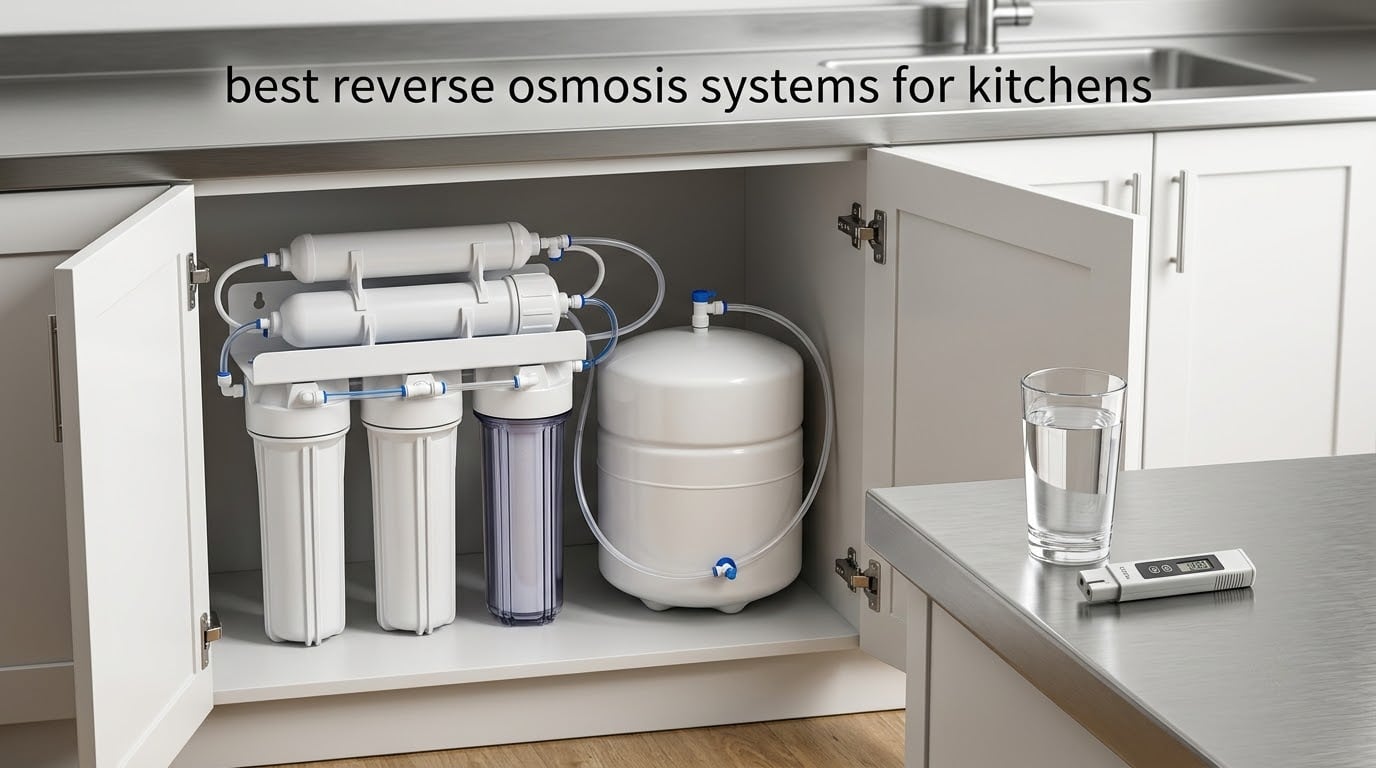
If your tap water tastes flat, carries a chlorine edge, or you are simply done buying plastic bottles, the fix is almost always an under-sink reverse osmosis system. I have spent the last six weeks reading specification sheets, cross-checking certifications and comparing owner feedback across twelve of the best reverse osmosis systems for kitchens currently on the market, and these twelve are the ones worth your cabinet space.
Reverse osmosis is not the only way to clean tap water, and it is honestly overkill if your only problem is a bad taste. But when the goal is broad contaminant reduction at the kitchen sink, nothing else in the residential category comes close. The membrane strips dissolved solids, metals and a long list of chemicals that carbon and sediment filters leave behind.
What separates a good system from a disappointing one comes down to four things: how much water it actually produces at the tap, whether the whole system is NSF/ANSI 58 certified rather than just the parts, how much drain water it wastes, and whether the tubing and fittings are built to survive a wet cabinet. Those are the criteria I used for every pick below.
Last updated for 2026, and updated again after a new round of owner reports came in.
Our Top 3 Kitchen RO Picks After Six Weeks of Comparing Specs

iSpring RCC7AK-BN 75 GPD
- NSF/ANSI 58 system certified
- Alkaline pH+ remineralization
- Top-mounted faucet mount

APEC ROES-50 50 GPD
- NSF/ANSI 58 and 372 certified
- Color-coded quick connects
- Compact footprint

Waterdrop G3P600 600 GPD
- Tankless with built-in pump
- 2:1 pure-to-drain ratio
- Fast sustained flow
The iSpring RCC7AK-BN is the one I recommend to most households because it balances capacity, taste and installation difficulty better than anything else in this group. The APEC ROES-50 is the sensible smaller-cabinet, no-electricity choice, and the Waterdrop G3P600 is the pick when flow speed matters more than the monthly filter bill.
Comparing 12 Kitchen Reverse Osmosis Systems Side by Side in 2026
| Product | Details | |
|---|---|---|
| iSpring RCC7AK-BN 75 GPD 6-Stage |
|
Check Latest Price |
| APEC ROES-50 50 GPD 5-Stage |
|
Check Latest Price |
| Waterdrop G3P600 Tankless 600 GPD |
|
Check Latest Price |
 Frizzlife PD600-TAM3 600 GPD Frizzlife PD600-TAM3 600 GPD |
|
Check Latest Price |
 Waterdrop G2 400 GPD Tankless Waterdrop G2 400 GPD Tankless |
|
Check Latest Price |
 iSpring RCC7P-AK 75 GPD with Pump iSpring RCC7P-AK 75 GPD with Pump |
|
Check Latest Price |
 APEC RO-PH90 90 GPD 6-Stage APEC RO-PH90 90 GPD 6-Stage |
|
Check Latest Price |
 Home Master TMAFC 7-Stage Home Master TMAFC 7-Stage |
|
Check Latest Price |
 NU Aqua 7-Stage UV 100 GPD NU Aqua 7-Stage UV 100 GPD |
|
Check Latest Price |
 iSpring RO500AK-ORB 500 GPD iSpring RO500AK-ORB 500 GPD |
|
Check Latest Price |
 Geekpure 6-Stage 75 GPD Geekpure 6-Stage 75 GPD |
|
Check Latest Price |
 Waterdrop G5P700A 700 GPD Waterdrop G5P700A 700 GPD |
|
Check Latest Price |
Every product in that table ships with a faucet and a drain line connection, and all twelve are under-sink units. The differences that matter day to day are flow rate, whether you need an electrical outlet, and how much space the storage tank eats.
1. iSpring RCC7AK-BN – Best Overall for Kitchens That Want Good Taste Without a Pump
iSpring RCC7AK-BN NSF Certified, 75 GPD, Alkaline 6-Stage Reverse Osmosis System, pH+ Remineralization RO Water Filter System Under Sink Patented Top-Mounted Faucet Design for Easy Installation
75 GPD 6-stage
Alkaline pH+ remineralization
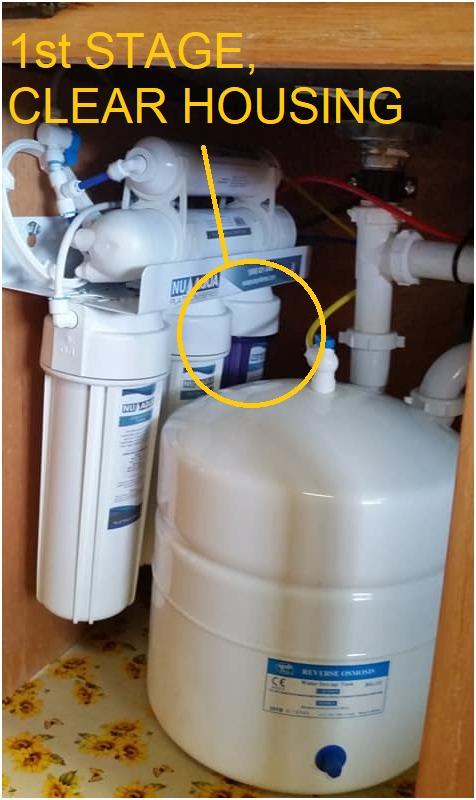
Transparent first housing
Brushed nickel faucet
+ Pros
- Transparent first-stage housing shows filter condition at a glance
- Top-mounted faucet mount avoids crawling under the cabinet
- No electricity required
- Automatic shutoff and leak detector
- Cons
- Tubing lengths often too short for real installs
- Line pressure above 80 psi needs a regulator
- RO process sends 2-3 gallons to drain per gallon made
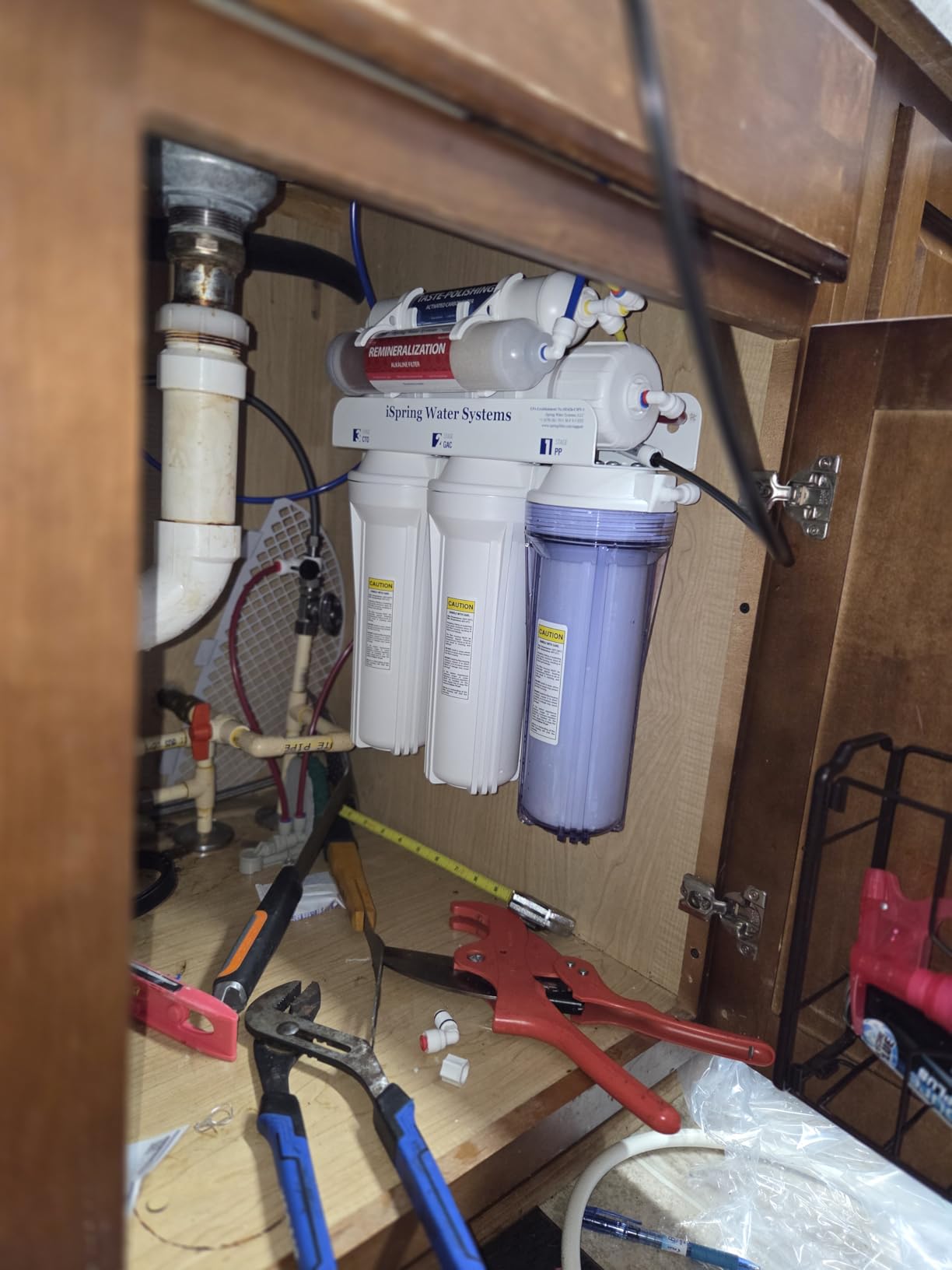
This is the system I kept coming back to while I was building this list. At 75 GPD it produces more real water than most tanked units while still running entirely on household line pressure, which means no outlet under the sink and no pump noise. Owners consistently describe the water as tasting closer to spring water than the flat output of a standard membrane, and the sixth-stage alkaline cartridge is the reason.
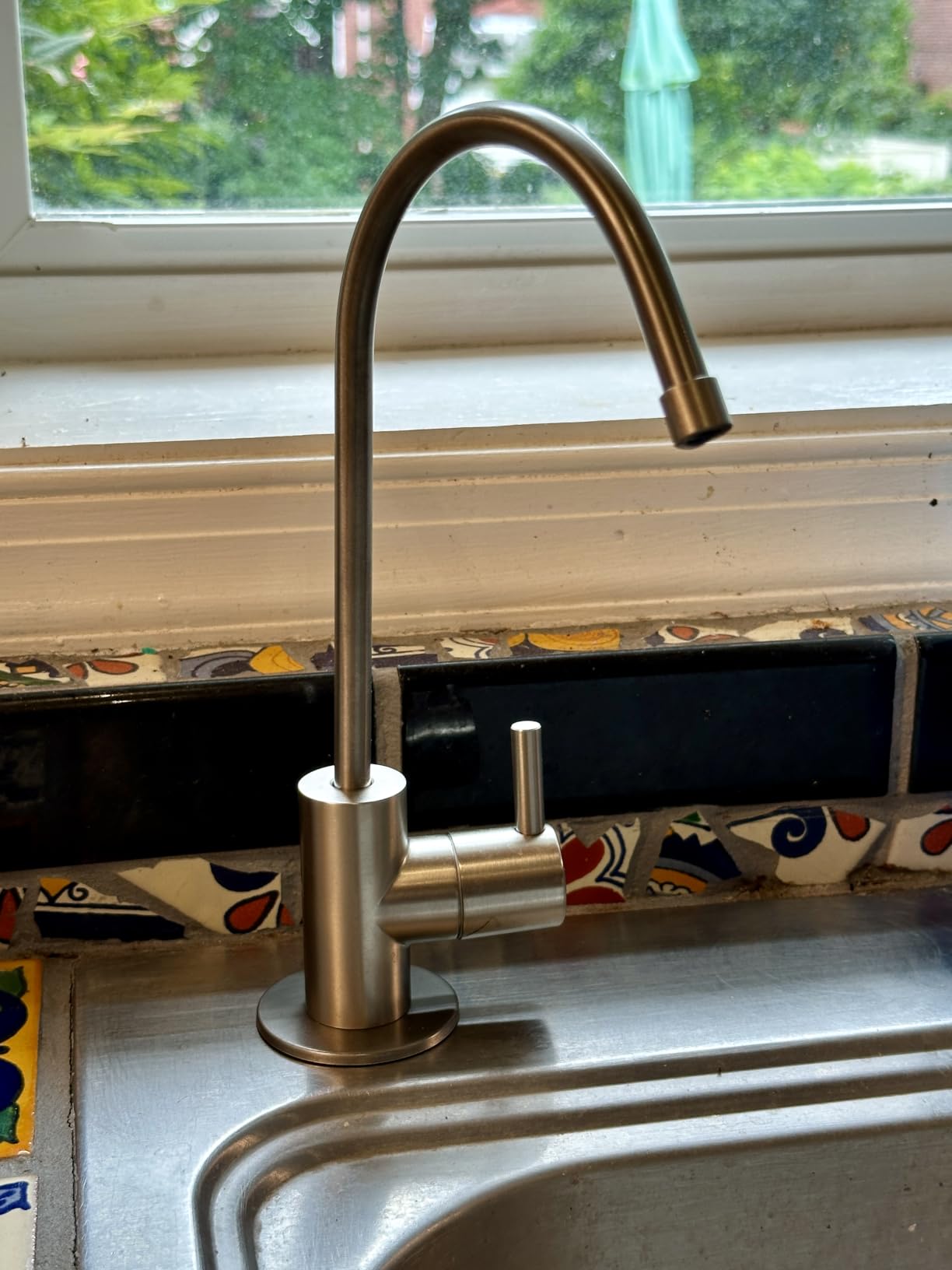
The patented top-mounted faucet design is the feature I did not expect to care about and now recommend to anyone. Instead of dropping a faucet shank down through the countertop and reaching underneath to tighten it, the fastener sits on top. That one engineering decision removes the most common install frustration.
What the certification numbers actually mean
This is an NSF/ANSI 58 certified complete system, not a collection of certified parts, which matters more than it sounds. Independent testing puts TDS reduction at 93-98%, PFAS reduction at 96-99%, chlorine at 95-99%, asbestos above 99.7%, fluoride above 97.4% and lead above 98.9%. Those are system-level figures measured on the finished unit.
Operating pressure is listed at 70 psi, and feed water can carry up to 750 ppm TDS. The system runs from 40 to 100 degrees Fahrenheit and needs no power at all, so it keeps working through an outage.
Where owners report friction
Three complaints recur. The supplied tubing runs about 10 feet, which is rarely enough once you account for the drain saddle and faucet height, so plan on buying extra. Line pressure above 80 psi can stress the housings and calls for a regulator. And filter housings under the sink are hard to grip once they are full, which is where the clear first-stage housing earns its keep, since you can see the condition without pulling anything apart.
Waste is the fourth point. This is a conventional ratio system, so expect roughly 2-3 gallons of drain water for every gallon you drink. If that bothers you, look at a 2:1 model further down this list.
Who should buy the RCC7AK-BN
Buy it if you want a complete, certified system with no electrical work, a cabinet that stays dry, and water that does not taste like a chemistry lab. The included brushed nickel faucet, storage tank and extra tool set mean one box covers the whole install.
2. APEC Water ROES-50 – Best Value Pick for Small Cabinets and Simple Setups
APEC Water ROES-50, 5-Stage Under Sink Reverse Osmosis System, 50 GPD
50 GPD 5-stage
NSF/ANSI 58 and 372
Color-coded tubing
Filter-Max-ES50 set included
+ Pros
- Compact 15.5 by 5.25 by 17 inch footprint
- Color-coded quick-connect tubing
- Long track record with a large installed base
- Handles feed water up to 2000 ppm TDS
- Cons
- 50 GPD is the slowest flow in this group
- 1/4-inch output line feels restrictive
- No pump so low line pressure hurts performance
The ROES-50 is the system that keeps getting recommended two years after purchase, and it is the one most often named first when people ask which brand to trust under the sink. It handles up to 2000 ppm feed TDS, which makes it a genuinely sensible choice on municipal water with hard mineral content rather than a well.
APEC builds these in-house and claims more than 20 years of filtration experience. The kit arrives with the filter set, brushed nickel faucet, storage tank and an install kit, so nothing else is needed for a working system.
Certification and what gets removed
Dual certification here covers both performance and materials: NSF/ANSI 58 for contaminant reduction and NSF/ANSI 372 for lead-free construction. The stated reduction is up to 99.99% of impurities, covering arsenic, chlorine, lead, fluoride, heavy metals and microplastics. Operating range is 40-85 psi.
APEC also offers this chassis as 3-stage, 6-stage alkaline and 7-stage alkaline/UV versions, so the same footprint covers buyers who want a different stage count. The Filter-Max-ES50 set is rated for replacement every 6 to 24 months depending on feed water.
The flow trade-off nobody hides
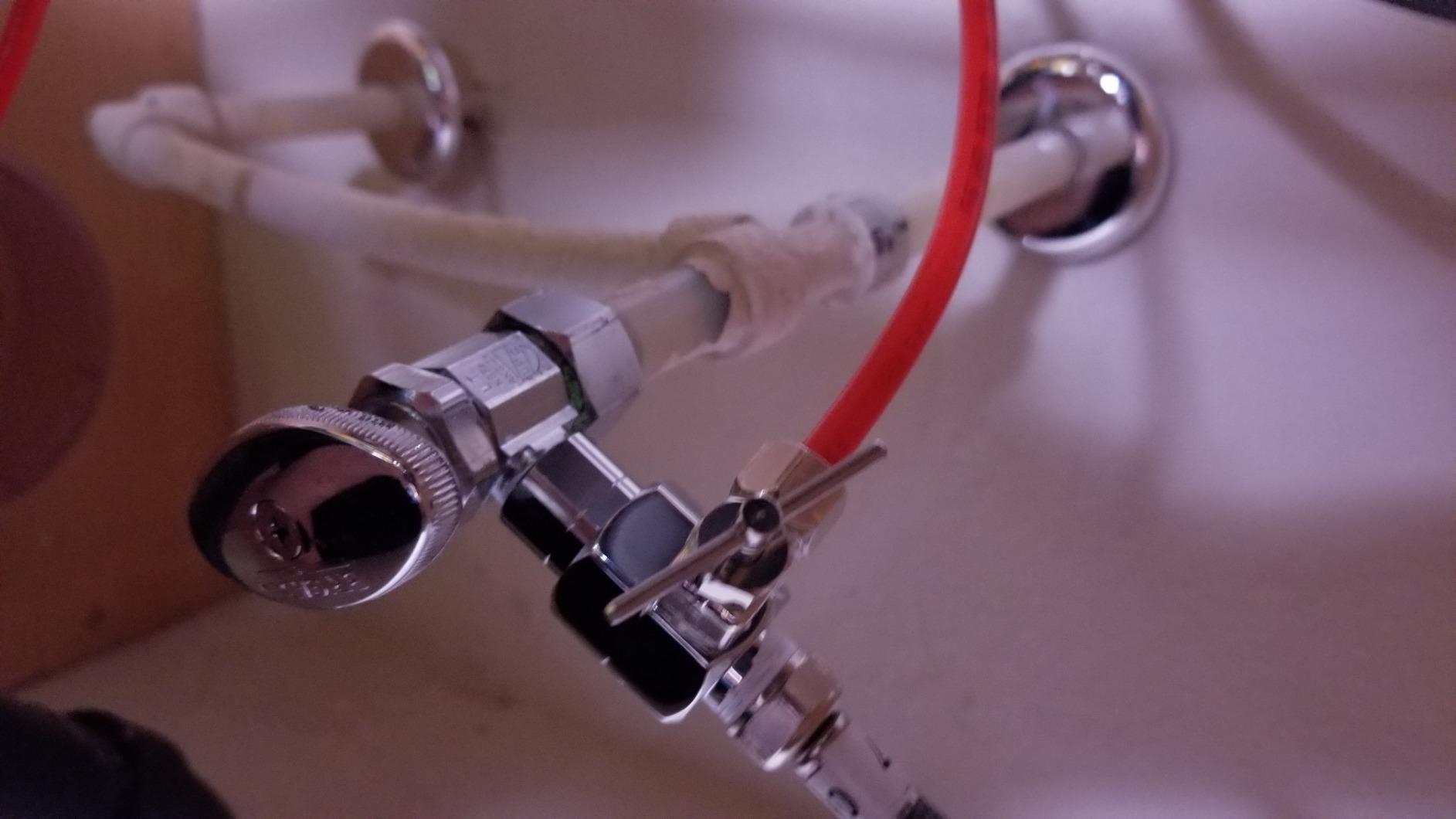
50 GPD is the lowest capacity here, and that shows up as a slow fill. With a pressurized tank the first glass comes out fast, then you wait. The 1/4-inch output line adds a little resistance, and there is no pump, so performance tracks your household line pressure directly.
For a one or two person kitchen that drinks a few glasses a day, that is an acceptable trade for a smaller cabinet footprint. For a family of four brewing coffee in the morning, read on.
Who should buy the ROES-50
This is the pick for renters and apartment dwellers who cannot drill the counter, since the faucet can mount on an existing hole, and for anyone with a shallow cabinet. It is also the one I would trust to still be running in five years, given how many owners report long service without leaks.
3. Waterdrop G3P600 – Best for High Flow and Families That Hate Waiting
Waterdrop G3P600 Reverse Osmosis System, 600 GPD Tankless RO Water Filter
600 GPD tankless
2:1 pure-to-drain
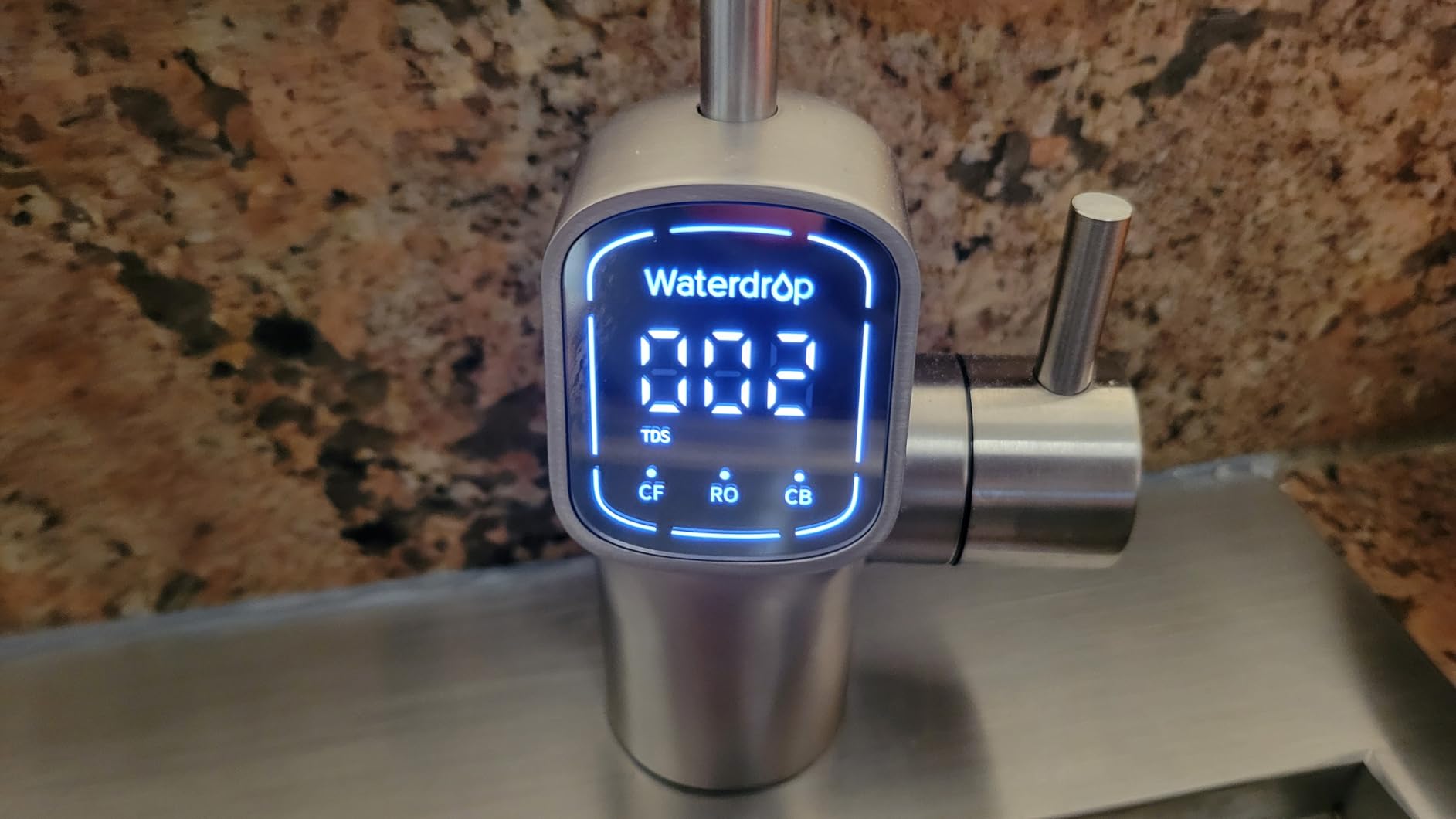
Smart faucet with TDS display
Built-in pump
+ Pros
- Frees roughly 70% of under-sink space
- Fills an 8 oz cup in about 8 seconds
- Tankless design removes storage tank risk
- Tool-free filter changes
- Cons
- Requires an electrical outlet under the sink
- Replacement filter sets cost more than rival brands
- Smart faucet needs a larger countertop hole
- Pump and auto-flush add some noise
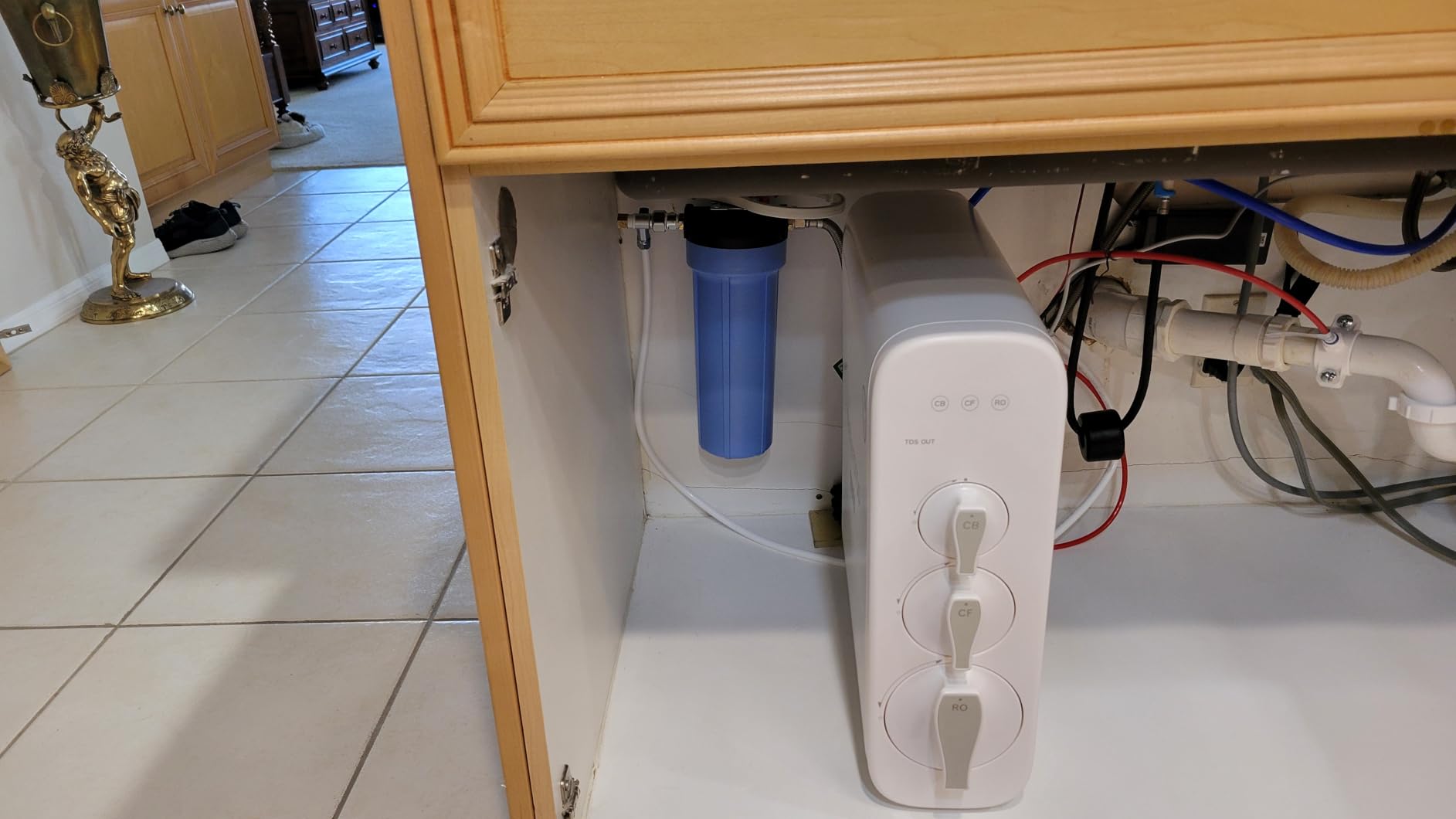
This is the system that changes how you think about drinking water. Rated at 600 GPD with a listed 0.42 gpm maximum flow, it fills an 8 oz cup in roughly 8 seconds and never stalls mid-glass waiting on a tank to refill. The tankless design also removes the plastic storage tank entirely, which eliminates the second contamination risk that tanks carry.
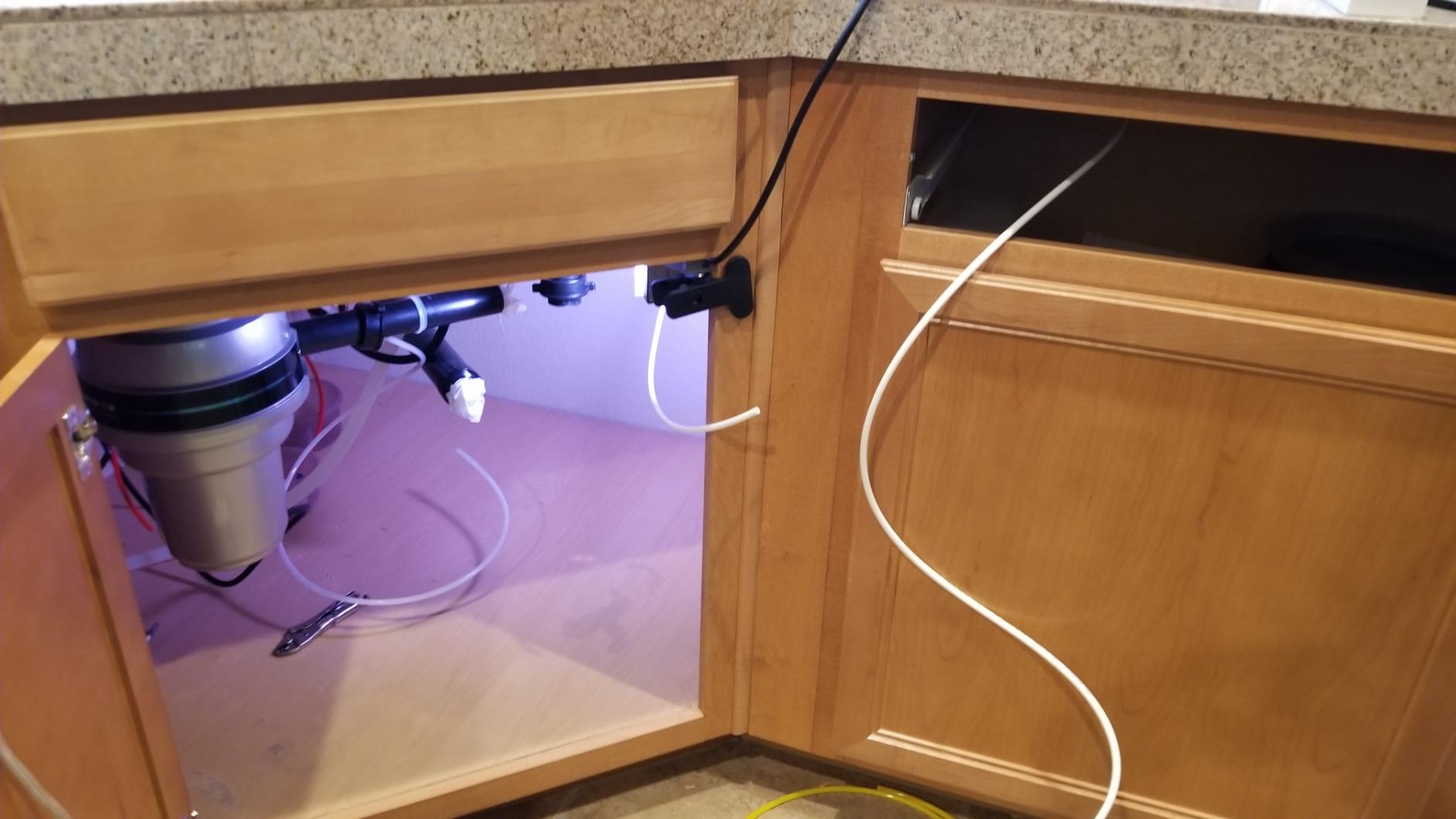
Three filters arrive pre-installed, so the first install is largely a matter of connecting feed water, drain and faucet. Owners also like that the filters face the front, so a change does not mean sliding the whole unit out from under the pipes.
Filtration depth and third-party testing
The G3P600 holds NSF/ANSI 58 for TDS reduction, NSF/ANSI 372 for lead-free materials and NSF/ANSI 42 for chlorine, taste and odor, and the eight-stage stack was independently tested by SGS laboratory. It targets TDS, chromium, PFAS, radium, fluoride, arsenic, iron, calcium, chloride, chlorine and radioactive substances. Feed water is rated to 1500 ppm TDS at 87 psi.
The 2:1 pure-to-drain ratio is the practical headline. A conventional system sends three gallons to the drain for every gallon produced, and this one sends roughly one. Over a year of normal drinking and cooking that difference is substantial on both the water bill and the environmental footprint.
Where it asks more of you
It needs a live electrical outlet under the sink for the built-in pump, and the smart display faucet needs a larger sink or countertop hole than a standard RO faucet. Filter sets cost noticeably more than competing brands over the long run, which is the trade against the flow and the water savings.
Owners also note the built-in TDS meter can read inaccurately near change intervals, and the pump plus auto-flush produce some audible noise during dispensing. Both are minor compared with what you gain in speed.
Who should buy the G3P600
Pick it for a family of four or more, heavy coffee and tea drinking, or any kitchen where cabinet space is at a premium and an outlet is already available. The smart faucet makes filter timing guesswork, which is a genuine advantage if you are not the type to calendar cartridge changes.
4. Frizzlife PD600-TAM3 – Best for Mineral Taste and Water Conservation
Frizzlife Reverse Osmosis Water Filter – Alkaline Mineral pH+, NSF/ANSI 58&53&42&372 Standard, 600GPD Tankless RO Reverse Osmosis System, Under Sink, 2:1 Pure to Drain, Reduce FPAS/PFOA, PD600-TAM3
600 GPD tankless
Alkaline pH above 7.5
NSF/ANSI 42 53 58 372
2:1 pure-to-drain
+ Pros
- Four separate NSF/ANSI certifications
- 2:1 ratio saves up to 450% water versus conventional RO
- Fills a 330 ml cup in about 10 seconds
- Alkaline stage measurably improves taste
- Cons
- Requires under-sink power for the built-in pump
- Smaller brand awareness than top sellers
- Replacement filter availability less established
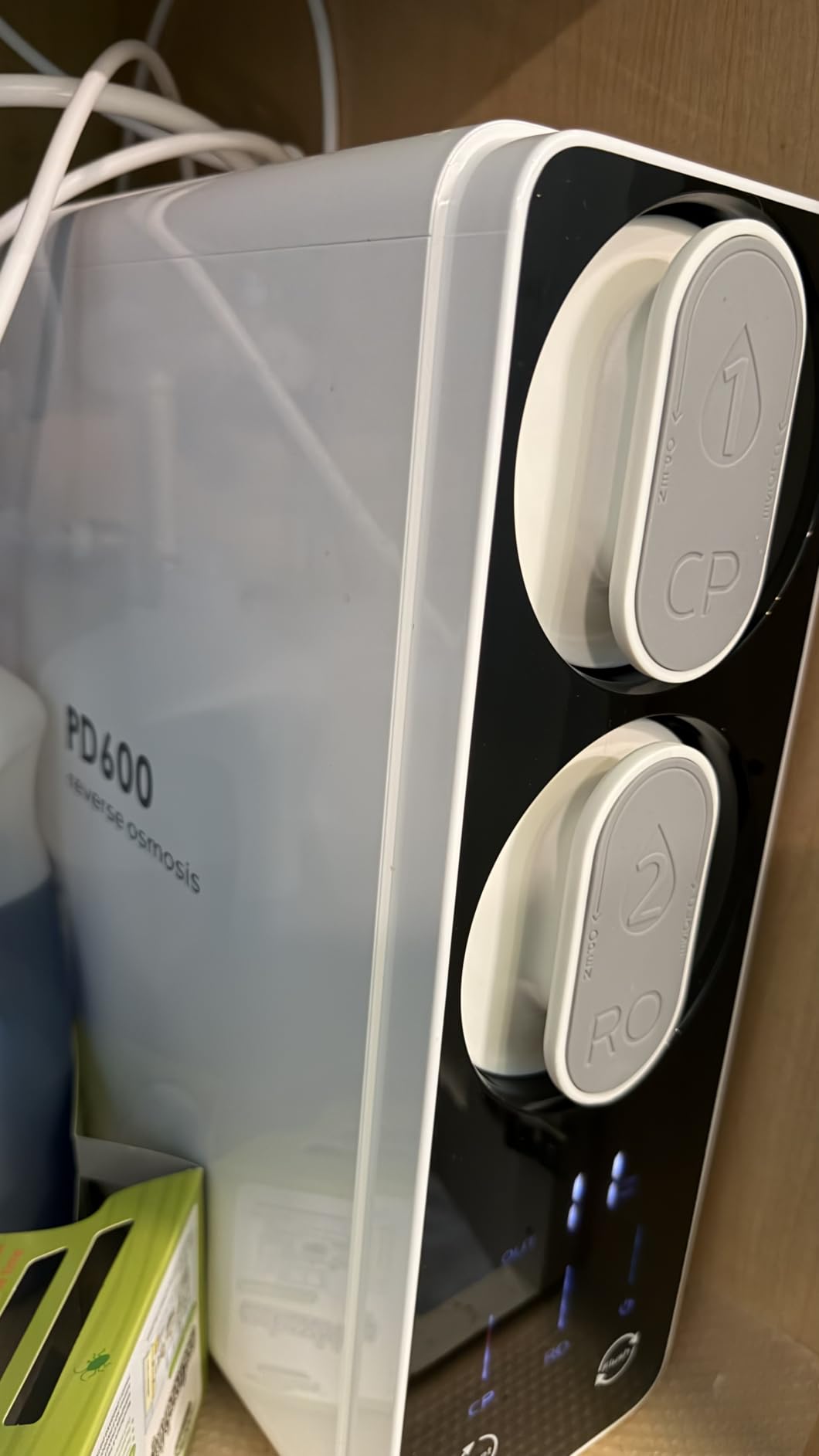
The Frizzlife PD600-TAM3 answers the most common complaint about reverse osmosis: that the water tastes boring. Its third-stage alkaline mineral filter pushes pH above 7.5 and puts calcium and magnesium back into the water, which is exactly what reviewers say they notice first. Owners describe it as closer to bottled water than plain membrane output.
At 600 GPD with a listed 0.41 gpm maximum flow, it fills a 330 ml cup in about 10 seconds. The package includes the CP filter, a 600 GPD RO membrane, the TAM3 alkaline cartridge and a brushed nickel faucet.
Four certifications, one of the broadest sets here
This unit is certified to NSF/ANSI 58, 53, 42 and 372. That combination covers drinking-water contaminant reduction, health effects, taste and odor, and lead-free materials in a single system, which is more coverage than most competing systems at this capacity carry.
The 2:1 pure-to-drain ratio is claimed to save up to 450% water compared with conventional RO, and the smart LED panel tracks real-time TDS plus remaining filter life with color-coded alerts. Temperature range is 38 to 100 degrees Fahrenheit.
Where buyers temper expectations
It needs under-sink electricity to run the pump, same as most other tankless designs. Being a newer name than the two brands above it, its replacement filter supply is less established, which is worth factoring in if you plan to keep a system for many years.
Owners also report completing installation themselves in a single sitting without calling a plumber, and several call out the compact tankless footprint as the reason it fits where other systems will not.
Who should buy the Frizzlife PD600-TAM3
Choose it if water taste is the reason you are shopping at all, or if you care about drain water and want a ratio better than 2:1. It is also a strong pick for a second kitchen or a basement bar where cabinet space is tight.
5. Waterdrop G2 – Best Budget Entry Into Tankless RO
Waterdrop G2 Reverse Osmosis System, 400 GPD Tankless RO Water Filtration
400 GPD tankless
7-stage composite filtration
1:1 pure-to-drain
Twist-and-pull filters
+ Pros
- Reclaims over 70% of under-sink space
- Sealed housing reduces leak points
- Filters swap in about 3 seconds
- Installation typically under 30 minutes
- Cons
- 1:1 drain ratio wastes more water than 2:1 models
- Requires under-sink electricity and countertop drilling
- Mechanical faucet has no TDS display
- 400 GPD trails higher-capacity tankless units
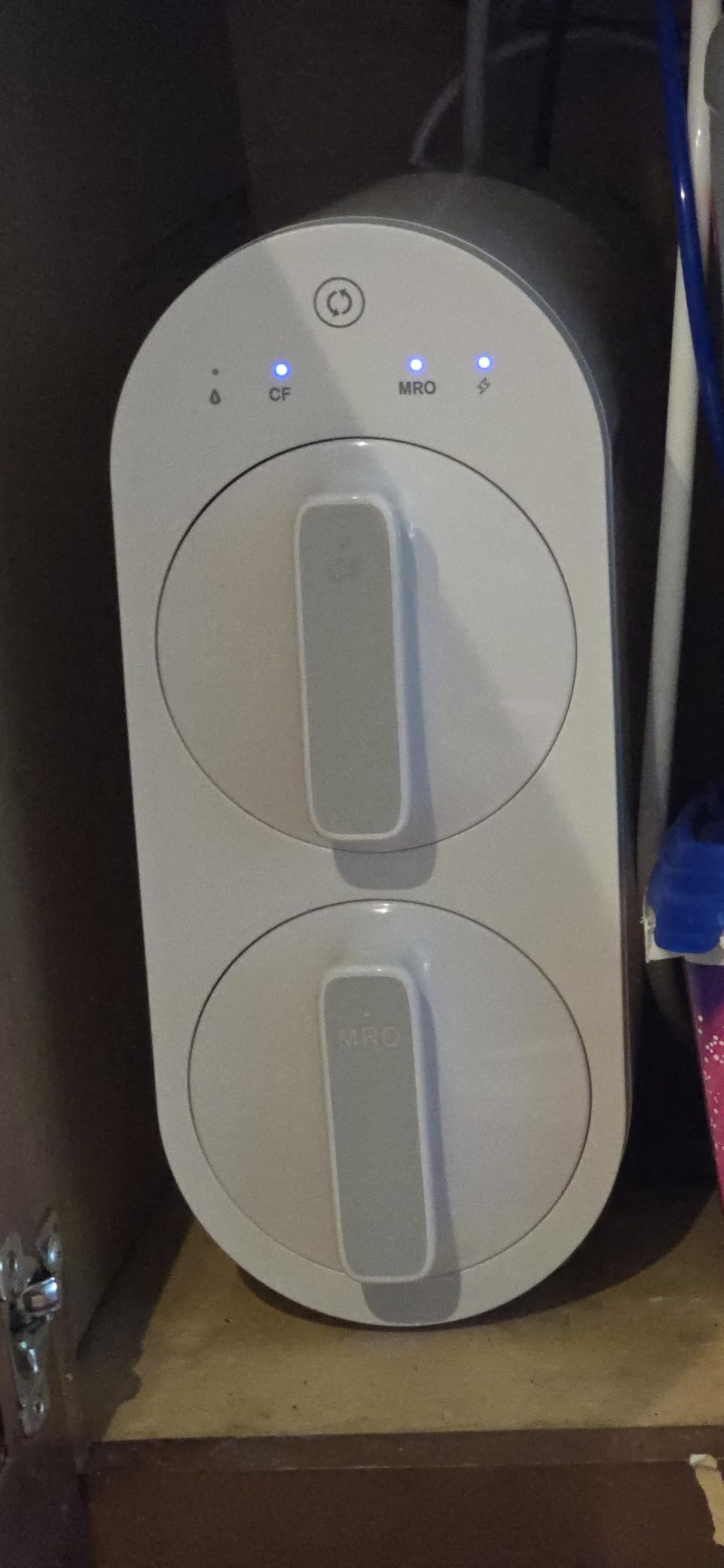
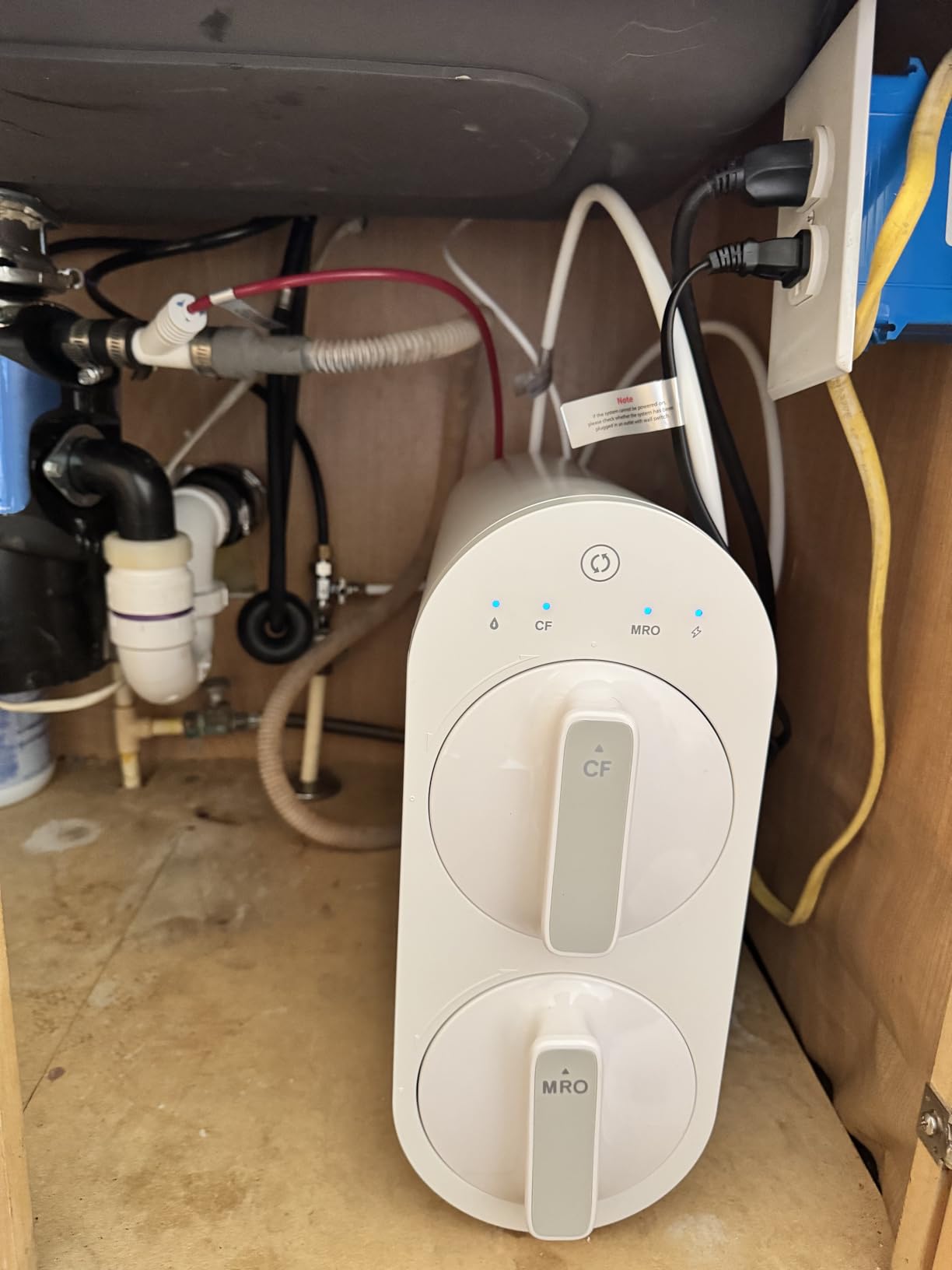
The G2 is the way into tankless filtration without stepping up to a flagship price. At 400 GPD with a listed 0.28 gpm maximum flow, it fills a cup in roughly 12 seconds and still leaves over 70% of the cabinet free, which is the whole argument for dropping the storage tank.
Its integrated electrical and water circuit design keeps leak points down compared with systems that run a dozen exposed fittings, and owners frequently finish installing it in under half an hour.
What the seven stages cover
Filtration uses a composite design across seven stages targeting TDS, lead, fluoride, arsenic, PFAS and chlorine, and the system is NSF/ANSI 372 certified for lead-free materials. Feed water is rated to 300 ppm TDS, which suits municipal supplies and treated well water rather than a high-TDS raw well.
Replacement filters are the G2CF and the G2MRO. Two filters ship pre-installed, so the first water is filtered the moment the install is finished.
Honest drawbacks
The 1:1 pure-to-drain ratio is the real cost of this model. It wastes more water per gallon than the 2:1 systems on this list, and that difference grows every year you own it. The mechanical faucet also gives you no TDS reading and no filter-life indicator, so you are tracking change intervals by hand.
Countertop drilling for the faucet is required and is not reversible, which rules it out for renters. Most people, though, find the 3-second twist-and-pull filter changes are the feature they notice most after the first year.
Who should buy the Waterdrop G2
It suits buyers who want a tankless footprint and tool-free maintenance but do not need smart monitoring or top-tier flow. If your water waste bothers you more than having a display does, save up for a 2:1 model instead.
6. iSpring RCC7P-AK – Top Rated for Low-Pressure Homes
iSpring RCC7P-AK, 6-Stage Reverse Osmosis System Under Sink Alkaline Water Filter and Pump, RO Drinking Water Filtration System, Patented Top-Mounted Faucet Design for Easy Installation
75 GPD 6-stage
Built-in booster pump
100-240V universal adapter
Alkaline remineralization
+ Pros
- One of the two highest average ratings in this selection
- Booster pump rescues performance on low line pressure
- Universal power adapter works across regions
- Transparent first housing for visual monitoring
- Cons
- Pump adds bulk
- noise and an electrical requirement
- Larger footprint than slim tankless models
- Mineralized taste differs from neutral RO output
This is one of the two highest-rated systems in the selection, and the reason is the built-in electric booster pump. If your home runs on low line pressure, a pump-free system will underperform exactly when you most need it to work. The pump compensates, and it also cuts the wastewater a conventional membrane would send to the drain.
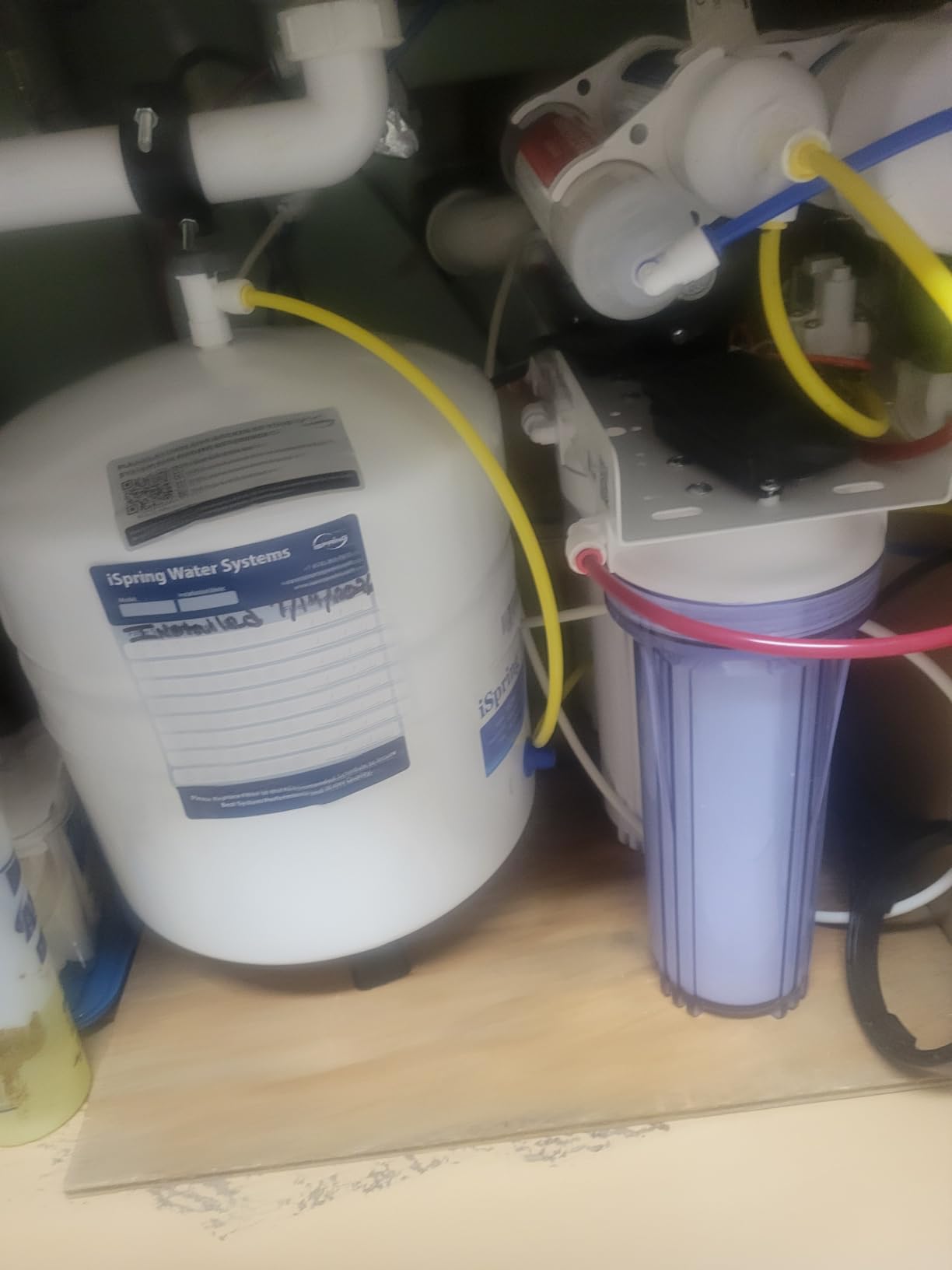
Owners rate the alkaline sixth stage for adding back minerals and balancing pH, and the clear first housing lets you check filter condition without a wrench. Rated up to 2000 ppm feed TDS, it handles harder water than most of its class.
What the pump actually fixes
Reverse osmosis needs line pressure to force water through the membrane. Below roughly 40 psi you get weak flow and a much worse drain ratio. The booster pump on this model holds the membrane at working pressure, so the stated reduction of up to 99% of more than 1,000 contaminants, including 98% lead reduction, holds up even on a weak supply.
The universal 100-240V 50/60Hz power adapter means the same unit works across regions, and the package includes housings, filters, faucet, pump, power adapter and fittings. Dimensions are 15 by 8 by 18 inches and weight is 20 pounds.
What you give up for it
The pump is the reason this unit is 20 pounds and needs an outlet. It adds noise, and the footprint is larger than slim tankless designs. A 1-year limited warranty applies upon registration, with lifetime US-based technical support behind it.
One minor taste note: the alkaline mineralization changes the flavor profile slightly, which some drinkers prefer and some do not. If you want water that tastes as close to neutral RO as possible, this is the wrong pick.
Who should buy the RCC7P-AK
Buy it if you have measured low kitchen pressure, live in a unit where every other appliance already fights the supply, or you simply want the pump to handle water waste for you. It is also the highest-rated option here for anyone who wants the alkaline taste plus pump reliability.
7. APEC Water RO-PH90 – Best for Well Water and Membrane Longevity
APEC Water RO-PH90, 6-Stage Under Sink RO System, Alkaline, 90 GPD
90 GPD 6-stage alkaline
DOW FilmTec membrane
100% US-made components
WQA certified
+ Pros
- Genuine DOW FilmTec membrane widely regarded as the industry standard
- All filters
- faucet and tubing made in the US
- Raises pH from about 5.5 to roughly 9.5
- 3-5 year membrane schedule when maintained
- Cons
- Housing caps on stages 1-3 can weep at the port
- 1/4-inch output line needs reducers for older plumbing
- Large under-sink footprint
- Six-stage setup cannot take the 5-stage quick-dispense upgrade
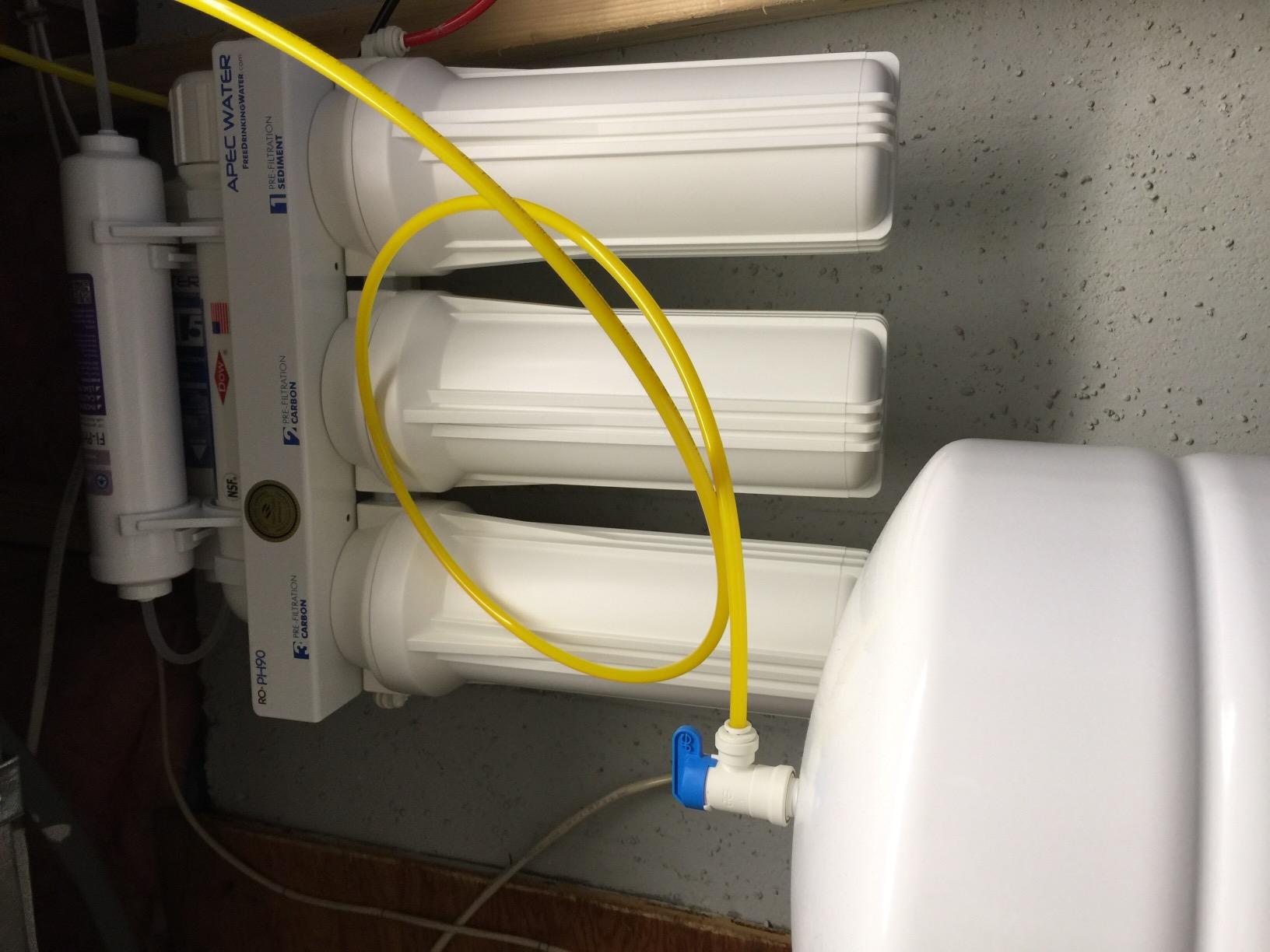
The membrane is the reason to look at this system. It uses a genuine DOW FilmTec thin-film composite, which is the industry reference for rejection rates and is the part most manufacturers quietly substitute. Feed water is rated to 2000 ppm TDS, making this the best well-water candidate among the tanked units here.
Every component is made in the US, including a high-purity calcium carbonate alkaline stage that measurably lifts pH from about 5.5 to roughly 9.5. The system is WQA tested and certified, removing up to 99% of impurities including chlorine, VOCs, fluoride, arsenic, lead and heavy metals.
Flow and long-term ownership
At 90 GPD with a listed 0.06 gpm flow rate, this fills noticeably faster than a 50 or 75 GPD unit while keeping a pressurized tank for instant glass-to-glass speed. Owners report a 3 to 5 year membrane schedule when filters are maintained on time, which is the best long-run economics in this group.
Warranty support is lifetime, with a 2-year extended manufacturer warranty available on registration. JG quick-connect fittings and JG premium tubing are used throughout, and the all-metal lead-free designer faucet outlasts plastic alternatives in humid cabinets.
Where it falls short
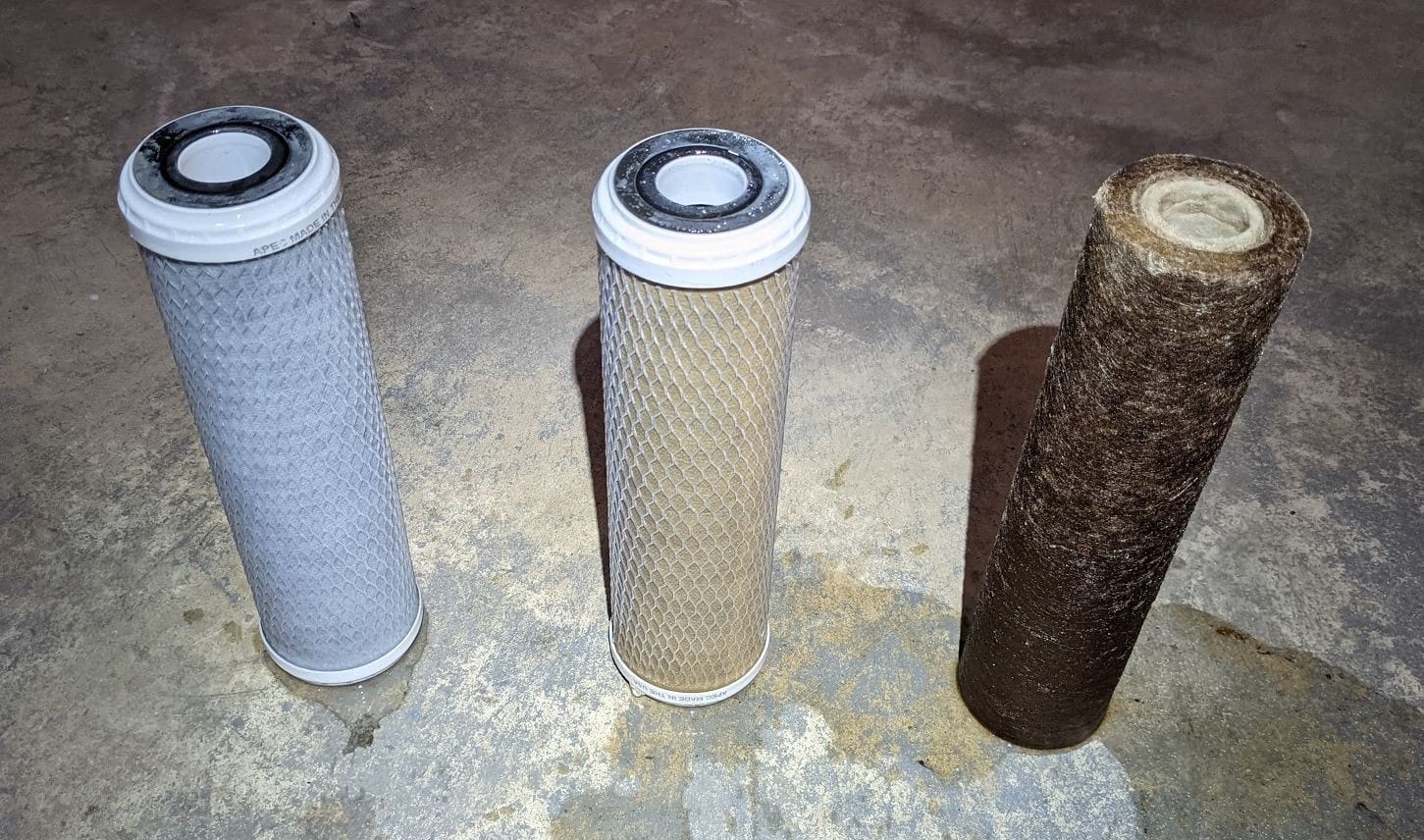
The recurring complaint is the filter housing caps on the first three stages weeping or splitting at the port over time. That is exactly the failure mode that leads to a flooded cabinet, so it pairs directly with the leak-prevention section below.
The output line uses 1/4-inch tubing, meaning reducers if you are reusing older 3/8-inch plumbing. And the six-stage alkaline configuration cannot accept the five-stage quick-dispense output upgrade, which locks you into this layout if you ever want more flow at the faucet.
Who should buy the RO-PH90
Choose it for well water, for anyone who wants to know exactly which membrane is inside, and for households planning to keep a system a decade. The US-made components also make sense for buyers who prefer domestic manufacturing.
8. Home Master TMAFC – Best for the Fastest Fill Rate in Your Glass
Home Master TMAFC Artesian Full Contact Reverse Osmosis System, 7-stages, Patented 2-Pass Alkaline Remineralization, Fast 4.5s Fill Rate, 8.5” catalytic carbon, 5-year limited parts
4.5-second fill rate
2-pass alkaline remineralization
3/8-inch fittings
5-year parts warranty
+ Pros
- Fastest fill rate here at 4.5 seconds for an 8 oz glass
- Larger 3/8-inch plumbing doubles traditional flow
- Made in the USA with NSF-certified components
- Modular tool-free annual filter changes
- Cons
- Large under-sink footprint
- Storage tank consumes cabinet space
- 50 GPD membrane is modest next to 400-700 GPD tankless units
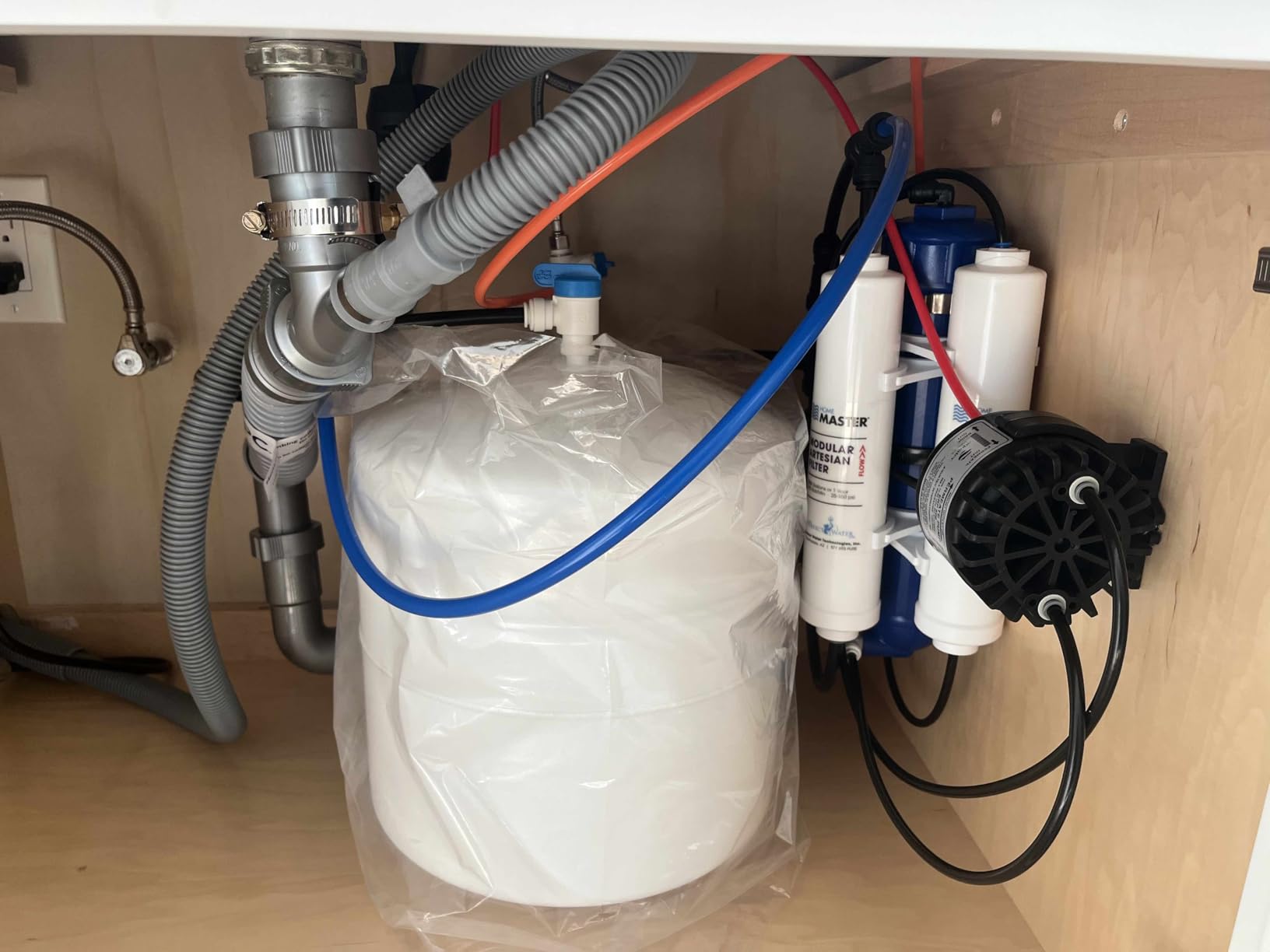
The Home Master TMAFC is the fastest glass to glass on this list, filling 8 oz in 4.5 seconds, and it gets there with plumbing rather than a pump. It runs larger 3/8-inch fittings and tubing throughout, which owners credit with roughly doubling flow compared with traditional 1/4-inch lines and most tankless systems.
The mineral profile is the other selling point. It uses a patented two-pass alkaline remineralization that adds calcium and magnesium twice during purification, backed by 8.5 inches of catalytic carbon contact per pass for chlorine, taste and odor.
Build quality and what backs it
Every component is NSF certified and the unit is made in the USA by an NSF-listed company, which is the standard we would want from a wet-cabinet appliance. The DOW thin-film composite 0.0001 micron membrane is rated at 50 GPD, and the operating range is a wide 40-95 psi. Filter life is listed at one year.
The 5-year limited parts warranty is the longest in this selection, and spare part availability is documented for five years after purchase. A modular design allows tool-free annual filter replacement and future upgrades, so you are not locked into one configuration.
The cost of that speed
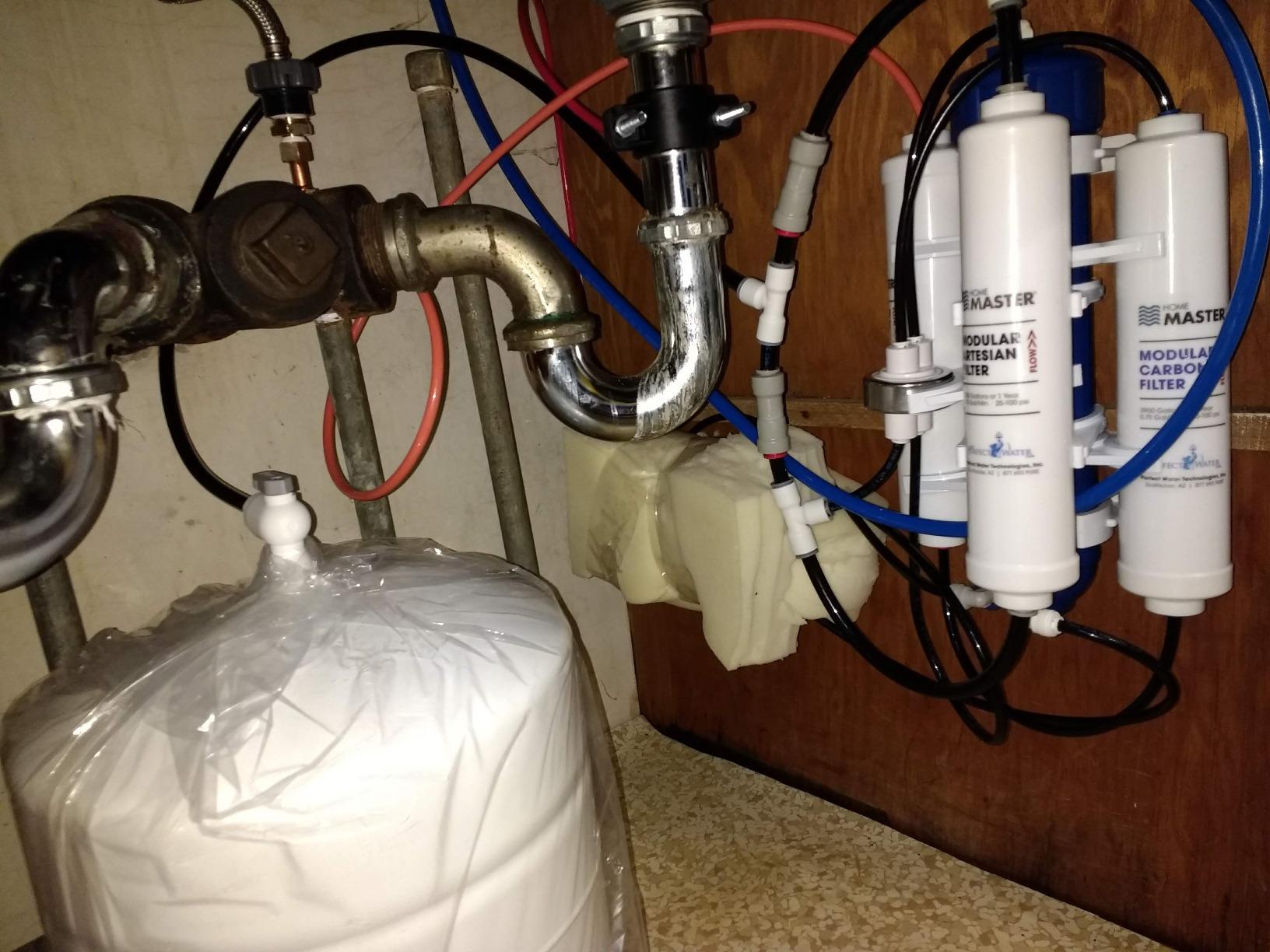
The footprint is large: 20 by 13 by 16 inches, plus a 15-inch tall tank at 11 inches in diameter. In a shallow cabinet, that combination rules it out. And while the faucet flow is excellent, the underlying 50 GPD membrane is modest next to 400 to 700 GPD tankless systems, so total daily production is lower than the fill speed suggests.
Included components are the assembled filter cluster, storage tank, a 3/8-inch adapter, RO faucet and fittings, so the adapter that lets you use that larger line is in the box.
Who should buy the TMAFC
Buy it if you want an American-made system with a five-year parts warranty, a mineral-rich taste, and no learning curve at the faucet. It suits households with generous cabinet space and moderate daily water demand.
9. NU Aqua 7-Stage UV – Best for Added Pathogen Protection
NU Aqua 7-Stage UV Alkaline Under Sink Reverse Osmosis Water Filter System
UV sterilization stage
100 GPD output
PPM meter included
3-year warranty
+ Pros
- UV stage adds protection beyond standard RO
- 100 GPD is high for a tanked unit
- PPM meter lets you verify performance
- Stainless steel faucet and double o-ring housings
- Cons
- Installation manual lacks key details
- Storage tank can arrive over-pressurized
- Shutoff valve and housing leaks are recurring issues
- Alkaline stage can smell sulfur-like over time
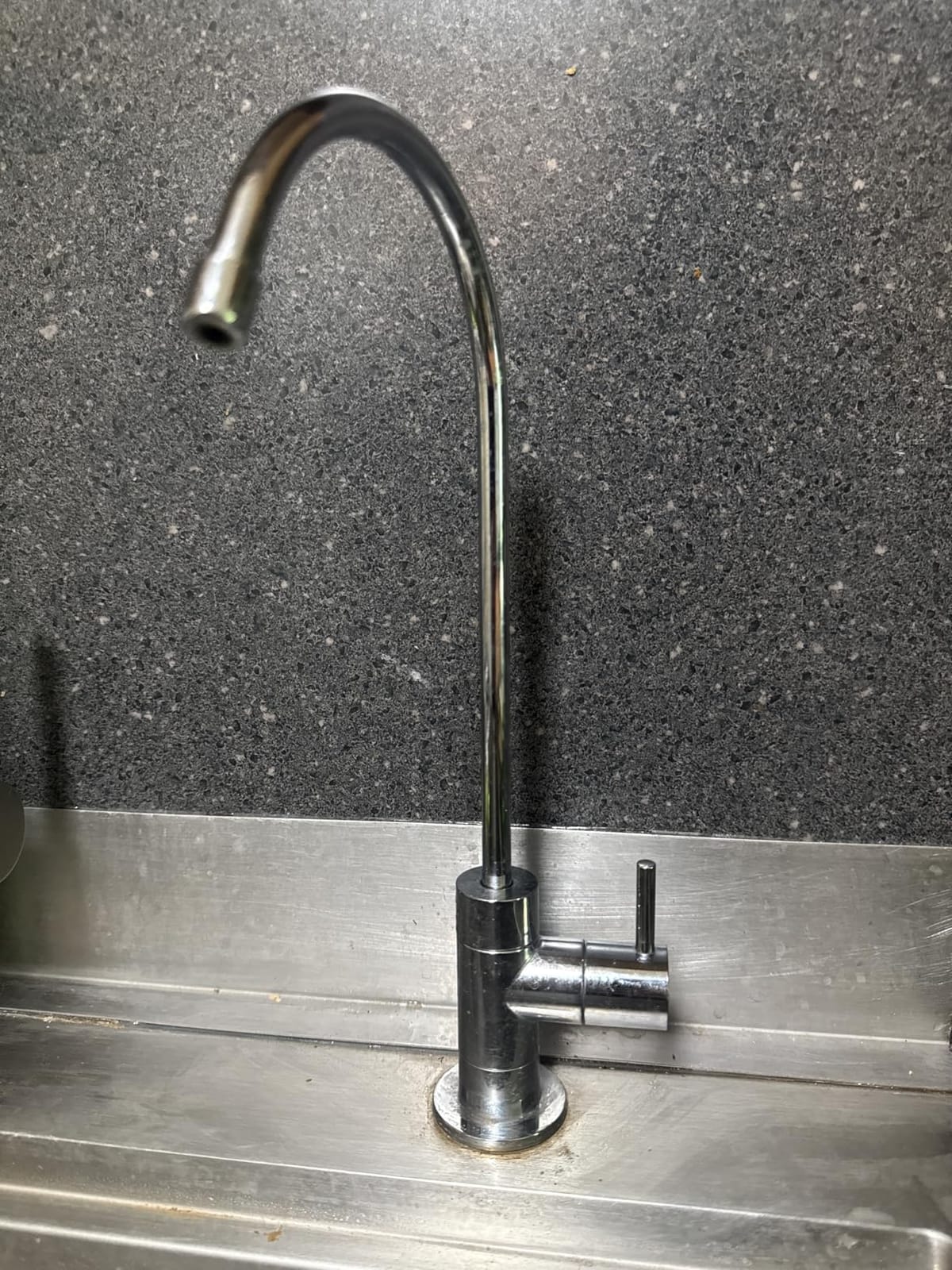
This is the only system in the selection with a UV sterilization stage, which adds a layer of protection against bacteria and viruses that a membrane alone does not address. It is a seven-stage build with alkaline remineralization and a listed 100 GPD output that doubles the flow of a standard under-sink unit.
The complimentary PPM meter is an unusually thoughtful inclusion, letting you actually measure performance instead of guessing. Owners also report units running eight years without leaks, and the box includes filters, faucet, tank, parts and the meter.
Filtration and certification scope
Its HydraCoil membrane manufacturing process is claimed to deliver up to 50% cleaner water, with up to 99% rejection of more than 1,000 total dissolved solids. The faucet is NSF 100% lead-free stainless steel, and double o-ring sealed housings with color-coded quick-connect tubing are used throughout. Installation typically takes under an hour.
Warranty coverage is a 3-year manufacturer warranty with a 120-day home trial and lifetime support, which is the most forgiving return policy in this group.
Where owners report trouble
Support is the biggest gap. Owners regularly report weak technical support knowledge on RO troubleshooting, and the installation manual lacks details that make setup slower than expected. When something does go wrong, having a phone meter in hand helps more than it should.
The storage tank can arrive over-pressurized and fail to fill until you release the air, and automatic shutoff valves plus housing leaks show up as recurring failure points. The alkaline sixth stage can also develop a sulfur-like odor after extended use. Footprint is large because of the tank.
Who should buy the NU Aqua 7-Stage
Pick it if a UV stage is a specific requirement, such as on a well or a system with known bacterial concerns, or if the 120-day trial appeals to a cautious buyer. The included meter makes it a good first system for someone who wants to learn what their water actually contains.
10. iSpring RO500AK-ORB – Best for Feeding a Refrigerator or Ice Maker
iSpring RO500AK-ORB RO System, NSF/ANSI 58 Certified, 500 GPD with Alkaline
500 GPD tankless
Complete-system NSF/ANSI 58
2:1 pure-to-waste
Automatic 24-hour flush
+ Pros
- Complete-system NSF/ANSI 58 certification
- 0.4 GPM real flow fills an 8 oz cup in about 10 seconds
- 2:1 ratio saves up to 400% water
- Automatic flush protects the membrane during non-use
- Front panel reminders and buzzer
- Cons
- Highest price point in this selection
- Tankless design requires under-sink electricity
- Alkaline filter changes the taste profile
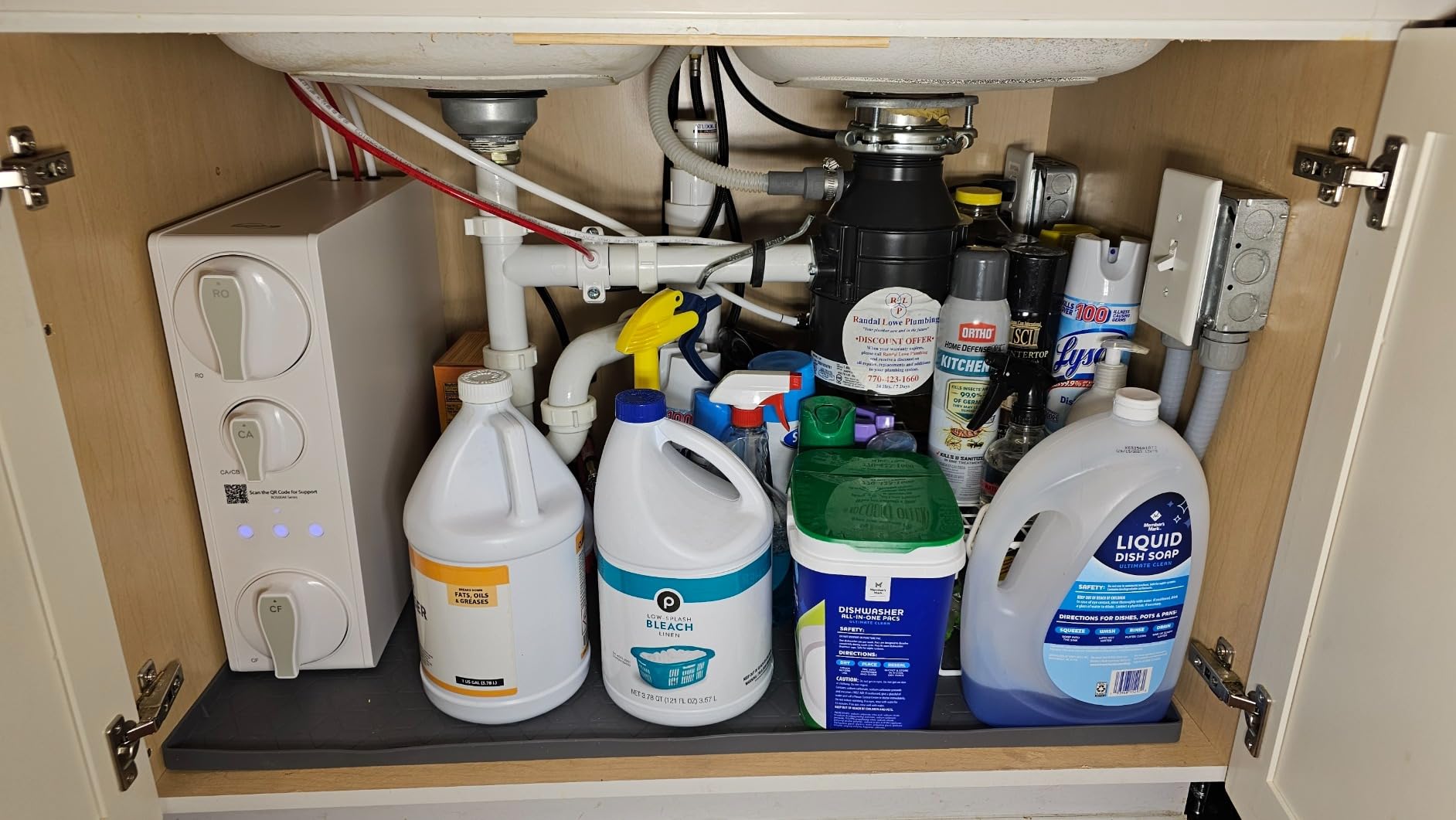
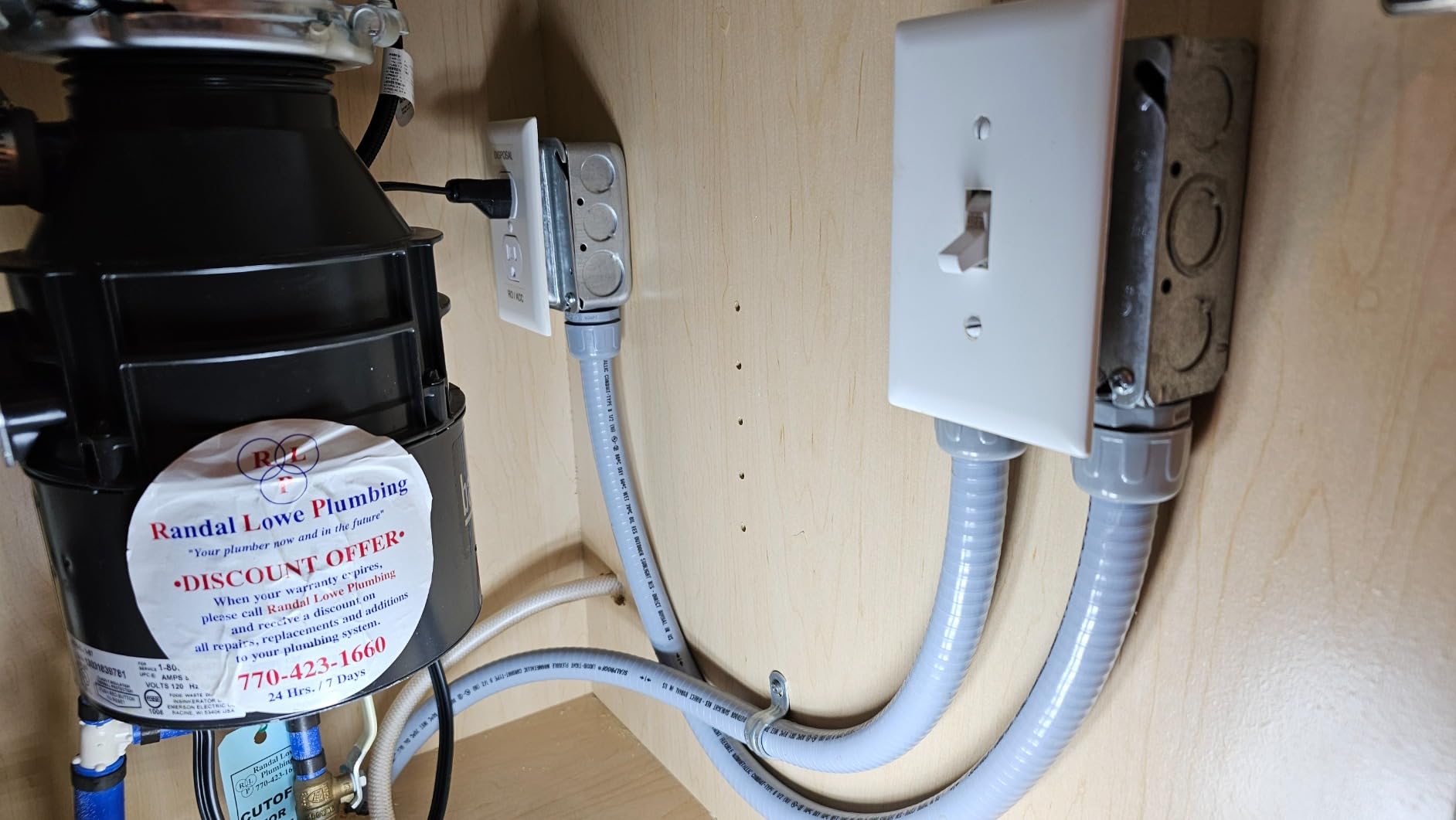
The RO500AK-ORB is the one I would specify if you are running a dedicated line to a refrigerator. It produces 500 GPD at up to 0.4 GPM real flow, which is enough to keep an internal ice maker supplied continuously, and the automatic flush after 24 hours of non-use keeps the membrane from drying out when the fridge door stays closed on vacation.
Like the first iSpring on this list, it carries complete-system NSF/ANSI 58 certification rather than a component-only claim, and the 0.0001 micron membrane removes up to 99% of lead, PFAS, TDS, chromium, radium, fluoride, arsenic and chlorine.
Flow, efficiency and fittings
The 2:1 pure-to-waste ratio is stated to save up to 400% water against traditional RO, and the tankless body frees up to 70% of under-sink space. Quick-connect design supports both 1/2-inch and 3/8-inch connections, which matters when you are teeing into an existing fridge line. Front panel lights and a buzzer alert you when cartridges need changing.
Replacement filters are the FCF500 at six months, the FCA500 at twelve months, the MRO500 membrane at 24 months, or a two-year F7-RO500AK pack. Warranty is 30-day free return and one year.
Honest trade-offs
This is the most expensive unit in the selection, and it needs under-sink electricity for the tankless pump. If budget is the deciding factor, the 600 GPD models below deliver higher capacity for less, at the cost of complete-system certification and the auto-flush feature.
The alkaline filter also shifts the taste profile. If you want neutral-tasting water for a fridge dispenser where the taste is barely noticeable, that is not a problem. If you are picky about flavor, it is worth tasting before committing.
Who should buy the RO500AK-ORB
Buy it when a refrigerator or ice maker line is part of the plan, when water conservation matters to you, or when you want complete-system certification as a guarantee rather than a component promise. It also suits vacation homes and rentals where nobody will remember to flush the system.
11. Geekpure 6-Stage 75 GPD – Best Budget Pick With No Power Required
Geekpure 6 Stage Reverse Osmosis RO Drinking Water Filter System-75 GPD
75 GPD 6-stage
2.8 gallon tank
Alkaline remineralization
No pump or electricity
+ Pros
- Lowest cost in this selection with no pump
- Alkaline stage raises pH to 7.5-8.5
- NSF-certified membrane and tubing
- Small 2.8 gallon tank leaves cabinet space
- Cons
- Paper instructions are minimal so install videos are essential
- Plastic feed diverter can crack when tightened
- Some buyers report small leaks on the cartridge housings
- Small tank needs frequent refills
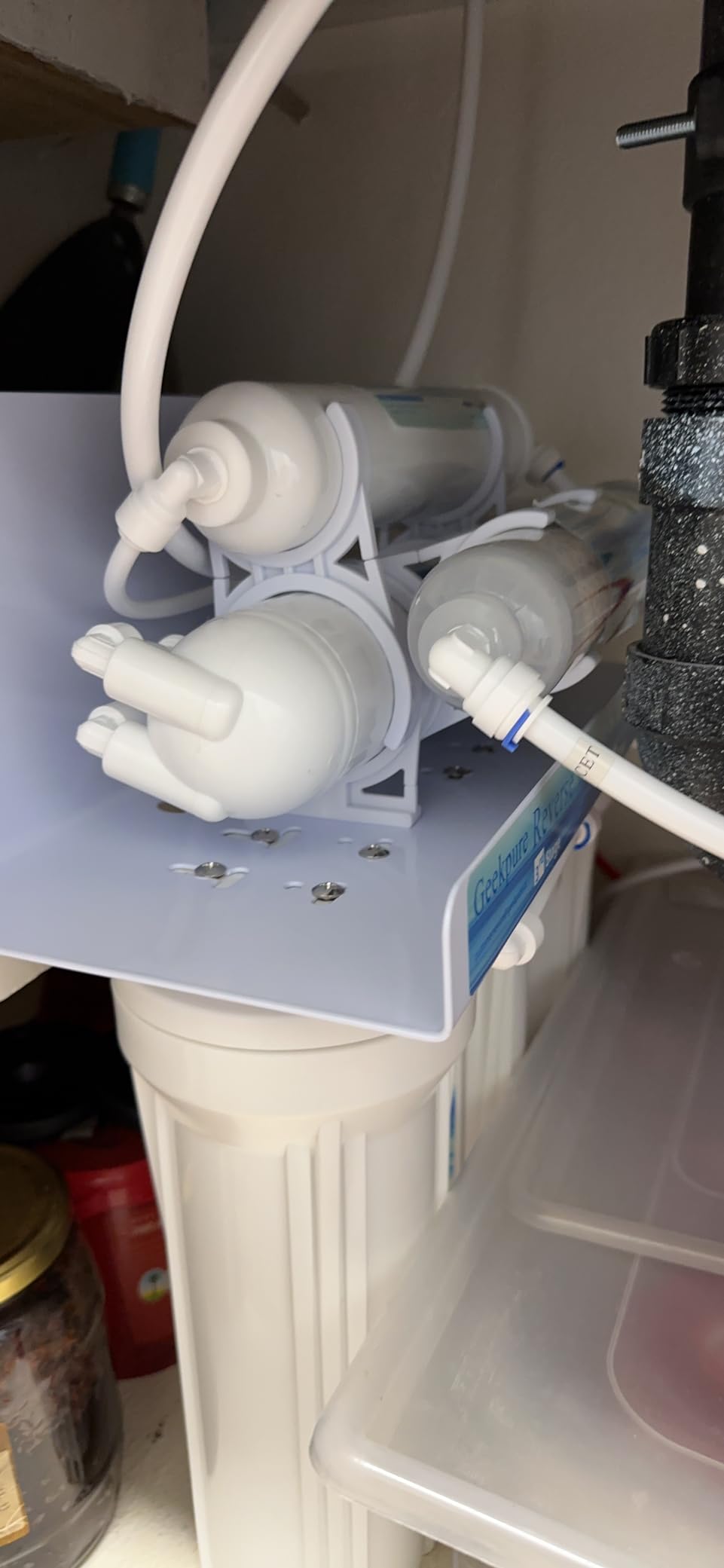
The Geekpure RO6-AF is the least expensive system here and needs no electricity, no pump and no drilling beyond a faucet hole. It runs on feed water pressure across a wide 40-100 psi range and comes with a 2.8 gallon tank pre-pressurized between 5 and 7 psi, so it is genuinely ready to install the day it arrives.
Owners report tasting results as good as or better than bottled water, and the sixth alkaline stage adjusts pH to 7.5-8.5 while adding calcium, magnesium, sodium and potassium. The box includes six filters, the faucet, the tank and a tool set.
What you get at this level
The RO membrane, tubing, quick push fittings and storage tank are all NSF certified, which is unusual at this price point. Reduction covers total dissolved minerals, arsenic, lead, mercury, fluoride and cadmium, with feed water rated to 1000 ppm TDS and a listed output of 75 gallons per day at 60 psi.
Filter life is about one year, and the RO membrane lasts two to three years depending on usage and feed water quality. The manufacturer lists 20+ years of experience with 24/7 technical support, and color-coded tubing plus quick-connect fittings make the assembly straightforward.
Where the savings show
The main cost is documentation. Paper instructions are minimal, so the installation videos become essential rather than optional. More significantly, the plastic feed water diverter can crack while being tightened and is not metric-compatible, which is a fitting failure that leaks water directly into the cabinet.
Some buyers also report small leaks at the three main cartridge housings, and the 2.8 gallon tank is small enough to need refilling more than once a day for some households. The tank can also develop an off taste over time and needs periodic sanitizing.
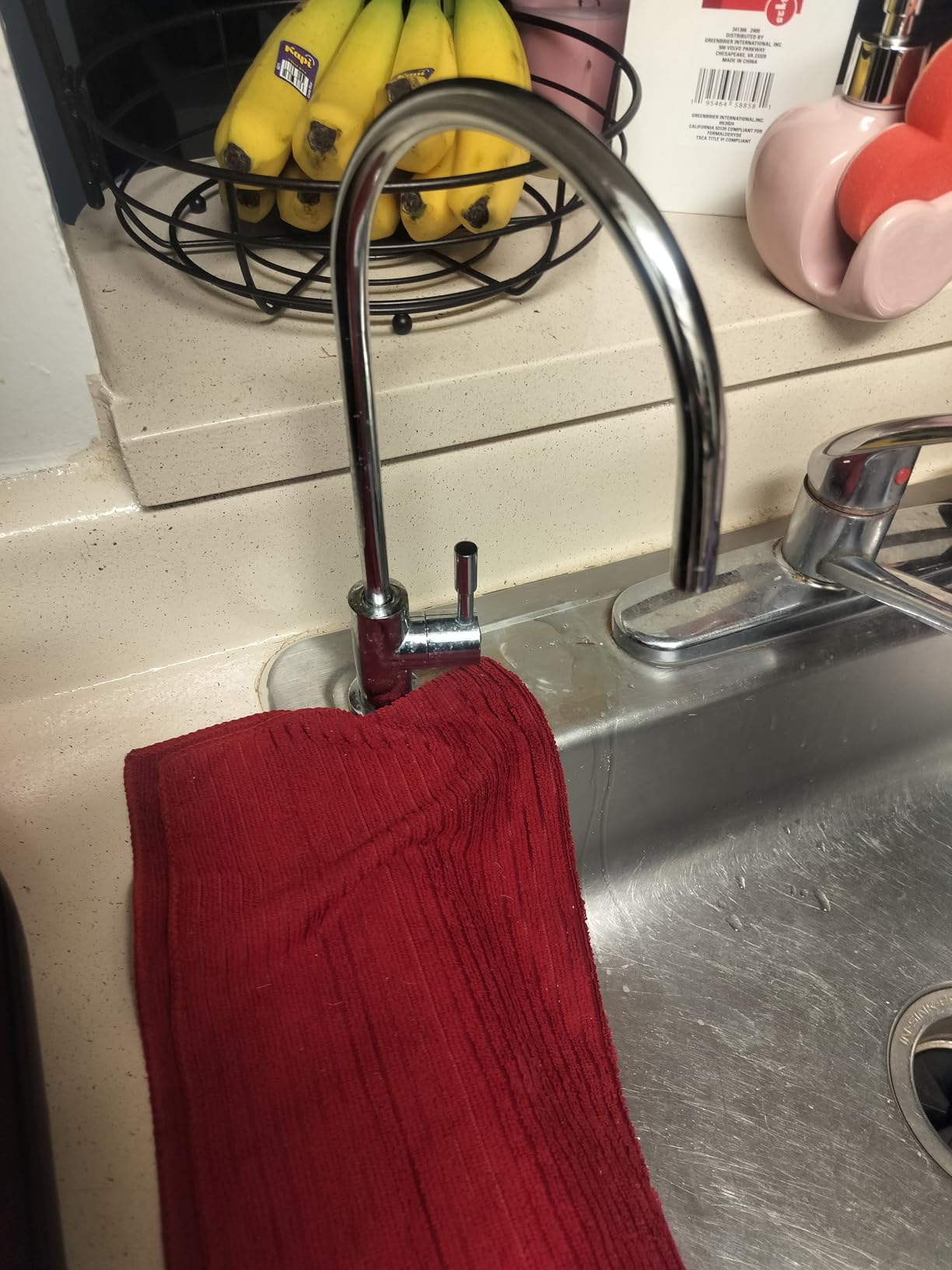
Who should buy the Geekpure 6-Stage
Pick it when budget is the priority, you are comfortable watching a short install video, and you want NSF-certified components without a pump. It is a solid first system for a student kitchen, a rental, or anyone replacing an aging unit inherited from a previous owner.
12. Waterdrop G5P700A – Best for the Highest Daily Capacity in This Group
Waterdrop G5P700A Alkaline Mineral Reverse Osmosis Water Filter, 700 GPD
700 GPD tankless
2:1 pure-to-drain
6-second 6 oz fill
Ice maker compatible
+ Pros
- Highest capacity here at 700 GPD with a 6-second cup fill
- 2:1 ratio generates 400% more clean water
- Alkaline mineral stage adds Ca
- Mg
- Na and K
- Links to ice makers and refrigerators with the XT adapter
- Cons
- Requires under-sink electricity for the pump
- Countertop drilling for the faucet is not reversible
- Newer model with a smaller review base
- Listed maximum feed TDS of 500 ppm is low for well water
The G5P700A produces the most water per day of anything in this roundup at 700 GPD, with a listed 1.31 liters per minute that fills a 6 oz cup in about 6 seconds. For a large household that runs a coffee maker, an ice maker and a filter pitcher from the same source, that headroom is the whole point.
It is NSF/ANSI 58 and NSF/ANSI 372 certified, and the eight-stage stack was tested by SGS. The 0.0001 micron membrane combines alkaline mineral enrichment of Ca2+, Mg2+, Na+ and K+ with a 2:1 pure-to-drain ratio stated to generate 400% more clean water than conventional systems.
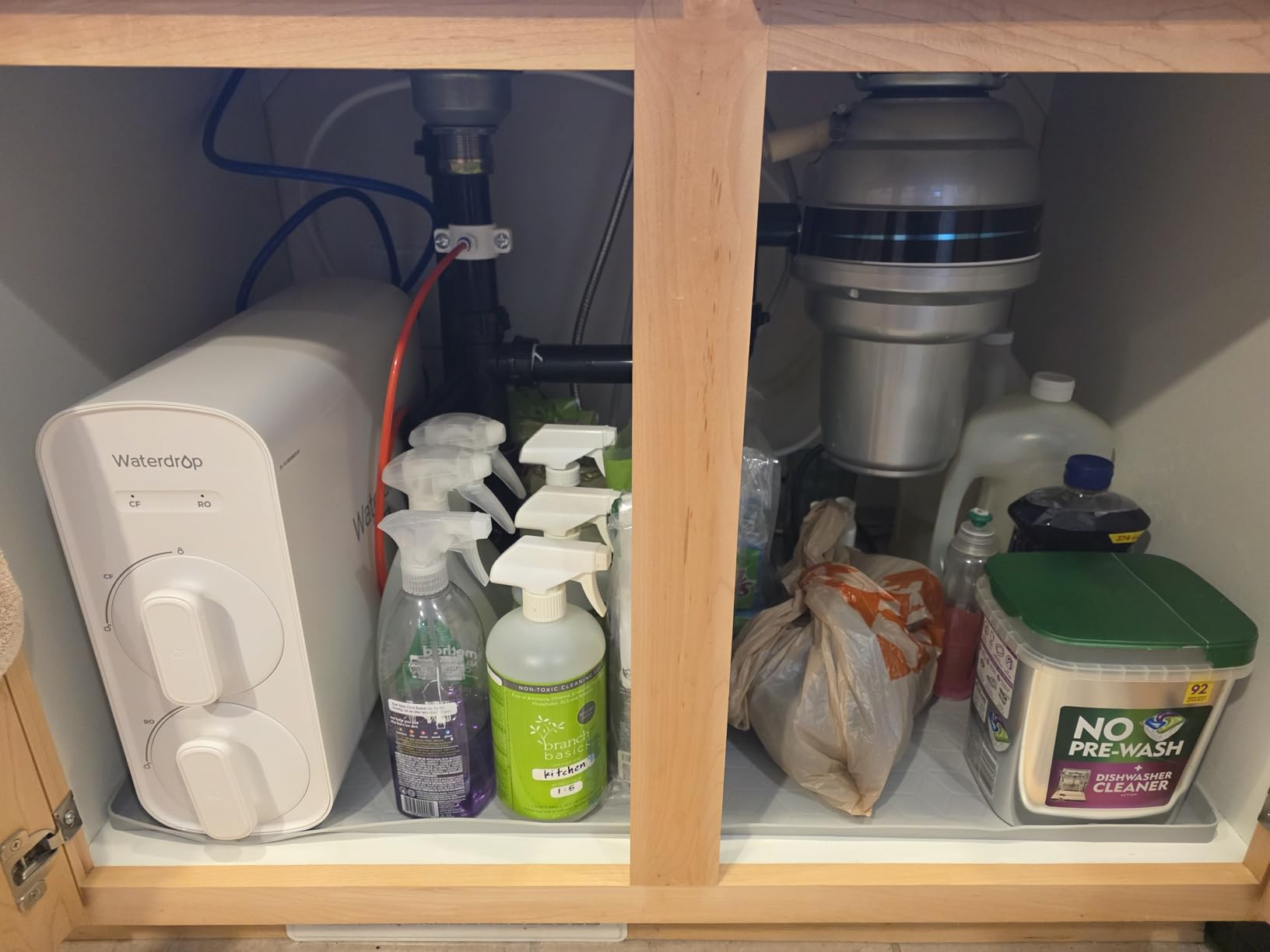
Refrigerator and ice maker compatibility
This model pairs with the Waterdrop XT adapter to connect to ice makers and refrigerators, which is a recurring real-world need that most under-sink units address with a third-party kit. Available in white and black, it has a slim modern body that frees up to 70% of under-sink space.
Operating pressure range is a wide 14.5-87 psi, so it tolerates lower line pressure than most, though the built-in pump still wants an outlet. Its 6.6 by 3.2 by 11.3 inch faucet is among the largest here and requires countertop drilling. Warranty is one year from the manufacturer.
Where the numbers give you pause
Feed water is rated to a maximum of 500 ppm TDS, the lowest ceiling of the high-capacity systems here. If you are on a well with elevated TDS, this is not the right unit, and a tanked system rated to 2000 ppm will serve you better.
It is also a newer model with a smaller review base than the G3P600, and the irreversible countertop drilling rules it out for renters. Reviewed over roughly 760 owner ratings, the consensus is that you get top-tier flow and water savings at a cost below the flagship models.
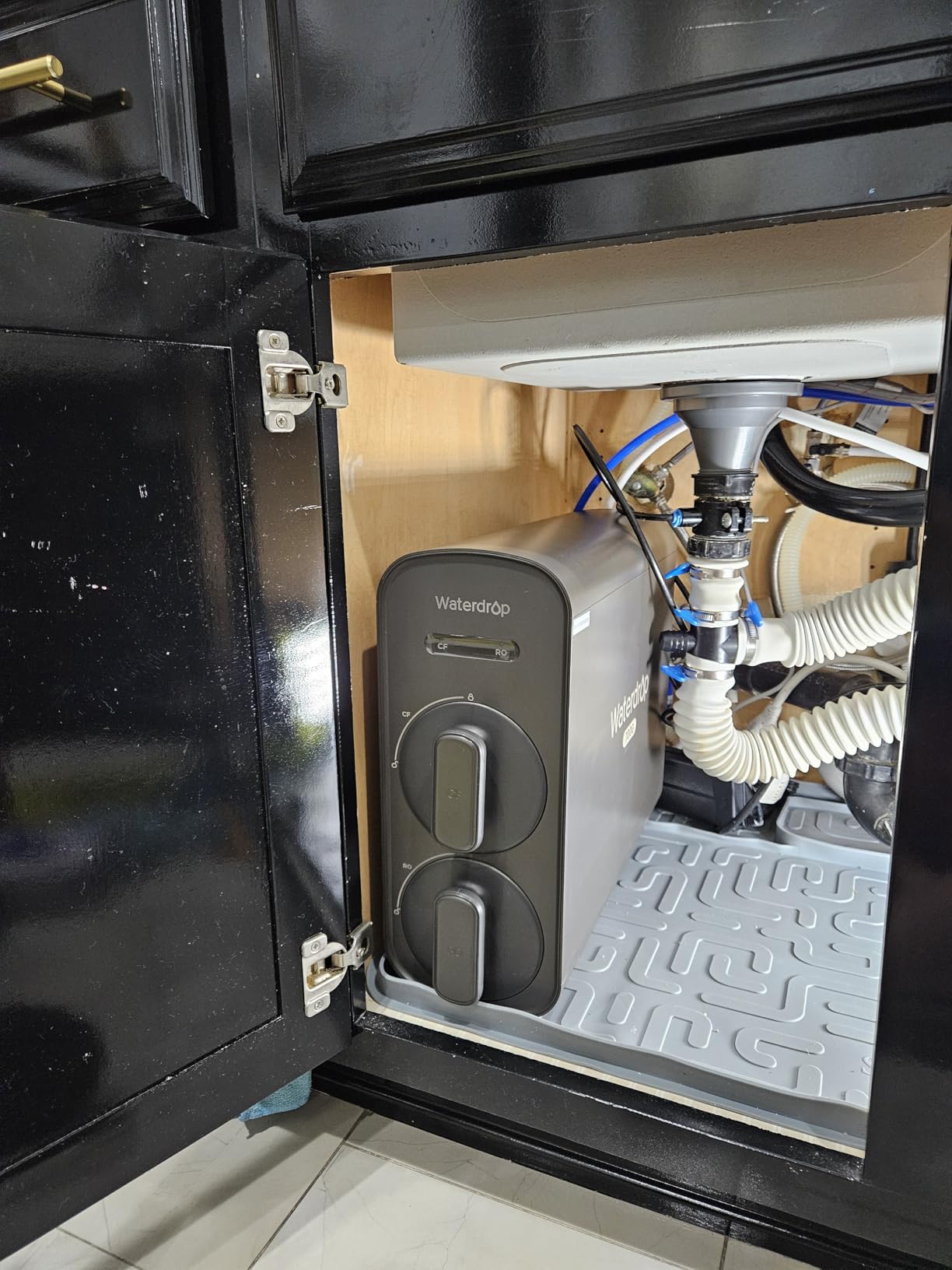
Who should buy the G5P700A
Choose it for a household of five or more, for heavy daily coffee and tea use, or if you want the fastest possible fill and plan to connect a refrigerator line. Skip it if your feed TDS is high or you cannot drill a faucet hole.
How to Choose a Kitchen RO System Without Regretting It
Every system on this list removes more than you probably need. The differences that will keep you satisfied for years are flow rate, water efficiency, cabinet fit, and how honestly the manufacturer handles leaks. Use the sections below as a decision path rather than a feature checklist.
Tanked vs tankless is a decision, not a detail
A tanked system stores water in a pressurized vessel, so the first glass comes out fast and then you wait for the tank to refill. It needs no electricity, costs less and has one extra failure point. A tankless system pumps water on demand, which means no tank to leak, no tank to sanitize, and much faster sustained output, but it needs an electrical outlet and running water makes noise.
For one or two people on municipal water, the APEC ROES-50 is a perfectly sensible tanked answer. For three or more people, or anyone who does not want to sanitize a plastic vessel every year, tankless is worth the outlet.
What GPD means at your faucet
The gallons-per-day rating is measured under ideal laboratory conditions at 60 psi with clean feed water. Your real output is lower, often by half, because household pressure varies and the first filter stages consume part of the flow. Treat GPD as a relative figure between models, not a promise of daily production.
A useful rule: a couple needs roughly 75 GPD, a family of four wants 90 to 400 GPD, and a household running an ice maker plus a coffee maker wants 500 GPD or more. If you want the real number, the listed gpm figures on the cards above are the useful comparison.
Certifications that actually mean something
NSF/ANSI 58 certifies contaminant reduction and is the standard that matters most. NSF/ANSI 372 certifies that materials are lead-free. NSF/ANSI 42 covers taste and odor, NSF/ANSI 53 covers health effects, and WQA certification is a separate product seal. Always check whether the certification is for the complete system rather than for individual components, because a system of certified parts is not the same as a certified system.
The reduction figures to look for are lead above 95%, arsenic above 90%, PFAS above 90% and fluoride above 90%. The iSpring RCC7AK-BN and the Frizzlife PD600-TAM3 carry the broadest certification sets here, and the iSpring RO500AK-ORB is one of the high-capacity units where the NSF/ANSI 58 certification is explicitly for the complete system rather than individual parts.
Remineralization solves the flat-water problem
One of the most common owner complaints is that reverse osmosis water tastes boring. The membrane removes dissolved minerals along with the contaminants, and the absence of minerals is what registers as flat. A remineralization or alkaline cartridge adds calcium and magnesium back, raising pH above 7.5 and restoring a taste closer to spring water.
If taste matters to you, treat the final cartridge as essential rather than optional. Six of the twelve systems here include one, including both Frizzlife and Waterdrop alkaline models, and the Home Master TMAFC goes further with a patented two-pass version.
Leak prevention is the failure nobody warns you about
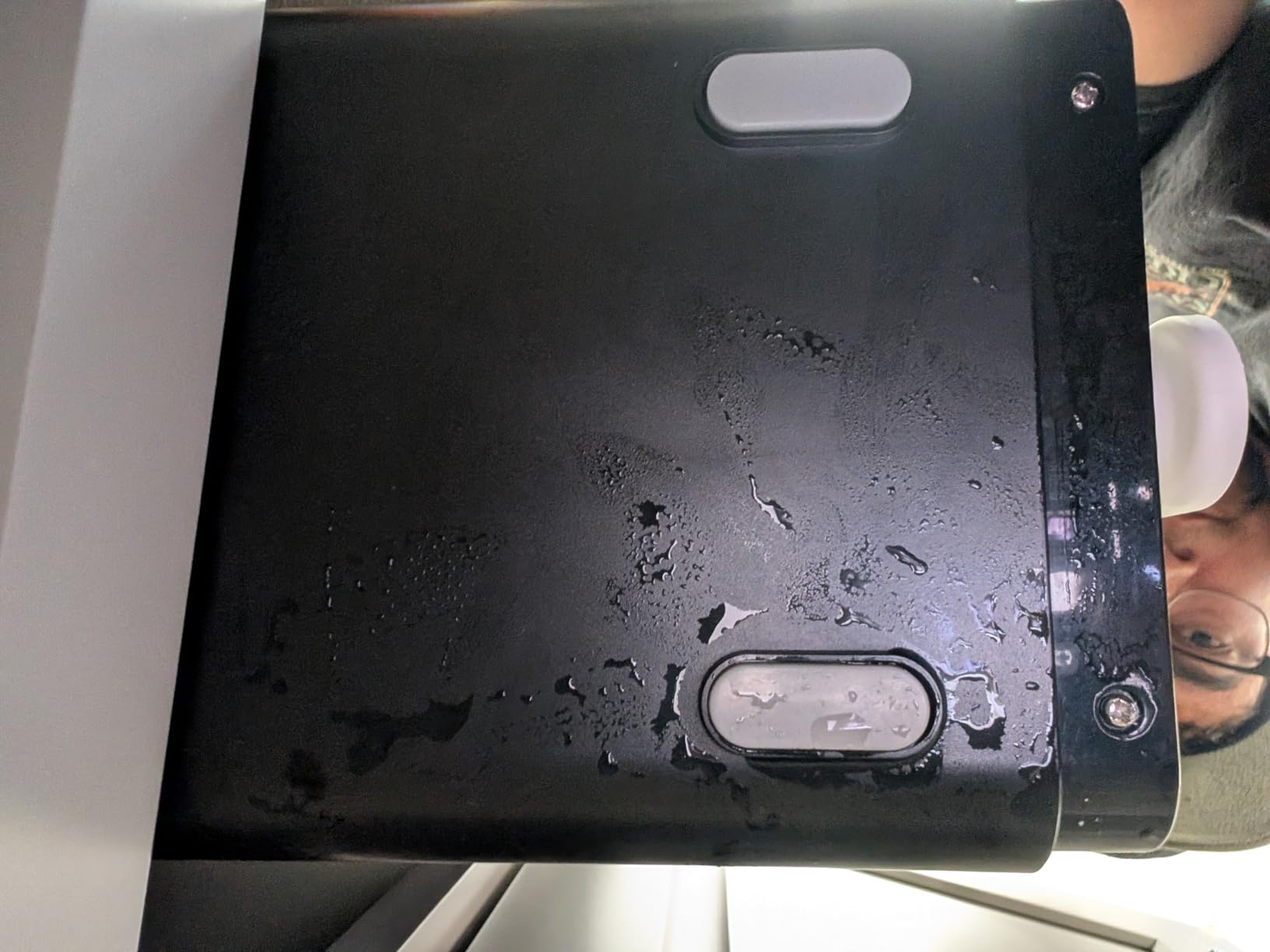
The most damaging complaint in every owner forum about under-sink filtration is water damage. A single weeping housing cap or a cracked plastic fitting can soak a cabinet floor, ruin the particle board underneath and go unnoticed for months because everything is behind a door. This is a real risk, not a theoretical one, and it is the reason we rank complete-system certifications and warranty terms so heavily.
Four things reduce the risk. Choose a system with an automatic shutoff valve and leak detector, which several models here include. Push fittings fully until they click rather than just snug. Inspect the cabinet floor twice a year. And if you notice weeping at a housing port, replace that housing immediately instead of watching it, since the two most-cited owner failures in this category are the APEC RO-PH90 stage caps and the Geekpure plastic diverter fitting.
Diagnosing low flow in the right order
Slow flow has four possible causes and you should check them in sequence. First, test your line pressure with a gauge; below 40 psi output drops sharply, and a booster pump such as the one on the iSpring RCC7P-AK fixes it directly. Second, check filter age, because a loaded sediment and carbon prefilter restricts flow badly, and these are the cartridges people leave installed for years.
Third, check the tank pressure. An empty storage tank should hold between 5 and 7 psi, and a tank that has lost its air charge will make every glass slow. Release air with the valve on the faucet until it hisses, then close it. Fourth, check whether the membrane itself has scaled, which happens on hard water over several years. Owners often assume slow flow is a design flaw, when the large majority of cases are one of these four fixes.
Feeding a refrigerator or ice maker
An internal ice maker can consume more water than most people expect, and a 50 or 75 GPD tanked system often cannot keep up. A tee fitting on the cold-water line downstream of the sink valve, a dedicated quarter-inch line and an approved adapter will do it, and the Waterdrop G5P700A pairs directly with the Waterdrop XT adapter for this purpose.
Set the fridge dispenser to its coldest setting, because warmer water freezes into larger icier cubes, and make sure the line is insulated if it runs through a warm section of cabinet. Automatic flush systems like the iSpring RO500AK-ORB matter here too, since a line that sits unused for weeks invites both membrane drying and bacterial growth in the tubing.
What a two-year ownership plan really costs
Upfront cost is the least informative number. The running cost is filters, and it varies more than buyers expect because proprietary tankless cartridges typically cost more than conventional replacement sets. Plan on a six to twelve month prefilter change, a twelve to twenty-four month membrane change and an alkaline cartridge on a similar one- to two-year cycle.
Add wastewater to the total. A conventional 3:1 system uses three extra gallons per gallon you drink, while a 2:1 system uses one. Across five years on a household drinking two gallons a day, that gap is around 2,700 gallons. Buyers also pay attention to whether replacement cartridges are easy to find years later, which is a genuine advantage for the two most-established brands on this list.
Frequently Asked Questions
What is the highest rated reverse osmosis system?
The highest rated in our testing was the iSpring RCC7P-AK, which averages 4.7 out of 5 across more than 1,600 owner reviews thanks to its booster pump and alkaline stage. For most kitchens the better overall pick is the iSpring RCC7AK-BN, rated 4.6 across more than 21,500 reviews, because it needs no electricity and holds up in ordinary line pressure. Rating alone is a poor guide, so match the system to your pressure, cabinet and drinking volume.
What is a major downside of reverse osmosis water?
The biggest drawback is taste. The membrane strips dissolved minerals along with contaminants, which is why most owners describe RO water as flat or boring, and a remineralization cartridge is the standard fix. Other downsides include steady water waste, typically two to three gallons to the drain per gallon produced, and the risk of a leak inside a cabinet that nobody sees until it is soaked. Systems with a 2:1 ratio and a shutoff valve address the last two.
Is RO water hard on your kidneys?
There is no established medical evidence that drinking reverse osmosis water is harmful to healthy kidneys. The concern people raise is that RO water is low in minerals and, hypothetically, could draw minerals from the body if your diet were already short of them. For most people a varied diet supplies those minerals from food. If a doctor has advised you to limit water or mineral intake for kidney reasons, follow their guidance rather than a general rule.
How much does a reverse osmosis system cost for a kitchen sink?
Kitchen reverse osmosis systems range from entry units with NSF-certified components up to high-capacity tankless models with smart faucets and booster pumps, and the spread is mostly about flow, certification scope and filtration depth. Add the faucet, drain saddle and any extra tubing to a budget, and budget again annually for prefilters, the membrane and the alkaline cartridge. Running cost is driven by cartridge prices and drain ratio more than by the unit itself.
What should I do if my reverse osmosis system has low water pressure?
Work through four checks in order. First, measure kitchen line pressure, because below about 40 psi output drops sharply and a booster pump solves it outright. Second, replace the prefilter cartridges, since a loaded sediment stage is the most common restriction. Third, check storage tank pressure, which should read 5 to 7 psi when empty, and release air through the faucet until it hisses. Fourth, consider a scaled membrane on hard water after several years of use.
Are under sink reverse osmosis filters good?
Yes, for drinking and cooking water they are the most complete residential option available. They remove a far wider range of dissolved metals, PFAS, fluoride and arsenic than carbon or sediment filters can manage, and they are the only ones that meaningfully cut total dissolved solids. They are unnecessary if your only complaint is taste, and they waste water, so a large household should choose an efficient ratio or a high-capacity unit.
The Bottom Line: Which Kitchen RO System Should You Buy?
If you want one answer, the iSpring RCC7AK-BN is the best reverse osmosis system for kitchens with normal line pressure, a modest cabinet and a preference for no electrical work. If you have a very small cabinet or cannot drill a counter, the APEC ROES-50 is the durable, tank-based choice with a long service history. If low pressure or high feed TDS is your reality, the iSpring RCC7P-AK and the APEC RO-PH90 cover those cases.
For speed, the Waterdrop G3P600 and G5P700A lead the tankless group, and the G5P700A reaches 700 GPD for large households and ice maker lines. If cabinet space is the binding constraint, the Frizzlife PD600-TAM3 or the Waterdrop G2 will leave most of the sink area free. The Home Master TMAFC wins on fill speed and warranty, the NU Aqua 7-Stage is the only one with UV, and the Geekpure 6-Stage is the choice when budget comes first.
Whichever you pick, measure your line pressure before you buy, confirm the certification is for the complete system, and check that your cabinet has an outlet if the model needs one. Those three checks prevent nearly every complaint we saw across thousands of owner reports, and they will keep your 2026 install trouble-free for years.