
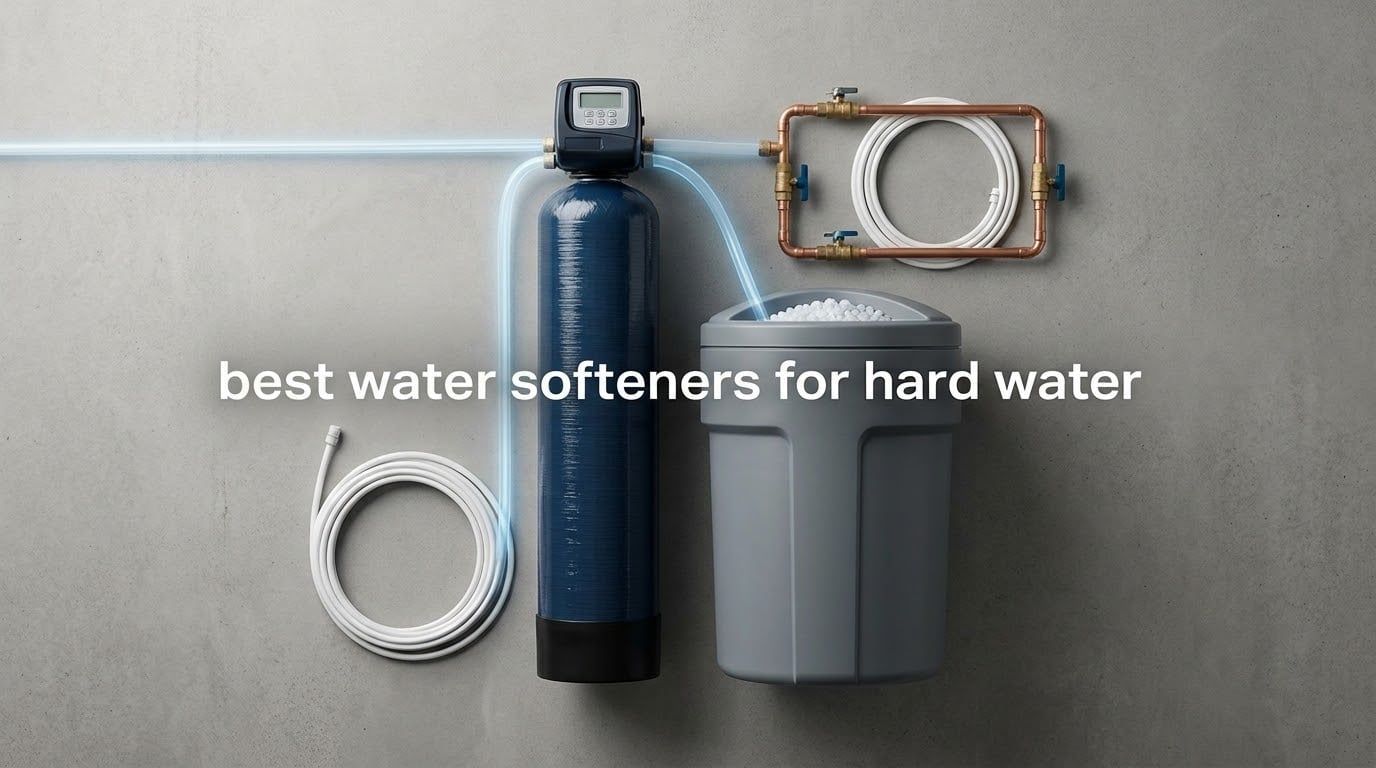
If you are still scrubbing white crust off shower glass and wondering why your dishwasher leaves spots, hard water is the culprit. After weeks of comparing spec sheets, sizing math and thousands of owner reviews, I put together this list of the best water softeners for hard water so you can match a system to your actual problem instead of guessing.
Hard water is water carrying high concentrations of dissolved calcium and magnesium, measured in grains per gallon (gpg) or parts per million (ppm). Anything above roughly 7 gpg or 120 ppm is considered hard, and above 10.5 gpg or 180 ppm is very hard. That mineral load is what leaves limescale on faucets, soap scum in the tub and shortened appliance life.
My selection criteria were unglamorous but strict: real grain capacity against real hardness, whether the control head regenerates on demand or on a clock, what the unit actually removes versus what it merely prevents, and how honest the owner reviews are about the annoying parts. I also weighted warranty length and whether replacement parts are still available in five years.
Of the ten systems below, five are whole-house ion exchange softeners, three are portable ion exchange softeners, one is a salt-free scale conditioner, one is an electronic descaler and one bundles softening with a drinking water filter. Knowing which of those you need saves you from the most common disappointment in this category, which is expecting soft water from a product that only prevents scale.
Updated for October 2026.
Our Top 3 Water Softeners for Hard Water Right Now
These three cover the most common buying situations. The Aquasure Harmony is the pick if you want genuine whole-house ion exchange. The On The Go portable is the pick if your hard water problem follows you down the highway. The VEVOR is the pick if you want portable softening without spending much.

Aquasure Harmony 48,000-Grain
- 48000-grain ion exchange capacity
- Triple purpose sediment carbon zinc pre-filter
- Digital metered control head

On The Go 16,000-Grain…
- Up to 1600 gallons per regeneration
- Regenerates in under 30 minutes with table salt
- No electricity or tools required

VEVOR 16,000-Grain RV Softener
- 3/4 inch brass connectors and 42 inch hose
- Reduces hardness to 0-3 gpg
- Fiberglass shell rated to 150 psi
Comparing All 10 Water Softeners Side by Side in 2026
The table below lists every system in this roundup with its core specs. Read the capacity row against your own hardness measurement before you commit to anything.
| Product | Details | |
|---|---|---|
| Aquasure Harmony 48,000-Grain |
|
Check Latest Price |
| On The Go 16,000-Grain Portable |
|
Check Latest Price |
 PRO+AQUA 16,000-Grain Portable PRO+AQUA 16,000-Grain Portable |
|
Check Latest Price |
 A. O. Smith 600,000-Gallon Salt-Free Unit A. O. Smith 600,000-Gallon Salt-Free Unit |
|
Check Latest Price |
 YARNA CWD24 Electronic Descaler YARNA CWD24 Electronic Descaler |
|
Check Latest Price |
 Kenmore 350 32,000-Grain Kenmore 350 32,000-Grain |
|
Check Latest Price |
 Fleck 5600 SXT 48,000-Grain Fleck 5600 SXT 48,000-Grain |
|
Check Latest Price |
 Tier1 48,000-Grain Tier1 48,000-Grain |
|
Check Latest Price |
 Aquasure 72,000-Grain Plus 75 GPD RO Bundle Aquasure 72,000-Grain Plus 75 GPD RO Bundle |
|
Check Latest Price |
| VEVOR 16,000-Grain Portable |
|
Check Latest Price |
1. Aquasure Harmony 48,000-Grain – Our Editor’s Choice for Whole-House Hard Water
Aquasure Harmony Series 48,000 Grains Whole House Water Softener w/High Efficiency Digital Metered Control Head (48,000 Grains)
48,000-grain ion exchange
Digital metered control head
Triple purpose pre-filter
+ Pros
- 48000-grain capacity suits 3-4 bathroom homes
- Digital metered head lets you set flush intervals
- Pre-filter handles chlorine sediment and heavy metals
- Fiberglass-lined polyethylene tank
- 5-year warranty with lifetime tech support
- Cons
- 62 inch tank needs real vertical clearance
- 120 pound unit is heavy to position
- Brine tank and salt refills are ongoing work
This is the system I recommend to friends who call me with a specific problem: hard water at every outlet, three or four bathrooms, and no patience for a plumbing project that takes a weekend. The Harmony puts 48,000 grains of ion exchange capacity in a single fiberglass-lined polyethylene tank and treats water at every tap in the house, not just at one fixture.
What separates it from generic 48,000-grain tanks is the control head and the pre-filter. The digital metered head regenerates based on measured usage rather than a clock, and the triple purpose sediment, carbon and zinc pre-filter is aimed squarely at the chlorine, odors, VOCs and sediment that chew through resin beads and downstream plumbing.
Owners report the scale coming off within weeks and the tank quietly doing its job. What they mention most often, fairly, is size: this is a 62 inch tall, 120 pound unit that wants a utility room, not a tight mechanical closet.
Grain Capacity and the Households It Fits
The Harmony is rated for 3-4 bathrooms, and the label language is honest about that. At 12 gpm maximum flow, it has enough headroom for a busy family showering in the morning without feeling starved for water.
Run the sizing math before you order. A family of four at roughly 80 gallons per person per day on 10 gpg water generates about 3,200 grains of hardness a day, which means a 48,000-grain tank regenerates roughly every 15 days on metered control. That is a healthy cycle, not a punishing one.
What the Triple Purpose Pre-Filter Actually Does
The pre-filter is the part that gets overlooked in this category, and it matters more than most buyers realize. Chlorine and sediment chew through ion exchange resin, and a softener fed by unfiltered municipal water is working harder and living shorter than one fed by pre-filtered water.
Owners point out that the carbon stage is what kills the chlorine smell, and the zinc component handles heavy metals. If your water has visible sediment or a chlorine odor at the tap, this head covers you without a separate housing.
Clearance, Weight and the Real Install
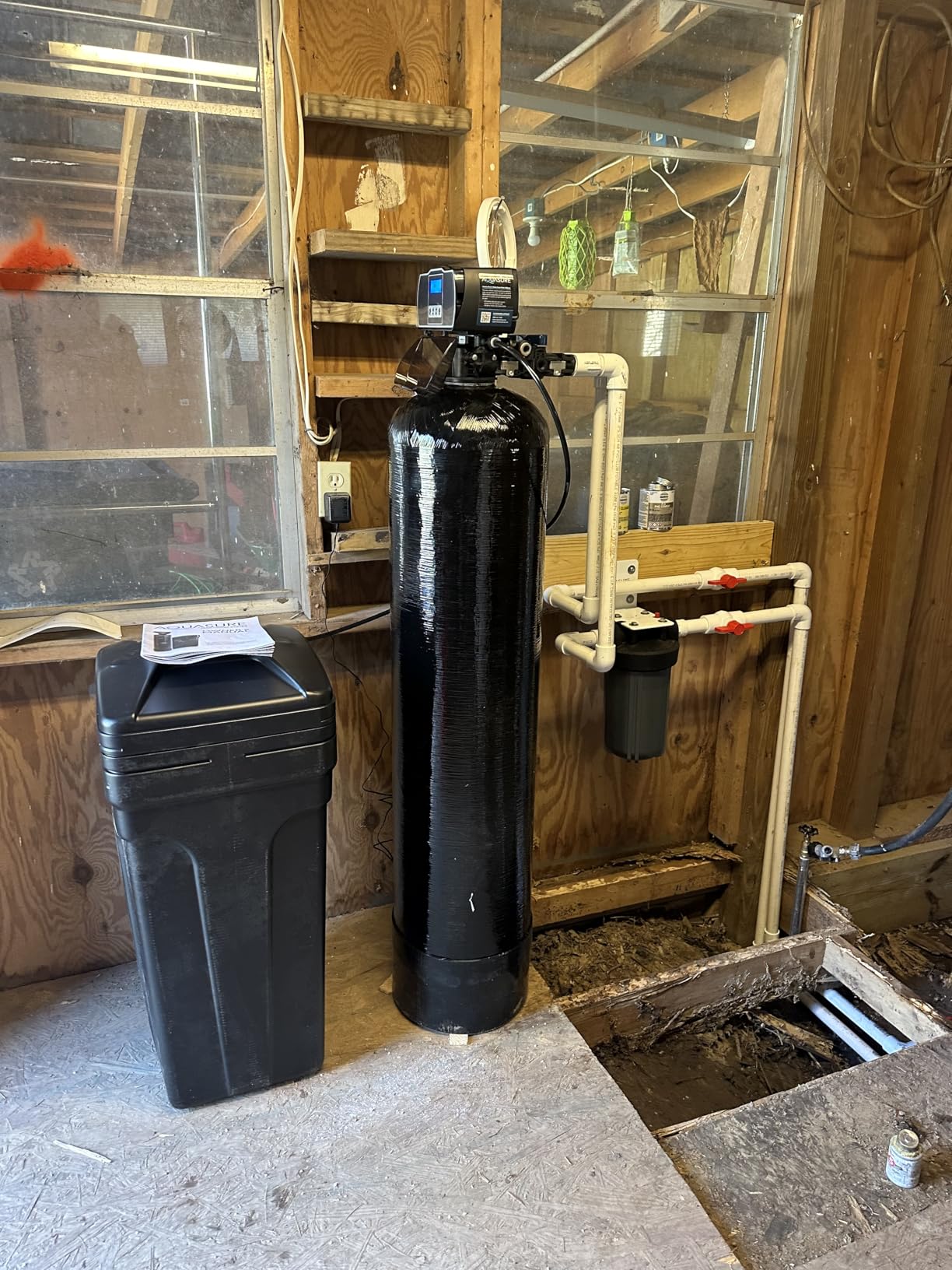
Here is where installation difficulty gets honestly scored. The tank stands 62 inches tall and weighs 120 pounds dry, so measure your vertical clearance before the box arrives. You also need a drain line, an air gap, a bypass and a nearby electrical outlet for the adapter power source.
The metered head is digital, and some installers find the programming less intuitive than a mechanical dial. Owners who have used time-clock heads before tend to adjust quickly once they see the usage counters.
2. On The Go 16,000-Grain Portable – Best Softening Result for RVs and Boats
OTG4-DBLSOFT-Portable 16,000 Grain RV Water Softener (NOT made in China, assembled by U.S. Workers in Indiana)
16,000-grain portable capacity
Up to 1,600 gallons per charge
Regenerates in under 30 minutes
+ Pros
- 4.7 star average across nearly 1900 reviews
- Large capacity for a portable body
- Hooks to a standard garden hose
- 22 inch body stores in an RV bay
- Uses ordinary table salt
- Cons
- Blue tank can sit crooked in the base
- Plastic fittings rather than brass
- Not built for permanent plumbed installs
When I want to see softening that is undeniable, I watch a test strip go from over 250 ppm to near zero. That is the routine report from owners of this portable unit, and it is why the average sits at 4.7 stars, the highest figure in this roundup.
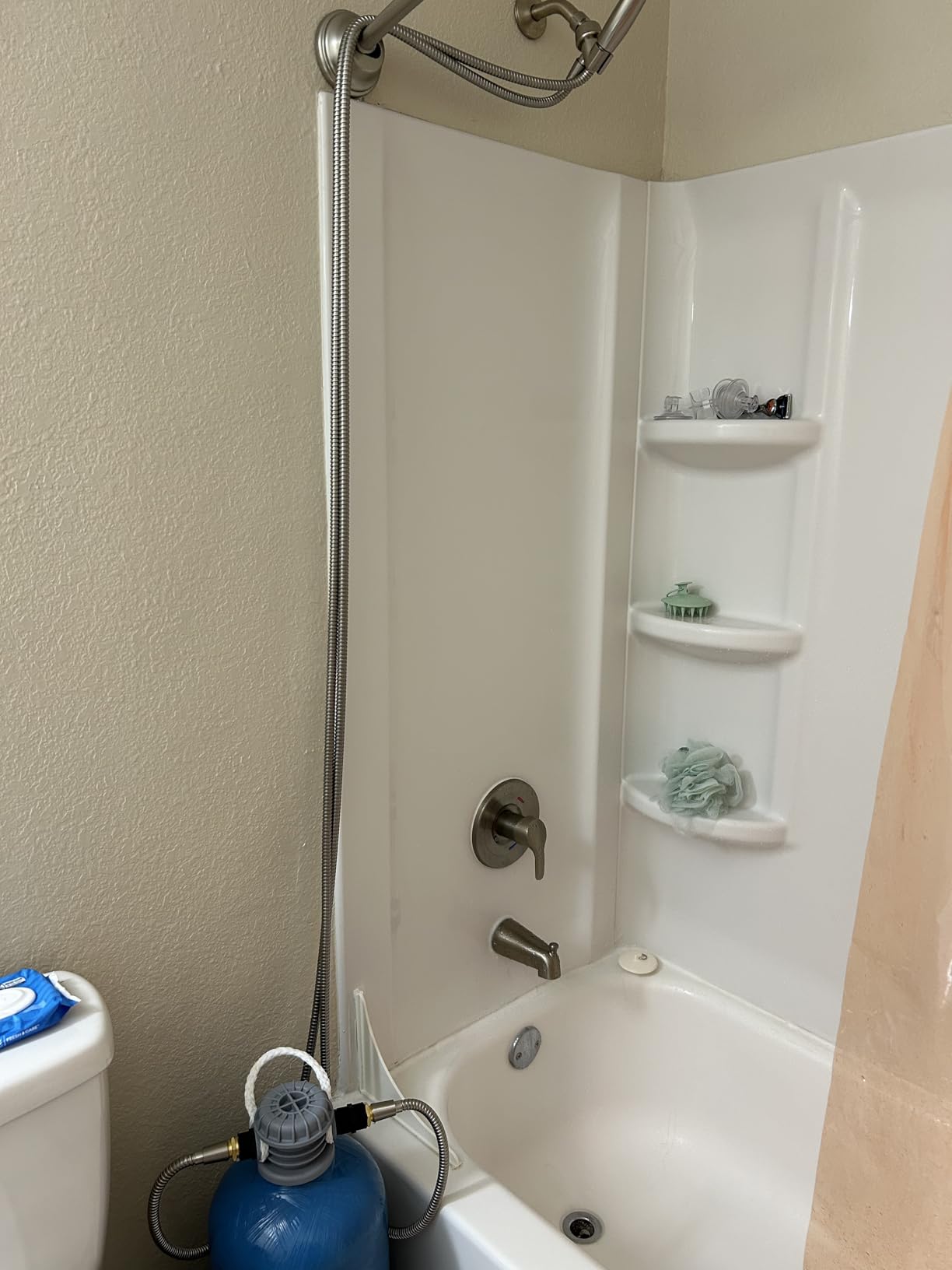
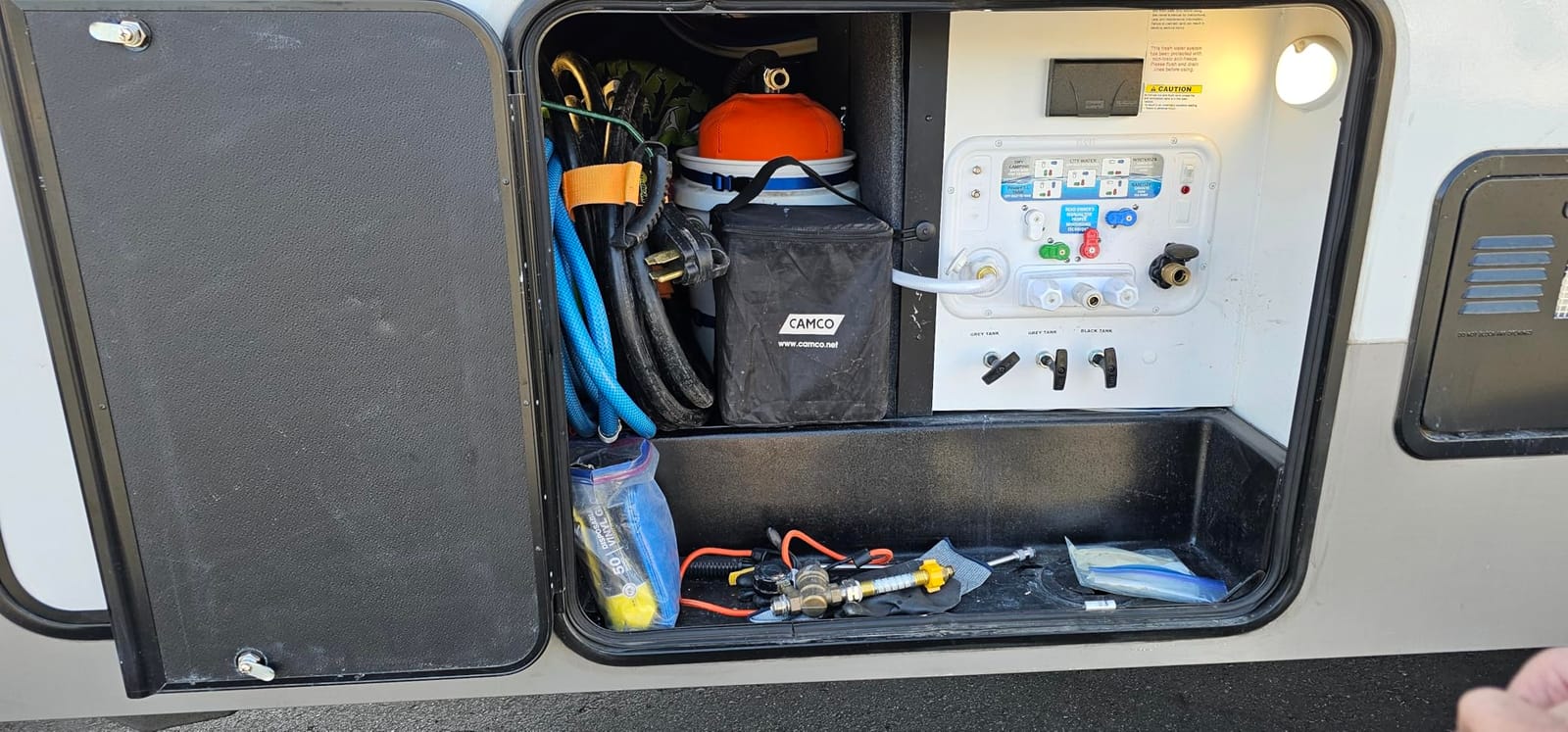
The design is straightforward. It is a 16,000-grain resin tank on a movable base with a garden hose inlet and outlet, a carry handle, a large mouth for salt, and a cap and plug for transit. No electricity, no tools, no permanently plumbed anything.
Regeneration takes under 30 minutes using two boxes of ordinary table salt from any grocery store, and each charge delivers up to 1,600 gallons. For two people on a week of camping, that is one regeneration across the whole trip.
Capacity Per Charge and How Long It Lasts
The 16,000-grain rating is unusually large for a portable body of this size, and the manufacturer claims roughly 40 percent more soft water than comparable units. Owners backing that up report a regeneration every 30 to 40 days of typical RV use.
The tradeoff is physical. At 22 inches tall and 9.5 inches in diameter, this is a compact body holding a meaningful charge, and the movable base helps you level it on uneven ground at a campground or boat ramp.
Hookup, Salt and the Road
Connection is a standard garden hose to a park faucet or an RV fill point. That simplicity is the entire reason this class of unit exists, and it is why there is no installation guide worth reading twice.
You do need somewhere for the flush water to drain during regeneration, which is a real planning item in a dry campground. Ordinary table salt from any grocery store is the only consumable, which is the other half of why travelers like this design.
Build Quality and Known Weak Spots
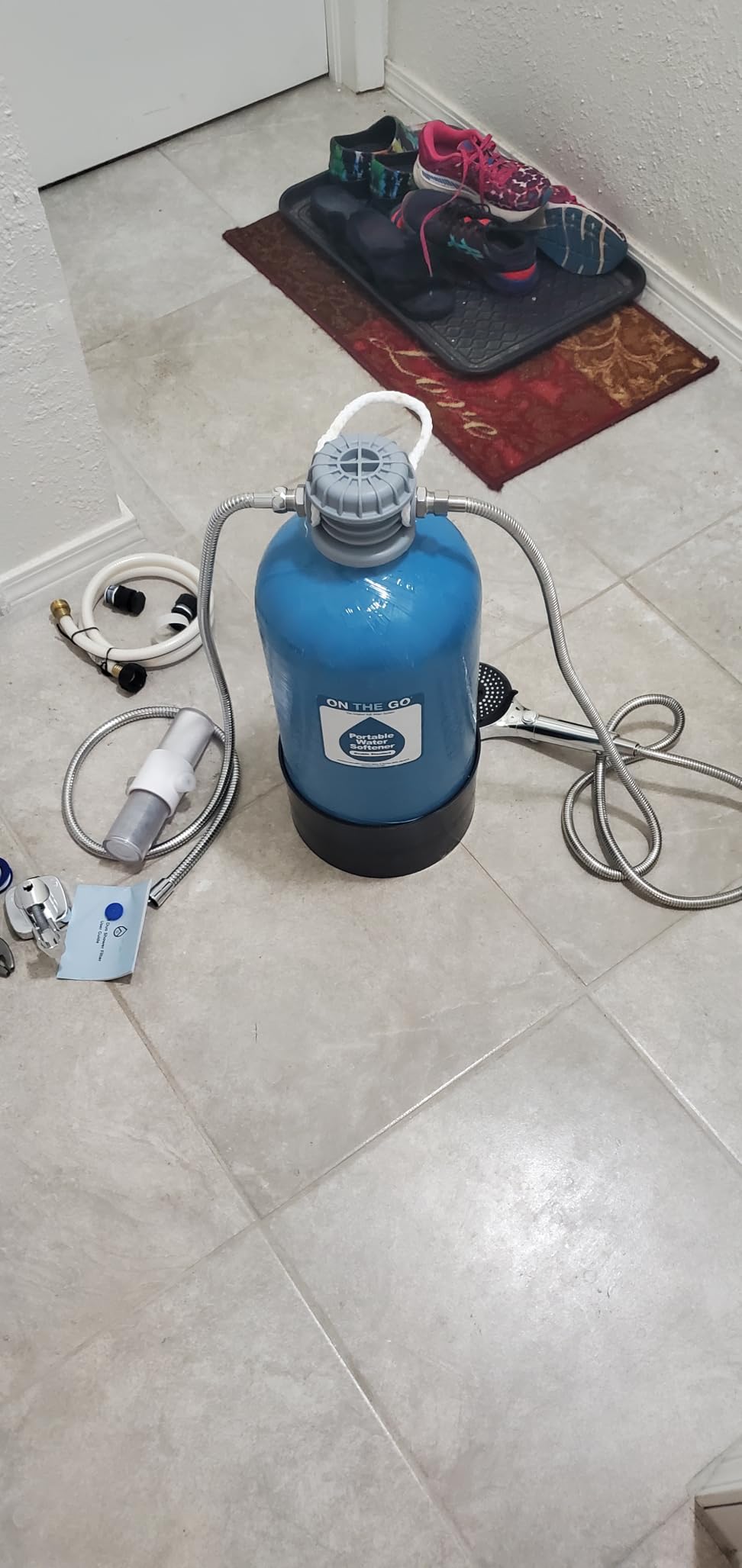
The recurring complaints are honest and narrow. The blue fiberglass tank can sit slightly crooked in the black base, the fittings are plastic rather than brass, and the unit is not designed for a permanent under-sink or shower installation.
None of those matter for the intended use. All of them matter if you were hoping to plumb it into a fixed household line, which this is not built to do.
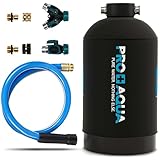
3. PRO+AQUA 16,000-Grain Portable – Best Fit for Well Water and City Water Rigs
PRO+AQUA 16,000 Grain Portable Water Softener for RV, Trailers, Boats, Mobile Car Wash, Pressure Wash – Protects Water Systems
Up to 2,000 gallons per charge
3/4 inch high-flow hose ports
Ready in about 5 minutes
+ Pros
- Longest stated run time of the three portables
- Arrives fully assembled
- Fiberglass-reinforced NSF polyethylene tank
- Handles drinking bathing and car washing
- 2-year warranty
- Cons
- Regeneration is manual so you track timing
- 19.5 inch height means frequent top-ups
- Resin cannot be replaced separately
This is the portable unit I recommend when someone tells me their hard water comes from a well rather than a municipal line. It is rated for both, and the included regeneration kit, brine hose and quick-connect fittings make the whole setup a five-minute job.
The claim that sets it apart is run time. It delivers up to 2,000 gallons or about 60 days of softened water per regeneration, and the tank is an NSF polyethylene shell reinforced with fiberglass and filled with NSF-certified food-grade resin.
Flow Rate and Fixture Compatibility
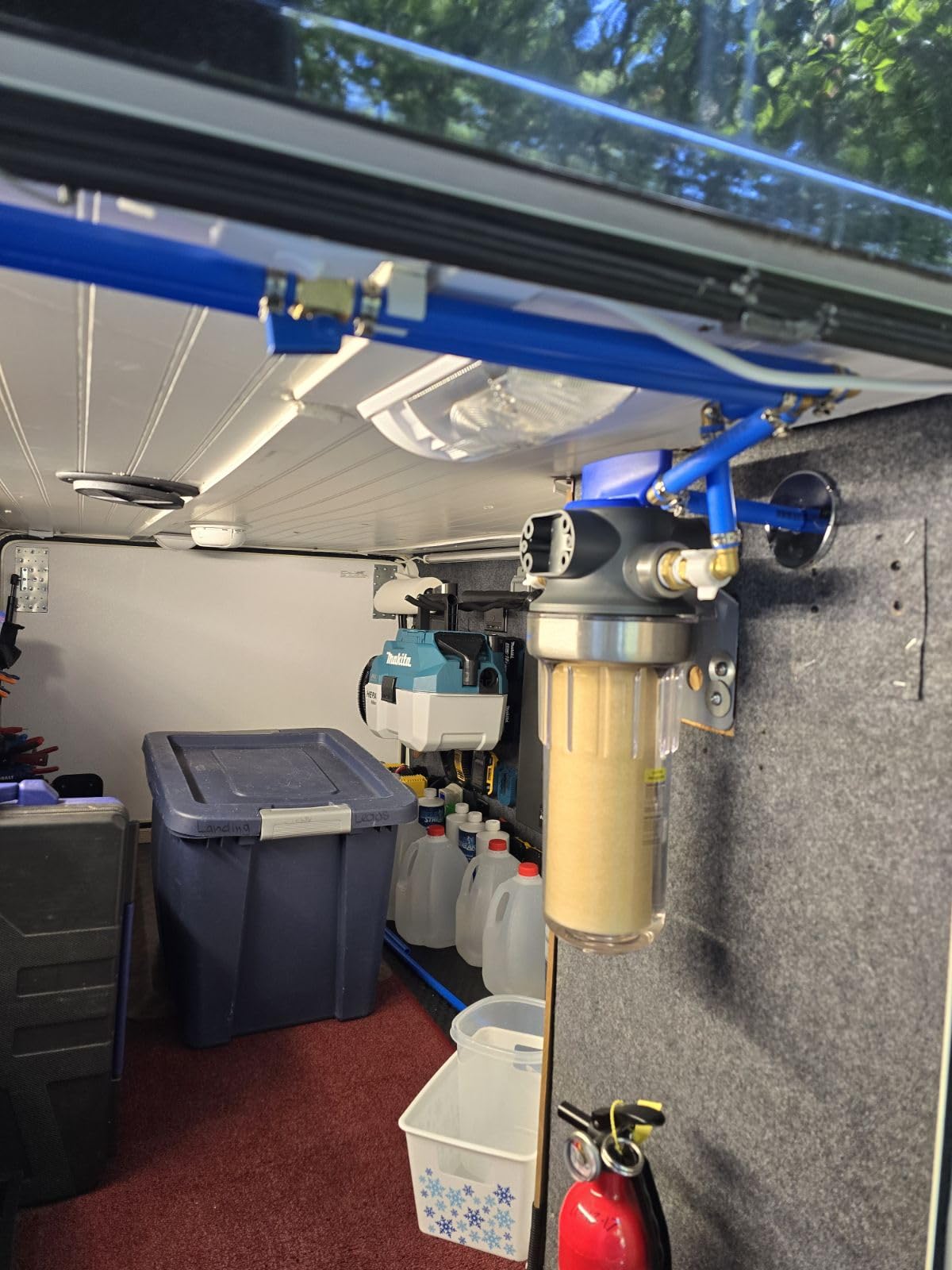
The 3/4 inch high-flow inlet and outlet are the practical headline. Owners running it into an RV shower, a mobile car wash setup or a pressure washer report good flow with no noticeable pressure drop, which smaller 1/2 inch portable units often cannot manage.
That flow rating also makes it usable for drinking and bathing tasks in the same session, so you are not swapping hoses mid-job.
Manual Regeneration and the 19.5 Inch Body
Regeneration here is manual, meaning you decide when it happens rather than a head deciding for you. That is a genuine tradeoff: more control, but you have to track when the salt charge runs out.
At 19.5 inches tall, a full salt charge means more frequent top-ups on heavier use than the taller On The Go unit. Owners who travel in pairs for weeks at a time find this a non-issue; owners running a mobile car wash out of the same tank notice it sooner.
What It Reduces and What the Warranty Covers
The manufacturer lists reduction of calcium, magnesium, iron, lead, radium and heavy metals, and owners report noticeable improvement in both taste and odor along with reduced scale in RV plumbing.
The warranty is 2 years, shorter than the 5- to 10-year coverage on the whole-house units here and worth factoring in if you plan to keep a unit for a full decade. The pre-filter, regeneration kit, brine hose and quick-connect fittings are all in the box.

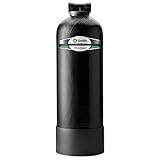
4. A. O. Smith 600,000-Gallon Salt-Free Unit – Best Salt-Free Whole-House Option
A. O. Smith Whole House Salt-Free Scale Control | 600K Gal | AO-WH-DSCLR
Salt-free scale control
600,000 gallon service life
No electricity or backwashing
+ Pros
- 30 inch body weighing only 12 pounds
- No salt and no backwashing
- Works during a power outage
- 6-year limited warranty
- Handles city and well water
- Cons
- Does not soften water or reduce TDS
- Capped at roughly 15 gpg incoming hardness
- May need supply lines re-routed
Be clear about what this is. The A. O. Smith unit is a scale prevention device, not a softener, and it does not lower total dissolved solids or make soap lather differently. Owners who understand that distinction report being very happy, and owners who expected softening report being disappointed.
For a household on a sodium-restricted diet, or one that simply refuses to haul salt bags, it is a legitimate choice. At 12 pounds and 30 inches long, it is also the easiest whole-house unit here to handle in a small space.
Hardness Ceiling and Alkalinity Limits
This is the specification that decides the purchase. The unit is rated for incoming water under 15 gpg, alkalinity under 250 mg/L, pH under 8.3 and iron under 0.3 ppm. Above any of those, scale control chemistry stops keeping up.
If your water is 20 gpg or harder, a genuine ion exchange system is the only thing that will actually reduce hardness. Buying a conditioner for very hard water is the most common mismatched purchase in this category.
No Salt, No Drain Line, No Electricity
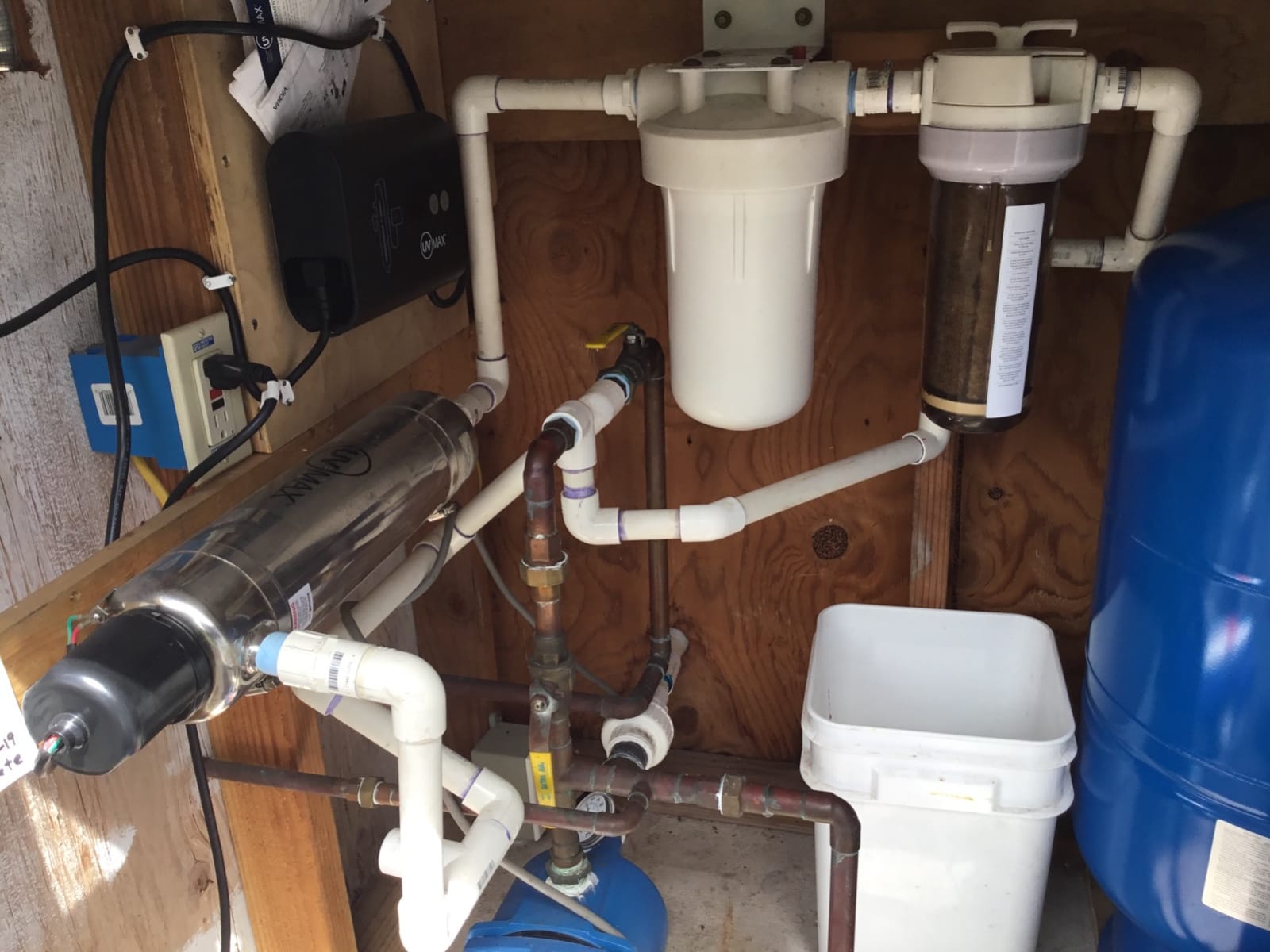
There is no brine tank, no regeneration water and no power cord. That single fact eliminates the drain line, the air gap, the electrical outlet and the salt delivery problem in one move, which is why whole-house owners in older homes without accessible floor drains like this design.
It also keeps working during a power outage, unlike the corded electronic descaler in this roundup. The supported total dissolved solids ceiling is 1,200 ppm, well above most municipal supplies.
What Owners Report About Scale Reduction
Reviewers report 80-85 percent less scale formation, shower glass that wipes clean instead of needing scrubbing, and faucets without the usual smudge rings.
Because the media is not being regenerated, the 600,000 gallon figure works out to roughly 6 years of service in a typical home, which is a long interval between replacements.
Installation Reality and the One Complaint Worth Naming
Installation is where this product earns its honest caveat. If your main supply pipe runs inside a finished wall or an inaccessible garage ceiling, cutting and re-routing it is a plumber job. Several owners recommend hiring one for exactly that reason.
A smaller group reports minor weeping at the tank-to-fitting junction after many months of use. The included metal female thread connectors, shut-off valve and hose adapter are the durable parts, and flow runs through 3/4 inch inlet and outlet ports rated for 20-100 psi. Maximum flow is 7 gpm, which is ample for a whole house but the lowest of the softeners here.
5. YARNA CWD24 Electronic Descaler – Best No-Salt Alternative for Pipes Up to 1 Inch
YARNA Electronic Water Descaler – No-Salt Softener, Pipes to 1″ CWD24
Microchip-controlled pulses
No salt and no waste water
Fits pipe up to 1 inch
+ Pros
- No salt to buy carry or refill
- Leaves calcium and magnesium in the water
- Tool-free install on pipes up to 1 inch
- Small 1 pound unit
- Minerals stay in the water you drink
- Cons
- Does not reduce hardness at all
- Requires a nearby power outlet
- Up to 3 months before change is visible
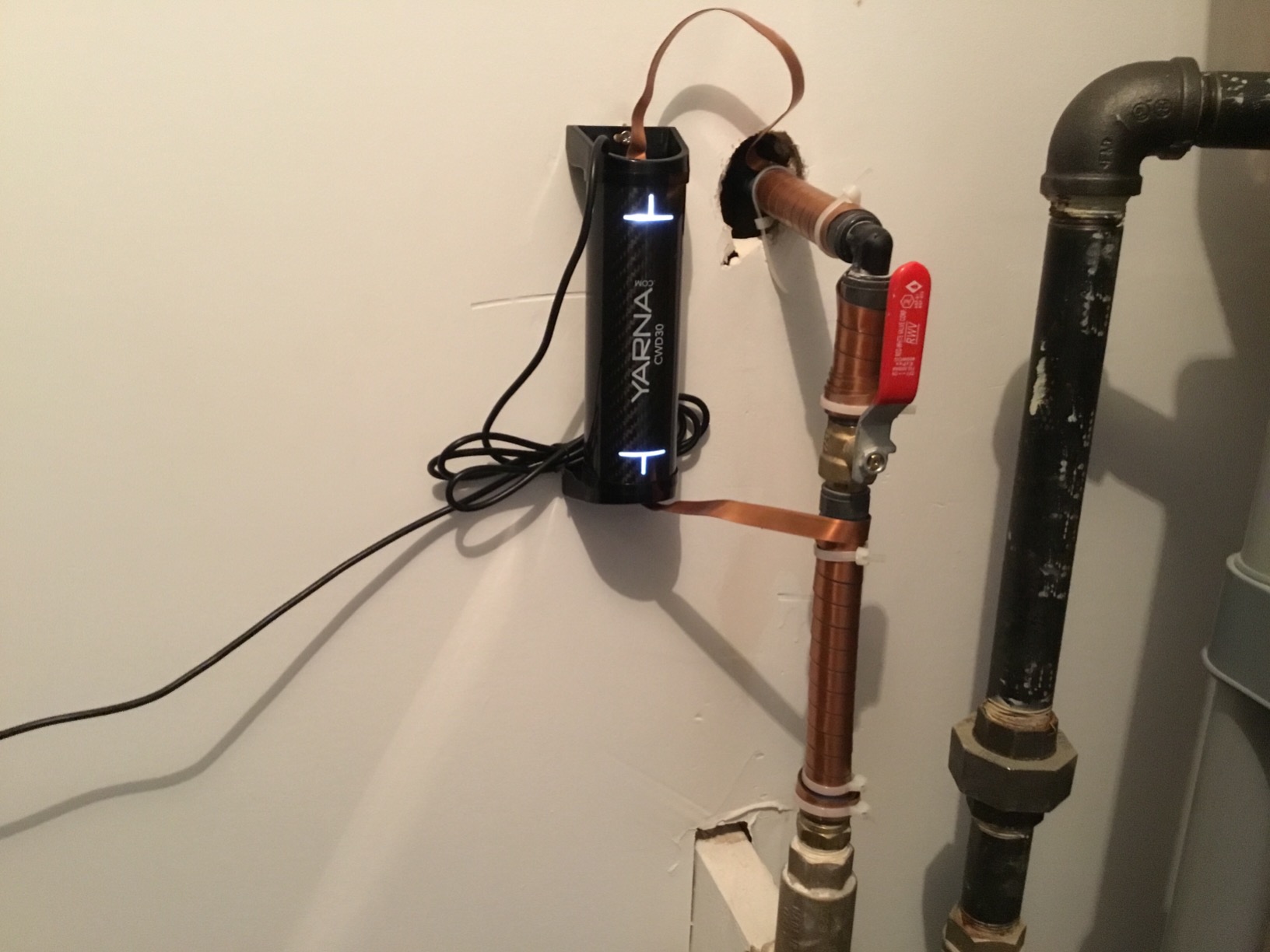
I include this one with a warning label, because the gap between expectations and reality is the widest in this roundup. The YARNA does not soften water. It uses a microchip to generate controlled electric pulses through copper bands that break down limescale crystals before they adhere to pipe walls.
It also has more than 2,600 reviews behind it, which makes it one of the better-documented products in the group, and it is the most polarized of them. Fans love the freedom from salt. Skeptics correctly point out that mineral content, lather and spot behavior are unchanged.
Put plainly: if your problem is soap scum and water spots, this will not fix it. If your problem is scale inside your water heater and pipes, it may slow future buildup and let existing deposits work their way out.
How the Pulse Bands Work and What They Do Not
The patented capacitive design fits around the pipe rather than in the water path, and the flat impulse bands are the working element. Nothing is removed from the water, and the 1,000 ppm total dissolved solids ceiling is a compatibility limit rather than a treatment claim.
The upside is that beneficial minerals stay in your water. The downside is that a hardness test strip reads exactly the same before and after installation, and that is exactly what critical reviewers report.
Install Time, Pipe Size and the Outlet Problem
Installation is a single wrap around the main cold water line and it needs about 10 inches of clear pipe. The included kit handles pipes up to 1 inch diameter, which covers most residential supply lines but not commercial or larger diameter runs.
Because it is corded electric, you need an outlet within reach. That is a real limitation in a crawlspace or an unfinished basement, and it is one more reason to weigh this against a salt-free conditioning unit that needs no power.
Patience: The Three Month Ramp
Owners who report success describe a slow ramp, with noticeable change taking up to three months of continuous operation. The mechanism works on scale that has already formed, so the effect appears as old deposits loosen rather than new ones being prevented.
The 4.0 average and the share of one-star reviews track to the same root cause: expectations. Buyers who expected soft water read the low score. Buyers who expected scale control tend to rate it well.
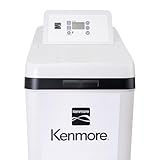
6. Kenmore 350 32,000-Grain – Best for 1-4 Person Households
Kenmore 350 Whole House Water Softener System, 32,000 Grain, 1-4 People
32,000-grain capacity
IntelliSoft adaptive regeneration
Built-in salt level monitoring
+ Pros
- Regenerates on demand rather than a clock
- Salt level monitoring cuts waste
- Compact 20.5 inch long footprint
- High-flow 3/4 inch valve
- Handles clear water iron
- Cons
- 0.83 cubic feet of resin is modest
- Total dissolved solids capped at 250 ppm
- House brand limits third-party parts
The Kenmore 350 is the sensible pick for a couple, a single person or a small family. It is rated for 1-4 people, and the 20.5 inch length keeps the body compact for a system carrying a 32,000-grain label, which makes it easier to find a wall for.
Its distinguishing feature is IntelliSoft, a control system that learns your household usage pattern and regenerates only when it needs to. It also monitors salt level, so you are not opening the brine tank to guess whether there is enough left for the next cycle.
IntelliSoft and What Adaptive Regeneration Saves
Time-clock controls regenerate whether you need water or not. Demand-initiated metering triggers on measured flow instead, which cuts both salt and wasted water over a year. Owners cite this as the main reason the system runs economically rather than expensively.
That behavior also matters on hard water, where a fixed schedule either wastes water or under-performs. Metering adapts to the real load.
Resin Volume, Iron Handling and the TDS Ceiling
Two specifications deserve a hard look. The tank holds 0.83 cubic feet of resin, which some owners feel is modest for a 32,000-grain label, and the supported total dissolved solids level caps at 250 ppm.
On the positive side, the system reduces clear water iron along with hardness, which is unusual at this capacity and useful on wells with low iron. Maximum flow is 7.2 gpm across a high-flow 3/4 inch valve, in a 20-125 psi operating range.
Warranty Structure and the House Brand Question
The warranty is layered: 1 year full, 3 years on electronics and 10 years on the tank. That long tank coverage is a genuine durability signal, but the thin first-year electronics coverage is a fair criticism.
Kenmore is a house brand rather than a valve manufacturer, so third-party parts and independent repair options are limited compared with an aftermarket control head. Buyers who plan to keep a system for a decade often prefer the flexibility, and experienced installers consistently steer people toward named control valves.
7. Fleck 5600 SXT 48,000-Grain – Best Choice for DIY Installers
DURAWATER Fleck 5600 SXT Whole House Water Softener, 48,000 Grains, Black
Fleck 5600 SXT metered valve
1.5 cubic feet of preloaded resin
Brine tank safety float
+ Pros
- Fleck 5600 SXT is field-proven and widely trusted
- Resin arrives preloaded so nothing to pour
- Complete system with tank bypass yoke and brine tank
- Safety float protects against overflow
- Programmable for real demand
- Cons
- Brine tank and yoke are plastic
- Total dissolved solids caps at 350 ppm
- 53 pound mineral tank is heavy to position
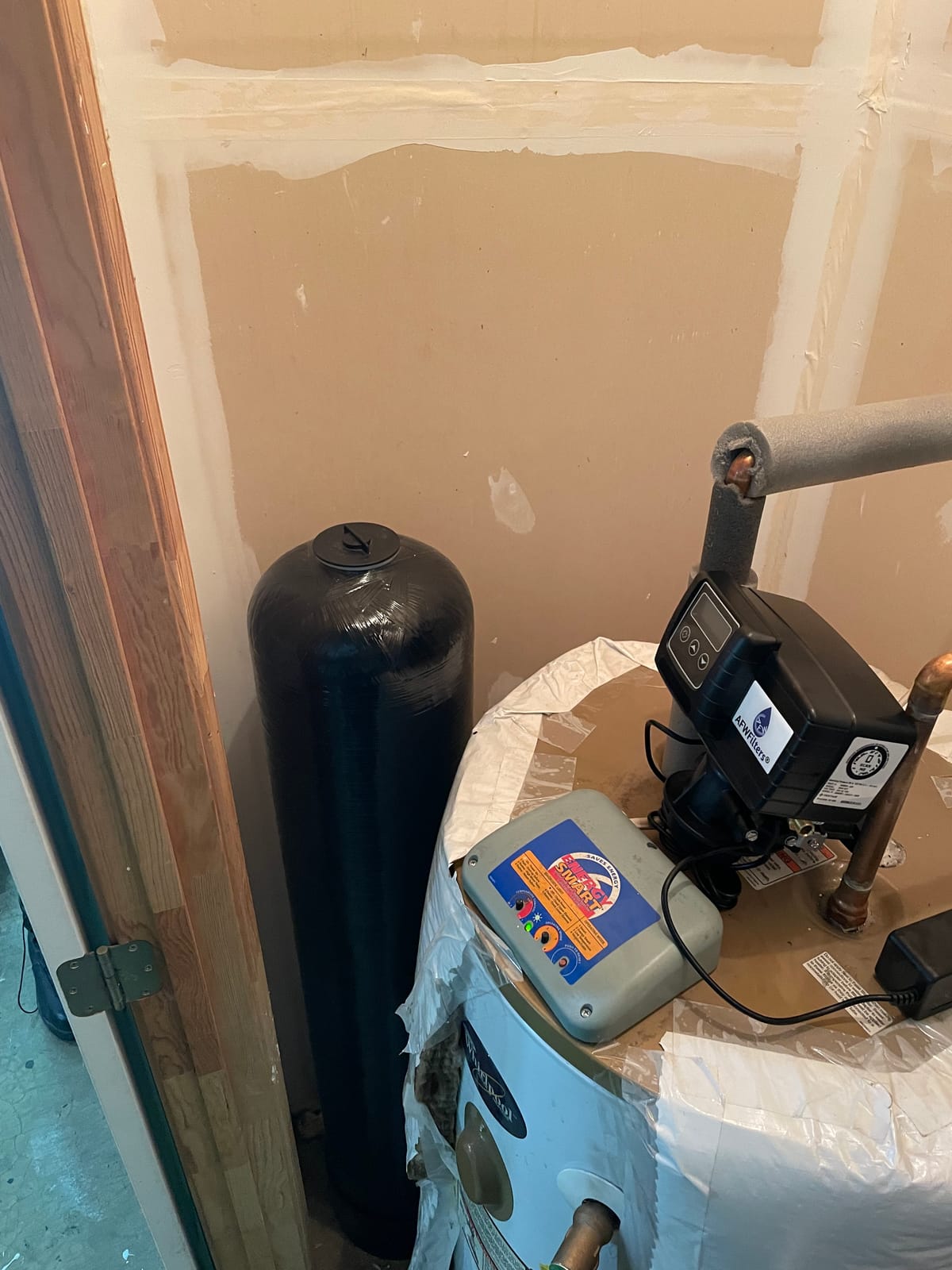
Ask experienced people in plumbing forums which control valve to buy and the same answer comes back: get a Fleck head. The 5600 SXT is the most commonly sold and most widely recommended control valve in the United States, and this configuration pairs it with 1.5 cubic feet of preloaded resin in a 48,000-grain system.
That is why I rank it as the DIY pick. Parts for this valve are sold separately for decades, any plumber has worked on it, and if something fails you are not hunting for a proprietary replacement.
Why the Control Valve Matters More Than the Tank
The valve is the brain of a softener, and it is the component most likely to fail. The 5600 SXT is an on-demand digital metered control that measures actual water use and triggers regeneration on capacity rather than on a schedule.
Buying equipment around a named valve rather than around a brand name is the single most repeated piece of advice in the forums, and it is the advice most competitors ignore. A generic white-label head can mean limited parts availability years from now.
Resin, Yoke and Brine Tank Configuration
The 1.5 cubic feet of high capacity resin is preloaded, so there is no bag to pour into the mineral tank and no risk of resin spilled down a drain. The system includes the mineral tank, a plastic bypass with a 1 inch yoke, and a standard 14 inch by 36 inch brine tank.
That brine tank has a safety float for overflow protection, which is the feature I would want most in a finished basement. The yoke and tank fittings are plastic rather than metal, which is a common cost-saving choice in this class.
Capacity Limits and Where It Falls Short
The supported total dissolved solids ceiling is 350 ppm, which rules this unit out for brackish or extremely hard source water. If your well or municipal supply runs above that, you need a higher-capacity commercial configuration.
It sits at the top of the single-tank price range here, and at 53 pounds the mineral tank is a two-person carry. On features alone it does not win. On parts availability and repairability over a decade, it does.
8. Tier1 48,000-Grain – Best for 5-Person Homes and Quiet Operation
Tier1 48,000 Grain Water Softener System for 4-5 Bathroom Homes
Ceramic disk valve with no seals
1.5 cubic feet of certified resin
10-year limited tank warranty
+ Pros
- Ceramic disk valve needs no seals or rebuild kits
- Very quiet operation in most homes
- 10-year limited warranty on both tanks
- Slim 10 inch mineral tank
- Manufacturer phone support is genuinely helpful
- Cons
- Regeneration can run on a fixed 30-day cycle
- Each cycle uses about 92 gallons of water
- Not rated for outdoor installation
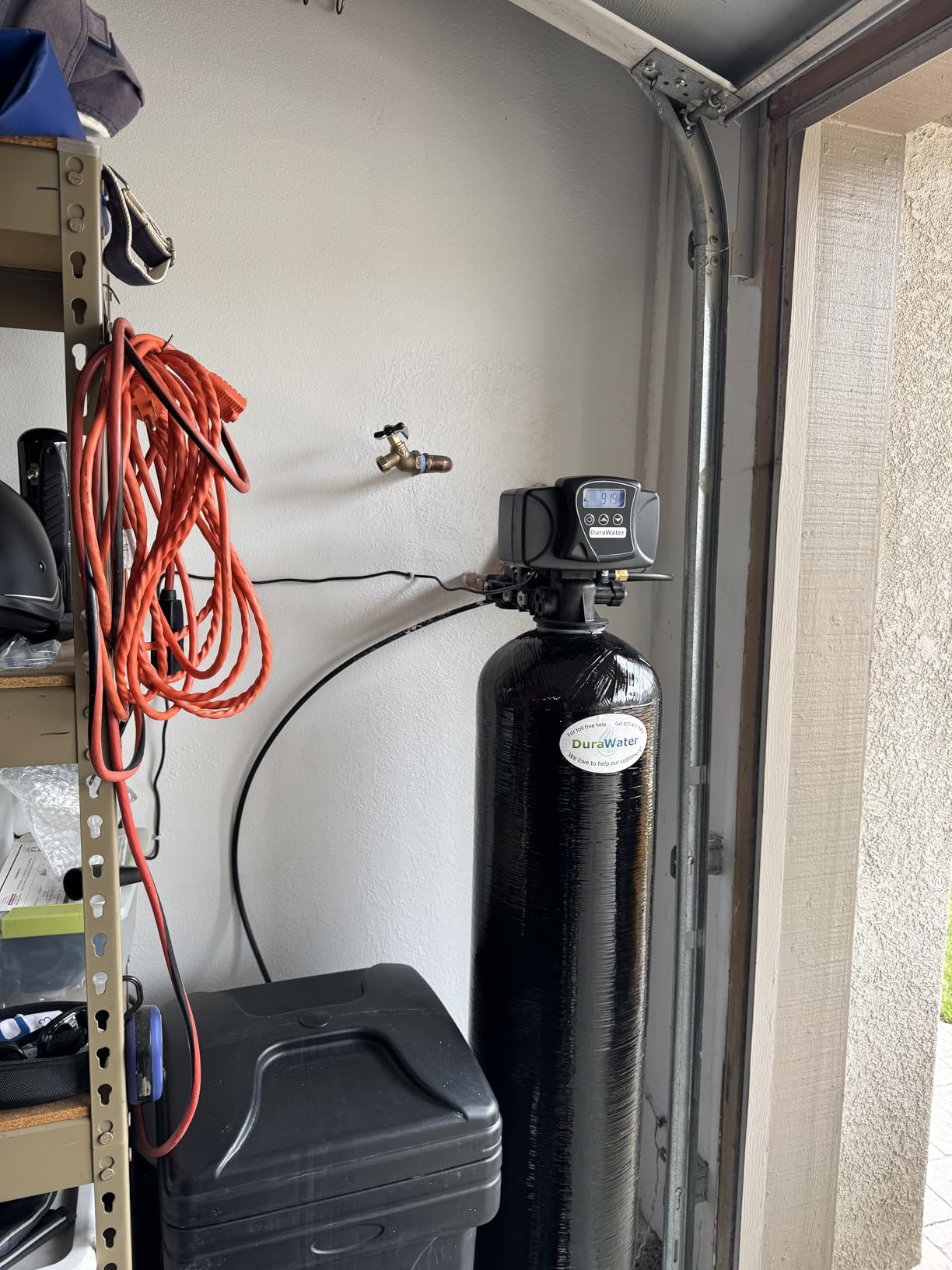
The Tier1 uses a patented ceramic disk valve instead of the rubber-seated piston most systems rely on, and there are no seals to replace and no rebuild kits to buy over its life. That is a meaningful long-term reliability argument, and it is the reason this unit is worth a look.
It is also quiet. Owners mention the near-silent operation repeatedly, which matters if the tank is anywhere near a bedroom wall, and the 10 inch mineral tank footprint is slim for a 48,000-grain system.
The Ceramic Disk Valve and Its Warranty
Because the disk mechanism resists abrasion and corrosion, the failure mode that ends most softeners simply does not apply. The warranty reflects that thinking: 10 years limited on the fiberglass resin and brine tanks, 1 year on the valve, bypass, fittings and electronics.
Read that honestly. The durable component carries the long warranty and the cheap components carry the short one, which is a reasonable but not generous split.
The Regeneration Complaint You Should Know About
This is the most important detail in the section. Despite being described as metered, a well-documented complaint among owners is that regeneration still runs on a fixed cycle of roughly 30 days, using about 92 gallons of water each time, and the manufacturer confirms that schedule cannot be bypassed.
On moderate hardness that costs you more water than a true demand system would. On hard water it is a real penalty. Verify current behavior with the manufacturer before you buy, because it is the single biggest reason some owners are unhappy.
Resin Certification, Flow and Placement
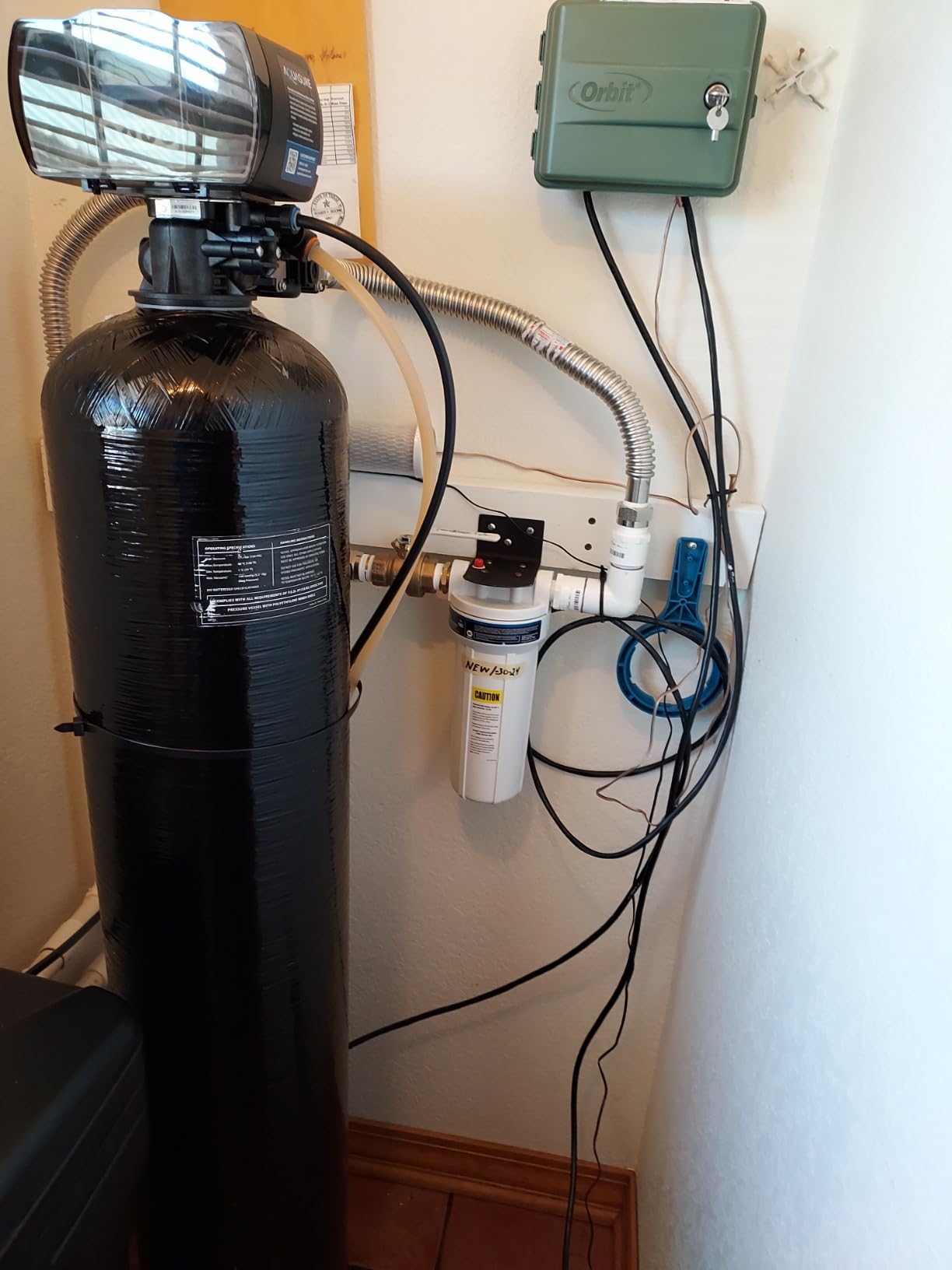
The tank is preloaded with 1.5 cubic feet of NSF/ANSI 44 certified cation resin, which is the certification that actually matters for a softening claim. Maximum flow is 18 gpm, which is higher than the 12 gpm on the Aquasure Harmony and the 7.2 gpm on the Kenmore 350, across a 20-87 psi operating range.
Two placement caveats. The supported total dissolved solids level is limited to 120 ppm, which is lower than most competitors and rules out many well supplies. And the unit is not rated for outdoor installation, which is not clearly stated on the listing and catches people out in unheated garages.
Who This Suits
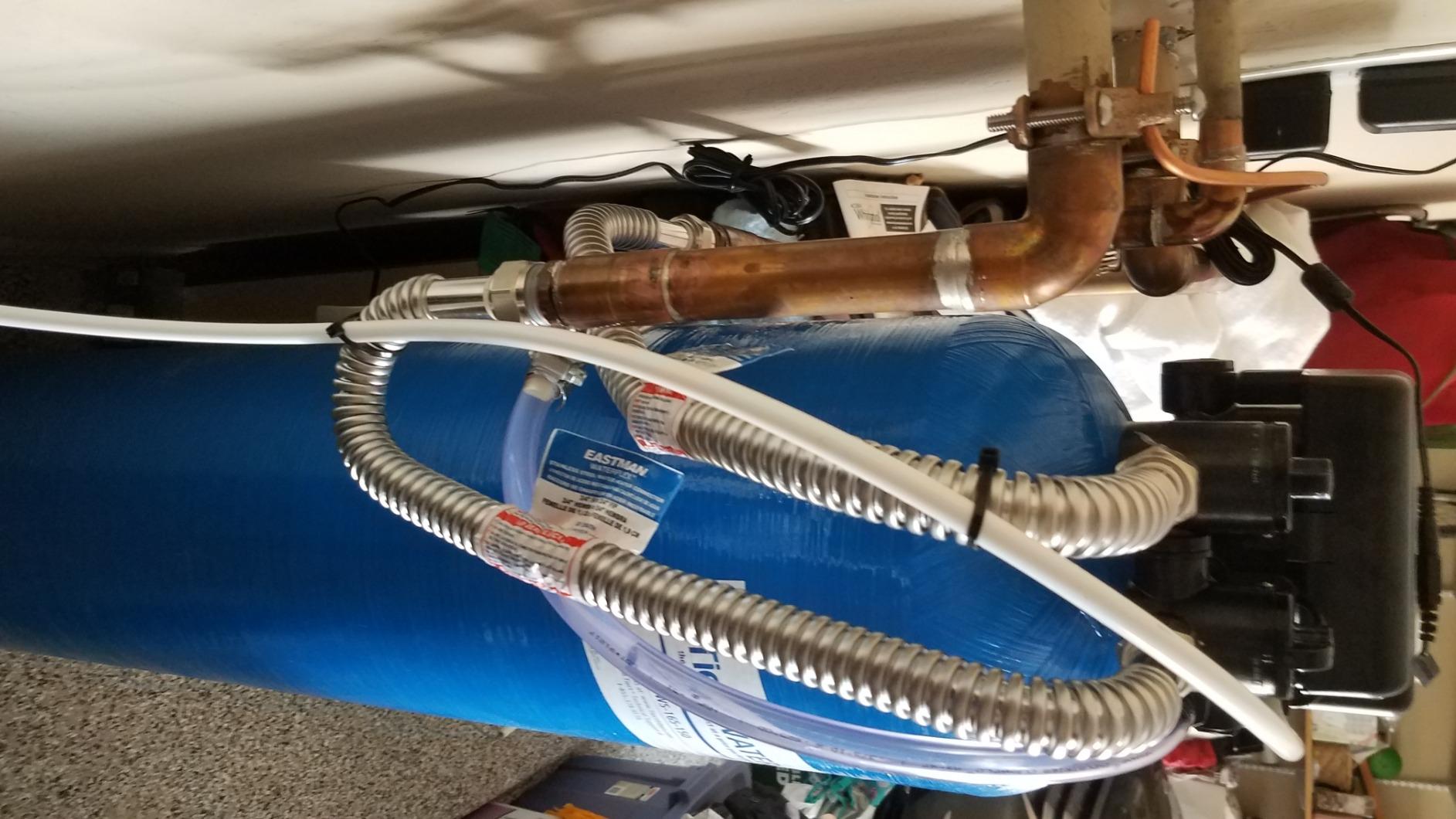
A 5-person household on municipal water who values quiet operation and a decade-long tank warranty gets a lot here. At 120 pounds, the mineral tank is genuinely difficult to reposition once plumbed, so plan the location before the box arrives, and most owners agree a plumber is advisable.
9. Aquasure 72,000-Grain Plus 75 GPD RO Bundle – Best Complete Filtered System
Aquasure Whole House Water Filtration Bundle w/Water Softener, 75 GPD RO System & Dual Purpose Sediment/GAC Pre-Filter (72,000 Grains)
72,000-grain softener
75 GPD reverse osmosis drinking system
Sediment and carbon pre-filter
+ Pros
- Whole-house softening and RO drinking water in one purchase
- 72000 grains covers up to 6 bathrooms
- Automatic metered head with backlit display
- Replacement RO filters sold by the manufacturer
- 5-year warranty with lifetime tech support
- Cons
- Heaviest package in this roundup
- RO feed adapter sometimes missing from packages
- RO faucet failures cause the worst reviews
This is the one to buy when your water needs both treatment and filtration. You get a 72,000-grain digital metered softener rated for homes with up to 6 bathrooms, plus a 75 GPD four-stage reverse osmosis drinking water system, in a single purchase.
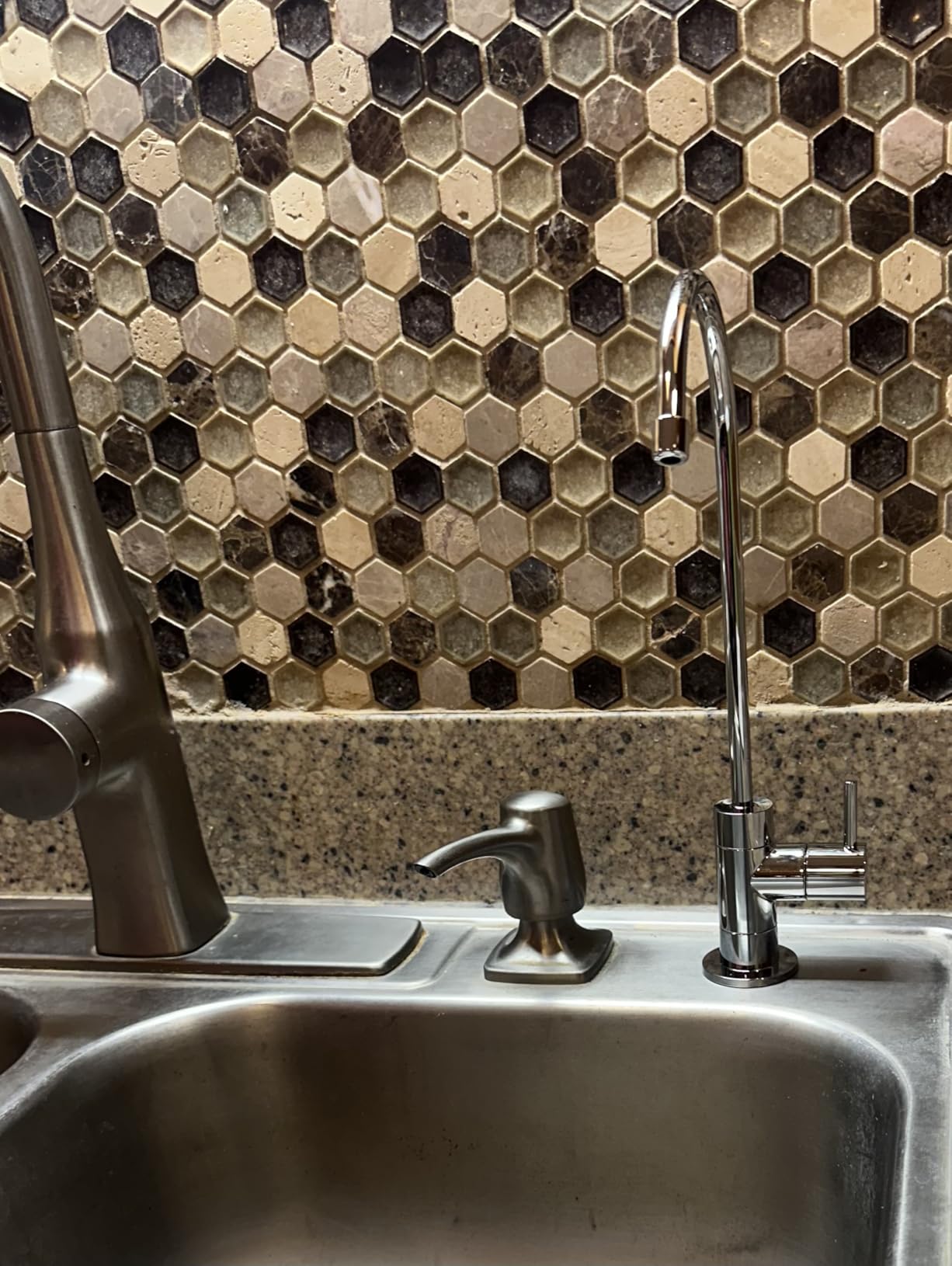
Owners who had it professionally installed report the best all-in-one value in this roundup, with soft water at every tap and filtered drinking water at the sink, in one purchase rather than three separate systems.
When a Filter and a Softener Are Both Necessary
Hardness is only one contaminant. Chloramine used in municipal disinfection is not removed by a softener, and neither is sediment, VOCs, odors or heavy metals. The triple purpose sediment, GAC and zinc pre-filter handles chlorine, VOCs, odors, sediment and heavy metals ahead of the resin.
The reverse osmosis stage then polishes drinking water separately. Filters replace every 6-12 months, and replacement parts are sold directly by the manufacturer, which removes the usual complaint about orphaned components.
Capacity, Flow and the Digital Head
At 72,000 grains, this is the largest ion exchange capacity in the roundup, and the supported total dissolved solids ceiling of 500 ppm sits well above the 350 ppm cap on the Fleck 5600 SXT and the 250 ppm cap on the Kenmore 350. That makes it the best fit for very hard water combined with contamination concerns.
The automatic digital metered head with a programmable backlit display removes manual regeneration and backwashing from your routine. The fiberglass-lined polyethylene tank and durable bypass valve match the construction used in the Harmony series.
Installation Time and What Is Not in the Box
Be honest about the install. Owners report 4-5 hours of work with two plumbers, and at 160 pounds this is not a solo weekend job in most homes. It is also the largest and heaviest package in this roundup, and it moves freight-style rather than by standard parcel.
Two practical gaps catch people: the correct RO feed water adapter was missing from some packages, and the initial 80-100 pounds of salt has to be purchased separately. Check both before your installer arrives.
Where the Negative Reviews Come From
Almost every complaint is mechanical rather than performance-related. RO faucets and fittings can fail, and when they do you get fizzy or slow water, which is what produces the most serious negative reviews in this section.
Setup videos and phone support get specific praise for getting the system running. Know which faucet you have and budget for its eventual replacement.
10. VEVOR 16,000-Grain Portable – Best Budget Portable for RV and Boat Use
VEVOR RV Water Softener, 16,000 Grain Portable Water Softener, with 3/4″ Brass Fittings and 42″ Hose, Soften Hard Water Filter System for RVs, Trailers, Boats, Mobile Car Washing, Pressure Washing
16,000-grain portable capacity
3/4 inch brass fittings with 42 inch hose
Reduces hardness to 0-3 gpg
+ Pros
- Entry-level system with the same 16000-grain capacity
- Brass connectors and 42 inch hose included
- Five-minute setup with no tools
- Some owners measure 400 ppm down to 0 ppm
- 150 psi pressure rating
- Cons
- Connection fittings can drip and seep
- Salt cap is easy to cross-thread
- Resin life shorter on very hard water
The VEVOR is the most direct entry into portable ion exchange softening for an RV, trailer or boat, and at 16,000 grains the numbers are not toy figures. The claim is hardness reduction to 0-3 gpg, and at 6.5 gpg inlet hardness it regenerates 2,461 gallons or roughly 50 days of use.
What separates it from other entry-level portables is the hardware. You get 3/4 inch brass connectors and a 42 inch hose in the box, where many portable systems in this class come with plastic fittings and expect you to source a hose yourself.
Grain Capacity and Real Test Results
Regeneration consumes 52 ounces of salt, and the food-grade recyclable resin is rated for roughly 5 years of service. Owners report immediate, noticeable softening, with several citing test strip results as proof, including one measuring 400 ppm tap water down to 0 ppm through the unit.
The 150 psi pressure rating and glass fiber shell with an NSF polyethylene tank also make this one of the more robust portable bodies in its class.
The Fitting Problem Is the Real Complaint
Here is where I would temper expectations. The dominant complaint across reviews is mechanical, not performance: dripping at the brass and garden hose fittings, and an inlet adapter that loosens and keeps seeping even after tightening. Some owners epoxied the fittings into the housing to stop it.
The salt cap is also easy to cross-thread during regeneration, which is a small thing that becomes annoying when you are doing it in a campground at dusk. A wrench and a bit of care address most of this.
Portability and Standards Limitations
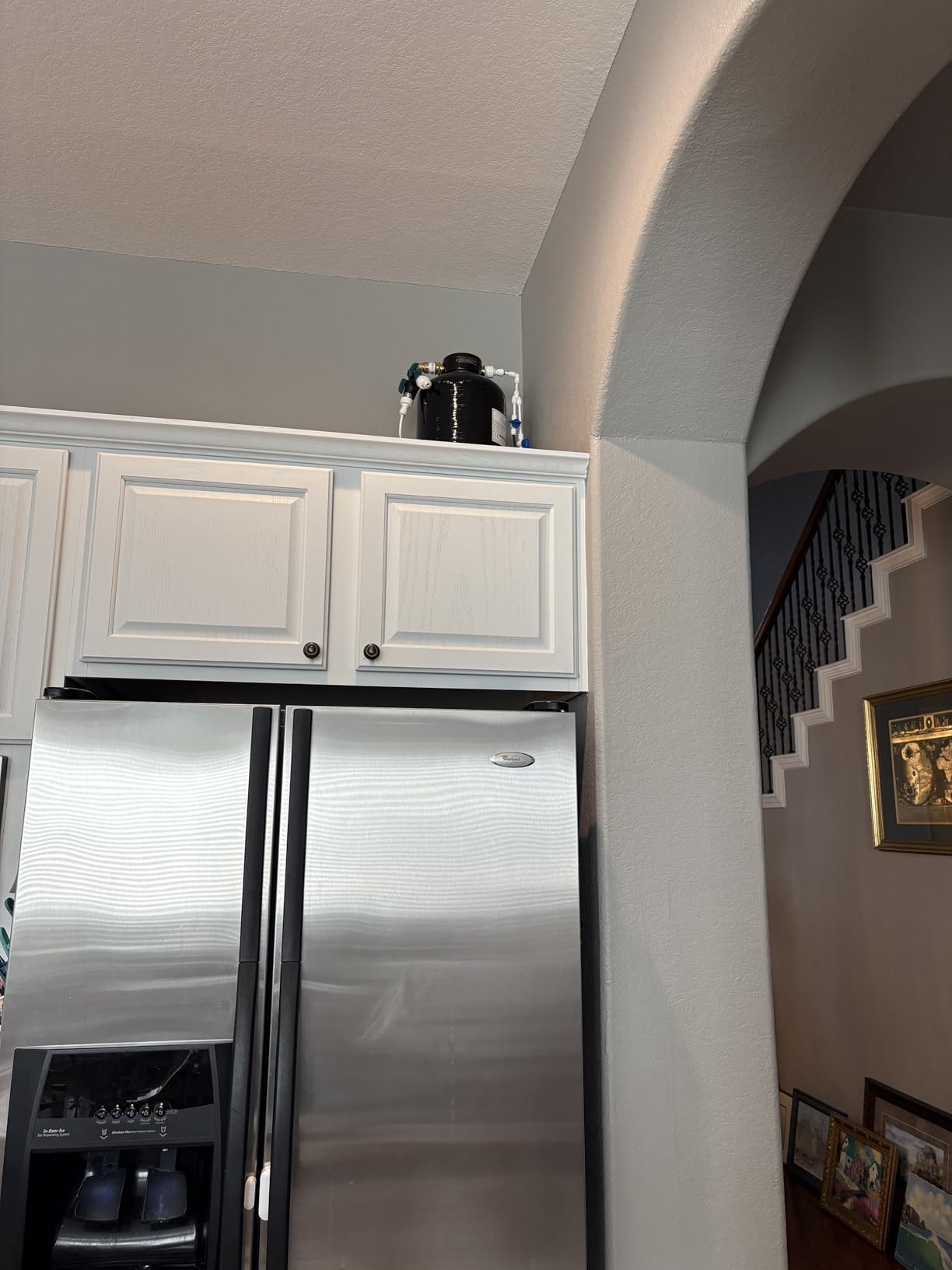
At 30.8 pounds empty, the unit feels manageable in hand and burdensome once it is full of water, which is the real portability trade-off in this category. The ergonomic carry handle and 9.6 inch square footprint suit RV wet bays and storage compartments.
Two limitations to note. The thread gauge and hose fittings are US standard only, which matters for international buyers. And at least one owner found the resin exhausted after about 48 hours on very hard water, so check your local hardness before committing.
How to Choose a Water Softener That Actually Fits Your Hard Water
Every mismatch I see in this category comes from one of four decisions: type, capacity, control valve and filtration order. Get those right and the purchase is straightforward. Get them wrong and you end up with a salt-using system that does not soften, or a salt-free conditioner facing 20 gpg water it was never designed for.
The Four Types and What Each One Actually Does
Salt-based ion exchange pushes water through negatively charged resin beads that capture calcium and magnesium and swap them for sodium. A salt brine periodically flushes the beads to regenerate them. This is the only category that genuinely softens, and it is what the Aquasure Harmony, Fleck 5600 SXT, Kenmore 350, Tier1 and all three portables use.
Salt-free conditioners use template-assisted crystallization media to restructure scale into stable crystals that wash away rather than adhere. The A. O. Smith unit is the example here. It prevents scale and does not soften, which matters enormously on a sodium-restricted diet.
Electronic and magnetic descalers like the YARNA send pulses or magnetic fields through or around the pipe. The YARNA uses capacitive pulses. Neither category reduces hardness or total dissolved solids, and any listing implying otherwise is misleading.
Dual-tank systems hold two resin tanks so one regenerates while the other serves. No dual-tank unit appears in this roundup, but if uninterrupted soft water during regeneration matters to you, that is the category to shop instead.
Hardness Scale: Reading gpg and ppm Bands
Measure before you buy. The simplest home method is a soap-and-shake test: fill a jar half with tap water, add dish soap, cap it and shake hard. Heavy foam means soft. Sparse suds with a cloudy film means hard. For real numbers, a hardness test kit or lab report gives you a figure you can size against.
The thresholds matter. From 0 to 3.5 gpg (0-60 ppm) is soft and needs nothing. From 3.5 to 7 gpg (60-120 ppm) is moderately hard, where scale control alone may be enough. From 7 to 10.5 gpg (120-180 ppm) is hard, and this is where real ion exchange starts making sense. Above 10.5 gpg (over 180 ppm) is very hard, and you should size up and consider a pre-filter.
One caution from the forums that I think deserves more attention than it gets: over-sizing a system is a genuine mistake, not a safe one. A resin tank far larger than you need sits with a low, wet bed between regenerations, which encourages bacterial growth. Size for your actual load.
Sizing Formula: People x Gallons Per Day x gpg
Multiply the number of people in your home by 80 gallons per day, then multiply by your hardness in gpg. That gives daily grains of hardness removed. A family of four at 10 gpg needs about 3,200 grains per day, and a 48,000-grain tank covers roughly 15 days between regenerations on metered control.
A family of five at 20 gpg needs about 8,000 grains per day, and you should be looking at 60,000 grains or more. This is the calculation that prevents the most common complaint in this category: a system that regenerates constantly and burns through salt in weeks.
Control Valve Brand Is the Real Quality Signal
This is the single most repeated piece of advice in plumbing forums and almost no competitor page covers it. The control valve is the part that fails, and it determines whether you can repair your system in 2031 or hunt for a discontinued part.
The Fleck 5600 SXT is the most commonly sold and most recommended valve in the country, and experienced users buy brand-agnostic equipment specifically to get one. Clack valves are widely regarded as equal or better, and the common community summary is to buy any setup that uses a named valve rather than a proprietary white-label head.
Kenmore is a house brand, which is worth knowing before you buy, because third-party parts and independent repair options are more limited. The Tier1 ceramic disk valve is a genuine alternative approach with no seals to replace, and the Aquasure digital heads are proprietary but backed by lifetime support.
Filter Before You Soften
The order of operations matters. Experienced installers consistently put a filtration stage ahead of the softener, using either a paper pleated 20 or 5 micron filter or a carbon block. Chloramine, sediment and iron all shorten resin life and foul the control head if they go straight into the tank.
Iron deserves specific attention. The Kenmore 350 and the PRO+AQUA both address clear water iron, which is a common well water problem. If your iron is more than a trace, you want an iron filter in front of the softener rather than asking the resin to do two jobs.
Ongoing Salt, Water and Service Costs
A family of four on 7-10 gpg water typically uses around 500 pounds of salt per year, and the total consumable spend varies widely with hardness and how efficiently the valve meters. A demand-initiated system like the Fleck 5600 SXT or the Kenmore IntelliSoft uses measurably less than a fixed-schedule unit.
Watch for systems that regenerate on a clock regardless of usage, such as the fixed-cycle behavior some Tier1 owners report. At about 92 gallons per cycle, wasted water and salt add up quietly. Salt-free conditioners and electronic descalers cost nothing in consumables, which is the entire economic argument for them.
One more thing no competitor page addresses. Brine discharge is regulated in some jurisdictions, and septic systems can be affected by the extra water. Before installing, check your local restrictions and confirm you have a suitable drain point and air gap.
Water Softener FAQs for Hard Water Homes
Which whole house water softener is best rated?
Among the systems in this roundup, the Aquasure Harmony 48,000-Grain holds the largest review base at more than 3,100 verified ratings and combines true ion exchange softening with a triple purpose pre-filter. The On The Go 16,000-Grain portable carries the highest average rating at 4.7 stars. For long-term repairability, experienced buyers most often recommend any system built around a Fleck 5600 SXT or Clack control valve, because parts stay available for decades.
What is the best whole house water softener for my home?
The best whole house softener is the one sized to your actual load. Multiply people in the home by 80 gallons per day, then by your hardness in grains per gallon. A family of four at 10 gpg needs about 3,200 grains removed daily, so a 48,000-grain metered system is a good fit. Choose a named control valve such as Fleck or Clack, and place a sediment or carbon filter ahead of the resin.
Which whole house water softener is best according to Consumer Reports?
We do not base these picks on any single paywalled testing body. Our recommendations come from reading manufacturer specifications against the sizing math, then analyzing thousands of verified-buyer reviews for real-world performance, installation friction and failure modes. The recurring signal across independent owner reports is that the control valve brand matters more for long-term reliability than the tank capacity printed on the box.
How much should a whole house water softener cost?
Costs vary widely by type. Portable RV units sit at the low end, budget single-tank whole-house ion exchange systems occupy the middle, and premium dual-tank or bundled filtration systems sit at the top. The operating side matters as much as the purchase: a family of four on 7-10 gpg water typically uses around 500 pounds of salt annually, while salt-free conditioners and electronic descalers have no consumables at all.
Is a salt-free water softener actually effective?
A salt-free conditioner is effective at preventing scale, and it is not a softener. Systems using template-assisted crystallization restructure scale into crystals that wash away, which protects pipes, heaters and fixtures, but they do not reduce hardness, total dissolved solids or soap lather. For water above roughly 15 gpg, or for a household on a sodium-restricted diet, a salt-free unit is often the right call. For soap scum and spotting, only ion exchange fixes it.
Which Water Softener Should You Buy in 2026?
If you want one recommendation, take the Aquasure Harmony 48,000-Grain. It is genuine ion exchange, the pre-filter is already built in, the digital metered head regenerates on demand rather than a clock, and the 5-year warranty plus lifetime support means you are not researching replacement parts from scratch five years from now.
For other situations, the decision is more specific. On a sodium-restricted diet or with no appetite for salt bags, the A. O. Smith salt-free unit handles scale on water under 15 gpg without electricity, salt or a drain line. If you want a zero-plumbing fix on pipes up to 1 inch and can wait out a three month ramp, the YARNA CWD24 keeps existing scale from building further.
For travel, the On The Go portable gives the most measurable softening of the three portable units and has the highest average rating here, while the VEVOR does the same job for the least money if you can live with fittings that need a wrench. The PRO+AQUA is the one to pick when your hard water comes from a well.
For households, the Fleck 5600 SXT is the repairability answer, the Kenmore 350 fits tight quarters and small families, and the Tier1 suits five people who want silence and a decade of tank coverage. If your water needs filtration alongside softening, the Aquasure 72,000-grain bundle is the only system here that does both.
Measure your hardness first. Almost every bad purchase in this category starts with a guess.