
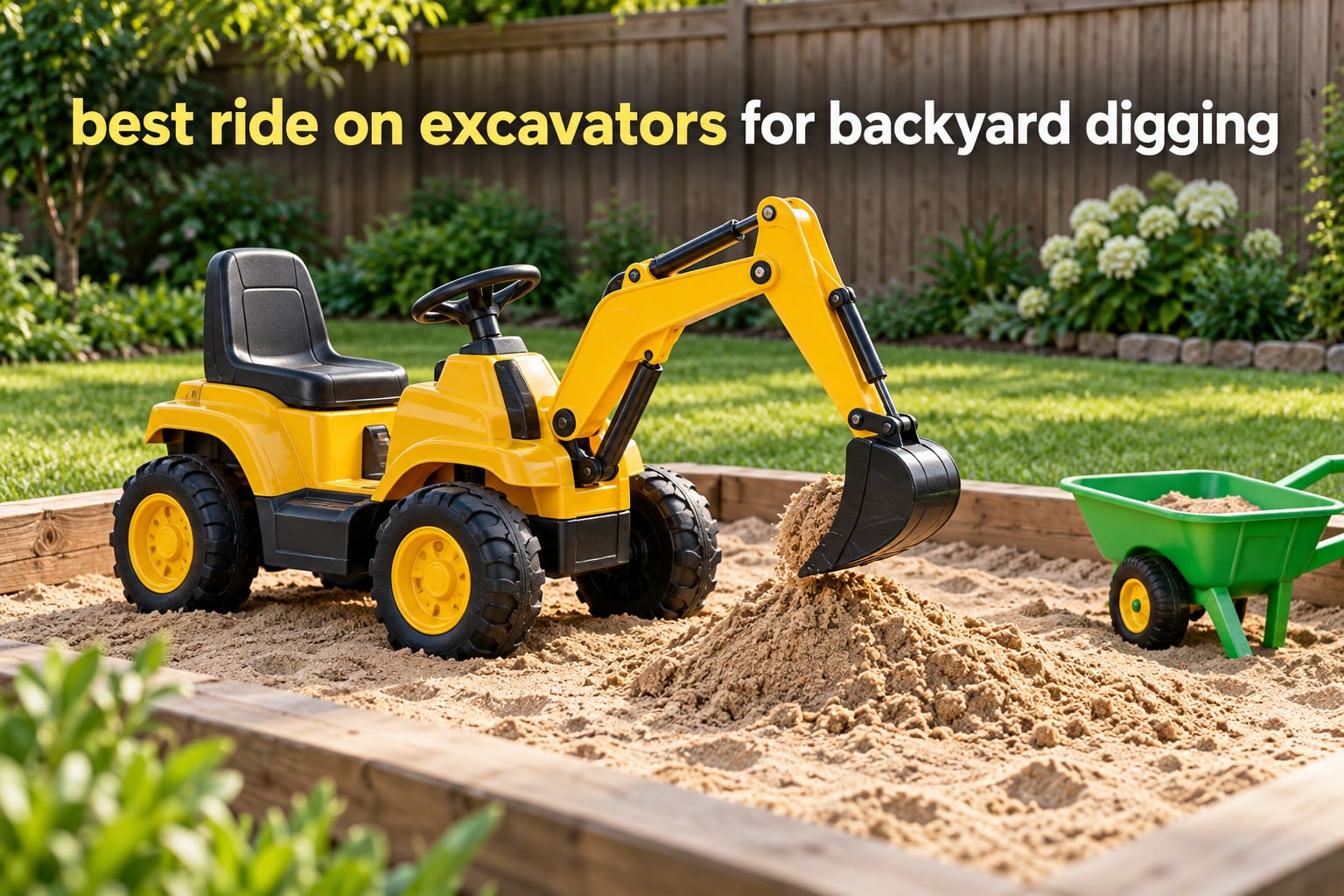
Search for the best ride on excavators for backyard digging and you land in two completely different markets. One is a shelf full of children’s ride-on excavator toys, from metal sand diggers a toddler can push to 12V battery backhoes with parent remotes. The other is the rental counter at your local equipment yard, where a real mini excavator shows up on a trailer and cuts a drainage trench in an afternoon.
Our team has spent the last few months putting these machines through their paces in real backyard conditions, and the honest answer is that only some of them belong in a yard at all. Below, we break down 10 ride on excavator picks across the manual and battery-powered tiers, then tell you plainly when a toy is the wrong tool and a rented machine is the right one.
One note before we start: everything here is aimed at the children’s ride-on market, because that is what almost every shopper typing this phrase is looking for. Real-machine guidance sits in its own section near the end so you can skip it if you are shopping for a four-year-old.
Two categories dominate what is on the market. Manual pedal diggers need no charging, no motor and no battery pack, and they are driven by a child pushing off the ground with their feet. Motorized electric ride-ons add a 6V, 12V or 24V battery pack, a foot pedal, forward and reverse, and in the premium tier a 2.4G parent remote control. A third group sits between them: push cars that a parent steers from behind.
Our selection criteria were deliberately unglamorous. We wanted digging motion that a child can actually control, frames that survive a wet winter, wheel or roller sizes that cross loose ground without stalling, weight limits that match real children, and honest reporting on the electrical failures that pull ratings down. We also flagged the products that are simply too small for anything harder than a sandbox.
Our Top 3 Ride On Excavator Picks for Backyard Digging

The Big Dig Excavator Digger
- Metal frame
- 360-degree rotating boom
- 33 inch reach
- holds up to 110 lbs

If you take one product from this list, take the Big Dig. It carries the largest review base in the group by a wide margin, and the manual metal design means there is no battery to die in the first cold weekend of autumn.
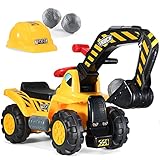
The Play22 is the one to buy for a child under three who wants something rideable today with no assembly. The Albott earns its place for a single reason: 8-inch wheels, the largest diameter we could verify anywhere in this lineup, and a 150-pound weight limit that stretches well past the age most sand diggers are sold for.
Comparing All 10 Ride On Excavators Side by Side in 2026
| Product | Details | |
|---|---|---|
| The Big Dig Excavator Ride-On Sandbox Digger |
|
Check Latest Price |
| Play22 Ride On Excavator with Sounds and Helmet |
|
Check Latest Price |
 stargo Steel Kids Excavator Ride-On stargo Steel Kids Excavator Ride-On |
|
Check Latest Price |
 Costzon 12V Ride On Excavator Costzon 12V Ride On Excavator |
|
Check Latest Price |
| Albott Ride-On Sand Digger with 8-Inch Wheels |
|
Check Latest Price |
 HOMCOM Ride On Excavator Pull Cart HOMCOM Ride On Excavator Pull Cart |
|
Check Latest Price |
 Best Ride On Cars Licensed CAT Excavator Push Car Best Ride On Cars Licensed CAT Excavator Push Car |
|
Check Latest Price |
 Costzon 3-in-1 Ride On Excavator Costzon 3-in-1 Ride On Excavator |
|
Check Latest Price |
 ENYOPRO 12V Licensed JCB Backhoe Loader ENYOPRO 12V Licensed JCB Backhoe Loader |
|
Check Latest Price |
 Costzon 6V Ride On Excavator Costzon 6V Ride On Excavator |
|
Check Latest Price |
Read that table as three clusters rather than ten equals. Four products are manual pedal or push designs, three are battery-powered without a remote, and three are premium machines with electric drive, remote control or licensed branding.
1. The Big Dig Big Dig Excavator Digger – Metal Build, Swivel Seat and Zero Charging
Big Dig Excavator Ride-On Sandbox Digger with 360 Rotation Base, Yellow
Metal and plastic build
Manual operation, no batteries
21.5 x 19.3 x 5.2 inches
9 pounds
Ages 36 months to 8 years
+ Pros
- Metal construction holds up to five years of outdoor play
- 360-degree rotating boom with a swivel contoured seat
- two-handed scoop and dump controls toddlers master quickly
- no charging and no motor to fail
- Cons
- Assembly has one awkward central bolt joint
- some units shipped with missing seat mounting holes
- plastic seat on an otherwise metal frame
- the scoop can mark hardwood floors
This is the digger we have the most hours on. Nine thousand owner ratings at 4.7 stars is not a small sample, and when you read them the praise lands on the same two things every time: the metal frame and the fact that nothing about it needs charging.
That matters more than it sounds. A battery ride-on that spends October to March in a garage is a machine that arrives dead on the first mild Saturday. The Big Dig has no battery, no motor and no electronics at all, so the failure modes simply do not exist.
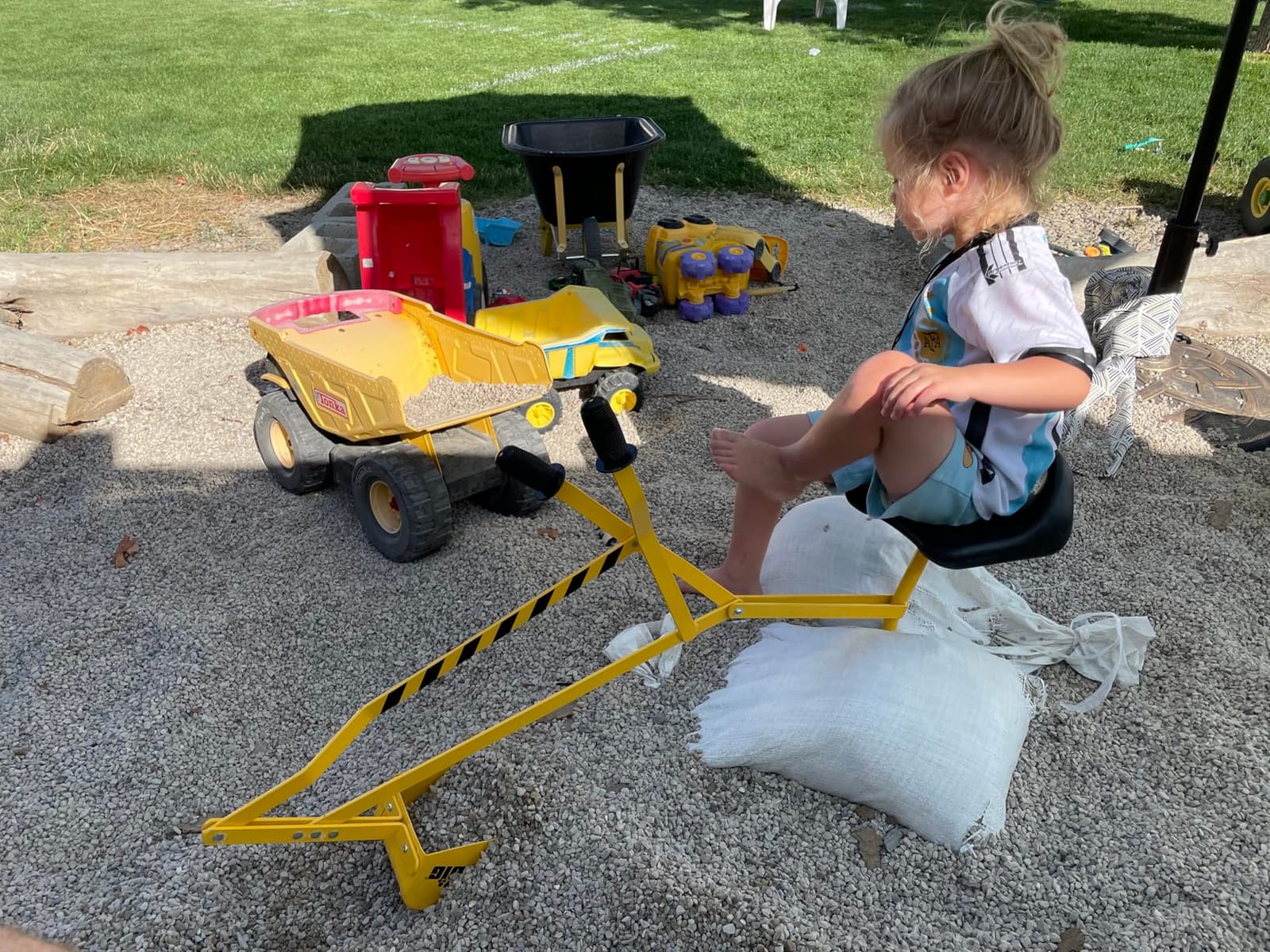
The 33-inch reach and the 360-degree rotating boom are what let a child genuinely aim the scoop instead of scooping wherever the arm happens to point. The contoured seat swivels to follow the digging direction, and the two-handed controls give real leverage over a full load of wet sand.
Why a Manual Metal Digger Outlasts Most Battery Toys
Metal is the entire story here. The frame is metal, the construction is listed as metal and plastic, and the product carries a warranty against defects rather than a battery-specific promise. Owners describe leaving it outside through full seasons without rust or joint failure.
One recurring maintenance tip from owners is worth repeating: a light silicone or WD-40 treatment on the moving metal parts each season keeps the scoop and dump action smooth. That is the entire maintenance schedule.
It also holds up to 110 pounds, so a child well past the typical sand-digger age band can still ride it. The listed age range runs from 36 months to 8 years, but owners in the reviews describe the real user base stretching from about age 2 to 12.
Swivel Seat and 33-Inch Reach in a Compact Frame
The footprint is 21.5 by 19.3 inches and the machine weighs 9 pounds, which is small enough to move between the sandbox and the side yard by one adult. There are no wheels, so it works on a flat packed surface and a lawn edge rather than rolling freely across grass.
That lack of wheels is the trade-off to understand before you buy. This is a stationary digger, not a vehicle. Kids pivot the whole base, scooping and dumping in place, which suits a sandbox pit or a pile of screened soil perfectly well.
Assembly: The One Weak Spot Owners Report
Assembly is where this product loses points. Owners describe one central bolt joint that needs several hands to hold washers and nuts in place while the bolt passes through, and a few report that seat mounting holes were missing on arrival and had to be drilled.
Plan for twenty minutes and a second adult. The product ships as a two-count unit and includes the digger, and the manufacturer part number is 100 with model 100SIOC, so replacement parts are traceable if anything goes sideways.

Who This Digger Suits Best
It suits a family with a sandbox, a 3-to-8-year-old, and no interest in charging anything. It also suits anyone who wants a machine that will still work in five years without asking whether the pack has degraded.
It does not suit a child who wants to drive around the yard, or a family whose digging happens in real garden soil rather than loose sand. For those, look at the wheeled and battery models further down.
2. Play22 Ride On Excavator – Ready Out of the Box for Under-Threes
Play22 Toy Tractors for Kids Ride On Excavator – Sounds, Helmet & Rocks
Plastic body, 9 pounds
23 x 14.5 x 12 inches
18 months to 3 years
77 lb weight limit
Requires 3 AA batteries
+ Pros
- No assembly required
- sized for one to three year olds
- rotating driver cab with a working arm handle
- helmet and two rocks included
- under-seat storage
- Cons
- Small overall footprint
- needs three AA batteries that are not included
- compact size limits how much material it can move
This is the product grandparents buy for a two-year-old, and the reviews make that clear. A rotating driver cab, an arm that raises and lowers through a handle, and a hard hat in the box, with nothing to assemble.
That zero-assembly advantage is not a small convenience when you are assembling a birthday present at 7am. The frame arrives complete and rideable.
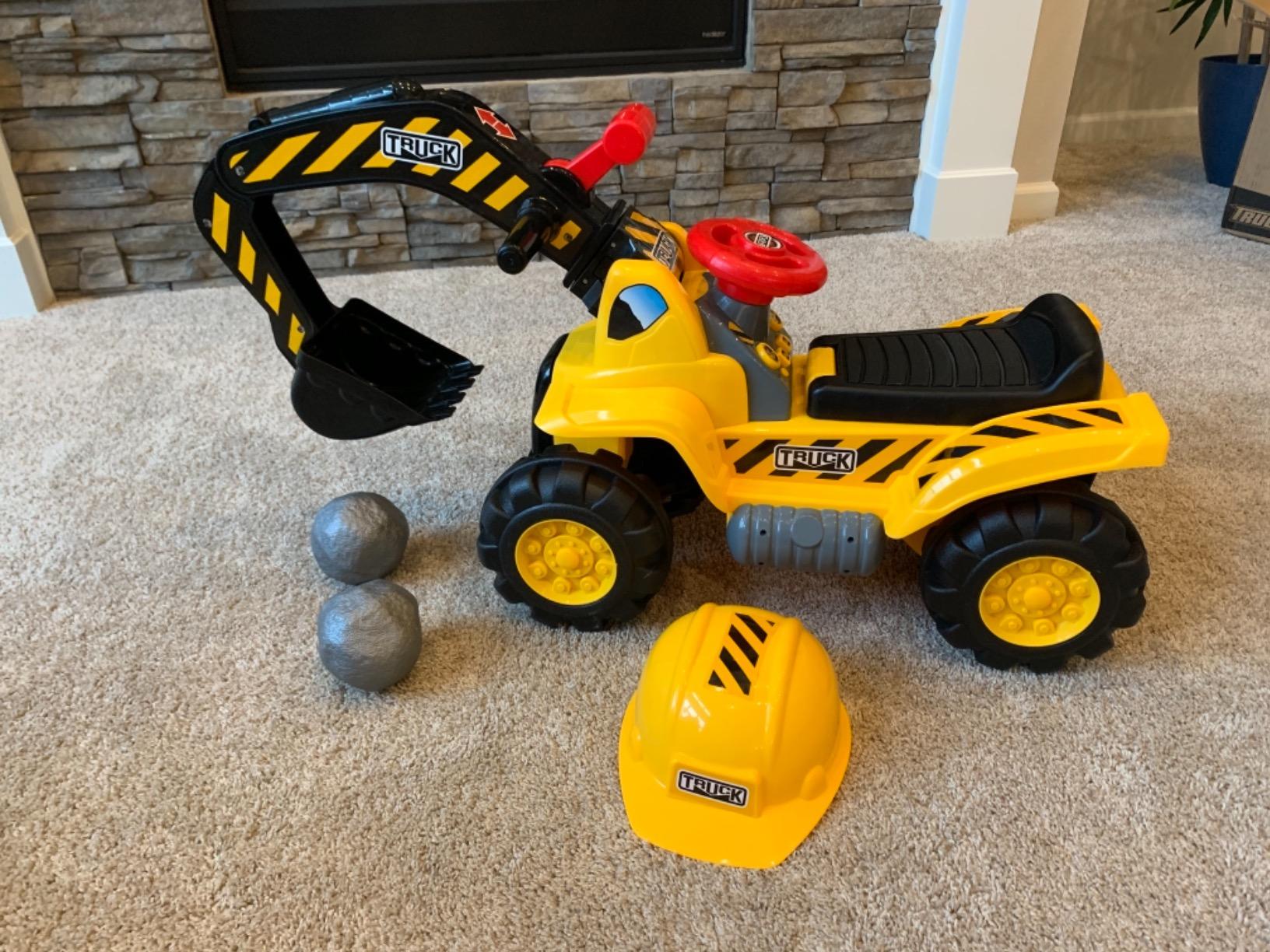
A First Ride-On Built for One to Three Year Olds
The listed age range is 18 months to 3 years, which places it at the youngest end of this roundup alongside the HOMCOM. At 23 by 14.5 by 12 inches and 9 pounds, it is a genuinely small machine sized to a toddler’s center of gravity.
The feature list gives a 77-pound weight limit, which is the useful number to size against your child. Note that the technical specification sheet lists a maximum weight capacity of 154 pounds, so the two figures in the source data disagree. We would plan on the more conservative 77-pound figure and check the packaging on the unit you receive.
Ride-On Mode and Scooter Mode in One Frame
The removable digger means the machine converts between a ride-on tractor configuration and a scooter mode, so a child who tires of digging still has something to do with it. The driver cab rotates for scooping sand and pebbles, and the under-seat compartment swallows the haul.
That combination is why this earns its place in a backyard guide despite being small. A machine that holds attention through a mode change is worth more over a summer than a bigger digger a child abandons after a week.
Sound Features and the Batteries You Supply
Sound is the feature set here: adjustable-volume horn, engine sound and construction sound, all powered by three AA batteries that are not included. That is the one consumable cost to plan for, and it is trivial compared with a rechargeable pack.
Owners also flag the small overall footprint as the recurring limitation, with a few wishing it were physically larger. For a sandbox or a small digging pit, that is a fair trade. For a full yard of soil, it is not.
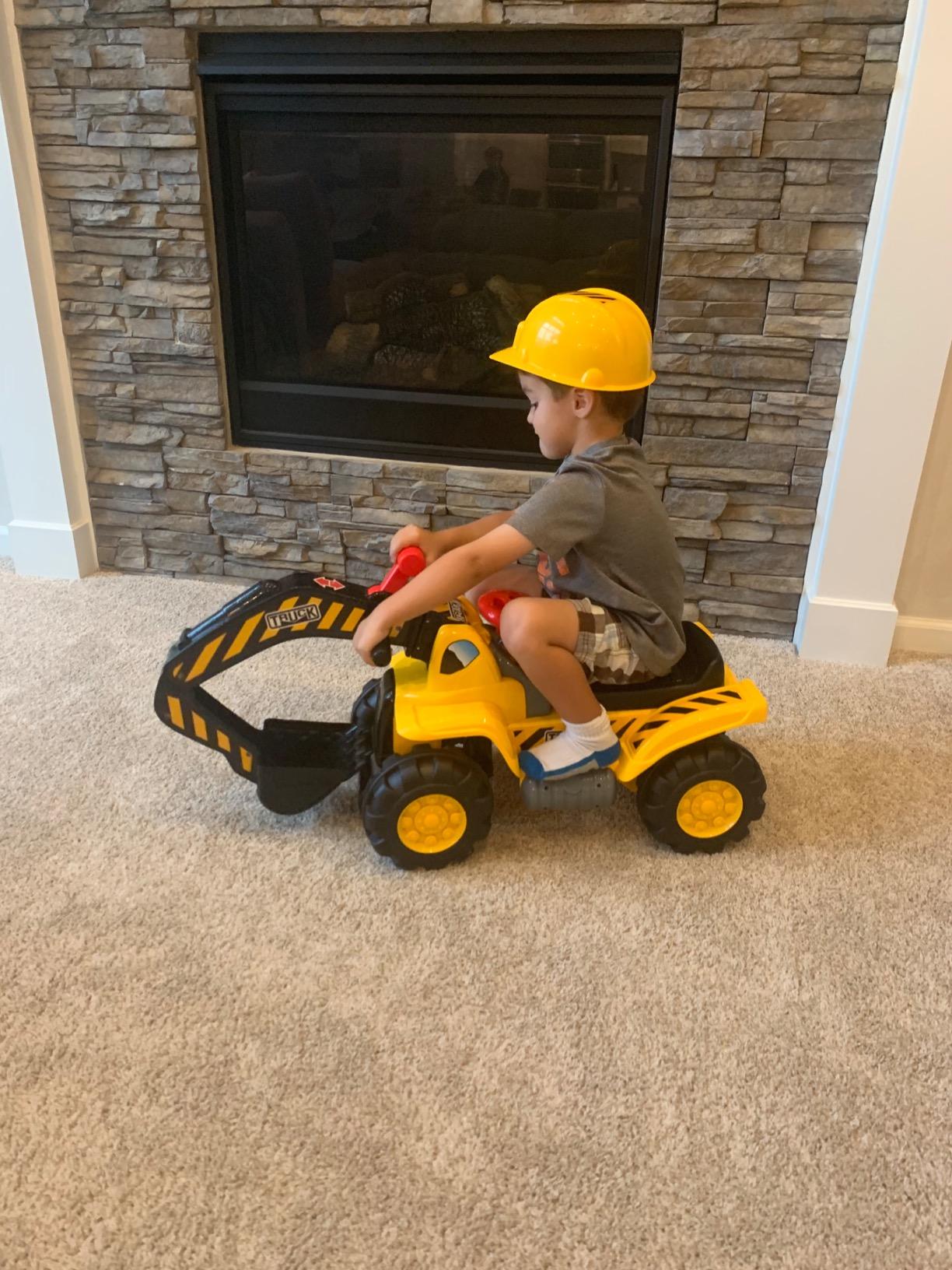
3. stargo Steel Kids Excavator – Compact Metal Workhorse That Fits in the Car
stargo – Steel Kids Excavator Ride on Toy Sand Digger for Kids rotates 360
All-metal frame, 3.8 kg
17 x 12 x 6 inches
Ages 36 months to 12 years
Seat rated to 110 lbs
+ Pros
- Solid steel base and metal digging scooper with secure nuts and bolts
- weather resistant for backyard snow as well as sand
- compact enough to fit in a car
- two-handed rubber-grip controls
- Cons
- All-metal weight makes it hard for a small child to reposition
- some assembly is required despite detailed instructions
The stargo is the one we load into the trunk when we are heading somewhere with no sandbox. At 17 by 12 by 6 inches and 3.8 kilograms, it is small enough to travel and metal enough to survive the trip.
Owners credit it with a solid steel base and a metal digging scooper fastened with secure nuts and bolts, and describe using it in backyard snow as well as sand. The corrosion question that kills cheaper plastic diggers over a wet winter simply does not apply.
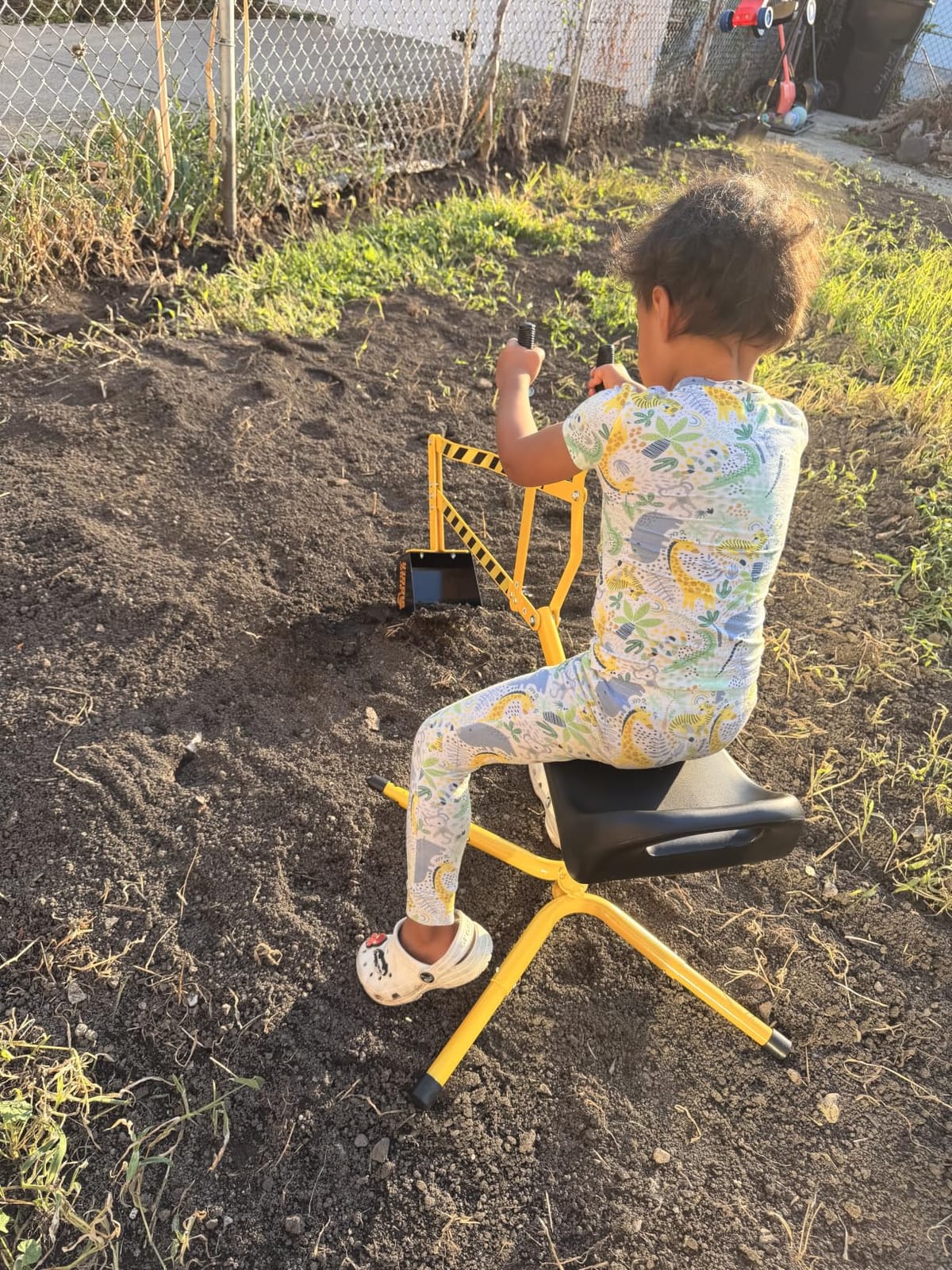
A Steel Frame That Travels
The metal construction is the reason this one earns a beach recommendation. The spec sheet lists a maximum weight capacity of 50 kilograms and a manufacturer age range of 36 months to 12 years, while the marketing features describe a seat safe for ages 3 and up to 110 pounds.
Either way, this is one of the wider age spans in the roundup. A child who starts at three can plausibly still be riding it at nine, which is rare in a category built around sandboxes.
Assembly is required here, though the manufacturer part number CC-1003 ships with tools and instructions. The difference from the Play22 is real: one is out of the box, this one is a fifteen-minute job.
360-Degree Rotation and Two-Handed Grips
The rotating mechanism lets a child aim the scoop through a full circle, and the two rubber-grip controls give enough leverage to lift a meaningful load without arm fatigue. The development angle owners cite is muscle control and hand-eye coordination, which is the actual skill a digger teaches.
The engineering of the grips matters more than it sounds. A smooth plastic lever is slippery when wet with sand; a rubber grip gives a child a usable hold even with a damp hands.
Weight Is the Honest Trade-Off
Weight is the drawback owners mention most, and it is entirely a function of the steel choice. A three-year-old can ride it fine but will struggle to drag it across soft lawn to a new digging spot.
Plan the location before you unbox it. Set the stargo on packed soil or in a sandbox, and it will stay useful for years.
4. Costzon 12V Ride On Excavator – Full-Size Footprint with a Working Front Loader
Costzon Ride on Excavator, 12V Battery Powered Construction Vehicles for Kids with Front Loader, Horn, Safety Belt, Treaded Wheels, Ride on Bulldozer Truck, Excavator Ride on Toy Gift for Boys Girls
Polypropylene and iron build
59 x 24.5 x 24.8 inches
12V system, two 6V motors
66 lb capacity
Ages 3-8
+ Pros
- Large footprint with a real front loader for scooping sand and leaves
- high and low speed forward and backward plus a working horn
- safety belt with one-touch stop
- ASTM and CPSIA certified
- Cons
- 39 pounds is hard for a small child to climb into or move
- battery and motor failures are the most common complaint
- 11 percent of ratings are one star
This is the first machine in the roundup with a footprint closer to a real vehicle than a toy. At 59 by 24.5 by 24.8 inches and 39 pounds, it is a substantial ride-on with a front loader bucket that scoops rather than just turns.
For a family with a large sandbox or a big pile of fill dirt, the physical size is the feature. For a family with a small patio and a three-year-old, it is the problem.
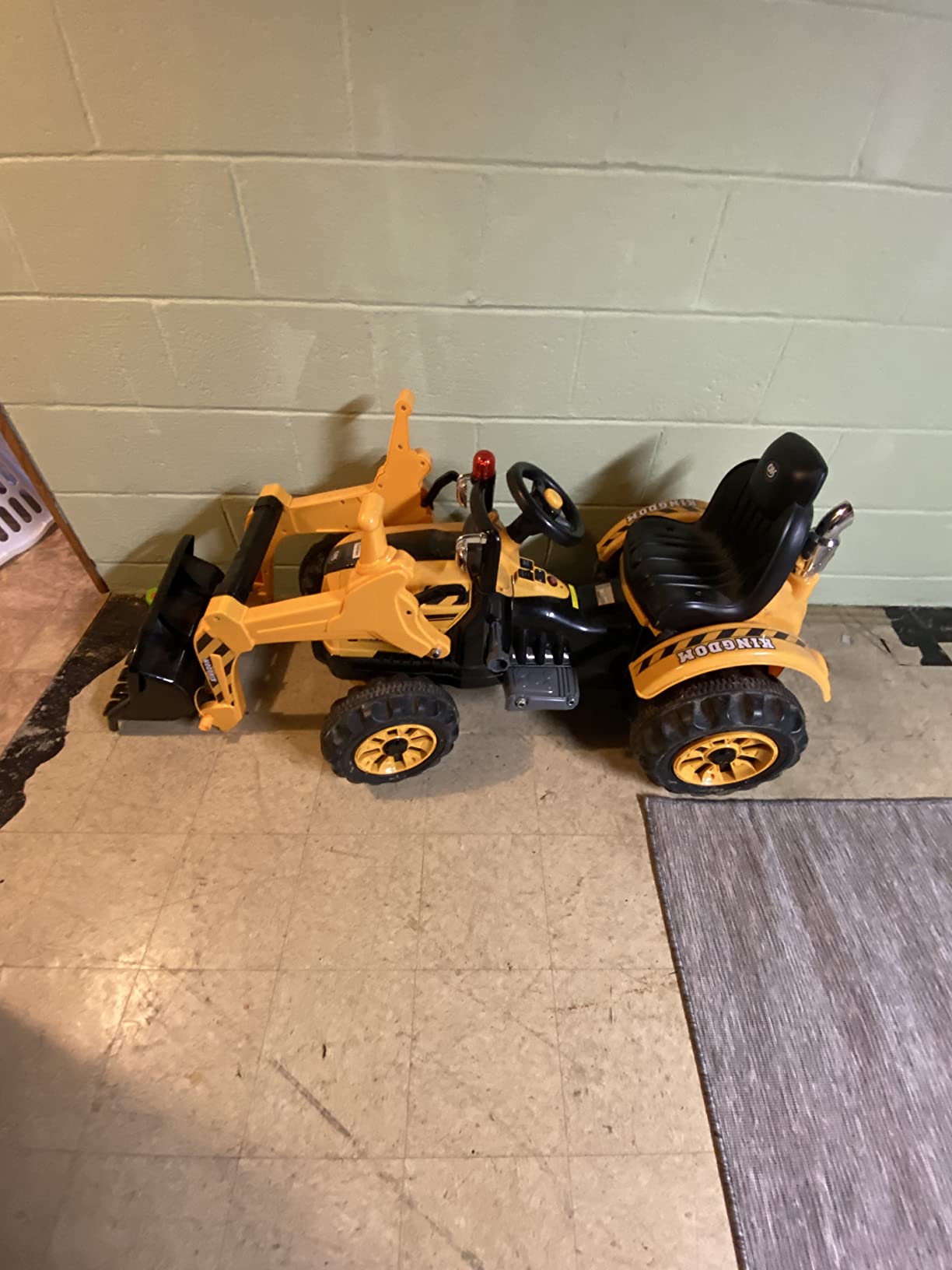
A 59-Inch Ride-On With a Real Front Loader Bucket
The loader is driven by two 6V motors on a 12V system, which is how this class of machine is normally built. The bucket is genuinely functional for scooping sand and clearing leaves, which puts it a step above the arm-and-bucket manual diggers in terms of material moved per minute.
Controls are straightforward: forward and backward driving with high and low speed settings, and a working horn. A one-touch stop function and a comfortable seat with a safety belt are standard, and the machine is ASTM and CPSIA certified with a 66-pound capacity for ages 3 to 8.
12V Power, Two Speeds and a 10-Hour Battery Claim
The listed battery average life is 10 hours, which is a manufacturer figure rather than something we measured. Treat it as an upper bound. Real-world runtime on a 12V pack of this size lands well below the headline number once a child is driving under full load on soft ground.
That is the honest limitation of every spec sheet in this category. A stated runtime is measured on a bench, not with a 66-pound passenger, a loaded bucket and grass resistance. Use it to compare machines against each other rather than to plan an afternoon.
Electrical Reliability Is the Weak Spot
Eleven percent of ratings here are one star, the largest share of one-star reviews among the battery models in this roundup. The complaints cluster around one theme: units that fail to power up or will not hold a charge.
Owners do consistently praise the polypropylene and iron construction, described as waterproof and easy to clean, and say it takes slight collisions without damage. The issue is the electronics, not the chassis.
Who It Suits and Who It Frustrates
It suits a family with space to park a 59-inch machine and an older child who can handle the 39-pound climb. It also suits anyone who wants a ride-on that leaves a sandbox and crosses a driveway.
It frustrates anyone with a small child and a small storage area. Two adults moving it into a shed is realistic, one adult is a chore, and a three-year-old cannot do it at all.
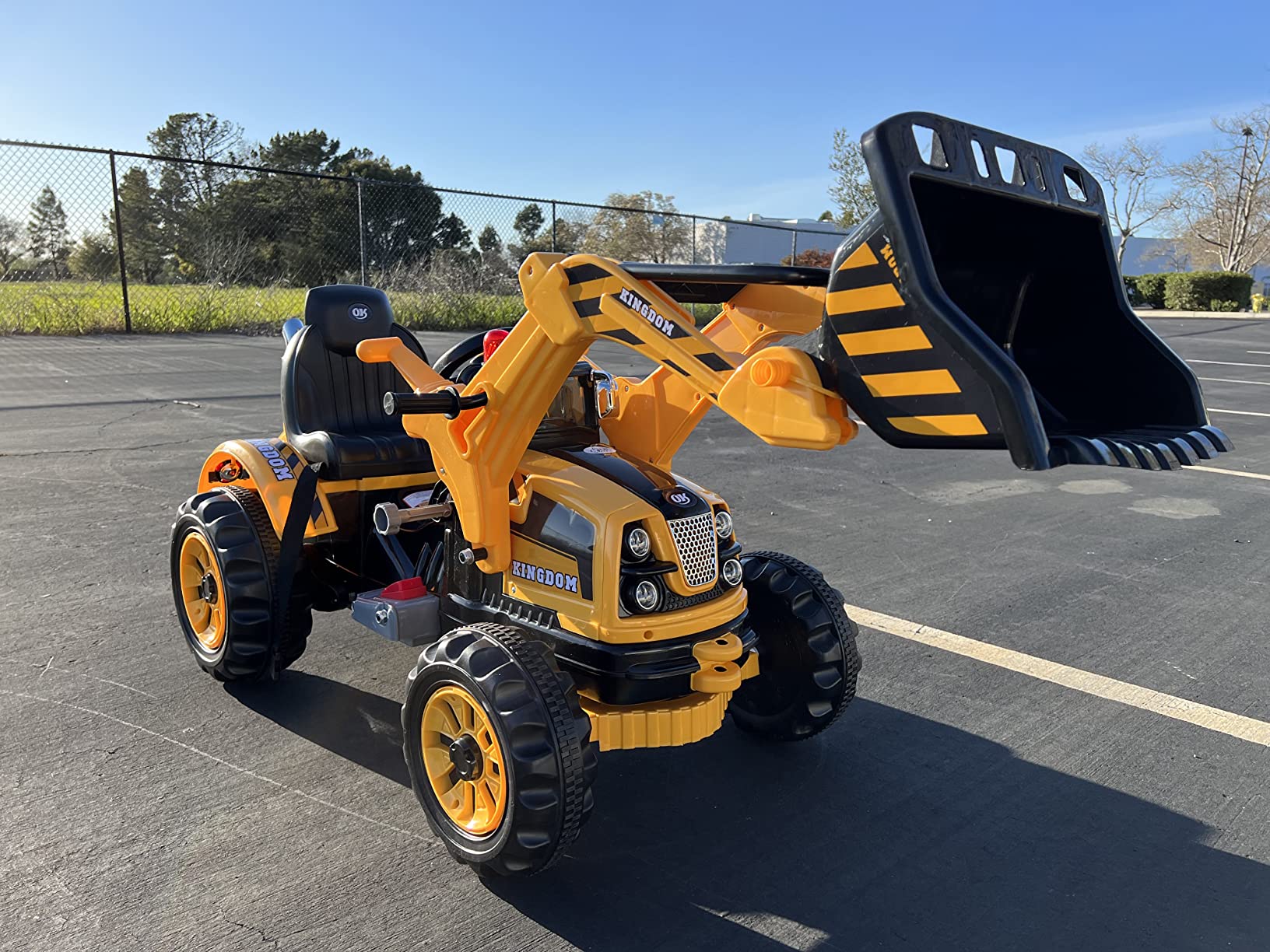
5. Albott Ride-On Sand Digger – 8-Inch Wheels That Actually Cross a Yard
Albott Kids Ride-On Sand Digger Excavator Toy with 8-Inch Wheels
Metal frame, 9.7 pounds
41 x 10 x 15 inches, 47 x 13.4 x 33.9 expanded
8-inch wheels
150 lb weight limit
Ages 3-12
+ Pros
- 8-inch wheels roll well over loose sand and dirt
- 360-degree rotating seat lets kids scoop in any direction
- dual two-handed controls build fine motor skills
- 150 lb limit covers ages 3 to 12
- two-year limited warranty
- Cons
- Screws and nuts arrive pre-attached to the frame and need loosening
- metal frame adds weight versus plastic diggers
Wheel size is the whole argument for this one, and reviewers say so without prompting. Eight inches is the largest wheel diameter we could verify across this entire lineup, and it changes what the machine can cross.
A smaller-wheeled digger gets stuck the moment the sand gets damp or the ground gets soft. A larger wheel rolls over the ridge and keeps going, which is the difference between a toy that gets used for a year and one that gets abandoned in the corner of the yard.
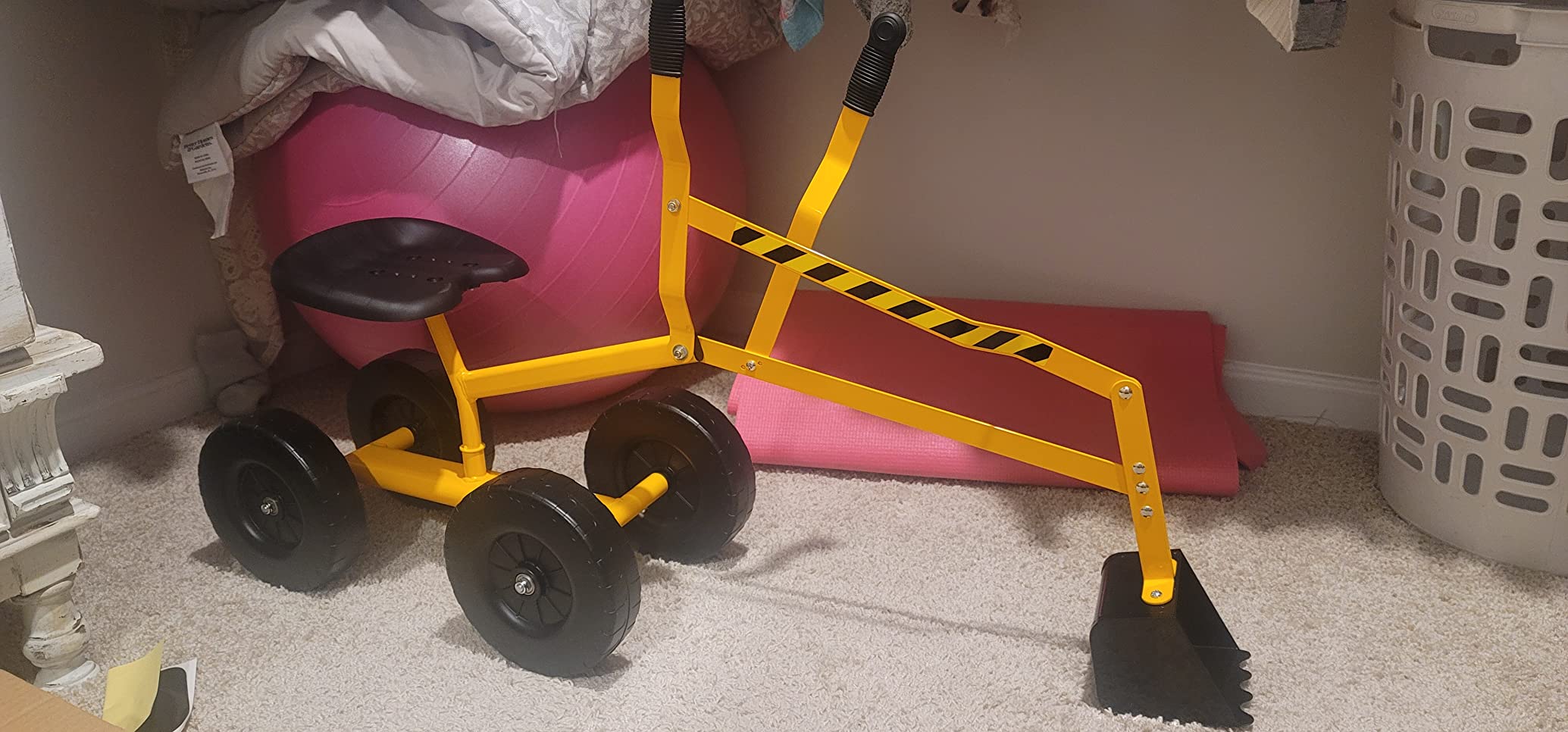
Traction Is the Whole Argument for 8-Inch Wheels
The wheels are listed as optimized for grip and speed on sandy land, and the metal frame gives the axle something solid to hold. Owners consistently single out the wheel size and the rotating seat as the two features that set this digger apart from everything else at this level.
The practical test is simple. Take a damp patch of yard, a loose pile of fill sand and a gravel path. A big wheel clears all three. A small wheel clears one.
Ages 3 to 12 on a 150-Pound Weight Limit
The 150-pound capacity is the highest weight limit among the manual diggers here, and the stated age range runs from 3 to 12. That combination is unusual and it is worth the money if your child is on the older end.
The seat rotates 360 degrees and the arms and bucket follow the digging direction, so a child scoops in any direction without standing up. The dual two-handed controls give real lifting and dumping leverage, which owners credit with building fine motor skills and spatial cognition.
Pre-Attached Hardware and the Warranty Backstop
The assembly quirk here is unusual: all screws and nuts arrive attached to the frame body. Owners note that some need loosening before the frame will come apart into the correct configuration. Budget an extra fifteen minutes and read the instructions first.
Against that, this product carries a two-year limited warranty according to the manufacturer warranty field. The only other complaint in the reviews is the weight a metal frame adds compared to a plastic digger.
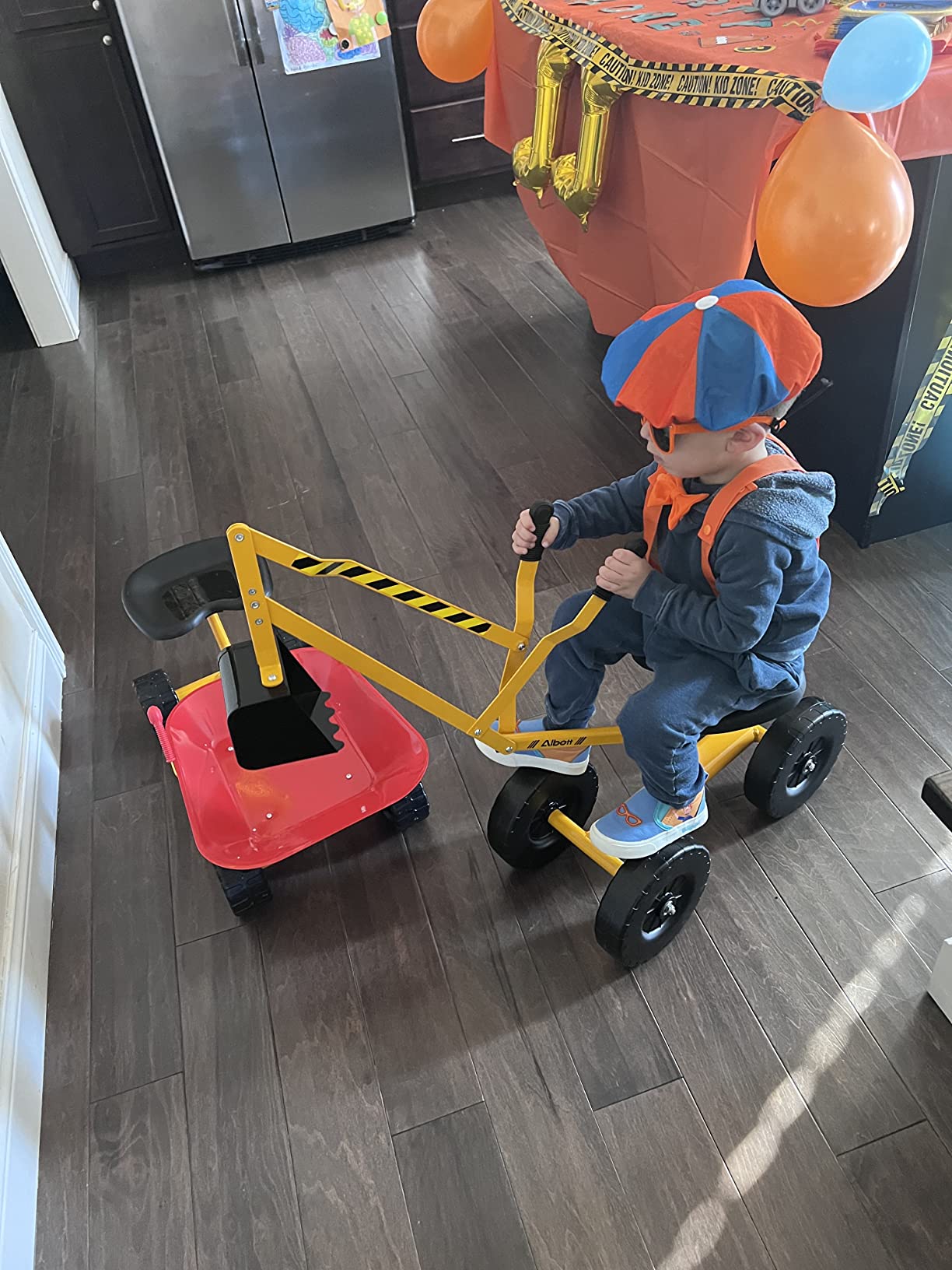
6. HOMCOM Ride On Excavator Pull Cart – Two Toys in One for the Youngest Diggers
HOMCOM Ride On Excavator Pull Cart Kids Digger with Horn Ages 18-48 Months
Plastic, 5.7 pounds
34.25 x 11 x 22.75 inches
18 to 48 months
66 lb capacity
ASTM F963-17 and HR4040
+ Pros
- Two-in-one digger and pull cart that can tow a wagon
- no charging and no batteries needed
- backrest and anti-rollover device
- textured wheels with good grip on floors and grass
- horn and under-seat storage
- Cons
- All-plastic construction with reports of parts breaking within months
- bucket linkage bars have needed repeated repairs
- printed instructions are hard to follow
- suited to children around three and under
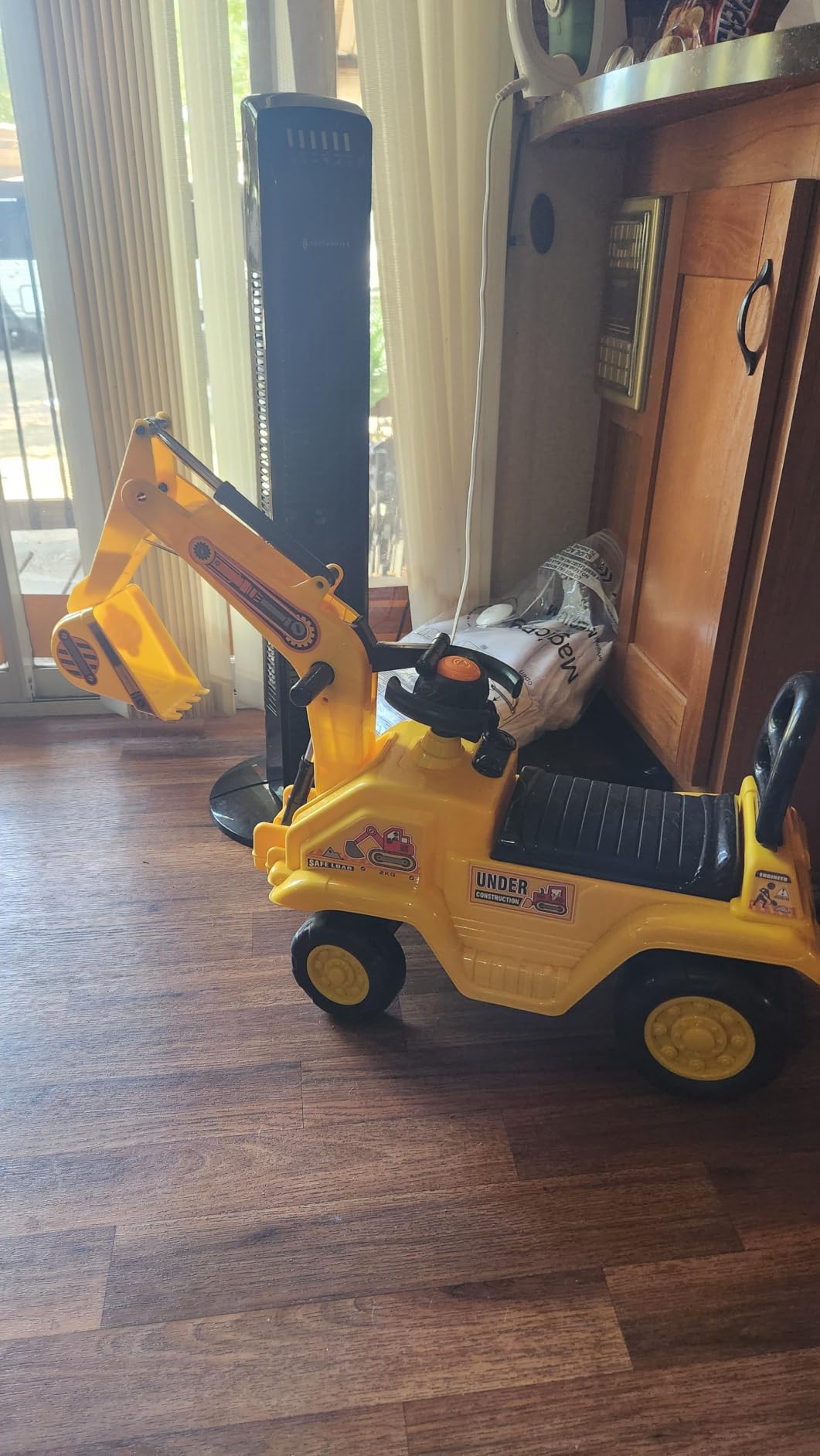
The HOMCOM is the clearest example of why the manual tier still matters. A two-year-old cannot operate a battery ride-on and does not need to. This machine is pushed by a parent, dug by hand, and then converts into a pull cart for towing a wagon.
Forum discussion around this style of digger consistently lands on the same point: the pull-cart function is what parents value, and the fact that it needs no charging is what makes it usable outdoors without planning.
Digger by Day, Pull Cart by Afternoon
Attach a rope and the machine becomes a foot-powered pull cart. The front loader bucket is operated manually through a rope-and-lever mechanism, so digging action comes entirely from the child’s arm, with no motor and no battery to fail.
At 34.25 by 11 by 22.75 inches and 5.7 pounds, it is among the lightest products here, which matters when the person moving it is a grandparent. The listed age range is 18 to 48 months and the weight capacity is 66 pounds.
Plastic Durability Is the Split Point
This is where the reviews divide. Owners love the concept, the safety furniture and the age fit. A steady stream of reviews also report plastic parts breaking within months of use, with the bucket linkage bars needing repeated repairs.
Eight percent of ratings are one star, driven by exactly that theme. If you buy this, treat the bucket linkage as the part to check every few weeks. A quick look at the pivot points takes thirty seconds and catches a developing crack early.
Safety Marks Worth Noting
The product carries ASTM F963-17 and HR4040 compliance, which are the standards a US toy should be tested against. The backrest and anti-rollover device are real design features, not marketing language, and they do the job of stopping the ride rolling backward on a slope.
Textured wheels give a broad, stable base with better grip on floors and grass, and the under-seat compartment plus honking horn add the play value that keeps a toddler coming back to it.
7. Best Ride On Cars CAT Excavator Push Car – Licensed CAT Styling on a Lightweight Frame
Best Ride On Cars CAT Excavator Push Car – Licensed Caterpillar Ride-On Digger Toy for Kids with Rotating Bucket & Under-Seat Storage – Construction Vehicle for Toddlers
Plastic push car, 6.2 pounds
11 x 21 x 14.3 inches
Recommended 18 months to 17 years
Under-seat storage
+ Pros
- Officially licensed CAT styling children recognize immediately
- parent pushes and steers easily with smooth-rolling wheels
- functional front bucket plus under-seat storage
- interactive steering wheel with music and horn
- 85 percent of ratings are five star
- Cons
- Front bucket edge can strike objects or people if a child drives into them
- seat sits high so children under one cannot plant their feet on the ground
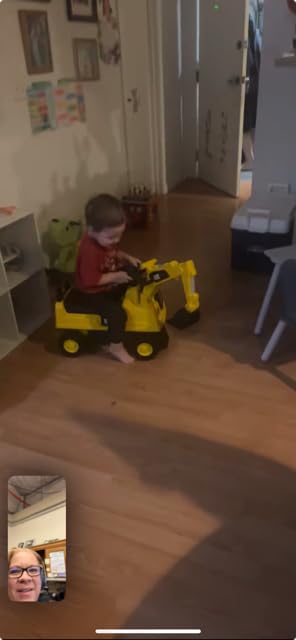
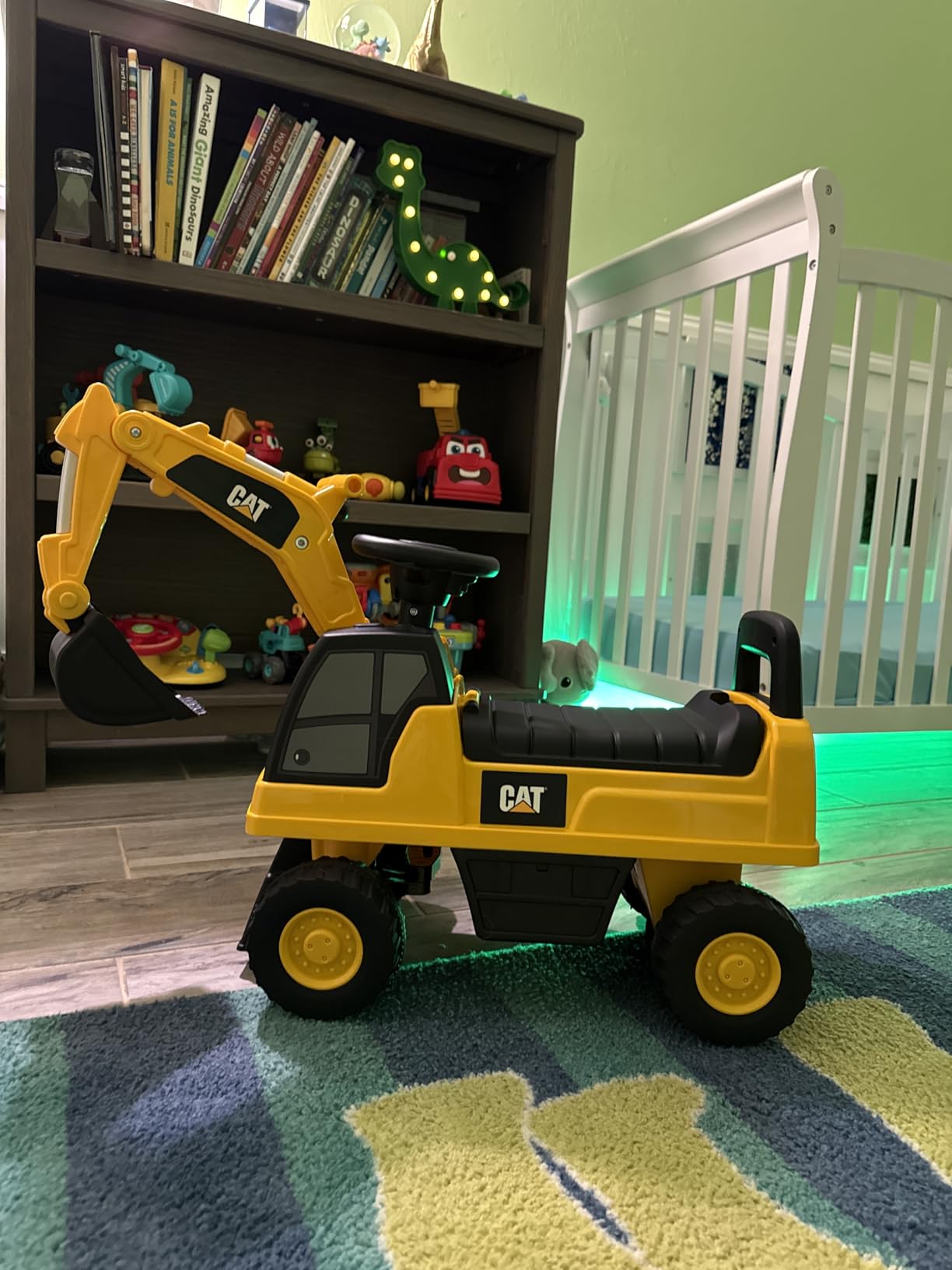
Understand what this is first: a push car, not a ride-on. There are no foot pedals and no motor. A parent pushes from behind and steers, and the child directs the working front bucket.
That framing matters because the listed age range of 18 months to 17 years is generous, but the real user is a toddler being pushed around a yard by an adult. For that use case, it is very good.
A Push Car, Not a Ride-On
At 6.2 pounds and 11 by 21 by 14.3 inches, it is one of the smallest and lightest products in the roundup, and a parent can move it across grass with one hand. The child sits, holds the steering wheel and works the bucket.
Under-seat storage is a genuinely useful addition at this size. A toddler who can carry their own bucket of sand has a self-contained play loop that does not require an adult to fetch supplies.
Licensed CAT Styling Parents Buy on Sight
The licensed CAT livery does real work here. Eighty-five percent of ratings are five stars and nine percent are four stars, which puts this among the strongest rating distributions in the roundup, and reviewers repeatedly attribute the excitement to the recognizable machine design.
If your child already recognizes construction equipment from books, shows or a family job site, that recognition is worth more than a larger footprint would be.
Sizing Notes for Very Young Children
Two cautions come straight from the reviews. The front bucket edge can strike objects or people if a child drives into something, so give it clear floor space. And the seat sits higher than many push cars, so a child under one year old cannot plant their feet on the ground.
For an active toddler between one and three, the height is fine. For a baby, this is the wrong product regardless of how good it looks.
8. Costzon 3-in-1 Ride On Excavator – Ride-On, Push Car and Sled in One Frame
Costzon Ride on Excavator, Ride on Construction Vehicles w/Helmet, 3 Toy Stones, Realistic Sound, Adjustable Bucket & Under Seat Storage, Bulldozer Ride on Toy Gift for Kids Boys & Girls
Polyethylene construction, 7 pounds
33.5 x 12.5 x 17.5 inches
36 months to 3 years
55 lb capacity
+ Pros
- Three modes from one chassis
- bucket height and angle both adjustable
- helmet and three toy stones included
- anti-rollover device with a burr-free surface
- anti-slip wheels work on cement
- asphalt and wood
- Cons
- Sound features need three AA batteries that are not included
- this manual version is not battery powered
- the electric variants are a separate choice
The 3-in-1 design is the pitch, and it works. The same chassis serves as a ride-on excavator, a push car and a sliding car, which means a three-year-old has three ways to use one toy instead of one.
At 33.5 by 12.5 by 17.5 inches and 7 pounds, it is light for its size and easy for a parent to reposition. The listed age range is 36 months to 3 years and the weight capacity is 55 pounds.
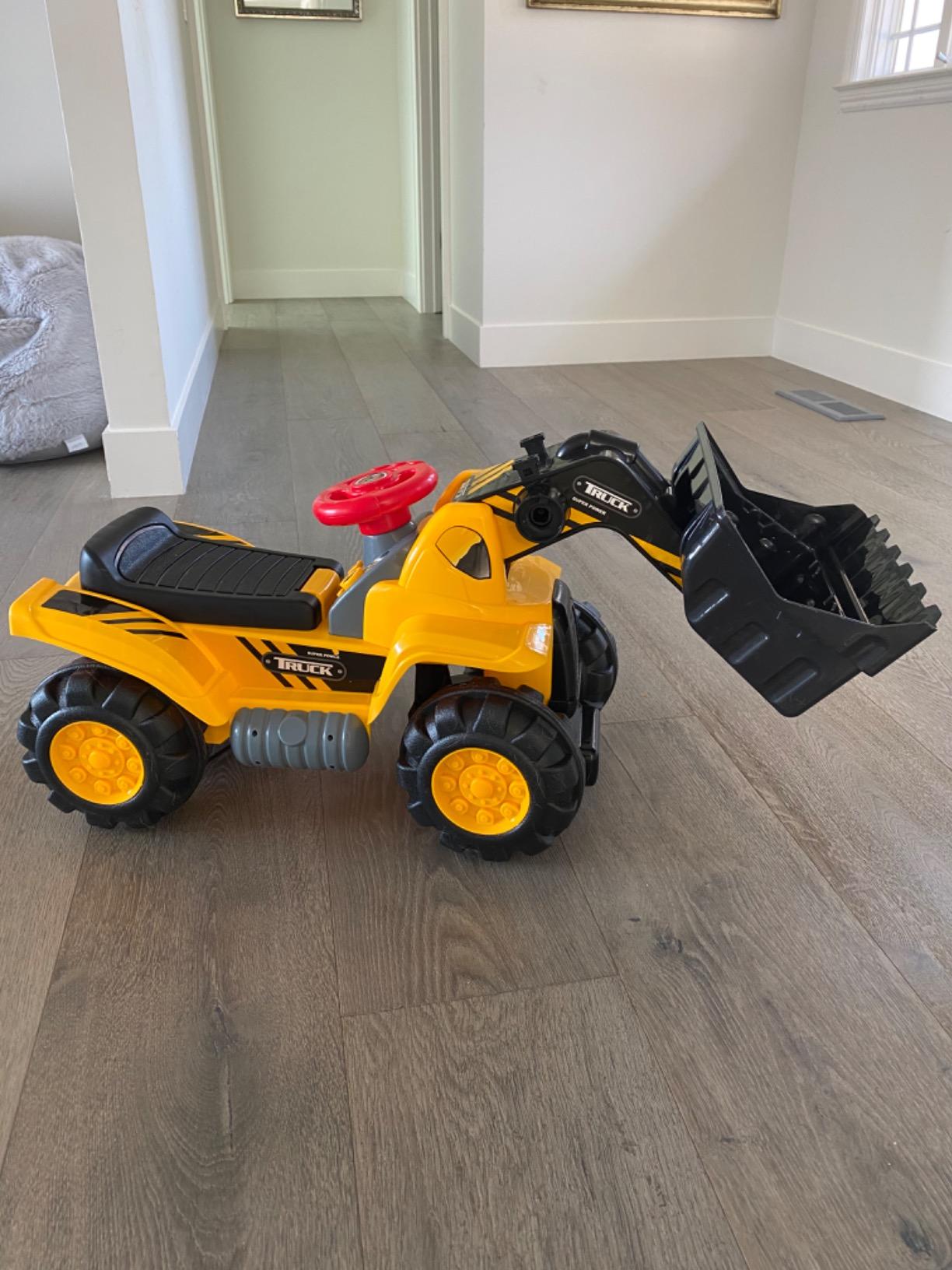
Three Modes From One Chassis
Ride-on mode gives the child independent movement on a hard surface. Push car mode hands control to an adult. Sliding mode extends the life of the toy on a floor when the child is too small to ride.
Owners of three-year-olds rate this highly for exactly that flexibility, and the ability to grow through the modes is what stops a ride-on from becoming garage clutter after a single season.
An Adjustable Bucket for Three-Year-Olds
The bucket adjusts for both height and angle through flexible control levers. For a small child, angle adjustment is the more useful of the two, because a fixed-angle bucket either scrapes the ground or lifts the load too high to see past.
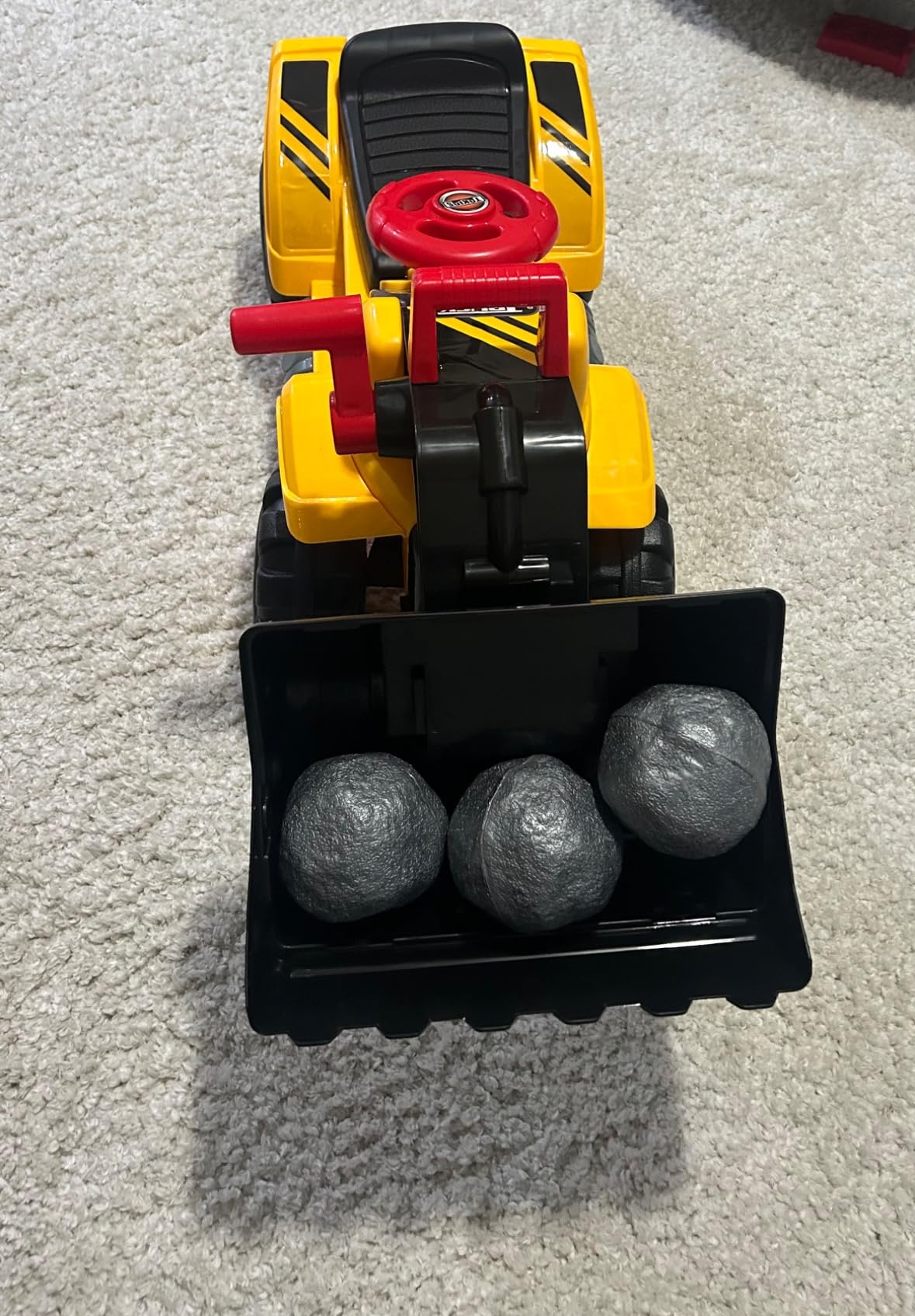
The play scenario is complete out of the box, with one safety helmet and three toy stones included. That sounds minor until you notice how many owners mention the accessories as the reason the play lasted.
Sound, Lighting and the AA Battery Caveat
Horn, engine and dump truck sounds with volume controls run on three AA batteries that are not included. The listed battery average life figure of eight hours applies to the powered variants in this family, not to this manual version.
That distinction is worth flagging before purchase. This product is the manual one, and the electric variants are a separate choice within the same range. The anti-rollover device, burr-free surface and ASTM and CPSIA certification are all genuine, and the four anti-slip wear-resistant wheels work on cement, asphalt and wood floors indoors or out.
9. ENYOPRO 12V Licensed JCB Backhoe Loader – The Most Capable Battery Digger Here
12V Ride on Excavator Toy, Licensed JCB 3CX Electric Backhoe Loader Car for Kids, Ride on Digger, Bulldozer & Construction Vehicles w/Remote Control, Moving Parts, Adjustable Seat, Soft Start
Plastic and metal, 40.8 pounds
83 x 23.6 x 38.6 inches with roof
12V 7Ah battery, 1-2 hours
Ages 3-6, 66 lb limit
+ Pros
- Licensed JCB 3-in-1 backhoe loader
- bulldozer and tractor styling
- parent remote control with three speeds plus an emergency stop
- 12V 7Ah battery for 1-2 hours at 1.6-2.8 mph
- 3-point seat belt and telescoping stabilizer wheel
- detachable canopy
- Cons
- Assembly takes 45 minutes to an hour and one adult cannot lift it
- switching the seat direction is fiddly for a young child
- some moving parts arrive stiff
- a cluster of reports of axle and drivetrain failure within a year
This is the premium end of the roundup and the only machine here that a parent can drive remotely. Two 12V 35W rear-wheel motors, a 12V 7Ah battery, a 3-point seat belt and an emergency stop button put it in a different class from everything else on this list.
Grandparents describe it as the big present. Kids ride it for hours while parents use the remote to keep them away from the edge of the property. That combination is the reason to spend here.
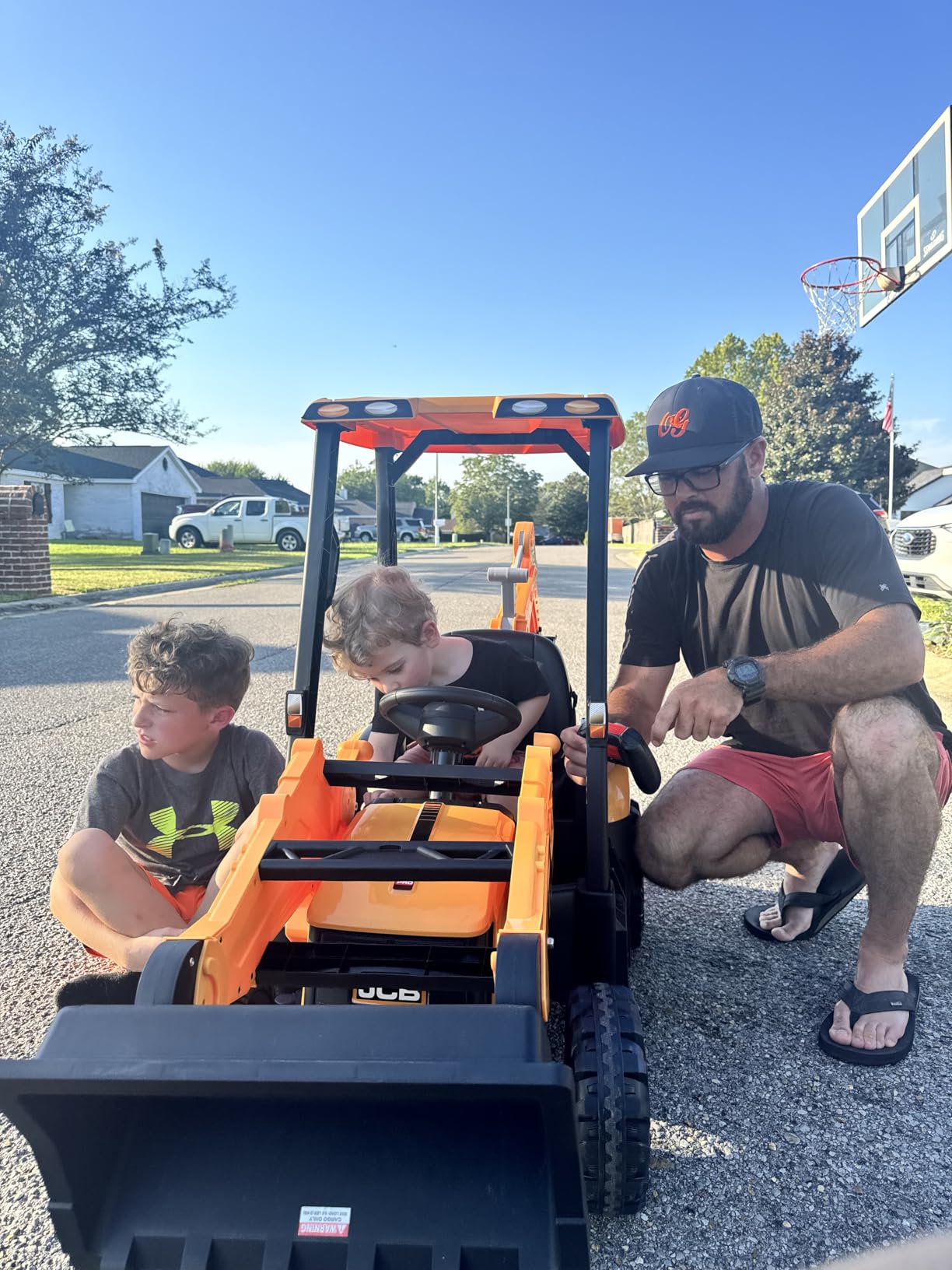
A 3-in-1 Backhoe Loader With Parent Remote Control
The machine converts between excavator, bulldozer and tractor configurations with a one-click adjustable seat, and the licensed JCB styling is scaled to child size. A telescoping stabilizer wheel sits under the digging arm to stop it tipping forward under load.
Two driving modes are the real feature. The child drives manually with forward and backward control, or a parent takes over on the 2.4G remote with three speed settings and an emergency stop. That is genuine supervisory control, not a novelty remote.
Runtime and Speed: 1-2 Hours at 1.6-2.8 MPH
The stated figure is 1 to 2 hours of ride time at speeds between 1.6 and 2.8 mph. That top speed is roughly walking pace, which is exactly right for a machine carrying a 66-pound passenger across uneven ground.
Soft-start technology and four shock-absorbing anti-skid tires are specified for grass, sand and gravel. Soft start matters more than it sounds on a 40.8-pound machine, because torque on launch is what tips a heavy ride-on.
Assembly Time, Weight and Durability Reports
Assembly takes roughly 45 minutes to an hour, and at 40.8 pounds the machine is hard for a single adult to handle. Two adults and a clear floor are the realistic starting conditions.
The recurring negatives are mechanical. Owners report moving parts arriving stiff, and a small but real cluster of one-star reviews describes axle and drivetrain failure within about a year. Seven percent of ratings are one star, which is a durability theme rather than a shipping or assembly theme.
Who Should Spend Up Here
Spend here if your child is between three and six, you have a yard with grass rather than a paved patio, and you want remote supervisory control. The detachable canopy gives shade in summer and cover in winter, which extends the season considerably.
Skip it if storage is tight. At 83 by 23.6 by 38.6 inches with the roof on, this needs a garage corner, not a closet.
10. Costzon 6V Ride On Excavator – A Gentle First Electric Digger
Costzon Ride on Car, Excavator Toy w/Front Loader, Horn, Forward/Backward, Controllable Digging Bucket, Digger, 6V Battery Powered Electric Vehicle Construction Tractor, Electric Car for Kids
Polypropylene, 20 pounds
47.5 x 21.5 x 21.5 inches
Rechargeable 6V system
66 lb limit
Ages 3 and up
+ Pros
- Controllable digging bucket with a separate lifting arm and bucket tip
- simple on-off switch with forward and reverse on a foot pedal
- low center of gravity and large-diameter wheels
- wide seat and high backrest
- reviewers call it good value for a first electric digger
- Cons
- Front loader arm can unlatch from its peg while driving
- no seat belt included
- bucket tends to fall and drag on the ground
- a minority report charging and reverse-gear failures
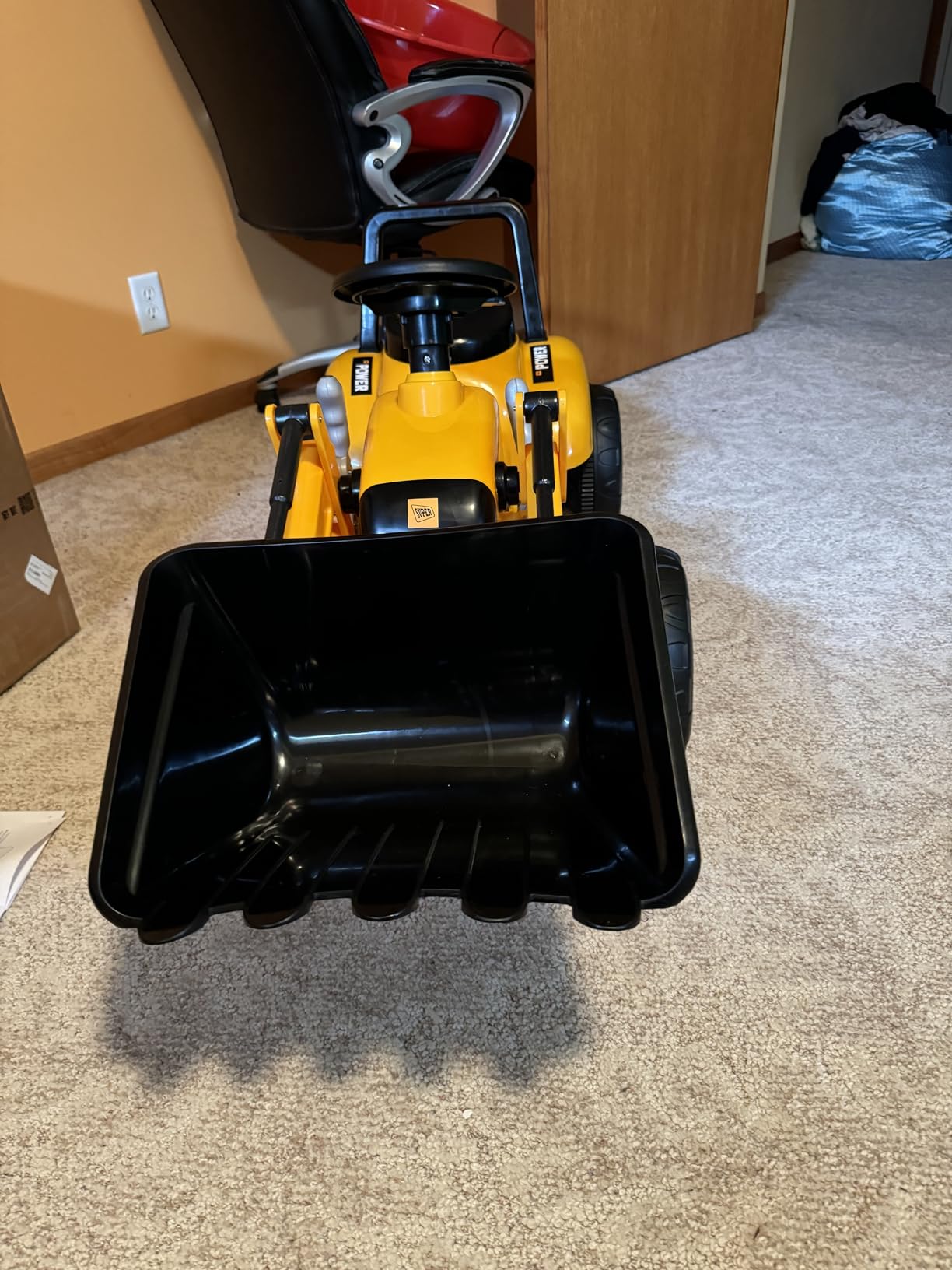
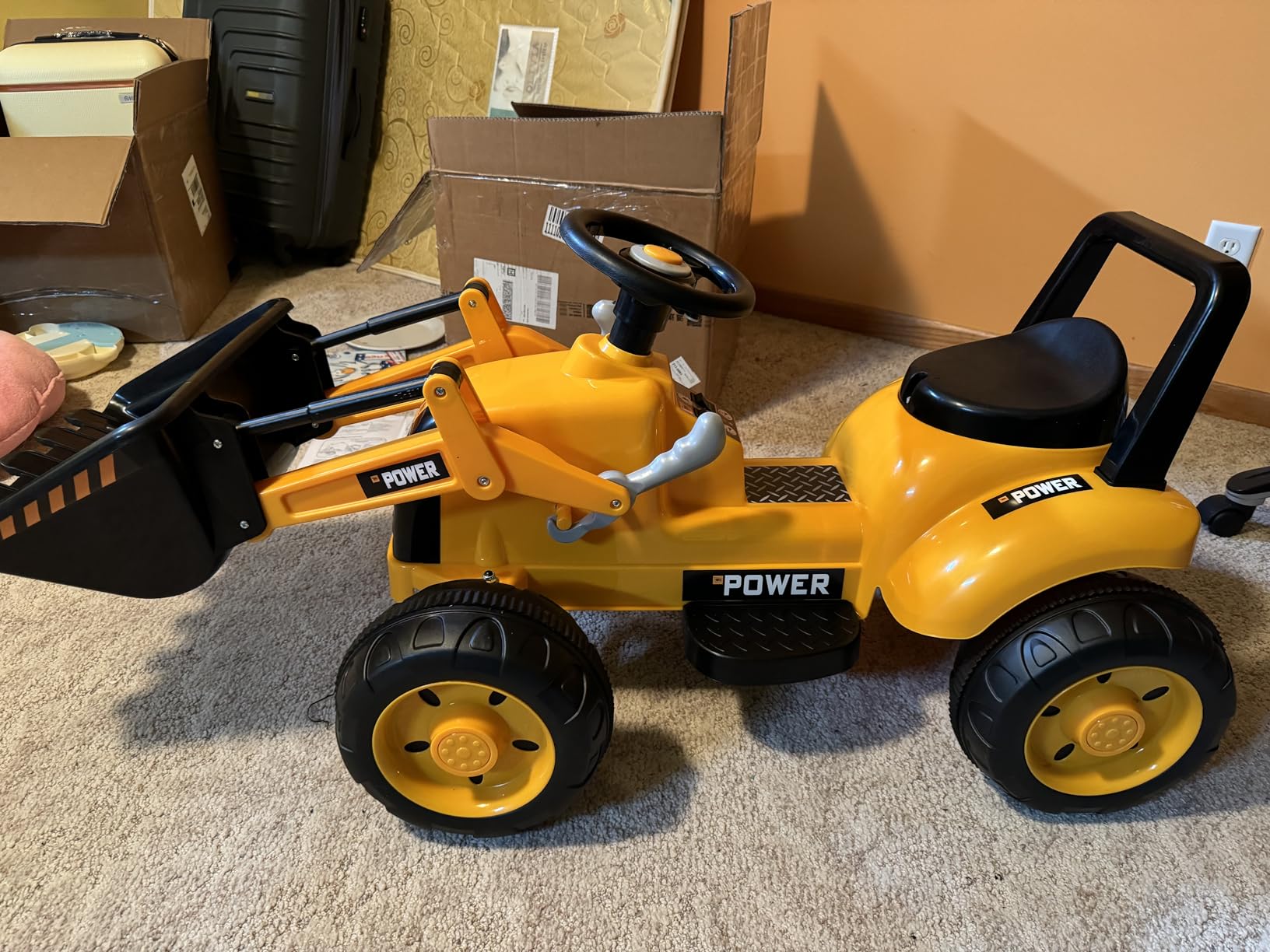
The 6V tier is the cheapest way into an electric ride-on, and this is a competent entry machine. At 47.5 by 21.5 by 21.5 inches and 20 pounds, it is roughly half the weight of the 12V machines and far easier to move.
Owners like the two-handed digging controls, the slow predictable speed and the ability to drive over mixed surfaces. Many would buy again. Those are the right things to like about a first electric digger.
Simple Controls a Toddler Can Learn
The digging action uses two levers: one raises the lifting arm and the other operates the bucket tip. That split gives genuine two-handed digging motion, which is closer to how a real backhoe works than a single-lever arm.
Driving is an on-off switch, a forward and reverse mode and a foot pedal. That is a short learning curve for a three-year-old, and the slow speed of a 6V system is forgiving when the reaction time is still developing.
The Bucket Linkage Needs Watching
Owners report that the front loader arm can unlatch from its peg while driving, and that it is stiff to raise and lower once assembled. This is a mechanical design weakness, not a defect in one unit, and it appears across multiple reviews.
A quick check of the peg before every drive takes five seconds and prevents the most annoying failure mode this product has. Treat it as a pre-flight item, like checking a gate latch.
No Seat Belt: A Gap Several Parents Flagged
There is no seat belt on this machine, and several parents flagged that as a safety gap. The counterweight is the wide seat and high backrest plus a low center of gravity and four large-diameter wheels, which limits rollover on flat ground.
Ten percent of ratings are one star, the weakest reliability showing among the battery-powered models in this roundup, driven by charging and reverse-gear failures alongside the linkage issue. The machine is ASTM certified and rated to 66 pounds, and the wear-resistant wheels are specced for grass, wood floor, rubber track or brick.
How to Choose a Ride On Excavator for Backyard Digging
The single most useful question is not about features. It is about what your child is going to dig. Loose sand in a contained pit, damp native soil in a garden bed, and compacted clay in a post hole are three completely different problems, and no toy in this roundup handles all three well.
Manual Pedal Diggers Versus Motorized Electric Ride-Ons
Choose manual when your child is under three, when storage space is tight, or when you want a machine that still works after two winters in a damp shed. The Big Dig, the stargo and the Albott are all in this group, and the HOMCOM is a manual design for toddlers.
Choose motorized electric when your child is at least three, wants to drive rather than be pushed, and has room to park a 48-to-83-inch machine. The tradeoff is electrical reliability, which is where the one-star reviews concentrate.
Choose a push car when the child is under three and you want them to feel in control of the digging action without controlling the travel. The licensed CAT push car is the clearest example.
Battery Voltage Explained: 6V, 12V and 24V
6V suits ages 3 and up. Top speed is low, runtime is the shortest of the three classes, and the machines are light enough for one adult to lift. It is the right first electric step.
12V suits ages 3 to 6 and is the volume class. Speeds reach roughly walking pace, machines run 20 to 41 pounds, and weight limits cluster around 66 pounds. Expect one to two hours of genuine ride time per charge regardless of what the box claims.
24V suits older children, usually 5 and up, and the machines are heavy. Higher torque and speed make them better on grass and gravel, but the weight and the assembly are real. Most of what changes at 24V is power you only need if the child is heavy or the ground is soft.
The practical rule: match voltage to the child, not to the job. A heavy child on a 6V machine stalls on grass; a small child on a 24V machine cannot reach the pedals or control it safely.
Traction on Grass: Wheel Size and Tread
This is the least-covered variable in the category and it decides whether a machine gets used. A small hard plastic wheel digs into soft ground and stops the vehicle. A larger wheel with a wider contact patch rolls over the ridge and continues.
Look for the largest wheel diameter the listing states, and check that the tire is described as treaded or anti-slip. The Albott’s 8-inch wheels and the ENYOPRO’s shock-absorbing anti-skid tires are the two traction-first designs in this roundup. Manual diggers without wheels sidestep the problem entirely by working a fixed spot.
What Your Child Can Actually Move in Soil
Be honest about expectations. A plastic arm and bucket moves a small bucket of dry sand. Wet clay, gravel and root-bound soil will stall a plastic mechanism regardless of the child’s effort, and a 66-pound rider will put real stress on the linkage.
Set up a digging zone with loose material. A sandbox, a pile of screened topsoil or a leaf pile gives a toy the chance to succeed, and a child who succeeds comes back to it. If the goal is a real drainage trench, skip ahead to the next section.
Storage, Gate Width and the Ride-On Footprint
Measure before you buy. The manual diggers in this roundup range from 17 by 12 by 6 inches to 21.5 by 19.3 by 5.2 inches and store anywhere. The battery machines run from 47.5 by 21.5 by 21.5 inches up to 83 by 23.6 by 38.6 inches with a canopy fitted.
Weight matters as much as width. Anything above 20 pounds needs two adults or a ramp, and the 39-pound and 40.8-pound machines will not move with a child sitting in them.
Safety: Seats, Belts, Pinch Points and Supervision
Check three things in person. First, is there a seat belt, and does it fit? The Costzon 12V and the ENYOPRO JCB both have one, and the 6V Costzon does not. Second, is there an anti-rollover device or a backrest? Third, can a parent control or stop the machine remotely?
The pinch point is the bucket joint, and it is the one that hurts most. Teach children to keep hands clear of the linkage while it is moving, and never stand a child on the bucket to gain reach.
For real trenching work, the safety rule is not optional. The standard slope guidance is 1 foot of horizontal run for every foot of vertical depth for anything up to 5 feet, and more than that at 5 feet or deeper. Shorter vertical walls are safer than steep ones, and a trench wider than it is deep is safer than a narrow slot.
When a Toy Is the Wrong Tool: Real Mini Excavators and Ride-On Trenchers
A ride on excavator toy is a play object. It is not a digging machine, and the gap between the two is measured in feet, not inches. If your project involves a drainage line, a French drain, shed footings, a stump or a pond, a real machine is the answer and a toy is a distraction.
The Decision Tree: Toy, Walk-Behind Trencher, Ride-On Trencher, Mini Skid or Mini Excavator
Start with the toy if the job is a sandbox, a garden bed edge or a planting hole for a shrub. Those are play-scale jobs and a 12V machine handles them.
Move to a walk-behind trencher if you need a narrow, straight trench for irrigation or drainage cable through soil without large stones. A trencher cuts a clean, narrow channel and the cut quality is the reason to choose it.
Move to a ride-on trencher when the trench is long, the soil is firm and you want to be seated with a cutting head running ahead of you. Ride-on trenchers carry substantially more power than walk-behind units.
Move to a mini skid steer when the job is grading, backfilling or moving spoil around a tight site. A skid steer levels ground well and is poor at depth, because the bucket is the digging tool and the machine wants to push.
Move to a mini excavator when the job is depth. Footings, trenches wider than a foot, pond edges, stumps and root balls all want a boom, an arm and a bucket, which is a digging geometry a trencher does not have.
Trencher or Excavator: Which One Cuts Your Trench
An excavator is the better answer when the trench needs to be wider or deeper, and when you will be doing more than one task. A trenching bucket gives a flat-bottomed, vertical-walled cut that a trencher cannot reproduce, and the same machine then digs the footings.
A trencher is the better answer when the trench is long, narrow and straight, and when you want to keep moving. The cutting teeth do the work instead of the bucket, so a rock in the path is a problem for both machines, but a trencher will usually get past a root ball faster.
Soil type matters more than brand on a one-off job. Clay slows excavation far more than machine branding does, and owners in equipment forums consistently report that sizing up a class saves hours rather than a different make.
Rent Versus Buy, and Where the Dirt Goes
Rent for a one-off weekend. The first one to two hours of operating any of these machines is a real learning curve for coordinating boom, arm and bucket, and rental rates are quoted per day, so the standard advice from homeowner forums is to book the days you need and return early rather than pay for an extra day you did not use.
Own only if you have a recurring project, a trailer rated for the weight and a place to store it. Gate width is the constraint owners discover too late, so measure your gate before committing to any machine wider than the opening.
Plan where the spoil goes before you start. Excavated soil expands rather than shrinks, so the pile coming out of the hole is meaningfully larger than the hole itself, and most homeowners underestimate that volume. Lay a tarp, put the spoil on it, and decide in advance whether it stays as fill or gets hauled away.
Frequently Asked Questions
What is a good ride-on excavator toy for a 4-year-old?
The Albott Ride-On Sand Digger and the Big Dig are the two strongest fits at that age. The Albott has 8-inch wheels that cross a yard rather than a sandbox and a 150-pound limit that keeps working as your child grows. The Big Dig is manual, so it never needs charging, and it holds up to 110 pounds. If your four-year-old wants to drive rather than be pushed, add a 12V model such as the Costzon or the ENYOPRO JCB.
Should I get a 12V or 24V ride-on toy?
Match the voltage to the child, not to the job. A 12V machine suits ages 3 to 6 and is the volume class, with speeds around walking pace and a typical weight limit of 66 pounds. A 24V machine suits older children, usually 5 and up, and adds torque for grass and gravel at the cost of weight and assembly time. A heavy child on a 6V machine will stall on grass.
What age is a 24V ride-on for?
Most 24V ride-ons are aimed at children 5 and up because of the weight and the speed. Machines in this class commonly run 5 to 8 mph, which is faster than a walk, and their weight limits typically sit around 66 to 100 pounds. The deciding factor is whether the child can reach the pedals and stop the machine deliberately, not the number on the box.
How fast does a 24V ride-on toy go?
Speeds vary by model, but most 24V ride-ons top out between 5 and 8 mph. For comparison, the 12V backhoe loader in this roundup is specified at 1.6 to 2.8 mph, which is walking pace. Faster is not automatically better for a digging toy, because a child carrying a load needs to be able to stop and turn on grass.
Is a mini excavator better than a trencher?
An excavator is the better answer when you need a wider or deeper trench, a flat trench bottom, or when the same machine will also dig footings and move spoil. A trencher is the better answer when the trench is long, narrow and straight and the soil is firm, because its cutting head runs faster than a bucket cycle. Excavators are the stronger multitaskers; trenchers are the specialists.
Can I trench with a mini excavator?
Yes, and a trenching bucket gives a better result than a general-purpose bucket. It produces a flat bottom and vertical walls, which is what a drainage or French drain line needs. A regular bucket leaves a curved floor that can collect silt. Most machines in the micro and mini classes accept a narrow bucket without changing the machine.
What is the 5 4 3 2 1 rule for trenching?
The rule is about how wide a trench should be for its depth, and it runs the other way from intuition. The first foot of depth needs at least one foot of width, and each additional foot of depth needs another foot of width, so a 5-foot-deep trench should be at least 5 feet wide. Wider and shallower is always safer, and a narrow deep slot is the dangerous shape.
Will a mini excavator fit through a standard gate?
That is the question owners most often discover too late, and gate width is a hard physical constraint rather than a matter of technique. Transport widths on compact machines commonly run 36 to 48 inches, while a standard residential gate opening is often 36 inches. Measure the narrowest point on the full route from the street to the work area, including any door handles, before you commit.
Which Ride On Excavator Should You Buy in 2026?
Start with the Big Dig if you want a metal machine that outlives the trend and never needs charging. It is the most-reviewed product in this roundup by a wide margin, and the swivel seat with 33-inch reach gives a child genuine control over where the bucket goes.
Choose the Albott if your yard is grass and dirt rather than a sandbox. The 8-inch wheels and the 150-pound limit are the reasons, and the age range extends to 12, which is rare in this category.
Choose the Play22 or the HOMCOM for a child under three. The Play22 is ready to ride with no assembly, and the HOMCOM doubles as a pull cart that needs no power at all.
Choose the ENYOPRO JCB if your child is between three and six, you have a real yard, and you want parent remote control with an emergency stop. Accept the hour of assembly and the 40.8-pound weight as the cost of that supervision.
And if the job is a drainage trench, footing or stump, stop shopping for a toy. Our picks here are the best ride on excavators for backyard digging in the play sense, and none of them are the right tool for a trench. Measure your gate, book a mini excavator for the weekend, and put a tarp down before you start.