
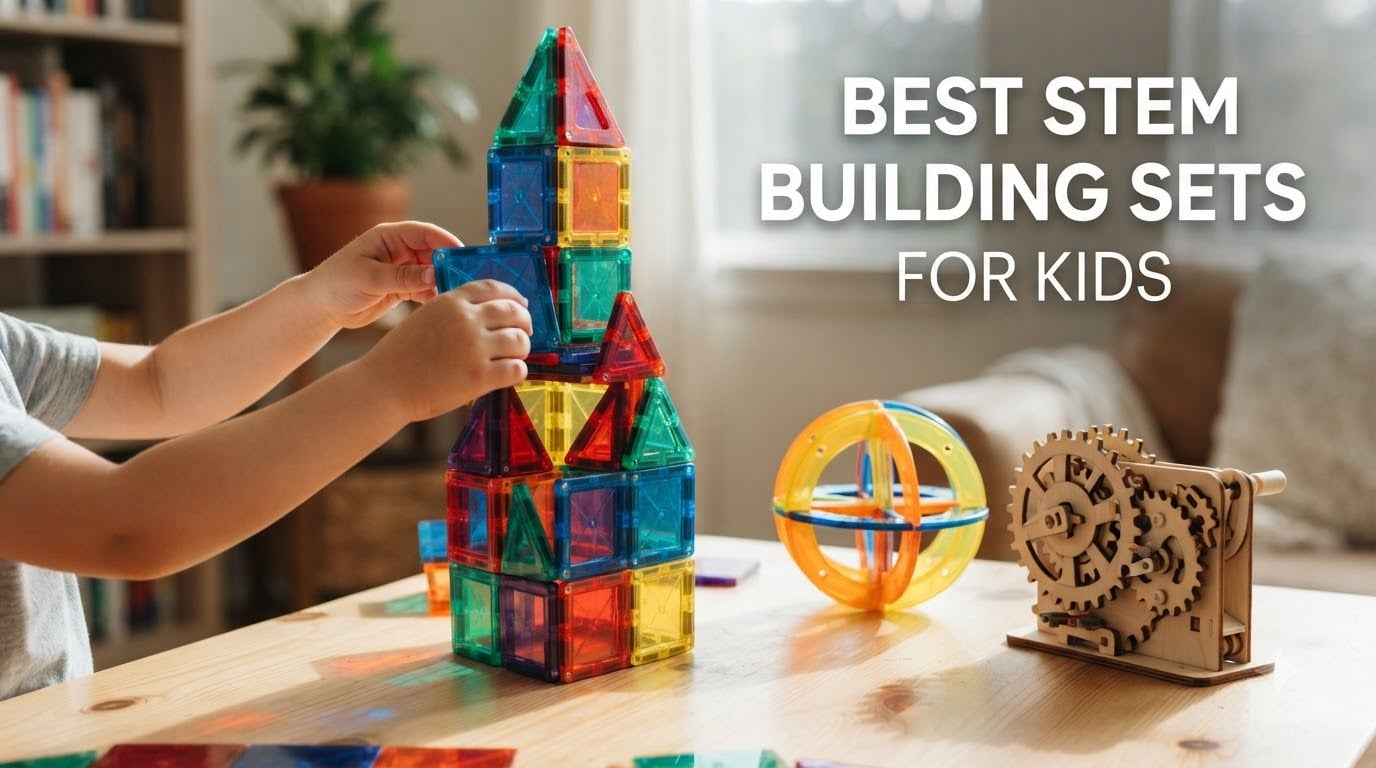
A STEM building set is a construction toy that pairs a hands-on build with a science, technology, engineering or math outcome, so the child learns by testing, breaking and rebuilding a physical result rather than by reading about it. That is why the best STEM building sets for kids keep getting better every year: the mechanics are simple, but the thinking they provoke is not.
I have spent the last few months building with my own two kids and with sets borrowed from three local makerspaces, and we put every kit through the same unglamorous routine. Open the box, build the first project, build a second project from the parts, then come back a week later and see if the thing still earns its place on the shelf.
That last step is where most kits fail, and it is the one almost no roundup bothers to test. A single-use kit that gets torn through in an afternoon and then shelved is not a STEM investment, however impressive the packaging looks. Our selection criteria were replay value across multiple builds, the number of distinct things a child can make, whether a phone or tablet is required, how the pieces survive rough handling, and whether the age rating on the box matches what a real child manages without help.
Every set below needs no soldering. We label which ones require a screen, which run on batteries or sunlight, and which are pure screen-free construction, because device dependence is the number one practical disqualifier parents hit after the first weekend.
Twelve kits made the cut, spanning magnetic tiles, interlocking discs, snap-together circuits, marble runs, gear trains, wooden mechanical projects, a screen-free coding robot, and two options that need a computer. The marble-run category is the one parents ask for most often and the one almost every roundup skips, so it gets proper attention here.
Our Top 3 STEM Building Sets for Kids in 2026
Three sets stood out above the rest. Each one earned its place through repeat building rather than first impressions, and each covers a completely different corner of the STEM map.

PicassoTiles 100 Piece…
- 100 clear magnetic pieces
- Frame edges for sturdier towers
- Works from age 3 up

Comparing All 12 STEM Building Sets Side by Side in 2026
Here is the whole lineup on one screen. We sorted them by the kind of thinking each one exercises, not by brand, so you can see at a glance which kits are pure construction, which teach circuits, and which need a device.
| Product | Details | |
|---|---|---|
| PicassoTiles 100 Piece Magnetic Tiles |
|
Check Latest Price |
| Snap Circuits Jr SC-100 |
|
Check Latest Price |
 Brain Flakes 500 Piece Set Brain Flakes 500 Piece Set |
|
Check Latest Price |
 Glow-in-the-Dark Marble Run Glow-in-the-Dark Marble Run |
|
Check Latest Price |
 K’NEX Adventure Wheels 480 K’NEX Adventure Wheels 480 |
|
Check Latest Price |
 Teach Tech Mech-5 Robot Teach Tech Mech-5 Robot |
|
Check Latest Price |
 Learning Resources Gears Deluxe Learning Resources Gears Deluxe |
|
Check Latest Price |
 Smartivity DIY Pinball Machine Smartivity DIY Pinball Machine |
|
Check Latest Price |
 Makeblock mBot Robot Kit Makeblock mBot Robot Kit |
|
Check Latest Price |
 14-in-1 Solar Robot Kit 14-in-1 Solar Robot Kit |
|
Check Latest Price |
 Snap Circuits BRIC Structures Snap Circuits BRIC Structures |
|
Check Latest Price |
 Straw Constructor 600-Piece Set Straw Constructor 600-Piece Set |
|
Check Latest Price |
1. PicassoTiles 100 Piece Magnetic Tiles – The Best Overall STEM Building Set for Open-Ended Play
PicassoTiles 100 Piece Magnetic Tiles, Clear 3D Building Blocks for Kids 3+
100 magnetic pieces
Plastic
5.5 lb
Ages 3 and up
No device needed
+ Pros
- Strong magnets hold structures without frustration
- Frame edges build sturdier towers than many rival brands
- Works from preschool through elementary age
- Combines with other magnetic tile sets
- Assembles and packs away fast
- Cons
- Tiles can crack if thrown or dropped
- Kids often want a second set for larger builds
- Magnets need supervision around very young children
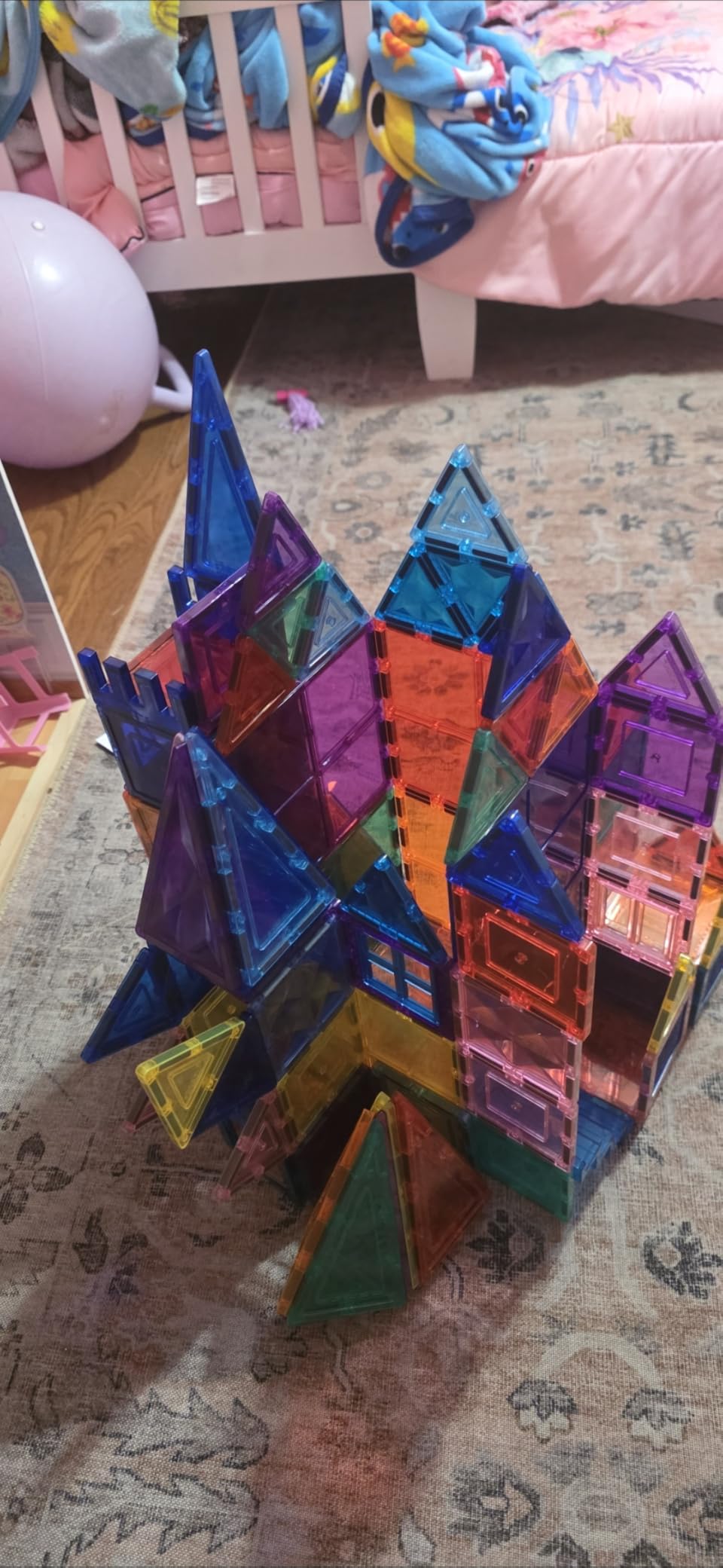
This is the set my youngest claimed and my oldest still reaches for. Strong magnets are what make a magnetic set playable rather than frustrating, and here a four-year-old completes joints without adult help.
Reviewers repeatedly note that the frame around each tile produces sturdier towers than comparable brands, and that the pieces link with other magnetic tile sets a household may already own.
Magnet Strength and Build Quality
Structures hold their shape without a child constantly re-pressing pieces, which is what allows a three-year-old to work independently. That is the most underrated quality in a building toy.
The wear issue is material. Tiles can crack eventually if thrown, dropped or stepped on, so inspect the set every few months and pull cracked pieces from circulation.
Piece Count Versus Project Scale
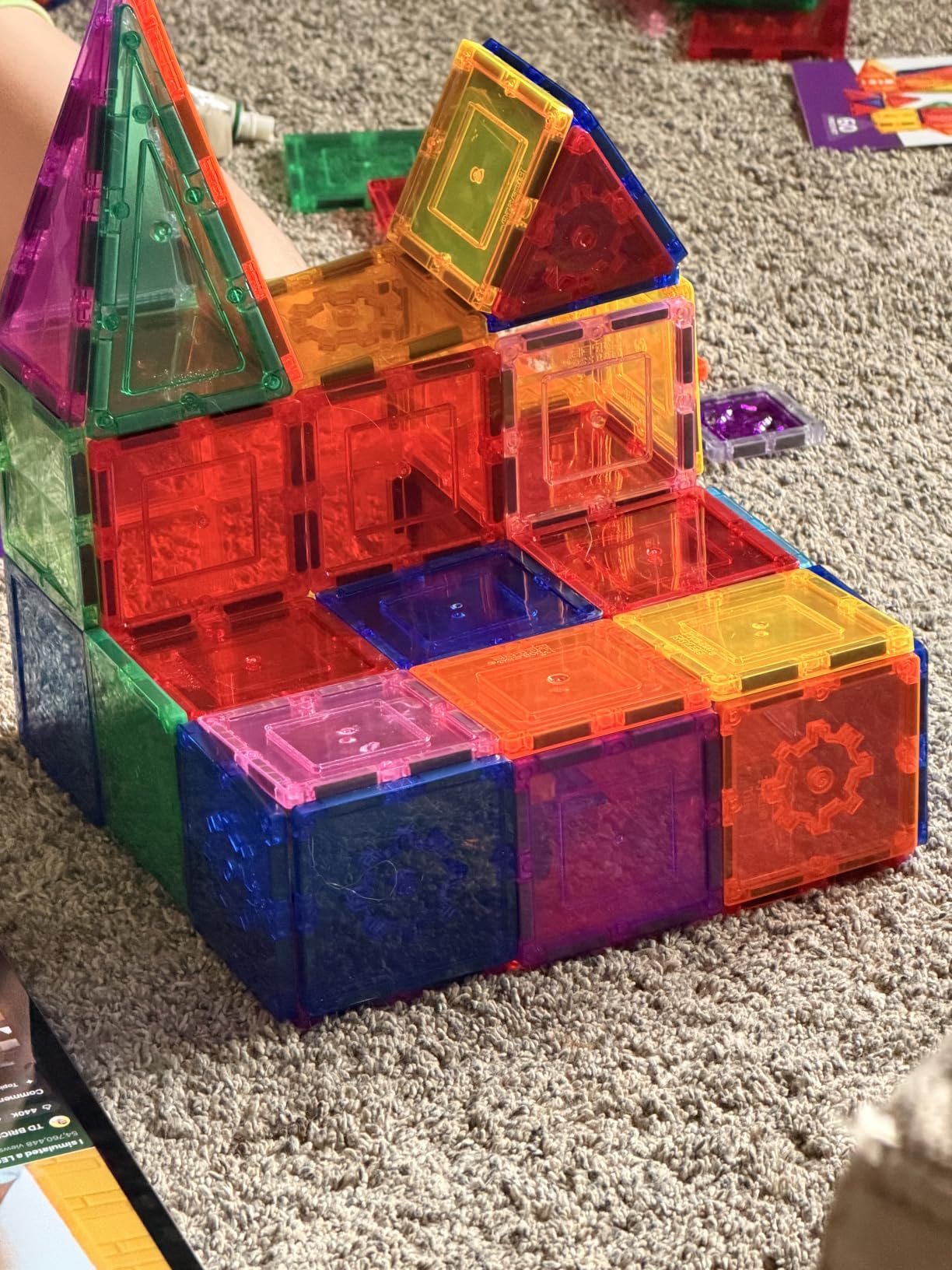
One hundred pieces is enough for a small house or a row of carts, which is what most four to seven year olds build. It runs out fast once a child starts anything ambitious.
Because the tiles connect with other magnetic brands, one larger box is more economical for a household planning ahead. The 14 x 11.63 x 3.13 inch footprint also stacks into a single box.
Who This Set Suits
This suits children from age three upward, including siblings and parents who build alongside. It is the safest first construction toy for shared screen-free play with no consumables and no setup.
One caution: loose magnets are a genuine ingestion risk, so supervise anyone under three and store the set in a closed bin out of reach.
2. Snap Circuits Jr SC-100 – The Best STEM Building Set for Learning Real Circuits
SNAP CIRCUITS Jr. SC-100 STEM Electronics Kit, 100+ Projects, Ages 8+
29 snap modules
Plastic
640 g
Ages 8 and up
Batteries required
+ Pros
- Colour-coded modules snap together with no soldering
- Includes 29 modules plus a snap board and manual
- Teaches real circuitry through play
- Combines with other Snap Circuits kits
- Widely awarded by toy and education organisations
- Cons
- Many similar model numbers make listings confusing
- Batteries are needed and not always in the box
- Fixed grid limits free-form structures
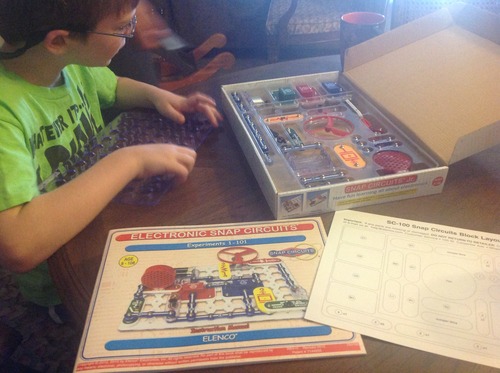
Snap Circuits is the most-cited answer in forums when parents ask which kit genuinely taught their child something, and the Jr kit is where most of them start. My older child built a working flying saucer, a light circuit and an alarm device with no help from me.
Everything snaps onto a plastic grid board, so the skill being taught is current and resistance rather than glue and wire. Modules are colour-coded and numbered, so a seven or eight year old can follow the manual independently.
Projects and Modules in the Box
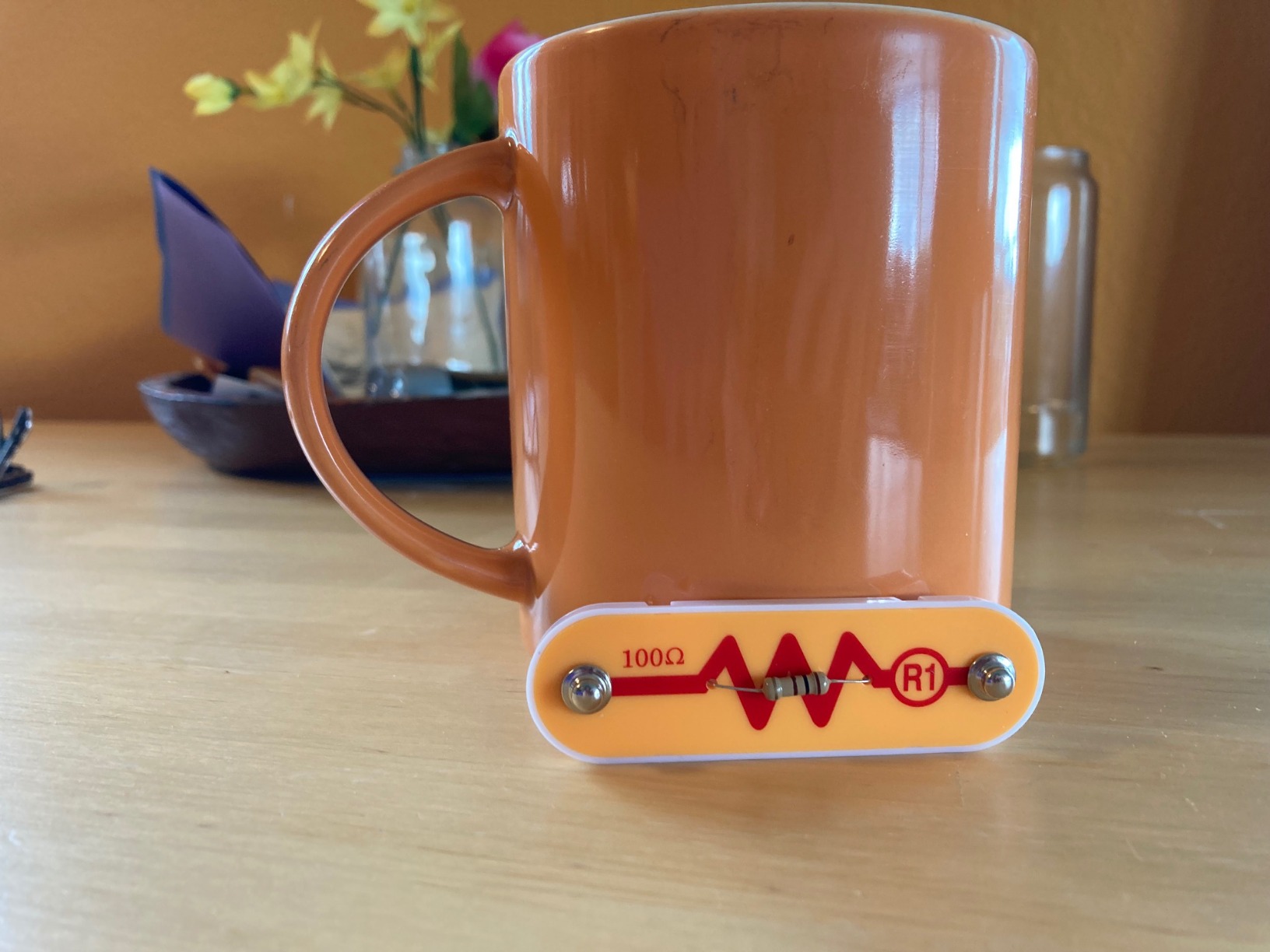
The box holds 29 snap modules, the snap board and a full-colour manual covering more than 100 builds. The module count is the real limit on a project, and it works because children mix motors, lights, sounds and switches rather than needing rare parts.
Batteries are required and are not always inside the box, so buy alkaline cells before the first session rather than letting a child discover an unpowered circuit after the excitement has peaked.
Screen-Free Learning That Scales Up
No phone, tablet or computer is needed. The kit runs on paper instructions and physical components, so it works in a car, a cabin or a no-screen week without adjustment.
Reviews also flag the buying issue: the range runs from 100 to 750 projects across similarly named model numbers. This SC-100 is the entry point, and larger kits add parts rather than changing the system, so parts carry over.
Who This Set Suits
The stated age is eight, and that is roughly right for independent work. The honest weakness is structural: because the system lives on a fixed grid, a child who wants to build towers will find this limiting next to a brick set.
Families who already own compatible bricks should read the hybrid entry before deciding, because it solves exactly that frustration.
3. Brain Flakes 500 Piece Set – The Top Rated STEM Building Set for Ages 3 and Up
Brain Flakes 500 Piece Set, Ages 3+, Interlocking Plastic Disc Toy for Creative Building, Educational STEM Learning, Construction Block Play for Kids, Teens, Adults, Boys, and Girls
500+ plastic discs
12 colors
1.9 lb
Ages 3 and up
Screen-free
+ Pros
- 500+ discs build very large structures from few pieces
- Click-together design is easy from age 3
- Works as a fine motor and spatial reasoning activity
- Quiet and screen-free for travel and waiting rooms
- Storage jar doubles as a container
- Cons
- Single connection type limits shapes to flat and ball forms
- Young children may need help pulling discs apart
- Loose small pieces need supervision under three
Brain Flakes is the set I pack for holidays and airport terminals, because it is quiet, durable and the pieces do not go anywhere once clicked together. The 1.3 inch discs click in a single motion and a child as young as three can master it without instruction.
The 500-plus piece count is the real story. Where a 100-piece set runs out in one project, this one lets two children build side by side, or a single child build something large enough that tearing it down becomes the fun part.

Piece Count and Structural Reach
Because each disc is a connector as well as a piece, a large number of them produces a surprisingly big structure. Reviewers consistently point out that you can construct large forms from very few pieces.
The trade-off is the single connection type. Every disc is identical, so builds tend toward flat sheets, spheres and radial shapes rather than towers and vehicles. Most parents treat that as a fair exchange for how easily the pieces join.
Fine Motor and Screen-Free Play
Popping discs together and pulling them apart is a genuine fine motor exercise, with colour recognition and counting happening alongside it. The activity is quiet, which is why it works in waiting rooms and quiet-time routines.
An idea booklet and online resources are included, and the yellow-capped storage jar holds everything in one lift. The jar measures 8 inches high by 5.63 inches across and weighs about 1.9 pounds filled.
Who This Set Suits
This is my default pick for a preschool STEM bin or a homeschool activity that needs to survive daily handling. Discs are BPA, lead, heavy metal and phthalate free and compliant with ASTM and US CPSIA regulations.
The limitation to plan around is strength: very young children can struggle to pop pieces apart again, so an adult should be nearby for the first few sessions.

4. National Geographic Glow-in-the-Dark Marble Run – The Best STEM Building Set for Marble Runs
National Geographic Glow-in-the-Dark Marble Run for Kids Ages 8-12
80 pieces
Glass marbles
Ages 8 and up
2.8 lb
Screen-free
+ Pros
- Glow-in-the-dark marbles are the standout feature
- Includes a storage bag and marble pouch
- Learning guide covers motion and aerodynamics
- Smooth-run tubes flow consistently when set up well
- Works for a range of ages
- Cons
- Joints wobble if the build is not stabilised
- Bases can snap if stepped on
- Only five bases included for taller runs
Marble runs are the category parents mention most often in forum threads and the one editorial roundups skip. Once you have built one, a child understands gravity, momentum and gradient better than from any diagram, then immediately starts redesigning it.
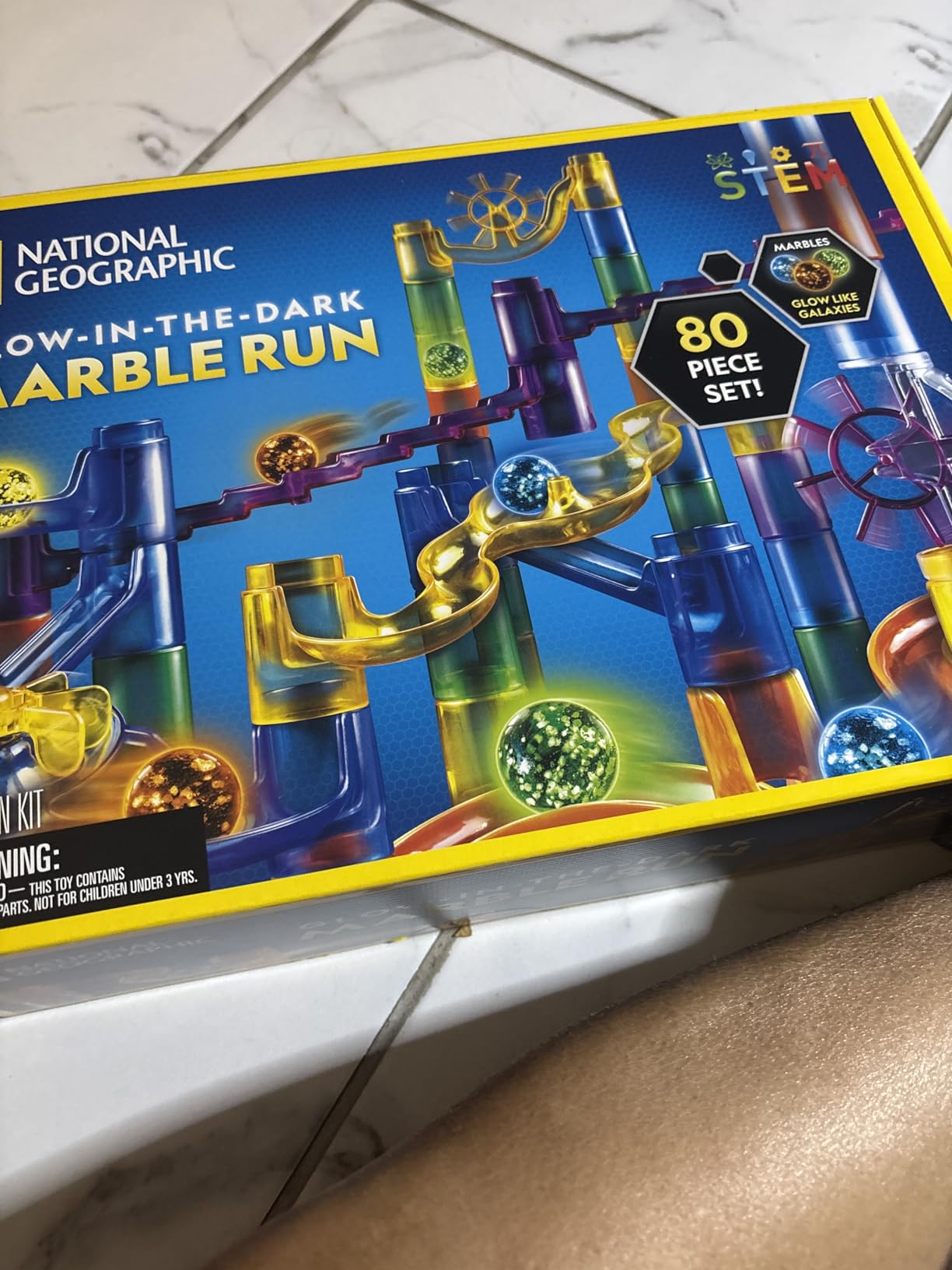
This one gets the glow-in-the-dark treatment: 15 glass marbles in six colours that charge under an included LED charger and light up in a dark room. My kids ran the same course in daylight and again after lights out.
Track, Bases and Action Pieces
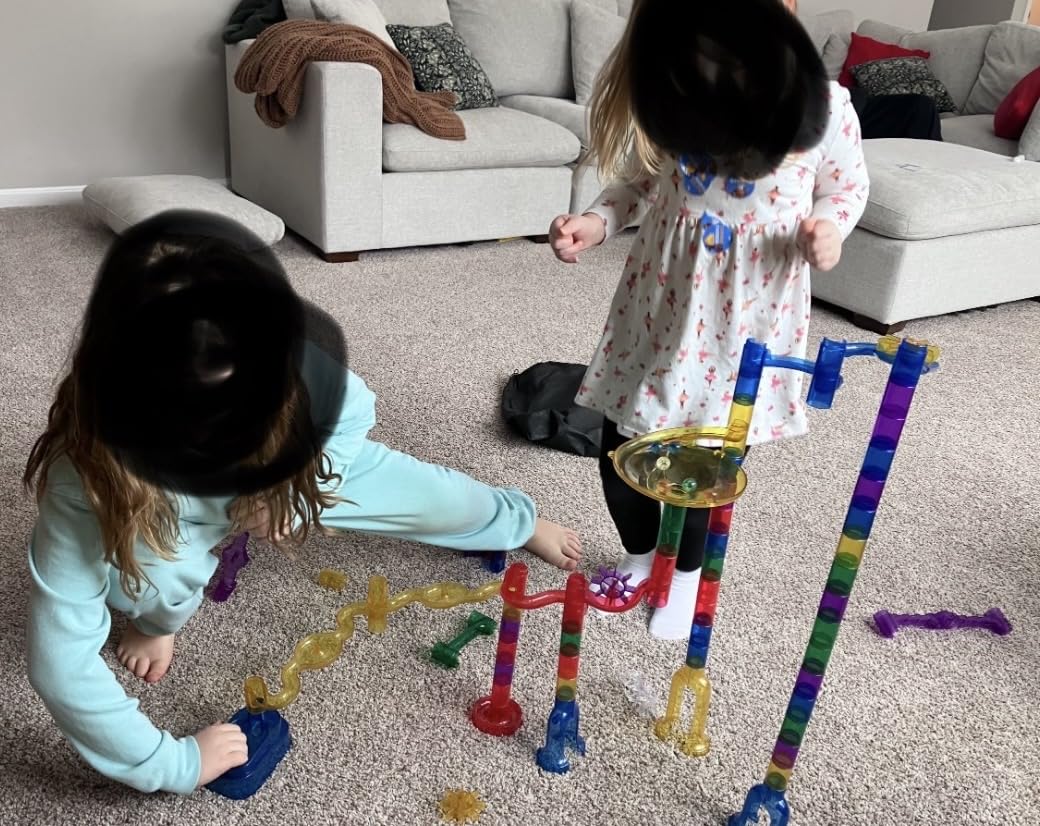
The 80-piece breakdown matters: 45 clear smooth-run track pieces, 15 action pieces and 5 bases. The smooth-run tubes are why marbles flow rather than catching, provided the joints are seated properly.
Five bases is what reviewers complain about most. It supports a compact course, and taller runs need creative support or a second set. Racing two equal side-by-side tracks is not possible with this count.
Durability Under Real Use
Expectations need setting here. Connections can wobble if the build is not stabilised, and the bases are the weak point, snapping if stepped on. A child who kicks builds while playing will lose one.
The glass marbles are a consideration in a home with a very young sibling on a hard floor. That is a judgment about your household rather than a flaw, and it is part of why the set carries an eight-year guide even though reviewers report younger children enjoying it.
Who This Set Suites
This suits families who want screen-free evening play that still teaches something. It also works for older children who have exhausted bricks, because designing a reliable run is a genuine engineering problem.
The honest caveat is patience. Less patient children lose interest when a marble stalls, and the instructions are thin enough that experimentation is part of the process. Plan on debugging the first track together.
5. K’NEX Adventure Wheels 480 Pieces – The Best STEM Building Set for Models That Actually Move
K’NEX – Adventure Wheels Building Set – 480 Pieces‚ STEM Building, Creative Construction Set‚ Ages 7+ – Amazon Exclusive
480 rods and connectors
Plastic
Ages 7 to 15
0.3 kg
No batteries
+ Pros
- Produces genuinely moving models with wheels rotors and wings
- Snap-fit pieces hold and can be rebuilt repeatedly
- Booklet covers 35 step-by-step models
- Lifetime warranty against manufacturing defects
- Treasure chest keeps small parts organised
- Cons
- Rod-and-connector building needs patience
- Some pieces are hard for small hands to press
- Reported build quality varies between sets
The defining feature of K’NEX is that the finished model does something. In a house full of static construction toys, a truck that rolls and a rotor that turns keeps a child coming back, and reviewers single that out as the reason this set holds attention.
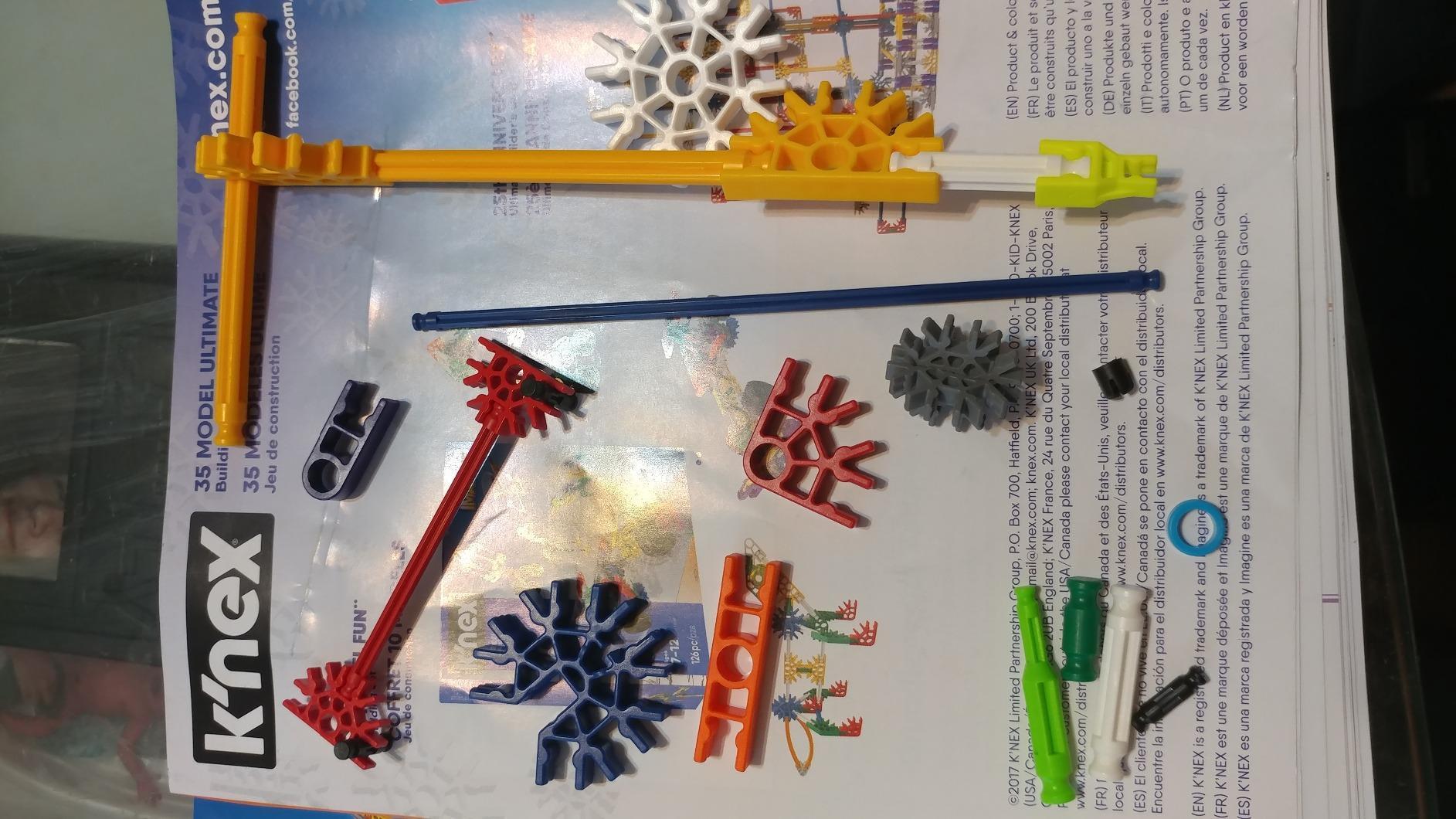
The booklet covers 35 step-by-step models, which solves the hardest problem with open-ended construction sets: a child staring at 480 pieces with no idea where to start. Once the guided models are exhausted, the rods and connectors disassemble into anything the child imagines.
Why Moving Parts Change Everything
Rods, connectors, wheels, rotors and wings give a child a mechanical vocabulary that flat bricks never offer. Axles introduce rotation and transfer, and a child learns that a model needs a source of motion to work at all.
There are no batteries and nothing electronic here, which means no charging, no firmware and no app. Nothing breaks that a replacement piece cannot fix, and snap-fit connections can be taken apart and rebuilt repeatedly.
Build Difficulty and the Age Question
Rod-and-connector construction is less intuitive than magnetic or snap-together systems, and that is the honest drawback. A child has to line up two connectors, press and hold, and only then see the joint lock.
That is also why the guide matters and why the manufacturer rates it for ages seven to fifteen. Some pieces are difficult for smaller hands to press, so a six-year-old will likely need an adult alongside for the first few builds.
Who This Set Suits
This suits a child who has outgrown purely structural sets and wants to see cause and effect in a machine. It is also the strongest choice here for a child who already owns compatible rods and connectors.
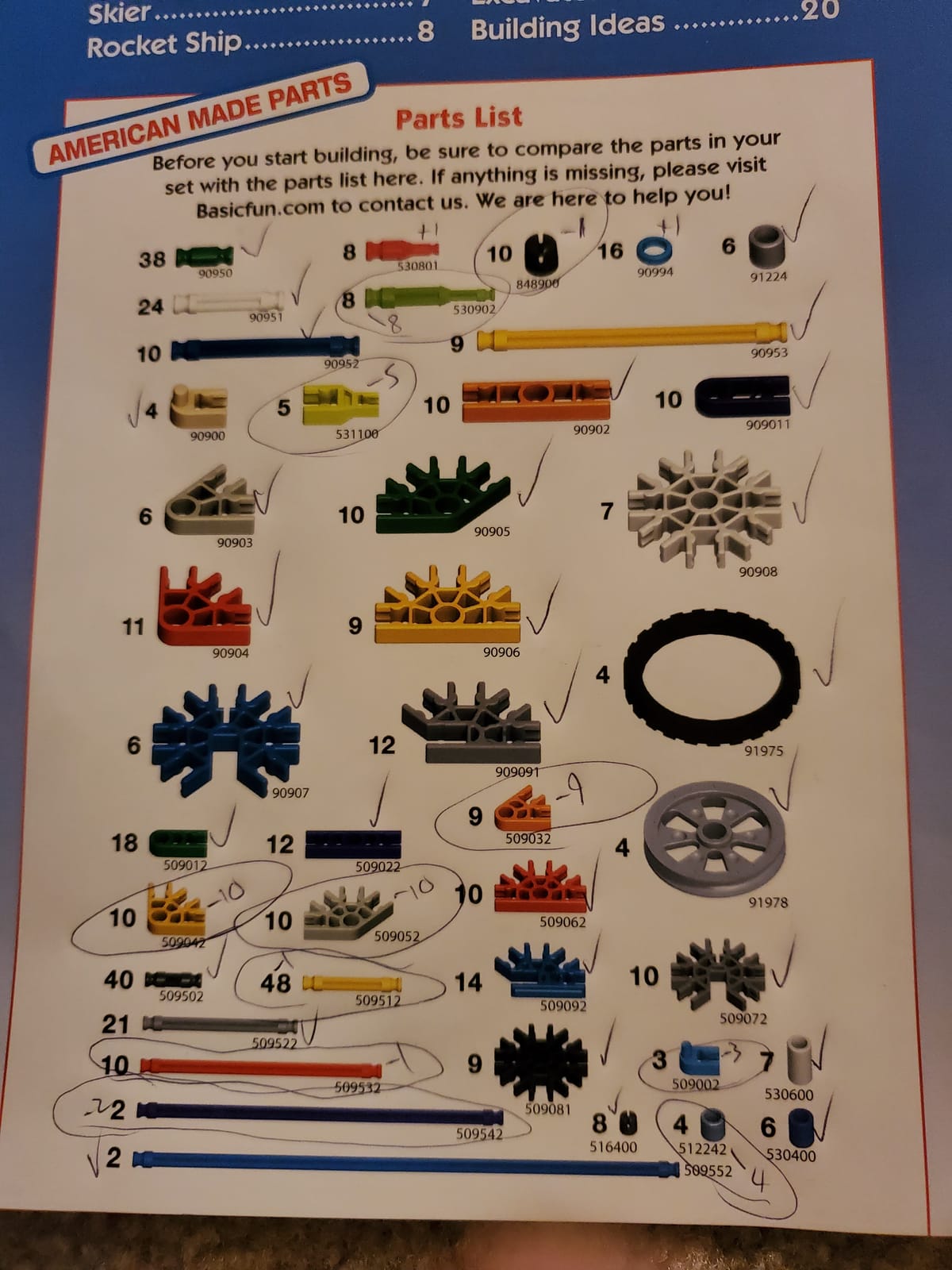
Storage is handled well, with a treasure chest included that keeps several hundred small parts in one place. The manufacturer carries a lifetime warranty against manufacturing defects, which is unusual in this category.
6. Teach Tech Mech-5 Coding Robot – The Best STEM Building Set for Screen-Free Coding
TEACH TECH Mech-5 STEM Coding Robot Building Kit for Kids Ages 10+
Plastic
16 oz
Ages 10 and up
2 AAA batteries
No screen
+ Pros
- Mechanical coding wheel teaches sequencing without a screen
- Robot throws lifts kicks and draws
- Detailed step-by-step assembly rather than pre-built
- Mission-based design gives a clear goal
- Introduces real mechanical engineering principles
- Cons
- Assembly takes several hours
- Age 10 rating is accurate and younger kids need help
- Only a handful of distinct programs are possible
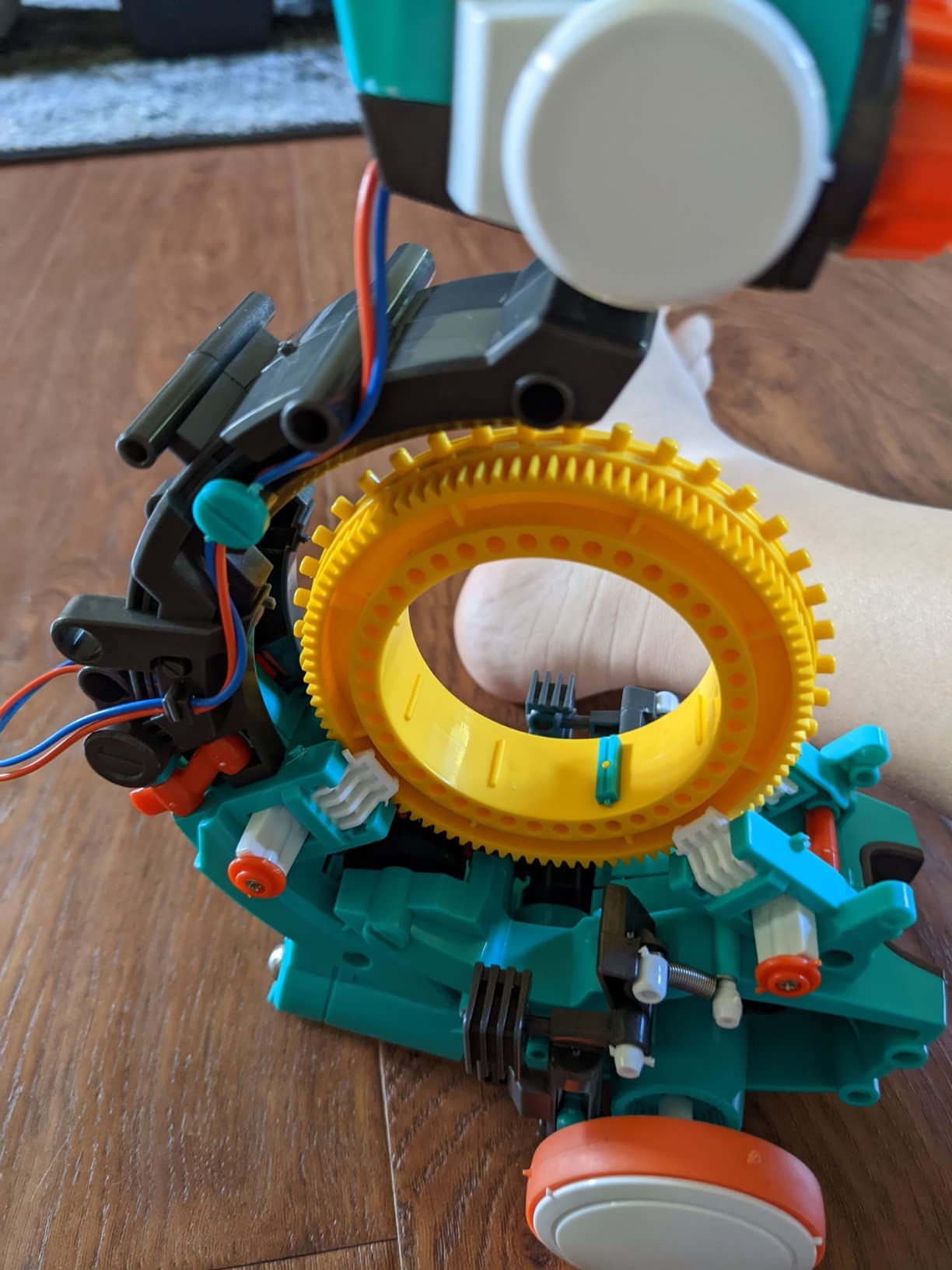
Mech-5 solves a problem most coding robots create: the child spends the whole session looking at a screen. Its coding system is physical, snapping buttons onto a wheel, so learning is hands-on from first instruction to last program.
The build is the main event, and reviewers treat this as a project rather than a toy. That is a genuine trade-off: a child wanting instant gratification will find several hours of assembly frustrating, while a child who enjoys a project will find it the most absorbing thing on the shelf.
Mechanical Coding Without a Screen
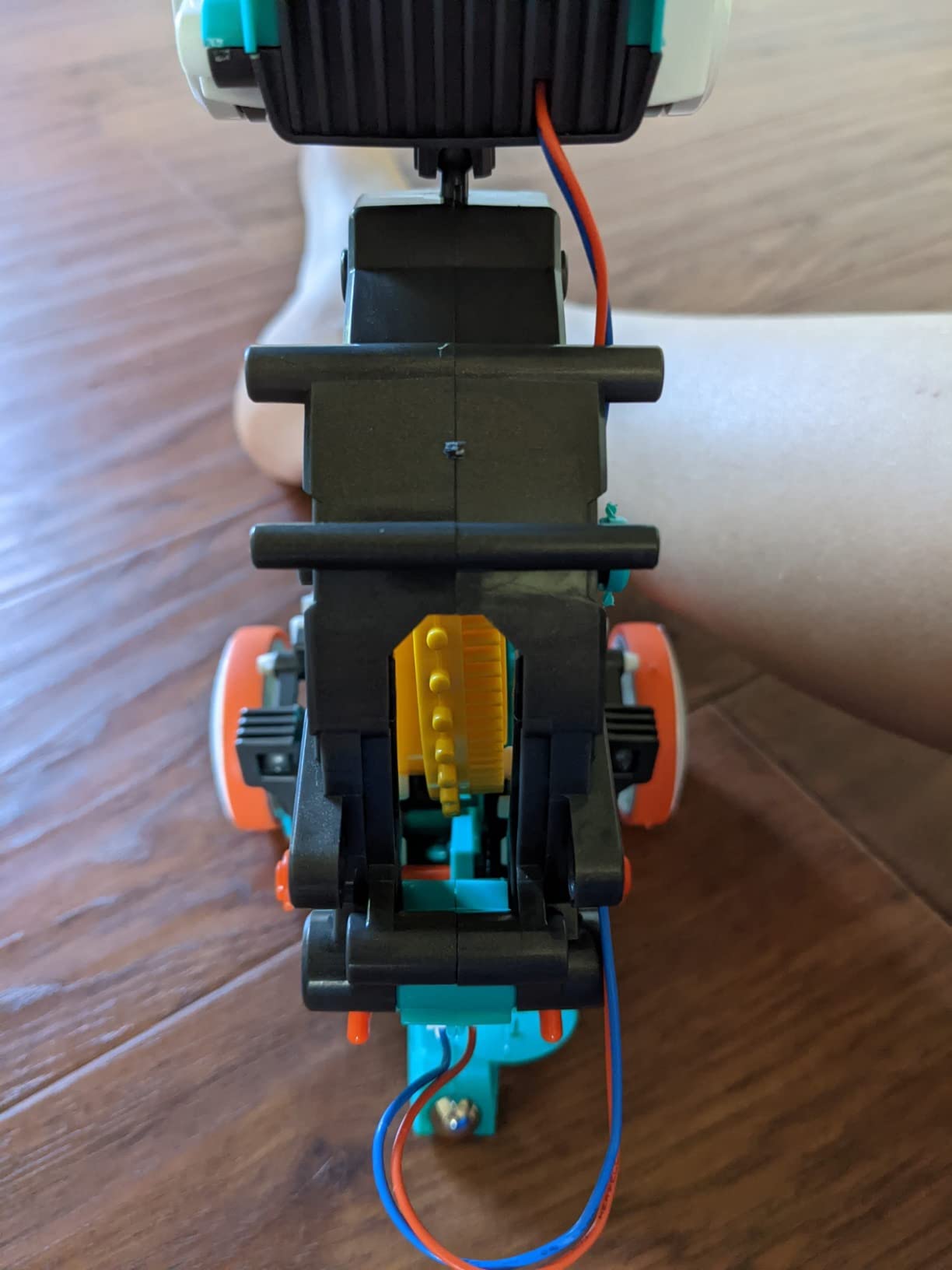
Coding buttons snap onto a coding wheel in sequence, and the robot performs them in order. There is no app, no software and no device requirement, so the whole thing works on a table with nothing else running.
Because the programming is mechanical, a child cannot use a phone to solve problems for them. That is a genuine advantage in a household keeping coding practice screen-free, and reviewers point it out as the reason this set stands apart.
Build Time Is the Real Specification
The manual asks for careful step-by-step assembly and the manufacturer is explicit that this is an in-depth project, not a pre-assembled toy. Expect several hours, spread over more than one session if the child is under twelve.
The limitation on the coding side is program variety. Once the wheel is set up, only a handful of distinct programs are possible, so replay value comes from rebuilding the robot rather than writing new code. Two AAA batteries power the finished robot.
Who This Set Suits
This suits a child aged ten and up who is ready for a project, particularly one not yet interested in screens. Mission-based design gives a goal rather than open-ended fiddling, which helps children who struggle to start.
It is a poor fit as a gift for a child who expects to open a box and play immediately, or for a younger sibling who will want help for the entire build.
7. Learning Resources Gears Deluxe – The Best STEM Building Set for Ages 3 to 5
Learning Resources Gears Deluxe Building Set
100 pieces including 46 gears
Plastic
1 kg
36 months to 10 years
No batteries
+ Pros
- 46 colorful gears make visibly spinning creations
- Covers preschool through early elementary
- Snap-together pieces build fine motor and coordination skills
- Open-ended enough for constant redesigning
- Battery-free so it works anywhere
- Cons
- Only one crank handle is included
- Pillar count limits very large builds
- Some pieces need real force to snap together
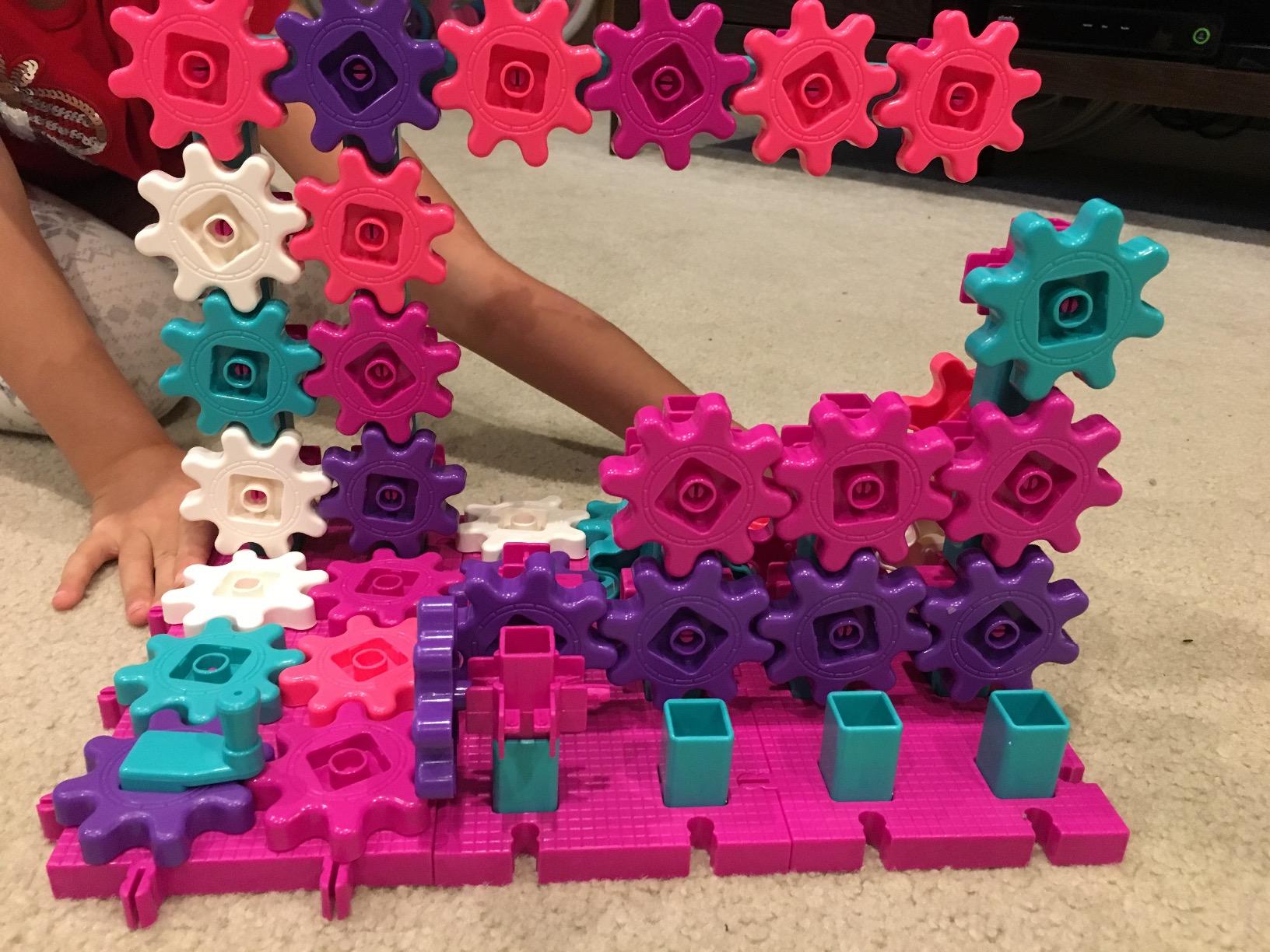
Gears is the clearest way to teach a young child that one thing turning makes another thing turn. Watching a chain of gears drive each other across a base is cause and effect made visible, at no cost in electronics.
This is the set I recommend most often for a first engineering kit, because the manufacturer rates it from 36 months to 10 years and the activity genuinely grows. A three-year-old stacks pillars; a nine-year-old designs a multi-stage reduction that changes speed and direction.
What is in the 100-Piece Box
The breakdown is specific: 46 colorful gears, 26 square pillars, 21 six-way axles, 6 interlocking bases, one crank handle and an activity guide. The axles are underrated, since they let a child decide where rotation enters a build.
No batteries are required, which removes the most common failure point in this category. There is nothing to charge, nothing to update and no consumable beyond the pieces themselves.
One Crank Handle Changes the Math
Only one crank handle is included, so two children building at the same time have to share it. That limitation appears repeatedly across reviews and is the most common reason families end up with a second set.
The pillar count is the second constraint. Twenty-six pillars support a good number of designs but run out for a large multi-level machine, and some pieces need real force to snap together, which frustrates the youngest builders until their hand strength develops.
Who This Set Suits
This suits parents and teachers looking for a first engineering set spanning preschool to early elementary, and it works well in a classroom centre or homeschool rotation because it needs no charging and no cleanup beyond the box.
It is less suited to a child who wants to build vehicles or structures rather than machines, since everything is designed around a drive train.

8. Smartivity DIY Pinball Machine – The Best STEM Building Set for a Project Weekend
Smartivity DIY Pinball Machine I Global Award Winning Game Ages 8-99 Years
375 wooden parts
Engineered wood
11 x 14.5 x 5.3 in
Ages 8 to 14
Rubber band power
+ Pros
- Produces a real working pinball machine with flippers and scoring
- Instruction manual is unusually clear
- Rubber band power so no batteries needed
- Engineered wood with virtually no plastic
- Free replacement parts for life
- Cons
- Build takes roughly two to three hours
- Small parts are easy to lose and no box is included
- Rubber bands can deteriorate over years
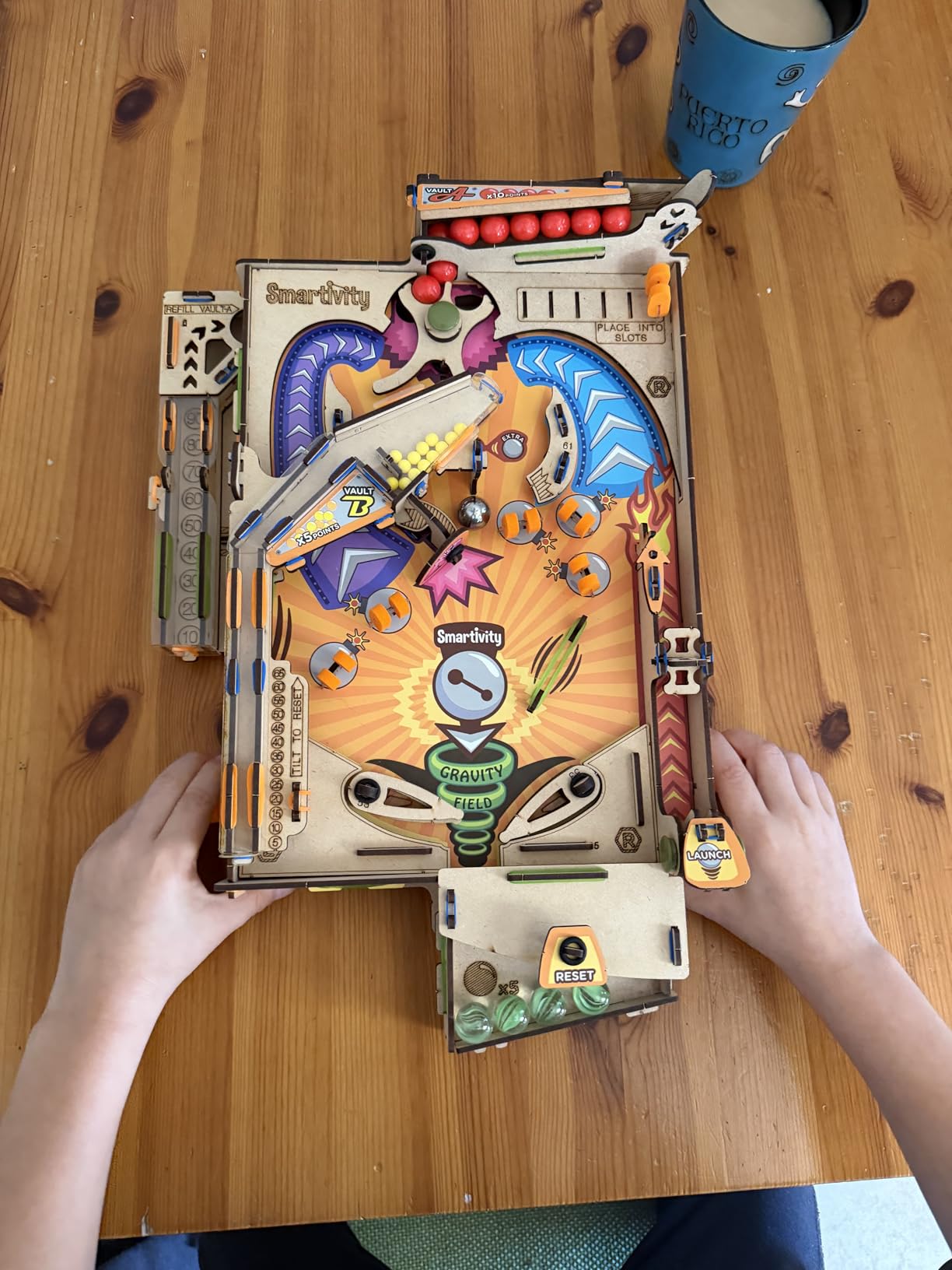
Most STEM kits get built once and shelved. This one becomes an arcade machine with a spring launcher, working flippers and scoring targets, and it stays in use for months afterwards as a family competition game.
That distinction is the entire reason it ranks here. The build teaches levers, springs, ramps and mechanical advantage; the finished object gets played, and that is exactly the balance most parents hope for in a gift that keeps working past the first week.
A Build That Ends in Play, Not a Shelf
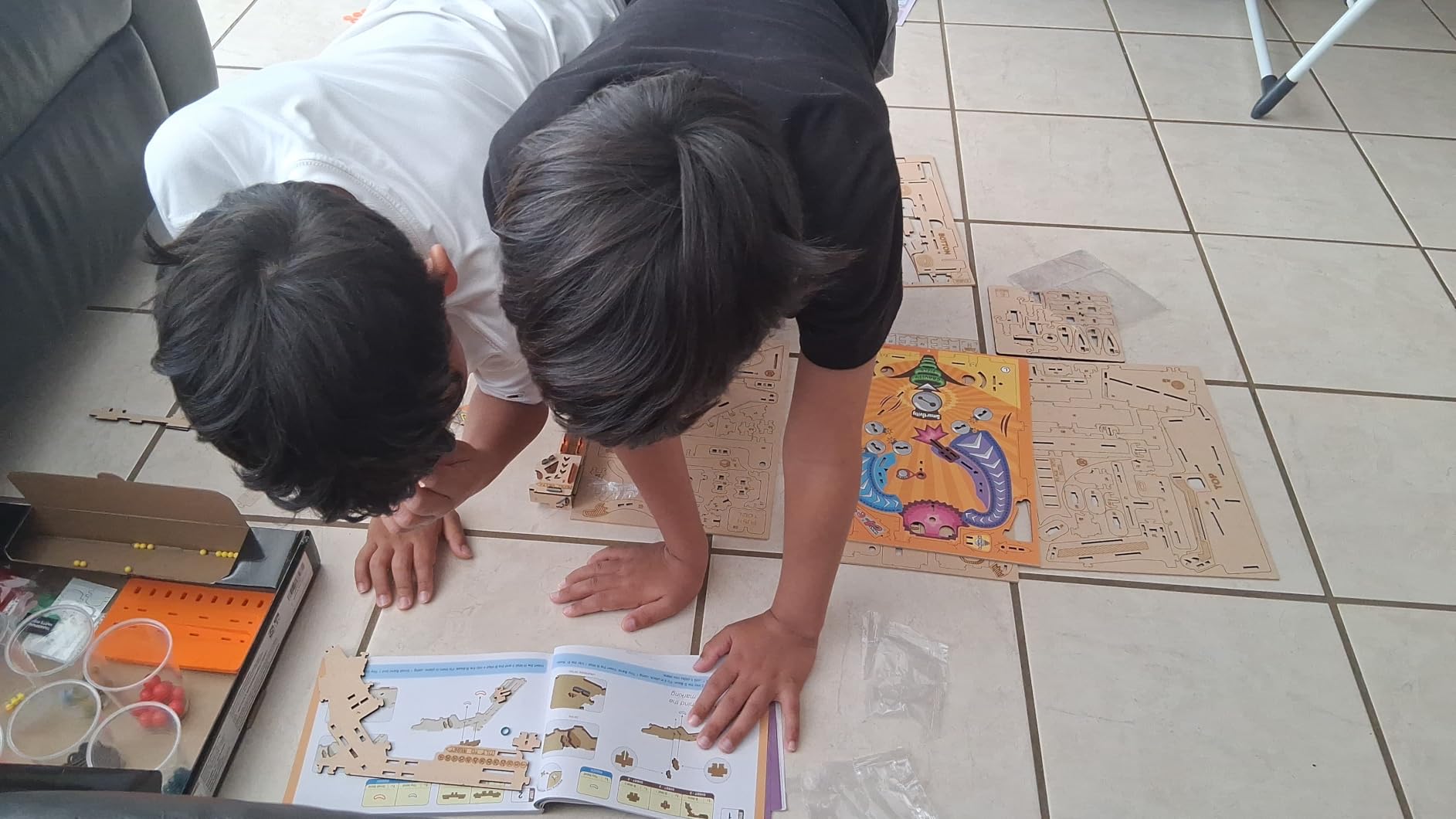
Plan on two to three hours and treat it as a weekend project rather than an after-nothing activity. The payoff is a functioning game rather than a model, and a child who has just assembled flippers and a launcher immediately understands why a lever needs a pivot point.
Power comes from rubber bands rather than batteries, so there is no power supply to fail and nothing to recharge. Construction is sustainably sourced engineered wood with virtually no plastic parts, which also means it will not develop the sharp edges snap-together plastics can.
Instructions, Spares and Wooden Parts
The manual draws more praise than almost any other in this roundup, with reviewers describing it as the clearest toy manual they have seen, using photos alongside written directions. A few steps are still unclear and some foam parts are shown in a mismatched colour.
Spare parts and extra rubber bands are included, and the manufacturer supplies free replacement parts for life, which offsets the biggest weakness: no dedicated storage box. Keep the parts in a tub you already own.
Who This Set Suits
This suits a child aged eight and up who will build alongside a parent, and a teen or adult who wants a screen-free project with a real finish. The manufacturer rates it from 8 to 99, and reviewers largely agree that eight is the honest floor.
It is not recommended as an independent build for children under about eight, and the multi-hour commitment means it works best as a planned gift rather than a surprise. Rubber bands are the one component with a long-term lifespan problem.
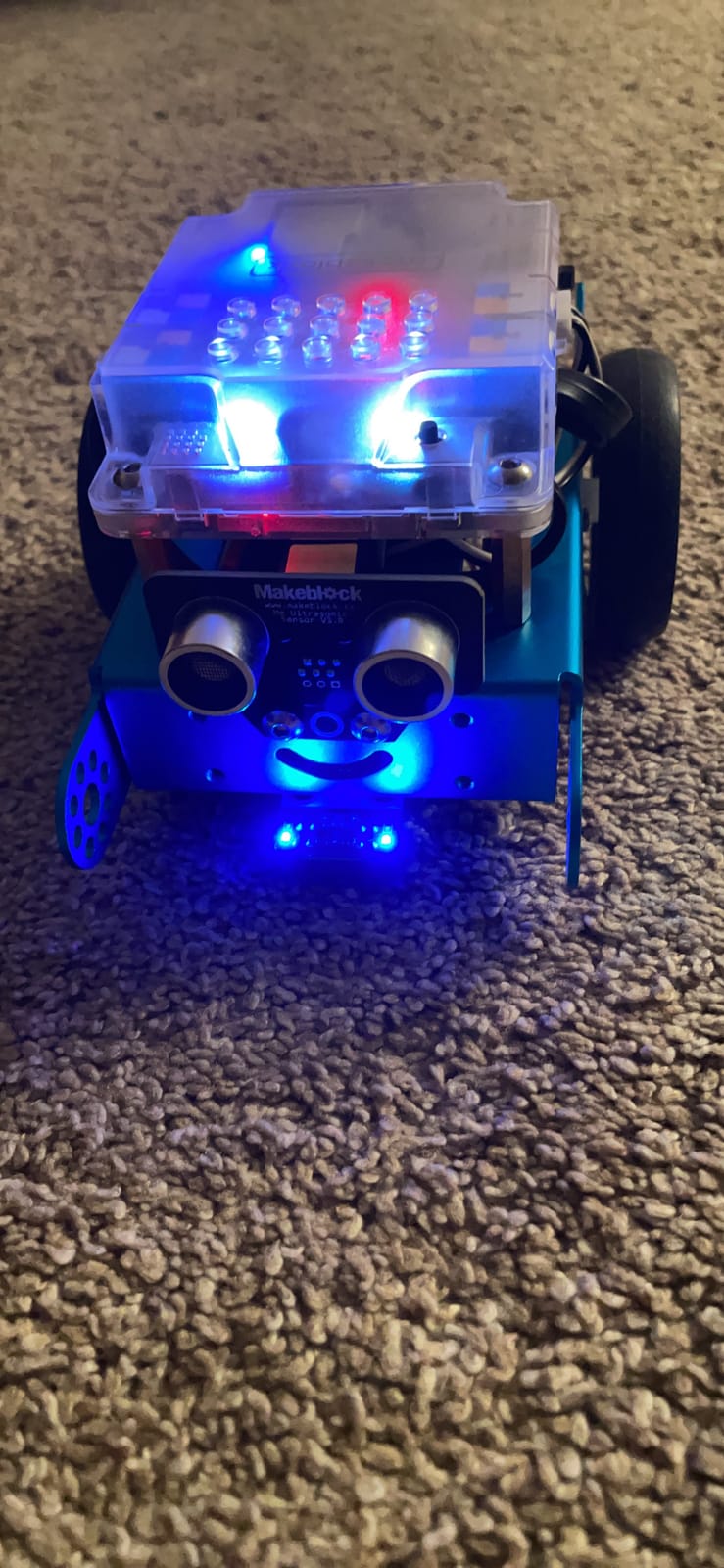
9. Makeblock mBot Robot Kit – The Best STEM Building Set for Growing Into Coding
Makeblock mBot STEM Coding Toys Robotics for Kids Ages 8-12
Metal and plastic
0.93 kg
Ages 8 to 12
4 AA and CR2025 batteries
Device required
+ Pros
- Builds in about 15 minutes
- Works as a remote car with line-follow and obstacle avoidance
- Metal chassis is more durable than plastic rivals
- Scales from Scratch to Arduino as skills grow
- Open platform with 100+ modules and LEGO compatibility
- Cons
- AA batteries and the remote coin cell are not included
- Needs a computer or tablet with the software
- Software setup can be fiddly for parents
- Costs more than other entry-level robotics kits
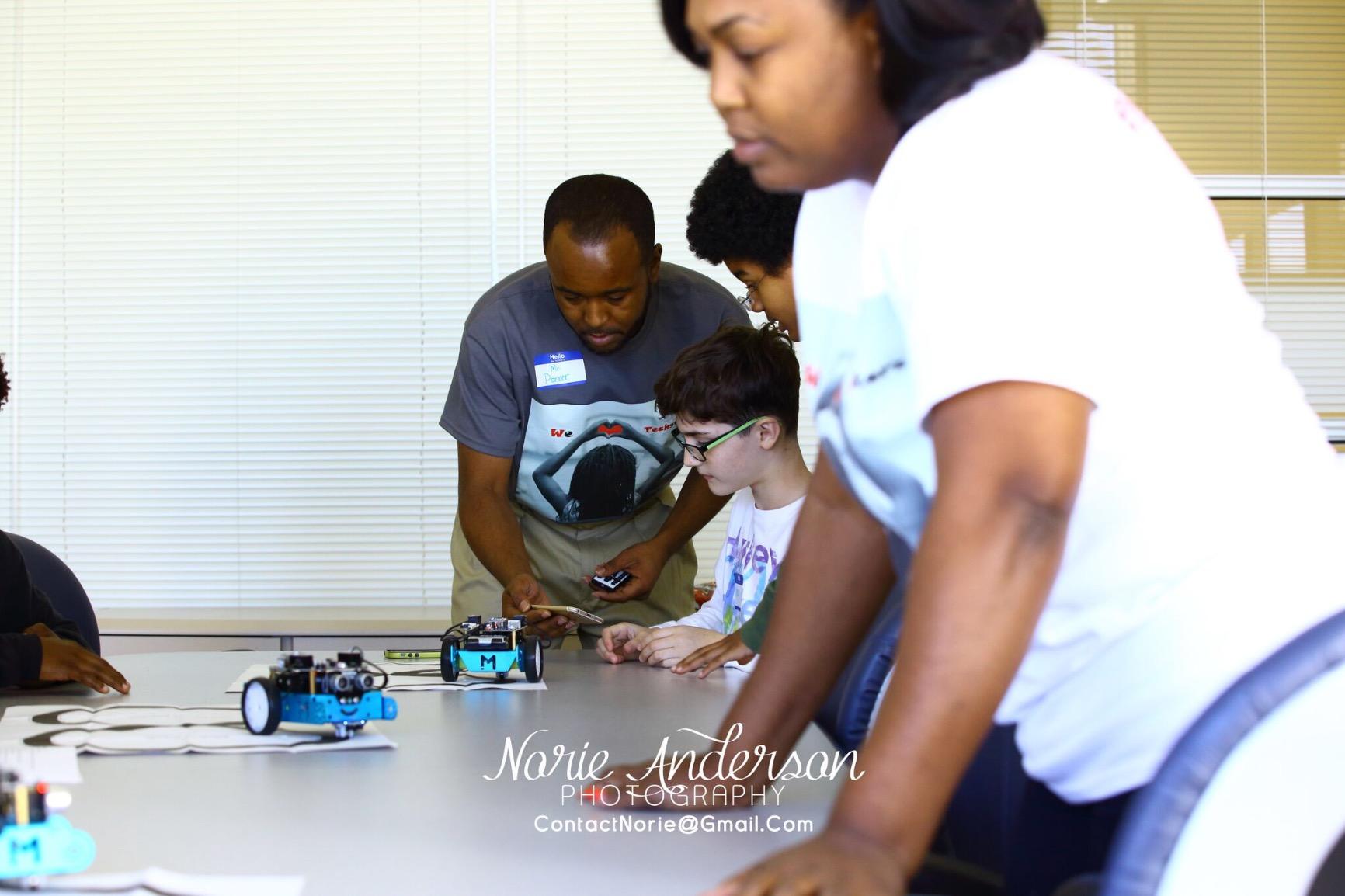
The mBot is the only kit here that a child can grow with rather than out of. It assembles in about fifteen minutes, drives immediately as a remote-controlled car, and then becomes a programmable robot the same afternoon.
That progression is the point. It supports block-based Scratch programming through mBlock software and three free apps, and scales to Arduino text coding as skills improve, so a child can stay with one platform from age eight into the early teens.
Device Requirement and What to Supply
This is the one kit in the roundup that cannot work without a computer or tablet running mBlock software. There is no offline mode worth relying on, which makes it a poor choice for spontaneous weekend play.
You must supply the batteries yourself. The robot needs four AA cells and the remote needs a CR2025 coin cell, and neither is included. Forgetting this on day one produces a very disappointing first impression from an otherwise excellent kit.
Expansion Path and Durability
The platform is genuinely open. It connects to more than 100 electronic modules and 500-plus parts from the Makeblock range, and it is compatible with standard LEGO pieces, so an existing brick collection extends what a child can build.
Metal construction in the chassis takes the punishment that usually ends a robot kit, a runaway robot or a dropped robot. Reviewers flag that software setup and firmware updates can be fiddly for parents unfamiliar with coding tools.
Who This Set Suits
This suits a child aged eight to twelve who is ready to move from construction into programming, and one who will keep a device available for regular use. Coding cards and lessons are included to support independent work once the basics are set up.
It is a poor fit for screen-free households, for younger children and as an impulse gift, because nothing happens until batteries are in and software is loaded.
10. 14-in-1 Solar Robot Kit – The Best STEM Building Set for Renewable Energy Lessons
Solar Robot Kit, 14-in-1 STEM Building Toy for Kids DIY Science Robotic Set
ABS plastic
499 g
Ages 8 and up
Solar panel or one AAA battery
Screen-free
+ Pros
- 14 robot designs from one set
- Labeled component bags keep parts organised
- Step-by-step illustrated instructions
- Introduces renewable energy hands on
- Free replacement parts reported as quick
- Cons
- Parts must be trimmed from sprue frames by hand with no tool included
- Some reviews report a solar panel too weak for direct sun
- Some sets arrive with warped parts
- Thin wires and small pieces are fragile
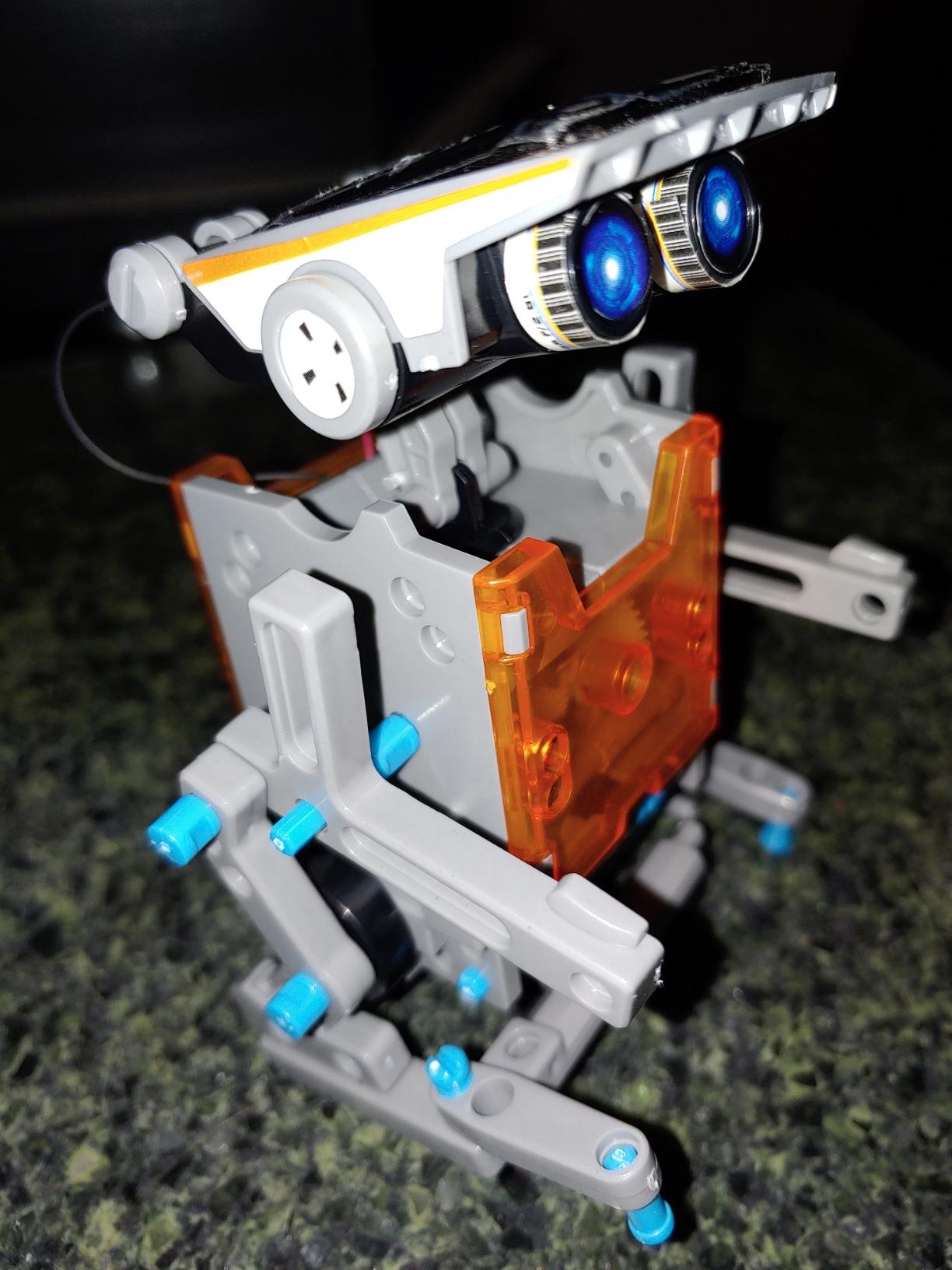
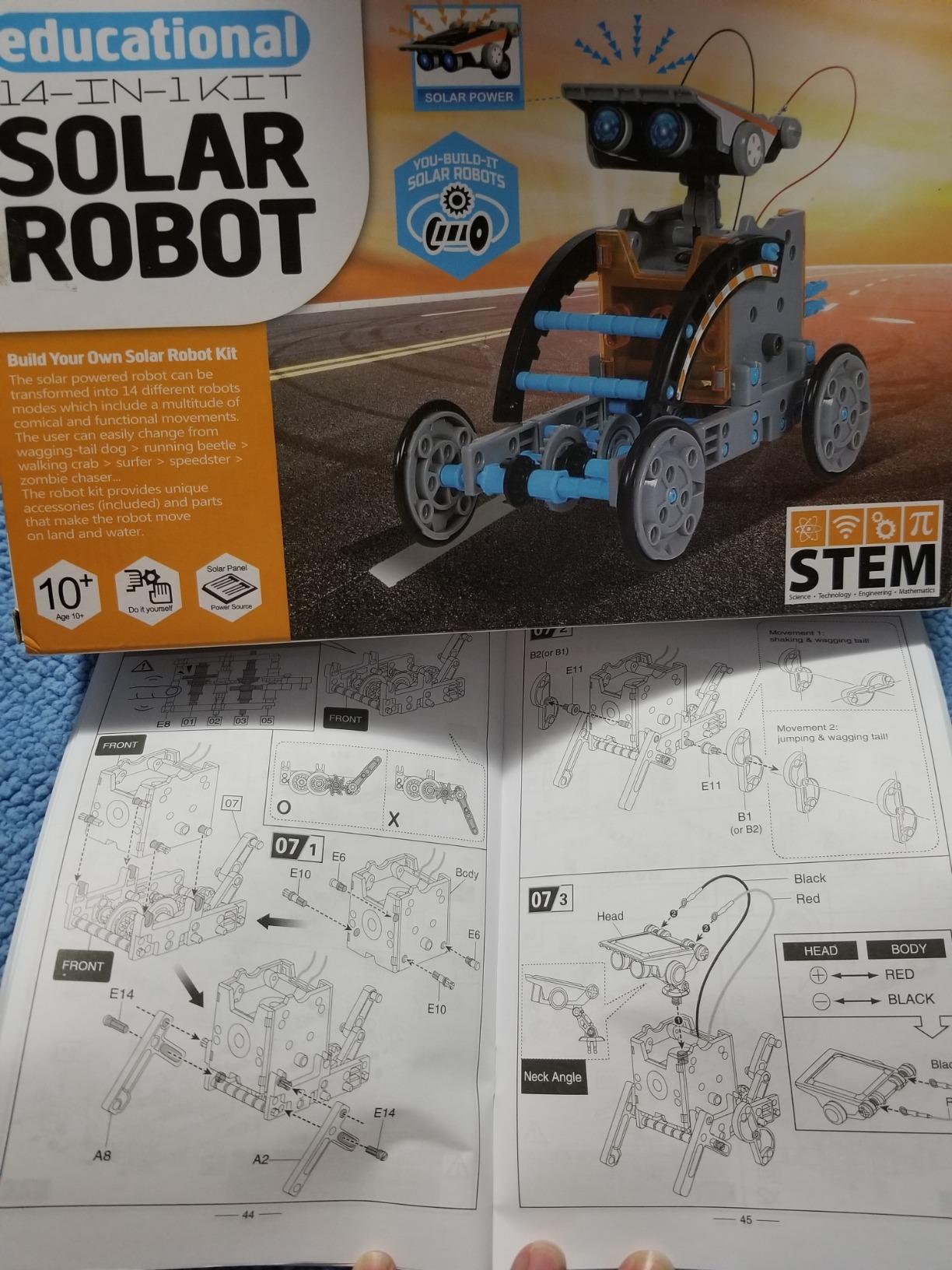
Fourteen buildable robot designs from one box is the strongest replay-value proposition in this roundup. Designs range from beginner models to a walking crab, a wagging-tail dog and a surfboard, so a child can work up in complexity.
The renewable energy angle is real rather than decorative. The included solar panel converts sunlight into the electrical energy that drives the wheels, and a single AAA battery, not included, keeps it running indoors when the weather is not cooperating.
Solar Power and the Indoor Fallback
Dual power is the practical feature. Outdoors the panel runs the robot from sunlight, and indoors a single AAA battery keeps the session going, so a bad-weather day does not end the project.
The caveat is documented across reviews: some buyers report the solar panel being too weak to drive the robot in direct sunlight, with robots stopping after a second or two. Treat outdoor performance as variable and test it early.
Build Quality and Assembly
Pieces must be trimmed free from the sprue frames by hand, and no cutting tool is included. This is close to universal across reviews, so add scissors or a hobby knife to the box before the first session, with an adult doing the trimming.
Some sets arrive with warped plastic parts that do not move properly, and the assembly diagrams are picture-heavy but not always clear on build order. Labeled component bags are a genuine plus in a kit with this many small parts.
Who This Set Suits
This suits a child aged eight and up in a home with outdoor space, a classroom or a homeschool setting where the renewable energy demonstration is the teaching goal. It works well for independent play, family bonding and school STEM projects.
It is a weaker choice for a perfectionist child, because the split review pattern means some units will need troubleshooting on the first build. Customer service has been reported as quick and generous with free replacement parts, which is the safety net here.
11. Snap Circuits BRIC Structures – The Best STEM Building Set for Combining Bricks and Circuits
SNAP CIRCUITS BRIC Structures STEM Building & Electronics Kit, Ages 8+
139 bricks and 20 snap modules
Plastic
0.29 kg
Ages 8 to 15
3 AA batteries
No device
+ Pros
- Hybrid design combining bricks with working circuit modules
- 75 adapters let kids light up structures they build
- Full-colour booklet with 20+ projects
- No soldering or tools required
- Extends an existing brick collection
- Cons
- The 75 adapters limit how large a structure can be wired
- Three AA batteries not always included
- Long narrow box is awkward to store
- Learning curve is steeper than either system alone
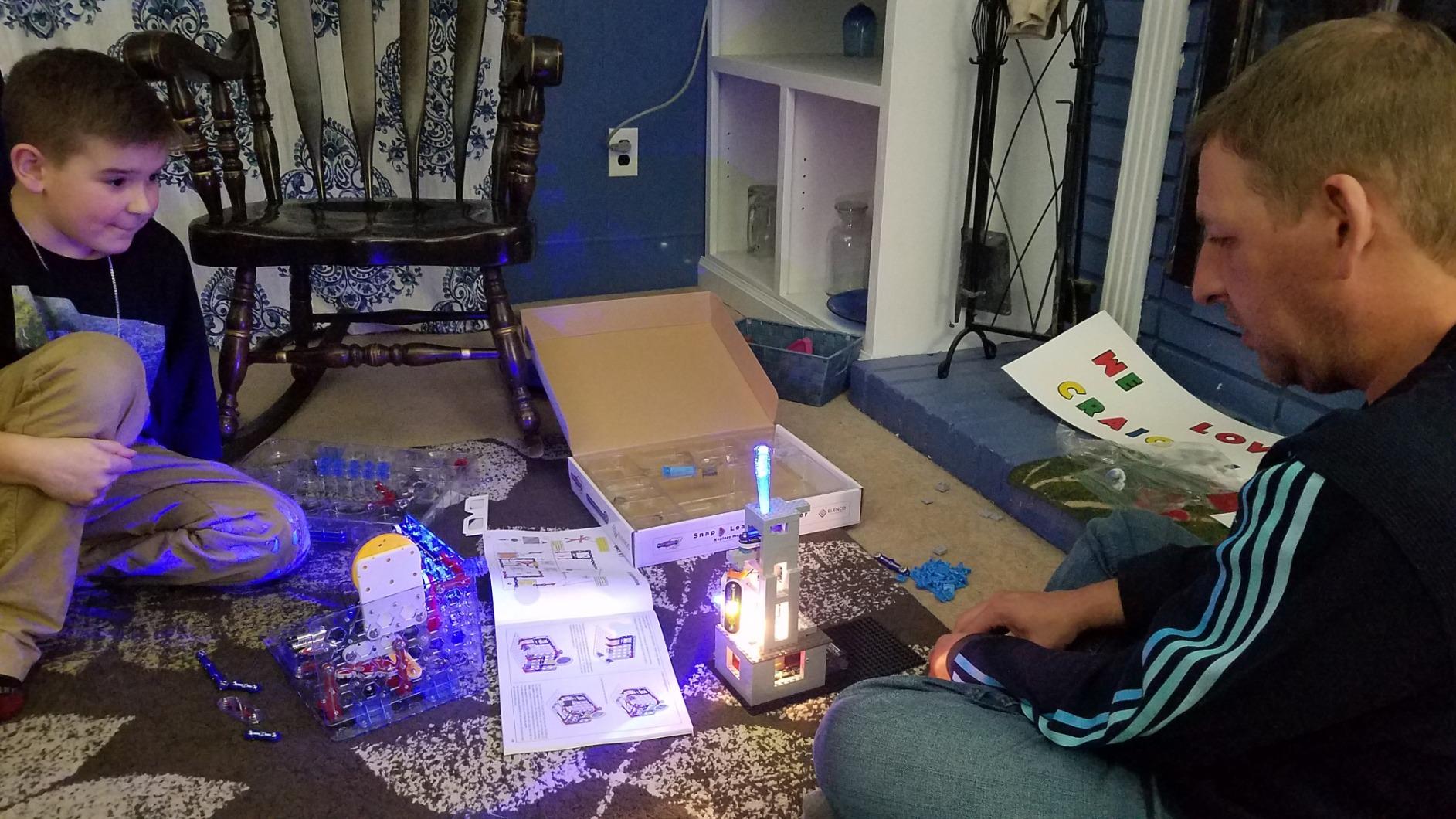
This kit sits between two categories most roundups treat separately. Bric-2-Snap technology lets standard building bricks accept working Snap Circuits modules, so a child can build a castle and then light it up, add sound or animate it.
Few kits in this bracket manage that hybrid, and reviewers are clear it is the reason to buy this one rather than either a pure brick set or a pure electronics kit. A structure that stands up and works at the same time is a more persuasive demonstration of engineering than either discipline alone.
Adapters, Bricks and Modules
The box contains 139 assorted bricks, 20 snap modules, 75 Snap-2-Bric adapters, a BRIC remover tool and a manual covering more than 20 projects. The adapters are the resource that matters, because each one is what turns a brick structure into a powered one.
Seventy-five is a finite number, and reviewers identify it as the limiting factor on ambitious builds. Large structures need careful planning so the modules land where they do visible work, which teaches planning rather than frustrating a child.
Difficulty and Who It Is Really For
The learning curve is steeper than either system on its own, since a child has to understand the snap grid and the brick logic simultaneously. That is the appeal for a motivated eight-and-up builder and the reason it is a poor gift for a child who wants quick success.
Three AA batteries power the modules and they are not always included, so add them to the shopping list. The long, narrow packaging is awkward once opened, so transfer the parts to a storage tub the day the kit arrives.
Who This Set Suits
This suits a child who already has a brick collection and wants to add electronics, particularly one moving from Snap Circuits into structures. The manufacturer rates it for ages eight to fifteen with a six-month warranty against manufacturer defects.
It suits a classroom maker space particularly well, because the hybrid lets one child build while another wires. For a single younger child working alone, the standard Jr kit is a more forgiving place to start.
12. Straw Constructor 600-Piece Set – The Best STEM Building Set for Group and Classroom Play
Straw Constructor Toys 600Pcs STEM Building Toy Interlocking Plastic Engineering Thin Tube Blocks Educational Kit for 3 4 5 6 7years Kids Boys and Girls Gift Preschool STEM Toy with Storage Box
600 straws and connectors
PVC
2.1 lb
Ages 3 and up
Storage box included
No device
+ Pros
- 600 pieces supports several children building at once
- Connector set includes wheels and multidirectional connectors
- Thin-tube format suits preschool fine motor skills
- Storage box makes cleanup simple
- CPSIA and ASTM certified with non-toxic materials
- Cons
- Straws bend or crack under heavier builds
- Connectors can be tight for younger children
- Pieces are easy to lose through open ends
- Tall builds often need adult help to stay upright
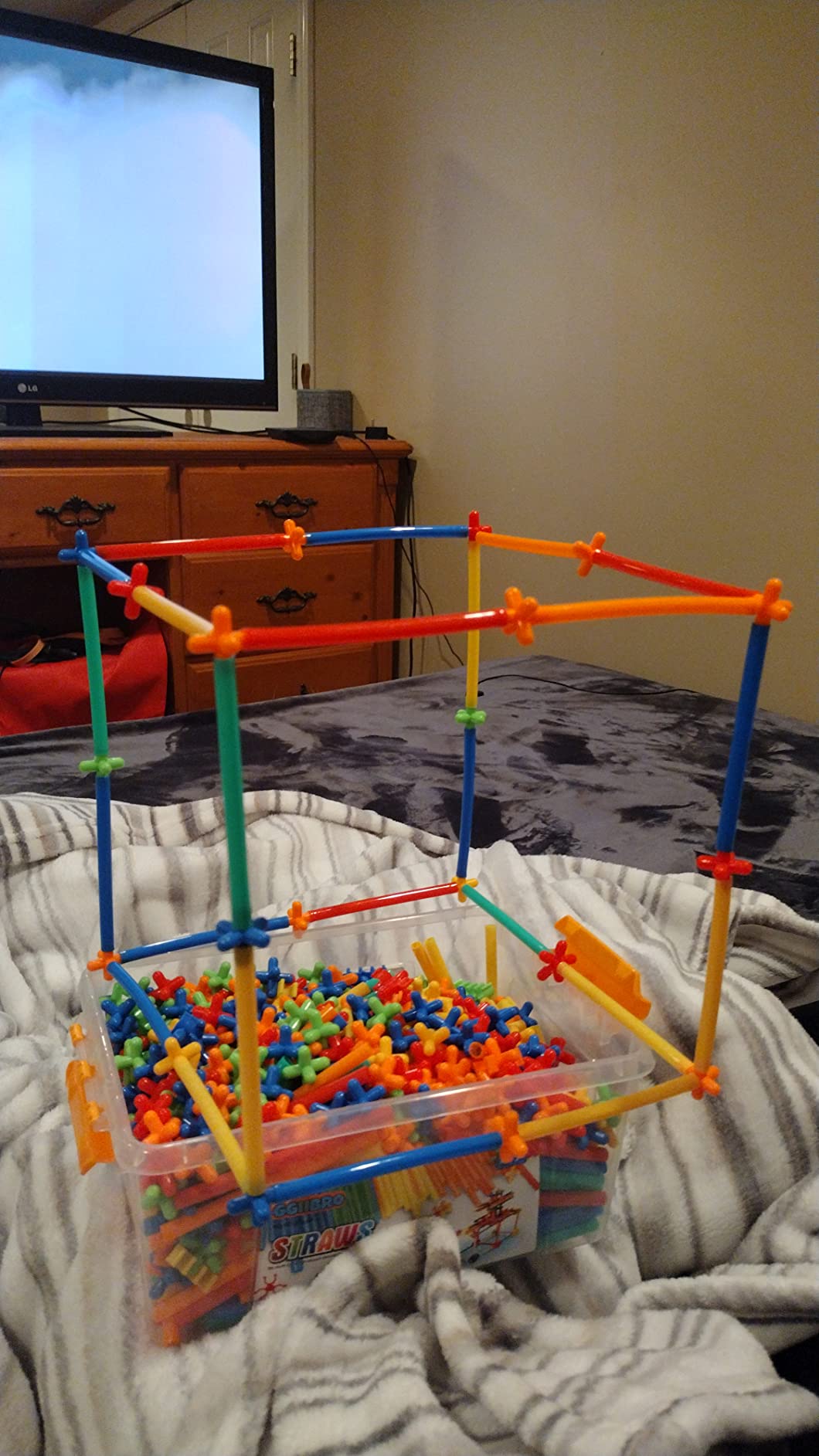
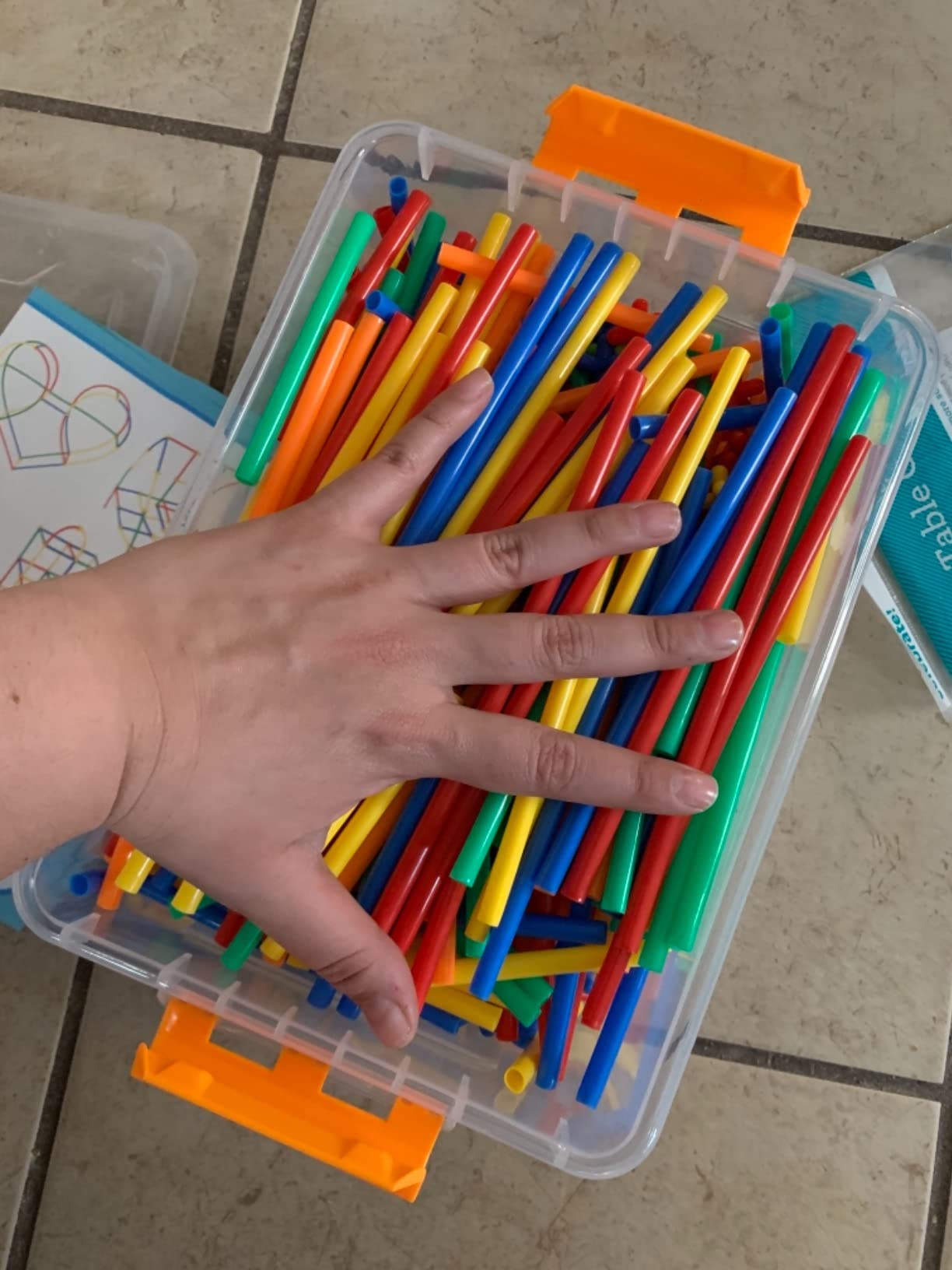
The straw-and-connector format is a practical way to put a genuine engineering set in front of a room full of children, and this is the largest of the connector sets here. Six hundred pieces means several children can build simultaneously instead of queueing around one box.
The format is intuitive for preschoolers. Thin tubes push into connectors with almost no force and no fine motor precision, so a three-year-old can complete a joint independently, the same advantage that makes magnetic tiles work at that age.
Connectors, Wheels and the Connector Update
The connector set has been upgraded to include wheels and multidirectional connectors, which changes what can be built. Rather than static structures, a child can produce moving vehicles, aircraft, boats, castles, robots and animals from the same tubes.
Wheels are the most valuable addition for this age, because a rolling model invites a child to test cause and effect rather than simply balance pieces. The whole set fits the 10.75 x 6.66 x 4.69 inch footprint with the box.
Structural Limits of Thin Tubes
The material is the constraint. PVC straws bend or crack under heavier builds, so this is not a set for large towers or load-bearing structures, and reviewers are candid about the limit on build scale.
Pieces are also easy to lose because they are slim and disappear through open bin liners, and connectors can be tight for the youngest builders. Some pieces arrive slightly out of shape and need straightening.
Who This Set Suits
This suits preschool through early elementary, for ages three to seven, and it is rated for players aged three to seven. It is the strongest choice here for sibling co-building and for any setting where several children build at the same time.
It suits classroom maker spaces and homeschool bins because the storage box keeps everything contained and the set is CPSIA and ASTM certified with non-toxic materials. It is a poor fit for a child who wants to build large or heavy structures.
How to Choose a STEM Building Set for Your Child
Choose by age first, then by how many separate things the kit can build, then by whether it needs a phone, tablet or batteries, and finally by safety. Small parts and loose magnets rule out sets for children under three, regardless of how good the rest of the kit is.
Choosing by Age Band
For ages three to five, the deciding factor is whether a child can complete a connection without help. Magnetic tiles, straw connectors and interlocking discs succeed because the joint is easy and the failure mode is trivial. Avoid anything requiring a screwdriver or precise alignment.
For ages six to eight, gear sets, marble runs and the Jr circuit kit are the sweet spot. The child can follow a diagram, tolerate a failed attempt and still be excited by the result. Pick something with a manual full of projects, because a guided start prevents the frustration that ends a set’s life.
For ages nine to eleven, mechanical robots, hybrid brick-and-circuit kits and larger construction sets work well, because the child can debug a problem rather than simply assemble one. From twelve up, anything requiring real programming or a long project pays off.
Choosing by STEM Discipline
Decide which branch of STEM you want practised, because these kits teach different things. Circuits teach current, resistance and debugging. Gear and pinball sets teach simple machines and mechanical advantage. Marble runs teach gravity, gradient and momentum. Solar kits teach energy conversion. Coding robots teach sequencing and iteration.
Magnetic tiles and straw sets sit apart, teaching spatial reasoning and structural design rather than a specific mechanism. That is a genuinely valuable skill, but a different one, and it is why those sets appeal to children who lose interest in anything with instructions.
Choosing by Device Dependence
Only the Makeblock mBot in this roundup genuinely requires a computer or tablet, and that single fact removes it from consideration for many households. The rest run on paper instructions and physical components, so they work anywhere.
Next, check the power requirement. Several kits need batteries that are not included, and two run on rubber bands or sunlight. A battery-free kit never fails on a flat cell.
Replay Value and the Day-Two Test
The most useful question is what the child builds after the first project. A kit with 100 projects, 14 robot designs, 35 guided models or unlimited open-ended parts has a second week in it. A kit with a single experiment does not, and forum discussions name single-use kits as the most common disappointment.
Count the loose parts too. Fewer, chunkier, more durable pieces beat a larger count of small ones, which is the standard parents apply when they say they would rather have one good set than many mediocre ones.
Frequently Asked Questions
What are the best STEM building sets for kids?
The best STEM building sets for kids depend on age and purpose. For open-ended construction, magnetic tiles and interlocking disc sets work from age three up. For real circuits, snap-together module kits teach current and debugging without soldering. For physics, marble runs teach gravity and momentum. For coding, a mechanical robot teaches sequencing without a screen, while a programmable robot requires a computer or tablet.
What is the best age to start STEM building sets?
Around age three is the right starting point, provided the kit has chunky pieces and no small parts. Children at that age can complete a magnetic, disc or straw-connector joint independently, which is the thing that keeps them playing. Avoid sets with loose small parts, magnets or pieces under three years old. From six, diagram-following kits become possible, and from nine mechanical and coding kits open up.
What is a good STEM kit for a 10-year-old?
At ten, a child is ready for a project rather than a toy, so a mechanical coding robot or a multi-day build is a strong fit. A marble run suits this age because designing a reliable run is genuine engineering, and a hybrid brick-and-circuit kit works if the child already builds with bricks. Choose something with multiple projects rather than a single experiment, since replay value is the deciding factor at this age.
What are good STEM gift ideas for a 12-year-old?
For a 12-year-old, prioritise sets that reward planning and problem-solving over sets that reward fast assembly. A mechanical coding robot teaches sequencing with no screen, and a wooden pinball machine turns a two-to-three hour build into a game that lasts for months. A programmable robot that scales from block coding to text coding is the strongest option if a computer or tablet is available at home.
Do STEM building sets need batteries or a tablet?
Most do not. Of the sets in this roundup, only the programmable robot genuinely requires a computer or tablet with its software. Several others need batteries, and in some cases they are not included in the box, so add a pack before the first session. Battery-free options including magnetic tiles, interlocking discs, gear sets, straw constructors, marble runs and wooden mechanical kits work anywhere with no charging or downloads.
Final Verdict: Which STEM Building Set to Buy in 2026
If you want one set that works for the widest range of ages and survives the most testing, the magnetic tile set is the pick. It earns the top spot because it is the hardest kit in the category to get wrong, not because it is the most advanced.
If you are shopping for a child who wants to understand electricity, choose the snap-together circuit kit. For a three or four year old, the interlocking disc set gives you the most pieces per unit of effort. If screens are not the point, the mechanical coding robot teaches sequencing with a wheel instead of an app.
For a specific child, match the discipline to the interest. A child who loves machines needs gears or rods, a child who loves structures needs tiles or straws, and a child who loves taking things apart needs circuits. Buy one that builds many things, accept the build mess, and put it back in front of them the following week.
Whichever you choose, set an expectation that day two is where the real learning starts. That single habit is what separates the best STEM building sets for kids from the impressive box that ends up in a cupboard after one afternoon.