
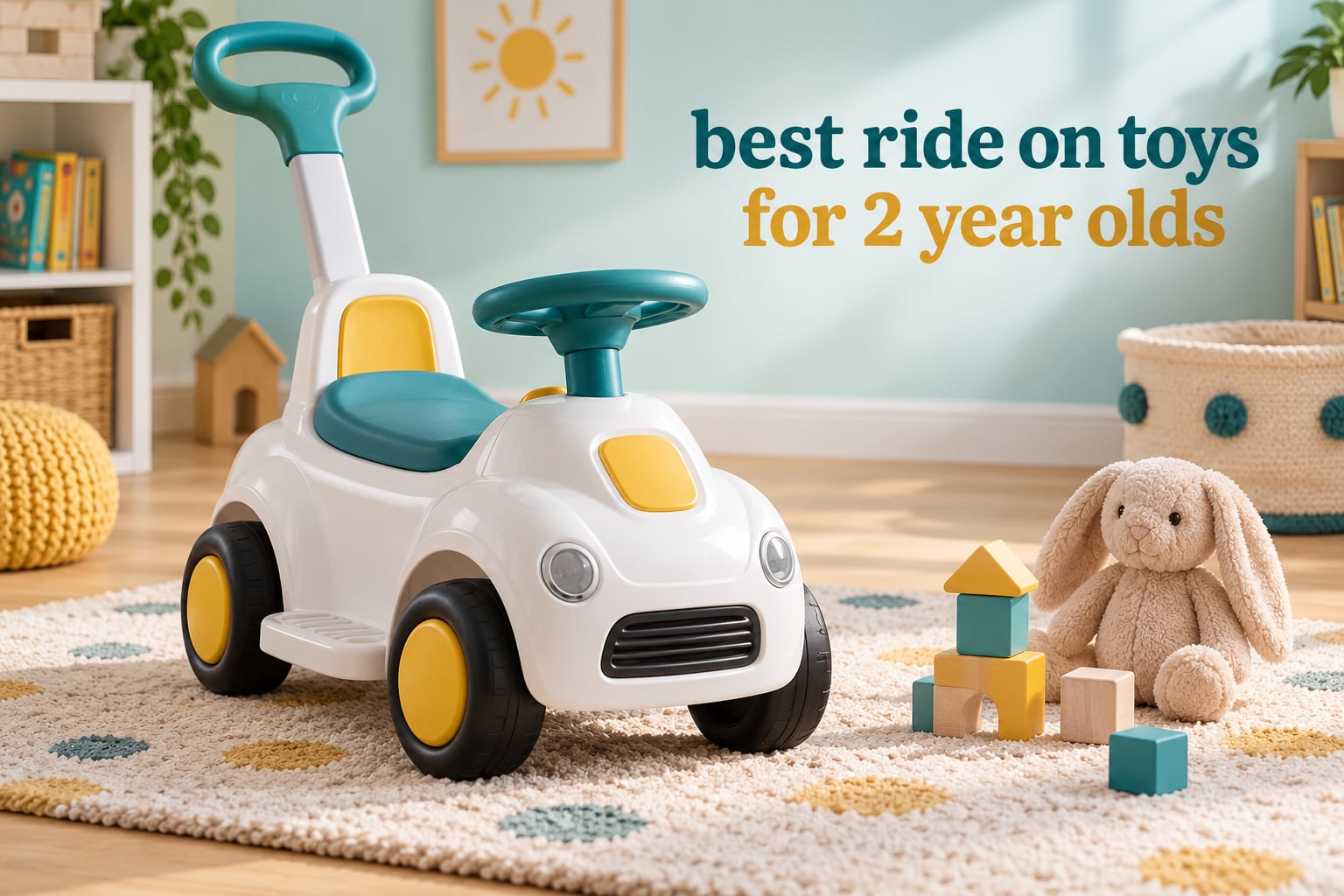
Choosing the best ride on toys for 2 year olds is less about the toy and more about what your child can already do. At two, most toddlers walk unaided, climb onto low furniture and kick a ball without falling over, but true balance is still a work in progress. That single fact rules out pedal trikes for nearly everyone and points instead at foot-to-floor scoot-alongs and parent-push cars.
We spent six weeks putting these twelve ride-ons through a toddler’s-eye test: mounting and dismounting without help, steering on hard floors, hauling a 25 pound child up a slope, and checking what happens when the sound features run out of batteries. The winners below cover every style a two-year-old can genuinely use, and every one has honest limitations listed.
Our Top 3 Ride-On Picks for 2 Year Olds (2026)
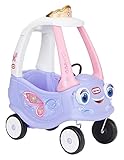
Little Tikes Fairy Cozy Coupe
- Parent push handle
- Removable floorboard
- 360-degree front wheels


12 Best Ride On Toys for 2 Year Olds Compared Side by Side (2026)
| Product | Details | |
|---|---|---|
| Little Tikes Fairy Cozy Coupe |
|
Check Latest Price |
| Step2 Whisper Ride II |
|
Check Latest Price |
| Step2 Push Around Buggy |
|
Check Latest Price |
 John Deere Sit N Scoot Tractor John Deere Sit N Scoot Tractor |
|
Check Latest Price |
 Little Tikes Push and Ride Racer Little Tikes Push and Ride Racer |
|
Check Latest Price |
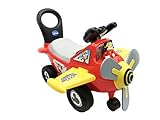 Kiddieland Mickey Mouse Plane Kiddieland Mickey Mouse Plane |
|
Check Latest Price |
 Radio Flyer Creativity Car Radio Flyer Creativity Car |
|
Check Latest Price |
 Kiddieland Minnie Dancing Ride-On Kiddieland Minnie Dancing Ride-On |
|
Check Latest Price |
 Radio Flyer Amazon Delivery Van Radio Flyer Amazon Delivery Van |
|
Check Latest Price |
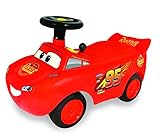 Kiddieland Lightning McQueen Racer Kiddieland Lightning McQueen Racer |
|
Check Latest Price |
 Mercedes G-Wagon Push Car Mercedes G-Wagon Push Car |
|
Check Latest Price |
 CAT Excavator Push Car CAT Excavator Push Car |
|
Check Latest Price |
1. Little Tikes Fairy Cozy Coupe – the Removable Floorboard That Grows With Your Child
Little Tikes Fairy Cozy Coupe (Amazon Exclusive) Large
Ages 18-60 months
29.5 inch L x 16.5 inch W x 36 inch H
50 lb weight limit
Assembly required
+ Pros
- Push handle plus removable floorboard for push mode then self-propelling
- Working horn and clicking ignition switch
- 360-degree spinning front wheels
- High seat back with rear cup holders
- Cons
- Rear cup holders ship without a cup included
- Fixed floorboard limits self-propelling for the smallest riders
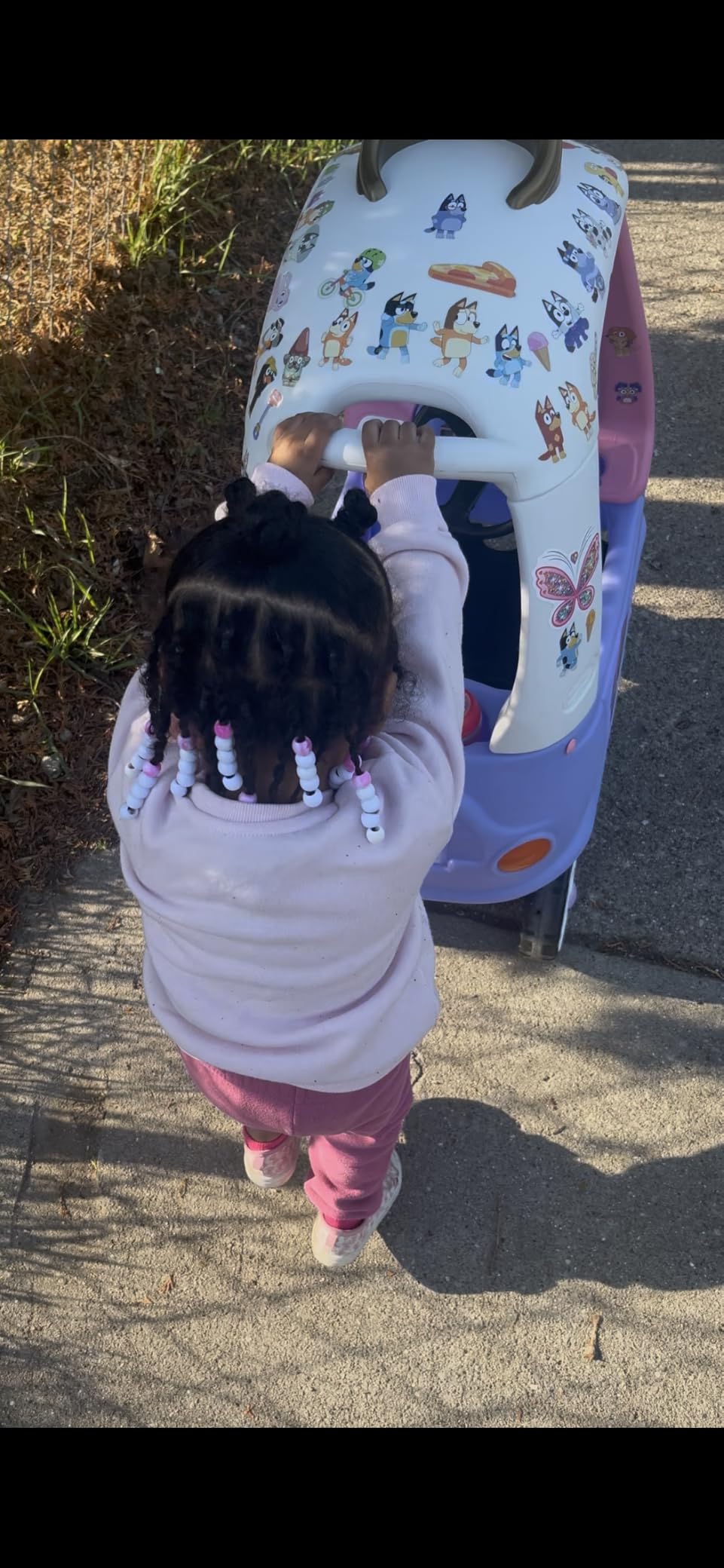
This is the toy we kept coming back to during testing. The Cozy Coupe carries a child from being pushed at nineteen months to scooting alone at three, and the switch between those two modes is a single removable floorboard. Parents on parenting forums repeatedly name that floorboard as the design feature they value most in any toddler ride-on.
Outdoors it is a genuinely good first car. The front wheels spin through 360 degrees, which is what lets a two-year-old turn a corner rather than pivot in a circle, and the rugged tires handle a driveway without complaint.
Why the floorboard matters more than the styling
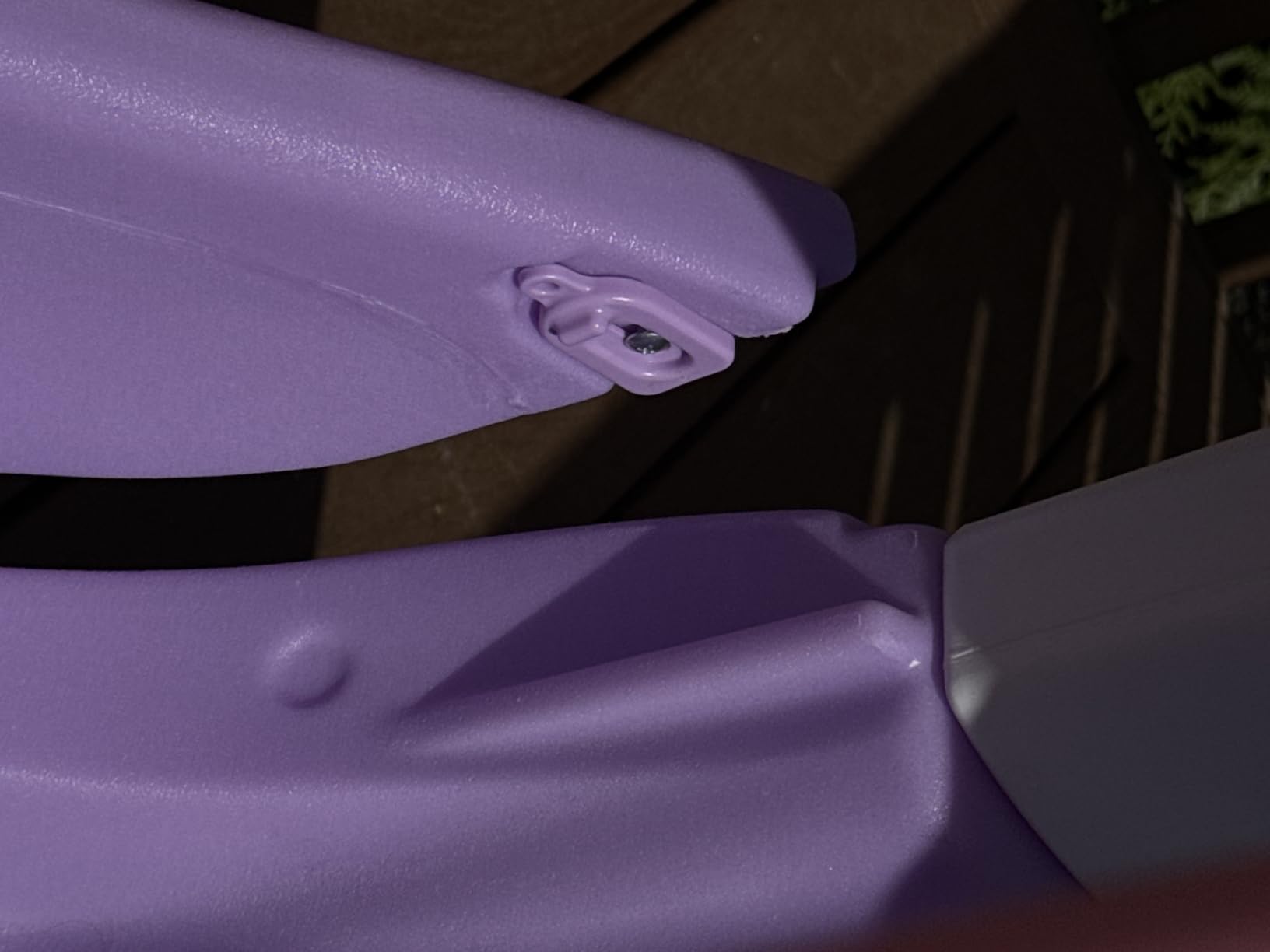
Most push cars ask you to choose: adult pushes, or child pushes. The Cozy Coupe asks you to delay the choice. Leave the board in and the child scoots; lift it out and the adult takes over with the push handle, which is how you get a hesitant rider from sitting still to self-propelling over a couple of weeks rather than all at once.
Sizing and load limits for a two-year-old
The listed range runs from 18 months to 60 months with a 50 pound weight limit, so a two-year-old sits comfortably in the middle of that window rather than at the edge. At 36 inches tall it is a full-size vehicle, which means step-over height matters; the high seat back and cup holders are built for a child who can already get on unaided.
2. Step2 Whisper Ride II – the Quietest Push Car for Apartment Living
Step2 Whisper Ride II Kids Push Car, Ride-On Car with Seat Belt and Horn, Quick Fold Handle, Stroller Alternative, Toddlers and Preschoolers Ages 18+ Months, Blue
Ages 18-48 months
45.5 inch L x 19 inch W x 34 inch H
7.1 kg
2 year limited warranty
+ Pros
- Whisper-quiet wheels work on hard indoor floors
- Extra-wide parent handle steers smoothly
- Adjustable seat belt with cup holders
- Quick-fold handle for transport
- Cons
- Picture-only assembly instructions
- Front wheels need a handle press to turn
- Handle unscrews for storage
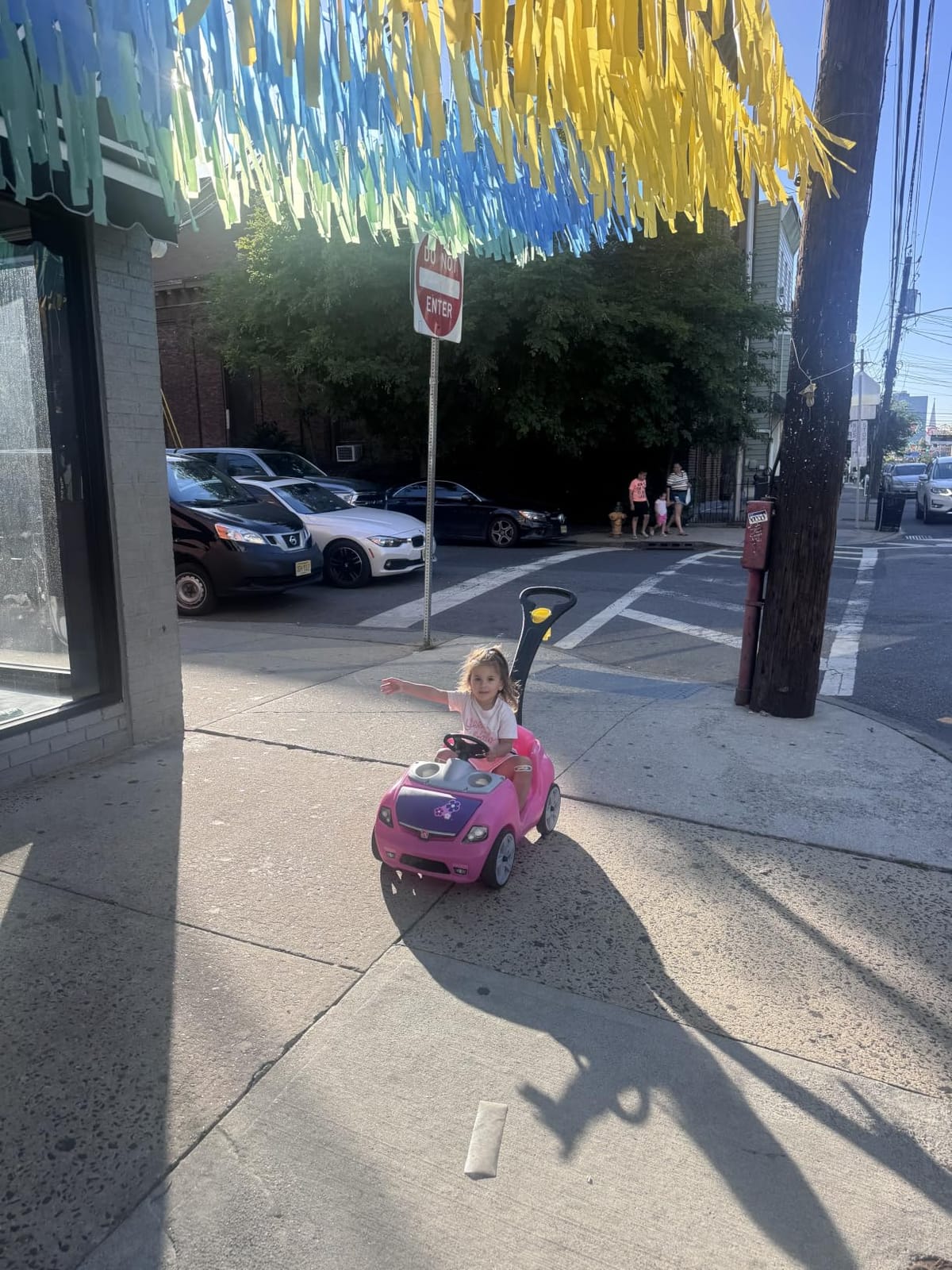
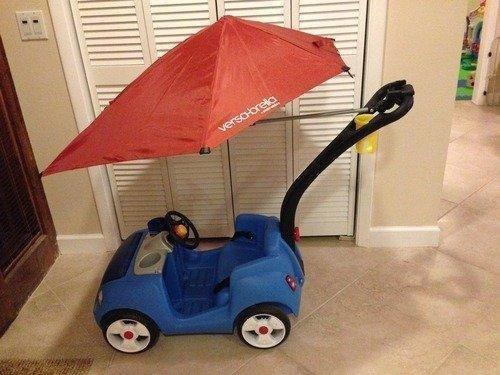
If you live in a flat and fear the neighbours, this is the one. The Step2 Whisper Ride II rolls so quietly that reviewers describe it as usable on hard floors indoors, and it doubles as a genuine stroller substitute for the school run. Across 16k+ reviews the praise lands on build quality and smooth rolling more than anything else.
It is also the most portable option in the group. The rear handle folds down in seconds, which is the difference between a toy that survives a small apartment and one that ends up in a hallway.
The fold that decides whether it lives in your hallway
Parents travelling with toddlers mention foldability as the deciding factor more often than price. A 45.5 inch long car that folds and stores against a wall gets used daily; the same car in a fixed shape gets used on good days only. This one folds, and the double-walled plastic body means the fold point is not the first thing to crack.
Where the turning gets tricky
The front wheels are fixed rather than swivelling, so turning requires a gentle downward press on the handle while you steer. A practised adult does this without thinking. It is worth practising with your child in a quiet spot before you attempt a pavement corner at speed.
3. Step2 Push Around Buggy – the Best-Rated Push Car for School Runs
Step2 Push Around Buggy Kids Push Car, Ride On Toy, Stroller Substitute, Includes Seat Belt & Horn, Made of Durable Plastic, Max Weight 50 lbs., For Toddlers 1.5-4 Years Old, Pink
Ages 19 months-3 years
43.5 inch L x 17.75 inch W x 34.5 inch H
14.2 pounds
50 lb weight limit
+ Pros
- Highest average rating among the push cars at 4.7
- Comfortable extra-wide parent handle
- Adjustable seat belt plus under-hood storage
- Easy to assemble and wipe clean
- Cons
- Tires wear on gravel and rough ground
- Heavier than lighter plastic alternatives
- Occasional missing hardware in the box
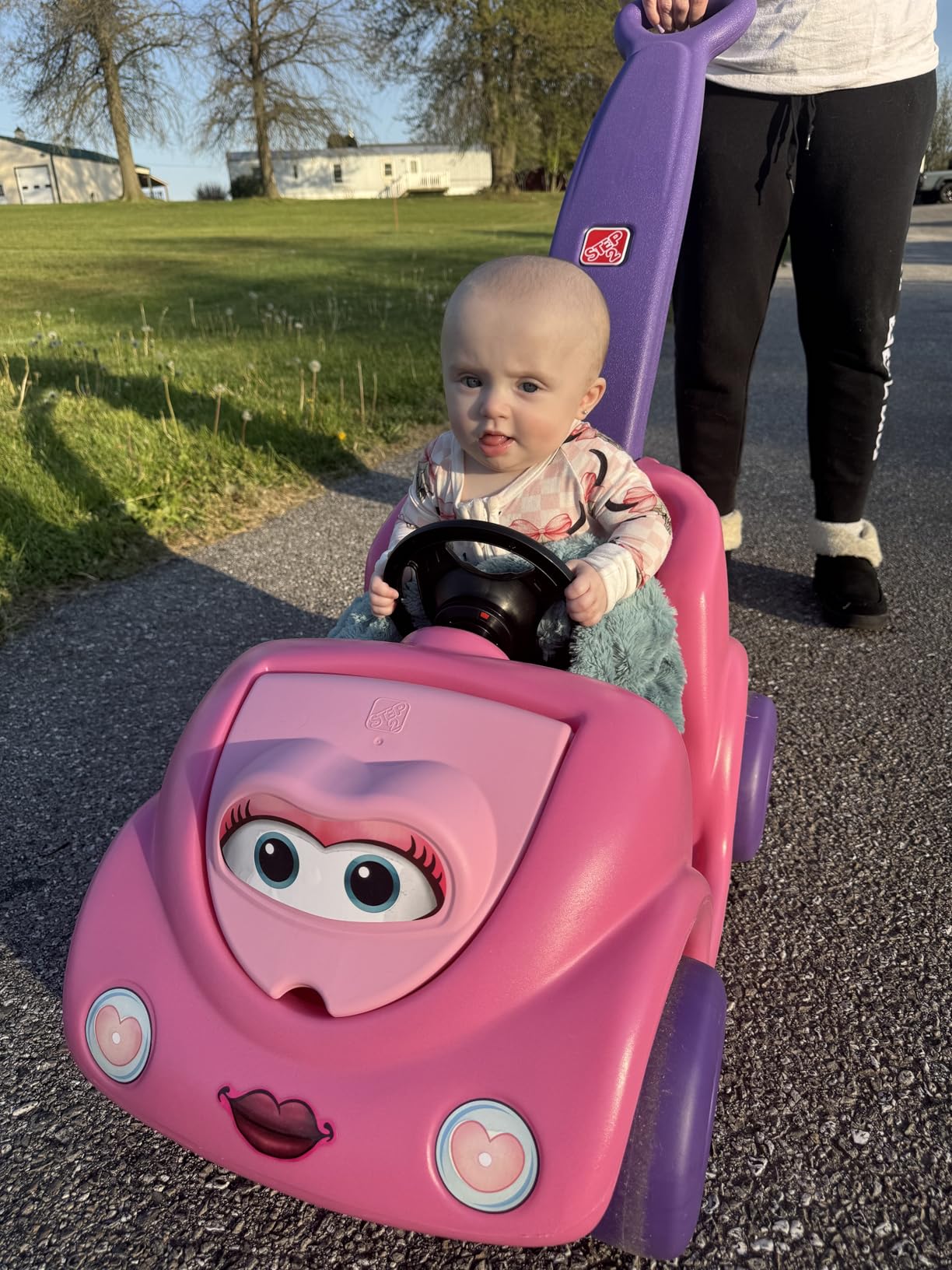
At a 4.7 average across 9k+ reviews, this Buggy rates highest of the push cars we tested, and owners describe it almost identically as a stroller substitute. It suits the parent who wants one vehicle for the school run, the park and the pavement rather than three different toys.
The quiet ride, the real horn and the adjustable latch belt make it feel more grown-up than most of the foot-to-floor options here. Two-year-olds who are wary of anything with a seat still tend to settle on this one, because the parent is right behind them the whole time.
Weight: the number parents underestimate
At 14.2 pounds this is one of the heavier cars we tested, and that cuts both ways. It feels solid and resists tipping on uneven ground, but parents report that anything over roughly 6 to 8 kg is hard to steer back up a slope once the child tires. If your walk involves a hill, budget for a break rather than a rescue.
What the wheels can and cannot handle
These are pavement tires, and reviewers are candid that they wear on gravel. Smooth driveway, path and indoor floor are where this car earns its rating. Parents who need grass or chunky gravel should look at the lighter foot-to-floor options further down instead.
A small number of buyers received a set with a missing factory part, so check the box before you walk away from the delivery. Everything else about the build quality drew consistent praise.
4. John Deere Sit N Scoot Activity Tractor – the Lightest True Scooter
John Deere Ride On Toys Sit ‘N Scoot Activity Tractor for Kids Ages 18 Months and Up, Green
Ages 18-36 months
21 inch L x 12 inch W x 16.5 inch H
3.9 pounds
60 lb weight limit
+ Pros
- Light enough for small toddlers to steer alone
- Wide wheelbase gives real stability
- Assembles in minutes
- Officially licensed John Deere styling
- Cons
- Smaller than buyers often expect
- Wheels can work loose in the axles
- Front wheels do not always swivel on smooth tile
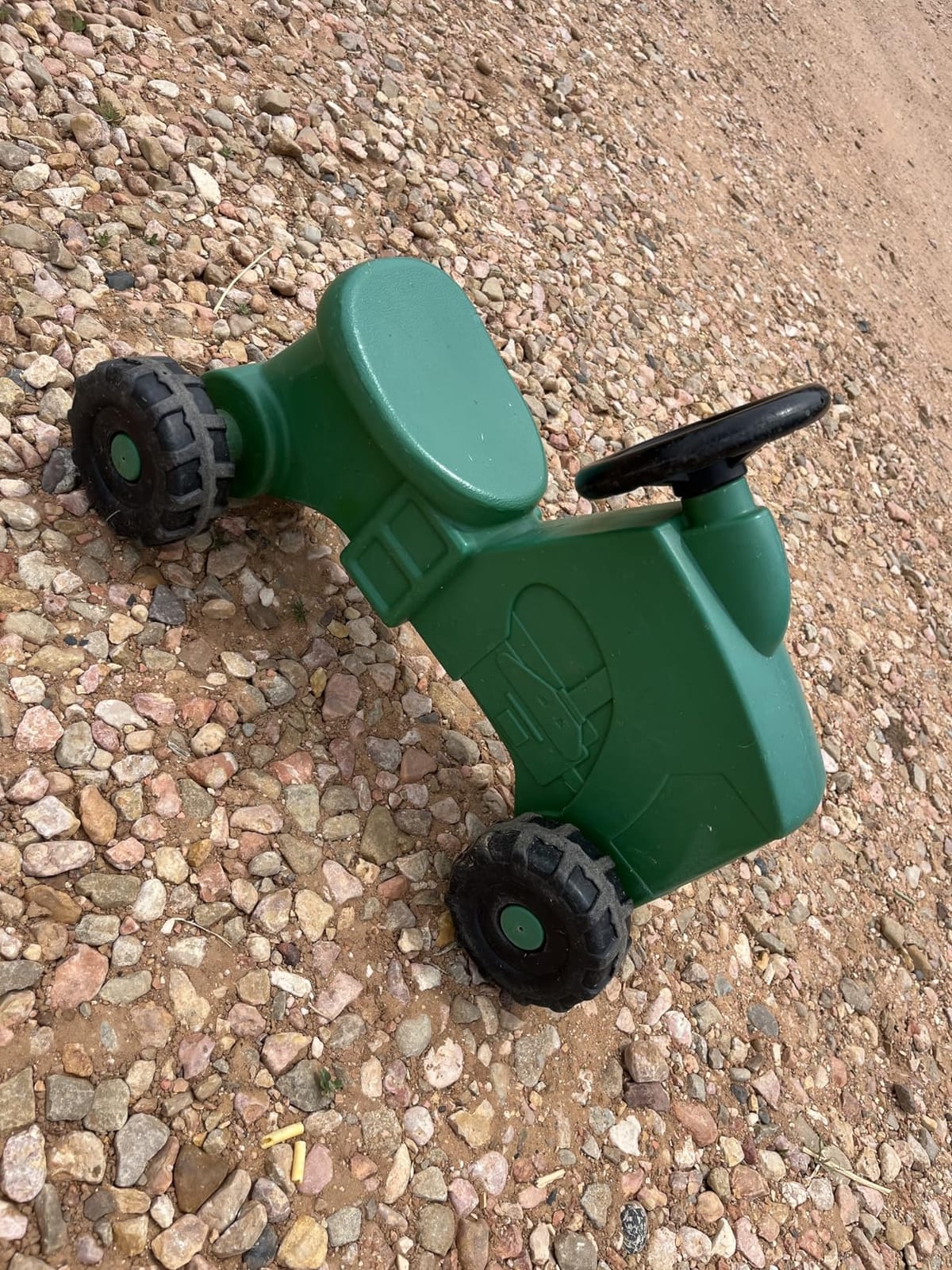
This is the scooter with a seat on it, and that distinction is why it works so well at eighteen months. There is no push handle for the adult, no pedals and no motor. The child sits, puts their feet on the floor and scoots, and the wide wheelbase stops it tipping when they lean into a turn.
At 3.9 pounds it is one of the lightest options we tested, so a tired two-year-old can still move it across a room or up a small slope. That matters more than it sounds: reviewers who struggled with heavier cars tend to end up recommending light ones for exactly this reason.
Scale: smaller than the box implies
Owners most often mention that the tractor is smaller than they expected, so measure your doorway before ordering. At 21 inches long it fits through a standard door and turns in a hallway, but a two-year-old with long legs will feel cramped after a year of use.
Steering behaviour on smooth floors
The wide wheelbase gives stability that narrower scooters cannot match, which is why this one ranks highly for the first scoots. The trade-off is that the steering wheel and front wheels do not always swivel, particularly on smooth tile, so it steers best outdoors on a slightly textured surface.
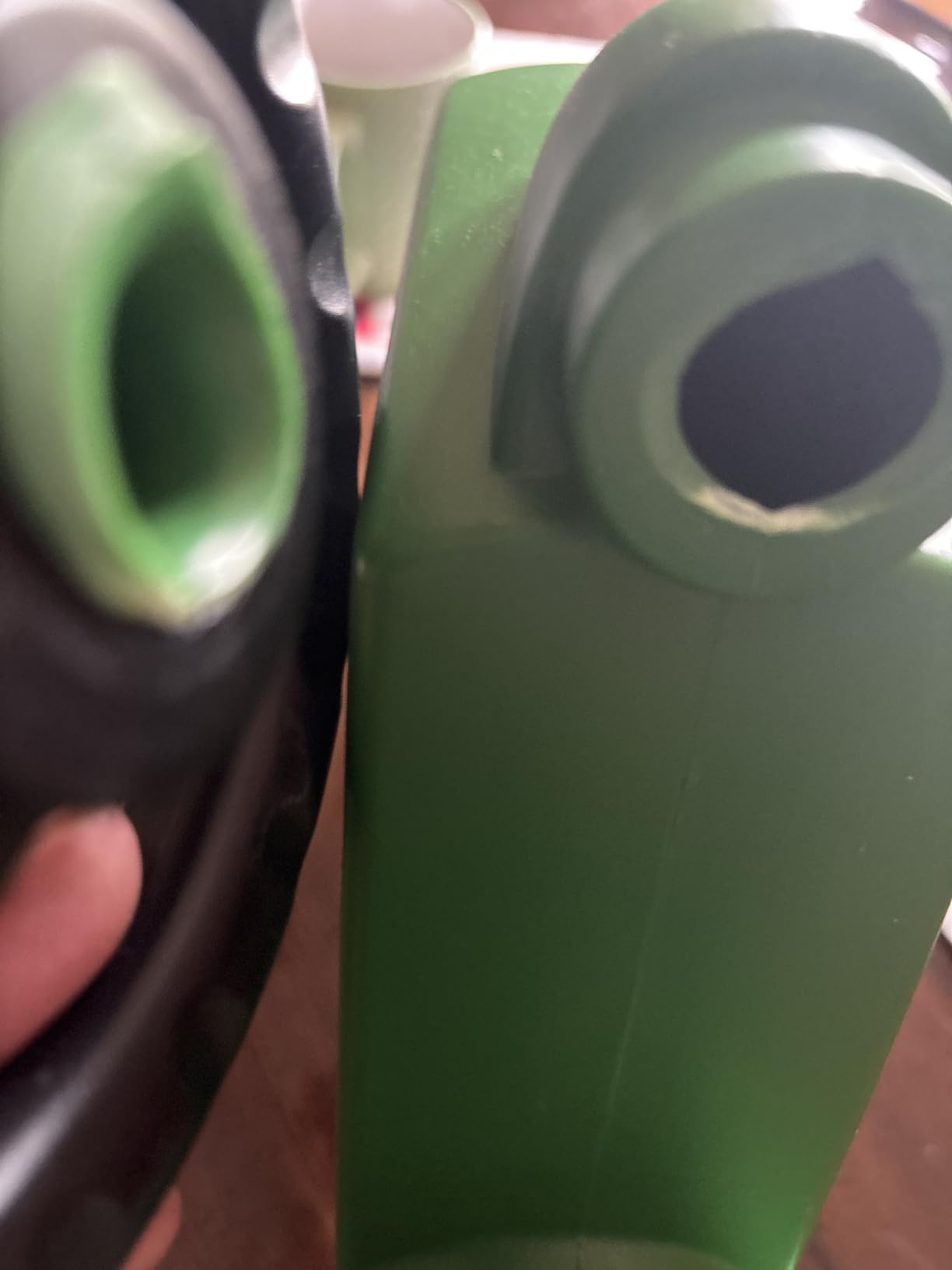
Wheel axles can work loose with rough play, and decorative decals fade after months of outdoor use. Neither affects safety, but both explain why the average rating sits at 4.4 rather than higher. Check the wheels periodically, especially in the first month.
5. Little Tikes Push and Ride Racer – the Two-Mode Transition Toy
Little Tikes Push and Ride Racer – (Amazon Exclusive), 22″L x 10″W x 17″H with screws
Ages 9 months-3 years
22 inch L x 10 inch W x 17 inch H
50 lb weight limit
Push bar mode
+ Pros
- Walker mode first
- then self-powered riding
- Very low seat is easy to mount and dismount
- High back and sturdy push bar
- Works indoors and outdoors
- Cons
- Fixed push bar will not fold flat for storage
- Sits low
- so it is not a full-size vehicle
- Plastic wheels are less smooth on uneven ground
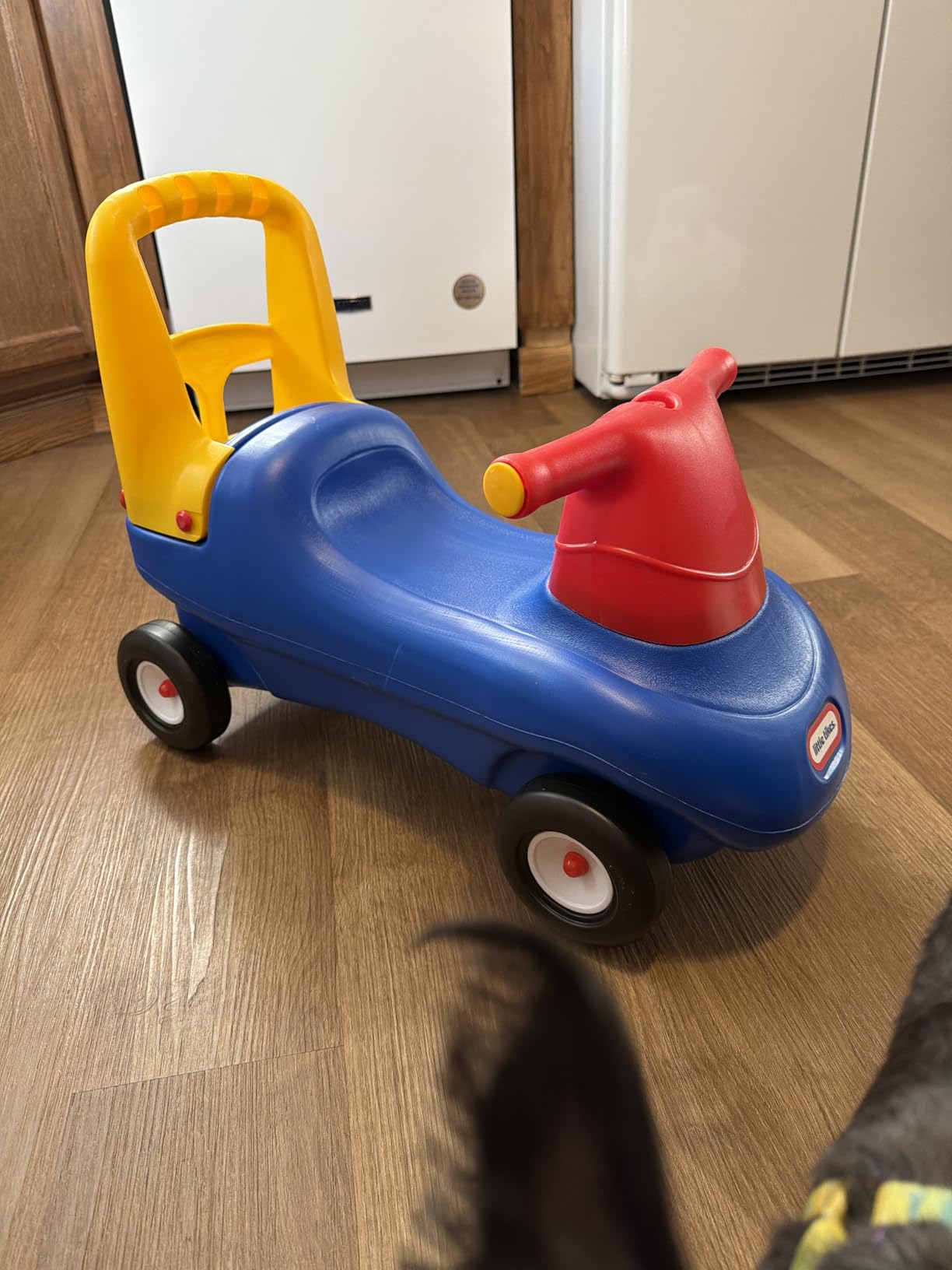
The Push and Ride Racer does something the bigger cars do not: it works as a walking aid first. For a child around 18 to 24 months who is still holding furniture, the parent bar converts it into a stable walker, and the same toy becomes a foot-to-floor rider a few weeks later.
That makes it an unusually sensible birthday gift for a cautious two-year-old.
Why a low seat changes the first month of play
Seat height decides whether a two-year-old can mount independently. At 17 inches tall, this racer is a step up rather than a climb, and independent mounting is the difference between a child who plays with the toy and a child who asks for help every single time. That independence is what eventually turns into self-propelling.
Limits of a compact push-bar design
The push bar is fixed, so this will not fold flat for a small flat or a car boot. It is also a low, open design rather than a vehicle with a shell, which means less protection and less pretend-play surface than the Cozy Coupe or the Whisper Ride.
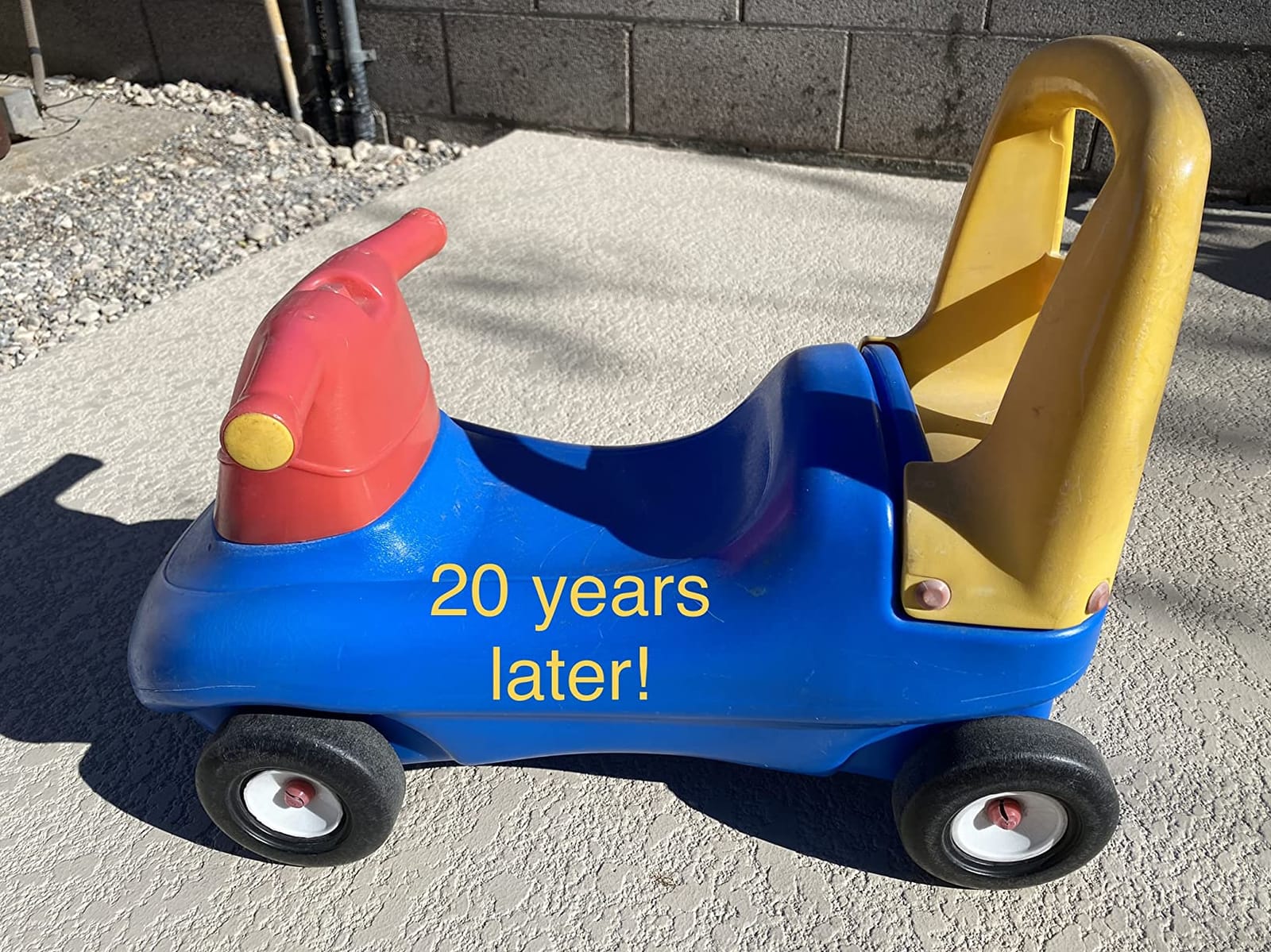
On uneven ground the plastic wheels catch more than the rubberised wheels on the larger cars. On a smooth floor or a driveway, it is fine. Treat it as an indoor-first toy with outdoor capability rather than the other way around.
6. Kiddieland Mickey Mouse Plane – the Highest-Rated Character Ride
Kiddieland Disney Mickey Mouse Plane Ride-On with Lights & Sounds
Ages 12-36 months
21.5 inch L x 17.25 inch W x 18 inch H
5.7 pounds
2 AA batteries included
+ Pros
- Moving Mickey figure sways while the propeller glows
- Engine revs and gear sounds add realism
- Stable seat with easy-grip handles for small hands
- Works out of the box with batteries included
- Cons
- Sound features need regular battery changes
- Foot-to-floor steering feels wobbly for beginners
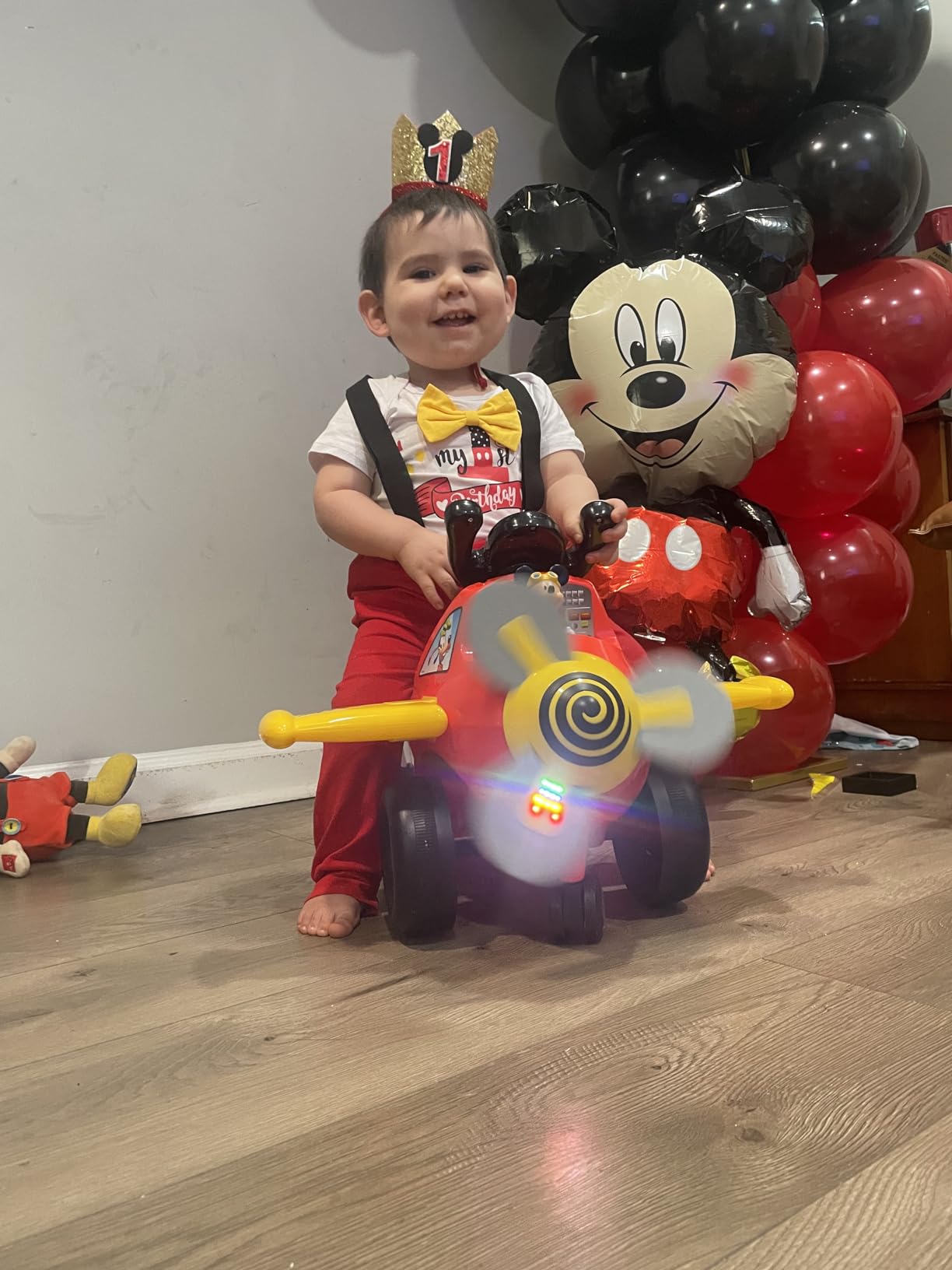
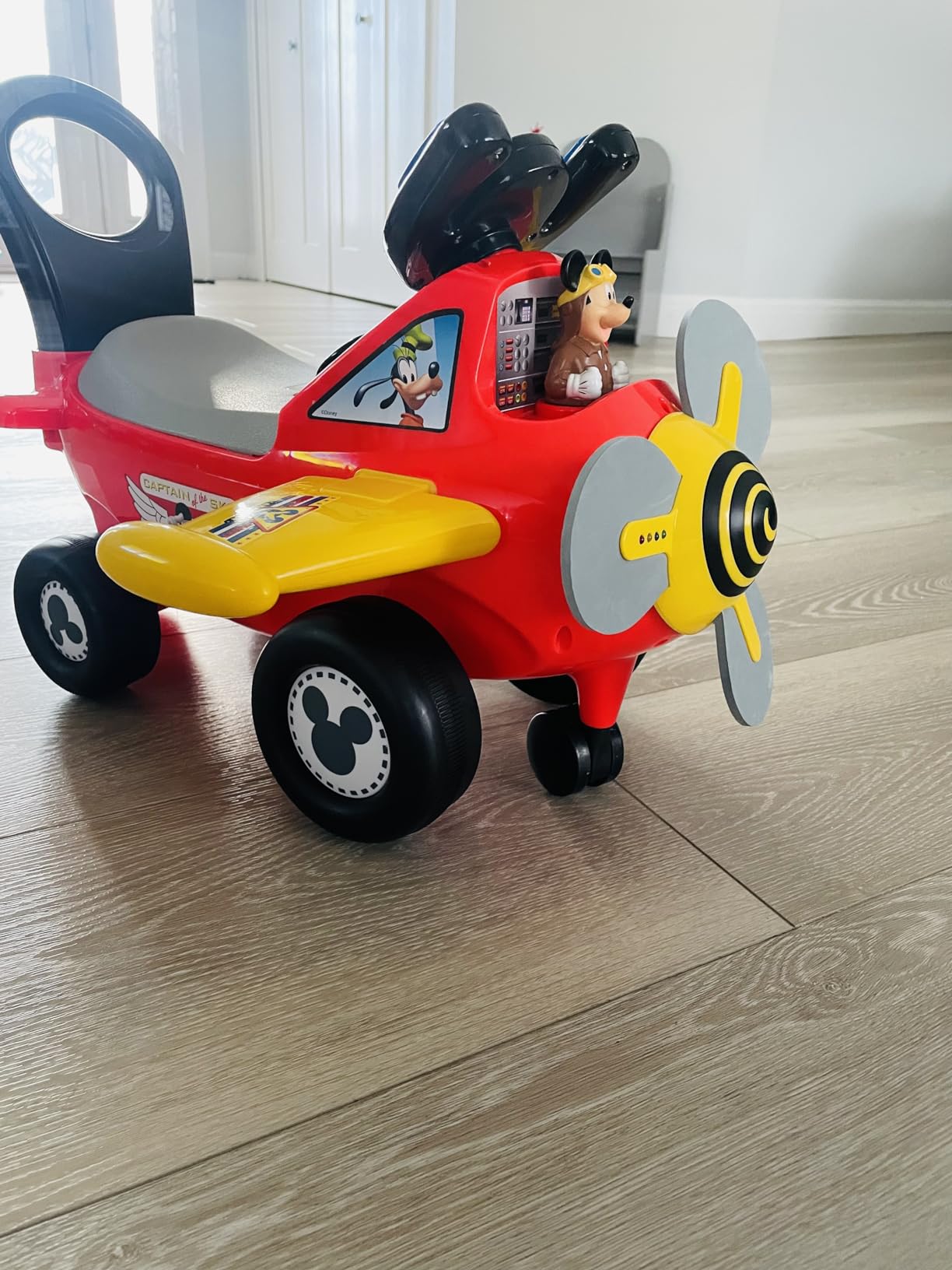
This plane earns its place on feedback rather than design. At a 4.8 average across 4k+ reviews it sits at the top of our rating table, and the reason is simple: the moving Mickey figure with the glowing propeller turns a basic foot-to-floor shell into something a two-year-old will choose over almost anything else.
The sound design is the other half of the appeal. Engine revs when you accelerate, gear sounds when you turn, and the Mickey Mouse March plays on start-up. It ships with two AA batteries fitted, so there is no waiting, which parents with an impatient toddler appreciate more than they expected to.
Battery upkeep and why it matters for longevity
The listed average battery life is about two hours of continuous use, and that is the one real drawback. Parents flag battery changes as a recurring chore, which is also why we would treat removable batteries as a purchase criterion in general. If the compartment is sealed, a flat pack eventually ends the toy permanently.
How it feels for a cautious two-year-old
The seat has easy-grip handles and sits at a stable height, which reassures a child who is still unsure about sitting in a moving vehicle.
There is no warranty on this one, which is worth knowing before a birthday purchase. Given the 4.8 rating, that is a reasonable trade for a toy whose main job is delight rather than transport.
7. Radio Flyer Creativity Car – the Best Sensory Ride-On for a Two-Year-Old
Radio Flyer Creativity Car, Toddler Ride On Toys, for Toddlers 1-3
Ages 1-3 years
21.5 inch L x 10.5 inch W x 16.3 inch H
4.9 pounds
42 lb weight limit
+ Pros
- Three-in-one walker
- ride-on and sensory play
- 17 interactive activities on the dashboard
- Anti-tip walker base for early sessions
- Silent glide wheels glide on hardwood
- Cons
- Front wheels do not steer with the wheel
- Buttons and gadgets can loosen with heavy use
- Very light outdoors
- so less stable at speed
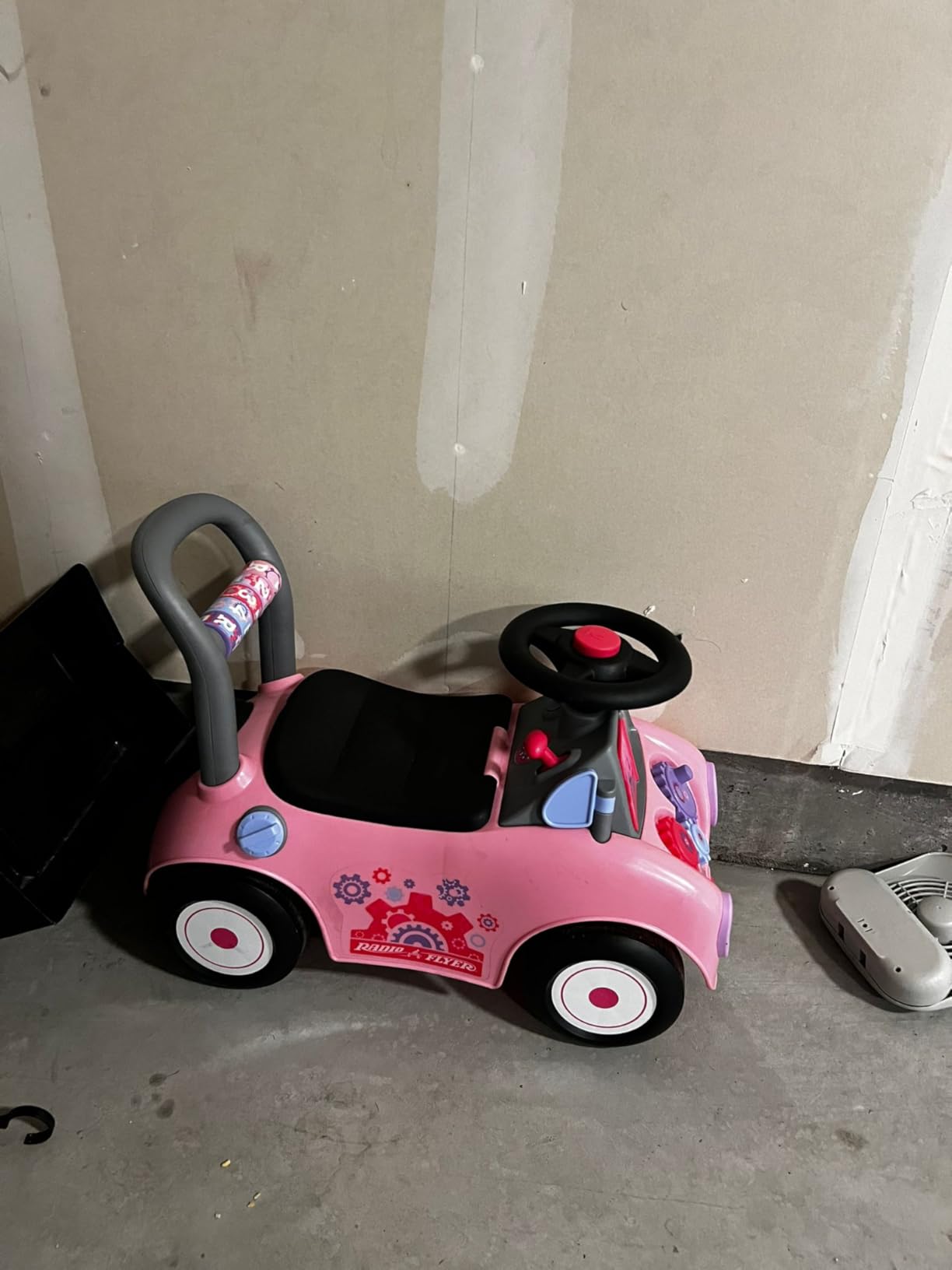
The Creativity Car solves a problem the push cars cannot: a two-year-old who refuses to sit on anything. In walker mode a child pushes it across the room and plays with 17 dashboard activities, and the seat flips up for under-seat storage. It is the most engaging toy in this roundup for a child whose attention is still short.
Parents of sensory-sensitive children note that it works quietly indoors, and the silent glide wheels mean it moves on hardwood without the whir that noisier ride-ons produce.
The 17 activities and what they actually teach
Interlocking gears, sliding beads, a clicking spare tyre, folding mirrors, a horn and an interactive dashboard give a two-year-old fine motor practice without needing an adult to sit and play alongside. That independence is the point, and it is why this car converts playtime better than a plain push car for a child who wanders.
Steering that does not steer
The most repeated limitation is that the front wheels do not pivot with the steering wheel. You turn by tilting the car, which is stable but does not teach the steering motion a balance bike would later demand. For indoor use that trade is worth it; for outdoor riding it is less convincing.
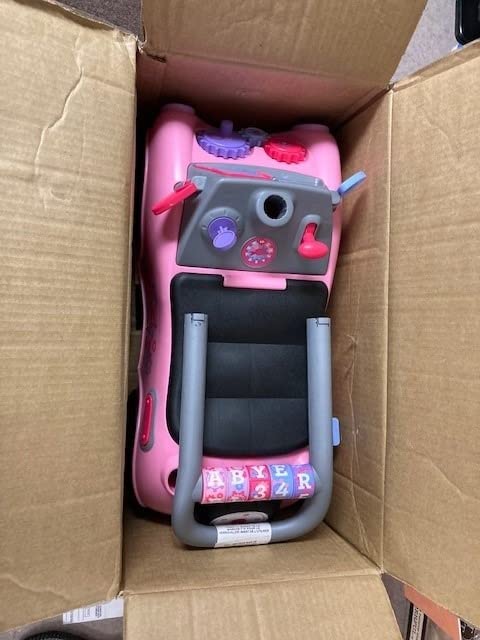
The 42 pound capacity is the lowest of the push cars here, and at 4.9 pounds the body is light enough that outdoor speed can outrun the stability. Keep it on floors and smooth paths, and expect to tighten small plastic parts occasionally after heavy use.
8. Kiddieland Minnie Dancing Ride-On – the Smallest Footprint in the Group
Kiddieland Toys Limited Minnie Dancing Ride On, Multicolor
Ages 12 months-3 years
20 inch L x 10.75 inch W x 17.5 inch H
1 kg
Parent push handle
+ Pros
- Minnie turns her head and dances to music
- Compact 20 inch footprint suits small playrooms
- Sized well for a 19-month-old to 2-year-old
- Assembly quality generally solid
- Cons
- Some arrive with quiet or non-working audio
- Wheel rotation is inconsistent between toys
- Sticker decoration looks cheap up close
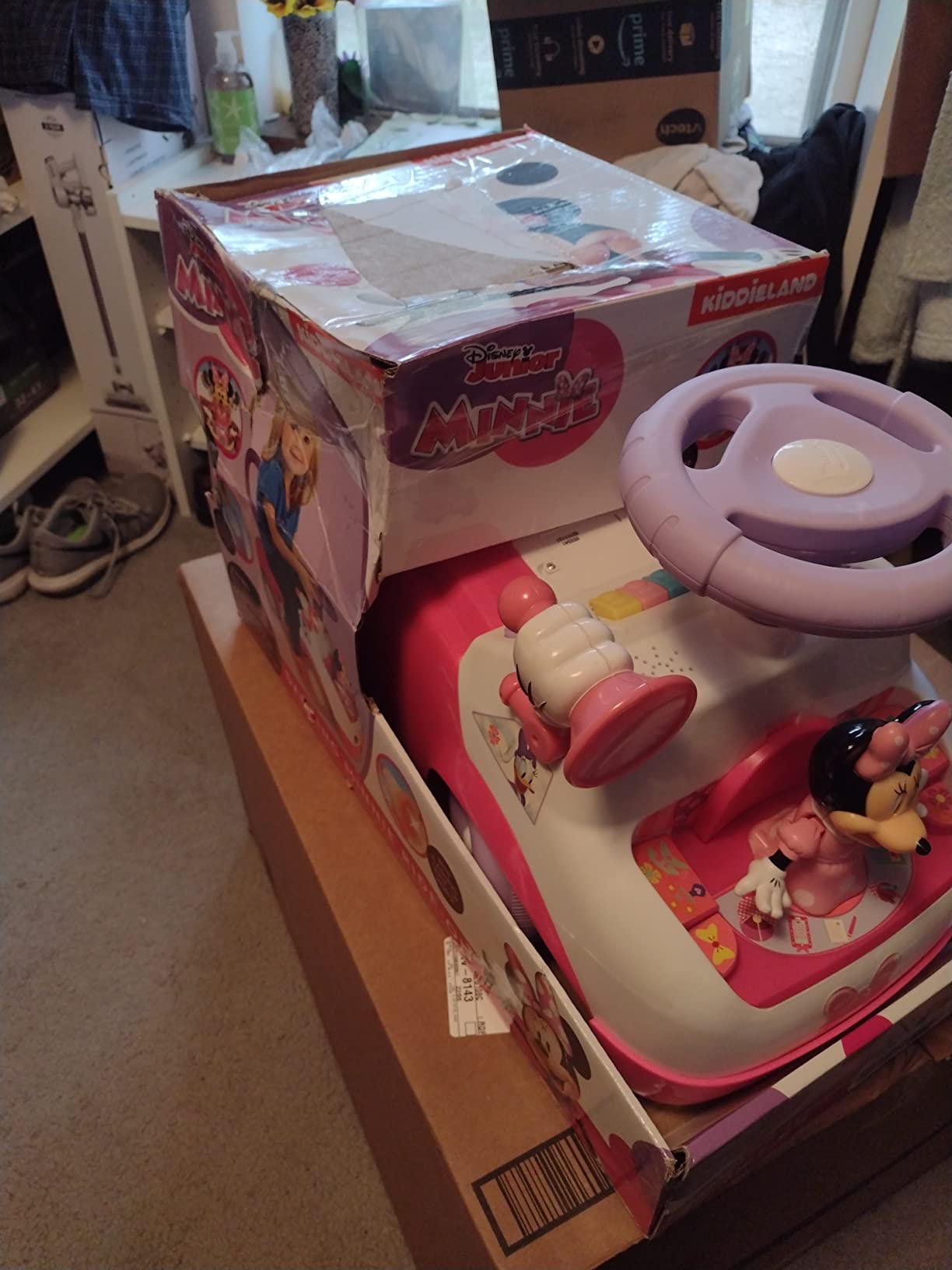
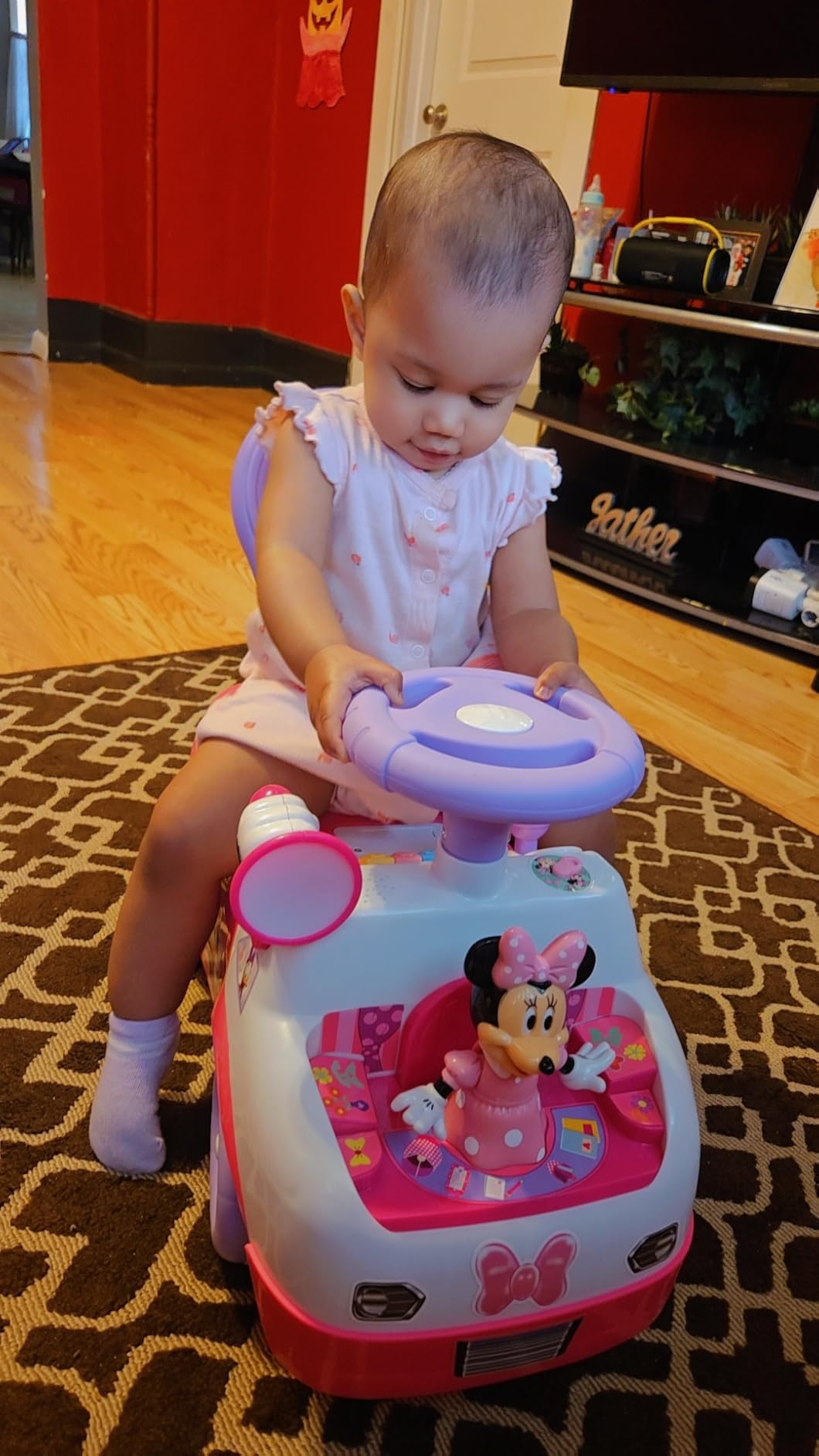
Where the Creativity Car covers sensory busy-play, this one covers a different need: a themed ride-on that genuinely fits in a small room. At 20 by 10.75 inches it turns in a hallway that a 45 inch push car would jam in, and it carries a parent handle for the short walks a small flat still allows.
The dancing Minnie figure is the draw. She rotates her head and moves in time with the music, and reviewers consistently single that feature out as the reason their child keeps climbing back in. It also suits a younger toddler than most of this list, working from around 19 months.
Build consistency: the real difference between units
Quality control is the weakness here. Some buyers received toys with very quiet or non-working audio even with fresh batteries, and others found wheels that did not rotate smoothly. This is a supplier consistency issue rather than a design flaw, so inspect the sound and the wheels the moment it arrives rather than a week later.
Quiet-play trade-offs in a small home
The Minnie is not silent and it does not roll as quietly as the whisper-ride push cars, so it suits daytime play rather than a nap-adjacent room. In a flat where floor space matters more than noise levels, the footprint advantage usually wins.
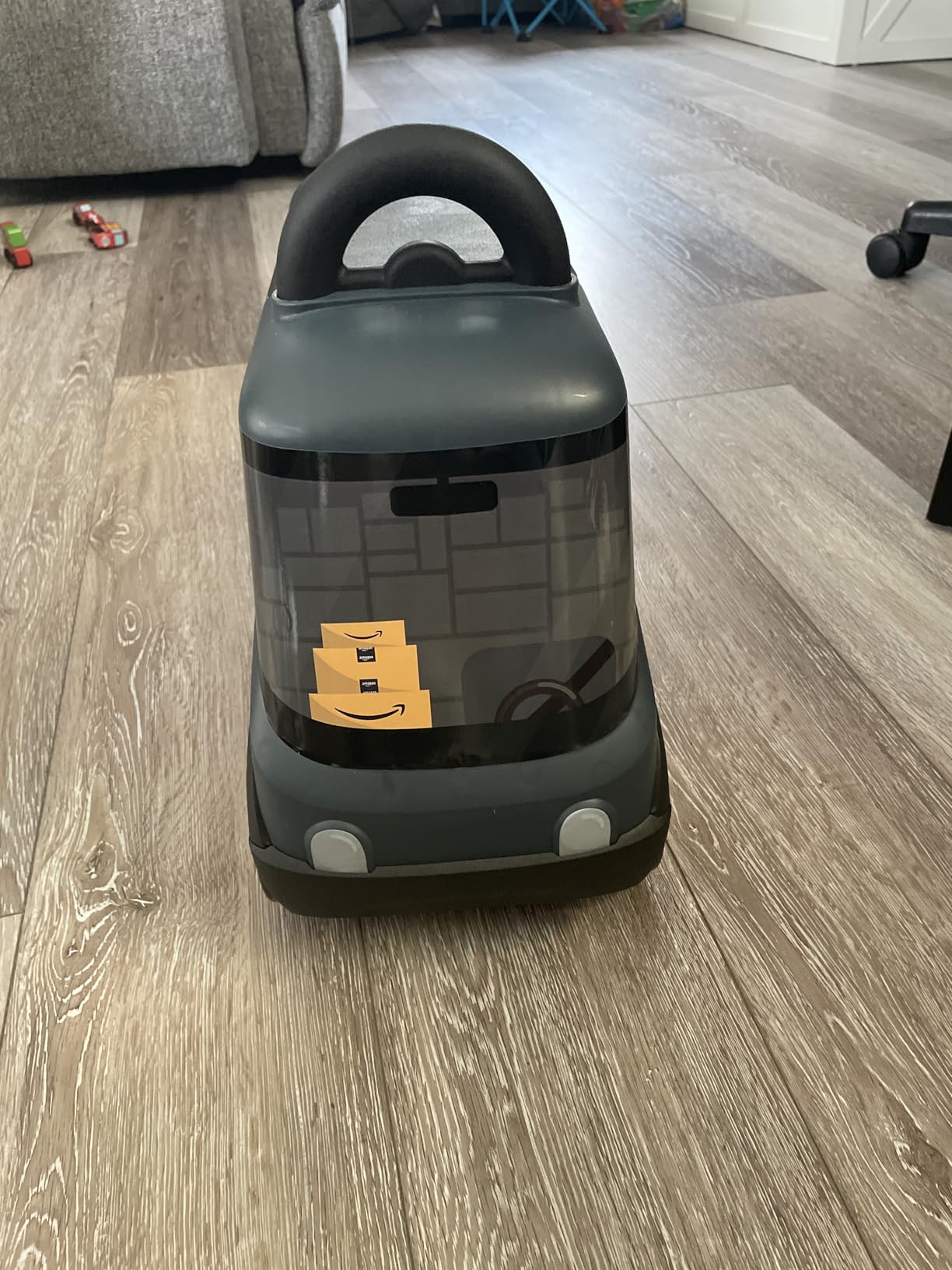
9. Radio Flyer Amazon Delivery Van – the Best Ride-On for Imaginative Role Play
Radio Flyer Amazon Delivery Van, for Ages 2+, Toddler Ride On Toys
Ages 24 months-5 years
17.45 inch L x 7.45 inch W x 13.35 inch H
4.4 pounds
50 lb weight limit
+ Pros
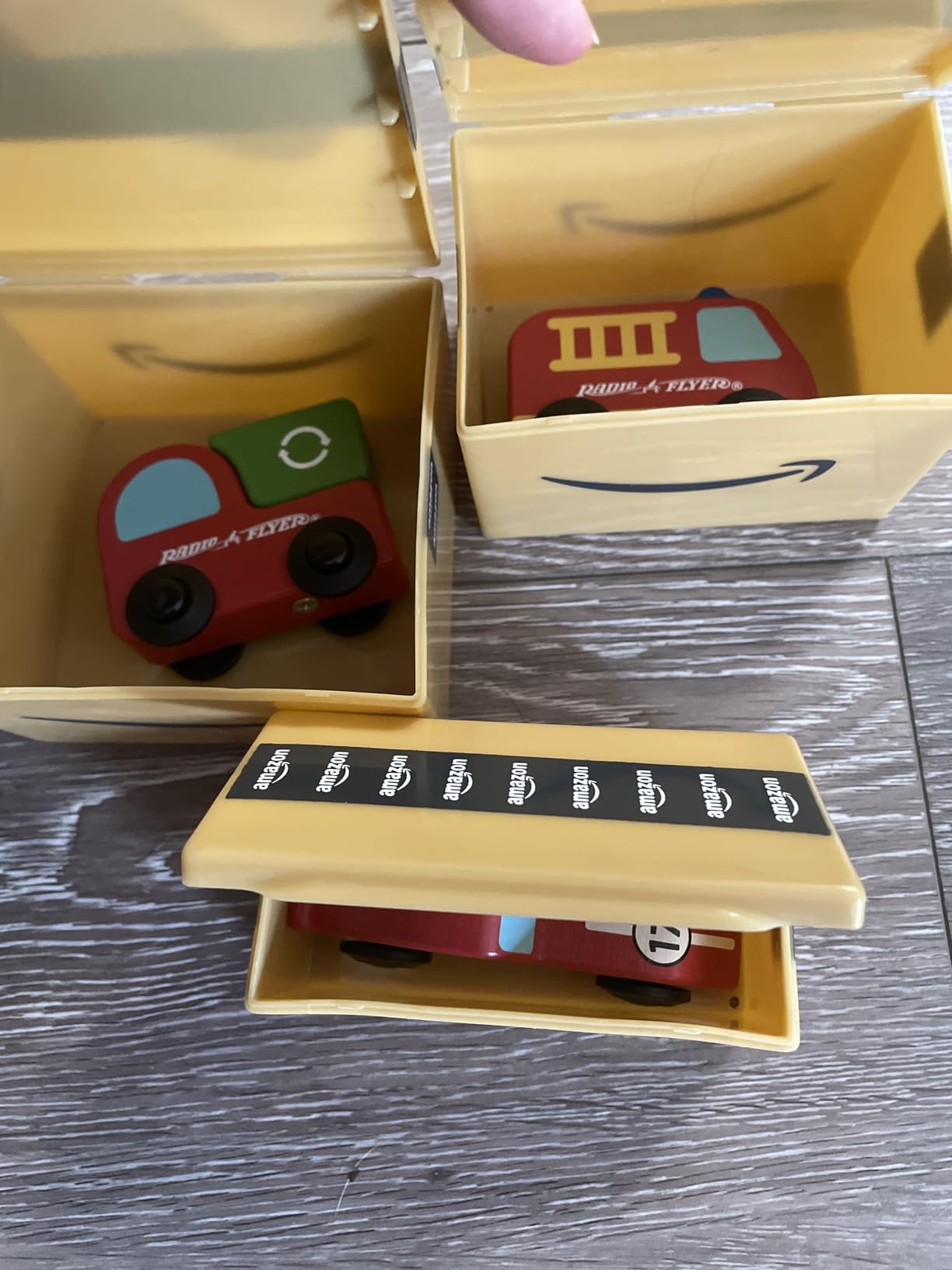
- Three miniature boxes and three wooden toys included
- Stationary handle gives beginners a stable base
- Under-seat storage keeps the accessories together
- 50 lb capacity and a five-year age range
- Cons
- Handle does not steer
- so turning is done by leaning
- No parent push handle for adult-led walks
- Slim width leaves less foot room
This van is the only pick here built around a job rather than a character. The included miniature boxes and wooden toys turn riding into a delivery run, and at a 4.8 average from 1k+ reviews parents say the accessories, not the vehicle, are what keep the play going.
The starting age is 24 months, which makes it the most precisely targeted pick in the roundup for a two-year-old on the younger side. The stationary handle gives a beginner something to grip and lean on while they work out the scooting motion, and it flips down to become a seat later in the ride.
Turning by leaning instead of steering
Because the handle is fixed rather than linked to the front wheels, direction changes come from shifting body weight. Parents report this works well indoors on hard floors where speed is low, and less well on a driveway where a lean commits too late to avoid a crack. Practise the lean before the first outdoor trip.
Foot room and child comfort
At 7.45 inches wide it is the narrowest footprint in the group, and that is the trade for its compact delivery-van shape. Younger children ride it comfortably; a child with longer legs will find the foot space tight within a year. Measure your child’s inseam against the seat before committing past the two-year mark.
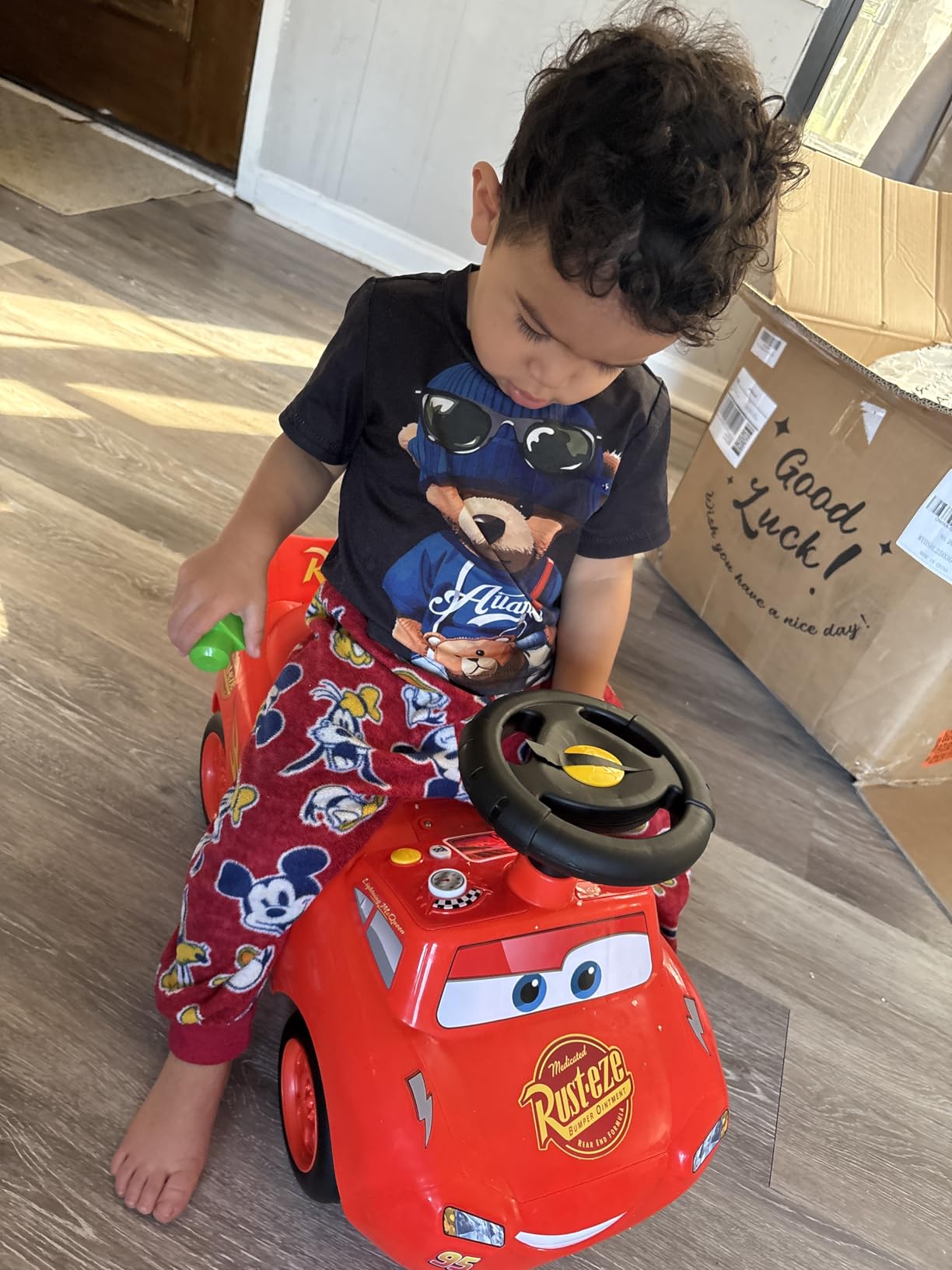
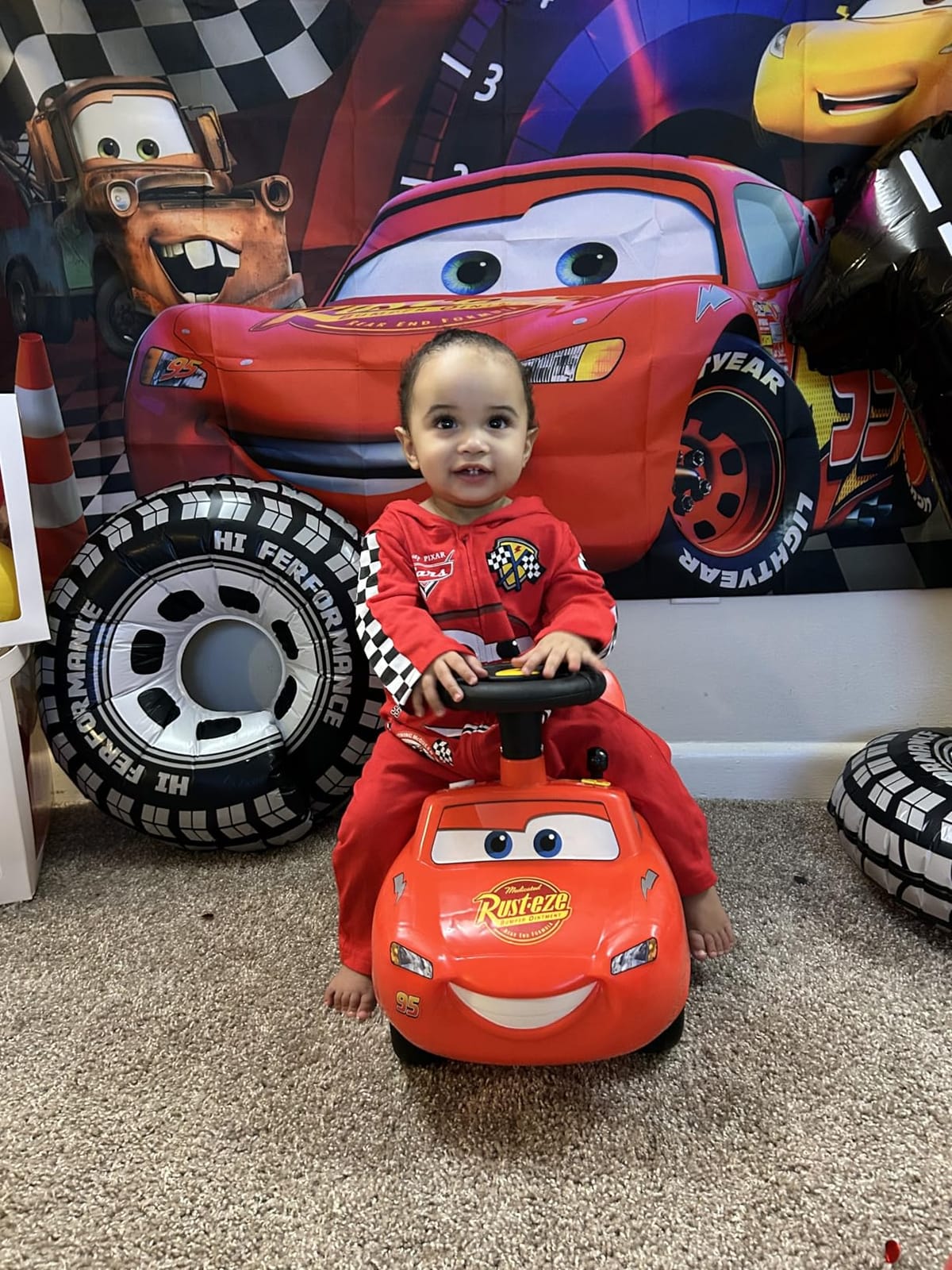
10. Kiddieland Lightning McQueen Racer – the Lightest Character Scooter
Kiddieland Lightning McQueen Ride-On Car, Foot-to-Floor Racer for Toddlers
Ages 12-36 months
20.75 inch L x 9.75 inch W x 14 inch H
3.4 pounds
Battery powered features
+ Pros
- Interactive steering wheel triggers engine sounds and lights
- Very light 3.4 lb body is easy to scoot
- Officially styled Disney Pixar Cars character
- Compact footprint for small rooms
- Cons
- Light plastic body feels basic next to belted push cars
- No parent push handle
- Electronic features need batteries
Of the character scooters, this one steers properly. The steering wheel is linked, so turning a corner actually turns the front wheels, which is a step toward the balance-bike motion that comes next and is usually missing on this kind of shell.
What 3.4 pounds buys and what it costs
Light weight means an independent toddler can keep moving when a heavier car has ground to a halt, and parents repeatedly mention that this extends a session from two minutes to twenty. The cost is stability: on a sloped driveway a light body tips sooner than a 14 pound push car would.
Beginner skill level and the path to a balance bike
The manufacturer rates this as a beginner skill toy for 12 to 36 months. Because the steering wheel is linked, a child who learns to lean and steer here is doing useful preparation for a balance bike, which is the ride-on most experts recommend as the next step after age two.
11. Mercedes G-Wagon Push Car – the Best 3-in-1 for Long Walks
Best Ride On Cars 3 in 1 Mercedes G-Wagon Push Car for Toddlers 1 to 3 Years Old, Kids Outdoor Stroller with Music, Horn Sounds, Realistic Driving Experience, White
Ages 1-3 years
24.5 inch L x 16.8 inch W x 39 inch H
11.4 pounds
40 lb weight limit
+ Pros
- Three-in-one stroller
- ride-on and walker
- Removable side safety bars keep the child seated
- Footrest and padded backrest for longer outings
- Under-seat storage fits nappies and bottles
- Cons
- No seat belt included
- Handle feels light and creaks under hard turning
- Poor instructions
- Awkward to manoeuvre in tight spaces
This is the only pick with a genuine three-way conversion: push bars for stroller mode, guardrails for ride-on mode, and the bars come off for walker mode. Parents who want one object to do all three jobs rate the styling highly, and the tufted seat and steering wheel make it the most convincing-looking car for a small child.
It is not the right choice for a child who climbs out without warning, though. Without a seat belt, the removable side bars are the only restraint, and reviewers flag that as the top complaint alongside a handle that feels light under hard steering.
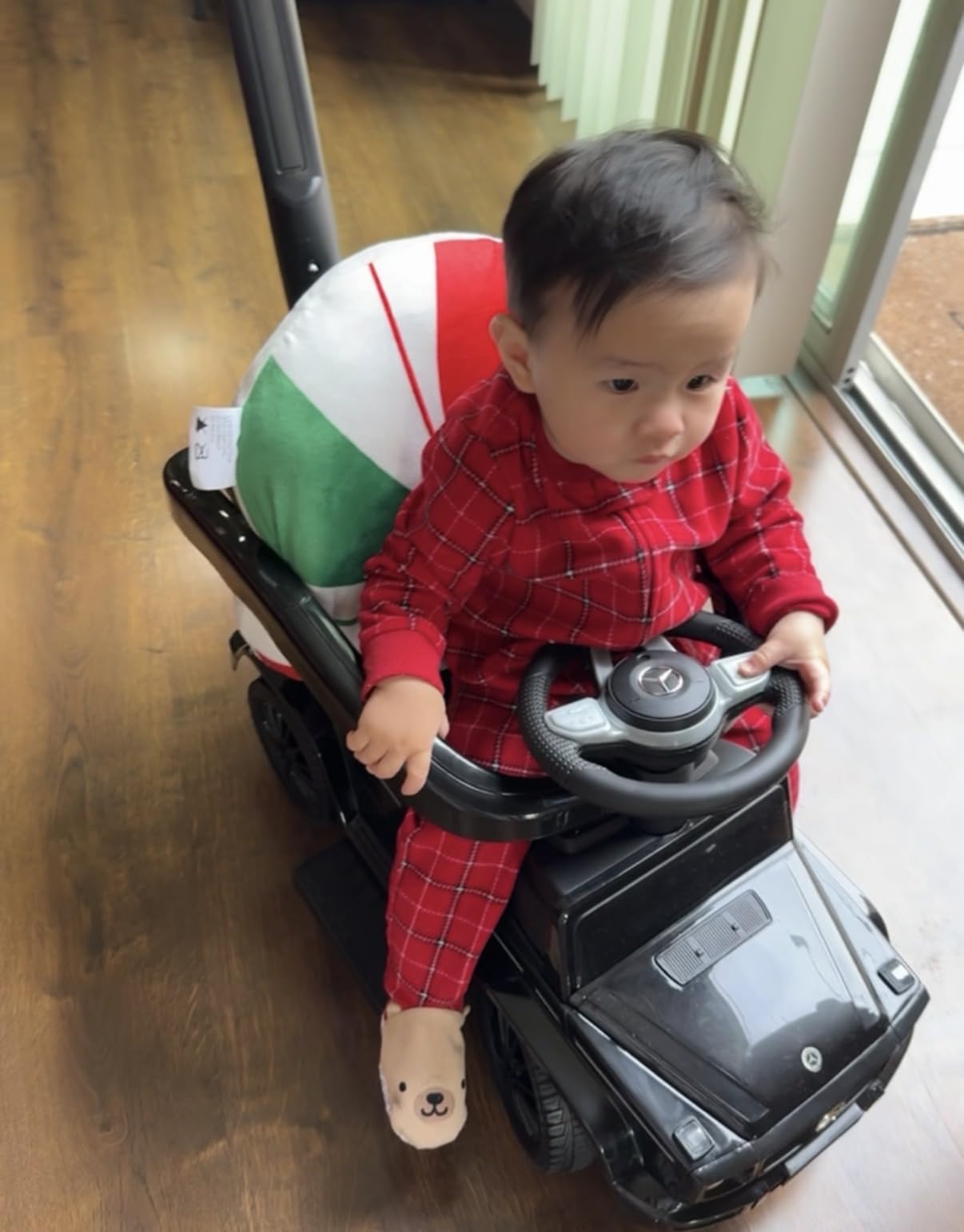
Guardrails versus a seat belt
Removable bars stop a two-year-old sliding out sideways but do nothing if a child stands up. If your child is the type to bolt mid-journey, weigh that against the Walker alternatives earlier in this list. The 40 pound capacity is also the second-lowest here, so it is sized for a young two-year-old rather than a tall one.
Size and the small-space problem
At 24.5 inches long and 39 inches tall this is a substantial object, and reviewers describe manoeuvring it in tight spaces as awkward. It suits a wide hallway, a path or a park. In a compact flat, the folding push cars are the better answer.
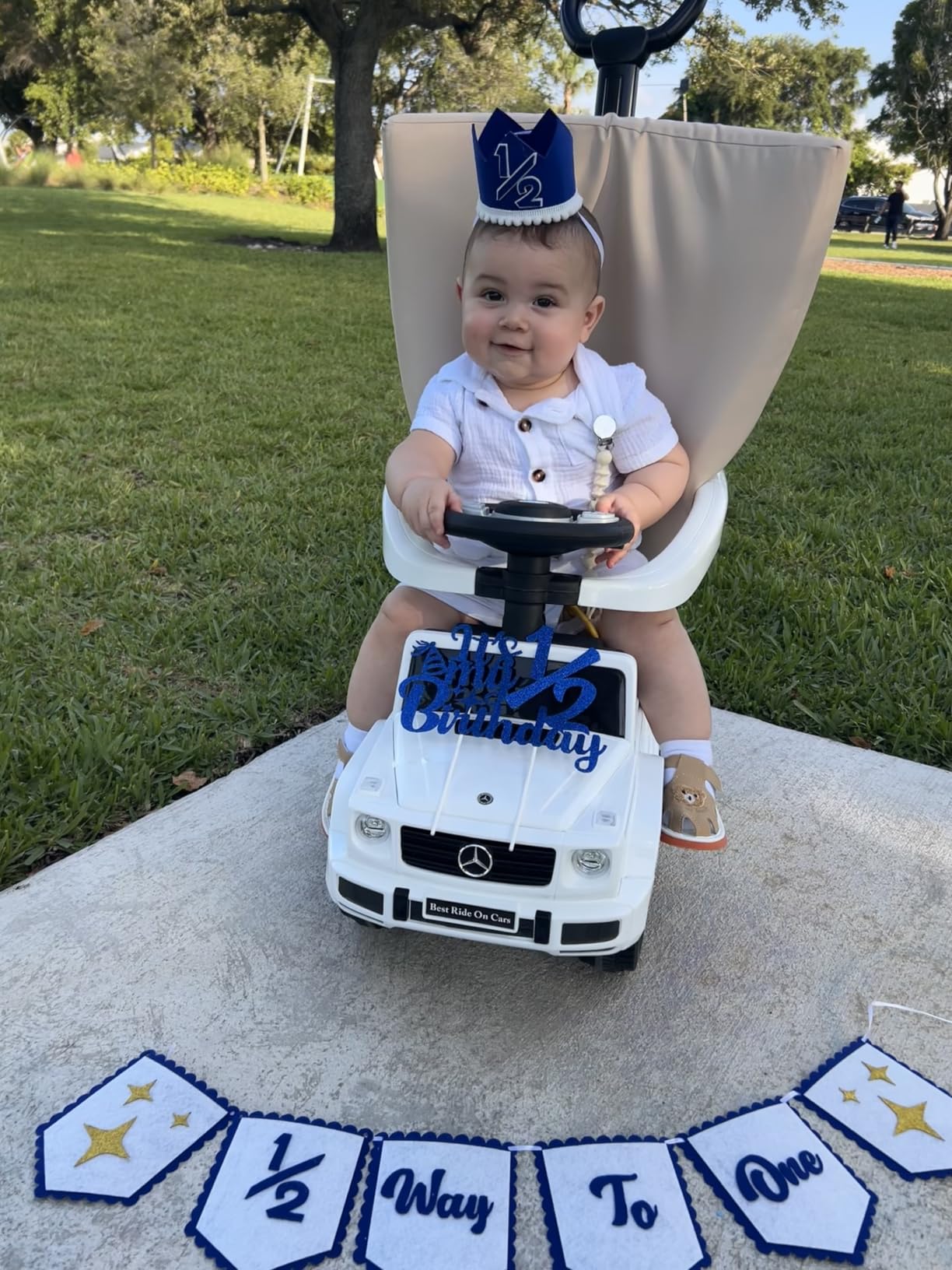
12. CAT Excavator Push Car – the Best Construction-Themed Push Car
Best Ride On Cars CAT Excavator Push Car – Licensed Caterpillar Ride-On Digger Toy for Kids with Rotating Bucket & Under-Seat Storage – Construction Vehicle for Toddlers
Ages 18 months and up
11 inch L x 21 inch W x 14.3 inch H
6.2 pounds
Under-seat storage
+ Pros
- Officially licensed CAT styling toddlers recognise instantly
- Working front bucket drives sustained imaginative play
- Stable chassis that steers easily for a parent
- Under-seat storage and a supportive backrest
- Cons
- Side lever can arrive detached from the factory
- Broad stated age range gives little sizing guidance
- Toy accessories are not included
The excavator earns its place through the bucket. Unlike the other licensed-character cars here, it has a working mechanical part a two-year-old can operate independently, and parents describe that as the feature that keeps play running once the novelty fades.
It is also the steadiest of the licensed push cars we tested. The 6.2 pound chassis rolls smoothly, the backrest supports a small back, and the steering wheel adds music and horn sounds for a child who wants the driving experience too.
A wide age claim with little sizing guidance
The stated range is simply 18 months and up, which tells a buyer very little. Use the dimensions instead: at 21 inches wide across the wheels it is a wide, planted vehicle that will not slip under furniture, and it needs a doorway or gate check before you plan the route home.
The bucket versus electronic sounds
Where the Mickey and Minnie cars rely on batteries and sound, this one relies on a mechanical action that cannot die. Parents tired of replacing batteries rate it accordingly, and it doubles as an early pretend-play tool for load and dig games with soft toys.
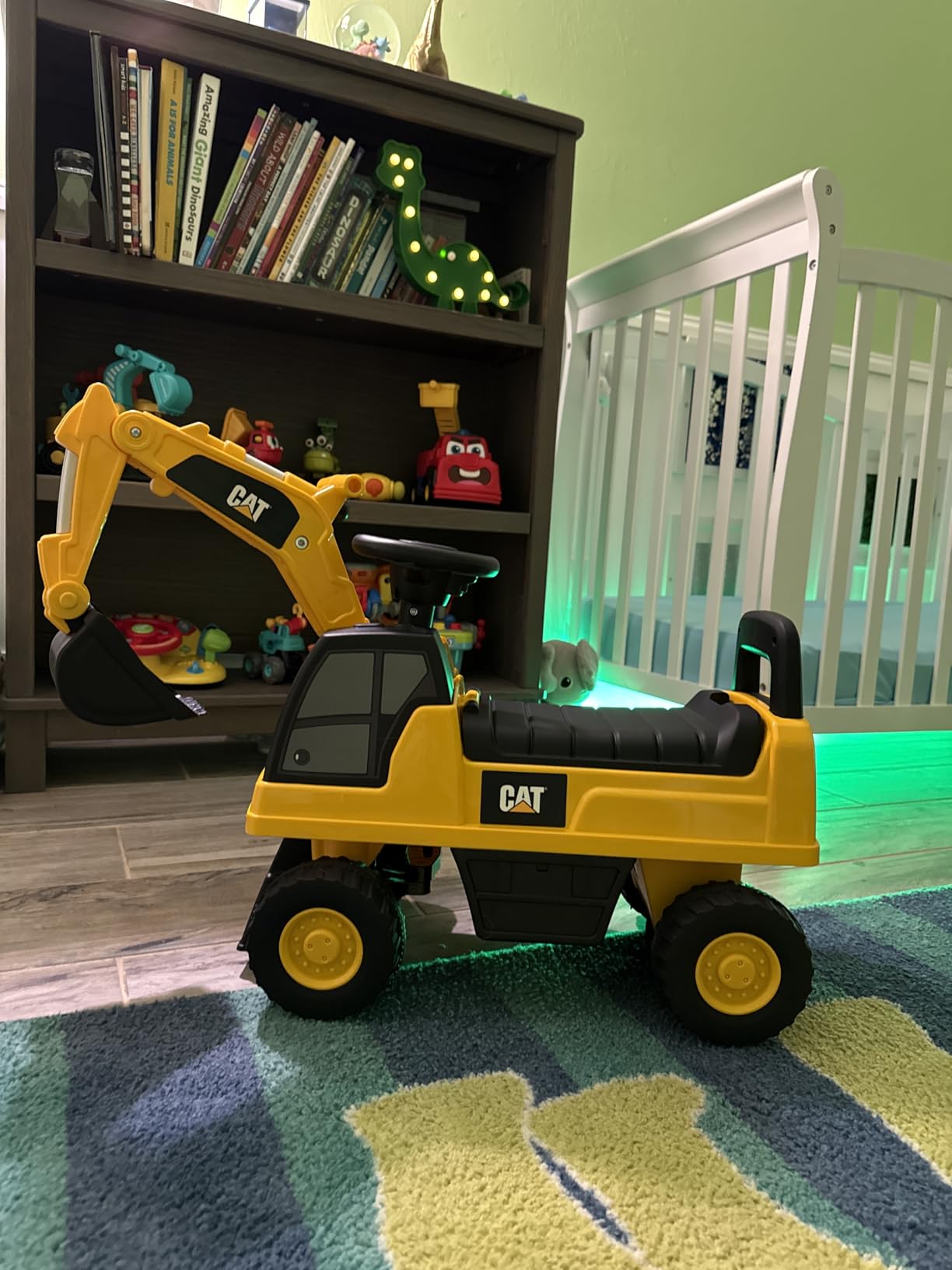
Two practical notes. The side lever sometimes arrives detached and needs clipping into place, and the wooden toys and accessories are not included. Reviewers otherwise report it as sturdy and used daily, at a 4.7 average.
Are 12V Ride-On Cars Safe for a 2 Year Old?
No, not for most two-year-olds. A 12V ride-on car is a 3-plus product with a pedal that must reach the floor, a seat belt that fits a taller child and a top speed no toddler should reach. Retail pages selling 12V and 24V cars frequently list 2-plus, but the seat height and pedal reach on those models assume a three-year-old’s proportions.
Most parents on parenting forums treat 12V cars as a third-birthday or later purchase for exactly this reason. The occasional confident two-year-old can manage one on a flat private surface under constant supervision, but a cautious two-year-old should stay with a foot-to-floor or parent-push design and revisit the question at three.
Remote control versions need the same caution. A parental remote removes the child’s control, not the child’s judgement, and the speed setting still has to be at minimum.
How to Choose a Ride-On Toy for a 2 Year Old
Pick the type that matches how your child moves today
Parent-push cars suit a child who is happy to be strapped in and wheeled along. Foot-to-floor scoot-alongs suit a child who wants to move independently and is already walking well. Sensory walker toys suit a child who still needs to be upright and pushing rather than sitting. Decide which of those describes your toddler before you compare anything else.
Read the weight capacity, not the age label
The age range printed on the box is a marketing minimum. The number that decides whether a ride-on fits is the maximum child weight, and secondarily the seat height and footprint. Most picks here cap out between 40 and 60 pounds, so a two-year-old is comfortably inside every limit in this roundup, which is not true of bigger motorised cars.
Check the surface before you check the features
Parents report successful first rides happening indoors on hard floors rather than outdoors on grass. If your child has no driveway, prioritise silent glide wheels and a compact footprint over rugged tires. If you do have outdoor space, check that the tires are not the pavement-only type that wears on gravel.
Think about who moves the toy, not just the child
Anything over roughly 6 to 8 kg is hard to steer back up a slope once a toddler tires, and a parent who cannot lift the child out is stuck pushing both. Check the listed weight, look for an easy-fold handle, and try steering a loaded car before you commit.
Make removable batteries a requirement
Every sound and light feature on these toys runs on removable cells, and a permanently sealed compartment means a flat pack ends the toy for good. Parents also rank brand longevity highly, because replacement batteries for an obscure model can be hard to find years later.
Ride-On Toy Safety Rules for a 2 Year Old
Supervise on every ride. A foot-to-floor toy that goes wrong is usually a steering problem at walking pace, which is why a clear floor matters more than a helmet for a two-year-old.
Keep rides on flat, hard surfaces. Wheels catch on pavement cracks, grass and door thresholds, and a front wheel stopping while the body keeps going is the most common fall we saw.
Use the restraint every time. Only two of these twelve include a seat belt, which is another reason to check the specification rather than the styling. A belt on a push car costs nothing and prevents most tip-over tumbles.
Check the wheels and hardware once a month. Loose axles and detached side levers show up in reviews often enough to be worth a monthly glance, and the fix takes a minute.
Frequently Asked Questions
What age is a 12V ride on for?
A 12V battery ride-on car is a 3-plus toy. Seat height, pedal reach and the five-point harness are all sized for a three-year-old’s proportions, and a two-year-old cannot usually reach the floor to accelerate or brake safely. Even when the box says 2-plus, treat 12V and 24V models as a third-birthday purchase and stay with foot-to-floor or parent-push toys until then.
Can a 2 year old ride a ride on toy?
Yes, once they can walk unaided and climb onto low furniture without help. At that point a foot-to-floor scoot-along or a parent-push car is appropriate, because the floor supplies traction and a wide wheelbase supplies stability while balance is still developing. Pedal trikes, balance bikes and motorised cars generally need a stronger sense of balance that arrives closer to three.
What toys keep a 2 year old busy?
Ride-ons work because they combine gross motor practice with a story: a delivery van with boxes, an excavator with a moving bucket or a plane with an engine sound gives a toddler a reason to keep moving. Pair one with a set of blocks, a shape sorter or a small climbing cushion so the session changes before attention runs out. Rotate rather than accumulate, and let a new toy replace an old one.
What are some good ride-on toys for a 1-year-old?
At one year, choose a ride-on that doubles as a walker: a push-and-ride design with a parent bar and a very low seat, or a walker mode with sensory dashboard activities. Skip foot-to-floor scooters, which need a child who can already walk steadily, and skip anything with pedals. A walker-style ride-on keeps a 1-year-old moving safely and still works as their first solo vehicle at two.
Final Word: Which Ride-On Fits Your 2 Year Old
If your child is happy to be pushed and you want one toy that doubles as a stroller, the Little Tikes Fairy Cozy Coupe is our top pick: the removable floorboard means you push today and they scoot next month, and it holds up across several children.
If the school run is the main use, take the Step2 Whisper Ride II for its quiet wheels and quick-fold handle. If you want the best-rated push car for the school run and do not mind the weight, the Step2 Push Around Buggy is hard to argue with at a 4.7 average.
If your child scoots alone and refuses to be pushed, the John Deere Sit N Scoot Tractor is the lightest true scooter here. For a child who will not sit at all, the Radio Flyer Creativity Car covers it with walker mode and 17 sensory activities. And if noise is the issue in your home, the CAT Excavator keeps play going with a mechanical bucket instead of a battery.
One last thing parents ask constantly: if your two-year-old refuses to ride anything, that is normal. Start indoors on hard floors, let them sit stationary for a few days, and give it two weeks before switching toys. The best ride on toys for 2 year olds in 2026 is the one your child will actually climb into.