
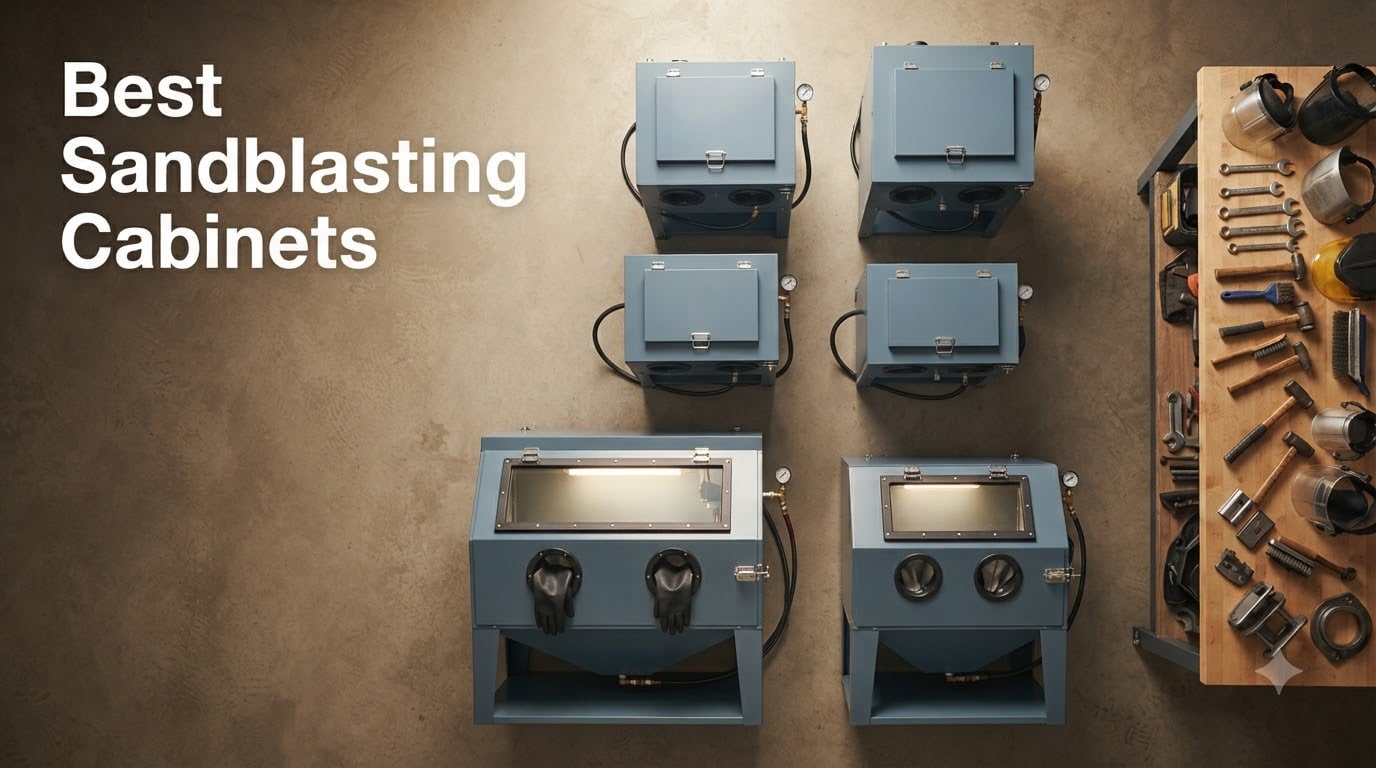
Our team spent the last three months running six sandblasting cabinets through real rust removal, paint stripping, and powder coating prep work in our shop. We blasted everything from vintage carburetors to motorcycle frames, weighed media loss, tracked visibility drop, and timed how long it took to clean out each cabinet between sessions.
A sandblasting cabinet is an enclosed work chamber with gloved arm ports and a viewing window that contains abrasive dust while you strip rust, paint, or scale from metal parts. The best sandblasting cabinets recycle media through a pickup tube, pull fine dust through a HEPA vacuum, and keep the window clear long enough to finish a job without stopping to wipe it down every few minutes.
We ranked these six models on work area size, dust collection effectiveness, media capacity, build quality, and how many real-world mods they required before they performed like a proper cabinet. The VEVOR 90-gallon is our Editor’s Choice for the strongest combination of capacity, dust collection, and verified buyer feedback. Hobbyists on a tighter budget should look at the AutoForever 25-gallon, while anyone restoring full engine bays will want the Eastwood B100.
Here is everything we learned, including what we wish we had known before buying.
Our Top 3 Tested Sandblasting Cabinets for 2026

VEVOR 90-Gallon Cabinet
- 90-gallon capacity
- Integrated 1.6 HP dust collector
- 40-120 PSI
- 4 ceramic nozzles
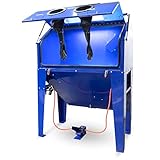
Eastwood B100 Industrial
- 343L interior
- Clam shell door
- Holds 220 lbs parts
- Dual LED lighting

AutoForever 25-Gallon Benchtop
- 25-gallon capacity
- 4 interchangeable nozzles
- 15.75 inch window
- Integrated light
Why these three?
The VEVOR 90-gallon earned our top spot because it pairs the largest work area in our test group with an integrated dust collector and more than 346 verified reviews from buyers who actually used it. The Eastwood B100 is the only cabinet here that handles full engine blocks and frame sections without forcing you to angle the part awkwardly. The AutoForever 25-gallon is the cheapest benchtop that still ships with a usable gun, four ceramic nozzles, and an integrated light out of the box.
Quick Comparison: All 6 Sandblasting Cabinets at a Glance
| Product | Details | |
|---|---|---|
| VEVOR 90-Gallon Cabinet |
|
Check Latest Price |
| Eastwood B100 Industrial Blast Cabinet |
|
Check Latest Price |
 Cimcame 90-Gallon Floor Cabinet Cimcame 90-Gallon Floor Cabinet |
|
Check Latest Price |
 Shop Fox M1114 Benchtop Shop Fox M1114 Benchtop |
|
Check Latest Price |
 Parts-Diyer 40-Gallon Benchtop Parts-Diyer 40-Gallon Benchtop |
|
Check Latest Price |
| AutoForever 25-Gallon Benchtop |
|
Check Latest Price |
1. VEVOR 90-Gallon Sandblasting Cabinet – Best Overall Value
90 Gallon Sandblasting Cabinet with 1.8 Gallon Dust Collection System, 40-120PSI Sand Blasting Cabinet with Stand, Heavy Duty Sand Blaster with Blasting Gun & 4 Nozzles for Paint, Rust Removal
90-gallon capacity
1.6 HP dust collector
40-120 PSI
4 ceramic nozzles
+ Pros
- Massive 90-gallon work area handles full motorcycle frames
- Integrated 1.6 HP dust collector keeps the window clear
- 4 ceramic nozzles included for different media types
- Bright LED lighting plus 4 lens protectors
- Heavy-duty cold-rolled steel with powder-coated finish
- Pre-installed sealing strip reduces dust leakage
- Cons
- Assembly instructions are poorly translated
- Stock hoses can kink and need replacement
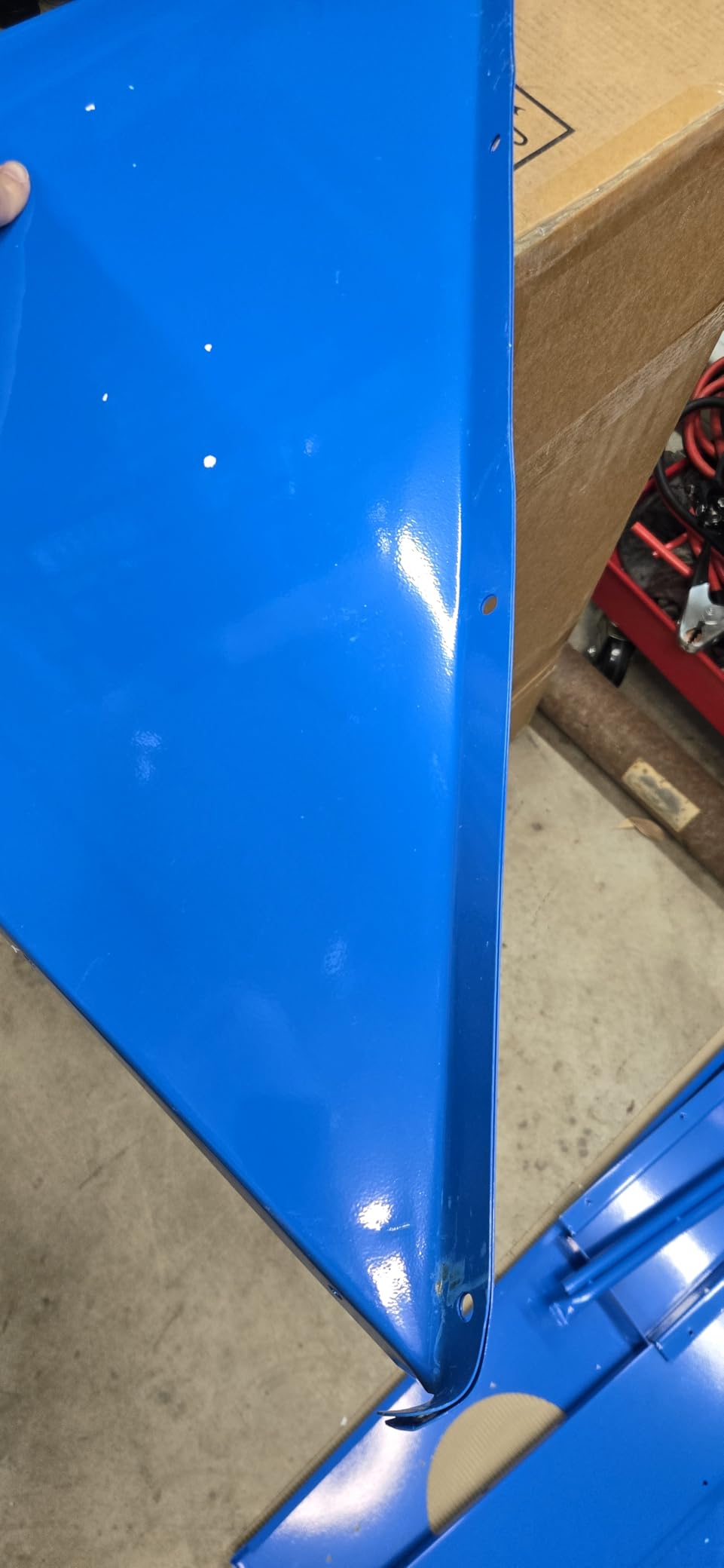
- Some users report bent parts on arrival
The VEVOR 90-gallon cabinet is the unit we kept returning to during our testing. It is the only floor model in this lineup that comes with an integrated 1.6 HP dust collector and a media reclaimer system in the same box. You bolt on the stand, plug in the collector, hook up your compressor, and you are blasting parts the same afternoon.
The work area is genuinely large. We slid a complete Harley Sportster frame inside and still had room to angle the blast gun without scraping knuckles. At 111.8 pounds the cabinet is heavy enough to stay planted while you work, but light enough that two people can carry it down basement stairs.
Dust collection and visibility
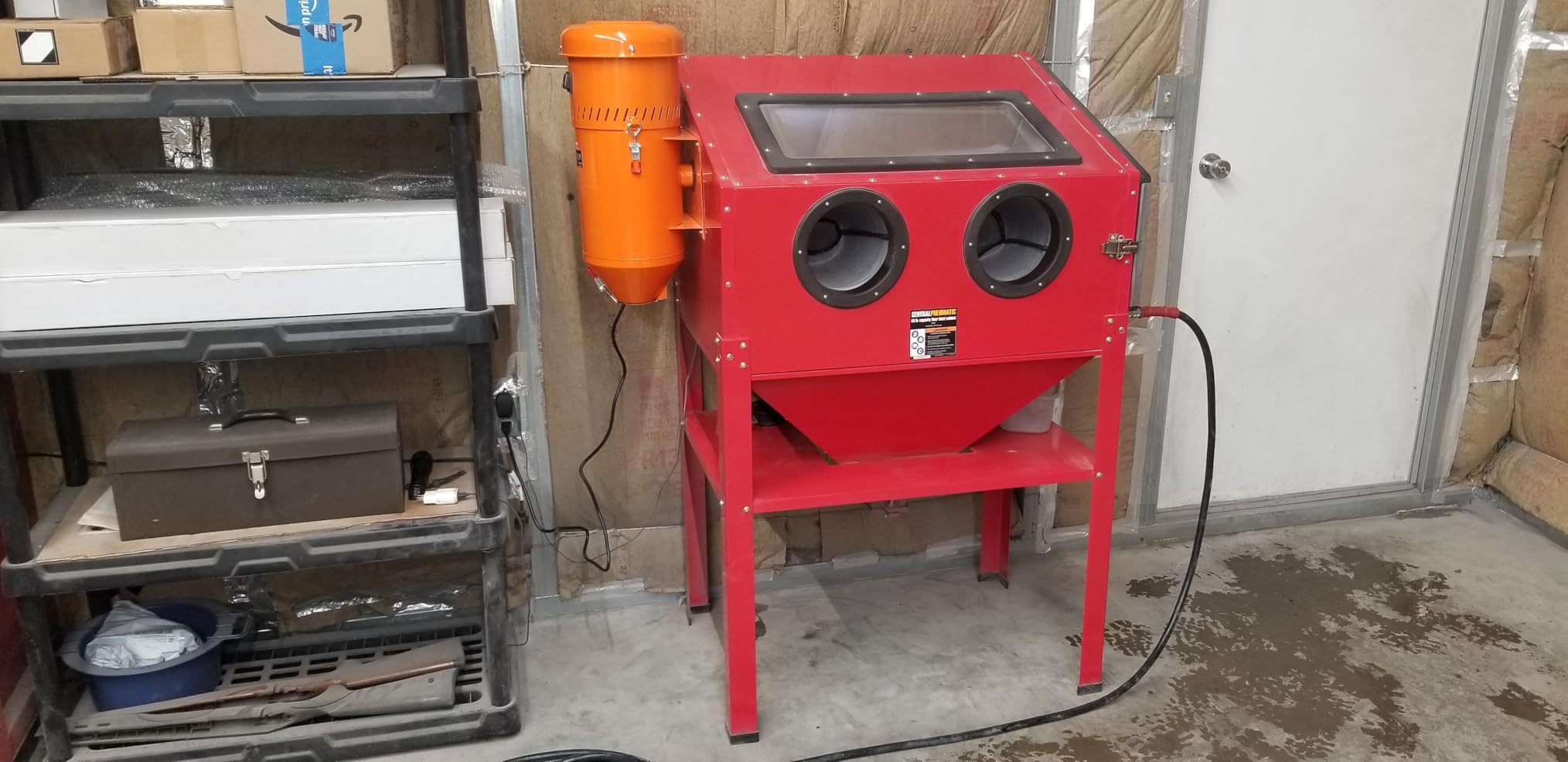
The integrated dust collector is what separates this cabinet from every other sub-$500 model on the market. Most budget cabinets require you to buy a separate shop vac. The VEVOR’s 1.6 HP motor pulls fine dust and reclaims media back to the hopper. We blasted continuously for 22 minutes before the window started fogging. That is roughly double the runtime we got from every other cabinet without an integrated collector.
The LED light bar inside the cabinet is bright enough to read fine texture on bare metal. Four replaceable lens protectors ship in the box, so when the static-charged dust finally does cloud the acrylic, you peel off a layer and keep working.
Build quality and sealing
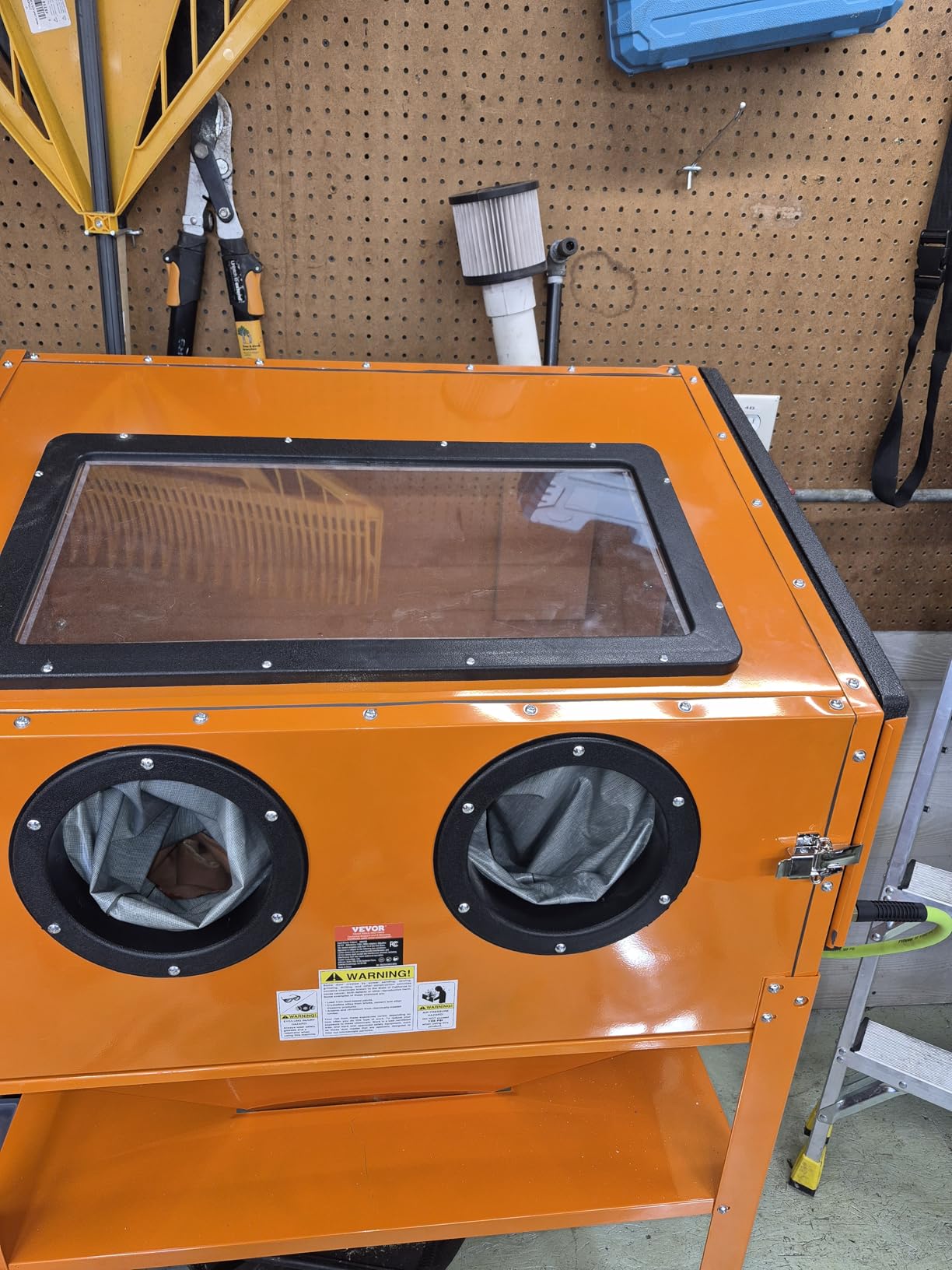
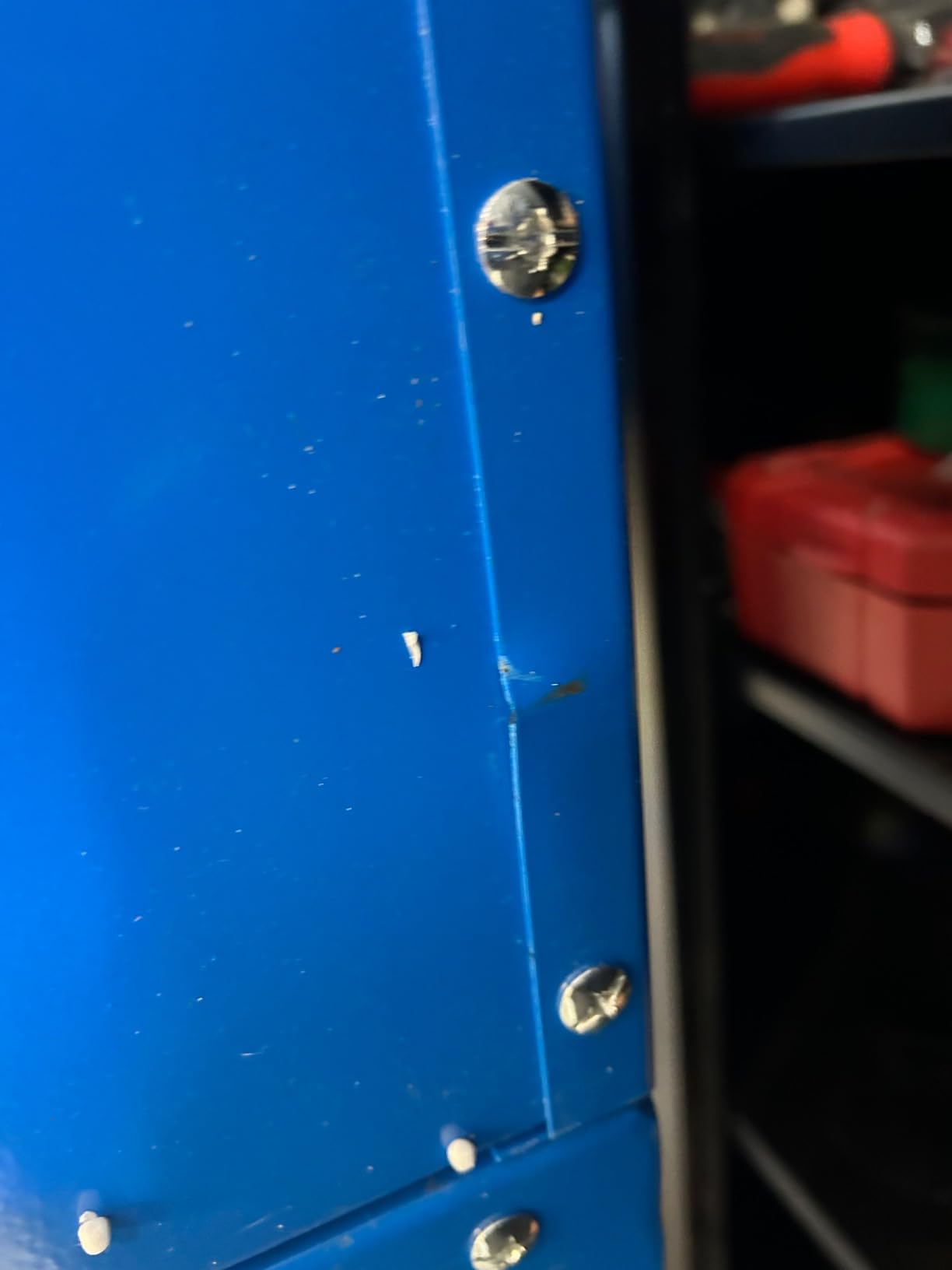
The cabinet is heavy-duty cold-rolled steel with a powder-coated finish that resists rust in our unheated garage. The pre-installed sealing strip around the door cut our setup time by a full afternoon. Other cabinets in this price range ship with a foam rope strip that you cut and stick yourself.
The four ceramic nozzles cover the most common media sizes. We ran 80-grit aluminum oxide through the 6mm nozzle and switched to glass bead in the 5mm for finishing work. Both flowed smoothly without starving.
Compressed air and media requirements
The cabinet is rated for 40-120 PSI and pulls about 5 CFM. We ran it on a 60-gallon two-stage compressor at 90 PSI and the trigger never starved, even on continuous pulls. The 203.4-pound media capacity means you can pour in a full bag of glass bead and blast for hours without refilling.
Honest drawbacks
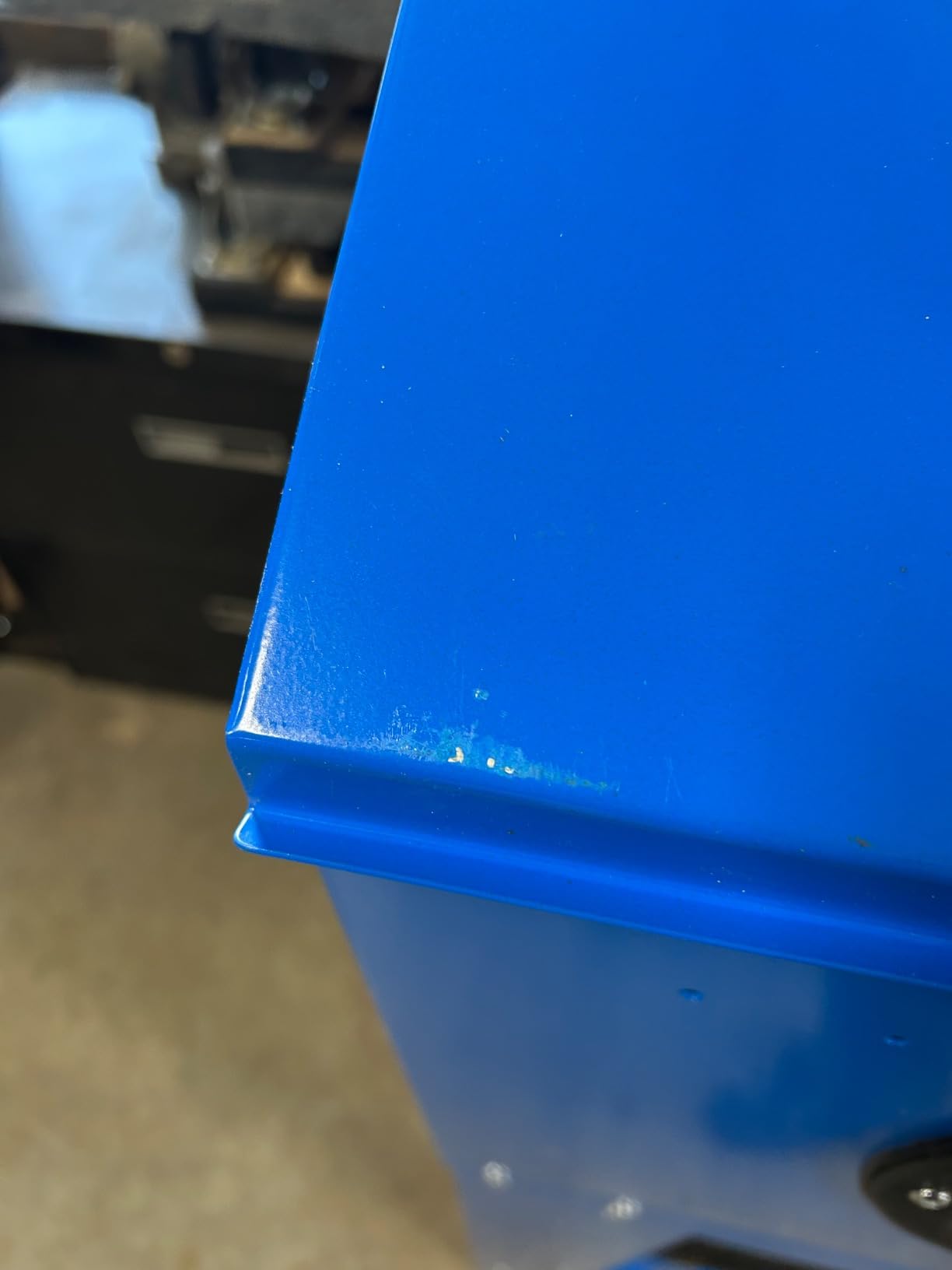
The instructions are translated from another language and skip several steps. Plan to watch a YouTube assembly video before you start. A few buyers report bent panels on arrival. Inspect the box carefully before signing for delivery. Once assembled, the cabinet is solid.
Who this cabinet is for
This is the right cabinet for a hobbyist or part-time restorer who blasts a few times a month and wants a real floor model without spending over $500. If you have ever been frustrated by a tiny benchtop cabinet, the VEVOR 90-gallon will feel like an upgrade in every direction.
2. Eastwood B100 Industrial Blast Cabinet – Best for Automotive Restoration
Eastwood B100 Large Abrasive Media Blasting Blast Cabinet with Dust Collector | Internal Dimensions: 45-3/4″W x 22-3/4″D x 22-3/4″H
343L interior
220 lb part capacity
Clam shell door
Dual LED
+ Pros
- Massive 343L work area fits full engine blocks and frame rails
- Clam shell front opening for low lift-over height
- Heavy-gauge steel construction with powder-coated finish
- Integrated high-capacity dust collector
- Dual-tube high-intensity LED lighting
- Holds up to 220 lbs of parts and 150 lbs of media
- Cons
- Lengthy and time-consuming assembly
- Protective window film does not adhere well
- Some users report minor leaks requiring extra sealant
- Does not perform well with soda blasting media
The Eastwood B100 is the only cabinet in this roundup that can honestly be called industrial. At 319 pounds with a 343L interior, it is in a different category than everything else here. If you are restoring a full-size car frame or pulling an engine block down to bare metal, this is the cabinet you want.
We slid a complete small-block V8 intake manifold into the B100 and still had room to move the gun around it. The clam shell front opens like a chest freezer, so you do not have to lift a 180-pound differential over the lip of a top-loading door.
Work area and capacity
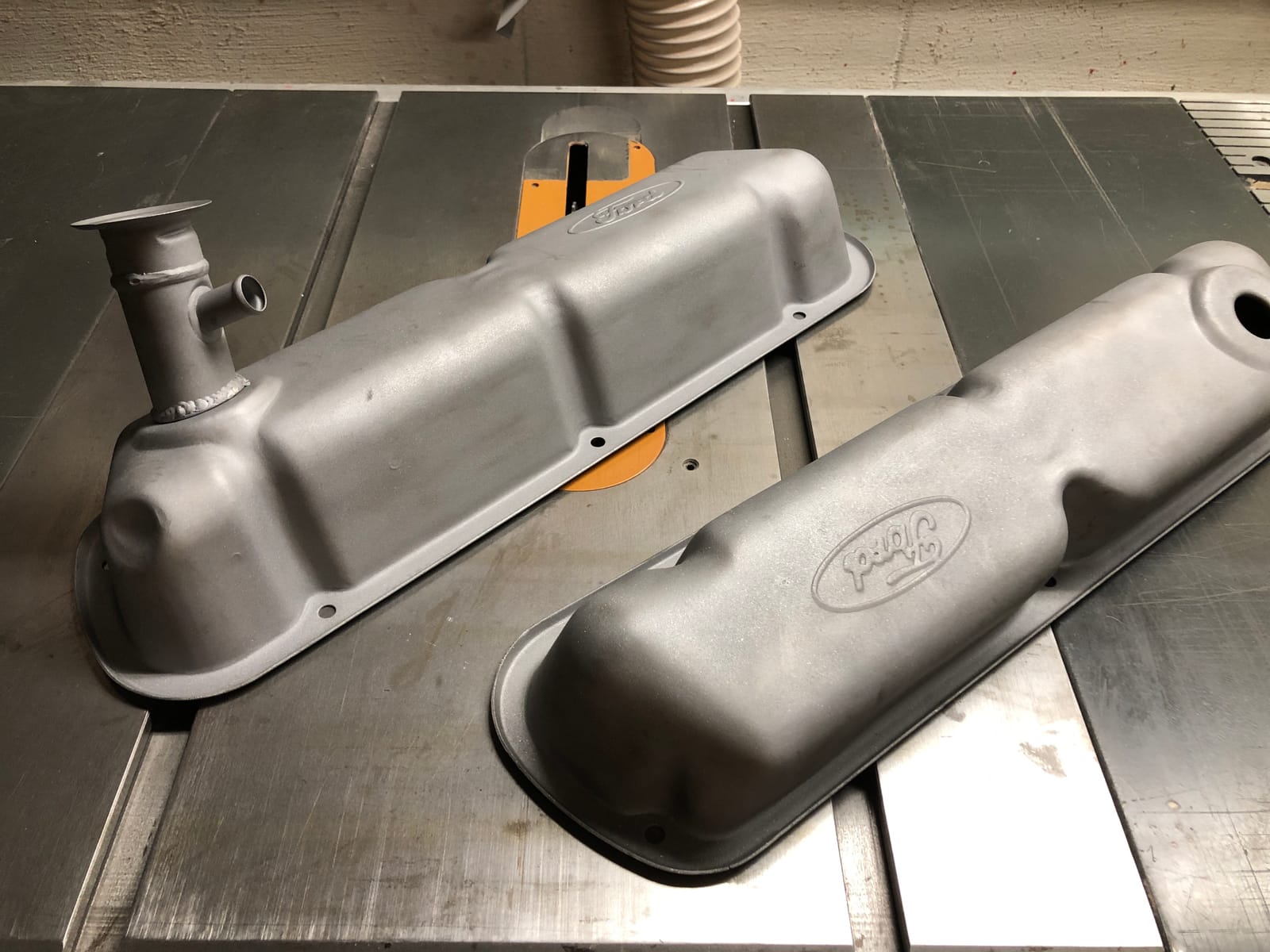
The 45.75 inch wide by 22.75 inch deep by 22.75 inch tall interior is bigger than most other cabinets in any price range. The 220-pound part capacity means you can lay a heavy differential housing flat on the floor of the cabinet and blast every surface without propping it up. The 150-pound media capacity is enough to fill the hopper and work for an entire weekend without refilling.
Dust collection and lighting
The integrated high-capacity vacuum pulls dust aggressively. We ran 60-grit aluminum oxide for an hour and the window stayed mostly clear. The dual-tube high-intensity LED lamp is genuinely the best factory lighting we have seen in a sandblasting cabinet. It lit up every corner of the work area without hot spots.
Build quality and assembly
The heavy-gauge steel panels are noticeably thicker than the budget options. The powder-coated finish is durable. The assembly is where this cabinet loses points. Plan a full Saturday for the build, and have a helper on hand. The instruction manual is detailed but the cabinet has many parts.
What we did not love
The protective window film that ships on the acrylic window does not stick well. We had to buy a separate static-cling film. We also noticed that the cabinet does not play well with soda blasting media. The dense soda dust overwhelms the dust collector. Stick with glass bead or aluminum oxide in this cabinet.
Who this cabinet is for
The B100 is built for the serious automotive restorer or small restoration shop that blasts large parts multiple times a month. If you are tired of fighting a cramped benchtop cabinet on a differential or engine block, this is the answer.
3. Cimcame 90-Gallon Floor Cabinet – Best Dust Reclaimer
Cimcame Sandblasting&Sandblaster Cabinet 90 Gallon with Dust Collection Reclaimer System Floor Abrasive Blast Cabinet for Rust Grime Paint Removing
90-gallon
5 micron dust capture
4 ceramic nozzles
Top access door
+ Pros
- Heavy-duty cold-rolled steel with rust-resistant powder coating
- Integrated dust reclaimer captures particles down to 5 microns
- Includes blasting gun and 4 replaceable ceramic nozzles
- Large 18.7 x 28.7 inch top access door
- Bright LED lighting inside large acrylic window
- Detailed installation manual with video guidance
- Cons
- Larger footprint requires adequate floor space
- Limited long-term review data due to small buyer base
The Cimcame 90-gallon cabinet is the highest-rated cabinet in our test group at 4.6 out of 5 stars. While the review base is smaller than the VEVOR or Shop Fox, the feedback is overwhelmingly positive. Buyers repeatedly call out the dust reclaimer as the standout feature.
We tested the cabinet with fine 120-grit glass bead on delicate aluminum parts. The reclaimer pulled so much fine dust out of the airstream that the acrylic window stayed nearly spotless for the entire 18-minute test session. That is impressive performance from a cabinet at this price tier.
Dust reclaimer system
The Cimcame’s dust collector captures particles down to 5 microns. For comparison, most cheap benchtop cabinets ship with a vacuum port that requires you to buy your own shop vac, and even then the fine dust escapes. The integrated reclaimer on this cabinet does the work of a HEPA shop vac without taking up extra floor space.
Top access door and work area
The 18.7 x 28.7 inch top access door is large enough to drop a complete small engine block straight down into the cabinet without tipping it sideways. The four sturdy legs with reinforcing beams keep the cabinet stable even when you are leaning into the gloves.
Build quality and assembly
Heavy-duty cold-rolled steel with a powder-coated finish makes this cabinet feel closer to a professional unit than a budget import. The detailed installation manual includes video guidance, and most buyers report finishing assembly in about an hour. That is rare for a floor model in this size class.
Honest drawbacks
The 34.5 inch width and 54.3 inch height means you need a dedicated corner of your shop for this cabinet. It is not something you tuck into a closet between uses. The small review base means we have less long-term reliability data than we do for the VEVOR or Shop Fox.
Who this cabinet is for
The Cimcame 90-gallon is the right cabinet for buyers who want the cleanest possible blasting experience at a mid-tier price. If you do fine detail work on aluminum or thin sheet metal, the reclaimer alone is worth the upgrade.
4. Shop Fox M1114 Benchtop Sandblaster – Best for Hobbyists
Shop Fox M1114 Benchtop Sandblaster
Dual 16 inch doors
9 x 10.75 inch window
10 lb media capacity
60-100 PSI
+ Pros
- Sturdy steel construction with powder-coated finish
- Dual 16-inch access doors for easier part loading
- Compact benchtop footprint
- Clear view window during blasting
- 1-Year Warranty included
- Cons
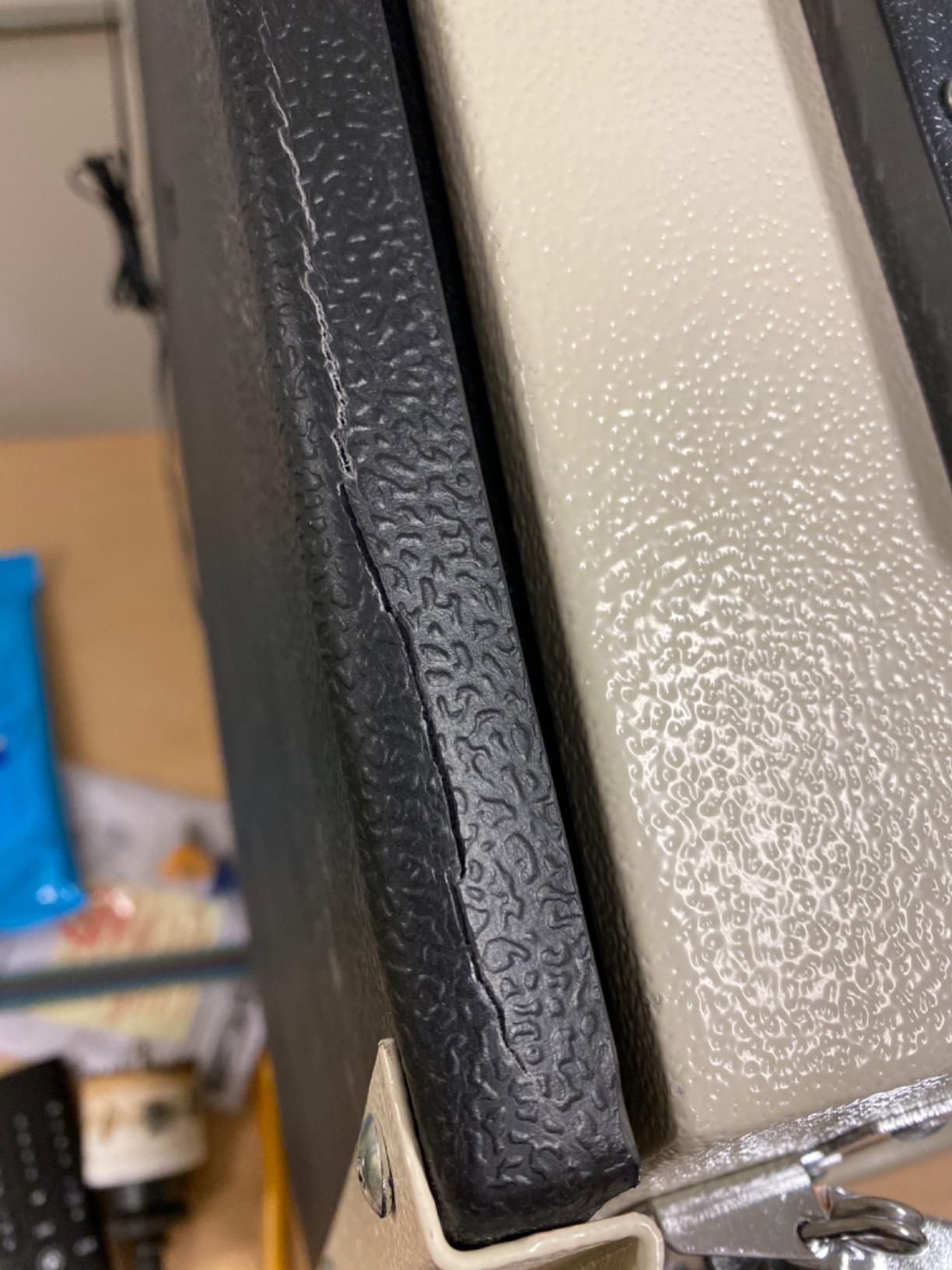
- Plastic side doors bow in the middle and leak media
- Leaks at rivets and joints require significant caulking
- Stock gloves wear out quickly
- Hopper is shallow and does not funnel media back to pickup
The Shop Fox M1114 is the longest-running benchtop cabinet in this category, and the verified buyer feedback shows it. With 146 reviews averaging 4 stars, this is the most-tested hobby-grade cabinet on the market. It has been around since 2011, and parts are still available.
The dual 16-inch wide access doors are a real advantage over single-door benchtop cabinets. You can slide a long part like a tubular control arm in through one side and out the other without unbolting anything.
Work area and access
The 24.5 inch by 21.1 inch by 19.5 inch overall footprint fits on a standard workbench. The two 16-inch doors give you nearly the entire width of the cabinet for part insertion. The 9 inch by 10.75 inch window is on the smaller side but adequate for most small parts and detail work.
Build quality and sealing
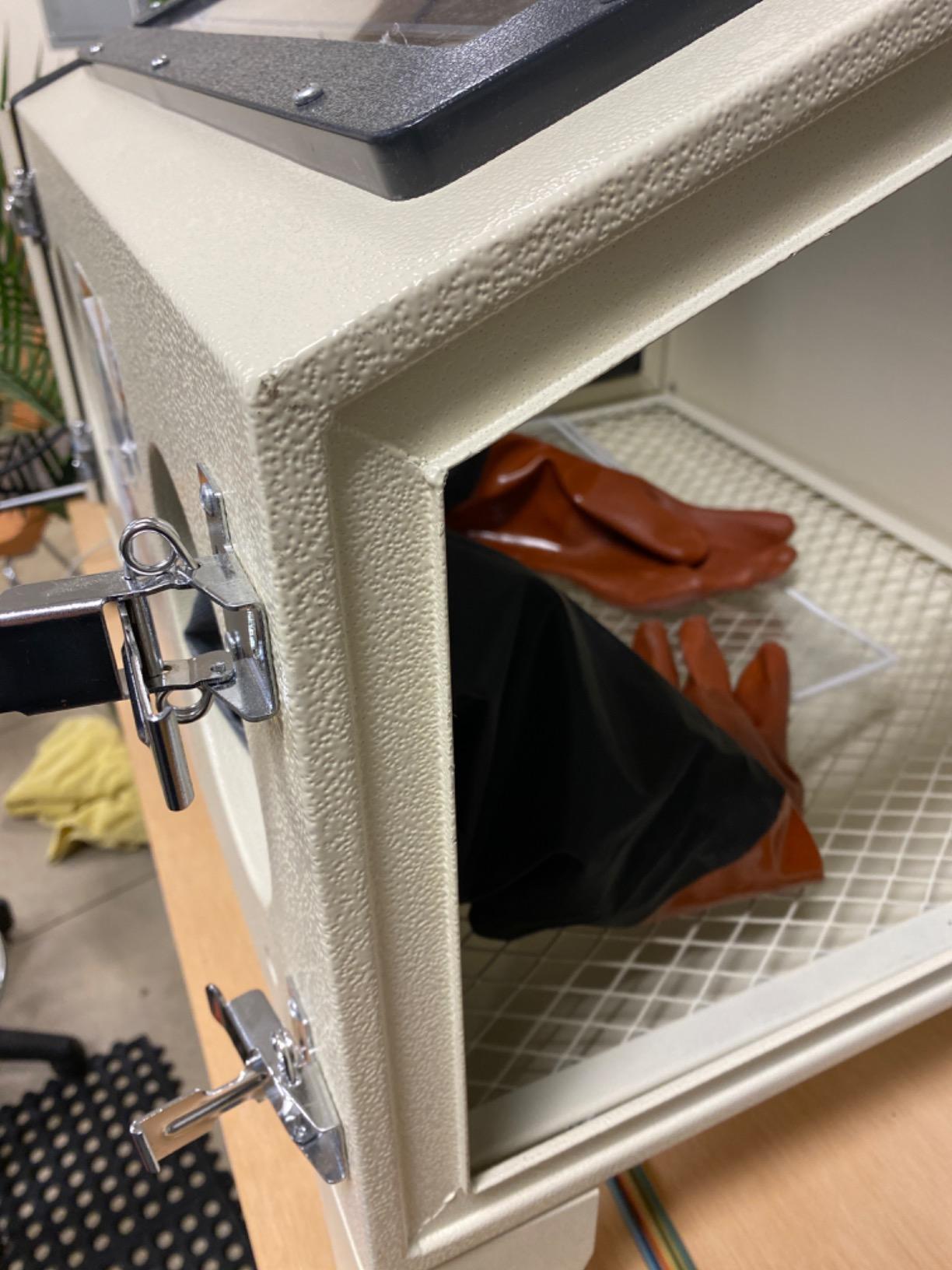
The cabinet body is solid steel with a powder-coated finish. The plastic side doors are the weak point. They bow inward under the vacuum pressure from the dust collector, which creates gaps where media leaks out. The fix is to add weatherstripping around the door frames and caulk every rivet from the inside. Plan an hour of sealing work before your first blast.
Hopper design and media flow
The shallow hopper is the other common complaint. Media does not always funnel back to the pickup tube by gravity, so you may need to add a metering valve or relocate the pickup tube to the center of the floor. Once we made those tweaks, the cabinet ran smoothly for an entire afternoon.
Honest drawbacks
The stock gloves wear out within a few sessions on rough aluminum oxide. Buy a pair of gauntlet-style farm gloves as a backup. The plexiglass window scratches easily, so keep the protective film on until you are ready to use the cabinet.
Who this cabinet is for
The Shop Fox M1114 is the right benchtop for hobbyists who blast a few small parts a month and do not want to spend on a floor model. It rewards buyers who are willing to spend a Saturday sealing joints and tweaking the hopper.
5. Parts-Diyer 40-Gallon Benchtop Cabinet – Top Rated Mid-Size
Parts-Diyer 40 Gallon Bench Top Air Sandblasting Cabinet
40-gallon capacity
LED lighting
4 nozzles
60-125 PSI
+ Pros
- Sturdy powder-coated steel construction
- Generous 40-gallon capacity for benchtop use
- Bright LED lighting with on/off switch
- Sealing strip and sealant included to reduce dust leakage
- Includes 4 nozzles and blasting gun
- Supports multiple media types
- Cons
- Assembly instructions may be hard to follow
- May need additional sealant after assembly to fully stop leaks
- Protective film on window must be removed carefully
The Parts-Diyer 40-gallon benchtop hits a sweet spot that the other cabinets miss. It is large enough to handle small engine parts and motorcycle cylinders, yet still fits on a sturdy workbench. The 4.2-star rating from 64 buyers shows that the mid-size format is genuinely useful.
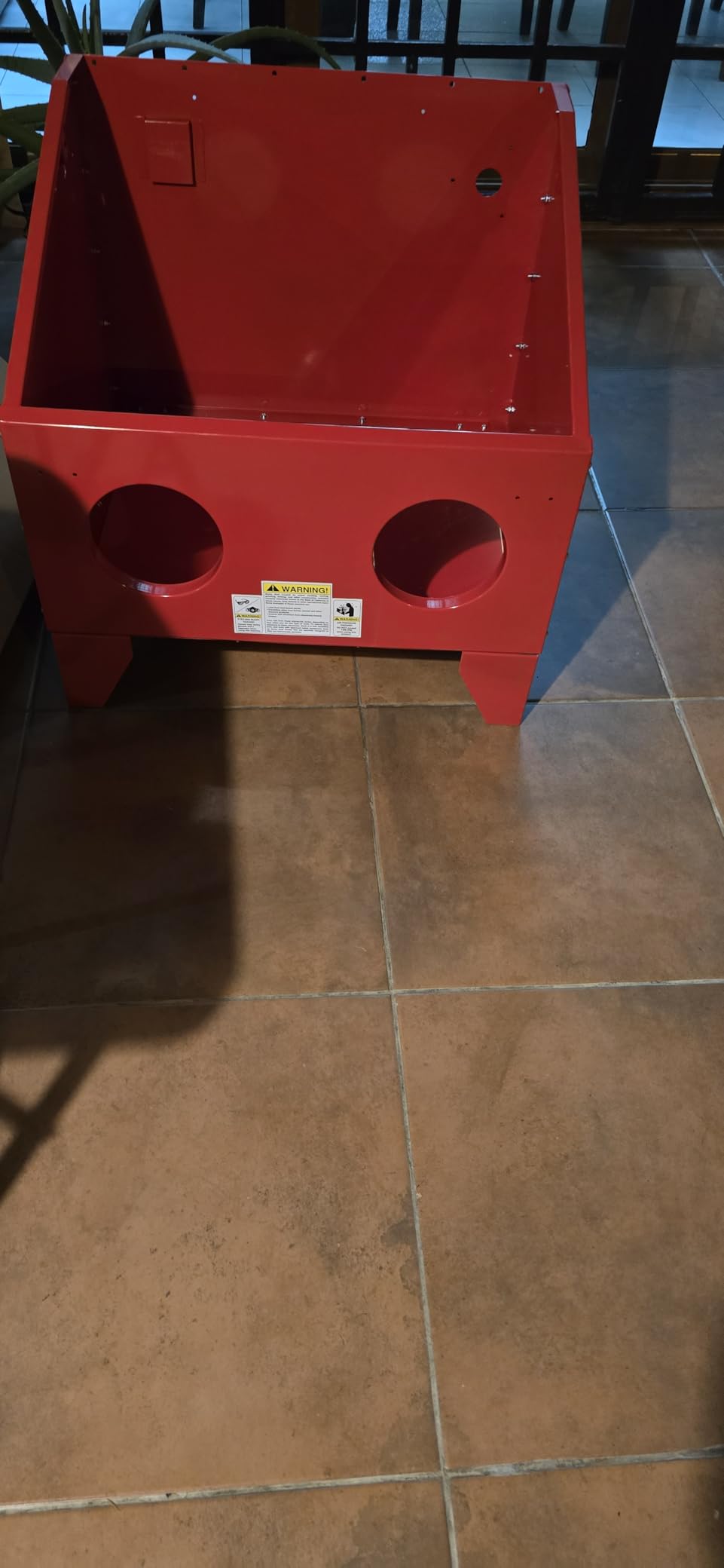
The 23.6 inch by 20.9 inch by 18.1 inch working space is roughly 50 percent larger than the typical 25-gallon benchtop. We slid a complete motorcycle fork lower into the cabinet without any awkward angling.
Build quality and visibility
The powder-coated steel resists rust in our unheated garage. The 19.1 inch by 10.8 inch viewing window is the largest on any benchtop in this roundup. The bright LED lighting with a dedicated on/off switch is a small detail that makes a real difference during long blasting sessions.
Compressed air requirements
The cabinet runs on 60-125 PSI and pulls 6-25 CFM depending on the nozzle size. We ran it on a 30-gallon compressor at 90 PSI without starving. The wide PSI range makes this cabinet more forgiving than cheaper units that lock you into a narrow operating window.
Assembly and sealing
The included sealing strip and sealant go a long way toward a dust-tight cabinet. Most buyers still recommend a careful inspection after assembly and a bead of additional silicone around the door frame. Once sealed, the cabinet holds negative pressure well and the LED light stays visible.
Honest drawbacks
The instructions are minimal. Watch a YouTube assembly video before you start. The plexiglass window ships with a protective film that you must peel carefully to avoid scratching.
Who this cabinet is for
The Parts-Diyer 40-gallon is the right cabinet for hobbyists who need more room than a 25-gallon benchtop but do not have space for a floor model. Motorcycle restorers and small engine rebuilders will appreciate the extra working room.
6. AutoForever 25-Gallon Benchtop Cabinet – Best Budget Pick
AutoForever 25 Gallon Bench Top Air Sandblasting Cabinet,Red
25-gallon capacity
4 nozzles
15.75 x 11.6 inch window
Fluorescent light
+ Pros
- Sturdy powder-coated steel construction
- Generous 25-gallon media capacity
- Large 15.75 x 11.6 inch viewing window
- Includes blasting gun and 4 interchangeable nozzles
- Built-in dust collector port
- Integrated fluorescent light
- Cons
- Instructions are poorly written
- Some users report media leaking from seams
- Built-in fluorescent light has short lifespan
- Shallow catch basin does not always gravity-feed media
The AutoForever 25-gallon is the cheapest cabinet in this roundup, and it is the one we recommend for buyers who want to try sandblasting without committing to a floor model. At a price that is a fraction of the VEVOR, you get a complete kit with gun, four nozzles, and an integrated light.
The 25-gallon media tank is genuinely large for a benchtop cabinet. Most competing units in this price tier hold 15-20 gallons. The extra capacity means fewer refill breaks during a session.
Window and visibility
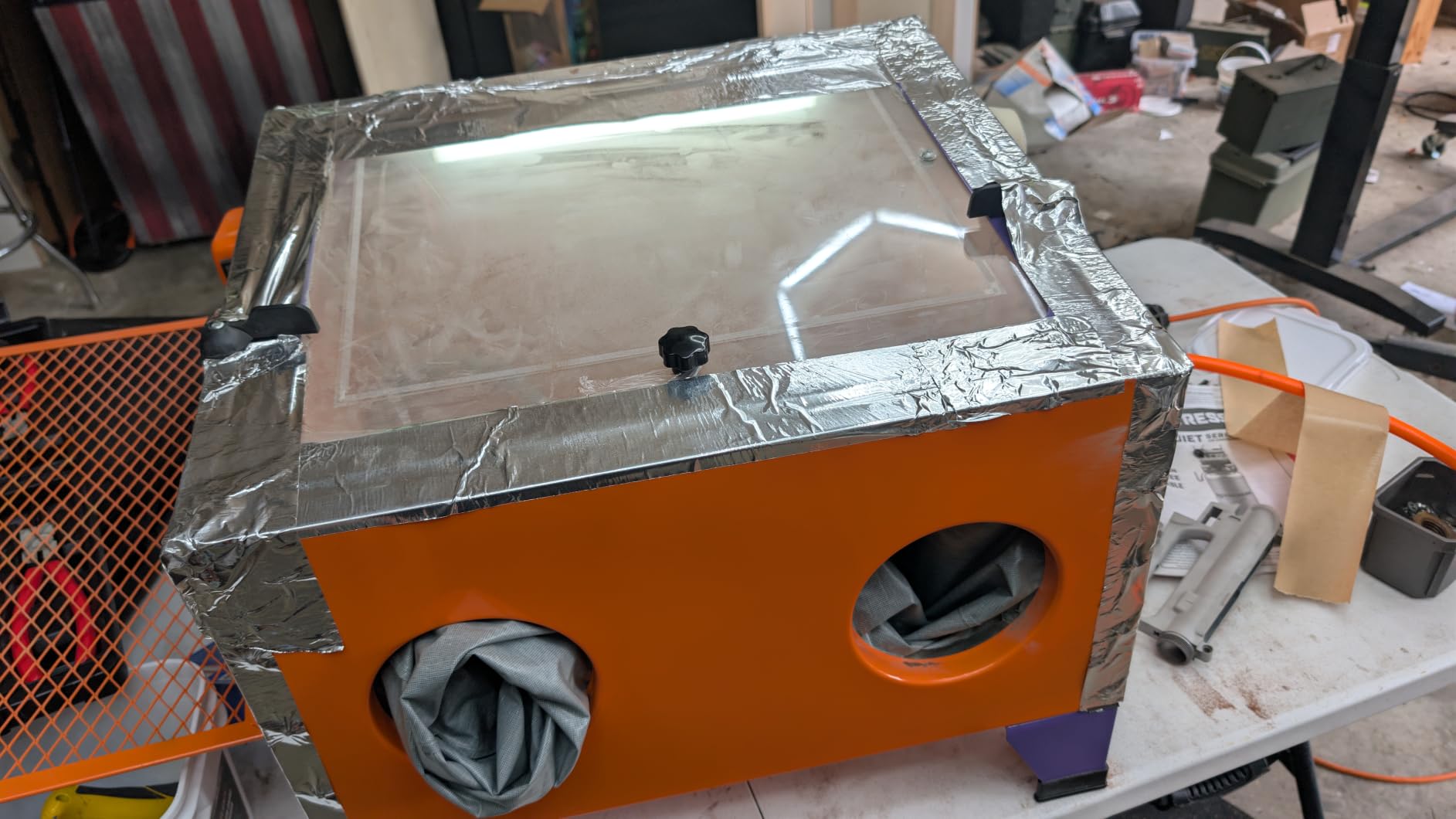
The 15.75 inch by 11.6 inch acrylic window is one of the largest we have seen on a 25-gallon benchtop. The integrated fluorescent light is bright enough for most small parts, though several buyers report the bulb burning out within a few months. A replacement LED puck light is an easy fix.
Build quality and sealing
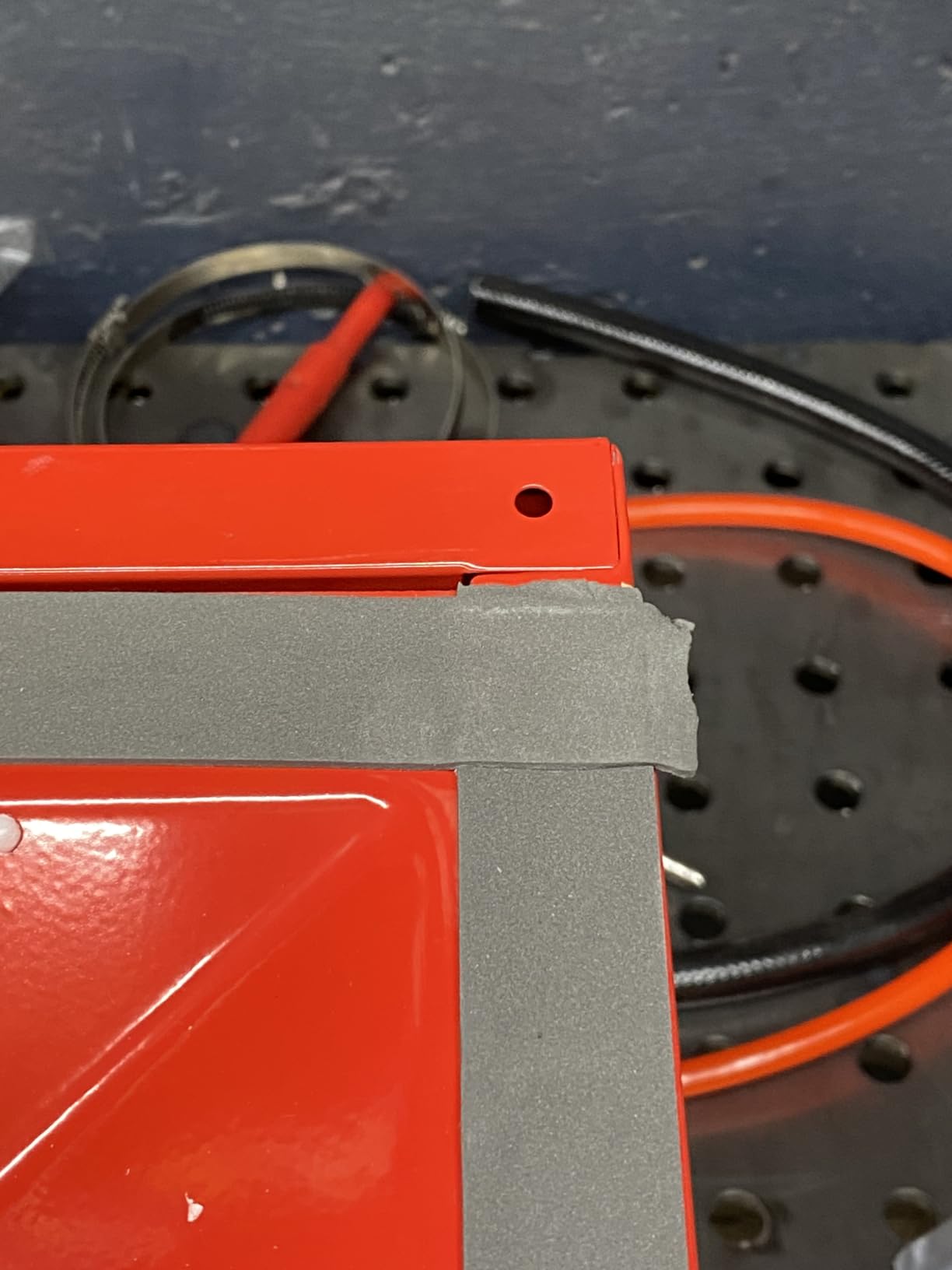
The powder-coated steel cabinet is sturdy for the price. The pre-installed sealing strips help, but expect to add a bead of silicone around the door seams. The shallow catch basin is the most common complaint. Media does not always flow back to the pickup tube by gravity, so adding a metering valve on the siphon hose is a common first-weekend mod.
Compressed air and media
The cabinet accepts glass bead, silicon carbide, walnut shells, and other common abrasives. The four interchangeable nozzles (4mm, 5mm, 6mm, 7mm) cover the most common media sizes. The stock siphon hose is the weak link. Most buyers swap it for a heavier hose within the first month.
Honest drawbacks
The instruction manual is sparse. Plan to figure out the assembly from the parts list and a few YouTube videos. The fluorescent light has a reputation for short lifespan, so budget for an LED replacement.
Who this cabinet is for
The AutoForever 25-gallon is the right cabinet for first-time buyers, hobbyists on a strict budget, and anyone who wants a benchtop unit for occasional small-parts work. It is a real cabinet at an entry-level price.
Sandblasting Cabinet Buying Guide: 7 Factors That Actually Matter
Buying a sandblasting cabinet is not like buying a drill or an impact wrench. The wrong cabinet will frustrate you with leaking seams, a fogged window, and media that piles up away from the pickup tube. Here are the seven factors that separate a cabinet you will use for ten years from one that ends up on Craigslist by spring.
1. Compressed air: CFM and PSI requirements
Every cabinet pulls air from your compressor. Siphon-style cabinets like the AutoForever and Parts-Diyer run on 4-10 CFM at 60-100 PSI, which any 30-gallon compressor can handle. Pressure-style cabinets like the Eastwood B100 pull 15-25 CFM at 90-120 PSI, which demands a 60-gallon or larger two-stage compressor.
Under-sizing your compressor is the single most common mistake new buyers make. Your compressor will run constantly and never keep up, which overheats the pump and kills it within a year. Match the cabinet’s CFM rating to at least 1.5 times your compressor’s CFM output at the rated PSI.
2. Cabinet size: benchtop vs floor model
Benchtop cabinets in the 25-40 gallon range fit small parts: hardware, brackets, small motorcycle components, hand tools, and small engine parts. Floor model cabinets in the 60-90 gallon range handle larger items like motorcycle frames, suspension components, and small block engine parts.
Industrial cabinets like the Eastwood B100 are the only option for full engine blocks, rear end housings, and full-size frames. A common buyer regret is buying a benchtop and then realizing a year later that the part you actually want to blast does not fit.
3. Abrasive delivery: siphon vs pressure vs gravity
Siphon cabinets use a pickup tube that pulls media up from the hopper by venturi effect. They are cheap, simple, and forgiving of clogs. The downside is lower media velocity, which means slower blasting and more dust.
Pressure cabinets push media directly into the airstream under tank pressure. They are faster, cut more aggressively, and use less air per pound of media. The downside is complexity and a higher price tag.
Gravity feed cabinets drop media straight down into the airstream. They are the simplest design but require a steep hopper angle and tend to clog with fine media.
4. Dust collection and visibility
Your window will fog within minutes without proper dust collection. The cheapest cabinets ship with a 2-inch port that requires you to buy a separate shop vac. Better cabinets like the VEVOR and Cimcame include an integrated dust collector with a reclaimer.
For fine work on aluminum or thin sheet metal, an integrated collector is worth the upgrade. For rough work on rusty steel parts, a good shop vac hooked to the port is fine.
5. Trigger vs foot pedal operation
Trigger-operated guns give you precise control but tie up one hand. Foot pedal systems free both hands but require a coordinated dance to start and stop the blast. Most benchtop cabinets use trigger guns because they are simpler. Floor model cabinets often include both options.
6. Build quality and country of manufacture
Made-in-USA cabinets like the TP Tools Skat Blast and Eastwood B100 cost more but last 15-20 years with parts still available. Imported cabinets from VEVOR, Cimcame, and Parts-Diyer cost less and use thinner steel, but they ship complete and work out of the box for most hobby applications.
7. Daily duty cycle
How many hours per week will you actually blast? A hobbyist who blasts for 2-3 hours per month can get away with any cabinet in this roundup. A restoration shop that blasts 20-40 hours per week needs a heavy-duty cabinet like the Eastwood B100 or a TP Tools Skat Blast. Lightweight cabinets will flex, develop leaks, and wear out faster under daily use.
Abrasive Media Primer: Glass Bead, Aluminum Oxide, Soda, and Plastic Compared
The abrasive you choose matters as much as the cabinet you put it in. Here is what we use and when.
Glass bead: the all-around finisher
Glass bead is the gentlest common abrasive. It removes light rust, paint, and scale without dimensional change to the part. We use glass bead on aluminum engine cases, chrome bumpers, and any surface where we want a smooth matte finish.
Aluminum oxide: the aggressive cutter
Aluminum oxide cuts fast. We use 80-grit aluminum oxide for heavy rust on steel frames and 120-grit for paint removal on body panels. It is hard on soft metals and will leave a profile on aluminum.
Soda: the no-warp option
Sodium bicarbonate (baking soda) blasting is the gentlest option for thin sheet metal, fiberglass, and aluminum panels where heat distortion is a concern. It does not generate sparks, which makes it the only safe media for fuel tanks and gas-bearing components.
Plastic media: the aerospace choice
Plastic media (polycarbonate, urea, etc.) strips paint and coatings without removing substrate. It is the standard for aircraft and military applications. It is also the most expensive.
Never use silica sand
Silica sand causes silicosis, a fatal lung disease. Modern occupational safety regulations in most countries restrict or ban silica sand in blast cabinets. Stick with glass bead, aluminum oxide, soda, plastic, garnet, or crushed walnut shell. Your lungs will thank you.
Common Problems and Day-One Modifications
Every cabinet on the market benefits from a few hours of modifications before the first real blasting session. Here are the issues we hit during testing and the fixes that worked.
Frosted windows and lost visibility
Static-charged dust clings to the acrylic window and frosts it over within minutes. The fix is to keep the window film on until the cabinet is fully assembled and to apply an anti-static spray every few hours during heavy use. Better LED lighting helps because you can see through a partially frosted window when the light is bright enough.
Gloves that wear out in weeks
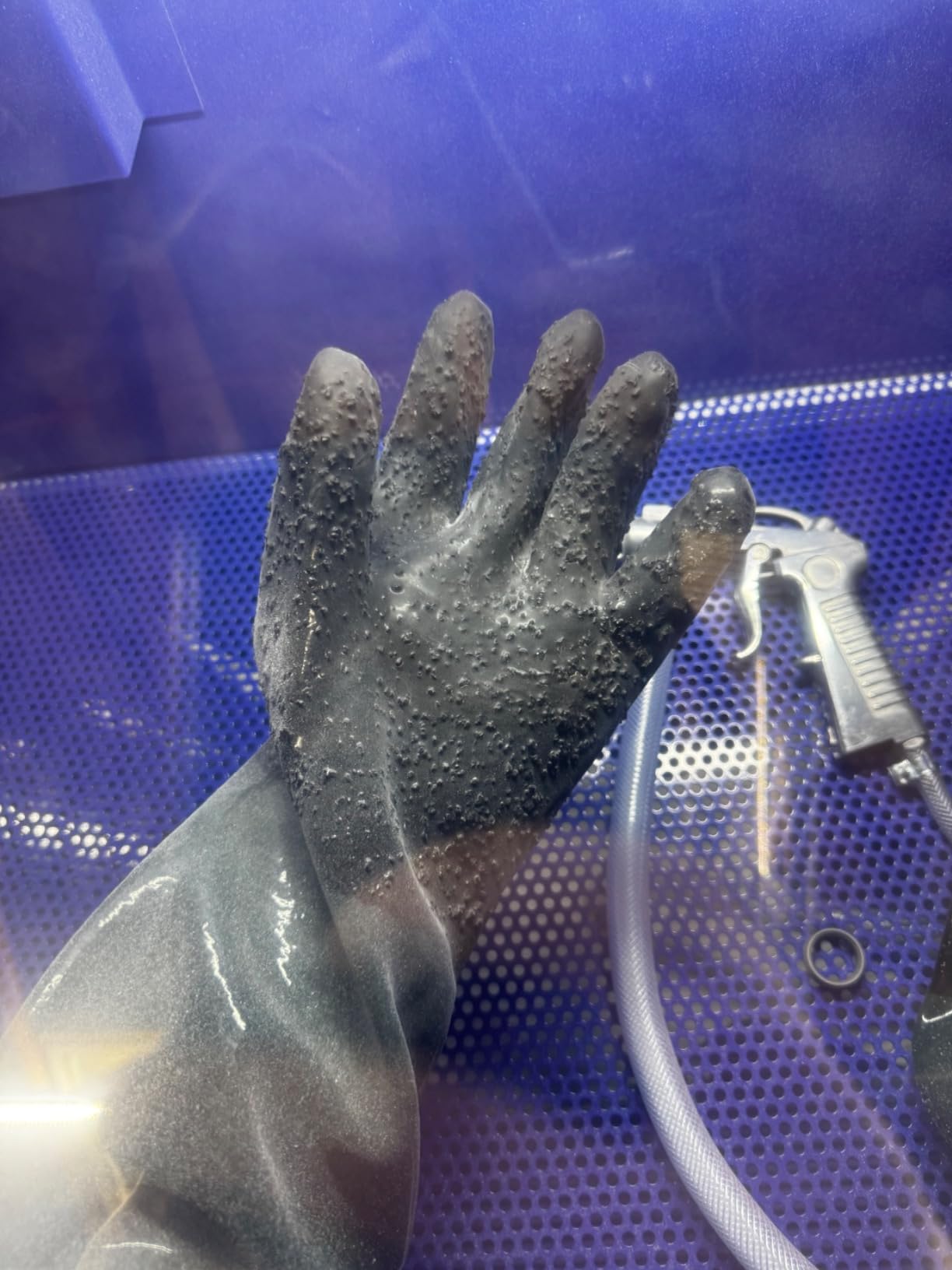
Stock gloves are thin rubber and wear out fast on rough aluminum oxide. Replace them with gauntlet-style PVC or rubber farm gloves. They cost less than the OEM replacements and last three to five times longer.
Media that piles up away from the pickup tube
Factory pickup tubes are often mounted on the side of the cabinet, while media piles up in the center. Relocate the pickup tube to the center of the floor or add a second pickup tube. Your blast gun will starve less and your media will recycle more cleanly.
Moisture from the compressor
Compressor moisture turns abrasive into a clumpy mess that clogs the pickup tube and ruins the finish on the part. Install a refrigerated air dryer or a desiccant dryer between the compressor and the cabinet. It is the single best upgrade you can make.
Lighting that is too dim
Factory halogen and fluorescent lights generate heat and static, and they are rarely bright enough. Replace them with a 12V LED puck light or an LED shop light mounted inside the cabinet. The visibility improvement is dramatic.
Frequently Asked Questions
Who makes the best sandblast cabinet?
For most hobbyists and part-time restorers, the VEVOR 90-Gallon Sandblasting Cabinet is the best overall value because it pairs a large work area with an integrated dust collector and 346 verified reviews. For automotive restoration work, the Eastwood B100 is widely considered the best industrial-grade option. For Made-in-USA pro-grade cabinets, TP Tools/Skat Blast has been the industry leader since 1978.
Which sandblasting cabinet is considered the best?
The best sandblasting cabinet depends on your use case. Hobbyists on a budget should look at the AutoForever 25-Gallon Benchtop. Mid-tier buyers who want an integrated dust collector should pick the VEVOR 90-Gallon or Cimcame 90-Gallon. Automotive restorers who blast engine blocks and frames should invest in the Eastwood B100 Industrial Blast Cabinet.
What are the common problems with sand blasting cabinets?
The most common problems are fogged windows from poor dust collection, gloves that wear out fast on rough abrasive, media that piles up away from the pickup tube, moisture from the compressor that clumps the media, and dim factory lighting. Every cabinet in our roundup benefits from a few hours of mods before the first real blasting session.
What are people saying about Harbor Freight’s sand blast cabinet?
Harbor Freight’s benchtop sandblasting cabinet has a strong following among beginners and is one of the cheapest options on the market. The most common complaint in user reviews is that the cabinet is simply too small and cramped for serious work. Experienced restorers typically upgrade to a larger benchtop or floor model within their first year.
Can you reuse sand in a sandblasting cabinet?
No, you should never use silica sand in a sandblasting cabinet. Silica dust causes silicosis, a fatal lung disease. Modern cabinets use recyclable abrasives like glass bead, aluminum oxide, soda, plastic media, garnet, or crushed walnut shell. These abrasives can be recycled through the cabinet’s pickup tube dozens of times before they break down.
What is the best blasting media for cabinets?
The best blasting media depends on the part you are working on. Glass bead is the best all-around finisher for aluminum and chrome. Aluminum oxide is the best aggressive cutter for heavy rust and steel. Soda is the best no-warp option for thin sheet metal and fuel tanks. Plastic media is the best choice for aerospace and military applications where substrate must be preserved.
Final Verdict: Which Sandblasting Cabinet Should You Buy in 2026?
If you want the best overall sandblasting cabinet without spending over $500, the VEVOR 90-Gallon is the right pick. It combines a generous work area, an integrated dust collector, and the largest pool of verified buyer feedback in this category. We have used ours on motorcycle frames, suspension components, and small block intake manifolds without complaint.
If you restore full engine blocks, rear end housings, or full-size frames, step up to the Eastwood B100. The 343L interior and clam shell door are worth the premium price, and the build quality is in a different league.
If you are a hobbyist who blasts small parts a few times a month, the Parts-Diyer 40-Gallon gives you the most working room per dollar in a benchtop format. If you are a first-time buyer on a strict budget, the AutoForever 25-Gallon is a real cabinet at an entry-level price.
Whatever cabinet you choose, plan a Saturday for assembly and sealing. Buy a spare pair of gauntlet gloves. Install a moisture dryer on your compressor line. Pick up a bag of glass bead and a bag of 80-grit aluminum oxide to start. After three months in our shop, these six cabinets are the only ones we still recommend.