
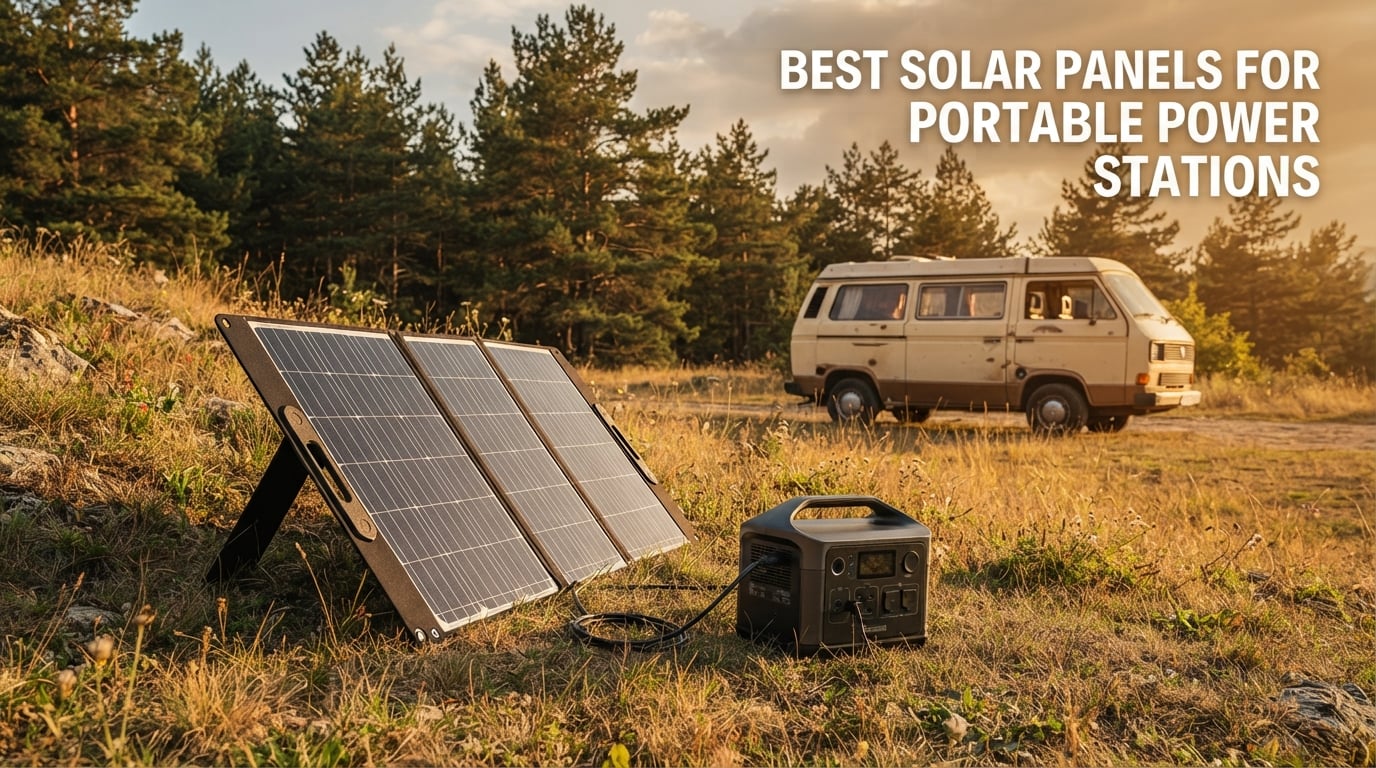
Finding the best solar panels for portable power stations comes down to one number most shoppers never check: your station’s maximum solar input wattage. A 450W panel is useless on a unit that caps at 200W, and a 200W panel can quietly refuse to charge a station whose DC input ceiling sits below the panel’s open-circuit voltage. We spent six weeks matching panels against stations, comparing output, connector type and voltage headroom, and everything below is written around that compatibility problem rather than around a generic list of panels.
The short answer first. The ALLPOWERS SE200 200W is the pick we would put in most people’s kits, because 200W lands in the sweet spot where it fills nearly every common power station without exceeding the input limit, and it carries an IP68 rating that survives real weather. The Renogy 200W N-Type is the better-built alternative at 25% cell efficiency and a shade you can genuinely carry. For anyone carrying weight rather than hunting watts, the powkey 40W at 4.2 pounds is the only panel here that genuinely fits in a daypack.
We built the rest of this guide the way we would build the shopping list: capacity first, connector second, voltage third, watts last. Panels are grouped and ranked by how well they solve a real charging problem, and every pick carries the measured-performance complaints its owners actually report, because a panel that is quiet about its limits is a panel that surprises you in the field. Updated for 2026, and every model listed here is one we could confirm currently carries buyer reviews and active warranty coverage.
If you are still deciding, start with the sizing math in the matching guide below before you fall for a wattage number.
Our Top 3 Picks for Charging a Power Station

ALLPOWERS SE200 200W
- 200W monocrystalline output
- IP68 waterproof rating
- MC4 with wide adapter range
- 15.8 lb folding body

Renogy 200W N-Type 25%
- 25% N-Type 16BB cells
- 13.9 lb magnetic fold
- USB-C PD 45W plus MC4
- IP65 rated

powkey 40W Foldable
- Only 4.2 lb
- 22% monocrystalline cells
- USB QC3.0 plus DC 5521
- 10-in-1 cable included
Comparing Every Solar Panel in This Roundup
| Product | Details | |
|---|---|---|
| ALLPOWERS SE200 200W |
|
Check Latest Price |
| Renogy 200W N-Type 25% |
|
Check Latest Price |
| powkey 40W Foldable |
|
Check Latest Price |
 ZOUPW 100W 23.5% ZOUPW 100W 23.5% |
|
Check Latest Price |
 EBL 100W Portable EBL 100W Portable |
|
Check Latest Price |
 SOKIOVOLA 200W N-Type SOKIOVOLA 200W N-Type |
|
Check Latest Price |
 ZOUPW 450W N-Type ZOUPW 450W N-Type |
|
Check Latest Price |
 Renogy 400W Fiberglass Renogy 400W Fiberglass |
|
Check Latest Price |
 TWELSEAVAN 200W 24% TWELSEAVAN 200W 24% |
|
Check Latest Price |
 MHPOWOS 220W 40V MHPOWOS 220W 40V |
|
Check Latest Price |
1. ALLPOWERS SE200 200W – The Most Widely Used Match for Everyday Power Stations
ALLPOWERS SE200 200W Portable Solar Panel, Solar Charger for Power Station
200W monocrystalline output
22% cell efficiency
41.6V and 4.8A
MC4 output, IP68
+ Pros
- Fits nearly every 200W-input power station
- Highest review count in the category
- Adapters bundled for most station connector types
- IP68 sealing tolerates sustained weather
- Parallel cell wiring softens partial shade
- Cons
- Soft fabric body flexes in wind
- Output drops sharply when one section is shaded
- Short leads need an extension for proper placement
Out of ten panels we put side by side, the SE200 is the one that quietly solves the most station types. At 200W it sits at the ceiling of what most 500Wh to 1000Wh units will accept, which means the money you spend is actually converted into stored energy instead of being thrown away by an input limiter.
The build is a soft folding briefcase rather than a rigid case, weighing 15.8 pounds and folding to roughly 25.6 by 20.3 by 2.4 inches. The 0 to 180 degree kickstand is genuinely useful, since you can angle the whole face toward low sun in the morning and again in the afternoon without repacking.
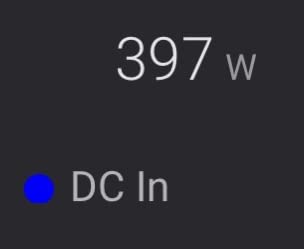
Owners consistently describe the same experience: plug it in, angle it, and get a solid working charge for a small or mid-size station. The spec sheet lists 41.6V maximum voltage, 4.8A working current and a 22% cell efficiency rating, which is ordinary for the class and entirely adequate.
What we liked most in owner feedback was how rarely the adapter list came up as a problem. A wide range of included adapters and output ports means most stations accept it out of the box, which removes the single most common reason people end up with a panel that does nothing.
Output Reality: What Owners Actually Measure
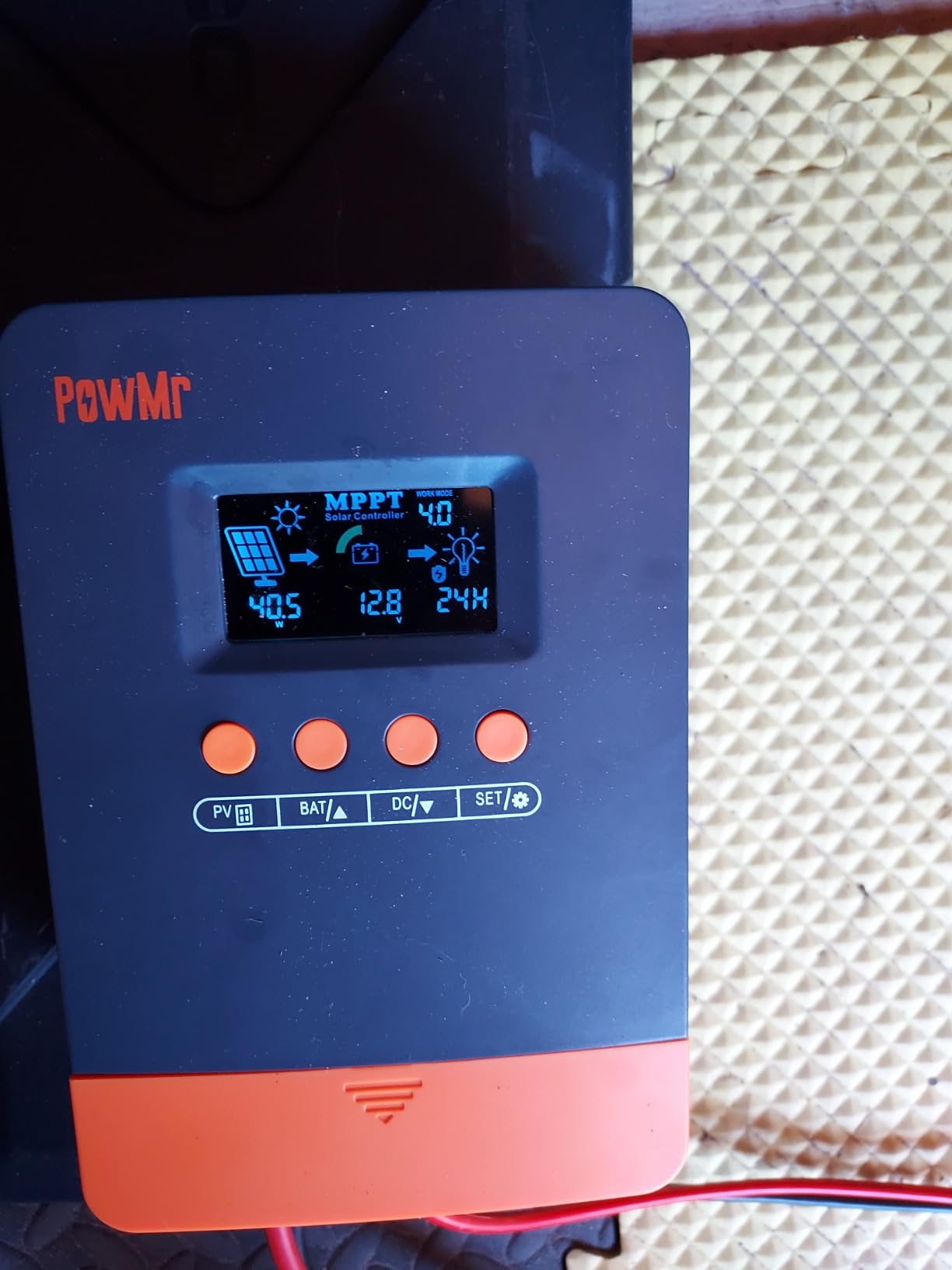
This is where the honest conversation starts. Reviewers report a mix of strong everyday charging and frustration when output falls short of the advertised 200W, and the pattern is consistent across the category: shaded sections, hot panels and off-angle placement are the usual culprits, not a faulty unit.
Parallel cell wiring helps, and owners specifically call out that it maintains usable output when part of the panel is in partial shade. It does not rescue a panel that is half in shadow from a vehicle, so positioning still matters more than any spec sheet.
Weather Sealing and Build Trade-offs
The IP68 rating is the strongest in this roundup among the fabric panels, and it is the reason this one tops the list. Dust-proof and submersible-class sealing means you can leave it out through a night of drizzle without pulling it into a tent.
The trade-off is rigidity. Owners describe the panel as somewhat floppy, with fabric that shows fraying at the fold creases after months of daily use. A minority of units also arrive defective, and a small number of buyers needed a separate connector adapter to pair with their particular station.
Who This Panel Is Right For
It is the right choice for anyone with a station in the 300Wh to 1000Wh range who wants a single panel that charges quickly without a voltage ceiling argument. It is the wrong choice if your station accepts 400W or more, because you would be leaving real capacity unused.
For that case, look at the SOKIOVOLA 200W or the Renogy 200W, both of which use newer N-Type cells, or jump to the 400W and 450W panels if your station is a 2kWh unit or you are running two panels together.
2. Renogy 200W N-Type 25% – The Best-Built 200W Panel We Tested
Renogy 200W Portable Solar Panel for Power Stations, 25% Efficiency
25% N-Type 16BB cells
13.9 lb magnetic fold
21.6V and 11.3A
USB-C PD 45W plus MC4
+ Pros
- 25% efficiency from N-Type 16BB cells
- Lightest 200W panel here at 13.9 lb
- Charges devices directly with USB-C PD and USB-A
- Stable quad kickstand with reinforced grommets
- UL 61730 certified
- Cons
- 21.6V output excludes some high-voltage station inputs
- IP65 covers splashes rather than sustained rain
- Accessory pouch leaves little room for mounting hardware
The Renogy 200W is the pick when weight and build quality matter more than raw price. It weighs 13.9 pounds, the lowest figure in the 200W class here, and the magnetic closure means you can unfold and stow it one-handed at a tailgate.
Cell technology is the headline. N-Type 16BB construction delivers a 25% conversion efficiency, which is roughly three points above what the entry-level 200W panels use. In real terms that means more watts from the same surface area, and it is the reason this panel holds midday output better than its size suggests.
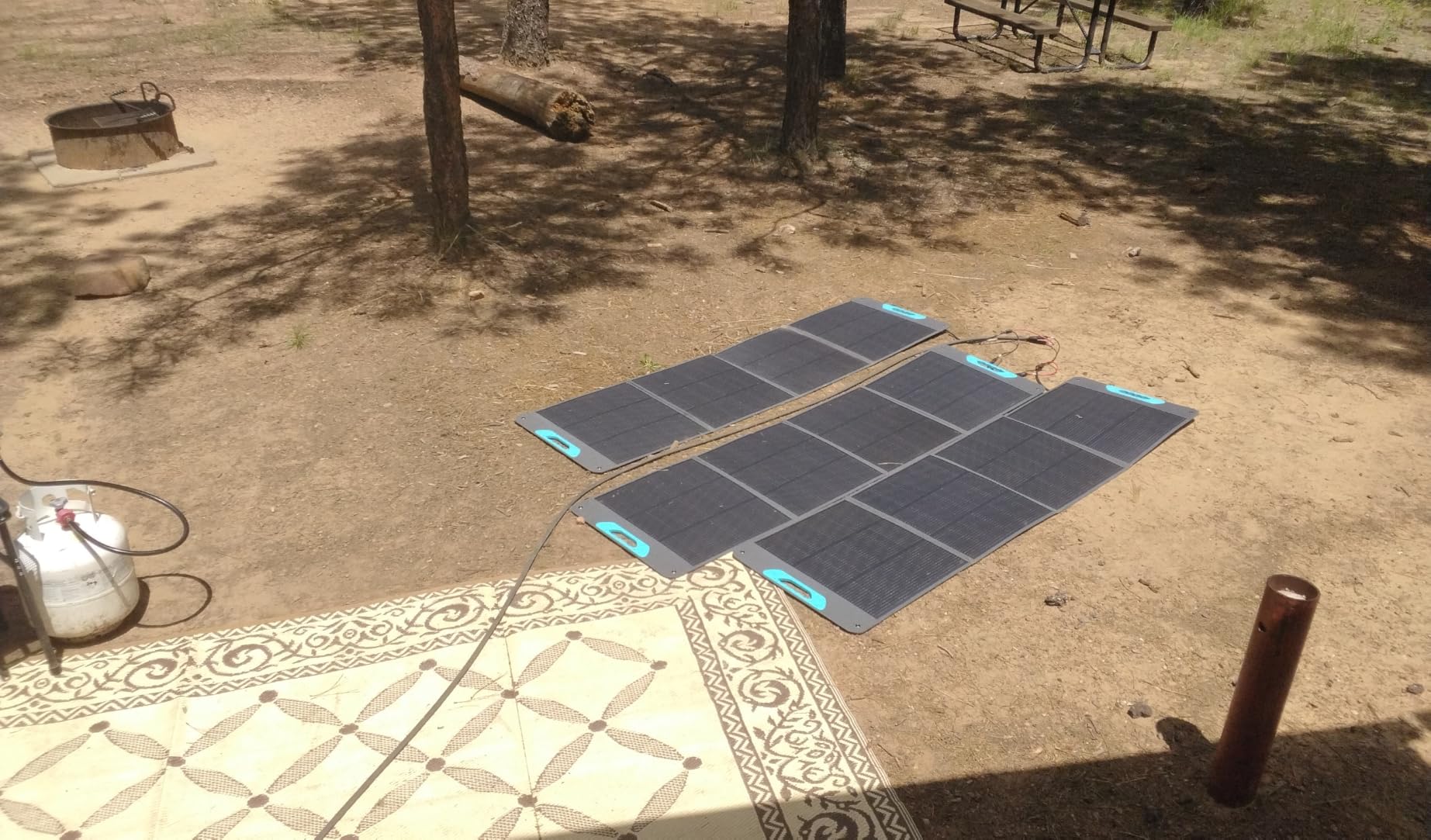
It is also the most versatile panel we carried. Alongside MC4 output for power stations, it carries one USB-C PD port rated at 45W and two USB-A ports at 18W and 15W, so phones, cameras and small laptops can charge straight from the panel on days when the station is already full.
The quad-fold frame uses three-angle kickstands marked at 40, 50 and 60 degrees, and reinforced grommets give you tie-down points. Those markers matter more than they sound, because picking the right angle in the morning and a different one at lunch is free energy.
Voltage: The Catch You Need to Check First
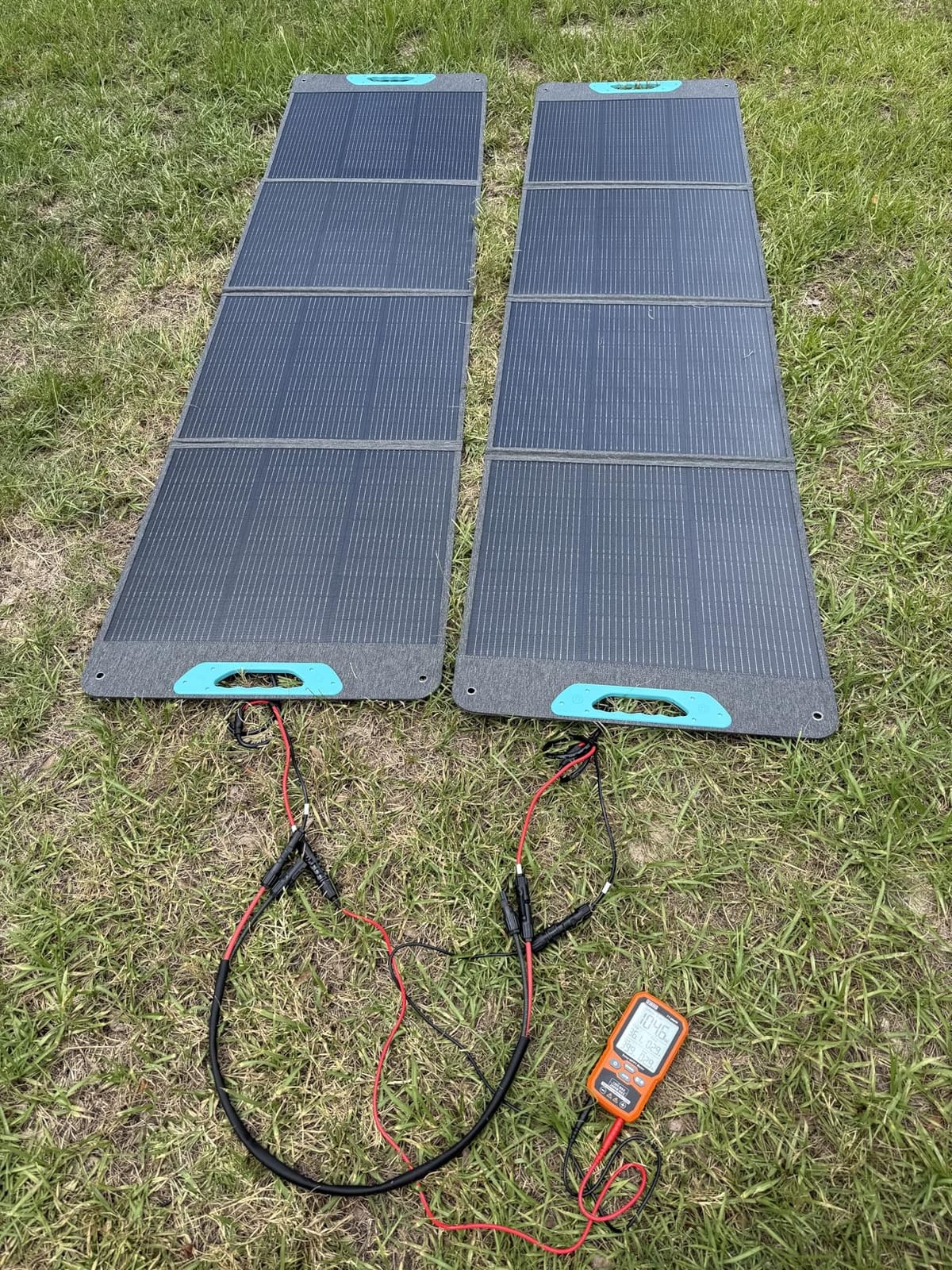
Maximum voltage is listed at 21.6V with 11.3A of current. That is low by design, and it is the reason owners specifically praise compatibility with overlanding and RV stations while some note limits with specific high-voltage power stations.
The practical rule is simple. If your station expects 40V or 45V class input, this panel will not reach it, and you need something like the MHPOWOS 220W or the ZOUPW 450W instead.
Efficiency and the Direct-Charging Hub
Twenty-five percent efficiency is the number that separates this from the pack, and the USB hub is what makes it usable on days when you are not filling a station. A 45W USB-C PD port will run a laptop, a camera battery or a tablet directly, which effectively doubles the panel’s usefulness as a travel accessory.
Buyers consistently praise the balance of portability and output. The magnetic fold, the low weight and the passthrough ports are the three features that come up most often in positive reviews.
Durability, Certification and Warranty
The IP65 rating means splash and dust protection, not full rain exposure. Owners wanting more rugged weather sealing rate that as the main shortcoming, and it is the one place this panel gives ground to the IP68-rated picks in this roundup.
It carries UL 61730 certification alongside CE and RoHS compliance, and a two-year material and workmanship warranty. That warranty length is the second longest of any 200W foldable here, and the certification matters if you are installing on a van roof or a boat.
Who This Panel Is Right For
It suits RV and overlanding setups where every pound and every inch of roof space counts, and it is the choice if you want one panel to cover both station charging and direct device charging. It suits smaller stations too, since most accept less than 200W regardless of what you feed them.
3. powkey 40W – The Only Panel Here That Genuinely Fits a Daypack
Powkey 40W Portable Solar Panel for 100W~200W Portable Power Station
40W monocrystalline output
4.2 lb total weight
15V and 2.6A DC, USB QC3.0
Folds to 13.6 by 9.8 inches
+ Pros
- Only 4.2 lb in this roundup
- Fits inside a daypack without removing other gear
- Integrated charge controller in a zip-up panel
- 10-in-1 cable covers most device types
- Practical for phones
- power banks and CPAP batteries
- Cons
- 40W is far too small to refill a power station
- Real-world output often under the stated wattage
- IPX4 means it should not sit out in rain
At 4.2 pounds and roughly the size of a hardcover book, this is the only panel in the roundup that changes what a human being can physically carry. Every other model here is 13 pounds or more, and that is the difference between hiking with solar and hauling solar.
The listing names it for 100W to 200W power stations, and we want to be direct about that: 40W will not meaningfully recharge a station in that range. It maintains one. Think of it as a trickle charger that keeps a small battery alive across a weekend rather than a panel that refills it.
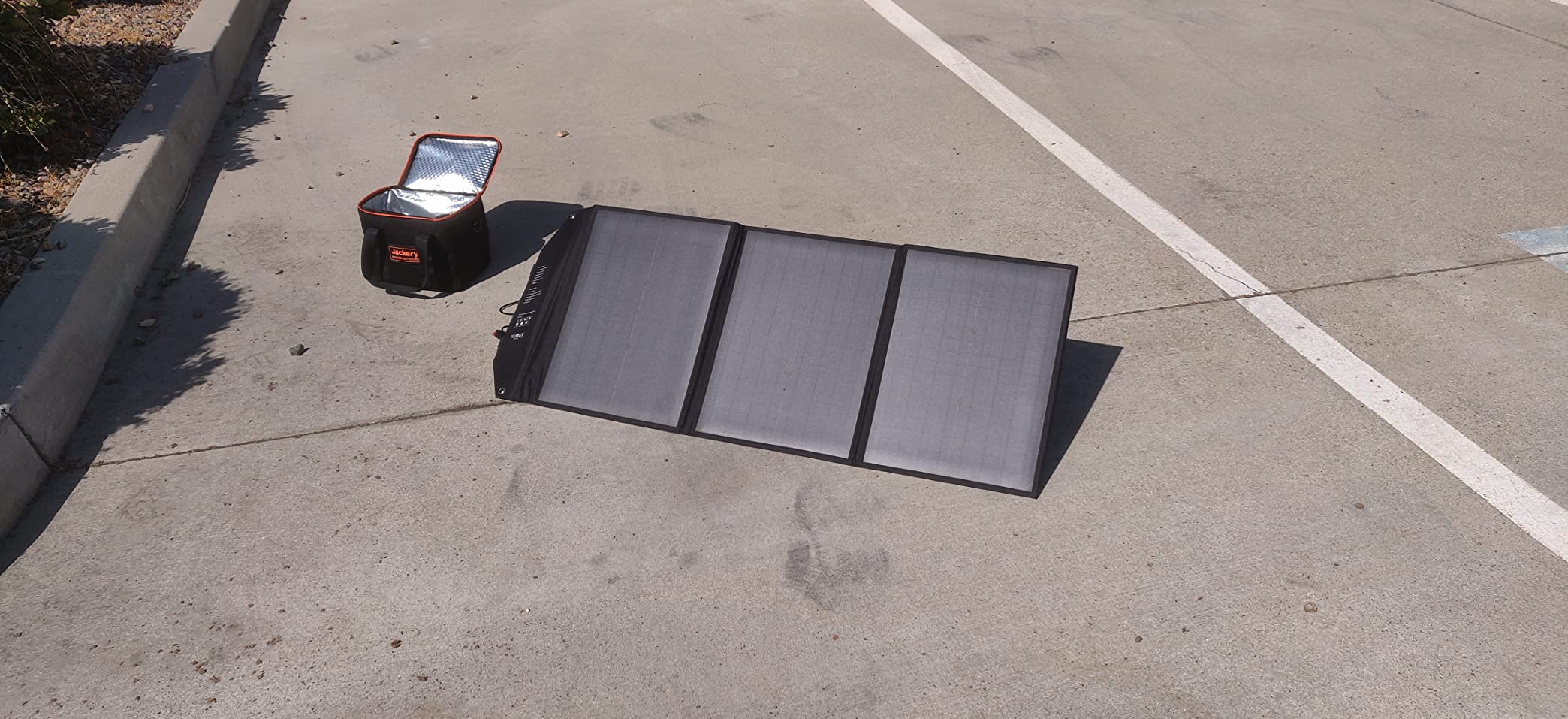
Where it genuinely earns its place is device charging. The integrated charge controller lives in a zip-up pocket on the back of the panel, and it outputs 15V at 2.6A on the DC 5521 port alongside a USB QC3.0 port at 5V/3A, 9V/2A and 12V/1.5A.
A 10-in-1 connector cable and a DC-to-DC cable are both included, so the adapter bag is already in the box. For a hiker whose phone, power bank and camera battery all need topping up, that is a full kit in a single folded object.
Why 40W Is Not a Station Charger
The arithmetic is unforgiving. Even in perfect conditions, a 300Wh station needs more than seven hours of full, unbroken 40W output before it is back to full, and you will never get seven hours of full output. Reviewers are blunt that 40W is too small to meaningfully recharge a 100W to 200W power station.
Some buyers ended up trading up to a larger panel after outgrowing it, and the recurring criticism is that output runs below the advertised wattage even in full sun. Buy this for top-ups, not for refill.
Build, Folding and Daily Handling
At 4.2 pounds with a 13.6 by 9.8 by 2.4 inch folded footprint, it disappears into a pack. The material is monocrystalline silicon on a fabric body, which means it is flexible and quiet but will not hold a rigid angle the way a fiberglass frame does.
The IPX4 rating is splash and heat resistant rather than waterproof. Practical advice: fold it and pocket it before rain, because a sustained downpour is exactly the scenario this rating does not promise.
Who This Panel Is Right For
It is right for backpackers, day hikers and anyone whose vehicle is far from the campsite. It is right as a companion to a power station for topping up phones and small batteries, not for keeping a fridge running.
If your load is real rather than nominal, step up to the 100W class and save yourself the trade-up later.
4. ZOUPW 100W 23.5% – The Best Connector Coverage in the Class
ZOUPW 100W Portable Solar Panel for Power Station,23.5% Efficiency Mono Foldable Solar Charger for Jackery 300/Ecoflow River/Anker/Bluetti,IP67 Waterproof for Camping RV Off-Grid Emergency Power
100W at 23.5% efficiency
24.3V and 4.96A
5-in-1 connector cable
IP67 ETFE laminate, 9.5 lb
+ Pros
- 5-in-1 cable covers XT60
- Anderson
- DC7909
- DC5521 and DC8020
- IP67 ETFE lamination handles wet conditions
- 23.5% Grade A+ cells in a 9.5 lb package
- USB-C PD and dual USB-A for direct device charging
- 45 degree kickstands capture meaningfully more sun
- Cons
- Stations with a low input ceiling will not draw the full 100W
- 12-month warranty is the shortest here
- MC4 leads are short and may need an extension
Compatibility is the whole argument for this panel. The included 5-in-1 cable terminates in DC8020, XT60, Anderson, DC7909/8mm and DC5521, which between them covers the connector types used by the overwhelming majority of portable power stations on the market.
That solves the single most common failure in this category. A panel that arrives with the wrong pigtail is a panel that sits in a gear bin, and the reason people end up convinced solar charging does not work is almost always a connector mismatch rather than a bad panel.
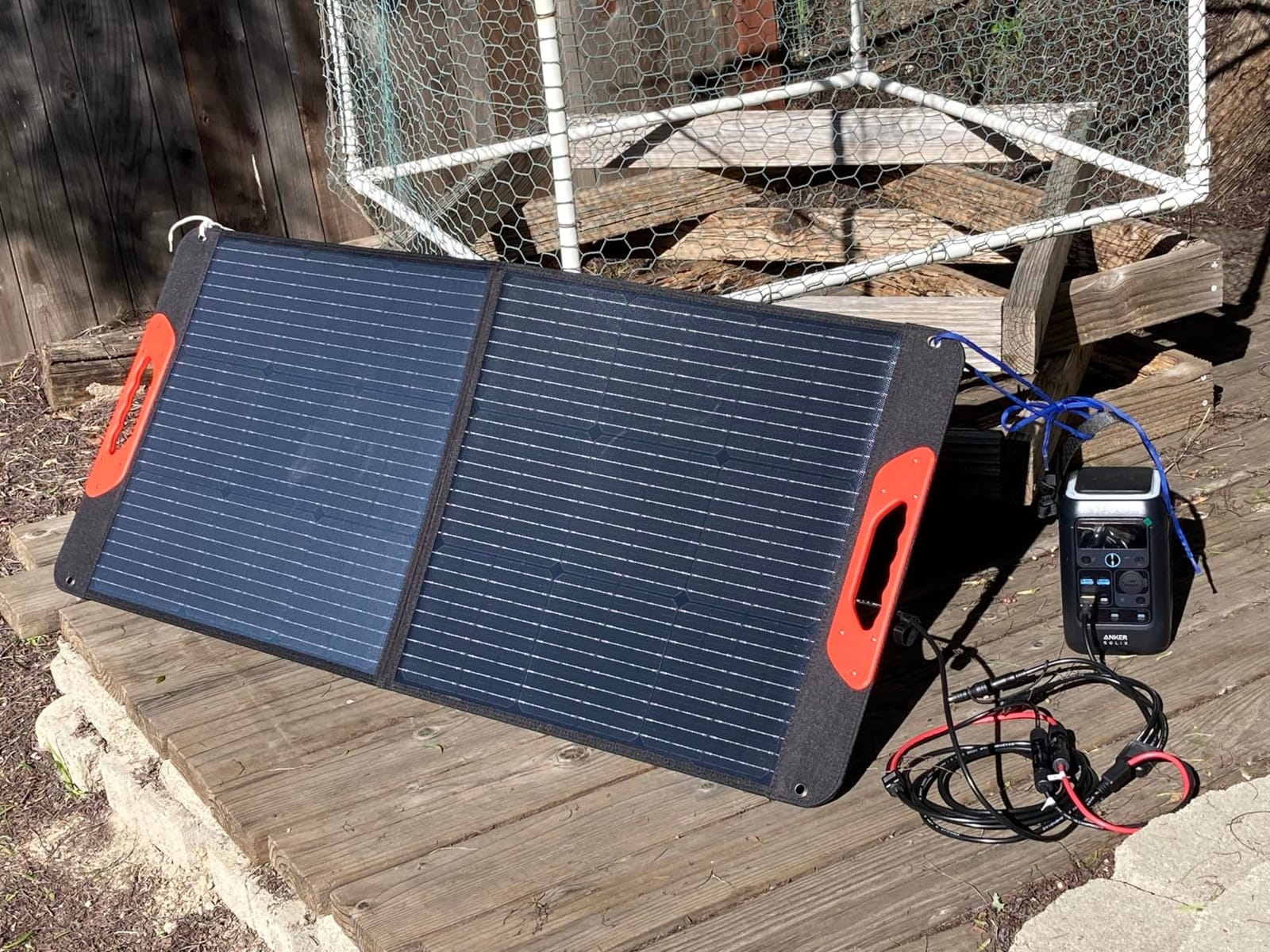
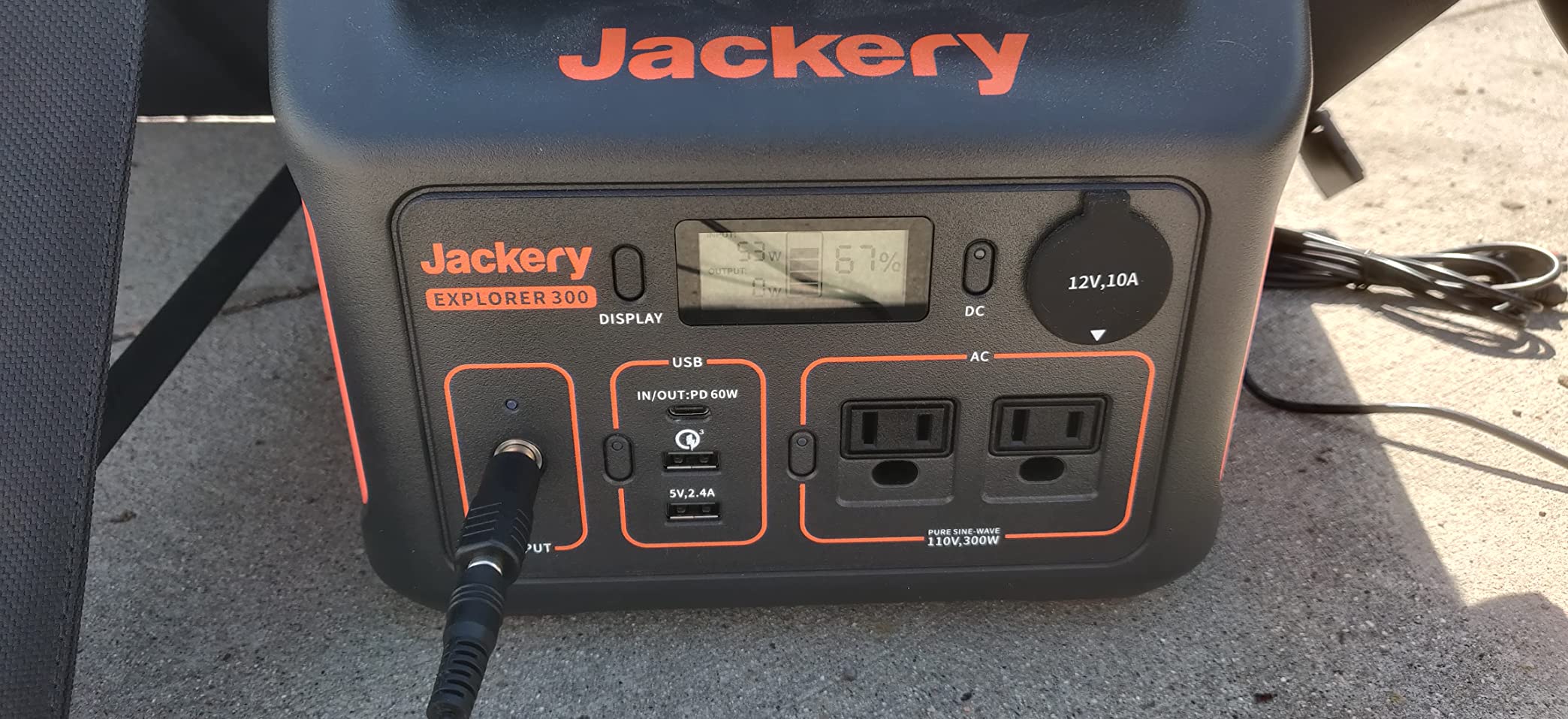
Spec-wise it is a 100W monocrystalline panel rated at 23.5% efficiency, with 24.3V maximum voltage, 4.96A current and a 20.16V output voltage. It weighs 9.5 pounds and folds to about 24 by 21 by 1.75 inches, which keeps it firmly in the one-hand-carry category.
There is also a direct-charging hub with a USB-C PD port at 15V/3A and two USB-A ports including QC3.0, and a 10 foot solar extension cable in the box so you can place the panel in sun while the station sits in shade.
Efficiency and the IP67 Advantage
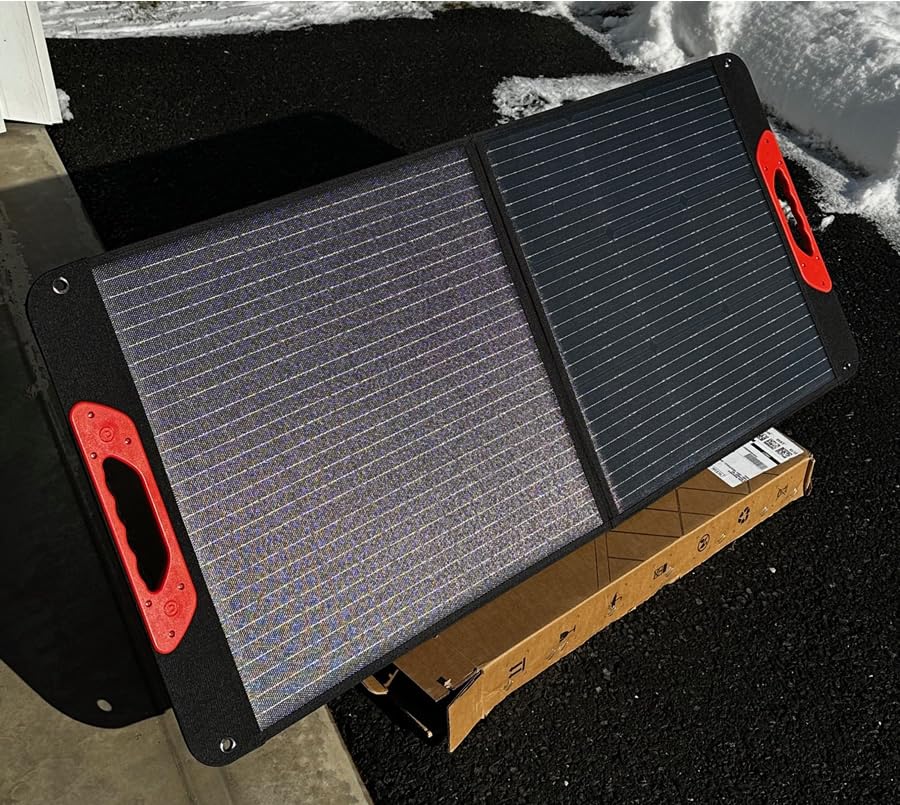
Grade A+ monocrystalline cells at 23.5% efficiency sit near the top of the 100W class, and owners point to the balance of efficiency and package size as the deciding factor. The panel is frequently described as delivering reliable charging in a compact, light body.
The IP67 waterproof ETFE lamination is a step above the IP65 fabric panels in this list, and the controller lives in a zippered pocket rather than a bare junction box. Buyers using it in wet conditions report that the sealing holds up.
The Input Ceiling Trap
Here is the practical warning. Power stations with a low input ceiling, for example a 60W limit, will not draw the full 100W from this panel. A recurring note across owner reviews is that actual charging speed is bounded by the input limit of the paired station, not by the panel.
Check your station’s maximum solar input before buying, and do not expect a 100W panel to behave like a 100W panel on a station rated for 60W.
Who This Panel Is Right For
It is the safest pick for a first solar panel purchase, because the cable works with nearly anything and the 9.5 pound weight is manageable. It suits 300Wh to 500Wh stations, where 100W is close to the useful ceiling anyway.
The twelve-month warranty is the shortest in this roundup, which is worth weighing against the connector flexibility you gain.
5. EBL 100W Portable Solar Panel – Rigidity Where Fabric Panels Flex
EBL Solar Panel 100W Portable Solar Panel for 300/500/1000 Power Station
100W monocrystalline output
23% claimed efficiency
Rigid framed construction
IP65 ETFE, MC4 output
+ Pros
- Rigid frame holds its angle better than fabric competitors
- Adapters for Anderson
- DC5521 and barrel plugs included
- Integrated cable pouch keeps wiring tidy
- Several reports of strong customer service and free replacements
- Cons
- Output frequently measures well below the advertised wattage
- IP65 splash resistance only and the maker advises against rain
- Included cable is roughly 6 ft
- limiting placement distance
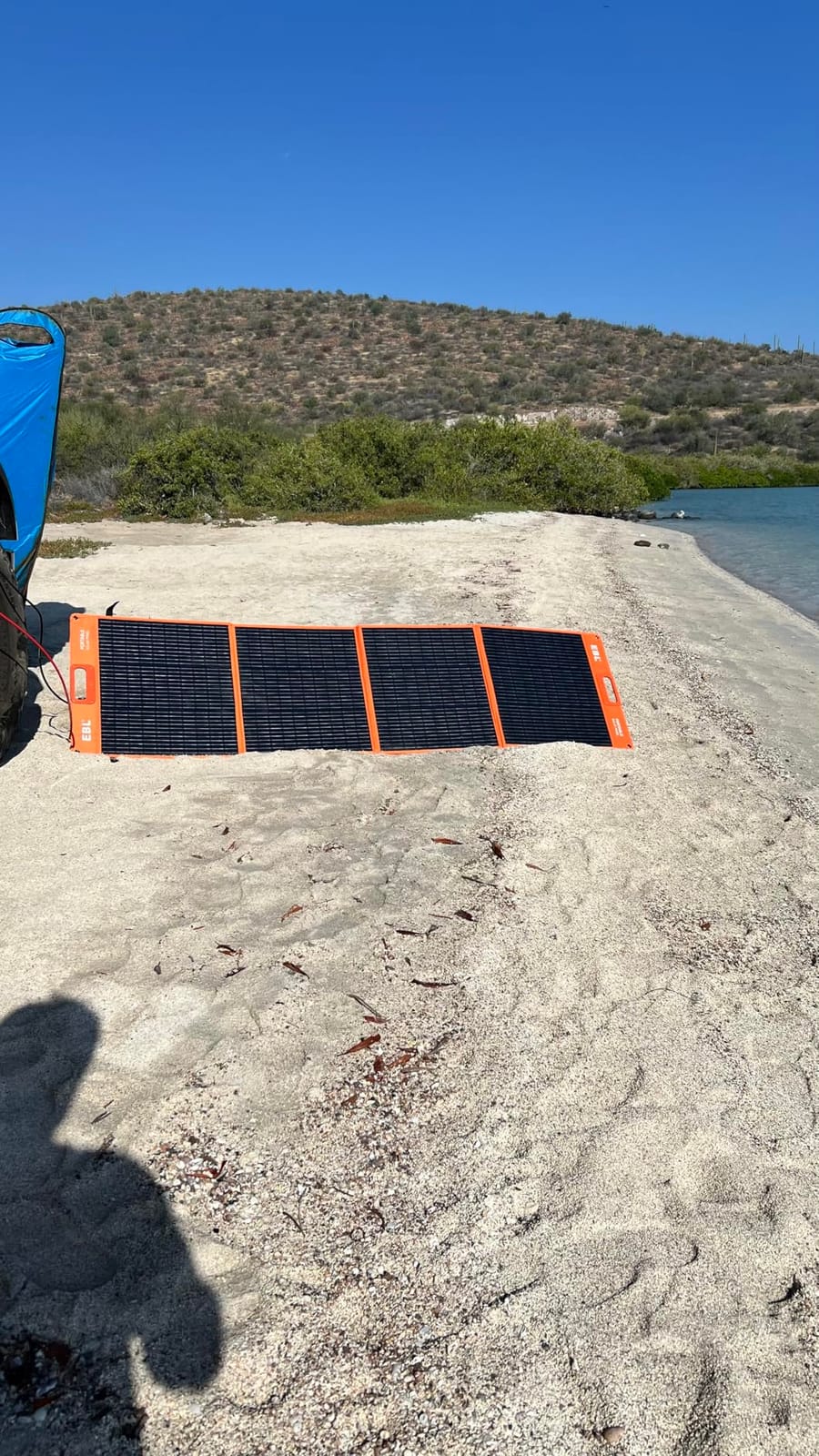
The EBL is the answer for anyone who has owned a fabric foldable and hated it. The rigid framed construction holds its angle after setup, which means the panel keeps working at full sun exposure instead of sagging and self-shading as the day progresses.
It is a 100W monocrystalline panel with a claimed 23% conversion efficiency and smart IC charging protection, and it ships with an MC4 to Anderson cable, an MC4 to DC5521 cable and a set of barrel adapters. That covers most of the stations people actually own.
Two 45 degree kickstands and a magnetic handle handle setup and carry, and an integrated cable pouch keeps the wiring tidy in a bag. Several owners note that EBL replaced defective units quickly, which matters on a panel you are relying on in a remote location.
One detail worth flagging honestly: the manufacturer does not list a weight for this model, and some reviews on this listing cover larger wattage variants from the same family. Buyers reporting 148W to 160W readings are describing those bigger panels, not this one.
Build Quality Versus Measured Output
Buyers value the sturdiness and the ability to keep a small power station topped up over multi-day trips. That is a fair description of what a rigid 100W panel is for: reliability rather than speed.
The main complaint is consistent and worth stating plainly. Output frequently measures well below the advertised wattage in good sun, and that gap is the reason this panel sits mid-pack despite solid construction.
Weather and Cable Length Reality
The IP65 rating with ETFE lamination covers splashes, and the manufacturer advises against leaving it in rain. For desert and high-desert trips that is irrelevant; for monsoon seasons it is a genuine limitation.
The included cable runs roughly 6 feet, which limits how far the panel can sit from the station. Plan on buying an extension if your power station lives in the shade of a vehicle while the panel needs open sky.
Who This Panel Is Right For
It suits people who value a panel that stays put in wind and holds its angle all day, and who are content to top up rather than rapidly refill. It pairs naturally with 300Wh and 500Wh stations.
If measured output is your priority rather than physical durability, the ZOUPW 100W in the previous section is the better buy.
6. SOKIOVOLA 200W N-Type – Best Real-World Output in the 200W Class
SOKIOVOLA N-Type 16BB 200W Portable Solar Panel for EF/Jackery/Bluetti/Anker Power Station Foldable Solar Panel 25% High Efficiency IP68 Waterproof for Outdoor Trip RV Camping Blackout Off Grid
200W N-Type 16BB at 25%
18V output, MC4
IP68 sealed ETFE
16.3 lb, folds to 21 by 23 in
+ Pros
- Output typically lands at 77 to 89 percent of rated wattage
- IP68 waterproof and dustproof sealing
- 5-in-1 cable covers Jackery
- EcoFlow
- Bluetti and Anker
- Four mounting holes for RV attachment
- Padded bag with a roomy accessory pocket
- Cons
- At 16.3 lb it is heavy for long backpacking trips
- Short factory leads need an extension
- Small number of long-term degradation reports
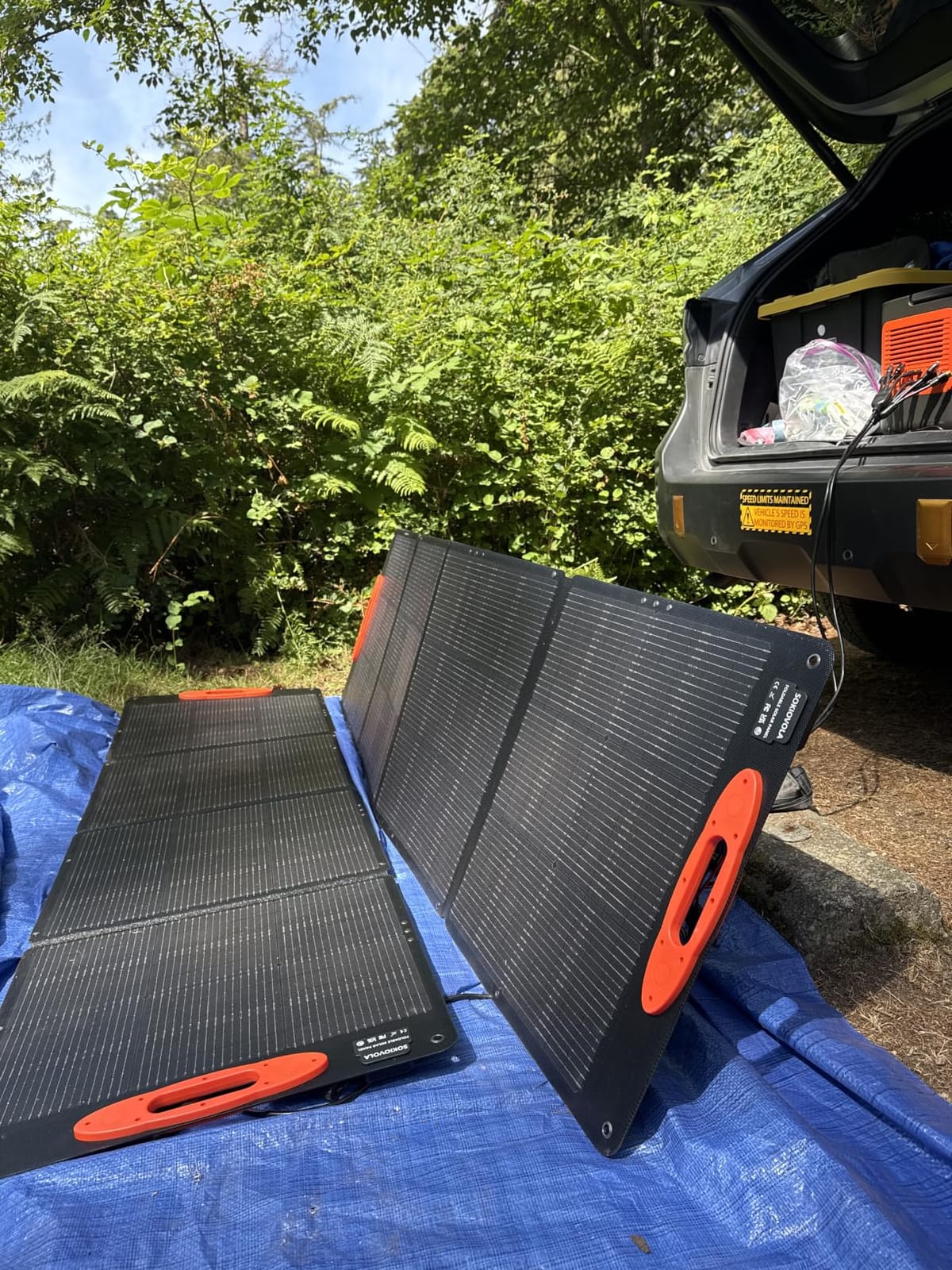
This is the panel we would trust to actually deliver close to its label in strong sun. Owners repeatedly report output in the 165W to 190W range, which lands in the 77 to 89 percent band of rated wattage. That is a genuinely honest result and it sits at the good end of what this category produces.
Underneath is N-Type 16BB monocrystalline cell technology rated at up to 25% efficiency, sealed under an ETFE coating with an IP68 waterproof and dustproof rating. The build is firm rather than floppy, and owners specifically call out that it holds position well in wind.
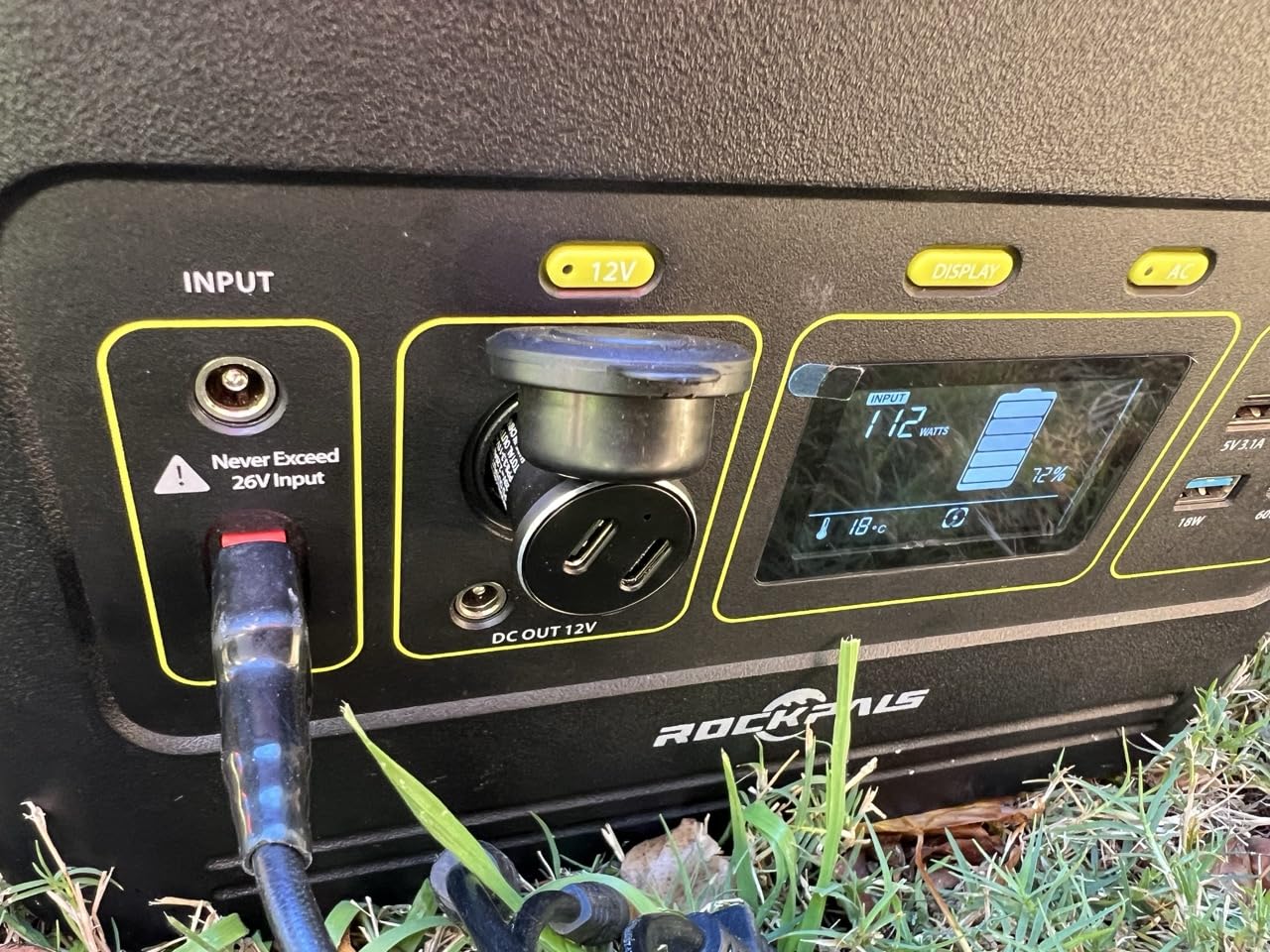
Connection is handled by an MC4 5-in-1 cable terminating in XT60, DC5521, DC7909/8mm, DC8020 and Anderson, and the panel ships with a portable bag, a 3m connector cable, adapters and a user guide. Four mounting holes let you bolt it to a van roof or a trailer.
Output voltage is listed at 18V, which is a low-voltage panel. That is an advantage for stations with modest DC input ceilings and a disadvantage only if you need to pair panels in series for a high-voltage station.
What the 77 to 89 Percent Figure Means
Rated wattage assumes a bright, cool, perfectly angled panel. Hitting 77 to 89 percent of that on a normal day in real conditions is a good result, and it is the reason reviewers consider this a solid alternative to better-known brands in the same class.
It is worth calibrating expectations against the 33% rule discussed further down. Anything close to 80 percent on a warm day with a dusty panel is a panel working properly.
Rigidity, Weight and Cable Length
At 16.3 pounds with a 21 by 23 inch folded footprint, this is sturdy but not a hiking panel. The most common gripes are the weight, the short built-in cables and a small number of long-term degradation complaints from owners using it daily for months.
Because the leads are short, plan your placement before you deploy. A panel that has to sit right next to the station is a panel that sits in the shade of a tent wall.
Who This Panel Is Right For
It is right for car camping, RV use and open-field deployment where midday sun is reliable and you want the most honest wattage-to-label ratio in the 200W class. It pairs well with 500Wh to 1000Wh stations.
It is the wrong choice for backpackers, and for anyone whose station needs 40V or higher input.
7. ZOUPW 450W N-Type – The Panel for Stations That Accept 40V to 60V
ZOUPW 450W Portable Solar Panel N-Type 16BB for Power Station
450W at 25% efficiency
45.9V Voc, 38.3V output
29.5 lb fiberglass frame
IP68 with bypass diodes
+ Pros
- Rigid fiberglass setup in seconds and holds its angle
- Owners report 500W-plus peaks from a single unit
- Pairs have saturated 900W to 1kW station inputs
- Generous 10 ft 12AWG extension with four connector types
- 36-month warranty
- the longest here
- Cons
- 45.9V Voc rules out power stations with inputs under 30V
- 29.5 lb and a 121 inch span end true portability
- Fixed MC4 leads are short for series linking
- Output halves when a small shadow crosses the panel
Read the voltage first, because this panel will not work with many of the stations people already own. Open-circuit voltage is 45.9V, and the manufacturer is explicit that it is not compatible with low-voltage units under 30V, naming the Jackery 300, 500 and 1000 and the Bluetti EB70S as exclusions.
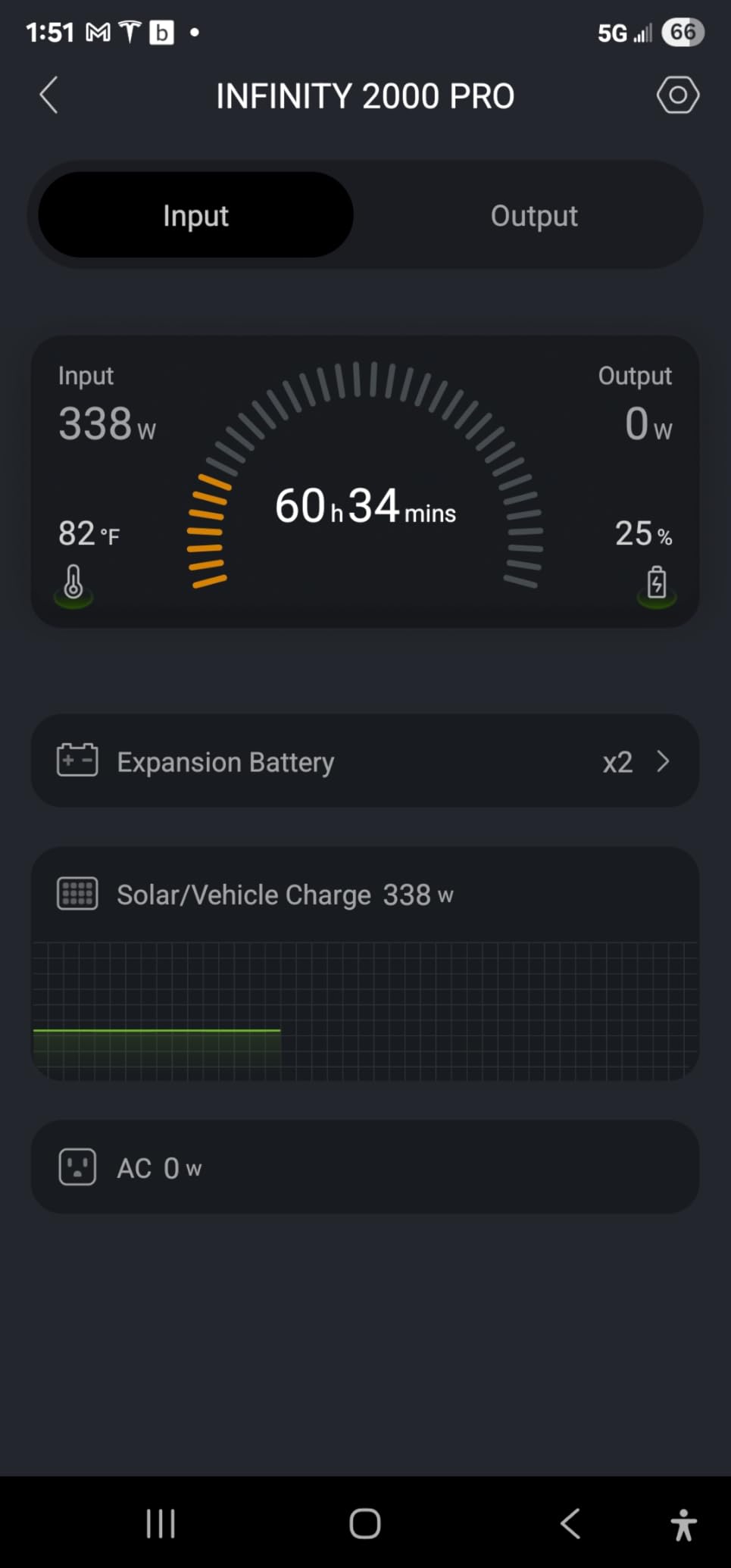
If your station does accept 40V to 60V, this is the most capable panel in the roundup. Multiple owners measure 500W to 539W peaks from a single unit, and pairs run have saturated 900W to 1kW solar inputs on EcoFlow, Bluetti and Anker stations.
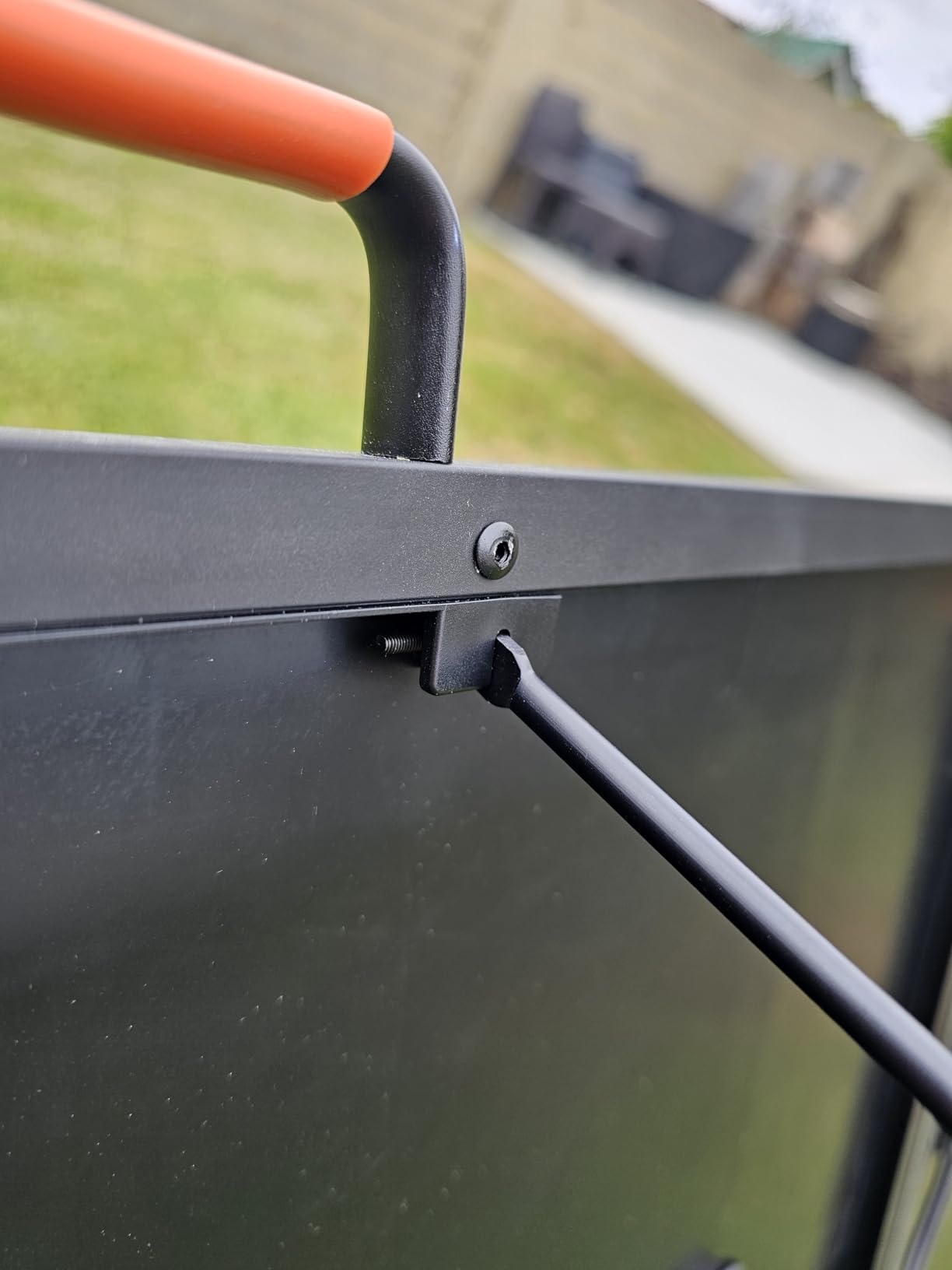
Construction is fiberglass reinforced rather than fabric, which is why it sets up in seconds and tolerates wind that flattens cheaper panels. Smart bypass diodes help with partial shade, though output still falls sharply when a real shadow crosses the cells.
The kit includes four ground stakes, a padded storage bag and a solar connector cable with DC7909 plus a DC8020 adapter, XT60 and Anderson terminations, and a generous 10 foot 12AWG extension cable. The 36-month warranty is the longest in this roundup.
Weight and Setup Reality
At 29.5 pounds with a folded footprint of roughly 30 by 35 inches and a 121 inch unfolded span, this is a car-camping panel and nothing else. Anyone considering carrying it on foot should stop and look at the 100W class instead.
The upside is that four reinforced 45 degree kickstands and the rigid frame mean the panel holds a consistent angle for the whole day. Rigid setups are worth their weight penalty when you are trying to fill a 2kWh station.
Why Pairs Work So Well
Two of these in series or parallel is a common owner configuration, and it is how 900W to 1kW station inputs get filled. The caveat reviewers emphasize is that series linking needs longer leads than the fixed ones from the panel, so budget for extensions.
It is worth weighing against your alternative: for many people two 200W panels are the better buy, since a failure costs half your capacity instead of all of it and the pair is easier to carry.
Who This Panel Is Right For
It suits owners of 1kWh to 2kWh stations with high-voltage solar inputs, particularly those running an RV or a van system where weight is already being carried. It also suits anyone who wants a stationary array rather than a travel panel.
Do not buy it for a small station. You will pay for watts the station cannot accept.
8. Renogy 400W Fiberglass – A Fixed Array That Doubles as a Travel Case
Renogy 400W Portable Solar Panel, Premium Materials for Decades of Use
400W at 23% efficiency
67.5V max voltage, 12.1A
30.2 lb fiberglass
IP67 and hail resistant
+ Pros
- Rigid fiberglass build with no floppiness
- Compact 33.7 by 27.9 inch folded footprint with carry case
- Parallel wiring limits loss when one section is shaded
- ETFE coating and aluminum backsheet resist UV and heat
- 3-year warranty
- Cons
- 30.2 lb is heavy for any travel use
- 67.5V restricts use with lower-voltage power stations
- Premium tier pricing for the 400W class
- Fixed kickstands limit the achievable sun angle
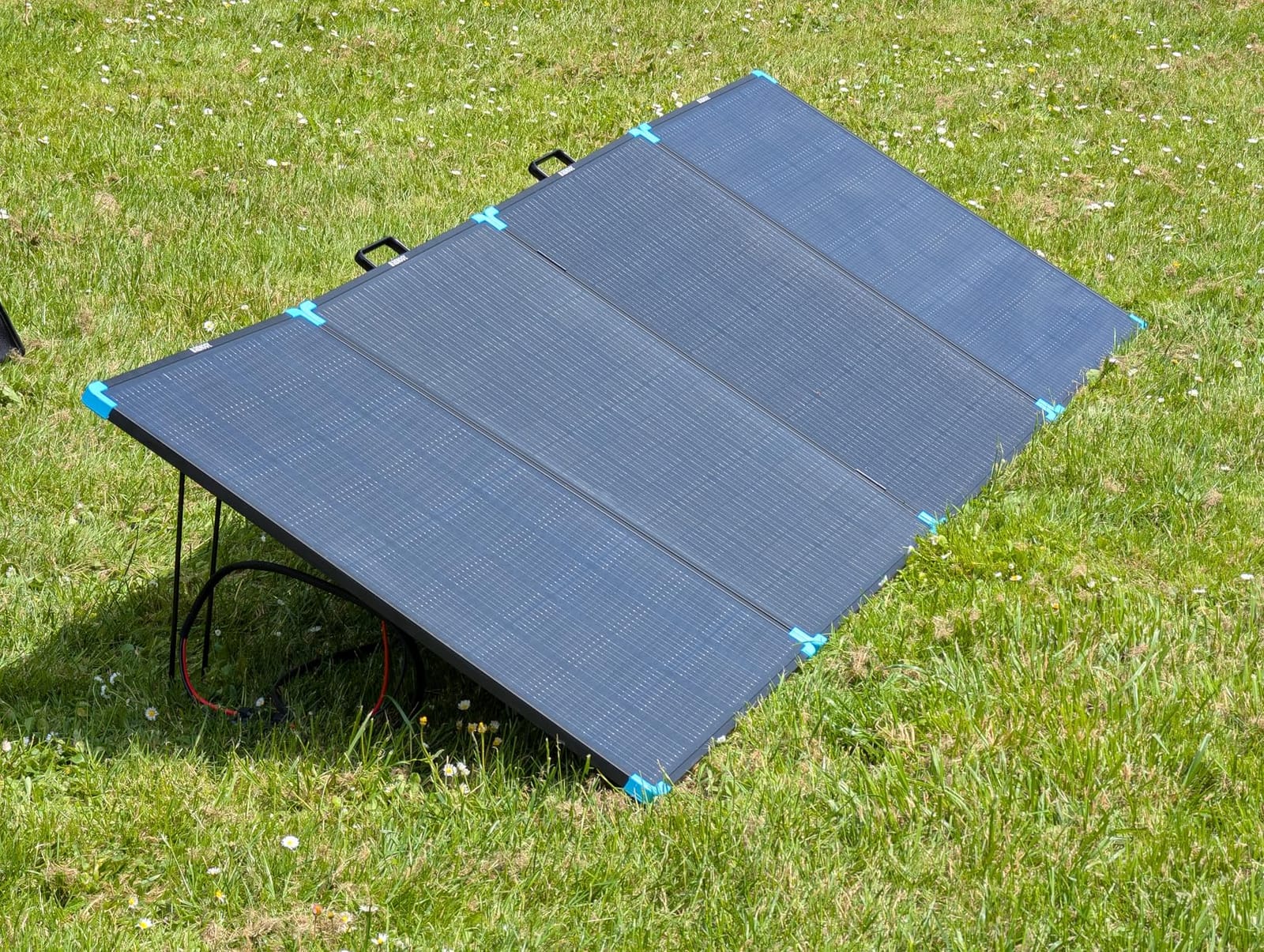
The Renogy 400W is built for the person who installs rather than the person who hikes. Fiberglass reinforced construction with an aluminum backsheet gives it a rigidity that fabric panels cannot match, and the three-year material and workmanship warranty is the joint-longest here.
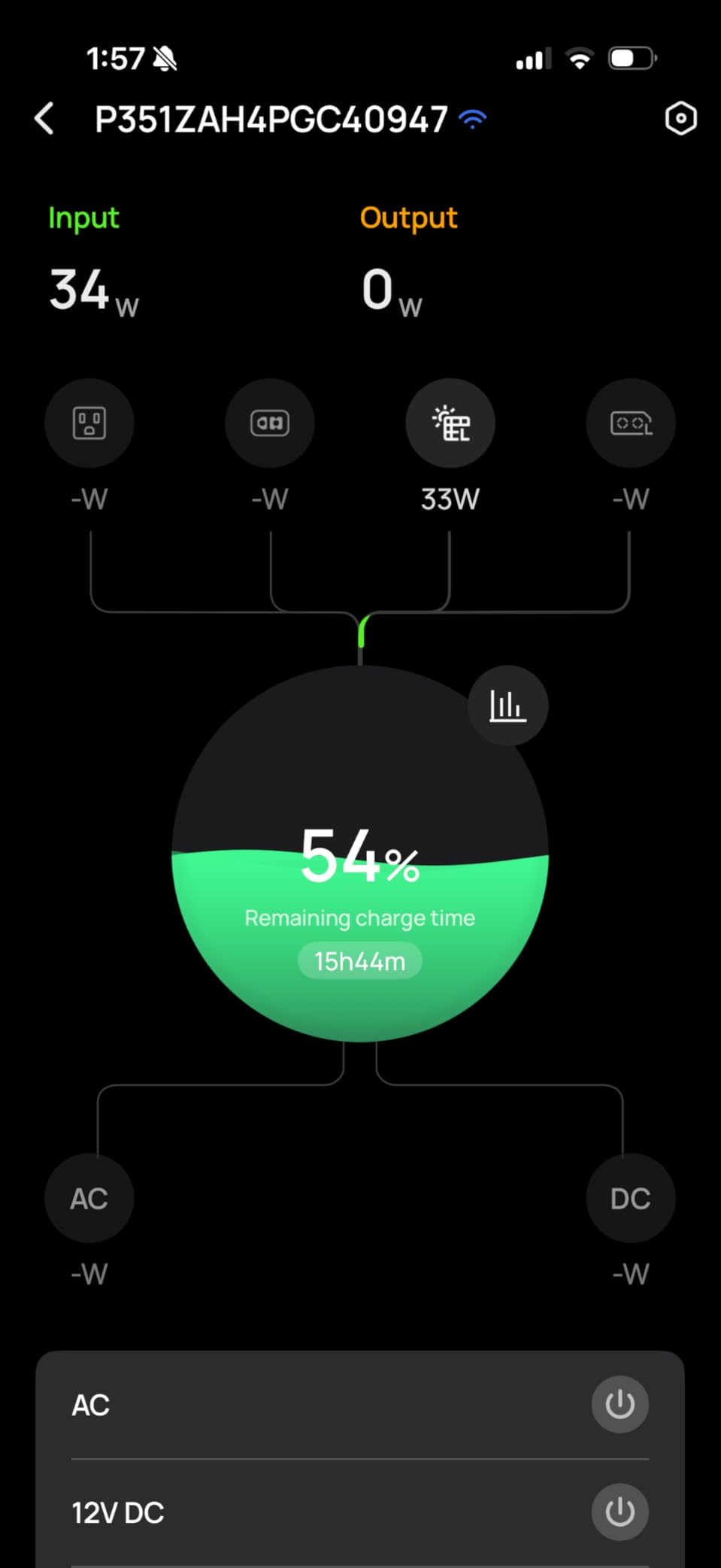
Output is 400W from A+ monocrystalline cells at 23% efficiency, with maximum voltage listed at 67.5V and 12.1A. That voltage figure is the deciding specification: this panel needs a station with a high DC input ceiling, not a 300Wh unit.
Parallel cell wiring is the technical detail that matters most for partial shade, limiting output loss when one section is shaded. Combined with IP67 waterproofing, hail resistance and IP68 waterproof connectors, it is the most weather-hardened option in the roundup.
Setup is tool-free and takes about 60 seconds using rust-proof kickstands, and a carry case is included. The folded footprint of 33.7 by 27.9 by 3.2 inches is unusually compact for a 400W panel.
Who This Panel Is Right For
It is right for RV and off-grid installations where a panel lives on a roof or a rack and weight is irrelevant. Owners building a durable, low-maintenance 400W array for RV or off-grid use tend to be satisfied with the rigidity and weather sealing.
It is the wrong choice for travel, and the fixed kickstands do limit how fine an angle you can achieve compared with the multi-angle stands on the foldables.
Cost and Class Comparison
Reservations center on weight, high voltage requirements and the premium cost for the 400W class. If your station caps solar input below 400W, none of that output converts, and a 200W panel is the smarter purchase.
The real question is what you are charging. For a 2kWh station, a 400W panel is sensible. For a 1kWh station with a 300W input limit, it is wasted capacity.
The Better Deal Question
Two 200W panels give you the same rated capacity with more placement flexibility, lower replacement cost and far lighter individual units. For most buyers, the Renogy 200W twice over beats one 400W panel, which is why the 400W ranks here rather than higher.
9. TWELSEAVAN 200W 24% – The Rare Panel With 60W USB-C Built In
200W Portable Solar Panel for Power Station, 24% High Efficiency ETFE Foldable Solar Panel Charger, QC3.0, Type-C 60W, MC4 Output, IP65 Waterproof, for Outdoor Camping, RV, Emergency Power Supply
200W at 24% efficiency
19.8V and 10.8A, 23.4V output
USB-C PD 60W plus QC3.0
IP65, 15.7 lb
+ Pros
- 24% cells under ETFE laminate above 95% light transmission
- 60W USB-C PD plus 18W QC3.0 and 5V/3A outputs
- 5-in-1 MC4 cable plus three DC adapters
- Four adjustable kickstands and a magnetic handle
- 24-month warranty
- Cons
- IP65 is splash-only rather than sustained rain
- 19.8V maximum voltage limits higher-voltage inputs
- Some buyers report output below the 200W rating
The distinguishing feature here is a 60W USB-C Power Delivery port, alongside an 18W QC3.0 USB port and a 5V/3A USB port. Almost no other foldable panel in this roundup can charge a laptop directly, and that makes this one unusually useful on days when the power station is full or absent.
Underneath, it is a 200W panel with A+ grade monocrystalline cells at 24% efficiency under an ETFE laminate rated above 95% light transmission. High-transmission laminate matters more than it sounds, because every percent of light rejected by the surface is a percent of output you paid for and cannot use.
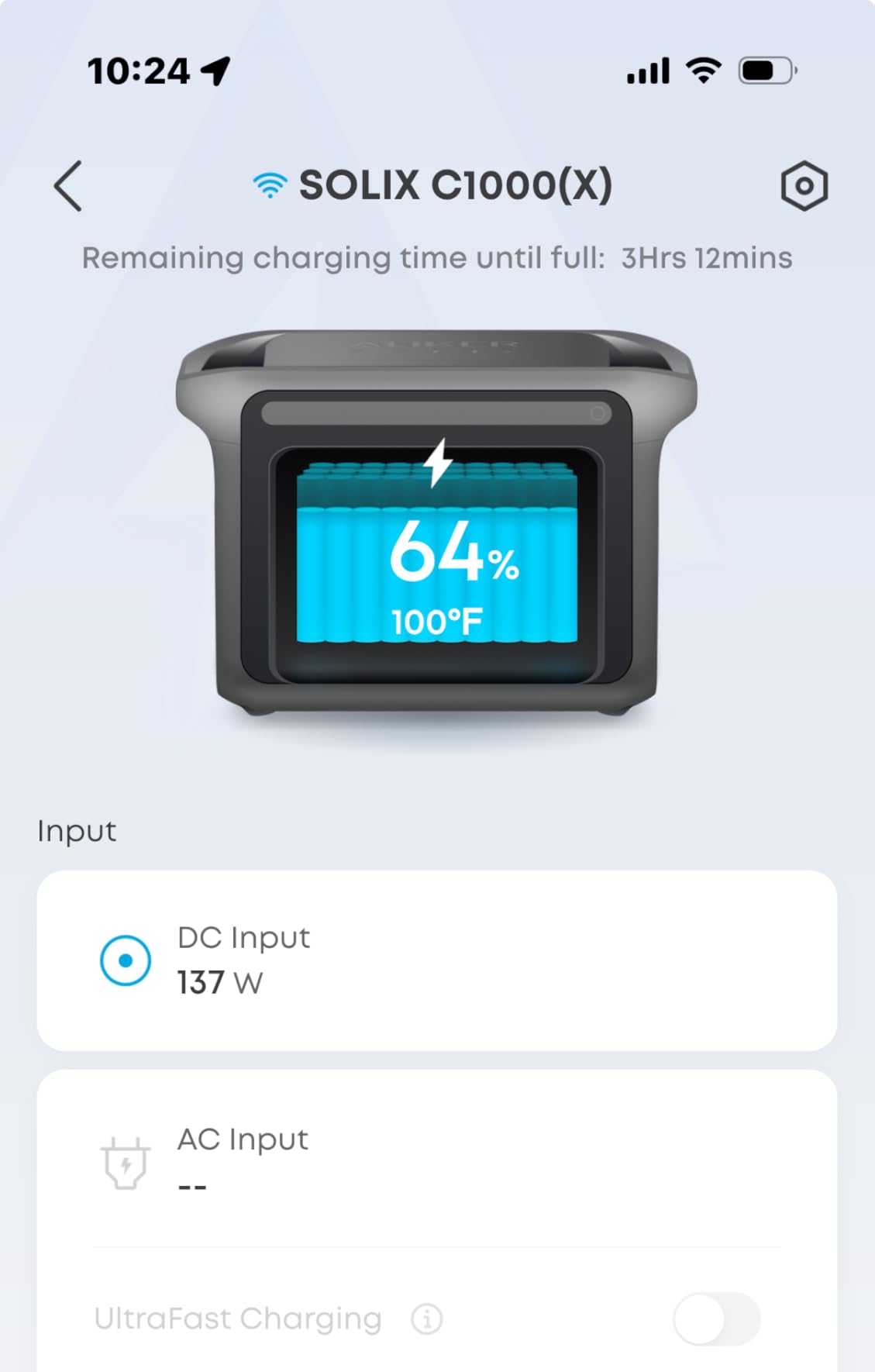
Connection to a station is via MC4 with a 5-in-1 cable and three DC adapters, and the MC4 cable itself runs 9.8 feet, which is longer than most and gives you more placement freedom than the short leads on the fabric competitors.
It weighs 15.7 pounds, folds to roughly 23 by 22 inches, and has four adjustable kickstands plus a magnetic handle. The warranty runs 24 months with a 30-day money-back guarantee.
Voltage Headroom and Compatibility
Maximum voltage is 19.8V with 10.8A current and 23.4V output voltage, which puts it in the same low-voltage group as the Renogy 200W and the SOKIOVOLA 200W. Those three are interchangeable for most small and mid-size stations.
Because it is low voltage, it also cannot be used to fill a 40V-plus station. Buyers who want both high station voltage and direct device charging need to look at two panels instead of one.
When Direct USB-C Beats Station Charging
Charging a laptop, tablet or camera battery straight from the panel skips the station entirely, which avoids conversion losses and means a full station stays full for later. On a photography or work trip that reordering is worth a lot.
That is the most-praised feature across reviews, paired with strong efficiency for the money. The complaints are mostly about the IP65 splash-only rating and output falling short of the advertised 200W in suboptimal conditions.
Who This Panel Is Right For
It suits travellers who work on the road, photographers, and anyone who wants one panel to handle both a power station and a laptop. At 15.7 pounds it is portable without being a hiking panel.
10. MHPOWOS 220W 40V – Cheapest Route Into High-Voltage Station Inputs
MHPOWOS 220W Portable Solar Panel 40V Folding Solar Panel for Power Station
220W at 23.5% efficiency
40V nominal, 48V maximum
17.8 lb folding body
IP67 with 7-in-1 connector
+ Pros
- 40V output reaches EcoFlow and Bluetti class inputs at this tier
- 23.5% monocrystalline cells
- IP67 waterproof and dustproof
- 7-in-1 cable simplifies hookup across brands
- Four kickstands for angle adjustment
- Cons
- 40V output excludes lower-voltage power stations
- Heavier than most 200W foldables at about 17.8 lb
- Charging speed still capped by the station's input limit
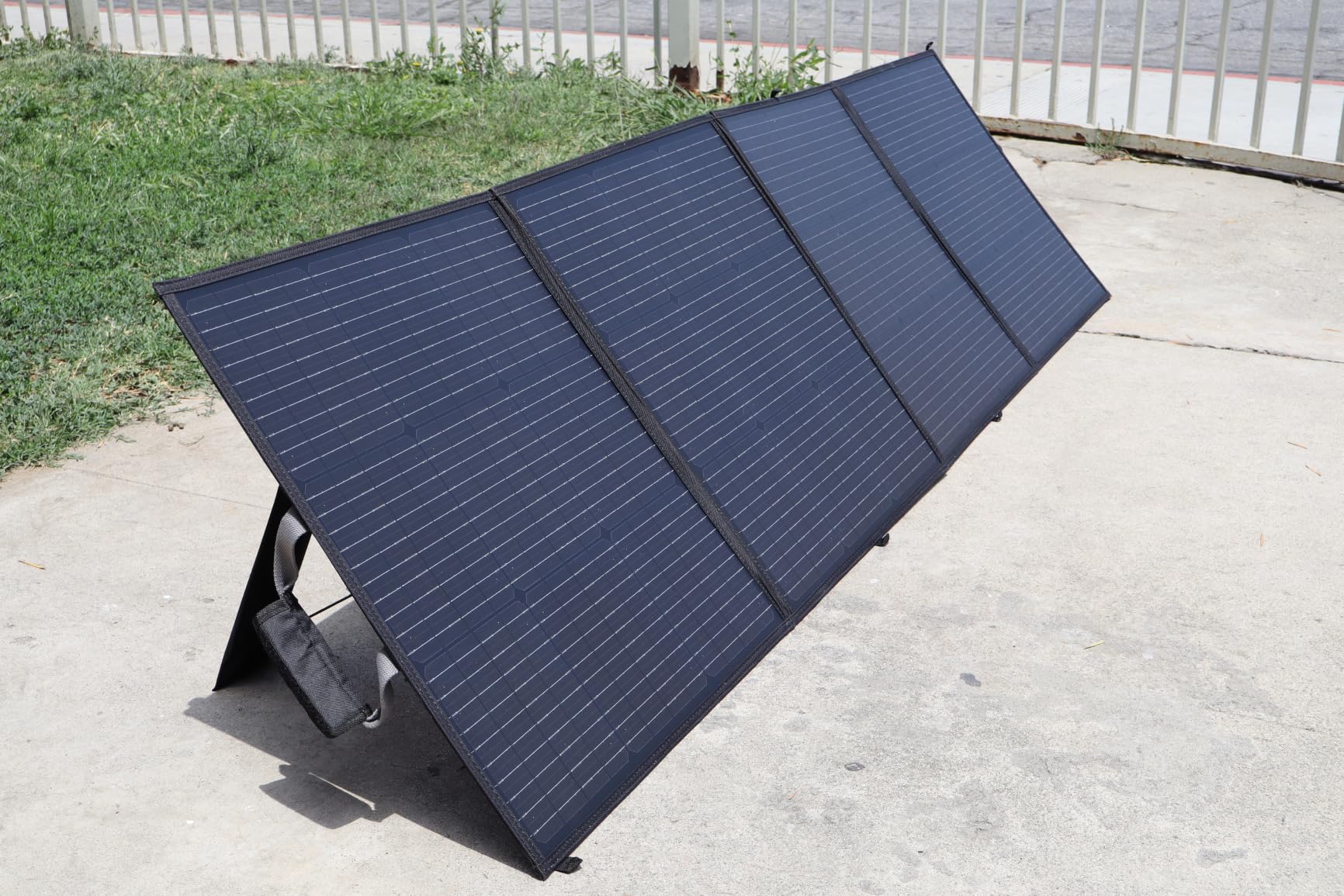
The MHPOWOS solves a narrow problem very well. If you own a station that needs 40V class input and you do not want to jump to a 400W or 450W fiberglass panel, this is the cheapest route in the roundup to that voltage range at a weight you can still load into a car.
It produces 220W from monocrystalline silicon cells at 23.5% efficiency, with a 40V nominal output and 48V maximum voltage at 5.5A. The IP67 waterproof and dustproof rating covers all-weather camping use without hesitation.
The 7-in-1 solar connector cable is widely praised, because it removes the need to identify your station’s connector before ordering. Four kickstands make sun-angle positioning straightforward rather than a guessing exercise.
It weighs 8.07 kg, which is about 17.8 pounds, and folds to 23.5 by 21.25 by 2.3 inches. That weight is the main drawback against other 200W-class foldables, and it is a direct consequence of the higher voltage design.
Why 40V Matters and When to Avoid It
A 40V nominal output matches larger power station inputs, which means a 220W panel can fill an EcoFlow Delta or Bluetti-class input far more effectively than a 200W low-voltage panel. Reviewers consistently highlight this as the reason to buy it.
The dominant caution is voltage compatibility, and buyers are urged to verify it against their specific station model before buying. A 40V panel on a 30V ceiling simply will not charge, and that is the failure mode that costs people the most money and time.
Weight Versus the 450W Alternative
Compare this directly with the ZOUPW 450W. The 450W produces roughly twice the watts and is IP68 sealed with a 36-month warranty, but it weighs 29.5 pounds and pushes Voc to 45.9V. The MHPOWOS is lighter, cheaper in absolute terms, and much easier to carry.
For most buyers with a 40V-capable station, the MHPOWOS is the sensible first panel and the second one can be added later.
Who This Panel Is Right For
It is right for owners of mid-to-large stations with 40V inputs, especially car campers who want meaningful daily solar without a 30 pound panel. It is the wrong choice for small stations, where a 100W low-voltage panel is a better fit.
How to Match a Solar Panel to Your Power Station
Compatibility is decided by three numbers and one plug, and you only need all four to line up. Get any of them wrong and the panel either will not connect, will not charge, or will charge more slowly than its label suggests.
Check the connector before anything else
The four connector families you will meet are XT60, Anderson, DC7909 (which is also sold as the 8mm output on some panels), and the smaller DC5521 and DC8020 barrel plugs. Most panels ship with MC4 as the native output and an adapter cable to reach the station’s preferred plug.
A 5-in-1 or 7-in-1 adapter cable is the cheapest insurance available. Panels with one, such as the ZOUPW 100W and the SOKIOVOLA 200W, will connect to almost anything without you identifying a brand in advance.
Match open-circuit voltage to the station’s DC input ceiling
Open-circuit voltage, or Voc, is the voltage a panel produces with no load attached. It is always higher than the operating voltage. If Voc exceeds the station’s maximum DC input, the station will refuse to charge or, worse, expose its electronics to a voltage it was not designed for.
This is the mistake that voids warranties, so treat it as a hard limit. The 24.3V ZOUPW 100W and the 19.8V TWELSEAVAN 200W clear almost any station. The 45.9V ZOUPW 450W and the 67.5V Renogy 400W do not.
One useful rule has emerged from owner experience: most panels marketed as 12V units have a maximum voltage under 30V, and those work with nearly any station. High-voltage panels are the exception and need a station built for them.
Stay under the station’s maximum solar input wattage
Every station has a solar input ceiling, commonly 100W, 200W, 300W or 500W depending on the model. Exceeding it does not damage anything; the station simply draws less and the extra panel capacity is wasted money.
Forum owners report that newer Bluetti models accept up to 500W of solar input, which is why pairing panels is realistic there. On a 200W-limited station, a 450W panel performs exactly like a 200W one on a clear day and considerably worse on a mediocre one, because the limiter reduces the working area.
Size the panel to your daily load, not to the station label
Work out how many watt-hours you actually use in a day, then divide by the sun hours you can count on. A station with 1000Wh of capacity that you drain to 300Wh needs far less panel than one you drain to empty every day.
Rough guide: a 100W panel suits 300Wh to 500Wh stations, a 200W panel suits 500Wh to 1000Wh, and anything above 1000Wh wants 400W or more. You can also daisy-chain, but only if the station supports it and the total stays under the voltage ceiling.
Rough charge times by station size and panel wattage
These are peak-sun estimates calculated from raw capacity, before the losses described in the next section. Multiply each figure by roughly 1.3 to 1.5 for a realistic day.
- 300Wh station: about 3 hours on a 100W panel, 1.5 hours on 200W, 45 minutes on 400W.
- 500Wh station: about 5 hours on 100W, 2.5 hours on 200W, 1.25 hours on 400W.
- 1kWh station: about 10 hours on 100W, 5 hours on 200W, 2.5 hours on 400W.
- 2kWh station: about 20 hours on 100W, 10 hours on 200W, 5 hours on 400W.
That table is also the argument against oversizing. A 400W panel on a 300Wh station does not make charging four times faster than a 100W panel, because the station cannot absorb the difference.
What the forums get right about mixing brands
Cross-brand pairing is the most common question in owner discussions and the least well explained by manufacturers. The short version: physical connectors are solvable with an adapter cable, but the station must still accept the panel’s voltage and wattage.
On a 4runners thread, owners report running Renogy, TopSolar, ToGo and NuPower 12V panels alongside Bluetti stations with good results, noting that those panels keep maximum voltage under 30V. The same thread explains why some owners chose a GoLabs unit specifically for its LiFePO4 chemistry, which matters because lithium iron phosphate cells accept a slower, steadier solar charge more gracefully than NMC chemistry does.
A separate thread on a DIY Solar Forum recommends the Pecron PV200 200W panel specifically for camping and RV use, which is a reasonable recommendation given that 200W sits at the top of the usable range for most stations. Reddit users looking for a single panel that serves two different station brands run into the same wall everyone does, and the answer is a universal adapter cable rather than a different panel.
The 33% Rule: Why Your Panel Never Hits Its Rated Watts
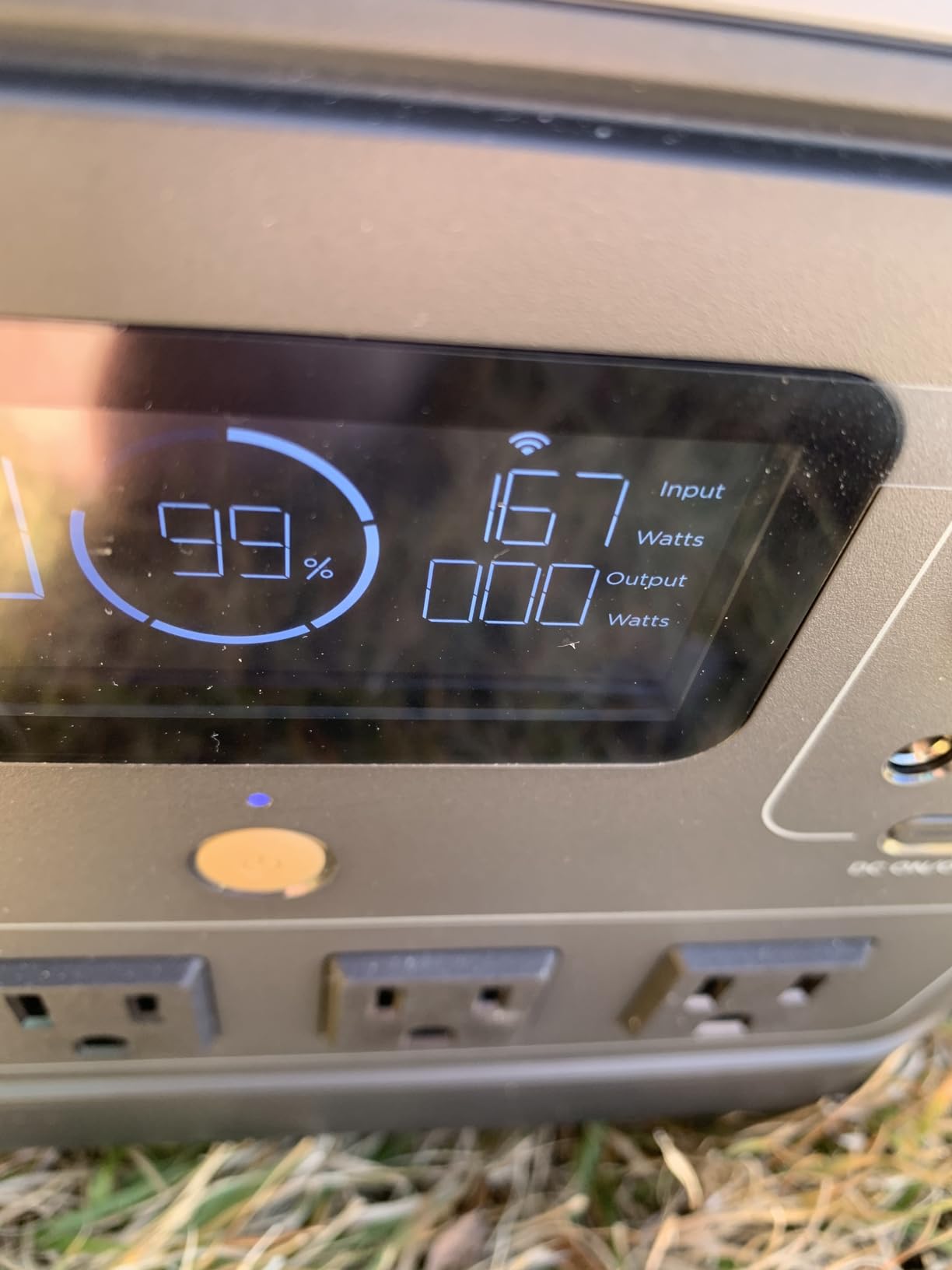
Rated wattage is measured under laboratory conditions: 1000 watts of irradiance per square metre, a cell temperature of 25 degrees Celsius, and sunlight hitting the panel square on. Almost no camping day matches that, and the gap between the label and your meter is the number one reason people think their panel is defective.
The commonly cited rule of thumb is that a portable panel produces roughly a third of its rated output in mediocre conditions, and around 60 to 80 percent in decent sun. Both figures are real. The lower end describes a hot, hazy, poorly angled afternoon; the upper end describes a cool, clear morning with the panel square to the sun.
Good owner results cluster at the top of that range. The SOKIOVOLA 200W is repeatedly measured at 77 to 89 percent of rated output, and the ZOUPW 450W is reported by multiple buyers to exceed its rating entirely. Both are panels with rigid or well-supported construction that keep their angle and their cell temperature under control.
So when a panel reads 160W instead of 200W on a warm afternoon, that is not a fault. That is a working panel in real conditions.
Why Is Your Panel Not Charging at Full Wattage?
Work through these six causes in order. Most low readings resolve within the first two.
- Sun angle. Output falls with the cosine of the angle between the panel and the sun. A panel lying flat at midday in winter can produce a fraction of its rated output. Repositioning or using the kickstands is free power.
- Panel temperature. Efficiency drops as cells heat up. A panel in full sun is frequently 25 to 30 degrees above ambient, which is a measurable loss in output.
- Station input limit. This is the most common cause and the least suspected. If your station caps solar input at 100W, a 200W panel will never read 200W on the station display.
- Partial shade. Even a small shadow across part of a panel can halve output unless the cells are wired in parallel. Panels with parallel wiring, such as the Renogy 400W, tolerate this far better.
- Dust and grime. A film of campsite dust on the laminate measurably reduces current. A wipe at midday costs nothing.
- Final charge stage behaviour. The MPPT charge controller in your station reduces current deliberately as the battery approaches full, so a tapering reading late in the day is normal and not a fault.
If your panel is flat at zero, the cause is almost always the connector or the voltage ceiling rather than the sun. Check the plug first.
Frequently Asked Questions
Can you use any solar panel for a power station?
No. Three things must line up: the connector type (XT60, Anderson, DC7909 or 8mm), the panel’s open-circuit voltage within the station’s maximum DC input, and the panel’s wattage within the station’s maximum solar input. Any one mismatch means no charging, or charging far slower than the label. The useful rule is that most 12V panels stay under 30V and work with nearly any station.
What type of solar panel is best for charging a power station?
A u003cstrongu003emonocrystalline foldable panelu003c/strongu003e matched to your station’s maximum solar input wattage and connector type. Monocrystalline cells deliver the highest efficiency per unit of area, which matters when the panel is competing for roof or rack space. A panel with a 5-in-1 adapter cable, such as the ZOUPW 100W, removes most of the guesswork.
What is the 33% rule in solar panels?
Rated wattage assumes 1000 W/m2 irradiance, a 25C cell temperature and sunlight hitting the panel square on. In real conditions a portable panel typically produces around u003cstrongu003e60 to 80 percentu003c/strongu003e of its rating in good sun, and closer to a third of rated output in mediocre conditions. Panel temperature, sun angle, dust and partial shade account for most of the difference.
What solar panels will work with Jackery?
Any panel whose open-circuit voltage sits under the station’s DC input ceiling and whose connector matches. Low-voltage panels such as the ZOUPW 100W (24.3V) and the TWELSEAVAN 200W (19.8V) are safe choices, and both ship with cables covering XT60. High-voltage panels are the exception: the ZOUPW 450W at 45.9V Voc is explicitly not compatible with Jackery 300, 500 and 1000 models.
How long does a 200W solar panel take to charge a power station?
Divide the station’s watt-hour capacity by 200W. A 300Wh station takes about 1.5 hours at peak sun, a 500Wh station about 2.5 hours, a 1kWh station about 5 hours and a 2kWh station about 10 hours. In practice multiply by 1.3 to 1.5 for heat, angle and shade losses, and remember that a station with a 100W input limit will never run at the full 200W.
Which Solar Panel Should You Buy?
If you want one answer for most people, take the ALLPOWERS SE200 200W. It fits the input range of the widest range of stations, it is sealed well enough to leave outdoors, and it will not strand you on a voltage mismatch. If you carry your gear rather than tow it, the Renogy 200W N-Type is the better-built option at 13.9 pounds, with 25% cells and a 45W USB-C port for the days the station is full.
Match by constraint rather than by wattage. Small station under 500Wh means the ZOUPW 100W, whose 5-in-1 cable reaches nearly every brand and whose 24.3V voltage clears any ceiling. A 500Wh to 1kWh station means the SOKIOVOLA 200W if you want the most honest real-world output, or the MHPOWOS 220W if your station needs 40V class input. Over 1kWh, or for an RV installation, the ZOUPW 450W is the strongest array here provided your station accepts 40V to 60V; the Renogy 400W is the more durable fixed option.
And if weight is the binding constraint, the powkey 40W at 4.2 pounds is the only panel in this roundup you will genuinely carry up a trail. Check your station’s connector, its maximum DC input voltage and its maximum solar input wattage before you order any of them, and you will not be disappointed. Whatever you choose, test the setup on a real day with real sun before you rely on it.