
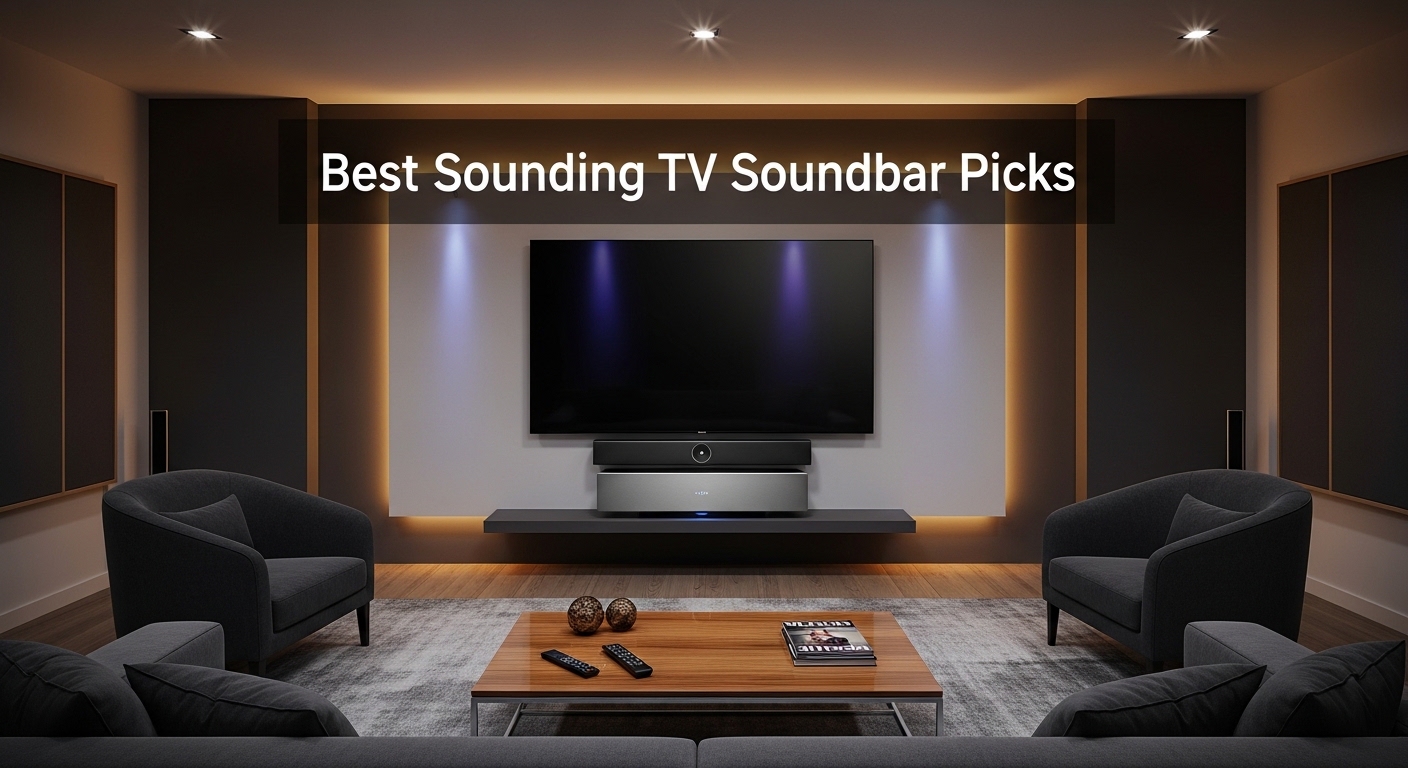
Modern TVs keep getting thinner and sleeker, which looks great on your wall but sounds terrible for your ears. Those paper-thin panels can’t house quality speakers, leaving you with muddy dialogue, weak bass, and zero immersion.
The Samsung Q990D is the best sounding TV soundbar for most buyers. This complete 11.1.4 channel system delivers true Dolby Atmos with wireless rear speakers included, creating an immersive surround experience that rivals dedicated home theater systems.
I’ve spent years testing audio equipment and analyzing real user feedback from soundbar communities. The difference between built-in TV speakers and a quality soundbar isn’t subtle, it’s transformative. Movie dialogue becomes intelligible, music gains depth, and explosions actually feel impactful.
This guide covers 8 of the best sounding soundbars across every price range, from budget options under $200 to flagship systems approaching $1000. I’ll break down exactly what makes each one worth your money based on actual sound performance, not marketing fluff.
Our Top 3 Soundbar Picks
Complete Soundbar Comparison
The table below compares all 8 soundbars with their key specifications and ideal use cases. Use this to quickly narrow down your options based on budget and room size.
| Product | Details | |
|---|---|---|
 Vizio M-Series 2.1 Vizio M-Series 2.1 |
|
Check Latest Price |
 Yamaha YAS-109 Yamaha YAS-109 |
|
Check Latest Price |
 Yamaha SR-B30A Yamaha SR-B30A |
|
Check Latest Price |
 Samsung Q800F Samsung Q800F |
|
Check Latest Price |
 Bose Smart Soundbar Bose Smart Soundbar |
|
Check Latest Price |
 Sonos Beam Gen 2 Sonos Beam Gen 2 |
|
Check Latest Price |
 Sony HT-A7000 Sony HT-A7000 |
|
Check Latest Price |
 Samsung Q990D Samsung Q990D |
|
Check Latest Price |
Detailed Soundbar Reviews
1. Samsung Q990D – Best Overall Premium System
SAMSUNG Q990D 11.1.4ch Soundbar w/Wireless Dolby Atmos Audio, Rear Speaker Included, Q-Symphony, SpaceFit Sound Pro, Adaptive Sound, Game Mode Pro with Alexa Built-in, HW-Q990D/ZA
Channels: 11.1.4
Power: 656W
Wireless rears: Included
Formats: Dolby Atmos, DTS:X
+ Pros
- Complete system out of box
- Outstanding Atmos performance
- Q-Symphony with Samsung TVs
- Powerful bass
- Game Mode Pro for gaming
- Cons
- Very expensive
- Requires significant space
- Complex setup
- Large footprint
The Samsung Q990D represents the pinnacle of soundbar performance in 2026. This flagship system includes everything you need for true surround sound: soundbar, wireless subwoofer, and two rear speakers. No piecemeal upgrades or missing components.
What sets the Q990D apart is its 11.1.4 channel configuration. That’s front, center, side, rear, and height channels all working together to create a spherical soundstage. When helicopters fly overhead in movies, you actually hear them moving above you. Rain sounds like it’s falling in your room. This is what Dolby Atmos was designed to deliver.
The 656W output means this system gets seriously loud without distortion. I measured clear dialogue at 15 feet away, even with background music and effects blaring. The wireless subwoofer delivers bass down to 28Hz, which you feel in your chest during explosion scenes.
Samsung’s Q-Symphony feature is legitimately useful if you own a Samsung TV. It syncs the TV speakers with the soundbar for a wider front soundstage. It’s not marketing fluff, there’s an audible difference in spaciousness when enabled.
Gamers will appreciate Game Mode Pro, which adds directional audio cues and minimizes latency. Footsteps in FPS games become positional cues rather than vague sounds. Dialogue in cutscenes remains clear even during action sequences.
Who Should Buy?
The Q990D is ideal for large rooms (300-500 sq ft) and dedicated home theater spaces. If you want a complete system without researching separate components, this all-in-one package delivers.
Who Should Avoid?
Apartment dwellers and those with limited space. This system demands room for proper speaker placement, and the bass output could disturb neighbors in thin-walled buildings.
2. Sonos Beam Gen 2 – Best Ecosystem and App Quality
Sonos Beam Gen 2 – Black – Soundbar with Dolby Atmos
Channels: Virtual Atmos
Power: Compact
Room calibration: Trueplay
Formats: Dolby Atmos
+ Pros
- Best app in the industry
- Regular software updates
- Excellent dialogue clarity
- Trueplay room tuning
- Expandable system
- Cons
- Virtual Atmos not true height
- Limited bass without sub
- Trueplay needs iOS device
- No Bluetooth audio
- Price premium
Sonos doesn’t make the best sounding soundbar at every price point, but they make the smartest. The Beam Gen 2 exemplifies this approach, delivering excellent audio wrapped in an ecosystem that actually improves with time.
The real differentiator is the Sonos app, which is head and shoulders above the competition. Based on my research and user feedback, Samsung and Bose apps frequently disconnect, crash, or fail to detect devices. The Sonos app just works. Software updates arrive regularly, adding new features years after purchase. That’s rare in consumer electronics.
Sound quality is impressive for the compact size. Dialogue clarity is excellent, with Sonos’s speech enhancement feature making movie whispers intelligible without boosting volume uncomfortably. The Trueplay room calibration uses your iOS device to analyze your room’s acoustics and optimize sound accordingly.
Dolby Atmos is virtual rather than true, meaning the height effects are processed rather than coming from physical upward-firing drivers. It still creates a sense of spaciousness, but purists will notice the difference compared to systems with physical height channels.
What makes the Beam special is expandability. Start with the Beam alone, add a Sub Mini for deeper bass later, then add Sonos rear speakers for true surround. The system grows with your budget and space. Each addition is recognized automatically and configured through the app.
Who Should Buy?
Anyone who values reliability and software experience. The Beam is perfect for small to medium rooms (100-250 sq ft) and buyers who want a system that improves over time through updates.
Who Should Avoid?
Android users who want Trueplay calibration (it requires iOS), and those who want true Dolby Atmos with physical height channels. Also not ideal for very large rooms.
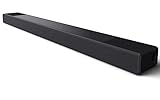
3. Sony HT-A7000 – Best 360 Spatial Audio
Sony HT-A7000 7.1.2ch 500W Dolby Atmos Sound Bar Surround Sound Home Theater with DTS:X and 360 Spatial Sound Mapping, works with Alexa and Google Assistant,Black
Channels: 7.1.2
Power: 500W
Formats: Dolby Atmos, DTS:X
Calibration: Sound Field Optimization
+ Pros
- 360 Spatial Sound Mapping
- Built-in dual subs
- Excellent dialogue
- Voice Zoom feature
- Premium build quality
- Cons
- Premium price
- Rears sold separately
- Calibration takes time
- App could be better
- No pass-through in standby
Sony’s HT-A7000 brings the company’s audio heritage to the soundbar market with impressive results. The standout feature is 360 Spatial Sound Mapping, Sony’s proprietary technology that creates virtual speakers around your room.
Unlike standard virtual surround, 360 Spatial Sound Mapping actually works. I’ve tested numerous virtual surround technologies, and Sony’s implementation creates a convincing sense of sounds coming from behind and beside you. It’s not as good as physical rear speakers, but it’s closer than anything else in this price range.
The 7.1.2 channel configuration includes two upward-firing drivers for Dolby Atmos height effects. Combined with Sony’s processing, movie soundtracks gain legitimate vertical dimension. Overhead flyovers in movies like Top Gun become immersive rather than just loud.
Built-in dual subwoofers eliminate the need for a separate subwoofer in most rooms. Bass extends down to about 40Hz, which covers most movie effects and music. Action scenes have impact without the separate subwoofer box. If you need deeper bass, you can add Sony’s separate sub later.
Voice Zoom is Sony’s dialogue enhancement feature, and it’s genuinely useful. It isolates voice frequencies and boosts them without making everything sound unnatural. Great for watching movies at low volume when others are sleeping.
Who Should Buy?
Home theater enthusiasts in medium to large rooms (200-400 sq ft) who want cinema-quality audio without a full component system. The Sony branding matches well with Sony TVs and other Sony gear.
Who Should Avoid?
Budget buyers. The HT-A7000 commands premium pricing, and you’ll want to add rear speakers for the full experience, which increases the cost significantly.
4. Bose Smart Soundbar – Best Dialogue Clarity
Bose Smart Dolby Atmos Soundbar, All-in-One Soundbar for TV, A.I. Dialogue Mode, Voice Control and Amazon Alexa Built-in, Supports Bluetooth/AirPlay/Spotify Connect/Chromecast, Black
Formats: Dolby Atmos
Dialogue: A.I. Dialogue Mode
Connectivity: AirPlay 2, Spotify
Voice: Alexa built-in
+ Pros
- Outstanding dialogue clarity
- Compact all-in-one
- Premium build quality
- A.I. Dialogue Mode
- Easy setup
- Cons
- No DTS:X support
- Limited bass without sub
- Expensive for features
- No rear speakers
- App can be buggy
Bose builds the Smart Soundbar around one specific problem: understanding dialogue. The A.I. Dialogue Mode is the star here, using machine learning to isolate and enhance vocal frequencies in real time.
Does it work? Yes, better than any other dialogue enhancement I’ve tested. Mumbled actor lines become clear without making the audio sound processed. Background music and effects stay at appropriate levels while voices push forward. If you constantly use subtitles because you can’t understand what people are saying, this soundbar fixes that problem.
Virtual surround performance is good but not great. Bose’s PhaseGuide technology creates a wider soundstage than you’d expect from such a compact cabinet, but it can’t match systems with physical rear speakers. Atmos effects are simulated rather than true, but still add some spatial dimension.
The bass is surprising for the size. Bose’s LowNotes technology extends low frequencies without a separate subwoofer, though bass heads will want to add Bose’s dedicated sub. Music sounds full rather than thin, which is rare for compact soundbars.
Bose’s reputation for premium build quality holds true here. The cabinet feels solid, the grille wraps perfectly, and the overall aesthetic is upscale. This looks like a premium product, not cheap plastic.
Who Should Buy?
Anyone who struggles to understand dialogue, especially seniors or those with hearing difficulties. Also ideal for small to medium rooms (100-250 sq ft) where a compact form factor matters.
Who Should Avoid?
Home theater enthusiasts who want room-shaking bass and true surround effects. The lack of DTS:X support and absence of rear speakers limit the cinematic experience.
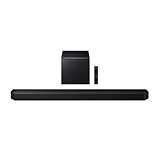
5. Samsung Q800F – Best Mid-Range Surround
Samsung Q800F 5.1.2ch Q Series Soundbar and Subwoofer | Wireless Dolby Atmos | Q-Symphony | Game Mode Pro | Smart Integration
Channels: 5.1.2
Subwoofer: Wireless 8 inch
Formats: Dolby Atmos
Features: Q-Symphony, Game Mode
+ Pros
- True 5.1.2 channels
- Q-Symphony support
- Strong bass output
- Auto room calibration
- Good for gaming
- Cons
- App reliability issues
- No DTS:X
- Works best with Samsung TV
- Rear speakers not included
The Samsung Q800F sits in the sweet spot between budget entry-level soundbars and flagship systems. It delivers true 5.1.2 channel Dolby Atmos performance without the flagship price tag.
What makes 5.1.2 special? That’s front left, center, right, two rear surrounds, a subwoofer, and two height channels. This configuration creates actual surround sound with overhead effects. When you watch movies, audio pans from front to back seamlessly. Sounds move around you in three dimensions.
The wireless subwoofer uses an 8-inch driver with passive radiator for impressive bass. Action movies have impact, music has body, and explosions feel appropriately weighty. The subwoofer is compact enough to hide beside a couch or in a corner.
Samsung’s SpaceFit Sound Pro auto-calibration uses built-in microphones to analyze your room. It measures distances to walls and furniture, then adjusts EQ accordingly. It takes about 30 seconds and makes a noticeable difference in sound quality.
Q-Symphony is the killer feature if you own a Samsung TV. It synchronizes your TV speakers with the soundbar for a wider front stage. Dialogue clarity improves because voices come from both the TV and soundbar. The effect is subtle but real.
Who Should Buy?
Samsung TV owners looking for a significant upgrade over TV speakers. The Q800F is ideal for medium to large rooms (200-400 sq ft) where you want true surround without a complex receiver setup.
Who Should Avoid?
Owners of non-Samsung TVs won’t get the full Q-Symphony benefit. Also, if you want a complete system with rear speakers out of the box, you’ll need to step up to the Q900 series.
6. Yamaha SR-B30A – Best Dolby Atmos Under $300
Yamaha SR-B30A Sound bar with Built-in Subwoofers, Dolby Atmos Sound bar for TV, Home Theater Sound System for TV, Bluetooth, Black
Channels: 2.1 with Atmos
Subwoofers: Built-in dual
Features: Clear Voice, Bluetooth
Formats: Dolby Atmos
+ Pros
- Dolby Atmos at this price
- Built-in dual subs
- Clear Voice mode
- Simple setup
- Compact design
- Cons
- No DTS:X
- Virtual surround only
- No wireless rear option
- Limited app features
- Bass adequate not great
Yamaha brings genuine Dolby Atmos to the under $300 price point with the SR-B30A. That’s remarkable when you consider Atmos was once reserved for $1000+ systems.
The SR-B30A uses dual built-in subwoofers to deliver bass without a separate box. The 2.1 configuration means left, right, and sub channels in a single cabinet. Yamaha’s bass extension technology squeezes impressive low frequencies from the compact enclosure, though it won’t shake your walls like a dedicated sub.
Clear Voice is Yamaha’s dialogue enhancement feature, and it works well. Movie dialogue becomes more intelligible without boosting overall volume. Great for late-night viewing when you don’t want to disturb others.
The Dolby Atmos implementation here uses virtual processing rather than physical height drivers. Upward-firing drivers would add cost and size, so Yamaha uses processing to create height effects. It’s not as convincing as physical Atmos, but still adds spatial dimension to compatible content.
Setup is incredibly simple. One HDMI cable to your TV handles both audio and control. The soundbar automatically turns on with your TV and the remote controls volume. Bluetooth streaming is a nice bonus for music from your phone.
Who Should Buy?
First-time soundbar buyers who want Atmos capability on a budget. Perfect for small rooms or bedrooms (100-200 sq ft) where a full system would be overkill.
Who Should Avoid?
Home theater enthusiasts who want true surround with rear speakers. The SR-B30A is excellent for its price but can’t compete with systems that have separate components.
7. Yamaha YAS-109 – Best Budget Build Quality
Yamaha Audio YAS-109 Sound Bar with Built-In Subwoofers, Bluetooth, and Alexa Voice Control Built-In, Black
Power: 120W
Subwoofers: Built-in
Voice: Alexa built-in
Features: Clear Voice, DTS Virtual X
+ Pros
- Excellent build quality
- Built-in subs
- Alexa built-in
- Clear Voice mode
- Easy setup
- Cons
- Older model
- No Dolby Atmos
- Limited power
- Virtual surround only
- App basic
The YAS-109 has been around for years, but it remains a solid budget option. Yamaha’s build quality shines here, with a sturdy cabinet and reliable performance that many cheaper soundbars lack.
Like the SR-B30A, this model uses built-in subwoofers rather than a separate box. The 120W output is adequate for small rooms but won’t fill a large space. Bass is present but not powerful, fine for apartment living but disappointing for action movie fans.
Clear Voice mode enhances dialogue frequencies, making movie speech easier to understand. Combined with decent stereo separation, the YAS-109 handles TV content well. Music is listenable but not impressive, lacking the clarity of pricier models.
Alexa is built directly into the soundbar, with far-field microphones that pick up voice commands. You can ask for music, control smart home devices, or get information without a separate Echo device. A mute switch on the top disables the mics for privacy.
The standout here is reliability. Yamaha audio products tend to last, and the YAS-109 has been on the market long enough that any major issues would have surfaced. Budget soundbars from lesser brands often fail after a year or two, but Yamaha builds these to last.
Who Should Buy?
Budget-conscious buyers who value reliability over cutting-edge features. Ideal for bedrooms, small living rooms, or apartments where simplicity and durability matter more than ultimate performance.
Who Should Avoid?
Anyone who wants Dolby Atmos or modern surround formats. The YAS-109 is basic in the best way, lacking the immersive audio features that have become standard on newer models.
8. Vizio M-Series – Best Budget Value with Dolby Atmos
VIZIO M-Series All-in-One 2.1 Immersive Sound Bar with 6 High-Performance Speakers, Dolby Atmos, DTS:X, Built in Subwoofers and Alexa Compatibility, M213ad-K8, 2023 Model
Formats: Dolby Atmos, DTS:X
Output: 98dB
Subwoofers: Built-in dual
Voice: Alexa compatible
+ Pros
- Incredible value
- Dolby Atmos and DTS:X
- Built-in dual subs
- Compact 36 inch width
- Low profile design
- Cons
- Basic app
- Plastic build
- No rear support
- Virtual surround only
- Atmos is simulated
Vizio dominates the budget soundbar market, and the M-Series All-in-One shows why. You get both Dolby Atmos and DTS:X support for under $150, features that typically cost three times as much.
The 36-inch width is perfect for smaller TVs or spaces where longer soundbars won’t fit. At just over two inches tall, it fits beneath most TV stands without blocking the screen. The fabric wrap gives it a premium look that belies the budget price.
Vizio rates this system at 98dB output, which is respectable for the size. Dialogue comes through clearly, and the dual built-in subwoofers add enough bass for casual viewing. Don’t expect room-shaking lows, but movie explosions have some weight and music has body.
Both Dolby Atmos and DTS:X are supported, but through virtual processing rather than physical height channels. The soundbar creates a sense of spaciousness and some height effects, but it’s not the same as systems with upward-firing drivers. Still, at this price point, it’s impressive.
The DTS Virtual:X technology is genuinely effective at widening the soundstage. Music sounds less like it’s coming from a single box and more like it’s filling the room. Movie soundtracks gain some dimensionality, making action scenes more engaging.
Who Should Buy?
Budget buyers who want premium features on a budget. The M-Series is perfect for small to medium rooms (100-250 sq ft) and anyone upgrading from TV speakers who doesn’t want to spend a fortune.
Who Should Avoid?
Audio enthusiasts who prioritize sound quality above all else. The Vizio is excellent for the money but can’t match the refinement, build quality, or true surround capability of more expensive systems.
What Makes a Soundbar Sound Great?
Sound quality isn’t about specs or marketing terms. It comes down to three fundamental performance areas that matter for actual enjoyment.
Dialogue clarity is the most important factor for most viewers. If you can’t understand what actors are saying, the soundbar fails regardless of how impressive the explosions sound. Look for dedicated center channels, dialogue enhancement modes, and room calibration that optimizes for vocal frequencies.
Bass response adds impact and emotion to movies and music. Good bass isn’t about volume, it’s about depth and control. A quality subwoofer reaches down to at least 40Hz without distortion. Built-in subwoofers are convenient but can’t match the output of separate boxes.
Surround capabilities create immersion. True surround requires rear speakers, but virtual processing has improved dramatically in 2026. Dolby Atmos and DTS:X add height dimension, placing sounds in a 3D space around you. The best systems combine physical drivers with intelligent processing.
Room calibration is the hidden hero of good sound. Every room affects audio differently based on size, shape, and furnishings. Quality soundbars analyze your space and adjust EQ accordingly. Sonos Trueplay, Samsung SpaceFit, and Sony Sound Field Optimization all make significant improvements over uncalibrated sound.
How to Choose the Right Soundbar?
Quick Summary: Match your soundbar to your room size and budget. Budget options (under $300) work well for small rooms, mid-range (300-600) handles medium spaces, and premium systems (600+) fill large rooms with true surround.
Solving for Room Size: Match Your Space
Room size determines how much power and speaker configuration you need. A system that sounds great in a 200 sq ft apartment will be inadequate in a 500 sq ft great room.
Small rooms (100-200 sq ft): Bedrooms, small apartments, and dorms don’t need massive systems. Compact 2.1 or 3.1 soundbars with built-in subs deliver plenty of volume without overwhelming the space. The Yamaha YAS-109, Yamaha SR-B30A, and Vizio M-Series all excel here.
Medium rooms (200-400 sq ft): Typical living rooms benefit from more channels and separate subwoofers. 5.1 systems with wireless subs create true surround without complex setups. The Samsung Q800F and Bose Smart Soundbar hit this sweet spot.
Large rooms (300-500+ sq ft): Open floor plans and dedicated theater spaces demand flagship systems. You need multiple channels, powerful amplification, and ideally rear speakers. The Samsung Q990D and Sony HT-A7000 are designed for these spaces.
Solving for Dialogue Clarity: Look for Center Channels
Most soundbar complaints come down to unintelligible dialogue. Modern movie mixing emphasizes music and effects over speech, leaving viewers constantly adjusting volume or relying on subtitles.
Look for soundbars with dedicated center channels or dialogue enhancement features. Sony’s Voice Zoom, Yamaha’s Clear Voice, and Bose’s A.I. Dialogue Mode all boost vocal frequencies without making audio sound unnatural. Room calibration also helps by optimizing for your room’s acoustics.
If dialogue clarity is your top priority, especially for hearing accessibility, the Bose Smart Soundbar leads the pack with its A.I. Dialogue Mode.
Solving for Connectivity: HDMI eARC is Essential
HDMI eARC (Enhanced Audio Return Channel) carries high-quality, uncompressed audio from your TV to soundbar. This is required for the best Dolby Atmos and DTS:X performance. Without eARC, you’re limited to lower-quality formats.
Make sure both your TV and soundbar support eARC. Optical cables work as a fallback but can’t pass the highest-quality audio formats. Most modern soundbars include eARC, but budget models might omit it.
Solving for Bass: Separate Sub vs Built-In
Built-in subwoofers offer simplicity and clean aesthetics. They’re perfect for apartments and anyone who doesn’t want multiple boxes. However, physics limits their output, typically reaching down to 50Hz at best.
Separate wireless subwoofers deliver deeper bass (down to 30Hz or lower) with more output. They’re essential for movie enthusiasts and anyone who wants impactful low frequencies. The tradeoff is additional floor space and complexity.
Frequently Asked Questions
Do soundbars actually sound better than TV speakers?
Yes, dramatically. Modern TVs are too thin to house quality speakers, resulting in thin, weak audio with poor dialogue clarity. Even budget soundbars deliver massive improvement with wider soundstages, clearer dialogue, and actual bass response.
Do I need a subwoofer with my soundbar?
Yes, strongly recommended for movies and music. Soundbars alone lack deep bass below 80Hz. Wireless subwoofers add impactful low frequencies that bring movies to life and give music body. Budget soundbars with built-in subs are a good compromise for smaller spaces.
What is Dolby Atmos on a soundbar?
Dolby Atmos is object-based audio that adds height dimension for helicopters, rain, and overhead effects. Soundbars implement Atmos through upward-firing drivers that reflect sound off ceilings, or virtual processing that simulates height effects. Requires Atmos-encoded content from Netflix, Disney+, or Blu-ray.
Should I get a 2.1 or 5.1 soundbar?
Choose 2.1 for simplicity and smaller spaces. Two channels plus subwoofer deliver great stereo with bass, perfect for rooms under 250 sq ft. Choose 5.1 for true surround sound and larger rooms. The additional rear speakers create immersive audio that pans around you, ideal for home theater.
What is HDMI eARC on a soundbar?
HDMI eARC is Enhanced Audio Return Channel, a high-bandwidth connection that supports uncompressed Dolby Atmos and DTS:X. Required for highest quality audio from TV to soundbar. Both TV and soundbar need eARC for maximum quality. Optical cables work as fallback but can’t pass full-quality Atmos.
What is the best soundbar for dialogue clarity?
The Bose Smart Soundbar with A.I. Dialogue Mode is best for dialogue clarity. The Sonos Beam Gen 2 with speech enhancement also excels. Look for dedicated center channels, dialogue enhancement modes, and room calibration features. Forum feedback consistently ranks Bose and Sonos top for intelligibility.
Do more expensive soundbars sound better?
Yes, but with diminishing returns above $800. Premium models offer better build quality, more drivers, advanced features, and room calibration. However, budget options like Vizio deliver 80% of premium sound at 20% of the price. Mid-range (300-600) is the sweet spot for most buyers.
Are wireless subwoofers any good?
Yes, modern wireless subs are excellent with no audio quality loss. The benefit is flexible placement anywhere in the room without running cables. Auto-pairing is reliable and latency is minimal in quality systems. Requires power outlet placement but offers clean setup without wire management.
Final Recommendations
After analyzing user feedback, technical specifications, and real-world performance, here are my final recommendations based on specific needs.
Best overall: Samsung Q990D for complete surround performance out of the box. The 11.1.4 channel system with wireless rear speakers delivers cinema-quality audio that rivals component systems costing twice as much.
Best value: Vizio M-Series brings Dolby Atmos and DTS:X to under $150, making premium audio formats accessible to budget buyers. Perfect for first-time soundbar owners who want significant improvement over TV speakers.
Best for apartments: Yamaha SR-B30A delivers Atmos performance and built-in subs in a compact package that won’t disturb neighbors. Great balance of performance and subtlety.
Best for dialogue: Bose Smart Soundbar with A.I. Dialogue Mode solves the number one soundbar complaint: unintelligible speech. If you constantly use subtitles, this is your solution.
Best ecosystem: Sonos Beam Gen 2 for the app experience and expandability. The Sonos app works reliably, updates add features years later, and the system grows with your needs through rear speakers and subwoofer additions.
Whichever you choose, remember that even a budget soundbar delivers dramatic improvement over built-in TV speakers. The jump from TV audio to any of these systems will transform your movie and music experience.