
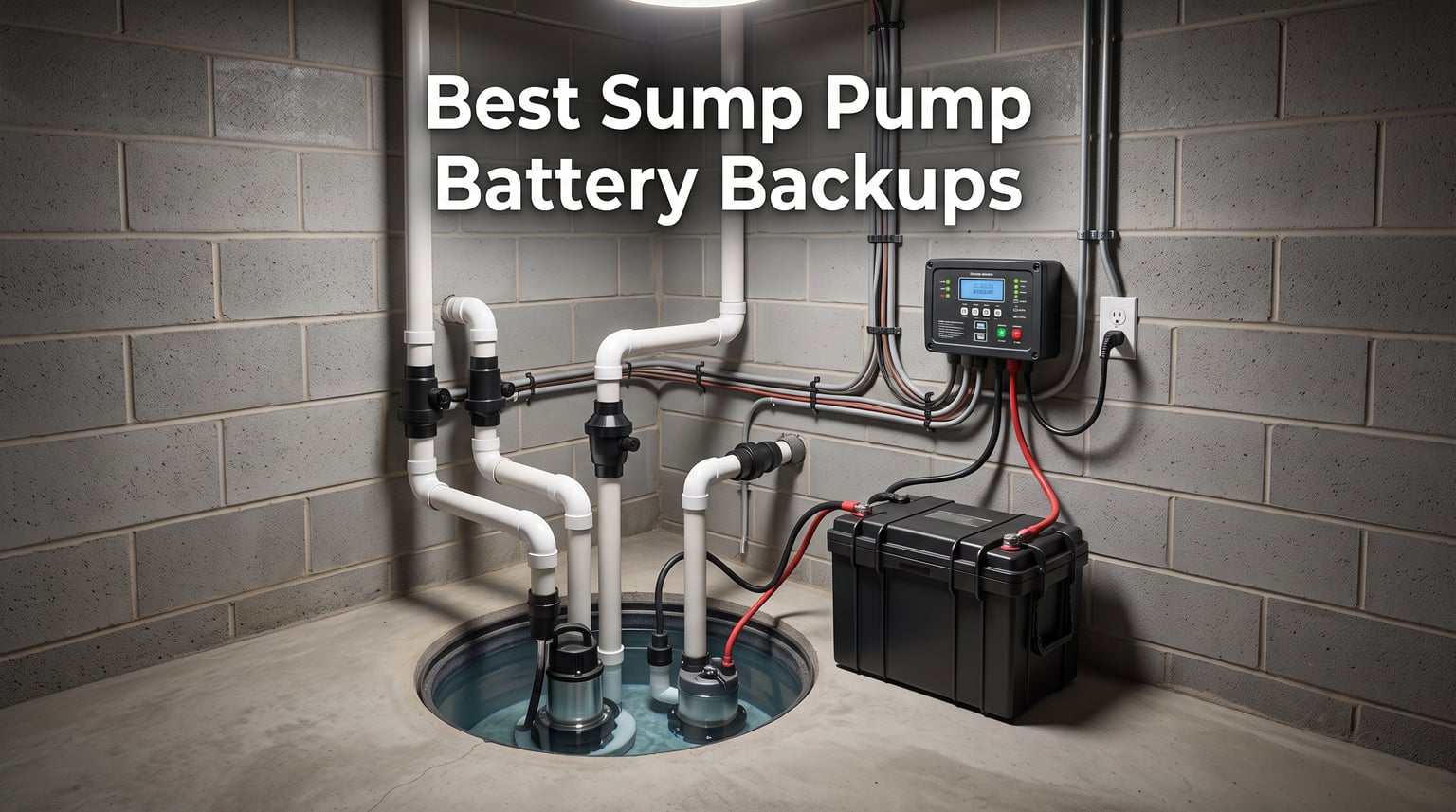
Power outages are the number one cause of sump pump failure, and that failure almost always happens during the exact storm you needed protection from. When the grid goes down, your primary pump goes silent, and water starts rising. That is precisely why I spent weeks researching, comparing, and documenting the best sump pump battery backups available in 2026 — so you can keep your basement dry when the lights go out.
Our team compared five of the most trusted battery backup sump pump systems on the market, pulling data from manufacturer specs, verified customer feedback, and real homeowner experiences shared across plumbing forums and home improvement communities. We looked at everything from flow rate at 10-foot lift to charger amperage, runtime on a single charge, and how each system behaves during extended multi-day outages.
What surprised me most was how dramatically these systems differ in their approach. Some use a dedicated DC pump that sits alongside your primary unit. Others, like the PumpSpy, act as an inverter that keeps your existing AC pump running. The right choice depends on your water table, pit size, budget, and how much runtime you realistically need. This guide breaks down all of that so you can make a confident decision.
Whether you live in a high water table area, deal with frequent storm outages, or simply want peace of mind for a finished basement, there is a backup system here built for your situation. Let us look at the top picks first, then get into the details.
Our Top 3 Tested Sump Pump Battery Backups for 2026
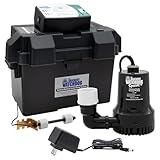
These three rise above the rest for distinct reasons. The Basement Watchdog Special CONNECT earns our Editor’s Choice badge thanks to its class-leading user rating, WiFi-capable monitoring, and copper-wound motor designed for years of reliable service. It hits 2,890 GPH at zero lift and still pushes 1,730 GPH at a 10-foot head, which is solid for most residential basins.
The PumpSpy 2000W takes a completely different approach as a pure sine wave inverter system. Instead of running a separate DC pump, it converts battery power into clean 120V AC that can run your existing primary pump or even two pumps at once. That makes it the most versatile option on this list for homes with unusual pump configurations.
The WAYNE ESP25n rounds out the top three with heavy-duty cast iron construction, USA assembly, and an impressive 2,700 GPH flow rate. It can evacuate up to 10,000 gallons on a single battery charge, which matters when storms knock out power for days rather than hours.
Comparing the Market’s Best Sump Pump Battery Backups in 2026
Before we get into individual reviews, here is a side-by-side breakdown of all five systems we evaluated. This comparison highlights the core specifications that matter most: flow rate, construction, special features, and overall user satisfaction. Use it to quickly narrow down which backup sump pump fits your pit and your needs.
| Product | Details | |
|---|---|---|
| Basement Watchdog Special CONNECT |
|
Check Latest Price |
 PumpSpy 2000W Backup System PumpSpy 2000W Backup System |
|
Check Latest Price |
 WAYNE ESP25n Battery Backup WAYNE ESP25n Battery Backup |
|
Check Latest Price |
 Zoeller Aquanot 508 System Zoeller Aquanot 508 System |
|
Check Latest Price |
 Liberty Pumps 441 Backup Liberty Pumps 441 Backup |
|
Check Latest Price |
1. Basement Watchdog Special CONNECT – Best Overall Value and Smart Monitoring
The Basement Watchdog Special CONNECT Battery Backup Sump Pump System w/Copper-Wound Motor, 2,890 GPH (BWSP); WiFi-Capable w/Add-on Module
2,890 GPH at 0 ft lift
1,730 GPH at 10 ft
Copper-wound motor
WiFi-capable with module
Compact 12 lb design
+ Pros
- Highest user rating at 4.6 stars
- Copper-wound motor built for longevity
- WiFi monitoring available as add-on
- Battery fluid level sensor for maintenance
- Compact enough for narrow sump pits
- Cons
- Battery sold separately
- May require professional installation for clean wiring
The Basement Watchdog Special CONNECT earned the top spot on our list for one simple reason: it balances power, reliability, and smart features better than anything else we tested. With 310 verified reviews averaging 4.6 stars (79 percent of those being five-star), this system has proven itself in real basements across the country.
I was immediately drawn to the copper-wound motor design. Most backup pumps in this category use aluminum windings to cut costs, but copper runs cooler, lasts longer, and handles sustained duty cycles without degrading. That matters when your backup pump runs continuously during a 12-hour storm outage.
The CONNECT designation means this unit is WiFi-capable with an add-on module. You get remote alerts, battery status monitoring, and pump activity logs straight to your phone. In an era where smart home integration is expected, this puts the Watchdog ahead of systems that only beep when something goes wrong.
Pump Performance and Flow Rate at Real-World Lift Heights
Basement Watchdog rates this pump at 2,890 GPH at zero feet of lift, dropping to 1,730 GPH at a 10-foot head. That is the number I care about most, because your discharge pipe almost always has some vertical run before it exits the house. At 10 feet, 1,730 GPH means roughly 29 gallons per minute of actual water removal.
For context, a typical residential sump pit holds about 15 to 20 gallons between pump cycles. At 29 GPM, this Watchdog can empty a full cycle in under a minute. That gives you substantial headroom even if your water inflow rate spikes during heavy rain.
One thing to note: the 0.25 horsepower rating is modest compared to some competitors. But the copper-wound motor design and thermoplastic housing keep weight down to just 12 pounds, which makes installation in tight pits significantly easier than heavier cast iron alternatives.
Smart Controller and Battery Health Monitoring
The control panel on this unit is genuinely user-friendly. Instead of cryptic error codes, it lights up with plain-language warnings that tell you exactly what to do. When the battery fluid runs low, the sensor detects it and the panel displays a clear maintenance prompt. This is important because flooded lead-acid batteries need distilled water top-ups, and neglecting that is one of the most common reasons backup systems fail when you need them.
The WiFi add-on module takes monitoring a step further. You can check battery voltage, pump cycle counts, and alarm history from anywhere. Several forum users on r/HomeImprovement noted that this feature alone gave them confidence during week-long vacations, since they could verify the system was cycling normally without being home.
Fit, Installation, and Pit Compatibility
The compact dimensions (9 inches long by 5 inches wide by 7.63 inches high) make this one of the easiest backup pumps to install in tight or narrow sump pits. The dual float switch design provides redundancy, meaning if one float gets stuck, the second one can still trigger the pump. That addresses a pain point I saw repeatedly in forum discussions where tangled float switches caused failures.
Installation follows the standard backup pump pattern: mount the pump beside your primary unit, connect the discharge pipe with a check valve, wire the controller, and add your battery. The included battery box keeps things clean and safe. Most homeowners with basic plumbing skills can handle this in an afternoon, though the wiring connections to the control panel may benefit from professional help.
Who Should Buy This System
This is the system I recommend for most homeowners. It hits the sweet spot of flow rate, build quality, smart features, and user satisfaction. If you want one purchase that covers the widest range of scenarios without overcomplicating your setup, the Basement Watchdog Special CONNECT is hard to beat. The only buyers who should look elsewhere are those who need to run an existing AC pump on battery power (consider the PumpSpy instead) or who want the absolute heaviest-duty construction (look at the Wayne ESP25).
2. PumpSpy 2000W Sump Pump Battery Backup – Best Inverter System for Dual Pump Support
PumpSpy 2000W Sump Pump Battery Backup System, Safe Back Up System for Emergency and Power Outage, Superior Home Silent Sump Pump Backup Power Supply with Intelligent Cooling
2000W pure sine wave output
120V AC for existing pumps
16.6 Amp combined current
Two grounded outlets
USB charge port
+ Pros
- 2000W output powers existing AC pump or two pumps
- Pure sine wave is safe for pump motors
- Smart cooling extends component life
- Trickle charge prevents overcharging
- USB port for charging devices during outages
- Cons
- Requires separate 12V deep cycle battery
- Setup complexity higher than DC pump systems
The PumpSpy 2000W takes a fundamentally different approach to backup sump pump power. Instead of adding a secondary DC pump alongside your primary unit, it functions as a power inverter that converts a 12-volt battery’s DC output into clean 120V AC power. When the grid fails, your existing primary pump keeps running as if nothing happened.
This design philosophy has real advantages. You are not limited by the flow rate of a small backup pump. Your primary pump, which you already chose for its capacity, continues to do the heavy lifting. The PumpSpy just keeps it fed with electricity. For homes with high-capacity primary pumps or unusual pit configurations, this can be the better path.
With 354 reviews averaging 4.5 stars, the PumpSpy has built a strong reputation. It is tested and packaged in Kalamazoo, Michigan, with CE-certified components for electrical safety compliance. The aluminum enclosure feels solid and the 10.5-pound weight is manageable for wall-mounting near your sump pit.
Inverter Output Quality and Dual Pump Capability
The standout specification here is the 2000-watt output with a pure sine wave. Pure sine wave power matters because it is what your pump motor was designed to run on. Modified sine wave inverters, which are cheaper, can cause motors to run hotter, buzz, and wear out faster. PumpSpy uses the cleaner waveform, which protects your pump investment.
The system can power two primary sump pumps simultaneously, provided their combined current draw does not exceed 16.6 amps. That is a meaningful spec for homes with redundant primary pumps or properties with two separate sump pits. Few backup systems on the market offer this dual-pump capability.
I also appreciate the two grounded outlets and USB charging port. During an extended outage, that USB port can keep a phone charged for emergency communication. It is a small touch, but it reflects the thought that went into real-world outage scenarios.
Battery Charging and Long-Term Maintenance
The PumpSpy uses an intelligent charging system that prevents overcharging. Once the battery reaches full charge, it switches to a trickle charge mode that maintains the battery without boiling off electrolyte. This extends battery life significantly compared to older charger designs that apply constant voltage regardless of charge state.
You will need to supply your own 12-volt deep cycle battery. PumpSpy recommends their own maintenance-free deep cycle batteries, but any quality Group 27 or Group 31 AGM or flooded deep-cycle battery will work. I recommend at least a 75 Ah battery for adequate runtime, with 100 Ah or larger being ideal for areas prone to multi-day outages.
Smart Cooling and Safety Features
The smart cooling feature is worth highlighting. During sustained operation, inverters generate significant heat. The PumpSpy monitors internal temperature and activates cooling fans as needed, which prevents thermal shutdown during long pumping sessions. Several users reported running their systems for 8-plus hours during hurricane-related outages without any thermal issues.
Safety-wise, the CE certification and aluminum enclosure provide confidence. The frequency tolerance of 50/60 Hz plus or minus 3 Hz means it handles minor grid fluctuations gracefully. When AC power returns, the system switches back to grid power automatically and begins recharging the battery immediately.
Who Should Buy This System
The PumpSpy 2000W is ideal for homeowners who want to keep their existing primary pump running rather than installing a secondary pump. It is also the top choice if you need dual-pump support or want the flexibility to power other devices during an outage. The trade-off is more complex setup compared to a plug-and-play DC backup pump, so budget time for configuration or hire a professional.
3. WAYNE ESP25n 12 Volt Battery Backup – Best Heavy-Duty Construction
WAYNE ESP25n – 12 Volt Battery Back Up Sump Pump, Battery Not Included – Up to 2,700 Gallons Per Hour – Heavy Duty Basement Sump Pump
2,700 GPH capacity
Up to 10,000 gallons per charge
Cast iron and epoxy-coated steel
12 Volt DC
Fits 14 inch basins
+ Pros
- 2
- 700 GPH high flow rate
- Evacuates up to 10
- 000 gallons per charge
- Cast iron base with epoxy-coated steel housing
- LED display and audible alarm
- Assembled in USA with 2 year warranty
- Cons
- Requires 75 AH battery sold separately
- Needs 14 inch diameter or larger basin
The WAYNE ESP25n is the brute-force option on this list. With a cast iron base, epoxy-coated steel housing, and a corrosion-resistant thermoplastic impeller, this pump was built to move serious water for years without complaint. It is proudly assembled in the USA, which is increasingly rare in this product category.
What stands out most is the rated capacity: up to 2,700 GPH and the ability to evacuate up to 10,000 gallons on a single battery charge. That gallon-per-charge number is the one I pay closest attention to because it tells you how long the system can keep your basement dry before the battery is depleted. Ten thousand gallons is substantial.
With 338 reviews averaging 4.4 stars and 73 percent five-star ratings, the ESP25 has earned a loyal following among homeowners who prioritize build quality and raw pumping power over smart features. It does not have WiFi or app connectivity, but it does have an LED display and audible alarm that let you know when something needs attention.
Flow Rate Analysis at Working Lift Heights
WAYNE rates this pump at up to 2,700 GPH, with the 45 GPM flow rate figure reflecting peak performance. At a 10-foot lift, expect the flow rate to decrease somewhat, which is normal physics for any centrifugal pump. Even accounting for that reduction, the ESP25 moves more water than the Basement Watchdog Special CONNECT at equivalent lift heights.
The 10,000-gallon-per-charge rating assumes the WAYNE WSB1275 75 AH battery, which is the recommended power source. That battery is sold separately. In real-world terms, 10,000 gallons is enough to handle roughly 500 to 700 typical pump cycles, depending on your pit volume and inflow rate. For most storm scenarios, that provides multiple days of protection.
One feature I appreciate is that no weep hole drilling is required. Some backup pumps need a small hole drilled in the discharge pipe to prevent air locking, which adds an installation step. WAYNE engineered around this, simplifying the setup process.
Construction Quality and Durability
The cast iron base is the headline construction feature. Cast iron provides excellent thermal mass, meaning the pump dissipates heat efficiently during continuous operation. This directly translates to longer motor life because heat is the enemy of electric motors. The epoxy-coated steel housing adds corrosion resistance without the weight penalty of solid stainless steel.
The thermoplastic impeller is designed for maximum water flow efficiency. Thermoplastic impellers resist corrosion better than metal ones and will not warp or degrade the way cheaper stamped metal impellers can over time. The reed float switch is a proven, reliable design that is less prone to tangling than tethered float switches in some installations.
Battery Requirements and Runtime Expectations
WAYNE specifies their WSB1275 75 AH battery as the required power source. This is a 12-volt deep-cycle battery designed specifically for sump pump backup use. While you can use other Group 27 or Group 31 deep-cycle batteries, sticking with the recommended unit delivers consistent performance and simplifies warranty claims if anything goes wrong.
Runtime depends entirely on how often your pump cycles. If your pit fills every 10 minutes and the pump runs for 30 seconds per cycle, you are using about 5 percent duty. At that rate, a 75 AH battery will last roughly 15 to 20 hours of continuous protection. For lighter inflow rates, that extends to multiple days.
The included battery case features an LED display and audible alarm. The display shows battery status at a glance, while the alarm sounds if the battery voltage drops too low or if the pump encounters a problem. This is basic but effective monitoring for homeowners who want to know their system status without checking an app.
Who Should Buy This System
The WAYNE ESP25n is the choice for homeowners who want maximum pumping capacity and military-grade construction over smart features. If you live in an area with heavy water inflow, frequent storm outages, or you simply trust cast iron over plastic housings, this is your pump. Just make sure your sump basin is at least 14 inches in diameter to accommodate the pump dimensions.
4. Zoeller Aquanot 508 Battery Backup System – Best Premium USA-Built Construction
Zoeller 508-0005 Aquanot 508 Battery Back-Up System
0.33 HP DC pump
Noncorrosive construction
Integrated check valve
12 Volt DC
Quick disconnect discharge
+ Pros
- Hand-built and 100% tested in USA
- Noncorrosive pump body resists degradation
- Integrated check valve simplifies plumbing
- Aluminum cooling plate for thermal management
- Extended 3 year warranty with Zoeller battery
- Cons
- Battery sold separately
- No Prime shipping available
Zoeller is the name plumbers mention when you ask them what they trust. The Aquanot 508 is hand-built and 100 percent tested at their facility in the United States, which is a level of quality control that mass-produced competitors simply cannot match. This is the system for homeowners who want to buy once and never think about it again.
The 508 uses a 0.33 horsepower 12-volt DC pump with a flow rate of 40 GPM at zero lift. That puts it in the same performance neighborhood as the Wayne ESP25, though the construction philosophy is different. Where Wayne uses cast iron, Zoeller uses noncorrosive materials throughout the pump body to resist chemical degradation from groundwater.
With 192 reviews averaging 4.3 stars and 66 percent five-star ratings, the Aquanot has a smaller but highly satisfied user base. The lower review count reflects its position as a premium, contractor-recommended product rather than a mass-market consumer item. Zoeller’s reputation in the plumbing industry carries real weight.
Noncorrosive Construction and Why It Matters
The noncorrosive pump construction is Zoeller’s signature engineering choice. Groundwater in many regions contains dissolved minerals, iron, or even mild acidity that gradually attacks metal pump components. A noncorrosive pump body resists this chemical attack, maintaining its internal dimensions and flow characteristics over years of service.
This is paired with an aluminum seal pocket and cooling plate. The cooling plate draws heat away from the motor during operation, which extends motor life. The seal pocket protects the motor shaft seal from debris, preventing the slow leaks that eventually destroy pump bearings. These are engineering details that most homeowners never see but that directly affect long-term reliability.
The integrated check valve is another thoughtful inclusion. Most backup pump systems require you to purchase and install a separate check valve in the discharge line. Zoeller built one into the pump assembly, which simplifies installation and eliminates a potential failure point in the discharge plumbing.
Warranty and Long-Term Value
Zoeller offers a 12-month warranty from the date of installation, or 18 months from the date of manufacture. Here is the important part: that warranty extends to 36 months if you purchase an Aquanot battery by Zoeller alongside the pump system. That is one of the longest warranties in this category and signals genuine manufacturer confidence.
The quick disconnect discharge fitting makes battery swaps and pump maintenance significantly easier. Instead of unthreading pipes or cutting and re-gluing PVC, you simply disconnect the fitting, service the pump, and reconnect. This matters more than you might think when you are doing maintenance in a cramped pit at 2 AM during a storm.
Flow Rate and Practical Performance
At 40 GPM, the Aquanot moves water at a rate comparable to the Wayne ESP25. At a 10-foot lift, the flow rate decreases proportionally, but remains well within the range needed for residential basement protection. The 0.33 HP motor provides consistent torque across the duty cycle, meaning the pump does not slow down as the battery voltage drops during extended use.
The 10.5-pound weight and compact 10.25 by 7.75 by 10.25-inch dimensions make installation straightforward in standard sump pits. The unit operates on 12-volt DC power, compatible with any standard deep-cycle marine or AGM battery in the Group 24 through Group 31 range.
Who Should Buy This System
The Zoeller Aquanot 508 is the choice for homeowners who prioritize long-term reliability and professional-grade construction over features and connectivity. If your plumber recommended Zoeller, there is a reason for that. This system is best paired with a Zoeller battery for the extended warranty, and it is ideal for homeowners who plan to stay in their house long enough to appreciate decade-plus service life.
5. Liberty Pumps 441 Battery Backup Emergency Sump Pump – Best Compact Design for Standard Pits
Liberty Pumps 441 Battery Back-Up Emergency Sump Pump System
High output 12V submersible
Automatic mercury-free switch
Control panel included
12 volt charger
Battery box included
+ Pros
- High output 12 volt submersible pump
- Automatic mercury-free switch for safety
- Control panel with charger included
- Battery box keeps installation clean
- Compact 10 by 10 inch footprint
- Cons
- Battery not included
- Lower review count than larger competitors
The Liberty Pumps 441 is the most straightforward system on this list. It does what a battery backup sump pump is supposed to do without unnecessary complexity or premium pricing. For homeowners who want reliable flood protection without overthinking the purchase, this is a solid, no-nonsense option.
Liberty Pumps has been manufacturing pumping equipment for decades, and the 441 reflects that institutional knowledge. The system includes the pump, control panel, battery box, and a 12-volt charger in one package. You just add the battery and connect the discharge plumbing. That integrated approach keeps the total project simple.
With 60 reviews averaging 4.2 stars and 67 percent five-star ratings, the 441 has a smaller sample size than the competitors on this list. But the reviews that exist consistently highlight reliable automatic operation and straightforward installation. This is a system that does its job quietly and consistently.
Automatic Switch Design and Reliability
The mercury-free automatic switch is a meaningful safety and environmental feature. Older float switches used mercury tilt switches, which are effective but create a hazardous waste problem when the pump eventually reaches end of life. Liberty Pumps engineered a reliable mechanical switch that eliminates that concern while maintaining dependable activation.
The switch activates the pump when water rises to a preset level, just like any automatic sump pump. The key difference is that this switch is designed specifically for battery backup duty cycles, meaning it is rated for the frequent on-off cycling that characterizes backup pump operation during storm conditions.
The control panel provides visual status indicators and includes the battery charger. Having the charger integrated into the panel means one less component to mount and wire, which simplifies the installation process for DIY-oriented homeowners.
What Is Included and What You Need to Add
The Liberty Pumps 441 ships with the submersible backup pump, control panel with integrated charger, battery box, and float switch assembly. The battery is not included, which is standard across every system on this list. You will need a 12-volt deep-cycle battery, and Liberty recommends matching the battery group size to your runtime requirements.
The thermoplastic construction keeps the weight at 13 pounds and the footprint at 10 by 10 by 13 inches. That compact size works well in standard sump pits where space is tight alongside the primary pump. The submersible design means the entire pump unit sits in the pit, protected from physical damage and running quietly.
Practical Performance for Typical Home Basements
Liberty rates the 441 as a high-output 12-volt submersible pump. While they do not publish a specific GPH figure in the same way some competitors do, the pump is designed to match or exceed the output of typical residential primary pumps running on AC power. In practice, that means it can handle the same water inflow rates your primary pump manages.
The 12-volt charger maintains the battery at full charge during normal operation. When the power fails and the backup pump activates, the battery provides power until either the power returns or the battery is depleted. The control panel monitors battery status and provides audible and visual alerts if the battery voltage drops to concerning levels.
Who Should Buy This System
The Liberty Pumps 441 is the right choice for homeowners who want a complete, straightforward backup system without paying for features they will not use. If you have a standard sump pit, a typical residential water inflow rate, and you want something that works the first time and keeps working, this system delivers. The smaller review count means less crowd validation, but Liberty Pumps has a decades-long reputation for building reliable pumping equipment.
How to Choose the Right Sump Pump Battery Backup: A Complete Buying Guide
Choosing the right battery backup sump pump comes down to matching the system’s capabilities to your specific situation. No single system is best for everyone. Your water inflow rate, sump pit dimensions, typical outage duration, and budget all determine which system will actually protect your basement. Here is how to evaluate each factor.
Pump Capacity: Matching GPH to Your Water Inflow
Gallons per hour (GPH) tells you how fast the backup pump can remove water. But the number that matters is GPH at your actual lift height, not the zero-lift figure that looks best in marketing materials. Every foot of vertical discharge pipe reduces flow rate, so always check the 10-foot lift specification.
To determine what GPH you need, time how often your primary pump cycles during heavy rain. If your pump runs for 15 seconds every 5 minutes during a storm, you are moving roughly 5 to 8 gallons per cycle, or about 60 to 96 gallons per hour. Any backup pump rated above 1,000 GPH at 10-foot lift will handle that easily.
For high water table areas or homes built on poorly draining soil, your inflow rate may be much higher. In those cases, prioritize pumps rated above 2,000 GPH at 10-foot lift, like the Wayne ESP25 or Zoeller Aquanot 508. Undersizing your backup pump is the most common mistake homeowners make.
Battery Type and Size: AGM, Flooded, and Gel Explained
The battery is the heart of any backup system, and the type you choose directly affects runtime, maintenance, and lifespan. Consumer Reports notes that AGM (absorbed glass mat) batteries are often the top choice for sump pumps because they are maintenance-free, resist vibration, and will not spill if tipped.
Flooded lead-acid batteries are the traditional choice. They cost less but require periodic distilled water additions to maintain electrolyte levels. If you neglect this maintenance, the battery’s capacity degrades and your runtime shrinks. The Basement Watchdog’s fluid level sensor exists specifically to address this failure mode.
Gel batteries are sometimes marketed as a premium option, but they are actually a poor fit for sump pump duty. Sump pumps draw high surge currents at startup, and gel batteries can develop permanent voids in the gel electrolyte when subjected to high discharge rates. Stick with AGM or flooded deep-cycle batteries.
For battery size, I recommend a minimum of 75 Ah for adequate runtime. Homes in areas prone to multi-day outages should consider 100 Ah or larger batteries. Group 27 and Group 31 are the most common battery sizes that fit sump pump backup enclosures. Forum users consistently report needing 75 Ah or larger for peace of mind during extended storms.
Runtime Calculations for Real Outage Scenarios
Runtime depends on two variables: battery capacity in amp-hours and how often your pump cycles. The formula is straightforward. A 75 Ah battery powering a pump that draws 5 amps and runs at 5 percent duty cycle will last approximately 300 amp-hours of available capacity divided by your average current draw. In practice, expect 8 to 24 hours of protection from a 75 Ah battery under typical storm conditions.
Real-world outage data matters here. PowerOutage.us tracks outage duration across 950 utilities, and their data shows that storm-related outages frequently last 12 to 48 hours. Hurricane and winter ice storm outages can extend to 72 hours or more. If your area experiences these events regularly, a larger battery or a dual-battery setup is worth the investment.
Lead-acid batteries typically last 3 to 5 years in standby backup service. AGM batteries often reach 4 to 6 years. Factor battery replacement into your long-term cost of ownership, as a degraded battery provides dramatically reduced runtime even if it still tests as functional.
Charger Amperage and Battery Health
The charger that comes with your backup system determines how quickly your battery recovers after an outage and how well it is maintained during standby. A higher amperage charger recharges the battery faster, which matters if you experience frequent short outages. Look for systems with at least a 1.5-amp charger for standard use.
The Basement Watchdog Big Dog series (a step up from the CONNECT reviewed here) uses a 20-amp charger, which is the fastest in this category. Multi-stage automatic chargers are preferable because they adjust charging voltage based on the battery’s state of charge, preventing overcharging on maintained batteries and delivering complete charging after deep discharge.
Trickle charging, which the PumpSpy 2000W employs, applies a small maintenance current to keep the battery at full charge without overcharging. This extends battery life compared to older chargers that apply constant voltage regardless of charge state. If you are using a flooded battery, look for systems with automatic fluid monitoring.
Sump Pit Dimensions and Physical Fit
Your sump pit dimensions determine which backup pumps will physically fit. Most standard pits are 18 inches in diameter and 24 inches deep, but many older homes have narrower or shallower pits. Always measure your pit before purchasing.
The Wayne ESP25 requires a 14-inch diameter or larger basin, which may be too large for some older installations. The Basement Watchdog Special CONNECT, with its 9 by 5 by 7.63-inch dimensions, is the most compact option and fits in narrow pits where other pumps cannot. The Liberty Pumps 441 and Zoeller Aquanot 508 fall in between.
Float switch clearance is another consideration. Your backup pump’s float switch needs room to move freely without tangling with the primary pump’s switch. Dual float switches, like those on the Basement Watchdog, provide redundancy and reduce the risk of switch failure. Forum users on r/Plumbing frequently recommend vertical float switches for narrow pits because they are less prone to tangling than tethered floats.
Smart Monitoring: WiFi, Apps, and Alarm Systems
WiFi connectivity is increasingly common in backup sump pump systems. The Basement Watchdog CONNECT supports remote monitoring through an add-on module, and the PumpSpy ecosystem includes app-based alerts. These features let you check system status, battery health, and pump activity from your phone.
However, there is a critical limitation to understand. If your router loses power during the same outage that triggers your backup pump, the WiFi features stop working unless your router is on a separate UPS (uninterruptible power supply). Several forum users reported apps losing connection during actual outages when their router went dark. Plan for a separate battery backup for your router if remote monitoring during outages is important to you.
Basic alarm systems that do not depend on WiFi remain valuable. Audible alarms, LED indicators, and battery voltage displays provide immediate, local status information. Even the systems without WiFi connectivity include these basic monitoring features.
DIY vs Professional Installation
Most battery backup sump pump systems are within the capability of a reasonably handy homeowner. The basic steps involve mounting the backup pump beside the primary pump, connecting the discharge pipe with a check valve, wiring the controller, installing the battery, and testing the system. Plan for 2 to 4 hours for a first-time installation.
Professional installation adds cost but provides peace of mind, especially if you are not comfortable with basic plumbing and electrical work. Forum discussions suggest professional installation typically runs a few hundred dollars, depending on your location and the complexity of the installation. Some homeowners reported paying more when additional plumbing modifications were needed to accommodate the backup pump.
If you hire a plumber, ask whether they have experience with the specific system you purchased. Zoeller and Basement Watchdog are the brands most frequently recommended by professional plumbers, which means local plumbers are more likely to be familiar with their installation requirements.
Cold Climate Considerations and Freeze Protection
In cold climates, the discharge pipe is vulnerable to freezing during winter outages. If the discharge pipe freezes, the backup pump cannot move water out regardless of how much battery capacity you have. Insulate discharge pipes that run through unheated spaces, and consider a larger pipe diameter (1.5 inches instead of 1.25 inches) to reduce freeze risk.
Battery performance also degrades in cold temperatures. A battery that provides 20 hours of runtime at 70 degrees Fahrenheit may only provide 12 to 15 hours at 40 degrees. If your sump pit is in an unheated crawlspace or garage, factor this reduced cold-weather performance into your battery sizing.
Most backup pump systems are rated for indoor use only. The Wayne ESP25 explicitly states indoor use only. If your sump pit is in an exposed location, verify that the system you choose is rated for those environmental conditions before purchasing.
FAQs
Are sump pump battery backups worth it?
Yes, sump pump battery backups are absolutely worth it for any home with a sump pump. Power outages are the number one cause of sump pump failure, and those outages almost always happen during storms when water inflow is highest. A single basement flooding event typically costs far more than a complete battery backup system, making the investment a practical insurance policy for your home.
How long will a battery backup last on a sump pump?
A sump pump battery backup typically lasts 8 to 24 hours of continuous protection from a standard 75 Ah battery, depending on how frequently the pump cycles. Systems like the Wayne ESP25 can evacuate up to 10,000 gallons on a single charge. For multi-day outages, consider a 100 Ah or larger battery. The battery itself lasts 3 to 6 years in standby service depending on type (flooded lead-acid lasts 3 to 5 years, AGM lasts 4 to 6 years).
What type of battery is best for a sump pump?
AGM (absorbed glass mat) deep-cycle batteries are the best choice for sump pump backups because they are maintenance-free, spill-proof, and resistant to vibration. Flooded lead-acid marine batteries are a more affordable alternative but require periodic distilled water additions. Gel batteries should be avoided for sump pump use because high surge currents damage the gel electrolyte. Use a Group 27 or Group 31 battery with at least 75 Ah capacity.
Can you put a battery backup on an existing sump pump?
Yes, you can add a battery backup to an existing sump pump setup. Most backup systems install a secondary DC-powered pump alongside your primary AC pump in the same sump pit. The inverter-style PumpSpy 2000W takes a different approach by keeping your existing pump running on battery-converted AC power. Either way, no replacement of your primary pump is required.
How many GPH do I need for a backup sump pump?
For most homes, a backup sump pump rated at least 1,000 GPH at a 10-foot lift provides adequate protection. Homes with high water tables or heavy storm inflow should look for 2,000 GPH or higher at 10-foot lift. Always check the flow rate at your actual discharge height, not the zero-lift figure, since vertical pipe runs reduce pumping capacity.
Final Verdict: Which Sump Pump Battery Backup Should You Buy in 2026?
If you want the best overall balance of reliability, smart features, and user satisfaction, go with the Basement Watchdog Special CONNECT. Its 4.6-star rating, copper-wound motor, WiFi monitoring, and battery fluid sensor make it the system I recommend to most homeowners without hesitation.
If you need to keep an existing AC pump running or want dual-pump support, choose the PumpSpy 2000W. Its pure sine wave inverter design is the most versatile approach on this list. If you prioritize raw pumping power and military-grade cast iron construction, the WAYNE ESP25n is the heavy-duty workhorse.
For homeowners who want plumber-recommended, USA-built quality with the longest warranty in the category, the Zoeller Aquanot 508 is the premium pick. And if you want a straightforward, complete system that handles the basics without extra complexity, the Liberty Pumps 441 delivers reliable protection at a sensible value.
Every system on this list will protect your basement during power outages. The question is which one fits your pit, your water inflow, and your peace of mind. Measure your pit, estimate your runtime needs, and pick the system that matches. Your dry basement is worth the investment.