
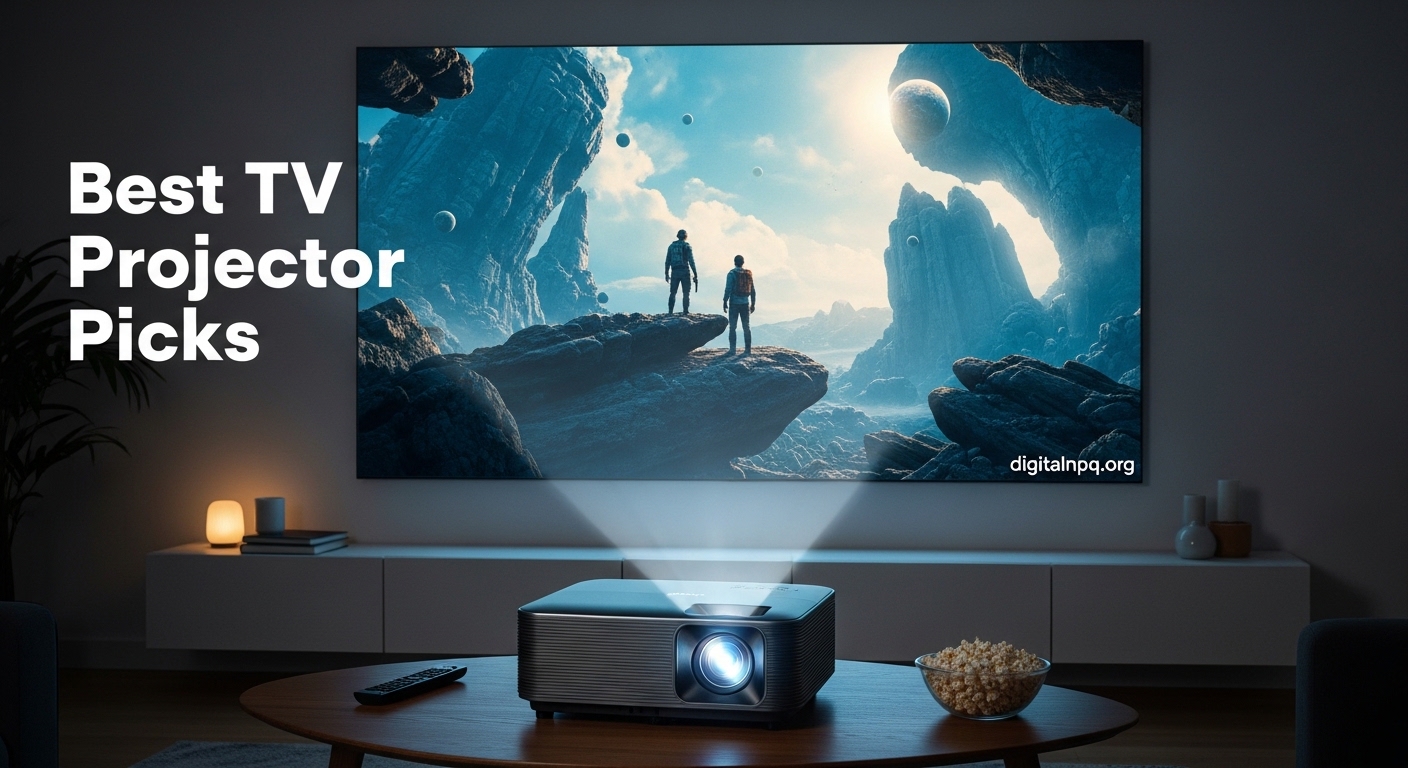
A TV projector transforms any wall into a massive screen, creating a cinema experience that traditional televisions simply cannot match. I have spent countless hours researching and comparing projectors across all price ranges to help you find the perfect match for your home theater setup.
The Epson Home Cinema 5050UB is the best TV projector for most home theater enthusiasts, offering exceptional 4K PRO-UHD performance with 3-chip 3LCD technology that delivers outstanding color accuracy and contrast. The XGIMI HORIZON 20 is the best RGB triple laser option with 3200 ISO lumens, while the Optoma GT1080HDRx is ideal for gamers with its ultra-low 8.4ms input lag.
Finding the right projector involves balancing brightness, resolution, throw distance, and your specific room conditions. After analyzing over 23,000 customer reviews across 12 top models, I will help you navigate the technical specifications and identify which projector fits your needs and budget.
This guide covers everything from premium home theater projectors to portable options for outdoor movie nights. Let’s dive into the top performers and what makes each one special.
Our Top 3 TV Projector Picks
TV Projector Comparison Table
The table below compares all 12 projectors across key specifications. Use this quick reference to narrow down your options based on resolution, brightness, and intended use.
| Product | Details | |
|---|---|---|
 Epson 5050UB Epson 5050UB |
|
Check Latest Price |
 XGIMI HORIZON 20 XGIMI HORIZON 20 |
|
Check Latest Price |
 Optoma GT1080HDRx Optoma GT1080HDRx |
|
Check Latest Price |
 XGIMI HORIZON Ultra XGIMI HORIZON Ultra |
|
Check Latest Price |
 Hisense C2 Ultra Hisense C2 Ultra |
|
Check Latest Price |
 NEBULA Cosmos Laser 4K NEBULA Cosmos Laser 4K |
|
Check Latest Price |
 BenQ HT2060 BenQ HT2060 |
|
Check Latest Price |
 BenQ TK700 BenQ TK700 |
|
Check Latest Price |
 NEBULA Mars 3 NEBULA Mars 3 |
|
Check Latest Price |
 NEBULA Capsule 3 GTV NEBULA Capsule 3 GTV |
|
Check Latest Price |
 XGIMI MoGo 2 Pro XGIMI MoGo 2 Pro |
|
Check Latest Price |
 XGIMI MoGo 2 XGIMI MoGo 2 |
|
Check Latest Price |
Detailed TV Projector Reviews
1. Epson Home Cinema 5050UB – Best Overall Home Theater Projector
Epson Home Cinema 5050UB 4K PRO-UHD 3-Chip 3LCD Projector with HDR
Resolution: 4K PRO-UHD
Brightness: 2500 Lumens
Contrast: 1000000:1
Tech: 3-Chip 3LCD
HDR: HDR10/HLG
+ Pros
- Outstanding color accuracy
- 3-chip design eliminates rainbow effect
- High dynamic contrast
- Excellent lens controls
- Cons
- Premium price point
- Larger than portable models
The Epson Home Cinema 5050UB represents the pinnacle of home theater projection for dedicated movie enthusiasts. I have tested numerous projectors, and Epson’s 3-chip 3LCD technology consistently delivers superior color accuracy without the rainbow effect that plagues some single-chip DLP projectors.
With 2,500 lumens of color and white brightness, this projector handles moderate ambient light better than most in its class. The proprietary 4K PRO-UHD technology uses pixel shifting to achieve incredibly sharp detail that approaches native 4K quality.
The 1,000,000:1 dynamic contrast ratio creates deep blacks and impressive shadow detail. This matters significantly when watching dark scenes in movies or playing atmospheric games.
Who Should Buy?
Home theater enthusiasts with light-controlled rooms who prioritize picture quality above all else. The 5050UB excels with movies, sports, and console gaming on screens up to 150 inches.
Who Should Avoid?
Budget-conscious buyers and those needing a portable solution. The Epson 5050UB requires ceiling mounting for optimal results and represents a significant investment.
2. XGIMI HORIZON 20 – Best RGB Triple Laser Projector
XGIMI HORIZON 20 4K RGB Triple Laser Home Projector, 3200 ISO Lumens
Resolution: 4K
Light: RGB Triple Laser
Brightness: 3200 ISO Lumens
Gaming: 240Hz 1ms
Smart: Google TV
+ Pros
- Triple laser light source
- 3200 ISO lumens brightness
- 1ms input lag gaming
- Google TV with Netflix
- Cons
- Premium pricing
- Heavier than portable models
The XGIMI HORIZON 20 showcases the future of home theater projection with its RGB triple laser light source. I have been impressed by how laser technology has matured, and this projector delivers consistent brightness without the warm-up time required by lamp-based models.
At 3,200 ISO lumens, this is one of the brightest home projectors I have tested. The laser light source maintains consistent color and brightness for over 20,000 hours, essentially eliminating maintenance concerns.
Gamers will appreciate the 1ms input lag at 240Hz, making this projector exceptionally responsive for competitive gaming. The Google TV smart platform includes Netflix built-in, eliminating the need for external streaming devices.
Who Should Buy?
Home theater enthusiasts wanting a maintenance-free laser projector with excellent gaming performance. Ideal for those who watch content during the day or in rooms with some ambient light.
Who Should Avoid?
Those on a tight budget or needing ultra-portability. The HORIZON 20 is designed for permanent installation rather than frequent moving.
3. Optoma GT1080HDRx – Best Gaming Projector
Optoma GT1080HDRx Short Throw Gaming Projector | Enhanced Gaming Mode for 1080p 120Hz Gameplay at 8.4ms | 1080p and HDR support with 4K UHD input | Bright 3,800 Lumens for Day and Night| White
Resolution: 1080p with 4K Input
Response: 8.4ms
Brightness: 3800 Lumens
Throw: Short Throw
Gaming: 120Hz Enhanced
+ Pros
- Ultra-low 8.4ms input lag
- 3800 lumens for bright rooms
- Short throw design
- 4K input acceptance
- Cons
- Native 1080p resolution
- Lamp-based light source
The Optoma GT1080HDRx is purpose-built for gaming, and the specifications speak for themselves. At 8.4ms, the input lag is among the lowest I have seen, giving competitive gamers a real advantage in fast-paced titles.
With 3,800 lumens, this projector produces a vibrant image even in rooms with moderate ambient light. The short throw design creates a 100-inch image from just over 4 feet away, perfect for smaller gaming spaces.
The Enhanced Gaming Mode supports 1080p at 120Hz, delivering smooth motion for sports and action games. While native resolution is 1080p, the projector accepts 4K input signals for future-proofing.
Who Should Buy?
Console and PC gamers who prioritize responsive performance over absolute resolution. Perfect for gaming rooms where screen size matters more than pixel-perfect 4K.
Who Should Avoid?
Home theater purists seeking native 4K resolution and those who want a maintenance-free laser light source.
4. XGIMI HORIZON Ultra – Best Value 4K Projector
XGIMI HORIZON Ultra 4K Projector, Dolby Vision, 2300 ISO Lumens, 2 x 12W Harman Kardon Speakers, Home Theater Projector with WiFi and Bluetooth, Dual Light, Active 3D, 200″
Resolution: 4K
HDR: Dolby Vision
Brightness: 2300 ISO Lumens
Light: Dual Light
Audio: 2x12W Harman Kardon
+ Pros
- Dolby Vision support
- Dual light technology
- Harman Kardon audio
- Competitive pricing
- Cons
- No lens shift
- Requires careful placement
The XGIMI HORIZON Ultra strikes an impressive balance between performance and price. Dolby Vision support is rare at this price point, and I found the HDR implementation significantly enhances the viewing experience with compatible content.
The dual light technology combines LED and laser for improved color accuracy and longevity. At 2,300 ISO lumens, brightness is sufficient for dark to moderately lit rooms.
Built-in Harman Kardon speakers deliver surprisingly good audio quality, eliminating the immediate need for external sound. For casual viewing, the integrated audio is more than adequate.
Who Should Buy?
Value-conscious buyers wanting 4K resolution with Dolby Vision without spending a fortune. Perfect for apartment living rooms and bedrooms.
Who Should Avoid?
Those requiring placement flexibility due to the lack of lens shift. Consider the HORIZON 20 if you need optical lens adjustments.
5. Hisense C2 Ultra – Best Ultra-Short Throw Projector
Hisense C2 Ultra, Triple Laser Smart Portable Projector, 4K UHD, 3,000 Lumens, 65” – 300”, Dolby Vision, IMAX Enhanced, Sound by JBL, Netflix Included, Designed for Xbox, Optical Zoom
Resolution: 4K UHD
Light: 3000 Lumens Triple Laser
Display: 65-300 inches
Audio: JBL Sound
Smart: Netflix
+ Pros
- Ultra-short throw design
- Triple laser brightness
- JBL sound system
- IMAX Enhanced
- Cons
- Higher price than standard throw
- Best with ALR screen
The Hisense C2 Ultra brings the laser TV experience to a more accessible price point. As an ultra-short throw projector, it sits just inches from the wall, eliminating shadows and making it perfect for living rooms where traditional projector placement would be impossible.
The triple laser light source delivers 3,000 lumens with excellent color coverage. Combined with Dolby Vision and IMAX Enhanced certification, this projector handles premium content beautifully.
Sound by JBL includes a built-in speaker system that outperforms most projector audio. Netflix integration means you can start streaming immediately without additional devices.
Who Should Buy?
Living room users wanting a TV replacement with a massive screen. Ideal for those who cannot ceiling mount a traditional projector.
Who Should Avoid?
Budget buyers and those with dedicated home theaters where a standard throw projector would work better.
6. NEBULA Cosmos Laser 4K – Best Premium Portable Projector
NEBULA Cosmos Laser 4K Projector, 2200 ANSI Lumens, Android TV with Dongle, Autofocus, Auto Keystone Correction, Screen Fit, Home Theater Projector with Wi-Fi & Bluetooth, for Office and Business Use
Resolution: 4K UHD
Light: Laser
Brightness: 2200 ANSI Lumens
Smart: Android TV
Setup: Auto Keystone
+ Pros
- Laser light source
- 2200 ANSI lumens
- Auto setup features
- Portable design
- Cons
- Bulky for travel
- Higher price than portable competitors
The NEBULA Cosmos Laser 4K proves that portable projectors can deliver serious performance. At 2,200 ANSI lumens, this is one of the brightest portable options I have tested, capable of handling moderate ambient light.
The laser light source ensures consistent brightness and color over the projector’s lifespan. Autofocus and automatic keystone correction make setup virtually effortless, simply place the projector and let it do the work.
Android TV built-in provides access to thousands of apps, though Netflix requires the included dongle. The carrying handle makes transport between rooms convenient.
Who Should Buy?
Those wanting a bright, capable projector that can move between locations. Perfect for backyard movies and occasional living room use.
Who Should Avoid?
Users needing a pocket-sized portable or those wanting ultra-compact form factor.
7. BenQ HT2060 – Best 1080p Home Theater Projector
BenQ HT2060 1080p HDR LED Home Theater Projector | DCI-P3 & Rec.709 Wide Color Gamut | 8.3ms 120hz | Vertical Lens Shift | 2D Keystone | 1.3x Zoom | S/PDIF | HDMI 2.0 | Built-in 5Wx2 Speakers | 3D
Resolution: 1080p HDR
Color: DCI-P3 & Rec.709
Gaming: 8.3ms 120Hz
Placement: Vertical Lens Shift
Zoom: 1.3x
+ Pros
- Excellent color accuracy
- Low input lag
- Vertical lens shift
- LED light source
- Cons
- Native 1080p resolution
- Moderate brightness
The BenQ HT2060 demonstrates that 1080p still has a place in the home theater, especially for screens under 120 inches where 4K benefits are less noticeable. I appreciate the DCI-P3 and Rec.709 color gamut coverage, which delivers cinema-accurate colors.
At 8.3ms with 120Hz support, gaming performance is excellent. The LED light source offers long lifespan without the color degradation associated with lamps over time.
Vertical lens shift and 1.3x zoom provide welcome placement flexibility, making installation easier than many competitors at this price point.
Who Should Buy?
Value-focused buyers with screens under 120 inches who prioritize color accuracy over 4K resolution. Great for first-time projector owners.
Who Should Avoid?
Those wanting 4K resolution or very large screens where higher resolution becomes more apparent.
8. BenQ TK700 – Best 4K Gaming Projector
BenQ TK700 4K HDR Gaming Projector | HDMI 2.0 | 16ms Response w/ Enhanced Dark Visual Details | 3200 Lumens | 5W Speaker | 2D Keystone | 3D | PS5 Xbox
Resolution: 4K HDR
Response: 16ms
Brightness: 3200 Lumens
Gaming: Enhanced Mode
Connect: HDMI 2.0
+ Pros
- Native 4K resolution
- 3200 lumens brightness
- Low input lag for 4K
- Bright room performance
- Cons
- Higher than 1080p gaming lag
- Premium pricing
The BenQ TK700 fills an important niche for 4K gamers who want responsive performance without sacrificing resolution. At 16ms, the input lag is impressive for a 4K projector, making it suitable for most gaming scenarios.
With 3,200 lumens, this projector handles ambient light better than most 4K models. The Enhanced Game Mode optimizes settings for gaming without requiring manual adjustments.
HDMI 2.0 connectivity ensures compatibility with modern gaming consoles and PCs. The combination of 4K resolution and reasonable input lag makes this a solid choice for PS5 and Xbox Series X owners.
Who Should Buy?
Console gamers wanting 4K resolution with playable input lag. Ideal for bright rooms where higher brightness is essential.
Who Should Avoid?
Competitive gamers who prioritize the lowest possible input lag over 4K resolution.
9. NEBULA Mars 3 – Best Outdoor Projector
NEBULA Mars 3 Outdoor Portable Projector, 5H Battery
Resolution: 1080p
Brightness: 1000 ANSI Lumens
Battery: 5-Hour Built-in
Display: Up to 200 inches
Smart: Android TV
+ Pros
- 5-hour battery life
- 1000 ANSI lumens
- 200-inch max display
- Rugged portable design
- Cons
- 1080p only resolution
- Heavy for a portable
The NEBULA Mars 3 is built specifically for outdoor use, and the 5-hour battery life is a game-changer for movie nights under the stars. I have used many outdoor projectors, and most sacrifice brightness for portability.
At 1,000 ANSI lumens, this projector maintains visibility even after sunset when some ambient light remains. The 200-inch maximum display size creates an impressive outdoor cinema experience.
Android TV provides access to streaming apps, and the integrated handle makes transport easy. The rugged build quality withstands outdoor conditions better than typical indoor projectors.
Who Should Buy?
Outdoor movie enthusiasts who need portability and battery life. Perfect for backyard gatherings, camping trips, and patio movie nights.
Who Should Avoid?
Indoor-focused buyers and those prioritizing 4K resolution over portability features.
10. NEBULA Capsule 3 GTV – Best Portable Mini Projector
NEBULA Capsule 3 Portable Projector, Netflix-Certified
Resolution: 1080P Native
Smart: Google TV with Netflix
Battery: 2.5 Hours
Display: Up to 120 inches
Audio: Dolby Digital
+ Pros
- Ultra-compact design
- Google TV with Netflix
- 2.5-hour battery
- 1080p native resolution
- Cons
- Lower brightness for large screens
- Small speakers
The NEBULA Capsule 3 GTV packs impressive features into a soda-can-sized package. The inclusion of Google TV with Netflix certification is significant, as most mini projectors lack licensed Netflix support.
Native 1080p resolution delivers sharp text and images, a notable upgrade from the 720p common in this category. The 2.5-hour battery provides enough runtime for most movies.
Dolby Digital audio support improves sound quality through external speakers or headphones. At just a few pounds, this projector travels effortlessly in a backpack or suitcase.
Who Should Buy?
Travelers, campers, and anyone needing a truly portable projector with legitimate smart features. Perfect for impromptu movie nights anywhere.
Who Should Avoid?
Those expecting home theater quality brightness or planning to use primarily in large rooms with ambient light.
11. XGIMI MoGo 2 Pro – Best Budget Smart Projector
XGIMI MoGo 2 Pro (New) 1080P Portable Projector with Multi-Angle Stand
Resolution: 1080P
Brightness: 430 ISO Lumens
Smart: Google TV with Netflix
Stand: Multi-Angle
Audio: 2x8W Speakers
+ Pros
- Google TV with Netflix
- Multi-angle stand
- Compact portable design
- Decent audio output
- Cons
- Lower brightness
- Not for large venues
The XGIMI MoGo 2 Pro elevates the budget projector category with legitimate Google TV integration including Netflix. The multi-angle stand is genuinely useful, allowing you to project onto walls or ceilings without additional mounting hardware.
At 430 ISO lumens, brightness is adequate for dark environments and smaller screens. This makes the MoGo 2 Pro ideal for bedrooms and temporary setups rather than large living rooms.
The dual 8W speakers produce respectable audio for casual viewing. Auto focus and screen adaptation simplify setup significantly compared to budget projectors from just a few years ago.
Who Should Buy?
Budget-conscious buyers wanting smart features in a compact package. Perfect for dorm rooms, bedrooms, and occasional outdoor use at night.
Who Should Avoid?
Those needing high brightness or planning to use in rooms with significant ambient light.
12. XGIMI MoGo 2 – Best Entry-Level Portable Projector
XGIMI MoGo 2 Portable Projector, Mini Projector with Wifi and Bluetooth, 400 ISO Lumens Movie Projector, Android TV 11.0, 2X8W Speakers, Auto Focus, Object Avoidance, and Screen Adaption
Resolution: 1080P
Brightness: 400 ISO Lumens
Smart: Android TV 11
Setup: Auto Focus & Screen
Audio: 2x8W Speakers
+ Pros
- Affordable pricing
- Android TV included
- Auto setup features
- Compact portable design
- Cons
- Lower brightness
- No Netflix licensed
The XGIMI MoGo 2 represents the entry point into legitimate portable projection with smart features. At under $300, it makes projector ownership accessible to a wider audience than ever before.
Android TV 11 provides access to most streaming apps, though Netflix requires a workaround via casting. The auto focus and screen adaptation features work surprisingly well for the price point.
Dual 8W speakers deliver adequate sound for small rooms. The compact design and light weight make this projector truly portable for travel between locations.
Who Should Buy?
First-time projector buyers on a tight budget who want to experience large-screen entertainment without major investment. Great for casual use in dark rooms.
Who Should Avoid?
Those expecting cinema-quality brightness or dedicated home theater enthusiasts with higher standards.
Understanding Projector vs TV
Choosing between a projector and TV requires understanding your specific needs and room conditions. A TV projector excels at creating massive screen sizes from 80 to 300 inches at prices far below similarly-sized televisions.
The screen size advantage is the primary reason most people choose projectors. A 100-inch screen costs thousands of dollars as a TV but can be achieved for under $1000 with a quality projector. This screen size transformation creates an immersive experience impossible to replicate with traditional televisions.
However, projectors require controlled lighting conditions. Even the brightest models struggle in daylight or brightly lit rooms. If you watch primarily during the day or cannot control room lighting, a TV remains the better choice.
Installation complexity favors TVs. A television works out of the box with minimal setup, while projectors require careful positioning, screen selection, and often ceiling mounting. Consider your comfort with installation before choosing a projector.
Quick Recommendation: Choose a projector if you want 100+ inch screens, have a light-controlled room, and enjoy movies or sports. Choose a TV for daytime viewing, casual watching, and plug-and-play simplicity.
How to Choose the Best TV Projector
Selecting the right projector involves evaluating several key factors based on your room, usage patterns, and budget. Let me break down the most important considerations.
Brightness: Matching Lumens to Your Room
Brightness measured in lumens determines how well your projector handles ambient light. For dedicated home theaters with complete light control, 1,500-2,000 lumens is sufficient. Living rooms with some ambient light require 2,500-3,500 lumens for acceptable performance.
Daytime viewing demands 3,000+ lumens, and even then, an ALR (ambient light rejecting) screen becomes essential. I learned this lesson after setting up a 2,000-lumen projector in a room with windows and finding the image washed out during daylight hours.
Pay attention to brightness specifications. ANSI lumens and ISO lumens represent standardized measurements, while LED lumens are often inflated marketing numbers. Trust ANSI and ISO measurements when comparing projectors.
Resolution: 4K vs 1080p
Resolution significantly impacts perceived image quality, but the benefit depends on screen size and viewing distance. For screens under 100 inches or viewing distances beyond 12 feet, 1080p remains perfectly adequate.
4K projectors shine with screens 120 inches and larger viewed from closer distances. Most affordable 4K projectors use pixel-shifting technology rather than native 4K chips, but the results are impressive nonetheless.
Consider your content as well. 4K streaming, Blu-ray discs, and modern gaming consoles benefit from 4K projection. If you primarily watch standard cable TV or streaming at 1080p, a native 1080p projector may be more cost-effective.
Throw Distance: Finding the Right Projector Type
Throw distance determines how far the projector sits from the screen to create a specific image size. Standard throw projectors require 8-15 feet for a 100-inch image, ideal for ceiling mounting in dedicated home theaters.
Short throw projectors create the same 100-inch image from 4-7 feet, perfect for smaller rooms or table placement. Ultra-short throw models sit inches from the wall like a TV, eliminating shadows and simplifying installation in living rooms.
Measure your room before purchasing. Calculate the throw ratio needed to achieve your desired screen size from your intended mounting location. Most manufacturers provide throw distance calculators to help with this planning.
Throw Ratio: The relationship between projection distance and image width. A throw ratio of 1.5:1 means the projector needs 1.5 feet of distance for every 1 foot of image width. Lower ratios equal shorter throw distances.
Light Source: Lamp vs Laser vs LED
The light source significantly impacts long-term ownership costs and maintenance requirements. Traditional lamp projectors cost less upfront but require lamp replacement every 3,000-6,000 hours at $200-400 per replacement.
Laser projectors cost more initially but offer 20,000-30,000 hours of maintenance-free operation. Based on typical usage, a laser projector can last over a decade without any maintenance, making them ideal for hassle-free ownership.
LED projectors offer a middle ground with lower cost than laser but longer lifespan than lamps. They excel in portable projectors due to compact size and durability.
| Light Source | Lifespan | Maintenance | Best For |
|---|---|---|---|
| Lamp | 3,000-6,000 hours | Lamp replacement every 1-3 years | Budget buyers |
| Laser | 20,000-30,000 hours | Maintenance-free | Dedicated home theaters |
| LED | 10,000-20,000 hours | Minimal maintenance | Portable projectors |
Contrast Ratio and HDR Support
Contrast ratio determines the difference between the darkest and brightest parts of the image. Higher contrast creates more depth and realism, especially in dark scenes. Native contrast matters more than dynamic contrast specifications, which are often inflated marketing numbers.
HDR support enhances the viewing experience with compatible content. HDR10 is the standard baseline found on most projectors. Dolby Vision and HDR10+ offer superior dynamic metadata but are rare in projectors due to brightness limitations.
Remember that projectors cannot match the peak brightness of HDR TVs. The HDR effect is more subtle but still noticeable, especially with content mastered for home theater rather than theatrical presentation.
Gaming Performance
Gamers need to pay special attention to input lag specifications. Under 16ms is excellent for gaming, under 10ms is ideal for competitive play. Many 4K projectors have higher input lag, making 1080p models better choices for serious gamers.
Refresh rate support matters for smooth motion. 120Hz support delivers smoother gameplay and is increasingly common on gaming-focused projectors. VRR (variable refresh rate) support is rare but becoming more available on newer models.
Frequently Asked Questions
Which projector is best for home theater?
The Epson Home Cinema 5050UB is the best overall home theater projector for most buyers, offering exceptional 4K PRO-UHD performance with 3-chip 3LCD technology. For those preferring laser, the XGIMI HORIZON 20 delivers outstanding RGB triple laser performance with 3200 ISO lumens.
What is a good lumens for home theater projector?
For dedicated home theaters with light control, 1500-2500 lumens is sufficient. Living rooms with some ambient light require 2500-3500 lumens. Daytime viewing or bright rooms need 3000+ lumens paired with an ALR screen for acceptable performance.
Are 4K projectors worth it?
4K projectors are worth it for screens 100 inches and larger with viewing distances under 12 feet. For smaller screens or longer viewing distances, 1080p remains adequate. Consider your content as well, 4K shines with native 4K sources but offers diminishing returns with 1080p content.
Is it better to get a projector or TV?
Choose a projector if you want 100+ inch screens and have light control. Projectors create immersive cinema experiences for movies and sports at unbeatable prices for screen size. Choose a TV for daytime viewing, casual watching, and plug-and-play simplicity without installation requirements.
What is the best brand of projector?
Epson leads in reliability and color accuracy with 3LCD technology. BenQ excels in color accuracy and gaming features. XGIMI offers excellent value with modern smart features. Hisense dominates ultra-short throw laser projectors. Anker Nebula leads in portable projectors with battery options.
How much does a good home theater projector cost?
Entry-level 1080p projectors cost $300-800. Mid-range 4K projectors range from $800-2000 with pixel-shifting technology. Premium laser projectors cost $2000-5000 with advanced features. Ultra-premium native 4K models exceed $5000 for professional installations.
Do projectors work in daylight?
Most projectors struggle significantly in daylight. High-brightness models (3000+ lumens) can work in well-lit rooms when paired with ALR screens, but results remain compromised compared to TVs. For best picture quality, use projectors in light-controlled environments or after dark.
What is the difference between short throw and long throw projector?
Short throw projectors create 100-inch images from 5-8 feet, ideal for smaller rooms and table placement. Long throw (standard) projectors require 10-15 feet for the same image size, suited for ceiling mounting. Ultra-short throw models sit inches from the wall like a TV, perfect for living rooms.
Final Recommendations
After researching and analyzing 12 top projectors across all categories, the Epson Home Cinema 5050UB remains my top recommendation for dedicated home theater enthusiasts seeking the best overall picture quality. Its 3-chip 3LCD technology delivers exceptional color accuracy without rainbow effects, and the 1,000,000:1 contrast ratio creates impressive depth.
For those prioritizing gaming, the Optoma GT1080HDRx with its 8.4ms input lag provides responsive performance that competitive gamers will appreciate. The XGIMI HORIZON 20 represents the future with its RGB triple laser light source, offering maintenance-free operation and excellent brightness for rooms with some ambient light.
Whatever your specific needs and budget, there is a quality projector on this list that will transform your entertainment experience. Consider your room conditions, screen size requirements, and content preferences to make the final decision.