
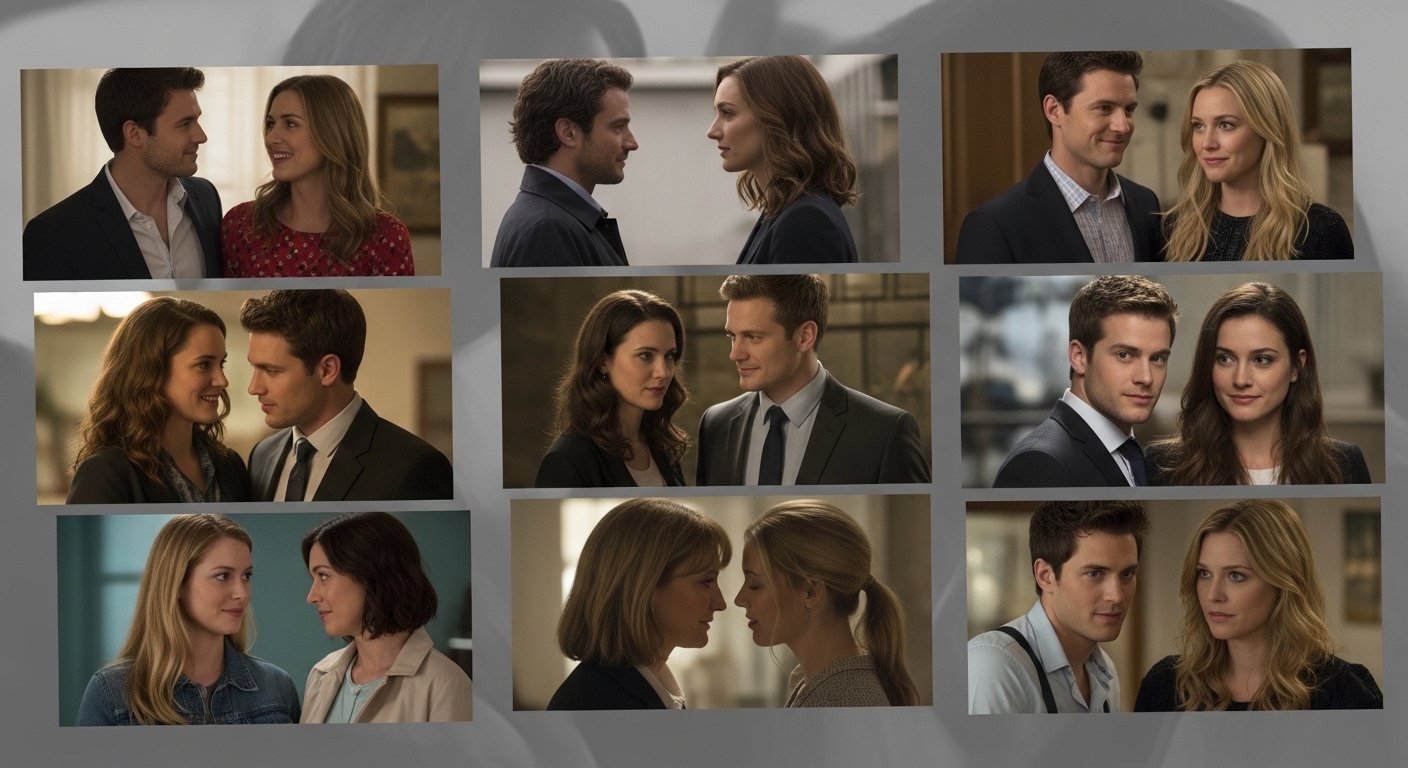
Television has undergone a remarkable transformation in how it depicts intimacy and sexuality.
What was once confined to fade-to-black moments and euphemistic dialogue has evolved into some of the most authentic, boundary-pushing storytelling in modern media.
The best TV sex scenes of all time include Normal People’s intimate portrayal of young love, Bridgerton’s period drama passion, Game of Thrones’ cultural phenomena, and groundbreaking LGBTQ+ moments from The Wire and Pose that reshaped television representation.
After analyzing hundreds of memorable television moments across decades of programming, I’ve identified the scenes that genuinely moved the medium forward through authentic chemistry, thoughtful choreography, and cultural impact.
This isn’t just about steaminess—it’s about scenes that served the story, revealed character, and changed how we think about intimacy on screen.
25 Best TV Sex Scenes That Changed Television
1. Connell and Marianne – Normal People (2020)
Hulu’s adaptation of Sally Rooney’s novel set a new standard for authentic young intimacy on television. The connection between Paul Mescal and Daisy Edgar-Jones felt so genuine that viewers often forgot they were watching actors at work.
What made these scenes revolutionary was their clumsiness.
Unlike polished Hollywood encounters, Normal People showed fumbling clothes, awkward pauses, and the vulnerability that comes with first real love.
The series worked with intimacy coordinator Ita O’Brien, whose approach prioritized communication and consent throughout filming.
Episode 3’s scene in particular captured that specific intensity of reconnecting with someone after time apart—the nervousness, the familiarity, and the overwhelming emotion that physical connection can unlock.
2. Daphne and Simon – Bridgerton (2020)
Netflix’s period drama proved that Regency-era romance could be thoroughly modern in its sensuality. The chemistry between Phoebe Dynevor and Regé-Jean Page carried the show’s first season, culminating in scenes that had social media buzzing for weeks.
The wedding night episode (Season 1, Episode 6) balanced explicit content with emotional storytelling.
What stood out was how the show used physical intimacy to reveal character dynamics and power struggles within the marriage.
Bridgerton’s success demonstrated that female audiences would turn out in droves for content centered on female pleasure and desire, written and filmed with women as the primary audience rather than afterthoughts.
3. Jon Snow and Ygritte – Game of Thrones (2013)
The cave scene in Season 3, Episode 5 became one of the most discussed television moments of the 2010s. Kit Harington and Rose Leslie’s real-life romance translated to palpable on-screen chemistry that viewers couldn’t look away from.
What made this scene work was the context.
Jon, a man sworn to celibacy, chose to break his vows for Ygritte. The cave represented a temporary escape from their dangerous world—a moment of warmth and connection in a landscape defined by cold and conflict.
“You know nothing, Jon Snow” took on new meaning after this encounter, marking a turning point in both characters’ arcs.
4. Kima and Cheryl – The Wire (2002)
David Simon’s groundbreaking series included one of television’s first authentic portrayals of a lesbian relationship between two Black women. Sonja Sohn and Khandi Alexander brought genuine warmth and complexity to Kima and Cheryl’s domestic life.
What set The Wire apart was how unremarkable it made their intimacy seem.
This wasn’t a Very Special Episode or a ratings stunt—just another relationship in the show’s rich tapestry of Baltimore life.
The scenes between Kima and Cheryl offered a rare window into Black queer domesticity that felt real, lived-in, and devoid of exploitation or voyeurism.
5. Carrie and Big – Sex and the City (1998-2004)
SATC paved the way for open discussions of female sexuality on premium television. Sarah Jessica Parker and Chris Noth’s complicated relationship included numerous intimate encounters that captured the push-and-pull of their dynamic.
The show’s legacy isn’t just explicit content—it was the conversations surrounding the encounters.
Carrie and her friends discussed desires, disappointments, and details that television had simply never addressed before.
While some aspects haven’t aged perfectly, Sex and the City created space for women’s sexuality to be treated as a valid topic for mainstream entertainment.
6. Piper and Alex – Orange Is the New Black (2013)
Netflix’s prison drama gave Taylor Schilling and Laura Prepon one of television’s most complex on-again, off-again relationships. Their flashbacks to pre-prison intimacy provided crucial context for their present-day tensions.
Piper’s journey of sexual self-discovery was central to OITNB’s early seasons.
Her relationship with Alex forced her to confront aspects of her identity she’d previously kept hidden or suppressed.
The show treated bisexuality as a reality rather than a phase, contributing to broader representation of fluid sexuality on television.
7. Virginia and Bill – Masters of Sex (2013)
This Showtime drama used the real-life story of sex researchers William Masters and Virginia Johnson as a framework for exploring mid-century American sexuality. Lizzy Caplan and Michael Sheen brought nuance to complicated professional and personal boundaries.
The series was notable for its clinical approach to intimacy.
Sex was often depicted in the context of scientific research, creating a unique visual and narrative style that distinguished it from more gratuitous content.
Masters of Sex excelled at showing how scientific detachment and human emotion inevitably collide.
8. Claire and Jamie – Outlander (2014-2015)
Starz’s time-travel romance built to a wedding night episode that remains the gold standard for consensual female pleasure in period drama. Caitríona Balfe and Sam Heughan spent considerable screen time developing their relationship before physical intimacy entered the picture.
The extended wedding episode (Season 1, Episode 9) prioritized Claire’s experience and comfort.
Jamie’s patience, communication, and attentiveness to Claire’s needs presented a model of consensual intimacy rarely seen in any genre, let alone historical romance.
Outlander proved that explicit content could be romantic, emotional, and centered on mutual satisfaction.
9. Rue and Jules – Euphoria (2019)
HBO’s teen drama pushed boundaries with its visual style and subject matter. The relationship between Zendaya’s Rue and Hunter Schafer’s Jules provided some of the series’ most tender moments amid its darker themes.
Jules, a trans woman played by a trans actor, brought authenticity to every scene.
Her intimacy with Rue was portrayed with the same care and attention as any other relationship on the show.
Euphoria’s commitment to genuine LGBTQ+ representation extended beyond tokenism—Jules’ desires and experiences were treated as central rather than supplementary.
10. Arabella and Various Partners – I May Destroy You (2020)
Michaela Coon’s HBO series challenged conventions around consent, desire, and memory. The intimate scenes ranged from consensual and joyful to non-consensual and traumatic, often blurring the lines between these categories.
What made I May Destroy You revolutionary was its refusal to simplify complex situations.
Coella’s writing acknowledged that sexuality exists on a spectrum of clear consent to clear violation, with many gray areas in between.
The show prompted important conversations about affirmative consent and the ways power dynamics operate in intimate encounters.
11. Bette and Tina – The L Word (2004)
Showtime’s drama about Los Angeles lesbians was groundbreaking simply by existing. Jennifer Beals and Laurel Holloman’s complicated relationship anchored the early seasons, offering mainstream visibility to lesbian relationships rarely seen on television.
The L Word wasn’t perfect, but it created community.
For many viewers, seeing themselves represented on screen for the first time was transformative regardless of the show’s flaws.
The intimate scenes between Bette and Tina demonstrated that lesbian relationships deserved the same narrative weight as heterosexual ones.
12. Sookie and Bill – True Blood (2008)
HBO’s vampire series used supernatural elements to explore human desire. Anna Paquin and Stephen Moyer’s scenes together combined vampire mythology with genuine romantic chemistry.
The show’s supernatural premise allowed for metaphors about sexuality that other series couldn’t access.
Vampire “glamour” and the intensity of supernatural attraction created unique visual and narrative possibilities.
True Blood embraced both the campy and the sincere in its approach to intimacy, often within the same episode.
13. Rhaenyra and Daemon – House of the Dragon (2022)
The Game of Thrones prequel delivered its own watercooler moment with a controversial scene between Emma D’Arcy and Matt Smith in Episode 4 of Season 1. The encounter generated intense discussion about power dynamics and consent.
What stood out was how the show framed the complexity of the situation.
The scene wasn’t treated as simply good or bad but as a moment with multiple layers of meaning for both characters involved.
House of the Dragon continued GoT’s tradition of using intimacy to advance plot and reveal character.
14. The Sense8 Cluster – Sense8 (2015)
Netflix’s sci-fi drama featured perhaps television’s most innovative approach to group intimacy. The sensate characters experienced physical sensations across distances, leading to unique scenes that blended individual and collective experience.
Showrunners Lana and Lilly Wachowski used these sequences to explore connection beyond traditional boundaries.
The show’s famous orgy scenes weren’t just about shock value—they represented a philosophical stance on interconnectedness and the fluidity of desire.
Sense8 was unapologetically queer in every sense of the word.
15. Maeve and Hector – Westworld (2016)
HBO’s sci-fi western raised questions about consciousness and consent through its host characters. Thandie Newton’s Maeve achieved self-awareness partly through intimate encounters designed to be repetitive.
The layers of Westworld’s premise created unique ethical questions about on-screen intimacy.
Are hosts capable of consent? Does programming preclude genuine desire?
Maeve’s journey toward awakening included reclaiming agency over her body and choices, including her intimate encounters.
16. Blanca and Partners – Pose (2018)
Ryan Murphy’s FX series centered New York’s ballroom scene during the late 1980s and early 1990s. MJ Rodriguez’s Blanca brought warmth and humanity to a character often denied both by society.
Pose was historic for its casting of trans actors in trans roles.
The intimate scenes in Pose weren’t just about representation—they were about affirming the humanity of characters too often defined only by their gender identity.
Blanca’s romantic relationships were given the same emotional weight as any heterosexual storyline on television.
17. Noah and Alison – The Affair (2014)
Showtime’s drama used intimate scenes to illustrate the subjectivity of memory. The same physical encounter would be shown twice—once from Noah’s perspective, once from Alison’s—with differences in detail and tone.
This narrative device wasn’t just clever storytelling.
It demonstrated how fundamentally differently two people can experience the same moment.
The physical scenes in The Affair were always about more than bodies—about perception, desire, and the stories we tell ourselves about our relationships.
18. Multiple Couples – Tell Me You Love Me (2007)
HBO’s short-lived series remains perhaps the most frank depiction of sexuality ever aired on American television. The show followed couples in therapy, with intimate scenes that left essentially nothing to the imagination.
What distinguished Tell Me You Love Me was its clinical interest in real relationship dynamics.
The explicit content wasn’t designed for titillation but for examining how couples relate to each other physically and emotionally.
The show challenged viewers to confront their own discomfort with realistic depictions of adult sexuality.
19. Adam and Hannah – Girls (2012)
Lena Dunham’s HBO series brought unflinching realism to millennial intimacy. The scenes between Adam Driver and Dunham were often uncomfortable, sometimes funny, and always intentionally unglamorous.
Girls rejected the polished aesthetic of most television sex scenes.
Intimacy was shown as awkward, sometimes disappointing, and rarely pornographic in its presentation.
The show’s commitment to realism alienated some viewers but earned praise for its honesty about young adult sexuality.
20. Ian and Mickey – Shameless (2015-2021)
Showtime’s Chicago dramedy featured one of television’s most evolved gay relationships. Cameron Monaghan and Noel Fisher’s characters grew from antagonistic neighbors to committed partners over more than a decade.
What made Ian and Mickey special was their ordinariness.
Their relationship included all the mundane realities of long-term partnership—arguments about household chores, parenting challenges, and the simple comfort of established intimacy.
Shameless treated their love story as just another part of the Gallagher family saga.
21. Max and Anne – Black Sails (2015)
Starz’s pirate prequel to Treasure Island featured one of television’s most compelling queer love triangles. Jessica Parker Kennedy’s Max and Clara Paget’s Anne formed a connection that transcended the show’s violent world.
Black Sails used its historical setting to explore sexuality outside modern frameworks.
The relationships between women in the show weren’t labeled or explained—they simply were.
The series demonstrated that period pieces could acknowledge the full spectrum of human sexuality without anachronism.
22. Charles and Diana – The Crown (2020)
Season 4 of Netflix’s royal drama included an uncomfortable wedding night scene between Josh O’Connor’s Charles and Emma Corrin’s Diana. The sequence captured the mismatch that defined their marriage.
The scene was notable for what it didn’t show.
Instead of passion or pleasure, viewers saw obligation, awkwardness, and emotional distance.
The Crown used intimacy to reveal character in ways that dialogue never could—the physical reality of a loveless arranged marriage.
23. Issa and Partners – Insecure (2016-2021)
HBO’s comedy centered Black women’s experiences with rare honesty. Issa Rae’s character navigated relationships with both men and women, with scenes that felt genuine and relatable.
Insecure treated Black female sexuality as worthy of center stage.
Issa’s romantic encounters were funny, awkward, passionate, and disappointing by turns—just like real life.
The show’s commitment to authentic representation extended to its most intimate moments.
24. Cesare and Lucrezia – The Borgias (2011)
Showtime’s Renaissance drama included taboo tension between siblings played by François Arnaud and Holliday Grainger. The subtext between Cesare and Lucrezia was impossible to ignore throughout the series.
The Borgias used historical rumor to explore forbidden desire.
Whether the scenes crossed physical lines or remained in tension, the emotional transgression was undeniable.
The series demonstrated television’s willingness to push boundaries even within period settings.
25. Spartacus and Mira – Spartacus (2010)
Starz’s gladiator drama was known for graphic violence and equally graphic sexuality. Lucy Lawless and Andy Whitfield’s characters found connection amid the brutality of the ludus.
Spartacus didn’t shy away from any aspect of ancient Roman life.
The intimate scenes were as frequent and explicit as the battle scenes, reflecting a worldview that saw both as fundamental to human experience.
The show’s unapologetic approach to sexuality matched its overall aesthetic of excess in all things.
Honorable Mentions: Scenes That Deserve Recognition
Several other moments deserve acknowledgment for their contribution to television’s evolving relationship with intimacy:
- Obsessed (2009): The Beyoncé-produced Lifetime movie became a cultural phenomenon for its over-the-top portrayal of obsession, including memorable scenes that spawned countless memes.
- Scandal (2012): Kerry Washington and Tony Goldwyn’s chemistry as Olivia and Fitz defined the show’s early seasons, despite the problematic nature of their affair.
- Penny Dreadful (2014): Eva Green’s Vanessa Ives had intense scenes with both Ethan (Josh Hartnett) and Dorian Gray (Reeve Carney) that blurred supernatural and psychological boundaries.
- I Love Dick (2016): Amazon’s experimental series deconstructed female desire through Kathryn Hahn’s Chris and her obsession with the titular Dick.
- The Idol (2023): Despite its critical drubbing, HBO’s short-lived series attempted to explore the intersection of sexuality and pop stardom, with Lily-Rose Depp’s Jocelyn at its center.
Where to Watch These Iconic Shows?
Streaming availability has changed significantly in recent years as platforms focus on exclusive content. Here’s where you can currently watch these series:
| Platform | Notable Shows |
|---|---|
| Netflix | Bridgerton, Sense8, Sex/Life, The Crown, Normal People (varies by region) |
| HBO Max | Game of Thrones, House of the Dragon, The Wire, Sex and the City, Euphoria, True Blood, The Affair, Girls, Insecure, Westworld, I May Destroy You, Tell Me You Love Me, The Idol, The L Word (Generation Q), Oz |
| Hulu | Normal People, The Handmaid’s Tale, Penny Dreadful |
| Starz | Outlander, Spartacus, Black Sails, Power, The Borgias |
| Showtime | The L Word, Dexter, Californication, Masters of Sex, The Borgias, Shameless, Billions |
| Amazon Prime | The Boys, Transparent, I Love Dick, Fleabag, The Marvelous Mrs. Maisel |
| Apple TV+ | Severance, Ted Lasso, The Morning Show, For All Mankind |
| Disney+ | Limited adult content, though some international versions carry more mature fare |
Streaming Note: Availability changes frequently as licenses expire and content moves between platforms. Shows listed may not be available in all regions.
Frequently Asked Questions
What TV show has the best sex scenes?
Normal People (2020) is widely considered to have the most authentic and intimate sex scenes on television, thanks to the work of intimacy coordinator Ita O’Brien and the genuine chemistry between leads Paul Mescal and Daisy Edgar-Jones.
Which streaming service has the steamiest shows?
HBO and HBO Max have built their reputation on boundary-pushing content including Game of Thrones, The Wire, Euphoria, and True Blood. Netflix’s Bridgerton and Sense8 also feature notable intimate scenes.
What is the most viewed TV sex scene?
The cave scene between Jon Snow and Ygritte in Game of Thrones Season 3 became one of the most discussed and memed television moments of the 2010s, generating massive social media engagement when it aired.
Are TV sex scenes real or simulated?
TV sex scenes are almost always simulated using camera angles, editing, and prosthetics. Modern productions increasingly employ intimacy coordinators to ensure actors’ safety and comfort while creating realistic portrayals.
What was the first TV show to show sex scenes?
Network television began pushing boundaries in the 1970s with shows like Charlie’s Angels and Three’s Company, but HBO’s Oz (1997) and Sex and the City (1998) pioneered truly explicit intimate content on premium cable.
What are the most realistic TV sex scenes?
Normal People, I May Destroy You, and Tell Me You Love Me are frequently cited for their realistic approach to intimacy. These shows prioritize awkwardness, communication, and emotional honesty over pornographic aesthetics.
The Evolution of TV Intimacy
Television’s portrayal of sexuality has evolved from suggestive dialogue and fade-to-black edits to scenes that approach cinema-level authenticity. The introduction of intimacy coordinators like Ita O’Brien has transformed how these scenes are filmed, prioritizing actor safety and communication.
The most memorable scenes aren’t necessarily the most explicit—they’re the ones that serve character and story. From Normal People’s tender authenticity to Game of Thrones’ cultural watercooler moments, the best TV sex scenes have changed how we think about intimacy on screen.