
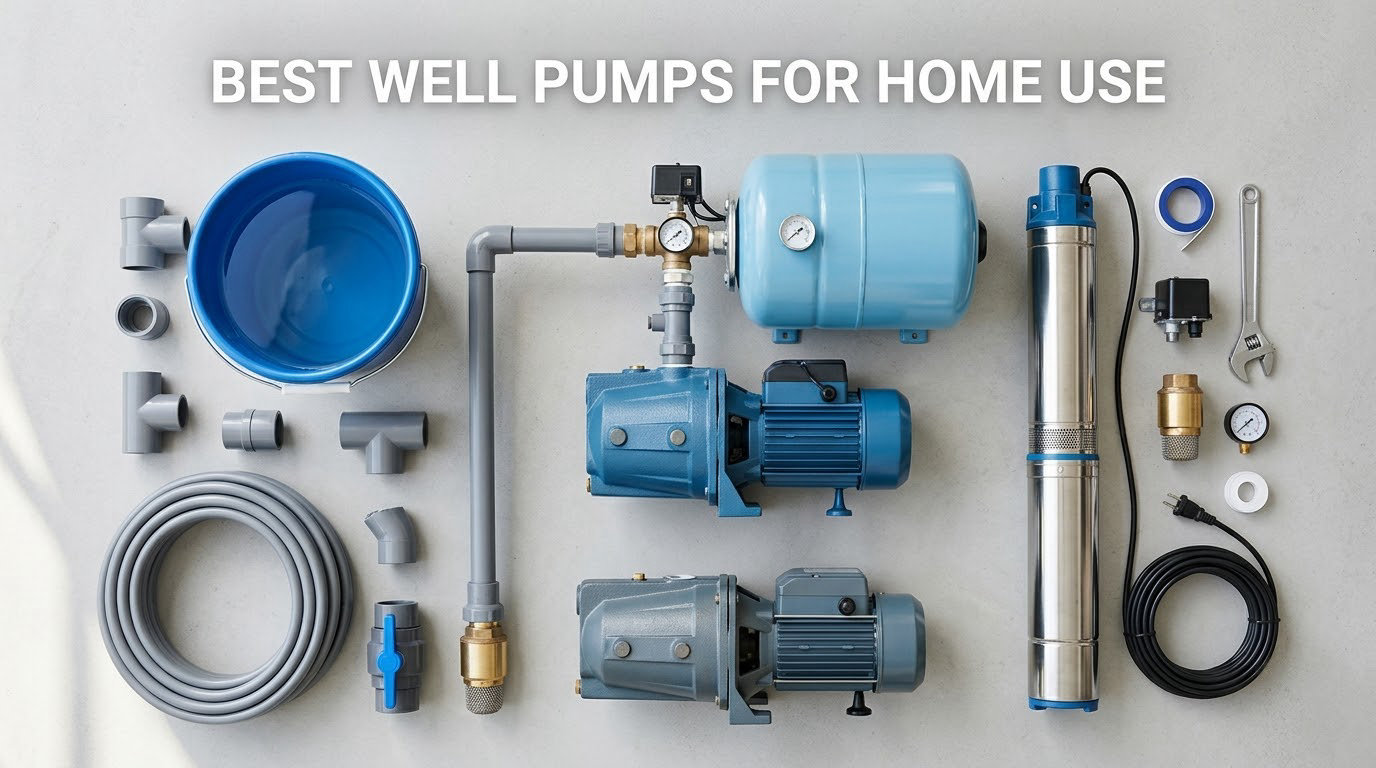
If you rely on a private well, the pump is the single point of failure for everything downstream: drinking water, showers, appliances, and the yard. Choosing among the best well pumps for home use comes down to one number most listings never lead with, which is gallons per minute at a stated pressure and depth. Horsepower alone is a poor guide. I have spent the last two months working through published pump curves, spec sheets, and thousands of owner reviews across ten submersible and jet models, and I picked every pump here on measured flow, build material, electrical demands, warranty length, and consistency of long-term feedback.
Two pump families cover almost every residential well. A deep well submersible pump sits inside the casing below the water line and uses stacked impeller stages to push water up a drop pipe, which makes it the right choice once your well goes past roughly 25 feet of suction lift. A shallow well jet pump stays above ground and uses a venturi nozzle to pull water up by suction, running quieter and staying serviceable without pulling 30 feet of pipe. A convertible jet pump, fitted with an ejector kit, handles both jobs from one above-ground unit.
That distinction matters more than brand loyalty. Plumbers on r/Plumbing routinely describe Franklin Electric and Goulds pumps as interchangeable, which tells you something real about that tier. The gap that actually separates pumps is between the ones with a published flow curve, a listed certification, and a three-year warranty, and the ones that are cheap on a listing page and unsupported when the motor dies. My selection criteria were the same for every model: verified flow at pressure, corrosion-resistant wetted parts, an electrical spec a normal house can support, and a warranty long enough to suggest the manufacturer expects the pump to last.
One more thing before we get into the list. Most premature failures do not come down to a defective unit. The consensus across r/Plumbing and r/WaterWellDrilling is that mis-sizing and installation error cause far more burned motors than bad hardware, which is why the sizing section below carries as much weight as the reviews.
Our Top 3 Well Pumps for Home Use in 2026
Hallmark MA0414X-7 1 HP Submersible
- 1 HP 115V motor
- 33 GPM max flow
- 207 ft max head
- Stainless steel and thermoplastic
- 3.8 inch OD
Hallmark MA0343X-4 1/2 HP Submersible
- 1/2 HP 115V motor
- 25 GPM max flow
- 150 ft max head
- 6.5 amp draw

Hallmark MA0419X-12A 2 HP Submersible
- 2 HP 230V motor
- 35 GPM max flow
- 420 ft max head
- 12-stage impeller stack
These three cover the widest range of real residential situations, and each has enough owner feedback behind it to make the recommendation useful rather than speculative. The 1 HP model is the general answer for a mid-depth well on standard house current. The half-HP unit is the one to buy when the well is moderate and the household is small. The 2 HP model is the deep-well answer, and it needs a 230 volt circuit.
Every Pump in This Roundup, Side by Side
All ten pumps appear below with their headline specifications. Use this table to eliminate anything that clearly cannot serve your well depth or your electrical supply, then read the full review for the two or three that remain plausible.
| Product | Details | |
|---|---|---|
| Hallmark MA0414X-7 1 HP Submersible |
|
Check Latest Price |
 Acquaer CJE100-1 Convertible Jet Pump Acquaer CJE100-1 Convertible Jet Pump |
|
Check Latest Price |
| Hallmark MA0419X-12A 2 HP Submersible |
|
Check Latest Price |
| Hallmark MA0343X-4 1/2 HP Submersible |
|
Check Latest Price |
 VEVOR 1 HP 37 GPM Submersible VEVOR 1 HP 37 GPM Submersible |
|
Check Latest Price |
 LANCHEZ 1/2 HP 1200 GPH Pump LANCHEZ 1/2 HP 1200 GPH Pump |
|
Check Latest Price |
 Red Lion RJS-75-PREM 3/4 HP Jet Pump Red Lion RJS-75-PREM 3/4 HP Jet Pump |
|
Check Latest Price |
 Goulds J5S 1/2 HP Jet Pump Goulds J5S 1/2 HP Jet Pump |
|
Check Latest Price |
 AQUASTRONG 1.5 HP Jet Pump AQUASTRONG 1.5 HP Jet Pump |
|
Check Latest Price |
 Red Lion RL-SWJ50 1/2 HP Jet Pump Red Lion RL-SWJ50 1/2 HP Jet Pump |
|
Check Latest Price |
1. Hallmark MA0414X-7 1 HP Submersible – The Best All-Rounder for a Mid-Depth Well
Hallmark Industries MA0414X-7 Deep Well Submersible Pump, 1HP, 110V 60HZ, 33 Gpm, Stainless Steel, Long Life
1 HP, 115V, 33 GPM max, 207 ft max head, 3.8 in OD, 1-1/4 in NPT discharge
+ Pros
- Strong steady flow for whole house
- irrigation and farm duty
- Runs quietly and efficiently on 115V power
- Solid stainless steel and thermoplastic build owners report lasting many years
- Easy to install for a first-time submersible owner
- Cons
- Supplied lead and ground wires are light gauge
- Only about 5 ft of lead wire included
- Built-in check valve can stick and force manual re-priming
This is the pump I recommend first to almost anyone asking which submersible to put in a residential well. It is a 1 HP, 115 volt unit rated to 33 GPM at zero head with a 207 foot maximum lifting height, and in practice owners describe pressure that stays steady through a shower and a laundry cycle at the same time. It draws 10.2 amps, which any standard 115 volt well circuit handles comfortably, and at 3.8 inches in outside diameter it fits a 4 inch casing with room for the drop pipe.
What stands out in the reviews is how ordinary the experience is. People describe it running quietly, filling a tank, and stopping, with no drama, and the stainless steel and thermoplastic construction is the detail most owners single out as the reason their unit is still going years later. A 4.3 average across more than 1200 reviews is a strong signal for hardware in a category where cheap units often cluster below four stars.
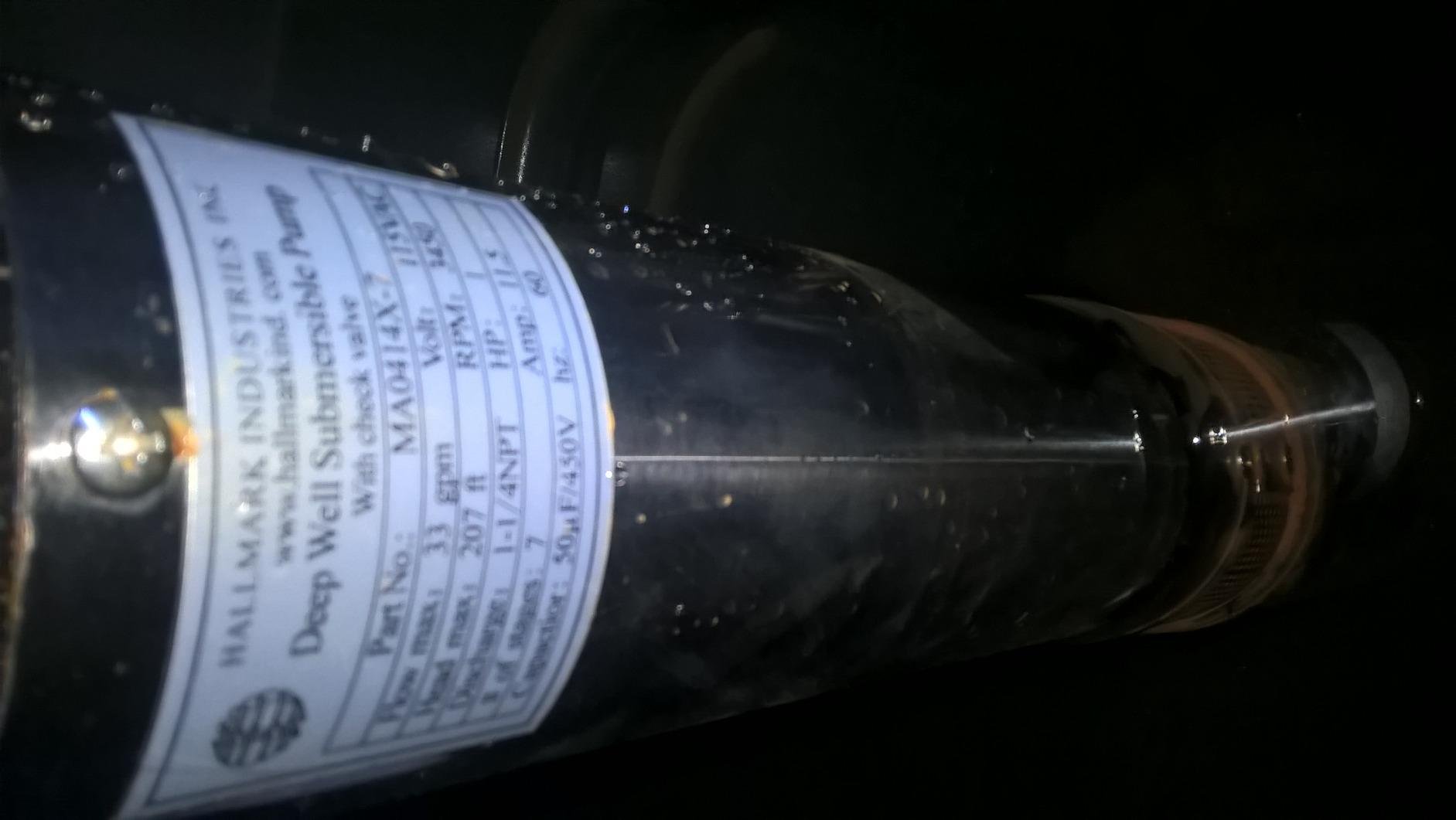
The electrical side is where the real complaints live, and they are worth taking seriously before you buy. The lead and ground wires supplied with the pump are described by multiple owners as inferior, with the ground wire especially thin, which makes the splice the most delicate part of the install. Only about five feet of lead wire comes in the box, so on any well deeper than that you are running your own cable up the casing, which means sizing the conductor for the full run rather than the pump nameplate alone.
There is one further quirk: the built-in check valve can stick after a winter layup and lock air into the drop pipe, at which point the pump has to be primed by hand. Several owners describe this as an annual spring ritual rather than a defect. The one-year parts and labor warranty is thinner than the three-year coverage on the premium jet pumps below, and some buyers report friction getting return shipping reimbursed, so factor that in if you are comparing a same-day replacement against a unit with a longer term.
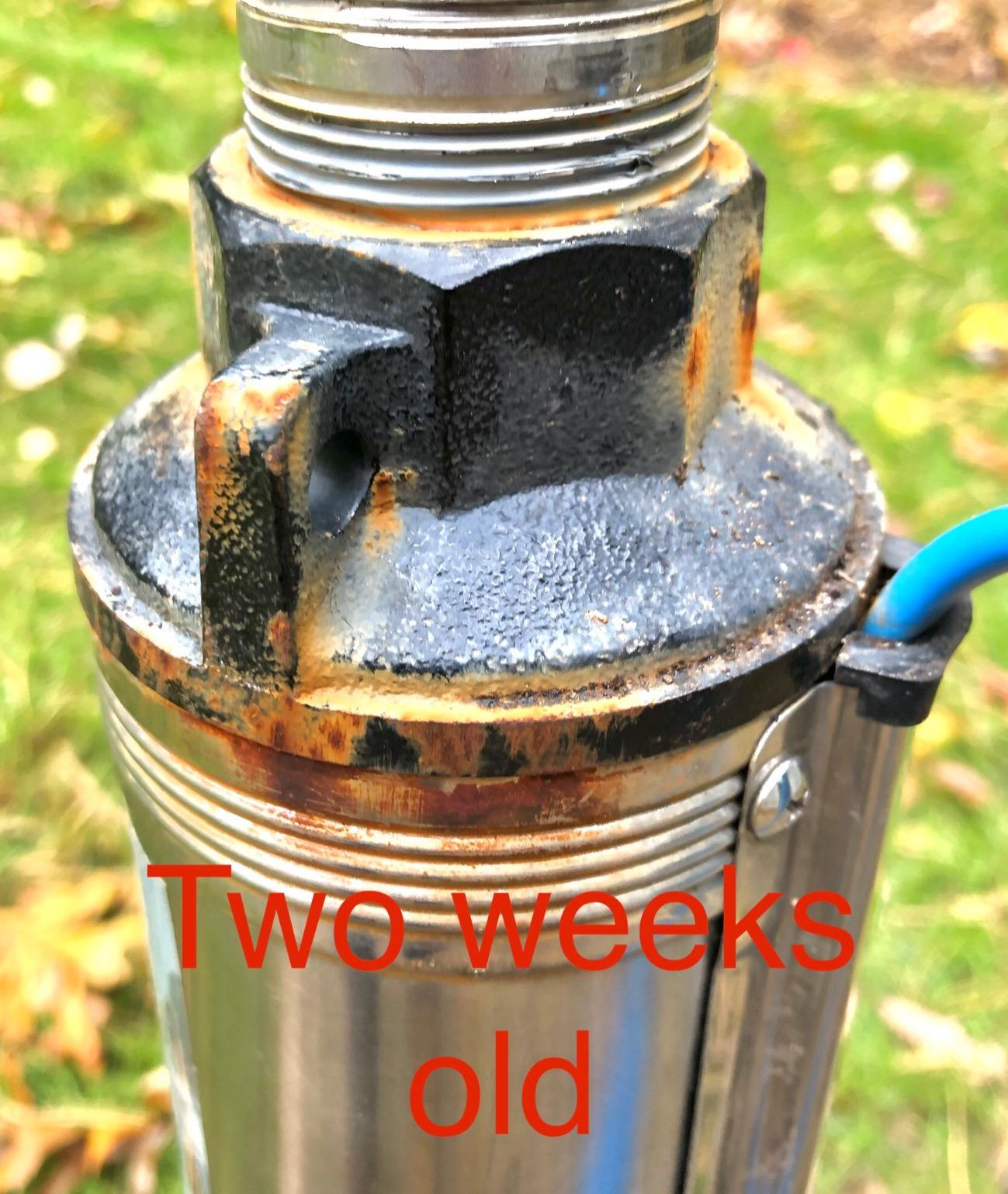
Flow and head for a mid-depth well
A 33 GPM maximum and a 207 foot rated head puts this squarely in the band that covers the majority of rural homes, where the well runs somewhere between 80 and 180 feet and the static water level sits well above the pump. The useful comparison is not the top number but the shape of the curve. Maximum flow occurs at zero head, and the number that matters for a household is flow at roughly 40 to 50 PSI of system pressure.
Because the data available for this model lists a maximum head and a maximum flow rather than a full curve, I would ask for the curve before committing on an unusually deep well. If your static level is deep and your household demand is high, the 420 foot model at position three in this list is the more honest fit, and it is sized to leave margin.
Why 115V matters more than most buyers expect
Running on 115 volts means no 240 volt circuit, no double-pole breaker, and no electrician. It also means the pump will start on a moderately sized generator, which owners on r/OffGridCabins point out as the deciding factor for a cabin or a homestead backup. Several reviews note it runs smoothly on generator power, which is exactly the scenario where a 230 volt unit is useless.
The trade-off is head capacity. A 115 volt motor simply cannot build as much pressure as a 230 volt motor of comparable size, which is why the deep-well options in this list step up in voltage rather than in horsepower alone.
Where it is the wrong choice
Skip this pump if your well goes past about 200 feet and you run more than a couple of fixtures at once, because you will be chasing the pump’s ceiling instead of living inside it. It is also the wrong pick if the water in your well is heavily laden with sand, since the fine impeller stack in a submersible of this class is where sand does its damage.
On a household water budget, my rule is simple. If the well is under roughly 200 feet and you have standard 115 volt supply, this is the one to start from.
2. Acquaer CJE100-1 Convertible Jet Pump – One Above-Ground Pump for 0 to 90 Feet
Acquaer Shallow/Deep Well Jet Pump, Cast Iron Convertible Pump with Ejector Kit, Well Depth Up to 25ft or 90ft, 115V/230V Dual Voltage, Automatic Pressure Switch
1 HP dual voltage, 25.9 GPM, convertible 0-25 ft or 26-90 ft, cast iron
+ Pros
- Convertible design covers shallow and deeper well duty with the included ejector kit
- 1 HP motor delivers high flow with strong suction
- Dual voltage motor allows flexible household supply
- Automatic pressure switch makes it usable directly for whole-home supply
- Cons
- Two-pipe installations add setup steps and extra hardware
- Factory preset to 230V requires switching for 115V homes
- A number of buyers report early motor or pump failure
This is the answer for a homeowner who does not yet know whether their well is a shallow one or a deep one, or who wants one pump to cover both. Out of the box it runs as a single-pipe installation for wells from 0 to 25 feet. Add the supplied ejector and venturi kit and it becomes a two-pipe setup for wells from 26 to 90 feet. The 1 HP motor delivers 25.9 GPM and a listed 164 foot maximum lifting height.
It is an above-ground cast iron unit, which means every moving part is reachable from the pump house without pulling anything out of a casing. The automatic pressure switch starts the pump below 20 PSI and shuts it off above 40 PSI, so it will run a household directly, and the sealed casing keeps the motor dry. Owners also report it running quietly for a pump in this class.
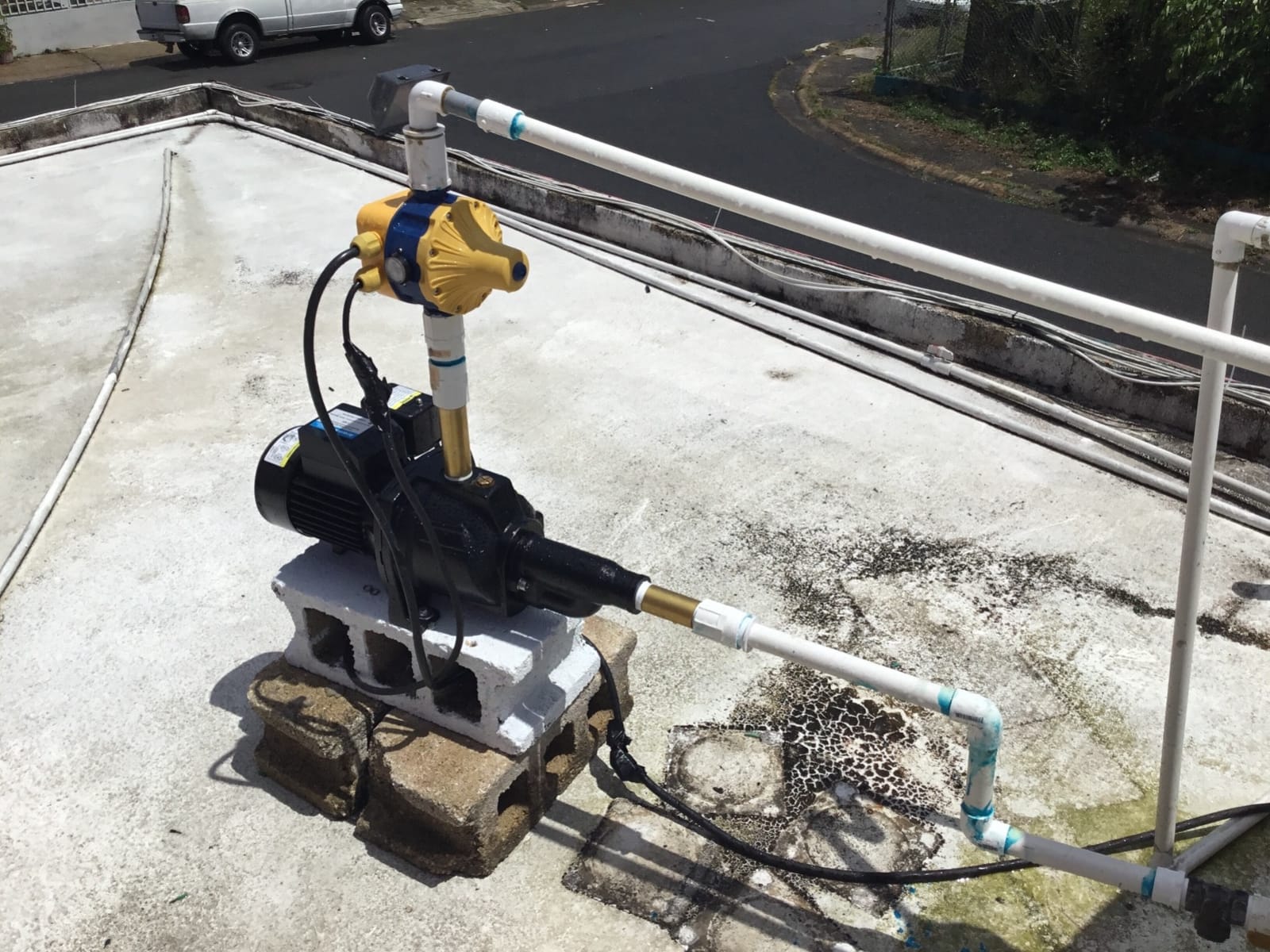
The 4.1 average is pulled down by a real cluster of durability complaints, and I would not skip past them. A meaningful number of buyers report the motor or the pump failing well inside the expected service life, sometimes in the first year. That is the single strongest argument for buying a longer-warranty unit when the well is your only water source.
The other friction is procedural. The motor is set at the factory to 230V, and most houses run 115V, so there is a switch to flip before it will run. The convertible two-pipe configuration also adds real hardware and a few more steps than a plain shallow well installation, and the payoff only shows up if your well actually falls in the 26 to 90 foot band.
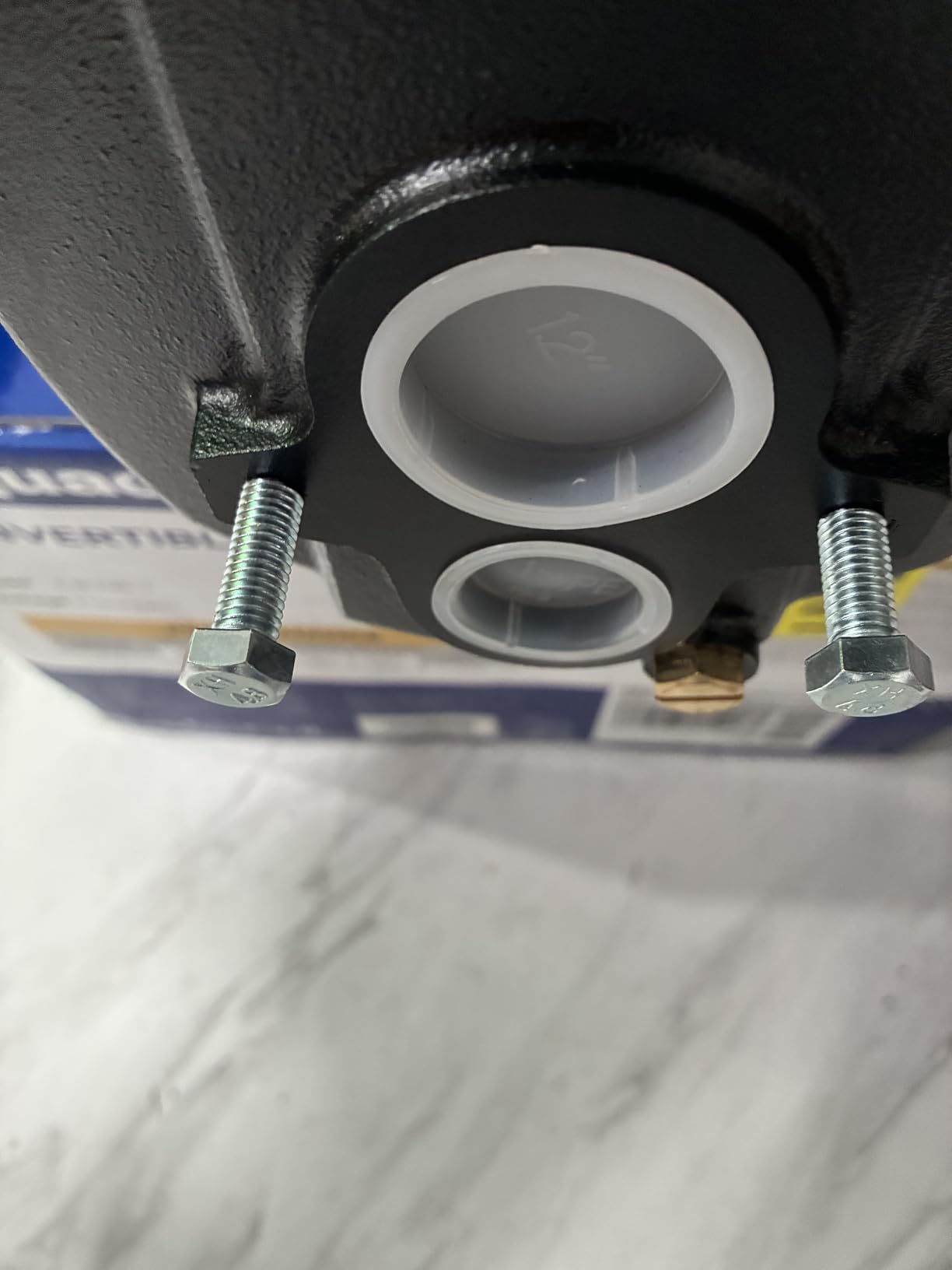
When a convertible jet pump makes sense
The case for this design is the uncertainty. If your well log, your driller, or a tape measure puts the static water level somewhere between 20 and 25 feet, you are right on the boundary where a plain shallow well jet pump starts to lose its prime, and a submersible is arguably overkill. The ejector kit bridges that gap with one housing and one motor.
What it will not do is reach 150 feet or more. At that point the water column above the pump exceeds what a venturi can lift efficiently, and you need a submersible with real head capacity.
Suction lift and what the ejector actually changes
A jet pump creates suction by forcing a portion of its output water through a narrow venturi, and the low-pressure zone that creates pulls the rest of the water up. In a single-pipe setup the same water does both jobs. In a two-pipe setup, a separate ejector assembly in the casing splits the flow so the surface pump only moves the dedicated jet stream, which is what lets the assembly reach the 26 to 90 foot range.
That is why the two-pipe version needs a properly sized venturi matched to the depth. A mismatched venturi is the most common reason an otherwise good convertible jet performs badly, and it is worth following the chart that comes with the kit rather than guessing.
Where it is the wrong choice
Choose a submersible instead if your well is deeper than 90 feet, if you need more than 40 PSI of steady household pressure, or if you have hard water with significant iron. Jet pumps need consistent suction and will complain about a fluctuating water table in a way a submerged unit does not, because the pump is above the waterline and every pressure change reaches the impeller directly.
3. Hallmark MA0419X-12A 2 HP Submersible – Built for Wells of 250 to 400 Feet
Hallmark Industries MA0419X-12A Deep Well Submersible Pump, 2 HP, 230V, 35 Gpm, 420 feet, Stainless Steel
2 HP, 230V, 35 GPM max, 420 ft max head, 12-stage stack, stainless steel
+ Pros
- Deep 420 ft head capability for very deep wells
- 2 HP motor moves up to 35 GPM for whole-house demand
- Stainless steel shell resists corrosion down the casing
- Consistent flow and pressure reported at depth
- Cons
- 230V only
- cannot run on standard 115V or a small generator
- Short supplied lead wire
- Small number report early check valve or motor failure
When a well goes past 250 feet, the pump choice stops being a matter of taste. The MA0419X-12A is a 12-stage, 2 HP, 230 volt submersible with a 420 foot rated maximum head and 35 GPM of peak flow, and the extra impeller stages are the whole point: each stage adds pressure, and deep water columns need pressure in quantity rather than horsepower in one lump.
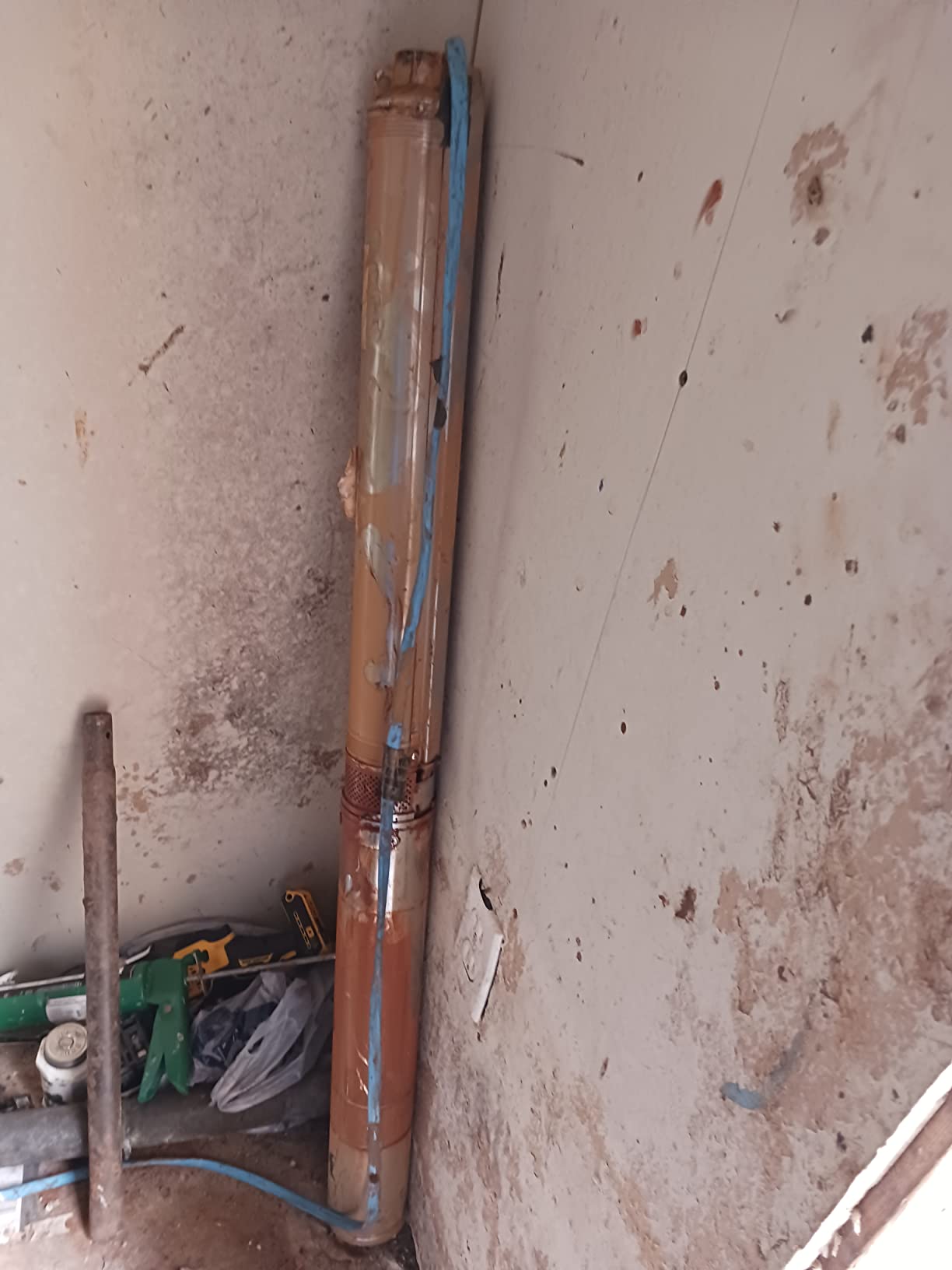
Owners on farms and in larger rural homes describe consistent pressure at depth, which is the result you actually notice. The stainless steel shell is 3.8 inches in outside diameter and 45 inches long, so it fits a 4 inch casing and drops on standard drop pipe. At 40 pounds it is the heaviest of the submersibles here, and that matters when you are handling it at the wellhead.
The one non-negotiable constraint is voltage. This is a 230 volt pump and nothing else, which means a double-pole breaker, proper wiring, and a panel with space. Several owners note that it simply cannot be run from a small generator, which rules it out for off-grid and backup-power scenarios entirely.
The recurring complaints match the pattern in the rest of this brand: the supplied lead wire is short, so you will be running your own cable down the casing for a well of this depth, and a small number of owners report the internal check valve sticking or the motor failing early. With 1021 reviews averaging 4.2, the durability feedback is solid rather than alarming, but the one-year warranty is on the short side for a pump this size.
Why deep wells demand stages, not just horsepower
Total dynamic head is the sum of everything the pump must overcome: the vertical distance the water is lifted, the friction loss in the drop pipe and casing, and the pressure the household is demanding at the tap. Each of those grows with depth. A 350 foot well on a 100 foot property still means roughly 350 feet of lift plus whatever the pipe friction adds, and that number is what your pump curve has to cover.
Adding impeller stages raises the maximum head a given motor can reach without redlining it. That is why a 12-stage design like this one is the right architecture at this depth, and it is also why buying a bigger single-stage motor to cover the same well is a losing trade.
Sizing for a household rather than a well
Deep-well owners consistently talk about this problem in the language of flow at pressure, not tonnage of pump. A working figure for a family home is roughly 10 to 12 GPM at 40 to 50 PSI, which is what a dishwasher, a shower, and a faucet running together demand. The 35 GPM peak here gives you headroom above that, which is exactly what you want, since peak flow is measured at zero pressure.
If your household is larger, or you plan to add an irrigation zone or a watering tank, size upward rather than sideways. Adding a second pump is usually more trouble than selecting the correct one the first time.
Getting the electrical right before the pump arrives
A 2 HP submersible at 230 volts is a different installation from a 1 HP at 115. Have the circuit and the breaker sized before you pull the pump to the wellhead, and plan the splice. Installers on r/WaterWellDrilling describe damaging the power cable while feeding it down the casing, and having to replace the cable twice, which turns a straightforward job into an expensive one.
Ask your driller to specify the wire gauge for the full run before it goes down the hole. That single decision prevents most of the failures people later blame on the pump.
4. Hallmark MA0343X-4 Half HP Submersible – The Best-Rated Choice for a Moderate Well
Hallmark Industries MA0343X-4 Deep Well Submersible Pump, 1/2 hp, 110V, 60 Hz, 25 GPM, 150′ Head, Stainless Steel, 4″
1/2 HP, 115V, 25 GPM, 150 ft head, 6.5 amps, stainless steel and thermoplastic
+ Pros
- Reliable 25 GPM flow at 115V for moderate depth wells
- Stainless steel body resists corrosion in the casing
- Runs quietly with no vibration
- Many owners report several years of continuous service
- Cons
- Limited to a 150 ft maximum head
- Supplied lead wire is short
- Some units arrive with light surface rust from factory wet testing
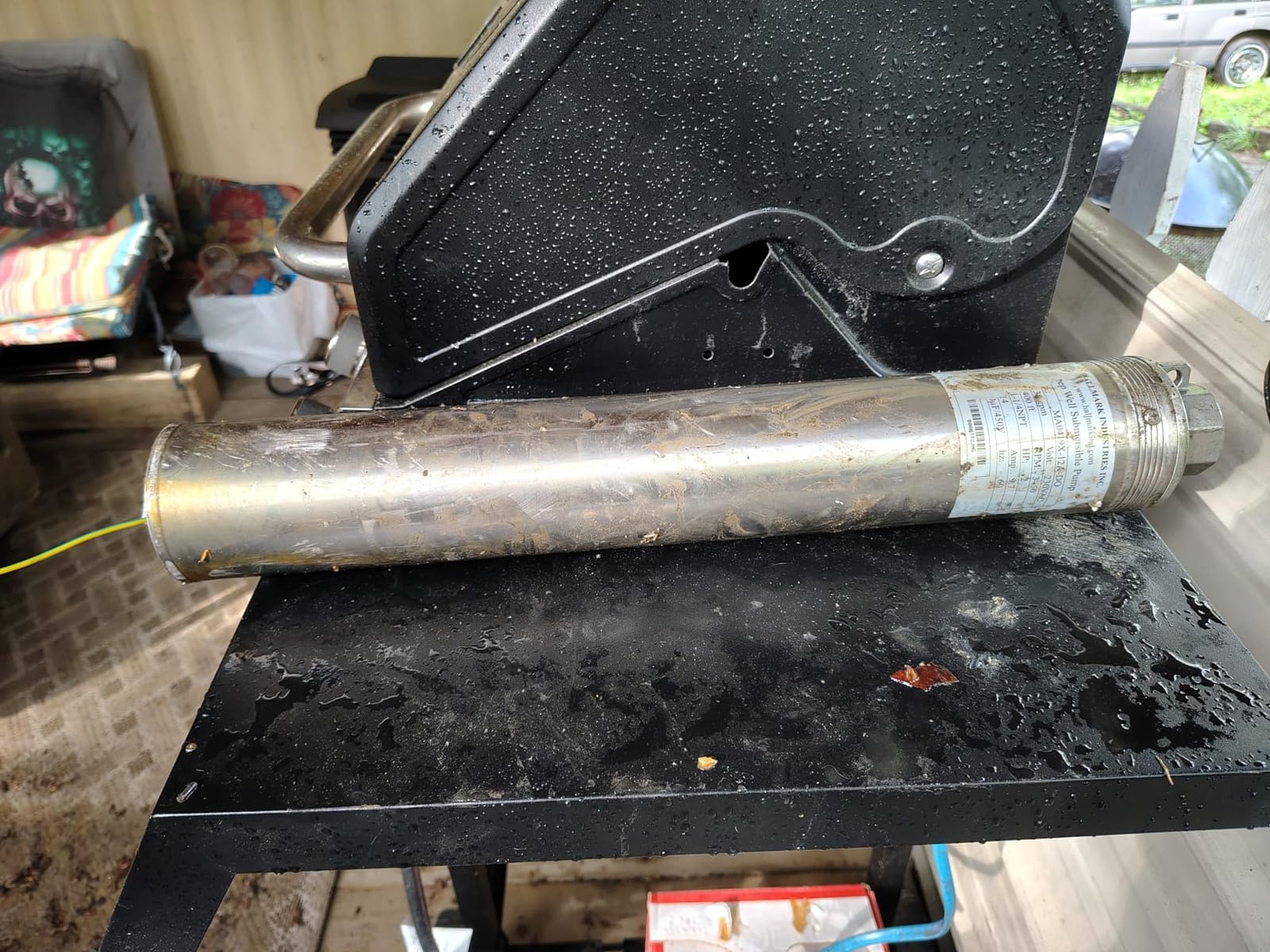
This is tied for the highest rating in the roundup, at 4.5 across 854 reviews, and the reason is consistency rather than headline capability. It is a 1/2 HP, 115 volt, 4 inch submersible rated to 25 GPM and a 150 foot maximum head, drawing 6.5 amps. For a well in the 60 to 130 foot range serving a two or three person household, that is close to the ideal match, and the reviews describe exactly that: steady pressure, quiet start and stop, no vibration in the casing.
Several owners report three to five years of dependable service, and a 75 percent five-star share in the ratings puts it at the top of this roundup. Like its larger sibling, it is stainless steel and thermoplastic, and that corrosion resistance is what keeps it alive in a wet casing for a decade.
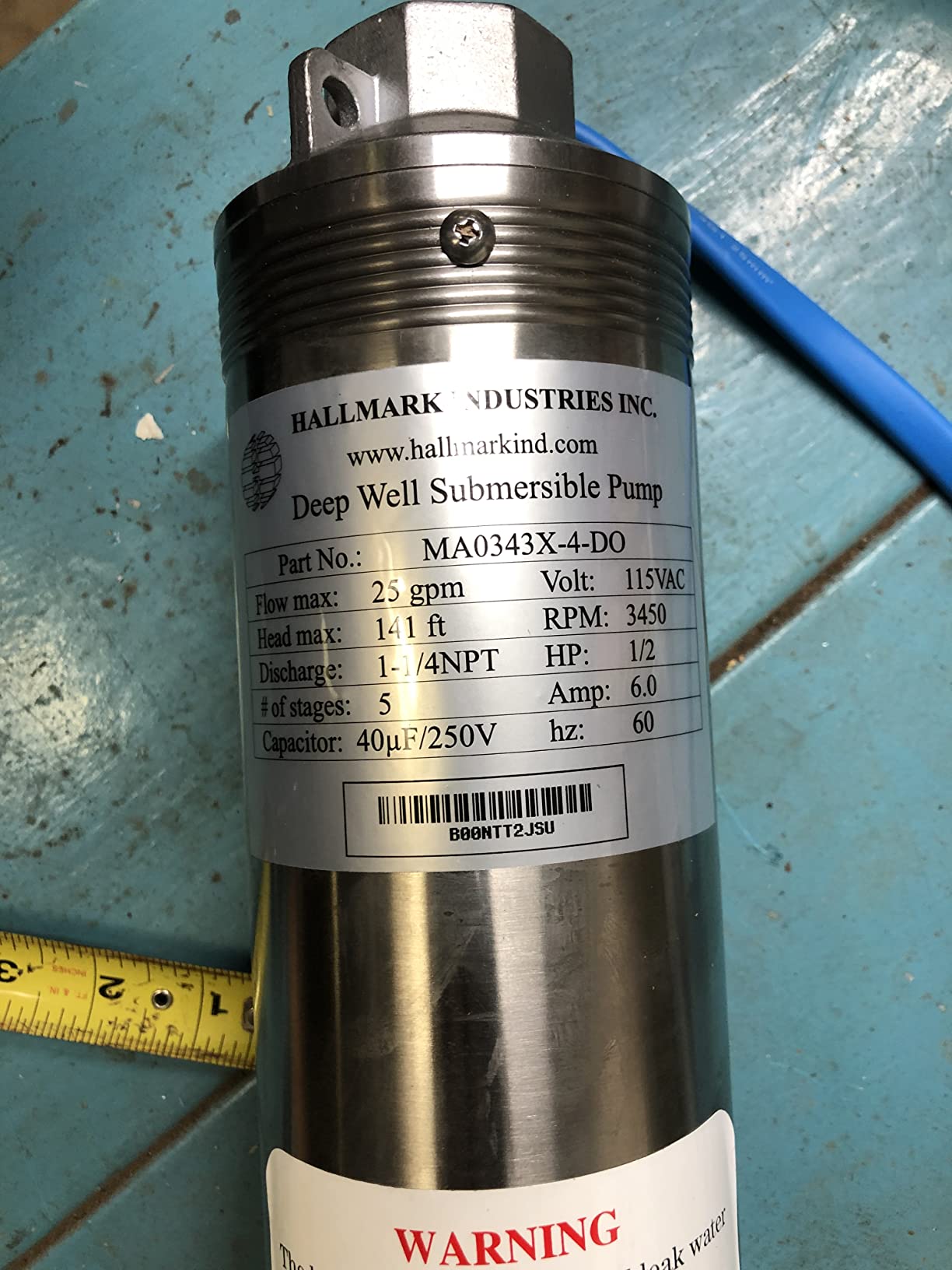
The limits are honest and easy to work with. A 150 foot maximum head closes the door on anything deeper, which is why this is a moderate-well pump and not a general one. The supplied lead wire is short, so deeper set-ups need additional cable run down the casing, and a small number of buyers report light surface rust on a newly received unit from factory wet testing, which is cosmetic rather than structural but worth knowing before you file a complaint.
It also runs on 115 volts, which makes it generator-friendly, and the 6.5 amp draw is modest enough that a mid-size portable generator can start it. That is the practical reason it works well as a weekend cabin pump or a backup.
When half a horsepower is the right answer
Most households do not need more than a 1/2 HP submersible. Add up a shower at roughly 2.5 GPM, a couple of fixtures at about 1.5 GPM each, and a washing machine at about 3 GPM, and a busy morning peaks somewhere around 10 GPM. A 25 GPM maximum leaves real margin for that, and the margin is what keeps the pump from short-cycling.
Over-pumping is the most common sizing mistake we see. A pump that can deliver far more than the well can supply will pull the water level down, lose its prime, air-lock the drop pipe, and eventually burn the motor. If anything, err small on a shallow well.
Distance to water beats well depth
The number that decides your pump is not how deep the casing goes, it is how far the water is when the pump is off. Static water level is the measurement that matters, and pumping drops it further. Your pump has to cover static level plus drawdown, and the head rating on the box should exceed that sum with margin to spare.
A well drilled to 200 feet with water sitting at 40 feet is a shallow-well problem. A 90 foot well with water at 85 feet needs a pump rated well beyond 100 feet of head. Ask for the static level from your driller before you shop, not after.
Where it is the wrong choice
Move up to the 1 HP model or the 2 HP model if your static level is deep, if you have more than three people in the house, or if you are adding irrigation. Do not try to stretch this unit past its 150 foot rating, because running a submersible flat out against insufficient head is exactly how motors get destroyed.
5. VEVOR 1 HP 37 GPM Submersible – The Highest Maximum Flow in the Set
VEVOR Deep Well Submersible Pump 1 HP 115V/60Hz 37 GPM Flow 207 ft Head
1 HP, 115V, 37 GPM, 207 ft head, 6-stage impellers, IP68, 33 ft cord
+ Pros
- Very high flow for the class at 37 GPM
- Stainless steel frame
- outlet and fittings resist corrosion
- Copper motor runs quietly with strong pressure
- Includes a 33 ft power cord and splicing kit
- Cons
- High startup current makes it hard to start on a small generator
- Supplied cord and wire are light gauge
- Small number of units failed within days or weeks
- Manufacturer support reported as slow or absent
This pump delivers the highest maximum flow of any submersible in the roundup, at 37 GPM, from a 1 HP 115 volt motor with a 207 foot rated head, and it does so in a package that arrives complete. That combination is why it appears so high despite a shorter review history. The build is genuinely good: a stainless steel frame, outlet and connecting components, IP68 waterproofing, and a copper motor with a high precision rotor and built-in overheat protection.
Inside, six-stage thermoplastic impellers move the water, a built-in check valve prevents reverse flow, and a stainless steel filtration mesh gives you some protection against the sand that wears out pumps in sandy soils. It comes with a 33 foot cord with a US plug, so a shallow-to-moderate well can be tested before you commit to a full wiring run.
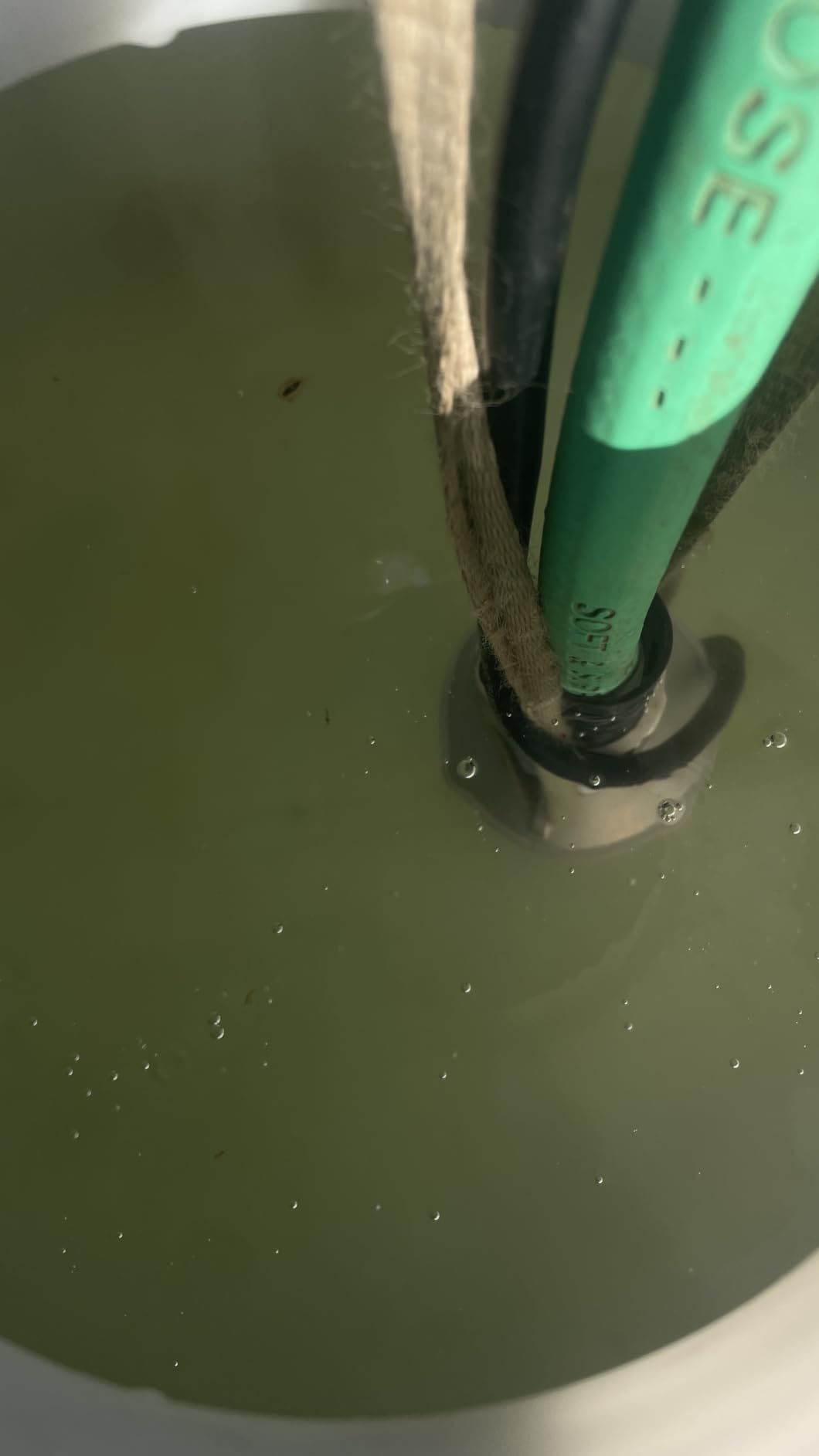
Owners consistently praise the pressure, the quiet running, and how straightforward the install is. Several bought a second one as a spare, which tells you what they think of the purchase. The 79 percent five-star share is the highest in the roundup.
The electrical complaint is the one to plan around. This motor draws roughly 4000 watts at startup, and multiple owners report being unable to start it on a 2200 watt generator, which is a genuine limitation for off-grid and backup use. The supplied cord and wire are light gauge, so long runs need heavier wire than the package suggests. A small cluster of early-failure reviews and some reports of slow manufacturer support round out the picture.
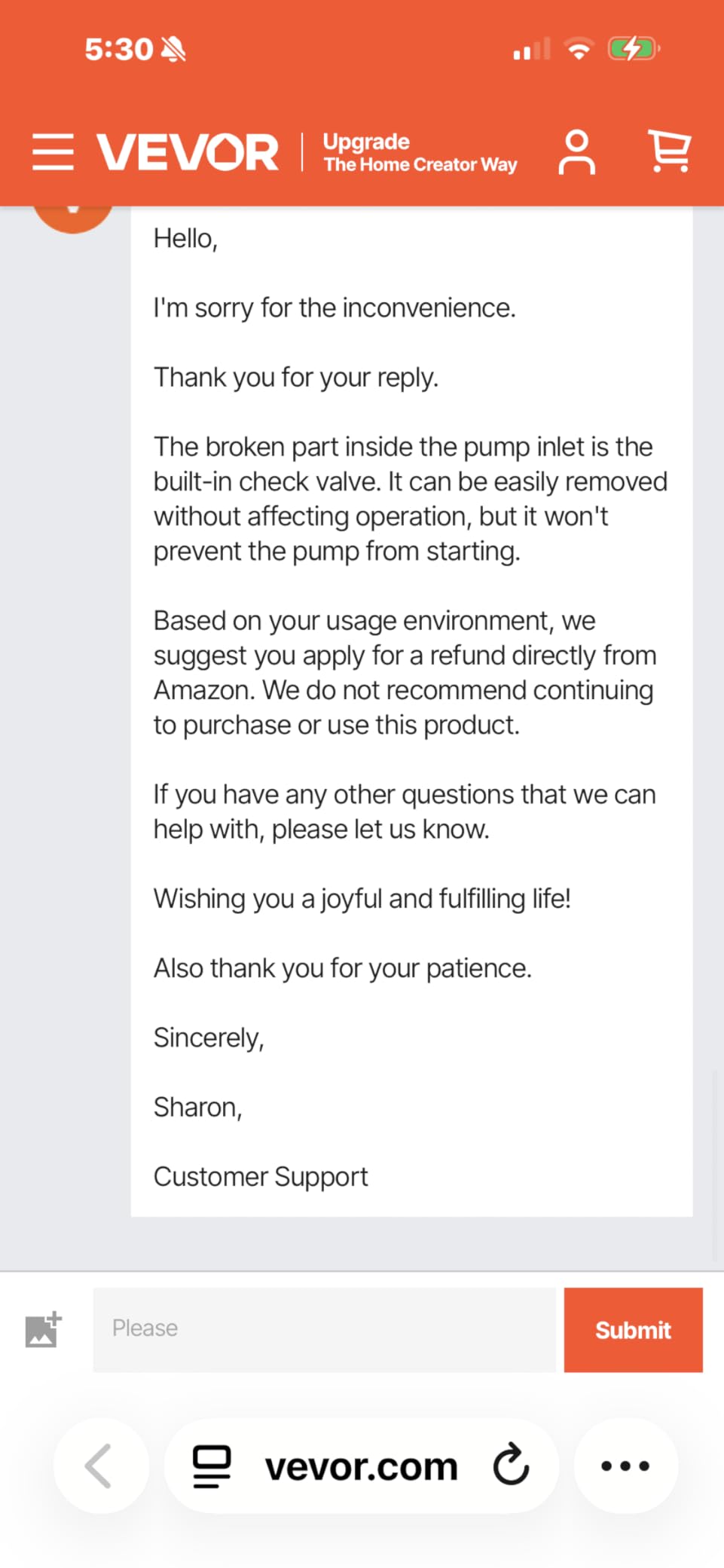
Why forum buyers debate this brand and still buy it
On r/WaterWellDrilling there is an active debate about whether cheap marketplace submersibles are worth the risk, and it is worth being straight about both sides. Buyers on those threads report the pumps work. What they also report is that you get no published curve from the manufacturer, no meaningful warranty support when a motor fails, and no parts when something breaks.
There is a second concern raised on the Terry Love plumbing forum: multiple brands are sold with internals that are effectively identical to a well-known premium design, described by users as planned obsolescence. The practical response is not to avoid a brand on reputation, it is to check that the listing you are buying publishes real specifications, carries a real certification, and names a warranty you could actually claim.
What the 37 GPM rating really means
Maximum flow happens at zero head, which is a number no household ever experiences. What matters is the point on the curve at your working pressure, and manufacturers of marketplace pumps are often the least forthcoming about where that falls. Treat 37 GPM as a ceiling indicator, not a delivery promise.
The 207 foot head rating, by contrast, is the useful number, and it tells you this unit belongs in the same depth band as the 1 HP Hallmark. If you are choosing between the two on depth alone, the deciding factors become warranty length, wire gauge, and whether you have a genuine published curve to look at.
Who should buy it and who should not
Buy this if your well sits in the 60 to 180 foot range, you are on 115 volts, and you want maximum flow without stepping up to 230. Skip it if you plan to run it on a small generator, if your run down the casing is long and you would rather not pull heavier wire, or if you cannot get a straight answer from the seller about warranty claims.
6. LANCHEZ 1/2 HP 1200 GPH Pump – The Budget Choice for Irrigation and Water Transfer
LANCHEZ 1/2 HP Shallow Well Pump, 1200 GPH Stainless Steel Garden Irrigation Pump, 115V Water Transfer Pump, Water Booster Jet Pump for Home Garden Lawn Farm, Black
1/2 HP, 115V, 1200 GPH, 125 ft max lift, stainless steel, under 8 lb
+ Pros
- Strong lift performance driving sprinklers above roof height
- Runs quietly and holds steady pressure
- Stainless steel construction resists corrosion
- One owner reports four years of continuous outdoor use
- Cons
- Pressure drops with more than one sprinkler running
- Several owners report motor failure after a few months
- Must be installed in a dry
- ventilated
- freeze-protected location
- Hose adapters not included
Be clear about what this is. The LANCHEZ is a surface transfer and garden irrigation pump, not a household well pump, and I have included it because a large share of searches for home well pumps are really searches for moving water around a property. It is a 1/2 HP, 115 volt stainless steel unit rated to 1200 GPH and 125 feet of lift, and at under 8 pounds one person can carry it anywhere it is needed.
Owners who prime it properly and match it to a modest duty are enthusiastic. One describes driving sprinklers above roof height from a 40 foot elevation gain, which is a real test of lift capability for a pump this size. Another reports four years of continuous outdoor use and still strong. It also runs quietly, which matters if it sits near a patio.
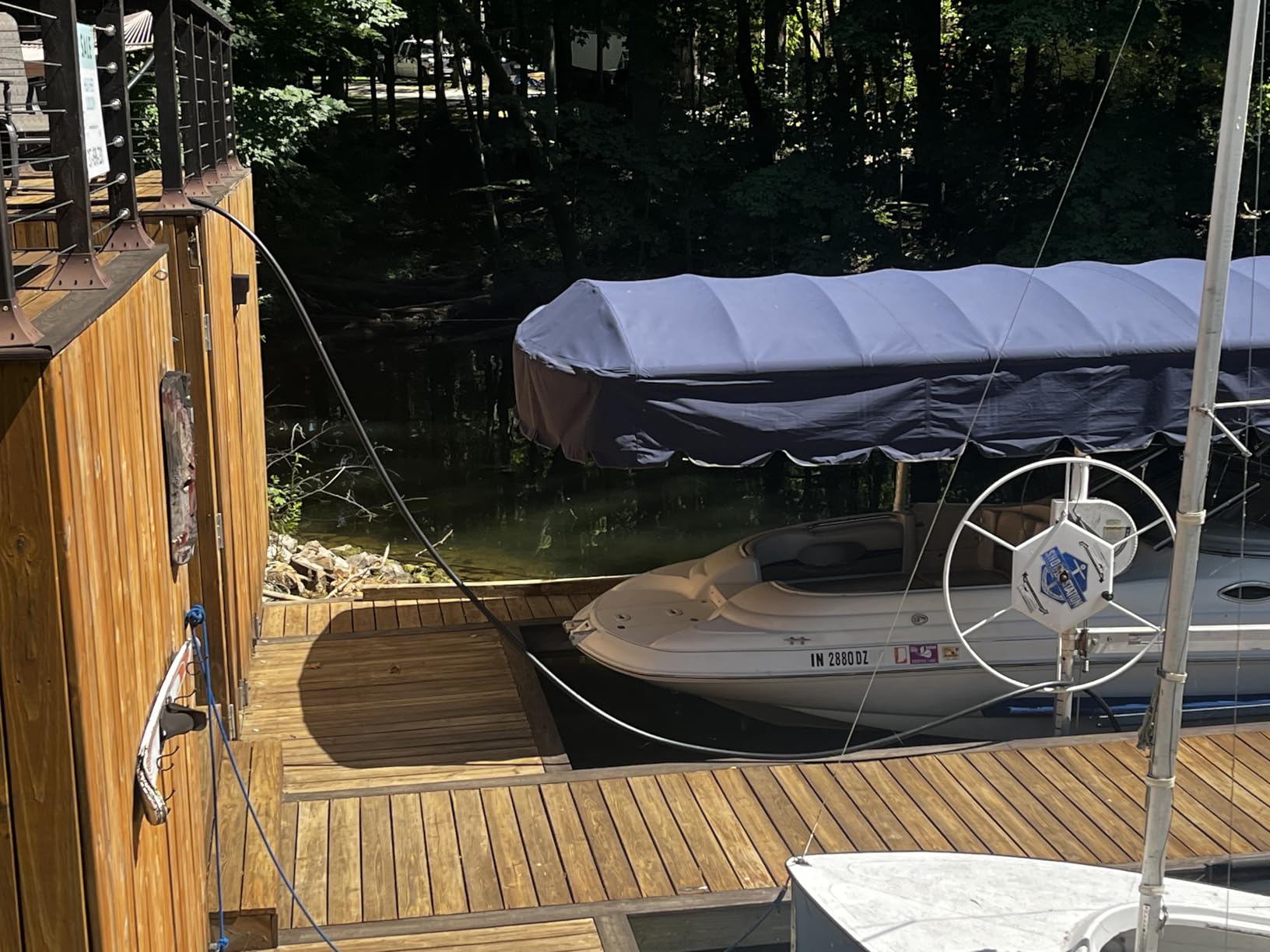
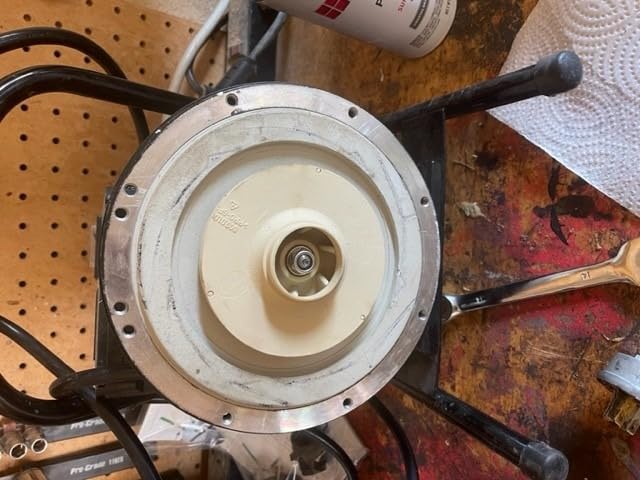
The 4.1 average reflects a split experience rather than a single defect. A distinct group of reviews reports the motor seizing, buzzing, or losing prime after a few months or a single winter layup, which points to sensitivity to storage and duty cycle. Pressure also drops noticeably when more than one sprinkler runs at once, so treat the 1200 GPH figure as a single-outlet number.
Two installation conditions decide whether this pump lives or dies. It must be primed before running, or the seal and impeller can be damaged, and it must sit in a dry, ventilated location protected from freezing. It also needs separate adapters to connect the 1 inch fittings to a garden hose, and those are not in the box.
Transfer duty versus household supply
A transfer pump has one job: move water from a source to a destination, and it does that with no pressure tank, no pressure switch, and no control box. A household well system has all three, and that added control hardware is where the reliability difference between a pump like this and a proper well pump comes from. If you are supplying taps, you want the pressure switch and tank setup, not a bare transfer pump.
For filling watering troughs, running a small irrigation zone, or boosting pressure on a secondary line, this is a well-matched tool. For anything a family drinks and showers from, it is the wrong category entirely.
Priming, storage, and why winter kills these pumps
Self-priming surface pumps depend on water remaining in the casing. If it sits empty over a freezing winter, the impeller and seal can be damaged by ice, and the resulting failure looks like a motor problem when it is not. Draining it fully at the end of the season, or keeping it in a heated shed, is the difference between four years of service and one.
The same sensitivity explains the reports of pumps losing prime after a few months. Once air gets into the casing and the seal runs dry, the damage compounds quickly. Owner care, more than motor quality, decides the lifespan of a pump in this class.
Who this pump suits
It suits someone with a garden, a watering trough, or a secondary watering line who wants stainless steel durability at an entry-level outlay and does not need household pressure. It does not suit a primary water supply, a high-flow multi-zone irrigation setup, or anyone who does not want to remember to drain it in the fall. Two simple rules keep it alive: prime it every start, and drain it before the first freeze.
7. Red Lion RJS-75-PREM 3/4 HP Jet Pump – The Complete Shallow Well Package
Red Lion RJS-75-PREM 115/230V, 3/4 HP, 16 GPM, Shallow Well Jet Pump
3/4 HP 115/230V, 16 GPM, cast iron, 30/50 switch and gauge included, 150 ft head
+ Pros
- Rugged cast iron casing and volute built for long service
- Includes a pre-set 30/50 pressure switch
- pressure gauge and starting capacitor
- Dual voltage motor for flexible supply
- CSA listed with a 3 year manufacturer warranty
- Cons
- Heavy at 38.2 lb
- making install a two-person job
- Voltage must be manually matched to the supply
- Only rated for wells shallower than 25 feet
This is the pump to look at if you want a shallow well jet setup that works the day it arrives. Everything needed for a household install comes in the box: a 3/4 HP cast iron pump, a factory pre-set 30/50 pressure switch, a pressure gauge, a starting capacitor, and the manual. The 16 GPM flow and 150 foot maximum head suit a cottage or an average home on a well shallower than 25 feet.
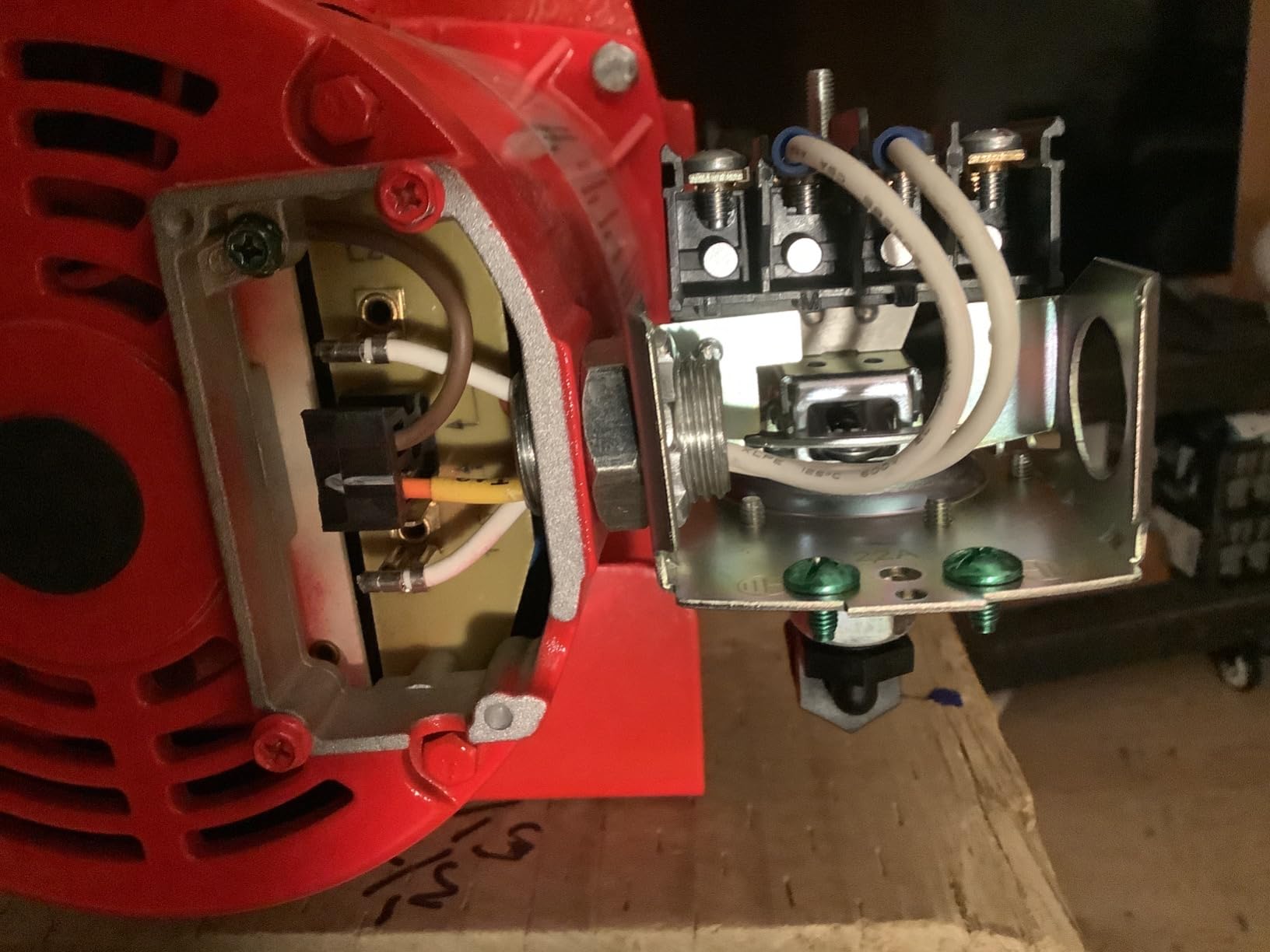
The build is what separates it from the budget end. Cast iron casing and volute, a glass filled thermoplastic impeller and diffuser, and a capacitor start motor that draws 14.4 amps at 115V or 7.2 amps at 230V. It is CSA listed in the USA and Canada and carries a three year manufacturer warranty, which is double what the submersibles in this roundup offer.
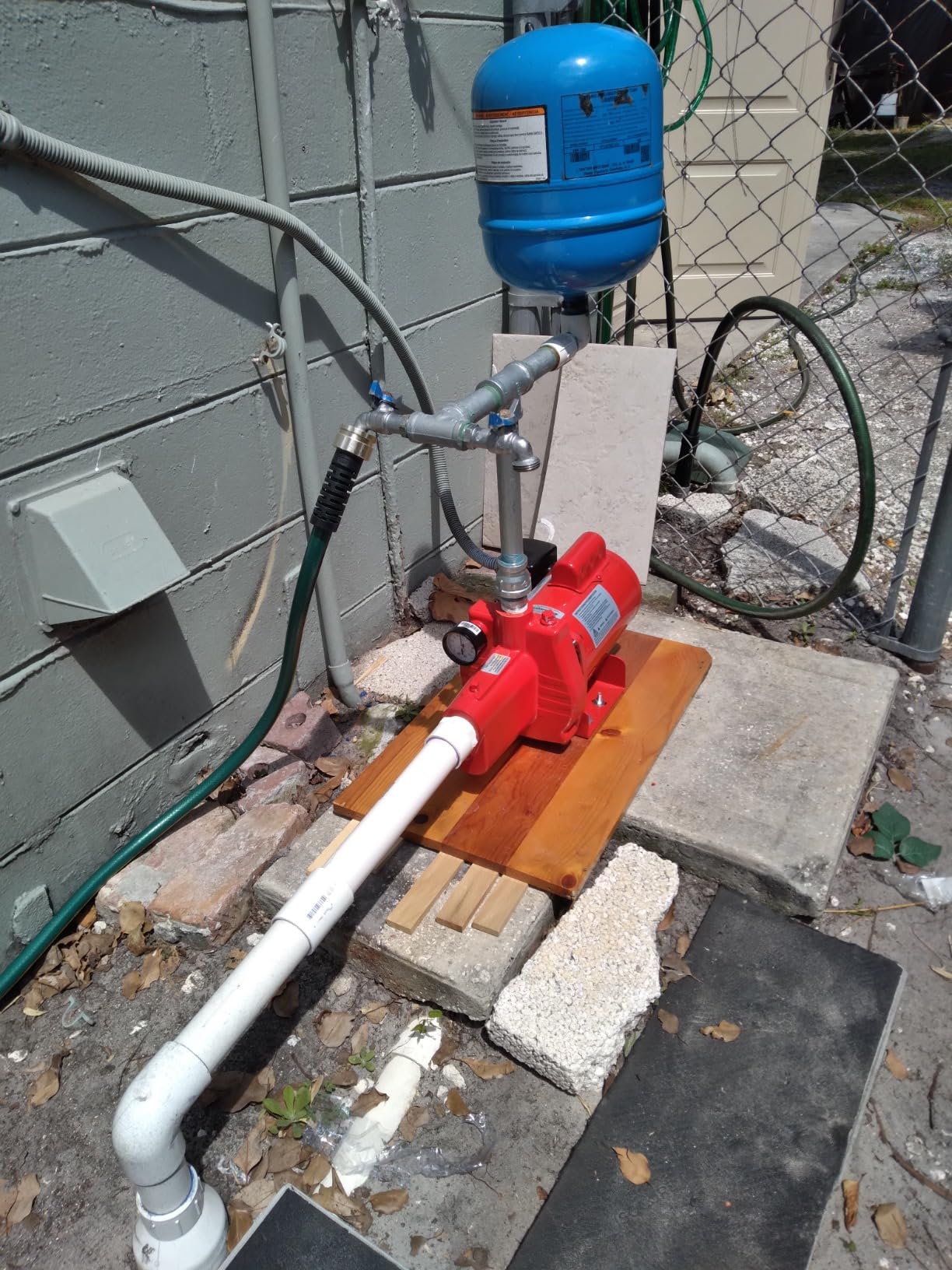
Owners value the completeness most. Buying the switch and gauge separately is a common, avoidable trip to the supply house, and having them factory set to 30/50 PSI means the pump is calibrated before you touch it. Reviewers also single out the dual voltage motor as useful when a house supply changes, and the cast iron body as the reason to expect a long service life.
The practical friction is weight, at 38.2 pounds, which reviewers describe as a two-person install. The voltage also has to be matched manually to the incoming supply before the pump will run correctly, and the 25 foot suction limit rules out anything deeper. None of these are defects, but all three catch people out.
Why a three year warranty changes the calculation
For a pump that is going into the ground or onto a pad for a decade, warranty length is a proxy for what the manufacturer expects from its own components. A three year term on a CSA listed unit tells you something that a one year term on a marketplace listing does not, regardless of how the two compare on a spec sheet.
It also changes the calculus on replacement parts. Red Lion is a familiar name with an established parts channel, and a pump whose fittings and adapters you can source in five years is worth more over a decade than one that has to be replaced wholesale when a fitting corrodes.
What 30/50 pressure switch means for daily use
The supplied switch turns the pump on when system pressure drops to 30 PSI and off at 50 PSI. That is the standard residential band, and it is deliberately narrow, because a wide band causes short cycling that wears the motor and the tank bladder. The pump holds 50 PSI and cuts in around 35 PSI in practice once the tank is properly charged.
If you add this pump to an existing system with a tank that has lost its air charge, the cycling will look aggressive no matter which switch you use. Set the tank pressure first, then judge the pump.
The 25 foot line in the sand
A jet pump pulls water by suction, and suction lift beyond roughly 25 feet becomes unreliable. A home owner on r/HomeImprovement reports running a budget jet pump on a shallow well with good results, which supports the general point that a well pump does not need a famous name to work. It does need to be inside its suction limit, and this model states that limit plainly.
8. Goulds J5S Half HP Jet Pump – The Premium Built Option for Shallow Wells
Goulds Pump J5S Shallow Well Jet Pump, 115/230 volt, 1/2 hp
1/2 HP 115/230V, 16.5 GPM, 25 ft lift, cast iron, UL778 listed, 40.9 lb
+ Pros
- US manufactured with higher grade internal parts than cheaper imports
- Noticeably better pressure than low cost pumps
- Easy to convert between 120V and 240V
- UL778 listed with built-in overload and automatic reset
- Cons
- Heaviest unit in the group at 40.9 lb
- making install a two-person job
- One owner received a pump that arrived already seized
The Goulds J5S is the build-quality answer to the shallow well question. It is a NEMA standard, 60 Hz, 1/2 HP capacitor start single-phase motor running at 3500 RPM on 115 or 230 volts, with 16.5 GPM of flow and a 25 foot suction lift. It comes with a pressure regulator and a 30 to 50 PSI pressure switch, and it is UL778 listed with a built-in overload that resets automatically.
Owners make one argument for this pump more than any other, and it is a performance argument rather than a brand argument. Several report replacing budget pumps with this unit and seeing a noticeable jump in attainable pressure, which is what happens when the impeller and shaft tolerances are tighter. Repeat buyers point to the Goulds name having a long service track record for them personally.
The details that separate it from a generic cast iron jet pump are specific: a stainless steel shaft, cast iron construction, 1.25 inch NPT suction and 1 inch NPT discharge, and a manufacturer-tested unit that may still carry water from testing. The 4.4 average sits alongside a 75 percent five-star share, which is a strong showing for a pump most owners describe as unremarkable in the best way.
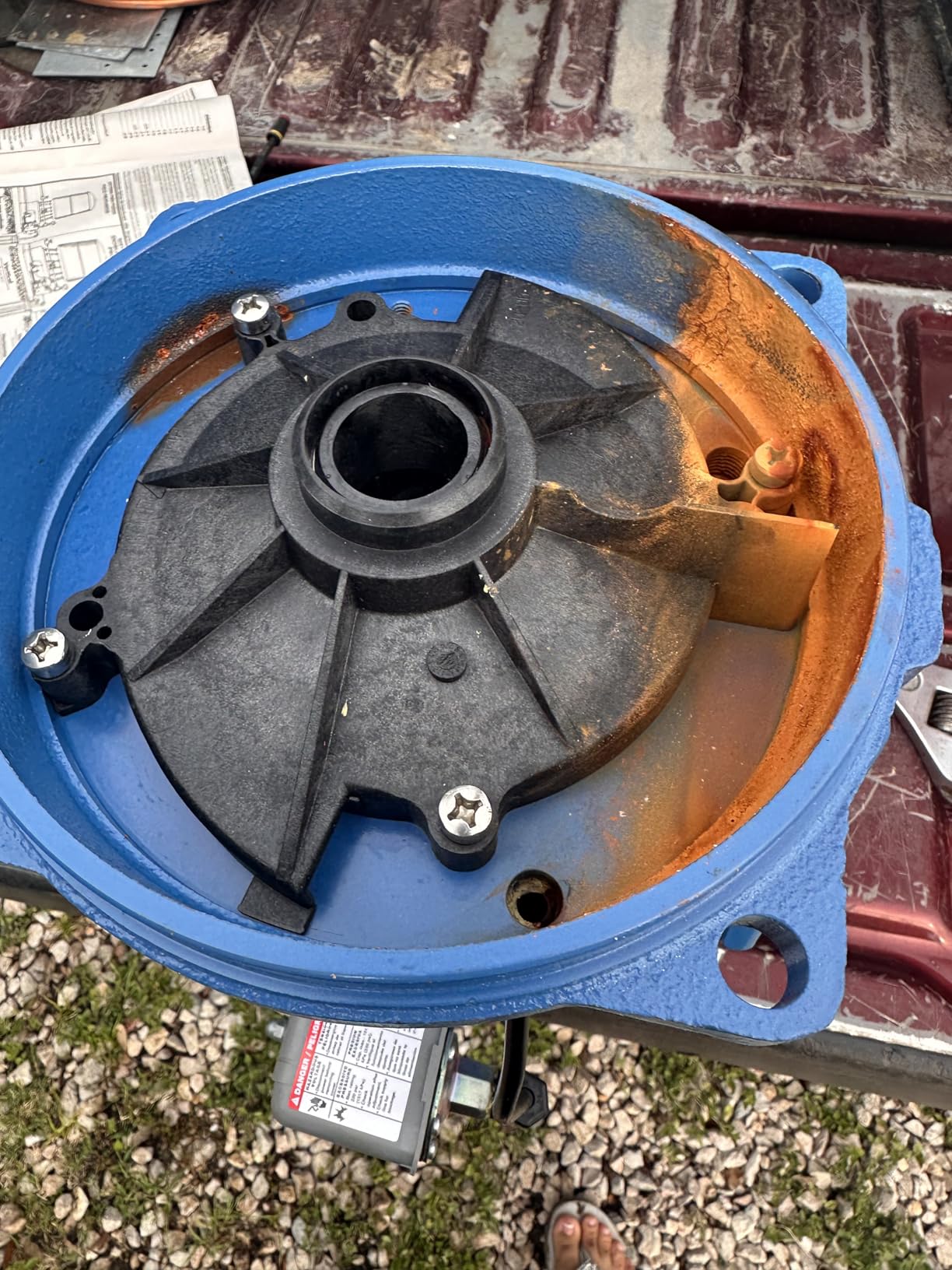
The costs are physical. At 40.9 pounds it is the heaviest pump in this roundup, and reviewers describe the install as a two-person job. There is also a single report of a pump arriving already seized, which is a quality control outlier rather than a pattern, and worth mentioning because it is the kind of thing a manufacturer test is meant to prevent.
What US manufacture actually buys you
It is not a marketing line here so much as a parts story. US-manufactured pumps of this type use higher grade internal components, and the practical result is a longer service life and a better chance the manufacturer stands behind a claim. On a Terry Love plumbing forum thread, owners comparing brands treat the well-known domestic names as the reference point for whether a pump will still be running in a decade.
The corollary is that a lower-cost pump is not bad, it is a shorter expected life with a thinner safety net. If the pump is going to be a fifteen-year asset on a property you own, that difference compounds.
Pressure switch, regulator, and the built-in overload
Three pieces of electrical protection ship with or live inside this pump. The pressure switch controls when it runs, the regulator caps the maximum pressure, and the built-in overload trips the motor on an overheat condition and resets automatically. That last one is the most valuable in service, because a motor that cannot restart after a thermal trip needs a person to visit the property.
For a cabin or a house that is unoccupied for stretches, automatic reset is a genuine reliability feature rather than a nice-to-have.
Where a premium pump does not help
No amount of build quality lifts water past 25 feet by suction. If your well is deeper than that, this pump is the wrong tool no matter how well it is made, and the money is better spent on a submersible with real head capacity. The same applies to a household wanting more than about 45 PSI of steady pressure.
9. AQUASTRONG 1.5 HP Jet Pump – The High-Volume Choice for Large Lawns
AQUASTRONG 1.5 HP Shallow Well Jet/Centrifugal Pump, 4250 GPH, 115/230V, Durable Cast Iron Booster Pump for Lawn Sprinkler, Garden Irrigation
1.5 HP 115/230V, 4250 GPH, 108 ft head, 2 in suction, cast iron
+ Pros
- Very high 4250 GPH flow
- the largest capacity in this group
- Durable cast iron volute with reinforced impeller and diffuser
- Dual voltage with an efficient round flange motor
- Automatic thermal overload protector reduces maintenance risk
- Cons
- Factory set to 230V so 115V installs need a change
- Large physical footprint at over 22 inches long
- 108 ft head is lower than the deep submersibles in this list
- Smaller review base
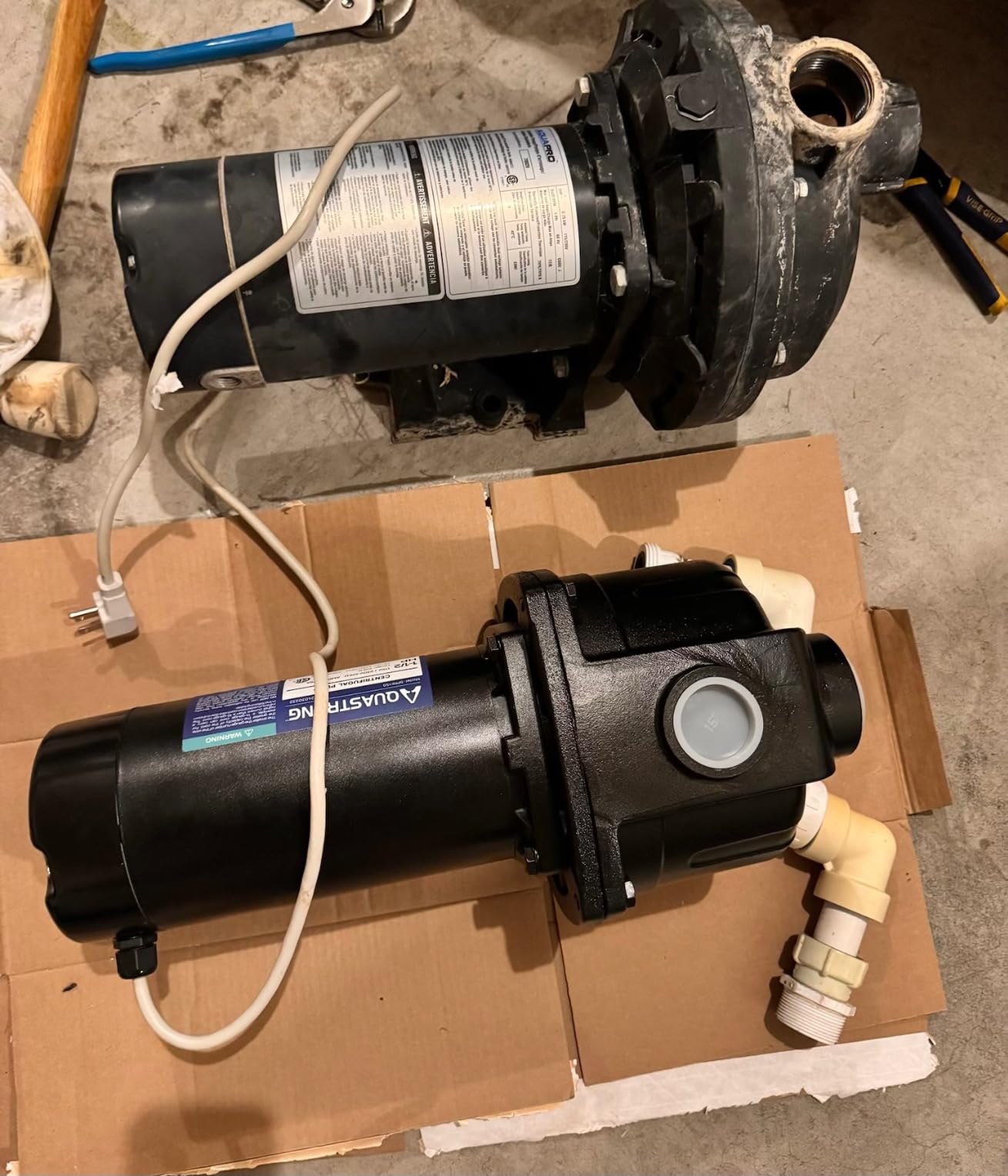
This is an irrigation pump, not a household supply pump, and it exists here because large-lawn watering is a huge share of home pump searches. At 1.5 HP with a rated 4250 GPH maximum flow, it delivers more volume than anything else in the roundup, and the 2 inch NPT suction paired with a 1-1/2 inch discharge is the port sizing that makes that flow practical rather than theoretical.
Construction is a cast iron volute with a reinforced impeller and diffuser, driven by a dual voltage 115/230V round flange motor, with a built-in automatic thermal overload protector. The head rating is 108 feet, which covers most irrigation risers and a moderate suction lift without strain.
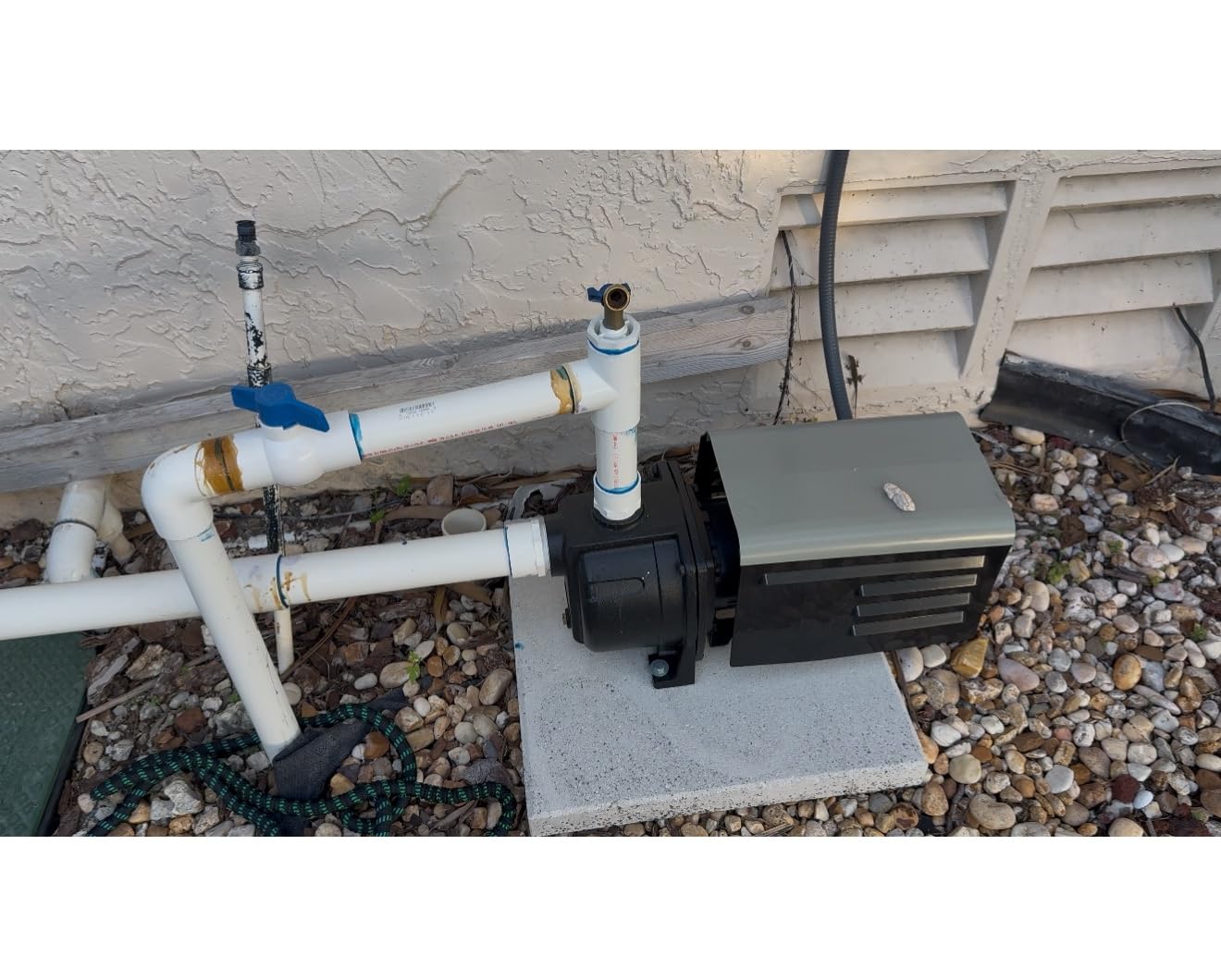
The 4.3 average comes from 250 reviews, a smaller base than the others here, so buyers are leaning more on the spec sheet and build description than on long-term owner history. That is the honest caveat: the numbers look strong, and the physical design is right for the job, but the track record is less established than the submersibles above it.
Practical notes centre on setup. The motor is factory set at 230V, so a 115V installation needs a switch change, and at more than 22 inches long it is the largest format in the group and needs real space on a pad or in a pump house.
Why irrigation and household supply are different problems
A shower needs pressure at a low flow rate. A lawn needs volume at a modest pressure. That is why irrigation pumps look oversized next to household pumps, and why the 4250 GPH figure would be meaningless as a drinking water rating. Buying a household pump to run a large lawn wastes money on head you do not need, and buying an irrigation pump for household taps gives you cycling, noise, and a short motor life.
For most homeowners the right answer is a submersible or jet well pump for the house and a separate transfer or booster pump for the yard, which is exactly the split this roundup reflects.
Large ports and what they actually do
The 2 inch suction is the detail that matters at this flow. Friction loss rises sharply with every restriction, and pushing 4250 GPH through undersized plumbing wastes head that the pump then has to make up at higher amperage. Matching the port size to the line size is the cheapest efficiency improvement available in an irrigation system.
The reinforced impeller and diffuser are the other half of the story. A larger impeller handles higher volume with less cavitation, and cavitation is the quiet killer of irrigation pumps that get run dry or against a closed valve.
Who it suits and who it does not
It suits a property with a large lawn, multiple irrigation zones, or a farm operation that needs to move serious water. It does not suit anyone whose primary goal is household pressure, and the 108 foot head ceiling makes it unsuitable as a deep-well solution.
10. Red Lion RL-SWJ50 Half HP Jet Pump – The Quiet Pick for Cabins and Rainwater Systems
Red Lion RL-SWJ50, 115/230V, 1/2 HP, 12.6 GPM Shallow Well Jet Pump
1/2 HP 115/230V, 12.6 GPM at 30 PSI, 25 ft lift, brushless motor, sealed box
+ Pros
- Quiet operation
- quieter than older pumps owners replaced
- Holds 50 PSI and cuts in around 35 PSI as designed
- Sealed electrical box protects the capacitor and voltage selector
- Proven reliable in small homes
- cottages and rainwater catchment
- Cons
- A few units have failed early
- Internal corrosion possible if moisture enters the housing during storage
- Replacement fittings and adapters are hard to source
- Only rated for wells shallower than 25 feet
The RL-SWJ50 is the pump people describe when they say a well pump should be invisible. It is a 1/2 HP cast iron shallow well jet pump rated to 12.6 GPM at 30 PSI, holding 50 PSI and cutting in around 35 PSI, with a 64 PSI maximum. Several owners specifically mention that it is quieter than the pumps they replaced, which matters in a small cabin where the pump house is close to the living space.
Two design choices make it different from a generic half-HP jet pump. The electrical box is sealed, which keeps the capacitor and the voltage selector protected from the moisture that causes corrosion in a conventional housing, and the motor is brushless, so there are no exposed brushes to corrode. It includes a 30/50 pressure switch and is self-priming after the initial prime.
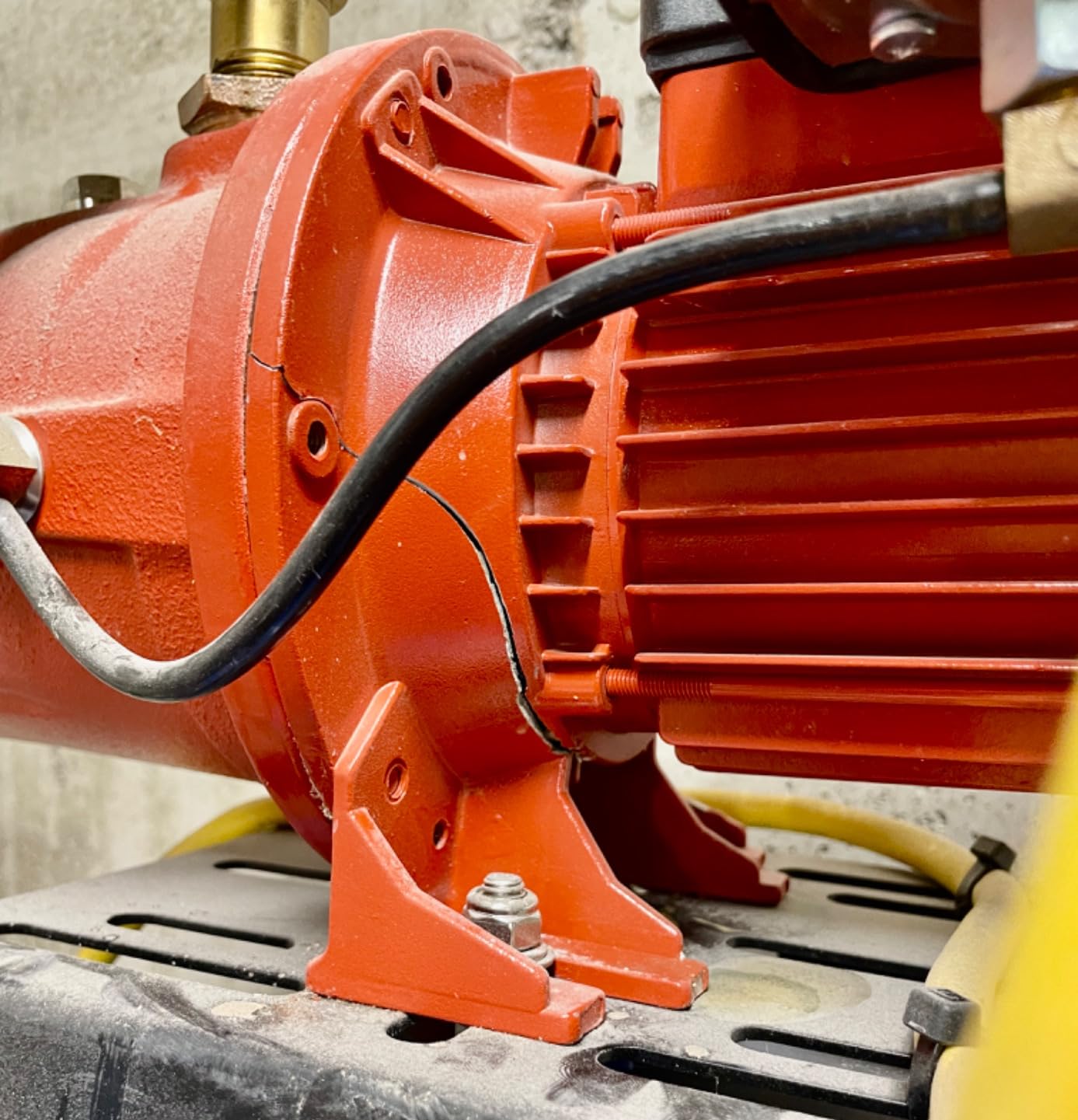
Owners report two years of smooth operation in cabin and rainwater catchment service, which is a good signal for a pump being run intermittently rather than continuously. The cast iron body with a glass filled polyester impeller and volute is a proven combination for shallow well service, and the 1-1/4 inch suction and 1 inch discharge are standard sizes.
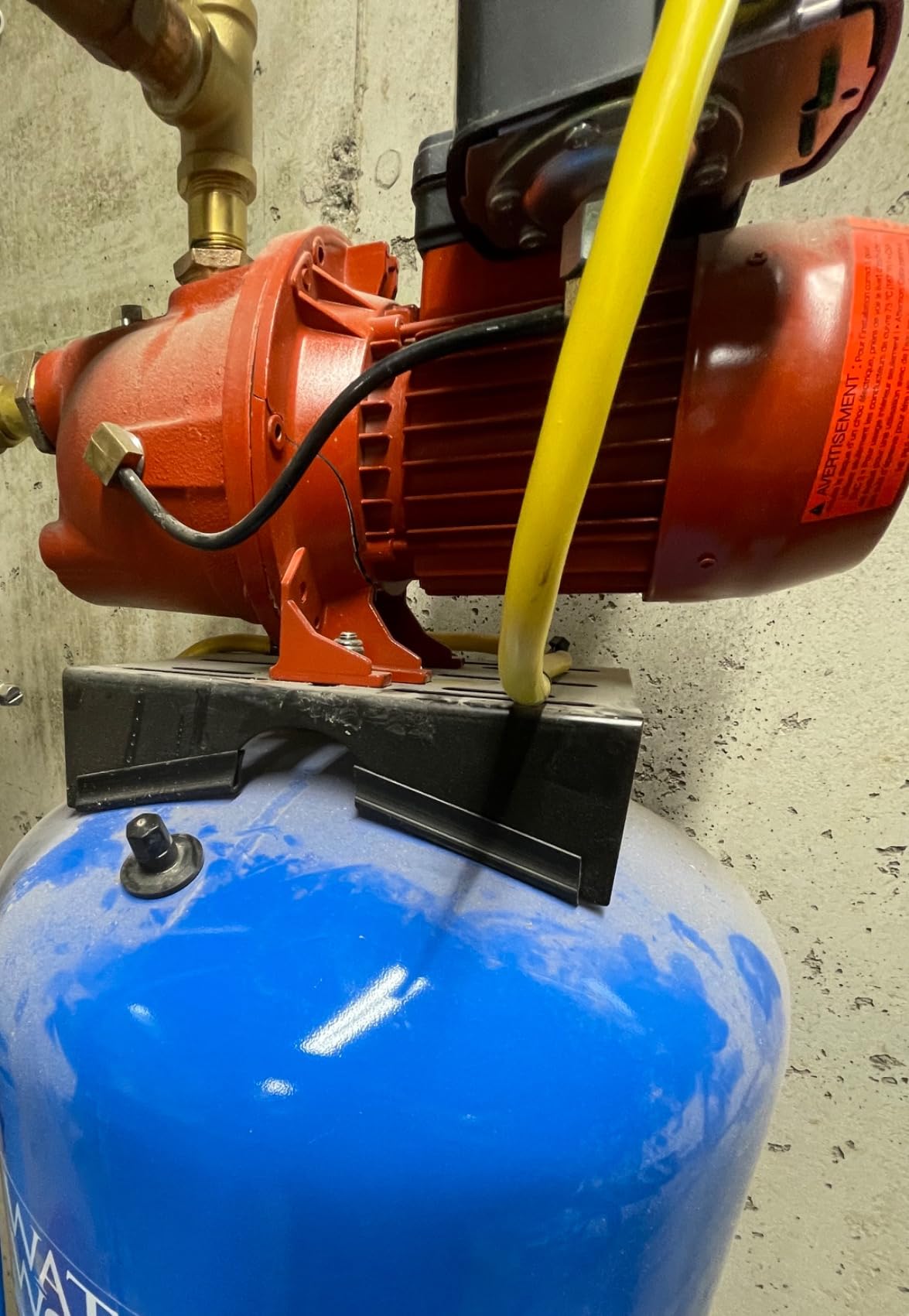
The 4.1 average reflects a durability tail rather than a design problem. There are isolated reports of seal leaks and of internal corrosion inside the electrical housing after storage, and one or two units that failed early. The recurring owner instruction is not to exceed 50 PSI, because over-pressuring overloads the motor. Replacement fittings and adapters are also reported as hard to source, which is the one genuine serviceability concern.
Why sealed electronics matter for intermittent duty
A conventional jet pump housing vents moisture, and in a cabin or a rainwater system that is wet, intermittently pumped environment, that moisture reaches the capacitor and the windings. Sealing the electrical box removes the path. Combined with a brushless motor that has no brush wear to accelerate failure, it is the reason this unit tends to survive a stop-start duty cycle that kills open-frame pumps.
Storage is still the weak point. Reviewers note that internal corrosion can develop inside the housing if moisture gets in during storage, so drain it fully and store it dry if it will sit over a winter.
Rainwater and well water are the same job
A rainwater catchment system with a pressure tank is mechanically identical to a shallow well system. The pump sees suction, the tank smooths the flow, and the pressure switch sets the band. That is why this pump shows up in catchment installs, and it is also why a small home under 12 GPM of demand suits it well.
If your household needs more than a modest flow, step up. The half-HP class is at its limit at 12.6 GPM at 30 PSI, and pushing past it shortens motor life.
Where it does not fit
Wells deeper than 25 feet are out of range, as is any demand for high household pressure or heavy simultaneous use. It is a small-system pump and it performs best when it is not asked to be the whole water supply for a busy house.
How to Choose a Well Pump for Your House
Everything above assumes you size the pump before you buy it. This is the part most skipped and the part that decides whether your pump lasts three years or fifteen, so it is worth doing the arithmetic rather than eyeballing a spec sheet.
How Big of a Well Pump Do I Need?
Most homes need a pump that delivers roughly 10 to 12 gallons per minute at 40 to 50 PSI, sized so its rated head exceeds your static water level plus drawdown by 20 to 50 feet. A 1/2 HP submersible covers a moderate well, a 1 HP covers a mid-depth well, and a 2 HP at 230V covers the deep end of the residential range. Any pump that cannot hit 10 GPM at working pressure will show it as low shower pressure and slow filling fixtures, and any pump oversized for the well will pull the water table down until it loses prime and air-locks the drop pipe.
Add up your fixtures to find your number. A shower runs about 2.5 GPM, a bathroom faucet about 1.5 GPM, a kitchen faucet about 1.5 GPM, a washing machine about 3 GPM, and a dishwasher around 2 GPM. Peak household demand usually lands between 6 and 12 GPM, and you want a pump whose curve clears that at the pressure your pressure switch is set to.
Match Horsepower to Well Depth
Depth drives the pump family before it drives the horsepower. A shallow well jet pump works up to roughly 25 feet of suction lift. A convertible jet pump extends that to about 90 feet. A submersible handles anything past that, and a deep submersible with many impeller stages covers 250 to 400 feet and beyond.
Once you are in the submersible family, the depth bands below are a reasonable starting point, and the manufacturer curve is the final word.
100 to 150 feet: 1/2 HP to 1 HP submersible. A 150 foot rated head covers this band with margin, and 115V is usually enough.
150 to 250 feet: 1 HP to 1.5 HP submersible. Look for 200 to 300 feet of rated head. 115V still works for smaller households.
250 to 400 feet: 2 HP submersible at 230V. Multi-stage impellers matter here, and you need a 240 volt circuit.
400 feet and deeper: 3 HP and above at 230V. This is a conversation with your driller about curve data, not a retail purchase.
Two-Wire vs Three-Wire Submersible Pumps
This question appears constantly and is worth answering directly, because it determines what hardware you need on the wall. A two-wire submersible has the motor and its control electronics sealed together in one unit, and a solid-state control box on the wall provides start capacitors, overload protection, and the cycling logic. A three-wire submersible has a plain motor only, so the start components and the control circuitry live in a separate control box that you select to match the pump.
In practice, a two-wire pump is simpler for a DIY install because the electronics travel with the pump and cannot be mismatched. A three-wire pump gives you more control over the control box and is what many installers default to on deep wells. The critical rule for either: never install a two-wire pump with a three-wire control box, and never assume a control box is universal. Match it to the pump, and replace both together if you change pumps.
115V vs 230V: Let Your Electrical Panel Decide
A 115 volt pump needs a standard household circuit and starts on a modest generator, which makes it the right answer for cabins, backup power, and anyone without a spare double-pole breaker. A 230 volt pump builds substantially more pressure from the same footprint, which is why every deep-well option in this roundup steps up in voltage rather than horsepower alone.
Check your panel first, then choose the pump. Discovering you need an electrician after the pump is already set at the wellhead is an expensive way to learn. Also note that several pumps in this roundup leave the factory set to 230V, including the convertible jet and both high-flow models, so verify the setting before first run.
Jet, Submersible, or Convertible
A jet pump is quieter, cheaper to service, and entirely serviceable from above ground, but it is limited by suction lift and it feels water table fluctuations directly. A submersible handles depth, is unaffected by a falling water table at the impeller, and runs quietly because it is under water, but a failure means pulling the unit. A convertible jet is a reasonable hedge when you sit near the 25 foot boundary and do not want to guess.
Owners on r/OffGridCabins and r/homestead threads also keep a manual pitcher pump as a zero-electricity fallback, which tells you something about how seriously people take a single point of failure.
Match Pump Material to Your Water
Stainless steel and thermoplastic hold up best in hard, acidic, or iron-heavy water, which is why every submersible in this roundup is stainless. Cast iron is durable in clean water but will pit over years in aggressive water. A plastic impeller resists corrosion but wears faster under sand, and sand is the quiet killer of any pump in a sandy soil well.
If your water has visible iron staining, treat it before the pump sees it, and consider a stainless unit regardless of price. If your well produces sand, a sediment filter ahead of the pump and a properly set pump above the sand lens will add years.
Constant Pressure Systems and When the Premium Pays Off
A conventional well system runs the pump until the pressure switch threshold, then stops it, and the pressure tank smooths the swing. A constant pressure system uses a variable speed drive to hold a set pressure continuously, which means steadier water, less cycling, longer tank life, and noticeably less noise. The cost is a control box that runs into the high hundreds and an installation that is not a weekend project.
For a two-story home with several simultaneous fixtures, this pays off. A homeowner in a large r/Plumbing thread described pressure falling from healthy levels to 30 to 40 PSI and found constant pressure the fix. For a small home on a good well, the money is better spent on a correctly sized pump and a properly charged tank.
Installing a Deep Well Pump: When to Call a Driller
Pulling a pump from a 300 foot casing is not a DIY job. It involves a tripod, a wellhead, a torque wrench, a splice kit, and the willingness to do it again in ten years. If your well is deeper than about 150 feet, or the pump is heavier than you can lift safely, or you need to run new wire down the casing, hire a licensed driller or pump installer.
Two habits prevent the most common expensive mistakes. Have the driller give you the static water level and the well yield before you buy, and ask for the wire gauge sized for the full run rather than the pump nameplate. Installer mistakes on sizing and cable handling are the leading cause of early failures in the forum accounts we read, and neither is a defect in the pump itself.
One more aging-well consideration: on r/WaterWellDrilling, drillers recommend an air gap or vent pipe to protect against a drop in static water level as a well ages. If your well is old and yield is declining, ask about setting the pump higher in the casing with a vent so it cannot run dry.
Frequently Asked Questions
How big of a well pump do I need for my house?
Most households need a pump delivering about 10 to 12 gallons per minute at 40 to 50 PSI, with rated head exceeding your static water level plus drawdown by 20 to 50 feet. A 1/2 HP submersible fits a moderate well, a 1 HP fits a mid-depth well, and a 2 HP at 230V fits wells of 250 to 400 feet. Size for peak household demand, never for well depth alone.
What is better, a 2-wire or 3-wire submersible well pump?
A 2-wire submersible has its start, overload, and cycling electronics sealed inside the pump, so it needs only a matching control box and is simpler for a DIY install because the components cannot be mismatched. A 3-wire submersible has a plain motor and relies on a separate control box you select to match it, which gives more control and is common on deep wells. Never fit a 2-wire pump to a 3-wire control box.
Which brand of well pump is considered the best?
For household reliability, working plumbers most often name Franklin Electric and Goulds, which they describe as comparable in performance. Grundfos is widely trusted for stainless steel and constant pressure work. In this roundup the Hallmark submersibles rated highest overall for value and flow, while the Goulds J5S earned its place for build quality and a stainless steel shaft on a UL778 listed platform.
How many years does a well pump typically last?
A well pump installed and maintained properly typically runs 10 to 15 years, and many owners report three to five years of dependable service on budget submersibles and considerably longer on cast iron and stainless units. The most common reasons for early failure are incorrect sizing, an under-sized wire run, and a motor running dry after the water table drops, none of which are product defects.
What causes a well pump to fail prematurely?
The leading causes are an oversized pump that draws the well down and air-locks the drop pipe, an undersized wire run that overheats the motor at startup, a leaking pressure switch or an uncharged tank causing rapid cycling, sand ingestion in a sandy well, and a dropped static water level in an aging well. A thermal overload trips the motor when the water level falls below the pump, and that is a warning about the well, not the pump.
Which Well Pump Should You Buy?
Pick by well depth and electrical supply first, then by water conditions. If your well is under roughly 150 feet, runs on standard 115 volt current, and serves a small household, the Hallmark MA0343X-4 is the pick: it is the best-rated pump in the set and it fits the job without over-pumping the well. If you are on 115V with a well in the 100 to 200 foot range, the Hallmark MA0414X-7 gives you more flow and head for the same supply. If your well runs past 250 feet, budget for a 230 volt circuit and go with the Hallmark MA0419X-12A.
If your well is shallower than 25 feet, you are in jet pump territory, and there the Red Lion RJS-75-PREM is the most complete package with its supplied switch and gauge, while the Goulds J5S is the choice if you want the best-built internals and a longer expected life. The Acquaer CJE100-1 covers the awkward 25 to 90 foot band with one convertible unit. For irrigation and transfer work, the AQUASTRONG 1.5 HP handles volume and the LANCHEZ handles a single sprinkler line at an entry-level outlay.
Whichever you choose, get the static water level and the well yield from your driller before you order, size the wire for the full run, and check that the pump’s control box matches the motor. Those three steps prevent more failures than any brand choice on this list. Our picks for the best well pumps for home use are current as of 2026, and we update them as owner feedback and manufacturer revisions come in.