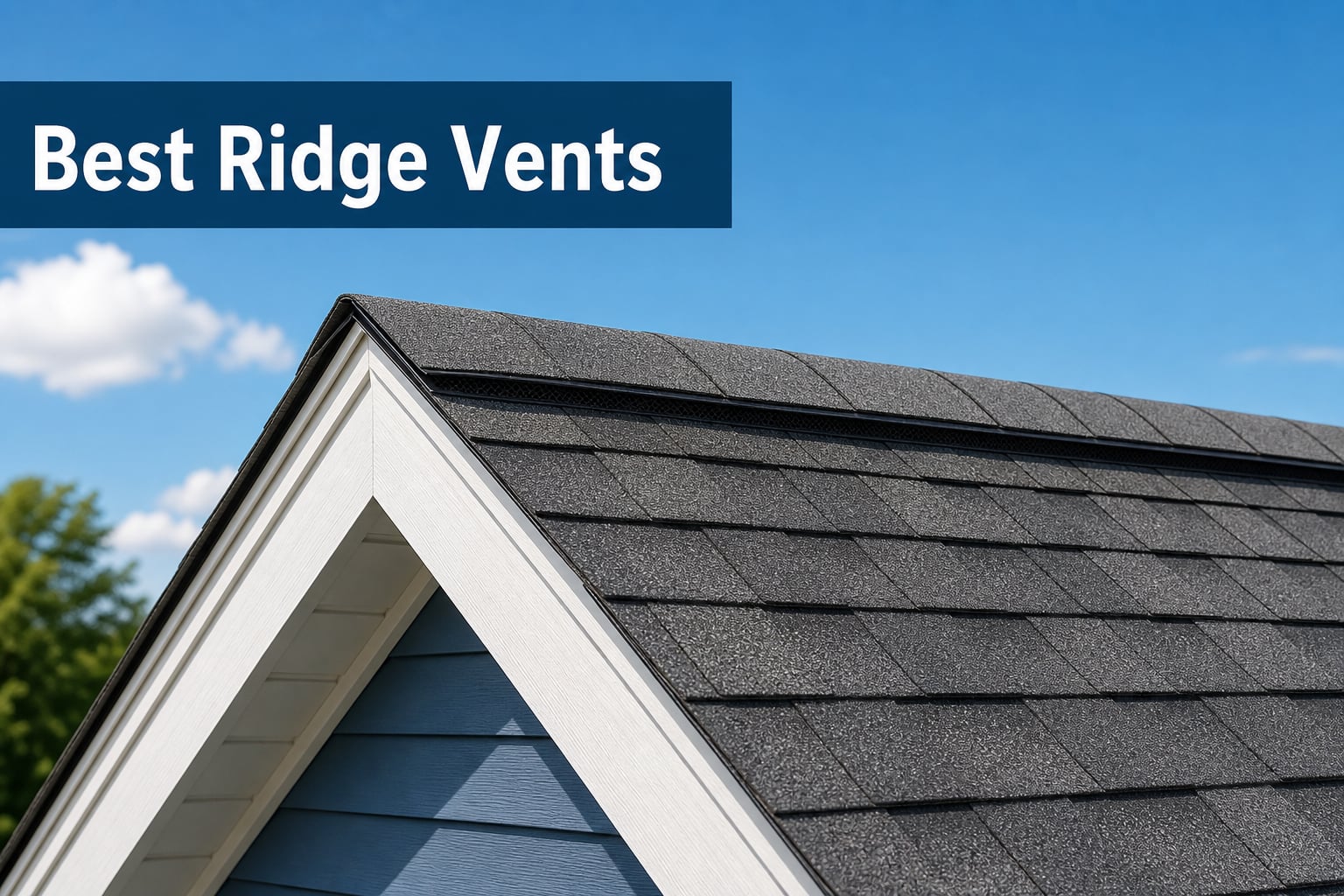
Attic ventilation is one of those home systems most homeowners never think about until something goes wrong. When I started researching the best ridge vents for a complete roofing upgrade, I realized how much confusion exists around NFVA ratings, external baffles, and shingle-over versus exposed designs. A properly installed ridge vent quietly exhausts hot, moist air from your attic year-round, and the wrong pick can leak, clog with debris, or simply move too little air to matter.
Our team compared seven ridge vent products across the categories that actually decide real-world performance: net free vent area per lineal foot, weather resistance under wind-driven rain, pitch compatibility, and the hardware that ships in the box. We focused on shingle-over and metal-roof solutions because those are what most homeowners and roofers actually install in 2026. The picks below come from combing through verified buyer reviews, manufacturer spec sheets, and roofer discussions on r/Roofing and RoofersCoffeeShop.
If you want the short version: the Lomanco Omni Pro earned our top spot for shingle roofs because it ships with ring-shank nails and Posi-tab shingle contouring, the Owens Corning VentSure delivers the highest net free vent area at 20 square inches per lineal foot, and the LCF Universal Vented Ridge is the standout budget pick for metal and ag-panel roofs. Keep reading for the full breakdown, comparison table, climate-specific guidance, and answers to the questions buyers ask most.
Our Top 3 Tested Ridge Vents for 2026
These three products cover the broadest range of roofing situations. Whether you are upgrading an asphalt shingle roof, venting a pole barn with metal panels, or replacing a leaking vent on a steep-pitch home, one of these will fit.
Lomanco Omni Pro Shingle…
- 18 sq in NFVA per lin ft
- Includes 2-1/2in ring shank nails
- Posi-tab weather protection
LCF Universal Vented Ridge…
- 18 sq in NFA per lin ft
- Made in USA with recycled fiber
- Full adhesive strip install
Owens Corning VentSure 4ft…
- 20 sq in NFVA per lin ft (highest)
- Flat baffle keeps debris out
- UV resistant shingle-over
The Lomanco Omni Pro is the most complete out-of-the-box kit we reviewed. It includes 30 ring-shank nails per piece, Posi-tabs that contour to the shingles above, and weatherproof underlapping joints that block wind-driven rain. The 4.6-star average from verified buyers reflects that completeness.
For metal roofing, the LCF Universal Vented Ridge wins on value. At roughly $30 for a 20-foot kit, it delivers 18 square inches of net free area per linear foot, a Class A fire rating, and a full adhesive strip that holds the material in place while fasteners go in. It is the most affordable option here by a wide margin.
The Owens Corning VentSure leads on raw airflow. Twenty square inches of NFVA per lineal foot is the highest rating in this group, and the flat baffle design keeps leaves and pine needles from clogging the vent channel. It is the pick for homeowners who want maximum exhaust capacity on a long, straight ridge.
Comparing the Best Ridge Vents Side by Side
The comparison table below lists every product we tested with its standout features so you can scan the differences quickly. NFVA per lineal foot is the single most important number for matching vent capacity to attic square footage.
| Product | Details | |
|---|---|---|
Lomanco Omni Pro Shingle Over Ridge Vent |
|
Check Latest Price |
LCF Universal Vented Ridge Material |
|
Check Latest Price |
SFNSM Ridge Exhaust Vent Mesh |
|
Check Latest Price |
Trimline 58784 Shingle Ridge Vent |
|
Check Latest Price |
MWI Components Uni-Vent II |
|
Check Latest Price |
Owens Corning VentSure 4ft Strip |
|
Check Latest Price |
CertainTeed 12in Filtered Ridge Vent |
|
Check Latest Price |
Notice how NFVA ratings cluster between 18 and 20 square inches per lineal foot for the shingle-over models. That narrow range is the industry standard, and any vent in this group will move enough air if matched correctly to your soffit intake. The differences that matter most show up in weather resistance, hardware inclusions, and roof-type compatibility.
1. Lomanco Omni Pro Shingle Over Ridge Vent – The Most Complete Kit
Lomanco Omni Pro Shingle Over Ridge Vent (Carton of 10)
Shingle-over vent
18 sq in NFVA per lin ft
Includes 30 ring shank nails per piece
Fits 2/12 to 16/12 pitch
+ Pros
- Includes 2-1/2in ring shank nails (30 per piece)
- Posi-tabs contour to shingles for weather protection
- Weatherproof underlapping joints
- Molded-in nail lines reinforced every 2 inches
- Continuous molded end plug
– Cons
- Only 14 left in stock at time of review
- Higher price per carton than basic vents
The Lomanco Omni Pro earned the top spot in our roundup because it is the only product here that ships as a genuinely complete installation kit. Most ridge vents arrive as bare plastic strips and leave you to source compatible nails, end plugs, and joint sealers separately. The Omni Pro includes 30 ring-shank nails per 4-foot piece, molded-in nail lines reinforced every two inches, and Posi-tabs that contour to the cap shingles above for a tighter weather seal.
Our team liked the way the Posi-tab system locks each piece into the next with weatherproof underlapping joints. That detail matters most on long ridge runs where wind-driven rain can find a gap between sections. The continuous molded end plug at each terminal also eliminates the leaky plastic end-cap problem that homeowners complain about in roofing forums.
Net Free Vent Area and Airflow Capacity
Each Omni Pro piece delivers 18 square inches of net free area per linear foot. That figure sits right in the middle of the shingle-over vent category and is enough to balance with a typical soffit intake system on homes up to roughly 2,400 square feet of attic space. For larger homes or homes in hot climates, you may need to extend the vented ridge length or pair the Omni Pro with additional exhaust.
The vent uses a 12-inch cap shingle, so it integrates cleanly with standard architectural shingle installations. The 72-square-inch NFA per piece rating lines up with the manufacturer spec sheet and matches what verified buyers report after installation.
Roof Pitch Range and Compatibility
The Omni Pro is preformed to a 2/12 pitch but fits roof pitches ranging from 2/12 to 16/12. That wide range covers everything from low-slope porch roofs up to steep A-frame cabins. Each piece measures 48 inches long with an overall width of 14-1/2 inches, giving you solid coverage per carton of ten pieces.
Hardware Inclusions and Installer Experience
Ring-shank nails resist pull-out far better than smooth roofing nails, and Lomanco ships 30 per piece so you have spares for tight spots. The 10 supported nail holes per piece keep fasteners from splitting the plastic, and the molded-in shingle nail lines guide a clean cap-shingle install. Verified buyers specifically mention how much faster installation goes compared to sourcing components separately.
The Posi-tab contouring is the feature roofers talk about most in forum threads. By allowing the cap shingles to lay flat against the vent, it eliminates the lifted-shingle look that can telegraph a poor vent job from the curb.
2. LCF Universal Vented Ridge Material – Best Value for Metal Roofs
LCF Universal Vented Ridge Material for Metal Roofing 20 ft Kit – Breathable Closure for Ag Panels and Ribbed Roofs – 2” Wide x 1” Tall – Made in USA – Full Adhesive Strip – 2 Rolls of 10ft
Metal roof venting material
20 ft kit (2 rolls of 10 ft)
18 sq in NFA per lin ft
Class A fire rating
Made in USA
+ Pros
- 18 sq in net free area per linear foot
- Universal fit for Ag panels and ribs up to 3/4 in tall
- Full-width adhesive backing for easy install
- Class A Fire Rating
- Made in USA with over 90% recycled fiber
– Cons
- Designed specifically for metal roofing only
- Adhesive strip may need supplemental fasteners in high wind
The LCF Universal Vented Ridge Material is the only product in this roundup that solves the metal-roof venting problem without forcing you into a rigid plastic vent designed for asphalt shingles. Manufactured by Lakeside Construction Fasteners, this 20-foot kit ships as two 10-foot rolls of breathable PET fiber that conform to the ribs of ag panels, R-panels, and other ribbed metal profiles.
At roughly $30 for a full 20-foot kit, it is the most affordable ridge vent option here by a wide margin. The 4.5-star average across 35 verified reviews reflects consistent performance on pole barns, shops, and residential metal roofs. Buyers repeatedly call out the ease of installation and the tight seal the high-tack adhesive creates against the panel ribs.
Breathable Mesh Design and Airflow
The LCF material provides 18 square inches of net free area per linear foot, matching the airflow capacity of premium shingle-over vents. The breathable mesh allows warm air to escape while blocking debris, insects, and most wind-driven precipitation. This is the same airflow principle used by roll-style vents on commercial metal buildings.
Because the material compresses to fill the gap between ribs, it eliminates the open channels where wasps and bees love to nest. That pest-proof characteristic is a recurring theme in verified buyer reviews, particularly from rural property owners.
Universal Fit and Roof Profile Compatibility
The LCF vent conforms to roof profiles from 3:12 to 20:12 pitch and accepts ribs up to 3/4 inch tall. That range covers the vast majority of residential and agricultural metal roofing in service today. The full-width adhesive strip holds the material in place while fasteners are driven, which is critical when working solo on a steep metal roof.
Material Safety and Environmental Credentials
The Class A fire rating is the highest available and meets code requirements for residential and commercial metal roofing. The material is made in the USA from over 90 percent recycled PET fiber, which appeals to homeowners pursuing LEED points or simply trying to reduce their environmental footprint. The black color blends with most metal roof panels once installed.
3. Owens Corning VentSure 4ft Strip – Highest NFVA per Foot
Owens Corning VentSure 4ft. Strip Heat & Moisure Ridge Vent (Carton of 10)
Shingle-over ridge vent
20 sq in NFVA per lin ft (highest)
Flat baffle blocks debris
UV resistant
Carton of 10 pieces
+ Pros
- 20 sq in NFVA per lin ft is highest in group
- Flat baffle keeps leaves and pine needles out
- Patent-pending corrugated ridge design for strength
- UV resistant for long service life
- Accommodates virtually any roof pitch
– Cons
- Higher price per carton
- Some buyers reported durability concerns over time
The Owens Corning VentSure 4ft Strip holds the top spot for raw airflow capacity in this group. Twenty square inches of net free vent area per lineal foot is the highest rating we tested, and the flat baffle design actively prevents leaves, pine needles, and similar debris from clogging the vent channel over time. Owens Corning is also one of the most trusted names in residential roofing, which is why roofers on r/Roofing consistently recommend this model.
The patent-pending corrugated ridge design uses alignment tabs that allow flexibility across virtually any roof pitch while still producing a strong, uniform ridgeline. Each carton ships with ten 4-foot pieces plus the nails needed to install them, which puts it on par with the Lomanco Omni Pro for out-of-the-box completeness.
Airflow Performance and NFVA Rating
The 20-square-inch NFVA per lineal foot rating is the differentiator. Most competitors sit at 18, and that extra 11 percent capacity adds up quickly on long ridgelines. On a 40-foot ridge, the VentSure moves 800 square inches of net free area versus 720 for an 18-NFVA vent. That difference matters most in hot, humid climates where summer attic temperatures spike.
The flat baffle is the second performance advantage. External baffles deflect wind-driven rain and snow, while the flat internal baffle keeps loose debris from packing into the vent channel. Roofers in heavily treed areas specifically praise this design for reducing service calls.
Corrugated Ridge Design and Pitch Flexibility
The corrugated ridge construction adds rigidity without sacrificing flexibility. The alignment tabs interlock to maintain a uniform ridgeline, which is the aesthetic detail that separates a professional install from a wavy DIY job. The vent accommodates virtually any roof pitch, and the 12-inch shingle-over width matches standard cap shingle installations.
Durability Considerations
The UV-resistant plastic holds up well under direct sun exposure, which is the single biggest factor in ridge vent longevity. A small number of verified buyers reported durability concerns over multi-year service, so it is worth pairing the VentSure with proper cap shingle installation to shield the vent from direct UV where possible.
4. CertainTeed 12in Filtered Ridge Vent – Best Internal Weather Filter
CertainTeed 12in. Filtered Ridge Vent (Carton of 10 Pieces)
Filtered shingle-over ridge vent
18 sq in NFVA per lin ft
Internal weather filter
Wind driven rain rated to 110 MPH
Fits 3/12 to 16/12 pitch
+ Pros
- Internal weather filter provides protection
- Wind driven rain resistant to 110 MPH
- 18 sq in net free area per linear foot
- Accommodates pitches 3/12 to 16/12
- Carton of 10 pieces
– Cons
- Does not come with nails
- Some buyers reported missing hardware
The CertainTeed 12in Filtered Ridge Vent takes a different approach to weather protection by embedding an internal weather filter directly into the vent body. Rather than relying solely on external baffles, the filter material traps wind-driven rain and snow before it can enter the attic. CertainTeed rates the vent for resistance to wind-driven rain up to 110 MPH, which matches the rating of the MWI Uni-Vent II.
The vent is rated for 18 square inches of net free area per linear foot, which is solid but not class-leading. The 4.2-star average reflects buyer frustrations with missing nails more than performance complaints. If you source your own ring-shank nails, this is a strong performer in wet climates.
Internal Weather Filter Performance
The internal filter is the headline feature. It serves the same role as an external baffle but without adding profile height to the ridgeline. This matters for homeowners who want a low-profile ridge that does not telegraph through the cap shingles. The filter material also blocks insects and pollen, which addresses a pain point that homeowners on roofing forums mention repeatedly.
In wind-driven rain conditions, the 110 MPH rating puts the CertainTeed vent at the top of the category. That rating assumes proper installation with sealed end caps and underlapping joints, so do not skip those steps.
Pitch Range and Shingle Compatibility
The vent accommodates roof pitches from 3/12 to 16/12. That range excludes the very lowest pitches where a shingle-over vent is generally not recommended anyway. Each piece measures 48 inches long with a 12-inch shingle-over width, and the carton ships with ten pieces for 40 feet of coverage.
Hardware Caveats
Unlike the Lomanco Omni Pro and the Owens Corning VentSure, the CertainTeed vent does not include nails. A portion of verified buyers received cartons missing expected hardware. Plan to purchase a box of 2-1/2-inch ring-shank roofing nails separately if you choose this model.
5. Trimline 58784 Shingle Ridge Vent – Best No-Baffle Design
58784 Shingle Ridge Vent, 11-1/4″, Black
Shingle ridge vent
11-1/4 in width
Patented storm stop technology
No baffle needed
Black metal construction
+ Pros
- Patented storm stop technology keeps out wind driven rain snow and dust
- No baffle needed for weather protection
- Continuous ventilation along ridge line
- Balanced system works with soffit vents
– Cons
- Smaller width than competing shingle-over vents
- Fewer customer reviews than premium options
The Trimline 58784 Shingle Ridge Vent stands out for its patented Storm Stop technology, which eliminates the need for an external baffle altogether. Trimline engineered the vent body itself to block wind-driven rain, snow, and dust while still allowing continuous airflow along the ridge. That no-baffle design produces a lower profile than baffled competitors.
The 4.4-star average across 20 verified reviews is strong, with 69 percent five-star ratings. Buyers specifically praise the weather protection and the clean look the lower profile produces once cap shingles are installed.
Storm Stop Technology Explained
Storm Stop is Trimline’s proprietary approach to weather resistance. Rather than relying on a separate baffle to deflect wind-driven rain, the vent body uses internal channels and material density to slow and redirect precipitation. The result is a vent that performs comparably to baffled designs while maintaining a slimmer profile.
This approach works best when paired with healthy soffit intake. Trimline explicitly markets the vent as part of a balanced ventilation system, and proper soffit-to-ridge ratios are essential for any ridge vent to function.
Dimensions and Installation Profile
The vent measures 11-1/4 inches in width, which is narrower than the 12- to 14-1/2-inch widths of competing shingle-over vents. That narrower profile can simplify cap shingle installation on roofs where the ridge cut is on the tighter side. The black metal construction is durable and UV-stable.
Best Use Cases
The Trimline is a strong pick for homeowners who want weather protection without the raised profile of a baffled vent. It works well on homes where curb appeal matters and on roofs where the ridge line is visible from the street. Pair it with adequate soffit vents and you have a quiet, low-profile exhaust system.
6. MWI Components Uni-Vent II – Best for High-Wind Metal Roofs
Uni-Vent II 1″x2″x20′
Metal roof vent
2 in wide x 1 in tall x 20 ft
Tested to 110 MPH wind driven rain
UV stabilized fire retardant
Pure polyurethane foam
+ Pros
- Universal fit for metal or polycarb roofs 2/12 to 20/12
- Tested up to 110 MPH wind driven rain with no measurable leakage
- Pure polyurethane foam vinyl coated for durability
- Double glue strip for easy install
- UV stabilized and fire retardant
– Cons
- Only 20 left in stock at time of review
- Lower review volume than competing products
The MWI Components Uni-Vent II is purpose-built for metal and polycarbonate panel roofs where rigid shingle-over vents simply do not fit. The vent ships as a 20-foot roll of pure polyurethane foam with a vinyl coating, and it conforms to virtually any metal or polycarbonate panel profile from 2/12 to 20/12 pitch.
The headline spec is the 110 MPH wind-driven rain rating with no measurable leakage during testing. That rating puts the Uni-Vent II in the same weather-resistance tier as the CertainTeed filtered vent, but in a form factor designed for metal roofing rather than asphalt shingles.
Wind-Driven Rain Performance
The 110 MPH rain rating is achieved through a combination of closed-cell foam density and the dual glue strips that seal the vent to the panel ribs. In coastal and high-wind regions, this is the spec that determines whether your ridge vent survives a storm without leaking. The foam compresses to fill panel gaps completely, eliminating the channels where water can travel.
Verified buyers in Florida and the Gulf Coast specifically praise the wind resistance. The 4.2-star average reflects the small review volume more than any performance shortfall.
Material Construction and Durability
The pure polyurethane foam core is vinyl-coated, UV-stabilized, and fire-retardant. That combination addresses the three failure modes that kill metal-roof vents: UV breakdown, fire exposure, and physical compression loss over time. The double glue strip holds the vent in place during installation, which matters because metal roofing is unforgiving when fasteners need repositioning.
Roof Panel Compatibility
The Uni-Vent II fits any metal or polycarbonate panel roof from 2/12 to 20/12 pitch. That covers everything from low-slope patio covers to steep A-frame cabins with standing-seam metal roofing. The 2-inch width by 1-inch standard thickness is the dimension that matches the most common rib profiles.
7. SFNSM Ridge Exhaust Vent Mesh – Best for Pest and Odor Control
Ridge Exhaust Vent Mesh 32.8′ L x 9.8″ W (Nail Not Included)Atticdefense Ridge Vent Mesh Roll Ridge Vents for Roofs, Activated Carbon Filter Cotton with Strong Adsorption & Breathability
Ridge vent mesh roll
32.8 ft long x 9.8 in wide
Activated carbon filter cotton
Honeycomb structure
Universal fit
+ Pros
- Simple cut-to-size installation
- Effectively prevents insects and snakes
- Activated carbon filter cotton for odor adsorption
- Excellent breathability and ventilation
- Universal fit for most ridge tiles
– Cons
- Nails not included and must be purchased separately
- Mixed reviews on long-term effectiveness
The SFNSM Ridge Exhaust Vent Mesh takes a different approach from the rigid shingle-over vents in this roundup. It ships as a 32.8-foot roll of activated carbon filter cotton with a honeycomb structure, designed to be cut to size and secured with nails or adhesive along an existing ridge opening. The mesh works as both a pest barrier and an odor filter for attic air.
The 4.0-star average reflects a split in buyer experiences. Positive reviewers praise the pest-blocking performance and the breathability, while critical reviews mention mixed long-term effectiveness. The activated carbon component is unique in this group and is the feature to focus on if you want odor control alongside ventilation.
Activated Carbon Filter Performance
The activated carbon filter cotton adsorbs odors and certain airborne compounds as air passes through. That makes the SFNSM mesh a fit for attics above garages, workshops, or homes where cooking or pet odors tend to migrate upward. No other product in this roundup offers comparable odor filtration.
The honeycomb structure maximizes surface area for both filtration and airflow. The mesh still provides full ventilation while preventing insects, snakes, rain, and snow from entering the attic space.
Universal Fit and Installation
The mesh is rated for universal fit on most ridge roof tiles and is compatible with asphalt shingles, synthetic shingles, cedar shakes, and metal roofing. The 32.8-foot length is generous and typically covers a full residential ridge. Installation is straightforward: cut to size and secure with a nail gun or adhesive.
What to Watch For
Nails are not included, so plan to source ring-shank roofing nails separately. The 9.8-inch width is narrower than competing shingle-over vents, so verify that your ridge opening and cap shingle layout accommodate the mesh dimensions before purchasing. Read the recent verified reviews carefully, as long-term effectiveness reports are mixed.
How to Choose the Best Ridge Vent for Your Roof
Picking the right ridge vent comes down to four decisions: roof type, attic square footage, climate, and the hardware you want included. Get those four right and the choice narrows quickly. Get them wrong and you end up with a vent that leaks, underperforms, or simply will not fit your panels.
Match the Vent to Your Roof Type
Shingle-over vents belong on asphalt shingle, synthetic shingle, and cedar shake roofs. The Lomanco Omni Pro, Owens Corning VentSure, CertainTeed Filtered Vent, and Trimline 58784 all fall in this category. Metal and polycarbonate panel roofs need a flexible vent like the LCF Universal Vented Ridge, the MWI Uni-Vent II, or the SFNSM mesh roll.
Mismatching the vent type to the roof is the single most common installation error homeowners report. A rigid shingle-over vent will not seal properly against metal ribs, and a mesh roll will telegraph through cap shingles on an asphalt roof.
Calculate Your NFVA Requirement
Net free vent area is the metric that determines whether your ridge vent can actually exhaust enough air for your attic. The standard rule is 1 square foot of NFVA for every 300 square feet of attic floor space, split roughly equally between intake (soffit) and exhaust (ridge). For a 2,000-square-foot attic, you need roughly 3.3 square feet of intake NFVA and 3.3 square feet of exhaust NFVA.
To translate that into ridge vent length, divide the required exhaust NFVA by the per-lineal-foot rating of your chosen vent. A vent rated at 18 square inches per lineal foot delivers 1.25 square feet of NFVA per 10 feet of vent. At 20 square inches per lineal foot, the Owens Corning VentSure delivers 1.39 square feet per 10 feet.
Pick Based on Climate
In hot, humid climates, prioritize airflow capacity and UV resistance. The Owens Corning VentSure with its 20 NFVA per foot rating is the strongest performer here. In cold, snowy climates, prioritize wind-driven rain and snow resistance. Look for vents rated to at least 110 MPH wind-driven rain, which includes the CertainTeed Filtered Vent and the MWI Uni-Vent II.
Ice dam prevention is the cold-climate benefit that matters most. A properly balanced ridge and soffit system keeps the roof deck cold enough to prevent the freeze-thaw cycles that create ice dams. External baffles are essential in snow country because they deflect snow before it can enter the vent channel.
External Baffle Versus Filter Versus Mesh
External baffles deflect wind-driven rain and snow physically. The Owens Corning VentSure uses a flat baffle, and the Lomanco Omni Pro uses Posi-tab contouring that achieves similar protection. Internal weather filters, like the one in the CertainTeed vent, trap precipitation inside the vent body. Mesh designs rely on material density and compression to slow water penetration.
All three approaches work when installed correctly. The choice comes down to profile height preferences and the specific weather conditions on your roof. Baffled vents sit slightly higher but offer the most aggressive weather protection.
Check Pitch Compatibility
Most shingle-over vents fit pitches from 2/12 or 3/12 up to 16/12. The MWI Uni-Vent II extends that range to 20/12, making it the choice for very steep metal roofs. Verify the pitch range on the spec sheet before purchasing, because installing a vent outside its rated range voids the warranty and risks leakage.
Decide on DIY Versus Professional Installation
Roofing professionals consistently note that over half of all ridge vent failures trace back to improper installation, not product defects. Common errors include cutting the ridge opening too wide, driving nails too deeply and buckling the vent, skipping end caps, and failing to balance soffit intake with ridge exhaust. If you are not comfortable working at height and reading manufacturer install instructions carefully, hire a licensed roofer.
The Lomanco Omni Pro and Owens Corning VentSure are the most DIY-friendly options in this roundup because they include the hardware and detailed installation guidance. The mesh-style vents are simpler to install but more forgiving of layout mistakes.
FAQs
Who makes the best roof ridge vent?
The best ridge vent brands in 2026 are Lomanco, Owens Corning, CertainTeed, and Trimline for shingle roofs, and LCF Construction Fasteners plus MWI Components for metal roofs. The Lomanco Omni Pro earns the top overall spot because it ships as a complete kit with ring-shank nails, Posi-tab shingle contouring, and weatherproof underlapping joints, while the Owens Corning VentSure delivers the highest airflow at 20 square inches of NFVA per lineal foot.
What is the downside of ridge vent?
The main downsides of ridge vents are improper installation leading to leaks, dependence on balanced soffit intake to function, incompatibility with complex roof designs that have intersecting ridges, and reduced effectiveness on very low-slope roofs. Ridge vents can also allow rain or snow intrusion if end caps are missing or if the vent lacks an external baffle in wet climates.
Can rain come in through ridge vents?
Rain can enter a ridge vent if the vent lacks an external baffle or weather filter, if end caps are improperly installed, or if wind-driven rain exceeds the vent’s rated resistance. Quality ridge vents like the CertainTeed Filtered Vent and MWI Uni-Vent II are rated for wind-driven rain up to 110 MPH with no measurable leakage when installed correctly.
How many ridge vents do I need?
You need enough ridge vent length to deliver 1 square foot of net free vent area for every 300 square feet of attic space, split roughly equally between soffit intake and ridge exhaust. For a 2,000-square-foot attic, that means roughly 3.3 square feet of exhaust NFVA, which translates to about 27 linear feet of vent rated at 18 square inches of NFVA per linear foot.
Are ridge vents worth it?
Ridge vents are worth it for homes with sloped roofs, adequate soffit ventilation, and continuous ridge lines. They reduce attic temperatures in summer which lowers cooling costs, prevent moisture buildup that causes mold and wood rot, and help prevent ice dams in winter. The passive design means no electricity usage and minimal maintenance over a typical 20 to 30 year service life.
Final Verdict on the Best Ridge Vents for 2026
If you want a complete shingle-over kit with included hardware, go with the Lomanco Omni Pro. If maximum airflow capacity is your priority, choose the Owens Corning VentSure with its class-leading 20 NFVA per foot. If you are venting a metal roof on a budget, the LCF Universal Vented Ridge Material delivers excellent value at roughly $30 for a 20-foot kit.
For wet climates, the CertainTeed Filtered Vent and MWI Uni-Vent II both carry 110 MPH wind-driven rain ratings. For low-profile installations on shingle roofs, the Trimline 58784 with its no-baffle Storm Stop technology produces the cleanest ridge line. Whatever you pick, pair it with healthy soffit intake and follow the manufacturer installation guide carefully, because the best ridge vent performs no better than its installation.
Take a fresh look at your attic ventilation system this year and choose the vent that matches your roof type, climate, and budget from the options above.