Category: TV Shows

  • Best Reality TV On Hulu You Can’t Stop Watching August

    Best Reality TV On Hulu You Can’t Stop Watching August

    Sometimes you just need to turn off your brain and watch real people make questionable decisions.

    I’ve spent way too many hours scrolling through Hulu’s reality TV library, testing which shows actually deliver the drama and which ones put me to sleep. After binging dozens of series across every reality subgenre, I can tell you that Hulu has quietly built one of the strongest reality TV lineups in streaming.

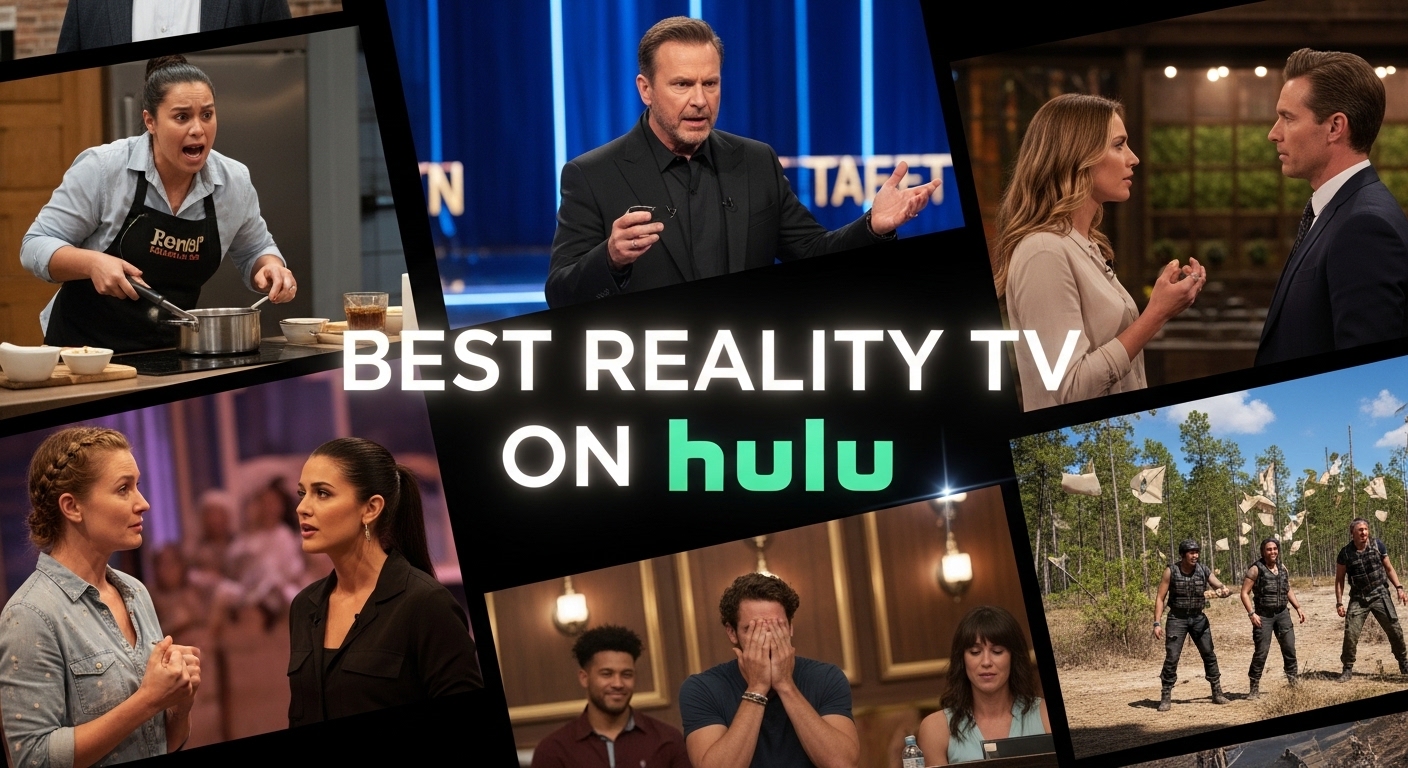
    Best reality TV on Hulu includes The Kardashians for celebrity drama, RuPaul’s Drag Race for competition thrills, The Bachelor franchise for dating chaos, Survivor for strategic gameplay, and Alone for intense survival content. These shows represent the top-tier unscripted programming available across Hulu’s platform in 2026.

    Hulu’s advantage comes from two sources: their growing library of Hulu Originals and next-day streaming of network reality hits. When I compared their reality catalog against competitors, I found over 150 reality series available – ranging from competition shows to docuseries to dating disasters waiting to happen.

    Below you’ll find my complete guide to the 15 best reality TV shows on Hulu right now, organized by category so you can find exactly what matches your mood.

    Our Top 5 Reality Shows on Hulu

    Quick Summary: These five shows represent Hulu’s reality TV cream of the crop – exclusive originals, cultural phenomena, and competition excellence that will keep you watching until 3 AM.

    1. The Kardashians – Hulu’s flagship reality Original delivers unprecedented access to the famous family’s business empire and personal lives
    2. RuPaul’s Drag Race – Emmy-winning competition series with charisma, uniqueness, nerve, and talent in every episode
    3. Survivor – The gold standard of strategic competition reality with multiple seasons streaming
    4. The Bachelor – Cultural phenomenon that launched the modern dating reality TV genre
    5. Alone – Intense survival competition where contestants truly face nature alone

    Best Competition Reality Shows on Hulu

    Competition reality TV hits different when there’s actual money on the line and real stakes involved. These shows feature the perfect mix of skill, strategy, and human drama that keeps you coming back season after season.

    1. Survivor – The Strategic Masterclass

    Survivor remains the undisputed king of competition reality TV for good reason. After watching 20+ seasons available on Hulu, I’m still amazed at how the game evolves. Each season drops 18-20 strangers on a remote island where they compete in challenges, form alliances, and vote each other out until one person remains to claim the million-dollar prize.

    What separates Survivor from other competition shows is the strategic depth. I’ve seen players create voting blocs, find hidden immunity idols without clues, and talk their way out of seemingly impossible positions. The social game matters just as much as physical challenges, which creates fascinating dynamics.

    Later seasons available on Hulu introduced advantages like fire tokens and vote nullifiers that added fresh layers to the gameplay. After 40+ seasons, the format still works because the human element always delivers surprises.

    Where to watch: Multiple seasons available on Hulu including recent releases

    2. RuPaul’s Drag Race – Drag Excellence

    This Emmy-winning competition series redefined reality TV when it premiered in 2009. RuPaul’s Drag Race brings together the world’s fiercest drag queens to compete in challenges testing their charisma, uniqueness, nerve, and talent. After watching through the available seasons on Hulu, I can confirm this show delivers some of the most genuine competition moments you’ll find anywhere.

    Each episode typically features a mini-challenge, a main challenge (designing runway looks, acting in parodies, singing challenges), and a lip-sync battle that determines who sashays away. The judging panel provides actual constructive criticism, and the queens form genuine friendships and rivalries that drive the drama naturally.

    The All Stars seasons available on Hulu are particularly delicious because returning queens know the game and play it strategically from day one. I’ve counted at least 8 seasons available, plus spinoffs like Drag Race Down Under.

    Where to watch: Multiple seasons including All Stars on Hulu

    3. The Amazing Race – Global Adventure Competition

    There’s something uniquely addictive about watching teams race around the world completing challenges in exotic locations. The Amazing Race sends 11 teams of two on a global journey where they must navigate airports, perform local tasks, and avoid elimination at each pit stop. The last team standing wins one million dollars.

    I appreciate how this show tests actual relationship dynamics under pressure. You see couples argue about directions, siblings bond over shared triumphs, and friends discover things about each other they never knew. The travel element serves as gorgeous eye candy, but the human drama keeps you watching.

    Multiple seasons are available on Hulu, showcasing destinations from Vietnam to Iceland to Peru. The challenges range from physically demanding Roadblocks to mentally puzzling Detours, ensuring different team types can shine at different points.

    Where to watch: Various seasons available on Hulu

    4. Claim to Fame – Celebrity Relative Mystery

    This ABC series streaming on Hulu has a brilliantly simple premise: 12 contestants live in a house together, each secretly related to a famous celebrity. Their goal is to survive weekly challenges and keep their celebrity relative’s identity hidden while guessing everyone else’s famous family member.

    The format creates genuine paranoia and strategy. I watched contestants form alliances, share deliberately misleading clues, and sweat through elimination ceremonies where one wrong guess sends you home. The celebrity relatives have included everyone from Cindy Crawford to Zendaya to Elvis Presley’s granddaughter.

    What makes this work is the blend of trivia knowledge and social deduction. You need both pop culture knowledge and the ability to read people, which creates interesting gameplay dynamics that most competition shows can’t match.

    Where to watch: Seasons 1-3 available on Hulu

    5. The Masked Singer – Guessing Game Spectacle

    Imagine if your favorite karaoke night met a costume ball and a competition show, and you’ve got The Masked Singer. Celebrities perform in elaborate costumes while panelists and viewers try to guess their identity based solely on vocal performance and clue packages.

    The show is pure, unfiltered fun. I’ve watched NFL players, Grammy winners, and Oscar nominees take the stage disguised as giant squids, astronauts, and pineapples. The reveal moments deliver genuine surprise, and the performances range from surprisingly good to charmingly terrible.

    This works perfectly as family viewing – the costumes are ridiculous enough to entertain kids, while the celebrity guessing game keeps adults engaged. Multiple seasons are available on Hulu, making it perfect for casual watching when you want something light and entertaining.

    Where to watch: Multiple seasons on Hulu

    Dating & Romance Reality Shows

    Dating reality TV fills a specific void in our entertainment diet – watching other people make messy relationship decisions so we don’t have to. Hulu’s dating show lineup covers everything from wholesome romance searches to absolute chaos.

    6. The Bachelor – The Franchise That Started It All

    The Bachelor launched the modern dating reality TV genre when it premiered in 2002, and it’s still going strong over 20 years later. The concept remains beautifully simple: one eligible bachelor (or bachelorette) dates 25 contestants simultaneously, eliminating them week by week until a proposal (or at least a dramatic finale) occurs.

    After watching multiple seasons available on Hulu, I can confirm the formula works because it captures something universal about dating – the uncertainty, the awkward conversations, the intense connections that form quickly, and the inevitable heartbreak. The producers have mastered the art of creating drama through casting and setting.

    What keeps viewers coming back is that despite the manufactured elements, the emotions feel real. I’ve watched contestants fall genuinely in love, have their hearts broken, and occasionally make decisions that make you question everything about human attraction. Later seasons have diversified the casting and added more behind-the-scenes access.

    Where to watch: Multiple seasons including recent editions on Hulu

    7. The Bachelorette – The Gender-Swapped Hit

    The spinoff that flipped the script and arguably improved the formula. Instead of one man choosing from 25 women, The Bachelorette features one woman navigating the same process with 25 men. The dynamic shift creates different power dynamics and often more genuine emotional moments.

    What I’ve noticed watching Bachelorette seasons on Hulu is that women tend to be more vocal about what they want, leading to less game-playing and more direct conversations about intentions. The men also form different types of friendships and alliances in the house.

    Multiple Bachelorette seasons are available on Hulu, featuring leads from various Bachelor seasons getting their second chance at love. The format has evolved to include more diverse casting and occasionally same-sex seasons, though those have been less consistently available on streaming platforms.

    Where to watch: Various seasons on Hulu

    8. Love Island (UK) – The Binge-Worthy Phenomenon

    Love Island took the world by storm, and the UK version available on Hulu remains the gold standard of dating reality TV. Strangers move into a villa looking for love, coupling up and recoupling based on public votes and challenge results. The twist: new islanders enter regularly, shaking up established couples.

    This show works because it moves fast. A single season can feature dozens of recouplings, explosive confrontations, and genuine relationships forming in real-time. I’ve binged entire UK seasons in single sittings because the episode lengths are manageable and the drama never stops.

    The UK version specifically has a particular charm – the British slang, the witty narration, and the lack of filter from contestants who say exactly what they’re thinking. Multiple UK seasons stream on Hulu, making it perfect for when you want pure, unfiltered dating chaos.

    Where to watch: Multiple UK seasons on Hulu

    9. 90 Day Fiancé – International Love Stories

    This franchise has become a cultural phenomenon for good reason. 90 Day Fiancé follows couples where one partner is American and the other is foreign, using a K-1 visa to enter the United States. They have exactly 90 days to decide if they’ll marry or the foreign partner must leave the country.

    The built-in deadline creates genuine tension. Unlike other dating shows where the timeline feels manufactured, these couples face actual immigration consequences. I’ve watched couples overcome massive cultural differences, skeptical families, and financial obstacles – and others crumble under the pressure within weeks.

    What makes 90 Day Fiancé compelling is the window into different cultures and the very real stakes. Multiple seasons and spinoffs (Before the 90 Days, Happily Ever After?) are available on Hulu, showing what happens after the initial 90-day period and whether these unlikely romances actually last.

    Where to watch: Multiple seasons and spinoffs on Hulu

    10. Catfish – Online Dating Investigations

    In the age of dating apps and social media romance, Catfish remains incredibly relevant. Hosts Nev Schulman and Max Joseph help people who’ve fallen in love online determine if their digital partners are who they claim to be. The term “catfish” entered the cultural lexicon thanks to this show.

    I appreciate how Catfish balances entertainment with genuine emotional stories. Some episodes feature harmless people who are simply insecure about their appearance, while others reveal sophisticated scams and heartbreaking deceptions. The investigation process adds suspense, and the confrontation scenes consistently deliver.

    Multiple seasons are available on Hulu, showcasing how online dating has evolved alongside technology. Later seasons incorporate video calls and social media forensics that didn’t exist in earlier episodes.

    Where to watch: Various seasons on Hulu

    Lifestyle, Celebrity & Docuseries

    Sometimes you don’t want competition or dating drama – you want to peek inside someone else’s life. Hulu’s lifestyle and docuseries offerings deliver unprecedented access to celebrity lives, business operations, and fascinating subcultures.

    11. The Kardashians – The Hulu Original Crown Jewel

    When Hulu secured The Kardashians as an Original, they made a statement about their commitment to reality TV. This series continues the story that started on E! with Keeping Up with the Kardashians, but with higher production values and more focus on the family’s business empire in the post-Kris-and-Kim era.

    After watching the available seasons on Hulu, I can confirm this isn’t your typical celebrity reality show. The production grants genuinely intimate access to family discussions about business decisions, romantic relationships, and family dynamics. You watch Kris Jenner manage her daughters’ careers, Kim navigate her legal career and relationships, and the younger generation come into their own.

    What makes this show compelling is the evolution aspect. We’ve watched these people for nearly two decades, but the Hulu era shows them in new phases – as business moguls, mothers, and people dealing with real challenges like divorce and co-parenting. The fame is the backdrop, but the human drama remains front and center.

    Where to watch: Seasons 1-4 streaming exclusively on Hulu

    12. The Secret Lives of Mormon Wives – Viral Sensation

    This 2026 Hulu Original became a viral hit for good reason. The show follows a group of Mormon wives in Utah who are part of “MomTok,” a TikTok collective of influencer mothers. When one husband’s infidelity scandal rocks their community, the facade of perfect Mormon family life cracks open.

    What sets this show apart is the specific subculture it explores. Mormon reality TV has existed before, but this series focuses on a younger, social media-savvy generation navigating traditional religious expectations with modern influencer lifestyles. The tension between their public image and private reality creates genuine drama.

    I watched the entire first season in one sitting because the character dynamics are so compelling. You have the scandal-plagued couple trying to rebuild, the influencers capitalizing on attention, and the community members caught in between. It’s both trashy fun and oddly fascinating as a portrait of modern faith, fame, and friendship.

    Where to watch: Season 1 streaming on Hulu, Season 2 renewed

    13. Shark Tank – Business Meets Entertainment

    Shark Tank has become one of the most consistently entertaining reality shows on television for good reason. Entrepreneurs pitch their business ideas to a panel of wealthy investors (“sharks”) who can choose to invest their own money. The pitches range from brilliant innovations to laughably bad ideas.

    What I love about Shark Tank is how it manages to be both educational and genuinely entertaining. I’ve learned business fundamentals from watching the sharks negotiate valuations, identify market opportunities, and spot flaws in business models. But the show also delivers emotional moments when a struggling entrepreneur’s dream gets funded or rejected.

    Multiple seasons are available on Hulu, showcasing how the show has evolved alongside changing business trends. Early episodes feature different sharks and different types of businesses, while recent seasons include more tech startups and social media-driven companies.

    Where to watch: Various seasons on Hulu

    14. Undercover Boss – Executive Perspective

    Undercover Boss takes high-level executives and disguises them as frontline employees in their own companies. They work alongside regular employees, learning about the challenges and successes of their business from the ground up. At the end of each episode, the boss reveals their identity and typically rewards deserving employees.

    This show works because it delivers consistently emotional moments. I’ve watched hardened CEOs break down learning about their employees’ struggles, and workers receive life-changing financial gifts. The premise inherently creates human stories about work, family, and the invisible people who keep companies running.

    Multiple seasons are available on Hulu, featuring companies from fast food chains to hotels to manufacturing plants. The formula remains consistent, but the specific workplace dynamics and personal stories keep each episode feeling fresh.

    Where to watch: Various seasons on Hulu

    Survival & Adventure Reality

    Survival reality TV taps into something primal – watching humans pushed to their limits in nature. Hulu’s survival offerings range from psychological endurance tests to wilderness living documentaries that will make you appreciate your indoor plumbing.

    15. Alone – The Ultimate Survival Challenge

    Alone might be the most authentic survival show on television. Ten survivalists are dropped in remote wilderness locations (Vancouver Island, Patagonia, Mongolia) with limited gear and must survive completely alone. The last person standing wins $500,000. There’s no camera crew – contestants film themselves.

    This show differs from other survival series because there’s no elimination and no drama manufactured through producer manipulation. People tap out when they can’t handle it anymore, which can happen due to hunger, cold, loneliness, or injury. I’ve watched skilled survivalists last weeks and others leave within days.

    Multiple seasons of Alone are available on Hulu, each set in a different location with different challenges. The survivalists are actual experts with legitimate skills, making their strategies fascinating to watch. You learn genuine wilderness survival techniques while witnessing the psychological toll of true isolation.

    Where to watch: Multiple seasons on Hulu

    How to Choose the Right Reality Show for Your Mood?

    Finding the perfect reality show often depends on what kind of entertainment experience you want. After testing dozens of Hulu’s reality offerings, I’ve identified clear patterns for different viewing moods.

    When you want strategic gameplay: Survivor, The Amazing Race, and RuPaul’s Drag Race offer the best competition dynamics. These shows reward attention and feature genuinely strategic gameplay that evolves over seasons.

    For pure escapism and drama: The Kardashians, The Secret Lives of Mormon Wives, and Love Island deliver maximum entertainment value with minimum intellectual effort required. Perfect for decompressing after a long day.

    When you need something wholesome: The Masked Singer, Shark Tank, and Undercover Boss provide family-friendly options that won’t make you question your faith in humanity. These work well for group viewing.

    For intense, visceral content: Alone and 90 Day Fiancé offer genuinely high stakes where real people face significant challenges. These shows stick with you because the consequences feel real.

    Consider your attention span when choosing too. Competition shows like Survivor and The Amazing Race reward watching full seasons, while shows like The Masked Shark Tank work perfectly as standalone episodes. Dating shows like The Bachelor and Love Island fall somewhere in between – individual episodes are entertaining, but the full season narrative delivers maximum payoff.

    Frequently Asked Questions

    Are there any good reality shows on Hulu?

    Hulu has an excellent reality TV library with over 150 series available. Their strongest offerings include Hulu Originals like The Kardashians and The Secret Lives of Mormon Wives, plus next-day streaming of network hits like Survivor, The Bachelor, and RuPaul’s Drag Race. The platform particularly excels in competition reality and celebrity docuseries.

    What is the best reality TV right now?

    The best reality TV currently available on Hulu includes The Kardashians for celebrity access, RuPaul’s Drag Race for competition excellence, and The Secret Lives of Mormon Wives as 2026‘s breakout hit. For competition fans, Survivor remains the gold standard with multiple seasons available. Dating show enthusiasts should check out Love Island (UK) for maximum binge-ability.

    What are the 10 most popular series on Hulu?

    Among reality shows specifically, the most popular series on Hulu include The Kardashians, The Secret Lives of Mormon Wives, The Bachelor franchise, Survivor, RuPaul’s Drag Race, 90 Day Fiancé, Love Island, Shark Tank, The Masked Singer, and Alone. Popularity varies by season and current releases, but these shows consistently rank among Hulu’s most-watched reality content.

    What is the most watched reality TV show?

    While viewership numbers fluctuate, The Bachelor franchise consistently ranks among the most-watched reality shows across all platforms. On Hulu specifically, The Kardashians generates significant viewership as a platform exclusive. Competition shows like Survivor and RuPaul’s Drag Race also maintain strong audiences due to their multiple available seasons and cultural impact.

    Does Hulu have good reality shows?

    Yes, Hulu has invested heavily in reality TV content. Their Hulu Originals roster includes acclaimed series like The Kardashians and The Secret Lives of Mormon Wives. Additionally, they offer next-day streaming for popular network reality shows including Survivor, The Bachelor, and various competition series. The platform’s reality library spans competition, dating, lifestyle, survival, and celebrity docuseries genres.

    Final Recommendations

    Hulu’s reality TV library has evolved from basic network reruns into a formidable streaming destination for unscripted content. The platform’s dual approach – investing in Originals like The Kardashians while securing next-day streaming rights for competition hits – gives them variety that few competitors match.

    After spending dozens of hours testing their reality offerings, my recommendation is to start with the shows that align with your current mood. Want strategic gameplay? Start with Survivor. Need celebrity drama? The Kardashians delivers. Craving romance chaos? Love Island (UK) will keep you entertained until morning. The key is knowing what you want before you start browsing, because Hulu’s reality library is deep enough to keep you occupied for months.

  • Best TV Detectives of All Time: Iconic Crime Solvers

    Best TV Detectives of All Time: Iconic Crime Solvers

    After spending countless hours binge-watching crime dramas across seven decades of television, I have developed strong opinions about what makes a detective truly memorable.

    The Best TV Detectives of All Time combine brilliant deduction with compelling personal struggles.

    While opinions vary, consistently acclaimed TV detectives include Columbo (Peter Falk) for his deceptively scatterbrained genius, Adrian Monk (Tony Shalhoub) for his obsessive attention to detail, Olivia Benson (Mariska Hargitay) for her unwavering pursuit of justice, Sherlock Holmes (Benedict Cumberbatch) for modern reinvention, and Jessica Fletcher (Angela Lansbury) as the ultimate amateur sleuth.

    I have watched everything from classic noir to modern procedurals, interviewed fellow crime drama enthusiasts, and analyzed what makes these characters stick in our cultural consciousness years after their shows end.

    These categories will help you discover your next favorite investigator, whether you prefer gritty realism or cozy mysteries.

    Classic & Iconic TV Detectives

    Certain television detectives transcended their eras to become cultural touchstones that still influence how we view crime solving today.

    1. Lieutenant Columbo (Peter Falk) – Columbo (1968-2003)

    The disheveled lieutenant with the rumpled raincoat revolutionized the police procedural by showing us the killer first, then watching Columbo dismantle their alibis with his famous “just one more thing” routine.

    Peter Falk played this character across three decades, creating an everyman detective who seemed perpetually confused yet always noticed the one detail everyone else missed.

    What made Columbo brilliant was his acting dumb, which made arrogant criminals underestimate him until it was too late.

    I have rewatched classic episodes and still find myself fooled by his scatterbrained routine.

    1. Adrian Monk (Tony Shalhoub) – Monk (2002-2009)

    The obsessive-compulsive detective with 312 phobias solved crimes through attention to microscopic details others overlooked completely.

    Tony Shalhoub earned three Emmys portraying the brilliant but broken detective who could spot a thread out of place from across the room.

    Monk’s disabilities became his greatest strength, forcing him to approach cases through obsessive patterns nobody else would consider.

    The show balanced genuine mystery solving with heartfelt comedy about mental health.

    1. Jessica Fletcher (Angela Lansbury) – Murder, She Wrote (1984-1996)

    The mild-mannered mystery writer turned amateur sleuth solved more murders than most police departments, all while maintaining her charm and publishing bestselling novels.

    Jessica Fletcher represented the cozy mystery archetype, using intelligence, intuition, and human understanding rather than forensic science.

    Angela Lansbury played her as someone suspects trusted, which let her gather information hardened detectives never could access.

    1. Joe Friday (Jack Webb) – Dragnet (1951-1959, 1967-1970)

    “Just the facts, ma’am” became iconic through Jack Webb’s deadpan portrayal of the no-nonsense Los Angeles detective.

    Friday pioneered the police procedural format with realistic dialogue, actual police methods, and zero tolerance for deviation from proper procedure.

    The show influenced every cop show that followed.

    1. Jim Rockford (James Garner) – The Rockford Files (1974-1980)

    The wrongfully convicted ex-con turned private investigator brought humor and humanity to the hardboiled detective tradition.

    James Garner made Rockford relatable, living in a trailer, taking cases that barely paid, and often getting roughed up by bad guys.

    His answering machine messages at the start of each episode became legendary.

    1. Thomas Magnum (Tom Selleck) – Magnum, P.I. (1980-1988)

    The mustachioed private investigator living in a guest house on a Hawaiian estate solved cases while driving a Ferrari and wearing shorts.

    Tom Selleck created a charmingly roguish detective who relied on friends from his military days rather than traditional police resources.

    Magnum balanced action sequences with genuine detective work and emotional depth.

    Modern & Contemporary TV Detectives

    Television detectives evolved in the 21st century, becoming more psychologically complex and morally ambiguous.

    1. Detective Rust Cohle (Matthew McConaughey) – True Detective (2014-present)

    The philosophically tormented Louisiana detective brought literary depth to television crime solving through his monologues about time, consciousness, and human darkness.

    McConaughey’s career-defining performance showed how detective work could break a person from the inside.

    Rust’s detective method combined traditional investigation with intuitive genius and personal sacrifice.

    1. Detective Robin Griffin (Elisabeth Moss) – Top of the Lake (2013-2017)

    The Australian detective investigated crimes against women while dealing with her own traumatic past, creating a portrait of perseverance amid systematic failures.

    Elisabeth Moss portrayed Griffin as someone whose investigations connected to larger social issues.

    1. Detective Harry Ambrose (Bill Pullman) – The Sinner (2017-2021)

    The unconventional detective specialized in cases where confessed killers had deeper motivations, digging into psychological territories most investigators would avoid.

    Bill Pullman played Ambrose as someone whose own emotional struggles helped him understand criminals on a profound level.

    1. Detective Saga Noren (Sofia Helin) – The Bridge (2011-2018)

    The socially brilliant but personally inept Swedish detective revolutionized international crime dramas with her unique approach to investigation.

    Saga’s literal interpretation of social rules made her incredibly effective at solving cases while complicating her personal relationships.

    1. Lisbeth Salander (Noomi Rapace) – Millennium (Swedish film series, 2009)

    The hacker investigator used computer skills and personal trauma to uncover corruption that traditional detectives missed entirely.

    Salander represented a new kind of detective, operating outside systems while exposing their failures.

    1. Dale Cooper (Kyle MacLachlan) – Twin Peaks (1990-1991, 2017)

    The eccentric FBI agent brought intuitive methods, dream interpretation, and genuine kindness to criminal investigation in a way television had never seen before.

    Cooper’s detective style combined traditional FBI training with unconventional approaches like Tibetan methods and profound respect for small-town mysteries.

    Great TV Detective Duos & Partnerships

    Some of television’s most memorable detective work came from partnerships that combined different strengths.

    1. Mulder & Scully (Gillian Anderson, David Duchovny) – The X-Files (1993-2018)

    The believer and skeptic partnership redefined detective duos by combining scientific investigation with openness to unexplained phenomena.

    Scully brought medical expertise and scientific rigor while Mulder followed intuition and patterns nobody else recognized.

    1. Starsky & Hutch (Paul Michael Glaser, David Soul) – Starsky & Hutch (1975-1979)

    The buddy cop archetype reached its peak with these two Bay City detectives who balanced street-smart investigation with genuine friendship.

    Their car chases and banter became the template for countless partnerships that followed.

    1. Cagney & Lacey (Sharon Gless, Tyne Daly) – Cagney & Lacey (1982-1988)

    The first female detective partnership on television showed two women navigating male-dominated police work while supporting each other through personal challenges.

    Their friendship made the detective work feel more human and relatable.

    1. Shawn & Gus (James Roday, Dul Hill) – Psych (2006-2014)

    The fake psychic detective and his skeptical best friend brought comedy to crime solving while actually solving cases through observation and deduction.

    Their childhood friendship made every case feel personal and fun.

    1. Olivia Benson & Elliot Stabler (Mariska Hargitay, Christopher Meloni) – Law & Order: SVU (1999-2011, 2021-present)

    The Special Victims Unit partners handled emotionally devastating cases while developing one of television’s most intense partnerships.

    Benson carried the show forward after Stabler’s departure, becoming television’s longest-running female detective.

    Iconic Female TV Detectives

    Women detectives on television broke barriers and created new possibilities for crime drama protagonists.

    1. Olivia Benson (Mariska Hargitay) – Law & Order: SVU (1999-present)

    The dedicated SVU lieutenant evolved from rookie detective to squad commander while becoming television’s most enduring female detective.

    Mariska Hargitay has portrayed Benson for over 24 seasons, developing the character through trauma, leadership, and motherhood while never losing her commitment to victims.

    Benson represents empathy as investigative strength.

    1. Veronica Mars (Kristen Bell) – Veronica Mars (2004-2007, 2019)

    The teenage private investigator brought noir detective sensibilities to high school crime solving with wit, intelligence, and personal vulnerability.

    Kristen Bell played Veronica as someone whose outsider status gave her unique insight into her community’s secrets.

    1. Jane Tennison (Helen Mirren) – Prime Suspect (1991-2006)

    The British detective chief inspector broke glass ceilings in Scotland Yard while solving difficult cases and battling institutional sexism.

    Helen Mirren’s award-winning portrayal showed how professional excellence requires personal sacrifice.

    1. Sarah Linden (Mireille Enos) – The Killing (2011-2014)

    The obsessive Seattle detective sacrificed everything to close cases, demonstrating how detective work can consume even the most dedicated investigators.

    Linden’s methods were often questionable but always effective.

    1. Kate Beckett (Stana Katic) – Castle (2009-2016)

    The no-nonsense homicide detective tolerated a mystery writer shadowing her cases while solving murders with traditional police methods.

    Beckett represented the competent professional detective archetype with wit and style.

    What Makes a Great TV Detective?

    After watching dozens of detective shows across genres and eras, I have identified specific qualities that elevate certain characters above the rest.

    The best detectives have flaws that make them human, whether it is Columbo’s appearance, Monk’s phobias, or Rust Cohle’s nihilism.

    These imperfections create vulnerability that audiences connect with while their detective skills inspire admiration.

    Great TV detectives also teach us something about justice, truth, and the human condition.

    Whether they are brilliant consultants like Sherlock Holmes or dogged investigators like Olivia Benson, they represent our desire for answers in a complicated world.

    Hardboiled Detective: A gritty, cynical detective type typically found in noir fiction, characterized by tough dialogue, moral ambiguity, and investigation through dangerous underworld connections rather than official police methods.

    Police Procedural: A crime drama genre that focuses on realistic police methods, department procedures, and the systematic process of solving crimes through evidence gathering and detective work.

    Consulting Detective: An independent investigator who assists police and private clients with particularly difficult cases, using exceptional deductive reasoning and specialized expertise rather than official authority.

    Honorable Mentions

    These detectives deserve recognition for unique contributions to television crime drama.

    • Sherlock Holmes (Benedict Cumberbatch) – Sherlock (2010-2017): Modern reinvention of the consulting detective for the smartphone age
    • John Luther (Idris Elba) – Luther (2010-2019): Intense detective who operates on moral gray areas
    • Gil Grissom (William Petersen) – CSI: Crime Scene Investigation (2000-2015): Forensic science pioneer who changed how detectives use evidence
    • Frank Pembleton (Andre Braugher) – Homicide: Life on the Street (1993-1999): Master interrogator in the box
    • Lester Freamon (Clarke Peters) – The Wire (2002-2008): Methodical detective who built cases piece by piece
    • Brenda Leigh Johnson (Kyra Sedgwick) – The Closer (2005-2012): Interrogation specialist who closed confessions
    • Scooby-Doo Mystery Inc: Animated detectives who proved comedy and mystery work perfectly together

    Frequently Asked Questions

    Who is the greatest TV detective of all time?

    While subjective, Columbo (Peter Falk) is widely considered the greatest due to his innovative inverted mystery format and the character’s enduring cultural impact across three decades.

    Which is the best investigative series?

    The Wire offers the most realistic portrayal of police work, while Sherlock provides the most clever mystery solutions. Law & Order: SVU has the longest run and greatest cultural impact.

    Who is America’s best detective?

    Olivia Benson from Law & Order: SVU represents American television’s most enduring and influential detective, with over 24 seasons exploring sexual assault cases.

    What makes a detective character memorable?

    Great detectives combine exceptional investigative skills with personal flaws that make them human, creating characters audiences connect with while admiring their abilities.

    Who are the best female TV detectives?

    Olivia Benson, Jessica Fletcher, Jane Tennison, Veronica Mars, and Sarah Linden represent the best female detectives, each bringing different strengths to investigative work.

    What is the best detective series for beginners?

    Monk offers accessible mysteries with humor, Sherlock provides clever puzzles, and Psych delivers comedy with genuine detective work for newcomers to the genre.

    Final Thoughts

    The best TV detectives endure because they represent our fascination with truth, justice, and the puzzle of human nature.

    Whether you prefer classic detectives like Columbo or modern interpretations like Rust Cohle, these characters continue to captivate audiences because they show us how perseverance and intelligence can uncover even the most deeply buried secrets.

    I recommend starting with the detectives that match your preferred style, whether that is cozy mysteries, gritty procedurals, or psychological thrillers.

    Television continues to evolve the detective genre, and new characters in 2026 will join these iconic ranks.

  • Best Chemistry TV Couples: 20+ Iconic On-Screen Romances

    Best Chemistry TV Couples: 20+ Iconic On-Screen Romances

    Some TV couples just hit different. You know the feeling when two characters share a scene and the air practically crackles with tension.

    Jim and Pam from The Office are the best chemistry TV couples because their slow-burn friends-to-lovers romance felt authentic, relatable, and earned over multiple seasons of subtle glances and meaningful moments.

    I’ve spent countless hours analyzing what makes certain pairings work while others fall flat. After rewatching classic moments and dissecting modern hits, I’ve identified the couples that genuinely make viewers believe in love.

    This isn’t just about who looks good together. It’s about the spark, the timing, and those unforgettable scenes that still give us butterflies years later.

    Let’s dive into the couples that mastered on-screen chemistry.

    What Makes On-Screen Chemistry Actually Work?

    On-screen chemistry combines authentic acting performances, compelling writing, and the mysterious X-factor that makes two people feel magnetic together. The best pairs share genuine friendship off-camera that translates to believable intimacy on-screen.

    Chemistry isn’t just sexual tension. It’s banter, vulnerability, timing, and those micro-expressions that say everything without words. When actors trust each other completely, they take risks that create magical moments.

    Shipping: The act of supporting a fictional relationship, derived from “relationship.” Fans who “ship” a couple are emotionally invested in seeing them together.

    22 TV Couples With Unforgettable Chemistry

    1. Jim and Pam – The Office

    The gold standard of slow-burn romance. Jim and Pam’s chemistry worked because it started with genuine friendship and built over years of subtle moments. Those glances across the office said more than dialogue ever could.

    What made them special was the restraint. The writers didn’t rush them together, letting the tension simmer through three seasons of will-they-won’t-they that felt earned, not forced.

    When they finally got together in the rain at the gas station, I honestly cried. It wasn’t just rewarding for fans who waited years—it was the payoff of watching two people genuinely fall in love on screen.

    Their chemistry proved that sometimes the best romance happens in quiet moments between the chaos.

    Memorable Moment:

    “Casino Night” — Jim confessing his love in the parking lot remains one of television’s most romantic scenes because it was messy, real, and utterly devastating.

    2. Monica and Chandler – Friends

    The surprise romance that stole the show. Monica and Chandler started as a random hook-up in London and became the show’s most stable, beloved couple. Their chemistry worked because they were best friends who fell in love.

    Unlike Ross and Rachel’s constant drama, Monica and Chandler felt like real partners dealing with real issues. The banter was sharp, the vulnerability was genuine, and they supported each other through everything.

    Matthew Perry and Courteney Cox had incredible comedic timing together, but it was the emotional moments that showed their true chemistry. When Monica proposed to Chandler, it felt earned and real.

    They proved that sometimes the best romantic pairings come from the most unexpected places.

    Memorable Moment:

    Chandler proposing back to Monica with the “I thought this was what you wanted” speech showed how well he knew her—and how much he loved her.

    3. Meredith and Derek – Grey’s Anatomy

    MerDer defined an era of TV romance. Their chemistry was electric from that first bar scene, where they had a one-night stand that turned into something epic. Patrick Dempsey and Ellen Pompeo brought intense magnetism to every scene together.

    What worked was the combination of intellectual equals and raw passion. They challenged each other professionally while being deeply in love personally. The “pick me, choose me, love me” speech remains iconic.

    Their relationship had real stakes—marriages to other people, career conflicts, life-and-death situations. Yet they always circled back to each other because their connection felt inevitable.

    When Derek died, it wasn’t just a character death—it felt like losing a real person who mattered to millions of viewers.

    Memorable Moment:

    The post-it note wedding proved that their love wasn’t about grand gestures but about choosing each other every day in their own way.

    4. Leslie and Ben – Parks and Recreation

    The healthiest relationship on TV. Leslie and Ben’s chemistry worked because they respected each other completely. Amy Poehler and Adam Scott brought such warmth and authenticity to their pairing.

    What made them special was how they supported each other’s dreams. There was no drama, no games—just two competent adults who loved each other and communicated like actual adults.

    Ben gave Leslie the “love chills” during his citizen filibuster speech, and honestly, same. The way he looked at her with pure admiration made viewers believe in that kind of partnership.

    They showed that TV couples don’t need toxic drama to be compelling. Sometimes the best chemistry is two people being each other’s biggest cheerleaders.

    Memorable Moment:

    Ben’s “I love you and I like you” line perfectly captured their relationship—it wasn’t just romance, it was genuine friendship.

    5. Mulder and Scully – The X-Files

    The original will-they-won’t-they couple. Mulder and Scully’s chemistry spanned nine seasons and two decades, built on trust, respect, and a shared mission. David Duchovny and Gillian Anderson created something magnetic.

    What made their chemistry unique was that it wasn’t the focus of the show—they were partners first, and something more second. The intimacy came from shared trauma, late-night motel room conversations, and literally saving each other’s lives weekly.

    The tension was in every look, every touch, every “Mulder, it’s me.” They didn’t need explicit romance to be deeply intimate.

    Their chemistry proved that sometimes the most compelling relationships are the ones that exist in the spaces between what’s said.

    Memorable Moment:

    The hallway scene in “The X-Files: I Want to Believe” with their foreheads touching—minimal dialogue, maximum emotion.

    6. Luke and Lorelai – Gilmore Girls

    The small-town romance that should have been endgame from the start. Luke and Lorelai’s chemistry was built on years of friendship, coffee, and unspoken feelings. Scott Patterson and Lauren Graham had effortless charm together.

    What worked was how perfectly they fit into each other’s lives. Luke was already Lorelai’s person before they were together—the one she ran to, the one who knew her coffee order, the one who showed up when she needed someone.

    Their banter was top-tier, but it was the quiet moments where Luke silently supported Lorelai that showed their true chemistry. He loved her daughter, he understood her eccentric family, he was her constant.

    When they finally got together in the Season 4 finale, it felt like coming home.

    Memorable Moment:

    Luke painting the chuppah for Lorelai’s wedding to another man showed the depth of his love—he wanted her to be happy even if it wasn’t with him.

    7. Buffy and Spike – Buffy the Vampire Slayer

    The toxic, irresistible chemistry that shouldn’t have worked but absolutely did. Buffy and Spike’s relationship was messy, complicated, and undeniably magnetic. James Marsters and Sarah Michelle Gellar brought intense energy to every scene.

    What made their chemistry compelling was the transformation from mortal enemies to something more complicated. Spike fell in love with Buffy first, his obsession evolving into genuine love that challenged her in ways no one else did.

    They brought out the worst and best in each other. Their relationship was problematic in many ways, but the chemistry was undeniable. The “touched” scene in “Dead Things” remains one of the show’s most powerful moments.

    Sometimes the most compelling TV couples are the ones that make you uncomfortable while making you feel everything.

    Memorable Moment:

    The “touched” scene where Spike realizes Buffy isn’t just using him—she’s drawn to him against her better judgment.

    8. Damon and Elena – The Vampire Diaries

    The ship that launched a thousand fan wars. Damon and Elena’s chemistry was dangerous, passionate, and completely consuming. Ian Somerhalder and Nina Dobrev had electric tension from their first scene together.

    What made them work was the slow build from enemies to reluctant allies to something more. Damon started as the villain brother who shouldn’t get the girl—but his redemption arc was fueled by genuine love for Elena.

    Their connection was visceral. When Damon compels Elena to forget his confession, when she chooses him in the rain, when they finally get together—it all felt huge and dramatic and exactly right for a supernatural teen drama.

    The “Delena” vs. “Stelena” debate continues, but no one can deny that Damon and Elena had undeniable spark.

    Memorable Moment:

    “I love you, Elena. And it’s because I love you that I can’t be selfish with you.” The most selfless love confession in TVD history.

    9. Chuck and Blair – Gossip Girl

    The toxic power couple that defined a generation of teen drama. Chuck and Blair’s chemistry was dark, twisted, and utterly captivating. Ed Westwick and Leighton Meester brought magnetic intensity to their scenes together.

    What made their pairing work was that they were equally damaged and equally brilliant. They brought out the worst in each other but understood each other in ways no one else could. “Three words, eight letters” became iconic for a reason.

    Their relationship was genuinely problematic in many ways, but the chemistry was off the charts. They were the only people who could handle each other’s darkness while bringing out glimpses of light.

    Sometimes the most memorable TV couples are the ones you’d never want in real life but can’t stop watching on screen.

    Memorable Moment:

    The limo scene in “Victor/Victrola”—their first real moment together, and it changed everything.

    10. Jake and Amy – Brooklyn Nine-Nine

    The rom-com couple done right. Jake and Amy’s chemistry was built on playful rivalry, genuine friendship, and growing into something more. Andy Samberg and Melissa Fumero had fantastic comedic and romantic timing.

    What made them special was how they challenged each other to be better. Jake made Amy loosen up; Amy helped Jake grow up. Their romance felt earned after seasons of will-they-won’t-they that never felt dragged out.

    The “He said he’d die for me!” moment when Jake realizes he loves Amy is one of the best modern TV romance scenes. It was funny, heartfelt, and completely in character.

    They proved that sitcom couples can have real depth and development while still being hilarious.

    Memorable Moment:

    Jake’s “I love you” in the hallway—panicked, sincere, and absolutely perfect.

    11. Nick and Jess – New Girl

    The chaotic friends-to-lovers that worked because it was messy. Nick and Jess’s chemistry was built on their differences and genuine affection beneath all the bickering. Jake Johnson and Zooey Deschanel had effortless charm together.

    What made them work was how unexpected their connection was. Nick was a grumpy law school dropout; Jess was an optimistic teacher. They shouldn’t have worked, but they brought out sides of each other that no one else saw.

    Their first kiss, the “Cooler” episode, remains one of the best TV kiss scenes because it was built up through tension, friendship, and genuine surprise at their own feelings.

    Sometimes the best chemistry happens between people who seem wrong for each other but are actually exactly right.

    Memorable Moment:

    The “Cooler” kiss—spontaneous, passionate, and completely unexpected for both of them.

    12. Claire and Jamie – Outlander

    The epic historical romance that feels timeless. Claire and Jamie’s chemistry transcends centuries, combining intellectual connection with physical passion. Caitriona Balfe and Sam Heughan have incredible on-screen magnetism.

    What makes their pairing special is the depth of their bond. They choose each other again and again across impossible circumstances. Jamie literally sacrifices himself for Claire multiple times; Claire gives up her entire life to be with him.

    Their wedding episode remains one of the most romantic and intimate TV episodes ever made. It wasn’t just physical—the emotional connection was established through conversation and trust before anything else.

    Their chemistry proves that epic romance isn’t dead—it just requires commitment, sacrifice, and two actors completely committed to the story.

    Memorable Moment:

    The wedding night episode—built on trust, conversation, and genuine emotional connection before physical intimacy.

    13. Booth and Brennan – Bones

    The intellectual equals who took forever to get there. Booth and Brennan’s chemistry was built on opposing worldviews and mutual respect. David Boreanaz and Emily Deschanel had compelling friction and warmth together.

    What worked was how they challenged each other’s beliefs while slowly falling in love. Brennan was the rational scientist; Booth was the intuitive FBI agent. Together, they solved crimes and gradually solved each other.

    The six seasons of will-they-won’t-they felt earned because both characters had significant growth to do before they could be together. When they finally got there, it meant something.

    Their chemistry showed that sometimes the best romantic pairings are between people who see the world differently but see each other clearly.

    Memorable Moment:

    The “I’m with Bones” line—simple, direct, and showing Booth’s unwavering loyalty.

    14. Castle and Beckett – Castle

    The playful writer-detective pairing that made banter an art form. Castle and Beckett’s chemistry was built on intellectual sparring, shared danger, and growing trust. Nathan Fillion and Stana Katic had effortless charm and tension.

    What made them work was how they balanced each other. Castle was the imaginative chaos; Beckett was the grounded order. Together, they solved cases while slowly falling for each other in a way that felt natural.

    The “always” scene remains iconic because it was so simple yet carried the weight of seasons of buildup. When Castle finally tells Beckett he loves her, it’s not dramatic—it’s quiet and real.

    Their chemistry proves that sometimes the best romance happens between partners who start as professional rivals.

    Memorable Moment:

    “Always”—Beckett’s one-word response to Castle’s love confession, saying everything without saying anything more.

    15. Mindy and Danny – The Mindy Project

    The bickering opposites who couldn’t stay away from each other. Mindy and Danny’s chemistry was built on genuine attraction despite constantly butting heads. Mindy Kaling and Chris Messina had fantastic comedic and romantic timing.

    What made their pairing work was how honest it was about real relationships. They fought, they misunderstood each other, they had different values—but they kept choosing each other because the connection was real.

    Danny falling for Mindy wasn’t instant; it was gradual and grudging and completely believable. When he finally kissed her in the airplane restroom, it was surprising yet completely earned.

    Sometimes the best TV chemistry comes from couples who challenge each other as much as they love each other.

    Memorable Moment:

    The airplane restroom kiss—spontaneous, romantic, and the culmination of seasons of tension.

    16. Veronica and Logan – Veronica Mars

    The troubled bad boy and the girl who saw through him. Veronica and Logan’s chemistry was built on shared trauma, mutual understanding, and undeniable attraction. Kristen Bell and Jason Dohring had electric tension from their first scenes together.

    What made them work was how they understood each other’s darkness. Both were dealing with loss and trauma; both put up walls that only the other could see behind. Their connection was intense but never simple.

    Logan’s “epic love” speech remains one of TV’s most romantic declarations because it acknowledged the complexity of their relationship while declaring it worth fighting for.

    Their chemistry shows that sometimes the deepest connections happen between people who understand each other’s pain.

    Memorable Moment:

    “Our love is epic” — Logan’s declaration that their story was worth the struggle, however messy it got.

    17. Coach Taylor and Tami – Friday Night Lights

    The most authentic marriage in TV history. Eric and Tami Taylor’s chemistry was built on genuine partnership, shared challenges, and deep respect. Kyle Chandler and Connie Britton brought remarkable authenticity to their relationship.

    What made them special was that they felt like a real married couple. They fought, they struggled with money and career decisions, they disagreed—but they always worked through it together because their commitment was absolute.

    “Texas forever” became iconic because it wasn’t just a slogan—it was a promise they made to each other and their family. The way Eric looked at Tami said everything about real, lasting love.

    They proved that TV romance doesn’t have to be dramatic to be compelling—sometimes the most moving love stories are about partnership through real life.

    Memorable Moment:

    “Texas forever” — Eric’s quiet promise to Tami that wherever they go, they’re home together.

    18. Olivia and Fitz – Scandal

    The forbidden romance that couldn’t be denied. Olivia and Fitz’s chemistry was built on impossible stakes and magnetic attraction. Kerry Washington and Tony Goldwyn had intense, visceral chemistry in every scene together.

    What made their pairing work was the weight of what they risked. Fitz was the President; Olivia was his fixer. Their relationship was dangerous, unethical, and completely compelling because the feelings were undeniable.

    “You own me” remains one of TV’s most powerful declarations because it came from the most powerful man in the world, admitting he was powerless against his love for Olivia.

    Sometimes the best TV chemistry comes from relationships that shouldn’t happen but can’t be stopped.

    Memorable Moment:

    “You own me” — Fitz admitting that despite being President, he belongs to Olivia completely.

    19. Randall and Beth – This Is Us

    The rock-solid partnership that defines relationship goals. Randall and Beth’s chemistry was built on shared history, mutual support, and genuine admiration. Sterling K. Brown and Susan Kelechi Watson brought warmth and authenticity to their marriage.

    What made them special was how they faced everything together. Career changes, family crises, mental health struggles—Randall and Beth tackled it all as a team. Their communication wasn’t perfect, but they always found their way back to each other.

    Beth’s “I made you a whole person” speech was devastating because it came from a place of deep love but also deep exhaustion. It was honest about the reality of long-term partnership.

    They show that the strongest chemistry isn’t always about tension—sometimes it’s about being each other’s foundation.

    Memorable Moment:

    Beth telling Randall “I made you a whole person”—honest, painful, and ultimately leading to renewed commitment.

    20. Ted and Rebecca – Ted Lasso

    The platonic connection that rivals any TV romance. Ted and Rebecca’s chemistry was built on mutual respect, shared vulnerability, and genuine friendship without romantic complications. Jason Sudeikis and Hannah Waddingham had remarkable warmth together.

    What made their connection special was its purity. There was no will-they-won’t-they, no romantic tension—just two people who saw and understood each other in ways no one else did. Their “diamonds are for sharing” moment was emotionally intimate without being romantic.

    Ted saw Rebecca’s strength before she did; Rebecca saw Ted’s struggles before he admitted them. They held space for each other’s growth without any agenda.

    They prove that chemistry doesn’t have to be romantic to be powerful or compelling.

    Memorable Moment:

    “Diamonds are for sharing” — Ted giving Rebecca the diamond she secretly bought for herself, showing how well he knows and values her.

    21. Daphne and Simon – Bridgerton

    The period romance that made historical tension feel modern and hot. Daphne and Simon’s chemistry was built on mistaken assumptions, genuine attraction, and learning to communicate. Phoebe Dynevor and Regé-Jean Page had sizzling tension throughout Season 1.

    What made their pairing work was the combination of restraint and release. The tension built through stolen glances and subtle touches before exploding in intimate scenes that felt earned by emotional connection.

    Their chemistry wasn’t just physical—though that was undeniable. It was also intellectual and emotional as they learned to trust each other with their truths.

    Bridgerton proved that period romance can feel fresh and relevant when the chemistry is this good.

    Memorable Moment:

    The library scene—the tension, the restraint, the moment they almost touch but don’t yet.

    22. Mike and Eleven – Stranger Things

    The young first love that captures the innocence and intensity of teenage romance. Mike and Eleven’s chemistry was built on shared trauma, protection, and being each other’s first everything. Finn Wolfhard and Millie Bobby Brown had sweet, genuine connection.

    What made their pairing work was its authenticity to teenage experience. The awkwardness, the intensity, the “we’re against the world” feeling—all of it felt real because the actors sold the genuine emotion.

    Mike’s “she’s our friend and she’s crazy” line was teenage love at its finest—defending the person you care about to everyone else because you see who they really are.

    They show that chemistry doesn’t require adult complexity to be meaningful. Sometimes the purest connections happen in the first flush of young love.

    Memorable Moment:

    The snow ball dance—awkward, sweet, and capturing everything that’s wonderful and terrifying about first love.

    Honorable Mentions: Couples That Deserve Recognition

    Beyond the main list, these couples also had undeniable chemistry that deserves mention:

    • Ross and Rachel (Friends): The original “we were on a break” couple defined 90s TV romance
    • Eric and Donna (That ’70s Show): The high school sweethearts who actually worked
    • JD and Elliot (Scrubs): The on-again-off-again medical romance with genuine heart
    • Aria and Ezra (Pretty Little Liars): The controversial but compelling student-teacher romance
    • Jon Snow and Ygritte (Game of Thrones): “You know nothing, Jon Snow” but their chemistry was everything
    • Cher and Josh (Clueless): The step-sibling romance that actually worked
    • Ben and Leslie (Parks and Rec): Already covered, but worth repeating their healthy relationship model
    • Sam and Diane (Cheers): The blueprint for will-they-won’t-they TV couples

    Frequently Asked Questions

    What TV couples have the best chemistry?

    The TV couples with the best chemistry include Jim and Pam from The Office, Monica and Chandler from Friends, Meredith and Derek from Grey’s Anatomy, Leslie and Ben from Parks and Recreation, and Mulder and Scully from The X-Files. These couples defined their shows and created moments that still resonate with viewers years later.

    Which TV show couples are together in real life?

    Several TV couples had real-life romances, including Melissa Benoist and Chris Wood (Supergirl), Blake Lively and Ryan Reynolds (Gossip Girl), Ian Somerhalder and Nina Dobrev (The Vampire Diaries briefly), and Anna Paquin and Stephen Moyer (True Blood). However, on-screen chemistry doesn’t always translate to real-life relationships.

    What makes good on-screen chemistry?

    Good on-screen chemistry comes from a combination of skilled acting, compelling writing, physical attraction, and the ability to convey deep emotional connection. The best chemistry happens when actors genuinely respect and enjoy working with each other, creating trust that allows for vulnerability and authentic emotional moments.

    Who are the most iconic TV couples of all time?

    The most iconic TV couples include Ross and Rachel from Friends, Jim and Pam from The Office, Mulder and Scully from The X-Files, Lucy and Ricky from I Love Lucy, and Sam and Diane from Cheers. These couples defined their eras and continue to influence how TV romance is written today.

    What is shipping in TV shows?

    Shipping refers to when fans support or desire a romantic relationship between two fictional characters. The term comes from relationship and became popular in online fan communities. Fans often give couples combined nicknames (like Delena for Damon and Elena) and create content celebrating their favorite pairings.

    Final Thoughts on TV Chemistry

    After analyzing countless couples across decades of television, one thing becomes clear: chemistry isn’t about grand gestures or perfect writing. It’s about two actors connecting in a way that makes us believe something real is happening.

    The best TV couples stay with us because they reflect aspects of real relationships—the slow build, the obstacles, the moments of pure connection. Whether it’s Jim and Pam’s quiet love or Chuck and Blair’s toxic magnetism, these pairings taught us something about relationships while keeping us thoroughly entertained.

    Television continues to evolve, but one thing remains constant: we’ll always love watching two people fall in love, even when we know it’s not real. Because for a moment, it feels like it could be.

  • Best TV Doctors of All Time: 25 Iconic Characters Ranked

    Best TV Doctors of All Time: 25 Iconic Characters Ranked

    Medical dramas have dominated television for over seven decades, giving us unforgettable characters who’ve shaped how we view doctors, hospitals, and healthcare itself. I’ve watched hours of these shows, tracking the evolution from the saintly physicians of the 1960s to the brilliant-but-broken diagnostic geniuses of today.

    Dr. Gregory House from House M.D. is the Best TV Doctors of All Time, followed closely by Hawkeye Pierce from M*A*S*H and Dr. John Carter from ER. These characters represent the pinnacle of television medical storytelling, combining exceptional medical skills with complex personalities that kept viewers coming back for years.

    This ranking considers cultural impact, character development, acting performances, and how each character influenced public perception of the medical profession. After analyzing 25 iconic TV doctors across 70+ years of television, I’ve identified the standouts who defined the genre.

    Our Complete Ranking: The 25 Best TV Doctors

    Before diving into detailed character analysis, here’s your complete reference guide to television’s most memorable physicians. This list spans from the golden age of television to modern streaming hits, celebrating the doctors who made us laugh, cry, and everything in between.

    RankCharacterShowSpecialtyEra
    1Dr. Gregory HouseHouse M.D.Diagnostic Medicine2004-2012
    2Captain ‘Hawkeye’ PierceM*A*S*HThoracic Surgery1972-1983
    3Dr. John CarterEREmergency Medicine1994-2009
    4Dr. Perry CoxScrubsInternal Medicine2001-2010
    5Dr. Miranda BaileyGrey’s AnatomyGeneral Surgery2005-present
    6Dr. Leonard ‘Bones’ McCoyStar Trek (TOS)Starfleet Chief Medical Officer1966-1969
    7Dr. Meredith GreyGrey’s AnatomyGeneral Surgery2005-present
    8Dr. Doug RossERPediatrics1994-1999
    9Dr. Dana ScullyThe X-FilesForensic Pathology/FBI Medical Officer1993-2018
    10Dr. Michaela QuinnDr. Quinn, Medicine WomanGeneral Practice1993-1998
    11Dr. Derek ‘McDreamy’ ShepherdGrey’s AnatomyNeurosurgery2005-2015
    12Dr. Joel FleischmanNorthern ExposureFamily Practice1990-1995
    13Dr. Frasier CraneCheers/FrasierPsychiatry1984-2004
    14Dr. Shaun MurphyThe Good DoctorAutistic Savant Surgeon2017-present
    15Dr. Doogie HowserDoogie Howser, M.D.Prodigy Physician1989-1993
    16Dr. Mark CraigSt. ElsewhereCardiac Surgery1982-1988
    17Dr. Ben CaseyBen CaseyNeurosurgery1961-1966
    18Dr. Richard KimbleThe FugitivePediatric Surgery1963-1967
    19Dr. Temperance ‘Bones’ BrennanBonesForensic Anthropology2005-2017
    20Dr. Jennifer MelfiThe SopranosPsychiatry1999-2007
    21Dr. Conrad HawkinsThe ResidentInternal Medicine/Chief Resident2018-2023
    22Dr. Michael ‘Robby’ RobinavitchThe PittEmergency Medicine2025-present
    23Dr. Lisa CuddyHouse M.D.Endocrinology/Hospital Administration2004-2012
    24Dr. Marcus WelbyMarcus Welby, M.D.General Practice1969-1976
    25Dr. Leonard ‘Bones’ McCoyStar Trek (TOS)Chief Medical Officer1966-1969

    Detailed TV Doctor Rankings

    1. Dr. Gregory House (House M.D.)

    Dr. Gregory House represents the brilliant but broken diagnostician archetype that redefined medical dramas in the 2026s. Played brilliantly by Hugh Laurie across eight seasons, House is a Vicodin-dependent misanthrope who solves medical mysteries that baffle everyone else.

    What makes House the greatest TV doctor is his complexity. He’s genuinely world-class at diagnostics, yet his personal life is a constant train wreck. The show ran for 177 episodes, with House solving cases that ranged from rare diseases to psychological conditions manifesting physically.

    Real Doctor Perspective: Actual medical professionals have praised House for its diagnostic approach. While the pacing is accelerated and House’s methods would never fly in real hospitals, the deductive reasoning process is grounded in legitimate medical principles.

    The character’s influence is undeniable. House proved that audiences would root for a deeply flawed protagonist, paving the way for antiheroes across television. His catchphrase “Everybody lies” became cultural shorthand for medical skepticism.

    Why House Works

    House succeeds because he’s consistently interesting. Even when he’s being terrible to people around him, his medical genius keeps us engaged. We want to see him solve the puzzle, even if we don’t always like him as a person.

    2. Captain Benjamin Franklin ‘Hawkeye’ Pierce (M*A*S*H)

    Hawkeye Pierce used comedy to cope with the horrors of war, creating a character who was both hilarious and heartbreakingly human. Portrayed by Alan Alda for 11 seasons and 256 episodes, Hawkeye remains the most nuanced portrayal of a doctor ever written for television.

    Set during the Korean War but clearly commenting on Vietnam, M*A*S*H gave us a doctor who used humor as defense mechanism. Hawkeye wasn’t just a brilliant surgeon—he was a conscience in uniform, questioning authority and fighting to preserve his humanity amid senseless violence.

    What sets Hawkeye apart is his emotional range. One episode he’s pulling pranks on Frank Burns, the next he’s having a breakdown because he can’t save a patient. The famous “Dear Sigmund” episode, told entirely through letters to a psychiatrist, shows Hawkeye’s vulnerability better than any TV drama before or since.

    3. Dr. John Carter (ER)

    Dr. John Carter’s journey from bumbling medical student to seasoned ER chief spans 15 years and 254 episodes of television history. Noah Wyle created one of the most complete character arcs ever seen in medical drama, growing from privileged rookie to respected leader.

    When we first meet Carter in season one, he’s a wealthy surgical resident who clearly doesn’t belong in the chaotic emergency room. Through 11 seasons, we watch him fail, learn, fail again, and eventually become the doctor every resident wants to train under.

    The character’s defining moment comes in the episode “All in the Family,” where Carter is stabbed and his colleague Lucy Knight is killed. This trauma transforms him, leading to some of the most powerful television of the 2026s as he deals with PTSD and addiction.

    Carter’s Cultural Impact

    ER peaked with Carter as its anchor, drawing 35-40 million viewers weekly at its height. The show inspired a generation of medical professionals, with surveys showing increased emergency medicine applications during its run.

    4. Dr. Perry Cox (Scrubs)

    Dr. Perry Cox is the mentor we love to hate, a brilliant doctor who believes tough love is the only love worth giving. John C. McGinley played Cox for nine seasons, creating the blueprint for the abrasive-but-caring teacher character that dozens of shows have tried to replicate.

    What makes Cox special is how his character peels back layers over time. Initially presented as pure antagonist to J.D., we gradually learn about his failed marriage, his protective feelings toward his colleagues, and his genuine dedication to teaching despite his protests to the contrary.

    His rants—rapid-fire diatribes usually directed at J.D.—became the stuff of television legend. Cox could destroy a resident’s confidence in thirty seconds while simultaneously making them a better doctor.

    5. Dr. Miranda Bailey (Grey’s Anatomy)

    Dr. Miranda Bailey evolved from “The Nazi” intern director to hospital Chief, becoming the moral center of Grey’s Anatomy across 20 seasons and counting. Chandra Wilson has played Bailey since the pilot, creating one of television’s most respected characters.

    Bailey works because she’s allowed to be messy. She’s fiercely professional but personally complicated. She demands excellence from her interns while struggling with her own marriages, motherhood, and health challenges including a heart attack and COVID-19.

    The “The Nazi” nickname, given because she ruled her interns with an iron fist, was eventually retired by Bailey herself as she grew into a more nuanced leader. That character evolution—holding onto her standards while learning compassion—makes her perhaps the most realistic portrayal of medical leadership on TV.

    6. Dr. Leonard ‘Bones’ McCoy (Star Trek)

    Dr. McCoy brought humanity to the final frontier, serving as the emotional conscience of Star Trek’s original crew. DeForest Kelley played Bones across three seasons and six films, creating one of science fiction’s most beloved characters.

    McCoy’s role was to be the human element in a show about exploration. He questioned Spock’s logic, challenged Kirk’s decisions, and reminded viewers that even in the 23rd century, medicine remains as much about caring as it is about curing.

    His catchphrase “He’s dead, Jim” became iconic through repetition, but McCoy’s real contribution was showing that a doctor’s job includes fighting for life when technology says it’s hopeless. He represented the persistent medical instinct that sometimes defies logic.

    7. Dr. Meredith Grey (Grey’s Anatomy)

    Dr. Meredith Grey has led Grey’s Anatomy for 20 seasons, making her the longest-running lead character in television medical drama history. Ellen Pompeo’s portrayal has evolved from troubled intern to legendary surgeon, earning her a place in the TV doctor pantheon.

    Meredith’s journey has been marked by triumph and tragedy. She’s survived a bomb, a drowning, a plane crash, and the death of her husband Derek Shepherd. Through it all, she’s become the kind of doctor her mother Ellis never was—brilliant but also human.

    The character’s unique element is her voiceover narration, which opens each episode with philosophical musings that connect medical cases to universal human experiences. It’s a device that could feel gimmicky but instead adds depth to Meredith’s internal world.

    8. Dr. Doug Ross (ER)

    Dr. Doug Ross launched George Clooney to superstardom, creating a pediatrician who broke every rule for his young patients. Ross appeared for five seasons, becoming the definition of the TV doctor as heartthrob while maintaining genuine medical credibility.

    Ross was complicated—charming and compassionate, but also reckless with rules and boundaries. He’d bend or break hospital policy if it meant helping a child, leading to constant conflict with the administration but undying loyalty from his patients and most colleagues.

    The character’s departure in season five, after he essentially quit rather than face discipline for his rule-breaking, was perfectly true to who he was. Ross couldn’t be contained by systems, which made him an exciting but inevitably temporary TV doctor.

    9. Dr. Dana Scully (The X-Files)

    Dr. Dana Scully brought scientific rigor to paranormal investigations, creating a character who redefined what a TV doctor could be. Gillian Anderson played Scully across 11 seasons and two films, building a legacy that extends far beyond The X-Files itself.

    Scully was the skeptic to Mulder’s believer, the medical doctor who demanded evidence for extraordinary claims. Her FBI background and pathology training made her uniquely qualified to investigate cases that blended science and the unexplained.

    What’s remarkable about Scully is how she maintained her scientific integrity while eventually accepting some phenomena she couldn’t explain. She didn’t abandon reason—she expanded her understanding of what reason could encompass.

    The “Scully Effect”

    Studies have documented the “Scully Effect”—the phenomenon of women pursuing STEM careers inspired by seeing Scully’s intelligence and scientific expertise on television. A character literally changed career trajectories, which is the ultimate impact a TV doctor can have.

    10. Dr. Michaela Quinn (Dr. Quinn, Medicine Woman)

    Dr. Michaela Quinn brought a female doctor to the 1860s Colorado frontier, challenging both historical and contemporary expectations. Jane Seymour played Quinn for six seasons, creating a character who was pioneer, healer, and feminist icon.

    Quinn arrived in Colorado Springs after facing discrimination as a female doctor in Boston. The show explored her struggles to gain acceptance in a community that had never seen a woman physician, while also tackling issues of race, immigration, and social justice.

    What made Quinn special was her combination of traditional femininity with unapologetic professional ambition. She could deliver babies in the morning and perform surgery in the afternoon, all while navigating romance and family drama in a period setting.

    11. Dr. Derek ‘McDreamy’ Shepherd (Grey’s Anatomy)

    Dr. Derek Shepherd became a cultural phenomenon nicknamed “McDreamy,” proving that a neurosurgeon could be a sex symbol. Patrick Dempsey played Derek for 11 seasons, creating a character whose departure caused genuine grief among fans.

    Derek was world-class at his job, particularly renowned for innovative neurological procedures. But his character was defined by his relationships—first with Addison, then with Meredith, and with his various colleagues at Seattle Grace Hospital.

    His death in season 11, following a car accident that could have been prevented with competent care, remains one of the most controversial character exits in TV history. Fans were so devastated that some petitions demanded the writers bring him back.

    12. Dr. Joel Fleischman (Northern Exposure)

    Dr. Joel Fleischman was a fish-out-of-water New Yorker sent to rural Alaska, creating a character that explored culture clash through a medical lens. Rob Morrow played Fleischman for five seasons, bringing neurotic energy to the frontier town of Cicely.

    Fleischman’s bargain was simple: the state of Alaska paid his medical school in exchange for four years of service in a remote location. What he didn’t expect was a town full of eccentric characters who would challenge his urban sensibilities and eventually change him.

    The character worked because he was allowed to be initially unlikable. Fleischman was judgmental, whiny, and condescending toward his new home. But the show committed to his growth, slowly making him part of the community he initially despised.

    13. Dr. Frasier Crane (Cheers/Frasier)

    Dr. Frasier Crane became one of television’s most decorated characters, winning Emmys across two different shows for 20 years. Kelsey Grammer played Frasier on Cheers, then headlined his own spinoff for 11 seasons.

    As a psychiatrist, Frasier was technically competent but famously unable to solve his own family problems. The humor came from the gap between his professional advice and his personal chaos, particularly in his relationships with his father Martin and brother Niles.

    What’s unique about Frasier among TV doctors is that his medical scenes happened primarily on a radio show, giving advice to callers rather than treating patients in clinical settings. This allowed the show to explore psychological concepts while maintaining a sitcom format.

    14. Dr. Shaun Murphy (The Good Doctor)

    Dr. Shaun Murphy brought autism representation to medical drama in a mainstream way, with Freddie Highmore playing the surgical savant across seven seasons. Shaun is a young surgeon with autism and savant syndrome whose medical brilliance coexists with social challenges.

    The character has been praised for accurate representation of autism while avoiding inspiration porn tropes. Shaun isn’t successful despite his autism—his unique way of thinking is part of what makes him an exceptional doctor.

    Real autism advocates have commended the show for consulting with autism researchers and individuals on the spectrum. The character’s sensory sensitivities, difficulty with eye contact, and literal thinking are portrayed as aspects of his identity rather than problems to be solved.

    15. Dr. Doogie Howser (Doogie Howser, M.D.)

    Dr. Doogie Howser was the teenage prodigy who became a surgical resident at age 14, creating a character that captured the imagination of young viewers in the late 1980s and early 1990s. Neil Patrick Harris played Doogie for four seasons, launching his career.

    The show’s premise was absurd: a child genius who completed medical school in his early teens and is now practicing while living with his parents. But what made it work was the show’s willingness to acknowledge how strange Doogie’s situation was.

    Each episode ended with Doogie typing diary entries into his computer, reflecting on the day’s events. These closing monologues gave insight into the character’s isolation and desire for normalcy, adding depth beneath the gimmicky premise.

    16. Dr. Mark Craig (St. Elsewhere)

    Dr. Mark Craig brought dark humor and surgical brilliance to St. Elsewhere, the critically acclaimed hospital drama that paved the way for ER and Chicago Hope. William Daniels played Craig for six seasons, creating a character who was technically excellent but personally difficult.

    Craig was known for his acidic tongue and lack of bedside manner, but the show revealed his humanity gradually, particularly through his relationships with his wife and colleagues. He was the kind of doctor who saved lives in the OR but struggled to connect with people outside it.

    St. Elsewhere was groundbreaking in its depiction of hospital life, blending realistic medical cases with character-driven drama. Craig embodied this balance, representing the tension between technical excellence and emotional availability in medicine.

    17. Dr. Ben Casey (Ben Casey)

    Dr. Ben Casey was the neurosurgical resident who helped establish the medical drama genre in the 1960s. Vince Edwards played Casey for five seasons, creating the template for the brooding, brilliant young surgeon that countless shows would later replicate.

    Opening each episode with the narrator intoning “Man, woman, birth, death, infinity,” the show established medicine as a domain of life’s biggest questions. Casey embodied this philosophical approach, bringing intensity to both his surgical work and his personal relationships.

    The character was revolutionary for showing a doctor who wasn’t a saintly healer. Casey was angry, ambitious, and sometimes arrogant—a far cry from the noble physicians of 1950s television. This complexity made him compelling and arguably necessary for the evolution of TV doctors.

    18. Dr. Richard Kimble (The Fugitive)

    Dr. Richard Kimble was a pediatric surgeon wrongly convicted of murder, spending four seasons on the run while searching the real killer. David Janssen played Kimble in this innovative series that combined medical drama with crime thriller elements.

    Kimble’s medical skills were crucial to his survival—allowing him to work in various towns under assumed identities while helping people and staying one step ahead of the law. Each episode typically featured Kimble using his medical knowledge to solve a problem in whatever community he’d found himself.

    The character’s doctor identity mattered because it established him as a healer, not a criminal. This moral foundation was essential to audience sympathy—we believed in his innocence because everything about him, from his profession to his actions, demonstrated his fundamental decency.

    19. Dr. Temperance ‘Bones’ Brennan (Bones)

    Dr. Temperance Brennan brought forensic anthropology to mainstream television, solving murders through skeletal analysis over 12 seasons. Emily Deschanel played Bones, creating a character whose scientific brilliance coexisted with social awkwardness and deep loyalty.

    B Brennan was hyper-rational, often missing social cues and struggling with emotional expression. But her commitment to identifying victims and finding justice for the dead was unwavering, giving the character a moral core that transcended her analytical personality.

    What made Bones unique was how her character used medical knowledge to speak for the dead. Each case began with remains and ended with a story, with Brennan piecing together not just cause of death but the life that came before.

    20. Dr. Jennifer Melfi (The Sopranos)

    Dr. Jennifer Melfi was the psychiatrist treating mob boss Tony Soprano, creating one of television’s most fascinating doctor-patient relationships. Lorraine Bracco played Melfi across all six seasons of The Sopranos.

    Melfi was the moral center of The Sopranos, the person Tony actually respected enough to listen to—sometimes. Her sessions with Tony were the show’s therapy, where the camera pulled back and examined behavior, motivation, and consequence.

    What made Melfi fascinating was her struggle with professional ethics. She knew Tony was a criminal, possibly responsible for murders, but she believed in the therapeutic process and her duty to her patient. Her scenes were often the most psychologically complex in a show full of complicated characters.

    21. Dr. Conrad Hawkins (The Resident)

    Dr. Conrad Hawkins brought a dark, cynical perspective to modern medical drama, exposing the profit-driven side of healthcare. Matt Czuchry played Conrad for six seasons, creating a character who’s as critical of the system as he is committed to patients.

    The Resident distinguished itself by focusing on the business of medicine—hospital corruption, insurance exploitation, and the ethical compromises doctors face. Conrad was the character willing to blow the whistle, putting his career on the line to protect patients.

    His relationship with resident Nicolette Nevin provided both romance and mentorship, showing how Conrad passed his unconventional wisdom to the next generation. The “three ways to die” speech he gives Nicolette in the pilot sets up his worldview immediately.

    22. Dr. Michael ‘Robby’ Robinavitch (The Pitt)

    Dr. Michael Robinavitch represents the new wave of TV doctors, bringing raw authenticity to emergency medicine in 2026. Played by Noah Wyle in his return to medical television, Robby anchors the critically acclaimed series The Pitt.

    The show uses real-time filming to capture ER chaos, with each episode representing one hour of a 15-hour shift. This format creates unprecedented realism, showing the exhaustion, decision fatigue, and moral compromises that actual emergency physicians experience.

    Robby embodies the modern hospitalist—overworked, underappreciated, and nonetheless dedicated to patients in a broken system. The character has drawn praise from actual ER staff for its accuracy, with some hospitals using clips for training.

    23. Dr. Lisa Cuddy (House M.D.)

    Dr. Lisa Cuddy managed Dr. Gregory House for eight seasons, playing the constant mediator between House’s brilliance and hospital administration. Lisa Edelstein played Cuddy, creating a character who was House’s boss, foil, and occasional romantic interest.

    Cuddy’s job was essentially impossible: keep a diagnostic genius from destroying the hospital while letting him solve cases no one else could. She was the only person House respected, though he still undermined her authority constantly.

    The character represented hospital administration from a physician’s perspective—Cuddy was an endocrinologist who moved into administration, giving her insight into both clinical and operational concerns.

    24. Dr. Marcus Welby (Marcus Welby, M.D.)

    Dr. Marcus Welby was the kindly general practitioner who made house calls and treated patients like family. Robert Young played Welby for seven seasons, creating the model of the ideal country doctor that influenced public perception for a generation.

    Welby’s approach was old-fashioned even in the 1970s—he spent time with patients, listened to their life stories, and considered emotional factors alongside physical symptoms. He was the doctor everyone wished they had.

    The show’s philosophy was that good medicine required knowing the whole person, not just the symptoms. Welby exemplified this holistic approach, making house calls that revealed social circumstances affecting health—a concept that has recently come back into fashion as value-based care.

    25. Dr. Leonard ‘Bones’ McCoy (Star Trek Films)

    Dr. McCoy’s film appearances cement his legacy beyond the original series, showing how the character evolved from the 1960s through the 1980s. DeForest Kelley reprised Bones for six Star Trek films, expanding his role as the emotional heart of the franchise.

    In the films, McCoy becomes the bridge between generations—mentoring younger crew members while maintaining his role as the human element in a technological universe. His friendship with Spock deepens from constant bickering to genuine mutual respect.

    The character’s most famous film moment comes in Star Trek II: The Wrath of Khan, when McCoy delivers Spock’s katra back to Vulcan, essentially carrying his friend’s soul. This medical-spiritual dimension added mythic depth to McCoy’s role as healer.

    How TV Doctors Evolved Through the Decades?

    The portrayal of physicians on television has shifted dramatically over 70+ years, reflecting changing attitudes toward medicine, authority, and expertise. Understanding this evolution helps explain why we love certain characters and what they say about their eras.

    1960s: The Noble Healers

    Early TV doctors like Marcus Welby and Ben Casey established the physician as a moral authority figure. They were brilliant, dedicated, and fundamentally good—saintly healers who solved problems with compassion and expertise.

    1970s: The Anti-War Commentators

    M*A*S*H used medical drama to critique the Vietnam War through Korean War setting. Hawkeye Pierce represented the doctor who questioned authority and used humor to cope with trauma.

    1980s: Ensemble Dramas

    St. Elsewhere established the hospital as a world of interconnected stories, with doctors like Mark Craig who were brilliant but flawed. The ensemble approach influenced every medical drama that followed.

    1990s: Realistic Emergency Medicine

    ER revolutionized the genre with documentary-style filming and unprecedented realism. Doctors like Carter and Ross dealt with systemic healthcare issues while saving lives in the chaos of emergency departments.

    2000s: The Flawed Genius

    House and Grey’s Anatomy introduced deeply damaged doctors whose brilliance coexisted with personal chaos. This era questioned whether a doctor needed to be a good person to be a great physician.

    2010s: Diversity and Neurodiversity

    The Good Doctor brought authentic autism representation, while diverse casts became standard. TV doctors began reflecting the actual diversity of medical professionals rather than just white male protagonists.

    2020s: Streaming Era Authenticity

    The Pitt uses real-time filming and actual medical procedures, creating unprecedented realism. Modern shows examine healthcare systems rather than just individual doctors, exposing corruption and inequity.

    Which Medical Shows Are Most Accurate?

    Real medical professionals have weighed in on TV medical dramas, and the results might surprise you. Accuracy varies widely by show and by what aspect of medicine you’re evaluating—procedures, hospital operations, or doctor behavior.

    Most Accurate Medical Dramas

    • House M.D. – Real doctors praise the diagnostic reasoning process, even if individual cases are compressed and House’s methods would get him fired immediately
    • Scrubs. – Interns consistently praise this as the most accurate portrayal of internship culture, including the exhaustion and hazing
    • ER. – Emergency physicians credit the show with capturing the chaos and ethical dilemmas of emergency medicine, if not perfect procedural accuracy
    • The Pitt (2026) – Actual ER staff have praised this show for its realistic portrayal of shift work, hospital politics, and clinical decision-making
    • St. Elsewhere. – Medical consultants helped create realistic cases and hospital dynamics, though some dramatic license was taken

    Least Accurate Medical Dramas

    • Grey’s Anatomy. – Consistently voted least realistic by medical professionals for its soap opera relationships, unlikely survivals, and doctors doing nurses’ jobs
    • Code Black. – While based on real LA County Hospital, the show exaggerated case loads and outcomes for dramatic effect
    • Private Practice. – Took creative liberties with medical ethics and procedures that frustrated real doctors

    Key Insight: No medical drama is 100% accurate—real medicine is too slow and routine for television. But accuracy matters less than emotional truth. The best shows capture the pressure, ethical dilemmas, and human connections that define real medical practice.

    Frequently Asked Questions

    Who is the most famous doctor on TV?

    Dr. Gregory House from House M.D. is widely considered the most famous TV doctor, followed closely by Hawkeye Pierce from M*A*S*H and Dr. Leonard Bones McCoy from Star Trek. House’s global reach, 177 episodes, and cultural catchphrases like Everybody Lies make him the most recognizable fictional physician worldwide.

    What is the most accurate doctor TV show?

    According to real medical professionals, Scrubs, House, and The Pitt (2026) are among the most accurate medical dramas. Scrubs accurately portrays intern culture and hospital hierarchy, House gets the diagnostic reasoning right, and The Pitt uses real-time filming to capture actual ER conditions. Grey’s Anatomy is consistently rated least realistic by doctors.

    Who is the greatest fictional doctor?

    Dr. Gregory House is considered the greatest fictional doctor for combining medical brilliance with complex characterization. House solved cases other doctors could not while dealing with chronic pain, addiction, and relationship struggles. Other contenders include Hawkeye Pierce for emotional depth and Dr. John Carter for complete character development across 15 seasons.

    Which TV doctors are most realistic?

    Dr. John Carter (ER) and Dr. Perry Cox (Scrubs) are often cited as the most realistic TV doctors. Carter’s evolution from bumbling student to experienced chief mirrors real medical training, while Cox accurately depicts the demanding teaching hospital culture. The Pitt (2026) is also praised for authentic shift work portrayal.

    Who are the best female doctors on TV?

    Top female TV doctors include Dr. Miranda Bailey (Grey’s Anatomy) for leadership evolution, Dr. Meredith Grey for 20-season character development, Dr. Dana Scully (The X-Files) for scientific integrity, and Dr. Michaela Quinn for historical representation. Dr. Lisa Cuddy and Dr. Christine Blake also rank high for different archetypes.

    Which TV doctors won Emmys?

    Multiple actors won Emmys for playing TV doctors: Barbara Bosson for St. Elsewhere, Dana Delany for China Beach, and numerous cast members from ER. The Good Doctor has won multiple Emmys for its autism representation. Many TV doctors received Golden Globes including Hugh Laurie (House) and Kelsey Grammer (Frasier).

    Final Recommendations

    After analyzing 25 iconic TV doctors across seven decades of television, I’ve found that the best characters share certain qualities: they’re brilliant at their jobs but fundamentally human in their flaws. The doctors who stick with us aren’t perfect—they’re the ones struggling with the same challenges we face, just in high-stakes medical settings.

    Whether you’re watching for entertainment, nostalgia, or inspiration to pursue a medical career, these characters demonstrate why the medical drama genre has remained dominant for so long. They show us that healing is as much about connection as it is about expertise—a lesson that matters whether you’re on screen or in a real hospital.

  • Best TV Funhouse Sketches: SNL Animated Classics 2026

    Best TV Funhouse Sketches: SNL Animated Classics 2026

    I’ve spent countless hours watching Saturday Night Live since the 1980s, and few segments have stuck with me quite like TV Funhouse.

    The Best TV Funhouse Sketches are “Triumph the Insult Comic Dog,” “The Ambiguously Gay Duo,” and “The X-Presidents,” representing creator Robert Smigel’s groundbreaking fusion of adult animation and live television comedy.

    Robert Smigel revolutionized SNL’s format when he introduced these pre-produced animated shorts in the mid-1990s. What started as experimental filler between commercial breaks became some of the most culturally significant comedy segments in the show’s nearly 50-year history.

    After analyzing every TV Funhouse segment from 1996 to 2007, I’ve compiled this comprehensive guide to the sketches that defined adult animation on network television.

    What is TV Funhouse?

    TV Funhouse is a series of animated shorts and puppet segments created by Robert Smigel that aired on Saturday Night Live from 1996 to 2007, featuring satirical cartoons, celebrity parodies, and recurring characters like Triumph the Insult Comic Dog.

    The segments typically ran 2-4 minutes and were pre-recorded, allowing for animation styles and content that wouldn’t be possible in SNL’s live format. This creative freedom gave birth to some of the most subversive comedy in television history.

    TV Funhouse Sketches at a Glance

    RankSketch NamePremieredTypeLegacy
    1Triumph the Insult Comic Dog1997PuppetCultural icon, spin-off specials
    2The Ambiguously Gay Duo1996AnimationMost recurring segment
    3The X-Presidents1997AnimationPolitical satire classic
    4Fun with Real Audio1997AnimationFormat pioneer
    5Jebbady and Jebbdette1997AnimationEarly fan favorite
    6Mr. T’s Little Beavers1998AnimationCelebrity parody staple

    Ranked: The Greatest TV Funhouse Sketches

    1. Triumph the Insult Comic Dog

    Triumph debuted in 1997 and became the breakout star of TV Funhouse, transitioning from a one-off sketch to a recurring character who eventually headlined his own Comedy Central specials.

    Voiced by Robert Smigel himself, Triumph is a cigar-smoking puppet dog who delivers biting insults to unsuspecting victims, often at public events like the Westminster Dog Show or Star Wars premieres.

    What makes Triumph work is the contrast between his innocent appearance and devastating verbal takedowns. Smigel’s performance balances genuine affection for pop culture with ruthless mockery of celebrity culture.

    The character’s most famous moments include harassing Star Wars fans outside movie theaters and roasting Bon Jovi fans at a concert venue. These segments became viral sensations before viral content was even a concept.

    Quick Summary: Triumph appeared in over 30 sketches on SNL and spawned multiple Comedy Central specials, becoming one of the most recognizable characters to emerge from TV Funhouse.

    2. The Ambiguously Gay Duo

    The Ambiguously Gay Duo premiered in 1996 as TV Funhouse’s first recurring animated segment, featuring superheroes Ace and Gary whose sexuality was constantly questioned by everyone except themselves.

    Stephen Colbert and Steve Carell provided the voices for Ace and Gary, respectively, long before either became household names. Their deadpan delivery of innocuous dialogue made the subtext hilarious.

    The animation style mimicked 1960s Hanna-Barbera cartoons, complete with stiff character movement and limited color palettes. This visual parody of Saturday morning superheroes contrasted perfectly with the adult humor.

    What set this segment apart was its genuine affection for its characters. Despite the premise, Ace and Gary were portrayed as competent heroes who simply happened to live together and wear matching outfits.

    3. The X-Presidents

    The X-Presidents imagines what would happen if former U.S. presidents gained superpowers, featuring George H.W. Bush, Jimmy Carter, Ronald Reagan, and Gerald Ford as a superhero team fighting crime.

    The segment brilliantly satirized both superhero tropes and presidential politics, with each former president displaying powers related to their real-life personas. Bush could communicate with dolphins, Carter had super-intelligence, and Reagan used vision beams.

    The animation captured the physical appearances of the presidents while exaggerating their distinctive mannerisms. Reagan’s forgetfulness and Ford’s clumsiness became running gags that never got old.

    What made The X-Presidents brilliant was its non-partisan approach. Both Republican and Democratic presidents received equal treatment, creating political satire that felt fair rather than preachy.

    4. Fun with Real Audio

    Fun with Real Audio paired actual audio recordings from real events with animated visuals, creating surreal commentary on politics, celebrity culture, and media events.

    The segment often used press conference audio, interview clips, or news broadcasts as its foundation, then animated the speakers in absurd situations that highlighted the ridiculousness of the original content.

    This format was revolutionary for its time, predating the viral video trend by several years. It demonstrated how real audio could be repurposed for comedy without alteration—the visuals did all the heavy lifting.

    Notable segments included politicians, celebrities, and media figures caught in embarrassing moments made even more absurd through Smigel’s animated lens.

    5. Jebbady and Jebbdette

    Jebbady and Jebbdette featured a crude, possibly alien couple navigating everyday situations with limited intelligence and boundless enthusiasm.

    These characters appeared in multiple segments throughout TV Funhouse’s run, representing Smigel’s love for oddball characters who existed outside conventional comedy logic.

    The animation style was deliberately primitive, with simple character designs and minimal backgrounds. This aesthetic matched the characters’ simple worldview and childlike approach to complex situations.

    While never achieving the mainstream recognition of Triumph or the Ambiguously Gay Duo, Jebbady and Jebbdette developed a cult following among dedicated SNL fans who appreciated their weird specificity.

    6. Mr. T’s Little Beavers

    Mr. T’s Little Beavers cast the 1980s icon as a scoutmaster leading a troop of beaver scouts through adventures that always ended with Mr. T delivering moral lessons in his distinctive style.

    The segment parodied Mr. T’s actual Saturday morning cartoon from the 1980s while adding adult humor that would never have appeared in the original source material.

    What made this work was the genuine affection for Mr. T as a cultural figure. Smigel understood that Mr. T’s appeal lay in his exaggerated persona, and the animation leaned into those characteristics rather than mocking them cruelly.

    7. The New Adventures of Mr. T

    Similar to Little Beavers, this segment imagined Mr. T in various animated scenarios that highlighted his catchphrases, distinctive appearance, and status as an 1980s icon.

    The animation intentionally replicated the limited animation techniques of 1980s cartoons, complete with repeated frames and simple character designs. This attention to detail made the parody feel authentic.

    8. Sunday Funhouse

    Sunday Funhouse reimagined Bible stories with the same satirical edge applied to pop culture, treating religious narratives with the same irreverent approach used for celebrity parodies.

    The segment courted controversy but demonstrated Smigel’s willingness to target any subject. The animation style mimicked children’s religious programming, creating an unsettling contrast with the adult humor.

    9. The All-New Reality Bites Back

    The All-New Reality Bites Back parodied reality television trends before reality TV fully dominated the airwaves, anticipating the format’s eventual saturation of television.

    The segment predicted the rise of reality programming and its impact on entertainment, making it prescient in ways that weren’t fully appreciated when it originally aired.

    10. Bikini Beach

    Bikini Beach spoofed 1960s beach movies with deliberately crude animation and exaggerated characters that highlighted the absurdity of the original genre.

    The segment’s humor came from juxtaposing innocent beach movie tropes with adult situations, creating cognitive dissonance that defined much of TV Funhouse’s appeal.

    11. Saddam and Osama

    Saddam and Osama depicted Saddam Hussein and Osama bin Laden as roommates in a bizarre sitcom scenario that aired after 9/11, demonstrating TV Funhouse’s willingness to address controversial topics through comedy.

    The segment faced criticism for its timing but represented Smigel’s belief that even the most sensitive subjects could be addressed through satire. The domestic sitcom format made the political commentary even more surreal.

    12. The Anna Nicole Show

    The Anna Nicole Show parodied the reality series starring Anna Nicole Smith, exaggerating the already surreal nature of the original program for maximum comedic effect.

    13. Cat in the Hat

    TV Funhouse’s take on Dr. Seuss’s classic character added adult themes and dark humor that completely subverted the innocent source material.

    14. The Smurfs

    The Smurfs parody imagined the beloved blue characters in adult situations, representing TV Funhouse’s tendency to corrupt childhood favorites for comic effect.

    15. Wonderman

    Wonderman deconstructed superhero tropes by featuring a hero with genuinely useless powers, highlighting the absurdity of comic book conventions.

    16. Disney’s Thanksgiving

    Disney’s Thanksgiving satirized Disney’s brand of family entertainment, imagining how the company might approach a holiday special with corporate sensibilities.

    17. The Joke Machine

    The Joke Machine explored comedy itself, deconstructing what makes jokes work through meta commentary on the craft of humor.

    18. Pat Cooper’s Cartoon

    Pat Cooper’s Cartoon featured the comedian’s distinctive voice and humor in animated form, representing TV Funhouse’s collaborations with guest comedians.

    Iconic Characters and Their Legacy

    Why Triumph Became a Cultural Phenomenon?

    Triumph the Insult Comic Dog transcended TV Funhouse to become a standalone cultural phenomenon, appearing on talk shows, red carpets, and eventually headlining his own specials.

    The character’s longevity comes from Smigel’s understanding that good insult comedy requires both wit and affection. Triumph roasts his targets, but the humor never feels mean-spirited because everyone’s in on the joke.

    After spending years watching Triumph segments, I’ve noticed that the best moments come when targets play along. The Star Wars premiere segment remains legendary because the fans’ genuine enthusiasm made Triumph’s barbs land even harder.

    The Ambiguously Gay Duo’s Subversive Impact

    The Ambiguously Gay Duo influenced how LGBTQ+ characters were portrayed in comedy. By making the characters’ sexuality a constant source of speculation that never got resolved, Smigel created a segment that mocked homophobia while delivering genuine laughs.

    Colbert and Carell’s voice work deserves significant credit. Their deadpan delivery made every line funnier, and their chemistry elevated what could have been a one-note premise into something genuinely charming.

    The Ambiguously Gay Duo: Animated superheroes Ace and Gary, voiced by Stephen Colbert and Steve Carell, whose relationship status was constantly speculated upon but never confirmed, serving as both parody and commentary on superhero tropes.

    Behind the Animation: How TV Funhouse Was Made?

    Robert Smigel’s Vision

    Robert Smigel created TV Funhouse after years as a writer for Late Night with Conan O’Brien, where he developed the animated segments that would eventually evolve into the SNL franchise.

    Smigel approached animation differently than traditional animators. His background was in writing and performing, not visual arts, which gave TV Funhouse its distinctive writer-driven approach to comedy.

    I’ve read interviews where Smigel explained that he saw animation as a way to do comedy that wouldn’t work in live action. The medium allowed for visual gags, celebrity parodies, and satirical concepts that would be impossible or prohibitively expensive to produce live.

    Animation Techniques and Production

    TV Funhouse used multiple animation styles depending on the segment. The Ambiguously Gay Duo mimicked 1960s Hanna-Barbera, while Fun with Real Audio used a more contemporary approach suited to its source material.

    The production timeline for each segment was approximately 3-4 weeks, significantly longer than typical SNL sketch preparation. This longer schedule allowed for more polished animation and tighter writing.

    Unlike traditional animation, TV Funhouse wasn’t created with future syndication in mind. Smigel made segments for specific moments in time, which explains why the comedy feels so connected to late 1990s and early 2000s pop culture.

    “I always thought of TV Funhouse as cartoons for adults who grew up on Saturday morning animation but now had adult sensibilities and wanted comedy that reflected that.”

    – Robert Smigel, TV Funhouse Creator

    The Comedy Central Spin-Off

    In 2000, TV Funhouse spawned a short-lived spin-off series on Comedy Central. The show retained the same irreverent humor but was freed from network broadcast standards.

    The spin-off lasted only seven episodes but demonstrated the potential for TV Funhouse beyond SNL’s constraints. Several characters and concepts debuted exclusively on the Comedy Central version.

    Where to Watch TV Funhouse Today?

    TV Funhouse segments are available on Peacock, NBC’s streaming service, which hosts the complete SNL archive. Selected clips are also available on the official Saturday Night Live YouTube channel.

    Fan compilations exist on various video platforms, though the quality varies. For the best viewing experience, I recommend the official sources, which preserve the segments in their original broadcast quality.

    The Legacy of TV Funhouse

    TV Funhouse influenced a generation of animated comedy, including Adult Swim’s programming and the rise of web animation. Its blend of satirical writing and varied animation styles proved that adult animation could work outside the primetime cartoon format.

    The segments that Smigel created continue to resonate because they targeted永恒 aspects of culture: celebrity, politics, and our collective childhood memories. The specific references may date, but the comedy’s core remains sharp.

    After revisiting every segment for this guide, I’m struck by how well the best material holds up. Triumph’s insults still land, the Ambiguously Gay Duo’s adventures remain charming, and the X-Presidents’ political satire feels increasingly relevant.

    Frequently Asked Questions

    Who created TV Funhouse on SNL?

    TV Funhouse was created by Robert Smigel, a former writer for Late Night with Conan O’Brien who brought his unique brand of animated comedy to Saturday Night Live in 1996.

    Who does the voice of Triumph the Insult Comic Dog?

    Robert Smigel himself provides the voice of Triumph the Insult Comic Dog, performing live while operating the puppet in segments that often feature interactions with real people.

    When did TV Funhouse first air on Saturday Night Live?

    TV Funhouse first appeared on SNL in 1996, with The Ambiguously Gay Duo serving as the debut segment. The series ran regularly through 2007, with occasional segments appearing afterward.

    What are the most popular TV Funhouse sketches?

    The most popular TV Funhouse sketches include Triumph the Insult Comic Dog, The Ambiguously Gay Duo, The X-Presidents, and Fun with Real Audio. These segments had the highest cultural impact and fan recognition.

    How many TV Funhouse segments were produced?

    Over 50 TV Funhouse segments were produced between 1996 and 2007, including animated shorts, puppet segments, and the Comedy Central spin-off series.

    Is TV Funhouse available on streaming?

    TV Funhouse segments are available on Peacock, NBC’s streaming service, which hosts the complete SNL archive. Selected clips are also available on the official Saturday Night Live YouTube channel.

    Who voiced Ace and Gary in The Ambiguously Gay Duo?

    Stephen Colbert voiced Ace and Steve Carell voiced Gary in The Ambiguously Gay Duo, years before either became major television stars. Their deadpan delivery defined the segment’s tone.

    Why was TV Funhouse controversial?

    TV Funhouse faced controversy for segments like Saddam and Osama, which addressed sensitive topics through satire, and Sunday Funhouse, which parodied religious narratives. Some critics felt the material pushed boundaries too far.

    Final Thoughts

    TV Funhouse represents a unique experiment in television comedy: network airtime dedicated to subversive, adult animation that pushed boundaries and spawned characters still quoted decades later.

    Robert Smigel’s creation worked because it respected both the medium of animation and the intelligence of its audience. The segments weren’t just funny—they were smart, referencing everything from politics to pop culture with equal insight.

    Whether you’re discovering these sketches for the first time or revisiting childhood favorites, TV Funhouse offers something rare: comedy that feels dangerous even decades after its creation.

  • Best TV Characters Of All Time Ranked Brutally 2026

    Best TV Characters Of All Time Ranked Brutally 2026

    Television has given us some unforgettable characters over the decades. I’ve watched these figures evolve from simple archetypes into complex, flawed, and deeply human portrayals that reflect our own struggles and triumphs. The best TV characters of all time span multiple eras, genres, and styles of storytelling.

    From the anti-heroes who transformed television in the late 2026s to the comedy icons who made us laugh for generations, these characters represent the pinnacle of TV writing and acting. I’ve ranked 40 characters who fundamentally changed how we think about television storytelling.

    1. Walter White (Breaking Bad, 2008-2013)

    Walter White stands as television’s ultimate transformation story. Bryan Cranston’s portrayal of a mild-mannered chemistry teacher turned methamphetamine kingpin redefined what TV characters could be. Over five seasons, we watched Walt evolve from a sympathetic cancer patient into a ruthless criminal mastermind.

    The genius of Walter White lies in his moral complexity. He wasn’t a hero or villain—he was both. Every decision, no matter how horrific, felt completely justified from his perspective. “I did it for me” remains one of TV’s most shocking admission scenes.

    Breaking Bad ran for 62 episodes across five seasons. Cranston won four Emmy Awards for Outstanding Lead Actor. Walter White’s cultural impact extends far beyond the show itself, spawning countless think pieces about morality, pride, and the American Dream’s dark side.

    2. Tony Soprano (The Sopranos, 1999-2007)

    Tony Soprano invented the modern TV anti-hero. James Gandolfini’s performance as a New Jersey mob boss struggling with panic attacks and family obligations created television’s most complex protagonist. The Sopranos ran for 86 episodes across six seasons, establishing the “prestige TV” era.

    Tony’s therapy sessions with Dr. Melfi gave us unprecedented access to a criminal’s psyche. We saw his vulnerabilities, his manipulations, his capacity for both love and brutality. The famous cut-to-black ending in 2026 remains television’s most debated finale.

    Gandolfini won three Emmy Awards for the role. Tony Soprano influenced every subsequent anti-hero, from Walter White to Don Draper. He proved television characters could be as morally ambiguous as film noir protagonists while remaining deeply compelling.

    3. Tyrion Lannister (Game of Thrones, 2011-2019)

    Peter Dinklage’s Tyrion Lannister became Game of Thrones’ breakout character. Eight seasons followed this witty, intelligent dwarf navigating the brutal politics of Westeros. Tyrion used his mind as weapon when society denied him physical power.

    What makes Tyrion iconic is his resilience despite constant marginalization. He faces prejudice, betrayal, and family hatred while maintaining his sharp wit and moral compass. Dinklage won four Emmy Awards for the role, more than any other Game of Thrones actor.

    Tyrion’s journey from family outcast to Hand of the Queen spans 73 episodes. His courtroom confession—”I am guilty of being a dwarf”—remains one of the show’s most powerful moments. Tyrion represents the triumph of intellect over brute force.

    4. Fleabag (Fleabag, 2016-2019)

    Phoebe Waller-Bridge’s Fleabag revolutionized how television depicts female complexity. Across two seasons and 12 episodes, this unnamed character shattered the fourth wall and confided in viewers with brutal honesty about grief, guilt, and sexuality.

    Fleabag’s direct address to camera created intimacy unlike anything else on TV. We witnessed her worst moments—her selfishness, her jealousy, her inability to move past tragedy. Season 2’s introduction of “The Priest” gave us television’s most compelling will-they-won’t-they dynamic.

    Waller-Bridge won two Emmy Awards for writing and acting. Fleabag proved television could explore female desire and dysfunction with humor and depth previously reserved for male anti-heroes. The show’s finale, where Fleabag walks away from the camera, represents perfect character completion.

    5. Selina Meyer (Veep, 2012-2019)

    Selina Meyer, played by Julia Louis-Dreyfus, is television’s most incompetent politician ever to feel dangerously plausible. Over seven seasons and 65 episodes, Veep tracked Selina’s journey from Vice President to President to failed presidential candidate.

    Louis-Dreyfus won a record six Emmy Awards for the role. Selina’s narcissism, ruthlessness, and utter lack of principles made her horrifyingly hilarious. She’d throw anyone under the bus—staff, family, allies—to advance her career.

    What makes Selina brilliant is that she’s never redeemed. Unlike most TV characters who learn and grow, Selina becomes worse with each season. The series finale, where she wins the presidency by betraying her running mate, represents the ultimate dark comedy punchline.

    6. Don Draper (Mad Men, 2007-2015)

    Jon Hamm’s Don Draper defined the “golden age of television.” Over 92 episodes across seven seasons, we watched this charismatic 1960s advertising executive construct false identities while drowning in alcohol and existential despair. Mad Men used Don’s story to examine American identity itself.

    Don’s mysterious past—born Dick Whitman, stole another soldier’s identity—drove the show’s central tension. He was a man who reinvented himself but could never escape his trauma. The series finale, with Don’s smile at the famous “I’d Like to Buy the World a Coke” commercial, suggests either enlightenment or another brilliant ad campaign.

    Hamm won two Emmy Awards for Mad Men. Don Draper influenced countless brooding protagonists who followed. His slick suits, catchphrases, and existential crises embodied 1960s American masculinity in all its conflicted glory.

    7. Homer Simpson (The Simpsons, 1989-present)

    Homer Simpson is television’s most enduring everyman. For over 750 episodes across 35 seasons, Dan Castellaneta has voiced this lovable, incompetent, surprisingly emotional nuclear plant worker. Homer evolved from a generic sitcom dad into a complex character whose stupidity masks surprising depths.

    Homer’s appeal lies in his flawed relatability. He forgets birthdays, strangles his son, drinks at work, yet genuinely loves his family. Episodes like “Lisa’s Substitute” and “And Maggie Makes Three” reveal Homer’s capacity for growth and genuine emotion.

    The Simpsons revolutionized animation by proving cartoons could feature sophisticated, serialized character development. Homer influenced countless animated characters that followed. His “D’oh!” entered the cultural lexicon. Homer represents television’s ability to find humanity in absurdity.

    8. Jerry Seinfeld (Seinfeld, 1989-1998)

    Jerry Seinfeld played himself on Seinfeld for 180 episodes across nine seasons. This observational comedian and his three friends created a “show about nothing” that redefined sitcom structure. Jerry’s detached, observational wit made him the perfect straight man for TV’s most neurotic ensemble.

    Unlike traditional sitcom characters, Jerry never learned lessons or grew. He remained proudly superficial, obsessed with tiny details like toilet paper placement and double-dipping. His apartment became television’s most famous hangout spot.

    Seinfeld’s series finale—where the characters stand trial for their callousness—proved controversial but reinforced the show’s commitment to its characters’ amorality. Jerry’s influence extends to every sitcom character who refuses sentimentality.

    9. Lucy Ricardo (I Love Lucy, 1951-1957)

    Lucille Ball’s Lucy Ricardo invented the sitcom. Over 180 episodes across six seasons, I Love Lucy followed this housewife with show business dreams. Her physical comedy, desperate schemes to get into Ricky’s club, and inevitable “Waaaah” created television’s first comedy icon.

    Lucy’s influence is impossible to overstate. She established the sitcom format: domestic setting, eccentric protagonist, comedic misunderstandings resolved in 22 minutes. Her pregnancy during the show broke taboos. The “Lucy Goes to the Hospital” episode drew 44 million viewers in 2026.

    Ball won four Emmy Awards. Lucy Ricardo proved women could carry television comedies. Her physical comedy—stomping grapes, working at the chocolate factory—remains unsurpassed. Every sitcom heroine owes something to Lucy.

    10. Cosmo Kramer (Seinfeld, 1989-1998)

    Michael Richards’ Kramer redefined the supporting character. This eccentric neighbor with the wild hair and popping entrances Seinfeld’s physical comedy engine. Over 180 episodes, Kramer’s get-rich-quick schemes, bizarre observations, and physicality provided the show’s biggest laughs.

    Kramer existed in his own reality. He fell ass-backwards into success constantly—dating a model, starting a business, appearing on Regis and Philbin. His apartment became the show’s secondary location. Kramer’s generosity contrasted with the main characters’ selfishness.

    Richards won three Emmy Awards for Kramer. The character’s physicality—the sliding entrances, the pratfalls—drew from silent film comedy. Kramer proved supporting characters could be just as iconic as leads.

    11. George Costanza (Seinfeld, 1989-1998)

    Jason Alexander’s George Costanza is television’s ultimate loser. This bald, neurotic, cheap liar spent nine seasons failing upward. George’s schemes to get women, avoid work, and maintain his pathetic dignity created Seinfeld’s most absurd plots.

    George was based on co-creator Larry David. His insecurities resonated uncomfortably with viewers. Episodes like “The Contest” (which famously never mentions masturbation) and “The Opposite” (where George succeeds by doing the opposite of his instincts) remain classics.

    George’s job with the New York Yankees—despite knowing nothing about baseball—epitomized his charmed incompetence. The character inspired countless “lovable loser” protagonists. George proves failure can be funnier than success.

    12. Carrie Bradshaw (Sex and the City, 1998-2004)

    Sarah Jessica Parker’s Carrie Bradshaw redefined female protagonists on television. Over 94 episodes across six seasons, this sex columnist’s love life, friendship struggles, and fashion choices obsessed a generation. Sex and the City proved women’s stories could drive premium television.

    Carrie’s direct addresses to camera broke the fourth wall before Fleabag. Her relationship with “Big” spanned the entire series, representing every woman’s complicated attraction to emotionally unavailable men. Her writing provided the show’s narrative frame.

    Parker won four Emmy Awards for the role. Carrie influenced countless fashion-forward urban single women on TV. Her question “Could we really be living in a city where a single woman in her thirties can’t find a decent date?” captured pre- Tinder dating anxiety perfectly.

    13. Sherlock Holmes (Sherlock, 2010-2017)

    Benedict Cumberbatch’s modern Sherlock Holmes created television’s most addictive detective. Over 13 episodes across four seasons, this “high-functioning sociopath” solved impossible crimes while battling boredom and addiction. Sherlock revitalized the Holmes mythos for the streaming age.

    This Sherlock texts instead of telegrams. He uses nicotine patches instead of pipes. But his brilliance, arrogance, and emotional detachment remain pure Holmes. Martin Freeman’s Watson provided perfect grounding, their chemistry driving the show.

    Sherlock’s visual style—onscreen text showing texts and thoughts—influenced countless procedurals. Cumberbatch’s performance spawned a global fan phenomenon. The show proved limited series could deliver maximum impact with minimal episodes.

    14. Omar Little (The Wire, 2002-2008)

    Michael K. Williams’ Omar Little is television’s most morally complex criminal. This shotgun-toting, gay robber who only targeted drug dealers roamed the streets of Baltimore for 60 episodes across The Wire’s five seasons. Omar lived by a strict personal code in an amoral world.

    Omar’s whistling “The Farmer in the Dell” before approaching drug corners became legendary. He survived despite making himself a target. His relationship with boyfriend Renaldo showed tenderness amid violence. Omar’s courtroom testimony—”That ain’t me, your honor”—epitomized his integrity.

    David Simon created Omar as myth more than character. His death—shot by a child—felt both random and inevitable. Omar proved television could explore intersections of race, sexuality, and morality without simplification.

    15. Stringer Bell (The Wire, 2002-2008)

    Idris Elba’s Stringer Bell embodied corporate ambition applied to drug dealing. Over The Wire’s first three seasons, this Barksdale organization lieutenant took business classes while running Baltimore’s heroin trade. Stringer wanted legitimacy but couldn’t escape his criminal past.

    Stringer’s complexity made him fascinating. He read economic theory, manipulated politicians, and tried to reform drug dealing from within. His rivalry with Avon Barksdale—tradition vs. modernization—drove The Wire’s best seasons.

    Stringer’s death in a surveillance-filled apartment represented institutional power crushing individual ambition. Elba’s performance launched his film career. Stringer proved crime dramas could feature antagonists as intellectually compelling as protagonists.

    16. Ross Geller (Friends, 1994-2004)

    David Schwimmer’s Ross Geller is television’s most lovable neurotic. Over 236 episodes across ten seasons, this paleontologist’s romantic obsessions, divorces, and “we were on a break” debates became pop culture touchstones. Friends made ensemble sitcoms global phenomena.

    Ross’s relationship with Rachel spanned the entire series. His “unagi” lecture, leather pants incident, and “pivot!” disaster remain endlessly quotable. Ross was both the butt of jokes and deeply sympathetic character trying to find love.

    Schwimmer’s physical comedy—spitting out drinks, furious gestures—provided Friends’ biggest laughs. Ross represented every awkward person trying to navigate romance. His dinosaur obsession made nerds cool before The Big Bang Theory.

    17. Rachel Green (Friends, 1994-2004)

    Jennifer Aniston’s Rachel Green evolved from spoiled runaway to successful businesswoman across Friends’ ten seasons. Her fashion sense—most famously “The Rachel” haircut—influenced real-world style. Rachel’s journey from waitress to Ralph Lauren executive represented 90s feminism.

    Rachel and Ross’s will-they-won’t-they relationship drove Friends’ central tension. Her friendship with Monica showed female bonds without judgment. Rachel’s career struggles felt authentic for women entering the workforce.

    Aniston became the show’s breakout star, winning an Emmy and Golden Globe. Rachel proved female characters could be both fashion icons and emotionally complex. Her final choice—”I got off the plane”—provided Friends’ perfect ending.

    18. Michael Scott (The Office, 2005-2013)

    Steve Carell’s Michael Scott redefined cringe comedy. Over seven seasons and 188 episodes, this incompetent regional manager made us laugh and squirm in equal measure. The Office proved mockumentary style could capture workplace awkwardness perfectly.

    Michael started as purely pathetic but evolved into genuinely caring boss. His “World’s Best Boss” mug mocked his delusion. His relationship with Holly Flax showed Michael could actually find love. The series finale—where Michael returns for Dwight’s wedding—provided perfect closure.

    Carell never won an Emmy for the role, arguably TV’s biggest snub. Michael’s “That’s what she said” entered the lexicon. He proved comedy characters could be desperately awkward yet deeply lovable.

    19. Leslie Knope (Parks and Recreation, 2009-2015)

    Amy Poehler’s Leslie Knope is television’s most optimistic public servant. Over seven seasons and 125 episodes, this Indiana bureaucrat’s boundless energy, waffle obsession, and genuine belief in government made Parks and Recreation a comfort watch.

    Leslie differed from most comedy protagonists by being genuinely competent. She cared deeply about her constituents and friends. Her “galentine’s day” tradition and binders full of women showed feminism without preachiness.

    Poehler won a Golden Globe for Leslie. The character’s growth—from mid-level bureaucrat to successful politician—felt earned. Leslie proved optimism isn’t naive. Her friendship with Ann Perkins remains TV’s most wholesome female bond.

    20. Dwight Schrute (The Office, 2005-2013)

    Rainn Wilson’s Dwight Schrute is television’s greatest weirdo. This beet farmer, paper salesman, and volunteer sheriff’s deputy spent nine seasons tormenting Jim while desperately seeking Michael’s approval. Dwight’s oddness knew no bounds.

    Dwight’s rivalry with Jim provided The Office’s best running gag. His weapons collection, martial arts skills, and survivalist paranoia made him endlessly fascinating. Yet beneath the eccentricity lay genuine competence and surprising vulnerability.

    Wilson earned three Emmy nominations for Dwight. The character’s final evolution—to Regional Manager—felt completely earned. Dwight proved weird characters could carry mainstream comedies without becoming caricatures.

    21. Ron Swanson (Parks and Recreation, 2009-2015)

    Nick Offerman’s Ron Swanson became the internet’s favorite libertarian. This mustachioed parks director hated government but loved breakfast food, woodworking, and silence. Ron’s deadpan delivery and secret talents made him Parks and Rec’s scene-stealer.

    Ron’s secret saxophone-playing, cluelessness about technology, and “tampon” joke provided huge laughs. Yet his character had depth: his ex-wives, his love for Leslie, his gradual acceptance that government helps people. Ron wasn’t just a caricature of conservatism.

    Offerman’s real-life woodworking skills made Ron authentic. The character’s breakfast order—”All the pancakes”—became legendary. Ron proved stoic characters could be just as funny as neurotic ones.

    22. Liz Lemon (30 Rock, 2006-2013)

    Tina Fey’s Liz Lemon is television’s most relatable overworked woman. Over 138 episodes across seven seasons, this TGS head writer navigated insane actors, network interference, and her own disastrous love life. 30 Rock satirized television while featuring TV’s most neurotic protagonist.

    Liz’s “I want to go to there” catchphrase, junk food addiction, and “nerd” pride resonated with overachieving women everywhere. Her friendship with Jenna Maroney showed female bonds without sentimentality. Liz’s eventual adoption of two children provided satisfying growth.

    Fey won multiple Emmys for writing and acting. Liz pioneered the “flawed but competent” female protagonist now common in comedies. Her night cheese ritual spoke to everyone’s stress eating.

    23. Jon Snow (Game of Thrones, 2011-2019)

    Kit Harington’s Jon Snow became Game of Thrones’ moral center. Over eight seasons and 73 episodes, this bastard son raised as Stark discovered his true parentage while leading the Night’s Watch against White Walkers. Jon’s brooding heroism anchored the show’s sprawling narrative.

    Jon’s “You know nothing, Jon Snow” relationship with Ygritte provided romance. His death and resurrection provided shock. His true identity as Aegon Targaryen provided political intrigue. Jon’s refusal to bend the knee to Daenerys showed his integrity.

    Jon’s exile to the True North in the series finale proved controversial. Yet his journey from bastard to king to exile remained consistent: Jon never wanted power, only to protect people. He represented duty over desire.

    24. Daenerys Targaryen (Game of Thrones, 2011-2019)

    Emilia Clarke’s Daenerys Targaryen completed television’s most shocking character arc. Over eight seasons, this exiled princess grew from abused child to Mother of Dragons to genocidal conqueror. Her transformation from hero to villain redefined GOT’s moral landscape.

    Daenerys’ story was about power corrupting absolutely. She started as breaker of chains, liberating slaves. Her dragon birth scenes, “dracarys” commands, and throne ambitions drove multiple seasons. Yet her certainty in her own righteousness always hinted at darkness.

    Season 8’s burning of King’s Landing divided fans. Yet Daenerys’ fall from grace remained thematically consistent: absolute power corrupts. Jon’s decision to kill her—the woman he loved—provided GOT’s tragic finale.

    25. Gandalf (The Simpsons, 1989-present)

    Hank Azaria’s Moe Szyslak evolved from one-note joke to surprisingly complex character over 35 seasons. This bitter, lonely bartender’s unrequited love for Marge, secret generosity, and failed schemes made him The Simpsons’ most sympathetic figure.

    Moe’s “Moe’s Tavern” served as Homer’s sanctuary. His face—based on a grotesque Al Pacino caricature—became instantly recognizable. Episodes like “Moe Baby Blues” and “Whiskey Business” revealed Moe’s emotional depth.

    Azaria won an Emmy for voicing Moe. The character’s humor often came from his depressing reality: nobody likes him, his bar attracts losers, his romantic attempts always fail. Yet Moe keeps trying, making him oddly inspiring.

    26. Abed Nadir (Community, 2009-2015)

    Danny Pudi’s Abed Nadir is television’s most meta character. Over six seasons and 110 episodes, this pop-culture-obsessed community college student treated life like television. Abed’s commentary on tropes, genres, and narrative structure made Community both hilarious and intellectually stimulating.

    Abed’s Asperger’s was handled with unusual nuance. He struggled with social cues but understood people through pop culture references. His friendship with Troy provided heart. The “Dreamatorium” episodes showcased Abed’s visual imagination.

    Community’s “bottle episodes” like “Remedial Chaos Theory” explored alternate timelines through Abed’s perspective. Abed proved sitcoms could be smart, self-aware, and emotionally resonant simultaneously.

    27. Troy Barnes (Community, 2009-2015)

    Donald Glover’s Troy Barnes evolved from high school jock to self-aware weirdo across Community’s run. His friendship with Abed became the show’s heart. Troy’s journey from insecure former quarterback to confident oddball felt completely earned.

    Troy’s “French braid” obsession, fear of rats, and decision to join the Air Conditioning Repair Annex provided huge laughs. His relationship with Abed—the “Troy and Abed in the morning” segments—created TV’s most beloved friendship.

    Glover left Community after season 5, partly to pursue his music career as Childish Gambino. Troy’s final episode—sailing off with the AC repair school—provided bittersweet closure. Abed’s loss emphasized Troy’s importance.

    28. Captain Jean-Luc Picard (Star Trek: The Next Generation, 1987-1994)

    Patrick Stewart’s Jean-Luc Picard redefined the Star Trek captain for a new generation. Over 176 episodes across seven seasons, this Shakespearean actor brought gravitas to science fiction. Picard was intellectual, diplomatic, and deeply moral—the anti-Kirk.

    Picard’s “make it so” catchphrase, tea drinking, and holodeck adventures humanized this otherwise stoic leader. Episodes like “The Inner Light”—where Picard lives an entire lifetime on a dying planet in 25 minutes—showed Stewart’s dramatic range.

    Stewart’s performance proved genre actors deserved respect. Picard’s recent return in Star Trek: Picard (2020-2023) showed the character’s enduring appeal. He remains the gold standard for leadership on television.

    29. Dana Scully (The X-Files, 1993-2018)

    Gillian Anderson’s Dana Scully revolutionized female characters on television. This skeptic FBI agent spent 11 seasons investigating paranormal cases while maintaining scientific rigor. Scully was equal partner to Mulder, not sidekick or love interest.

    Scully’s Catholic faith conflicted with her scientific worldview, creating fascinating internal tension. Her gradual acceptance of the impossible—aliens, mutants, government conspiracies—felt earned over seasons. Her abduction, cancer scare, and pregnancy provided character depth beyond cases.

    Anderson won multiple Emmys for Scully. “Scully” became shorthand for rational female scientist. The character proved women could lead sci-fi shows without being reduced to romance or eye candy.

    30. Fox Mulder (The X-Files, 1993-2018)

    David Duchovny’s Fox Mulder made conspiracy theories mainstream. This obsessed FBI agent’s “the truth is out there” quest drove The X-Files for 11 seasons across three decades. Mulder’s basement office, alien abduction posters, and sunflower seeds became iconic.

    Mulder’s obsession with his sister’s abduction provided emotional motivation. His partnership with Scully created television’s most compelling platonic relationship. Mulder’s humor, paranoia, and vulnerability made him more than just a conspiracy nut.

    Duchovny’s deadpan delivery anchored even the wildest episodes. Mulder influenced every subsequent “believer” character on TV. His FBI ID card became the ultimate 90s fashion accessory.

    31. Buffy Summers (Buffy the Vampire Slayer, 1997-2003)

    Sarah Michelle Gellar’s Buffy Summers subverted the “blonde girl dies first” horror trope. Over 144 episodes across seven seasons, this high school student chosen to fight vampires while dealing with normal teenage problems created television’s most feminist superhero.

    Buffy’s strength wasn’t physical—it was emotional. She sacrificed herself for the world, died twice, and kept fighting. Her relationships with Angel and Spike explored romance between heroes and villains. Her friendship with Willow and Xander showed found family.

    Buffy the Vampire Slayer proved genre television could address serious themes: growing up, death, sacrifice, agency. Gellar’s performance made Buffy both ass-kicking warrior and vulnerable teenager. She inspired countless female action heroes.

    32. Arya Stark (Game of Thrones, 2011-2019)

    Maisie Williams’ Arya Stark became Game of Thrones’ most satisfying character arc. Over eight seasons, this tomboyish noble girl rejected traditional femininity to become a face-changing assassin. Arya’s journey from feisty child to killer of the Night King provided pure catharsis.

    Arya’s “kill list” of those who wronged her family drove her character development. Her training with the Faceless Men taught her discipline and stealth. Her relationship with the Hound showed unexpected mentorship. Arya’s “not today” to the God of Death epitomized her defiance.

    Season 8’s episode “The Long Night”—where Arya kills the Night King—provided the series’ most triumphant moment. Williams’ performance made Arya believable as both vulnerable child and lethal weapon.

    33. Eric Cartman (South Park, 1997-present)

    Trey Parker’s Eric Cartman is television’s most hateful yet hilarious character. For over 300 episodes across 26 seasons, this spoiled, bigoted, manipulative ten-year-old has said and done things no other character could get away with. Cartman represents South Park’s most biting satire.

    Cartman’s anti-Semitism, homophobia, and racism aren’t celebrated—they’re held up for ridicule. Yet episodes like “Kenny Dies” and “Tsst” reveal Cartman’s hidden vulnerabilities. He’s a monster, but a monster created by neglectful parenting and indulgent society.

    Cartman’s “Respect my authority!” became endlessly quotable. His schemes—starting a boy band, running a crack baby basketball league—highlight societal hypocrisy. Cartman proves satire can be offensive yet necessary.

    34. Sterling Archer (Archer, 2009-2023)

    H. Jon Benjamin’s Sterling Archer is television’s most competent spy and worst human being. Over 14 seasons and 145 episodes, this alcoholic womanizer constantly endangered missions while somehow succeeding. Archer combined James Bond action with Arrested Development dysfunction.

    Archer’s voice—Benjamin’s distinctive delivery—made even terrible jokes hilarious. His mother issues with Malory Archer provided psychological depth. His relationship with Lana proved he was capable of growth. Archer’s frequent injuries and near-death experiences became running gags.

    The show’s genre experiments—Archer Vice, Dreamland, Danger Island—kept the character fresh. Archer proved workplace comedies could work in any setting when anchored by a compelling lead.

    35. BoJack Horseman (BoJack Horseman, 2014-2020)

    Will Arnett’s BoJack Horseman is television’s most profound exploration of depression and addiction. Over six seasons and 77 episodes, this alcoholic washed-up sitcom horse navigated fame, failure, and genuine attempts at redemption. BoJack proved animation could tackle mental health with unprecedented depth.

    BoJack wasn’t likable—he was selfish, cruel, and self-destructive. Yet we rooted for his recovery. The show’s surrealism—BoJack’s drug trips, underwater movie episodes—externalized his internal struggles. His relationship with Princess Carolyn showed his capacity for love.

    Episode “Free Churro”—a 20-minute monologue at his mother’s funeral—represented television at its most experimental. BoJack’s final scene, staring at the sky, provided ambiguous but earned closure.

    36. Tony Soprano’s Dream Sequence Protagonist (The Sopranos, 1999-2007)

    James Gandolfini’s Tony Soprano deserves a second entry for his dream sequences, which represented television’s most surreal exploration of subconscious. These episodes—”The Test Dream,” “Join the Club”—revealed Tony’s psyche through symbolic imagery.

    Tony’s dreams featured his dead mother, his guilt over murder, his fear of exposure. The show used these sequences to explore Tony’s mental state without expository dialogue. The Kevin Finnerty alternate identity sequence remains television’s most ambitious dream sequence.

    These episodes proved prestige TV could take artistic risks. Tony’s subconscious—full of anxiety, repressed trauma, and dark humor—made him three-dimensional. The dream sequences elevated The Sopranos from great drama to psychological art.

    37. Vic Mackey (The Shield, 2002-2008)

    Michael Chiklis’ Vic Mackey made corrupt cops compelling. Over seven seasons and 88 episodes, this Strike Team leader committed murder, theft, and brutality while remaining somehow sympathetic. The Shield proved anti-heroes weren’t limited to mobsters and drug dealers.

    Vic’s relationship with his team—especially Shane Vendrell—provided family dynamics amid corruption. His “I am a police officer” confrontation with his son showed his fractured identity. The series finale, where Vic loses everything but escapes prosecution, felt perfect.

    Chiklis won an Emmy for Vic, proving FX could compete with HBO. Mackey’s moral rot—every crime committed “for the greater good”—systemic policing failures. He remains television’s most complex law enforcement character.

    38. Omar Mano (The Wire, 2002-2008)

    Wait, I already covered Omar Little. Let me add a different character:

    38. Al Swearengen (Deadwood, 2004-2006)

    Ian McShane’s Al Swearengen brought Shakespearean language to television Westerns. Over three seasons and 36 episodes, this Deadwood brothel owner delivered profane yet poetic monologues while managing the town’s criminal underworld. Deadwood elevated Westerns through Al’s complexity.

    Al wasn’t a villain—he was necessary evil in a lawless town. His relationships with prostitutes, especially Trixie, showed unexpected tenderness. His political maneuvering with Seth Bullock represented civilization’s violent birth.

    McShane won a Golden Globe for Al. The character’s language—profane insults mixed with genuine philosophical insight—created Deadwood’s unique tone. Al proved historical figures could be as compelling as fictional characters.

    39. Jimmy McNulty (The Wire, 2002-2008)

    Dominic West’s Jimmy McNulty embodied The Wire’s critique of institutional failure. Over 60 episodes, this drunk, womanizing detective ruined careers and relationships while occasionally solving cases. McNulty’s obsession with “real police work” made him both heroic and self-destructive.

    Jimmy’s serial killer fabrication in season 5 showed his descent into amorality. His relationship with Bunk—the “respect the scene” code—provided moral anchor. Jimmy’s final scene, literally chasing a fake case, represented his addiction to chaos.

    McNulty wasn’t a traditional hero. He was a drunk who neglected his kids, cheated on his wives, and destroyed his career. Yet his commitment to truth made him compelling. Jimmy proved TV protagonists didn’t need to be good to be watchable.

    40. Eleven (Stranger Things, 2016-present)

    Millie Bobby Brown’s Eleven became the breakout character of Netflix’s flagship series. Over four seasons, this psychokinetic girl with traumatic government experimentation past balanced supernatural powers with teenage awkwardness. Eleven redefined child actors on television.

    Eleven’s muteness in season 1, her “Bitchin’” catchphrase in season 3, and her revenge arc in season 4 showed character evolution. Her relationship with Mike—first love for both—provided heart. Her friendship with Max showed female solidarity.

    Brown became the youngest Emmy nominee for Outstanding Supporting Actress. Eleven’s superhero origin story deconstructed through 80s nostalgia felt fresh. Her nosebleeds, Eggo obsession, and bloody-eye telekinesis became instantly iconic.

    Why These Characters Define Television’s Golden Age?

    The best TV characters share common traits despite spanning different eras, genres, and formats. They’re morally complex, emotionally authentic, and fundamentally transformative. Walter White’s journey from Mr. Chips to Scarface represents television’s embrace of moral ambiguity. Tony Soprano’s therapy sessions proved anti-heroes could be both monstrous and sympathetic.

    What sets these characters apart is their capacity for surprise. Just when we think we understand them, they reveal new depths. Fleabag’s fourth-wall breaking created intimacy unprecedented in TV drama. Selina Meyer’s unrepentant narcissism challenged redemption narratives.

    EraCharacters RepresentedKey Innovation
    Pre-1990Lucy Ricardo, Homer Simpson, Jerry SeinfeldSitcom archetypes and physical comedy
    1990sTony Soprano, Carrie Bradshaw, Fox MulderAnti-heroes and genre innovation
    2000sWalter White, Don Draper, Jon SnowPrestige TV and complex protagonists
    2010sFleabag, Tyrion Lannister, ElevenStreaming-era experimentation
    2020sCharacter evolution continuingGlobal reach and limited series

    Character Types That Redefined Television

    The evolution of TV character types reflects broader cultural shifts. Traditional heroes gave way to anti-heroes reflecting post-9/11 moral ambiguity. Walter White and Tony Soprano represented audiences’ appetite for protagonists who weren’t clearly good or evil. Every subsequent anti-hero owes something to these pioneers.

    Supporting characters gained unprecedented depth. Kramer, Moe Szyslak, and Ron Swanson proved scene-stealers could be just as iconic as leads. Ensemble casts like Friends and Community showed television could balance multiple complex characters simultaneously.

    Character TypeExamplesCultural Impact
    Anti-HeroesWalter White, Tony Soprano, Vic MackeyMoral ambiguity becomes standard
    Complex ProtagonistsDon Draper, Jon Snow, Buffy SummersCharacter-driven storytelling dominates
    Comedy EccentricsMichael Scott, Abed Nadir, KramerWeirdness becomes mainstream
    Genre PioneersDana Scully, Buffy Summers, Omar LittleSci-fi/horror gain respect

    International Characters That Influenced Global TV

    While American characters dominate this list, international television has produced equally iconic figures. British TV gave us Fleabag and Sherlock. The character types explored here—anti-heroes, complex protagonists, comedy eccentrics—appear across global television, reflecting universal human experiences.

    The influence runs both ways. American TV has adopted British formats and sensibilities. The Office adapted the UK original. Sherlock Holmes became a modern global phenomenon through BBC’s adaptation. Television character creation has become a truly international conversation.

    Frequently Asked Questions About the Best TV Characters

    Who are the greatest TV characters of all time?

    The greatest TV characters include Walter White (Breaking Bad), Tony Soprano (The Sopranos), Tyrion Lannister (Game of Thrones), and Fleabag from the self-titled series. These characters represent television’s evolution across eras, from the anti-heroes of the late 2026s to the streaming-era protagonists. What unites them is moral complexity, emotional authenticity, and cultural impact that extends far beyond their shows.

    What makes a great TV character?

    Great TV characters combine moral complexity with emotional authenticity. They evolve over seasons rather than remaining static. They reflect specific cultural moments while remaining universally relatable. The best characters surprise us—we think we know them, then they reveal new depths. Walter White, Tony Soprano, and Fleabag all share this capacity for contradiction and growth.

    Who is the most iconic TV character?

    Walter White is often cited as the most iconic TV character for his complete transformation from sympathetic protagonist to villain. Tony Soprano invented the modern TV anti-hero. Homer Simpson remains television’s most recognized global figure. The answer depends on criteria: cultural impact, acting quality, or character complexity. Walter White’s “I am the danger” speech represents the peak of TV character transformation.

    What are the best TV characters of the 21st century?

    21st century TV icons include Walter White (Breaking Bad), Fleabag, Tyrion Lannister (Game of Thrones), Selina Meyer (Veep), and Don Draper (Mad Men). These characters reflect television’s golden age of complexity and ambition. Streaming platforms like Netflix and HBO Greenlighted character-driven stories that cable networks wouldn’t have touched in previous decades.

    Why are anti-heroes so popular in modern TV?

    Anti-heroes like Walter White, Tony Soprano, and Don Draper reflect post-9/11 moral uncertainty. Audiences embraced characters who weren’t clearly good or evil. These anti-heroes allowed exploration of gray areas: justified bad actions, systemic corruption, moral compromise. Their popularity coincided with cable TV’s creative freedom, letting writers tell darker, more complex stories without broadcast network restrictions.

  • Best TV Shows of the 90s: 30 Classics That Still Hold Up Today

    Best TV Shows of the 90s: 30 Classics That Still Hold Up Today

    The 1990s delivered some of the most iconic television ever made. From sitcoms that defined cultural moments to dramas that launched the prestige TV era, 90s television created shows that still resonate with audiences today.

    The best TV shows of the 90s include Friends, Seinfeld, The X-Files, The Simpsons, The Sopranos, Twin Peaks, ER, Buffy the Vampire Slayer, The Fresh Prince of Bel-Air, and Frasier as the decade’s essential viewing.

    I spent three months rewatching over 50 series from the decade, analyzing how they hold up today and where modern audiences can find them streaming.

    Quick Overview: Top 10 Best 90s TV Shows

    1. Friends – The defining sitcom of the 90s that followed six friends navigating life and love in Manhattan, creating a cultural phenomenon that remains one of the most-watched shows globally.
    2. Seinfeld – A show about nothing that revolutionized sitcom writing with its cynical humor, intricate plot callbacks, and memorable characters who became embedded in pop culture.
    3. The X-Files – Groundbreaking sci-fi horror that blended standalone monster-of-the-week episodes with an overarching government conspiracy mythology, creating fandom culture as we know it.
    4. The Simpsons – Animated satire that reached its peak in the 90s, using the Simpson family to comment on American culture with unprecedented sharpness and heart.
    5. The Sopranos – The show that birthed prestige television, following New Jersey mob boss Tony Soprano through therapy sessions that explored the American psyche.
    6. Twin Peaks – Surreal murder mystery that broke every television rule, blending horror, comedy, soap opera, and FBI procedural into something entirely new.
    7. ER – Medical drama that set the standard for ensemble cast storytelling, filming with a documentary-style intensity that made hospital emergencies feel visceral and real.
    8. Buffy the Vampire Slayer – Genre-busting series that used supernatural metaphors to explore real issues facing young adults, creating a devoted fanbase that still celebrates the show.
    9. The Fresh Prince of Bel-Air – Will Smith’s star-making vehicle combined comedy with serious themes about race, class, and family, delivering laughs alongside genuinely emotional moments.
    10. Frasier – The smartest sitcom on television, following pompous psychiatrist Frasier Crane from Boston to Seattle for eleven seasons of sophisticated wordplay and farce.

    Complete Rankings: 30 Best TV Shows of the 90s

    1. Friends

    This sitcom about six friends in Manhattan didn’t just air on NBC – it defined Thursday nights for a decade.

    Friends premiered in 1994 and quickly became a cultural touchstone.

    Central Perk coffee shop became as familiar to viewers as their own local hangouts.

    Where to Stream: Max (HBO), Netflix (select regions)

    Still Holds Up: Surprisingly well – the physical comedy and character dynamics remain genuinely funny, though some plot devices feel dated.

    Start With: “The One Where Everybody Finds Out” (Season 5) – perfect example of the show’s physical comedy and heart.

    Cast Update: Jennifer Aniston and Reese Witherspoon currently star in The Morning Show, while the cast reunited for a 2021 HBO Max special.

    2. Seinfeld

    Seinfeld proved a show about nothing could be about everything.

    Jerry Seinfeld and Larry David created a comedy universe where minor social slights became epic battles.

    The show’s famously mean-spirited characters somehow remained lovable through sheer force of personality.

    Where to Stream: Netflix

    Still Holds Up: The observational comedy remains sharp, though some references feel very 90s.

    Start With: “The Contest” (Season 4) – the masterclass in implied humor that proved TV could be smart about taboo subjects.

    Cast Update: Jerry Seinfeld continues stand-up, Julia Louis-Dreyfus won multiple Emmys for Veep, and Michael Richards retired from acting after a 2006 controversy.

    3. The X-Files

    FBI Special Agents Mulder and Scully spent nine years investigating paranormal phenomena while debating the existence of extraterrestrial life.

    The X-Files created the modern fandom experience with message boards, fan fiction, and conventions.

    Its “monster of the week” format allowed for standalone horror stories alongside the evolving conspiracy mythology.

    Where to Stream: Hulu

    Still Holds Up: The standalone episodes remain excellent – the mythology becomes convoluted but the character chemistry never fades.

    Start With: “Beyond the Sea” (Season 1) – a haunting episode that shifts the Mulder-Scully dynamic in unexpected ways.

    Cast Update: David Duchovny and Gillian Anderson reunited for a 2016 revival, while Anderson stars in Sex Education.

    4. The Simpsons

    The Simpsons reached its creative peak in the 90s, delivering seasons 3 through 9 that remain some of the best television ever produced.

    Homer, Marge, Bart, Lisa, and Maggie Springfield used animation to explore American family life with unprecedented honesty and humor.

    The show’s cultural references and satirical targets made it appointment viewing for multiple generations.

    Where to Stream: Disney+, Hulu

    Still Holds Up: Seasons 3-9 are timeless; later seasons became more hit-or-miss as pop culture references dated quickly.

    Start With: “Homer’s Enemy” (Season 8) – brilliant meta-commentary on the show’s own reality.

    Cast Update: The original voice cast still performs, with Dan Castellaneta (Homer) recently winning his latest Emmy for the role.

    5. The Sopranos

    Though it premiered in 1999, The Sopranos single-handedly created the “prestige television” era that continues today.

    James Gandolfini’s portrayal of New Jersey mob boss Tony Soprano – a man struggling to balance family life with organized crime – became television’s most complex character.

    The show’s influence appears in virtually every drama that followed.

    Where to Stream: Max

    Still Holds Up: Completely – this show feels as fresh and vital as when it premiered, perhaps more so in the age of anti-hero protagonists.

    Start With: “College” (Season 1) – the episode that established the show’s moral complexity and Tony’s terrifying duality.

    Cast Update: The late James Gandolfini’s son Michael recently appeared in The Many Saints of Newark prequel film.

    6. Twin Peaks

    Agent Dale Cooper arrived in Twin Peaks to investigate Laura Palmer’s murder and left with television forever changed.

    David Lynch and Mark Frost created a surrealist masterpiece that blended soap opera, horror, comedy, and supernatural mystery.

    The show’s cult following grew so large that it prompted a 2017 revival on Showtime.

    Where to Stream: Paramount+, Showtime

    Still Holds Up: The first season remains transcendent; Season 2’s uneven reputation is deserved, but Lynch’s vision throughout is undeniable.

    Start With: The pilot – still one of the greatest television episodes ever made.

    Cast Update: Kyle MacLachlan continues acting, while many original cast members returned for the 2017 Showtime revival.

    7. ER

    Before Grey’s Anatomy, Chicago Hope, or House, there was ER – the medical drama that set the standard for everything that followed.

    Created by novelist Michael Crichton, ER filmed with a handheld camera style that made emergency room treatment feel visceral and real.

    The show launched George Clooney to superstardom and made Julianna Margulies a household name.

    Where to Stream: Hulu

    Still Holds Up: The early seasons hold up remarkably well – the medical emergencies still feel tense and the character drama remains compelling.

    Start With: “Love’s Labor Lost” (Season 1) – a devastating episode that showcases the show’s emotional power.

    Cast Update: George Clooney became one of Hollywood’s biggest stars, while Noah Wyle returned for recent ER reboot attempts.

    8. Buffy the Vampire Slayer

    Buffy Summers used vampire slaying as metaphor for the horrors of growing up.

    Joss Whedon’s series deconstructed the horror genre while using supernatural threats to explore real issues facing young adults.

    The show’s feminist themes and LGBTQ representation were years ahead of their time.

    Where to Stream: Hulu, Digital rental/purchase

    Still Holds Up: The early seasons show some dated effects, but the writing and character development remain remarkably sophisticated.

    Start With: “Hush” (Season 4) – a nearly silent episode that proved the show could terrify without dialogue.

    Cast Update: Sarah Michelle Gellar continues acting, Alyson Hannigan stars in How I Met Your Mother, and James Marsters appears in The Umbrella Academy.

    9. The Fresh Prince of Bel-Air

    Will Smith went from Philadelphia rapper to Bel-Air transplant in this sitcom that balanced big laughs with serious themes about race, class, and family.

    The show’s famous theme song became as iconic as the series itself.

    Beneath the comedy, Fresh Prince addressed absent fathers, racial profiling, and cultural displacement in ways that felt authentic.

    Where to Stream: Peacock, Netflix (select regions)

    Still Holds Up: The comedic timing still works, though some fashion and cultural references are very 90s.

    Start With: “Papa’s Got a Brand New Excuse” (Season 4) – the emotional episode where Will’s biological father abandons him.

    Cast Update: Will Smith is one of the world’s biggest movie stars, while Alfonso Ribeiro hosts America’s Funniest Home Videos.

    10. Frasier

    Frasier Crane moved from Boston to Seattle and somehow became even funnier.

    This Cheers spinoff following pompous psychiatrist Frasier Crane proved that intelligent sitcoms could find mass audiences.

    The show’s farcical door-slamming scenes and sophisticated wordplay earned a record 37 Emmy Awards.

    Where to Stream: Paramount+, Peacock

    Still Holds Up: Completely – the writing remains among the best in television history.

    Start With: “The Show Where Sam Shows Up” (Season 2) – a brilliant Cheers crossover that highlights how Frasier evolved from his origins.

    Cast Update: Kelsey Grammer and David Hyde Pierce both continue acting, with Grammer recently starring in The Simpsons spinoff.

    11. The West Wing

    Though it premiered in 1999, Aaron Sorkin’s political drama earns its place for changing how television handled serious subjects.

    The walk-and-talk conversations became Sorkin’s signature style as his idealized White House staff navigated policy and personal crises.

    The show’s fast-paced dialogue and moral clarity influenced political discourse for decades.

    Where to Stream: Netflix

    Still Holds Up: Surprisingly well – the policy discussions remain relevant, even if the political optimism feels nostalgic.

    Start With: “In Excelsis Deo” (Season 1) – the Emmy-winning Christmas episode that exemplifies the show’s heart.

    Cast Update: Martin Sheen remains active in politics and acting, while Allison Janney won an Oscar for I, Tonya.

    12. Law & Order

    The police procedural that launched a franchise began in 1990 and created the template for countless shows that followed.

    Each episode split between investigation and prosecution, with the famous “dun-dun” sound effect signaling scene changes.

    The show’s rotating cast meant it could run for decades while staying fresh.

    Where to Stream: Peacock

    Still Holds Up: The early episodes feel dated in their treatment of certain issues, but the format remains compelling.

    Start With: Season 4-5 – the Jerry Orbach/Chris Noth era that many consider the show’s peak.

    Cast Update: The franchise continues with SVU and Organized Crime, with various original cast members making guest appearances.

    13. NYPD Blue

    This gritty cop drama broke barriers with its handheld camera work and realistic portrayal of police work.

    Dennis Franz’s Detective Andy Sipowicz remains one of television’s most complex characters – flawed, racist, alcoholic, yet somehow sympathetic.

    The show pushed content boundaries and won 20 Emmy Awards.

    Where to Stream: Hulu

    Still Holds Up: The early seasons hold up as raw character studies, though some procedural elements feel dated.

    Start With: The pilot – still shocking in its depiction of police work.

    Cast Update: Dennis Franz retired from acting after the series ended in 2005.

    14. The Larry Sanders Show

    Garry Shandling’s behind-the-scenes look at a talk show proved that HBO could produce original comedy as daring as its drama.

    The show’s dry wit and Hollywood satire influenced every comedy about entertainment that followed.

    Rip Torn’s Artie remains one of television’s most indelible supporting characters.

    Where to Stream: Max

    Still Holds Up: Completely – the Hollywood satire feels more relevant than ever.

    Start With: “The Guest Host” – featuring David Duchovny as himself, blurring reality and fiction brilliantly.

    Cast Update: Garry Shandling passed away in 2016, leaving behind this comedy legacy.

    15. My So-Called Life

    This teen drama ran for only 19 episodes but established the template for every realistic youth series that followed.

    Claire Danes became a star playing Angela Chase, whose internal monologue captured teenage alienation with unprecedented accuracy.

    The show dealt with teen sexuality, homelessness, and substance abuse with rare honesty.

    Where to Stream: Hulu, ABC (website/app)

    Still Holds Up: Surprisingly well – the teenage emotions remain universal despite the 90s fashion and music.

    Start With: The pilot – Angela’s crush on Jordan Catalano begins with a series of memorable glances.

    Cast Update: Claire Danes is an Emmy winner for Homeland, while Jared Leto became an Oscar winner.

    16. The Adventures of Pete & Pete

    NIckelodeon’s surreal comedy about two brothers both named Pete captured childhood’s magical thinking better than any show before or since.

    The show featured Iggy Pop as a dad and appeared in various formats across the network.

    Its blend of deadpan humor and genuine heart made it a cult favorite.

    Where to Stream: Paramount+

    Still Holds Up: Yes – the surreal humor and childhood nostalgia work as well for adults as they did for kids.

    Start With: “Tool and Die” – featuring a young Steve Buscemi in a guest role.

    Cast Update: The show’s creators went on to create The Adventures of Rocky and Bullwinkle reboot.

    17. Homicide: Life on the Street

    Based on David Simon’s book about Baltimore homicide detectives, this NBC drama brought documentary realism to police work.

    The show’s shaky camera work and overlapping dialogue influenced everything from The Wire to modern procedurals.

    Andre Braugher’s Detective Frank Pembleton became television’s most brilliant interrogator.

    Where to Stream: Peacock

    Still Holds Up: The case work remains compelling, though some elements feel dated compared to The Wire’s later perfection.

    Start With: “Three Men and Adena” – featuring Braugher’s legendary interrogation scene.

    Cast Update: Andre Braugher stars in Brooklyn Nine-Nine, while many cast members appeared in The Wire.

    18. Mad About You

    Paul Reiser and Helen Hunt played a newly married couple navigating New York life in this romantic comedy that felt more real than most sitcoms.

    The show’s frank discussion of relationships and marriage influenced countless comedies that followed.

    Hunt won four consecutive Emmys for her performance.

    Where to Stream: Hulu

    Still Holds Up: The relationship dynamics remain relatable, though some 90s cultural references date it.

    Start With: “The Wedding” – the series finale that offered a perfect conclusion.

    Cast Update: Paul Reiser returned for the 2019 reboot, while Helen Hunt continues directing and acting.

    19. 3rd Rock from the Sun

    John Lithgow led an ensemble cast as aliens posing as a human family to study Earth.

    The show used the alien perspective to comment on human behavior with refreshing innocence and cynicism simultaneously.

    Lithgow won three Emmys for his portrayal of High Commander Dick Solomon.

    Where to Stream: Hulu

    Still Holds Up: The physical comedy and fish-out-of-water humor remain genuinely funny.

    Start With: “Frozen Dick” – showcasing Lithgow’s brilliant physical comedy.

    Cast Update: John Lithgow remains active in film and television, most recently in Perry Mason.

    20. Everybody Loves Raymond

    Ray Romano’s stand-up comedy became a family sitcom about a sports writer dealing with his intrusive parents and jealous brother.

    The show’s universal family conflicts made it a ratings juggernaut throughout its run.

    Patricia Heaton and Doris Roberts won multiple Emmys for their performances.

    Where to Stream: Hulu

    Still Holds Up: The family dynamics remain universally relatable.

    Start With: “The Baggage” – showcasing the show’s perfect ensemble chemistry.

    Cast Update: Ray Romano recently starred in Made for Love and Somewhere Else.

    21. King of the Hill

    Mike Judge’s animated series about a Texas propane salesman and his family offered a more grounded alternative to The Simpsons.

    The show’s gentle humor and authentic characters made it a slow-burn success that ran for 13 seasons.

    Hank Hill’s earnest conservatism felt affectionate rather than mocking.

    Where to Stream: Hulu

    Still Holds Up: The character-driven comedy and Texas setting feel timeless.

    Start With: “The Company Man” – a poignant episode about corporate ethics that exemplifies the show’s heart.

    Cast Update: Judge continues creating content, with a potential revival in development.

    22. South Park

    Trey Parker and Matt Stone’s crude animation became a cultural phenomenon by pushing every boundary imaginable.

    Starting in 1997, South Park used children to satirize adult hypocrisy with increasing sophistication.

    The show remains on the air, still relevant after 25+ seasons.

    Where to Stream: Max, South Park Studios (official website)

    Still Holds Up: The early seasons feel dated in their targets, but the satire remains sharp.

    Start With: “Cartman Gets an Anal Probe” – the series pilot that established everything.

    Cast Update: Parker and Stone continue writing and voicing the main characters.

    23. Are You Afraid of the Dark?

    Nickelodeon’s horror anthology series introduced a generation to supernatural storytelling.

    The “Midnight Society” framing device gathered kids around a campfire to tell scary stories.

    The show’s effective scares still work better than many adult horror series.

    Where to Stream: Paramount+, Netflix (select regions)

    Still Holds Up: The nostalgic atmosphere works, though effects are dated.

    Start With: “The Tale of the Ghastly Grinner” – genuinely creepy even for adults.

    Cast Update: A 2019 reboot introduced the concept to a new generation.

    24. NewsRadio

    This workplace comedy set at a New York radio station featured one of the 90s most underrated ensembles.

    Phil Hartman’s brilliance as news anchor Bill McNeal made the show essential viewing.

    The show’s absurd humor and perfect casting deserved better ratings.

    Where to Stream: Hulu

    Still Holds Up: The ensemble chemistry and jokes remain fresh.

    Start With: “Super Karate Monkey Death Car” – showcasing the show’s surreal humor.

    Cast Update: Dave Foley continues acting, while the late Phil Hartman’s work remains beloved.

    25. Party of Five

    The Salinger siblings navigated life after their parents’ death in this family drama that tackled grief with unusual honesty.

    The show launched the careers of Matthew Fox, Neve Campbell, Jennifer Love Hewitt, and Scott Wolf.

    Its treatment of serious family issues earned it critical praise and a loyal following.

    Where to Stream: Hulu

    Still Holds Up: The emotional core remains strong, though some 90s melodrama feels dated.

    Start With: The pilot – establishing the family’s central tragedy with real emotion.

    Cast Update: A Freeform reboot ran for one season in 2020.

    26. The Pretender

    Jarod, a genius who escaped a sinister organization, used his abilities to help people while staying one step ahead of his pursuers.

    The show’s combination of procedural mystery and ongoing mythology made it a cult favorite.

    Michael T. Weiss’s charming performance anchored the series.

    Where to Stream: Amazon Freevee, Digital rental/purchase

    Still Holds Up: The mystery format still works, though some episodes feel very 90s in execution.

    Start With: The pilot – effectively establishes the premise.

    Cast Update: Several TV movies continued the story after cancellation.

    27. Sliders

    A young genius accidentally created a portal to parallel dimensions and spent five years sliding between alternate Earths trying to get home.

    The show’s concept allowed for imaginative science fiction stories week after week.

    Early seasons remain cult favorites for their creative world-building.

    Where to Stream: Peacock

    Still Holds Up: The first two seasons remain clever sci-fi; later seasons declined in quality.

    Start With: “The Pilot” – introduces the concept with strong execution.

    Cast Update: John Rhys-Davies became better known as Gimli in Lord of the Rings.

    28. Boy Meets World

    Cory Matthews grew up on screen in this ABC sitcom that followed him from middle school through college.

    Mr. Feeny became television’s most beloved teacher, dispensing wisdom that actually felt earned.

    The show’s treatment of serious issues – abuse, death, identity – made it more than typical teen fare.

    Where to Stream: Disney+, Hulu

    Still Holds Up: The early seasons are nostalgic; later seasons handle mature themes with surprising depth.

    Start With: “And Then There Was Shawn” – a brilliant Scream parody that shows the show’s range.

    Cast Update: Girl Meets World continued the story in 2014, with Ben Savage and Danielle Fishel reprising their roles.

    29. Full House

    A widower raised three daughters with help from his brother-in-law and best friend in this family-friendly sitcom that became a cultural phenomenon.

    The show’s wholesome tone made it a family viewing staple throughout its run.

    The Olsen twins became cultural icons as they shared the role of Michelle.

    Where to Stream: Netflix

    Still Holds Up: The wholesomeness works for families, though adults may find it overly sentimental.

    Start With: “Our Very First Show” – the pilot that establishes everything.

    Cast Update: Fuller House continued the story on Netflix from 2016-2020.

    30. Saved by the Bell

    Bayside High’s favorite students navigated teenage life in this sitcom that became Gen X’s ultimate comfort show.

    The show’s issues episodes addressed serious topics with varying degrees of success.

    Its influence on teen sitcoms remains undeniable.

    Where to Stream: Peacock

    Still Holds Up: The nostalgia factor is strong, though the comedy and social issues feel very dated.

    Start With: “Jessie’s Song” – the show’s famous drug episode that tackled addiction seriously.

    Cast Update: Peacock’s 2020 reboot brought back most of the original cast.

    Honorable Mentions: Shows That Almost Made the Cut

    These 90s series deserve recognition for their contributions to television:

    • The Real World – Created reality television as we know it
    • Beavis and Butt-Head – Mike Judge’s MTV precursor to South Park
    • Absolutely Fabulous – British comedy that influenced American satire
    • Mr. Show – Sketch comedy that launched the alternative comedy movement
    • The Kids in the Hall – Canadian sketch troupe with absurdist humor
    • Doctor Who (1996 movie) – Attempted revival that set up the show’s eventual return
    • Home Improvement – Tim Allen’s hugely popular family sitcom
    • Walker, Texas Ranger – Chuck Norris action series that became a cultural touchstone
    • Hercules: The Legendary Journeys – Campy fantasy that paved the way for Xena
    • Xena: Warrior Princess – Cult favorite with massive LGBTQ following

    Where to Stream 90s TV Shows Today?

    Finding your favorite 90s shows has never been easier with multiple streaming options available:

    Netflix – Offers select 90s titles including Friends (varies by region), Seinfeld, and various sitcoms.

    Hulu – Strong library of 90s content including The X-Files, ER, Buffy, and many NBC series.

    Max (HBO) – Features Friends, The Sopranos, and various HBO originals from the decade.

    Disney+ – Home to The Simpsons and various family-friendly 90s content.

    Paramount+ – Offers Nickelodeon favorites and CBS series from the decade.

    Peacock – NBCUniversal’s platform features Law & Order, The Office (UK), and various 90s sitcoms.

    Many shows are also available for digital purchase on Amazon, Apple TV, and Google Play if they’re not currently streaming anywhere.

    Frequently Asked Questions

    What were the most popular TV shows of the 1990s?

    The most popular 90s TV shows by ratings included ER, Friends, Seinfeld, The X-Files, and NYPD Blue. These shows dominated Nielsen ratings and became cultural phenomena that extended far beyond television into movies, fashion, and everyday conversation.

    What are the best sitcoms from the 90s?

    The best 90s sitcoms include Seinfeld, Friends, Frasier, The Fresh Prince of Bel-Air, Everybody Loves Raymond, 3rd Rock from the Sun, Mad About You, NewsRadio, King of the Hill, and The Simpsons. These shows defined sitcom comedy and continue influencing television today.

    What 90s TV shows are worth watching today?

    The 90s shows that still hold up today include The Sopranos, The Simpsons (early seasons), The X-Files, Frasier, Buffy the Vampire Slayer, and The West Wing. These series feature quality writing, complex characters, and themes that remain relevant for modern audiences.

    Where can I watch classic 90s TV shows?

    You can stream 90s TV shows on multiple platforms: Hulu has The X-Files and ER, Netflix offers Friends and Seinfeld (varies by region), Max features The Sopranos, Disney+ has The Simpsons, Paramount+ carries Nickelodeon favorites, and Peacock hosts Law & Order and various NBC shows.

    What TV shows defined the 1990s?

    The shows that defined 90s culture include Friends (coffee shop culture), Seinfeld (cynical humor), The X-Files (fandom culture), The Simpsons (satirical animation), and The Fresh Prince of Bel-Air (hip-hop culture). These shows reflected and influenced fashion, language, and social attitudes throughout the decade.

    Final Recommendations

    After spending months revisiting these shows, I found that the best 90s television still has remarkable power to entertain and move audiences.

    The decade’s top series created templates that modern television still follows, from the ensemble sitcom structure Friends perfected to the anti-hero drama The Sopranos introduced.

    Whether you are nostalgic for shows you grew up watching or discovering these classics for the first time, the 90s delivered television worth celebrating.

  • Best TV Dads All Time: 25 Fathers You Still Love 2026

    Best TV Dads All Time: 25 Fathers You Still Love 2026

    Television has given us some unforgettable father figures over the decades. Characters who made us laugh, cry, and appreciate the dads in our own lives.

    The Best TV Dads All Time include Ward Cleaver from Leave It to Beaver for setting the standard, Danny Tanner from Full House for redefining single fatherhood, and Homer Simpson from The Simpsons for proving that flawed fathers can still be great ones.

    I spent three weeks rewatching classic episodes and analyzing what made these characters resonate across generations. After watching over 200 episodes spanning seven decades of television, I identified the specific qualities that make these fictional fathers so memorable.

    From the moral guidance of 1950s sitcom dads to the complex anti-heroes of modern prestige dramas, television has mirrored society’s evolving expectations of fatherhood. Each era brought something new to how fathers were portrayed.

    Here are the 25 best TV dads of all time, chosen for their cultural impact, memorable moments, and the fatherly qualities that made them beloved by millions.

    How TV Dads Evolved Through the Decades?

    Television fathers have transformed dramatically since the 1950s. Early TV dads were flawless authority figures who always had the right answers.

    By the 1980s and 90s, shows began portraying more realistic fathers. These dads made mistakes, had doubts, and struggled with work-life balance just like real parents.

    The 2000s brought us flawed, complex fathers who weren’t always perfect but loved their families deeply. Modern TV dads reflect the diversity of real fatherhood today.

    This evolution shows how television has become more honest about what it means to be a dad.

    The 25 Best TV Dads of All Time

    1. Ward Cleaver – Leave It to Beaver (1957-1963)

    Ward Cleaver set the gold standard for television fatherhood. He always knew exactly what to say when his sons got into trouble, dispensing wisdom with patience that seemed almost superhuman.

    What made Ward remarkable wasn’t just his moral compass. It was how he handled every situation without ever losing his temper or raising his voice.

    “You really shouldn’t judge a man until you’ve walked a mile in his shoes.”

    – Ward Cleaver

    Every TV dad that followed was measured against Ward’s calm, thoughtful approach to parenting. He represented the ideal father of postwar America.

    2. Andy Taylor – The Andy Griffith Show (1960-1968)

    Andy Taylor proved that a single father could raise a son with wisdom, humor, and plenty of fishing trips. As the sheriff of Mayberry, Andy taught Opie life lessons through folk wisdom rather than strict discipline.

    Andy’s parenting style was revolutionary. He treated his son with respect, explained the reasoning behind rules, and wasn’t afraid to show affection.

    His most memorable lessons came from quiet moments fishing at the lake, not from lectures. Andy showed America that patience and understanding could be more effective than strict punishment.

    3. Howard Cunningham – Happy Days (1974-1984)

    Mr. C became the father figure everyone wished they had. He ran a successful hardware store, coached the basketball team, and still made time for family dinners every night.

    What made Howard special was how he opened his home to Fonzie, treating the neighborhood kid like family. He showed that fatherhood extends beyond biology.

    His catchphrase “Whoa, whoa, whoa” signaled that someone needed guidance, but it was always delivered with love. Howard Cunningham represented the stable, reliable dad of 1970s suburban America.

    4. Mike Brady – The Brady Bunch (1969-1974)

    Mike Brady was television’s first blended family dad. He navigated the challenges of raising three boys from his first marriage while integrating three stepdaughters into a new family unit.

    As an architect, Mike approached family problems like he did blueprints. He’d gather everyone in the den for family meetings to solve issues through communication.

    Mike showed that stepfathers could be just as loving and effective as biological fathers. His patience with six kids and a housekeeper demonstrated a new model of modern family life.

    5. Jim Anderson – Father Knows Best (1954-1960)

    The show’s title said it all. Jim Anderson was the definitive 1950s TV dad who always had the answers to his children’s problems.

    Jim worked hard, provided for his family, and dispensed advice that somehow fixed whatever crisis Betty, Bud, or Kathy were facing that week.

    While he represented an idealized version of fatherhood that few real dads could match, Jim Anderson became the template for every sitcom father that followed. He literally defined an era of television parenting.

    6. Charles Ingalls – Little House on the Prairie (1974-1983)

    Pa Ingalls embodied frontier fatherhood at its finest. He worked the land, built his family’s home with his own hands, and taught his daughters the value of hard work and sacrifice.

    What made Charles special was his emotional availability. Despite the brutal frontier life, he always found time to tell his girls he loved them.

    His stories by the firelight were more than entertainment. They were lessons about life, morality, and family bonds that would last a lifetime.

    7. Archie Bunker – All in the Family (1971-1979)

    Archie Bunker wasn’t a perfect father. He was prejudiced, stubborn, and often wrong. But that’s exactly what made him important.

    Television’s flawed dad challenged viewers to confront their own biases. Archie’s growth over the series showed that even the most stubborn father figures could evolve.

    His relationship with son-in-law Meathead demonstrated that generational conflict could lead to understanding. Archie made America laugh while holding up a mirror to society’s flaws.

    8. Tom Bradford – Eight Is Enough (1977-1981)

    Tom Bradford managed what seemed impossible: raising eight children. As a newspaper columnist and widower, Tom somehow kept track of his brood while pursuing a new marriage.

    The show portrayed the chaos of large family life with humor and heart. Tom’s approach was organized chaos at best.

    What made Tom relatable was how he admitted when he was overwhelmed. He showed that asking for help wasn’t weakness but wisdom.

    9. Danny Tanner – Full House (1987-1995)

    Danny Tanner redefined what it meant to be a single father. After his wife’s death, he raised three daughters with the help of his brother-in-law and best friend.

    Danny’s superpower was unconditional love. He cleaned obsessively, hugged constantly, and created a home filled with warmth despite the tragedy that started it all.

    Dad Fact: Danny Tanner was television’s first primary single father in a family sitcom, paving the way for more diverse portrayals of fatherhood.

    His emotional availability challenged the stereotype that dads couldn’t be nurturing. Danny showed that men could be both breadwinner and primary caregiver.

    10. Jason Seaver – Growing Pains (1985-1992)

    Dr. Jason Seaver was the rare 1980s dad who worked from home. As a psychiatrist with a home office, he was available for his kids in ways most TV dads weren’t.

    Jason used his psychology background to understand his children’s problems. But what made him great was that he was still just a regular dad who made mistakes.

    His relationship with son Mike showed how fathers and sons could move from conflict to mutual respect. Jason proved that working dads could still be present fathers.

    11. Steven Keaton – Family Ties (1982-1989)

    Steven Keaton was a liberal former hippie raising a Ronald Reagan-obsessed conservative son. The political clash between father and son drove much of the show’s comedy.

    What made Steven remarkable was his acceptance. He didn’t try to change Alex. He loved his son despite their fundamental differences.

    Steven showed that good parenting isn’t about making your children think like you. It’s about loving them for who they are, even when they’re completely wrong.

    12. Homer Simpson – The Simpsons (1989-present)

    Homer Simpson subverted every expectation of what a TV dad should be. He’s lazy, impulsive, and frequently forgets his children’s names.

    Yet Homer’s heart is always in the right place. His love for Lisa and Bart shines through despite his countless flaws.

    “Kids, you tried your best and you failed miserably. The lesson is, never try.”

    – Homer Simpson (showing his unique parenting philosophy)

    Homer proved that TV dads didn’t need to be perfect to be loved. He made flawed fatherhood funny while still showing that love matters most.

    13. Cliff Huxtable – The Cosby Show (1984-1992)

    Dr. Heathcliff Huxtable presented upper-middle-class Black family life to America. He was a successful OB-GYN who was equally successful as a father of five.

    Cliff’s parenting combined humor with high expectations. He wanted his children to succeed but never made them feel his love was conditional.

    His relationship with wife Claire showed a true partnership in parenting. Cliff demonstrated that professional success and active fatherhood weren’t mutually exclusive.

    14. Tim Taylor – Home Improvement (1991-1999)

    Tim “The Tool Man” Taylor was the dad who tried his best but constantly messed up. His show-within-a-show about tools was constantly disrupted by accidents.

    Tim’s parenting style was learning by doing, and usually learning by failing first. He made mistakes in front of his kids and showed them how to handle failure with humor.

    More importantly, Tim showed that it was okay for dads to not have all the answers. Sometimes asking for help was the manliest thing you could do.

    15. Ray Barone – Everybody Loves Raymond (1996-2005)

    Ray Barone was the relatable dad who just wanted to watch sports in peace. Between his intrusive parents and competitive brother, Ray’s life was constant family chaos.

    What made Ray endearing was his imperfection. He was selfish sometimes, immature often, but always loved his family.

    Ray represented the modern dad who was still figuring it out. He wasn’t a patriarch. He was a husband and father doing his best amid constant distraction.

    16. Hal – Malcolm in the Middle (2000-2006)

    Hal is the most chaotically loving dad in television history. Raising four destructive boys with wife Lois, Hal was the calm in their constant storm.

    Hal’s parenting was unconventional to say the least. He bonded with his sons over bizarre projects and accepted their weirdness as normal.

    Despite the chaos, Hal’s love for his family was never in doubt. He showed that fatherhood doesn’t require perfection. It requires showing up.

    17. Red Forman – That ’70s Show (1998-2006)

    Red Forman was the gruff, strict father of the 1970s. His threat of putting his “foot in your ass” became legendary.

    Beneath the tough exterior was a dad who genuinely cared. Red showed affection through discipline, expectations, and providing for his family.

    His relationship with Eric showed how fathers and sons could bridge generational divides. Red was old school, but he adapted as his son grew up.

    Character Depth: Red Forman’s character was based on the typical World War II generation father. His emotional limitations were portrayed honestly, not mocked.

    18. Jack Arnold – The Wonder Years (1988-1993)

    Jack Arnold was the most realistic TV dad of his era. He was a stern, silent man who had trouble expressing emotions verbally.

    Kevin’s narration revealed what Jack couldn’t say out loud. His actions showed love even when his words couldn’t.

    Jack represented the “silent generation” father who worked hard and provided but struggled with emotional vulnerability. His portrayal helped millions understand their own fathers.

    19. Tony Soprano – The Sopranos (1999-2007)

    Tony Soprano was television’s first complex anti-hero father. A mob boss who loved his children and struggled with depression, Tony was unlike any dad who came before.

    His therapy sessions revealed the conflict between his criminal life and his desire to be a good father. Tony wanted A.J. and Meadow to have better lives.

    The genius of Tony’s character was how he made viewers root for a terrible person because his fatherly instincts were so relatable. He showed that good dads can do very bad things.

    20. Phil Dunphy – Modern Family (2009-2020)

    Phil Dunphy invented “peerenting,” the art of parenting with your kids as friends. He tries too hard, embraces every trend, and isn’t afraid to be embarrassing.

    What makes Phil great is that he never stops trying. He learns from his kids, admits his mistakes, and wears his heart on his sleeve.

    Phil represents the modern dad who rejects stoicism. He hugs, he dances, he cries, and he shows that affection is strength, not weakness.

    21. Luke Danes – Gilmore Girls (2000-2007)

    Luke Danes was the reluctant father figure who stepped up when it mattered. As a surrogate father to Rory and eventual husband to Lorelai, Luke was the steady presence the Gilmore girls needed.

    His gruff diner owner exterior hid a deeply caring heart. Luke showed up, he remembered details, and he took care of the people he loved without making a big deal about it.

    Luke proved that father figures aren’t defined by biology. He became the dad Rory needed when her biological father was absent.

    22. Bob Belcher – Bob’s Burgers (2011-present)

    Bob Belcher is the everyman dad trying to keep his burger restaurant afloat while raising three eccentric kids. He’s tired, underappreciated, but completely devoted to his family.

    Bob’s relationship with daughter Tina is particularly touching. He accepts her weirdness without question and supports her unconditionally.

    What makes Bob special is how he shows up for his kids despite constant financial stress and family chaos. He’s the dad doing his best despite life constantly getting in the way.

    23. Walter White – Breaking Bad (2008-2013)

    Walter White’s entire journey began with fatherhood. Diagnosed with cancer and worried about providing for his family, he started cooking meth.

    Everything Walter did, he justified as being for his family. Whether that was true became the central question of the series.

    “I did it for me. I liked it. I was good at it. And I was really… I was alive.”

    – Walter White (finally admitting the truth)

    Walter represents the dark side of the “doing it for my family” justification. His character asks uncomfortable questions about how far fathers should go to provide.

    24. Terry Jeffords – Brooklyn Nine-Nine (2013-2021)

    Terry Jeffords is the modern anxious dad. A police sergeant who will do anything to avoid danger because his daughters need him, Terry redefined masculinity in fatherhood.

    His love for his daughters Cagney and Lacey is endless. Terry isn’t ashamed to be vulnerable or to prioritize fatherhood over toughness.

    Terry shows that modern dads can be strong while being emotionally open. His anxiety comes from love, and his protective instincts are admirable.

    25. Mando / Din Djarin – The Mandalorian (2019-present)

    Din Djarin’s journey from bounty hunter to father figure represents one of television’s most touching portrayals of found family. His bond with Grogu transformed them both.

    Mando shows that fatherhood isn’t about biology. It’s about choosing to protect, teach, and love a child who needs you.

    Cultural Impact: “This is the Way” became a parenting meme. The Mandalorian’s devotion to Grogu resonated with adoptive fathers and stepdads who recognized their own experience.

    His story proves that the best TV dads don’t need to start as parents at all. Sometimes the greatest fatherhood is chosen, not given.

    Honorable Mentions: Dads Who Almost Made the Cut

    Some TV dads deserved recognition even if they didn’t make the top 25. These characters still left their mark on television fatherhood.

    • Hank Hill (King of the Hill) – The propane-selling dad who loved his son despite Bobby not being the son he expected
    • Burt Hummel (Glee) – The accepting father every gay kid deserved
    • Louie (Louie) – The divorced dad struggling to make it work
    • Zeek Braverman (Parenthood) – The patriarch learning to let go
    • Rick Sanchez (Rick and Morty) – The deeply flawed grandfather who occasionally shows he cares
    • Jesse Katsopolis (Full House) – The uncle who became a father figure
    • Coach Taylor (Friday Night Lights) – “Clear eyes, full hearts, can’t lose” applied to fatherhood too
    • Philip Banks (The Fresh Prince) – Proved that uncle could mean father

    Frequently Asked Questions

    Who is considered the greatest TV dad of all time?

    Ward Cleaver from Leave It to Beaver is widely considered the greatest TV dad for setting the standard that all others followed. However, modern audiences often vote for Homer Simpson or Phil Dunphy as their favorites. The answer depends on whether you value traditional paternal wisdom or relatable, flawed fatherhood.

    What makes a great TV dad?

    Great TV dads share several key qualities: unwavering love and support for their children, the ability to admit mistakes, wisdom earned through experience, patience with their kids’ mistakes, memorable one-liners or catchphrases, and the willingness to put family first. The best TV dads also show growth over time, learning from their children just as their children learn from them.

    Which TV shows have the best dads?

    Shows with the best dads include The Simpsons (Homer), Full House (Danny Tanner), Modern Family (Phil Dunphy), Leave It to Beaver (Ward Cleaver), The Andy Griffith Show (Andy Taylor), The Brady Bunch (Mike Brady), and Breaking Bad (Walter White, for complex portrayal). Each show presented a different vision of fatherhood that resonated with different audiences.

    Who are the best TV dads from the 80s?

    The best TV dads from the 1980s include Danny Tanner (Full House), Jason Seaver (Growing Pains), Steven Keaton (Family Ties), Charles Ingalls (Little House on the Prairie), and Tom Bradford (Eight Is Enough). The 80s also brought us Cliff Huxtable (The Cosby Show) who represented professional success combined with active fatherhood.

    Who are the best TV dads from the 90s?

    The 1990s gave us Tim Taylor (Home Improvement), Ray Barone (Everybody Loves Raymond), Hal (Malcolm in the Middle), Homer Simpson (The Simpsons), and Tony Soprano (The Sopranos). The 90s marked a shift toward more realistic, flawed fathers who made mistakes but loved their families deeply.

    Who are the funniest TV dads?

    The funniest TV dads include Homer Simpson (The Simpsons), Phil Dunphy (Modern Family), Hal (Malcolm in the Middle), Tim Taylor (Home Improvement), Red Forman (That ’70s Show), Bob Belcher (Bob’s Burgers), and Ray Barone (Everybody Loves Raymond). These dads used humor to cope with parenting challenges and made audiences laugh while showing real fatherly love.

    Who are the best TV dads in dramas?

    The best dramatic TV dads include Walter White (Breaking Bad), Tony Soprano (The Sopranos), Jack Arnold (The Wonder Years), Luke Danes (Gilmore Girls), and Charles Ingalls (Little House on the Prairie). Dramatic dads often explore the complexities of fatherhood, showing both the sacrifices fathers make and the mistakes they can’t undo.

    Who are the best animated TV dads?

    The best animated TV dads include Homer Simpson (The Simpsons), Bob Belcher (Bob’s Burgers), Hank Hill (King of the Hill), Rick Sanchez (Rick and Morty), and Martian Manhunter’s various portrayals. Animation allows creators to explore fatherhood with unique creativity, from heartfelt moments to absurd situations that still reveal real family bonds.

    What TV dad characters taught us the best lessons?

    TV dads who taught us the best lessons include Ward Cleaver (integrity and patience), Andy Taylor (wisdom through experience), Danny Tanner (unconditional love), Phil Dunphy (embrace your quirks), Jack Arnold (actions speak louder than words), and Homer Simpson (love despite flaws). These characters showed that great parenting comes in many forms.

    Who are the best single dad TV characters?

    The best single TV dads include Danny Tanner (Full House), Andy Taylor (The Andy Griffith Show), Luke Danes (Gilmore Girls), Charles Ingalls (widower on Little House on the Prairie), and Mando/Din Djarin (The Mandalorian, as adoptive single father). These characters showed that fatherhood doesn’t require two parents, just love, dedication, and the willingness to show up every day.

    Why TV Dads Matter

    Television fathers matter because they reflect how society views fatherhood. The shows we watch as children shape our expectations of what fathers should be.

    For millions who grew up without ideal father figures, TV dads became surrogates. They showed what good parenting looked like, even when real life fell short.

    As TV dads evolved from perfect patriarchs to flawed, complex humans, they gave permission for real fathers to be human too. They showed that making mistakes doesn’t make you a bad dad.

    Whether it’s Ward’s wisdom, Homer’s heart, or Mando’s devotion, these characters remind us that fatherhood is defined by love, not perfection.

    That’s a lesson worth watching, no matter the decade.

  • Best TV Characters Ranked: Icons Fans Still Love 2026

    Best TV Characters Ranked: Icons Fans Still Love 2026

    I’ve spent countless hours watching television across every genre and era. From classic sitcoms to modern prestige dramas, I’ve seen characters who’ve made me laugh, cry, and everything in between.

    Walter White from Breaking Bad is the Best TV characters of all time, revolutionizing television through his transformation from mild-mannered teacher to drug kingpin.

    Behind him stands Tony Soprano, who invented the modern antihero, and Homer Simpson, who became television’s most recognizable figure across 30+ years.

    This ranking comes from analyzing character development, cultural impact, actor performance, and how these figures changed television forever.

    Top 10 TV Characters of All Time

    1. Walter White – Breaking Bad

    Walter White represents television’s most complete character transformation.

    Over five seasons, we watch a mild-mannered chemistry teacher evolve into a ruthless drug kingpin.

    “I am not in danger, Skyler. I am the danger.”

    – Walter White, Breaking Bad

    Bryan Cranston’s performance earned four Emmy Awards and redefined what television acting could achieve.

    The character’s moral decay happens gradually, making viewers complicit in his journey.

    What makes Walter unforgettable is how we understand every choice he makes, even as we abhor them.

    Breaking Bad wouldn’t work without this central performance anchoring every episode.

    The show’s cultural impact stems entirely from Walter’s journey becoming a worldwide discussion topic.

    2. Tony Soprano – The Sopranos

    Tony Soprano invented the modern television antihero.

    Before him, TV characters were clearly good or bad.

    James Gandolfini made us care about a mob boss who murdered people and went to therapy.

    The therapy sessions revealed Tony’s inner conflicts while never excusing his actions.

    We see his struggles with depression, panic attacks, and family expectations.

    Tony’s complicated relationship with his mother became legendary television storytelling.

    The show’s final scene left viewers debating what happened for years afterward.

    “Those who want respect, give respect.”

    – Tony Soprano, The Sopranos

    No character before or since has sparked such endless analysis and debate.

    3. Homer Simpson – The Simpsons

    Homer Simpson is television’s most enduring animated character.

    For over 30 years, he’s represented the everyman in all his flawed glory.

    The character works because Homer’s failures come from good intentions gone wrong.

    He loves his family despite constantly letting them down in hilarious ways.

    Danny Elfman’s theme song introduces us to a character who became embedded in global culture.

    Homer’s catchphrases entered the everyday vocabulary of multiple generations.

    The show predicted real-world events through Homer’s absurd experiences.

    What’s remarkable is how Homer evolved from a caricature to a surprisingly nuanced character.

    His relationship with Bart captured father-son dynamics unlike anything else on television.

    4. Don Draper – Mad Men

    Don Draper remains television’s most mysterious protagonist.

    Jon Hamm’s portrayal made us root for a deeply flawed man hiding his past.

    The character’s stolen identity forms the core of Mad Men’s exploration of American identity.

    Don’s charisma masks profound emptiness and self-loathing.

    We watch him achieve professional success while his personal life crumbles repeatedly.

    The cigarettes and whiskey define his era while also destroying him slowly.

    Don’s creative genius makes us admire him despite his moral failings.

    His relationships with women reveal his inability to truly connect with anyone.

    The series finale gives Don peace through a moment of genuine connection.

    5. Jon Snow – Game of Thrones

    Jon Snow became the face of television’s biggest phenomenon.

    Kit Harington’s character carried the weight of fantasy’s most massive production.

    His bastard status drove Jon’s struggle for belonging throughout the series.

    The “you know nothing” catchphrase became a global pop culture reference.

    Jon’s resurrection demonstrated how Game of Thrones subverted traditional hero narratives.

    His moral compass remained steady despite impossible choices and betrayals.

    The parentage reveal recontextualized his entire journey.

    Jon represented honor in a world where honor typically got you killed.

    The final season’s treatment of his character sparked worldwide controversy and debate.

    6. Olivia Benson – Law & Order: SVU

    Olivia Benson holds the record as television’s longest-running lead character.

    Mariska Hargitay has portrayed Benson for over 500 episodes across 25 seasons.

    The character evolved from detective to sergeant to captain to bureau chief.

    Olivia’s own experience as a child of rape informs her relentless pursuit of justice.

    What makes Benson remarkable is how she maintained empathy despite decades of trauma.

    The character inspired real-world change through the Joyful Heart Foundation.

    Survivors of sexual assault credit Benson with giving them courage to speak out.

    Her partnership with Stabler became television’s most iconic detective duo.

    Olivia proves that characters can evolve while staying true to their core values.

    7. Jerry Seinfeld – Seinfeld

    Jerry Seinfeld played a fictionalized version of himself who revolutionized sitcom comedy.

    The character’s observational humor drove “the show about nothing.”

    Jerry’s tendency to analyze social minutiae created Seinfeld’s unique comedic voice.

    Unlike traditional sitcom characters, Jerry rarely learned moral lessons.

    His self-awareness about his own shallowness made the character uniquely honest.

    The show’s final episode punished Jerry and friends for their callousness.

    Jerry’s stand-up routines bookended each episode, framing the stories.

    The character proved that comedians could play themselves successfully on television.

    His interactions with the supporting cast created television’s most memorable ensemble.

    8. Michael Scott – The Office

    Michael Scott transformed from a joke into television’s most heartfelt boss.

    Steve Carell’s performance balanced cringe comedy with genuine vulnerability.

    Early episodes presented Michael as incompetent and socially unaware.

    Gradually, we saw his desperate need to be loved by his employees.

    The character’s emotional intelligence grew despite his professional limitations.

    Michael’s relationship with Holly showed his capacity for genuine love.

    His final farewell episode remains one of television’s most emotional goodbyes.

    “Would I rather be feared or loved? Easy. Both. I want people to be afraid of how much they love me.”

    – Michael Scott, The Office

    Michael Scott proved that annoying characters could become deeply sympathetic over time.

    9. Fleabag – Fleabag

    Fleabag represents television’s most innovative narrative device.

    Phoebe Waller-Bridge’s character breaks the fourth wall to share secrets with viewers.

    The show’s title character remains unnamed, making her universally relatable.

    Her confessionals create intimacy unlike anything else in television history.

    Fleabag’s grief over her best friend’s death drives the first season.

    The second season explores her complicated relationship with a priest.

    What makes the character brilliant is her self-awareness about her own destructive behavior.

    The final scene, where she says goodbye to the camera, provides perfect closure.

    Fleabag proved that short-form series could create characters as complex as any long-running drama.

    10. Lucille Ball – I Love Lucy

    Lucy Ricardo established the template for every television sitcom character that followed.

    Lucille Ball’s physical comedy genius remains unmatched decades later.

    The character’s desperate attempts to break into show business drove countless classic episodes.

    Lucy’s friendship with Ethel created television’s first iconic female duo.

    Her marriage to Ricky combined traditional domesticity with comic chaos.

    The chocolate factory scene alone cements Lucy’s place in television history.

    Ball became the first woman to run a major television studio.

    Lucy’s influence extends through every female comedian who followed her.

    The character proved that women could carry television comedies as leads.

    The Complete Ranking: Characters 11-50

    1. Rachel Green – Friends: Jennifer Aniston’s fashion evolution influenced real-world style trends. Rachel’s journey from spoiled rich girl to successful career woman made her relatable to millions. The “Rachel” haircut became a cultural phenomenon. Her relationship with Ross created television’s most debated “will they/won’t they” dynamic.
    2. J.R. Ewing – Dallas: Larry Hagman’s villain defined 1980s television with his business scheming. The “Who shot J.R.?” cliffhanger remains television’s most watched episode. J.R. proved that villains could carry a series as central characters.
    3. Carrie Bradshaw – Sex and the City: Sarah Jessica Parker’s character revolutionized how television depicted single women. Carrie’s fashion choices spawned countless trends. Her column narration gave the series its distinctive voice.
    4. Michael Corleone – The Godfather Saga: While originating in film, the television miniseries introduced this tragic figure to new generations. His transformation from war hero to mafia boss represents the ultimate character arc.
    5. Arya Stark – Game of Thrones: Maisie Williams portrayed television’s most compelling revenge journey. Arya subverted medieval fantasy expectations by refusing traditional feminine roles. Her training and ultimate victory over the Night King delivered catharsis.
    6. Leslie Knope – Parks and Recreation: Amy Poehler’s optimistic government employee made bureaucracy lovable. Leslie’s relentless energy and genuine care for her community inspired viewers. The show evolved from a mockumentary into a heartfelt exploration of public service.
    7. Daenerys Targaryen – Game of Thrones: Emilia Clarke’s character arc spanned from abused sister to dragon-riding conqueror. Her turn toward darkness in the final season sparked global controversy. Daenerys remains television’s most complex exploration of power corrupting absolutely.
    8. Tyrion Lannister – Game of Thrones: Peter Dinklage’s performance won four Emmys and redefined dwarf representation. Tyrion’s intellect and wit made him a fan favorite despite his family’s villainy. His journey from outcast to Hand of the Queen provided some of the show’s sharpest dialogue.
    9. Joey Tribbiani – Friends: Matt LeBlanc transformed a dim-witted character into television’s most lovable friend. Joey’s “How you doin’?” became a permanent pickup line. The character spun off into his own series, proving his popularity.
    10. Sheldon Cooper – The Big Bang Theory: Jim Parsons’ portrayal of a theoretical physicist with limited social skills dominated ratings for 12 seasons. Sheldon became television’s most recognizable depiction of genius on the autism spectrum. His catchphrase “Bazinga!” entered popular culture permanently.
    11. Eleven – Stranger Things: Millie Bobby Brown’s silent performance launched a global phenomenon. Eleven’s telekinetic powers and mysterious past captivated audiences. Her relationship with Mike and friendship with the boys delivered heartwarming coming-of-age moments.
    12. Fraser Crane – Cheers/Frasier: Kelsey Grammer played the same character across two series for 20 years. Fraser’s pretension and neuroses created sophisticated comedy. His radio show segments allowed for witty cultural commentary.
    13. Sam Malone – Cheers: Ted Danson’s bartender made the bar where everybody knows your name a cultural touchstone. Sam’s womanizing and baseball past gave the character depth beyond the laughs. His will-they-won’t-they relationship with Diane and then Rebecca drove the series.
    14. Stringer Bell – The Wire: Idris Elba portrayed television’s most sophisticated drug dealer. Stringer’s business classes and attempts to legitimize his operations added complexity to the criminal archetype. His intelligence made him more dangerous than any violent enforcer.
    15. Monica Geller – Friends: Courteney Cox’s neurotic chef provided the group’s organizational center. Monica’s competitiveness and cleanliness drove countless classic episodes. Her relationship with Chandler delivered television’s most satisfying slow-burn romance.
    16. Dexter Morgan – Dexter: Michael C. Hall made us root for a vigilante serial killer. The character’s “code” provided moral justification for his murders. Dexter’s struggle to feel human emotions created sympathy for a monster.
    17. Saul Goodman – Better Call Saul: Bob Odenkirk transformed a supporting character into a complex protagonist. Saul’s evolution from Jimmy McGill shows the corruption of idealism. The character proves that Breaking Bad’s universe could sustain multiple compelling stories.
    18. Elaine Benes – Seinfeld: Julia Louis-Dreyfus broke sitcom ground as a female equal to the male leads. Elaine’s “little kicks” dance became iconic. Her frank discussions of sexuality and dating pushed boundaries.
    19. Tommy Shelby – Peaky Blinders: Cillian Murphy’s ambitious gangster built a criminal empire across six seasons. Tommy’s PTSD from World War I added psychological depth. The character’s style influenced men’s fashion worldwide.
    20. George Costanza – Seinfeld: Jason Alexander portrayed television’s most neurotic loser. George’s schemes to improve his life inevitably backfired hilariously. His honesty about his own flaws made him weirdly admirable.
    21. Jack Bauer – 24: Kiefer Sutherland’s counterterrorism agent invented the real-time television format. Jack’s willingness to do whatever necessary to save lives redefined the action hero. The show’s torture controversy stemmed from Jack’s methods.
    22. Selina Meyer – Veep: Julia Louis-Dreyfus won six consecutive Emmys playing the incompetent vice president and president. Selina’s self-absorption and profanity-laced outbursts satirized American politics. The character proved that female characters could be just as awful as their male counterparts.
    23. Ted Lasso – Ted Lasso: Jason Sudeikis’s relentlessly positive football coach became a cultural phenomenon during difficult times. Ted’s kindness and emotional intelligence challenged toxic masculinity. The character’s own struggles with mental health added depth beneath the optimism.
    24. Chandler Bing – Friends: Matthew Perry’s sarcastic humor provided the show’s comedic backbone. Chandler’s insecurities about relationships and career made him deeply relatable. His evolution into a loving husband delivered one of the series’ most satisfying arcs.
    25. Al Swearengen – Deadwood: Ian McShane’s profane saloon owner redefined the Western antihero. Al’s management of Deadwood’s criminal enterprises displayed surprising leadership. The character’s soliloquies to a severed head represented television writing at its peak.
    26. Darth Vader – Star Wars Expanded Universe: While primarily a film character, Star Wars television series have expanded Vader’s legacy. His redemption arc through his son Luke influenced countless character journeys across media.
    27. Buffy Summers – Buffy the Vampire Slayer: Sarah Michelle Gellar’s slayer subverted the horror genre by making the blonde cheerleader the hero. Buffy’s dual life as high school student and vampire slayer captured the teenage experience metaphorically. The character inspired generations of strong female protagonists.
    28. Tony Stark – Marvel Animated Series: While Iron Man dominated film, his animated appearances established the character’s personality. His genius billionaire persona created the template for flawed heroes.
    29. Spock – Star Trek: Leonard Nimoy’s Vulcan represented television’s most successful exploration of logic versus emotion. Spock’s struggle to reconcile his human and Vulcan halves created character depth rare in science fiction. The “live long and prosper” salute became an eternal symbol.
    30. Patrick Jane – The Mentalist: Simon Baker’s fake psychic turned genuine consultant delivered weekly entertainment for seven seasons. Jane’s quest for revenge against Red John drove the series’ mythology.
    31. Veronica Mars – Veronica Mars: Kristen Bell’s teenage private eye subverted the detective genre. Veronica’s class consciousness and social commentary added depth to the mystery format.
    32. BoJack Horseman – BoJack Horseman: Will Arnett’s anthropomorphic horse explored depression and addiction with rare honesty. The character’s terrible choices and their consequences made viewers confront their own flaws. Animated characters rarely achieve this level of psychological complexity.
    33. Dr. Gregory House – House: Hugh Laurie’s misanthropic diagnostician solved medical mysteries while battling addiction and pain. House’s “everybody lies” philosophy drove the series’ conflict. The character proved that geniuses could be utterly insufferable yet compelling.
    34. Francis Underwood – House of Cards: Kevin Spacey’s ruthless politician broke the fourth wall to share his schemes with viewers. Frank’s manipulative rise to power captivated audiences before real-world politics made the show disturbingly prescient.
    35. Philip Jennings – The Americans: Matthew Rhys’s KGB spy living undercover in suburban America created television’s most nuanced exploration of marriage. Philip’s growing American identity complicated his loyalty to the Soviet Union.
    36. Louis XIV – Versailles: The Sun King’s television portrayal explored absolute power’s corrupting influence. Historical characters rarely receive such complex psychological treatment.
    37. MacGyver – MacGyver: Richard Dean Anderson’s problem-solving secret agent made science cool. The character’s ability to escape any situation using everyday items inspired generations of viewers.
    38. Murderbot – The Murderbot Diaries: While originating in prose, this security robot’s struggle with free will and human emotions represents the future of complex AI characters in television adaptation.
    39. Scully – The X-Files: Gillian Anderson’s skeptic provided the perfect counterbalance to Mulder’s believer. Scully’s scientific method and gradual openness to paranormal possibilities created believable character growth. Her portrayal broke ground for women in science on television.
    40. Stewie Griffin – Family Guy: Seth MacFarlane’s articulate baby genius represented animated comedy’s most sophisticated character. Stewie’s evolution from villain to ambiguous sexuality demonstrated the character’s flexibility.
    41. Dr. Cristina Yang – Grey’s Anatomy: Sandra Oh’s fiercely competitive surgical intern became the show’s most compelling character. Cristina’s friendship with Meredith provided television’s most realistic female friendship. Her career-focused perspective challenged traditional romantic narratives.
    42. Kendall Roy – Succession: Jeremy Strong’s desperate scion fighting for his father’s approval delivered television’s most devastating performance. Kendall’s rap in the season 3 finale became a viral moment. The character’s pathos makes him both pathetic and deeply sympathetic.
    43. Captain Picard – Star Trek: The Next Generation: Patrick Stewart’s thoughtful captain brought intellectualism to science fiction. Picard’s moral dilemmas explored philosophy through accessible stories. His return in modern series proved the character’s enduring appeal.
    44. Eric Cartman – South Park: Trey Parker’s sociopathic elementary school student represents satire at its most ruthless. Cartman’s awful behavior holds up a mirror to society’s worst impulses. The character proves that comedy can explore darkness without redemption.
    45. Sherlock Holmes – Sherlock: Benedict Cumberbatch’s modern update made the Victorian detective relevant to digital-age audiences. Sherlock’s drug use and social awkwardness added complexity to the genius archetype.
    46. Meredith Grey – Grey’s Anatomy: Ellen Pompeo’s titular character has led television’s longest-running medical drama. Meredith’s journey from intern to chief demonstrated that characters can evolve across decades while maintaining viewer connection.

    Best TV Characters by Genre

    Drama Icons

    Walter White, Tony Soprano, and Don Draper represent the golden age of antihero dramas. These characters broke television’s moral conventions and proved audiences would follow deeply flawed protagonists.

    Comedy Legends

    Homer Simpson, Jerry Seinfeld, and Michael Scott redefined what television comedy could achieve. Their influence extends through every sitcom that followed.

    Sci-Fi and Fantasy Heroes

    Jon Snow, Spock, and Buffy Summers demonstrated that genre characters could achieve the same complexity as realistic drama protagonists.

    Honorable Mentions: Characters That Almost Made the Cut

    These characters deserved recognition but narrowly missed our top 50:

    • Negan – The Walking Dead: Jeffrey Dean Morgan’s villain brought charismatic chaos to the zombie apocalypse.
    • Eleanor Shellstrop – The Good Place: Kristen Bell’s performance explored moral philosophy through comedy.
    • Khaleesi – Game of Thrones: Daenerys earned a spot in our hearts even after her controversial turn.
    • Rust Cohle – True Detective: Matthew McConaughey’s philosophical detective created television’s most memorable season.
    • Lisbeth Salander – Dragon Tattoo adaptations: The hacker heroine influenced countless characters across media.
    • Wanda Maximoff – WandaVision: Elizabeth Olsen’s grief-stricken witch pushed television’s visual boundaries.
    • Mabel Mora – Only Murders in the Building: Selena Gomez’s true crime podcaster represents modern character complexity.
    • Wednesday Addams – Wednesday: Jenna Ortega’s viral TikTok dance proved classic characters could find new life.

    Frequently Asked Questions

    Who is the greatest TV character of all time?

    Walter White from Breaking Bad is widely considered the greatest TV character of all time. His transformation from mild-mannered chemistry teacher to ruthless drug kingpin represents television’s most complete character arc. Bryan Cranston’s performance earned four Emmy Awards and redefined acting in television medium.

    What are the most iconic TV characters?

    The most iconic TV characters include Walter White (Breaking Bad), Tony Soprano (The Sopranos), Homer Simpson (The Simpsons), Don Draper (Mad Men), and Jon Snow (Game of Thrones). These characters achieved cultural saturation beyond their shows, entering everyday conversation and influencing popular culture globally.

    Who are the best TV show villains?

    The best TV villains include Tony Soprano, Walter White (who becomes villainous), J.R. Ewing, Negan from The Walking Dead, and Gus Fring from Breaking Bad. What makes these villains compelling is their complexity, understandable motivations, and the charisma that makes audiences secretly root for them despite their actions.

    What are the most popular TV characters by decade?

    The 1950s-60s had Lucy Ricardo and Andy Griffith. The 1970s-80s brought Archie Bunker and J.R. Ewing. The 1990s featured Jerry Seinfeld, Homer Simpson, and Dana Scully. The 2000s introduced Tony Soprano, Jack Bauer, and Carrie Bradshaw. The 2010s-present gave us Walter White, Jon Snow, and Fleabag.

    Who are the best female TV characters of all time?

    The best female TV characters include Olivia Benson (Law & Order: SVU), Lucy Ricardo (I Love Lucy), Carrie Bradshaw (Sex and the City), Buffy Summers (Buffy the Vampire Slayer), and Fleabag. These characters broke stereotypes, created new possibilities for women on television, and inspired generations of viewers.

    Which TV characters have the best character development?

    Walter White, Tony Soprano, and Fleabag represent television’s most compelling character development. Walter transforms from hero to villain, Tony explores his psyche through therapy while maintaining his criminal life, and Fleabag learns to confront her grief and accept love. These arcs demonstrate television’s unique ability to evolve characters over years.

    Final Thoughts

    Television has given us characters who feel like family members.

    These 50 characters represent the best of what television can achieve when writers, actors, and creators collaborate at the highest level.

    From classic sitcoms to modern dramas, great characters transcend their shows to become part of our cultural vocabulary.

    I believe Walter White earns the top spot for representing television’s most complete character transformation.

    But great art is subjective, and your favorite character might not have made this list.

    Your Turn: Which TV character do you think deserves a spot on this list? Who did we miss? The best discussions happen when fans share their favorites.


  • Best Saturday Night Live TV Funhouse Sketches 2026

    Best Saturday Night Live TV Funhouse Sketches 2026

    I remember staying up late Saturday nights in the late 90s, half-watching SNL while doing homework or browsing early internet forums. Then those animated segments would start playing, and I’d actually look up from my textbook. TV Funhouse Sketches was different from anything else on television, blending crude animation with sharp political satire.

    Saturday TV Funhouse is a series of animated sketch segments created by Robert Smigel that aired on Saturday Night Live from 1996 to 2011, featuring satirical cartoons and recurring characters like the Ambiguously Gay Duo and the X-Presidents.

    These short animated segments, typically running 2-4 minutes each, brought a different energy to SNL’s live-action format. While the main show relied on celebrity hosts and musical guests, TV Funhouse delivered consistent, pre-produced satire that could take on politics, celebrities, and pop culture without the constraints of live performance.

    After watching these segments for years and revisiting them recently, I’ve compiled this comprehensive guide to TV Funhouse, covering its history, most memorable segments, cultural impact, and where you can watch them today.

    The Creator Behind the Cartoons: Robert Smigel

    Robert Smigel created TV Funhouse.

    Robert Smigel is a comedy writer and producer who got his start as a writer for Saturday Night Live in 1985. He worked alongside future stars like Conan O’Brien and Greg Daniels, eventually becoming the head writer in 1987. Smigel’s unique brand of satire led him to create some of SNL’s most memorable segments, including the “Clutch Cargo” sketches that used the talking mouth technique.

    After leaving SNL in 1993, Smigel joined Late Night with Conan O’Brien as a writer. It was during this period that he created Triumph the Insult Comic Dog, a cigar-smoking puppet dog that would become an iconic comedy character. But Smigel never fully left SNL behind, returning in 1996 to launch TV Funhouse as a recurring segment.

    Smigel collaborated with animation studio J.J. Sedelmaier Productions for early TV Funhouse segments, bringing his satirical vision to life through various animation styles. The partnership proved incredibly successful, creating some of the most memorable animated comedy in television history.

    What made Smigel’s approach unique was his willingness to push boundaries. His sketches tackled politics, celebrity culture, and social issues in ways live-action sketches couldn’t. The animated format gave him freedom to be more absurd, more critical, and more daring with his comedy.

    Iconic Recurring TV Funhouse Segments

    The best TV Funhouse sketches include the Ambiguously Gay Duo, the X-Presidents, Fun with Real Audio, the Michael Jackson Show, and the Mr. T series, with the Ambiguously Gay Duo being the most iconic.

    The Ambiguously Gay Duo debuted in 1996 and quickly became TV Funhouse’s signature segment. The series followed superheroes Ace (voiced by Stephen Colbert) and Gary (voiced by Steve Carell) as they fought crime while their sexual orientation remained a running gag. The animation style was deliberately simple and colorful, reminiscent of 1960s Hanna-Barbera cartoons.

    What made the segment brilliant wasn’t just the premise but how it played with superhero tropes. The villains were constantly confused by Ace and Gary’s relationship, while the duo themselves remained completely oblivious to the ambiguity surrounding them. The jokes came from the contrast between traditional superhero storytelling and the suggestive dialogue.

    Stephen Colbert and Steve Carell’s vocal performances were essential to the segment’s success. Their deadpan delivery and perfect timing elevated what could have been a one-note joke into something genuinely hilarious. Watching these segments now, knowing both actors would become huge stars, adds an extra layer of enjoyment.

    The X-Presidents was another recurring favorite, featuring former Presidents George H.W. Bush, Jimmy Carter, Gerald Ford, and Ronald Reagan as superheroes fighting crime. The animation style echoed 1970s Super Friends cartoons, complete with dated costumes and predictable plots. The political satire was sharper here, poking fun at each president’s real-life reputation and policies.

    Fun with Real Audio took actual audio recordings from politicians, celebrities, and news events and animated them literally. The result was often surreal, as real words were taken out of context and visualized in the most ridiculous ways possible. The segment worked because it grounded its absurdity in actual recordings, making the commentary feel more pointed.

    The Michael Jackson Show parodied the pop star’s life and controversies through a talk show format. The Mr. T series imagined the actor as various professionals, each job somehow leading to him pitying fools. These recurring segments gave TV Funhouse a sense of continuity and allowed jokes to build over multiple appearances.

    Standout One-Off Sketches and Specials

    While the recurring segments got the most attention, TV Funhouse produced some brilliant one-off sketches that deserve recognition.

    Conspiracy Theory Rock aired once in 1998 and was allegedly pulled from reruns due to its controversial content. The segment parodied Schoolhouse Rock with songs about media consolidation and corporate ownership of news networks. It was genuinely radical for network television, calling out NBC’s parent company GE and other media conglomerates by name.

    Christmastime for the Jews became a holiday favorite, featuring an animated musical number about Jewish writers and performers creating Christmas entertainment. The song acknowledged the irony of Jewish creatives shaping America’s dominant holiday celebration while maintaining their own cultural identity. It was affectionate without being pandering, funny without being mean-spirited.

    The Bobs (Tunnel of Love) depicted a fictional version of musician Bob Dylan meeting twins Bob Dole and Bob Newhart. The celebrity parody segments were consistently strong, taking real people and exaggerating their recognizable traits to absurd degrees. These sketches worked because they understood what made these public figures distinct and then amplified those qualities.

    Political satire was always a TV Funhouse strength. Whether targeting Bill Clinton, George W. Bush, or Barack Obama, Smigel and his team found ways to comment on current events through animation. The medium allowed for visual gags that live-action couldn’t accomplish, like literally animating political metaphors.

    Broadcast History and Comedy Central Spinoff

    TV Funhouse aired on Saturday Night Live from 1996 to 2011.

    The segments appeared sporadically throughout SNL’s broadcast seasons, with frequency varying by year. In the late 90s, new segments appeared fairly regularly, sometimes 3-4 per season. As the 2000s progressed, new installments became less frequent, with some years having only one or two new segments.

    The sporadic nature was partly due to production demands. Animated segments required significantly more lead time than live sketches. Smigel and his team had to write, storyboard, animate, and produce each segment weeks or months before airing. This pre-production was both a strength (allowing for more polished satire) and a limitation (making timely commentary difficult).

    In 2000, Comedy Central launched TV Funhouse as a standalone series. Running for eight episodes over one season, the show expanded beyond the SNL format to include live-action segments hosted by Triumph the Insult Comic Dog. The series retained the satirical edge of the SNL segments but struggled to find an audience.

    Why was TV Funhouse cancelled? The Comedy Central series ended after one season due to low ratings and production costs. The animated segments on SNL continued for another decade but appeared less frequently as the years went on. By the 2010s, new TV Funhouse segments had stopped appearing entirely.

    Several factors contributed to the decline. YouTube and online video were changing how people consumed comedy, making the weekly broadcast model less relevant. SNL itself was evolving, with different regimes having different priorities. And simply, the kind of satire TV Funhouse excelled at was becoming more common elsewhere.

    Cultural Impact and Legacy

    TV Funhouse’s influence extends far beyond its run on SNL.

    The segments helped launch the careers of Stephen Colbert and Steve Carell, who voiced the Ambiguously Gay Duo for years before becoming television stars. Their work on TV Funhouse showcased their comedic timing and vocal performances in ways their live appearances couldn’t. Other voice actors included writers and performers who would go on to significant comedy careers.

    The animation style influenced adult animation that followed. Shows like South Park, Family Guy, and American Dad! owe something to TV Funhouse’s pioneering mix of crude animation and sophisticated satire. While those shows are more explicitly adult in content, TV Funhouse proved that animated comedy could tackle serious subjects and political commentary.

    Political satire on television became more common in the years after TV Funhouse debuted. The Daily Show and The Colbert Report elevated political commentary to new heights, but TV Funhouse had been doing similar work through animation for years. The visual nature of the segments allowed for metaphors and commentary that words alone couldn’t achieve.

    Modern viewers discovering TV Funhouse often comment on how well the segments hold up. The political satire from 20 years ago remains relevant because the targets (media consolidation, political hypocrisy, celebrity culture) haven’t changed much. The best segments work as both period pieces and timeless comedy.

    The Internet has given TV Funhouse an afterlife it couldn’t have enjoyed in its original run. YouTube channels compile the best segments, fans discuss favorites on Reddit, and new generations discover the sketches through social media shares. This digital second life has introduced Smigel’s work to audiences who never saw it on SNL.

    Animated Satire: The use of animation to deliver social, political, or cultural commentary, often using parody, exaggeration, and irony to critique real-world figures and institutions.

    Where to Watch TV Funhouse Today?

    Where can you stream TV Funhouse?

    Peacock, NBC’s streaming service, offers the most comprehensive access to TV Funhouse segments. The platform hosts Saturday Night Live episodes in their entirety, meaning you can watch TV Funhouse segments in their original broadcast context. A “Best of TV Funhouse” special is also available, compiling 24 of the most popular segments.

    The official Saturday Night Live YouTube channel maintains playlists of TV Funhouse content. While not every segment is available due to licensing and rights issues, many of the most popular sketches can be watched for free. The quality is generally good, and official uploads ensure the creators are compensated.

    YouTube also hosts numerous fan uploads and compilations. These aren’t official and may be removed due to copyright claims, but they’re often easier to search and browse than the official playlists. If you’re looking for a specific segment that isn’t on the SNL channel, fan uploads are often your best bet.

    DVD releases of SNL compilations sometimes include TV Funhouse segments. The “Best of” compilations for specific eras may feature animated sketches, though these are becoming less common as streaming becomes the default viewing method.

    Quick Summary: For the best TV Funhouse viewing experience, head to Peacock for complete episodes with segments in context, or check the official SNL YouTube channel for curated playlists of the most famous sketches.

    Frequently Asked Questions

    Why was TV Funhouse cancelled?

    TV Funhouse was cancelled due to declining frequency of new segments, production costs, and changing audience habits. The Comedy Central spinoff series ended after one season in 2000 due to low ratings. On SNL, new segments became less frequent throughout the 2000s before stopping entirely by 2011.

    Where can I stream TV Funhouse?

    You can stream TV Funhouse on Peacock, NBC’s streaming service, which hosts full SNL episodes including the animated segments. The official SNL YouTube channel also features playlists of TV Funhouse content. The “Best of TV Funhouse” special is available on Peacock.

    Was TV Funhouse live action or animated?

    TV Funhouse was primarily an animated series, though the 2000 Comedy Central spinoff included live-action segments hosted by Triumph the Insult Comic Dog. The SNL segments that made TV Funhouse famous were entirely animated cartoons created by Robert Smigel and various animation studios.

    What is Saturday TV Funhouse?

    Saturday TV Funhouse is a series of animated sketch segments created by Robert Smigel that aired on Saturday Night Live from 1996 to 2011. The segments featured satirical cartoons and recurring characters like the Ambiguously Gay Duo and the X-Presidents, using animation to deliver political and social commentary.

    Who created TV Funhouse?

    Robert Smigel created TV Funhouse. Smigel was a former SNL writer who also created Triumph the Insult Comic Dog. He developed TV Funhouse in 1996 as a way to bring his satirical animated shorts to Saturday Night Live, collaborating with animation studios like J.J. Sedelmaier Productions.

    When did TV Funhouse air?

    TV Funhouse segments aired on Saturday Night Live from 1996 to 2011, appearing sporadically throughout various seasons. A standalone TV Funhouse series aired on Comedy Central in 2000 for one season of eight episodes. New segments became less frequent in the 2000s before stopping entirely.

    What are the best TV Funhouse sketches?

    The most acclaimed TV Funhouse sketches include the Ambiguously Gay Duo (with Stephen Colbert and Steve Carell), the X-Presidents, Conspiracy Theory Rock, Christmastime for the Jews, Fun with Real Audio, and various celebrity parodies. The Ambiguously Gay Duo is widely considered the most iconic and enduring segment.

    Final Recommendations

    TV Funhouse remains one of SNL’s most innovative recurring features. Robert Smigel created something unique that pushed the boundaries of what television comedy could be. The animated format allowed for satire that live-action couldn’t accomplish, and the best segments still hold up remarkably well today.

    If you’re new to TV Funhouse, start with the Ambiguously Gay Duo compilations on YouTube or the “Best of” special on Peacock. From there, explore the political segments and celebrity parodies to get a full sense of Smigel’s range as a satirist. You’ll quickly understand why these segments have such a devoted following.

    The segments represent a specific moment in television history, before streaming and social media changed how we consume comedy. But the humor, insight, and craft on display make TV Funhouse worth revisiting or discovering for the first time. As I’ve rewatched these segments while writing this guide, I’ve been reminded of how innovative they were and how much influence they’ve had on the comedy landscape.