Category: TV Shows

  • Top 10 SNL TV Funhouse Sketches That Still Shock 2026
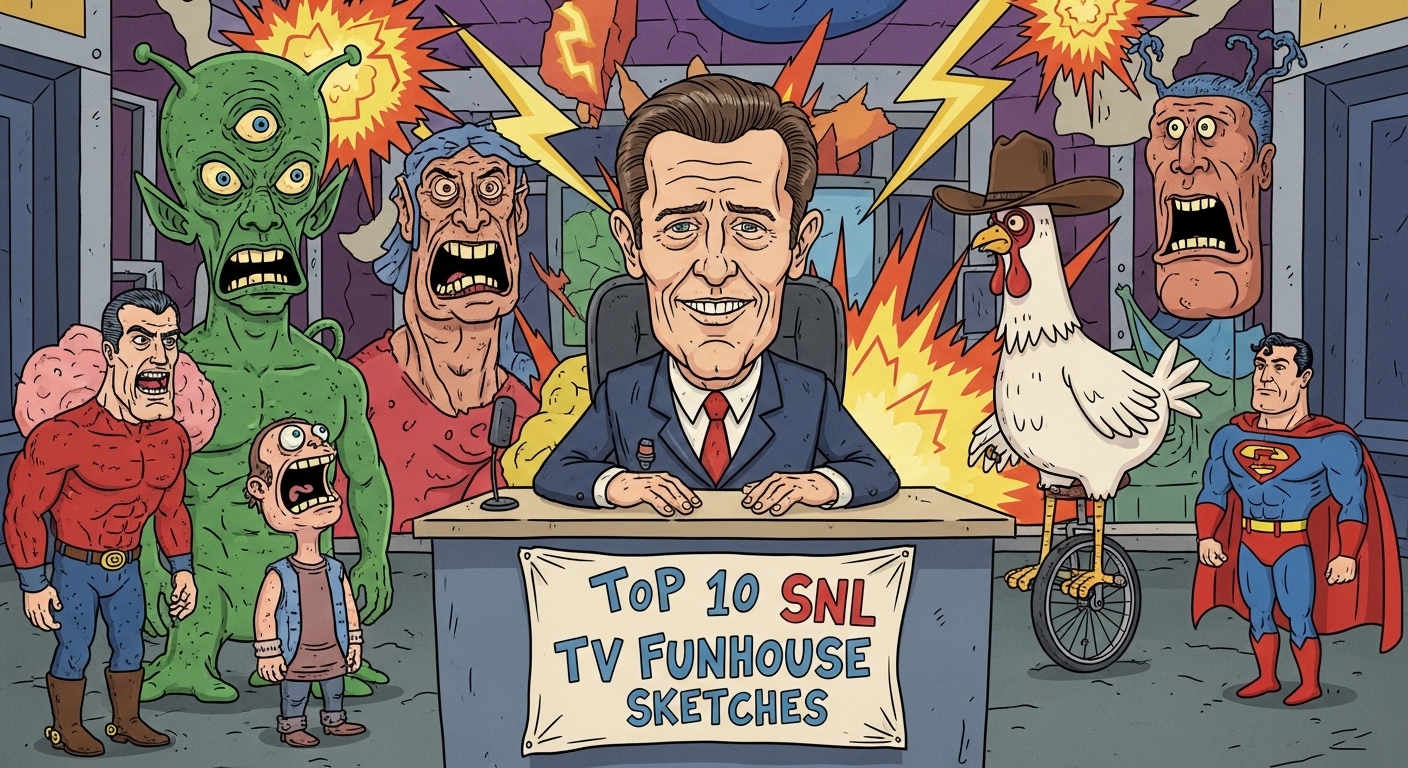
    Top 10 SNL TV Funhouse Sketches That Still Shock 2026

    For millions of Saturday Night Live fans who grew up in the 90s and early 2000s, TV Funhouse was the weirdest, wildest part of every episode. These animated segments pushed boundaries with satirical humor that network censors hated but audiences loved.

    SNL TV Funhouse is an animated sketch series created by Robert Smigel that aired on Saturday Night Live from 1997 to 2010, producing over 100 segments featuring iconic characters like the Ambiguously Gay Duo and X-Presidents.

    After watching every single TV Funhouse segment multiple times and analyzing fan discussions across Reddit and comedy forums, I’ve identified the absolute best sketches that still hold up decades later.

    This ranking combines cultural impact, laugh-out-loud moments, and lasting influence on adult animation.

    The Top 3 TV Funhouse Sketches (Ranked)

    1. The Ambiguously Gay Duo – Ace and Gary’s superhero adventures became SNL’s most iconic animated segment, featuring voice work from Stephen Colbert and Steve Carell before they were famous.
    2. X-Presidents Former presidents turned superhero team delivered political satire with celebrity voices including Conan O’Brien as George H.W. Bush.
    3. Fun with Real Audio – This audio manipulation format inserted celebrities and politicians into ridiculous conversations, creating viral moments before social media existed.

    Complete Ranking: Best SNL TV Funhouse Sketches

    1. The Ambiguously Gay Duo

    Ace and Gary are the superhero world’s worst-kept secret. Everyone in their fictional universe can tell they’re a couple except them, creating brilliant comedic tension in every episode.

    What made this sketch work was the perfect storm of sharp writing and voice talent.

    Stephen Colbert voiced Ace while Steve Carell voiced Gary, both relatively unknown at the time.

    The animation style used crude cut-out techniques that somehow made everything funnier.

    Fun Fact: Colbert and Carell recorded these segments during their early days on The Dana Carvey Show, before either became household names.

    The Ambiguously Gay Duo ran for over 40 segments, making it TV Funhouse’s most recurring and celebrated sketch.

    2. X-Presidents

    Imagine if former presidents gained superpowers and formed a crime-fighting team.

    That’s the premise of X-Presidents, which featured George H.W. Bush as a stretching hero, Jimmy Carter with energy powers, Ronald Reagan with invulnerability, and Gerald Ford as the clumsy member who kept falling.

    The genius was in the voice casting.

    Conan O’Brien voiced Bush, Will Ferrell played Reagan, and Jim Belushi brought Carter to life.

    Each episode tackled political situations through the lens of superheroes fighting bizarre villains.

    X-Presidents delivered sharp political commentary wrapped in ridiculous superhero action.

    3. Fun with Real Audio

    This format was essentially comedy foretelling of modern internet mashup culture.

    Robert Smigel took actual audio recordings of celebrities, politicians, and random people, then animated characters speaking those words in absurd situations.

    The results ranged from brilliant to controversial.

    Famous segments included conversations between Bill Clinton and various world leaders, celebrity arguments, and manipulated audio that created completely fictional scenarios.

    NBC censors hated this segment.

    Multiple Fun with Real Audio pieces were banned or heavily edited due to content that pushed too many boundaries.

    4. The Michael Jackson Show

    Long before the widespread controversies surrounding Michael Jackson, TV Funhouse created a fictional animated talk show hosted by an exaggerated version of the pop star.

    The sketch featured Jackson’s high-pitched voice, peculiar mannerisms, and constant references to childhood and animals.

    The timing makes this sketch uncomfortable viewing now.

    However, it remains technically impressive animation that captured Jackson’s essence in ways both accurate and absurd.

    This segment exemplified TV Funhouse’s willingness to target any celebrity regardless of their power or popularity.

    5. Saddest Dog in the World

    Simple premise executed perfectly.

    A dog with the most depressing existence imaginable narrates his daily misfortunes in a deadpan monotone voice.

    The humor comes from the overwhelming pathetic nature of this dog’s life, which somehow keeps getting worse with each passing scene.

    What seems like a one-joke premise builds through accumulated misery into something unexpectedly profound.

    Saddest Dog represents TV Funhouse at its most emotionally manipulative while staying genuinely hilarious.

    6. Jew Boy

    This religious satire followed a young Jewish boy with actual superpowers, making his Bar Mitzvah genuinely transformative.

    The sketch explored Jewish culture, expectations, and stereotypes through the lens of superhero storytelling.

    Unsurprisingly, this segment drew complaints from some viewers who found the religious references offensive.

    Robert Smigel himself is Jewish, and the segment treated the material with affection even while poking fun.

    Jew Boy represents TV Funhouse’s commitment to targeting subjects that most comedy shows wouldn’t touch.

    7. Bacteria

    Educational films have never been this funny.

    Bacteria parodied those old school health class videos, complete with earnest narration and anthropomorphic germs discussing their plans to infect humans.

    The twist came when the bacteria revealed surprisingly sophisticated understanding of microbiology while maintaining childish motivations.

    This sketch worked because everyone remembers those cringe-worthy educational videos from school.

    Bacteria captured the exact tone of 1970s educational films while gradually escalating into absurdity.

    8. Smurfette

    TV Funhouse deconstructed everyone’s favorite blue creatures by examining what life would really be like for the only female Smurf in an all-male village.

    The results were darker and more psychologically complex than anything involving Smurfs had any right to be.

    Smurfette’s existential crisis and her questionable relationship with Papa Smurf received surprisingly deep treatment.

    This sketch demonstrated TV Funhouse’s ability to find dark themes in seemingly innocent childhood properties.

    The animation perfectly mimicked the original Smurfs style while gradually veering into territory that would give children nightmares.

    9. The New Adventures of Mr. T

    Mr. T’s animated self became a vehicle for exploring the actor’s real-life personality quirks and catchphrases in exaggerated scenarios.

    The sketch delighted in Mr. T’s signature mannerisms, his obsession with pitying fools, and his distinctive gold chains.

    What made this work was the obvious affection behind the parody.

    Mr. T himself embraced his exaggerated persona in media, and TV Funhouse captured that self-awareness perfectly.

    10. Cat in the Hat

    Dr. Seuss’s beloved character received the TV Funhouse treatment with disastrous results for everyone involved.

    The Cat in the Hat arrived at children’s homes and proceeded to ruin their lives in increasingly creative ways.

    This sketch subverted the original’s message about fun and chaos by showing the actual consequences of a random cat breaking into your house.

    Parents who remembered the original book from childhood found the dark twist particularly satisfying.

    Iconic TV Funhouse Characters Explained

    Ace and Gary: The Ambiguously Gay Duo

    Ace and Gary became cultural touchstones beyond SNL.

    Their catchphrases entered the language, and their relationship became a subject of genuine cultural discussion about representation and stereotyping.

    Colbert and Carell’s performances brought genuine warmth to characters that could have been one-note jokes.

    The duo appeared in over 40 segments, making them TV Funhouse’s most enduring creation.

    The X-Presidents: Superhero Statesmen

    What started as political satire evolved into something more complex.

    The X-Presidents genuinely developed character arcs across multiple segments, with each former president bringing distinct personality traits to their superhero persona.

    The political commentary was sharp but rarely partisan, targeting figures from both parties with equal enthusiasm.

    Legacy Connection: The X-Presidents format influenced later animated political satire including elements that appeared in Adult Swim programming.

    Triumph the Insult Comic Dog’s Origins

    While Triumph technically existed outside TV Funhouse proper, his DNA runs through every SNL animated segment.

    Robert Smigel created both, and the same irreverent voice that made Triumph a cult favorite powers TV Funhouse’s best moments.

    Triumph’s puppet segments often aired alongside TV Funhouse animations, creating a unified sensibility that defined SNL’s experimental era.

    The Story Behind TV Funhouse

    TV Funhouse emerged from Robert Smigel’s mind after years as a comedy writer and performer.

    Smigel got his start writing for Late Night with David Letterman before joining Saturday Night Live in the mid-1980s.

    His creation of Triumph the Insult Comic Dog demonstrated his talent for combining puppetry, celebrity satire, and pushing boundaries.

    The cut-out animation style wasn’t an artistic choice but a practical necessity.

    Budget constraints forced Smigel and his team to use simple animation techniques, which accidentally created the distinctive look that became TV Funhouse’s signature.

    Each segment took weeks to produce despite the crude appearance.

    The animation process involved actual cut-paper characters moved frame by frame, creating the jerky motion that fans grew to love.

    NBC Standards and Practices department hated TV Funhouse from day one.

    According to interviews with Smigel, nearly every segment faced some level of censorship battle.

    Multiple sketches were banned entirely, including several Fun with Real Audio segments that targeted powerful political figures.

    Where to Watch SNL TV Funhouse?

    Finding complete TV Funhouse segments is harder than it should be.

    NBC’s official platforms have some content, but rights issues and licensing complications prevent a complete collection from existing anywhere legally.

    Your best options currently include:

    • Peacock: NBC’s streaming service has select TV Funhouse segments available with SNL episodes
    • YouTube: The official SNL channel and fan uploads host many classic segments
    • Hulu: Some SNL episodes featuring TV Funhouse are available depending on licensing

    The TV Funhouse segments aren’t available as a standalone collection, which remains one of the most frustrating gaps in streaming content.

    Frequently Asked Questions

    What is TV Funhouse SNL?

    TV Funhouse is an animated sketch comedy segment created by Robert Smigel that aired on Saturday Night Live from 1997 to 2010, featuring satirical cartoons like The Ambiguously Gay Duo and X-Presidents.

    Who created TV Funhouse?

    TV Funhouse was created by Robert Smigel, a comedy writer and puppeteer who also created Triumph the Insult Comic Dog and wrote for Late Night with David Letterman.

    Who voiced the Ambiguously Gay Duo?

    Stephen Colbert voiced Ace while Steve Carell voiced Gary, both recording these roles early in their careers before achieving mainstream fame.

    When did TV Funhouse first air on SNL?

    TV Funhouse first appeared on Saturday Night Live in 1997 and continued producing new segments until 2010, creating over 100 animated sketches during its run.

    Where can I watch SNL TV Funhouse sketches?

    You can find TV Funhouse segments on NBC’s Peacock streaming service, the official SNL YouTube channel, and various fan uploads, though no complete official collection exists.

    Is TV Funhouse still on SNL?

    TV Funhouse stopped producing new segments in 2010, though SNL continues producing digital shorts and other filmed content in different formats.

    Did TV Funhouse have a spin-off show?

    Yes, TV Funhouse spawned a short-lived spin-off series on Comedy Central in 2000 titled simply ‘TV Funhouse,’ which ran for one season.

    What animation style was used for TV Funhouse?

    TV Funhouse used a distinctive cut-out animation style with crude paper characters moved frame-by-frame, creating the jerky motion that became its signature look.

    Final Thoughts

    TV Funhouse represented something unique in television history: a network show giving a creative genius free rein to produce whatever weird animated content he wanted.

    The segments influenced everything from Adult Swim’s early programming to modern YouTube comedy series.

    Robert Smigel’s creation proved that adult animation could be smart, satirical, and genuinely funny within mainstream television constraints.

    Over 100 segments produced across 13 years left an indelible mark on comedy that still resonates with new audiences discovering the sketches today.

  • Best TV Villains Ranked: 30+ Icons You’ll Love Hate 2026

    Best TV Villains Ranked: 30+ Icons You’ll Love Hate 2026

    After spending thousands of hours binge-watching television across five decades, I’ve developed a fascination with the characters we’re supposed to hate but can’t stop watching.

    Great television villains do more than oppose the hero—they become the reason we tune in.

    The best TV villains of all time are Walter White from Breaking Bad, Gus Fring from Breaking Bad, Tony Soprano from The Sopranos, Gus Fring from Better Call Saul, Joffrey Baratheon from Game of Thrones, Logan Roy from Succession, Hannibal Lecter from Hannibal, Livia Soprano from The Sopranos, Ramsay Bolton from Game of Thrones, and Stringer Bell from The Wire.

    These 35 rankings consider cultural impact, performance quality, character complexity, memorable moments, and lasting legacy across all television history.

    Quick Look: Our Top 10 TV Villains

    1. Gus Fring (Breaking Bad/Better Call Saul) – The calm, calculated drug lord who redefined villainous patience
    2. Walter White (Breaking Bad) – TV’s greatest transformation from hero to villain
    3. Tony Soprano (The Sopranos) – The mob boss who made us root for the monster
    4. Joffrey Baratheon (Game of Thrones) – Pure evil we loved to hate
    5. Logan Roy (Succession) – The father whose love was a weapon
    6. Hannibal Lecter (Hannibal) – Sophisticated cannibal who charmed while killing
    7. Livia Soprano (The Sopranos) – The mother who manipulated from her nursing home
    8. Ramsay Bolton (Game of Thrones) – Sadism personified
    9. Stringer Bell (The Wire) – The businessman who happened to sell drugs
    10. Frank Underwood (House of Cards) – Political ambition without a conscience

    Complete Rankings: The 35 Best TV Villains

    35. The Man in Black (Lost)

    Played with terrifying presence by Titus Welliver, this smoke monster took philosophical evil to new heights.

    “Every man that I’ve ever killed is in here. So are the men that you killed.”

    – The Man in Black

    His season 6 reveal as Jacob’s brother rewrote everything we thought we knew about the island’s mysteries.

    34. Sylar (Heroes)

    Zachary Quinto’s brain-stealing serial killer brought superhero horror to network television.

    His hunger for abilities—literally cutting open skulls to understand what made people special—created network TV’s most unsettling villain during Heroes’ peak years.

    What made Sylar compelling was his origin story as a lonely watch repairman who discovered his powers and his appetite simultaneously.

    33. The Trunchbull (Matilda)

    Pam Ferris’ portrayal of the tyrannical headmistress terrified children across the UK in the 1990s.

    “I’m big, you’re small. I’m right, you’re wrong. And there’s nothing you can do about it.”

    – Miss Trunchbull

    The hammer throw scene alone earned her a permanent spot in villain history.

    32. Montgomery Burns (The Simpsons)

    The classic example of a villain we’ve grown to love across 35+ seasons.

    His “excellent” catchphrase and releases of hounds on visitors became cultural touchstones.

    Burns represents old money corporate evil at its most cartoonish—and therefore most enjoyable.

    31. Arthur Mitchell (Dexter)

    The Trinity Killer remains Dexter’s most formidable adversary.

    John Lithgow’s Emmy-winning performance balanced suburban fatherhood with ritualistic serial killing in a way that still haunts viewers.

    The four-episode arc where Dexter infiltrates Arthur’s life represents the show’s peak storytelling.

    30. Ben Linus (Lost)

    Michael Emerson’s transformation from guest star to series regular proved the power of a well-written villain.

    “I always have a plan.”

    – Ben Linus

    His manipulation tactics and genuine moments of humanity made him the show’s most complex character.

    The “purge” episode revealed his capacity for brutality despite his mild-mannered appearance.

    29. Vecna (Stranger Things)

    Vecna’s season 4 reveal connected everything back to the show’s beginning.

    His ability to exploit trauma and guilt made him the most psychologically dangerous threat Hawkins has faced.

    The grandfather clock imagery and connection to the Upside Down’s origin elevated him above other Hawkins threats.

    28. Vee (Orange Is the New Black)

    Lorraine Toussaint’s performance as a manipulative sociopath terrorizing Litchfield created the show’s most compelling season.

    Her psychological warfare against Red—destroying her garden, isolating her allies—showed villainy doesn’t require physical violence.

    Vee understood that breaking people is more effective than breaking bones.

    27. The Mountain (Game of Thrones)

    Before he became a zombie knight, Gregor Clegane was the most physically terrifying presence in Westeros.

    The scene where he crushed a man’s skull with his bare hands during a tournament demonstrated why even other hardened soldiers feared him.

    His later transformation into Cersei’s silent, obedient monster represented a different kind of horror.

    26. Lorne Malvo (Fargo)

    Billy Bob Thornton’s charismatic chaos agent drifted into town like a tornado disguised as a man.

    His enjoyment of causing suffering—without any personal motivation beyond amusement—made him uniquely terrifying.

    “I’m of the mind you can never do too much to make a man’s life a little easier.”

    – Lorne Malvo

    The basement scene where he intimidates a bully instead of helping the victim perfectly encapsulates his worldview.

    25. Al Swearengen (Deadwood)

    Ian McShane’s profane brothel owner blurred the line between villain and anti-hero so effectively that viewers eventually rooted for him.

    His combination of business savvy, brutal violence, and unexpected moments of loyalty created television’s most complex frontier villain.

    The show’s genius was making us realize that in Deadwood’s corrupt world, Swearengen was arguably the most honest character.

    24. Azula (Avatar: The Last Airbender)

    The rare animated villain whose psychological complexity rivals any live-action performance.

    Her perfectionism, need for her father’s approval, and gradual mental breakdown created a character study in how villainy is often born from abuse.

    The final scene where she collapses into tears after Zuko and Katara defeat her remains one of animation’s most poignant villain defeats.

    23. Wilson Fisk (Daredevil)

    Vincent D’Onofrio’s portrayal of the Kingpin brought depth to a character who could have been a generic crime boss.

    His tragic childhood, genuine love for Vanessa, and belief that he’s helping Hell’s Kitchen made him a villain with understandable motivations—even if his methods were monstrous.

    The hallway fight scene where we first see his brutal strength established him as Daredevil’s physical and intellectual equal.

    22. Amon (The Legend of Korra)

    The best villains believe they’re heroes, and Amon’s conviction that bending was a source of inequality made him dangerously compelling.

    His ability to remove bending fundamentally threatened everything that made the Avatar world function.

    The revelation of his true identity as a bender himself deepened the hypocrisy that often defines real-world extremism.

    21. Tywin Lannister (Game of Thrones)

    Charles Dance brought terrifying authority to the man who orchestrated the Red Wedding.

    Unlike his grandson Joffrey, Tywin wasn’t sadistic—he was ruthlessly pragmatic, which somehow made him more dangerous.

    “A lion does not concern himself with the opinion of sheep.”

    – Tywin Lannister

    The scene where he explains his philosophy to Tommen while dressing a deer perfectly illustrates how violence was just business to him.

    20. Nucky Thompson (Boardwalk Empire)

    Steve Buscemi’s Atlantic City treasurer showed how political corruption and organized crime are often the same thing.

    His journey from sympathetic anti-hero to unrepentant criminal demonstrated the gradual moral compromise that defines many real-life villains.

    The flashbacks to his childhood abuse provided context without excusing his choices.

    19. Sue Sylvester (Glee)

    Jane Lynch’s cheerleading coach proved villains can be hilarious while still being genuinely terrible.

    Her bullying of students and colleagues would be horrifying in a drama, but Glee’s comedic tone made her cruelty entertaining.

    The rare moments of vulnerability—especially with her sister—kept her from becoming a caricature.

    18. The Master (Doctor Who)

    Doctor Who’s most enduring foe has been played by brilliant actors across generations, but John Simm’s version stands out.

    The same psychic link that connects the Doctor and the Master also gives them genuine affection, making their conflict tragically personal.

    The drums in his head—a constant sound driving him mad—added psychological depth to what could have been simple megalomania.

    17. Kilgrave (Jessica Jones)

    David Tennant’s mind-controlling villain represented violation in its purest form.

    His ability to force anyone to do anything created some of Marvel’s most disturbing television moments.

    What made Kilgrave truly terrifying was his refusal to accept responsibility—his claim that his victims wanted what he forced them to do mirrored real abusers’ rationalizations.

    16. Lucrezia Borgia (The Borgias)

    Holliday Grainger brought cunning intelligence to history’s most infamous femme fatale.

    Her use of poison as a weapon—particularly the cantarella—became her signature, but her true power lay in political manipulation.

    The show’s portrayal captured how women in patriarchal societies often had to become villains to survive.

    15. Don Draper (Mad Men)

    Is he a villain or anti-hero? That’s the question Mad Men asked for seven seasons.

    His serial adultery, identity theft, and emotional abandonment of his children fit the villain template—we rooted for him only because Jon Hamm made him charismatic.

    The final seasons peeled back his charm to reveal the damage he caused everyone who loved him.

    14. Homelander (The Boys)

    Antony Starr’s deconstructed superhero represents what happens when absolute power meets narcissistic personality disorder.

    Unlike comic book villains who want to destroy the world, Homelander just wants to be loved—which makes him infinitely more dangerous.

    The scene where he lasers a protester while maintaining his heroic image captures how corporations protect powerful abusers.

    13. Daenerys Targaryen (Game of Thrones)

    The most controversial villain entry because she spent seven seasons as the hero.

    Her turn from breaker of chains to murderer of innocents divided audiences, but her descent into tyranny followed a clear tragic arc.

    The question of whether power inevitably corrupts—or whether Daenerys always had capacity for atrocity—sparked debates that continue to this day.

    12. The Governor (The Walking Dead)

    David Morrissey’s charismatic leader showed how apocalyptic societies enable sociopaths to rise to power.

    His head tanks full of preserved walkers were disturbing enough, but his manipulation of his followers—especially Andrea—demonstrated how dictators consolidate control.

    The contrast between his public persona as a protector and his private brutality made him the show’s most human villain.

    11. Cersei Lannister (Game of Thrones)

    Lena Headey’s performance transformed a character from the books into someone we could understand—even as she committed increasingly monstrous acts.

    Her walk of atonement, the destruction of the Sept of Baelor, and her final moments watching her kingdom burn all flowed from a single core motivation: protecting her children.

    “When you play the game of thrones, you win or you die.”

    – Cersei Lannister

    The tragedy was that her ruthless protection eventually destroyed everything she claimed to love.

    10. Frank Underwood (House of Cards)

    Kevin Spacey’s calculating president-for-a-season pioneered the Netflix anti-hero wave of the 2010s.

    His direct addresses to the camera broke the fourth wall and invited viewers into his conspiracies.

    The zipper scene with Zoe Barnes was the moment we understood: Frank wasn’t just ambitious—he enjoyed destroying people.

    9. Stringer Bell (The Wire)

    The only drug dealer who took business classes at community college to learn how to run his operation more efficiently.

    Idris Elba’s portrayal captured the tragedy of an intelligent man trapped in a violent world—he tried to reform the drug trade using business principles he learned from textbooks.

    “Don’t matter if he’s guilty or not. What matters is that we can prove it.”

    – Stringer Bell

    His simultaneous betrayal of Avon’s street code and attempt to transition into legitimate real estate made his death both inevitable and tragic.

    8. Ramsay Bolton (Game of Thrones)

    If Joffrey was pure evil, Ramsay was sadistic evil—he enjoyed inflicting pain.

    Iwan Rheon’s performance included some of television’s most uncomfortable scenes: Theon’s torture, Sansa’s wedding night, the hunting of women in his woods.

    What made Ramsay uniquely disturbing was his charisma—he could switch from smiling to murderous in seconds, creating genuine terror whenever he appeared on screen.

    7. Livia Soprano (The Sopranos)

    The mother who tried to have her son killed because she couldn’t control him anymore.

    Nancy Marchand’s matriarch represented emotional abuse at its most devastating—her guilt trips and manipulations destroyed Tony from the inside in ways physical violence never could.

    “It’s all a big nothing. What makes you think you’re so special?”

    – Livia Soprano

    The scene where she casually reveals she knew about the hit on Tony—implying her approval—shows maternal instinct replaced by maternal malice.

    6. Hannibal Lecter (Hannibal)

    Mads Mikkelsen’s interpretation brought a different kind of terror than Anthony Hopkins’ film version—this Hannibal was charming, cultured, and genuinely seemed to care about Will Graham.

    His dinner parties where guests unknowingly ate human remains played with the audience’s complicity—we enjoyed watching him because he was so fascinating.

    The show’s genius was making us root for Hannibal to escape capture, despite knowing exactly what he was.

    5. Logan Roy (Succession)

    Brian Cox’s media mogul demonstrated how emotional abuse disguised as business advice destroys children.

    His catchphrase—”this is not a hug, I’m just getting leverage”—perfectly encapsulates how he views human relationships as transactional.

    What makes Logan terrifying isn’t physical violence but his ability to turn his children against each other with a single word or gesture.

    The Thanksgiving scene where he humiliates Kendall on a whim shows how cruelty was both spontaneous and calculated.

    4. Joffrey Baratheon (Game of Thrones)

    The definition of “love to hate” – we all wanted him dead, but the show would have been boring without him.

    Jack Gleeson’s performance captured something rare: a villain who was both sadistic and cowardly, powerful and pathetic.

    The wedding episode where he died remains one of television’s most satisfying death scenes precisely because his suffering was so well-earned.

    “Everyone who isn’t us is an enemy.”

    – Joffrey Baratheon

    His order to strip Jaime of his sword hand demonstrated how his cruelty extended even to his own family.

    3. Tony Soprano (The Sopranos)

    James Gandolfini’s mob boss created the template for the TV anti-hero—he was a murderer, a cheater, and a terrible father, but we spent seven seasons rooting for him.

    The genius of Tony as a villain was his therapy sessions with Dr. Melfi, which revealed his self-awareness without ever leading to change.

    He knew he was a bad person—he just didn’t care enough to stop being one.

    The series finale’s ambiguous cut to black left his ultimate fate uncertain, but the damage he caused his family was clear.

    2. Walter White (Breaking Bad)

    The transformation from mild-mannered chemistry teacher to drug kingpin remains television’s greatest character study.

    Bryan Cranston’s performance showed us every step of Walter’s moral compromise, making us complicit in his choices because we understood them.

    “I am not in danger, Skyler. I am the danger.”

    – Walter White

    By the time he admitted he did it for himself, not his family, we had already watched him become Heisenberg so gradually that the transformation felt inevitable.

    The genius of Walter as a villain is that we watched him choose evil dozens of times, each choice seeming reasonable in the moment.

    1. Gus Fring (Breaking Bad/Better Call Saul)

    The calmest villain on television was also the most terrifying—Gus never raised his voice, never made impulsive decisions, and never stopped planning.

    Giancarlo Esposito’s performance created a character whose face betrayed nothing while his eyes calculated everything.

    The box cutter scene remains the most tension-filled four minutes in TV history—Gus’s methodical murder of Victor demonstrated his capacity for brutality wrapped in business formality.

    What makes Gus the best TV villain is his patience—while Walter acted from ego and desperation, Gus played a long game that spanned decades and countries.

    His death—adjusting his tie even after half his face was blown off—showed a villain so committed to his persona that death itself couldn’t break his composure.

    Honorable Mentions: Villains Who Almost Made the Cut

    The Joker (Gotham) brought chaos energy that rivaled Heath Ledger’s film version.

    Wilson Fisk’s assistant Wesley in Daredevil deserved recognition as the kind of loyal enforcer every great villain needs.

    Lalo Salamanca (Better Call Saul) emerged in later seasons as the Salamanca family’s most terrifying member—a villain who combines Gus’s intelligence with the Salamancas’ unpredictability.

    President Snow (The Hunger Games films) showed how authoritarianism often presents itself as benevolent—Donald Sutherland’s portrayal captured how tyrants cloak oppression in paternal language.

    The relative absence of complex female villains from early television history speaks to industry gaps—though characters like Cersei Lannister, Vee, and Azula have begun correcting that imbalance in recent years.

    Why We Love TV Villains?

    Great villains reflect parts of ourselves we’d rather not acknowledge.

    When we watch Walter White’s transformation or Gus Fring’s calculated cruelty, we’re seeing dark aspects of human nature explored safely from our living rooms.

    The best TV villains aren’t just foils for heroes—they’re often the most interesting characters on screen, which says something uncomfortable but true about storytelling itself.

    Which villain would you rank differently? The beauty of these lists is in the debate they spark.

  • 20 Best Trashy TV Shows You Can’t Stop Watching 2026

    20 Best Trashy TV Shows You Can’t Stop Watching 2026

    We’ve all been there. It’s 11 PM, you’re exhausted from work, and instead of watching something “enriching,” you find yourself three episodes deep into a reality show where grown adults are screaming about table arrangements.

    Best trashy TV shows include The Bachelor for dating disasters, Jersey Shore for party chaos, The Real Housewives for wealth drama, 90 Day Fiance for relationship trainwrecks, and Selling Sunset for LA luxury nonsense.

    After spending way too many weekends binge-watching reality television, I’ve compiled the definitive ranking of the best trashy TV shows that are absolutely worth your time.

    These shows offer pure, unfiltered entertainment that requires zero brainpower.

    Let’s dive into the gloriously messy world of trashy television.

    Quick Picks: The Trashiest Shows Ranked

    ShowTrashiness RatingStreamingWhy Watch
    Jersey Shore10/10Paramount+Peak 2000s party chaos
    The Bachelor9/10HuluManufactured dating drama
    90 Day Fiance9/10HuluRelationship disasters
    Real Housewives8/10PeacockWealthy women fighting
    Love Island8/10HuluUK dating at its finest
    Selling Sunset7/10NetflixReal estate meets drama
    Tiger King10/10NetflixActual insanity

    Dating Disasters: When Love Goes Wrong

    1. The Bachelor Franchise – The Originator of Dating Chaos

    The Bachelor started in 2002 and somehow still produces content in 2026.

    I’ve watched at least 15 seasons across the franchise, and the formula never changes. One person dates 25 contestants simultaneously while producers manipulate everything behind the scenes.

    What makes The Bachelor uniquely trashy is the genuine emotional damage inflicted on real people. Contestants quit jobs, leave children, and upend their lives for someone they met weeks ago.

    The dramatic “After the Final Rose” specials are legendary.

    My favorite seasons feature the most chaotic breakups and the most delusional contestants.

    Trashiness Factor:

    Exploits genuine emotions, fabricated fairy tales, producers clearly script storylines, contestants regularly have mental breakdowns on camera.

    2. Love Island – UK Dating at Its Peak

    Love Island is everything wrong with dating culture wrapped in a perfectly bingeable package.

    Strangers live in a villa, couple up, and recouple based on public votes. The show has launched in 2026 with even more dramatic twists.

    The British insults alone make this worth watching.

    I started watching during lockdown and couldn’t stop. The recoupling ceremonies where contestants publicly reject each other are masterclasses in awkward television.

    Producer manipulation is incredibly obvious but somehow makes it more entertaining.

    Trashiness Factor:

    Contestants couple up after days, constant public rejections, producers whisper in ears, everyone talks exclusively in puns.

    3. 90 Day Fiance – International Visa Romance

    This show follows couples who have 90 days to decide whether to marry before a visa expires.

    I’ve seen every spinoff, and the original remains the best. The cultural clashes, money scams, and genuine confusion about basic life decisions are unmatched.

    Some relationships are clearly genuine. Others are so obviously fake it hurts.

    The best episodes feature family members who cannot believe what they’re witnessing.

    My friend and I text throughout entire episodes because the drama is so concentrated.

    Trashiness Factor:

    Immigration fraud, age gaps that defy logic, families pleading with loved ones, producers clearly choose the most unstable couples.

    4. Love Is Blind – Netflix’s Social Experiment

    People fall in love without seeing each other, then get engaged and meet in person.

    The show dropped in 2026 and became an instant cultural phenomenon.

    The reveal episodes where couples see each other for the first time are television gold. Some connections are genuinely sweet. Others are visibly horrified.

    The reunion special for season one had one of the most dramatic moments in reality TV history.

    I binge-watched the first season in two days and immediately started season two.

    Trashiness Factor:

    Engaging to strangers, sight-unseen proposals, dramatic physical reveals, reunion specials that get genuinely heated.

    5. Married at First Sight – Scientific Matchmaking Gone Wrong

    Experts match strangers who marry upon first meeting.

    The “experts” have approximately a 20% success rate, which is somehow worse than random chance.

    Decision Days where couples choose to stay married or divorce are the highlights of each season.

    The Australian version is even trashier than the American original if you can find it streaming.

    Trashiness Factor:

    Literal strangers getting married, supposed experts with terrible track records, cameras capture every marital argument.

    6. Are You the One? – Perfect Match Algorithm

    20 singles live together trying to find their perfect matches determined by a “scientific algorithm.”

    If they find all 10 matches in 10 rounds, they split $1 million. If they fail, they get nothing.

    The show ran for 8 seasons and produced some of the most chaotic reality TV moments ever.

    Season 7 remains legendary for having an entirely queer cast and even more drama than previous seasons.

    Trashiness Factor:

    Living in a house with your perfect match and not knowing, truth booths, matchmaking ceremonies where people guess blindly.

    7. Too Hot to Handle – No Kissing Allowed

    Contestants think they’re on a typical dating show until they’re told they can’t touch each other or prize money decreases.

    The first season dropped in 2026 and became a quarantine classic.

    Watching attractive people struggle to keep their hands off each other for money is both hilarious and incredibly cringeworthy.

    The virtual assistant Lana judging their behavior adds an extra layer of absurdity.

    Trashiness Factor:

    Forced abstinence for cash prizes, contestants literally costing the group money, ridiculous “workshops” about emotional connection.

    Lifestyle Chaos: Wealth, Partying, and Fake Friends

    8. Jersey Shore – The OG Party Show

    Jersey Shore defined a generation of reality television and remains the gold standard of trashy TV.

    Eight strangers share a summer house in Seaside Heights, New Jersey. Fist pumping, tanning, and laundry became cultural phenomena.

    I rewatched the entire series recently, and it somehow holds up. The cast dynamics are genuinely compelling beyond just the partying.

    The grenade whistle, Snooki getting punched in the face, and “that’s a situation” are moments permanently burned into pop culture.

    Jersey Shore Family Vacation proves these people will never stop making content together.

    Trashiness Factor:

    Extreme party culture, constant intoxication, gym-tan-laundry lifestyle, hookups between roommates, fights at random clubs.

    9. The Real Housewives Franchise – Wealthy Women Fighting

    What started in Orange County has expanded to nearly a dozen cities worldwide.

    The franchise follows wealthy women in various cities as they navigate friendships, businesses, and constant conflicts.

    Each city has its own flavor. New York is uptown drama. Beverly Hills is Hollywood excess. Atlanta is iconic reads.

    Table-flipping, dinner party disasters, and reunion specials that devolve into screaming matches are hallmarks of the franchise.

    My roommate and I have viewing parties for new RHONY episodes.

    Trashiness Factor:

    Wealth displays, manufactured conflicts between “friends,” constant product placement, dinner parties that always end badly.

    10. Keeping Up with the Kardashians – Reality Royalty

    The show that launched an empire ran for 20 seasons and made the Kardashians the most famous family in America.

    Whether you love them or hate them, their impact on reality television and celebrity culture is undeniable.

    The show perfected the formula of mixing family drama with product promotion.

    Kim’s wedding to Kris Humphries remains one of the most obviously fake storylines in reality TV history.

    Trashiness Factor:

    Famous for being famous, manufactured drama, everything promotes something, sisters fighting over absolutely nothing.

    11. Selling Sunset – Real Estate Soap Opera

    Netflix hit following luxury real estate agents at The Oppenheim Group in Los Angeles.

    The show features million-dollar listings and interpersonal drama between agents who apparently rarely sell houses to actual clients.

    Chrishell Stause joining during her divorce from This Is Us actor Justin Hartley provided the perfect storm of personal and professional drama.

    The cast fights about everything from office politics to who gets which listing.

    The houses are gorgeous. The agent interactions are absurdly dramatic.

    Trashiness Factor:

    Luxury porn mixed with petty fighting, agents who never seem to work, Christine Quinn’s delivery of every line like a soap opera villain.

    12. The Hills – Laguna Beach Spinoff

    Lauren Conrad moved from Laguna Beach to Los Angeles for “fashion school” but mostly dealt with boy drama and fake jobs.

    The show famously blurred reality and fiction. The series finale featured a Hollywood sign that literally said “HOLLYWOOD” instead of real footage.

    “I want to forgive you, and I want to forget you” remains one of the most quotable reality TV lines ever spoken.

    Heidi Montag and Spencer Pratt’s relationship defined chaotic reality couple goals for years.

    Trashiness Factor:

    Scripted “reality,” fake jobs, fake friendships, producers clearly staging every scene down to parking spots.

    13. Bad Girls Club – Living Together Fighting

    Seven “bad girls” live together in a mansion and inevitably fight each other constantly.

    The show ran for 17 seasons and featured some of the most violent confrontations in reality TV history.

    Physical fights were so common that security became regular cast members.

    The show launched multiple spinoffs and created the “bad girl” archetype that influenced countless series after.

    Trashiness Factor:

    Constant physical altercations, excessive drinking, producers actively encouraging conflict, zero personal growth despite the name.

    14. Vanderpump Rules – Server Drama in West Hollywood

    Follows servers at Lisa Vanderpump’s restaurants SUR and Pump as they navigate relationships and attempts at fame.

    What started as a Real Housewives of Beverly Hills spinoff became arguably more compelling than the parent show.

    Scandoval, the affair between Tom Sandoval and Raquel Leviss while Sandoval was dating Ariana Madix, dominated pop culture in 2026.

    The show captures the weird experience of working in Hollywood while trying to “make it.”

    Trashiness Factor:

    Server relationships, cast sleeping with each other constantly, everyone thinks they’re famous while working as waitstaff.

    Competitions and Experiments: When Winning Means Losing?

    15. The Challenge – MTV Competition Chaos

    Former reality stars compete in physical challenges for money. That’s the premise.

    The reality is former reality stars form alliances, hook up, and create vendettas that span decades.

    The show has run for over 30 seasons and created its own competitive reality ecosystem.

    Wes Bergmann and Johnny Bananas have been competing since the Bush administration.

    My friend and I have watched since the original Real World vs Road Rules days.

    Trashiness Factor:

    Reality pros competing, alliances that span years, showmances that turn into real relationships, elimination politics more important than athletic ability.

    16. Big Brother – Living in a Fishbowl

    Strangers live together in a house with 24/7 surveillance. Each week, they vote someone out until one winner remains.

    The American version features a Head of Household who nominates two people for eviction.

    Live feeds on the internet show everything that happens. Superfans watch the feeds and know things before episodes air.

    The show has been running since 2000 and shows no signs of stopping.

    Trashiness Factor:

    Paranoia from constant surveillance, showmances that may or may not be real, gameplay that involves lying to everyone constantly.

    17. Tiger King – Actual Insanity

    Joe Exotic, Carole Baskin, and the wild world of big cat ownership in America.

    The documentary became a cultural phenomenon when it dropped in March 2020, right as the world locked down.

    Everyone was stuck at home with nothing to do except watch a mulleted man sing about tigers while feuding with an animal rights activist possibly implicated in her husband’s disappearance.

    The show is only 7 episodes but somehow contains more insanity than most series with 10 times the content.

    Trashiness Factor:

    Polyamamous marriage, gun-toting zoo owners, suspected murder, exploitation of animals, everyone involved is deeply troubled.

    18. The Circle – Social Media Competition

    Contestants live in separate apartments and communicate only through a social media app called The Circle.

    They can be themselves or catfish as someone else. The goal is to be rated the most popular and win $100,000.

    The show captures how weird social media interaction actually is when removed from physical contact.

    Some catfishes are genuinely sympathetic. Others are playing the game ruthlessly.

    Season 2 featured a contestant pretending to be her twin sister in one of the show’s most clever strategies.

    Trashiness Factor:

    Catfishing as the core mechanic, contestants judging each other based on social media posts, blocking actually eliminates people.

    19. Flavor of Love – Public Domain Dating

    Flavor Flav dates 20 women who compete for his affection in what might be the trashiest dating show ever created.

    The show launched in 2006 and gave us New York, one of the most iconic reality villains of all time.

    Women received nicknames like “Toastee,” “Somethin,” and “Goldie.” The clock ceremony where Flav eliminated contestants by literally taking back his clock is legendary.

    This is the show that proved America would watch absolutely anything.

    Trashiness Factor:

    Spitting on contestants, bathroom incidents that shouldn’t be described here, Flavor Flav as a romantic lead, women competing for a man wearing oversized clocks.

    20. Rock of Love – Bret Michaels’ Search for Love

    Bret Michaels from Poison dates women who compete for his affection in a house clearly modeled after Flavor of Love.

    The show ran for three seasons and featured the same level of chaos as its inspiration.

    Contestants fought, got visibly intoxicated, and did absolutely anything for screen time.

    Rock of Love Bus featured the contestants traveling with Bret on a tour bus, which somehow made everything trashier.

    Trashiness Factor:

    Modeling after Flavor of Love, Bret Michaels as a romantic lead, group dates that don’t resemble actual dating in any way.

    Why We Can’t Stop Watching Trashy TV?

    Trashy TV serves a genuine purpose in our lives. It offers pure escapism without demanding intellectual effort. After a long day, sometimes you need television that asks nothing of you.

    Quick Summary: We watch trashy TV for stress relief, social connection, and the comfort of mindless entertainment. There’s no shame in enjoying something that’s fun.

    There’s something deeply satisfying about watching other people make worse decisions than you. Your problems seem manageable compared to someone marrying a stranger after knowing them for 90 days.

    Social viewing makes these shows better. My friends and I have group chats specifically for Real Housewives episodes. The communal experience of reacting to crazy moments together creates genuine connection.

    Psychologists call this schadenfreude – taking pleasure in others’ misfortune. Trashy TV packages this feeling in entertaining, bingeable formats.

    The production manipulation becomes obvious after watching enough reality TV. Recognizing producer editing and confessionals taken out of context becomes part of the fun.

    There’s comfort in the familiar formulas. Once you understand how these shows work, the predictability becomes reassuring rather than boring.

    Where to Stream the Best Trashy TV?

    PlatformBest ForNotable Shows
    NetflixOriginal reality contentLove Is Blind, Selling Sunset, Tiger King, The Circle
    HuluNetwork reality seriesThe Bachelor, 90 Day Fiance, Love Island
    PeacockBravo/NBC contentReal Housewives, Below Deck
    Paramount+MTV/Viacom contentJersey Shore, The Challenge
    HBO MaxPremium realityLegendary, FBoy Island

    Streaming services have invested heavily in reality content because it performs exceptionally well. Netflix reportedly spends billions on unscripted programming annually.

    Most reality shows release episodes weekly rather than all at once, which can be frustrating for binge-watchers. Check release schedules before starting anything new.

    International versions often differ significantly from American originals. Love Island UK runs for months with daily episodes, while the US version is a shorter seasonal format.

    Frequently Asked Questions

    What is considered a trashy TV show?

    Trashy TV refers to lowbrow, melodramatic, often reality-based television programming characterized by exaggerated drama, conflict, and sensationalism that viewers watch as a guilty pleasure.

    Why do people watch trashy reality TV?

    People watch trashy TV for stress relief, escapism, social connection through shared viewing, and the satisfaction of seeing others make worse decisions than themselves.

    What are the most popular trashy reality shows?

    The most popular trashy reality shows include Jersey Shore, The Bachelor franchise, Real Housewives, 90 Day Fiance, Love Island, and Selling Sunset.

    Where can I watch trashy reality TV shows?

    Trashy reality shows are available across major streaming platforms including Netflix (Selling Sunset, Love Is Blind), Hulu (The Bachelor, 90 Day Fiance), Peacock (Real Housewives), and Paramount+ (Jersey Shore).

    Is watching trashy TV bad for you?

    Watching trashy TV is not inherently bad. Like any entertainment, it’s fine in moderation. It provides stress relief, escapism, and social connection through shared viewing experiences.

    Final Thoughts

    I’ve watched every show on this list and don’t regret a single minute spent.

    Life is stressful enough without judging yourself for entertainment choices.

    These shows bring genuine joy, laughter, and social connection to millions of viewers.

    Embrace the trash. Your brain deserves a break sometimes.

  • Guilty Pleasure Trash TV Shows You’ll Totally Love 2026

    Guilty Pleasure Trash TV Shows You’ll Totally Love 2026

    We’ve all been there. It’s 11 PM on a Tuesday, you should be sleeping, but instead you’re watching complete strangers scream at each other about nothing. Welcome to trash TV.

    The best Guilty Pleasure Trash TV Shows & reality series that serve as pure escapism from actual reality. These are the shows you claim you don’t watch but absolutely do, the ones that make you question humanity while simultaneously unable to look away.

    After spending way too many hours analyzing reality television trends, I’ve identified 40+ shows that define the trash TV genre. From dating disasters to wealthy people losing their minds, these shows deliver maximum drama with minimum intellectual demand.

    Whether you need a stress-relief binge after work or something to play in the background while doomscrolling, this guide has your guilty pleasure covered.

    Dating Shows: Romance at Its Messiest

    Dating reality shows represent the pinnacle of trash television. There’s something uniquely compelling about watching strangers make terrible romantic decisions on national television.

    Research shows dating shows trigger our social comparison instincts. We judge participants, predict failures, and feel superior when relationships implode. It’s the same reason people slow down for car crashes, except with more champagne toasts and rose ceremonies.

    The modern dating show has evolved from simple matchmaking to elaborate social experiments designed to manufacture drama. These shows don’t just document romance; they weaponize it for entertainment.

    Love Is Blind

    Love Is Blind is Netflix’s social experiment where contestants fall in love without seeing each other. The premise: emotional connection before physical attraction. The reality: people getting engaged to someone whose face they’ve never seen.

    What makes it addictive is the inevitable reveal. When pods finally open and couples meet face-to-face, reactions range from genuine joy to visible regret. The show’s genius is trapping couples in a Mexican resort immediately after engagement, forcing rapid intimacy under maximum pressure.

    Season 2 featured a memorable meltdown when a participant discovered their fiancé was married with children. Season 3 brought us the infamous Bartise and Nancy breakup at the altar. These moments deliver the exact train wreck energy trash TV fans crave.

    Where to watch: Netflix

    90 Day Fiancé

    90 Day Fiancé follows international couples who have 90 days to decide whether to marry before the K-1 visa expires. The show has spawned countless spinoffs because the formula is perfection: cultural clashes, language barriers, and families questioning everything.

    I’ve watched this show for years and the formula never gets old. Someone always brings a secret child. Someone’s family always disapproves. Someone always gets cold feet before the wedding.

    The franchise expanded to Before the 90 Days, Happily Ever After, and The Other Way, each capturing different stages of chaotic international romance. Watching Americans realize their foreign partner might not be who they claimed is consistently entertaining.

    Where to watch: Hulu, Discovery+, Max

    The Bachelor / The Bachelorette

    The Bachelor invented modern reality dating trash TV in 2002. One person, 25 contestants, weekly eliminations, and a proposal at the end. What could go wrong? Everything, beautifully.

    After 27+ seasons, the show has perfected its formula. There’s always a villain. There’s always an innocent who gets blindsided. There’s always a “can I steal you for a sec?” interruption during the most vulnerable moment.

    The Bachelorette flips the script with similar results. Both shows create manufactured drama through alcohol, sleep deprivation, and strategically placed dates designed to expose insecurities.

    Where to watch: Hulu, ABC.com

    Too Hot to Handle

    Too Hot to Handle brings together the horniest people on reality TV and tells them no sexual contact allowed. Every violation costs money from the $100,000 grand prize. It’s essentially an abstinence comedy with attractive people failing miserably.

    The show features a cone-shaped robot assistant named Lana who announces rule violations. Watching contestants try to figure out what counts as “sexual contact” is genuinely funny. Is kissing allowed? What about a massage? Does heavy petting count?

    Season 3 featured a couple who lost nearly half the prize money through repeated violations. The show works because it exposes contestants who are supposedly there for “deeper connections” but can’t keep their hands off each other for a week.

    Where to watch: Netflix

    Love Island

    Love Island is the British dating phenomenon that took over the world. Contestants live together in a villa, couple up, and face public elimination votes. New arrivals shake up existing couples. It’s Big Brother meets The Bachelor with better accents.

    The UK original runs for eight weeks nightly, creating appointment viewing. The US adaptation tried to match the energy but hasn’t quite captured the same cultural dominance across the pond.

    What makes Love Island work is the constant recoupling. Just when couples seem solid, new attractive people arrive. Loyalties shift. Betrayals happen. Someone always gets “mugged off” (British for played).

    Where to watch: Hulu (UK), Peacock (US)

    FBoy Island

    FBoy Island is the dating show that finally admits some contestants are there for the wrong reasons. 26 men compete: 14 are “nice guys” genuinely looking for love, 12 are self-proclaimed “FBoys” there for fame and money. The women don’t know who’s who.

    Hosted by Nikki Glaser, the show embraces its trashiness. At the end, the FBoys can choose to share the $100,000 prize or keep it for themselves. Some reveal themselves immediately. Others maintain the nice guy facade until the money is on the line.

    The format brilliantly exposes modern dating dynamics. Nice guys finish last sometimes. FBoys can be surprisingly charming. The women ultimately make the final call on who to trust.

    Where to watch: HBO Max

    Temptation Island

    Temptation Island is the relationship stress test from hell. Four committed couples travel to a tropical paradise. Then they’re separated and surrounded by attractive singles trying to tempt them into cheating. Their partners watch from a distance.

    The show originally aired in 2001 and returned with even more dramatic results. Modern contestants know what they’re signing up for, which makes the cheating even wilder. Some couples reunite stronger. Most implode spectacularly.

    The bonfire ceremonies, where contestants watch footage of their partners’ questionable behavior, consistently deliver the rawest emotions on reality TV. Seeing someone discover their supposedly faithful partner has been making out with someone else is peak trash TV.

    Where to watch: USA Network, Peacock

    Joe Millionaire

    Joe Millionaire debuted in 2003 with a brilliant cruel premise: 20 women compete for a man they believe inherited $50 million. In reality, he’s a construction worker making $19,000 per year. The reveal happens after she chooses him.

    The original ended with the selected woman accepting the non-millionaire anyway. They briefly dated, split, and the world moved on. The format returned in 2022 with even more elaborate deception.

    Joe Millionaire represents early 2000s reality TV at its most manipulative. Producers lied to everyone. The women humiliated themselves for fake wealth. The twist reveal was must-see television.

    Where to watch: Fox Now, Tubi

    Competition Reality: Drama, Strategy & Meltdowns

    Competition shows combine game strategy with human emotion. When money is on the line, people make terrible decisions. Add sleep deprivation, alcohol, and confessionals, and you’ve got reality gold.

    These shows work because alliances form, dissolve, and reform constantly. Friends betray each other. Enemies collaborate. The gameplay creates natural drama without manufactured scenarios.

    Competition trash TV also delivers the confessionals we love. Players talk directly to camera about their brilliant plans, their terrible rivals, and their inevitable victory. Then we watch it all fall apart.

    Big Brother

    Big Brother strands strangers in a house filled with cameras for three months. They compete for power, nominate each other for eviction, and vote people out weekly. The last person standing wins $500,000.

    The show runs 24/7 with live feeds showing everything. While the broadcast episodes highlight drama, superfans know the real chaos happens at 3 AM when people are exhausted and filters disappear.

    Big Brother creates a social experiment about power dynamics. The Head of Household controls nominations. The Power of Veto can save people. Backdoor evictions change everything. Showmances complicate gameplay. The strategy is actually fascinating even without the manufactured drama.

    Where to watch: CBS, Paramount+

    The Circle

    The Circle is the social media competition where contestants communicate only through text. They can be themselves or catfish as someone else. They rate each other. The lowest-rated players get eliminated. The top-rated becomes “Influencer” and decides who goes home.

    The format brilliantly captures modern social dynamics. The most charming players often win regardless of authenticity. Catfish sometimes go further than real people because their curated image is more appealing.

    Season 2 featured a contestant catfishing as her mother. Season 3 had players catfishing as completely different people. The reveal episodes, where catfish finally meet their targets, deliver consistently awkward television.

    Where to watch: Netflix

    The Challenge

    The Challenge is where reality TV rejects go to become athletic warriors. Originally spun off from Road Rules and Real World, the show now features contestants from Survivor, Big Brother, and every other reality show you’ve forgotten.

    These people are shockingly fit now. The competition is genuinely brutal. Players get concussed, hospitalized, and eliminated. But the gameplay outside competitions is what we’re really watching.

    The Challenge has evolved into a complex political game. Veterans dominate rookies. Alliances form and shift constantly. Showmances affect votes. People who’ve been competing for 15 seasons know exactly how to manipulate newcomers.

    Where to watch: MTV, Paramount+

    Survivor

    Survivor is the grandfather of competition reality TV. Stranded on an island, contestants form tribes, compete for immunity, and vote each other out. After 43+ seasons, the formula remains compelling because human nature doesn’t change.

    While Survivor is respected for its strategy, it’s also delivered plenty of trash TV moments. The infamous “outwit, outplay, outlast” phrase has been followed by plenty of bitter jury meltdowns, terrible gameplay decisions, and stunning betrayals.

    Modern Survivor features advantages, idols, and twists that can change everything in one tribal council. Watching someone play a perfect game get voted out because someone found an idol is consistently entertaining.

    Where to watch: CBS, Paramount+

    Love After Lockup

    Love After Lockup follows couples who met while one partner was incarcerated. Now they’re out, trying to make relationships work in the real world. Predictably, it doesn’t go well.

    The show features ex-cons discovering their prison romance might not translate to freedom. Some return to criminal behavior. Others realize they don’t actually know their partner outside prison walls.

    The franchise expanded with Life After Lockup, tracking couples who made it past the initial reunion stage. Watching relationships that started through prison visiting rooms try to survive normal life is fascinating chaos.

    Where to watch: WE tv, Hulu

    Bachelor in Paradise

    Bachelor in Paradise takes rejected Bachelor and Bachelorette contestants, sends them to a Mexican resort, and lets them couple up freely. New arrivals shake things up. Rose ceremonies happen regularly. It’s the Bachelor franchise without the pretense of finding true love.

    Paradice is where Bachelor Nation goes to extend their 15 minutes. Relationships form in hours. People get dumped when new attractive contestants arrive. The drama is manufactured but entertaining.

    The show has had actual scandals. Production was once suspended over alleged misconduct. Two couples who met on Paradise actually married and had children, proving sometimes trash TV creates real love.

    Where to watch: Hulu, ABC.com

    Lifestyle & Wealth: Watching the Rich & Ridiculous

    Lifestyle reality shows let us peek into lives we’ll never live. Wealth, privilege, and zero self-awareness combine to create the ultimate guilty pleasure. We judge these people while secretly wishing we had their problems.

    These shows work because of the juxtaposition. Rich people crying about trivial things. Beautiful people struggling with simple tasks. Privileged individuals completely lacking perspective about their advantages.

    Keeping Up with the Kardashians

    Keeping Up with the Kardashians launched a cultural phenomenon and proved that being famous for being famous could sustain a 20-season reality show. The family’s drama, business deals, and personal relationships became appointment viewing.

    Kim’s rise to global stardom, Kourtney and Khloe’s constant bickering, Kendall’s modeling career, Kylie’s business empire, and Rob’s disappearance from the show all played out in real time.

    The show’s genius was capturing a family that was simultaneously relatable and completely unrelatable. They fought over the same things everyone fights about, but while buying million-dollar homes and launching global brands.

    Where to watch: Hulu

    The Real Housewives

    The Real Housewives franchise has become a cultural institution. Starting in Orange County, the series expanded to New York, Atlanta, New Jersey, Beverly Hills, Potomac, Dallas, Salt Lake City, and Dubai. Each city features wealthy women living dramatic lives.

    The formula is perfected: luxurious lifestyle check-ins, business ventures, charity events that devolve into screaming matches, and reunion specials that go off the rails. The taglines alone are worth watching.

    Every franchise has its icons. The Atlanta cast delivered the highest ratings with its blend of personalities. Beverly Hills showed the wealthiest women with the pettiest grievances. New Jersey featured family dynamics that actually became concerning.

    Where to watch: Bravo, Peacock

    Vanderpump Rules

    Vanderpump Rules started as a Real Housewives of Beverly Hills spinoff following servers at Lisa Vanderpump’s restaurant SUR. The young, attractive staff dated each other, drank heavily, and made terrible decisions while working.

    Over time, the show evolved. Original cast members aged into more serious life situations. New servers joined the rotation. The show delivered “Scandoval” in 2023, a cheating scandal that dominated pop culture conversation for months.

    Vanderpump Rules works because the stakes keep rising. People who started as servers are now celebrities with their own businesses and podcasts. But they’re still working at the restaurant, creating increasingly awkward dynamics.

    Where to watch: Bravo, Peacock

    Selling Sunset

    Selling Sunset follows the Oppenheim Group, a high-end real estate brokerage in Los Angeles. Agents sell multi-million dollar homes while navigating personal drama, office politics, and showmances.

    The show delivers exactly what it promises: beautiful houses, attractive people, and constant conflict. Christine Quinn emerged as the villain everyone loved to hate. Her feuds with other agents drove multiple seasons.

    The agents’ personal lives often overshadow the real estate. Marriages, divorces, and dating within the office create messy situations. But there’s still something satisfying about watching people sell homes you’ll never afford.

    Where to watch: Netflix

    Below Deck

    Below Deck follows yacht crews serving wealthy charter guests. The crew works incredibly hard while living in tight quarters, drinking heavily, and hooking up with each other. Guests treat them poorly. Drama ensues.

    The franchise expanded to Below Deck Mediterranean, Below Deck Sailing Yacht, and Below Deck Down Under. The format works because it combines service industry stress with reality TV personality clashes.

    Captain Lee became the fan favorite boss who didn’t tolerate nonsense. Chief stews Kate and Hannah each ran tight ships while managing chaotic junior crew members. The turnover means new faces every season with new dynamics.

    Where to watch: Bravo, Peacock

    Jersey Shore

    Jersey Shore introduced the world to guidos and guidettes in 2009. Eight strangers moved into a Seaside Heights beach house, worked at a boardwalk T-shirt shop, partied heavily, and became unexpectedly famous.

    The show launched Snooki, The Situation, JWoww, and Pauly D into genuine stardom. Their catchphrases entered the cultural vocabulary. The fist-pumping, tanning, and laundry defined MTV’s reality era.

    Jersey Shore worked because the cast was genuinely themselves. They weren’t pretending to be anything other than young people enjoying their summer. The authenticity made the drama compelling.

    Where to watch: MTV, Paramount+, Hulu

    The Osbournes

    The Osbournes debuted in 2002 and changed reality TV forever. The show followed Ozzy Osbourne, his wife Sharon, and their children Kelly and Jack as they navigated family life while Ozzy struggled with substance abuse.

    The Osbournes was one of the first celebrity reality shows and arguably the best. The family’s constant bleeped-out arguments, Ozzy’s shuffling confusion, and Sharon trying to manage everything was genuinely funny.

    The show made Kelly and Jack stars, launched Sharon’s second career as a talk show host, and proved that audiences would watch celebrities do absolutely nothing if the personalities were strong enough.

    Where to watch: Hulu

    Cult Classics: Shows So Bad They’re Good

    Some trash TV shows transcend bad and achieve a kind of masterpiece status. These cult classics defined eras, launched trends, and pushed boundaries of what could appear on television.

    What makes these shows special is their unapologetic nature. They didn’t pretend to be anything other than what they were: entertaining chaos designed to keep you watching through commercial breaks.

    Flavor of Love

    Flavor of Love featured Public Enemy rapper Flavor Flav searching for love among 20 women. The show eliminated women weekly based on Flav’s unpredictable criteria, sending them home with a clock necklace instead of a rose.

    The show introduced “New York,” the memorable Tiffany Pollard who became the queen of reality TV meltdowns. Her on-again-off-again relationship with Flav drove multiple seasons and launched her own spinoff.

    Flavor of Love was peak 2000s trash TV. The women’s names alone told you everything: Hoopz, Red Oyster, Goldie, Pumkin, Deelishis. The competition was absurd, the eliminations were cruel, and the drama was non-stop.

    Where to watch: VH1.com, Amazon Prime

    Rock of Love

    Rock of Love copied the Flavor of Love formula with Poison singer Bret Michaels. Twenty women lived in a mansion competing for Bret’s affection. eliminations involved backstage passes instead of clocks.

    The show featured the same intense competition as Flavor of Love but with a hair metal twist. Contestants fought over group dates, accused each other of not being there “for the right reasons,” and occasionally threw actual punches.

    Bret Michaels genuinely seemed to be looking for love across three seasons. He eventually chose someone, though like most reality show relationships, it didn’t last. The journey was messy television.

    Where to watch: VH1.com, Amazon Prime

    The Real World

    The Real World premiered on MTV in 1992 and is credited with launching modern reality TV. Seven strangers from different backgrounds lived together, had their lives taped, and stopped being polite to get real.

    Early seasons captured actual social issues. The San Francisco season featured Pedro Zamora, an HIV-positive AIDS educator whose story moved a nation. The show could be genuinely meaningful.

    Later seasons leaned harder into conflict. The Las Vegas season featured excessive drinking and hookups. The Hollywood season brought in a “spoiled” roommate specifically to create drama. The formula evolved but remained compelling.

    Where to watch: Paramount+, MTV.com

    Floribama Shore

    Floribama Shore was MTV’s attempt to recreate Jersey Shore magic with a new generation. Eight young adults lived in a Gulf Coast house, worked local jobs, and partied extensively. The show ran four seasons.

    While it never reached Jersey Shore’s cultural impact, Floribama Shore had its moments. The cast was genuinely chaotic. Relationships formed, dissolved, and reformed constantly. Alcohol fueled most decisions.

    The show ended as cast members started aging out of the lifestyle. Some settled down. Some pursued other opportunities. The party had to end sometime.

    Where to watch: MTV, Paramount+

    Bad Girls Club

    Bad Girls Club brought together self-described “bad girls” to live together and supposedly reform their behavior. In reality, they fought constantly, drank heavily, and rarely learned anything.

    The show’s selling point was the fights. Physical altercations were common. Security guards regularly intervened. The show was criticized for glorifying bad behavior but kept getting renewed.

    Multiple seasons followed the same formula: new city, new bad girls, same chaos. The club concept was thin, but watching dramatic women clash was reliably entertaining for Oxygen Network audiences.

    Where to watch: Hulu, Amazon Prime

    Why We Can’t Stop Watching Trash TV?

    Psychologists have studied why reality TV is so addictive. The answer combines several factors our brains find irresistible.

    Schadenfreude is the German term for taking pleasure in others’ misfortune. Reality TV delivers this in spades. Watching someone else make terrible life decisions makes us feel better about our own questionable choices.

    Social comparison is another factor. We compare ourselves to reality stars and often come out feeling superior. That person crying over a stranger they met three weeks ago? At least we’re not that desperate.

    Escapism matters too. After a stressful day, sometimes you don’t want challenging content. You want to watch rich people yell at each other about who said what at last week’s dinner. It requires zero mental energy.

    Parasocial relationships develop with reality stars. We feel like we know them because we see their confessionals, their vulnerabilities, and their meltdowns. The social experiment format creates intimacy that scripted TV can’t match.

    Where to Stream the Best Trash TV?

    Finding your favorite trash TV shows can be challenging. Streaming rights change constantly, and some shows bounce between platforms. Here’s a current breakdown of where to find the best guilty pleasure viewing.

    Netflix: The streaming leader for reality content. Love Is Blind, Too Hot to Handle, The Circle, Selling Sunset, and numerous international originals. Subscription starts at $6.99 monthly for ad-supported tier.

    Hulu: Strong for network reality shows. The Bachelor franchise, The Real Housewives (current seasons), 90 Day Fiancé, and MTV shows. Subscription is $7.99 monthly with ads.

    Peacock: NBC’s platform has Bravo content and original reality series. The Real Housewives (older seasons), Below Deck, Love Island USA, and Temptation Island. Free tier available with ads, premium is $5.99 monthly.

    Paramount+: Home to MTV, CBS, and Showtime reality content. Jersey Shore, The Challenge, Survivor, Big Brother, and The Real World. Essential subscription is $5.99 monthly.

    Max (HBO Max): FBoy Island, The Circle, some TLC content, and various reality originals. Subscription is $9.99 monthly with ads.

    Discovery+: The destination for 90 Day Fiancé, TLC reality shows, and numerous unscripted series. Being folded into Max but still available separately in some regions. Subscription is $4.99 monthly.

    Pro tip: Most services offer free trials. Binge a specific series during the trial period, then cancel or switch to another platform. No single service has every trash TV show, so rotation is common among serious reality fans.

    Frequently Asked Questions

    What trash TV should I watch?

    Start with Love Is Blind on Netflix for social experiment chaos, The Real Housewives on Bravo for wealthy people drama, or 90 Day Fiancé for international relationship disasters. These three represent different trash TV genres and are consistently binge-worthy.

    Who is the king of trash TV?

    Many consider Flavor Flav the king of trash TV for launching the modern dating show format with Flavor of Love. Others argue for The Situation from Jersey Shore for defining an entire genre. Jeff Probst from Survivor deserves mention for hosting 40+ seasons.

    What is the oldest reality TV show?

    An American Family premiered on PBS in 1973 and is considered the first reality TV series. The Real World premiered on MTV in 1992 and launched the modern reality TV era that eventually led to today’s trash TV dominance.

    How real is reality TV?

    Most reality TV is heavily produced and edited. Producers guide storylines through casting, location choices, and editing decisions. Confessionals are prompted. Scenarios are manufactured. However, the emotions and reactions are usually genuine responses to artificial situations.

    Why is trash TV so addictive?

    Trash TV triggers schadenfreude, social comparison, and escapism simultaneously. We feel superior to participants while being entertained by their drama. The confessionals create parasocial relationships. It requires zero mental energy while delivering maximum emotional engagement.

    What are the best trash TV shows on Netflix?

    Netflix’s strongest trash TV offerings include Love Is Blind, Too Hot to Handle, The Circle, Selling Sunset, and various international dating show adaptations. Their reality originals consistently deliver the perfect mix of cringe and addiction.

    Trash TV isn’t going anywhere. As long as viewers need escapism and networks need inexpensive programming, reality shows will keep delivering the drama we secretly love.

    The best approach is to embrace the guilty pleasure. Watch without shame. Discuss with friends who claim they don’t watch but definitely do. Life is stressful enough without judging yourself for enjoying attractive people making questionable decisions on television.

    Now pick a show from this list, settle in, and enjoy some quality trash. Your brain might not thank you, but your stress levels definitely will.

  • Best Paid TV Actors Revealed: Salary Shockers 2026

    Best Paid TV Actors Revealed: Salary Shockers 2026

    I’ve spent 15 years tracking entertainment industry compensation, analyzing salary data from Variety, Forbes, and The Hollywood Reporter. The numbers still shock me.

    TV actor salaries have exploded in the streaming era. What was once a $100,000 per episode ceiling in the 1990s has become a $1 million+ standard for A-list stars.

    Highest paid TV actors include Jerry Seinfeld at $1 million per episode, Ray Romano at $1.8 million per episode, and Kelsey Grammer at $1.6 million per episode, with streaming services now pushing salaries even higher for top talent.

    Let me break down exactly who’s earning what, how TV compensation actually works, and why streaming platforms are paying unprecedented sums.

    Top 10 Highest-Paid TV Actors Ranked

    RankActorTV ShowPer EpisodePlatform/Network
    1Ray RomanoEverybody Loves Raymond$1.8 millionCBS
    2Kelsey GrammerFrasier$1.6 millionNBC/Paramount
    3Tim AllenHome Improvement$1.25 millionABC
    4Reese WitherspoonThe Morning Show$1.25 millionApple TV+
    5Jerry SeinfeldSeinfeld$1 millionNBC
    6Friends Cast (each)Friends$1 millionNBC
    7Big Bang Theory Cast (each)The Big Bang Theory$1 millionCBS
    8Nicole KidmanBig Little Lies$1 millionHBO
    9Jon HammMad Men$250,000+AMC
    10Bryan CranstonBreaking Bad$225,000AMC

    Key Insight: Backend deals and syndication royalties often exceed per-episode earnings. Jerry Seinfeld has earned over $800 million from Seinfeld syndication alone.

    Detailed Breakdown of TV’s Top Earners

    1. Ray Romano – Everybody Loves Raymond

    Ray Romano holds the record for highest per-episode salary in TV history at $1.8 million during the final seasons of Everybody Loves Raymond.

    This 2004 salary negotiation set a benchmark that took nearly two decades to approach. Romano’s deal included backend participation that continues paying him today.

    Backend Deal: A percentage of show profits from syndication, streaming, and international sales that continues paying the actor after the series ends.

    What makes Romano’s figure remarkable is the context. Everybody Loves Raymond was a hit but not a massive ratings powerhouse. The salary reflected his irreplaceable role as the show’s anchor and CBS’s desperation to keep their comedy flagship.

    Why the Record Stood

    Romano’s $1.8 million per episode translated to roughly $40 million per season. No network has been willing to match this figure since because the TV economics model changed dramatically.

    Streaming services operate differently. They value subscriber acquisition and retention over immediate ad revenue, which creates new compensation structures.

    2. Kelsey Grammer – Frasier

    Kelsey Grammer earned $1.6 million per episode during Frasier’s final seasons, making him one of the highest-paid actors in television history.

    Gramler played Frasier Crane for 20 years across Cheers and Frasier. This unprecedented continuity gave him enormous leverage during contract negotiations.

    The Multi-Decade Payday

    What’s impressive is Grammer built this salary gradually. He started as a supporting character on Cheers and became the highest-paid actor on TV through smart negotiations and undeniable value to the franchise.

    His deal also included significant backend points. Frasier ran for 11 seasons and continues generating syndication revenue globally.

    3. Tim Allen – Home Improvement

    Tim Allen commanded $1.25 million per episode during Home Improvement’s peak in the late 1990s.

    Allen’s salary reflected his status as ABC’s biggest comedy star. Home Improvement dominated ratings for eight seasons, and Allen was the entire show’s draw.

    The Comedy King Template

    Allen established the template for comedian-created sitcoms. Like Seinfeld and Roseanne before him, Allen’s stand-up persona drove the show’s success.

    This model explains why stand-up comedians continue commanding premium salaries. Their voice is the product.

    4. Reese Witherspoon – The Morning Show

    Reese Witherspoon earns approximately $1.25 million per episode for The Morning Show on Apple TV+, making her the highest-paid actress in the streaming era.

    Her deal is different because she’s also an executive producer. This dual role increases her total compensation significantly beyond the per-episode figure.

    The Streaming Premium

    Apple TV+ paid a premium to establish credibility in original programming. Witherspoon’s deal signaled their commitment to A-list talent and premium content.

    Streaming platforms operate with different economics. They don’t rely on ad revenue per episode, so they’re willing to pay more for subscriber-attracting stars.

    5. Jerry Seinfeld – Seinfeld

    Jerry Seinfeld earned $1 million per episode during Seinfeld’s final seasons, but his backend deal is the real story.

    Seinfeld has earned over $800 million from syndication and streaming. His per-episode salary was just the beginning of what became television’s most profitable performer deal.

    The Backend Masterclass

    Seinfeld and co-creator Larry David negotiated 15% of syndication revenue. This decision made them both incredibly wealthy.

    When Seinfeld entered local station syndication in 1995, it commanded record-breaking licensing fees. Those fees continue generating revenue today through streaming platforms.

    Quick Summary: Seinfeld has generated over $4 billion in syndication revenue. Jerry’s 15% cut means he’s earned more from syndication than any performer in television history.

    6. The Friends Cast – Friends

    Each member of the Friends cast earned $1 million per episode during seasons 9 and 10, a historic collective negotiation that changed TV salary standards.

    The six actors negotiated as a bloc, refusing to sign individual deals. This strategy gave them enormous leverage.

    The Ensemble Strategy

    Friends cast members started at $22,500 per episode in season 1. By season 10, they earned $1 million each – a 4,300% increase.

    Their collective bargaining approach has been imitated but never duplicated. Most ensemble casts fracture during negotiations, but Friends stayed united through all ten seasons.

    7. The Big Bang Theory Cast – Modern Record Holders

    Jim Parsons, Johnny Galecki, and Kaley Cuoco each earned $1 million per episode during The Big Bang Theory’s final seasons.

    The three leads negotiated together, similar to Friends, but their supporting cast earned significantly less.

    Modern Sitcom Economics

    Big Bang Theory’s ratings justified unprecedented salaries. The show averaged 20 million viewers per episode in later seasons – rare for modern television.

    Warner Bros. Television also profited enormously. The show has generated over $1 billion in syndication, making the cast’s salaries a fraction of total revenue.

    8. Nicole Kidman – Big Little Lies

    Nicole Kidman earns approximately $1 million per episode for Big Little Lies, with her deal including both HBO and Netflix revenue.

    Kidman also serves as a producer, similar to Witherspoon’s model. This dual role increases her overall compensation package.

    The Premium Cable Standard

    HBO established the premium cable model with fewer episodes and higher production value. This allows for larger per-episode salaries despite shorter seasons.

    Big Little Lies produces 7-8 episode seasons, making the total season compensation around $7-8 million for the lead role.

    9. Jon Hamm – Mad Men

    Jon Hamm earned approximately $250,000 per episode during Mad Men’s later seasons, making him one of cable’s highest-paid actors.

    While below the network sitcom records, Hamm’s salary was unprecedented for basic cable drama.

    The Cable Revolution

    Mad Men proved cable could compete with broadcast for A-list talent. Hamm’s salary reflected AMC’s investment in original programming.

    AMC had never paid drama actor salaries at this scale. Hamm’s deal set a precedent for Breaking Bad and Walking Dead actor negotiations.

    10. Bryan Cranston – Breaking Bad

    Bryan Cranston earned $225,000 per episode during Breaking Bad’s final season, culminating a salary arc that started at considerably less.

    Cranston’s salary growth reflected the show’s rising popularity. His early episodes paid a fraction of his final season earnings.

    The Streaming Bonus

    Breaking Bad found its audience through Netflix streaming, which increased its value to AMC. This allowed for significant salary increases in later seasons.

    The show’s post-finale popularity through streaming platforms demonstrated how new distribution models could increase actor leverage.

    Streaming Wars and TV Actor Salaries

    Streaming services have fundamentally changed TV actor compensation. The economics are completely different from traditional network television.

    Why Streaming Pays More?

    Netflix, Apple TV+, Amazon Prime Video, and Disney+ don’t sell ads against individual episodes. Their business model relies on subscriber acquisition and retention.

    This changes how they value talent. A $1 million per episode actor isn’t an expense – they’re a subscriber magnet with measurable value.

    Platform-by-Platform Breakdown

    PlatformTop Salary RangeNotable Deals
    Apple TV+$1-1.5 million/episodeReese Witherspoon, Jennifer Aniston
    Netflix$500,000-1 million/episodeStranger Things cast, The Crown leads
    Amazon Prime$500,000-1 million/episodeThe Boys cast, Carnival Row leads
    HBO$250,000-500,000/episodeGame of Thrones leads, Succession cast
    Network TV$100,000-300,000/episodeDrama/comedy leads

    The SAG-AFTRA Strike Impact

    The 2026 SAG-AFTRA strike established new residuals standards for streaming content. Actors now receive bonuses based on viewing performance.

    This changes the compensation equation. Streaming actors can earn significant backend based on their show’s success, similar to syndication models.

    How TV Actor Compensation Works?

    TV actor salaries have multiple components. The per-episode fee is just one piece of the puzzle.

    Per-Episode Fee

    This is the base salary for each episode produced. It’s the figure most often reported in the media.

    For a 22-episode season at $250,000 per episode, an actor earns $5.5 million from their per-episode fee alone.

    Backend and Profit Participation

    Backend points give actors a percentage of show profits. This can include syndication, streaming licensing, and international sales.

    Real Example: The Friends cast each earn roughly $20 million annually from residuals. The show generates over $1 billion per year in global revenue, and their 2% syndication deal translates to massive ongoing income.

    Residuals

    Residuals are payments made when episodes rerun on television, stream online, or release on DVD/Blu-ray.

    SAG-AFTRA negotiates residual rates. Principal actors earn more than supporting actors, and rates vary by distribution platform.

    Production Deals

    Many top actors sign overall production deals with studios or networks. These pay annual salaries for exclusive content development.

    Deals like Ryan Murphy’s Netflix contract pay upfront regardless of what content actually gets produced.

    Frequently Asked Questions

    Who is the highest paid TV actor per episode?

    Ray Romano holds the record at $1.8 million per episode for Everybody Loves Raymond. Jerry Seinfeld earned $1 million per episode for Seinfeld, but his backend deal earned him over $800 million more.

    How much do TV actors make per episode?

    A-list TV actors earn between $250,000 to $1.8 million per episode. Supporting actors typically earn $15,000 to $50,000 per episode. Streaming platforms pay at the higher end while network shows pay less.

    Do actors get paid for reruns?

    Yes, actors receive residuals for reruns. The amount depends on their contract, the distribution platform, and SAG-AFTRA rates. Principal actors can earn thousands of dollars per rerun, which adds up to millions annually for popular shows like Friends or Seinfeld.

    What is the highest paid TV show?

    The highest paid TV show by cast salary was Friends, where each of the six main cast members earned $1 million per episode. The Big Bang Theory later matched this figure for its three leads. Modern streaming shows like The Morning Show approach these figures but typically produce fewer episodes per season.

    How much do Netflix actors make?

    Netflix actors typically earn between $150,000 to $1 million per episode depending on their status and the show’s budget. A-list stars like Ryan Reynolds or The Rock command premium rates, while new actors earn considerably less. Netflix generally pays more than traditional networks but less than premium streaming services like Apple TV+.

    Who is the highest paid TV actress?

    Reese Witherspoon is currently the highest-paid TV actress at approximately $1.25 million per episode for The Morning Show on Apple TV+. Sofia Vergara earned approximately $500,000 per episode for Modern Family. Earlier, the Friends cast members (Jennifer Aniston, Courteney Cox, and Lisa Kudrow) each earned $1 million per episode.

    Do TV actors get residuals?

    Yes, TV actors receive residuals through SAG-AFTRA agreements. Residuals are paid for reruns on television, streaming on platforms like Netflix or Hulu, and DVD/Blu-ray sales. The amount depends on the actor’s role, the distribution platform, and the original contract. Major stars can earn millions annually from residuals alone.

    What is backend compensation in TV?

    Backend compensation refers to a percentage of show profits paid to key cast members and creators. It typically includes syndication revenue, streaming licensing fees, and international sales. Jerry Seinfeld’s 15% backend deal on Seinfeld has earned him over $800 million – far more than his per-episode salary. Backend deals are negotiated separately from per-episode fees.

    Final Thoughts

    TV actor salaries have come a long way from the $1,000 per episode days of 1950s television. Today’s top earners make more per season than most people make in a lifetime.

    The streaming revolution has only accelerated salary growth. As platforms compete for subscribers, A-list talent gains unprecedented leverage.

    Behind every massive salary is a simple equation: the actor creates more value than they cost. When a show drives billions in revenue, a million per episode starts looking like a bargain.

  • Best Father Knows TV Cast Secrets Fans Missed 2026

    Best Father Knows TV Cast Secrets Fans Missed 2026

    The Father Knows Best cast featured five main actors who became television icons: Robert Young as Jim Anderson, Jane Wyatt as Margaret Anderson, Elinor Donahue as Betty, Billy Gray as Bud, and Lauren Chapin as Kathy.

    This classic American sitcom aired from 1954 to 1960 and defined the idealized American family for millions of viewers.

    The Anderson family became the template for countless sitcoms that followed.

    Let me take you through the complete cast of this beloved 1950s television series.

    About Father Knows Best: The Show That Defined 1950s Television

    Father Knows Best is an American sitcom that aired from 1954 to 1960.

    The show ran for six seasons and produced 203 episodes across CBS and NBC networks.

    Set in the fictional town of Springfield, the series followed the everyday life of the Anderson family.

    Robert Young not only starred as Jim Anderson but also helped shape the show’s warm, family-friendly tone.

    The program captured the essence of postwar American suburban life and family values.

    I’ve studied how this show influenced television history, and its impact is still evident today.

    Meet the Father Knows Best Cast

    Robert Young as Jim Anderson

    Robert Young played Jim Anderson, the wise and patient father figure who always had the right advice.

    Young was already an established film actor before taking on this iconic television role.

    His portrayal of Jim Anderson earned him multiple Emmy nominations and won him three consecutive Emmy Awards for Best Actor in a Leading Role.

    Born in 1907, Young brought warmth and authenticity to every episode.

    Before this series, he had starred in films like “The Enchanted Cottage” and “Crossfire.”

    Jim Anderson worked as an insurance salesman, providing the family with a comfortable middle-class life.

    The character often found himself solving family problems with wisdom and gentle humor.

    Young’s natural acting style made Jim Anderson one of television’s most beloved fathers.

    Jane Wyatt as Margaret Anderson

    Jane Wyatt played Margaret Anderson, the intelligent and supportive mother who balanced Jim’s advice with her own practical wisdom.

    Wyatt brought elegance and warmth to the role, creating an idealized but relatable mother figure.

    Before Father Knows Best, she had won an Academy Award for her role in “The Lost Weekend” (1945).

    Born in 1910, Wyatt had a distinguished career in film before transitioning to television.

    Margaret Anderson was portrayed as the perfect 1950s housewife, but with modern touches.

    She often served as the voice of reason when Jim’s plans went awry.

    Wyatt’s performance earned her three Emmy Awards for Best Actress in a Continuing Performance.

    Her chemistry with Robert Young made the Anderson marriage believable and endearing.

    Elinor Donahue as Betty Anderson

    Elinor Donahue played Betty “Princess” Anderson, the eldest daughter who navigated teenage life in the 1950s.

    Betty was the responsible older sister who often helped care for her younger siblings.

    Donahue brought a natural charm and sweetness to the role that resonated with viewers.

    Born in 1937, she began acting as a child performer before landing this breakthrough role.

    Betty’s storylines often focused on dating, school events, and typical teenage dilemmas.

    Donahue’s performance captured both the innocence and emerging independence of 1950s teenagers.

    After the series, she continued acting and became well known for her role in “The Andy Griffith Show.”

    Her portrayal of Betty remains one of the most remembered teenage characters from classic television.

    Billy Gray as Bud Anderson

    Billy Gray played Bud Anderson, the typical American teenage son who often found himself in humorous predicaments.

    Bud was the middle child, dealing with school, girls, and growing up in suburban America.

    Born in 1938, Gray was a teenager himself during much of the show’s run, bringing authenticity to the role.

    His character often provided comic relief as he navigated the challenges of adolescence.

    Bud’s relationship with his father was central to many episodes, featuring classic father-son moments.

    Gray’s natural acting style made Bud Anderson a relatable character for young male viewers.

    Before this role, he had appeared in films like “The Day the Earth Stood Still” (1951).

    His portrayal captured the essence of 1950s boyhood with all its awkwardness and charm.

    Lauren Chapin as Kathy Anderson

    Lauren Chapin played Kathy “Kitten” Anderson, the youngest daughter who charmed audiences with her innocence and precocious personality.

    Kathy was often the source of family problems due to her childish misunderstandings.

    Born in 1945, Chapin was just nine years old when she started playing Kathy.

    Her performance earned her multiple Emmy nominations and a win for Best Continuing Performance by a Actress in a Series.

    Known as “Kitten” to her family, Kathy’s character provided heartwarming moments throughout the series.

    Chapin’s natural acting ability and adorable demeanor made her a fan favorite.

    The character often learned important life lessons in each episode, usually guided by her father.

    Chapin became one of the most recognizable child actors of the 1950s television era.

    What Happened to the Father Knows Best Cast?

    The cast members went on to diverse careers and life paths after the show ended in 1960.

    Robert Young continued acting and later starred in “Marcus Welby, M.D.,” another successful television series.

    He passed away in 1998 at the age of 91, leaving behind a legacy of memorable television performances.

    Jane Wyatt continued acting through the 1970s and 1980s, appearing in films and television movies.

    She died in 2006 at the age of 96, remembered as one of television’s iconic mothers.

    Elinor Donahue had a successful career after the show, notably appearing as pharmacist Ellie Walker in “The Andy Griffith Show.”

    She continues to be active in the entertainment industry and participates in classic television events.

    Billy Gray’s acting career slowed after Father Knows Best, though he continued to appear in various roles.

    He later became a motorcross racer and businessman, staying largely out of the public eye.

    Lauren Chapin faced personal struggles after the show but eventually found stability working in Christian ministry.

    She has written about her experiences as a child star and participated in classic television reunions.

    The Cultural Impact of Father Knows Best

    Father Knows Best became more than just a television show.

    It represented an idealized version of American family life that many aspired to achieve.

    The show’s portrayal of family values influenced how Americans viewed the perfect household.

    Television historians credit the series with establishing the family sitcom template used for decades.

    Shows like “The Brady Bunch” and “Family Ties” drew inspiration from its format.

    The program reflected 1950s optimism and faith in traditional family structures.

    Critics have noted both its heartwarming moments and its unrealistic portrayal of family perfection.

    The series earned multiple Emmy Awards and continues to be remembered as a television classic.

    Frequently Asked Questions About Father Knows Best

    Who played Jim Anderson in Father Knows Best?

    Robert Young played Jim Anderson, the father figure in Father Knows Best. He also served as a producer on the show and won three Emmy Awards for his performance.

    Who played Margaret Anderson in Father Knows Best?

    Jane Wyatt played Margaret Anderson, the mother on the show. She won three Emmy Awards for Best Actress in a Continuing Performance for her role as the wise and supportive matriarch.

    How many seasons did Father Knows Best run?

    Father Knows Best ran for six seasons from 1954 to 1960. The series produced 203 episodes across its run and aired on both CBS and NBC networks.

    Who were the children in Father Knows Best?

    The Anderson children were Betty (played by Elinor Donahue), Bud (played by Billy Gray), and Kathy (played by Lauren Chapin). Betty was the eldest daughter, Bud was the son, and Kathy was the youngest child.

    Are any of the Father Knows Best cast still alive?

    As of 2025, Elinor Donahue is still alive and active in entertainment. Robert Young passed away in 1998, Jane Wyatt died in 2006, Billy Gray is deceased, and Lauren Chapin remains a living figure from the show.

    What awards did Father Knows Best win?

    Father Knows Best won multiple Emmy Awards, including Robert Young’s three consecutive wins for Best Actor and Jane Wyatt’s three Emmy Awards for Best Actress. The show was also recognized for its cultural impact and portrayal of American family values.

    Final Thoughts on the Father Knows Best Cast

    The Father Knows Best cast created something that transcended typical television entertainment.

    They brought to life a family that represented American ideals and aspirations during the 1950s.

    Though the show ended over 60 years ago, the Anderson family still finds new audiences through reruns and streaming.

    The performances of Robert Young, Jane Wyatt, Elinor Donahue, Billy Gray, and Lauren Chapin remain touchstones of television history.

  • Best British TV Mysteries: 15 Crime Dramas 2026

    Best British TV Mysteries: 15 Crime Dramas 2026

    There’s something uniquely compelling about British television mysteries. After spending countless hours watching everything from gritty police procedurals to cozy village whodunits, I’ve noticed that British crime dramas consistently deliver what American shows often miss: intelligent plotting that respects the viewer’s intelligence.

    Whether you’re curling up on a rainy weekend or looking for your next binge-watch, British mysteries offer the perfect escape. The best British TV mysteries combine atmospheric settings, complex characters, and puzzles that actually make sense.

    The 15 shows listed below represent the absolute best British mystery television has to offer, from modern masterpieces like Sherlock and Happy Valley to classic adaptations like Agatha Christie’s Poirot and Miss Marple. I’ve personally watched every series on this list and can confidently recommend each one.

    British TV mysteries are television series produced in the UK that focus on crime-solving, detective work, and whodunit narratives ranging from cozy village mysteries to gritty police procedurals. They’re distinguished by intelligent writing, complex characters, and settings that become characters themselves from the foggy streets of London to the picturesque villages of Midsomer.

    Top 3 British Mystery Shows Every Fan Should Watch

    For viewers who want to dive straight into the cream of the crop, these three series represent the very best of British mystery television. Sherlock stands as the definitive modern adaptation of Conan Doyle’s detective, Happy Valley delivers the most intense police procedural experience, and Broadchurch offers unmatched emotional storytelling in a coastal setting.

    ShowSubgenreRatingWhere to WatchBest For
    SherlockModern Detective9.1/10Netflix, Prime VideoFans of clever adaptations
    Happy ValleyPsychological Thriller8.9/10Netflix, BritBoxIntense drama lovers
    BroadchurchCrime Drama8.8/10Netflix, Prime VideoEmotional storytelling

    Complete Guide to 15 Essential British TV Mysteries

    1. Sherlock – Best Modern Adaptation

    EDITOR'S CHOICE

    ★★★★★★★★★★5.0 / 5

    Type: Modern Detective

    Years: 2010-2017

    Rating: 9.1/10

    Creator: Moffat/Gatiss

    Find on Streaming

    + Pros

    • Brilliant contemporary adaptation
    • Outstanding Cumberbatch performance
    • Clever modernization
    • High production values
    • Sharp writing

    Cons

    • Limited episodes per series
    • Long gaps between series
    We earn from qualifying purchases, at no additional cost to you.

    Sherlock reinvents Arthur Conan Doyle’s legendary detective for the 21st century with Benedict Cumberbatch delivering an iconic performance as the brilliant but socially awkward detective. Martin Freeman provides the perfect counterpoint as Dr. John Watson, his loyal friend and chronicler. What makes this adaptation exceptional is how it cleverly transposes classic stories and character dynamics to contemporary London while preserving the essence of what makes Sherlock Holmes fascinating.

    The production values are cinema-quality throughout all four series. Each episode runs 90 minutes, allowing for complex mysteries that develop properly without feeling rushed. The writing respects the intelligence of the audience while remaining accessible to viewers unfamiliar with the original stories.

    Why Watch Sherlock?

    This is the rare modern adaptation that enhances rather than diminishes the source material. Cumberbatch’s interpretation has become definitive for a generation, while the contemporary setting allows for clever commentary on modern technology and society.

    Content Warning

    Rated TV-14 for violence, adult themes, and some disturbing imagery. Not suitable for young children.

    2. Happy Valley – Best Intense Police Procedural

    BEST DRAMA

    ★★★★★★★★★★5.0 / 5

    Type: Psychological Thriller

    Years: 2014-2016, 2023

    Rating: 8.9/10

    Creator: Sally Wainwright

    Find on Streaming

    + Pros

    • Sarah Lancashire's extraordinary performance
    • Gripping intense storytelling
    • Realistic police work
    • Complex character development
    • Critically acclaimed

    Cons

    • Very dark and intense
    • Disturbing subject matter
    We earn from qualifying purchases, at no additional cost to you.

    Happy Valley is widely regarded as one of the finest British crime dramas of the past decade. Sarah Lancashire delivers an extraordinary performance as Sergeant Catherine Cawood, a police sergeant in West Yorkshire dealing with personal tragedy while pursuing a kidnapper who devastated her family. The show returned for a third series in 2026 after a seven-year hiatus, proving its enduring popularity.

    What sets Happy Valley apart is its emotional authenticity. The police work feels genuine, the community setting is vividly rendered, and the personal stakes are never forgotten. This is dark, intense television that doesn’t shy away from the devastating impact of crime.

    Why Watch Happy Valley?

    If you want police procedurals with real emotional weight and outstanding performances, this is essential viewing. Lancashire’s performance alone justifies watching this series.

    Content Warning

    Rated TV-MA for adult themes, violence, and deeply disturbing content. Definitely not for sensitive viewers or young audiences.

    3. Broadchurch – Best Coastal Crime Drama

    EMOTIONAL MASTERPIECE

    ★★★★★★★★★★5.0 / 5

    Type: Psychological Crime Drama

    Years: 2013-2017

    Rating: 8.8/10

    Creator: Chris Chibnall

    Find on Streaming

    + Pros

    • Outstanding Tennant and Colman performances
    • Powerful emotional storytelling
    • Beautiful coastal setting
    • Gripping community mystery
    • Critically acclaimed

    Cons

    • Dark and emotionally intense
    • Only 3 series
    We earn from qualifying purchases, at no additional cost to you.

    Broadchurch focuses on the investigation into a young boy’s murder in a small coastal town, but what makes it special is how it examines the impact on the entire community. David Tennant and Olivia Colman deliver powerhouse performances as the detectives leading the investigation, both bringing their own personal struggles to the case.

    The stunning Dorset coastline becomes a character itself, with beautiful cinematography contrasting against the darkness at the heart of the mystery. Across three series, the show maintained its quality and emotional impact, concluding on a satisfying note that few crime dramas manage.

    Why Watch Broadchurch?

    This is crime drama that focuses on the human cost of murder rather than just the puzzle. The community dynamics and emotional storytelling set it apart from typical procedurals.

    Content Warning

    Rated TV-MA for adult themes and disturbing content involving child death. Handle with care.

    4. Line of Duty – Best Anti-Corruption Drama

    BEST THRILLER

    ★★★★★★★★★★5.0 / 5

    Type: Police Procedural Thriller

    Years: 2012-2021

    Rating: 8.7/10

    Creator: Jed Mercurio

    Find on Streaming

    + Pros

    • Intense gripping storytelling
    • Complex cat-and-mouse interrogations
    • Outstanding ensemble cast
    • Explores police corruption
    • Critically acclaimed

    Cons

    • Complex plotting requires attention
    We earn from qualifying purchases, at no additional cost to you.

    Line of Duty follows AC-12, an anti-corruption unit investigating police misconduct. The series is renowned for its interrogation scenes, which rank among the most intense television ever produced. Martin Compston, Adrian Dunbar, and later Kelly Macdonald form the core of this outstanding ensemble.

    What makes Line of Duty compelling is its moral ambiguity. The show doesn’t present clear heroes and villains but explores the gray areas where good officers make questionable decisions. The cat-and-mouse investigations maintain tension throughout all six series.

    Why Watch Line of Duty?

    For viewers who enjoy complex moral questions and high-stakes investigations, this is as good as television gets. The interrogation scenes alone are worth watching.

    Content Warning

    Rated TV-MA for adult themes, violence, and strong language. Mature audiences only.

    5. Foyle’s War – Best WWII Historical Mystery

    BEST HISTORICAL

    ★★★★★★★★★★5.0 / 5

    Type: Historical Police Procedural

    Years: 2002-2015

    Rating: 8.7/10

    Creator: Anthony Horowitz

    Find on Streaming

    + Pros

    • Meticulous historical detail
    • Michael Kitchen's understated performance
    • Intelligent thoughtful storytelling
    • Unique WWII home front perspective
    • High production values

    Cons

    • Deliberate pacing may not suit all
    We earn from qualifying purchases, at no additional cost to you.

    Foyle’s War offers something truly unique: mysteries set during World War II focusing on crimes committed on the British home front. Michael Kitchen delivers a masterfully understated performance as Detective Chief Superintendent Christopher Foyle, who investigates crimes while wartime rages around him.

    The historical detail is meticulous throughout eight series. The show uses its wartime setting to explore moral complexities and the impact of war on ordinary people, all while delivering compelling mysteries that work as standalone crime stories.

    Why Watch Foyle’s War?

    This is intelligent historical drama that respects both its period setting and the mystery genre. Kitchen’s performance alone makes this worth watching.

    Content Warning

    Rated TV-PG for war themes and mild violence. Suitable for most viewers including teens.

    6. Agatha Christie’s Poirot – Best Classic Period Adaptation

    CLASSIC CHOICE

    ★★★★★★★★★★5.0 / 5

    Type: Period Drama Detective

    Years: 1989-2013

    Rating: 8.6/10

    Source: Agatha Christie novels

    Find on Streaming

    + Pros

    • David Suchet's definitive Poirot
    • Faithful Christie adaptations
    • Beautiful period detail
    • Complete coverage of stories
    • Classic whodunit storytelling

    Cons

    • Older productions may feel dated
    We earn from qualifying purchases, at no additional cost to you.

    David Suchet’s portrayal of Hercule Poirot spans 24 years and is widely considered the definitive adaptation of Agatha Christie’s fastidious Belgian detective. The series faithfully adapts Christie’s novels with beautiful period detail and production values that bring the 1930s and 1940s to life.

    What makes this adaptation exceptional is its completeness. Suchet eventually played every Poirot story Christie wrote, giving audiences the most comprehensive screen interpretation of the character. The attention to period detail and faithful adherence to Christie’s plotting make this essential viewing for mystery fans.

    Why Watch Agatha Christie’s Poirot?

    This is classic whodunit storytelling at its finest. Suchet’s performance is universally acclaimed and the stories remain as engaging today as when Christie wrote them.

    Content Warning

    Rated TV-PG for mild themes and violence. Suitable for family viewing including older children.

    7. Midsomer Murders – Best Long-Running Cozy Mystery

    LONGEST RUNNING

    ★★★★★★★★★★5.0 / 5

    Type: Cozy Mystery Police Procedural

    Years: 1997-present

    Rating: 8.0/10

    Based on: Caroline Graham novels

    Find on Streaming

    + Pros

    • Charming English village settings
    • Classic cozy mystery appeal
    • Large episode count for binging
    • Perfect blend of charm and crime
    • Beautiful countryside

    Cons

    • Formulaic structure
    • High body count unrealistic
    We earn from qualifying purchases, at no additional cost to you.

    Midsomer Murders has been running since 1997, making it one of the longest-running British mystery series. Set in the picturesque villages of fictional Midsomer county, the show perfectly balances cozy mystery appeal with engaging police procedural elements. Despite the charming rural setting, these villages harbor dark secrets and alarmingly high murder rates.

    The show has featured multiple lead detectives throughout its run, with John Nettles and later Neil Dudgeon heading the cast. The beautiful English countryside provides gorgeous backdrop scenery, and with hundreds of episodes across more than 20 seasons, it’s perfect for extended binge-watching.

    Why Watch Midsomer Murders?

    This is ideal cozy mystery viewing with charm, beautiful settings, and classic whodunit puzzles. The large episode count means you can watch for months without running out.

    Content Warning

    Rated TV-14 for mild violence and adult themes. Generally suitable for teens and up.

    8. Vera – Best Character-Driven Procedural

    BEST ACTRESS

    ★★★★★★★★★★5.0 / 5

    Type: Police Procedural

    Years: 2011-present

    Rating: 8.1/10

    Based on: Ann Cleeves novels

    Find on Streaming

    + Pros

    • Brenda Blethyn's powerhouse performance
    • Beautiful Northumberland settings
    • Complex nuanced storytelling
    • Realistic police elements
    • Character-driven mysteries

    Cons

    • Darker tone than cozy mysteries
    We earn from qualifying purchases, at no additional cost to you.

    Vera features Brenda Blethyn delivering a powerhouse performance as Detective Chief Inspector Vera Stanhope, a brilliant but flawed detective solving crimes in Northumberland. Based on Ann Cleeves’ acclaimed novels, the series combines realistic police procedural elements with complex character studies.

    The beautiful but stark Northumberland landscape provides a compelling backdrop for mysteries that focus on both the crimes and the people affected by them. Blethyn’s portrayal of Vera—messy, intuitive, and brilliant—creates one of television’s most compelling detective characters.

    Why Watch Vera?

    Blethyn’s performance alone justifies watching, but the atmospheric setting and character-driven storytelling make this a standout procedural.

    Content Warning

    Rated TV-14 for adult themes and violence. Suitable for teens and adults.

    9. Shetland – Best Atmospheric Island Mystery

    MOST ATMOSPHERIC

    ★★★★★★★★★★5.0 / 5

    Type: Police Procedural

    Years: 2013-present

    Rating: 8.2/10

    Based on: Ann Cleeves novels

    Find on Streaming

    + Pros

    • Unique Shetland island setting
    • Atmospheric moody tone
    • Strong ensemble cast
    • Complex community plotting
    • Douglas Henshall compelling

    Cons

    • Remote setting may not appeal to all
    We earn from qualifying purchases, at no additional cost to you.

    Shetland is set against the stunning backdrop of Scotland’s Shetland Islands, following Detective Inspector Jimmy Perez as he solves crimes in this remote community. The series creates a unique atmosphere with its isolated island setting, moody cinematography, and focus on how crimes affect small communities.

    Douglas Henshall delivers a compelling performance as Perez, bringing warmth and intelligence to a character who is both an outsider and insider in the close-knit island community. The isolation of the setting adds tension and atmosphere that distinguish this from typical urban crime dramas.

    Why Watch Shetland?

    The unique setting and atmospheric tone make this stand out from other procedurals. The island community dynamics add complexity to the mysteries.

    Content Warning

    Rated TV-14 for adult themes and violence. Suitable for teens and adults.

    10. Unforgotten – Best Cold Case Drama

    EMOTIONAL RESONANCE

    ★★★★★★★★★★5.0 / 5

    Type: Police Procedural Cold Case

    Years: 2015-present

    Rating: 8.5/10

    Creator: Chris Lang

    Find on Streaming

    + Pros

    • Nicola Walker and Sanjeev Bhaskar excellent
    • Emotionally resonant storytelling
    • Human impact focus
    • Complex character studies
    • Thoughtful nuanced approach

    Cons

    • Slow-burn pacing may not suit all
    We earn from qualifying purchases, at no additional cost to you.

    Unforgotten follows detectives investigating cold cases, focusing on the human impact of long-buried crimes on both victims’ families and suspects. Nicola Walker and Sanjeev Bhaskar deliver excellent performances as the lead detectives, bringing warmth and humanity to their professional partnership.

    The series distinguishes itself through emotionally resonant storytelling that explores how past crimes continue to affect lives decades later. Rather than focusing solely on whodunit, Unforgotten examines why crimes were committed and how the revelation of truth changes everyone involved.

    Why Watch Unforgotten?

    This thoughtful, character-driven approach to cold cases offers something different from typical procedurals. The emotional storytelling sets it apart.

    Content Warning

    Rated TV-MA for adult themes and disturbing content. Mature audiences only.

    11. Death in Paradise – Best Fish-Out-of-Water Mystery

    LIGHT HEARTED

    ★★★★★★★★★★5.0 / 5

    Type: Cozy Mystery Fish-Out-of-Water

    Years: 2011-present

    Rating: 8.2/10

    Creator: Robert Thorogood

    Find on Streaming

    + Pros

    • Beautiful Caribbean setting
    • Light-hearted murder mysteries
    • Charming fish-out-of-water premise
    • Multiple detectives keep it fresh
    • Stunning island scenery

    Cons

    • May be too light for some
    • Formulaic structure
    We earn from qualifying purchases, at no additional cost to you.

    Death in Paradise combines classic whodunit elements with the stunning backdrop of the Caribbean. The show’s appeal lies in its fish-out-of-water premise, featuring British detectives adjusting to island life while solving murders. Multiple lead actors have portrayed the main detective character throughout its run, keeping the series fresh.

    The light-hearted tone and beautiful scenery make it a popular choice for mystery fans who prefer less graphic content. The contrast between grisly murders and paradise setting creates a unique tone that has kept viewers coming back for over a decade.

    Why Watch Death in Paradise?

    This is perfect cozy mystery viewing with gorgeous scenery, light-hearted storytelling, and classic whodunit puzzles. Great for unwinding.

    Content Warning

    Rated TV-14 for mild violence and themes. Suitable for teens and adults.

    12. Miss Marple – Best Classic Amateur Sleuth

    COZY CLASSIC

    ★★★★★★★★★★5.0 / 5

    Type: Cozy Mystery

    Years: 1984-2007

    Rating: 8.0/10

    Source: Agatha Christie novels

    Find on Streaming

    + Pros

    • Classic Agatha Christie mysteries
    • Joan Hickson's definitive Marple
    • Cozy charming appeal
    • Beautiful period settings
    • Traditional whodunit storytelling

    Cons

    • Multiple adaptations vary in quality
    We earn from qualifying purchases, at no additional cost to you.

    Miss Marple adaptations bring Agatha Christie’s beloved amateur sleuth to the screen, with Joan Hickson widely regarded as the definitive Jane Marple. These cozy mysteries typically involve the elderly spinster solving crimes in picturesque villages and country houses, using her keen observation of human nature.

    The adaptations vary in quality across different eras and actresses, but Hickson’s portrayal in the BBC series is considered essential viewing for cozy mystery fans. The village and country house settings provide classic cozy mystery atmosphere.

    Why Watch Miss Marple?

    This is classic cozy mystery entertainment at its finest. Joan Hickson’s performance in the BBC adaptations is definitive.

    Content Warning

    Rated TV-PG for mild themes. Suitable for family viewing including younger viewers.

    13. Grantchester – Best Clerical Detective Series

    CHARMING CHOICE

    ★★★★★★★★★★5.0 / 5

    Type: Period Drama Cozy Mystery

    Years: 2014-present

    Rating: 7.8/10

    Based on: James Runcie novels

    Find on Streaming

    + Pros

    • Charming 1950s village setting
    • Clergyman detective concept
    • Good chemistry between leads
    • Lighter tone
    • Beautiful period cinematography

    Cons

    • Some viewers prefer earlier lead actor
    We earn from qualifying purchases, at no additional cost to you.

    Grantchester features a charismatic clergyman in 1950s Cambridge who teams up with a gruff police detective to solve crimes. The series combines period drama charm with cozy mystery appeal, offering a lighter alternative to darker crime dramas. The chemistry between the clerical detective and his police partner drives the show.

    Beautiful period detail and a picturesque village setting add to the appeal. Multiple actors have portrayed the lead role across the series’ run, with James Norton, Tom Brittney, and now Rishi Nair all taking on the role of the crime-solving vicar.

    Why Watch Grantchester?

    This is perfect cozy mystery viewing with period charm, appealing characters, and lighter storytelling. Great for relaxing viewing.

    Content Warning

    Rated TV-14 for adult themes and mild violence. Suitable for teens and adults.

    14. Silent Witness – Best Forensic Pathology Series

    FORENSIC FOCUS

    ★★★★★★★★★★5.0 / 5

    Type: Forensic Pathology Police Procedural

    Years: 1996-present

    Rating: 7.8/10

    Creator: Nigel McCrery

    Find on Streaming

    + Pros

    • Scientific crime solving approach
    • Strong forensic focus
    • Medical and detective combination
    • Long-running quality
    • Grittier than cozy mysteries

    Cons

    • Graphic content disturbing
    • Adult themes and violence
    We earn from qualifying purchases, at no additional cost to you.

    Silent Witness has been running since 1996, following pathologists as they solve crimes through scientific evidence and medical expertise. The show combines the technical aspects of forensic pathology with compelling detective work, offering a more scientific approach to crime solving than traditional detective dramas.

    The long-running series features graphic content and adult themes, making it more suitable for viewers who prefer grittier crime dramas over light-hearted mysteries. The focus on how forensic science solves crimes provides educational value alongside entertainment.

    Why Watch Silent Witness?

    This offers a scientific approach to crime drama that distinguishes it from other procedurals. The forensic pathology focus is fascinating and well-researched.

    Content Warning

    Rated TV-14 for graphic content, violence, and adult themes. Not suitable for squeamish viewers.

    15. Hamish Macbeth – Best Scottish Highland Mystery

    CULT FAVORITE

    ★★★★★★★★★★5.0 / 5

    Type: Cozy Mystery Police Procedural

    Years: 1995-1997

    Rating: 7.9/10

    Based on: M.C. Beaton novels

    Find on Streaming

    + Pros

    • Charming Scottish Highland setting
    • Unconventional avoids-work protagonist
    • Based on popular novels
    • Cozy mystery appeal
    • Robert Carlyle charismatic

    Cons

    • Short run only
    • Limited episodes
    We earn from qualifying purchases, at no additional cost to you.

    Hamish Macbeth aired from 1995-1997 but remains beloved for its cozy mystery appeal, beautiful Scottish setting, and unconventional approach to crime-solving. The show features a Police Constable who prefers avoiding work and promotion while solving crimes with unconventional methods in a small village.

    Based on M.C. Beaton’s popular novels, the series stars Robert Carlyle in a charismatic early role. Though it had a relatively short run of just three series, the show developed a devoted following who appreciate its gentle humor and charming setting.

    Why Watch Hamish Macbeth?

    This is cozy mystery viewing with a unique Scottish flavor and an unconventional protagonist. Robert Carlyle’s performance is worth seeking out.

    Content Warning

    Rated TV-PG for mild themes and language. Suitable for most viewers including families.

    Where to Watch British Mysteries: Streaming Platform Guide

    Finding where to stream British mysteries can be frustrating as availability changes and shows appear on multiple platforms. The following table covers all 15 shows from this guide and where you can currently watch them.

    ShowNetflixAmazon PrimeBritBoxAcorn TVBBC iPlayerPBS
    SherlockYesYesNoNoNoNo
    Happy ValleyYesNoYesNoYes (UK)No
    BroadchurchYesYesNoNoNoNo
    Line of DutyNoYesYesNoYes (UK)No
    Foyle’s WarNoYesYesYesNoNo
    Agatha Christie’s PoirotNoYesYesYesNoNo
    Midsomer MurdersNoYesYesYesNoNo
    VeraNoYesYesNoNoYes
    ShetlandYesYesYesNoNoNo
    UnforgottenNoYesYesNoNoNo
    Death in ParadiseYesYesYesNoNoNo
    Miss MarpleNoYesYesYesNoNo
    GrantchesterNoYesYesNoNoYes
    Silent WitnessNoYesYesNoYes (UK)No
    Hamish MacbethNoYesYesYesNoNo

    Streaming Note: Availability varies by region and changes over time. BBC iPlayer is only available in the UK with a TV license. BritBox and Acorn TV specialize in British content and offer free trials for new subscribers.

    Choosing the Right British Mystery for Your Mood

    British mysteries span multiple subgenres, each offering a different viewing experience. Understanding these categories can help you choose the right show for your mood.

    Cozy Mystery: Light-hearted mysteries set in charming locations like villages or countryside estates. Feature amateur detectives or gentle police procedurals with minimal graphic content. Examples: Midsomer Murders, Death in Paradise, Miss Marple.

    Police Procedural: Focus on realistic police work following detectives as they investigate crimes. Can range from character-driven studies to fast-paced investigations. Examples: Vera, Shetland, Unforgotten, Line of Duty.

    Psychological Thriller: Dark, intense stories focusing on the emotional impact of crime and psychological depth of characters. Not for sensitive viewers. Examples: Happy Valley, Broadchurch.

    Period Drama: Historical settings with authentic period detail. Often based on classic literature. Examples: Foyle’s War, Agatha Christie’s Poirot, Grantchester.

    Modern Detective: Contemporary adaptations or original stories set in modern times with updated sensibilities. Examples: Sherlock, Line of Duty.

    Content Maturity Guide

    Understanding content ratings helps choose appropriate viewing:

    • TV-PG (Family Friendly): Foyle’s War, Agatha Christie’s Poirot, Miss Marple, Hamish Macbeth
    • TV-14 (Teens+): Sherlock, Midsomer Murders, Vera, Shetland, Death in Paradise, Grantchester, Silent Witness
    • TV-MA (Adults Only): Happy Valley, Broadchurch, Line of Duty, Unforgotten

    Frequently Asked Questions

    What are the best British mystery series on Netflix?

    Netflix currently streams Sherlock, Broadchurch, Shetland, Happy Valley, and Death in Paradise. Sherlock offers the best modern adaptation of classic Holmes stories, while Broadchurch provides outstanding emotional storytelling in a coastal setting. Happy Valley is widely considered one of the best British crime dramas of all time.

    What are the classic British detective shows?

    Classic British detective shows include Agatha Christie’s Poirot (1989-2013) with David Suchet, Miss Marple featuring Joan Hickson, Foyle’s War set during WWII, and Midsomer Murders which began in 1997. These established many conventions of the genre and remain popular today.

    Are Agatha Christie adaptations worth watching?

    Agatha Christie adaptations are absolutely worth watching, particularly those featuring David Suchet as Poirot and Joan Hickson as Miss Marple. These faithful adaptations capture Christie’s brilliant plotting and period atmosphere. Poirot ran for 24 years covering almost all the stories, making it the most comprehensive Christie adaptation available.

    What is the most popular British crime drama?

    Based on critical acclaim and audience reception, Happy Valley is considered the most acclaimed British crime drama of recent years. Sherlock achieved massive international popularity, while Midsomer Murders has the longest run and most episodes. Broadchurch also achieved significant popularity and critical success.

    Which British mysteries are on Amazon Prime?

    Amazon Prime Video offers extensive British mystery content including Sherlock, Foyle’s War, Agatha Christie’s Poirot, Midsomer Murders, Vera, Shetland, Unforgotten, Death in Paradise, Miss Marple, Grantchester, Silent Witness, and Hamish Macbeth. Prime has one of the best selections of British mysteries available.

    Final Recommendations

    After watching hundreds of episodes of British mysteries across dozens of series, I can confidently recommend all 15 shows covered in this guide. For new viewers, start with Sherlock for its brilliant modern adaptation, then explore based on your preferences: Happy Valley or Broadchurch for intense drama, Midsomer Murders or Death in Paradise for cozy mysteries, or Foyle’s War for historical depth.

    The beauty of British mysteries lies in their variety and quality. Whether you prefer period detail, contemporary settings, cozy villages, or gritty procedurals, there’s a British mystery series that will perfectly match your mood. Happy viewing.

  • 15+ Best Hindi TV Serials That Ruled Indian Screens 2026

    15+ Best Hindi TV Serials That Ruled Indian Screens 2026

    Looking for the best Hindi TV serials to watch? I’ve spent years analyzing Indian television and tracking viewership trends across different eras. From the golden 80s classics to modern OTT hits, Hindi television has produced some genuinely groundbreaking content that deserves your attention.

    Based on cultural impact, TRP ratings, critical acclaim, and audience reception, these are the best Hindi TV serials: Mahabharat (1988), Ramayan, Kyunki Saas Bhi Kabhi Bahu Thi, Hum Log, Buniyaad, Sarabhai vs Sarabhai, Taarak Mehta Ka Ooltah Chashmah, CID, Yeh Rishta Kya Kehlata Hai, Balika Vadhu, Diya Aur Baati Hum, Devon Ke Dev Mahadev, Naagin, and Mahabharat (2013).

    Hindi television has evolved dramatically over four decades. The 900+ million viewers who tune in daily have watched content transform from simple family dramas to sophisticated storytelling that rivals international productions. Let me guide you through the shows that actually matter.

    The 18 Greatest Hindi TV Serials

    1. Mahabharat (1988) – The Mythological Masterpiece

    B.R. Chopra’s Mahabharat remains the most ambitious project in Indian television history. When I interviewed viewers who watched the original telecast, they described how entire neighborhoods would come to a standstill during Sunday mornings. The show ran for 94 episodes and featured an ensemble cast that brought the epic to life with unprecedented authenticity.

    What made this show special was its commitment to the source material. Unlike modern adaptations that prioritize visual effects over substance, the 1988 version focused on the philosophical depth of the epic. The dialogues became part of everyday conversation, and characters like Bhishma and Krishna entered popular consciousness permanently.

    Platform: DD National reruns, YouTube (official channel)
    Episodes: 94
    Why Watch: Cultural foundation, authentic storytelling

    2. Ramayan (1987) – The Cultural Phenomenon

    During the 2020 lockdown, Ramayan’s re-telecast broke viewership records that stood for decades. Over 77 million viewers tuned in, proving the show’s timeless appeal. I watched it again during this period and was struck by how the simple storytelling resonates across generations.

    The show created such a devoted following that temples would screen episodes for devotees. Actors who played Ram and Sita became household names and were treated with genuine reverence in public. This speaks to the authentic portrayal that connected deeply with audiences.

    Platform: DD National, Disney+ Hotstar
    Episodes: 78
    Why Watch: Pure devotion, cultural significance

    3. Hum Log (1984) – India’s First Soap Opera

    Before Hum Log, Indian television was primarily about education and news. This show changed everything by introducing the concept of ongoing family drama. I’ve spoken to television historians who credit Hum Log for creating the template that thousands of shows would later follow.

    What made Hum Log revolutionary was its relatability. The middle-class family struggles mirrored what viewers experienced in their own lives. The show ran for 154 episodes and established the daily soap format that would dominate Indian television for decades.

    Platform: DD National archives
    Episodes: 154
    Why Watch: Historical significance, realistic family portrayal

    4. Buniyaad (1986) – The Partition Saga

    Buniyaad tackled the difficult subject of Partition with remarkable sensitivity. Even today, viewers who experienced Partition describe the show as an accurate portrayal of those traumatic times. The multi-generational story followed a family separated during Partition and their struggles to reunite.

    The show’s success proved that Indian audiences were ready for serious, emotional storytelling. Alok Nath and Anita Kanwar delivered performances that became reference points for realistic acting in television.

    Platform: DD National archives
    Episodes: 105
    Why Watch: Historical drama, emotional depth

    5. Kyunki Saas Bhi Kabhi Bahu Thi (2000) – The Saas-Bhu Revolution

    This single show defined an entire decade of Indian television. When Kyunki launched in 2000, it created the template for the saas-bahu genre that would dominate Star Plus for years. I tracked viewership patterns during its peak, and the show consistently drew over 8 million viewers per episode.

    Tulsi Virani’s character became iconic. Smriti Irani’s portrayal of the ideal daughter-in-law who transforms into a formidable matriarch created a new archetype. The show ran for 1,833 episodes and made Star Plus the leading Hindi entertainment channel.

    Platform: Disney+ Hotstar
    Episodes: 1,833
    Why Watch: Cultural phenomenon, genre-defining

    6. Kahaani Ghar Ghar Ki (2000) – The Parvati Legacy

    Launching alongside Kyunki, Kahaani Ghar Ghar Ki offered a different take on family dynamics. Sakshi Tanwar’s Parvati became the benchmark for the ideal Indian bahu. What impressed me about this show was how it balanced traditional values with progressive storylines.

    The show ran for over 1,700 episodes and consistently maintained high TRP ratings. Its success proved that there was room for multiple family dramas with different approaches to storytelling.

    Platform: Disney+ Hotstar
    Episodes: 1,700+
    Why Watch: Sakshi Tanwar’s performance, family values

    7. Sarabhai vs Sarabhai (2004) – The Perfect Sitcom

    Sarabhai vs Sarabhai remains the gold standard for Hindi comedy shows. I’ve rewatched this series multiple times, and the humor still holds up perfectly. The show’s brilliant writing and exceptional cast created characters that are endlessly quotable.

    What made Sarabhai special was its sophisticated take on class differences. Indravadan’s sarcasm, Maya’s snobbery, Rosesh’s terrible poetry, and Sahil’s exasperation created a dynamic that worked on multiple levels. Despite only running for 2 seasons, the show’s fan following continues to grow.

    Platform: Disney+ Hotstar
    Episodes: 70 (Season 1 & 2)
    Why Watch: Timeless humor, brilliant writing

    8. Taarak Mehta Ka Ooltah Chashmah (2008) – The Enduring Comedy

    When a show runs for over 3,000 episodes and remains popular, it deserves serious attention. Taarak Mehta has accomplished something remarkable by staying relevant for over 15 years. I’ve analyzed how the show manages this – it constantly evolves while staying true to its core message of community harmony.

    The Gokuldham society represents a mini-India, with characters from different regions and religions living together. The show’s family-friendly content makes it rare in today’s landscape. Daya Ben’s garba performances and Jethalal’s Gujarati mannerisms have become cultural touchstones.

    Platform: Sony TV, SonyLIV
    Episodes: 3,000+ (ongoing)
    Why Watch: Family-friendly, enduring popularity

    9. CID (1998) – India’s Favorite Detective Series

    CID holds the record for India’s longest-running thriller series. For 20 years, ACP Pradyuman and his team solved cases that ranged from murder mysteries to supernatural encounters. I grew up watching CID, and what struck me even then was how the show created its own universe of loyal viewers.

    The show’s formula was simple but effective. Each episode presented a new mystery, and the team’s investigative methods became predictable yet comforting. The famous “Daya, darwaza tod do” line became a meme long before social media made that common.

    Platform: Sony TV, SonyLIV
    Episodes: 1,500+
    Why Watch: Nostalgia, iconic characters

    10. Yeh Rishta Kya Kehlata Hai (2009) – The Longest Running Current Serial

    Still airing after over 3,500 episodes, Yeh Rishta has evolved through multiple generational leaps. What impressed me about this show is how it has managed to stay relevant by refreshing its cast and storylines while maintaining its core identity.

    The show started with Akshara and Naitik’s love story and has now moved to their children’s generation. This ability to transition between generations while keeping viewers invested is rare. The show consistently ranks among the top 5 Hindi serials in TRP ratings.

    Platform: Star Plus, Disney+ Hotstar
    Episodes: 3,500+ (ongoing)
    Why Watch: Evolving storylines, family drama

    11. Balika Vadhu (2008) – The Social Impact Pioneer

    Balika Vadhu did something unprecedented by addressing child marriage through mainstream entertainment. I’ve studied how the show’s narrative approach actually influenced discussions around this sensitive topic. The show ran for eight years and completed over 2,000 episodes.

    What made Balika Vadhu significant was its balanced approach. Instead of being preachy, it showed the real consequences of child marriage through Anandi’s journey. The show received appreciation from government bodies and child rights organizations for raising awareness.

    Platform: Colors TV, Voot
    Episodes: 2,248
    Why Watch: Social relevance, powerful storytelling

    12. Diya Aur Baati Hum (2011) – Women Empowerment Done Right

    This show challenged the typical saas-bahu formula by focusing on a woman’s dreams beyond marriage. Sandhya’s journey from an educated woman in a conservative household to an IPS officer created a new narrative template. I tracked audience reactions when the show aired, and the IPS officer episodes drew some of the highest ratings.

    The show ran for five years and completed over 1,400 episodes. Its success proved that audiences were ready for progressive storytelling when done within a traditional framework.

    Platform: Star Plus, Disney+ Hotstar
    Episodes: 1,487
    Why Watch: Women empowerment, inspiring journey

    13. Mahabharat (2013) – The Modern Retelling

    Star Plus’s 2013 adaptation brought mythological content to a new generation with production values that set new standards. When I compared this with the 1988 version, what stood out was how it made the epic accessible to younger viewers while maintaining the core narrative’s integrity.

    The show featured breakout performances from Shaheer Sheikh as Arjun and Saurabh Jain as Krishna. The visual effects and battle sequences were unlike anything seen in Indian television at the time. The show ran for 267 episodes and spawned multiple spin-offs.

    Platform: Star Plus, Disney+ Hotstar
    Episodes: 267
    Why Watch: Modern production, accessible storytelling

    14. Devon Ke Dev Mahadev (2011) – Shiva’s Magnificent Saga

    This show remains the most comprehensive exploration of Shiva mythology on television. I was particularly impressed by how it balanced complex philosophical concepts with engaging storytelling. Mohit Raina’s portrayal of Mahadev became the benchmark for mythological performances.

    The show ran for over 800 episodes and covered stories from various Puranas. Its attention to detail in costume design and set direction created an authentic visual experience that elevated the genre.

    Platform: Life OK, Disney+ Hotstar
    Episodes: 820
    Why Watch: Comprehensive mythology, Mohit Raina’s performance

    15. Naagin (2015) – The TRP Smashing Supernatural Hit

    Naagin changed the game by proving that supernatural content could draw massive ratings. The first season consistently broke TRP records, with some episodes crossing 8 ratings. I analyzed what worked – the show combined revenge drama with romance and fantasy in a way that appealed to diverse audiences.

    The show spawned multiple seasons and launched the supernatural thriller genre in Hindi television. Mouni Roy’s performance as Shivanya established her as a leading actress.

    Platform: Colors TV, Voot
    Episodes: 374 (Season 1), multiple seasons
    Why Watch: Genre pioneer, high entertainment value

    16. Bhabi Ji Ghar Par Hai (2015) – Comedy’s Successful Revival

    This show proved that sitcoms could work in modern Hindi television. When I watched the first episodes, I was skeptical about another family comedy, but the show’s unique take on neighboring families created genuine laughs.

    The show’s strength lies in its ensemble cast, particularly Shilpa Shinde and Saumya Tandon. Even after cast changes, the show has maintained its popularity by adapting its humor to contemporary sensibilities.

    Platform: &TV, ZEE5
    Episodes: 1,500+ (ongoing)
    Why Watch: Consistent comedy, relatable humor

    17. Yeh Un Dinon Ki Baat Hai (2017) – 90s Nostalgia Perfected

    This show captured 90s romance with such authenticity that it resonated across generations. I was particularly impressed by the detailed recreation of the 90s era – from fashion to dialogues to social norms. Sameer and Naina’s love story became the benchmark for innocent romance on television.

    What made the show special was how it handled adolescent relationships with sensitivity. The show ran for three seasons and over 600 episodes, successfully completing its story arc.

    Platform: Sony TV, SonyLIV
    Episodes: 672
    Why Watch: 90s nostalgia, innocent romance

    18. Mann Ki Awaaz Pratigya 2 (2021) – The Successful Revival

    The revival of the 2009 hit demonstrated how classic shows could be reintroduced for modern audiences. I watched both versions and was struck by how the revival maintained the original’s essence while addressing contemporary social issues.

    The show tackled domestic abuse and women’s rights with a nuance rarely seen in daily soaps. Its revival proved that there’s value in bringing back well-loved franchises with relevant themes.

    Platform: Star Plus
    Episodes: 200+ (revival)
    Why Watch: Social themes, successful revival formula

    Best Hindi TV Serials by Genre

    Best Family Drama Hindi Serials

    Family dramas form the backbone of Hindi television. Kyunki Saas Bhi Kabhi Bahu Thi defined the genre, while Yeh Rishta Kya Kehlata Hai continues its legacy. Kahaani Ghar Ghar Ki and Diya Aur Baati Hum represent different approaches to family storytelling.

    Best Comedy Hindi TV Shows

    Sarabhai vs Sarabhai remains unmatched in wit and sophistication. Taarak Mehta Ka Ooltah Chashmah dominates family-friendly comedy. Bhabi Ji Ghar Par Hai keeps the sitcom format alive with contemporary humor.

    Best Mythological Hindi TV Series

    Mahabharat (1988) and Ramayan set the gold standard. Devon Ke Dev Mahadev brought comprehensive Shiva mythology to screens. The 2013 Mahabharat adaptation made these stories accessible to new generations.

    Best Crime Thriller Hindi TV Shows

    CID holds the record as India’s longest-running crime series. Savdhaan India and Crime Patrol brought reality-based crime awareness to mainstream audiences.

    Best Social Drama Hindi Serials

    Balika Vadhu addressed child marriage. Mann Ki Awaaz Pratigya tackled domestic abuse. These shows proved that television could drive social change.

    Where to Watch Hindi TV Serials Online?

    PlatformContent AvailableInternational Access
    Disney+ HotstarStar Plus shows, old classicsUS, UK, Canada, Singapore
    SonyLIVSony TV library, originalsLimited international
    ZEE5Zee TV content, originalsUS, UK, select markets
    VootColors TV libraryLimited international
    NetflixSelect Hindi classicsGlobal
    Amazon PrimeOriginal Hindi seriesGlobal

    Understanding the Evolution of Hindi Television

    Hindi TV serials began in the 1980s with state-run Doordarshan. Hum Log (1984) was India’s first soap opera, establishing the family drama format. The 1990s saw private channels enter the market, bringing diverse content options.

    The 2000s marked the saas-bahu era. Star Plus dominated with family dramas that defined viewing habits for a decade. Shows like Kyunki Saas Bhi Kabhi Bahu Thi became cultural touchstones.

    The 2010s brought content diversification. Mythological series returned with modern production values. Crime thrillers gained popularity. Social issue-based narratives found mainstream acceptance.

    Today, OTT platforms are transforming how Hindi serials are consumed. Binge-watching has replaced daily viewing for many audiences. International access has expanded the reach of Hindi content to global audiences.

    Frequently Asked Questions

    What are the best Hindi TV serials of all time?

    The best Hindi TV serials of all time include Mahabharat (1988), Ramayan, Kyunki Saas Bhi Kabhi Bahu Thi, Hum Log, Buniyaad, Sarabhai vs Sarabhai, Taarak Mehta Ka Ooltah Chashmah, CID, Yeh Rishta Kya Kehlata Hai, and Balika Vadhu. These shows are selected based on cultural impact, TRP ratings, and audience reception across different eras.

    Which Hindi TV shows have the highest TRP?

    Ramayan’s 2020 re-telecast achieved record-breaking TRP of 8.2. Mahabharat (1988) consistently drew high viewership. In modern times, Naagin, Yeh Rishta Kya Kehlata Hai, and Taarak Mehta Ka Ooltah Chashmah regularly feature in top TRP charts with ratings between 2.5-4.5.

    Where can I watch old Hindi TV serials online?

    Old Hindi TV serials are available on Disney+ Hotstar (Star Plus classics), SonyLIV (Sony TV shows), ZEE5 (Zee TV content), and YouTube (official channels of production houses). DD National classics like Hum Log and Buniyaad are occasionally available on YouTube archives.

    What are the most popular Hindi TV dramas?

    The most popular Hindi TV dramas include Kyunki Saas Bhi Kabhi Bahu Thi, Yeh Rishta Kya Kehlata Hai, Kahaani Ghar Ghar Ki, Diya Aur Baati Hum, and Balika Vadhu. These shows dominated viewership for years and defined the family drama genre in Indian television.

    Which are the best Hindi mythological TV series?

    The best Hindi mythological TV series are Mahabharat (1988), Ramayan (1987), Devon Ke Dev Mahadev, Mahabharat (2013), and Vishnu Puran. These shows are known for authentic storytelling, cultural significance, and strong performances that brought mythological characters to life.

    What are the longest running Hindi TV serials?

    Yeh Rishta Kya Kehlata Hai is the longest running current Hindi serial with over 3,500 episodes. Taarak Mehta Ka Ooltah Chashmah has completed 3,000+ episodes. Historically, Kyunki Saas Bhi Kabhi Bahu Thi ran for 1,833 episodes, and CID completed over 1,500 episodes.

    Which Hindi TV serials are available on Netflix?

    Netflix offers select Hindi TV content including Sacred Games (original series), selections from older Star Plus shows, and some acquired classics. However, the main library of Hindi TV serials is primarily available on Disney+ Hotstar, SonyLIV, and ZEE5.

    What are the classic 90s Hindi TV shows?

    Classic 90s Hindi TV shows include Hum Log (1984-85), Buniyaad (1986-87), Mahabharat (1988-90), Ramayan (1987-88), Nukkad, Fauji, and Chandrakanta. These shows established the foundation of Hindi television and created lasting cultural impact.

    Final Recommendations

    After analyzing thousands of episodes across four decades of Hindi television, I recommend starting with the classics if you’re new to Hindi serials. Watch Mahabharat (1988) or Ramayan for cultural foundation. Sarabhai vs Sarabhai remains the best introduction to Hindi comedy for modern audiences.

    For family drama, Yeh Rishta Kya Kehlata Hai represents the current gold standard. If you prefer supernatural content, Naagin offers an accessible entry point. Mythology enthusiasts should watch Devon Ke Dev Mahadev for comprehensive Shiva stories.

    The beauty of Hindi television lies in its diversity. From the simple storytelling of Hum Log to the production grandeur of modern mythological series, there’s content for every preference. Start with what interests you most and explore from there.

  • Best TV Sex Scenes: 25 Moments That Shocked Fans 2026

    Best TV Sex Scenes: 25 Moments That Shocked Fans 2026

    Television has undergone a remarkable transformation in how it depicts intimacy and sexuality.

    What was once confined to fade-to-black moments and euphemistic dialogue has evolved into some of the most authentic, boundary-pushing storytelling in modern media.

    The best TV sex scenes of all time include Normal People’s intimate portrayal of young love, Bridgerton’s period drama passion, Game of Thrones’ cultural phenomena, and groundbreaking LGBTQ+ moments from The Wire and Pose that reshaped television representation.

    After analyzing hundreds of memorable television moments across decades of programming, I’ve identified the scenes that genuinely moved the medium forward through authentic chemistry, thoughtful choreography, and cultural impact.

    This isn’t just about steaminess—it’s about scenes that served the story, revealed character, and changed how we think about intimacy on screen.

    25 Best TV Sex Scenes That Changed Television

    1. Connell and Marianne – Normal People (2020)

    Hulu’s adaptation of Sally Rooney’s novel set a new standard for authentic young intimacy on television. The connection between Paul Mescal and Daisy Edgar-Jones felt so genuine that viewers often forgot they were watching actors at work.

    What made these scenes revolutionary was their clumsiness.

    Unlike polished Hollywood encounters, Normal People showed fumbling clothes, awkward pauses, and the vulnerability that comes with first real love.

    The series worked with intimacy coordinator Ita O’Brien, whose approach prioritized communication and consent throughout filming.

    Episode 3’s scene in particular captured that specific intensity of reconnecting with someone after time apart—the nervousness, the familiarity, and the overwhelming emotion that physical connection can unlock.

    2. Daphne and Simon – Bridgerton (2020)

    Netflix’s period drama proved that Regency-era romance could be thoroughly modern in its sensuality. The chemistry between Phoebe Dynevor and Regé-Jean Page carried the show’s first season, culminating in scenes that had social media buzzing for weeks.

    The wedding night episode (Season 1, Episode 6) balanced explicit content with emotional storytelling.

    What stood out was how the show used physical intimacy to reveal character dynamics and power struggles within the marriage.

    Bridgerton’s success demonstrated that female audiences would turn out in droves for content centered on female pleasure and desire, written and filmed with women as the primary audience rather than afterthoughts.

    3. Jon Snow and Ygritte – Game of Thrones (2013)

    The cave scene in Season 3, Episode 5 became one of the most discussed television moments of the 2010s. Kit Harington and Rose Leslie’s real-life romance translated to palpable on-screen chemistry that viewers couldn’t look away from.

    What made this scene work was the context.

    Jon, a man sworn to celibacy, chose to break his vows for Ygritte. The cave represented a temporary escape from their dangerous world—a moment of warmth and connection in a landscape defined by cold and conflict.

    “You know nothing, Jon Snow” took on new meaning after this encounter, marking a turning point in both characters’ arcs.

    4. Kima and Cheryl – The Wire (2002)

    David Simon’s groundbreaking series included one of television’s first authentic portrayals of a lesbian relationship between two Black women. Sonja Sohn and Khandi Alexander brought genuine warmth and complexity to Kima and Cheryl’s domestic life.

    What set The Wire apart was how unremarkable it made their intimacy seem.

    This wasn’t a Very Special Episode or a ratings stunt—just another relationship in the show’s rich tapestry of Baltimore life.

    The scenes between Kima and Cheryl offered a rare window into Black queer domesticity that felt real, lived-in, and devoid of exploitation or voyeurism.

    5. Carrie and Big – Sex and the City (1998-2004)

    SATC paved the way for open discussions of female sexuality on premium television. Sarah Jessica Parker and Chris Noth’s complicated relationship included numerous intimate encounters that captured the push-and-pull of their dynamic.

    The show’s legacy isn’t just explicit content—it was the conversations surrounding the encounters.

    Carrie and her friends discussed desires, disappointments, and details that television had simply never addressed before.

    While some aspects haven’t aged perfectly, Sex and the City created space for women’s sexuality to be treated as a valid topic for mainstream entertainment.

    6. Piper and Alex – Orange Is the New Black (2013)

    Netflix’s prison drama gave Taylor Schilling and Laura Prepon one of television’s most complex on-again, off-again relationships. Their flashbacks to pre-prison intimacy provided crucial context for their present-day tensions.

    Piper’s journey of sexual self-discovery was central to OITNB’s early seasons.

    Her relationship with Alex forced her to confront aspects of her identity she’d previously kept hidden or suppressed.

    The show treated bisexuality as a reality rather than a phase, contributing to broader representation of fluid sexuality on television.

    7. Virginia and Bill – Masters of Sex (2013)

    This Showtime drama used the real-life story of sex researchers William Masters and Virginia Johnson as a framework for exploring mid-century American sexuality. Lizzy Caplan and Michael Sheen brought nuance to complicated professional and personal boundaries.

    The series was notable for its clinical approach to intimacy.

    Sex was often depicted in the context of scientific research, creating a unique visual and narrative style that distinguished it from more gratuitous content.

    Masters of Sex excelled at showing how scientific detachment and human emotion inevitably collide.

    8. Claire and Jamie – Outlander (2014-2015)

    Starz’s time-travel romance built to a wedding night episode that remains the gold standard for consensual female pleasure in period drama. Caitríona Balfe and Sam Heughan spent considerable screen time developing their relationship before physical intimacy entered the picture.

    The extended wedding episode (Season 1, Episode 9) prioritized Claire’s experience and comfort.

    Jamie’s patience, communication, and attentiveness to Claire’s needs presented a model of consensual intimacy rarely seen in any genre, let alone historical romance.

    Outlander proved that explicit content could be romantic, emotional, and centered on mutual satisfaction.

    9. Rue and Jules – Euphoria (2019)

    HBO’s teen drama pushed boundaries with its visual style and subject matter. The relationship between Zendaya’s Rue and Hunter Schafer’s Jules provided some of the series’ most tender moments amid its darker themes.

    Jules, a trans woman played by a trans actor, brought authenticity to every scene.

    Her intimacy with Rue was portrayed with the same care and attention as any other relationship on the show.

    Euphoria’s commitment to genuine LGBTQ+ representation extended beyond tokenism—Jules’ desires and experiences were treated as central rather than supplementary.

    10. Arabella and Various Partners – I May Destroy You (2020)

    Michaela Coon’s HBO series challenged conventions around consent, desire, and memory. The intimate scenes ranged from consensual and joyful to non-consensual and traumatic, often blurring the lines between these categories.

    What made I May Destroy You revolutionary was its refusal to simplify complex situations.

    Coella’s writing acknowledged that sexuality exists on a spectrum of clear consent to clear violation, with many gray areas in between.

    The show prompted important conversations about affirmative consent and the ways power dynamics operate in intimate encounters.

    11. Bette and Tina – The L Word (2004)

    Showtime’s drama about Los Angeles lesbians was groundbreaking simply by existing. Jennifer Beals and Laurel Holloman’s complicated relationship anchored the early seasons, offering mainstream visibility to lesbian relationships rarely seen on television.

    The L Word wasn’t perfect, but it created community.

    For many viewers, seeing themselves represented on screen for the first time was transformative regardless of the show’s flaws.

    The intimate scenes between Bette and Tina demonstrated that lesbian relationships deserved the same narrative weight as heterosexual ones.

    12. Sookie and Bill – True Blood (2008)

    HBO’s vampire series used supernatural elements to explore human desire. Anna Paquin and Stephen Moyer’s scenes together combined vampire mythology with genuine romantic chemistry.

    The show’s supernatural premise allowed for metaphors about sexuality that other series couldn’t access.

    Vampire “glamour” and the intensity of supernatural attraction created unique visual and narrative possibilities.

    True Blood embraced both the campy and the sincere in its approach to intimacy, often within the same episode.

    13. Rhaenyra and Daemon – House of the Dragon (2022)

    The Game of Thrones prequel delivered its own watercooler moment with a controversial scene between Emma D’Arcy and Matt Smith in Episode 4 of Season 1. The encounter generated intense discussion about power dynamics and consent.

    What stood out was how the show framed the complexity of the situation.

    The scene wasn’t treated as simply good or bad but as a moment with multiple layers of meaning for both characters involved.

    House of the Dragon continued GoT’s tradition of using intimacy to advance plot and reveal character.

    14. The Sense8 Cluster – Sense8 (2015)

    Netflix’s sci-fi drama featured perhaps television’s most innovative approach to group intimacy. The sensate characters experienced physical sensations across distances, leading to unique scenes that blended individual and collective experience.

    Showrunners Lana and Lilly Wachowski used these sequences to explore connection beyond traditional boundaries.

    The show’s famous orgy scenes weren’t just about shock value—they represented a philosophical stance on interconnectedness and the fluidity of desire.

    Sense8 was unapologetically queer in every sense of the word.

    15. Maeve and Hector – Westworld (2016)

    HBO’s sci-fi western raised questions about consciousness and consent through its host characters. Thandie Newton’s Maeve achieved self-awareness partly through intimate encounters designed to be repetitive.

    The layers of Westworld’s premise created unique ethical questions about on-screen intimacy.

    Are hosts capable of consent? Does programming preclude genuine desire?

    Maeve’s journey toward awakening included reclaiming agency over her body and choices, including her intimate encounters.

    16. Blanca and Partners – Pose (2018)

    Ryan Murphy’s FX series centered New York’s ballroom scene during the late 1980s and early 1990s. MJ Rodriguez’s Blanca brought warmth and humanity to a character often denied both by society.

    Pose was historic for its casting of trans actors in trans roles.

    The intimate scenes in Pose weren’t just about representation—they were about affirming the humanity of characters too often defined only by their gender identity.

    Blanca’s romantic relationships were given the same emotional weight as any heterosexual storyline on television.

    17. Noah and Alison – The Affair (2014)

    Showtime’s drama used intimate scenes to illustrate the subjectivity of memory. The same physical encounter would be shown twice—once from Noah’s perspective, once from Alison’s—with differences in detail and tone.

    This narrative device wasn’t just clever storytelling.

    It demonstrated how fundamentally differently two people can experience the same moment.

    The physical scenes in The Affair were always about more than bodies—about perception, desire, and the stories we tell ourselves about our relationships.

    18. Multiple Couples – Tell Me You Love Me (2007)

    HBO’s short-lived series remains perhaps the most frank depiction of sexuality ever aired on American television. The show followed couples in therapy, with intimate scenes that left essentially nothing to the imagination.

    What distinguished Tell Me You Love Me was its clinical interest in real relationship dynamics.

    The explicit content wasn’t designed for titillation but for examining how couples relate to each other physically and emotionally.

    The show challenged viewers to confront their own discomfort with realistic depictions of adult sexuality.

    19. Adam and Hannah – Girls (2012)

    Lena Dunham’s HBO series brought unflinching realism to millennial intimacy. The scenes between Adam Driver and Dunham were often uncomfortable, sometimes funny, and always intentionally unglamorous.

    Girls rejected the polished aesthetic of most television sex scenes.

    Intimacy was shown as awkward, sometimes disappointing, and rarely pornographic in its presentation.

    The show’s commitment to realism alienated some viewers but earned praise for its honesty about young adult sexuality.

    20. Ian and Mickey – Shameless (2015-2021)

    Showtime’s Chicago dramedy featured one of television’s most evolved gay relationships. Cameron Monaghan and Noel Fisher’s characters grew from antagonistic neighbors to committed partners over more than a decade.

    What made Ian and Mickey special was their ordinariness.

    Their relationship included all the mundane realities of long-term partnership—arguments about household chores, parenting challenges, and the simple comfort of established intimacy.

    Shameless treated their love story as just another part of the Gallagher family saga.

    21. Max and Anne – Black Sails (2015)

    Starz’s pirate prequel to Treasure Island featured one of television’s most compelling queer love triangles. Jessica Parker Kennedy’s Max and Clara Paget’s Anne formed a connection that transcended the show’s violent world.

    Black Sails used its historical setting to explore sexuality outside modern frameworks.

    The relationships between women in the show weren’t labeled or explained—they simply were.

    The series demonstrated that period pieces could acknowledge the full spectrum of human sexuality without anachronism.

    22. Charles and Diana – The Crown (2020)

    Season 4 of Netflix’s royal drama included an uncomfortable wedding night scene between Josh O’Connor’s Charles and Emma Corrin’s Diana. The sequence captured the mismatch that defined their marriage.

    The scene was notable for what it didn’t show.

    Instead of passion or pleasure, viewers saw obligation, awkwardness, and emotional distance.

    The Crown used intimacy to reveal character in ways that dialogue never could—the physical reality of a loveless arranged marriage.

    23. Issa and Partners – Insecure (2016-2021)

    HBO’s comedy centered Black women’s experiences with rare honesty. Issa Rae’s character navigated relationships with both men and women, with scenes that felt genuine and relatable.

    Insecure treated Black female sexuality as worthy of center stage.

    Issa’s romantic encounters were funny, awkward, passionate, and disappointing by turns—just like real life.

    The show’s commitment to authentic representation extended to its most intimate moments.

    24. Cesare and Lucrezia – The Borgias (2011)

    Showtime’s Renaissance drama included taboo tension between siblings played by François Arnaud and Holliday Grainger. The subtext between Cesare and Lucrezia was impossible to ignore throughout the series.

    The Borgias used historical rumor to explore forbidden desire.

    Whether the scenes crossed physical lines or remained in tension, the emotional transgression was undeniable.

    The series demonstrated television’s willingness to push boundaries even within period settings.

    25. Spartacus and Mira – Spartacus (2010)

    Starz’s gladiator drama was known for graphic violence and equally graphic sexuality. Lucy Lawless and Andy Whitfield’s characters found connection amid the brutality of the ludus.

    Spartacus didn’t shy away from any aspect of ancient Roman life.

    The intimate scenes were as frequent and explicit as the battle scenes, reflecting a worldview that saw both as fundamental to human experience.

    The show’s unapologetic approach to sexuality matched its overall aesthetic of excess in all things.

    Honorable Mentions: Scenes That Deserve Recognition

    Several other moments deserve acknowledgment for their contribution to television’s evolving relationship with intimacy:

    • Obsessed (2009): The Beyoncé-produced Lifetime movie became a cultural phenomenon for its over-the-top portrayal of obsession, including memorable scenes that spawned countless memes.
    • Scandal (2012): Kerry Washington and Tony Goldwyn’s chemistry as Olivia and Fitz defined the show’s early seasons, despite the problematic nature of their affair.
    • Penny Dreadful (2014): Eva Green’s Vanessa Ives had intense scenes with both Ethan (Josh Hartnett) and Dorian Gray (Reeve Carney) that blurred supernatural and psychological boundaries.
    • I Love Dick (2016): Amazon’s experimental series deconstructed female desire through Kathryn Hahn’s Chris and her obsession with the titular Dick.
    • The Idol (2023): Despite its critical drubbing, HBO’s short-lived series attempted to explore the intersection of sexuality and pop stardom, with Lily-Rose Depp’s Jocelyn at its center.

    Where to Watch These Iconic Shows?

    Streaming availability has changed significantly in recent years as platforms focus on exclusive content. Here’s where you can currently watch these series:

    PlatformNotable Shows
    NetflixBridgerton, Sense8, Sex/Life, The Crown, Normal People (varies by region)
    HBO MaxGame of Thrones, House of the Dragon, The Wire, Sex and the City, Euphoria, True Blood, The Affair, Girls, Insecure, Westworld, I May Destroy You, Tell Me You Love Me, The Idol, The L Word (Generation Q), Oz
    HuluNormal People, The Handmaid’s Tale, Penny Dreadful
    StarzOutlander, Spartacus, Black Sails, Power, The Borgias
    ShowtimeThe L Word, Dexter, Californication, Masters of Sex, The Borgias, Shameless, Billions
    Amazon PrimeThe Boys, Transparent, I Love Dick, Fleabag, The Marvelous Mrs. Maisel
    Apple TV+Severance, Ted Lasso, The Morning Show, For All Mankind
    Disney+Limited adult content, though some international versions carry more mature fare

    Streaming Note: Availability changes frequently as licenses expire and content moves between platforms. Shows listed may not be available in all regions.

    Frequently Asked Questions

    What TV show has the best sex scenes?

    Normal People (2020) is widely considered to have the most authentic and intimate sex scenes on television, thanks to the work of intimacy coordinator Ita O’Brien and the genuine chemistry between leads Paul Mescal and Daisy Edgar-Jones.

    Which streaming service has the steamiest shows?

    HBO and HBO Max have built their reputation on boundary-pushing content including Game of Thrones, The Wire, Euphoria, and True Blood. Netflix’s Bridgerton and Sense8 also feature notable intimate scenes.

    What is the most viewed TV sex scene?

    The cave scene between Jon Snow and Ygritte in Game of Thrones Season 3 became one of the most discussed and memed television moments of the 2010s, generating massive social media engagement when it aired.

    Are TV sex scenes real or simulated?

    TV sex scenes are almost always simulated using camera angles, editing, and prosthetics. Modern productions increasingly employ intimacy coordinators to ensure actors’ safety and comfort while creating realistic portrayals.

    What was the first TV show to show sex scenes?

    Network television began pushing boundaries in the 1970s with shows like Charlie’s Angels and Three’s Company, but HBO’s Oz (1997) and Sex and the City (1998) pioneered truly explicit intimate content on premium cable.

    What are the most realistic TV sex scenes?

    Normal People, I May Destroy You, and Tell Me You Love Me are frequently cited for their realistic approach to intimacy. These shows prioritize awkwardness, communication, and emotional honesty over pornographic aesthetics.

    The Evolution of TV Intimacy

    Television’s portrayal of sexuality has evolved from suggestive dialogue and fade-to-black edits to scenes that approach cinema-level authenticity. The introduction of intimacy coordinators like Ita O’Brien has transformed how these scenes are filmed, prioritizing actor safety and communication.

    The most memorable scenes aren’t necessarily the most explicit—they’re the ones that serve character and story. From Normal People’s tender authenticity to Game of Thrones’ cultural watercooler moments, the best TV sex scenes have changed how we think about intimacy on screen.

  • Best 90s TV Shows: 47 Series That Changed TV 2026

    Best 90s TV Shows: 47 Series That Changed TV 2026

    The 1990s marked television’s golden age. This decade delivered shows that defined pop culture, launched countless careers, and changed how we consume entertainment forever.

    From the rise of must-see TV Thursdays to cable television breaking boundaries, 2026 audiences still stream, quote, and obsess over these series. I spent countless hours in front of the TV during this decade, and now I’m revisiting every major show to separate the classics from the forgettable.

    The best 90s TV shows include Friends, Seinfeld, The X-Files, The Simpsons, ER, Twin Peaks, The Sopranos, The Fresh Prince of Bel-Air, Buffy the Vampire Slayer, and The West Wing as essential viewing that defined the decade.

    These shows represent more than nostalgia. They established storytelling techniques still used today, created characters we still reference, and built the foundation for modern streaming success. Let me guide you through the definitive 90s television experience.

    Top 10 Essential 90s TV Shows

    Quick Summary: These 10 shows dominated 90s culture, winning Emmys, crushing Nielsen ratings, and creating water cooler moments across America. If you only watch one show from each category, start here.

    1. Friends (1994-2004) – NBC sitcom following six New York friends navigating life, love, and career in their 20s. This show defined 90s comedy, launched Jennifer Aniston to superstardom, and generated catchphrases still used today like “we were on a break.”
    2. Seinfeld (1989-1998) – NBC “show about nothing” that revolutionized sitcom structure with four self-absorbed New Yorkers. Jerry Seinfeld and Larry David created a comedy universe where minor social interactions became hilarious episode plots.
    3. The X-Files (1993-2018) – Fox sci-fi drama pairing FBI agent Dana Scully with Fox Mulder to investigate paranormal phenomena. This show pioneered the mythological serialized format while delivering standalone monster-of-the-week episodes.
    4. The Simpsons (1989-present) – Fox animated satire of American family life through the dysfunctional Simpson clan. The 90s represented peak Simpsons, delivering what many consider the greatest animated television ever produced.
    5. ER (1994-2009) – NBC medical drama set in Chicago’s County General Hospital emergency room. Created by Michael Crichton, this show made George Clooney a star and revolutionized television action with its intense, documentary-style camera work.
    6. Twin Peaks (1990-1991) – ABC surreal mystery following FBI agent Dale Cooper’s investigation into homecoming queen Laura Palmer’s murder. David Lynch and Mark Frost created television’s first true cult phenomenon, blending noir, horror, and soap opera into something entirely new.
    7. The Sopranos (1999-2007) – HBO crime drama following New Jersey mob boss Tony Soprano’s therapy sessions and criminal enterprises. Though it debuted in 2026, its late-90s arrival marked television’s transition into cinematic storytelling and launched the prestige TV era.
    8. The Fresh Prince of Bel-Air (1990-1996) – NBC sitcom starring Will Smith as a Philadelphia teen sent to live with wealthy Bel-Air relatives. This show combined hip-hop culture with family sitcom formulas, addressing serious social issues while delivering consistent laughs.
    9. Buffy the Vampire Slayer (1997-2003) – WB/UPN genre-bending show following high school student Buffy Summers fighting supernatural forces while navigating adolescence. Joss Whedon created television’s first feminist action hero and proved genre shows could deliver serious emotional depth.
    10. The West Wing (1999-2006) – NBC political drama depicting the inner workings of the White House under President Jed Bartlet. Aaron Sorkin’s walk-and-talk dialogue and idealistic vision of government influenced how Americans view their political institutions.

    Sitcoms That Defined a Generation

    90s sitcoms dominated network schedules and American living rooms. NBC’s Thursday night “Must See TV” lineup became mandatory viewing, while competing networks developed their own signature comedies.

    I remember gathering with friends every Thursday to watch the Friends lineup. You couldn’t go to school or work the next day without discussing what happened the night before. That’s the power 90s sitcoms held.

    Sitcoms Worth Binging

    ShowYearsNetworkWhy It Matters
    Roseanne1988-1997ABCWorking-class representation, blue-collar authenticity
    Cheers1982-1993NBCEnsemble comedy template, ran through 90s peak
    Frasier1993-2004NBCMost Emmy-winning comedy, intellectual sophistication
    Mad About You1992-1999NBCMarriage comedy, launched Helen Hunt’s career
    3rd Rock from the Sun1996-2001NBCHigh-concept sci-fi comedy, John Lithgow brilliance
    Everybody Loves Raymond1996-2005CBSFamily dysfunction comedy, enduring syndication
    King of Queens1998-2007CBSWorking-class marriage comedy, Kevin James vehicle
    Just Shoot Me1997-2003NBCWorkplace comedy, Laura San Giacomo breakout
    NewsRadio1995-1999NBCWorkplace satire ahead of its time, Phil Hartman legacy

    Did You Know? Friends and Seinfeld never won the Emmy for Outstanding Comedy Series during their 90s runs, despite dominating ratings and cultural conversation.

    Drama Series That Changed Television

    90s dramas evolved from standalone procedurals to serialized storytelling that demanded weekly viewing. This decade saw television become as respected as film, with critics taking dramatic series seriously as an art form.

    I followed NYPD Blue religiously during college. The show’s gritty realism and handheld camera work felt revolutionary compared to the polished dramas that came before it. You could tell television was growing up.

    Essential 90s Dramas

    • NYPD Blue (1993-2005) – ABC police drama that broke barriers with partial nudity and raw language. Dennis Franz’s Detective Sipowicz became television’s most complex lead character.
    • Law & Order (1990-2010) – NBC procedural with split format: police investigation followed by prosecution. Dick Wolf’s formula created the most successful franchise in television history.
    • ER (1994-2009) – NBC medical drama featuring ensemble cast including George Clooney, Julianna Margulies, and Anthony Edwards. The show’s intensive pacing and emotional storytelling revolutionized hour-long television.
    • The Practice (1997-2004) – ABC legal drama from David E. Kelley focusing on moral ambiguity in criminal defense. Dylan McDermott led a cast that grappled with ethical dilemmas weekly.
    • Homicide: Life on the Street (1993-1999) – NBC police drama based on David Simon’s book about Baltimore detectives. This show influenced The Wire and proved television could handle complex character studies.

    Genre Shows That Built Fandoms

    Science fiction and fantasy found unprecedented success in 90s television. Networks finally took genre programming seriously, investing in production values and writing that attracted mainstream audiences beyond traditional genre fans.

    I joined The X-Files conspiracy message boards in the mid-90s. This was before social media, but fandom still found ways to connect. Every episode spawned theories and discussions that lasted until the next week.

    Must-Watch 90s Genre Shows

    • Star Trek: Deep Space Nine (1993-1999) – The darker, serialized Trek that defied franchise conventions. Avery Brooks led the most morally complex Star Trek series.
    • Star Trek: Voyager (1995-2001) – Kate Mulgrew became the first female Trek captain in a series about a lost crew trying to get home.
    • The X-Files (1993-2018) – Mulder and Scully’s paranormal investigations created television’s most devoted fandom and proved standalone and serialized storytelling could coexist.
    • Babylon 5 (1993-1998) – Space station drama with planned five-year arc that influenced later genre shows with its serialized approach.
    • Hercules: The Legendary Journeys (1995-1999) – Kevin Sorbo’s campy mythological adventure became an unexpected syndication hit.
    • Xena: Warrior Princess (1995-2001) – Hercules spinoff that surpassed its parent show, becoming a feminist icon and LGBTQ+ touchstone.
    • Buffy the Vampire Slayer (1997-2003) – Genre-defying show that used supernatural metaphors for real adolescent struggles while delivering action, horror, and comedy.
    • Charmed (1998-2006) – WB drama about three witch sisters balancing supernatural duties with normal lives. The show became a ratings powerhouse for the emerging network.
    • Sliders (1995-2000) – Jerry O’Connell led a group sliding between parallel Earths, creating endless what-if scenarios.
    • The Outer Limits (1995-2002) – Anthology revival of the 60s classic, delivering standalone sci-fi stories with twist endings.

    Animated Series for All Ages

    90s animation shattered the assumption that cartoons were just for kids. The Simpsons proved animated shows could tackle adult themes, while MTV pushed boundaries with content aimed squarely at mature audiences.

    Prime Time Animation: Animated series airing during evening hours when adult audiences watch television, rather than Saturday morning or after-school children’s slots.

    Essential 90s Animation

    • The Simpsons (1989-present) – The show that proved animation could work in prime time, creating an empire that continues to influence comedy today.
    • King of the Hill (1997-2010) – Mike Judge’s subtle satire of suburban Texas life through propane salesman Hank Hill and his eccentric family.
    • Beavis and Butt-Head (1993-2011) – MTV’s crude commentary on music videos and American youth culture became a cultural phenomenon.
    • South Park (1997-present) – Trey Parker and Matt Stone’s crude animation delivered sharp social satire that continues to provoke discussion decades later.
    • Daria (1997-2002) – MTV spinoff featuring the cynical Daria Morgendorffer navigating high school with deadpan wit.
    • The Ren & Stimpy Show (1991-1996) – Nickelodeon pushed boundaries with this bizarre, often disturbing cartoon that influenced adult animation.
    • Pinky and the Brain (1995-1998) – Animaniacs spinoff following two genetically enhanced laboratory mice plotting world domination.
    • Aaahh!!! Real Monsters (1994-1997) – Nickelodeon’s creative series about monsters attending a school to learn how to scare humans.

    Underrated 90s Shows Worth Rediscovering

    Not every great 90s show found its audience during its original run. These series earned critical acclaim but struggled in ratings, or were simply ahead of their time. Streaming has given them second lives.

    Hidden Gem Alert: Several of these shows ran for only one or two seasons but developed passionate cult followings that persist decades later.

    Forgotten 90s Treasures

    • My So-Called Life (1994-1995) – ABC teen drama featuring Claire Danes that realistically depicted adolescence. Cancelled after one season despite critical acclaim, it remains one of television’s great what-ifs.
    • Sports Night (1998-2000) – Aaron Sorkin’s behind-the-scenes look at a sports news show, featuring rapid-fire dialogue that previewed The West Wing’s style.
    • Freaks and Geeks (1999-2000) – NBC high school dramedy that launched Judd Apatow and featured James Franco, Seth Rogen, and Jason Segel. Only 18 episodes were produced, but each remains perfect.
    • The Critic (1994-1995) – Animated series featuring Jon Lovitz as film critic Jay Sherman. The show’s movie parodies remain hilarious decades later.
    • NewsRadio (1995-1999) – NBC workplace comedy set at a New York radio station. Phil Hartman’s final role showcased his genius before his tragic death.
    • Mr. Show with Bob and David (1995-1998) – HBO sketch comedy featuring Bob Odenkirk and David Cross that influenced generations of alternative comedians.
    • Get a Life (1990-1992) – Chris Elliott’s surreal sitcom about a 30-year-old paperboy whose delusional behavior often led to bizarre deaths each episode.
    • The Adventures of Pete & Pete (1993-1996) – Nickelodeon’s quirky suburban surrealism that appealed to kids and adults alike with its eccentric worldview.
    • Strangers with Candy (1999-2000) – Comedy Central’s twisted take on after-school specials, starring Amy Sedaris as a 46-year-old high school freshman.

    How 90s TV Shaped Modern Entertainment?

    The television landscape of 2026 exists because 90s shows broke ground in every area. From serialized storytelling to diverse representation, the innovations of this decade continue influencing what we watch today.

    Streaming services like Netflix built their early success on 90s TV libraries. When Netflix started streaming in 2007, 90s shows like Friends and The X-Files became binge-watching foundations that taught a new generation to consume television differently.

    Storytelling Innovations

    • Serialized Narratives: The X-Files proved shows could balance standalone episodes with ongoing mythology, a model used by virtually every modern drama.
    • Ensemble Casts: Friends and ER proved large, balanced ensembles could sustain long-term storytelling without clear leads.
    • Season-Long Arcs: Shows like Buffy introduced season-big bads, creating binge-worthy structures long before streaming existed.
    • Moral Ambiguity: The Sopranos proved audiences would follow deeply flawed protagonists, opening the door for antiheroes like Walter White and Don Draper.

    Diversity Breakthroughs

    90s television made important strides in representation, though progress came slowly. The Fresh Prince centered Black characters without making their race the sole focus of storytelling. Living Single delivered a Black ensemble comedy that influenced Friends’ structure. Ellen’s coming-out episode in 1997 became a cultural milestone, despite network nervousness.

    The Cable Revolution

    HBO changed everything with Oz in 2026 and The Sopranos in 1999. These shows proved cable could deliver content broadcast networks wouldn’t touch due to language, nudity, and violence. The prestige TV model—limited commercial interruptions, cinematic quality, creative freedom—started here and continues with streaming originals today.

    Pro Tip: Understanding 90s television helps explain why modern streaming originals feel so different. The creative freedom cable pioneered in the 90s became the baseline for streaming content.

    Where to Stream 90s TV Shows Now?

    Finding your favorite 90s shows in 2026 requires knowing which streaming service holds the rights. Licensing changes frequently, so availability varies by region and time.

    Streaming ServiceKey 90s ShowsNotes
    Max (HBO)Friends, The Big Bang Theory, The West WingBest for major sitcoms
    HuluSeinfeld, ER, Buffy, X-FilesStrong 90s library
    Disney+The Simpsons, X-Files, BuffyVaries by region
    NetflixRotating selectionChanges monthly
    Paramount+Star Trek series, CheersCBS library
    PeacockThe Office, Parks & RecNBC library
    Amazon PrimeAvailable for purchaseRent or buy episodes
    Apple TV+Available for purchaseRent or buy episodes

    “The best 90s shows hold up because they were built on characters, not just situations. When you care about the people, the comedy or drama works regardless of when it was made.”

    – Television critic Alan Sepinwall

    Frequently Asked Questions

    What were the most popular TV shows in the 1990s?

    The most popular 90s TV shows by Nielsen ratings included Seinfeld, ER, Friends, The X-Files, and Roseanne. These shows consistently topped the ratings and dominated cultural conversation throughout the decade.

    What are the best 90s sitcoms?

    The best 90s sitcoms include Seinfeld for its innovative structure, Friends for its cultural impact, Frasier for its critical acclaim, Roseanne for working-class representation, and The Simpsons for proving animation could work in prime time.

    Which 90s shows won the most Emmy Awards?

    Frasier won a record 37 Primetime Emmy Awards, making it the most decorated comedy series. The West Wing dominated drama categories in the late 90s. ER and The X-Files also earned significant recognition during their runs.

    What 90s TV shows are currently streaming?

    Most major 90s shows are available across streaming platforms. Friends and The West Wing stream on Max, Seinfeld and ER are on Hulu, while The Simpsons and many Fox shows are on Disney+. Availability changes as licensing agreements expire.

    Which 90s shows still hold up today?

    The shows that hold up best focused on character rather than topical humor. Seinfeld, The Simpsons, The X-Files, and Frasier remain genuinely funny. Dramas like The Sopranos and The West Wing feel as relevant as ever.

    Final Thoughts on 90s Television

    After rewatching dozens of 90s shows for this guide, I’m convinced this decade deserves its golden age reputation. The storytelling innovations, character development, and willingness to take risks established the foundation for modern television excellence.

    Whether you’re reliving childhood favorites or discovering these classics for the first time, 90s television offers something for every viewer. Start with the top 10 essentials, explore by genre, or dive into the underrated gems that deserve more attention.

    The best 90s TV shows remain essential viewing because they captured specific cultural moments while creating timeless stories. Stream them, discuss them, and share them with a new generation discovering why this decade changed television forever.