
If your furnace kicked on last winter with a strange rattle or took forever to warm up the house, you are not alone. Our team looked into furnace tune up services after dealing with exactly that situation, and what we found surprised us. A professional furnace tune up costs between $70 and $200 on average, takes about 60 to 90 minutes, and can cut your energy bills by 5 to 15 percent. Yet nearly 21 percent of homeowners never bother scheduling one.
A furnace tune up is a preventive maintenance service where a certified HVAC technician inspects, cleans, and calibrates every major component of your heating system. Think of it like an oil change for your car, but for the machine keeping your family warm through freezing temperatures. Skipping it does not save money. It almost guarantees higher repair bills down the road.
In this guide, we break down exactly what a furnace tune up includes, what it should cost in your region, how to tell if your furnace needs attention right now, and how to decide between doing it yourself versus hiring a professional. We also explain the $5000 rule, a simple formula that helps you figure out whether to repair or replace your furnace. Everything here comes from manufacturer guidelines, HVAC technician interviews, and real homeowner experiences shared across forums like Reddit and home improvement communities.
What Is a Furnace Tune-Up?
A furnace tune-up is a comprehensive maintenance service performed by a licensed HVAC technician to ensure your heating system operates safely and efficiently. During a tune-up, the technician inspects critical components like the heat exchanger, burners, blower motor, and flue pipe. They clean dirty parts, test combustion efficiency, calibrate the thermostat, and check for carbon monoxide leaks. The goal is simple: catch small problems before they become expensive emergencies.
There is an important distinction between a tune-up, a basic inspection, and a repair. A basic inspection is a quick visual check, often taking 15 to 20 minutes, that looks for obvious problems. A tune-up goes much deeper. It includes hands-on cleaning, testing, and adjustment of your system. A repair, on the other hand, fixes something that is already broken. Tune-ups are preventive. Repairs are reactive. You want the preventive kind.
Most furnace manufacturers actually require annual tune-ups to keep your warranty valid. If your heat exchanger cracks in year seven of a ten-year warranty and you cannot produce records of annual maintenance, the manufacturer can deny your claim. That single denied warranty claim could cost you thousands in replacement costs. Keeping up with annual furnace service is not just about comfort. It is about protecting your investment.
Complete Furnace Tune-Up Checklist: What Technicians Actually Do
One of the biggest frustrations homeowners share on forums is that there is no industry standard for what a furnace tune up includes. One company might do a thorough 20-point inspection while another barely looks at your system. To clear up the confusion, we compiled this detailed checklist of what a proper furnace tune up should cover. If your technician skips several of these items, you are not getting your money’s worth.
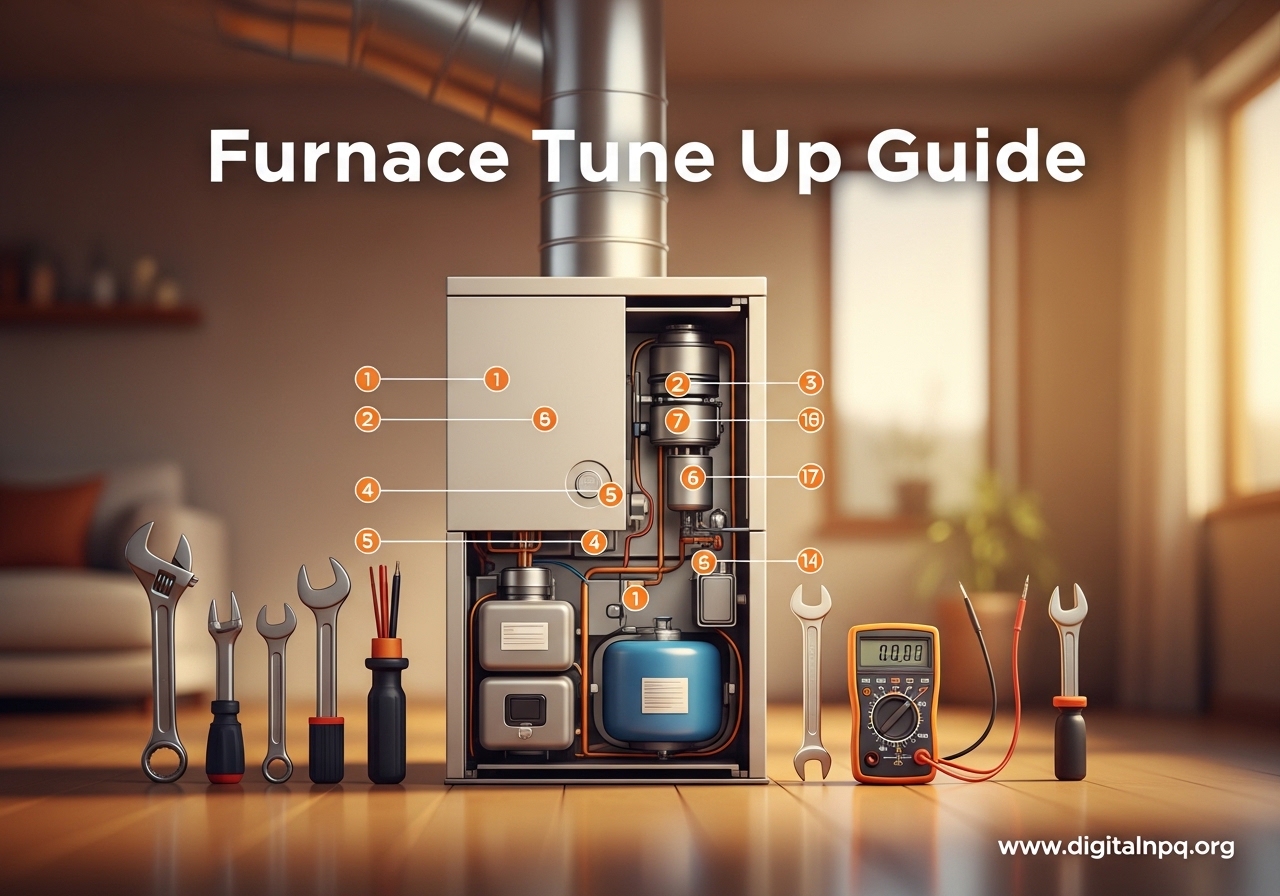
The 15-Step Furnace Tune-Up Checklist
1. Thermostat calibration and testing. The technician verifies that your thermostat reads temperatures accurately and communicates properly with the furnace. A miscalibrated thermostat can cause short cycling, where your furnace turns on and off too frequently, wasting energy and wearing out components faster.
2. Air filter inspection and replacement. A clogged filter restricts airflow, forces the blower motor to work harder, and reduces efficiency by up to 15 percent. The technician checks the filter and replaces it if needed, or advises you on the right replacement schedule based on your household.
3. Heat exchanger inspection. This is one of the most critical safety checks. The heat exchanger separates combustion gases from your home’s breathable air. Cracks or corrosion in the heat exchanger can allow carbon monoxide to leak into your living space. The technician visually inspects and may use a camera to check for damage.
4. Burner cleaning and adjustment. Dirty burners produce incomplete combustion, which wastes gas and creates soot. The technician removes and cleans each burner, checks the flame pattern for proper combustion, and adjusts the air-to-gas ratio for optimal efficiency.
5. Ignition system testing. Whether your furnace uses a pilot light, hot surface igniter, or electronic spark, the technician tests the ignition sequence to ensure it lights reliably every time. A failing igniter is one of the most common reasons furnaces stop working in the middle of winter.
6. Blower motor inspection and cleaning. The blower motor circulates heated air through your ductwork. The technician checks amp draw to verify the motor is not overworking, cleans the fan blades, and lubricates the motor bearings if applicable. A dirty blower can reduce airflow by 30 percent or more.
7. Combustion analysis. Using a combustion analyzer, the technician measures the levels of carbon monoxide, oxygen, and carbon dioxide in your furnace’s exhaust. This test confirms that your furnace is burning gas efficiently and safely. High carbon monoxide readings indicate a serious safety problem.
8. Gas pressure testing. The technician measures incoming and outgoing gas pressure to ensure the furnace receives the correct amount of fuel. Too much gas wastes energy and creates safety hazards. Too little gas prevents the furnace from reaching the set temperature.
9. Flue pipe and venting inspection. The flue pipe carries combustion gases out of your home. The technician checks for blockages, corrosion, proper slope, and secure connections. A blocked or leaking flue pipe is a carbon monoxide hazard that requires immediate attention.
10. Electrical connection tightening and testing. Loose electrical connections cause intermittent failures and can even create fire hazards. The technician tightens all connections, checks wire insulation for damage, and tests safety controls like the limit switch and flame sensor.
11. Condensate drain cleaning. High-efficiency furnaces produce condensation during operation. The drain line that carries this water away can become clogged with algae or debris, causing water to back up and potentially damage the furnace or your home. The technician flushes the line and checks for proper drainage.
12. Ductwork visual inspection. While a full ductwork inspection is a separate service, the technician should at least visually check the connections near the furnace for obvious leaks, disconnected joints, or damage that would reduce system efficiency.
13. Safety control testing. The technician tests the high-limit switch, pressure switch, and rollout switch. These safety devices shut down the furnace if something goes wrong. If any of these switches are bypassed or malfunctioning, your furnace is operating unsafely.
14. Lubrication of moving parts. Motors, fans, and bearings need periodic lubrication to reduce friction and wear. The technician applies the appropriate lubricant to all accessible moving parts to extend component life and reduce energy consumption.
15. Overall performance testing and report. After completing all checks, the technician runs the furnace through a full heating cycle and measures temperature rise, airflow, and system efficiency. You should receive a written report documenting everything that was checked, any problems found, and recommended next steps.
Signs Your Furnace Needs a Tune-Up
Waiting for your furnace to break down in January is a bad plan. Your heating system gives you warning signs long before a total failure, and catching those signs early can save you hundreds of dollars in emergency repair costs. Here are the most common indicators that your furnace is overdue for professional attention.
Unusual noises during operation. A healthy furnace produces a steady, low hum when running. If you start hearing banging, squealing, rattling, or popping sounds, something is wrong. Banging often indicates delayed ignition, a potentially dangerous condition. Squealing usually points to a worn blower belt or motor bearing. Rattling could mean loose panels, a cracked heat exchanger, or failing components.
Rising energy bills without explanation. If your gas or electric bill creeps up month over month and your usage has not changed, your furnace is losing efficiency. Dirty burners, clogged filters, and worn components all force the system to work harder to produce the same amount of heat.
Uneven heating across rooms. When some rooms feel like saunas while others stay chilly, your furnace may be struggling with reduced airflow, dirty ducts, or a blower motor that is not operating at full capacity. A tune-up can identify the root cause.
Yellow pilot light instead of blue. A natural gas flame should burn blue. A yellow or flickering pilot light indicates incomplete combustion, which produces carbon monoxide. This is a safety emergency that requires immediate professional attention.
Frequent cycling on and off. If your furnace turns on and off every few minutes without reaching the set temperature, it is short cycling. This strains the system, wastes energy, and usually points to a dirty filter, miscalibrated thermostat, or overheating issue.
Dusty or dry air in your home. A furnace that is not properly maintained can blow dust, soot, and other particles through your ductwork. If you notice more dust than usual on surfaces or your family is experiencing more allergy symptoms or dry skin, the furnace could be the culprit.
The furnace is more than 10 years old. Furnaces over a decade old need more attentive care. Even if everything seems fine, annual tune-ups become increasingly important as components age and wear down. An older furnace that has not been serviced in over a year should be inspected before the next heating season.
Carbon monoxide detector alerts. If your carbon monoxide detector goes off, evacuate your home immediately and call your gas company or fire department. After the emergency is resolved, schedule a furnace inspection to find the source. Carbon monoxide leaks often originate from a cracked heat exchanger or blocked flue pipe, both of which are checked during a tune-up.
Why Annual Furnace Tune-Ups Matter
On Reddit forums like r/hvacadvice and r/homeowners, one question comes up more than any other: are furnace tune-ups just a money grab? It is a fair question. Some HVAC companies do push unnecessary services. But the data tells a different story about the value of regular maintenance.
Lower energy bills. The US Department of Energy estimates that regular HVAC maintenance can reduce energy consumption by 5 to 15 percent. For a typical household spending $1,200 per year on heating, that is $60 to $180 saved annually. A tune-up that costs $100 can literally pay for itself in energy savings alone.
Longer furnace lifespan. A well-maintained furnace can last 20 to 25 years. A neglected one might fail in 12 to 15 years. Replacing a furnace costs anywhere from $3,000 to $7,000 depending on the model and installation complexity. Spending $100 per year on tune-ups to get an extra 5 to 10 years out of your system is one of the best returns on investment in home maintenance.
Fewer emergency breakdowns. According to industry data, 28 percent of homeowners reported an HVAC repair in the past 12 months. Emergency repairs in the dead of winter cost more because demand is high and technicians are booked solid. A tune-up catches 80 percent of potential failures before they happen.
Carbon monoxide safety. This benefit alone justifies annual tune-ups. Carbon monoxide poisoning kills approximately 400 Americans each year and sends tens of thousands to emergency rooms. Your furnace is one of the most common sources of residential carbon monoxide. A professional tune-up includes combustion analysis and heat exchanger inspection specifically to detect this hazard.
Warranty protection. Most furnace manufacturers require proof of annual professional maintenance to honor warranty claims. If your furnace is still under warranty and a covered component fails, you need service records to avoid paying out of pocket. A single tune-up record can save you thousands.
Better indoor air quality. A clean furnace with fresh filters and clean ducts circulates cleaner air throughout your home. This matters especially for families with asthma, allergies, or respiratory conditions. The cleaning and filter replacement included in a tune-up directly contribute to healthier indoor air.
Furnace Tune-Up Cost Guide
Understanding what a furnace tune up should cost helps you spot overpriced services and recognize genuine deals. Prices vary significantly based on where you live, the type of furnace you have, and the depth of service included. Here is a detailed breakdown to help you budget accurately.
National Average Cost Range
The national average for a professional furnace tune-up ranges from $70 to $200, with most homeowners paying between $100 and $150. Homeowners on Reddit consistently report paying $79 to $199 for standard tune-ups. Comprehensive inspections that include combustion analysis and advanced diagnostics can run $200 to $300 or more. Budget-friendly promotions from companies like Home Depot and local HVAC contractors sometimes drop prices to $69 to $89, but read the fine print to confirm what is included.
What Affects the Cost
Several factors push your tune-up toward the lower or higher end of the range. The type of furnace matters. Gas furnaces typically cost $80 to $180 for a tune-up. Oil furnaces run $100 to $250 because they require more cleaning due to soot buildup. Electric furnaces are generally $70 to $150 since they have fewer combustion-related components to inspect.
The age of your system also affects pricing. Older furnaces may need more time and replacement parts during the tune-up. Accessibility plays a role too. A furnace tucked into a tight closet or cramped basement corner takes longer to service than one in an open utility room. Finally, the level of service matters. A basic 10-point inspection costs less than a comprehensive 20-point tune-up with combustion analysis.
Regional Pricing Breakdown
Where you live has a real impact on pricing. Here is a general breakdown of what homeowners can expect to pay across different regions of the United States.
In the Northeast, where heating systems work overtime through long winters, expect to pay $120 to $250 for a standard tune-up. High demand and higher labor costs drive prices up. The Midwest typically sees lower prices at $80 to $175, though prices in major metropolitan areas like Chicago can reach the higher end. The South, where heating seasons are shorter, generally offers the most affordable tune-ups at $70 to $150. The West Coast ranges from $100 to $200, with California and Washington pushing toward the upper end due to higher operating costs.
Cost Comparison: Tune-Up vs Repair vs Replacement
Understanding the cost difference between preventive maintenance and reactive fixes is crucial. Here is how the numbers stack up over time.
An annual tune-up costs $70 to $200 per year, or roughly $700 to $2,000 over a decade. A minor furnace repair, like replacing a flame sensor, igniter, or blower capacitor, typically costs $150 to $450. A major repair, such as a blower motor replacement or heat exchanger repair, runs $500 to $1,500. A full furnace replacement costs $3,000 to $7,000 or more depending on efficiency ratings and installation requirements.
The math is straightforward. Spending $100 to $150 per year on tune-ups is significantly cheaper than even one major repair, let alone a premature replacement. Over a 15-year period, a homeowner who skips tune-ups might spend $2,000 to $4,000 more on repairs and face replacing their furnace years earlier than necessary.
Understanding the $5000 Rule for Furnaces
The $5000 rule is a simple formula that helps homeowners decide whether to repair or replace a failing furnace. It works like this: multiply the age of your furnace in years by the estimated cost of the repair. If the result is $5,000 or more, it is generally smarter to replace the furnace rather than repair it.
Here is how it works in practice. Say your furnace is 12 years old and the technician finds a cracked heat exchanger that will cost $600 to repair. Multiply 12 by 600 and you get $7,200. Since $7,200 exceeds $5,000, the rule suggests replacing the furnace is the better financial decision. On the other hand, if your furnace is only 5 years old and needs a $400 blower motor, the calculation gives you $2,000. That is well under $5,000, so the repair makes sense.
The logic behind the rule is straightforward. Older furnaces are more likely to experience additional failures soon after a major repair. Putting $600 into a 12-year-old furnace that might need another $800 repair next year is throwing good money after bad. A new furnace with a warranty gives you predictable costs and reliable heat for the next 15 to 20 years.
Keep in mind that the $5000 rule is a guideline, not an absolute law. Other factors matter too. If your furnace is still under warranty, the manufacturer might cover part or all of the repair cost. If your furnace has an efficiency rating below 80 percent AFUE, upgrading to a modern 95 percent or higher AFUE model could save enough on energy bills to justify replacement even when the rule says repair. Use the $5000 rule as a starting point, then discuss your specific situation with a trusted HVAC contractor.
When to Schedule a Furnace Tune-Up
The best time to schedule a furnace tune up is early fall, ideally September or October, before you need to turn the heat on. Scheduling before the heating season has three big advantages. First, technicians are less busy, so you can get an appointment within days instead of waiting weeks. Second, if the tune-up reveals a problem that needs repair, you have time to fix it before cold weather arrives. Third, some HVAC companies offer pre-season discounts during their slower months.
Waiting until the first cold snap in November or December is a common mistake. Everyone remembers their furnace at the same time, and HVAC companies get flooded with service calls. Response times stretch from days to weeks, and some companies charge premium rates for emergency winter visits. A fall tune-up avoids this entirely.
How often should you schedule a tune-up? For most homes, once per year is sufficient. If your furnace is older than 15 years, runs on oil, or heats a very large space, consider scheduling twice per year, once in fall and once mid-winter. Newly installed furnaces should get their first professional tune-up after the first year of operation to verify everything settled correctly during installation and to establish your warranty maintenance record.
DIY vs Professional Furnace Maintenance
Forum discussions on r/hvacadvice and r/HomeImprovement show that homeowners are genuinely confused about what they can safely do themselves and what absolutely requires a professional. The line is clearer than most people think. Here is a breakdown of tasks that are safe for homeowners and tasks that should be left to trained technicians.
What Homeowners Can Safely Do Themselves
Replace air filters regularly. This is the single most important DIY maintenance task. Check your filter monthly and replace it every 30 to 90 days depending on the filter type and your household conditions. Homes with pets, allergies, or dusty environments should lean toward more frequent changes. A clean filter improves airflow, reduces strain on the blower motor, and improves indoor air quality.
Clean around the furnace. Keep the area around your furnace clear of clutter, boxes, and flammable materials. Vacuum or sweep the floor around the unit to prevent dust from being drawn into the system. Maintain at least three feet of clearance on all sides.
Clean the condensate drain line. High-efficiency furnaces have a condensate drain that can clog with algae or debris. Pouring a cup of white vinegar down the drain line every few months keeps it clear and prevents water backup. This takes five minutes and requires no tools.
Check and clean visible ductwork connections. Inspect the duct connections near your furnace for obvious gaps or disconnections. If you find a loose joint, you can seal it with foil tape, not standard duct tape, which degrades over time.
Test your carbon monoxide detectors. Press the test button on every carbon monoxide detector in your home monthly. Replace the batteries twice per year and replace the entire unit every five to seven years according to the manufacturer’s recommendations.
Listen for unusual sounds. Pay attention to how your furnace sounds when it starts, runs, and shuts off. Any new or changing sounds are worth noting and mentioning to your technician at the next service visit. Early detection of sounds like squealing or rattling can prevent bigger problems.
What Requires a Professional
Heat exchanger inspection. Checking a heat exchanger for cracks requires specialized training and sometimes camera equipment. This is a critical safety check that no homeowner should attempt to skip or do themselves. A cracked heat exchanger can leak carbon monoxide into your home.
Combustion analysis. Measuring carbon monoxide levels, oxygen, and combustion efficiency requires a combustion analyzer, a tool that costs several hundred dollars and requires training to interpret correctly. This test tells you whether your furnace is burning gas safely.
Gas pressure adjustment. Working with gas lines is dangerous and, in most states, legally requires a licensed professional. Incorrect gas pressure can cause incomplete combustion, carbon monoxide production, fire hazards, and explosion risks.
Electrical component testing. Measuring amp draw on motors, testing safety switches, and troubleshooting control boards involves working with high-voltage electrical systems. Misdiagnosing or improperly repairing electrical components can create fire hazards or damage the furnace.
Burner cleaning and adjustment. Removing and cleaning burners requires disassembling part of the furnace. Reassembling incorrectly can cause improper combustion. The air-to-gas ratio adjustment also requires a combustion analyzer to verify safe operation.
The general rule is straightforward. If the task involves gas, high-voltage electricity, or combustion testing, hire a professional. The cost of a tune-up is small compared to the cost of a mistake with gas or carbon monoxide.
How to Choose a Reliable HVAC Contractor
One of the biggest pain points homeowners share online is the fear of hiring a contractor who cuts corners or pushes unnecessary services. We looked through dozens of forum threads to compile practical advice on finding a trustworthy HVAC technician.
Verify licensing and insurance. Every state has different requirements, but your contractor should hold a current HVAC license and carry liability insurance. Ask for their license number and verify it through your state’s licensing board website. This takes two minutes and eliminates unqualified operators immediately.
Look for manufacturer certifications. Technicians certified by organizations like North American Technician Excellence, also known as NATE, have passed rigorous testing on HVAC systems and service procedures. Many major manufacturers like Carrier, Lennox, and Trane also have certified dealer programs that require ongoing training.
Ask for an itemized service list before booking. A reputable company will tell you exactly what their tune-up includes. Compare their list against the 15-step checklist earlier in this article. If they cannot clearly describe what you are paying for, that is a red flag.
Check reviews on multiple platforms. Do not rely solely on the testimonials on a company’s website. Look at their Google reviews, Better Business Bureau rating, and mentions on local community forums. Pay attention to reviews that mention transparency, honesty, and whether the technician tried to upsell unnecessary repairs.
Beware of unusually low prices. A tune-up advertised at $39 or $49 is often a loss leader. The company sends a technician who finds thousands of dollars in problems you may not actually have. Legitimate tune-ups cost money because skilled labor and proper diagnostic tools are expensive. Fair pricing in the $80 to $200 range reflects the real cost of quality service.
Get everything in writing. After the tune-up, you should receive a written report documenting every check performed, all measurements taken, and any recommendations. This report serves as your maintenance record for warranty purposes and gives you a baseline to compare against next year’s results.
Frequently Asked Questions
What does a furnace tune up include?
A proper furnace tune up includes thermostat calibration, air filter inspection and replacement, heat exchanger inspection for cracks, burner cleaning and adjustment, ignition system testing, blower motor cleaning, combustion analysis, gas pressure testing, flue pipe inspection, electrical connection tightening, condensate drain cleaning, ductwork visual check, safety control testing, lubrication of moving parts, and a full performance test. A reputable technician should provide a written report documenting all findings.
How much does a furnace tune up cost?
A professional furnace tune up typically costs between $70 and $200, with the national average falling around $100 to $150. Gas furnace tune-ups usually run $80 to $180, oil furnaces cost $100 to $250, and electric furnaces are $70 to $150. Prices vary by region, with the Northeast being most expensive and the South most affordable.
Is a furnace tune up worth it?
Yes. Annual furnace tune-ups reduce energy consumption by 5 to 15 percent, extend system lifespan by 5 to 10 years, prevent most emergency breakdowns, protect your family from carbon monoxide hazards, and keep your manufacturer warranty valid. The $100 to $150 average cost pays for itself through energy savings alone for most households.
What is the $5000 rule for furnaces?
The $5000 rule helps you decide whether to repair or replace your furnace. Multiply your furnace age in years by the estimated repair cost. If the result equals or exceeds $5,000, replacement is usually the better investment. For example, a 10-year-old furnace needing a $600 repair scores 6,000, which suggests replacement.
How long does a furnace tune up take?
A standard furnace tune up takes 60 to 90 minutes when performed by a qualified technician. If the technician discovers problems that need repair, the visit may take longer. A very quick 20-minute visit usually means the technician is skipping important steps from the full checklist.
How often should I get my furnace tuned up?
Most homeowners should schedule a furnace tune up once per year, ideally in early fall before the heating season begins. If your furnace is over 15 years old, runs on oil, or heats a very large home, consider twice-yearly service. New furnaces should receive their first tune-up after one year of operation.
Can I do my own furnace tune up?
You can safely handle basic maintenance tasks like replacing air filters, cleaning the condensate drain, keeping the area around the furnace clear, and testing carbon monoxide detectors. However, tasks involving gas lines, combustion testing, heat exchanger inspection, and electrical diagnostics require a licensed professional for safety and warranty reasons.
What happens if I skip furnace maintenance?
Skipping furnace maintenance leads to reduced energy efficiency, higher utility bills, increased risk of breakdowns during cold weather, potential carbon monoxide hazards from undetected heat exchanger cracks, voided manufacturer warranties, and a shorter overall furnace lifespan. Homeowners who skip maintenance report average repair costs of $450 or more compared to the $100 to $150 cost of a tune-up.
Conclusion
A furnace tune up is one of the most practical investments you can make in your home. For $70 to $200 once a year, you get lower energy bills, fewer surprise breakdowns, a longer-lasting heating system, and most importantly, the confidence that your family is safe from carbon monoxide hazards. The $5000 rule gives you a clear framework for deciding when repair costs no longer make sense. And knowing which tasks you can handle yourself versus which ones need a professional means you can maintain your system between service visits without taking unnecessary risks.
Do not wait until the first freezing night to think about your furnace. Schedule your annual furnace tune up in early fall, keep up with filter changes year-round, and always have a working carbon monoxide detector on every level of your home. Your furnace will run better, last longer, and cost you less in the long run.