
When your heat pump stops working as expected, the temperature inside your home can swing from comfortable to unbearable within hours. I have spent years troubleshooting HVAC systems, and heat pump problems are among the most frustrating issues homeowners face because the symptoms can be misleading. One minute you think the unit is broken, and the next you realize the thermostat was set to cooling mode in the middle of January.
Heat pump problems typically fall into a handful of categories that are easy to spot once you know what to look for. Our team has handled service calls where the fix was as simple as swapping a dirty filter, and other times where the compressor had failed entirely. The goal of this guide is to help you diagnose the most common issues quickly, understand which ones you can fix yourself, and recognize when it is time to call a licensed technician.
In this guide, we will cover everything from heat pump not heating and freezing up to strange noises, water leaks, and foul odors. You will also learn how the defrost cycle, reversing valve, and auxiliary heat work together so you can make better decisions about repairs. Whether you have a traditional split system or a ductless mini-split, the principles in this article apply to most residential setups in 2026.
Common Heat Pump Problems You Should Know About
Before diving into individual symptoms, it helps to see the full picture of what can go wrong. The most common heat pump problems include the unit not heating, not cooling, freezing over, running nonstop, short cycling, making odd noises, leaking water, and producing bad smells. Each of these issues points to a specific set of causes, and some of them overlap.
Our team has found that roughly 40 percent of the heat pump problems we diagnose are related to airflow or thermostat settings. That means four out of ten service calls could have been avoided with basic homeowner maintenance. Another 30 percent involve refrigerant issues, electrical component failures, or defrost cycle malfunctions.
The remaining 30 percent are a mix of mechanical failures, sensor errors, and age-related wear. Here is a quick reference for the top symptoms and their most likely causes.
Not heating: Thermostat settings, dirty filter, low refrigerant, faulty reversing valve, or auxiliary heat failure.
Not cooling: Thermostat in wrong mode, dirty outdoor coils, blocked condenser, or low refrigerant.
Freezing up: Restricted airflow, low refrigerant, stuck defrost timer, or extreme cold weather.
Running constantly: Poor insulation, extreme temperatures, refrigerant leak, or stuck contactor.
Short cycling: Oversized unit, thermostat placement, clogged filter, or low refrigerant.
Strange noises: Loose fan blades, failing motor, debris in outdoor unit, or refrigerant flow issues.
Leaking water: Clogged condensate drain, cracked drain pan, or frozen evaporator coil.
Bad smells: Mold in drain pan, burned wiring, or dirty sock syndrome on indoor coils.
Keep this list in mind as you read the detailed sections below. If you can match your symptom to one of these categories, you will save a lot of time and money on diagnosis.
Heat Pump Not Heating: Causes and Fixes
When a heat pump is not heating, the first thing to check is the thermostat. Make sure it is set to heat mode and the temperature is set above the current room reading. We have been on service calls where the thermostat was accidentally switched to emergency heat only, which can make the house feel cold if the backup heat strips are not sized correctly.
Next, inspect the air filter. A dirty filter chokes airflow and reduces the system’s ability to transfer heat. If the filter is gray or clogged, replace it and wait 30 minutes to see if the supply air warms up. This is the most common reason for heat pump failure, and it is also the easiest fix.
If the filter is clean and the thermostat is correct, walk outside and look at the outdoor unit. In heating mode, the outdoor coil acts as an evaporator, which means it absorbs heat from the outside air. If the unit is covered in ice or snow, the heat transfer process stops. Clear any debris and let the defrost cycle run.
If the ice never melts, you may have a defrost timer or sensor problem. Refrigerant issues are another frequent cause of heat pump not heating. Low refrigerant means there is less thermal mass moving between the indoor and outdoor coils. You cannot add refrigerant yourself, but you can spot the signs: long run times, lukewarm air, and ice buildup on the refrigerant line.
A technician will need to locate the leak, repair it, and recharge the system. The reversing valve is the component that switches your heat pump between heating and cooling. If it gets stuck, the system may stay in cooling mode even when you ask for heat. You will feel cold air from the vents. A stuck reversing valve requires professional repair or replacement.
Finally, consider cold weather performance. Standard air-source heat pumps lose efficiency as the outdoor temperature drops below freezing. Many units switch to auxiliary heat or emergency heat automatically when the outdoor temperature falls below a certain threshold, usually around 35 to 40 degrees Fahrenheit. If your auxiliary heat is not working, the house will get cold even though the heat pump is running.
This is a common complaint in forums where users report switching from oil to heat pump and struggling with efficiency in deep winter. If your home is cold and the outdoor unit is running, the problem may be the backup heat rather than the heat pump itself.
Heat Pump Not Cooling: What to Check
If your heat pump is not cooling, start with the thermostat just like you would for heating issues. Confirm the system is set to cooling mode and the fan is set to auto. If the thermostat is fine but the house stays warm, move on to the outdoor unit.
The outdoor condenser coils need to release heat to the outside air. When they are covered in dirt, grass clippings, or pollen, heat transfer suffers. Turn off the power and gently rinse the coils with a garden hose. Do not use a pressure washer because the fins bend easily.
We have restored cooling performance on dozens of units simply by cleaning the outdoor coils. Check the outdoor fan. If the compressor is running but the fan is not spinning, the motor or capacitor may have failed. A humming noise from the outdoor unit usually means the compressor is trying to start but the fan is not helping move air.
Capacitor replacement is a common repair, but it involves high voltage, so most homeowners should leave it to a technician. Low refrigerant also affects cooling. If the indoor coil freezes over or the suction line feels unusually cold, you may have a leak. The system will run longer and deliver less cool air.
Refrigerant repairs require EPA certification and specialized gauges, so this is not a DIY job. Indoor evaporator coils can freeze if airflow is restricted. Make sure all vents are open and nothing is blocking return air grilles. If the coil is frozen, turn the system off and let it thaw completely before restarting.
Running a frozen system can damage the compressor. After the ice melts, check the filter and vents. If the coil freezes again, call a professional because the refrigerant level or blower speed may be wrong.
Heat Pump Freezing Up: Why It Happens and How to Fix It
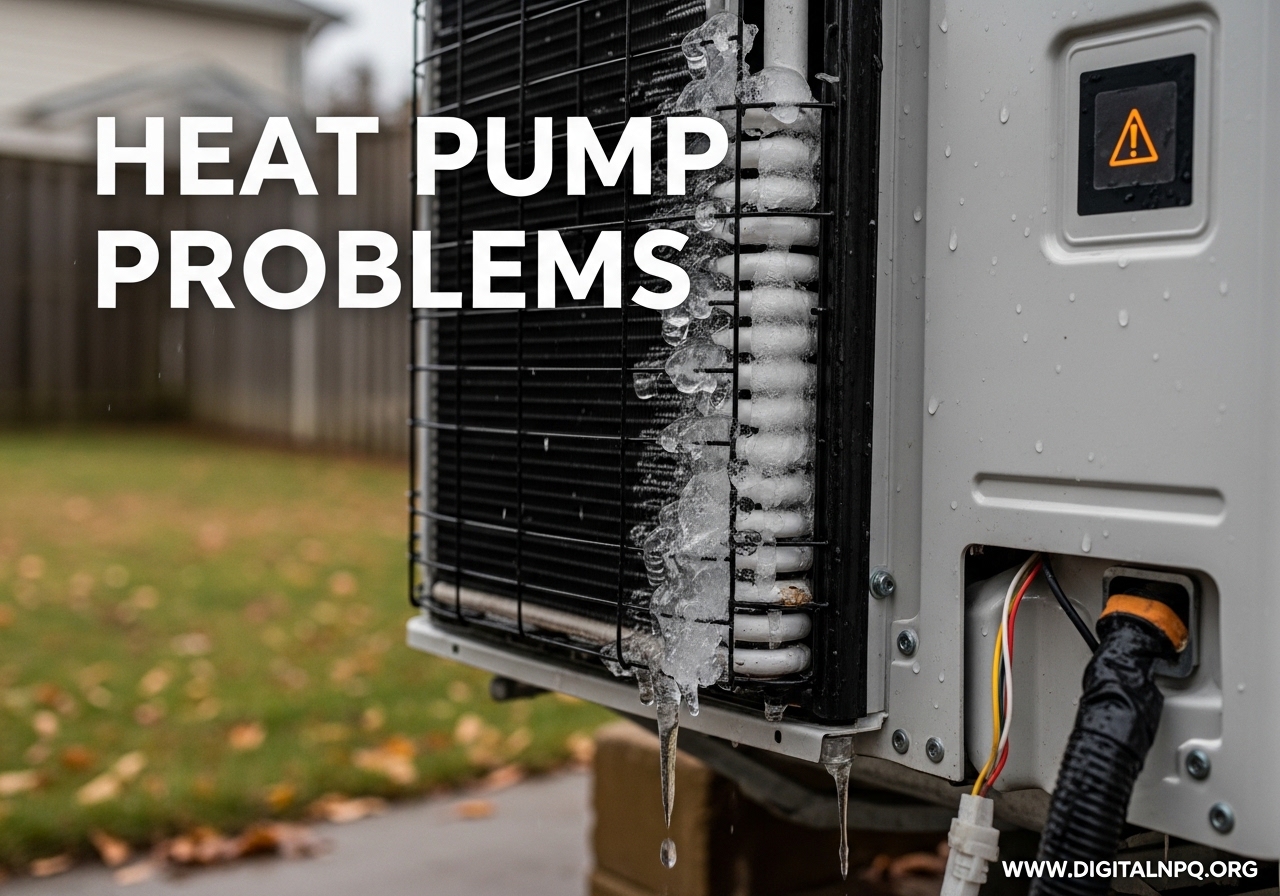
A heat pump freezing up is normal in small amounts during winter, but thick ice that never melts is a problem. The defrost cycle should melt frost every 30 to 90 minutes of run time. If the cycle fails, ice builds on the outdoor coil and blocks airflow.
Start by checking the air filter and all supply vents. Restricted airflow makes the coil temperature drop below freezing faster than the defrost cycle can compensate. Even a partially closed vent in one room can affect the entire system.
Low refrigerant is another major cause of freezing. When refrigerant levels drop, the pressure and temperature inside the coil fall below design limits. Ice forms on the coil and the suction line. If you see ice on the copper line running between the indoor and outdoor units, call a professional immediately.
Running the system with low refrigerant can destroy the compressor. Defrost control boards and sensors can fail. The defrost thermostat or sensor tells the control board when to switch the reversing valve and send hot gas to the outdoor coil. If the sensor is loose, corroded, or broken, the board never gets the signal to defrost.
A technician can test the sensor resistance and replace it if needed. In extreme cold weather, some ice buildup is unavoidable. If your area regularly drops below 20 degrees Fahrenheit for extended periods, the heat pump may struggle to keep up. Auxiliary heat should engage during these times.
If your home feels cold and the outdoor unit looks like a snowball, you may need to supplement with space heaters or upgrade to a cold-climate heat pump designed for lower temperatures. Forum users frequently mention this exact scenario during January and February.
Heat Pump Running Constantly: Diagnosis and Solutions
When a heat pump runs constantly, your electric bill climbs and the equipment wears out faster. The first question is whether the system is actually running nonstop or just cycling more frequently than you expect. In very cold or hot weather, longer run times are normal.
Heat pumps are designed to run for extended periods rather than blasting high heat like a furnace. If the unit truly never shuts off, check the thermostat. Someone may have set the temperature too high or too low for the system to reach. A 3-degree difference between the set point and the room temperature can keep the system running for hours.
We have seen thermostats set to 78 degrees in cooling mode when the outdoor temperature was 95 degrees, which is asking too much of a standard heat pump. Poor insulation and air leaks make the heat pump work harder. If the house loses heat as fast as the pump adds it, the unit never reaches the set point. Check windows, doors, and attic insulation.
Sealing gaps can reduce run time dramatically. Refrigerant leaks cause the system to run constantly because it cannot move enough heat to satisfy the thermostat. This is especially true in heating mode when outdoor temperatures are low. The system just runs and runs, but the house never feels warm.
We have diagnosed units where the refrigerant charge was 40 percent low, and the homeowner had been running the system 24 hours a day for weeks. Sensor issues can also trick the system into continuous operation. If the thermostat sensor or an outdoor temperature sensor reads incorrectly, the control board thinks the demand is still there.
Forum users have reported heat pump sensors bugging out and causing 24/7 running until the faulty sensor was replaced. This is more common in ductless mini-splits where multiple indoor units have individual sensors. Another cause is a stuck contactor in the outdoor unit. The contactor is an electrical switch that tells the compressor and fan to turn on.
If the contacts weld together, the outdoor unit runs even when the thermostat is satisfied. You can hear the compressor humming outside even though the indoor fan is off. This requires immediate professional attention because it wastes electricity and can overheat the compressor.
Heat Pump Short Cycling: Causes and Repairs
Short cycling means the heat pump starts, runs for a few minutes, then shuts off before reaching the set temperature. This pattern repeats over and over. It is hard on the compressor and wastes energy.
An oversized heat pump is the most common cause of short cycling. If the unit is too powerful for the home, it heats or cools the space too quickly and shuts off. The problem is that it does not run long enough to dehumidify or distribute air evenly. Temperature swings and hot or cold spots are common with oversized equipment.
Proper load calculation should have been done at installation, but mistakes happen. Thermostat placement matters. If the thermostat is in a hallway near a return grille, it gets an inaccurate sample of the home’s air temperature. Direct sunlight, lamps, or drafty walls can also trick the thermostat.
Moving the thermostat to a central location on an interior wall can solve short cycling without any equipment changes. A clogged air filter can cause short cycling because the restricted airflow makes the indoor coil overheat or freeze. The high-pressure or low-pressure safety switches may shut the system down to protect the compressor.
Replace the filter and see if the cycle lengthens. Low refrigerant causes short cycling because the system pressures drop outside the normal range. The low-pressure switch may cut off the compressor to prevent damage. Refrigerant leaks and improper charging are the root causes here, and both require a licensed technician.
Faulty capacitors or contactors can cause erratic start and stop behavior. If the capacitor is weak, the compressor may stall after a brief run. The contactor may chatter or drop out under load. These electrical components are relatively inexpensive to replace, but they should be handled by a pro because of the high voltage involved.
Heat Pump Making Strange Noises: What Each Sound Means
Noise from a heat pump is never a good sign, but not every sound means disaster. Learning what each noise indicates can help you decide whether to schedule a service call or just clear some debris. Our team has heard every sound in the book, and here is what we have learned.
Buzzing: A loud buzz from the outdoor unit usually means an electrical problem. The capacitor, contactor, or wiring may be failing. Sometimes a loose panel vibrates and creates a buzz. Check that the panels are tight and the screws are secure. If the buzz comes from inside the electrical compartment, call a technician.
Grinding: Grinding is serious. It often means the bearings in the outdoor fan motor or the compressor are worn out. If the fan is wobbling and making a metal-on-metal sound, turn the system off immediately. Continuing to run a grinding motor can damage the surrounding components and lead to a much more expensive repair.
Swooshing or whooshing: A swooshing sound is usually the reversing valve shifting or the defrost cycle activating. This is normal and lasts only a few seconds. If the swooshing continues for minutes or repeats rapidly, the reversing valve may be stuck or the defrost board is malfunctioning.
Rattling: Rattling is often caused by loose hardware, debris inside the outdoor unit, or a failing fan motor mount. Remove leaves, sticks, or trash from the unit. Tighten any visible screws. If the rattling persists, the motor mounts or compressor isolation feet may need replacement.
Clicking: Clicking when the system starts or stops is usually the contactor or relays. Occasional clicking is normal. Rapid clicking, sometimes called chattering, means the contactor is failing to hold or the control voltage is low. This can burn out the contactor points and damage the compressor.
Forum discussions frequently mention concerns about neighbor complaints from noisy outdoor units. If your heat pump is suddenly much louder than before, it is worth investigating before a minor issue becomes a total failure. In many cases, a loose fan blade or debris removal costs nothing and solves the problem immediately.
Heat Pump Leaking Water Inside or Outside
Water around your heat pump can be normal condensation or a sign of a leak. During cooling mode, the indoor evaporator coil pulls moisture from the air. That water drains through a condensate line to a pan or pump. In heating mode, the outdoor unit produces condensation that drips from the coil.
You should see a small puddle near the outdoor unit in winter, which is normal. If water is pooling inside the house near the air handler, start with the condensate drain. Algae, mold, and dust clog the drain line over time. A blocked drain causes the pan to overflow.
You can clear a mild clog with a wet-dry vacuum on the drain outlet. Some homeowners use a mixture of vinegar and water to slow algae growth. If the line is completely blocked, a technician may need to blow it out with compressed nitrogen. Cracked condensate pans are common in older systems.
Plastic pans become brittle and crack at the corners. If the pan is cracked, it must be replaced. You can temporarily use a shallow container to catch the drip, but this is not a long-term solution. A frozen evaporator coil can also cause water leaks. When the ice melts, it produces more water than the drain pan can handle.
The excess spills over the sides. If you notice water and see ice on the coil, turn the system off and call a professional. The underlying cause is usually low refrigerant or poor airflow. In the outdoor unit, water leaks from the base can indicate a cracked coil or improper installation.
The unit should be level so condensate drains evenly. If the unit tilts toward the house, water can run into the foundation or basement. Leveling the pad may solve the issue.
Heat Pump Smells and Odors: A Complete Guide
Smells coming from your heat pump are clues to specific problems. Some odors are harmless, while others demand immediate attention. Our team has responded to calls where the homeowner smelled something burning and it turned out to be a failing heat strip, which is a fire risk.
Musty or moldy smell: A musty odor usually means mold or mildew is growing on the indoor coil or in the condensate pan. This is common in humid climates or when the system runs constantly. The condition known as dirty sock syndrome happens when bacteria grow on the evaporator coil, producing a sour smell every time the fan runs.
Cleaning the coil and treating the pan with an antimicrobial solution fixes this. A UV light installed in the ductwork can prevent it from returning. Burning smell: A burning odor from the vents is serious. It may be dust burning off heat strips at the start of heating season, which is normal for a few minutes.
If the smell persists, turn the system off. It could indicate overheating wiring, a failing motor, or scorched insulation. This is a fire hazard and requires immediate professional inspection. Rotten egg smell: If you smell rotten eggs or sulfur, leave the house immediately and call the gas company or fire department.
Natural gas and propane have odorants added to make leaks detectable. Even if you do not have a gas furnace, a nearby gas line or water heater could be leaking. Do not assume it is the heat pump. Chemical or sweet smell: A sweet or chemical odor can indicate a refrigerant leak.
Refrigerant has a distinct smell that some people describe as ether-like. If you smell this and notice poor cooling or heating, the system may be leaking refrigerant. A technician can verify with electronic leak detection and repair the leak before recharging the system.
Heat pump smells are often ignored until they become overwhelming. Pay attention to new odors when you switch from heating to cooling or vice versa. Early detection prevents bigger problems down the road.
Thermostat Issues That Cause Heat Pump Problems
The thermostat is the brain of your heat pump system. If it is misconfigured, poorly placed, or malfunctioning, the entire system suffers. We have seen perfectly good heat pumps get replaced when the only issue was an inexpensive battery or a programming error.
Start with the settings. Make sure the mode is set to heat or cool, not fan only or emergency heat. Emergency heat should only be used when the outdoor unit is not working. Running it all the time causes electric bills to spike because heat strips are far less efficient than the heat pump itself.
Check the fan setting. Auto is the best choice for most homes because it cycles the fan with the compressor. On means the fan runs continuously, which can make the system feel less effective in heating mode because it blows room-temperature air between cycles. Some smart thermostats have a circulation mode that runs the fan a few minutes per hour, which is fine but can cause drafts.
Thermostat placement is another hidden cause of heat pump problems. A thermostat located in a sunny spot, near the kitchen, or above a heat register will read warmer than the rest of the house. It shuts the system off while bedrooms remain cold.
Forum users have reported that complicated thermostat interfaces, especially on some Mitsubishi mini-split controllers, cause rooms to be 20 degrees higher than the target because the settings are not intuitive. If you have a ductless system, read the manual carefully or ask the installer to walk you through the remote.
Dead batteries in a wireless thermostat can cause intermittent communication. The display may look fine, but the signal to the heat pump drops out. Replace the batteries once a year. If you have a wired thermostat, loose connections can cause erratic behavior.
A technician can test the low-voltage wiring and tighten terminals. Finally, not all thermostats are compatible with heat pumps. Single-stage thermostats may not control the auxiliary heat or the defrost cycle properly. If you recently replaced the thermostat and started having problems, double-check the wiring and programming for heat pump compatibility.
Airflow and Filter Problems That Reduce Heat Pump Performance
Airflow is the lifeblood of a heat pump. Without proper airflow, the system cannot move heat effectively. It works harder, costs more to run, and fails sooner. In our experience, this is the single most common reason for heat pump failure, and it is also the easiest to prevent.
Change the air filter every one to three months depending on your home. If you have pets, allergies, or live in a dusty area, check the filter monthly. A clean filter allows the blower to move the correct volume of air across the indoor coil. When the filter is clogged, the coil temperature drops in heating mode and the system may trip safety switches or freeze up.
Blocked supply and return vents also cause airflow issues. Furniture, curtains, or rugs can cover floor vents. Laundry piles near return grilles are a common culprit. Walk through the house and make sure every vent is open and unobstructed.
Closing vents in unused rooms does not save money; it increases pressure in the ductwork and strains the blower motor. Duct leaks are a hidden source of airflow loss. If your ductwork runs through an unconditioned attic or crawl space, a torn joint can dump heated or cooled air into the void.
The heat pump runs longer because the conditioned air never reaches the rooms. A duct blaster test can locate leaks, and sealing them with mastic or metal tape improves efficiency immediately. The indoor blower motor can weaken with age. A motor that turns slower than design speed reduces airflow.
You may notice weak airflow from the vents even with a clean filter. A technician can test the motor amp draw and check the blower wheel for dirt buildup. Sometimes a thorough cleaning restores the motor to full capacity.
Defrost Cycle and Reversing Valve Problems
Two components make a heat pump different from a standard air conditioner: the defrost cycle and the reversing valve. Understanding them helps you diagnose some of the trickier heat pump problems.
The reversing valve is a four-way valve that changes the direction of refrigerant flow. In cooling mode, it sends heat from inside to outside. In heating mode, it reverses that flow. When the valve gets stuck or the solenoid coil fails, the system cannot switch modes.
You may have cooling when you want heat, or vice versa. A stuck reversing valve often produces a loud whoosh or thump when it tries to shift. If the system never changes modes, the valve or the control board is the suspect. The defrost cycle prevents the outdoor coil from icing over in winter.
During the cycle, the reversing valve shifts briefly to cooling mode. Hot gas from the compressor runs through the outdoor coil and melts the frost. The outdoor fan shuts off during this time. You may see steam rising from the unit, which is normal.
If the unit never defrosts, ice accumulates and the system stops heating. Defrost problems are usually caused by a faulty sensor, bad control board, or stuck reversing valve. The defrost thermostat or sensor monitors the outdoor coil temperature. When the coil drops below a set point, the sensor tells the board to start defrost.
If the sensor is out of calibration or loose, the board never gets the signal. A technician can test the sensor resistance against the manufacturer’s chart and replace it if needed. A stuck reversing valve can also prevent defrost. The system tries to shift to cooling mode to melt ice, but the valve cannot move.
The result is a frozen unit that stays frozen. This is a common issue in older systems where the valve has seen years of refrigerant flow and temperature swings. Replacement is the usual fix, though some technicians can free a mildly stuck valve with a gentle tap or voltage test.
If you see ice on the outdoor unit for hours at a time, the defrost cycle is not working. Turn the system to emergency heat temporarily to keep the house warm, and schedule a service call. Running the system frozen for days can damage the compressor and lead to a much more expensive repair.
When to Call a Professional for Heat Pump Problems
Some heat pump problems are safe for homeowners to address, but others require a licensed technician. Knowing the difference protects your safety and your wallet. After years of field experience, here is our rule of thumb for what you can handle versus what you should not.
DIY tasks include changing the air filter, clearing debris from the outdoor unit, checking the thermostat settings, replacing thermostat batteries, and rinsing the outdoor coils with a hose. You can also check the circuit breaker and reset it if it has tripped. These steps solve a large percentage of complaints and cost nothing but time.
Call a professional when you suspect refrigerant issues, electrical failures, or compressor problems. Refrigerant handling requires EPA certification and specialized gauges. Electrical work involves high voltage that can cause injury or death if handled incorrectly. Compressor replacement is a major repair that usually means the system is at the end of its life or has suffered a severe failure.
Here are specific signs that demand a pro immediately. Burning smells from the unit or vents. Ice on the refrigerant lines that does not melt. Water leaking near electrical components. The outdoor unit making grinding noises. The system tripping the breaker repeatedly. These symptoms point to problems that can damage the equipment or create safety hazards.
The five thousand rule is a common guideline for deciding between repair and replacement. Multiply the age of the equipment by the estimated repair cost. If the result is over five thousand, replacement is usually the better financial choice. For example, a 12-year-old heat pump needing a repair costing several hundred dollars may score above five thousand, which suggests replacement.
A 5-year-old unit needing a similar repair scores well below that threshold, so repair makes sense. This rule is not absolute, but it helps frame the decision. Finally, trust your instincts. If you are uncomfortable working around electrical equipment, hire a pro.
If the problem is beyond a filter change or thermostat tweak, a service call is cheaper than replacing a compressor because you waited too long.
Frequently Asked Questions
What are the most common issues with heat pumps?
The most common issues include dirty air filters, thermostat misconfiguration, refrigerant leaks, frozen outdoor coils, and failing electrical components like capacitors and contactors. Poor airflow is the single most frequent cause of heat pump problems.
Why is my electric bill so high with a heat pump?
High electric bills usually mean the system is running constantly due to a refrigerant leak, poor insulation, or stuck emergency heat. Heat strips use far more electricity than the compressor, so running emergency heat all winter will spike your bill.
What is the $5000 rule for HVAC?
The five thousand rule helps you decide whether to repair or replace an HVAC system. Multiply the age of the unit by the repair cost. If the total exceeds five thousand, replacement is usually the better investment. For example, a 15-year-old unit needing a repair costing several hundred dollars may score above five thousand, so replacement is recommended.
At what temperature does a heat pump go to emergency heat?
Most standard heat pumps switch to auxiliary or emergency heat when the outdoor temperature drops between 30 and 40 degrees Fahrenheit. Some modern cold-climate heat pumps can operate efficiently below 0 degrees, but older systems rely on backup heat strips earlier.
What is the most common reason for heat pump failure?
The most common reason for heat pump failure is restricted airflow from a dirty air filter or blocked vents. This causes the system to overheat, freeze up, or trip safety switches. Replacing the filter regularly prevents the majority of these failures.
What is the 20 degree rule for heat pumps?
The 20 degree rule refers to the temperature difference between the return air and the supply air. In heating mode, a properly working heat pump should raise the air temperature by about 15 to 20 degrees. A smaller difference may indicate low refrigerant, poor airflow, or a failing compressor.
What is the average cost of a heat pump replacement?
The average cost of a heat pump replacement depends on the size, type, and installation complexity. A standard split-system replacement typically costs several thousand dollars. Ductless mini-splits and high-efficiency units often cost more.
Conclusion
Heat pump problems can feel overwhelming when you are sitting in a cold house or staring at a frozen outdoor unit. The good news is that many of these issues are preventable with simple maintenance and a basic understanding of how your system works. By checking the thermostat, changing the filter, and keeping the outdoor unit clean, you solve the majority of complaints before they ever require a service call.
We covered the most common heat pump problems in this guide, including not heating, not cooling, freezing up, running constantly, short cycling, strange noises, water leaks, and odors. You also learned how the defrost cycle, reversing valve, and auxiliary heat interact, and when it makes sense to call a professional instead of attempting a DIY fix. Armed with this knowledge, you can diagnose symptoms faster and avoid unnecessary repairs.
Regular maintenance is the best defense against unexpected failures. Schedule a professional tune-up in the spring and fall to catch small issues before they become expensive breakdowns. If you are dealing with a heat pump problem right now, start with the quick checks in the Common Heat Pump Problems section and work your way through the symptom that matches your situation. In many cases, the fix is simpler than you think.