
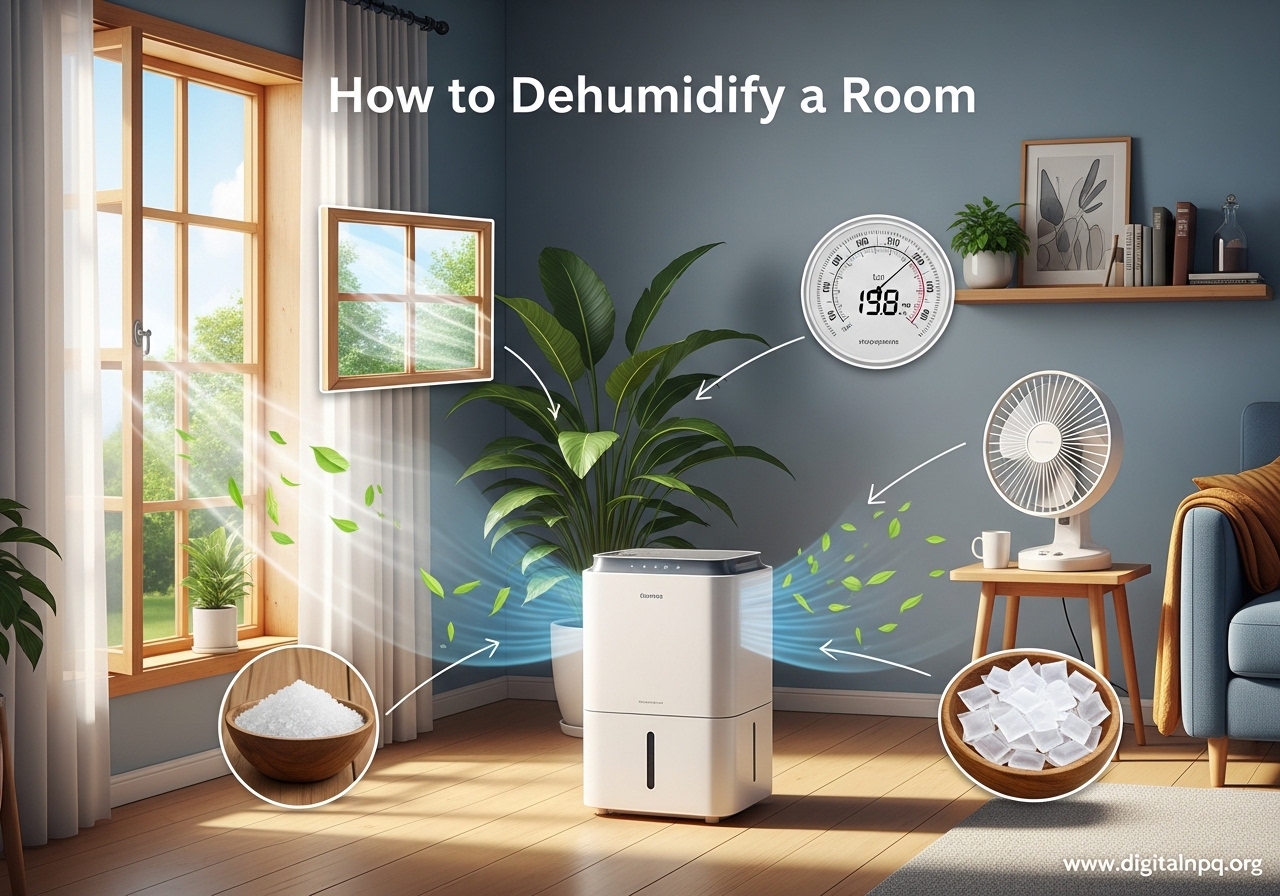
If you have ever walked into a room and immediately felt that heavy, sticky air pressing against your skin, you already know the problem. Excess humidity turns a comfortable living space into a breeding ground for mold, dust mites, and that persistent musty smell no amount of air freshener can mask. Learning how to dehumidify a room is one of the most practical skills any homeowner or renter can pick up, and it does not always require buying expensive equipment.
In this guide, I will walk you through every method I have researched and tested, from free natural solutions to electric dehumidifiers. You will learn how to measure your indoor humidity, which rooms need the most attention, and how to keep moisture from coming back. Whether you are dealing with a damp basement, a foggy bathroom, or a bedroom that feels like a sauna, this article has you covered.
Signs Your Room Has Too Much Humidity
Before you start pulling moisture out of the air, it helps to confirm that excess humidity is actually your problem. The signs are usually obvious once you know what to look for.
Condensation on your windows is the most visible clue. If you wake up to water droplets running down the glass every morning, your indoor humidity is too high. This is especially common in bedrooms and bathrooms during colder months when the temperature difference between indoor and outdoor air causes water vapor to condense on cold surfaces.
Musty or earthy odors are another dead giveaway. That damp smell lurking in corners, closets, or behind furniture means mold or mildew is already growing somewhere nearby. Trust your nose on this one. If a room smells different from the rest of your home, there is probably a moisture problem hiding somewhere.
Look for dark spots on walls, ceilings, or around window frames. These mold patches can start as tiny specks but spread quickly in humid conditions, especially on drywall, grout, and painted surfaces. Peeling wallpaper, bubbling paint, and warping wood floors or furniture are also red flags that moisture is wreaking havoc on your home materials.
If your allergies seem worse indoors than outdoors, high humidity could be feeding dust mite populations and mold spores. Both thrive when relative humidity sits above 50%. And if your laundry takes two or three days to dry on a rack indoors, the air in your home is already saturated with water vapor and cannot absorb any more.
Ideal Humidity Levels for Your Home
The EPA recommends keeping indoor relative humidity between 30% and 50%. This range strikes the right balance between comfort, health, and protecting your home from moisture damage. It is low enough to discourage mold growth and dust mite reproduction, but high enough to prevent dry skin and static electricity.
Anything above 60% relative humidity creates conditions where mold thrives, dust mites multiply rapidly, and wood starts to warp. Anything below 30% can cause dry skin, irritated sinuses, sore throats, and static electricity buildup that can even damage electronics.
The easiest way to know where you stand is to buy a hygrometer, a small and inexpensive device that measures relative humidity. You can find basic digital hygrometers for under fifteen dollars at most hardware stores or online. Place it in the room you are concerned about and check it at different times of day. Humidity levels fluctuate based on weather, cooking, showering, and heating or cooling cycles.
Different rooms have slightly different ideal ranges. Bathrooms and kitchens naturally run higher during use, briefly spiking to 60% or more after a hot shower or while boiling pasta. The key is making sure humidity drops back to the 30-50% range within an hour or two after those activities stop. Basements should stay consistently below 50%, and crawl spaces below 60%, according to building science guidelines.
Where Does Indoor Humidity Come From?
Understanding the sources of moisture in your home makes it much easier to fight back. Indoor humidity comes from a combination of external factors and daily activities.
Weather and climate play the biggest external role. In humid regions, warm outdoor air holds large amounts of water vapor that seeps into your home through open windows, doors, and even through porous building materials. During rainy periods, ground moisture rises through basement floors and crawlspace walls.
Daily activities add surprising amounts of moisture. A typical family of four produces between 4 and 6 liters of water vapor per day just from breathing and perspiring. Cooking adds another 2 to 3 liters, especially when boiling or simmering. A single hot shower releases about half a liter of moisture into the air. Drying a load of laundry indoors can add 2 to 3 liters as the water evaporates from wet fabric.
Other sources include indoor plants, aquariums, unvented gas heaters, and plumbing leaks. Even something as simple as a dripping faucet under the sink contributes humidity over time. If you live in an older home without a proper damp-proof course, ground moisture can wick up through the walls from the soil below.
How to Dehumidify a Room: 9 Proven Methods
Here are the most effective ways to reduce humidity in any room, ordered roughly from simplest to most involved. For the best results, combine several methods rather than relying on just one.
1. Improve Ventilation
The single fastest way to lower indoor humidity is to exchange humid indoor air with drier outdoor air. Open windows on opposite sides of your home to create cross-ventilation, which pulls stale, moisture-laden air out and draws fresher air through.
This works best when the outdoor humidity is lower than indoor humidity. On a dry, breezy day, even 15 to 30 minutes of open windows can make a noticeable difference. Obviously, this strategy does not work well on rainy or extremely humid days, and it is less effective in humid climates where outdoor air holds as much moisture as indoor air.
2. Use Exhaust Fans
Your bathroom and kitchen exhaust fans are specifically designed to remove moisture at the source. Run the bathroom fan during every shower and for at least 30 minutes afterward. In the kitchen, turn on the range hood fan whenever you are boiling water, simmering soups, or washing dishes by hand.
Make sure your exhaust fans actually vent to the outside of your home, not just into the attic or between walls. A fan that recirculates moist air is not doing you any favors. If you rent and cannot modify the ducting, a portable fan aimed at an open window can serve a similar purpose. The key is moving humid air out, not just stirring it around.
3. Run an Electric Dehumidifier
When natural methods are not enough, an electric dehumidifier is the most effective tool available. These units draw in humid air, cool it to condense the water vapor, collect the water in a tank or drain hose, and release drier air back into the room. Most models can extract between 20 and 70 pints of water per day depending on their capacity.
For most rooms, a 30-pint dehumidifier handles spaces up to about 1,500 square feet. Larger or very damp spaces like basements may need a 50-pint unit. Look for models with a built-in humidistat so you can set your target humidity and let the machine cycle on and off automatically. Continuous drainage via a hose connection saves you from emptying the tank every day, which is especially useful for basements and other spaces you do not check daily.
4. Use Baking Soda as a Moisture Absorber
Baking soda is one of the simplest DIY moisture absorbers. Place an open box or a wide bowl of baking soda in a small, enclosed space like a closet, cabinet, or small bathroom. The powder naturally absorbs moisture from the surrounding air over time.
This method is slow and works best in small, confined areas rather than open rooms. You will need to replace or stir the baking soda every few weeks as it becomes saturated. It is not going to solve a serious humidity problem on its own, but it helps in tight spots and costs almost nothing to try.
5. Try Calcium Chloride Crystals
Calcium chloride is a more powerful desiccant than baking soda and is the active ingredient in many commercial moisture absorber products like DampRid. You can buy it in bulk at hardware stores or online at a fraction of the cost of branded products.
Fill a container with calcium chloride crystals and place it in a damp area. The crystals attract and absorb moisture from the air, eventually dissolving into a brine solution that you pour out. This method works well in small rooms, closets, RVs, and boats. It is faster and more effective than baking soda, though you need to check and empty the container regularly, especially during very humid periods.
6. Get Moisture-Absorbing Houseplants
Certain houseplants naturally absorb moisture from the air through a process called transpiration. While no single plant will dehumidify an entire room, a collection of the right plants can help take the edge off moderate humidity while also improving indoor air quality.
The best options include peace lilies, Boston ferns, English ivy, spider plants, and tillandsia (air plants). Peace lilies are particularly effective because they thrive in humid conditions and absorb moisture through both their leaves and roots. Boston ferns are another strong choice that naturally grows in damp, forested environments. A cluster of five to eight plants in a moderately sized room can make a small but measurable contribution to lower humidity.
Keep in mind that houseplants are a supplementary strategy, not a primary solution. They work best alongside other methods, and you need to avoid overwatering them since soggy soil actually adds humidity back into the air.
7. Use Your Air Conditioner
Air conditioners naturally dehumidify as a byproduct of how they work. The cooling coils inside an AC unit condense water vapor from the air, and that water drains away through a condensate line. If you already have central air or a window unit running, you are getting some dehumidification for free.
For better humidity control, set your AC fan speed to low rather than high. Slower air movement across the coils gives the system more time to pull moisture out of the air. Some newer AC units also have a dedicated dehumidify or dry mode that prioritizes moisture removal over temperature cooling. This mode runs the compressor and fan at different speeds to maximize water extraction without overcooling the room.
8. Fix Leaks and Eliminate Water Sources
Dehumidifying a room is an uphill battle if water is constantly entering from somewhere. Check for leaky pipes under sinks, around toilets, and near water heaters. Inspect your roof and windows for water stains that indicate slow leaks. Make sure your gutters and downspouts direct water away from your foundation rather than pooling near the base of your walls.
Ground moisture seeping through basement floors and walls is another common and overlooked source. If your basement or crawl space has a dirt floor, covering it with a heavy plastic vapor barrier can dramatically reduce the amount of moisture entering your home from below. Even concrete floors in older basements allow moisture through, and a concrete sealer or epoxy coating can help block it.
9. Dry Clothes Outside or Use a Vented Dryer
Hanging wet laundry on indoor drying racks is one of the fastest ways to pump gallons of water into your home air. A single load of wet laundry can release 2 to 3 liters of moisture as it dries. If you must dry clothes indoors, do it in a well-ventilated room with a fan and an open window, or better yet, use a tumble dryer vented to the outside.
If you live in an apartment without outdoor drying space, a condenser dryer or heat pump dryer captures the moisture internally rather than releasing it into the room. This is a worthwhile investment if indoor drying is a regular habit. Heat pump dryers cost more upfront but use significantly less energy than traditional vented dryers, which helps offset the initial expense over time.
How to Dehumidify a Room Without a Dehumidifier
Not everyone wants to buy an electric dehumidifier, and in many situations, you can bring humidity down without one. The key is combining several free or low-cost methods at the same time and staying consistent with them.
Start with ventilation. Open windows when outdoor air is drier than indoor air, and use fans to keep air moving throughout your home. Stagnant air lets moisture settle on surfaces, which is exactly what causes condensation and mold growth. A small desk fan or box fan placed to circulate air across a room can make a real difference in preventing damp spots from forming.
Set up DIY moisture absorbers in problem areas. Baking soda works for small enclosed spaces. Calcium chloride crystals are more powerful and can handle small rooms or closets. Rock salt is another option that some people report success with, though it is less effective than calcium chloride. Place your absorbers in the dampest spots, like near windows with condensation, in closet corners, or behind furniture against exterior walls.
Change your daily habits. Take shorter showers, ideally under 10 minutes, keep the bathroom door closed while showering, and run the exhaust fan for at least 30 minutes after. Cover pots while cooking to trap steam, and always use the range hood fan. Stop drying clothes indoors if you can avoid it. These behavioral changes cost nothing and can reduce your indoor humidity by 10 to 15 percentage points over time.
Add a few moisture-absorbing houseplants like peace lilies and Boston ferns. They will not solve a serious problem alone, but every bit helps when you are layering multiple strategies. Group them in the dampest rooms for the most benefit.
Finally, address any water leaks or moisture sources. Even a slow drip under a sink adds humidity to the air over time. Fixing the source is always more effective than trying to remove moisture after it has already entered the room. A quick check of all visible pipes, connections, and appliance hoses takes about 15 minutes and can reveal problems you did not know existed.
Room-Specific Dehumidification Tips
Different rooms have different humidity sources, and the best approach depends on where the moisture is coming from. Here is a room-by-room breakdown with targeted strategies.
Bathroom
Bathrooms are usually the most humid rooms in any home. Every hot shower sends large amounts of water vapor into the air, easily pushing humidity above 70% within minutes. Your first line of defense is the exhaust fan. Run it during every shower and keep it going for 30 minutes after you finish. If your bathroom does not have a fan, a portable fan aimed at the slightly open window works as a substitute.
Keep the bathroom door closed while showering to prevent moisture from spreading to the rest of your home. After showering, squeegee or wipe down the walls and glass to remove standing water before it evaporates back into the air. Taking shorter showers, ideally under 10 minutes, also makes a real difference. Some people have reported success keeping a small container of calcium chloride crystals on the bathroom counter to absorb residual moisture between showers.
Kitchen
Cooking, boiling water, running the dishwasher, and washing dishes all add moisture to kitchen air. A rolling boil on the stove can add over a liter of water to the air per hour. Turn on your range hood fan before you start cooking and leave it running for 15 minutes after you finish. Cover pots and pans with lids whenever possible to trap steam before it escapes into the room.
Check that your range hood actually vents outdoors rather than recirculating air through a charcoal filter. If it only recirculates, it is not removing any moisture at all. A window fan pulling air out is a simple workaround. Also check for plumbing leaks under the kitchen sink, which are easy to miss since the cabinet door stays closed most of the time.
Bedroom
Bedrooms accumulate humidity overnight from breathing and perspiration. Two people sleeping in a closed bedroom can produce over a liter of moisture during an eight-hour sleep. This is why bedroom windows often have condensation in the morning, especially during colder months when the glass temperature drops below the dew point of the indoor air.
Keep bedroom doors slightly open at night to allow air circulation, and leave closet doors open during the day so trapped moisture can escape. Use breathable cotton or linen bedding rather than synthetic materials that trap heat and moisture against your skin. If condensation is a recurring problem, keeping a small window cracked at night can help, especially in cooler weather when the outdoor air is dry.
Basement
Basements face humidity from two directions: moisture seeping through foundation walls and floors from the surrounding soil, and humid indoor air settling downward because cool air sinks. This makes basements the most challenging rooms to dehumidify and also the rooms where high humidity causes the most damage.
Start by sealing any visible cracks in the foundation and applying waterproof sealant to basement walls. A vapor barrier on the floor helps block ground moisture. If you have a sump pump, make sure it is working properly and that the discharge line directs water well away from your foundation. Most basements eventually need an electric dehumidifier rated for the square footage, ideally one with continuous drainage so you are not constantly emptying the tank. Aim for a unit rated at 50 pints or more for basements larger than 1,000 square feet.
Common Mistakes to Avoid When Dehumidifying
Even with the right methods, certain mistakes can undermine your efforts or even make the problem worse. Knowing what not to do is just as important as knowing what works.
Over-dehumidifying is a real issue. Running a dehumidifier nonstop without checking the actual humidity level can push your indoor air below 30%, which causes dry skin, cracked lips, static shocks, and can damage wooden furniture and musical instruments. Always use a hygrometer to monitor levels and set your dehumidifier’s humidistat to stay within the 30-50% range.
Placing your dehumidifier in the wrong spot reduces its effectiveness dramatically. Keep it at least 6 inches away from walls and furniture so air can circulate freely around the unit. Place it in the center of the room or near the most concentrated moisture source, not in a corner where air movement is limited. Closing the doors and windows in the room you are dehumidifying also helps, since an open dehumidifier trying to dry the whole house works much less efficiently.
Forgetting to empty the water tank is probably the most common mistake. A full tank means the dehumidifier stops working until you empty it, and humidity starts climbing again immediately. If you find yourself forgetting, switch to continuous drainage with a hose, or set a daily phone reminder until emptying the tank becomes a habit.
Ignoring the root cause of your moisture problem is the biggest long-term mistake. A dehumidifier manages symptoms, but fixing a leaky pipe, improving drainage around your foundation, or installing proper ventilation addresses the source. Without fixing the source, you will be running that dehumidifier forever and paying for the electricity to do it.
Finally, closing all windows and doors tight without any ventilation traps moisture inside. Some airflow is necessary even when you are trying to control humidity. The goal is controlled ventilation, not a sealed box. Running an exhaust fan or cracking a window periodically gives moist air a path out.
Frequently Asked Questions
How can I dehumidify my room naturally?
Open windows when outdoor air is drier than indoor air to create cross-ventilation. Place baking soda or calcium chloride crystals in open containers around the room to absorb moisture. Add houseplants like peace lilies and Boston ferns that naturally pull humidity from the air. Run exhaust fans in the bathroom and kitchen, take shorter showers, and avoid drying clothes indoors. Combining several of these methods together gives the best results without using any electricity.
What pulls moisture out of a room?
Electric dehumidifiers are the most effective option, pulling gallons of water from the air each day. Calcium chloride crystals are the strongest DIY absorber, drawing moisture until they dissolve into a liquid brine. Baking soda absorbs moisture more slowly but works well in small enclosed spaces. Air conditioners also remove humidity as a natural byproduct of cooling. Good ventilation with exhaust fans and open windows exchanges humid indoor air for drier outdoor air.
Is 70% humidity too high for a bedroom?
Yes, 70% humidity is well above the EPA recommended range of 30-50%. At 70%, mold grows readily, dust mites thrive, and condensation forms on windows and walls. Sleep quality also suffers because high humidity prevents sweat from evaporating, making you feel hot and uncomfortable. If your bedroom reads 70% on a hygrometer, start ventilating immediately and consider running a dehumidifier to bring it down to a healthy level.
Does salt act as a dehumidifier?
Salt does absorb some moisture from the air because it is hygroscopic, meaning it attracts water molecules. Rock salt in particular can pull moisture from a small enclosed space like a closet or cabinet. However, salt is much less effective than calcium chloride or an electric dehumidifier. It works slowly and only in very small areas. For anything beyond a tiny closet, you will need stronger methods.
How do you dehumidify a room quickly?
Open windows on opposite sides of the room for cross-ventilation. Run exhaust fans in nearby bathrooms and the kitchen. Turn on your air conditioner, which removes moisture as it cools. Place a fan near an open window to push humid air out. If you have a dehumidifier, set it to its highest setting and close the windows so it only processes the indoor air. For a bathroom after a shower, wipe down wet surfaces immediately to prevent evaporation.
How do you dehumidify a room in winter?
Winter humidity is tricky because cold air holds less moisture, but heating that cold air indoors can create condensation problems. Run exhaust fans more frequently. Keep indoor temperature consistent rather than letting it drop and spike. Use a dehumidifier set to 40-50% humidity. Vent your tumble dryer outside. Wipe condensation off windows each morning before it evaporates back into the air. Avoid drying clothes on indoor racks during winter months.
Do air purifiers help with humidity?
Most standard air purifiers do not remove moisture from the air. They filter particles like dust, pollen, and pet dander but do not affect water vapor levels. Some combination units include a dehumidification function, but a standard air purifier alone will not lower your room’s humidity. You need a dedicated dehumidifier or the natural ventilation and absorption methods covered in this guide.
Conclusion
Learning how to dehumidify a room is really about understanding where the moisture comes from and using the right combination of methods to deal with it. Start simple: open windows, run your exhaust fans, and pick up a hygrometer to see where your humidity actually stands. Add DIY absorbers like calcium chloride or baking soda in small problem areas.
If those steps are not enough, an electric dehumidifier is a reliable investment that handles the heavy lifting. Just remember to fix the root cause, whether that is a leak, poor ventilation, or daily habits like indoor clothes drying, so you are not fighting the same battle month after month. Address the source first, then manage the remaining humidity with the tools and methods that fit your situation.
Keep your humidity in that sweet spot of 30-50%, and your home will feel more comfortable, smell fresher, and stay free of mold and moisture damage for years to come.