
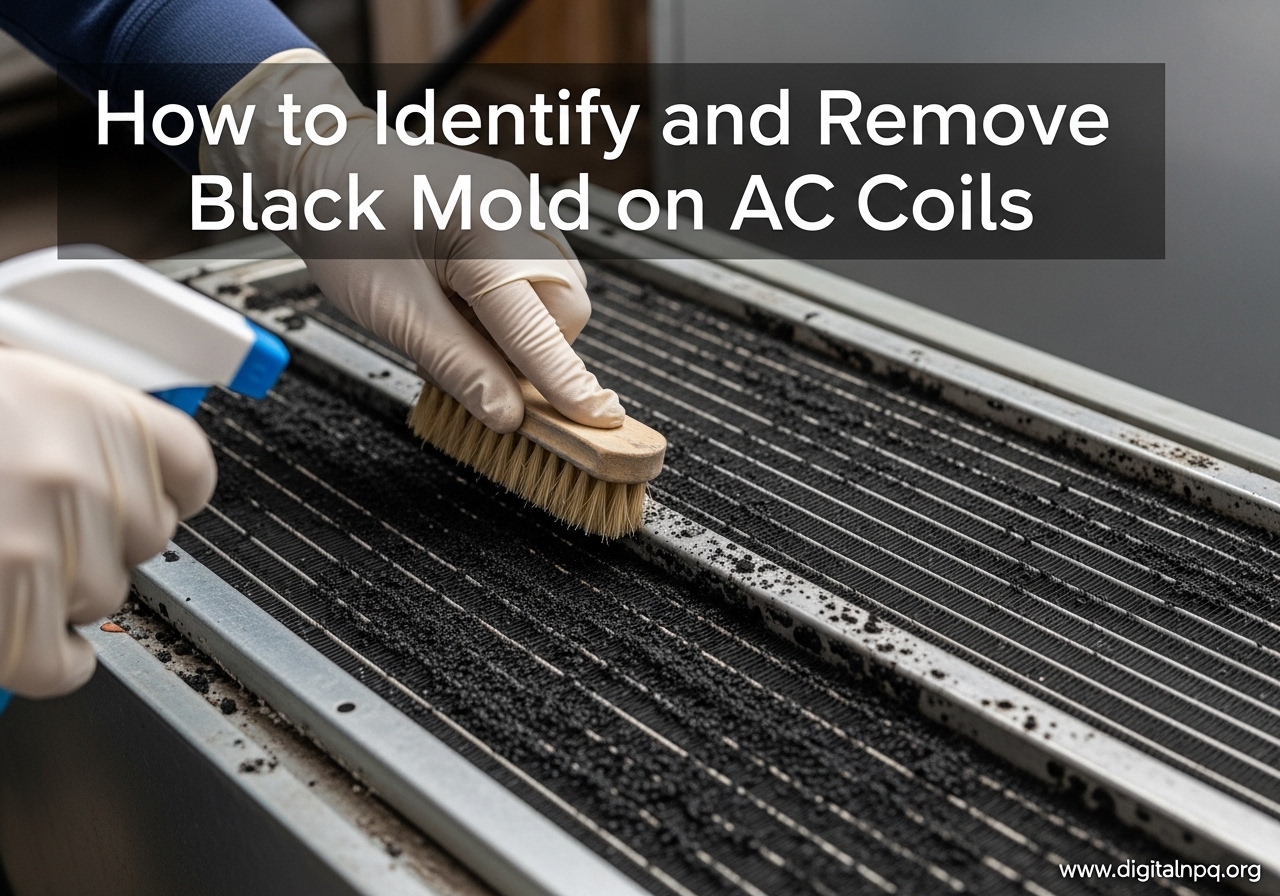
Black mold on AC coils is a fungal growth triggered by excess moisture and dust circulating inside your HVAC system. It typically appears on evaporator coils and inside drain pans where condensation and organic matter combine. If you notice a musty smell every time your air conditioner kicks on, mold could be spreading through your ductwork and into every room of your home.
In this guide, I will walk you through exactly how to identify black mold on AC coils, why it forms, and how to remove it safely. Our team has researched the most common causes, health risks, and cleaning methods that actually work in 2026. You will also learn when it is smarter to call a professional instead of handling it yourself.
By the end, you will have a clear action plan to protect your indoor air quality and keep your system running efficiently.
What Is Black Mold on AC Coils?
Black mold on AC coils is most often Stachybotrys chartarum, a fungus that thrives in damp, dark environments with plenty of organic material to feed on. Your evaporator coil is cold, wet, and coated with dust particles that act like a buffet for mold spores. Once those spores settle, they can germinate within 24 to 48 hours under the right conditions.
The growth usually starts as tiny black or dark green spots. Over time, it can spread into fuzzy patches that cover the aluminum fins and copper tubing of the coil. You may also see similar buildup inside the condensate drain pan or along the nearby insulation.
Not every dark spot on an AC coil is mold. Dust and dirt can collect there too, especially if you skip filter changes. The difference is texture and moisture.
Mold tends to feel slimy or fuzzy and produces a distinct musty odor. Dirt usually looks dry and powdery, and it will not trigger allergy symptoms when the blower fan turns on.
How to Spot Black Mold on AC Coils
Detection starts with your senses. The most common early warning is a persistent musty odor that gets stronger when the air conditioner runs. If you walk into a room and immediately notice a damp, earthy smell, the evaporator coil inside your air handler is a prime suspect.
Visible Signs of Mold Growth
Shut off power to your HVAC unit and remove the access panel to inspect the coil. Look for black, green, or white fuzzy patches on the metal fins. You might also see standing water in the drain pan with a ring of discoloration around the edges.
In severe cases, mold can creep onto the blower fan blades and nearby insulation. Window units and mini-split systems are also vulnerable. On a window AC, pull out the filter and shine a flashlight into the coil compartment.
If you see dark spots that wipe away as a smudge, you are likely dealing with active mold rather than simple dust.
Physical Symptoms in Your Home
Mold spores travel through your ductwork and into the air you breathe. Occupants may start sneezing, coughing, or experiencing itchy eyes whenever the system runs. Some people report headaches, fatigue, or a feeling of being heavy headed after extended exposure.
If symptoms disappear when you leave the house and return the moment you walk back inside, your AC system is almost certainly the source. This pattern is one of the most reliable indicators of HVAC-related mold.
Quick Inspection Checklist
Run through this checklist before you open any panels. First, note whether the musty smell is strongest near supply vents. Second, check if your allergy symptoms flare up only at home.
Third, look at your filter. A clogged filter restricts airflow and allows dust to settle on the coil. Fourth, inspect the drain line. A blocked line causes water to back up into the pan, which accelerates mold growth.
Fifth, check the age of your unit. Older systems with worn seals are more prone to moisture buildup. Keeping these five points in mind will help you decide whether the problem is likely mold or another issue entirely.
Why Mold Grows on Your AC Coils
Air conditioners are designed to remove humidity from indoor air, but that same process creates the perfect environment for mold. Warm, humid air passes over the cold evaporator coil, and water condenses on the metal surfaces.
Under normal conditions, that water drips into the drain pan and exits through the condensate line. When something interrupts that process, mold follows quickly.
Excess Moisture and Condensation
The coil temperature stays below the dew point of the surrounding air, which means moisture is constantly forming. In high-humidity regions, the coil can stay wet for hours after the compressor shuts off. If the blower fan stops immediately, the trapped moisture has no chance to evaporate.
Modern systems often include a post-cooling fan delay to help dry the coil, but older units lack this feature. That extra moisture is a direct invitation for spores to take hold.
Dust and Organic Debris
Your evaporator coil acts like an air filter when the main filter is dirty or missing. Dust particles, skin cells, pollen, and pet dander stick to the wet fins. This layer of organic debris is exactly what mold spores need to establish a colony.
A clean coil with a fresh filter is far less likely to develop a mold problem. The filter is your first line of defense, and neglecting it is the fastest way to feed mold.
Clogged Condensate Drain Lines
The condensate drain line carries water away from the pan. Over time, algae, sludge, and mineral deposits can clog that narrow PVC pipe. When water cannot escape, the drain pan overflows or remains full.
The constant puddle keeps the surrounding area saturated, and mold spreads from the pan onto the coil and insulation. Pouring a cup of white vinegar down the drain line every few months is a simple habit that prevents most clogs.
Undersized or Oversized Equipment
An oversized AC unit cools the house too quickly and shuts off before it has removed enough humidity. The coil stays cold and wet, and short cycling prevents the system from ever reaching a steady dry state.
An undersized unit runs continuously but struggles to drop the humidity low enough to inhibit mold growth. Proper sizing during installation is one of the best long-term defenses against moldy coils.
Health Risks and Dangers
Mold in your air conditioner is not just a maintenance issue. It is a direct threat to indoor air quality because the blower fan actively distributes spores through your living space. The EPA and medical organizations consistently link indoor mold exposure to a range of respiratory and allergic health effects.
Respiratory and Allergy Symptoms
Inhaling mold spores can irritate the nose, throat, and lungs. Common reactions include sneezing, runny nose, red eyes, and skin rashes. People with asthma may experience more frequent attacks or increased severity.
In one survey of HVAC-related complaints, occupants reported that symptoms improved within 72 hours of professional coil cleaning and mold remediation. That fast turnaround shows how directly the AC system affects your health.
First Signs of Black Mold Exposure
The first signs of exposure often mimic seasonal allergies. You may notice a scratchy throat, dry cough, or sinus congestion that does not improve with typical antihistamines. Some individuals report fatigue, difficulty concentrating, or persistent headaches.
Children, the elderly, and anyone with compromised immunity are at higher risk for more severe reactions. Not everyone responds the same way. One family member might have severe symptoms while another feels completely fine.
The variation depends on individual sensitivity, duration of exposure, and the concentration of spores in the air. If multiple people in your household feel ill only at home, mold in the HVAC system is a strong possibility.
Long-Term Health Concerns
Chronic exposure to high mold levels can lead to more serious conditions. Persistent inflammation in the airways may develop into chronic bronchitis or hypersensitivity pneumonitis. Some studies suggest that long-term exposure to certain mold species can trigger immune system dysfunction.
While black mold is rarely lethal in typical residential concentrations, it can make daily life miserable for sensitive individuals. Addressing the problem early prevents these long-term complications.
When to See a Doctor
Consult a physician if you experience breathing difficulty, chest tightness, or fever alongside mold symptoms. A doctor can perform allergy testing and recommend appropriate treatment. Documenting your symptoms and noting when they flare up can also help you determine whether the AC system is the true source.
How to Remove Black Mold from AC Coils
Cleaning mold from AC coils is a task you can handle yourself if the contamination is mild and limited to accessible areas. Safety is the priority. You should never scrub mold without proper protection, and you should never mix cleaning chemicals that could create toxic fumes.
Safety Gear You Need
Before you open the unit, gather an N95 respirator mask, rubber gloves, and safety goggles. Long sleeves and pants protect your skin from both mold and cleaning chemicals. Keep the work area ventilated by opening windows and running exhaust fans.
If you are sensitive to mold, consider having a less reactive person perform the cleaning, or hire a professional from the start. Protecting your health is more important than saving a few dollars.
Step-by-Step Cleaning Process
Step 1 is always turning off power to the HVAC system at the breaker. Step 2 is removing the access panel to expose the evaporator coil and drain pan.
Step 3 is mixing your cleaning solution. A common and effective mixture is one part white vinegar to one part warm water. For heavier growth, some homeowners use a commercial foaming no-rinse coil cleaner.
Step 4 is applying the solution with a spray bottle and letting it sit for 10 to 15 minutes. Step 5 is gently scrubbing the coil with a soft brush or cloth to avoid bending the delicate fins.
Step 6 is rinsing the coil with clean water if you used a non-no-rinse product. Step 7 is wiping out the drain pan and flushing the drain line with vinegar or diluted bleach.
Step 8 is allowing everything to dry completely before restoring power. Step 9 is replacing the air filter with a high-quality pleated filter rated MERV 8 or higher. Step 10 is running the system and monitoring for any lingering odors.
What Kills Mold on AC Coils?
White vinegar kills roughly 82 percent of mold species and is safe for most coil materials. Hydrogen peroxide at 3 percent concentration is another effective option that breaks down into water and oxygen. Commercial HVAC mold cleaners are formulated specifically for coils and usually require no rinsing.
Bleach can kill mold on hard surfaces, but it produces strong fumes and can corrode aluminum if left too long. Never mix bleach with ammonia or vinegar, as the resulting gases are dangerous. Stick with one cleaner at a time to stay safe.
What to Avoid
Do not use a pressure washer or garden hose on an indoor coil. The high pressure will bend the fins and reduce heat transfer efficiency. Do not skip the drying phase. A wet coil will simply grow mold again within days.
Do not ignore the drain pan. Even if the coil looks clean, a moldy pan will recontaminate the entire area the next time condensation forms. Every component in the air handler needs attention.
DIY vs Professional Cleaning
One of the most common questions homeowners ask is whether they can clean the mold themselves or if they need to hire an HVAC technician. The answer depends on the severity of the contamination, your comfort level with the equipment, and whether the mold has spread beyond the coil.
When DIY Cleaning Makes Sense
DIY cleaning is appropriate when the mold covers less than roughly 10 square feet, the unit is easy to access, and you have no underlying health conditions. If the mold is only on the coil and drain pan, and the rest of the ductwork appears clean, a careful homeowner can usually handle the job.
You will save money and gain a better understanding of how your system works. The main cost is cleaning supplies and a new filter, which typically totals under $50. That makes DIY an attractive option for minor issues.
When to Hire a Professional
Professional help is the smarter choice when mold has spread into the ductwork, the blower compartment, or the insulation. HVAC technicians have specialized vacuums, antimicrobial foggers, and inspection cameras that reach places you cannot see.
They also know how to disassemble components without damaging refrigerant lines or electrical connections. The peace of mind that comes from a thorough, certified cleaning is often worth the cost.
Cost Expectations
A professional evaporator coil cleaning usually costs between $150 and $400 depending on your location and system type. If the mold has spread into the ducts, expect duct cleaning to add another $300 to $700. Full mold remediation by an environmental specialist can range from $500 to $2,000 for severe residential cases.
Compare that to the cost of a new air handler, which can run $2,000 to $5,000 installed, and professional cleaning starts to look like a bargain. Spending a few hundred dollars now can prevent a much larger expense later.
When to Call a Professional
There are specific red flags that should push you straight to the phone instead of the toolbox. If you open the air handler and see mold covering the blower motor, wiring, or insulation, the problem is beyond a simple wipe-down. If you have already cleaned the coil and the musty smell returns within a week, the contamination is deeper in the system.
People with asthma, COPD, or immune disorders should avoid exposure entirely. Pregnant women and infants are also in higher-risk groups. In these cases, a professional can seal and contain the affected area while the occupants stay elsewhere.
A reputable HVAC company will inspect the entire system, clean the coils with commercial-grade foaming agents, treat the drain pan with antimicrobial coatings, and test airflow afterward to confirm the problem is solved. Another reason to call a pro is suspected refrigerant leaks. If the coil is damaged or corroded, no amount of cleaning will fix the underlying issue.
The technician can pressure-test the system and recommend repair or replacement if the coil is compromised. This is especially important in units older than 12 to 15 years, where corrosion is more common.
How to Prevent Mold on AC Coils
Prevention is far easier than remediation. A few consistent habits can keep your evaporator coil clean and dry year after year. The goal is simple: reduce moisture, limit dust, and maintain airflow.
Change Your Air Filter on Schedule
A clogged filter is the single biggest contributor to dirty coils. When airflow drops, dust settles on the wet metal instead of being trapped in the filter. Check your filter monthly and replace it at least every 90 days. Homes with pets or smokers may need a fresh filter every 30 to 60 days.
Use a pleated filter with a MERV rating between 8 and 13 for the best balance of dust capture and airflow. Cheap fiberglass filters do not stop the fine particles that feed mold.
Keep the Condensate Line Clear
Pour a half cup of white vinegar down the condensate drain line every three months. Vinegar kills algae and mildew before they can form a clog. If you live in a humid climate, consider installing a float switch that shuts off the AC if the drain pan backs up.
The temporary inconvenience of a stopped unit is far better than water damage and mold growth. This simple maintenance step takes less than five minutes.
Control Indoor Humidity
Keep indoor relative humidity between 30 and 50 percent. A standalone hygrometer costs under $15 and lets you track conditions room by room. If your AC alone cannot drop humidity low enough, a whole-house dehumidifier integrated into the ductwork is a powerful solution.
In humid regions like the Gulf Coast or Southeast, this upgrade is often essential for mold prevention. You will feel cooler at higher thermostat settings because dry air feels more comfortable.
Install a UV Germicidal Light
UV-C lights mounted inside the air handler shine directly on the evaporator coil and drain pan. The ultraviolet radiation destroys mold DNA and prevents new colonies from forming. These lights are a proven technology used in hospitals and commercial buildings.
Residential UV light systems typically cost $200 to $500 installed and need a new bulb every 12 to 18 months. They do not remove existing mold, so you must clean the coil first, but they are excellent for long-term prevention.
Schedule Annual Maintenance
Professional HVAC maintenance once a year includes coil inspection, cleaning, and refrigerant level checks. The technician will also inspect the drain pan and blower assembly for early signs of mold. Catching a problem in early spring is much cheaper than dealing with a full-blown infestation in summer.
Think of it as a physical exam for your air conditioner. The small annual fee pays for itself in efficiency, longevity, and health.
Consider a Fan Delay Relay
If your system does not already have one, a fan delay relay keeps the blower running for a few minutes after the compressor shuts off. This extra airflow helps dry the coil surface, which reduces the window of time mold has to germinate.
Most modern thermostats and control boards include this feature, but older systems can be retrofitted for under $100. It is a minor upgrade with a major impact on moisture control.
Frequently Asked Questions
Is black mold from the AC toxic?
Black mold from the AC can cause allergic reactions, respiratory irritation, and asthma flare-ups in sensitive individuals. While it is rarely deadly in typical residential concentrations, prolonged exposure degrades indoor air quality and can lead to chronic health issues. Infants, elderly people, and those with weakened immune systems face the highest risk.
What is the black stuff on my AC coils?
The black stuff on your AC coils is usually mold or mildew that feeds on dust and moisture. It can also be a mix of dirt and oxidation, but a fuzzy or slimy texture with a musty odor confirms fungal growth. The most common species found on HVAC coils is Stachybotrys chartarum, though other molds can appear dark as well.
What are the first signs of black mold poisoning?
The first signs of black mold exposure include sneezing, runny nose, itchy eyes, scratchy throat, and dry cough. Some people experience headaches, fatigue, or difficulty concentrating. These symptoms often worsen when the air conditioner runs and improve when you leave the building.
What kills mold on AC coils?
White vinegar, hydrogen peroxide, and commercial foaming coil cleaners all kill mold on AC coils. Vinegar kills about 82 percent of mold species and is safe for aluminum fins. Hydrogen peroxide breaks down into harmless water and oxygen. Bleach works on hard surfaces but can corrode metal and produces strong fumes that require ventilation.
Can I clean mold on AC coils myself?
You can clean mold on AC coils yourself if the contamination is limited to a small area, the unit is accessible, and you have no serious health conditions. Wear an N95 mask, rubber gloves, and goggles. Use vinegar or a commercial coil cleaner, and always turn off power before opening the unit. Call a professional if the mold covers the blower, insulation, or ductwork.
How much does it cost to remove mold from an AC unit?
Professional evaporator coil cleaning costs between $150 and $400. If duct cleaning is needed, expect an additional $300 to $700. Severe mold remediation by a certified specialist can range from $500 to $2,000 depending on the extent of contamination and your location. DIY cleaning costs under $50 in supplies.
Does vinegar kill mold in an air conditioner?
Yes, white vinegar kills most mold species found in air conditioners. Mix equal parts vinegar and warm water, spray the coil and drain pan, let it sit for 10 to 15 minutes, then scrub gently. Vinegar is safe for aluminum and copper coils, and it leaves no toxic residue behind.
How do I prevent mold from growing on AC coils again?
Prevent mold by changing your air filter regularly, keeping the condensate drain line clear, maintaining indoor humidity between 30 and 50 percent, and scheduling annual HVAC maintenance. Installing a UV germicidal light inside the air handler is also a proven long-term defense against mold regrowth.
Conclusion
Black mold on AC coils is a serious problem that affects both your health and your HVAC system’s efficiency. The combination of cold metal, moisture, and dust creates an ideal breeding ground for mold that can spread spores throughout your entire home. Recognizing the warning signs early, understanding the causes, and taking prompt action can save you from expensive repairs and prolonged health issues.
Start with a simple inspection. Check your filter, look inside the drain pan, and pay attention to any musty odors when the system runs. If the mold is mild, clean it yourself with vinegar or a commercial foaming cleaner and proper safety gear. If the contamination is extensive or you have health vulnerabilities, call a certified HVAC professional to handle the remediation safely.
Prevention is the best strategy. Keep your filters fresh, your drain lines clear, and your humidity under control. Consider adding a UV light and scheduling annual maintenance to catch problems before they turn into black mold nightmares. Your lungs and your energy bill will both thank you for the effort.