
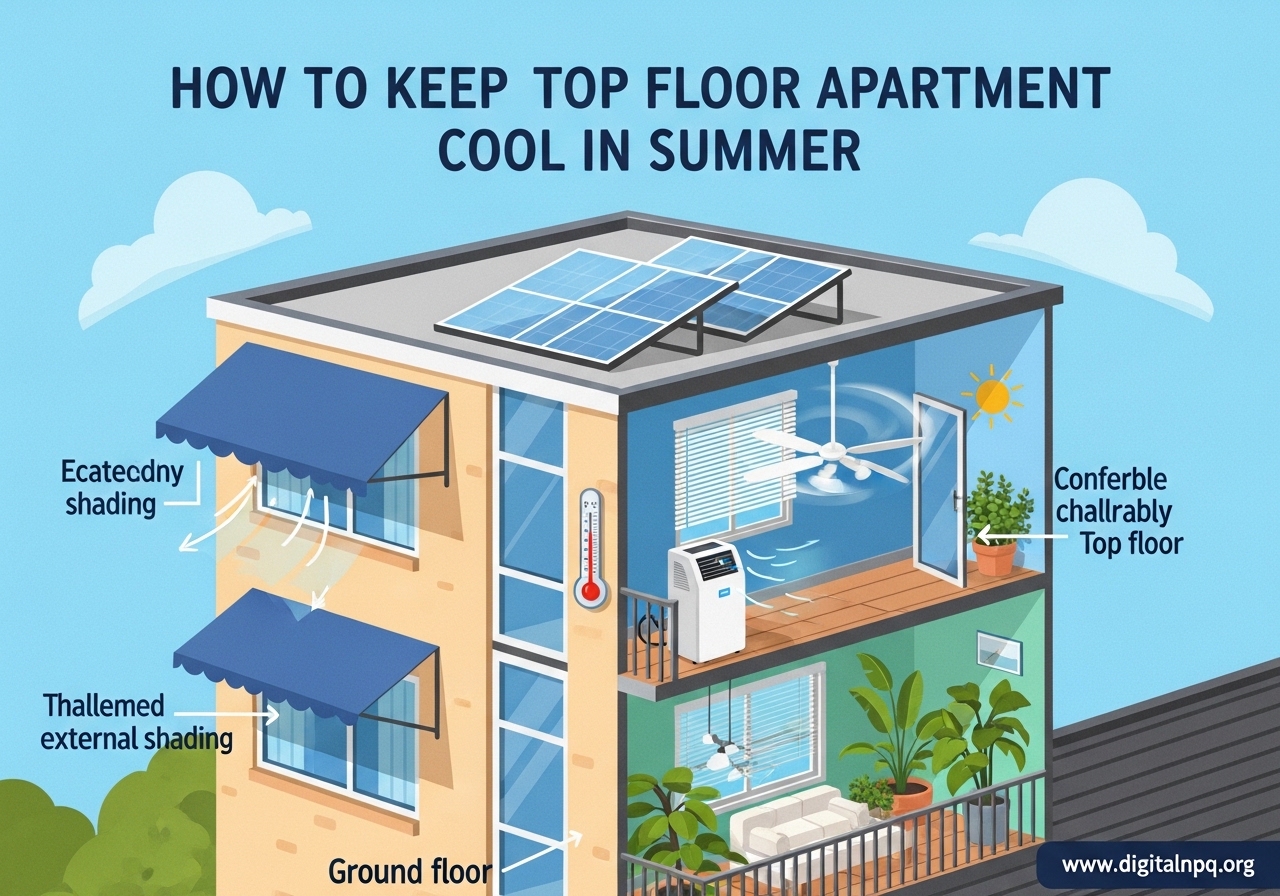
If you live on the top floor, you already know the drill. By mid-afternoon your apartment feels like an oven, the walls radiate warmth well past midnight, and sleeping feels impossible. Learning how to keep a top floor apartment cool in summer is not just about comfort — it affects your sleep quality, your energy bill, and honestly, your sanity after a long hot day.
The most effective approach combines blocking solar heat at the windows, creating strong air circulation with fans, and flushing hot air out at night when temperatures drop. Use thermal curtains or reflective window film during peak sun hours, set ceiling fans to spin counter-clockwise, and open windows after dark to purge accumulated heat. These three strategies alone can drop your indoor temperature by 8 to 12 degrees.
I have lived in top floor apartments for the past six years across three different buildings. I have tested every cooling trick I could find — some worked brilliantly, others were a waste of effort. This guide pulls together the methods that genuinely made a measurable difference, backed by what actually works in real apartments, not just theory.
Why Your Top Floor Apartment Gets So Hot
Understanding why your apartment turns into a sauna is the first step to fixing it. Top floor units face a unique set of problems that lower floors simply do not deal with.
The biggest culprit is your roof. Throughout the day, the roof absorbs solar radiation and heats up significantly. That heat transfers directly through the ceiling into your living space. In buildings with flat roofs — which describes most apartment complexes — there is no attic space to buffer the heat. It comes straight to you.
Heat also rises naturally through a building. Warm air from lower floors and common areas moves upward and accumulates in your unit. Add in windows that let solar radiation pour in, and your apartment is essentially a greenhouse collecting heat from above and from the sides.
Older buildings make everything worse. If your building went up before modern insulation standards, the walls and ceiling have minimal R-value, meaning heat passes through them almost freely. The thermal mass of the building materials also stores heat during the day and slowly releases it at night, which is exactly why your apartment stays hot long after the sun goes down.
I measured this in my last apartment. On a 92-degree day, my living room hit 89 degrees by 4 PM — and it was still 84 degrees at 11 PM. The thermal mass of the roof and walls was releasing stored heat well into the night, making it one of the most frustrating problems to solve without a clear strategy.
How to Keep Top Floor Apartment Cool in Summer: Quick Action Guide
If you need solutions right now and do not have time to read the full breakdown, here are the seven most effective things you can do today. I ranked these by impact based on what moved the needle most in my own apartments.
1. Close all curtains and blinds before the sun hits your windows. This single habit prevents more heat gain than anything else on this list. Do it every morning without fail.
2. Set your ceiling fan to spin counter-clockwise. Stand beneath it and you should feel a direct breeze pushing down. This creates a wind-chill effect that makes the room feel 4 to 8 degrees cooler.
3. Open windows only when the outside temperature drops below your indoor temperature. Check a thermometer or weather app. Opening windows too early actually pulls more heat inside.
4. Place a box fan in a window facing outward to push hot air out. Open a window on the opposite side of the apartment to create cross-ventilation that pulls cooler air through.
5. Stop using your oven and stove during the hottest part of the day. Every time you cook on the stovetop or bake something, you are adding thousands of BTUs of heat directly into your living space.
6. Run exhaust fans in the bathroom and kitchen whenever possible. These pull warm, humid air out of your apartment and are an underrated tool for reducing overall temperature.
7. Freeze water bottles and place them in front of a fan. This creates a simple DIY air conditioner. As the ice melts, the fan blows cooler air across the room. It is not magic, but on a 90-degree night it can make sleeping bearable.
Block Heat at the Windows
Your windows are responsible for up to 30 percent of unwanted heat gain in your apartment. Tackling this first gives you the biggest single improvement for the least amount of effort.
Thermal Curtains and Blackout Blinds
Thermal curtains are the single most recommended solution across every apartment living forum I have read, and for good reason. Quality thermal curtains with a white or reflective backing can reduce solar heat gain through windows by 33 percent or more. Blackout blinds work similarly but block light entirely, which is great for bedrooms but less ideal for living spaces where you want some natural light.
The key detail most people miss: close them before the sun hits the window, not after the room is already warm. In my east-facing bedroom, I close the curtains the night before so they are already blocking the early morning sun when I wake up. This alone kept my bedroom 7 degrees cooler compared to the days I forgot.
Reflective Window Film
If you want something less obtrusive than curtains, reflective window film is an excellent option. These adhesive films stick directly to the glass and reflect solar radiation before it enters the room. They reduce heat gain by about 70 percent on treated windows while still letting visible light through.
The installation is straightforward — you clean the glass, spray it with soapy water, apply the film, and squeegee out the bubbles. Most renters I have talked to were able to install it in about 20 minutes per window. The film can also be removed when you move out without damaging the glass, making it completely renter-friendly.
Timing Matters More Than You Think
Even if you have great window treatments, using them at the wrong time defeats the purpose. Keep curtains and blinds closed during peak sun hours for each window’s exposure. East-facing windows need coverage in the morning, west-facing in the afternoon, and south-facing windows need coverage most of the day. Open them only when direct sun is no longer hitting the glass.
Master Air Circulation and Fan Placement
Even without air conditioning, you can dramatically improve comfort by moving air strategically through your apartment. The goal is to replace hot indoor air with cooler air from outside, and to create air movement that helps your body cool itself through evaporation.
Cross-Ventilation Setup
Cross-ventilation works by creating a path for air to flow through your apartment. Place a box fan in one window pointing outward to exhaust hot air. Then open a window on the opposite side of the apartment to allow cooler air to be pulled in. The larger the temperature difference between inside and outside, the faster this works.
If your apartment has windows on only one side, you can still create airflow. Open two windows on that side and place a fan in one blowing outward. The negative pressure will draw air in through the other window. It is less effective than true cross-ventilation, but it still moves the air around.
Ceiling Fan Direction and Speed
In summer, your ceiling fan should rotate counter-clockwise when you look up at it. This pushes air downward, creating a breeze that evaporates moisture from your skin and makes you feel cooler. Run it on the highest speed setting for maximum effect. In my experience, this alone can make a room feel 4 to 8 degrees cooler without changing the actual temperature at all.
If you are unsure which direction your fan is spinning, stand directly underneath it. If you feel a breeze pushing down on you, it is set correctly for summer. If not, look for a small switch on the motor housing and flip it.
Exhaust Fans Are Underrated
Your bathroom and kitchen exhaust fans pull hot, humid air out of your apartment and vent it outside. Most people only use them during and after a shower or while cooking, but running them continuously during hot weather helps remove accumulated heat. They use very little electricity, so leaving them on for hours is a low-cost strategy that adds up over the course of a day.
Nighttime Cooling Routine That Actually Works
Nighttime is when top floor apartments become truly miserable. The roof has been absorbing heat all day, and now that thermal energy is radiating downward into your living space just as you are trying to sleep. Here is the routine I developed over several summers that consistently brought my bedroom from unbearable to comfortable enough for sleep.
Step 1: Open Everything When the Temperature Drops
Check the outdoor temperature on your phone or a weather app. When it drops below your current indoor temperature, open every window in the apartment wide. This is your window of opportunity, and the earlier you catch it the better. In most climates, this happens between 8 PM and 10 PM during summer.
Step 2: Set Up the Exhaust Fan
Place your strongest box fan in the warmest room’s window, blowing outward. This creates negative pressure that pulls cooler outside air through the entire apartment. If you have a second fan, point it inward from a window on the opposite side to force even more cool air through.
Step 3: Cool Your Bedding
Apartment Therapy popularized the frozen sheets trick, and it genuinely helps. Put your bedsheets in a plastic bag and stick them in the freezer for 15 to 20 minutes before bed. When you get under them, the cold fabric provides immediate relief and helps lower your body temperature enough to fall asleep before the sheets warm up.
Step 4: Use Personal Cooling
Place frozen water bottles or ice packs on your pulse points — wrists, neck, and the backs of your knees. Your blood cools as it passes these points and circulates that cooler blood throughout your body. It sounds simple, but it is remarkably effective for falling asleep in a hot room.
Control Humidity for Real Comfort
Temperature is only half the equation. Humidity makes hot air feel much worse because your body cannot cool itself through sweating when the air is already saturated with moisture. A room at 82 degrees with 60 percent humidity feels significantly more oppressive than a room at 88 degrees with 30 percent humidity.
Running a dehumidifier can transform your comfort level without changing the temperature at all. Target humidity levels between 30 and 50 percent for the best balance of comfort and health. In my current apartment, running a dehumidifier in the bedroom dropped the perceived temperature by about 5 degrees even though the actual thermostat reading barely moved.
Also be mindful of moisture-generating activities. Long hot showers, boiling water on the stove, and drying clothes indoors all add humidity to your apartment. Run exhaust fans during these activities, and consider taking shorter, cooler showers during heat waves.
Eliminate Internal Heat Sources
Your apartment generates its own heat from appliances, electronics, and lighting. Reducing these internal heat sources is a simple way to lower the overall temperature without spending money on cooling equipment.
The oven is the worst offender. Baking or roasting at 400 degrees pumps an enormous amount of heat into your kitchen and the surrounding rooms. During summer, switch to cold meals, use a microwave, take cooking outside with a grill, or use a slow cooker that generates far less ambient heat.
Incandescent light bulbs are another hidden heat source. A traditional 60-watt bulb converts about 90 percent of its energy into heat, not light. Swapping every bulb in your apartment for LED equivalents reduces both heat output and electricity usage. I replaced 12 bulbs in my last apartment and the living room temperature dropped about 2 degrees — a small but free improvement.
Electronics like TVs, gaming consoles, and desktop computers also generate significant heat. Turn them off when not in use rather than leaving them in standby mode, and avoid placing them in your bedroom if possible.
DIY Cooling Hacks With Household Items
Not every solution requires a shopping trip. These DIY methods use items you probably already have at home, and they can provide real relief when you are in a pinch.
The Bowl of Ice Fan Trick
Fill a large bowl with ice cubes and place it directly in front of a table fan. As the ice melts, the fan blows the cold air radiating off the ice across the room. It will not cool an entire apartment, but aimed at your bed or desk it creates a noticeable cold zone. Frozen water bottles work the same way and last longer before melting.
Damp Sheet Over a Window
If the air outside is dry, hanging a damp sheet over an open window can cool incoming air through evaporation. This is essentially a low-tech evaporative cooler. The air passing through the wet fabric picks up moisture and drops in temperature. It works best in arid climates and less so in already-humid regions.
Plants as Natural Coolers
Indoor plants release moisture into the air through transpiration, which can slightly lower surrounding temperatures. Large-leafed plants like ficus, peace lilies, and snake plants are particularly effective. Grouping several plants near windows creates a small cooling zone. It is not going to replace your fan strategy, but it contributes a degree or two of cooling while improving air quality.
Your Daily Cooling Schedule
This is the section I wish I had when I first moved into a top floor unit. Having a plan for each part of the day makes a massive difference compared to reacting to the heat randomly. Here is the schedule I follow during peak summer.
6 AM to 9 AM — Morning Prevention. Check the weather forecast. Close all curtains and blinds on east- and south-facing windows before the sun hits them. If the outdoor temperature dropped significantly overnight, keep windows open for the first hour to flush any remaining warm air. Close them before the outside temperature starts rising.
9 AM to 4 PM — Hold the Line. Keep every curtain and blind closed. Run ceiling fans on high in rooms you are using. Avoid cooking with the oven or stove. Keep exhaust fans running in the kitchen and bathroom. This is about preventing heat from entering and removing whatever does get in.
4 PM to 8 PM — Transition Period. The sun is lower now but west-facing windows still get direct exposure. Keep those curtains closed. Start checking outdoor temperature every 30 minutes. The moment it drops below your indoor reading, begin opening windows.
8 PM to 6 AM — Night Purge. Open every window wide. Set up your box fan exhaust system. Run all ceiling fans on high. This is when you flush out the day’s accumulated heat. The more temperature differential between inside and outside, the faster the cooling. If mornings are cool in your area, leave windows open until you close them again at 6 AM.
Following this schedule consistently, I was able to keep my apartment between 76 and 80 degrees on most summer days without running the AC at all. On the hottest days above 95 degrees outside, I still needed supplemental cooling — but the schedule kept things manageable rather than miserable.
FAQ
How do I keep my top floor apartment cool in the summer?
Close curtains and blinds before sunlight hits your windows, set ceiling fans to counter-clockwise, use reflective window film, create cross-ventilation with box fans, open windows at night when the temperature drops, and run exhaust fans to pull hot air out. Combining window blocking, fan circulation, and nighttime air flushing is the most effective approach.
Why is my top floor apartment so hot at night?
The roof absorbs solar heat all day and that thermal energy radiates downward into your apartment after sunset. Building materials with high thermal mass store heat and release it slowly over several hours. Poor insulation in older buildings allows this radiant heat to pass through the ceiling with little resistance, keeping indoor temperatures elevated well past midnight.
How to cool an upstairs apartment with no AC?
Block all direct sunlight with thermal curtains or reflective window film. Place a box fan in a window blowing outward to exhaust hot air, and open a window on the opposite side for cross-ventilation. Run ceiling fans counter-clockwise on high speed. Avoid using the oven or heat-generating appliances. Open all windows at night when temperatures drop to flush out accumulated heat. Freeze water bottles and place them in front of fans for a DIY cooling effect.
Do thermal curtains really work for keeping apartments cool?
Yes, quality thermal curtains with a reflective or white backing can reduce solar heat gain through windows by up to 33 percent. They work by reflecting radiant heat before it enters the room while also providing insulation against heat transfer through the glass. The key is closing them before the sun hits the window, not after the room is already warm.
Which way should a ceiling fan turn in summer?
In summer, set your ceiling fan to spin counter-clockwise when viewed from below. This pushes air downward, creating a direct breeze that evaporates moisture from your skin and makes the room feel 4 to 8 degrees cooler. If you stand underneath the fan and feel air blowing down on you, it is set correctly for summer use.
Should I keep my windows open or closed during the day in summer?
Keep windows closed during the day if the outside temperature is higher than your indoor temperature. Opening windows when it is hot outside pulls warm air into your apartment and traps it. Only open windows when the outdoor temperature drops below your indoor temperature, which typically happens in the evening or at night.
How can I cool my apartment for sleeping at night?
Open all windows once the outdoor temperature drops below your indoor temperature. Set up a box fan blowing outward in one window to exhaust hot air. Put your bedsheets in the freezer for 15 minutes before bed. Place ice packs or frozen water bottles on pulse points like your wrists and neck. Run a ceiling fan or bedside fan pointed at your bed for continuous air movement.
What is the cheapest way to cool a top floor apartment?
Close your curtains before the sun hits your windows — this costs nothing and prevents the most heat gain. Reverse your ceiling fan direction to counter-clockwise. Open windows at night and use a box fan to push hot air out. Freeze water bottles and place them in front of fans. Switch to LED bulbs to reduce indoor heat. Avoid cooking with the oven during the day. These steps cost little to nothing and together can lower indoor temperatures by 8 to 12 degrees.
Conclusion
Keeping a top floor apartment cool in summer comes down to three core principles: block heat from entering, move air strategically, and flush hot air out when the temperature drops. No single method solves the problem on its own, but combining these strategies creates a system that works reliably even on the hottest days.
Start with the free and easy wins today. Close your curtains before the sun hits the windows. Flip your ceiling fan to counter-clockwise. Stop using the oven during the day. Open your windows tonight when the temperature drops and set up a fan to push the hot air out. These steps alone can drop your indoor temperature by 8 to 12 degrees without spending a single dollar.
From there, invest in thermal curtains or reflective window film for the windows that get the most sun exposure. Add a box fan for cross-ventilation. Consider a dehumidifier if humidity is a problem in your building. Each addition builds on the last, and you will notice the difference in how your apartment feels by the second day.
Learning how to keep a top floor apartment cool in summer is not about finding one magic solution. It is about building a daily routine that prevents heat from building up and systematically removes it when it does. Stick with the schedule, be consistent, and your top floor will go from unbearable to genuinely livable — even in the peak of 2026 summer heat.