
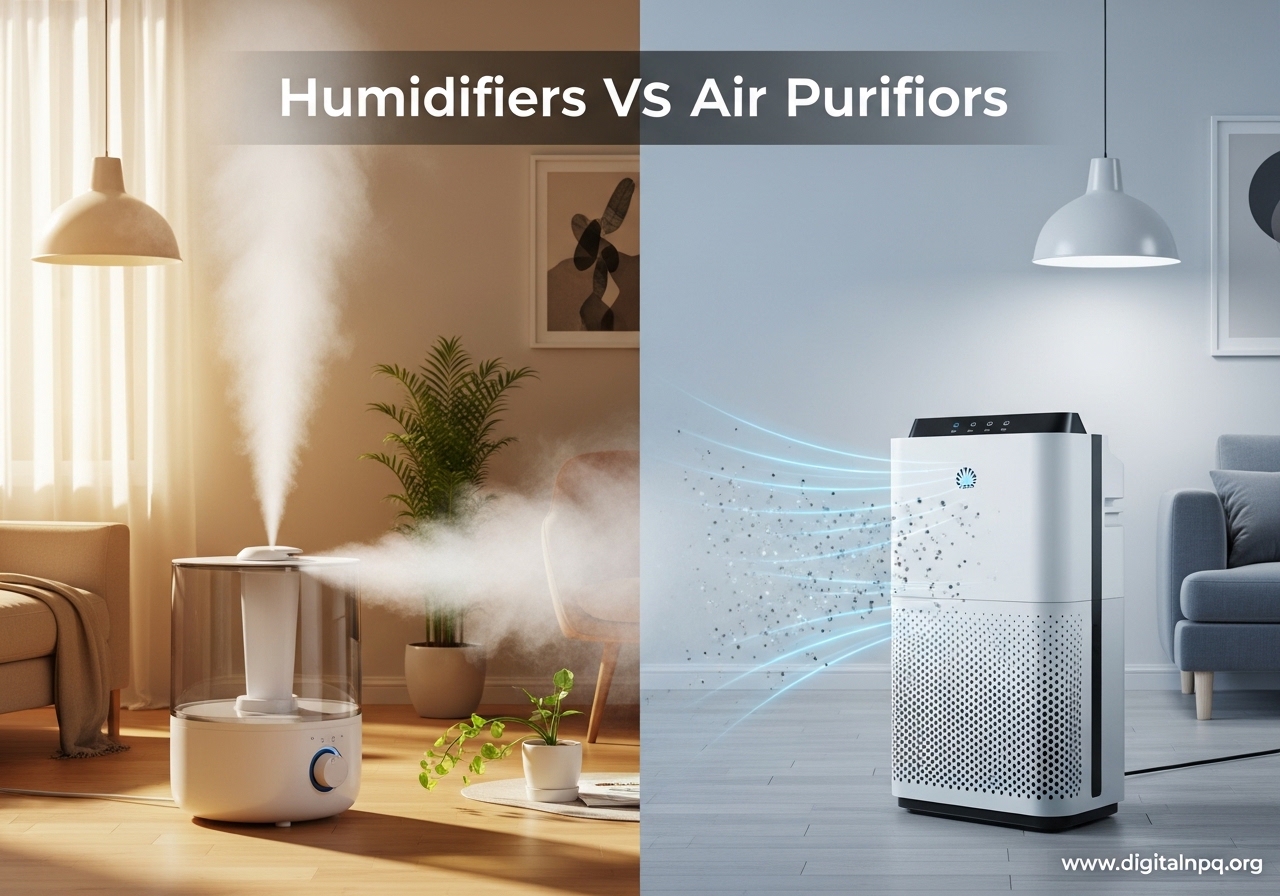
If you have been staring at two different air treatment devices wondering which one your home actually needs, you are not alone. The humidifiers vs air purifiers question comes up constantly in online forums, doctor offices, and hardware stores. I have spent months researching both devices, reading through hundreds of user experiences, and testing them in my own home to figure out what really matters.
Here is the short version: an air purifier cleans the air by removing pollutants, allergens, and airborne particles. A humidifier adds moisture to dry air. They solve completely different problems, and understanding that difference is the first step to breathing easier at home.
In this guide, I will walk you through exactly how each device works, which health conditions they help with, and how to decide which one your household needs. I will also cover whether you can use both at the same time (spoiler: yes, but there are some tricks to getting it right).
Humidifiers vs Air Purifiers: The Quick Answer
An air purifier pulls indoor air through a series of filters to trap dust, pollen, pet dander, mold spores, smoke particles, and other pollutants. It then releases cleaner air back into the room. Air purifiers do not add any moisture to the air.
- Best for: Allergies, asthma, pet owners, smoke removal, general air quality improvement
- Downsides: Requires regular filter replacements, does not help with dry air or dry skin
A humidifier releases water vapor or steam into the air to increase the moisture level in a room. It does not filter or clean the air in any way.
- Best for: Dry skin, sinus congestion, dry throat, cracked lips, static electricity, dry climates, winter heating season
- Downsides: Can promote mold growth if overused, requires regular cleaning to prevent bacteria buildup, does not remove allergens
The simplest way to think about it: if your air is dirty, get an air purifier. If your air is dry, get a humidifier. If it is both dirty and dry, you might need both.
What Is an Air Purifier and How Does It Work?
An air purifier is a device designed to remove airborne contaminants from indoor air. Think of it as a cleaning machine for the invisible stuff floating around your home. It does not change the humidity level or temperature of your air. Its only job is to capture and remove pollutants.
Most air purifiers work through a straightforward process. A fan pulls air from the room into the unit. That air passes through one or more filters that trap particles of various sizes. The cleaned air is then pushed back out into the room. This cycle runs continuously, gradually reducing the concentration of airborne pollutants.
HEPA Filtration: The Gold Standard
The most important component in most quality air purifiers is the HEPA filter. HEPA stands for High-Efficiency Particulate Air, and these filters are rated to capture at least 99.97% of particles that are 0.3 microns in diameter. For context, a human hair is about 70 microns thick, so HEPA filters catch particles that are roughly 230 times smaller than a strand of hair.
This matters because the most harmful airborne particles, including pollen, dust mites, pet dander, and mold spores, fall right in the size range that HEPA filters capture most effectively. When I started using a HEPA air purifier in my bedroom, I noticed significantly less dust collecting on surfaces within the first week.
Activated Carbon Filters
Many air purifiers also include an activated carbon filter, either as a separate layer or integrated into the main filter. Activated carbon is excellent at trapping gases, volatile organic compounds (VOCs), and odors. If you cook frequently, have pets, or live near a busy road, the carbon layer helps remove smells and chemical vapors that HEPA filters cannot catch.
CADR Rating: What It Means
When comparing air purifiers, you will often see a CADR number. CADR stands for Clean Air Delivery Rate, and it measures how quickly an air purifier can clean the air in a specific room size. A higher CADR means faster air cleaning. The Association of Home Appliance Manufacturers (AHAM) tests and certifies these ratings, so they are a reliable benchmark when you are comparing different models.
For a standard bedroom (around 200 square feet), look for a CADR of at least 100. For larger living spaces (400 to 500 square feet), you want a CADR of 200 or higher.
What Is a Humidifier and How Does It Work?
A humidifier is a device that adds moisture to indoor air by releasing water vapor or steam. If you have ever woken up with a painfully dry throat, cracked lips, or static shocks every time you touch a doorknob, low humidity is likely the culprit. A humidifier directly addresses these problems by raising the moisture level in your indoor air.
The ideal indoor relative humidity level falls between 30% and 50%. Anything below 30% is considered too dry and can cause physical discomfort, damage wood furniture, and even make you more susceptible to respiratory infections. Anything above 50% creates a welcoming environment for mold, dust mites, and bacteria.
Types of Humidifiers
Not all humidifiers work the same way. Here are the main types you will find:
Evaporative humidifiers use a fan to blow air through a wet wick or filter. The air absorbs moisture naturally and carries it into the room. These are self-regulating to some extent because when humidity is already high, less water evaporates from the wick. They tend to be affordable and widely available.
Ultrasonic humidifiers use high-frequency sound vibrations to create a fine water mist that is released into the air. They are very quiet and energy efficient. However, if you use tap water instead of distilled water, they can release a fine white mineral dust into the room. Several users on forums have reported this issue, and I have seen it firsthand. Always use distilled or demineralized water with ultrasonic models.
Warm mist humidifiers boil water to create steam, which is then cooled slightly before being released. The boiling process kills bacteria and mold in the water, which is a plus for cleanliness. The downside is that they use more electricity and can be a burn hazard around children.
Cool mist humidifiers release room-temperature moisture. They are generally safer around kids and pets since there is no hot water or heating element involved. Both evaporative and ultrasonic models fall into this category.
Why Humidity Matters More Than You Think
I used to think humidity was just a comfort issue until I learned that dry air actually dries out the mucous membranes in your nose and throat. Those membranes are your body’s first line of defense against viruses and bacteria. When they dry out, you become more vulnerable to infections. Research has shown that maintaining humidity between 40% and 60% can help reduce the survival rate of airborne viruses.
Dry air also pulls moisture from your skin, leading to itching, cracking, and worsening of conditions like eczema. It can dry out wooden furniture, cause paint to peel, and create annoying static electricity buildup. A humidifier addresses all of these problems at the source.
Key Differences Between Humidifiers and Air Purifiers
While both devices are designed to improve your indoor air quality, they approach the problem from completely different angles. Understanding the core differences helps you pick the right tool for your specific situation.
Function
An air purifier removes things from the air. A humidifier adds something to the air. That is the fundamental distinction. Air purifiers pull air through filters to trap particles and gases. Humidifiers release water vapor to increase moisture levels. They are solving opposite sides of the indoor air quality equation.
Health Impact
Air purifiers directly reduce your exposure to airborne allergens, dust, smoke, and pollutants. If you sneeze indoors, wake up congested, or have asthma triggered by dust or pet dander, an air purifier targets those triggers.
Humidifiers relieve symptoms caused by dry air, including dry skin, chapped lips, sore throat, sinus congestion, and nosebleeds. They do not remove allergens, but they can soothe irritated airways that have been dried out.
Maintenance Requirements
Air purifiers are relatively low maintenance. You need to replace the filters every 6 to 12 months depending on usage and air quality, and occasionally vacuum the pre-filter. That is about it.
Humidifiers require more frequent attention. You should clean them at least once a week to prevent mold and bacteria growth. The water tank needs to be emptied and refilled daily if you are using it continuously. Minerals from tap water can build up over time, so regular descaling is necessary. This is one of the biggest complaints I see from users in forums, and it is a valid concern.
Energy Usage and Cost
Here is an area where most competitors do not provide specifics. Air purifiers typically consume between 20 and 100 watts of power depending on fan speed and room size. Running one on medium speed for 24 hours costs roughly 5 to 15 cents per day in electricity, depending on your local rates.
Evaporative and ultrasonic humidifiers use similar amounts of energy, typically 15 to 40 watts. Warm mist humidifiers are the exception, consuming 200 to 400 watts because they need to boil water. If energy efficiency matters to you, stick with evaporative or ultrasonic models.
In terms of ongoing costs, air purifiers require replacement filters that range from moderate to expensive depending on the brand. Humidifiers have lower replacement costs for wicks and filters but require a steady supply of distilled water if you want to avoid mineral buildup.
Health Benefits: Which Device Helps With What?
This is where the humidifiers vs air purifiers comparison gets practical. Different health conditions respond to different treatments, and picking the wrong device will not help you feel better. Let me break down the most common health concerns and match each one to the right device.
Allergies (Pollen, Dust Mites, Pet Dander)
Winner: Air purifier. If seasonal allergies or year-round allergies are your main problem, an air purifier with a HEPA filter is your best bet. It physically removes the allergens from the air before they reach your respiratory system. Dust mites, pollen, and pet dander are all large enough particles that HEPA filters capture them effectively.
A humidifier will not remove allergens from your air. In fact, if you push humidity above 50%, you could actually make dust mite allergies worse because dust mites thrive in humid environments.
Asthma
Winner: Air purifier (primary), humidifier (supportive). Asthma attacks are often triggered by airborne irritants like dust, smoke, pollen, and pet dander. An air purifier removes these triggers from your environment. Many asthma patients on forums report significant improvement after adding a HEPA air purifier to their bedroom.
However, if you live in a dry climate where the air irritates your airways independently of allergens, a humidifier can help soothe that irritation. Some asthma sufferers benefit from using both devices, especially during winter months when indoor heating dries out the air.
Dry Skin and Eczema
Winner: Humidifier. Dry air pulls moisture directly from your skin. If you have eczema, psoriasis, or just generally dry and itchy skin, increasing indoor humidity can provide real relief. Multiple users in eczema support forums report that running a humidifier in their bedroom helped reduce flare-ups and itching, especially during winter.
An air purifier will not directly help with dry skin, though if your eczema is triggered by dust mite allergies (which is common), an air purifier could address the underlying allergic trigger while the humidifier addresses the dryness.
Sinus Congestion and Dry Throat
Winner: Humidifier (primary), air purifier (supportive). When your sinuses are congested and your throat feels scratchy, dry air is usually a contributing factor. Adding moisture to the air helps thin mucus and soothe inflamed nasal passages. Many doctors recommend running a humidifier at night for patients dealing with chronic sinus issues.
That said, if your congestion is caused by allergies, an air purifier removes the allergens that are causing the inflammation in the first place. For chronic sinus sufferers, the combination of both devices often works best.
Cold and Flu Recovery
Winner: Humidifier. While neither device can cure a cold or flu, a humidifier can make you more comfortable by keeping your airways moist. This helps with cough, sore throat, and nasal congestion. Some research suggests that maintaining humidity between 40% and 60% may also help reduce the survival time of airborne viruses.
When to Use a Humidifier vs Air Purifier
Sometimes you just need someone to tell you which device to get. Here are clear signs that point to one or the other.
Signs You Need an Air Purifier
You should consider getting an air purifier if you notice any of these situations in your home:
- You wake up with a stuffy nose, sneezing, or watery eyes on a regular basis
- You can see dust collecting on surfaces within days of cleaning
- You have pets that shed, and pet hair or dander is visible around the house
- You or someone in your household has been diagnosed with asthma or allergies
- You live near a busy road, construction site, or area with frequent air quality warnings
- You notice lingering cooking smells or odors that do not dissipate quickly
- Someone in your home smokes or you deal with wildfire smoke
Signs You Need a Humidifier
You should consider a humidifier if these sound familiar:
- You get static electricity shocks when touching doorknobs or metal surfaces
- Your skin feels tight, itchy, or dry, especially after waking up
- Your lips crack frequently despite using lip balm
- You wake up with a dry throat or nosebleeds during winter
- Wooden furniture or floors in your home are cracking or warping
- You live in a dry climate or run your heating system constantly during winter
- Your hygrometer reads below 30% humidity
Seasonal Guidance
The season you are in often determines which device you need most. During spring and summer, allergens like pollen and mold spores are at their peak, making an air purifier the priority. During fall and winter, indoor heating systems dry out the air significantly, pushing humidity levels well below 30%, which makes a humidifier more immediately useful.
If you live in a humid climate like the southeastern United States, you might never need a humidifier at all. If you live in an arid climate like the Southwest, you might need a humidifier year-round. Your local environment matters more than any general recommendation.
Room-by-Room Recommendations
In the bedroom, I recommend starting with whatever addresses your biggest complaint. If you wake up congested from allergies, put an air purifier there first. If you wake up with a dry throat and cracked skin, start with a humidifier.
In the living room or family room, an air purifier usually makes more sense since these high-traffic spaces collect more dust, pet dander, and cooking odors from adjacent kitchens.
In a baby nursery, both devices can be valuable, which I will cover in more detail in the next section.
Can You Use an Air Purifier and Humidifier Together?
Yes, you can absolutely use both devices at the same time. They do completely different things, so there is no conflict in their core functions. Many people, including myself, run both in the same room during winter when the air is both dry from heating and stuffy from closed windows.
However, there are a few practical considerations to keep in mind when running both devices simultaneously.
Placement Matters
The number one tip from community discussions and my own testing is to place the devices on opposite sides of the room. If you put a humidifier right next to an air purifier, the moisture from the humidifier can interfere with the purifier’s particle sensors. Several users on Reddit have reported that their air purifier’s air quality indicator goes into overdrive whenever the humidifier is running nearby.
This happens because the humidifier is releasing water droplets into the air, and the air purifier’s sensor reads those droplets as particles. It is not harmful, but it can cause your purifier to run at higher speeds unnecessarily. Keeping at least 6 to 10 feet of distance between the two devices usually solves this issue.
Combo Units: Are They Worth It?
You will find products on the market that combine both air purification and humidification into a single unit. The idea is appealing because you only need to buy and maintain one device instead of two. However, forum users who have tried these combo units report mixed results.
The main complaints are that combo units tend to be expensive, do not excel at either function compared to dedicated devices, and create a more complex maintenance routine. When the humidifier component needs cleaning, you have to take apart the entire unit including the air purification system.
If you have limited space or budget and want both functions, a combo unit is worth considering. If you want the best performance from each function, separate devices are the way to go.
Monitoring When Using Both
When running both devices, I strongly recommend getting a hygrometer to monitor humidity levels. It is easy to accidentally push humidity above 50% when running a humidifier in a room that also has limited ventilation. A simple hygrometer costs very little and gives you real-time feedback on whether your humidifier settings are appropriate.
Also, be extra diligent about cleaning the humidifier when you are running it alongside an air purifier. The air purifier will circulate air throughout the room, which means any mold or bacteria from a dirty humidifier tank will be distributed more widely.
Special Considerations: Babies, Pets, and Specific Conditions
Certain situations call for a more targeted approach. Here is what I have found works best for some of the most common scenarios people ask about.
For a Baby Nursery
Pediatricians frequently recommend humidifiers for baby nurseries, especially during winter. Babies have smaller airways that are more susceptible to dryness, and a humidity level around 40% to 50% helps keep their nasal passages comfortable. Cool mist humidifiers are the standard recommendation because they eliminate the burn risk associated with warm mist models.
An air purifier in the nursery can also be beneficial, particularly if you have pets, if the nursery has carpet (which traps dust and allergens), or if anyone in the household smokes. A quiet air purifier with a HEPA filter running on low speed can help keep the air clean without disturbing sleep.
Many parents end up using both in the nursery: the humidifier for moisture and the air purifier for cleanliness. Just keep them on opposite sides of the crib area.
For Pet Owners
If you have pets, an air purifier is almost always the higher priority. Pet dander, hair, and the dust from cat litter are significant airborne allergens that a HEPA filter captures effectively. I have two cats myself, and running an air purifier near the litter box area made a noticeable difference in odor and air quality.
A humidifier can still help if you or your pets suffer from dry skin. Many pet owners report that their dogs and cats experience less dandruff and scratching when indoor humidity is maintained at proper levels. But for air quality purposes, the air purifier does the heavy lifting.
For Eczema Sufferers
Eczema is strongly linked to dry skin, so maintaining proper humidity is critical. A humidifier should be your first investment if eczema is your primary concern. Keep your indoor humidity between 40% and 50%, and run the humidifier in the room where you sleep.
However, some eczema cases are triggered or worsened by dust mite allergies. If your dermatologist or allergist has identified dust mites as a trigger, adding an air purifier with a HEPA filter can help reduce your exposure. The combination of proper humidity and reduced allergen exposure addresses both the symptom and the trigger.
For Immune-Compromised Individuals
If you or someone in your household is undergoing chemotherapy, has COPD, or has a weakened immune system, an air purifier is essential. These individuals are far more susceptible to airborne pathogens, and a HEPA air purifier helps reduce their exposure to bacteria, mold spores, and other contaminants.
Humidification can provide comfort for dry mucous membranes, but the priority should be on clean air. If you add a humidifier, be extremely diligent about cleaning it because a dirty humidifier can actually introduce bacteria into the air, which is the opposite of what you want.
Maintenance and Safety Tips
Neither device is a set-it-and-forget-it solution. Proper maintenance is what keeps them effective and safe. I have seen too many people abandon their devices because they did not maintain them properly and ended up with moldy humidifiers or clogged air purifiers.
Humidifier Maintenance
Clean your humidifier at least once a week. This is non-negotiable. Bacteria and mold can grow in the water tank within just a few days, and running a dirty humidifier means you are spraying those contaminants into the air you breathe.
Use distilled or demineralized water whenever possible. Tap water contains minerals that can leave white dust on your furniture (especially with ultrasonic models) and build up inside the machine over time. If distilled water is not practical, at least use filtered water.
Empty the tank daily if you are not using it. Standing water is a breeding ground for microorganisms. Let the tank dry completely before refilling.
Check humidity levels regularly. If your humidifier does not have a built-in hygrometer, buy a standalone one. Never let indoor humidity exceed 50% because that is when mold growth becomes a real risk.
Air Purifier Maintenance
Replace filters according to the manufacturer’s schedule, which is typically every 6 to 12 months for HEPA filters and every 3 to 6 months for activated carbon filters. Running a purifier with a clogged filter is worse than not running one at all because it cannot effectively clean the air and may even release trapped particles back into circulation.
Vacuum or wash the pre-filter monthly if your model has one. The pre-filter catches larger particles like pet hair and dust bunnies, extending the life of your main HEPA filter.
Keep the air intake and output vents clear. Placing your air purifier in a corner behind furniture significantly reduces its effectiveness. Give it at least a foot of clearance on all sides.
Mold Prevention
Mold is the biggest safety concern with humidifiers, and it is worth addressing directly. Mold thrives in environments above 50% humidity, so monitoring your levels is your first line of defense. If you notice condensation on your windows, that is a sign your indoor humidity is too high.
Regular cleaning prevents mold from growing inside the humidifier itself. If you see pink or black residue in the tank, clean it immediately with a mixture of white vinegar and water. Some manufacturers recommend using hydrogen peroxide for deeper cleaning.
If you are using both devices together, the air purifier can actually help capture mold spores that might be released by an improperly maintained humidifier. But do not rely on this as your primary defense. Clean the humidifier properly and maintain appropriate humidity levels.
FAQ
Is it better to sleep with a humidifier or air purifier?
It depends on your main concern. If allergies or asthma keep you up at night, an air purifier is the better choice because it removes airborne triggers like dust mites and pet dander from your bedroom. If you wake up with a dry throat, cracked lips, or congested sinuses caused by dry air, a humidifier will help more. Many people benefit from running both in the bedroom, placed on opposite sides of the room to avoid sensor interference.
Do air purifiers help with dry air?
No, air purifiers do not add moisture to the air. They only remove pollutants, allergens, and particles. If dry air is your problem, you need a humidifier. Air purifiers and humidifiers address completely different issues: one cleans the air and the other adds moisture to it.
What are the negatives of a humidifier?
The main drawbacks of humidifiers are the maintenance requirements and the risk of mold growth. You need to clean the water tank weekly to prevent bacteria and mold buildup. Using tap water can leave white mineral dust on surfaces, especially with ultrasonic models. If humidity exceeds 50%, you risk promoting mold growth and dust mite proliferation in your home. Warm mist models also use more electricity and pose a burn hazard around children.
Do air purifiers work better than humidifiers?
Neither device is universally better than the other because they solve different problems. Air purifiers are more effective for removing allergens, dust, smoke, and pollutants from the air. Humidifiers are more effective for relieving dry skin, sinus congestion, and throat irritation caused by low humidity. The right choice depends entirely on what issue you are trying to address.
Can a humidifier make allergies worse?
Yes, a humidifier can worsen allergies if it pushes humidity above 50%. Dust mites thrive in humid environments, so excessive moisture can increase dust mite populations. Mold also grows more readily in high humidity. Additionally, a dirty humidifier tank can spray bacteria and mold spores into the air, directly triggering allergic reactions. Keep humidity between 30% and 50% and clean your humidifier weekly to avoid these issues.
What is the best air purifier for COPD?
For COPD patients, the best air purifier is one with a true HEPA filter and an activated carbon layer. The HEPA filter captures fine particles that can irritate compromised lungs, while the activated carbon removes gases and VOCs that can trigger flare-ups. Look for a CADR rating appropriate for the room size where the patient spends the most time, and run it continuously. Always consult with a pulmonologist for device recommendations specific to your condition.
Conclusion
The humidifiers vs air purifiers decision does not have to be complicated once you understand what each device actually does. An air purifier cleans your air by capturing dust, allergens, smoke, and pollutants. A humidifier adds moisture to relieve dry skin, sinus irritation, and static electricity. They are complementary tools, not competing ones.
Start by identifying your biggest indoor air quality problem. Is your air dirty or dry? If it is dirty, start with an air purifier. If it is dry, start with a humidifier. If it is both, which is common during winter in heated homes, get both and place them on opposite sides of the room.
Whichever device you choose, the key is consistency. Run it regularly, maintain it properly, and monitor the results. Your indoor air quality affects how you sleep, how you feel, and how healthy your home environment is. Getting the right device for your specific situation makes a real, noticeable difference.