
The Roku TV ecosystem has evolved dramatically in recent years, transforming from a budget-focused alternative to a legitimate contender in the mainstream television market. What started as a simple partnership between Roku and value-oriented TV manufacturers has blossomed into a diverse lineup of options spanning from ultra-budget basics to premium Mini-LED flagships. Today, you’ll find Roku TV interfaces embedded in televisions from established brands like TCL and Hisense, retailer exclusives like ONN, and even Roku’s own branded television sets that debuted in 2025.
This diversification creates both opportunity and confusion for buyers. On one hand, you have more choices than ever when it comes to finding a Roku TV that fits your budget and performance needs. On the other hand, not all Roku TV brands are created equal when it comes to picture quality, reliability, and long-term value. The Roku interface remains consistent across brands—which is excellent news for anyone familiar with the platform—but the underlying hardware varies significantly between manufacturers and price points.
In 2026, the Roku TV market is dominated by five key players: Roku’s own television lineup (Pro, Plus, and Select Series), TCL (the volume leader with the most extensive Roku TV catalog), Hisense (offering premium features at budget prices), Westinghouse (a value-focused option with new Mini-LED models), and ONN (Walmart’s ultra-budget house brand). Each brand brings different strengths to the table, from TCL’s market-tested reliability and aggressive pricing to Hisense’s willingness to include full-array LED backlights and Dolby Vision at budget price points.
This comprehensive guide examines the Top Roku TV brands available in 2026, analyzing six standout models across the spectrum from premium flagships to budget-friendly everyday performers. We’ll evaluate picture quality, build reliability, smart features, gaming performance, and overall value to help you determine which Roku TV brand deserves your money and which ones you should skip.
Top Roku TV Branda Reviews
1. Roku Pro Series 2025 – Best Premium Roku TV
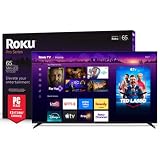
The Roku Pro Series represents the brand’s first true flagship television, and it’s an impressive debut that elevates Roku TV from budget contender to premium performer. At $1,199.99 for the 65-inch model, this Mini-LED QLED television delivers the sort of contrast, brightness, and color performance that previously required stepping up to OLED or Samsung Neo QLED territory. The Mini-LED backlight system creates deep, inky blacks without sacrificing shadow detail, while the QLED color layer produces vibrant, saturated colors that pop in HDR content.
What sets the Pro Series apart from the Plus and Select models is its native 120Hz refresh rate, which makes this an excellent choice for gaming alongside movie watching. The television supports FreeSync Premium Pro, ALLM (Auto Low Latency Mode), and VRR (Variable Refresh Rate), ensuring smooth gameplay whether you’re gaming on a PlayStation 5, Xbox Series X, or gaming PC. Motion handling in movies and sports benefits from the higher refresh rate, with minimal blur in fast-moving scenes.
Roku didn’t skimp on audio either—the Pro Series features side-firing speakers that produce surprisingly room-filling sound with Dolby Atmos support. Customer reviews consistently praise the built-in audio quality, with multiple owners noting it approaches soundbar-level performance. The inclusion of the rechargeable Voice Remote Pro with backlit buttons and a handy finder button (perfect for when it inevitably slips between couch cushions) adds a premium touch that matches the television’s flagship positioning.
Pros:
- Outstanding Mini-LED contrast and brightness performance
- Native 120Hz refresh rate with full suite of gaming features
- Excellent built-in audio with Dolby Atmos and side-firing speakers
- Premium rechargeable remote with backlit buttons and finder
- Roku OS remains the smartest, fastest streaming interface available
Cons:
- Premium $1,199.99 price puts it in competition with established flagship brands
- Some reports of picture overprocessing in dark scenes
- Occasional audio sync issues reported by reviewers
- Heavy at 62.3 lbs, making wall mounting challenging solo
Verdict: The Roku Pro Series is the best Roku TV ever made and a legitimate flagship contender that earns its premium price through genuine performance advantages rather than just brand marketing. It’s the perfect choice for home theater enthusiasts who want Roku’s superior smart platform without sacrificing picture quality, and gamers will appreciate the 120Hz panel with VRR support. If you’re spending over $1,000 on a Roku TV, this is the one to get.
2. Roku Plus Series 2025 – Best Value Roku TV

The Roku Plus Series hits a remarkable sweet spot in 2026‘s television market, offering flagship-level Mini-LED QLED picture quality at a mid-range $599.99 price point. This 65-inch TV earned the highest rating in Roku’s entire lineup (4.6/5 stars from 216 reviews) by delivering exceptional value that shocked even skeptical reviewers. The Mini-LED backlight creates contrast that dramatically outperforms standard LED TVs at this price, while the QLED color layer produces vibrant HDR performance that makes streaming content really pop.
What makes the Plus Series special is Roku’s decision to include a built-in subwoofer alongside Dolby Atmos support, creating a surprisingly robust audio experience that owners consistently praise in reviews. Multiple customers describe the sound quality as “almost soundbar quality,” which is high praise for built-in TV speakers. This audio advantage, combined with the excellent Mini-LED picture, creates a home theater experience that punches well above its weight class.
The Plus Series shares the same fast Roku smart interface as the Pro model, with the helpful Smart Picture Max AI feature that automatically adjusts picture settings based on what you’re watching. Gaming features are present but less robust than the Pro Series—you get VRR (Variable Refresh Rate) and Game Mode, but the panel is limited to 60Hz rather than the Pro’s 120Hz refresh. That’s fine for casual gaming, but serious players should step up to the Pro Series.
Pros:
- Incredible value with Mini-LED QLED picture at $599.99
- Highest-rated Roku TV (4.6/5 stars) with over 200 reviews
- Excellent built-in audio with subwoofer and Dolby Atmos
- Fast, responsive Roku OS with Smart Picture Max AI optimization
- Bright, punchy picture that rivals more expensive televisions
Cons:
- 60Hz panel limits gaming performance compared to 120Hz Pro Series
- Some privacy concerns about always-connected Roku TV (versus Roku stick)
- Remote is non-rechargeable (unlike Pro Series)
- Reports of motion blur in very fast-moving scenes
Verdict: The Roku Plus Series is the best-value Roku TV on the market, offering Mini-LED picture quality and premium audio at a price that undercuts comparable models from TCL and Hisense. If you want excellent HDR performance and great sound without breaking $700, this is your best bet. It earned more 5-star reviews than any other Roku TV for a reason—it delivers flagship performance at a mid-range price.
3. Roku Select Series 2025 – Best Budget Roku TV
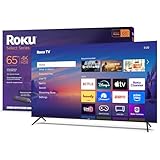
The Roku Select Series proves you don’t need to spend a fortune to get a reliable, feature-packed smart TV in 2026. At $399.99 for the 65-inch model (often discounted to $349.99), this budget-friendly television earned an excellent 4.5/5 star rating from over 2,500 customers by focusing on the essentials: solid 4K HDR picture quality, reliable Roku streaming performance, and helpful convenience features that improve everyday usability.
While the Select Series lacks the Mini-LED backlight found in the Plus and Pro models, it still delivers a crisp, colorful 4K HDR picture that looks great for everyday streaming of Netflix, YouTube, and Hulu. The HDR10 support provides improved contrast and color compared to standard HD content, and the upscaling processor does a respectable job making lower-resolution content look decent on the big screen. This isn’t a TV for hardcore videophiles who obsess over black levels and color accuracy—but for casual viewers who want a reliable set for binge-watching and occasional movie nights, it’s more than adequate.
Roku added helpful smart features that elevate the Select Series above typical budget TVs. Auto Speech Clarity boosts dialogue frequencies to make movie speech easier to understand, solving a common complaint about TV built-in speakers. The Bluetooth Headphone Mode lets you listen privately without waking the house, and the lost remote finder button on the enhanced voice remote saves endless frustration when the remote goes missing. The TV is also notably lightweight, making it easy to wall mount solo—a consideration often overlooked at this price point.
Pros:
- Rock-bottom $399.99 price for 65-inch 4K HDR Roku TV
- Proven reliability with 2,500+ reviews and 4.5/5 star rating
- Auto Speech Clarity significantly improves dialogue clarity
- Bluetooth Headphone Mode for private listening
- Lightweight design (under 40 lbs) easy to wall mount
Cons:
- Basic LED panel lacks local dimming—average contrast performance
- Built-in speakers lack bass and struggle with loud vs soft scene transitions
- Not bright enough for rooms with direct sunlight
- 60Hz panel with basic motion processing—not ideal for sports or gaming
Verdict: The Roku Select Series is the best budget Roku TV for most buyers, offering reliable performance and helpful features at a price that’s tough to beat. If you’re setting up a secondary room, furnishing a rental property, or just want a dependable set for casual streaming without spending much, the Select Series delivers excellent value. Consider adding a budget soundbar to address the weak built-in audio, and you’ll have a solid everyday TV for under $450 total.
4. TCL 4-Series Roku TV – Best Budget Alternative Brand

TCL essentially created the modern budget Roku TV market, and the 4-Series represents the culmination of years of refinement in affordable televisions. This 65-inch model (65S455) earned a solid 4.3/5 star rating from over 4,600 reviewers by delivering consistently good performance at a competitive $499.95 price point. As the #2 best-selling LED & LCD TV on Amazon at the time of writing, the TCL 4-Series has proven itself in thousands of homes as a reliable everyday television.
The picture quality is typical for the budget category—good 4K clarity with decent HDR performance, but without the local dimming or advanced processing found in more expensive models. What impresses reviewers is TCL’s upscaling processor, which does a surprisingly good job making HD cable broadcasts and DVDs look presentable on the 4K panel. You won’t mistake this for a premium TV, but for casual streaming of broadcast TV, YouTube, and Netflix, it looks perfectly fine.
TCL’s implementation of the Roku interface is excellent, with the same fast, responsive performance found in Roku’s own televisions. The customizable home screen lets you put your favorite apps front and center, and the remote is famously simple with half the buttons of traditional TV remotes. TCL includes multiple HDMI ports with eARC support, making it easy to connect a soundbar, gaming console, and cable box simultaneously.
Pros:
- Proven reliability with massive 4,669-review sample size
- Good 4K upscaling makes HD content look decent
- Simple Roku interface with customizable home screen
- Multiple HDMI ports with eARC for soundbar connectivity
- Lightweight and easy to wall mount
Cons:
- Reliability concerns—some units failed after 1-2 years of use
- Weak sound quality from down-firing speakers—soundbar recommended
- Cheap plastic build quality feels less premium than Roku’s own TVs
- Occasional Wi-Fi connectivity issues reported by users
Verdict: The TCL 4-Series is a solid budget Roku TV with a proven track record and good everyday performance, but reliability concerns give us pause. While most buyers have positive experiences, the number of reports about units failing after 1-2 years suggests TCL’s quality control isn’t perfect. If you choose this TV, we strongly recommend buying an extended warranty or using a credit card that adds an extra year of protection. For a small premium, Roku’s own Select Series offers similar performance with potentially better reliability.
5. Hisense R6 Series Roku TV – Best Budget Picture Quality

The Hisense R6 Series might be the best-kept secret in the budget Roku TV market, offering premium features that typically cost much more. At $463.90 (regularly $489.99), this 65-inch TV packs a full-array LED backlight system and Dolby Vision HDR support—features that are rare at this price point and absent from similarly priced TCL models. The result is a television with noticeably better contrast and more vibrant HDR colors than budget edge-lit competitors, earning it an excellent 4.4/5 star rating from over 5,300 reviewers.
The full-array LED backlight is the R6 Series’ superpower, delivering deeper blacks and better shadow detail than edge-lit budget TVs like the TCL 4-Series. This creates a more three-dimensional, immersive picture that particularly benefits movie watching and dark scene content. The Dolby Vision HDR support further enhances color performance, providing a noticeable upgrade over standard HDR10 that makes Netflix and Disney+ content really pop.
Hisense includes thoughtful smart features that add value beyond the picture quality. Motion Rate 120 technology reduces blur in sports and action scenes, making this a better choice than most budget TVs for sports fans. Chromecast built-in allows you to easily cast videos from your phone to the TV, and voice control integration works with both Alexa and Google Assistant for smart home enthusiasts. The Roku interface is as good here as on any brand, with fast performance and all the major streaming apps.
Pros:
- Full array LED backlight provides superior contrast to edge-lit budget TVs
- Dolby Vision HDR support for vibrant colors
- Motion Rate 120 reduces blur in sports and action content
- Chromecast built-in for easy mobile casting
- Works with Alexa and Google Assistant for voice control
Cons:
- Basic remote feels cheap and wimpy—consider upgrading to universal remote
- Reliability concerns—some units failed within 6 months
- Average sound quality lacks bass and clarity
- Poor customer service experiences reported by warranty claimants
- No Bluetooth audio output for wireless headphones or speakers
Verdict: The Hisense R6 Series offers the best picture quality in the budget Roku TV category thanks to its full-array LED backlight and Dolby Vision support. If picture quality is your top priority and you’re shopping on a budget, this TV outperforms similarly priced TCL and Roku Select models. However, Hisense’s customer service reputation gives us concern—multiple buyers reported frustrating experiences with warranty claims. We recommend this TV for value-focused buyers who prioritize picture quality above all, but suggest buying an extended warranty for peace of mind.
6. Westinghouse Mini-LED Roku TV – Spec-Heavy Wildcard

The Westinghouse Mini-LED Roku TV is the wild card of this roundup—a brand-new 2025 release with impressive specs on paper but zero customer reviews to verify real-world performance. At $569.99 for a 65-inch Mini-LED QLED television, the pricing is aggressive—significantly less than Roku’s Plus Series despite similar advertised specifications. This makes Westinghouse’s offering intriguing for spec-focused shoppers willing to take a risk on an unproven model.
The specification list is undeniably impressive for the price. Mini-LED local dimming promises the sort of contrast performance that typically costs $800+, while QLED Quantum Color technology claims 93% of the DCI-P3 color gamut for vibrant HDR performance. MEMC motion processing should reduce blur in fast-moving content, and the inclusion of four HDMI 2.1 ports with eARC is fantastic for future-proofing—especially for next-gen gaming console owners who need the bandwidth for 4K/120Hz signals.
Apple ecosystem users will appreciate the HomeKit and AirPlay 2 integration, which allows for easy iPhone, iPad, and Mac connectivity. The Roku interface should provide the same excellent experience found on other brands, and the local dimming system theoretically creates deeper blacks than edge-lit budget competitors.
Pros:
- Aggressive pricing for Mini-LED QLED specifications
- 4 HDMI 2.1 ports with eARC—excellent for future-proofing
- QLED Quantum Color with wide 93% DCI-P3 color gamut
- Apple HomeKit and AirPlay 2 integration for Apple users
- MEMC motion processing for smooth sports and action
Cons:
- Zero customer reviews—completely unproven reliability and performance
- Westinghouse brand less established than TCL/Hisense/Roku
- Unknown long-term durability track record
- Unclear how Mini-LED performance compares to established brands
- Risk of first-year production issues common with new models
Verdict: We cannot recommend the Westinghouse Mini-LED Roku TV until independent reviews and customer feedback verify that the advertised specifications translate to real-world performance. The specs look impressive on paper and the pricing is certainly attractive, but buying a TV from a less established brand with zero customer feedback is a risky proposition. If you’re an early adopter who loves testing new tech and doesn’t mind potentially dealing with first-year bugs, this might be worth a gamble—but everyone else should wait for reviews before purchasing. Check back in 6-12 months when this model has a proven track record.
Roku TV Brand Buying Guide
Display Technology: Mini-LED vs QLED vs LED Explained
Understanding display technology is crucial when choosing between Roku TV brands, as not all “4K HDR” televisions deliver equal picture quality. The three main technologies you’ll encounter in 2026‘s Roku TV market are LED, QLED, and Mini-LED—each offering different performance characteristics at different price points.
LED (Standard) – Found in budget models like the Roku Select Series and TCL 4-Series, standard LED televisions use basic edge-lit or direct-lit backlight systems. These panels offer decent 4K clarity and acceptable HDR performance, but contrast is merely average due to light bleed that prevents truly deep blacks. Standard LED TVs are perfectly adequate for casual viewing in dim or moderately lit rooms, but they struggle in bright rooms with direct sunlight and lack the pop that premium panels display in HDR content. Budget buyers should set their expectations accordingly—LED TVs offer good value but won’t wow picture quality enthusiasts.
QLED – QLED technology adds a quantum dot layer to standard LED backlights, expanding the color gamut for more vibrant, saturated colors. QLED panels excel at HDR content, displaying brighter highlights and more nuanced color gradients than standard LED. You’ll find QLED in Roku’s Plus and Pro Series, the Hisense R6 Series, and the Westinghouse Mini-LED. The color performance improvement is noticeable in movies and shows with rich color palettes, making QLED worth the premium if you watch a lot of HDR content on Netflix, Disney+, or Prime Video.
Mini-LED – Mini-LED is the most significant advancement in LCD technology in years, using thousands of tiny LED backlights instead of hundreds for dramatically improved contrast control. This allows for deep, inky blacks that approach OLED quality without the risk of burn-in. Mini-LED TVs like the Roku Pro Series, Roku Plus Series, and Westinghouse Mini-LED create a more three-dimensional, immersive picture with excellent shadow detail and bright HDR highlights. The technology is particularly effective in dark rooms, where local dimming zones can truly shut off to create perfect blacks. If picture quality is your priority and your budget allows, Mini-LED is the clear winner among LCD technologies.
The Roku OS Advantage Across All Brands
One of Roku TV’s biggest strengths is platform consistency—whether you buy a television from Roku, TCL, Hisense, or Westinghouse, you’re getting the same excellent Roku smart interface. This isn’t true of competing platforms like Samsung Tizen, LG webOS, or Vizio WatchFree, which can vary in performance and app availability between model years and manufacturers.
The Roku interface earned its reputation as the best smart TV platform through a combination of speed, simplicity, and app coverage. The home screen is customizable to put your favorite apps front and center, the interface is lag-free even on budget hardware, and Roku’s app store is the most comprehensive in the industry with virtually every major streaming service represented. Search functionality is excellent, aggregating results across multiple services to show you where content is available for free or subscription.
All Roku TV brands also benefit from the same remote control ecosystem, with voice control, shortcut buttons for popular services, and mobile app integration. Roku’s mobile app turns your phone into a remote, adds private listening via headphone jack, and enables casting from your phone’s photo gallery. The consistent experience means you can switch between a TCL TV in the living room and a Hisense TV in the bedroom without relearning a new interface.
Reliability and Warranty Considerations by Brand
Reliability varies significantly between Roku TV brands, with different track records for longevity and customer service support. Understanding these differences is essential, as a great TV that breaks after 18 months is ultimately a poor investment.
Roku (First-Party TVs) – Roku’s own Pro, Plus, and Select Series televisions are too new to have established long-term reliability data, but early reviews are positive. Roku has a strong incentive to maintain quality control since these televisions bear the company’s name directly. Warranty support is handled through Roku’s established customer service infrastructure, which has a good reputation compared to many TV manufacturers. If reliability is your top priority and you want a manufacturer that stands behind its products, Roku’s own televisions are the safest bet in 2026.
TCL – TCL sells more Roku TVs than any other brand, which means there’s extensive customer feedback available. The good news is that the majority of TCL buyers are satisfied, with the 4-Series earning solid ratings across thousands of reviews. The concerning news is that enough customers report units failing after 1-2 years to establish a pattern. TCL’s warranty support receives mixed reviews, with some customers experiencing smooth claim processes and others reporting frustration. If you buy a TCL Roku TV, we strongly recommend purchasing an extended warranty or using a credit card that adds an extra year of protection.
Hisense – Hisense Roku TVs earn excellent ratings for picture quality and value, but customer service is a weak point. Multiple reviewers reported frustrating experiences when attempting to process warranty claims for defective units, with long hold times and difficult approval processes. Hisense televisions often deliver great bang for the buck on specs, but you may be on your own if problems arise after purchase. Treat Hisense TVs as “you get what you pay for” products—great value while they work, but don’t expect premium warranty support.
Westinghouse – Westinghouse is a legacy brand that has returned to the TV market with aggressive pricing on feature-packed models like their new Mini-LED Roku TV. However, the brand lacks the extensive track record of TCL or the first-party quality control of Roku’s own televisions. With zero customer reviews on new 2025 models, Westinghouse Roku TVs are essentially unproven regarding reliability and warranty support. Cautious buyers should wait at least 6-12 months for real-world reliability data before purchasing.
Price vs Performance Analysis: Finding Your Sweet Spot
The Roku TV market offers excellent options at three distinct price points, and understanding what you get for your money at each tier helps maximize value.
Budget Tier ($350-$500) – This tier includes the Roku Select Series ($399.99), TCL 4-Series ($499.95), and Hisense R6 Series ($463.90). These TVs offer solid 4K HDR performance and reliable Roku streaming for everyday viewing, but they make compromises on picture quality and build materials to hit aggressive price points. Standard LED panels lack local dimming for average contrast, refresh rates top out at 60Hz, and plastic builds feel less premium. However, for casual viewers who primarily watch streaming content in dim or moderately lit rooms, budget Roku TVs deliver excellent value. The Hisense R6 is our top pick in this tier thanks to its full-array LED backlight, while the Roku Select Series offers the best reliability for slightly more money.
Mid-Range Tier ($550-$700) – The sweet spot for many buyers, this tier includes the Roku Plus Series ($599.99) and Westinghouse Mini-LED ($569.99). These televisions introduce premium display technologies like Mini-LED and QLED that dramatically improve picture quality over budget models. Contrast is deeper, HDR colors pop more vibrantly, and overall immersion is noticeably better. The Roku Plus Series is the clear winner here, offering proven Mini-LED performance, excellent customer ratings (4.6/5 stars), and premium audio with a built-in subwoofer. The Westinghouse is intriguing on paper but unproven—wait for reviews before taking the risk.
Premium Tier ($1,000+) – Roku’s Pro Series ($1,199.99) competes against established flagship brands like Samsung, Sony, and LG at this price point. What you get for the extra money is genuine flagship performance: native 120Hz refresh rate, advanced gaming features (VRR, ALLM, FreeSync Premium Pro), superior audio with side-firing speakers, and the best Mini-LED contrast in Roku’s lineup. If you’re a gamer, home theater enthusiast, or someone who keeps TVs for 7-10 years, the Pro Series is worth the investment. Casual viewers who upgrade every 4-5 years will be perfectly happy with the Plus Series for half the price.
Room Size and Viewing Distance Recommendations
Choosing the right screen size for your room ensures an immersive viewing experience without overwhelming your space or causing eye strain from sitting too close.
Small Rooms (Bedrooms, Small Living Rooms) – For rooms where you’ll sit 6-8 feet from the screen, a 43-50 inch TV is appropriate. Consider the TCL 4-Series or Hisense R6 in these sizes if you’re budget-conscious, or step down to 43-inch Roku Select Series models for maximum value.
Medium Rooms (Average Living Rooms) – The 65-inch size featured in this review is ideal for viewing distances of 8-10 feet, which describes most average living rooms. This size creates an immersive cinematic experience without overwhelming the space. All six TVs in this roundup are appropriate for medium rooms, with your choice depending on budget and performance priorities.
Large Rooms (Great Rooms, Open Concept Spaces) – If you sit 10-12 feet from the screen, consider 75-inch models for true impact. Roku Plus and Pro Series are available in 75-inch sizes, and the increased screen area makes Mini-LED and QLED technologies more worthwhile. Budget buyers can find 75-inch TCL and Hisense models, but picture quality compromises are more noticeable at larger sizes.
Frequently Asked Questions About Roku TV Brands
Which Roku TV brand is most reliable?
Roku’s own televisions (Pro, Plus, and Select Series) are likely the most reliable option based on first-party quality control incentives and early positive reviews, though they’re too new for definitive long-term data. Among established brands, TCL has the largest sample size of customer feedback (thousands of reviews per model) which suggests consistent manufacturing, but there are enough reports of early failures to give pause. Hisense TVs earn excellent ratings out of the box but have concerning warranty support according to some customers. For maximum peace of extended warranty, or choose Roku’s first-party TVs for the best chance of problem-free ownership.
Is TCL or Hisense better for Roku TVs?
For picture quality, Hisense generally wins thanks to full-array LED backlights and Dolby Vision HDR support even in budget models like the R6 Series. TCL’s edge-lit panels can’t match Hisense’s contrast performance at similar price points. However, TCL has the advantage of market testing—with millions of units sold, TCL 4-Series reliability patterns are well-documented (mostly positive, with some early failure concerns). Hisense’s customer service reputation is weaker than TCL’s according to warranty claim experiences. Our recommendation: Choose Hisense if picture quality is your top priority and you’ll buy an extended warranty. Choose TCL if you prefer a known quantity with established reliability patterns (and still, buy that extended warranty).
Are Roku’s own TVs better than partner brands?
Roku’s own Pro, Plus, and Select Series televisions are competitive with partner brand offerings, but not objectively “better” across the board. The Pro Series is clearly superior to anything TCL or Hisense offer at the premium level—no competitor Roku TV matches its 120Hz refresh rate and advanced gaming features. The Plus Series offers the best value in the entire Roku ecosystem with Mini-LED QLED performance at $599.99. However, the Select Series is merely competitive with similarly priced TCL and Hisense models—it doesn’t offer a clear picture quality advantage, though Roku’s warranty support may be better. Think of Roku’s first-party TVs as premium options with better quality control incentives, rather than automatic upgrades over partner brands.
Do all Roku TV brands have the same interface?
Yes! The Roku interface is consistent across all brands—Roku’s own TVs, TCL, Hisense, Westinghouse, and ONN all run the exact same Roku operating system with the same home screen layout, app store, search functionality, and settings menus. This consistency is a major advantage of the Roku TV platform. Remote designs vary by brand (Roku’s Pro Series includes a premium rechargeable backlit remote, while TCL and Hisense include basic remotes), but the interface experience is identical. You can move from a TCL in the living room to a Hisense in the bedroom without relearning anything.
Which Roku TV brand is best for gaming?
The Roku Pro Series is the clear choice for gamers, offering a native 120Hz refresh rate with support for VRR (Variable Refresh Rate), ALLM (Auto Low Latency Mode), and FreeSync Premium Pro. These features eliminate screen tearing, reduce input lag, and deliver smooth gameplay on PlayStation 5, Xbox Series X, and gaming PCs. The Plus Series supports VRR but is limited to 60Hz, making it fine for casual gaming but inadequate for competitive play. Budget models like the Select Series, TCL 4-Series, and Hisense R6 have basic Game Modes but lack advanced gaming features—they’re suitable for casual console gaming but won’t satisfy serious gamers. If you own a next-gen console and take gaming seriously, the Pro Series is worth the premium for the 120Hz panel alone.
Conclusion: Which Roku TV Brand is Right for You?
The Roku TV ecosystem has matured into a legitimate one-stop shop for buyers who want excellent streaming performance without researching multiple smart platforms. Whether you should buy from Roku, TCL, Hisense, or Westinghouse depends on your budget, priorities, and risk tolerance.
Best Overall: Roku Pro Series – If budget is no concern and you want the absolute best Roku TV available, the Pro Series delivers flagship performance with Mini-LED contrast, 120Hz gaming, and premium audio that justify the $1,199.99 price tag. Home theater enthusiasts and serious gamers should look here first.
Best Value: Roku Plus Series – For most buyers, the Plus Series hits the perfect sweet spot of performance and price. Mini-LED QLED picture quality, Dolby Vision/Atmos support, and excellent built-in audio at $599.99 make this the best-value Roku TV on the market. It earned the highest customer ratings in Roku’s lineup for a reason.
Best Budget Picture Quality: Hisense R6 Series – Picture-focused buyers on a budget should choose the Hisense R6 for its full-array LED backlight and Dolby Vision HDR, which create superior contrast to edge-lit competitors. Just budget for an extended warranty given Hisense’s customer service reputation.
Best Budget Reliability: Roku Select Series – Cautious buyers who want a dependable set without spending much should choose the Roku Select Series. It offers proven reliability (2,500+ reviews, 4.5/5 stars) and Roku’s warranty support at the lowest 65-inch price point in the lineup ($399.99).
Wait for Reviews: Westinghouse Mini-LED – The Westinghouse Mini-LED Roku TV has impressive specs on paper at $569.99, but zero customer reviews make it too risky to recommend in 2026. Check back in 6-12 months when real-world reliability and performance data is available.
Whichever Roku TV brand you choose, you can rest assured you’re getting the industry’s best smart platform and reliable streaming performance. Match your budget to the appropriate tier, prioritize the features that matter most to your viewing habits, and consider extended warranty protection for budget brands. Happy viewing!