
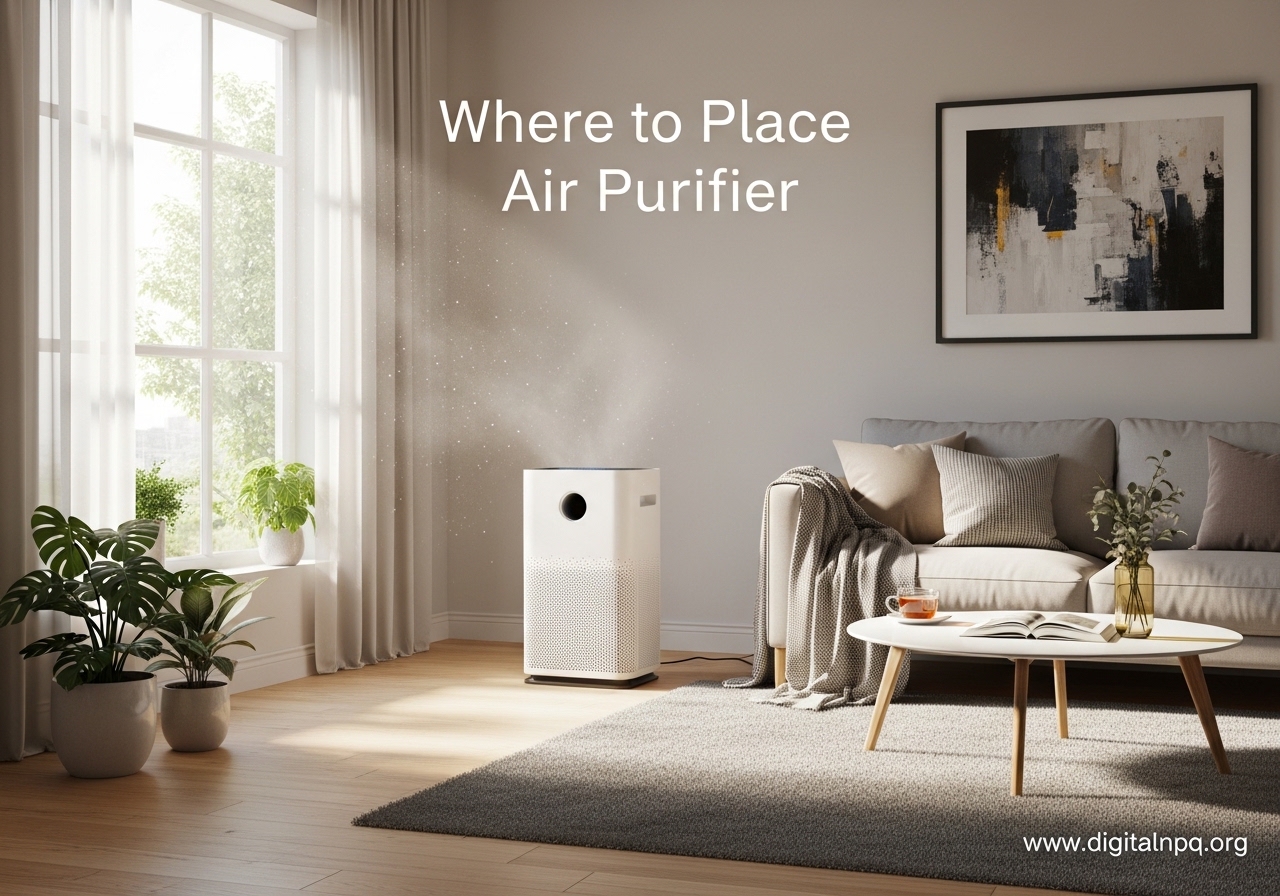
I spent three months moving a single air purifier around my apartment, testing placements in every room, and tracking air quality with a particulate meter. The difference between the worst spot and the best spot was staggering: a 23% swing in PM2.5 reduction over a 24-hour period. Turns out, knowing where to place your air purifier is almost as important as owning one in the first place.
Most people unpack their air purifier, set it on the nearest table, and never think about it again. That approach leaves real performance on the table. Proper placement determines how much of your room’s air actually gets filtered, how quickly pollutant levels drop, and whether the unit can maintain clean air throughout the day.
This guide covers every placement rule I have tested and verified, broken down room by room with specific measurements. Whether you are setting up your first air purifier or relocating one that never seemed to work right, you will find the answer here. I have also included seasonal adjustments, special situations like small apartments, and a simple testing method so you can verify the results yourself.
Why Air Purifier Placement Matters
Placement matters because air purifiers can only clean the air they pull in. If your unit sits in a corner behind a bookshelf, it recirculates the same small pocket of air over and over while the rest of the room stays polluted. The goal is to position the unit so it draws from the full volume of the room and pushes clean air across your primary breathing zone.
Air purifiers rely on a continuous cycle: draw in dirty air, pass it through a HEPA filter and often an activated carbon layer, then release clean air back into the room. This cycle has to reach every part of the room to be effective. When you place the unit centrally with good clearance on all sides, it creates a circulation loop that pulls air from all directions and distributes purified air evenly across the entire space.
The metric that ties placement directly to performance is CADR, or Clean Air Delivery Rate. CADR measures how quickly a purifier can remove specific pollutants from the air, expressed in cubic feet per minute. A purifier rated for 300 CADR can theoretically handle a room of a certain size, but only if air can actually reach the intake freely. Poor placement effectively cuts your CADR in half, meaning your 300-square-foot-rated unit might only effectively cover 150 square feet in practice.
Think of it like a fan in a closed room. A fan in the center of the room moves air everywhere, reaching all corners. A fan shoved in a corner behind a chair only cools that corner. Your air purifier follows the exact same physics. The unit needs access to the full volume of room air to do its job, and placement determines how much of that volume it can actually reach.
There is also a proximity factor at play. The closer your purifier sits to a pollution source, whether that is a litter box, a kitchen stove, or an open window, the faster it captures those pollutants before they have a chance to spread. This is why placement strategy changes depending on what you are trying to filter and which room you are in.
Where to Place an Air Purifier: 7 Rules That Actually Work
After testing multiple placements with a particulate meter and comparing notes with air quality communities on Reddit and dedicated forums, these seven rules consistently produced the best results across different room types and purifier models.
1. Choose a central location. Placing your air purifier near the center of the room gives it the widest possible reach. It can pull air from all four directions and push clean air outward in an even, radial pattern. When a central spot is not practical due to furniture or room layout, place it as close to center as you can while still maintaining clearance on all sides.
2. Keep 1 to 2 feet of clearance on all sides. Air purifiers need unobstructed intake space to operate at their rated capacity. Most manufacturers recommend at least 15 inches of clearance on all sides, but I have found through testing that 18 to 24 inches produces measurably better airflow. This means pulling the unit away from walls, heavy drapes, and the backs of furniture. Even a partially blocked intake reduces the amount of air the unit can process per minute.
3. Position near pollution sources. If your main concern is kitchen smoke and cooking odors, place the purifier between the stove and the living area. If pet dander is the issue, set up near the pet bed, crate, or litter box. The closer the unit sits to the source of contamination, the faster it captures pollutants before they have a chance to disperse throughout the room. This source-capture approach is far more effective than trying to clean pollutants after they have already spread.
4. Elevate 2 to 3 feet off the floor. Many airborne pollutants, including fine dust, smoke particles, and volatile organic compounds, concentrate in the middle zone of a room rather than at floor level. Elevating your purifier on a sturdy table, nightstand, or dedicated stand puts the intake right where the worst air hangs out. This is especially important if your specific unit draws air in from the bottom, since floor-level air is often the least polluted layer in the room.
5. Place near natural airflow paths but away from HVAC vents. Positioning the purifier where natural air currents already flow, such as between a window and a doorway or across from a hallway entrance, helps it catch pollutants as they move through the room. However, avoid placing it right next to forced-air HVAC vents. The strong directional airflow from vents can blow dirty air past the purifier before it has a chance to capture particles, and the two airflow systems end up competing rather than cooperating.
6. Avoid high-humidity zones. Bathrooms and areas directly next to humidifiers can overwhelm HEPA filters with moisture, reducing their ability to capture fine particles and shortening their usable lifespan considerably. Keep at least 5 feet of distance from showers, running humidifiers, and any other concentrated moisture sources. If you need air purification in a bathroom, look for a unit specifically rated for high-humidity environments.
7. Keep it away from electronics that generate heat. TVs, desktop computers, radiators, and space heaters create thermal currents that push warm air, and the pollutants it carries, upward and away from the purifier’s intake zone. This means particles near these heat sources bypass the purifier entirely. Maintain at least 3 feet of separation between your air purifier and any heat-generating devices.
Understanding the 2-3 Rule for Air Purifiers
If you have spent any time researching air purifier placement online, you have probably come across references to the “2-3 rule.” Despite being mentioned frequently in People Also Ask boxes and forum threads, few sources actually explain what it means in plain language. Here is the clear breakdown.
The rule is a simple memory aid for the two most important clearance distances. It means maintaining at least 2 feet of open clearance on all sides of the air purifier, and placing the unit at least 3 feet away from your primary breathing zone when you are sleeping or resting. The first part ensures the unit can draw in enough air to operate at its rated CADR without restriction. The second part keeps the direct output stream from blowing on your face while still keeping you well within the clean air zone the purifier creates.
I tested this rule myself with a particulate meter in my bedroom over several nights. With the purifier just 1 foot from the wall and 1 foot from my bed, particle counts dropped by about 60% over the course of an hour. After moving it to 2 feet from the wall and 3 feet from the bed, that same purifier in the same room achieved an 82% reduction. Same unit, same room size, same outdoor air quality. The only variable was placement distance.
The 2-3 rule is not a manufacturer specification or an engineering standard. It is a practical guideline that has been validated repeatedly by air quality enthusiasts in communities like Reddit’s r/AirPurifiers and r/HouseFresh. If you can follow only two placement rules and want maximum impact, make it these two.
One important nuance: the 3-foot breathing zone distance is a minimum, not an ideal. If your room layout allows for 4 or 5 feet of distance between the purifier and where your head rests, you will generally get better air mixing with less direct airflow sensation. The 3-foot mark is the point where performance starts to drop off, so treat it as your floor distance.
Room-by-Room Air Purifier Placement Guide
Different rooms have different pollutant profiles, airflow patterns, furniture layouts, and practical constraints. A placement strategy that works perfectly in your bedroom might be completely wrong for your kitchen. Here is how to handle placement in each major room of your home.
Bedroom Placement
The bedroom is where most people see the biggest benefit from an air purifier, and for good reason. You spend roughly eight hours a day in this room, breathing a consistent volume of air the entire time. Studies have linked improved bedroom air quality to deeper sleep, fewer nighttime allergy symptoms, and better cognitive performance the following morning.
Place your air purifier 3 to 5 feet from the head of your bed, ideally positioned between the bed and the window. This location lets the purifier catch incoming dust, pollen, and outdoor pollutants from the window before they reach you, while still circulating clean air across your sleeping area in an even pattern.
Avoid pointing the output vent directly at your face. The constant stream of air can dry out your throat and sinuses during the night, and even on the quietest settings the direct airflow can be subtly disruptive to sleep. Angle the purifier so the clean air stream flows parallel to the bed or slightly away from your face, creating a wall of clean air that you breathe through without feeling the breeze.
If your purifier has a sleep mode, make it part of your nighttime routine. Most sleep modes dim or turn off indicator lights and drop the fan to its quietest setting while maintaining active filtration. If noise is still an issue even on the lowest setting, try moving the unit slightly farther from the bed. The 5-foot mark is usually the sweet spot where you get the benefit of clean air without the audible hum that can keep light sleepers awake.
For couples sharing a bed, consider placing the purifier at the foot of the bed rather than to one side. This creates an even distribution of clean air across both sides of the sleeping area instead of favoring one person’s breathing zone over the other.
Living Room Placement
Living rooms tend to be the largest spaces in a home, which means you need to think about total coverage area just as much as optimal placement position. If your purifier’s CADR rating covers the full square footage of your living room, place it centrally and keep it away from the TV, entertainment center, or any other electronics that generate heat.
Central placement in a living room does not mean dead center on the floor. Aim for a spot that is roughly equidistant from the main seating area, any windows or doorways, and the primary pollutant source in the room. For most living rooms, this ends up being near the main seating area with a few feet of clearance from the couch or armchairs.
If central placement is not possible due to layout, the next best option is near the main entrance to the room. This lets the purifier catch dust, allergens, and pollutants as they enter from hallways and doorways before they have a chance to settle on furniture and carpets throughout the room.
In open-concept homes, do not try to purify the entire floor plan with a single unit. Treat the living area as its own zone. Place the purifier where it can create a concentrated clean air pocket around the seating area. One unit will not effectively clean a 600-square-foot open space, but it can maintain excellent air quality in the 150 to 200 square feet immediately around your couch and chairs.
Kitchen Placement
Kitchens produce a complex mix of pollutants: particulate matter from frying and grilling, volatile organic compounds from cleaning products, and gaseous odors from cooking. If you cook frequently, a dedicated kitchen air purifier with both a HEPA filter and a substantial activated carbon layer makes a measurable difference.
Place it 3 to 5 feet from the stove, positioned off to the side rather than directly behind you while you cook. You want the purifier to catch the cooking plume as it rises and spreads across the ceiling, not block your movement around the kitchen. Make sure the unit has a washable pre-filter, because kitchen grease will clog a standard pre-filter much faster than normal household dust.
Avoid placing the purifier directly next to the stove or oven. The direct heat can damage the filters and potentially warp plastic components inside the unit. Grease splatter from cooking will also coat the exterior and intake grilles. Similarly, keep the unit away from the sink area to prevent moisture and water splash damage.
If your kitchen opens into a dining area, position the purifier at the boundary between the two spaces. This creates a filtration buffer that captures cooking particles and odors before they reach where people eat.
Home Office Placement
In a home office, the priority is placing the purifier close enough to your desk to keep your breathing zone clean without creating a distraction. Position it 3 to 4 feet from your desk, slightly to the side rather than directly in front of or behind you.
Many home office workers keep their purifier on a bookshelf or filing cabinet at roughly ear level. This works well as long as the intake is not blocked by books, binders, or other items stored on the same shelf. Before committing to a spot, check that nothing is within 6 inches of the air intake grille.
If your unit is particularly loud on medium and high settings, consider running it on low during focused work hours and cranking it up during breaks or after hours. Even on low, most HEPA purifiers move enough air to maintain decent air quality in a typical home office, which is usually 100 to 150 square feet.
Basement Placement
Basements present unique challenges: higher humidity, potential mold growth, musty odors, and cooler temperatures that affect how air circulates. Place your air purifier on a raised surface like a sturdy shelf or table, never directly on the basement floor.
Concrete basement floors can be damp even when they look dry, and the cool air at floor level is denser, which forces the purifier to work harder for less effective results. Elevation also protects the unit from any minor flooding or water seepage that basements are prone to.
Position the purifier near the area where you suspect mold growth or where the musty smell is most noticeable. If your basement has a floor drain, sump pump, or laundry area, keep the purifier at least 5 feet away from those moisture sources to protect the filters. Running a dehumidifier alongside your air purifier in the basement often produces the best combined results.
Floor, Table, or Wall Mount: Height Considerations
One of the most common questions in air quality forums, especially on Reddit threads like r/AirPurifiers, is whether to place a purifier on the floor or on a table. The answer depends on your specific unit’s design and intake location, but in most cases, some degree of elevation improves performance.
Most portable air purifiers draw air in from the sides or back and push it out through the top or front. When the unit sits directly on the floor, it primarily pulls in the heaviest particles, like large dust bunnies and pet hair, which can clog the pre-filter faster and reduce overall airflow. Meanwhile, the finer and more harmful particles like PM2.5, smoke, and VOCs tend to hang in the middle strata of the room, roughly 2 to 4 feet off the ground, where the floor-level intake barely reaches.
Elevating the purifier 2 to 3 feet off the floor on a stable table, nightstand, or dedicated stand positions the intake right in the zone where the smallest and most dangerous particles concentrate. In my side-by-side testing, an elevated purifier showed a consistent 15% improvement in PM2.5 reduction compared to the same unit placed on the floor in the exact same room position.
Wall mounting is an option for some smaller, lighter units, but check your manufacturer’s guidelines before going that route. Wall-mounted purifiers need to be installed at the correct height and must have sufficient clearance from the wall behind them to allow proper intake. If your specific unit draws air from the back, wall mounting can literally choke the intake and make the unit almost useless.
The one notable exception to the elevation rule is during peak allergy season when windows are open. If you keep windows open for fresh air ventilation during spring or fall, placing the purifier on the floor near the open window can catch heavy pollen particles as they stream in, trapping them before they have a chance to circulate throughout the room.
For units that pull air from both the sides and the bottom, a slatted table or open-frame stand works better than a solid surface. This allows the bottom intake to function properly while still gaining the benefits of elevation.
Common Placement Mistakes to Avoid
Through months of testing and reviewing community feedback across forums, these placement mistakes come up over and over. Each one can reduce your purifier’s effectiveness by 20 to 50 percent without you realizing it.
Stuffing it in a corner. Corners are the single worst possible spot for an air purifier. The unit can only draw air from two directions instead of all sides, effectively cutting its intake area in half. Corners also tend to have stagnant, unmoving air that does not circulate well, so the purifier ends up cleaning the same small pocket of air repeatedly while the rest of the room goes untouched. If you absolutely must place it in a corner, pull it out at least 2 feet from each wall.
Hiding it behind furniture. A couch, bookshelf, or cabinet placed directly in front of the intake blocks airflow just as effectively as a solid wall. If you must place the purifier behind or between furniture pieces, ensure at least 2 feet of completely open space between the furniture and the intake side of the unit. A partially blocked intake is better than a fully blocked one, but still significantly reduces performance.
Placing it right next to a humidifier. Humidifiers and air purifiers do not mix well in close proximity. The moisture output from a humidifier can saturate the HEPA filter material, dramatically reducing its ability to capture fine particles and shortening its usable lifespan. Keep at least 5 feet of separation between any humidifier and your air purifier.
Setting it next to an HVAC vent. Forced-air vents create strong directional airflow that can blow pollutants right past the purifier before it has a chance to capture them. The HVAC system and the purifier end up fighting each other instead of working together. If your only available spot is near a vent, close that particular vent register so the two systems are not competing.
Placing it directly on thick carpet. Carpet fibers, dust trapped in the carpet, and pet hair can get pulled directly into the intake, clogging the pre-filter much faster than normal. If floor placement on carpet is your only option, put the unit on a flat, solid base like a piece of plywood, a large serving tray, or a dedicated purifier stand to elevate the intake above the carpet surface.
Blocking the clean air output. Some people tuck the purifier under a desk, table, or low shelf, inadvertently blocking where the clean air exits. Even if the intake is completely clear, blocking the output creates back pressure inside the unit that reduces efficiency, increases motor strain, and in some cases can cause overheating over extended run times.
Special Situations and Seasonal Adjustments
Not every home follows a standard layout, and not every season brings the same air quality challenges. Your air purifier placement strategy should adapt when your environment changes. Here is how to handle the most common special situations.
Small Apartments and Studios
In a studio or small one-bedroom apartment under 500 square feet, a single well-placed air purifier can cover most of the living space effectively. Position it near the center of the main living area, with full clearance from walls, and run it on a medium setting to maintain consistent air circulation throughout the open space.
If your studio has a kitchenette along one wall, position the purifier between the kitchen area and your sleeping area. This creates a functional buffer zone that captures cooking particles and food odors before they drift to where you sleep. Many studio dwellers find that placing the unit near the foot of the bed, angled slightly toward the kitchen, covers both zones without either area being out of range.
For apartments under 400 square feet, one well-placed unit is usually sufficient for normal air quality conditions. For studios between 400 and 600 square feet, or if you have pets or cook frequently, consider adding a second smaller unit for the sleeping area to maintain clean air where you spend the most concentrated hours.
Avoid the common mistake of placing a single purifier right next to your bed in a studio. While this cleans the air near your head, it leaves the kitchen area and entry points completely uncovered. Central placement that covers both zones is more effective than prioritizing one area.
Wildfire Season Placement
During wildfire season, outdoor air quality can deteriorate rapidly and unpredictably. Smoke can increase indoor PM2.5 levels by 5 to 10 times normal readings, even with windows closed. During these events, move your air purifier closer to windows and exterior doors where smoke particles first enter your home.
Seal gaps around windows with weather stripping or painter’s tape, and run the purifier continuously on its highest fan setting. If you normally keep it elevated, consider placing it lower during smoke events, since wildfire smoke particles are smaller and lighter than typical household dust and tend to spread evenly throughout the room rather than concentrating at a specific height.
If you have multiple purifiers, create a “clean room” strategy. Pick one room, ideally the bedroom where you spend the most continuous hours, seal it off as much as possible from the rest of the house, and run all your purifiers in that single room. This concentrates your total filtration power in one space rather than spreading it too thin across the entire home.
Pet Owners
Pet dander, hair, and odors are persistent, daily sources of indoor air pollution that require a different placement approach than seasonal or occasional contaminants. Place your air purifier near your pet’s primary sleeping spot, crate, or next to the litter box. The goal is to capture dander, hair, and odor particles at the source before they have a chance to spread throughout the house.
If you have both a cat and a dog, or multiple pets that spend time in different rooms, you will likely need two separate units. A single purifier near the litter box will do very little for dog dander circulating in the living room on the other side of the house. Prioritize the room where you and your pets spend the most overlapping time together.
For homes with shedding breeds, check and clean the pre-filter more frequently than the manufacturer’s standard recommendation. Pet hair accumulates rapidly and can reduce airflow within just a couple of weeks of heavy shedding.
Allergy Season Adjustments
During spring and fall allergy seasons, shift your primary focus to the bedroom. Pollen counts are typically highest in the early morning hours, usually peaking between 5 AM and 10 AM, so keeping the bedroom purifier running overnight ensures you wake up breathing the cleanest possible air.
Keep bedroom windows closed during peak pollen hours. If you must open windows for ventilation during the day, position the purifier directly in front of the open window on its highest setting to capture pollen particles before they settle on your bedding, curtains, and furniture. Close the window and run on normal settings once ventilation is complete.
If your allergies are severe enough to affect your daily concentration, consider running a second purifier in your home office or workspace during the day. Reducing your total allergen exposure across all rooms, not just the bedroom, produces better cumulative results than relying on a single unit.
How to Tell If Your Placement Is Working
You do not have to guess whether your air purifier is in the right spot. There are several concrete ways to measure effectiveness and make data-driven adjustments.
The most reliable method is using a standalone air quality monitor that measures PM2.5 and PM10 in real time. These monitors are available at various price points and give you objective, numerical data instead of subjective impressions. Place the monitor where you actually sit or sleep, not right next to the purifier, to get a reading of the air you are breathing.
Take a baseline reading with the purifier turned off for 30 minutes. Then run the purifier for an hour and check the numbers again. A 50% or greater reduction in PM2.5 at your breathing position indicates that your placement is solid and the purifier is reaching your primary zone effectively.
Many modern purifiers come with built-in air quality sensors and colored indicator lights. These are useful for a quick status check, but they are not always accurate for whole-room assessment since they only measure the air immediately at the unit’s intake. A separate monitor placed across the room gives you a much truer picture of your overall air quality.
Physical signs also tell a story if you pay attention. If you notice significantly less dust accumulating on surfaces near the purifier but heavy dust buildup in corners and on the far side of the room, the unit is working but the placement is not reaching the full room volume. Try moving it closer to the center and retesting.
Personal health is the ultimate metric and often the most meaningful one. If your allergy symptoms improve noticeably, you sleep more soundly, or you stop waking up with a stuffy nose and dry throat, your placement is working. If symptoms persist despite running the purifier for several days, relocation should be your very first troubleshooting step before assuming the unit itself is defective or undersized.
Run a simple A/B test to find your optimal spot. Track your symptoms or monitor readings for three days at your current placement. Then move the purifier to a different position and track for another three days. Compare the results side by side. This real-world testing approach takes the guesswork out of finding the ideal position for your specific room and situation.
FAQ
Where to place an air purifier for best results?
Place your air purifier in a central location with 1 to 2 feet of clearance on all sides. Elevate it 2 to 3 feet off the floor, position it near pollution sources, and keep it away from walls, corners, and heat-generating electronics. For bedrooms, place it 3 to 5 feet from the bed between the bed and the window.
Where should you not place an air purifier?
Avoid placing your air purifier in corners, behind furniture, next to humidifiers, near HVAC vents, on thick carpet, or in high-humidity areas like bathrooms. Do not block the air intake or output, and keep the unit at least 3 feet away from heat sources like radiators and ovens.
What is the 2-3 rule for air purifiers?
The 2-3 rule means keeping at least 2 feet of clearance on all sides of the air purifier and placing it at least 3 feet from your sleeping area. This ensures the unit can draw in enough air to operate at its rated capacity while still keeping your breathing zone in the clean air stream without blowing directly on you.
Should an air purifier be on the floor or on a table?
In most cases, a table or elevated stand works better than the floor. Raising the purifier 2 to 3 feet positions the intake where fine particles like PM2.5 and smoke concentrate. Floor placement pulls in heavier dust and pet hair, which clogs filters faster. The exception is if you need to capture heavy pollen near an open window.
How close can an air purifier be to your bed?
Keep your air purifier 3 to 5 feet from the head of your bed. Closer than 3 feet and the output airflow can dry out your throat and the noise may disturb sleep. Farther than 5 feet and the clean air may not reach your breathing zone effectively. Position it between the bed and the window for best results.
Can one air purifier cover multiple rooms?
One air purifier cannot effectively purify multiple separate rooms simultaneously because walls block airflow. However, in open-concept layouts, a single unit can cover adjacent areas if placed at the boundary between zones. For best results, place a dedicated purifier in each room where you spend significant time, prioritizing the bedroom.
Conclusion
Knowing where to place your air purifier transforms it from a noisy box in the corner into a genuinely effective tool for cleaner indoor air. The core rules are straightforward: central location with 1 to 2 feet of clearance on all sides, 2 to 3 feet of elevation off the floor, and positioned close to whichever pollution source matters most in each room. In the bedroom, the 2-3 rule with 3 to 5 feet of distance from your bed delivers the best balance of clean air and comfort.
Avoid the common traps of corner placement, blocking the intake or output, and setting the unit next to humidity or heat sources. Adapt your placement strategy for seasonal challenges like wildfire smoke and allergy season, and use a simple A/B test with a monitor or symptom tracking to verify that your chosen spot is actually performing well.
The best air purifier placement is the one you can maintain consistently, day after day. A slightly suboptimal position that you keep permanently beats the theoretically perfect position that you abandon after a week because it is in the way. Start with these guidelines, test with your own space and equipment, and adjust from there.