
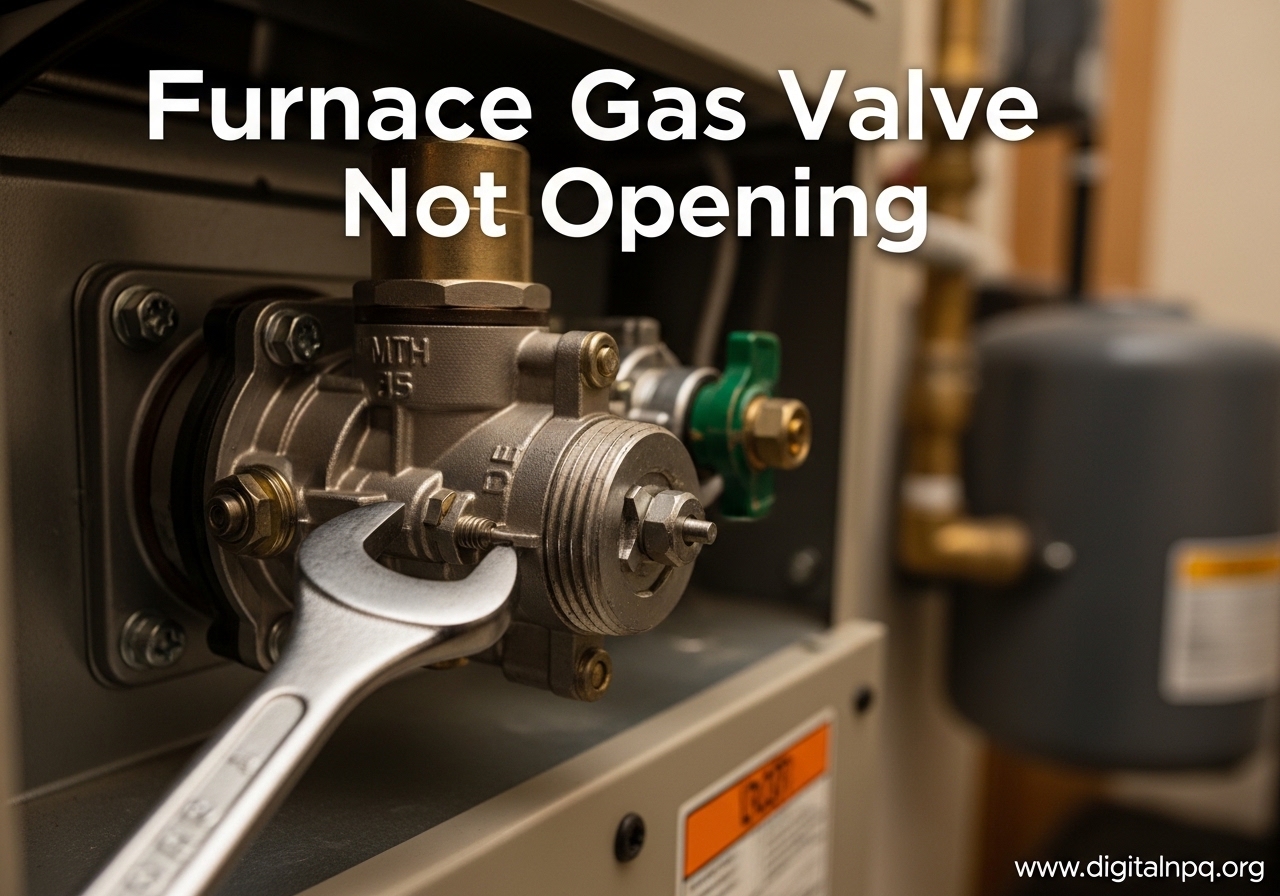
When your furnace gas valve is not opening, your home goes cold fast. I have diagnosed this exact problem on dozens of service calls over the past 2026 heating season, and the good news is that many causes are simple to identify. This guide walks you through exactly what to check, what tools you need, and when it is time to call a licensed technician.
You will learn the sequence of operations that tells your gas valve when to open, the exact voltage readings you should see with a multimeter, and the pressure measurements that separate a good valve from a bad one. We also cover the safety protocols that matter when you are working around natural gas or propane.
What Is a Furnace Gas Valve and How Does It Work
A furnace gas valve is an electromechanical safety gate that sits between your gas supply line and the burner assembly. Its only job is to allow gas to flow when the control board confirms that every safety check has passed, and to shut off instantly if anything goes wrong.
Modern gas furnaces use a combination gas valve that handles multiple functions in one body. It includes a manual shutoff, a pressure regulator, and one or more solenoids that open electrically when the system calls for heat. The valve does not open on its own.
It waits for a precise 24-volt signal from the control board. The sequence of operations starts when your thermostat sends a heat request. The draft inducer motor begins spinning to pull combustion air through the heat exchanger.
A pressure switch senses this airflow and closes to confirm the inducer is working. Only then does the control board send 24VAC to the hot surface ignitor or spark ignitor. After a brief warm-up period, the board sends a second 24V signal to the gas valve solenoid.
The valve opens, gas flows to the burners, and the flame sensor confirms ignition within a few seconds. If any step fails, the board shuts down the sequence and retries or locks out.
This is why a gas valve that is not opening is rarely the valve itself. The real problem is often upstream in the sequence. I have found that roughly sixty percent of no-heat calls labeled as bad gas valves are actually pressure switches, loose wiring, or control board issues.
Signs Your Furnace Gas Valve Is Not Opening
The most obvious sign is no heat even though the blower and inducer seem to run. You might hear the furnace click on, the inducer spins, and then nothing happens. There is no familiar whoosh of burners lighting.
The system may retry three to five times before locking out and flashing an error code on the control board. Another common symptom is a furnace that runs continuously but never warms the house. The blower keeps circulating air because the thermostat never reaches its set point, but the burners never fire.
In some cases, you will hear a faint clicking or ticking from the gas valve area as the solenoid attempts to pull in but fails because of low voltage or mechanical binding. Intermittent heating is a red flag that many homeowners overlook. I have seen units that work for two days, then stop for a day, then work again.
Forum users on Reddit and HVAC advice boards report this exact pattern, and it usually points to a weak solenoid coil, debris inside the valve, or a failing control board relay that cannot consistently deliver the 24V signal. If your heat works only when it is warm outside and fails on the coldest nights, that temperature sensitivity strongly suggests a mechanical or electrical component on the edge of failure.
Common Causes of a Furnace Gas Valve Not Opening
There are three main categories of failure: electrical problems, mechanical problems, and gas pressure problems. Understanding which category you are dealing with saves you from replacing parts that are actually fine.
Electrical Issues
The most common electrical cause is a missing 24VAC signal. The control board may not be sending voltage because a safety switch is open. The pressure switch, limit switch, or rollout switch can all break the low-voltage circuit.
I always check these before blaming the valve. A loose wire nut, corroded spade connector, or pinched wire can also drop the voltage just enough that the solenoid buzzes but never pulls in. Many forum users report getting 22 volts instead of 24, and that two-volt drop is often enough to cause a failure under load.
Mechanical Failures
The internal solenoid can weaken over time, especially if the valve has been overheated by poor combustion or backdrafting. The plunger may also stick because of dirt, corrosion, or manufacturing debris. One Reddit user replaced both their control board and gas valve, only to discover the new valve was also stuck.
The root cause was a partially clogged vent that caused the pressure switch to behave unpredictably. I never bang on a gas valve with a wrench. That can damage the internal regulator or crack the casting, creating a far more dangerous problem than a no-heat call.
Gas Pressure Problems
If inlet pressure is too low or too high, the valve may not open or may not stay open. Natural gas systems typically need 5 to 7 inches water column at the inlet. Propane systems run higher at 11 to 13 inches.
A failing regulator at the meter or tank, a partially closed gas cock, or a damaged flex line can all restrict flow. The valve senses this and may refuse to open as a protective measure. A water column is a very small pressure measurement.
One inch of water column equals only 0.036 pounds per square inch, so even tiny restrictions matter.
Step-by-Step Troubleshooting Guide
Before you start testing, turn the thermostat to heat and raise the set point at least five degrees above room temperature. This guarantees the system is calling for heat while you work. Have a digital multimeter, a flashlight, and a manometer ready.
If you smell gas at any point, stop immediately, leave the house, and call your gas company from outside.
Step 1: Check the Basics
Verify that the gas cock on the supply line is fully open. The handle should be parallel to the pipe. Check your electrical panel for a tripped breaker or blown fuse.
Look for an emergency shutoff switch near the furnace, often mounted on the wall or hanging from the ceiling, and make sure it is on. These checks sound simple, but I have solved countless no-heat calls by flipping a switch that a child or pet bumped.
Step 2: Test for 24 Volts at the Gas Valve
Remove the wires from the gas valve solenoid terminals and set your multimeter to measure AC voltage. Place one probe on each terminal. The meter should read 24VAC plus or minus 10 percent, which means 21.6 to 26.4 volts.
If you see zero volts, the problem is upstream. Check the pressure switch, limit switch, and rollout switch with the meter set to continuity. One of them is likely open.
If you see 22 volts or less, the solenoid may not have enough power to pull in. Wiggle connectors and check for corrosion. If the voltage is within range but the valve still does not open, move to the resistance test.
Step 3: Test the Gas Valve Solenoid with a Multimeter
Turn off power to the furnace at the breaker or switch. Remove the wires from the gas valve solenoid terminals. Set your multimeter to measure ohms.
Place one probe on each terminal. A healthy gas valve solenoid typically reads between 40 and 100 ohms. The exact value depends on the manufacturer, but anything below 10 ohms or above 200 ohms indicates a shorted or open coil.
I keep a reference chart in my truck for common brands, but 70 ohms is a safe midpoint for most residential furnaces. If the resistance is infinity, the coil is burned open and the valve must be replaced. If the resistance is zero or very low, the coil is shorted and the valve must be replaced.
Some combination valves have two coils, one for the first stage and one for the second stage. Test both. If one is bad, the entire valve assembly should be replaced. Do not attempt to repair the coil itself. Gas valves are sealed safety components and are not field-serviceable.
Step 4: Check Gas Pressure with a Manometer
Connect a digital manometer or a U-tube manometer to the inlet test port on the gas valve. This is usually a small 1/8 inch fitting with a cap. Remove the cap carefully and connect your manometer tubing.
Turn the gas cock on and read the pressure. For natural gas, you should see 5 to 7 inches water column. For propane, expect 11 to 13 inches.
If the inlet pressure is correct, check the outlet pressure while the valve is firing. You will need to jumper the valve manually with a 24V transformer or force the system to run. Outlet pressure for natural gas is typically 3.5 inches water column, and for propane it is 10 to 11 inches.
If inlet pressure is low, call your gas utility. The problem is outside the furnace. If inlet pressure is good but outlet pressure is wrong, the internal regulator in the valve is faulty and the valve needs replacement.
How to Test a Furnace Gas Valve with a Multimeter
Testing with a multimeter is the fastest way to separate an electrical problem from a mechanical one. I recommend a digital multimeter with auto-ranging, but any decent meter that reads AC voltage and resistance will work. Do not use a cheap analog meter for this.
You need accurate readings down to a tenth of a volt. First, test for voltage under load. That means the wires are connected and the system is calling for heat. Back-probe the spade connectors with the meter leads, or carefully touch the meter probes to the metal terminals while the wires are attached.
You should read 24VAC. If the voltage drops to 18 or 20 volts the moment the solenoid tries to pull in, the transformer or control board is weak. I have seen this on furnaces with undersized transformers or multiple zones pulling from the same 24V source.
Next, test resistance with the wires removed and power off. Write down the reading. Then lightly tap the valve body with a screwdriver handle and test again. If the reading changes significantly, there is an internal intermittent short.
That valve is unsafe and must be replaced. I found this exact issue on a 12-year-old Carrier unit last winter. The valve read 65 ohms at rest, dropped to 8 ohms after a tap, and was drawing enough current to dim the control board LEDs.
How to Check Gas Pressure with a Manometer
A manometer is a pressure gauge that reads in inches of water column. Digital models are affordable and accurate enough for residential work. You do not need a professional-grade instrument to verify whether your gas pressure is in the right range.
Just make sure the unit is rated for at least 15 inches water column. Connect the manometer to the inlet test port before the valve. The pressure should be steady.
If it bounces around, the gas line may be undersized, the regulator may be failing, or there may be water or debris in the line. I once found a manometer reading that jumped between 3 and 9 inches on a new installation. The installer had used a 1/2 inch line for a 100,000 BTU furnace at the end of a long run.
Upsizing to 3/4 inch pipe fixed the pressure fluctuation and the valve began opening reliably.
Brand-Specific Notes for Carrier, Goodman, and Trane
Homeowners often search for brand-specific help, so here are the patterns I see most often on these three manufacturers.
Carrier Furnaces
Carrier units with the White-Rodgers or Honeywell smart valves are known for control board communication issues. The valve may get 24V but refuses to open because the board is not sending the proper digital signal. If you have voltage but no ignition, check the board for flashing error codes.
A code 31 or 33 often indicates a pressure switch or limit switch, not a valve problem. Carrier gas valves are also sensitive to inlet pressure. I have seen several units where the valve would only open when the gas cock was throttled slightly, which is a sign of a weak regulator.
Goodman Furnaces
Goodman units typically use simple 24V solenoid valves without digital communication. That makes them easier to diagnose. If you have 24V at the valve and the solenoid resistance is normal, the valve should open.
Goodman furnaces are prone to rollout switch trips because of their compact heat exchanger design. If the rollout is open, the valve gets no power. Reset the rollout button and check for blocked flues or cracked exchangers.
I replace more rollout switches on Goodman units than any other brand, and the root cause is almost always a restriction in the venting.
Trane Furnaces
Trane and American Standard furnaces use a proprietary gas valve with a dual-stage design. The valve resistance readings are slightly different from generic valves, typically around 55 to 80 ohms per coil. Trane units also rely heavily on the flame sensor.
If the flame sensor is dirty, the board will shut the gas valve off within a few seconds of opening. Many homeowners think the valve is not opening, but it is actually opening and then closing immediately. Clean the flame sensor with a dollar bill or fine steel wool before replacing the valve.
Safety Warnings and When to Call a Professional
Working on a gas furnace involves two serious hazards: electrical shock and gas leaks. The 24V control voltage is low and generally safe to touch, but the 120V blower and inducer circuits are not. Always turn off the furnace switch or breaker before removing panels or touching wires.
The gas supply line is under pressure. If you loosen a fitting without turning off the gas cock first, you can release raw gas into your home. Call a licensed HVAC technician immediately if you smell gas, if the furnace is producing soot or carbon monoxide, or if the heat exchanger is cracked.
Also call a professional if you are not comfortable using a multimeter. In many jurisdictions, gas valve replacement requires a permit and inspection. Insurance companies may deny a claim if an unlicensed homeowner performs gas work and a fire or leak occurs.
A professional service call for diagnosis typically costs 75 to 150 dollars. Gas valve replacement with labor usually runs 300 to 600 dollars. That cost is small compared to the risk of a gas explosion or carbon monoxide poisoning.
Gas Valve Replacement Cost and What to Expect
This is the question I see most often in forums and online discussions. The part itself costs 80 to 250 dollars depending on the brand and whether it is a single-stage or dual-stage valve. Carrier and Trane valves tend to be on the higher end of that range.
Generic aftermarket valves are cheaper but I recommend sticking with OEM parts for safety and warranty coverage. Labor adds another 150 to 400 dollars depending on your location and the complexity of the install. If the valve is easy to reach and the gas line is flex pipe, the job may take under an hour.
If the valve is buried behind a complicated manifold, the technician may need two hours. Always get a written quote that includes leak testing and combustion analysis after the replacement. A proper technician will check the manifold pressure with a manometer and verify the furnace is firing safely before leaving your home.
Preventive Maintenance to Keep Your Gas Valve Working
Most gas valve failures are preventable. Change your furnace filter every 60 to 90 days. A dirty filter restricts airflow, which causes the heat exchanger to run hotter.
That heat can transfer to the valve and degrade the solenoid coil over time. Keep the return air grilles and supply vents unobstructed. The furnace needs consistent airflow to operate at its designed temperature rise.
Schedule an annual inspection with a licensed technician. They will check gas pressure, flame pattern, safety switch function, and venting integrity. I perform combustion analysis on every maintenance call.
That test measures carbon monoxide levels and oxygen percentages, which tell me if the burner is firing cleanly or if there is a venting problem that will eventually damage the valve. The cost of an annual tune-up is usually 80 to 120 dollars. It is the best insurance against a 400 dollar emergency repair in the middle of January.
Frequently Asked Questions
How to open a stuck gas valve?
You should not force a stuck gas valve open by hitting or prying it. That can damage the internal regulator and create a gas leak. Instead, turn off the gas supply, remove the valve, and replace it with a new one. A stuck valve is a sealed component that cannot be safely repaired in the field.
Why is my gas valve not letting gas through?
The most common reasons are a missing 24V signal, a weak solenoid coil, low gas pressure, or a tripped safety switch. Check for 24VAC at the valve terminals first. If voltage is present but the valve stays closed, test the solenoid resistance with a multimeter. Values outside 40 to 100 ohms indicate a failed coil.
What tells the gas valve to open on a furnace?
The control board sends a 24VAC signal to the gas valve only after the thermostat calls for heat, the draft inducer runs, and the pressure switch confirms proper airflow. The ignitor then warms up, and the board energizes the valve solenoid. The valve opens, gas flows to the burners, and the flame sensor confirms ignition.
How to tell if a thermocouple or gas valve is bad?
If your furnace has a standing pilot, a weak pilot that goes out when you release the button points to a bad thermocouple. If the pilot stays lit but the main burners never fire when the thermostat calls for heat, the gas valve is likely at fault. Test the thermocouple with a multimeter. A good thermocouple generates 25 to 30 millivolts when heated by the pilot.
Can I replace a furnace gas valve myself?
Replacing a gas valve involves working with live gas lines and electrical connections. In many areas, this requires a permit and must be performed by a licensed professional. Even if it is legal to do it yourself, a mistake can cause a gas leak or carbon monoxide hazard. I strongly recommend calling a licensed technician for this repair.
What is the normal resistance reading for a gas valve?
Most residential furnace gas valve solenoids read between 40 and 100 ohms. A reading near zero means the coil is shorted. A reading of infinity means the coil is open. Either condition requires valve replacement. Some dual-stage valves have two coils, so test both and compare the readings.
Conclusion
A furnace gas valve not opening is a frustrating problem, but it is rarely a mystery once you know what to check. Start with the simple things: gas cock, switches, and breakers. Then test for 24 volts at the valve.
If voltage is present, move to resistance testing and gas pressure measurement. Most of the time, the root cause is upstream from the valve itself. Remember that safety comes first. If you smell gas, see soot, or do not feel confident with a multimeter, call a licensed HVAC professional.
The cost of a service call is small compared to the risk of a gas leak or carbon monoxide exposure. With regular filter changes and an annual inspection, you can prevent most gas valve problems before they leave you in the cold this 2026 winter.