
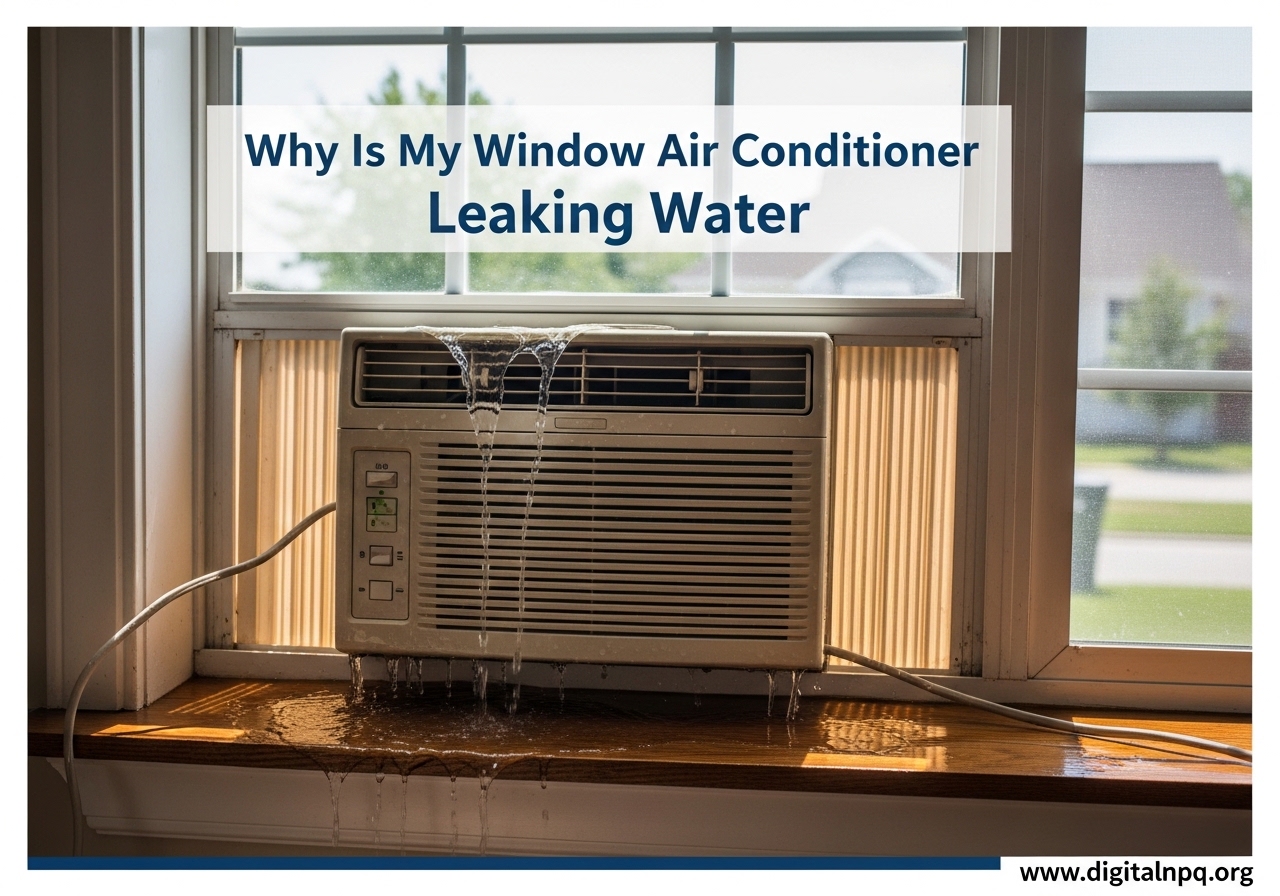
A puddle under your window air conditioner is never a good sign. I have dealt with this exact issue in three different apartments over the past decade, and I can tell you that most window AC leaks are easy to diagnose once you know what to look for. In this guide, you will learn exactly why is my window air conditioner leaking water and what you can do to stop it before it damages your walls or floors.
The good news is that about 80 percent of window AC leaks are caused by just four issues. You can fix most of them yourself in under 30 minutes with basic household tools. Our team compiled this guide after reviewing dozens of real homeowner repair stories and HVAC technician advice from 2026.
Quick Diagnosis: Check These First
Before you start taking things apart, run through this two-minute checklist. It will help you identify the problem fast and avoid unnecessary work.
Step 1: Turn off the unit and unplug it from the wall. Water and electricity do not mix, and you need to inspect the interior safely.
Step 2: Check the air filter. Pull it out and hold it up to a light. If you cannot see through it, the filter is too dirty and is likely the culprit.
Step 3: Look for ice on the evaporator coils. Ice buildup means restricted airflow or a refrigerant issue, and it will melt into water that leaks inside.
Step 4: Check the tilt angle. The back of the unit (outside) should sit slightly lower than the front (inside). Use a small level to verify.
Step 5: Locate the drain hole. It is usually at the bottom rear of the unit. If it is blocked by debris, sludge, or algae, that is your leak source.
If you find a clogged filter or a blocked drain hole, you are already halfway to a fix. The sections below walk you through each repair in detail.
Is It Normal for a Window AC to Drip Water?
Yes, some water dripping is completely normal. Your window air conditioner removes humidity from the air, and that moisture has to go somewhere. During a humid summer day, a window unit can produce several gallons of condensation.
That water should drip out the back of the unit, onto the ground or window well outside. What is not normal is water dripping from the front, sides, or inside your home.
If you see water on the windowsill, running down the wall, or pooling on the floor, that means the drainage system has failed. The distinction matters because it tells you whether you need to take action or simply let the unit do its job.
One homeowner on Reddit reported panic over water dripping from the back of their unit, only to learn that it was perfectly normal. They had been worried about a non-problem for days. If the drip is outside and the unit is cooling properly, you usually do not need to do anything.
How Your Window AC Creates Water
Your air conditioner works by pulling warm, humid air over cold evaporator coils. When the warm air hits those cold coils, the moisture in the air condenses, just like water droplets forming on a cold glass of lemonade.
That condensed water collects in a drain pan at the bottom of the unit. In a properly functioning window AC, the drain pan is angled so water flows toward a small drain hole or drain line. The water exits the unit through the rear and drips outside.
If anything blocks that path, or if the angle is wrong, the water overflows and leaks into your room. Think of it like a gutter on your house. When the gutter is clean and angled correctly, rainwater flows away.
When it is clogged or tilted wrong, water spills over the edge and damages your siding. Your window AC works the same way on a smaller scale.
Clogged Drain Hole or Drain Line
A clogged drain hole is the most common reason a window AC leaks water inside. Dust, dirt, algae, mold, and even small insects can block the small opening at the bottom of the unit. When the water cannot escape, the drain pan overflows and the water spills into your room instead of outside.
How to Spot a Clogged Drain
You will usually see water dripping from the front or sides of the unit, not just the back. The unit may also make a gurgling sound as water struggles to drain.
If you remove the front panel and look inside, you may see standing water in the drain pan. That is a clear sign of a blockage.
How to Unclog the Drain Hole
Turn off and unplug the unit first. Locate the drain hole at the bottom rear of the AC, either outside or inside the housing. Use a stiff wire, a straightened paperclip, or a pipe cleaner to gently push through the hole and dislodge the blockage.
Once the hole is open, pour a small amount of distilled white vinegar or a 50/50 bleach and water solution through the drain pan. This kills algae and mold that will otherwise clog it again. Let it sit for ten minutes, then flush with clean water.
I have used this exact method on two units, and it solved the leak both times. If the unit is installed in an upper-floor window and you cannot reach the rear drain hole from outside, you may need to remove the unit from the window to clean the drain properly. It is an extra step, but it takes less than 15 minutes and is worth doing.
Dirty or Clogged Air Filter
A dirty air filter is the second most common cause of AC leaks. When the filter is clogged with dust and pet hair, air cannot flow freely over the evaporator coils. The coils get too cold, and frost or ice forms on them.
When that ice melts, it produces more water than the drain pan can handle. The overflow leaks into your room. Remove the front panel of your window AC. Most panels pop off without tools.
Slide the filter out and inspect it. If it is a reusable mesh filter, rinse it under warm water and let it dry completely before reinstalling. If it is a disposable paper filter, replace it with a new one.
Filters are inexpensive and should be swapped every 30 to 90 days during regular use. After cleaning or replacing the filter, run the unit on fan-only mode for 30 minutes to let any remaining ice melt. Then switch back to cool mode.
The leak should stop if the filter was the cause. I check my filter every month during the summer because a 30-second inspection prevents hours of frustration later.
Incorrect Tilt Angle or Installation
Window AC units must be installed with a slight backward tilt so water drains toward the rear and outside. The outside of the unit should sit about one quarter to one half inch lower than the inside. If the unit is perfectly level or, worse, tilted forward, water will drain inside your room instead.
How to Measure and Adjust the Tilt
Place a small torpedo level on top of the unit. Check the side-to-side and front-to-back angles. The back should read slightly lower than the front.
If it is not, you need to adjust the installation. Most window units come with accordion side panels and a top mounting rail. Loosen the mounting screws slightly and place a shim or small piece of wood under the front feet of the unit.
Raise the front by about a quarter inch. Tighten the screws again and recheck with the level. The bubble should show a gentle backward slope.
One issue people run into is that tilting the unit can create a small gap at the bottom of the window. Fill that gap with weatherstripping foam or a foam block to keep bugs and hot air out. A small gap is normal after shimming, but it should be sealed properly.
Frozen Evaporator Coils
If your AC is low on refrigerant or has severely restricted airflow, the evaporator coils can freeze solid. A frozen coil blocks normal drainage and creates a large amount of meltwater when the unit cycles off. That sudden rush of water overwhelms the drain pan and leaks inside.
How to Handle Frozen Coils
Turn the unit off and let it thaw completely. This can take several hours. Do not try to chip the ice away with a screwdriver or knife.
You will damage the delicate fins on the coils and make the problem worse. Once thawed, clean the filter and check the drain hole as described above.
If the coils freeze again after cleaning, the unit likely has a refrigerant leak. You may hear a hissing or bubbling noise near the coils. This is not a DIY fix.
Refrigerant handling requires a licensed HVAC technician, and attempting it yourself can void your warranty and is illegal in many areas.
Cracked or Damaged Drain Pan
Over time, the plastic or metal drain pan at the bottom of your window AC can crack, rust, or corrode. A damaged pan cannot hold water, so it leaks out before reaching the drain hole. This is more common in older units or ACs that have been removed and reinstalled multiple times.
How to Inspect and Repair the Drain Pan
Remove the unit from the window and set it on a flat surface. Remove the outer casing if your model allows it. Look for cracks, rust spots, or holes in the pan.
If you find a small crack in a plastic pan, you can seal it with waterproof epoxy putty or a marine-grade sealant. Let it cure fully before reinstalling the unit.
If the pan is heavily rusted or has multiple cracks, replacement is the better option. Some manufacturers sell replacement drain pans, but for older units it may be more practical to replace the entire AC.
Window units last about 8 to 12 years on average. If yours is past that range and the pan is failing, it may be time for an upgrade.
Safety Precautions Before You Start
Water and electricity are a dangerous combination. Before you work on any leaking window AC, take these basic safety steps seriously. I have seen people skip them and end up with bigger problems than a simple leak.
Always unplug the unit before removing panels, filters, or covers. Even if the unit is turned off at the control panel, the internal components may still carry power. If water has pooled near the electrical outlet, do not touch it.
Dry the area with a towel first and consider flipping the breaker if the outlet is wet. Never use a metal wire to clean the drain hole without first confirming the power is disconnected.
A slip can send the wire into an electrical component. Use a pipe cleaner or plastic zip tie instead. They are safer and just as effective at clearing soft blockages.
If the unit is installed in a second-story window, do not lean out to reach the rear drain hole. Remove the unit from the window or use a long tool from inside. Falling from a window is not worth saving a quick drain cleaning.
If you are not comfortable with ladders or window work, call a professional.
When to Call a Professional
Most window AC leaks are DIY-friendly, but some situations require a trained technician. Knowing the difference saves you time and prevents costly mistakes. Here are the clear signs that you should call for help.
Call a professional if you hear hissing or bubbling sounds from the coils. That indicates a refrigerant leak. It requires special equipment to repair and recharge the system safely.
Refrigerant leak repairs require a licensed technician and can become costly depending on the severity and location. Call a professional if the unit has been leaking for weeks and you notice water stains, bubbling paint, or soft drywall around the window.
Water damage inside walls can lead to mold growth, and fixing that costs far more than repairing the AC itself. A pro can inspect the wall cavity and advise on whether you need a restoration contractor as well.
Call a professional if you have checked the tilt, cleaned the filter, cleared the drain, and the unit still leaks. There may be an internal crack in the housing or a hidden blockage in the tubing that requires disassembly.
Most HVAC technicians charge a reasonable service fee, and the diagnosis is often worth the peace of mind. Call a professional if the unit is under warranty. Opening the sealed casing or attempting refrigerant repairs yourself can void the warranty.
Check your paperwork first. Some manufacturers cover parts and labor for up to 5 years if the unit was registered properly.
How to Prevent Future Leaks
Prevention is easier than repair. A 10-minute maintenance routine once a month during the cooling season keeps most leaks from happening at all. Here is what our team recommends based on years of following this schedule.
Clean or replace the filter every 30 days during heavy use. Mark it on your calendar. A clean filter is the single best thing you can do for your AC.
Check the drain hole every time you clean the filter. Run a pipe cleaner through it to remove any early buildup before it becomes a blockage. Inspect the tilt angle at the start of every cooling season.
Window frames settle, and mounting brackets loosen over time. A level that was perfect last year may be off this year. Check the outdoor side of the unit for leaves, pollen, and insect nests that can clog the rear vents and drain openings.
Before storing the unit for winter, remove it from the window and drain any remaining water completely. Let it dry for 24 hours before covering it. Trapped moisture inside the unit during storage leads to mold and corrosion.
That creates drainage problems when you reinstall it in the spring. If you live in a high-humidity area, run your AC on a slightly higher temperature setting. The lower the thermostat, the more condensation the unit produces.
A setting of 72 degrees instead of 68 degrees can reduce water output significantly while still keeping the room comfortable.
Frequently Asked Questions
How do I stop my window air conditioner from leaking water?
Turn the unit off and unplug it. Check the air filter, clean or replace it if dirty. Verify the unit tilts slightly backward so water drains outside. Locate the drain hole at the rear and clear any blockage with a wire or pipe cleaner. Run the unit again and monitor for leaks.
Should I turn off my AC if it is leaking water outside?
No. Water dripping from the back of a window AC is normal. It is simply condensation draining outside. Only turn off the unit if water is leaking inside the room, onto the walls, or into the floor.
How to unclog a window AC drain line?
Unplug the unit first. Find the drain hole, usually at the bottom rear. Use a stiff wire, paperclip, or pipe cleaner to push through the blockage. Flush with a 50/50 vinegar and water solution to kill algae and mold. Let it sit for 10 minutes, then rinse with clean water.
Can I still use my AC if it is leaking water?
You should not run the unit while it is leaking water inside. Water can damage walls, flooring, and electrical outlets. It also creates a slipping hazard and can promote mold growth. Unplug the unit and fix the leak before running it again.
Should I be worried if my AC is leaking water?
If the leak is inside, yes. Even a small leak can cause water damage, mold, and electrical hazards over time. Most leaks are easy to fix, but they should be addressed promptly. A leak outside is usually normal and not a concern.
What should I do if my window AC is leaking water?
Unplug the unit immediately. Dry the area with towels. Check the filter, tilt angle, and drain hole. Clean the filter and drain hole if needed. Adjust the tilt so the back is slightly lower than the front. If the leak continues after these steps, call an HVAC technician.
Summary
Now you know exactly why is my window air conditioner leaking water and how to fix it. Most leaks come down to a clogged drain hole, a dirty filter, or an improper tilt angle. All three are easy to check and fix in less than an hour.
Start with the quick diagnosis checklist, then work through the specific causes until you find the one affecting your unit. Water damage gets expensive fast. A small leak can ruin drywall, warp flooring, and create mold problems that cost hundreds or thousands to remediate.
Fixing the AC leak now is a small investment of time that protects your home and keeps your cooling system running strong through the summer of 2026. If you have run through every step and the leak persists, do not hesitate to call a professional. Some repairs are simply beyond the scope of a DIY fix, and there is no shame in getting expert help.
Stay on top of monthly filter checks and seasonal tilt inspections. A little maintenance goes a long way toward preventing the frustration of a midnight leak onto your living room floor.