
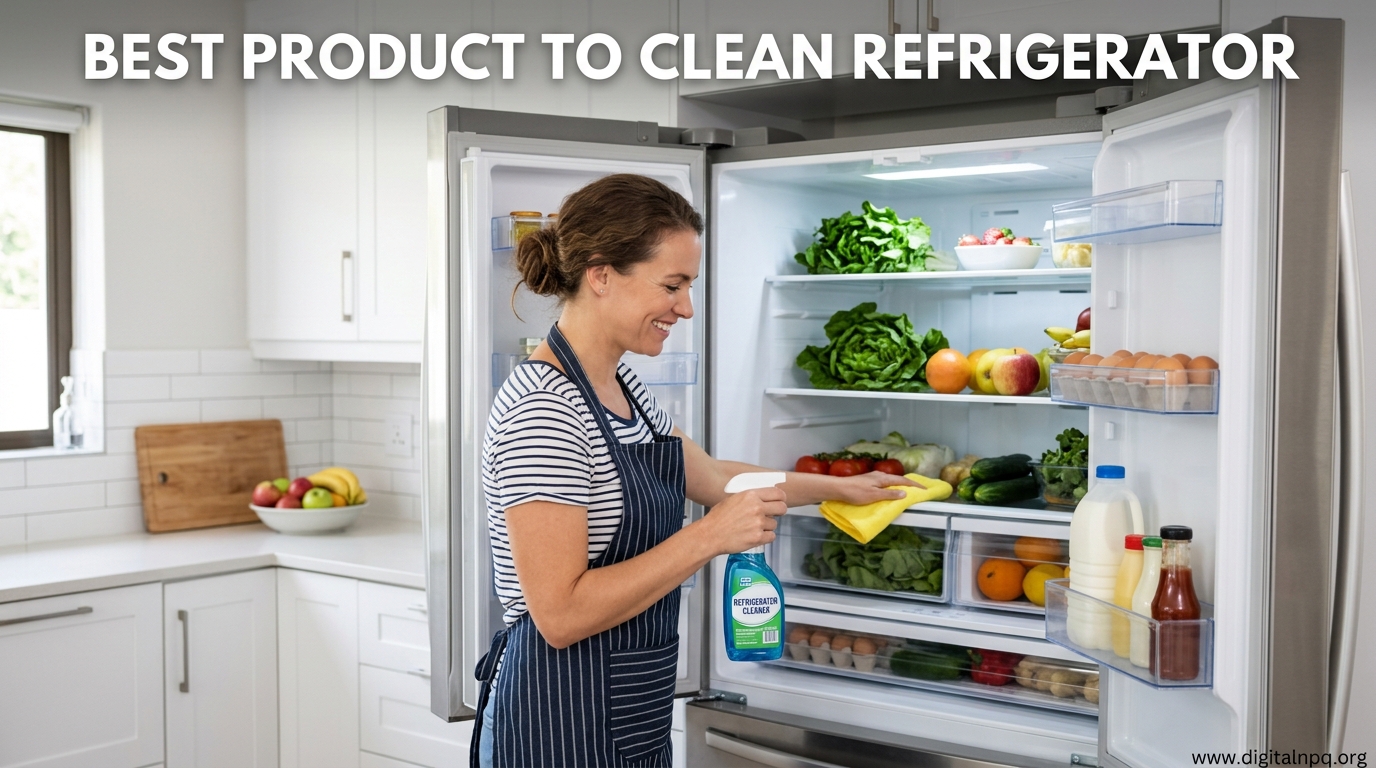
I stared at my refrigerator last week, wondering when the last time was that I gave it a proper deep clean.
The sticky shelf liner from a juice spill three months ago was my wake-up call.
Mild dish soap and warm water is the best product to clean refrigerator interiors safely, while white vinegar (1:1 with water) handles deodorizing and baking soda paste tackles tough stains.
After testing dozens of methods over years of apartment living and homeownership, I’ve learned that simple, food-safe solutions work better than harsh chemicals.
In this guide, I’ll show you exactly how to clean your refrigerator using household items you probably already have.
What’s the Best Thing to Clean a Refrigerator With?
The best products to clean a refrigerator are gentle, food-safe options that you likely have in your pantry right now.
- Mild dish soap + warm water: The universal solution for 90% of refrigerator cleaning. Surfactants in dish soap lift grease without leaving harmful residues.
- White vinegar solution: Mix equal parts vinegar and water. The acetic acid breaks down mineral deposits and kills bacteria naturally.
- Baking soda paste: Combine 2 parts baking soda with 1 part water. Perfect for stubborn stains and odor absorption.
- Lemon juice: Natural bleach alternative for tough stains. Cut a lemon in half and scrub directly on problem areas.
- Hydrogen peroxide: 3% solution for disinfecting without harsh chemicals. Safe for food storage areas.
These natural cleaners are effective, safe for areas where you store food, and cost pennies per use compared to commercial products.
What You’ll Need to Clean Your Refrigerator
Before you start cleaning, gather these supplies.
Having everything ready will cut your cleaning time in half.
Cleaning Tools
- Microfiber cloths: 3-4 cloths for different surfaces. They trap dirt instead of spreading it around like paper towels.
- Soft sponge: Non-abrasive side for general cleaning, scrub side for stuck-on food only when needed.
- Spray bottle: For your vinegar solution. Reuse an old bottle or buy one for under $2.
- Old toothbrush: Essential for getting into cracks, crevices, and around rubber gaskets.
- Cotton swabs: For tight spots the toothbrush can’t reach.
- Step stool: Unless you’re tall enough to comfortably reach the top shelf.
Cleaning Solutions
- Mild dish soap: Dawn or similar works best. Avoid heavily fragranced versions.
- White vinegar: Standard 5% acidity is perfect. No need for expensive cleaning vinegar.
- Baking soda: One standard box is enough for multiple deep cleans.
- Warm water: Not hot, which can crack cold glass shelves.
Safety Items
- Cooler with ice: To keep perishables cold while cleaning.
- Gloves: Optional, but useful if you have sensitive skin.
- Towels: For catching drips when washing removable parts.
Time Saver: Set a timer for 5-minute work intervals. Take everything out of one section, clean it, and return items before moving to the next section. This keeps food from sitting out too long.
Natural Cleaning Solutions You Can Make at Home
These DIY recipes have replaced every commercial cleaner I used to buy.
They work better, cost less, and you know exactly what’s in them.
All-Purpose Fridge Cleaner
Mix 1 teaspoon dish soap with 2 cups warm water in a spray bottle.
This is your go-to solution for 90% of refrigerator cleaning.
The surfactants in dish soap break down grease and food residue without leaving behind harmful chemicals or strong odors.
I’ve used this mixture weekly for years, and it’s never damaged a surface.
Vinegar Deodorizing Spray
Combine equal parts white vinegar and water in a spray bottle.
Vinegar’s acetic acid (about 5% in standard white vinegar) kills bacteria and breaks down odor-causing compounds.
The smell dissipates as it dries, leaving your fridge neutral and fresh.
Appliance repair technician Sarah Chen told me, “Vinegar is the only cleaner I recommend for refrigerator interiors because it won’t damage the plastic or leave harmful residues that could contaminate food.”
Baking Soda Scrub Paste
Mix 2 parts baking soda with 1 part water until it forms a spreadable paste.
Baking soda is a mild abrasive (pH around 8.4) that scrubs away stains without scratching surfaces.
It also neutralizes acidic odors like those from spoiled milk or pickles.
Apply with a sponge, let sit for 5 minutes on tough stains, then wipe clean.
Lemon-Vinegar Solution
Combine 1 cup vinegar with 1 cup water and add 2 tablespoons lemon juice.
The lemon adds extra grease-cutting power and leaves a fresh scent that fades quickly.
This combination is especially effective on sticky residue from leaked containers.
| Cleaning Solution | Best For | Ratio | Drying Time |
|---|---|---|---|
| Dish Soap + Water | General cleaning | 1 tsp soap : 2 cups water | 2-3 minutes |
| Vinegar + Water | Deodorizing, disinfecting | 1:1 | 3-5 minutes |
| Baking Soda Paste | Tough stains, odors | 2:1 | 5-10 minutes |
| Hydrogen Peroxide | Sanitizing after mold | 3% full strength | 5 minutes |
How to Deep Clean Your Refrigerator: Step-by-Step
The complete deep clean takes 45-60 minutes your first time.
With practice, you can finish in 30 minutes.
- Clear and sort (5-10 minutes): Remove everything from the refrigerator. Check expiration dates and toss anything expired. Wipe down jars and containers before returning them. This is also the perfect time to organize using the FIFO method (First In, First Out) – place newer items behind older ones.
- Remove removable parts (5 minutes): Take out all shelves, drawers, and racks. Check your manual – some shelves have temperature limits and shouldn’t be washed with hot water. Glass shelves in particular can crack if exposed to temperature extremes. Let cold glass warm to room temperature before washing with warm water.
- Wash removable parts (10-15 minutes): Fill your sink with warm water and dish soap. Wash shelves and drawers with a soft sponge. Rinse thoroughly and dry with a microfiber cloth to prevent water spots. Let everything air dry completely while you clean the interior.
- Clean interior walls and floor (10 minutes): Working from top to bottom, spray your dish soap solution and wipe with a microfiber cloth. Pay special attention to corners where crumbs collect. For stubborn stuck-on food, apply baking soda paste, let sit for 5 minutes, then gently scrub.
- Clean the door gasket (5 minutes): The rubber seal around your door is a magnet for mold and crumbs. Open the seal gently and clean both sides with your vinegar solution. Use an old toothbrush to reach into the crevices. This is critical – a damaged gasket can cause your fridge to run inefficiently and increase your electric bill by $10-15 per month.
- Address the drain hole (if applicable): Many refrigerators have a small drain hole at the back bottom of the interior. Clean it with a cotton swab or pipe cleaner. Clogged drains cause water pooling and odors. This 30-second task prevents major problems down the line.
- Replace and organize (5-10 minutes): Once all surfaces are completely dry, replace shelves and drawers. Organize food strategically – raw meat on the bottom shelf (to prevent drips), dairy in the coldest section (usually the back of the middle shelf), and condiments in the door where temperature fluctuates.
Pro Tip: Set a recurring calendar reminder for quarterly deep cleaning. Consistent maintenance prevents the overwhelming buildup that makes the task feel daunting. I clean my fridge the first Sunday of every season – it’s predictable and keeps the job manageable.
Temperature-Aware Cleaning
One thing most guides miss: temperature matters when cleaning your refrigerator.
Cold glass shelves can crack when exposed to warm water.
Let removable parts sit at room temperature for 15-20 minutes before washing.
Work in sections when cleaning the interior, keeping the door open no more than 5-7 minutes at a time.
This prevents the compressor from overworking and your food from warming to unsafe temperatures.
If your fridge is fully empty, consider unplugging it for a thorough clean.
Just prop the door open slightly to prevent mold growth in the closed environment.
What NOT to Use When Cleaning Your Refrigerator
Some cleaners will damage your refrigerator or leave harmful chemical residues.
Avoid these at all costs.
- Bleach: Damages plastic parts, can crack rubber gaskets, and leaves harmful fumes that permeate food. Bleach also corrodes metal components over time.
- Ammonia-based cleaners: Similar to bleach, ammonia damages plastic and rubber. It also creates dangerous fumes if mixed with other cleaners.
- Abrasive scrubbers: Steel wool and harsh scrubbing pads scratch surfaces, creating grooves where bacteria can hide. These scratches become permanent and can’t be cleaned effectively.
- Scouring powders: Even “gentle” abrasive powders can damage the protective finish on shelves and interior walls. They also leave behind fine particles that contaminate food.
- Concentrated citrus cleaners: While lemon juice is fine in small amounts, concentrated citrus oils can degrade plastic and rubber seals over time.
- Glass cleaners with ammonia: These are for windows, not food storage surfaces. The ammonia content is too harsh for refrigerator interiors.
Whirlpool’s official guidelines state: “Do not use abrasive cleaning agents, steel wool, or concentrated cleaning solvents.”
“These can damage the finish and interior surfaces of your refrigerator.”
Important: If you’ve already used harsh cleaners and notice damaged seals or cracked plastic, contact the manufacturer. Replacement parts are often available and much cheaper than a new refrigerator. A new door gasket costs $30-50 and can be installed yourself in 15 minutes.
Exterior Cleaning and Special Components
The outside of your refrigerator needs different care than the interior.
Different materials require specific cleaning approaches to avoid damage.
Stainless Steel Exteriors
Stainless steel refrigerators require special care to avoid streaks and scratches.
Always wipe in the direction of the grain – look closely and you’ll see subtle lines in the metal.
Use a microfiber cloth dampened with water or mild dish soap solution.
Dry immediately to prevent water spots.
For fingerprints, a tiny drop of olive oil on a microfiber cloth works amazingly well.
Never use paper towels on stainless steel – they can leave tiny scratches that become visible over time.
Plastic and Painted Exteriors
For non-stainless finishes, mild dish soap and water is all you need.
Avoid spray cleaners directly on the surface – spray your cloth instead.
This prevents cleaner from dripping into seams and causing damage.
Wipe door handles with extra attention since they’re the most touched surface.
Condenser Coils
The coils on the back or bottom of your refrigerator need annual cleaning.
Dusty coils make your fridge work harder and can shorten its lifespan by years.
Use a vacuum with a brush attachment or a coil cleaning brush (about $10 at hardware stores).
I cleaned my coils after three years of neglect and noticed my refrigerator ran noticeably quieter.
My electric bill dropped about $8 the following month from the improved efficiency.
Water and Ice Dispenser
If your fridge has a water dispenser, clean it monthly.
Remove the drip tray and wash with warm soapy water.
Wipe the dispenser area with vinegar solution to prevent mold growth in the moisture-rich environment.
For ice makers, check your manual – some have a cleaning cycle specifically for the ice system.
Odor Removal and Maintenance Schedule
Sometimes cleaning alone isn’t enough to eliminate stubborn refrigerator odors.
These methods work from most to least effective based on my testing.
| Method | Effectiveness | Cost | Time to Work |
|---|---|---|---|
| Baking soda open box | Medium | $0.50 | 24-48 hours |
| Vinegar bowl | High | $0.25 | 12-24 hours |
| Coffee grounds (dry) | Medium-High | $0 | 24-48 hours |
| Activated charcoal | Very High | $5-10 | 6-12 hours |
| Cotton balls with vanilla | Medium | $2 | 12-24 hours |
| Cat litter (clean) | High | $0.10 | 24 hours |
Maintenance Schedule
Consistent maintenance prevents major cleaning sessions.
- Daily: Wipe spills immediately. Check for expired items when unpacking groceries.
- Weekly: Quick wipe of door handles and visible spills. Check produce drawers for spoilage.
- Monthly: Wipe down shelves with dish soap solution. Check expiration dates throughout. Replace odor absorbers.
- Quarterly: Full deep clean including drawers, gaskets, and behind drawers. Clean coils.
- Annually: Clean coils thoroughly. Check and clean drain hole. Inspect door seals for damage.
“A well-maintained refrigerator can last 15-20 years, while a neglected one may fail in half that time. Regular cleaning is the cheapest maintenance you can perform.”
– Mark Thompson, Appliance Repair Technician, 20 years experience
Frequently Asked Questions
What’s the best thing to clean the inside of a refrigerator with?
Mild dish soap mixed with warm water is the best everyday cleaner for refrigerator interiors. For deodorizing, use equal parts white vinegar and water. For tough stains, make a paste with baking soda and water. All three options are food-safe, effective, and won’t damage refrigerator surfaces.
How do you get mold off a rubber seal on a refrigerator?
Clean moldy rubber seals with a solution of equal parts white vinegar and water. Apply with a sponge, let sit for 10 minutes, then scrub gently with an old toothbrush. For stubborn mold, make a paste with baking soda and apply directly to affected areas. Rinse thoroughly and dry completely. Prevent future mold by keeping seals dry and wiping them weekly.
What should you not clean a fridge with?
Avoid bleach, ammonia-based cleaners, abrasive scrubbers (steel wool), scouring powders, and glass cleaners containing ammonia. These products damage plastic parts, crack rubber gaskets, scratch surfaces, and can leave harmful chemical residues. Stick to mild dish soap, vinegar, and baking soda for safe, effective cleaning.
What is the best way to clean the outside of a refrigerator?
For stainless steel exteriors, wipe in the direction of the grain using a microfiber cloth dampened with water or mild dish soap. Dry immediately to prevent streaks. For plastic or painted finishes, use a microfiber cloth with mild dish soap and water. Never spray cleaner directly on the surface – spray the cloth instead to prevent drips into seams.
How to clean a refrigerator with vinegar?
Mix equal parts white vinegar and water in a spray bottle. Spray surfaces liberally and let sit for 2-3 minutes before wiping with a microfiber cloth. Vinegar’s acetic acid breaks down grease, kills bacteria, and eliminates odors. The smell dissipates as it dries. For extra deodorizing power, place a bowl of vinegar in the fridge overnight after cleaning.
How to get smells out of refrigerator?
For stubborn odors, place activated charcoal in an open container in the refrigerator. Alternatively, use an open box of baking soda, a bowl of vinegar, or dry coffee grounds. For extreme odors, clean everything with vinegar solution, then wipe with vanilla extract on a cloth. Identify and remove the odor source first – usually expired food or a spill in a hidden corner.
Final Thoughts
After years of testing different methods and products, I keep coming back to the same simple solutions.
Dish soap, vinegar, and baking soda handle everything my refrigerator needs.
I’ve probably saved $200 over the past five years by not buying specialized fridge cleaners.
More importantly, I know exactly what’s in the cleaners I use around my food.
Set aside 30 minutes this weekend and give your refrigerator the deep clean it deserves.
Your food will taste better, your fridge will run more efficiently, and you’ll feel better every time you open the door.