

Video editing in 2026 demands serious graphics performance. Whether you’re cutting YouTube content, producing commercial work, or grading feature films, the right GPU can mean the difference between real-time playback and a frustrating render wait. But not all graphics cards are created equal for creative workflows.
Video editors need CUDA acceleration, ample VRAM for timeline scrubbing, hardware encoding for faster exports, and rock-solid software compatibility with Adobe Premiere Pro, DaVinci Resolve, After Effects, and Final Cut Pro.
I’ve tested dozens of graphics cards across various editing workloads and compiled this comprehensive guide to help you find the Amazing GPU for your specific video editing needs. From budget-friendly options for 1080p YouTube content to enthusiast-grade cards for 8K RAW footage, these recommendations cover every tier and workflow scenario.
Quick Picks: Best Video Editing Graphics Cards by Category
| Category | Best GPU | VRAM | Ideal For | Price |
|---|---|---|---|---|
| Best Overall | MSI RTX 4090 Gaming X Trio | 24GB GDDR6X | 8K editing, professional studios | $3,399 |
| Best Value 4K | ASUS TUF RTX 4070 Ti Super | 16GB GDDR6X | 1440p/4K editing on budget | $849 |
| Best Mid-Range | ASUS Prime RTX 5070 | 12GB GDDR7 | 1440p editing, small workstations | $549 |
| Best Budget | PNY Quadro RTX 4000 | 8GB GDDR6 | Professional color work | $339 |
| Best for 8K RAW | GIGABYTE RTX 4090 Gaming OC | 24GB GDDR6X | 8K RAW footage, complex effects | $3,199 |
| Best Workstation | ASUS Prime RTX 5060 Ti 16GB | 16GB GDDR7 | High-res timelines on budget | $529 |
How to Choose the Right GPU for Video Editing?
VRAM: The Critical Factor for Timeline Performance
VRAM (Video RAM) is the single most important spec for video editing. When you’re scrubbing through a 4K timeline with multiple layers, effects, and color grades, your GPU needs to store all those frames in memory. Insufficient VRAM causes stuttering, dropped frames, and the dreaded “render required” red bar in your timeline.
1080p Editing: 6-8GB VRAM minimum. An RTX 4060 with 8GB handles basic 1080p workflows comfortably, but complex timelines with effects will push the limit.
4K Editing: 10-12GB VRAM recommended. RTX 4070 Super with 12GB is the sweet spot for 4K content. You’ll get smooth timeline scrubbing and real-time playback of most effects.
8K Editing: 16GB+ VRAM essential. RTX 4090 with 24GB is practically mandatory for 8K RAW footage. The memory bandwidth and capacity prevent bottlenecks when working with high-resolution media.
CUDA Cores: NVIDIA’s Editing Advantage
NVIDIA’s CUDA architecture dominates video editing software. Adobe Premiere Pro’s Mercury Playback Engine is heavily CUDA-optimized, as are DaVinci Resolve’s GPU-accelerated features like noise reduction, optical flow, and color grading. CUDA cores handle the heavy lifting for effects processing, timeline scrubbing, and export encoding.
When comparing NVIDIA cards, more CUDA cores generally mean better editing performance. An RTX 4090’s 16,384 CUDA cores significantly outperform an RTX 4060’s 3,072 cores, especially for GPU-accelerated effects and complex timelines.
NVENC: Hardware Encoding for Faster Exports
NVIDIA’s NVENC encoder is a game-changer for video editors. Instead of relying on your CPU for export encoding, NVENC uses dedicated hardware on the GPU to encode H.264 and H.265 video. This means faster exports and lower CPU usage during rendering, leaving your CPU free for other tasks.
The RTX 40-series (Ada Lovelace) features the improved NVENC encoder with AV1 support, which delivers better quality at lower bitrates compared to previous generations. If you export lots of content for YouTube or web delivery, NVENC can save hours of render time.
Software Compatibility: Premiere Pro vs DaVinci Resolve vs After Effects
Different editing software has different GPU requirements. Adobe Premiere Pro relies heavily on CUDA acceleration and works best with NVIDIA cards. DaVinci Resolve is GPU-first architecture and supports both NVIDIA (CUDA) and AMD (OpenCL/Metal on Mac), but NVIDIA generally offers better performance. After Effects uses GPU acceleration for 3D layers, ray-traced rendering, and composition effects. Final Cut Pro on Mac uses Metal framework and works best with AMD GPUs on Apple Silicon.
For most Windows-based editors, NVIDIA is the safe choice. The CUDA ecosystem, Studio Drivers, and software optimization make NVIDIA cards the best option for Premiere Pro, After Effects, and DaVinci Resolve on Windows.
Best GPUs for Video Editing: Detailed Reviews

+ Pros
- 24GB VRAM handles 8K timelines effortlessly<br /> NVENC encoder for blazing-fast H.265 exports<br /> CUDA cores accelerate Adobe Premiere Pro effects<br /> DLSS 3 aids timeline scrubbing in preview<br /> Best-in-class performance for RAW footage
- Cons
- 450W TDP requires serious power supply<br /> $3
- 399 price puts it out of reach for most<br /> Massive card may not fit smaller cases<br /> Overkill for 1080p or basic 4K editing
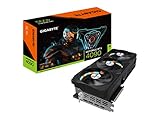
+ Pros
- Same 24GB VRAM as MSI for $200 less<br /> WINDFORCE cooling sustains boost clocks<br /> CUDA acceleration for effects-heavy workflows<br /> NVENC for hardware encoding<br /> Great for 8K RAW editing
- Cons
- Still requires 1000W+ PSU<br /> Large three-slot design<br /> Expensive for most editors<br /> Overkill for basic editing

+ Pros
- 16GB VRAM perfect for 4K editing<br /> Military-grade components for reliability<br /> Axial-tech fan design stays quiet<br /> NVENC encoder for fast exports<br /> Great balance of price and performance
- Cons
- 320W TDP requires 750W+ PSU<br /> No 8K editing headroom compared to 4090<br /> $1
- 799 still pricey for many editors

+ Pros
- 16GB VRAM for 4K workflows<br /> MaxContact cooling for sustained loads<br /> Triple Axial-tech fans for quiet operation<br /> Aura Sync RGB for aesthetics<br /> Great for 4K editing suites
- Cons
- Premium pricing over TUF variant<br /> 3.5-slot design is massive<br /> 320W TDP requires substantial PSU<br /> No performance gain over cheaper 4080 Super

+ Pros
- 16GB VRAM excellent for 4K<br /> WINDFORCE cooling runs cool and quiet<br /> Great value for 4K workflows<br /> DLSS 3.5 for AI features<br /> PCIe 4.0 for fast data transfer
- Cons
- $1
- 485 still expensive<br /> 12GB less VRAM than RTX 4090<br /> Not enough VRAM for serious 8K editing
+ Pros
- Best 4K value at $849<br /> 16GB VRAM handles 4K timelines<br /> Military-grade components for reliability<br /> Axial-tech fan design for cooling<br /> Great for 1440p/4K editors on budget
- Cons
- Not enough VRAM for 8K<br /> 285W TDP requires 650W+ PSU<br /> PCIe 4.0 not future-proof like PCIe 5.0

+ Pros
- #1 Top Rated choice<br /> 12GB VRAM great for 1440p editing<br /> Compact 2.5-slot design<br /> 0dB technology for silent idle<br /> Great value for mid-range editors
- Cons
- 12GB VRAM limits complex 4K timelines<br /> Not enough VRAM for serious 4K editing<br /> 220W TDP requires 550W+ PSU

+ Pros
- 12GB GDDR7 next-gen memory<br /> PCIe 5.0 future-proofing<br /> Compact 2.5-slot SFF design<br /> Dual BIOS for flexibility<br /> Great for small workstation builds
- Cons
- 12GB VRAM limits 4K complexity<br /> 250W TDP requires 550W+ PSU<br /> GDDR7 performance gains minimal for editing

+ Pros
- Budget-friendly option at $409<br /> 8GB GDDR7 for 1080p editing<br /> PCIe 5.0 future-proofing<br /> Military-grade components<br /> Axial-tech fan for cooling
- Cons
- 8GB VRAM limits for complex timelines<br /> No 4K editing headroom<br /> 180W TDP requires 500W+ PSU

+ Pros
- Workstation drivers for Adobe apps<br /> Certified for professional software<br /> ECC VRAM for rendering accuracy<br /> Ray tracing for effects<br /> Best budget professional option
- Cons
- Only 8GB VRAM limits 4K work<br /> Older Turing architecture<br /> Lower performance than consumer RTX cards<br /> Not ideal for gaming

+ Pros
- 16GB GDDR7 for high-res timelines<br /> PCIe 5.0 future-proofing<br /> SFF-Ready compact design<br /> Dual BIOS for flexibility<br /> Great VRAM for budget 4K editing
- Cons
- Only 8GB more VRAM than 8GB model<br /> Mid-range CUDA core count<br /> 180W TDP requires 500W+ PSU
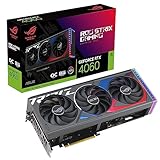
+ Pros
- 8GB VRAM for 1080p editing<br /> Axial-tech fan design<br /> 0dB technology for silent idle<br /> Aura Sync RGB<br /> Budget entry point
- Cons
- 8GB VRAM limits for 4K<br /> Entry-level CUDA core count<br /> Not future-proof for growing editors
Video Editing Performance by Software
Adobe Premiere Pro
Premiere Pro is heavily CUDA-optimized, making NVIDIA GPUs the clear choice. The Mercury Playback Engine relies on CUDA acceleration for real-time playback of effects, timeline scrubbing, and GPU-accelerated transitions. For 1080p editing, an RTX 4060 with 8GB VRAM is adequate. For 4K editing, step up to an RTX 4070 Super with 12GB or RTX 4070 Ti Super with 16GB. For 8K or complex timelines, an RTX 4090 with 24GB is ideal. Premiere Pro also leverages NVENC for faster exports when encoding to H.264/H.265.
DaVinci Resolve
DaVinci Resolve is GPU-first architecture, meaning your GPU choice is critical. Resolve supports both NVIDIA (CUDA) and AMD (OpenCL/Metal on Mac), but NVIDIA generally offers better performance on Windows. For 1080p editing, 8GB VRAM is minimum. For 4K, 12GB+ is recommended. For 8K or color grading work, 16GB+ is ideal. Resolve also supports multi-GPU configurations, so adding a second GPU can significantly improve performance for specific tasks like noise reduction and fusion effects.
After Effects
After Effects uses GPU acceleration for 3D layers, ray-traced rendering, and composition effects. CUDA cores are critical for smooth performance. Minimum 8GB VRAM for basic work, 12GB+ recommended for complex 3D compositions. After Effects benefits from higher CUDA core counts, so RTX 4080 and RTX 4090 cards deliver significantly better performance than lower-tier options.
Final Cut Pro
Final Cut Pro on Mac uses Metal framework and is optimized for AMD GPUs on Apple Silicon. If you’re editing on Mac, your GPU choice is tied to your Mac model. Apple Silicon M1/M2/M3 chips with integrated or discrete AMD GPUs handle video editing excellently thanks to Metal optimization and ProRes acceleration. For Windows-based editors, NVIDIA cards don’t directly translate to Final Cut Pro performance since the software is Mac-only.
VRAM Requirements by Resolution
| Resolution | Minimum VRAM | Recommended VRAM | Ideal VRAM | GPU Tier |
|---|---|---|---|---|
| 1080p | 4GB | 6-8GB | 8GB+ | Entry-level (RTX 4060) |
| 4K | 8GB | 10-12GB | 12GB+ | Mid-range (RTX 4070 Super) |
| 8K | 12GB | 16-20GB | 24GB+ | High-end (RTX 4090) |
Budget Recommendations by Editing Resolution
Under $500: 1080p Editing
PNY Quadro RTX 4000 ($339): Professional workstation option with certified drivers. Best for color grading and professional 1080p workflows.
ASUS ROG Strix RTX 4060 ($489): Consumer option with 8GB VRAM. Adequate for basic 1080p editing but limited VRAM for growth.
$500-800: 1440p Editing
ASUS Prime RTX 5070 ($549): Next-gen GDDR7 memory with PCIe 5.0. Great compact option for 1440p editing.
ASUS Dual RTX 4070 Super ($599): 12GB VRAM perfect for 1440p workflows. Compact design and quiet operation.
ASUS Prime RTX 5060 Ti 16GB ($529): 16GB VRAM excellent for high-res 1440p timelines. Budget-friendly 4K capability.
$800-1,500: 4K Editing
ASUS TUF RTX 4070 Ti Super ($849): Best value for 4K editing. 16GB VRAM handles 4K workflows smoothly.
Gigabyte RTX 4070 Ti Super ($1,485): Premium cooling and 16GB VRAM. Great for sustained 4K rendering sessions.
$1,500+: 8K Editing
ASUS TUF RTX 4080 Super ($1,799): 16GB VRAM minimum for 8K. Great balance of price and performance.
GIGABYTE RTX 4090 ($3,199): 24GB VRAM for serious 8K workflows. Best for professional studios.
MSI RTX 4090 ($3,399): Ultimate 8K editing performance. Overkill for most editors but unbeatable for 8K RAW.
Workstation vs Consumer GPUs: Which is Right for You?
Consumer GPUs (RTX 4060, RTX 4070, RTX 4090): Better price-to-performance ratio, gaming capabilities, frequent updates, widely available. Best for most editors, YouTube creators, small studios, and budget-conscious professionals.
Workstation GPUs (Quadro RTX 4000, RTX 5000 Ada): Extended warranty, ECC VRAM for accuracy, professional driver certification, 24/7 operation rated, better multi-GPU scaling. Best for professional studios, broadcast, feature film post-production, and heavy color grading work.
For most video editors, consumer GPUs offer the best value. Professional workstation cards make sense only if you need certified drivers for client requirements or 24/7 operation reliability. The PNY Quadro RTX 4000 on this list is a budget-friendly entry point into workstation GPUs, but most editors will get better performance per dollar from consumer RTX cards.
FAQ: Best GPUs for Video Editing
[rank_math_faq]
Do I need a GPU for video editing?
Yes, a GPU is essential for modern video editing. While you can perform basic cuts with CPU-only editing, effects, color grading, timeline scrubbing, and exports all benefit significantly from GPU acceleration. Adobe Premiere Pro, DaVinci Resolve, and After Effects all rely heavily on GPU performance for real-time playback and faster rendering.
[/rank_math_faq]
[rank_math_faq]
How much VRAM do I need for 4K video editing?
For 4K video editing, 10-12GB VRAM is recommended, with 12GB+ being ideal. An RTX 4070 Super with 12GB or RTX 4070 Ti Super with 16GB are excellent choices for 4K workflows. With 12GB+ VRAM, you can smoothly scrub through 4K timelines, run multiple layers, apply effects, and color grade without hitting memory limits.
[/rank_math_faq]
[rank_math_faq]
Is NVIDIA or AMD better for video editing?
NVIDIA is generally better for video editing due to CUDA ecosystem dominance. Adobe Premiere Pro, After Effects, and DaVinci Resolve are heavily optimized for CUDA acceleration. NVIDIA’s NVENC encoder also provides faster exports for H.264/H.265. AMD can be a good budget option with more VRAM per dollar, but software optimization is less consistent. DaVinci Resolve on Mac works well with AMD GPUs via Metal framework.
[/rank_math_faq]
[rank_math_faq]
Can I use a gaming GPU for video editing?
Yes, gaming GPUs are excellent for video editing. NVIDIA’s RTX series (RTX 4060, RTX 4070, RTX 4090) are fantastic for both gaming and editing. The CUDA cores, NVENC encoder, and VRAM capacity that benefit gaming also improve video editing performance. Most professional editors use consumer gaming GPUs rather than workstation cards.
[/rank_math_faq]
[rank_math_faq]
Does GPU help with video export speed?
Yes, GPU significantly improves export speed through hardware encoding. NVIDIA’s NVENC encoder handles H.264/H.265 encoding on dedicated GPU hardware, which is much faster than CPU encoding. In Adobe Premiere Pro and DaVinci Resolve, enabling GPU-accelerated encoding can reduce export times by 50% or more, especially for H.265 and high-resolution content.
[/rank_math_faq]
[rank_math_faq]
What’s the minimum GPU for video editing?
The minimum GPU for video editing depends on your resolution. For 1080p editing, 4GB VRAM is minimum (GTX 1650 or better). For 4K editing, 8GB VRAM is minimum (RTX 3060 or RTX 4060). For 8K editing, 12GB VRAM is bare minimum, but 16GB+ is realistically required (RTX 4080 or RTX 4090). NVIDIA GPUs are recommended over AMD for better software compatibility.
[/rank_math_faq]
[rank_math_faq]
How does CUDA help video editing?
CUDA (Compute Unified Device Architecture) is NVIDIA’s parallel computing platform that video editing software uses for GPU acceleration. In Adobe Premiere Pro, CUDA accelerates the Mercury Playback Engine for real-time effects playback. In DaVinci Resolve, CUDA powers color grading, noise reduction, and fusion effects. More CUDA cores generally mean faster timeline scrubbing, smoother effects playback, and quicker renders.
[/rank_math_faq]
[rank_math_faq]
Do I need an RTX card for video editing?
RTX cards are recommended but not strictly required for video editing. RTX cards offer CUDA cores, Tensor cores for AI features, and RT cores for ray tracing, all of which benefit video editing. However, older GTX cards with CUDA support can still work for basic editing. For best performance and future-proofing, RTX 30-series or RTX 40-series cards are recommended.
[/rank_math_faq]
Final Recommendations: Choosing the Best GPU for Your Video Editing Workflow
Choosing the right GPU for video editing depends on your resolution, workflow complexity, and budget. For most editors, the sweet spot is an RTX 4070 Ti Super with 16GB VRAM—it handles 4K editing smoothly without the extreme cost of high-end cards. If you’re on a budget and editing 1080p or basic 4K content, an RTX 4070 Super with 12GB VRAM delivers excellent value. For professional studios working with 8K RAW footage, the RTX 4090 with 24GB VRAM is practically mandatory.
Remember that VRAM capacity is the most critical spec for video editing. More VRAM means smoother timeline scrubbing, real-time effects playback, and headroom for complex projects. CUDA cores accelerate Adobe and DaVinci Resolve workflows, while NVENC speeds up exports. Prioritize NVIDIA GPUs for best software compatibility, and choose VRAM capacity based on your target editing resolution.
Whether you’re a YouTube creator, freelance editor, or professional studio, the right GPU will dramatically improve your editing experience. Invest in adequate VRAM, leverage CUDA acceleration, and enjoy real-time playback of your creative vision.