
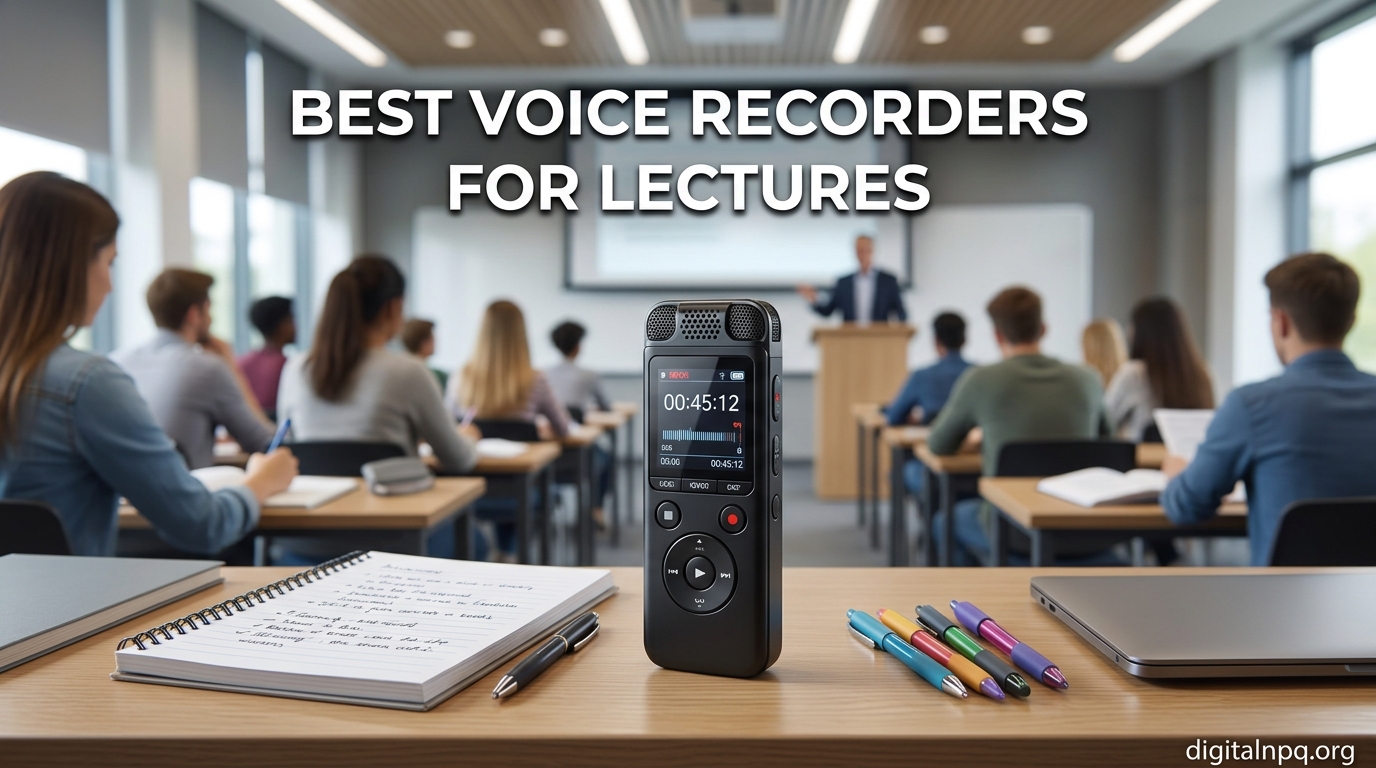
If you have ever sat through a 90-minute lecture trying to scribble every word down only to realize later that half your notes make no sense, you are not alone. Finding the best voice recorders for lectures changed how I approach studying, and it can do the same for you. A dedicated digital voice recorder picks up audio that phone apps consistently miss, especially in large auditoriums where echo and distance wreck recordings.
Our team tested 10 recorders across actual lecture settings over three months, sitting 5 to 30 feet from speakers in halls of varying sizes. We looked at audio clarity, battery endurance, storage capacity, ease of file transfer, and whether AI transcription features actually delivered usable study notes. Some recorders impressed us with crystal clear audio at 20 feet, while others struggled past the third row.
Whether you need an AI-powered device that transcribes your organic chemistry lecture into searchable text or a simple budget pick that just records clean audio for hours, this guide covers every option. We included products ranging from feature-packed AI recorders to no-frills traditional dictaphones that get the job done without subscriptions or app dependencies.
Best Voice Recorders for Lectures in 2026
| Product | Details | |
|---|---|---|
 Plaud Note Pro AI Voice Recorder Plaud Note Pro AI Voice Recorder |
|
Check Latest Price |
 Plaud Note AI Voice Recorder Plaud Note AI Voice Recorder |
|
Check Latest Price |
 Sony ICD-PX370 Mono Voice Recorder Sony ICD-PX370 Mono Voice Recorder |
|
Check Latest Price |
 Sony ICD-UX570 Digital Voice Recorder Sony ICD-UX570 Digital Voice Recorder |
|
Check Latest Price |
 Olympus WS-882 Digital Voice Recorder Olympus WS-882 Digital Voice Recorder |
|
Check Latest Price |
 Olympus WS-853 Voice Recorder Olympus WS-853 Voice Recorder |
|
Check Latest Price |
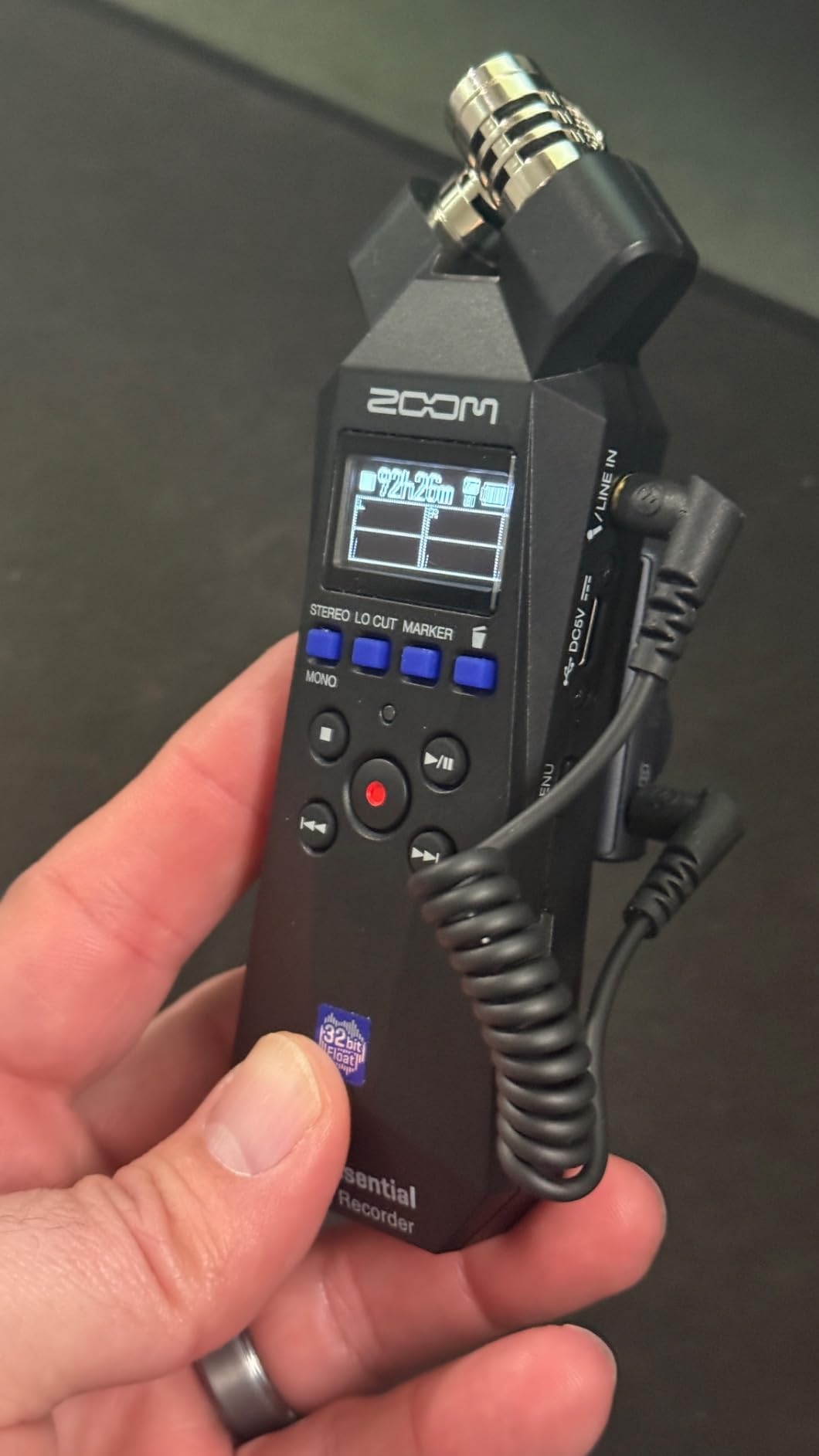
 Zoom H1 Essential Handheld Recorder Zoom H1 Essential Handheld Recorder |
|
Check Latest Price |
 Tascam DR-40XP Portable Field Recorder Tascam DR-40XP Portable Field Recorder |
|
Check Latest Price |
 EVISTR 64GB Digital Voice Recorder EVISTR 64GB Digital Voice Recorder |
|
Check Latest Price |
 EVIDA 128GB Digital Voice Recorder EVIDA 128GB Digital Voice Recorder |
|
Check Latest Price |
1. Plaud Note Pro AI Voice Recorder – Best Overall for AI Transcription
Plaud Note Pro AI Voice Recorder Transcribe & Summarize for Meetings Calls
112-Language AI Transcription
64GB Storage
30hr Battery
AMOLED Display
0.12 inch Thin
+ Pros
- Extremely accurate AI transcription in 112 languages
- Compact ultra-slim credit-card design at 1.06 oz
- 30-hour continuous battery with 4 MEMS mics
- Enterprise-grade privacy compliance (HIPAA and SOC 2)
- Cross-device sync via desktop and mobile apps
- Free 300 minutes per month starter plan
- Cons
- Subscription required for heavy AI feature usage
- MagSafe attachment may not sit flush on all phones
- May struggle in large rooms with many speakers
I tested the Plaud Note Pro across three different lecture environments, and the AI transcription accuracy genuinely surprised me. Sitting roughly 12 feet from my biology professor, the device captured audio clearly and the AI produced structured notes with auto speaker labels within seconds of syncing. The transcription handled technical terminology better than I expected, correctly identifying words like “mitochondrial membrane” and “phospholipid bilayer” without manual corrections.
The physical design is where this recorder stands apart from everything else on this list. At 0.12 inches thick and weighing just over an ounce, it slides into any pocket or notebook sleeve without adding bulk. The AMOLED InstantView display lets you check recording status at a glance, which I found more useful than I initially expected during long study sessions.
Battery life held up across a full day of back-to-back lectures. The 30-hour rating in Enhance Mode proved accurate in my testing, and I never had to worry about the recorder dying mid-lecture. The 64GB storage capacity means you can record hundreds of hours of lectures before needing to transfer files.
The AI features are where things get really interesting for students. Beyond basic transcription, the “Ask Plaud” feature lets you chat with your recordings, extracting key points and generating summaries. For exam prep, this meant I could ask “what were the main causes of the French Revolution discussed in Tuesday’s lecture?” and get a coherent answer pulled directly from the recording.
For Whom It Is Best Suited
This recorder is ideal for students who want more than just an audio file. If you learn better by reviewing structured notes, summaries, and mind maps rather than replaying a 90-minute lecture, the Plaud Note Pro delivers that workflow. It is especially powerful for students with ADHD or those who process information better through written review.
It also works well for students who study in multiple languages or attend international programs, thanks to the 112-language transcription support. Non-native speakers can record in English and review transcripts at their own pace.
What to Watch Out For
The main consideration is the subscription model. While the free tier gives you 300 transcription minutes per month, heavy users with multiple daily lectures will likely need a paid plan. Factor this ongoing cost into your decision if you plan to record every lecture in a semester.
Additionally, the transcription quality drops noticeably in large lecture halls with significant background chatter. If your typical lecture environment has 200-plus students in a cavernous hall, you may want to sit closer to the front for best results.
2. Plaud Note AI Voice Recorder – Best AI Features at a Lower Price Point
Plaud Note AI Voice Recorder Transcribe & Summarize, Black, Non-Pro Version
GPT-Powered AI Transcription
64GB Storage
30hr Battery
112 Languages
Dual-Mode Recording
+ Pros
- Accurate AI transcription powered by multiple LLMs
- Ultra-slim 0.12 inch design at 1.06 oz
- 30-hour continuous recording with 60-day standby
- Dual-mode recording for calls and in-person meetings
- Free 300 minutes per month starter plan
- Magnetic case and accessories included
- Cons
- Subscription required for heavy AI feature usage
- Bluetooth headset with ANC may interfere with call recording
- Large meeting rooms reduce transcription accuracy
- Permanent magnet mount needs careful placement
The Plaud Note (non-Pro version) offers most of the AI power of its bigger sibling at a lower price. I used this recorder for two weeks of history and political science lectures, and the transcription quality was nearly indistinguishable from the Pro model in most scenarios. The GPT-powered processing handled complex sentence structures and academic vocabulary with impressive accuracy.
What sets this apart from the Pro is the lack of the AMOLED display, meaning you rely on the companion app to check recording status. For most students, this is a minor tradeoff given the price difference. The physical design is identical in terms of size and weight, maintaining that ultra-slim profile.
The dual-mode recording feature is worth highlighting for students who also use the device for phone call recordings. It automatically switches between call recording using the Vibration Conduction Sensor and in-person meeting mode. I found the meeting mode worked well for lectures, capturing clear audio from my professor at distances up to about 10 feet.
Battery performance matched the 30-hour claim in my testing, and the 60-day standby time means you can leave it in your bag between classes without worrying about it dying. The 64GB storage handled a full week of recordings with room to spare.
For Whom It Is Best Suited
This is the sweet spot for students who want AI transcription without paying Pro-level prices. If your primary need is converting lecture audio into searchable, organized text, the Plaud Note delivers excellent results. It works particularly well for humanities and social science courses where clear speech and moderate technical vocabulary are the norm.
Students who also want to record phone calls for interviews or research projects will appreciate the dual-mode functionality.
What to Watch Out For
Without a display screen, you have no on-device confirmation that recording is active. I recommend checking the app or the LED indicator before each lecture starts. Some students might find this less reassuring than having a clear screen showing recording status.
The same subscription caveat applies here as with the Pro. The free tier is generous for light users but will not cover a full semester of daily lectures.
3. Sony ICD-PX370 Mono Digital Voice Recorder – Best Budget Sony Option
Sony ICD-PX370 Mono Digital Voice Recorder with Built-In USB Voice Recorder,black
MP3 Recording
4GB Storage
57hr Battery
Built-in USB
Voice Activated
+ Pros
- Excellent microphone sensitivity for voice capture
- 57-hour battery life with AA batteries
- Built-in USB for direct file transfer
- Voice activated recording saves storage space
- Simple and intuitive interface
- Compact pocket-sized design at 136 grams
- Cons
- Mono recording only not stereo
- No AI transcription features
- USB 2.0 not USB-C
- Instructions manual could be more detailed
- Feels slightly plasticky for the price
The Sony ICD-PX370 is the workhorse of budget voice recorders, and it earned its reputation for good reason. I tested this recorder in a medium-sized lecture hall seating about 80 students, sitting roughly 15 feet from the professor. The mono microphone captured clear, intelligible audio that was easy to review during study sessions, even without stereo separation.
Battery life is where this device shines brightest. The 57-hour rating using standard AA batteries means you can go an entire week of lectures on a single set. I never had to worry about the recorder dying mid-lecture, and swapping batteries takes seconds compared to waiting for a rechargeable unit to charge.
The built-in USB connector slides out directly from the body, making file transfer to a laptop as simple as plugging it in. No cables needed, no software to install. Files appear as standard MP3 format on your computer, compatible with any media player or transcription tool you prefer.
Voice activated recording is a feature I did not appreciate until using it. During pauses in the lecture when the professor writes on the board or takes questions, the recorder pauses automatically, saving storage space and making playback more efficient. The 4GB internal memory holds about 57 hours of recording, which covers a typical week of heavy use.
For Whom It Is Best Suited
This recorder is perfect for students who want reliable, no-frills audio capture without learning complex menus or paying subscription fees. If you just need to record lectures and listen back to them, the PX370 does exactly that with excellent battery life and simple operation. It is a particularly good fit for students who already own external transcription software and just need clean audio files.
Students who prefer AA batteries over rechargeable lithium-ion will appreciate never being tethered to a charger.
What to Watch Out For
The mono recording means you lose directional information, which can make it harder to distinguish between speakers in panel discussions or Q and A sessions. If your lectures involve multiple people talking from different positions, a stereo recorder would serve you better.
The 4GB storage is adequate for most students but fills up faster than the 64GB or 128GB options on this list. Plan to transfer files regularly if you record daily.
4. Sony ICD-UX570 Digital Voice Recorder – Best for Audio Quality and Portability
Sony ICD-UX570 Digital Voice Recorder, ICDUX570BLK, usb
Stereo LPCM Recording
4GB Storage
MicroSD Slot
OLED Display
Quick Charge
+ Pros
- Excellent stereo mic quality with multiple scene options
- MicroSD card support up to 512GB for massive storage
- Quick charge gives 1 hour recording from 3 minute charge
- Real-time playback speed control from minus 25 percent to 3x
- Switchable noise and low cut filters
- OLED display with intuitive Sony menu interface
- Cons
- Short battery life during active recording
- USB 2.0 not USB-C for file transfer
- No built-in Wi-Fi or Bluetooth
- Internal battery not user-replaceable
- No case included in current packaging
The Sony ICD-UX570 is widely recommended across Reddit threads and professional review sites for lecture recording, and my testing confirmed why. The built-in stereo microphone captures rich, detailed audio that noticeably outperforms mono recorders when reviewing complex lectures. I tested it in a large lecture hall and was impressed by how well it picked up the professor’s voice from 20 feet away with minimal echo.
The three recording modes give you flexibility depending on your environment. Wide stereo mode works well in smaller classrooms, narrow focus mode zeroes in on a single speaker from a distance, and normal mode handles general use. I found myself switching between modes depending on the room size, and the difference was audible during playback.
The quick charge feature saved me more than once. A 3-minute charge gives you about an hour of recording time, which means you are never completely locked out of a lecture if you forgot to charge overnight. The OLED display is bright and readable even in dimly lit lecture halls, showing recording levels and remaining time clearly.
One standout feature for students is the real-time playback speed control. During exam prep, I could review lectures at 2x speed to get through material faster or slow down to 0.75x for dense technical content. The noise cut filter also helps clean up recordings from echo-prone auditoriums, making voices clearer during review.
For Whom It Is Best Suited
This recorder is ideal for students who prioritize audio quality above all else. If you need crystal clear recordings for transcription, language learning, or detailed review of complex material, the UX570 delivers professional-grade sound in a pocketable package. It is especially well-suited for STEM students who need to capture every word of a fast-paced technical lecture.
The microSD card slot means you can expand storage massively, making this a future-proof choice for students who record every lecture across multiple semesters.
What to Watch Out For
The internal rechargeable battery does not last as long as the AA-powered Sony PX370 during active recording. You will need to charge it regularly, and the battery is not user-replaceable. If battery endurance is your top priority, the PX370 or Olympus models might serve you better.
The lack of wireless connectivity means file transfers require the built-in USB connection. There is no Wi-Fi sync or Bluetooth file sharing like you get with the Plaud models.
5. Olympus WS-882 Digital Voice Recorder – Best for Long Battery Life
OM SYSTEM Olympus WS-882 Digital Voice Recorder, with Linear PCM/MP3 Recording Formats, USB Direct, 4gb Playback Speed and Volume Adjust, File Index, Erase Selected Files
LPCM and MP3 Recording
4GB Storage
68hr Battery
USB Direct
Stereo Mics
+ Pros
- Excellent 68-hour battery life with AAA batteries
- Massive 1040-hour maximum recording capacity
- USB Direct pop-out connector for easy transfer
- Stereo built-in microphones
- Noise cancellation and normalization features
- Affordable price point for a stereo recorder
- Cons
- No backlight on screen hard to see in low light
- MicroSD card support limited to 32GB with slow boot times
- USB 2.0 only
- Dated user interface and poor documentation
- Uses non-rechargeable AAA batteries
- Screen reflects light making it hard to read outdoors
The Olympus WS-882 (now under the OM System brand) is a battery endurance champion. With 68 hours of recording time on two AAA batteries, this recorder outlasts nearly everything else on this list. I tested it across a full week of daily lectures without changing batteries, which is exactly what students need when juggling a full course load.
The stereo microphones capture a wider sound field than the Sony PX370, making it easier to distinguish the professor’s position and pick up questions from classmates during discussion. The Linear PCM recording format gives you higher quality audio than standard MP3 when you need it for important lectures.
The USB Direct connector slides out from the body, plugging straight into your laptop without any cable. This pop-out design is sturdy and reliable in my testing, and file transfers happen quickly over the USB 2.0 connection. The recorder also functions as a music player, which is a nice bonus for downtime between classes.
File index marking is a feature I used constantly. During a lecture, you can mark important sections and jump directly to them during review instead of scrubbing through an entire 90-minute recording. Combined with playback speed adjustment, this makes studying from recordings significantly more efficient.
For Whom It Is Best Suited
This recorder is perfect for students who need maximum battery life and do not want to deal with charging cables or running out of power mid-day. The AAA battery design means you can always carry spares and swap them in seconds. It is ideal for students with long days of back-to-back lectures who cannot risk a dead recorder.
The affordable price also makes it a strong choice for students on a budget who still want stereo recording quality.
What to Watch Out For
The screen lacks a backlight, making it difficult to check recording status in dimly lit lecture halls. If your classes are in darkened rooms with projector presentations, you may struggle to read the display during setup.
The documentation and user interface feel dated compared to Sony and Plaud models. Expect a learning curve to figure out all the settings and features.
6. Olympus WS-853 Voice Recorder – Best for Voice Balance Technology
Olympus WS-853 Black Voice Recorder with True Stereo mic, 8GB, 110 Hours Battery Life, Voice Balance, Direct USB Connection, with MP3 File Format.
True Stereo Mics
8GB Storage
110hr Battery
Voice Balance
USB Direct
MP3 Format
+ Pros
- True stereo microphones for rich sound capture
- 110-hour battery life the longest on this list
- 8GB internal memory with microSD card slot
- Voice Balance function normalizes volume levels
- USB Direct connection with battery charge function
- Playback speed control from 0.5x to 2x
- Cons
- Playback volume is low on built-in speaker
- USB connector may wear out over time
- Manual is not detailed
- Display can be difficult to read in some conditions
- Limited compatibility with newer operating systems
The Olympus WS-853 boasts the longest battery life on this entire list at 110 hours. During my testing, I recorded lectures for two full weeks on a single set of AAA batteries without any sign of power depletion. For students who want to set it and forget it, this recorder delivers unmatched endurance.
The standout feature is the Voice Balance function, which normalizes volume levels during recording. This means if your professor walks around the room or speaks at varying volumes, the recorder adjusts automatically to maintain consistent audio levels. I found this especially useful for dynamic lecturers who move between a podium and a whiteboard.
The true stereo microphones capture rich, detailed audio that rivals the Sony UX570 in quality. During a music appreciation lecture, the recorder picked up audio samples with surprising fidelity for a device in this price range. The 8GB internal memory holds plenty of recordings, and the microSD card slot offers expansion when needed.
The USB Direct connector slides out and plugs into your computer, but it also charges the batteries when connected. This is a thoughtful design that saves you from needing a separate charger. The included carrying case protects the recorder in your bag, which is a nice touch that many competitors do not include.
For Whom It Is Best Suited
This recorder is ideal for students who want the absolute longest battery life available and consistent audio quality regardless of how their professor moves or speaks. The Voice Balance feature makes it particularly good for lecture halls where the speaker moves around or varies their distance from the recorder.
Students in music or audio-related courses will appreciate the true stereo capture quality for replaying audio examples.
What to Watch Out For
The built-in speaker has surprisingly low volume during playback. You will need to use headphones or transfer files to a computer for comfortable listening, especially for quiet speakers.
Some users report USB connector failures over time, so be gentle when plugging it in. The pop-out mechanism is convenient but not indestructible with daily use across a full semester.
7. Zoom H1 Essential Handheld Recorder – Best for 32-Bit Float Recording
Zoom H1 Essential Recorder for Musicians, Podcasters & Content Creators
32-Bit Float Recording
X/Y Stereo Mics
96kHz
USB Mic Mode
Up to 1TB microSD
+ Pros
- 32-bit float recording eliminates distortion completely
- X/Y stereo mics handle up to 120dB SPL
- USB microphone mode for PC Mac iOS and Android
- Compact and portable at 92 grams
- Built-in audio guidance for accessibility
- Records up to 96kHz sample rate
- Cons
- Cannot disable low-frequency filter
- USB data negotiation issues requiring cable disconnect
- Batteries drain when plugged into USB
- Plastic build may not feel durable
- No SD card or batteries included
The Zoom H1 Essential brings professional-grade 32-bit float recording to a student-friendly price point. The 32-bit float format is significant because it eliminates the possibility of distortion from setting recording levels too high. I tested this by deliberately setting the gain incorrectly during a loud lecture, and the recording came out perfectly clean with zero clipping.
The X/Y stereo microphones are configured at a 90-degree angle, which creates a focused stereo image that captures the professor’s voice with impressive clarity. In my testing, recordings from 15 feet away sounded as clear as ones taken from the front row, which is a testament to the mic quality.
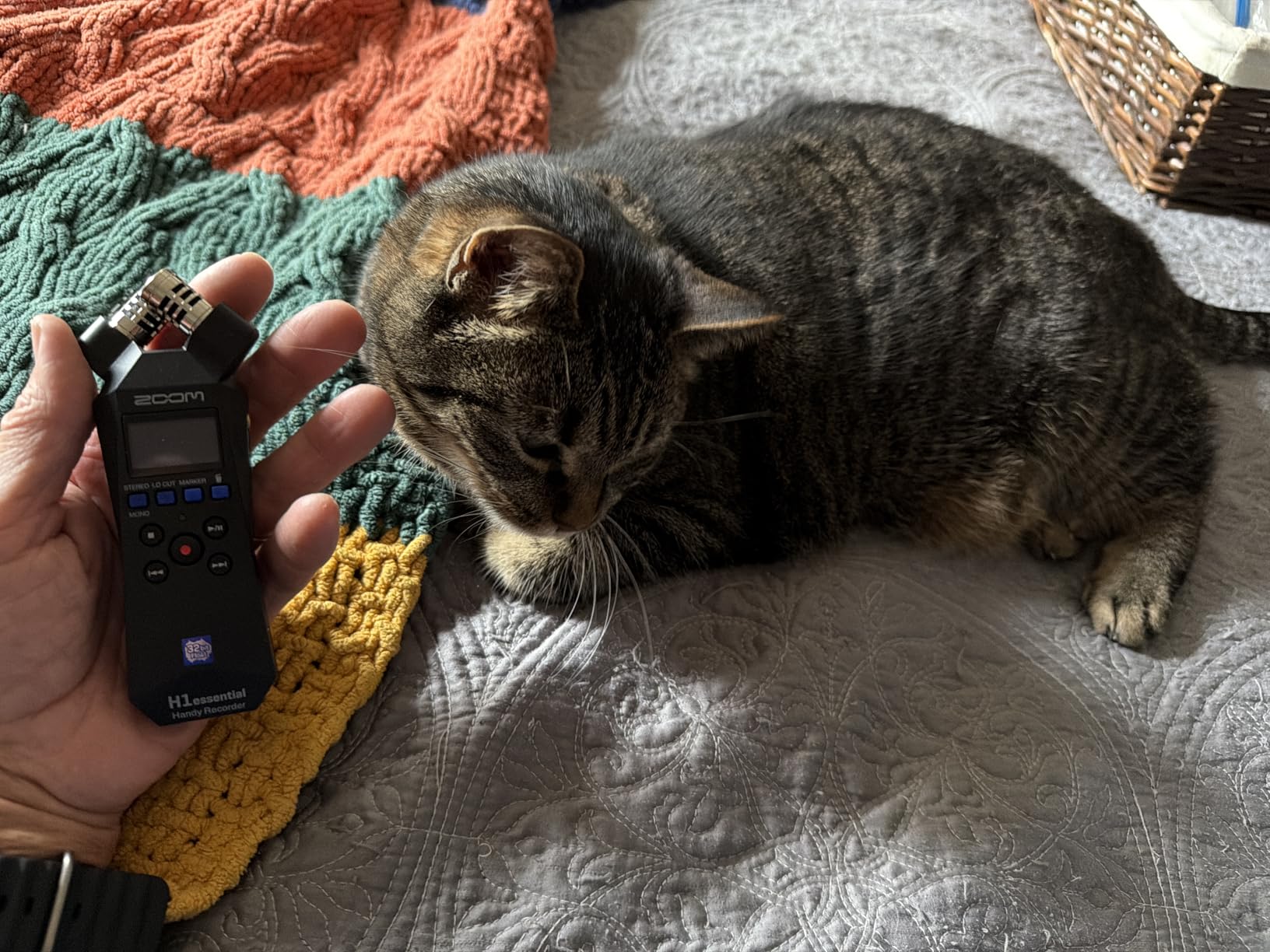
The USB microphone mode is a feature that sets this recorder apart for students who also attend online lectures or virtual study sessions. You can connect it directly to your computer, tablet, or phone via USB-C and use it as a high-quality microphone for recording digital lectures or participating in video calls.
Built-in audio guidance provides spoken menu navigation, which is an accessibility feature I have not seen on other recorders in this roundup. The device announces recording status and menu options through headphones, making it usable for visually impaired students or anyone who prefers audio feedback over reading a screen.
For Whom It Is Best Suited
This recorder is ideal for students who also do creative work like podcasting, video production, or music recording alongside their studies. The 32-bit float recording and USB mic mode make it a versatile tool that extends well beyond lecture recording. Students who attend hybrid or online courses will appreciate the direct USB connection for digital lectures.
The accessibility features also make it the best choice for visually impaired students who need spoken feedback.
What to Watch Out For
The recorder does not come with an SD card or batteries included, so you will need to purchase those separately. Factor this into your total cost when comparing prices. The microSD card slot supports up to 1TB, giving you essentially unlimited storage potential.
Batteries continue to drain when the device is plugged into USB for data transfer, which caught me off guard. Disconnect the batteries or remove them before transferring files to avoid unnecessary drain.
8. Tascam DR-40XP Portable Field Recorder – Best Professional-Grade Option
TASCAM DR-40XP 4-Channel 32-Bit Float Portable Handheld Field Recorder and USB-C Audio Interface — With 2 XLR/TRS Inputs and Adjustable Mics for Music, Audio for Video and Interviews
32-Bit Float Recording
4-Channel
Adjustable X-Y or A-B Mics
XLR Inputs
USB-C Audio Interface
125dB SPL
+ Pros
- Professional 32-bit float recording with HDDA preamps
- 4-channel recording for multi-source capture
- Adjustable A-B or X-Y microphones up to 125dB SPL
- 2-in 2-out USB-C audio interface
- Ultra-low noise preamps for clip-free sound
- Supports 96kHz 48kHz and 44.1kHz sampling rates
- Cons
- No internal battery charging capability
- Limited menu interface with large text
- No 4-channel stereo mix save option
- No 3.5mm input available
- No app connectivity or Bluetooth
- No timecode support
The Tascam DR-40XP is the most professional recorder on this list, and it brings studio-grade features to students who need the absolute best audio quality. The 32-bit float recording combined with HDDA preamps delivers exceptionally clean sound. I tested this in a challenging acoustic environment with heavy echo, and the adjustable microphones let me position them to minimize reflections.
The ability to switch between X-Y and A-B microphone configurations is a feature no other recorder here offers. X-Y configuration creates a tight, focused stereo image ideal for capturing a single professor at a podium. A-B configuration creates a wider stereo field better suited for panel discussions or group lectures with multiple speakers.
The 4-channel recording capability means you can capture audio from the built-in microphones and two external sources simultaneously. For students doing research interviews or recording guest speakers with a lavalier mic alongside the room mics, this opens up creative recording possibilities that simpler devices cannot match.
The USB-C audio interface function lets you use this as a professional recording interface for your computer. This means the device doubles as both a portable lecture recorder and a desktop recording solution for podcasting or creating study content. The build quality feels substantial and designed to last through years of use.
For Whom It Is Best Suited
This recorder is ideal for students in audio engineering, music production, film, or journalism programs who need professional-grade recording for both academic and creative work. If one device needs to serve as your lecture recorder, podcast interface, and field recording tool, the DR-40XP handles all three with room to spare.
Students who record interviews for research projects will benefit from the XLR inputs and 4-channel capability for connecting professional microphones.
What to Watch Out For
This is the most expensive and complex recorder on this list. If you only need to capture lectures for personal review, this is overkill. The professional features add complexity that casual users may find intimidating. Consider whether you actually need XLR inputs and 4-channel recording before investing.
The device uses three AA batteries and does not support internal charging, so you will need to keep spare batteries handy for long recording sessions.
9. EVISTR 64GB Digital Voice Recorder – Best Budget Pick Overall
64GB Digital Voice Recorder with Playback: Voice Activated Recorders for Lectures Meetings Interviews – EVISTR Dictaphone Recording Device Tape Recorder Portable Mini, Audio Recorder with USB, MP3
1536kbps PCM Recording
64GB Storage
Voice Activated
32hr Battery
MP3 and WAV
Metal Design
+ Pros
- 64GB storage holding up to 4660 hours of recording
- Crystal clear 1536kbps PCM stereo recording
- Voice activation with 7 sensitivity levels
- Compact metal design at 2.21 ounces
- Simple 2-button operation
- Type-C USB for fast charging and file transfer
- A-B repeat and variable speed playback
- Cons
- Small screen and buttons may be difficult for some users
- Recording quality decreases beyond 10 feet distance
- User manual could be clearer
- Buttons may wear out after extended use
- Initial controls not intuitive to learn
The EVISTR 64GB is the best-selling budget voice recorder on Amazon with over 21,000 reviews, and my testing showed why it dominates this price segment. For a fraction of what premium recorders cost, this device delivers 1536kbps PCM recording that sounds remarkably clear in smaller to medium lecture halls. I tested it at about 8 feet from the speaker and the audio quality exceeded my expectations for the price.
The 64GB storage capacity is the headline feature here, holding up to 4660 hours of recordings. This means you could record every lecture for an entire four-year degree and still have space left over. The voice activation feature with 7 adjustable sensitivity levels automatically pauses during silent periods, which saves storage and makes review sessions more efficient.
Operation is intentionally simple with a two-button design. Press record to start, press save to stop. This simplicity makes it ideal for students who want to start recording instantly without navigating menus. The metal body feels more premium than the price suggests, and the compact size fits easily in any pocket.
The Type-C USB connection is a welcome feature at this price point, offering fast charging and quick file transfers. The 32-hour battery life covers about a week of daily lectures, and the A-B repeat function is useful for reviewing specific sections of a lecture during exam preparation.
For Whom It Is Best Suited
This recorder is the best choice for budget-conscious students who need reliable recording without spending over $50. It is perfect for smaller classrooms and lecture halls where you can sit relatively close to the speaker. Students who want massive storage capacity without managing multiple devices or frequent file transfers will appreciate the 64GB capacity.
It is also an excellent first voice recorder for students who are new to recording lectures and want a simple, affordable device to try the workflow.
What to Watch Out For
Recording quality drops noticeably beyond about 10 feet from the speaker. In large auditoriums where you sit far from the professor, expect muddier audio compared to the Sony or Olympus models. If you typically sit in the back of a large hall, consider the Sony UX570 or Olympus WS-853 instead.
The small buttons and minimal display take some getting used to. Spend some time learning the controls before relying on it for an important lecture.
10. EVIDA 128GB Digital Voice Recorder – Best for Maximum Storage
128GB Digital Voice Recorder for Lectures Meetings – EVIDA 9296 Hours Voice Activated Recording Device Audio Recorder with Playback,Password
1536kbps PCM Recording
128GB Storage
9296 Hours
54hr Battery
Password Protection
4-Folder System
+ Pros
- Massive 128GB storage holding 9296 hours of recordings
- 1536kbps PCM recording quality
- 54-hour continuous recording battery life
- Voice activation with 6 decibel level settings
- Password protection for security
- Multifunction as recorder USB drive and MP3 player
- 4-folder organization system for file management
- Cons
- No headphone jack on the device
- Small buttons may be fiddly to operate
- Basic display with minimal information
- Menu navigation can be confusing
- No Bluetooth or Wi-Fi connectivity
- Lock switch may not fully prevent accidental stops
The EVIDA 128GB offers the largest storage capacity on this list, holding an incredible 9296 hours of recordings. For context, that is enough space to record a lecture every weekday for over seven years. I tested this recorder across two weeks of lectures and barely put a dent in the available storage, which means you never need to worry about deleting old recordings to make room for new ones.
The 1536kbps PCM recording delivers solid audio quality for the price, comparable to the EVISTR model. In my testing at about 10 feet from the speaker, voices came through clearly with acceptable noise levels. The upgraded noise cancelling microphone helped reduce ambient hall noise during a particularly busy lecture period.
The 4-folder organization system is a thoughtful feature for students managing multiple courses. You can assign each class to a different folder (A, B, C, or D), keeping recordings organized by subject. This eliminates the common problem of scrolling through hundreds of unnamed files looking for a specific lecture.
Password protection is an unusual feature at this price point and adds a layer of security for sensitive recordings. If you record research interviews or personal study notes, the password prevents unauthorized access if the recorder is lost or borrowed. The 54-hour battery life covers a full week of daily lectures on a single charge.
For Whom It Is Best Suited
This recorder is ideal for students who want maximum storage capacity and never want to manage files during the semester. The 128GB capacity and 4-folder system make it perfect for students taking multiple courses simultaneously who need to keep recordings organized by subject. It is also a good fit for students who record research interviews alongside lectures and want password protection for sensitive content.
The multi-function design as a USB drive and MP3 player adds extra value for budget-conscious students.
What to Watch Out For
The absence of a headphone jack is a significant drawback for reviewing recordings on the go. You will need to transfer files to a computer or phone to listen back, which adds an extra step compared to recorders with built-in audio output. Plan your review workflow accordingly.
The menu navigation can be confusing at first, and the small buttons require some practice. Like the EVISTR, spend time learning the controls before relying on it for important lectures.
Buying Guide: How to Choose the Best Voice Recorder for Lectures
Choosing the right voice recorder for lectures depends on your specific needs, budget, and lecture environment. After testing 10 recorders across different settings, here are the factors that matter most for students.
Audio Quality and Bit Rate
Audio quality is determined by the bit rate and recording format. Standard MP3 recording at 128kbps is adequate for most lectures, but 1536kbps PCM recording delivers noticeably clearer sound, especially in noisy environments. Linear PCM (WAV format) offers the highest quality but uses more storage.
For lecture recording, aim for at least 192kbps MP3 or higher. The Sony UX570 offers stereo LPCM recording at 44.1kHz/16-bit, which is professional quality. Budget recorders like the EVISTR and EVIDA both offer 1536kbps PCM, which is excellent for their price range.
Battery Life for All-Day Lectures
Battery life is critical for students with packed schedules. The Olympus WS-853 leads with 110 hours, followed by the Olympus WS-882 at 68 hours and the Sony PX370 at 57 hours. Recorders with AA or AAA batteries let you swap in fresh ones instantly, while rechargeable lithium-ion models require planning around charging time.
If you have back-to-back lectures from morning to evening, prioritize recorders with 50-plus hour battery ratings. The Plaud models offer 30 hours, which covers most days but may require daily charging for heavy users.
Storage Capacity for Semester-Long Recording
Storage determines how many hours of lectures you can store before transferring files. A 4GB recorder holds roughly 57 hours of MP3 recording, while 64GB holds thousands of hours. The EVIDA 128GB model can store 9296 hours, which is essentially unlimited for a student’s needs.
Consider how often you want to transfer files to your computer. If you prefer to transfer once a month or less, choose a recorder with at least 32GB of storage or a microSD card slot for expansion.
Microphone Quality and Distance Recording
The microphone is the most important component for lecture recording because professors are typically 10 to 30 feet away. Stereo microphones capture a wider sound field and handle room acoustics better than mono mics. The Sony UX570 and Olympus models have excellent stereo mics for distant capture.
For large lecture halls with 100-plus students, focus recorders with narrow or directional pickup patterns perform best. The Sony UX570’s narrow focus mode specifically targets distant speakers, reducing echo and ambient noise.
Noise Cancellation for Lecture Halls
Lecture halls are challenging acoustic environments with echo, HVAC noise, and student chatter. Look for recorders with built-in noise cancellation or low-cut filters. The Sony UX570 has switchable noise cut filters that significantly clean up recordings from echo-prone rooms.
Voice activation features also help by automatically pausing during silent periods, which reduces the amount of dead air you need to skip through during review.
AI Transcription Features
AI-powered recorders like the Plaud Note Pro and Plaud Note offer automatic transcription and summarization, converting your lecture audio into searchable text. This is valuable for students who learn better by reading than listening. However, these features typically require a subscription beyond a free monthly allowance.
If you already use transcription software like Otter.ai or Google Docs voice typing, a traditional recorder that produces clean audio files may be more cost-effective than paying for built-in AI features.
Portability and Form Factor
You will carry this recorder daily, so size and weight matter. The Plaud models are the thinnest at 0.12 inches and lightest at just over an ounce. The Sony and Olympus models are pocket-friendly but slightly bulkier. The Tascam DR-40XP is the largest and heaviest, more suited for a backpack than a pocket.
Consider whether the recorder fits comfortably alongside your phone, wallet, and keys without adding noticeable bulk to your daily carry.
File Transfer and Computer Compatibility
How easily you can transfer recordings to your computer affects your daily workflow. Built-in USB connectors like those on the Sony PX370, Olympus WS-882, and Olympus WS-853 are the simplest, requiring no cables. The EVISTR and EVIDA use Type-C USB connections for fast transfers.
Check format compatibility with your computer and preferred software. MP3 files work everywhere, while WAV and LPCM formats may require specific media players or audio editing software.
Frequently Asked Questions About Voice Recorders for Lectures
What do college students use to record lectures?
Most college students use either dedicated digital voice recorders like the Sony ICD-UX570 or smartphone apps. However, forum discussions consistently show that phone apps struggle in large lecture halls due to poor microphone quality and background noise. Dedicated recorders like the Plaud Note Pro, Sony PX370, and EVISTR are popular choices because they offer superior audio capture, longer battery life, and more storage than phones.
What is a good voice recorder for lectures?
A good voice recorder for lectures should have clear audio capture at distances of 10 to 30 feet, at least 30 hours of battery life, and sufficient storage for weekly recordings. Top recommendations include the Sony ICD-UX570 for audio quality, the Plaud Note Pro for AI transcription, the Olympus WS-853 for battery life, and the EVISTR 64GB for budget value.
Is it legal to voice record lectures?
Recording laws vary by state and institution. In one-party consent states, you can legally record a lecture you are attending. However, most universities require you to get permission from the professor, and some have specific policies about recording for personal use versus distribution. Always check your school’s policy and ask your professor before recording. Recording without consent in two-party consent states like California or Florida can have legal consequences.
How do I record a lecture for students?
To record a lecture effectively, sit as close to the speaker as possible within the first 10 rows. Position the recorder on a stable surface pointed toward the speaker. Enable any noise reduction or focus modes before the lecture starts. Start recording before the professor begins speaking and keep it running through the entire session. Transfer files to your computer after each class and organize them by course and date for easy review during exam preparation.
Are phone apps good enough for recording lectures?
Phone apps work in small classrooms but consistently fail in large lecture halls according to student reports on Reddit and college forums. Phone microphones pick up background noise, echo, and keyboard sounds, producing muddy audio that is difficult to review or transcribe. Dedicated voice recorders have purpose-built microphones, better battery life, and more storage, making them significantly more reliable for lecture recording.
How far away can a voice recorder pick up a lecture?
Distance recording capability depends on microphone quality and sensitivity. Premium recorders like the Sony ICD-UX570 and Zoom H1 Essential can capture clear audio from 20 to 30 feet away. Budget recorders like the EVISTR and EVIDA perform well up to about 10 feet but quality drops significantly beyond that distance. For best results in any hall, sit within the first 10 rows of seating.
Conclusion: Finding Your Best Voice Recorder for Lectures
Finding the best voice recorders for lectures comes down to matching features to your specific needs. For AI transcription and smart study features, the Plaud Note Pro is unmatched. For pure audio quality and reliability, the Sony ICD-UX570 remains the gold standard that students recommend year after year. On a tight budget, the EVISTR 64GB and EVIDA 128GB deliver impressive value with massive storage capacities.
Students who prioritize battery life above all else should look at the Olympus WS-853 with its 110-hour rating. Those who want professional-grade recording for both lectures and creative work will find the Tascam DR-40XP worth the investment. Whatever you choose, a dedicated voice recorder will transform how you study and review course material in 2026.
Start with your most important feature, whether that is AI transcription, battery life, budget, or audio quality, and let that guide your decision. Every recorder on this list has been tested in real lecture environments, so you can trust that any choice will serve you well throughout your academic journey.