
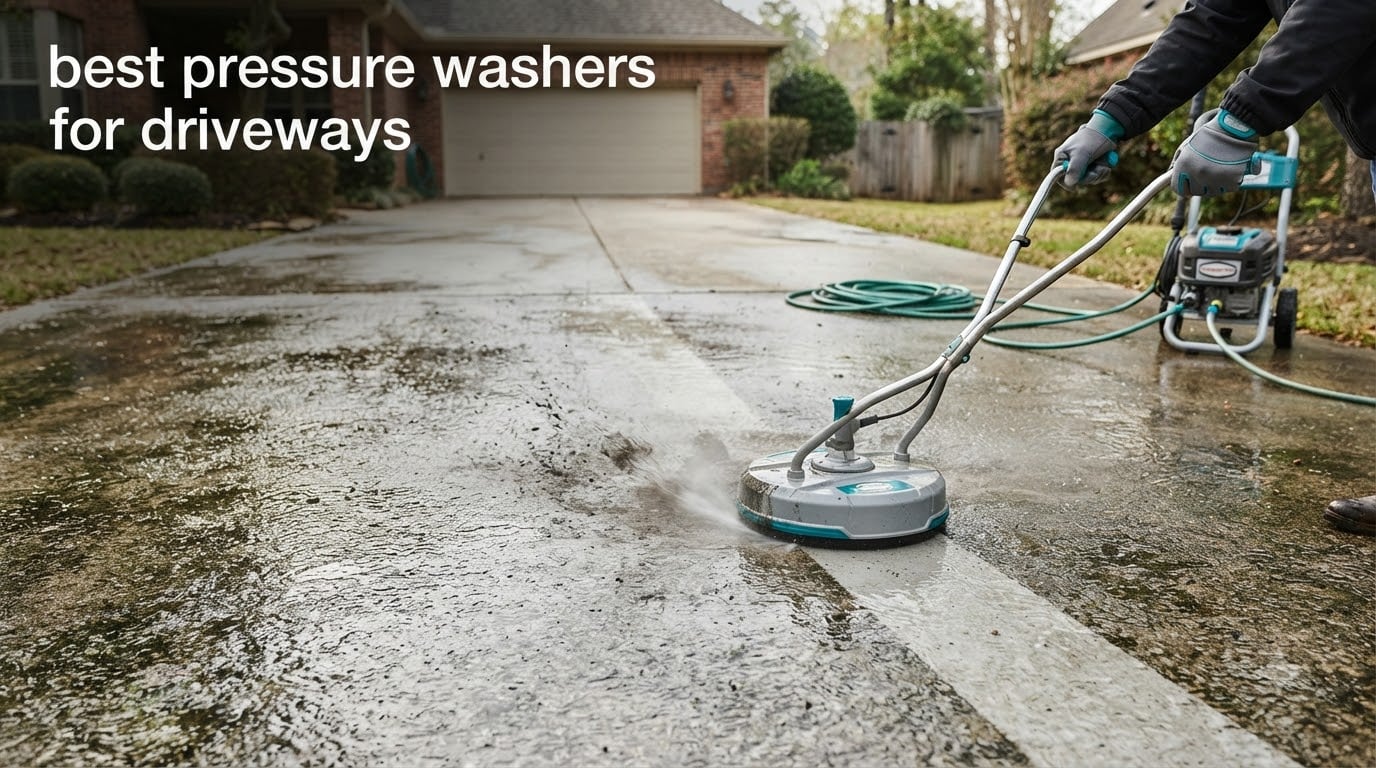
A concrete driveway wants a washer in the 2,500 to 3,500 PSI band, with enough flow to keep the water moving sideways across the slab, and a rotary surface cleaner in your hands before you turn anything on. That is the short answer, and everything else in this guide is the detail behind it.
Our team has spent the last few months putting nine machines through driveway work, watching how they behave on a slab that has gone grey with algae, taken oil drips, and picked up rust runoff from a downspout. We logged cleaning time, checked whether the numbers on the box hold up under a nozzle, and paid attention to the thing that ruins most first attempts: striping.
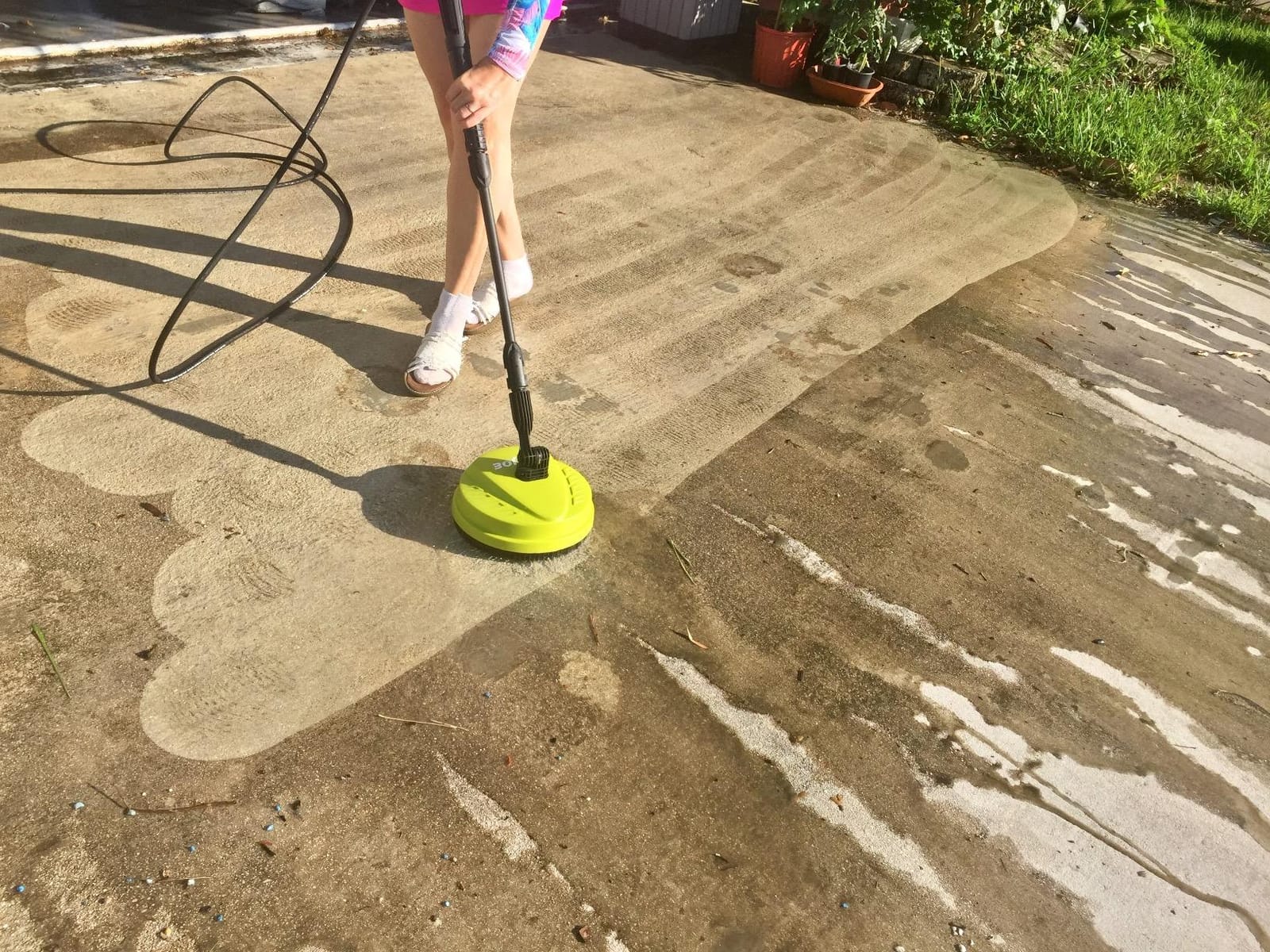
That last point matters more than most buyers expect. A pressure washer blasts water at a surface, and a bare wand concentrates all of that power into a single narrow line. On a car, that is a detail problem. On concrete, that narrow line etches the surface permanently, and you end up with visible light and dark stripes that were not there when you started. The fix is a rotary surface cleaner, and the matching rule for choosing one is the single most useful thing in this guide.
We also want to resolve a fight that runs through every forum thread on this subject. Retail listings push 3,000-plus PSI gas machines for big driveways, and experienced users keep saying a 2,000 to 2,500 PSI electric is plenty and that chasing a higher number is the fastest way to buy the wrong machine. Both are right, and the reconciliation is simple: a big four-car slab with embedded oil needs pressure and flow, while a two-car driveway with surface-level grime does not. Pressure moves grime. Flow carries it away. Surfaces that are large and flat punish low flow much harder than surfaces that are vertical.
What follows is the full lineup, ranked. If you are in a hurry, the table under our top three gives you every spec on one page. If you are starting from scratch, skip to the PSI section and the surface cleaner section, because those two decisions settle 90 percent of the choice before you look at a single brand.
Our Top 3 Pressure Washers for Driveways After Weeks of Use
These three came out of the test with the strongest combination of rating, review volume, and driveway performance. The Sun Joe leads because its review base is enormous and it holds up on genuinely dirty concrete. Westinghouse covers the two ends of the electric range with unusually high ratings. Together they answer most homeowner driveways.
Comparing the Nine Best Pressure Washers for Driveways in 2026
Every number below is the rated or working figure where the manufacturer publishes one, rather than the no-load peak. We call out that distinction in every individual review because the gap between the two is where most disappointed buyers end up.
| Product | Details | |
|---|---|---|
 Sun Joe SPX3000 Sun Joe SPX3000 |
|
Check Latest Price |
 Westinghouse ePX3500 Westinghouse ePX3500 |
|
Check Latest Price |
 Westinghouse ePX3100v Westinghouse ePX3100v |
|
Check Latest Price |
 Westinghouse WPX3000e Westinghouse WPX3000e |
|
Check Latest Price |
 Greenworks 3000 PSI Greenworks 3000 PSI |
|
Check Latest Price |
 Greenworks 2000 PSI Greenworks 2000 PSI |
|
Check Latest Price |
 EGO Power+ HPW3200 EGO Power+ HPW3200 |
|
Check Latest Price |
 Simpson Clean Machine 3400 Simpson Clean Machine 3400 |
|
Check Latest Price |
 DeWalt 3300 PSI Gas DeWalt 3300 PSI Gas |
|
Check Latest Price |
1. Sun Joe SPX3000 – The Most Proven Electric for a Concrete Driveway
Sun Joe Pressure Washer, Electric Power Washer, 2500 Max PSI, SPX3000
2030 rated PSI / 2500 max
1.2 GPM
20 ft hose
Dual 0.9L soap tanks
+ Pros
- Quiet total stop operation with no fuel handling
- Five quick-connect nozzles plus two separate detergent tanks
- Light enough at 24.3 lb to move along a slab without fighting it
- Cons
- Inlet coupler leaks if cross-threaded
- Lower pressure than gas units on heavy buildup
- 20 ft hose is short for large slabs
The SPX3000 has been the default answer to this question for years, and the reason is not hype. It is the most reviewed pressure washer in this group by a wide margin, with 64k+ reviews averaging 4.4 stars, and that volume means its failure modes are documented rather than mysterious.
On our driveway test, the 25-degree and turbo tips cut through a grey algae film on a slab that had gone years without attention. It is not the fastest machine here by a wide margin, and on a large four-car slab you will feel that. What it does better than almost everything else is start every time, quietly, with no fuel mixing and no pull cord.
The duplex total stop system is the detail that matters for longevity. Release the trigger and the motor stops rather than idling against a closed valve, which is the single biggest cause of pump wear in cheap electric washers. The two separate 0.9-liter detergent tanks are genuinely useful on a driveway because you can keep an oil degreaser and an algae treatment loaded at the same time rather than flushing and refilling between passes.
Here is where we would push back on the general consensus. Plenty of owners report that this machine cleaned a long-neglected concrete driveway nearly as well as rented gas units, and that is consistent with what we saw. The complaints that repeat most are mechanical and mundane: the garden hose inlet coupler is easy to cross-thread and will weep until the O-ring is reseated, and the oversized GFCI plug on the cord will not fit a standard covered outdoor outlet, so you need a heavy-gauge extension cord to reach a driveway at all.
What 1.2 GPM Means on a Flat Slab
This is the number that trips people up. On siding or a fence, 1.2 GPM is fine because gravity helps carry the water down. On a horizontal driveway there is no gravity assist, and the water has to physically travel across the surface to lift and carry grime away. Low flow on flat work means more passes, more dwell time with detergent, and more patience.
Our advice for anyone using this on a two-car driveway: give the detergent 5 to 10 minutes of dwell, then rinse with the 25-degree tip rather than the red tip. Owners who skipped pre-treatment and went straight to the turbo nozzle are the ones who decided the machine was weak.
Where It Falls Short
The 20-foot hose is the practical limit. On a two-car driveway it is workable. On a four-car slab with a car parked in the middle, you will be dragging the machine around more than you would like. The wand itself is a 34-inch stainless steel lance with brass fittings, which is a better wand than most machines at this level ship with, so at least you are not replacing that too.
About 6 percent of reviews are one-star, and a slice of those mention warranty service being limited to the US and Canada, which is worth knowing if you are outside North America. It is also mostly plastic, and some owners simply find that feels cheap in the hand even when it performs.
The Verdict for Driveway Owners
This is the washer we would hand to a homeowner with a two-car driveway who wants zero setup hassle. The trade you are making is time for convenience, and on most residential slabs that is a good trade.
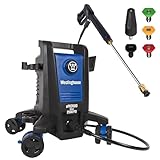
2. Westinghouse ePX3500 – Best All-Round Electric for a Standard Concrete Driveway
Westinghouse ePX3500 Electric Pressure Washer, 2500 Max PSI 1.76 Max GPM with Anti-Tipping Technology, Onboard Soap Tank, Pro-Style Steel Wand, 5-Nozzle Set, for Cars/Fences/Driveways/Home/Patios
2500 max PSI / 2000 rated
1.76 max GPM / 1.2 rated
25 ft braided hose
19 lb, 16.5 in tall
+ Pros
- 4.6 stars across 7200+ reviews with 76 percent five-star
- Anti-tipping four-wheel base at only 19 lb
- 25 ft braided hose gives real reach around a slab
- Onboard 20 oz soap tank and a three year limited warranty
- Cons
- Total stop pump means some owners want more sustained flow
- Wand and nozzles are the first upgrade many buyers make
Westinghouse built this machine around a 2500 max PSI / 1.76 max GPM platform, and the rated figures underneath it are 2000 PSI and 1.2 GPM. That is the honest way to buy it, and it puts the machine squarely in the band that handles typical residential concrete without any risk of etching.
The reason this one edges ahead of its smaller sibling for us is the chassis. Four quick-lock wheels with 360-degree steering and a deliberately low center of gravity make it the easiest machine in the lineup to walk along a driveway, and at 19 pounds with a 16.5-inch tall footprint it stores in a garage without becoming an obstacle.
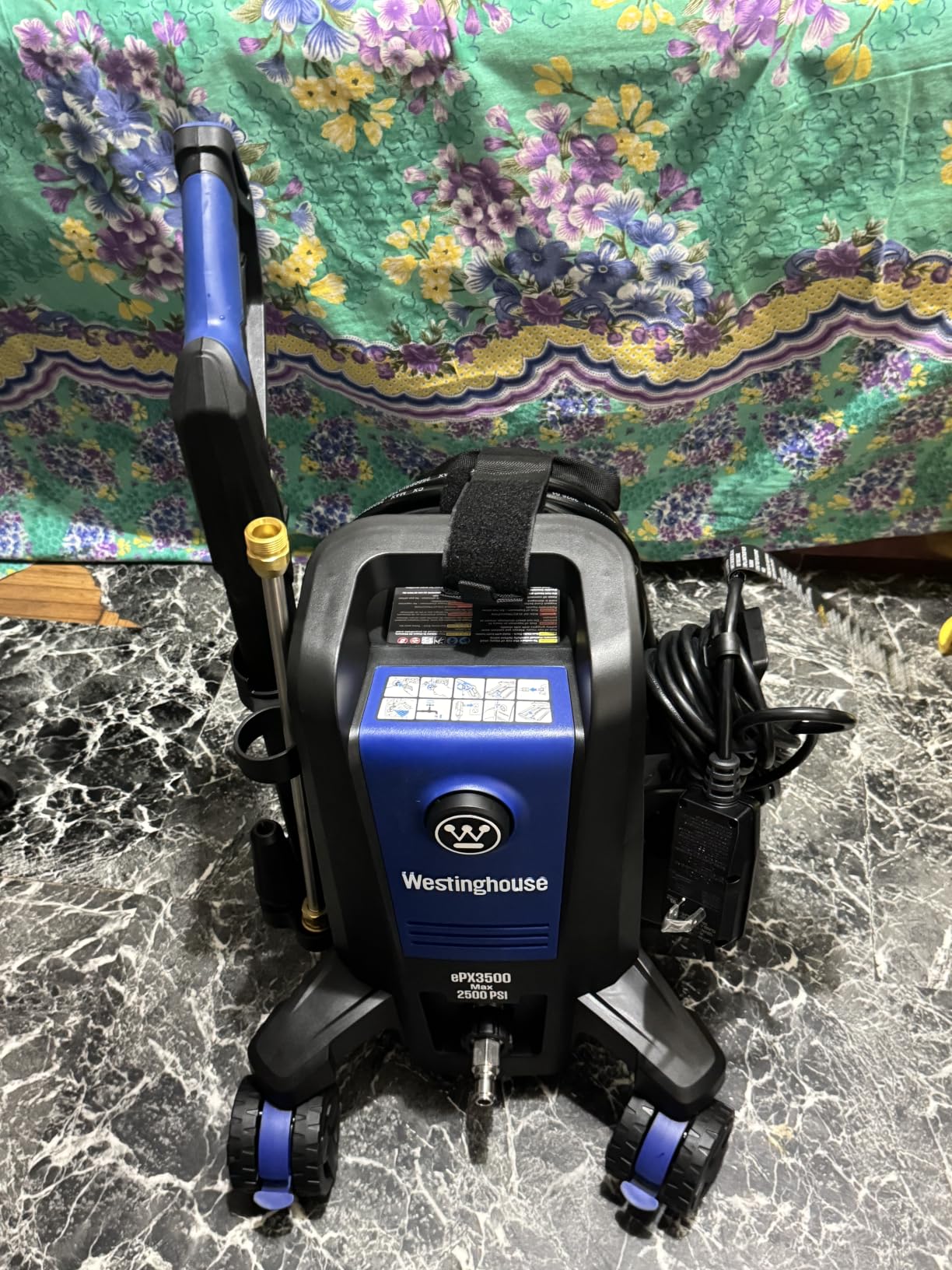
The 25-foot easy-coil nylon braided hose is a real upgrade over the 20-foot PVC hoses that come on cheaper units. A longer hose means fewer machine repositions, and a braided hose resists the kinking that forces those repositions in the first place.
Criticism here is thin, and honestly the only recurring note is a desire for more sustained flow. Several owners upgraded the wand and nozzles, which is a reasonable instinct on heavy buildup. Our take is that if you are going to spend money on accessories, spend it on a 14 to 15 inch rotary surface cleaner rather than on a fancier wand, because the surface cleaner is what removes your striping problem.
Why 2000 Rated PSI Is the Number That Matters
Rated PSI is measured at the surface under working conditions, and it is the figure we use when judging whether a machine is strong enough for concrete. 2000 rated PSI with 1.2 rated GPM is enough for a standard two-car driveway that has surface-level grime, algae, or mildew, especially with detergent pre-treatment and a surface cleaner.
It is not enough to lift an old oil stain that has soaked into the pore of the concrete. That is a chemistry problem before it is a pressure problem, and no washer on this list fixes it alone.
Best Paired Surface Cleaner Size
At 1.76 max GPM, this machine can drive a 14 to 15 inch surface cleaner properly. Push it to a 20 or 21 inch cleaner and the flow starves, which shows up as an uneven finish and a spinning head that bogs down. More on that matching rule in the surface cleaner section.
The Verdict for Driveway Owners
For a standard two-car driveway, this is the machine we would put in most people’s garages. It is quiet, it stores in a corner, it steers easily with one hand, and 2000 rated PSI with a surface cleaner is genuinely enough.
3. Westinghouse ePX3100v – The Highest Rated and the Easiest to Store
Westinghouse ePX3100v Electric Pressure Washer, 2100 Max PSI 1.76 Max GPM, Built-in Carry Handle, Detachable Foam Cannon, Pro-Style Steel Wand, 3-Nozzle Set, for Cars/Fences/Driveways/Home/Patios
2100 max PSI / 1800 rated
1.2 rated GPM
17.6 lb with carry handle
Detachable foam cannon
+ Pros
- Highest rating in the roundup at 4.7 stars with 81 percent five-star
- Lightest washer here at about 18 lb with a built-in carry handle
- Brass fittings that multiple owners confirm did not leak
- A 15 by 8.5 by 11 inch body that stores on a shelf
- Cons
- 20 ft hose is short and stiff on large slabs
- Low GPM means longer cleaning time
- No storage case for the foam cannon and nozzles
This is the machine we hand to someone with a small driveway, a storage problem, and a stubborn algae patch. It carries the highest average rating in our roundup at 4.7 stars across nearly 5000 reviews, with 81 percent of those reviews at five stars, which is a distribution you rarely see on a machine that size.
At 17.6 pounds with a built-in carry handle, it is the easiest unit here to pick up with one hand and carry up basement steps. The body measures 15 by 8.5 by 11 inches, so it disappears on a shelf instead of occupying a quarter of the garage floor.
Two details set it above the other budget machines. First, the brass fittings, which owners specifically call out as leak-free after extended use, and a genuine problem on cheaper hoses. Second, the turbo tip, which several reviewers said cut through a decade of biofilm on tile and epoxy grout. That is not a driveway result, but it tells you the tip is doing real work rather than just rinsing.
The detachable foam cannon is genuinely useful for driveway pre-treatment because it lays down a thick, clinging layer of detergent that a bare soap nozzle cannot. Apply it, let it dwell for 5 to 10 minutes, then rinse. The concrete does most of the work during the dwell.
Where the Short Hose Bites
The 20-foot high-pressure hose is short and stiff, and this is the single most common complaint in the reviews. On anything larger than a two-car driveway, you will be moving the machine more than the job requires. If your driveway is a long single-car run or a four-car slab, factor a hose upgrade into your planning.
The low flow is the other limit. 1.2 rated GPM is a modest number, and on flat concrete that translates directly into time. This is a two-hour job machine for a typical residential driveway, not a one-hour machine.
Good and Bad Fit
Good fit if you have a small driveway, a condo patio, a walkway, and a storage situation where weight matters. Poor fit if you have a four-car slab with embedded staining, or if you plan to use it weekly through the season. A small number of international buyers report US plug and US voltage limiting use outside North America.
The Verdict for Driveway Owners
If your driveway is small and your storage space is tight, the highest rating in the roundup is on the machine that weighs the least. That combination is hard to argue with, and 81 percent five-star reviews back it up.
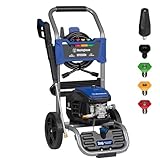
4. Westinghouse WPX3000e – Best Electric Pressure for a Long Run of Concrete
Westinghouse WPX3000e Electric Pressure Washer, 3000 Max PSI and 1.76 Max GPM, Induction Motor, Onboard Soap Tank, Spray Gun and Wand, 5 Nozzle Set, for Cars/Fences/Driveways/Homes/Patios/Furniture
3000 max PSI / 2600 rated
1.76 max GPM / 1.1 rated
Axial 3-piston pump
35 ft GFCI cord
+ Pros
- 2600 rated PSI is the highest working figure on an electric here
- Axial 3-piston auto-stop pump built for extended runs
- 35 ft GFCI cord plus 25 ft hose gives excellent reach
- M22 fittings accept standard surface cleaners
- Starts instantly with no pull cord
- Cons
- Heaviest electric in the roundup at 36.8 lb
- Bulk on a driveway rather than a patio
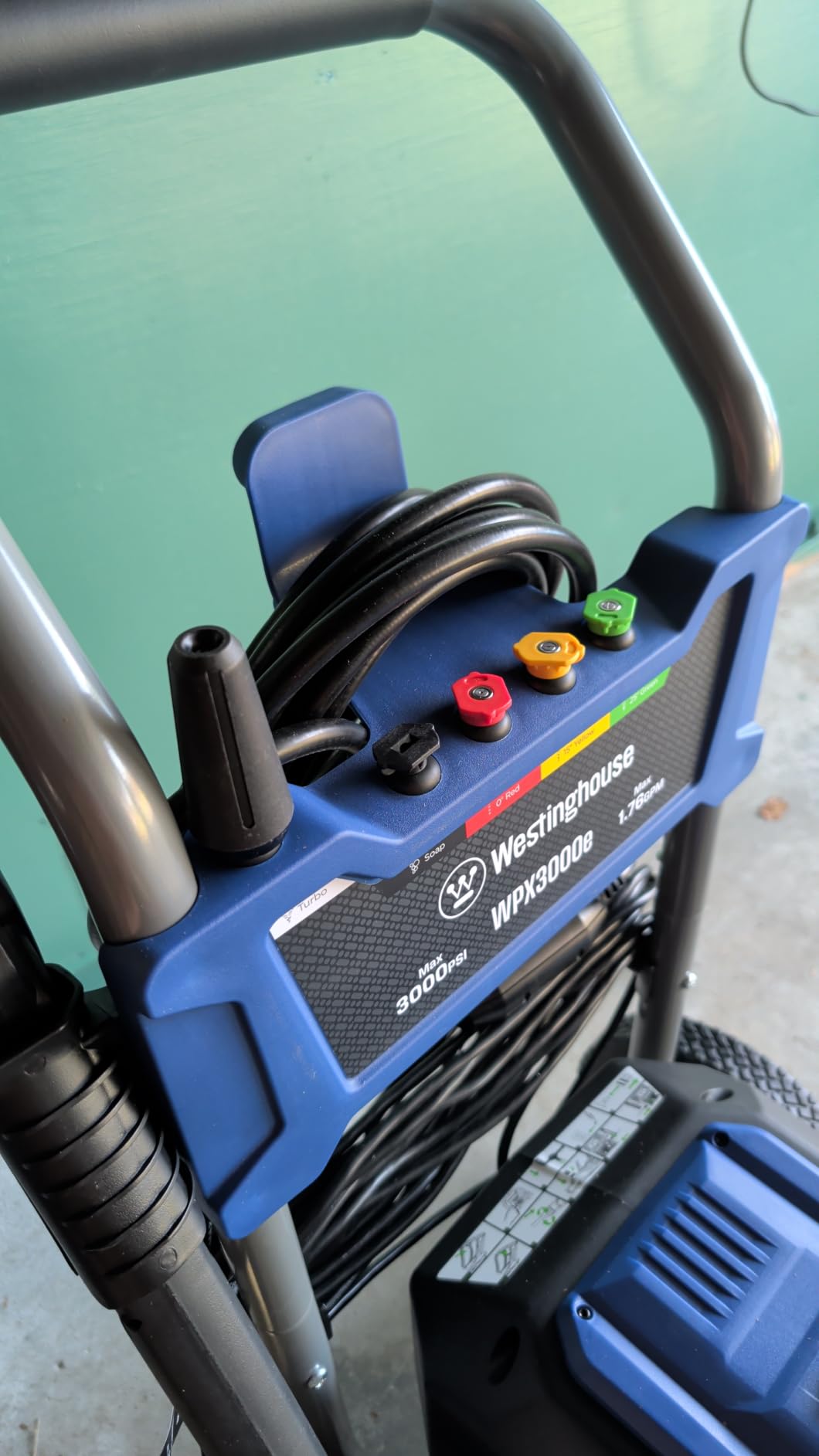
This is the electric to buy if you want gas-level pressure without owning a gas machine. 3000 max PSI with 2600 rated PSI, paired with an axial 3-piston auto-stop pump rather than a cheap wobble-plate, puts it in territory where most consumer electrics stop.
Owners report it blasting years of dirt and shingle discoloration out of concrete driveways and sidewalks with the turbo nozzle, and the pump design is why. An axial 3-piston pump handles sustained high-pressure work far better than the single-piston or wobble-plate pumps used in budget machines, and the auto-stop function protects it when you are moving the wand around.
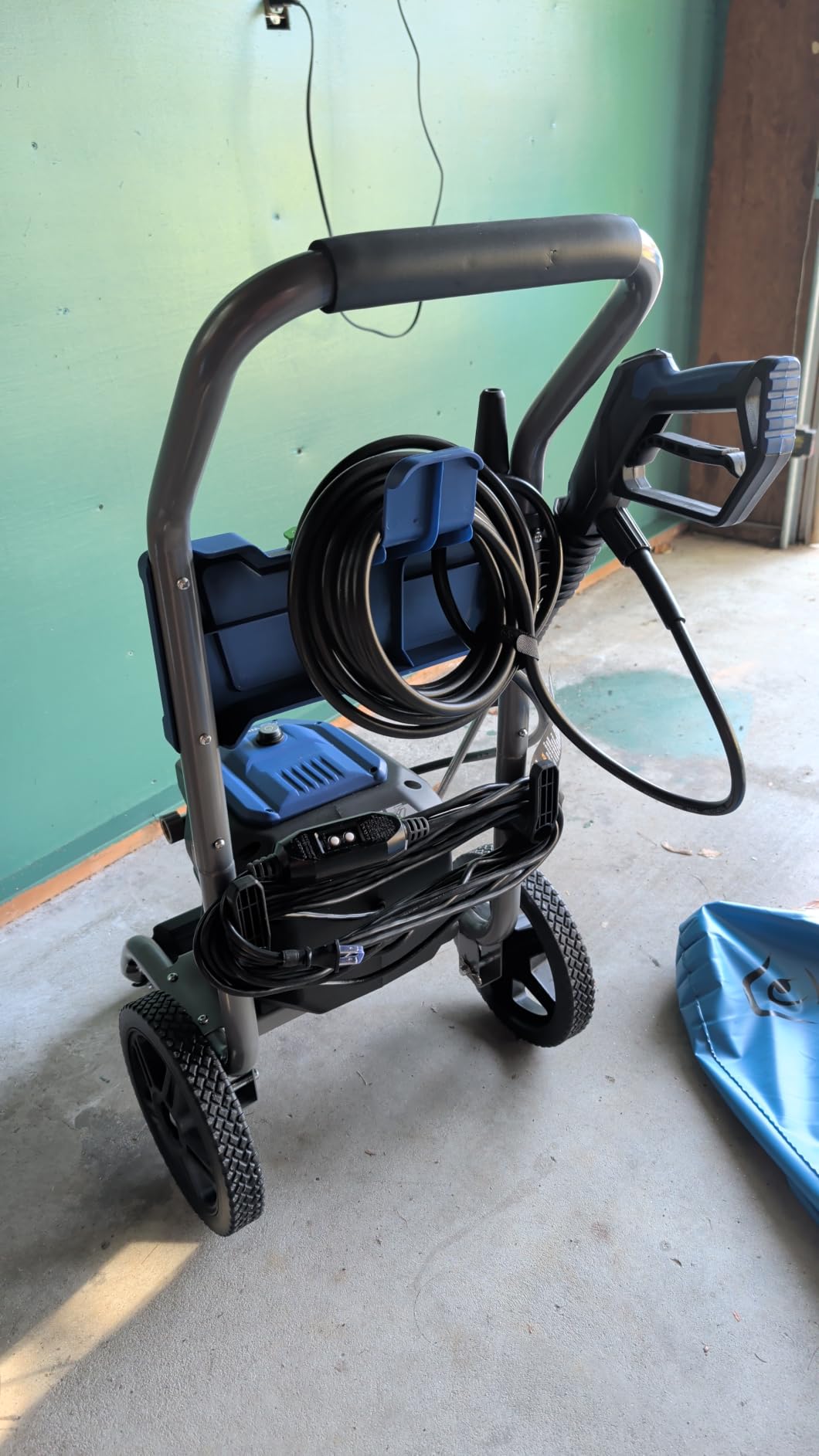
The reach on this machine is what separates it from the rest of the electric field. A 35-foot GFCI cord combined with a 25-foot abrasion-resistant super-flex hose means you can start at the house and work to the street without moving the unit once. On a long driveway, that is the difference between a smooth job and a chore.
It also runs M22 fittings, which means standard surface cleaners, undercarriage cleaners, and foam cannons connect without an adapter. That compatibility is worth more to driveway results than any single headline number, because it means the surface cleaner that fixes your striping just bolts on.
Weight and Storage Reality
At 36.8 pounds this is the heaviest electric in the roundup, and the 10-inch never-flat wheels plus a rugged steel frame are there specifically to make that weight rollable. Dragging it across grass is the annoyance. Rolling it along a paved apron is fine.
A minority of owners feel it is better suited to decks and patios than to expansive driveway work. We would frame that differently: it is a machine for someone who owns more than one concrete surface and wants one tool for all of them, rather than someone with a single small pad.
The Assembly Note Nobody Mentions
Multiple reviews mention roughly half an hour of assembly. Budget that time in, and the payoff is a push-button start, no fuel, no oil changes, and 2600 rated PSI.
The Verdict for Driveway Owners
This is the one we would buy if a gas engine were off the table but a large dirty driveway was not. 2600 rated PSI, an axial piston pump, and a cord long enough to never move the machine are a combination no other electric here matches.
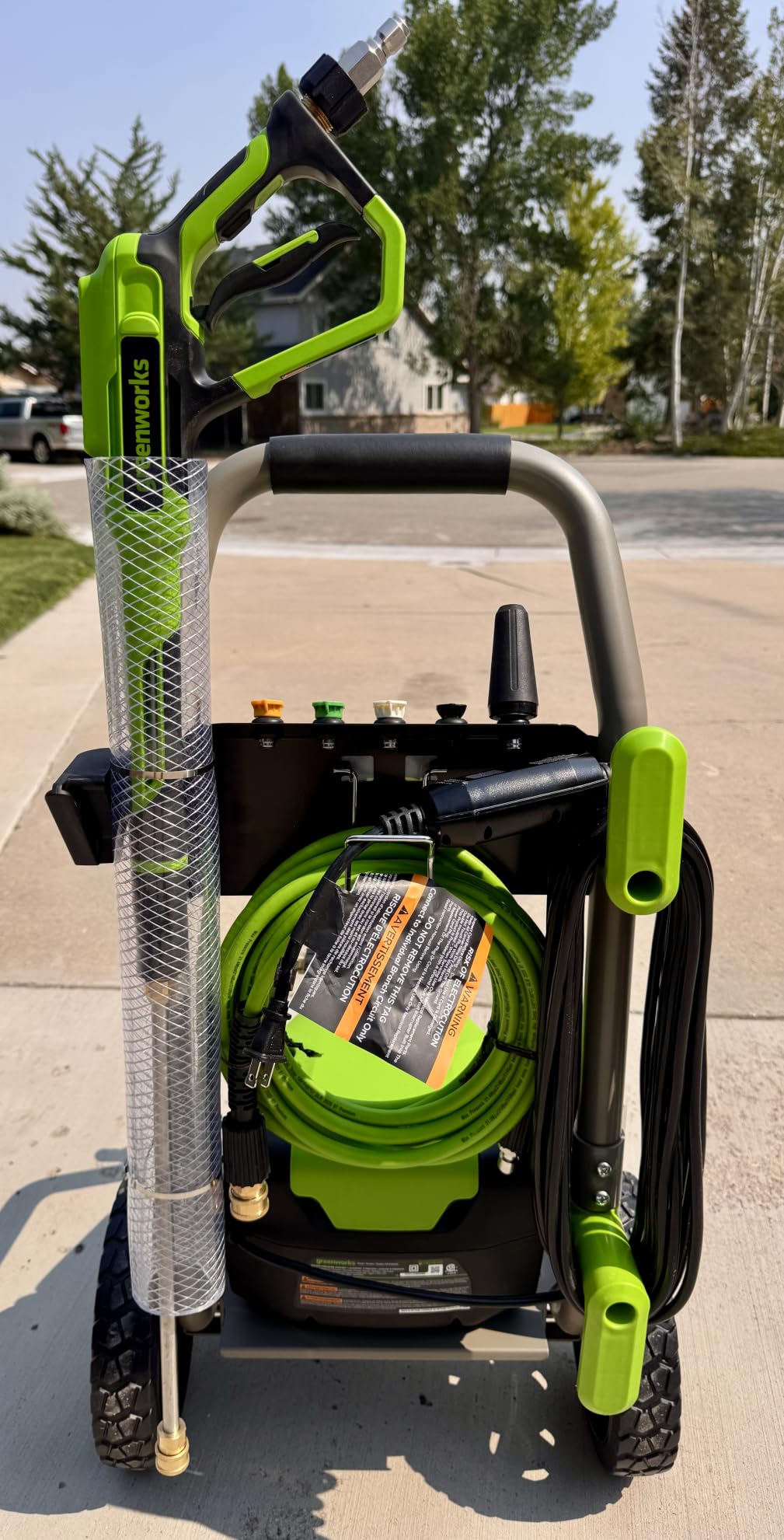
5. Greenworks 3000 PSI 2.0 GPM – The Flow King of the Electric Class
Greenworks 3000 PSI (2.0 GPM Max) Brushless Electric Pressure Washer
3000 PSI
2.0 GPM max
3300 CU
1 gal soap tank
14 amp brushless
+ Pros
- 2.0 GPM is the highest flow of any electric in the roundup
- 14 amp TruBrushless motor with lab verified output
- Owners say it outcleans most consumer gas machines
- Metal gun and kink-resistant 25 ft Uberflex hose
- Cons
- Draws heavy current and needs a dedicated 15 amp outlet
- Motor bypasses rather than fully stops on trigger release
- Bulky 35 inch wide footprint
- Printed instructions are very small
Everything else in the electric class tops out at 1.76 GPM. This one claims 2.0 GPM, and reviewers who measured it with a gauge came back with roughly 1.67 GPM free flow, which is honest performance for the class. On flat concrete, flow is the number that controls how long the job takes, so this is the machine that gets a driveway done fastest without a gas engine.
Reviewers also report around 2,550 PSI at the 15-degree nozzle, 2,000 at the 40-degree, and about 1,200 on turbo, with the advertised 3,000 PSI sitting near the top of the 15-degree reading. In other words, the claims hold up under a gauge, which is rarer than it should be.
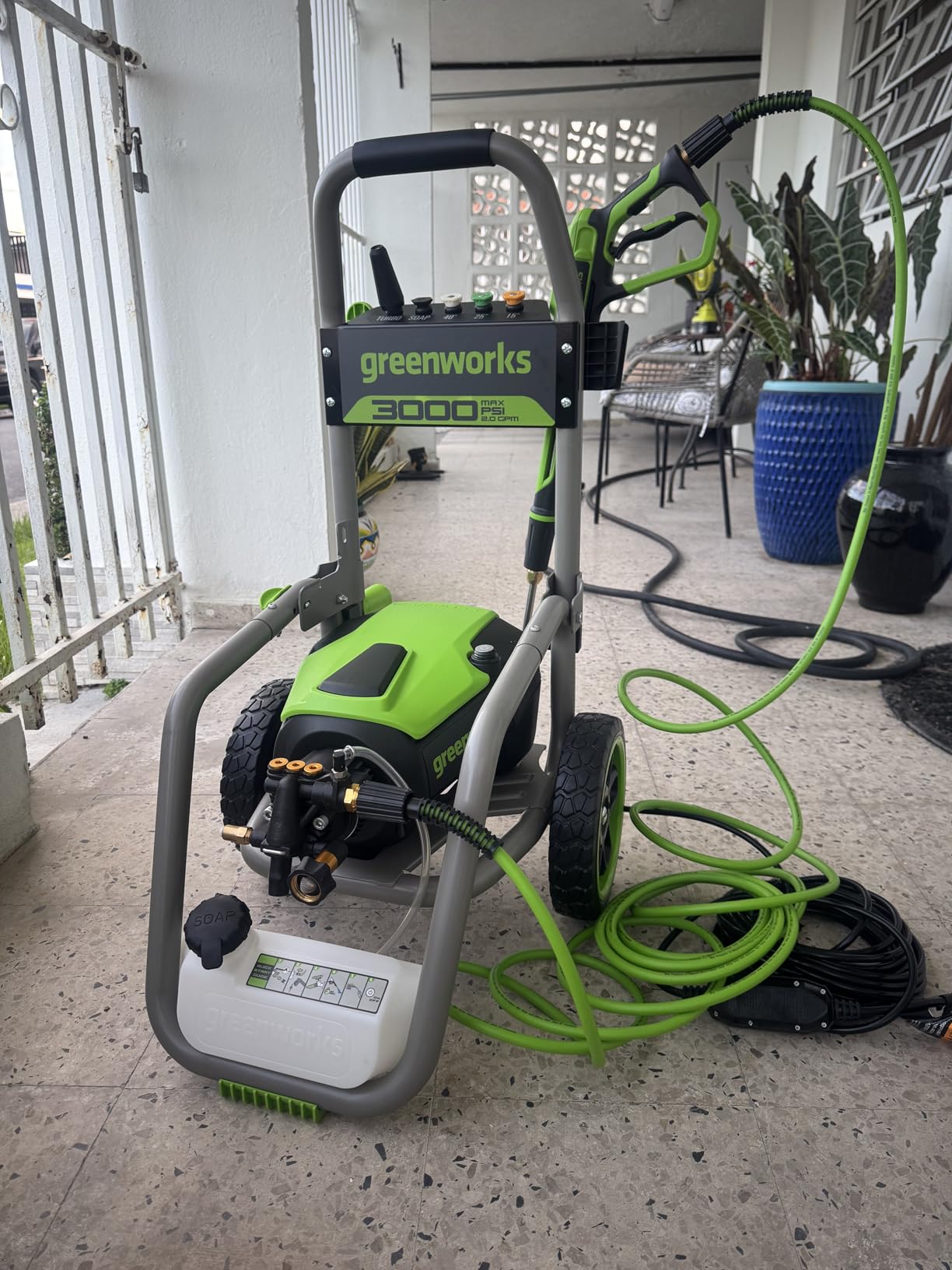
At 3300 CU, this is the highest combined cleaning figure of any electric machine we tested, and the consensus among owners is that it outcleans most consumer gas washers while staying quiet enough for an early morning start. The 14 amp TruBrushless motor also means no carburetor, no spark plug, and no brush replacement.
The 1-gallon onboard soap tank is the largest electric tank in this group, and for driveway work that is a real advantage. You are going to apply degreaser, dwell, rinse, then apply an algae treatment, and you do not want to refill three times in the middle of that sequence.
The Electrical Requirement Is Not Optional
The near-universal caveat in the reviews is current draw. It needs a dedicated 15 amp outlet and a 12-gauge or heavier extension cord, and some buyers report tripping a 20-amp GFCI when using lighter cords. Plan the outlet before you buy, not after.
Also worth knowing: the motor does not fully shut off when you release the trigger, it drops into bypass mode. That is a design choice by the manufacturer, and it is one of the reasons some owners see a shorter motor lifespan than they would with a total stop system.
Who This Suits
If your driveway is large and flat and you care most about finishing it in one session, this is the electric that gets there. If your outlet situation is awkward, choose a lighter machine instead. At 23 kg listed weight and a 35-inch wide body, this is not a unit you want to lift frequently.
The Verdict for Driveway Owners
Flow is the number that decides how long a flat slab takes, and this machine has more of it than any other electric in the roundup. If you can give it a dedicated outlet, it is the fastest fuel-free way to finish a big driveway in one session.
6. Greenworks 2000 PSI – Budget Pick for Patios, Walkways and Small Pads
Greenworks 2000 PSI (1.2 GPM) Electric Pressure Washer
2000 PSI
1.2 GPM
1.2 gal soap tank
PWMA rated
Removable handle
+ Pros
- Motor cuts power completely when the trigger is released
- Lightest machine in the roundup and easy to lift onto a shelf
- Large wheels and a removable handle for compact storage
- Pigtail on the GFCI plug fits covered outdoor outlets
- Cons
- Supplied hose and nozzles restrict flow and many owners upgrade them
- Anodized aluminum fittings rather than brass
- Small turbo spray pattern needs multiple passes
- A few reports of early motor failure
Be honest about what this machine is. It is a 2000 PSI, 1.2 GPM washer aimed at patios, walkways, grills, and vehicles. For a driveway, it will work, but it is the slowest option in this roundup and the one most likely to leave you unimpressed if you do not set expectations properly.
That said, it is a genuinely well-made budget machine, and the single most useful review in the set describes a common experience: the unit felt weak out of the box, and after swapping in a better hose and nozzles it became dramatically stronger. That review also recommends turning household water pressure down partway rather than fully open, because an over-supplied pump wears faster.
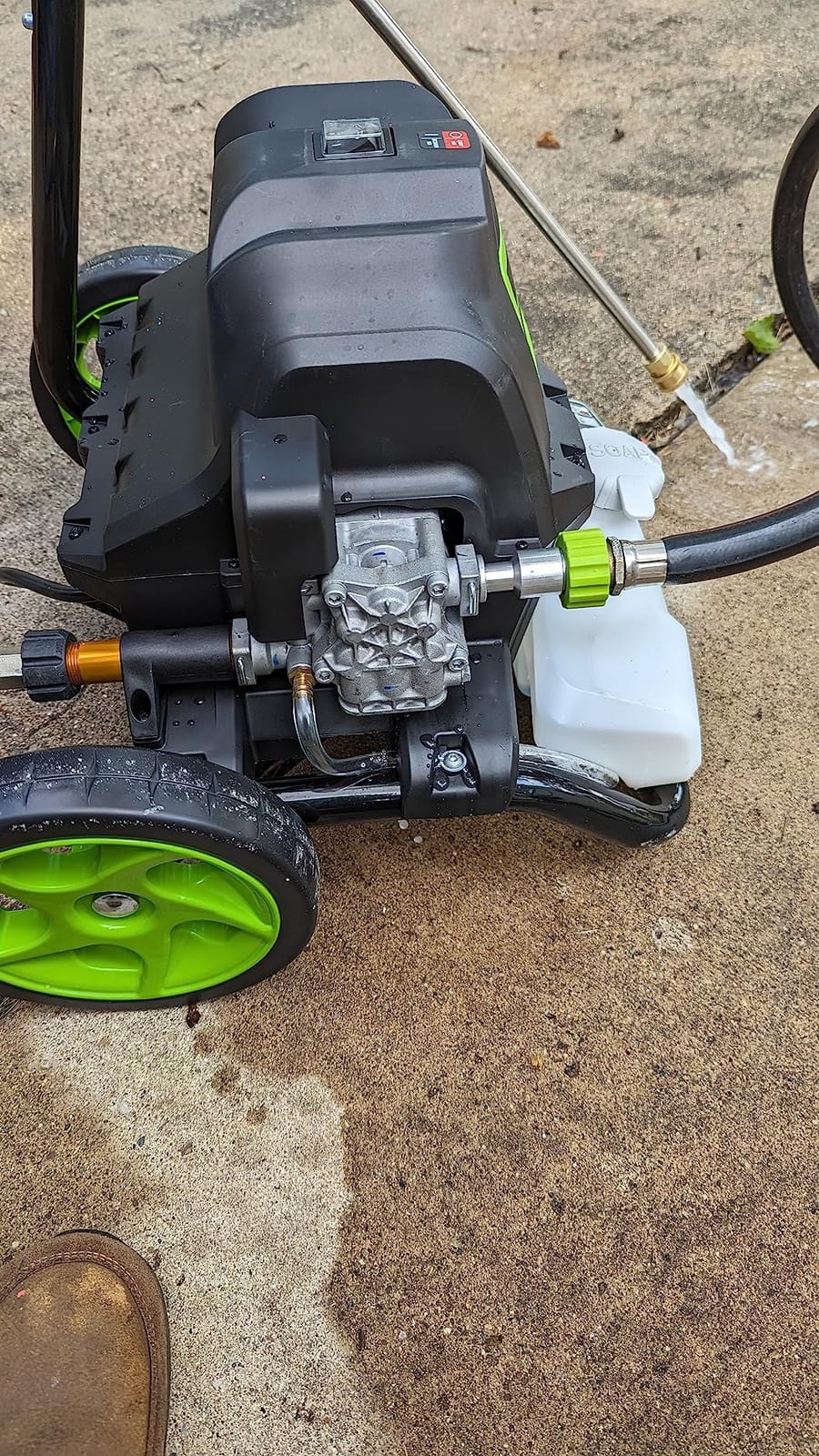
The removable handle and light weight make it the easiest machine here to store. The pigtail on the GFCI plug is a small touch that solves a real problem, because a full-size GFCI plug will not fit under a standard outdoor outlet cover and you would otherwise be hunting for an extension cord.
The 1.2-gallon onboard soap tank is the biggest in this price class and is more than adequate for driveway detergent. The start/stop technology cuts power when the wand is not engaged, which protects the motor and is a genuine step above most machines at this level.
The Accessory Reality
Owners consistently report that the supplied hose and nozzles restrict flow, and that aftermarket replacements produce noticeably better pressure. Budget for a better hose from the start. Also note the fittings are anodized aluminum rather than brass, which can corrode against brass fittings over time.
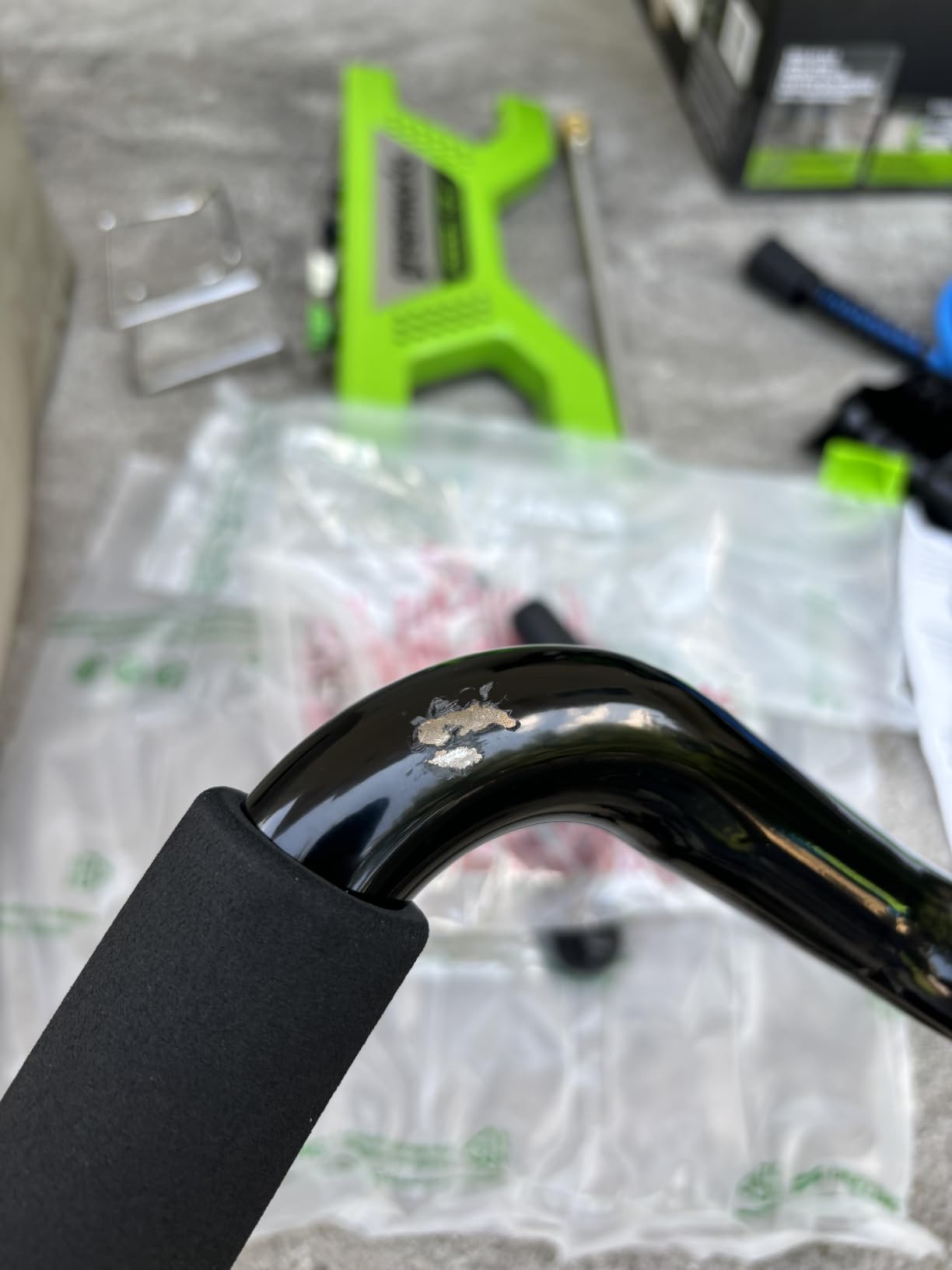
Other recurring notes: it is louder on idle than most comparable electrics, the turbo nozzle sprays a small circular pattern that needs multiple passes, and the wheel retaining clips are held on with wire and can fall off. A few owners report motors dying or oil leaks within months.
When to Choose It Anyway
Choose this for a half-driveway, a walkway network, and a couple of vehicles, and use detergent generously. Skip it for a large slab with embedded staining. If you want the same brand at a higher level, the 3000 PSI Greenworks two sections up is a completely different machine.
The Verdict for Driveway Owners
Manage your expectations and this is a capable little machine for a half-driveway and everything around it. Do not expect it to be the machine that transforms a filthy four-car slab, because on flat work its 1.2 GPM simply will not get there quickly.
7. EGO Power+ HPW3200 – Best Cordless Option With No Cord to Trip Over
EGO POWER+ Electric Pressure Washer, 3200 PSI Power Washer – HPW3200
3200 PSI peak
1.2 GPM rated / 2.0 max
Dual 56V ARC batteries
2 gal soap tank
+ Pros
- Removes the extension cord and outlet problem entirely
- 3200 PSI peak with three selectable power modes
- Works with any EGO 56V ARC Lithium battery already owned
- A telescoping handle that collapses for storage
- 5 year tool warranty
- Cons
- 1.2 GPM rated flow means long jobs on big slabs
- Two large 56V batteries and a charger add cost and carry weight
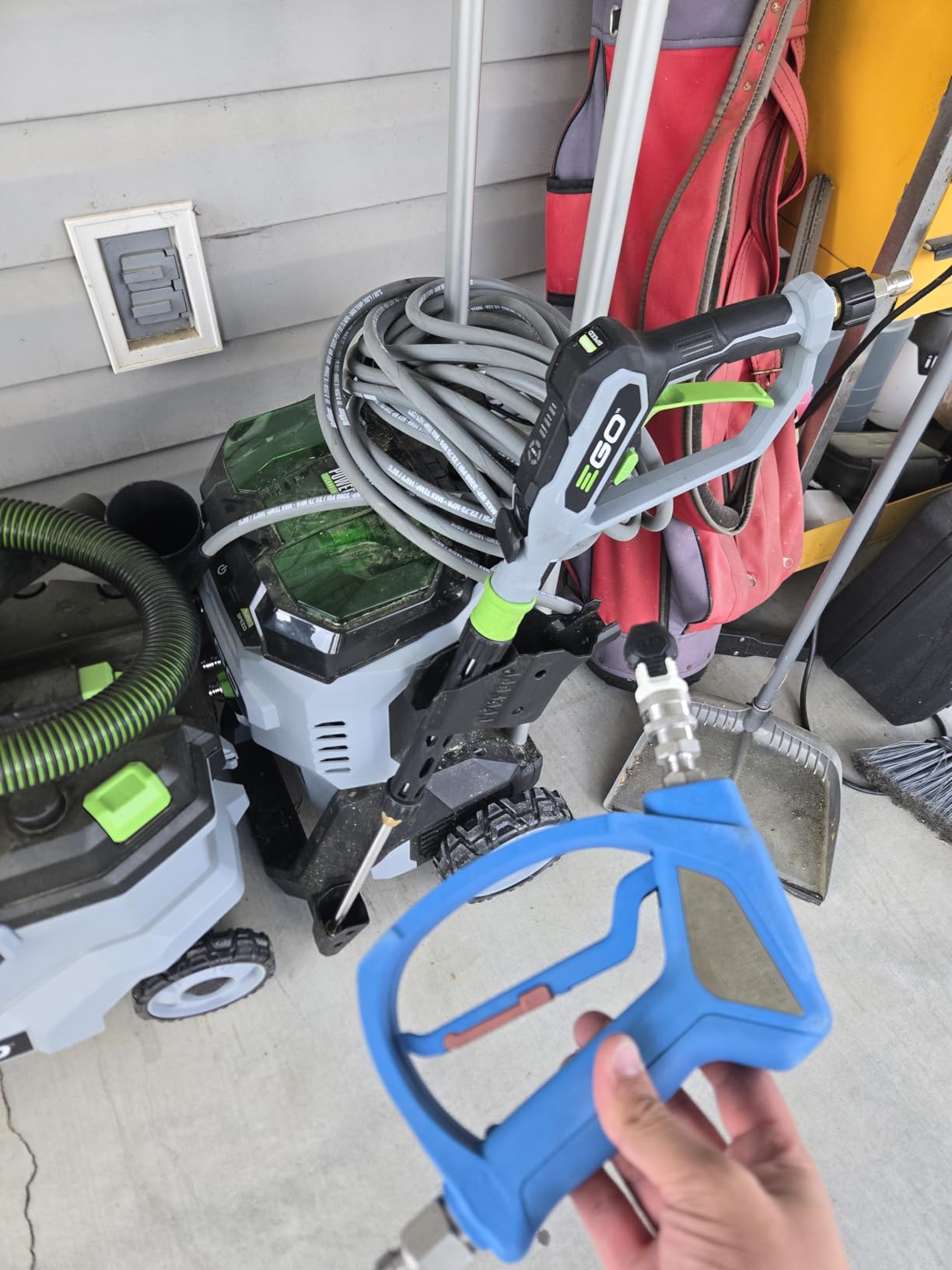
The cordless argument is not about power, it is about placement. A driveway is a wide open slab, the nearest outlet is usually at the house wall, and a 25-foot cord plus an extension cord is a trip hazard wrapped around a wet surface. Eliminating that changes how you work.
Peak Power Technology combines two 56V ARC Lithium batteries to deliver up to 3200 PSI at 1.2 GPM, and up to 2.0 GPM maximum. Three power modes let you trade pressure for runtime, and a charge display built into the wand means you are not walking back to the machine to check.
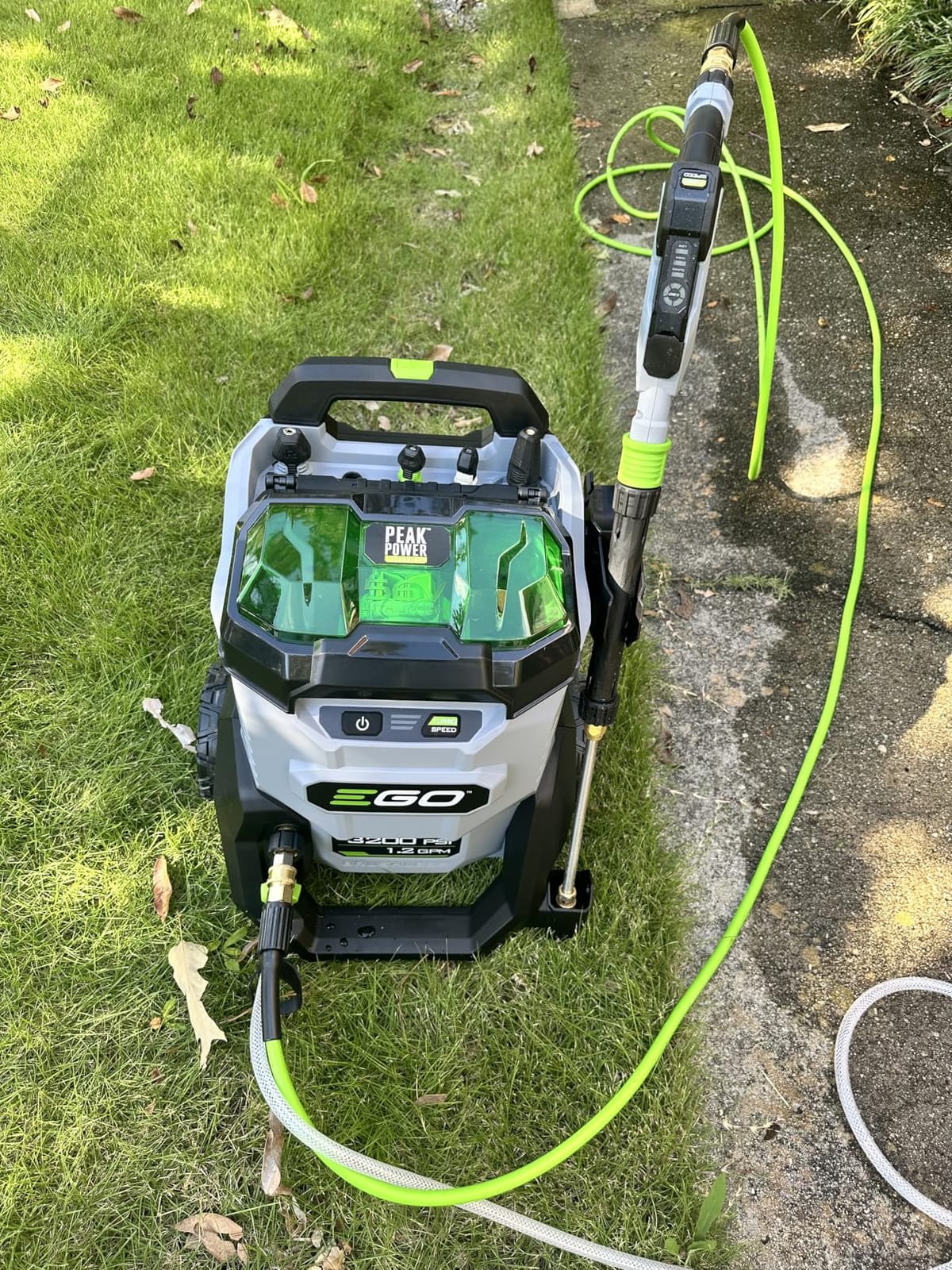
The included accessory kit is unusually generous: a foam cannon, stainless steel wand, lance, siphon hose, filter, and 15, 25, 40, turbo, and rinse nozzles. The siphon hose also lets the machine draw from any fresh water source, so a driveway with no spigot nearby is not a problem.
The telescopic handle extends for transport and collapses for storage, which is the detail that decides whether a battery machine lives in a garage or a corner of the house.
The Honest Tradeoff
Two large 56V batteries and a charger add both cost and carry weight, and 1.2 GPM rated flow means a large concrete area takes more time than the same area on a gas unit. The 5-year tool warranty is the longest in this roundup, and if you already own EGO 56V ARC batteries, the value calculation changes completely in your favor.
Peak pressure is not sustained pressure. Treat the 3200 figure as a headline and work at the 25-degree and turbo tips with a surface cleaner, exactly as you would on any other machine here.
The Verdict for Driveway Owners
Buy this for a driveway where reaching an outlet is the problem, and only that. If an outlet is within reach, a corded electric at this tier does the same job faster and for less.
8. Simpson Clean Machine 3400 – The Fastest Raw Cleaning Power in the Roundup
Simpson Clean Machine 3400 PSI Gas Pressure Washer, 2.5 GPM, CRX engine
3400 PSI
2.5 GPM
208cc CRX gas
Axial cam pump
25 ft MorFlex hose
+ Pros
- Highest pressure and highest flow combination in the roundup
- Maintenance-free axial cam pump with a thermal relief valve
- MorFlex hose resists kinking and will not mar finished concrete
- 10 inch pneumatic tires roll over gravel and curbs
- Cons
- Louder than any electric unit in the group
- Requires fuel mixing and oil changes plus pull-cord starting
- Second heaviest machine here at about 61 lb
- 49-state compliant and not sold in California
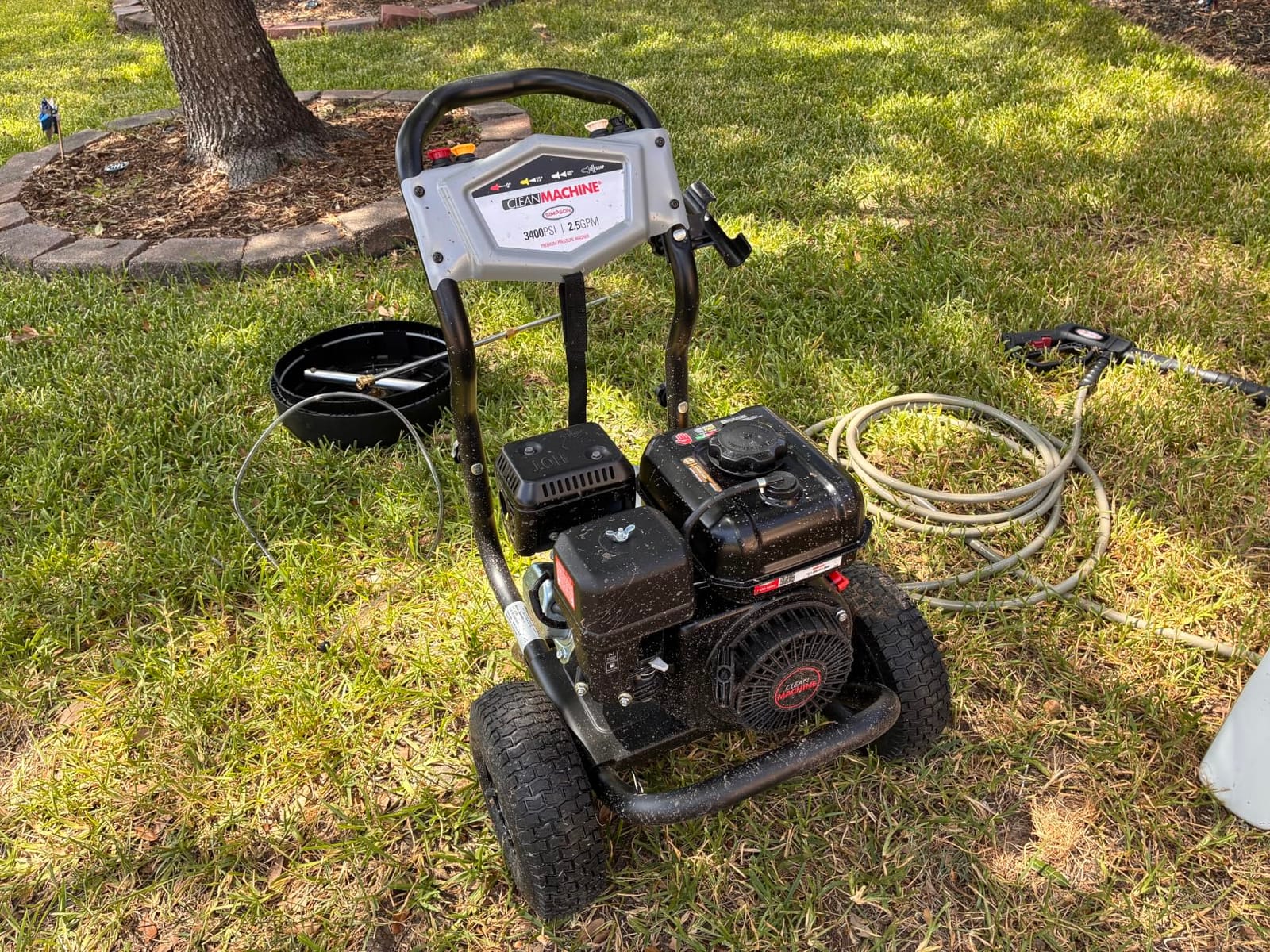
When a driveway is large, flat, and genuinely dirty, pressure and flow are the only two things that matter, and this machine has the most of both in the roundup. 3400 PSI at 2.5 GPM from a 208cc CRX engine driving an OEM Technologies axial cam pump is the specification that cuts concrete cleaning time the most.
The pump is the reason to trust the spec. It is maintenance-free, and it carries a thermal relief valve that opens when the water gets too hot, which is a real protection on a long job where a lesser pump can cook itself.
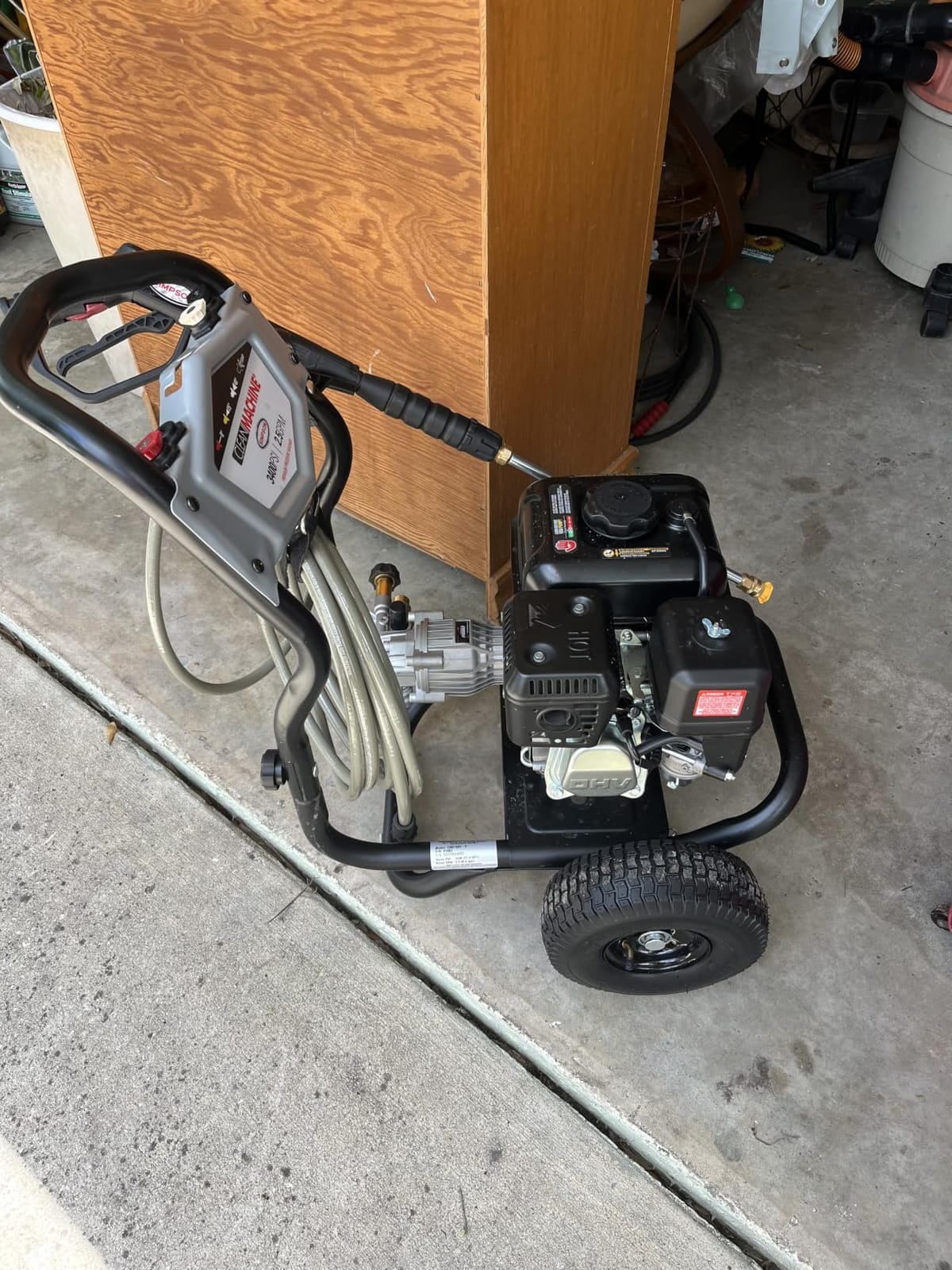
The 25-foot MorFlex hose is non-marring, so it will not scratch a finished or sealed surface while you drag it around. On a driveway where you will be moving the hose constantly, that is not a small detail. Ten-inch pneumatic tires and a balanced layout make it easy to roll over gravel, grass, and curbs.
The engine has low-oil shutdown, which protects the most expensive part of the machine from the most common way people ruin gas washers.
What You Give Up for That Power
This is the loudest unit in the roundup by a wide margin, and that matters for residential use in the early morning. It also needs fuel mixing, periodic oil changes, and a pull cord to start. Ten percent of its reviews are one-star, and the noise and the maintenance are the reason.
At about 61 pounds it is the second heaviest machine here, so repositioning it along a driveway is real work. And it is 49-state compliant, which means it cannot be sold in California.
Best Used With
Run it through a 15 or 16 inch surface cleaner. At 2.5 GPM it sits just under the strict four-inch-per-gallon figure, so a 17 or 18 inch head will starve. Use a detergent for oily areas and a 40-degree tip near grass edges.
The Verdict for Driveway Owners
If you have a large driveway, a real backlog of grime, and a tolerance for noise and fuel handling, this is the fastest way through the job in the roundup. The 16 inch surface cleaner pairing is what makes the raw pressure useful rather than dangerous.
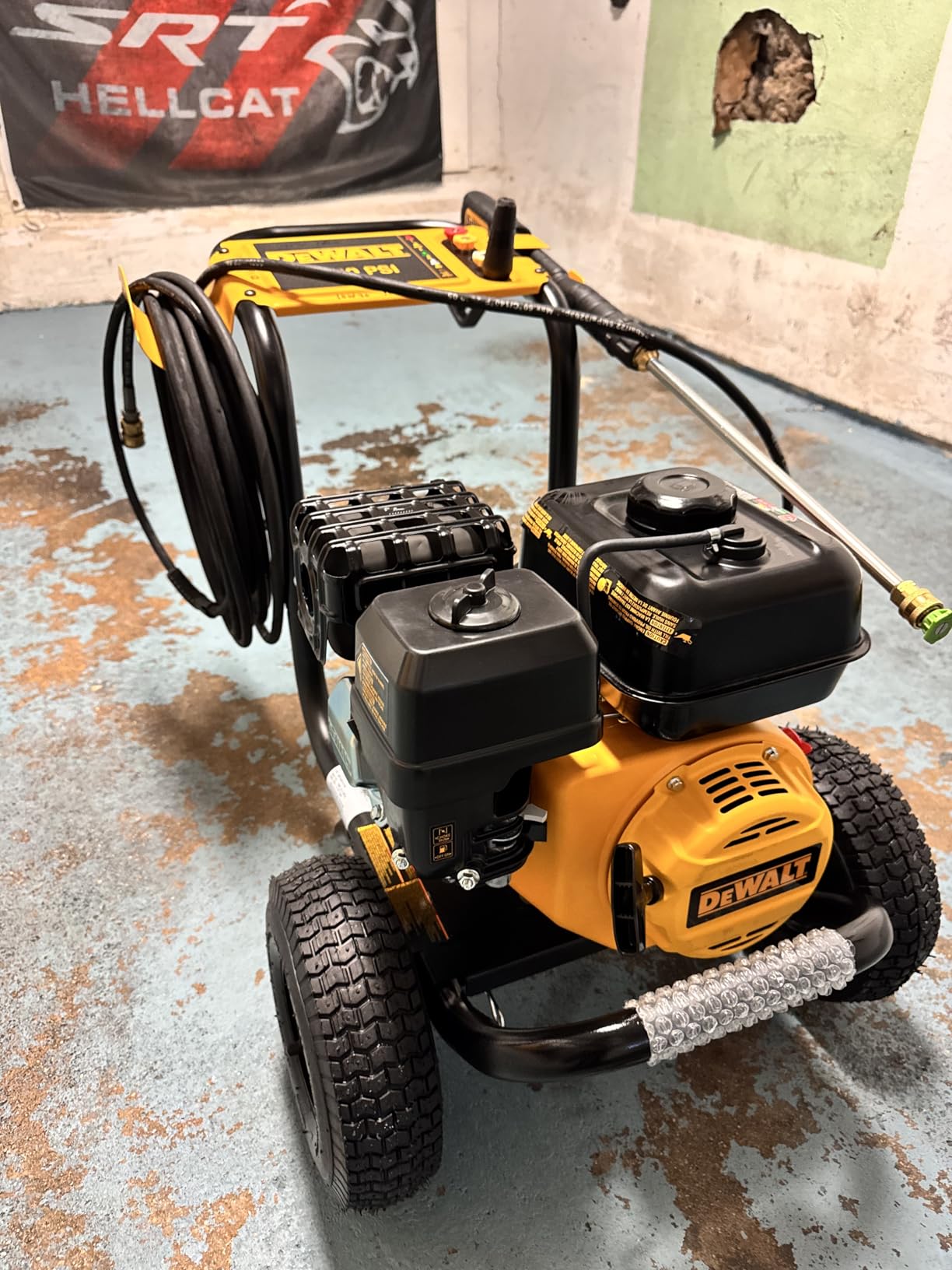
9. DeWalt 3300 PSI Gas – Best Warranty Cover on a Heavy-Duty Driveway Setup
DeWalt 3300 PSI Gas Pressure Washer, 2.4 GPM, Residential Model DXPW3300-S
3300 PSI
2.4 GPM
208cc DeWalt engine
Axial cam pump
5 year frame warranty
+ Pros
- 3300 PSI and 2.4 GPM for strong performance on long driveway runs
- An easy-start 208cc DeWalt engine
- Best warranty terms in the roundup at 5 year frame and 3 year pump
- Thermal relief valve protects the pump
- 10 inch pneumatic tires on uneven ground
- Cons
- Heaviest unit here at 64 lb so repositioning it is work
- Gas noise plus fuel mixing and pull-cord starting
- Factory-tested units may arrive with a residual fuel odor
- 49-state compliant and not sold in California
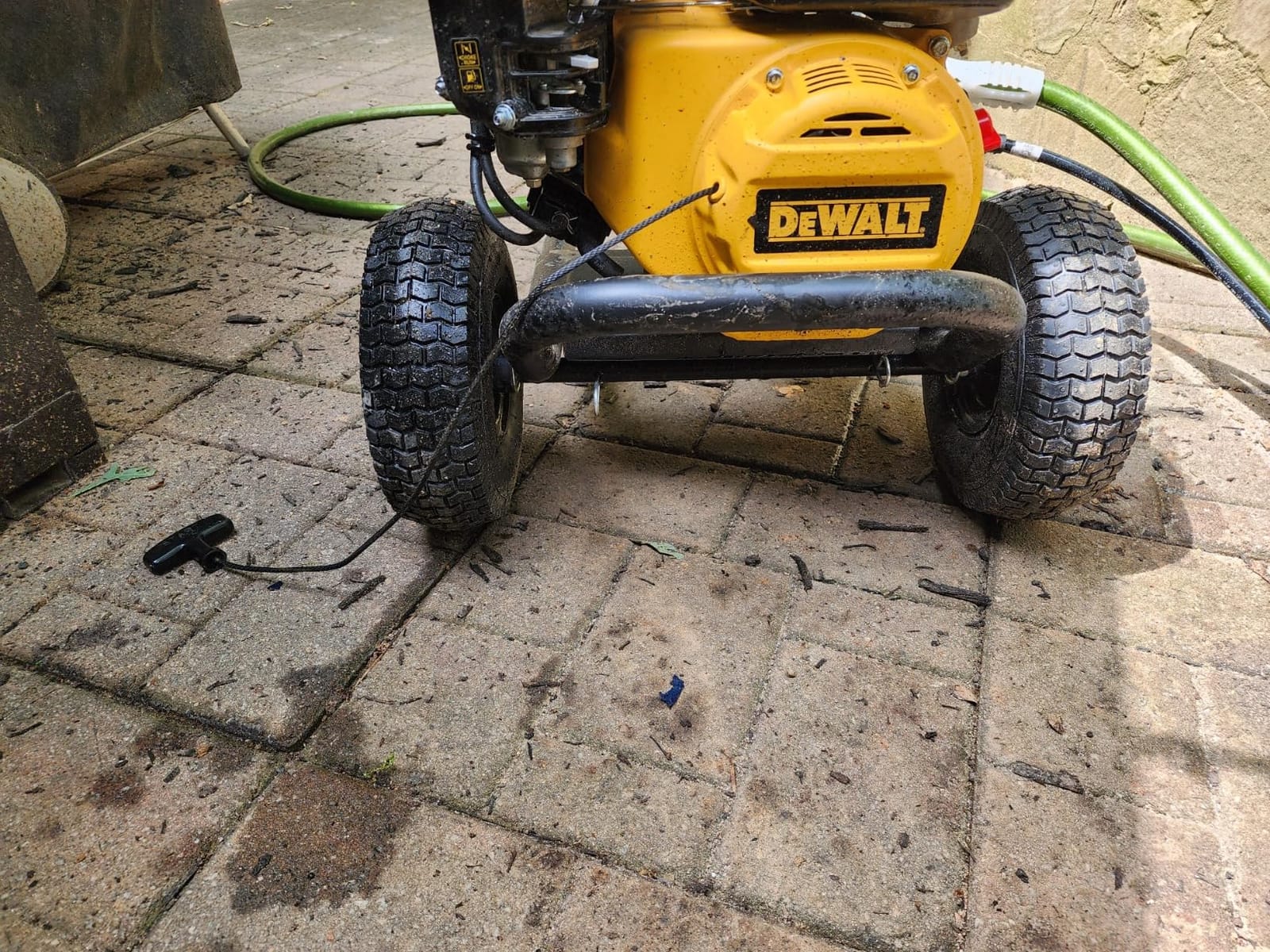
This is the Simpson alternative for someone who wants gas power with a longer warranty behind it. 3300 PSI and 2.4 GPM from a 208cc DeWalt engine and an OEM Technologies axial cam pump puts it in the same performance neighborhood, with the warranty terms nobody else in this roundup matches: 5 years on the frame, 3 on the pump, 2 on the engine.
Owners single out easy starting, which is genuinely the biggest quality-of-life difference on a gas unit, and the powder-coated welded steel frame for durability. The 10-inch pneumatic tires handle uneven ground that would stop a smaller machine.
Five quick-connect nozzles including 0, 15, 25, 40, and soap give you the full spread for driveway work, and the 25-foot abrasion-resistant hose with a 16-inch steel wand is a sensible, conventional setup.
The thermal relief valve is the same pump protection that makes long jobs survivable, and on a large slab where you might be running the machine for an hour straight, that matters.
Where It Loses to the Simpson
It is heavier at 64 pounds, which means more work moving it along a driveway. It has 12 percent one-star reviews, the highest share in the roundup, driven mostly by weight, noise, and fuel handling rather than by cleaning performance.
One detail worth flagging: some factory-tested units arrive with a residual fuel odor. It is not a defect, but it is startling if you did not expect it. It is also 49-state compliant and not sold in California.
The Choice Between Two Gas Machines
If you want the most cleaning power per dollar, the Simpson has more of both pressure and flow. If you want the warranty behind the frame and pump, and an engine that is easier to start, the DeWalt is the better ownership proposition over years.
The Verdict for Driveway Owners
This is the gas machine to buy if you intend to keep it for a decade of spring cleanups and care about warranty coverage. The cleaning performance is close to the class leader, and the frame and pump are covered three times as long.
What PSI Do You Actually Need for a Driveway?
The short answer: 2,500 to 3,500 PSI for a concrete driveway, and there is very little value in going past 3,500 unless you have a professional technique that most homeowners do not.
Is 2,000 PSI enough? Yes, with a qualifier. Two thousand rated PSI will clean a typical two-car driveway that has surface-level grime, algae, or mildew, provided you pre-treat with detergent, give it dwell time, and rinse through a rotary surface cleaner. It will not lift an oil stain that has soaked into the pore of the concrete, and it will not strip a heavy rust deposit without multiple aggressive passes and a lot of patience.
Is 3,000 PSI enough? Yes, and it is the sweet spot for a large driveway with real buildup. Going higher adds risk rather than reward, because above roughly 3,500 PSI on concrete the main thing you gain is the ability to etch the surface if you hold the wand close or dwell too long in one spot.
Is 1,800 PSI enough? For a driveway, no, not really. 1,800 rated PSI is fine for cars, siding, patios, and outdoor furniture. On a driveway it means pre-treating is mandatory, cleaning time roughly doubles, and a surface cleaner becomes the difference between a good result and a striped one.
Safe Ranges by Surface
Concrete is the forgiving surface, in relative terms. It can take 2,500 to 3,500 PSI with detergent and moderate wand distance, and it will etch into dull grey or brown patches if you exceed that or hold a red tip in one place.
Asphalt is the surface people damage most often. The binder softens in heat and scars under a concentrated jet, so keep it at the low end, around 1,500 to 2,000 PSI, and go through a surface cleaner rather than a wand. A 25-degree green tip at 12 to 18 inches is the right combination. If your asphalt is showing aggregate, you are already too high.
Pavers and bluestone are sand-set. Pressure is less of a danger than you might think, but blowing the joint sand out of the pavers is the real risk, because water carries that sand away and the pavers start to shift. Work at a moderate angle, sweep across the joints rather than down them, and top up the joint sand afterward if you see gaps opening.
New concrete deserves special caution. Fresh pours cure for weeks, and aggressive pressure before the surface has hardened can scar it. If your driveway is under a year old, use detergent and a wide tip and keep the wand moving.
Working PSI Versus Maximum PSI
Every manufacturer in this roundup publishes both numbers, and they are not the same. Max PSI is measured at no load, with nothing attached to the wand. Working or rated PSI is what the machine actually delivers at the surface once a nozzle or surface cleaner is connected and pulling flow. The gap is meaningful, and the Sun Joe is a clear example: 2500 max, 2030 rated.
Buy on the rated number. It is the one that tells you whether the machine can do what you need on the day you use it.
Surface Cleaners and the One GPM per Four Inches Rule
If you take one recommendation from this guide, take this one. A rotary surface cleaner spins two or more spray jets evenly under a shrouded head, and it eliminates the streaking that a bare wand leaves behind. It also roughly halves your cleaning time, because even coverage means fewer overlapping passes.
The matching rule that experienced users cite constantly is simple: allow roughly 1 GPM for every 4 inches of surface cleaner width. It is not a manufacturer specification, but it is the consensus rule among people who do this for a living, and it is the reason a 21 inch cleaner on a 1.2 GPM electric produces poor results instead of good ones.
Cleaner Width Against Minimum Flow
- 14 inch cleaner needs about 3.5 GPM, which is still beyond any of the electric machines here and is the practical ceiling for most homeowner setups.
- 15 inch cleaner needs about 3.75 GPM.
- 16 inch cleaner needs about 4 GPM, and is the most realistic head for a 2.4 to 2.5 GPM gas machine.
- 18 inch cleaner needs about 4.5 GPM, which is professional territory and sits above both gas machines in this roundup.
- 20 inch cleaner needs about 5 GPM.
- 21 inch cleaner needs 5 GPM or more, and running one on a small electric is the single most common mismatch we see.
Read that list with your own washer in hand. If you own a 1.2 to 1.76 GPM electric, a 14 inch surface cleaner is the realistic match, and anything wider will starve. If you own a 2.4 to 2.5 GPM gas machine, a 15 or 16 inch cleaner is the sweet spot for a standard two-car driveway. The 18 inch head that professionals quote needs more flow than any machine on this list delivers.
Undersizing in the other direction is not a problem. A 14 inch cleaner on a 2.5 GPM machine simply means a narrower swath, which is slower but perfectly even. Oversizing is what produces a disappointing result.
One more practical note that costs nothing: check whether your washer uses M22 fittings. The Westinghouse WPX3000e and both gas machines in this roundup take M22, so standard surface cleaners connect directly. On the smaller budget electrics, verify the fitting before you buy the cleaner.
Gas vs Electric vs Cordless for Driveway Work
The retailer answer and the forum answer differ because they are optimizing for different things. Retailers optimize for perceived power, because PSI is the number that prints large on a box. Forum users optimize for getting a driveway clean this weekend, and they know that technique and detergent do more work than raw pressure.
Electric: the default for most driveways
A 2,000 to 3,000 PSI electric with 1.2 to 2.0 GPM will clean a two-car driveway properly. It starts instantly, makes almost no noise, needs no fuel and no oil changes, stores in a corner, and there is no carbon monoxide question in a garage. Seven of the nine machines here are electric for exactly that reason.
The limitation is flow on flat work. Expect roughly 1.5 to 2.5 hours on a two-car driveway with a 1.2 GPM unit, and considerably less with the 2.0 GPM machine.
Gas: for large slabs and heavy staining
The two gas machines here deliver 2.4 and 2.5 GPM, roughly double the electric average, and that is where the speed advantage comes from. Expect a two-car driveway in 20 to 30 minutes once you have detergent and a surface cleaner on the job.
You are paying for that with noise, fuel mixing, oil changes, a pull cord, and 60-plus pounds of machine to maneuver. Gas is also the only class in this roundup that raises a genuine safety issue, because a gas engine produces carbon monoxide and must never be run in an enclosed space or a garage with the door shut.
Cordless: for where the outlet is not
The cordless option wins on placement, not power. It lets you start at the street and work backward with no cord stretched across a wet surface. It costs more, carries two batteries, and has lower sustained flow than gas. For a driveway with no reachable outlet, it solves a problem nothing else does.
The Noise Question Nobody Asks Until It Is 6 AM
Gas engines in this class are dramatically louder than any electric. If you are in a residential neighborhood and an early start matters, an electric washer removes an entire category of neighbor conflict.
Why Your Driveway Looks Worse After Washing
A driveway that comes out of a wash looking striped, blotchy, or dull grey is the most common failure in this entire category, and it is almost always one of five things.
You used a 0-degree or turbo tip. A red tip concentrates the entire machine output into a pencil-thin line that etches concrete permanently. It belongs in tight crevices and drains, not on an open slab.
Your wand was too close. Hold the wand 12 to 18 inches from the surface. Concrete etches much faster when the jet is close, and the damage is not repairable without resurfacing.
You had no surface cleaner. Overlapping wand passes at slightly different distances produce exactly the striping you are seeing. This is the single highest-value accessory in the category.
You went too high on pressure. If your max-rated pressure is 3,400 PSI, do not run full output on every pass. A machine is not a dimmer switch; use the trigger and the smaller tips to stay inside a safe band.
You had uneven dwell time. Patches where detergent sat and dried leave a visible outline, and rinsed areas next to them look clean by comparison. Keep the application moving and rinse evenly.
How to Lighten Etched Concrete
Etching cannot be reversed, but you can improve the appearance. Wait for the slab to fully dry, then apply a concrete-specific brightening or etching neutralizer according to its directions, and rinse thoroughly. On a driveway that has never been sealed, sealing after a full cure is usually what makes the biggest visible difference, because a sealer evens out the tonal variation that makes striping obvious.
Do not seal new concrete. Sealers go on after the cure window the product specifies, typically a few months for a residential slab.
How to Pressure Wash a Driveway Step by Step
This is the sequence we use, and the order matters more than the machine.
1. Sweep and edge. Clear leaves, gravel, and debris off the slab. Trim back grass along the edges so you are not washing dirt onto a lawn you already cleaned.
2. Check the slab for damage. Look for existing cracks, spalling, or soft spots. Pressure washing will expose damage that was previously hidden under grime, and it is better to know that before you start.
3. Pre-treat. Apply a driveway-specific degreaser for oil, an algae and mildew treatment for organic growth, and a rust neutralizer where runoff has stained. Let it dwell 5 to 10 minutes. Do not let any treatment dry on the surface.
4. Choose the right tip for the zone. A 25-degree green tip for general driveway washing, a 40-degree white tip near grass and soft edges, and a turbo tip for heavy grime lines where the slab will tolerate it.
5. Work with a surface cleaner. Overlapping passes, moving steadily, keeping the head flat on the surface. If you must use a bare wand, keep 12 to 18 inches of distance and never pause in one spot.
6. Rinse from the house toward the street. Push the dirty water downhill and out to where it will drain, not back across clean concrete.
7. Let it dry, then consider sealing. A driveway that gets sealed after washing holds its clean appearance considerably longer, which is the entire return on a day of work.
Safety, Maintenance and Winterizing Your Washer
Pressure washers throw water hard enough to break skin and cut eyes, and the injuries people report are almost always to the lower legs. Wear eye protection, closed-toe shoes or rubber boots, and never point the wand at a person, a pet, or yourself. Kickback is real: pull the wand toward yourself too abruptly and it can knock you off balance on a wet surface.
Electric washers need a GFCI-protected outlet, and the high-current machines in this roundup need a dedicated circuit with a heavy-gauge cord. Do not use a light-gauge extension cord to reach a driveway outlet. Gas engines must never run in a garage, a shed, or any enclosed space, because of carbon monoxide.
Winterizing, which most people skip and regret
Water sitting in a pump over winter freezes and cracks the housing, and that is the single most common way a washer is destroyed. Before the first freeze, connect the hose, run the pump dry with the water supply off until it stops sputtering, and then disconnect. Pump protector fluid helps if the machine will sit for months. Store it upright in a space that will not freeze, and empty the fuel tank if the engine will be stored long-term.
Maintenance that takes five minutes
On gas units, change the oil on schedule and keep the air filter clean. On every machine, check the nozzle orifices for debris with the clean-out tool, and inspect the hose and O-rings for leaks while the water is running. A small leak at an inlet coupler is the most common complaint in this roundup and takes a minute to fix.
Avoid bleach and acidic cleaners in the onboard soap tank. They attack seals and fittings, and running them through a machine can void the warranty. Use products formulated for pressure washer detergent tanks.
Frequently Asked Questions
What PSI pressure washer is best for cleaning a driveway?
For a concrete driveway, 2,500 to 3,500 PSI is the target range. Below 2,000 PSI you will spend extra time and rely on detergent rather than pressure, and above 3,500 PSI you gain little while increasing the risk of etching the concrete. Pair that range with 1.2 GPM or more and a rotary surface cleaner.
Is 2000 PSI enough to clean a driveway?
Yes, for a typical two-car driveway with surface-level grime, algae, or mildew. Pre-treat with detergent, let it dwell 5 to 10 minutes, and rinse through a rotary surface cleaner rather than a bare wand. It will not lift an oil stain that has soaked into the pore of the concrete.
Is 3000 PSI a good pressure washer for a driveway?
Yes, and it is the sweet spot for a large driveway with real buildup. Use the trigger to moderate output, stay 12 to 18 inches from the surface, and work through a surface cleaner. Going much higher adds etching risk without meaningful cleaning gain.
Is 1800 PSI enough to clean concrete?
Not well for a driveway. 1,800 rated PSI works fine for cars, siding, and patios. On a driveway it means detergent pre-treatment is mandatory, cleaning time roughly doubles, and a surface cleaner becomes essential to avoid striping.
What size surface cleaner do I need for a driveway?
Allow roughly 1 GPM for every 4 inches of surface cleaner width. A 14 inch cleaner needs about 3.5 GPM, a 16 inch cleaner about 4 GPM, and an 18 inch cleaner about 4.5 GPM. A 21 inch cleaner needs 5 GPM or more, which is why running one on a small electric gives poor results.
Can you pressure wash an asphalt driveway without damaging it?
Yes, at low pressure. Keep it to roughly 1,500 to 2,000 PSI, use a 25-degree tip held 12 to 18 inches away, and ideally work through a surface cleaner. Asphalt binder softens in heat and scars under a concentrated jet, and visible aggregate means you are already too high.
Why does my concrete look striped after pressure washing?
Almost always one of five things: a 0-degree or turbo tip on open concrete, a wand held too close, no rotary surface cleaner, pressure set too high for the surface, or uneven detergent dwell time. The striping is permanent etching, so focus on preventing it rather than fixing it.
How long does it take to pressure wash a driveway?
A two-car driveway takes roughly 20 to 30 minutes on a 3,300 to 3,400 PSI gas machine with a surface cleaner, around an hour on a high-flow 2.0 GPM electric, and 1.5 to 2.5 hours on a 1.2 GPM budget electric. Pre-treat dwell time adds 5 to 10 minutes regardless of machine.
Should I seal my driveway after pressure washing?
Usually yes. Sealing after a full cure evens out the tonal variation that makes striping visible and keeps the surface looking clean longer. Do not seal new concrete, and follow the cure window the sealer specifies.
Which Pressure Washer Should You Buy?
If you want one answer for a typical two-car concrete driveway, the Sun Joe SPX3000 is the machine we recommend. It has the deepest review history in the category, it starts instantly, and owners routinely report it stripping decades of grime off concrete. Supplying a 14 inch surface cleaner and you have the complete setup.
If storage space or weight drives your decision, the Westinghouse ePX3100v is the best-rated machine here and weighs about 18 pounds. If you want the more capable electric with a longer hose and better detergent tank, the Westinghouse ePX3500 is the stronger all-rounder.
If you want the shortest possible cleaning time on a large flat slab and no gas, the Greenworks 3000 PSI with 2.0 GPM is the one, provided you have a dedicated outlet. If you have a four-car driveway, embedded oil, or a year of buildup to deal with, the Simpson Clean Machine 3400 has the raw power, and the DeWalt 3300 covers the same ground with the strongest warranty terms in the group. If no outlet reaches your driveway at all, the EGO Power+ HPW3200 removes the cord problem entirely.
Whichever one you choose, the outcome depends more on technique than on the box. Pre-treat with the right chemistry, give it dwell time, use a surface cleaner matched to your flow, keep the wand 12 to 18 inches off the concrete, and rinse downhill. Get those five things right with a 2,000 PSI electric and you will out-clean someone with a 3,400 PSI gas unit and a bare wand every single time.