
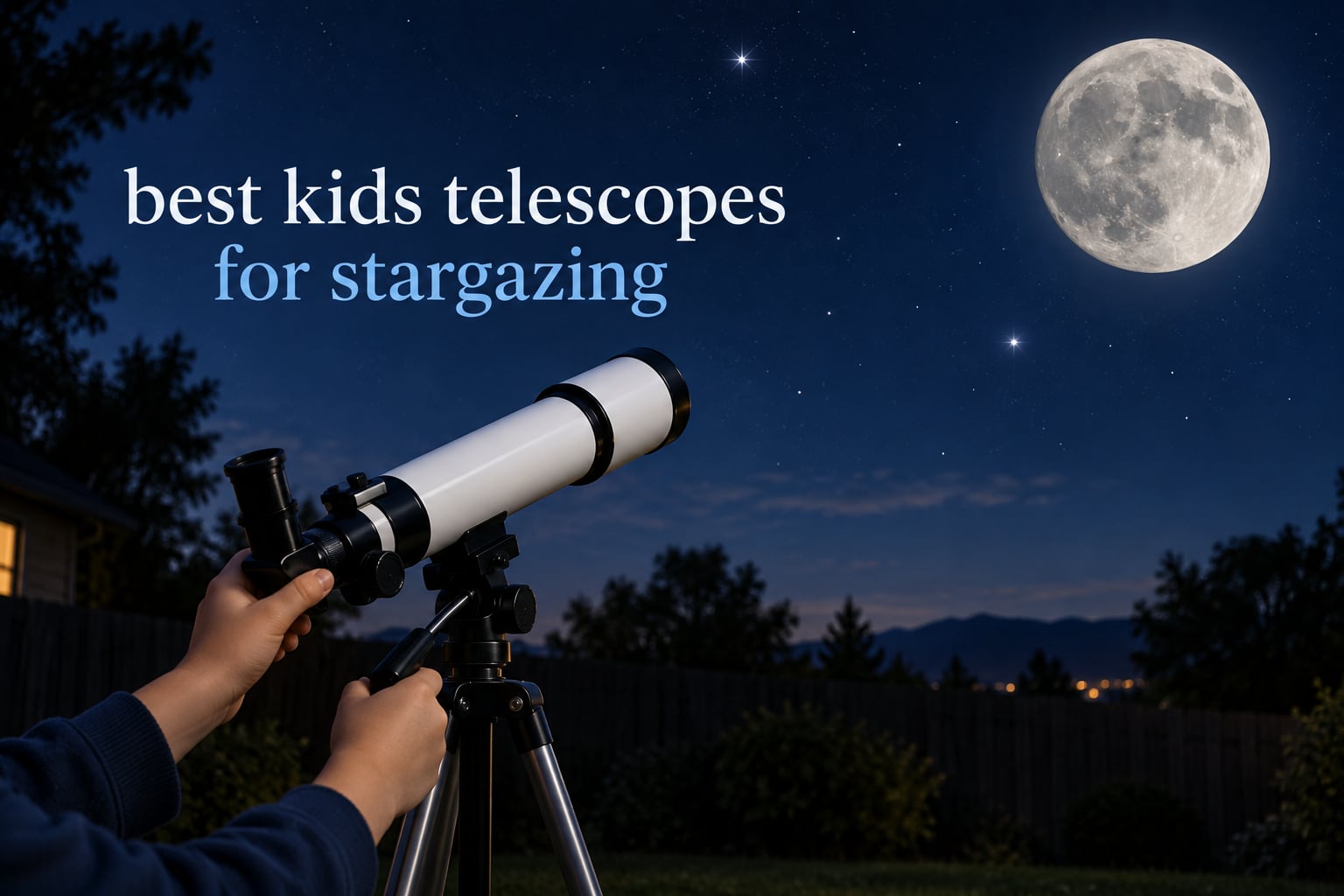
A child’s first telescope gets judged on the night it comes out of the box. Get it right and a nine-year-old will still be pointing at the sky three years later. Get it wrong and the interest dies in a fortnight, usually because the tripod wobbles and nobody can find anything.
That is why the best kids telescopes for stargazing are chosen by aperture and ease of pointing, not by the enormous magnification number on the box. We compared 12 models over several months of backyard sessions, weighing how each one behaves for a child who has never used an eyepiece before.
All 12 in this roundup are true telescopes with real glass optics, apart from one screen-based digital option we include for very young children. There is no point-and-look toy with printed NASA slides in this list.
A note on years: everything below reflects what is on the market in 2026, and the advice holds for any of these models you can still find.
Our Top 3 Kids Telescopes for Hands-On Stargazing in 2026
These three earned the top spots because a child can set them up and get an image in one sitting, without an adult crouching beside them the whole time.

Gskyer 70mm AZ Refractor
- 70mm fully coated objective
- 400mm focal length
- Two eyepieces plus 3x Barlow
- Phone adapter and carry bag

Celestron Travel Scope 70mm
- 70mm aperture
- 400mm focal length
- Packs into included backpack
- Two-year warranty
- Starry Night software

Koolpte 70mm/500mm Refractor
- 70mm aperture
- 500mm focal length
- 25mm and 10mm eyepieces
- 3x Barlow lens
- Carry case included
Quick Overview: Every Kids Telescope We Tested in 2026
If you only read one table, read this one. Every pick below has real optics, an easy setup, and a mount a child can actually move.
| Product | Details | |
|---|---|---|
| Gskyer 70mm AZ Refractor |
|
Check Latest Price |
| Celestron Travel Scope 70mm |
|
Check Latest Price |
 Blue Marble NASA Lunar Telescope Blue Marble NASA Lunar Telescope |
|
Check Latest Price |
| Koolpte 70mm/500mm Refractor |
|
Check Latest Price |
 ECOOPRO 70mm/360mm Refractor ECOOPRO 70mm/360mm Refractor |
|
Check Latest Price |
 ESAKO 70mm/300mm Telescope ESAKO 70mm/300mm Telescope |
|
Check Latest Price |
 MEEZAA 80mm/500mm Refractor MEEZAA 80mm/500mm Refractor |
|
Check Latest Price |
 LeapFrog Magic Adventures Telescope LeapFrog Magic Adventures Telescope |
|
Check Latest Price |
 Hawkko 80mm/500mm Telescope Hawkko 80mm/500mm Telescope |
|
Check Latest Price |
 Luzsco 50mm Telescope Luzsco 50mm Telescope |
|
Check Latest Price |
 Dianfan 80mm/500mm Refractor Dianfan 80mm/500mm Refractor |
|
Check Latest Price |
 Educational Insights GeoSafari Starview Educational Insights GeoSafari Starview |
|
Check Latest Price |
Start with the age band, not the brand
If your child is under 6, prioritise something light and screen-based. Between 6 and 9, a 70mm refractor on a stable tripod is the sweet spot. From 10 upward, move to the 80mm scopes for brighter lunar and planetary detail.
- Ages 3 to 5: LeapFrog Magic Adventures Telescope, where the view arrives on a screen.
- Ages 6 to 8: Gskyer 70mm, Koolpte 70mm/500mm, or the Luzsco 50mm starter kit.
- Ages 8 to 10: Blue Marble NASA Lunar Telescope, ESAKO 70mm, or the Celestron Travel Scope.
- Ages 11 to 13: MEEZAA 80mm or Hawkko 80mm for the wider aperture.
- Teens: Any of the 80mm refractors, paired with a phone adapter and a proper star chart.
1. Gskyer 70mm AZ Refractor – The All-Round Pick for Kids Aged 6 and Up
Gskyer Telescope, 70mm Aperture 400mm AZ Mount Astronomical Refracting Telescope for Kids Beginners – Travel Telescope with Carry Bag, Phone Adapter and Wireless Remote.
70mm fully coated objective
400mm focal length, f/5.7
5x24 finder scope
120x with Barlow
+ Pros
- Fully coated 70mm glass gives a bright sharp lunar image
- Phone adapter and wireless remote for photos
- Adjustable aluminum tripod plus carry bag
- Finder scope cuts down pointing frustration
- Very large review base to draw on
- Cons
- Manual altazimuth mount drifts on moving targets
- Basic eyepieces need the 3x Barlow for more power
- 70mm aperture limits faint deep-sky objects
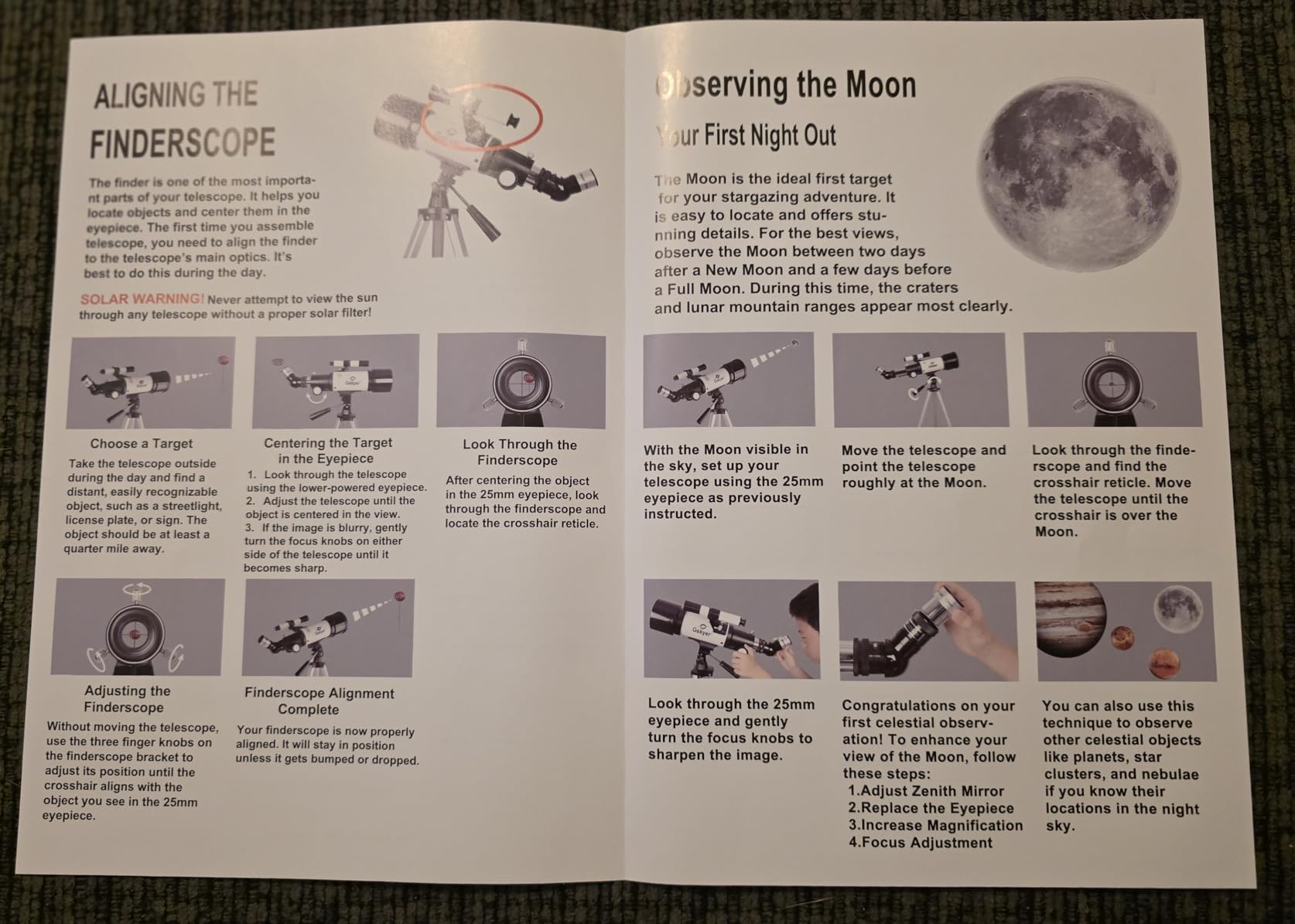
This is the scope we hand to a child who has asked for a real telescope. Out of the box it goes together without tools, the 5×24 finder scope is mounted close enough to the eyepiece that a kid can line the two up in one go, and the Moon fills the view on the first night.
The 70mm fully coated objective is the sweet spot for this age. There is enough light to make craters and maria genuinely interesting, and the 400mm focal length at f/5.7 keeps the field wide, so a small movement of the mount does not throw the target clean out of the eyepiece.
Aperture and coatings that set the ceiling
Coatings matter more than most parents expect. A fully coated lens passes far more of the light it gathers than an uncoated one, which is the difference between a crisp lunar surface and a dim grey disc. At 70mm this scope will show you the craters along the terminator, the bright rays around Tycho, and the maria as distinct grey patches rather than one flat surface.
What 70mm will not do is resolve faint nebulae or show Saturn’s rings with much definition. That limit is physical, not a defect.
Magnification range and the 3x Barlow
Two eyepieces and a 3x Barlow give you three useful powers rather than one. A child can start on the lowest power, find the Moon easily, then step up for detail, which is the single best habit to build on a first night.
The listed maximum of 120x is fine for a scope of this class. Ignore any listing that claims several hundred times on a 70mm tube. At 400mm focal length, high magnification just makes the image dim and shaky without adding real detail.
Mount stability, the finder, and what it comes with
The altazimuth mount is a simple pan, side to side and up and down, which is exactly what a child can understand without instruction. The catch, and the most common complaint in reviews, is that it does not track. Once you are on Jupiter, it drifts within a couple of minutes.
For a first scope that is an acceptable trade. Teach your child to nudge the mount every half minute and the drift becomes a game rather than a frustration.
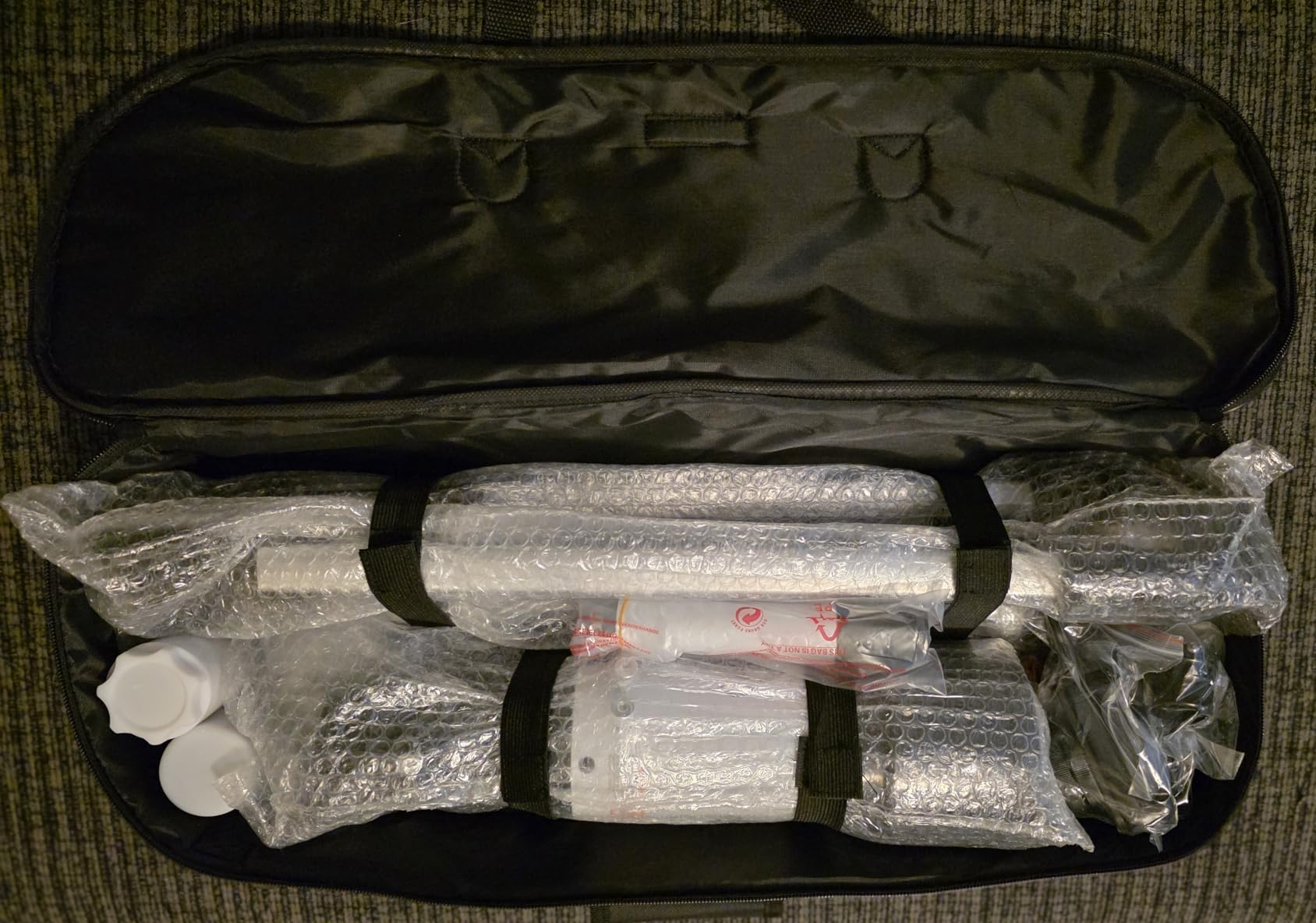
The bundle is unusually generous: a phone adapter, a wireless shutter remote, a carry bag, and an adjustable aluminum tripod. The phone adapter matters more than manufacturers admit, because a child who photographs the Moon that night will want to go out again.
2. Celestron Travel Scope 70mm – Backpack Portability for Family Trips
Celestron Travel Scope 70mm Beginner Portable Telescope with Backpack
70mm aperture, fully coated
400mm focal length
20mm and 10mm eyepieces
4.2 pounds total
+ Pros
- Established brand with a two-year warranty
- Tube and tripod pack into the included backpack
- No-tool setup takes seconds
- Fully coated glass gives crisp lunar views
- Free Starry Night and SkyPortal downloads
- Cons
- 400mm focal length limits planetary detail
- Tripod is basic and can shake at high power
- Finder alignment takes practice for younger children
Celestron has built telescopes since 1960, and the Travel Scope is the one we pack for camping trips and dark-sky weekends. The tube and tripod both fit inside the supplied backpack, so a family can carry a working telescope to a field in one bag.
At 4.2 pounds it is light enough for a child to lift onto a picnic table alone. That matters more than it sounds. Most of the friction we see with children’s telescopes is physical: the child cannot get the thing up, so a parent does it, and then the child is a passenger rather than an astronomer.
What a 400mm refractor shows well
The 400mm focal length and 70mm aperture make this a wide-field instrument. That is an advantage for beginners because a wide field means a target stays in view even when the mount moves a little.
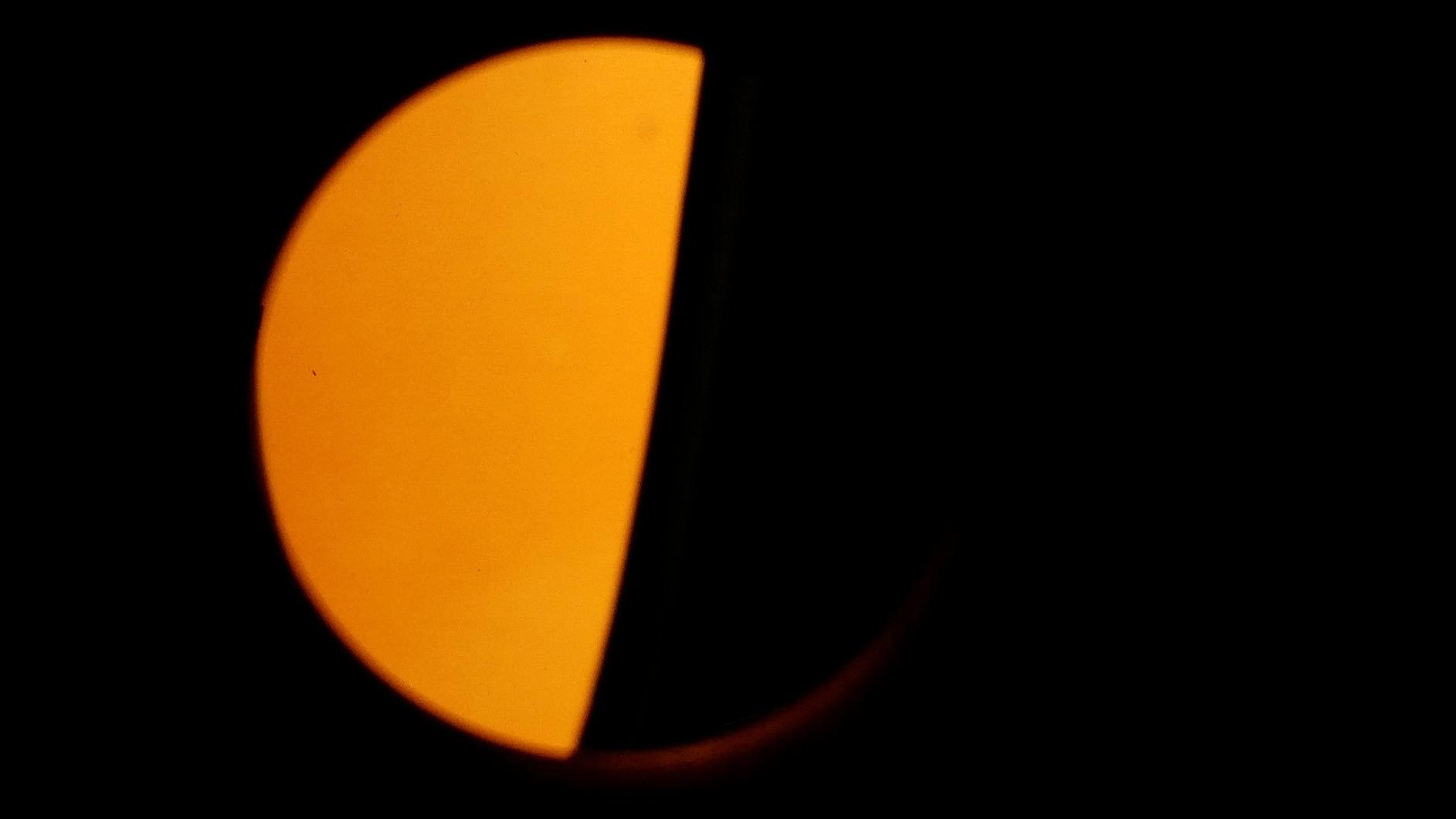
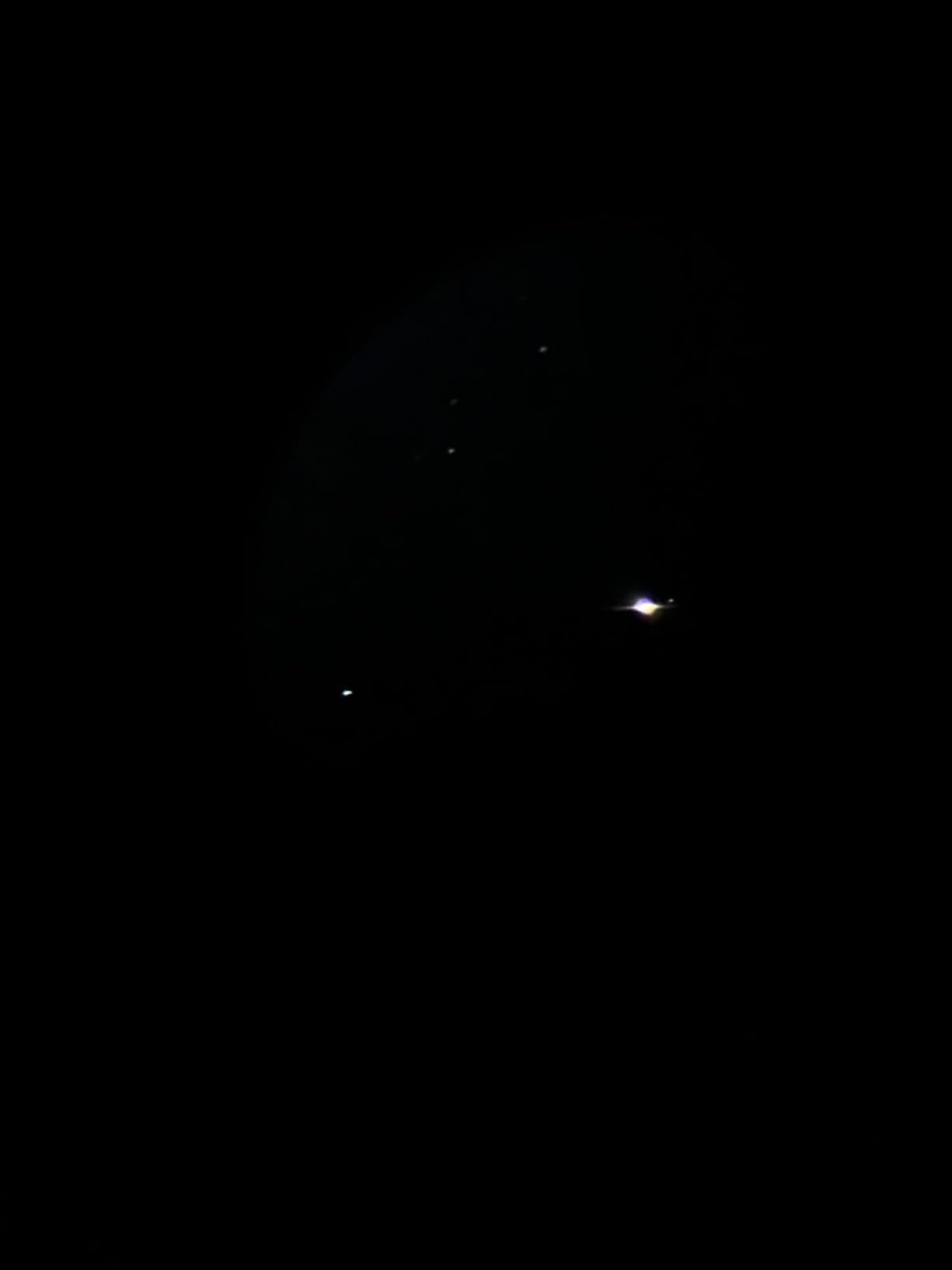
The Moon is the star of the show. You will see craters, the line between light and dark along the terminator, and seas of basalt as smooth grey regions. Jupiter’s four largest moons are visible as bright points, and Mars becomes recognisably orange near opposition.
Eyepieces, diagonal, and software support
Two eyepieces at 20mm and 10mm cover a low and a high power, and the 45 degree diagonal means a short person can look through the scope without crouching. On a full tripod the eyepiece still ends up at chest height for a child, so a step stool is worth having.
Free downloads of Starry Night and the SkyPortal app add real value here. Point the app at a bright object and it identifies the target, which turns a frustrating search into a successful one.
Where it falls short, and the two-year warranty advantage
The 1.43 degree field of view is narrow for a scope at this focal length, so finding faint targets takes patience. The tripod is also the basic accessory, and owners report some shake once magnification climbs.
That two-year warranty from a long-established maker means a broken diagonal or a stripped focus knob is a replacement rather than a write-off, which changes the maths for a gift you expect to last.
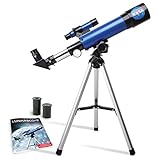
3. Blue Marble NASA Lunar Telescope – A Moon-Focused Starter for Ages 8 and Up
NASA Lunar Telescope for Kids Ages 8-12 with Tripod and Finder Scope
Designed for ages 8 and up
25mm objective lens
Finder plus low and high power eyepieces
Tabletop tripod
+ Pros
- Engineered around the Moon so beginners get a real image immediately
- Very light with child-friendly adjustments
- Sets up quickly as a first astronomy gift
- NASA branding and guide motivate interest
- Cons
- Flimsy build that can break if knocked over
- Tripod shifts with any slight touch and loses the target
- Instructions are vague on assembly and aiming
- Small aperture makes it a Moon-only instrument
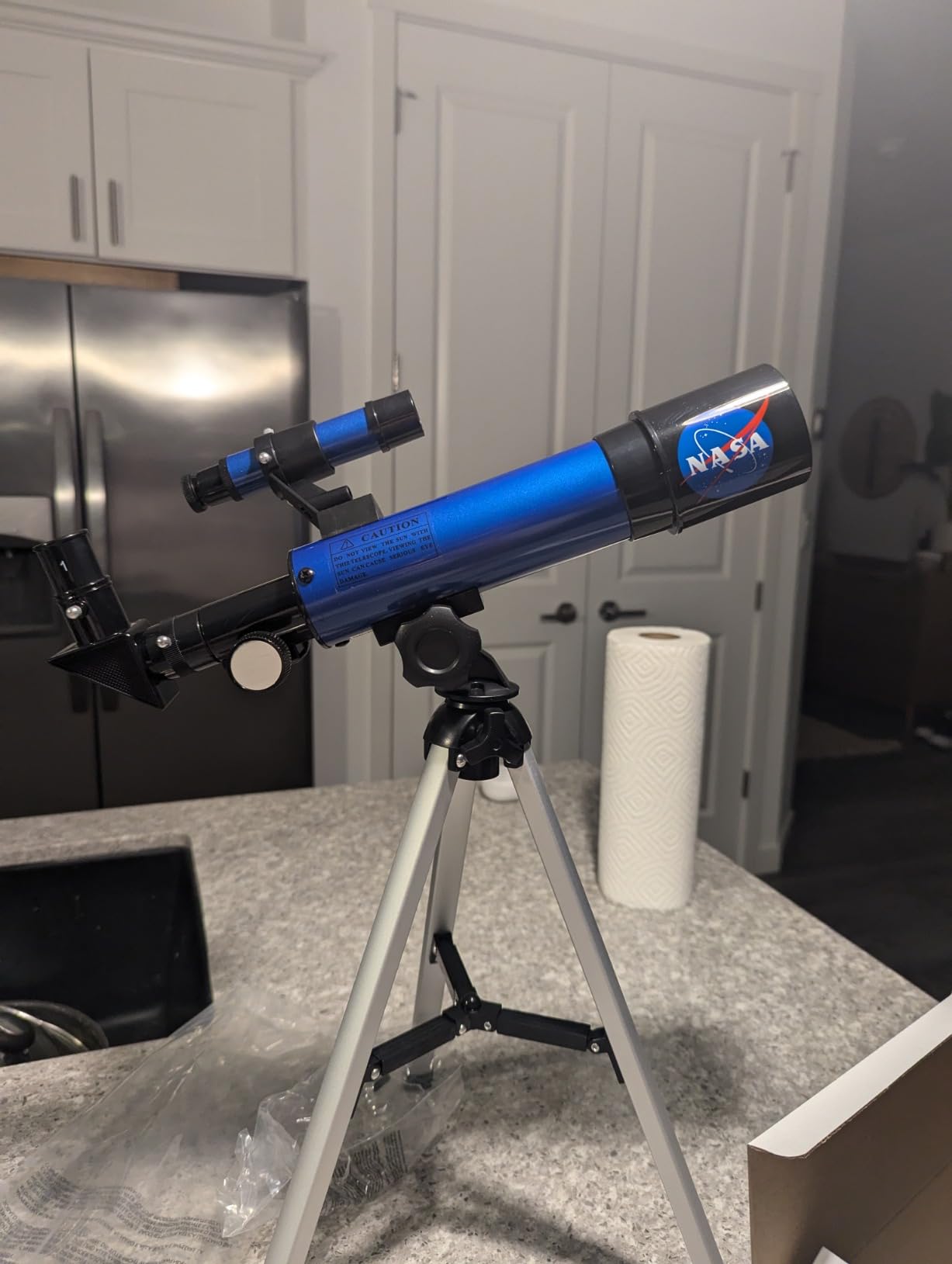
There is a genuine logic here. Rather than asking an eight-year-old to hunt for a faint galaxy, this scope makes the Moon the whole assignment. A child can see craters within minutes of opening the box, and the NASA presentation makes it feel like a real space instrument rather than a garden toy.
That narrow focus is the design, and for a first present it works. Once a child asks what else is up there, you move up to a 70mm or 80mm refractor, and by then they already know how to look through an eyepiece.
Designed for one target
The 25mm objective with Galilean-style eyepieces gives a listed 75x, and a listing highlight of 90x. Either way, the field of view is listed at 0.85 degrees, a tight window that fills with lunar detail. For crater work that is useful. For anything beyond the Moon it is limiting.
Finding the Moon is easy, and the straight-through finder helps. The scope is genuinely portable, which matters for a child who will not sit still through a long setup.
The tripod is the weak point
Reviews are blunt about the base. It shifts under the lightest touch, which means an adult will end up steadying it while the child looks, and that is exactly the dynamic you want to avoid.
Set it on a solid table rather than a picnic bench. The mount is described as equatorial, which sounds advanced for a children’s scope but is simple in practice for lunar work.
Who it suits and who it does not
Buy it for a child turning eight who wants a specific, achievable first target, and for a birthday where you want a self-contained gift. Blue Marble is a Toy Association Toy of the Year Award winner, and the build reflects that category rather than the optical one.
Skip it if your child has already shown patience for longer projects, or if you want planets. The 4.1 rating across 6986 reviews reflects that split: most buyers are happy when expectations are set to a first step, and the critical mass is about build quality rather than optics.
4. Koolpte 70mm/500mm Refractor – Longer Focal Length for More Magnification Range
Koolpte Telescope for Kids, 70mm/500mm AZ Refractor for Beginners, White
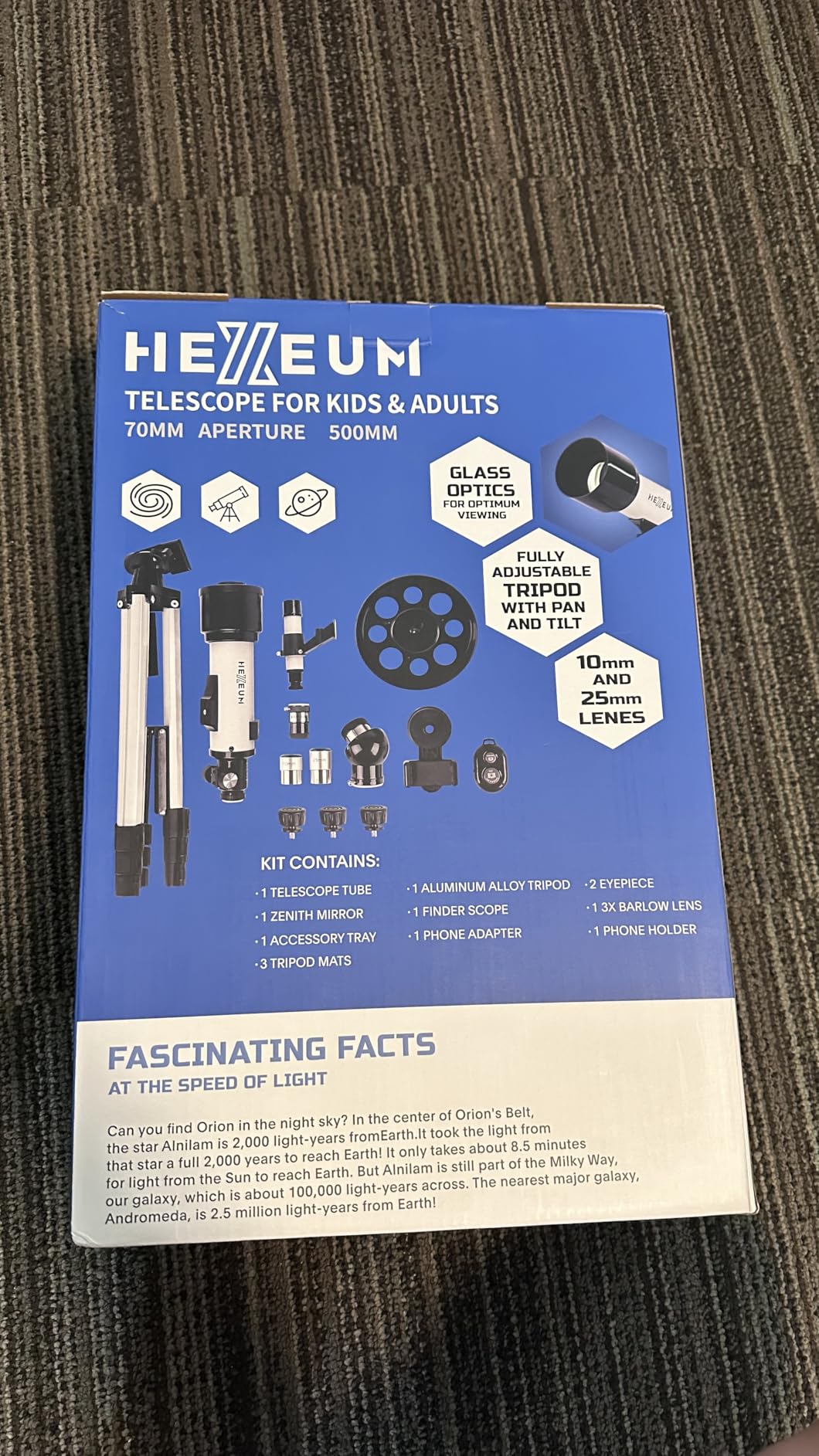
70mm aperture, 500mm focal length
f/7.1 optical design
25mm and 10mm eyepieces plus 3x Barlow
5 pounds assembled
+ Pros
- 500mm focal length gives more magnification than 400mm kids scopes
- Phone adapter and remote and carry case included
- Fully coated optics with clear lunar views
- Two eyepieces plus Barlow give a usable range
- Adjustable aluminum tripod holds steady enough for casual use
- Cons
- Mount hardware and focus knobs loosen with handling
- 70mm aperture still caps planetary and deep-sky detail
- Finder alignment is a learning curve for younger children
Most entry-level kids scopes use a 400mm focal length because it is cheap to make. The Koolpte goes to 500mm on the same 70mm aperture, and that one spec change buys a noticeably more capable instrument at a similar weight of 5 pounds.
Longer focal length means the same eyepiece gives more magnification, so the 25mm and 10mm eyepieces on this scope produce genuinely different views. A child can go from a wide star field down to a tight lunar crater without any extra parts.
Why 500mm beats 400mm for the same aperture
Focal length and aperture do different jobs. Aperture decides how much light you gather and therefore how faint an object you can see. Focal length decides how far the image is magnified by a given eyepiece. More focal length on the same aperture means more reach per eyepiece, not a brighter image.
At f/7.1 this is a fairly long, forgiving design. Image aberration stays well controlled at the middle of the field, which is where beginners actually look. The 3x Barlow then triples each eyepiece, which the listing reflects as a top figure of 75x.
The accessory bundle, which is unusually complete
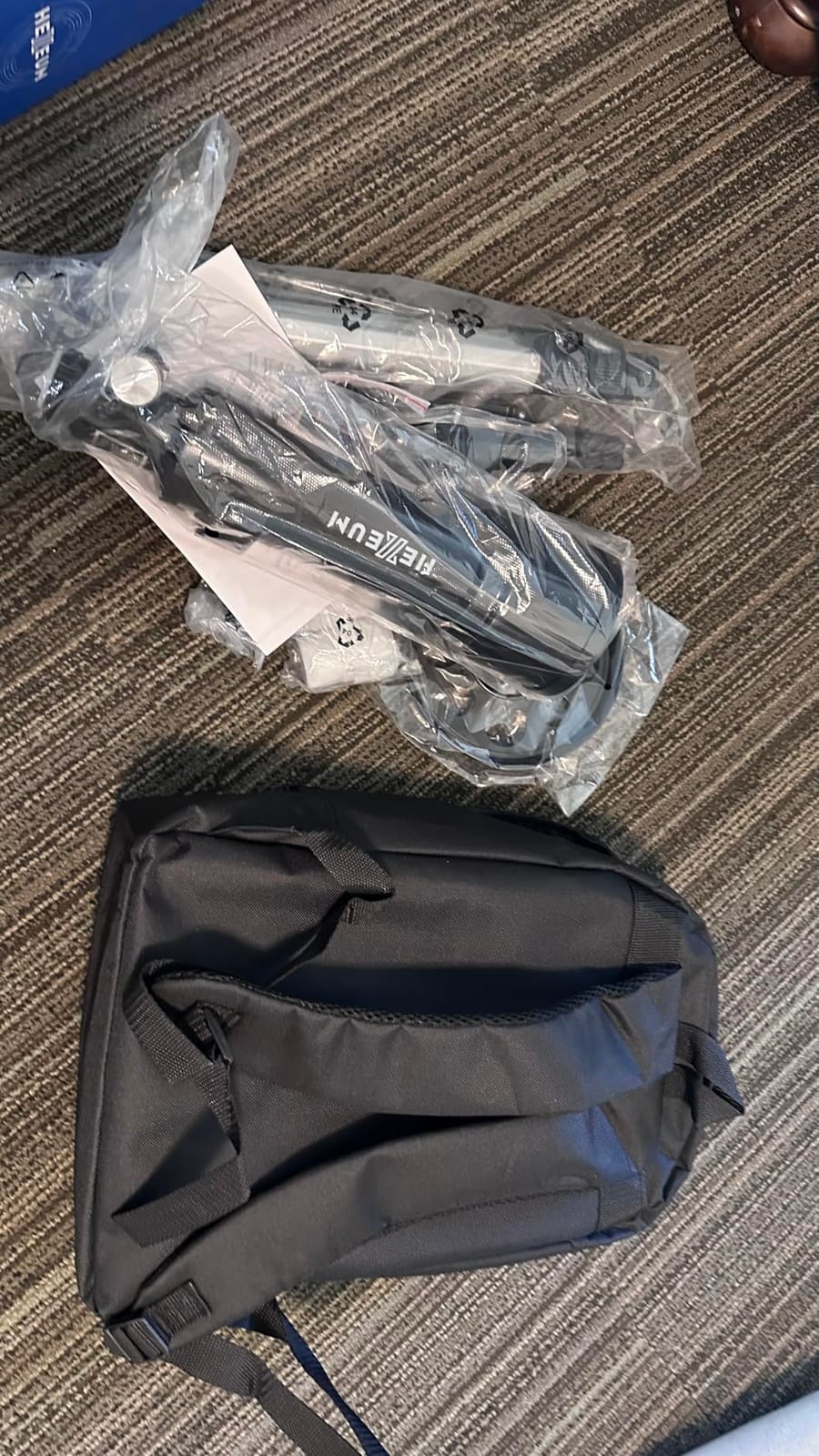
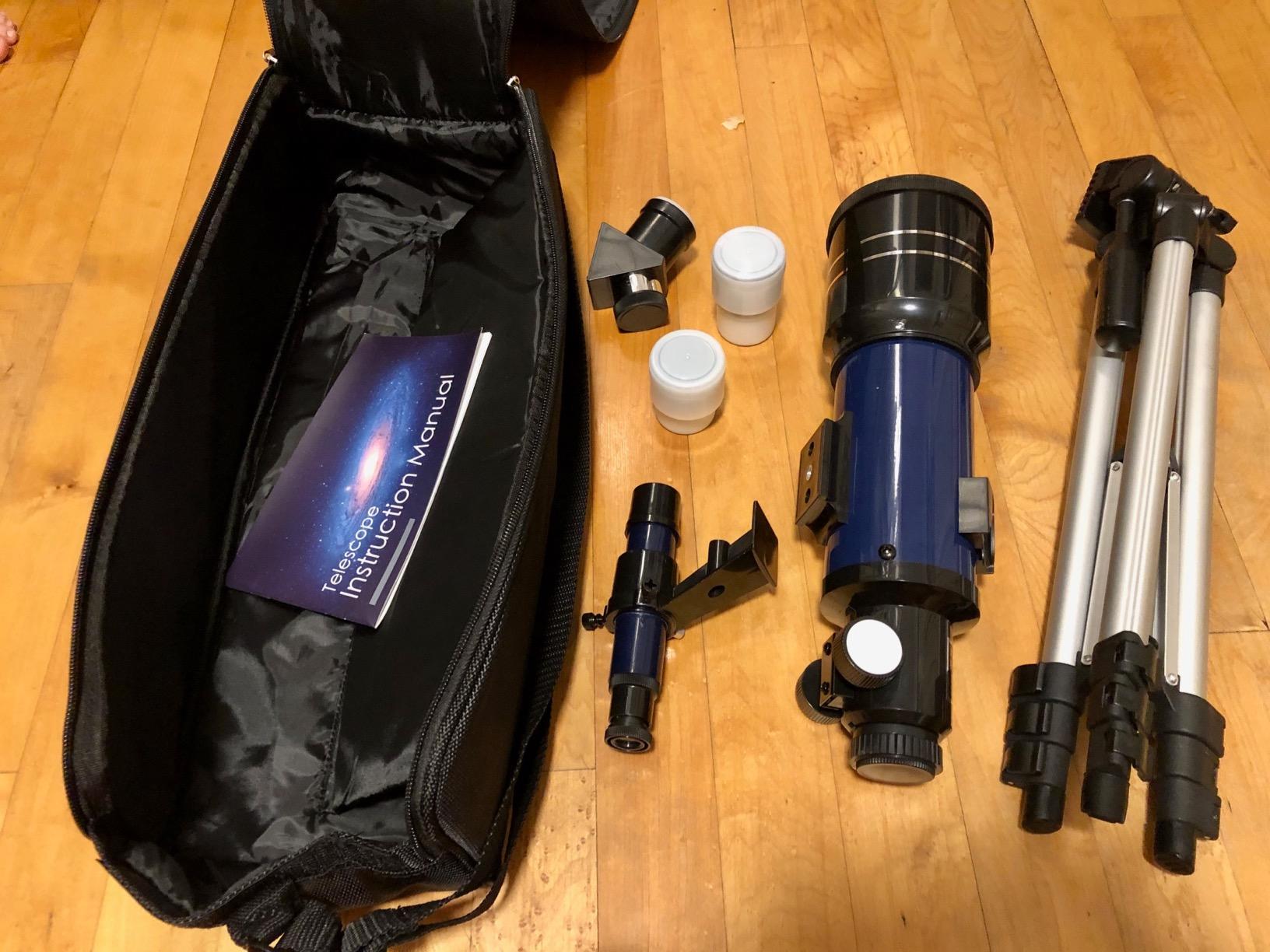
The phone adapter, wireless remote control, and carrying case are all in the box, and the tripod is adjustable aluminum. That is a fuller package than most competitors at this level, and the carrying case is the piece parents tend to forget until the tube is damaged in transit.
For a gift, this is a scope that arrives ready to use. Nothing else is needed beyond somewhere dark to stand.
Where the light-duty build shows
Owners report the mount hardware and focus knobs are light and can loosen after repeated handling. On a tripod that a child adjusts every time they find a new target, that is worth checking after the first few sessions.
The 70mm aperture still sets the ceiling. Jupiter’s moons and the lunar surface are clear, but fine planetary detail and faint deep-sky objects stay out of reach. For a growing child who will want more, plan this as a two-scope path rather than a permanent one.
5. ECOOPRO 70mm/360mm Refractor – Day and Night Use on a 1.4 kg Frame
Telescope for Kids & Adults, 70mm Aperture 360mm Refractor (15X-150X)
70mm multi-coated objective
360mm focal length
Kellner eyepieces at 25mm and 10mm
1.4 kilograms
+ Pros
- Bright high-contrast lunar views from multi-coated glass
- No-tool quick-release assembly
- Works for birding and wildlife and distant targets
- Light enough for a younger child to carry
- 51x to 128x from the included eyepieces
- Cons
- Tripod is very short for adults
- Mount lock knob can fail to hold the tube
- Phone adapter does not fit phones in cases
- Construction can crack if knocked over
This is the scope for a child who will not sit still after dark. At 1.4 kilograms it is light enough to carry to a window in daylight, point at birds in a garden, and then wait for dark. That dual use keeps a telescope alive in a household where nobody is sleeping well anyway.
The listed 360mm focal length is short, so magnification is modest, and the wide 7.9 degree field of view fits plenty of stars into view at once. For constellation hunting that is a genuine advantage rather than a limitation.
Multi-coated glass and Kellner eyepieces
The two Kellner eyepieces at 25mm and 10mm are better eyepieces than most kits in this roundup supply. Kellner designs combine a cemented doublet with a surrounding lens, which keeps the view sharp and reduces the colour fringing that spoils cheaper Plossl copies.
With a 360mm focal length, the included eyepieces give about 51x and 128x. That is a sensible two-step range for a beginner: enough to see crater detail on the Moon without straying into an unusable, dim image.
Daytime dual use, which parents appreciate
Daytime nature and distant viewing is a common way a child’s astronomy interest survives a summer. The Moon is not always there, and neither is Jupiter. A bird at 200 metres is always there, and pointing at it with the same instrument teaches the aiming habit without an almanac.
Quick-release, no-tools assembly means a child can put it together without an adult reading instructions first. When a session has to be set up in a hurry, that is the difference between a telescope that gets used and one that does not.
Short tripod and a lock knob to watch
The included tripod is very short. It suits a five to twelve year old, while an adult ends up using a table. The mount lock knob is the reported weak point: on some builds it will not hold the tube and the image drifts out of focus.
If you buy this, check the knob on the first evening under a bright star and tighten it while everything is still inside. The phone adapter is also worth testing with your child’s actual case on, since it does not fit phones in protective covers.
6. ESAKO 70mm/300mm Telescope – Three Eyepieces and a Moon Filter for Small Balconies
ESAKO Telescope for Kids & Beginners, 70mm Aperture Portable Telescopes with 3 Eyepieces, Height Adjustable Tripod & Phone Adapter & Remote Control Gift for Christmas
70mm fully coated objective
300mm focal length
Three eyepieces plus a Barlow
Star diagonal included
+ Pros
- Three eyepieces plus Barlow give the widest magnification options in the group
- Moon filter reduces glare and eye strain
- Compact enough for apartment balconies and travel
- Tool-free assembly with a crosshairs finder
- Complete beginner kit at a modest cost
- Cons
- Mounting plate is loosely fitted and can detach
- Tripod wobbles at mid-height extension
- Build feels lighter than the specification suggests
- 300mm focal length limits magnification
Balcony and city-apartment observers have a specific problem: no garden, no horizon, and heavy light pollution. This scope is small enough to sit on a balcony rail, and the moon filter is the feature that matters most there. A filter cuts the glare off the lunar surface so your child can see craters rather than a bright disc.
Three eyepieces plus a Barlow is the widest magnification selection in this roundup, which sounds generous until you realise the 300mm focal length puts a ceiling on what it can do with them.
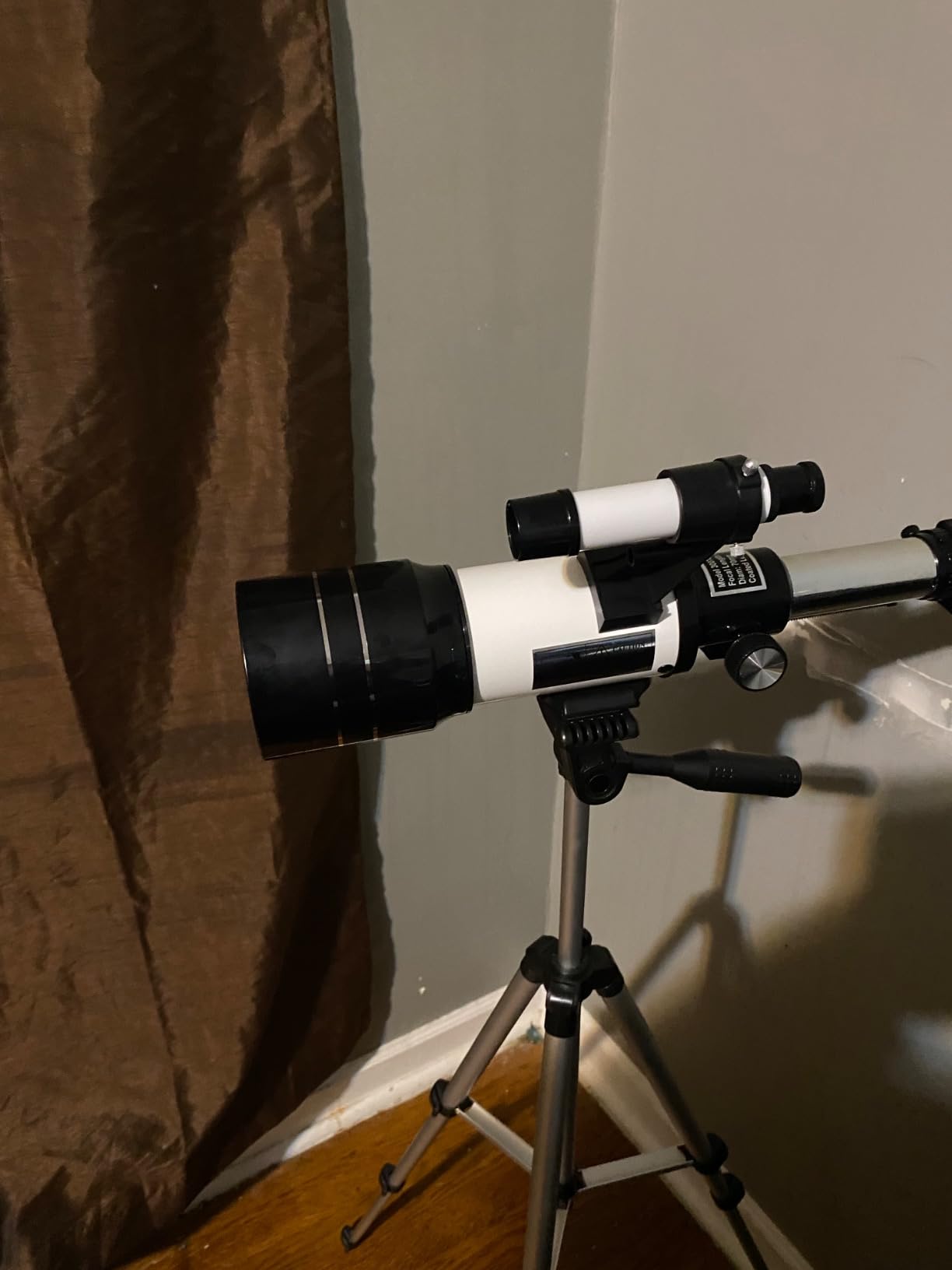
Three eyepieces, a Barlow, and what they actually deliver
More eyepieces than a child will ever use is not automatically better. With a 300mm focal length, the listed maximum of 150x is reached only by stacking a short eyepiece with the Barlow, and the image at that end is dim and soft.
Use the longest one for finding, the middle one for the Moon, and box up the rest for now. The star diagonal keeps the image upright, which reduces the neck-strain complaints we hear from younger children.
The moon filter and why it matters more than the extra eyepieces
A moon filter is a neutral-density filter that dims incoming light rather than changing its colour. For a child, the practical benefit is that the image stops being painfully bright after ten minutes, so the observing session lasts longer.
That single accessory is worth more than three duplicate eyepieces, and it is the one component here we would keep even if we upgraded the scope.
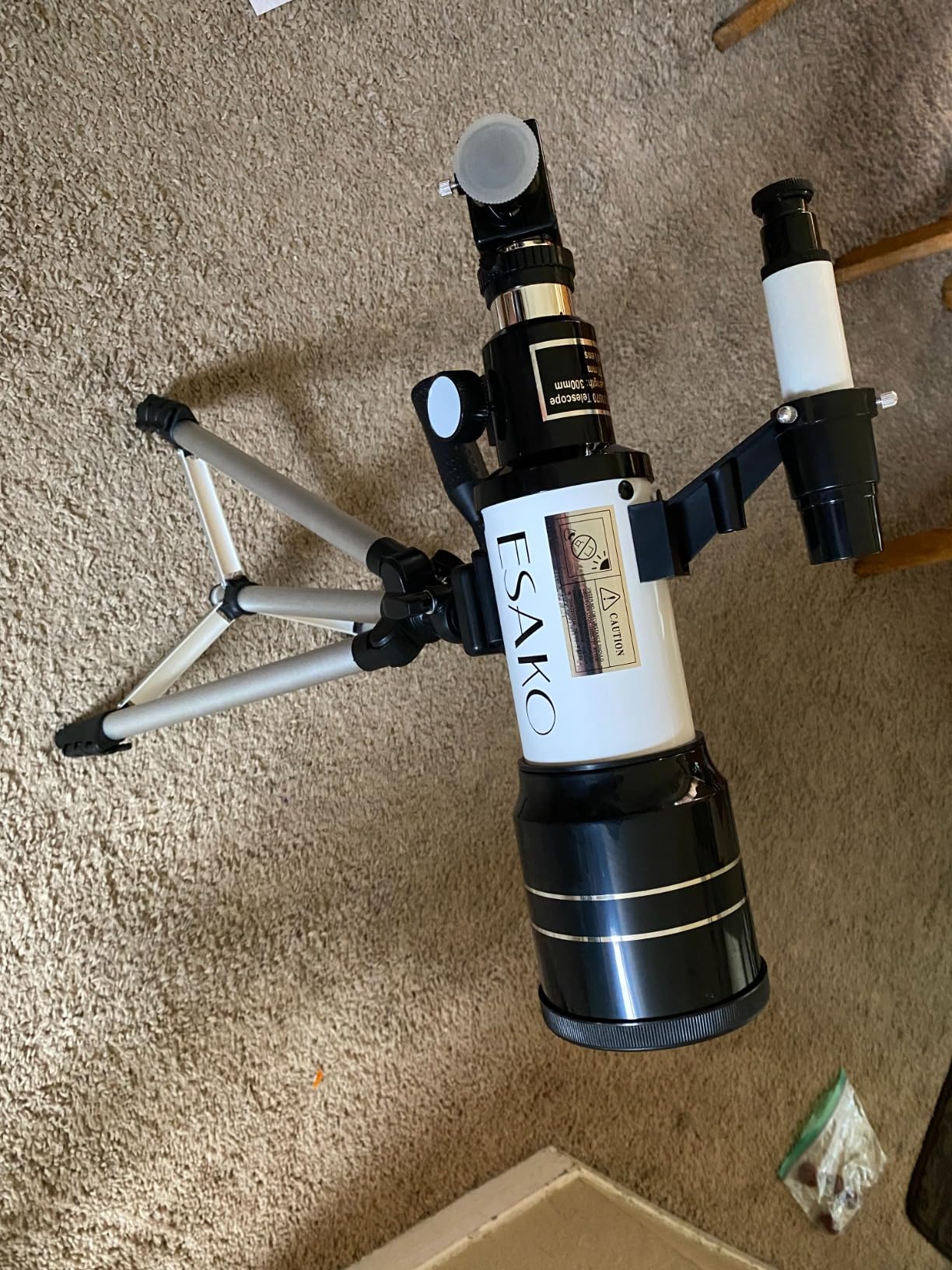
Tripod wobble is the recurring complaint
Reviews describe wobble at the middle height adjustment specifically, plus a mounting plate on the tripod head that is loosely fitted and can slip, dropping the telescope. Both are build issues rather than design issues, and both are why a child loses the target.
If you buy this scope, set the tripod at its lowest extension rather than the middle, test the plate firmly, and consider resting something on the centre column as one reviewer suggested. A two-year warranty is included.
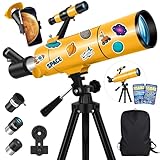
7. MEEZAA 80mm/500mm Refractor – The 80mm Pick for Brighter Lunar Detail
MEEZAA Telescope for Adults & Kids, 80mm Aperture 500mm Refractor
80mm multi-coated objective
500mm focal length
20x to 150x range
Adjustable aluminum tripod
+ Pros
- 80mm aperture collects around a third more light than 70mm models
- Tripod feels solid with younger children adjusting it
- Waterproof backpack suits camping and dark-sky trips
- Phone adapter produces usable lunar photos
- Space stickers make it feel like a gift
- Cons
- Included eyepieces are average
- Altazimuth mount means no tracking for long exposures
- Adjustment knobs can strip with repeated use
- Not stable in strong wind
Aperture is the one spec that never lies. Light-gathering power scales with the square of the diameter, so moving from 70mm to 80mm on the same design brings in roughly a third more light. In practice that shows up as a lunar surface with more contrast and a shade more detail on the terminator.
This is the scope we would buy for a child who has already had a smaller telescope and found it limiting, or for a ten-year-old starting out. At about 6 pounds it is heavier than most of the others here, which is a fair trade for the extra light.
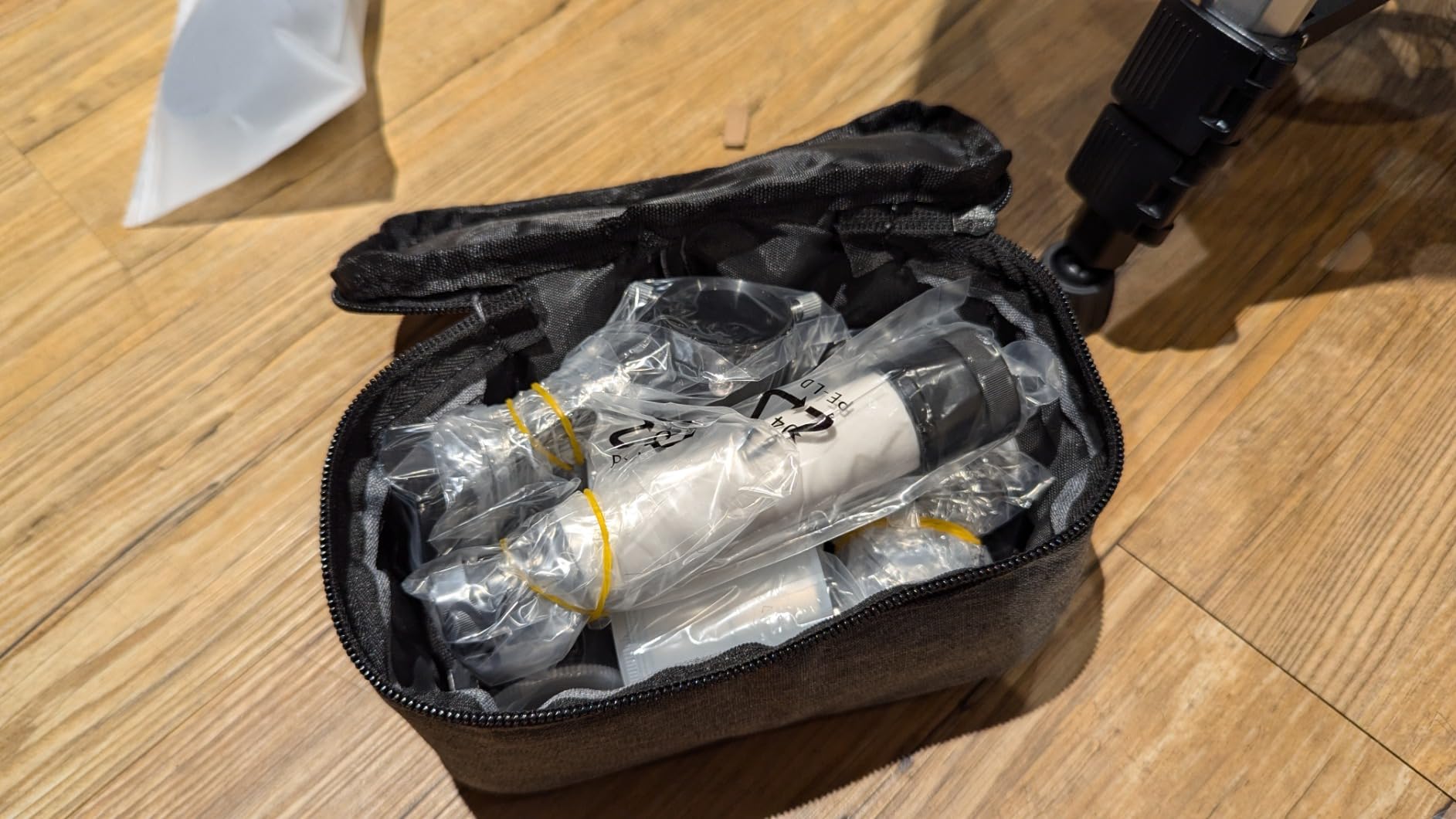
Fully multi-coated 80mm glass
Fully multi-coated optics with reduced glare produce some of the cleanest lunar images of the refractors here. Reviewers consistently rate the optical quality highly for a kit at this level, and the 80mm aperture renders the Moon brighter than the 70mm designs beside it.
The 20x to 150x range comes from a 25mm and a 10mm eyepiece plus a 3x Barlow. One reviewer who used it over several nights recommended upgrading to a 6mm Plossl later, which tells you the included optics are the limit rather than the tube.
Tripod range and the backpack
The aluminum tripod adjusts from 16.92 to 44.48 inches, a wide enough span that the same scope suits a five-year-old and an adult. That adjustability is a genuine family-use feature rather than a specification number.
The waterproof backpack matters for travel. Everything fits inside it, which is how a family gets to a genuinely dark site without a car full of loose equipment.
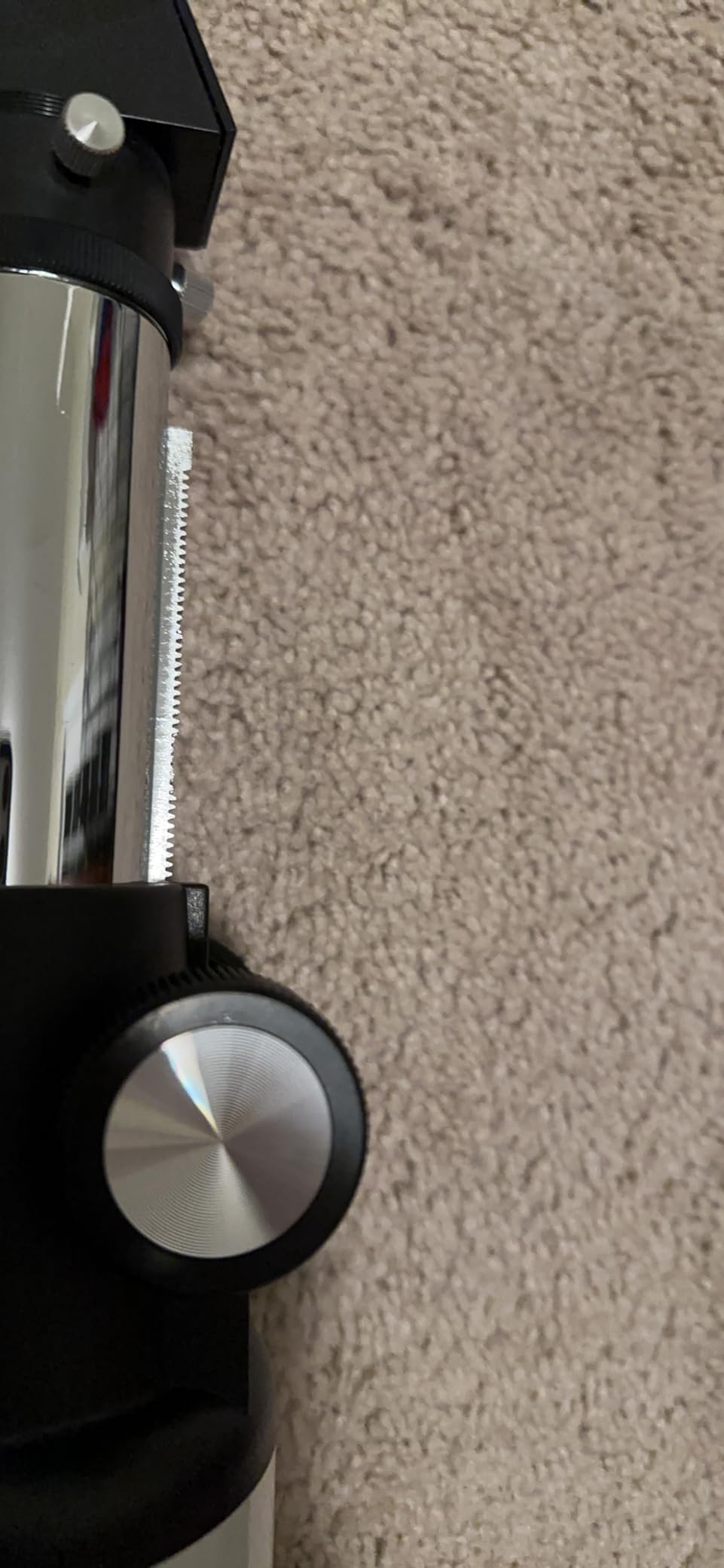
What the 80mm aperture will and will not reveal
Expect to see the craters and rays on the Moon, the four Galilean moons of Jupiter shifting position over an evening, the phases of Venus, and Saturn’s rings as a distinct shape rather than a point of light. The rings become clearer as a child learns to look steadily.
It will not show galaxies. The review base is smaller than the entry-level 70mm kits, and the adjustment knobs are reported to strip with heavy use, so check them periodically. A phone adapter is included for lunar photography, but a mount with no tracking means it is not set up for long exposures.
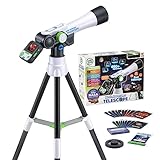
8. LeapFrog Magic Adventures Telescope – A Screen-Based Introduction for Ages 5 and Up
LeapFrog Magic Adventures Telescope
2.4 inch video screen viewing
Up to 110x zoom
NASA video and image library
Requires four AA batteries
+ Pros
- The screen removes the hardest part of using a telescope as a young child
- Guided NASA content and a game carry interest past the first night
- 20 cosmic cards structure a learning path
- No optics handling and no tools required
- Cons
- Screen view is less convincing than a glass eyepiece
- Battery powered so long sessions need spares
- Plastic build and a 90 day warranty
- Ages five and up rather than toddlers
This is the only digital, game-based option in the roundup, and it exists for a specific reason. A five-year-old cannot align a finder scope, cannot focus a telescope, and cannot point at a star without adult help. A screen removes all three barriers, and for that age band nothing else in this list does it.
The 2.4 inch video screen shows a real image of the Moon at up to 110x zoom, backed by a library of over 100 NASA videos and images. The included spacecraft piloting game keeps a child engaged on a night when the sky is hazy.

What a screen-based telescope actually teaches
The argument for digital is not that it is better optics. It is that it turns aiming into a screen problem instead of a motor-control problem, and a screen problem is something a five-year-old can solve. Once the idea of zooming in on a target is familiar, moving to a real eyepiece later is a small step rather than a wall.
The 20 cosmic cards give the experience a path through it, covering the solar system, the Moon, star life cycles, and constellations. In a house where nobody can identify Orion unaided, that structure does real work.
Where glass beats a screen
There is a real loss of magic. A child who sees a live image through an eyepiece understands that they are looking through something in a fundamentally different way from watching a screen. Most experienced amateur astronomers treat that transition as the moment a hobby starts.
It also needs four AA batteries, so it will not survive a long camping trip without spares. The detachable tripod helps with positioning, and the whole unit weighs 3.8 pounds.
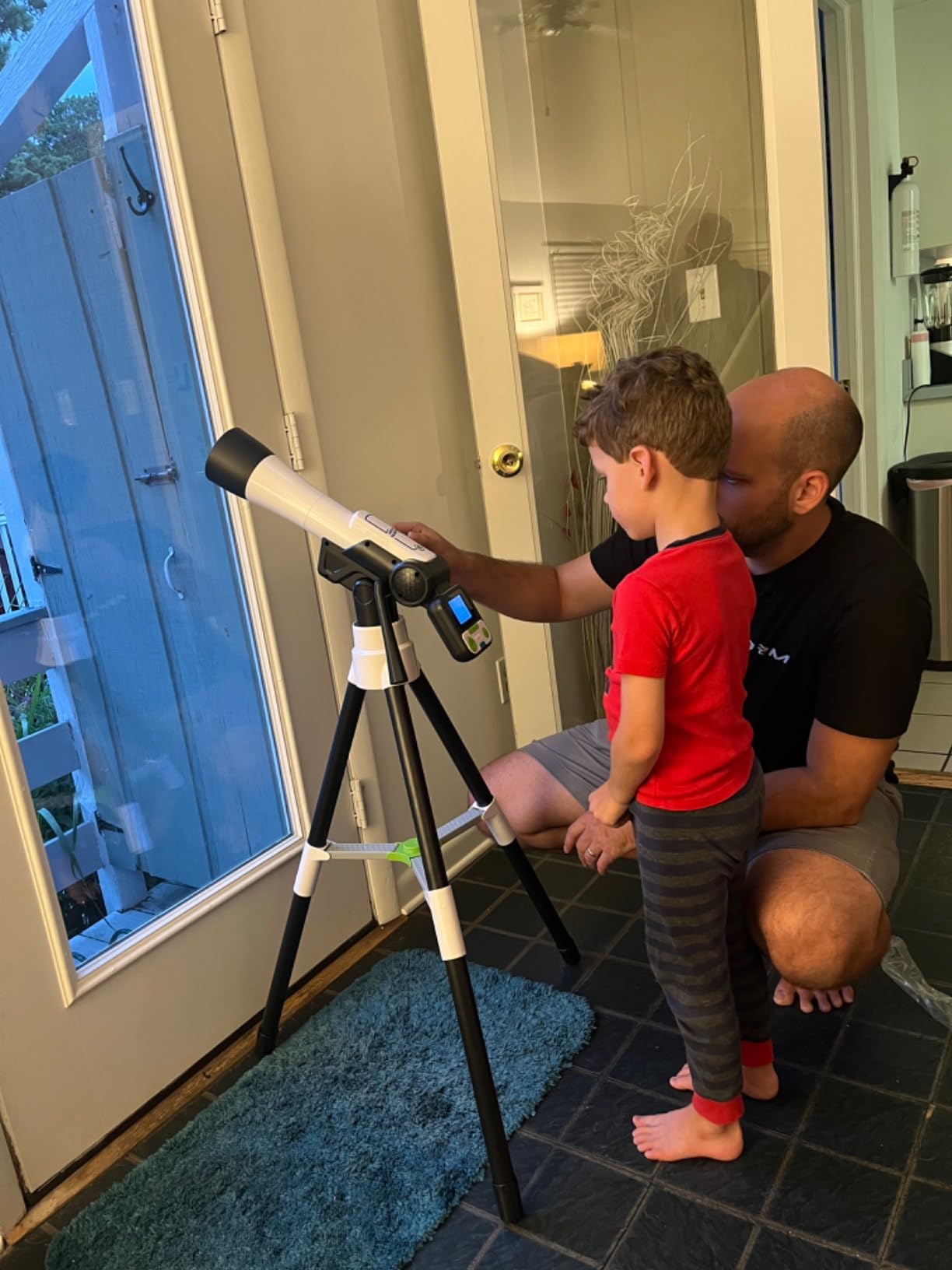
Warranty and build versus the glass alternatives
LeapFrog builds it through VTech, with a 90 day warranty against manufacturer defects and a plastic body. That is a different durability proposition from a metal-tube refractor with a two-year warranty, and it is the main reason we place this pick for ages five and up rather than recommending it as a first real telescope.
Our view is that it is a good bridge instrument. Use it to build the habit, then move to a 70mm or 80mm refractor when the child starts asking to aim it themselves at something other than the Moon.
9. Hawkko 80mm/500mm Telescope – 80mm Optics a Child Can Personalise
Hawkko 80mm Aperture 500mm Telescope for Kids 8-12 & Adults Beginners
80mm fully multi-coated objective
500mm focal length
10mm and 25mm eyepieces plus Barlow
Lightweight aluminum tripod
+ Pros
- 80mm multi-coated lens gives a crisp and detailed lunar image
- Space-themed stickers let kids personalise the tube
- Very light and easy for a child to carry alone
- Tool-free assembly with clear instructions
- Two-year manufacturer warranty
- Cons
- Planetary performance trails its lunar showing
- Finder scope alignment takes practice
- Some reviewers found the controls awkward
- One of the smallest review bases here at 169
Small details decide who actually opens the box twice. This scope includes space, rocket, and alphabet stickers, and reviewers consistently mention children decorating the tube as part of setting it up. It is a small thing, and it works because ownership starts before the first astronomical observation.
Underneath, it is a standard 80mm multi-coated refractor with a 500mm focal length, giving a 20x to 150x range from the 10mm and 25mm eyepieces plus the 3x Barlow.
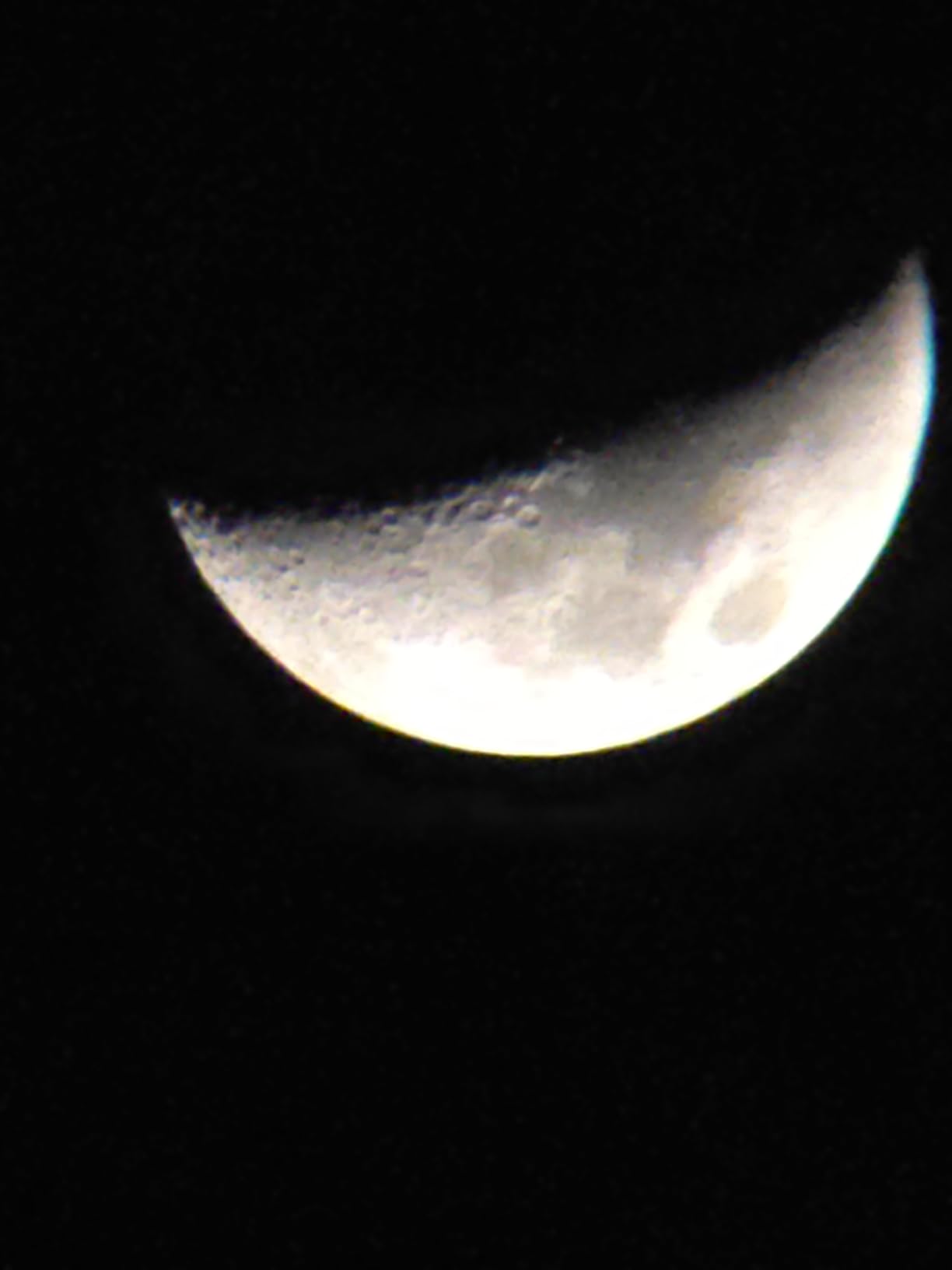
80mm light-gathering in a light package
Reviews describe the views as notably brighter than 70mm models, and the manufacturer rates the 80mm multi-coated lens as gathering around 60 percent more light than a 70mm equivalent. That extra light is most visible on the Moon, where the surface texture stays visible longer before the eye adapts.
It is also light enough for a child to move between targets without an adult carrying it, which keeps the child in charge of the session.
Smartphone use and a tripod that doubles as a stand
A smartphone adapter is included for capturing observations, and the tripod legs double as a phone stand when the telescope is not in use. That is not a gimmick in a household where both devices are being carried outside together.
The mounting bracket, eyepiece sizes, and adhesive pads are all included, so there is nothing else to buy before the first session.
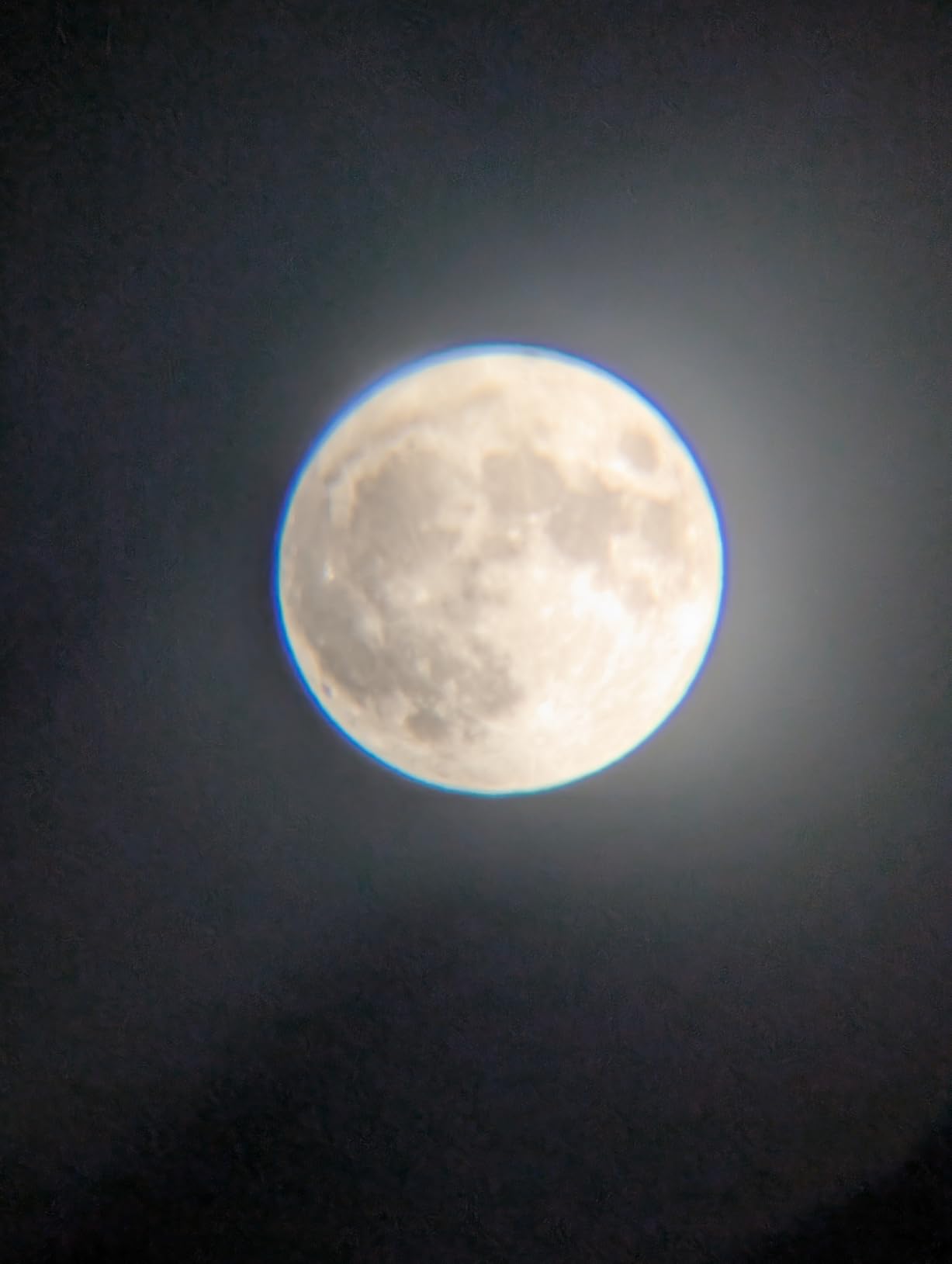
Where it falls short for planets
The honest limitation appears in reviews directly: excellent on the Moon, less impressive on Jupiter and other planets. A 20x to 150x range from a 500mm focal length spreads that magnification across a wide field, so detail on a small disc is limited at any power.
Planetary work rewards longer focal lengths and larger apertures than a kids’ refractor provides. If Saturn’s rings are the goal, this scope will show them as a shape rather than a detailed image.
Its review base is modest at 169, with a two-year manufacturer warranty and two colour options.
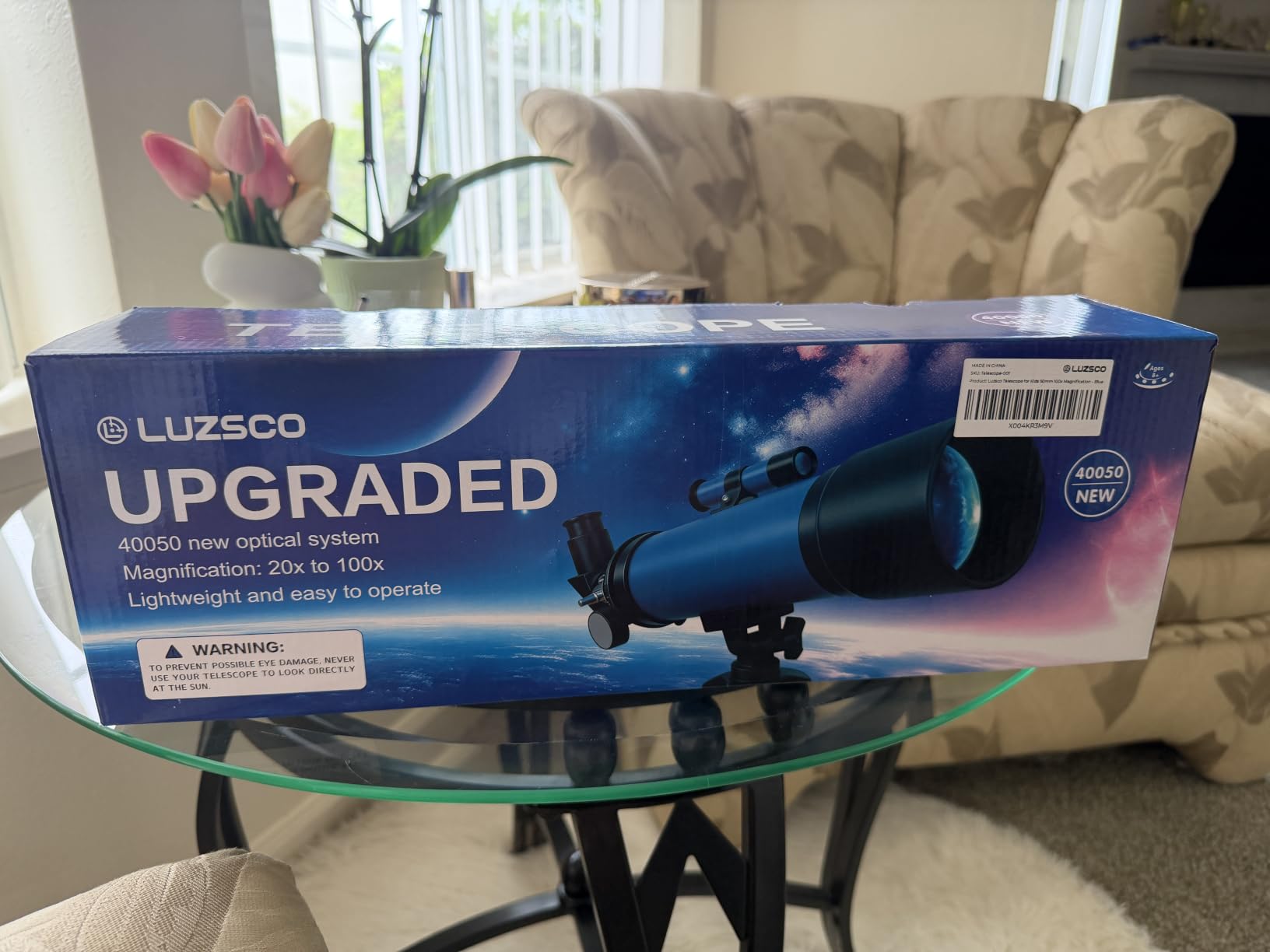
10. Luzsco 50mm Telescope – A 600 g Starter Kit for Ages 6 to 8
Telescope for Kids, 50mm 100x Beginner Telescope with Tripod
50mm multi-coated objective
Two eyepieces at 6mm and 20mm
Includes tripod, finder and moon filter
600 grams
+ Pros
- Modest cost makes a first astronomy exposure easy to justify
- Only 600 g so small children can carry and set it up
- Complete kit with tripod and finder and two eyepieces and moon filter
- Screen-free assembly doubles as a STEM activity
- Cons
- Smallest aperture here so images are dim and soft
- Fixed mount with no fine adjustment makes aiming awkward
- 100x is the maximum available power
- Best kept to the Moon and bright objects
Some children are not ready for a full tripod and a manual focus, and a 50mm kit is a reasonable first step rather than a compromise. At 600 grams it is among the lightest instruments here, which means a six-year-old can carry it out to the garden and set it up without help.
The kit is complete out of the box: tripod, finderscope, 6mm and 20mm eyepieces, a Barlow lens, and a moon filter. Buyers consistently treat it as a first step into astronomy rather than a viewing instrument, and are satisfied on that basis.
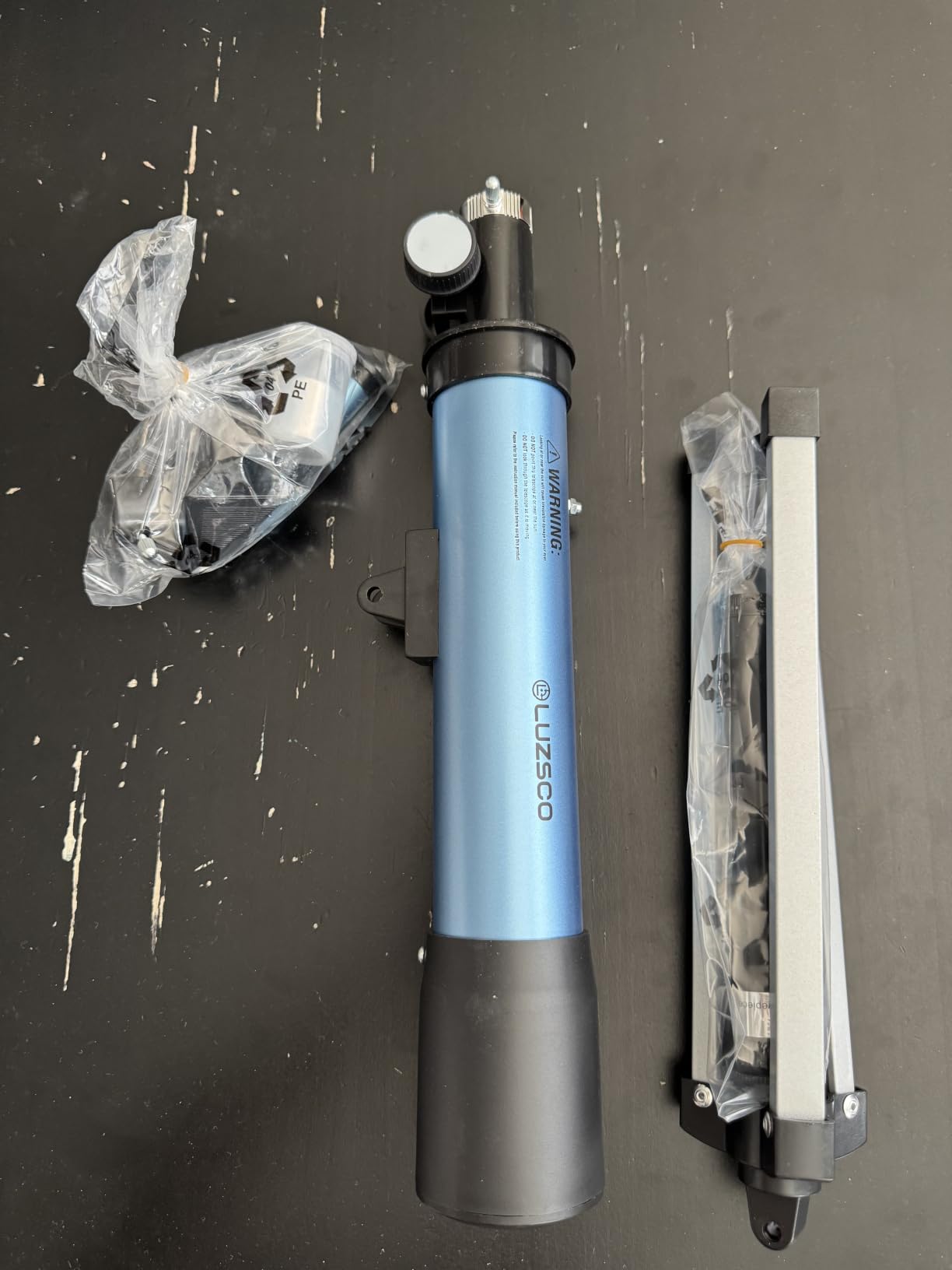
What a 50mm aperture can and cannot show
A 50mm objective gathers roughly half the light of a 70mm scope. In practice the Moon’s craters remain visible and large bright objects are recognisable, but the image is dimmer, lower in contrast, and less detailed.
The 100x maximum is not a problem in itself. On a short 400mm to 600mm focal length, 100x produces a small, wobbly image that a child will quickly learn is not useful. The 20mm eyepiece at low power is where all the value sits.
A fixed mount, and why that is a real limitation
The mount is fixed, with no fine adjustment to make small corrections. Aiming becomes a matter of moving the whole instrument by hand, which is hard to do while looking through the eyepiece. This is the most common reason a small child loses interest in a first telescope.
If you go this route, put the scope on a fixed table or windowsill and swing the whole table rather than the tube. A red flashlight for dark adaptation is the single most useful accessory to add here.
Assembling it as an activity
There is real value in the assembly itself. A child who builds the tripod, fits the finder, and swaps the eyepieces learns the parts of an instrument before ever seeing a deep-sky object, and that vocabulary makes the next telescope obvious.
The marketing positions it for ages 6 to 12 and includes a two-year manufacturing warranty. Treat it as a birthday present that introduces astronomy, and plan the 70mm upgrade for when the child is ready to aim at something other than the Moon.
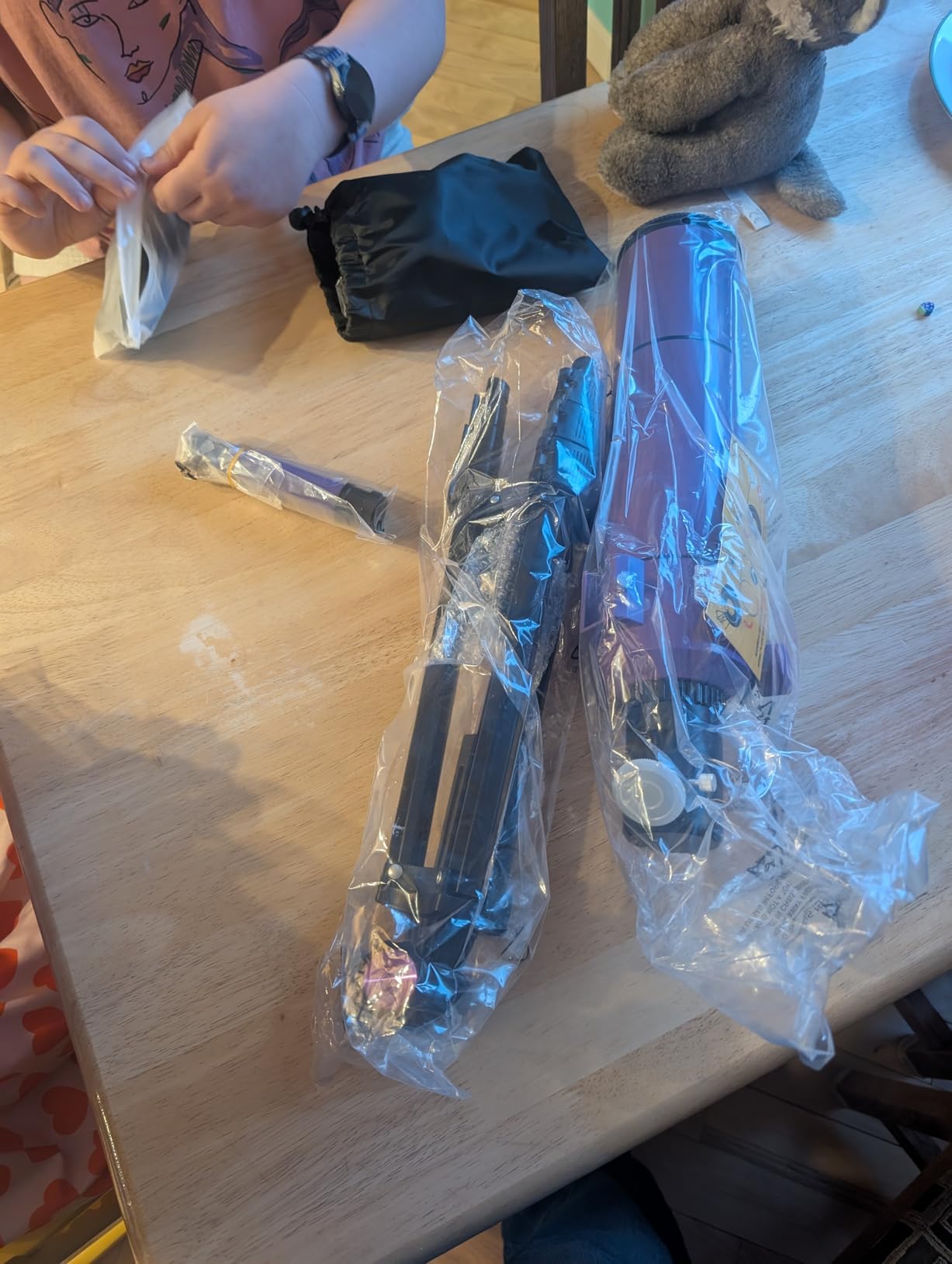
11. Dianfan 80mm/500mm Refractor – A Purple 80mm Tube With a Backpack
Dianfan Telescope for Kids & Adults, 80mm 500mm Portable Refractor, Purple
80mm fully multi-coated objective
500mm focal length
20x to 150x magnification
Phone adapter and backpack included
+ Pros
- 80mm optics give a very clear and bright close-up lunar view
- Sleek finish and included stickers make it feel special
- Assembles in about 15 minutes with an illustrated manual
- Water-resistant backpack simplifies dark-sky trips
- Phone adapter for recording observations
- Cons
- Tripod is flimsy and drifts when adjusted
- Stand is short for taller users
- Field of view narrower than advertised
- Finder scope is unclear and hard to use at night
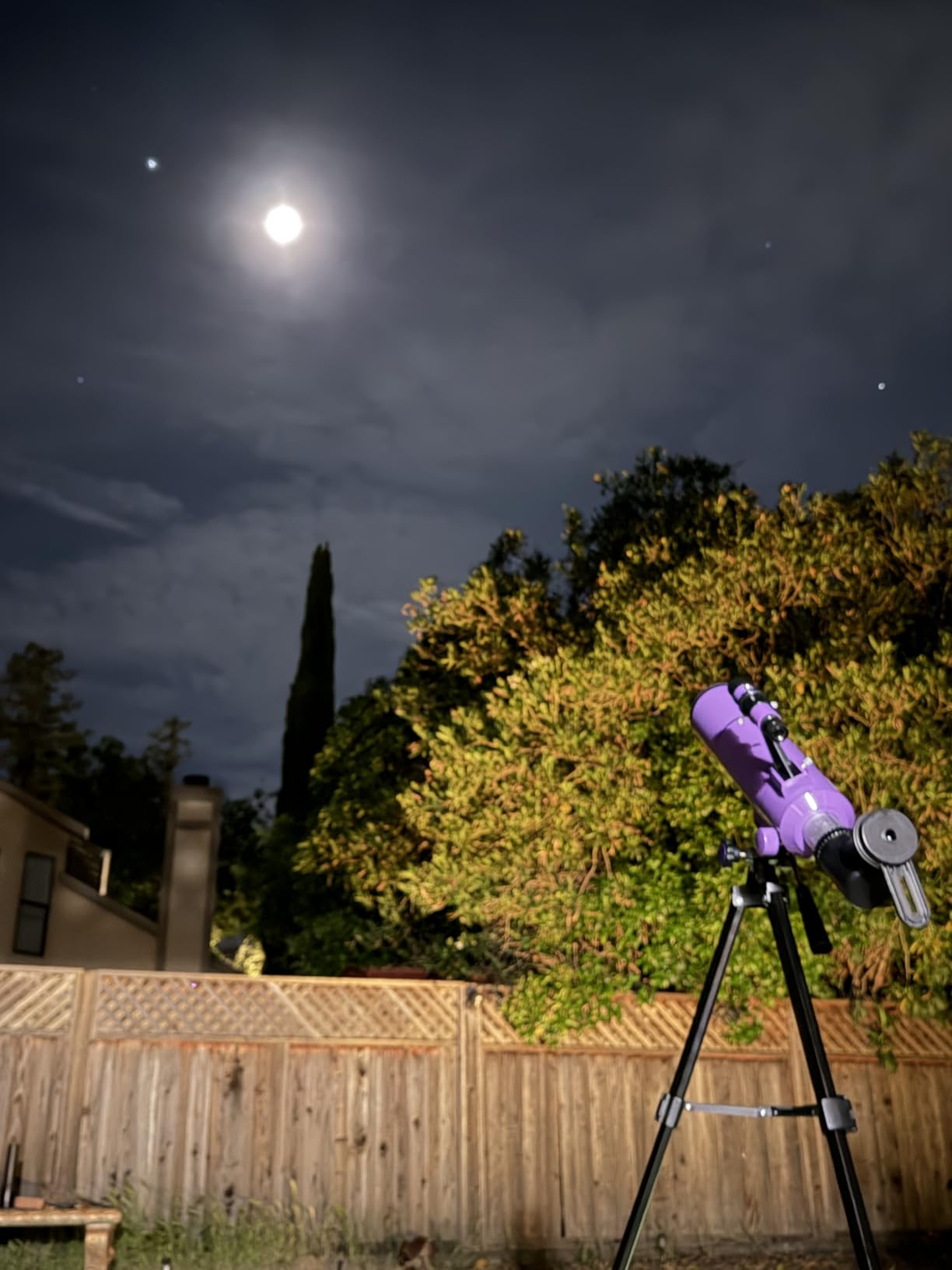
Colour is not a trivial factor with a child’s telescope. This purple tube, paired with two reusable sticker sheets for decorating it, is the design most likely to be claimed as a personal possession rather than family equipment, and that sense of ownership is what keeps a hobby alive past the first month.
The optics are the same proven 80mm multi-coated refractor design with a 500mm focal length, giving 20x to 150x and a listed 2.5 degree field of view. The specification includes a 4mm exit pupil and a Dawes limit of 1.45 arc seconds.
Optical performance where it counts
Reviewers consistently single out the lunar views as very clear and bright at close range, which is what an 80mm multi-coated objective should deliver. Faint objects stay out of reach, as always at this aperture, but the Moon and the brighter planets are sharp.
Setup takes roughly 15 minutes for a first-timer, aided by an illustrated manual rather than text-only instructions. That is a genuinely useful detail for a parent assembling at dusk.
Backpack portability for a dark-sky trip
The water-resistant custom-fit backpack is the standout feature. Light pollution is the reason many family observing sessions end in disappointment, and a scope you can actually transport is a scope that can reach a darker site.
It suits the Moon, bright planets, distant ground views, birds, and general nature viewing, which keeps it useful in daylight too.
The tripod and finder need attention
This is the pick with the clearest split reviews. The tripod is described as flimsy, light, unstable, and too short, and the finder scope is criticised as too unclear to locate targets reliably, especially at night. For a young child, both of those are exactly the two things that end a session early.
If you buy this, plan to add a red-dot finder later and to check the tripod lock before each session. A two-year warranty is a comfort, and of the 12 picks its 139-review base is the smallest, so treat the details as worth verifying on arrival.
12. Educational Insights GeoSafari Starview – A Journal-Led Telescope for Classrooms
Educational Insights GeoSafari Starview Telescope
10x and 50x eyepieces
Compact tabletop tripod
Activity journal with projects
Plossl eyepieces
+ Pros
- Very easy setup a child can manage alone
- Activity journal turns viewing into a structured project
- Compact tabletop tripod fits a table or windowsill
- Two powers teach wide versus close-up viewing
- Screen-free STEM play that works indoors and out
- Cons
- 10x to 50x is the lowest magnification ceiling here
- Highest one-star share among these picks
- Less suited to serious observation than the 80mm refractors
- Journal approach needs an adult or motivated child
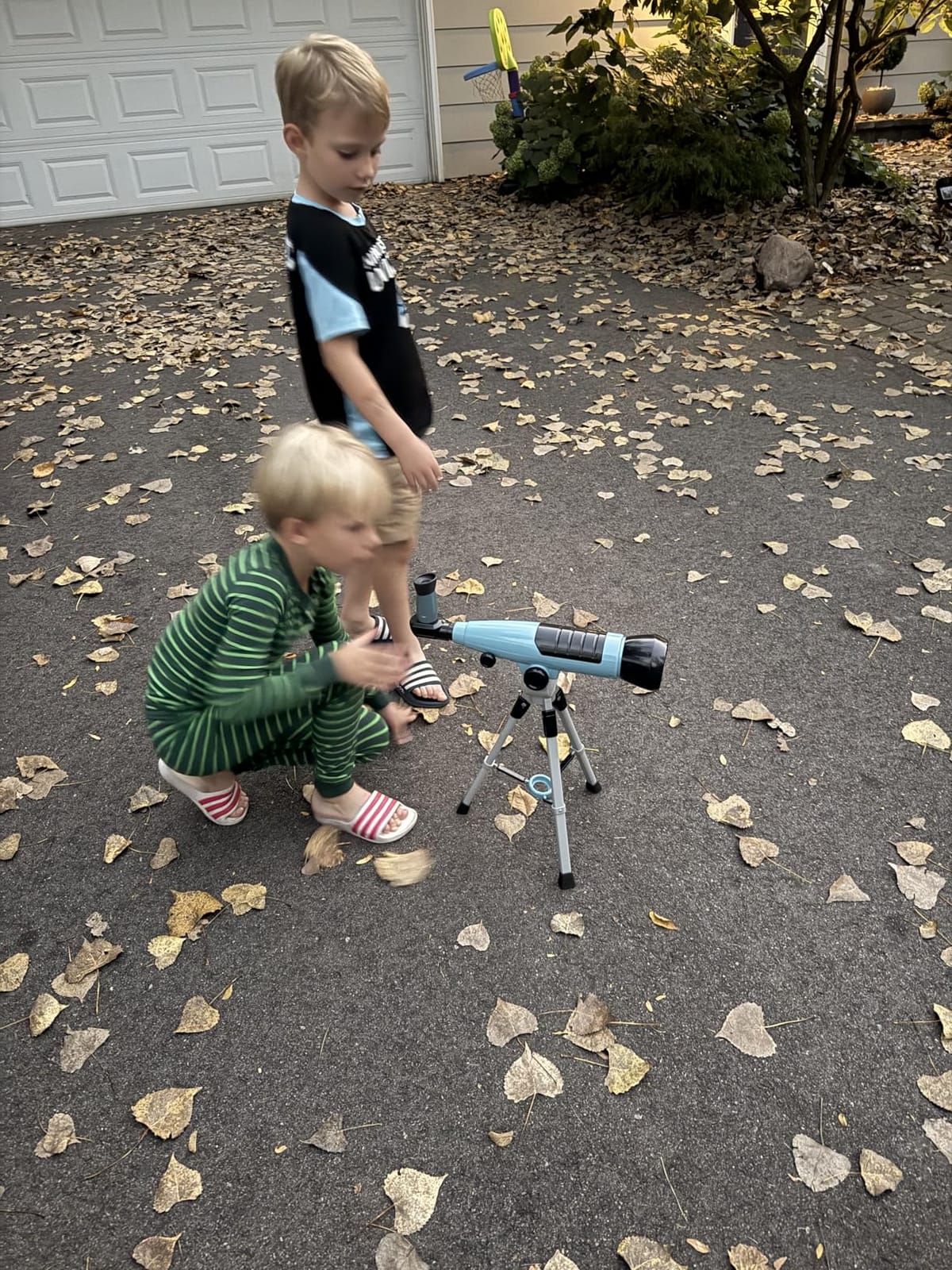
The Starview is built around a structure rather than a specification. Two eyepieces, a compact tabletop tripod, and an activity journal of stargazing projects give a child a sequence to follow, which is how a classroom or a motivated eight-year-old turns a telescope into a project rather than a one-night novelty.
It uses Plossl eyepieces with switchable 10x and 50x settings on a manual focus, and the instruction is deliberately simple: scan the sky, spot constellations, switch up for detail.
Low power as a deliberate teaching tool
A 10x to 50x range is very modest, and at 50x the view will not rival an 80mm refractor. The argument for it is pedagogical: at 10x a child can hold a wide chunk of sky in view, find a pattern, and then switch to 50x to look closer at one part of it.
That jump between wide and narrow is the core observational habit in astronomy, and learning it on a simple instrument transfers directly to a bigger one.
Best used in a structured setting
The journal is what makes this work, and it needs following. In a classroom with a teacher, or with a child who likes a checklist, that is a strength. On a shelf in a child’s room it tends to be ignored, and so does the telescope.
The 4.1 average across 147 reviews sits at the bottom of the ratings here, with a 12 percent one-star share, the highest among the picks that publish a star breakdown. The critical mass is about limited magnification and a toy-like feel rather than a fault.
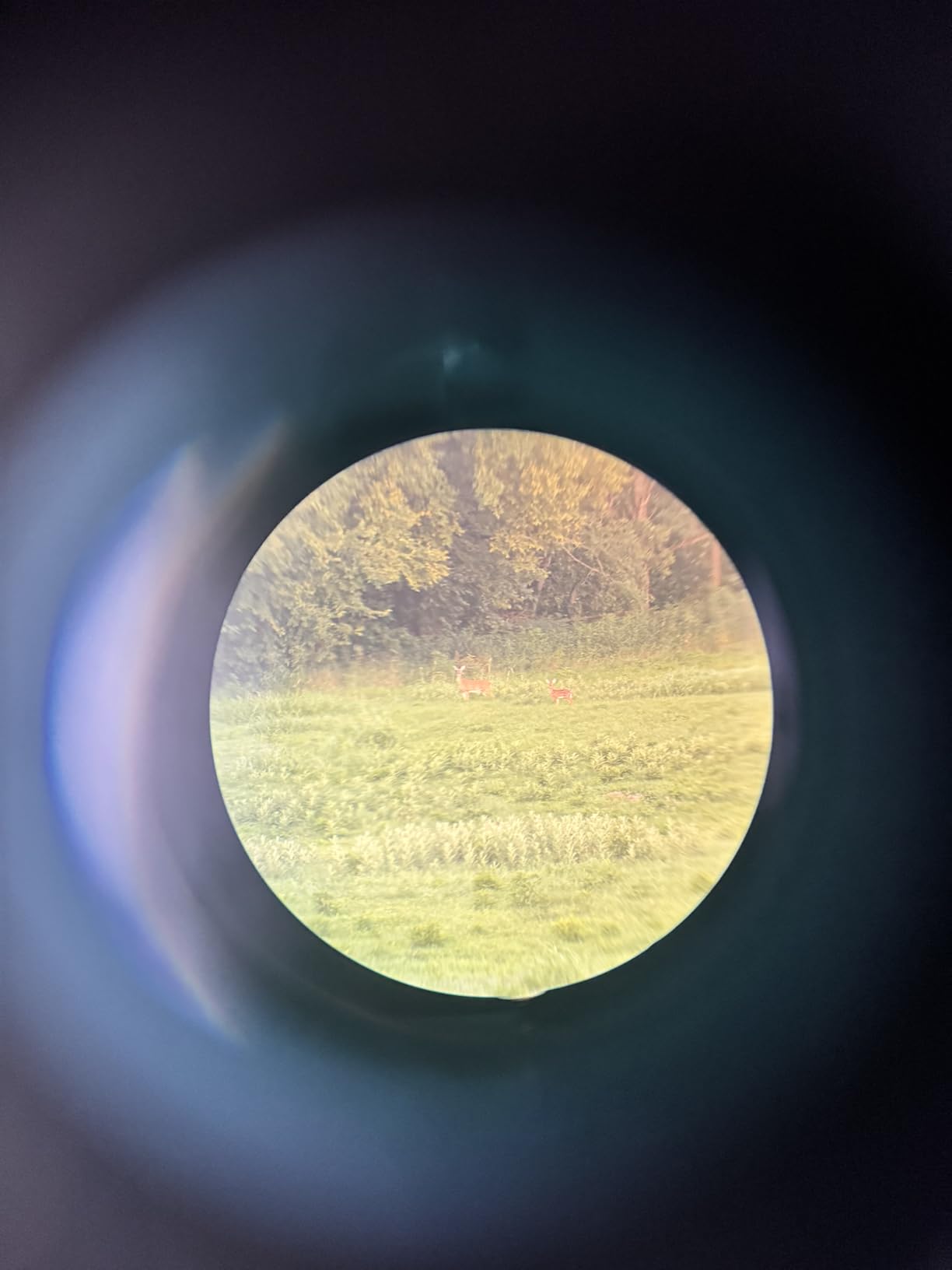
Where it fits in a buying path
This is a first instrument for a young child or a supervised group, and it is honest about that. It fits home, a classroom, and a club, and it needs no batteries, no assembly tools, and no software.
Our recommendation is to treat it as step one. Once a child has worked through the journal and is asking to see something beyond a constellation, move up to a 70mm refractor and the interest has somewhere to go.
How to Choose a Telescope for Kids: Aperture, Mount and Finder
Most of the specification on a kids’ telescope box is designed to impress rather than inform. Four numbers matter: aperture, focal length, mount, and finder. Everything else is decoration.
Aperture is the one spec you cannot fake
Aperture is the diameter of the front lens or primary mirror, and it sets how much light the instrument gathers. Light-gathering power scales with the square of the diameter, so 70mm collects roughly twice the light of 50mm, and 80mm collects roughly a third more than 70mm.
That is why the 80mm scopes in this roundup show a clearly brighter and more detailed Moon. Match aperture to age band: a 50mm to 70mm refractor keeps a child under about 8 interested, a 70mm covers ages 8 to 12 well, and an 80mm is the sensible ceiling for most family purchases. Going much beyond 80mm adds weight and cost faster than it adds delight.
Refractor for kids, reflector for light
Refractors use a lens, need no maintenance, hold alignment permanently, and give a bright, high-contrast image. For a child, that reliability is worth a lot. Every pick here except the screen-based LeapFrog is built around a lens, and that is a deliberate choice rather than a shortage of alternatives.
Newtonian reflectors gather more light per unit of weight, which is why experienced adults on CloudyNights and r/telescopes frequently recommend a kid-sized tabletop Dobsonian reflector as a first real instrument. The trade-off is collimation, since a child can knock a reflector out of alignment and neither parent nor child will know how to fix it.
Compound and catadioptric designs pack a long focal length into a short tube and stay aligned, but cost more and are harder to service. For a first purchase we would skip them.
Mount wobble costs more interest than weak optics
Across the forum threads that dominate search results for this topic, the same complaint recurs: a flimsy altazimuth mount wobbles, the target slides out of view, and a child decides astronomy is boring within minutes. Difficulty pointing at an object is the single most reported reason children give up.
Check two things. The eyepiece should sit at or below the child’s eye level when the tripod is at its lowest extension, and the mount should have a real lock that holds the tube steady. A tripod that needs a weight hung on it is telling you the truth about itself.
Under about age 8, tripod height is the other half of the problem. A full-height tripod puts the eyepiece at an adult’s chin, which means an adult ends up looking through it and the child stands there waiting.
Two eyepieces beat one, and a Barlow buys time
Magnification equals focal length divided by eyepiece focal length. A 500mm scope with a 25mm eyepiece gives 20x, and with a 10mm eyepiece gives 50x. Two eyepieces therefore double a child’s options without any extra hardware, and a 3x Barlow triples each one, so a child can grow into a higher power without new glass.
Here is the myth worth killing: advertised magnification above roughly 200x on a small kids’ scope is a warning sign, not a feature. Beyond about 2x the aperture in millimetres, the image becomes dim and empty. A 70mm scope at 700x shows nothing but a grey blur. Sky-watching experts advise ignoring magnification claims entirely and buying aperture instead.
The finder scope is the biggest usability upgrade
A child does not struggle to see; they struggle to find. A 5×24 reflex finder or straight-through finder solves that, and it is the feature we would pay extra for on any kids’ telescope. A red-dot finder or Telrad goes further, projecting a dot of light onto the sky image so aiming feels intuitive, and experienced amateur astronomers treat one as close to essential on a first telescope.
Whatever you choose, align it during daylight against a distant object before the first night. A misaligned finder is the most common reason a new telescope goes back in the box.
Tabletop or tripod, and living under city skies
A tabletop mount is stable by definition, because a table is heavier than any tripod, and it is the right choice under about age 7. The trade-off is that the telescope can only look at what is above the table height, so a balcony rail or a garden wall works better than a small card table.
Under heavy light pollution, expectations matter more than hardware. City observers reliably see the Moon, Jupiter’s moons, Venus, and the brighter doubles and clusters. A star chart or a phone app will save a lot of frustration, and it is worth remembering that a dark site is the single biggest upgrade available to a family that drives to one.
Accessories that genuinely help: a red flashlight for preserving dark adaptation, a planisphere for learning the sky, and a moon filter. Accessories that mostly collect dust: printed slides, plastic adapters of unclear purpose, and software on a disc.
7 Red Flags to Avoid When Buying a Kids Telescope
The same failure modes appear repeatedly in owner reports and in the enthusiast forums. Watch for these, and you will not go far wrong.
- Magnification claims of 300x, 500x or 1000x. On a small aperture this is a lie told to parents. Real detail stops well below those numbers.
- Plastic worm-gear mounts and undersized tripods. If the mount is the wobbly part, the telescope is a decoration.
- Thin, warped tabletop bases. They tip the moment a child reaches in to swap an eyepiece.
- No finder scope, or a permanently misaligned finder. A child will point at empty sky repeatedly and conclude the telescope is broken.
- Reflectors that arrive out of collimation with no instructions. Worth avoiding at this level entirely, because nobody in the house can fix it.
- Glass optics sold to very young children. Mirrors and lenses are expensive to replace and adults should handle the collimation and cleaning.
- Boxes full of plastic adapters and a thin printed star map. Accessory volume is not a quality signal. Our rules of thumb: a finder, two eyepieces, a tripod, and a red flashlight beat twenty unlabelled parts.
Solar Safety for Children: Never Point a Scope at the Sun
Put this in front of any child who will use a telescope. A telescope concentrates sunlight. Pointed at the Sun without a certified solar filter fitted over the front aperture, it can cause instant and permanent eye damage, and no filter on the eyepiece end is safe.
The rules are short. Never aim any telescope at the Sun or near it. Never use the Moon’s brightness as a guide; the Moon is safe because it is far away and reflects light rather than producing it. Only use a solar filter certified for the front aperture of that specific telescope, never sunglasses, never a CD, and never a filter fitted at the eyepiece end.
For children, the safest policy is simple: daytime observing means looking at the Moon, at birds, or at distant ground views, and the Sun is an indoor activity. Make that rule before the first night, not after the first incident.
How to Get the Most From a New Kids Telescope
The night a telescope arrives decides whether it gets used again. Here is the sequence that works.
- Assemble it in daylight. Not at dusk, not in the dark. Children who build the thing themselves feel ownership of it.
- Align the finder in daylight against something a few hundred metres away, then tighten every knob you can find while it is still light.
- Start on the Moon. It is the brightest target, it is up for half of every month, and craters are instantly rewarding.
- Set a 20-minute rule. Most children’s first sessions fail from boredom, not from clouds. Twenty minutes is enough to see something and leaves them wanting more.
- Keep a session log. A notebook of date, target, and one note is the cheapest way to build a habit.
- Add one thing a month. A red flashlight, a planisphere, then a moon filter. Adding slowly means every accessory gets used.
Work outward from brightness for your first targets beyond the Moon. Jupiter’s four Galilean moons shift position visibly within an hour, and Venus moves through phases like a miniature Moon. Saturn shows its rings as a small shape if a child learns to look steadily. The Pleiades cluster and the Orion Nebula are reachable from a suburban sky with a 70mm or 80mm scope, and both are startling the first time.
If you can reach a dark site once a year, do it. The difference between a city sky and a rural one is not subtle, and it is often the moment a child decides this is a real thing they want to keep doing.
Frequently Asked Questions
What is the best telescope for a 10 year old?
For a 10-year-old, a 70mm or 80mm refractor on an altazimuth mount is the right fit. The Gskyer 70mm and Koolpte 70mm/500mm suit younger children who need a wide field, while the MEEZAA and Hawkko 80mm models add roughly a third more light for clearer lunar and planetary detail. Pick whichever has a tripod the child can adjust without an adult steadying it.
What is the best first telescope for a child?
The best first telescope is the one a child can point at the Moon and see a crater on the same evening. In this roundup that points to the Gskyer 70mm refractor, which sets up without tools, has a finder scope for aiming, and comes with a phone adapter and carry bag. Avoid anything whose main feature is a magnification figure above 200x.
How much magnification does a kids telescope need?
Around 30x to 50x is the useful range for a young child, and roughly 100x is plenty for lunar detail. On a 70mm or 80mm refractor, magnification above 200x produces a dim, shaky image with no extra detail. Choose aperture over magnification: 70mm or 80mm of light-gathering power matters far more than a higher power claim.
What aperture does a child actually need?
A 50mm to 70mm aperture works for ages 5 to 8, showing the Moon clearly and the brighter planets as points of light. An 80mm aperture suits ages 9 and up because it gathers enough light for lunar craters, Jupiter’s moons, and the rings of Saturn. Light-gathering power scales with the square of the diameter, so 80mm beats 70mm clearly.
Is a tabletop telescope better for kids than a tripod?
For children under about 7, yes. A tabletop mount is stable because a table never wobbles, and it removes the height problem that makes a full tripod eyepiece sit above a small child’s head. The trade-off is that the telescope can only view objects above the table, so use a garden wall or balcony rail rather than a low card table.
Conclusion: Which Kids Telescope Should You Buy in 2026?
If your child is under six, start with the LeapFrog Magic Adventures Telescope, because a screen removes the aiming problem before it becomes a reason to stop. Between six and nine, the Gskyer 70mm is the pick we recommend most often: it is easy to assemble, the finder scope makes targets findable, and the phone adapter gives them something to show their friends.
Once a child is ten or older and has already been to the Moon, move to an 80mm refractor. The MEEZAA 80mm is our choice for brighter lunar detail and a tripod that tolerates small hands. If travel is part of the plan, the Celestron Travel Scope packs into its backpack and carries a two-year warranty, which is real peace of mind for a gift.
For travel in 2026 we would steer most families away from a plastic toy scope entirely. Buy glass, buy a finder, and let the aperture be the number that decides it. Mount a certified solar filter only if your child is old enough to handle it, and hold the first session to twenty minutes. That is how the best kids telescopes for stargazing turn into something a child still wants to look through years later.