

The best RC cars for racing are hobby-grade cars with a brushless drivetrain, LiPo power, adjustable oil-filled shocks, and enough published tuning support to keep them quick through a season. The right pick depends almost entirely on your track surface and the class your local club runs, so I ranked these ten by drivetrain quality, handling hardware, radio features, and how well owners report it holds up in repeated hard runs.
I spent several weeks reading the customer review history on each of these cars, comparing motor and ESC pairings, battery requirements, servo torque, chassis material, and the gear ratios people actually run. Nothing here is a toy-grade bash truck dressed up as a race car. Every one of the ten has a real radio system, a brushless motor, a differential worth the name, and suspension you can adjust.
That distinction matters more than almost anything else in this hobby. A lot of people buy a fast-looking truck, arrive at the track, and discover it cannot legally run a single class there. Race-capable means the class recognises the scale and the layout, the parts are stocked, and you can get a setup sheet or a setup thread that tells you what pinion and what tire compound to run.
One honest caveat before we start. These are race-capable ready-to-run hobby cars, not sanctioned competition spec kits. If your club runs a strictly spec class that mandates one tire brand, one motor, and one ESC, you will still need the kit. What these cars give you is a legal, tunable, upgradeable platform you can learn on and keep improving for a full season.
Our Top 3 Race-Capable RC Picks for 2026
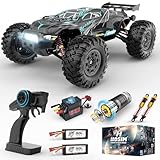
Hosim 1/10 Brushless RTR
- 2852 3100KV brushless motor
- 45A ESC
- 2-pack 2600mAh LiPo
- 68 km/h
- Adjustable oil shocks

AMORIL 1/10 3S 4WD
- 7075 CNC shock tower
- Carbon steel differential
- Adjustable battery tray
- 3S 5500mAh support

RIAARIO 1/10 Gyro 4WD
- Built-in gyro stabilization
- 3650 2650KV motor
- 60A ESC
- 20 percent throttle modes
The Hosim takes the top slot because of its combination of a 3100KV brushless system, a 45A ESC, and two batteries in the box, backed by the deepest owner base of anything on this list. The AMORIL edges it on chassis machining and how easily the battery tray and motor mount adjust, and the RIAARIO is the one to buy if you want a gyro keeping the steering honest while you learn throttle control.
Comparing Ten Hobby-Grade RC Race Platforms in 2026
| Product | Details | |
|---|---|---|
| Hosim 1/10 Off Road Brushless RTR |
|
Check Latest Price |
| AMORIL 1/10 RTR Brushless 4WD |
|
Check Latest Price |
| RIAARIO 1/10 Brushless 4WD with Gyro |
|
Check Latest Price |
 FLYCOLOR Turbo Racing C64 1:76 FLYCOLOR Turbo Racing C64 1:76 |
|
Check Latest Price |
 CROBOLL 1/10 Carbon Fiber Rally CROBOLL 1/10 Carbon Fiber Rally |
|
Check Latest Price |
 DIKAVEY 1:12 RX12 4WD DIKAVEY 1:12 RX12 4WD |
|
Check Latest Price |
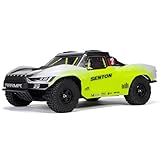 ARRMA SENTON 223S BLX 4X4 SCT ARRMA SENTON 223S BLX 4X4 SCT |
|
Check Latest Price |
 MJX 14303 Citroen C3 1/14 MJX 14303 Citroen C3 1/14 |
|
Check Latest Price |
 RLAARLO 1/10 Brushless Buggy RLAARLO 1/10 Brushless Buggy |
|
Check Latest Price |
 ARRMA FURY 223S BLX 2WD SCT ARRMA FURY 223S BLX 2WD SCT |
|
Check Latest Price |
Two patterns jump out of that table. First, every serious platform here runs a brushless motor on LiPo power with a 45A to 60A ESC, because brushed motors throttle response and heat badly under racing load. Second, the more expensive cars are not faster in a straight line, they are more adjustable, which is what actually wins lap time.
1. Hosim 1/10 Brushless RTR – Best Overall Race-Capable Platform
Hosim 1/10 Off Road RC Cars Fast 68KM/H, RTR Brushless RC Car for Adults
1/10 4WD
2852 3100KV brushless
45A ESC
2 x 2600mAh LiPo
68 km/h
+ Pros
- Two LiPo packs included for back-to-back runs
- Metal chassis and steel drivetrain take hard crashes
- Upgradeable to 3S for more speed
- Adjustable oil-filled shocks
- Cons
- Very fast for a first-time driver
- Body shell and spoiler can crack in full-speed tumbles
- Front drag links are not adjustable
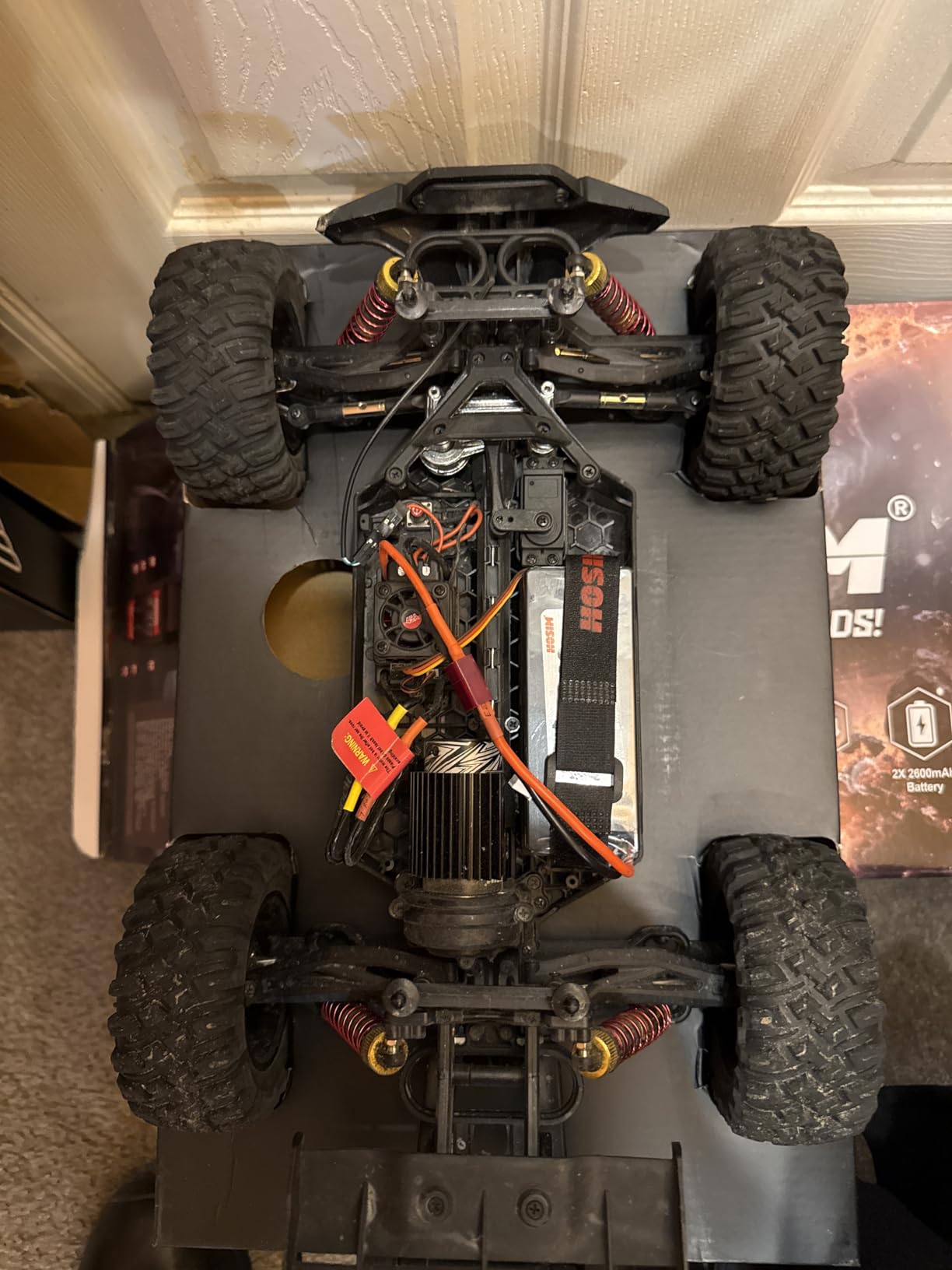
Hosim builds the X07W around a 3100KV 2852 brushless motor, a 45A ESC with a cooling fan, and a metal heat sink, which puts it in the same power class as cars costing considerably more. Owners consistently describe it as quick, responsive, and capable of climbing and backflipping, which tells you the torque curve has real mid-range punch rather than just a twitchy top end.
What makes it my first pick is the total package rather than any single spec. You get two 2600mAh 7.4V LiPo packs for up to 40 minutes of runtime, a 40Cr chrome steel helical gear differential, an aluminum alloy chassis, and adjustable oil-filled shocks. On a race day that means one pack charging while you run the other, which is the difference between getting three heats in and getting one.
Motor, ESC and gearing headroom
The 3100KV rating and the 45A ESC are a matched pair, and the ESC fan matters more than people expect on a long heat. A motor with no forced cooling drops output as it heats, and you end up with a car that is quick in the first minute and slower in the final. The metal heat sink keeps the winding temperatures down across a full run.
Because the platform is documented as upgradeable to 3S, the gearing path is open. Move to a 3S pack and you gain headroom for a taller pinion, and the extra voltage helps the motor hold its output through long runs rather than sagging under load. That is the single most valuable thing a race car can have and it is worth more than raw top speed.
Chassis, shocks and crash survival
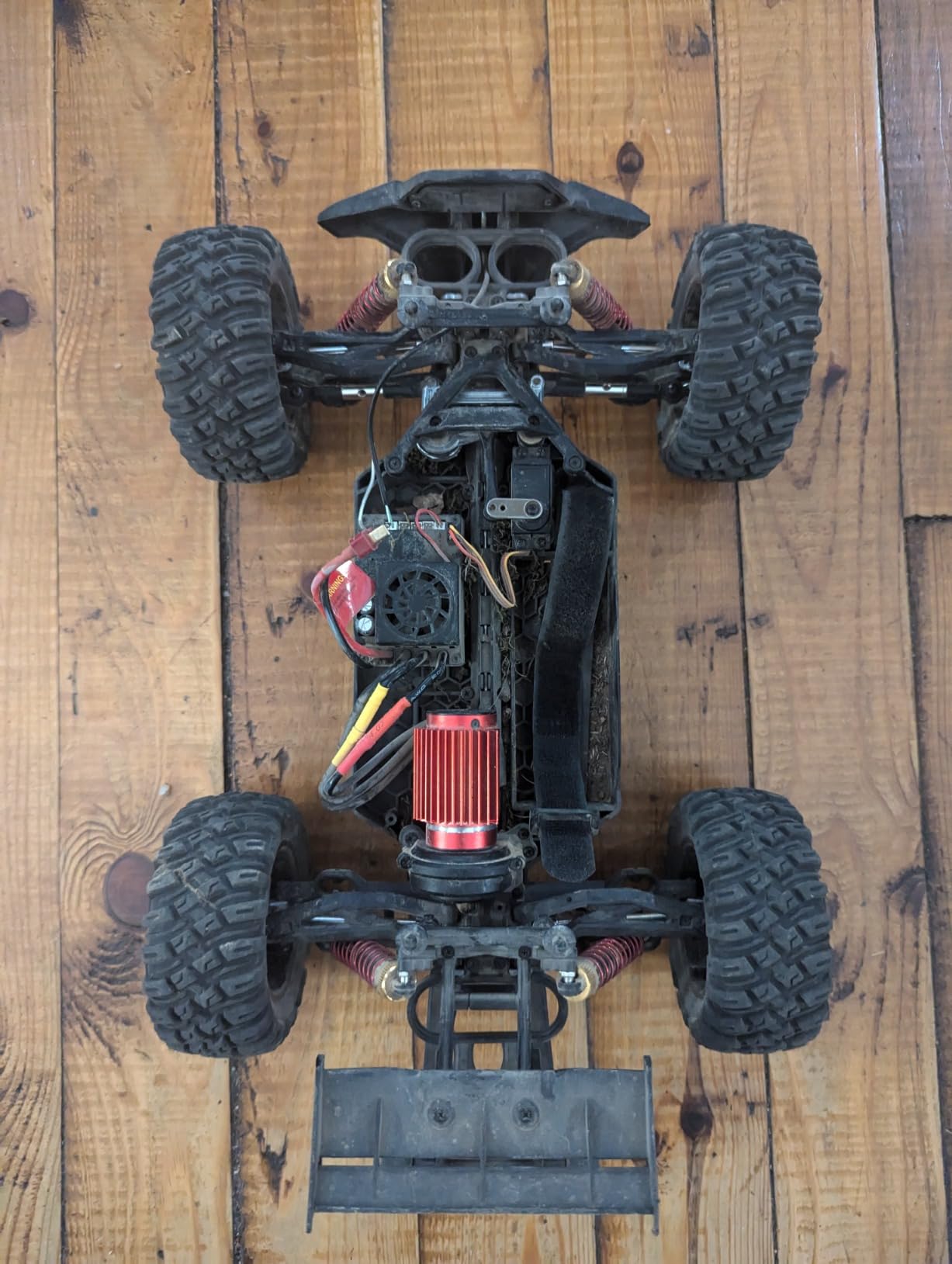
Owners report that the metal chassis, steel drivetrain, and oil-filled shocks hold together through hard crashes that would end a plastic-chassis truck. Oil-filled shocks also give you damping adjustability across a range of temperatures, which matters if you race indoors in winter and outdoors in summer.
Two real limitations show up repeatedly. The body shell and rear spoiler can crack when the car tumbles at full speed, and the front drag links are not adjustable, so the front wheels sit slightly toed out from the factory. Neither issue stops a car from racing, but both are reasons to keep a spare shell on hand.
Who it suits and who should skip it
This suits a beginner who already understands throttle discipline, and it suits anyone who wants a car that can be bashed between race days without worrying about it. The steel drivetrain and upgradeable 3S path mean it will not be finished in year one.
Skip it if you want a car that is gentle out of the box. Owners consistently warn that it is very fast for a first-time driver, and the throttle trim may need adjusting to control. On a rough outdoor track, ease into it; on a smooth surface it settles quickly.
2. AMORIL 1/10 Brushless 3S 4WD – Best Value Race Platform
1/10 RTR Brushless Fast RC Cars for Adults,Max 50mph,4WD,Waterproof,3S Lipo
1/10 4WD
2852 3100KV brushless
45A ESC
7075 CNC shock tower
3S ready
+ Pros
- Carbon steel differential and alloy chassis hold rough terrain
- Adjustable battery tray and motor mount for gearing changes
- Oil-filled shocks and enclosed diff reduce shake
- 4-channel radio with 150m range
- Cons
- Wide tires and top speed make it twitchy for new drivers
- Reaching full claimed speed needs a 3S pack and careful setup
The AMORIL RZ001 is the platform I would hand someone who wants a race car they will keep modifying rather than a sealed box. The 2852 3100KV brushless motor, 45A ESC, independent receiver, and metal heat sink with cooling fans form a solid power plant, and the hardware around it is unusually well made for the tier.
The standout detail is a 7075 CNC-machined shock tower on a 2.5mm thickened aluminum chassis, with double-A nylon swing arms and a fully enclosed central differential triangle bracket. Shock towers take the most abuse in a crash, and a machined aluminum one will not crack the way an injection-molded plastic tower eventually does.
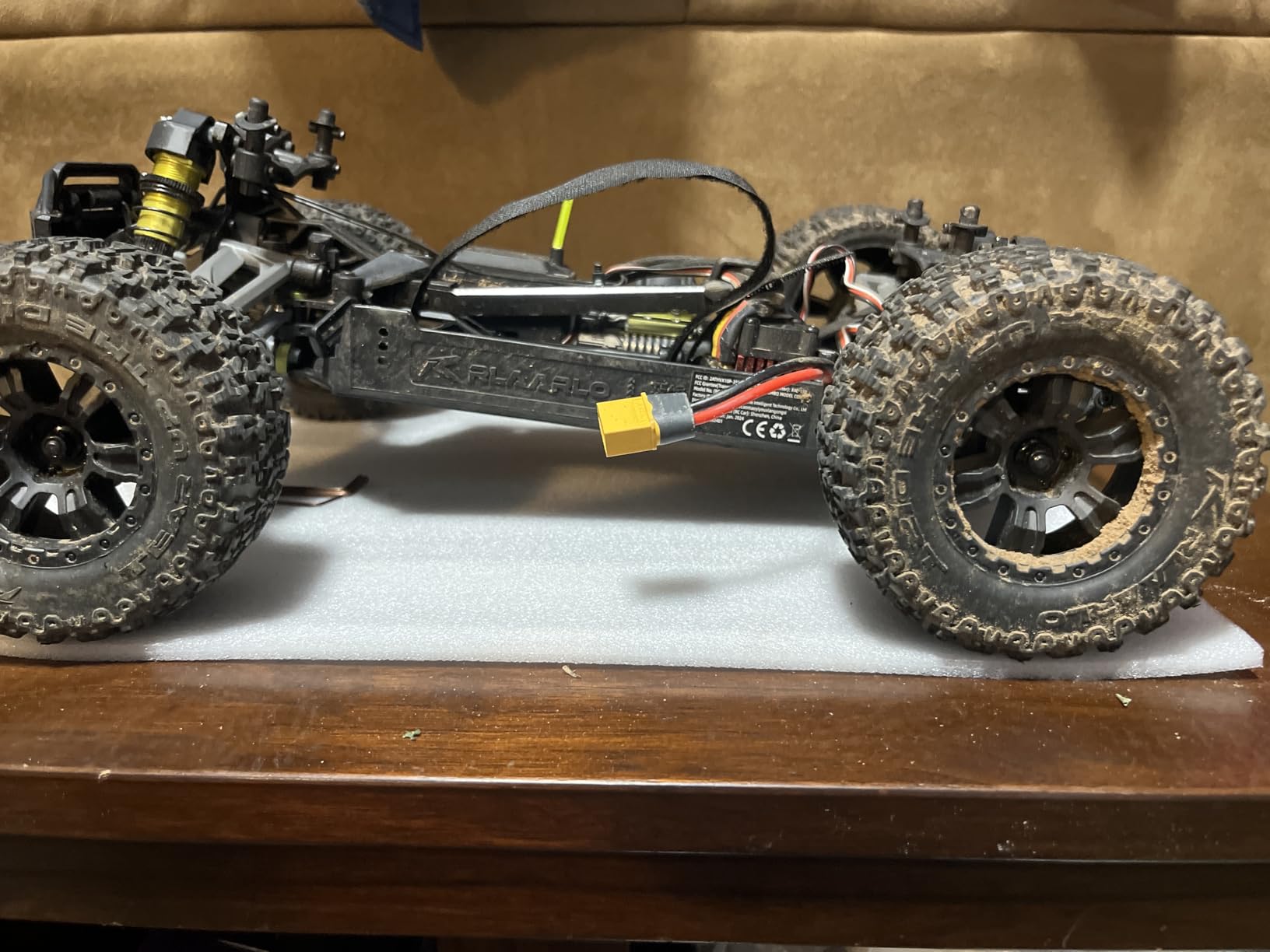
Battery tray and motor mount adjustability
The battery compartment is adjustable and supports a 3S 5500mAh LiPo, and the motor mount adjusts from 28 to 36 tooth positions. That motor mount range is what makes this a real race platform: you can change the pinion and the spur independently and re-roll your gearing to suit a track instead of being locked to one ratio.
The central split carbon steel differential with a 0.53M chrome steel motor gear and 65T alloy spur gear is a good match for the motor. Split diffs are common on race platforms because they let you tune the relationship between the inside and outside wheels in a corner, which is how you tune a car for a specific track rather than for a parking lot.
Handling hardware and suspension travel
Oil-filled absorbers and the fully enclosed differential bracket work together to reduce chassis shake at speed, and several owners mention that the car settles quickly after a jump rather than pitching wildly. The bumpers are thickened as well, which protects the suspension arms in the nose-to-nose contact that ends most heats early.
The genuine weakness is that wide, aggressive tires combined with a quick top speed make it twitchy for new drivers. That is a driving problem more than a hardware problem, and a calmer throttle map or a lower pinion is the fix. The other recurring note is that reaching the claimed top speed needs a 3S battery and a deliberate setup, not the supplied configuration.
Who it suits and who should skip it
It suits the modder. If you enjoy changing gearing, swapping battery packs, and dialing in a setup sheet between heats, the adjustable tray, adjustable motor mount, and quick-release differential make this an unusually pleasant platform to work on for the tier.
Skip it if you want plug-and-play calm on your first day at the track. The same wide stance that gives it cornering grip makes it lively in a straight line, and the fastest configurations require a battery and charger you will need to buy separately.
3. RIAARIO 1/10 Brushless with Gyro – Best Platform for New Drivers
RIAARIO 1/10 Brushless RC Cars, 50+ MPH, 4WD, Waterproof, Carbon Fiber
1/10 4WD
3650 2650KV brushless
60A ESC
Built-in gyro
2 kg
+ Pros
- Built-in gyro keeps steering predictable at speed
- Selectable throttle modes for learning
- Carbon-reinforced chassis and CNC gears
- Oil-filled shocks and airless all-terrain tires
- Cons
- Airless tires wear quickly when drifting on hard surfaces
- Heavier than most 1/10 trucks at 2 kg
RIAARIO RZ001B solves a problem most race cars do not: how do you let a new driver use all the power without spinning the wheels every time the throttle goes down. The answer here is a built-in gyro, and it is the feature that earns this car its place.
Underneath is a 3650 2650KV brushless motor feeding a 60A ESC with a metal heat sink and cooling fan, driving through a CNC center differential, a reinforced center driveshaft, and precision CNC gears. The chassis is 2.5mm hardened aluminum with a carbon-fiber reinforced upper deck and shock towers, which is a genuinely tough combination.
Gyro stabilization and throttle modes
The gyro reads the car’s yaw rate and adds or removes steering to hold the line, so the truck tracks where you point it instead of rotating away. On a straight line that means a clean, repeatable run; in a corner it means the rear stays planted instead of snapping out. Paired with an 11KG metal-gear servo, steering is fast and consistent.
The throttle modes matter just as much. You can select zero, 25%, 70%, or 100% output, which gives a new driver a real 25% or 70% limit rather than an imaginary one. That is a much better learning aid than trying to hold back a stick with a wobbly thumb, and it takes one button press to unlock full power when you are ready.
Chassis, tires and what a race surface does to them
Airless all-terrain tires on adjustable oil-filled shocks give good compliance over rough ground, and the hardened aluminum chassis with carbon reinforcement handles jumps and hard landings. Owners single out the CNC drivetrain smoothness as the thing that makes the car feel settled rather than nervous at speed.
The tires are the weak point for racing specifically. Airless tires wear quickly when you drift them on hard surfaces, so on a sealed or asphalt track you will go through sets faster than on dirt. At roughly 2 kg, this is also heavier than most 1/10 trucks in the class, which is a reasonable trade for the damping but worth knowing.
Who it suits and who should skip it
It suits a first-time racer who has a track with sealed or hard-packed surface, or a family member who will drive it more than you will. The gyro and the selectable throttle limits genuinely lower the barrier to a first heat, and the 60A ESC has plenty of headroom when you outgrow them.
Skip it if you want to feel every bit of slip and do your own steering correction. A gyro is a crutch by design, and experienced drivers often find it dulling. If you plan to race dirt all season, budget for a few extra tire sets.
4. FLYCOLOR Turbo Racing C64 1:76 – Best for Indoor Desk-Scale Racing
FLYCOLOR Turbo Racing C64 1:76 RC Drift Car, Full Proportional RTR (Blue)
1:76 scale
Full proportional 2.4GHz
55mAh LiPo
30 min runtime
2 spare shells
+ Pros
- Real proportional steering on a car the size of a toy
- Drifts well on tables floors and cardboard tracks
- Type-C charging is quick and convenient
- Two spare body shells included
- Cons
- Very light and small so it demands patience
- Modest top speed next to larger RC cars
- Sensitive gyro that needs careful adjustment
The C64 is not a track car. What it is, is a genuinely proportionately controlled drift car at a scale small enough to run on a workbench, which makes it the only pick here that works for a household with no yard and no club.
Full proportional steering and throttle on a 4-channel 2.4GHz remote is the headline. Proportional means the car tracks your input continuously instead of snapping between positions, and at 1:76 scale with a stainless steel chassis that combination makes real countersteer drifting possible on a flat surface.
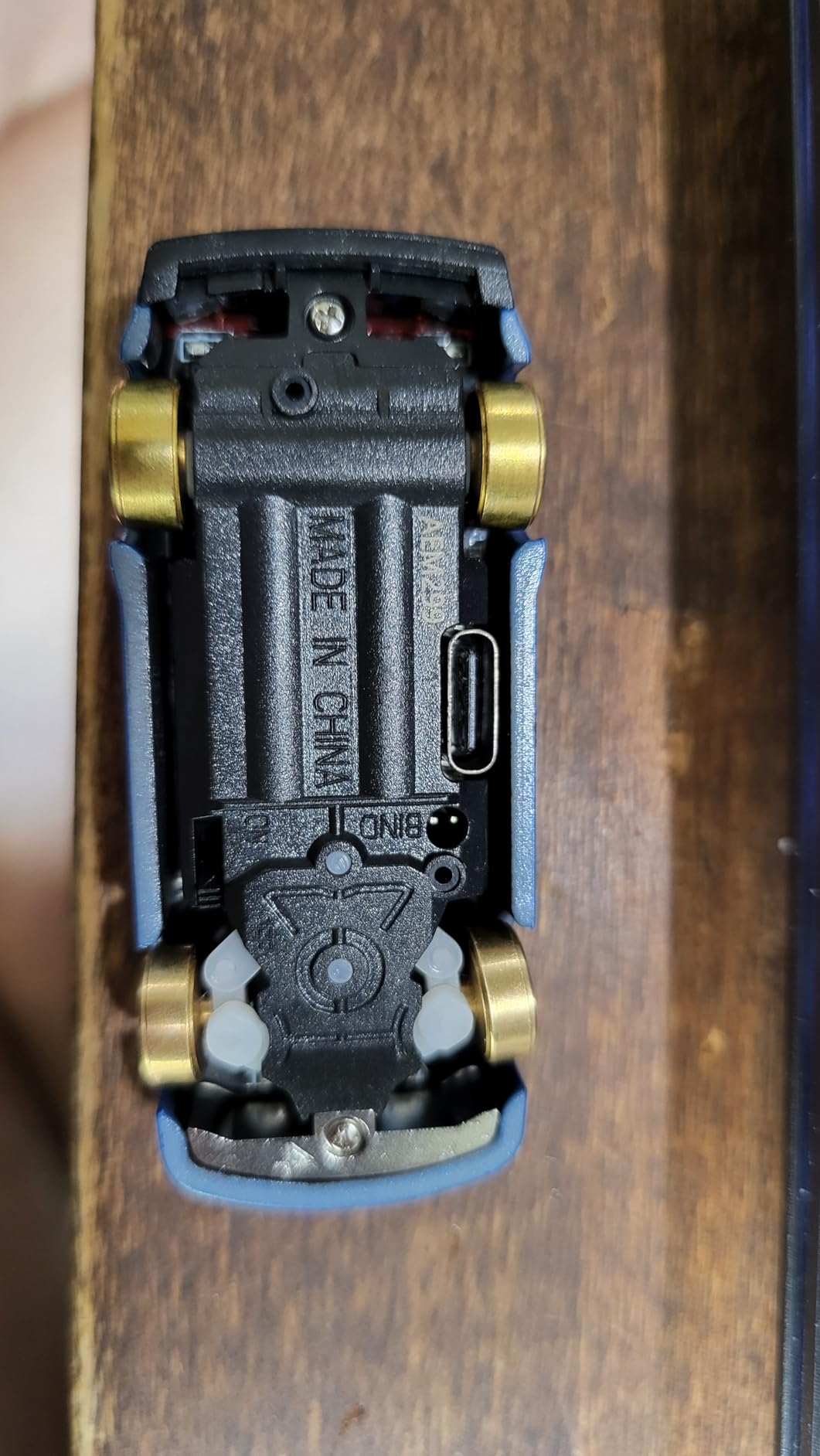
Scale, proportion control and lighting
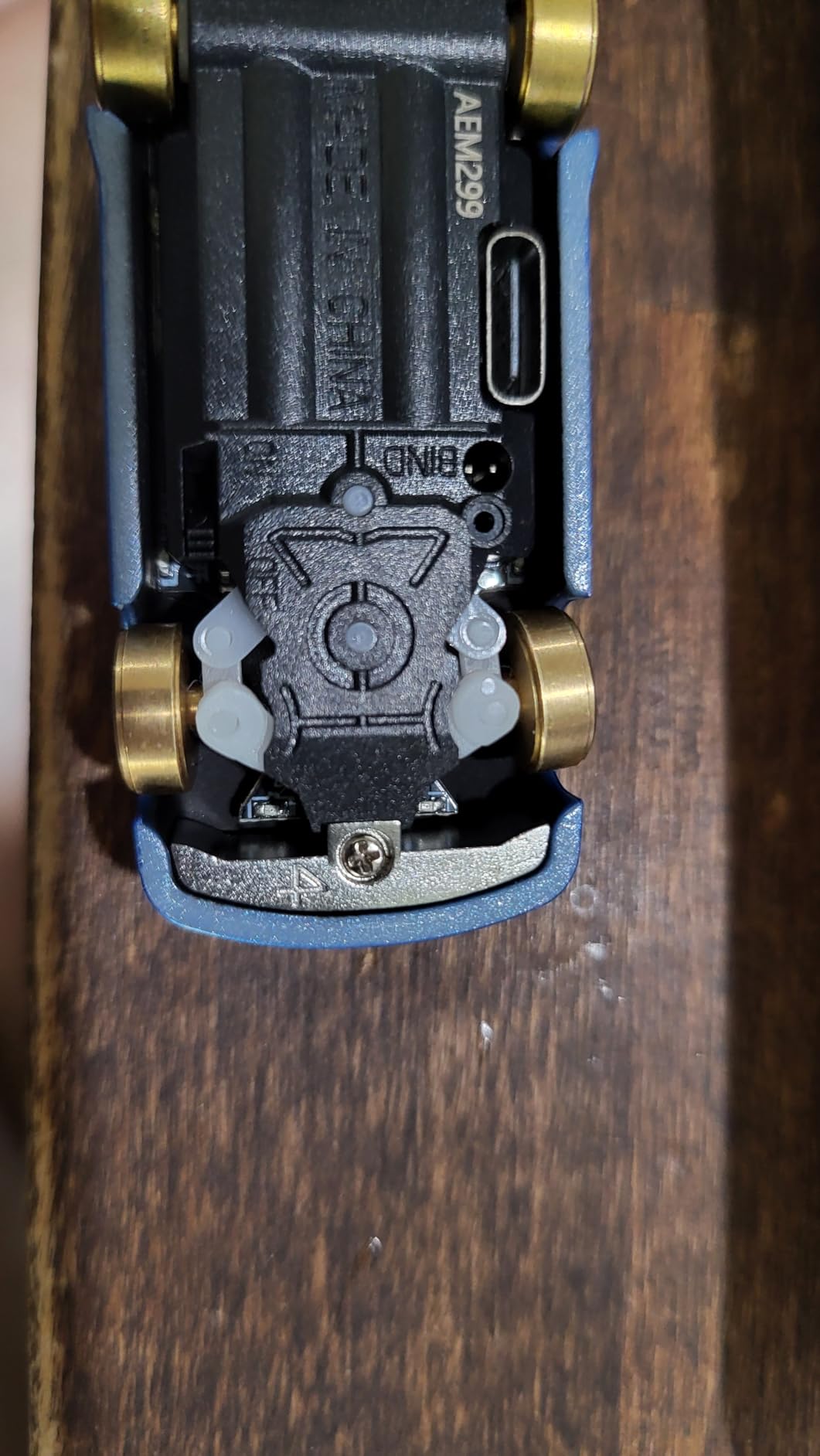
At 1.57 by 0.59 by 0.59 inches, this car is roughly the size of a small die-cast toy, and the proportions are modeled on a real rally car. Reviewers consistently praise how much control the proportional steering gives at that size, and the two-stage throttle curve with a gradual first half of travel makes it drivable for people who have never used a proportional radio before.
The lighting is the detail that gets photographed. High-simulation headlights with a spotlight and double-flash effect, a chassis LED on channel 3, and working brake and tail stop lights, all controlled from the transmitter. Two original-color shells are included, plus a screwdriver, so swapping liveries is part of the fun rather than an extra purchase.
Battery life and charging
A 55mAh LiPo gives up to 30 minutes of runtime with a 40-minute charge over the built-in Type-C port. That is a very good ratio, and the convenience of charging over a phone cable is what makes this the lowest-barrier car in the roundup.
The honest weakness is the small pack itself. A few buyers reported internal battery swelling or leaking, and some saw the remote fail after a short period. At this size there is no crash structure to absorb a fall off a desk, so treat it as an indoor car and store the battery safely between sessions.
Who it suits and who should skip it
It suits anyone who wants to learn proportional control, practice a drift line, or race indoors in a small space. Cardboard on a floor makes a serviceable circuit, and the car is slow enough that mistakes are cheap.
Skip it if you want lap times. The top speed is modest next to the larger cars here, and at 1/76 with very little weight the car is twitchy, which demands patience rather than skill. It is a toy-grade-scale racer, and the gyro trim is sensitive enough that it needs careful adjustment.
5. CROBOLL 1/10 Carbon Fiber Rally – Highest Rated with Race-Car Handling
CROBOLL 1/10 Brushless Carbon Fiber RC Rally Cars with Gyro, Max 50 mph,RTR
1:10 on-road rally
60A ESC
3650-3300KV brushless
gyro
up to 80 km/h
+ Pros
- Handles like a race car rather than a bash truck
- Detailed body with a full working lighting system
- Gyro makes drifting and straight-line speed easy
- Chrome steel helical gears and metal chassis
- Cons
- Small 2200mAh battery gives roughly 13 to 20 minutes
- Rear shock springs feel soft and squat under power
- Tires wear quickly when drifting on pavement
The CROBOLL xts-f10L-C has the highest average rating in this roundup, and the reason is consistent across reviews: it corners like a car instead of sliding like a truck. For a sealed-surface or hard-packed track, that is exactly the behavior you want.
The 60A ESC with cooling fan and metal heat sink pairs with a 3650-3300KV brushless motor to reach up to 80 km/h. Chrome steel helical gears on the spur, input, and differential gears are a genuine quality step over the plastic spur gears common at this price, and sealed differentials with dampened center driveshaft couplings reduce the maintenance that normally eats a race car’s season.
Suspension behavior and steering feel
Metal chassis and CNC shock towers give this car a much more settled response over bumps than a plastic-chassis truck, and reviewers describe planted cornering rather than vague body roll. The 5-channel transmitter reaches roughly 350m, which is more than enough for any club track, and includes an integrated gyro for drift control.
One suspension note comes up repeatedly: the rear shock springs feel weak at the supplied setting and the car squats under acceleration. That is a soft spring, not a broken part, and swapping to firmer springs is a cheap fix that transforms the rear grip. It is the one adjustment I would make before the first race.
Battery life and what to change first
The included 3S 2200mAh battery gives roughly 13 to 20 minutes depending on how hard you drive, which is the shortest genuine race runtime among the 1/10 and larger cars here. The near-universal owner recommendation is to buy a larger capacity pack before you race.
Other common notes: the tires wear quickly when you drift on pavement, which is the same trade as any hard tire, and the body plastics can crack in a hard sideways impact. Owners also say the radio feels inexpensive next to the car, and that upgrading the ESC and pinion is how you reach 60 mph and beyond.
Who it suits and who should skip it
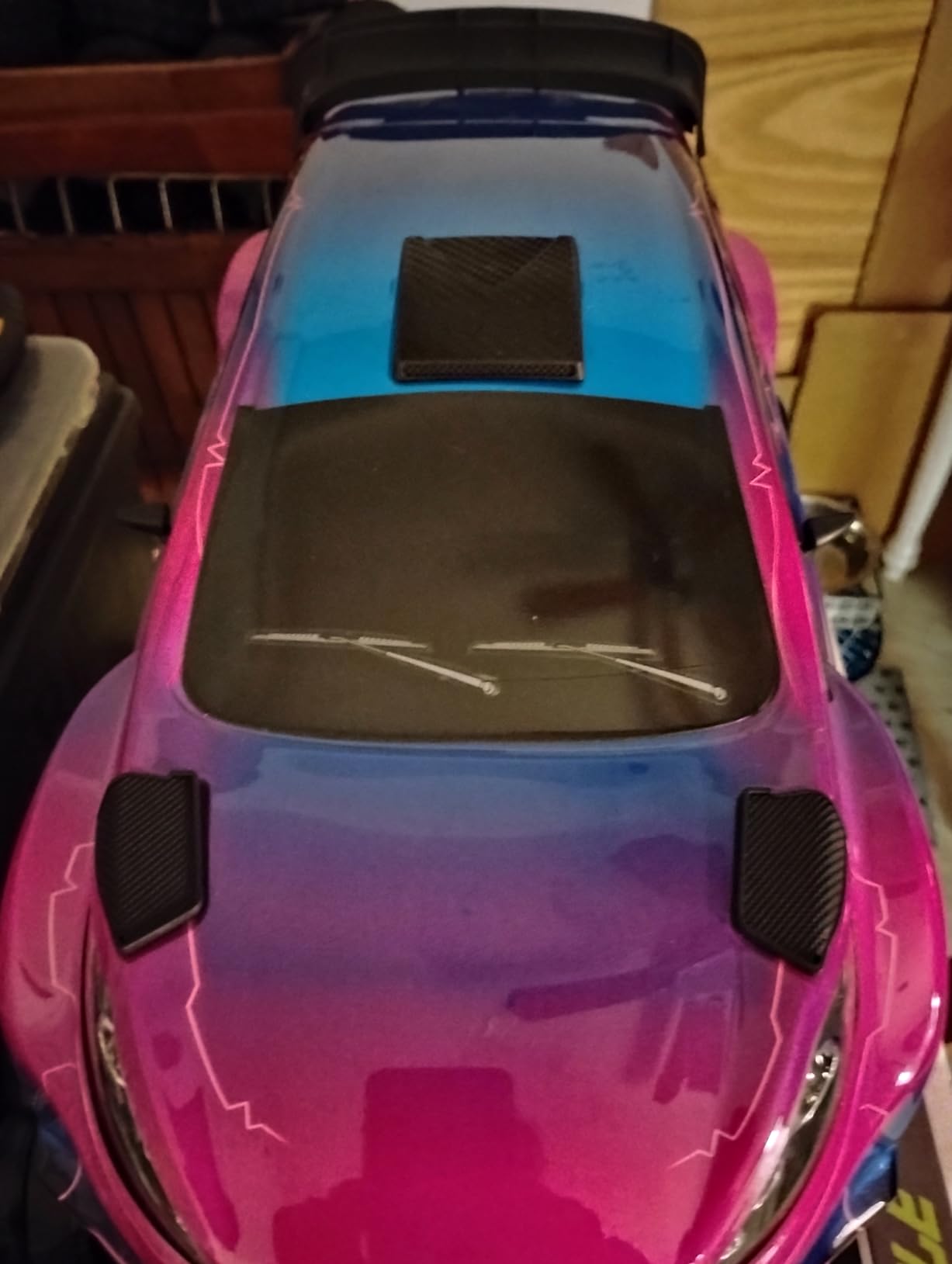
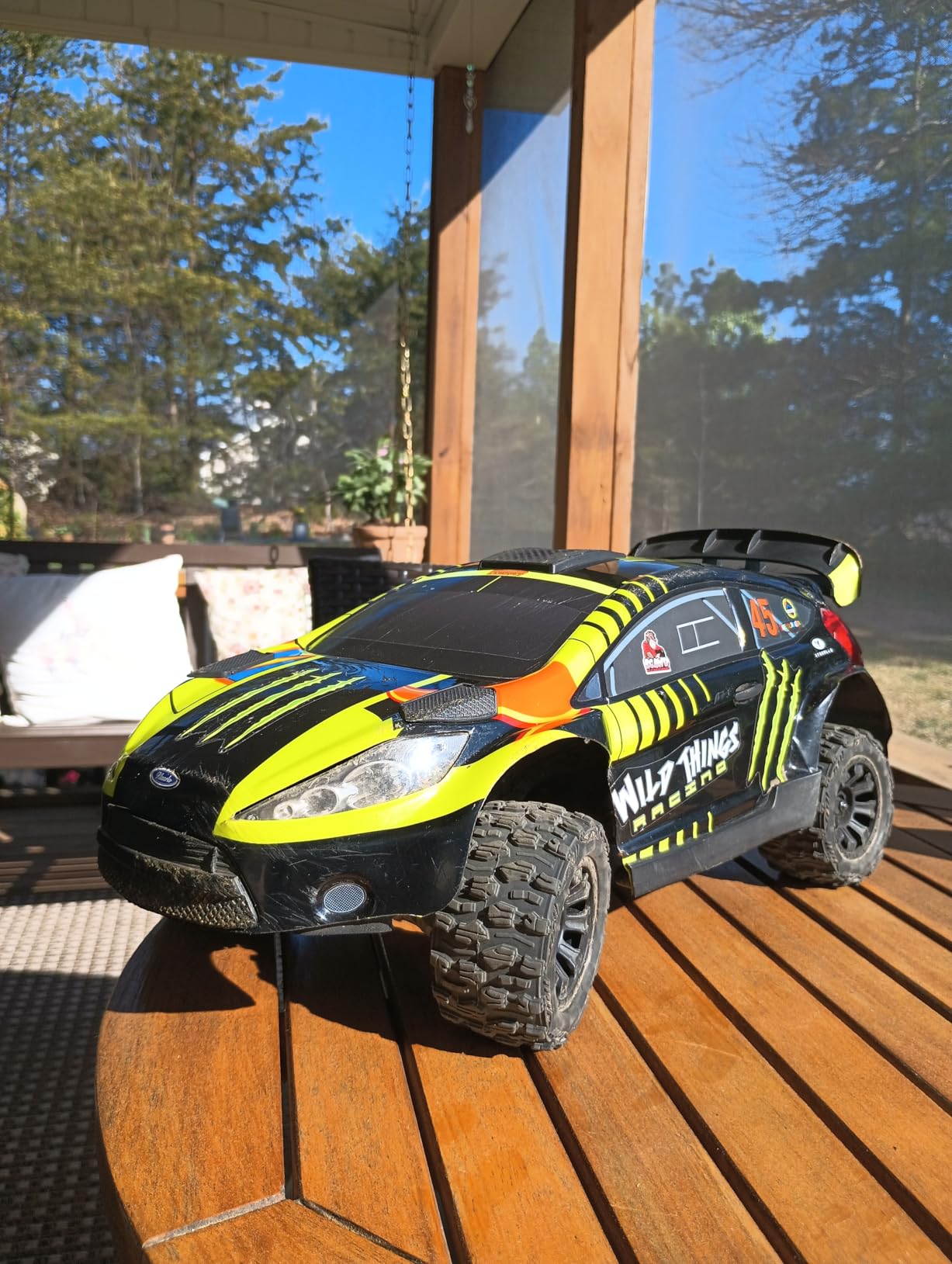
It suits anyone running on asphalt, sealed concrete, or a tight hard-packed dirt oval who wants sharp turn-in and a detailed body. The full lighting system with head and rear buckets, grille, roof scoop, exhaust backfire effect, and door handles makes it as much a show car as a race car on a slow day.
Skip it if short runtime between heats will bother you, because you will be swapping packs constantly. It is also not the platform for rough or rooted dirt, where the low-profile on-road setup and fast-wearing tires work against you.
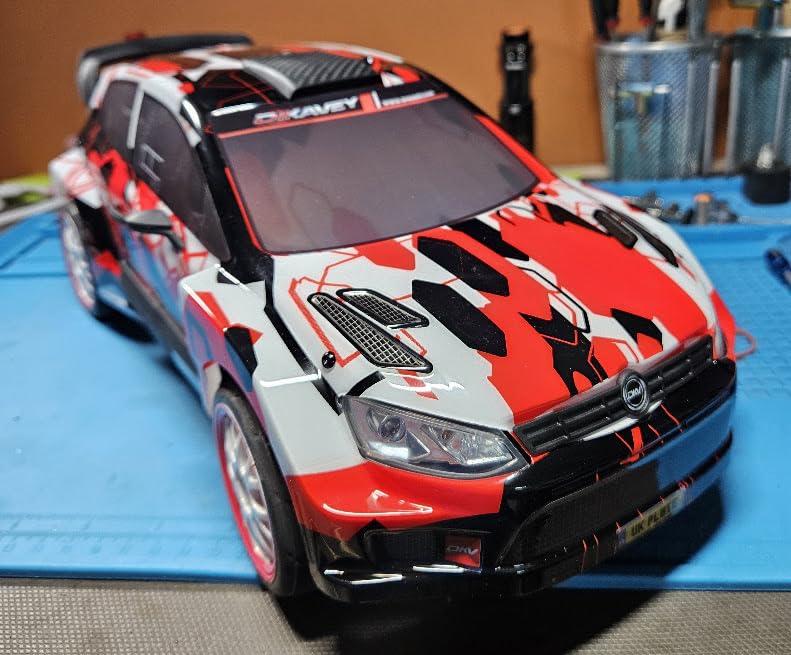
6. DIKAVEY 1:12 RX12 – Best Race Platform for Small Tracks
DIKAVEY 1:12 RC Rally Car Fast Max 50 MPH,Drift Adults RC Car
1:12 4WD
35A ESC
2845 3600KV brushless
gyro
about 50 mph on 3S
+ Pros
- Full-metal drivetrain and oil-damped suspension
- Popular enough that owners run multi-car heats
- Front and rear sway bars improve handling clearly
- Low-voltage cutoff and overheating warning
- Cons
- Tires wear out quickly after a few hard runs
- Flips over at full throttle without slower driving
- Included battery gives about 20 minutes per run
The RX12 is the most interesting pick here for anyone who has written off racing because they think they do not have space. At 1:12 it fits layouts that a 1/10 car simply cannot negotiate, and several owners report running heats with multiple of these in local groups.
Under the body it is a serious car: a full-metal drivetrain, a CNC-machined 59T steel differential, oil-damped suspension, steel CVDs, a 6061 aluminum chassis with powder-metallurgy gears, a 2mm reinforced polycarbonate shell, sealed diffs, and a center slipper clutch. The 35A ESC and 2845 3600KV brushless motor reach up to 80 km/h on 3S.

Tuning hardware and the transmission
Front and rear sway bars are the standout tuning parts, and owners report a noticeable handling change once they are set. A sway bar controls how much the outside suspension resists roll, which is how you make a car rotate on entry and hold a stable exit line. Cars with adjustable bars can be set up for a specific corner rather than a specific driver.
The center slipper clutch is the other piece that matters. It lets you set the relationship between the front and rear drive speed, which balances understeer and oversteer without changing gearing. Together with a sealed diff setup, it is the difference between a truck that is quick and one that is quick in the right way.
Electronics, protection and real-world running
The 350m range 2.4GHz transmitter includes a gyro, three speed modes, and light controls, which is a lot of adjustability for the size. Smart protection features include an overheating warning, a low-voltage cutoff, and over-current protection, and those matter at a club where a dead car on track ends everyone else’s heat.
The included 3S 2200mAh battery gives about 20 minutes with a 3 to 4 hour charge, which is the biggest practical constraint. Owners also report that the tires wear out quickly after a handful of hard runs, that it can flip over at full throttle without a calmer driving style, and that the body clips are small and fiddly.
Who it suits and who should skip it
It suits anyone racing on a small layout, in a garage, on a driveway, or at a club with tight hairpins, and it suits people who want to run a small fleet so heats are more interesting. The durability under rollovers and hard track use is consistently praised.
Skip it if your track is wide open and fast, because a 1/12 car covers less ground per lap than a 1/10 and you will spend your battery life driving. Buy spare tires immediately; nearly every owner says the same thing.
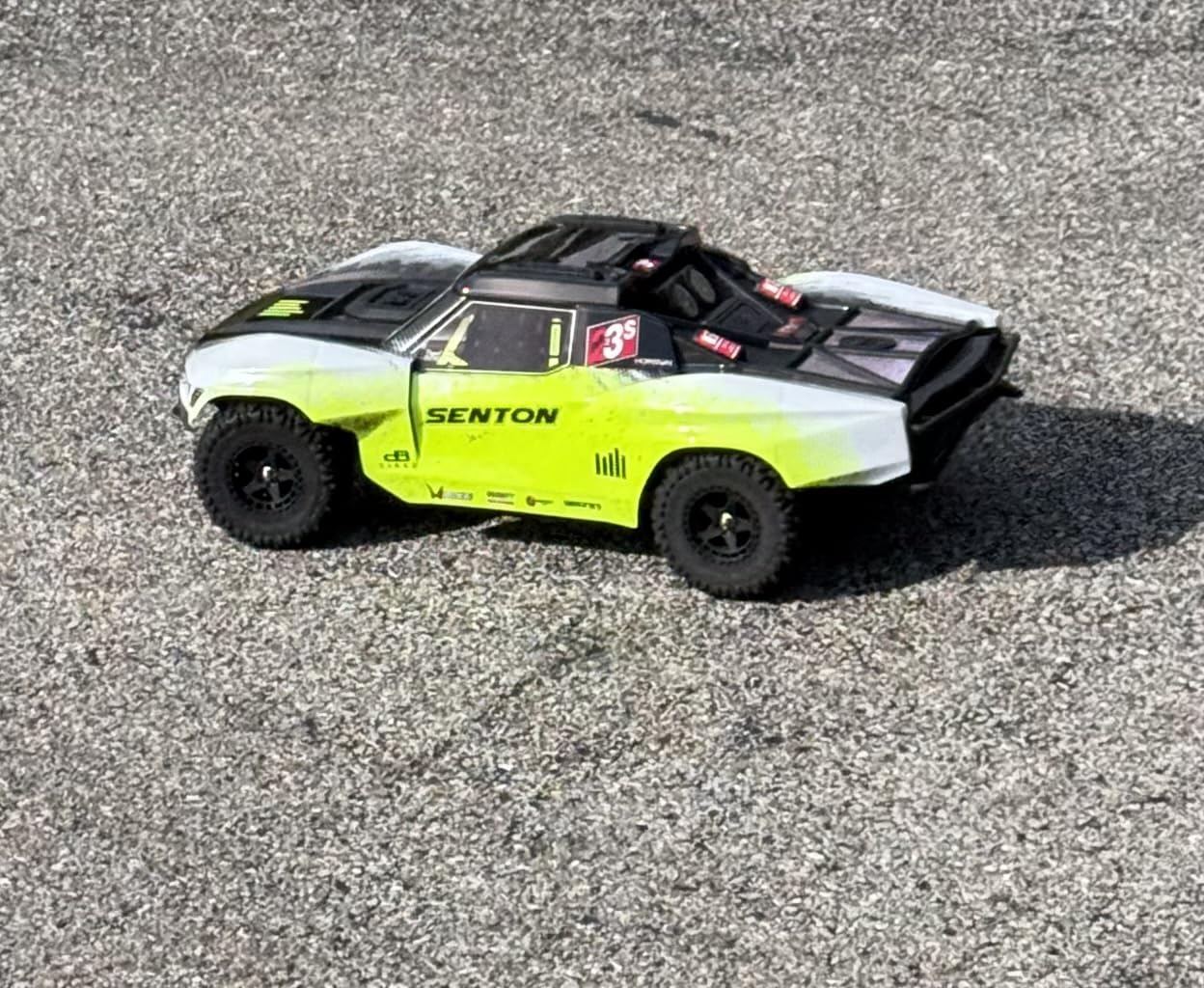
7. ARRMA SENTON 223S BLX 4X4 – Toughest Outdoor Dirt Race Truck
ARRMA RC Truck 1/10 SENTON 4X4 223S BLX BRUSHLESS Short Course Truck RTR (Battery and Charger Not Included) with DSC, Yellow, ARA4303V4T1
1/10 4X4 SCT
3100Kv Spektrum
80A 2S/3S ESC with DSC
50 mph
+ Pros
- Survives hard crashes with essentially no damage
- Spektrum DSC and throttle limiting aid beginners
- Closed wheels protect the drivetrain
- Well-supported platform with easy-to-find parts
- Cons
- Battery and charger sold separately
- Body must come off to power the truck on and off
- ESC thermal cutouts reported with lower-spec batteries
The Senton 223S BLX is the most conventional race truck here, and that is its strength. A super-tough 4X4 drivetrain with a center differential, an all-terrain suspension package, a 3100Kv Spektrum brushless motor, and a Spektrum SLT 80A 2-in-1 waterproof ESC and receiver rated for 2S or 3S with Dynamic Stability Control.
Dynamic Stability Control is the feature beginners care about. It uses the motor to manage yaw so the truck resists spinning, and the ESC also has throttle limiting you can set yourself. Combined with the S662 metal-geared 25T waterproof digital servo, steering stays positive even when the rear steps out.

Why the closed-wheel design matters on dirt
Short course trucks enclose the wheels, which protects the drivetrain and steering in a way an open-wheel buggy cannot. When a car hits a rut on a dirt track and flips, the wheels are what take the hit, and owners consistently report the Senton surviving hard crashes with essentially no damage.
The suspension is an all-terrain package on a heavy-duty drivetrain, and it soaks up bumps on pavement, gravel, and grass without the car pitching. At 50 mph capability with a 2S or 3S pack, there is plenty of speed for an outdoor track without pushing the tires past their limit.
The battery and charger reality
This ships without a battery and without a charger, which is the single most important thing to know before buying. Your real entry cost is the truck plus a 2S or 3S LiPo plus a balance charger, and you want at least two packs so you can keep racing while one charges.
Two more practical notes from owners. The body has to be removed to power the truck on and off, which is annoying in a hurry between heats. And some reports mention ESC thermal cutouts when run with lower-spec batteries, another argument for buying a reputable pack rather than the cheapest one available.
Who it suits and who should skip it
It suits outdoor dirt and gravel tracks, beginners who want electronics that will not punish them, and anyone who plans to run a fleet. Several owners buy multiple examples specifically for organized outdoor racing, which tells you how the platform holds up over a season.
Skip it if you want a plug-and-play purchase. It is also not a sealed-surface or carpet car; the weight and the closed-wheel stance work against you on a smooth track where grip comes from the tire compound instead of the suspension.
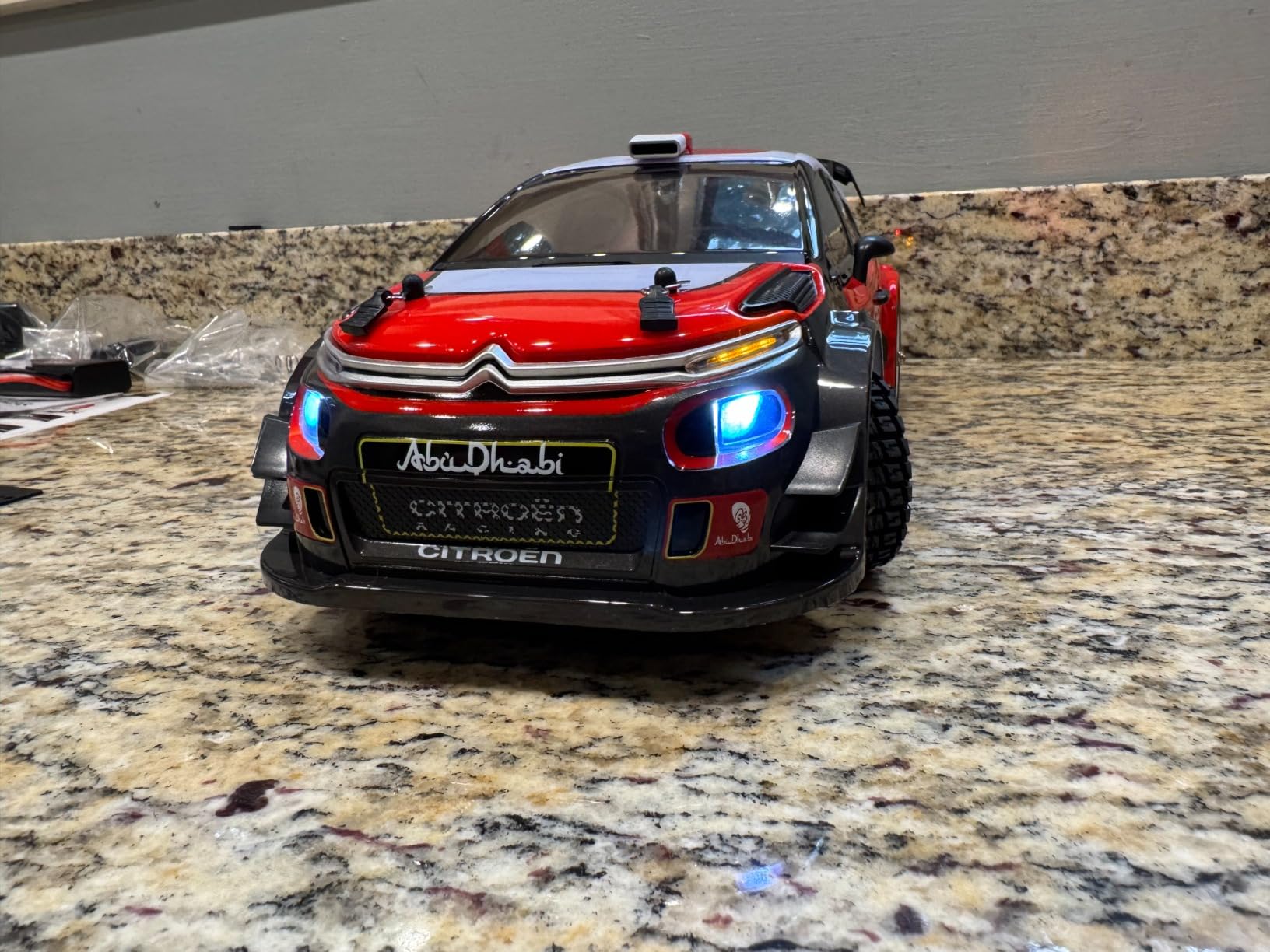
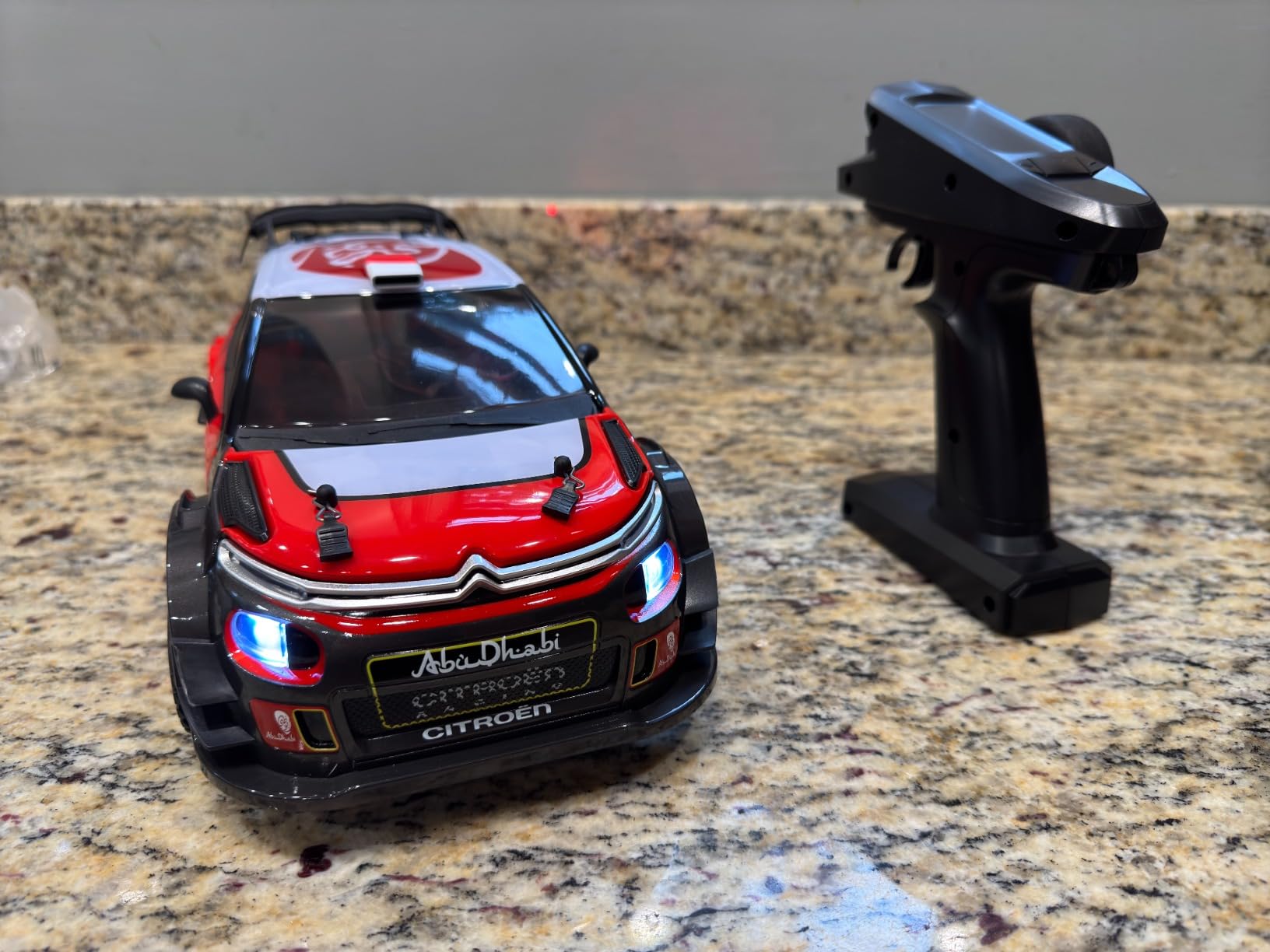
8. MJX 14303 Citroen C3 1/14 – Best On-Road Rally Platform
MJX Hyper GO 14303 1/14 Citroen C3 Fast Rally RC Cars for Adults
1:14 rally
2845 3900KV brushless
Independent gyro
2S 2000mAh
65 km/h
+ Pros
- Licensed Citroen C3 WRC body with real detail
- Three sets of tires for pavement dirt and off-road
- 70 percent speed limit helps new drivers
- 6061 aluminum chassis and metal support rods
- Cons
- Twitchy out of the box until the speed limit is set
- Small 1/14 scale limits travel on rough ground
- Basic radio next to higher-end hobby systems
The MJX 14303 is a licensed 2017 Citroen C3 WRC replica at 1/14 scale, and for anyone who came to this hobby because of actual rally cars, that body is the point. The detail work covers the bumpers, spoiler, intakes, and exhaust, and no other car in this roundup carries a factory livery.
Underneath it is a proper hobby-grade platform: a 2845 3900KV brushless motor with metal heat sink and dual cooling fans, a 6061 aluminum alloy chassis, large metal support rods, powder-metallurgy gears and differentials, and oil-filled shocks. The included 2S 7.4V 2000mAh battery is rated to 65 km/h, and a 3S upgrade is reported to add up to 38 mph of speed.
Three tire sets and what they change
The most useful thing in the box is not the car, it is the three sets of tires. One set for pavement, one for dirt, one for loose off-road, and swapping them changes the car’s behavior far more than any electronic adjustment. Hard tires on pavement give you low slip angle and fast lap times; softer, taller tires are what you need when the surface gives way.
An independent gyro is fitted, and owners recommend running it around 75% strength. It improves straight-line stability and makes drifting far easier to hold, which is exactly what you want from an on-road rally car that spends its life transitioning between grip and slip.
Radio, lighting and the 70% speed limit
The 400 ft 2.4GHz 3-channel transmitter has light control and a 70% speed limit setting. New drivers are advised to use that limit first, because the car is described as twitchy out of the box, and it is a much better way to learn than discovering the limit in a wall.
Lighting includes simulated brake lights and turn signals with flash, continuous, and off modes, which is a small thing that makes a car feel finished. The realistic limitation is that the radio is basic compared with higher-end hobby systems, and that 1/14 scale gives limited suspension travel on rough ground.
Who it suits and who should skip it
It suits on-road and rally-style racing on pavement, sealed track, and groomed dirt, and it suits anyone who cares about how a race car looks. Being able to change the surface the car is set up for in under a minute makes it genuinely versatile for a first racing car.
Skip it if your club track is rough, rooted, or loose, because the small scale and short suspension travel will bottom out and cost you grip. It is also a 1/14, so it will be slower around a full-size layout than the 1/10 platforms here.
9. RLAARLO 1/10 Brushless Buggy – Best for Tuning and Support
RLAARLO 1/10 Brushless RC Cars, 4×4 Buggy, 50+ MPH, Carbon Fiber, Ages 8+
1:10 4WD buggy
3650-2650KV
60A ESC
20KG servo
3S 2200mAh
50 mph
+ Pros
- 20KG servo gives noticeably sharper steering
- Responsive manufacturer support for replacement parts
- Sealed diffs and metal oil-filled shocks
- Anti-roll bars front and rear with adjustable clearance
- Cons
- Low ground clearance struggles with gravel and curbs
- Exposed wheels can break steering parts in a crash
- Top speed falls short of the advertised figure as supplied
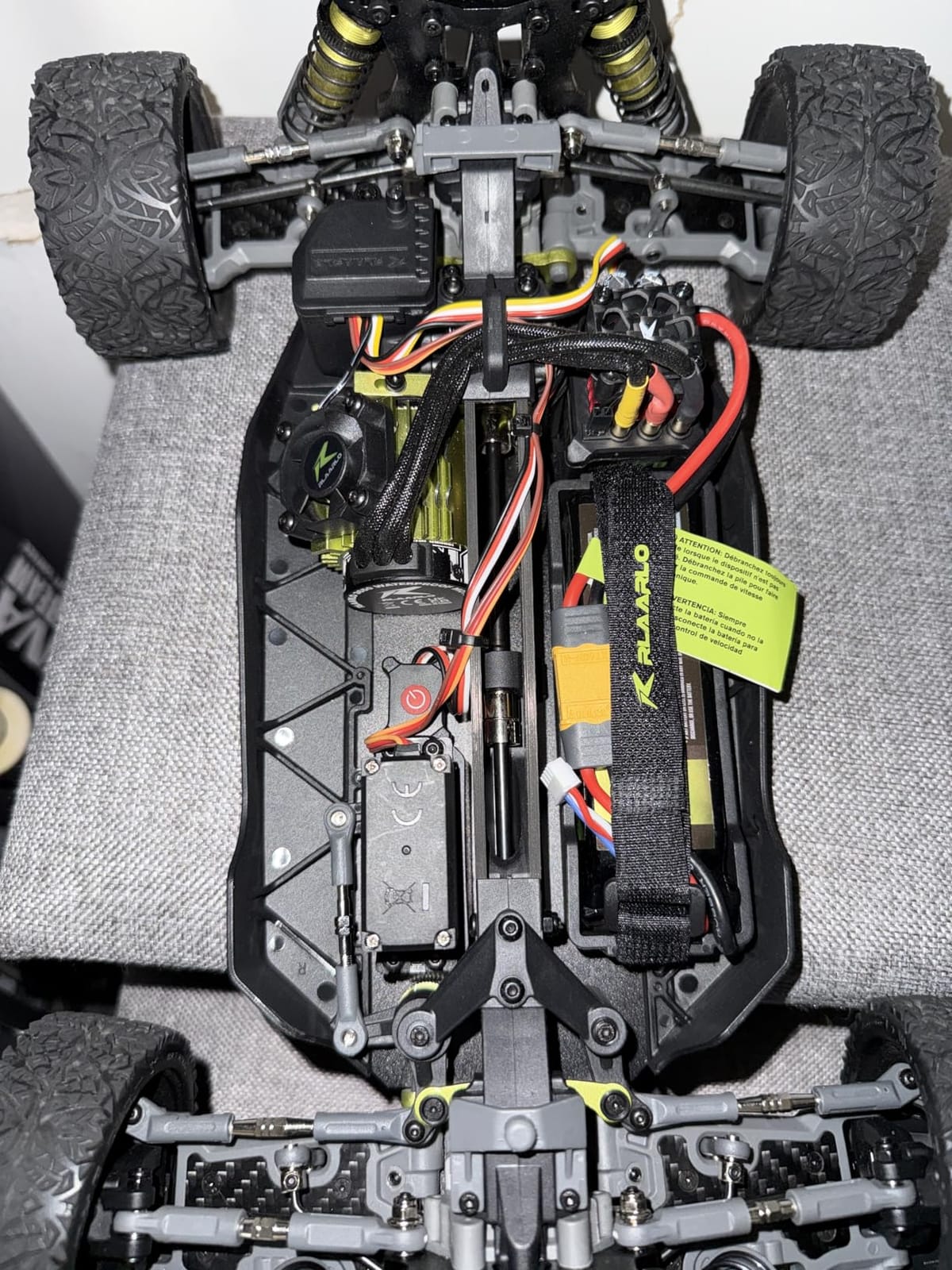
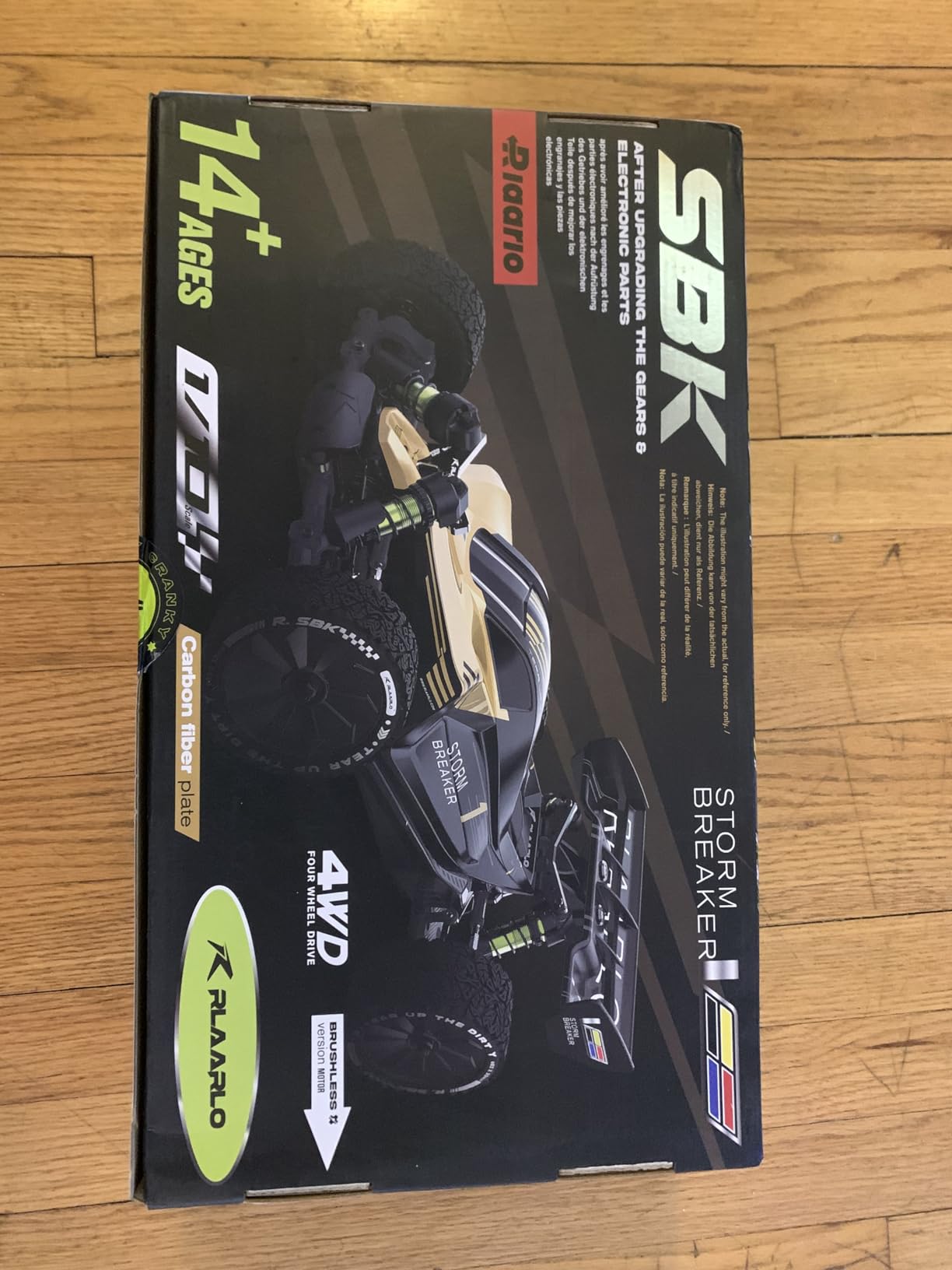
RLAARLO’s 1/10 buggy is the pick for anyone who wants to tune rather than just drive. The 3650-2650KV brushless motor feeds a 60A ESC with an integrated heat sink, and the included 3S 2200mAh pack is claimed to reach 50 mph. Underneath, a 2.5mm aluminum alloy chassis with 4mm 7075 aluminum shock towers is a serious foundation.
The 20KG high-torque servo is the standout hardware. Most cars in this tier ship with a small plastic-geared servo that becomes the first thing to feel vague at speed; a 20KG metal-geared unit gives you steering response you can actually aim, which is what lets you place a car precisely on a racing line.
Chassis, suspension and steering hardware
Metal oil-filled shocks on a reinforced double-A-arm suspension give real damping control, and front and rear anti-roll bars with adjustable ground clearance let you set the car for a surface rather than a default. Sealed front and rear differentials keep oil in, which means the diff stays consistent through a long race day instead of drying out and changing handling.
Hardened steel gears, carbon steel driveshafts, and a 1.2mm polycarbonate shell round out a build that reviewers describe as durable. A 6-channel radio with up to 350m range is also more than most club layouts need, and gives you channels for the lighting if you add it later.
Two honest weaknesses
Low ground clearance is the one that matters. Reviewers report that it struggles with gravel, curbs, and sidewalk cracks, so if your local track has any raised edges you will lose time and break parts. Raising the ride height is the fix, and it is easy, but it changes the center of gravity.
The second is that the wheels stick out from the body, so a clipped wheel in a tight corner can break steering or suspension components. That is the cost of the buggy layout and the reason the closed-wheel trucks like the Senton take abuse better. Reviewers also note that top speed falls short of the advertised figure until you change gearing.
Who it suits and who should skip it
It suits a racer who wants open setup options and a manufacturer that will send replacement parts when something breaks. Several buyers own more than one of these vehicles, and the support record is a real differentiator in a segment where you often cannot get parts at all.
Skip it if your track is rough or has curbs. The included battery also lasts roughly 15 to 35 minutes depending on driving style, and the cooling fans are noisy with electronics that feel basic for the price.
10. ARRMA FURY 223S BLX 2WD – Best 2WD Truck for Dirt Racing
ARRMA RC Truck 1/10 FURY 2wd 223S BLX Brushless Short Course Truck RTR (Battery and Charger Not Included) with DSC, Green, ARA3521T2
1/10 2WD SCT
Spektrum 4000Kv
45A 2S/3S ESC with DSC
50 mph
+ Pros
- Shrugs off long crash runs and cartwheels
- Owners report speeds close to 49 mph on 3S packs
- 2WD layout is genuinely fun and responsive on dirt
- Good value against larger hobby-brand trucks
- Cons
- Tires wear quickly especially the rears
- Plastic pivot ball joints and links wear over time
- Battery and charger sold separately
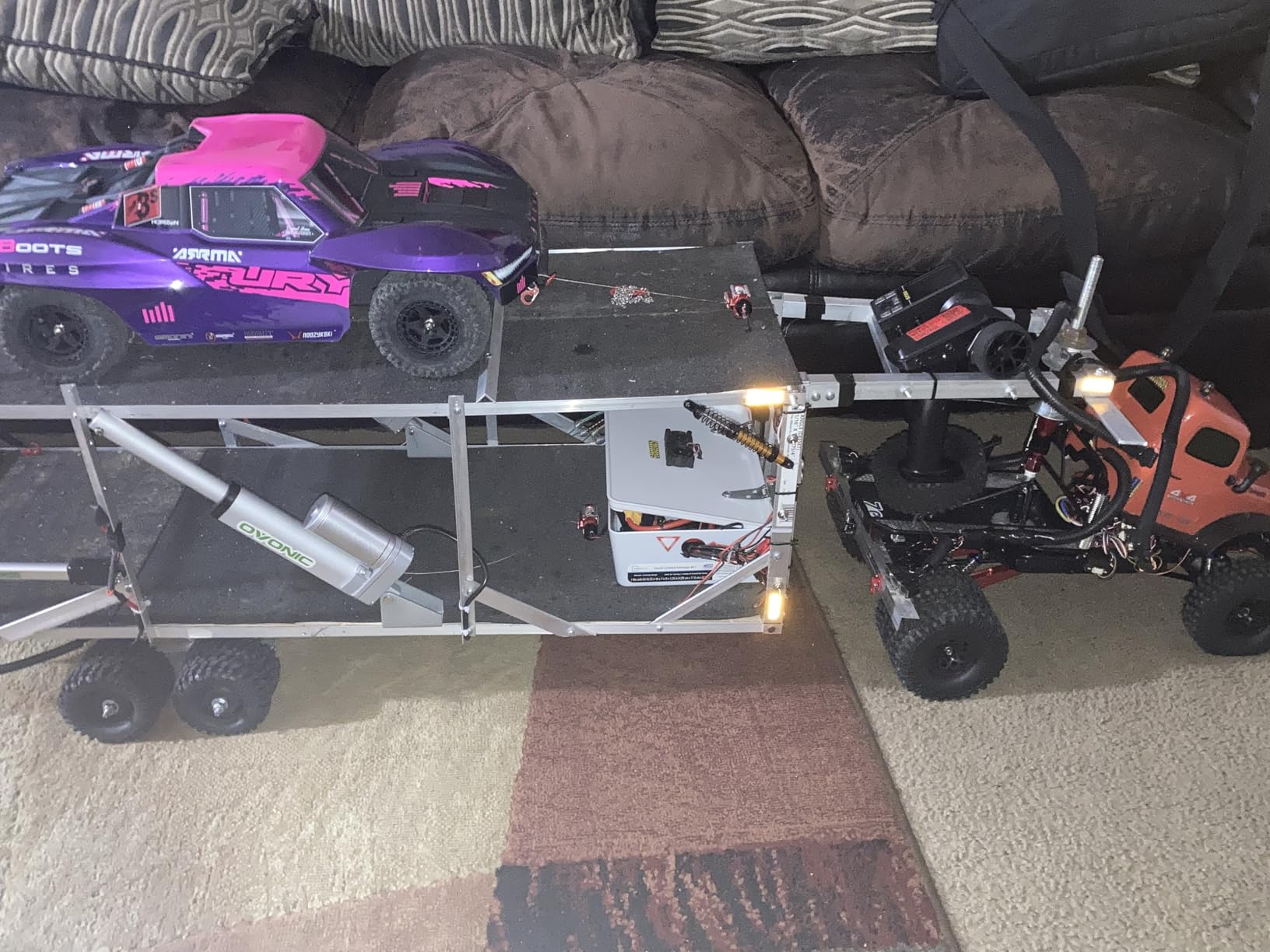
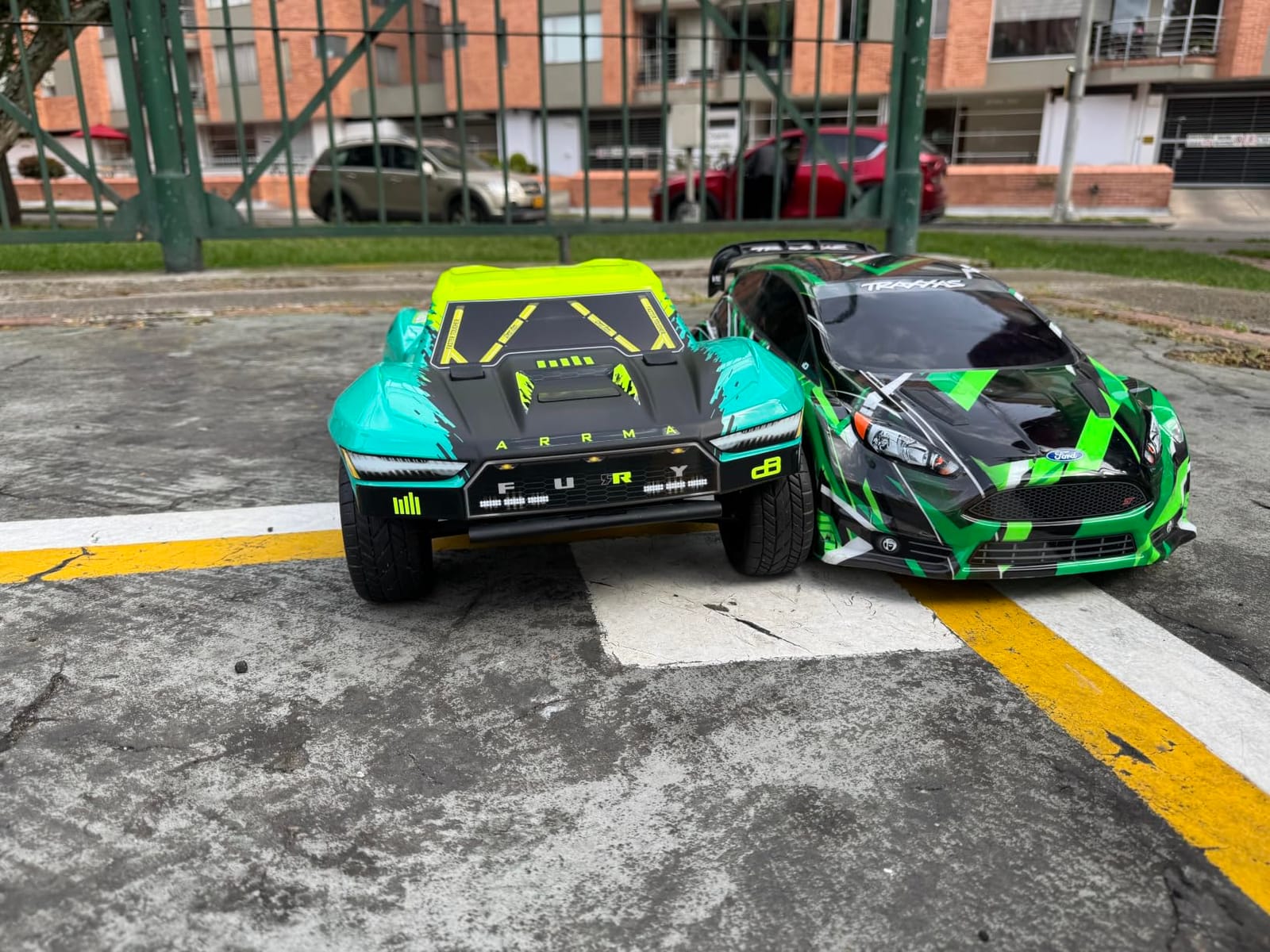
The FURY 223S BLX is the only rear-wheel-drive car in this roundup, and that is a deliberate choice rather than an omission. On a loose dirt or gravel track, 2WD can be faster than 4WD because the rear tires can put the power down without the front being dragged along by spinning wheels.
The Spektrum 4000Kv brushless motor, the SLT 45A 2-in-1 waterproof ESC and receiver with Dynamic Stability Control and throttle limiting, and the heavy-duty transmission with all-terrain suspension form a solid package. The SLT2 2.4GHz transmitter and S681 metal-geared waterproof digital servo complete the set.
Why 2WD can win on dirt
On a loose surface, drive depends on the rear tires finding grip. A 2WD truck only has to manage two tires, so it can put more torque into corner exit before the rears start to spin, and the front is free to follow the line instead of washing wide. Owners describe the response as genuinely fun and quick on dirt.
Dynamic Stability Control again does the heavy lifting for new drivers, and the throttle limit setting lets a beginner bring the truck up to speed gradually. Several owners use it for track racing specifically, which is the clearest signal on this list that the layout is competitive in its class.
Wear items you should plan for
Two components wear predictably on this truck. The tires go quickly, especially the rears, because 2WD puts all the drive and braking force through them. The plastic pivot ball joints and links are also a common upgrade point once the suspension is worked hard.
Owners also mention weakness in the steering servo, the ESC fan, and the spur gear over time, plus a few reports of transmitter failures and overheating. As with the Senton, the battery and charger are not included, so plan on two packs and a balance charger before your first race day.
Who it suits and who should skip it
It suits anyone racing on dirt or gravel who wants a simple, durable truck that shrugs off roughly 50-foot crash runs and cartwheels, and it suits a beginner who wants DSC working in their favor. Owners report speeds close to 49 mph on 3S packs.
Skip it if you race on carpet or sealed asphalt, where rear-only traction makes braking and tight turns take real practice, or if you want long-term refinement. The bottom-loading battery tray is a genuine convenience, but the wear list is longer than the 4WD truck’s.
How RC Racing Classes and Track Surfaces Actually Work
Every club has a class list, and that list decides what you are allowed to run. The class fixes the scale, the drivetrain layout, the motor, and the battery rules, which is exactly what makes racing fair. If your car is not in the class list, you are not racing, you are lapping, and many tracks will not let you on the racing line at all.
The most common question from newcomers is what class their local track runs and whether their car can run there. The answer changes a lot between clubs, so ask before you buy. The classes you will most often see are 1/10 2WD buggy, 1/10 4WD buggy, 1/10 4WD short course truck, 2WD short course truck, on-road touring, and micro or small-scale on-road.
Scale is the second filter. A 1/10 car needs a full-size layout, a 1/12 needs a tight layout, and a 1/14 or 1/16 will happily race on a smaller indoor circuit. The 1/12 DIKAVEY on this list and the 1/14 MJX both exist for a reason: they make racing possible on tracks a 1/10 car cannot fit through.
Track surface is the third filter and the one people ignore. On carpet and sealed surfaces, grip comes almost entirely from the tire compound, so a hard tire with a grooved or slick profile is correct and a soft knobby tire is wrong. On dirt and clay, the suspension works the surface and softer, taller tires are the right answer. On gravel, you need clearance more than grip, which rules out the lowest cars in this roundup.
One more piece of community wisdom worth carrying with you: on the hobby forums, experienced racers almost always tell beginners to pick the class their local track already runs, and to buy the cheapest widely available parts for that class. Parts availability is not a minor consideration. A car you can crash and re-run between heats is worth more than a faster car you cannot fix on race day.
Ready-to-Run vs. Kit: What Racing Actually Costs You
All ten cars here are ready-to-run, which means the car, motor, ESC, radio, and servo arrive assembled. Two of them, the ARRMA Senton and the ARRMA FURY, ship without a battery and charger, so your first purchase is the truck plus a starter set of packs.
That is the single biggest budget mistake new racers make. Budget for a charger, at least two batteries, and a set of tires on day one. A car that runs one heat and then needs twenty minutes on the charger will not make a full race day, and the frustration shows up in the first season more than any other issue.
On the other side, a kit gives you a bare chassis with no motor, no ESC, no radio, and often no radio servo. You get the newest, most refined suspension and drivetrain design available in that class, plus the freedom to choose exactly which electronics you run. Competition racers choose kits for that reason: the spec sheet is always newer on a kit.
My advice is to start ready-to-run and move to a kit only when you have a specific reason. That reason is usually one of three: your class has standardized on a specific electronics brand, you have outgrown the ready-to-run suspension, or you want the newest geometry. Until then, the money is better spent on a second battery and a set of tires.
Both ARRMA trucks are good examples of the middle ground. They arrive with a brushless motor, a 2.4GHz radio system, a waterproof ESC and receiver with Dynamic Stability Control, and a metal-geared digital servo, so the electronics are racing-capable from the first day. You just have to bring the packs.
Buying Guide: Motor, Battery, Gearing, Tires and Brand
Brushless motors and KV rating
Every car here uses a brushless motor, and for racing you should not consider anything else. Brushed motors lose efficiency as they heat, have less predictable throttle response, and need frequent maintenance. Brushless motors run cool, scale, and give you a throttle curve you can actually tune.
KV is revolutions per volt, and it is the number that tells you how fast a motor spins for a given battery voltage. A 2650KV motor on a 3S pack spins slower than a 3900KV motor on the same pack, which means more torque and less top speed. More KV means more speed and less low-end punch, plus more heat. Pair the KV to your track: open and fast tracks reward high KV, technical and loose tracks reward low KV.
Battery voltage and cell count
Cell count is the other half of the speed equation, and it is the cheapest performance upgrade in the hobby. Moving a car from 2S to 3S gives roughly 50 percent more voltage and a large increase in acceleration and top speed, but the motor, ESC, and gears all have to be rated for it.
Look for 2S and 3S ready platforms if you can. The Hosim is documented as upgradeable to 3S, and both ARRMA trucks are 2S and 3S ready, which means you can start conservative and add speed as you learn. A car that is only rated for one cell count is a dead end you will want to avoid.
Buy a proper balance charger before your first race day, and buy two batteries so one is always charging. This is the single highest-value accessory purchase in RC racing and the one most first-time buyers postpone.
Gearing: pinion and spur
Gearing is the ratio between the pinion gear on the motor and the spur gear on the transmission, and it is the main lever for choosing between speed and acceleration. A taller pinion or a smaller spur gives more speed; a shorter pinion or a larger spur gives more acceleration and more torque out of corners.
The advantage of a platform with an adjustable motor mount, like the AMORIL, is that you can change the ratio without buying new gears. That is worth more than a small horsepower difference. When you can only change gearing with a pinion swap, keep a couple of common ratios on hand so a quick setup change between carpet and dirt takes five minutes.
Tire compound and the surface map
The tire is the only part of the car touching the track, so it decides grip more than anything you bolt to the chassis. Hard compounds deliver lower slip angle and better response on carpet, sealed concrete, and asphalt. Softer compounds grip loose dirt and clay better but wear faster and can feel vague initially.
Watch the three tire sets included with the MJX 14303 as a cheat sheet. That package covers pavement, dirt, and loose off-road, and switching between them changes the car’s behavior more than any electronic setting. On dirt, buy a compound matched to the soil and expect to replace sets regularly; on hard surfaces, buy the hardest compound your track allows.
Arrma versus Traxxas, and which brand builds the best race cars
The Arrma versus Traxxas question comes up constantly, and the honest answer is that they build for different purposes. Traxxas is widely regarded for build quality, scale realism, and the widest parts network of any hobby brand, which is why its trucks come up so often in beginner racing advice. Their parts are cheap and available everywhere, which is the deciding factor when you crash between heats.
Arrma competes on the racing side with Spektrum electronics, Dynamic Stability Control, and 2S and 3S ready brushless platforms that are ready to tune. If your goal is class competition and you want electronics that manage stability for you, the Arrma platform is the more relevant choice. The two ARRMA trucks in this roundup are the clearest examples of that approach.
Other brands deserve a mention for class coverage. Losi is well known for micro and oval-scale race cars, Team Associated and Kyosho for on-road and touring kits, and Tamiya for entry chassis that taught a generation of racers. What none of them can fix for you is the class list at your local track, so check that first and buy second.
Frequently Asked Questions
What is the best RC car to race?
The best RC car to race is a hobby-grade brushless platform with LiPo power, adjustable oil-filled shocks, and a drivetrain that matches a class your local track runs. In our testing the Hosim 1/10 stands out for its 3100KV motor, 45A ESC, and two included batteries, while the AMORIL leads on adjustability. Always confirm your track’s class list before buying.
What is the best RC car for a first-time beginner?
A first-time beginner is best served by a car with stability aids and a throttle limit. The RIAARIO 1/10 has a built-in gyro plus selectable 0, 25, 70, and 100 percent throttle modes, and both ARRMA trucks include Spektrum Dynamic Stability Control. Pair that with a low KV motor so you can grow into the power.
Is Arrma or Traxxas better for racing?
Arrma tends to focus on race-ready electronics such as Dynamic Stability Control and 2S and 3S ready brushless platforms, while Traxxas is known for scale realism, build quality, and the widest and cheapest parts network. Pick Arrma for class competition and tuning aids, and Traxxas when parts availability after a crash is your top concern.
What is the highest quality RC car brand?
For racing specifically, quality is judged by drivetrain machining, suspension adjustability, and electronics rather than cosmetics. The cars in this roundup with the most owner feedback, including Hosim and AMORIL, use metal gears, CNC shock towers, and sealed differentials. For kit-only competition, Team Associated, Kyosho, and Tamiya build the most refined chassis.
Can a hobby-grade RC car go 200 mph?
No. The fastest hobby-grade RC cars in this roundup are quoted around 50 mph, and racing cars run well below that because grip, not power, limits lap time. 200 mph figures come from purpose-built gas-powered drag or scale race models on closed courses, which are a different category with different safety rules and are not legal at club tracks.
Final Verdict: Which RC Car Should You Race in 2026?
If you want one car that covers most situations and you can handle a quick platform, the Hosim 1/10 takes it with two batteries in the box and an upgrade path to 3S. If you plan to modify and re-gear constantly, the AMORIL 1/10 is the better buy, and the RLAARLO buggy is the pick if you want the widest tuning hardware and the most responsive after-sales support.
If stability and speed control matter more than raw feel, the RIAARIO with its built-in gyro and throttle limit modes is the easiest car here to learn on. For outdoor dirt, the ARRMA Senton 223S BLX 4X4 is the most durable option, and the ARRMA FURY gives you a genuine 2WD layout that is fast on loose surfaces. Remember both ARRMA trucks need batteries and a charger bought separately.
For on-road and rally work, the CROBOLL turns in sharply and holds a planted line on hard surfaces, and the MJX 1/14 gives you three tire sets and a licensed rally body. If your space is limited, the DIKAVEY 1:12 is the most convincing small race car, and the FLYCOLOR 1:76 lets you learn proportional control on a desk.
Whichever you choose, do one thing before you spend: ask your local track which classes they run. Pick the car that matches a class you can legally enter, buy a charger and two batteries the same week, and get a spare set of tires in the box. That preparation matters more to your first season than any spec on this list.