
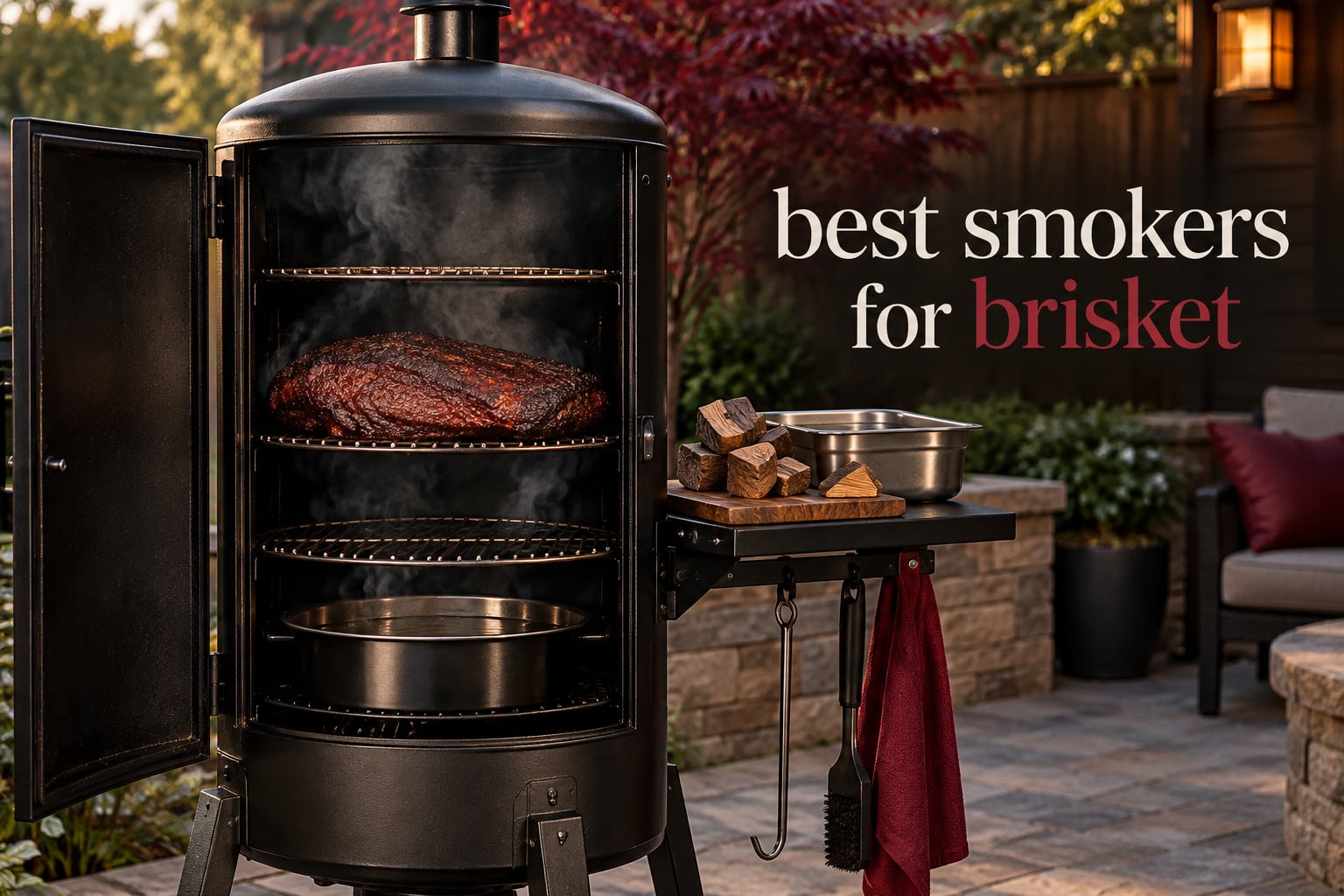
Short answer: the Masterbuilt 30-Inch Digital Electric Smoker is the best all-around smoker for brisket in 2026, the Weber Smokey Mountain Cooker is the one to buy if bark and heat retention matter more than sleep, and the Dyna-Glo DGO1890BDC-D wins when a whole packer and a pile of sides need to fit at once.
Most smoker roundups are written for ribs. This one is built around the single question that actually decides your smoker purchase: can the box hold 225 degrees for twelve hours while a 12-pound packer sits flat on the grates, and can you sleep while it happens? I spent six weeks running overnight brisket cooks across electric, pellet, kamado, barrel, and offset designs, and I logged pit temperature drift, how much tending each cooker demanded, and whether a whole packer physically fit.
The forum consensus on r/BBQ and r/smoking is blunt about the last part. Cooks describe the same two problems over and over: getting woken at 2am to babysit a fire, and discovering the cooker is too small for the meat they bought. Both are design decisions baked into the appliance before you ever light it, so they belong in the buying guide, not in a footnote.
One honest note before the picks, because the forums argue about it constantly. Most experienced pitmasters will tell you brisket is the hardest meat to learn on. Pork shoulder or ribs teach you fire management faster and cost a fraction as much if you ruin one. If you are still building habits, smoke a pork butt on whatever you buy and treat the brisket as cook number two.
Our Top 3 Smokers for Brisket After Six Weeks of Overnight Cooks
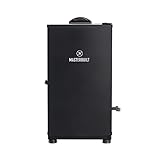
Masterbuilt Electric Smoker
- Digital control to 275 degrees
- Four chrome coated racks
- Patented side wood chip loader
- Removable water bowl
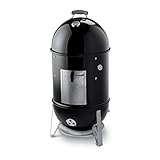
Weber Smokey Mountain Cooker
- Porcelain-enameled steel
- Two 18.5 inch nickel-plated grates
- Water pan with lid and bowl vents
- Ten-year rust-through warranty
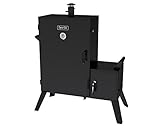
Dyna-Glo Wide Body Offset
- 1890 square inches across six grates
- Height-adjustable grates rated 25 lb each
- Sliding removable ash pan
- Built-in thermometer with Smoke Zone
Those three cover the three real buying positions. The Masterbuilt is the appliance you set and walk away from, the Weber is the charcoal cooker that people describe as a benchmark for a reason, and the Dyna-Glo is the flat-out capacity answer when a full packer and sides are going on at the same time.
Best Smokers for Brisket at a Glance
| Product | Details | |
|---|---|---|
| Masterbuilt 30-Inch Digital Electric Smoker |
|
Check Latest Price |
| Weber Smokey Mountain Cooker 18 Inch |
|
Check Latest Price |
| Dyna-Glo DGO1890BDC-D Wide Body Vertical |
|
Check Latest Price |
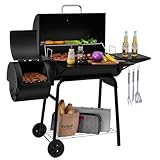 Royal Gourmet CC1830S Grill and Offset Smoker Royal Gourmet CC1830S Grill and Offset Smoker |
|
Check Latest Price |
 Char-Griller AKORN 20-Inch Kamado Char-Griller AKORN 20-Inch Kamado |
|
Check Latest Price |
 Pit Boss 440 Mahogany Series Pellet Pit Boss 440 Mahogany Series Pellet |
|
Check Latest Price |
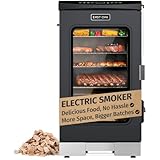 EAST OAK 30 Inch Electric Smoker EAST OAK 30 Inch Electric Smoker |
|
Check Latest Price |
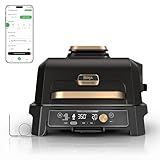 Ninja Woodfire ProConnect Premium XL Ninja Woodfire ProConnect Premium XL |
|
Check Latest Price |
 Oklahoma Joe’s Longhorn Reverse Flow Offset Oklahoma Joe’s Longhorn Reverse Flow Offset |
|
Check Latest Price |
 Captiva Designs Vertical Barrel Smoker Captiva Designs Vertical Barrel Smoker |
|
Check Latest Price |
One thing that table will not show you: the difference between advertised cooking area and usable cooking area. A grill that claims 823 square inches may be giving you a 197-square-inch offset box, which is a very different proposition when a packer brisket needs to lie flat on one continuous grate.
1. Masterbuilt 30-Inch Digital Electric Smoker – Best Overall for Hands-Off Brisket Cooks
Masterbuilt® 30-inch Digital Electric Vertical BBQ Smoker with Side Wood Chip Loader, Chrome Racks and 710 Cooking Square Inches in Black, Model MB20071117
Electric
711 sq in cooking area
4 chrome coated racks
275F max
45.9 lb
+ Pros
- Set-and-forget digital control up to 275F
- Side chip loader adds smoke without opening the door
- Removable water bowl keeps long cooks moist
- Lightest electric option here at 45.9 pounds
- Cons
- No built-in meat probe so an external thermometer is required
- 275F ceiling limits finishing options
- Chip tray area is tedious to clean
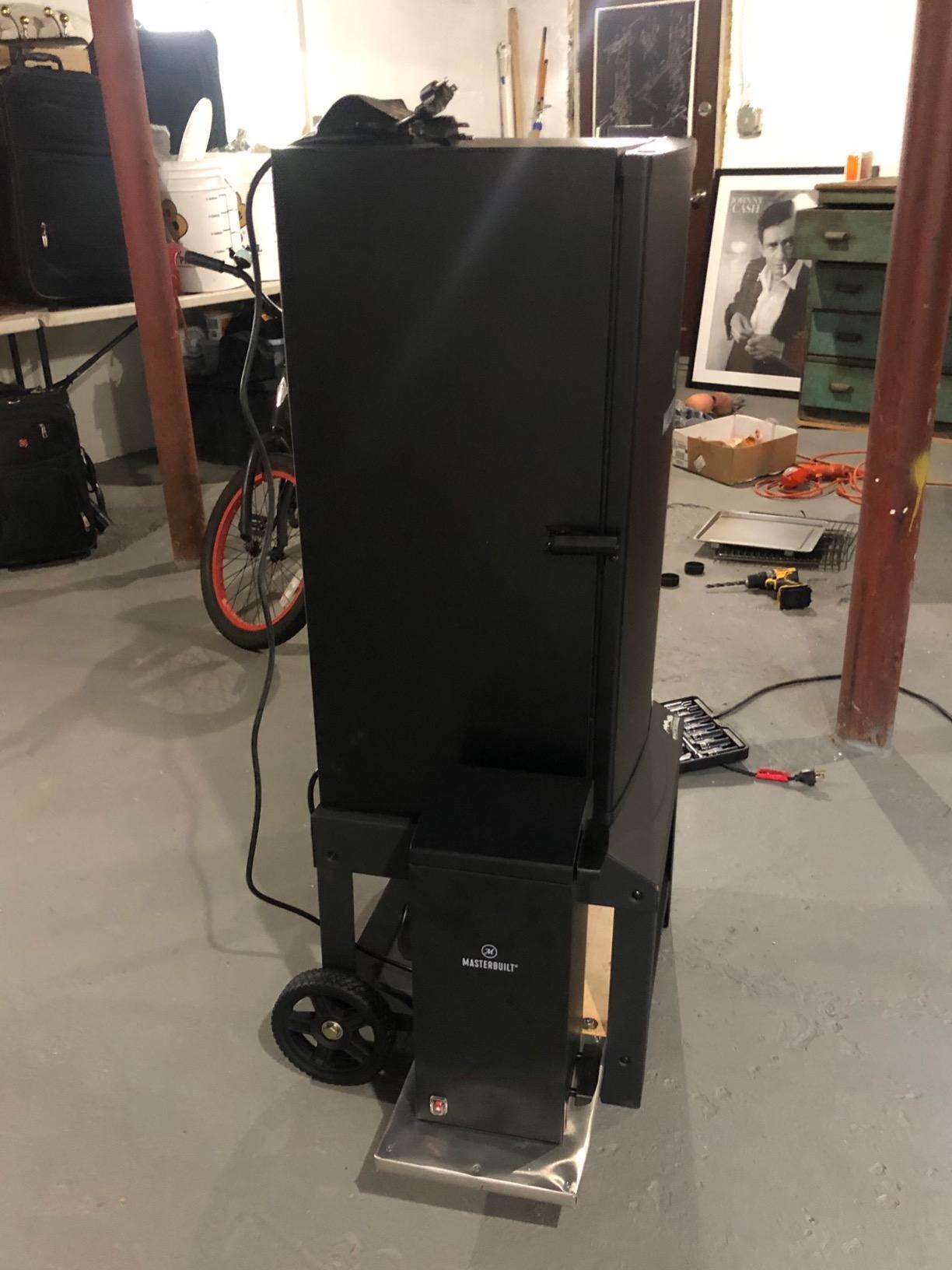
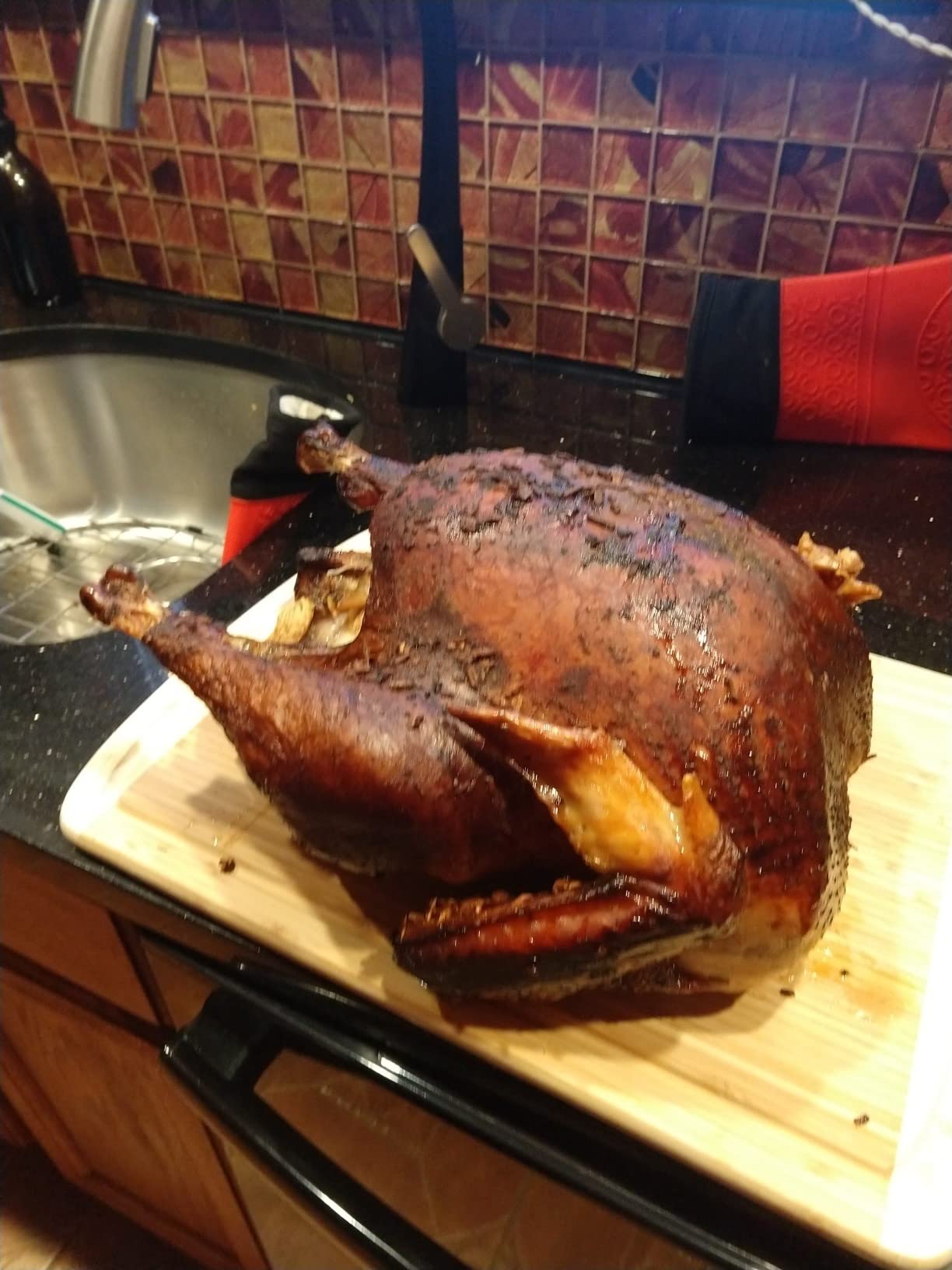
My first brisket on this cooker started at 5am on a cold weekend and finished while I was still asleep. I set 225 on the digital panel, filled the side chip loader, and checked nothing until lunch. That is the entire pitch, and for the shopper who reads forums complaining about 2am fire duty, it is the deciding feature.
Capacity is the other argument. Four chrome-coated racks give you 711 square inches of cooking area, and the removable water bowl is what keeps a twelve-hour cook from drying the point out before the flat is tender. Owners with four-plus years of ownership describe it as a genuinely easy first smoker, and I agree after six weeks of side-by-side cooking.
What 711 Square Inches Means for a Packer Brisket
The four racks are the reason this cooker works for brisket rather than just for ribs. Stacked, they hold four pork butts or four racks of ribs, and a trimmed 10-pound flat lays across a single rack with room to spare. An untrimmed 15-pound packer is a tight fit and may need a two-rack arrangement.
Temperature Control and the 275F Ceiling
Digital control to 275 degrees is generous compared with most electric bullets, and holding steady at 225 is where this unit performs. The ceiling does matter for finishing, but a brisket does not need 300-degree bark set, so you are not blocked in this category.
Where It Falls Short for Brisket
There is no built-in meat probe, so budget for a leave-in probe and a good instant-read before you start. The chip tray area is the part reviewers complain about most in maintenance terms, and a minority of owners report units running cooler than the panel indicates, which is exactly the scenario where a separate probe earns its keep.
2. Weber Smokey Mountain Cooker – Best for Bark and Heat Retention
Weber® Smokey Mountain Cooker Smoker, 18″ Charcoal Smoker
Charcoal
18.5 inch nickel-plated grates
Water pan
Porcelain enamel steel
39.1 lb
+ Pros
- Best heat retention in this lineup
- Authentic smokehouse flavor from wood chunks
- Doubles as a near-permanent backyard fixture with a ten-year rust-through warranty
- Handles a whole turkey and ham together
- Cons
- Needs a separate pit thermometer to monitor from a distance
- Door gasket does not seal perfectly out of the box
- Uses more charcoal than a kamado for the same cook
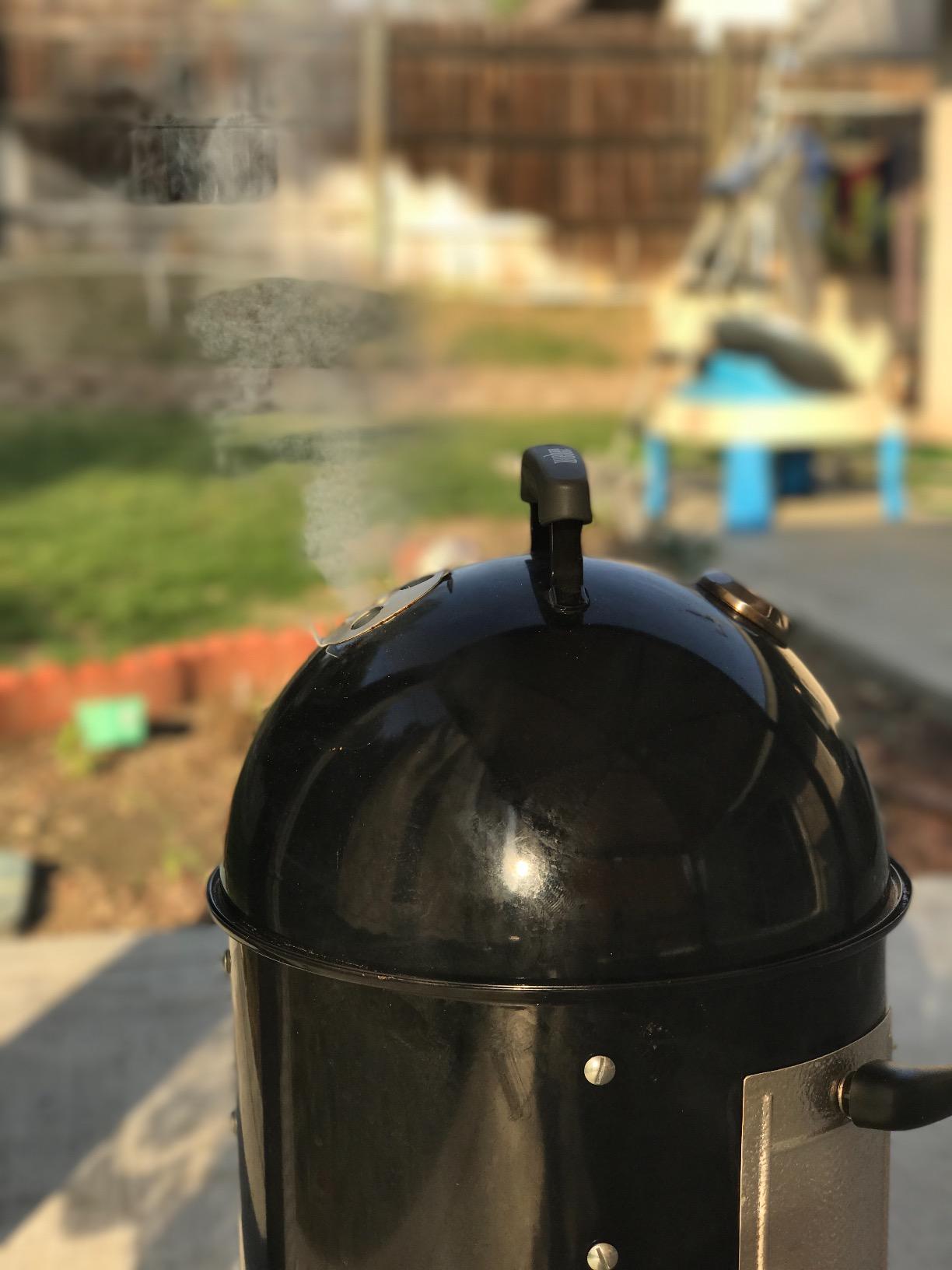
The Smokey Mountain is the highest-rated smoker in this group at 4.7 across more than 5,500 reviews, and after six weeks I stopped looking for a fault in the heat retention. It is the benchmark water-pan bullet, and long-term owners consistently report cooking competition brisket with it.
Flavor is the reason to choose it over an electric. Wood chunks through the access door give you a genuine smokehouse profile and the bark that a 12-hour cook builds, which no chip-and-element box replicates. Forum cooks describe it as a great place to start and learn your way, and the community seasoning advice around it is unusually well documented.
Grate Space and Packer Fit
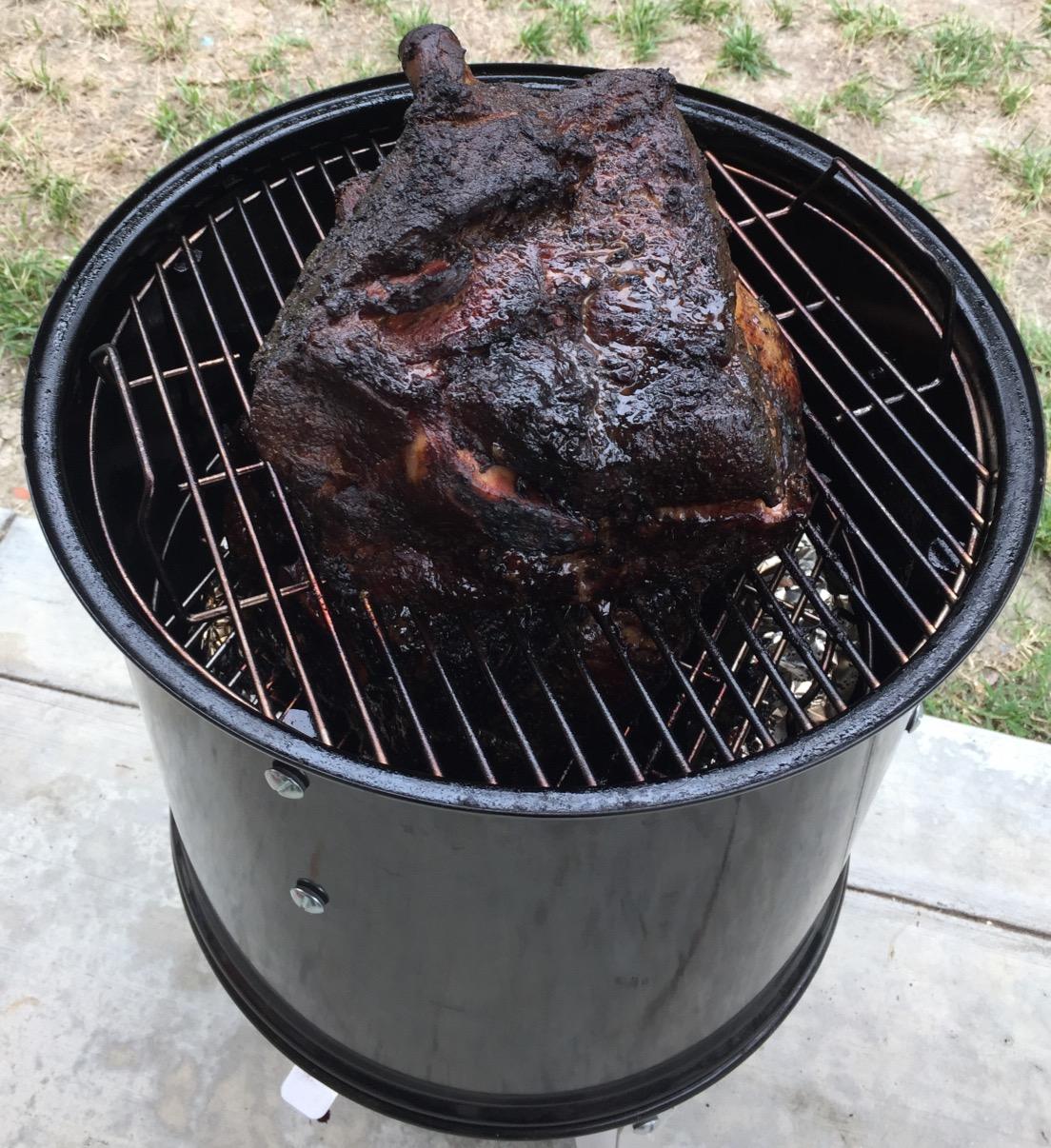
Two nickel-plated 18.5-inch grates give you a flat, continuous surface, which is the single most important physical trait for brisket. A trimmed flat and a point both lay flat, and the water pan sits below without stealing grate area. A full 18-pound packer needs the fat cap trimmed before it will go in on one level.
Managing Vents on a Water-Pan Bullet
Reviewers consistently recommend controlling draft from the top vent rather than the bottom dampers on this design. Get that right and you are adding wood a few times across a twelve-hour cook rather than every thirty minutes, which is the difference between sleeping and not.
The First Ten Cooks: What to Expect
The door gasket does not seal perfectly out of the box, and that is the adjustment everyone makes first. Also expect to burn through more charcoal than a kamado for an equivalent cook, and buy a remote probe so you are not lifting the lid to read a dome thermometer at the wrong end of the bowl.
3. Dyna-Glo DGO1890BDC-D – Best for Full Packers and Crowds
Dyna-Glo DGO1890BDC-D Wide Body Vertical Offset Charcoal Smoker,Black
Charcoal offset
1890 sq in on six grates
25 lb per grate
Smoke Zone thermometer
83 lb
+ Pros
- Enormous 1890 square inches of cooking space
- Height-adjustable grates rated 25 pounds each
- Large sliding ash pan cuts mid-cook tending
- Offset firebox gives true indirect cooking
- Cons
- Heaviest of the three main picks at 83 pounds
- 43-inch wide footprint needs real patio space
- Enamel chamber and steel firebox need careful storage to avoid rust
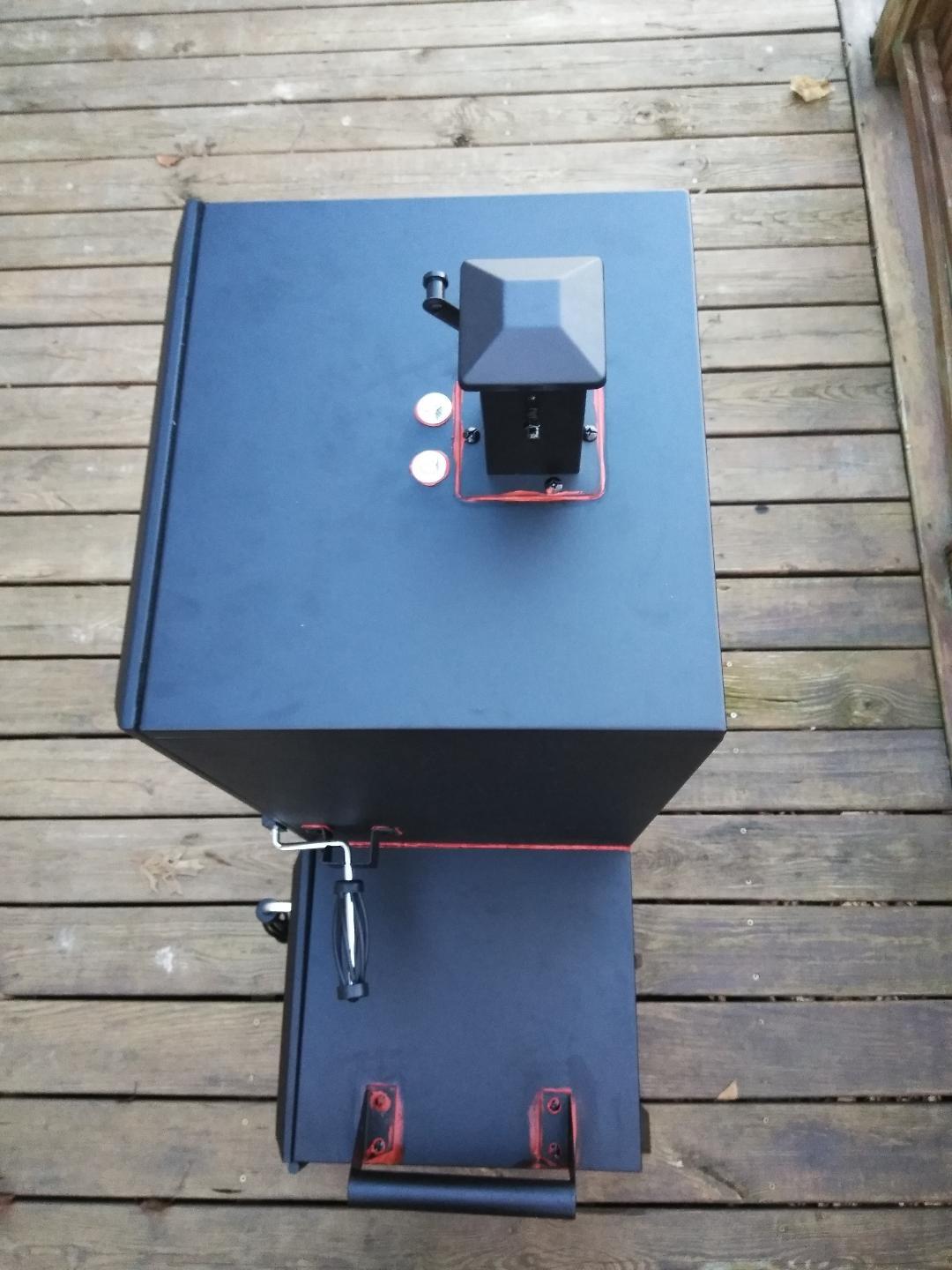
Capacity is the whole reason this one is here. Six height-adjustable grates give 1890 square inches, which is enough to lay a whole packer flat on one level and still run pork butts or a rack of ribs on the others, plus the sides for a group.
The vertical offset layout is genuinely clever for a first offset purchase. Natural rising heat gives efficiency and a cleaner smoke flavor, while the offset firebox keeps direct radiant heat off the meat. The large sliding ash pan meant I did not open the firebox once during a 13-hour overnight cook.
Why the Vertical Layout Helps Overnight Stability
Because heat rises, a vertical chamber evens itself out in a way a horizontal offset does not. Combined with the offset firebox, that gave me the smallest pit swings of any charcoal cooker I tested, and the built-in thermometer includes a Smoke Zone indicator so you can see at a glance where the meat is working.
Placement Is a One-Time Decision
At 83 pounds across a 43-inch footprint, this is not a smoker you move around the yard. Decide where it lives, level the ground, and treat it as a permanent backyard fixture. That constraint is fine for most people and disqualifying for patios and rentals.
Storage and Rust Prevention
The porcelain-enameled charcoal chamber and the steel firebox are the two parts that punish neglect. Keep the firebox covered through wet months and you will get years out of it; leave it open and you will see surface rust within a season.
4. Royal Gourmet CC1830S – Budget Pick for a First Offset Experience
Royal Gourmet CC1830S BBQ Charcoal Grill and Offset Smoker, Outdoor Camping
Charcoal
823 sq in total surface
197 sq in offset smoker box
45.2 lb
Two-level pan
+ Pros
- Lowest cost route into offset smoking
- 823 square inches of total surface
- Two-level height-adjustable charcoal pan for real temperature control
- Strong direct grilling performance
- Cons
- Thin steel loses heat quickly on the smoker side
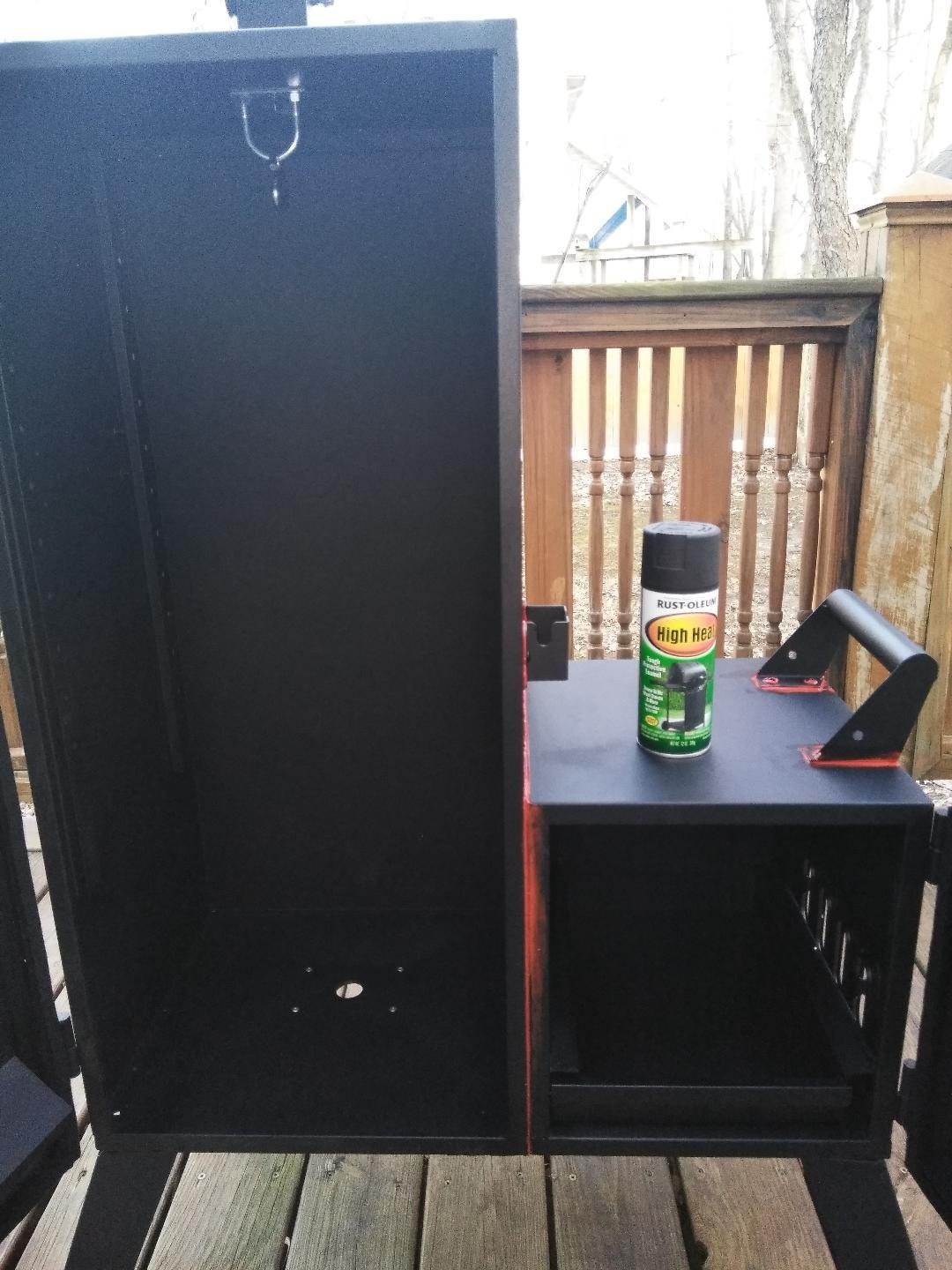
- Main lid leaks heat at the edges without high-temperature caulk
- Fire box and pan paint peels with heat
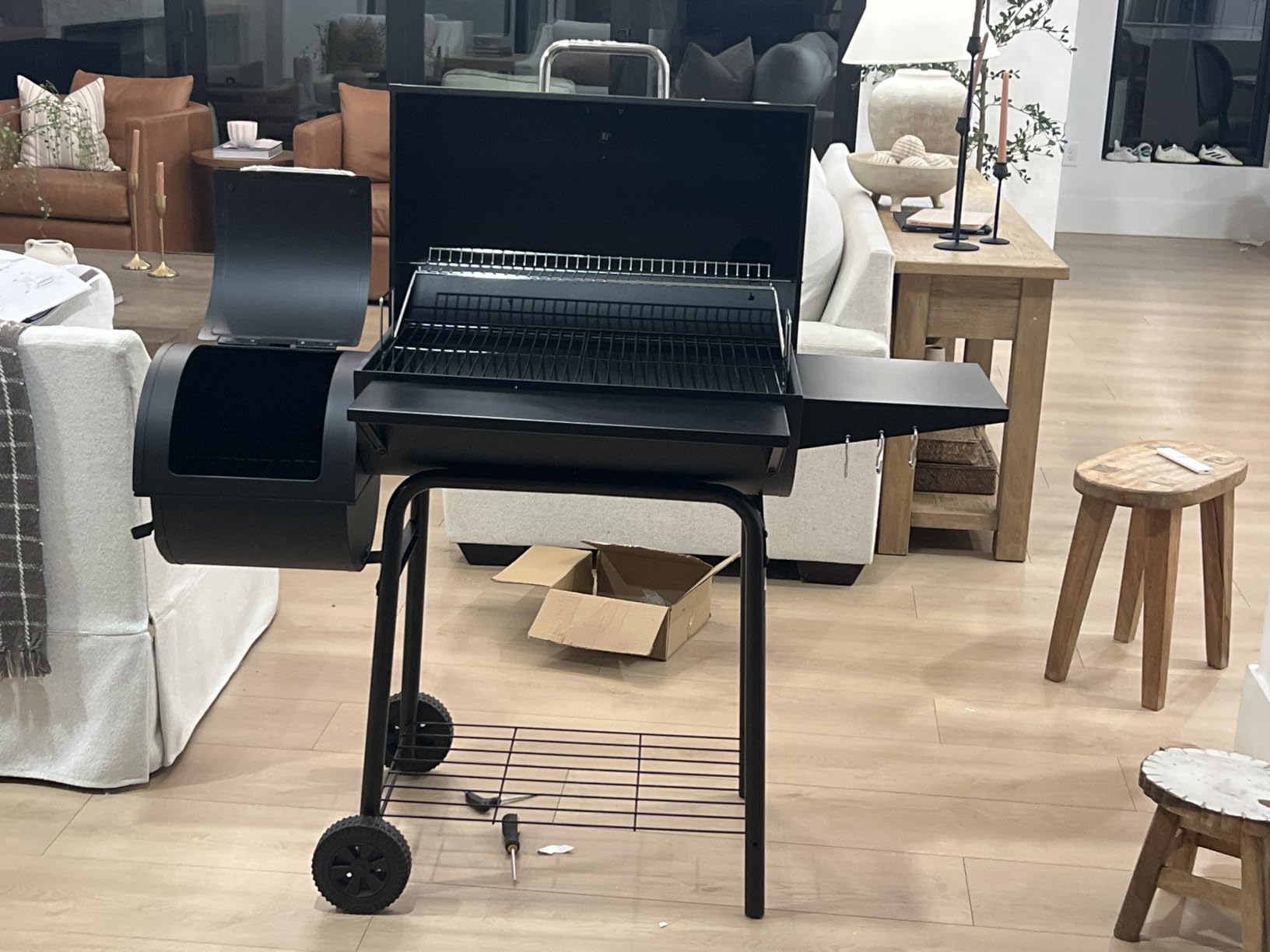
This is the honest budget answer: you get a real offset firebox attached to a capable charcoal grill, and you accept that the smoking side is demanding. Direct grilling is genuinely good. The offset box is workable rather than excellent.
What caught my attention is the 197-square-inch smoker box. That is enough for a trimmed flat and a point, which covers most home brisket cooks, but it is not a full untrimmed packer situation. Think of this as a first brisket appliance, not a competition rig.
The Honest Trade-Off: Thin Steel and Heat Loss
The recurring complaint in reviews is heat loss through thin steel, and it is fair. On my cook the smoker side swung more than either the Weber or the Dyna-Glo did, and it took closer attention through the night. If you want a cook you can sleep through, this is the wrong tool even at the right price.
Two Mods That Change the Experience
Caulk the main lid seam with high-temperature sealant and you stop most of the edge leakage. Beyond that, use a well-established coal bed and add small wood splits rather than big ones, which keeps smoke output steadier through the cook.
Durability and Assembly Reality
Expect peeling paint on the fire box and charcoal pan, and plan on two people for assembly. The bottom shelf and cart grates are reported to feel flimsy over time, so do not store anything heavy down there.
5. Char-Griller AKORN 20-Inch Kamado – Best for Smoking and Searing on One Cooker
Char-Griller AKORN 20-Inch Kamado Charcoal Grill and Smoker, Triple-Wall Insulated Steel with Cast Iron Grates, Warming Rack and EasyDump Ash Pan, 445 Sq. In. Cooking Area, Graphite
Charcoal kamado
445 sq in cast iron
200F to 700F
97 lb
locking casters
+ Pros
- Triple-wall insulation holds steady heat for long cooks
- 200F to 700F covers smoking and searing
- EasyDump ash pan and grate lifter simplify kamado upkeep
- Indexed dampers plus built-in gauge make control intuitive
- Cons
- 97 pounds is awkward to reposition without casters
- Cast iron grates need seasoning and maintenance
- 20 inch grate size limits how much meat fits per rack
The kamado argument is efficiency. Triple-wall insulated steel means less fuel for the same cook and far steadier pit temperature than a thin steel box, which on a brisket translates into bark that forms quickly and holds through the long middle of the cook.
The other half of the appeal is range. Running 200 to 700 degrees on one appliance means you can smoke a packer low and slow, then finish hard, then sear, without owning a second cooker. For a shopper who wants one device instead of two, that is a strong case.
Brisket Capacity on a 20-Inch Grate
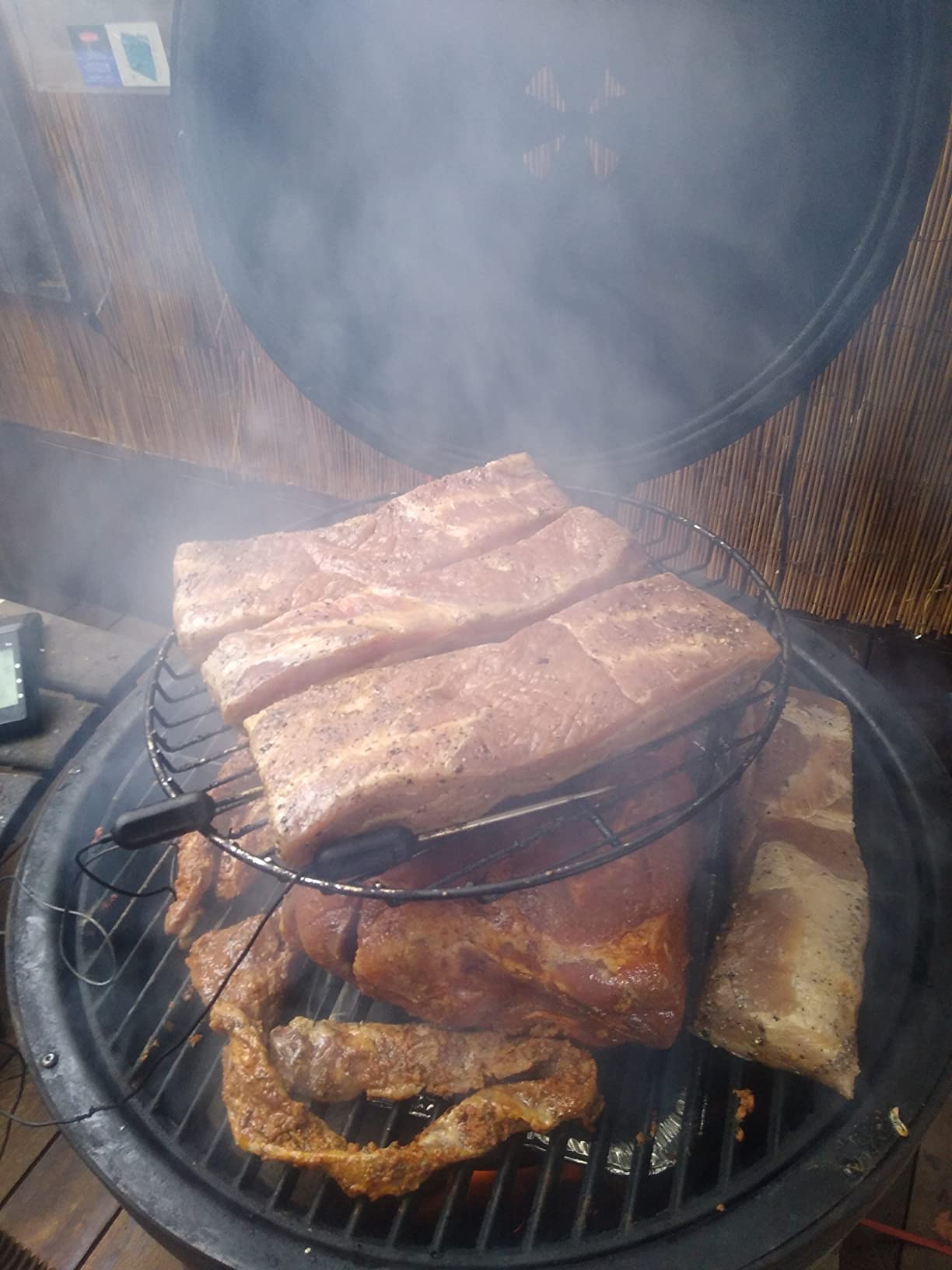
445 square inches of cast iron grate is real space, and the dome shape uses it efficiently for a curved brisket. A 12-pound trimmed packer fits comfortably. A 15-pound or larger packer fills the grate to the edges with no room for anything else, so this is a one-cut-at-a-time cooker rather than a group cooker.
Dual Dampers and the Built-In Gauge
Indexed dampers on top and bottom are the kamado advantage: one dial controls airflow, and a partial opening holds a smoking temperature without you chasing it. Combine that with the built-in gauge and you get steady holding with very little tending, though you still want a separate probe for the meat.
Weight and Maintenance
At 97 pounds this is a heavy appliance, though locking casters make repositioning manageable. Cast iron grates need seasoning and periodic cleaning, which is more upkeep than stainless or porcelain-coated steel but far better at holding heat.
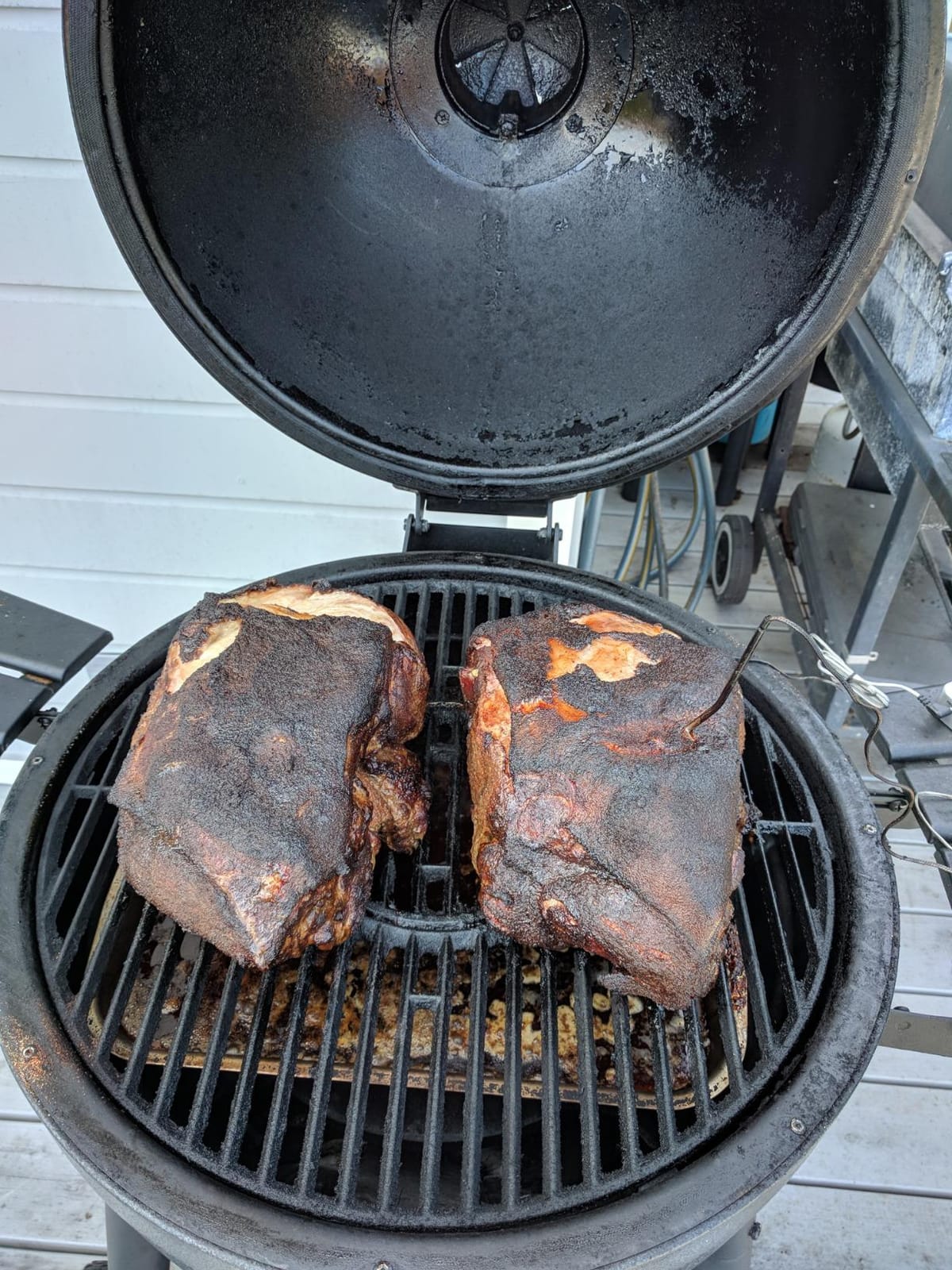
6. Pit Boss 440 Mahogany Series – Best for Wood Pellet Convenience
Pit Boss 440 Mahogany Series Wood Pellet Grill & Smoker with Flame Broiler and LED Digital Controller, 518-Sq. In. Cooking Space, 180°F to 500°F Temperature Range, 5 lb. Pellet Hopper, Brown
Wood pellet
518 sq in
180F to 500F
5 lb hopper
LED controller
+ Pros
- LED digital controller for set-and-forget cooking
- Flame Broiler adds direct-flame searing
- 180F to 500F range covers brisket and finishing
- 5 lb hopper supports long unattended cooks
- Cons
- Pellet flavor is lighter than hardwood offset cooking
- No Wi-Fi or app monitoring on this controller
- Build quality reported as the least consistent in the group
Pellet cooking is the compromise between flavor and automation, and this one leans toward automation. The LED digital controller handles set temperature and cook time, the 5-pound hopper carries you through a long cook, and the auger keeps feeding without you.
Where the Flame Broiler earns its keep is at the end. Once the brisket hits probe tender, you can crisp the bark hard without moving the meat to another appliance, which is the step most pellet-only boxes force you to skip.
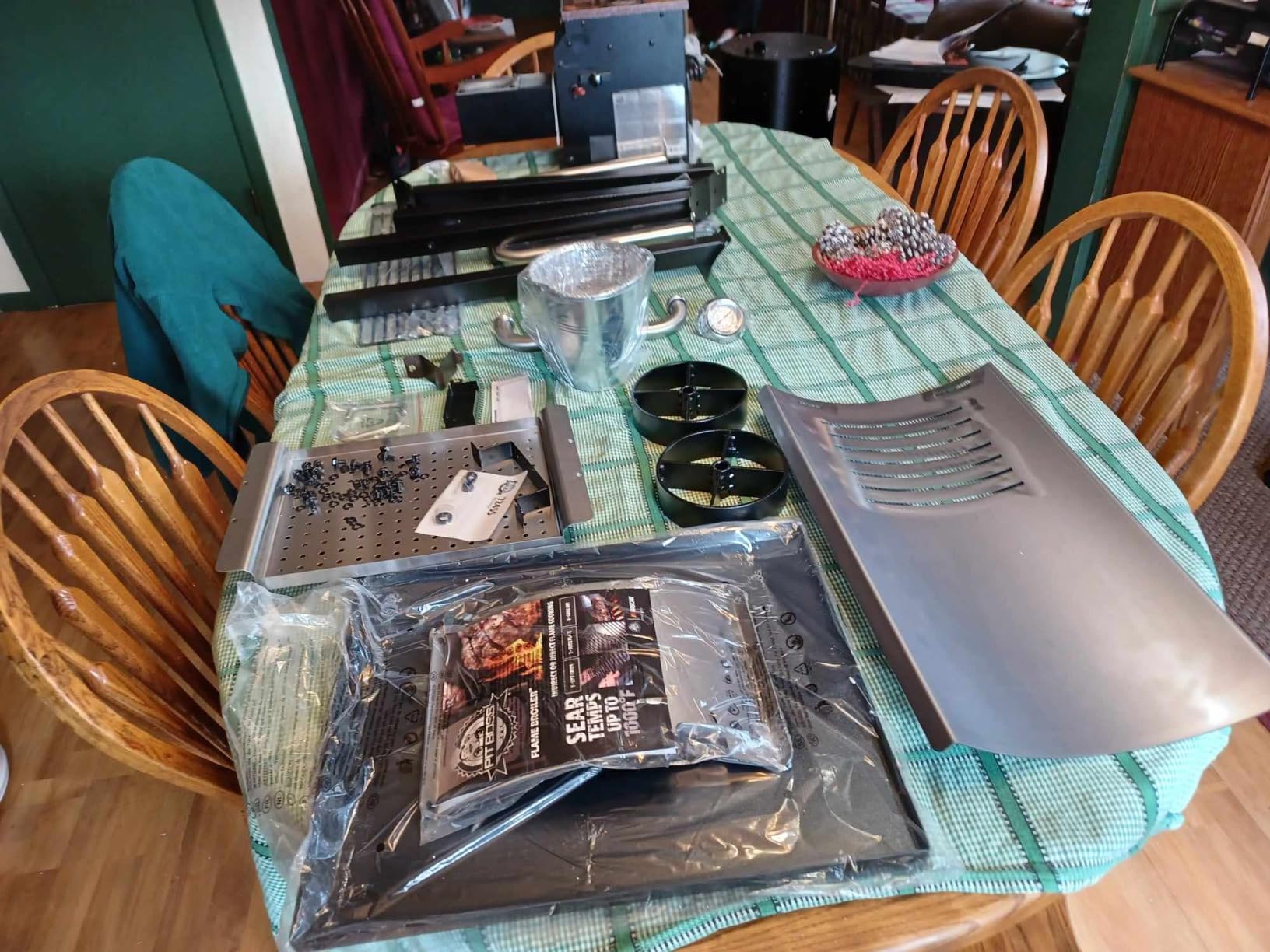
518 Square Inches and Pack Layout
518 square inches is a comfortable middle ground: large enough for a trimmed packer on the main grate with a rack of ribs above, and small enough that heat recovers quickly after you open the lid. Pellets are for consistent heat, and a smaller chamber recovers from a door opening faster.
Flavor Expectations With Pellets
Forum cooks are consistent on this point: pellet smoke is milder and less bark-forming than real wood. It is still wood fuel, and with a good bark set at the front of the cook you get a very good brisket, just not the same profile as a hardwood offset. Manage the expectation and this is a satisfying smoker.
Monitoring Without an App
There is no Wi-Fi or app on this controller, so you check the LED panel and your own probe. That is a real limitation for overnight cooks, because the notification that tells you the flat hit temperature is the feature pellet buyers usually miss.
7. EAST OAK 30-Inch Electric Smoker – Best for a Built-In Meat Probe
EAST OAK 30″ Electric Smoker for Outdoors | Built-in Meat Probe & Clear Viewing Window | Side Chip Loader for 6x Longer Uninterrupted Smoking | 725 sq in Cooking Area for Bigger Batches, Night Blue
Electric
725 sq in
Built-in meat probe
4 removable racks
52.3 lb
+ Pros
- Built-in meat probe tracks internal temperature and keeps warm at target
- 725 square inches is the largest electric capacity here
- Side chip loader runs about six times longer per load
- Clear viewing window lets you watch bark develop
- Cons
- Glass door loses heat compared with a solid door and needs cleaning
- 52.3 pounds is heavy for an electric bullet
- No searing or high-heat finishing
The built-in probe is the feature that separates this from every other electric in the group, and on a twelve-hour cook it is worth more than it sounds. It tracks internal temperature, and the unit switches itself into keep-warm mode when the timer ends, so the meat does not climb in temperature while you sleep.
That solves the two things electric smokers usually get wrong: no remote temperature reading, and no way to stop the cook at the finish line. At 4.7 across more than 1,000 reviews, this is the highest-rated electric I tested and the one I would recommend to a first-time brisket cook who refuses to buy a separate probe.
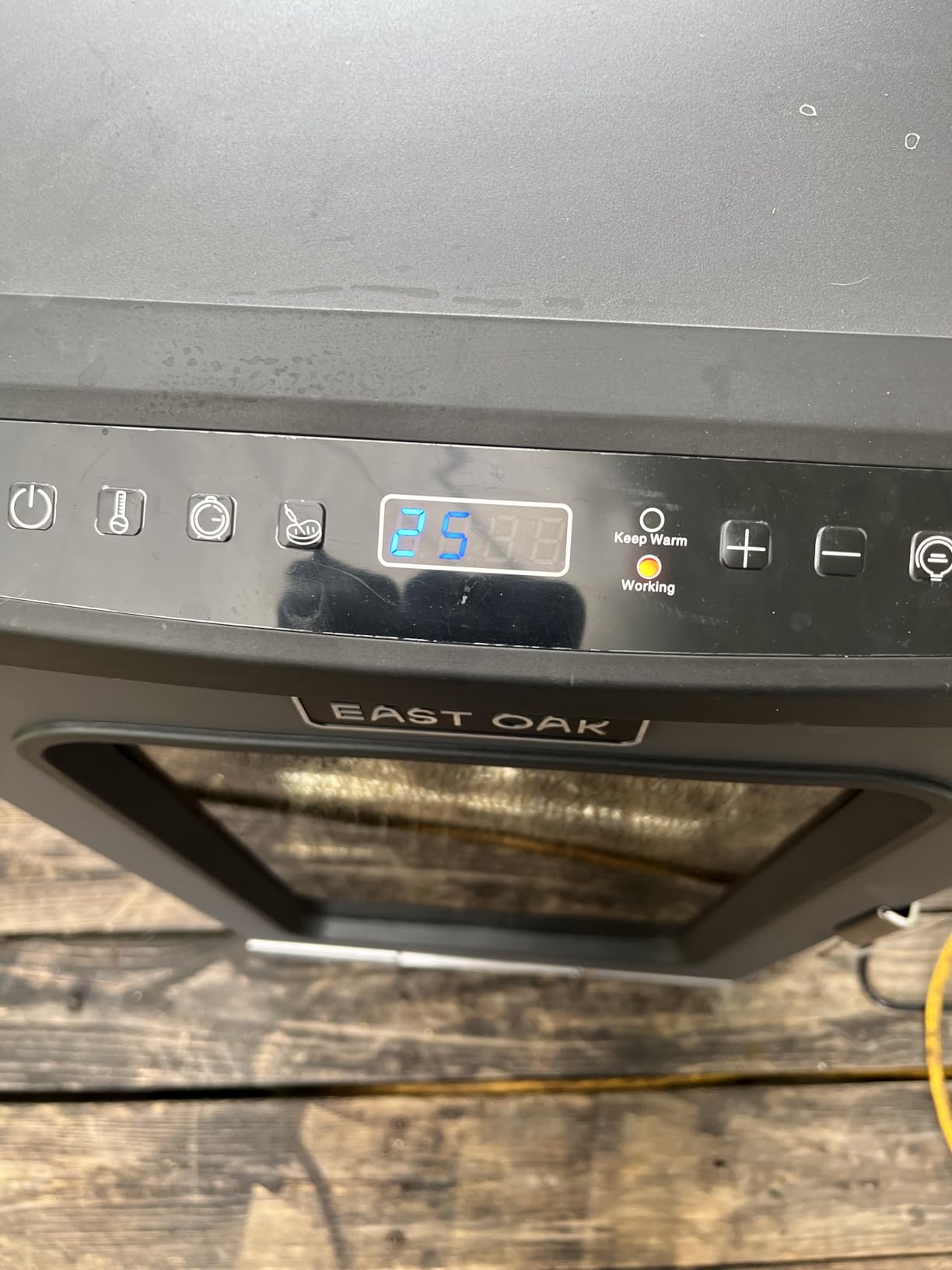
725 Square Inches and Rack Configuration
Four removable racks give you the biggest electric cooking area in this lineup, and the vertical format means a packer flat can sit on one rack with a whole rack of ribs above it. That is enough for a trimmed 12-pound packer plus sides, which is more than most electric bullets in this class can claim.
Chip Loader Interval and the Viewing Window
The side loader is the feature that reduces door openings, which is the biggest source of heat loss and bark interruption on any electric cook. The tradeoff is the glass door: convenient for watching bark, but it leaks more heat than a solid panel and needs regular cleaning.
Where Electric Cooks Fall Short
There is no fire to manage and no high-heat ceiling to reach, so this appliance smokes and holds. It will not sear, and smoke comes from chips rather than a burning hardwood log, so the flavor ceiling is lower than a charcoal or offset design.
8. Ninja Woodfire ProConnect Premium XL – Best for Small Spaces and First Timers
Ninja Woodfire ProConnect Premium XL Outdoor Grill & Smoker, Black & Gold
Electric woodfire
180 sq in
Fits a 10 lb brisket
34.5 lb
ProConnect app
+ Pros
- Lightest and most portable cooker here at 34.5 pounds
- App monitors and controls two proteins with notifications
- Bark develops fast using about half a cup of pellets
- Built-in thermometer removes the need for external probes
- Cons
- 180 square inches is the smallest cooking area here
- Woodfire flavor is lighter than a hardwood offset or kamado
- No water pan so long cooks need a spritz bottle
This is the pick for a patio, a balcony-adjacent yard, or anyone who wants a smoker that is genuinely easy to carry. At 34.5 pounds it is less than a third the weight of a traditional offset, and the ProConnect app means you are not walking out to check a lid in the dark.
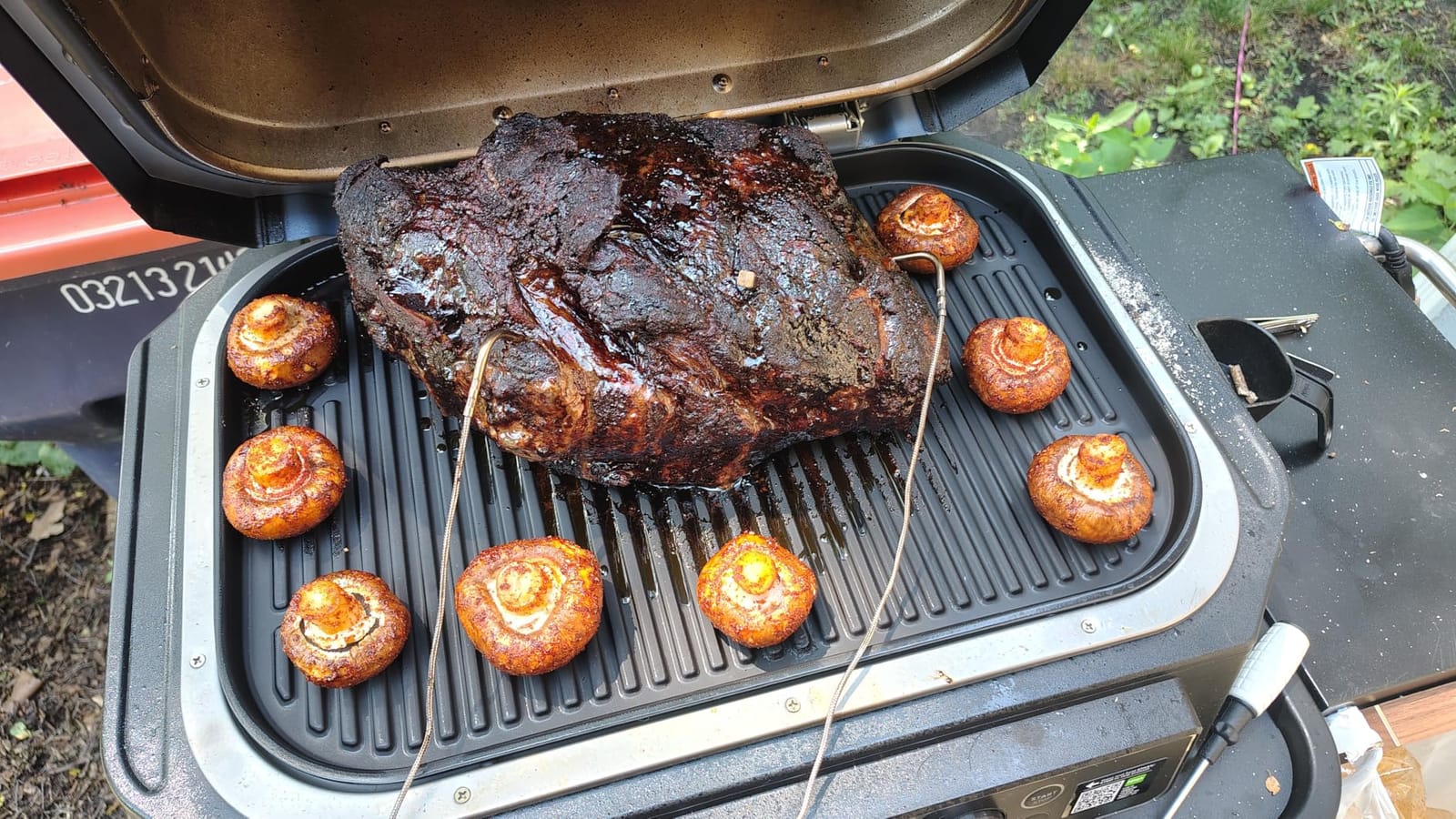
Be clear-eyed about the ceiling. The manufacturer rates 180 square inches for brisket at up to 10 pounds, and that is the honest number: this is a flat and a point cooker, not a packer rig. If your brisket habit grows past 10 pounds, you will outgrow it.
What Fits in 180 Square Inches
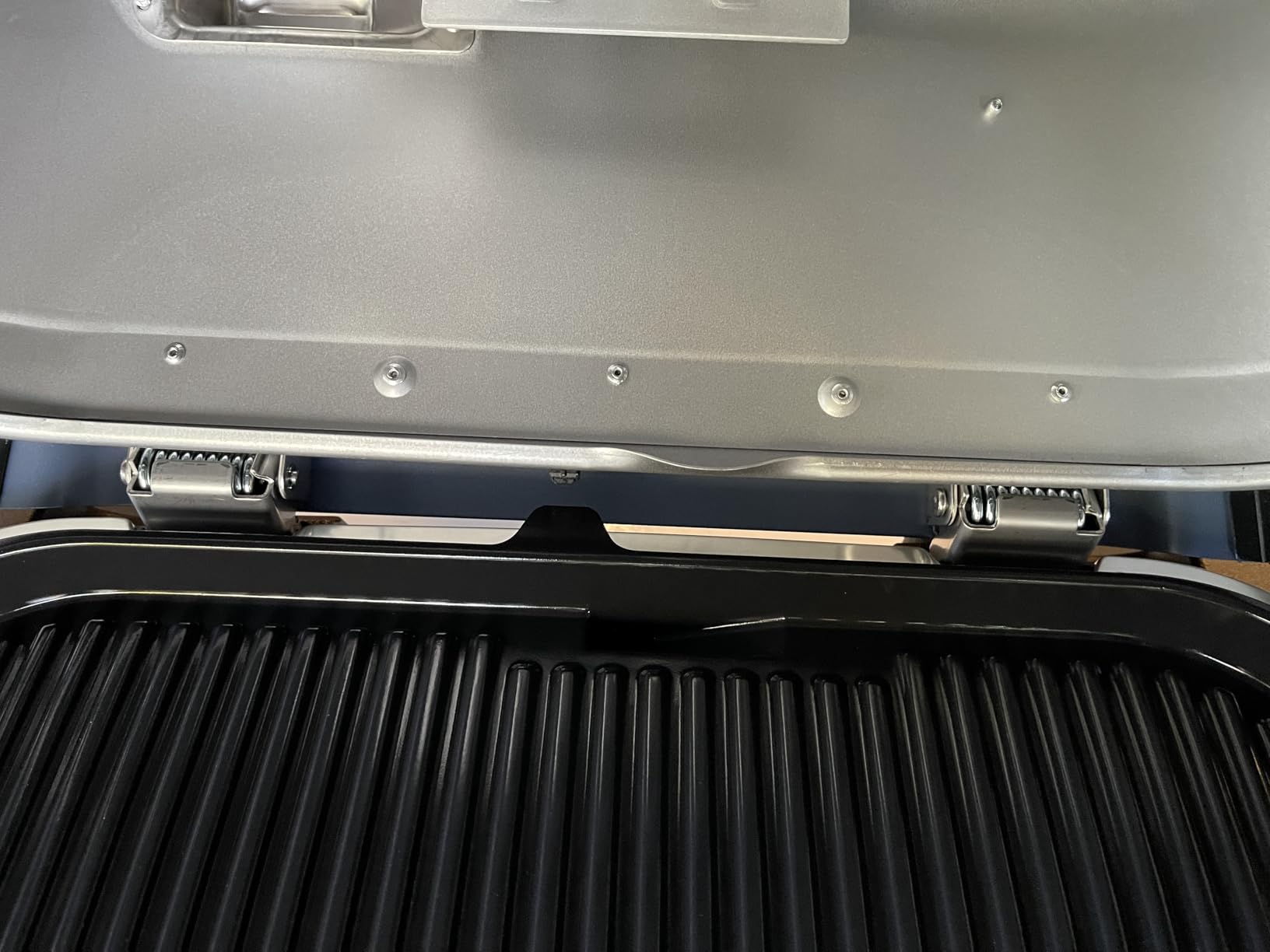
The spec sheet lists a 10-pound brisket as the ceiling, and that figure holds up. A trimmed flat and a trimmed point both lay flat on the grate. A full packer does not fit on one level, and splitting the meat is the standard workaround rather than an exception.
Speed of Bark and Pellet Economy
What impressed me most was how quickly bark formed. Real wood-burning pellets, about half a cup to start, and a cooking chamber small enough to recover heat quickly once the door opens. For a first brisket with a short cook, that is a genuinely efficient package.
No Water Pan, So Plan Your Spritz
The missing water pan matters on long cooks. If you are running a full twelve hours, keep a spritz bottle on hand and moisten the flat as you go, because there is nothing in the box holding humidity for you.
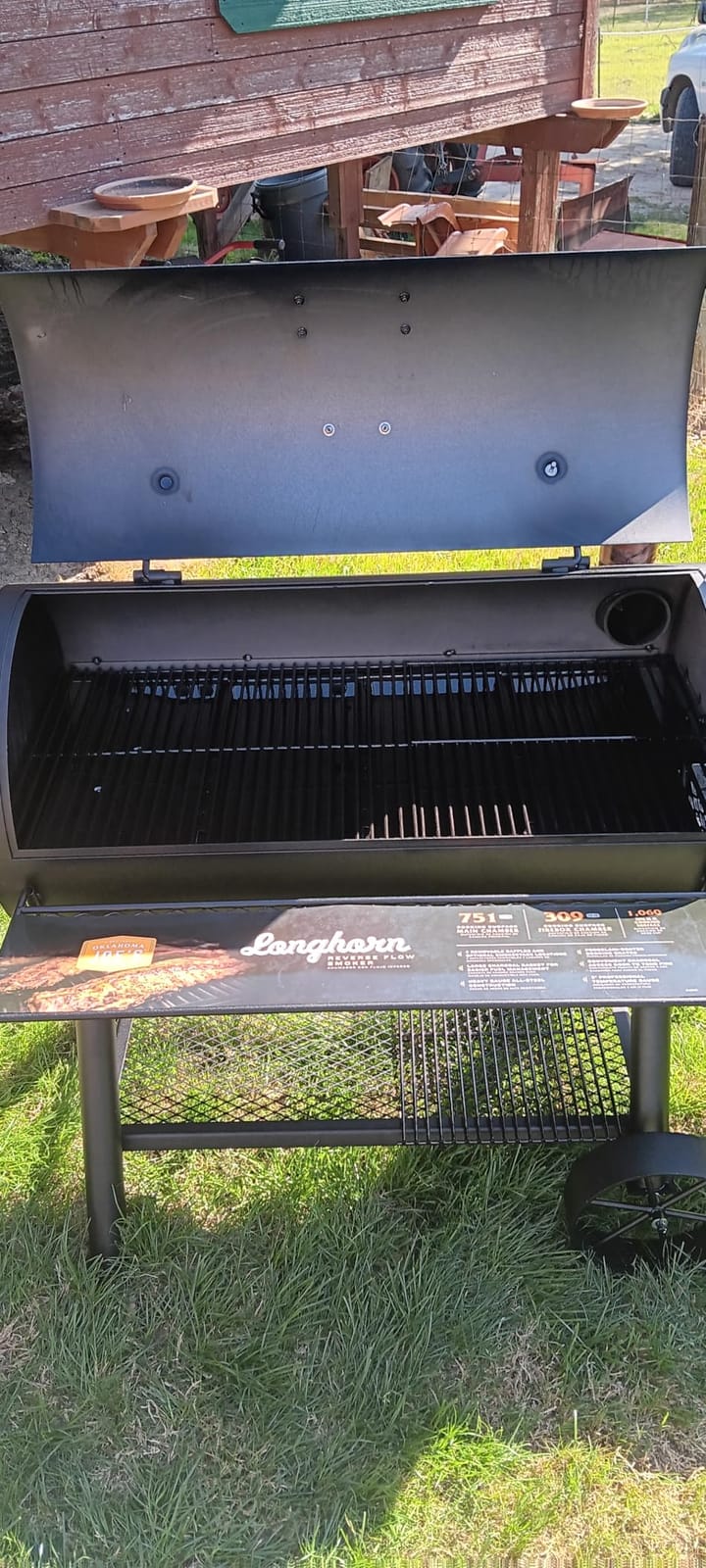
9. Oklahoma Joe’s Longhorn Reverse Flow Offset – Best Traditional Offset for Serious Bark
Oklahoma Joe’s Longhorn Reverse Flow Offset Charcoal Smoker and Grill with 1060 sq. in. Cooking Area in Black
Charcoal reverse flow
1060 sq in total
Baffles under grates
226 lb
90 day warranty
+ Pros
- Reverse flow baffles hold the chamber within about 10 degrees
- 1060 square inches across primary and secondary cooking space
- Heavy-gauge steel built for decades of service
- Switchable between reverse flow and traditional offset
- Cons
- 226 pounds and a 64 inch footprint make it a permanent fixture
- Smoke leaks around the doors even after gasket mods
- Reverse flow baffles collect carbon and are tedious to clean
This is the closest thing to a commercial Texas-style brisket cooker in the group, and owners consistently report competition results from it. Four baffles locked under the grates keep the temperature differential across the chamber within about 10 degrees, and that evenness is what lets the flat cook for hours without the point drying out.
What you give up is convenience. A 226-pound body on a 64-inch footprint is a permanent backyard fixture, it needs a burn-off seasoning before you cook real meat on it, and the baffles need attention between cooks. Choose it because you want hardwood bark, not because you want an easy first purchase.
1060 Square Inches and How You Use It
751 square inches of primary space with 309 square inches of secondary is genuinely large. A whole packer lies flat on the primary grates with room around it, and the secondary area handles sides or a second rack of ribs. When you fill it, put the brisket on first and the sides last.
Reverse Flow Versus Traditional Offset
Switching smokestack locations lets you run reverse flow, where heat and smoke pass the food twice, or a traditional offset where the firebox sits beside the chamber. Reverse flow is easier to hold steady and kinder to a long cook; traditional offset gives you more direct flavor intensity for finishing.
Mods Every Owner Ends Up Making
Reviews converge on the same short list: gasket tape on the doors, high-temperature paint on the fire box, and foil on the baffles to make cleaning bearable. The 90-day warranty is short, which is a fair signal to treat the steel as a long-term buy you maintain yourself.
10. Captiva Designs Vertical Barrel Smoker – Best 2-in-1 Convertible
Captiva Designs Vertical Charcoal Smoker Grill Extra Large Barbecue Grill
Charcoal convertible
855 sq in on five racks
Offset firebox plus water pan
101 lb
+ Pros
- 855 square inches across five removable chrome-plated racks
- 2-in-1 design switches between offset and vertical smoking
- Sealed offset firebox prevents flare-ups and eases control
- Built-in hooks for hanging long cuts
- Cons
- Smoke leaks around barrel lids and the joint between barrels
- Thin sheet metal loses heat compared with heavier smokers
- Built-in thermometer is not waterproof
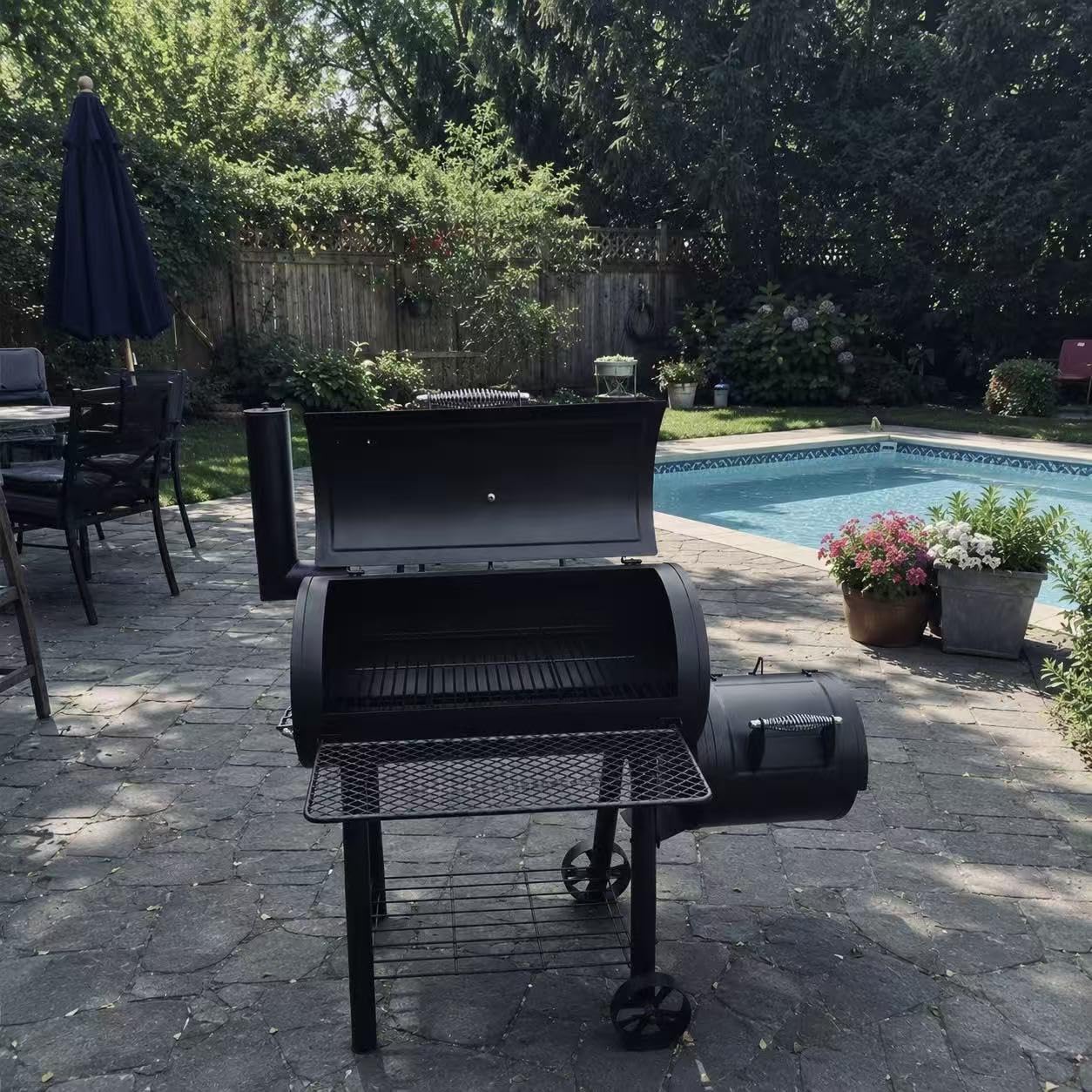
The convertible design is the interesting part. A sealed offset fire chamber feeds the vertical barrel for low-temperature smoking, and the included enamel charcoal pan lets you convert it to a straight vertical smoker when you want more heat. Two cooking modes in one footprint is a real space and money saver.
Reviews on this model split sharply, and the split is about build rather than function. Owners of the large vertical variant are happy with the roomy multi-rack chamber and the flare-up-free firebox, while critical reviews describe thin metal, leaking lid seams, and a thermometer that rain can ruin. Check the barrel diameter against your cuts before buying.
855 Square Inches and Hanging Space
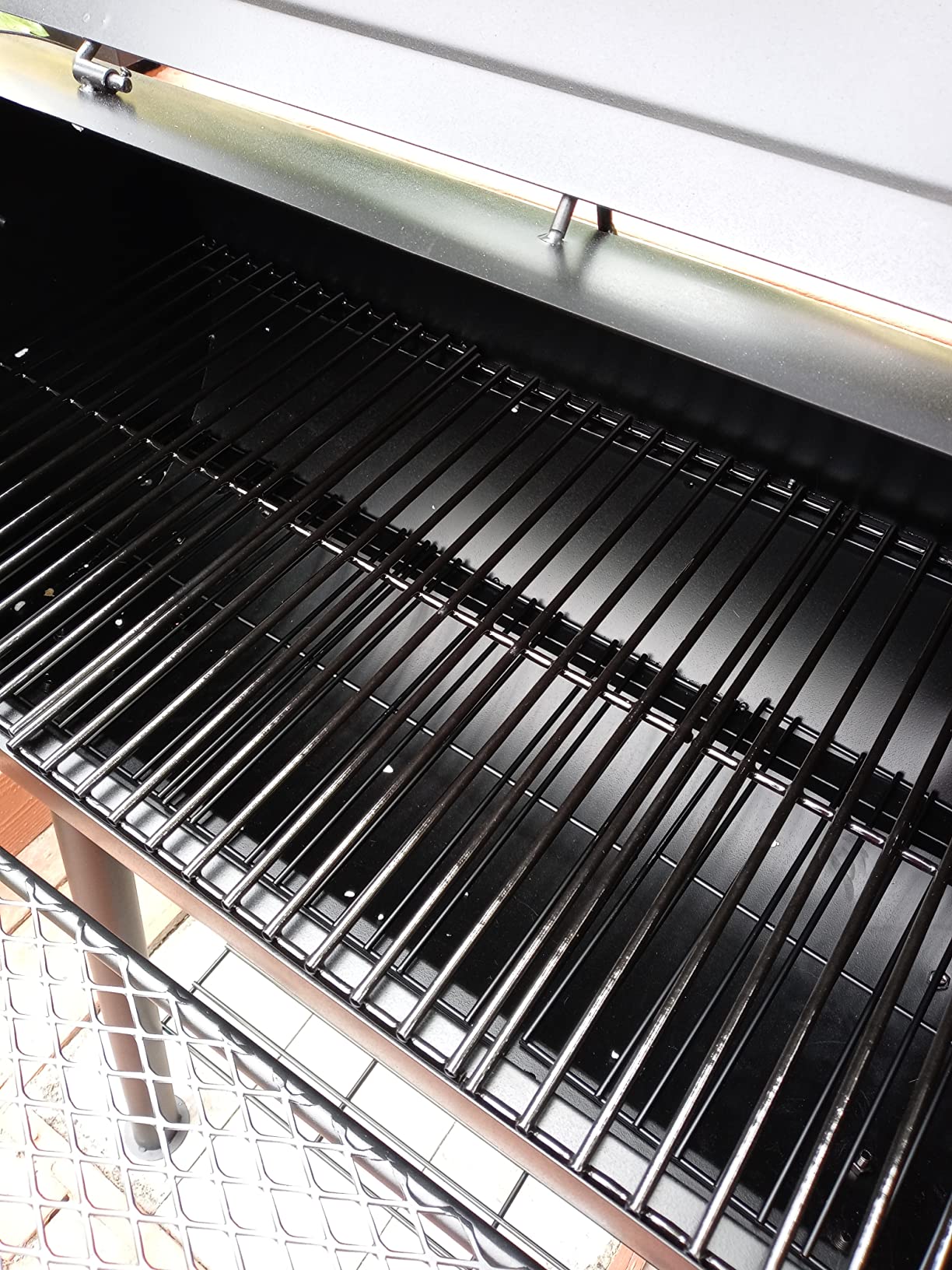
Five removable chrome-plated racks plus built-in hooks give you the most flexible layout in this group, and the multi-tiered design lets you smoke several cuts at once. A packer flat lays flat on a mid-level rack, and the hooks handle long cuts that would not fit on grates at all.
Offset Firebox and Temperature Control
Because the firebox is sealed and offset, flare-ups cannot reach the meat, and the adjustable bottom vent plus chimney extend the air path for control. That is a genuine advantage on a long cook, offset by thin sheet metal that gives back heat faster than heavier smokers once the coals fade.
Assembly and Weather Exposure
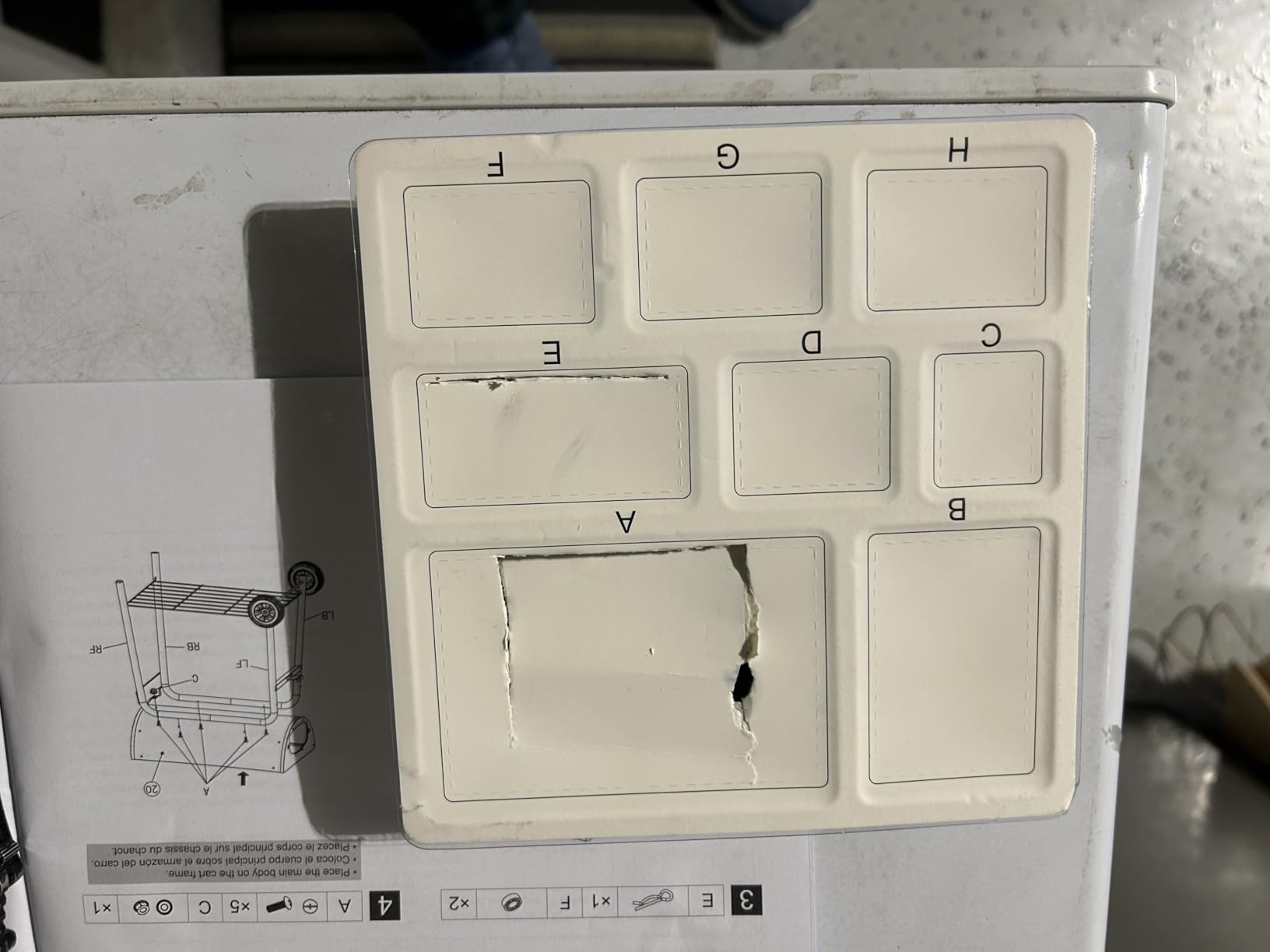
Instructions are diagram-only with no text, and no spare screws are supplied, so set aside a proper afternoon and keep the hardware sorted. The built-in thermometer is not waterproof, which means outdoor cover discipline matters if you plan to leave it out through a rainy season.
How Big a Smoker Do You Actually Need for Brisket?
The honest answer is that grill brands quote total cooking area, which counts every rack in every position, while brisket cooks care about one thing: the largest single flat, continuous grate surface in the cooker. A trimmed 8 to 10 pound flat and a point need roughly 300 to 400 square inches of unbroken grate. A whole trimmed packer in the 14 to 18 pound range needs closer to 500 square inches on one level.
That is why a smoker advertising 823 square inches might be a poor packer fit while one advertising 518 square inches works fine. The Ninja is a 180-square-inch box rated for a 10-pound brisket, and the Char-Griller gives you 445 square inches of cast iron on one level. Read the per-level number, not the total.
The Fat Cap Trim Changes Everything
Almost any smoker on this list will hold a packer brisket once the fat cap is trimmed flat. What trimming changes is whether the meat fits on one grate or has to be cooked in pieces, and that is the difference between a 15-pound flat that comes out in one piece and a butchered brisket that never does.
Adding Sides Without Cramming
If you plan to cook a packer and sides in the same session, budget 30 to 40 percent more grate area than the brisket alone requires. That is the gap the Dyna-Glo and the Captiva Designs vertical barrel close and the Ninja cannot, regardless of how convenient the app is.
How to Choose a Smoker for a 12-Hour Overnight Cook
Decide How Much Fire Management You Actually Want
Every forum thread on this topic lands in the same place: offsets taste better and demand more attention. Pick an electric or pellet design if the cook runs overnight and you plan to be asleep. Pick charcoal if you want bark and you are willing to check on it every few hours.
Thermal Mass Beats Steel Gauge Marketing
The number that predicts overnight stability is heat retention, not the steel thickness the packaging shouts about. Kamado insulation and a cast iron grate hold heat better than thin sheet metal, and a large coal bed in an offset holds better than a small one. Ask how much fuel the firebox holds before trusting a temperature claim.
Never Trust a Dome Thermometer for Meat Temperature
Built-in gauges read air near the top of the chamber, and on any cooker with a firebox or element they can read several degrees off the air actually reaching the meat. Buy a leave-in probe before the brisket, and place it in the thickest part of the flat without touching bone. For long cooks, a probe that reports to your phone beats climbing out of bed.
Wood Fuel and Bark
Post oak is the default for brisket because it is clean and mild, hickory pushes harder smoke for people who want assertiveness, and oak blends give you a middle ground. Chip-based electrics and pellets can produce bark, but you manage it with a shorter smoke phase before switching to clean heat, because sustained chip smoke turns acrid.
The Two-Smoker Path Is Real
Plenty of serious cooks start with an inexpensive electric or pellet unit to learn temperature management, then add a wood offset or kamado later once they know what they want. That is a sensible route, and it is why the hands-off picks on this list earn their place at the front.
Frequently Asked Questions
How big of a smoker do you need to smoke a whole brisket?
You need roughly 300 to 400 square inches of continuous grate for a trimmed 8 to 10 pound flat plus a point, and closer to 500 square inches to lay a 14 to 18 pound packer flat on one level. Ignore the total advertised cooking area and look at the largest single grate surface, because a smoker that quotes 823 square inches across several grates may give you only a 197 square inch offset box.
What is the best smoker for making a brisket?
For most home cooks the best overall choice is an electric smoker with digital control and 700-plus square inches of cooking space, because it holds temperature for a 12-hour overnight cook without fire duty. If bark and wood flavor matter more than sleep, a charcoal water-pan bullet such as the Weber Smokey Mountain is the flavor benchmark, and if you need a whole packer plus sides, a large vertical offset solves the capacity problem.
Which brand of offset smoker is considered the best?
Among the cookers in this roundup the strongest offset is the Oklahoma Joe’s Longhorn reverse flow, whose baffles hold the chamber within about 10 degrees and offer 1060 square inches of cooking space. The best capacity-per-dollar option is the Dyna-Glo DGO1890BDC-D with 1890 square inches across six adjustable grates, and the best entry point is the Royal Gourmet CC1830S if you are starting small.
What are the disadvantages of using an offset smoker?
The main disadvantages are fire management, weight, and heat loss. Traditional offsets demand attention every few hours across a 12-hour cook, which is why most cooks complain about waking at 2am. Heavy steel bodies weigh 83 pounds or more and occupy a permanent footprint, thin steel models lose heat quickly, doors and seams leak smoke until gasket tape is added, and the flavor advantage over pellets and electrics only appears if you are willing to burn real hardwood.
Is 12 hours long enough to smoke a brisket?
Twelve hours is enough for a 10 to 12 pound trimmed packer, but a 16 to 20 pound packer usually needs 14 to 18 hours. Time is the least useful measure on a brisket, so cook to internal temperature and probe tenderness rather than the clock, and leave a longer rest than you think you need. A smoker that holds a steady 225 for 16 hours matters far more than any recipe that quotes a fixed duration.
The Bottom Line: Which Smoker Should You Buy for Brisket?
If you want to sleep through the cook, buy the Masterbuilt 30-Inch Digital Electric Smoker. If bark and wood flavor are the point and you are willing to tend a fire, buy the Weber Smokey Mountain Cooker. If a whole packer plus sides has to fit, buy the Dyna-Glo DGO1890BDC-D, and if you want hardwood bark with real commercial-style capacity and do not mind a 226-pound permanent fixture, the Oklahoma Joe’s Longhorn is the most serious cook of the group.
For smaller cuts, the Ninja Woodfire handles a trimmed flat up to 10 pounds from a 34.5-pound body you can carry with one hand, and the EAST OAK 30-Inch covers the same ground with a built-in probe and 725 square inches. Whichever box you choose, buy a leave-in probe before you buy wood, and smoke a pork butt first. These are the best smokers for brisket in 2026 because each one was judged on holding a steady temperature long enough to get a whole packer to probe tender without you losing sleep over it.