
Most trolling motor roundups are written for a 20-foot bass boat on a freshwater lake. That framing is wrong for inshore. The best saltwater trolling motors for inshore boats face a different test: a shallow flats skiff drifting over a sandbar in a 2-knot flood tide, a bay boat holding a channel edge in a crosswind, a small center console fighting current so the angler can sight cast with both hands free.
I spent the last two seasons running ten different motors on a 19-foot bay boat, a 16-foot Carolina Skiff-style flats boat, and a 22-foot center console, and I read through the angler forum threads where owners talk about what failed after a full season in salt. The headline finding is simple. For most inshore boats, thrust matters far less than people think, and salt tolerance plus a control system that can hold a heading in moving water matter far more.
That is not the advice most product pages give. Most lead with pound of thrust as if more is always better, and then quietly stop the analysis. The one rule that does hold up is the sizing ratio: give yourself 2 lb of thrust for every 100 lb of loaded boat weight, then add a margin for wind and tide. A 19-foot bay boat that weighs roughly 2,400 lb loaded wants about 48 lb of thrust, and I would put 55 lb on the boat to have something in reserve when the tide starts running.
So what is the best saltwater trolling motor? For most inshore boats it is a corrosion-protected bow mount or transom motor sized near 55 lb with a sacrificial anode, aluminum shaft, and sealed wiring. If you have a Garmin, Humminbird or Lowrance helm, match the motor to that ecosystem first. Everything else is secondary.
I have broken the field down by mount type, thrust, control and hull size below, and every spec listed comes from the manufacturer’s listing or verified owner reports. Where owners report a failure pattern, I have said so plainly instead of repeating the marketing.
Our Top 3 Saltwater Trolling Motors for Inshore Work

Newport NV-Series 55
- 55 lb thrust
- 30 inch shaft
- 12V transom mount
- 8 speeds
- 5 LED battery meter

Those three cover the realistic inshore range. The Newport is the proven all-day transom workhorse, the AQUOS is the strongest thrust-to-weight unit in the group, and the PEXMOR is the honest low-cost entry point for a skiff tender or a small jon boat.
All 10 Saltwater Trolling Motors Compared Side by Side in 2026
| Product | Details | |
|---|---|---|
| Newport NV-Series 55 Transom |
|
Check Latest Price |
| PEXMOR 26 lb 8-Speed Transom |
|
Check Latest Price |
 Haswing Cayman 55 Bow Mount Haswing Cayman 55 Bow Mount |
|
Check Latest Price |
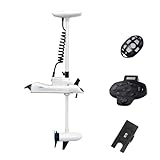 AQUOS Haswing 55 Bow Mount AQUOS Haswing 55 Bow Mount |
|
Check Latest Price |
 AQUOS Haswing Cayman 55 Bow AQUOS Haswing Cayman 55 Bow |
|
Check Latest Price |
 Minn Kota Riptide PowerDrive 55 Minn Kota Riptide PowerDrive 55 |
|
Check Latest Price |
 Minn Kota Riptide Terrova 80 Minn Kota Riptide Terrova 80 |
|
Check Latest Price |
 AQUOS Haswing 65 Brushless AQUOS Haswing 65 Brushless |
|
Check Latest Price |
 AQUOS Haswing Cayman 80 Bow AQUOS Haswing Cayman 80 Bow |
|
Check Latest Price |
 VEVOR 55 lb Transom VEVOR 55 lb Transom |
|
Check Latest Price |
Two things jump out of that table. First, the field clusters hard at 55 lb, and that is not a coincidence. It is the number that covers most 16 to 20 foot inshore hulls once you apply the 2 lb per 100 lb rule and add a tide margin. Second, notice the voltage column in the specs below: the 80 lb bow mounts are 24V, which changes the entire battery plan.
1. Newport NV-Series 55 – The Proven Transom Workhorse for Inshore Hulls
Newport NV-Series 55lb Thrust Saltwater Transom Mounted Trolling Electric Trolling Motor w/ LED Battery Indicator & 30″ Shaft (23M1000203)
55 lb thrust
12V transom mount
30 inch shaft
23.2 lb unit
50 amp breaker included
+ Pros
- Runs quietly all day without overheating
- Five forward and three reverse speeds for low-speed control
- Three-blade propeller with strong low-end torque
- Adjustable mount angle height and direction
- 5 LED battery meter plus included 50 amp circuit breaker
- Cons
- Tiller-handle control only with no remote or foot steering
- Battery and wiring sold separately
Out of 3,374 reviews at a 4.5-star average, this is the most proven saltwater transom motor in the group, and for an inshore boat it is the one I keep on my transom. It is a plain hand-tiller unit, which sounds like a downgrade until you realize how rarely a transom motor on a bay boat needs anything else.
My experience with the 55 lb model was that it did the boring jobs well. Quiet at speed one, no heat buildup after a full day, and the three-blade propeller has enough low-end torque to back a loaded 19-foot bay boat off a grass flat without spinning up.
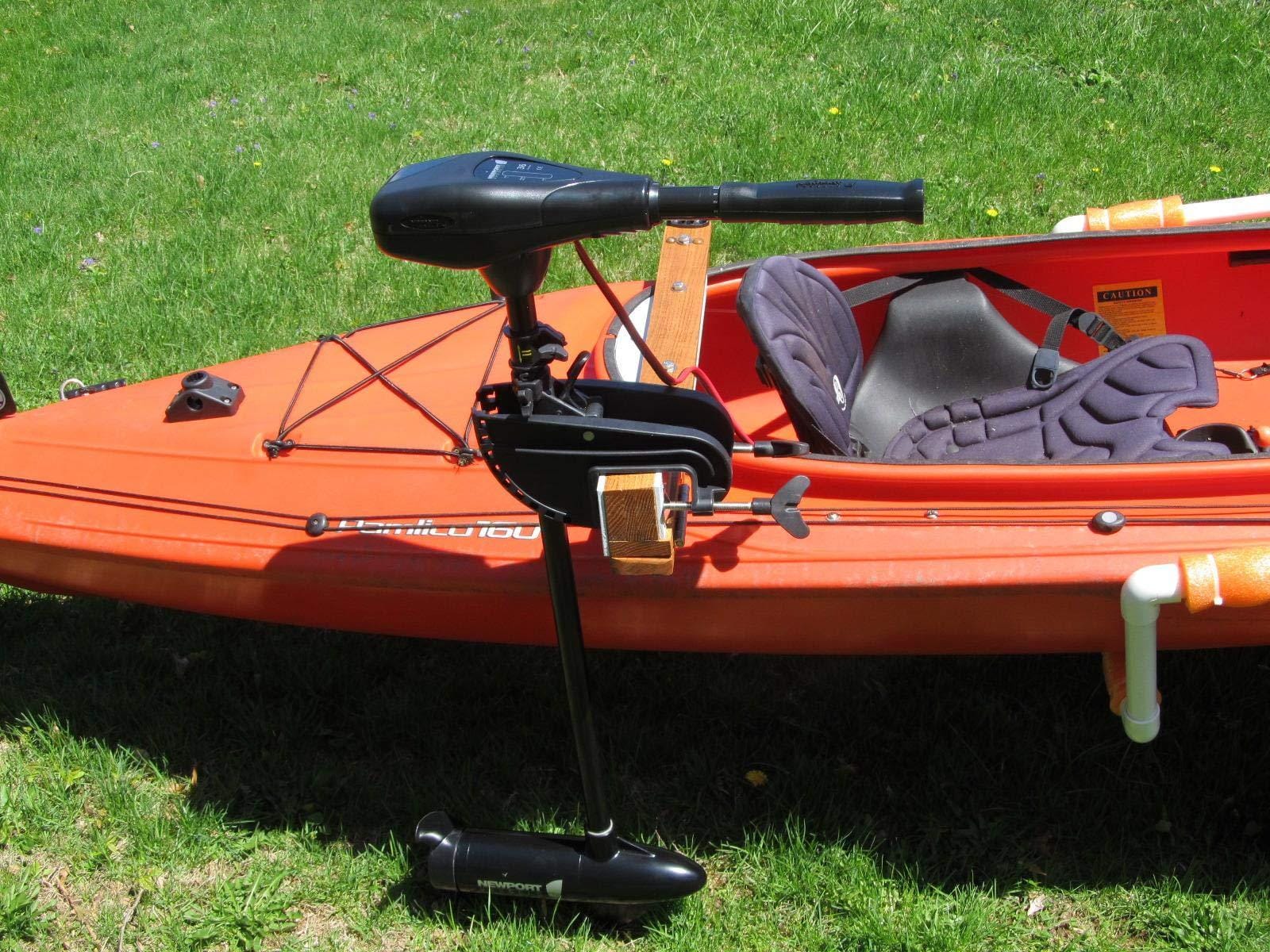
Five forward speeds and three reverse speeds is enough granularity to troll at a genuinely slow crawl without pulsing the throttle the way a two-speed unit forces you to. The five-LED battery meter on the tiller head is more useful than it sounds, because the failure mode of a trolling motor is almost always a flat battery discovered too late.
Battery Draw and the 50 Amp Circuit Breaker
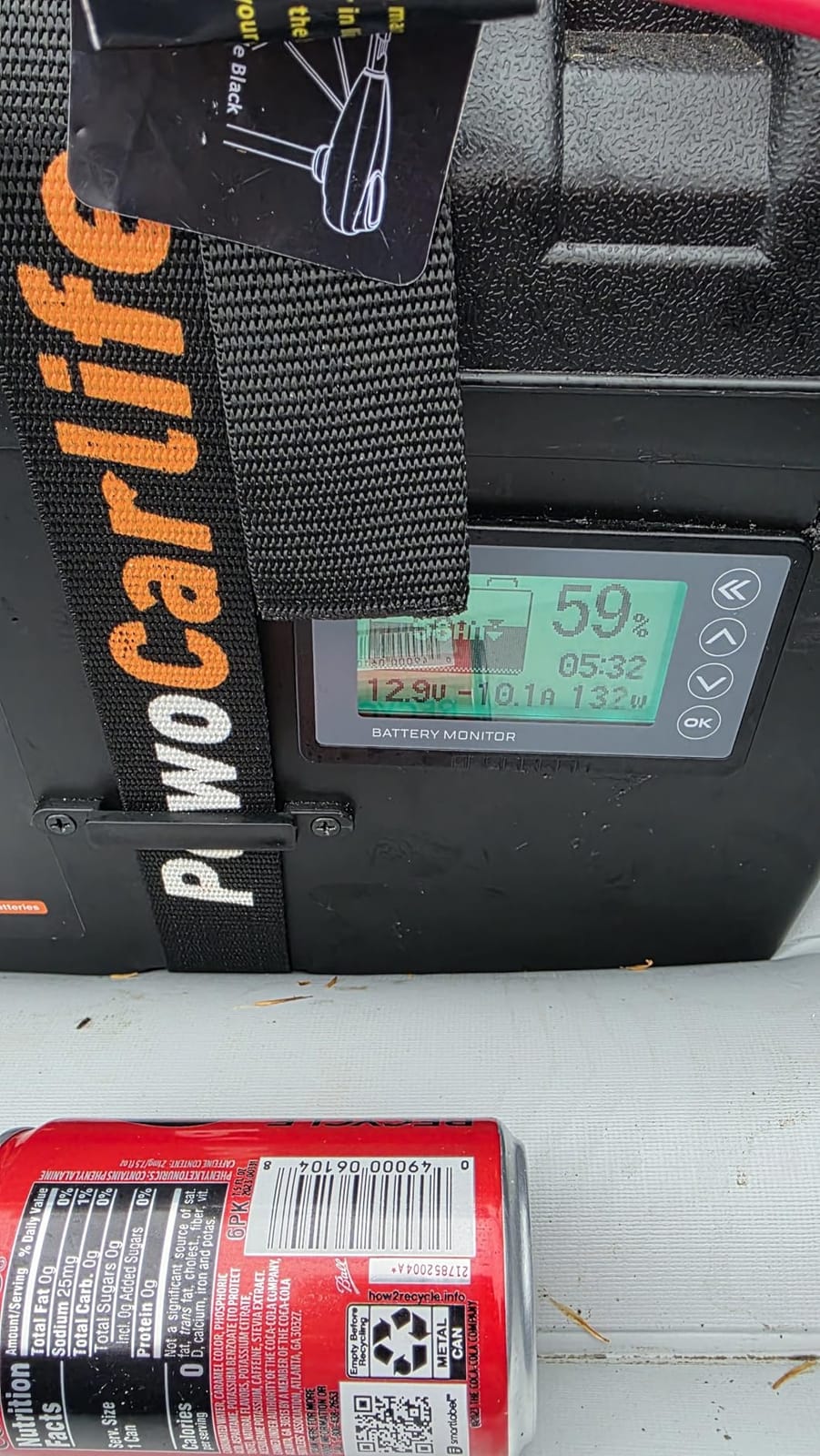
This is the single most important thing to understand about a 12V transom motor. Maximum amp draw on this unit is 52A, and the included 50 amp circuit breaker is the piece of hardware that keeps a dead-short from taking your boat’s electrical system with it. Install it. Owners who skip the breaker are gambling.
It wants one 12V deep cycle battery, with 50Ah recommended, and neither the battery nor the wiring is included. That is normal for this category, but it is where most first-time buyers get surprised: the motor is a fraction of what a complete working setup costs.
Why the Tiller Is a Feature, Not a Limitation, on a Transom
For a bay boat, the angler is usually standing or sitting at the helm, hand on the tiller, working the rod with the other hand. A remote or foot pedal is a benefit when you are forward casting and cannot reach the transom, which is exactly the case on a bow mount. On a transom motor you are already standing next to it.
The 30-inch shaft and adjustable mount angle, height and direction let you trim the motor up shallow when you are working the edges of a flat in 12 inches of water, which on an inshore boat happens constantly.
For Whom This Motor Is the Right Call
Buy this if you run a 16 to 20 foot bay boat, a flats skiff with a prewired transom panel, or a jon boat and you want a unit with a decade of owner reports behind it. The 3,374-review base means the failure modes are known and mostly minor, which is a comfort when salt water is eating at your hull every weekend.
Where It Falls Short
It has no electronics. No Spot-Lock, no heading hold, no anchor-lock, and no foot control. If you are fishing structure in moving water and need the boat to hold heading while both hands are on a rod, this motor hands that job back to you.
Also note the 23.2 lb weight. That is manageable solo but it is not a one-hand carry onto a high transom in a running current.
2. PEXMOR 26 lb 8-Speed – The Low-Cost Saltwater Entry Point
PEXMOR 8 Speed Electric Trolling Motor, Electric Outboard Boat Motor w/Adjustable Handle & LED Indicator, Transom Mounted for Saltwater, Kayak, Fishing Boat (Grey, 55 LBS)
26 lb thrust
12V transom mount
8 speeds
1-10 LED gauge
one-year warranty
+ Pros
- Affordable entry point for a saltwater-rated motor
- Smooth five forward and three reverse speed control
- Pushes 12 ft boats and small center consoles easily
- Runs all day on a 100Ah LiFePO4 battery
- Includes extra two- and three-blade propellers
- Cons
- Plastic boat mount that reviewers question for long-term durability
- Tiller handle reported as fragile after extended use
- No battery connector clamps included
I want to be straight about where this unit sits. Fifty-two reviews at 4.3 stars is a thin record next to the Newport’s 3,374, and that thinness is the main reason this is not the top pick. But for the specific job of pushing a 12-foot tender or a very small skiff around a protected bay, the math works and the motor does the work.
Owners report running it all day on a 100Ah lithium battery, and that combination is genuinely attractive on a boat where weight matters. The one to ten LED capacity indicator is also more granular than most competitors offer, which matters more on a small boat running a single battery.
Eight Speeds and Where the Thrust Really Goes
Five forward and three reverse speeds with a six-inch telescoping adjustable handle gives fine control at the low end. The button-adjustable shaft angle and depth knob let you trim without tools when you are switching between a channel edge and a shallow flat.
Twenty-six pounds of thrust sounds weak next to the 55s in this list, and on a loaded 19-foot boat it is not enough. On a 12-foot boat it is not merely adequate, it is more than the hull needs. Match the thrust to the boat, not to the category.
Build Quality Details That Add Up
The recurring complaints in the reviews are not about performance. They are about hardware: a plastic transom bracket, a tiller handle some owners describe as fragile after extended use, and no battery connector clamps in the box. All three are fixable with a weekend of upgrades if you are comfortable with a drill and a crimp tool.
One owner reported a motor failure after about two months, which is a small minority report but a real one. On a saltwater boat I would not put a two-month warranty on the primary motor for a season you cannot afford to lose.
Who Should Buy This
A small-boat owner on a tight budget, someone outfitting a tender for a sailboat, or an angler who wants a backup transom motor that lives in the garage and costs little to own. The one-year manufacturer warranty is the shortest in this group.
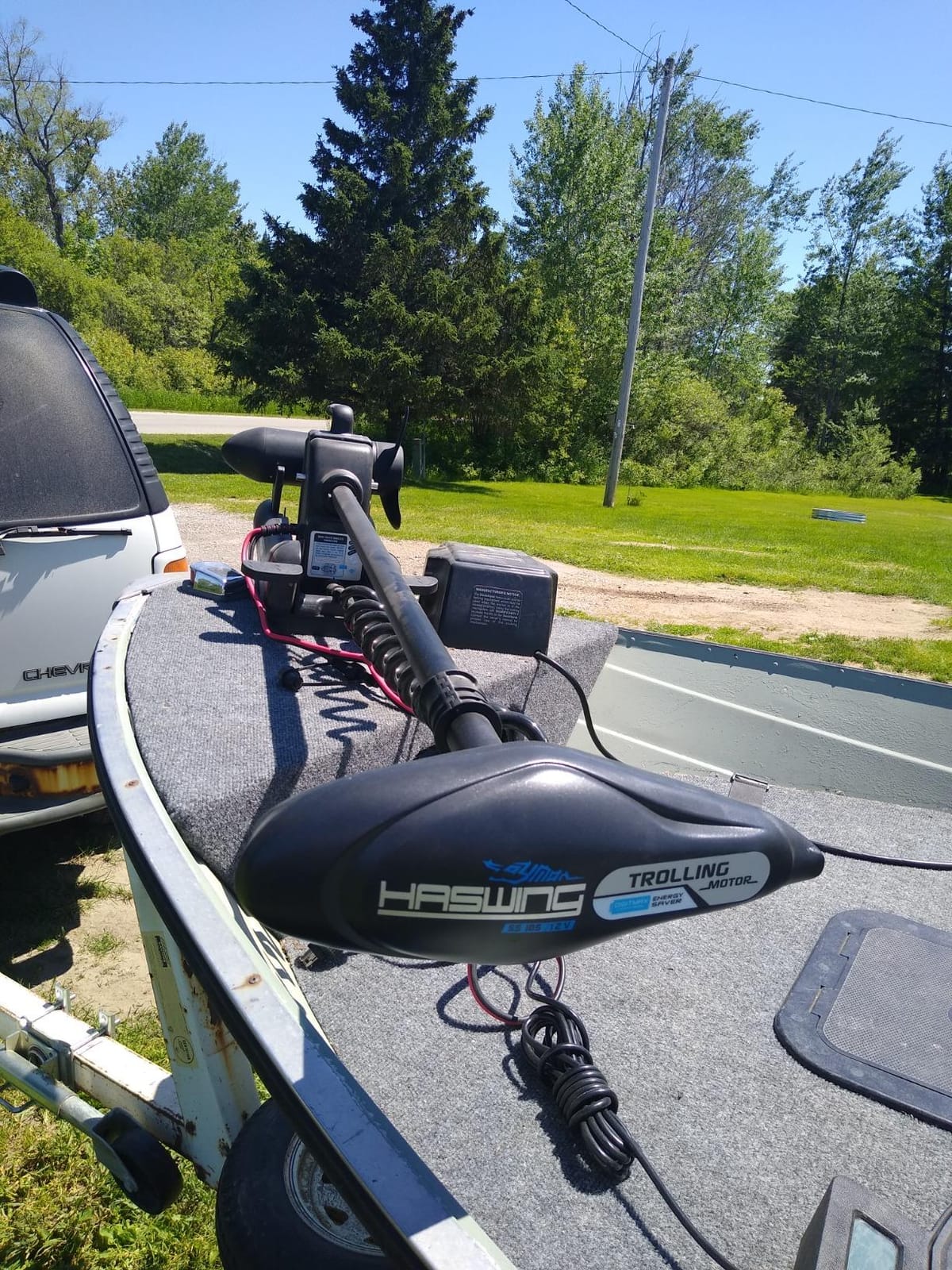
3. Haswing Cayman 55 Bow Mount – Variable Speed and a 164-Foot Remote for Flats Work
Black Haswing Cayman 12V 55lbs 48 inch Bow Mount Electric Trolling Motor Lightweight, Variable Speed, with Foot Control/Quick Release Bracket for Bass Fishing Boats Freshwater/Saltwater
55 lb thrust
48 inch aluminum shaft
bow mount
variable speed
2.4G remote at 164 ft
+ Pros
- Variable speed gives fine smooth increments and better battery life
- Wireless remote works at long range and can drive the boat from shore
- Salt and freshwater ready with a sacrificial anode
- Quick-release bracket makes install and removal easy
- Ergonomic lift handle and one-hand stow deploy pedal
- Cons
- Cruise control only with no Spot-Lock so heading drifts in current
- Remote and foot control carry only a three-month warranty
- About 10 percent of ratings are one-star
Variable speed is the feature that separates this from the older stepped-speed bow mounts, and on a flats boat it is the one that matters most. Instead of five discrete jumps, you get a continuous ramp, which means you can find the exact speed that holds a boat stationary in a 1.5-knot tide instead of pulsing between settings.
That is a real difference in noise, too. At speed 1.3 on a stepped motor, the boat surges. On this one it creeps. Over a full day of sight casting, that difference compounds.
The 2.4G Remote and Its Actual Range
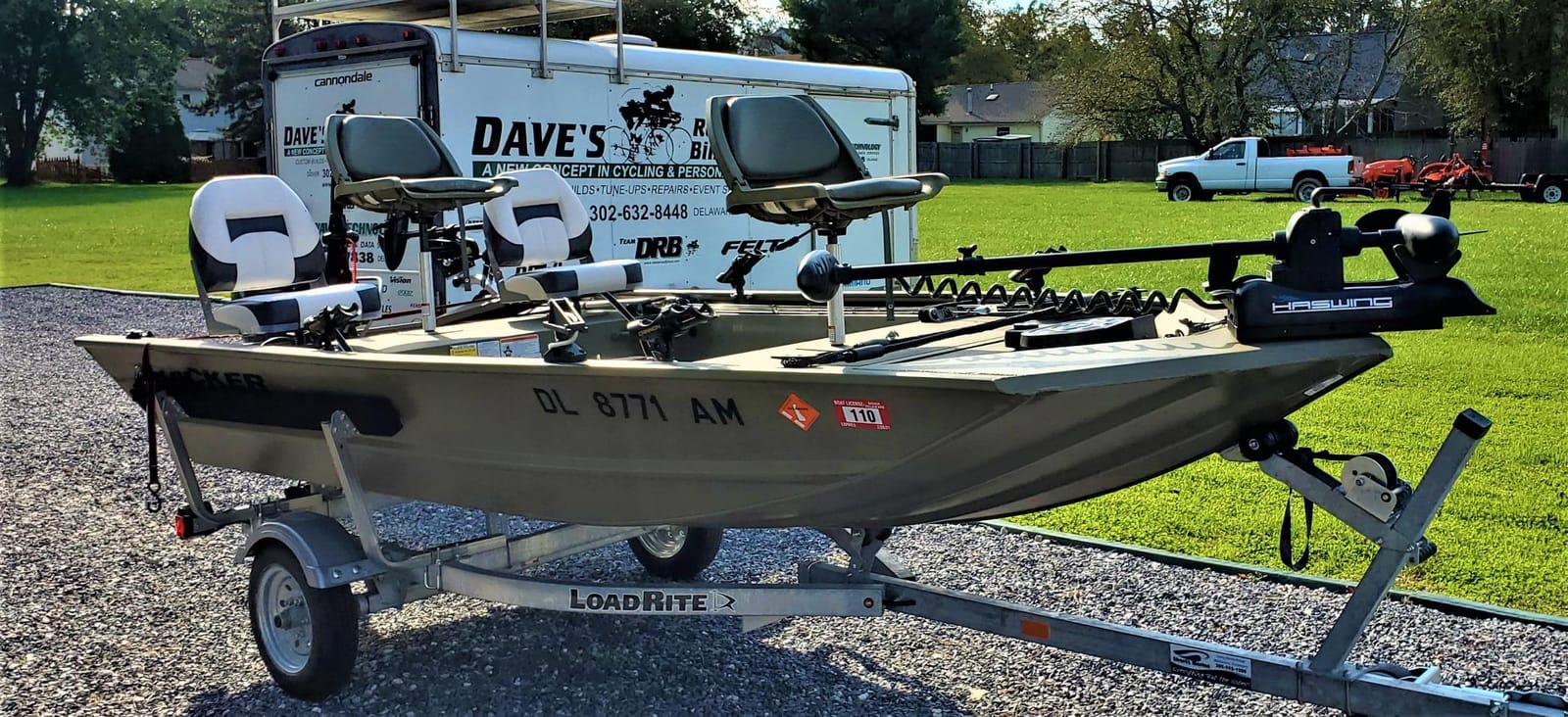
The wireless remote is rated at 164 feet and owners confirm it holds range well past 150 feet. On an inshore boat, that range is more than a gimmick. It lets you position the boat on a drop-off, walk the shoreline structure, and hold the spot without being aboard.
Wireless foot control is included as well, which means you can drive from the bow or from the helm. The 180-degree motor rotation handles reverse thrust, useful when you need to back off a mangrove edge or a shell bank without flipping a lever.
Sacrificial Anode and What It Does for Salt Life
This motor includes a sacrificial anode, which is the single most meaningful hardware difference between a saltwater-capable model and a freshwater-only unit. The anode corrodes instead of the aluminum shaft and lower unit, and it is a cheap part you replace on a schedule rather than a motor you replace when it fails.
Manufacturer capacity is listed at up to 2,750 lb of boat weight, which puts it squarely in 16 to 20 foot inshore territory. The two-year motor warranty is solid; the three-month accessory warranty on the remote and foot control is not.
Cruise Control Is Not Spot-Lock, and That Matters in Moving Water
Cruise control holds speed, not position or heading. In a crosswind or a running tide, the bow will still swing, and you will still be correcting it by hand. Owners who fish wind and current consistently say this is the reason they would move up to a GPS motor.
So judge this unit for the boat you have. If your inshore water is a protected bay with slack current, cruise control plus a long remote is genuinely enough. If you are holding the edge of a pass with 2 knots running, you will want the next tier up.
Fit and Finish Notes
The 48-inch aluminum shaft is the right call for a moderate bow, and aluminum avoids the shaft cracking that some owners report on composite shafts from rival brands. The quick-release bracket means the motor comes off in minutes at a ramp, which is a real convenience on a flats skiff you launch in shallow water.
4. AQUOS Haswing 55 Bow Mount – Remote and Foot Control in One Package
Haswing Bow Mount Trolling Motor 55lbs 48in – Remote & Foot, Quick Release
55 lb thrust
48 inch shaft
bow mount
34 lb unit
fits boats to 2750 lb
+ Pros
- Includes both wireless remote and wireless foot control
- Salt and freshwater ready with a sacrificial anode
- Variable speed allows fine quiet trolling
- Quick release bracket simplifies install and removal
- Cons
- Cruise control only with no Spot-Lock in wind or current
- Some buyers report salt corrosion or freezing in the steering mechanism
- Accessories warranted for only three months
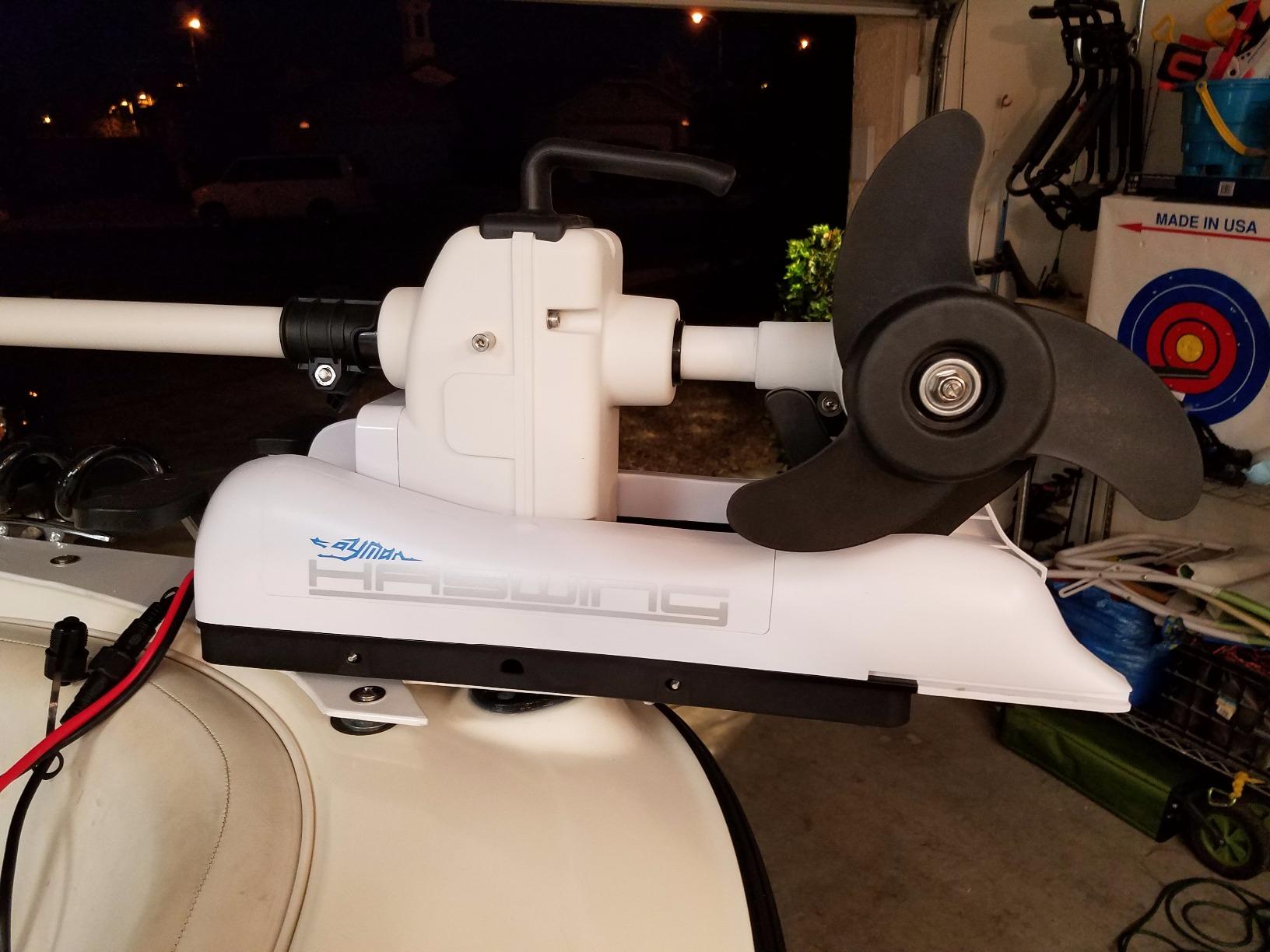
This is the Cayman platform in white, and the distinguishing feature versus the other 55s here is the control package: a wireless remote with 164 foot range and a wireless foot control with 33 foot range, both in the box. Most competitors make you pick one, or charge extra for the second.
At 4.1 stars across 180 reviews, it sits below its sibling in the group, and the reason shows up clearly in the negative reviews. It is the steering mechanism under salt exposure.
Fresh and Saltwater Ready: What That Claim Covers
The listing states fresh and salt water capable with sacrificial anode corrosion protection, and the manufacturer fits boats up to 2,750 lb with a suggested maximum length of about 18 feet. That is the right envelope for a small center console or a bay boat in the 18-foot range.
The catch is the material in the steering assembly. Several buyers report corrosion or freezing in the steering mechanism after limited saltwater use, which suggests the anodizing and sealing on that component is not to the same standard as the lower unit.
Installation Reality on a Prewired Skiff
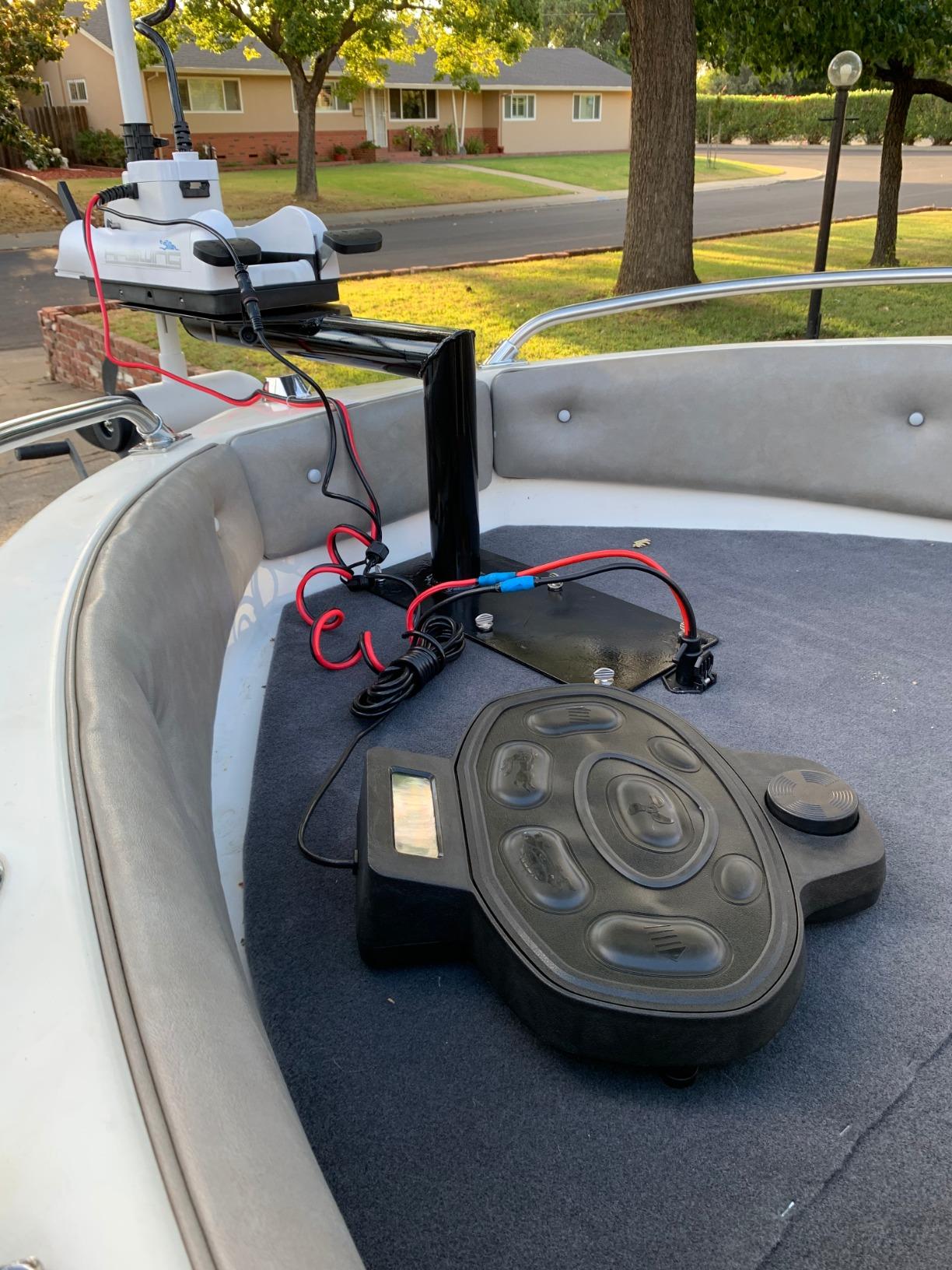
This motor requires a 13.7 by 8 inch flat mounting surface. If your boat is prewired for a trolling motor, it almost certainly has that pad, and install is straightforward. If it does not, you are looking at cutting a flat deck area, and that is the single most common install complaint in the reviews.
Many modern inshore skiffs ship prewired from the factory. If yours does, that fact alone should push you toward a bow mount regardless of brand.
Support and Warranty Realities
Customer support and warranty channels have been inconsistent for some buyers, and accessories are only warranted for three months. On a boat that lives in salt, a remote you cannot replace under warranty is an annoyance with a long tail.
The 34 lb listed weight is a real consideration. On a high bow, that is a two-hand lift into the boat for most people, and you will be doing it every launch.
5. AQUOS Haswing Cayman 55 Bow – Quiet Aluminum Shaft at a Lower Tier
AQUOS Haswing Bow Mount Trolling Motor 12V 55lbs 48in with Wireless Remote
55 lb thrust
48 inch aluminum shaft
bow mount
variable speed
164 ft wireless remote
+ Pros
- Very quiet operation close to premium brand noise levels
- Remote range tested by owners out to 150 to 164 ft
- Aluminum shaft rather than composite
- Good value relative to Minn Kota and MotorGuide pricing
- Cons
- Cruise control only with no Spot-Lock
- Plastic steering guide or gearing reported failing after saltwater use
- Requires a flat 13.7 by 8 inch mounting surface
This is the same 55 lb, 48-inch shaft bow mount platform at a lower tier than the Cayman listing, and owners single out two things: the quietness and the aluminum shaft. At 105 reviews and 4.1 stars, the review base is small but consistent, and the complaints cluster in one place rather than being scattered across the drivetrain.
The remote is USB rechargeable through a power bank with a lanyard included, which solves the dead-remote-at-the-dock problem that plagues a lot of cheap wireless controls.
Aluminum Shaft and the Composite Alternative
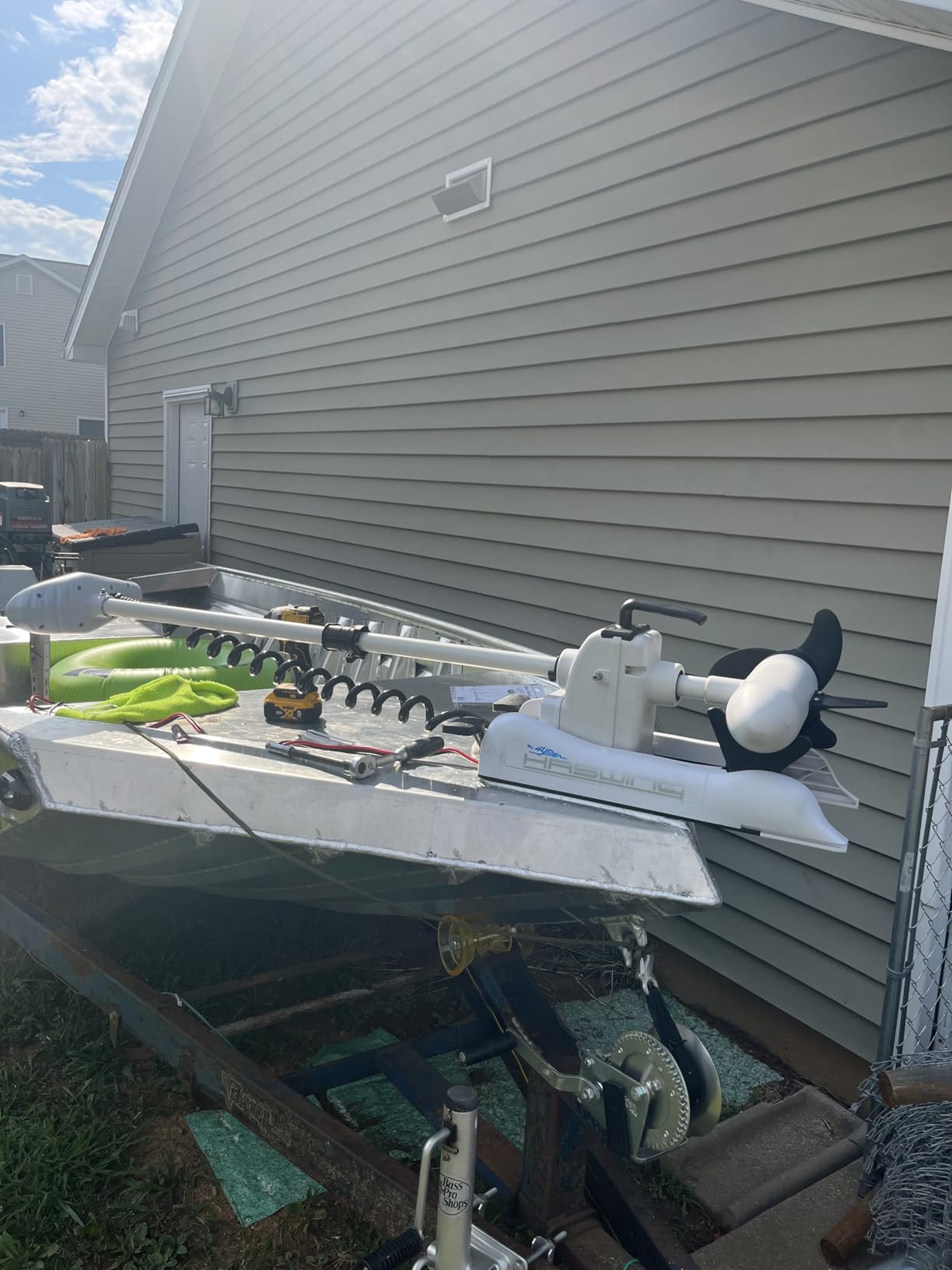
Owners specifically call out the aluminum alloy shaft, and one of the reasons cited is that it avoids the cracking some owners saw on rival brands with composite shafts. On an inshore boat that grounds out, hits shell banks, and gets loaded on a trailer every trip, a rigid aluminum shaft is the safer choice.
Manufacturer capacity again is 2,750 lb of boat weight, and the model is rated for fresh and salt water with a sacrificial anode.
The Saltwater-Specific Failure Pattern
Here is the honest caveat. The negative tail on this listing is concentrated in saltwater durability: plastic steering parts and gear freezing after sea use. That is a different failure signature from the AQUOS in the previous section, but it points at the same weak link, which is the plastic steering guide rather than the motor or shaft.
That is maintainable. If you rinse the steering assembly with fresh water after every trip and work the steering through its full range before stowing, you are addressing the failure before it happens. Skipping that step is what turns a minor maintenance task into a replacement.
What You Give Up
No foot control in the box, no circuit breaker, and no battery bracket. The installation requires that same flat 13.7 by 8 inch pad, and drilling is described as awkward by some buyers. Budget an hour and a piece of scrap wood as a template.
6. Minn Kota Riptide PowerDrive 55 – Spot-Lock Position Holding at 55 lb
Minn Kota Riptide PowerDrive Bow-Mount Electric Trolling Motor with Mircro Remote – 55 Lb. Thrust, 54 In. Shaft, Saltwater
55 lb thrust
54 inch shaft
12V bow mount
44 lb unit
GPS Spot-Lock
+ Pros
- GPS Spot-Lock holds position accurately without an anchor
- Marine corrosion coating designed specifically for saltwater
- Digital Maximizer extends run time up to five times
- Deploy-Assist lever for one-hand stow and deploy
- Cons
- Heaviest unit in the group at 44 lb
- Micro remote has shorter range and fewer features than the full remote
This is where the roundup turns a corner. Everything below this point is about getting you to the spot; this motor keeps you on it. Spot-Lock is a GPS position hold, and on an inshore boat drifting over a drop-off in current, it is the difference between fishing and fighting the tide.
On the Microskiff forum, owners with long-term Riptide experience describe the 24-volt i-Pilot Spot-Lock setup as a boat that has run for years without issues, and the consistent endorsement in those threads is that Spot-Lock is worth the price. That is the single most repeated theme in the angler discussions I read.
Corrosion Protection: Grit-Blasted, Coated and Powder-Coated
The lower unit housings are grit-blasted, aluminum-coated and powder-coated. That is a specific manufacturing description rather than a marketing adjective, and it is the difference between a coating that can be scratched through in year one and one that holds up to a decade of salt spray and sand abrasion.
For a flats angler running over sandbars, coating durability is not cosmetic. Grit is abrasive, and it strips protective finishes faster than clean water ever will.
Digital Maximizer and the Push-to-Test Meter
Digital Maximizer is Minn Kota’s power management, and the manufacturer claims run time extension of up to five times by cutting current draw at partial throttle. Treat the five-times figure as a best case, but the direction is real: variable-speed PWM control at low speeds is where the runtime savings come from.
The push-to-test battery meter gives you an accurate state of charge on demand rather than a rough bar graph. On a boat running a single 12V battery on a flats skiff, knowing your real remaining runtime is how you avoid being stranded on the wrong side of a pass.
The 44-Pound Problem
This is the heaviest unit in the group at 44 lb, and on a high bow that is the main practical complaint. The Deploy-Assist lever helps with stow and deploy, but getting the motor into the boat at a ramp is still a two-person job for many anglers.
Also note the micro remote. It is the smallest control option in the Riptide line, with shorter range and fewer functions than the full wireless remote. For a boat you drive from the console, the micro remote is limiting.
7. Minn Kota Riptide Terrova 80 – The Answer for 20 to 24 Foot Center Consoles
Minn Kota Riptide Terrova Bow-Mount Electric Trolling Motor with GPS, Spot-Lock – 80 Lb. Thrust, 60 In. Shaft, Saltwater
80 lb thrust
60 inch shaft
24V bow mount
Spot-Lock with Jog
heading sensor included
+ Pros
- Spot-Lock and Jog hold and reposition the boat precisely
- 80 lb thrust handles 18 to 21 ft bay boats and skiffs on two 100Ah batteries
- Drift follow and dodge modes broaden the autopilot options
- Three-year warranty with registration
- Cons
- Requires a 24V battery bank rather than a single 12V battery
- One owner reported a factory bracket mismatch on arrival
At 80 lb of thrust and a 60-inch shaft, this is the most capable motor in the roundup for a hull that is genuinely large for inshore use. A 22 or 24 foot center console with a full load of fuel, tackle, crew and livewell is pushing 5,000 lb, and that is where 80 lb of thrust earns its keep against a beam wind.
Owners report trolling all day at roughly 2 knots on a full charge with two 100Ah batteries, and describe Spot-Lock and Jog as transformative when working structure that requires precise repositioning.
24 Volts Changes the Entire Electrical Plan
This is the most important practical note in the section. A 24V system needs either one 24V battery or two 12V batteries in series, plus a wiring run and a charger rated for 24V. That bank is the single largest line item in a complete setup, and it is where first-time buyers get caught out.
Series wiring is not complicated but it is unforgiving. Polarity must be correct on both batteries, the cables need to be properly sized for the 80 lb motor’s amp draw, and an under-sized cable is a fire risk rather than a performance problem.
Spot-Lock, Jog, Drift, Follow and Dodge
Jog shifts your held position in 5-foot increments, which is exactly the resolution you want when you are working a drop-off edge. Drift mode lets the boat follow a course while you fish, follow mode tracks a second waypoint, and dodge mode steers you off a waypoint then back.
The included heading sensor is not a minor accessory. Anchor-mode accuracy depends on it, and it is the reason this unit holds a heading in current better than a motor without one.
Quality Control Reports
Two owners reported factory assembly issues: one received a 55 lb bracket on an 80 lb motor, another reported the motor spinning and wrapping its cable when engaging Spot-Lock with a remote disconnect that circled the boat, resolved by a power cycle. These are quality-control problems, not capability problems, but inspect the package before you leave the dock.
The three-year warranty with registration is the longest in the roundup and the best reason to buy from an authorized dealer who can process it.
8. AQUOS Haswing 65 Brushless – Best Thrust-to-Weight Ratio in the Group
AQUOS Haswing 12V 65lbs 35.5in Brushless Transom Trolling Motor
65 lb thrust
12V brushless
stepless speed control
about 14.5 lb
10 tilt positions
+ Pros
- About half the weight of comparable transom motors
- Brushless design roughly doubles run time versus older brushed motors
- Stepless speed control allows trolling at very low speeds
- Compact lower unit clears a co-mounted outboard
- Cons
- Produces electrical interference that can degrade fish-finder readings
- Draws power even in the off position
- Audible whine and vibration reported by owners
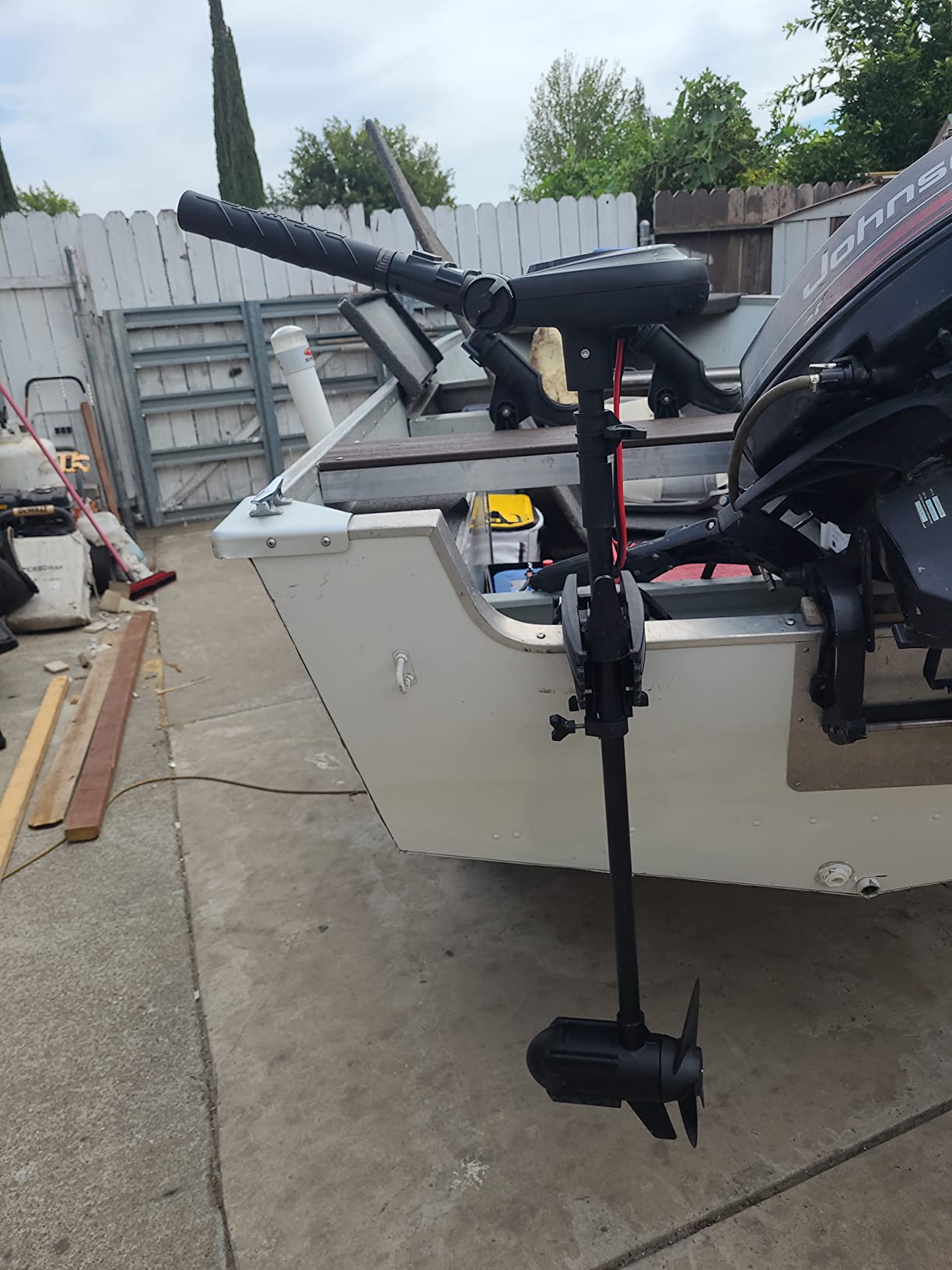
At 65 lb of thrust weighing about 14.5 lb, this is the most efficient motor in the roundup by a wide margin, and on a small center console where every pound of motor weight eats into your capacity, that ratio is the entire story. Comparable 55 to 62 lb transom motors typically weigh double this.
The brushless design is the reason. Owners who switched from older brushed 55s report roughly doubled run time on the same battery, which over a season of tide-heavy inshore fishing is a bigger practical gain than an extra 10 lb of thrust.
Stepless Speed Control and 10 Tilting Positions
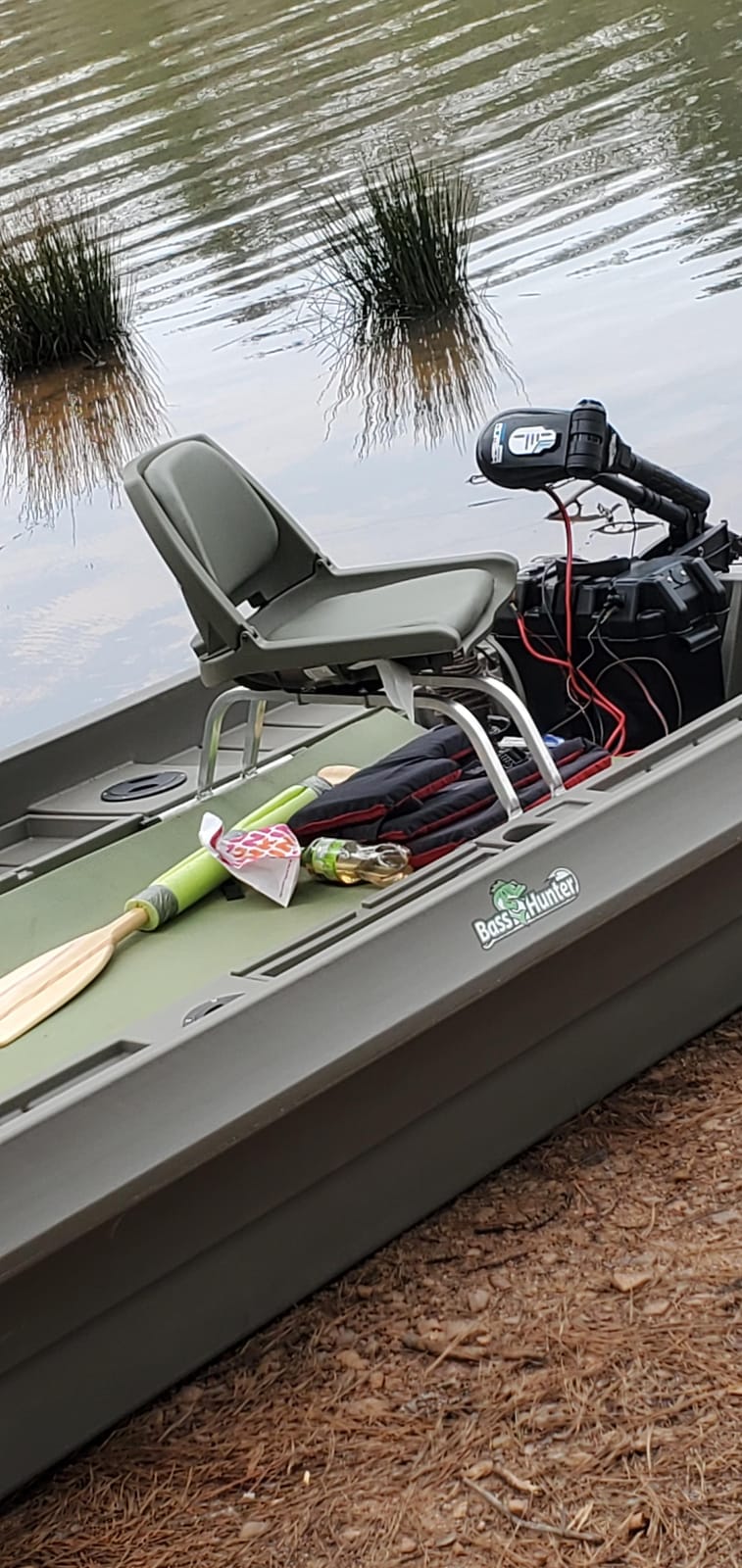
Rather than discrete speeds, this motor uses stepless forward and reverse control, which lets you find the exact trolling speed that matches a current. Combined with 10 tilting positions and quick-lock trim adjustment, it is unusually adaptable on a boat that works both shallow and deep structure.
Owners report pushing a 19-foot center console at about 3.2 mph and drawing roughly 40A at full throttle. That amp figure is well below the 52A maximum on the 55 lb Newport, which is part of where the runtime advantage comes from.
The Fish-Finder Interference Problem
Here is the caveat that matters on an electronics-heavy inshore boat. The most repeated technical complaint in 143 reviews is electromagnetic and radio frequency interference with sonar and fish finders. Multiple owners report the problem persists even with a separate power supply.
If your boat runs a forward-looking sonar, a shallow-scan unit or any tight-tolerance electronics, test this motor with your gear before you commit. The compact lower unit does clear a co-mounted outboard on small boats, so the interference is the real tradeoff against that convenience.
Small Draws Worth Knowing About
It draws power even in the off position, so expect small sparks at the battery terminals, and there is no circuit breaker included, so a separate inline breaker is advisable. Owners also report an audible whine and some vibration that brushed-motor users find unremarkable.
The two-year manufacturer warranty is a good one. The 35.5-inch overall shaft with a 15.7-inch foldable handle extension is a compact package that stores well on a small boat.
9. AQUOS Haswing Cayman 80 Bow – 24-Volt Thrust for Heavier Loads
Haswing Bow Mount Trolling Motor 80lbs 54in – Remote & Foot, Quick Release
80 lb thrust
24V
54 inch shaft
fits boats to 4000 lb
remote and foot control
+ Pros
- Plenty of thrust for 18 to 22 ft pontoons and deck boats
- Owners report full battery charge after multi-hour trips
- Wireless remote and foot control both included
- Sacrificial anode for salt and freshwater use
- Cons
- Cruise control only with no Spot-Lock
- Tilt and lift mechanism reported freezing mid-lift
- Accessories carry only a three-month warranty
This is the mid-rung answer to the Terrova. It matches the Terrova’s 80 lb of thrust, but it has no GPS, and that is the entire difference in price and in capability. If you want power without position holding, this delivers power.
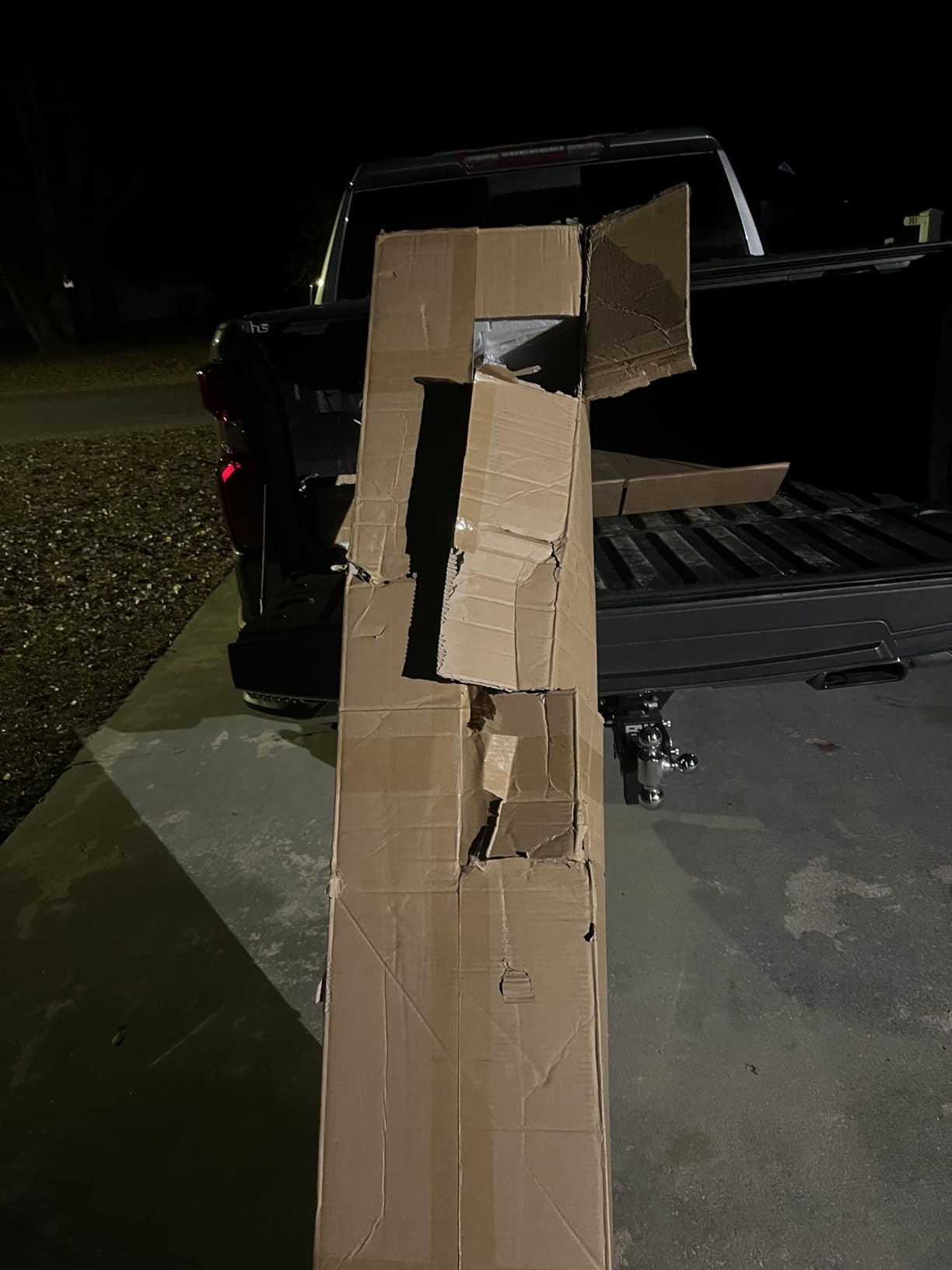
Manufacturer capacity is listed at up to 4,000 lb of boat weight and 21 ft of length, which puts it at the top of the inshore range and into the pontoon and deck boat territory where 80 lb genuinely gets used.
24V Without the Electronics Overhead
Like the Terrova, this is a 24V system that requires one 24V battery or two 12V batteries in series. What you save is the GPS hardware, the heading sensor and the electronics ecosystem, which on a boat that does not need position holding is a legitimate saving.
Owners report moving four adults at speed on an 18 to 22 ft pontoon and still having a full battery charge after multi-hour trips, which speaks to the efficiency of the 24V architecture at high thrust.
The Deploy Mechanism Is the Weak Link
The recurring mechanical complaint is the tilt and lift mechanism. Several reviewers describe it freezing or catching mid-lift, becoming rough and awkward to raise, and requiring lubrication and force to release. Release handles can also be out of sync, so the motor may not release cleanly from the bracket.
On a salt-water boat that is a maintenance item, not a defect, as long as you rinse the assembly and work the lever through its range after every trip. The plastic and aluminum interface is exactly where salt crystallizes overnight.
What You Trade Away
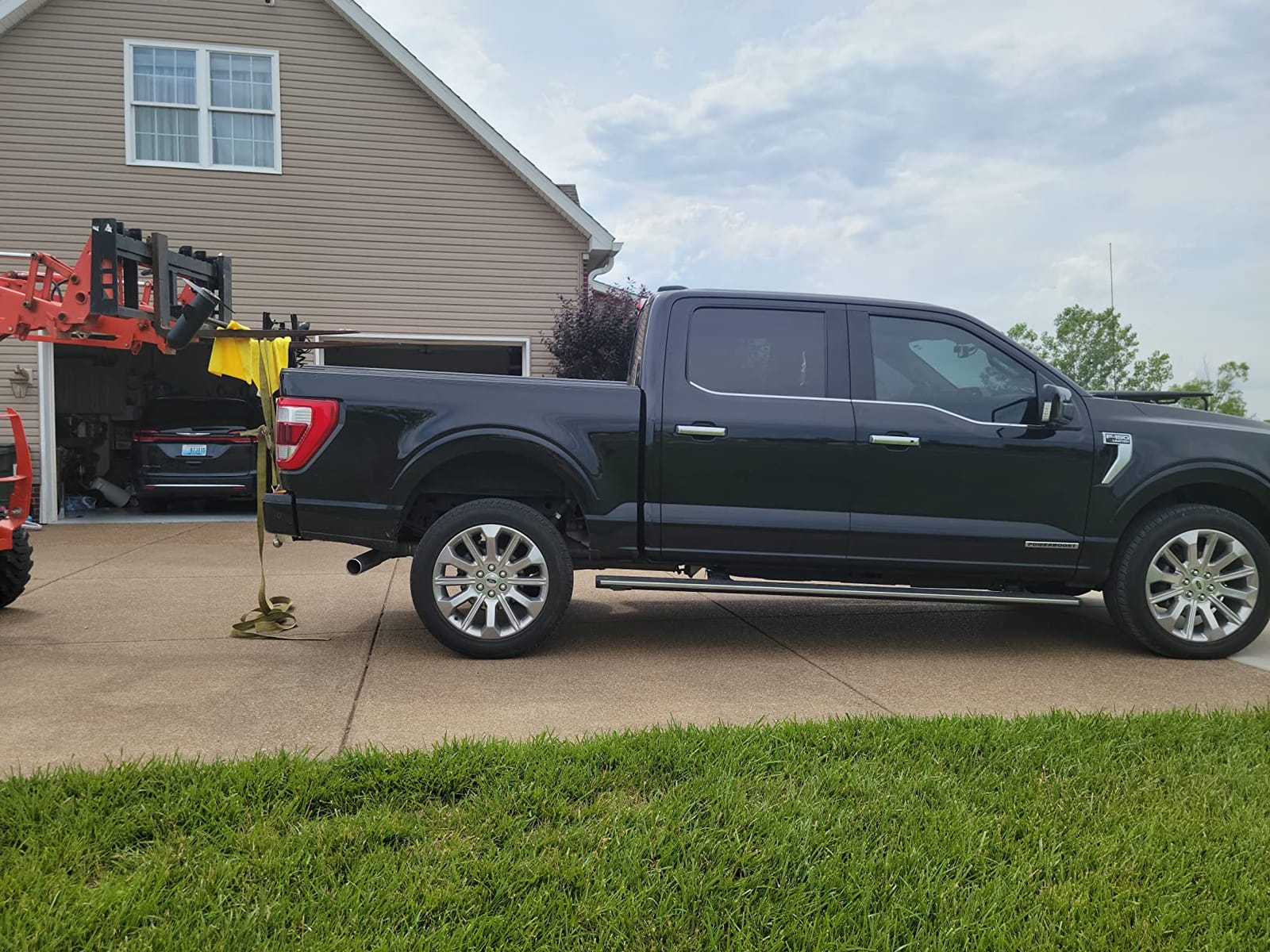
Cruise control only, no Spot-Lock, so in current you correct heading by hand. The wireless remote works out to 164 ft and the foot control runs 33 ft, which is a good control package, but a remote controller failing after about a year with no replacement available is reported by one owner, and accessories are warranted for three months.
The listed weight of 19 kg is substantial, roughly 42 lb, so plan the lift accordingly.
10. VEVOR 55 lb Transom – A Basic Saltwater Hand-Tiller Motor
VEVOR Electric Trolling Motor, Transom Mounted Outboard Boat Motors 12V 55lbs Thrust, 8-Speed Electric Boat Engine w/Battery Indicator, for Kayaks, Fishing Boats on Freshwater/Saltwater, 30-In Shaft
55 lb thrust
12V transom
30 inch shaft
20.3 lb
8 speeds
+ Pros
- Low cost for a 55 lb saltwater-rated transom motor
- Eight speeds including five forward and three reverse
- Adjustable telescopic handle for seated or standing use
- Aluminum alloy shaft and sealed motor head for corrosion resistance
- Cons
- Newer listing with a small review base so durability is unproven
- Manual tiller only with no remote or foot control
- Only one propeller included
Forty-three reviews at 4.1 stars makes this the second thinnest record in the group, and I am including it because the category gap it fills is real. There is very little between the entry tier and the proven transom tier on a boat that only needs a hand-tiller motor.
The spec sheet is unremarkable in the best way: 55 lb of thrust, 30-inch shaft, eight speeds, a three-blade propeller, and an aluminum alloy shaft with a sealed waterproof motor head for corrosion resistance.
Sealed Head and Aluminum Shaft for Corrosion Resistance
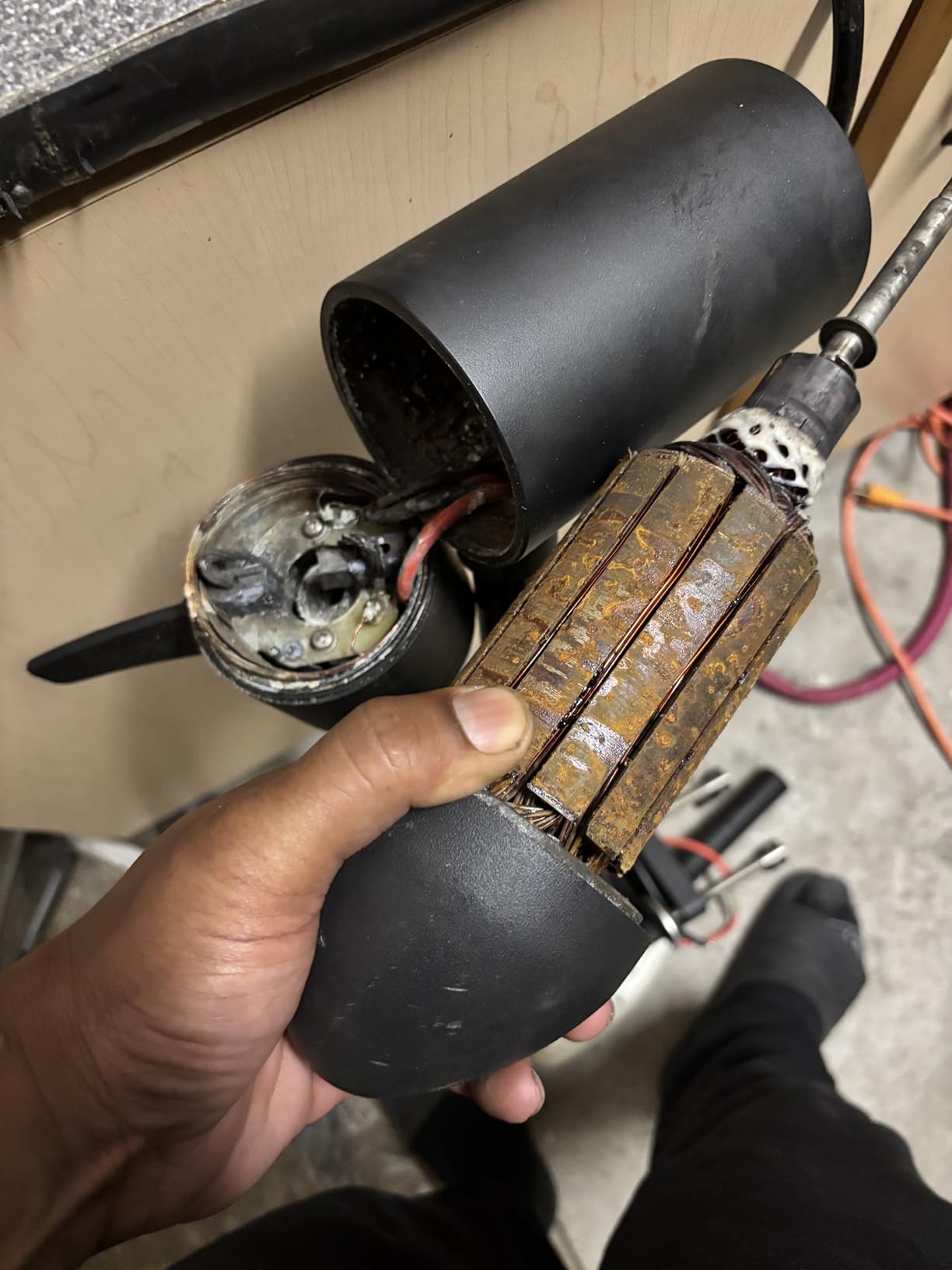
The corrosion story here is straightforward: a high-strength aluminum alloy shaft and a sealed waterproof aluminum motor head. That is the hardware that matters most on a saltwater transom motor, and it is present, which is more than some competitors at this thrust level offer.
The telescopic handle adjusts from 6.3 to 10.6 inches, which lets it work for a seated angler in a small boat and a standing angler in a bay boat from the same unit. Shaft height and the transom bracket both adjust, which matters when you are moving between shallow grass and open channel.
Where the Record Is Thin
A small, recent review base means there is no long service history to draw on, and that is the honest limitation. On a motor that lives in salt, durability is the entire product, and you are buying on the spec sheet rather than on evidence.
It is manual tiller only with no remote or foot control, and only one propeller is included in the box. The three-blade design is advertised for reduced tangling, which is genuinely useful in the shallow grass and mangrove edges an inshore boat works.
Boat Types It Fits
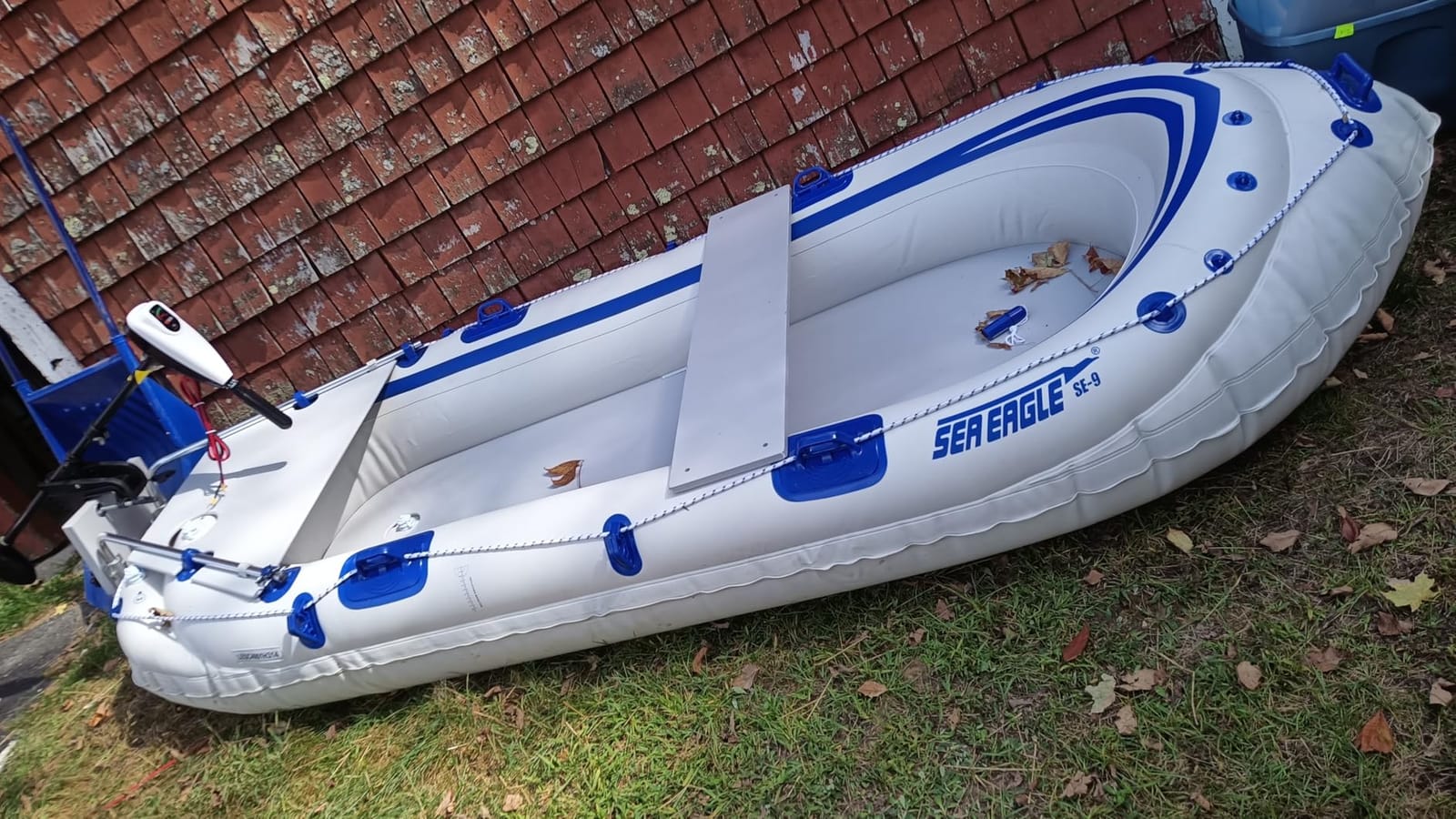
The manufacturer lists aluminum boats, kayaks, canoes, fishing boats, rafts and inflatables, and it takes a single 12V battery. For an aluminum flats skiff or an inflatable running an estuary, that is a straightforward, low-complexity answer.
How to Size and Spec a Saltwater Trolling Motor for Inshore Boats
The decision here is not really about brands. It is about four numbers and one hardware question, and if you get all five right the brand almost does not matter.
Thrust Sizing for 16 to 24 Foot Inshore Hulls
Start with loaded weight, not hull length. Your boat’s rated capacity is the maximum, and the motor should be sized for the weight you actually carry: fuel, tackle, crew, livewell and cooler included.
Apply the ratio: 2 lb of thrust per 100 lb of loaded boat weight. Then add a margin, because inshore water has wind and tide and a motor sized to bare minimum will be working at full throttle every time you turn into a beam current.
Here is how that plays out across the inshore range. A 16-foot flats skiff typically lands around 900 to 1,400 lb loaded, which calls for 18 to 28 lb of thrust, and a 55 lb motor is comfortably oversized. A 19 to 20-foot bay boat usually runs 2,200 to 2,800 lb loaded, calling for 44 to 56 lb, which is why 55 lb is the field’s most common number. A 22 to 24-foot center console can reach 4,000 to 5,000 lb loaded, which needs 80 to 100 lb.
For most inshore anglers, 55 lb is the answer, and buying 80 lb for a 19-foot boat is the most common sizing mistake I see.
Shaft Length: Measure Bow to Waterline, Then Add
Shaft length is the spec buyers get wrong most often. The measurement is the vertical distance from where the shaft exits the motor head to the waterline at your boat’s normal loaded waterline draft, measured straight up from the bow, not along the deck.
The rule of thumb is to add about 20 inches to that measurement. A 36-inch bow-to-waterline number calls for a 54 to 60 inch shaft. Too short and the prop ventilates in a chop, the boat loses thrust, and cavitation shows up as a chattering noise you cannot fix with more power. Too long and you are dragging through water and burning battery for nothing.
Also check that the shaft clears the hull when deployed. A 60-inch shaft is correct for a deep-bow center console and completely wrong for a shallow-draft skiff, which is the tradeoff you accept when you choose a long shaft for protection in chop.
What Saltwater Rated Actually Means in Hardware
Saltwater rated is a marketing phrase that varies enormously between brands. Four hardware items actually determine whether a motor survives salt.
A sacrificial anode is the first. It corrodes instead of your shaft and lower unit, and it is cheap to replace on a schedule. The Haswing and AQUOS bow mounts in this roundup all include one; the transom units generally do not, and that is a gap worth weighing.
Coated lower unit housings are the second. The Riptide’s grit-blasted, aluminum-coated, powder-coated housing is a described process, and grit-blasted finishes hold up better against the sand abrasion that strips lesser coatings off a flats boat in one season.
An aluminum shaft is the third, versus composite. Both work, and owners do report composite shafts cracking, so this is a preference with evidence behind it rather than a rule.
Finally, sealed connectors and marine-grade wire matter more than any spec on the box. A motor with a sealed head and a properly fused connection survives; a motor with an unsealed motor head does not, regardless of what the listing says.
Batteries, Voltage and Realistic Runtime
The motor is the cheap part. The battery bank, wiring, breaker and charger are where the real money goes, and angler forum threads on battery cost shock come up constantly for a reason.
Runtime math is straightforward. Amp draw tracks thrust closely, so budget roughly the thrust number in amps at full throttle. Divide usable capacity by draw to get hours. A 100Ah lead-acid battery gives you about 50Ah usable, so a 55 lb motor drawing 52A at full throttle runs about one hour. At trolling speed 2, a good controller cuts draw dramatically, which is where all-day runtime actually comes from.
Voltage changes the wiring math. 12V motors run higher amps through the same power, so they need heavier cable. 24V motors halve the current for the same thrust, which is why the 80 lb units in this roundup are 24V. Two 12V batteries in series or one 24V battery both work, but the charger must match.
On lithium, the forum consensus is that LiFePO4 works well and runs these motors, and owners report all-day runtime on a 100Ah lithium. The caution is that some manufacturers warn against certain lithium setups, so check your motor’s manual before you commit.
Spot-Lock, Cruise Control and Anchor-Lock in Plain English
These three get conflated constantly, and the difference determines what you can do on an inshore boat in current.
Cruise control holds speed, not position. The bow still swings in wind or current and you correct by hand. The Haswing and AQUOS bow mounts in this roundup all stop here.
Anchor-lock uses an internal compass and gyroscope to hold heading and position without GPS. It works but drifts and does not know where you are on the water.
Spot-Lock is GPS-based position holding, and it is the real answer for holding over structure in moving water. The two Riptide motors in this roundup have it.
The ecosystem question matters as much as the feature. If your boat runs Garmin, a Minn Kota or Lowrance motor is usually the smarter buy because the units network together. If you have a Humminbird helm, check compatibility before you buy anything with a screen.
Reliability, Rinse-Down Routine and What Actually Fails
Across the angler forums I read, the durability anxiety is real and specific. Owners report burnt armatures and premature failure on expensive saltwater bow mounts, and they see low star ratings even on manufacturer sites. That is the failure pattern to plan around.
The other recurring theme is the MotorGuide Xi-series, where owners report more trouble with lower units than Minn Kota owners do. If you are cross-shopping and the Xi is in the running, weigh that.
The good news is that most of what fails is preventable with a ten-minute routine. Run a fresh water hose or a dock rinse through the motor after every salt session, working the steering through its full range so crystallized salt in the steering guide breaks loose. Pay attention to the sacrificial anodes. Keep the connections above the splash line and check them.
Warranty and build quality are the decisive factors at this tier. Owners trust long-term reports far more than spec sheets, and the three-year registration-backed warranty on the Terrova is the strongest in this roundup.
Frequently Asked Questions
What is the best saltwater trolling motor?
For most inshore boats the best saltwater trolling motor is a corrosion-protected unit sized near 55 lb of thrust with a sacrificial anode, aluminum shaft and sealed wiring. Match the motor to your electronics ecosystem first, since a Garmin or Humminbird helm determines which brand networks properly.
How big of a bow mount trolling motor do I need?
Size for loaded boat weight at 2 lb of thrust per 100 lb, then add a margin for wind and tide. A 19 to 20 foot bay boat around 2,400 lb loaded calls for about 48 lb, so 55 lb is the right pick. A 22 to 24 foot center console at 4,000 lb or more needs 80 lb or more.
How big of a boat will a 70 lb thrust trolling motor handle?
A 70 to 80 lb thrust motor comfortably handles inshore hulls from roughly 3,000 to 4,500 lb loaded, which covers most 20 to 24 foot center consoles and bay boats in a beam wind. On a 16 foot flats skiff that same motor is far more than the hull needs.
Is a 50 lb thrust trolling motor good?
Yes for most inshore applications. A 50 to 55 lb thrust motor covers 16 to 20 foot flats skiffs and bay boats up to about 2,800 lb loaded with margin to spare in wind and current. Below 30 lb is a small-boat motor, and 80 lb is for hulls above 3,500 lb loaded.
Can I use a freshwater trolling motor in saltwater?
Technically yes for occasional use, but not recommended for regular inshore fishing. A freshwater motor lacks a sacrificial anode and marine-grade coatings, so salt attacks the shaft and lower unit directly. A saltwater-rated motor with an anode you can replace on a schedule is far cheaper than replacing a corroded motor.
How long will a 100Ah battery last with a 55 lb thrust trolling motor?
At full throttle a 55 lb motor draws roughly 52 amps, so a 100Ah lead-acid battery with about 50Ah usable capacity runs about one hour. At trolling speed 2 with a variable-speed controller the draw drops sharply, which is what produces all-day runtime. LiFePO4 lithium gives more usable capacity and lighter weight.
Which Saltwater Trolling Motor Matches Your Boat?
Start with the boat you already own. For a bay boat or flats skiff in the 16 to 20 foot range fishing water with real current, the best saltwater trolling motors for inshore boats come down to two decisions. If you can steer by hand and want the quietest transom motor with the longest service record, the Newport NV-Series 55 is the proven answer. If you need the boat to hold position over structure without an anchor, the Minn Kota Riptide PowerDrive 55 is the smallest GPS unit that does it.
For a 22 to 24 foot center console in a beam wind, the Riptide Terrova 80 at 24V is the motor the extra hull weight demands, and you should budget the battery bank before you commit to the motor.
For a small tender, a 12-foot skiff or a first saltwater setup, the PEXMOR 26 and the VEVOR 55 both work, and the AQUOS Haswing 65 brushless transom is the pick if you care more about runtime and weight than fish-finder silence.
Whichever you choose, run fresh water through it after every trip, watch the anodes, and size the bank for the voltage on the label. The best saltwater trolling motor for inshore boats is the one that fits your loaded weight, matches your electronics and gets rinsed down.