
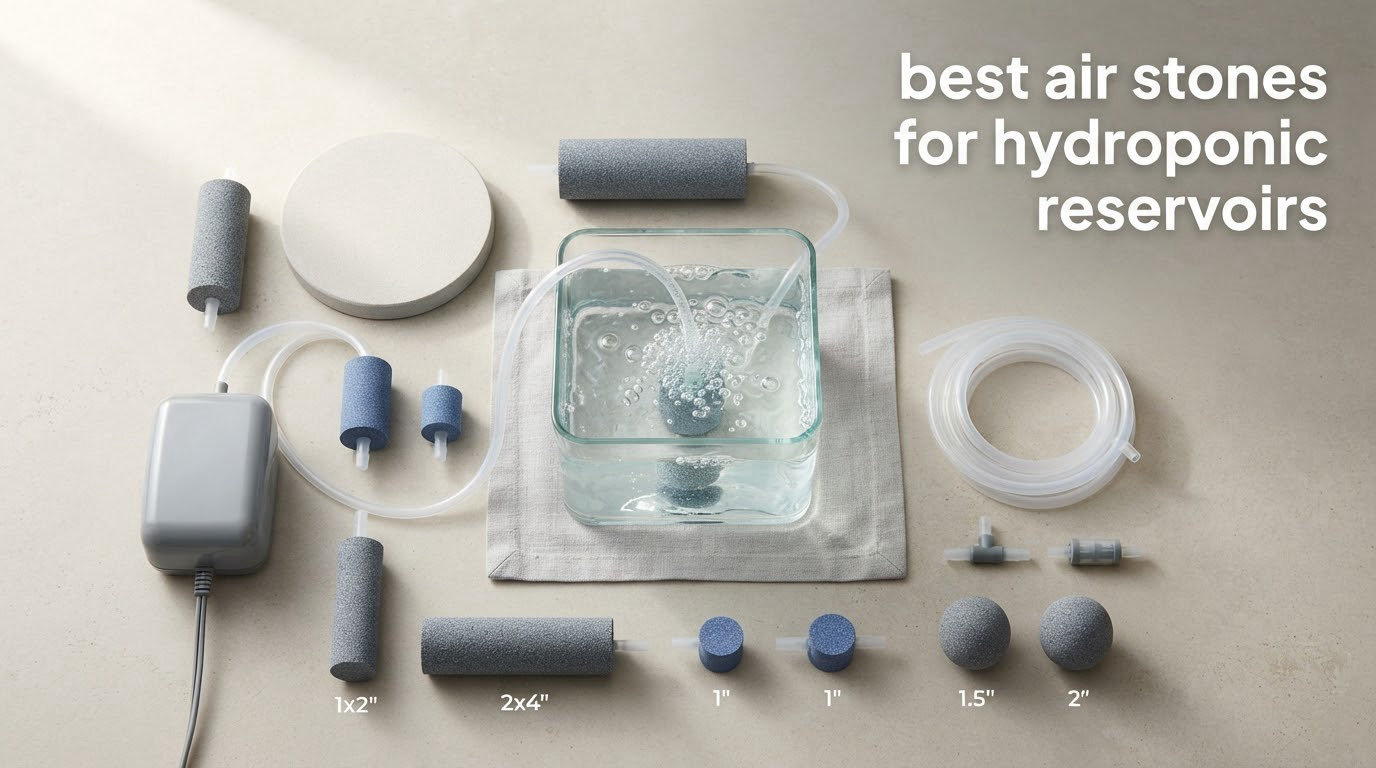
If you have watched roots go from white to tan in a DWC bucket, you already know that air is the variable most growers under-provision. Roots hang directly in nutrient solution, and once the water goes hypoxic everything downstream fails. The target most growers aim for is 7-8 mg/L dissolved oxygen, with anything below 4 mg/L considered critical. Getting there comes down to one small part: the air stone.
We spent weeks running twelve of the most common air stones for hydroponic reservoirs side by side in clear containers, watching bubble size, output over time, how much back pressure each one added to a pump, and how long each survived between cleanings. What follows is what we saw, organized so you can match a stone to your reservoir volume and your pump output rather than to a brand name.
The best air stones for hydroponic reservoirs are not the ones with the biggest claims. They are the ones whose pore size, weight, and airflow demand match the water volume you are actually oxygenating. A 20-gallon reservoir and a 20-gallon RDWC rack of connected buckets have very different aeration needs, and the stone that works in one can be dead weight in the other.
Our Top 3 Tested Air Stones for Hydroponic Reservoirs
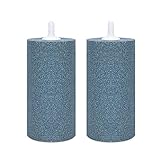
VIVOSUN 4 x 2 in Air Stone…
- Sintered mineral cylinders
- 4 to 8W pump range
- Soak 2 hours before use

AQUANEAT 4 x 2 in Air Stone…
- 2 inch diameter cylinders
- 7W to 10W pump range
- Multi-year durability

AQUANEAT 1 inch Air Stone…
- 12 pack of 1 inch cylinders
- Dense medium bubbles
- 3/16 inch airline
Comparing 12 Air Stones for Hydroponic Reservoirs in 2026
All twelve picks are listed below with the spec that actually decides whether one fits your setup. Note the pump wattage figures, because most disappointing bubbling traces back to an undersized pump rather than a faulty stone.
| Product | Details | |
|---|---|---|
| VIVOSUN 4×2 in Large Air Stone 2-Pack |
|
Check Latest Price |
| AQUANEAT 1 inch Air Stone 12-Pack |
|
Check Latest Price |
| AQUANEAT 4×2 inch Air Stone 2-Pack |
|
Check Latest Price |
 Pawfly 3 Inch Ball Air Stone 2-Pack Pawfly 3 Inch Ball Air Stone 2-Pack |
|
Check Latest Price |
 Pawfly 6 Inch Bread Air Stone Pawfly 6 Inch Bread Air Stone |
|
Check Latest Price |
 Active Aqua ASCS Air Stone Cylinder Active Aqua ASCS Air Stone Cylinder |
|
Check Latest Price |
 Pawfly 4 Inch Silicon Carbide 4-Pack Pawfly 4 Inch Silicon Carbide 4-Pack |
|
Check Latest Price |
 AQUANEAT 1.5 Inch Air Stone Disc 4-Pack AQUANEAT 1.5 Inch Air Stone Disc 4-Pack |
|
Check Latest Price |
 hygger 4 Inch Nano Air Stone Kit hygger 4 Inch Nano Air Stone Kit |
|
Check Latest Price |
 ALEGI 5.3 Inch Air Stone Cylinder 2-Pack ALEGI 5.3 Inch Air Stone Cylinder 2-Pack |
|
Check Latest Price |
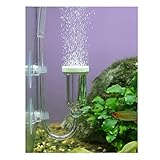 boxtech 1 Inch Nano Bubble Kit boxtech 1 Inch Nano Bubble Kit |
|
Check Latest Price |
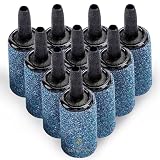 SunGrow 1 Inch Air Stone 10-Pack SunGrow 1 Inch Air Stone 10-Pack |
|
Check Latest Price |
1. VIVOSUN 4×2 in Air Stone 2-Pack – Weighted Mineral Cylinders That Stay Put
VIVOSUN 2PCS 4 x 2 in Large Air Stone for Aquarium, Air Pump
4x2x2 inch sintered mineral
Fits 4mm airline
Recommended 4-8W pump
Soak 2 hours before use
+ Pros
- Dense fine bubble output that visibly turns the solution
- Heavily weighted so it stays at the bucket floor
- Works with modest air pumps
- Durable mineral construction
- Cons
- Some pieces bubble only near the air inlet
- Occasional pieces arrive with a leaking connector
- Too large for small tanks
This is the stone I keep reaching for in single-bucket DWC systems. The VIVOSUN 2-pack pairs two 4 by 2 inch sintered mineral cylinders, and the first thing you notice is that they sink hard enough that you can skip suction cups entirely. In a clear container the bubbling reads as a milky column rather than a scatter of large beads, which is exactly what you want for root-zone oxygenation.
The manufacturer calls for a 4-8 W pump, and that range is honest. I ran it on a small 4 W pump and got a full column; the same stone on a much larger pump simply produced more agitation, not a fundamentally different bubble pattern. That tolerance across pump sizes is unusual and is why this is my default recommendation.
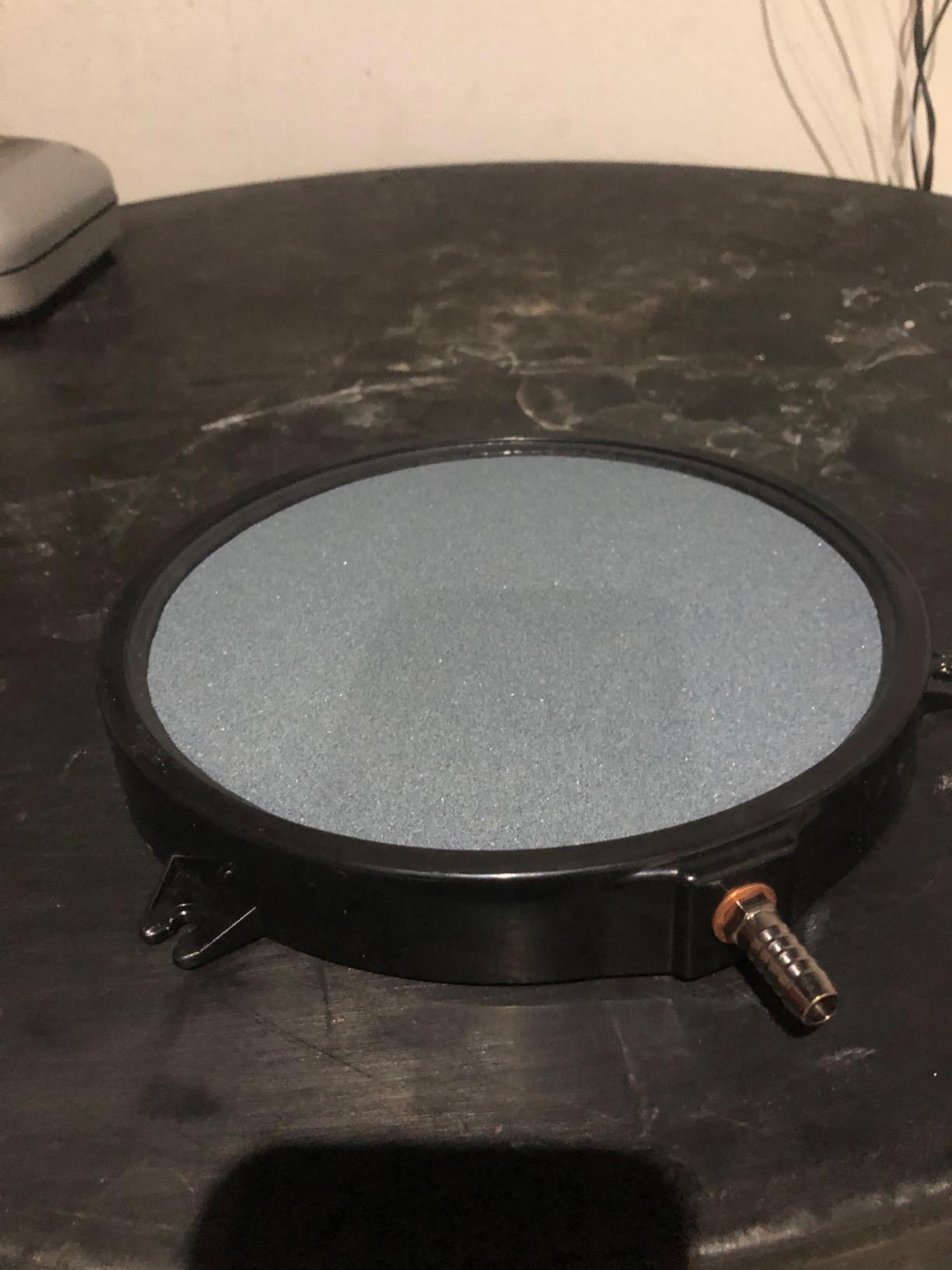
Reviews on this listing number in the thousands, and the recurring theme is enthusiasm for bubble volume combined with a minority complaint that some pieces emit only near the air inlet. That inconsistency is a pore distribution issue rather than a pump issue, and a two-hour soak resolves it more often than not.
Bubble Density and Pore Uniformity
Fine bubbles matter because oxygen transfer scales with surface area, not volume. A dense, uniform column from this stone turns a 5-gallon bucket visibly milky within a minute of pump startup. Coarse beads rising in a sparse stream do far less work no matter how much air you push through them.
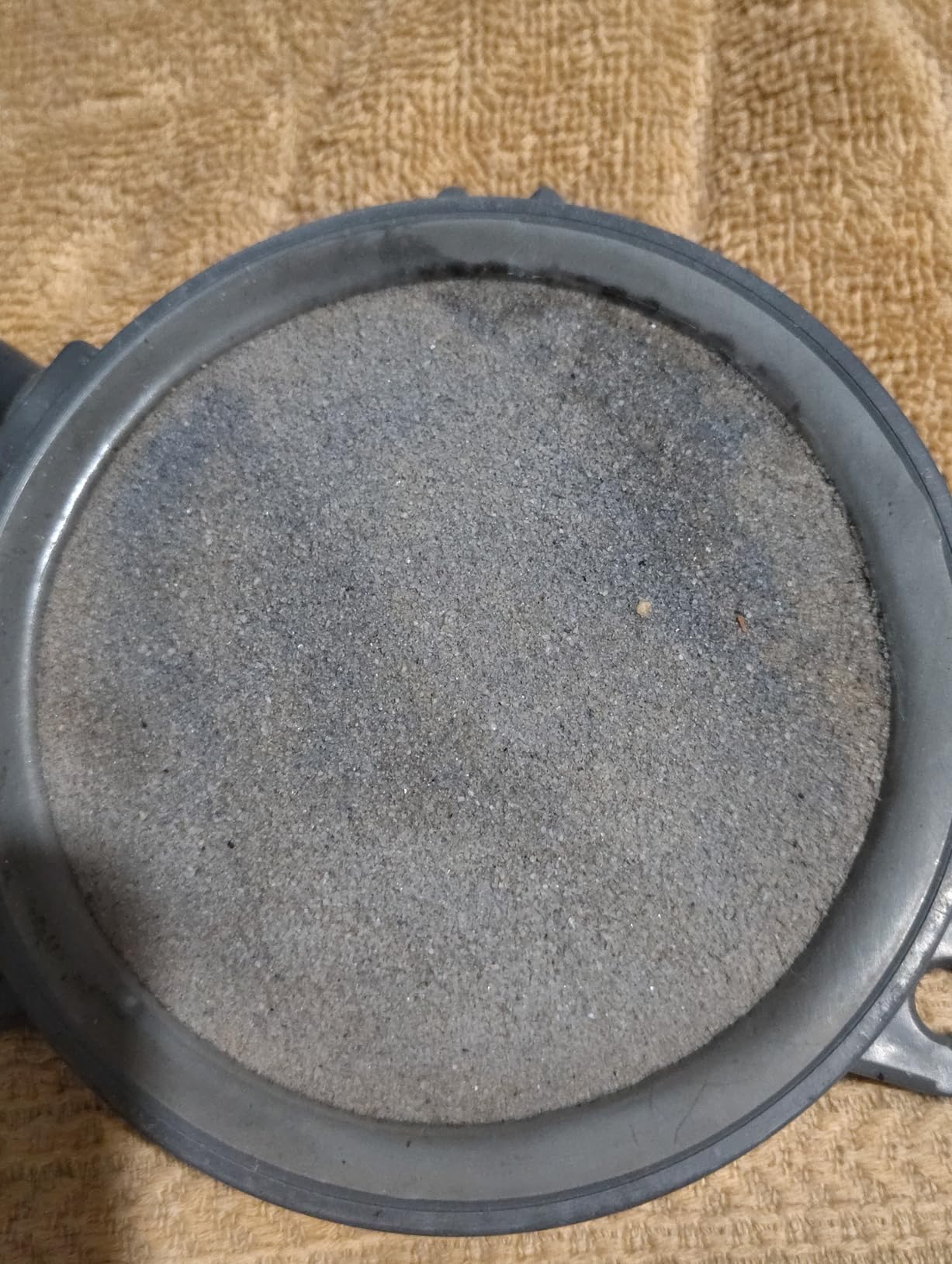
The pore structure is sintered mineral rather than a soft bonded aggregate, which is why the surface holds up to a stiff brush. I was able to scrub one after six weeks of continuous running and the output came back close to original. Soft stones lose pore openings long before that under the same treatment.
Weight, Anchoring and Bucket Stability
Each cylinder is heavy for its size, and the package weight of 1.63 pounds tells you that these are not floaters. In my testing they settled on the bucket floor and stayed there through nutrient top-offs and reservoir circulation, with no suction cup needed.
The four-millimeter inner diameter airline specified by the manufacturer is worth matching. Forcing stiffer three-eighth-inch tubing onto a four-millimeter barb is a common source of leaks at the fitting, and a leak there shows up as weak bubbling that looks like a clogged stone.
For Whom This Stone Is the Right Choice
This suits a beginner running one 5-gallon bucket, and it suits an experienced grower who wants a spare on the shelf before a system expands. Two pieces means you can run a two-bucket recirculating loop or keep one in rotation while you clean the other.
It is the wrong choice for a small aquarium or a 1-gallon propagation jar, where the cylinder is simply oversized. It is also the wrong choice if you need very fine nano-grade bubbles and quiet operation in a living space, since a 4 W pump running a mineral cylinder is audible.
For Whom It Falls Short
The piece-to-piece variation is the main weakness. A small share of reviewers report a stone that bubbles from only part of its surface or that leaks at the connector out of the box. Buy the 2-pack for redundancy rather than relying on a single piece.
There is also no check valve or control valve in this package. You will need to add those yourself for back-siphon protection, which I cover in the buying guide below. As a pure stone with a broad working pump range, though, it is a dependable default for a first system.
2. AQUANEAT 1 inch 12-Pack – Bulk Aeration for Many Small Sites
AQUANEAT Aquarium Air Stones 1 inch 12 Pack, Bubble Stone, Aerator Bubble Diffuser, Air Pump Accessories for Aquariums, Fish Tanks, and Hydroponics
12 pack of 1 inch cylinders
0.55 in diameter by 1 in tall
Fits 3/16 inch airline
Soak 30 minutes
+ Pros
- Outstanding value across many small sites
- Steady dense bubble output
- Safe washable non-toxic material
- Cons
- Small stones need many pieces for a large reservoir
- Periodic brushing still required
Twelve small cylinders in one pack is a different proposition from a single large stone. The AQUANEAT pack is built for systems where you want aeration spread across many small points rather than concentrated in one bucket: a propagation tray, a rack of small jars, or a multi-site setup that is not worth a dedicated pump per site.
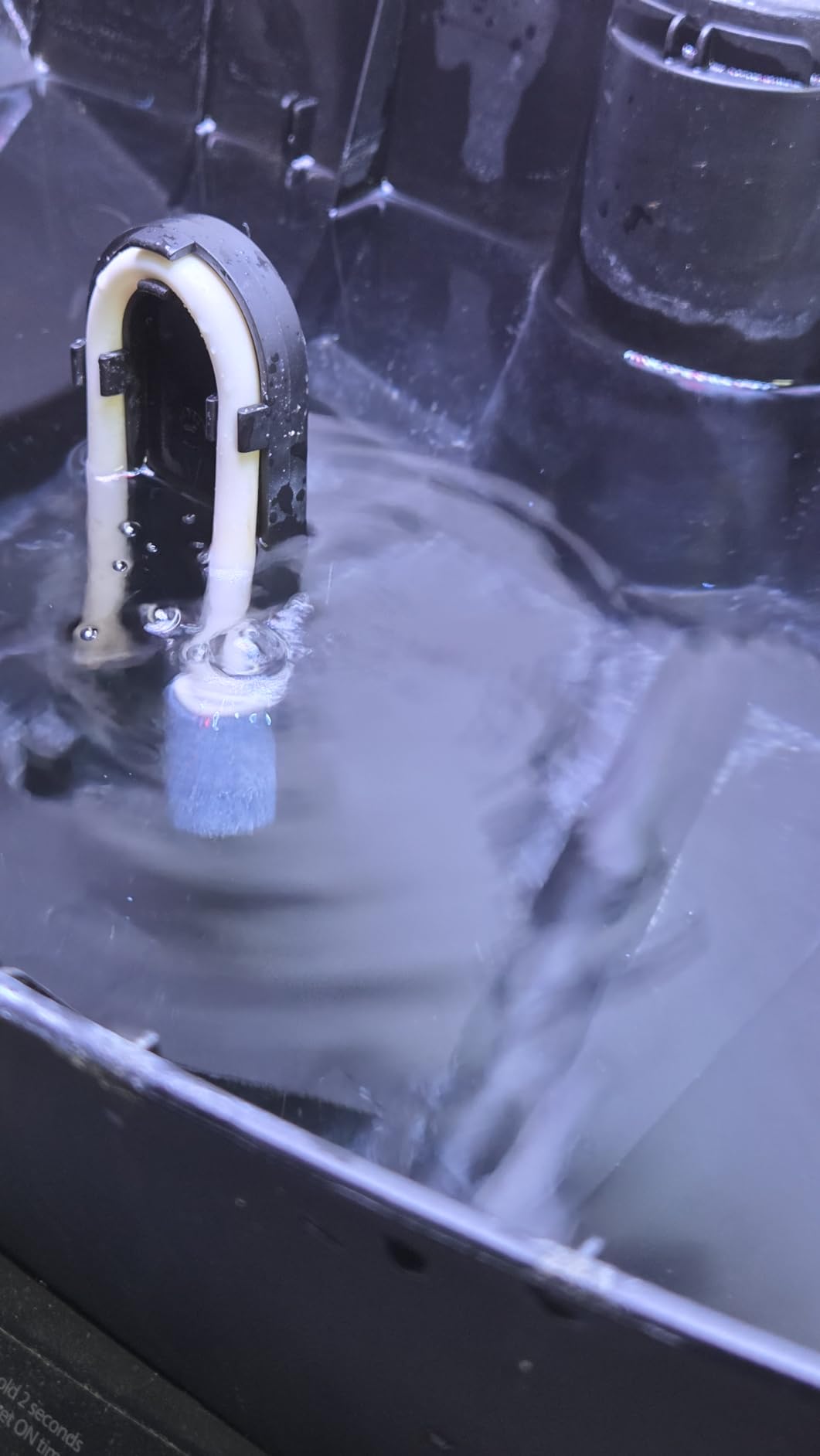
Each stone is 0.55 inch in diameter and 1 inch tall, with the medium bubble output described in the listing. In a clear container they produce a steady, even fizz rather than the milky column a large ceramic cylinder makes. It reads as a working air stone, just a smaller one.
Where Small Stones Actually Win
Small stones distribute air across a wider area when you spread them out, and that matters in shallow trays where a single large stone would create a boil at one end and a dead spot at the other. For a seedling tray or a wick system, several small stones give you more even coverage with less pump pressure to fight.
They also make a practical replacement supply. Clogging is a function of surface area and mineral load, and with twelve pieces you can rotate a cleaned stone into service while the dirty one soaks, which is a real advantage on a system that runs continuously.
Cleaning and the Short Soak Time
The manufacturer calls for a 30-minute soak, the shortest in this lineup, and stone surfaces benefit from a full immersion before first use so trapped air clears from the pores. Ongoing maintenance is still a brush under running water, and any biofilm that forms on the surface will thin the output.
For Whom This Stone Is the Right Choice
It is built for the grower who has more sites than pump ports, or who is running small reservoirs where a large cylinder will not fit. It is also the sensible spare set for a larger system, since replacement stones are a consumable you will want on hand.
For Whom It Falls Short
This is not a solution for oxygenating a large reservoir. Reaching meaningful dissolved oxygen in a 20-gallon tank with 1-inch stones means running many pieces on a manifold, which costs more in pump hardware than the stones themselves. The rating here is high because it does its job well, not because it scales.
3. AQUANEAT 4×2 in 2-Pack – The Steady Performer for DWC Buckets
AQUANEAT Aquarium Air Stone 4×2 inch 2 Pack, Large Airstone, Aerator Bubble Diffuser, Air Pump Accessories for Aquariums, Hydroponic, Ponds and Fish Tanks
2 inch diameter by 4 inch high
Mineral washable material
Recommended 7W-10W pump
Soak 2 hours
+ Pros
- Strong even output with a high-output pump
- Sits flat or hides under gravel
- Reports of multi-year durability
- Cons
- Bulky stones can arrive chipped in thin packaging
- Medium bubbles rather than fine
- Needs a fairly powerful pump
This is the stone I recommend to someone running a straightforward RDWC setup in 5-gallon buckets, and it is the one I see most often in long-running home systems. Two cylinders, each 2 inches in diameter and 4 inches tall, with a recommended pump in the 7-10 W range.
The 7 W threshold is the single most important thing to know about this product. Paired with a small aquarium pump, the output is disappointing and growers often blame the stone. Paired with a pump in the stated range, it produces strong, even bubbling across the whole surface.
Durability Across Multiple Seasons
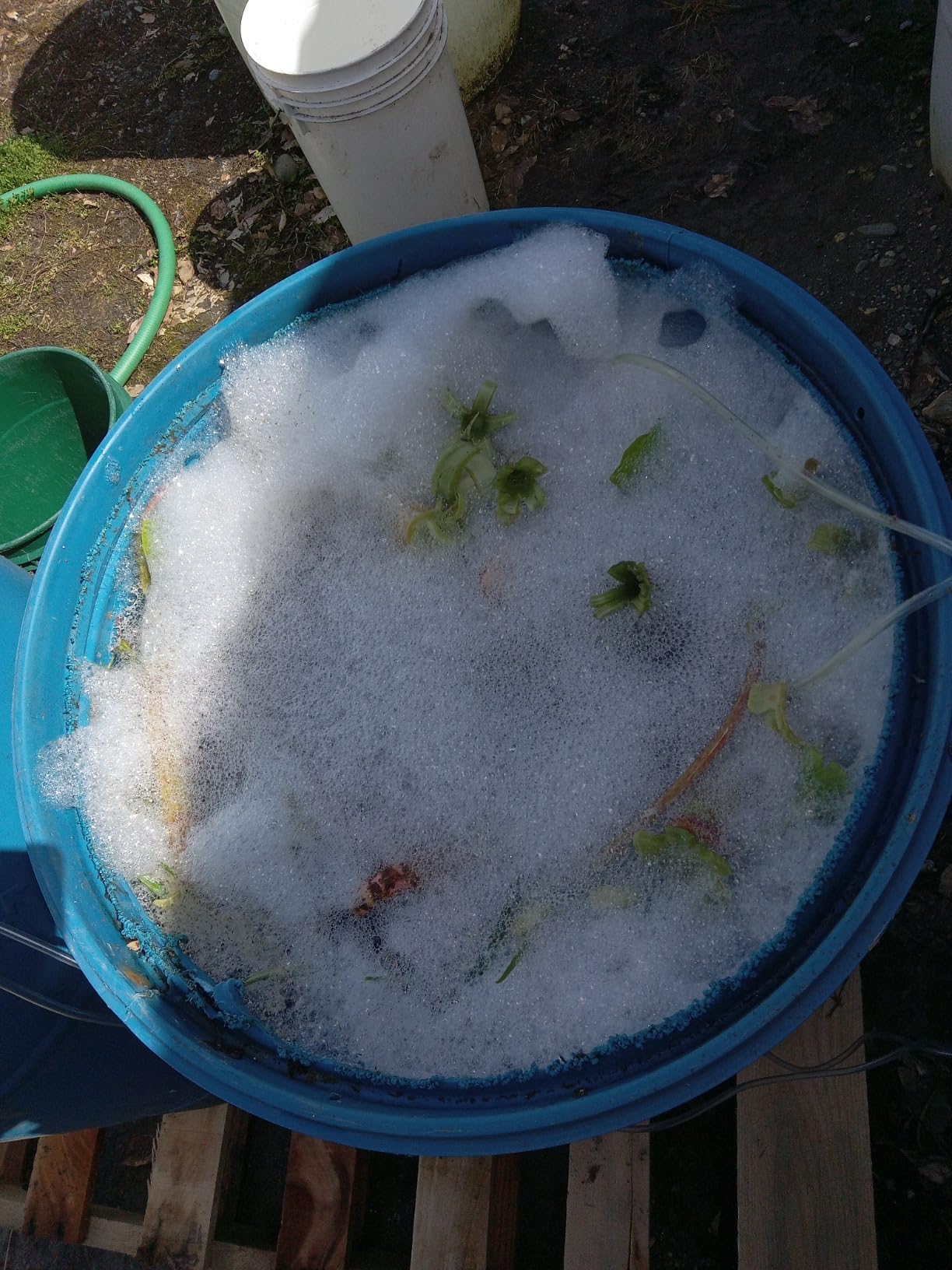
Reviewers on this listing report multi-year service, including use in cold-climate ponds where freeze-thaw cycling would destroy a weaker stone. That longevity claim is what makes this a good long-term choice: a consumable you only replace every second or third year behaves very differently in a season budget than one you swap monthly.
Mineral construction also resists the algae staining that permanently discolors lighter stones. After extended running the surface darkens a little but does not degrade, and a stiff brush brings the bubble quality back without any chemical treatment.
Bubble Character and Pump Demand
Bubbles here are medium rather than fine, which is a fair trade for the higher output this stone can carry. A 7-10 W pump through a 4-by-2 inch cylinder moves a lot of air, and in a 5-gallon bucket the resulting agitation is more than enough to keep the solution circulating.
The stone sits flat on the bottom without rocking, so it does not need weighting. In a system with substrate or a grid it can be tucked underneath and hidden, which matters if the reservoir is visible in a grow room.
For Whom This Stone Is the Right Choice
It is the right call for a 5-gallon DWC bucket, a two-bucket loop, or a small RDWC rack where you have a pump in the 7-10 W class. It is also a good pond diffuser at that pump size, given the durability reports.
For Whom It Falls Short
Packaging is the recurring complaint. Larger stones of this size can arrive chipped or broken because the protective packaging is thin, so inspect the package on arrival and have a spare from a multi-pack if you can. It is also too demanding of a pump to pair with a small aquarium piece, and the medium bubble size will not satisfy anyone chasing a nano-bubble effect.
4. Pawfly 3 Inch Ball 2-Pack – Self-Weighted Diffusers for Buckets and Small Ponds
Pawfly Aquarium Air Stone 3 Inch Fish Tank Air Stone, Ball Bubbler Round Oxygen Diffuser for Air Pump Fish Tanks Buckets Small Ponds and DWC Systems, 2 Pack
2.7 inch diameter balls,11.3 oz each
15 L/min jetting volume
7W+ pump required
Soak 1 hour
+ Pros
- Weighted ball shape sinks and stays put
- Good dense bubble volume for DWC
- Sintered mineral material
- Cons
- Round surface is harder to clean than a domed disc
- Needs a 7W+ pump for full output
The ball shape is unusual in a hydroponic context, and it is the reason this product earns its place. Each sphere weighs 11.3 ounces, so a single one drops to the bottom of a bucket or a shallow pond bed and stays put without any anchoring hardware at all.
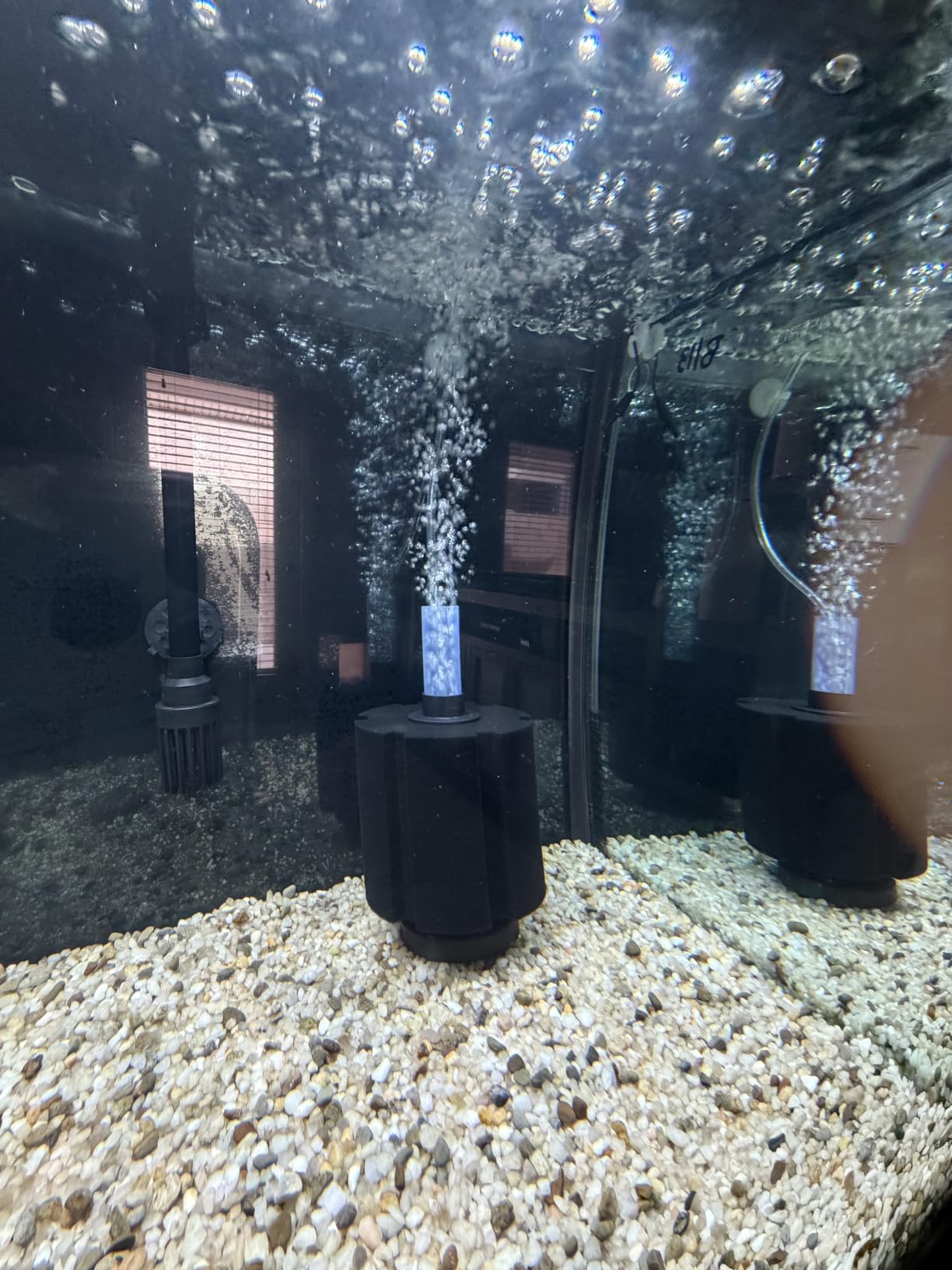
Air is fed into the center, so the bubbles leave from the top of the ball and rise in a ring. That pattern circulates water outward from the stone and pulls solution from the surface down, which is a useful flow pattern in a wide, shallow container where a flat stone only boils in place.
Jetting Volume and Pump Requirements
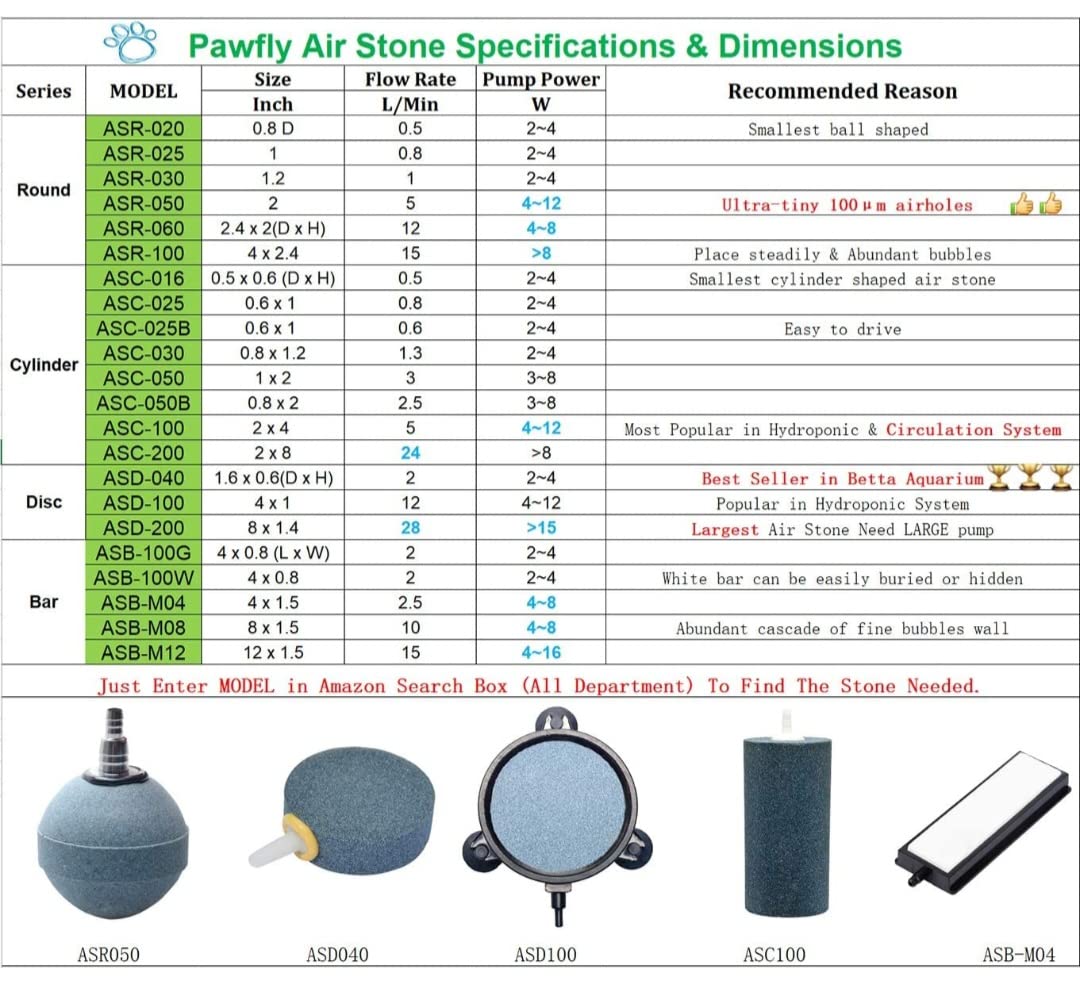
The listed jetting volume is 15 L/min, which is high for a 2.7 inch stone and explains why the manufacturer specifies a pump above 7 W. Below that threshold the ball produces a thin trickle rather than the continuous curtain the design is capable of, and again the stone gets blamed for a pump problem.
Tubing is flexible here, with the fitting accepting either three-eighth-inch or three-sixteenth-inch inner diameter. That versatility is genuinely useful when you are pulling from an existing parts bin rather than buying a matched airline length.
Cleaning the Curved Surface
Every surface on a ball is curved, which is the tradeoff against the disc and cylinder shapes. A stiff brush still gets into the pores, but there is no flat face to lay against a workbench, and the underside is awkward to reach once the stone is wet and heavy.
Soaking takes one hour rather than two or three, which is a small convenience when you are rotating stones in and out of service.
For Whom This Stone Is the Right Choice
This suits wide shallow reservoirs, small outdoor ponds, and any container where you want circulation without a flat footprint. The self-weighting behavior also makes it the easiest stone to install: drop it in and forget it.
For Whom It Falls Short
It is not the right choice for a grower who wants to scrub the stone on a bench or who is chasing the smallest possible bubble. A 7 W minimum is a real floor, not a suggestion, and fine-bubble nano stones like the hygger kit produce a visibly different result for indoor use.
5. Pawfly 6 Inch Bread Air Stone – High Output for Large Reservoirs
Pawfly Aquarium Air Stone 6 Inch, Fish Tank Bread Air Stone Bubbler Oxygen Diffuser for Large Air Pump Fish Tank Outdoor Garden Pond and DWC System
6 inch diameter by 2 inch high,30 oz
30 L/min jetting volume
Requires 20W+ air pump
Soak over 3 hours
+ Pros
- Very high air output with near-fountain bubbling
- Flat weighted base keeps it steady
- Domed surface scrubs easily
- Cons
- Unsuitable for small tanks
- Nozzle can arrive clogged with residue
- Occasional pieces arrive chipped
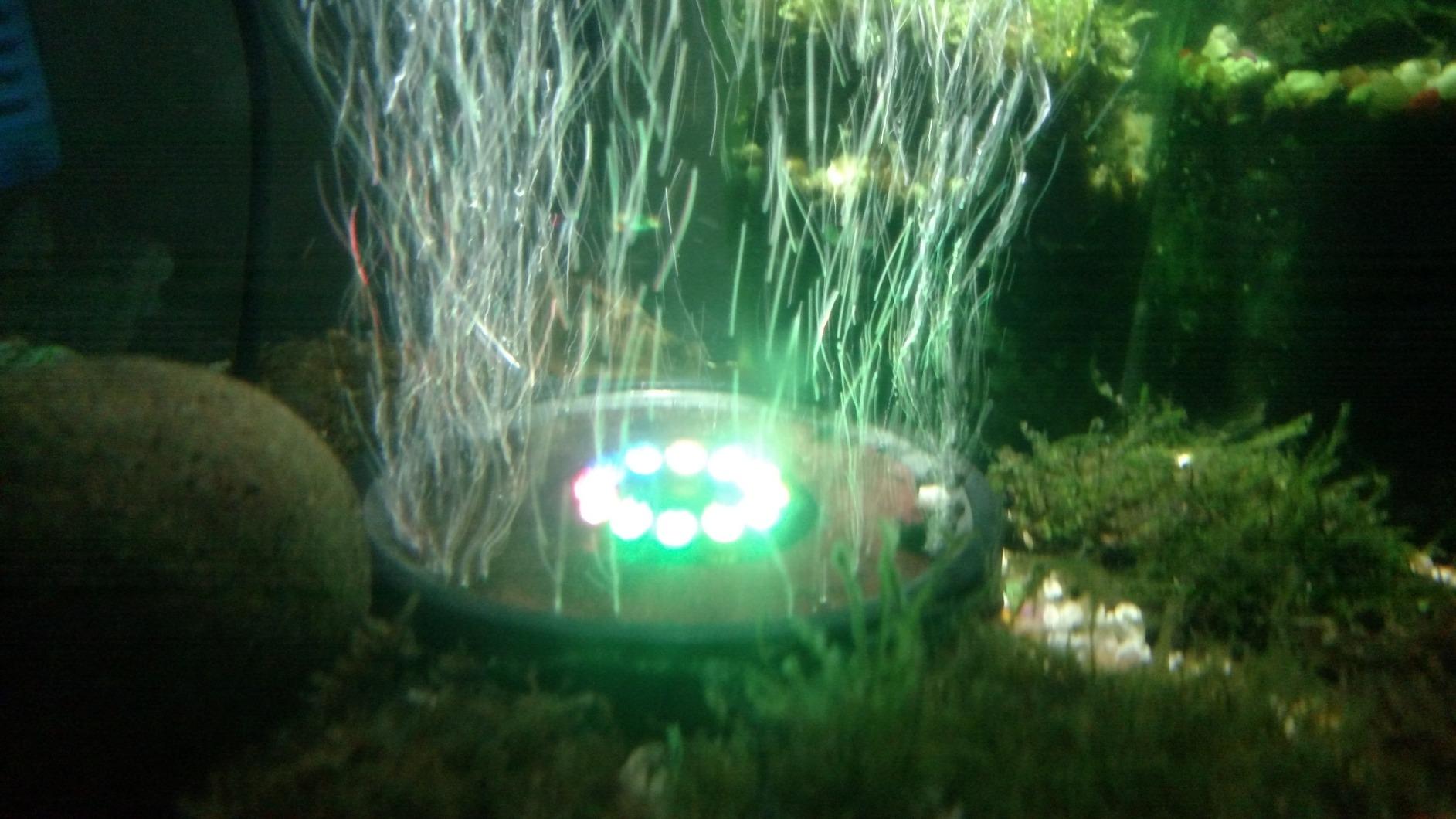
When one reservoir is too big for a single 4-inch stone, this is the answer. At 6 inches in diameter, 30 ounces, and a listed jetting volume of 30 L/min, it moves a large volume of air and produces what several reviewers describe as near-fountain bubbling.
The trade is a pump requirement above 20 W, which is a genuine step up in power draw and in the noise the pump makes. This is equipment for a dedicated 20-40 gallon reservoir or a large pond, not for a small indoor bucket.
Why Size Beats Multiple Small Stones Here
One wide stone distributes air across a broad area of the reservoir floor in one pass. Ten small stones on a manifold can cover comparable area, but each adds a length of airline, a barb connection, and another point where a leak or a clog can hide. Fewer components means fewer failure modes.
The flat base is the other reason this one works in a large container. A 6-inch stone with a curved underside would rock and drift, but this one sits flat and stays put with no weighting.
Pre-Soaking Time and Out-of-Box Condition
The manufacturer calls for more than three hours of soaking before first use, the longest instruction in this roundup. That is deliberate: a large stone holds a lot of trapped air in its pores, and an under-soaked stone bubbles from a few spots and looks faulty when it is only wet inside.
Some pieces arrive with the nozzle clogged with manufacturing residue, and a few arrive chipped. Both are fixable or replaceable, but they are real enough that you should soak and inspect before you commit a whole reservoir to the stone.
For Whom This Stone Is the Right Choice
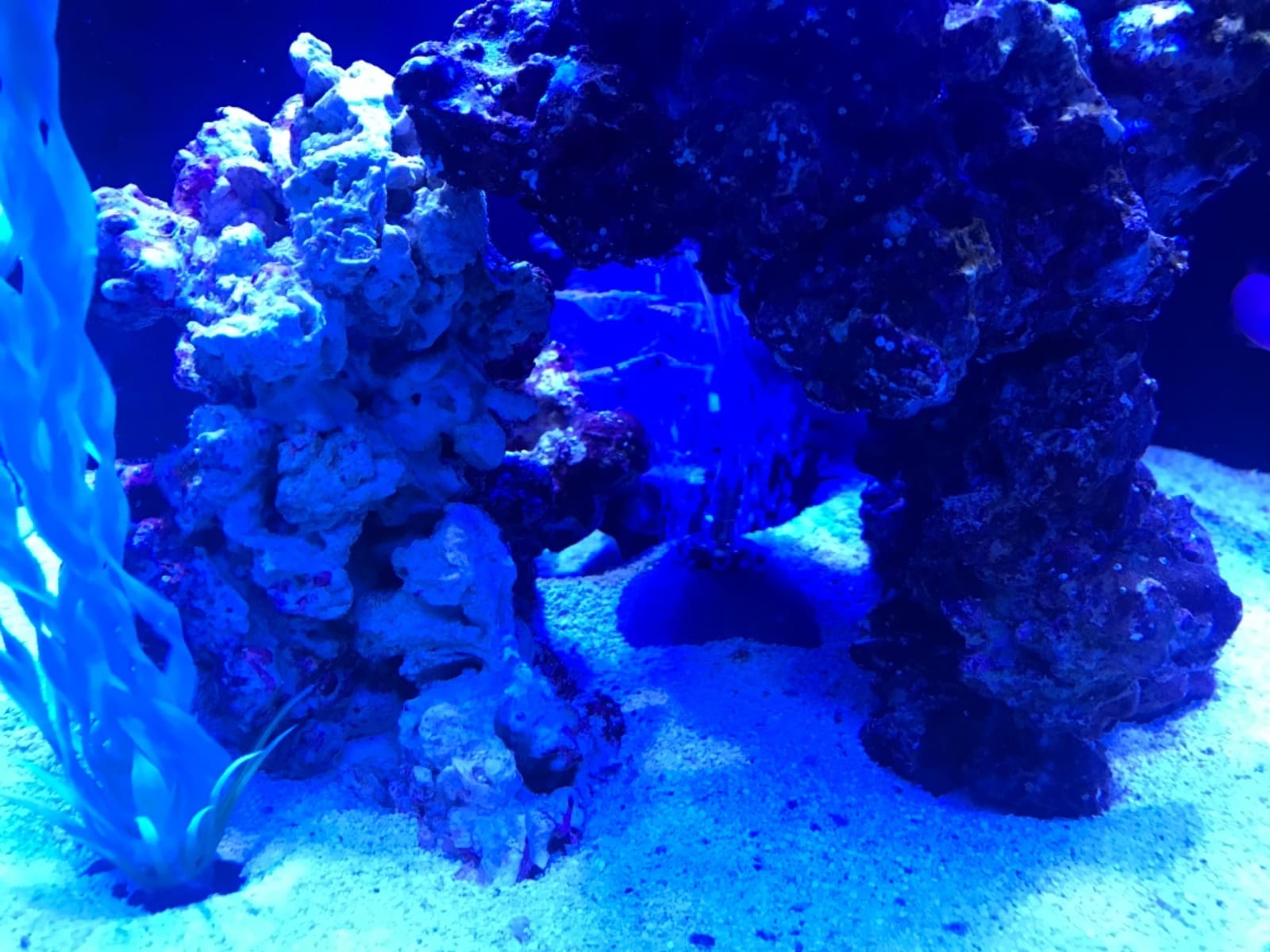
It fits a grower with a large dedicated reservoir, an outdoor pond needing serious aeration, or a commercial rack where one high-output stone per tank is simpler to service than several small ones. The domed top also scrubs more easily than a ball, which matters on a surface this large.
For Whom It Falls Short
It is unusable in a small aquarium or a 5-gallon bucket, and the pump it demands is disproportionately expensive for those setups. If your budget is a small pump and a single bucket, the 4-by-2 inch stones deliver adequate aeration for a fraction of the hardware.
6. Active Aqua ASCS Cylinder – A Hydroponic-Only Standard That Outlasts Aquarium Versions
Hydrofarm Active Aqua ASCS Air Stone Cylinder, Small
Micropore design cylinder
Single piece
Hydroponic listed use
1 year warranty
+ Pros
- Heavy enough to sit on the bottom unaided
- Even well-diffused tiny bubble shed
- Resists algae staining
- Long service life
- Cons
- Average aquarium pumps underperform
- Stones can arrive with manufacturing grit
- Standard airline can be stiff at the nipple
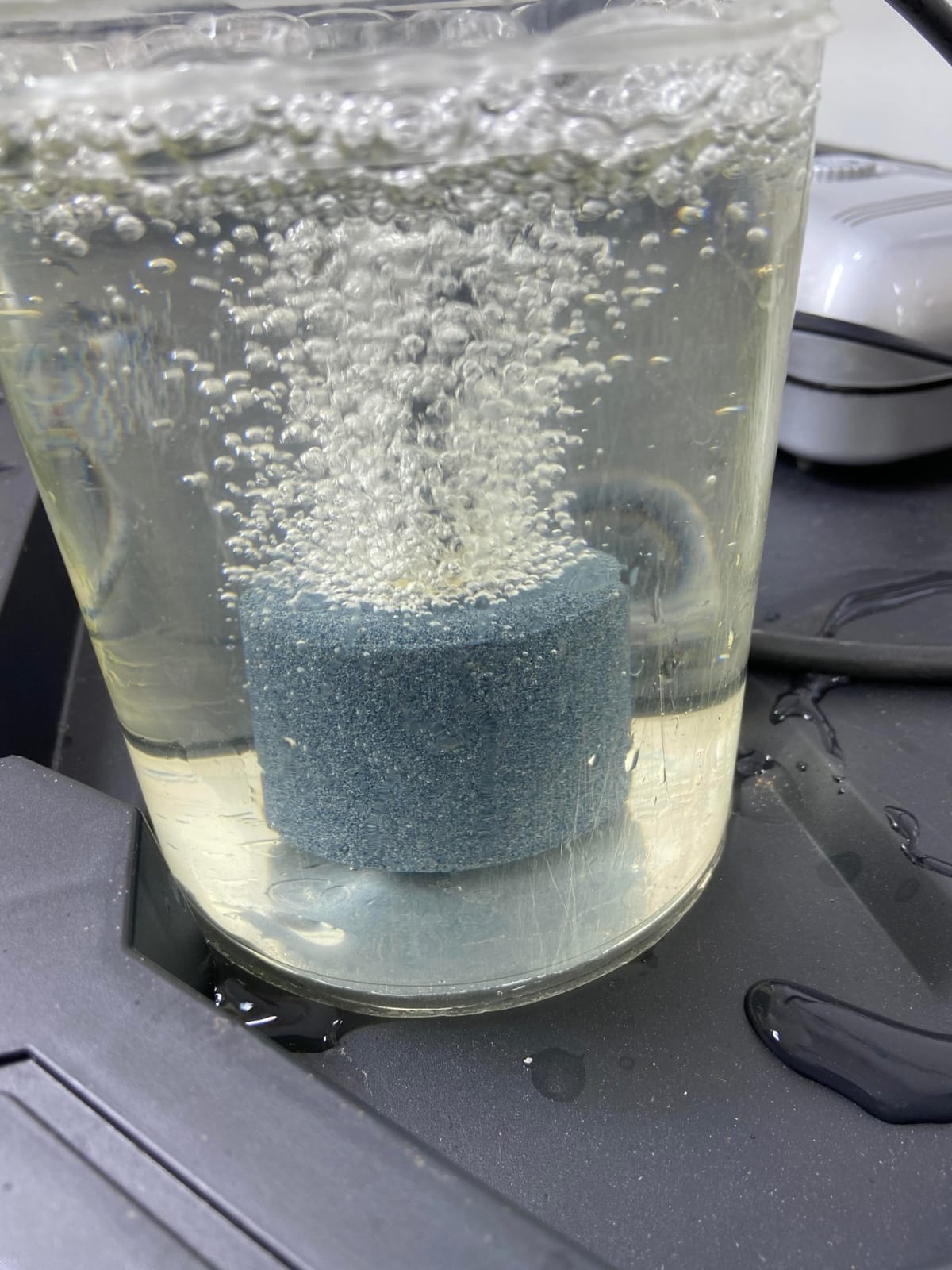
Most stones on the market are aquarium products that happen to work in a reservoir. The Active Aqua ASCS is the other way around. It is listed for hydroponic use, and the micropore design is described specifically as energizing and circulating nutrient solution to extend its life and promote root health.
That micropore structure is the technical reason to choose it. Finer pores mean a higher surface-area-to-volume ratio, so each bubble carries more usable oxygen and the column in a clear reservoir looks finer and more uniform than a medium-pore stone produces.
Cleaning Method and Long-Term Wear
The manufacturer recommends a stiff brush with diluted bleach or vinegar for cleaning, which is the right toolkit for a stone that stays in nutrient solution permanently. Algae staining is one of the common reasons stones degrade in appearance and output, and this cylinder resists it better than lighter-colored pieces.
At 1.6 ounces it is heavy enough to sit unaided on a reservoir floor. The single-piece count means you are buying one stone, so a second piece is worth ordering if you want a spare or a two-bucket setup.
The Pump Learning Curve
The one consistent caution across reviews is that average aquarium pumps underperform here. This stone is dense and micropore, which means real back pressure, and a pump at the low end of its range will produce weak output that gets misdiagnosed as a bad stone.
Reviewers also flag that stones can arrive with manufacturing grit that needs flushing, and that standard three-sixteenth-inch airline can be too stiff to seat properly on the nipple. Soften the tubing in warm water first and push until it seats fully; a partial fit leaks and mimics a clog.
For Whom This Stone Is the Right Choice
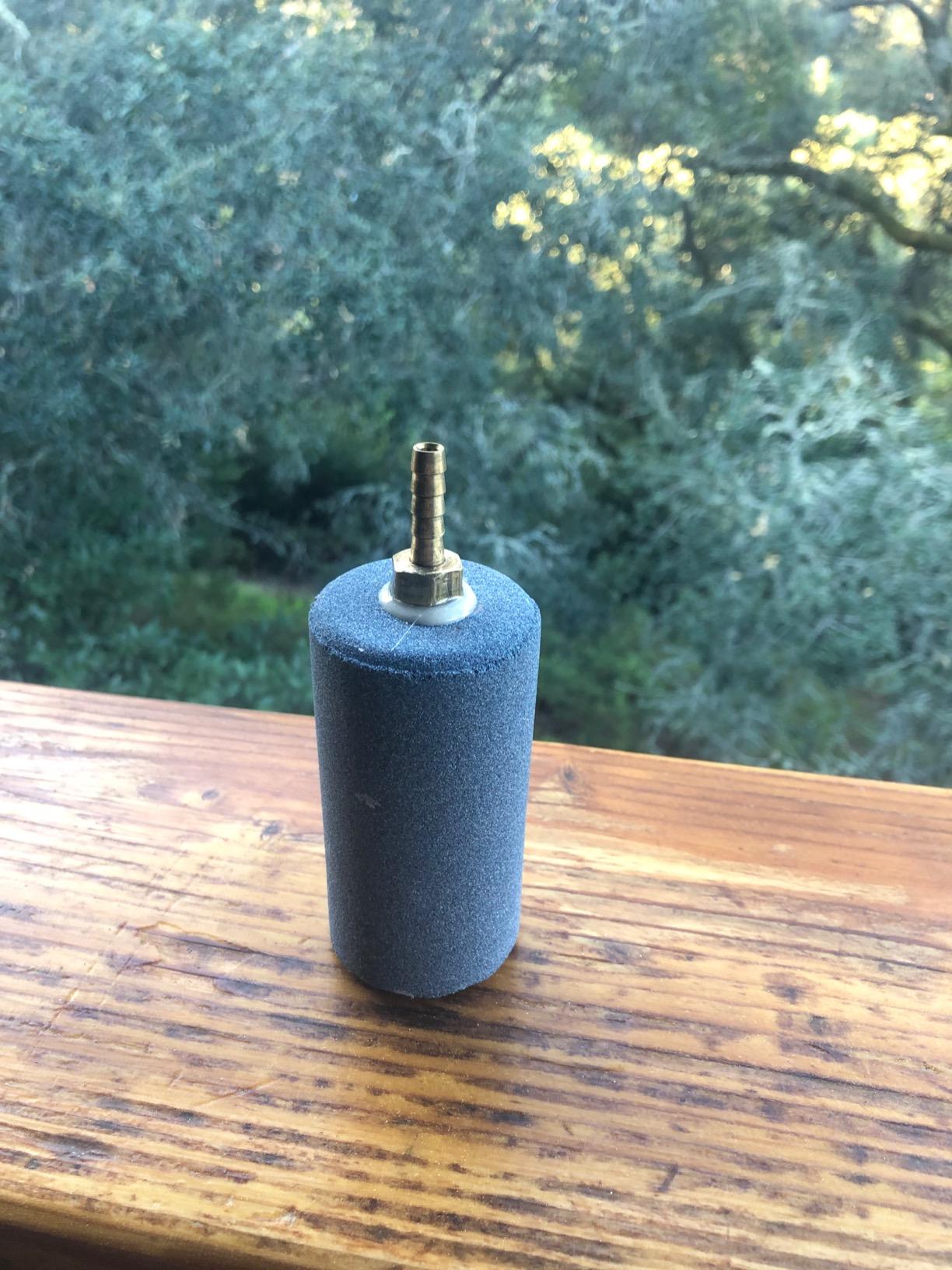
It suits a grower who wants the finest bubble output they can get from a cylinder and who already has a pump strong enough to push back against the pores. The stated hydroponic purpose and the included one-year warranty make it the most purpose-built option in this roundup.
For Whom It Falls Short
It is a poor match for a first-time grower with a basic aquarium air pump, because the learning curve shows up as a disappointing first experience. It is also a single piece, so multi-site setups need multiple purchases, and the lack of included hardware means valves are extra.
7. Pawfly 4 Inch Silicon Carbide 4-Pack – For Moving-Bed Filters and Multi-Bucket Racks
Pawfly Aquarium 4 Inch Air Stone Cylinder for Larger Pumps Bubble Diffuser Release Tool for Buckets Fish Tanks Outdoor Garden Ponds and DWC Reservoirs, 4 Pack
Washable silicon carbide,2 inch D by 4 inch H
0.8 lb each
5 L/min per stone
7W+ pump
+ Pros
- Good weight keeps stones positioned in filters
- Dense bubbles that help keep root rot away
- Useful quantity in a 4-pack
- Cons
- Airflow at the stem can be restricted by tubing
- Some pieces need an extended soak
- Packaging can bend the white connector
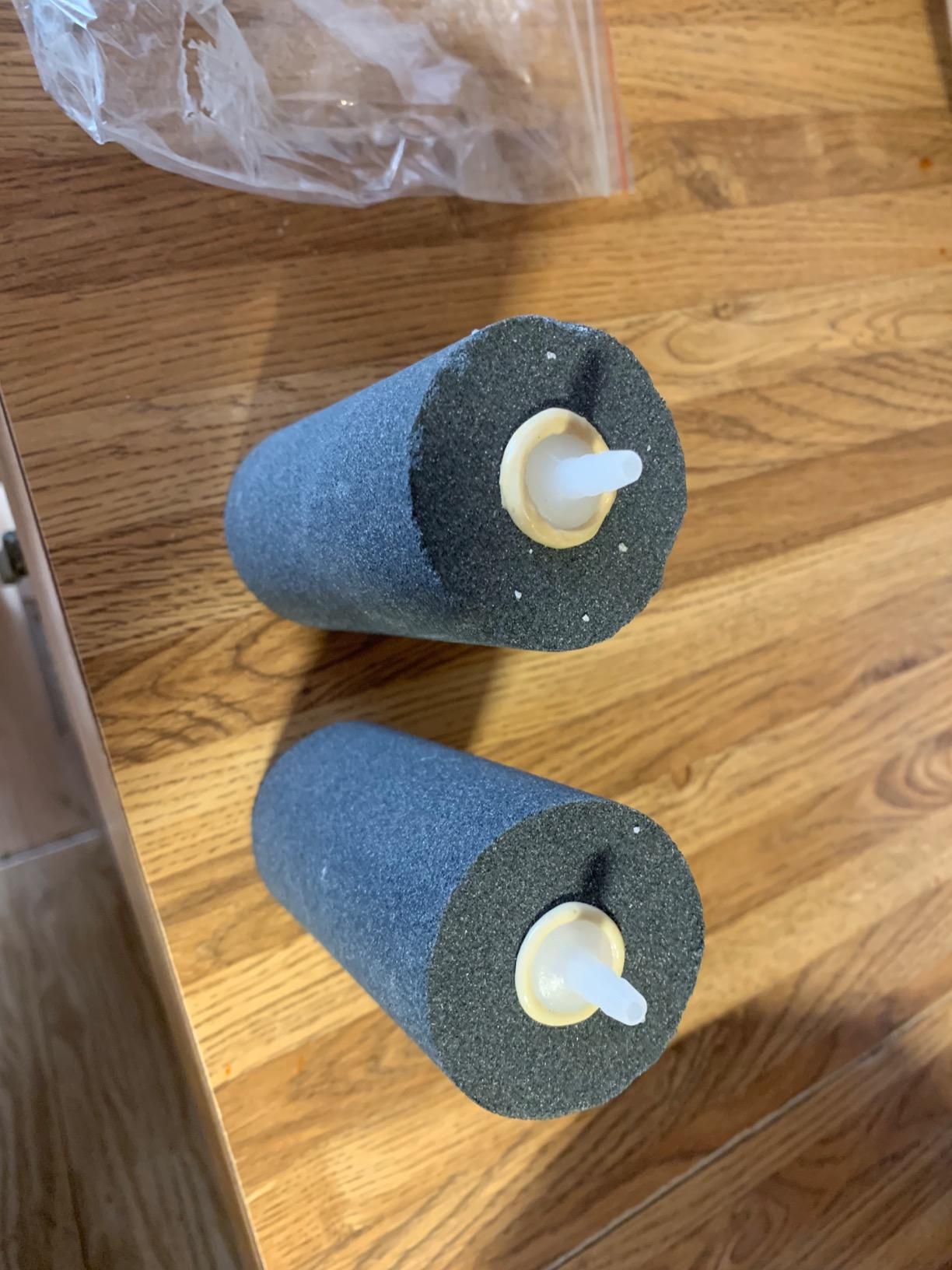
Silicon carbide is the material to look for when a stone has to survive handling, moving-bed filters, and repeated scrubbing. It is harder and more chemically resistant than a sintered mineral aggregate, and it tolerates a stiff brush without losing pore structure.
This 4-pack gives you four cylinders at 2 inches in diameter and 4 inches tall, each weighing 0.8 pounds. That weight is the feature reviewers mention most: in a moving-bed filter or a rack where water moves constantly, these stay positioned rather than drifting into a corner and going silent.
Silicon Carbide Versus Sintered Mineral
Sintered mineral stones are softer and usually cheaper, and they work fine in a still DWC bucket. Where they lose is durability under physical handling. A stone that gets moved for a reservoir change, or that sits in a filter with active flow, will degrade faster at the pore edges, and once the pores open up the output gets coarser.
Silicon carbide holds a tighter pore distribution through that abuse, which is why this pack is the one I would choose for a multi-bucket RDWC rack where stones get pulled and repositioned as the system expands.
Where Weak Output Really Comes From
Two of the recurring complaints on this listing trace to hardware rather than the stone. Airflow at the stem can be restricted when the airline is the wrong diameter for the nipple, and some pieces need a longer soak than the listed hour before bubbling across the full surface.
With a pump above 7 W and a properly seated airline, the output described by reviewers is abundant and dense, with enough agitation in a bucket to visibly deter root rot. The 5 L/min jetting volume per stone is modest, so on a large reservoir you run several from a manifold rather than one.
For Whom This Stone Is the Right Choice
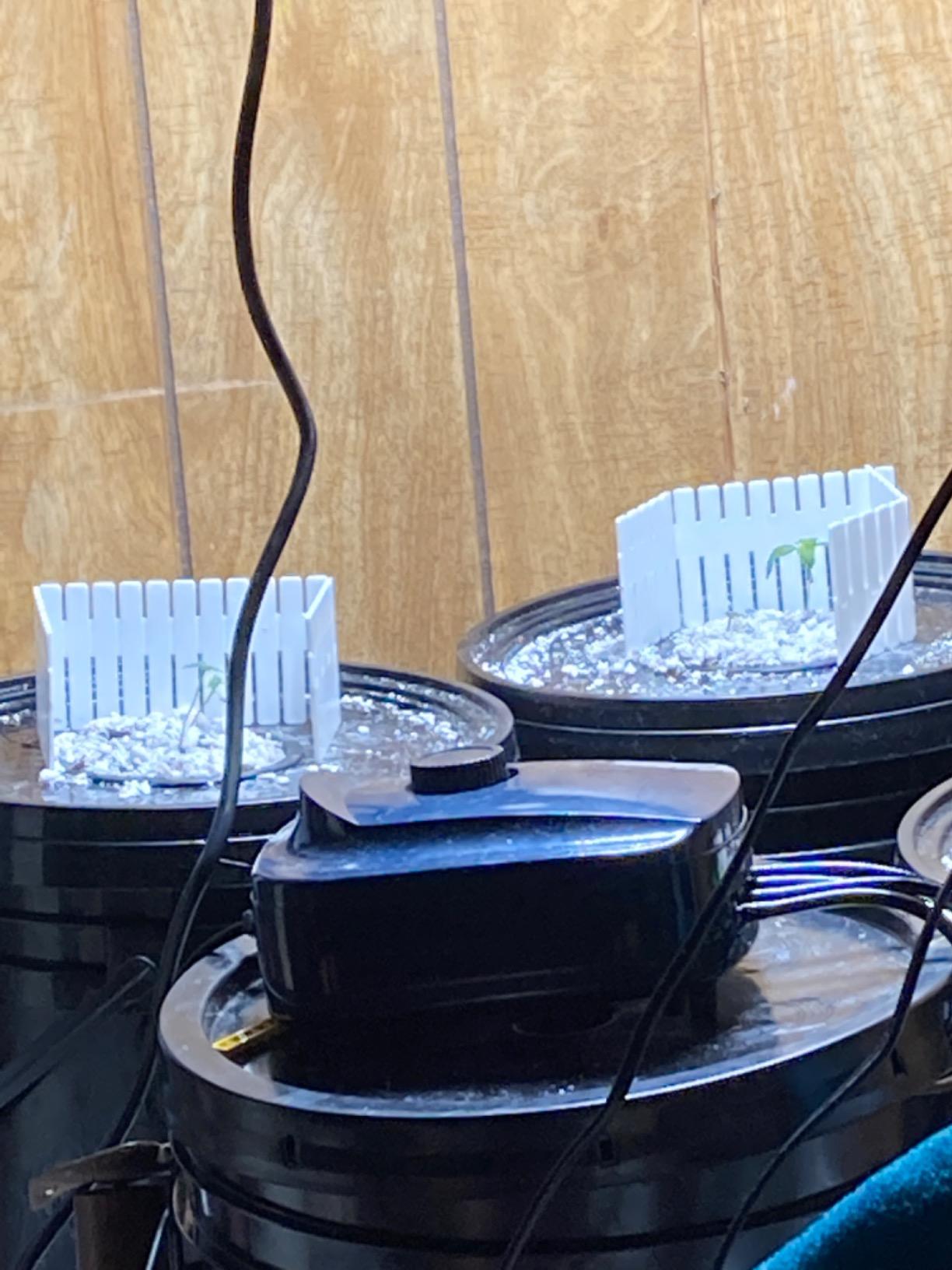
It fits a multi-bucket rack, a moving-bed filter, or any setup where stones get handled. Four pieces also means one per bucket with a spare, or two spares, and the quantity is genuinely useful for an RDWC build.
For Whom It Falls Short
It is not the pick for a single quiet indoor bucket, where the 5 L/min per stone is modest and any pump above 7 W will be audible in a living space. Packaging that bends the white connector is worth inspecting on arrival, since a compromised connector is the fastest route to a leak that reads as a weak stone.
8. AQUANEAT 1.5 Inch Disc 4-Pack – Low Profile Diffusers for Shallow Reservoirs
AQUANEAT Air Stone Disc, 4 Packs, Aerator Bubble Diffuser, Air Pump Accessories for Hydroponics, Aquarium Fish Tank, Ponds, DWC Reservoirs and Circulation System (1.5 inch)
1.5 inch disc diameter
4 pack
3/16 inch airline
4W+ pump recommended
+ Pros
- Uniform reliable bubbles after months of running
- Lightweight and quiet
- Discs hide easily in substrate
- Low profile suits shallow water
- Cons
- Build quality is mid-to-low
- Occasional broken stone from thin packaging
- Smaller than some buyers expect
A disc does one thing a cylinder cannot: it disappears. At 1.5 inch across and with a low profile, this AQUANEAT pack tucks under a reservoir grid, behind reservoir hardware, or into the substrate of a shallow tray, and the bubbling continues without a visible stone disrupting the layout.
Four discs in a pack, each rated for a pump above 4 W, means a modest power requirement. That low demand is what makes discs attractive for propagation trays and small shallow reservoirs where a large stone would sit awkwardly.
Durability Over Months, Not Weeks
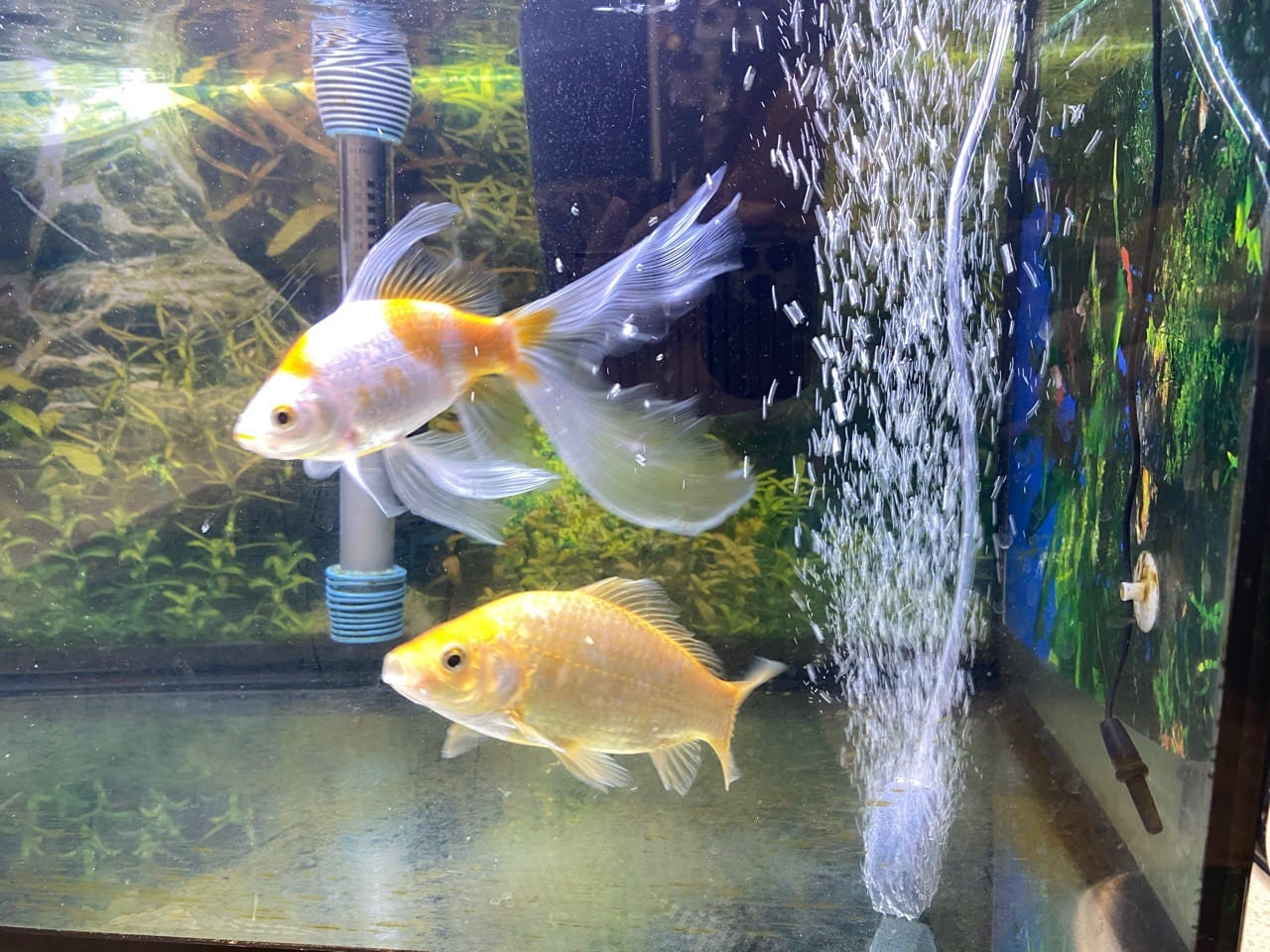
Reviewers report uniform, reliable bubbling after months of continuous use, which is the durability benchmark that matters for a stone you install and forget. The listed material is a safe, washable material, and discs clean easily because the flat top and bottom are simple to run a brush across.
Quiet operation is a genuine advantage in an indoor space. A disc driven by a small pump produces a low surface agitation rather than the roar a large cylinder makes, which is why discs keep showing up in propagation setups.
What the Complaints Reveal
The most common complaint is packaging breakage, because a 1.5 inch disc in thin packaging is fragile in transit. Build quality is described as mid-to-low, and several buyers note the discs are smaller than they expected. None of these affect performance; they affect expectations, so buy for the dimensions rather than the photos.
The pump floor of 4 W is modest enough that a basic aquarium pump will drive these, which is unusual in this category and a real reason to consider them for a small system.
For Whom This Stone Is the Right Choice
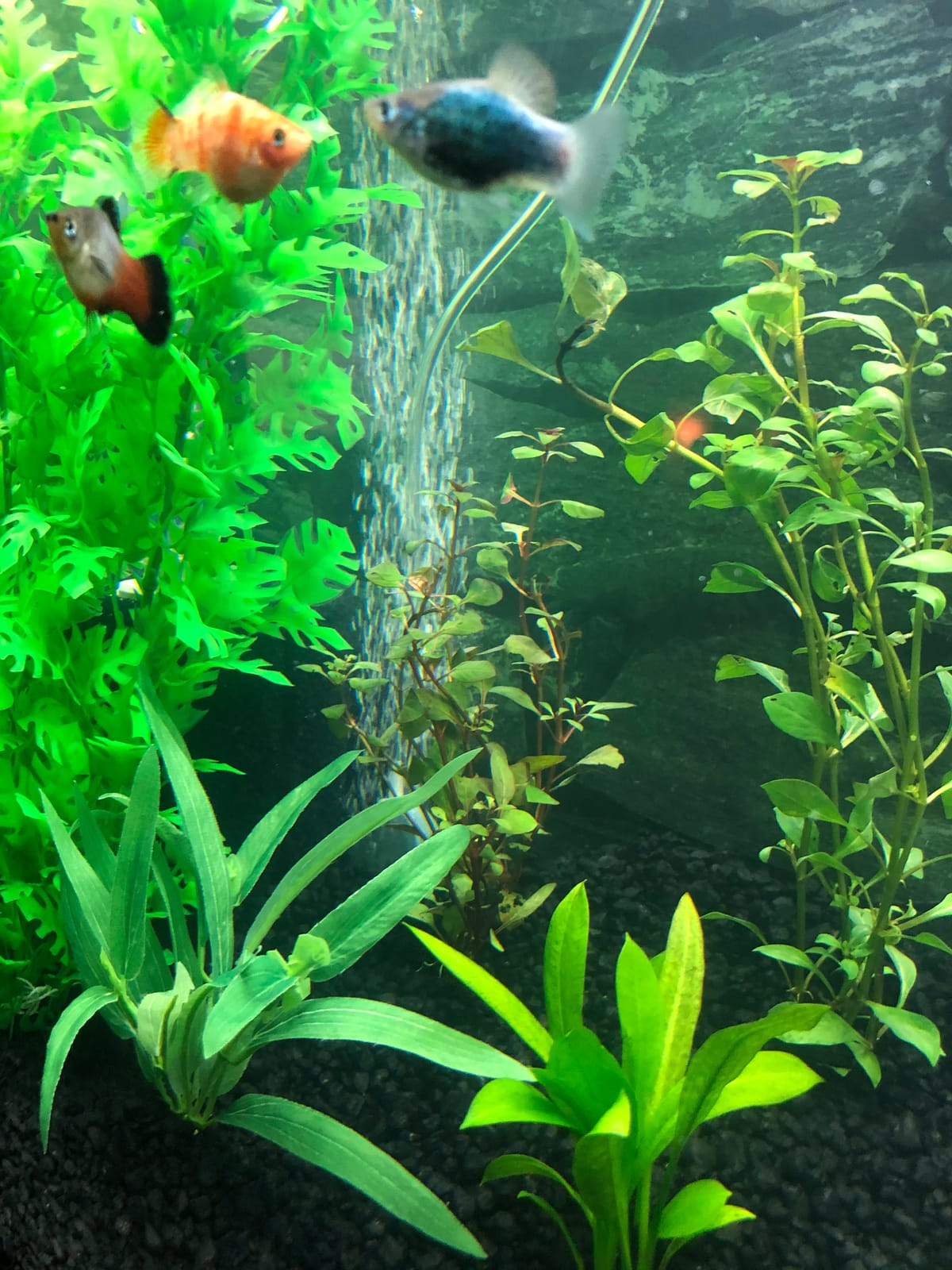
It suits a shallow propagation tray, a small reservoir where a tall cylinder will not sit flat, or a grow room where low noise matters more than raw oxygenation rate. The four-pack quantity also covers several sites from one purchase.
For Whom It Falls Short
A disc has less surface area than a large cylinder, so reaching dissolved oxygen targets in a big reservoir means more stones and more pump output. It is also more prone than a cylinder to arriving with a cracked piece, so check the pack before fitting the airline.
9. hygger 4 Inch Nano Air Stone Kit – The Finest Bubbles in the Lineup
hygger Aquarium Air Stone Kit, Fish Tank Bubbler, Nano Furnace Flue Round Air Stone Disk Set for Hydroponics, Small Bubbles, Ultra-High Dissolved Oxygen Diffuser (4 Inch)
Nano furnace flue disc,4 inch area
15.2 oz weighted body
3 L/min jetting
4W+ pump
+ Pros
- Very fine dense uniform nano bubbles
- Weighted body sinks unaided
- Control valve for airflow tuning
- Quiet surface agitation
- Cons
- White stone discolors with algae and staining
- Pump and airline not included
- Suction cups are low quality
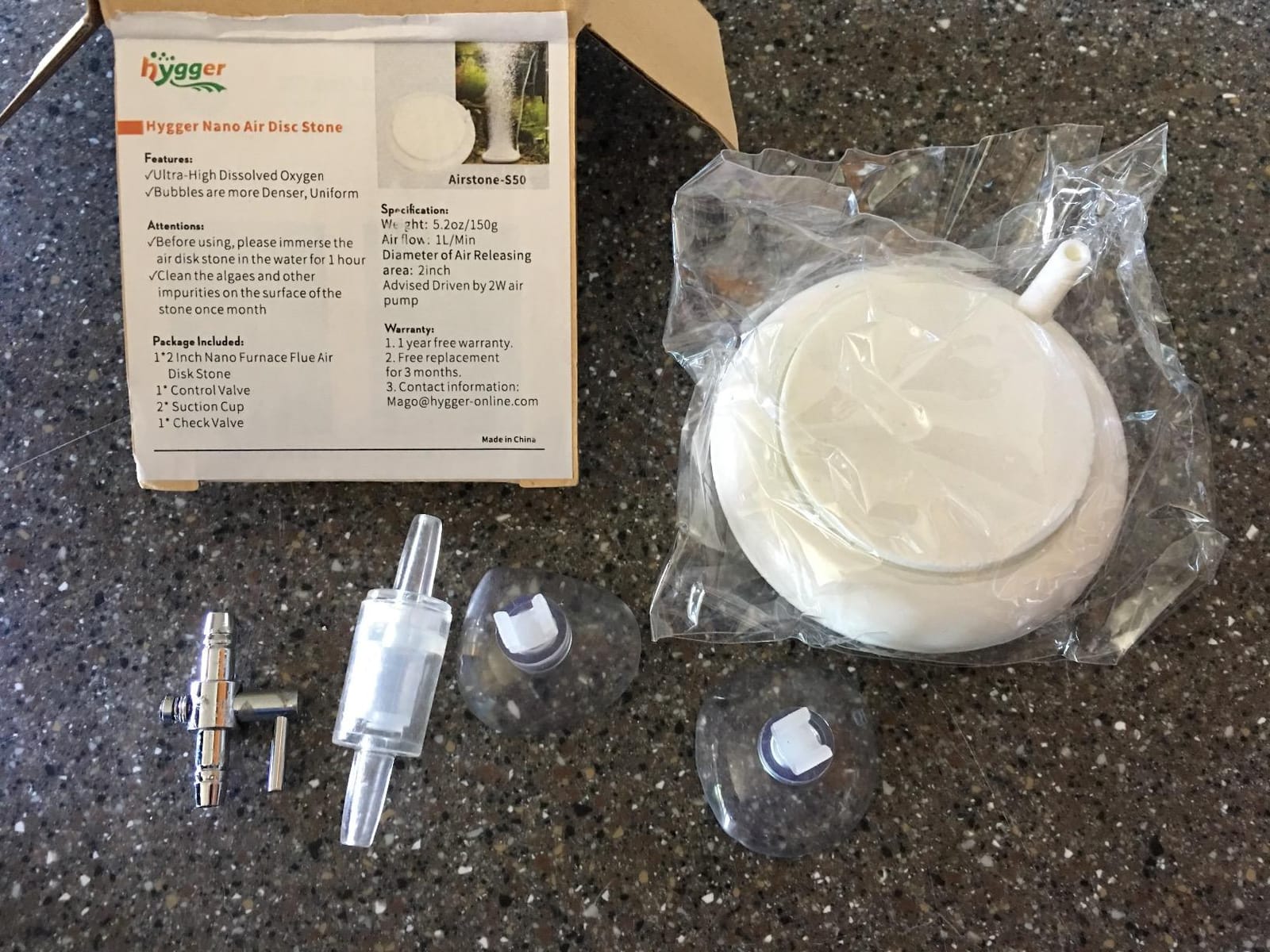
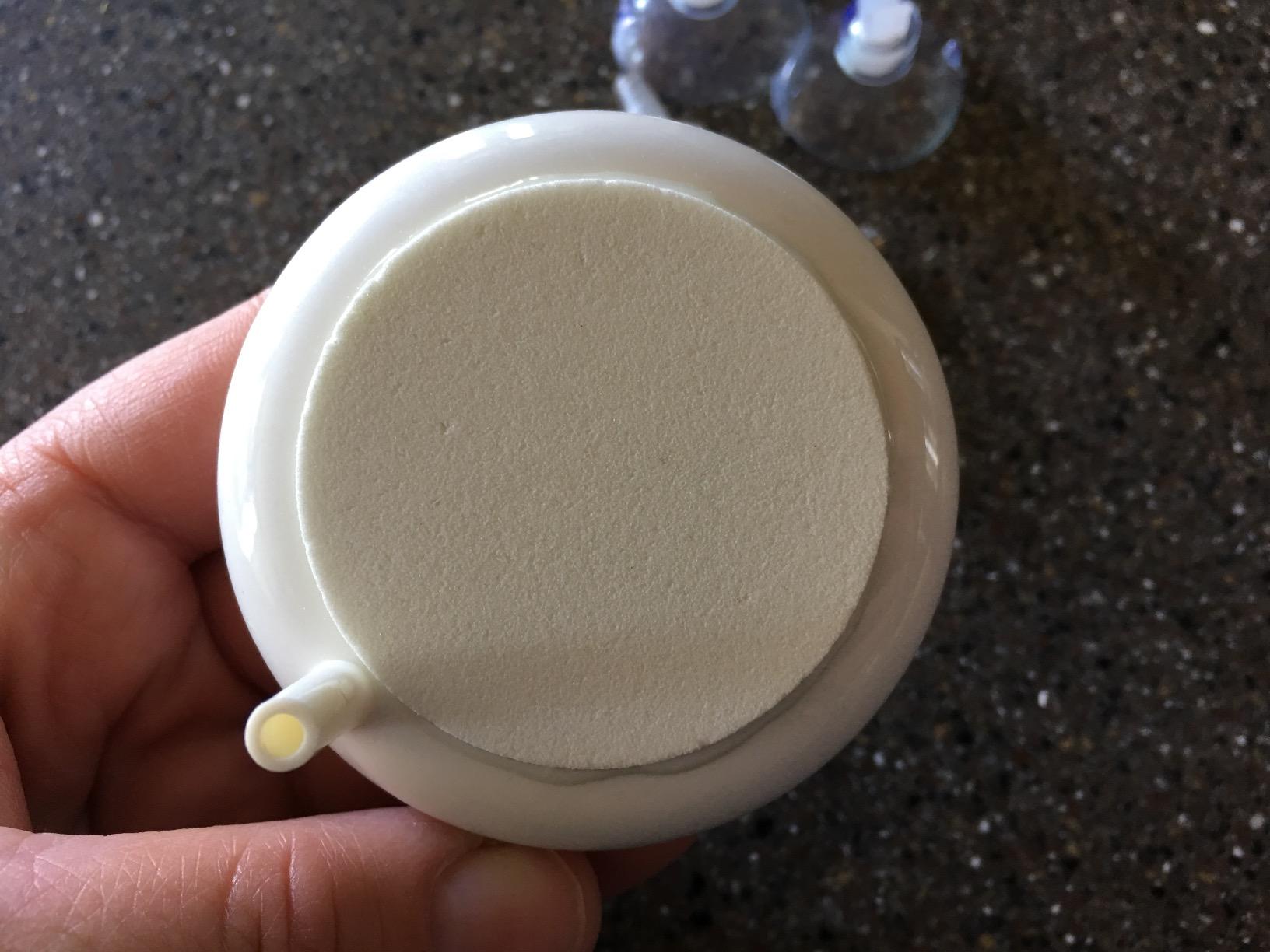
This is the quietest, finest-bubbling option in the roundup, and the difference is obvious through the side of a clear container. Where other stones produce a column of visible beads, the hygger nano furnace flue disc produces a fine, milky curtain that barely disturbs the surface.
The reason is jetting volume. At 3 L/min this stone pushes less air than the larger ceramic pieces, and that low flow through a very fine pore structure is what produces the small, uniform bubbles that give nano diffusers their name. It is a controlled-output design, not a high-volume one.
What Comes in the Kit
The package is unusually complete for a diffuser: a control valve, a check valve, two suction cups, a tee connector, and a reducer for 8 mm or 4 mm airline. The check valve alone is worth noting, since back-siphon protection is a detail many stone purchases leave out.
Two items are not included, and buyers should plan for them. The air pump and airline tubing are sold separately, and the included suction cups are widely reported as cheap and short-lived. The 15.2 ounce weighted body is heavy enough that the cups are largely optional anyway.
The Staining Problem and Its Limits
The dominant complaint is that the white stone develops algae and mineral staining over months of use and will not clean back to white. Functionally the stone keeps working, and some owners report pieces lasting four years or more, but the appearance degrades and you are cleaning around discoloration rather than a clean surface.
Deeper placement requires more pump power than the 4 W minimum, because water depth adds pressure at the pores. Running it near the surface on a 4 W pump is where this stone performs as designed.
For Whom This Stone Is the Right Choice
It is the right pick for an indoor grow room, a quiet setup, or any reservoir where the objective is the highest dissolved oxygen per piece of pump noise rather than maximum churn. The included control valve lets you tune airflow down to a trickle and back up.
For Whom It Falls Short
It is the wrong tool for agitating a large reservoir, where 3 L/min of jetting volume will not keep a 20-gallon tank circulating. It also needs a separate pump and airline purchase, and the staining issue bothers growers who keep visible reservoirs. At 4.3 stars it sits below several alternatives here, mostly for that reason.
10. ALEGI 5.3 Inch Grey Cylinder 2-Pack – Long Diffusers for Sumps and Deep Tanks
ALEGI Air Stone Cylinder Bubbler, 5.3 inch, 2 Pack
5.3 inch long by 1.2 inch diameter
0.33 lb each
At least 4W pump
3/16 or 3/8 inch tubing
+ Pros
- Substantial weight keeps it submerged
- Even bubble spread with low back pressure
- Tubing holds on tightly
- Outlasted rope and disc styles
- Cons
- Needs a high-volume pump for full output
- Occasional dead pieces in a 2-pack
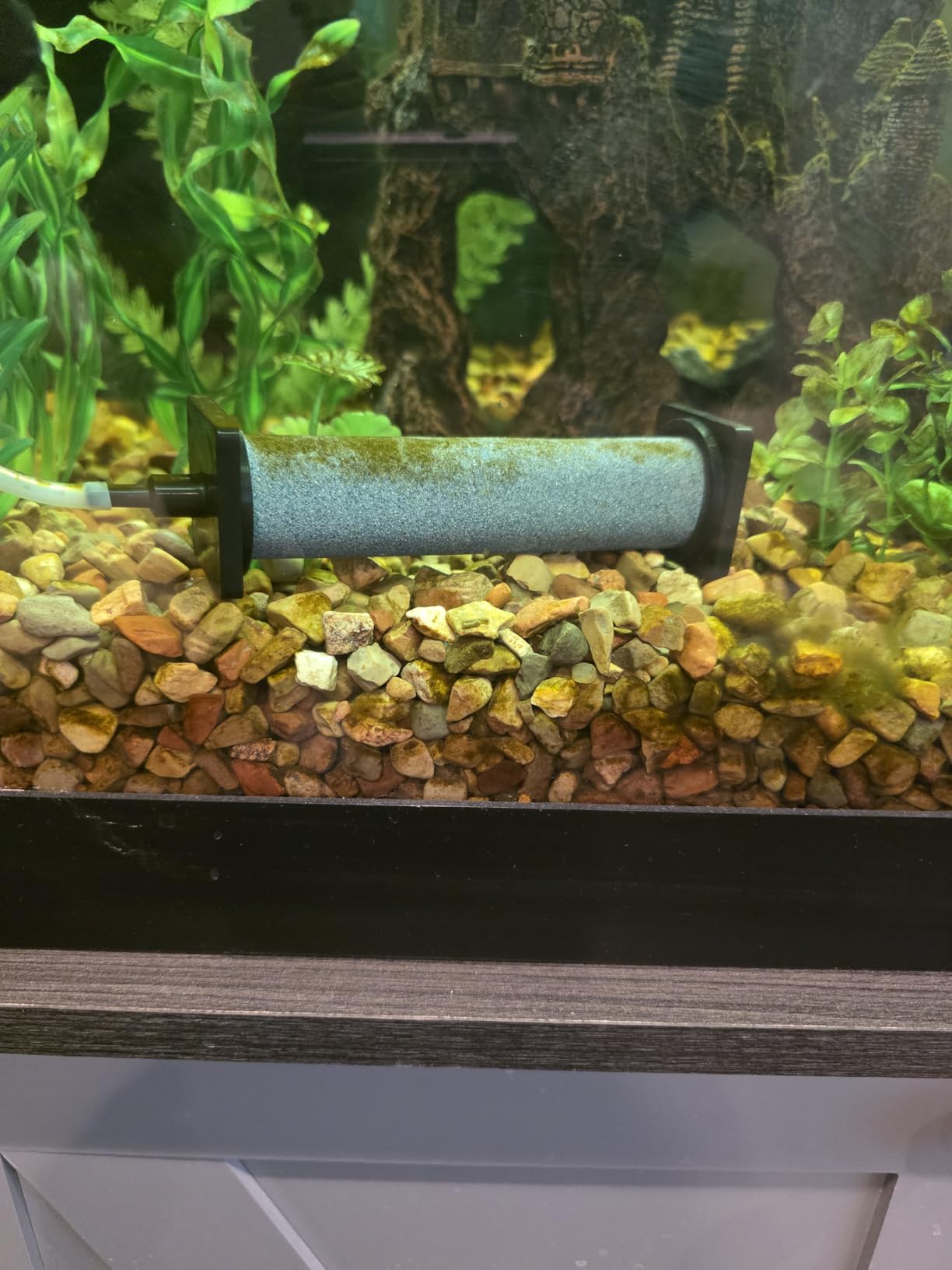
A long thin cylinder solves a problem a short fat one cannot: air distribution along a distance. In a sump, a long narrow tank, or a deep reservoir where you want bubbles rising along a wall rather than from one point, the 5.3 inch by 1.2 inch shape spreads output evenly along its whole length.
Each piece weighs 0.33 pounds and carries a protective shell around the porous stone, which is the durability angle. That shell is why one reviewer reports this cylinder outlasting rope, bar, and disc styles through the same comparison period.
Low Back Pressure and Wide Tubing Acceptance
Two properties stand out. The even bubble spread is achieved at low back pressure, so the stone does not fight the pump as hard as a dense cylinder of similar output. And the fitting accepts both three-sixteenth-inch and three-eighth-inch inner diameter tubing, holding tightly on either once seated.
That tubing flexibility is a real practical advantage when you are assembling a system from parts you already own. The 4 W minimum is also lower than many cylinders in this roundup, which means a modest pump can drive it.
Quality Variance in the Pack
The recurring complaint is piece-to-piece variation inside a two-pack, with some buyers reporting a stone that is dead or bubbles only along part of its length. Testing each piece in a clear container before fitting it to a live reservoir is worth the extra five minutes, and the two-pack format gives you a spare if one fails that test.
Soak time is over two hours, consistent with the larger stones here. A longer soak is not optional; an under-soaked long cylinder produces a partial bubble pattern that gets mistaken for a fault.
For Whom This Stone Is the Right Choice
It suits sump-style filtration, koi or garden ponds, and any long narrow container where you want a curtain of bubbles along a line rather than a single boil point. The protective shell and low pressure demand also make it forgiving of a modest pump.
For Whom It Falls Short
A cylinder of this diameter does not oxygenate a large reservoir on its own, and the output is modest enough that some owners report more visible bubbling from much smaller stones. It is also unsuitable where a long stone will not sit flat, and you should verify both pieces in the pack before deploying them.
11. boxtech 1 Inch Nano Bubble Kit – Quiet Oxygenation With a Control Valve
boxtech Aquarium Air Stone, Fish Tank Bubble Diffuser High Dissolved Oxygen Airstones for Air Pump Accessoriess with 1 Check Valve, 2 Suction Cup for Aquarium Pond Hydroponic
1 inch transparent stone
Nano bubble with regulating valve
1.5W+ pump
4mm ID airline
+ Pros
- Small dense uniform bubbles
- Quiet enough for day and night
- Suction cups and valve included
- Clear body blends into planted tanks
- Cons
- Air pump and airline not included
- 1 inch size is small for a real reservoir
- Some pieces need more than 1.5W
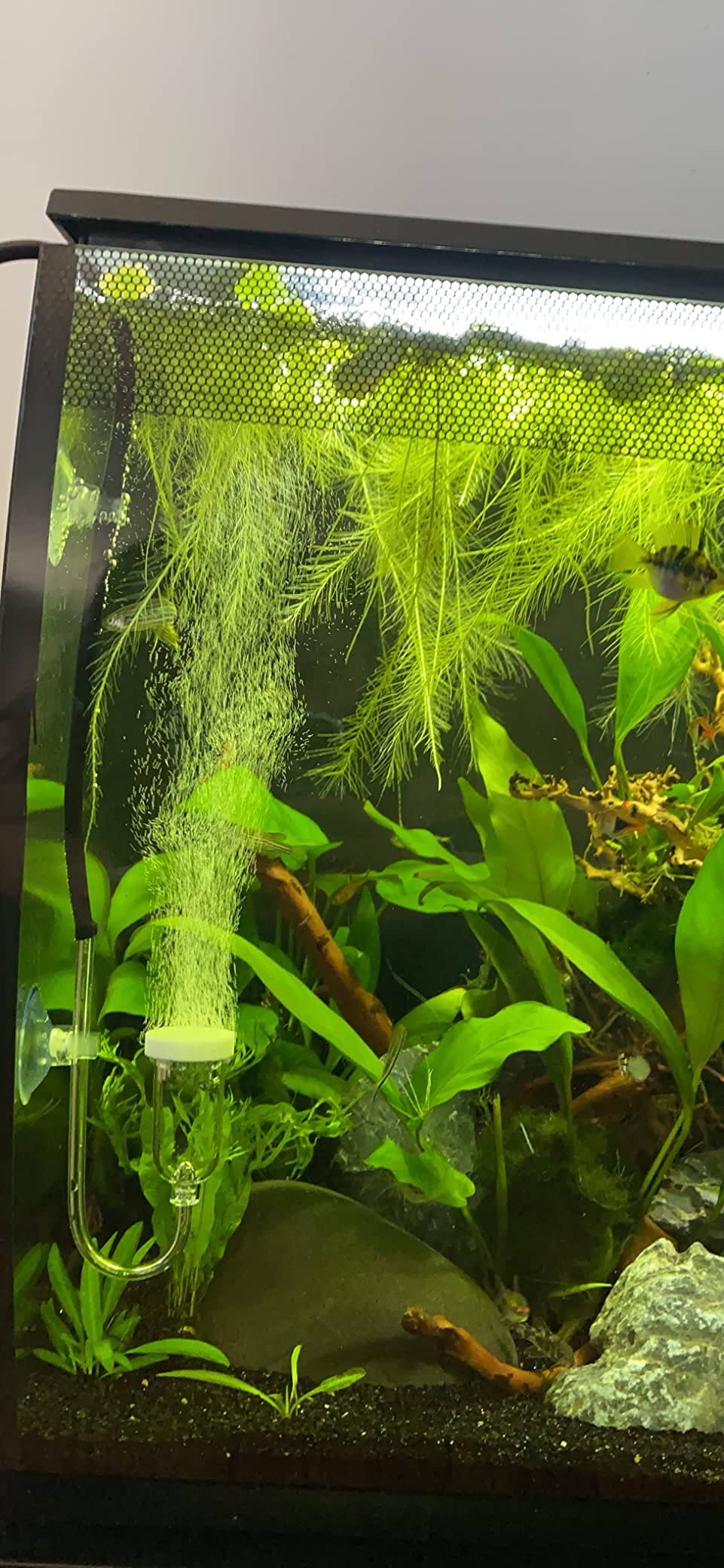
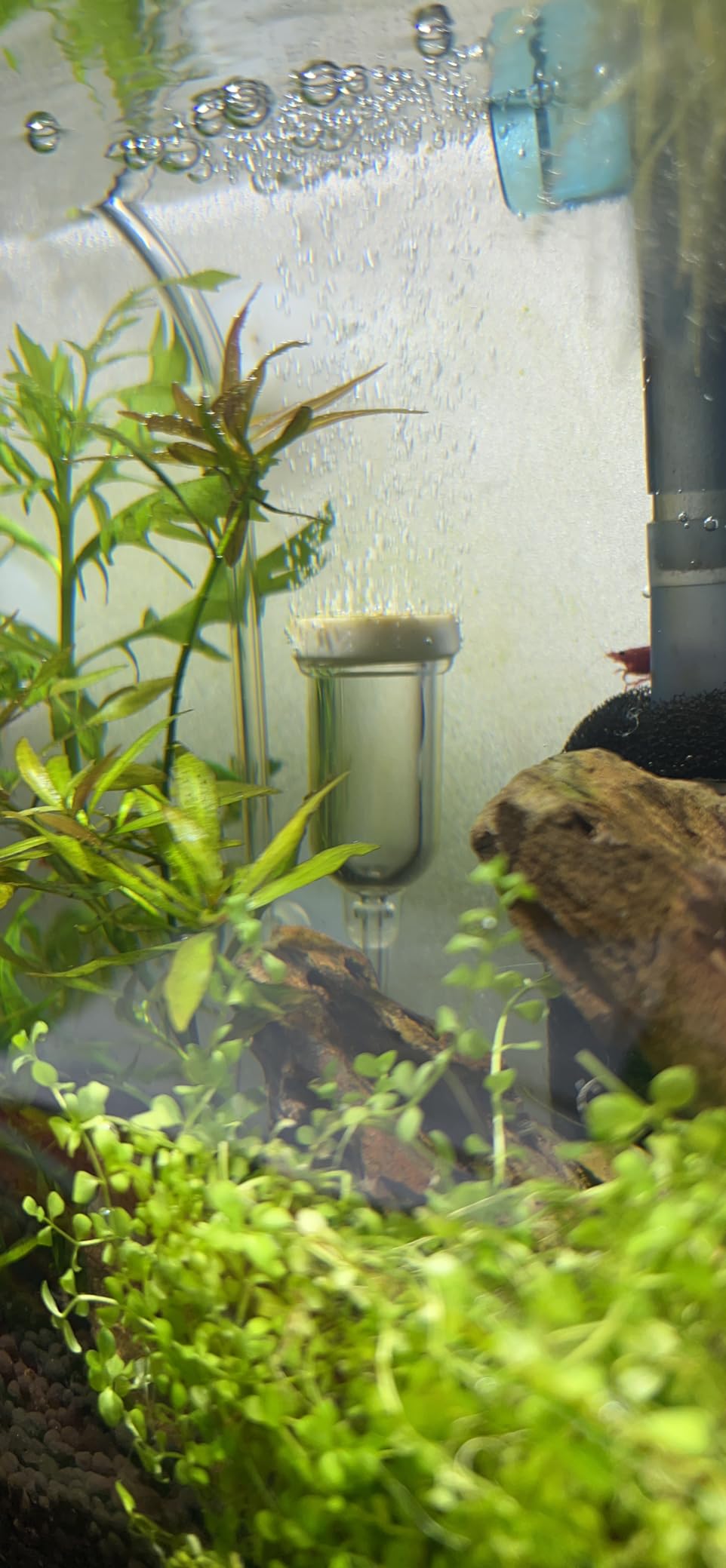
The boxtech kit is the smallest and quietest option here, and its selling point is the hardware rather than the stone. The package includes a bubble stone, a combined check and regulating valve, and two suction cups, which is the most complete small kit in this roundup.
At 1 inch across with a 1.5 W pump minimum, the whole assembly is designed for low power draw and low noise. The transparent, light-transmitting body is genuinely unobtrusive in a small planted container, and the body material is described as corrosion-resistant and non-toxic, usable in fresh or salt water.
Fine Bubbles From a Very Low Flow
The nano bubble output is dense and uniform for the size, which is what you would expect from a stone this small driven at low flow. In a clear container the effect reads as a soft fizz rather than a rolling boil, and the regulating valve lets you turn the flow up when the solution needs more agitation and back down when it does not.
The valve is the part that separates this from a bare stone. Most air stones give you all the airflow or none, and managing reservoir oxygenation across a day cycle means a valve is a meaningful upgrade.
Sizing Reality Check
A 1 inch stone is a small-system part. It will service a quart mason jar, a small tray, or a single small net pot without dominating it, and it will not meaningfully oxygenate a full DWC bucket on its own. Several owners report needing a stronger pump than the 1.5 W minimum before output is convincing, which is the same back-pressure lesson as every larger stone here.
Forum growers regularly point out that quart mason jars are already marginal for mature lettuce and basil, and this stone does not change that constraint. It improves a small setup; it does not upgrade the vessel.
For Whom This Stone Is the Right Choice
It suits a small propagation setup, a quiet countertop system, or a grower who wants a complete working assembly with the valve and cups already in the box. The included check valve means back-siphon protection is solved from the first day.
For Whom It Falls Short
It is not a reservoir stone. The 1 inch size is the hard limit, and buying it as the primary aeration for a DWC bucket will disappoint. Air pump and airline are not included, so you are still sourcing hardware separately.
12. SunGrow 1 Inch 10-Pack – Budget Mini Cylinders for Gentle Root Zones
SunGrow 10-Pack Air Stone Bubble Cylinder for Aquarium Air Pump, 1 Inch Fish Tank Air Diffuser Aerator Bubbler for Ponds, Hydroponics & Aquaponics, Mini Airstones Aquarium Air Pump Accessories
10 pack of 1 inch cylinders
1 x 0.6 x 0.6 inch each
High-temperature sintered stone
Gentle bubble output
+ Pros
- Very inexpensive multi-pack for gentle circulation
- High-temperature sintering improves durability
- Small size hides behind decor
- Easily hidden in substrate
- Cons
- Only 1 inch so many pieces needed for a real reservoir
- Total oxygenation is limited on larger systems
Ten mini cylinders is a supply deal rather than a single aeration solution, and that is exactly the right way to use it. Each stone is 1 inch by 0.6 by 0.6 inches, sintered at high temperature, producing a gentle current suited to delicate roots and small tanks.
Gentle is the operative word. Aggressive bubbling in a small container creates surface agitation that can disturb a young root mass or splash nutrient solution out of an open reservoir. These mini stones produce a soft fizz that circulates without churn.
High-Temperature Sintering and Cleaning
High-temperature sintering is a meaningful manufacturing detail. It fuses the mineral grains more completely than lower-temperature bonding, which produces a harder surface that resists pore damage from scrubbing and stays easier to clear when biofilm builds up in a long run.
At this size, cleaning is easy simply because the stones are small and light enough to handle individually. A brush and a rinse is the whole maintenance routine, and the small dimensions mean they also hide behind decor or under substrate without affecting layout.
For Whom This Stone Is the Right Choice
It suits someone running a betta tank, a small planted aquarium, or a gentle root zone where a large stone would be too disruptive. It also works well as replacement supply for a larger system, since ten small stones cost little and cover many sites.
It is listed for ponds, hydroponics, and aquaponics, and the multi-quantity format makes it a reasonable choice for an aquaponic biofilter with several small chambers.
For Whom It Falls Short
Scale is the limitation and it is absolute. Oxygenating a real reservoir with 1-inch stones means deploying many pieces on a manifold with the extra plumbing that requires. Treat this as a supplementary or small-system product, not a primary reservoir diffuser.
How to Choose an Air Stone for Your Reservoir
Start With a Dissolved Oxygen Target, Not a Brand
Hold your system to 7-8 mg/L dissolved oxygen as the working target. Between 5 and 7 mg/L is acceptable for healthy systems, while readings below 4 mg/L put roots at genuine risk of hypoxia and the anaerobic conditions that precede root rot. Measuring turns a guess into a decision, and a basic dissolved oxygen meter is a better investment than a third spare stone.
Temperature sets the ceiling you are working under. Cold water holds more oxygen than warm water, so a reservoir that sits comfortably aerated at 65 F can go marginal when summer pushes it toward 80 F, because the saturation limit falls from roughly 9 mg/L to roughly 7.8 mg/L. That is a real reduction in the maximum achievable, not a small adjustment. The practical response is to run more aeration in warm months, not to accept the lower number.
Match Stone Size to Reservoir Volume
A workable rule is one substantial stone per 10 to 20 gallons of solution, with a floor of two points of aeration for anything over 5 gallons. A single 5-gallon DWC bucket is well served by one 4-by-2 inch cylinder on a 4-8 W pump. A 20-40 gallon reservoir wants a 6-inch stone on a 20 W pump, or two 4-by-2 inch cylinders fed from one pump through a manifold.
Two points of aeration matters more than one big one. Two cylinders create circulation between them that moves solution across the whole reservoir, and they give you redundancy when one clogs mid-cycle.
Match Pump Output to Stone Back Pressure
Every stone in this roundup lists a minimum pump wattage, and that figure is the single most useful spec on the page. The 4-by-2 inch VIVOSUN stone accepts a 4-8 W pump. The 4-by-2 inch AQUANEAT stone needs 7-10 W. The 6-inch Pawfly needs 20 W or more. The nano hygger disc runs at 4 W and produces 3 L/min of jetting volume, while the 3-inch Pawfly ball moves 15 L/min.
Buy the pump to the stone, not the stone to the pump. Buying a stone below its pump wattage floor produces weak output, and no amount of extra soaking or cleaning fixes it. An undersized pump is the usual cause of a disappointing new air stone, and growers often misread it as a bad stone.
Choose Material and Pore Size for the Job
Sintered mineral is the default and works well in a still bucket. Silicon carbide is harder and holds its pores through repeated handling, moving-bed filters, and aggressive scrubbing, which makes it the right build for a multi-bucket rack. Nano furnace flue discs produce the finest bubbles at the cost of staining and a lower flow ceiling.
Choose fine pores when your goal is dissolved oxygen per piece of noise. Choose coarse or medium pores when you need raw circulation in a large volume, because they move more air for a given wattage even though each bubble transfers less oxygen.
Air Stone Versus Diffuser Hose and Diffuser Ring
An air stone is a fixed point of air. A diffuser hose is a perforated tube you can route along the bottom of a reservoir or around the perimeter of a net pot, producing a curtain rather than a column, and it cleans by running water through the length. A diffuser ring encircles a net pot and pushes solution outward from the root mass directly.
For a single bucket, a stone is simpler and cheaper. For a wide shallow reservoir, a hose or ring covers more floor area with fewer connection points. For a recirculating system with many net pots, running a ring at each pot plus one stone in the reservoir gives you both targeted root aeration and whole-tank circulation. The same logic applies to an aquaponic biofilter, where rings and hoses are the conventional choice.
Install a Check Valve and Mount the Pump Above the Water Line
Back-siphon is the failure mode that destroys air pumps, and it is entirely preventable. A check valve on the airline near the pump stops solution from flowing backward when pressure drops. Positioning the pump physically above the reservoir water line means that if the pump does stop, gravity pulls the water out of the line rather than through the pump head.
Use the three steps that matter. First, fit a check valve between the pump outlet and the airline running to the stone. Second, mount the pump on a shelf or bracket above the top of the reservoir. Third, keep the airline as short as practical and secure the stone to the floor or a container wall with a suction cup so it cannot flip and pull air from the water line. The hygger and boxtech kits in this roundup both include a check valve, and for every other stone you should add one.
Pre-Soak, Then Clean on a Schedule
Always soak a new stone before first use. The listed soak times range from 30 minutes for the 1-inch AQUANEAT stones to over three hours for the 6-inch Pawfly. A dry stone holds trapped air in its pores, and powering it before the pores clear produces partial bubbling that looks like a fault but is not one.
After that, cleaning is the whole maintenance story. Rinse and brush the surface whenever output visibly drops, using a stiff brush and a rinse of white vinegar for mineral scale or a diluted hydrogen peroxide solution for biofilm. For a clogged stone, a longer soak in diluted peroxide followed by brushing will restore most of the original output. Replace the stone when brushing no longer recovers the bubble pattern; that is typically a seasonal decision rather than a weekly one.
Hydrogen peroxide is safe for hydroponics at cleaning concentrations, and the technique matters more than the number. Remove the stone from the system, soak it away from roots and reservoir volume, dilute to roughly one part 3 percent peroxide to five parts water, soak for 20 to 30 minutes, then brush and rinse thoroughly before reinstalling. Never add peroxide directly to a reservoir with plants in it, and never mix it with vinegar, since that combination is not a cleaning solution.
What to Skip When Buying an Air Stone
Skip coarse plastic aquarium stones for a reservoir. They produce large bubbles that rise fast and transfer comparatively little oxygen, and the coarse pores trap biofilm quickly. Forum growers consistently identify them as a poor fit for hydroponics even though the packaging often says otherwise. If you want an aquarium diffuser in a reservoir, choose a fine-pore ceramic or nano disc instead.
Skip buying a stone without checking its pump wattage floor. This is the most common wasted purchase in the category, and it is entirely avoidable by reading one line on the listing before you order.
Skip running any reservoir line without a check valve and skip mounting the pump below the water line. The cost of prevention is a few dollars and a bracket; the cost of failure is a ruined pump and a reservoir full of solution on the floor.
Skip forcing an air stone into a system that does not need one. A pure Kratky setup relies on the air gap above the solution and does not require active aeration, and an NFT channel with a properly aerated reservoir is already oxygenating the roots by design. Adding a stone there is cost without benefit. The systems that genuinely need one are DWC, RDWC, aquaponics, and any Kratky hybrid with roots submerged into the reservoir.
Frequently Asked Questions
What is the best air stone for hydroponics?
The best air stone for hydroponics is a fine-pore ceramic or silicon carbide cylinder sized to your reservoir, paired with a pump that meets its wattage floor. A 4-by-2 inch cylinder on a 4-8 W pump suits a 5-gallon DWC bucket, while a 6-inch stone on a 20 W pump suits a 20-40 gallon reservoir. Choose nano pore stones for quiet indoor use and coarse pore stones for high circulation.
Do you need an air stone for hydroponics?
You need aeration whenever roots sit submerged in nutrient solution, which covers DWC, RDWC, aquaponics, and Kratky hybrids. Target 7-8 mg/L dissolved oxygen. Pure Kratky systems use an air gap above the solution and do not need an air stone, and an NFT channel with an aerated reservoir already supplies oxygen to the roots.
What is the difference between an air stone and a bubbler?
An air stone is a porous ceramic, silicon carbide, or acrylic body that forces air into thousands of fine bubbles. A bubbler, or diffuser hose or ring, is a perforated tube that emits air along its length. A stone gives a concentrated column of bubbles at one point, while a hose or ring spreads a curtain of bubbles over a wider area for even circulation in shallow or wide reservoirs.
Should you leave an air stone on all the time?
Yes. Run the air stone continuously, ideally on a timer so it cycles on and off rather than running without interruption. Continuous aeration keeps dissolved oxygen above the 5 mg/L floor, and an on-off cycle reduces biofilm growth on the stone and slows mineral scale buildup, which extends the interval between cleanings.
How do I know if my air stone is clogged?
A clogged stone shows a clear drop in bubble output and coarser, sparser bubbles than before, sometimes with a visible film of biofilm or white mineral scale. Remove the stone and soak it in diluted hydrogen peroxide for 20 to 30 minutes, then scrub it with a stiff brush and rinse. If brushing does not restore the original bubble pattern, replace it. Check pump wattage first, since an undersized pump mimics a clog.
Is hydrogen peroxide safe for hydroponics?
Hydrogen peroxide is safe for hydroponics when used as a cleaning soak on a removed stone, diluted to about one part 3 percent peroxide to five parts water. Soak for 20 to 30 minutes, brush, and rinse thoroughly before returning the stone to the reservoir. Never add peroxide directly into a reservoir with plants, and never mix it with vinegar, which neutralizes it.
The Verdict: Which Air Stone Fits Your Reservoir
If you want one dependable answer, the VIVOSUN 4-by-2 inch 2-pack is the best air stone for hydroponic reservoirs because it works across a 4-8 W pump range, sinks without anchoring, and produces a dense fine column that clears the 7-8 mg/L dissolved oxygen target in a 5-gallon bucket.
If you are running a 5-gallon DWC bucket with a 7-10 W pump, the AQUANEAT 4-by-2 inch 2-pack is the more durable choice with multi-year service reports. For a 20-40 gallon reservoir, the 6-inch Pawfly stone on a 20 W pump moves enough air for a reservoir that size. For a quiet grow room, the hygger nano kit gives you the finest bubbles and comes with a check valve.
For a rack of small sites or replacement supply, the AQUANEAT 1 inch 12-pack and the SunGrow 1 inch 10-pack cover ground no single large stone can. Whatever you choose in 2026, buy the pump to the stone’s wattage floor, soak it before first use, and fit a check valve before you fill the reservoir.