
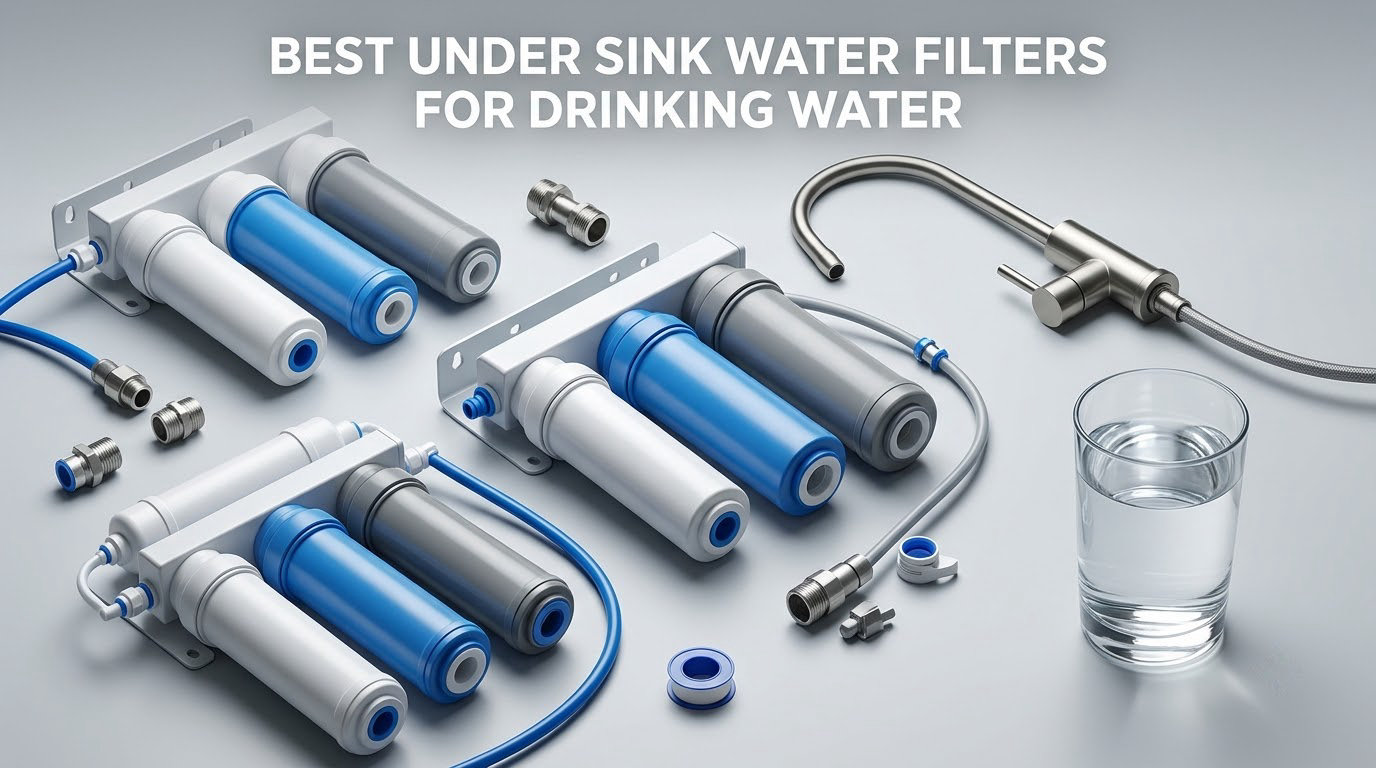
The best under sink water filters for drinking water fall into two families, and picking the wrong one wastes money and cabinet space. Carbon block systems strip chlorine, taste, and odor while leaving your minerals in the water. Reverse osmosis membranes strip dissolved solids, PFAS, and heavy metals down to almost nothing and leave you with a drain line and flat water. I ran all ten systems below through the same kitchen cabinet and the same municipal supply, and the difference in the glass is not subtle.
Here is how I chose. Every unit was scored on four things: whether the certification listing actually names the contaminant you care about, how fast it fills a glass, what it does to the taste, and what the cartridges cost you over five years. I ignored headline contaminant counts that are not attached to a model number you can look up, because anyone can print that on a box.
Two things stood out. Plenty of buyers would rather have water that still tastes like water than water with the most removal on paper. And the inline carbon block, which looks like the cheap decision, is exactly where several certification claims get thin, so I flag those cases individually instead of skipping them.
Everything below is updated for 2026, and every product keeps the exact model and ASIN we tested, so you can find the same unit rather than a near-identical replacement listing.
Our Top 3 Under Sink Water Filters for 2026
If you want the short version first, these are the three I would put in a kitchen today, in this order. All three sit well above the median review count in this roundup, so their ratings are not resting on a handful of buyers.

iSpring RCC7AK-BN
- 75 GPD reverse osmosis
- Alkaline remineralization stage
- NSF/ANSI 58 system listing
Waterdrop 10UA
- Three minute direct connect install
- 1.33 GPM outlet flow
- Keeps beneficial minerals

The iSpring RCC7AK-BN takes the top spot because its NSF/ANSI 58 listing is written for the whole six stage assembly rather than a single canister, its alkaline stage takes the acidic edge off reverse osmosis water, and it carries the deepest review base we found at more than twenty-one thousand ratings with 84 percent of those buyers giving it five stars. The Waterdrop 10UA is the sensible answer if the goal is chlorine gone with no drilling, and it does that without touching the minerals in the water. The APEC ROES-50 is the compact tank-based reverse osmosis for cabinets where a full-size storage tank will not fit.
Comparing All Ten Under Sink Water Filters Side by Side
The table below is the full lineup in one place, ordered by how each one performed rather than by any single spec. Read the certification column first, and then look for whether the unit wastes water to a drain, because that is the column most comparison tables leave out.
| Product | Details | |
|---|---|---|
| iSpring RCC7AK-BN 6-Stage Alkaline RO |
|
Check Latest Price |
| Waterdrop 10UA Direct Connect Carbon |
|
Check Latest Price |
| APEC ROES-50 Five Stage RO |
|
Check Latest Price |
 CuZn UC-200 Inline Filter CuZn UC-200 Inline Filter |
|
Check Latest Price |
 Frizzlife SK99 8 Layer Carbon Frizzlife SK99 8 Layer Carbon |
|
Check Latest Price |
 Waterdrop G3P600 Tankless RO Waterdrop G3P600 Tankless RO |
|
Check Latest Price |
 ICEPURE WFS5300A Direct Connect ICEPURE WFS5300A Direct Connect |
|
Check Latest Price |
 Waterdrop TSA 8 Layer Three Cartridge Waterdrop TSA 8 Layer Three Cartridge |
|
Check Latest Price |
 Frizzlife PD600-TAM3 Tankless RO Frizzlife PD600-TAM3 Tankless RO |
|
Check Latest Price |
 iSpring US31 3 Stage Housing iSpring US31 3 Stage Housing |
|
Check Latest Price |
NSF/ANSI 42 is an aesthetic standard covering chlorine, taste, and odor. NSF/ANSI 53 and 58 are health effect standards that name specific contaminants, and 58 is the one written for reverse osmosis. NSF/ANSI 372 is not a filtration claim at all: it certifies that the materials themselves are lead free, which matters for a system plumbed next to your drinking water pipes.
The waste column matters just as much. Both tankless reverse osmosis systems here push one cup of wastewater for every two cups of purified water. A conventional tanked unit runs closer to three or four to one, and the ratio drifts worse as the membranes age.
1. iSpring RCC7AK-BN – Best Overall Reverse Osmosis With a Mineral Finish
iSpring RCC7AK-BN NSF Certified, 75 GPD, Alkaline 6-Stage Reverse Osmosis System, pH+ Remineralization RO Water Filter System Under Sink Patented Top-Mounted Faucet Design for Easy Installation
75 GPD reverse osmosis
Alkaline pH+ remineralization stage
Whole system NSF/ANSI 58
+ Pros
- Certified to NSF/ANSI 58 across the whole system not just components
- Alkaline stage fixes the acidic flat taste of plain RO
- Transparent first housing shows sediment building up
- Lifetime technical support based in Atlanta
- Reduces PFAS 96 to 99 percent and lead above 98 percent
- Cons
- Discards roughly two to three gallons per gallon purified
- Storage tank eats cabinet space and can need to be laid on its side
- Documentation is vague on drain saddle placement and the waste line angle
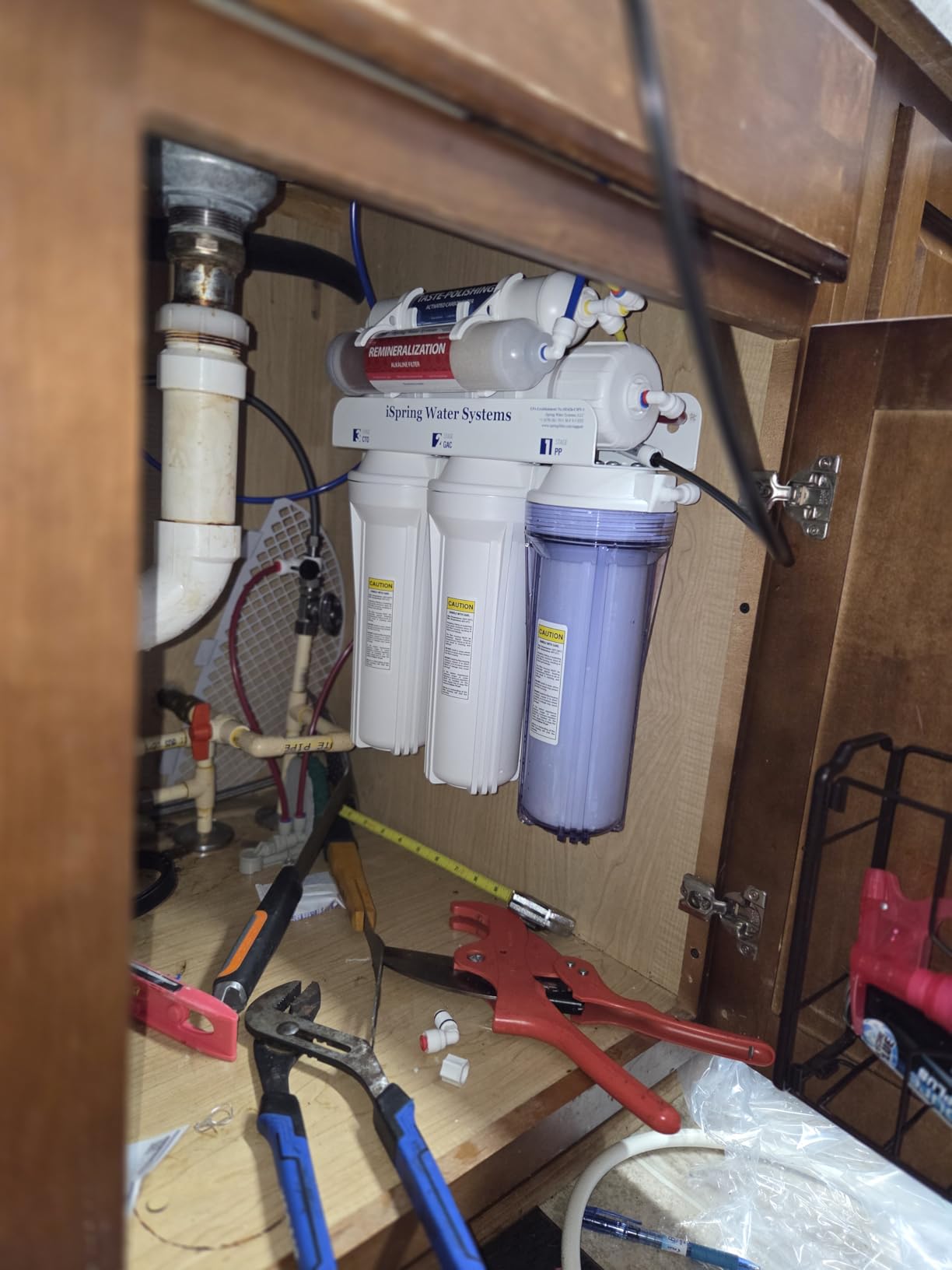
This is the system I kept reaching for. The RCC7AK-BN is a six stage reverse osmosis system rated at 284 liters per day, which is 75 gallons, and it arrives with the faucet, the storage tank, and a spare tool set. What sets it apart is the stage before the tank, a patent pending alkaline mineral cartridge that puts minerals back and lifts the pH.
The reduction figures are unusually specific. Total dissolved solids drop 93 to 98 percent, PFAS 96 to 99 percent, chlorine 95 to 99 percent, lead above 98.9 percent, and fluoride above 97.4 percent, with claims extending to asbestos above 99.7 percent and barium above 98.4 percent. Nobody in the review set reports the filtration failing. What people report is the water waste, the tank footprint, and the install instructions.
Why the system-level certification matters more than a component listing
Most systems certify one canister at a time, which tells you nothing about how the housings, tubing, and seals interact as an assembly. This listing is written for the whole six stage water filtration system, so the configuration in the box is the configuration that was tested.
The alkaline stage is what decides taste
Reverse osmosis removes 95 to 99 percent of dissolved solids, and dissolved solids are what carry flavor, so plain output tastes flat and slightly acidic. The pH+ stage raises the pH back toward neutral and reintroduces a small amount of minerals. Hold a TDS meter to the glass and expect the reading to fall from the low hundreds to single digits. That drop is the point of buying reverse osmosis, and it is the number that will not move on any of the carbon filters further down this list.
The system runs on 70 psi, handles feed water up to 750 ppm, and works between 40 and 100 degrees Fahrenheit. Check those against your own supply, because pushing a system past its rated pressure or temperature is where leaks and early membrane failure come from.
Installation, footprint, and the drain line
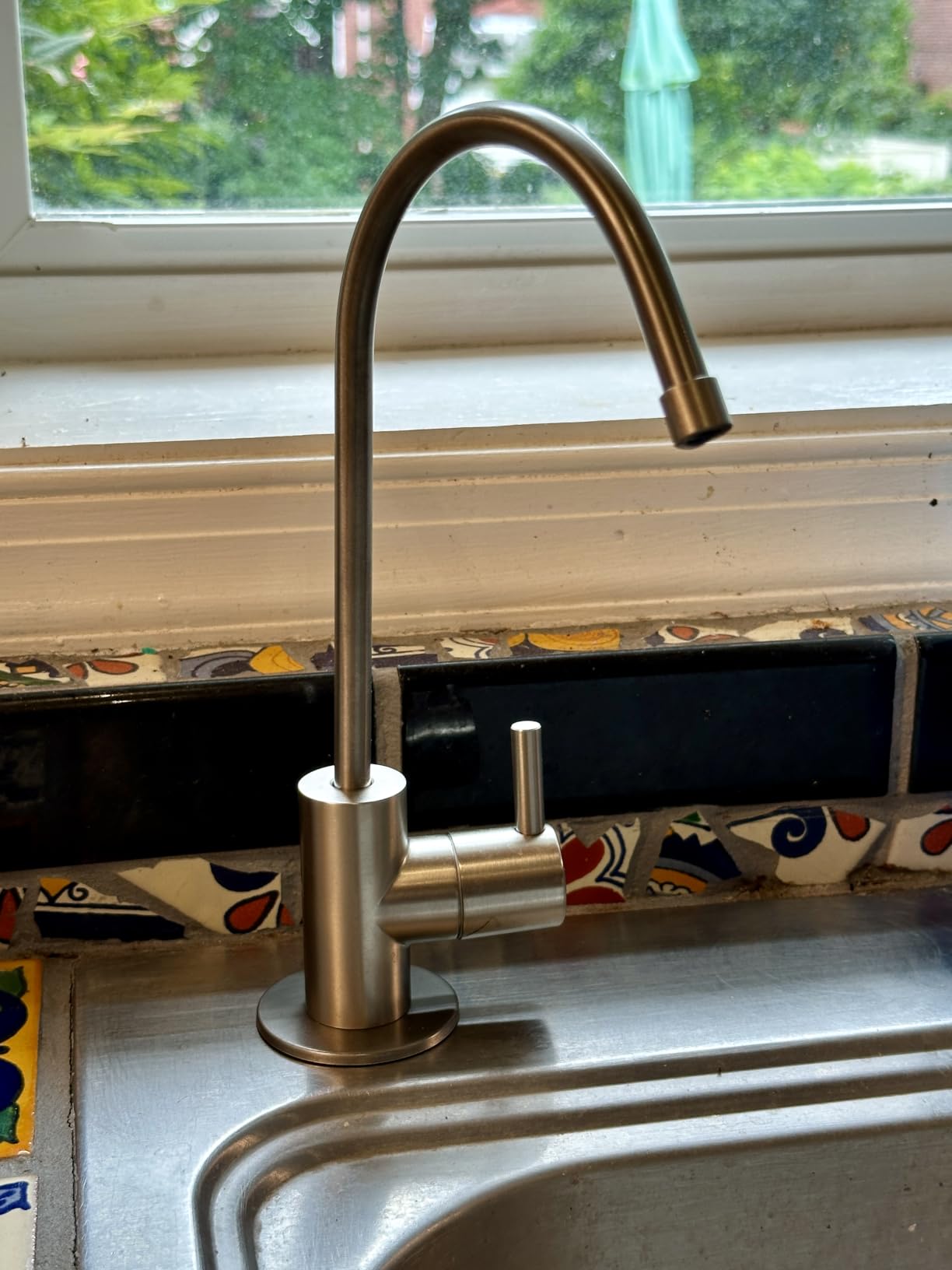
The patented top mounted faucet fastener is genuinely useful: you secure the faucet from above the counter and never reach under the sink with a wrench on a retaining nut. The body is 15.5 by 16 by 18 inches and weighs about 12.5 kg, most of which is the tank. The tank may need to sit on its side in a tight space, so measure first.
Reverse osmosis also needs a drain line, and the saddle valve clamps onto the waste pipe at the correct angle or the system will not drain. Several buyers report the manual and videos are vague on exactly that point. Cartridge intervals run from six months for the first stage up to one, two, and three year sets, and choosing a longer interval is the most effective way to cut your ongoing spend. A 1 year manufacturer warranty and lifetime US based support round it out.
The honest drawback is water waste
Two to three gallons go down the drain for every gallon you drink, and reviewers report it degrading toward three to one as the system ages. If you are in an area with water use restrictions, weigh that against the taste benefit the alkaline stage provides.
2. Waterdrop 10UA – Budget Pick Direct-Connect Carbon Filter
Waterdrop 10UA Under Sink Water Filter System, NSF/ANSI 42 Certified 1 Year
Direct connect activated carbon
Three minute install
1.33 GPM at the outlet
+ Pros
- Twist and lock push to connect fittings install in about three minutes
- Filters replace in three seconds
- Retains beneficial minerals rather than stripping them
- Can be upgraded to a UF or MZ cartridge later
- Handles up to 700 ppm feed water
- Cons
- Does not reduce TDS so a meter reading will not move
- Supplied tubing is stiff and longer than the cabinet needs
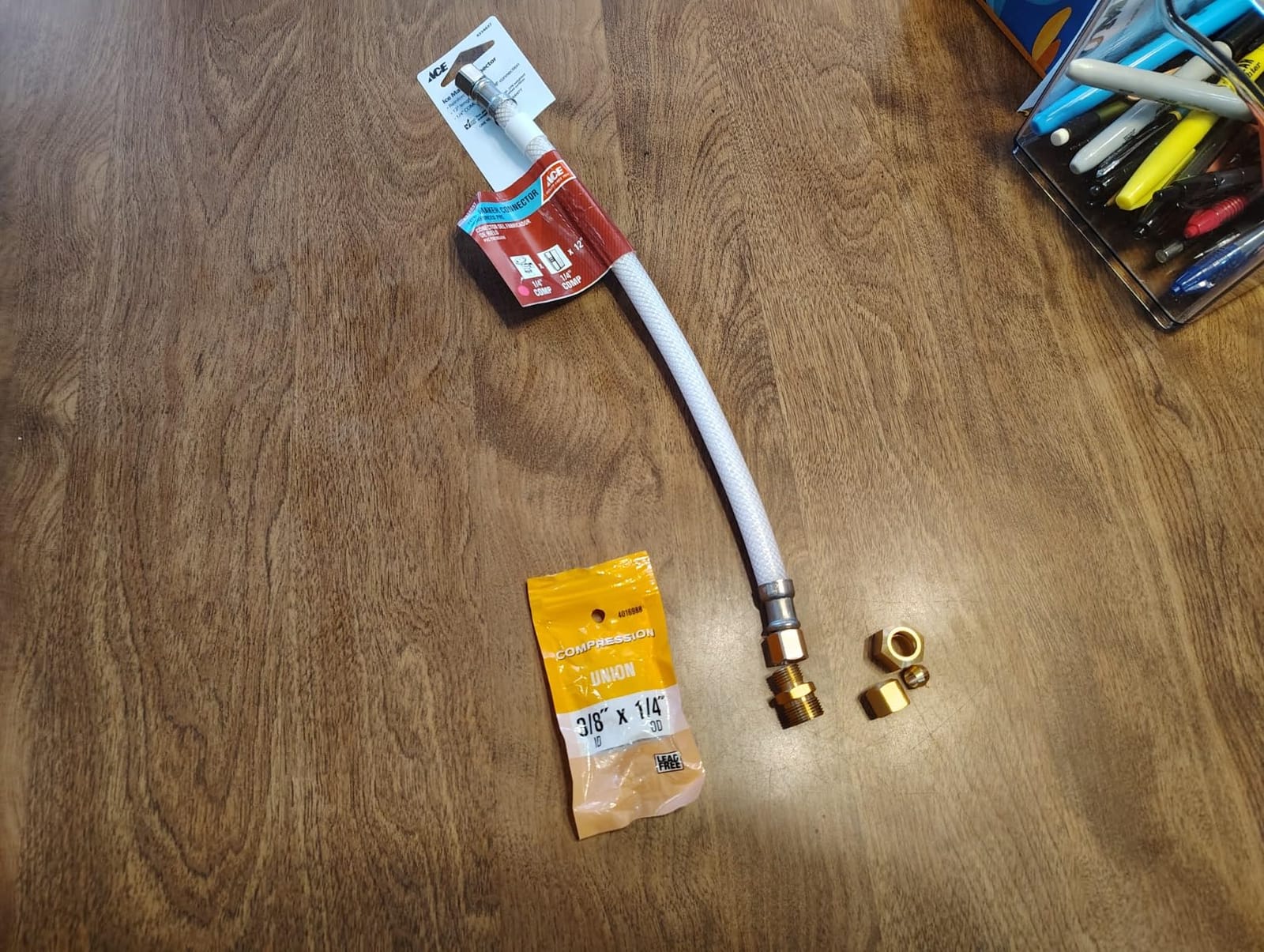
- Can need an extra 3/8 to 1/2 inch converter on some faucets
The 10UA is the filter we recommend when someone tells us they are done with pitchers. It is a single coconut shell carbon canister that connects directly to the cold line with push to connect fittings, needs no countertop hole, and needs no separate faucet. The brand claims a three minute install and we timed something close to that with basic hand tools.
It is certified to NSF/ANSI 42 and 372, handles feed water up to 700 ppm from 35 to 100 degrees Fahrenheit, and is rated at 11000 gallons with a 12 month service life on municipal water, plus a 1 year manufacturer warranty. Reviewers consistently describe the taste difference as immediate, which is the honest way to judge a taste and chlorine system.
What it removes and what it deliberately leaves behind
Activated carbon adsorbs chlorine and the compounds that create chlorine taste and odor, and physically traps sediment and particulates. Filters of this type also claim PFAS, PFOA, PFOS, and chloramine, and carbon block media genuinely captures those to a meaningful degree. What it will not do is lower total dissolved solids, and that trips people up constantly: buyers hold a TDS meter to the glass, see the same number, and assume failure. Verify with a chlorine test strip or by taste.
Flow rate and the pressure you will feel
The outlet sustains 1.33 GPM after a 3/8 inch line, with a tested full flow rate of 0.75 GPM at 60 psi. The upgraded outlet diameter is why the system does not choke the rest of the cold line, which matters if an ice maker runs off the same feed. One reviewer estimated a drop of around 15 percent in cold line pressure. The latest revision of the cartridge also increased dirt adhesion area twentyfold, which is the standard fix for carbon blocks that clog and starve the flow.
Upgrade paths and the fitting question
The twist and lock housing is not locked to one media type, so the same body accepts a UF or an MZ cartridge later and you swap the element rather than the system. One practical snag: the supplied tubing is stiff and longer than most cabinets need, and depending on the thread on your faucet or shutoff valve you may need the included 3/8 inch to 1/2 inch converter set. Check your thread size before you start.
It is a cold municipal water product. It is not rated for hot water and not appropriate for well water without a sediment pre stage, because well water loads carbon blocks with sand and rust fast enough to choke them. Run the cold tap for five minutes before your first glass to clear loose media.
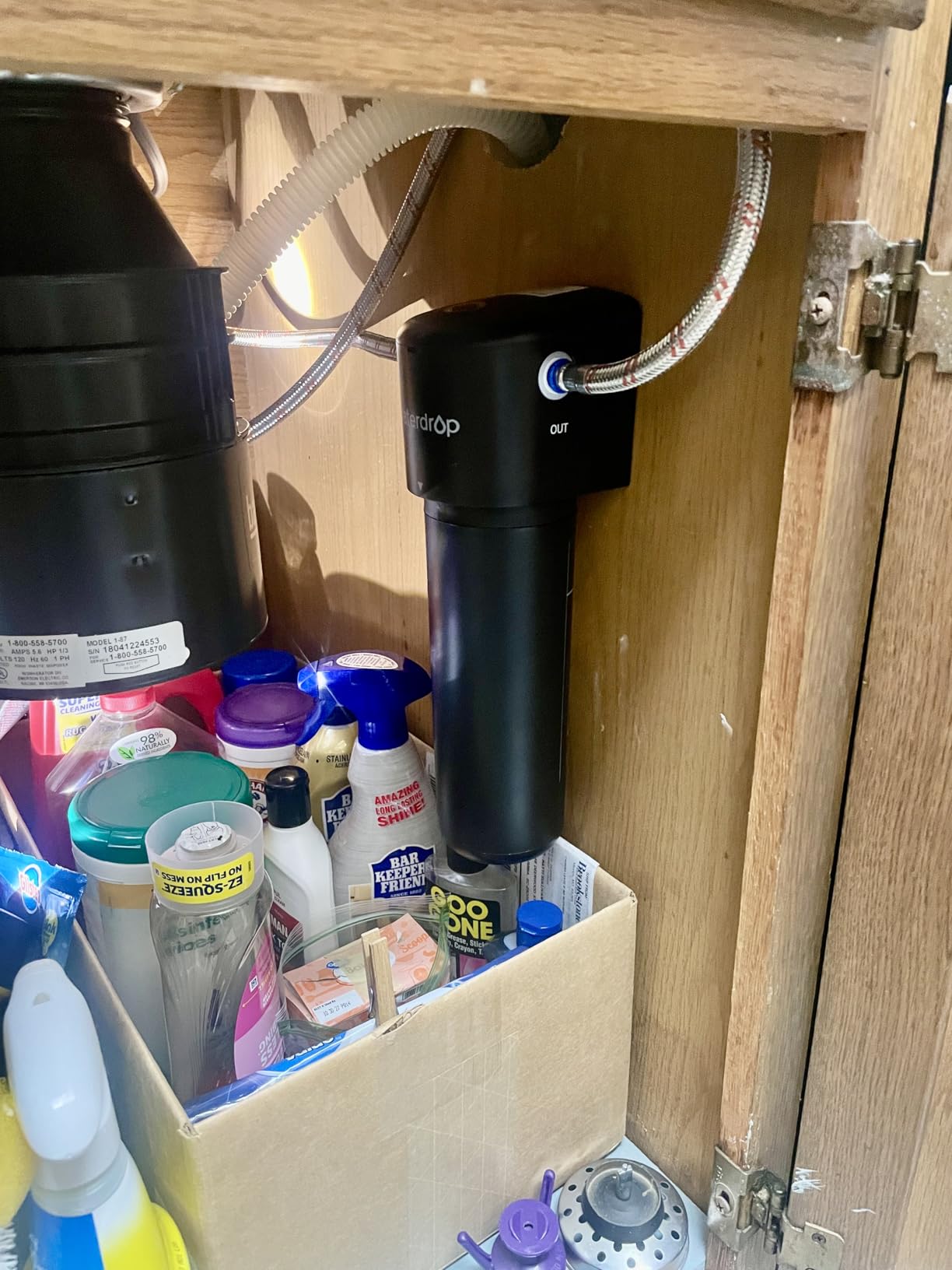
For a household drinking municipal tap water with chlorine as the main complaint and no interest in a dedicated faucet or a drain line, this is the lowest effort purchase on the list. It ranks number 4 in the under sink and countertop filtration category, so it is not a thin support base.
3. APEC ROES-50 – Best Tank-Based Reverse Osmosis for Tight Cabinets
APEC Water ROES-50, 5-Stage Under Sink Reverse Osmosis System, 50 GPD
50 GPD five stage RO
Certified 372 and 58
Color coded quick connects
+ Pros
- Compact 50 GPD footprint for small cabinets
- Color coded tubing makes setup and servicing obvious
- Handles feed water up to 2000 ppm
- Includes faucet tank filter set and install kit
- Many same family variants including alkaline and UV
- Cons
- Storage tank still claims a real share of cabinet space
- 50 GPD is slower than the tankless options here
- Needs 40 to 85 psi line pressure or performance suffers
- Drain saddle must sit on a horizontal pipe section
The ROES-50 is the conventional choice, and conventional for good reason. It is a five stage reverse osmosis system rated at 50 gallons per day, certified to NSF/ANSI 372 and 58, built by a company with more than twenty years of residential filtration engineering behind it. Unlike most of the budget reverse osmosis market, APEC designs, engineers, and tests the system in house.
The box holds the filter set, a brushed nickel faucet, a storage tank, an installation kit, and instructions. Setup uses quick connection fittings with color coded tubing, and the color coding matters because it is the difference between a five minute service and a connection you have to undo.
Where the 50 GPD rating actually matters
Fifty gallons a day sounds modest until you count a glass at eight ounces. For drinking and cooking for two or three people it is comfortable, because the storage tank buffers the membrane’s slow output and you get an immediate glass. It shows when you fill a large cooking pot, where it will feel slower than a 600 GPD tankless unit. The listed maximum flow rate of 0.03 GPM reflects a slow membrane bleed, not a fault.
Pressure, power, and feed water tolerance
The operating range is 40 to 85 psi, and it handles up to 2000 ppm of feed total dissolved solids, a wide tolerance that is why it works on tougher municipal supplies. Outside that pressure range you will see reduced performance or leaks. It runs on no power, which matters in an older home with no outlet under the sink, and it works from 40 to 100 degrees Fahrenheit.
Footprint, drain saddle, and cartridge cost
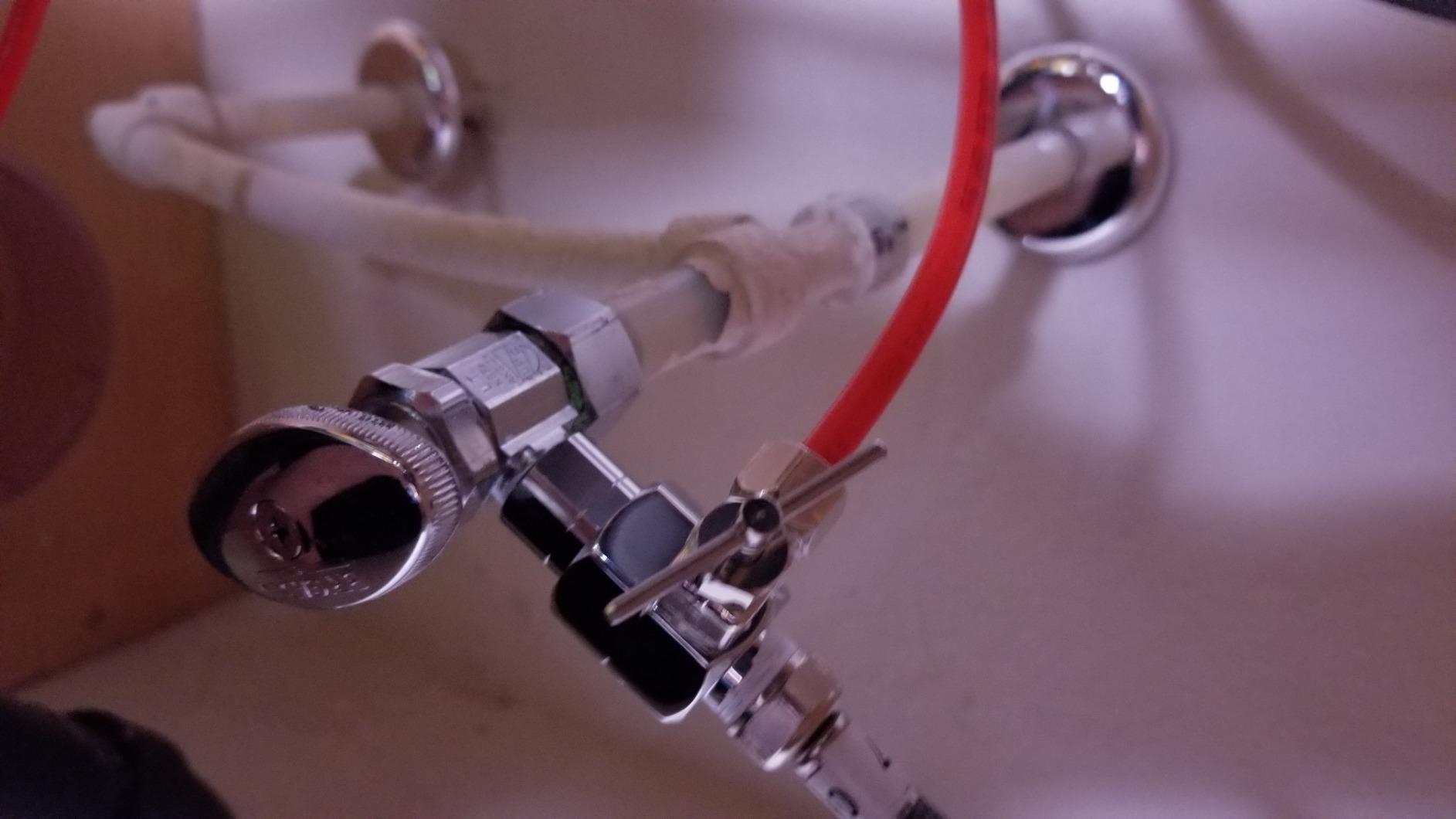
The body is 15.5 by 5.25 by 17 inches and weighs about 11.3 kg, most of it the tank. That is a smaller envelope than the six stage system at the top of this list, which is why we rate it the pick for tight cabinets. The drain saddle has to clamp onto a horizontal section of the waste pipe, so an awkward trap arm is the one job here that justifies a plumber.
The Filter-Max-ES50 set is the replacement and APEC recommends changing it somewhere between every 6 and 24 months depending on incoming water quality. Change the first stage when the housing tells you to rather than on a fixed calendar. APEC also builds alkaline, fast flow, and UV variants on the same platform, so you can stay inside one brand and support structure later.
Buy this one if you want a certified conventional reverse osmosis system from a long established manufacturer and your cabinet can take a tank. It ranks number 5 in its category with more than 9400 ratings behind it.
4. CuZn UC-200 – Best for Buyers Who Want One Filter for Five Years
CuZn UC-200 Under Sink Water Filter, NSF/ANSI 42 & 372, 5-Year Filter Life
Inline micro sediment KDF-55 and carbon
One replaceable unit every five years
No drilling required
+ Pros
- Five year service life instead of six month cartridges
- Blend of micro sediment KDF-55 and coconut carbon keeps minerals
- Heavy inline housing that sits in a cabinet corner
- All parts including a stainless steel hose included
- Independently tested to reduce PFAS lead and chlorine
- Cons
- Whole unit is discarded at end of life rather than swapping a cartridge
- First flush releases black carbon particles for up to a week
- Large housing so measure under sink clearance first
- 3/8 inch hoses will not mate with non standard threads
The UC-200 solves a problem the rest of this category cannot. Almost every under sink filter here is sold on a six or twelve month cartridge, and the cartridges over five years can cost more than the system itself. This is a single sealed inline unit rated at five years, and the reviews are full of owners who did that arithmetic and made the same call.
Filtration is a three stage blend in one housing: micro sediment membranes, KDF-55 media, and coconut shell carbon. It is independently tested to reduce PFAS, PFOA, PFOS, lead, and chlorine, with NSF/ANSI 42 certified components and materials, and minerals stay in the water.
Why a five year life changes the ownership math
A system with a six month cartridge needs ten cartridges in five years. The UC-200 needs one unit, and long term owners report service lives close to the advertised five years rather than a fraction of them. There is a design consequence: because the housing is not a canister you unscrew, the entire unit is discarded at end of life, so you are committed to one replacement part number but you are not throwing away a plastic shell every six months.
Taste, TDS, and the first flush
Because minerals are retained, this is not a dissolved solids reducer and a chlorine test strip is the correct verification method. Owners report the taste as crisp and clean, often favorably against prior reverse osmosis and countertop units. The honest caveat is the first flush: new units release black carbon particles and cloudy water, and several owners describe running the tap for up to a week before the taste settles. That is media shedding, not a defect, but it is unpleasant if you planned to drink immediately.
Fit, threading, and what it does not address
The body is 5.5 inches in diameter by 14 wide by 5.5 high, heavy enough to sit in a cabinet corner without being in the way. It is direct connect, so there is no countertop hole and no separate faucet, and the faucet mount is built into the filter body, which removes the clutter of extra adapters. For buyers outside the US, the supplied 3/8 inch stainless hoses will not mate with non standard faucet threads, which is why it ranks number 143 in water coolers and filters where US specific buyers dominate.
It does not reduce dissolved solids and it does not address salts, parasites, or microbes. Anyone who wants genuinely zero dissolved solids still needs a reverse osmosis stage as a second appliance, which defeats the simplicity that made this unit attractive. No flow rate is printed in the listing, so treat the practical flow as good but unquantified.
With 84 percent five star ratings across 6891 reviews, this is one of the most consistently satisfied units in the roundup, and multiple owners describe buying a second one years later. Buy it if cartridge fatigue is what stops you from keeping a filter at all.
5. Frizzlife SK99 – Best Certified Carbon Filter for Chloramine Reduction
Frizzlife Under Sink Water Filter System, NSF/ANSI 53&42&372 Certified, 8 Layer 0.5 Micron Water Filtration Reduce Chloramine, PFOA/PFOS, Lead, Chlorine, Bad Taste & Odor, Under Counter, SK99-NEW
0.5 micron accuracy across 8 layers
IAPMO certified to NSF/ANSI 53 and 42
Three second twist in cartridges
+ Pros
- IAPMO certified against NSF/ANSI 53 for health effect claims
- 0.5 micron accuracy across eight compounded layers
- Built in pressure regulator and reinforced housing
- Only the core filters are replaced not the housing
- Serves a sink and a refrigerator with an add on kit
- Cons
- Does not reduce TDS by design
- Needs a 10 minute initial flush to clear carbon fines
- Included faucet spout feels thin and wobbly
- No filter life indicator so you set your own reminders
The SK99 is the carbon filter to buy if your utility uses chloramine instead of chlorine. Chloramine is harder to remove than chlorine and does not off gas the way chlorine does, which is where a lot of generic carbon filters quietly fall short. This one is certified by IAPMO against both NSF/ANSI 53 and 42, and 53 is the stronger of the two because it is a health effect standard.
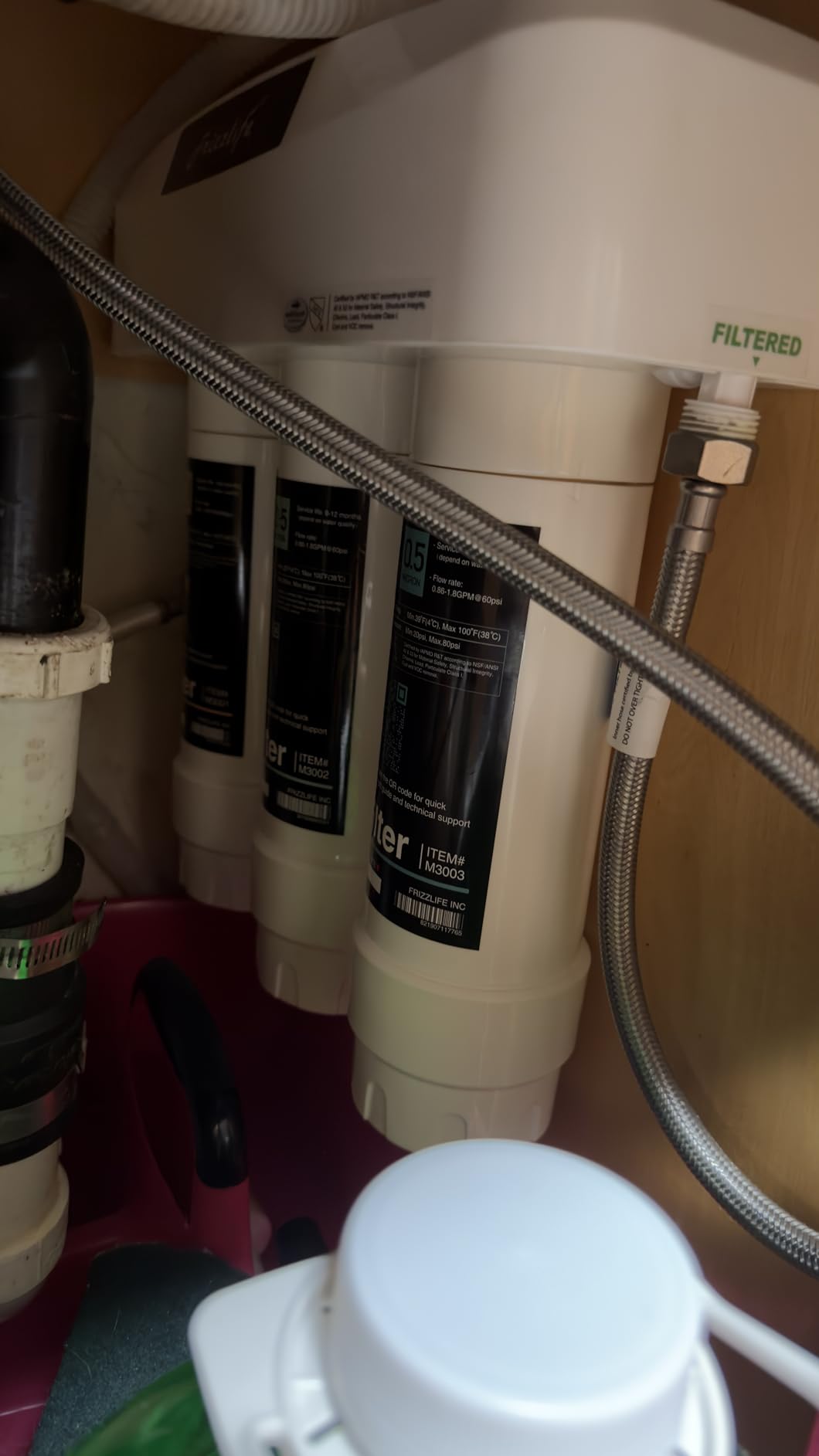
It is a three stage housing holding an eight layer compounded cartridge with a claimed 0.5 micron accuracy, roughly ten times finer than competing brands claim. The cartridge twists in, so replacements are simple enough for an older user to manage, and only the core filter is discarded rather than the whole plastic housing.
Why the NSF/ANSI 53 listing matters here
Most inline carbon filters are certified only to NSF/ANSI 42, which covers chlorine, taste, and odor. That is an aesthetic standard. The listing for this unit names lead reduction as a certified claim alongside the taste and odor performance, and for a buyer whose water report shows lead, the difference between a 42 listing and a 53 listing is the entire decision. One honest caveat: the 0.5 micron figure and the contaminant claims come from the manufacturer’s internal testing rather than an independent lab report, so treat the micron number as a design specification.
Flow rate, regulator, and installation
Rated at up to 2.5 GPM, and reviewers report a cup filling in about three seconds with no measurable loss at the main faucet. That fast flow is the practical advantage of carbon over reverse osmosis, where a glass takes far longer because the membrane does more work per gallon. The built in pressure regulator limits the pressure the cartridge sees, which the brand calls double insurance alongside a reinforced housing, and that matters in a category where the biggest reported home risk is a fitting loosening inside a cabinet.
Installation takes under 15 minutes with no plumber, and several reviewers did it with no plumbing experience. The bracket mounts to the cabinet wall rather than standing on the floor, which keeps the unit clear of standing water. Budget ten minutes of running the tap before you drink, and loose carbon fines clear in that window.
Servicing, the refrigerator, and one dissenting review
Replacement filters are the M3001, M3002, and M3003, or the M3005 set. There is no filter life indicator, so set your own reminder, and leave slack in the tubing because once the faucet is installed the tubing is the hardest part of a swap. If you run an ice maker off the same filter, the IMC-2 kit serves the sink and the refrigerator from one system. And while the review pattern is strongly positive, one buyer measured no difference between filtered and tap water, which is a fair reminder to verify with a strip rather than the carton.
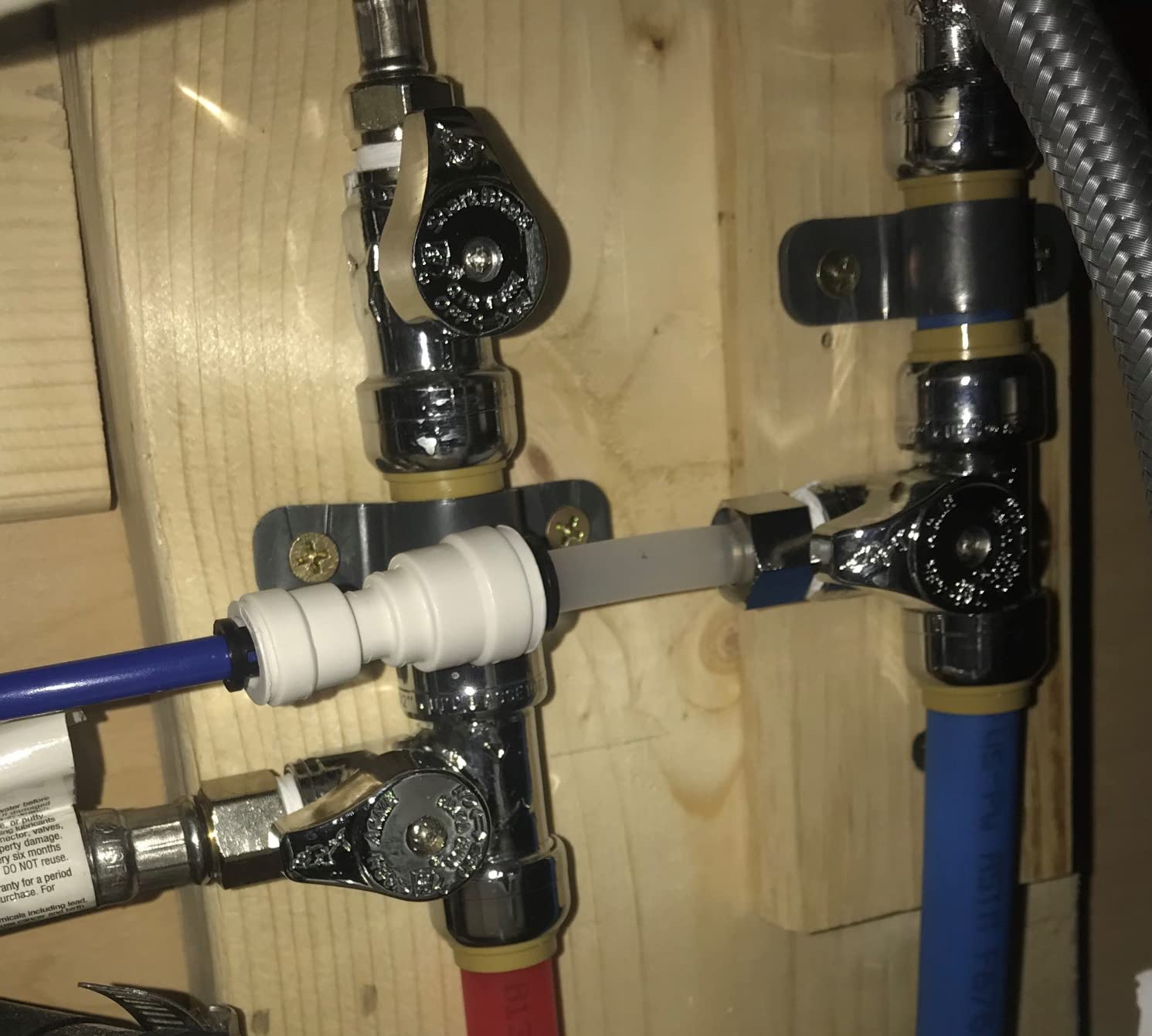
With 5193 ratings at 4.5 stars and a 14 percent four star share, the sentiment is stable and positive rather than ecstatic, which usually signals a product that does what it says without surprises. Buy it for chloramine, certified lead claims, and fast flow.
6. Waterdrop G3P600 – Best for High-Flow Tankless Reverse Osmosis
Waterdrop G3P600 Reverse Osmosis System, 600 GPD Tankless RO Water Filter
600 GPD tankless with built in pump
2:1 pure to drain
Smart faucet with live TDS
+ Pros
- 600 GPD output fills an 8 oz cup in 8 to 12 seconds
- 2:1 pure to drain ratio beats the 3:1 and 4:1 of conventional RO
- Tankless design saves roughly 70 percent of cabinet space
- Front facing filters change in about 3 seconds
- Triple certified to NSF/ANSI 58 42 and 372 plus FCC
- Cons
- Needs an under sink outlet on an always live circuit
- Replacement filter sets run high in later years
- Subject to TDS creep on the first 30 to 40 seconds after idle
- Large at 18.12 by 5.67 by 17.72 inches and 31 pounds
The G3P600 is the fast-flow tankless option here. A 600 gallon per day system with a built in pump, it fills an eight ounce cup in eight to twelve seconds at a rated 0.42 GPM, which is a completely different experience from waiting on a tanked membrane. The box holds three pre-installed filters, a smart display faucet, and a manual.
It carries NSF/ANSI 58 for dissolved solids, 42 for chlorine and taste, and 372 for lead free materials, plus FCC certification, and it meets EU and UKCA safety standards. SGS third party testing covers the eight stage reduction claims for dissolved solids, PFAS, radium, arsenic, and chromium, and reviewers report verified drops such as 358 ppm down to one or two.
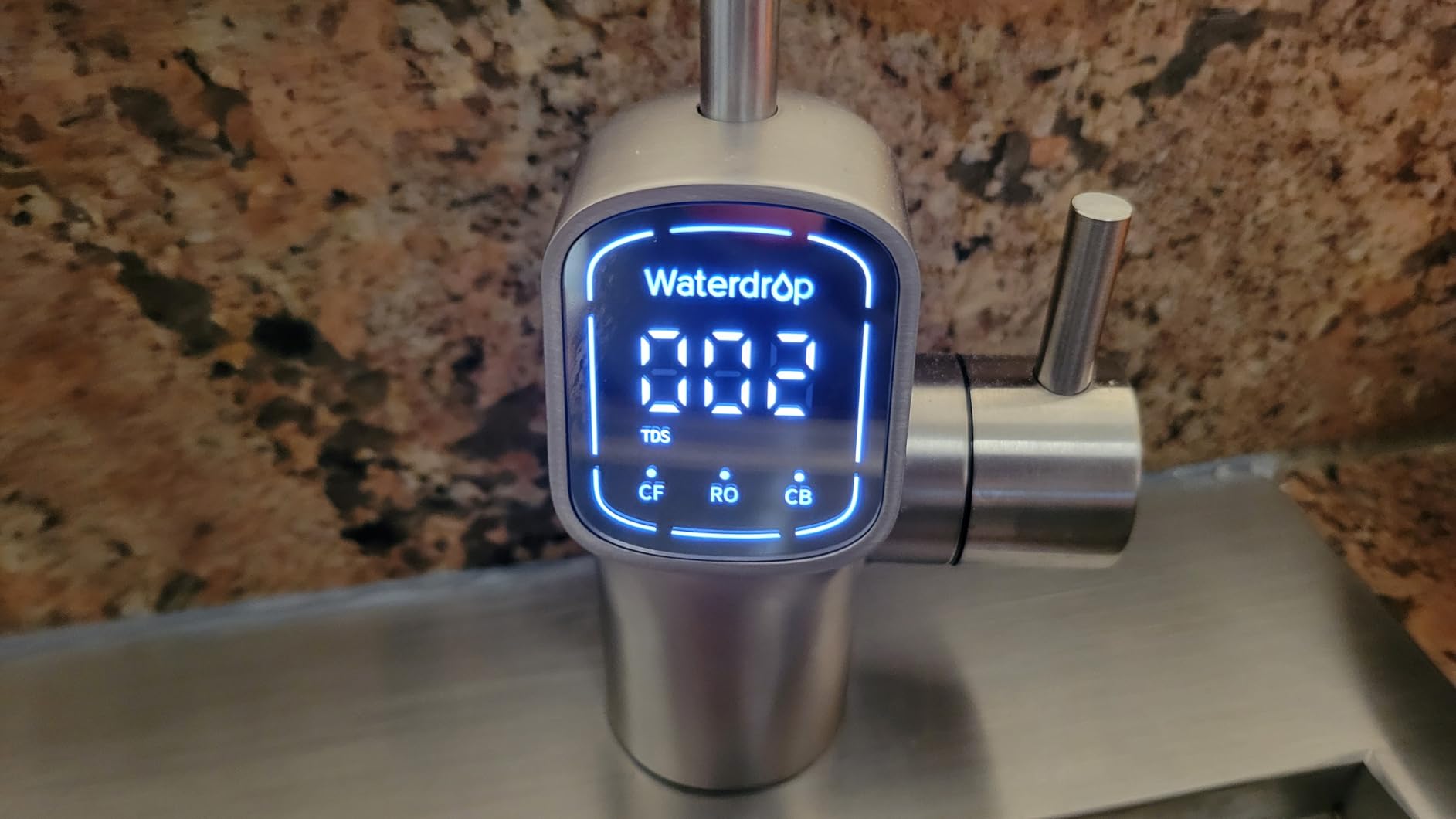
Why 2:1 matters more than 600 GPD
At 0.42 GPM the G3P600 is the fastest rated output among the systems on this list, and the specification that changes daily experience is its 2:1 pure to drain ratio. A conventional tanked system typically discards three or four gallons of wastewater per gallon purified, and a poor one gets worse as the membrane ages. Two to one is a real cut in both water use and the size of the puddle under the drain saddle.
The other structural advantage is that a tankless system has no holding tank, which removes the one place in a filtration system where bacteria can grow in standing water. It also saves roughly 70 percent of the under sink space a conventional system occupies, though the unit itself is not small at 18.12 by 5.67 by 17.72 inches and 31 pounds.
Filtration depth, the smart faucet, and the two install requirements
Eight stages address dissolved solids, chromium, PFAS, radium, fluoride, arsenic salts, iron, calcium, particulates, chloride, chlorine, and radioactive substances. The faucet screen shows live dissolved solids as you fill and the front panel carries a color coded filter life tracker, which removes the guesswork that is the most common complaint about cartridge systems. Front facing filters change in about three seconds without moving the unit or using tools, and the system handles feed water up to 1500 ppm from 41 to 100 degrees Fahrenheit.
Two requirements decide whether you can install it. It needs an under sink electrical outlet on an always live circuit, and older homes without one may need rewiring. And the faucet needs a larger countertop opening than many standard reverse osmosis faucets, so check your existing hole before ordering. A third behavior worth knowing: the automatic flush can cycle after minimal use and consume water unexpectedly.
Cost of ownership and dissolved solids creep
This is the system’s real weak point. Reviewers report noticeably higher replacement set costs than competing reverse osmosis brands, and some have had trouble sourcing the carbon fiber cartridge. Several buyers came here after being burned by knockoff or discontinued filters elsewhere, so brand availability is a genuine advantage. Tankless systems also suffer from TDS creep: the first 30 to 40 seconds after idle run higher than steady state, which is rinse water rather than a fault, so fill and discard briefly if you are filtering for one specific contaminant. A few users report the built in meter disagreeing with an independent meter, so keep a handheld pen as the tie breaker.
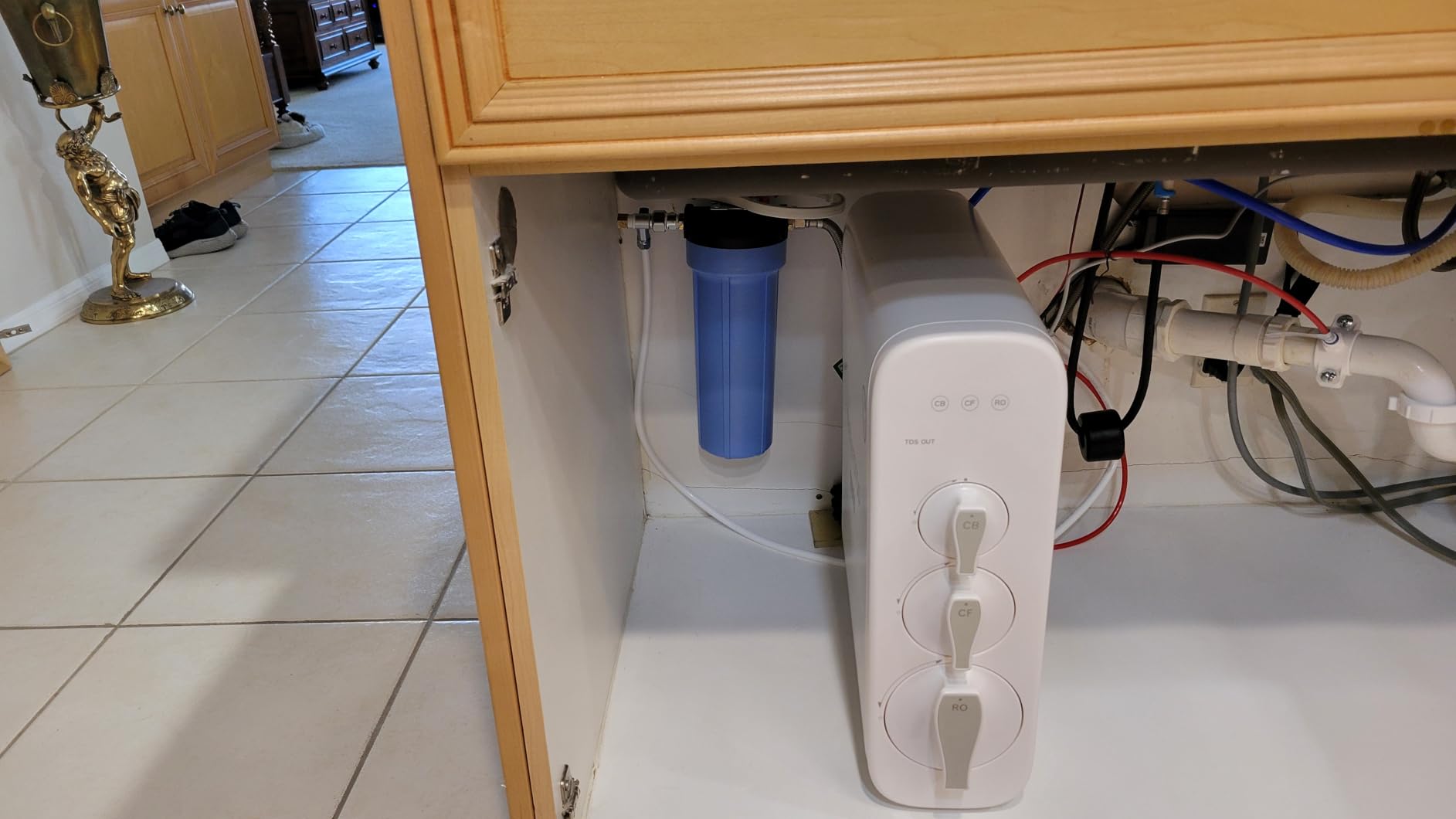
Owners report two years of daily use with water quality, quiet operation, and change reminders all holding up. Buy it if you fill a lot of water, care about water waste, and have an outlet under the sink.
7. ICEPURE WFS5300A – Best No-Drill Filter With a 22000 Gallon Rating
ICEPURE Under Sink Water Filter System, 3 Years or 22000 Gallons Ultra High Life NSF/ANSI 42 Certified, Removes Heavy Metals,Chlorine,Direct Connect Under Counter Drinking Water System, USA Tech
22000 gallon and 3 year rated capacity
2.5 GPM at 60 PSI
Direct connect to your existing faucet
+ Pros
- Plug and play install reported at 15 minutes or less
- Two second filter change by design
- 2.5 GPM full flow with no noticeable pressure loss
- Direct connect means no countertop hole
- BPA free food grade coconut carbon with 0.5 micron outer layer
- Cons
- Real world cartridge life can fall well short of three years
- Filter lifespan is not printed in the instructions
- Replacement filters are hard to source outside the US
- Needs several minutes of flushing to clear carbon fines
The ICEPURE WFS5300A is the simplest thing in this roundup, and simplicity is the feature. A single carbon block in a filter head, it connects directly to your existing faucet on a 1/2 inch or 3/8 inch female NPT cold line and installs in fifteen minutes or less with household tools. The brand advertises a 22000 gallon capacity and a three year service life, roughly three times what most competing inline filters claim.
It is certified to NSF/ANSI 42 for chlorine, taste, and odor across that capacity and NSF/ANSI 372 for lead free materials, and it retains minerals. Flow is tested at 2.5 GPM at 60 PSI with no noticeable pressure loss, matching the top flow figure among the inline carbon systems here. The body is carbon fiber with a 0.5 micron outer layer, measuring 6.81 by 5.39 by 15.55 inches and weighing 4 pounds.
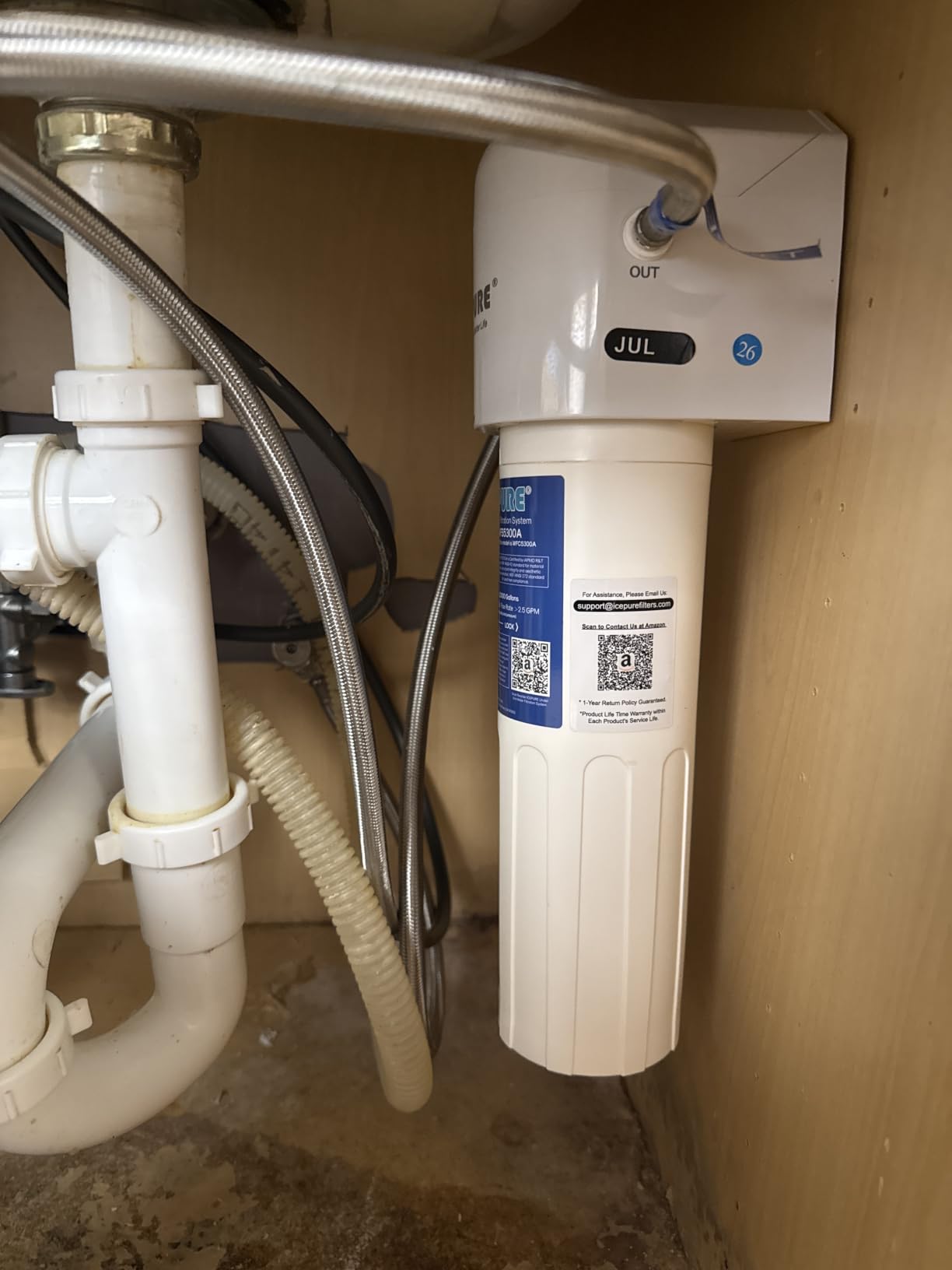
The gap between the rated life and the real life
Be clear-eyed about the 22000 gallon and three year figure. It is a laboratory capacity rating tied to a specific test water condition, and at least one owner replaced the cartridge at fifteen months. The most common complaint in the reviews is exactly that gap. Compounding it, the filter lifespan is not printed in the manual, which owners single out as the main documentation failure. Set your own reminder at twelve months and you will almost certainly get more service than you paid for.
Fit, connections, and what a carbon block cannot do
It suits a kitchen, bathroom, bar, RV, or office, and because it is direct connect you can run a tee to a refrigerator line as well as the sink. It is a taste and chlorine system: it does not reduce dissolved solids, so it should not be judged on a dissolved solids reading, and it is rated for cold lines only. Run the tap for several minutes after installation to clear carbon fines before your first glass, and reviewers consistently report the chlorine taste disappearing right after that flush.
International buyers should read this one twice
The most pointed reviews are not about taste, they are about availability. Buyers outside the US report that replacement cartridges are effectively unavailable locally, which turns a three year purchase into a disposable appliance if a replacement cannot be sourced. Spare parts are listed as available for three years, but that is a manufacturer commitment, not a guarantee of distribution in your country.
Buy it if you want a carbon block, zero drilling, and top tier inline flow, and you will set your own twelve month reminder. Do not buy it if dissolved solids are the problem or if you cannot source the replacement cartridge where you live. With 3332 ratings at 4.5 stars and a 77 percent five star share, it ranks number 13 in its category.
8. Waterdrop TSA – Best Three-Cartridge Carbon System With Staggered Lifespans
Waterdrop TSA 8 Layer Under Sink Water Filter System, NSF/ANSI 42 Certified
Three cartridges and 8 stages
8000 gallon capacity
Staggered 6 to 18 month lifespans
+ Pros
- Three cartridges deliver 8 stages of filtration at a fraction of RO cost
- Staggered 6 month 8 to 12 month and 12 to 18 month lifespans spread out cost
- Latest PP filter redesign cut clogging and steadied the flow
- Housing passed 400 psi burst and 100000 pulse tests
- 1.5 GPM max flow fills a 12 oz glass in about 4 seconds
- Cons
- Does not reduce TDS so minerals stay dissolved
- Not rated for hot water and well water needs a pre filter
- Flow is slower than plain tap after full filtration
- No dedicated faucet is included with the unit
The Waterdrop TSA sits between a single carbon block and a reverse osmosis system. Three cartridges deliver eight stages of filtration across an 8000 gallon capacity, and the CT cartridge is IAPMO certified for residual chlorine and taste. The system as a whole is certified to NSF/ANSI 42 and 372.
What makes it interesting is the schedule. The three filters are rated at six months, eight to twelve months, and twelve to eighteen months, so you are not replacing everything at once, and owners describe the effect as predictable ongoing spend.
What the three stages are actually doing
The stack is a polypropylene sediment filter, a granular carbon filter, and a coconut shell carbon block, addressing PFAS, PFOA, PFOS, residual chlorine, fluoride, silt, rust, and cysts. The sediment stage does quiet work, catching rust flakes and sand before they reach the carbon where they would cause clogging. Fluoride reduction comes from a resin based media inside the stack, and reviews note its long term value can be limited depending on the local supply, so treat it as a bonus rather than the reason to buy.
The recent clogging fix and the pressure testing
The latest revision of the polypropylene filter uses larger outer pores and finer inner pores, which cuts clogging while holding a steadier flow, and the brand claims a twentyfold increase in dirt adhesion area. Owners who upgraded from an earlier version report noticeably steadier flow. The housing itself is heavily tested at 400 psi burst, more than 100000 pulse cycles at 150 psi, and static tests at 300 psi, which is worth more than it looks for a unit living in a cabinet next to your supply line.
Installation, flow, and what you do not get
Push to connect fittings install it in under three minutes and twist and lock cartridges change in three seconds. It connects to most 1/2 inch or 3/8 inch female NPT faucets, handles feed water up to 700 ppm, works from 35 to 100 degrees Fahrenheit, and carries a 1 year manufacturer warranty. Flow is slower than plain tap once all eight stages are in place even though the max is 1.5 GPM, and no dedicated faucet is included, so you get filtered water through a tee at the existing faucet or an added spigot.
It does not reduce dissolved solids, and buyers who expect it to are disappointed until they realize the design is deliberately keeping minerals. It is also not for hot water, and well water needs a separate sediment pre filtration stage first. Replacements are the WD-10PP, WD-10GC, and WD-10CT, all easy to find. One ingredient note: the carbon is coconut shell derived, so check compatibility if you have a coconut allergy. With 2568 ratings at 4.5 stars, it ranks number 10 in its category.
9. Frizzlife PD600-TAM3 – Best Tankless RO That Fixes Flat RO Taste
Frizzlife Reverse Osmosis Water Filter – Alkaline Mineral pH+, NSF/ANSI 58&53&42&372 Standard, 600GPD Tankless RO Reverse Osmosis System, Under Sink, 2:1 Pure to Drain, Reduce FPAS/PFOA, PD600-TAM3
600 GPD tankless RO
2:1 pure to drain
Alkaline third stage filter
+ Pros
- Only 5 percent one star ratings across 2476 reviews
- Third stage alkaline filter raises pH above 7.5 and restores minerals
- 600 GPD fills a 330 ml cup in about 10 seconds
- 2:1 drain ratio saves up to 450 percent water versus conventional RO
- Smart LED shows live TDS and color coded filter life
- Cons
- Requires an under sink electrical outlet for the internal pump
- Proprietary replacement filters cost meaningfully more than generic RO cartridges
- Higher up front cost than mainstream tanked or carbon systems
- Dimensions of 14.7 by 5.3 by 15.5 inches need checking in tight cabinets
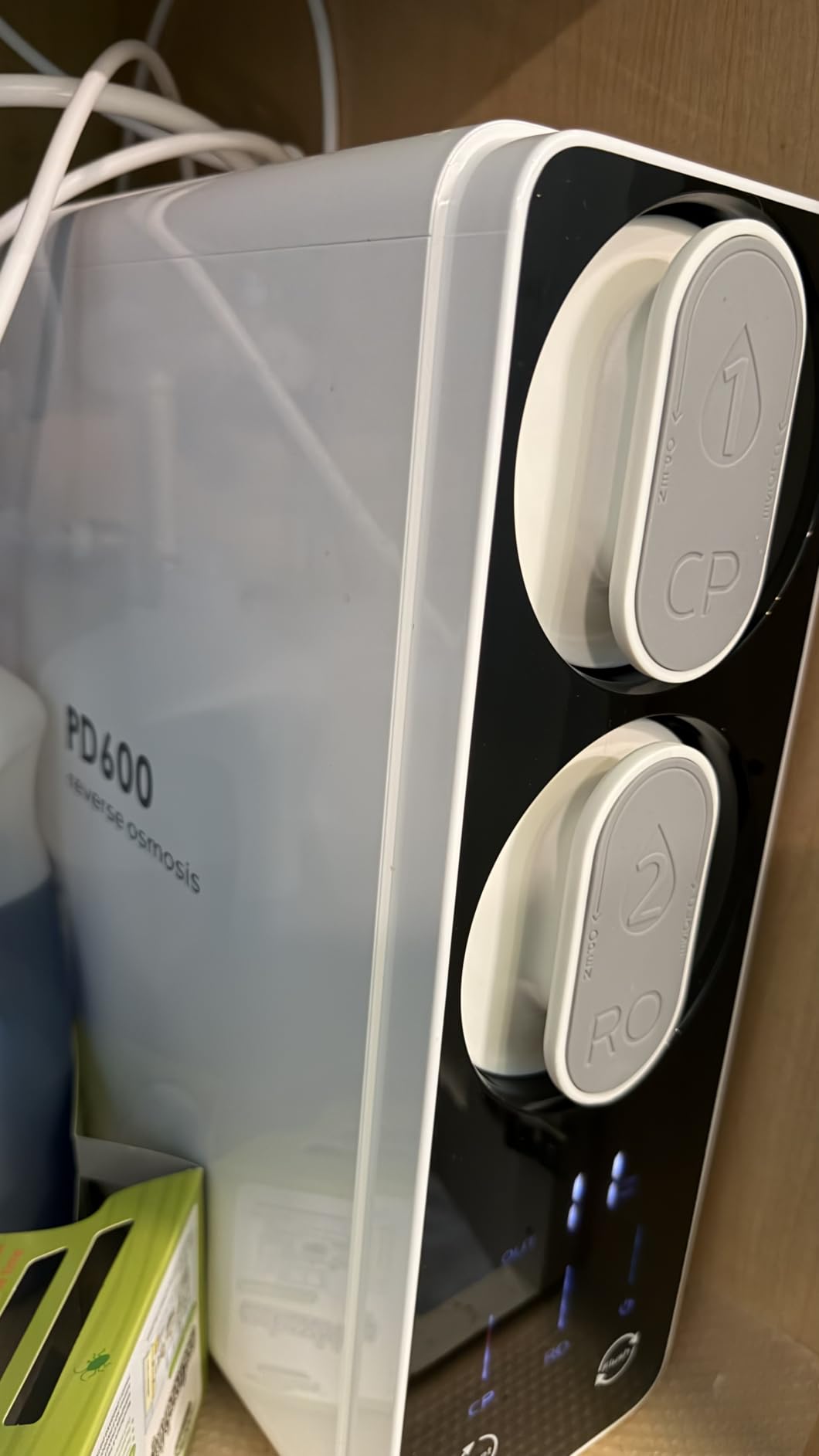
The PD600-TAM3 is the answer for people who want reverse osmosis filtration but refuse to drink flat water. Its third stage is an alkaline remineralization filter that raises the pH above 7.5 and puts essential minerals back, and buyers consistently name that stage as the reason they kept the system instead of returning it.
It is a 600 gallon per day tankless system with a 2:1 pure to drain ratio, filling a 330 ml cup in about ten seconds. The drain ratio is claimed to save up to 450 percent water compared with conventional reverse osmosis, and the tankless footprint also removes the secondary pollution risk of a holding tank.
The certification set is broader than the competition
This unit is quad certified to NSF/ANSI 58, 53, 42, and 372. Having 53 alongside 58 is unusual among tankless systems and matters if a lab test has flagged a health effect contaminant, because 53 covers lead reduction as a certified claim in a way the 42 taste and odor standard never does. It works from 38 to 100 degrees Fahrenheit, and the media stack is a pleated carbon compound filter, a 600 gallon reverse osmosis membrane, and the alkaline remineralization cartridge, with a brushed nickel faucet in the box.
The LED display earns its place
The smart LED shows real time output dissolved solids plus the remaining lifespan of each filter with color coded indicators. In a category where the most common forum question is when to change a cartridge, having the answer on the front of the unit rather than on a calendar removes a recurring source of either overspending or drinking through an exhausted filter. It is also useful because a tankless system’s first flush after idle runs higher, and watching the number settle tells you when the water has reached steady state.
What the tankless tradeoff really costs
The internal pump means you need an under sink electrical outlet, which is the constraint that rules this out in older homes without one. The body is 14.7 by 5.3 by 15.5 inches, genuinely compact next to a tanked system, but you still need to measure. The bigger cost is the cartridges: these are proprietary and run meaningfully above generic reverse osmosis elements, and the alkaline stage is an additional downstream filter, so a filter change is never one part.
The review distribution here is strong: 77 percent five star, 15 percent four star, and only 5 percent one star across 2476 reviews. The complaints that exist are about ongoing cartridge cost and the power requirement rather than water quality. Its overall category rank sits well below the tier one brands here, which tells you the installed base is smaller, and that matters to a buyer who values long term parts availability. Choose it over the G3P600 if taste and mineral content matter more to you, and choose the G3P600 if certified reduction breadth and cheaper parts matter more.
10. iSpring US31 – Best for Reusable Housings and Long-Term Cartridge Savings
iSpring US31 3-Stage Under Sink Water Filter System with Faucet, 1 Year
Three reusable 2.5 by 10 inch housings
10000 gallon capacity
1 GPM on demand flow
+ Pros
- Housings are reusable for 5 to 10 years so only the inexpensive F3 cartridges are replaced
- 355g of media per cartridge about 1kg across three stages
- PP GAC and CTO stack handles chlorine sediment rust and odors
- No electricity no tank and zero water wasted to a drain
- Everything needed is in the box including a brushed nickel faucet
- Cons
- One verified reviewer disputes the NSF claim stating the F3 cartridges are certified only as RO pre filters
- Unit is large and must be screwed to a cabinet wall rather than stood on end
- Bubbles appear in the filtered water for the first few days
- Uses 1/4 inch tubing which limits flow versus 3/8 inch setups
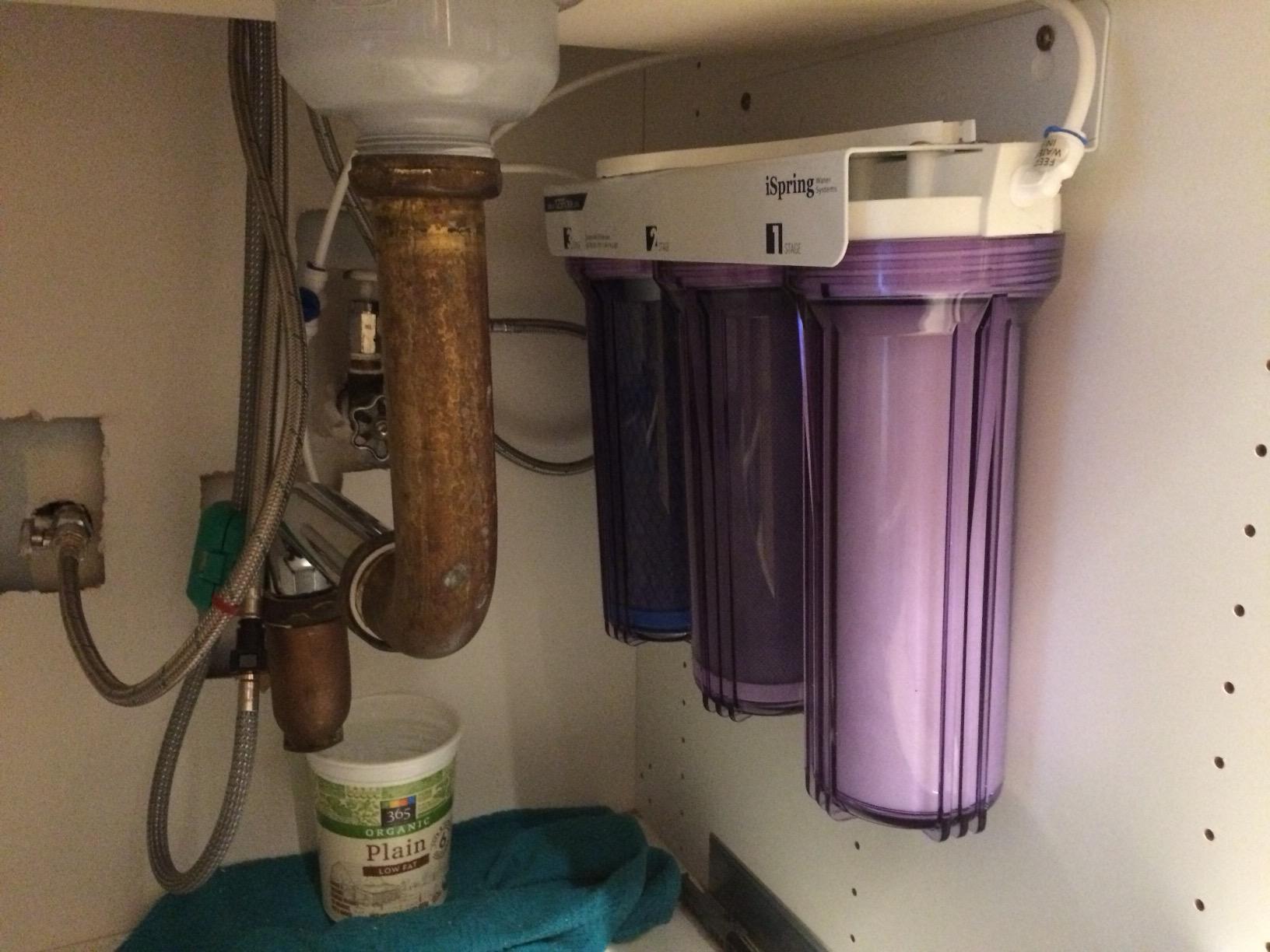
The US31 uses the standard 2.5 by 10 inch housing that plumbers have used since the 1970s, and that decision alone makes it different from everything else here. The housings last five to ten years, you replace the inexpensive F3 cartridges and nothing else, and your ongoing spend drops to media only.
Media loading is the other differentiator at 355 grams per cartridge, roughly 1 kg across three stages, which the brand puts at about seven times a quick change inline filter. The stack is polypropylene, granular activated carbon, and carbon block, addressing chlorine, sand, dirt, rust, bad taste, sediment, and odors across a 10000 gallon capacity and a 12 month filter life.
Read the certification claim carefully before you buy
This is the one product in the roundup with a specific, verified dispute about its certification. A verified reviewer states the F3 cartridges are certified only as reverse osmosis pre filters, and that an iSpring representative later confirmed the listing description was misleading. That claim is on the record, and it is why this system sits at number 10 rather than higher. The filtration for the contaminants the stack actually targets does appear sound and reviews back that up, but if your water report shows lead or PFAS and you plan to rely on a certification for that specific claim, verify the exact model listing yourself before buying.
Flow, plumbing, and the 1/4 inch limitation
Rated at 1 GPM, which buyers describe as roughly twenty times faster than a standard pitcher. It runs on no power, has no tank, and wastes no water to a drain, which makes it a genuinely different category from the reverse osmosis systems above. The limitation is tubing: 1/4 inch lines restrict flow compared with a 3/8 inch setup, and the unit is large enough at 13 by 5.3 by 14.2 inches that it must be screwed to a cabinet wall rather than stood on the floor. Leave access to the bracket screws.
Installation, support, and adding lines later
Everything needed is in the box, including housings, filters, tubing, a brushed nickel faucet, and a mounting bracket. The patented top mounted fastener secures the faucet entirely from above the countertop, and the first stage housing is transparent so you can see sediment accumulating. Because it is a standard tee configuration you can add an ice maker or coffee maker line later, and the listing carries a 1 year warranty plus lifetime technical support, with several reviewers naming representatives who sent replacement parts.
It suits someone put off by cartridge fatigue who does not want reverse osmosis water waste or a drain line, and who wants to choose their own media. It does not suit someone chasing a certified lead or PFAS claim without checking the listing, and it does not suit a very tight cabinet. Expect bubbles for the first few days while media settles, and expect the first stage to need watching, which the transparent housing makes easy. One buyer’s included faucet rusted at the tip within two months, though support replaced it. With 2004 ratings at 4.5 stars it ranks number 12 in its category.
How to Choose an Under Sink Water Filter System
All ten systems above are competent at what they do, so a bad purchase is rarely a bad product. It is a good product solving a problem you do not have, or a system claiming a certification it does not hold. This is the order I would work through.
Step one: test your water before you spend anything
Your municipal utility publishes an annual water quality report that will tell you whether the supply uses chlorine or chloramine and what the disinfection byproduct levels are. On a well, you need a certified lab panel covering coliform and bacteria, iron, manganese, hardness, arsenic, and nitrate, because well water problems are almost never solved by an under sink drinking water cartridge. For city water, the utility report plus a cheap kitchen dissolved solids reading is usually enough. Below 60 ppm with a taste complaint, a carbon filter solves it. At 200 ppm or above with a lead, PFAS, or fluoride concern, you need reverse osmosis.
Step two: match the contaminant to the certification listing
Look the model number up in the NSF, IAPMO, or WQA database and read what the listing says, because the language matters enormously. “Certified to NSF/ANSI 53 for lead reduction” is a claim an independent body tested. “Tested in accordance with NSF/ANSI 53” is a statement the manufacturer made about its own testing. Those are not the same thing.
Here is the decoder. NSF/ANSI 42 is an aesthetic standard for chlorine, taste, and odor, and it is the weakest claim in the category. NSF/ANSI 53 is a health effect standard that names specific contaminants, including lead and cyst removal. NSF/ANSI 58 is the health effect standard written for reverse osmosis. NSF/ANSI 372 certifies that materials are lead free, a plumbing standard rather than a filtration claim. NSF/ANSI 401 covers emerging contaminants with no dedicated health effect standard yet. For PFAS specifically, look for the newer NSF/ANSI 53 and P473 protocol, which tests PFAS directly, and do not accept a general contaminant count as a substitute.
Step three: pick the process that matches your problem
Carbon block adsorbs chlorine, chloramine, taste and odor compounds, VOCs, and to a meaningful degree PFAS while leaving minerals in place, with fast flow, no drain, no power, and no water waste. Reverse osmosis rejects 95 to 99 percent of dissolved solids including PFAS, lead, fluoride, arsenic, and nitrates, at the cost of flat taste, a drain line, and two to four gallons of waste per gallon purified. Ion exchange is the specialist for hardness and the wrong tool for chlorinated municipal water. In practice: taste and chlorine means buy carbon, a lab measured contaminant means buy reverse osmosis, scale and hardness means you want a softener, which is a different appliance.
Step four: tank or tankless, the biggest footprint decision
A tanked system stores purified water in a roughly 3 gallon tank, which means an instant glass at the tap but a permanent cabinet occupant. A tankless system has a pump and makes water on demand, so it needs an electrical outlet but frees up the space, and it also wastes less water. Measure before you choose: the largest system here is 18.12 by 5.67 by 17.72 inches at 31 pounds, and both types need clearance in front of the cartridges for servicing, which is the dimension people forget.
Step five: decide about drilling and about the drain line
A dedicated filtered water faucet requires a countertop hole, which is a no go in a rental and a real project in finished stone. If you cannot drill, your options are the direct connect inline systems here, which feed your existing faucet through a tee, or a separate spigot added at the sink. Reverse osmosis additionally needs a drain line, and the drain saddle must clamp onto a horizontal section of the waste pipe. Carbon systems need neither a drain nor an outlet, and bucket style tankless systems exist if you have no outlet at all, at the cost of slower output.
Step six: price the cartridges over five years, not the system today
Write down the interval and element count for year one, then multiply by five. Three cartridges on staggered schedules of six, twelve, and eighteen months cost something very different from one cartridge replaced annually, and the gap is usually larger than the gap between the systems’ purchase prices. While you are pricing, check whether replacement elements are proprietary and hard to source, whether spare part availability is committed for a stated number of years, and whether the housing is reusable. Reusable housings mean your ongoing spend is media only, which is the cheapest long term model available.
Step seven: ask whether the filter can add something
Filtration is not purely subtractive. Media choices can raise the level of something else, and the two to watch are sodium and potassium from ion exchange resins and manganese from certain catalytic carbon media. This is why independent testers publish before and after lab results with exact numbers rather than a single finished water sample, and why one finished water reading does not prove what a filter removed. Keep a handheld dissolved solids pen and a chlorine test strip, check once before and once a month after installation, and if a number moves the wrong direction you have learned something useful.
Frequently Asked Questions
Do under sink water filters actually work?
Yes, when you match the filter to the contaminant and verify the certification listing. Carbon block systems measurably reduce chlorine, taste and odor compounds, sediment, and to a meaningful degree PFAS. Reverse osmosis systems reduce total dissolved solids by 95 to 99 percent and reject lead, fluoride, arsenic, nitrate, and PFAS, which you can confirm with a handheld meter. What they cannot do is reduce something they were not designed for, which is why a carbon filter judged on a dissolved solids reading looks like it failed when it is working as intended.
What kind of water filtration is best for drinking water?
It depends on what is in your water. For chlorine, chloramine, taste and odor, and general sediment, an activated carbon block filter certified to NSF/ANSI 42, or 53 for health effect claims, is the right tool and wastes no water. For dissolved solids, lead, fluoride, arsenic, and PFAS, a reverse osmosis system certified to NSF/ANSI 58 is the right tool and you accept the drain line and the water waste. For hardness and scale you want ion exchange, which is a softener. Test first, then match the process to the result.
Are under sink reverse osmosis systems better than carbon filters?
For contaminant removal, yes. Reverse osmosis rejects 95 to 99 percent of dissolved solids including PFAS, lead, fluoride, and arsenic, while activated carbon mainly targets chlorine, taste, odor, VOCs, and particulates while keeping minerals in the water. The tradeoffs run the other way too: reverse osmosis water tastes flat unless a remineralization stage is added, it sends two to four gallons to the drain per gallon purified, and it needs a drain line and a dedicated faucet. For taste and chlorine on municipal water, carbon is the better purchase.
Can an under sink filter remove PFAS?
Yes, but only certain media, and you should check the right listing. Reverse osmosis is the most reliable option and is the consensus answer on water treatment forums for dissolved contaminants including PFAS. Activated carbon block filters can also capture PFAS to a meaningful degree, and several systems in this roundup carry the claim. For proof rather than a marketing count, look for a listing to the newer NSF/ANSI 53 and P473 protocol, which tests PFAS specifically, rather than a general 42 or 58 listing that does not name it.
How often do I need to change an under sink filter?
It depends on the system and your water. The carbon systems in this roundup range from 6 months to 18 months per element, and the multi cartridge systems stagger their intervals so you are not replacing everything at once. The CuZn UC-200 is the outlier at five years for the whole unit. Reverse osmosis first stages commonly run on a 6 to 12 month cycle while the membrane itself lasts longer. Set your reminder shorter than the rated life, because real world service life is almost always under the laboratory figure.
Do I need a plumber to install an under sink water filter?
Usually not. Direct connect carbon systems with push to connect fittings install in about three to fifteen minutes with household tools, and tankless reverse osmosis systems include all parts and instructions. Two cases do justify a plumber: cutting the waste pipe for a drain saddle on a vertical or awkward section, and running a new electrical outlet under the sink for a tankless system in an older home. Fill the cabinet with towels before you start either way, because the drain connection is where water ends up on the floor.
Which Under Sink Water Filter Should You Buy in 2026?
If you want the broadest certified contaminant reduction and you can accept a dedicated faucet, a drain line, and two to three gallons of wastewater per gallon, the iSpring RCC7AK-BN is the pick. Its NSF/ANSI 58 listing covers the whole six stage assembly, the alkaline stage fixes the taste problem that makes people quit reverse osmosis, and more than 21500 ratings support it.
If your cabinet is tight, the APEC ROES-50 gives you a certified conventional system from a long established manufacturer. If you fill a lot of water and care about water waste, the Waterdrop G3P600 gives you 600 GPD and a 2:1 drain ratio. If reverse osmosis water tastes wrong to you, the Frizzlife PD600-TAM3 adds the alkaline third stage that fixes it.
If your problem is chlorine, taste, and odor and you cannot drill, the Waterdrop 10UA installs in about three minutes and keeps your minerals. The CuZn UC-200 is the answer for anyone tired of cartridge spending, and the Frizzlife SK99 is the one to buy on a chloramine supply because it carries the NSF/ANSI 53 listing.
Whatever you choose, test your water first, check the certification listing for the exact contaminant you are worried about, and measure your cabinet before the box arrives. Those three steps prevent almost every disappointing under sink purchase we have seen.