

Finding the best STEM sets under $50 sounds simple until you start scrolling. Every aisle of the toy market promises engineering, robotics, and critical thinking, and most of the good options cost several times that budget.
I spent weeks comparing twelve affordable kits, reading the review data line by line, and sorting them by the things that actually matter after the box is opened: how many projects a child can finish, whether the instructions work for a non-reader, and whether the parts survive month two. This list keeps a hard ceiling and holds it. Every set below sits under $50, and I checked the listings in October 2026.
Short on time? The Snap Circuits Jr. SC-100 is the one I recommend most often, because 100+ projects from a single box beats a smaller kit with a prettier package. For children under six, the Melissa & Doug wooden block set does more early math than most kits marketed for that age. And when a gift has to be exciting on the day it is opened, the National Geographic Magic Chemistry set lands well because the payoff arrives in about ten minutes.
One quick note before we start. A sub-$50 ceiling rules some things out entirely, and I would rather say so than pretend otherwise. Programmable app-controlled robots, quality compound microscopes, and subscription crates all live well above this line. What you can get at this budget is real: circuits, hydraulics, gears, chemistry, and screen-free coding. Just not all at once.
Our Top 3 Tested Budget STEM Sets for Long-Lasting Play

Snap Circuits Jr. SC-100
- 100+ buildable projects
- 29 snap-together modules
- Tool-free assembly
- Ages 8 and up

Melissa and Doug 100 Wooden…
- 100 solid wood blocks
- 4 colors and 9 shapes
- Montessori-inspired play
- Ages 2 and up

National Geographic Magic…
- 10 experiments framed as tricks
- All supplies included
- No batteries required
- Ages 8 to 12
Comparing All 12 Affordable STEM Sets Side by Side
| Product | Details | |
|---|---|---|
| Snap Circuits Jr. SC-100 |
|
Check Latest Price |
| Melissa and Doug 100 Wooden Blocks |
|
Check Latest Price |
 Brain Flakes 500 Piece Set Brain Flakes 500 Piece Set |
|
Check Latest Price |
 Sillbird 12-in-1 Solar Robot Sillbird 12-in-1 Solar Robot |
|
Check Latest Price |
| National Geographic Magic Chemistry |
|
Check Latest Price |
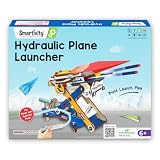 Smartivity Hydraulic Aeroplane Launcher Smartivity Hydraulic Aeroplane Launcher |
|
Check Latest Price |
 Learning Resources Magnet Movers Learning Resources Magnet Movers |
|
Check Latest Price |
 Teach Tech Mech-5 Coding Robot Teach Tech Mech-5 Coding Robot |
|
Check Latest Price |
 Learning Resources Gears Deluxe Learning Resources Gears Deluxe |
|
Check Latest Price |
 Thames and Kosmos Mega Cyborg Hand Thames and Kosmos Mega Cyborg Hand |
|
Check Latest Price |
 Smartivity DIY Pinball Machine Smartivity DIY Pinball Machine |
|
Check Latest Price |
 MAGNA-TILES microMAGS 24-Piece MAGNA-TILES microMAGS 24-Piece |
|
Check Latest Price |
1. Snap Circuits Jr. SC-100 – The Best STEM Set Under $50 for Almost Every Age
SNAP CIRCUITS Jr. SC-100 STEM Electronics Kit, 100+ Projects, Ages 8+
100+ projects
29 snap modules
12 x 9.5 x 1.75 inches
Alkaline battery
+ Pros
- No tools or soldering needed
- Very high project count for one box
- Color-coded numbered parts
- Durable across years of use
- Cons
- Needs alkaline batteries to run
- 29 modules cap circuit complexity
- Manual assumes a confident reader
This is the kit I keep coming back to. The Snap Circuits Jr. SC-100 holds a 4.8 rating across 29314 reviews, and the reason is simple: nothing else in this price range turns one box of parts into that many finished projects.
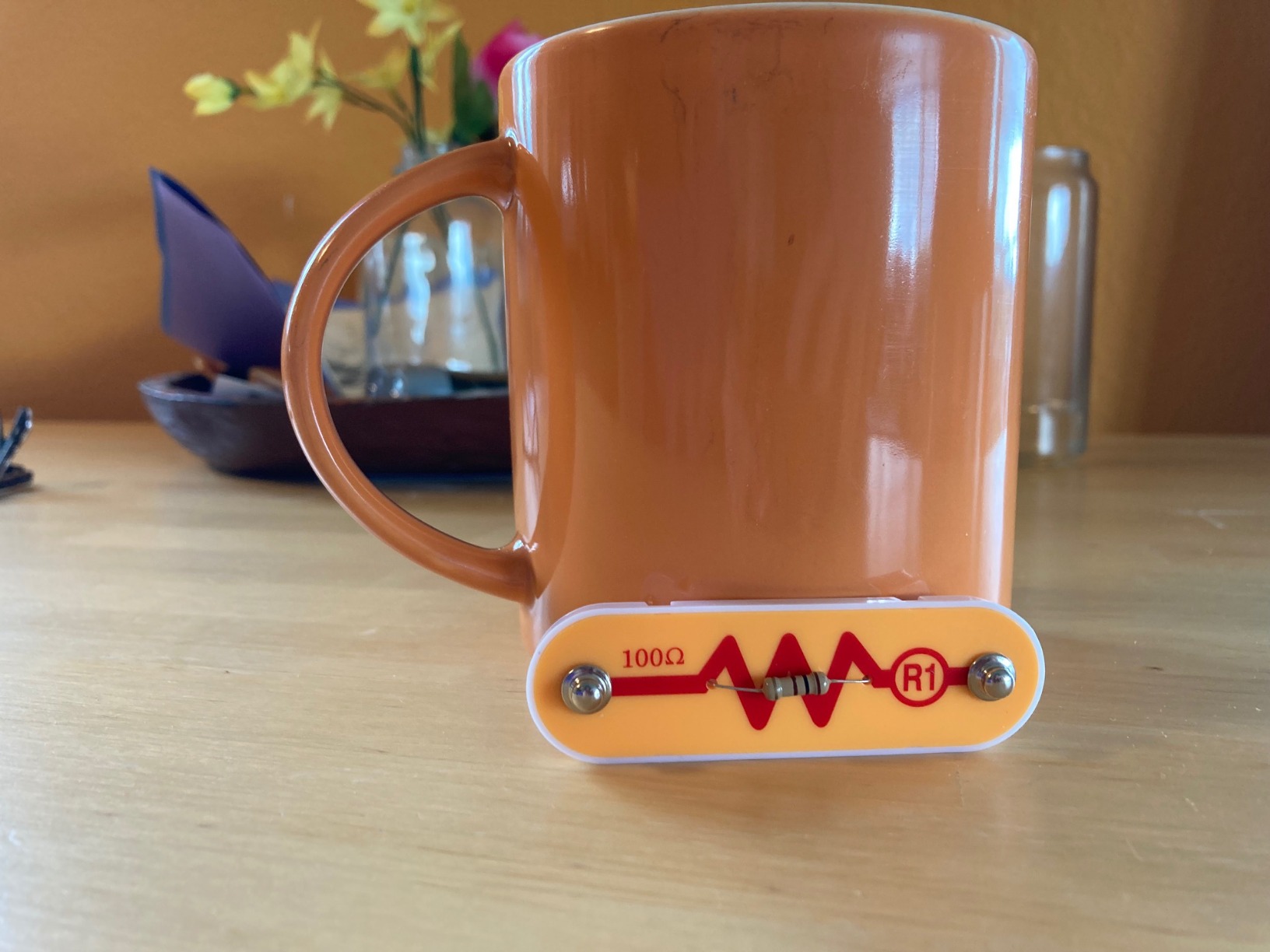
Components snap onto a plastic grid with no tools and no soldering. Numbered, color-coded pieces make a circuit readable to a child who has never held a wire, and the grid means a build can be taken apart and rebuilt without losing anything.
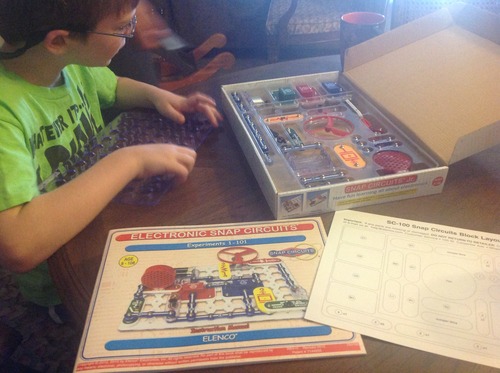
The scale is the real story here. Buyers describe kids working through the manual over weeks rather than days, and the same box later absorbs adult visitors who want a turn. I found no reports of parts snapping loose after heavy use.
The honest limit is the module count. Twenty-nine parts give a lot of variety, but they also set a ceiling on how sophisticated a circuit can get, so a child chasing advanced electronics will outgrow this specific set.
Read reviews and the other recurring note is the manual. Younger children need an adult sitting with them to translate the diagrams, which matters if you were hoping for independent play.
Circuit Concepts and Project Depth
Every project teaches cause and effect in a way children can feel. A circuit that fails until a connection is fixed is a lesson that no worksheet delivers as directly, and with 29314 reviews it is the most thoroughly documented kit in this roundup.
Batteries are the catch. The completed projects need alkaline cells, so budget for replacements, and nothing works during a power cut.
Who It Suits and Who Should Skip It
Skip it if your child is under seven and will not sit with an adult through a diagram. At that age the wooden blocks or gear sets deliver more learning per hour.
For a child aged eight and up, this is still the strongest buy in the guide. It stacks with later Snap Circuits sets too, so the modules carry forward.
2. Melissa and Doug 100 Wooden Blocks – Best Value STEM Set for Ages 2 and Up
Melissa & Doug 100 Wooden Building Blocks with Storage Box
100 solid wood blocks
4 colors and 9 shapes
8.86 x 12.6 x 3.74 inches
No battery needed
+ Pros
- Solid wood that survives hard play
- Smooth rounded edges
- Four colors and nine shapes
- Open-ended play
- Reported to last a decade
- Cons
- Smallest pieces are a mouthing risk under age 2
- Cardboard storage box is weak
- Thin paint on some pieces
Wooden blocks rarely look like a STEM kit, which is exactly why this one works so well. The Melissa and Doug 100-piece set has held a 4.8 rating across 28576 reviews, and the learning is spatial, mathematical, and physical all at once.
Nine classic shapes in four colors across 100 pieces gives a child enough inventory to test a tower, sort by color, count by tens, and rebuild the same structure a dozen different ways. That open-ended quality is what separates it from a themed kit with a fixed end point.
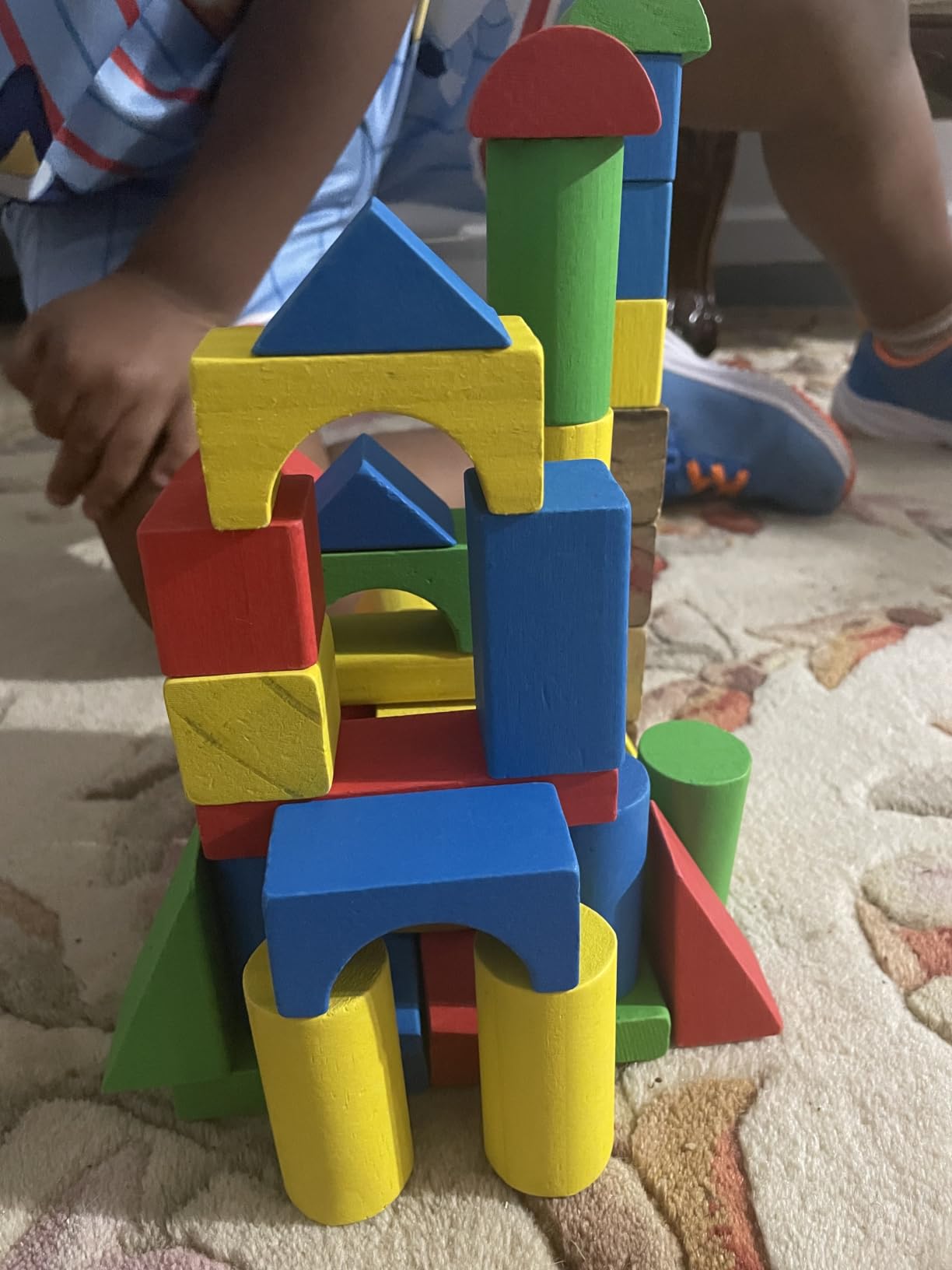
Buyers consistently report long independent sessions, and many mention the set still going strong a decade later. Solid wood with rounded edges is the reason: it does not crack or shed pieces the way thin plastic does.
Sorting, counting, and comparing happen without anyone naming a lesson. For a preschool or early elementary room, that invisible scaffolding is worth more than a printed activity guide.
There is no activity guide in the box, and at first glance that reads like a gap. In practice the openness is the feature, since nothing here is intended to be built one specific way.
Wood, Finish, and Long-Term Durability
The pieces are solid wood rather than engineered board, which matters for a toy designed to be handled by mouthing hands. Reviewers repeatedly point out the smooth edges and the absence of splintering after years of use.
The paint finish draws occasional criticism for being thinner than expected, so expect cosmetic wear over time rather than structural failure.

Age Safety and Storage Realities
For children under two, set the smallest pieces aside. Parents single this out as the main concern because teething toddlers put everything in their mouths.
The included cardboard box is not built for long-term storage, so plan on a real bin within a year. Everything stays usable regardless of where you keep it.
3. Brain Flakes 500 Piece Set – Best Open-Ended Building Set for Wide Age Spread
Brain Flakes 500 Piece Set, Ages 3+, Interlocking Plastic Disc Toy for Creative Building, Educational STEM Learning, Construction Block Play for Kids, Teens, Adults, Boys, and Girls
500+ discs in 12 colors
Storage jar and idea booklet
5.51 x 7.48 x 5.51 inches
Discs 1.3 inches
+ Pros
- Huge piece count
- Discs click together and hold shape
- Non-toxic and CPSIA compliant
- Wide age range
- Quiet screen-free play
- Cons
- Tall builds topple easily
- Small discs scatter and get lost
- Better as quiet-time play
Brain Flakes is the recommendation I make when one child spans two age groups. The 500-piece set has a 4.8 rating across 14471 reviews, and the same disc can be a tower for a three-year-old and a spanning structure for a twelve-year-old.
More than 500 discs in 12 colors click together without tools and hold their shape, which means a child builds by connecting rather than by balancing. That difference explains the 4.8 rating better than any feature list.

Material safety is documented rather than assumed: the set is BPA, lead, heavy metal, and phthalate free, and ASTM US CPSIA compliant, with a 90 day manufacturer warranty behind it.
The storage jar is a small piece of engineering in itself. It keeps 500 loose pieces contained and doubles as the base for a build, which matters when the alternative is a disc under every piece of furniture.
Quiet-time appeal is the underrated strength here. No noise, no screen, and no adult required, which makes it the easy win on a long car trip or a rainy afternoon.
Piece Count, Scale, and Build Stability
Large structures built from few pieces is the design intent, and it works when the base is flat. Ambitious towers do topple, and reviews flag that as the most common disappointment.
At 1.3 inches across, the discs are small enough to vanish under a sofa in a week. Count them before they become a chore, or skip this one in favor of a wooden set.

Classrooms, Siblings, and Storage
Classrooms and makerspaces use this set well, and the 12 colors make group sorting and collaborative builds straightforward. One jar per table is a workable setup.
For a family with a big age gap, this is the version of building toys that keeps working. Two siblings can share one jar and still be building at different complexity levels.
4. Sillbird 12-in-1 Solar Robot – Best Budget Robotics Kit for Outdoor Play
Sillbird 12-in-1 Solar Robot Building Kit STEM Gift for Boys Ages 8-13
12 buildable models
190 parts
10.24 x 7.87 x 2.56 inches
No battery required
+ Pros
- 12 builds with rising difficulty
- Larger solar panel
- Works under strong artificial light
- Printed instructions
- Cons
- Needs direct strong light to run well
- Diagram-heavy instructions
- Gears loosen after rebuilds
The Sillbird 12-in-1 is the cheapest way into robotics in this roundup, and its 4.3 rating across 15909 reviews reflects a real trade-off rather than a flaw in the design.
A child assembles one of 12 different models from 190 parts, with difficulty rising as the numbers go up. Finished robots and vehicles move under power from a solar panel rather than a battery, which removes an entire category of household expense.
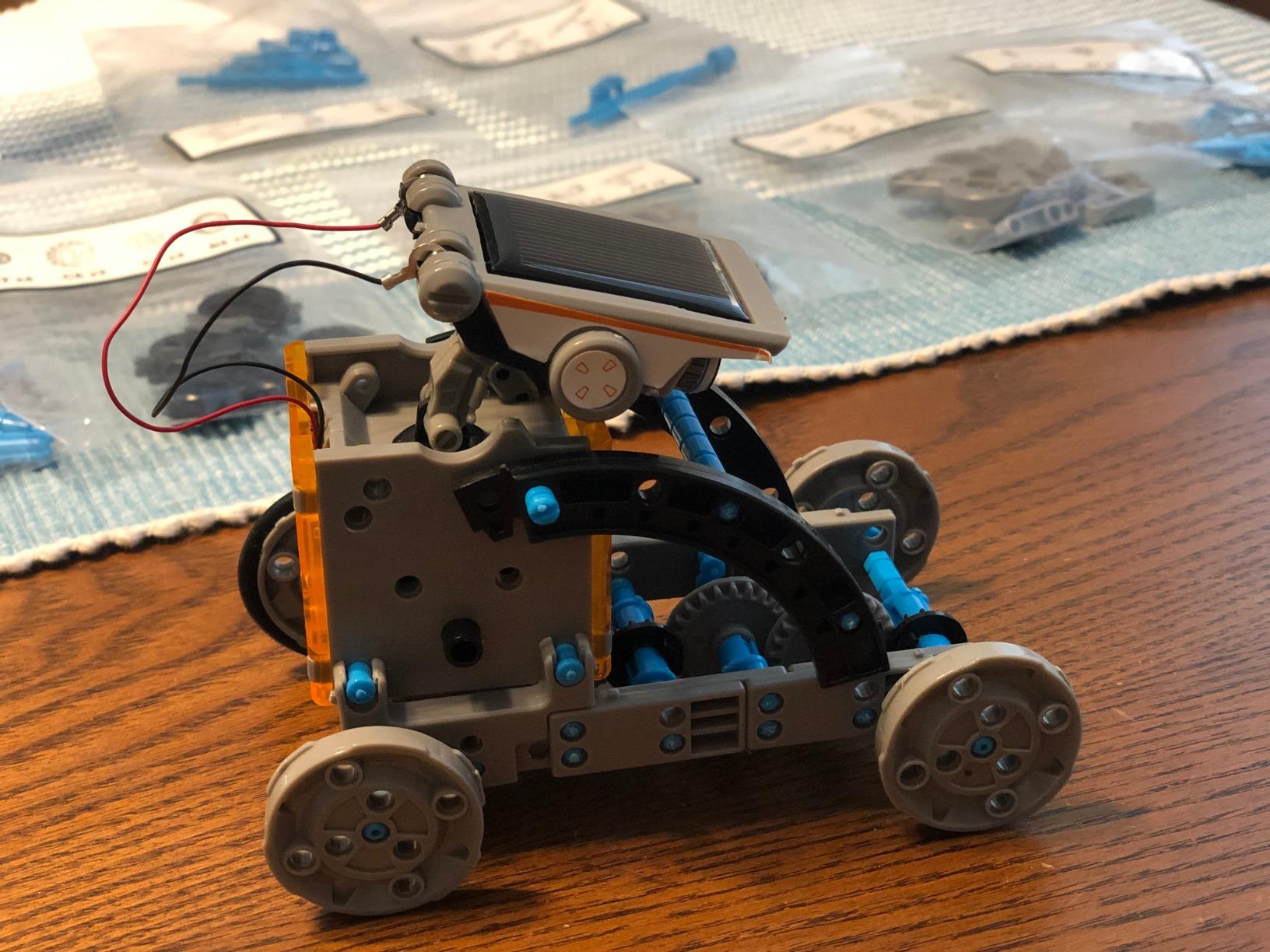
Build quality is the honest weak point. Reviewers report plastic gears and joints loosening or stripping after repeated assembly and disassembly, so expect to replace or reinforce small parts eventually.
The upgraded larger panel is the practical upgrade over cheaper versions. It produces stronger and more consistent output, and reviewers say you can feel the difference in how reliably the models move.
Indoor use still works. Under a strong artificial light source the robots run, so a dark winter month does not strand the kit in a drawer until spring.
Solar Power and Light Requirements
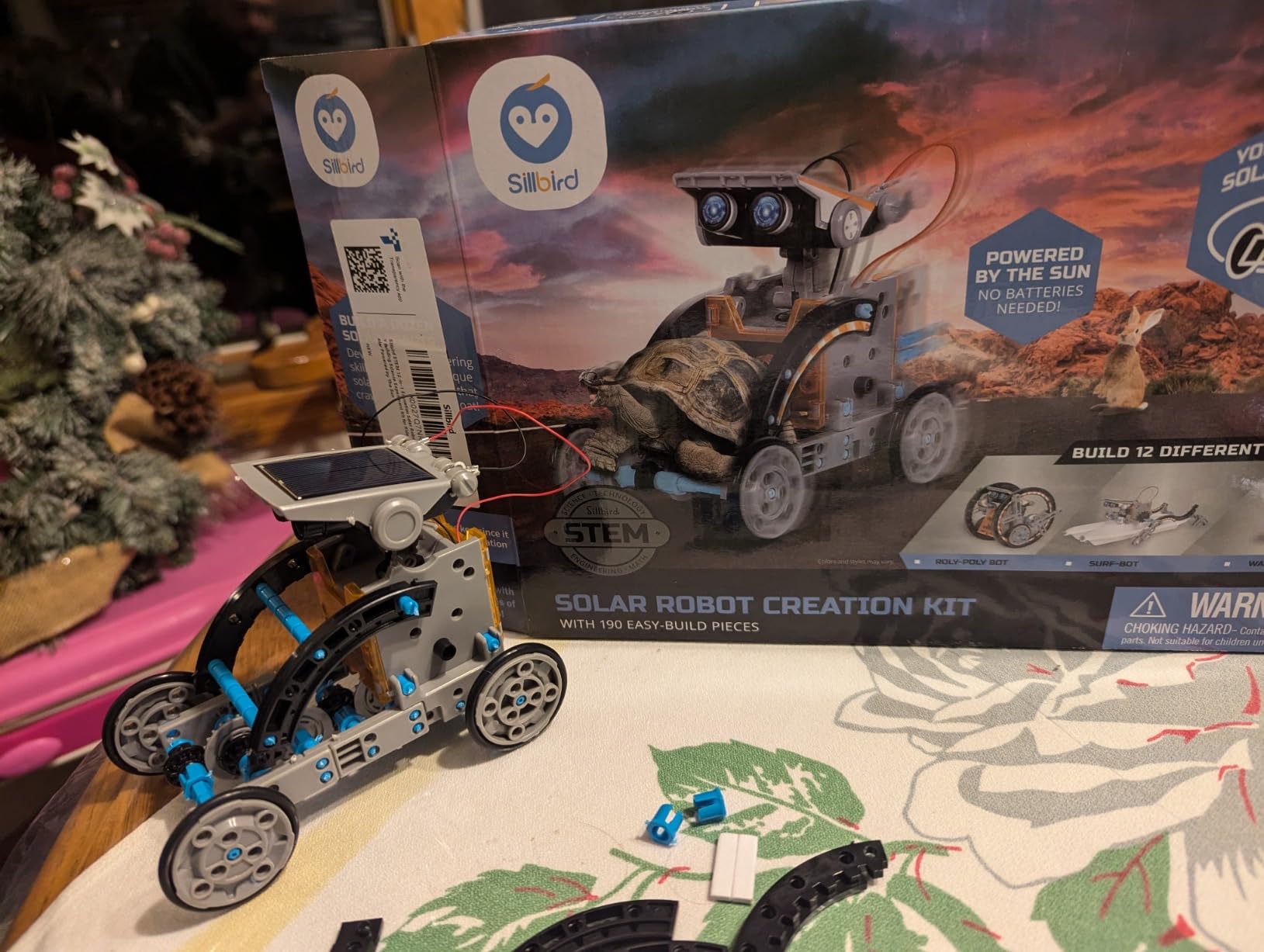
Direct sunlight is where this kit performs best, and that is the design lesson hiding inside it. A child can see a power source, an energy transfer, and a mechanical result without a circuit board.
Some builds need direct, strong light to move reliably, which is the single most common complaint. On a cloudy afternoon the robot may sit still, and that reads as a broken toy rather than a weather condition.
Instructions and Repeated Builds
The instructions are diagram-heavy, and translating pictures into assembly steps is hard for a child who cannot yet read. An adult nearby makes the difference between a smooth build and an abandoned box.
Printed step-by-step guidance is included, and the 12 models mean a child outgrows a single finished model quickly. Each completed robot is a toy to play with rather than a display piece.
5. National Geographic Magic Chemistry Set – Best Chemistry Set That Delivers Same-Day Results
National Geographic Magic Chemistry Set with 10 Tricks for Kids Ages 8-12
10 experiments
7.28 x 3.03 x 10.07 inches
12.96 ounces
No batteries required
+ Pros
- Every supply included in the box
- Guide explains the real science
- Repeatable trick format
- Works with younger kids alongside an adult
- Cons
- Some steps need adult supervision
- Messy liquid and foam experiments
- Some components are single-use
Chemistry kits usually lose parents at the ingredient list. This one does not, because everything needed for all 10 experiments arrives in the box, and water and dish soap are the only additions.
The 4.7 rating across 13184 reviews reflects a design choice that works: each experiment is framed as a magic trick. Kids float a coin, change the color of water, and make instant snow appear, then re-run the ones they like most.
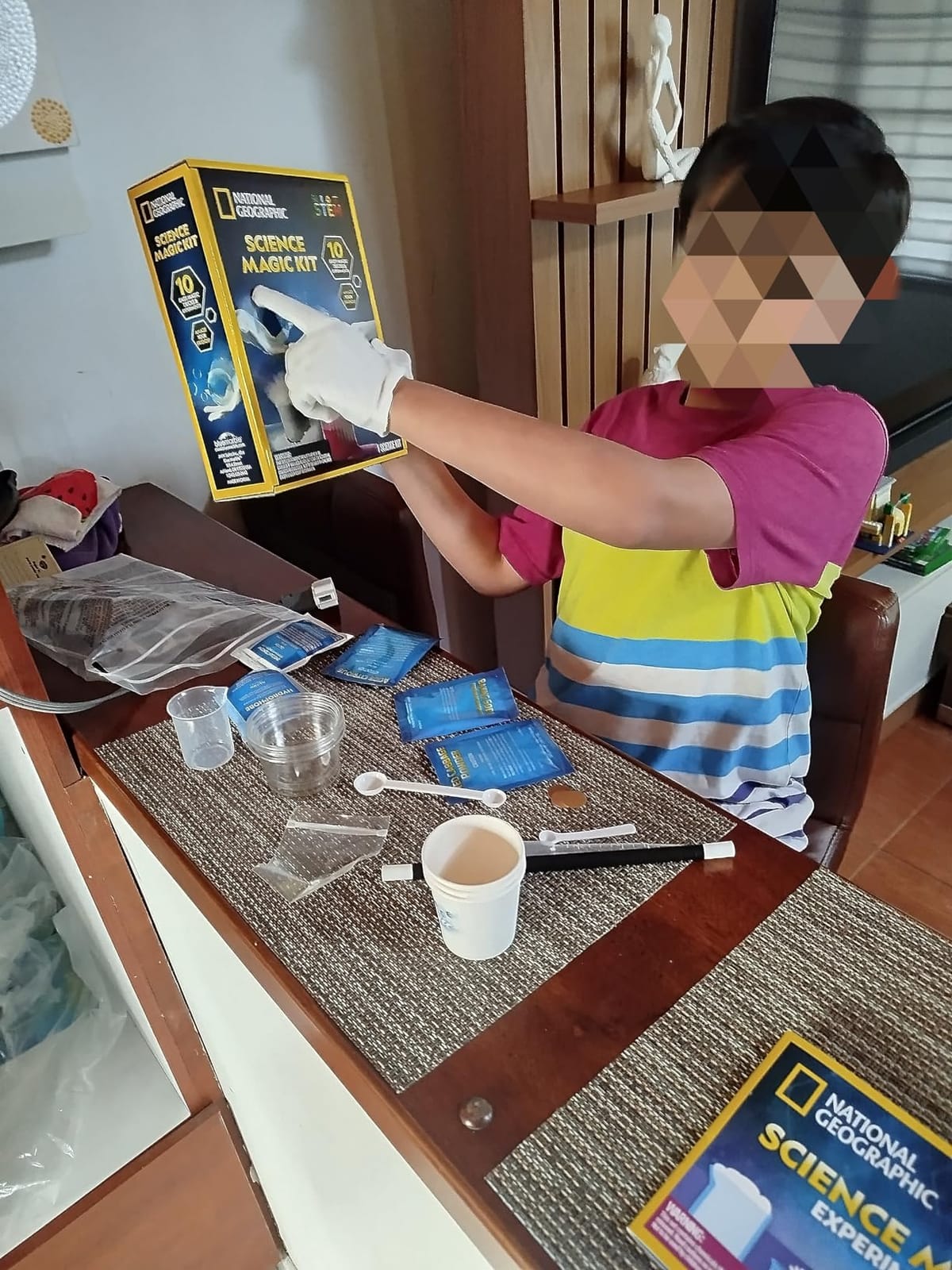
A magic wand and white gloves are included, so the kit doubles as a performance set for an audience. That is a real advantage over a pure lab kit when the goal is holding a sibling’s attention.
The full-color learning guide is the part that separates it from a party trick. Each procedure comes with an explanation of the actual reaction, which is the STEM content hiding behind the theatrics.
Reviewers also report it holding the attention of children as young as four when an adult is present, even though the box is labeled for ages eight and up.
Mess, Supervision, and Consumable Parts
Plan for cleanup. Foam, colored liquid, and floating experiments belong on a tray, a towel, or outdoors, and reviewers raise the mess more often than anything else.
Some of the chemical components are single-use, so the box runs through faster than ten experiments might suggest. Treat it as repeatable and it stays interesting for several sessions.

What the Guide Actually Teaches
Each trick maps to a recognizable idea: density when the coin floats, and a state change when snow appears from a liquid. The framing keeps attention; the explanation does the teaching.
No batteries are required, so there is no cost to run and nothing to fail. That makes it one of the cleanest first chemistry experiences available at this price.
6. Smartivity Hydraulic Aeroplane and Dart Launcher – Best Value Hydraulics Project
Smartivity 2in1 Hydraulic Aeroplane & Dart Launcher STEM Kit Ages 6-14
2-in-1 launcher
58 parts
11.81 x 9.84 x 7.48 inches
Hydraulic, no batteries
+ Pros
- One build launches planes and darts
- Real fluid-force principles
- Engineered wood feels premium
- Manual works for a six-year-old
- Lifetime free replacement parts
- Cons
- Hydraulic seals dry out over time
- Needs repeated pumping for power
- Fiddly tubing for small hands
Hydraulics are hard to demonstrate with household objects, so a kit that puts a real fluid system in a child’s hands is unusual. The Smartivity launcher has a 4.6 rating across 5763 reviews and holds up well.
The 2-in-1 design is the hook: one build launches paper airplanes and darts. Pumping the handle builds pressure, and the release converts it into a launch, which is fluid force made visible in about five seconds.
Construction is engineered wood rather than plastic, and reviewers consistently notice the difference in feel. It is also a more responsible material story for a toy meant to sit on a shelf afterwards.
The step-by-step manual is clear enough for a six-year-old to work through with a little help, which puts this kit ahead of most competitor hydrology products in the same bracket.
Small rubber bands and flexible tubing are fiddly for younger hands, and that is where extra adult patience pays off. Budget twenty minutes rather than ten for the first build.
Engineered Wood Build Quality and Longevity
The wood parts hold up better than the plastic equivalents, and reviews describe the finished launcher as something a child keeps rather than discards. That is unusual in the DIY kit category.
There is a lifetime free replacement parts program, so a stripped fitting later is a request rather than a replacement purchase. Few competitors at this price offer that.
Performance Over Time and Who It Fits
Seals can dry out and reduce power after extended use, so a dab of appropriate oil is worth knowing about before the launch performance drops.
Getting real power takes several pumps, and that repetition is part of the lesson rather than a defect. The rated range of ages 6 to 14 is honest for a build like this.
7. Learning Resources STEM Explorers Magnet Movers – Best Magnetic Set for Sensory Bins and Classrooms
Learning Resources STEM Explorers Magnet Movers
34 pieces
10 experiment cards
8.3 x 8.1 x 2.8 inches
Ages 5-9
+ Pros
- Cards give guided starting points
- Magnets sized for small hands
- Fits a sensory-bin format
- Durable plastic
- Cons
- Limited play after the 10 cards
- Some accessories deplete
- Low replay value versus building sets
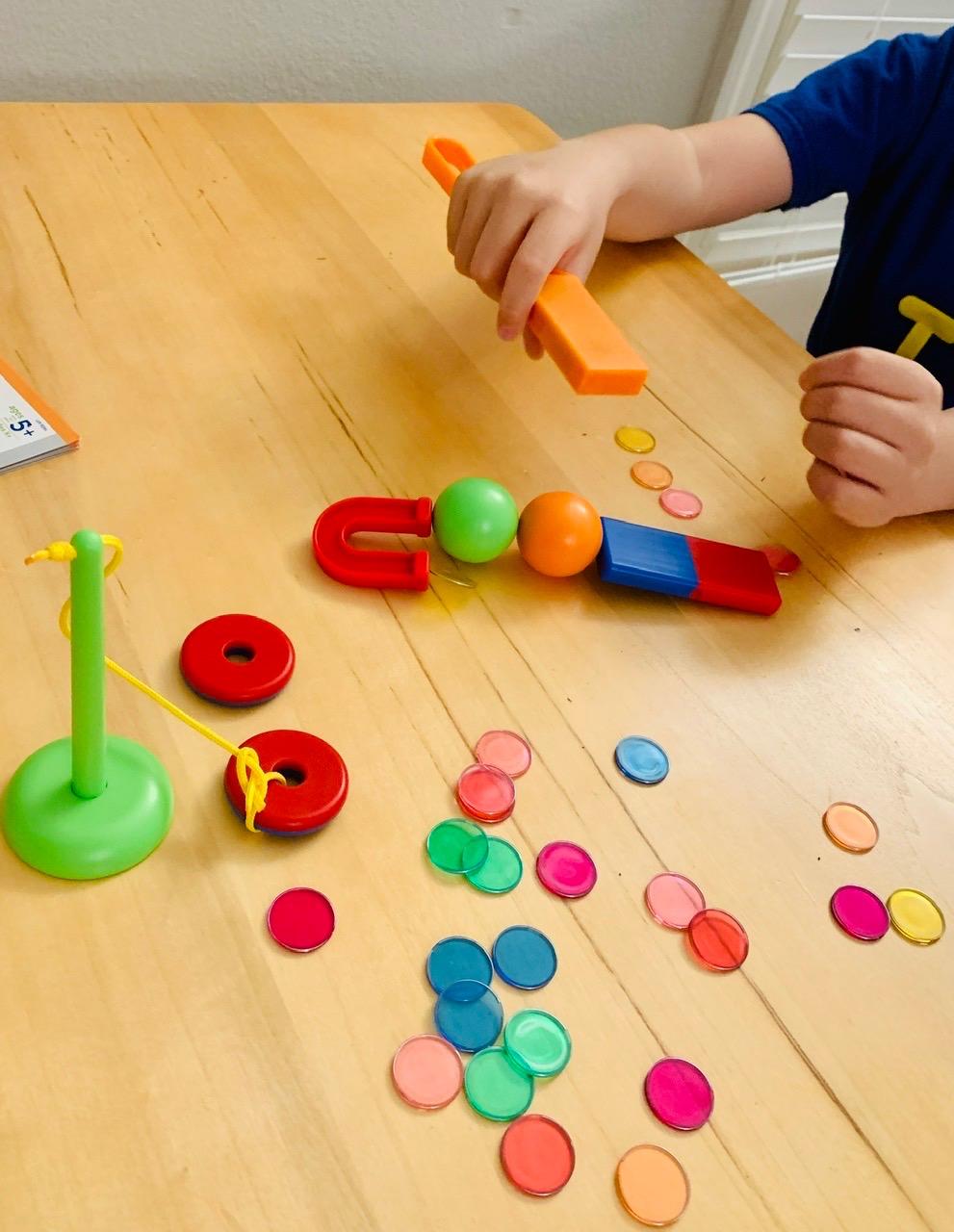
Magnetism is one of the few topics a child grasps instantly and then keeps testing for years. The Learning Resources Magnet Movers set is built around that loop, and its 4.7 rating across 5065 reviews reflects how well the guided structure holds attention.
Ten experiment cards give a child a starting point instead of a bag of loose parts, which is the design decision that separates this from a generic magnetic toy. Each card is a question the counters then answer.
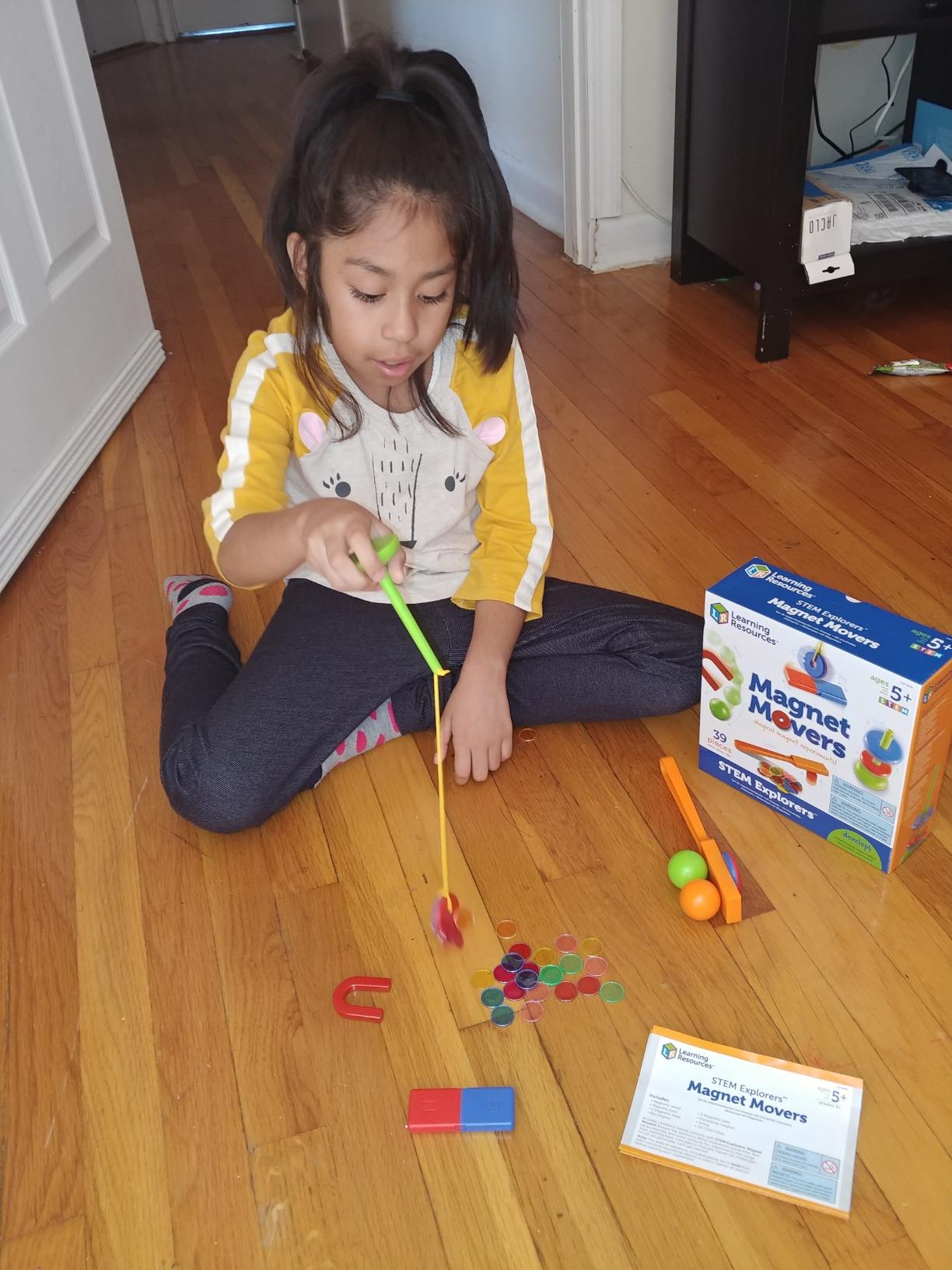
Magnets are strong enough to move small counters yet still separable by small hands, which is the balance most sets get wrong in one direction or the other. Nothing ends up welded together or shrugged off.
The 34-piece footprint is genuinely compact, so the whole set fits in a sensory bin or a shallow classroom tray. That is a practical advantage in a room with limited storage.
Adults and children tend to discover magnetic properties together here, and reviews describe it as an activity that works as well for a family as for a classroom of five-year-olds.
Replay Value and the Card Limit
Reviewers are candid about the ceiling. Once the ten cards are complete, 34 counters do not support a great deal of further play on their own compared with a construction set.
Some accessories deplete with use, which further shortens the solo phase. For repeatability, pair it with a magnetic building set rather than expecting the set to carry every session.
Classroom, Homeschool, and Bin Use
This is the version I recommend for a homeschool co-op table, because the cards give a facilitator something to point at and the footprint keeps reset time short.
Durable plastic survives enthusiastic repeated testing, and the absence of small loose hardware makes it a simpler cleanup routine than most STEM kits of this size.
8. Teach Tech Mech-5 Coding Robot – Best Screen-Free Coding Robot for Ages 10 and Up
TEACH TECH Mech-5 STEM Coding Robot Building Kit for Kids Ages 10+
Mechanical coding robot
12.4 x 2.5 x 9.1 inches
2 AAA batteries
Ages 10+
+ Pros
- Screen-free mechanical coding
- Genuine multi-hour build
- Five programmed actions
- Built by Elenco
- Entry to mechanical engineering
- Cons
- Several hours of assembly
- Fiddly alignment that can jam the arm
- Coding buttons pop off
- Limited actions for the price
The Mech-5 answers a question most cheap robot kits avoid: can a child learn sequencing without a screen? This one can, using a mechanical wheel with snap-on buttons, and it holds a 4.5 rating across 4995 reviews.
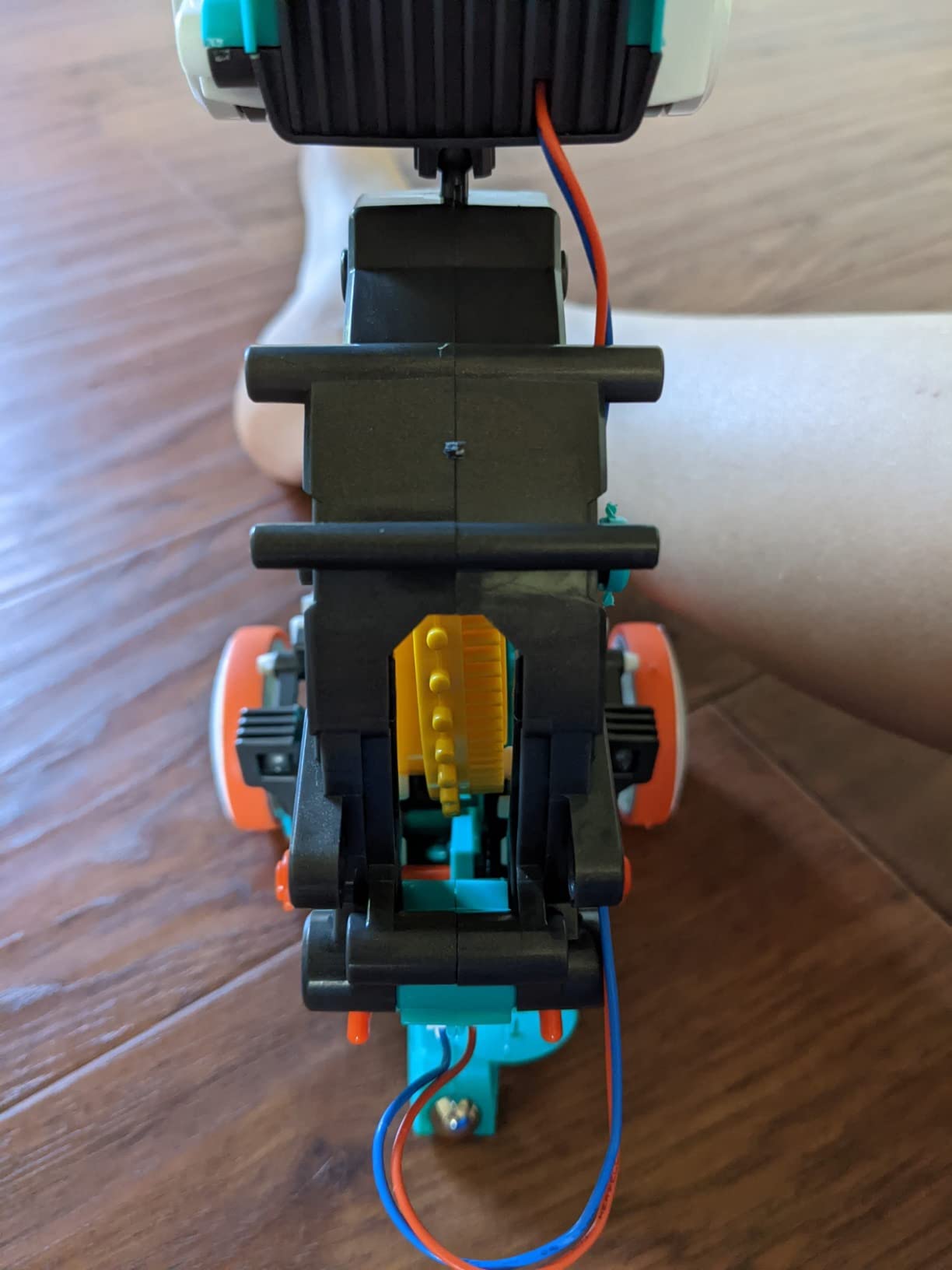
Snap coding buttons onto the wheel and the robot performs one of five actions: throw, lift, kick, draw, and more. There is no app to download and no firmware to update.
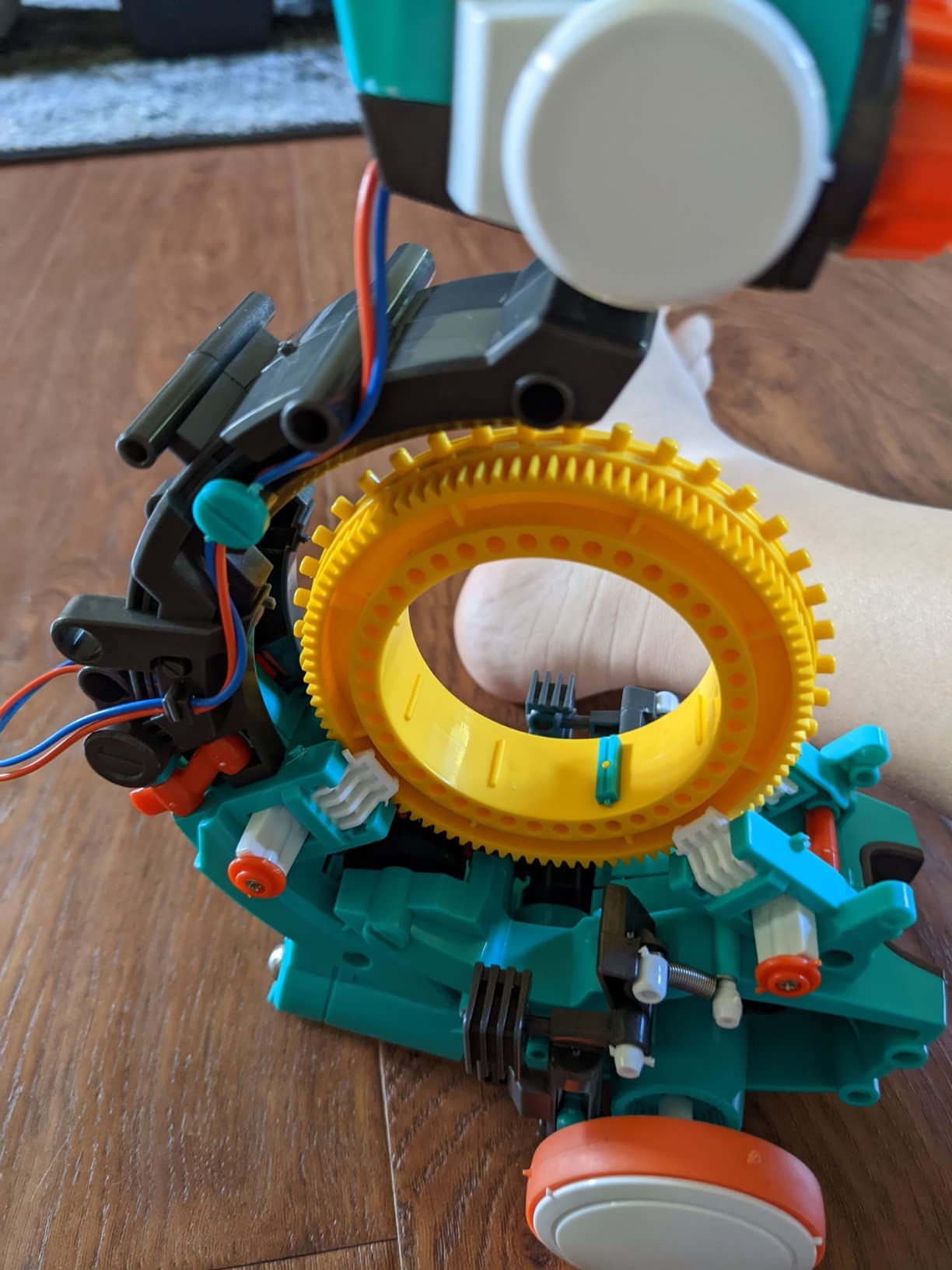
Elenco manufactures the kit, the same company behind the Snap Circuits line, and that shows in the part quality. The mechanism is a real geared machine rather than a plastic shell around a small motor.
Build time runs to several hours, and it is explicitly a building project rather than a pre-assembled toy. Buyers who planned a birthday morning reveal tend to be disappointed; buyers planning a weekend together tend to love it.
Getting the arm and gripper to move cleanly takes patience. Misaligned parts can cause jamming, and that is the single most common frustration in reviews.
Mechanical Coding Without a Screen
Sequencing is taught by arranging physical actions in order, then watching the robot execute them. In a screen-saturated house, a coding toy with no display is a genuinely different proposition.
Two AAA batteries power it, so the moving parts work, and the 9-inch size means it can run on a table. Coding buttons can pop off during vigorous play, so keep a few spares nearby.
Who It Suits and Where It Falls Short
It suits a child aged ten and up working alongside a parent, and reviewers frequently describe it as a parent-child weekend project rather than an independent one.
The limitation for the price is variety. Five programmable actions is a small vocabulary, and a child who codes quickly will exhaust it faster than the box suggests.
9. Learning Resources Gears Deluxe Building Set – Best Set for Teaching Simple Machines
Learning Resources Gears Deluxe Building Set
100 pieces including 46 gears
12 x 10.4 x 4.1 inches
1 kg
No batteries required
+ Pros
- 46 colorful gears mesh smoothly
- Open-ended building
- Sturdy pieces for small hands
- Teaches cause and effect without lecturing
- Cons
- Only one crank handle included
- Limited connectors for large builds
- Some pieces need real force to snap
Gears are the clearest introduction to simple machines, and this set does it without a single worksheet. The Learning Resources Gears Deluxe has a 4.8 rating across 4697 reviews, and the parts mesh reliably, which is what separates a good gear set from a frustrating one.
Inside are 46 colorful gears, 26 square pillars, 21 six-way axles, 6 interlocking bases, and a crank handle, with an activity guide. A child assembles a mechanism, turns the handle, and watches motion transfer from one gear to the next.
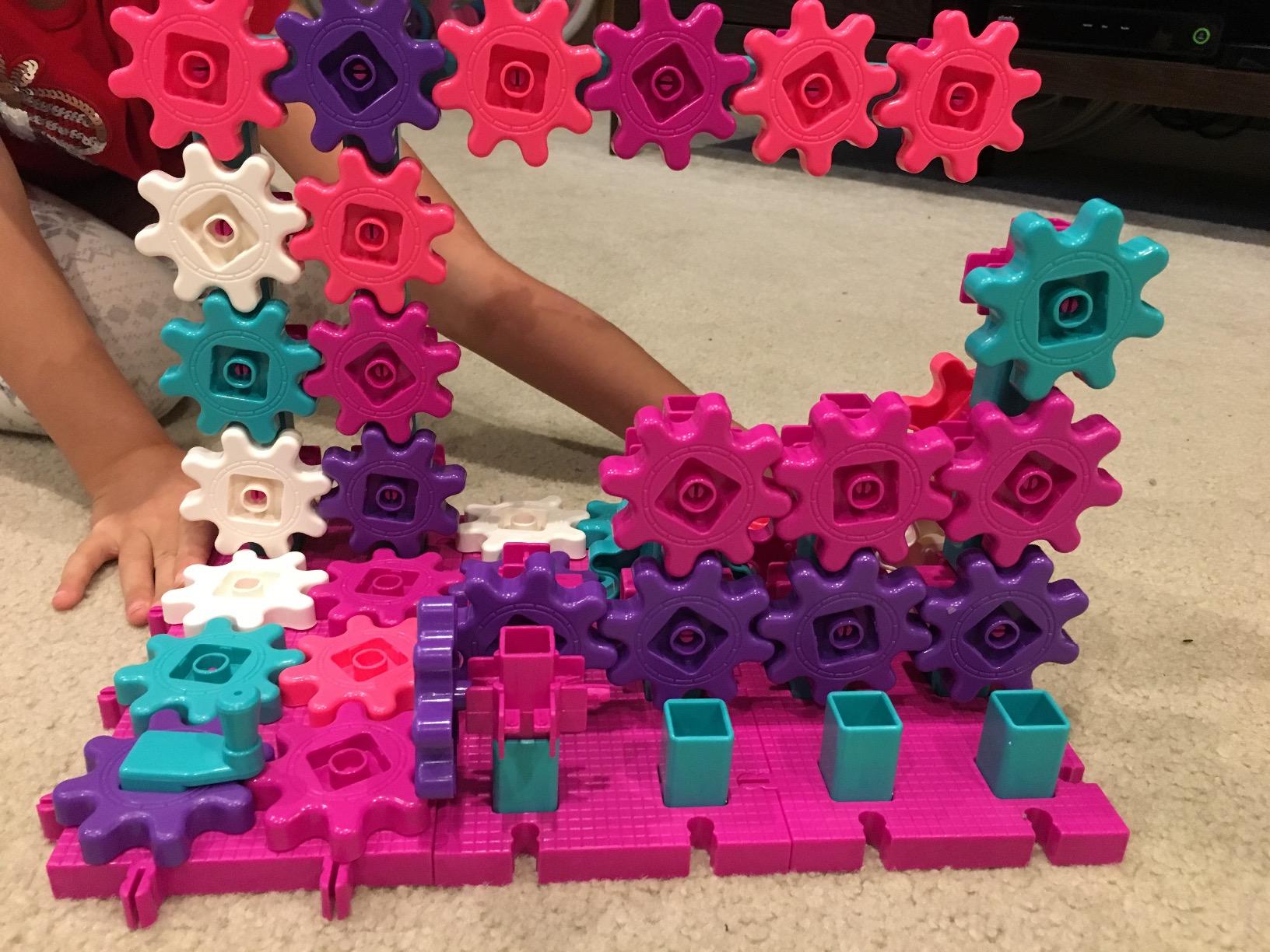
Cause and effect is learned by doing rather than being told. The manufacturer lists fine motor skills, spatial reasoning, and problem-solving as outcomes, and the reviews describe a set that does not feel like a lesson.
Sturdy pieces are sized for young hands, and plenty of owners report buying a second set later. That is the clearest available signal that a kit outlasts its first month.
The activity guide is brief, and most of the value comes from free building. Anyone expecting a sequenced project will find this more open than that.
Gear Quality and Motion Transfer
Mesh quality is the headline detail. Gears that mesh smoothly mean a child’s first mechanism works on the first try, and that single fact explains most of the 4.8 rating.
Some pieces require real force to snap together, which is a genuine problem for the youngest builders. The rated range of ages 3 to 10 reflects that spread better than the low end suggests.

The Single Crank Handle Problem
Only one crank handle ships in the box, so two children cannot power separate builds at the same time. In a family with siblings, this is the most commonly cited limitation.
Connector count is also limited for larger structures, so ambitious models may need a second set. No batteries are required, which keeps running costs at zero.
10. Thames and Kosmos Mega Cyborg Hand – Best Parent-Child Hydraulic Build Project
Thames & Kosmos Mega Cyborg Hand STEM Experiment Kit | Build Your Own GIANT Hydraulic Amazing Gripping Capabilities Adjustable for Different Sizes Learn Pneumatic Systems
Wearable hydraulic hand
10 x 4.75 x 11 inches
1.8 pounds
No motors or batteries
+ Pros
- Finished hand genuinely grips and lifts
- Adjustable for either hand or claw
- Manual mixes stories with physics facts
- Strong shared project
- Cons
- Assembly is genuinely difficult
- Sharp edges on punched parts
- No spare cylinders or seals
- Tiring for small hands
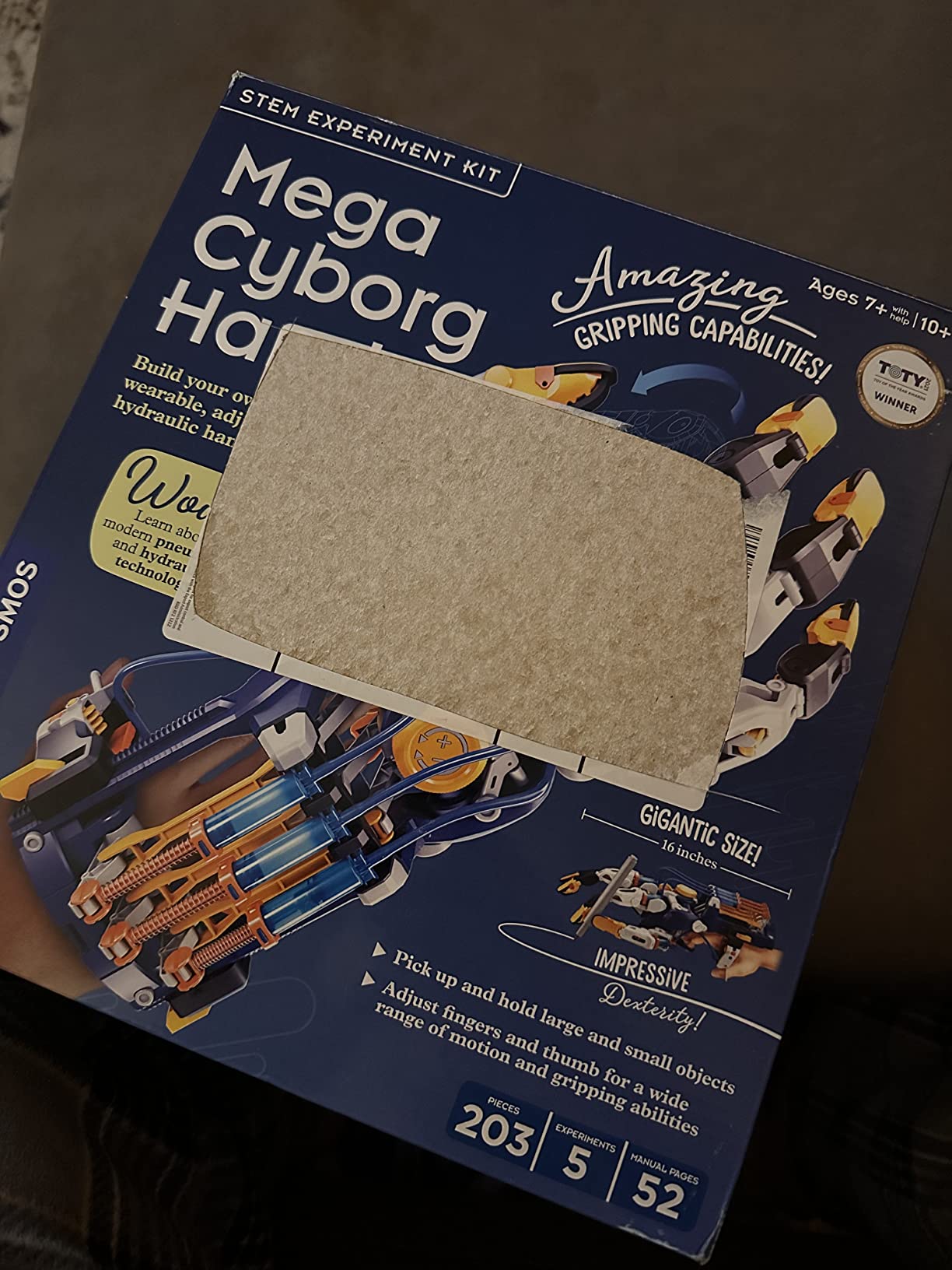
The Mega Cyborg Hand is the most ambitious project in this roundup and the one families most often describe as the best weekend they spent together. It carries a 4.4 rating across 4203 reviews, and the 4.4 understates how pleased buyers are once the build is finished.
A child assembles a wearable mechanical hand driven by hydraulic pistons, then operates it with their own fingers. No motors, no batteries, just air pressure, water, and hands, and the result genuinely grips and lifts objects.
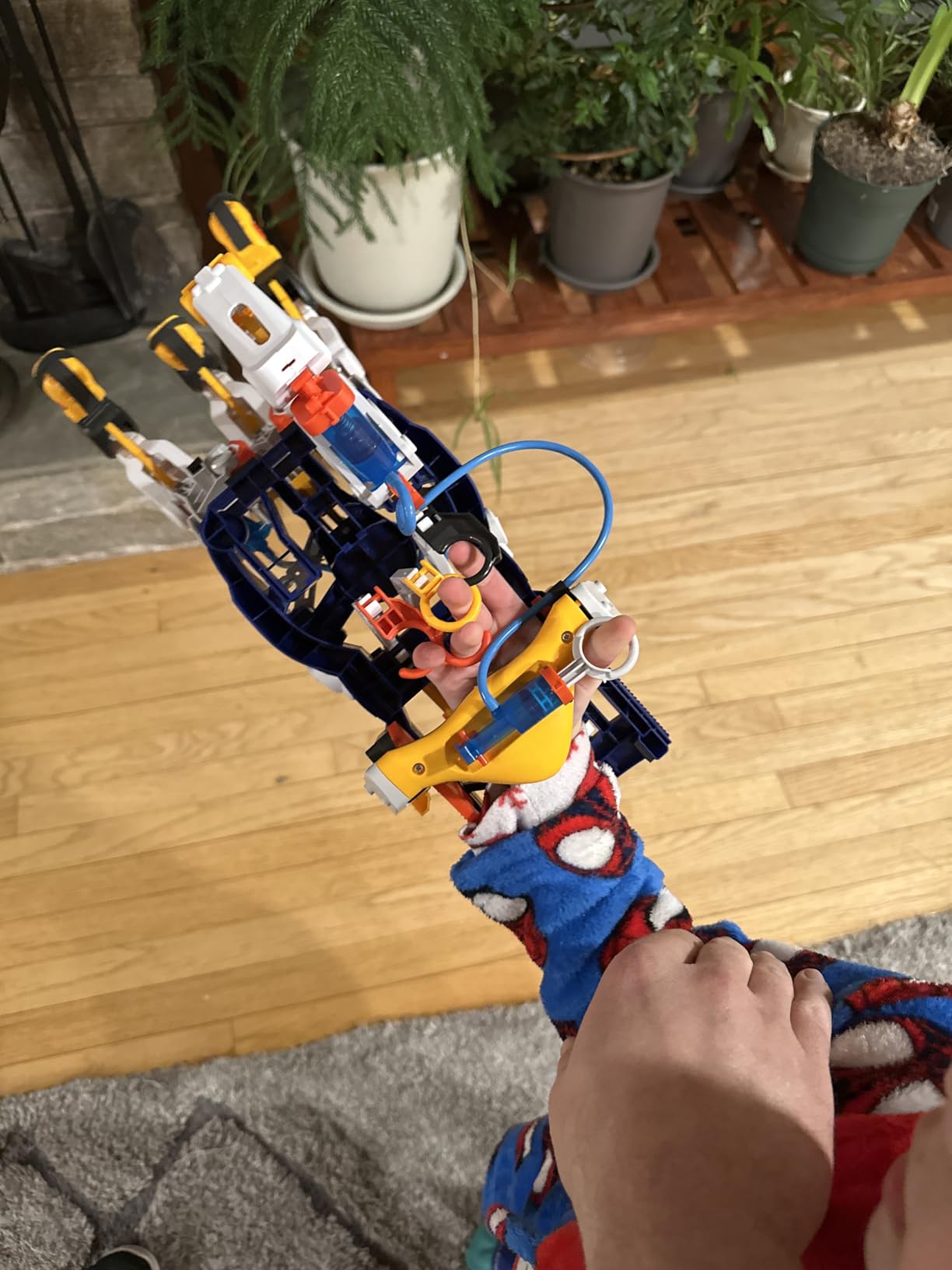
Each finger joint adjusts to different angles, and the whole thing reconfigures as a right hand, a left hand, or a claw. Adjustability for different hand sizes is a thoughtful detail that reviewers call out repeatedly.
The manual weaves comic-style stories with physics facts rather than a dry build sequence. For an older child, that framing turns a long assembly into a story they are reading to find out what happens next.
Be honest about the difficulty. Parts are punched from sprues and can leave sharp edges, and a rated age of seven understates how much adult help most families need.
Assembly Difficulty and Part Finishing
Expect several hours, and expect to spend some of them trimming or filing edges. That is the main reason for the kit’s one-star complaints, which are higher than most in this list.
Cylinders and piston seals are not included as spares and wear over time. The manufacturer provides a one year warranty against defects, so defects are covered, wear is not.
Operating the Finished Hand
Once built, the hand is impressive but tiring to work, particularly for smaller or weaker hands. Pump pressure with a full water reservoir and it holds a firm grip on lightweight objects.
It is a Toy Association STEAM Toy of the Year winner, and it is the pick I suggest when an older child has already worked through every snap-together kit on the shelf.
11. Smartivity DIY Pinball Machine – Best Buildable STEM Set for Tweens and Teens
Smartivity DIY Pinball Machine I Global Award Winning Game Ages 8-99 Years
375 parts
Rubber band powered
11 x 14.5 x 5.3 inches
Ages 8 to 99
+ Pros
- Finished machine genuinely plays
- Exceptionally clear photo instructions
- Wood avoids the disposable look
- Keeps working for months
- Lifetime free replacement parts
- Cons
- Build takes roughly two to three hours
- Some parts unclear in the manual
- Rubber bands deteriorate over time
Most build kits end in a model on a shelf. The Smartivity pinball machine ends in a game, and that is the whole argument for it. It holds a 4.5 rating across 3237 reviews.
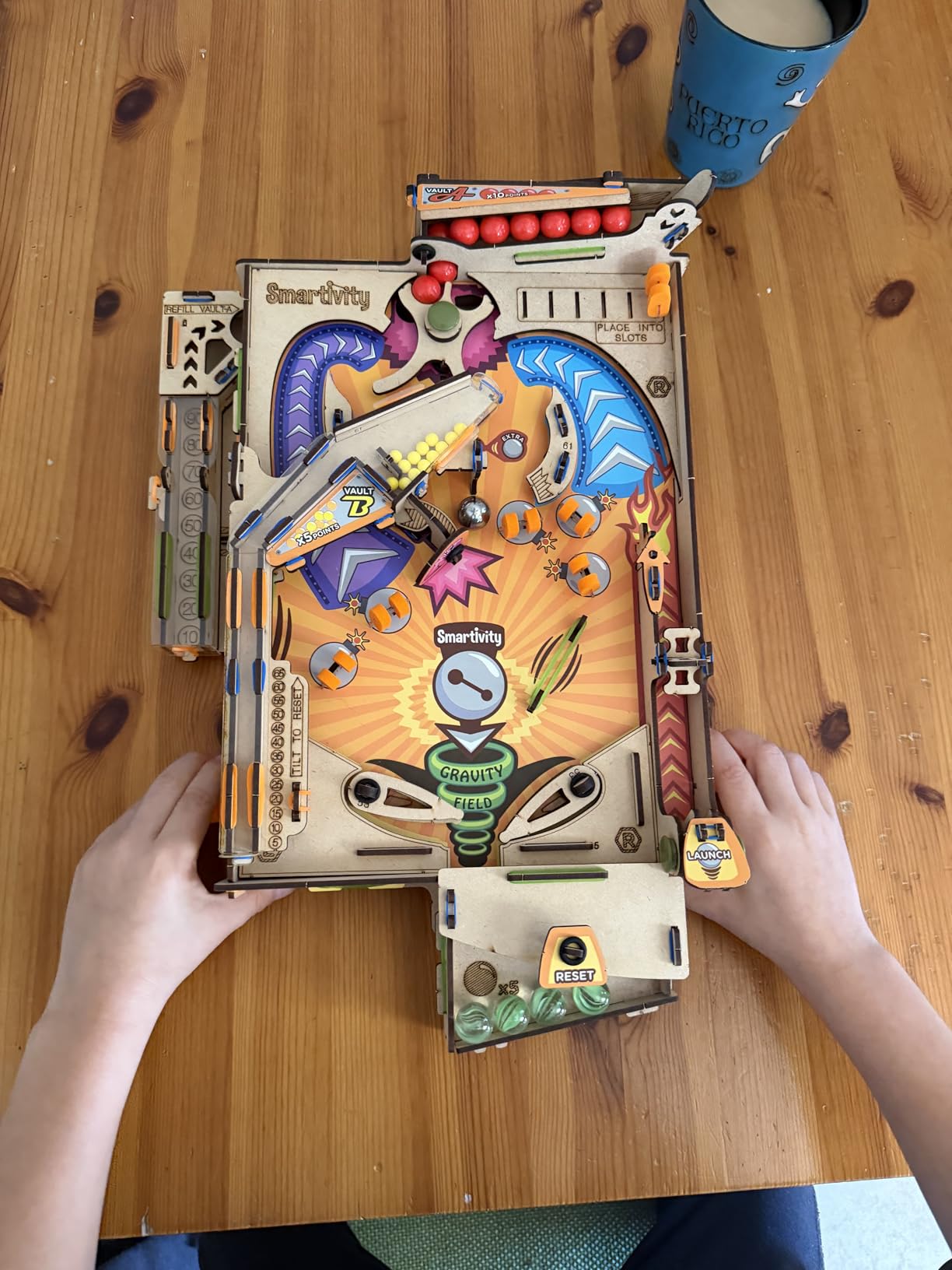
From 375 parts, a child assembles a working tabletop machine with a spring launcher, flippers, and scoring targets. The theme is physics, so momentum, energy transfer, and mechanical advantage are all visible during play.
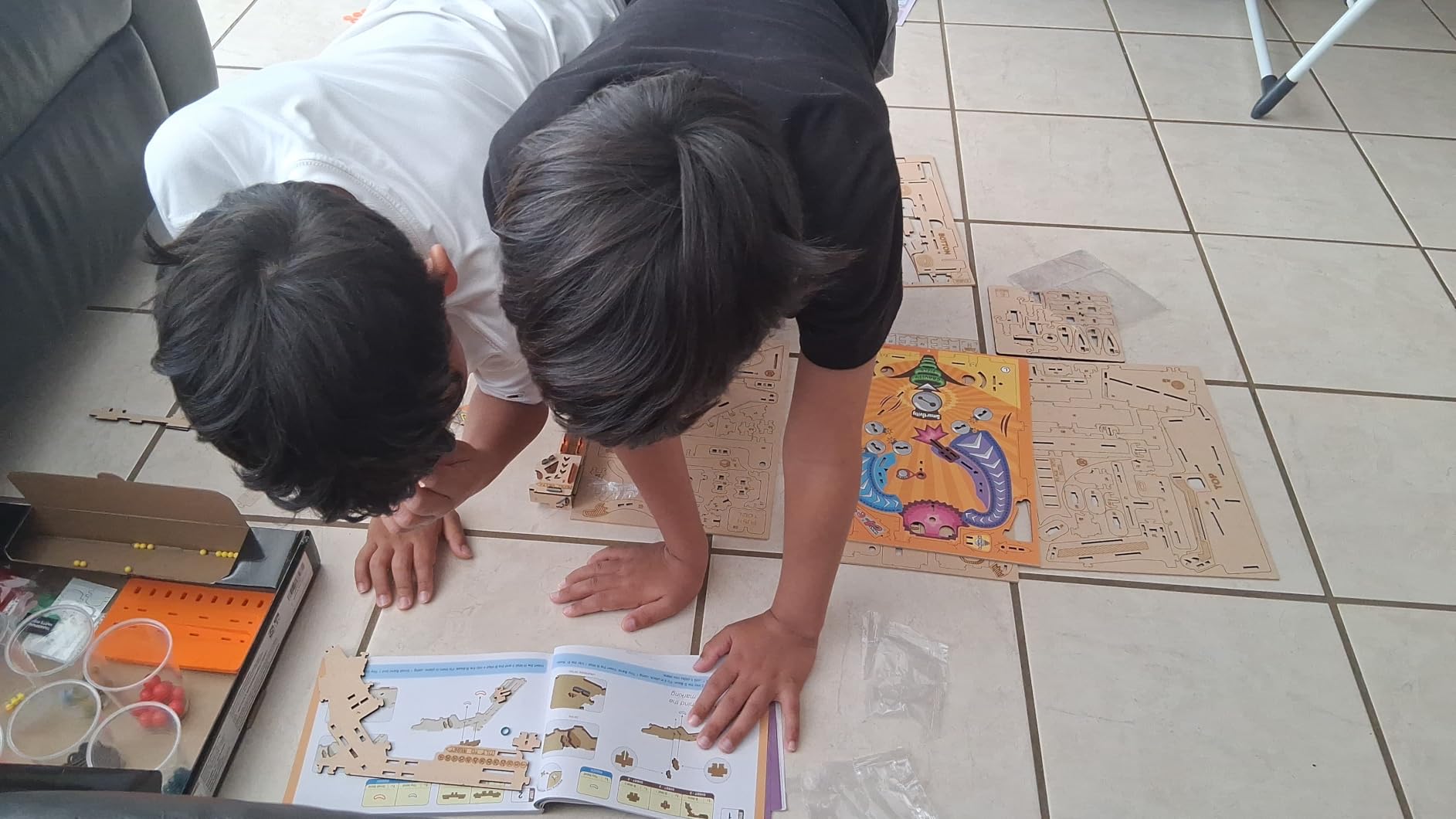
Instruction quality is the standout. Photo-illustrated steps suit both visual and verbal learners, and reviewers are unusually enthusiastic about the manual for a kit at this level of complexity.
The construction is sustainably sourced engineered wood with rubber bands and marbles, which gives it a feel that survives in a playroom. A finished plastic machine usually looks disposable; this one does not.
Spare parts and extra rubber bands are included, and the manufacturer replaces parts for life. That removes the main durability worry from the equation.
Build Time and Instruction Clarity
Roughly two to three hours of assembly means this is not an instant gift for a younger child. Schedule it as a project, not a present, and the anticipation works in your favor.
A few foam pieces are shown in the wrong color in the manual, which is the one clarity complaint reviewers raise. Have the physical parts in front of you and it becomes obvious.
Play Value and Long-Term Wear
The finished machine keeps working for months across siblings, parents, and guests, and it needs to sit flat on a table to play properly. Rubber bands deteriorate over time, so keep the spares.
For a child aged eight and up who has outgrown building blocks, this is the transition kit. It is rated for ages 8 to 99 and holds up for adults just as well.
12. MAGNA-TILES microMAGS 24-Piece Travel Set – Best Magnetic Building Set for Trips and Waiting Rooms
MAGNA-TILES microMAGS 24-Piece Spooky Travel Set, The Original Magnetic Building Brand
24 magnetic pieces
Travel tin baseplate
3.35 x 1 x 7.48 inches
Ages 3+
+ Pros
- Travel format fits in a bag
- Tin doubles as a baseplate
- Magnets separable by small hands
- Compatible with all other sets
- Cons
- Only 24 pieces limits build size
- Small pieces easy to lose while travelling
- Seasonal theme
- Lower per-piece value
The microMAGS set is the smallest item here and the one I use most. It holds a 4.8 rating across 3475 reviews, and portability is the reason.
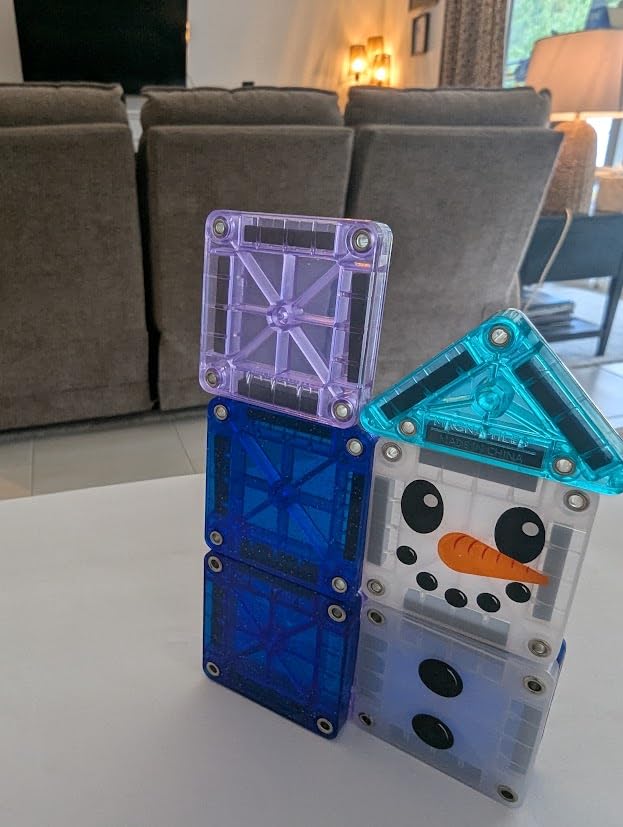
Twenty-four microMAGS pieces in neon lime, bright orange, purple, and black fit into a travel tin that doubles as a magnetic baseplate. A child gets a complete build surface from a container that fits in a carry-on bag.

Magnets hold well for the small size while remaining separable by small hands, which is the balance that makes magnetic building playable rather than frustrating.
Every piece is fully compatible with standard MAGNA-TILES sets, so this extends an existing collection instead of starting a new one. That is where the value math improves sharply for repeat buyers.
The set supports storytelling and design thinking as much as construction. Ghost and pumpkin deco tiles give a child a reason to build a scene rather than an abstract shape.
Portability, the Tin, and Build Size
At 24 pieces, the limit is obvious: a structure cannot get large. Children who already own a full set use this for detail work and travel, which is exactly the intended purpose.
Small pieces are easy to lose on the move, so the tin earns its keep by keeping everything in one place. Nothing else in this roundup packs down this small.
Seasonal Theme and Long-Term Value
The spooky theme is a deliberate trade. It gives the set character and gift appeal, but it has less open building value once October passes.
Per-piece value is lower than larger MAGNA-TILES sets, and that is the honest arithmetic. As a travel companion or a collection extender, it earns its place anyway.
How to Pick a STEM Set That Outlasts One Afternoon
Parents consistently name the same disappointment: a kit that produces one exciting result and then gets ignored. Here is the filter I use, in the order I use it.
1. Count Projects and Pieces, Not Boxes
The number of included projects is the best available proxy for replay value, and it is the number most product pages bury. Look for it before the theme and before the packaging. A set of 100 circuits and a set of three experiments have wildly different lifespans, and the price difference between them is often small.
Pieces matter too, but with a caveat. Five hundred small pieces that scatter are less useful in practice than one hundred that stay put.
2. Match the Reading Level, Not the Age Number
Age labels describe the child who can finish the kit with help, not the child who can start it alone. Check whether the manual is illustrated enough to work without text, because that single detail decides whether a pre-reader can use the kit independently.
3. Decide How Much Adult Help You Can Realistically Give
Some of the best kits in this list are parent-child projects by design. The Mega Cyborg Hand takes hours and the Mech-5 takes an afternoon. If nobody is available to sit with the build, choose a kit with guided cards or snap-together parts instead.
4. Check Whether Consumables Run Out
Experiment kits that use pre-measured chemicals are repeatable for a while and then slow down. Mechanical and construction sets have no consumables at all, which makes them the safer long-term investment if you are unsure how much interest will last.
5. Buy From Brands You Can Name
The reliable names at this price include Elenco and Snap Circuits, Learning Resources, Smartivity, Thames & Kosmos, Melissa and Doug, MAGNA-TILES, and Blue Marble behind the National Geographic line. Forum discussion consistently favors these over unnamed rebrands, and replacement-parts programs exist at several of them.
6. Know What the Ceiling Rules Out
A fifty-dollar ceiling excludes app-controlled programmable robots, quality compound microscopes, 3D printers, and subscription crates that add up monthly. None of those are bad products; they simply do not live at this price. Buy one kit well instead of three poorly, and save the bigger purchase for a birthday the child will remember.
Frequently Asked Questions
What are the best STEM kits under $50?
The strongest budget STEM kits fall into four groups: snap-together electronics such as the Snap Circuits Jr. SC-100, open-ended construction sets such as wooden blocks or interlocking discs, mechanical and hydraulic models, and screen-free coding robots. Match the type to the child’s age and to how much adult help you can give, then check the number of included projects rather than the theme on the box.
Are STEM kits worth the money?
A budget STEM kit is worth it when it has several repeatable projects and the child returns to it after the first session. Kits with one or two novelties are usually abandoned in a week. Durable construction sets and snap-together electronics hold up best over months, while chemistry kits with consumable chemicals give a shorter but still educational run.
What are the best STEM toy brands?
Brands with strong reputations at this budget include Elenco, which makes Snap Circuits and Teach Tech kits, plus Learning Resources, Smartivity, Thames u0026amp; Kosmos, Melissa and Doug, MAGNA-TILES, and Blue Marble, which develops the National Geographic science line. Several offer replacement parts, which matters most for kits with moving pieces.
What STEM robotics kit can I get on a tight budget?
A solar robot kit is the cheapest entry point, offering several buildable models with no battery cost after purchase. A mechanical coding robot teaches sequencing without a screen at a higher price, using snap-on coding buttons instead of an app. Both sit comfortably under a fifty-dollar ceiling, and neither requires a phone or tablet.
What is a good STEM kit for a 10-year-old?
For a child around ten, a multi-build robot kit with printed instructions and no screen requirement is the strongest fit, since the difficulty matches independent reading without becoming frustrating. A wooden mechanical model with a two to three hour build also works well at that age, particularly as a shared project with a parent.
Can a 14 year old learn robotics with a budget kit?
Yes, with a caveat. A mechanical coding kit teaches sequencing and cause and effect, but a fourteen-year-old who already knows basic programming will find its small set of actions limiting. True app-based robotics sits well above this budget, so consider saving for one of those once the budget mechanics are understood.
Which STEM Set Should You Buy First?
Start with Snap Circuits Jr. SC-100 if your child is eight or older and you want the widest range of projects from a single box. It is the only kit here that scales from a beginner to a nearly-advanced builder, and it stacks with add-on sets later.
For a child under six, buy the Melissa and Doug wooden blocks. They teach sorting, counting, and spatial reasoning through open play with no instructions to decode, and reviewers report sets still in use a decade later. Brain Flakes works well when one child spans a wide age range.
Choose the National Geographic Magic Chemistry set for an instant result on gift day, the Sillbird solar robot for outdoor summer play, and the Smartivity pinball machine when a child has outgrown building blocks. Budget for a supervised project, not a solo one, with the Mega Cyborg Hand or the Mech-5.
Every set on this list was verified under the fifty-dollar ceiling in October 2026. Prices in this category move often, so check the current listing before you buy, and pick one kit your child will return to rather than three that get tried once.