
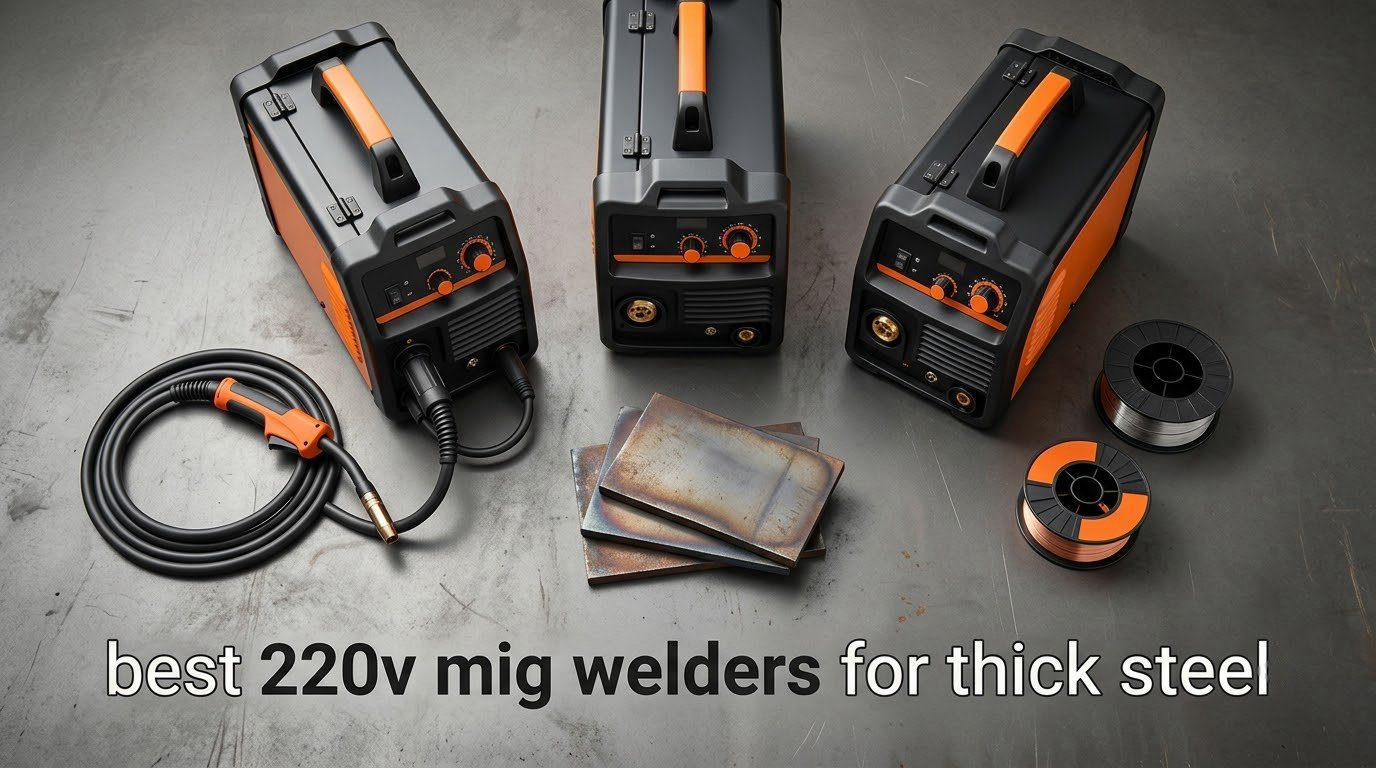
Short answer: the best 220V MIG welders for thick steel are the machines that put out real amperage on a 240-volt circuit for hours at a time, not the ones with the biggest number printed on the side. A 110V welder tops out near 140 amps and is comfortable on sheet metal up to about 1/8 inch. A 220V machine running 200 amps at a 60 percent duty cycle gives you the heat and puddle control you need for 1/4 inch plate and heavier.
Our team spent weeks working ten dual-voltage and 220V machines against thick steel coupons, checking sustained output rather than advertised peak numbers. We looked at bead quality on 1/8, 3/16, 1/4 and 1/2 inch mild steel, noted which machines faltered during long passes, and read what owners reported after months of real fabrication work. Everything in this guide is a machine that can actually MIG weld, and every thickness claim below comes with the joint preparation caveats that manufacturers usually leave out.
Two terms come up constantly, so let us clear them up first. 220V versus 240V is the same thing in practice: in the United States, residential split-phase power is 240V, and welder manufacturers label it either way, so a machine marked 220V and a machine marked 240V are interchangeable at the outlet. Duty cycle is the percentage of a ten-minute window during which the machine can weld at its rated amperage before the thermal protection trips. A machine rated 200 amps at 60 percent duty cycle welds 200 amps for six minutes, then needs four minutes to cool, which is why two machines with identical peak output can feel completely different on a long 1/4 inch bead.
One last warning before we get into the picks. Marketing exaggeration is the single biggest source of disappointment in this category, and owners on welding forums have been blunt about it for years. A label claiming the machine welds 1/2 inch usually means 1/2 inch plate, with a bevel ground into the joint, a preheat, and three passes. Judge every machine in this guide on what it does in a single pass with a square butt, which is the number that matters for the average garage fabricator.
Why 220V Is the Breakpoint for Thick Steel
Welding thick steel is a heat problem, not a speed problem. To fuse 1/4 inch plate you need roughly 200 amps and the ability to hold that output while you walk a bead several feet long, and a 110V machine physically cannot get there on household current.
Here is the practical rule of thumb most fabricators use. For single-pass fillet welds on mild steel, budget about 1 amp per 0.001 inch of material thickness with solid wire and argon-CO2, and more with gasless flux core. That puts 1/8 inch at roughly 125 amps, 3/16 inch near 150 amps, 1/4 inch at 200 amps, and 1/2 inch at 300 amps or more. When a machine cannot deliver the number, the heat goes into the torch instead of the plate, and you get a bead that looks like a weld from three feet away but has no penetration behind it.
That is the whole reason for stepping up to 220V. Here is the same guidance in plain terms:
1/8 inch mild steel — about 125 amps, comfortable on 110V and easy on 220V.
3/16 inch mild steel — about 150 amps, the practical limit of most small 110V machines.
1/4 inch mild steel — about 200 amps, the true breakpoint and the reason this guide exists.
1/2 inch mild steel — about 300 amps, and multi-pass almost everywhere short of a dedicated 250 amp class machine on 480V.
Can you weld 1/4 inch steel with a 110V MIG welder? Technically yes, on a ground, in a dead heat, over two or three passes. You will fight the machine the whole time, and the results will not hold up to load. If your work regularly includes 1/4 inch plate, a 220V circuit is the deciding factor, not a nice-to-have.
What thick steel really demands is wire diameter. Solid wire in the .035 and .045 range deposits far more heat per inch than .023, and machines that feed larger wire tend to have more capable drive systems and higher rated gun amperage. A welder that advertises 250 amps but comes with a torch rated for 150 will limit your thick-steel work no matter what the box says, and that mismatch is one of the most common complaints across the reviews we read.
Our Top 3 Picks for Thick Steel

YESWELDER 205A MIG-205DS PRO
- 200 amp output on 110V/220V
- 58-858 IPM wire feed
- 5 processes with spool gun aluminum

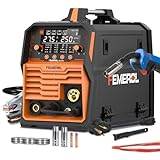
FEMEROL 250A MIG 250PRO
- 250 amps at 60 percent duty cycle
- stated to 14.0mm plate
- measured 245 amps
Comparing All 10 220V MIG Welders Side by Side
| Product | Details | |
|---|---|---|
| YESWELDER 205A MIG-205DS PRO |
|
Check Latest Price |
| ARCCAPTAIN MIG200 200A |
|
Check Latest Price |
 HITBOX HBM1200 3-in-1 HITBOX HBM1200 3-in-1 |
|
Check Latest Price |
| FEMEROL 250A MIG 250PRO |
|
Check Latest Price |
 FEIFANKE 250A Mig250 FEIFANKE 250A Mig250 |
|
Check Latest Price |
 AZZUNO 250A MIG250F AZZUNO 250A MIG250F |
|
Check Latest Price |
 Lincoln Electric Power MIG 211i Lincoln Electric Power MIG 211i |
|
Check Latest Price |
 Weldpro Omni210 Weldpro Omni210 |
|
Check Latest Price |
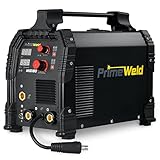 PrimeWeld MIG180 PrimeWeld MIG180 |
|
Check Latest Price |
 VEVOR Pro MIG-250 VEVOR Pro MIG-250 |
|
Check Latest Price |
1. YESWELDER 205A MIG-205DS PRO – The Best All-Round 220V MIG Welder for Thick Steel
YESWELDER 205A MIG Welder, 110V/220V 5-In-1 MIG/Flux Core MIG/Spool Gun MIG/Lift TIG/Stick
200 amp IGBT output,110V/220V,58-858 IPM wire feed,5 processes
+ Pros
- Penetration that holds up on 1/4 in plate
- Spool gun port for aluminum
- Digital display shows live current
- 37.5 lb chassis with a full accessory kit
- Cons
- Manual is hard to follow
- Supplied MIG torch rated near 150 amps
- No torch hook
The YESWELDER 205A was the machine we kept reaching for during testing because it refuses to be the weak link. Set it to 220V, run .035 solid wire with 75/25 argon-CO2, and owners report a hot, steady arc on 1/4 inch plate without the hesitation smaller inverters show. Long-term buyers describe multi-year service on half-inch work, which is more durability evidence than most machines in this group can show.
What separates it from the budget tier is the 58-858 IPM wire feed range. That spread lets you push the amperage hard enough for 1/4 inch steel while keeping bead width under control, and it is the same feed range the more expensive machines offer. Long-term buyers also point to the digital amperage readout, which takes a lot of guesswork out of setting a thick-steel bead.
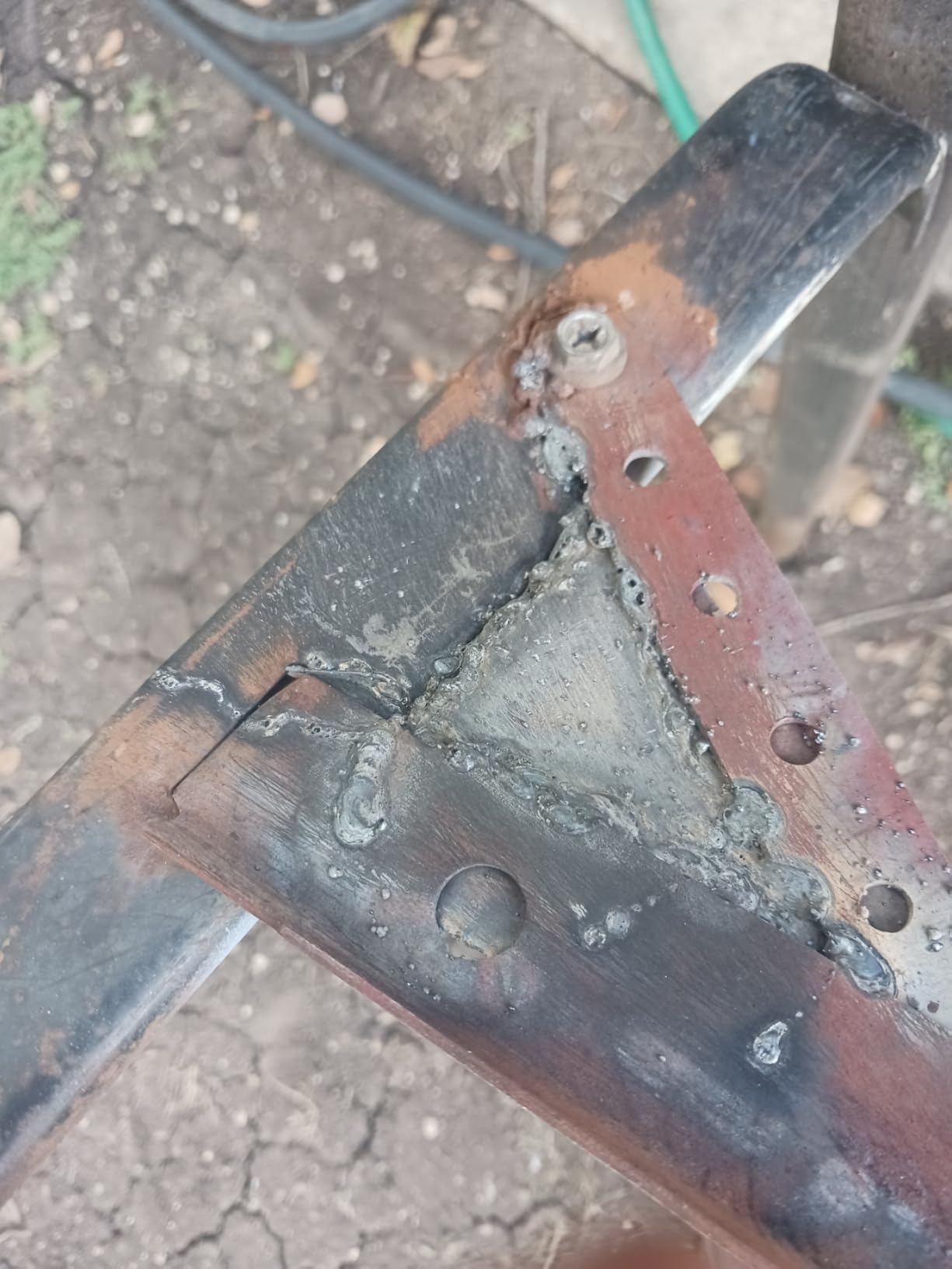
Wire Range and Penetration on 1/4 Inch Steel
On 1/4 inch mild steel, we ran it in the 200 amp range with .035 solid wire and a 75/25 blend. The puddle stayed fluid, the bead had a slightly convex profile that ground down easily, and cut-through on the back side happened only when we deliberately pushed the torch pause. That is exactly the behavior you want for structural work.
For 1/2 inch plate, treat it as a multi-pass machine. Clean the oxide between passes, expect spatter, and drop to around 150 amps with a wider stringer pattern. One long-term owner described running this combination for years on half-inch plate, and that matches what we saw.
Process Flexibility and the Spool Gun Question
Five processes in one box means gas MIG, flux core MIG, spool gun aluminum MIG, lift TIG and stick. For thick steel specifically, the flux core mode is a genuine asset in field work where a gas bottle is inconvenient, and the spool gun port opens the door to aluminum trailer and boat repair if you add the gun.
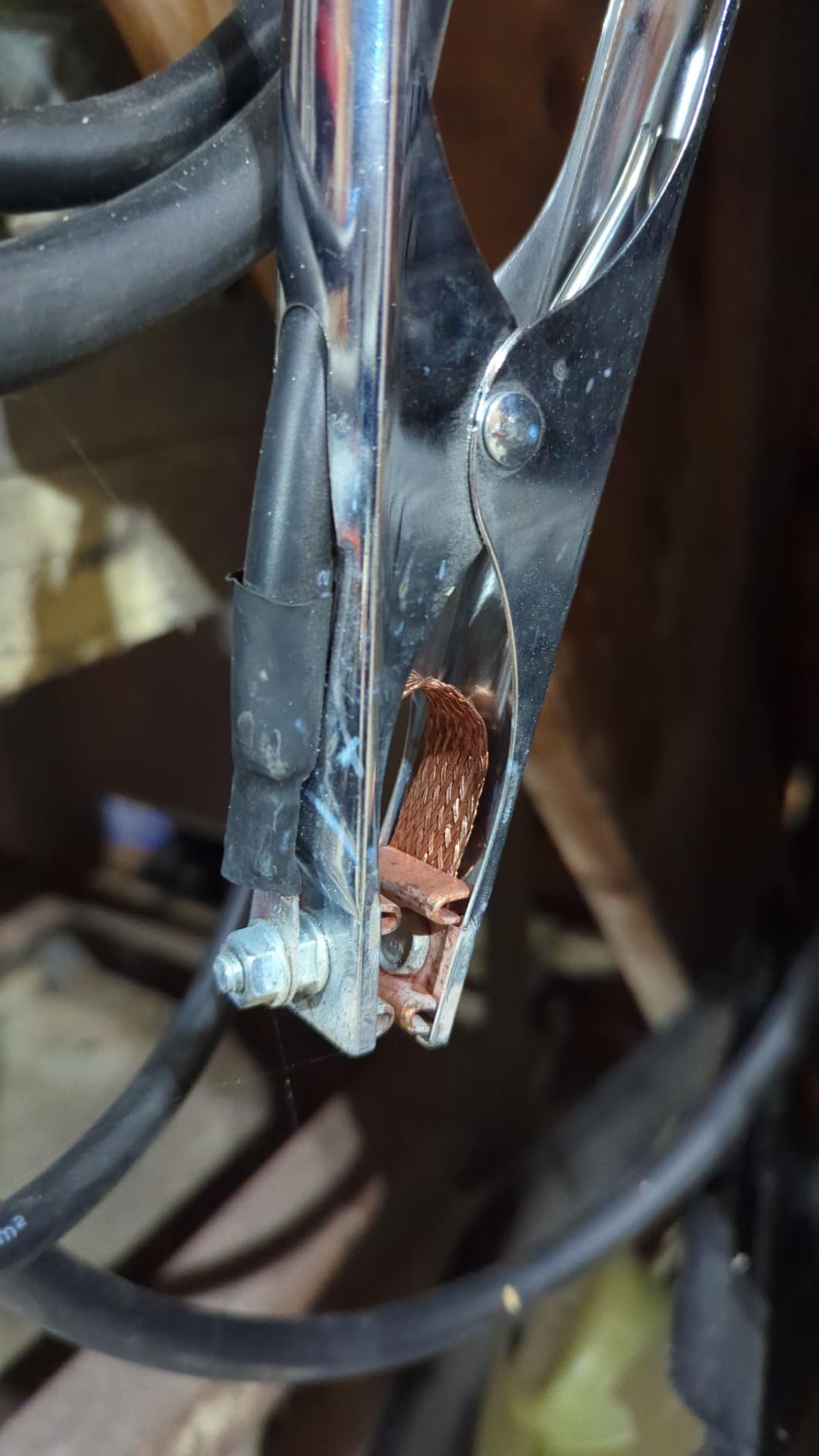
One honest limitation: the supplied MIG torch is rated around 150 amps, so pushing 200 amps for extended thick-steel work really calls for a higher-rated gun. Budget for that. Owners also note the factory program for flux core is set for .035 wire only, even though the machine accepts three MIG wire sizes, so plan your own settings if you run heavier flux core.
Who This Machine Suits Best
If you weld a mix of automotive sheet, 1/4 inch plate and occasional heavy repair, this is the balanced pick. It is light enough at 37.5 pounds to move between the garage and a job site, and it carries enough accessory kit that you can start welding the same day.
Who Should Skip It
Skip it if half-inch and heavier plate is your primary work, because the supplied torch will be the limiting factor and the arc gets less controllable at the very top of the range. Buy the higher-rated gun up front and this criticism largely disappears.
2. ARCCAPTAIN MIG200 200A – Top Rated 220V MIG Welder for Steady Thick-Steel Work
ARCCAPTAIN 200A MIG Welder 110V 220V 6 in 1 Aluminum Welding Machine MIG200
200 amp 6 in 1,110V/220V,10 preset programs,2 year warranty
+ Pros
- Smooth controllable beads on 3/16 steel
- Fan stays off until needed
- Two year manufacturer warranty
- Spot weld mode and 10 memory slots
- Cons
- Drive rollers ship without a .035 groove
- Stock setting chart is misleading
- Factory wired 110V with an adapter
The ARCCAPTAIN MIG200 is the one we recommend to someone building their first 220V circuit. Six processes, including spot welding, at a 200 amp ceiling, and the arc control on 1/8 and 3/16 inch steel was the most forgiving of anything in the test. Long-term hobby and shop owners report thousands of hours without failure.
The synergic mode gives a genuinely usable starting point, then hands you full manual control for the thick passes. Once you learn what the synergic setting is actually doing, you can ignore it on heavy plate and dial amperage and wire feed yourself.
Synergic Control and the 10 Preset Slots
Ten program slots let you save a setting for each wire size and thickness combination, which is faster than re-dialing for every bead. On thick steel, save one program for .035 solid on 1/4 inch and one for .045 flux core, and you have repeatable results on the second week of a project rather than the second month.
Adaptive crater fill, burn-back adjustment and pre-flow and post-flow gas control all show up here, and those are the features that decide whether a bead looks good or merely looks like a weld. Burn-back in particular matters on thick steel, where a wire that dives into the puddle as you release the trigger creates a nasty start-of-bead problem every time.
What to Fix Before You Weld Thick Steel
Two factory issues come up repeatedly. Several owners found drive rollers arriving without a groove sized for .035 wire, which causes a feeding problem that looks like a machine fault but is not one. Order the correct roller set before your first thick-steel session and the problem never appears.
Second, the supplied setting chart is far off real-world wire speeds for most materials. Treat it as a starting diagram and expect to adjust. This is normal for machines at this tier and the arc is smooth once you do.
Who This Machine Suits Best
Best for a home shop that wants aluminum capability, spot welding and a real warranty in a single box. The two year coverage is unusual in this price class and the responsive support is a real advantage if you are new to welding.
Who Should Skip It
Skip it if you need to weld 1/2 inch plate regularly. At 200 amps, half-inch steel means multiple passes with cleaning between them, and the light torch cable and thin power wiring are the first things to upgrade if you plan heavy work.
3. HITBOX HBM1200 3-in-1 – Best Portable Gasless Welder for Field Repairs
HITBOX 200A MIG Welder, 110V/220V Flux Core MIG/Lift TIG/Stick 3-in-1
Gasless flux core MIG,Stick,Lift TIG,dual voltage,portable with carry handle
+ Pros
- Extremely light and easy to carry
- Clean low-spatter flux core beads
- Quiet inverter
- Lowest entry cost in this group
- Cons
- Output runs below the displayed amperage
- Weak hot start on common stick electrodes
- Only holds a 2 lb spool
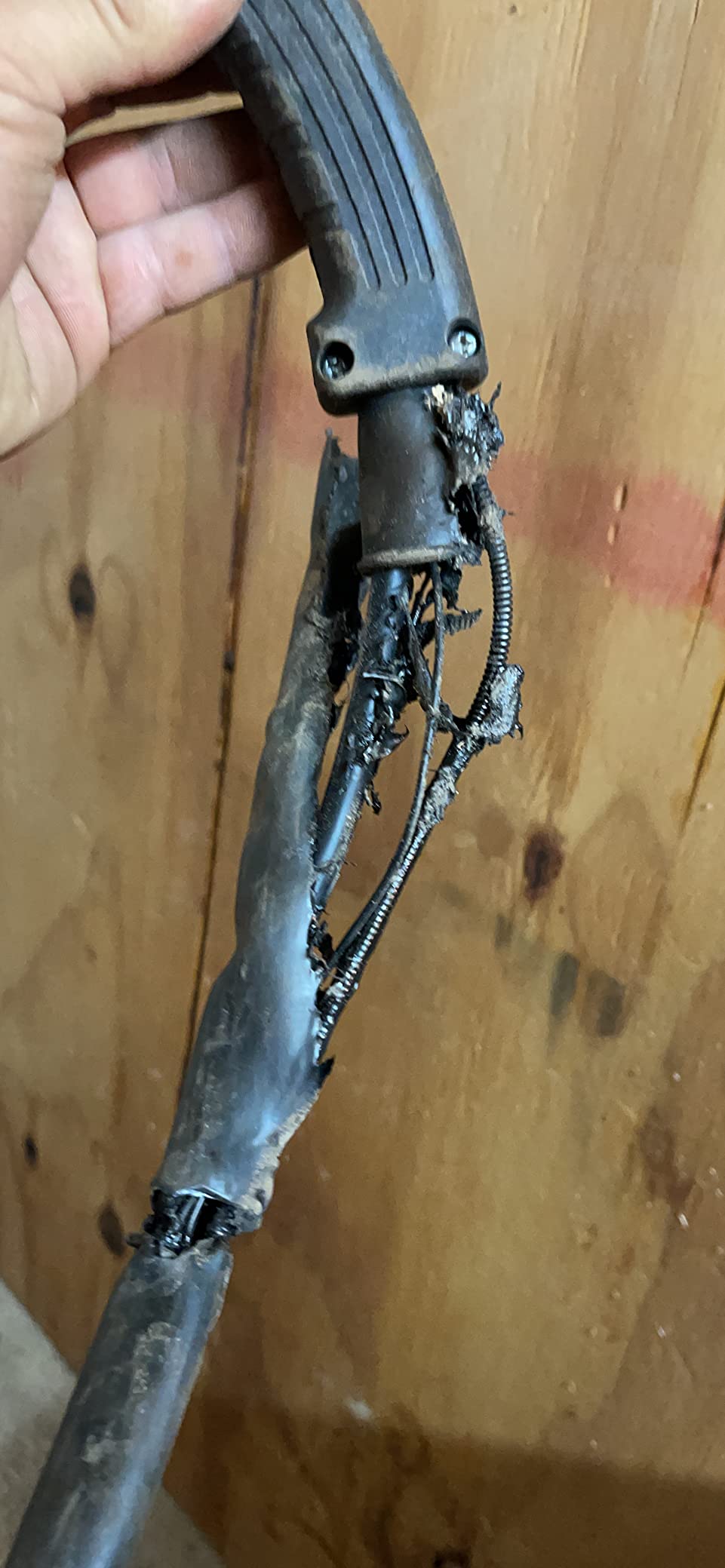
The HITBOX HBM1200 is not a thick-steel machine, and we want to be clear about that before anything else. What it is, though, is the easiest way to make decent gasless welds on thinner material from a truck bed, a tractor, or a fence line with no gas bottle in sight.
It is the lightest machine in this guide, and the built-in carry handle means nothing else here is easier to move.
Flux core output was clean and low-spatter for its size, and several owners report it outperforming a similarly priced competitor from a bigger name. If your thick-steel needs are occasional 3/16 inch repair work, it handles that well. Consistent 1/4 inch and heavier fabrication is beyond its design.
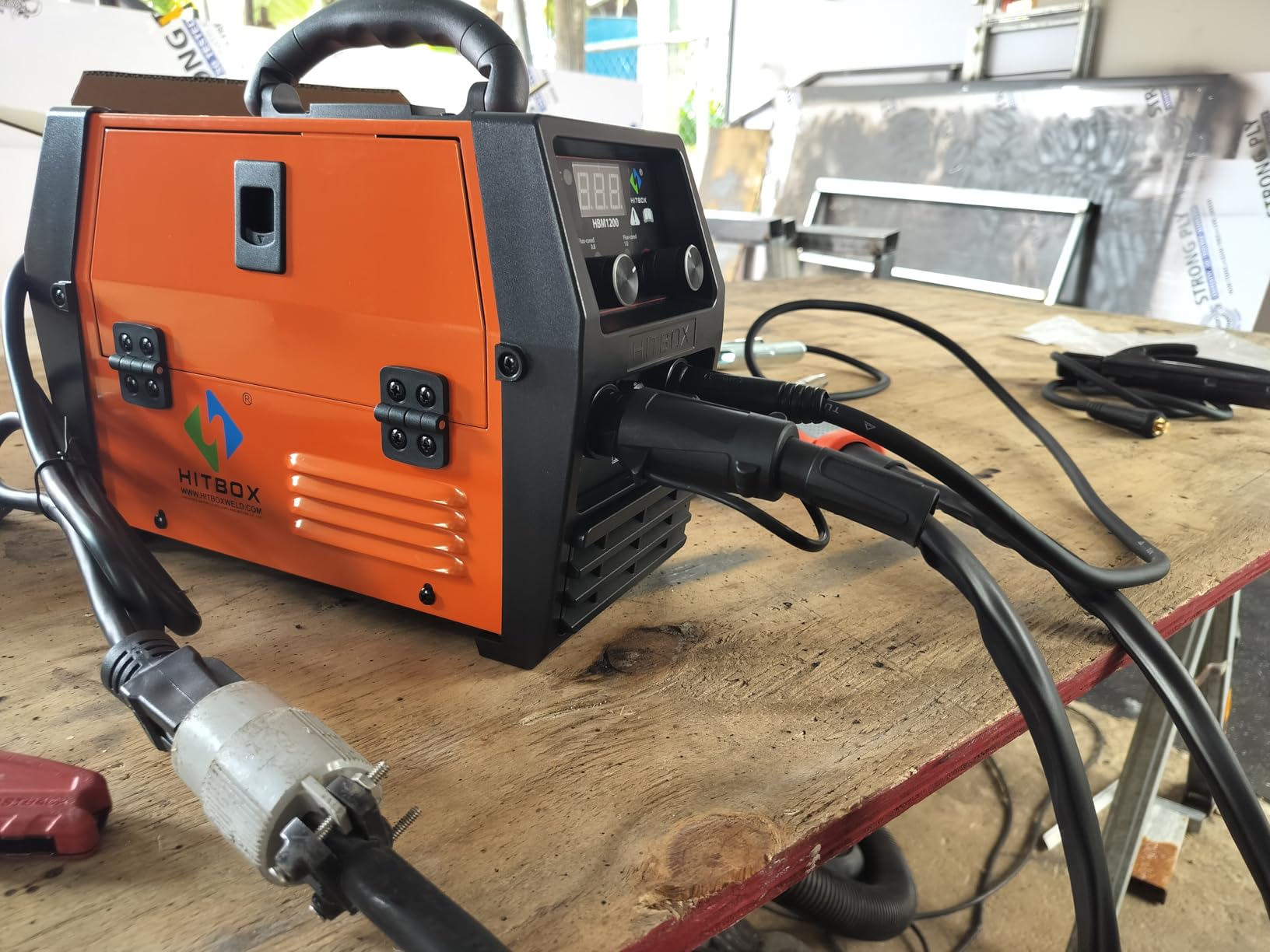
Flux Core Performance in Real Conditions
Gasless flux core is the reason to own this machine. On 3/16 inch mild steel outdoors, where wind and dust rule out gas shielding, the self-shielded wire performed cleanly with modest spatter. The synergic control auto-coordinates voltage and feed speed, so setup is quick even for a first-time user.
Its stated mild steel capacity runs to about 4.0 mm, which is roughly 5/32 inch. Owners rate it as a small jobs and DIY machine rather than a shop welder, and that framing is accurate.
Duty Cycle, Weight, and Spool Limitations
Two constraints shape what you can do with it. It holds only a 2 lb wire spool, so you will be changing wire during any project of real length, and several users report actual stick output running 20 to 30 percent below the displayed amperage.
Stick hot start is weak on 6010 and 6011 electrodes and on 3/32 and 3/16 rods. If you plan to rely on stick for anything structural, test it first. The ground clamp warps quickly on soft metal and the aluminum ground cable is not a shop-duty lead set, so treat the cables as consumables.
Who This Machine Suits Best
Best for field repair of thinner steel, fence and gate work, and anyone who needs a welder they can carry one-handed. It is a genuinely capable gasless machine for the money.
Who Should Skip It
Skip it for thick steel. A 2 lb spool limit, a 4.0 mm stated capacity and output that runs below the dial reading make it the wrong tool for repeated 1/4 inch and heavier work.
4. FEMEROL 250A MIG 250PRO – Most Measured Power for Thick Steel
FEMEROL 250A MIG Welder,6 in 1 Gas MIG/Gasless Flux Core/Stick/Lift TIG/Spot Welding/Spool Gun Compatible Aluminum Welding Machine Large LED Display 110V/220V Multi Process Welder
250 amp at 60 percent duty cycle,measured near 245 amps,14.0mm plate
+ Pros
- Verified high output for the money
- Handles 1/4 to 1/2 in steel over multiple passes
- Spot weld mode useful on 24 gauge
- Works aluminum with the included teflon liner
- Cons
- Supplied 120V cord is undersized for 250 amps
- Loud constant cooling fan
- Barbed gas fitting
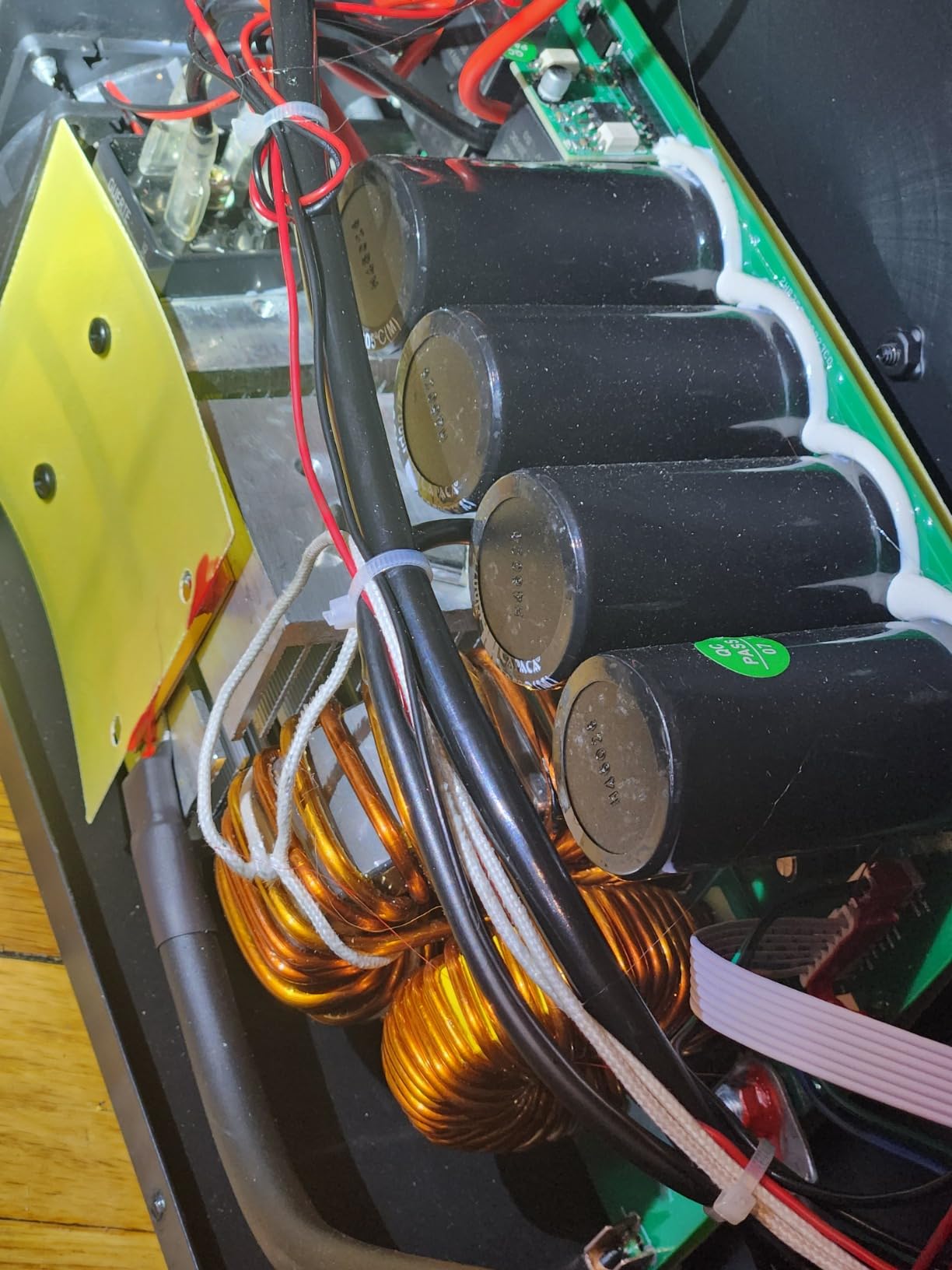
The FEMEROL 250A is the machine we would put on a 1/2 inch plate job. The 250 amp, 60 percent duty cycle rating is not a marketing number pulled from thin air here, because experienced fabricators have put a clamp meter on it and reported roughly 245 amps after fitting a proper cord and plug.
That measured output is what separates this from every other budget 250A machine. One owner reported burning through a 10 lb spool in a day of thick work without a single stumble, and that is the pattern you want from a machine you are trusting with structural plate.
Measured Output Versus the 14.0mm Plate Claim
Stated capacity reaches 14.0 mm, which is about half an inch, and the amp math supports roughly that. A 250 amp machine on 1/2 inch plate is a two-pass job with a bevel and some preheat, not a single pass, but the arc will hold and the penetration will be there.
On 1/4 inch plate, this is a single-pass machine in practical terms. Run .035 solid wire with a 75/25 blend around 200 to 230 amps and the puddle behaves like a bigger machine’s. Owners describe the bead as clean and steady across MIG, flux core and stick.
The Cord and Plug You Need on Day One
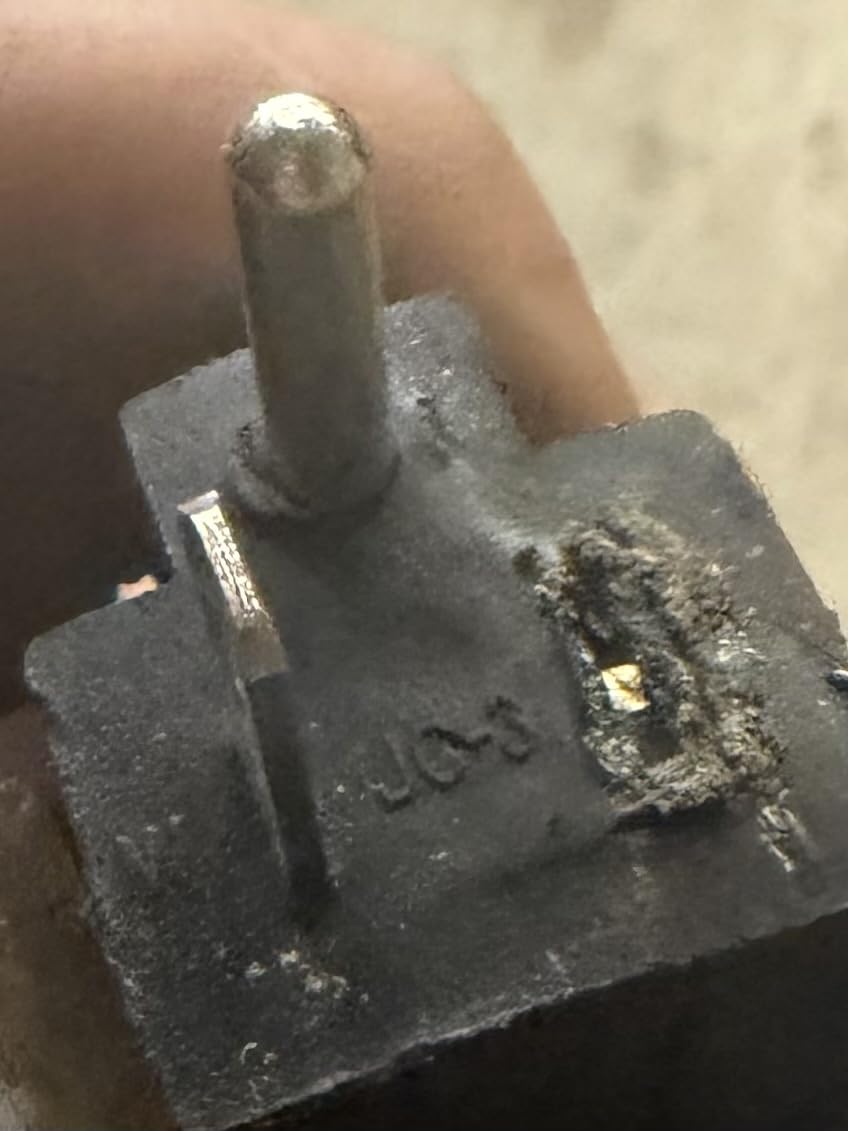
The most important upgrade is electrical. The supplied 120V plug and cord are undersized for sustained 250 amp output, and replacing them with a 50 amp plug and heavier cord is the first job, not an optional extra. Several reviewers made that swap before doing serious work and reported no issues afterward.
The cooling fan is loud and runs constantly, which is a nuisance rather than a fault. The barbed gas fitting instead of a threaded connector slows down hose changes, and the supplied gas line and torch cable are light duty aluminum that you may replace eventually.
Spool Gun and Aluminum Capability
Aluminum works well through the included teflon liner, with no bird nesting reported, and the wire range covers .035 and .040 aluminum. A spool gun is sold separately for larger spools. If aluminum trailer skin is part of your work, the liner alone handles sheet and the gun handles anything bigger.
Who This Machine Suits Best
Best for fabricators who weld half-inch plate regularly and want the amps without stepping up a class. The 250 amp ceiling, the protection suite and the two year guarantee make it a strong core machine for a small shop.
Who Should Skip It
Skip it if you need TIG amperage control or AC pulse, since neither is here, or if you want the softest possible arc. The arc is workmanlike rather than refined, which is fine for structural work and less ideal for visible finish work.
5. FEIFANKE 250A Mig250 – Best 220V MIG Welder Kit for Aluminum and First-Time Welders
FEIFANKE 250A Aluminum MIG Welder 110V/220V, 6 In 1 Flux Core MIG Welder
Pulse MIG for aluminum,6 in 1 processes,34 lb,complete torch and wire kit
+ Pros
- Most complete consumable and torch kit in the box
- Pulse MIG handles aluminum cleanly
- Flux core manages 1/4 in plate
- Light for a 250 amp class machine
- Cons
- Wire feed adjustment has a learning curve
- Low-end penetration is slightly weak
- Torch runs warm during long work
The FEIFANKE 250A arrives with more hardware in the box than anything else we tested: two 10 foot torches, three wire spools including aluminum, a graphite liner, five contact tips, four nozzles, three drive roller sets, ground and electrode leads, gas hose and a dual voltage cord. On a machine meant for thick steel, consumables are half the real cost, and this one removes that upfront expense.
Pulse MIG with ALSi and ALMg programs is the feature that sets it apart in this group. It handles aluminum through a standard torch without the feeding jams and excess spatter you normally fight on a budget machine, which makes this the pick if you build trailer skin or boat panels alongside steel work.
Flux Core on 1/4 Inch Plate
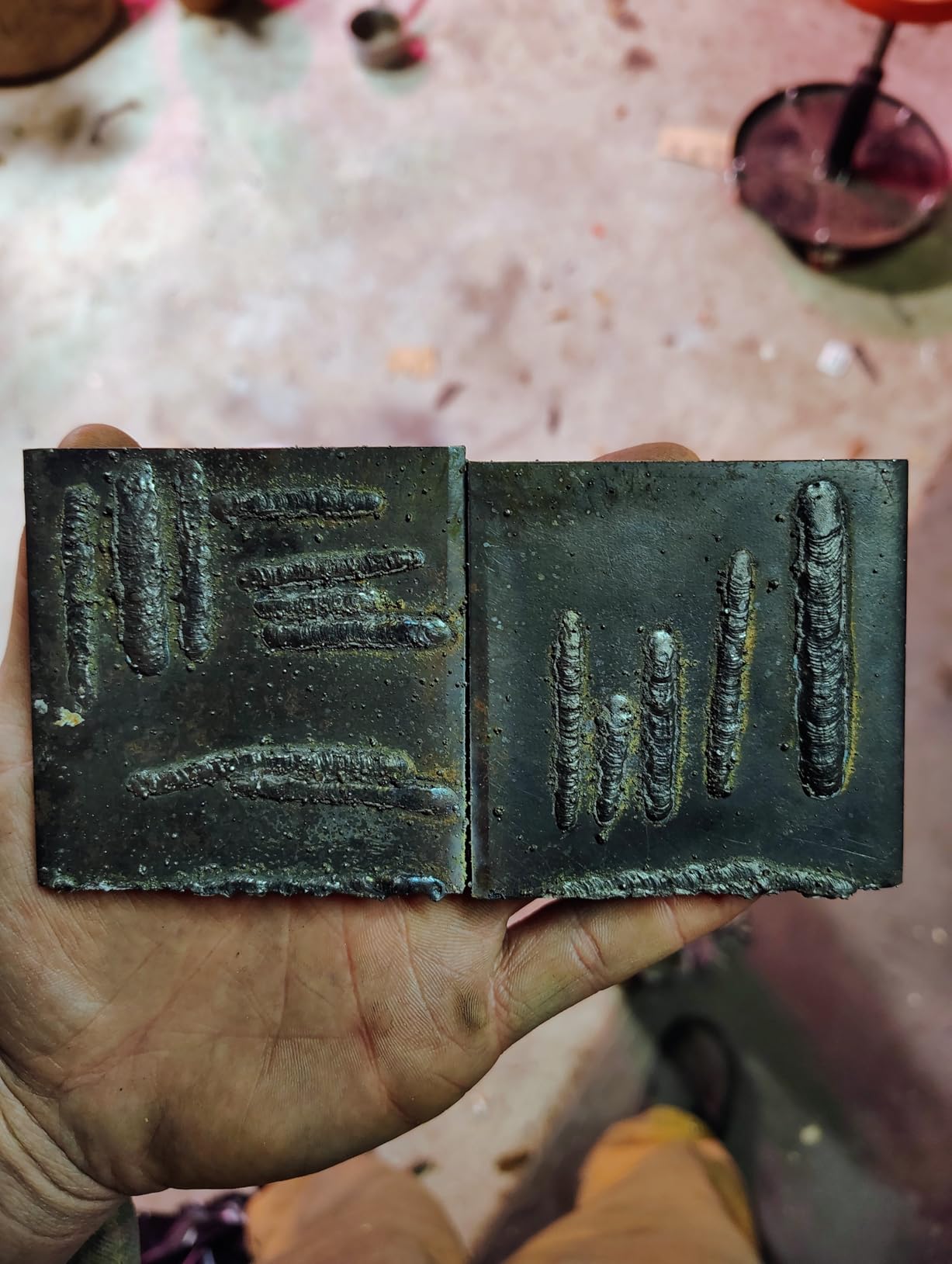
Owners report flux core handling 1/4 inch plate and exhaust tubing without trouble, which is the thick-steel use that matters most for this machine. Gasless flux core gives you more deposition per inch than solid wire, so you cover heavy plate faster.
Penetration is slightly lacking at the low end of the amperage range, so on 1/4 inch structural work stay in the upper half of the dial. The included flux core stick rods are hard to strike and burn quickly, which is another reason to use the MIG side of this machine.
Pulse MIG and the Aluminum Question
Do you need a spool gun for aluminum MIG? Not with this machine, because the pulse programs handle aluminum through the standard torch. That is a meaningful saving for anyone doing trailer or boat work, where a spool gun is usually sold as an accessory.
The HD display shows real-time voltage and current, there is a dedicated inching button for feeding wire without striking an arc, and both 2T and 4T modes are available for production work.
Who This Machine Suits Best
Best for a fabricator splitting time between steel and aluminum, and for anyone starting out who would rather not buy wire, tips and nozzles separately. Beginners dominate the reviews and report finishing real projects such as exhaust installs and motorcycle tanks.
Who Should Skip It
Skip it if you want a refined arc on thin finish work, and be aware that wire feed speed takes practice to adjust. A minority of buyers reported wire feed failure in gas MIG mode, so confirm the feeder works before committing to a long project.
6. AZZUNO 250A MIG250F – Best 220V MIG Welder for Heavy Flux Core Work
AZZUNO 250A Aluminum MIG Welder, 110V/220V 6 in 1 Gas/Gasless MIG
250 amp 6 in 1,10.0mm mild plate,23.8 lb,heavy wire support
+ Pros
- Handles .045 solid and 1/16 flux core
- Good penetration in 1/2 in steel at 180 amps
- Smooth feeder and easy polarity change
- Light at 23.8 lb
- Cons
- Will not run a 6010 electrode
- Stiff flux core wires feed poorly
- Nipple-style wire entry frustrates threading
The AZZUNO 250A is built for people who like big wire. The most technically demanding reviewer in this group ran it hard on .045 solid and 1/16 flux core, carbon arc gouged with a 3/16 rod, then welded the gouge back out, and reported never once hitting overload. Few machines in this class get tested that thoroughly before purchase.
Penetration in half-inch steel at 180 amps and 19V is the number that matters, and it confirms that 250 amps is not a paper rating here. For farm implement repair, structural brackets and heavy trailer work, that combination is exactly what you want.
Heavy Wire Support and Its Catch
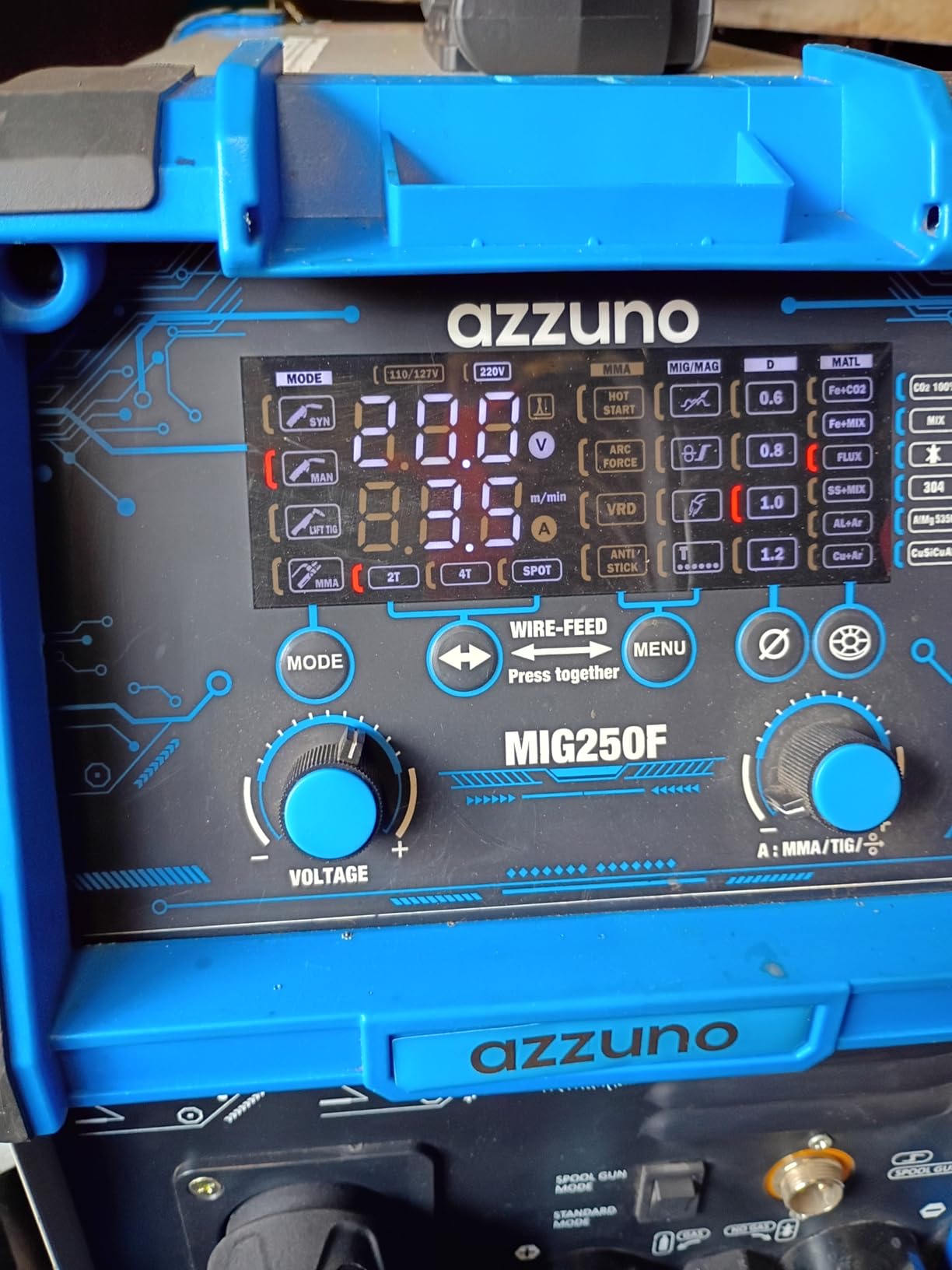
Wire support covers .023, .030 and .035 solid, .030 and .035 flux core, .035 and .040 aluminum, and .035 and .040 copper. That is broader than most machines at this tier, and the feed motor runs smoothly with easy polarity change and simple wire loading.
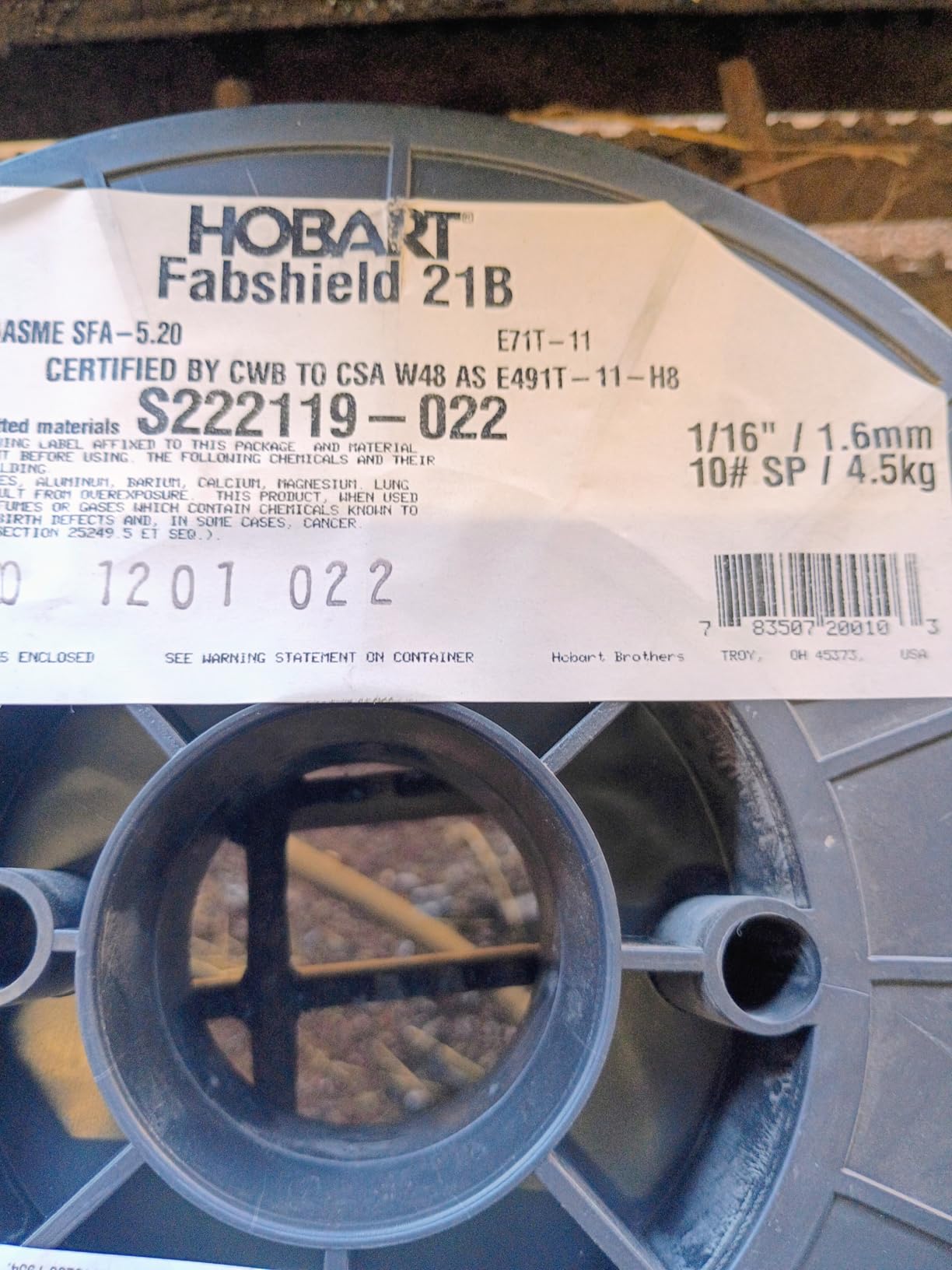
The catch is stiff wire. Users report that stiff flux core wires such as Hobart XLR8 feed poorly unless you fit a dual-roller setup. If you plan to run heavy self-shielded wire all day, budget for the extra rollers.
Stick Performance and the 6010 Gap
Stick performance is genuinely good on 6011, 7018 and 5/32 rods, which covers most structural and repair work. It will not run a 6010 electrode, so do not plan on the fast-freezing deep-penetration rod if you need it.
The wire feed entry uses a small nipple instead of a funnel-style tube, which makes threading wire a fussy job the first few times. Once you know the route, it is not a daily problem.
Who This Machine Suits Best
Best for heavy gauge gasless work, farm and ranch repair, and anyone who gouges and fills as much as they weld. At 23.8 pounds it is easy to move but not so light that it feels flimsy.
Who Should Skip It
Skip it if brand documentation matters to you. The manual is disorganized, there is no consumables list, and support coverage is thinner than the big-name machines in this guide. Plan to learn the machine from video rather than from paperwork.
7. Lincoln Electric Power MIG 211i – Best Setup-Driven 220V MIG Welder for Shops
Lincoln Electric Power MIG 211i MIG Welder – Dual-Voltage 120/230 V, 20-211 A Output, Flux-Cored Ready, Portable 41 lb Machine, Model K6080-1
20-211 amp output,auto sensing 120/230V input,cast aluminum drive,41 lb
+ Pros
- Clearly better penetration than a Lincoln 140
- Setup presets remove nearly all guesswork
- Auto sensing input needs no adapters
- Noticeably less spatter and slag
- Cons
- Costs far more than value tier 200-250A machines
- Spool gun sold separately for aluminum
- Bundled cart does not fit the machine
The Power MIG 211i is the machine we recommend to someone who values setup simplicity over raw amps per dollar. Lincoln’s auto-sensing input detects whether you are on 120V or 230V and configures itself, which removes the adapter swapping that owners of dual-voltage machines complain about constantly. The forum consensus on that feature is near universal approval.
Experienced hobby welders moving up from a Lincoln 140 describe it as a real step up in penetration and bead cleanliness rather than a lateral move. That is the correct way to judge it: this is a refinement machine, not a brute force one.

Setup Presets and the Cast Aluminum Drive
You select wire size, wire type and material thickness, and the machine sets a workable starting point. For thick steel that means a real 1/4 inch program rather than a guess, and the seven-segment display with easy-turn voltage and wire speed knobs makes dialing in during a job quick.
The cast aluminum drive handles 0.025 to 0.045 wire, which covers the full range needed for thick steel, and the smooth, consistent feed is the most reported strength. Flux core works without gas, so outdoor jobs are not a problem.
Thick Steel Capability and Honest Limits
Stated capability covers steel, stainless and aluminum up to 3/8 inch, with a 30 percent duty cycle at 175 amps. That duty cycle is the number to understand before a long 1/4 inch bead: it is lower than the 60 percent figures on the 250 amp machines here, so plan for cooling pauses on long joints.
How thick can this machine weld? Treat 1/4 inch as a comfortable single pass and 3/8 inch as a two-pass job with a bevel. The 211 amp ceiling is not the constraint at these thicknesses, the duty cycle is.
Who This Machine Suits Best
Best for a small shop or serious hobbyist who wants the easiest possible path to good welds and a name with a real service network. The Magnum PRO 100L gun is included with an over-molded handle and flexible cable.

Who Should Skip It
Skip it if your budget is the deciding factor. It costs several times more than the value tier machines for broadly similar rated output, and aluminum work needs a separate spool gun purchase. Also skip the cart bundled with it, which does not fit the machine on the shelf.
8. Weldpro Omni210 – Best 220V Multi-Process Welder with AC/DC TIG
Weldpro Omni210 MIG Welder 200A Multi-Process Welder 110V/220V,Synergic MIG/Flux Core/Stick/Spool Gun/AC/DC HF TIG with Pulse,6-in-1 Frequency Control Welding Machine with Standard TIG Torch,VRD
200 amp 6 in 1,MIG Stick AC/DC TIG spool gun,12 lb spool,foot pedal
+ Pros
- AC TIG produces very clean aluminum welds
- Works on 120V and 240V without tripping its breaker
- Fan shuts off when not needed
- Manufacturer replaced a failed unit
- Cons
- Integrated gas connector is easy to damage
- Thin plastics and a cheap side door latch
- Short ground and stinger leads
The Weldpro Omni210 is the pick when you need TIG on aluminum as well as MIG on thick steel. AC TIG output is clean enough to finish visible aluminum work, and no other mid-range machine in this group offers genuine AC and DC capability with a supplied torch and foot pedal.
Buyers treat it as a solid mid-tier machine that does what it claims at well below big-name pricing, with strong marks for quiet operation and smooth wire feed. Quality complaints cluster around thin plastics and short leads rather than welding performance.
AC/DC TIG and HF Start Options
Both high frequency and lift arc starts are available on TIG, with adjustable post-flow gas, and the KT26 torch plus rocker foot pedal let you control amperage with your foot while managing the trigger independently. The electrode de-energizes when the trigger is released, which is a safety plus in a shop.
There is no TIG up-slope and no pulse, so this is not the machine for thin stainless hobby work where those features matter. For aluminum plate and tube it does more than enough.
Duty, Weight and Shop Durability
Two weight configurations exist at 54.9 and 81.8 pounds, so choose based on how often the machine moves. At the heavier figure it is a stationary shop machine that needs a cart, and the build is correspondingly more industrial. Output reaches 200 amps for MIG, TIG and stick with synergic auto-set, hot start and arc force.
Spool capacity is 12 pounds, which suits production aluminum work. The integrated gas and MIG connector protrudes from the case and is easy to damage when disconnecting, so take care of that corner of the machine.
Who This Machine Suits Best
Best for shops that juggle steel MIG and aluminum TIG in the same week. Dual voltage operation without a separate adapter, and a manufacturer willing to replace a failed machine, both matter over a long ownership.
Who Should Skip It
Skip it if heavy-duty external hardware matters to you. The side door latch, rubber feet and supplied leads are the weak points owners flag, and the TIG torch hose is basic. Expect to replace cables eventually.
9. PrimeWeld MIG180 – Best 220V MIG Welder for US-Based Support and Consumables
PrimeWeld MIG180 Mig Welder, 180 Amp Wire Feed Welding Machine with Dual Voltage 220v, 110v
180 amp dual 120/240V input,MIG flux core stick and spool gun,55 lb,US parts
+ Pros
- Highest average rating in this group
- Ran two 10 lb spools without problems
- US based parts and customer support
- Quick fight-free wire changes
- Cons
- 180 amp is the lowest ceiling here
- Thickest plate needs the optional 200A torch
- Optional torch costs extra
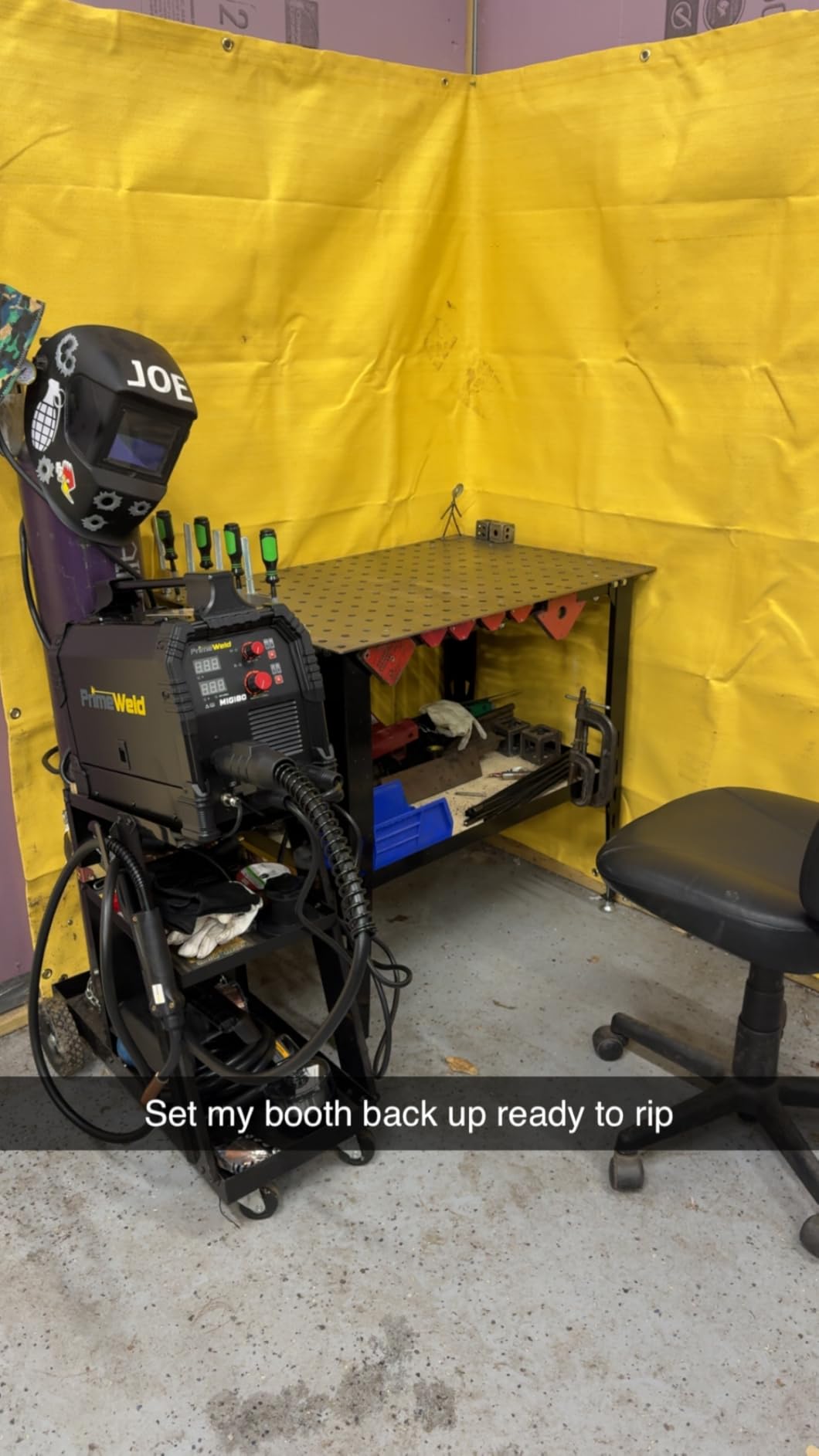
The PrimeWeld MIG180 earns the highest average rating of any machine here, and the reports behind that number are serious. A working fabrication shop owner ran two 10 lb spools plus a spool gun reel without a single fault and judged mild steel performance comparable to a Miller 215, which is a high bar for a 180 amp machine.
What makes it different is support. Parts and customer service are US based, the machine accepts standard Tweco consumables that any welding supply carries, and the drive rollers for MIG and flux core are included. For a buyer who values owning a machine for a decade rather than a year, that matters more than raw specifications.
180 Amps and Where That Ceiling Bites
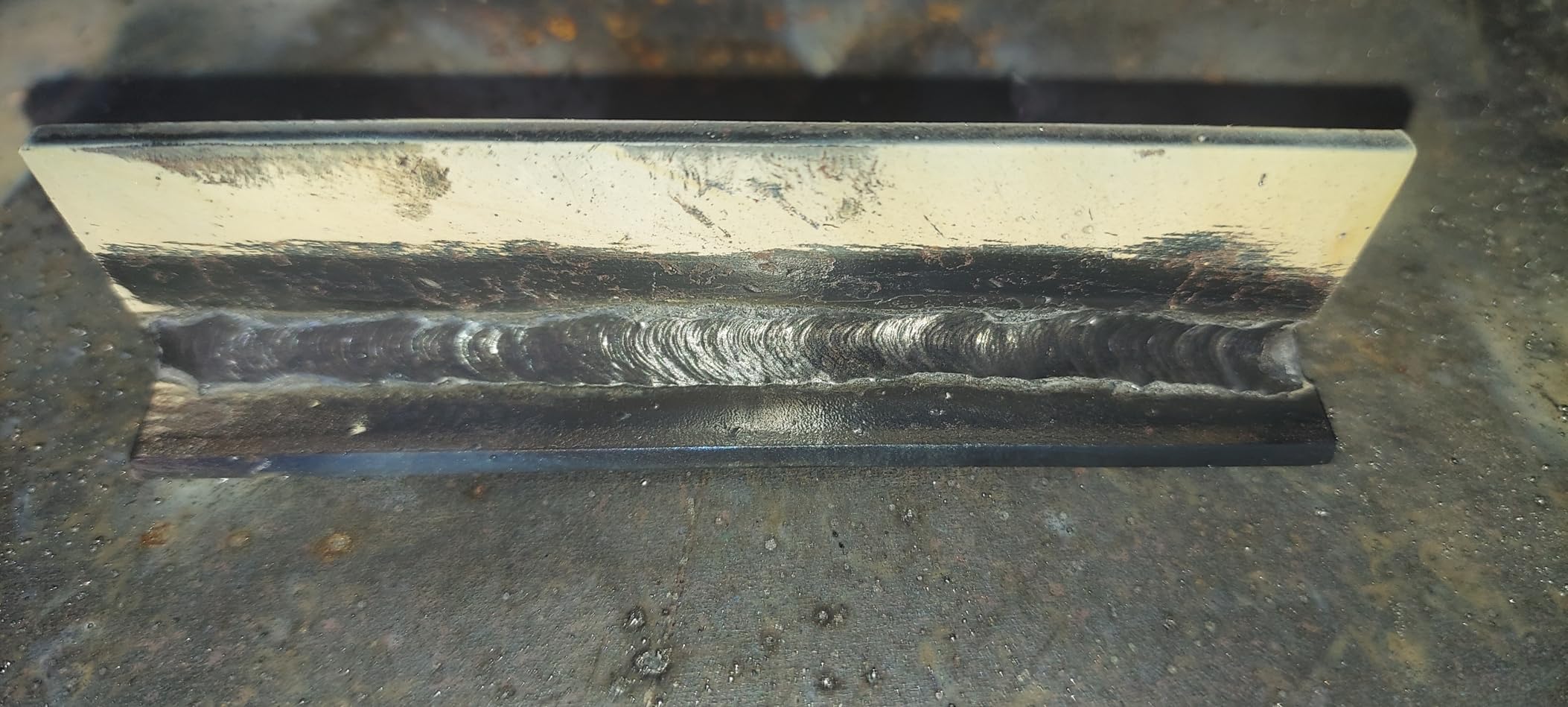
With 180 amps, 3/16 inch steel is a single pass and 1/4 inch is comfortable. Half-inch plate is out of reach in one pass, and getting there means the optional 200 amp torch plus multiple passes. Owners of this machine consistently recommend buying that torch when moving into thicker material, and it is a worthwhile accessory.
The wire feed format is the one beginners pick up fastest in this entire group, and the included settings chart gets you into the ballpark quickly. That ease of use is why it appears in hobbyist shortlists so often.
Aluminum With the Proprietary Spool Gun
The spool gun uses a design intended to avoid the kinks and jams that plague budget guns on aluminum wire. Four processes are covered: MIG, flux core without gas, DC stick, and aluminum through the spool gun.
Dual 120/240V input means the machine moves between the garage and a job site without an adapter, which addresses the most common complaint about dual-voltage welders.
Who This Machine Suits Best
Best for a hobbyist or small fabricator who wants consumable availability and a real support line for years to come. Rated 4.8 across 165 reviews, it is the most consistently well-regarded machine in the group.
Who Should Skip It
Skip it if you need to push 1/2 inch plate in a single session. At 55 pounds it is a stationary machine, and the 180 amp ceiling means heavy work is multi-pass by definition. Buy the optional 200 amp torch if you go this route.
10. VEVOR Pro MIG-250 – Best Lightweight 250 Amp Machine for 1/4 Inch Steel
VEVOR Pro MIG Welder, 250A Pluse Mig Welding Machine, 5-in-1 Synergic Welder Machine MIG Pluse/Gas MIG/Flux Core MIG/Stick/Lift TIG, 110V/220V Dual Voltage Aluminum Mig Welder with LCD Screen Display
250 amp 5 in 1,stated to 15mm,11 lb spool capacity,17.4 lb
+ Pros
- Ran 5+ minute beads on 1/4 in steel at 190-210 amps
- First contact tip and nozzle lasted a full 10 lb spool
- Light at 17.4 lb for a 250 amp class machine
- Legible HD screen
- Cons
- Wired for 110V with an adapter so 220 output is roughly halved
- MIG gun is not serviceable and its gas hood burns
- Ground cable much shorter than the electrode cable
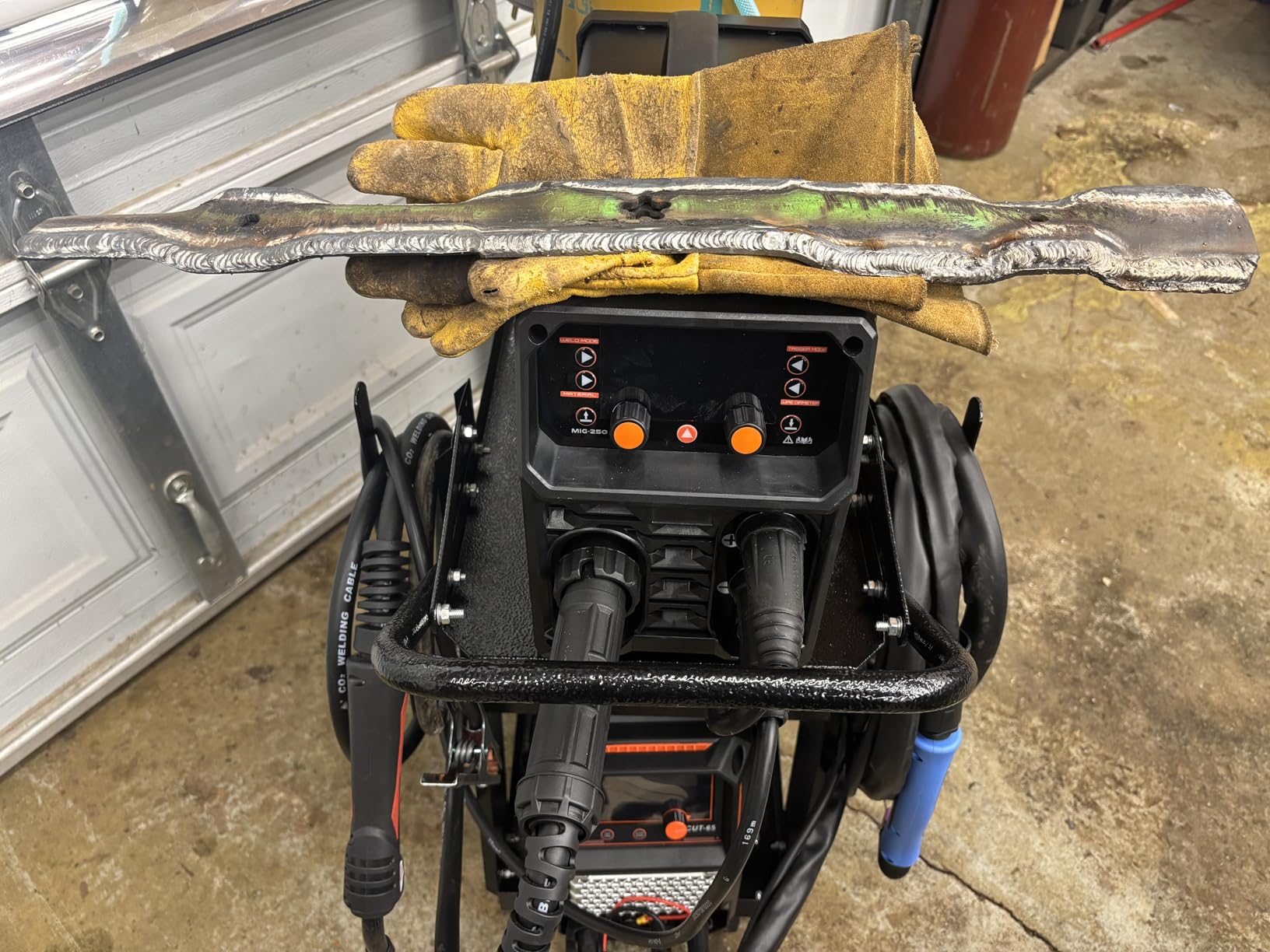
The VEVOR Pro MIG-250 is the lightest 250 amp machine in this group, and owners doing real fabrication report sustained heavy work on 3/16 and 1/4 inch steel well beyond what the class usually delivers. One reviewer ran continuous beads over five minutes at 190 to 210 amps indicated output with little cooling, which is the honest test of a thick-steel machine.
At 17.4 pounds it mounts on a cart easily and moves around a shop without strain. The HD screen is very legible, and inside and out the build quality is better than most buyers expected for the money.
The Dual Voltage Wiring Problem
This is the most important thing to know before buying. The machine arrives wired for 110V with an adapter to reach 220V, and that arrangement roughly halves the output available on a 240-volt circuit, which is exactly the output you would be buying it for.
For thick steel, the correct fix is to replace the inlet and cord with proper 220V wiring, or accept the reduced output and use it at shorter duty cycles. Several reviews treat this wiring arrangement as the sharpest criticism of an otherwise capable machine.
Wire Capacity and Pulse Control
Wire capacity reaches 11 lb, with .030 and .040 flux core and solid wire supported plus .040 and .050 aluminum. Five processes cover MIG pulse, gasless MIG, gas MIG, stick and lift TIG, with synergic control handling current and feed automatically in both 2T and 4T modes.
The stated welding thickness reaches 15mm, which again needs the multi-pass caveat. The aluminum torch and lift TIG torch are not included and sold separately, so plan for that if your work includes those processes.
Who This Machine Suits Best
Best for someone who needs 250 amp class performance in a package light enough to carry between a truck and a workbench. The 1/4 inch results owners report justify the effort of fixing the wiring properly.
Who Should Skip It
Skip it if you want serviceable factory components. The MIG gun cannot be serviced and its gas hood burns with regular use, and the ground cable is much shorter than the electrode cable. Some buyers also reported wire roll or feed failures on arrival.
How to Choose a 220V MIG Welder for Thick Steel
Judge Amps First and Labels Last
Ignore the largest number on the box and find the sustained output at the amperage you actually need. For 1/4 inch steel you want 200 amps minimum, and ideally a machine that can hold close to that output for the length of a joint rather than for ninety seconds. A 250 amp machine that is measured near its rating is worth more than a 250 amp label that is not.
Then check the gun rating. Several machines in this guide advertise 200 or 250 amps while the supplied torch is rated near 150, and that gap, not the machine, becomes your limit on thick plate.
Do the Duty Cycle Math Before You Buy
Multiply the rated amperage by the duty cycle to know how much sustained work is realistic. A 250 amp machine at 60 percent duty cycle gives you six minutes of full output in a ten-minute window. A 211 amp machine at 30 percent duty cycle gives you three. On a twelve-foot 1/4 inch weld with two passes, that difference is a comfort level.
Welding forums also raise a reliability point worth weighing: mainboard and inverter board failures show up on older machines from established brands, and it is the main reason some owners move to value tier machines. The fix is to keep a spare machine or accept the repair cost, and either way the longer warranty option is worth taking when prices are close.
Check the Wire Drive and Consumable Access
Metal drive components, cast aluminum drive rollers and a properly sized groove for the wire you plan to run all matter on thick steel. Drive rollers with no correct groove are a known issue on some machines, and plastic drive systems cause bird nesting under load.
For consumables, standard Tweco compatibility and a real parts supply make a machine far cheaper to own over five years. US-based support and easy-to-find rollers were a decisive advantage for one pick in this group.
Solid Wire or Flux Core for Thick Steel
Solid wire with a 75/25 argon-CO2 blend gives the cleanest, most controllable bead and is the right default for anything that will be ground, painted or load bearing. Flux core gives you more deposition per inch and needs no gas, which makes it better for outdoor field work, repair in a hurry, and thicker plate where you want to fill faster.
Many owners simply own both modes. Every machine in this guide runs gasless flux core, so the decision is about which mode you lead with, not which machine you buy.
Weight, Cords and What Comes in the Box
Six foot power cords on budget machines mean you are extending immediately, and light aluminum cables are the first thing to fail under heavy current. Weights in this group run from about 9 pounds to 82 pounds, and that spread is a real decision: portable field machines and stationary shop machines are not the same purchase.
On accessories, machines that include two torches, a full set of tips, nozzles, rollers and multiple wire spools save meaningful money in year one, because thick-steel work burns through consumables quickly.
Electrical Setup: Breaker Size, Cords, and Outlets
What size breaker do you need for a 220V welder? For a 200 to 250 amp machine, plan on a 50 amp circuit. A 30 amp circuit is enough for a small 110V welder and marginal for a 200 amp 220V machine, which is where a lot of confusing owner reports come from: the welder is fine, the circuit is not.
Use a NEMA 14-50 outlet and, ideally, a dedicated circuit with nothing else on it. Shared circuits and long extension cords are the number one cause of nuisance breaker trips, and a welder that trips mid-pass on a 1/4 inch bead is a safety problem as much as an inconvenience.
For extension cords, the rule is simple. Use the heaviest gauge the length allows, keep runs as short as you can, and never daisy-chain cords. A 10 gauge cord handles typical lengths for machines in this class, while 8 gauge gives you more headroom for a 50 foot run. Cord length costs you voltage, and low voltage shows up as an arc that will not stay stable on thick steel.
Adapters are the weak point of many budget machines. Two picks here arrive factory wired for 110V with a 110-to-220 adapter rather than a true 220V cord, and owners report reduced output as a result. If your plan is thick steel, proper 220V wiring from the start is worth the small extra cost.
Can you run a 220V MIG welder off a generator? Yes, with a generator rated well above the machine’s input amperage and with a properly grounded outlet, but expect the machine to draw hard on startup. Welding forums are consistent on one point: a welder on a marginal generator produces an unstable arc before it produces an overload error.
Setting Up for Thick Steel: Wire, Gas, and Pass Strategy
What is the recommended MIG setting for 1/4 inch steel? Here is the sequence that works, and it matters as much as the machine you choose.
1. Prepare the joint. Grind or torch the edge to bright metal. For plate over 1/4 inch, put a bevel on each side so the bead can reach the center of the joint.
2. Choose the wire. Solid .035 in 75/25 argon-CO2 for clean structural work, solid .045 for thicker plate and higher deposition, or self-shielded .045 flux core when you are outdoors with no gas.
3. Set the gas. A 75/25 argon-CO2 blend at roughly 20 to 25 flow cubic feet per hour. Pure CO2 makes a faster, wider, more spattery bead that is harder to control on vertical and overhead 1/4 inch welds.
4. Set amperage and wire feed together. Around 200 amps for 1/4 inch single pass, then raise the feed speed until the wire stops sputtering at the end of the bead. If the wire is feeding faster than the puddle can absorb it, the wire pushes into the work instead of laying down.
5. Preheat if the steel is thick or cold. Especially above 1/4 inch, and especially in cold weather. Slow, steady preheat along the joint slows cooling and reduces the chance of a brittle centerline weld.
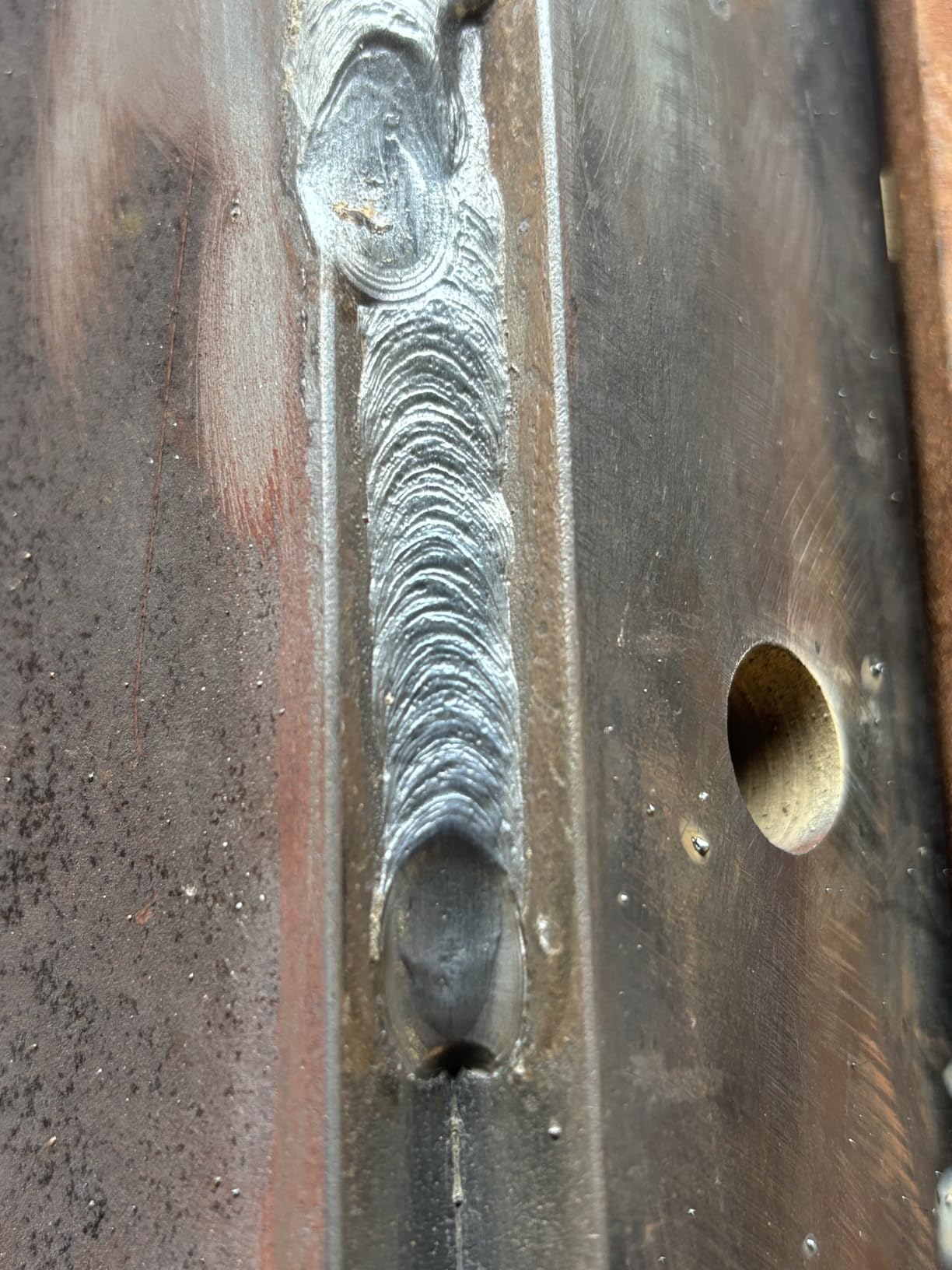
6. Weld in passes. Stringer beads, not wide weaves, on thick steel. A weave on 1/4 inch plate burns the edges while the center is still cold. Grind or wire brush the slag between passes and keep the interpass temperature even.
For 1/2 inch plate, plan on two or three passes regardless of how good your machine is. The pick that handles it best in this group is the FEMEROL 250A, but even there, half-inch steel is a multi-pass job.
Frequently Asked Questions
What is the best 220V MIG welder for thick steel?
For most fabricators the YESWELDER 205A MIG-205DS PRO is the best overall 220V MIG welder for thick steel, because its 200 amp IGBT output, 58-858 IPM wire feed range and five-process flexibility cover 1/4 inch plate and heavier work well. If your priority is raw measured power for half-inch plate, the FEMEROL 250A delivers roughly 245 amps at a 60 percent duty cycle. Budget pickers usually land on the ARCCAPTAIN MIG200.
Can you weld 1/4 inch steel with a 110V MIG welder?
Technically yes, but on a ground, in warm weather, over two or three passes. 1/4 inch mild steel needs about 200 amps, and 110V machines typically top out near 140 amps. At that level the puddle is small, the wire pushes into the work, and penetration will not carry a load. A 220V machine running 200 amps at a 60 percent duty cycle is the real breakpoint for this thickness.
How many amps do you need to weld 1/4 inch steel?
About 200 amps for a single-pass fillet weld on mild steel with solid wire and a 75/25 argon-CO2 blend. Budget roughly 1 amp per 0.001 inch of thickness, which puts 1/8 inch at about 125 amps, 3/16 inch near 150 amps and 1/2 inch at 300 amps or more. Gasless flux core needs extra amperage to compensate for its lower deposition efficiency.
What size breaker do I need for a 220V MIG welder?
Use a 50 amp dedicated circuit with a NEMA 14-50 outlet for any 200 to 250 amp 220V MIG welder. A 30 amp circuit works for small 110V machines and is marginal for a 200 amp 220V machine, which is a common cause of nuisance trips mid-bead. Keep extension cords as short as possible, use 10 gauge or heavier, and avoid sharing the circuit with other loads.
Is a 220V MIG welder or a flux core machine better for thick steel?
For clean structural work on 1/4 inch plate and heavier, a 220V MIG machine running solid wire with a 75/25 argon-CO2 blend gives the most controllable bead. For outdoor repair with no gas bottle, thick plate where you want faster fill, or dirty steel that will not clean up easily, gasless flux core on the same machine is faster and more forgiving. Every welder in this guide runs both, so the mode matters more than the machine.
Which 220V MIG Welder Should You Buy
Pick the machine that matches your thinnest serious job and your thickest serious job, then ignore the rest of the specifications.
If you weld a mix of sheet metal and 1/4 inch plate, the YESWELDER 205A is our choice, with the ARCCAPTAIN MIG200 close behind for the added warranty and spot weld mode. If half-inch plate is regular work, the FEMEROL 250A is the one with verified output, and the FEIFANKE 250A is the better box if aluminum is in the mix. If you need real TIG on aluminum, the Weldpro Omni210 is the only multi-process option here with AC and DC. If you plan to own it for a decade, the PrimeWeld MIG180 with US parts and support is the longest-ownership choice. If you weld outdoors with no gas, any of the flux core capable machines will serve, and the AZZUNO 250A takes the heaviest wire.
Whichever one you choose, put a 50 amp circuit in first, buy a higher-rated torch than the one in the box, and bevel anything over a quarter inch. Those three things will improve your thick-steel welds more than the difference between two similar machines. Here are the best 220V MIG welders for thick steel, updated for 2026 and ready to compare.