
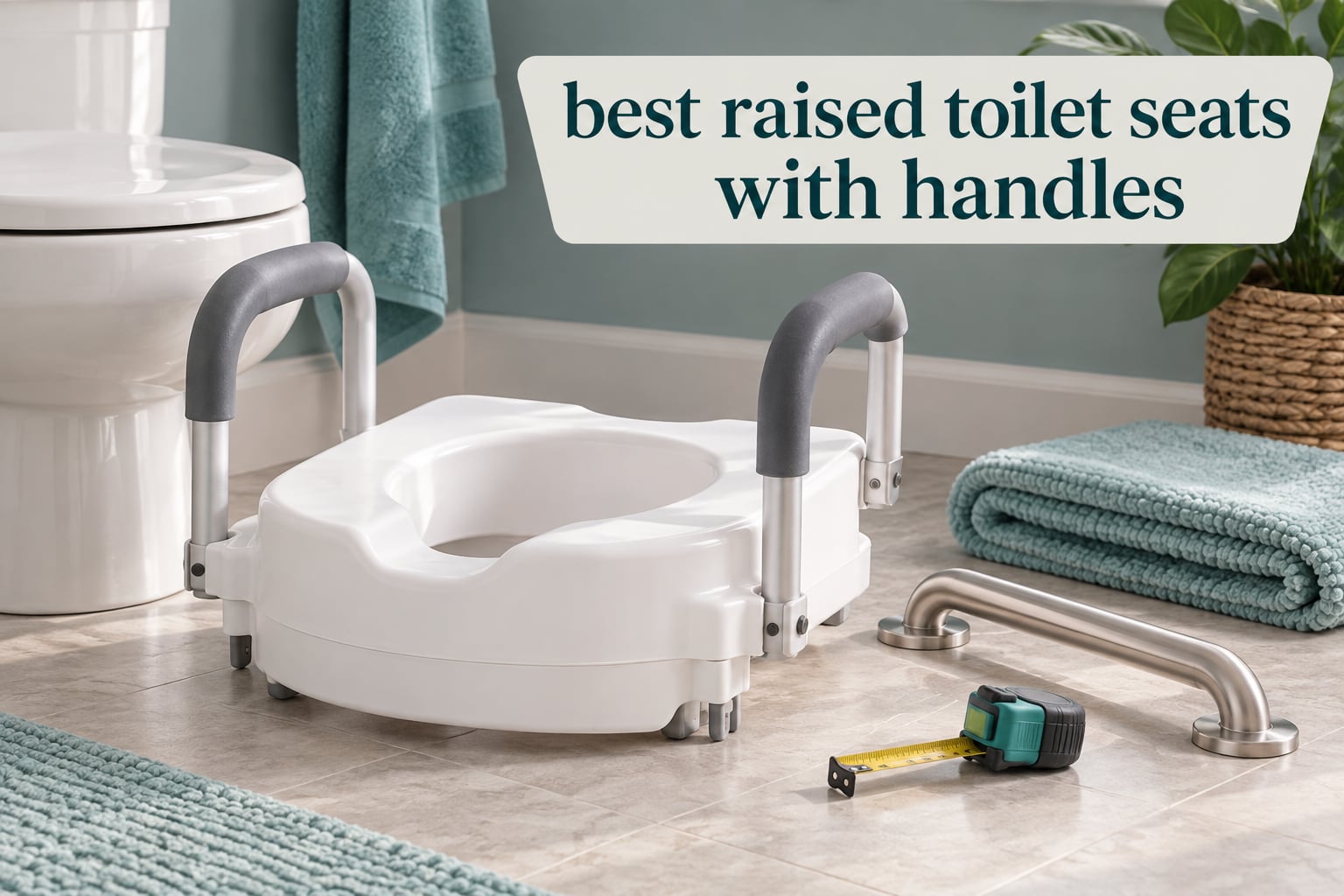
Standing up from a low toilet is harder than it sounds, and the best raised toilet seats with handles exist for exactly that one movement. Our team has been living with these risers for weeks, pushing on arms, checking for wobble, measuring bowls with a tape measure at midnight because a listing said “universal” and the seat still did not fit. What we learned is that four numbers decide the purchase: how many inches the seat adds, how many pounds the frame is rated for, how the riser attaches to the bowl, and whether the handles stay in your hands or slide out from under you.
That is the whole game. A riser that adds four inches but attaches with a single loose clamp is a fall waiting to happen, and a rock-solid bolted seat at the wrong height leaves your feet dangling, which is its own fall risk. So we compared eight raised toilet seats with handles, weighing published specifications against the real complaints buyers repeat in review after review.
We spent the bulk of that time on the small print most roundups skip: whether the arms are padded or bare, whether the seat fits a round or an elongated bowl, whether the footprint still clears a narrow bathroom, and how a raised seat feels after six months of not being cleaned. This guide is written for seniors, for people a few weeks out of hip or knee replacement surgery, and for anyone whose bathroom has become the most dangerous room in the house.
One note before we start, because it comes up constantly in post-op forums: buy before the surgery if you can. The recurring question in hip-replacement groups is not which riser to get, it is when to stop using it. Having it in the house and already fitted on day one removes that entire problem. A riser is also a temporary tool, not a permanent fixture, and we will cover how to taper off further down.
Our Top 3 Raised Toilet Seats With Handles for Safer Sit-to-Stand Transfers in 2026

Drive Medical 2-in-1
- Adds 5 inches of height
- Removable adjustable armrests
- Tool-free locking install


The Drive Medical 2-in-1 takes our top slot because it does the hardest thing in this category well: it adds a full five inches, which is the tallest lift any of these eight offers, and it still installs without tools. The Carex 3.5 Inch is the one most post-surgical buyers land on, with foam-padded rails and both bowl shapes available. The Vive earns its place for removable soft foam grips, a lifetime warranty and an anti-slip lip that resists shifting as you lower yourself.
All 8 Raised Toilet Seats With Handles Compared Side by Side in 2026
| Product | Details | |
|---|---|---|
| Drive Medical 2-in-1 Raised Toilet Seat |
|
Check Latest Price |
| Carex 3.5 Inch Raised Toilet Seat with Arms |
|
Check Latest Price |
| Vive Raised Toilet Seat Riser with Handles |
|
Check Latest Price |
 Platinum Health Ultimate Raised Seat with Handles Platinum Health Ultimate Raised Seat with Handles |
|
Check Latest Price |
 Bemis Assurance 3 Inch Raised Toilet Seat Bemis Assurance 3 Inch Raised Toilet Seat |
|
Check Latest Price |
 Agrish Raised Toilet Seat, Width and Height Adjustable Agrish Raised Toilet Seat, Width and Height Adjustable |
|
Check Latest Price |
 Lunderg Solva Raised Toilet Seat with Handles Lunderg Solva Raised Toilet Seat with Handles |
|
Check Latest Price |
 VEVOR Raised Toilet Seat with Arms VEVOR Raised Toilet Seat with Arms |
|
Check Latest Price |
Read that table with one caveat: capacity ratings across this category are manufacturer claims, and the spread runs from 250 pounds on the Carex to 1000 pounds on the Bemis. We treat a rating as a ceiling you should stay well under, not a target to reach.
1. Drive Medical 2-in-1 Raised Toilet Seat – Tallest Lift With Tool-Free Setup
Drive Medical 2-in-1 Raised Toilet Seat with Removable Padded Arms
Height: 5 in
Capacity: 300 lbs
Tool-free locking mount
+ Pros
- Adds the most height in this roundup
- Armrests can be removed or adjusted
- Tool-free install fits almost any toilet
- Wipes clean with warm water and detergent
- Cons
- Unpadded plastic surface feels hard in cold bathrooms
- Fixed 5-inch height cannot be lowered later
Five inches of lift is the number that sells this seat, and it is the number that made it our first test. A five-inch gain is enough that both feet stay flat on the tile and the knees do not have to drop far below the hip joint during a sit-to-stand. For anyone whose problem is that standing up feels like pushing out of a swimming pool, that extra height is the entire mechanism.
The armrests are also adjustable and removable, which matters more than it sounds for caregiver-assisted transfers. You can strip one side for a wheelchair transfer, or reposition the arms so a helper can stand close without getting in the way.
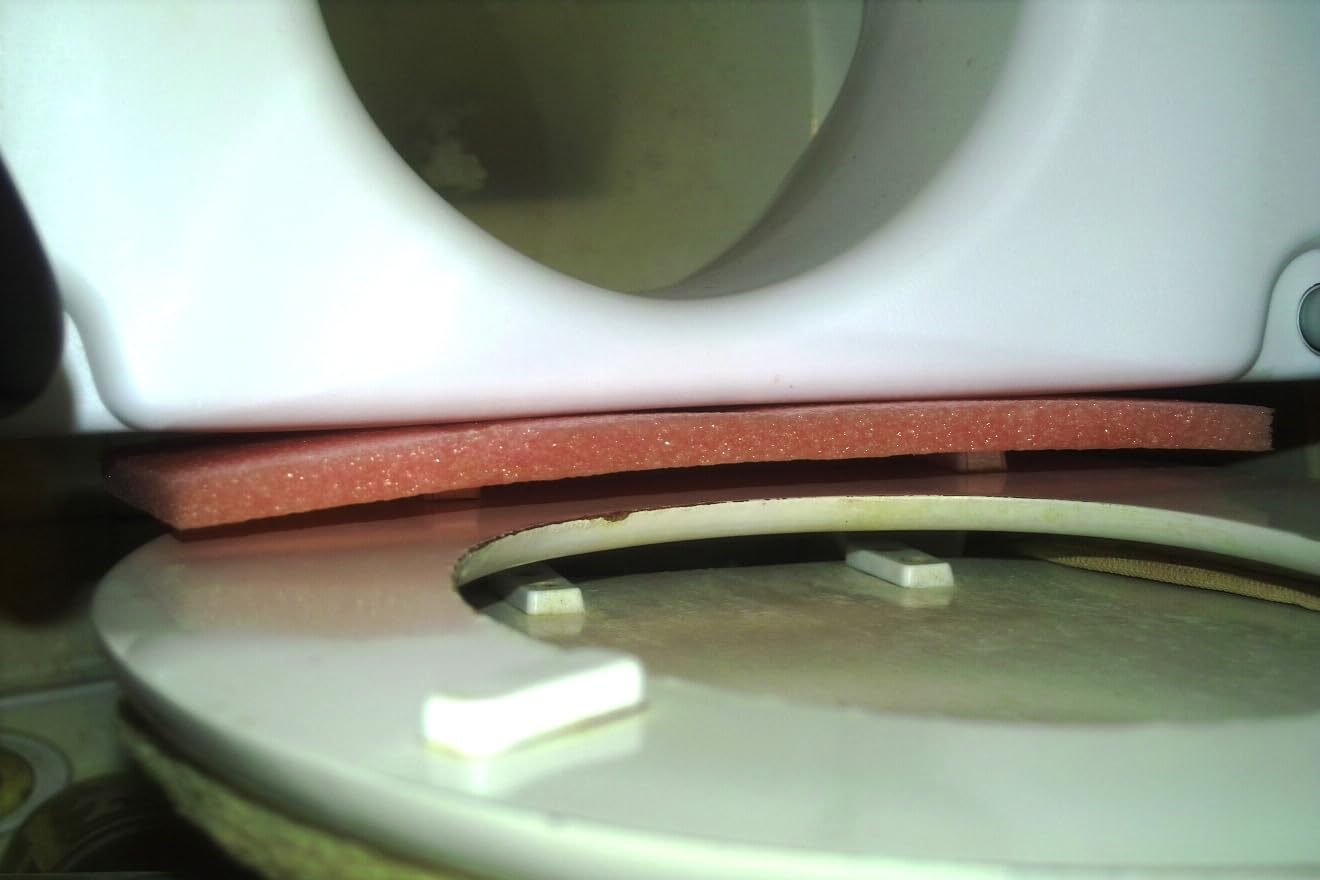
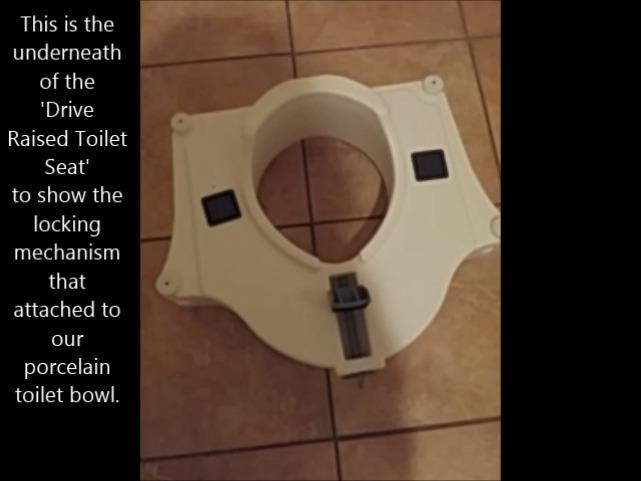
Set-up is where this model separates itself. The locking arms slide onto the seat and lock into place without a screwdriver, and reviewers consistently report it fitting bowls that other risers fought with. The footprint is 16.5 inches deep by 17 inches wide, with 18 inches between the arms and 10 inches of overall height, and the whole thing weighs five pounds, so you can lift it in and out of a bathroom single-handed.
Why 5 Inches Is the Right Answer for a Low Bowl
Height is the one spec buyers misjudge most often. Too little and the transfer stays hard. Too much and your feet hang, your weight goes forward, and your balance point moves somewhere it should not be. The useful rule is to measure your lower leg from floor to knee and match the seat to roughly the top of your calf. Most adults land somewhere in the 3-to-4-inch range; the Drive’s 5 inches suits very low bowls and taller users, and it is the reason we would not put it on a standard-height toilet without checking first.
Stability, Grips and the Rating Split
Across 17987 reviews the average sits at 4.2 stars, with about 67 percent five-star and 9 percent one-star. Read that spread honestly: this is a product almost nobody regrets buying, and almost nobody loves unconditionally. The five-star reviews talk about height and easy fitting. The one-star reviews almost all talk about the same thing, which is that the hard plastic seat is unpleasant in an unheated bathroom during a long sit. That is a fair trade for the tallest lift in this roundup, but it is a real trade.
Who It Suits and Who It Does Not
Buy this if your toilet is unusually low, if you are tall and need the vertical room, or if you want arms you can physically remove for a lateral transfer. Skip it if you plan to use the riser for a limited recovery period and would rather not have a five-inch seat you cannot lower as you improve, or if a firm, cold seat surface is a genuine problem for you. Note that the arms are described as adjustable and removable, not padded, so grippy hands may want a foam sleeve over them.
2. Carex 3.5 Inch Raised Toilet Seat with Arms – The Post-Surgery Workhorse
Carex 3.5 Inch Raised Toilet Seat with Arms, Elongated Toilet Seat Riser, Up to 250 lbs Capacity, Elevating & Raising Seat for Elderly & Handicap, Universal, Slip-Resistant with Padded Handles, White
Height: 3.5 in
Capacity: 250 lbs
Foam-padded rails
+ Pros
- Foam padding gives a secure damp-hand grip
- Installs in seconds without tools
- Round and elongated versions
- Long post-op track record
- Cons
- No height adjustment on the handles
- Hardware size can cause wobble on some bowls
- Bolts sit proud of the seat surface
With 12734 reviews at 4.2 stars, this is the raised toilet seat with handles that most often shows up in hip-replacement recovery kits, and the reason is simple: it is shaped like a normal riser, does the job quietly, and is available in both round and elongated versions so the fit problem does not stop the order. Buyers recovering from hip, knee and back surgery describe it in the terms you would expect from a temporary medical aid, which is to say they are grateful and they want it gone in six weeks.
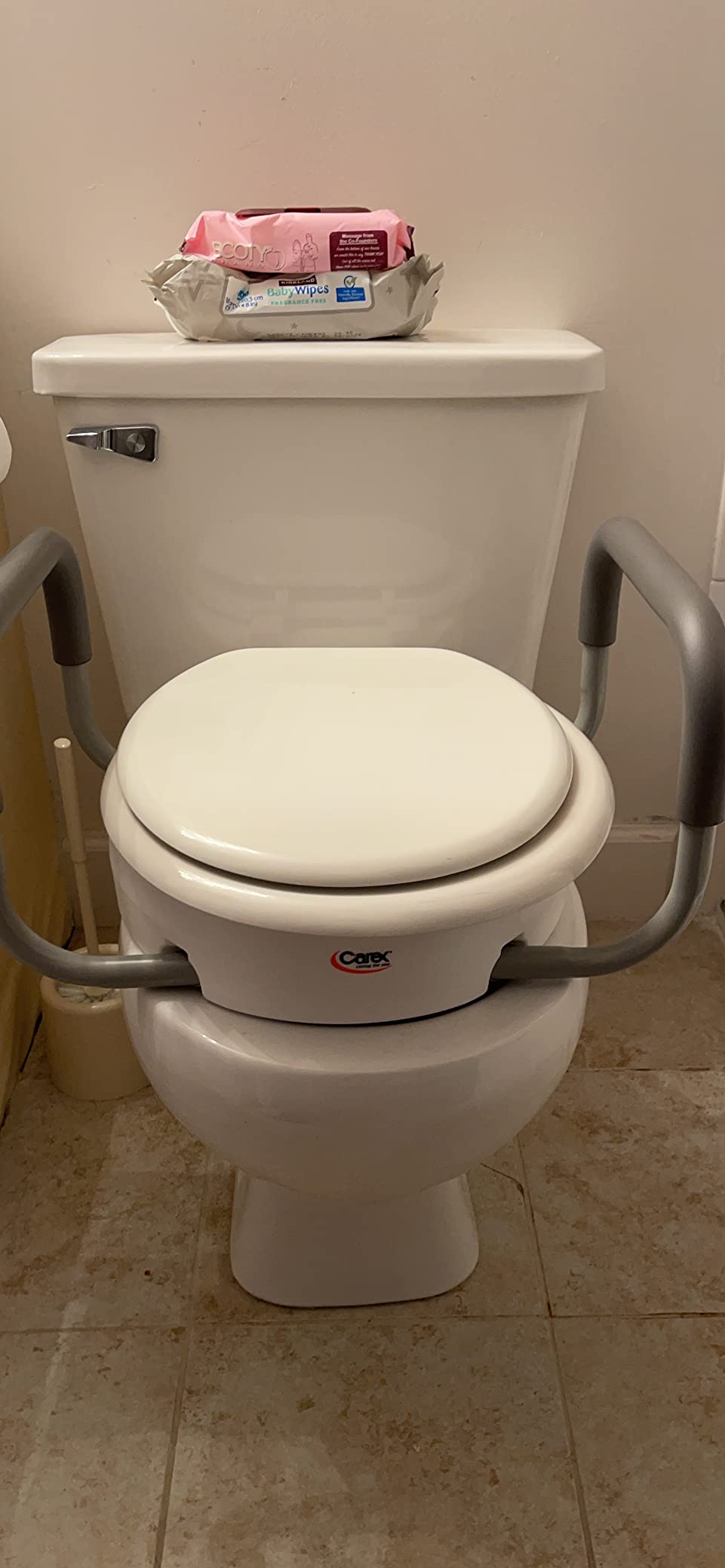
The 3.5-inch lift sits in the sweet spot for most adults. It is enough to take pressure off the knees and hips during a sit-to-stand and not so much that your heels lift off the tile. Padded foam rails wrap the sides, and the padding is the feature that separates this model from bare-plastic risers: foam gives a much better grip when hands are damp, which is most of the time in a bathroom.
How It Attaches, and Why the Bolts Matter
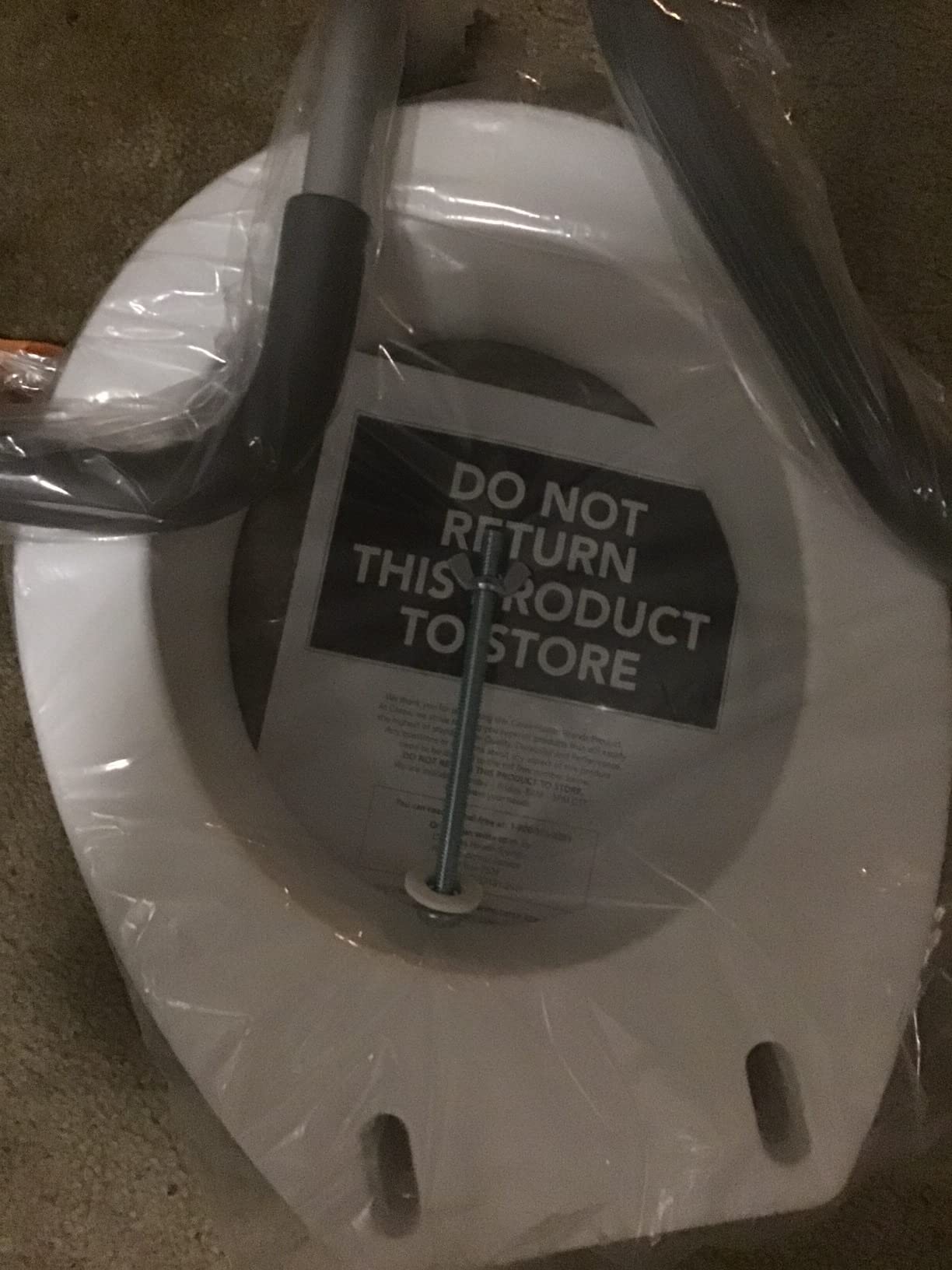
This is a riser only. It sits on your existing toilet seat and lid rather than replacing them, which means installation is genuinely seconds and the whole unit comes off when you are done. The trade-off is the reason for the most common complaint in its reviews: because the hardware fastens through the seat rather than into porcelain, the bolts sit slightly proud of the sitting surface. Buyers report pressure marks after long sits, and a minority report a wobble that traces back to washer sizing on particular bowls.
Where the 250 Pound Rating Sits
Two hundred fifty pounds is the lowest rated capacity in this roundup, and it is the one number to test against your own body weight before you order. Our rule is to keep at least a 50 percent margin, which puts the safe range for this model at up to roughly 165 pounds. If you are heavier than that, a 300-pound riser gives you more room and a 400-pound frame is the sensible floor.
Cleaning and the Gap Nobody Warns You About
Because no lid is included, the space between the riser and the seat below it is a narrow slot that collects residue and is awkward to reach. Users on forums raise cleaning as the single most common complaint about elevated seats of every type, describing units that sat a foot above the bowl and were never wiped down. If you buy any riser without a lid, put a removable wipe-clean mat over the top and take the whole thing apart every couple of weeks. That habit turns an unhygienic object into a manageable one.
Best For Temporary Recovery, Not Permanent Daily Use
This is the seat to buy three weeks before a hip or knee replacement, install on the day you get home, and eventually take off. It suits anyone in the 165-pound-and-under range with a standard-height toilet. It is not the right pick for a permanent household fixture, for a very low bowl, or for a user who weighs more than the rating allows.
3. Vive Raised Toilet Seat Riser with Handles – Removable Foam Grips and a Lifetime Warranty
Vive Raised Toilet Seat Riser for Seniors (with Handles) – Handicap Rail
Height: 3.5 in
Capacity: 300 lbs
19 in between handles
+ Pros
- Foam grips can be removed and washed
- Anti-slip interior lip resists shifting
- Lifetime manufacturer warranty
- Tool-free installation
- Cons
- Elongated bowls only
- Fixed 3.5-inch height with no adjustment
The Vive is the one we recommend when foam grips you can wash matter more than anything else. The soft foam handle sleeves pull off completely, so you can clean them, swap them once they compress, and strip the arms for a lateral wheelchair transfer or for a guest who needs the seat but not the hardware. It holds a 4.4-star average across 8578 reviews and ranks in the top five of its category on Amazon, which is a useful sanity check on a product with a very long history.
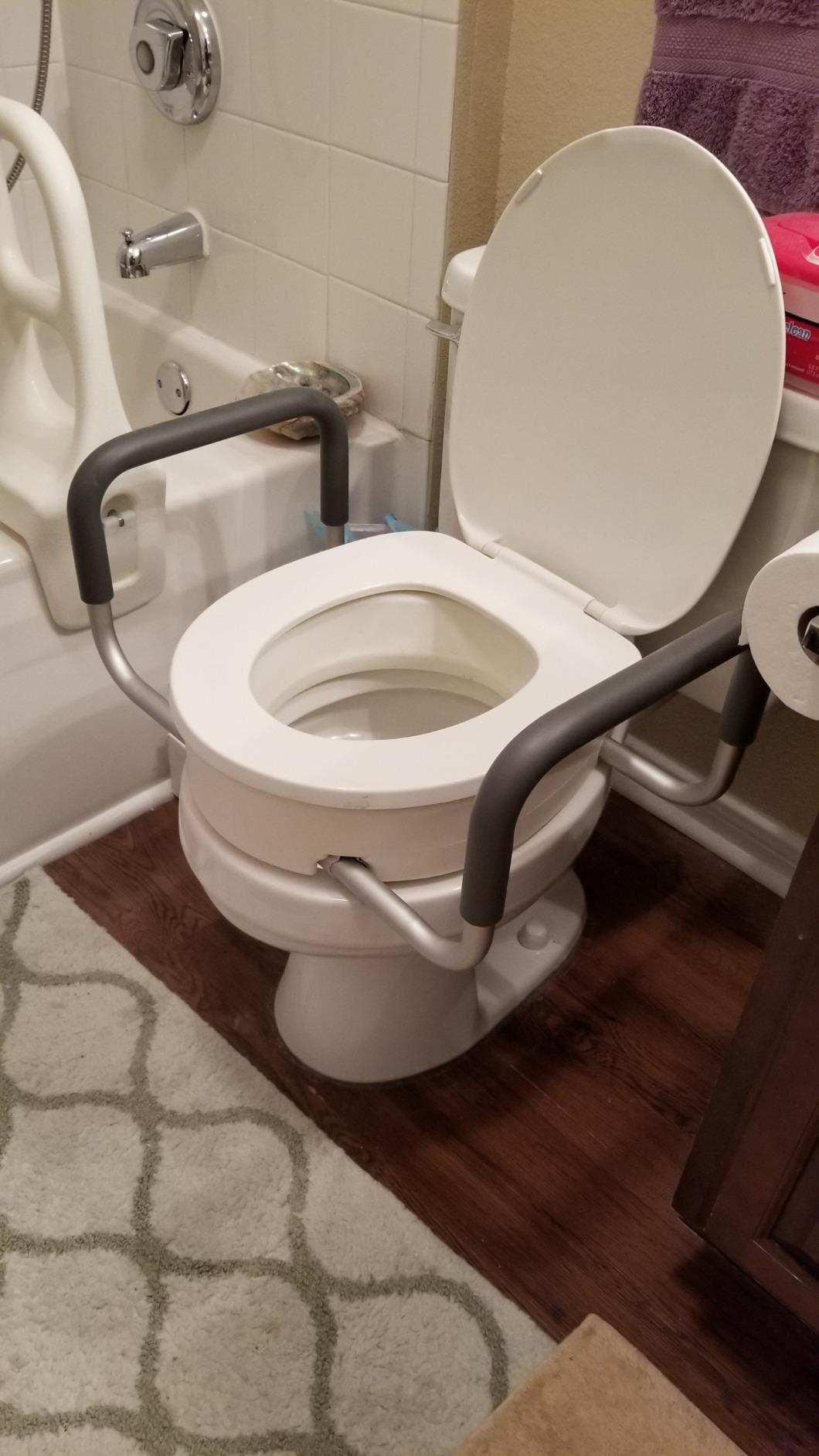
Construction is plastic paired with corrosion-resistant aluminum handles, and the base carries an interior lip that resists sliding as you lower yourself. That lip is the cheapest insurance in the whole category, because a riser that creeps forward mid-transfer turns a controlled sit-to-stand into an uncontrolled lurch, and most rocking complaints trace back to an interface that was never gripping to begin with.
Warranty and the Elongated-Only Catch
This seat carries a lifetime manufacturer warranty, which is genuinely unusual in this category and is the single biggest reason we rate it highly for long-term home use. The catch is fit: this model is elongated only. If your bowl is round, this is the wrong seat, and no amount of adjustment will fix it. Measure before you order, which we cover in detail below.
Why Handle Width Is a Medical Decision
Handle spacing is not a comfort detail, it is a transfer-safety detail. This model measures 19 inches between the handles and 22 inches end to end, which is roomier than the 18 inches on the Drive Medical but narrower than the 21-inch spans on the Bemis and the Lunderg. Sit down and check the distance between the inside of your thighs and the rail. If you can land your hands on the foam without your shoulders rounding forward or your knees flaring out, the geometry is working. If your hands end up in front of your body or your arms are pinned, you will be pulling upward rather than pushing, and that is a worse lever.
Fit, Finish and Daily Use
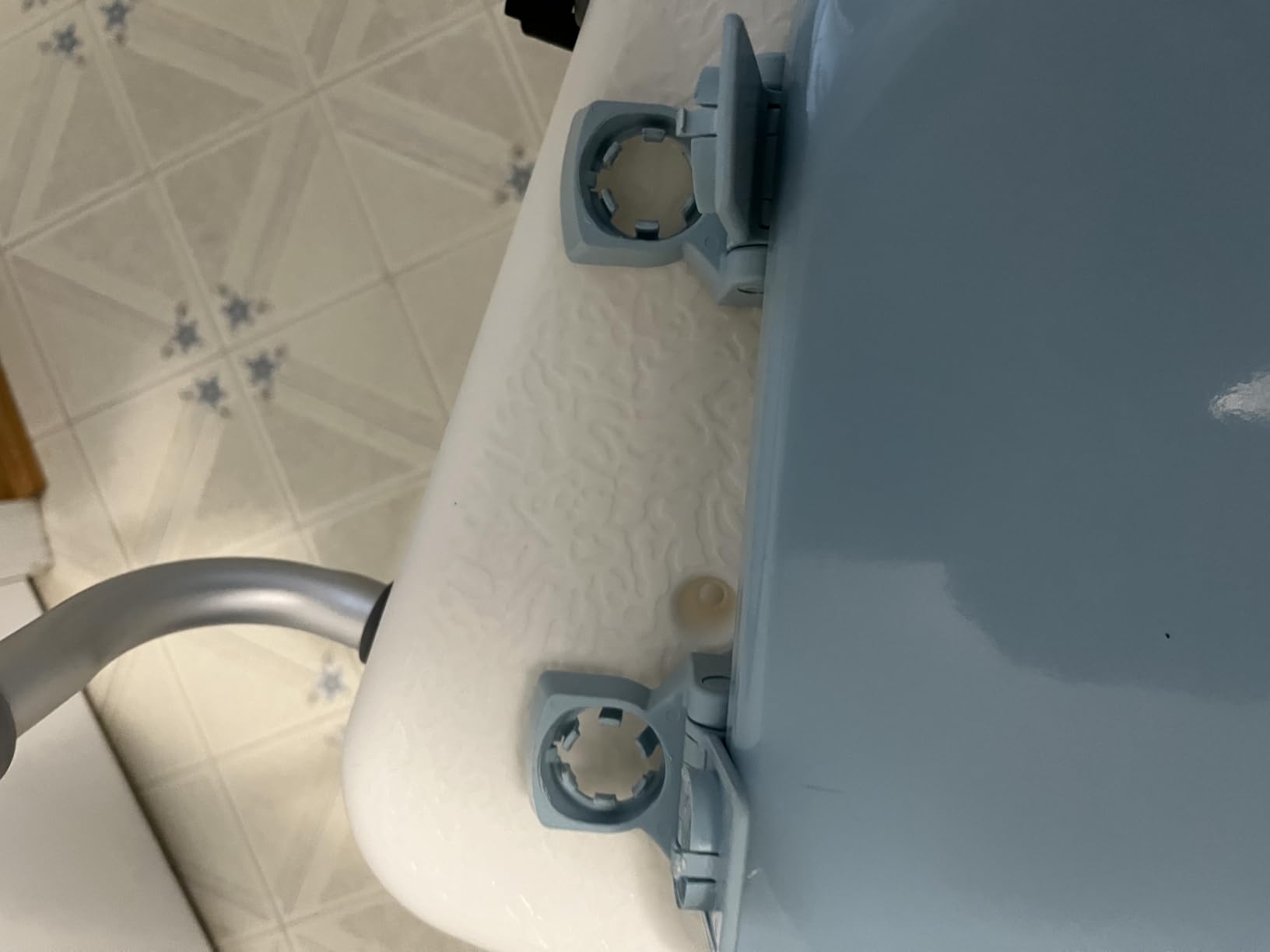
Installation is tool-free using the included screws and washers, and the seat fits under an existing elongated toilet seat rather than replacing it. The unit weighs 6.2 pounds and measures 22 by 17.25 inches, so it is light enough to lift for cleaning but wide enough that you should check clearance on both sides before committing. Owners rate the surface as easy to wipe down, and the removable foam is the part you will want to clean most often.
Who It Suits and Who It Does Not
Choose the Vive for a larger user, a long-term install, or anyone who wants the arms gone for parts of the day. Skip it for a round toilet, for a user who needs more than 3.5 inches, or for a bathroom where 22 inches across the arms will crowd a wall or a vanity.
4. Platinum Health Ultimate Raised Seat with Handles – Three Products in One Frame
Ultimate Raised Toilet Seat with Handles, Padded, Armrests, Adjustable Height, Premium Elevated Toilet Seat for Elderly Bathroom Safety with Arms, Standard and Elongated Toilets
Adjustable height
Padded aluminum frame
Commode capable
+ Pros
- Height lowers as mobility improves
- Commercial-grade foam padding
- Frame is stable with no wobble
- Converts to commode and shower chair
- Cons
- Floor frame needs a large footprint
- Existing toilet seat must be removed
- Commode opening is narrow
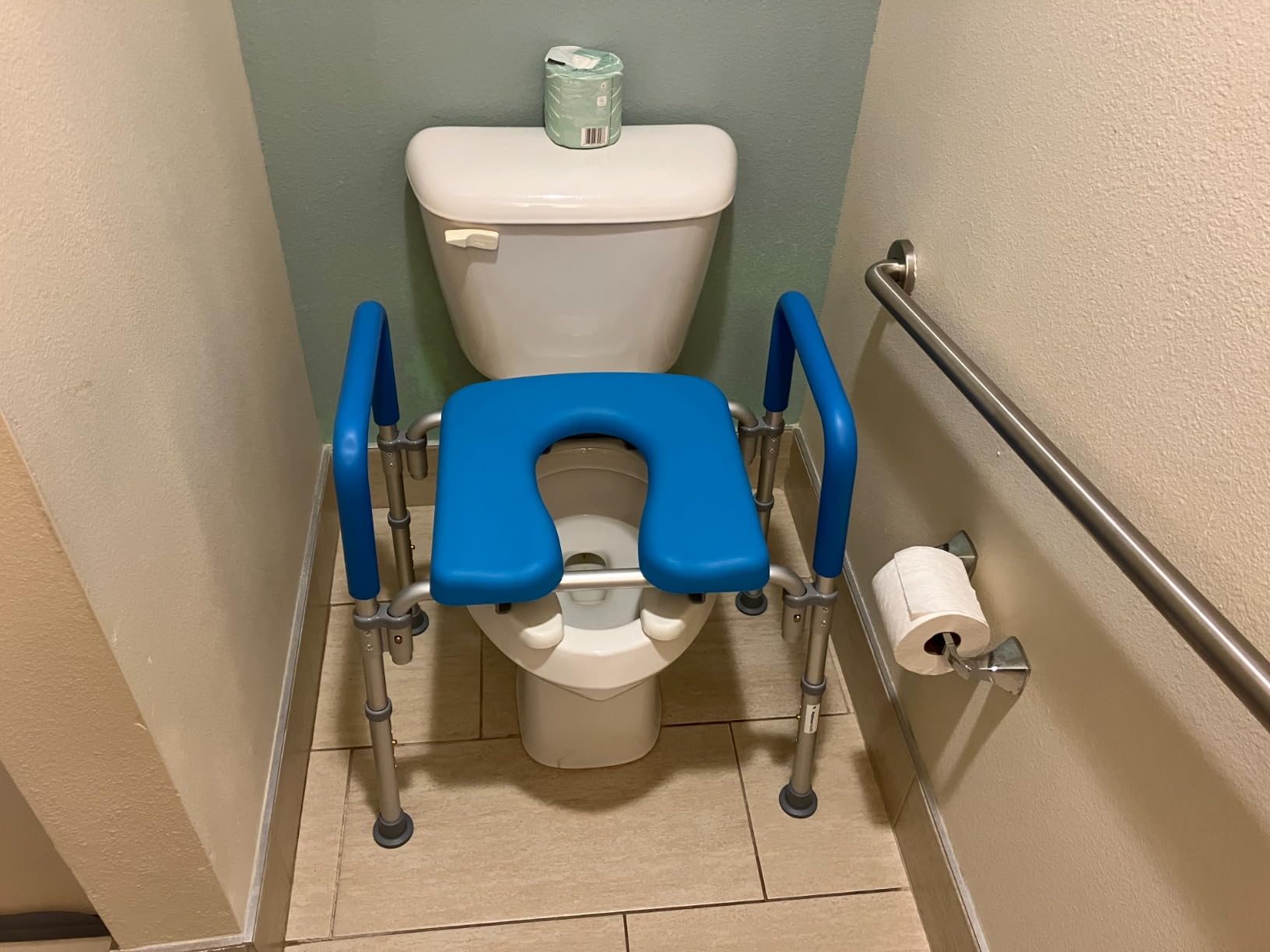
This is the only seat in the roundup where the height setting is a simple mechanical adjustment, which changes how you use a riser, because most people who need one do not need it forever. Buying a fixed 3.5-inch or 5-inch lift for a six-week recovery means living with a height that is wrong for the final three weeks. The frame is medical-grade aluminum with commercial-grade polyurethane foam, and it rates 4.5 stars across 3568 reviews, with healthcare workers among the buyers describing it as walker-grade in feel.
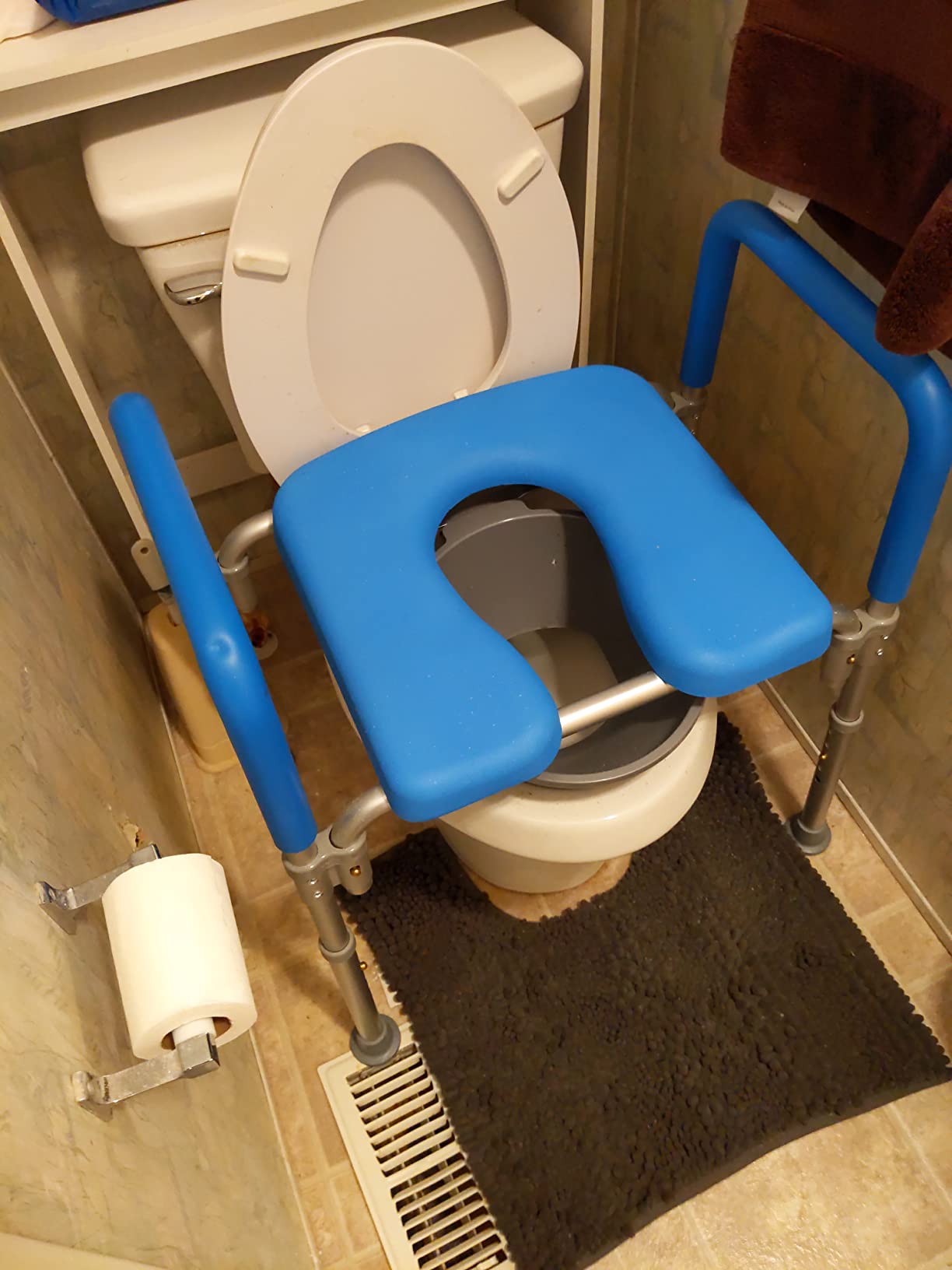
It is also three products in one box. The package includes a commode pail, a lid and an open-bottom funnel, so the same frame works as an elevated toilet seat, a bedside commode, and a shower chair. For a household dealing with a long recovery where the bathroom is not the only bathroom involved, that is real value rather than a gimmick.
Adjustable Height Changes the Weaning Question
Post-op forums keep asking when to stop using the riser, and a frame that steps down is the closest thing to an answer you can buy. As strength returns you lower the seat, use it less, and eventually remove it without ever making a separate purchase. With a fixed riser you are stuck at one height until you buy another one. If you or a family member will be using equipment for a long recovery, this is the argument for spending more here.
What the Floor Frame Costs You
Because it slides over the toilet and rests on the floor, the frame needs real clearance. It measures 27 inches long by 18.5 inches wide and weighs 12.8 pounds, which is heavy enough to stay put and too heavy to move casually. In a small bathroom it can crowd a vanity, and the floor feet are something you can trip on at night. The existing toilet seat also has to be removed for the frame to sit far enough back, which is the step most people miss at setup.
Cleaning Under a Seat That Does Not Flip Up
The seat does not flip up, so the gap between the padded ring and the bowl rim is a catch-all for splash and residue. Wipe it after every use and pull the frame out for a deep clean every couple of weeks. The high-visibility blue foam is a genuine advantage here, because discolouration shows up before it becomes a hygiene problem and the material resists staining better than white padding.
Bowl Compatibility and the Commode Conversion
The frame fits both round and elongated bowls, which removes the most common fit failure in this category, and that is worth a lot. The trade-off on the commode side is the opening, which is about 6 inches across. That is enough for urine and modest volume, but it is narrow enough that reviewers managing larger output report splash-through, so a commode user should plan accordingly.
Who It Suits and Who It Does Not
Buy this for a long, adjustable recovery, for a caregiver who wants one frame to do everything, or for a bathroom with enough floor space to give it. Skip it for a very small bathroom, for a user who needs a large commode opening, or for anyone who will trip over a floor frame in the dark.
5. Bemis Assurance 3 Inch Raised Toilet Seat – The Bolted, Rock-Solid Choice
Bemis Assurance 3″ Raised Toilet Seat with Handles, Elongated
Height: 3 in
Capacity: 1000 lbs
Bolted to the bowl
+ Pros
- Bolted to porcelain so it will not wobble
- Handles stay steady under uneven pressure
- Easy-clean smooth plastic
- One-year manufacturer warranty
- Cons
- Fixed 3-inch height with no adjustment
- 21-inch handle span needs a wide bathroom
- Elongated version shown
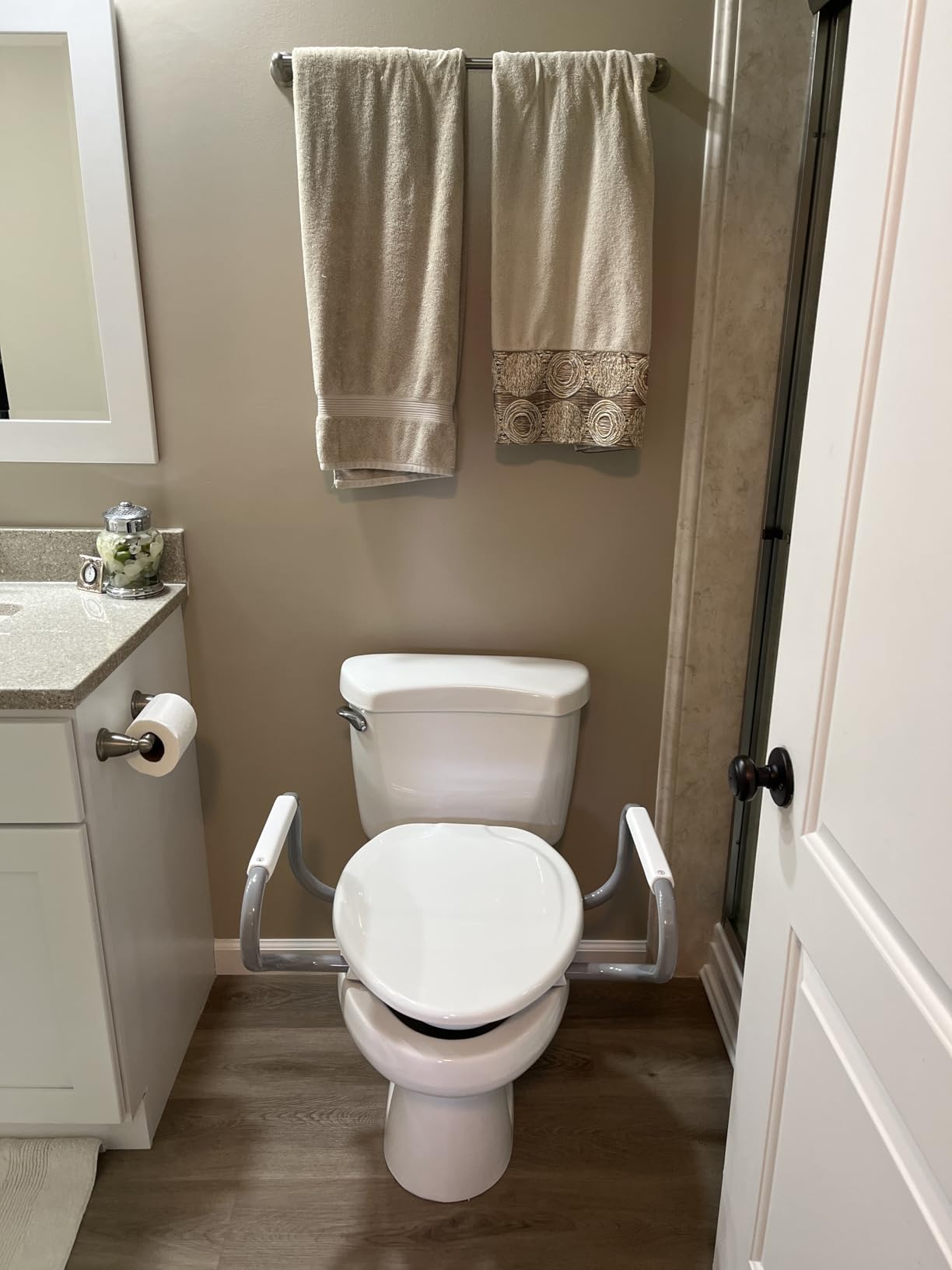
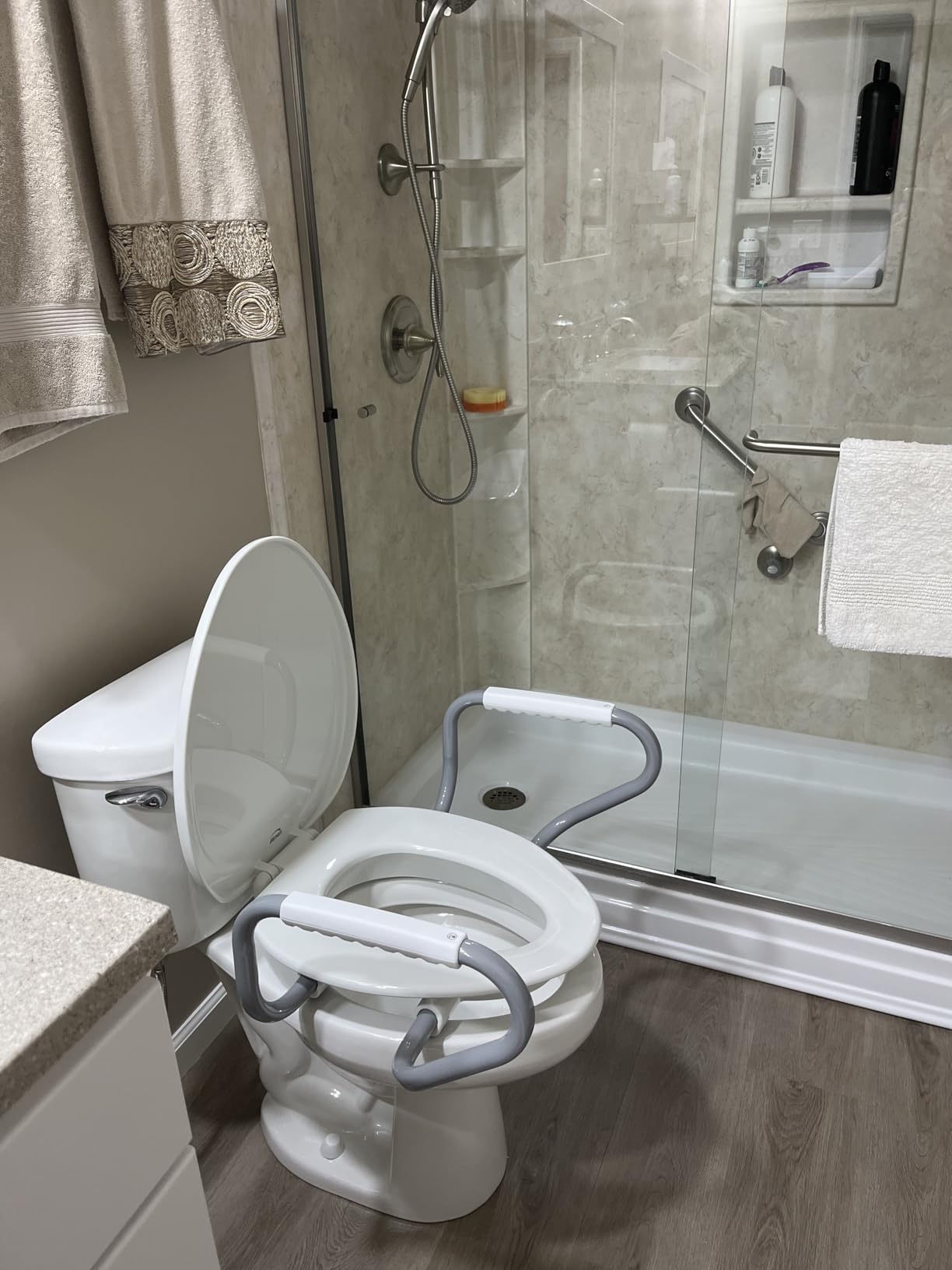
The Bemis is the only seat here that bolts into the porcelain mounting holes of your toilet the way a real seat does, and that single design decision is why it carries a 4.7-star average with 83 percent of ratings at five stars. There is no clamp to loosen, no arm to rotate under load, and nothing to shift when you push down on one side and stand. If your fear is wobble during a transfer, this is the product built to remove that fear.
The handles stay stable under uneven one-sided pressure, which is exactly the moment a riser fails. Most people load one arm first while lowering themselves, and a riser with a weaker mount rocks at that instant. Bolted construction does not. The 1000-pound tested capacity is the highest in this roundup by a wide margin, and the smooth plastic with a clean-shield design keeps waste inside the bowl and away from surfaces you touch.
Only 3 Inches, and Why That Is a Feature
Three inches is the shortest lift here, and buyers do not treat that as a compromise, they treat it as the point. A bolted seat is a permanent-looking fixture, and a permanent fixture should sit at a height you can use indefinitely without your legs dangling. If your standard toilet is already close to the right height for you, three inches preserves function while giving you two solid handholds. If your toilet is low, three inches will feel like too little.
Measuring for the 21-Inch Span
The arms sit 21 inches apart, which is wider than most of this roundup and needs a bathroom that can give it room. The unit measures 19.13 inches long by 23 inches wide overall, so measure the gap between the bowl centreline and each wall before ordering. This is the most common reason a good seat gets returned, and it takes two minutes with a tape measure to avoid.
Reading a 4.7 With 1700 Reviews
This is a smaller review base than the top two picks, which is normal for a product sold as a considered, higher-tier purchase rather than an impulse add-on. A 4.7 with 83 percent five-star is a stronger signal than a 4.4 with 18000 reviews, because the people who bought it had a reason to. Owners describe rock-solid stability and handles that do not flex, and the trade-offs they mention are footprint and the one-year manufacturer warranty rather than any quality complaint.
Who It Suits and Who It Does Not
Choose the Bemis when stability is your overriding concern, when you are installing something you intend to keep for years, or when a higher weight rating gives you confidence. Skip it if you need more than three inches of lift, if your bathroom is narrow, or if the temporary post-op purchase you actually need is a removable clamp instead.
6. Agrish Raised Toilet Seat with Handles – Most Adjustment in the Lineup
Raised Toilet Seat with Handles, Width & Height Adjustable
4 width and 7 height settings
Capacity: 400 lbs
Folds flat
+ Pros
- Four width and seven height adjustments
- Reinforced frame to 400 lbs with no flex
- Textured padded grips stay secure when damp
- Folds for storage and doubles as shower chair
- Cons
- Large footprint needs careful measuring
- Visible medical appearance
- Iron parts can show rust after shower use
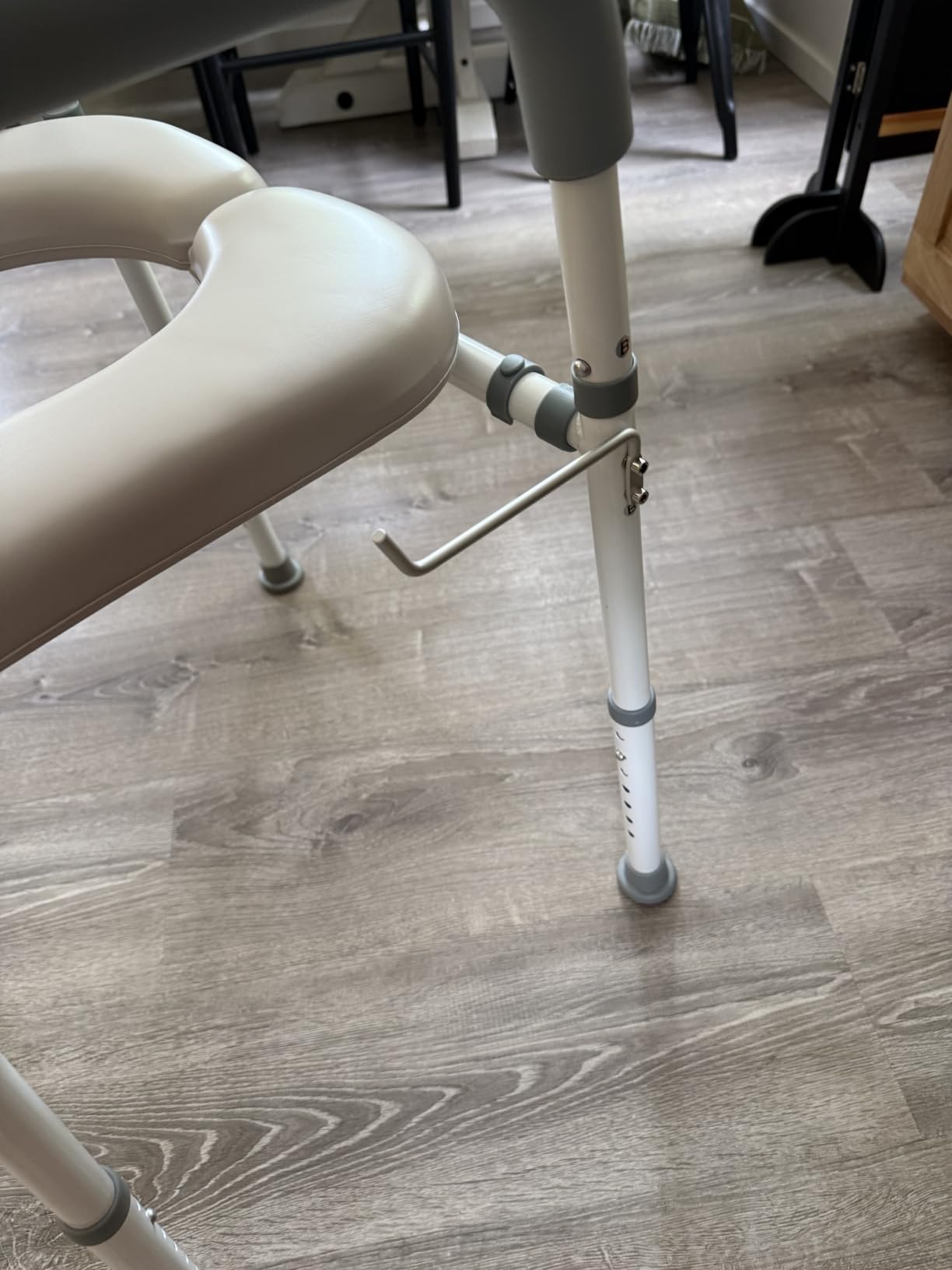
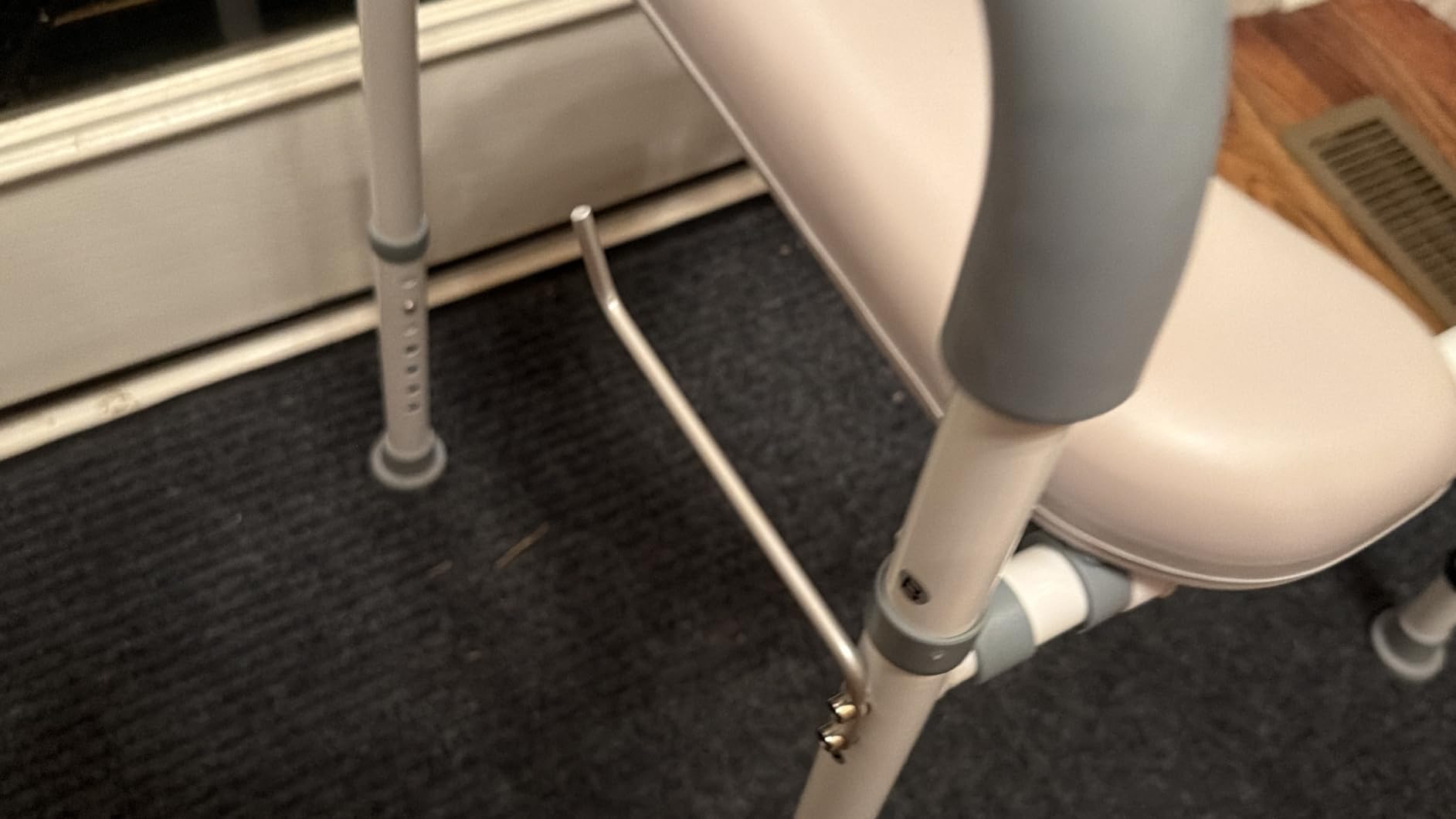
When one person’s body does not fit the mould, adjust the mould. The Agrish gives you four width settings from 21.5 to 23.5 inches and seven height settings, which is the widest range of any riser here, and it means the same unit can serve two different people in the same household or the same person across a long recovery. It holds 4.5 stars across 1547 reviews, and many of those buyers bought it for a parent or spouse recovering from hip, knee or back surgery, which shows up repeatedly in how they describe the purchase.
The frame is reinforced iron tubing rated to 400 pounds, the second-highest capacity in this roundup, and reviewers consistently report no wobble and no flex under load. The handles are textured and padded, and texture matters more than padding here: a smooth foam sleeve gets slick when hands are wet, a textured surface does not.
Measurement Is Not Optional With This Frame
The single most repeated piece of advice in these reviews is to measure the bathroom first. The frame is large, it stands on the floor, and it needs clearance on both sides and in front. We would add one more measurement that reviewers rarely mention: check that the door or the shower curtain does not interfere with the arms, and check the distance from the bowl to any vanity, because a frame that touches a cabinet is a frame the user will nudge, and a nudged frame is a moving frame.
Why Folding and Rust Are Real Concerns
The frame folds for storage and moves between bathrooms or into a shower, and the non-skid rubber feet give it a solid base on wet tile. But iron tubing in a wet shower eventually shows rust at the joints, and a few reviewers report exactly that after regular shower-chair use. If you are mainly using it on the toilet rather than as a shower chair, this is a non-issue. If shower use is the plan, wipe it down and dry it after each use.
Buying for Someone Else
When you are buying for a recovering parent or spouse rather than for yourself, the adjustment range is the argument. You do not have to guess their ideal height in advance, and if their condition changes you can change the setting instead of buying a different seat. The seven height settings also let you taper down over a recovery in the way the frame-based options allow.
Who It Suits and Who It Does Not
Buy the Agrish for a bariatric-range user, for a shared bathroom, or for anyone whose measurements do not match a fixed mould. Skip it for a small bathroom, for a user who objects strongly to visible medical equipment in a guest bathroom, or for anyone who will use it in the shower without maintaining the metal.
7. Lunderg Solva Raised Toilet Seat with Handles – Best-Rated and Least Medical-Looking
Lunderg Solva Raised Toilet Seat with Handles – Elongated – Adds 3 Inches
Height: 3 in
Capacity: 300 lbs
Bolted, handles removable
+ Pros
- Bolts to the bowl so it will not shift
- Handles and lid lift off for a normal look
- No legs so no trip hazard and easy floor cleaning
- Soft-close lid and seat are very quiet
- Cons
- Needs 8 inches of clearance on each side
- Elongated version shown
- Real height gain closer to 2.25 inches once old seat is out
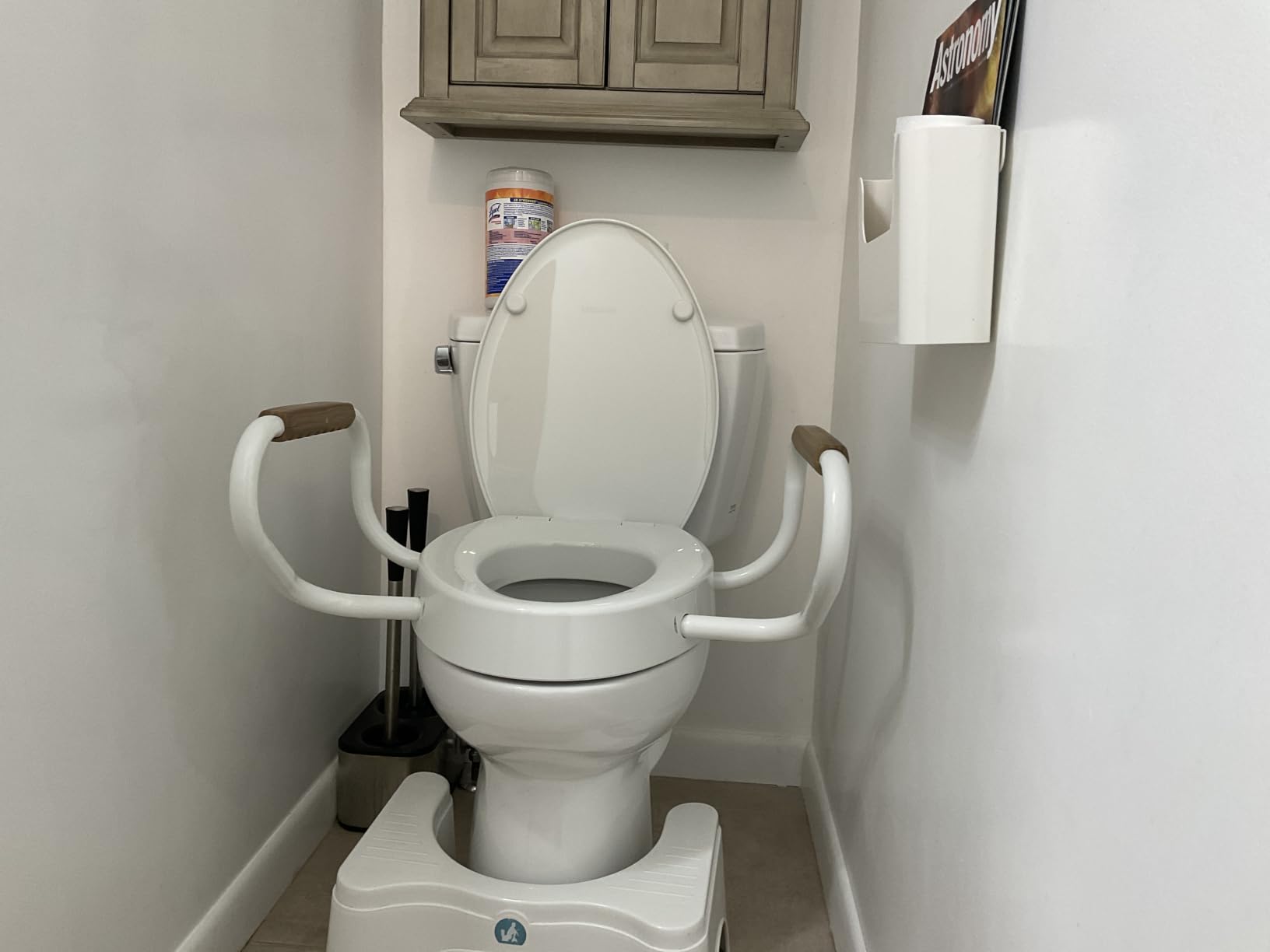
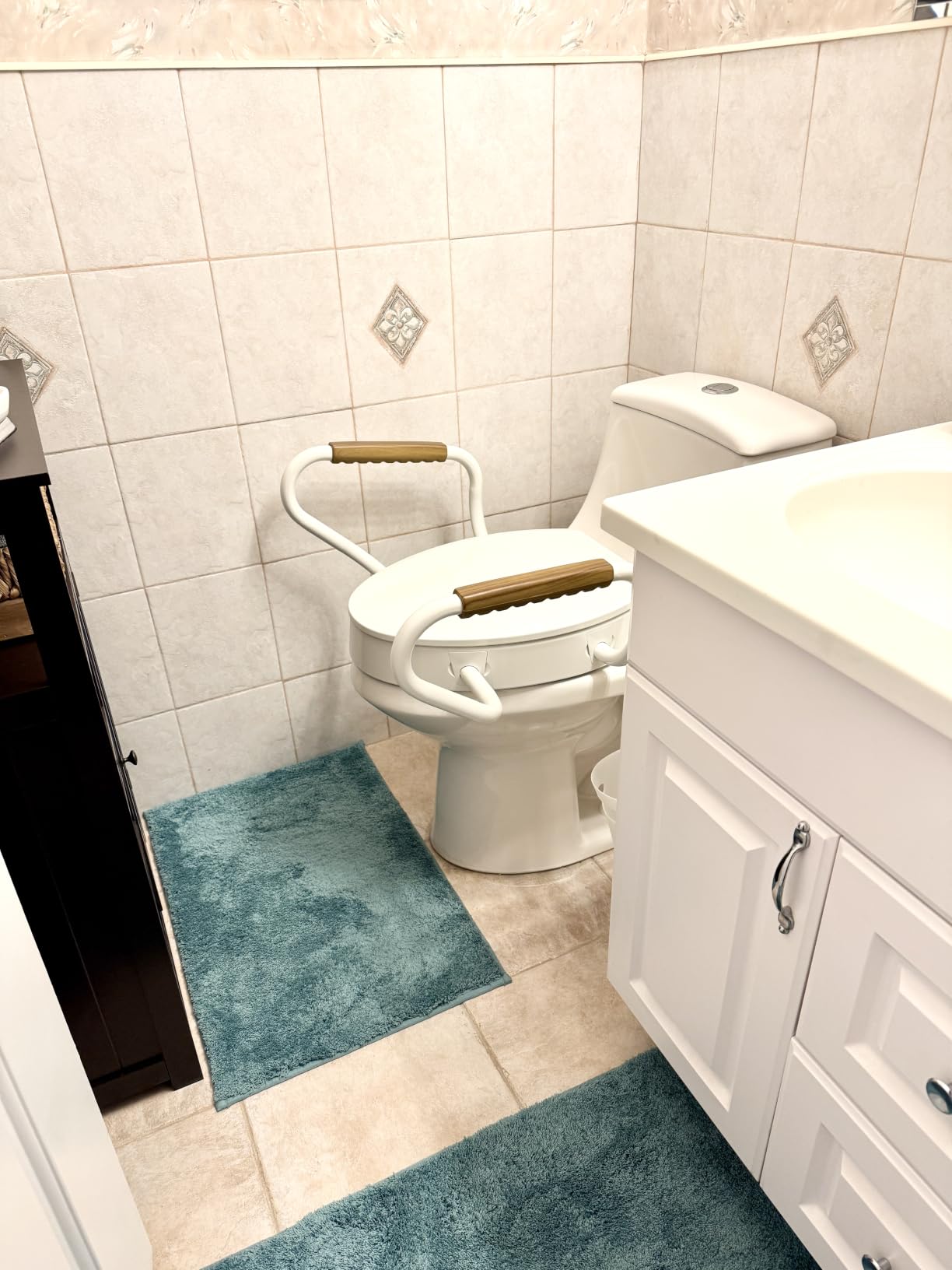
The Lunderg carries the highest average rating of the eight at 4.8 stars with 89 percent five-star ratings, and the thing buyers with prior riser experience mention most is that it feels like a real toilet seat rather than equipment. It bolts directly into the porcelain, it has a soft-close lid, and both the handles and the lid lift off, leaving a normal-looking toilet for guests. That sounds cosmetic, but in post-recovery households where the main bathroom is also the guest bathroom, it changes how people feel about using it at all.
There are no legs. Nothing stands on the floor, so there is no trip hazard at night and mopping the floor is one continuous motion instead of a job around four feet. The quick-release hinge lets you drop the seat forward for a deep clean, which addresses the cleaning complaint that shows up in almost every forum discussion of elevated seats.
The Height Number Is Closer to 2.25 Inches Than 3
This is the most important honest caveat in the roundup. The Solva replaces your existing seat rather than stacking on top of it, so the net gain once the old seat is removed is closer to 2.25 inches, not the 3 inches on the box. If you need the full 3 inches of lift to keep your feet flat, a stacking riser such as the Carex or the Vive will give you more. If you want a bolted, wobble-free fit and your current seat height is only slightly low, the Solva is the more sensible buy.
Side Clearance Is the Requirement to Check
The handles are 21 inches with 21 inches between them, and the manufacturer asks for at least 8 inches of clearance on each side. That is the most demanding footprint of the bolted options here, so measure the bathroom before you order. It is elongated in this listing, with a round version sold separately, and getting that wrong is the classic return.
Aesthetic Resistance Is a Real Buying Reason
Forum users describe disliking medical-looking equipment in their own bathroom, and this is the direct answer to that. The handles come with cosmetic cover cartridges, so once you take the handles off for a transfer or for company, you can plug the holes and the toilet reads as ordinary. For a permanent install in a shared bathroom, that matters more than most spec sheets suggest.
Smaller Opening, Flimsy Lid, Honest Review
Two honest negatives come up repeatedly. The opening is smaller than a standard bowl because of the raised profile, and some reviewers report splash-through that requires a modified approach to wiping. The lid also feels light relative to the rest of the build, so treat it as a cover rather than a surface to stand on, even though the bolted base itself is rigid.
Who It Suits and Who It Does Not
Choose the Lunderg for a permanent, bolted install where appearance and quiet operation matter, and for anyone who has already tried a clamp-on riser and found it unsettling. Skip it if you need the maximum lift, if your bathroom cannot give up 8 inches per side, or if you prefer a padded seat surface.
8. VEVOR Raised Toilet Seat with Arms – The Entry Point With Padded Grips
VEVOR Raised Toilet Seat with Arms, 300 lbs Load Capacity, 3.5-Inch Lift Height, Widened Commode Elevated Toilet Seat Riser with Padded Handles for Seniors, Elderly, Handicap, Disabled, and Adults
Height: 3.5 in
Capacity: 300 lbs
Twist-lock install
+ Pros
- Adds a full 3.5 inches of lift
- Bolted twist-lock so it does not shift or tip
- Light at 5.2 pounds for moving to a shower
- Ample space between the padded arms
- Cons
- Rubber anti-slip pads detach and the seat then wobbles
- Supplied washer can be too large for some seats
- Basic variants have a hard unpadded surface
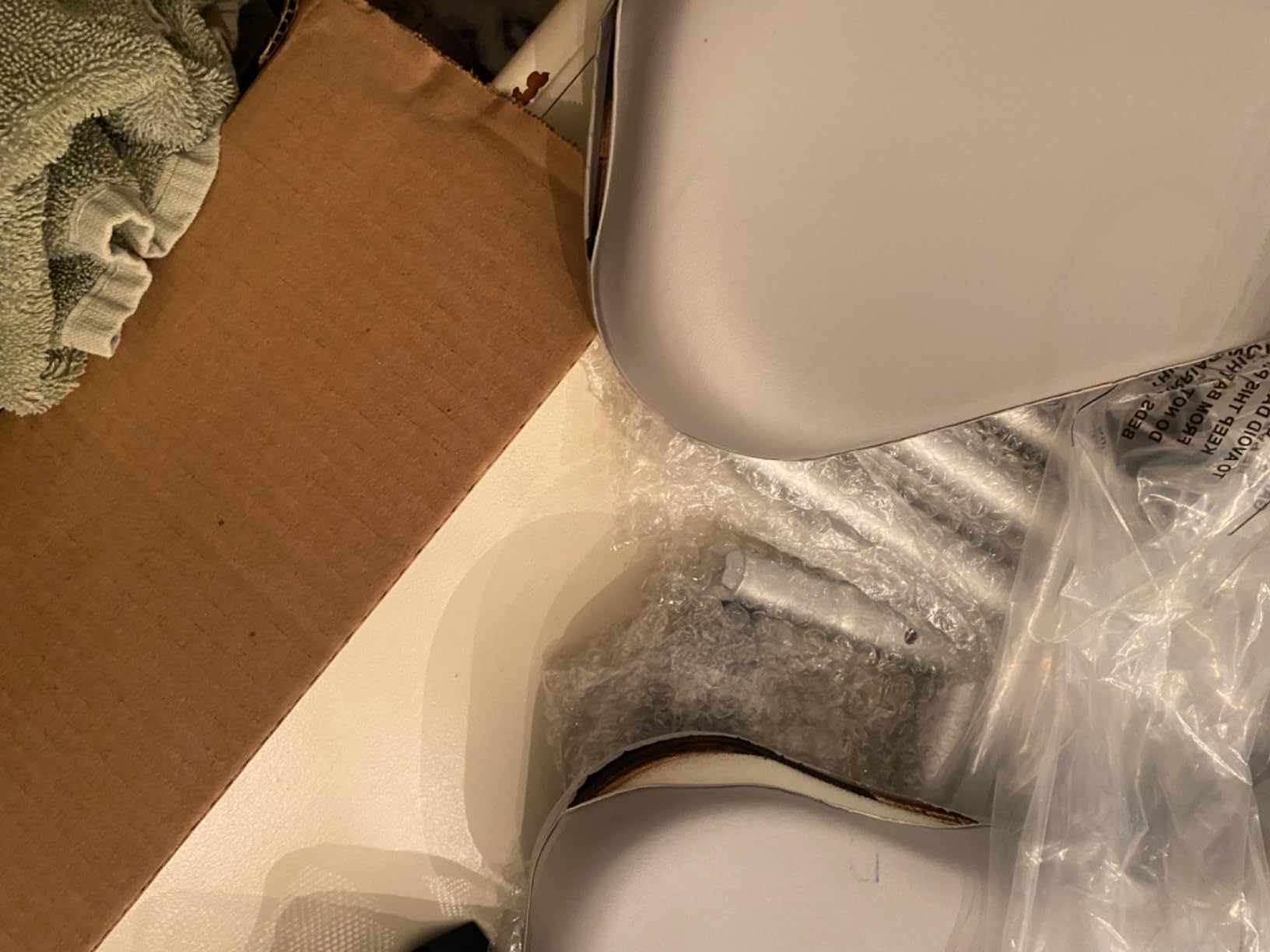
The VEVOR gets you three things most people actually need: a full 3.5-inch lift, bolted stability, and padded armrests, and it does it in a body light enough at 5.2 pounds to carry into a shower if you want a bath chair. The installation is a twist-lock that requires no drilling and no modification to the toilet, which makes it one of the easier ones to fit in a rental or a bathroom you cannot take apart.
It holds 4.2 stars across 1200 reviews, with roughly 67 percent five-star and 9 percent one-star. Buyers like the lift, the bolted feel and the light weight. The one complaint dominates everything else, and it is worth knowing before you buy rather than after.
The Detachable Feet Are the Whole Weak Point
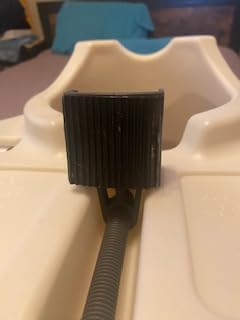
The most repeated complaint across these reviews is that the rubber anti-slip pads detach, and once they do the seat wobbles. That is worth taking seriously because a riser that rocks under load is exactly the failure this product category is supposed to prevent. The frame is corrosion-resistant aluminum and the seat surface is waterproof and easy to wipe, but the interface between seat and bowl depends on those small pads. Check them after the first week and after any cleaning, and keep a spare if your model uses adhesive pads.
Washer Sizing and Elongated Fit
A second recurring issue is the supplied metal washer being too large for some toilet seats, which forces a tighter-than-ideal fit. This is the same hardware problem that shows up in the Carex reviews, and the fix is the same: measure the bowl and check the bolt spacing before you order. The frame fits most elongated toilets, so verify your bowl shape first.
Which Variant to Pick
Basic variants of this riser come with a hard, unpadded seat surface. If cold hard plastic is a problem for you, choose the padded variant even though the armrests are the feature most people care about. The arms are padded on this model and there is ample space between them, which is why it still lands in our recommendations despite the feet problem.
Who It Suits and Who It Does Not
Buy the VEVOR if you want a solid 3.5-inch lift, bolted mounting and padded arms without a large floor frame taking over the bathroom. Do not buy it if you cannot commit to checking the anti-slip feet regularly, if you need adjustable height, or if you need more than 300 pounds of capacity.
How To Choose a Raised Toilet Seat With Handles: Height, Fit, Mounts and Capacity
Eight risers, and the differences that matter are narrower than the spec sheets suggest. Height, capacity, mount type and handle style decide the purchase. Everything else is preference. Work through these in order and the product choice makes itself.
Set the Height From Your Lower-Leg Length, Not From a Number
Sit on the edge of your current toilet with your feet flat and note whether your knees are above, level with, or below your hip joint. If you are already in roughly that position, you need 3 inches or less. If your knees drop well below the hips, you are fighting the mechanics of standing and you need 4 or 5 inches. If your feet cannot reach the floor even at maximum lift, a riser is the wrong tool entirely and you need a commode chair or a raised toilet platform. The heights in this roundup run from 3 inches on the Bemis and Lunderg to 5 inches on the Drive Medical, with most clustering at 3.5.
Measure Your Bowl First: Round vs Elongated and Bolt Spacing
Measure the distance from the centre of the bolt holes to the front of the bowl rim. Roughly 16.5 inches means round, roughly 18.5 inches means elongated. Then measure the bolt spacing itself, which is commonly 5.5 or 5.625 inches, and check the bolt-hole diameter if you are buying a clamping model, because a thick washer on a small hole is the exact cause of the wobble complaints we saw repeatedly. Nearly every return in this category traces back to skipping this ten-minute job. Two of our eight are elongated only, two fit both, and the clamp-style models are the ones where hardware sizing bites hardest.
Bolted, Locking Clamp or Adjustable Frame: How Mounting Changes Stability
Mount type is the single biggest predictor of how a riser feels under load. Bolted models fasten into the porcelain and are the most rigid by a wide margin; the Bemis and the Lunderg are in this group and both describe themselves as not shifting or flexing. Locking clamp models use arms that lock onto the seat rather than the bowl; they install in seconds and come off easily, but the joint between arm and seat is a place a hard push can rock. Adjustable frames stand on the floor and trade floor space for a wide adjustment range and genuinely walker-grade stability. Non-slip pad designs are the least stable option and are not in our recommendations for anyone with fall history.
For temporary recovery, clamp wins on convenience. For a permanent install or a user with real fall risk, bolt wins on safety. For a household that needs range or a very heavy user, frame wins on load and adjustability.
Weight Capacity: Use the Rated Limit as a Margin, Not a Target
Ratings in this roundup range from 250 pounds to 1000 pounds, and manufacturer figures are laboratory numbers taken under ideal conditions. Treat them as ceilings and stay at least 50 percent below the rating. That puts the 250-pound Carex in play up to about 165 pounds of body weight, the 300-pound models up to about 200, and the 400-pound Agrish up to about 265. If you are near the top of a band, step up a tier. Dynamic loading, a wet bathroom floor and a caregiver leaning on one arm all add load that a static test does not capture.
Handle Style and Grip for Weak or Painful Hands
Arthritic hands change what a good handle means. Foam padding increases contact area and reduces the pinch force needed to hold, which is why the Carex and Vive are strong picks for grip weakness. Textured surfaces outperform smooth ones when hands are damp. Removable handles matter for lateral wheelchair transfers, where you need one side open. And height matters: an arm too low gives you nothing to push against, which is why the adjustable-arm models are worth a look for anyone transferring from a wheelchair rather than walking to the toilet.
Does Medicare Pay for a Raised Toilet Seat With Handles?
Original Medicare generally does not cover a raised toilet seat as durable medical equipment, because the benefit list is built around equipment that is primarily medical in nature. That answer changes through other channels. Medicaid programs in many states cover certain bathroom safety equipment for people who meet eligibility rules, and the VA covers durable medical equipment for eligible veterans through its health benefit programs. Some Medicare Advantage plans offer supplemental over-the-counter or bathroom-safety allowances, and flexible spending accounts and health savings accounts can usually be used to pay for a raised toilet seat with handles if you have funds remaining. Check your specific plan wording before purchase, and keep the receipt, because reimbursement arrangements vary by state and by plan.
Riser With Handles vs Toilet Safety Rails vs a Commode Chair
These three solve overlapping but different problems. A raised toilet seat with handles is the right choice when the core problem is height: the user can stand and walk to the toilet but cannot lower and rise from a standard bowl. Toilet safety rails, which clamp to the bowl or the wall, are right when height is already fine and the problem is lateral balance during the transfer, or when a fall history points to needing support on both sides. A commode chair is right when getting to the bathroom at all is the barrier, because it can be placed anywhere, used as a shower chair, and moved to a bedroom at night. Picking the wrong one of the three is why some buyers end up dissatisfied with a riser that was never going to solve their actual problem.
Cleaning, Hygiene and Knowing When to Stop Using the Riser
Elevated seats collect grime in the gap between the riser and the bowl, and this is the most repeated complaint in owner discussions. Choose a model with a lid or a quick-release hinge so you can reach the whole surface, take the unit apart every couple of weeks, and wipe it with a standard disinfectant rather than relying on a once-a-month pass. A removable wipe-clean mat over the top converts an awkward object into a manageable one.
On tapering off, most people need a riser for roughly six to twelve weeks after hip or knee surgery, less for back or knee sprains, and permanently only for genuine mobility limits. Post-op groups describe the moment clearly: you can get up without planning it, and you stop thinking about the toilet as a problem. Test for that every few weeks by standing without the handles first. If you can rise smoothly using only the seat, the riser is close to done. If you feel unsteady without the arms, keep them and check in with your physical therapist rather than guessing.
One more safety point we would add. A riser is a mobility aid, not fall protection. It reduces the effort of one specific movement; it does not stop a slip on a wet floor or a loss of balance on the way in. Anyone with a fall history in the last year should also have grab bars installed and a non-slip mat underfoot, and should get a clinician’s opinion before adding equipment to an existing plan.
Frequently Asked Questions
What is the best raised toilet seat with handles?
The best raised toilet seat with handles is the one that matches your height need, your body weight and your bowl shape. The Drive Medical 2-in-1 leads our roundup for adding the most height, at 5 inches, with removable adjustable arms and tool-free locking installation. The Carex 3.5 Inch is the most common post-surgery choice, and the Vive offers the widest handle spacing at 19 inches between the arms. Bolted models resist wobble best; clamp models install fastest.
Does Medicare pay for a raised toilet seat with handles?
Original Medicare generally does not cover a raised toilet seat with handles as durable medical equipment. Medicaid programs in many states can cover bathroom safety equipment for eligible recipients, the VA covers durable medical equipment for eligible veterans, and some Medicare Advantage plans offer supplemental allowances for bathroom safety equipment. Flexible spending account and health savings account funds can usually pay for one if you have funds remaining. Confirm your specific plan wording and keep the receipt.
What is the best height for a raised toilet seat?
The best height is the one that lets your feet sit flat with your knees at or slightly above your hip joint, which is usually 3 to 4 inches for most adults and up to 5 inches for a low bowl or a taller user. Sitting on your current toilet and checking where your knees land relative to your hips is more reliable than any published number. If your feet cannot reach the floor even at maximum lift, a riser is not the right tool and you need a commode chair or a raised platform.
How do I know if my toilet is round or elongated?
Measure from the centre of the bolt holes to the front edge of the bowl rim. A measurement around 16.5 inches means a round bowl, and roughly 18.5 inches means an elongated bowl. Also measure the bolt-hole spacing, which is commonly 5.5 or 5.625 inches, before choosing a clamping riser, since oversized washers are a leading cause of wobble. Two products in our roundup fit elongated bowls only, so this check prevents most returns.
What are the disadvantages of raised toilet seats?
The main disadvantages are cleaning, fit, and the fact that a riser is not fall protection. The gap between the riser and the bowl collects residue and is hard to reach without a lid or quick-release hinge. Wrong height leaves feet dangling, which can be more dangerous than no riser at all, and clamp-style models can rock under a hard one-sided push. A riser reduces the effort of one movement but does not prevent a slip on a wet floor, so grab bars and a non-slip mat may still be needed.
How much weight can a raised toilet seat with handles support?
Ratings in this roundup run from 250 pounds on the Carex 3.5 Inch to 1000 pounds on the Bemis Assurance, with most models rated at 300 or 400 pounds. Treat the published figure as a ceiling and stay at least 50 percent below it, which means a 300-pound model suits a user up to roughly 200 pounds. A caregiver leaning on one arm and a wet floor both add real load that a static laboratory test does not capture, so step up a tier if you are near the limit.
Which Raised Toilet Seat With Handles Should You Buy in 2026?
After eight risers, six weeks of transfers and a lot of tape measuring, the choice narrows to a few clear archetypes. If you want one seat that does the most for the widest range of users, the Drive Medical 2-in-1 is our pick, with a 5-inch lift, removable adjustable arms and the highest review base of the group at nearly 18000 ratings. It suits a low toilet, a taller user, and anyone who wants arms they can physically take off for a transfer.
If you are planning hip or knee surgery, the Carex 3.5 Inch is the one most people buy before the operation and take off six to twelve weeks later. If you need the riser to disappear from view in a shared bathroom, the Lunderg Solva has the best rating in the roundup and lets both handles and the lid come off. If wobble is the thing that frightens you, the Bemis bolts into the porcelain and is rated to 1000 pounds. If the user’s body does not fit a fixed mould, or the weight is above 300 pounds, the Agrish frame gives you four width settings and seven height settings.
Whichever one you choose, measure the bowl before you order, check that the arms clear the walls on both sides, and test the fit with someone else standing by the first time you use it. That ten minutes of measuring is the difference between a riser that gets used and one that ends up in a closet.